EP1636714B1 - Verfahren und system zum bestimmen von sitzungsinterner ereigniskorrelation über netzwerkadressenübersetzungseinrichtungen hinweg - Google Patents
Verfahren und system zum bestimmen von sitzungsinterner ereigniskorrelation über netzwerkadressenübersetzungseinrichtungen hinweg Download PDFInfo
- Publication number
- EP1636714B1 EP1636714B1 EP04777068.0A EP04777068A EP1636714B1 EP 1636714 B1 EP1636714 B1 EP 1636714B1 EP 04777068 A EP04777068 A EP 04777068A EP 1636714 B1 EP1636714 B1 EP 1636714B1
- Authority
- EP
- European Patent Office
- Prior art keywords
- network
- event
- session
- events
- categorized
- Prior art date
- Legal status (The legal status is an assumption and is not a legal conclusion. Google has not performed a legal analysis and makes no representation as to the accuracy of the status listed.)
- Expired - Lifetime
Links
- 238000000034 method Methods 0.000 title claims description 63
- 238000013519 translation Methods 0.000 title claims description 28
- 238000013507 mapping Methods 0.000 claims description 37
- 230000014616 translation Effects 0.000 claims description 27
- 230000005540 biological transmission Effects 0.000 claims description 13
- 238000012545 processing Methods 0.000 claims description 10
- 238000004891 communication Methods 0.000 claims description 7
- 238000004590 computer program Methods 0.000 claims description 4
- 230000008569 process Effects 0.000 description 42
- 101000884385 Homo sapiens Arylamine N-acetyltransferase 1 Proteins 0.000 description 12
- 101001034811 Homo sapiens Eukaryotic translation initiation factor 4 gamma 2 Proteins 0.000 description 12
- 101000639975 Homo sapiens Sodium-dependent noradrenaline transporter Proteins 0.000 description 12
- 102100033769 Sodium-coupled neutral amino acid transporter 3 Human genes 0.000 description 12
- 230000000875 corresponding effect Effects 0.000 description 12
- 230000004044 response Effects 0.000 description 7
- 230000009466 transformation Effects 0.000 description 7
- 238000001514 detection method Methods 0.000 description 6
- 230000003068 static effect Effects 0.000 description 6
- 230000001737 promoting effect Effects 0.000 description 5
- 101000884399 Homo sapiens Arylamine N-acetyltransferase 2 Proteins 0.000 description 4
- 101000713305 Homo sapiens Sodium-coupled neutral amino acid transporter 1 Proteins 0.000 description 4
- 102100036916 Sodium-coupled neutral amino acid transporter 1 Human genes 0.000 description 4
- 230000002596 correlated effect Effects 0.000 description 4
- 230000008901 benefit Effects 0.000 description 3
- 238000000844 transformation Methods 0.000 description 3
- 101100018419 Hordeum vulgare IDS3 gene Proteins 0.000 description 2
- 101150022794 IDS2 gene Proteins 0.000 description 2
- 101100121695 Leucosceptrum canum GFDPS gene Proteins 0.000 description 2
- 101100491259 Oryza sativa subsp. japonica AP2-2 gene Proteins 0.000 description 2
- 238000012986 modification Methods 0.000 description 2
- 230000004048 modification Effects 0.000 description 2
- 241000408659 Darpa Species 0.000 description 1
- 230000009286 beneficial effect Effects 0.000 description 1
- 230000015572 biosynthetic process Effects 0.000 description 1
- 230000001419 dependent effect Effects 0.000 description 1
- 238000010586 diagram Methods 0.000 description 1
- 238000002955 isolation Methods 0.000 description 1
- 238000012806 monitoring device Methods 0.000 description 1
Images






Classifications
-
- H—ELECTRICITY
- H04—ELECTRIC COMMUNICATION TECHNIQUE
- H04L—TRANSMISSION OF DIGITAL INFORMATION, e.g. TELEGRAPHIC COMMUNICATION
- H04L63/00—Network architectures or network communication protocols for network security
- H04L63/02—Network architectures or network communication protocols for network security for separating internal from external traffic, e.g. firewalls
- H04L63/0227—Filtering policies
- H04L63/0236—Filtering by address, protocol, port number or service, e.g. IP-address or URL
-
- H—ELECTRICITY
- H04—ELECTRIC COMMUNICATION TECHNIQUE
- H04L—TRANSMISSION OF DIGITAL INFORMATION, e.g. TELEGRAPHIC COMMUNICATION
- H04L61/00—Network arrangements, protocols or services for addressing or naming
- H04L61/09—Mapping addresses
- H04L61/25—Mapping addresses of the same type
- H04L61/2503—Translation of Internet protocol [IP] addresses
- H04L61/2591—Identification of devices behind NAT devices
-
- H—ELECTRICITY
- H04—ELECTRIC COMMUNICATION TECHNIQUE
- H04L—TRANSMISSION OF DIGITAL INFORMATION, e.g. TELEGRAPHIC COMMUNICATION
- H04L63/00—Network architectures or network communication protocols for network security
- H04L63/14—Network architectures or network communication protocols for network security for detecting or protecting against malicious traffic
- H04L63/1408—Network architectures or network communication protocols for network security for detecting or protecting against malicious traffic by monitoring network traffic
- H04L63/1416—Event detection, e.g. attack signature detection
-
- H—ELECTRICITY
- H04—ELECTRIC COMMUNICATION TECHNIQUE
- H04L—TRANSMISSION OF DIGITAL INFORMATION, e.g. TELEGRAPHIC COMMUNICATION
- H04L61/00—Network arrangements, protocols or services for addressing or naming
- H04L61/09—Mapping addresses
- H04L61/25—Mapping addresses of the same type
- H04L61/2503—Translation of Internet protocol [IP] addresses
- H04L61/2514—Translation of Internet protocol [IP] addresses between local and global IP addresses
Definitions
- the present invention relates generally to the field of computer network security, and in particular to systems and methods for grouping network events in a computer network containing various network address translation devices into different network sessions.
- NAT devices translate the addresses and ports for network packets destined to or originating from internal hosts and servers within a local area network (LAN).
- LAN local area network
- NAT provides at least two significant benefits for a LAN's operation.
- NAT can hide the true address of an internal host from the outside world. This is very important for the purpose of protecting the internal host from security attacks. For example, if an attacker does not know the true address of a device on a LAN, because packets from the device are mapped by a NAT device so as to hide the device's true address, it is difficult for the attacker to launch an effective attack against that device.
- NAT allows a LAN to use many more private addresses for internal use than the number of public addresses it owns. This feature has significantly relieved the problem of limited address capacity offered by 32 bit addresses. For instance, multiple LANs can share the same group of private network addresses for their internal use as long as they have unique public addresses. As a result, private addresses are used within a LAN between internal hosts and public addresses are used for communication across the Internet.
- NAT provides a challenge for early detection of network security attacks.
- Current security devices such as firewalls, virtual private network (VPN) gateways, intrusion detection systems (IDS) generate events/alarms upon detecting a security attack.
- An event message typically contains the network addresses of the suspected intruder and the attacked host as well as the target TCP/IP application, e.g. HTTP or FTP, on the attacked host. Correlation of a stream of events from different security devices, all relating to messages between the same suspected intruder and the same host helps to detect an attack as early as possible.
- each security device is configured such that whenever it detects a suspicious event, e. g. , an IP packet, it sends an event message to a network security monitor.
- the network security monitor is responsible for correlating diverse events from different parts of the network and providing insights into higher-level attack scenarios.
- IPFIX IP Flow Information Export
- a method, system and computer program or computer program product according to appended independent claims 1, 13 and 25 correlate network events having different source and destination information into the same network session using the network address translation information of various NAT devices along a network transmission path over a computer network.
- An incoming network event with a set of event parameters is first evaluated to determine if it belongs to a network session associated with any previously received network event or events. If there is a match, the incoming event will be categorized into the same session as those previously received event or events.
- the network event is compared against a group of NAT devices, each device having a set of predefined network address translation rules. If the event is associated with a NAT rule, the corresponding NAT device may be part of a network transmission path from which the event is reported.
- a previously received network event is further processed using its network session or network address translation information to identify more events belonging to the same network session, if any, and such network events are grouped together, given a unique identifier, and sent to a network security monitoring device to detect the existence of any possible network attack.
- a NAT rule For each parameter of an event, a NAT rule defines a mapping relationship from a pre-mapping domain to a post-mapping domain.
- a NAT rule is called static if there is a one-to-one mapping between the two domains or dynamic if there is a many-to-one mapping between the two domains.
- a first dynamic NAT rule is considered to be ambiguous with respect to a particular event if there is a second dynamic NAT rule where the first and second rules are both eligible to perform a mapping operation on the same parameter of the event's session qualifier (source address, source port, destination address, destination port, protocol).
- Fig. 2 shows an example of a dynamic NAT rule that performs a many-to-one mapping of the source address and a static (i.e., one-to-one) mapping of the destination address.
- any IP packet with source address ranging from 10.1.1.0 to 10.1.1.255 and a destination address of 100.1.1.1 will be converted into a new packet with a source address of 20.1.1.1 and a destination address of 192.1.1.1.
- This NAT rule can be used to determine that two events, one from each side of the NAT device, belong to the same network session.
- a network event E1 is generated by a security device (not shown) before NAT transformation.
- E1 has a session qualifier SQ1.
- a session qualifier comprises the event parameters that characterize a network session, e.g., source address, destination address, source port, destination port, and protocol.
- Session qualifier SQ1's source address is 10.1.1.10, which is between 10.1.1.0 and 10.1.1.255, and its destination address is 100.1.1.1.
- Given SQ1 and the NAT rule it is very easy to predict a session qualifier SQ2 after NAT transformation, that is a source address of 20.1.1.1 and a destination address of 192.1.1.1.
- the present invention provides a method and system for correlating a stream of events having different session qualifiers into the same network session using relevant NAT information.
- FIG. 3 illustrates an intra-session event correlation system 300 in accordance with the present invention.
- An intra-session event correlation system 300 typically comprises one or more central processing units (CPU's) 302, one or more network or other communications interfaces 310, memory 314, and one or more communication buses 312 for interconnecting the various components of system 300.
- Intra-session event correlation system 300 may optionally include a user interface 304, for example, including a display 306 and a keyboard 308.
- Memory 314 includes high-speed random access memory and may also include non-volatile memory, such as one or more magnetic disk storage devices (not shown). Memory 314 may also include mass storage that is remotely located from the central processing unit(s) 302. Memory 314 preferably stores:
- the plurality of tables includes:
- CST 342 is implemented as a Hash map with a session qualifier as the Hash key, with all events belonging to the same session having the same Hash value. Any session in CST can be efficiently looked up by hashing one of its session qualifiers. Note that because of NAT, multiple session qualifiers can map to the same network session.
- PST 344 can also be implemented as a Hash map with a session qualifier as the Hash key, with events belonging to the same session having the same Hash value. Additionally, an expiry timer is associated with an event when it is stored in PST. Such timer is used for promoting the event from PST to CST.
- DNST 346 can also be implemented as a Hash map.
- the Hash key in the case of DNST is not a single session qualifier, but essentially a group of session qualifiers that can be generated by a NAT device and correspond to the same network session. Such a group of session qualifiers are defined as a session specification.
- each event in DNST also has an associated expiry timer for event promotion from DNST to CST.
- expiry timers events in DNST can also be correlated with other events and then promoted to CST by a NAT message.
- a NAT message is a special network event sent by a NAT device and it contains information about a specific address translation promoted by the device for an IP packet.
- Intra-session event correlation engine module 322 includes executable procedures, sub-modules, and other data structures supporting the intra-session event correlation process.
- the correlation engine module includes:
- Events move between CST, PST, and DNST as they progress through the various stages of session correlation.
- an event When an event first arrives, it will be first compared against any existing sessions in CST or PST. If no match is found, a NAT lookup is performed to determine NAT transformations that may apply to the event. In addition, a determination is made whether any of these NAT transformations is an ambiguous dynamic NAT. If so, the event is placed in the PST. Otherwise it is placed in the DNST. In other words, only the events from sessions using unambiguous dynamic NAT are placed in the DNST.
- the NAT lookup step also returns a set of session qualifiers that are placed in the tables to match against subsequent events from the same session.
- NAT messages explicitly describing NAT transformations for certain network events are handled in a similar way and they can connect disparate events waiting in PST and DNST.
- events either move from PST to CST or move from DNST to CST by picking up additional events belonging to the same session from PST according to some additional heuristics.
- the main purpose of PST and DNST is to serve as a staging area for additional session formation.
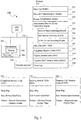
- Figs. 4A-4D provide more details of the embodiment.
- a newly generated network event EVT arrives at system 300 after being parsed by an event parser (not shown).
- Event EVT is characterized by a session qualifier.
- event EVT's session qualifier is used to match any existing network session in CST. If there is a match, event EVT will be added to the matched network session in CST at step 405 and the correlation process stops at step 407, waiting for next incoming network event to arrive.
- step 403 If there is no match at step 403, the correlation process moves to step 409 where event EVT's session qualifier is used to match any existing network session in PST. If there is a match between event EVT and a network session in PST, event EVT will be assigned an expiry timer and then added to the matched network session in PST at step 411. The correlation process stops at step 413 and event EVT waits to be promoted to CST by its expiry timer.
- step 409 If there is no match at step 409, the correlation process moves to step 415 which, using the session qualifier of event EVT as input, does the following NAT lookup:
- Any network event is only generated by one security device in response to one network session. If only two NAT devices are identified during the NAT lookup for event EVT at step 415, one NAT device during traversal towards the event's source and one NAT device during traversal towards the event's destination, the event's origin can be uniquely located on the network. In this case, there is no ambiguity with regard to the determination of event EVT's origin on the network at step 417, and therefore event EVT will be stored in the DNST, as described below with reference to Fig. 4B .
- event EVT is not stored in DNST. Instead, event EVT is stored in PST.
- the correlation process first determines whether any session qualifier in the session qualifier list generated by the NAT lookup at step 415 matches any existing session in PST at step 423. This step is essentially the same as step 409. Events belonging to the same session are coalesced in PST at step 425. Finally, the correlation process stops at step 413, waiting for next event's arrival.
- Fig. 4B illustrates the correlation process in the case that there is no ambiguity with regard to the determination of event EVT's origin on the network.
- a session spec in the session spec list generated at step 415 is first compared against any existing session spec in DNST. If no match is found, the correlation process creates a new entry in DNST for the session spec list at step 429. This new entry comprises event EVT and EVT's session spec list and session qualifier list. Event EVT is also assigned an expiry timer when it is attached to the new entry in DNST. The process stops at step 431 waiting for next incoming network events or timer expiry to promote event EVT from DNST to CST.
- the correlation process updates the matching entry by attaching event EVT to a corresponding session qualifier belonging to the matching entry in DNST at step 433.
- the correlation process determines whether the corresponding network session is complete. As a heuristic rule, a network session is complete if there is only one session qualifier per session spec in the session spec list. At step 435, the network session that event EVT is affiliated with is determined to be complete if there are a set of session qualifiers, one for each spec in the same session spec list. Otherwise, the session is not complete.
- step 437 If the session that event EVT is affiliated with is complete, all the corresponding events are coalesced into a single session at step 437.
- the correlation process collects other events, if any, previously stored in PST that belong to the same session, and extends the coverage of the network session. Finally, all the events relating to the same complete session are promoted to CST at step 451 and the correlation process stops at step 453. However, if no complete session is found at step 435, the correlation process stops at step 431, waiting for next incoming network events.
- Figs. 4A and 4B cover the network event correlation process when an event first arrives at an intra-session event correlation system 300.
- the event either resides in CST, indicating that this event is affiliated with an existing completed session, or resides in PST or DNST, waiting for more incoming events to establish a completed network session. If those events do not materialize, expiry timers associated with events in PST or DNST periodically issue timer events that trigge a session cleanup process in PST or DNST.
- Fig. 4C provides more details of this cleanup process in DNST.
- an expiry timer is associated with the event. Therefore, in addition to grouping events into different network sessions, the correlation process also maintains a separate queue of expiry timers associated with different events in DNST.
- the correlation process first identifies the corresponding list of session specs that event E belongs to in DNST.
- the identified list is further examined to detect any session qualifier conflict within the list.
- a session qualifier conflict in a session spec list means that there is more than one session qualifier under the same session spec in the spec list. In other words, there is more than one network session in the same session spec list, and therefore events in the same session spec list belong to two or more different sessions. Therefore, in order to avoid grouping events belonging to different sessions into the same session, whenever there is an conflict within the session spec list identified at step 457, all the events in the spec list are assigned to different sessions at step 459. However, if there is only one session qualifier per session spec, the session spec list contains at most one unique network session. Therefore, all the events associated with the session spec list can be coalesced into a single session at step 461.
- Step 463 After creating one or more new network sessions at step 459 or 461 and before promoting these sessions to CST, the correlation process needs to check if there are additional events in PST belonging to these newly created sessions at step 463.
- a network event could be temporarily stored in PST if there was any ambiguity in determining the event's origin when the event first arrived. Such ambiguity may be resolved later when more events relating to the same session arrive.
- Step 463 provides such an opportunity for the system 300 to extend the newly created session by picking up events from PST that match the newly created session.
- step 465 the newly created sessions and their associated events are inserted into CST and the correlation process stops at step 467 until it is invoked again by another event's expiry timer stored in the queue.
- Fig. 4D illustrates a similar process that happens in PST.
- each network event stored in PST is also associated with an expiry timer and the correlation process maintains another queue of expiry timers associated with different events in PST.
- the correlation process first identifies a network session that event F is associated with in PST. Then the correlation process inserts the identified session and its associated events (including F) into CST as a new entry at step 468. Finally, the correlation process stops at step 469, waiting for next invocation stored in the queue.
- NAT lookup discussed at step 415 of Fig. 4A is to first locate the origin of event EVT by identifying a NAT device on the network according to EVT's session qualifier, and to then construct an ordered list of session qualifiers and an ordered list of session specs based on EVT's session qualifier and the device's NAT rule.
- Event EVT's session spec list and session qualifier list significantly expand the correlation coverage of event EVT. Therefore, if there is another network event whose session spec list correlates with event EVT's session spec list as defined by steps 427 and 433 of Fig. 4B , these two events may belong to the same network session, even though the session qualifiers of these two events can not correlate with each other directly.
- Fig. 5 provides an example to illustrate the NAT lookup process for constructing an ordered list of session qualifiers and an ordered list of session specs.
- NAT devices NAT0 and NAT1 establish a network session between source host 10.1.1.1 and destination host 192.1.1.1.
- NAT0 has a dynamic NAT rule that maps source addresses from a pre-mapping domain 10.1.1.0-10.1.1.255 to a post-mapping domain 100.1.1.1-100.1.1.2.
- NAT1 has a static NAT rule that maps destination address from 200.1.1.1 to 192.1.1.1.
- event E* is generated by a security device (not shown) that has a session qualifier SQ* comprising the following parameters: (source SA*, source port SP*, protocol P*, destination DA* and destination port DP*).
- the first step of NAT lookup is to determine the origin of event E* on the network.
- Event E*'s session qualifier SQ* is covered by NAT0's post mapping domain, and by NAT1's pre-mapping domain. Therefore, event E* should originate from a security device located between NAT0 and NAT1.
- the second step is to generate a session spec out of session qualifier SQ* using NAT0 and NAT1's NAT rules.
- a session spec SP* is generated based on session qualifier SQ* and the two NAT rules by replacing the source and destination addresses of SQ* with NAT0's post-mapping domain and NAT1's pre-mapping domain.
- session qualifier SQ* is contained by session spec SP*.
- the third step is to traverse session qualifier SQ* towards destination host 192.1.1.1. Following arrow 504 and applying the static NAT rule of NAT1 to SQ*, a session qualifier SQm is generated after replacing destination address 200.1.1.1 with 192.1.1.1. Similarly, a session spec SPm is generated by following arrow 506, where session qualifier SQm is covered by session spec SPm.
- the fourth step is to traverse session qualifier SQ* towards source host 10.1.1.1. Following arrows 508 and 510 and applying the dynamic NAT rule to SQ* and SP*, a new session qualifier SQk and a new session spec SPk are generated respectively. Because the NAT rule associated with NAT0 is dynamic, SQk's source address is not a single address, but a range. A session qualifier, e.g., SQm, is completely determined if its parameters are all single "numbers" (i.e., parameter value); otherwise, a session qualifier, e.g., SQk, is incompletely determined if any of its parameters is a range, not a single address or parameter value.
- the session qualifier list generated by NAT lookup should only include completely determined session qualifiers, not any incompletely determined session qualifiers. Therefore, the session qualifier list of event E* comprises two session qualifiers (SQ*, SQm). However, any parameter of a session spec can be a range or a single number. Therefore, the session spec list of event E* comprises three members (SPk, SP*, SPm).
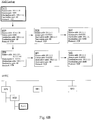
- Figs. 6A-6F provide an example including three scenarios to illustrate the key features of the embodiment.
- Fig. 6A depicts a portion of a network having four hosts 10.1.1.30, 10.1.1.40, 192.1.1.1, and 192.1.1.2, two NAT devices NAT1 and NAT2, and three security devices IDS1, IDS2 and IDS3.
- NAT1 is associated with a dynamic NAT rule mapping source address from pre-mapping domain 10.1.1.0-10.1.1.255 to post-mapping domain 20.1.1.1.
- NAT2 is associated with a static NAT rule mapping destination addresses from 100.1.1.1-100.1.1.10 to 192.1.1.1-192.1.1.10 and destination port from 80 to 8080.
- Ev11, Ev12, and Ev13 are three network events generated by IDS1, each corresponding to a different network session.
- IDS2 is responsible for the generation of Ev21, Ev22, and Ev23
- IDS3 is responsible for the generation of Ev31, Ev32, and Ev33.
- the three tables CST, PST and DNST of system 300 are all empty.
- Fig. 6C shows the correlation result after the arrival of Ev21.
- Ev21 there is no match in CST and PST and NAT lookup for Ev21 generates a new ordered list of session qualifiers (SQ3, SQ4, SQ5) and the same ordered list of session specs (SP0, SP1, SP2).
- SQ4 and SQ5 are completely determined.
- the session spec list remains the same, there is no new entry generated in DNST. Instead, SQ4 and Ev21 are attached to SP1, and SQ5 are attached to SP2.
- Fig. 6D illustrates the correlation result after the arrival of Ev31.
- CST and PST and NAT lookup for Ev31 generates the same ordered list of session qualifiers (SQ3, SQ4, SQ5) and the same ordered list of session specs (SP0, SP1, SP2) as Ev21. Therefore, no new entry is created in DNST and the only difference in DNST before and after the arrival of Ev31 is that SQ5 has a network event Ev31 associated with it.
- the correlation process when an event is inserted into DNST, the correlation process also assigns an expiry timer to the event and maintains a separate queue of expiry timers. Accordingly in the first scenario here, there is a queue of three expiry timers in DNST, each timer corresponding to one of the three events Ev11, Ev21, or Ev31. When one of the three timers expires, it issues an timer expire event to invoke the correlation process. In response, the correlation process checks if there is any conflict within the session spec list containing Ev11, Ev21, and Ev31. As shown in Fig.
- the correlation process generates a new ordered list of session qualifiers (SQ6, SQ7, SQ8) and a new ordered list of session specs (SP3, SP4, SP5) as shown in Fig. 6E . Since there is no overlap between the session spec list of Ev11, Ev21, and Ev31 and the session spec list of Ev12, Ev22, and Ev32, whenever a timer associated with one of the six events expires, one set of three events corresponding to the same session are correlated and promoted to CST. The three remaining events wait until another timer associated with one of the three events expires.
Landscapes
- Engineering & Computer Science (AREA)
- Computer Security & Cryptography (AREA)
- Computer Networks & Wireless Communication (AREA)
- Signal Processing (AREA)
- Computer Hardware Design (AREA)
- Computing Systems (AREA)
- General Engineering & Computer Science (AREA)
- Data Exchanges In Wide-Area Networks (AREA)
Claims (25)
- Verfahren zur Gruppierung von Netzwerkereignissen, welches Folgendes aufweist:Empfangen (401) eines Stromes von Netzwerkereignissen, wobei jedes Netzwerkereignis einen Satz von Ereignisparametern im Zusammenhang mit einer Netzwerksitzung, die einer Nachricht entspricht, die durch ein Netzwerk übertragen wird, beinhaltet;für ein Netzwerkereignis in dem Strom, Vornehmen einer Anfangssitzungsbestimmung durch das Bestimmen (403), ob das Ereignis zu einer gleichen Netzwerksitzung wie ein zuvor empfangenes Ereignis gehört;für das Netzwerkereignis, Identifizieren (415) von Informationen von Netzwerkadressübersetzungen, die durch ein oder mehrere Geräte entlang eines Netzwerkübertragungspfades im Zusammenhang mit dem Netzwerkereignis durchgeführt werden;Kategorisieren (417, 419) des Netzwerkereignisses in Übereinstimmung mit mindestens entweder der Sitzungsbestimmung oder den Netzwerkadressübersetzungsinformationen; undzu einer vordefinierten Zeit:Verarbeiten (427) eines kategorisierten Netzwerkereignisses zum Identifizieren eines weiteren kategorisierten Netzwerkereignisses, falls vorhanden, das zu einer gleichen Netzwerksitzung wie das kategorisierte Netzwerkereignis gehört;Gruppieren (433) des kategorisierten Netzwerkereignisses und des identifizierten anderen kategorisierten Netzwerkereignisses, falls vorhanden, in einen Satz; undZuweisen einer eindeutigen Kennung zu dem Satz von Ereignissen, der das kategorisierte Netzwerkereignis beinhaltet.
- Verfahren nach Anspruch 1, wobei der Satz von Ereignisparametern Quelladresse, Quellanschluss, Zieladresse, Zielanschluss und Netzwerkprotokoll beinhaltet.
- Verfahren nach Anspruch 1, wobei die Netzwerksitzung ein Kommunikationskanal ist, der zwischen einem Quell-Host und einem Ziel-Host über ein Netzwerk aufgebaut wird.
- Verfahren nach Anspruch 1, wobei die Anfangssitzungsbestimmung das Vergleichen der Ereignisparameter eines neu empfangenen Netzwerkereignisses mit den Ereignisparametern eines zuvor empfangenen Netzwerkereignisses beinhaltet, und, wenn es eine Übereinstimmung gibt, das neu empfangene Ereignis zu einer gleichen Netzwerksitzung wie die zuvor empfangenen übereinstimmenden Ereignisse gehört.
- Verfahren nach Anspruch 1, wobei jedes des einen oder der mehreren Geräte mit mindestens einer Netzwerkadressübersetzungsregel assoziiert ist, wobei jede Regel einen Vor-Abbildungs-Parameterbereich und einen Nach-Abbildungs-Parameterbereich für einen oder mehrere Ereignisparameter aufweist.
- Verfahren nach Anspruch 5, wobei der Vor-Abbildungs- und/oder der Nach-Abbildungs-Parameterbereich von zwei Netzwerkadressübersetzungsregeln einander überlappen können.
- Verfahren nach Anspruch 5, wobei das Identifizieren das Identifizieren einer ersten Netzwerkadressübersetzungsregel im Zusammenhang mit einem ersten Gerät, falls vorhanden, in einem Netzwerkübertragungspfad, dessen Vor-Abbildungs-Parameterbereich die Parameter des Netzwerkereignisses enthält;
das Schätzen eines ersten Satzes von Ereignisparametern, die in dem Nach-Abbildungs-Parameterbereich der ersten Regel enthalten sind, nach dem Anwenden der ersten Regel auf das Netzwerkereignis;
das Identifizieren einer zweiten Netzwerkadressübersetzungsregel im Zusammenhang mit einem zweiten Gerät, falls vorhanden, in einem Netzwerkübertragungspfad, dessen Nach-Abbildungs-Parameterbereich die Parameter des Netzwerkereignisses enthält; und
das Schätzen eines zweiten Satzes von Ereignisparametern, die in dem Vor-Abbildungs-Parameterbereich der zweiten Regel enthalten sind, nach dem Anwenden der zweiten Regel auf das Netzwerkereignis, beinhaltet. - Verfahren nach Anspruch 1, wobei das Kategorisieren das Assoziieren des Netzwerkereignisses mit einem zuvor empfangenen Ereignis in Übereinstimmung mit dem Anfangssitzungsbestimmungsergebnis; und
das Assoziieren des Netzwerkereignisses mit einem zuvor empfangenen Ereignis in Übereinstimmung mit den Netzwerkadressübersetzungsinformationen, die beim Identifizieren erhalten werden, beinhaltet. - Verfahren nach Anspruch 1, wobei die vordefinierte Zeit mit einem Netzwerkereignis assoziiert ist.
- Verfahren nach Anspruch 1, wobei das kategorisierte Netzwerkereignis und das identifizierte andere kategorisierte Netzwerkereignis während des Kategorisierens zu unterschiedlichen Kategorien gehören.
- Verfahren nach Anspruch 1, wobei das Verarbeiten in Übereinstimmung mit den identifizierten Netzwerkadressübersetzungsinformationen für den Netzwerkübertragungspfad im Zusammenhang mit dem Netzwerkereignis durchgeführt wird.
- Verfahren nach Anspruch 1, wobei das Verarbeiten in Übereinstimmung mit Netzwerkadressübersetzungsinformationen durchgeführt wird, die nach der Ankunft des kategorisierten Netzwerkereignisses empfangen werden.
- Netzwerkereignis-Gruppierungssystem (300), welches Folgendes aufweist:eine oder mehrere zentrale Verarbeitungseinheiten (302) zum Ausführen von Programmen, die Anweisungen von Programmmodulen, die in dem System enthalten sind, beinhalten;eine Schnittstelle (310) zum Empfangen von Netzwerkereignissen; undein Netzwerkereignis-Korrelationsmaschinenmodul (322), das durch die eine oder die mehreren zentralen Verarbeitungseinheiten (302) ausführbar ist, wobei das Modul (322) Folgendes aufweist:mehrere Datenstrukturen zum Speichern eines Stromes von Netzwerkereignissen, wobei jedes Netzwerkereignis einen Satz von Ereignisparametern im Zusammenhang mit einer Netzwerksitzung, die einer Nachricht entspricht, die durch ein Netzwerk übertragen wird, beinhaltet;Anweisungen zum Herstellen einer Korrelation, wenn ein Netzwerkereignis in dem Strom zu einer gleichen Netzwerksitzung wie ein weiteres Netzwerkereignis in dem Strom gehört;Anweisungen zum Identifizieren von Informationen von Netzwerkadressübersetzungen, die durch ein oder mehrere Geräte entlang eines Netzwerkübertragungspfades im Zusammenhang mit einem Netzwerkereignis durchgeführt werden;Anweisungen zum Kategorisieren eines Netzwerkereignisses in dem Strom in Übereinstimmung mit der Netzwerksitzung des Ereignisses und/oder den Netzwerkadressübersetzungsinformationen des Ereignisses; undAnweisungen zum Aufrufen eines kategorisierten Netzwerkereignisses zu einer vordefinierten Zeit, wobei das Aufrufen das Verarbeiten des kategorisierten Netzwerkereignisses zum Identifizieren eines weiteren kategorisierten Netzwerkereignisses, falls vorhanden, das zu einer gleichen Netzwerksitzung wie das kategorisierte Netzwerkereignis gehört, das Gruppieren des kategorisierten Netzwerkereignisses und des identifizierten anderen kategorisierten Netzwerkereignisses, falls vorhanden, in einen Satz, und das Zuweisen einer eindeutigen Kennung zu dem Satz von Ereignissen, der das kategorisierte Netzwerkereignis beinhaltet, aufweist.
- System nach Anspruch 13, wobei der Satz von Ereignisparametern Quelladresse, Quellanschluss, Zieladresse, Zielanschluss und Netzwerkprotokoll beinhaltet.
- System nach Anspruch 13, wobei die Netzwerksitzung ein Kommunikationskanal ist, der zwischen einem Quell-Host und einem Ziel-Host über ein Netzwerk aufgebaut wird.
- System nach Anspruch 13, wobei die Anweisungen zum Herstellen einer Korrelation das Vergleichen der Ereignisparameter eines neu empfangenen Netzwerkereignisses mit den Ereignisparametern eines zuvor empfangenen Netzwerkereignisses beinhalten, und, wenn es eine Übereinstimmung gibt, das neu empfangene Ereignis zu einer gleichen Netzwerksitzung wie die zuvor empfangenen übereinstimmenden Ereignisse gehört.
- System nach Anspruch 13, wobei jedes des einen oder der mehreren Geräte mit mindestens einer Netzwerkadressübersetzungsregel assoziiert ist, wobei jede Regel einen Vor-Abbildungs-Parameterbereich und einen Nach-Abbildungs-Parameterbereich für einen oder mehrere Ereignisparameter aufweist.
- System nach Anspruch 17, wobei der Vor-Abbildungs- und/oder der Nach-Abbildungs-Parameterbereich von zwei Netzwerkadressübersetzungsregeln einander überlappen können.
- System nach Anspruch 17, wobei die Identifizierungsanweisungen das Identifizieren einer ersten Netzwerkadressübersetzungsregel im Zusammenhang mit einem ersten Gerät, falls vorhanden, in einem Netzwerkübertragungspfad, dessen Vor-Abbildungs-Parameterbereich die Parameter des Netzwerkereignisses enthält;
das Schätzen eines ersten Satzes von Ereignisparametern, die in dem Nach-Abbildungs-Parameterbereich der ersten Regel enthalten sind, nach dem Anwenden der ersten Regel auf das Netzwerkereignis;
das Identifizieren einer zweiten Netzwerkadressübersetzungsregel im Zusammenhang mit einem zweiten Gerät, falls vorhanden, in einem Netzwerkübertragungspfad, dessen Nach-Abbildungs-Parameterbereich die Parameter des Netzwerkereignisses enthält; und
das Schätzen eines zweiten Satzes von Ereignisparametern, die in dem Vor-Abbildungs-Parameterbereich der zweiten Regel enthalten sind, nach dem Anwenden der zweiten Regel auf das Netzwerkereignis, beinhalten. - System nach Anspruch 13, wobei die Kategorisierungsanweisungen das Assoziieren des Netzwerkereignisses mit einem zuvor empfangenen Ereignis in Übereinstimmung mit dem Anfangssitzungsbestimmungsergebnis; und
das Assoziieren des Netzwerkereignisses mit einem zuvor empfangenen Ereignis in Übereinstimmung mit den Netzwerkadressübersetzungsinformationen, die beim Identifizieren erhalten werden, beinhalten. - System nach Anspruch 13, wobei die vordefinierte Zeit mit einem Netzwerkereignis assoziiert ist.
- System nach Anspruch 13, wobei das kategorisierte Netzwerkereignis und das identifizierte andere kategorisierte Netzwerkereignis während des Kategorisierens zu unterschiedlichen Kategorien gehören.
- System nach Anspruch 13, wobei das Verarbeiten in Übereinstimmung mit den identifizierten Netzwerkadressübersetzungsinformationen für den Netzwerkübertragungspfad im Zusammenhang mit dem Netzwerkereignis durchgeführt wird.
- System nach Anspruch 13, wobei das Verarbeiten in Übereinstimmung mit Netzwerkadressübersetzungsinformationen durchgeführt wird, die nach der Ankunft des kategorisierten Netzwerkereignisses empfangen werden.
- Computerprogramm oder Computerprogrammprodukt, welches Anweisungen aufweist, die einen Computer, bei Ausführung der Anweisungen, zum Durchführen eines Verfahrens nach einem der Ansprüche 1 bis 12 veranlassen.
Priority Applications (1)
| Application Number | Priority Date | Filing Date | Title |
|---|---|---|---|
| EP18180182.0A EP3399727B1 (de) | 2003-06-23 | 2004-06-18 | Verfahren und system zum bestimmen von sitzungsinterner ereigniskorrelation über netzwerkadressenübersetzungseinrichtungen hinweg |
Applications Claiming Priority (2)
| Application Number | Priority Date | Filing Date | Title |
|---|---|---|---|
| US10/602,846 US6985920B2 (en) | 2003-06-23 | 2003-06-23 | Method and system for determining intra-session event correlation across network address translation devices |
| PCT/US2004/020361 WO2005001655A2 (en) | 2003-06-23 | 2004-06-18 | Method and system for determining intra-session event correlation across network address translation devices |
Related Child Applications (2)
| Application Number | Title | Priority Date | Filing Date |
|---|---|---|---|
| EP18180182.0A Division EP3399727B1 (de) | 2003-06-23 | 2004-06-18 | Verfahren und system zum bestimmen von sitzungsinterner ereigniskorrelation über netzwerkadressenübersetzungseinrichtungen hinweg |
| EP18180182.0A Division-Into EP3399727B1 (de) | 2003-06-23 | 2004-06-18 | Verfahren und system zum bestimmen von sitzungsinterner ereigniskorrelation über netzwerkadressenübersetzungseinrichtungen hinweg |
Publications (3)
| Publication Number | Publication Date |
|---|---|
| EP1636714A2 EP1636714A2 (de) | 2006-03-22 |
| EP1636714A4 EP1636714A4 (de) | 2012-07-11 |
| EP1636714B1 true EP1636714B1 (de) | 2018-08-08 |
Family
ID=33518109
Family Applications (2)
| Application Number | Title | Priority Date | Filing Date |
|---|---|---|---|
| EP18180182.0A Expired - Lifetime EP3399727B1 (de) | 2003-06-23 | 2004-06-18 | Verfahren und system zum bestimmen von sitzungsinterner ereigniskorrelation über netzwerkadressenübersetzungseinrichtungen hinweg |
| EP04777068.0A Expired - Lifetime EP1636714B1 (de) | 2003-06-23 | 2004-06-18 | Verfahren und system zum bestimmen von sitzungsinterner ereigniskorrelation über netzwerkadressenübersetzungseinrichtungen hinweg |
Family Applications Before (1)
| Application Number | Title | Priority Date | Filing Date |
|---|---|---|---|
| EP18180182.0A Expired - Lifetime EP3399727B1 (de) | 2003-06-23 | 2004-06-18 | Verfahren und system zum bestimmen von sitzungsinterner ereigniskorrelation über netzwerkadressenübersetzungseinrichtungen hinweg |
Country Status (4)
| Country | Link |
|---|---|
| US (2) | US6985920B2 (de) |
| EP (2) | EP3399727B1 (de) |
| CN (1) | CN1784671B (de) |
| WO (1) | WO2005001655A2 (de) |
Families Citing this family (45)
| Publication number | Priority date | Publication date | Assignee | Title |
|---|---|---|---|---|
| ES2215870T3 (es) * | 2001-06-14 | 2004-10-16 | Alcatel | Terminal, sistema de servidor de acceso, metodo y producto de programa de ordenador que permite al menos a un usuario contactar con al menos un sistema de servicio. |
| US7788722B1 (en) | 2002-12-02 | 2010-08-31 | Arcsight, Inc. | Modular agent for network security intrusion detection system |
| US7376969B1 (en) | 2002-12-02 | 2008-05-20 | Arcsight, Inc. | Real time monitoring and analysis of events from multiple network security devices |
| US7219239B1 (en) | 2002-12-02 | 2007-05-15 | Arcsight, Inc. | Method for batching events for transmission by software agent |
| US7607169B1 (en) | 2002-12-02 | 2009-10-20 | Arcsight, Inc. | User interface for network security console |
| US8176527B1 (en) | 2002-12-02 | 2012-05-08 | Hewlett-Packard Development Company, L. P. | Correlation engine with support for time-based rules |
| US7899901B1 (en) | 2002-12-02 | 2011-03-01 | Arcsight, Inc. | Method and apparatus for exercising and debugging correlations for network security system |
| US7260844B1 (en) | 2003-09-03 | 2007-08-21 | Arcsight, Inc. | Threat detection in a network security system |
| US7644365B2 (en) * | 2003-09-12 | 2010-01-05 | Cisco Technology, Inc. | Method and system for displaying network security incidents |
| US8015604B1 (en) | 2003-10-10 | 2011-09-06 | Arcsight Inc | Hierarchical architecture in a network security system |
| US9027120B1 (en) | 2003-10-10 | 2015-05-05 | Hewlett-Packard Development Company, L.P. | Hierarchical architecture in a network security system |
| US7565696B1 (en) | 2003-12-10 | 2009-07-21 | Arcsight, Inc. | Synchronizing network security devices within a network security system |
| US7509677B2 (en) * | 2004-05-04 | 2009-03-24 | Arcsight, Inc. | Pattern discovery in a network security system |
| US9100422B1 (en) | 2004-10-27 | 2015-08-04 | Hewlett-Packard Development Company, L.P. | Network zone identification in a network security system |
| US7644438B1 (en) | 2004-10-27 | 2010-01-05 | Arcsight, Inc. | Security event aggregation at software agent |
| US7809131B1 (en) | 2004-12-23 | 2010-10-05 | Arcsight, Inc. | Adjusting sensor time in a network security system |
| US7647632B1 (en) | 2005-01-04 | 2010-01-12 | Arcsight, Inc. | Object reference in a system |
| US8850565B2 (en) | 2005-01-10 | 2014-09-30 | Hewlett-Packard Development Company, L.P. | System and method for coordinating network incident response activities |
| US7844999B1 (en) | 2005-03-01 | 2010-11-30 | Arcsight, Inc. | Message parsing in a network security system |
| US20070195776A1 (en) * | 2006-02-23 | 2007-08-23 | Zheng Danyang R | System and method for channeling network traffic |
| US8413248B2 (en) * | 2006-03-22 | 2013-04-02 | Michael B. Rash | Method for secure single-packet remote authorization |
| US8099343B1 (en) | 2006-04-20 | 2012-01-17 | At&T Intellectual Property I, L.P. | Distribution schemes and related payment models for subscriber-created content |
| US7877757B2 (en) * | 2006-05-05 | 2011-01-25 | Microsoft Corporation | Work item event monitor for procession of queued events |
| US8233388B2 (en) * | 2006-05-30 | 2012-07-31 | Cisco Technology, Inc. | System and method for controlling and tracking network content flow |
| US8301753B1 (en) * | 2006-06-27 | 2012-10-30 | Nosadia Pass Nv, Limited Liability Company | Endpoint activity logging |
| US7792036B2 (en) | 2007-01-23 | 2010-09-07 | Cisco Technology, Inc. | Event processing in rate limited network devices |
| US7770183B2 (en) * | 2007-01-30 | 2010-08-03 | Microsoft Corporation | Indirect event stream correlation |
| US20090006161A1 (en) * | 2007-06-27 | 2009-01-01 | Yen-Fu Chen | Systems and methods for managing events of event scheduling applications |
| US8200520B2 (en) * | 2007-10-03 | 2012-06-12 | International Business Machines Corporation | Methods, systems, and apparatuses for automated confirmations of meetings |
| JP5051238B2 (ja) * | 2007-11-13 | 2012-10-17 | 富士通株式会社 | 制御代理装置 |
| US8868775B2 (en) * | 2008-02-10 | 2014-10-21 | Cisco Technology, Inc. | Load balancing manipulation of packet flows within a transport conduit |
| US8117325B1 (en) * | 2008-04-29 | 2012-02-14 | Juniper Networks, Inc. | Policy-based cross-domain access control for SSL VPN |
| US8638790B2 (en) * | 2008-06-23 | 2014-01-28 | Qualcomm Incorporated | Method and apparatus for managing data services in a multi-processor computing environment |
| JP2010081279A (ja) * | 2008-09-26 | 2010-04-08 | Hitachi Ltd | 受信装置、送受信システム、及び受信方法 |
| US20100145912A1 (en) * | 2008-12-08 | 2010-06-10 | At&T Intellectual Property I, L.P. | Detecting peer to peer applications |
| US8180892B2 (en) * | 2008-12-22 | 2012-05-15 | Kindsight Inc. | Apparatus and method for multi-user NAT session identification and tracking |
| US20100257175A1 (en) * | 2009-04-02 | 2010-10-07 | Yahoo!, Inc., a Delaware corporation | Method, system, or apparatus for joining one or more events |
| US8219675B2 (en) * | 2009-12-11 | 2012-07-10 | Tektronix, Inc. | System and method for correlating IP flows across network address translation firewalls |
| JP5589866B2 (ja) * | 2011-01-24 | 2014-09-17 | 富士通株式会社 | アドレス変換方法、アドレス変換代理応答方法、アドレス変換装置及びアドレス変換代理応答装置 |
| US8683573B2 (en) * | 2011-06-27 | 2014-03-25 | International Business Machines Corporation | Detection of rogue client-agnostic nat device tunnels |
| US9239887B2 (en) | 2012-12-18 | 2016-01-19 | Cisco Technology, Inc. | Automatic correlation of dynamic system events within computing devices |
| US10250559B2 (en) * | 2013-09-19 | 2019-04-02 | Cisco Technology, Inc. | Reversible mapping of network addresses in multiple network environments |
| US10476764B2 (en) * | 2014-08-19 | 2019-11-12 | Citrix Systems, Inc. | Systems and methods for high volume logging and synchronization for large scale network address translation |
| WO2023192680A1 (en) * | 2022-04-01 | 2023-10-05 | Reliaquest Holdings, Llc | Threat mitigation system and method |
| CN115065599B (zh) * | 2022-04-09 | 2023-07-18 | 北京金睛云华科技有限公司 | 全流量存储回溯分析系统中nat规则优化配置方法 |
Family Cites Families (68)
| Publication number | Priority date | Publication date | Assignee | Title |
|---|---|---|---|---|
| US5566339A (en) * | 1992-10-23 | 1996-10-15 | Fox Network Systems, Inc. | System and method for monitoring computer environment and operation |
| US5611059A (en) * | 1994-09-02 | 1997-03-11 | Square D Company | Prelinked parameter configuration, automatic graphical linking, and distributed database configuration for devices within an automated monitoring/control system |
| US20030033402A1 (en) | 1996-07-18 | 2003-02-13 | Reuven Battat | Method and apparatus for intuitively administering networked computer systems |
| US6233575B1 (en) * | 1997-06-24 | 2001-05-15 | International Business Machines Corporation | Multilevel taxonomy based on features derived from training documents classification using fisher values as discrimination values |
| US6336139B1 (en) * | 1998-06-03 | 2002-01-01 | International Business Machines Corporation | System, method and computer program product for event correlation in a distributed computing environment |
| US6717949B1 (en) * | 1998-08-31 | 2004-04-06 | International Business Machines Corporation | System and method for IP network address translation using selective masquerade |
| US6728885B1 (en) * | 1998-10-09 | 2004-04-27 | Networks Associates Technology, Inc. | System and method for network access control using adaptive proxies |
| US6550012B1 (en) * | 1998-12-11 | 2003-04-15 | Network Associates, Inc. | Active firewall system and methodology |
| US6493765B1 (en) * | 1999-03-23 | 2002-12-10 | Nortel Networks Limited | Domain name resolution in a network having multiple overlapping address domains |
| US6502133B1 (en) * | 1999-03-25 | 2002-12-31 | Lucent Technologies Inc. | Real-time event processing system with analysis engine using recovery information |
| US6563824B1 (en) * | 1999-04-20 | 2003-05-13 | 3Com Corporation | Apparatus and methods for determining the correct workstation within a LAN for a LAN modem to route a packet |
| US6886102B1 (en) * | 1999-07-14 | 2005-04-26 | Symantec Corporation | System and method for protecting a computer network against denial of service attacks |
| US7159030B1 (en) * | 1999-07-30 | 2007-01-02 | Intel Corporation | Associating a packet with a flow |
| US6505192B1 (en) * | 1999-08-12 | 2003-01-07 | International Business Machines Corporation | Security rule processing for connectionless protocols |
| US6826697B1 (en) * | 1999-08-30 | 2004-11-30 | Symantec Corporation | System and method for detecting buffer overflow attacks |
| US6647400B1 (en) * | 1999-08-30 | 2003-11-11 | Symantec Corporation | System and method for analyzing filesystems to detect intrusions |
| US6324647B1 (en) * | 1999-08-31 | 2001-11-27 | Michel K. Bowman-Amuah | System, method and article of manufacture for security management in a development architecture framework |
| US7124204B2 (en) * | 1999-11-18 | 2006-10-17 | Amdocs (Israel) Ltd. | Threshold-based database synchronization system and method |
| US6779120B1 (en) * | 2000-01-07 | 2004-08-17 | Securify, Inc. | Declarative language for specifying a security policy |
| US6871284B2 (en) * | 2000-01-07 | 2005-03-22 | Securify, Inc. | Credential/condition assertion verification optimization |
| US6496935B1 (en) * | 2000-03-02 | 2002-12-17 | Check Point Software Technologies Ltd | System, device and method for rapid packet filtering and processing |
| US6795918B1 (en) * | 2000-03-07 | 2004-09-21 | Steven T. Trolan | Service level computer security |
| US7921459B2 (en) * | 2000-04-28 | 2011-04-05 | International Business Machines Corporation | System and method for managing security events on a network |
| US7769847B2 (en) * | 2000-07-13 | 2010-08-03 | Computer Associates Think, Inc. | Method and apparatus for a comprehensive network management system |
| US7143442B2 (en) * | 2000-08-11 | 2006-11-28 | British Telecommunications | System and method of detecting events |
| AU2002211242A1 (en) * | 2000-09-20 | 2002-04-02 | Bbnt Solutions Llc | Systems and methods that protect networks and devices against denial of service attacks |
| WO2002037724A1 (en) * | 2000-10-31 | 2002-05-10 | Dynarc Ab | Method of adjusting a bandwidth capacity of a dynamic channel |
| JP2002261788A (ja) * | 2001-02-27 | 2002-09-13 | Mitsubishi Electric Corp | ファイアウォール管理装置および方法 |
| US6920453B2 (en) * | 2001-12-31 | 2005-07-19 | Nokia Corporation | Method and system for finding a query-subset of events within a master-set of events |
| KR100437169B1 (ko) * | 2001-05-04 | 2004-06-25 | 이재형 | 네트워크 트래픽 흐름 제어 시스템 |
| US6816455B2 (en) * | 2001-05-09 | 2004-11-09 | Telecom Italia S.P.A. | Dynamic packet filter utilizing session tracking |
| US6883162B2 (en) * | 2001-06-06 | 2005-04-19 | Sun Microsystems, Inc. | Annotations for transaction tracing |
| US20030009561A1 (en) * | 2001-06-14 | 2003-01-09 | Sollee Patrick N. | Providing telephony services to terminals behind a firewall and /or network address translator |
| US7310666B2 (en) * | 2001-06-29 | 2007-12-18 | International Business Machines Corporation | Method and system for restricting and enhancing topology displays for multi-customer logical networks within a network management system |
| US8438241B2 (en) * | 2001-08-14 | 2013-05-07 | Cisco Technology, Inc. | Detecting and protecting against worm traffic on a network |
| US7246166B1 (en) * | 2001-10-09 | 2007-07-17 | Nortel Networks Limited | Establishing a communications path via a multi-homed communications network |
| US7370353B2 (en) * | 2001-11-05 | 2008-05-06 | Cisco Technology, Inc. | System and method for managing dynamic network sessions |
| EP1326393B1 (de) * | 2001-12-18 | 2004-08-11 | Stonesoft Corporation | Prüfung der Konfiguration einer Firewall |
| US7398389B2 (en) * | 2001-12-20 | 2008-07-08 | Coretrace Corporation | Kernel-based network security infrastructure |
| US7324990B2 (en) * | 2002-02-07 | 2008-01-29 | The Relegence Corporation | Real time relevancy determination system and a method for calculating relevancy of real time information |
| US8370936B2 (en) * | 2002-02-08 | 2013-02-05 | Juniper Networks, Inc. | Multi-method gateway-based network security systems and methods |
| US7171689B2 (en) * | 2002-02-25 | 2007-01-30 | Symantec Corporation | System and method for tracking and filtering alerts in an enterprise and generating alert indications for analysis |
| US6985479B2 (en) * | 2002-03-04 | 2006-01-10 | Qualcomm Incorporated | Method and apparatus for processing internet protocol transmissions |
| US7299504B1 (en) * | 2002-03-08 | 2007-11-20 | Lucent Technologies Inc. | System and method for implementing security management using a database-modeled security policy |
| US7296074B2 (en) * | 2002-03-20 | 2007-11-13 | Scientific-Atlanta, Inc. | Media on demand session re-use |
| WO2003083660A1 (en) * | 2002-03-29 | 2003-10-09 | Global Dataguard, Inc. | Adaptive behavioral intrusion detection systems and methods |
| TW588532B (en) * | 2002-03-29 | 2004-05-21 | Realtek Semiconductor Corp | Management device and method of NAT/NAPT session |
| US20030200192A1 (en) * | 2002-04-18 | 2003-10-23 | Bell Brian L. | Method of organizing information into topical, temporal, and location associations for organizing, selecting, and distributing information |
| US20040073800A1 (en) * | 2002-05-22 | 2004-04-15 | Paragi Shah | Adaptive intrusion detection system |
| US7574652B2 (en) * | 2002-06-20 | 2009-08-11 | Canon Kabushiki Kaisha | Methods for interactively defining transforms and for generating queries by manipulating existing query data |
| US20030236995A1 (en) * | 2002-06-21 | 2003-12-25 | Fretwell Lyman Jefferson | Method and apparatus for facilitating detection of network intrusion |
| US7177859B2 (en) * | 2002-06-26 | 2007-02-13 | Microsoft Corporation | Programming model for subscription services |
| US20040049698A1 (en) * | 2002-09-06 | 2004-03-11 | Ott Allen Eugene | Computer network security system utilizing dynamic mobile sensor agents |
| US7152242B2 (en) * | 2002-09-11 | 2006-12-19 | Enterasys Networks, Inc. | Modular system for detecting, filtering and providing notice about attack events associated with network security |
| US6952779B1 (en) * | 2002-10-01 | 2005-10-04 | Gideon Cohen | System and method for risk detection and analysis in a computer network |
| US7752334B2 (en) * | 2002-10-15 | 2010-07-06 | Nomadix, Inc. | Intelligent network address translator and methods for network address translation |
| US7603711B2 (en) * | 2002-10-31 | 2009-10-13 | Secnap Networks Security, LLC | Intrusion detection system |
| TWI234969B (en) * | 2002-11-26 | 2005-06-21 | Ind Tech Res Inst | Dynamic network address translation system and method of transparent private network device |
| US7941854B2 (en) * | 2002-12-05 | 2011-05-10 | International Business Machines Corporation | Method and system for responding to a computer intrusion |
| US7899932B2 (en) * | 2003-01-15 | 2011-03-01 | Panasonic Corporation | Relayed network address translator (NAT) traversal |
| US7478151B1 (en) * | 2003-01-23 | 2009-01-13 | Gomez, Inc. | System and method for monitoring global network performance |
| US20040193943A1 (en) * | 2003-02-13 | 2004-09-30 | Robert Angelino | Multiparameter network fault detection system using probabilistic and aggregation analysis |
| US8024795B2 (en) * | 2003-05-09 | 2011-09-20 | Q1 Labs, Inc. | Network intelligence system |
| US7596807B2 (en) * | 2003-07-03 | 2009-09-29 | Arbor Networks, Inc. | Method and system for reducing scope of self-propagating attack code in network |
| US7295831B2 (en) * | 2003-08-12 | 2007-11-13 | 3E Technologies International, Inc. | Method and system for wireless intrusion detection prevention and security management |
| US7760653B2 (en) * | 2004-10-26 | 2010-07-20 | Riverbed Technology, Inc. | Stackable aggregation for connection based anomaly detection |
| US20060242694A1 (en) * | 2004-11-08 | 2006-10-26 | Jeffrey Gold | Mitigation and mitigation management of attacks in networked systems |
| US7627544B2 (en) * | 2005-05-20 | 2009-12-01 | Microsoft Corporation | Recognizing event patterns from event streams |
-
2003
- 2003-06-23 US US10/602,846 patent/US6985920B2/en not_active Expired - Fee Related
-
2004
- 2004-06-18 CN CN2004800113023A patent/CN1784671B/zh not_active Expired - Fee Related
- 2004-06-18 EP EP18180182.0A patent/EP3399727B1/de not_active Expired - Lifetime
- 2004-06-18 WO PCT/US2004/020361 patent/WO2005001655A2/en not_active Ceased
- 2004-06-18 EP EP04777068.0A patent/EP1636714B1/de not_active Expired - Lifetime
-
2005
- 2005-10-31 US US11/264,286 patent/US7797419B2/en not_active Expired - Fee Related
Non-Patent Citations (1)
| Title |
|---|
| None * |
Also Published As
| Publication number | Publication date |
|---|---|
| US6985920B2 (en) | 2006-01-10 |
| CN1784671A (zh) | 2006-06-07 |
| WO2005001655A2 (en) | 2005-01-06 |
| EP3399727B1 (de) | 2019-11-13 |
| US20040260763A1 (en) | 2004-12-23 |
| US7797419B2 (en) | 2010-09-14 |
| CN1784671B (zh) | 2010-06-16 |
| WO2005001655A3 (en) | 2005-05-06 |
| EP1636714A4 (de) | 2012-07-11 |
| EP3399727A1 (de) | 2018-11-07 |
| EP1636714A2 (de) | 2006-03-22 |
| US20060095587A1 (en) | 2006-05-04 |
Similar Documents
| Publication | Publication Date | Title |
|---|---|---|
| EP1636714B1 (de) | Verfahren und system zum bestimmen von sitzungsinterner ereigniskorrelation über netzwerkadressenübersetzungseinrichtungen hinweg | |
| JP4664257B2 (ja) | 攻撃検出システム及び攻撃検出方法 | |
| US8180892B2 (en) | Apparatus and method for multi-user NAT session identification and tracking | |
| CN1153416C (zh) | 分组交换机通信方法 | |
| CN112422481A (zh) | 网络威胁的诱捕方法、系统和转发设备 | |
| JP5713445B2 (ja) | 通信監視システム及び方法及び通信監視装置及び仮想ホスト装置及び通信監視プログラム | |
| US8364847B2 (en) | Address management in a connectivity platform | |
| CN106411910A (zh) | 一种分布式拒绝服务攻击的防御方法与系统 | |
| CN103607399A (zh) | 基于暗网的专用ip网络安全监测系统及方法 | |
| EP2260402A1 (de) | Konfiguration der kommunikation zwischen rechenknoten | |
| Aldaoud et al. | DHCP attacking tools: an analysis | |
| CN102347903B (zh) | 一种数据报文转发方法、装置及系统 | |
| Park et al. | Identification of hosts behind a NAT device utilizing multiple fields of IP and TCP | |
| Trabelsi et al. | On investigating ARP spoofing security solutions | |
| Li et al. | Prospect for the future internet: A study based on TCP/IP vulnerabilities | |
| Popereshnyak et al. | Intrusion detection method based on the sensory traps system | |
| Ali et al. | Software defined network (SDN) security against address resolution protocol poisoning attack | |
| RU2797264C1 (ru) | Способ и система туннелирования трафика в распределенной сети для детонации вредоносного программного обеспечения | |
| Paxton et al. | Identifying network packets across translational boundaries | |
| US20250371147A1 (en) | Structuring ipv6 addresses into bit fields to embed language localization and services | |
| Meharouech et al. | Security implications of network address translation on intrusion detection and prevention systems | |
| Wang et al. | Construction of large-scale honeynet Based on Honeyd | |
| RU2820803C1 (ru) | Способ и система туннелирования трафика в распределенной сети | |
| Kim et al. | Active edge-tagging (ACT): An intruder identification and isolation scheme in active networks | |
| Palmieri et al. | Containing large-scale worm spreading in the Internet by cooperative distribution of traffic filtering policies |
Legal Events
| Date | Code | Title | Description |
|---|---|---|---|
| PUAI | Public reference made under article 153(3) epc to a published international application that has entered the european phase |
Free format text: ORIGINAL CODE: 0009012 |
|
| 17P | Request for examination filed |
Effective date: 20051122 |
|
| AK | Designated contracting states |
Kind code of ref document: A2 Designated state(s): AT BE BG CH CY CZ DE DK EE ES FI FR GB GR HU IE IT LI LU MC NL PL PT RO SE SI SK TR |
|
| DAX | Request for extension of the european patent (deleted) | ||
| REG | Reference to a national code |
Ref country code: DE Ref legal event code: R079 Ref document number: 602004053029 Country of ref document: DE Free format text: PREVIOUS MAIN CLASS: G06F0015160000 Ipc: H04L0029120000 |
|
| A4 | Supplementary search report drawn up and despatched |
Effective date: 20120606 |
|
| RIC1 | Information provided on ipc code assigned before grant |
Ipc: H04L 29/12 20060101AFI20120601BHEP Ipc: H04L 29/06 20060101ALI20120601BHEP |
|
| 17Q | First examination report despatched |
Effective date: 20160226 |
|
| GRAP | Despatch of communication of intention to grant a patent |
Free format text: ORIGINAL CODE: EPIDOSNIGR1 |
|
| STAA | Information on the status of an ep patent application or granted ep patent |
Free format text: STATUS: GRANT OF PATENT IS INTENDED |
|
| INTG | Intention to grant announced |
Effective date: 20180212 |
|
| GRAS | Grant fee paid |
Free format text: ORIGINAL CODE: EPIDOSNIGR3 |
|
| GRAA | (expected) grant |
Free format text: ORIGINAL CODE: 0009210 |
|
| STAA | Information on the status of an ep patent application or granted ep patent |
Free format text: STATUS: THE PATENT HAS BEEN GRANTED |
|
| AK | Designated contracting states |
Kind code of ref document: B1 Designated state(s): AT BE BG CH CY CZ DE DK EE ES FI FR GB GR HU IE IT LI LU MC NL PL PT RO SE SI SK TR |
|
| REG | Reference to a national code |
Ref country code: GB Ref legal event code: FG4D |
|
| REG | Reference to a national code |
Ref country code: CH Ref legal event code: EP Ref country code: AT Ref legal event code: REF Ref document number: 1028364 Country of ref document: AT Kind code of ref document: T Effective date: 20180815 |
|
| REG | Reference to a national code |
Ref country code: IE Ref legal event code: FG4D |
|
| REG | Reference to a national code |
Ref country code: DE Ref legal event code: R096 Ref document number: 602004053029 Country of ref document: DE |
|
| REG | Reference to a national code |
Ref country code: NL Ref legal event code: MP Effective date: 20180808 |
|
| REG | Reference to a national code |
Ref country code: AT Ref legal event code: MK05 Ref document number: 1028364 Country of ref document: AT Kind code of ref document: T Effective date: 20180808 |
|
| PG25 | Lapsed in a contracting state [announced via postgrant information from national office to epo] |
Ref country code: FI Free format text: LAPSE BECAUSE OF FAILURE TO SUBMIT A TRANSLATION OF THE DESCRIPTION OR TO PAY THE FEE WITHIN THE PRESCRIBED TIME-LIMIT Effective date: 20180808 Ref country code: GR Free format text: LAPSE BECAUSE OF FAILURE TO SUBMIT A TRANSLATION OF THE DESCRIPTION OR TO PAY THE FEE WITHIN THE PRESCRIBED TIME-LIMIT Effective date: 20181109 Ref country code: BG Free format text: LAPSE BECAUSE OF FAILURE TO SUBMIT A TRANSLATION OF THE DESCRIPTION OR TO PAY THE FEE WITHIN THE PRESCRIBED TIME-LIMIT Effective date: 20181108 Ref country code: NL Free format text: LAPSE BECAUSE OF FAILURE TO SUBMIT A TRANSLATION OF THE DESCRIPTION OR TO PAY THE FEE WITHIN THE PRESCRIBED TIME-LIMIT Effective date: 20180808 Ref country code: AT Free format text: LAPSE BECAUSE OF FAILURE TO SUBMIT A TRANSLATION OF THE DESCRIPTION OR TO PAY THE FEE WITHIN THE PRESCRIBED TIME-LIMIT Effective date: 20180808 Ref country code: SE Free format text: LAPSE BECAUSE OF FAILURE TO SUBMIT A TRANSLATION OF THE DESCRIPTION OR TO PAY THE FEE WITHIN THE PRESCRIBED TIME-LIMIT Effective date: 20180808 Ref country code: PL Free format text: LAPSE BECAUSE OF FAILURE TO SUBMIT A TRANSLATION OF THE DESCRIPTION OR TO PAY THE FEE WITHIN THE PRESCRIBED TIME-LIMIT Effective date: 20180808 |
|
| PG25 | Lapsed in a contracting state [announced via postgrant information from national office to epo] |
Ref country code: ES Free format text: LAPSE BECAUSE OF FAILURE TO SUBMIT A TRANSLATION OF THE DESCRIPTION OR TO PAY THE FEE WITHIN THE PRESCRIBED TIME-LIMIT Effective date: 20180808 |
|
| PG25 | Lapsed in a contracting state [announced via postgrant information from national office to epo] |
Ref country code: CZ Free format text: LAPSE BECAUSE OF FAILURE TO SUBMIT A TRANSLATION OF THE DESCRIPTION OR TO PAY THE FEE WITHIN THE PRESCRIBED TIME-LIMIT Effective date: 20180808 Ref country code: RO Free format text: LAPSE BECAUSE OF FAILURE TO SUBMIT A TRANSLATION OF THE DESCRIPTION OR TO PAY THE FEE WITHIN THE PRESCRIBED TIME-LIMIT Effective date: 20180808 Ref country code: EE Free format text: LAPSE BECAUSE OF FAILURE TO SUBMIT A TRANSLATION OF THE DESCRIPTION OR TO PAY THE FEE WITHIN THE PRESCRIBED TIME-LIMIT Effective date: 20180808 Ref country code: IT Free format text: LAPSE BECAUSE OF FAILURE TO SUBMIT A TRANSLATION OF THE DESCRIPTION OR TO PAY THE FEE WITHIN THE PRESCRIBED TIME-LIMIT Effective date: 20180808 |
|
| REG | Reference to a national code |
Ref country code: DE Ref legal event code: R097 Ref document number: 602004053029 Country of ref document: DE |
|
| PG25 | Lapsed in a contracting state [announced via postgrant information from national office to epo] |
Ref country code: DK Free format text: LAPSE BECAUSE OF FAILURE TO SUBMIT A TRANSLATION OF THE DESCRIPTION OR TO PAY THE FEE WITHIN THE PRESCRIBED TIME-LIMIT Effective date: 20180808 Ref country code: SK Free format text: LAPSE BECAUSE OF FAILURE TO SUBMIT A TRANSLATION OF THE DESCRIPTION OR TO PAY THE FEE WITHIN THE PRESCRIBED TIME-LIMIT Effective date: 20180808 |
|
| PLBE | No opposition filed within time limit |
Free format text: ORIGINAL CODE: 0009261 |
|
| STAA | Information on the status of an ep patent application or granted ep patent |
Free format text: STATUS: NO OPPOSITION FILED WITHIN TIME LIMIT |
|
| 26N | No opposition filed |
Effective date: 20190509 |
|
| PG25 | Lapsed in a contracting state [announced via postgrant information from national office to epo] |
Ref country code: SI Free format text: LAPSE BECAUSE OF FAILURE TO SUBMIT A TRANSLATION OF THE DESCRIPTION OR TO PAY THE FEE WITHIN THE PRESCRIBED TIME-LIMIT Effective date: 20180808 |
|
| PGFP | Annual fee paid to national office [announced via postgrant information from national office to epo] |
Ref country code: FR Payment date: 20190625 Year of fee payment: 16 |
|
| PGFP | Annual fee paid to national office [announced via postgrant information from national office to epo] |
Ref country code: DE Payment date: 20190627 Year of fee payment: 16 Ref country code: GB Payment date: 20190627 Year of fee payment: 16 |
|
| PG25 | Lapsed in a contracting state [announced via postgrant information from national office to epo] |
Ref country code: MC Free format text: LAPSE BECAUSE OF FAILURE TO SUBMIT A TRANSLATION OF THE DESCRIPTION OR TO PAY THE FEE WITHIN THE PRESCRIBED TIME-LIMIT Effective date: 20180808 |
|
| REG | Reference to a national code |
Ref country code: CH Ref legal event code: PL |
|
| REG | Reference to a national code |
Ref country code: BE Ref legal event code: MM Effective date: 20190630 |
|
| PG25 | Lapsed in a contracting state [announced via postgrant information from national office to epo] |
Ref country code: TR Free format text: LAPSE BECAUSE OF FAILURE TO SUBMIT A TRANSLATION OF THE DESCRIPTION OR TO PAY THE FEE WITHIN THE PRESCRIBED TIME-LIMIT Effective date: 20180808 |
|
| PG25 | Lapsed in a contracting state [announced via postgrant information from national office to epo] |
Ref country code: IE Free format text: LAPSE BECAUSE OF NON-PAYMENT OF DUE FEES Effective date: 20190618 |
|
| PG25 | Lapsed in a contracting state [announced via postgrant information from national office to epo] |
Ref country code: CH Free format text: LAPSE BECAUSE OF NON-PAYMENT OF DUE FEES Effective date: 20190630 Ref country code: LU Free format text: LAPSE BECAUSE OF NON-PAYMENT OF DUE FEES Effective date: 20190618 Ref country code: BE Free format text: LAPSE BECAUSE OF NON-PAYMENT OF DUE FEES Effective date: 20190630 Ref country code: LI Free format text: LAPSE BECAUSE OF NON-PAYMENT OF DUE FEES Effective date: 20190630 |
|
| PG25 | Lapsed in a contracting state [announced via postgrant information from national office to epo] |
Ref country code: PT Free format text: LAPSE BECAUSE OF FAILURE TO SUBMIT A TRANSLATION OF THE DESCRIPTION OR TO PAY THE FEE WITHIN THE PRESCRIBED TIME-LIMIT Effective date: 20181208 |
|
| REG | Reference to a national code |
Ref country code: DE Ref legal event code: R119 Ref document number: 602004053029 Country of ref document: DE |
|
| GBPC | Gb: european patent ceased through non-payment of renewal fee |
Effective date: 20200618 |
|
| PG25 | Lapsed in a contracting state [announced via postgrant information from national office to epo] |
Ref country code: GB Free format text: LAPSE BECAUSE OF NON-PAYMENT OF DUE FEES Effective date: 20200618 Ref country code: FR Free format text: LAPSE BECAUSE OF NON-PAYMENT OF DUE FEES Effective date: 20200630 |
|
| PG25 | Lapsed in a contracting state [announced via postgrant information from national office to epo] |
Ref country code: DE Free format text: LAPSE BECAUSE OF NON-PAYMENT OF DUE FEES Effective date: 20210101 Ref country code: CY Free format text: LAPSE BECAUSE OF FAILURE TO SUBMIT A TRANSLATION OF THE DESCRIPTION OR TO PAY THE FEE WITHIN THE PRESCRIBED TIME-LIMIT Effective date: 20180808 |
|
| PG25 | Lapsed in a contracting state [announced via postgrant information from national office to epo] |
Ref country code: HU Free format text: LAPSE BECAUSE OF FAILURE TO SUBMIT A TRANSLATION OF THE DESCRIPTION OR TO PAY THE FEE WITHIN THE PRESCRIBED TIME-LIMIT; INVALID AB INITIO Effective date: 20040618 |
|
| P01 | Opt-out of the competence of the unified patent court (upc) registered |
Effective date: 20230525 |