EP1635564A2 - Information processing apparatus, information processing method, and program - Google Patents
Information processing apparatus, information processing method, and program Download PDFInfo
- Publication number
- EP1635564A2 EP1635564A2 EP05254981A EP05254981A EP1635564A2 EP 1635564 A2 EP1635564 A2 EP 1635564A2 EP 05254981 A EP05254981 A EP 05254981A EP 05254981 A EP05254981 A EP 05254981A EP 1635564 A2 EP1635564 A2 EP 1635564A2
- Authority
- EP
- European Patent Office
- Prior art keywords
- program
- processing
- broadcast program
- reservation
- reserved
- Prior art date
- Legal status (The legal status is an assumption and is not a legal conclusion. Google has not performed a legal analysis and makes no representation as to the accuracy of the status listed.)
- Withdrawn
Links
Images

Classifications
-
- G—PHYSICS
- G11—INFORMATION STORAGE
- G11B—INFORMATION STORAGE BASED ON RELATIVE MOVEMENT BETWEEN RECORD CARRIER AND TRANSDUCER
- G11B20/00—Signal processing not specific to the method of recording or reproducing; Circuits therefor
- G11B20/10—Digital recording or reproducing
-
- H—ELECTRICITY
- H04—ELECTRIC COMMUNICATION TECHNIQUE
- H04N—PICTORIAL COMMUNICATION, e.g. TELEVISION
- H04N5/00—Details of television systems
- H04N5/76—Television signal recording
Definitions
- the present invention relates to information processing apparatuses, information processing methods, and programs. Particularly, the present invention relates to an information processing apparatus, an information processing method, and a program which are capable of appropriate recording reservation of a plurality of programs.
- Recording-playback apparatuses that record and play back television (TV) programs on recording media, such as hard disks or optical disks, have been developed.
- Presetting such recording-playback apparatuses to record TV programs allows users to watch the TV programs after the TV programs were broadcasted, for example, even if the users were away from home during the broadcasting time.
- the recording-playback apparatus starts to record the TV program which is actually broadcasted in the corresponding channel (the TV program precedent to a reservation program) on the recording media at the recording start time of the reservation program, and terminates the recording of the reservation program at a time when the broadcasting of the reservation program has not been completed (at the recording end time).
- the recording-playback apparatus starts to record the TV program which is actually broadcasted in the corresponding channel (the TV program precedent to a reservation program) on the recording media at the recording start time of the reservation program, and terminates the recording of the reservation program at a time when the broadcasting of the reservation program has not been completed (at the recording end time).
- Japanese Unexamined Patent Application Publication No. 2004-032128 discloses a reservation method for digital TV broadcast programs, described below with reference to Fig. 1.
- a recording-playback apparatus stores identification information (ID) (EventID) of the reservation program B1, the recording start time and end time corresponding to the broadcasting start time and the program length of the program B1, and so on in the reservation.
- ID identification information
- EventID the recording start time and end time corresponding to the broadcasting start time and the program length of the program B1, and so on in the reservation.
- the recording-playback apparatus selects a channel of the program B1 at a time t0 a predetermined time before the recording start time tS1 of the program B1.
- the recording-playback apparatus starts to acquire an event information table EIT[P] and an EIT[F] from a broadcast signal and to determine whether the ID of the program B1 is included in the EIT[P] and the EIT[F].
- the EITs are included in service information transmitted along with video and audio transport streams of a program.
- the EITs include the EIT[P] in which the name, the content, the broadcasting start time, and the program length (hereinafter collectively referred to as program information when it is not necessary to differentiate them) of a program currently broadcasted are described and the EIT[F] in which the program information of a program to be subsequently broadcasted is described.
- the EIT[P] since the program A is continued to be broadcasted at the time tS1 when the program B1 is scheduled to be broadcasted, the EIT[P] includes the ID of the program A and does not include the ID of the program B1.
- the EIT[F] is made indeterminate when the extension of the program A is determined, and is changed (fixed) at predetermined timing (at a predetermined time after the broadcasting start time tS1).
- the recording-playback apparatus since the ID of the program B1 is not set in the EIT[P] and the EIT[F] at the time tS1 in Fig. 1(B), the recording-playback apparatus does not start to record the program B1. After the ID of the program B1 is set in the EIT[F], the recording-playback apparatus changes the recording start time from the time tS1 to the time tS1" based on the broadcasting start time tS1" of the program B1, set in the EIT[F].
- the recording-playback apparatus starts to acquire the EIT[P] and the EIT[F] and to determine whether the ID of the program B1 is included in the EIT[P] and the EIT[F].
- the recording-playback apparatus Since the EIT[P] having the ID of the program B1 set therein is acquired at the time tS1", the recording-playback apparatus starts to record the program B1 at the time tS1". As a result, the program B1 is recorded on the recording medium in the recording-playback apparatus, as shown in Fig. 1 (C) .
- the programs are recorded in the manner shown in Fig. 1 when the recording of one program is reserved.
- the following problem is caused when the recording of two or more programs are reserved.
- the recording of the program B1 is started in the manner described above where the recording of the program B1 and a program B2 are to be reserved in the example shown in Fig. 1, the acquisition of the EITs and the determination of whether the ID of the program B2 is set are not performed during a period from the time tS1" to a time tE2".
- the recording of the program B1 is completed (at the time tE2") after a recording end time tE2' of the program B2, which is set in the reservation, it is presumed that the program B2 is completed. Consequently, the reserved recording of the program B2 is cancelled and the program B2 is not recorded.
- an information processing apparatus including reservation means for reserving predetermined processing for a digital television broadcast program, the predetermined processing being started in accordance with conditions corresponding to a broadcast schedule of the digital television broadcast program; processing means for starting the processing, reserved by the reservation means, for the digital television broadcast program in accordance with the conditions; and acquiring means for acquiring the broadcast schedule of the digital television broadcast program.
- the reservation means obtains a broadcast schedule of another digital television broadcast program for which the processing is reserved and which is to be broadcasted subsequent to the digital television broadcast program, the broadcast schedule being acquired by the acquiring means, when the processing reserved for the digital television broadcast program is started by the processing means.
- the reservation means changes the conditions of the processing reserved for the other digital television broadcast program in accordance with the obtained broadcast schedule.
- an information processing method including the steps of reserving in advance predetermined processing for a digital television broadcast program, the predetermined processing being started in accordance with conditions corresponding to a broadcast schedule of the digital television broadcast program; starting the processing, reserved in the reserving step, for the digital television broadcast program in accordance with the conditions; and acquiring the broadcast schedule of the digital television broadcast program.
- a broadcast schedule of another digital television broadcast program for which the processing is reserved and which is to be broadcasted subsequent to the digital television broadcast program, the broadcast schedule being acquired in the acquiring step, is obtained in the reserving step when the processing reserved for the digital television broadcast program is started.
- the conditions of the processing reserved for the other digital television broadcast program are changed in the reserving step in accordance with the obtained broadcast schedule.
- a program causing a computer to perform information processing including the steps of reserving in advance predetermined processing for a digital television broadcast program, the predetermined processing being started in accordance with conditions corresponding to a broadcast schedule of the digital television broadcast program; starting the processing, reserved in the reserving step, for the digital television broadcast program in accordance with the conditions; and acquiring the broadcast schedule of the digital television broadcast program.
- a broadcast schedule of another digital television broadcast program for which the processing is reserved and which is to be broadcasted subsequent to the digital television broadcast program, the broadcast schedule being acquired in the acquiring step, is obtained in the reserving step when the processing reserved for the digital television broadcast program is started.
- the conditions of the processing reserved for the other digital television broadcast program are changed in the reserving step in accordance with the obtained broadcast schedule.
- predetermined processing for a digital television broadcast program is reserved in advance, the predetermined processing being started in accordance with conditions corresponding to a broadcast schedule of the digital television broadcast program; the reserved processing is started for the digital television broadcast program in accordance with the conditions; and the broadcast schedule of the digital television broadcast program is acquired.
- the processing reserved for the digital television broadcast program is started, an acquired broadcast schedule of another digital television broadcast program for which the processing is reserved and which is to be broadcasted subsequent to the broadcast program is obtained.
- the conditions of the processing reserved for the other digital television broadcast program are changed in accordance with the obtained broadcast schedule.
- inventive features in the following description that are not part of the invention described in the claims.
- the following description does not imply denial of the presence of inventive features that are described in the specification but are not described in the claims, that is, of the presence of inventive features that could be filed as a divisional application or that may be additionally claimed as an amendment.
- an information processing apparatus including a reservation unit (for example, a reservation unit 52 in Fig. 3) for reserving predetermined processing for a digital television broadcast program, the predetermined processing being started in accordance with conditions corresponding to a broadcast schedule of the digital television broadcast program; a processing unit (for example, a reservation processor unit 53 in Fig. 3) for starting the processing, reserved by the reservation unit, for the digital television broadcast program in accordance with the conditions; and an acquiring unit (for example, an EIT acquiring unit 51 in Fig. 3) for acquiring the broadcast schedule of the digital television broadcast program.
- a reservation unit for example, a reservation unit 52 in Fig. 3
- a processing unit for example, a reservation processor unit 53 in Fig. 3
- an acquiring unit for example, an EIT acquiring unit 51 in Fig. 3 for acquiring the broadcast schedule of the digital television broadcast program.
- the reservation unit obtains a broadcast schedule of another digital television broadcast program for which the processing is reserved and which is to be broadcasted subsequent to the digital television broadcast program, the broadcast schedule being acquired by the acquiring unit, when the processing reserved for the digital television broadcast program is started by the processing unit.
- the reservation unit changes the conditions of the processing reserved for the other digital television broadcast program in accordance with the obtained broadcast schedule.
- an information processing method including the steps of reserving in advance predetermined processing for a digital television broadcast program, the predetermined processing being started in accordance with conditions corresponding to a broadcast schedule of the digital television broadcast program (for example, Step S1 in Fig. 4); starting the processing, reserved in the reserving step, for the digital television broadcast program in accordance with the conditions (for example, Step S10 in Fig. 4); and acquiring the broadcast schedule of the digital television broadcast program (for example, Steps S3, S6, and S11 in Fig. 4).
- a broadcast schedule of another digital television broadcast program for which the processing is reserved and which is to be broadcasted subsequent to the digital television broadcast program, the broadcast schedule being acquired in the acquiring step, is obtained in the reserving step (for example, Step S12 in Fig. 4) when the processing reserved for the digital television broadcast program is started (for example, Step S10 in Fig. 4).
- the conditions of the processing reserved for the other digital television broadcast program are changed in the reserving step in accordance with the obtained broadcast schedule (for example, Step S15 in Fig. 4).
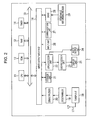
- Fig. 2 shows an example of the structure of a recording-playback apparatus 1 according to an embodiment of the present invention.
- a central processing unit (CPU) 11 performs a variety of processing in accordance with programs recorded in a read only memory (ROM) 12 or programs that are supplied from a storage unit 21 and are loaded in a random access memory (RAM) 13.
- the RAM 13 also stores data necessary for the CPU 11 to perform the variety of processing.
- the CPU 11, the ROM 12, the RAM 13, and a timer 14 counting a time are connected to each other via a bus 15.
- An input-output interface 16 is also connected to the bus 15.
- MPEG moving picture experts group
- a tuner unit 18 receives a digital TV broadcast program transmitted from a channel specified by a user (a TV station corresponding to the specified channel), among a plurality of channels, through an antenna 17 and supplies the received digital TV broadcast program to a descrambler 19.
- the descrambler 19 descrambles the transport stream supplied from the tuner unit 18, if necessary, and supplies the descrambled transport stream to the demultiplexer 20.
- the demultiplexer 20 isolates a video packet and an audio packet of a desired program from the transport stream supplied from the descrambler 19 and supplies the isolated video packet and audio packet to the MPEG decoder unit 22 through the input-output interface 16.
- the MPEG decoder unit 22 decodes the supplied packets in an MPEG format and converts the decoded packets into analog signals (a video signal and an audio signal).
- the MPEG decoder unit 22 supplies the generated video signal to an on screen display (OSD) processor unit 23 and supplies the generated audio signal to an audio output unit 24.
- OSD on screen display
- the MPEG decoder unit 22 acquires service information (SI) from the supplied packets and supplies the SI to the CPU 11.
- SI service information
- the OSD processor unit 23 superimposes required information on the supplied analog video signal and supplies the superimposed signal to a display unit 25.
- the display unit 25 displays the supplied video signal as a video.
- the audio output unit 24 outputs the audio signal corresponding to the video (the audio signal supplied from the MPEG decoder unit 22) as a sound.
- a drive 28 is connected to the input-output interface 16, if necessary.
- Computer programs read out from the removable recording medium 29 are installed in the storage unit 21, if necessary.
- the recording-playback apparatus 1 is not limited to a so-called hard disk recording apparatus and may be any apparatus capable of performing the process described below.
- the present invention is applicable to, for example, a digital versatile disk (DVD) recorder or a video cassette recorder.
- DVD digital versatile disk
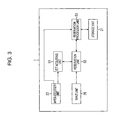
- Fig. 3 shows an example of the functional structure of part of the recording-playback apparatus 1 according to the embodiment of the present invention.
- the SI is supplied from the MPEG decoder unit 22 to an EIT acquiring unit 51 (realized by the components from the CPU 11 to the RAM 13) along with the video and audio transport streams of a TV broadcast program.
- the EIT acquiring unit 51 acquires an EIT from the supplied SI and supplies the acquired EIT to a reservation unit 52.
- the reservation unit 52 (realized by the components from the CPU 11 to the timer 14) stores the channel and the recording start and end times of the program which is supplied from the input unit 26 and for which the recording is reserved by the user to reserve the recording of the program.
- the reservation unit 52 appropriately changes the recording start and end times based on the broadcasting start time and the program length that are supplied from the EIT acquiring unit 51 and that are set in the EIT and, when the recording start or end time has arrived, the reservation unit 52 indicates to a reservation processor unit 53 that the recording start or end time has arrived.
- the reservation processor unit 53 records the reservation program in the storage unit 21 based on the recording start and end times indicated by the reservation unit 52.
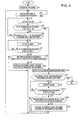
- Fig. 4 is a flowchart showing a recording reservation process.
- the recording reservation process is generally described with reference to Fig. 4 and, then, is specifically described with reference to an example shown in Fig. 5.
- the reservation unit 52 reserves a program (reservation program) specified by a user.
- a program reserved program
- the reservation unit 52 stores a channel in which the program is to be broadcasted, broadcasting start and end times of the program, and the recording start and end times corresponding to the broadcasting start and end times, which are supplied from the input unit 26.
- Step S2 the reservation unit 52 waits from the current time counted by the timer 14 until a time a predetermined time before the recording start time of the reservation program, and proceeds to Step S3 when the time the predetermined time before the recording start time has arrived.
- Step S3 the reservation unit 52 extracts an EIT[P] from the acquired EIT supplied from the EIT acquiring unit 51.
- Step S4 the reservation unit 52 determines whether the ID of the reservation program is set in the EIT[P] (determines whether the program currently broadcasted is the reservation program). If the reservation unit 52 determines that the ID of the reservation program is not set in the EIT[P] (determines that the program currently broadcasted is not the reservation program), the reservation unit 52 proceeds to Step S5.
- Step S5 the reservation unit 52 determines whether the recording of all the reservation programs has been started. If the reservation unit 52 determines that there are reservation programs for which the recording has not been started, the reservation unit 52 proceeds to Step S6.
- Step S6 the reservation unit 52 extracts an EIT[F] from the acquired EIT supplied from the EIT acquiring unit 51.
- Step S7 the reservation unit 52 determines whether the ID of the reservation program is set in the EIT[F]. If the reservation unit 52 determines that the ID of the reservation program is not set in the EIT[F], the reservation unit 52 goes back to Step S6 to extract an EIT[F] again. If the reservation unit 52 determines that the ID of the reservation program is set in the EIT[F], the reservation unit 52 proceeds to Step S8.
- the reservation unit 52 waits until the EIT[F] having the ID of the reservation program set therein is obtained in Steps S6 and S7 and, when the EIT[F] is obtained, the reservation unit 52 proceeds to Step S8.
- Step S8 the reservation unit 52 refers to the broadcasting start time, the program length, etc. (hereinafter referred to as time information) of the reservation program, set in the EIT[F], to determine whether the information concerning the reservation program has been changed. If the reservation unit 52 determines that the information concerning the reservation program has been changed (for example, when the broadcasting start time of the reservation program is delayed), the reservation unit 52 proceeds to Step S9.
- Step S9 the reservation unit 52 changes the recording start and end times of the reservation program, stored in the reservation, based on the broadcasting start time and the program length of the reservation program, set in the EIT[F].
- Step S8 If the reservation unit 52 determines in Step S8 that the information concerning the reservation program has not been changed or after the reservation unit 52 changes the recording start and end times in Step S9, the reservation unit 52 goes back to Step S2 to continue the subsequent steps.
- Step S4 If the reservation unit 52 determines in Step S4 that the ID of the reservation program is set in the EIT[P] (if the reservation program is being broadcasted), the reservation unit 52 proceeds to Step S10.
- Step S10 the reservation unit 52 indicates to the reservation processor unit 53 that the ID of the reservation program is set in the EIT[P], and the reservation processor unit 53 starts to record the reservation program. In this manner, the recording of the program (reservation program) whose ID is set in the EIT[P] is started.
- Step S11 the reservation unit 52 determines whether the recording of all the reservation programs has been started. If the reservation unit 52 determines that there are reservation programs for which the recording has not been started, the reservation unit 52 proceeds to Step S12.
- Step S12 the reservation unit 52 extracts an EIT[F].
- Step S13 the reservation unit 52 determines whether the ID of the reservation program is set in the EIT[F]. If the reservation unit 52 determines that the ID of the reservation program is not set in the EIT[F], the reservation unit 52 goes back to Step S12 to extract an EIT[F] again. If the reservation unit 52 determines that the ID of the reservation program is set in the EIT[F], the reservation unit 52 proceeds to Step S14.
- the reservation unit 52 waits until the EIT [F] having the ID of the reservation program set therein is obtained in Steps S12 and S13 and, when the EIT[F] is obtained, the reservation unit 52 proceeds to Step S14.
- Step S14 the reservation unit 52 refers to the broadcasting start time, the program length, etc. (the time information) of the reservation program, set in the EIT[F], to determine whether the information concerning the reservation program has been changed. If the reservation unit 52 determines that the information concerning the reservation program has been changed (for example, when the broadcasting start time of the reservation program is delayed), the reservation unit 52 proceeds to Step S15.
- Step S15 the reservation unit 52 changes the recording start and end times of the reservation program, based on the broadcasting start time and the program length of the reservation program, set in the EIT[F].
- Step S14 If the reservation unit 52 determines in Step S14 that the information concerning the reservation program has not been changed or after the reservation unit 52 changes the recording start and end times in Step S15, the reservation unit 52 goes back to Step S2 to continue the subsequent steps.
- Step S11 If the reservation unit 52 determines in Step S11 that the recording of all the reservation programs has been started, the reservation unit 52 terminates the process.
- Step S1 the process reserves recording of programs B1 and B2 in a predetermined channel in which programs are to be broadcasted according to a schedule shown in Fig. 5(A).
- the broadcasting start time of the program B1 is changed from a time t1 to a time t1" and the broadcasting start time of a program B2 is changed from a time t2 to a time t2".
- Step S2 the process waits from the current time counted by the timer 14 until a time t0 a predetermined time before a recording start time t1 of the program B1, which is to be broadcasted first among the reservation programs.
- Step S3 the process extracts an EIT[P].
- Step S4 the process determines whether the ID of the program B1 is set in the EIT[P].
- Step S4 is negative immediately after the time t0.
- Step S5 determines whether the recording of all the reservation programs has been started. Since the recording of the program B1 and the program B2 has not been started, the determination in Step S5 is negative and the process proceeds to Step S6.
- the process waits until the EIT[F] having the ID of the program B1 set therein is obtained in Steps S6 and S7.
- the process proceeds to Step S8.
- the EIT[F] indicating the information concerning the subsequent program is once made indeterminate and is changed (fixed) to the content of a program to be subsequently broadcasted at predetermined timing. Since the program B1 is fixed as the program to be broadcasted subsequent to the program A a predetermined time after the time t1 in this example, the process waits for the predetermined time until the EIT[F] having the ID of the program B1 set therein is obtained.
- Step S9 the recording start time of the program B1 is changed to the time t1" based on the broadcasting start time t1" (the changed time) and the program length of the program B1, set in the EIT[F].
- Step S2 The process goes back to Step S2 and waits until a time t1' immediately before the time t1".
- Step S3 the process determines whether the ID of the program B1 is set in the EIT [P] .
- Step S4 Since the ID of the program B1 is set in the EIT [P] at this timing, the determination in Step S4 is affirmative.
- Step S10 the process starts to record the program B1, as shown in Fig. 5(C).
- Step S11 the process determines whether the recording of both the programs B1 and B2 has been started. Since the recording of the program B2 has not been started yet, the process proceeds to Step S12 to extract an EIT[F].
- the process waits until the EIT[F] having the ID of the program B2 set therein is obtained in Steps S12 and S13.
- the process proceeds to Step S15 through Step S14.
- Step S15 the recording start time of the program B2 is changed to the time t2" based on the broadcasting start time t2" (the changed time) and the program length of the program B2, set in the EIT[F].
- Step S2 The process goes back to Step S2 and waits from the current time counted by the timer 14 until a time t2' immediately before the recording start time t2" of the program B2 (the recording of the program B1, started in Step S10, is continued during this waiting time).
- the process proceeds to Step S3 to extract an EIT[P].
- Step S4 the process determines whether the ID of the program B2 is set in the EIT [P] .
- Step S4 Since the ID of the program B2 is set in the EIT[P] at this timing, the determination in Step S4 is affirmative.
- Step S10 the process starts to record the program B2, as shown in Fig. 5(C).
- Step S11 the process determines whether the recording of both the programs B1 and B2 has been started. Since the recording of the subsequent programs B1 and B2 has been started, the determination in Step S11 is affirmative and the process terminates.
- the process refers to the EIT [F] to change the recording start times, etc. of the corresponding programs in the manner described above. As a result, it is possible to appropriately record a plurality of programs.
- the present invention is not limited to the reservation of the recording and is applicable to any process as long as it is to be started at a predetermined time.
- EIT[F] and the EIT[P] are used in the above description, for example, an EIT [scheduled] indicating TV programs for one week may be used.
- the series of processing described above may be performed by hardware or may be performed by software.
- the programs in the software are installed in a computer that executes the programs to functionally realize the recording-playback apparatus 1 described above.
- the steps describing the programs supplied from the recording medium may be performed in time series in the described order, or may be performed in parallel or individually.
- the present invention contains subject matter related to Japanese Patent Application JP 2004-238228 filed in the Japanese Patent Office on August 18, 2004, the entire contents of which are incorporated herein by reference.
Landscapes
- Engineering & Computer Science (AREA)
- Signal Processing (AREA)
- Multimedia (AREA)
- Two-Way Televisions, Distribution Of Moving Picture Or The Like (AREA)
- Signal Processing For Digital Recording And Reproducing (AREA)
- Television Signal Processing For Recording (AREA)
Abstract
Description
- The present invention relates to information processing apparatuses, information processing methods, and programs. Particularly, the present invention relates to an information processing apparatus, an information processing method, and a program which are capable of appropriate recording reservation of a plurality of programs.
- Recording-playback apparatuses that record and play back television (TV) programs on recording media, such as hard disks or optical disks, have been developed. Presetting such recording-playback apparatuses to record TV programs (reserving the TV programs to be recorded by the recording-playback apparatuses) allows users to watch the TV programs after the TV programs were broadcasted, for example, even if the users were away from home during the broadcasting time.
- There are cases where the program precedent to a reservation program (for example, a live program of a sports game, such as baseball or soccer) is extended and the broadcasting start time of the reservation program is delayed.
- In such cases, the recording-playback apparatus starts to record the TV program which is actually broadcasted in the corresponding channel (the TV program precedent to a reservation program) on the recording media at the recording start time of the reservation program, and terminates the recording of the reservation program at a time when the broadcasting of the reservation program has not been completed (at the recording end time). As a result, it may be impossible to appropriately record the reservation program.
- For example, Japanese Unexamined Patent Application Publication No. 2004-032128 discloses a reservation method for digital TV broadcast programs, described below with reference to Fig. 1.
- In the example shown in Fig. 1, recording of a program B1 in a predetermined channel in which programs are to be broadcasted according to a schedule shown in Fig. 1 (A) is reserved. However, since a program A precedent to the program B1 is extended as shown in Fig. 1(B), the broadcasting start time of the program B1 is changed from a time tS1 to a time tS1".
- A recording-playback apparatus stores identification information (ID) (EventID) of the reservation program B1, the recording start time and end time corresponding to the broadcasting start time and the program length of the program B1, and so on in the reservation.
- The recording-playback apparatus selects a channel of the program B1 at a time t0 a predetermined time before the recording start time tS1 of the program B1. The recording-playback apparatus starts to acquire an event information table EIT[P] and an EIT[F] from a broadcast signal and to determine whether the ID of the program B1 is included in the EIT[P] and the EIT[F].
- The EITs are included in service information transmitted along with video and audio transport streams of a program. The EITs include the EIT[P] in which the name, the content, the broadcasting start time, and the program length (hereinafter collectively referred to as program information when it is not necessary to differentiate them) of a program currently broadcasted are described and the EIT[F] in which the program information of a program to be subsequently broadcasted is described.
- Referring to Fig. 1(B), since the program A is continued to be broadcasted at the time tS1 when the program B1 is scheduled to be broadcasted, the EIT[P] includes the ID of the program A and does not include the ID of the program B1. The EIT[F] is made indeterminate when the extension of the program A is determined, and is changed (fixed) at predetermined timing (at a predetermined time after the broadcasting start time tS1).
- Specifically, since the ID of the program B1 is not set in the EIT[P] and the EIT[F] at the time tS1 in Fig. 1(B), the recording-playback apparatus does not start to record the program B1. After the ID of the program B1 is set in the EIT[F], the recording-playback apparatus changes the recording start time from the time tS1 to the time tS1" based on the broadcasting start time tS1" of the program B1, set in the EIT[F]. At a time tS1' a predetermined time before the time tS1", the recording-playback apparatus starts to acquire the EIT[P] and the EIT[F] and to determine whether the ID of the program B1 is included in the EIT[P] and the EIT[F].
- Since the EIT[P] having the ID of the program B1 set therein is acquired at the time tS1", the recording-playback apparatus starts to record the program B1 at the time tS1". As a result, the program B1 is recorded on the recording medium in the recording-playback apparatus, as shown in Fig. 1 (C) .
- The programs are recorded in the manner shown in Fig. 1 when the recording of one program is reserved. In contrast, the following problem is caused when the recording of two or more programs are reserved.
- For example, when the recording of the program B1 is started in the manner described above where the recording of the program B1 and a program B2 are to be reserved in the example shown in Fig. 1, the acquisition of the EITs and the determination of whether the ID of the program B2 is set are not performed during a period from the time tS1" to a time tE2". As a result, since the recording of the program B1 is completed (at the time tE2") after a recording end time tE2' of the program B2, which is set in the reservation, it is presumed that the program B2 is completed. Consequently, the reserved recording of the program B2 is cancelled and the program B2 is not recorded.
- It is desirable to perform appropriate recording reservation of a plurality of programs in digital TV broadcasting.
- According to an embodiment of the present invention, there is provided an information processing apparatus including reservation means for reserving predetermined processing for a digital television broadcast program, the predetermined processing being started in accordance with conditions corresponding to a broadcast schedule of the digital television broadcast program; processing means for starting the processing, reserved by the reservation means, for the digital television broadcast program in accordance with the conditions; and acquiring means for acquiring the broadcast schedule of the digital television broadcast program. The reservation means obtains a broadcast schedule of another digital television broadcast program for which the processing is reserved and which is to be broadcasted subsequent to the digital television broadcast program, the broadcast schedule being acquired by the acquiring means, when the processing reserved for the digital television broadcast program is started by the processing means. The reservation means changes the conditions of the processing reserved for the other digital television broadcast program in accordance with the obtained broadcast schedule.
- According to an embodiment of the present invention, there is provided an information processing method including the steps of reserving in advance predetermined processing for a digital television broadcast program, the predetermined processing being started in accordance with conditions corresponding to a broadcast schedule of the digital television broadcast program; starting the processing, reserved in the reserving step, for the digital television broadcast program in accordance with the conditions; and acquiring the broadcast schedule of the digital television broadcast program. A broadcast schedule of another digital television broadcast program for which the processing is reserved and which is to be broadcasted subsequent to the digital television broadcast program, the broadcast schedule being acquired in the acquiring step, is obtained in the reserving step when the processing reserved for the digital television broadcast program is started. The conditions of the processing reserved for the other digital television broadcast program are changed in the reserving step in accordance with the obtained broadcast schedule.
- According to an embodiment of the present invention, there is provided a program causing a computer to perform information processing including the steps of reserving in advance predetermined processing for a digital television broadcast program, the predetermined processing being started in accordance with conditions corresponding to a broadcast schedule of the digital television broadcast program; starting the processing, reserved in the reserving step, for the digital television broadcast program in accordance with the conditions; and acquiring the broadcast schedule of the digital television broadcast program. A broadcast schedule of another digital television broadcast program for which the processing is reserved and which is to be broadcasted subsequent to the digital television broadcast program, the broadcast schedule being acquired in the acquiring step, is obtained in the reserving step when the processing reserved for the digital television broadcast program is started. The conditions of the processing reserved for the other digital television broadcast program are changed in the reserving step in accordance with the obtained broadcast schedule.
- In the information processing apparatus, the information processing method, and the program according to the embodiments of the present invention, predetermined processing for a digital television broadcast program is reserved in advance, the predetermined processing being started in accordance with conditions corresponding to a broadcast schedule of the digital television broadcast program; the reserved processing is started for the digital television broadcast program in accordance with the conditions; and the broadcast schedule of the digital television broadcast program is acquired. When the processing reserved for the digital television broadcast program is started, an acquired broadcast schedule of another digital television broadcast program for which the processing is reserved and which is to be broadcasted subsequent to the broadcast program is obtained. The conditions of the processing reserved for the other digital television broadcast program are changed in accordance with the obtained broadcast schedule.
- According to embodiments of the present invention, it is possible to perform appropriate recording reservation of a plurality of programs in the digital television broadcasting.
- Further particular and preferred aspects of the present invention are set out in the accompanying independent and dependent claims. Features of the dependent claims may be combined with features of the independent claims as appropriate, and in combinations other than those explicitly set out in the claims.
- The present invention will be described further, by way of example only, with reference to preferred embodiments thereof as illustrated in the accompanying drawings, in which:
- Fig. 1 illustrates a recording reservation method in related art;
- Fig. 2 is a block diagram showing an example of the structure of a recording-playback apparatus according to an embodiment of the present invention;
- Fig. 3 is a block diagram showing an example of the functional structure of part of the recording-playback apparatus according to the embodiment of the present invention;
- Fig. 4 is a flowchart illustrating a recording reservation process in the recording-playback apparatus in Fig. 3; and
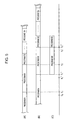
- Fig. 5 illustrates the recording reservation process in Fig. 4.
- The relationship between the invention described in this specification and the embodiments is described next. The following description is intended to confirm whether the embodiments supporting the invention in the specification are described in the specification. Accordingly, even when some embodiments are described in the embodiments but not described in the following description as the elements of the present invention, it does not mean that the embodiments do not correspond to the invention. Conversely, even when embodiments are described in the following description as the elements of the present invention, it does not mean that the embodiments do not correspond to other elements of the invention.
- In addition, there may be inventive features in the following description that are not part of the invention described in the claims. In other words, the following description does not imply denial of the presence of inventive features that are described in the specification but are not described in the claims, that is, of the presence of inventive features that could be filed as a divisional application or that may be additionally claimed as an amendment.
- According to an embodiment of the present invention an information processing apparatus is provided including a reservation unit (for example, a
reservation unit 52 in Fig. 3) for reserving predetermined processing for a digital television broadcast program, the predetermined processing being started in accordance with conditions corresponding to a broadcast schedule of the digital television broadcast program; a processing unit (for example, areservation processor unit 53 in Fig. 3) for starting the processing, reserved by the reservation unit, for the digital television broadcast program in accordance with the conditions; and an acquiring unit (for example, an EIT acquiringunit 51 in Fig. 3) for acquiring the broadcast schedule of the digital television broadcast program. The reservation unit obtains a broadcast schedule of another digital television broadcast program for which the processing is reserved and which is to be broadcasted subsequent to the digital television broadcast program, the broadcast schedule being acquired by the acquiring unit, when the processing reserved for the digital television broadcast program is started by the processing unit. The reservation unit changes the conditions of the processing reserved for the other digital television broadcast program in accordance with the obtained broadcast schedule. - According to another embodiment of the present invention an information processing method is provided including the steps of reserving in advance predetermined processing for a digital television broadcast program, the predetermined processing being started in accordance with conditions corresponding to a broadcast schedule of the digital television broadcast program (for example, Step S1 in Fig. 4); starting the processing, reserved in the reserving step, for the digital television broadcast program in accordance with the conditions (for example, Step S10 in Fig. 4); and acquiring the broadcast schedule of the digital television broadcast program (for example, Steps S3, S6, and S11 in Fig. 4). A broadcast schedule of another digital television broadcast program for which the processing is reserved and which is to be broadcasted subsequent to the digital television broadcast program, the broadcast schedule being acquired in the acquiring step, is obtained in the reserving step (for example, Step S12 in Fig. 4) when the processing reserved for the digital television broadcast program is started (for example, Step S10 in Fig. 4). The conditions of the processing reserved for the other digital television broadcast program are changed in the reserving step in accordance with the obtained broadcast schedule (for example, Step S15 in Fig. 4).
- Fig. 2 shows an example of the structure of a recording-
playback apparatus 1 according to an embodiment of the present invention. - Referring to Fig. 2, a central processing unit (CPU) 11 performs a variety of processing in accordance with programs recorded in a read only memory (ROM) 12 or programs that are supplied from a
storage unit 21 and are loaded in a random access memory (RAM) 13. TheRAM 13 also stores data necessary for theCPU 11 to perform the variety of processing. - The
CPU 11, theROM 12, theRAM 13, and atimer 14 counting a time are connected to each other via abus 15. An input-output interface 16 is also connected to thebus 15. - A
demultiplexer 20, a moving picture experts group (MPEG)decoder unit 22, and thestorage unit 21, which is, for example, a hard disk, are connected to the input-output interface 16. - A
tuner unit 18 receives a digital TV broadcast program transmitted from a channel specified by a user (a TV station corresponding to the specified channel), among a plurality of channels, through anantenna 17 and supplies the received digital TV broadcast program to adescrambler 19. - The
descrambler 19 descrambles the transport stream supplied from thetuner unit 18, if necessary, and supplies the descrambled transport stream to thedemultiplexer 20. - The
demultiplexer 20 isolates a video packet and an audio packet of a desired program from the transport stream supplied from thedescrambler 19 and supplies the isolated video packet and audio packet to theMPEG decoder unit 22 through the input-output interface 16. - The
MPEG decoder unit 22 decodes the supplied packets in an MPEG format and converts the decoded packets into analog signals (a video signal and an audio signal). TheMPEG decoder unit 22 supplies the generated video signal to an on screen display (OSD)processor unit 23 and supplies the generated audio signal to anaudio output unit 24. In addition, theMPEG decoder unit 22 acquires service information (SI) from the supplied packets and supplies the SI to theCPU 11. - The
OSD processor unit 23 superimposes required information on the supplied analog video signal and supplies the superimposed signal to adisplay unit 25. Thedisplay unit 25 displays the supplied video signal as a video. Theaudio output unit 24 outputs the audio signal corresponding to the video (the audio signal supplied from the MPEG decoder unit 22) as a sound. - An
input unit 26 with which the user inputs instructions and acommunication unit 27 used for communication over a network, including the Internet, are also connected to the input-output interface 16. - A
drive 28 is connected to the input-output interface 16, if necessary. Aremovable recording medium 29, such as a magnetic disk, an optical disk, a magneto-optical disk, or a semiconductor memory, is appropriately loaded in thedrive 28. Computer programs read out from theremovable recording medium 29 are installed in thestorage unit 21, if necessary. - The recording-
playback apparatus 1 is not limited to a so-called hard disk recording apparatus and may be any apparatus capable of performing the process described below. For example, the present invention is applicable to, for example, a digital versatile disk (DVD) recorder or a video cassette recorder. - Fig. 3 shows an example of the functional structure of part of the recording-
playback apparatus 1 according to the embodiment of the present invention. - Referring to Fig. 3, the SI is supplied from the
MPEG decoder unit 22 to an EIT acquiring unit 51 (realized by the components from theCPU 11 to the RAM 13) along with the video and audio transport streams of a TV broadcast program. TheEIT acquiring unit 51 acquires an EIT from the supplied SI and supplies the acquired EIT to areservation unit 52. - The reservation unit 52 (realized by the components from the
CPU 11 to the timer 14) stores the channel and the recording start and end times of the program which is supplied from theinput unit 26 and for which the recording is reserved by the user to reserve the recording of the program. - The
reservation unit 52 appropriately changes the recording start and end times based on the broadcasting start time and the program length that are supplied from theEIT acquiring unit 51 and that are set in the EIT and, when the recording start or end time has arrived, thereservation unit 52 indicates to areservation processor unit 53 that the recording start or end time has arrived. - The
reservation processor unit 53 records the reservation program in thestorage unit 21 based on the recording start and end times indicated by thereservation unit 52. - Fig. 4 is a flowchart showing a recording reservation process. The recording reservation process is generally described with reference to Fig. 4 and, then, is specifically described with reference to an example shown in Fig. 5.
- Referring to Fig. 4, in Step S1, the
reservation unit 52 reserves a program (reservation program) specified by a user. In this example, a plurality of broadcast programs is reserved. For example, when the user operates theinput unit 26 to specify the program for which the recording is reserved, thereservation unit 52 stores a channel in which the program is to be broadcasted, broadcasting start and end times of the program, and the recording start and end times corresponding to the broadcasting start and end times, which are supplied from theinput unit 26. - In Step S2, the
reservation unit 52 waits from the current time counted by thetimer 14 until a time a predetermined time before the recording start time of the reservation program, and proceeds to Step S3 when the time the predetermined time before the recording start time has arrived. - In Step S3, the
reservation unit 52 extracts an EIT[P] from the acquired EIT supplied from theEIT acquiring unit 51. In Step S4, thereservation unit 52 determines whether the ID of the reservation program is set in the EIT[P] (determines whether the program currently broadcasted is the reservation program). If thereservation unit 52 determines that the ID of the reservation program is not set in the EIT[P] (determines that the program currently broadcasted is not the reservation program), thereservation unit 52 proceeds to Step S5. - In Step S5, the
reservation unit 52 determines whether the recording of all the reservation programs has been started. If thereservation unit 52 determines that there are reservation programs for which the recording has not been started, thereservation unit 52 proceeds to Step S6. - In Step S6, the
reservation unit 52 extracts an EIT[F] from the acquired EIT supplied from theEIT acquiring unit 51. In Step S7, thereservation unit 52 determines whether the ID of the reservation program is set in the EIT[F]. If thereservation unit 52 determines that the ID of the reservation program is not set in the EIT[F], thereservation unit 52 goes back to Step S6 to extract an EIT[F] again. If thereservation unit 52 determines that the ID of the reservation program is set in the EIT[F], thereservation unit 52 proceeds to Step S8. - In other words, the
reservation unit 52 waits until the EIT[F] having the ID of the reservation program set therein is obtained in Steps S6 and S7 and, when the EIT[F] is obtained, thereservation unit 52 proceeds to Step S8. - In Step S8, the
reservation unit 52 refers to the broadcasting start time, the program length, etc. (hereinafter referred to as time information) of the reservation program, set in the EIT[F], to determine whether the information concerning the reservation program has been changed. If thereservation unit 52 determines that the information concerning the reservation program has been changed (for example, when the broadcasting start time of the reservation program is delayed), thereservation unit 52 proceeds to Step S9. - In Step S9, the
reservation unit 52 changes the recording start and end times of the reservation program, stored in the reservation, based on the broadcasting start time and the program length of the reservation program, set in the EIT[F]. - If the
reservation unit 52 determines in Step S8 that the information concerning the reservation program has not been changed or after thereservation unit 52 changes the recording start and end times in Step S9, thereservation unit 52 goes back to Step S2 to continue the subsequent steps. - If the
reservation unit 52 determines in Step S4 that the ID of the reservation program is set in the EIT[P] (if the reservation program is being broadcasted), thereservation unit 52 proceeds to Step S10. In Step S10, thereservation unit 52 indicates to thereservation processor unit 53 that the ID of the reservation program is set in the EIT[P], and thereservation processor unit 53 starts to record the reservation program. In this manner, the recording of the program (reservation program) whose ID is set in the EIT[P] is started. - In Step S11, the
reservation unit 52 determines whether the recording of all the reservation programs has been started. If thereservation unit 52 determines that there are reservation programs for which the recording has not been started, thereservation unit 52 proceeds to Step S12. - In Step S12, the
reservation unit 52 extracts an EIT[F]. In Step S13, thereservation unit 52 determines whether the ID of the reservation program is set in the EIT[F]. If thereservation unit 52 determines that the ID of the reservation program is not set in the EIT[F], thereservation unit 52 goes back to Step S12 to extract an EIT[F] again. If thereservation unit 52 determines that the ID of the reservation program is set in the EIT[F], thereservation unit 52 proceeds to Step S14. - In other words, the
reservation unit 52 waits until the EIT [F] having the ID of the reservation program set therein is obtained in Steps S12 and S13 and, when the EIT[F] is obtained, thereservation unit 52 proceeds to Step S14. - In Step S14, the
reservation unit 52 refers to the broadcasting start time, the program length, etc. (the time information) of the reservation program, set in the EIT[F], to determine whether the information concerning the reservation program has been changed. If thereservation unit 52 determines that the information concerning the reservation program has been changed (for example, when the broadcasting start time of the reservation program is delayed), thereservation unit 52 proceeds to Step S15. - In Step S15, the
reservation unit 52 changes the recording start and end times of the reservation program, based on the broadcasting start time and the program length of the reservation program, set in the EIT[F]. - If the
reservation unit 52 determines in Step S14 that the information concerning the reservation program has not been changed or after thereservation unit 52 changes the recording start and end times in Step S15, thereservation unit 52 goes back to Step S2 to continue the subsequent steps. - If the
reservation unit 52 determines in Step S11 that the recording of all the reservation programs has been started, thereservation unit 52 terminates the process. - The recording reservation process will be specifically described with reference to the example shown in Fig. 5(A). In this example, in Step S1, the process reserves recording of programs B1 and B2 in a predetermined channel in which programs are to be broadcasted according to a schedule shown in Fig. 5(A). However, since a program A precedent to the program B1 is extended as shown in Fig. 5(B), the broadcasting start time of the program B1 is changed from a time t1 to a time t1" and the broadcasting start time of a program B2 is changed from a time t2 to a time t2".
- In Step S2, the process waits from the current time counted by the
timer 14 until a time t0 a predetermined time before a recording start time t1 of the program B1, which is to be broadcasted first among the reservation programs. - When the time t0 the predetermined time before the recording start time t1 of the program B1 has arrived, in Step S3, the process extracts an EIT[P]. In Step S4, the process determines whether the ID of the program B1 is set in the EIT[P].
- Since the broadcasting time of the program A precedent to the program B1 is extended to the time t1" and the program A is being broadcasted until the time t1" in this example, the ID of the program A is set and the ID of the program B1 is not set in the EIT[P] until the time t1". Accordingly, the determination in Step S4 is negative immediately after the time t0.
- The process proceeds to Step S5 to determine whether the recording of all the reservation programs has been started. Since the recording of the program B1 and the program B2 has not been started, the determination in Step S5 is negative and the process proceeds to Step S6.
- The process waits until the EIT[F] having the ID of the program B1 set therein is obtained in Steps S6 and S7. When the EIT[F] is obtained, the process proceeds to Step S8.
- Normally, when the program currently being broadcasted is extended, the EIT[F] indicating the information concerning the subsequent program is once made indeterminate and is changed (fixed) to the content of a program to be subsequently broadcasted at predetermined timing. Since the program B1 is fixed as the program to be broadcasted subsequent to the program A a predetermined time after the time t1 in this example, the process waits for the predetermined time until the EIT[F] having the ID of the program B1 set therein is obtained.
- When the EIT[F] having the ID of the program B1 set therein is obtained, the process proceeds to Step S9 through Step S8 because the broadcasting start time (the time information) has been changed. In Step S9, the recording start time of the program B1 is changed to the time t1" based on the broadcasting start time t1" (the changed time) and the program length of the program B1, set in the EIT[F].
- The process goes back to Step S2 and waits until a time t1' immediately before the time t1".
- When the time t1' has arrived, the process proceeds to Step S3 to extract an EIT[P]. In Step S4, the process determines whether the ID of the program B1 is set in the EIT [P] .
- Since the ID of the program B1 is set in the EIT [P] at this timing, the determination in Step S4 is affirmative.
- In Step S10, the process starts to record the program B1, as shown in Fig. 5(C).
- In Step S11, the process determines whether the recording of both the programs B1 and B2 has been started. Since the recording of the program B2 has not been started yet, the process proceeds to Step S12 to extract an EIT[F].
- The process waits until the EIT[F] having the ID of the program B2 set therein is obtained in Steps S12 and S13. When the EIT[F] is obtained, the process proceeds to Step S15 through Step S14.
- In Step S15, the recording start time of the program B2 is changed to the time t2" based on the broadcasting start time t2" (the changed time) and the program length of the program B2, set in the EIT[F].
- The process goes back to Step S2 and waits from the current time counted by the
timer 14 until a time t2' immediately before the recording start time t2" of the program B2 (the recording of the program B1, started in Step S10, is continued during this waiting time). When the recording start time t2' has arrived, the process proceeds to Step S3 to extract an EIT[P]. In Step S4, the process determines whether the ID of the program B2 is set in the EIT [P] . - Since the ID of the program B2 is set in the EIT[P] at this timing, the determination in Step S4 is affirmative.
- In Step S10, the process starts to record the program B2, as shown in Fig. 5(C).
- In Step S11, the process determines whether the recording of both the programs B1 and B2 has been started. Since the recording of the subsequent programs B1 and B2 has been started, the determination in Step S11 is affirmative and the process terminates.
- When there are reservation programs for which the recording has not been started, the process refers to the EIT [F] to change the recording start times, etc. of the corresponding programs in the manner described above. As a result, it is possible to appropriately record a plurality of programs.
- Although the reservation of the recording is exemplified above, the present invention is not limited to the reservation of the recording and is applicable to any process as long as it is to be started at a predetermined time.
- Although the EIT[F] and the EIT[P] are used in the above description, for example, an EIT [scheduled] indicating TV programs for one week may be used.
- The series of processing described above may be performed by hardware or may be performed by software. When the series of processing is performed by software, the programs in the software are installed in a computer that executes the programs to functionally realize the recording-
playback apparatus 1 described above. - In the specification, the steps describing the programs supplied from the recording medium may be performed in time series in the described order, or may be performed in parallel or individually.
- The present invention contains subject matter related to Japanese Patent Application JP 2004-238228 filed in the Japanese Patent Office on August 18, 2004, the entire contents of which are incorporated herein by reference.
- Although particular embodiments have been described herein, it will be appreciated that the invention is not limited thereto and that many modifications and additions thereto may be made within the scope of the invention. For example, various combinations of the features of the following dependent claims can be made with the features of the independent claims without departing from the scope of the present invention.
Claims (7)
- An information processing apparatus comprising:a reservation unit reserving predetermined processing for a broadcast program, the predetermined processing being started in accordance with conditions corresponding to program information concerning the broadcast program;a processing unit starting the processing, reserved by the reservation unit, for the broadcast program in accordance with the conditions; andan acquiring unit acquiring the program information,wherein the reservation unit obtains program information concerning another broadcast program for which the processing is reserved and which is to be broadcasted subsequent to the broadcast program, the program information being acquired by the acquiring unit, if the processing reserved for the broadcast program is started by the processing unit, andwherein the reservation unit changes the conditions of the processing reserved for the other broadcast program in accordance with the obtained program information concerning the other broadcast program.
- The information processing apparatus according to Claim 1,
wherein the program information includes at least information concerning a first broadcast program being currently broadcasted and information concerning a second broadcast program to be broadcasted subsequent to the first broadcast program. - The information processing apparatus according to Claim 1,
wherein the broadcast program is a digital television broadcast program. - The information processing apparatus according to Claim 1,
wherein the program information is program information concerning a digital television broadcast program. - An information processing apparatus comprising:reservation means for reserving predetermined processing for a broadcast program, the predetermined processing being started in accordance with conditions corresponding to program information concerning the broadcast program;processing means for starting the processing, reserved by the reservation means, for the broadcast program in accordance with the conditions; andacquiring means for acquiring the program information,wherein the reservation means obtains program information concerning another broadcast program for which the processing is reserved and which is to be broadcasted subsequent to the broadcast program, the program information being acquired by the acquiring means, if the processing reserved for the broadcast program is started by the processing means, andwherein the reservation means changes the conditions of the processing reserved for the other broadcast program in accordance with the obtained program information concerning the other broadcast program.
- An information processing method comprising the steps of:reserving in advance predetermined processing for a broadcast program, the predetermined processing being started in accordance with conditions corresponding to program information concerning the broadcast program;starting the processing, reserved in the reserving step, for the broadcast program in accordance with the conditions; andacquiring the program information,wherein program information concerning another broadcast program for which the processing is reserved and which is to be broadcasted subsequent to the broadcast program, the program information being acquired in the acquiring step, is obtained in the reserving step if the processing reserved for the broadcast program is started, andwherein the conditions of the processing reserved for the other broadcast program are changed in the reserving step in accordance with the obtained program information concerning the other broadcast program.
- A program causing a computer to perform information processing comprising the steps of:reserving in advance predetermined processing for a broadcast program, the predetermined processing being started in accordance with conditions corresponding to program information concerning the broadcast program;starting the processing, reserved in the reserving step, for the broadcast program in accordance with the conditions; andacquiring the program information,wherein program information concerning another broadcast program for which the processing is reserved and which is to be broadcasted subsequent to the broadcast program, the program information being acquired in the acquiring step, is obtained in the reserving step if the processing reserved for the broadcast program is started, andwherein the conditions of the processing reserved for the other broadcast program are changed in the reserving step in accordance with the obtained program information concerning the other broadcast program.
Applications Claiming Priority (1)
| Application Number | Priority Date | Filing Date | Title |
|---|---|---|---|
| JP2004238228A JP4264827B2 (en) | 2004-08-18 | 2004-08-18 | Information processing apparatus and method, and program |
Publications (2)
| Publication Number | Publication Date |
|---|---|
| EP1635564A2 true EP1635564A2 (en) | 2006-03-15 |
| EP1635564A3 EP1635564A3 (en) | 2006-04-26 |
Family
ID=35502006
Family Applications (1)
| Application Number | Title | Priority Date | Filing Date |
|---|---|---|---|
| EP05254981A Withdrawn EP1635564A3 (en) | 2004-08-18 | 2005-08-10 | Information processing apparatus, information processing method, and program |
Country Status (5)
| Country | Link |
|---|---|
| US (1) | US8009967B2 (en) |
| EP (1) | EP1635564A3 (en) |
| JP (1) | JP4264827B2 (en) |
| KR (1) | KR101119683B1 (en) |
| CN (1) | CN1747538B (en) |
Families Citing this family (2)
| Publication number | Priority date | Publication date | Assignee | Title |
|---|---|---|---|---|
| JP4914102B2 (en) * | 2006-04-14 | 2012-04-11 | キヤノン株式会社 | Receiver |
| KR100782568B1 (en) * | 2006-10-18 | 2007-12-06 | 주식회사 알티캐스트 | System and method of reservation of interest in broadcast program |
Citations (3)
| Publication number | Priority date | Publication date | Assignee | Title |
|---|---|---|---|---|
| WO2002043066A1 (en) * | 2000-11-22 | 2002-05-30 | Lg Electronics Inc. | Method for providing program specific information recorded on high density disc medium |
| JP2004032128A (en) | 2002-06-24 | 2004-01-29 | Sony Corp | Information recording apparatus and method, recording medium, and program |
| JP2004238228A (en) | 2003-02-04 | 2004-08-26 | Shinetsu Quartz Prod Co Ltd | Manufacturing method of glass preform for optical fiber by soot method with small variation in outer diameter and few defective parts at both ends |
Family Cites Families (21)
| Publication number | Priority date | Publication date | Assignee | Title |
|---|---|---|---|---|
| US5659653A (en) * | 1978-09-11 | 1997-08-19 | Thomson Consumer Electronics, S.A. | Method for programming a recording device and programming device |
| DE3023619C2 (en) * | 1980-06-24 | 1984-07-12 | WOCO Franz-Josef Wolf & Co, 6483 Bad Soden-Salmünster | Seal for a socket connection |
| GB8824090D0 (en) * | 1988-10-14 | 1988-11-23 | Tindall A P | Video recording control device |
| IT1238135B (en) * | 1989-10-23 | 1993-07-09 | Roberto Dini | SYSTEM FOR THE AUTOMATIC REGISTRATION OF A TELEVISION PROGRAM. |
| US5469207A (en) * | 1989-12-06 | 1995-11-21 | British Broadcasting Corporation | Method of labelling a broadcast signal including transmitting a sequence of program labels |
| GB2238925B (en) * | 1989-12-06 | 1994-01-12 | British Broadcasting Corp | Improved programme delivery control |
| US5285265A (en) * | 1990-12-15 | 1994-02-08 | Samsung Electronics, Co. Ltd. | Display apparatus informing of programmed recording |
| JP3371158B2 (en) * | 1993-07-23 | 2003-01-27 | ソニー株式会社 | Broadcast receiver |
| US5963264A (en) * | 1997-10-30 | 1999-10-05 | Echostar Engineering Corporation | Selecting a digital television program and the control of a non-attached recording device |
| JP3466071B2 (en) * | 1997-12-05 | 2003-11-10 | 松下電器産業株式会社 | Broadcast receiver |
| JPH11259927A (en) * | 1998-03-06 | 1999-09-24 | Matsushita Electric Ind Co Ltd | Program recording reservation device |
| JP2000123440A (en) * | 1998-10-20 | 2000-04-28 | Toshiba Corp | Receiver |
| WO2001019002A1 (en) * | 1999-09-03 | 2001-03-15 | Ntt Advanced Technology Corporation | Program information transmitter, communication system, program information transmitting method, program recording instructing method, and program purchasing instructing method |
| US6433878B1 (en) * | 2001-01-29 | 2002-08-13 | Timbre Technology, Inc. | Method and apparatus for the determination of mask rules using scatterometry |
| US20030069964A1 (en) * | 2001-10-04 | 2003-04-10 | Shteyn Yevgeniy Eugene | Digital content catering system |
| JP2003134429A (en) | 2001-10-23 | 2003-05-09 | Funai Electric Co Ltd | Reservation video recorder |
| JP2003134431A (en) | 2001-10-26 | 2003-05-09 | Victor Co Of Japan Ltd | Recording method for broadcast program, broadcast program recording device, and program for broadcast program recording |
| US7600246B2 (en) * | 2002-04-17 | 2009-10-06 | Microsoft Corporation | Method and apparatus for analyzing program data |
| US7212730B2 (en) * | 2002-06-27 | 2007-05-01 | International Business Machines Corporation | System and method for enhanced edit list for recording options |
| US20040043724A1 (en) * | 2002-09-03 | 2004-03-04 | Weast John C. | Automated continued recording in case of program overrun |
| JP2004363647A (en) | 2003-05-30 | 2004-12-24 | Toshiba Corp | Video recording / reproducing apparatus and video recording method |
-
2004
- 2004-08-18 JP JP2004238228A patent/JP4264827B2/en not_active Expired - Fee Related
-
2005
- 2005-08-10 EP EP05254981A patent/EP1635564A3/en not_active Withdrawn
- 2005-08-16 KR KR1020050074792A patent/KR101119683B1/en not_active Expired - Fee Related
- 2005-08-16 US US11/204,043 patent/US8009967B2/en not_active Expired - Fee Related
- 2005-08-18 CN CN2005100915209A patent/CN1747538B/en not_active Expired - Fee Related
Patent Citations (3)
| Publication number | Priority date | Publication date | Assignee | Title |
|---|---|---|---|---|
| WO2002043066A1 (en) * | 2000-11-22 | 2002-05-30 | Lg Electronics Inc. | Method for providing program specific information recorded on high density disc medium |
| JP2004032128A (en) | 2002-06-24 | 2004-01-29 | Sony Corp | Information recording apparatus and method, recording medium, and program |
| JP2004238228A (en) | 2003-02-04 | 2004-08-26 | Shinetsu Quartz Prod Co Ltd | Manufacturing method of glass preform for optical fiber by soot method with small variation in outer diameter and few defective parts at both ends |
Also Published As
| Publication number | Publication date |
|---|---|
| CN1747538A (en) | 2006-03-15 |
| EP1635564A3 (en) | 2006-04-26 |
| JP4264827B2 (en) | 2009-05-20 |
| KR101119683B1 (en) | 2012-03-16 |
| US20060041911A1 (en) | 2006-02-23 |
| JP2006060367A (en) | 2006-03-02 |
| KR20060050483A (en) | 2006-05-19 |
| US8009967B2 (en) | 2011-08-30 |
| CN1747538B (en) | 2012-04-18 |
Similar Documents
| Publication | Publication Date | Title |
|---|---|---|
| US6344878B1 (en) | Television program recording reservation apparatus | |
| US8813122B1 (en) | Apparatus and method for selecting, scheduling, and reproducing programs while accounting for scheduling gaps | |
| CN100429930C (en) | Digital broadcast receiving device and method | |
| US20070055980A1 (en) | Method for the uninterrupted display of television programs with suppressed program segments | |
| US20020110360A1 (en) | Systems and methods for recording fragmented programs | |
| US20020064188A1 (en) | Data selection/storage apparatus and data processing apparatus using data selection/storage apparatus | |
| JP2005278096A (en) | Recording device and recording method | |
| US8872975B2 (en) | Receiving device, display controlling method, and program | |
| US8155507B2 (en) | Video device having priority-based recording function and control method for the same | |
| US20070230903A1 (en) | Data Processing Apparatus | |
| JP2001119671A (en) | Digital tv broadcast recording and reproducing device | |
| US20100034512A1 (en) | Content recording/reproducing apparatus, method, and program | |
| US8009967B2 (en) | Information processing apparatus, information processing method, and program | |
| CN100517485C (en) | Information recording and reproducing apparatus and information recording method | |
| CN107087228B (en) | Recording apparatus | |
| JP3871129B2 (en) | Digital broadcast stream processing device | |
| US20040247287A1 (en) | Video signal output device and video signal output method | |
| JP3506308B2 (en) | Recording / reproducing device, program selecting device, and program selecting method | |
| JP2013115775A (en) | Electronic apparatus and reproduction method | |
| US20030175009A1 (en) | Digital broadcasting reception apparatus and control method | |
| KR100348264B1 (en) | method for VCR function offer in digital broadcasting receiver | |
| JP3233340B2 (en) | Digital broadcast receiving and reproducing device | |
| JP2006186468A (en) | Broadcast recording apparatus and broadcast recording method | |
| KR20010045778A (en) | Recording/reproducting apparatus and method at the digital television signal | |
| JP2003348537A (en) | Digital broadcast stream processing apparatus |
Legal Events
| Date | Code | Title | Description |
|---|---|---|---|
| PUAI | Public reference made under article 153(3) epc to a published international application that has entered the european phase |
Free format text: ORIGINAL CODE: 0009012 |
|
| PUAL | Search report despatched |
Free format text: ORIGINAL CODE: 0009013 |
|
| AK | Designated contracting states |
Kind code of ref document: A2 Designated state(s): AT BE BG CH CY CZ DE DK EE ES FI FR GB GR HU IE IS IT LI LT LU LV MC NL PL PT RO SE SI SK TR |
|
| AX | Request for extension of the european patent |
Extension state: AL BA HR MK YU |
|
| AK | Designated contracting states |
Kind code of ref document: A3 Designated state(s): AT BE BG CH CY CZ DE DK EE ES FI FR GB GR HU IE IS IT LI LT LU LV MC NL PL PT RO SE SI SK TR |
|
| AX | Request for extension of the european patent |
Extension state: AL BA HR MK YU |
|
| 17P | Request for examination filed |
Effective date: 20061009 |
|
| 17Q | First examination report despatched |
Effective date: 20061201 |
|
| AKX | Designation fees paid |
Designated state(s): DE FR GB |
|
| STAA | Information on the status of an ep patent application or granted ep patent |
Free format text: STATUS: THE APPLICATION IS DEEMED TO BE WITHDRAWN |
|
| 18D | Application deemed to be withdrawn |
Effective date: 20150702 |