EP1631034B1 - Gleichrangiges Firmware-Verteilungssystem - Google Patents
Gleichrangiges Firmware-Verteilungssystem Download PDFInfo
- Publication number
- EP1631034B1 EP1631034B1 EP04105262A EP04105262A EP1631034B1 EP 1631034 B1 EP1631034 B1 EP 1631034B1 EP 04105262 A EP04105262 A EP 04105262A EP 04105262 A EP04105262 A EP 04105262A EP 1631034 B1 EP1631034 B1 EP 1631034B1
- Authority
- EP
- European Patent Office
- Prior art keywords
- endpoints
- network
- ancillary
- endpoint
- master
- Prior art date
- Legal status (The legal status is an assumption and is not a legal conclusion. Google has not performed a legal analysis and makes no representation as to the accuracy of the status listed.)
- Expired - Lifetime
Links
Images
Classifications
-
- G—PHYSICS
- G06—COMPUTING OR CALCULATING; COUNTING
- G06F—ELECTRIC DIGITAL DATA PROCESSING
- G06F8/00—Arrangements for software engineering
- G06F8/60—Software deployment
- G06F8/61—Installation
-
- H—ELECTRICITY
- H04—ELECTRIC COMMUNICATION TECHNIQUE
- H04L—TRANSMISSION OF DIGITAL INFORMATION, e.g. TELEGRAPHIC COMMUNICATION
- H04L67/00—Network arrangements or protocols for supporting network services or applications
- H04L67/34—Network arrangements or protocols for supporting network services or applications involving the movement of software or configuration parameters
-
- H—ELECTRICITY
- H04—ELECTRIC COMMUNICATION TECHNIQUE
- H04L—TRANSMISSION OF DIGITAL INFORMATION, e.g. TELEGRAPHIC COMMUNICATION
- H04L9/00—Cryptographic mechanisms or cryptographic arrangements for secret or secure communications; Network security protocols
- H04L9/40—Network security protocols
-
- H—ELECTRICITY
- H04—ELECTRIC COMMUNICATION TECHNIQUE
- H04L—TRANSMISSION OF DIGITAL INFORMATION, e.g. TELEGRAPHIC COMMUNICATION
- H04L43/00—Arrangements for monitoring or testing data switching networks
- H04L43/06—Generation of reports
- H04L43/065—Generation of reports related to network devices
-
- H—ELECTRICITY
- H04—ELECTRIC COMMUNICATION TECHNIQUE
- H04L—TRANSMISSION OF DIGITAL INFORMATION, e.g. TELEGRAPHIC COMMUNICATION
- H04L43/00—Arrangements for monitoring or testing data switching networks
- H04L43/08—Monitoring or testing based on specific metrics, e.g. QoS, energy consumption or environmental parameters
- H04L43/0805—Monitoring or testing based on specific metrics, e.g. QoS, energy consumption or environmental parameters by checking availability
- H04L43/0817—Monitoring or testing based on specific metrics, e.g. QoS, energy consumption or environmental parameters by checking availability by checking functioning
-
- H—ELECTRICITY
- H04—ELECTRIC COMMUNICATION TECHNIQUE
- H04L—TRANSMISSION OF DIGITAL INFORMATION, e.g. TELEGRAPHIC COMMUNICATION
- H04L69/00—Network arrangements, protocols or services independent of the application payload and not provided for in the other groups of this subclass
- H04L69/30—Definitions, standards or architectural aspects of layered protocol stacks
- H04L69/32—Architecture of open systems interconnection [OSI] 7-layer type protocol stacks, e.g. the interfaces between the data link level and the physical level
- H04L69/322—Intralayer communication protocols among peer entities or protocol data unit [PDU] definitions
- H04L69/329—Intralayer communication protocols among peer entities or protocol data unit [PDU] definitions in the application layer [OSI layer 7]
Definitions
- the present invention relates generally to peer-to-peer distribution of firmware and, specifically, to a peer-to-peer system and method for distributing software to endpoints.
- Firmware is software that is kept in a semi permanent memory, such as PROM (programmable read only memory) or EPROM (electrical PROM).
- PROM programmable read only memory
- EPROM electrical PROM
- the software is so constantly called upon by the computing device that it is burned into a chip and is not forgotten when the power is shut off to the device. Because it is semi permanent, firmware can be altered or replaced by, for example, erasing the PROM or EPROM.
- the entire network is brought offline so that all the endpoints can be forced to upgrade to the same firmware.
- this option requires the company to be without network service for the period of time it takes the installer to ensure all the endpoints are on the same firmware version and operating properly.
- the installer may choose to keep the network online while attempting to convert the selected endpoint's firmware, however this approach is risky due to inevitable disruptions to the network.
- Another problem for the installer is where to obtain the desired version of firmware. Often times the firmware is stored in a secure database at the end user's site and can be copied from a master server to the endpoints.
- one of the endpoints may be designated as a master to keep a separate copy of the firmware stored for sharing purposes.
- the master endpoint often requires specific software to manage the distribution of software or firmware to other endpoints. Storing software or firmware for these purposes is often inconvenient due to the high level of maintenance required, such as storing all the various versions of the firmware, continually backing up the data in the event of system failures, securing the data, and of course maintaining precise documentation of exactly where the data is stored, i.e., which server, endpoint, etc.
- US2002091807 discloses a method, system, and program for updating the firmware in a nodal system.
- the nodal system includes at least two nodes, wherein each node includes a processing unit and a memory including code.
- the nodes communicate over a communication interface.
- At least one querying node transmits a request to at least one queried node in the nodal system for a level of the code at the node over the communication interface.
- At least one node receives a response from the queried node receiving the request indicating the level of code at the queried node over the communication interface.
- the node receiving the response determines whether at least one queried node has a higher code level.
- W00229551 discloses how software packages may be distributed to a plurality of clients in a network by initially distributing the software from a server to one or more clients. Those clients may then be enabled to forward the software package on to other clients contained in a list of addressee clients. Each client that receives the software package may then be called upon, in turn, to forward the software package to additional clients on the list. In this way, the load on the network management server, related to the distribution of software to a large number of clients in a network, may be reduced.
- US5805897 discloses a system and method for remote software installation and maintenance.
- a number of workstations are connected by a network. Each has basic peer-to-peer communication ability providing remote file transfer and remote command execution.
- An arbitrarily selected workstation captures user installation requirements and controls installation and maintenance processing.
- Task lists are selected based upon requirements and the steps of the task list are executed locally, or remotely, to satisfy the installation or maintenance requirement. Task list process is logged so that processing may be resumed following a failure or intentional suspension.
- the present application provides a software distribution system for a communications network and a method for same in accordance with the claims which follow.
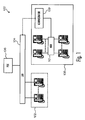
- FIG. 1 illustrates an exemplary network 100 which may support a peer-to-peer distribution of firmware in accordance with the various embodiments.
- Exemplary network or system 100 generally includes an existing network of endpoints 102, an ancillary network of endpoints 108, a PBX or switching system 106, and a local area network (LAN) 104.
- LAN local area network
- endpoints may include telephones (stationary and portable), keysets, personal computers, computing devices, personal digital assistants, pagers, wireless remote clients, messaging devices, and any other communication device capable of transmitting and receiving communication signals.
- Endpoints typically include any communication device capable of coupling to a LAN.
- some or all of the endpoints may include a processor, memory, network interface, user I/O and power conversion, as needed, to establish the device as an operational unit or other real-time communicating device connected to a packet network.
- PBX system 106 may include, but not limited to, PBX systems, software controlled switches and hybrid telephone systems.
- PBX systems generally provide telephone and messaging services as needed to multiple office users and their endpoints (such as network of endpoints 102). Provided services typically focus on the delivery of external and internal communications to the network.
- PBXs are office-based telephone exchanges having special functions directed towards the communication needs of business users.
- the PBX is any customer-owned switching apparatus that is used to connect real-time voice or multimedia communications from user-to-user (or endpoint-to-endpoint) regardless of the technology employed, such as time division multiplexing, packet switching, optical switching, pulse code modulation, internet protocols, ATM, or any combination thereof.
- Modern PBXs also provide integrated voice mail, hands free intercom calls, call center functions, complex system networks, and additional features using external computer control.
- LAN 104 may be Ethernet, wired and wireless solutions, or any other communication medium suitable for routing data, information, video and/or voice among a network of endpoints, e.g., network 102 and PBX 106.
- LAN 104 or the equivalent, may be used for routing various other data, and the like, within the network and may facilitate communication among other components not shown on Figure 1 .
- the existing network of endpoints 102 includes any number of endpoints configured in a conventional manner and coupled to LAN 104.
- Network 102 is "existing" in the sense that the endpoints within the network are operable (or at least capable of being operable) and typically include a common version of firmware.
- Ancillary network of endpoints 108 includes two or more endpoints to be added to existing network of endpoints 102.
- Ancillary network 108 generally includes a hub 110 and an administrator 109.
- Hub 110 provides an isolated LAN, or equivalent medium, in which the ancillary endpoints may be coupled in a peer-to-peer manner.
- Hub 110 further provides communication between administrator 109 and the ancillary endpoints.
- Administrator 109 includes any computing device capable of bi-directional communication with the ancillary endpoints. Additionally, administrator 109 may be coupled to LAN 104.
- the isolated LAN network of 108 may be considered a dedicated network used to construct a temporary peer-to-peer connection arrangement for distribution of firmware.
- Each coupled endpoint (“peer”) is capable of sending and receiving messages to the other endpoints.
- peer data packet transmission and protocols functionally are bus-topologies employing wire management devices connected in a star topology behaving as a bus.
- switches switching hubs
- Network 108 provides a controlled environment for the endpoints, and network, that are being updated, configured and tested prior to integrating the ancillary network with the main network. Additional features of network 108 will be discussed in detail below.
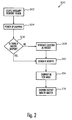
- FIG. 2 is a flowchart 200 of exemplary operations in a peer-to-peer distribution system and, more particularly, exemplary operations during power-up of the ancillary endpoints.
- each of the ancillary endpoints are coupled to an isolated network, such as hub 110 (step 202).
- Each endpoint is powered up via the connection to hub 110 (step 204).
- an Ethernet hub such as hub 110
- ancillary network 108 differs in that each endpoint is powered up from the hub connection.
- the endpoints are powered up and booted almost immediately upon connection to the hub.
- each endpoint may be independently powered and booted up when power is supplied to the endpoint.
- the hub itself is not powered up when the endpoints are coupled, then the endpoints do not power up until the hub is actually activated.
- Each endpoint uses the Internet Protocol (IP) and connects to the hub. As part of the power up-boot up sequence, the endpoint looks for an IP address from a server-type device.
- IP Internet Protocol
- DHCP Dynamic Host Configuration Protocol
- DHCP Dynamic Host Configuration Protocol
- the server-type device is any one of the ancillary endpoints.
- step 206 it must be determined if there is already a master endpoint. If there is not a master endpoint, for example, this is the first ancillary endpoint to be coupled to the hub, then the endpoint will be unable to locate a server to receive an IP address. In this case, the endpoint will be designated as the master (step 208). It may be the case that one of the existing network endpoints is designated as the master. This may be useful if the software loaded on an existing endpoint is the desired software to distribute. In this situation, the existing endpoint may be temporarily disconnected from the existing network and temporarily coupled to the ancillary network (i.e., hub 110).
- the ancillary network i.e., hub 110
- the endpoint is designated as the master by installer intervention. This may be accomplished by various acts.
- One such action includes the installer activating one or more keys on an endpoint. For example, depressing and holding one or more of the endpoint keys prior to power up, or soft keys. This action directs the endpoint to become the master and support the other endpoints that come on line as a peer within the isolated network.
- the master endpoint assigns itself an IP address (step 210).
- the master IP address may be a fixed IP address that is known and can be readily called upon.
- the installer releases the key(s) when the endpoint powers up. It may be desirable for the master endpoint to confirm its IP address setting and verify a successful boot up by, for example, displaying the information on a suitable endpoint or associated display.
- the master endpoint behaves as the server and assigns an IP address to each of the ancillary endpoints in the network by, for example, using DHCP (step 210). Once IP addresses are assigned to the endpoints, they begin to transmit and receive UDP as commonly used by the TCP/IP protocol to process communications on a peer-to-peer basis.
- the information sent to the endpoints from the master may include a command to operate in a "test mode" (step 214). This mode is useful to monitor, alter and preview each endpoint's operation, as well as the ancillary network, prior to bringing the network in communication with the existing network, e.g., network 102.
- Each of the ancillary endpoints reports information to the master, which includes, for example, firmware versions, configurations and licensing data (step 216).
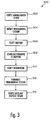
- FIG. 3 is a flowchart 300 of exemplary operations in a peer-to-peer distribution system and, more particularly, exemplary operations of an administrator, e.g., administrator 109.
- the administrator is initially coupled to the isolated network, such as hub 110 (step 302).
- administrator 109 may include any computing device capable of bi-directional communication with the ancillary endpoints.
- administrator 109 includes a portable computing device having web browsing capabilities, such as a laptop computer.
- administrator 109 includes a multi-functional IP telephone, such as the Model 8690 sold by Inter-Tel, Inc., having a graphical display and function keys to control the distribution process.
- administrator 109 may be one of the ancillary endpoints used in a management manner prior to going live on existing network 102.
- the installer may have a greater level of control in some networks than in others.
- the installer utilizes the administrator for the distribution process.
- the installer initiates a programming session for the purposes of managing the software distribution (step 304).
- the programming session involves accessing a web page via the browser from the administrator.
- the web page may be a pre-defined URL, such as the master IP address.
- the ancillary endpoints report information to the master and, in one specific embodiment, the reports are received at the master IP address and update a corresponding web page.
- the installer is able to view the reported information for each of the subsequent endpoints.
- the installer determines which endpoint to copy data from to the other ancillary endpoints and a selection of endpoints is made (step 306). For example, one endpoint may be selected as the first distributor because it contains the desired version of firmware. Then the installer is given the opportunity to select one or more of the ancillary endpoints which will receive a copy of the desired firmware from the distributor endpoint (step 306). Using this technique, the installer may elect to leave certain endpoints out of the distributor process for a variety of reasons, such as physical restrictions and incompatibilities.
- the distributor endpoint then initiates a download of its firmware to the selected endpoints (step 308).
- a TFTP process may be used to copy the information between the endpoints.
- the received firmware is loaded to the memory of the endpoints.
- each of the endpoints may undergo a reboot process.
- a verification of the process may occur (step 310).
- Each of the endpoints may send an updated report to the master indicating its current configurations. The report may be part of a "self-test" for each endpoint and may be initiated by the master (e.g., directing the endpoint to be in test mode (step 214)) or may be integrated with the download process.
- the test mode may allow the installer to send "ping" commands to the endpoint under test to monitor the endpoint's response.
- a confirmation may be displayed to the installer on, for example, a display of the administrator.
- the installer can view the reported information for each selected endpoint and verify that the intended distribution occurred.
- the installer can verify the distribution, as well as check on the configurations of any of the endpoints by visiting a web page of the endpoint using the IP address of the particular endpoint.
- Various other techniques of confirmation may be used as well, such as visual and audible board lamps, displays and speakers.
- the installer can terminate the programming session (step 312).
- the installer may choose to couple each of the endpoints to existing network via LAN 104 (step 314) and continue to monitor the endpoints as they connect to the main system.
- the installer can observe the registration process of the endpoints by adding a second NIC (Network Interface Card) to administrator 109 and coupling this card to the existing main network. In this manner, packets going to and from the ancillary endpoints between the existing network and the isolated network can be monitored.
- NIC Network Interface Card
- This configuration routes the endpoint's DHCP request, for example during the subsequent boot up process to the main network, to the main network's DHCP server. Because the administrator has been coupled between the main network and the isolated network, all data packets between the endpoints and the main network go through the administrator. If there are any problems with the endpoints registration with the main network they can be readily identified. Upon successful completion of the registration process with the main network, communication with the administrator may be severed and the ancillary network of endpoints is fully integrated with the existing network of endpoints. Moreover, all of the endpoints are operating with compatible firmware or software, the existing network was not disrupted during the integration, and the installer was able to verify the integrity of the modified system (ancillary plus existing) without the risk of major network failures.
- the environment needed to support the peer-to-peer distribution system and, more particularly, the ancillary network of endpoints, is extremely unrestrictive.
- an installer may be able to couple the ancillary endpoints to an isolated LAN and perform all the necessary control functions directly from the installer's van prior to entering the customer's facility.
- the ancillary endpoints are ready to be integrated to the customers' existing network the moment they are coupled to the customer's LAN.
- the newly booted endpoints may send UDP status packets to the administrator rather than the master. This may be useful if the installer does not have access to a web page to review the status information.
- the peer-to-peer distribution system may be used to take one or more existing networked endpoints off line, couple the endpoint to an isolated LAN, update the firmware or software, and then test the endpoint before bringing back into service.
Landscapes
- Engineering & Computer Science (AREA)
- Software Systems (AREA)
- General Engineering & Computer Science (AREA)
- Theoretical Computer Science (AREA)
- Computer Networks & Wireless Communication (AREA)
- Signal Processing (AREA)
- Computer Security & Cryptography (AREA)
- Physics & Mathematics (AREA)
- General Physics & Mathematics (AREA)
- Information Transfer Between Computers (AREA)
- Computer And Data Communications (AREA)
- Data Exchanges In Wide-Area Networks (AREA)
Claims (7)
- Softwareverteilungssystem, dadurch gekennzeichnet, dass das System für ein Kommunikationsnetzwerk (100) gedacht ist, umfassend:eine Nebenstellenanlage (PBX);ein bestehendes Netzwerk aus Endgeräten (102), wobei jedes der bestehenden Endgeräte eine darauf gespeicherte Software enthält, die kompatibel zu den anderen Endgeräten im Netzwerk ist;ein lokales Netzwerk (104), das einen Kommunikationspfad für das bestehende Netzwerk aus Endgeräten bereitstellt; undein nebengeordnetes Netzwerk aus Endgeräten (108), umfassendzwei oder mehr nebengeordnete Endgeräte in einer Peer-to-Peer-Konfiguration, wobei eines der nebengeordneten Endgeräte ein Verteilerendgerät ist und eine darauf gespeicherte Zielsoftware aufweist, die kompatibel zur Software auf den bestehenden Endgeräten ist,ein Master-Einrichtung in bidirektionaler Datenverbindung mit den nebengeordneten Endgeräten, wobei die Master-Einrichtung dazu angepasst ist, die nebengeordneten Endgeräte mit einer IP-Adresse zu versehen,ein isoliertes Netzwerk, das dazu angepasst ist, einen Kommunikationspfad für das nebengeordnete Netzwerk aus Endgeräten bereitzustellen,einen Administrator (109), der mit dem isolierten Netzwerk verbunden ist, wobei der Administrator dazu angepasst ist, den nebengeordneten Endgeräten und der Master-Einrichtung eine Vielzahl von Steuerbefehlen bereitzustellen, wobei der Administrator darüber hinaus dazu angepasst ist, das Verteilerendgerät anzuweisen, die Zielsoftware auf die nebengeordneten Endgeräte zu verteilen, und die nebengeordneten Endgeräte anzuweisen, einen Statusbericht an die Master-Einrichtung zu senden,wobei nach Verteilung der Zielsoftware das System so konfiguriert ist, dass der Kommunikationspfad für das nebengeordnete Netzwerk aus Endgeräten getrennt und die nebengeordneten Endgeräte mit dem lokalen Netzwerk verbunden werden können.
- System nach Anspruch 1, wobei die Master-Einrichtung eines der nebengeordneten Endgeräte oder eines der bestehenden Endgeräte umfasst.
- System nach Anspruch 1, wobei das nebengeordnete Netzwerk aus Endgeräten dazu konfiguriert ist, vor der Verbindung mit dem lokalen Netzwerk in einem Testmodus zu arbeiten.
- Verfahren zum Integrieren einer Vielzahl von nebengeordneten Endgeräten zu einem bestehenden Netzwerk (100) aus Endgeräten, wobei jedes der bestehenden Endgeräte eine darauf gespeicherte Software enthält, die kompatibel zu den anderen Endgeräten im Netzwerk ist; dadurch gekennzeichnet, dass das Netzwerk darüber hinaus eine PBX enthält und das Verfahren die folgenden Schritte umfasst:Verbinden (202) der nebengeordneten Endgeräte zu einem isolierten Peer-to-Peer-Netzwerk;Verbinden (302) eines Administrators mit dem isolierten Netzwerk;Bestimmen eines Master-Endgeräts (208) und Zuteilen einer Master-IP-Adresse zu dem Master-Endgerät, wobei auf dem Master-Endgerät eine Zielsoftware gespeichert ist, die kompatibel zur Software auf den bestehenden Endgeräten ist;Zuteilen einer IP-Adresse zu jedem nebengeordneten Endgerät;Herunterladen (308) der Zielsoftware vom Master-Endgerät zu den nebengeordneten Endgeräten über das isolierte Peer-to-Peer-Netzwerk;Verifizieren der Verteilung der Zielsoftware auf die nebengeordneten Endgeräte, wobei die Verifizierung umfasst, dass die nebengeordneten Endgeräte einen Statusbericht an die Master-IP-Adresse senden;Trennen der nebengeordneten Endgeräte vom isolierten Netzwerk; undVerbinden der nebengeordneten Endgeräte mit dem bestehenden Netzwerk aus Endgeräten.
- Verfahren nach Anspruch 4, wobei die Bestimmung eines Master-Endgeräts umfasst, eine Schlüsselauswahl am Endgerät zu empfangen.
- Verfahren nach Anspruch 4, wobei die Verifizierung umfasst, an der Master-IP-Adresse eine Webseite bereitzustellen.
- Verfahren nach Anspruch 4, darüber hinaus umfassend, eine Webseite vom Administrator entsprechend der Master-IP-Adresse bereitzustellen, wobei die Webseite über die Berichte von jedem der nebengeordneten Endgeräte verfügt.
Applications Claiming Priority (1)
| Application Number | Priority Date | Filing Date | Title |
|---|---|---|---|
| US10/931,487 US7600006B2 (en) | 2004-08-31 | 2004-08-31 | Peer-to-peer distribution of firmware |
Publications (2)
| Publication Number | Publication Date |
|---|---|
| EP1631034A1 EP1631034A1 (de) | 2006-03-01 |
| EP1631034B1 true EP1631034B1 (de) | 2012-01-11 |
Family
ID=34929756
Family Applications (1)
| Application Number | Title | Priority Date | Filing Date |
|---|---|---|---|
| EP04105262A Expired - Lifetime EP1631034B1 (de) | 2004-08-31 | 2004-11-01 | Gleichrangiges Firmware-Verteilungssystem |
Country Status (2)
| Country | Link |
|---|---|
| US (1) | US7600006B2 (de) |
| EP (1) | EP1631034B1 (de) |
Families Citing this family (17)
| Publication number | Priority date | Publication date | Assignee | Title |
|---|---|---|---|---|
| US20050229171A1 (en) * | 2004-04-07 | 2005-10-13 | Henry Steven G | Distributing upgrades |
| US20070061813A1 (en) * | 2005-08-30 | 2007-03-15 | Mcdata Corporation | Distributed embedded software for a switch |
| JP5100664B2 (ja) * | 2006-03-01 | 2012-12-19 | アクシス アーベー | 複数の装置をアップデートする方法及びシステム |
| JP5040264B2 (ja) * | 2006-11-01 | 2012-10-03 | セイコーエプソン株式会社 | 情報処理装置、情報更新方法及びそのプログラム |
| US8402455B2 (en) * | 2008-03-17 | 2013-03-19 | Landis+Gyr Innovations, Inc. | Methods and systems for distributing firmware through an over-the-air network |
| US20110107317A1 (en) * | 2009-10-30 | 2011-05-05 | International Business Machines Corporation | Propagating Firmware Updates In A Raid Array |
| US9146725B2 (en) * | 2009-11-04 | 2015-09-29 | Lenovo Enterprise Solutions (Singapore) Pte. Ltd. | Propagating firmware updates in a peer-to-peer network environment |
| EP2523391A1 (de) * | 2011-05-09 | 2012-11-14 | Alcatel Lucent | Verfahren und Vorrichtung zur automatischen Verwaltung von Wartungsoperationen an Knoten eines Kommunikationsnetzes |
| US9800423B1 (en) | 2012-05-14 | 2017-10-24 | Crimson Corporation | Determining the status of a node based on a distributed system |
| KR101992680B1 (ko) * | 2013-02-05 | 2019-06-25 | 휴렛-팩커드 디벨롭먼트 컴퍼니, 엘.피. | 화상형성장치, 추적장치, 관리장치 및 화상형성장치의 펌웨어 업데이트 방법 |
| US9411571B2 (en) * | 2013-02-28 | 2016-08-09 | Adobe Systems Incorporated | Method and apparatus for deploying software as a service |
| KR20150129972A (ko) * | 2014-05-12 | 2015-11-23 | 에스케이플래닛 주식회사 | 비콘 펌웨어 업데이트 방법 및 이를 이용하는 비콘 장치, 그리고 시스템 |
| DE102014011963A1 (de) * | 2014-08-15 | 2016-02-18 | Riedel Communications International GmbH | Intercom-Netzwerk und Sprechstelle |
| US10834150B1 (en) * | 2014-12-26 | 2020-11-10 | Ivanti, Inc. | System and methods for self-organizing multicast |
| US10416979B2 (en) | 2017-05-16 | 2019-09-17 | Red Hat, Inc. | Package installation on a host file system using a container |
| US10313850B2 (en) * | 2017-07-24 | 2019-06-04 | Honeywell International Inc. | Systems and methods for upgrading firmware in multiple devices of a wireless fire detection system |
| US11119750B2 (en) * | 2019-05-23 | 2021-09-14 | International Business Machines Corporation | Decentralized offline program updating |
Family Cites Families (24)
| Publication number | Priority date | Publication date | Assignee | Title |
|---|---|---|---|---|
| US5805897A (en) * | 1992-07-31 | 1998-09-08 | International Business Machines Corporation | System and method for remote software configuration and distribution |
| GB9412553D0 (en) * | 1994-06-22 | 1994-08-10 | At & T Global Solutions Intern | Method and apparatus for distributing software |
| US5793982A (en) * | 1995-12-07 | 1998-08-11 | International Business Machine Corporation | Validating an installation plan containing multiple transports and redirectors by adding data structure of the modules to the plan if the indicated transport and redirector modules are unavailable |
| US5974454A (en) * | 1997-11-14 | 1999-10-26 | Microsoft Corporation | Method and system for installing and updating program module components |
| US6321258B1 (en) * | 1997-12-11 | 2001-11-20 | Hewlett-Packard Company | Administration of networked peripherals using particular file system |
| US6094679A (en) * | 1998-01-16 | 2000-07-25 | Microsoft Corporation | Distribution of software in a computer network environment |
| GB2333864B (en) | 1998-01-28 | 2003-05-07 | Ibm | Distribution of software updates via a computer network |
| US6381742B2 (en) * | 1998-06-19 | 2002-04-30 | Microsoft Corporation | Software package management |
| US6418555B2 (en) | 1998-07-21 | 2002-07-09 | Intel Corporation | Automatic upgrade of software |
| US6725260B1 (en) * | 1998-09-11 | 2004-04-20 | L.V. Partners, L.P. | Method and apparatus for configuring configurable equipment with configuration information received from a remote location |
| US6487583B1 (en) * | 1998-09-15 | 2002-11-26 | Ikimbo, Inc. | System and method for information and application distribution |
| US6892230B1 (en) * | 1999-06-11 | 2005-05-10 | Microsoft Corporation | Dynamic self-configuration for ad hoc peer networking using mark-up language formated description messages |
| US6966060B1 (en) * | 1999-07-02 | 2005-11-15 | Microsoft Corporation | Method and system for remote client installation |
| US6640241B1 (en) * | 1999-07-19 | 2003-10-28 | Groove Networks, Inc. | Method and apparatus for activity-based collaboration by a computer system equipped with a communications manager |
| US6477583B1 (en) * | 1999-11-15 | 2002-11-05 | Novell, Inc. | Infrastructure for supporting file replications |
| US6898642B2 (en) * | 2000-04-17 | 2005-05-24 | International Business Machines Corporation | Synchronous collaboration based on peer-to-peer communication |
| US6792466B1 (en) * | 2000-05-09 | 2004-09-14 | Sun Microsystems, Inc. | Trusted construction of message endpoints in a distributed computing environment |
| US6725261B1 (en) * | 2000-05-31 | 2004-04-20 | International Business Machines Corporation | Method, system and program products for automatically configuring clusters of a computing environment |
| US6665384B2 (en) | 2000-06-19 | 2003-12-16 | General Electric Company | Methods and apparatus for appliance communication interface |
| US7162538B1 (en) | 2000-10-04 | 2007-01-09 | Intel Corporation | Peer to peer software distribution system |
| US6904457B2 (en) * | 2001-01-05 | 2005-06-07 | International Business Machines Corporation | Automatic firmware update of processor nodes |
| US20020165976A1 (en) * | 2001-05-02 | 2002-11-07 | Jean-Charles Gonthier | Software deployment in a data communications network |
| EP1423796A1 (de) * | 2001-08-09 | 2004-06-02 | Gigamedia Access Corporation | Hybride systemarchitektur für die sichere peer-to-peer-kommunikation |
| US20040006586A1 (en) | 2002-04-23 | 2004-01-08 | Secure Resolutions, Inc. | Distributed server software distribution |
-
2004
- 2004-08-31 US US10/931,487 patent/US7600006B2/en active Active
- 2004-11-01 EP EP04105262A patent/EP1631034B1/de not_active Expired - Lifetime
Also Published As
| Publication number | Publication date |
|---|---|
| US7600006B2 (en) | 2009-10-06 |
| US20060048144A1 (en) | 2006-03-02 |
| EP1631034A1 (de) | 2006-03-01 |
Similar Documents
| Publication | Publication Date | Title |
|---|---|---|
| EP1631034B1 (de) | Gleichrangiges Firmware-Verteilungssystem | |
| US20220385658A1 (en) | Voice control of endpoint devices through a multi-services gateway device at the user premises | |
| US6543004B1 (en) | Method and apparatus for archiving and restoring data | |
| CN1918868B (zh) | 分组语音网络中电话的自动设定 | |
| US7284042B2 (en) | Device plug-in system for configuring network device over a public network | |
| EP2232828B1 (de) | Failover in einem gleichzeitig mehrere virtuelle ip-adressen über mehrere adapter hinweg unterstützenden host | |
| US10027531B1 (en) | Failover system and method for IP telephony | |
| US7379540B1 (en) | Server with backup capability for distributed IP telephony systems | |
| US8966013B2 (en) | Unified device management method and system | |
| US20030070063A1 (en) | Configuration file caching | |
| US11463304B2 (en) | Service recovery in a software defined network | |
| US20090292795A1 (en) | Configuration file override | |
| JP3954617B2 (ja) | 通信ネットワークにおけるリソースを提供するための方法 | |
| US20030050955A1 (en) | Method and apparatus to perform automated task handling | |
| US7260602B2 (en) | System and method of network content location for roaming clients | |
| JP3996922B2 (ja) | 異なる通信プロトコルが併存するネットワークにおけるネットワーク接続手段の一元管理システム及び方法 | |
| JP3774433B2 (ja) | ネットワーク接続手段の集中管理システム及び方法 | |
| US20030037171A1 (en) | System and method for distributed device control | |
| US20030233434A1 (en) | Multi-tiered remote enterprise management system and method | |
| CN103138961A (zh) | 服务器控制方法、被控服务器及中心控制服务器 | |
| JP2006042176A (ja) | Ip電話システム、ネットワーク管理サーバ、およびip電話機 | |
| JP2003244191A (ja) | 呼制御サーバによる呼制御方法 | |
| US20030154472A1 (en) | Installation server | |
| US6760427B2 (en) | Computer telephony (CT) network serving multiple telephone switches | |
| US20250103375A1 (en) | Virtual local gateway for legacy peripheral devices |
Legal Events
| Date | Code | Title | Description |
|---|---|---|---|
| PUAI | Public reference made under article 153(3) epc to a published international application that has entered the european phase |
Free format text: ORIGINAL CODE: 0009012 |
|
| AK | Designated contracting states |
Kind code of ref document: A1 Designated state(s): AT BE BG CH CY CZ DE DK EE ES FI FR GB GR HU IE IS IT LI LU MC NL PL PT RO SE SI SK TR |
|
| AX | Request for extension of the european patent |
Extension state: AL HR LT LV MK |
|
| 17P | Request for examination filed |
Effective date: 20060823 |
|
| AKX | Designation fees paid |
Designated state(s): CH DE FR GB IE LI |
|
| 17Q | First examination report despatched |
Effective date: 20100806 |
|
| GRAP | Despatch of communication of intention to grant a patent |
Free format text: ORIGINAL CODE: EPIDOSNIGR1 |
|
| GRAC | Information related to communication of intention to grant a patent modified |
Free format text: ORIGINAL CODE: EPIDOSCIGR1 |
|
| GRAS | Grant fee paid |
Free format text: ORIGINAL CODE: EPIDOSNIGR3 |
|
| GRAA | (expected) grant |
Free format text: ORIGINAL CODE: 0009210 |
|
| AK | Designated contracting states |
Kind code of ref document: B1 Designated state(s): CH DE FR GB IE LI |
|
| REG | Reference to a national code |
Ref country code: GB Ref legal event code: FG4D |
|
| REG | Reference to a national code |
Ref country code: CH Ref legal event code: EP |
|
| REG | Reference to a national code |
Ref country code: IE Ref legal event code: FG4D |
|
| REG | Reference to a national code |
Ref country code: DE Ref legal event code: R096 Ref document number: 602004036060 Country of ref document: DE Effective date: 20120315 |
|
| PLBE | No opposition filed within time limit |
Free format text: ORIGINAL CODE: 0009261 |
|
| STAA | Information on the status of an ep patent application or granted ep patent |
Free format text: STATUS: NO OPPOSITION FILED WITHIN TIME LIMIT |
|
| 26N | No opposition filed |
Effective date: 20121012 |
|
| REG | Reference to a national code |
Ref country code: DE Ref legal event code: R097 Ref document number: 602004036060 Country of ref document: DE Effective date: 20121012 |
|
| REG | Reference to a national code |
Ref country code: CH Ref legal event code: PL |
|
| PG25 | Lapsed in a contracting state [announced via postgrant information from national office to epo] |
Ref country code: CH Free format text: LAPSE BECAUSE OF NON-PAYMENT OF DUE FEES Effective date: 20121130 Ref country code: LI Free format text: LAPSE BECAUSE OF NON-PAYMENT OF DUE FEES Effective date: 20121130 |
|
| REG | Reference to a national code |
Ref country code: IE Ref legal event code: MM4A |
|
| PG25 | Lapsed in a contracting state [announced via postgrant information from national office to epo] |
Ref country code: IE Free format text: LAPSE BECAUSE OF NON-PAYMENT OF DUE FEES Effective date: 20121101 |
|
| REG | Reference to a national code |
Ref country code: FR Ref legal event code: PLFP Year of fee payment: 12 |
|
| REG | Reference to a national code |
Ref country code: FR Ref legal event code: PLFP Year of fee payment: 13 |
|
| REG | Reference to a national code |
Ref country code: FR Ref legal event code: PLFP Year of fee payment: 14 |
|
| REG | Reference to a national code |
Ref country code: FR Ref legal event code: PLFP Year of fee payment: 15 |
|
| REG | Reference to a national code |
Ref country code: DE Ref legal event code: R079 Ref document number: 602004036060 Country of ref document: DE Free format text: PREVIOUS MAIN CLASS: H04L0029060000 Ipc: H04L0065000000 |
|
| REG | Reference to a national code |
Ref country code: GB Ref legal event code: 732E Free format text: REGISTERED BETWEEN 20221117 AND 20221123 |
|
| REG | Reference to a national code |
Ref country code: DE Ref legal event code: R081 Ref document number: 602004036060 Country of ref document: DE Owner name: MITEL (DELAWARE), INC., TEMPE, US Free format text: FORMER OWNER: INTER-TEL, INC., TEMPE, ARIZ., US Ref country code: DE Ref legal event code: R081 Ref document number: 602004036060 Country of ref document: DE Owner name: INTER-TEL (DELAWARE), INCORPORATED, TEMPE, US Free format text: FORMER OWNER: INTER-TEL, INC., TEMPE, ARIZ., US |
|
| REG | Reference to a national code |
Ref country code: DE Ref legal event code: R081 Ref document number: 602004036060 Country of ref document: DE Owner name: MITEL (DELAWARE), INC., TEMPE, US Free format text: FORMER OWNER: INTER-TEL (DELAWARE), INCORPORATED, TEMPE, AZ, US |
|
| PGFP | Annual fee paid to national office [announced via postgrant information from national office to epo] |
Ref country code: GB Payment date: 20230907 Year of fee payment: 20 |
|
| PGFP | Annual fee paid to national office [announced via postgrant information from national office to epo] |
Ref country code: FR Payment date: 20230911 Year of fee payment: 20 |
|
| PGFP | Annual fee paid to national office [announced via postgrant information from national office to epo] |
Ref country code: DE Payment date: 20230906 Year of fee payment: 20 |
|
| REG | Reference to a national code |
Ref country code: DE Ref legal event code: R071 Ref document number: 602004036060 Country of ref document: DE |
|
| REG | Reference to a national code |
Ref country code: GB Ref legal event code: PE20 Expiry date: 20241031 |
|
| PG25 | Lapsed in a contracting state [announced via postgrant information from national office to epo] |
Ref country code: GB Free format text: LAPSE BECAUSE OF EXPIRATION OF PROTECTION Effective date: 20241031 |
|
| PG25 | Lapsed in a contracting state [announced via postgrant information from national office to epo] |
Ref country code: GB Free format text: LAPSE BECAUSE OF EXPIRATION OF PROTECTION Effective date: 20241031 |