EP1630232A1 - Optimized nucleotide sequences encoding sgp130 - Google Patents
Optimized nucleotide sequences encoding sgp130 Download PDFInfo
- Publication number
- EP1630232A1 EP1630232A1 EP04020455A EP04020455A EP1630232A1 EP 1630232 A1 EP1630232 A1 EP 1630232A1 EP 04020455 A EP04020455 A EP 04020455A EP 04020455 A EP04020455 A EP 04020455A EP 1630232 A1 EP1630232 A1 EP 1630232A1
- Authority
- EP
- European Patent Office
- Prior art keywords
- sgp130
- nucleic acid
- expression
- host cell
- cells
- Prior art date
- Legal status (The legal status is an assumption and is not a legal conclusion. Google has not performed a legal analysis and makes no representation as to the accuracy of the status listed.)
- Granted
Links
- 102000005754 Cytokine Receptor gp130 Human genes 0.000 title claims abstract description 42
- 108010006197 Cytokine Receptor gp130 Proteins 0.000 title claims abstract description 42
- 108091028043 Nucleic acid sequence Proteins 0.000 title claims description 5
- 150000007523 nucleic acids Chemical class 0.000 claims abstract description 22
- 108020004707 nucleic acids Proteins 0.000 claims abstract description 18
- 102000039446 nucleic acids Human genes 0.000 claims abstract description 18
- 238000000034 method Methods 0.000 claims abstract description 11
- 108020004705 Codon Proteins 0.000 claims abstract description 8
- 210000004027 cell Anatomy 0.000 claims description 53
- 229920001184 polypeptide Polymers 0.000 claims description 11
- 108090000765 processed proteins & peptides Proteins 0.000 claims description 11
- 102000004196 processed proteins & peptides Human genes 0.000 claims description 11
- 108020004414 DNA Proteins 0.000 claims description 9
- 239000013604 expression vector Substances 0.000 claims description 9
- 239000012634 fragment Substances 0.000 claims description 9
- 108700010070 Codon Usage Proteins 0.000 claims description 7
- 230000001580 bacterial effect Effects 0.000 claims description 6
- 102000053602 DNA Human genes 0.000 claims description 2
- 238000012258 culturing Methods 0.000 claims description 2
- 210000001236 prokaryotic cell Anatomy 0.000 claims description 2
- 238000004519 manufacturing process Methods 0.000 abstract description 9
- 241000894006 Bacteria Species 0.000 abstract description 7
- 210000004962 mammalian cell Anatomy 0.000 abstract description 6
- 108090000623 proteins and genes Proteins 0.000 description 23
- 230000014509 gene expression Effects 0.000 description 18
- 239000013598 vector Substances 0.000 description 15
- 108091032973 (ribonucleotides)n+m Proteins 0.000 description 13
- 102000004169 proteins and genes Human genes 0.000 description 12
- 239000013613 expression plasmid Substances 0.000 description 10
- 239000013612 plasmid Substances 0.000 description 9
- 239000002299 complementary DNA Substances 0.000 description 8
- 238000013519 translation Methods 0.000 description 7
- 239000002773 nucleotide Substances 0.000 description 6
- 125000003729 nucleotide group Chemical group 0.000 description 6
- 238000013518 transcription Methods 0.000 description 6
- 230000035897 transcription Effects 0.000 description 6
- 229930193140 Neomycin Natural products 0.000 description 5
- 229960004927 neomycin Drugs 0.000 description 5
- 238000001890 transfection Methods 0.000 description 5
- 208000011231 Crohn disease Diseases 0.000 description 4
- 108091081024 Start codon Proteins 0.000 description 4
- 239000003623 enhancer Substances 0.000 description 4
- 238000002474 experimental method Methods 0.000 description 4
- 239000008188 pellet Substances 0.000 description 4
- 238000000746 purification Methods 0.000 description 4
- 241000701161 unidentified adenovirus Species 0.000 description 4
- 230000003612 virological effect Effects 0.000 description 4
- 102000007469 Actins Human genes 0.000 description 3
- 108010085238 Actins Proteins 0.000 description 3
- 108090001005 Interleukin-6 Proteins 0.000 description 3
- 241000714474 Rous sarcoma virus Species 0.000 description 3
- 241000700605 Viruses Species 0.000 description 3
- 150000001413 amino acids Chemical group 0.000 description 3
- 201000010099 disease Diseases 0.000 description 3
- 208000037265 diseases, disorders, signs and symptoms Diseases 0.000 description 3
- 210000000688 human artificial chromosome Anatomy 0.000 description 3
- 230000001939 inductive effect Effects 0.000 description 3
- 239000003550 marker Substances 0.000 description 3
- 239000002609 medium Substances 0.000 description 3
- 238000001262 western blot Methods 0.000 description 3
- 229920000936 Agarose Polymers 0.000 description 2
- 101100136076 Aspergillus oryzae (strain ATCC 42149 / RIB 40) pel1 gene Proteins 0.000 description 2
- SIKJAQJRHWYJAI-UHFFFAOYSA-N Indole Chemical compound C1=CC=C2NC=CC2=C1 SIKJAQJRHWYJAI-UHFFFAOYSA-N 0.000 description 2
- XSQUKJJJFZCRTK-UHFFFAOYSA-N Urea Chemical compound NC(N)=O XSQUKJJJFZCRTK-UHFFFAOYSA-N 0.000 description 2
- 230000001270 agonistic effect Effects 0.000 description 2
- 239000006227 byproduct Substances 0.000 description 2
- 210000004899 c-terminal region Anatomy 0.000 description 2
- 239000004202 carbamide Substances 0.000 description 2
- 230000001413 cellular effect Effects 0.000 description 2
- 210000004978 chinese hamster ovary cell Anatomy 0.000 description 2
- 238000001514 detection method Methods 0.000 description 2
- 230000000694 effects Effects 0.000 description 2
- 230000012010 growth Effects 0.000 description 2
- 238000003780 insertion Methods 0.000 description 2
- 230000037431 insertion Effects 0.000 description 2
- BPHPUYQFMNQIOC-NXRLNHOXSA-N isopropyl beta-D-thiogalactopyranoside Chemical compound CC(C)S[C@@H]1O[C@H](CO)[C@H](O)[C@H](O)[C@H]1O BPHPUYQFMNQIOC-NXRLNHOXSA-N 0.000 description 2
- 238000012986 modification Methods 0.000 description 2
- 230000004048 modification Effects 0.000 description 2
- 239000013642 negative control Substances 0.000 description 2
- 238000005457 optimization Methods 0.000 description 2
- 101150040383 pel2 gene Proteins 0.000 description 2
- 101150050446 pelB gene Proteins 0.000 description 2
- 230000001323 posttranslational effect Effects 0.000 description 2
- 238000002360 preparation method Methods 0.000 description 2
- 230000002265 prevention Effects 0.000 description 2
- 238000012545 processing Methods 0.000 description 2
- 230000001105 regulatory effect Effects 0.000 description 2
- 230000004044 response Effects 0.000 description 2
- 238000003757 reverse transcription PCR Methods 0.000 description 2
- 206010039073 rheumatoid arthritis Diseases 0.000 description 2
- 230000003248 secreting effect Effects 0.000 description 2
- 239000006152 selective media Substances 0.000 description 2
- 238000010561 standard procedure Methods 0.000 description 2
- 239000000758 substrate Substances 0.000 description 2
- 239000006228 supernatant Substances 0.000 description 2
- 230000002103 transcriptional effect Effects 0.000 description 2
- 241001430294 unidentified retrovirus Species 0.000 description 2
- 238000011144 upstream manufacturing Methods 0.000 description 2
- 239000013603 viral vector Substances 0.000 description 2
- DIGQNXIGRZPYDK-WKSCXVIASA-N (2R)-6-amino-2-[[2-[[(2S)-2-[[2-[[(2R)-2-[[(2S)-2-[[(2R,3S)-2-[[2-[[(2S)-2-[[2-[[(2S)-2-[[(2S)-2-[[(2R)-2-[[(2S,3S)-2-[[(2R)-2-[[(2S)-2-[[(2S)-2-[[(2S)-2-[[2-[[(2S)-2-[[(2R)-2-[[2-[[2-[[2-[(2-amino-1-hydroxyethylidene)amino]-3-carboxy-1-hydroxypropylidene]amino]-1-hydroxy-3-sulfanylpropylidene]amino]-1-hydroxyethylidene]amino]-1-hydroxy-3-sulfanylpropylidene]amino]-1,3-dihydroxypropylidene]amino]-1-hydroxyethylidene]amino]-1-hydroxypropylidene]amino]-1,3-dihydroxypropylidene]amino]-1,3-dihydroxypropylidene]amino]-1-hydroxy-3-sulfanylpropylidene]amino]-1,3-dihydroxybutylidene]amino]-1-hydroxy-3-sulfanylpropylidene]amino]-1-hydroxypropylidene]amino]-1,3-dihydroxypropylidene]amino]-1-hydroxyethylidene]amino]-1,5-dihydroxy-5-iminopentylidene]amino]-1-hydroxy-3-sulfanylpropylidene]amino]-1,3-dihydroxybutylidene]amino]-1-hydroxy-3-sulfanylpropylidene]amino]-1,3-dihydroxypropylidene]amino]-1-hydroxyethylidene]amino]-1-hydroxy-3-sulfanylpropylidene]amino]-1-hydroxyethylidene]amino]hexanoic acid Chemical compound C[C@@H]([C@@H](C(=N[C@@H](CS)C(=N[C@@H](C)C(=N[C@@H](CO)C(=NCC(=N[C@@H](CCC(=N)O)C(=NC(CS)C(=N[C@H]([C@H](C)O)C(=N[C@H](CS)C(=N[C@H](CO)C(=NCC(=N[C@H](CS)C(=NCC(=N[C@H](CCCCN)C(=O)O)O)O)O)O)O)O)O)O)O)O)O)O)O)N=C([C@H](CS)N=C([C@H](CO)N=C([C@H](CO)N=C([C@H](C)N=C(CN=C([C@H](CO)N=C([C@H](CS)N=C(CN=C(C(CS)N=C(C(CC(=O)O)N=C(CN)O)O)O)O)O)O)O)O)O)O)O)O DIGQNXIGRZPYDK-WKSCXVIASA-N 0.000 description 1
- 101150094949 APRT gene Proteins 0.000 description 1
- HRPVXLWXLXDGHG-UHFFFAOYSA-N Acrylamide Chemical compound NC(=O)C=C HRPVXLWXLXDGHG-UHFFFAOYSA-N 0.000 description 1
- 102100029457 Adenine phosphoribosyltransferase Human genes 0.000 description 1
- 108010024223 Adenine phosphoribosyltransferase Proteins 0.000 description 1
- 241000710929 Alphavirus Species 0.000 description 1
- 108091093088 Amplicon Proteins 0.000 description 1
- 208000023275 Autoimmune disease Diseases 0.000 description 1
- 208000035143 Bacterial infection Diseases 0.000 description 1
- 208000006386 Bone Resorption Diseases 0.000 description 1
- 206010006895 Cachexia Diseases 0.000 description 1
- 239000005496 Chlorsulfuron Substances 0.000 description 1
- 108091026890 Coding region Proteins 0.000 description 1
- 206010009944 Colon cancer Diseases 0.000 description 1
- 241000701022 Cytomegalovirus Species 0.000 description 1
- IGXWBGJHJZYPQS-SSDOTTSWSA-N D-Luciferin Chemical compound OC(=O)[C@H]1CSC(C=2SC3=CC=C(O)C=C3N=2)=N1 IGXWBGJHJZYPQS-SSDOTTSWSA-N 0.000 description 1
- 101150074155 DHFR gene Proteins 0.000 description 1
- CYCGRDQQIOGCKX-UHFFFAOYSA-N Dehydro-luciferin Natural products OC(=O)C1=CSC(C=2SC3=CC(O)=CC=C3N=2)=N1 CYCGRDQQIOGCKX-UHFFFAOYSA-N 0.000 description 1
- 241000702421 Dependoparvovirus Species 0.000 description 1
- BJGNCJDXODQBOB-UHFFFAOYSA-N Fivefly Luciferin Natural products OC(=O)C1CSC(C=2SC3=CC(O)=CC=C3N=2)=N1 BJGNCJDXODQBOB-UHFFFAOYSA-N 0.000 description 1
- 102000053187 Glucuronidase Human genes 0.000 description 1
- 108010060309 Glucuronidase Proteins 0.000 description 1
- 208000009889 Herpes Simplex Diseases 0.000 description 1
- 241000282412 Homo Species 0.000 description 1
- 241000701024 Human betaherpesvirus 5 Species 0.000 description 1
- 208000037147 Hypercalcaemia Diseases 0.000 description 1
- 108020005350 Initiator Codon Proteins 0.000 description 1
- 102100037792 Interleukin-6 receptor subunit alpha Human genes 0.000 description 1
- FBOZXECLQNJBKD-ZDUSSCGKSA-N L-methotrexate Chemical compound C=1N=C2N=C(N)N=C(N)C2=NC=1CN(C)C1=CC=C(C(=O)N[C@@H](CCC(O)=O)C(O)=O)C=C1 FBOZXECLQNJBKD-ZDUSSCGKSA-N 0.000 description 1
- QIVBCDIJIAJPQS-VIFPVBQESA-N L-tryptophane Chemical compound C1=CC=C2C(C[C@H](N)C(O)=O)=CNC2=C1 QIVBCDIJIAJPQS-VIFPVBQESA-N 0.000 description 1
- 101710128836 Large T antigen Proteins 0.000 description 1
- 108091026898 Leader sequence (mRNA) Proteins 0.000 description 1
- 241000713666 Lentivirus Species 0.000 description 1
- 108060001084 Luciferase Proteins 0.000 description 1
- 239000005089 Luciferase Substances 0.000 description 1
- DDWFXDSYGUXRAY-UHFFFAOYSA-N Luciferin Natural products CCc1c(C)c(CC2NC(=O)C(=C2C=C)C)[nH]c1Cc3[nH]c4C(=C5/NC(CC(=O)O)C(C)C5CC(=O)O)CC(=O)c4c3C DDWFXDSYGUXRAY-UHFFFAOYSA-N 0.000 description 1
- 241000124008 Mammalia Species 0.000 description 1
- 102000003792 Metallothionein Human genes 0.000 description 1
- 108090000157 Metallothionein Proteins 0.000 description 1
- 101100261636 Methanothermobacter marburgensis (strain ATCC BAA-927 / DSM 2133 / JCM 14651 / NBRC 100331 / OCM 82 / Marburg) trpB2 gene Proteins 0.000 description 1
- 241000204795 Muraena helena Species 0.000 description 1
- 206010028980 Neoplasm Diseases 0.000 description 1
- 108010079246 OMPA outer membrane proteins Proteins 0.000 description 1
- 101100124346 Photorhabdus laumondii subsp. laumondii (strain DSM 15139 / CIP 105565 / TT01) hisCD gene Proteins 0.000 description 1
- 108010076504 Protein Sorting Signals Proteins 0.000 description 1
- 238000002123 RNA extraction Methods 0.000 description 1
- 238000011530 RNeasy Mini Kit Methods 0.000 description 1
- 108010008281 Recombinant Fusion Proteins Proteins 0.000 description 1
- 102000007056 Recombinant Fusion Proteins Human genes 0.000 description 1
- 239000012722 SDS sample buffer Substances 0.000 description 1
- 108700010470 Sgp130Fc Proteins 0.000 description 1
- 241000700584 Simplexvirus Species 0.000 description 1
- 108091036066 Three prime untranslated region Proteins 0.000 description 1
- 102000006601 Thymidine Kinase Human genes 0.000 description 1
- 108020004440 Thymidine kinase Proteins 0.000 description 1
- QIVBCDIJIAJPQS-UHFFFAOYSA-N Tryptophan Natural products C1=CC=C2C(CC(N)C(O)=O)=CNC2=C1 QIVBCDIJIAJPQS-UHFFFAOYSA-N 0.000 description 1
- 241000700618 Vaccinia virus Species 0.000 description 1
- 206010046865 Vaccinia virus infection Diseases 0.000 description 1
- 208000036142 Viral infection Diseases 0.000 description 1
- 102000005421 acetyltransferase Human genes 0.000 description 1
- 108020002494 acetyltransferase Proteins 0.000 description 1
- 238000001042 affinity chromatography Methods 0.000 description 1
- 229940126575 aminoglycoside Drugs 0.000 description 1
- 230000003321 amplification Effects 0.000 description 1
- 229930002877 anthocyanin Natural products 0.000 description 1
- 235000010208 anthocyanin Nutrition 0.000 description 1
- 239000004410 anthocyanin Substances 0.000 description 1
- 150000004636 anthocyanins Chemical class 0.000 description 1
- 230000002424 anti-apoptotic effect Effects 0.000 description 1
- 230000000340 anti-metabolite Effects 0.000 description 1
- 229940100197 antimetabolite Drugs 0.000 description 1
- 239000002256 antimetabolite Substances 0.000 description 1
- 208000022362 bacterial infectious disease Diseases 0.000 description 1
- 230000003115 biocidal effect Effects 0.000 description 1
- 230000004071 biological effect Effects 0.000 description 1
- 230000033228 biological regulation Effects 0.000 description 1
- 230000000903 blocking effect Effects 0.000 description 1
- 238000009835 boiling Methods 0.000 description 1
- 230000024279 bone resorption Effects 0.000 description 1
- 239000000872 buffer Substances 0.000 description 1
- 229910052793 cadmium Inorganic materials 0.000 description 1
- BDOSMKKIYDKNTQ-UHFFFAOYSA-N cadmium atom Chemical compound [Cd] BDOSMKKIYDKNTQ-UHFFFAOYSA-N 0.000 description 1
- 238000005119 centrifugation Methods 0.000 description 1
- 230000008859 change Effects 0.000 description 1
- VJYIFXVZLXQVHO-UHFFFAOYSA-N chlorsulfuron Chemical compound COC1=NC(C)=NC(NC(=O)NS(=O)(=O)C=2C(=CC=CC=2)Cl)=N1 VJYIFXVZLXQVHO-UHFFFAOYSA-N 0.000 description 1
- 238000004587 chromatography analysis Methods 0.000 description 1
- 208000037976 chronic inflammation Diseases 0.000 description 1
- 230000006020 chronic inflammation Effects 0.000 description 1
- 238000010367 cloning Methods 0.000 description 1
- 206010009887 colitis Diseases 0.000 description 1
- 208000029742 colonic neoplasm Diseases 0.000 description 1
- 150000001875 compounds Chemical class 0.000 description 1
- 238000002716 delivery method Methods 0.000 description 1
- 230000001419 dependent effect Effects 0.000 description 1
- 239000000539 dimer Substances 0.000 description 1
- 238000001962 electrophoresis Methods 0.000 description 1
- 239000000284 extract Substances 0.000 description 1
- 238000000605 extraction Methods 0.000 description 1
- 108020001507 fusion proteins Proteins 0.000 description 1
- 102000037865 fusion proteins Human genes 0.000 description 1
- 230000002068 genetic effect Effects 0.000 description 1
- 229910001385 heavy metal Inorganic materials 0.000 description 1
- 230000002363 herbicidal effect Effects 0.000 description 1
- 239000004009 herbicide Substances 0.000 description 1
- 101150113423 hisD gene Proteins 0.000 description 1
- HNDVDQJCIGZPNO-UHFFFAOYSA-N histidine Natural products OC(=O)C(N)CC1=CN=CN1 HNDVDQJCIGZPNO-UHFFFAOYSA-N 0.000 description 1
- 230000000148 hypercalcaemia Effects 0.000 description 1
- 208000030915 hypercalcemia disease Diseases 0.000 description 1
- 239000012535 impurity Substances 0.000 description 1
- 238000011534 incubation Methods 0.000 description 1
- PZOUSPYUWWUPPK-UHFFFAOYSA-N indole Natural products CC1=CC=CC2=C1C=CN2 PZOUSPYUWWUPPK-UHFFFAOYSA-N 0.000 description 1
- RKJUIXBNRJVNHR-UHFFFAOYSA-N indolenine Natural products C1=CC=C2CC=NC2=C1 RKJUIXBNRJVNHR-UHFFFAOYSA-N 0.000 description 1
- 230000000977 initiatory effect Effects 0.000 description 1
- 239000002198 insoluble material Substances 0.000 description 1
- 108040006858 interleukin-6 receptor activity proteins Proteins 0.000 description 1
- 230000003834 intracellular effect Effects 0.000 description 1
- 101150066555 lacZ gene Proteins 0.000 description 1
- 239000002502 liposome Substances 0.000 description 1
- 230000007774 longterm Effects 0.000 description 1
- 239000000463 material Substances 0.000 description 1
- 239000011159 matrix material Substances 0.000 description 1
- 230000007246 mechanism Effects 0.000 description 1
- 239000012528 membrane Substances 0.000 description 1
- 229960000485 methotrexate Drugs 0.000 description 1
- 238000010369 molecular cloning Methods 0.000 description 1
- 238000003199 nucleic acid amplification method Methods 0.000 description 1
- 230000007170 pathology Effects 0.000 description 1
- 229920000642 polymer Polymers 0.000 description 1
- 239000013641 positive control Substances 0.000 description 1
- 238000001556 precipitation Methods 0.000 description 1
- 125000002924 primary amino group Chemical group [H]N([H])* 0.000 description 1
- 230000008569 process Effects 0.000 description 1
- 230000009465 prokaryotic expression Effects 0.000 description 1
- 238000000751 protein extraction Methods 0.000 description 1
- 238000003259 recombinant expression Methods 0.000 description 1
- 230000006798 recombination Effects 0.000 description 1
- 238000005215 recombination Methods 0.000 description 1
- 238000011084 recovery Methods 0.000 description 1
- 230000009467 reduction Effects 0.000 description 1
- 230000010076 replication Effects 0.000 description 1
- 238000011160 research Methods 0.000 description 1
- 230000028327 secretion Effects 0.000 description 1
- 239000002002 slurry Substances 0.000 description 1
- AJPJDKMHJJGVTQ-UHFFFAOYSA-M sodium dihydrogen phosphate Chemical compound [Na+].OP(O)([O-])=O AJPJDKMHJJGVTQ-UHFFFAOYSA-M 0.000 description 1
- 238000002415 sodium dodecyl sulfate polyacrylamide gel electrophoresis Methods 0.000 description 1
- 229910000162 sodium phosphate Inorganic materials 0.000 description 1
- 239000000243 solution Substances 0.000 description 1
- 238000000527 sonication Methods 0.000 description 1
- 230000010473 stable expression Effects 0.000 description 1
- 239000000725 suspension Substances 0.000 description 1
- 201000000596 systemic lupus erythematosus Diseases 0.000 description 1
- 230000001225 therapeutic effect Effects 0.000 description 1
- 238000012090 tissue culture technique Methods 0.000 description 1
- 238000012546 transfer Methods 0.000 description 1
- 230000009466 transformation Effects 0.000 description 1
- 230000001052 transient effect Effects 0.000 description 1
- 230000010474 transient expression Effects 0.000 description 1
- 238000003146 transient transfection Methods 0.000 description 1
- 101150081616 trpB gene Proteins 0.000 description 1
- 101150111232 trpB-1 gene Proteins 0.000 description 1
- 241001515965 unidentified phage Species 0.000 description 1
- 208000007089 vaccinia Diseases 0.000 description 1
- 230000009385 viral infection Effects 0.000 description 1
- 238000005406 washing Methods 0.000 description 1
Images







Classifications
-
- C—CHEMISTRY; METALLURGY
- C07—ORGANIC CHEMISTRY
- C07K—PEPTIDES
- C07K14/00—Peptides having more than 20 amino acids; Gastrins; Somatostatins; Melanotropins; Derivatives thereof
- C07K14/435—Peptides having more than 20 amino acids; Gastrins; Somatostatins; Melanotropins; Derivatives thereof from animals; from humans
- C07K14/705—Receptors; Cell surface antigens; Cell surface determinants
- C07K14/715—Receptors; Cell surface antigens; Cell surface determinants for cytokines; for lymphokines; for interferons
- C07K14/7155—Receptors; Cell surface antigens; Cell surface determinants for cytokines; for lymphokines; for interferons for interleukins [IL]
-
- C—CHEMISTRY; METALLURGY
- C12—BIOCHEMISTRY; BEER; SPIRITS; WINE; VINEGAR; MICROBIOLOGY; ENZYMOLOGY; MUTATION OR GENETIC ENGINEERING
- C12N—MICROORGANISMS OR ENZYMES; COMPOSITIONS THEREOF; PROPAGATING, PRESERVING, OR MAINTAINING MICROORGANISMS; MUTATION OR GENETIC ENGINEERING; CULTURE MEDIA
- C12N15/00—Mutation or genetic engineering; DNA or RNA concerning genetic engineering, vectors, e.g. plasmids, or their isolation, preparation or purification; Use of hosts therefor
- C12N15/09—Recombinant DNA-technology
- C12N15/11—DNA or RNA fragments; Modified forms thereof; Non-coding nucleic acids having a biological activity
- C12N15/113—Non-coding nucleic acids modulating the expression of genes, e.g. antisense oligonucleotides; Antisense DNA or RNA; Triplex- forming oligonucleotides; Catalytic nucleic acids, e.g. ribozymes; Nucleic acids used in co-suppression or gene silencing
- C12N15/1138—Non-coding nucleic acids modulating the expression of genes, e.g. antisense oligonucleotides; Antisense DNA or RNA; Triplex- forming oligonucleotides; Catalytic nucleic acids, e.g. ribozymes; Nucleic acids used in co-suppression or gene silencing against receptors or cell surface proteins
Definitions
- the present invention relates to codon optimized sgp130 encoding nucleic acid molecules as well as a method for the highly efficient recombinant production of sgp130 in mammalian cells or bacteria using a nucleic acid molecule of the invention.
- a soluble gp130-dimer in particular an IgG-Fc fusion protein or a PEGylated version of sgp130, efficiently inhibits the anti-apoptotic effect of sIL-6R from LPMC from Crohn's disease (CD) patients and that, thus, said compound is useful for the treatment of said disease and related diseases like, e.g., colitis or rheumatoid arthritis.
- CD Crohn's disease
- the technical problem underlying the present invention was to provide means allowing to improve the efficiency of recombinant production of sgp130Fc or sgp130(D1-D3).
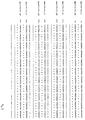
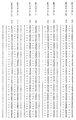
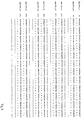
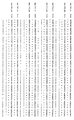
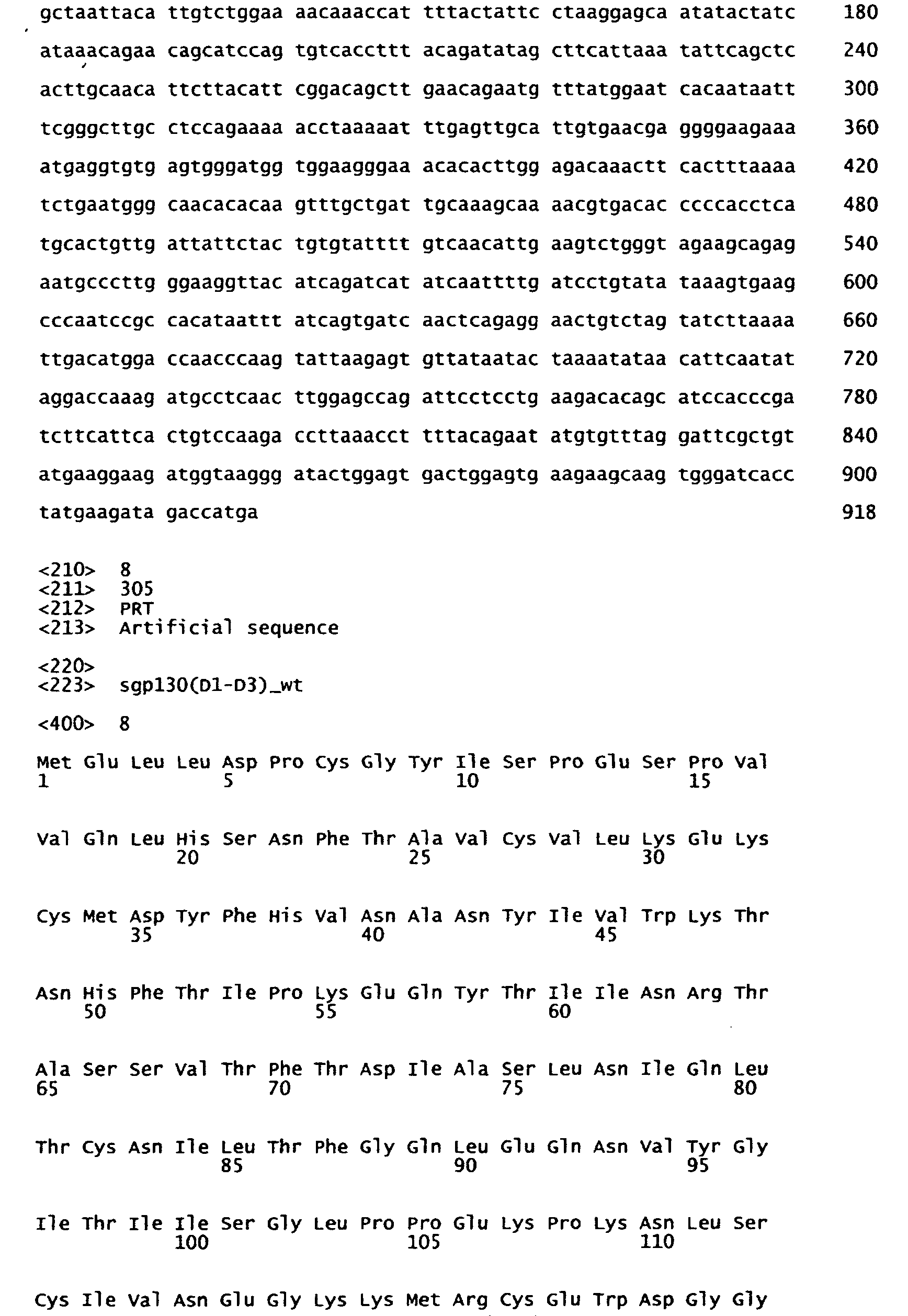
- the present invention relates to a nucleic acid molecule encoding sgp130 comprising the nucleic acid sequence (a) as depicted in Figure 2 (sgp130(D1-3)_opt) or Figure 3 (sgp130Fc_opt) or (b) a fragment or analogue thereof which maintains the codon usage pattern thereof.
- the letter "s" of sgp130 means “soluble”.
- the term "soluble” as used herein refers to a gp130 molecule lacking the intracellular domain and the transmembrane domain.
- the domains utilized in sgp130(D1-D3)_opt consist of the first three extracellular domains D1-D3 of gp130.
- fragment refers to sgp130 fragments which comprise the entire or smaller parts of the optimized cDNA encoding the extracellular domain of gp130.
- fragments show a biological activity of the full length molecule, e. g. maintain the ability to inhibit the activity of the agonistic complex IL-6/sIL-6R.
- sgp130 without the eukaryotic secretory leader sequence (MLTLQTWWQALFIFLTTESTG, Pos. 1 to 22).
- a prokaryotic secretory leader sequence e. g.
- pelB or OmpA could be cloned in front of the sgp130 sequence or parts of it and could be derived from the respective suitable expression plasmid, e. g. pET22b (Merck Biosciences GmbH, Bad Soden, Germany), pASK-IBA2, pASK-IBA12 (IBA, Goettingen, Germany).
- the sgp130 protein can be expressed with or without Tag for purification purposes, e. g. His 6 , Strep, Myc or others.
- analogue refers to a nucleic acid molecule which encodes the same amino acid sequence but which, through the redundancy of the genetic code, has a different nucleotide sequence.
- codon usage pattern refers to the average frequencies in the nucleotide sequence, e.g., highly expressed mammalian genes. Codon usage patterns for mammals, including humans can be found in the literature; see, e.g., Nakamura et al., Nucleic Acids Research 1996, 24:214-5. In the nucleic acid molecules of the present invention, the codon usage pattern is altered to more closely represent the codon bias of the host organism, e.g. a mammalian cell.
- the present invention relates to a nucleic acid molecule, wherein at least 80%, preferably at least 90%, more preferably at least 95% and, most preferably at least 98% of the codons altered in the nucleic acid sequence of Figure 2 or 3 vs. the wild type sequence are present.
- the nucleic acid molecule of the present invention is a DNA molecule.
- the present invention includes expression vectors that comprise the nucleic acid molecules of the invention.
- the expression vectors can be constructed according to methods well known to the person skilled in the art; see, e.g., Sambrook, Molecular Cloning A Laboratory Manual, Cold Spring Harbor Laboratory (1989) N.Y.
- the "control elements” or “regulatory sequences” used for recombinant expression are those non-translated regions of the vector-enhancers, promoters, 5' and 3' untranslated regions which interact with host cellular proteins to carry out transcription and translation. Such elements may vary in their strength and specificity. Depending on the vector system and host utilised, any number of suitable transcription and translation elements, including constitutive and inducible promoters, may be used.
- promoters from mammalian genes or from mammalian viruses are preferable. Promoters and other expression regulation signals may be selected to be compatible with the host cell for which expression is designed.
- mammalian promoters include the metallothionein promoter, which can be induced in response to heavy metals such as cadmium, and the ⁇ -actin 30 promoter.
- Viral promoters such as the SV40 large T antigen promoter, human cytomegalovirus (CMV) immediate early (IE) promoter, rous sarcoma virus LTR promoter, adenovirus promoter, or a HPV promoter, particularly the HPV upstream regulatory region (URR) may also be used. All these promoters are well described and readily available in the art.
- a number of viral-based expression systems may be utilised.
- sequences encoding the polypeptide(s) of the present invention may be ligated into an adenovirus transcription/translation complex consisting of the late promoter and tripartite leader sequence. Insertion in a non-essential E1 or E3 region of the viral genome may be used to obtain a viable virus which is capable of expressing the antibody in infected host cells (Logan, J. and Shenk, T. (1984) Proc. Natl. Acad. Sci. 81 :3655-3659).
- transcription enhancers such as the Rous sarcoma virus (RSV) enhancer, may be used to increase expression in mammalian host cells.
- RSV Rous sarcoma virus
- suitable viral vectors include herpes simplex viral vectors, vaccinia or alpha-virus vectors and retroviruses, including lentiviruses and adeno-associated viruses. Gene transfer techniques using these viruses are known to those skilled in the art. Retrovirus vectors for example may be used to stably integrate the nucleic acid molecules of the invention into the host genome, although such recombination is not preferred. Replication-defective adenovirus vectors by contrast remain episomal and therefore allow transient expression. If it is necessary to generate a cell line that contains multiple copies of the sequence encoding the spg130 polypeptides, vectors based on SV40 or EBV may be used with an appropriate selectable marker.
- HACs Human artificial chromosomes
- HACs may also be employed to deliver larger fragments of DNA than can be contained and expressed in a plasmid.
- HACs of 6 to 10 M are constructed and delivered via conventional delivery methods (liposomes, polycationic amino polymers, or vesicles) for therapeutic purposes.
- Specific initiation signals may also be used to achieve more efficient translation. Such signals include the ATG initiation codon and adjacent sequences. In cases where sequences encoding the sgp130, its initiation codon, and upstream sequences are inserted into the appropriate expression vector, no additional transcriptional or translational control signals may be needed. However, in case where only a coding sequence for a fragment is inserted, exogenous translational control signals including the ATG initiation codon should be provided. Furthermore, the initiation codon should be in the correct reading frame to ensure translation of the entire insert. Exogenous translational elements and initiation codons may be of various origins, both natural and synthetic. The efficiency of expression may be enhanced by the inclusion of enhancers which are appropriate for the particular cell system which is used, such as those described in the literature (Scharf, D. et al. (1994) Results Probl. Cell Differ. 20 :125-162).
- a host cell strain may be chosen for its ability to modulate the expression of the inserted sequences or to process the expressed polypeptide chains in the desired fashion.
- Post-translational processing which cleaves a "prepro" form of the polypeptide may also be used to facilitate correct insertion, folding and/or function.
- Different mammalian host cells which have specific cellular machinery and characteristic mechanisms for post-translational activities (e.g., CHO, HeLa, MDCK, HEK293, 293, COS-7 and W138), are available from the American Type Culture Collection (ATCC; Bethesda, Md.) and may be chosen to ensure the correct modification and processing of the foreign polypeptide chains.
- cell lines which stably express sgp130Fc may be transfected using expression vectors which may contain viral origins of replication and/or endogenous expression elements and one or more selectable marker genes on the same or on a separate vector. Following the introduction of the vector, cells may be allowed to grow for 1-2 days in enriched media before they are switched to selective media.
- the purpose of the selectable marker is to confer resistance to selection, and its presence allows growth and recovery of cells which successfully express the introduced sequences.
- Resistant clones of stably transformed cells may be proliferated using tissue culture techniques appropriate to the cell type.
- the host cells After the introduction of the recombinant vector(s), the host cells are grown in a selective medium, which selects for the growth of vector-containing cells. Any number of selection systems may be used to recover transformed cell lines. These include, but are not limited to, the herpes simplex virus thymidine kinase (Wigler, M. et al. (1977) Cell 11 :223-32) and adenine phosphoribosyltransferase (Lowy, I. et al. (1980) Cell 22: 817-23) genes which can be employed in tk.sup.- or aprt.sup.- cells, respectively.
- antimetabolite, antibiotic or herbicide resistance can be used as the basis for selection; for example, dhfr which confers resistance to methotrexate (Wigler, M. et al. (1980) Proc. Natl. Acad. Sci. 77 :3567-70); npt, which confers resistance to the aminoglycosides neomycin and G-418 (Colbere-Garapin, F. et al (1981) J. Mol. Biol. 150 :1-14) and als or pat, which confer resistance to chlorsulfuron and phosphinotricin acetyltransferase, respectively (Murry, supra).
- vectors and host cells for bacterial expression e.g. bacteriophage, plasmid, or cosmid DNA expression vectors.
- Vectors suitable for use in the present invention include, but are not limited to the pSKK expression vector for expression in bacteria.
- any number of suitable transcription and translation elements including constitutive and inducible promoters, may be used.
- inducible promoters such as the hybrid lac Z promoter of the Bluescript.RTM. phagemid (Stratagene, LaJolla, Calif.) or pSport1.TM. plasmid (Gibco BRL) and the like may be used.
- Purification of the recombinant sgp130 is carried out by any one of the methods known for this purpose, i.e., any conventional procedure involving extraction, precipitation, chromatography, electrophoresis, or the like.
- a further purification procedure that may be used is affinity chromatography using monoclonal antibodies which bind the target polypeptide or a Tag fused to it, e.g., His, Strep or Myc, and which are produced and immobilized on a gel matrix contained within a column.
- Impure preparations containing the recombinant sgp130 are passed through the column.
- the sgp130 will be bound to the column by the specific antibody while the impurities will pass through.
- After washing the polypeptide is eluted from the gel by a change in pH or ionic strength and can then, if desired, dimerized and/or PEGylated.
- the present invention also relates to a method of producing the sgp130 of the present invention, comprising culturing a host cell transformed with a nucleic acid molecule of the invention and recovering the sgp130 polypeptide from said host cell or the culture.
- the sgp130 polypeptide produced from a nucleic acid molecule of the present invention is useful in the treatment and/or prevention of all the pathologies, in which the activity of the agonistic complex IL-6/slL6R must be inhibited, e.g., for the treatment/prevention of bone resorption, hypercalcemia, cachexia, tumours (such as colon cancer), autoimmune diseases (e.g. systemic lupus erythematosis, SLE), chronic inflammations (such as Crohn's disease or rheumatoid arthritis) and bacterial or viral infections.
- autoimmune diseases e.g. systemic lupus erythematosis, SLE
- chronic inflammations such as Crohn's disease or rheumatoid arthritis
- the cDNA encoding either wildtype or optimized sgp130Fc was cloned into the expression plasmid pDEST40 (Invitrogen, Carlsbad, CA, USA) according to standard procedures.
- the wildtype sequence was derived from an expression plasmid which has been described in Jostock et al., Eur. J. Biochem. 268 (2001), 160-7 ( Figure 1; upper panel).
- the construct was sequence verified. 3 x 10 5 HEK293 cells were transiently transfected with 1 ⁇ g of plasmid and 3 ⁇ l of Fugene (Roche Diagnostics, Mannheim, Germany) in 3 ml of medium according to the manufacturer's manual. The cells were subsequently incubated for 24 h at 37°C and supernatants and cells were harvested for further preparations of either total proteins or RNA, respectively.
- the sgp130Fc protein was precipitated from the cell supernatants by adding 20 ⁇ l of Protein-A/G-Plus Agarose (Santa Cruz, CA, USA). The slurry was incubated overnight at 4°C and finally centrifuged. Bound proteins were extracted by boiling the agarose pellet in SDS sample buffer for 5 minutes at 100°C. In parallel the cells were scraped from the plates using a rubber policeman, harvested in 100 ⁇ l of PBS and centrifuged. All protein samples were separated on a standard acrylamide gel, transferred to a PDVF-membrane by semi-dry blotting and stained with a gp130-specific antibody (Hölzel Diagnostika, GmbH, Germany). 50 ng of recombinant sgp130 served as positive control (sgp130).
- the following primers were used to determine RNA transcribed from the transfected plasmid DNA by RT-PCR: sgp130Fc_f: 5'-ATGAGGTGTGAGTGGGATGG-3', sgp130Fc_r: 5'-ACCTTGCACTTGTACTCCTTGC-3'; neomycin resistance gene NeoR_s: 5'-GATGCCTGCTTGCCGAATATC-3'; NeoR_r: 5'-CGCCAAGCTCTTCAGCAATATC-3'.
- RNA was initially reverse transcribed and the cDNA was amplified by 30 cycles of 30 seconds at 95°C followed by 2 minutes at 57°C and a final elongation step of 5 minutes at 72°C.
- Expected amplicon sizes gp130: 1.712 bp, NeoR: 133 bp.
- the amplification of NeoR was performed to document an equal transfection efficiency of the plasmid.
- ⁇ -actin was amplified to demonstrated the use of equal amounts of total RNA in each experiment.
- Example 2 Highly efficient recombinant production of sgp130Fc in HEK293 cells
- Figure 4 demonstrates that in comparison to the wildtype expression plasmid the production of sgp130Fc was increased at least 10 to 20-fold in HEK293 cells transfected with the optimized sgp130Fc expression plasmid.
- RNA level Figure 5
- This elevation of sgp130Fc RNA amounts was not due to a different transfection efficiency as shown by equal amounts of RNA encoded by the neomycin resistance gene which was also located on the expression plasmid.
- results indicate that the significant increase of sgp130Fc production after optimization of the cDNA sequence is partially based on an improved codon usage during translation but is mainly derived from the elevation of the corresponding RNA levels. This might be due to a more efficient transcription or a higher stability of the RNA.
- Example 3 Highly efficient recombinant production of sgp130(D1-D3) in bacteria
- the cDNA encoding either wildtype or optimized sgp130(D1-D3) was cloned into the prokaryotic expression plasmid pET22b (Merck Biosciences GmbH, Bad Soden, Germany) according to standard procedures.
- the D1-D3 fragment was amplified afore from the pSVL-sgp130Fc plasmid described in Jostock et al. 2001.
- the construct was sequence verified and transformed into BL21(DE3)pLys bacteria (Invitrogen, Carlsbad, CA, USA).
- Disruption of the cells was performed by sonication (3 x 30 sec, 10% cycle, 20% power) with a Bandelin Sonoplus HD 2070 sonicator. Insoluble material was pelleted at 13.000 rpm and 4°C for 30 min and the pellet was resuspended in 1 ml of urea buffer (50 mM NaH 2 PO 4 , 8 M urea, pH8). An aliquot was diluted at 1:100 and subsequently analyzed by SDS PAGE according to standard protocols. His-tagged target proteins were detected with an anti-PentaHis antibody (Qiagen, Hilden, Germany).
Landscapes
- Health & Medical Sciences (AREA)
- Life Sciences & Earth Sciences (AREA)
- Genetics & Genomics (AREA)
- Chemical & Material Sciences (AREA)
- Engineering & Computer Science (AREA)
- Organic Chemistry (AREA)
- Zoology (AREA)
- Biomedical Technology (AREA)
- Molecular Biology (AREA)
- Biophysics (AREA)
- Biochemistry (AREA)
- Bioinformatics & Cheminformatics (AREA)
- General Health & Medical Sciences (AREA)
- Wood Science & Technology (AREA)
- General Engineering & Computer Science (AREA)
- Biotechnology (AREA)
- Physics & Mathematics (AREA)
- Microbiology (AREA)
- Plant Pathology (AREA)
- Cell Biology (AREA)
- Immunology (AREA)
- Toxicology (AREA)
- Gastroenterology & Hepatology (AREA)
- Medicinal Chemistry (AREA)
- Proteomics, Peptides & Aminoacids (AREA)
- Preparation Of Compounds By Using Micro-Organisms (AREA)
- Micro-Organisms Or Cultivation Processes Thereof (AREA)
- Amplifiers (AREA)
Abstract
Description
- The present invention relates to codon optimized sgp130 encoding nucleic acid molecules as well as a method for the highly efficient recombinant production of sgp130 in mammalian cells or bacteria using a nucleic acid molecule of the invention.
- For the treatment of various diseases such as Crohn's disease etc. the specific blocking of IL-6 responses dependent on soluble IL-6R might be desirable for treatment. It was found that a soluble gp130-dimer, in particular an IgG-Fc fusion protein or a PEGylated version of sgp130, efficiently inhibits the anti-apoptotic effect of sIL-6R from LPMC from Crohn's disease (CD) patients and that, thus, said compound is useful for the treatment of said disease and related diseases like, e.g., colitis or rheumatoid arthritis. Unfortunately, so far the recombinant production of sgp130 is difficult in particular due to the fact that only low amounts of protein can be obtained
- Thus, the technical problem underlying the present invention was to provide means allowing to improve the efficiency of recombinant production of sgp130Fc or sgp130(D1-D3).
- The solution of the said technical problem is achieved by providing the embodiments characterized in the claims. During the experiments leading to the present invention it was found that by use of particular codon optimized versions of the DNA encoding sgp130Fc the yields of recombinant protein can be increased at least 10- to 20-fold compared to the unmodified version of the DNA. In case of the prokaryotic sgp130(D1-D3) version, the optimization of the DNA led to the reduction of undesired shorter side products.
-
- Figure 1: Schematic presentation of the constructs
Grey shedding marks the parts of the protein which have been optimized. (A) Eukaryotic construct comprising a signal peptide, six extracellular gp130 domains and the IgG-Fc part. (B) Variations of the sgp130 protein expressed in prokaryotic cells. sgp130 can be expressed with or without N-terminal leader sequence and/or C-terminal Tag for purification purposes. - Figure 2: sgp130(D1-D3) (nucleotide sequence and amino acid sequence) for expression in bacterial cells
An alignment of the nucleotide sequence with optimized codons (sgp130(D1-D3)_opt) vs. the original sequence (sgp130(D1-D3)_wt) is shown. - Figure 3: sgp130Fc (nucleotide sequence and amino acid sequence) for expression in mammalian cells
An alignment of the nucleotide sequence with optimized codons (sgp130Fc_opt) vs. the original sequence (sgp130Fc_wt) is shown. - Figure 4: Detection of sgp130Fc after transient transfection of HEK293 cells (A) or CHO cells (B) with wildtype or optimized (opt) sgp130Fc expression plasmids
The position of sgp130Fc is indicated by arrows (◄). Wildtype and optimized sgp130Fc expression was detected in two independent transfection experiments each. The different sizes of the protein (left panel) result from the leader sequence which has been partially cleaved off after secretion into the medium. The right panel represents the results derived from whole cell extracts from CHO cells (sgp130Fc with leader sequence). - Figure 5: Detection of RNA transcribed from transfected plasmid DNA (sgp130Fc; neomycin resistance gene (NeoR)) by gene-specific RT-PCR
HEK293 cells were transfected with an expression plasmid encoding either wildtype or optimized sgp130Fc. In addition both plasmids encoded a neomycin resistance gene (NeoR). Transfection of the empty vector (mock) or non-transfected cells (control) served as negative controls. β-actin was amplified from total RNA to demonstrate the use of equal amounts of RNA in each single experiment. - Figure 6: Expression of sgp130(D1-D3) in BL21(DE3)pLys bacteria
The cDNA encoding sgp130(D1-D3) was cloned into the expression plasmid pET22b (Invitrogen, Carlsbad, CA, USA) which in addition encodes a leading pelB sequence and a C-terminal His-tag. sgp130(D1-D3) was detected by western blot with a His-specific antibody and marked with an arrow (◄). - Thus, the present invention relates to a nucleic acid molecule encoding sgp130 comprising the nucleic acid sequence (a) as depicted in Figure 2 (sgp130(D1-3)_opt) or Figure 3 (sgp130Fc_opt) or (b) a fragment or analogue thereof which maintains the codon usage pattern thereof.
The letter "s" of sgp130 means "soluble". The term "soluble" as used herein refers to a gp130 molecule lacking the intracellular domain and the transmembrane domain. The domains utilized in sgp130(D1-D3)_opt consist of the first three extracellular domains D1-D3 of gp130. - The term "fragment" as used herein refers to sgp130 fragments which comprise the entire or smaller parts of the optimized cDNA encoding the extracellular domain of gp130. Preferably, such fragments show a biological activity of the full length molecule, e. g. maintain the ability to inhibit the activity of the agonistic complex IL-6/sIL-6R. For the expression in bacteria such fragment also comprises sgp130 without the eukaryotic secretory leader sequence (MLTLQTWWQALFIFLTTESTG, Pos. 1 to 22). Moreover, a prokaryotic secretory leader sequence, e. g. pelB or OmpA could be cloned in front of the sgp130 sequence or parts of it and could be derived from the respective suitable expression plasmid, e. g. pET22b (Merck Biosciences GmbH, Bad Soden, Germany), pASK-IBA2, pASK-IBA12 (IBA, Goettingen, Germany). In addition the sgp130 protein can be expressed with or without Tag for purification purposes, e. g. His6, Strep, Myc or others.
- The term "analogue" as used herein refers to a nucleic acid molecule which encodes the same amino acid sequence but which, through the redundancy of the genetic code, has a different nucleotide sequence. The term "codon usage pattern" as used herein refers to the average frequencies in the nucleotide sequence, e.g., highly expressed mammalian genes. Codon usage patterns for mammals, including humans can be found in the literature; see, e.g., Nakamura et al., Nucleic Acids Research 1996, 24:214-5. In the nucleic acid molecules of the present invention, the codon usage pattern is altered to more closely represent the codon bias of the host organism, e.g. a mammalian cell.
- Alternatively, the present invention relates to a nucleic acid molecule, wherein at least 80%, preferably at least 90%, more preferably at least 95% and, most preferably at least 98% of the codons altered in the nucleic acid sequence of Figure 2 or 3 vs. the wild type sequence are present.
- In a preferred embodiment, the nucleic acid molecule of the present invention is a DNA molecule.
- The present invention includes expression vectors that comprise the nucleic acid molecules of the invention. The expression vectors can be constructed according to methods well known to the person skilled in the art; see, e.g., Sambrook, Molecular Cloning A Laboratory Manual, Cold Spring Harbor Laboratory (1989) N.Y. The "control elements" or "regulatory sequences" used for recombinant expression are those non-translated regions of the vector-enhancers, promoters, 5' and 3' untranslated regions which interact with host cellular proteins to carry out transcription and translation. Such elements may vary in their strength and specificity. Depending on the vector system and host utilised, any number of suitable transcription and translation elements, including constitutive and inducible promoters, may be used. In mammalian cell systems, promoters from mammalian genes or from mammalian viruses are preferable. Promoters and other expression regulation signals may be selected to be compatible with the host cell for which expression is designed. For example, mammalian promoters include the metallothionein promoter, which can be induced in response to heavy metals such as cadmium, and the β-actin 30 promoter. Viral promoters such as the SV40 large T antigen promoter, human cytomegalovirus (CMV) immediate early (IE) promoter, rous sarcoma virus LTR promoter, adenovirus promoter, or a HPV promoter, particularly the HPV upstream regulatory region (URR) may also be used. All these promoters are well described and readily available in the art.
- In mammalian host cells, a number of viral-based expression systems may be utilised. In cases where an adenovirus is used as an expression vector, sequences encoding the polypeptide(s) of the present invention may be ligated into an adenovirus transcription/translation complex consisting of the late promoter and tripartite leader sequence. Insertion in a non-essential E1 or E3 region of the viral genome may be used to obtain a viable virus which is capable of expressing the antibody in infected host cells (Logan, J. and Shenk, T. (1984) Proc. Natl. Acad. Sci. 81:3655-3659). In addition, transcription enhancers, such as the Rous sarcoma virus (RSV) enhancer, may be used to increase expression in mammalian host cells.
- Further examples of suitable viral vectors, include herpes simplex viral vectors, vaccinia or alpha-virus vectors and retroviruses, including lentiviruses and adeno-associated viruses. Gene transfer techniques using these viruses are known to those skilled in the art. Retrovirus vectors for example may be used to stably integrate the nucleic acid molecules of the invention into the host genome, although such recombination is not preferred. Replication-defective adenovirus vectors by contrast remain episomal and therefore allow transient expression. If it is necessary to generate a cell line that contains multiple copies of the sequence encoding the spg130 polypeptides, vectors based on SV40 or EBV may be used with an appropriate selectable marker.
- Human artificial chromosomes (HACs) may also be employed to deliver larger fragments of DNA than can be contained and expressed in a plasmid. HACs of 6 to 10 M are constructed and delivered via conventional delivery methods (liposomes, polycationic amino polymers, or vesicles) for therapeutic purposes.
- Specific initiation signals may also be used to achieve more efficient translation. Such signals include the ATG initiation codon and adjacent sequences. In cases where sequences encoding the sgp130, its initiation codon, and upstream sequences are inserted into the appropriate expression vector, no additional transcriptional or translational control signals may be needed. However, in case where only a coding sequence for a fragment is inserted, exogenous translational control signals including the ATG initiation codon should be provided. Furthermore, the initiation codon should be in the correct reading frame to ensure translation of the entire insert. Exogenous translational elements and initiation codons may be of various origins, both natural and synthetic. The efficiency of expression may be enhanced by the inclusion of enhancers which are appropriate for the particular cell system which is used, such as those described in the literature (Scharf, D. et al. (1994) Results Probl. Cell Differ. 20:125-162).
- In addition, a host cell strain may be chosen for its ability to modulate the expression of the inserted sequences or to process the expressed polypeptide chains in the desired fashion. Post-translational processing which cleaves a "prepro" form of the polypeptide may also be used to facilitate correct insertion, folding and/or function. Different mammalian host cells which have specific cellular machinery and characteristic mechanisms for post-translational activities (e.g., CHO, HeLa, MDCK, HEK293, 293, COS-7 and W138), are available from the American Type Culture Collection (ATCC; Bethesda, Md.) and may be chosen to ensure the correct modification and processing of the foreign polypeptide chains.
- For long-term, high-yield production of sgp130, stable expression in mammalian cells is preferred. For example, cell lines which stably express sgp130Fc may be transfected using expression vectors which may contain viral origins of replication and/or endogenous expression elements and one or more selectable marker genes on the same or on a separate vector. Following the introduction of the vector, cells may be allowed to grow for 1-2 days in enriched media before they are switched to selective media. The purpose of the selectable marker is to confer resistance to selection, and its presence allows growth and recovery of cells which successfully express the introduced sequences. Resistant clones of stably transformed cells may be proliferated using tissue culture techniques appropriate to the cell type.
- After the introduction of the recombinant vector(s), the host cells are grown in a selective medium, which selects for the growth of vector-containing cells. Any number of selection systems may be used to recover transformed cell lines. These include, but are not limited to, the herpes simplex virus thymidine kinase (Wigler, M. et al. (1977) Cell 11:223-32) and adenine phosphoribosyltransferase (Lowy, I. et al. (1980) Cell 22:817-23) genes which can be employed in tk.sup.- or aprt.sup.- cells, respectively. Also, antimetabolite, antibiotic or herbicide resistance can be used as the basis for selection; for example, dhfr which confers resistance to methotrexate (Wigler, M. et al. (1980) Proc. Natl. Acad. Sci. 77:3567-70); npt, which confers resistance to the aminoglycosides neomycin and G-418 (Colbere-Garapin, F. et al (1981) J. Mol. Biol. 150:1-14) and als or pat, which confer resistance to chlorsulfuron and phosphinotricin acetyltransferase, respectively (Murry, supra). Additional selectable genes have been described, for example, trpB, which allows cells to utilise indole in place of tryptophan, or hisD, which allows cells to utilise histinol in place of histidine (Hartman, S. C. and R. C. Mulligan (1988) Proc. Natl. Acad. Sci. 85:8047-51). Recently, the use of visible markers has gained popularity with such markers as anthocyanins, beta-glucuronidase and its substrate GUS, and luciferase and its substrate luciferin, being widely used not only to identify transformants, but also to quantify the amount of transient or stable protein expression attributable to a specific vector system (Rhodes, C. A. et al. (1995) Methods Mol. Biol. 55:121-131).
- The person skilled also knows vectors and host cells for bacterial expression, e.g. bacteriophage, plasmid, or cosmid DNA expression vectors. Vectors suitable for use in the present invention include, but are not limited to the pSKK expression vector for expression in bacteria. Depending on the vector system and host utilised, any number of suitable transcription and translation elements, including constitutive and inducible promoters, may be used. For example, when cloning in bacterial systems, inducible promoters such as the hybrid lacZ promoter of the Bluescript.RTM. phagemid (Stratagene, LaJolla, Calif.) or pSport1.TM. plasmid (Gibco BRL) and the like may be used.
- Purification of the recombinant sgp130 is carried out by any one of the methods known for this purpose, i.e., any conventional procedure involving extraction, precipitation, chromatography, electrophoresis, or the like. A further purification procedure that may be used is affinity chromatography using monoclonal antibodies which bind the target polypeptide or a Tag fused to it, e.g., His, Strep or Myc, and which are produced and immobilized on a gel matrix contained within a column. Impure preparations containing the recombinant sgp130 are passed through the column. The sgp130 will be bound to the column by the specific antibody while the impurities will pass through. After washing the polypeptide is eluted from the gel by a change in pH or ionic strength and can then, if desired, dimerized and/or PEGylated.
- Accordingly, the present invention also relates to a method of producing the sgp130 of the present invention, comprising culturing a host cell transformed with a nucleic acid molecule of the invention and recovering the sgp130 polypeptide from said host cell or the culture.
- The sgp130 polypeptide produced from a nucleic acid molecule of the present invention is useful in the treatment and/or prevention of all the pathologies, in which the activity of the agonistic complex IL-6/slL6R must be inhibited, e.g., for the treatment/prevention of bone resorption, hypercalcemia, cachexia, tumours (such as colon cancer), autoimmune diseases (e.g. systemic lupus erythematosis, SLE), chronic inflammations (such as Crohn's disease or rheumatoid arthritis) and bacterial or viral infections.
- The below examples explain the invention in more detail.
- The cDNA encoding either wildtype or optimized sgp130Fc was cloned into the expression plasmid pDEST40 (Invitrogen, Carlsbad, CA, USA) according to standard procedures. The wildtype sequence was derived from an expression plasmid which has been described in Jostock et al., Eur. J. Biochem. 268 (2001), 160-7 (Figure 1; upper panel). The construct was sequence verified. 3 x 10⁵ HEK293 cells were transiently transfected with 1 µg of plasmid and 3 µl of Fugene (Roche Diagnostics, Mannheim, Germany) in 3 ml of medium according to the manufacturer's manual. The cells were subsequently incubated for 24 h at 37°C and supernatants and cells were harvested for further preparations of either total proteins or RNA, respectively.
- One set of cells was transfected with the empty vector (mock), another set of cells was left untransfected (control). Both sets served as negative controls.
- The sgp130Fc protein was precipitated from the cell supernatants by adding 20 µl of Protein-A/G-Plus Agarose (Santa Cruz, CA, USA). The slurry was incubated overnight at 4°C and finally centrifuged. Bound proteins were extracted by boiling the agarose pellet in SDS sample buffer for 5 minutes at 100°C. In parallel the cells were scraped from the plates using a rubber policeman, harvested in 100 µl of PBS and centrifuged. All protein samples were separated on a standard acrylamide gel, transferred to a PDVF-membrane by semi-dry blotting and stained with a gp130-specific antibody (Hölzel Diagnostika, Köln, Germany). 50 ng of recombinant sgp130 served as positive control (sgp130).
- Total RNA was extracted from the cell pellets using a RNeasy Mini kit (Qiagen) according to the manufacturer's instructions. The following primers were used to determine RNA transcribed from the transfected plasmid DNA by RT-PCR: sgp130Fc_f: 5'-ATGAGGTGTGAGTGGGATGG-3', sgp130Fc_r: 5'-ACCTTGCACTTGTACTCCTTGC-3'; neomycin resistance gene NeoR_s: 5'-GATGCCTGCTTGCCGAATATC-3'; NeoR_r: 5'-CGCCAAGCTCTTCAGCAATATC-3'. Total RNA was initially reverse transcribed and the cDNA was amplified by 30 cycles of 30 seconds at 95°C followed by 2 minutes at 57°C and a final elongation step of 5 minutes at 72°C. Expected amplicon sizes: gp130: 1.712 bp, NeoR: 133 bp. The amplification of NeoR was performed to document an equal transfection efficiency of the plasmid. In addition, β-actin was amplified to demonstrated the use of equal amounts of total RNA in each experiment.
- Figure 4 demonstrates that in comparison to the wildtype expression plasmid the production of sgp130Fc was increased at least 10 to 20-fold in HEK293 cells transfected with the optimized sgp130Fc expression plasmid. On the RNA level (Figure 5) a similar increase of sgp130Fc expression was detected with the optimized construct. This elevation of sgp130Fc RNA amounts was not due to a different transfection efficiency as shown by equal amounts of RNA encoded by the neomycin resistance gene which was also located on the expression plasmid.
- The results indicate that the significant increase of sgp130Fc production after optimization of the cDNA sequence is partially based on an improved codon usage during translation but is mainly derived from the elevation of the corresponding RNA levels. This might be due to a more efficient transcription or a higher stability of the RNA.
- The cDNA encoding either wildtype or optimized sgp130(D1-D3) was cloned into the prokaryotic expression plasmid pET22b (Merck Biosciences GmbH, Bad Soden, Germany) according to standard procedures. The D1-D3 fragment was amplified afore from the pSVL-sgp130Fc plasmid described in Jostock et al. 2001. The construct was sequence verified and transformed into BL21(DE3)pLys bacteria (Invitrogen, Carlsbad, CA, USA).
- 10 ml of bacterial suspension were diluted at 1:100 with LB-medium and grown at 30°C overnight until the OD600 nm reached a value of 0.3 (250 rpm). Protein expression was induced by the addition of 0.3 mM of IPTG (Isopropyl-beta-D-thiogalactopyranoside) (Qiagen, Hilden, Germany) and further incubation of the cells overnight at 25°C. The cells were pelleted by centrifugation at 4°C and 4600 rpm for 30 minutes and the pellet was resuspended in 1 ml PBS (PAA Laboratories GmbH, Cölbe, Germany). Disruption of the cells was performed by sonication (3 x 30 sec, 10% cycle, 20% power) with a Bandelin Sonoplus HD 2070 sonicator. Insoluble material was pelleted at 13.000 rpm and 4°C for 30 min and the pellet was resuspended in 1 ml of urea buffer (50 mM NaH2PO4, 8 M urea, pH8). An aliquot was diluted at 1:100 and subsequently analyzed by SDS PAGE according to standard protocols. His-tagged target proteins were detected with an anti-PentaHis antibody (Qiagen, Hilden, Germany).
- Whereas the wildtype sequence generated a second shorter form of sgp130(D1-D3) (Figure 6, left lane) this by-product was not observed with the optimized cDNA (Figure 6, right lane). This unwanted variation of sgp130(D1-D3) is generated by further alternative transcriptional and translational start sides which have been eliminated by codon modifications in the optimized cDNA sequence. Subsequently the efficiency to produce the desired protein with the right size was increased at least at a factor of 3-fold.


-




Claims (10)
- A nucleic acid molecule encoding sgp130 comprising (a) the nucleic acid sequence as (a1) depicted in Figure 2 (sgp130(D1-3)_opt) or (a2) Figure 3 (sgp130Fc_opt) or (b) a fragment or analogue thereof which maintains the codon usage pattern thereof.
- The nucleic acid molecule of claim 1, wherein at least 80% of the codons altered in the nucleic acid sequence of Figure 2 or 3 vs. the wild type sequence are present.
- The nucleic acid molecule of claim 1 or 2 which is a DNA molecule.
- An expression vector containing a nucleic acid molecule of any one of claims 1 to 3.
- A host cell containing an expression vector of claim 4.
- The host cell of claim 5 which is a mammalian host cell.
- The host cell of claim 6 which is a CHO or HEK293 cell.
- The host cell of claim 5 which is a prokaryotic cell.
- The host cell of claim 8 which is a bacterial cell.
- A method of producing a sgp130 polypeptide comprising culturing a host cell of any one of claims 5 to 9 and recovering the polypeptide from said host cell or the culture.
Priority Applications (12)
| Application Number | Priority Date | Filing Date | Title |
|---|---|---|---|
| PT04020455T PT1630232E (en) | 2004-08-27 | 2004-08-27 | Optimized nucleotide sequences encoding sgp130 |
| DK04020455T DK1630232T3 (en) | 2004-08-27 | 2004-08-27 | Optimized nucleotide sequences encoding sgp130 |
| ES04020455T ES2309427T3 (en) | 2004-08-27 | 2004-08-27 | SEQUENCES OF OPTIMIZED NUCLEOTIDS CODING FOR SGP130. |
| DE602004014758T DE602004014758D1 (en) | 2004-08-27 | 2004-08-27 | Optimized nucleotide sequences encoding sgp130 |
| AT04020455T ATE399868T1 (en) | 2004-08-27 | 2004-08-27 | OPTIMIZED NUCLEOTIDE SEQUENCES ENCODING SGP130 |
| EP04020455A EP1630232B1 (en) | 2004-08-27 | 2004-08-27 | Optimized nucleotide sequences encoding sgp130 |
| JP2007528753A JP4615016B2 (en) | 2004-08-27 | 2005-08-26 | Optimized nucleotide sequence encoding sgp130 |
| EP05776083A EP1791960A2 (en) | 2004-08-27 | 2005-08-26 | Optimized nucleotide sequences encoding sgp 130 |
| US11/660,461 US8206948B2 (en) | 2004-08-27 | 2005-08-26 | Optimized nucleotide sequences encoding sgp130 |
| AU2005276581A AU2005276581A1 (en) | 2004-08-27 | 2005-08-26 | Optimized nucleotide sequences encoding sgp 130 |
| PCT/EP2005/009247 WO2006021453A2 (en) | 2004-08-27 | 2005-08-26 | Optimized nucleotide sequences encoding sgp 130 |
| CA2575800A CA2575800C (en) | 2004-08-27 | 2005-08-26 | Optimized nucleotide sequences encoding sgp130 |
Applications Claiming Priority (1)
| Application Number | Priority Date | Filing Date | Title |
|---|---|---|---|
| EP04020455A EP1630232B1 (en) | 2004-08-27 | 2004-08-27 | Optimized nucleotide sequences encoding sgp130 |
Publications (2)
| Publication Number | Publication Date |
|---|---|
| EP1630232A1 true EP1630232A1 (en) | 2006-03-01 |
| EP1630232B1 EP1630232B1 (en) | 2008-07-02 |
Family
ID=34926337
Family Applications (2)
| Application Number | Title | Priority Date | Filing Date |
|---|---|---|---|
| EP04020455A Expired - Lifetime EP1630232B1 (en) | 2004-08-27 | 2004-08-27 | Optimized nucleotide sequences encoding sgp130 |
| EP05776083A Withdrawn EP1791960A2 (en) | 2004-08-27 | 2005-08-26 | Optimized nucleotide sequences encoding sgp 130 |
Family Applications After (1)
| Application Number | Title | Priority Date | Filing Date |
|---|---|---|---|
| EP05776083A Withdrawn EP1791960A2 (en) | 2004-08-27 | 2005-08-26 | Optimized nucleotide sequences encoding sgp 130 |
Country Status (11)
| Country | Link |
|---|---|
| US (1) | US8206948B2 (en) |
| EP (2) | EP1630232B1 (en) |
| JP (1) | JP4615016B2 (en) |
| AT (1) | ATE399868T1 (en) |
| AU (1) | AU2005276581A1 (en) |
| CA (1) | CA2575800C (en) |
| DE (1) | DE602004014758D1 (en) |
| DK (1) | DK1630232T3 (en) |
| ES (1) | ES2309427T3 (en) |
| PT (1) | PT1630232E (en) |
| WO (1) | WO2006021453A2 (en) |
Cited By (7)
| Publication number | Priority date | Publication date | Assignee | Title |
|---|---|---|---|---|
| WO2016089206A3 (en) * | 2014-12-01 | 2016-07-28 | Ferring B.V. | Selective il-6-trans-signalling inhibitor compositions |
| WO2018109168A1 (en) * | 2016-12-16 | 2018-06-21 | Singapore Health Services Pte Ltd | Decoy cytokine receptor |
| US10106603B2 (en) | 2015-12-16 | 2018-10-23 | Singapore Health Services Pte Ltd | Treatment of fibrosis |
| US11078268B2 (en) | 2016-12-16 | 2021-08-03 | Singapore Health Services Pte Ltd | IL-11 antibodies |
| US11078269B2 (en) | 2016-12-16 | 2021-08-03 | Singapore Health Services Pte Ltd | IL-11Rα antibodies |
| US11198721B2 (en) | 2014-12-01 | 2021-12-14 | Ferring B.V. | Methods for treatment of inflammatory disease or IL-6-mediated condition with gp130 protein |
| US11319368B2 (en) | 2019-01-21 | 2022-05-03 | Singapore Health Services Pte Ltd. | Treatment of hepatotoxicity with IL-11 antibody |
Families Citing this family (1)
| Publication number | Priority date | Publication date | Assignee | Title |
|---|---|---|---|---|
| DE602006016765D1 (en) | 2006-06-30 | 2010-10-21 | Conaris Res Inst Ag | Improved sgp 130Fc dimer |
Citations (4)
| Publication number | Priority date | Publication date | Assignee | Title |
|---|---|---|---|---|
| WO1995033059A2 (en) * | 1994-05-26 | 1995-12-07 | Immunex Corporation | Receptor for oncostatin m |
| EP1148065A1 (en) * | 2000-04-21 | 2001-10-24 | Stefan Rose-John | Fusion proteins comprising two soluble gp130 molecules |
| US20020012962A1 (en) * | 1998-09-25 | 2002-01-31 | Neil Stahl | Receptor based antagonists and methods of making and using |
| WO2004113383A2 (en) * | 2003-06-23 | 2004-12-29 | Conaris Research Institute Ag | Pegylated soluble gp130-dimers useful as a medicament |
Family Cites Families (1)
| Publication number | Priority date | Publication date | Assignee | Title |
|---|---|---|---|---|
| JP2004182638A (en) * | 2002-12-03 | 2004-07-02 | Yakult Honsha Co Ltd | Preventive and therapeutic agent for inflammatory disease or malignant tumor |
-
2004
- 2004-08-27 ES ES04020455T patent/ES2309427T3/en not_active Expired - Lifetime
- 2004-08-27 EP EP04020455A patent/EP1630232B1/en not_active Expired - Lifetime
- 2004-08-27 AT AT04020455T patent/ATE399868T1/en active
- 2004-08-27 DK DK04020455T patent/DK1630232T3/en active
- 2004-08-27 PT PT04020455T patent/PT1630232E/en unknown
- 2004-08-27 DE DE602004014758T patent/DE602004014758D1/en not_active Expired - Lifetime
-
2005
- 2005-08-26 EP EP05776083A patent/EP1791960A2/en not_active Withdrawn
- 2005-08-26 WO PCT/EP2005/009247 patent/WO2006021453A2/en not_active Ceased
- 2005-08-26 JP JP2007528753A patent/JP4615016B2/en not_active Expired - Lifetime
- 2005-08-26 US US11/660,461 patent/US8206948B2/en active Active
- 2005-08-26 AU AU2005276581A patent/AU2005276581A1/en not_active Abandoned
- 2005-08-26 CA CA2575800A patent/CA2575800C/en not_active Expired - Lifetime
Patent Citations (5)
| Publication number | Priority date | Publication date | Assignee | Title |
|---|---|---|---|---|
| WO1995033059A2 (en) * | 1994-05-26 | 1995-12-07 | Immunex Corporation | Receptor for oncostatin m |
| US20020012962A1 (en) * | 1998-09-25 | 2002-01-31 | Neil Stahl | Receptor based antagonists and methods of making and using |
| EP1148065A1 (en) * | 2000-04-21 | 2001-10-24 | Stefan Rose-John | Fusion proteins comprising two soluble gp130 molecules |
| WO2004113383A2 (en) * | 2003-06-23 | 2004-12-29 | Conaris Research Institute Ag | Pegylated soluble gp130-dimers useful as a medicament |
| EP1491554A1 (en) * | 2003-06-23 | 2004-12-29 | CONARIS research institute AG | PEGylated soluble gp130-dimers useful as a medicament |
Non-Patent Citations (7)
| Title |
|---|
| ANCEY CECILE ET AL: "A fusion protein of the gp130 and interleukin-6Ralpha ligand-binding domains acts as a potent interleukin-6 inhibitor.", JOURNAL OF BIOLOGICAL CHEMISTRY, vol. 278, no. 19, 9 May 2003 (2003-05-09), pages 16968 - 16972, XP002330983, ISSN: 0021-9258 * |
| CHOW D ET AL: "IN VITRO RECONSTITUTION OF RECOGNITION AND ACTIVATION COMPLEXES BETWEEN INTERLEUKIN-6 AND GP130", BIOCHEMISTRY, AMERICAN CHEMICAL SOCIETY. EASTON, PA, US, vol. 40, no. 25, 26 June 2001 (2001-06-26), pages 7593 - 7603, XP001106233, ISSN: 0006-2960 * |
| FUGLSANG A: "Codon optimizer: a freeware tool for codon optimization", PROTEIN EXPRESSION AND PURIFICATION, ACADEMIC PRESS, SAN DIEGO, CA, US, vol. 31, no. 2, October 2003 (2003-10-01), pages 247 - 249, XP004462728, ISSN: 1046-5928 * |
| HORSTEN URSULA ET AL: "The membrane distal half of gp130 is responsible for the formation of a ternary complex with IL-6 and the IL-6 receptor", FEBS LETTERS, vol. 360, no. 1, 1995, pages 43 - 46, XP002331028, ISSN: 0014-5793 * |
| KALLEN K-J: "The role of transsignalling via the agonistic soluble IL-6 receptor in human diseases", BIOCHIMICA ET BIOPHYSICA ACTA. MOLECULAR CELL RESEARCH, ELSEVIER SCIENCE PUBLISHERS, AMSTERDAM, NL, vol. 1592, no. 3, 11 November 2002 (2002-11-11), pages 323 - 343, XP004391610, ISSN: 0167-4889 * |
| KEN-NOSUKE WADA ET AL: "CODON USAGE TABULATED FROM THE GENBANK GENETIC SEQUENCE DATA", NUCLEIC ACIDS RESEARCH, OXFORD UNIVERSITY PRESS, SURREY, GB, vol. 18, 25 April 1990 (1990-04-25), pages 2367 - 2368, XP000117389, ISSN: 0305-1048 * |
| TANAKA M ET AL: "CLONING OF NOVEL SOLUBLE GP130 AND DETECTION OF ITS NEUTRALIZING AUTOANTIBODIES IN RHEUMATOID ARTHRITIS", JOURNAL OF CLINICAL INVESTIGATION, NEW YORK, NY, US, vol. 106, no. 1, July 2000 (2000-07-01), pages 137 - 144, XP000944750, ISSN: 0021-9738 * |
Cited By (26)
| Publication number | Priority date | Publication date | Assignee | Title |
|---|---|---|---|---|
| WO2016089206A3 (en) * | 2014-12-01 | 2016-07-28 | Ferring B.V. | Selective il-6-trans-signalling inhibitor compositions |
| KR20170135818A (en) * | 2014-12-01 | 2017-12-08 | 훼링 비.브이. | Selective il-6-trans-signalling inhibitor compositions |
| EP4356962A3 (en) * | 2014-12-01 | 2024-07-24 | Ferring B.V. | Selective il-6-trans-signalling inhibitor compositions |
| US11306136B2 (en) | 2014-12-01 | 2022-04-19 | Ferring B.V. | Selective IL-6-trans-signalling inhibitor compositions |
| US10519218B2 (en) | 2014-12-01 | 2019-12-31 | Ferring B.V. | Selective IL-6-trans-signalling inhibitor compositions |
| US11198721B2 (en) | 2014-12-01 | 2021-12-14 | Ferring B.V. | Methods for treatment of inflammatory disease or IL-6-mediated condition with gp130 protein |
| US10894825B2 (en) | 2015-12-16 | 2021-01-19 | Singapore Health Services Pte Ltd | Treatment of fibrosis with interleukin-11 antibody |
| US10899832B2 (en) | 2015-12-16 | 2021-01-26 | Singapore Health Services Pte Ltd | Treatment of fibrosis with interleukin-11 receptor alpha antibody |
| US10865241B2 (en) | 2015-12-16 | 2020-12-15 | Singapore Health Services Pte Ltd. | Treatment of fibrosis with interleukin-11 antibody |
| US10870696B2 (en) | 2015-12-16 | 2020-12-22 | Singapore Health Services Pte Ltd. | Treatment of fibrosis with interleukin-11 antibody |
| US10870697B2 (en) | 2015-12-16 | 2020-12-22 | Singapore Health Services Pte Ltd. | Treatment of fibrosis with interleukin-11 antibody |
| US10889642B2 (en) | 2015-12-16 | 2021-01-12 | Singapore Health Services Pte Ltd | Treatment of fibrosis with interleukin-11 receptor alpha antibody |
| US10865240B2 (en) | 2015-12-16 | 2020-12-15 | Singapore Health Services Pte Ltd. | Treatment of fibrosis with interleukin-11 antibody |
| US10894826B2 (en) | 2015-12-16 | 2021-01-19 | Singapore Health Services Pte Ltd | Treatment of fibrosis with interleukin-11 receptor alpha antibody |
| US10894827B2 (en) | 2015-12-16 | 2021-01-19 | Singapore Health Services Pte Ltd | Treatment of fibrosis with interleukin-11 receptor alpha antibody |
| US10865239B2 (en) | 2015-12-16 | 2020-12-15 | Singapore Health Services Pte Ltd. | Treatment of fibrosis with interleukin-11 antibody |
| US10927169B2 (en) | 2015-12-16 | 2021-02-23 | Singapore Health Services Pte Ltd | Treatment of fibrosis with Interleukin-11 receptor alpha antibody |
| US11939374B2 (en) | 2015-12-16 | 2024-03-26 | Singapore Health Services Pte Ltd. | Treatment of fibrosis |
| US10106603B2 (en) | 2015-12-16 | 2018-10-23 | Singapore Health Services Pte Ltd | Treatment of fibrosis |
| US10822405B2 (en) | 2015-12-16 | 2020-11-03 | Singapore Health Services Pte Ltd. | Treatment of fibrosis with IL-11 receptor alpha antibody |
| US11274143B2 (en) | 2016-12-16 | 2022-03-15 | National University Of Singapore | Decoy cytokine receptor |
| US11078269B2 (en) | 2016-12-16 | 2021-08-03 | Singapore Health Services Pte Ltd | IL-11Rα antibodies |
| US11078268B2 (en) | 2016-12-16 | 2021-08-03 | Singapore Health Services Pte Ltd | IL-11 antibodies |
| WO2018109168A1 (en) * | 2016-12-16 | 2018-06-21 | Singapore Health Services Pte Ltd | Decoy cytokine receptor |
| US12240889B2 (en) | 2016-12-16 | 2025-03-04 | National University Of Singapore | Decoy cytokine receptor |
| US11319368B2 (en) | 2019-01-21 | 2022-05-03 | Singapore Health Services Pte Ltd. | Treatment of hepatotoxicity with IL-11 antibody |
Also Published As
| Publication number | Publication date |
|---|---|
| ATE399868T1 (en) | 2008-07-15 |
| WO2006021453A3 (en) | 2006-06-22 |
| DK1630232T3 (en) | 2008-10-20 |
| JP4615016B2 (en) | 2011-01-19 |
| EP1630232B1 (en) | 2008-07-02 |
| DE602004014758D1 (en) | 2008-08-14 |
| JP2008510474A (en) | 2008-04-10 |
| EP1791960A2 (en) | 2007-06-06 |
| PT1630232E (en) | 2008-10-02 |
| AU2005276581A1 (en) | 2006-03-02 |
| US20080199906A1 (en) | 2008-08-21 |
| US8206948B2 (en) | 2012-06-26 |
| CA2575800C (en) | 2018-06-05 |
| CA2575800A1 (en) | 2006-03-02 |
| ES2309427T3 (en) | 2008-12-16 |
| WO2006021453A2 (en) | 2006-03-02 |
Similar Documents
| Publication | Publication Date | Title |
|---|---|---|
| US20230227530A1 (en) | T-cell modulatory multimeric polypeptides and methods of use thereof | |
| US20250092110A1 (en) | T-Cell Modulatory Multimeric Polypeptides and Methods of Use Thereof | |
| AU2017225787B2 (en) | T-cell modulatory multimeric polypeptides and methods of use thereof | |
| US11851471B2 (en) | T-cell modulatory multimeric polypeptides and methods of use thereof | |
| TW201920247A (en) | Antigen-presenting polypeptides and methods of use thereof | |
| US7629147B2 (en) | PEGylated soluble GP130-dimers useful as a medicament | |
| KR20160067219A (en) | Polynucleotides encoding low density lipoprotein receptor | |
| KR20040032105A (en) | Compositions and methods for high-level, large-scale production of recombinant proteins | |
| US8206948B2 (en) | Optimized nucleotide sequences encoding sgp130 | |
| EP1717314A1 (en) | Receptor for modified low-density lipoprotein | |
| US8318662B2 (en) | Protein increasing cell infectivity of herpes simplex virus and use thereof | |
| WO2024153120A1 (en) | Mutated pd1 ectodomain fragment and car containing same, and nk cell | |
| US9943567B2 (en) | Method for treating arthritis using IK factor or nucleic acid encoding IK factor | |
| CN118339291A (en) | Modified 5' UTR | |
| CN119506295B (en) | Preparation method of prostate specific membrane antigen | |
| CN112899307A (en) | Use of GluN1 and/or GluN2 subunit carboxy-terminal myristoylated NMDA receptors | |
| KR101119231B1 (en) | Pas mutants and vectors carrying the same | |
| KR20240045048A (en) | A tag for enhanced expression of membrane protein and use thereof | |
| WO2002038761A2 (en) | Regulation of human oat-like protein |
Legal Events
| Date | Code | Title | Description |
|---|---|---|---|
| PUAI | Public reference made under article 153(3) epc to a published international application that has entered the european phase |
Free format text: ORIGINAL CODE: 0009012 |
|
| AK | Designated contracting states |
Kind code of ref document: A1 Designated state(s): AT BE BG CH CY CZ DE DK EE ES FI FR GB GR HU IE IT LI LU MC NL PL PT RO SE SI SK TR |
|
| AX | Request for extension of the european patent |
Extension state: AL HR LT LV MK |
|
| AKX | Designation fees paid | ||
| 17P | Request for examination filed |
Effective date: 20060705 |
|
| RBV | Designated contracting states (corrected) |
Designated state(s): AT BE BG CH CY CZ DE DK EE ES FI FR GB GR HU IE IT LI LU MC NL PL PT RO SE SI SK TR |
|
| 17Q | First examination report despatched |
Effective date: 20070118 |
|
| 17Q | First examination report despatched |
Effective date: 20070118 |
|
| GRAP | Despatch of communication of intention to grant a patent |
Free format text: ORIGINAL CODE: EPIDOSNIGR1 |
|
| GRAS | Grant fee paid |
Free format text: ORIGINAL CODE: EPIDOSNIGR3 |
|
| GRAA | (expected) grant |
Free format text: ORIGINAL CODE: 0009210 |
|
| AK | Designated contracting states |
Kind code of ref document: B1 Designated state(s): AT BE BG CH CY CZ DE DK EE ES FI FR GB GR HU IE IT LI LU MC NL PL PT RO SE SI SK TR |
|
| REG | Reference to a national code |
Ref country code: GB Ref legal event code: FG4D |
|
| REG | Reference to a national code |
Ref country code: CH Ref legal event code: EP |
|
| REF | Corresponds to: |
Ref document number: 602004014758 Country of ref document: DE Date of ref document: 20080814 Kind code of ref document: P |
|
| REG | Reference to a national code |
Ref country code: IE Ref legal event code: FG4D |
|
| REG | Reference to a national code |
Ref country code: SE Ref legal event code: TRGR |
|
| REG | Reference to a national code |
Ref country code: CH Ref legal event code: NV Representative=s name: ING. MARCO ZARDI C/O M. ZARDI & CO. S.A. |
|
| REG | Reference to a national code |
Ref country code: PT Ref legal event code: SC4A Free format text: AVAILABILITY OF NATIONAL TRANSLATION Effective date: 20080919 |
|
| REG | Reference to a national code |
Ref country code: GR Ref legal event code: EP Ref document number: 20080402388 Country of ref document: GR |
|
| PG25 | Lapsed in a contracting state [announced via postgrant information from national office to epo] |
Ref country code: SI Free format text: LAPSE BECAUSE OF FAILURE TO SUBMIT A TRANSLATION OF THE DESCRIPTION OR TO PAY THE FEE WITHIN THE PRESCRIBED TIME-LIMIT Effective date: 20080702 |
|
| REG | Reference to a national code |
Ref country code: ES Ref legal event code: FG2A Ref document number: 2309427 Country of ref document: ES Kind code of ref document: T3 |
|
| PG25 | Lapsed in a contracting state [announced via postgrant information from national office to epo] |
Ref country code: BG Free format text: LAPSE BECAUSE OF FAILURE TO SUBMIT A TRANSLATION OF THE DESCRIPTION OR TO PAY THE FEE WITHIN THE PRESCRIBED TIME-LIMIT Effective date: 20081002 |
|
| PG25 | Lapsed in a contracting state [announced via postgrant information from national office to epo] |
Ref country code: EE Free format text: LAPSE BECAUSE OF FAILURE TO SUBMIT A TRANSLATION OF THE DESCRIPTION OR TO PAY THE FEE WITHIN THE PRESCRIBED TIME-LIMIT Effective date: 20080702 |
|
| PLBE | No opposition filed within time limit |
Free format text: ORIGINAL CODE: 0009261 |
|
| PG25 | Lapsed in a contracting state [announced via postgrant information from national office to epo] |
Ref country code: SK Free format text: LAPSE BECAUSE OF FAILURE TO SUBMIT A TRANSLATION OF THE DESCRIPTION OR TO PAY THE FEE WITHIN THE PRESCRIBED TIME-LIMIT Effective date: 20080702 Ref country code: RO Free format text: LAPSE BECAUSE OF FAILURE TO SUBMIT A TRANSLATION OF THE DESCRIPTION OR TO PAY THE FEE WITHIN THE PRESCRIBED TIME-LIMIT Effective date: 20080702 Ref country code: CZ Free format text: LAPSE BECAUSE OF FAILURE TO SUBMIT A TRANSLATION OF THE DESCRIPTION OR TO PAY THE FEE WITHIN THE PRESCRIBED TIME-LIMIT Effective date: 20080702 |
|
| 26N | No opposition filed |
Effective date: 20090403 |
|
| PGFP | Annual fee paid to national office [announced via postgrant information from national office to epo] |
Ref country code: MC Payment date: 20090901 Year of fee payment: 6 |
|
| PGFP | Annual fee paid to national office [announced via postgrant information from national office to epo] |
Ref country code: TR Payment date: 20090826 Year of fee payment: 6 Ref country code: PT Payment date: 20090825 Year of fee payment: 6 Ref country code: FI Payment date: 20090828 Year of fee payment: 6 |
|
| PG25 | Lapsed in a contracting state [announced via postgrant information from national office to epo] |
Ref country code: PL Free format text: LAPSE BECAUSE OF FAILURE TO SUBMIT A TRANSLATION OF THE DESCRIPTION OR TO PAY THE FEE WITHIN THE PRESCRIBED TIME-LIMIT Effective date: 20080702 |
|
| PGFP | Annual fee paid to national office [announced via postgrant information from national office to epo] |
Ref country code: GR Payment date: 20090831 Year of fee payment: 6 |
|
| PG25 | Lapsed in a contracting state [announced via postgrant information from national office to epo] |
Ref country code: LU Free format text: LAPSE BECAUSE OF NON-PAYMENT OF DUE FEES Effective date: 20080827 Ref country code: HU Free format text: LAPSE BECAUSE OF FAILURE TO SUBMIT A TRANSLATION OF THE DESCRIPTION OR TO PAY THE FEE WITHIN THE PRESCRIBED TIME-LIMIT Effective date: 20090103 Ref country code: CY Free format text: LAPSE BECAUSE OF FAILURE TO SUBMIT A TRANSLATION OF THE DESCRIPTION OR TO PAY THE FEE WITHIN THE PRESCRIBED TIME-LIMIT Effective date: 20080702 |
|
| REG | Reference to a national code |
Ref country code: PT Ref legal event code: MM4A Free format text: LAPSE DUE TO NON-PAYMENT OF FEES Effective date: 20110228 |
|
| PG25 | Lapsed in a contracting state [announced via postgrant information from national office to epo] |
Ref country code: MC Free format text: LAPSE BECAUSE OF NON-PAYMENT OF DUE FEES Effective date: 20100831 |
|
| PLAA | Information modified related to event that no opposition was filed |
Free format text: ORIGINAL CODE: 0009299DELT |
|
| PLBE | No opposition filed within time limit |
Free format text: ORIGINAL CODE: 0009261 |
|
| STAA | Information on the status of an ep patent application or granted ep patent |
Free format text: STATUS: NO OPPOSITION FILED WITHIN TIME LIMIT |
|
| PG25 | Lapsed in a contracting state [announced via postgrant information from national office to epo] |
Ref country code: IT Free format text: LAPSE BECAUSE OF NON-PAYMENT OF DUE FEES Effective date: 20100827 Ref country code: PT Free format text: LAPSE BECAUSE OF NON-PAYMENT OF DUE FEES Effective date: 20110228 Ref country code: FI Free format text: LAPSE BECAUSE OF NON-PAYMENT OF DUE FEES Effective date: 20100827 |
|
| 26N | No opposition filed |
Effective date: 20090403 |
|
| RIN2 | Information on inventor provided after grant (corrected) |
Inventor name: ROSE-JOHN, STEFAN Inventor name: DAECKE, JESSICA, DR. Inventor name: RAHAUS, NIKOLAUS Inventor name: WAETZIG, GEORG, DR. Inventor name: SEEGERT, DIRK |
|
| PG25 | Lapsed in a contracting state [announced via postgrant information from national office to epo] |
Ref country code: GR Free format text: LAPSE BECAUSE OF NON-PAYMENT OF DUE FEES Effective date: 20110302 |
|
| PG25 | Lapsed in a contracting state [announced via postgrant information from national office to epo] |
Ref country code: TR Free format text: LAPSE BECAUSE OF NON-PAYMENT OF DUE FEES Effective date: 20100827 |
|
| REG | Reference to a national code |
Ref country code: FR Ref legal event code: PLFP Year of fee payment: 13 |
|
| REG | Reference to a national code |
Ref country code: FR Ref legal event code: PLFP Year of fee payment: 14 |
|
| REG | Reference to a national code |
Ref country code: FR Ref legal event code: PLFP Year of fee payment: 15 |
|
| P01 | Opt-out of the competence of the unified patent court (upc) registered |
Effective date: 20230504 |
|
| PGFP | Annual fee paid to national office [announced via postgrant information from national office to epo] |
Ref country code: NL Payment date: 20230825 Year of fee payment: 20 |
|
| PGFP | Annual fee paid to national office [announced via postgrant information from national office to epo] |
Ref country code: IT Payment date: 20230822 Year of fee payment: 20 Ref country code: IE Payment date: 20230818 Year of fee payment: 20 Ref country code: GB Payment date: 20230822 Year of fee payment: 20 Ref country code: ES Payment date: 20230914 Year of fee payment: 20 Ref country code: CH Payment date: 20230902 Year of fee payment: 20 Ref country code: AT Payment date: 20230818 Year of fee payment: 20 |
|
| PGFP | Annual fee paid to national office [announced via postgrant information from national office to epo] |
Ref country code: SE Payment date: 20230823 Year of fee payment: 20 Ref country code: FR Payment date: 20230824 Year of fee payment: 20 Ref country code: DK Payment date: 20230824 Year of fee payment: 20 Ref country code: DE Payment date: 20230828 Year of fee payment: 20 Ref country code: BE Payment date: 20230825 Year of fee payment: 20 |
|
| REG | Reference to a national code |
Ref country code: DE Ref legal event code: R071 Ref document number: 602004014758 Country of ref document: DE |
|
| REG | Reference to a national code |
Ref country code: NL Ref legal event code: MK Effective date: 20240826 |
|
| REG | Reference to a national code |
Ref country code: CH Ref legal event code: PL |
|
| REG | Reference to a national code |
Ref country code: BE Ref legal event code: MK Effective date: 20240827 |
|
| REG | Reference to a national code |
Ref country code: ES Ref legal event code: FD2A Effective date: 20240903 |
|
| REG | Reference to a national code |
Ref country code: GB Ref legal event code: PE20 Expiry date: 20240826 |
|
| REG | Reference to a national code |
Ref country code: IE Ref legal event code: MK9A |
|
| REG | Reference to a national code |
Ref country code: SE Ref legal event code: EUG |
|
| PG25 | Lapsed in a contracting state [announced via postgrant information from national office to epo] |
Ref country code: IE Free format text: LAPSE BECAUSE OF EXPIRATION OF PROTECTION Effective date: 20240827 |
|
| PG25 | Lapsed in a contracting state [announced via postgrant information from national office to epo] |
Ref country code: GB Free format text: LAPSE BECAUSE OF EXPIRATION OF PROTECTION Effective date: 20240826 |
|
| REG | Reference to a national code |
Ref country code: AT Ref legal event code: MK07 Ref document number: 399868 Country of ref document: AT Kind code of ref document: T Effective date: 20240827 |
|
| PG25 | Lapsed in a contracting state [announced via postgrant information from national office to epo] |
Ref country code: ES Free format text: LAPSE BECAUSE OF EXPIRATION OF PROTECTION Effective date: 20240828 |
|
| PG25 | Lapsed in a contracting state [announced via postgrant information from national office to epo] |
Ref country code: IE Free format text: LAPSE BECAUSE OF EXPIRATION OF PROTECTION Effective date: 20240827 Ref country code: GB Free format text: LAPSE BECAUSE OF EXPIRATION OF PROTECTION Effective date: 20240826 Ref country code: ES Free format text: LAPSE BECAUSE OF EXPIRATION OF PROTECTION Effective date: 20240828 |
|
| REG | Reference to a national code |
Ref country code: DK Ref legal event code: EUP Expiry date: 20240827 |