EP1629841A1 - Antidepressants or food and drinks for antidepression - Google Patents
Antidepressants or food and drinks for antidepression Download PDFInfo
- Publication number
- EP1629841A1 EP1629841A1 EP04735386A EP04735386A EP1629841A1 EP 1629841 A1 EP1629841 A1 EP 1629841A1 EP 04735386 A EP04735386 A EP 04735386A EP 04735386 A EP04735386 A EP 04735386A EP 1629841 A1 EP1629841 A1 EP 1629841A1
- Authority
- EP
- European Patent Office
- Prior art keywords
- formula
- substituted
- salt
- food
- hydrogen atom
- Prior art date
- Legal status (The legal status is an assumption and is not a legal conclusion. Google has not performed a legal analysis and makes no representation as to the accuracy of the status listed.)
- Withdrawn
Links
- CPXSBHKDEPPWIX-NAVRORAJSA-N NC(Cc1c([C@H]([C@H]([C@H]2O)O)O[C@H](CO)[C@H]2O)[nH]c2ccccc12)C(O)=O Chemical compound NC(Cc1c([C@H]([C@H]([C@H]2O)O)O[C@H](CO)[C@H]2O)[nH]c2ccccc12)C(O)=O CPXSBHKDEPPWIX-NAVRORAJSA-N 0.000 description 2
- 0 *C[C@@]([C@@](*)[C@@]([C@]1*=C)O)OC1(C(*1)=Cc2c1cccc2)O Chemical compound *C[C@@]([C@@](*)[C@@]([C@]1*=C)O)OC1(C(*1)=Cc2c1cccc2)O 0.000 description 1
Classifications
-
- C—CHEMISTRY; METALLURGY
- C07—ORGANIC CHEMISTRY
- C07D—HETEROCYCLIC COMPOUNDS
- C07D405/00—Heterocyclic compounds containing both one or more hetero rings having oxygen atoms as the only ring hetero atoms, and one or more rings having nitrogen as the only ring hetero atom
- C07D405/02—Heterocyclic compounds containing both one or more hetero rings having oxygen atoms as the only ring hetero atoms, and one or more rings having nitrogen as the only ring hetero atom containing two hetero rings
- C07D405/04—Heterocyclic compounds containing both one or more hetero rings having oxygen atoms as the only ring hetero atoms, and one or more rings having nitrogen as the only ring hetero atom containing two hetero rings directly linked by a ring-member-to-ring-member bond
-
- A—HUMAN NECESSITIES
- A23—FOODS OR FOODSTUFFS; TREATMENT THEREOF, NOT COVERED BY OTHER CLASSES
- A23L—FOODS, FOODSTUFFS OR NON-ALCOHOLIC BEVERAGES, NOT OTHERWISE PROVIDED FOR; PREPARATION OR TREATMENT THEREOF
- A23L2/00—Non-alcoholic beverages; Dry compositions or concentrates therefor; Preparation or treatment thereof
- A23L2/52—Adding ingredients
-
- A—HUMAN NECESSITIES
- A23—FOODS OR FOODSTUFFS; TREATMENT THEREOF, NOT COVERED BY OTHER CLASSES
- A23L—FOODS, FOODSTUFFS OR NON-ALCOHOLIC BEVERAGES, NOT OTHERWISE PROVIDED FOR; PREPARATION OR TREATMENT THEREOF
- A23L33/00—Modifying nutritive qualities of foods; Dietetic products; Preparation or treatment thereof
- A23L33/10—Modifying nutritive qualities of foods; Dietetic products; Preparation or treatment thereof using additives
-
- A—HUMAN NECESSITIES
- A61—MEDICAL OR VETERINARY SCIENCE; HYGIENE
- A61K—PREPARATIONS FOR MEDICAL, DENTAL OR TOILETRY PURPOSES
- A61K31/00—Medicinal preparations containing organic active ingredients
- A61K31/33—Heterocyclic compounds
- A61K31/395—Heterocyclic compounds having nitrogen as a ring hetero atom, e.g. guanethidine or rifamycins
- A61K31/40—Heterocyclic compounds having nitrogen as a ring hetero atom, e.g. guanethidine or rifamycins having five-membered rings with one nitrogen as the only ring hetero atom, e.g. sulpiride, succinimide, tolmetin, buflomedil
- A61K31/403—Heterocyclic compounds having nitrogen as a ring hetero atom, e.g. guanethidine or rifamycins having five-membered rings with one nitrogen as the only ring hetero atom, e.g. sulpiride, succinimide, tolmetin, buflomedil condensed with carbocyclic rings, e.g. carbazole
- A61K31/404—Indoles, e.g. pindolol
-
- A—HUMAN NECESSITIES
- A61—MEDICAL OR VETERINARY SCIENCE; HYGIENE
- A61K—PREPARATIONS FOR MEDICAL, DENTAL OR TOILETRY PURPOSES
- A61K31/00—Medicinal preparations containing organic active ingredients
- A61K31/70—Carbohydrates; Sugars; Derivatives thereof
- A61K31/7042—Compounds having saccharide radicals and heterocyclic rings
- A61K31/7052—Compounds having saccharide radicals and heterocyclic rings having nitrogen as a ring hetero atom, e.g. nucleosides, nucleotides
- A61K31/7056—Compounds having saccharide radicals and heterocyclic rings having nitrogen as a ring hetero atom, e.g. nucleosides, nucleotides containing five-membered rings with nitrogen as a ring hetero atom
-
- A—HUMAN NECESSITIES
- A61—MEDICAL OR VETERINARY SCIENCE; HYGIENE
- A61P—SPECIFIC THERAPEUTIC ACTIVITY OF CHEMICAL COMPOUNDS OR MEDICINAL PREPARATIONS
- A61P25/00—Drugs for disorders of the nervous system
- A61P25/24—Antidepressants
-
- C—CHEMISTRY; METALLURGY
- C07—ORGANIC CHEMISTRY
- C07H—SUGARS; DERIVATIVES THEREOF; NUCLEOSIDES; NUCLEOTIDES; NUCLEIC ACIDS
- C07H7/00—Compounds containing non-saccharide radicals linked to saccharide radicals by a carbon-to-carbon bond
- C07H7/06—Heterocyclic radicals
Definitions
- the present invention relates to antidepressants or foods and drinks for antidepression.
- monoamine oxidase (MAO) inhibitors As the antidepressants, monoamine oxidase (MAO) inhibitors, tricyclic antidepressants such as amitriptyline and imipramine, and tetracyclic antidepressants such as mianserin and maprotiline have been conventionally used.
- MAO monoamine oxidase
- tricyclic antidepressants such as amitriptyline and imipramine
- tetracyclic antidepressants such as mianserin and maprotiline have been conventionally used.
- MAO inhibitors have side effects such as hepatopathy, excessive stimulant action, toxic psychosis, sleeplessness, orthostatic hypotension, vertigo, ear noises and constipation
- tricyclic antidepressants have side effects such as drowsiness, systemic lassitude, anticholinergic effects (e.g., dry mouth, constipation, urinary disturbance, tachycardia and aggravation of glaucoma), orthostatic hypotension, hepatopathy, efflorescence, delirium, vertigo and spasm, and tetracyclic antidepressants have side effects such as spasm, drug eruption, drowsiness and granulocytopenia.
- serotonin has been reported to be related to antidepressive activity [The Brain Receptor (New Version), Norio Ogawa, ed., Sekai Hoken Tsushinsha (1991), etc.].
- the correlation between 5-HT reuptake inhibition or 5-HT receptor and antidepressive activity has been studied, and selective serotonin reuptake inhibitors (hereinafter referred to as SSRI) such as fluoxetine, sertraline and paroxetine have been developed as antidepressants.
- SSRI selective serotonin reuptake inhibitors
- these SSRIs are known to have side effects such as hypotension, palpitation, vertigo, dizziness, drowsiness, efflorescence, hepatopathy, lassitude, vomiting and nausea.
- An object of the present invention is to provide antidepressants or foods and drinks for antidepression.
- the present invention relates to the following (1) to (19).
- the lower alkyl and the lower alkyl moiety of the lower alkoxy and the lower alkoxycarbonyl include straight-chain or branched alkyl groups having 1 to 6 carbon atoms, such as methyl, ethyl, propyl, isopropyl, butyl, isobutyl, sec-butyl, tert-butyl, pentyl, isopentyl, neopentyl and hexyl.
- the alkenyl includes straight-chain or branched alkenyl groups having 2 to 6 carbon atoms, such as vinyl, allyl, 1-propenyl, methacryl, crotyl, 1-butenyl, 3-butenyl, 2-pentenyl, 4-pentenyl, 2-hexenyl and 5-hexenyl.
- aryl and the aryl moiety of the arylsulfonyl and the aralkyloxylcarbonyl include aryl groups having 6 to 14 carbon atoms, such as phenyl, naphthyl and anthryl.
- alkylene moiety of the aralkyloxycarbonyl has the same meaning as the above-described lower alkyl except one hydrogen atom is removed therefrom.
- the substituted lower alkyl, the substituted lower alkoxy, the substituted lower alkoxycarbonyl and the substituted alkenyl each have 1 to 3 substituents which are the same or different.
- substituents are halogen, amino, nitro, hydroxy, carboxy, carbamoyl, sulfo, tri-lower alkylsilyl, lower alkoxy, aryl, substituted or unsubstituted mono- or di-lower alkylamino, substituted or unsubstituted mono or bis(aralkyloxycarbonyl)amino and substituted or unsubstituted lower alkoxycarbonyl.
- the halogen means fluorine, chlorine, bromine and iodine atoms
- the lower alkyl moiety of the lower alkoxy, the tri-lower alkylsilyl, the mono- or di-lower alkylamino and the lower alkoxycarbonyl has the same meaning as the above-described lower alkyl
- the three lower alkyl moieties of the tri-lower alkylsilyl and the two lower alkyl moieties of the di-lower alkylamino each may be the same or different
- the aryl and the aryl moiety of the mono or bis(aralkyloxycarbonyl)amino have the same meaning as the above-described aryl
- the alkylene moiety of the mono or bis(aralkyloxycarbonyl)amino has the same meaning as the above-described lower alkyl except one hydrogen atom is removed therefrom; and the two aralkyloxycarbonyl moieties of the bis(aralkyl
- the substituted mono- or di-lower alkylamino, the substituted mono or bis(aralkyloxycarbonyl)amino and the substituted lower alkoxycarbonyl each have 1 to 3 substituents which are the same or different.
- substituents are halogen, amino, nitro, hydroxy, carboxy, carbamoyl and sulfo.
- the halogen has the same meaning as defined above.
- the substituted aryl, the substituted arylsulfonyl and the substituted aralkyloxycarbonyl each have 1 to 3 substituents which are the same or different.
- substituents are halogen, amino, nitro, hydroxy, carboxy, carbamoyl, sulfo, lower alkyl and lower alkoxy.
- the halogen has the same meaning as defined above, and the lower alkyl and the lower alkyl moiety of the lower alkoxy have the same meaning as the above-described lower alkyl.
- the substituted sulfamoyl has 1 or 2 substituents which are the same or different.
- substituents are substituted or unsubstituted lower alkyl and substituted or unsubstituted aryl.
- the lower alkyl and the aryl each have the same meaning as defined above, and the substituent in the substituted lower alkyl and the substituent in the substituted aryl each have the same meaning as defined above.
- the salts of Compound (I), (Ia), (Ib), (II), (III), (IV) or (V) are preferably pharmaceutically acceptable ones, such as acid addition salts (e.g., acetate, hydrochloride, sulfate, nitrate, citrate, methanesulfonate, maleate and fumarate), alkali metal salts (e.g., sodium salt and potassium salt), alkaline earth metal salts (e.g., magnesium salt and calcium salt), metal salts (e.g., aluminum salt and zinc salt), ammonium salts (e.g., ammonium salt and tetramethylammonium salt) and organic amine addition salts (e.g., triethylamine salt, morpholine salt and piperazine salt).
- acid addition salts e.g., acetate, hydrochloride, sulfate, nitrate, citrate, methanesulfonate, maleate and fumarate
- mice Male ddY mice (4 weeks old) were subcutaneously administered reserpine (2 mg/kg) (Apoplon injection 1 mg, product of Daiichi Pharmaceutical Co., Ltd.). These mice were divided into two groups: one to which Compound 1 (100 mg/kg) was intraperitoneally administered once per day for two days (reserpine + Compound 1-administered group) and the other to which only a solvent was administered (reserpine + solvent-administered group). Reserpine and Compound 1 were administered after being dissolved in a physiological saline. The body temperature of the mice was measured 0.5, 1, 3 and 6 hours after the last administration.
- mice Male ddY mice (4 weeks old) were subcutaneously administered reserpine (2 mg/kg) (Apoplon injection 1 mg, product of Daiichi Pharmaceutical Co., Ltd.). These mice were divided into two groups: one to which Compound 1 (100 mg/kg) was intraperitoneally administered once per day for two days (reserpine + Compound 1-administered group) and the other to which only a solvent was administered (reserpine + solvent-administered group). Reserpine and Compound 1 were administered after being dissolved in a physiological saline.
- the level of blepharoptosis was scored 0.5, 1, 3 and 6 hours after the last administration (score 1: completely opened, score 2: 1/4 closed, score 3: 1/2 closed, score 4: 3/4 closed, and score 5: completely closed).
- a solvent was administered to another group of mice without reserpine administration. The results are shown in Table 2. Most of the mice completely closed eyes by the administration of reserpine, while Compound 1 showed the action to improve the condition.
- mice Male ddY mice (4 weeks old) were subcutaneously administered reserpine (2 mg/kg) (Apoplon injection 1 mg, product of Daiichi Pharmaceutical Co., Ltd.). These mice were divided into two groups: one to which Compound 1 (100 mg/kg) was intraperitoneally administered once per day for four days (reserpine + Compound 1-administered group) and the other to which only a solvent was administered (reserpine + solvent-administered group). Reserpine and Compound 1 were administered after being dissolved in a physiological saline. After the last administration, the mice were immediately put into breeding cages equipped with an infrared beam sensor (NS-AS01, Neuroscience, Inc.).
- N-AS01 infrared beam sensor
- mice Male ddY mice (3 weeks old) were fed with a feed deficient in vitamin B1, vitamin B12 and folic acid for 8 days and then divided into two groups: one to which Compound 1 (100 mg/kg) was intraperitoneally administered once per day for 11 days (vitamin deficient food + Compound 1-administered group) and the other to which only a solvent was administered (vitamin deficient food + solvent-administered group).
- Compound 1 was administered after being dissolved in a physiological saline. Two hours after the last administration, the mice were put in a plastic cylindrical tub (diameter: 18 cm, height: 40 cm, water depth: 15 cm, water temperature: ca. 23°C), followed by measurement of the time of their struggle, swimming and immobility in 10 minutes.
- mice fed with a normal food was tested.
- the results are shown in Table 4. A reduction in the time of struggle and swimming and an increase in the time of immobility due to the administration of a vitamin B deficient food were observed, while Compound 1 improved these actions.
- mice Male ddY mice (4 weeks old) were intraperitoneally administered Compound 1 (100 mg/kg) (Compound 1-administered group) and their brains were excised 30 and 60 minutes after the administration to measure the amounts of serotonin (5-HT) and its metabolite 5-hydroxyindole-3-acetic acid (5-HIAA) in the hypothalamus.
- Compound 1 was administered after being dissolved in a physiological saline.
- another group of mice was administered only a solvent (solvent-administered group) and the amounts of 5-HT and 5-HIAA were measured in the same manner. The results are shown in Table 5.
- Compound 1 increased the contents of 5-HT and 5-HIAA in the hypothalamus of mice.
- the pharmaceutical agent of the present invention comprises, as an active ingredient, a substance selected from the group consisting of Compounds (I), (Ia), (Ib), (II), (III), (IV) and (V) and salts thereof.
- a substance selected from the group consisting of Compounds (I), (Ia), (Ib), (II), (III), (IV) and (V) and salts thereof.
- the above substance which is an active ingredient may be administered as such, but it is generally preferred to administer the pharmaceutical agent in the form of a pharmaceutical composition comprising the above substance as an active ingredient and one or more kinds of additives for pharmaceutical preparation.
- Such pharmaceutical compositions can be produced according to the method which itself is known or conventional in the field of pharmaceutics.
- the pharmaceutical agent of the present invention in the form of a pharmaceutical composition may comprise one or more active ingredients of other pharmaceutical agents.
- the administration route of the pharmaceutical agent of the present invention there is no specific restriction as to the administration route of the pharmaceutical agent of the present invention, and the most effective administration route for prevention or treatment can be appropriately selected from oral administration and parenteral administration such as intravenous administration.
- An example of the preparation suited for oral administration is tablets, and an example of the preparation suited for parenteral administration is an injection.
- Solid preparations such as tablets can be produced using, for example, excipients (e.g., lactose and mannitol), disintegrators (e.g., starch), lubricants (e.g., magnesium stearate), binders (e.g., hydroxypropyl cellulose), surfactants (e.g., fatty acid esters) and plasticizers (e.g., glycerin).
- excipients e.g., lactose and mannitol
- disintegrators e.g., starch
- lubricants e.g., magnesium stearate
- binders e.g., hydroxypropyl cellulose
- surfactants e.g., fatty acid esters
- plasticizers e.g., glycerin
- preparations for intravascular administration such as injections can be prepared preferably using an aqueous vehicle which is isotonic to human blood.
- injections can be prepared as solutions, suspensions or dispersed solutions according to conventional methods using an aqueous vehicle selected from a saline solution, a glucose solution and a mixture of a saline solution and a glucose solution together with appropriate auxiliaries.
- Preparations for parenteral administration can also be produced using, for example, one or more kinds of additives for pharmaceutical preparation selected from the group consisting of diluents, flavors, antiseptics, excipients, disintegrators, lubricants, binders, surfactants and plasticizers.
- the dose and administration schedule of the pharmaceutical agent of the present invention can be appropriately selected according to various conditions such as the kind of the above substance as an active ingredient, the administration route, the purpose of the treatment or prevention, the age and body weight of a patient, and the nature and degree of severeness of symptom.
- the food and drink of the present invention can be processed and produced according to general methods for producing foods and drinks, modified only in that a substance selected from the group consisting of Compounds (I), (Ia), (Ib), (II), (III), (IV) and (V) and salts thereof is added to the food and drink.
- the food and drink of the present invention can also be produced, for example, by using granulating methods (e.g., fluidized bed granulation, stirring granulation, extrusion granulation, rolling granulation, compression molding granulation, crushing granulation, spray granulation and jet granulation), coating methods (e.g., pan coating, fluidized bed coating and dry coating), puffing methods (e.g., puff drying, excess vapor method, foam-mat method and microwave-heating method), and extrusion methods using an extrusion granulator, an extruder, or the like.
- granulating methods e.g., fluidized bed granulation, stirring granulation, extrusion granulation, rolling granulation, compression molding granulation, crushing granulation, spray granulation and jet granulation
- coating methods e.g., pan coating, fluidized bed coating and dry coating
- puffing methods e.g., puff drying, excess vapor method, foam-mat method and microwave-heating method
- the food and drink of the present invention may be in any of the forms such as a powder food, a sheet-shaped food, a bottled food, a canned food, a retort pouched food, a capsule food, a tablet food, a liquid food and a nutritional drink.
- the food and drink of the present invention can be used as a health food or a functional food having antidepressive activity.
- the food and drink of the present invention may further comprise food additives generally used in foods and drinks, such as sweeteners, coloring agents, preservatives, thickening stabilizers, antioxidants, color developing agents, bleaching agents, fungicides, gum bases, bitter agents, enzymes, wax, sour agents, seasonings, emulsifiers, nutrient supplements, manufacture facilitating agents, flavors and spice extracts.
- food additives generally used in foods and drinks such as sweeteners, coloring agents, preservatives, thickening stabilizers, antioxidants, color developing agents, bleaching agents, fungicides, gum bases, bitter agents, enzymes, wax, sour agents, seasonings, emulsifiers, nutrient supplements, manufacture facilitating agents, flavors and spice extracts.
- the amount of the substance selected from the group consisting of Compounds (I), (Ia), (Ib), (II), (III), (IV) and (V) and salts thereof to be added to the food and drink of the present invention is appropriately determined according to the kind of the food and drink, the effect expected by taking the food and drink, etc., but the substance selected from the group consisting of Compounds (I), (Ia), (Ib), (II), (III), (IV) and (V) and salts thereof is usually added so that its content may become 1 to 100%, preferably 10 to 100%, further preferably 20 to 100%.
- the amount of the intake of the food and drink of the present invention varies depending upon the mode of intake, the age and body weight of a taker, etc., but it is preferably 0.1 to 100 mg/kg per adult per day in terms of the substance selected from the group consisting of Compounds (I), (Ia), (Ib), (II), (III), (IV) and (V) and salts thereof, which is administered, i.e. ingested in one to several portions.
- Tablets having the following composition are prepared according to a conventional method.
- Formula: Compound 1 20 mg Lactose 143.4 mg Potato starch 30 mg Hydroxypropyl cellulose 6 mg Magnesium stearate 0.6 mg 200 mg
- composition having the following composition is prepared according to a conventional method.
- Example 3 A refreshing drink
- a refreshing drink (10 bottles) having the following composition is prepared according to a conventional method.
- the present invention provides antidepressants and foods and drinks for antidepression.
Landscapes
- Health & Medical Sciences (AREA)
- Chemical & Material Sciences (AREA)
- Life Sciences & Earth Sciences (AREA)
- Organic Chemistry (AREA)
- Engineering & Computer Science (AREA)
- General Health & Medical Sciences (AREA)
- Animal Behavior & Ethology (AREA)
- Veterinary Medicine (AREA)
- Public Health (AREA)
- Medicinal Chemistry (AREA)
- Pharmacology & Pharmacy (AREA)
- Molecular Biology (AREA)
- Polymers & Plastics (AREA)
- Food Science & Technology (AREA)
- Nutrition Science (AREA)
- Epidemiology (AREA)
- Biochemistry (AREA)
- Mycology (AREA)
- Genetics & Genomics (AREA)
- Biotechnology (AREA)
- Pain & Pain Management (AREA)
- Neurology (AREA)
- Neurosurgery (AREA)
- Chemical Kinetics & Catalysis (AREA)
- General Chemical & Material Sciences (AREA)
- Nuclear Medicine, Radiotherapy & Molecular Imaging (AREA)
- Biomedical Technology (AREA)
- Bioinformatics & Cheminformatics (AREA)
- Psychiatry (AREA)
- Pharmaceuticals Containing Other Organic And Inorganic Compounds (AREA)
- Coloring Foods And Improving Nutritive Qualities (AREA)
- Plural Heterocyclic Compounds (AREA)
Abstract

Description
- The present invention relates to antidepressants or foods and drinks for antidepression.
- As the antidepressants, monoamine oxidase (MAO) inhibitors, tricyclic antidepressants such as amitriptyline and imipramine, and tetracyclic antidepressants such as mianserin and maprotiline have been conventionally used. However, they are problematic in that MAO inhibitors have side effects such as hepatopathy, excessive stimulant action, toxic psychosis, sleeplessness, orthostatic hypotension, vertigo, ear noises and constipation, tricyclic antidepressants have side effects such as drowsiness, systemic lassitude, anticholinergic effects (e.g., dry mouth, constipation, urinary disturbance, tachycardia and aggravation of glaucoma), orthostatic hypotension, hepatopathy, efflorescence, delirium, vertigo and spasm, and tetracyclic antidepressants have side effects such as spasm, drug eruption, drowsiness and granulocytopenia. On the other hand, serotonin (5-HT) has been reported to be related to antidepressive activity [The Brain Receptor (New Version), Norio Ogawa, ed., Sekai Hoken Tsushinsha (1991), etc.]. The correlation between 5-HT reuptake inhibition or 5-HT receptor and antidepressive activity has been studied, and selective serotonin reuptake inhibitors (hereinafter referred to as SSRI) such as fluoxetine, sertraline and paroxetine have been developed as antidepressants. However, even these SSRIs are known to have side effects such as hypotension, palpitation, vertigo, dizziness, drowsiness, efflorescence, hepatopathy, lassitude, vomiting and nausea.
- On the other hand, a method of examining vital functions using 2-amino-3-[2-(α-mannopyranosyl)indol-3-yl]propionic acid derivatives is reported (WO99/09411). A psychotropic comprising a 2-amino-3-[2-(α-mannopyranosyl)indol-3-yl]propionic acid derivative is also reported (Japanese Patent No. 3394280).
- An object of the present invention is to provide antidepressants or foods and drinks for antidepression.
- The present invention relates to the following (1) to (19).
- (1) An antidepressant comprising, as an active ingredient, a compound represented by formula (I):
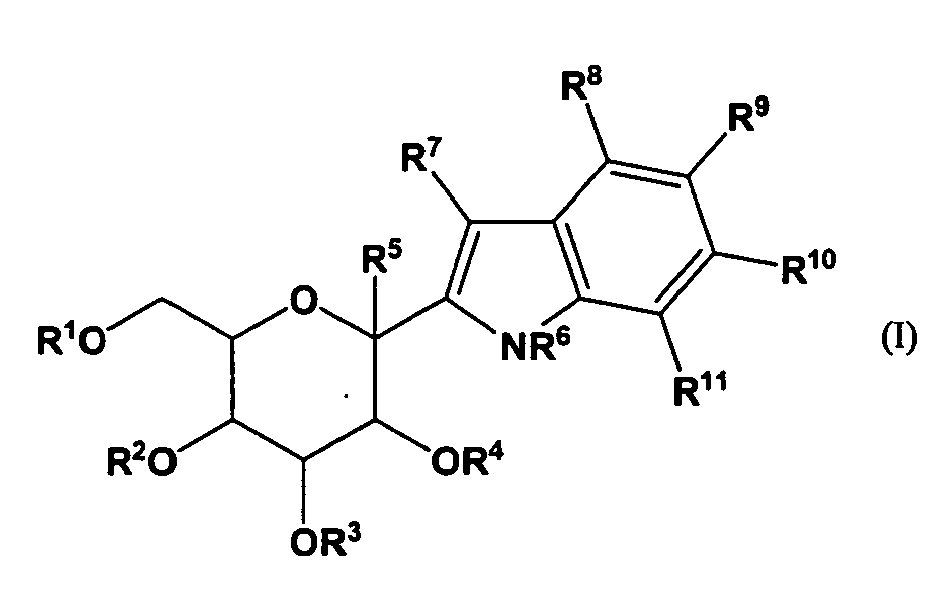
- (2) A food and drink for antidepression comprising, as an active ingredient, a compound represented by formula (I) :

- (3) The antidepressant according to the above (1), wherein R5 is a hydrogen atom or hydroxy; and R8, R9, R10 and R11 each are a hydrogen atom.
- (4) The antidepressant according to the above (1), wherein R7, R8, R9, R10 and R11 each are a hydrogen atom.
- (5) The food and drink for antidepression according to the above (2), wherein R5 is a hydrogen atom or hydroxy; and R8, R9, R10 and R11 each are a hydrogen atom.
- (6) The food and drink for antidepression according to the above (2), wherein R7, R8, R9, R10 and R11 each are a hydrogen atom.
- (7) An antidepressant comprising, as an active ingredient, a compound represented by formula (Ia) or (Ib):
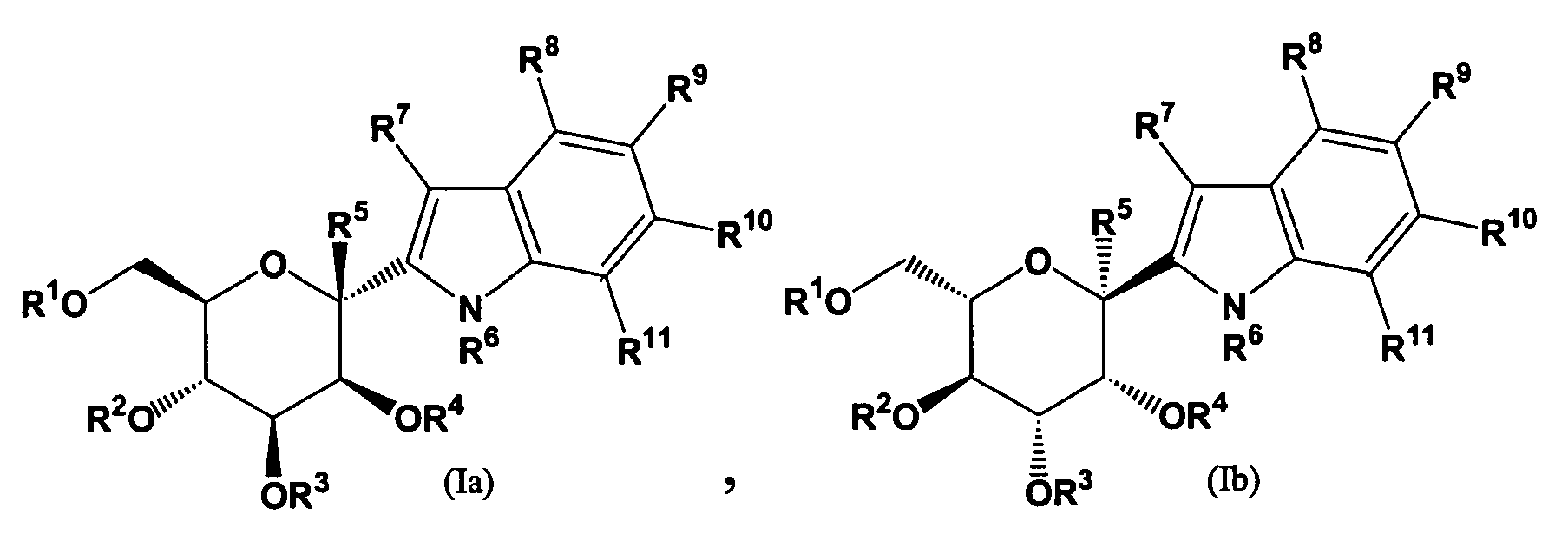
- (8) A food and drink for antidepression comprising, as an active ingredient, a compound represented by formula (Ia) or (Ib):

- (9) An antidepressant comprising, as an active ingredient, 2-amino-3-[2-(α-D-mannopyranosyl)indol-3-yl]propionic acid represented by formula (II):

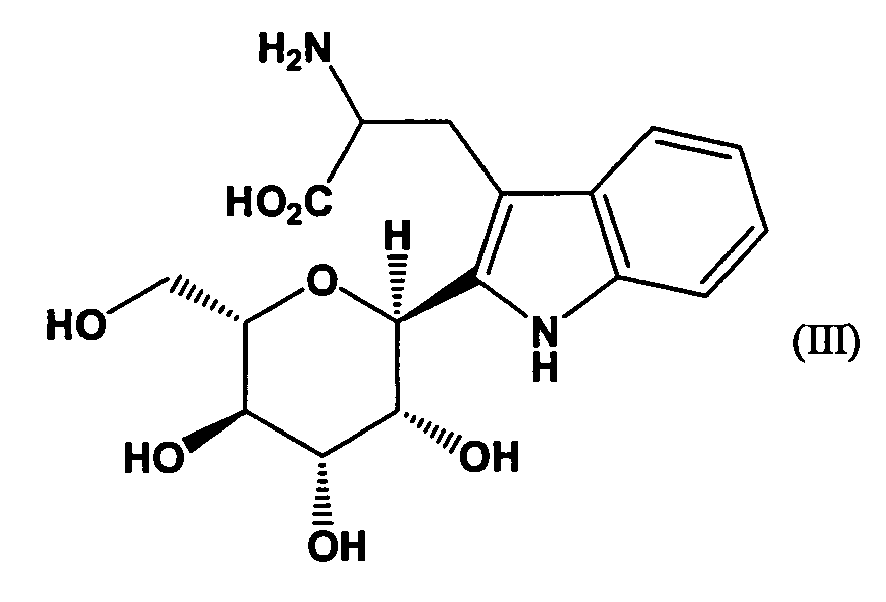
- (10)An antidepressant comprising, as an active ingredient, 2-amino-3-[2-(α-L-mannopyranosyl)indol-3-yl]propionic acid represented by formula (III):

- (11) A food and drink for antidepression comprising, as an active ingredient, 2-amino-3-[2-(α-D-mannopyranosyl)indol-3-yl]propionic acid represented by formula (II):

- (12) A food and drink for antidepression comprising, as an active ingredient, 2-amino-3-[2-(α-L-mannopyranosyl)indol-3-yl]propionic acid represented by formula (III):

- (13)An antidepressant comprising, as an active ingredient, a compound represented by formula (IV):

- (14)An antidepressant comprising, as an active ingredient, a compound represented by formula (V):

- (15) A food and drink for antidepression comprising, as an active ingredient, a compound represented by formula (IV) :

- (16) A food and drink for antidepression comprising, as an active ingredient, a compound represented by formula (V) :

- (17) A method of preventing or treating depression which comprises administering an effective amount of a compound represented by formula (I) according to the above (1), formula (Ia) or (Ib) according to the above (7), formula (II) according to the above (9), formula (III) according to the above (10), formula (IV) according to the above (13) or formula (V) according to the above (14) or a salt thereof.
- (18) Use of a compound represented by formula (I), (Ia), (Ib), (II), (III), (IV) or (V) or a salt thereof for the manufacture of the antidepressant according to any of the above (1), (3), (4), (7), (9), (10), (13) and (14).
- (19) Use of a compound represented by formula (I), (Ia), (Ib), (II), (III), (IV) or (V) or a salt thereof for the manufacture of the food and drink for antidepression according to any of the above (2), (5), (6), (8), (11), (12), (15) and (16).
- Hereinafter, the compounds represented by formulae (I), (Ia), (Ib), (II), (III), (IV) and (V) are referred to as Compounds (I), (Ia), (Ib), (II), (III), (IV) and (V), respectively.
- The definitions of the groups in formulae (I), (Ia), (Ib), (IV) and (V) are explained below.
- The lower alkyl and the lower alkyl moiety of the lower alkoxy and the lower alkoxycarbonyl include straight-chain or branched alkyl groups having 1 to 6 carbon atoms, such as methyl, ethyl, propyl, isopropyl, butyl, isobutyl, sec-butyl, tert-butyl, pentyl, isopentyl, neopentyl and hexyl.
- The alkenyl includes straight-chain or branched alkenyl groups having 2 to 6 carbon atoms, such as vinyl, allyl, 1-propenyl, methacryl, crotyl, 1-butenyl, 3-butenyl, 2-pentenyl, 4-pentenyl, 2-hexenyl and 5-hexenyl.
- The aryl and the aryl moiety of the arylsulfonyl and the aralkyloxylcarbonyl include aryl groups having 6 to 14 carbon atoms, such as phenyl, naphthyl and anthryl.
- The alkylene moiety of the aralkyloxycarbonyl has the same meaning as the above-described lower alkyl except one hydrogen atom is removed therefrom.
- The substituted lower alkyl, the substituted lower alkoxy, the substituted lower alkoxycarbonyl and the substituted alkenyl each have 1 to 3 substituents which are the same or different. Examples of the substituents are halogen, amino, nitro, hydroxy, carboxy, carbamoyl, sulfo, tri-lower alkylsilyl, lower alkoxy, aryl, substituted or unsubstituted mono- or di-lower alkylamino, substituted or unsubstituted mono or bis(aralkyloxycarbonyl)amino and substituted or unsubstituted lower alkoxycarbonyl. Herein, the halogen means fluorine, chlorine, bromine and iodine atoms; the lower alkyl moiety of the lower alkoxy, the tri-lower alkylsilyl, the mono- or di-lower alkylamino and the lower alkoxycarbonyl has the same meaning as the above-described lower alkyl; the three lower alkyl moieties of the tri-lower alkylsilyl and the two lower alkyl moieties of the di-lower alkylamino each may be the same or different; the aryl and the aryl moiety of the mono or bis(aralkyloxycarbonyl)amino have the same meaning as the above-described aryl; the alkylene moiety of the mono or bis(aralkyloxycarbonyl)amino has the same meaning as the above-described lower alkyl except one hydrogen atom is removed therefrom; and the two aralkyloxycarbonyl moieties of the bis(aralkyloxycarbonyl)amino may be the same or different. The substituted mono- or di-lower alkylamino, the substituted mono or bis(aralkyloxycarbonyl)amino and the substituted lower alkoxycarbonyl each have 1 to 3 substituents which are the same or different. Examples of the substituents are halogen, amino, nitro, hydroxy, carboxy, carbamoyl and sulfo. Herein, the halogen has the same meaning as defined above.
- The substituted aryl, the substituted arylsulfonyl and the substituted aralkyloxycarbonyl each have 1 to 3 substituents which are the same or different. Examples of the substituents are halogen, amino, nitro, hydroxy, carboxy, carbamoyl, sulfo, lower alkyl and lower alkoxy. Herein, the halogen has the same meaning as defined above, and the lower alkyl and the lower alkyl moiety of the lower alkoxy have the same meaning as the above-described lower alkyl.
- The substituted sulfamoyl has 1 or 2 substituents which are the same or different. Examples of the substituents are substituted or unsubstituted lower alkyl and substituted or unsubstituted aryl. Herein, the lower alkyl and the aryl each have the same meaning as defined above, and the substituent in the substituted lower alkyl and the substituent in the substituted aryl each have the same meaning as defined above.
- The salts of Compound (I), (Ia), (Ib), (II), (III), (IV) or (V) are preferably pharmaceutically acceptable ones, such as acid addition salts (e.g., acetate, hydrochloride, sulfate, nitrate, citrate, methanesulfonate, maleate and fumarate), alkali metal salts (e.g., sodium salt and potassium salt), alkaline earth metal salts (e.g., magnesium salt and calcium salt), metal salts (e.g., aluminum salt and zinc salt), ammonium salts (e.g., ammonium salt and tetramethylammonium salt) and organic amine addition salts (e.g., triethylamine salt, morpholine salt and piperazine salt).
- Compounds (I), (Ia), (Ib), (II), (III), (IV) and (V) and salts thereof can be obtained according to, for example, the method described in WO99/09411, etc.
- The pharmacological activities of Compound (I), (Ia), (Ib), (II), (III), (IV) or (V) are illustrated in detail in test examples. As the test compound, 2-amino-3-[2-(α-L-mannopyranosyl]indol-3-yl]propionic acid was used. This compound is referred to as Compound 1 in the present specification.
- Male ddY mice (4 weeks old) were subcutaneously administered reserpine (2 mg/kg) (Apoplon injection 1 mg, product of Daiichi Pharmaceutical Co., Ltd.). These mice were divided into two groups: one to which Compound 1 (100 mg/kg) was intraperitoneally administered once per day for two days (reserpine + Compound 1-administered group) and the other to which only a solvent was administered (reserpine + solvent-administered group). Reserpine and Compound 1 were administered after being dissolved in a physiological saline. The body temperature of the mice was measured 0.5, 1, 3 and 6 hours after the last administration.
- Separately, a solvent was administered to another group of mice without reserpine administration. The results are shown in Table 1. A significant temperature drop by the administration of reserpine was observed, while Compound 1 significantly raised the body temperature of the reserpine-administered mice.
Table 1 Action of Compound 1 on reserpine-induced temperature drop Group Compound 1 (mg/kg, i.p.) n Body temperature (°C) Time after administration (minute) 30 60 180 360 Solvent *** *** *** *** (s.c.) + solvent - 7 36.9 ± 0.1 36.9 ± 0.1 36.7 ± 0.1 36.7 ± 0.1 Reserpine (s.c.) + solvent - 7 33.9 ± 0.2 33.5 ± 0.4 32.6 ± 0.6 33.3 ± 0.3 Reserpine *** ** ** ** (s.c.) + Compound 1 100 7 36.1 ± 0.2 35.4 ± 0.1 35.2 ± 0.3 34.9 ± 0.4 Data are shown as mean ± standard error. ***: p<0.001, **: p<0.01 vs reserpine (s.c.) + solvent-administered group (Student's t test or Aspin-Welch's t test) - Male ddY mice (4 weeks old) were subcutaneously administered reserpine (2 mg/kg) (Apoplon injection 1 mg, product of Daiichi Pharmaceutical Co., Ltd.). These mice were divided into two groups: one to which Compound 1 (100 mg/kg) was intraperitoneally administered once per day for two days (reserpine + Compound 1-administered group) and the other to which only a solvent was administered (reserpine + solvent-administered group). Reserpine and Compound 1 were administered after being dissolved in a physiological saline. The level of blepharoptosis was scored 0.5, 1, 3 and 6 hours after the last administration (score 1: completely opened, score 2: 1/4 closed, score 3: 1/2 closed, score 4: 3/4 closed, and score 5: completely closed). Separately, a solvent was administered to another group of mice without reserpine administration. The results are shown in Table 2. Most of the mice completely closed eyes by the administration of reserpine, while Compound 1 showed the action to improve the condition.
Table 2 Action of Compound 1 on reserpine-induced blepharoptosis Group Compound 1 (mg/kg, i.p.) n Score Time after administration (minute) 30 60 180 360 Solvent *** *** *** *** (s.c.) + solvent - 7 1.0 ± 0.0 1.0 ± 0.0 1.0 ± 0.0 1.0 ± 0.0 Reserpine (s.c.) + solvent - 7 5.0 ± 0.0 5.0 ± 0.0 4.7 ± 0.2 4.9 ± 0.1 Reserpine *** ** ** ** (s.c.) + Compound 1 100 7 3.0 ± 0.4 3.1 ± 0.3 3.3 ± 0.3 3.3 ± 0.2 Data are shown as mean ± standard error. ***: p<0.001, **: p<0.01 vs reserpine (s.c.) + solvent-administered group (Wilcoxon's test) - Male ddY mice (4 weeks old) were subcutaneously administered reserpine (2 mg/kg) (Apoplon injection 1 mg, product of Daiichi Pharmaceutical Co., Ltd.). These mice were divided into two groups: one to which Compound 1 (100 mg/kg) was intraperitoneally administered once per day for four days (reserpine + Compound 1-administered group) and the other to which only a solvent was administered (reserpine + solvent-administered group). Reserpine and Compound 1 were administered after being dissolved in a physiological saline. After the last administration, the mice were immediately put into breeding cages equipped with an infrared beam sensor (NS-AS01, Neuroscience, Inc.). After the last administration, the quantity of spontaneous motion in each 30-minute period was measured for 360 minutes with an infrared beam sensor device for measuring the quantity of spontaneous motion (AB system, Neuroscience, Inc.) and the measured values were summed up on a specific purpose computer via an interface (B060CT8H06, Neuroscience, Inc). Separately, another group of mice which was administered no reserpine was tested. The results are shown in Table 3. The quantity of spontaneous motion remarkably dropped by the treatment with reserpine, while Compound 1 showed the action to increase the quantity of spontaneous motion.
Table 3 Action of Compound 1 on reserpine-induced drop in the spontaneous motion level Group Compound 1 (mg/kg, i.p.) n Quantity of spontaneous motion in 360 minutes (count) Solvent *** (s.c.) + solvent - 6 2166.2 ± 124.5 Reserpine (s.c.) + solvent - 6 370.0 ± 30.4 Reserpine * (s.c.) + Compound 1 100 6 2464.2 ± 594.6 Data are shown as mean ± standard error. ***: p<0.001, *: p<0.05 vs reserpine (s.c.) + solvent-administered group (Aspin-Welch's t test) - Male ddY mice (3 weeks old) were fed with a feed deficient in vitamin B1, vitamin B12 and folic acid for 8 days and then divided into two groups: one to which Compound 1 (100 mg/kg) was intraperitoneally administered once per day for 11 days (vitamin deficient food + Compound 1-administered group) and the other to which only a solvent was administered (vitamin deficient food + solvent-administered group). Compound 1 was administered after being dissolved in a physiological saline. Two hours after the last administration, the mice were put in a plastic cylindrical tub (diameter: 18 cm, height: 40 cm, water depth: 15 cm, water temperature: ca. 23°C), followed by measurement of the time of their struggle, swimming and immobility in 10 minutes. Separately, another group of mice fed with a normal food was tested. The results are shown in Table 4. A reduction in the time of struggle and swimming and an increase in the time of immobility due to the administration of a vitamin B deficient food were observed, while Compound 1 improved these actions.
Table 4 Action of Compound 1 on the swimming patterns of mice fed with a vitamin B deficient food Group Compound 1 (mg/kg, i.p.) n Swimming pattern Struggle (second) Swimming (second) Immobility (second) Normal *** *** food + solvent - 7 6.6 ± 2.8 554.3 ± 12.7 39.1 ± 12.7 Vitamin B deficient food + solvent - 6 0.0 ± 0.0 375.3 ± 28.4 224.7 ± 28.4 Vitamin B *** *** *** deficient food + Compound 1 100 5 2.4 ± 2.4 562.0 ± 14.2 35.6 ± 15.4 Data are shown as mean ± standard error. ***: p<0.001 vs vitamin B deficient food + solvent-administered group (Student's t test) - Male ddY mice (4 weeks old) were intraperitoneally administered Compound 1 (100 mg/kg) (Compound 1-administered group) and their brains were excised 30 and 60 minutes after the administration to measure the amounts of serotonin (5-HT) and its metabolite 5-hydroxyindole-3-acetic acid (5-HIAA) in the hypothalamus. Compound 1 was administered after being dissolved in a physiological saline. Separately, another group of mice was administered only a solvent (solvent-administered group) and the amounts of 5-HT and 5-HIAA were measured in the same manner. The results are shown in Table 5. Compound 1 increased the contents of 5-HT and 5-HIAA in the hypothalamus of mice.
Table 5 Action of Compound 1 on the contents of 5-HT and 5-HIAA in the hypothalamus of mice Group Compound 1 (mg/kg, i.p.) n Content (ng/g wet weight) 5-HT 5-HIAA Solvent - 3 563.6 ± 59.7 189.7 ± 13.3 * ** Compound 1 100 3 815.0 ± 39.1 374.1 ± 26.7 Data are shown as mean ± standard error. ***: p<0.01, *: p<0.05 vs solvent-administered group (Student's t test) - The pharmaceutical agent of the present invention comprises, as an active ingredient, a substance selected from the group consisting of Compounds (I), (Ia), (Ib), (II), (III), (IV) and (V) and salts thereof. As the pharmaceutical agent of the present invention, the above substance which is an active ingredient may be administered as such, but it is generally preferred to administer the pharmaceutical agent in the form of a pharmaceutical composition comprising the above substance as an active ingredient and one or more kinds of additives for pharmaceutical preparation. Such pharmaceutical compositions can be produced according to the method which itself is known or conventional in the field of pharmaceutics. The pharmaceutical agent of the present invention in the form of a pharmaceutical composition may comprise one or more active ingredients of other pharmaceutical agents.
- There is no specific restriction as to the administration route of the pharmaceutical agent of the present invention, and the most effective administration route for prevention or treatment can be appropriately selected from oral administration and parenteral administration such as intravenous administration. An example of the preparation suited for oral administration is tablets, and an example of the preparation suited for parenteral administration is an injection.
- Solid preparations such as tablets can be produced using, for example, excipients (e.g., lactose and mannitol), disintegrators (e.g., starch), lubricants (e.g., magnesium stearate), binders (e.g., hydroxypropyl cellulose), surfactants (e.g., fatty acid esters) and plasticizers (e.g., glycerin).
- Of the preparations suited for parenteral administration, preparations for intravascular administration such as injections can be prepared preferably using an aqueous vehicle which is isotonic to human blood. For example, injections can be prepared as solutions, suspensions or dispersed solutions according to conventional methods using an aqueous vehicle selected from a saline solution, a glucose solution and a mixture of a saline solution and a glucose solution together with appropriate auxiliaries. Preparations for parenteral administration can also be produced using, for example, one or more kinds of additives for pharmaceutical preparation selected from the group consisting of diluents, flavors, antiseptics, excipients, disintegrators, lubricants, binders, surfactants and plasticizers.
- There is no specific restriction as to the dose and administration schedule of the pharmaceutical agent of the present invention, and they can be appropriately selected according to various conditions such as the kind of the above substance as an active ingredient, the administration route, the purpose of the treatment or prevention, the age and body weight of a patient, and the nature and degree of severeness of symptom. For example, it is preferred to administer the present pharmaceutical agent in a daily dose of 0.1 to 100 mg/kg per adult in 3 to 4 portions.
- However, the dose and administration schedule vary depending upon the various conditions described above.
- The food and drink of the present invention can be processed and produced according to general methods for producing foods and drinks, modified only in that a substance selected from the group consisting of Compounds (I), (Ia), (Ib), (II), (III), (IV) and (V) and salts thereof is added to the food and drink.
- The food and drink of the present invention can also be produced, for example, by using granulating methods (e.g., fluidized bed granulation, stirring granulation, extrusion granulation, rolling granulation, compression molding granulation, crushing granulation, spray granulation and jet granulation), coating methods (e.g., pan coating, fluidized bed coating and dry coating), puffing methods (e.g., puff drying, excess vapor method, foam-mat method and microwave-heating method), and extrusion methods using an extrusion granulator, an extruder, or the like.
- The food and drink of the present invention may be in any of the forms such as a powder food, a sheet-shaped food, a bottled food, a canned food, a retort pouched food, a capsule food, a tablet food, a liquid food and a nutritional drink.
- The food and drink of the present invention can be used as a health food or a functional food having antidepressive activity.
- The food and drink of the present invention may further comprise food additives generally used in foods and drinks, such as sweeteners, coloring agents, preservatives, thickening stabilizers, antioxidants, color developing agents, bleaching agents, fungicides, gum bases, bitter agents, enzymes, wax, sour agents, seasonings, emulsifiers, nutrient supplements, manufacture facilitating agents, flavors and spice extracts.
- The amount of the substance selected from the group consisting of Compounds (I), (Ia), (Ib), (II), (III), (IV) and (V) and salts thereof to be added to the food and drink of the present invention is appropriately determined according to the kind of the food and drink, the effect expected by taking the food and drink, etc., but the substance selected from the group consisting of Compounds (I), (Ia), (Ib), (II), (III), (IV) and (V) and salts thereof is usually added so that its content may become 1 to 100%, preferably 10 to 100%, further preferably 20 to 100%.
- The amount of the intake of the food and drink of the present invention varies depending upon the mode of intake, the age and body weight of a taker, etc., but it is preferably 0.1 to 100 mg/kg per adult per day in terms of the substance selected from the group consisting of Compounds (I), (Ia), (Ib), (II), (III), (IV) and (V) and salts thereof, which is administered, i.e. ingested in one to several portions.
- Certain embodiments of the present invention are illustrated in the following examples. These examples are not to be construed as limiting the scope of the present invention.
- Tablets having the following composition are prepared according to a conventional method.
Formula: Compound 1 20 mg Lactose 143.4 mg Potato starch 30 mg Hydroxypropyl cellulose 6 mg Magnesium stearate 0.6 mg 200 mg - An injection having the following composition is prepared according to a conventional method.
Formula: Compound 1 2 mg Purified soybean oil 200 mg Purified egg yolk lecithin 24 mg Glycerin for injection 50 mg Distilled water for injection 1.72 ml 2.00 ml - A refreshing drink (10 bottles) having the following composition is prepared according to a conventional method.
Formula: Compound 1 200 mg Vitamin C 1 g Vitamin B1 5 mg Vitamin B2 10 mg Vitamin B6 25 mg Liquid sugar 150 g Citric acid 3 g Flavor 1 g - The present invention provides antidepressants and foods and drinks for antidepression.
Claims (19)
- An antidepressant comprising, as an active ingredient, a compound represented by formula (I):

- A food and drink for antidepression comprising, as an active ingredient, a compound represented by formula (I) :

- The antidepressant according to Claim 1, wherein R5 is a hydrogen atom or hydroxy; and R8, R9, R10 and R11 each are a hydrogen atom.
- The antidepressant according to Claim 1, wherein R7, R8, R9, R10 and R11 each are a hydrogen atom.
- The food and drink for antidepression according to Claim 2, wherein R5 is a hydrogen atom or hydroxy; and R8, R9, R10 and R11 each are a hydrogen atom.
- The food and drink for antidepression according to Claim 2, wherein R7, R8, R9, R10 and R11 each are a hydrogen atom.
- An antidepressant comprising, as an active ingredient, a compound represented by formula (Ia) or (Ib) :
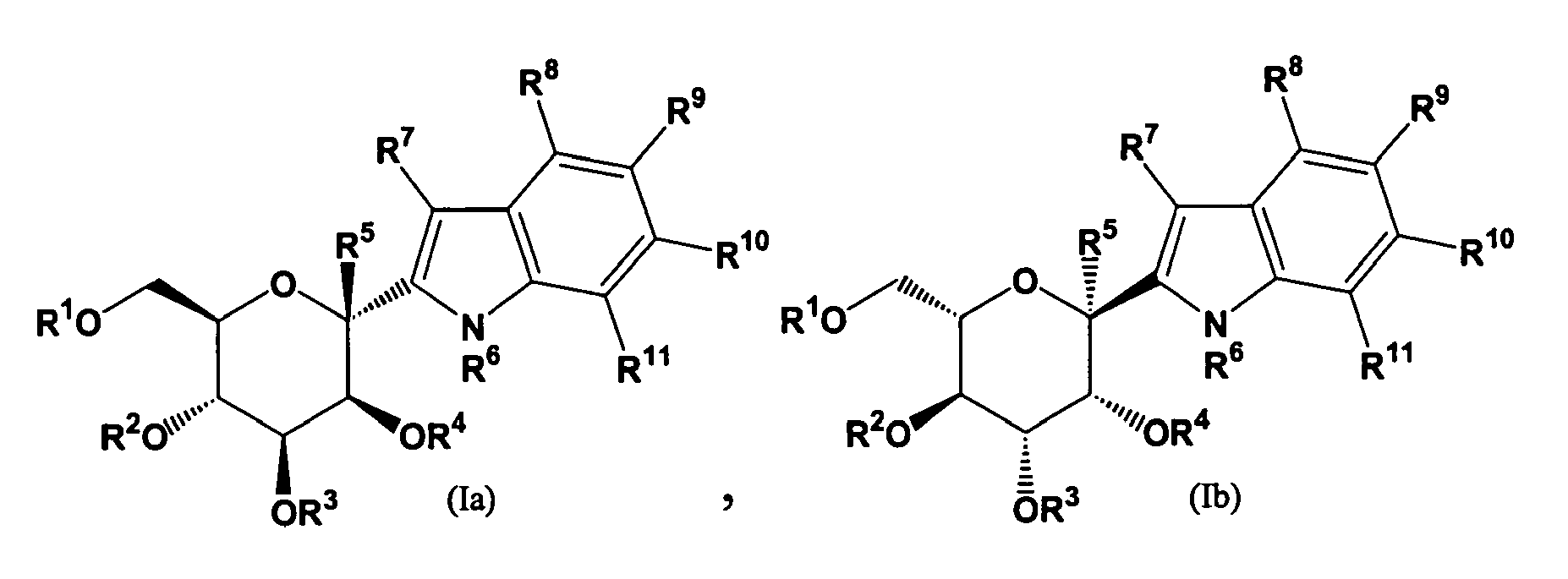
- A food and drink for antidepression comprising, as an active ingredient, a compound represented by formula (Ia) or (Ib):

- An antidepressant comprising, as an active ingredient, 2-amino-3-[2-(α-D-mannopyranosyl)indol-3-yl]propionic acid represented by formula (II):

- An antidepressant comprising, as an active ingredient, 2-amino-3-[2-(a-L-mannopyranosyl)indol-3-yl]propionic acid represented by formula (III):
- A food and drink for antidepression comprising, as an active ingredient, 2-amino-3-[2-(α-D-mannopyranosyl)indol-3-yl]propionic acid represented by formula (II):

- A food and drink for antidepression comprising, as an active ingredient, 2-amino-3-[2-(α-L-mannopyranosyl)indol-3-yl]propionic acid represented by formula (III):

- An antidepressant comprising, as an active ingredient, a compound represented by formula (IV):

- An antidepressant comprising, as an active ingredient, a compound represented by formula (V):

- A food and drink for antidepression comprising, as an active ingredient, a compound represented by formula (IV) :

- A food and drink for antidepression comprising, as an active ingredient, a compound represented by formula (V) :

- A method of preventing or treating depression which comprises administering an effective amount of a compound represented by formula (I) according to Claim 1, formula (Ia) or (Ib) according to Claim 7, formula (II) according to Claim 9, formula (III) according to Claim 10, formula (IV) according to Claim 13 or formula (V) according to Claim 14 or a salt thereof.
- Use of a compound represented by formula (I), (Ia), (Ib), (II), (III), (IV) or (V) or a salt thereof for the manufacture of the antidepressant according to any of Claims 1, 3, 4, 7, 9, 10, 13 and 14.
- Use of a compound represented by formula (I), (Ia), (Ib), (II), (III), (IV) or (V) or a salt thereof for the manufacture of the food and drink for antidepression according to any of Claims 2, 5, 6, 8, 11, 12, 15 and 16.
Applications Claiming Priority (2)
| Application Number | Priority Date | Filing Date | Title |
|---|---|---|---|
| JP2003153132 | 2003-05-29 | ||
| PCT/JP2004/007768 WO2004105753A1 (en) | 2003-05-29 | 2004-05-28 | Antidepressant or food or beverage for antidepression |
Publications (1)
| Publication Number | Publication Date |
|---|---|
| EP1629841A1 true EP1629841A1 (en) | 2006-03-01 |
Family
ID=33487280
Family Applications (1)
| Application Number | Title | Priority Date | Filing Date |
|---|---|---|---|
| EP04735386A Withdrawn EP1629841A1 (en) | 2003-05-29 | 2004-05-28 | Antidepressants or food and drinks for antidepression |
Country Status (5)
| Country | Link |
|---|---|
| US (1) | US20070021355A1 (en) |
| EP (1) | EP1629841A1 (en) |
| JP (1) | JPWO2004105753A1 (en) |
| CN (1) | CN1798557A (en) |
| WO (1) | WO2004105753A1 (en) |
Family Cites Families (7)
| Publication number | Priority date | Publication date | Assignee | Title |
|---|---|---|---|---|
| GB1586817A (en) * | 1977-12-01 | 1981-03-25 | Wyeth John & Brother Ltd | Indole derivatives |
| FR2675504B1 (en) * | 1991-04-16 | 1995-01-27 | Delalande Sa | DERIVATIVES OF ARYL-3 OXAZOLIDINONE, THEIR PREPARATION PROCESS AND THEIR APPLICATION IN THERAPEUTICS. |
| JP3394280B2 (en) * | 1993-01-25 | 2003-04-07 | 協和醗酵工業株式会社 | Hydrophilic β-carboric acid derivative |
| EP0934932A4 (en) * | 1996-08-22 | 2002-06-26 | Meiji Seika Kaisha | Quinoline derivatives and psychotropic agent |
| US6610502B1 (en) * | 1997-08-20 | 2003-08-26 | Kyowa Medex Co., Ltd. | Compound 2-amino-3-[2-(α-mannopyranosyl)indol-3-yl]propionic acid, process for preparing the same, and method for inspecting function of living body with the novel compound |
| JP2001089393A (en) * | 1999-07-21 | 2001-04-03 | Takeda Chem Ind Ltd | Prophylactic agent for relapse of cerebrovascular disorder and ameliorator and evolution inhibitor for sequelae of cerebrovasular disorder |
| JP2002226367A (en) * | 2001-02-02 | 2002-08-14 | Fuji Chem Ind Co Ltd | Agent for prevention or treatment of drug disorders |
-
2004
- 2004-05-28 WO PCT/JP2004/007768 patent/WO2004105753A1/en not_active Ceased
- 2004-05-28 US US10/558,706 patent/US20070021355A1/en not_active Abandoned
- 2004-05-28 JP JP2005506577A patent/JPWO2004105753A1/en not_active Abandoned
- 2004-05-28 CN CNA2004800149059A patent/CN1798557A/en active Pending
- 2004-05-28 EP EP04735386A patent/EP1629841A1/en not_active Withdrawn
Non-Patent Citations (1)
| Title |
|---|
| See references of WO2004105753A1 * |
Also Published As
| Publication number | Publication date |
|---|---|
| WO2004105753A1 (en) | 2004-12-09 |
| CN1798557A (en) | 2006-07-05 |
| JPWO2004105753A1 (en) | 2006-07-20 |
| US20070021355A1 (en) | 2007-01-25 |
Similar Documents
| Publication | Publication Date | Title |
|---|---|---|
| EP3801536B1 (en) | Administration of sepiapterin without food for use in a method for increasing sepiapterin plasma exposure | |
| JP5921664B2 (en) | Oral preparation for preventing or improving dry skin | |
| US7674831B2 (en) | Heterocyclic compounds as sweetener enhancers | |
| US12465584B2 (en) | Agent for elevating nitric oxide concentration | |
| JP7594581B2 (en) | Composition containing NR and/or NMN and sesamin-class compounds | |
| US7932288B2 (en) | Composition for relieving subjective symptoms of fatigue | |
| JPH0733332B2 (en) | Dementia symptom improvement / therapeutic agent | |
| HU219482B (en) | Use of (+) doxazosin for producing pharmaceutical compositions eliciting an increase in urine flow | |
| CN100502871C (en) | Use of barbituric acid derivatives for the treatment of dyskinesias | |
| JP5066448B2 (en) | Compositions and methods for the prevention or treatment of stomatitis | |
| EP3418271A1 (en) | Novel indole derivative and anti-cancer composition containing same | |
| WO2014041551A1 (en) | Formulation comprising imatinib as oral solution | |
| EP4670736A1 (en) | MEDICINES FOR THE TREATMENT OR PREVENTION OF CHEMOTHERAPY-INDUCED PERIPHERAL NEUROPATHY | |
| US20070021355A1 (en) | Antidepressants or foods and beverage for antidepression | |
| HK1083304A (en) | Antidepressants or food and drinks for antidepression | |
| JPWO2013129642A1 (en) | Eating and / or gastrointestinal activity promoter | |
| US20040235873A1 (en) | Antiinflammatoric and antitussive compositions | |
| CA3283565A1 (en) | Pharmaceutical for treating or preventing chemotherapy-induced peripheral neuropathy | |
| WO2007026897A1 (en) | Oral composition for prevention or treatment of skin blemishes or freckles and food | |
| JP2009161534A (en) | Antidepressant-antistress agent | |
| HK40051961A (en) | Administration of sepiapterin without food for use in a method for increasing sepiapterin plasma exposure | |
| HK40051961B (en) | Administration of sepiapterin without food for use in a method for increasing sepiapterin plasma exposure | |
| US20210393531A1 (en) | Composition of multivitamin for stimulating gastrointestinal system motility and preparation method therefor | |
| JP2009179575A (en) | Frequent urine improving agent | |
| HK1099918B (en) | Composition and use for prevention or treatment of stomatitis |
Legal Events
| Date | Code | Title | Description |
|---|---|---|---|
| PUAI | Public reference made under article 153(3) epc to a published international application that has entered the european phase |
Free format text: ORIGINAL CODE: 0009012 |
|
| 17P | Request for examination filed |
Effective date: 20051219 |
|
| AK | Designated contracting states |
Kind code of ref document: A1 Designated state(s): AT BE BG CH CY CZ DE DK EE ES FI FR GB GR HU IE IT LI LU MC NL PL PT RO SE SI SK TR |
|
| REG | Reference to a national code |
Ref country code: HK Ref legal event code: DE Ref document number: 1083304 Country of ref document: HK |
|
| DAX | Request for extension of the european patent (deleted) | ||
| STAA | Information on the status of an ep patent application or granted ep patent |
Free format text: STATUS: THE APPLICATION HAS BEEN WITHDRAWN |
|
| 18W | Application withdrawn |
Effective date: 20081009 |
|
| REG | Reference to a national code |
Ref country code: HK Ref legal event code: WD Ref document number: 1083304 Country of ref document: HK |