EP1629728A1 - Use of chemically modified starch product - Google Patents
Use of chemically modified starch product Download PDFInfo
- Publication number
- EP1629728A1 EP1629728A1 EP05016296A EP05016296A EP1629728A1 EP 1629728 A1 EP1629728 A1 EP 1629728A1 EP 05016296 A EP05016296 A EP 05016296A EP 05016296 A EP05016296 A EP 05016296A EP 1629728 A1 EP1629728 A1 EP 1629728A1
- Authority
- EP
- European Patent Office
- Prior art keywords
- starch
- minutes
- glucose
- glucose release
- treatment
- Prior art date
- Legal status (The legal status is an assumption and is not a legal conclusion. Google has not performed a legal analysis and makes no representation as to the accuracy of the status listed.)
- Granted
Links
Images

Classifications
-
- A—HUMAN NECESSITIES
- A61—MEDICAL OR VETERINARY SCIENCE; HYGIENE
- A61K—PREPARATIONS FOR MEDICAL, DENTAL OR TOILETRY PURPOSES
- A61K31/00—Medicinal preparations containing organic active ingredients
- A61K31/70—Carbohydrates; Sugars; Derivatives thereof
- A61K31/715—Polysaccharides, i.e. having more than five saccharide radicals attached to each other by glycosidic linkages; Derivatives thereof, e.g. ethers, esters
- A61K31/738—Cross-linked polysaccharides
-
- A—HUMAN NECESSITIES
- A21—BAKING; EDIBLE DOUGHS
- A21D—TREATMENT OF FLOUR OR DOUGH FOR BAKING, e.g. BY ADDITION OF MATERIALS; BAKING; BAKERY PRODUCTS
- A21D13/00—Finished or partly finished bakery products
- A21D13/06—Products with modified nutritive value, e.g. with modified starch content
- A21D13/062—Products with modified nutritive value, e.g. with modified starch content with modified sugar content; Sugar-free products
-
- A—HUMAN NECESSITIES
- A21—BAKING; EDIBLE DOUGHS
- A21D—TREATMENT OF FLOUR OR DOUGH FOR BAKING, e.g. BY ADDITION OF MATERIALS; BAKING; BAKERY PRODUCTS
- A21D2/00—Treatment of flour or dough by adding materials thereto before or during baking
- A21D2/08—Treatment of flour or dough by adding materials thereto before or during baking by adding organic substances
- A21D2/14—Organic oxygen compounds
- A21D2/18—Carbohydrates
- A21D2/186—Starches; Derivatives thereof
-
- A—HUMAN NECESSITIES
- A23—FOODS OR FOODSTUFFS; TREATMENT THEREOF, NOT COVERED BY OTHER CLASSES
- A23C—DAIRY PRODUCTS, e.g. MILK, BUTTER OR CHEESE; MILK OR CHEESE SUBSTITUTES; PREPARATION THEREOF
- A23C9/00—Milk preparations; Milk powder or milk powder preparations
- A23C9/12—Fermented milk preparations; Treatment using microorganisms or enzymes
- A23C9/13—Fermented milk preparations; Treatment using microorganisms or enzymes using additives
-
- A—HUMAN NECESSITIES
- A23—FOODS OR FOODSTUFFS; TREATMENT THEREOF, NOT COVERED BY OTHER CLASSES
- A23L—FOODS, FOODSTUFFS OR NON-ALCOHOLIC BEVERAGES, NOT OTHERWISE PROVIDED FOR; PREPARATION OR TREATMENT THEREOF
- A23L2/00—Non-alcoholic beverages; Dry compositions or concentrates therefor; Preparation or treatment thereof
- A23L2/02—Non-alcoholic beverages; Dry compositions or concentrates therefor; Preparation or treatment thereof containing fruit or vegetable juices
-
- A—HUMAN NECESSITIES
- A23—FOODS OR FOODSTUFFS; TREATMENT THEREOF, NOT COVERED BY OTHER CLASSES
- A23L—FOODS, FOODSTUFFS OR NON-ALCOHOLIC BEVERAGES, NOT OTHERWISE PROVIDED FOR; PREPARATION OR TREATMENT THEREOF
- A23L29/00—Foods or foodstuffs containing additives; Preparation or treatment thereof
- A23L29/20—Foods or foodstuffs containing additives; Preparation or treatment thereof containing gelling or thickening agents
- A23L29/206—Foods or foodstuffs containing additives; Preparation or treatment thereof containing gelling or thickening agents of vegetable origin
- A23L29/212—Starch; Modified starch; Starch derivatives, e.g. esters or ethers
- A23L29/219—Chemically modified starch; Reaction or complexation products of starch with other chemicals
-
- A—HUMAN NECESSITIES
- A23—FOODS OR FOODSTUFFS; TREATMENT THEREOF, NOT COVERED BY OTHER CLASSES
- A23L—FOODS, FOODSTUFFS OR NON-ALCOHOLIC BEVERAGES, NOT OTHERWISE PROVIDED FOR; PREPARATION OR TREATMENT THEREOF
- A23L33/00—Modifying nutritive qualities of foods; Dietetic products; Preparation or treatment thereof
- A23L33/40—Complete food formulations for specific consumer groups or specific purposes, e.g. infant formula
-
- A—HUMAN NECESSITIES
- A23—FOODS OR FOODSTUFFS; TREATMENT THEREOF, NOT COVERED BY OTHER CLASSES
- A23L—FOODS, FOODSTUFFS OR NON-ALCOHOLIC BEVERAGES, NOT OTHERWISE PROVIDED FOR; PREPARATION OR TREATMENT THEREOF
- A23L7/00—Cereal-derived products; Malt products; Preparation or treatment thereof
- A23L7/10—Cereal-derived products
- A23L7/109—Types of pasta, e.g. macaroni or noodles
- A23L7/111—Semi-moist pasta, i.e. containing about 20% of moist; Moist packaged or frozen pasta; Pasta fried or pre-fried in a non-aqueous frying medium, e.g. oil; Packaged pasta to be cooked directly in the package
-
- A—HUMAN NECESSITIES
- A23—FOODS OR FOODSTUFFS; TREATMENT THEREOF, NOT COVERED BY OTHER CLASSES
- A23L—FOODS, FOODSTUFFS OR NON-ALCOHOLIC BEVERAGES, NOT OTHERWISE PROVIDED FOR; PREPARATION OR TREATMENT THEREOF
- A23L7/00—Cereal-derived products; Malt products; Preparation or treatment thereof
- A23L7/10—Cereal-derived products
- A23L7/117—Flakes or other shapes of ready-to-eat type; Semi-finished or partly-finished products therefor
- A23L7/126—Snacks or the like obtained by binding, shaping or compacting together cereal grains or cereal pieces, e.g. cereal bars
-
- A—HUMAN NECESSITIES
- A23—FOODS OR FOODSTUFFS; TREATMENT THEREOF, NOT COVERED BY OTHER CLASSES
- A23L—FOODS, FOODSTUFFS OR NON-ALCOHOLIC BEVERAGES, NOT OTHERWISE PROVIDED FOR; PREPARATION OR TREATMENT THEREOF
- A23L7/00—Cereal-derived products; Malt products; Preparation or treatment thereof
- A23L7/10—Cereal-derived products
- A23L7/117—Flakes or other shapes of ready-to-eat type; Semi-finished or partly-finished products therefor
- A23L7/135—Individual or non-extruded flakes, granules or shapes having similar size, e.g. breakfast cereals
-
- A—HUMAN NECESSITIES
- A23—FOODS OR FOODSTUFFS; TREATMENT THEREOF, NOT COVERED BY OTHER CLASSES
- A23L—FOODS, FOODSTUFFS OR NON-ALCOHOLIC BEVERAGES, NOT OTHERWISE PROVIDED FOR; PREPARATION OR TREATMENT THEREOF
- A23L7/00—Cereal-derived products; Malt products; Preparation or treatment thereof
- A23L7/10—Cereal-derived products
- A23L7/161—Puffed cereals, e.g. popcorn or puffed rice
- A23L7/165—Preparation of puffed cereals involving preparation of meal or dough as an intermediate step
- A23L7/17—Preparation of puffed cereals involving preparation of meal or dough as an intermediate step by extrusion
-
- A—HUMAN NECESSITIES
- A61—MEDICAL OR VETERINARY SCIENCE; HYGIENE
- A61P—SPECIFIC THERAPEUTIC ACTIVITY OF CHEMICAL COMPOUNDS OR MEDICINAL PREPARATIONS
- A61P3/00—Drugs for disorders of the metabolism
- A61P3/08—Drugs for disorders of the metabolism for glucose homeostasis
-
- A—HUMAN NECESSITIES
- A61—MEDICAL OR VETERINARY SCIENCE; HYGIENE
- A61P—SPECIFIC THERAPEUTIC ACTIVITY OF CHEMICAL COMPOUNDS OR MEDICINAL PREPARATIONS
- A61P3/00—Drugs for disorders of the metabolism
- A61P3/08—Drugs for disorders of the metabolism for glucose homeostasis
- A61P3/10—Drugs for disorders of the metabolism for glucose homeostasis for hyperglycaemia, e.g. antidiabetics
-
- A—HUMAN NECESSITIES
- A23—FOODS OR FOODSTUFFS; TREATMENT THEREOF, NOT COVERED BY OTHER CLASSES
- A23V—INDEXING SCHEME RELATING TO FOODS, FOODSTUFFS OR NON-ALCOHOLIC BEVERAGES AND LACTIC OR PROPIONIC ACID BACTERIA USED IN FOODSTUFFS OR FOOD PREPARATION
- A23V2002/00—Food compositions, function of food ingredients or processes for food or foodstuffs
Definitions
- the present invention relates to the use of a chemically modified starch to control and/or regulate the blood glucose level of mammals after consumption and postprandial absorption.
- a chemically modified starch to control and/or regulate the blood glucose level of mammals after consumption and postprandial absorption.
- the treatment is applied at a level and type to control and/or regulate the blood glucose level of mammals when used as a food or feed source by modifying the time and rate of post-prandial absorption.
- Starch is a major source of energy in the typical western diet.
- Refined starches (for a description of refined starches see Imberty et al. Die Starke, 43 (10), 375-84 (1991)) are mostly eaten in the cooked form, which generally provides a high and rapid rise in blood glucose, being quickly and completely digested.
- some refined starches can resist enzymatic hydrolysis in the small intestine, such that the starch is not substantially broken down until it reaches the large intestine where it is utilized by resident microorganisms (this is defined as resistant starch or RS).
- Englyst (Englyst, H.N; et al. Eur. J. Clin. Nutr.
- Non-digestible carbohydrates include dietary fiber, sugar alcohols and non-digestible sugars.
- Dietary fiber includes the group of starches defined above by Englyst and Brown (RS1 to 4).
- resistant starch is measured or quantified as dietary fiber (e.g. Chui et al. US Pat. # 5,902,410) using standard test methods (see AOAC 985.29 and 991.42) and provide little to no absorbable postprandial glucose, but are fermented in the large intestine.
- the presence of resistant starch affects the amount of available carbohydrates in the food serving in the same way as dietary fiber (e.g., cellulose, inulin, bran, psylium) affects the quantity of available carbohydrates.
- Glycemic response refers to the differential effects of foods on blood glucose levels over the time period of 0 to 120 minutes (NIH Publication Number 99-3892, 1999). It is measured as the incremental area under the blood glucose response curve in an individual subject for a particular food sample on a specific day.
- the magnitude and duration of the glycemic response to various foods reflects the variability in the rate and extent of the digestion and absorption of glucose containing components such as starch. This method has been used to determine the magnitude of the postprandial glucose response to an individual food and also to compare (relative glycemic response) foods using the same sample or serving size. This is useful in determining the effects on blood glucose of foods as consumed by humans and animals.
- glycemic index (GI) (Jenkins, D.J.A. et al., Am. J. Clin. Nutr. 34(3): 362-66, 1981) is defined as "the incremental area under the blood glucose response curve of a 50 g available carbohydrate portion of a test food expressed as a percent of the response to the same amount of available carbohydrate in a standard food taken by the same subject".
- An arbitrary value of 100 has been assigned for the standard food, which can either be 50 g of glucose or 50 g of white bread.
- the GI seeks to quantify the interactions of various ingredients in food and the role they play in how a carbohydrate source is digested and the glucose absorbed. By requiring a specified amount of available carbohydrate (50g) in the test food, a larger (sometime much larger) portion of the test food must be consumed. Alternatively stated, foods rich in fats, protein or dietary fiber would necessitate a larger serving size in order to ingest the required 50g of available carbohydrate.
- the amount of glucose in the blood is subject to two basic mechanisms.
- the first is the rate of absorption into the blood stream of glucose as the food is digested.
- the second mechanism is the rate of absorption of the glucose from the bloodstream into the body tissue.
- Glucose that is absorbed into the tissue can be converted to glycogen as a means of storage for the muscles.
- Glycogen is used in times of physical activity and replenished in times of rest.
- Carbohydrate (carb) loading is a process athletes use to increase the store of energy (in the form of glycogen) in the muscles before an athletic event. It is "a strategy in which changes to training and nutrition can maximize muscle glycogen stores prior to an endurance competition" (Michelle Minehan, AIS Sports Nutrition Program, 2003). Glycogen can also be transported from the muscle to the bloodstream to increase blood glucose levels if they fall below certain levels.
- Insulin resistance is the condition in which the body tissue becomes less receptive to insulin and requires higher levels to achieve the same physiological effect.
- the principal effects of IR have been identified as decreased utilization of glucose by the body cells, resulting in increased mobilization of fats for the fat storage areas, and depletion of protein in the tissues of the body (Guyton, A.C., "Textbook of Medical Physiology (7 th Ed.), W.B. Saunders Company: Philadelphia, Pa. 923-36).
- diabetes mellitus type II also known as non-insulin depended diabetes mellitus (NIDDM) and the physiological conditions that may arise such as cardiovascular disease, retinopathy, nephropathy, peripheral neuropathy and sexual dysfunction.
- Insulin Another affect often associated with acute elevation and rapid swings in blood glucose levels is the inability to control and maintain body weight. Insulin, which plays many roles in the body, is also active in the conversion of glucose to fats (Anfinsen et al. US Pat# 2004/0043106). Insulin resistance, necessitating higher levels of serum insulin, is thought to be a cause of weight gain as the increased insulin levels facilitate unnecessary fat storage. Experts have long recommended eating many small meals over the course of a day to attempt to regulate blood glucose (and the corresponding energy supply) at a constant, uniform level. Additionally, rapidly falling blood glucose levels (which normally happens after an acute elevation) have been shown to trigger a stimulation of appetite (hunger) in healthy adult humans.
- glucose release over an extended time period leads to specific benefits which may include increased satiety for longer time periods (weight management such as weight loss and long term weight stabilization), sustained energy release (enhanced athletic performance including training), and improvements in mental concentration and memory.
- weight management such as weight loss and long term weight stabilization
- sustained energy release enhanced athletic performance including training
- improvements in mental concentration and memory may include increased satiety for longer time periods (weight management such as weight loss and long term weight stabilization), sustained energy release (enhanced athletic performance including training), and improvements in mental concentration and memory.
- a starch, or starch-rich material, which could provide glucose to the blood over an extended time would serve to maintain normal/healthy blood glucose levels (i.e. normoglycemia) and reduce/eliminate rapid changes in blood glucose level. It would potentially be an excellent carbohydrate source in the prevention and treatment of any of the conditions discussed above. Healthy individuals wishing to control glucose release or regulate the energy release from foods as well as the prevention or treatment of many diseases associated with irregularities in blood glucose and insulin concentrations could utilize foods containing these starches.
- chemically modified starch may be used to control and/or regulate the blood glucose level of mammals after consumption and postprandial absorption.
- the treatment is applied at a level and type to control and/or regulate the blood glucose level of mammals when used as a food or feed source by modifying the time and rate of post-prandial absorption.
- chemically modified starches when properly formulated into foods or used as supplements, may be used to provide the consumer with a controlled and/or regulated supply of glucose to the blood over an extended time period.
- the present invention relates to the use of a chemically modified starch to control and/or regulate the blood glucose level of mammals after consumption and postprandial absorption.
- a chemically modified starch capable of reducing the initial acute elevation of blood glucose, and when properly formulated into foods, may be used to provide the consumer with controlled/regulated glucose over an extended time period and assist in providing normal/healthy blood glucose levels, even in individuals who may/could develop insulin resistance.
- the term chemically modified is intended to mean any chemical modification known in the art of starch, including without limitation starch treated with acetic anhydride (AA), propylene oxide (PO), succinic anhydride (SA), octenyl succinic anhydride (OSA), crosslinking reagents such as sodium trimetaphosphate (STMP), phosphorus oxychloride (POCl 3 ), epichlorohydrin, adipic acetic anhydride, phosphorylating reagents such as sodium tripolyphosphate (STPP) or ortho phosphates, oxidizing reagents such as sodium hypochlorite or peroxide or other food approved starch modifying reagents, enzymes or physical processes such as heat/acid (dextrinization) thermal or hydrothermal (heat and moisture), or other physical processes and combinations thereof in order to alter the digestibility and rate of postprandial absorption.
- AA acetic anhydride
- PO propylene oxide
- SA succ
- Granular as used herein, is intended to mean non-gelatinized or dispersed by any chemical or physical process.
- Granular starches can be determined using microscopy by the presence of birefringence (Maltese cross) under polarized light.
- Granular starches are also not significantly soluble in water below their gelatinization temperature.
- Non-granular starches are those that have been treated or processed to be readily soluble in water (CWS) below their gelatinization temperature (typically about 65°C).
- Some starches can be processed to become soluble and then are allowed to retrograde so as to form particles (crystallites) that are no longed soluble in water below 100°C, but are also not granular.
- the granular form of starch was used.
- rapidly digestible starch is intended to mean a starch or portions thereof which are fully absorbed within the first 20 minutes after ingestion.
- resistant starch has been defined as "the sum of starch and products of starch digestion not absorbed in the small intestine of healthy individuals" (EJCN, 1992, 46 suppl.2 S1).
- slowly digestible starch is intended to mean a starch, or the fraction thereof, which is neither rapidly digestible starch nor resistant starch.
- slowly digestible starch is any starch (granular, non-granular, or retrograded) that releases its glucose to the mammalian body over the entire length of the stomach and small intestine (typically between 20 minutes and 240 minutes in humans).
- Englyst et al. European Journal of Clinical Nutrition, 1992, 46, S33-S50.
- Englyst describes slowly digestible starches as those that release their glucose between 20 and 120 minutes as opposed to between 20 and 240 minutes.
- anhydrous borax fluidity is defined as the ratio of the amount of water to the amount of anhydrous dextrin when the latter is cooked for 5 minutes at 90 °C with 15% borax based on the weight of the dextrin, so as to provide a dispersion having a viscosity, when cooled to 25°C of 70 cps.
- Anhydrous borax fluidity is a term known in the art.
- water fluidity is intended to mean a starch measurement using a Thomas Rotational Shear-type Viscometer (commercially available from Arthur A. Thomas CO., Philadelphia, PA), standardized at 30°C with a standard oil having a viscosity of 24.73 cps, which oil requires 23.12 ⁇ 0.05 sec for 100 revolutions. Accurate and reproducible measurements of water fluidity are obtained by determining the time which elapses for 100 revolutions at different solids levels depending on the starch's degree of conversion: as conversion increases, the viscosity decreases. Water fluidity is a term known in the art.
- the present invention relates to chemically modified starches, which when properly formulated into foods or taken as a supplement, may be used to provide the consumer with more constant blood glucose (prevent/minimize acute elevation) levels over an extended time period (corresponding to the time the material is in the stomach/small intestine) than would be possible with other types of starches.
- Such starches and foods containing these starches will help the consumer regulate and maintain normal and healthy blood glucose levels.
- Starch as used herein, is intended to include all starches, flours, grits and other starch containing materials derived from tubers, grain, legumes and seeds or any other native source, any of which may be suitable for use herein.
- a native starch as used herein, is one as it is found in nature.
- starches derived from a plant obtained by standard breeding techniques including crossbreeding, translocation, inversion, transformation or any other method of gene or chromosome engineering to include variations thereof which are typically referred to as genetically modified organisms (GMO).
- GMO genetically modified organisms
- starch derived from a plant grown from artificial mutations (including those from chemical mutagens) and variations of the above generic composition, which may be produced by known standard methods of mutation breeding, are also suitable herein.
- Typical sources for the starches are cereals, tubers, roots, legumes and fruits.
- the native source can be corn (maize), pea, potato, sweet potato, banana, barley, wheat, rice, oat, sago, amaranth, tapioca (cassava), arrowroot, canna, triticale, and sorghum as well as waxy or high amylose varieties thereof.
- the term "waxy” or "low amylose” is intended to include a starch containing no more than about 10%, particularly no more than about 5%, most particularly no more than about 2%, by weight amylose.
- high amylose is intended to include a starch containing at least about 40%, particularly at least about 70%, most particularly at least about 80%, by weight amylose.
- the invention embodied within relates to all starches regardless of amylose content and is intended to include all starch sources, including those which are natural, genetically altered or obtained from hybrid breeding.
- the starch of this invention is chemically modified using methods known in the art.
- the starch is treated with acetic anhydride (AA), propylene oxide (PO), succinic anhydride (SA), octenyl succinic anhydride (OSA), crosslinking reagents such as STMP, POCl 3 , epichlorohydrin or adipic acetic anhydride, phosphorylating reagents such as sodium tripolyphosphate (STPP) or ortho phosphates, oxidizing reagents such as sodium hypochlorite or peroxide or other food approved starch modifying reagents, enzymes or physical processes such as heat/acid (dextrinization) thermal or hydrothermal (heat and moisture), or other physical processes and combinations thereof.
- AA acetic anhydride
- PO propylene oxide
- SA succinic anhydride
- OSA octenyl succinic anhydride
- crosslinking reagents such as STMP,
- reaction conditions and reagents it may be possible to vary the level of substitution and possibly the location within the starch molecule.
- the mechanisms for digestion and absorption depend upon various factors, including starch type, amylose content and granular composition/conformation as well as reagent type, and reaction conditions.
- the rate of digestion is also dependent on the way or manner the food is prepared and the reaction of the individual to such foods, including variations in each individual's biochemistry and physiology.
- the mechanism by which starch is processed in the body is well known in the art.
- Chemical modification includes, without limitation, any reagent known in the art capable of producing a starch ether or ester which has been or will be approved by the appropriate regulatory agency for consumption.
- reagents are, but not limited to, acetic anhydride, propylene oxide, succinic anhydride, octenyl succinic anhydride, crosslinking reagents such as STMP, POCl 3 , epichlorohydrin or adipic acetic anhydride and phosphorylating reagents such as sodium tripolyphosphate or sodium metaphosphate and combination of these.
- reagents and processes capable of altering the chemical structure, conformation or crystallinity of the starch to render it less susceptible to digestion in the body are also included in the invention.
- Such reagents include oxidative reagents and processes, the action of heat and/or acid such as dextrinization, the action of enzymes and combinations of these with or without chemical modifications.
- modification that may not affect the digestion profile, but may provide desirable textural and/or physical properties are also included in the scope of this application.
- the additional modification may be accomplished before or after the chemical modification using for example thermal inhibition or chemical cross-linking to toughen the starch and provide shear resistance during processing. It would be within the knowledge of the skilled artisan as to what combinations are possible and in what order such modification may be accomplished. Additional modifications may include certain types of molecular weight reduction (for viscosity control) such as acid conversion or enzyme degradation.
- the starch may be modified by physical means. Physical modification includes by shearing, hydrothermal or thermal-inhibition, for example by the process described in U.S. Patent No. 5,725,676.
- the starch may be modified by enzymatic means.
- Enzymatic modification includes by exo- and/or endo-enzymes, including without limitation, by alpha-amylase, beta-amylase, glucoamylase, maltogenase, pullulanase and isoamylase or any combination of the above.
- starches may be modified in the granular state or after gelatinization using techniques known in the art. Such techniques include those disclosed for example in U.S. Patent Nos. 4,465,702, 5,037,929, 5,131,953, and 5,149,799. Also see, Chapter XXII- "Production and Use of Pregelatinized Starch", Starch: Chemistry and Technology, Vol. III- Industrial Aspects, R.L. Whistler and E.F. Paschall, Editors, Academic Press, New York 1967.
- the starches of this invention may be converted, such as fluidity or thin-boiling starches prepared by oxidation, acid hydrolysis, enzyme hydrolysis, heat and or acid dextrinization. These processes are well known in the art.
- the starch may be purified by any method known in the art to remove starch off flavors, colors, or sanitize microbial contamination to insure food safety or other undesirable components that are native to the starch or created during processing. Suitable purification processes for treating starches are disclosed in the family of patents represented by EP 554 818 (Kasica, et al.). Alkali washing techniques are also useful and described in the family of patents represented by U.S. 4,477,480 (Seidel) and 5,187,272 (Bertalan et al.). The starch may be purified by enzymatic removal of proteins.
- Reaction impurities and by-products may be removed by dialysis, filtration, centrifugation or any other method known in the art for isolating and concentrating starch compositions.
- the starch may be washed using techniques known in the art to remove soluble low molecular weight fractions, such as mono- and di-saccharides and/or oligosaccharides.
- the starch is modified by a process selected from the group consisting of propylene oxidation in the range of 3-10% bound, OSA modification in the range of 1.5-3.0% bound, acetylation in the range of 0.5 to 3.0% bound, dextrinization to a canary or white dextrin in the range of less than 10 ABF, and combinations thereof.
- the starch is further modified by a process selected from the group consisting of acid or enzyme conversion to a water fluidity of 20-85, hypochloride treatment at a level of 0.4-5.0%, adipic acetic treatment at a level of 0.1 to 2.0%, phosphorus oxychloride treatment at a level of 0.001 to 0.5% treatment, and combinations thereof.
- the starch is treated with sodium trimetaphosphate and/or sodium tripolyphosphate at a level of 0.1 to 0.35% added bound phosphate and hypochloride treatment at a level of 0.3 to 1.0%.
- the resultant starch is typically adjusted to the desired pH according to its intended end use.
- the pH is adjusted to 3.0 to about 6.0.
- the pH is adjusted to 3.5 to about 4.5, using techniques known in the art.
- the starch may be recovered using methods known in the art, particularly by filtration or by drying, including spray drying, freeze drying, flash drying or air drying. In the alternative, the starch may be used in the liquid (aqueous) form.
- the resultant starch has an altered digestion profile, such that less than 25% is digested within the first 20 minutes, in another embodiment less than 20% is digested, and in yet another embodiment less than 10%, is digested within the first 20 minutes of ingestion.
- the resultant starch is 30 to 70% digested within 120 minutes of ingestion. In one embodiment, the starch is at least 40-60% digested within 120 minutes of ingestion and in another embodiment, at least 45-55% digested within 120 minutes.
- the resultant starch is at least 60% digested within 240 minutes of ingestion. In one embodiment, the starch is at least 70% digested within 240 minutes of ingestion and in another embodiment, at least 80% digested within 240 minutes and in yet another embodiment, at least 90% digested within 240 minutes.
- glucose release is too high the chemical modifications which will help reduce glucose release to the desired level include without limitation higher crosslinking level using STMP, STPP, phosphorus oxychloride, and/or adipic-acetic acid; and/or increased substitution with propylene oxide, OSA, or acetylation.
- chemical modifications which will help increase glucose release include without limitation lower crosslinking level using STMP, STPP, phosphorus oxychloride and/or adipic-acetic acid; and/or hypochloride treatment, manganese oxidation conversion, and or other oxidation treatments. Combinations of chemistries have to be adjusted to a starch base and consider the effect of complementary treatments.
- Starch is rarely consumed on its own, but is typically consumed as an ingredient in a food product.
- This food product may be manipulated to result in desired glucose release curves.
- the food is manipulated to provide a substantially zero order glucose release curve, to provide an essentially constant and sustained glucose release rate.
- Starch or starch rich materials may be consumed in its raw state, but is typically consumed after cooking and/or other processing. Therefore, the invention is intended to include those starches which, when added to food and processed, have the advantage of changing the glucose release curve.
- the food containing the processed starch provides a substantially zero order glucose release curve, to provide an essentially constant and sustained glucose release rate. Such foods are modeled by the methods described in the Examples section, infra.
- the chemically modified starch does not produce a large rapid increase in blood glucose levels typical of high glycemic index starches, such as most native starches. Instead, these modified starches provide a more moderate increase above the baseline which is sustained for a longer time period. It is also process tolerant in that there is no large and rapid increase in blood glucose levels after ingestion of food containing the starch and the glucose release from the prepared and/or processed food is substantially constant.
- the chemically modified starches described may be used in a variety of edible products including, but not limited to: baked goods, including crackers, breads, muffins, bagels, biscuits, cookies, pie crusts, and cakes; cereal, bars, pizza, pasta, dressings, including pourable dressings and spoonable dressings; pie fillings, including fruit and cream fillings; sauces, including white sauces and dairy-based sauces such as cheese sauces; gravies; lite syrups; puddings; custards; yogurts; sour creams; beverages, including dairy-based beverages; glazes; condiments; confectioneries and gums; and soups.
- Edible products also are intended to include nutritional foods and beverages, including dietary supplements, diabetic products, products for sustained energy release such as sports drinks, nutritional bars and energy bars.
- the chemically modified starch may be also used in a variety of animal feed products, weaning formulations affording desirable growth and development of the post weaned animal, pharmaceutical formulations, nutriceuticals, over the counter (OTC) preparations, tablets, capsules and other known drug delivery vehicles for human and/or animal consumption and/or any other applications that can benefit from constant release of glucose from the formulation.
- OTC over the counter
- the chemically modified starches of this invention may be added in any amount desired or necessary to obtain the functionality of the composition.
- the starch may be added in an amount of from 0.01% to 99% by weight of the composition.
- the starch is added in an amount of from 1 to 50%, by weight of the composition.
- the starch may be added to the food or beverage in the same manner as any other starch, typically by mixing directly into the product or adding it in the form of a solution.
- Edible products may be formulated using the modified starch of this invention to provide a substantially zero order glucose release rate. Such products may provide the consumer with glucose over an extended time period and more constant blood glucose levels.
- Products which control and/or regulate the rate and magnitude of glucose adsorption may increase satiety for longer time periods, and thus be useful in weight management. They may also provide sustained energy release, and thus enhance athletic performance including training, and improvements in concentration maintenance and memory.
- the products may also provide pharmaceutical benefits, including reducing the risk of developing diabetes, treating obesity such as weight loss or weight management, and preventing or treating hyperglycemia, insulin resistance, hyperinsulinemia, dyslipidemia, and dysfibrinolysis.
- Food samples are ground/minced as if masticated. Powder starch samples are screened to a particle size of 250 microns or less. 500-600 mg ⁇ 0.1 mg of sample is weighed and added to the sample tube. 10 ml of a pepsin (0.5%), guar gum (0.5%), and HCl (0.05 M) solution are added to each tube.
- Blank and glucose standard tubes are prepared.
- the blank is 20 ml of a buffer containing 0.25 M sodium acetate and 0.02% calcium chloride.
- Glucose standards are prepared by mixing 10 ml sodium acetate buffer (described above) and 10ml of 50 mg/ml glucose solution. Standards are prepared in duplicate.
- the enzyme mix is prepared by adding 18 g of porcine pancreatin (Sigma P-7545) to 120 ml of deionized water, mixing well, then centrifuging at 3000g for 10 minutes. The supernatant is collected and 48mg of dry invertase (Sigma I-4504) and 0.5 ml AMG E (Novo Nordisk) are added.
- sample tubes are pre-incubated at 37°C for 30 min, then removed from the bath and 10 ml of sodium acetate buffer is added along with glass balls/marbles (to aid in physical breakdown of the sample during shaking).
- the glucose concentration in each tube is measured using the glucose oxidase/peroxidase method (Megazyme Glucose Assay Procedure GLC9/96). This is a colorimetric procedure.
- the degree of starch digestion is determined by calculating the glucose concentration against the glucose standards, using a conversion factor of 0.9. Results are given as "% starch digested" (dry weight basis) after 20, 120, and 240 minutes.
- Every sample analysis batch includes a reference sample of uncooked cornstarch.
- the accepted % digestion values for cornstarch are listed in Table I, below: Table I Time (minutes) 20 120 240 Sample 1(control) 1 18 ⁇ 4 80 ⁇ 4 90 ⁇ 4 1 Melogel® starch, cornstarch commercially available from National Starch and Chemical Company, Bridgewater, NJ, USA.
- Sample 3 shows that starch may be crosslinked using a combination of STMP and STPP to result in the altered digestion curve of this invention.
- the digestion curves of these starches are depicted in Figure 2.
- starch bases may be modified using a combination of STMP and STPP to result in the altered digestion curve of this invention in model food system.
- starch bases may be modified using various reagents and/or treatments to result in the altered digestion curve of this invention.
- starch samples of the above examples are added at levels of 5-40% to replace flour or other carbohydrate ingredients in six different food products.
- Dry blend fructose and pectin Add dry mix, water, and strawberry concentrate to a blender. Blender until fructose and pectin are dispersed. Cook juice mix in a hot water bath at 80°C for 15 minutes. Cool to 4.5°C.
- Blend Yogurt and Juice Mix at a ration of 9:1.
- Co-Homogenize at megapascals of 17.3/3.5 (two stages).
- Store finished product at 4.5°C
- the cereals are prepared using methods known in the art. They are extruded, flaked and toasted or extruded and expanded). The cereals are further dried, if necessary, to a final moisture content less than 3%.
- the foods are digested using Englyst digestion method and glucose release is monitored over 20, 120 and 240min.
- the release of glucose is linear over the digestion time.
Landscapes
- Health & Medical Sciences (AREA)
- Life Sciences & Earth Sciences (AREA)
- Chemical & Material Sciences (AREA)
- Engineering & Computer Science (AREA)
- Food Science & Technology (AREA)
- Polymers & Plastics (AREA)
- Nutrition Science (AREA)
- General Health & Medical Sciences (AREA)
- Diabetes (AREA)
- Chemical Kinetics & Catalysis (AREA)
- Molecular Biology (AREA)
- Public Health (AREA)
- Animal Behavior & Ethology (AREA)
- Veterinary Medicine (AREA)
- Medicinal Chemistry (AREA)
- Pharmacology & Pharmacy (AREA)
- Hematology (AREA)
- Obesity (AREA)
- Pediatric Medicine (AREA)
- Mycology (AREA)
- Epidemiology (AREA)
- Emergency Medicine (AREA)
- Dispersion Chemistry (AREA)
- Endocrinology (AREA)
- Microbiology (AREA)
- Bioinformatics & Cheminformatics (AREA)
- General Chemical & Material Sciences (AREA)
- Nuclear Medicine, Radiotherapy & Molecular Imaging (AREA)
- Organic Chemistry (AREA)
- Polysaccharides And Polysaccharide Derivatives (AREA)
- Pharmaceuticals Containing Other Organic And Inorganic Compounds (AREA)
- Coloring Foods And Improving Nutritive Qualities (AREA)
Abstract
Description
- The present invention relates to the use of a chemically modified starch to control and/or regulate the blood glucose level of mammals after consumption and postprandial absorption. Also included in this invention are starches treated with heat and/or acid (dextrinization), thermal or hydrothermal (heat and moisture), or other physical processes to impart the desired digestibility. The treatment is applied at a level and type to control and/or regulate the blood glucose level of mammals when used as a food or feed source by modifying the time and rate of post-prandial absorption.
- Starch is a major source of energy in the typical western diet. Refined starches (for a description of refined starches see Imberty et al. Die Starke, 43 (10), 375-84 (1991)) are mostly eaten in the cooked form, which generally provides a high and rapid rise in blood glucose, being quickly and completely digested. However, some refined starches can resist enzymatic hydrolysis in the small intestine, such that the starch is not substantially broken down until it reaches the large intestine where it is utilized by resident microorganisms (this is defined as resistant starch or RS). Englyst (Englyst, H.N; et al. Eur. J. Clin. Nutr. 46 (suppl.2):S33-S50 (1992)) defined three different categories of resistant starch related to their origin and means of resistance. A fourth type of RS was later described by Brown (Brown et al. Food Australia, 43(6), 272-75 (1995)) relating to chemically modified starches containing ethers, esters and cross-bonded starches that are resistant to enzymatic digestion.
- The term available carbohydrate is defined as the total amount of carbohydrate in a food minus the amount of carbohydrate that is non-digestible. Non-digestible carbohydrates include dietary fiber, sugar alcohols and non-digestible sugars. Dietary fiber includes the group of starches defined above by Englyst and Brown (RS1 to 4). In some published examples, resistant starch is measured or quantified as dietary fiber (e.g. Chui et al. US Pat. # 5,902,410) using standard test methods (see AOAC 985.29 and 991.42) and provide little to no absorbable postprandial glucose, but are fermented in the large intestine. Furthermore, the presence of resistant starch affects the amount of available carbohydrates in the food serving in the same way as dietary fiber (e.g., cellulose, inulin, bran, psylium) affects the quantity of available carbohydrates.
- Glycemic response (GR) refers to the differential effects of foods on blood glucose levels over the time period of 0 to 120 minutes (NIH Publication Number 99-3892, 1999). It is measured as the incremental area under the blood glucose response curve in an individual subject for a particular food sample on a specific day. The magnitude and duration of the glycemic response to various foods reflects the variability in the rate and extent of the digestion and absorption of glucose containing components such as starch. This method has been used to determine the magnitude of the postprandial glucose response to an individual food and also to compare (relative glycemic response) foods using the same sample or serving size. This is useful in determining the effects on blood glucose of foods as consumed by humans and animals.
- As used in this application, glycemic index (GI) (Jenkins, D.J.A. et al., Am. J. Clin. Nutr. 34(3): 362-66, 1981) is defined as "the incremental area under the blood glucose response curve of a 50 g available carbohydrate portion of a test food expressed as a percent of the response to the same amount of available carbohydrate in a standard food taken by the same subject". An arbitrary value of 100 has been assigned for the standard food, which can either be 50 g of glucose or 50 g of white bread.
- The GI seeks to quantify the interactions of various ingredients in food and the role they play in how a carbohydrate source is digested and the glucose absorbed. By requiring a specified amount of available carbohydrate (50g) in the test food, a larger (sometime much larger) portion of the test food must be consumed. Alternatively stated, foods rich in fats, protein or dietary fiber would necessitate a larger serving size in order to ingest the required 50g of available carbohydrate.
- As the food is ingested, the amount of glucose in the blood is subject to two basic mechanisms. The first is the rate of absorption into the blood stream of glucose as the food is digested. The second mechanism is the rate of absorption of the glucose from the bloodstream into the body tissue. Although this is a simplified view of these two mechanisms, one skilled in the art would recognize the complex and multifaceted nature of the mechanisms, reactions and processes involved. In normal healthy individuals, the body has mechanisms for regulating the blood glucose levels within certain specific ranges (fasting plasma glucose levels of 3.9 to 6.1 mmol/L as specified by the American Diabetes Association, Diabetes Care, 24(suppl), 1-9 (2001)). For example, increases in blood glucose levels stimulate the production of insulin, which amongst other functions facilitates the absorption of glucose into the tissue, but also exerts major functions in the metabolism of fats and proteins. Therefore, foods that cause an acute elevation in blood glucose concentration, have been shown to produce a rapid (but offset) rise in serum insulin levels, which leads to the uptake, storage and use of glucose by the muscle cells, adipose tissue and the liver, consequently balancing the blood glucose concentration in the "normal" range.
- Glucose that is absorbed into the tissue can be converted to glycogen as a means of storage for the muscles. Glycogen is used in times of physical activity and replenished in times of rest. Carbohydrate (carb) loading is a process athletes use to increase the store of energy (in the form of glycogen) in the muscles before an athletic event. It is "a strategy in which changes to training and nutrition can maximize muscle glycogen stores prior to an endurance competition" (Michelle Minehan, AIS Sports Nutrition Program, 2003). Glycogen can also be transported from the muscle to the bloodstream to increase blood glucose levels if they fall below certain levels.
- A number of conditions are associated with over/under production of insulin or the reaction of cells in the body to the actions normally initiated by insulin. Insulin resistance (IR) is the condition in which the body tissue becomes less receptive to insulin and requires higher levels to achieve the same physiological effect. The principal effects of IR have been identified as decreased utilization of glucose by the body cells, resulting in increased mobilization of fats for the fat storage areas, and depletion of protein in the tissues of the body (Guyton, A.C., "Textbook of Medical Physiology (7th Ed.), W.B. Saunders Company: Philadelphia, Pa. 923-36). Other conditions arising from the over/under production of insulin include hypoglycemia, hyperglycemia, impaired glucose regulation, insulin resistance syndrome, hyperinsulinemia, dyslipidemia, dysfibrinolysis, metabolic syndrome, syndrome X and diabetes mellitus (type II also known as non-insulin depended diabetes mellitus (NIDDM) and the physiological conditions that may arise such as cardiovascular disease, retinopathy, nephropathy, peripheral neuropathy and sexual dysfunction.
- Another affect often associated with acute elevation and rapid swings in blood glucose levels is the inability to control and maintain body weight. Insulin, which plays many roles in the body, is also active in the conversion of glucose to fats (Anfinsen et al. US Pat# 2004/0043106). Insulin resistance, necessitating higher levels of serum insulin, is thought to be a cause of weight gain as the increased insulin levels facilitate unnecessary fat storage. Experts have long recommended eating many small meals over the course of a day to attempt to regulate blood glucose (and the corresponding energy supply) at a constant, uniform level. Additionally, rapidly falling blood glucose levels (which normally happens after an acute elevation) have been shown to trigger a stimulation of appetite (hunger) in healthy adult humans. Alternatively, research indicates that glucose release over an extended time period leads to specific benefits which may include increased satiety for longer time periods (weight management such as weight loss and long term weight stabilization), sustained energy release (enhanced athletic performance including training), and improvements in mental concentration and memory.
- A starch, or starch-rich material, which could provide glucose to the blood over an extended time would serve to maintain normal/healthy blood glucose levels (i.e. normoglycemia) and reduce/eliminate rapid changes in blood glucose level. It would potentially be an excellent carbohydrate source in the prevention and treatment of any of the conditions discussed above. Healthy individuals wishing to control glucose release or regulate the energy release from foods as well as the prevention or treatment of many diseases associated with irregularities in blood glucose and insulin concentrations could utilize foods containing these starches.
- Surprisingly, it has now been discovered that chemically modified starch may be used to control and/or regulate the blood glucose level of mammals after consumption and postprandial absorption. The treatment is applied at a level and type to control and/or regulate the blood glucose level of mammals when used as a food or feed source by modifying the time and rate of post-prandial absorption. It has further been discovered that such chemically modified starches, when properly formulated into foods or used as supplements, may be used to provide the consumer with a controlled and/or regulated supply of glucose to the blood over an extended time period.
- The present invention relates to the use of a chemically modified starch to control and/or regulate the blood glucose level of mammals after consumption and postprandial absorption. Such chemically modified starches, capable of reducing the initial acute elevation of blood glucose, and when properly formulated into foods, may be used to provide the consumer with controlled/regulated glucose over an extended time period and assist in providing normal/healthy blood glucose levels, even in individuals who may/could develop insulin resistance.
- As used herein, the term chemically modified is intended to mean any chemical modification known in the art of starch, including without limitation starch treated with acetic anhydride (AA), propylene oxide (PO), succinic anhydride (SA), octenyl succinic anhydride (OSA), crosslinking reagents such as sodium trimetaphosphate (STMP), phosphorus oxychloride (POCl3), epichlorohydrin, adipic acetic anhydride, phosphorylating reagents such as sodium tripolyphosphate (STPP) or ortho phosphates, oxidizing reagents such as sodium hypochlorite or peroxide or other food approved starch modifying reagents, enzymes or physical processes such as heat/acid (dextrinization) thermal or hydrothermal (heat and moisture), or other physical processes and combinations thereof in order to alter the digestibility and rate of postprandial absorption.
- Granular, as used herein, is intended to mean non-gelatinized or dispersed by any chemical or physical process. Granular starches can be determined using microscopy by the presence of birefringence (Maltese cross) under polarized light. Granular starches are also not significantly soluble in water below their gelatinization temperature. Non-granular starches are those that have been treated or processed to be readily soluble in water (CWS) below their gelatinization temperature (typically about 65°C). Some starches can be processed to become soluble and then are allowed to retrograde so as to form particles (crystallites) that are no longed soluble in water below 100°C, but are also not granular. In an embodiment of this invention, the granular form of starch was used.
- Most researchers and publications have chosen two points in time to measure the digestibility of carbohydrates. These points are at 20 and 120 minutes, but do not accurately reflect the breakdown to, or absorption of, glucose in the stomach and the entire length of the small intestine. For purposes of this application, digestion and absorption of various samples have been measured at 20, 120 and 240 minutes to better relate to the true physiological effects these samples will have in the mammalian digestive system.
- As used herein, the term rapidly digestible starch is intended to mean a starch or portions thereof which are fully absorbed within the first 20 minutes after ingestion.
- As used herein, the term resistant starch has been defined as "the sum of starch and products of starch digestion not absorbed in the small intestine of healthy individuals" (EJCN, 1992, 46 suppl.2 S1).
- The term slowly digestible starch is intended to mean a starch, or the fraction thereof, which is neither rapidly digestible starch nor resistant starch. Alternatively stated, slowly digestible starch is any starch (granular, non-granular, or retrograded) that releases its glucose to the mammalian body over the entire length of the stomach and small intestine (typically between 20 minutes and 240 minutes in humans). For a similar and more complete description of these starches see Englyst et al., European Journal of Clinical Nutrition, 1992, 46, S33-S50. (Note: Englyst describes slowly digestible starches as those that release their glucose between 20 and 120 minutes as opposed to between 20 and 240 minutes.)
- As used herein, anhydrous borax fluidity (ABF) is defined as the ratio of the amount of water to the amount of anhydrous dextrin when the latter is cooked for 5 minutes at 90 °C with 15% borax based on the weight of the dextrin, so as to provide a dispersion having a viscosity, when cooled to 25°C of 70 cps. Anhydrous borax fluidity is a term known in the art.
- As used herein, water fluidity (WF) is intended to mean a starch measurement using a Thomas Rotational Shear-type Viscometer (commercially available from Arthur A. Thomas CO., Philadelphia, PA), standardized at 30°C with a standard oil having a viscosity of 24.73 cps, which oil requires 23.12±0.05 sec for 100 revolutions. Accurate and reproducible measurements of water fluidity are obtained by determining the time which elapses for 100 revolutions at different solids levels depending on the starch's degree of conversion: as conversion increases, the viscosity decreases. Water fluidity is a term known in the art.
-
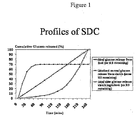
- Figure 1 shows the ideal slow glucose release compared to that of normal starches, and the ideal glucose release from foods containing such starches.
- Figure 2 depicts the actual glucose release of uncooked corn starches crosslinked to various levels with STPP/STMP.
- The present invention relates to chemically modified starches, which when properly formulated into foods or taken as a supplement, may be used to provide the consumer with more constant blood glucose (prevent/minimize acute elevation) levels over an extended time period (corresponding to the time the material is in the stomach/small intestine) than would be possible with other types of starches. Such starches and foods containing these starches will help the consumer regulate and maintain normal and healthy blood glucose levels.
- Starch, as used herein, is intended to include all starches, flours, grits and other starch containing materials derived from tubers, grain, legumes and seeds or any other native source, any of which may be suitable for use herein. A native starch as used herein, is one as it is found in nature. Also suitable are starches derived from a plant obtained by standard breeding techniques including crossbreeding, translocation, inversion, transformation or any other method of gene or chromosome engineering to include variations thereof which are typically referred to as genetically modified organisms (GMO). In addition, starch derived from a plant grown from artificial mutations (including those from chemical mutagens) and variations of the above generic composition, which may be produced by known standard methods of mutation breeding, are also suitable herein.
- Typical sources for the starches are cereals, tubers, roots, legumes and fruits. The native source can be corn (maize), pea, potato, sweet potato, banana, barley, wheat, rice, oat, sago, amaranth, tapioca (cassava), arrowroot, canna, triticale, and sorghum as well as waxy or high amylose varieties thereof. As used herein, the term "waxy" or "low amylose" is intended to include a starch containing no more than about 10%, particularly no more than about 5%, most particularly no more than about 2%, by weight amylose. Also used herein, the term "high amylose" is intended to include a starch containing at least about 40%, particularly at least about 70%, most particularly at least about 80%, by weight amylose. The invention embodied within relates to all starches regardless of amylose content and is intended to include all starch sources, including those which are natural, genetically altered or obtained from hybrid breeding.
- The starch of this invention is chemically modified using methods known in the art. In one embodiment, the starch is treated with acetic anhydride (AA), propylene oxide (PO), succinic anhydride (SA), octenyl succinic anhydride (OSA), crosslinking reagents such as STMP, POCl3, epichlorohydrin or adipic acetic anhydride, phosphorylating reagents such as sodium tripolyphosphate (STPP) or ortho phosphates, oxidizing reagents such as sodium hypochlorite or peroxide or other food approved starch modifying reagents, enzymes or physical processes such as heat/acid (dextrinization) thermal or hydrothermal (heat and moisture), or other physical processes and combinations thereof. Such chemical modifications are known in the art and are described for example in Modified Starches: Properties and Uses, Ed. Wurzburg, CRC Press, Inc., Florida (1986). It is also possible to use enzymes, alone or in combination with other chemical treatments, to obtain starches of this invention. Enzymes are classified by function such as those that alter molecular weight and others that change chemical or architectural structure. Such enzymes include, but not limited to, alpha amylase, glucoamylase, pullulanase, beta amylase, isomerases, invertases, and transamidases. If the starch is modified with STMP and/or STPP, the starch base must be a high amylose starch.
- One skilled in the art would recognize that by varying the reaction conditions and reagents it may be possible to vary the level of substitution and possibly the location within the starch molecule. The mechanisms for digestion and absorption depend upon various factors, including starch type, amylose content and granular composition/conformation as well as reagent type, and reaction conditions. The rate of digestion is also dependent on the way or manner the food is prepared and the reaction of the individual to such foods, including variations in each individual's biochemistry and physiology. The mechanism by which starch is processed in the body is well known in the art.
- The amount of chemical modification may be varied to get the desired digestion profile. Chemical modification includes, without limitation, any reagent known in the art capable of producing a starch ether or ester which has been or will be approved by the appropriate regulatory agency for consumption. Examples of such reagents are, but not limited to, acetic anhydride, propylene oxide, succinic anhydride, octenyl succinic anhydride, crosslinking reagents such as STMP, POCl3, epichlorohydrin or adipic acetic anhydride and phosphorylating reagents such as sodium tripolyphosphate or sodium metaphosphate and combination of these.
- Additionally, reagents and processes capable of altering the chemical structure, conformation or crystallinity of the starch to render it less susceptible to digestion in the body are also included in the invention. Such reagents include oxidative reagents and processes, the action of heat and/or acid such as dextrinization, the action of enzymes and combinations of these with or without chemical modifications.
- Other modification that may not affect the digestion profile, but may provide desirable textural and/or physical properties are also included in the scope of this application. The additional modification may be accomplished before or after the chemical modification using for example thermal inhibition or chemical cross-linking to toughen the starch and provide shear resistance during processing. It would be within the knowledge of the skilled artisan as to what combinations are possible and in what order such modification may be accomplished. Additional modifications may include certain types of molecular weight reduction (for viscosity control) such as acid conversion or enzyme degradation.
- Modifications as described above are typically accomplished in aqueous media with some form of pH control or pH adjustment. A skilled practitioner would readily appreciate the variety of materials and equipment for carrying out these reactions. For a review of these reaction conditions see Modified Starches: Properties and Uses, Ed. Wurzburg, CRC Press, Inc., Florida (1986), chapter 4. Other reaction media and conditions may be utilized and will provide materials under the scope of the invention. These include, but are not limited to, dry heat reactions, solvent reactions, supercritical fluid reactions and gaseous conditions.
- The starch may be modified by physical means. Physical modification includes by shearing, hydrothermal or thermal-inhibition, for example by the process described in U.S. Patent No. 5,725,676.
- The starch may be modified by enzymatic means. Enzymatic modification includes by exo- and/or endo-enzymes, including without limitation, by alpha-amylase, beta-amylase, glucoamylase, maltogenase, pullulanase and isoamylase or any combination of the above.
- These starches may be modified in the granular state or after gelatinization using techniques known in the art. Such techniques include those disclosed for example in U.S. Patent Nos. 4,465,702, 5,037,929, 5,131,953, and 5,149,799. Also see, Chapter XXII- "Production and Use of Pregelatinized Starch", Starch: Chemistry and Technology, Vol. III- Industrial Aspects, R.L. Whistler and E.F. Paschall, Editors, Academic Press, New York 1967.
- The starches of this invention may be converted, such as fluidity or thin-boiling starches prepared by oxidation, acid hydrolysis, enzyme hydrolysis, heat and or acid dextrinization. These processes are well known in the art.
- The starch may be purified by any method known in the art to remove starch off flavors, colors, or sanitize microbial contamination to insure food safety or other undesirable components that are native to the starch or created during processing. Suitable purification processes for treating starches are disclosed in the family of patents represented by EP 554 818 (Kasica, et al.). Alkali washing techniques are also useful and described in the family of patents represented by U.S. 4,477,480 (Seidel) and 5,187,272 (Bertalan et al.). The starch may be purified by enzymatic removal of proteins. Reaction impurities and by-products may be removed by dialysis, filtration, centrifugation or any other method known in the art for isolating and concentrating starch compositions. The starch may be washed using techniques known in the art to remove soluble low molecular weight fractions, such as mono- and di-saccharides and/or oligosaccharides.
- In one embodiment, the starch is modified by a process selected from the group consisting of propylene oxidation in the range of 3-10% bound, OSA modification in the range of 1.5-3.0% bound, acetylation in the range of 0.5 to 3.0% bound, dextrinization to a canary or white dextrin in the range of less than 10 ABF, and combinations thereof. In another embodiment, the starch is further modified by a process selected from the group consisting of acid or enzyme conversion to a water fluidity of 20-85, hypochloride treatment at a level of 0.4-5.0%, adipic acetic treatment at a level of 0.1 to 2.0%, phosphorus oxychloride treatment at a level of 0.001 to 0.5% treatment, and combinations thereof. In yet another embodiment, the starch is treated with sodium trimetaphosphate and/or sodium tripolyphosphate at a level of 0.1 to 0.35% added bound phosphate and hypochloride treatment at a level of 0.3 to 1.0%.
- The resultant starch is typically adjusted to the desired pH according to its intended end use. In general, the pH is adjusted to 3.0 to about 6.0. In one embodiment, the pH is adjusted to 3.5 to about 4.5, using techniques known in the art.
- The starch may be recovered using methods known in the art, particularly by filtration or by drying, including spray drying, freeze drying, flash drying or air drying. In the alternative, the starch may be used in the liquid (aqueous) form.
- The resultant starch has an altered digestion profile, such that less than 25% is digested within the first 20 minutes, in another embodiment less than 20% is digested, and in yet another embodiment less than 10%, is digested within the first 20 minutes of ingestion.
- Further, the resultant starch is 30 to 70% digested within 120 minutes of ingestion. In one embodiment, the starch is at least 40-60% digested within 120 minutes of ingestion and in another embodiment, at least 45-55% digested within 120 minutes.
- In addition, the resultant starch is at least 60% digested within 240 minutes of ingestion. In one embodiment, the starch is at least 70% digested within 240 minutes of ingestion and in another embodiment, at least 80% digested within 240 minutes and in yet another embodiment, at least 90% digested within 240 minutes.
- One skilled in the art would be able to alter the glucose release. For example if glucose release is too high the chemical modifications which will help reduce glucose release to the desired level include without limitation higher crosslinking level using STMP, STPP, phosphorus oxychloride, and/or adipic-acetic acid; and/or increased substitution with propylene oxide, OSA, or acetylation. If glucose release is too low, chemical modifications which will help increase glucose release include without limitation lower crosslinking level using STMP, STPP, phosphorus oxychloride and/or adipic-acetic acid; and/or hypochloride treatment, manganese oxidation conversion, and or other oxidation treatments. Combinations of chemistries have to be adjusted to a starch base and consider the effect of complementary treatments.
- It would be apparent to one skilled in the art that cooking a starch will affect the digestibility and rate of absorption of the glucose into the blood stream. For a review of the effect of cooking see Brown, M.A., et al. British Journal of Nutrition, 90, 823-27 (2003).
- In a recent patent application, Brown et al., US 2003/0045504A1 published March 6, 2003 incorporated herein by reference, shows the relationship between resistant starch and other components in the foods (such as various lipids) and their affect on the digestibility, Gl, glucose response (GR) and blood glucose levels after ingestion of such foods containing resistant starch.
- Starch is rarely consumed on its own, but is typically consumed as an ingredient in a food product. This food product may be manipulated to result in desired glucose release curves. In one embodiment, the food is manipulated to provide a substantially zero order glucose release curve, to provide an essentially constant and sustained glucose release rate.
- Starch or starch rich materials (e.g., flour or grits) may be consumed in its raw state, but is typically consumed after cooking and/or other processing. Therefore, the invention is intended to include those starches which, when added to food and processed, have the advantage of changing the glucose release curve. In one embodiment, the food containing the processed starch provides a substantially zero order glucose release curve, to provide an essentially constant and sustained glucose release rate. Such foods are modeled by the methods described in the Examples section, infra.
- The chemically modified starch does not produce a large rapid increase in blood glucose levels typical of high glycemic index starches, such as most native starches. Instead, these modified starches provide a more moderate increase above the baseline which is sustained for a longer time period. It is also process tolerant in that there is no large and rapid increase in blood glucose levels after ingestion of food containing the starch and the glucose release from the prepared and/or processed food is substantially constant.
- The chemically modified starches described may be used in a variety of edible products including, but not limited to: baked goods, including crackers, breads, muffins, bagels, biscuits, cookies, pie crusts, and cakes; cereal, bars, pizza, pasta, dressings, including pourable dressings and spoonable dressings; pie fillings, including fruit and cream fillings; sauces, including white sauces and dairy-based sauces such as cheese sauces; gravies; lite syrups; puddings; custards; yogurts; sour creams; beverages, including dairy-based beverages; glazes; condiments; confectioneries and gums; and soups.
- Edible products also are intended to include nutritional foods and beverages, including dietary supplements, diabetic products, products for sustained energy release such as sports drinks, nutritional bars and energy bars.
- The chemically modified starch may be also used in a variety of animal feed products, weaning formulations affording desirable growth and development of the post weaned animal, pharmaceutical formulations, nutriceuticals, over the counter (OTC) preparations, tablets, capsules and other known drug delivery vehicles for human and/or animal consumption and/or any other applications that can benefit from constant release of glucose from the formulation.
- The chemically modified starches of this invention may be added in any amount desired or necessary to obtain the functionality of the composition. In one embodiment, the starch may be added in an amount of from 0.01% to 99% by weight of the composition. In another embodiment, the starch is added in an amount of from 1 to 50%, by weight of the composition. The starch may be added to the food or beverage in the same manner as any other starch, typically by mixing directly into the product or adding it in the form of a solution.
- Edible products may be formulated using the modified starch of this invention to provide a substantially zero order glucose release rate. Such products may provide the consumer with glucose over an extended time period and more constant blood glucose levels.
- Products which control and/or regulate the rate and magnitude of glucose adsorption may increase satiety for longer time periods, and thus be useful in weight management. They may also provide sustained energy release, and thus enhance athletic performance including training, and improvements in concentration maintenance and memory.
- The products may also provide pharmaceutical benefits, including reducing the risk of developing diabetes, treating obesity such as weight loss or weight management, and preventing or treating hyperglycemia, insulin resistance, hyperinsulinemia, dyslipidemia, and dysfibrinolysis.
- The following examples are presented to further illustrate and explain the present invention and should not be taken as limiting in any regard. All percents used are on a weight/weight basis.
- The following test procedures are used throughout the examples:
- Food samples are ground/minced as if masticated. Powder starch samples are screened to a particle size of 250 microns or less. 500-600 mg ± 0.1 mg of sample is weighed and added to the sample tube. 10 ml of a pepsin (0.5%), guar gum (0.5%), and HCl (0.05 M) solution are added to each tube.
- Blank and glucose standard tubes are prepared. The blank is 20 ml of a buffer containing 0.25 M sodium acetate and 0.02% calcium chloride. Glucose standards are prepared by mixing 10 ml sodium acetate buffer (described above) and 10ml of 50 mg/ml glucose solution. Standards are prepared in duplicate.
- The enzyme mix is prepared by adding 18 g of porcine pancreatin (Sigma P-7545) to 120 ml of deionized water, mixing well, then centrifuging at 3000g for 10 minutes. The supernatant is collected and 48mg of dry invertase (Sigma I-4504) and 0.5 ml AMG E (Novo Nordisk) are added.
- The sample tubes are pre-incubated at 37°C for 30 min, then removed from the bath and 10 ml of sodium acetate buffer is added along with glass balls/marbles (to aid in physical breakdown of the sample during shaking).
- 5 ml of the enzyme mixture is added to the samples, blank, and standards. The tubes are shaken horizontally in a 37°C waterbath at approximately 180 strokes/min. Time "zero" represents the first addition of the enzyme mixture to the first tube.
- After 20, 120, and 240 minutes, 0.5-ml aliquots are removed from the incubating samples and each placed into a separate tube of 20ml 66% ethanol (to stop the reaction). After 1 hour, an aliquot is centrifuged at 3000g for 10 minutes.
- The glucose concentration in each tube is measured using the glucose oxidase/peroxidase method (Megazyme Glucose Assay Procedure GLC9/96). This is a colorimetric procedure.
- The degree of starch digestion is determined by calculating the glucose concentration against the glucose standards, using a conversion factor of 0.9. Results are given as "% starch digested" (dry weight basis) after 20, 120, and 240 minutes.
- Every sample analysis batch includes a reference sample of uncooked cornstarch. The accepted % digestion values for cornstarch are listed in Table I, below:
Table I Time (minutes) 20 120 240 Sample 1(control)1 18±4 80±4 90±4 1Melogel® starch, cornstarch commercially available from National Starch and Chemical Company, Bridgewater, NJ, USA. - Prepare 1.7% slurry of starch in 5% EDTA solution and stir for 5min and filter. Wash the sample on the filter with 200 ml of deionized water four times. Dry sample at room temperature. Prepare quantitatively 3% starch slurry in 4N HCl, add boiling stones, and boil the sample for 7min, cool to room temperature, quantitatively dilute with deionized water, centrifuge to remove any possible particulate. The sample is then analyzed by Inductively Coupled Plasma Spectrometry (ICP) for phosphorus using standard analytical procedures to obtain total bound phosphorus. Added bound phosphorus is determined by subtracting total bound phosphorus of the unmodified starch from that of the modified starch.
-
- Measure moisture of experimental starch gravimetrically.
- Calculate amount of additional water required to adjust the starch to a moisture content of 25% (w/w) which is a typical moisture level for cookie and biscuit dough.
- Weigh 50g of starch into a mixing bowl of a Sunbeam Mixmaster, lower mixing blades into a bowl and turn the mixer on to a 'fold' position.
- Begin addition of pre-calculated amount of water by spraying the water onto the starch while mixing to ensure even moisture distribution. Complete water addition in 5 min.; continue mixing on 'fold' setting until starch does not stick to walls of the mixing bowl. The total mixing time is 8-10min.
- Transfer 50g of the hydrated starch into an aluminum tin (145mm x 120mm x 50mm) and spread evenly to cover the entire bottom of the pan.
- Preheat an oven to 190°C.
- Bake the hydrated starch at 190°C for 20 min.
- Take the starch out from the oven, place immediately in 4oz (118.3 ml) plastic jar and close the lid.
- Cool the starch to room temperature and determine moisture of baked starch gravimetrically. The moisture content of the baked starch should be in a 5-8% (w/w) range which is typical for cookies and biscuits.
- Test glucose release from starch immediately or store it in an air-tight container for testing the following day.
- The following modifications are well-known in the art and the procedures are meant as guidance to the skilled artisan. Reagent amounts and bases may be changed to achieve different modification levels.
- a) Propylene oxide modification - 4 g of solid sodium hydroxide are dissolved into 750 g of tap water at 23°C and mixed until completely dissolved. 50 g of sodium sulfate is then added to the water and mixed until dissolved. The tapioca starch is then added quickly to the stirring aqueous mixture and mixed until uniform. Various levels of propylene oxide are added to the starch slurry and mixed for 1 to 2 minutes. The slurry is then transferred into a 2L plastic bottle and sealed. The bottle and contents are then placed into a preheated mixing cabinet set to 40°C and agitated for 18 hours. After the reaction is complete, the slurry is adjusted to pH 3 with dilute sulfuric acid and then allowed to mix for 30 minutes. The pH is then adjusted to between 5.5 and 6.0 with dilute sodium hydroxide solution. The starch is recovered by filtration and the starch cake is washed with water (3 x 250 ml), spread out on the bench top and allowed to air dry. The example is repeated using sago starch.
- b) Octenyl succinic anhydride modification - A total of 500 grams of waxy maize starch was placed in a 2L plastic beaker and slurried in 750 ml tap water. The slurry was mixed with an overhead stirrer while the pH was adjusted to 7.5 using 3% sodium hydroxide. The agitation of the reaction was continued while 3 aliquots of 5 grams (for a total of 15 grams) of octenylsuccinic anhydride (OSA) were added at thirty minute increments. The pH was maintained at 7.5 by addition of 3% sodium hydroxide. The reaction is allow to stir until the consumption of caustic stops (less than 1 mL in 10 minutes). The starch was then filtered through Waltman #1 paper and washed with an additional 750 ml of tap water. The starch was then reslurried in 500 ml water and the pH adjusted to 5.5 with 3:1 hydrochloric acid. The slurry was again filtered, washed with an additional 750 ml water, and air dried to less than 15% moisture to produce an OSA starch. The example was repeated using a high amylose (~70%) corn starch.
- c) Acetylated - A total of 500 grams of waxy maize starch was placed in a 2L plastic beaker and slurried in 750 ml tap water. The beaker was equipped with an overhead stirrer and pH monitor capable of automatically adding a 3% sodium hydroxide solution to maintain a predetermined set point. The pH controller was set at 8.0 and the slurry adjusted to a pH of about 7.8. A dropping funnel was charged with 15 grams of acetic anhydride and set to deliver the full charge over approximately 1 hour while the pH was held at 8.0 with good agitation. After the addition of the anhydride was complete the reaction was allowed to continue for an additional 5 minutes at pH. The slurry was then filtered through Whatman #1 paper and washed with 3 x 500 mLs of tap water. The resulting cake is allowed to air dry to less than 15% moisture and recovered to afford the starch acetate. The example was repeated using tapoca starch.
- d) STMPlSTPP modification with bleaching - 3,300 ml of tap water was measured into a reaction vessel. 110g Na2SO4 were added with agitation and stirred until dissolved. With good agitation, 2,200g high amylose (~70%) corn starch were added and then 3% NaOH was added drop-wise to the slurry as needed to reach 40ml alkalinity (733g NaOH for 44.14ml alkalinity). The slurry was stirred 1 hr and the pH was recorded (pH 11.71). The temperature was adjusted to 42°C. 220g of a 99/1 STMP/STPP blend was added and allowed to react for 17 hours. The pH was maintained with a controller and 3% NaOH (556.6g consumed). The final pH and temperature were recorded (pH 11.19 and 42°C). The pH was adjusted to 5.5 with 3:1 HCI (pH 5.49 using 285.38g HCI). The resultant starch cake was filtered and washed twice with 3,300 ml tap water. 500g of the starch was then slurried in water at 40% solids and placed in a 2L plastic beaker and slurried in 750 ml tap water. The beaker is equipped with an overhead stirrer and placed in a constant temperature bath pre-warmed to 40° and the pH is adjusted to between 10.8 and 11.2 with 3% sodium hydroxide. A total of 4.0 grams of sodium hypochlorite is added and the pH checked to confirm 10.8 - 11.2. The reaction is allowed to stir for two hours at 40°C. After two hours the slurry is adjusted to a negative KI test with a 5% Sodium meta-bisulfite solution. The starch slurry is then pH adjusted to 5.5 with dilute HCl and filtered through Whatman #1 paper and washed with an additional 750 mL of tap water. The wet cake is allowed to air dry to less than 15% moisture to afford the oxidized starch product.
-
- Sample 1 - control corn starch; Melogel® starch, commercially available from National Starch and Chemical Company, Bridgewater, NJ, USA
- Sample 2- 3,000 ml of tap water were measured into a reaction vessel. 100g Na2SO4 were added with agitation and stirred until dissolved. With good agitation, 2,000g corn starch were added and then 3% NaOH was added drop-wise to the slurry as needed to reach 40ml alkalinity (actual 667g NaOH for 44.00ml alkalinity). The slurry was stirred 1 hr and the pH was recorded (pH 11.68). The temperature was adjusted to 42°C. 160g of a 99/1 STMP/STP blend was added and allowed to react for 4 hours. The final pH and temperature were recorded (pH 11.02 and 42°C). The pH was adjusted to 5.5 with 3:1 HCl (pH 5.47 using 164.99g HCl). The resultant starch case was filtered and washed twice with 3,000 ml tap water. The cake was crumbled and air dried.
- Sample 3 - 3,000 ml of tap water was measured into a reaction vessel. 100g Na2SO4 were added with agitation and stirred until dissolved. With good agitation, 2,000g corn starch were added and then 3% NaOH was added drop-wise to the slurry as needed to reach 40ml alkalinity (667g NaOH for 44.00ml alkalinity). The slurry was stirred 1 hr and the pH was recorded (pH 11.69). The temperature was adjusted to 42°C. 160g of a 99/1 STMP/STP blend was added and allowed to react for 17 hours. The final pH and temperature were recorded (pH 11.32 and 42°C). The pH was adjusted to 5.5 with 3:1 HCI (pH 5.57 using 146.88g HCI). The resultant starch case was filtered and washed twice with 3,000 ml tap water. The cake was crumbled and air dried.
- Sample 4 - 3,300 ml of tap water was measured into a reaction vessel. 110g Na2SO4 were added with agitation and stirred until dissolved. With good agitation, 2,200g corn starch were added and then 3% NaOH was added drop-wise to the slurry as needed to reach 40ml alkalinity (733g NaOH for 44.14ml alkalinity). The slurry was stirred 1 hr and the pH was recorded (pH 11.71). The temperature was adjusted to 42°C. 220g of a 99/1 STMP/STP blend was added and allowed to react for 17 hours. The pH was maintained with a controller and 3% NaOH (556.6g consumed). The final pH and temperature were recorded (pH 11.19 and 42°C). The pH was adjusted to 5.5 with 3:1 HCI (pH 5.49 using 285.38g HCI). The resultant starch case was filtered and washed twice with 3,300 ml tap water. The cake was crumbled and air dried.
- Sample 5 - 2,500 pounds (1134kg) of tap water were measured into a reaction vessel. 100 lbs (45.4kg) Na2SO4 were added with agitation and stirred until dissolved. With good agitation, 2,000 lbs (907.2kg) of corn starch were added. Then 3% NaOH was added at 4lbs/minute (1.8kg/minute) to the starch slurry as needed to reach 40ml alkalinity (about 600 lbs (272.2kg) NaOH for 46 ml alkalinity). The mixture was stirred for 1 hr and the pH recorded (pH 11.6). Temperature was adjusted to 108°F (42°C). 200 lbs (90.7kg) of a 99/1 STMP/STP blend were added and reacted for 17 hours. The final pH and temperature were recorded (pH 11.4 and 108 °F (42°C)). pH was adjusted to 5.5 with 3:1 HCl as needed (pH 5.4 using 75 lbs. HCl (34kg)). The starch was washed and centrifuged on a Merco centrifuge and flash dried.
- Samples 8, 9, 11, 13, 14, 15 and 16 were prepared by the same procedure as sample 3. The amount of 99/1 STMP/STPP blend was adjusted to results in a desired bound phosphorus level.
- Samples 23 and 26: POCI 3 modification - 750ml of water was measured into reaction vessel. 2.5g of NaCl were added with agitation and stirred until dissolved. 500 g of hydroxypropylated starch were added to the salt solution. 3% NaOH was added drop-wise to the slurry with strong agitation as needed to reach pH 11-11.5. The slurry was stirred 1 hr and the pH was recorded (pH 11.5). 0.02-0.2g of POCl3 was added and allowed to react for 30min while stirring at room temperature. The pH was adjusted to 5.5 with 3:1 HCl. The resultant starch cake was filtered and washed twice with 750 ml tap water. The cake was crumbled and air dried.
- The amount of bound phosphorus and the amount of glucose released were determined for each of the uncooked starch samples. The results are listed in Table II, below.
Table II Starch Base Sample ID STMP/STPP Bound Phosphorus Glucose Released O/T (%) (% on starch) (%) 20min 120min 240min Dent corn 1 Native 0.04 17 75 85 Dent corn 2 8 0.12 17 71 80 Dent corn 3 8 0.21 9 48 62 Dent corn 4 10 0.31 1 8 15 Dent corn 5 12 0.40 0 2 4 - As can be seen from Table II, Sample 3 shows that starch may be crosslinked using a combination of STMP and STPP to result in the altered digestion curve of this invention. The digestion curves of these starches are depicted in Figure 2.
- A variety of base starches were modified using PO, OSA, Acetic Anhydride reagents according to the general procedures described in the above examples to obtain a variety of modification levels. The digestibility of these starches were tested and the results are listed in Table III, below.
Table III Sample # Base Starch Total Bound Phosphorus (%) Model T=20 min T=120 min T=240 min 1 Dent N/A N/A 18 80 85 2 Dent N/A Cookie 29 73 80 3 Dent 0.24 N/A 1 27 60 4 Dent 0.12 Cookie 19 65 75 5 Dent 0.14 Cookie 14 47 56 Sample # Base Starch Total Bound Phosphorus (%) Model T=20 min T=120 min T=240 min 6 High (~70%) Amylose N/A N/A 11 26 30 7 High (~70%) Amylose N/A Cookie 9 23 27 8 High (~70%) Amylose 0.23 N/A 6 13 16 9 High (~70%) Amylose 0.25 Cookie 7 16 18 10 Tapioca N/A N/A 9 42 52 11. Tapioca 0.15 Cookie 14 46 58 12 Waxy corn N/A N/A 35 94 100 13 Waxy corn 0.31 Cookie 17 50 60 14 Waxy corn 0.41 Cookie 12 31 36 15 Rice 0.17 N/A 17 ' 55 68 16 Wheat 0.21 N/A 22 69 82 - As can be seen from Table III, a variety of starch bases may be modified using a combination of STMP and STPP to result in the altered digestion curve of this invention in model food system.
- A variety of base starches were modified using PO, OSA, Acetic Anhydride reagents according to the general procedures described in the above examples to obtain a variety of modification levels. The digestibility of these starches were tested and the results are listed in Table IV, below.
Table IV Sample # Sample Chemical Modifications Glucose Release at Starch Base Modification 1 Modification 1 Level Modification 2 Modification 2 Level 20' 120' 240' 17 Waxy Corn na na na na 35 94 100 18 OSA 3% bound OSA -- -- 20 56 69 19 OSA 3% bound OSA Acid Conversion 25s viscosity 22 69 76 20 Acetylation 2% bound acetyl Adipic Acidic 0.55% bound adipate 23 53 60 21 Tapioca na na na na 9 42 52 22 Acetylation 2% bound acetyl -- -- 19 53 64 23 Hydroxyprop ylation 5% bound PO Phosphoryla tion 0.04% POCl3 treatment 20 58 66 24 Dextrinizatio n White, viscosity 5.5 ABF -- -- 21 55 65 25 Sago na na na na 3 13 19 26 Hydroxyprop ylation 7% bound PO Phosphoryla tion 0.004% POCl3 treatment 21 69 74 27 High (~70%) Amylose na na na na 11 26 30 28 OSA 3% bound OSA -- -- 24 64 67 29 STMP/STP 99:1 0.35% bound P Bleaching 0.8% NaOCI 22 56 61 - As can be seen from Table V, a variety of starch bases may be modified using various reagents and/or treatments to result in the altered digestion curve of this invention.
- The starch samples of the above examples are added at levels of 5-40% to replace flour or other carbohydrate ingredients in six different food products.
- 1) White Pan Bread
- 2) Semolina Pasta
- 3) Nutrition Bar
- 4) Flavored Yogurt Drink
- 5) Tea Biscuit
- 6) Cereals
-
Patent Flour 55.6 White Granulated Sugar 4.3 Shortening 2.8 lodized Salt 1.1 Active Dry Yeast 0.6 Dough Conditioner 35.0 Water 0.6 Total 100.0 - Combine all ingredients and water in Hobart mixer. Mix on low speed for 2 minutes. Mix on Medium speed for 14 minutes. Allow dough to rest 5 minutes. Scale dough to loaves (510g for ½ kg Loaves). Allow dough to rest 5 minutes. Mold loaves in Glimek Dough-molder. Proof at 90% RH, 80°C. Bake at 210°C for 22 minutes.
-
Semolina Flour 74.1 Water 23.3 Dried Egg Whites 1.5 Dough Conditioner 1.1 Total 100.0 - Combine all ingredients and water in Hobart/Kitchen Aid mixer. Mix on low speed for 10 minutes. Feed into sheeter to form into noodles. Cook by placing noodles in boiling water for 5-10 minutes with stirring. Drain water
-
Protein Powder 33.6 Brown Rice Syrup 21.3 Dry Oats 10.5 Honey 9.0 Nonfat Dry Milk 9.7 Soy Oil 2.8 Peanut Flour 5.3 Apple Sauce or Raisin Paste 7.8 Total 100.0 - Combine all dry ingredients (except oats) in Hobart mixer. Mix on low speed for 5 minutes, or until blended. Continue mixing while adding liquid ingredients. Fold in oats while continuing to mix at low speed. Form bar into desired shape by pressing into a form.
-
Whole Milk up to 100.0 Starter culture (Danisco's Jo-mix NM 1-20) Nonfat Dry Milk optional Total 100.0 - Preheat milk to 65°C. Homogenize at 10.34 megapascal, then hold for 2 minutes at 93°C. Cool mix to 44°C. Inoculate with starter culture. Incubate until pH reaches 4.5 then cool to 4.5°C. Yogurt may be pumped to smooth curd.
Juice mix: Water 47.5 Strawberry conc. (40-60 brix) 40.0 Fructose 10.0 Pectin 2.5 Total 100.0 - Dry blend fructose and pectin. Add dry mix, water, and strawberry concentrate to a blender. Blender until fructose and pectin are dispersed. Cook juice mix in a hot water bath at 80°C for 15 minutes. Cool to 4.5°C.
- Blend Yogurt and Juice Mix at a ration of 9:1. Co-Homogenize at megapascals of 17.3/3.5 (two stages). Store finished product at 4.5°C
-
Wheat Flour 48.0 White Granulated Sugar 20.5 Whey Powder 1.3 Baking Powder 1.2 Salt 0.6 Shortening 9.6 Egg Yolks 2.0 Water 16.8 Total 100.0 - Combine all dry ingredients and shortening in a Hobart mixer. Mix on low for 5 minutes. Add egg yolks and water. Mix on low for 5 minutes. Roll or sheet dough and cut biscuits. Bake at 176°C for 12-15 minutes.
-
Modified maize starch or flour 40.0% Maize polenta 45.0% Sugar 10.0% Salt 2.0% Malt 3.0% 100.0% -
Modified maize starch or flour 43.0% Rice flour 11.5% Oat flour 11.5% Wheat flour 20.4% Sugar 9.0% Malt 2.6% Salt 2.0% 100.0% - The cereals are prepared using methods known in the art. They are extruded, flaked and toasted or extruded and expanded). The cereals are further dried, if necessary, to a final moisture content less than 3%.
- The foods are digested using Englyst digestion method and glucose release is monitored over 20, 120 and 240min. The release of glucose is linear over the digestion time.
All ingredients are listed as weight % of the formulation
Claims (17)
- A method of controlling the blood glucose level of a mammal comprising ingesting an edible product comprising a chemically modified starch provides less than 25% of the glucose release at 20 minutes, between 30-70% at 120 minutes and greater than 60% at 240 minutes.
- A method of providing a regulated supply of glucose to a mammal comprising ingesting an edible product comprising a chemically modified starch provides less than 25% of the glucose release at 20 minutes, between 30-70% at 120 minutes and greater than 60% at 240 minutes.
- The method of claim 1 or 2, wherein the starch provides less than 20% of the glucose release at 20 minutes.
- The method of claim 1 or 2, wherein the starch provides less than 10% of the glucose release at 20 minutes.
- The method of claim 1 or 2, wherein the starch provides between 40-60% of the glucose release at 120 minutes.
- The method of claim 1 or 2, wherein the starch provides between 45-55% of the glucose release at 120 minutes.
- The method of claim 1 or 2, wherein the starch provides greater 70% of the glucose release at 240 minutes.
- The method of claim 1 or 2, wherein the starch provides greater 80% of the glucose release at 240 minutes.
- The method of claim 1 or 2, wherein the starch provides greater 90% of the glucose release at 240 minutes.
- The method of claim 1 or 2, wherein the starch has been is present in an amount of 5-40% dry weight based on the edible product.
- The method of claim 1 or 2, wherein the glucose release from the edible product is substantially zero order.
- The method of claim 1 or 2, wherein the glucose release rate is substantially constant over the first 240 minutes.
- The method of claim 1 or 2, wherein the starch is modified by a process selected from the group consisting of propylene oxidation, octenyl succinic anhydride modification, acetylation, dextrinization, and combinations thereof.
- The method of claim 13, wherein the starch is modified by a process selected from the group consisting of propylene oxidation in the range of 3-10% bound, OSA modification in the range of 1.5-3.0% bound, acetylation in the range of 0.5 to 3.0% bound, dextrinization to a canary or white dextrin in the range of less than 10 ABF, and combinations thereof.
- The method of claim 13, wherein the starch is further modified by a process selected from the group consisting of acid conversion, enzyme conversion, hydrolysis, hypochloride treatment, adipic acetic treatment, phosphorus oxychloride treatment, and combinations thereof.
- The method of claim 15, wherein the starch is further modified by a process selected from the group consisting of acid conversion to a water fluidity of 20-85, hypochloride treatment at a level of 0.4-5.0%, adipic acetic treatment at a level of 0.1 to 2.0%, phosphorus oxychloride treatment at a level of 0.001 to 0.5% treatment, and combinations thereof.
- The method of claim 1 or 2, wherein the starch is treated with sodium trimetaphosphate and/or sodium tripolyphosphate at a level of 0.1 to 0.35% added bound phosphate and hypochloride treatment at a level of 0.3 to 1.0%.
Applications Claiming Priority (3)
| Application Number | Priority Date | Filing Date | Title |
|---|---|---|---|
| US59199704P | 2004-07-29 | 2004-07-29 | |
| US59198304P | 2004-07-29 | 2004-07-29 | |
| US11/175,456 US20060025381A1 (en) | 2004-07-29 | 2005-07-06 | Use of a chemically modified starch product |
Publications (2)
| Publication Number | Publication Date |
|---|---|
| EP1629728A1 true EP1629728A1 (en) | 2006-03-01 |
| EP1629728B1 EP1629728B1 (en) | 2008-11-26 |
Family
ID=35432072
Family Applications (1)
| Application Number | Title | Priority Date | Filing Date |
|---|---|---|---|
| EP05016296A Expired - Lifetime EP1629728B1 (en) | 2004-07-29 | 2005-07-27 | Use of chemically modified starch product |
Country Status (8)
| Country | Link |
|---|---|
| US (1) | US20060025381A1 (en) |
| EP (1) | EP1629728B1 (en) |
| JP (1) | JP2006052218A (en) |
| AT (1) | ATE415102T1 (en) |
| CA (1) | CA2513997A1 (en) |
| MX (1) | MXPA05008000A (en) |
| NO (1) | NO20053667L (en) |
| SG (1) | SG119336A1 (en) |
Cited By (5)
| Publication number | Priority date | Publication date | Assignee | Title |
|---|---|---|---|---|
| ITMC20100045A1 (en) * | 2010-04-01 | 2011-10-02 | Marco Alvise Formiconi | COMPOSITION FOR THE PREPARATION OF FOOD PRODUCTS PROTEINS CONTAINING AMIDED LOW-CONTENT OF CARBOHYDRATES AND RELATED FOOD PRODUCTS |
| EP2832225A3 (en) * | 2013-08-01 | 2015-06-24 | Corn Products Development, Inc. | Reduced saturated and total fat content pie crusts |
| EP1859687B1 (en) * | 2006-05-26 | 2017-11-08 | CORN Products Development Inc. | Stable starches for contributing dietary fiber to food compositions |
| CN107557409A (en) * | 2017-10-31 | 2018-01-09 | 无锡甜丰食品有限公司 | The preparation method of modified maltodextrin |
| EP1680134B2 (en) † | 2003-11-06 | 2018-03-07 | Glycologic Limited | Compositions and uses therof |
Families Citing this family (15)
| Publication number | Priority date | Publication date | Assignee | Title |
|---|---|---|---|---|
| US6514250B1 (en) * | 2000-04-27 | 2003-02-04 | Medtronic, Inc. | Suction stabilized epicardial ablation devices |
| JP5490350B2 (en) * | 2006-07-04 | 2014-05-14 | 花王株式会社 | Endurance improver |
| JP2008259464A (en) * | 2007-04-13 | 2008-10-30 | Matsutani Chem Ind Ltd | Fullness-lasting agent, and food and drink |
| ES2583602T3 (en) * | 2008-05-07 | 2016-09-21 | Vegenat, S.A. | Mixture of carbohydrates and their use to prepare a product intended for oral or enteral feeding |
| KR20100020128A (en) * | 2008-08-12 | 2010-02-22 | 씨제이제일제당 (주) | A preparation of fibrous fiber and availability of it in the dressing/liquid food |
| WO2010077635A2 (en) * | 2008-12-09 | 2010-07-08 | The Ucan Company | Heat moisture treated carbohydrates and uses thereof |
| US20100310747A1 (en) * | 2009-06-05 | 2010-12-09 | Brunob Ii B.V. | Gluten-Free Bakery Products |
| CN103687502A (en) * | 2011-07-22 | 2014-03-26 | 雀巢产品技术援助有限公司 | Dried pulp preparation from unprocessed raw materials |
| JP5555291B2 (en) * | 2012-08-31 | 2014-07-23 | 花王株式会社 | Endurance improver |
| EP2996500B1 (en) * | 2013-03-15 | 2020-09-23 | Mars, Incorporated | Extruder system and method |
| GB201413832D0 (en) * | 2014-08-05 | 2014-09-17 | Tate & Lyle Ingredients | Starch compositions useful for thickening aqueous liquids |
| US10143224B2 (en) * | 2015-07-24 | 2018-12-04 | Corn Products Development, Inc. | Low protein yogurts containing modified starches |
| CN107920542A (en) * | 2015-08-31 | 2018-04-17 | 嘉吉公司 | Cheese products with added modified pyrodextrin |
| USD887666S1 (en) | 2017-05-19 | 2020-06-23 | Generale Biscuit | Food bar |
| US20230079812A1 (en) * | 2020-03-05 | 2023-03-16 | VitaNav, Inc. | COMPOSITION OF (D)-ß-HYDROXYBUTYRIC ACID, (D)-1,3 BUTANEDIOL AND DIGESTIBLE CARBOHYDRATE |
Citations (13)
| Publication number | Priority date | Publication date | Assignee | Title |
|---|---|---|---|---|
| US4465702A (en) | 1982-11-01 | 1984-08-14 | A. E. Staley Manufacturing Company | Cold-water-soluble granular starch for gelled food compositions |
| US4477480A (en) | 1982-07-06 | 1984-10-16 | General Foods Corporation | Method of preparing a clean flavored cereal starch |
| US5037929A (en) | 1990-08-22 | 1991-08-06 | Kansas State University Research Found. | Process for the preparation of granular cold water-soluble starch |
| US5131953A (en) | 1988-09-12 | 1992-07-21 | National Starch And Chemical Investment Holding Corporation | Continuous coupled jet-cooking/spray-drying process and novel pregelatinized high amylose starches prepared thereby |
| US5149799A (en) | 1990-01-26 | 1992-09-22 | National Starch And Chemical Investment Holding Corporation | Method and apparatus for cooking and spray-drying starch |
| US5187272A (en) | 1992-01-21 | 1993-02-16 | Kraft General Foods, Inc. | Process for preparing non-hydroxypropylated, deflavored, crosslinked, pregelatinized, starch and product |
| EP0554818A2 (en) | 1992-02-07 | 1993-08-11 | National Starch and Chemical Investment Holding Corporation | Purification of polysaccharides |
| EP0749697A1 (en) * | 1995-06-22 | 1996-12-27 | Hercules Incorporated | Coated food |
| US5725676A (en) | 1993-07-30 | 1998-03-10 | National Starch And Chemical Investment Holding Corporation | Thermally inhibited starches and flours and process for their production |
| US5902410A (en) | 1995-06-07 | 1999-05-11 | National Starch And Chemical Investment Holding Corporation | Process for producing amylase resistant granular starch |
| US20030045504A1 (en) | 2000-04-06 | 2003-03-06 | Brown Ian L | Starch sub-types and lipid metabolism |
| US20040043106A1 (en) | 2002-08-28 | 2004-03-04 | Anfinsen Jon R. | Methods and systems for determining and controlling glycemic responses |
| EP1602376A1 (en) * | 2003-03-11 | 2005-12-07 | Kao Corporation | Preventive/remedy for obesity |
Family Cites Families (5)
| Publication number | Priority date | Publication date | Assignee | Title |
|---|---|---|---|---|
| US4499116A (en) * | 1983-01-03 | 1985-02-12 | National Starch And Chemical Corporation | Imitation cheese products containing modified starch as partial caseinate replacement and method of preparation |
| US4510166A (en) * | 1984-01-19 | 1985-04-09 | National Starch And Chemical Corporation | Converted starches for use as a fat- or oil-replacement in foodstuffs |
| JPH10279487A (en) * | 1997-04-01 | 1998-10-20 | Nippon Shokuhin Kako Co Ltd | Lipid metabolism improver |
| US5855946A (en) * | 1997-06-06 | 1999-01-05 | Kansas State University Research Foundation | Food grade starch resistant to α-amylase and method of preparing the same |
| MXPA03010937A (en) * | 2001-05-31 | 2004-02-27 | Abbott Lab | Acid controlled viscosity fiber system and uses thereof. |
-
2005
- 2005-07-06 US US11/175,456 patent/US20060025381A1/en not_active Abandoned
- 2005-07-27 MX MXPA05008000A patent/MXPA05008000A/en active IP Right Grant
- 2005-07-27 CA CA002513997A patent/CA2513997A1/en not_active Abandoned
- 2005-07-27 EP EP05016296A patent/EP1629728B1/en not_active Expired - Lifetime
- 2005-07-27 SG SG200504641A patent/SG119336A1/en unknown
- 2005-07-27 AT AT05016296T patent/ATE415102T1/en not_active IP Right Cessation
- 2005-07-28 JP JP2005219149A patent/JP2006052218A/en active Pending
- 2005-07-28 NO NO20053667A patent/NO20053667L/en not_active Application Discontinuation
Patent Citations (13)
| Publication number | Priority date | Publication date | Assignee | Title |
|---|---|---|---|---|
| US4477480A (en) | 1982-07-06 | 1984-10-16 | General Foods Corporation | Method of preparing a clean flavored cereal starch |
| US4465702A (en) | 1982-11-01 | 1984-08-14 | A. E. Staley Manufacturing Company | Cold-water-soluble granular starch for gelled food compositions |
| US5131953A (en) | 1988-09-12 | 1992-07-21 | National Starch And Chemical Investment Holding Corporation | Continuous coupled jet-cooking/spray-drying process and novel pregelatinized high amylose starches prepared thereby |
| US5149799A (en) | 1990-01-26 | 1992-09-22 | National Starch And Chemical Investment Holding Corporation | Method and apparatus for cooking and spray-drying starch |
| US5037929A (en) | 1990-08-22 | 1991-08-06 | Kansas State University Research Found. | Process for the preparation of granular cold water-soluble starch |
| US5187272A (en) | 1992-01-21 | 1993-02-16 | Kraft General Foods, Inc. | Process for preparing non-hydroxypropylated, deflavored, crosslinked, pregelatinized, starch and product |
| EP0554818A2 (en) | 1992-02-07 | 1993-08-11 | National Starch and Chemical Investment Holding Corporation | Purification of polysaccharides |
| US5725676A (en) | 1993-07-30 | 1998-03-10 | National Starch And Chemical Investment Holding Corporation | Thermally inhibited starches and flours and process for their production |
| US5902410A (en) | 1995-06-07 | 1999-05-11 | National Starch And Chemical Investment Holding Corporation | Process for producing amylase resistant granular starch |
| EP0749697A1 (en) * | 1995-06-22 | 1996-12-27 | Hercules Incorporated | Coated food |
| US20030045504A1 (en) | 2000-04-06 | 2003-03-06 | Brown Ian L | Starch sub-types and lipid metabolism |
| US20040043106A1 (en) | 2002-08-28 | 2004-03-04 | Anfinsen Jon R. | Methods and systems for determining and controlling glycemic responses |
| EP1602376A1 (en) * | 2003-03-11 | 2005-12-07 | Kao Corporation | Preventive/remedy for obesity |
Non-Patent Citations (15)
| Title |
|---|
| "MODIFIED STARCHES: PROPERTIES AND USES", 1986, CRC PRESS, INC. |
| "STARCH: CHEMISTRY AND TECHNOLOGY", vol. III, 1967, ACADEMIC PRESS, article "Production and Use of Pregelatinized Starch" |
| BROWN, FOOD AUSTRALIA, vol. 43, no. 6, 1995, pages 272 - 75 |
| BROWN, M.A., BRITISH JOURNAL OF NUTRITION, vol. 90, 2003, pages 823 - 27 |
| DIABETES CARE, vol. 24, 2001, pages 1 - 9 |
| EJCN, vol. 46, no. 2, 1992, pages 1 |
| ENGLYST, EUROPEAN JOURNAL OF CLINICAL NUTRITION, vol. 46, 1992, pages S33 - S50 |
| ENGLYST, H.N, EUR. J. CLIN. NUTR., vol. 46, no. 2, 1992, pages S33 - S50 |
| GUYTON, A.C.: "TEXTBOOK OF MEDICAL PHYSIOLOGY", W.B. SAUNDERS COMPANY, pages: 923 - 36 |
| IMBERTY, DIE STARKE, vol. 43, no. 10, 1991, pages 375 - 84 |
| JENKINS, D.J.A., AM. J. CLIN. NUTR., vol. 34, no. 3, 1981, pages 362 - 66 |
| MICHELLE MINEHAN, AIS SPORTS NUTRITION PROGRAM, 2003 |
| RABEN A, ANDERSEN K, KARBERG MA, HOLST JJ, ASTRUP A: "Acetylation of or B-cyclodextrin addition to potato starch: beneficial effect on glucose metabolism and appetite sensations", AM. J. CLIN. NUTR., vol. 66, 1997, pages 304 - 314, XP002358152 * |
| WOLF BW, BAUER LL, FAHEY GC, JR: "Effects of chemical modification on in vitro rate and extent of food starch digestion: an attempt to discover a slowly digested starch", J. AGRIC. FOOD CHEM., vol. 47, 1999, pages 4178 - 4183, XP002358151 * |
| WOO K S ET AL: "CROSS-LINKED RESISTANT STARCH: PREPARATION AND PROPERTIES", CEREAL CHEMISTRY, AACC INTERNATIONAL, ST PAUL, MN, US, vol. 79, no. 6, November 2002 (2002-11-01), pages 819 - 825, XP001132662, ISSN: 0009-0352 * |
Cited By (5)
| Publication number | Priority date | Publication date | Assignee | Title |
|---|---|---|---|---|
| EP1680134B2 (en) † | 2003-11-06 | 2018-03-07 | Glycologic Limited | Compositions and uses therof |
| EP1859687B1 (en) * | 2006-05-26 | 2017-11-08 | CORN Products Development Inc. | Stable starches for contributing dietary fiber to food compositions |
| ITMC20100045A1 (en) * | 2010-04-01 | 2011-10-02 | Marco Alvise Formiconi | COMPOSITION FOR THE PREPARATION OF FOOD PRODUCTS PROTEINS CONTAINING AMIDED LOW-CONTENT OF CARBOHYDRATES AND RELATED FOOD PRODUCTS |
| EP2832225A3 (en) * | 2013-08-01 | 2015-06-24 | Corn Products Development, Inc. | Reduced saturated and total fat content pie crusts |
| CN107557409A (en) * | 2017-10-31 | 2018-01-09 | 无锡甜丰食品有限公司 | The preparation method of modified maltodextrin |
Also Published As
| Publication number | Publication date |
|---|---|
| CA2513997A1 (en) | 2006-01-29 |
| EP1629728B1 (en) | 2008-11-26 |
| JP2006052218A (en) | 2006-02-23 |
| ATE415102T1 (en) | 2008-12-15 |
| NO20053667D0 (en) | 2005-07-28 |
| MXPA05008000A (en) | 2006-02-01 |
| NO20053667L (en) | 2006-01-25 |
| US20060025381A1 (en) | 2006-02-02 |
| SG119336A1 (en) | 2006-02-28 |
Similar Documents
| Publication | Publication Date | Title |
|---|---|---|
| EP1629728B1 (en) | Use of chemically modified starch product | |
| EP1836903B1 (en) | Process tolerant starch composition with high total dietary fiber content | |
| EP1362517B1 (en) | Slowly digestible starch product | |
| EP2269464B1 (en) | Gluten-free bakery products | |
| US6929817B2 (en) | Slowly digestible starch product | |
| US7097831B1 (en) | α-Amylase-resistant starch for producing foodstuff and medicaments | |
| Hager | Cereal products for specific dietary requirements. Evaluation and improvement of technological and nutritional properties of gluten free raw materials and end products | |
| EP1629729B1 (en) | Use of a crosslinked starch product | |
| RU2318403C2 (en) | Method for controlling glucose level and providing its regulated delivery for mammal | |
| ZA200506018B (en) | Fully mechanized mining technique of longwall mining method | |
| KR101226580B1 (en) | Use of a crosslinked or inhibited starch product | |
| US20230189864A1 (en) | Non-therapeutic methods for maintaining a healthy body weight or losing body weight | |
| CN119732378A (en) | A method for preparing low eGI value biscuits | |
| CN1736245A (en) | Use of crosslinked or inhibited starch products | |
| Würsch | Structure of starch in food: Interaction of starch and sugars with other food components |
Legal Events
| Date | Code | Title | Description |
|---|---|---|---|
| PUAI | Public reference made under article 153(3) epc to a published international application that has entered the european phase |
Free format text: ORIGINAL CODE: 0009012 |
|
| AK | Designated contracting states |
Kind code of ref document: A1 Designated state(s): AT BE BG CH CY CZ DE DK EE ES FI FR GB GR HU IE IS IT LI LT LU LV MC NL PL PT RO SE SI SK TR |
|
| AX | Request for extension of the european patent |
Extension state: AL BA HR MK YU |
|
| 17P | Request for examination filed |
Effective date: 20060410 |
|
| AKX | Designation fees paid |
Designated state(s): AT BE BG CH CY CZ DE DK EE ES FI FR GB GR HU IE IS IT LI LT LU LV MC NL PL PT RO SE SI SK TR |
|
| 17Q | First examination report despatched |
Effective date: 20060512 |
|
| GRAP | Despatch of communication of intention to grant a patent |
Free format text: ORIGINAL CODE: EPIDOSNIGR1 |
|
| GRAS | Grant fee paid |
Free format text: ORIGINAL CODE: EPIDOSNIGR3 |
|
| RAP1 | Party data changed (applicant data changed or rights of an application transferred) |
Owner name: BRUNOB II B.V. |
|
| GRAA | (expected) grant |
Free format text: ORIGINAL CODE: 0009210 |
|
| AK | Designated contracting states |
Kind code of ref document: B1 Designated state(s): AT BE BG CH CY CZ DE DK EE ES FI FR GB GR HU IE IS IT LI LT LU LV MC NL PL PT RO SE SI SK TR |
|
| REG | Reference to a national code |
Ref country code: GB Ref legal event code: FG4D |
|
| REG | Reference to a national code |
Ref country code: CH Ref legal event code: EP |
|
| REG | Reference to a national code |
Ref country code: IE Ref legal event code: FG4D |
|
| REF | Corresponds to: |
Ref document number: 602005011211 Country of ref document: DE Date of ref document: 20090108 Kind code of ref document: P |
|
| PG25 | Lapsed in a contracting state [announced via postgrant information from national office to epo] |
Ref country code: LT Free format text: LAPSE BECAUSE OF FAILURE TO SUBMIT A TRANSLATION OF THE DESCRIPTION OR TO PAY THE FEE WITHIN THE PRESCRIBED TIME-LIMIT Effective date: 20081126 Ref country code: ES Free format text: LAPSE BECAUSE OF FAILURE TO SUBMIT A TRANSLATION OF THE DESCRIPTION OR TO PAY THE FEE WITHIN THE PRESCRIBED TIME-LIMIT Effective date: 20090308 Ref country code: AT Free format text: LAPSE BECAUSE OF FAILURE TO SUBMIT A TRANSLATION OF THE DESCRIPTION OR TO PAY THE FEE WITHIN THE PRESCRIBED TIME-LIMIT Effective date: 20081126 |
|
| NLV1 | Nl: lapsed or annulled due to failure to fulfill the requirements of art. 29p and 29m of the patents act | ||
| PG25 | Lapsed in a contracting state [announced via postgrant information from national office to epo] |
Ref country code: IS Free format text: LAPSE BECAUSE OF FAILURE TO SUBMIT A TRANSLATION OF THE DESCRIPTION OR TO PAY THE FEE WITHIN THE PRESCRIBED TIME-LIMIT Effective date: 20090326 Ref country code: FI Free format text: LAPSE BECAUSE OF FAILURE TO SUBMIT A TRANSLATION OF THE DESCRIPTION OR TO PAY THE FEE WITHIN THE PRESCRIBED TIME-LIMIT Effective date: 20081126 Ref country code: SI Free format text: LAPSE BECAUSE OF FAILURE TO SUBMIT A TRANSLATION OF THE DESCRIPTION OR TO PAY THE FEE WITHIN THE PRESCRIBED TIME-LIMIT Effective date: 20081126 Ref country code: LV Free format text: LAPSE BECAUSE OF FAILURE TO SUBMIT A TRANSLATION OF THE DESCRIPTION OR TO PAY THE FEE WITHIN THE PRESCRIBED TIME-LIMIT Effective date: 20081126 Ref country code: PL Free format text: LAPSE BECAUSE OF FAILURE TO SUBMIT A TRANSLATION OF THE DESCRIPTION OR TO PAY THE FEE WITHIN THE PRESCRIBED TIME-LIMIT Effective date: 20081126 Ref country code: NL Free format text: LAPSE BECAUSE OF FAILURE TO SUBMIT A TRANSLATION OF THE DESCRIPTION OR TO PAY THE FEE WITHIN THE PRESCRIBED TIME-LIMIT Effective date: 20081126 |
|
| PG25 | Lapsed in a contracting state [announced via postgrant information from national office to epo] |
Ref country code: EE Free format text: LAPSE BECAUSE OF FAILURE TO SUBMIT A TRANSLATION OF THE DESCRIPTION OR TO PAY THE FEE WITHIN THE PRESCRIBED TIME-LIMIT Effective date: 20081126 Ref country code: DK Free format text: LAPSE BECAUSE OF FAILURE TO SUBMIT A TRANSLATION OF THE DESCRIPTION OR TO PAY THE FEE WITHIN THE PRESCRIBED TIME-LIMIT Effective date: 20081126 Ref country code: BG Free format text: LAPSE BECAUSE OF FAILURE TO SUBMIT A TRANSLATION OF THE DESCRIPTION OR TO PAY THE FEE WITHIN THE PRESCRIBED TIME-LIMIT Effective date: 20090226 Ref country code: RO Free format text: LAPSE BECAUSE OF FAILURE TO SUBMIT A TRANSLATION OF THE DESCRIPTION OR TO PAY THE FEE WITHIN THE PRESCRIBED TIME-LIMIT Effective date: 20081126 Ref country code: BE Free format text: LAPSE BECAUSE OF FAILURE TO SUBMIT A TRANSLATION OF THE DESCRIPTION OR TO PAY THE FEE WITHIN THE PRESCRIBED TIME-LIMIT Effective date: 20081126 |
|
| PG25 | Lapsed in a contracting state [announced via postgrant information from national office to epo] |
Ref country code: PT Free format text: LAPSE BECAUSE OF FAILURE TO SUBMIT A TRANSLATION OF THE DESCRIPTION OR TO PAY THE FEE WITHIN THE PRESCRIBED TIME-LIMIT Effective date: 20090427 Ref country code: SE Free format text: LAPSE BECAUSE OF FAILURE TO SUBMIT A TRANSLATION OF THE DESCRIPTION OR TO PAY THE FEE WITHIN THE PRESCRIBED TIME-LIMIT Effective date: 20090226 Ref country code: CZ Free format text: LAPSE BECAUSE OF FAILURE TO SUBMIT A TRANSLATION OF THE DESCRIPTION OR TO PAY THE FEE WITHIN THE PRESCRIBED TIME-LIMIT Effective date: 20081126 |
|
| PLBI | Opposition filed |
Free format text: ORIGINAL CODE: 0009260 |
|
| PLAX | Notice of opposition and request to file observation + time limit sent |
Free format text: ORIGINAL CODE: EPIDOSNOBS2 |
|
| PG25 | Lapsed in a contracting state [announced via postgrant information from national office to epo] |
Ref country code: SK Free format text: LAPSE BECAUSE OF FAILURE TO SUBMIT A TRANSLATION OF THE DESCRIPTION OR TO PAY THE FEE WITHIN THE PRESCRIBED TIME-LIMIT Effective date: 20081126 |
|
| 26 | Opposition filed |
Opponent name: CARGILL, INCORPORATED Effective date: 20090825 |
|
| PGFP | Annual fee paid to national office [announced via postgrant information from national office to epo] |
Ref country code: FR Payment date: 20090729 Year of fee payment: 5 |
|
| PGFP | Annual fee paid to national office [announced via postgrant information from national office to epo] |
Ref country code: DE Payment date: 20090730 Year of fee payment: 5 Ref country code: GB Payment date: 20090731 Year of fee payment: 5 |
|
| PG25 | Lapsed in a contracting state [announced via postgrant information from national office to epo] |
Ref country code: MC Free format text: LAPSE BECAUSE OF NON-PAYMENT OF DUE FEES Effective date: 20090731 |
|
| REG | Reference to a national code |
Ref country code: CH Ref legal event code: PL |
|
| REG | Reference to a national code |
Ref country code: IE Ref legal event code: MM4A |
|
| PG25 | Lapsed in a contracting state [announced via postgrant information from national office to epo] |
Ref country code: LI Free format text: LAPSE BECAUSE OF NON-PAYMENT OF DUE FEES Effective date: 20090731 Ref country code: CH Free format text: LAPSE BECAUSE OF NON-PAYMENT OF DUE FEES Effective date: 20090731 |
|
| PGFP | Annual fee paid to national office [announced via postgrant information from national office to epo] |
Ref country code: IT Payment date: 20090724 Year of fee payment: 5 |
|
| PG25 | Lapsed in a contracting state [announced via postgrant information from national office to epo] |
Ref country code: IE Free format text: LAPSE BECAUSE OF NON-PAYMENT OF DUE FEES Effective date: 20090727 |
|
| PG25 | Lapsed in a contracting state [announced via postgrant information from national office to epo] |
Ref country code: GR Free format text: LAPSE BECAUSE OF FAILURE TO SUBMIT A TRANSLATION OF THE DESCRIPTION OR TO PAY THE FEE WITHIN THE PRESCRIBED TIME-LIMIT Effective date: 20090227 |
|
| GBPC | Gb: european patent ceased through non-payment of renewal fee |
Effective date: 20100727 |
|
| REG | Reference to a national code |
Ref country code: FR Ref legal event code: ST Effective date: 20110331 |
|
| PG25 | Lapsed in a contracting state [announced via postgrant information from national office to epo] |
Ref country code: DE Free format text: LAPSE BECAUSE OF NON-PAYMENT OF DUE FEES Effective date: 20110201 Ref country code: LU Free format text: LAPSE BECAUSE OF NON-PAYMENT OF DUE FEES Effective date: 20090727 |
|
| REG | Reference to a national code |
Ref country code: DE Ref legal event code: R119 Ref document number: 602005011211 Country of ref document: DE Effective date: 20110201 |
|
| PG25 | Lapsed in a contracting state [announced via postgrant information from national office to epo] |
Ref country code: IT Free format text: LAPSE BECAUSE OF NON-PAYMENT OF DUE FEES Effective date: 20100727 Ref country code: FR Free format text: LAPSE BECAUSE OF NON-PAYMENT OF DUE FEES Effective date: 20100802 |
|
| PG25 | Lapsed in a contracting state [announced via postgrant information from national office to epo] |
Ref country code: HU Free format text: LAPSE BECAUSE OF FAILURE TO SUBMIT A TRANSLATION OF THE DESCRIPTION OR TO PAY THE FEE WITHIN THE PRESCRIBED TIME-LIMIT Effective date: 20090527 |
|
| PG25 | Lapsed in a contracting state [announced via postgrant information from national office to epo] |
Ref country code: GB Free format text: LAPSE BECAUSE OF NON-PAYMENT OF DUE FEES Effective date: 20100727 |
|
| PG25 | Lapsed in a contracting state [announced via postgrant information from national office to epo] |
Ref country code: TR Free format text: LAPSE BECAUSE OF FAILURE TO SUBMIT A TRANSLATION OF THE DESCRIPTION OR TO PAY THE FEE WITHIN THE PRESCRIBED TIME-LIMIT Effective date: 20081126 |
|
| PG25 | Lapsed in a contracting state [announced via postgrant information from national office to epo] |
Ref country code: CY Free format text: LAPSE BECAUSE OF FAILURE TO SUBMIT A TRANSLATION OF THE DESCRIPTION OR TO PAY THE FEE WITHIN THE PRESCRIBED TIME-LIMIT Effective date: 20081126 |
|
| PLBD | Termination of opposition procedure: decision despatched |
Free format text: ORIGINAL CODE: EPIDOSNOPC1 |
|
| PLBM | Termination of opposition procedure: date of legal effect published |
Free format text: ORIGINAL CODE: 0009276 |
|
| STAA | Information on the status of an ep patent application or granted ep patent |
Free format text: STATUS: OPPOSITION PROCEDURE CLOSED |
|
| 27C | Opposition proceedings terminated |
Effective date: 20111107 |