EP1621411A1 - Seat sensor system - Google Patents
Seat sensor system Download PDFInfo
- Publication number
- EP1621411A1 EP1621411A1 EP04103654A EP04103654A EP1621411A1 EP 1621411 A1 EP1621411 A1 EP 1621411A1 EP 04103654 A EP04103654 A EP 04103654A EP 04103654 A EP04103654 A EP 04103654A EP 1621411 A1 EP1621411 A1 EP 1621411A1
- Authority
- EP
- European Patent Office
- Prior art keywords
- seat
- transmitter
- sensor system
- sensor
- seat sensor
- Prior art date
- Legal status (The legal status is an assumption and is not a legal conclusion. Google has not performed a legal analysis and makes no representation as to the accuracy of the status listed.)
- Withdrawn
Links
- 238000001514 detection method Methods 0.000 claims description 5
- 238000004378 air conditioning Methods 0.000 description 2
- 238000004891 communication Methods 0.000 description 2
- 238000000034 method Methods 0.000 description 2
- 230000003213 activating effect Effects 0.000 description 1
- 230000010354 integration Effects 0.000 description 1
- 238000012423 maintenance Methods 0.000 description 1
Images
Classifications
-
- B—PERFORMING OPERATIONS; TRANSPORTING
- B60—VEHICLES IN GENERAL
- B60R—VEHICLES, VEHICLE FITTINGS, OR VEHICLE PARTS, NOT OTHERWISE PROVIDED FOR
- B60R21/00—Arrangements or fittings on vehicles for protecting or preventing injuries to occupants or pedestrians in case of accidents or other traffic risks
- B60R21/01—Electrical circuits for triggering passive safety arrangements, e.g. airbags, safety belt tighteners, in case of vehicle accidents or impending vehicle accidents
- B60R21/015—Electrical circuits for triggering passive safety arrangements, e.g. airbags, safety belt tighteners, in case of vehicle accidents or impending vehicle accidents including means for detecting the presence or position of passengers, passenger seats or child seats, and the related safety parameters therefor, e.g. speed or timing of airbag inflation in relation to occupant position or seat belt use
- B60R21/01512—Passenger detection systems
- B60R21/01516—Passenger detection systems using force or pressure sensing means
-
- B—PERFORMING OPERATIONS; TRANSPORTING
- B60—VEHICLES IN GENERAL
- B60R—VEHICLES, VEHICLE FITTINGS, OR VEHICLE PARTS, NOT OTHERWISE PROVIDED FOR
- B60R21/00—Arrangements or fittings on vehicles for protecting or preventing injuries to occupants or pedestrians in case of accidents or other traffic risks
- B60R21/01—Electrical circuits for triggering passive safety arrangements, e.g. airbags, safety belt tighteners, in case of vehicle accidents or impending vehicle accidents
- B60R21/015—Electrical circuits for triggering passive safety arrangements, e.g. airbags, safety belt tighteners, in case of vehicle accidents or impending vehicle accidents including means for detecting the presence or position of passengers, passenger seats or child seats, and the related safety parameters therefor, e.g. speed or timing of airbag inflation in relation to occupant position or seat belt use
- B60R21/01512—Passenger detection systems
- B60R21/01516—Passenger detection systems using force or pressure sensing means
- B60R21/01526—Passenger detection systems using force or pressure sensing means using piezoelectric elements
-
- B—PERFORMING OPERATIONS; TRANSPORTING
- B60—VEHICLES IN GENERAL
- B60R—VEHICLES, VEHICLE FITTINGS, OR VEHICLE PARTS, NOT OTHERWISE PROVIDED FOR
- B60R21/00—Arrangements or fittings on vehicles for protecting or preventing injuries to occupants or pedestrians in case of accidents or other traffic risks
- B60R21/01—Electrical circuits for triggering passive safety arrangements, e.g. airbags, safety belt tighteners, in case of vehicle accidents or impending vehicle accidents
- B60R21/015—Electrical circuits for triggering passive safety arrangements, e.g. airbags, safety belt tighteners, in case of vehicle accidents or impending vehicle accidents including means for detecting the presence or position of passengers, passenger seats or child seats, and the related safety parameters therefor, e.g. speed or timing of airbag inflation in relation to occupant position or seat belt use
- B60R21/01512—Passenger detection systems
- B60R21/0153—Passenger detection systems using field detection presence sensors
- B60R21/01532—Passenger detection systems using field detection presence sensors using electric or capacitive field sensors
-
- B—PERFORMING OPERATIONS; TRANSPORTING
- B60—VEHICLES IN GENERAL
- B60R—VEHICLES, VEHICLE FITTINGS, OR VEHICLE PARTS, NOT OTHERWISE PROVIDED FOR
- B60R21/00—Arrangements or fittings on vehicles for protecting or preventing injuries to occupants or pedestrians in case of accidents or other traffic risks
- B60R21/01—Electrical circuits for triggering passive safety arrangements, e.g. airbags, safety belt tighteners, in case of vehicle accidents or impending vehicle accidents
- B60R2021/0104—Communication circuits for data transmission
- B60R2021/01081—Transmission medium
- B60R2021/01088—Transmission medium wireless
-
- B—PERFORMING OPERATIONS; TRANSPORTING
- B60—VEHICLES IN GENERAL
- B60R—VEHICLES, VEHICLE FITTINGS, OR VEHICLE PARTS, NOT OTHERWISE PROVIDED FOR
- B60R21/00—Arrangements or fittings on vehicles for protecting or preventing injuries to occupants or pedestrians in case of accidents or other traffic risks
- B60R21/01—Electrical circuits for triggering passive safety arrangements, e.g. airbags, safety belt tighteners, in case of vehicle accidents or impending vehicle accidents
- B60R21/015—Electrical circuits for triggering passive safety arrangements, e.g. airbags, safety belt tighteners, in case of vehicle accidents or impending vehicle accidents including means for detecting the presence or position of passengers, passenger seats or child seats, and the related safety parameters therefor, e.g. speed or timing of airbag inflation in relation to occupant position or seat belt use
- B60R21/01512—Passenger detection systems
- B60R21/01544—Passenger detection systems detecting seat belt parameters, e.g. length, tension or height-adjustment
Definitions
- the present invention generally relates to a seat detector e.g. for use in an automotive vehicle.
- seat occupancy sensors are widely used in order to detect whether a passenger seat is occupied or not.
- the information about the occupancy of the passenger seat may then be used in order to control the deployment of one or more airbags associated to the vehicle seat (the deployment is e.g. inhibited if the vehicle seat is found to be non occupied).
- Such seat belt reminder system comprise typically a seat occupancy sensor for detecting an occupancy of a vehicle seat and a seat belt sensor, e.g. a buckle switch sensor, for detecting whether a seat belt is fastened or not.
- the seat occupancy sensors used in airbag control systems or seat belt reminder systems usually comprise pressure sensing devices integrated in the respective passenger seat for detecting a pressure induced by the presence of a passenger into the seat.
- the pressure sensing devices as e.g. disclosed in DE-A-42 37 072, comprise a plurality of individual force sensors, which are connected in a suitable manner to a control unit designed for measuring a pressure depending electrical property of said individual pressure sensors.
- the seat belt fastening detectors of seat belt reminder systems typically comprise mechanical or magnetic buckle switches for detecting, whether a latch of the seat belt is inserted into the seat belt buckle.
- One such buckle switch is e.g. disclosed in US Patent US-A-5,871,063.
- seat belt fastening detectors have been proposed which generate a buckled/unbuckled signal based on the tension in the seat belt.
- the object of the present invention is to provide an improved seat sensor, which is suitable for association with removable vehicle seats.
- the present invention proposes a seat sensor system comprising at least one seat sensor associated to a seat for sensing a status related to a seat occupancy and for generating an output signal indicative of said status and a control unit for communicating with said at least one seat sensor.
- at least one transmitter is associated with said seat, said transmitter being coupled to said at least one seat sensor, said transmitter for transmitting a data signal indicative of said output signal; and at least one receiver is coupled to said control unit, said receiver for wirelessly receiving said data signal from said transmitter.
- the seat sensor system of the present invention is configured so as to enable remote communication between the seat sensor associated to the seat and the control unit for the seat sensor.
- the seat sensor accordingly transmits the data signal containing information regarding the seat occupancy related status wirelessly to the control unit. It follows that the seat sensor does not need to be connected to the control unit by means of connection lines. No wiring of the seat sensor being necessary, the seat sensor system does not negatively affect the advantages of the flexible seating systems of modern vehicles with removable and/or displaceable back seats. Furthermore, the present seat sensor system is well suited for use e.g. with an auxiliary child seat.
- the control unit receives the data signal transmitted from the seat sensor and may further process this signal in order to e.g. generate either a warning signal (in case of a seat belt reminder system) or an airbag control signal (if the seat sensor is used for controlling the deployment of the airbag(s) associated with the seat).
- the control unit does not need to be installed into the vehicle seat but may be arranged at any suitable stationary location inside the vehicle.
- the control unit is accordingly not integrated into a (possibly) removable or displaceable seat so that power supply via cabling or wired connection to further components of the vehicle's electronic system is no issue. Accordingly the present seat sensor system is perfectly suited for the operation in removable vehicle seats.
- said receiver is a multi-purpose receiver for receiving signals associated to different functions in an automotive vehicle.
- the seat sensor system of the present invention advantageously uses a receiver module, which is already installed in the vehicle, as e.g. the receiver of the remote key entry.
- said receiver is e.g. a component of a remote key entry system of an automotive vehicle, reduces the overall costs of the system, as no additional dedicated receiver is needed.
- the control unit may receive, via receiver of the remote key entry system, data signals transmitted both from seat sensors arranged in front vehicle seats and in rear seats.
- seat sensor system may comprise a plurality of seat sensors associated with different seats of a vehicle, and said control unit is configured for communication with each of said plurality of seat sensors.
- a single common control unit reduces the complexity of the sensor system and consequently the overall costs of the system.
- a plurality of seat sensors are coupled to said at least one transmitter.
- This embodiment is of interest in the case of a rear seat bench, where several seat sensors associated to different seating positions are arranged in a common seat structure. These seat sensors then only require one single transmitter in order to communicate with the control unit. It will be appreciated, that this embodiment is also of interest if several seat sensors e.g. of different types, are associated with one single seat (removable or not).
- said transmitter comprises processing means for encoding said output signal with a digital ID of said seat sensor and/or said seat and/or said transmitter into said data signal.
- processing means for encoding said output signal with a digital ID of said seat sensor and/or said seat and/or said transmitter into said data signal In a multi-sensor environment, i.e. if the seat sensor system comprises a plurality of seat sensors, each individual seat sensor or each individual seat or each individual transmitter, from which a specific signal emanates, is then infallibly identifiable by the control unit so that the appropriate measures may be taken with respect to the correct seat.
- the transmitter may be supplied by a battery module, which may be integrated into the respective seat.
- the transmitter is configured as a self-powered transmitter.
- Such self-powered transmitters are known since several years and include a device for converting a mechanical energy into electrical energy. Accordingly, the self-powered transmitter does neither rely on an external electric power supply (connected by cabling) nor on internal battery power.
- the self-powered transmitter is accordingly suitable for autonomous operation which eliminates the need for cabling or occasional battery replacement. This embodiment thus enables autonomous seat occupancy detection in the seat, which in addition does not require regular maintenance.
- the self-powered transmitter preferably comprises a piezo generator for converting a mechanical energy into electrical energy and an electronic converter unit for generating a transmitter power supply from said electrical energy.
- Self-powered transmitters of this kind are known as non-powered pushbuttons for performing remote switching operations.
- One such pushbutton is e.g. disclosed in the article "A Compact, Wireless, Self-Powered Pushbutton Controller,” Joseph A. Paradiso and Mark Feldmeier. In Abowd, G.D., Brumitt, B., and Shafer, S., eds, "Ubicomp 2001: Ubiquitous Computing," ACM UBICOMP Conference Proceedings, Atlanta GA, Sept. 2001, Springer-Verlag Berlin Heidelberg, 2001, pp. 299-304.
- Piezo generators are known for their low weight, small size, minimal complexity and low costs. These properties make piezo generators best suitable for the integration into a vehicle environment.
- the mechanical energy to be converted into electrical energy comes from both a pressure, an occupant exerts on the piezo generator integrated in the vehicle seat, and the constant motion induced vibrations in the seat.
- An occupant sitting in the vehicle seat exerts indeed a varying pressure on the piezoelectric element due to vibrations caused by the vehicle movement, so that the piezo-powered generator generates the required power for the electronic unit.
- an electronic converter unit is used to convert the high voltage pulses of the piezo generator into a suitable DC current for supplying the transmitter module.
- the electronic converter unit may comprise a simple diode as rectifier and/or voltage limiter.
- the piezo generator of the transmitter can itself act as seat sensor i.e. as a seat occupancy detector for sensing an occupancy of said seat.
- the piezo generator is suitably configured so as to operate only if an occupant is actually sitting in the seat, the transmitter module will only be powered of the seat is actually occupied.
- the control unit receives a signal from the transmitter unit, the seat is necessarily occupied.
- no further dedicated seat occupancy sensor is needed.
- the piezo generator should then comprises a piezofilm associated to a seating surface of said seat and extending over a substantial part of the seating surface.
- the seat occupancy detector comprises a pressure sensitive switching device comprising a plurality of individual pressure sensors or switches associated with different locations of a seat surface and/or a capacitive field detection system including at least one capacitive electrode associated with a seat surface of said seat and/or a piezoelectronics sensor associated with a seat surface of said seat.
- said seat sensor comprises a seat belt fastening detector for determining a seat belt usage condition related to said seat, i.e. a seat belt buckle switch sensor and/or a temperature sensor.
- the obtained temperature signal may be used for the calibration of a seat sensor response as well as for the control of air-conditioning device of the vehicle.
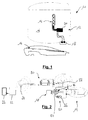
- Fig. 1 schematically shows a top view (upper part) and a sectional view (lower part) of a vehicle seat 10 equipped with a seat sensor 12 according to one aspect of the present invention.
- the seat sensor 12 comprises a seat occupancy sensor 14, which is associated with a seating surface 16 of the vehicle seat 10.
- the seat occupancy sensor 14 comprises e.g. a foil-type pressure sensor, which is integrated into the vehicle seat in close vicinity of the upper seating surface 16 of the vehicle seat.
- the seat sensor 12 represented in fig. 1 further comprises a seat belt buckle switch sensor 18 for determining a seat belt usage condition with respect to the vehicle seat 10.
- This seat belt buckle switch sensor 18 e.g. detects whether a latch of the seat belt is inserted into the seat belt buckle or not.
- Both the seat occupancy sensor 14 and the seat belt buckle switch sensor 18 are connected to a transmitter 20, which is able to transmit a data signal comprising information about the detected conditions to a remote control unit 22.
- the transmitter 20 comprises at least one electronic circuit 24 for generating a data signal 30 containing information about the statuses of different sensors 14 and 18.
- the so generated data signal is then transmitted to the control unit via a sending antenna 28 connected to the transmitter 20.
- the sending antenna 28 may be located at any suitable location within the vehicle seat. In a possible embodiment, the antenna 28 may be printed onto a carrier layer of the seat occupancy sensor 14. Alternatively antenna 28 may be configured as miniaturized antenna, which may be integrated into a housing of the transmitter electronic circuit.
- the transmitter comprises a power supply 26, which may be integrated into the vehicle seat 10.
- Power supply 26 may comprise a suitable battery pack or in a more preferred embodiment a piezo generator for converting a mechanical energy into electrical energy and an electronic converter unit for generating a transmitter power supply from said electrical energy.
- the control unit 22 is coupled to a receiver module 32 with receiving antenna 34.
- the receiver module 32 is preferably part of an existing vehicle component such as the remote key entry system of the vehicle. These remote key entry systems for remotely activating the central locking system are nowadays part of the standard vehicle equipment.
- the receiver module of such remote key entry system is well suited for receiving signals transmitted from every possible location within the vehicle compartment. Accordingly this receiver module may be used with the seat sensor system of the present invention.
- the transmitter will be configured in this case so as to encode the data signal in a manner, which is compatible with the remote key entry system.
- the control unit 20 which may be arranged at any suitable location inside the vehicle, is accordingly connected to the receiver module 32 of the remote key entry system, so that the data signal 30 received by the receiver module 32 may be supplied to the control unit 20.
- the control unit 20 may then further process this signal in order to e.g. generate either a warning signal (in case of a seat belt reminder system) or an airbag control signal (if the seat sensor is used for controlling the deployment of the airbag(s) associated with the seat).
- the seat sensor system comprises a plurality of seat sensors 12, each individual seat sensor 12 or each individual seat 10 or each individual transmitter 20, from which a specific data signal 30 emanates should be identifiable by the control unit.
- the electronic circuit 24 of the transmitter 20 therefore preferably encodes the output signals of the sensors with a digital ID of said seat sensor and/or said seat and/or said transmitter into said data signal 30.
- the electronic circuit of the transmitter 20 is preferably able to further encode a temperature signal from a temperature sensor 36. The obtained temperature signal may be used at the controller unit 22 for the calibration of a seat sensor response as well as for the control of an air-conditioning device of the vehicle.
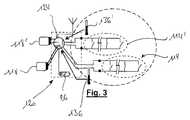
- Fig. 3 illustrates an embodiment, wherein several seat occupancy sensors 114 and 114' as well as several buckle switch sensors 118 and 118' and temperature sensors 136 and 136' are coupled to a common transmitter 120.
- This embodiment may be used e.g. case of a rear seat bench, where several seat sensors associated to different seating positions are arranged in a common seat structure.
- the electronic circuit 124 of the transmitter 120 encodes the individual signals of the different sensors into a common data signal to be transmitted to the control unit.
Landscapes
- Engineering & Computer Science (AREA)
- Mechanical Engineering (AREA)
- Air Bags (AREA)
- Seats For Vehicles (AREA)
Abstract
A seat sensor system comprises at least one seat sensor associated to a seat for sensing a status related to a seat occupancy and for generating an output signal indicative of said status and a control unit for communicating with said at least one seat sensor. According to the invention at least one transmitter is associated with said seat, said transmitter being coupled to said at least one seat sensor, said transmitter for transmitting a data signal indicative of said output signal; and at least one receiver is coupled to said control unit, said receiver for wirelessly receiving said data signal from said transmitter.
Description
- The present invention generally relates to a seat detector e.g. for use in an automotive vehicle.
- In modern vehicles, seat occupancy sensors are widely used in order to detect whether a passenger seat is occupied or not. The information about the occupancy of the passenger seat may then be used in order to control the deployment of one or more airbags associated to the vehicle seat (the deployment is e.g. inhibited if the vehicle seat is found to be non occupied).
- Today's automotive safety standards require automotive vehicles to be equipped with seat belt reminder systems for reminding a vehicle passenger to fasten the seat belt associated to the occupied vehicle seat. Such seat belt reminder system comprise typically a seat occupancy sensor for detecting an occupancy of a vehicle seat and a seat belt sensor, e.g. a buckle switch sensor, for detecting whether a seat belt is fastened or not.
- While until now, those seat sensors where mainly associated with the front seats of the vehicle e.g. for controlling airbag systems associated to the front seats or for generating warning signals relating to the fastening of the seat belts associated with the front seats, future standards will require that also rear seat be equipped with such seat occupancy sensors and seat belt reminder systems.
- The seat occupancy sensors used in airbag control systems or seat belt reminder systems usually comprise pressure sensing devices integrated in the respective passenger seat for detecting a pressure induced by the presence of a passenger into the seat. The pressure sensing devices, as e.g. disclosed in DE-A-42 37 072, comprise a plurality of individual force sensors, which are connected in a suitable manner to a control unit designed for measuring a pressure depending electrical property of said individual pressure sensors. These occupancy sensors have proven to be very reliable and well adapted to the detection of seat occupancy.
- The seat belt fastening detectors of seat belt reminder systems typically comprise mechanical or magnetic buckle switches for detecting, whether a latch of the seat belt is inserted into the seat belt buckle. One such buckle switch is e.g. disclosed in US Patent US-A-5,871,063. As an alternative to the buckle switches, seat belt fastening detectors have been proposed which generate a buckled/unbuckled signal based on the tension in the seat belt.
- One drawback of these known seat sensors lies in the fact, that the seat occupancy sensor and/or the seat belt fastening detector have to be physically connected to the control unit by means of connection wires in order to be functional. This need for physically connecting the sensing device to the control unit however causes problems especially in modern cars equipped with a flexible seating system with removable and/or displaceable back seats.
- The object of the present invention is to provide an improved seat sensor, which is suitable for association with removable vehicle seats.
- In order to overcome the abovementioned problems, the present invention proposes a seat sensor system comprising at least one seat sensor associated to a seat for sensing a status related to a seat occupancy and for generating an output signal indicative of said status and a control unit for communicating with said at least one seat sensor. According to the invention at least one transmitter is associated with said seat, said transmitter being coupled to said at least one seat sensor, said transmitter for transmitting a data signal indicative of said output signal; and at least one receiver is coupled to said control unit, said receiver for wirelessly receiving said data signal from said transmitter.
- The seat sensor system of the present invention is configured so as to enable remote communication between the seat sensor associated to the seat and the control unit for the seat sensor. The seat sensor accordingly transmits the data signal containing information regarding the seat occupancy related status wirelessly to the control unit. It follows that the seat sensor does not need to be connected to the control unit by means of connection lines. No wiring of the seat sensor being necessary, the seat sensor system does not negatively affect the advantages of the flexible seating systems of modern vehicles with removable and/or displaceable back seats. Furthermore, the present seat sensor system is well suited for use e.g. with an auxiliary child seat.
- The control unit receives the data signal transmitted from the seat sensor and may further process this signal in order to e.g. generate either a warning signal (in case of a seat belt reminder system) or an airbag control signal (if the seat sensor is used for controlling the deployment of the airbag(s) associated with the seat). As the data signal from the seat sensor is remotely received, the control unit does not need to be installed into the vehicle seat but may be arranged at any suitable stationary location inside the vehicle. The control unit is accordingly not integrated into a (possibly) removable or displaceable seat so that power supply via cabling or wired connection to further components of the vehicle's electronic system is no issue. Accordingly the present seat sensor system is perfectly suited for the operation in removable vehicle seats.
- In a preferred embodiment of the invention, said receiver is a multi-purpose receiver for receiving signals associated to different functions in an automotive vehicle. In this embodiment, the seat sensor system of the present invention advantageously uses a receiver module, which is already installed in the vehicle, as e.g. the receiver of the remote key entry. Such an embodiment, in which said receiver is e.g. a component of a remote key entry system of an automotive vehicle, reduces the overall costs of the system, as no additional dedicated receiver is needed.
- It will be noted that the receiver of the remote key entry system is well suited for reception of signals from different locations in the vehicle. Thus the control unit may receive, via receiver of the remote key entry system, data signals transmitted both from seat sensors arranged in front vehicle seats and in rear seats. In this embodiment, seat sensor system may comprise a plurality of seat sensors associated with different seats of a vehicle, and said control unit is configured for communication with each of said plurality of seat sensors. A single common control unit reduces the complexity of the sensor system and consequently the overall costs of the system.
- In a possible embodiment of the invention, a plurality of seat sensors are coupled to said at least one transmitter. This embodiment is of interest in the case of a rear seat bench, where several seat sensors associated to different seating positions are arranged in a common seat structure. These seat sensors then only require one single transmitter in order to communicate with the control unit. It will be appreciated, that this embodiment is also of interest if several seat sensors e.g. of different types, are associated with one single seat (removable or not).
- In a preferred embodiment, said transmitter comprises processing means for encoding said output signal with a digital ID of said seat sensor and/or said seat and/or said transmitter into said data signal. In a multi-sensor environment, i.e. if the seat sensor system comprises a plurality of seat sensors, each individual seat sensor or each individual seat or each individual transmitter, from which a specific signal emanates, is then infallibly identifiable by the control unit so that the appropriate measures may be taken with respect to the correct seat.
- In order to be able to generate and transmit a data signal to the receiver coupled to the control unit, the transmitter may be supplied by a battery module, which may be integrated into the respective seat. In a preferred embodiment however, the transmitter is configured as a self-powered transmitter. Such self-powered transmitters are known since several years and include a device for converting a mechanical energy into electrical energy. Accordingly, the self-powered transmitter does neither rely on an external electric power supply (connected by cabling) nor on internal battery power. The self-powered transmitter is accordingly suitable for autonomous operation which eliminates the need for cabling or occasional battery replacement. This embodiment thus enables autonomous seat occupancy detection in the seat, which in addition does not require regular maintenance.
- The self-powered transmitter preferably comprises a piezo generator for converting a mechanical energy into electrical energy and an electronic converter unit for generating a transmitter power supply from said electrical energy. Self-powered transmitters of this kind are known as non-powered pushbuttons for performing remote switching operations. One such pushbutton is e.g. disclosed in the article "A Compact, Wireless, Self-Powered Pushbutton Controller," Joseph A. Paradiso and Mark Feldmeier. In Abowd, G.D., Brumitt, B., and Shafer, S., eds, "Ubicomp 2001: Ubiquitous Computing," ACM UBICOMP Conference Proceedings, Atlanta GA, Sept. 2001, Springer-Verlag Berlin Heidelberg, 2001, pp. 299-304.
- Piezo generators are known for their low weight, small size, minimal complexity and low costs. These properties make piezo generators best suitable for the integration into a vehicle environment. In the environment of an automotive vehicle, the mechanical energy to be converted into electrical energy comes from both a pressure, an occupant exerts on the piezo generator integrated in the vehicle seat, and the constant motion induced vibrations in the seat. An occupant sitting in the vehicle seat exerts indeed a varying pressure on the piezoelectric element due to vibrations caused by the vehicle movement, so that the piezo-powered generator generates the required power for the electronic unit.
- Since piezoelectronics produce high voltages at low currents and standard electronic circuitry requires low voltages at high currents, an electronic converter unit is used to convert the high voltage pulses of the piezo generator into a suitable DC current for supplying the transmitter module. In a very simple embodiment, the electronic converter unit may comprise a simple diode as rectifier and/or voltage limiter.
- It should be noted, that the piezo generator of the transmitter can itself act as seat sensor i.e. as a seat occupancy detector for sensing an occupancy of said seat. In fact, if the piezo generator is suitably configured so as to operate only if an occupant is actually sitting in the seat, the transmitter module will only be powered of the seat is actually occupied. This means on the other hand, that if the control unit receives a signal from the transmitter unit, the seat is necessarily occupied. In this embodiment, no further dedicated seat occupancy sensor is needed. In order to ensure a reliable detection of a seat occupancy, the piezo generator should then comprises a piezofilm associated to a seating surface of said seat and extending over a substantial part of the seating surface.
- In a different embodiment, the seat occupancy detector comprises a pressure sensitive switching device comprising a plurality of individual pressure sensors or switches associated with different locations of a seat surface and/or a capacitive field detection system including at least one capacitive electrode associated with a seat surface of said seat and/or a piezoelectronics sensor associated with a seat surface of said seat.
- In a further embodiment, said seat sensor comprises a seat belt fastening detector for determining a seat belt usage condition related to said seat, i.e. a seat belt buckle switch sensor and/or a temperature sensor. In the latter case, the obtained temperature signal may be used for the calibration of a seat sensor response as well as for the control of air-conditioning device of the vehicle.
- The present invention will be more apparent from the following description of several not limiting embodiments with reference to the attached drawings, wherein
- Fig.1:
- shows in the a top view (upper part) and a sectional view (lower part) of a vehicle seat with seat sensor part;
- Fig.2:
- shows schematically the operation of the seat sensor system of the present invention;
- Fig.3:
- illustrates an embodiment of a seat sensor system.
- Fig. 1 schematically shows a top view (upper part) and a sectional view (lower part) of a vehicle seat 10 equipped with a
seat sensor 12 according to one aspect of the present invention. Theseat sensor 12 comprises aseat occupancy sensor 14, which is associated with aseating surface 16 of the vehicle seat 10. Theseat occupancy sensor 14 comprises e.g. a foil-type pressure sensor, which is integrated into the vehicle seat in close vicinity of theupper seating surface 16 of the vehicle seat. - The
seat sensor 12 represented in fig. 1 further comprises a seat beltbuckle switch sensor 18 for determining a seat belt usage condition with respect to the vehicle seat 10. This seat beltbuckle switch sensor 18 e.g. detects whether a latch of the seat belt is inserted into the seat belt buckle or not. - Both the
seat occupancy sensor 14 and the seat beltbuckle switch sensor 18 are connected to atransmitter 20, which is able to transmit a data signal comprising information about the detected conditions to aremote control unit 22. For this reason, thetransmitter 20 comprises at least oneelectronic circuit 24 for generating adata signal 30 containing information about the statuses ofdifferent sensors antenna 28 connected to thetransmitter 20. The sendingantenna 28 may be located at any suitable location within the vehicle seat. In a possible embodiment, theantenna 28 may be printed onto a carrier layer of theseat occupancy sensor 14. Alternativelyantenna 28 may be configured as miniaturized antenna, which may be integrated into a housing of the transmitter electronic circuit. - In order to be able to generate and transmit said data signal, the transmitter comprises a
power supply 26, which may be integrated into the vehicle seat 10.Power supply 26 may comprise a suitable battery pack or in a more preferred embodiment a piezo generator for converting a mechanical energy into electrical energy and an electronic converter unit for generating a transmitter power supply from said electrical energy. - In order to be able to receive the transmitted data from the
transmitter 20, thecontrol unit 22 is coupled to areceiver module 32 with receivingantenna 34. In order to reduce the overall cost of the present seat sensor system, thereceiver module 32 is preferably part of an existing vehicle component such as the remote key entry system of the vehicle. These remote key entry systems for remotely activating the central locking system are nowadays part of the standard vehicle equipment. The receiver module of such remote key entry system is well suited for receiving signals transmitted from every possible location within the vehicle compartment. Accordingly this receiver module may be used with the seat sensor system of the present invention. It is clear that the transmitter will be configured in this case so as to encode the data signal in a manner, which is compatible with the remote key entry system. - The
control unit 20, which may be arranged at any suitable location inside the vehicle, is accordingly connected to thereceiver module 32 of the remote key entry system, so that the data signal 30 received by thereceiver module 32 may be supplied to thecontrol unit 20. Thecontrol unit 20 may then further process this signal in order to e.g. generate either a warning signal (in case of a seat belt reminder system) or an airbag control signal (if the seat sensor is used for controlling the deployment of the airbag(s) associated with the seat). - In a multi-sensor environment, i.e. if the seat sensor system comprises a plurality of
seat sensors 12, eachindividual seat sensor 12 or each individual seat 10 or eachindividual transmitter 20, from which a specific data signal 30 emanates should be identifiable by the control unit. In a preferred embodiment, theelectronic circuit 24 of thetransmitter 20 therefore preferably encodes the output signals of the sensors with a digital ID of said seat sensor and/or said seat and/or said transmitter into said data signal 30. Furthermore, the electronic circuit of thetransmitter 20 is preferably able to further encode a temperature signal from a temperature sensor 36. The obtained temperature signal may be used at thecontroller unit 22 for the calibration of a seat sensor response as well as for the control of an air-conditioning device of the vehicle. - Fig. 3 illustrates an embodiment, wherein several seat occupancy sensors 114 and 114' as well as several buckle switch sensors 118 and 118' and
temperature sensors 136 and 136' are coupled to acommon transmitter 120. This embodiment may be used e.g. case of a rear seat bench, where several seat sensors associated to different seating positions are arranged in a common seat structure. In this case, theelectronic circuit 124 of thetransmitter 120 encodes the individual signals of the different sensors into a common data signal to be transmitted to the control unit. -
- 10
- vehicle seat
- 12
- seat sensor
- 14
- seat occupancy sensor
- 16
- seating surface
- 18
- buckle switch sensor
- 20
- transmitter
- 22
- control unit
- 24
- electronic circuit
- 26
- power supply
- 28
- antenna
- 30
- data signal
- 32
- receiver module
- 34
- antenna
- 36
- temperature sensor
- 114, 114'
- seat occupancy sensor
- 118, 118'
- buckle switch sensor
- 120
- transmitter
- 124
- electronic circuit
- 136, 136'
- temperature sensor
Claims (14)
- Seat sensor system comprising
at least one seat sensor associated to a seat for sensing a status related to a seat occupancy and for generating an output signal indicative of said status and
a control unit for communicating with said at least one seat sensor,
characterised by
at least one transmitter associated with said seat, said transmitter being coupled to said at least one seat sensor, said transmitter for transmitting a data signal indicative of said output signal; and
at least one receiver coupled to said control unit, said receiver for wirelessly receiving said data signal from said transmitter. - Seat sensor system according to claim 1, wherein said receiver is a multi-purpose receiver for receiving signals associated to different functions in an automotive vehicle.
- Seat sensor system according to any one of claims 1 to 2, wherein said receiver is a component of a remote key entry system of an automotive vehicle.
- Seat sensor system according to any one of claims 1 to 3, wherein a plurality of seat sensors are coupled to said at least one transmitter.
- Seat sensor system according to any one of claims 1 to 4, wherein said transmitter comprises processing means for encoding said output signal with a digital ID of said seat sensor and/or said seat and/or said transmitter into said data signal.
- Seat sensor system according to any one of the preceding claims, wherein said transmitter comprises a piezo generator for converting a mechanical energy into electrical energy and an electronic converter unit for generating a transmitter power supply from said electrical energy.
- Seat sensor system according to claim 6, wherein said piezo generator comprises a piezofilm associated to a seating surface of said seat.
- Seat sensor system according to any one of claims 1 to 7, wherein said seat sensor comprises a seat occupancy detector for sensing an occupancy of said seat.
- Seat sensor system according to claim 8, wherein said seat occupancy detector comprises a pressure sensitive switching device comprising a plurality of individual pressure sensors or switches associated with different locations of a seat surface.
- Seat sensor system according to claim 8, wherein said seat occupancy detector comprises a capacitive field detection system including at least one capacitive electrode associated with a seat surface of said seat.
- Seat sensor system according to claim 8, wherein said seat occupancy detector comprises a piezoelectronics sensor associated with a seat surface of said seat.
- Seat sensor system according to any one of claims 1 to 11, wherein said seat sensor comprises a seat belt fastening detector for determining a seat belt usage condition related to said seat.
- Seat sensor system according to claim 12, wherein said seat belt fastening detector comprises a seat belt buckle switch sensor.
- Seat sensor system according to any one of claims 1 to 11, wherein said seat sensor comprises a temperature sensor.
Priority Applications (7)
| Application Number | Priority Date | Filing Date | Title |
|---|---|---|---|
| EP04103654A EP1621411A1 (en) | 2004-07-29 | 2004-07-29 | Seat sensor system |
| EP05771830A EP1778523B1 (en) | 2004-07-29 | 2005-07-08 | Seat sensor system |
| DE602005006576T DE602005006576D1 (en) | 2004-07-29 | 2005-07-08 | SEAT SENSOR SYSTEM |
| CN 200580031255 CN101022979A (en) | 2004-07-29 | 2005-07-08 | Seat sensor system |
| PCT/EP2005/053282 WO2006010702A1 (en) | 2004-07-29 | 2005-07-08 | Seat sensor system |
| JP2007523056A JP2008508133A (en) | 2004-07-29 | 2005-07-08 | Seat sensor system |
| US11/658,938 US8041482B2 (en) | 2004-07-29 | 2005-07-08 | Seat sensor system |
Applications Claiming Priority (1)
| Application Number | Priority Date | Filing Date | Title |
|---|---|---|---|
| EP04103654A EP1621411A1 (en) | 2004-07-29 | 2004-07-29 | Seat sensor system |
Publications (1)
| Publication Number | Publication Date |
|---|---|
| EP1621411A1 true EP1621411A1 (en) | 2006-02-01 |
Family
ID=34929393
Family Applications (1)
| Application Number | Title | Priority Date | Filing Date |
|---|---|---|---|
| EP04103654A Withdrawn EP1621411A1 (en) | 2004-07-29 | 2004-07-29 | Seat sensor system |
Country Status (2)
| Country | Link |
|---|---|
| EP (1) | EP1621411A1 (en) |
| CN (1) | CN101022979A (en) |
Cited By (3)
| Publication number | Priority date | Publication date | Assignee | Title |
|---|---|---|---|---|
| FR2994139A1 (en) * | 2012-08-06 | 2014-02-07 | Faurecia Sieges Automobile | DEVICE FOR DETECTING THE POSITION OF A PERSON SITUATED ON A CUSHION |
| GB2532318A (en) * | 2014-09-12 | 2016-05-18 | Zodiac Actuation System | Wireless equipment for airplane seat |
| US11571990B2 (en) | 2018-04-09 | 2023-02-07 | Yazaki Corporation | Vehicular detector and vehicular detection system |
Families Citing this family (5)
| Publication number | Priority date | Publication date | Assignee | Title |
|---|---|---|---|---|
| JP5654475B2 (en) * | 2008-12-03 | 2015-01-14 | イリノイ トゥール ワークス インコーポレイティド | Seat heater occupant sensor antenna device |
| US20130300555A1 (en) * | 2012-05-09 | 2013-11-14 | Delphi Technologies, Inc. | Seat belt reminder system |
| DE202015003745U1 (en) * | 2015-05-13 | 2015-07-23 | La Hair Consulting Group Gmbh | Detecting the occupancy of a sitting and / or lying furniture by a person |
| CN105150989A (en) * | 2015-08-12 | 2015-12-16 | 林大永 | Intelligent automotive safety buckle with temperature detection and wireless transmission functions |
| FR3091677B1 (en) * | 2019-01-15 | 2021-01-29 | Alstom Transp Tech | Seat with occupancy detection |
Citations (6)
| Publication number | Priority date | Publication date | Assignee | Title |
|---|---|---|---|---|
| DE4237072C1 (en) | 1992-11-03 | 1993-12-02 | Daimler Benz Ag | Resistive film pressure or force sensor for indicating occupation of vehicle seat - has conductive paths for providing series of meandering interdigitated local area transducer electrodes on polymer and semiconductor substrate. |
| EP0830994A1 (en) * | 1996-09-24 | 1998-03-25 | Siemens Aktiengesellschaft | Anti-theft and personal protection device for a motor vehicle |
| US5871063A (en) | 1997-01-22 | 1999-02-16 | Automotive Systems Laboratory, Inc. | Seat belt latch sensor system |
| DE19959276A1 (en) * | 1999-12-09 | 2001-06-13 | Matthias Louis | Seat occupation detection arrangement for car seats has bearer structure with pressure sensors arranged so data pattern represents type and magnitude of current seat occupancy |
| EP1227009A2 (en) * | 2001-01-24 | 2002-07-31 | Robert Bosch Gmbh | Data bus for a restraint device in a vehicle |
| WO2003024749A1 (en) * | 2001-09-12 | 2003-03-27 | Robert Bosch Gmbh | Sensor for recognition of seat occupancy |
-
2004
- 2004-07-29 EP EP04103654A patent/EP1621411A1/en not_active Withdrawn
-
2005
- 2005-07-08 CN CN 200580031255 patent/CN101022979A/en active Pending
Patent Citations (6)
| Publication number | Priority date | Publication date | Assignee | Title |
|---|---|---|---|---|
| DE4237072C1 (en) | 1992-11-03 | 1993-12-02 | Daimler Benz Ag | Resistive film pressure or force sensor for indicating occupation of vehicle seat - has conductive paths for providing series of meandering interdigitated local area transducer electrodes on polymer and semiconductor substrate. |
| EP0830994A1 (en) * | 1996-09-24 | 1998-03-25 | Siemens Aktiengesellschaft | Anti-theft and personal protection device for a motor vehicle |
| US5871063A (en) | 1997-01-22 | 1999-02-16 | Automotive Systems Laboratory, Inc. | Seat belt latch sensor system |
| DE19959276A1 (en) * | 1999-12-09 | 2001-06-13 | Matthias Louis | Seat occupation detection arrangement for car seats has bearer structure with pressure sensors arranged so data pattern represents type and magnitude of current seat occupancy |
| EP1227009A2 (en) * | 2001-01-24 | 2002-07-31 | Robert Bosch Gmbh | Data bus for a restraint device in a vehicle |
| WO2003024749A1 (en) * | 2001-09-12 | 2003-03-27 | Robert Bosch Gmbh | Sensor for recognition of seat occupancy |
Non-Patent Citations (2)
| Title |
|---|
| "ACM UBICOMP Conference Proceedings", September 2001, SPRINGER-VERLAG BERLIN HEIDELBERG,, ATLANTA GA, article ABOWD,G.D., BRUMITT,B., AND SHAFER,S.,: "Ubicomp 2001: ubiquitous computing", pages: 299 - 304 |
| A compact, Wireless, Self-Powered Pushbutton Controller," joseph A. Paradiso and Mark Feldmeier. |
Cited By (5)
| Publication number | Priority date | Publication date | Assignee | Title |
|---|---|---|---|---|
| FR2994139A1 (en) * | 2012-08-06 | 2014-02-07 | Faurecia Sieges Automobile | DEVICE FOR DETECTING THE POSITION OF A PERSON SITUATED ON A CUSHION |
| WO2014023905A1 (en) * | 2012-08-06 | 2014-02-13 | Faurecia Sieges D'automobile | Device for detecting the position of a person sitting on a cushion |
| US9701216B2 (en) | 2012-08-06 | 2017-07-11 | Faurecia Sieges D'automobile | Device for detecting the position of a person sitting on a cushion |
| GB2532318A (en) * | 2014-09-12 | 2016-05-18 | Zodiac Actuation System | Wireless equipment for airplane seat |
| US11571990B2 (en) | 2018-04-09 | 2023-02-07 | Yazaki Corporation | Vehicular detector and vehicular detection system |
Also Published As
| Publication number | Publication date |
|---|---|
| CN101022979A (en) | 2007-08-22 |
Similar Documents
| Publication | Publication Date | Title |
|---|---|---|
| US7762583B2 (en) | Seat sensor system | |
| EP1778523B1 (en) | Seat sensor system | |
| EP1737712B1 (en) | Seat belt warning system | |
| EP1999690B1 (en) | Wireless sourceless sensor | |
| US7560827B2 (en) | Removable seat sensing system | |
| US6605877B1 (en) | Restraint system interface arrangement for a seat belt tension sensor | |
| US7710288B2 (en) | Wireless self-powered sensor | |
| US7350426B2 (en) | Seat belt tension sensor having shock isolation | |
| CN108944579B (en) | Vehicle detection system | |
| US8013727B2 (en) | Device for detecting vehicle seat occupancy | |
| US7391310B2 (en) | Seatbelt alarm device for vehicle | |
| SE510164C2 (en) | Seat belt assembly and procedure | |
| CN101022979A (en) | Seat sensor system | |
| JP6148092B2 (en) | Membrane switch, sensor unit and seat device | |
| JP2011088580A (en) | Seat belt detection device for vehicle and seat belt detection system for vehicle | |
| US7536920B2 (en) | Seat occupancy detector | |
| JP2019182161A (en) | Vehicular detector and vehicular detection system | |
| US20070043507A1 (en) | Vehicle collision detection device | |
| LU93255B1 (en) | Seat Sensor System | |
| US20080068149A1 (en) | Modular seatbelt minder | |
| KR20200122103A (en) | Safety belt monitoring system | |
| EP1669249A1 (en) | Seat belt warning system for a vehicle |
Legal Events
| Date | Code | Title | Description |
|---|---|---|---|
| PUAI | Public reference made under article 153(3) epc to a published international application that has entered the european phase |
Free format text: ORIGINAL CODE: 0009012 |
|
| AK | Designated contracting states |
Kind code of ref document: A1 Designated state(s): AT BE BG CH CY CZ DE DK EE ES FI FR GB GR HU IE IT LI LU MC NL PL PT RO SE SI SK TR |
|
| AX | Request for extension of the european patent |
Extension state: AL HR LT LV MK |
|
| AKX | Designation fees paid | ||
| REG | Reference to a national code |
Ref country code: DE Ref legal event code: 8566 |
|
| STAA | Information on the status of an ep patent application or granted ep patent |
Free format text: STATUS: THE APPLICATION IS DEEMED TO BE WITHDRAWN |
|
| 18D | Application deemed to be withdrawn |
Effective date: 20060802 |