EP1616967A2 - Primers for isothermal amplification and genotyping of Hepatitis C virus - Google Patents
Primers for isothermal amplification and genotyping of Hepatitis C virus Download PDFInfo
- Publication number
- EP1616967A2 EP1616967A2 EP05010896A EP05010896A EP1616967A2 EP 1616967 A2 EP1616967 A2 EP 1616967A2 EP 05010896 A EP05010896 A EP 05010896A EP 05010896 A EP05010896 A EP 05010896A EP 1616967 A2 EP1616967 A2 EP 1616967A2
- Authority
- EP
- European Patent Office
- Prior art keywords
- primers
- seq
- nos
- pair
- hcv
- Prior art date
- Legal status (The legal status is an assumption and is not a legal conclusion. Google has not performed a legal analysis and makes no representation as to the accuracy of the status listed.)
- Granted
Links
Images


Classifications
-
- C—CHEMISTRY; METALLURGY
- C12—BIOCHEMISTRY; BEER; SPIRITS; WINE; VINEGAR; MICROBIOLOGY; ENZYMOLOGY; MUTATION OR GENETIC ENGINEERING
- C12Q—MEASURING OR TESTING PROCESSES INVOLVING ENZYMES, NUCLEIC ACIDS OR MICROORGANISMS; COMPOSITIONS OR TEST PAPERS THEREFOR; PROCESSES OF PREPARING SUCH COMPOSITIONS; CONDITION-RESPONSIVE CONTROL IN MICROBIOLOGICAL OR ENZYMOLOGICAL PROCESSES
- C12Q1/00—Measuring or testing processes involving enzymes, nucleic acids or microorganisms; Compositions therefor; Processes of preparing such compositions
- C12Q1/70—Measuring or testing processes involving enzymes, nucleic acids or microorganisms; Compositions therefor; Processes of preparing such compositions involving virus or bacteriophage
- C12Q1/701—Specific hybridization probes
- C12Q1/706—Specific hybridization probes for hepatitis
- C12Q1/707—Specific hybridization probes for hepatitis non-A, non-B Hepatitis, excluding hepatitis D
Definitions
- the present invention relates to primers for isothermal amplification of subtypes of hepatitis C virus (hereinafter briefly referred to as "HCV”), and methods for detecting or determining HCV using the primers.
- HCV hepatitis C virus
- HCV Chiron Corporation, Emeryville, Calif. identified the gene of HCV in 1988.
- the genome sequence of HCV including about 9,500 bases has been identified, and it has been revealed that HCV has a single strand RNA as its genome.
- HCV is often accompanied with mutation in its gene sequence, is classified as four to six subgroups based on gene sequences in regions accompanied with frequent mutation, and is further classified as, for example, subtypes 1a, 1b, 2a, 2b and 3a (P. Simmonds, et al., J. Gen Virol., 74, 661-668 (1993))
- HCV Only two- to three-tenths of subjects infected with HCV have subjective symptoms such as malaise, and most of them undergo chronic inflammation without subjective symptoms and may further undergo liver cirrhosis and liver cancer. It is difficult to detect HCV at initial stage of HCV infection by immunoassay using antibodies and to prevent the symptoms from becoming worse and/or the infected blood completely from contaminating into blood for transfusion.
- an object of the present invention is to provide a technique for genotyping HCV by isothermal amplification.
- Another object of the present invention is to provide primers specific to HCV subtypes 1a, 1b, 2a, 2b and 3a for use in the technique.
- the present inventors have successfully designed primers that enable genotype-specific isothermal amplification in a core region of gene sequences belonging to HCV subtypes 1a, 1b, 2a, 2b and 3a genes.
- the isothermal amplification of a HCV sample using these primers results in genotype-specific amplification and thereby enables detection and genotyping of HCV subtypes 1a, 1b, 2a, 2b and 3a genes based on whether or not amplification occurs.
- the present invention provides, in an aspect, a primer for isothermal amplification of HCV, comprising at least eighteen consecutive bases corresponding to a 3' end region of one base sequence selected from the group consisting of SEQ ID NOs: 1-10, 21 and 22.
- the primer can further include a T7 promoter sequence in its 5'-end region typically when used in NASBA.
- the present invention further provides, in another aspect, a pair of primers for isothermal amplification of hepatitis C virus, selected from the following pairs of primers (1) to (5):
- At least one of the pair of primers can further include a T7 promoter sequence in its 5'-end region.
- the present invention further provides, in yet another aspect, a method for detecting HCV, including the steps of subjecting a clinical sample to isothermal amplification with at least one of the pairs of primers according to the present invention, and determining a HCV subtype based on the resulting amplified product.
- the method for detecting HCV enables determination of a HCV subtype.
- at least one of the pair of primers can further include a T7 promoter sequence.
- the detection method of the present invention can simultaneously detect two or more HCV subtypes by using two or more pairs of primers of the present invention.
- the present invention provides a kit for use in the method for detecting HCV.
- the kit essentially includes at least one pair of primers of the present invention, and at least one probe containing a sequence complementary to an amplified product amplified by the action of the at least one pair of primers and serving to detect the amplified product and may further include, as needed, any of components that can be used in gene amplification and determination of amplified products, such as molecular weight markers, enzymes, dNTPs, NTPs and sterilized water, as well as any other components.
- the primers of the present invention enable the detection and genotyping of a HCV subtype by isothermal amplification.
- the present invention therefore enables easy and rapid detection (determination) and genotyping of HCV without requiring complicated temperature control as in PCR.
- the present inventors have designed various primers in specific regions (SEQ ID NOs: 40, 41, 42, 43 and 44, respectively) in the core regions of HCV subtypes 1a, 1b, 2a, 2b and 3a and determined whether or not each of the primers enables selective isothermal amplification of the corresponding subtype.
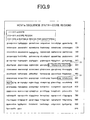
- Fig. 9 shows the sequence of a region from the 5'-non-translated region (5'-NTR) to the core region of the HCV subtype 1a RNA.
- the region of 318th to 676th bases (SEQ ID NO: 40) in the sequence shown in Fig. 9 is a region suitable for genotyping. It has been revealed that primers having the sites 33 and 34 as priming sites, respectively, are optimal for HCV subtype 1a-specific isothermal amplification. Specifically, the primers corresponding to these priming sites have base sequences of SEQ ID NOs: 1 and SEQ ID NO: 2, respectively.
- the oligonucleotides of SEQ ID NOs: 1 and 2 can be used as a sense primer and an antisense primer, respectively, in the amplification of HCV subtype 1a RNA.
- the oligonucleotides of SEQ ID NOs: 3 and 4 or 9 can be used as a sense primer and an antisense primer, respectively, in the amplification of HCV subtype 1b RNA.
- the oligonucleotides of SEQ ID NOs: 5 and 6 or 10 can be used as a sense primer and an antisense primer, respectively, in the amplification of HCV subtype 2a RNA.
- the oligonucleotides of SEQ ID NOs: 21 and 22 can be used as a sense primer and an antisense primer, respectively, in the amplification of HCV subtype 2b RNA.
- the oligonucleotides of SEQ ID NOs: 7 and 8 can be used as a sense primer and an antisense primer, respectively, in the amplification of HCV subtype 3a RNA.
- sequences of primers for use in the present invention are not limited to the above-listed sequences. It is also possible that a primer having several bases, e.g., about one to about five bases, preferably about one to three bases more or less than the above-specified sequence at the 5'-end of the corresponding primer, namely in a direction not the elongation direction of the primer, can enables isothermal amplification of the target HCV subtype 1a.
- the primer herein may not contain all the bases in the sequence and may include at least eighteen consecutive bases in its 3' end region for selective isothermal amplification ofHCV subtype 1a.
- Each of the primers of the present invention may further comprise, as needed, any of other sequences in its 5' end region, in addition to the template-specific sequence specifically hybridizing with a template represented by the sequence number.
- the primer when used, for example, in NASBA (J. Compton: Nucleic acid sequence-based amplification. Nature, 1991, 350, p91-92), at least one of the pair of primers may have a T7 promoter sequence in its 5' end region.
- the primers may be appropriately modified typically with a labeling material such as a radioisotope, enzyme or fluorophore, and such modified primers are also included in the primers of the present invention.
- the primers of the present invention preferably each have 18 to 30 bases in a region to hybridize with a template.
- the base length of the primers herein does not include the length of a region which does not hybridize with a template.
- the T7 promoter sequence region of the primer for use in NASBA is not included in the base length of 18 to 30 bases.
- the primers of the present invention may further comprise one to several base substitutions (mismatches for the template) within ranges not adversely affecting the advantages of the present invention.
- the primers should preferably include such mismatches (base substitutions) in their 5' end region, because base substitutions residing at the 3' end may adversely affect the precision of genotyping.
- the primers of the present invention can be used in isothermal amplification such as NASBA, but can also be used in other primer extension amplification processes such as PCR (R. K. Saiki, et al., Science, 239, 487-491 (1988)), self-sustained sequence replication (3SR) (J.C. Guatelli, et al., Proc Natl Acad Sci USA, 87, 1874-1878 (1990)), and transcription-based amplification systems (TAS) (D.Y. Kwoh, et al., Proc Natl Acad Sci USA, 86, 1173-1177 (1989)).
- PCR R. K. Saiki, et al., Science, 239, 487-491 (1988)
- 3SR self-sustained sequence replication
- TAS transcription-based amplification systems
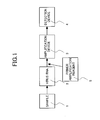
- Fig. 1 is a flow chart of the method for detecting or genotyping HCV according to the present invention.
- a virus RNA 2 is extracted from a sample 1, is mixed with a primer amplification reagent 5, is amplified by an amplification device 3 and is detected by a detection device 4.
- the primer amplification reagent 5 contains an amplification reagent comprising dNTPs, NTPs and a buffer solution, and a primer mixture containing a primer of SEQ ID NO: 1, 3, 5, 7 or 21 in combination with a corresponding primer of SEQ ID NOs: 2, 4, 6, 8, 9, 10 or 22.
- the detection can be carried out, for example, by a method in which an amplified product is subjected to electrophoresis and lengths of amplified fragments (sizes of amplification) are compared, or a method of real-time detection of an amplified product typically using fluorophore-labeled probes.
- isothermal amplification techniques for use in the present invention include LAMP (T. Notomi et al., Loop-mediated isothermal amplification of DNA. Nucleic Acids Res., 28(12): e63, (2000)) and ICAN (Isothermal and Chimeric Primer-initiated Amplification of Nucleic acids; Japanese Patent No. 3433929), in addition to above-mentioned NASBA.
- LAMP T. Notomi et al., Loop-mediated isothermal amplification of DNA. Nucleic Acids Res., 28(12): e63, (2000)
- ICAN Isothermal and Chimeric Primer-initiated Amplification of Nucleic acids; Japanese Patent No. 3433929
- the method for detecting HCV according to the present invention enables simultaneous detection of two or more HCV subtypes with two or more corresponding primers for isothermal amplification.
- the present invention provides a kit for the detection (genotyping) of HCV.
- the kit essentially comprises all or part of the pairs of primers of the present invention, and one or more probes for detecting HCV subtype-specific amplified products amplified with the primers.
- the probe for detecting a HCV subtype-specific amplified product is labeled with an appropriate labeling material such as a radioisotope, enzyme or fluorophore and comprises a sequence complementary to a sequence including about 18 to about 30 bases on a sample HCV gene fragment which is specifically amplified by the primer of the present invention.
- an appropriate labeling material such as a radioisotope, enzyme or fluorophore
- the probe are probes having base sequences of SEQ ID NOs: 19 and 20, respectively.
- the probe may be labeled with a fluorophore such as FAM or ROX at one end and with a quencher such as BHQ 1 or BHQ2 at the other end.
- the kit for the detection (genotyping) of HCV of the present invention essentially comprises the primers and the probes and may further comprise, as needed, any of components that can be used in gene amplification and determination of amplified products, such as molecular weight markers, enzymes, dNTPs, NTPs and sterilized water, as well as any other components.
- Example 1 Screening of primers capable of typing HCV subtype 1a gene by NASBA
- An optimal pair of oligonucleotide primers for genotype-specific isothermal amplification by NASBA was determined by designing sense primers and antisense primers in regions in the core region of the HCV subtype 1a gene which are capable of highly specifically typing, setting pairs of the oligonucleotide primers in various combinations and subjecting the pairs of primers to NASBA.
- the sense primers are oligonucleotide primers of SEQ ID NOs: 1, 24, 25, 26, 27, 28, 29, 30, 31 and 32
- the antisense primers are oligonucleotide primers of SEQ ID NOs: 11, 33, 34, 35, 36, 37, 38 and 39 listed in Table 2.
- Each of the antisense primer further had a sequence (AATTCTAATACGACTCACTATAGGG AGAAGG: SEQ ID NO: 45) including a T7 promoter sequence at the 5' end.
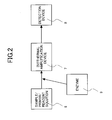
- Fig. 2 is a flow chart of the amplification by NASBA.
- NASBA can be suitably carried out with a commercially available kit, such as NUCLISENSTM Basic Kit (bioMerieux, Inc.).
- a solution 6 for use in the reaction contains a HCV subtype 1a gene sample, a tested primer, reagents and other components.
- the solution 6 was subjected to a reaction by NASBA by holding the solution at 65°C for 5 minutes and at 41°C for 5 minutes; adding an enzyme 9 to the solution, followed by a reaction at 41°C for 90 minutes in an isothermal amplification device 7.
- the resulting reaction product was detected with a detection device 8 by subjecting the reaction product to electrophoresis with SV1210 Cosmo-i (Hitachi High-Technologies Corporation) as the detection device 8 and determining the presence or absence of, and the position of the amplified product.
- Fig. 7 shows an electropherogram of amplified products of amplification reaction using an oligonucleotide primer of SEQ ID NO: 1 as a sense primer, and those of SEQ ID NOs: 11, 33, 34, 35, 36, 37, 38 and 39 as an antisense primer, respectively.
- a pair of oligonucleotide primers of SEQ ID NOs: 1 and 11 was designed so as to yield, as a result of the reaction, an amplified product having a size of amplification of 217 bp.
- pairs of oligonucleotide primers of SEQ ID NOs: 1 and 33, 1 and 34, 1 and 35, 1 and 36, 1 and 37, 1 and 38, and 1 and 39 were designed so as to yield amplified products having a size of amplification of 84 bp, 116 bp, 217 bp, 64 bp, 200 bp, 194 bp and 224 bp, respectively.
- the product as a result of the reaction with the oligonucleotide primers of SEQ ID NOs: 1 and 33 was subjected to electrophoresis in Lane 1.
- the reaction products as a result of the reactions of the oligonucleotide primers of SEQ ID NOs: 1 and 34, 1 and 35, 1 and 11, 1 and 36, 1 and 37, 1 and 38, and 1 and 39 were subjected to electrophoreses in Lanes 2, 3, 4, 5, 6, 7 and 8, respectively.
- Amplified products 21 and 22 were detected at a base length of 317 bp and a base length of 78 bp, respectively, in Lane 1. Specifically, a non-specific amplified product was detected at another portion than at 78 bp which is in the vicinity of the set base length, 84 bp.
- An amplified product 23 was detected at a base length of 116 bp in Lane 2.
- An amplified product 24 was detected at a base length of 217 bp in Lane 3.
- An amplified product 25 was detected at a base length of 217 bp in Lane 4.
- An amplified product 26 was detected at a base length of 64 bp in Lane 5.
- an amplified product 27 was detected at a base length of 51 bp.
- the pairs of oligonucleotide primers corresponding to SEQ ID NOs: 1 and 34, 1 and 35, 1 and 36, 1 and 39, and 1 and 11, respectively, were subjected to determination of amplified products by NASBA using a HCV subtype 1b sample. This test was carried out to determine whether or not these oligonucleotide primers yield amplification specific only to the HCV subtype 1a gene, since they were designed so as to genotype the HCV subtype 1a gene and not to yield amplified products in the other subtypes.
- Fig. 8 shows an electropherogram of amplified products of amplification reaction of the HCV subtype 1b sample with the oligonucleotide primer of SEQ ID NO: 1 as a sense primer, and those of SEQ ID NOs: 11 and 39 as an antisense primer, respectively.
- the reaction products as a result of amplification of the subtype 1b sample with the pair of oligonucleotide primers corresponding to SEQ ID NOs: 1 and 11, and with the pair of oligonucleotide primers corresponding to SEQ ID NOs: 1 and 39 were subjected to electrophoresis in Lanes 1 and 2, respectively.
- An amplified product 31 was detected at a base length of 100 bp in Lane 1. Namely, this pair of oligonucleotide primers yielded no amplified product in the case of the HCV subtype 1b sample at the designed base length of 217 bp, demonstrating that this pair specifically amplifies the HCV subtype 1a gene alone.
- An amplified product 32 was detected at a base length of 219 bp in Lane 2. This position of the amplified product is different from that of the HCV subtype 1a sample, at a base length of 224 bp, only by 5 bp, showing that this pair of oligonucleotide primers does not enable genotyping based on the base length of the amplified product.
- the pair of oligonucleotide primers corresponding to SEQ ID NOs: 1 and 11 enables genotyping between the HCV subtype 1a and HCV subtype 1b genes based on the base length of the amplified product.
- Table 3 shows that the pair of oligonucleotide primers corresponding to SEQ ID NOs: 1 and 11 is suitable for the genotyping of the HCV subtype 1a gene.
- the sense primer corresponding to SEQ ID NO: 1 is considered to be capable of isothermally amplifying the HCV subtype 1a even if the priming site is narrowed by about two bases or less, or extended by about five bases or less at the 5' end and to be capable of genotyping the HCV subtype 1a even if the priming site is narrowed by about one or two bases at the 5' end.
- the antisense primer corresponding to SEQ ID NO: 11 is considered to be capable of isothermally amplifying the HCV subtype 1a even if the priming site is extended by about twelve bases or less at the 5' end and to be capable of genotyping the HCV subtype 1a even if the priming site is extended by about five bases or less at the 5' end.
- Example 2 Screening of primers capable of genotyping HCV subtypes 1b, 2a, 2b and 3a
- Optimal pairs of oligonucleotide primers for genotype-specific isothermal amplification of HCV subtypes 1b, 2a, 2b and 3a genes by NASBA were determined by the procedure of Example 1.
- Primers listed in Table 4 were designed based on the sequence of a specific region capable of typing the core region of the HCV subtype 1b gene (SEQ ID NO: 41 corresponding to 1 to 325 bp of the core region of HCV subtype 1b). Different pairs of these primers were subjected to isothermal amplification by NASBA under the same conditions as in Example 1 using, as a template, a HCV subtype 1b gene sample, and the presence or absence of, and the position of amplified product were determined by electrophoresis.
- Table 4 shows that the oligonucleotide primers corresponding to SEQ ID NOs: 3, 4 and 9 are suitable for the genotyping of the HCV subtype 1b gene.
- the sense primer corresponding to SEQ ID NO: 3 is considered to be capable of isothermally amplifying the HCV subtype 1b gene even if the priming site is narrowed by about two bases or less, or extended by about five bases or less at the 5' end and to be capable of genotyping the HCV subtype 1b gene even if the priming site is narrowed by about one or two bases at the 5' end.
- the antisense primer corresponding to SEQ ID NO: 4 or 9 is considered to be capable of isothermally amplifying the HCV subtype 1b gene even if the priming site is extended by about ten bases or less at the 5' end and to be capable of genotyping the HCV subtype 1b gene even if the priming site is extended by about six bases or less at the 5' end.
- Primers listed in Table 5 were designed based on the sequence of a specific region capable of typing the core region of the HCV subtype 2a gene (SEQ ID NO: 42 corresponding to 21 to 295 bp of the core region of HCV subtype 2a). Different pairs of these primers were subjected to isothermal amplification by NASBA under the same conditions as in Example 1 using, as a template, a HCV subtype 2a gene sample, and the presence or absence of, and the position of amplified product were determined by electrophoresis.
- Table 5 shows that the oligonucleotide primers corresponding to SEQ ID NOs: 5,6 and 10 are suitable for the genotyping of the HCV subtype 2a gene.
- the sense primer corresponding to SEQ ID NO: 5 is considered to be capable of isothermally amplifying and genotyping the HCV subtype 2a gene even if the priming site is narrowed by about four bases or less, or extended by about three bases or less at the 5' end.
- the antisense primer corresponding to SEQ ID NO: 6 or 10 is considered to be capable of isothermally amplifying the HCV subtype 2a gene even if the priming site is narrowed by about four bases or less, or extended by about eight bases or less at the 5' end and to be capable of genotyping the HCV subtype 2a gene even if the priming site is narrowed by about four bases or less or extended by about one base or less at the 5' end.
- Primers listed in Table 6 were designed based on the sequence of a specific region capable of typing the core region of the HCV subtype 2b gene (SEQ ID NO: 43 corresponding to 1 to 305 bp of the core region of HCV subtype 2b). Different pairs of these primers were subjected to isothermal amplification by NASBA under the same conditions as in Example 1 using, as a template, a HCV subtype 2b gene sample, and the presence or absence of, and the position of amplified product were determined by electrophoresis.
- Table 6 shows that the oligonucleotide primers corresponding to SEQ ID NOs: 21 and 22 are suitable for the genotyping of the HCV subtype 2b gene.
- the sense primer corresponding to SEQ ID NO: 21 is considered to be capable of isothermally amplifying the HCV subtype 2b gene even if the priming site is narrowed by about two bases or less, or extended by about seventeen bases or less at the 5' end and to be capable of genotyping the HCV subtype 2b gene even if the priming site is narrowed by about two bases or less at the 5' end.
- the antisense primer corresponding to SEQ ID NO: 22 is considered to be capable of isothermally amplifying the HCV subtype 2b gene even if the priming site is narrowed by about five bases or less at the 5' end and to be capable of genotyping the HCV subtype 2b gene even if the priming site is narrowed by about five bases or less at the 5' end.
- Primers listed in Table 7 were designed based on the sequence of a specific region capable of typing the core region of the HCV subtype 3a gene (SEQ ID NO: 44 corresponding to 1 to 366 bp of the core region of HCV subtype 3a). Pairs of these primers were subjected to isothermal amplification by NASBA under the same conditions as in Example 1 using, as a template, a HCV subtype 3 a gene sample, and the presence or absence of, and the position of amplified product were determined by electrophoresis.
- Table 7 shows that the oligonucleotide primers corresponding to SEQ ID NOs: 7 and 8 are suitable for the genotyping of the HCV subtype 3a gene.
- the sense primer corresponding to SEQ ID NO: 7 is considered to be capable of isothermally amplifying the HCV subtype 3a gene even if the priming site is narrowed by about two bases or less, or extended by about five bases or less at the 5' end and to be capable of genotyping the HCV subtype 3a gene even if the priming site is narrowed by about two bases or less at the 5' end.
- the antisense primer corresponding to SEQ ID NO: 8 is considered to be capable of isothermally amplifying and genotyping the HCV subtype 3 a gene even if the priming site is narrowed by about five bases or less at the 5' end.
- Example 3 Genotyping of HCV subtypes 1a, 1b, 2a, 2b and 3a genes by NASBA
- Genotyping of HCV was carried out by isothermal amplification according to NASBA and electrophoresis by the procedure of Example 1. More specifically, the sense primers used are oligonucleotide primers corresponding to SEQ ID NOs: 1, 3, 5 and 7, and the antisense primers are oligonucleotide primers corresponding to SEQ ID NOs: 11, 12, 13 and 14 each further having a sequence including a T7 promoter sequence at the 5' end.
- a pair of oligonucleotide primers corresponding to SEQ ID NOs: 1 and 2 was so designed as to yield an amplified product having a size of 217 bp as a result of the amplification of a sample HCV subtype 1a RNA.
- a pair of oligonucleotide primers corresponding to SEQ ID NOs: 3 and 4 a pair of oligonucleotide primers corresponding to SEQ ID NOs: 5 and 6, and a pair of oligonucleotide primers corresponding to SEQ ID NOs: 7 and 8 were so designed as to yield amplified products having sizes of 209 bp, 234 bp and 229 bp as a result of the amplification of HCV subtype 1b RNA sample, HCV subtype 2a RNA sample, and HCV subtype 3a RNA sample respectively.
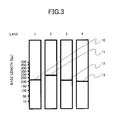
- Fig. 3 shows the resulting electropherogram.
- Amplified products 10, 11, 12 and 13 in Lanes 1, 2, 3 and 4 as a result of amplification of the HCV subtypes 1a, 1b, 2a and 3a RNA samples were detected at base lengths of 217 bp, 304 bp, 234 bp and 229 bp, respectively.
- the samples of HCV subtypes 1a, 1b, 2a and 3a RNAs yield amplified products having different sizes of amplification of 217 bp, 304 bp, 234 bp and 229 bp, respectively, with the oligonucleotide primers capable of carrying out genotype-specifically amplification.
- Example 4 Real-time detection of HCV subtypes 1b and 2a genes by NASBA with molecular beacon
- HCV subtypes 1b and 2a which invite many infections in Japan, were genotyped with a real-time detection device.
- oligonucleotide primers corresponding to SEQ ID NOs: 15 and 16 which correspond to oligonucleotide primers of SEQ ID NOs: 9 and 10, except with a Tag sequence added at the 5' end, were used as antisense primers
- oligonucleotide primers corresponding to SEQ ID NO: 17 and 18, which correspond to oligonucleotide primers of SEQ ID NOs: 3 and 5, except with a T7 promoter added at the 5' end were used as sense primers.
- Molecular beacon probes (S. Tyagi, et al., Nature Biotechnol, 14 , 303-308(1996)) were used as a probe in the real-time detection.
- the molecular beacon probes were designed so as to have a Tag sequence and base sequences corresponding to SEQ ID NOs: 19 and 20, respectively, for distinguishing the Tag sequence.
- the molecular beacon corresponding to SEQ ID NO: 19 was modified with FAM as a fluorophore and with BHQ1 as a quencher.
- the molecular beacon corresponding to SEQ ID NO: 20 was modified with ROX as a fluorophore and with BHQ2 as a quencher.
- the sample HCV gene was amplified by NASBA by the procedure of Example 1, except for using NUCLISENSTM Basic Kit (bioMerieux, Inc.).
- Fig. 4 is a flow chart of real-time detection (genotyping) of the HCV gene. Specifically, a solution 14 containing, for example, a sample, primers and reagents was mixed with an enzyme 16, was subjected to amplification, and the amplified product was detected in real-time in an isothermal amplification/detection device 15.
- the isothermal amplification/detection device 15 used herein was Mx 3000p (Stratagene). The results are shown in Figs. 5A and 5B. Figs.
- FIG. 5A and 5B show results 17 and 18 in which a HCV subtype 1b gene RNA and a HCV subtype 2a gene RNA as samples were amplified, respectively, with the ordinate indicating the fluorescent intensity and the abscissa indicating the time.
- the fluorescent intensity of FAM capable of identifying the HCV subtype 1b amplified product is indicated by solid lines
- the fluorescent intensity of ROX capable of identifying the HCV subtype 2a amplified product is indicated by dashed lines.
- Fig. 5A shows that only the fluorescent intensity of FAM increases with time, indicating that the sample is of the HCV subtype 1b.
- Fig. 5A shows that only the fluorescent intensity of FAM increases with time, indicating that the sample is of the HCV subtype 1b.
- Example 5 Simultaneous detection of HCV subtypes 1b and 2b by NASBA
- HCV genotyping was carried out using oligonucleotide primers corresponding to SEQ ID NOs: 3 and 21 as sense primers, and oligonucleotide primers corresponding to SEQ ID NOs: 12 and 23 as antisense primers.
- the antisense primers correspond to SEQ ID NOs: 4 and 22, except for further having a T7 promoter sequence at the 5' end.
- Fig. 6 shows the resulting electropherogram.
- the oligonucleotide primers corresponding to SEQ ID NOs: 3 and 12 were so designed as to yield an amplified product having a size of amplification of 209 bp as a result of the amplification of the HCV subtype 1b RNA.
- the oligonucleotide primers corresponding to SEQ ID NOs: 21 and 23 were so designed as to yield an amplified product having a size of 214 bp as a result of the amplification of the HCV subtype 2b RNA.
- the results of the amplification reaction with the oligonucleotide primers corresponding to SEQ ID NOs: 3 and 12 are shown in Lanes 1 and 2.
- the results of the amplification reaction using with oligonucleotide primers corresponding to SEQ ID NOs: 21 and 23 are shown in Lanes 3 and 4.
- An amplified product 19 was detected at a base length of 209 bp in Lane 1 as a result of the amplification of the HCV subtype 1b RNA as a sample.
- no amplified product was detected in Lane 2 as a result of the amplification of the HCV subtype 2b as a sample.
- An amplified product 20 was detected at a base length of 214 bp in Lane 4 as a result of the amplification of the HCV subtype 2b RNA as a sample. In contrast, no amplified product was detected in Lane 3 as a result of the amplification of the HCV subtype 1b as a sample.
- oligonucleotide primers of the present invention are usable in the detection and genotyping of hepatitis C virus and can thereby be widely used in researches on HCV, such as studies on pathoses, estimation and determination of efficacies of agents depending on the subtypes of HCV.
Landscapes
- Health & Medical Sciences (AREA)
- Chemical & Material Sciences (AREA)
- Life Sciences & Earth Sciences (AREA)
- Organic Chemistry (AREA)
- Wood Science & Technology (AREA)
- Engineering & Computer Science (AREA)
- Zoology (AREA)
- Communicable Diseases (AREA)
- Immunology (AREA)
- Proteomics, Peptides & Aminoacids (AREA)
- Molecular Biology (AREA)
- Biotechnology (AREA)
- Microbiology (AREA)
- Physics & Mathematics (AREA)
- Biophysics (AREA)
- Analytical Chemistry (AREA)
- Virology (AREA)
- Biochemistry (AREA)
- Bioinformatics & Cheminformatics (AREA)
- General Engineering & Computer Science (AREA)
- General Health & Medical Sciences (AREA)
- Genetics & Genomics (AREA)
- Measuring Or Testing Involving Enzymes Or Micro-Organisms (AREA)
Abstract
Description
- The present application claims priority from Japanese application JP 2004-149448 filed on May 19, 2004, the content of which is hereby incorporated by reference into this application.
- The present invention relates to primers for isothermal amplification of subtypes of hepatitis C virus (hereinafter briefly referred to as "HCV"), and methods for detecting or determining HCV using the primers.
- Chiron Corporation, Emeryville, Calif. identified the gene of HCV in 1988. The genome sequence of HCV including about 9,500 bases has been identified, and it has been revealed that HCV has a single strand RNA as its genome. HCV is often accompanied with mutation in its gene sequence, is classified as four to six subgroups based on gene sequences in regions accompanied with frequent mutation, and is further classified as, for example,
subtypes - Only two- to three-tenths of subjects infected with HCV have subjective symptoms such as malaise, and most of them undergo chronic inflammation without subjective symptoms and may further undergo liver cirrhosis and liver cancer. It is difficult to detect HCV at initial stage of HCV infection by immunoassay using antibodies and to prevent the symptoms from becoming worse and/or the infected blood completely from contaminating into blood for transfusion.
- Recent years, however, have seen significant advances as a result of intensive studies and have enabled the detection of HCV infection and genotyping of HCV even at initial stage of HCV infection by a genetic test in which a gene is amplified. The genotyping enables determination of the incidence rate of acute hepatitis, the rate of becoming chronic and the possibility of shifting from hepatitis via liver cirrhosis to liver cancer, enables the prediction of efficacies of administration of an interferon selected depending on the subtype and enables the identification of contagion sources and infection route. Thus, the detection or determination of HCV by such a genetic test becomes superior to immunoassay.
- Certain methods for genotyping HCV have been reported. Okamoto et al., for example, have reported a method for genotyping HCV, including the steps of preparing seven different primers using a core region of HCV as a target, and carrying out a reverse transcription polymerase chain reaction (RT-PCR) using a reverse transcriptase in combination with a suitable set of primers in J. Gen. Virol., 73, 673-679 (1992). A certain method for genotyping HCV in its NS5-region has been reported. Japanese Patent Application Laid-Open (JP-A) No. 09-75100 and F. McOmish, et al. in Transfusion, 33, 7-13 (1993) have reported a method including the steps of cleaving an amplified product of the 5'-untranslated region of HCV with a restriction enzyme and then genotyping HCV. Other methods for genotyping have been reported, including the steps of directly sequencing the amplified product just mentioned above, and genotyping HCV based on the resulting base sequence information [Germer J. J., et al., J. Clin. MiCrobiol., 37(8), 2625-2630 (1999); Holland J., et al., Pathology, 30(2), 192-195 (1998); and Doglio A., et al., Res. Virol., 149(4), 219-227 (1998)].
- All the conventional oligonucleotide primers for genotyping HCV are to be amplified by PCR, and no oligonucleotide primer for genotyping HCV by isothermal amplification has been reported. This is probably because the HCV RNA has a complicated secondary structure as a result typically of intramolecular hydrogen bonds, a region that can be amplified by isothermal amplification is restricted, and it is very difficult to design specific primers capable of carrying out genotyping in the region. A method for quantitatively determining HCV by nucleic acid sequence-based amplification (NASBA), a kind of isothermal amplification, has been reported (Guichon A., et al., J. Clin. Virol., 29, 84-91 (2004)). This technique cannot determine the genotype of HCV gene although it can amplify the HCV gene. Specifically, all the conventional HCV genotyping techniques using oligonucleotide primers require complicated temperature control in PCR and invite complicated procedures, long time and high cost for the determination and are not satisfactory. Demands have therefore been made to develop oligonucleotide primers that enable genotyping of HCV by isothermal amplification.
- Accordingly, an object of the present invention is to provide a technique for genotyping HCV by isothermal amplification. Another object of the present invention is to provide primers specific to
HCV subtypes - The present inventors have successfully designed primers that enable genotype-specific isothermal amplification in a core region of gene sequences belonging to
HCV subtypes HCV subtypes - Specifically, the present invention provides, in an aspect, a primer for isothermal amplification of HCV, comprising at least eighteen consecutive bases corresponding to a 3' end region of one base sequence selected from the group consisting of SEQ ID NOs: 1-10, 21 and 22.
- The primer can further include a T7 promoter sequence in its 5'-end region typically when used in NASBA.
- The present invention further provides, in another aspect, a pair of primers for isothermal amplification of hepatitis C virus, selected from the following pairs of primers (1) to (5):
- (1) a pair of primers comprising at least eighteen consecutive bases corresponding to a 3' end region of the base sequences of SEQ ID NOs: 1 and 2, respectively;
- (2) a pair of primers comprising at least eighteen consecutive bases corresponding to a 3' end region of the base sequences of SEQ ID NOs: 3 and 4, respectively, or a pair of primers comprising at least eighteen consecutive bases corresponding to a 3' end region of the base sequences of SEQ ID NOs: 3 and 9, respectively;
- (3) a pair of primers comprising at least eighteen consecutive bases corresponding to a 3' end region of the base sequences of SEQ ID NOs: 5 and 6, respectively, or a pair of primers comprising at least eighteen consecutive bases corresponding to a 3' end region of the base sequences of SEQ ID NOs: 5 and 10, respectively;
- (4) a pair of primers comprising at least eighteen consecutive bases corresponding to a 3' end region of the base sequences of SEQ ID NOs: 7 and 8, respectively; and
- (5) a pair of primers comprising at least eighteen consecutive bases corresponding to a 3' end region of the base sequences of SEQ ID NOs: 21 and 22, respectively.
- When used typically in NASBA, at least one of the pair of primers can further include a T7 promoter sequence in its 5'-end region.
- The present invention further provides, in yet another aspect, a method for detecting HCV, including the steps of subjecting a clinical sample to isothermal amplification with at least one of the pairs of primers according to the present invention, and determining a HCV subtype based on the resulting amplified product.
- The method for detecting HCV enables determination of a HCV subtype. When isothermal amplification is carried out by NASBA, at least one of the pair of primers can further include a T7 promoter sequence.
- The detection method of the present invention can simultaneously detect two or more HCV subtypes by using two or more pairs of primers of the present invention.
- In addition and advantageously, the present invention provides a kit for use in the method for detecting HCV. The kit essentially includes at least one pair of primers of the present invention, and at least one probe containing a sequence complementary to an amplified product amplified by the action of the at least one pair of primers and serving to detect the amplified product and may further include, as needed, any of components that can be used in gene amplification and determination of amplified products, such as molecular weight markers, enzymes, dNTPs, NTPs and sterilized water, as well as any other components.
- The primers of the present invention enable the detection and genotyping of a HCV subtype by isothermal amplification. The present invention therefore enables easy and rapid detection (determination) and genotyping of HCV without requiring complicated temperature control as in PCR.
- Further objects, features and advantages of the present invention will become apparent from the following description of the preferred embodiments with reference to the attached drawings.
-
- Fig. 1 is a flow chart of HCV genotyping;
- Fig. 2 is a flow chart of amplification by NASBA;
- Fig. 3 shows an electropherogram obtained by genotyping of HCV samples using oligonucleotide primers of the present invention;
- Fig. 4 is a flow chart of real-time genotyping of HCV gene;
- Figs. 5A and 5B illustrate real-time genotyping of HCV using oligonucleotide primers according to the present invention using a HCV RNA of
subtype 1b and a HCV RNA of subtype 2a as a sample, respectively; - Fig. 6 shows an electropherogram obtained by genotyping of
HCV subtypes - Fig. 7 shows an electropherogram obtained by the amplification of a HCV subtype 1a sample using oligonucleotide primers according to the present invention;
- Fig. 8 shows an electropherogram obtained by the amplification of
HCV subtype 1b sample using oligonucleotide primers of SEQ ID NOs: 1 and 11; and - Fig. 9 schematically illustrates the configuration of primers for isothermal amplification selective to the HCV subtype 1a gene.
- The present inventors have designed various primers in specific regions (SEQ ID NOs: 40, 41, 42, 43 and 44, respectively) in the core regions of
HCV subtypes - The designing of primers according to the present invention will be illustrated by taking HCV subtype 1a as an example. Fig. 9 shows the sequence of a region from the 5'-non-translated region (5'-NTR) to the core region of the HCV subtype 1a RNA. The region of 318th to 676th bases (SEQ ID NO: 40) in the sequence shown in Fig. 9 is a region suitable for genotyping. It has been revealed that primers having the
sites - The sequences of subtype-specific primers for isothermal amplification determined in the same manner as above are shown in Table 1.

- As shown in Table 1, the oligonucleotides of SEQ ID NOs: 1 and 2 can be used as a sense primer and an antisense primer, respectively, in the amplification of HCV subtype 1a RNA. Likewise, the oligonucleotides of SEQ ID NOs: 3 and 4 or 9 can be used as a sense primer and an antisense primer, respectively, in the amplification of
HCV subtype 1b RNA. The oligonucleotides of SEQ ID NOs: 5 and 6 or 10 can be used as a sense primer and an antisense primer, respectively, in the amplification of HCV subtype 2a RNA. The oligonucleotides of SEQ ID NOs: 21 and 22 can be used as a sense primer and an antisense primer, respectively, in the amplification ofHCV subtype 2b RNA. The oligonucleotides of SEQ ID NOs: 7 and 8 can be used as a sense primer and an antisense primer, respectively, in the amplification of HCV subtype 3a RNA. - The sequences of primers for use in the present invention, however, are not limited to the above-listed sequences. It is also possible that a primer having several bases, e.g., about one to about five bases, preferably about one to three bases more or less than the above-specified sequence at the 5'-end of the corresponding primer, namely in a direction not the elongation direction of the primer, can enables isothermal amplification of the target HCV subtype 1a. The primer herein may not contain all the bases in the sequence and may include at least eighteen consecutive bases in its 3' end region for selective isothermal amplification ofHCV subtype 1a.
- Each of the primers of the present invention may further comprise, as needed, any of other sequences in its 5' end region, in addition to the template-specific sequence specifically hybridizing with a template represented by the sequence number. When the primer is used, for example, in NASBA (J. Compton: Nucleic acid sequence-based amplification. Nature, 1991, 350, p91-92), at least one of the pair of primers may have a T7 promoter sequence in its 5' end region. The primers may be appropriately modified typically with a labeling material such as a radioisotope, enzyme or fluorophore, and such modified primers are also included in the primers of the present invention.
- The primers of the present invention preferably each have 18 to 30 bases in a region to hybridize with a template. The base length of the primers herein does not include the length of a region which does not hybridize with a template. For example, the T7 promoter sequence region of the primer for use in NASBA is not included in the base length of 18 to 30 bases.
- The primers of the present invention may further comprise one to several base substitutions (mismatches for the template) within ranges not adversely affecting the advantages of the present invention. The primers should preferably include such mismatches (base substitutions) in their 5' end region, because base substitutions residing at the 3' end may adversely affect the precision of genotyping.
- The primers of the present invention can be used in isothermal amplification such as NASBA, but can also be used in other primer extension amplification processes such as PCR (R. K. Saiki, et al., Science, 239, 487-491 (1988)), self-sustained sequence replication (3SR) (J.C. Guatelli, et al., Proc Natl Acad Sci USA, 87, 1874-1878 (1990)), and transcription-based amplification systems (TAS) (D.Y. Kwoh, et al., Proc Natl Acad Sci USA, 86, 1173-1177 (1989)).
- The present invention provides a method for detecting (genotyping) HCV by isothermal amplification with the primers. Fig. 1 is a flow chart of the method for detecting or genotyping HCV according to the present invention. In this method, a
virus RNA 2 is extracted from asample 1, is mixed with aprimer amplification reagent 5, is amplified by anamplification device 3 and is detected by adetection device 4. Theprimer amplification reagent 5 contains an amplification reagent comprising dNTPs, NTPs and a buffer solution, and a primer mixture containing a primer of SEQ ID NO: 1, 3, 5, 7 or 21 in combination with a corresponding primer of SEQ ID NOs: 2, 4, 6, 8, 9, 10 or 22. The detection can be carried out, for example, by a method in which an amplified product is subjected to electrophoresis and lengths of amplified fragments (sizes of amplification) are compared, or a method of real-time detection of an amplified product typically using fluorophore-labeled probes. - Examples of isothermal amplification techniques for use in the present invention include LAMP (T. Notomi et al., Loop-mediated isothermal amplification of DNA. Nucleic Acids Res., 28(12): e63, (2000)) and ICAN (Isothermal and Chimeric Primer-initiated Amplification of Nucleic acids; Japanese Patent No. 3433929), in addition to above-mentioned NASBA.
- The method for detecting HCV according to the present invention enables simultaneous detection of two or more HCV subtypes with two or more corresponding primers for isothermal amplification.
- The present invention provides a kit for the detection (genotyping) of HCV. The kit essentially comprises all or part of the pairs of primers of the present invention, and one or more probes for detecting HCV subtype-specific amplified products amplified with the primers.
- The probe for detecting a HCV subtype-specific amplified product is labeled with an appropriate labeling material such as a radioisotope, enzyme or fluorophore and comprises a sequence complementary to a sequence including about 18 to about 30 bases on a sample HCV gene fragment which is specifically amplified by the primer of the present invention. Examples of the probe are probes having base sequences of SEQ ID NOs: 19 and 20, respectively. When used as a molecular beacon probe, the probe may be labeled with a fluorophore such as FAM or ROX at one end and with a quencher such as
BHQ 1 or BHQ2 at the other end. - The kit for the detection (genotyping) of HCV of the present invention essentially comprises the primers and the probes and may further comprise, as needed, any of components that can be used in gene amplification and determination of amplified products, such as molecular weight markers, enzymes, dNTPs, NTPs and sterilized water, as well as any other components.
- The present invention will be illustrated in further detail with reference to several examples below, which are never intended to limit the scope of the invention.
- An optimal pair of oligonucleotide primers for genotype-specific isothermal amplification by NASBA was determined by designing sense primers and antisense primers in regions in the core region of the HCV subtype 1a gene which are capable of highly specifically typing, setting pairs of the oligonucleotide primers in various combinations and subjecting the pairs of primers to NASBA. The sense primers are oligonucleotide primers of SEQ ID NOs: 1, 24, 25, 26, 27, 28, 29, 30, 31 and 32, and the antisense primers are oligonucleotide primers of SEQ ID NOs: 11, 33, 34, 35, 36, 37, 38 and 39 listed in Table 2. Each of the antisense primer further had a sequence (AATTCTAATACGACTCACTATAGGG AGAAGG: SEQ ID NO: 45) including a T7 promoter sequence at the 5' end.

- Fig. 2 is a flow chart of the amplification by NASBA. NASBA can be suitably carried out with a commercially available kit, such as NUCLISENSTM Basic Kit (bioMerieux, Inc.). A
solution 6 for use in the reaction contains a HCV subtype 1a gene sample, a tested primer, reagents and other components. Thesolution 6 was subjected to a reaction by NASBA by holding the solution at 65°C for 5 minutes and at 41°C for 5 minutes; adding anenzyme 9 to the solution, followed by a reaction at 41°C for 90 minutes in anisothermal amplification device 7. The resulting reaction product was detected with adetection device 8 by subjecting the reaction product to electrophoresis with SV1210 Cosmo-i (Hitachi High-Technologies Corporation) as thedetection device 8 and determining the presence or absence of, and the position of the amplified product. - Fig. 7 shows an electropherogram of amplified products of amplification reaction using an oligonucleotide primer of SEQ ID NO: 1 as a sense primer, and those of SEQ ID NOs: 11, 33, 34, 35, 36, 37, 38 and 39 as an antisense primer, respectively. A pair of oligonucleotide primers of SEQ ID NOs: 1 and 11 was designed so as to yield, as a result of the reaction, an amplified product having a size of amplification of 217 bp. Likewise, pairs of oligonucleotide primers of SEQ ID NOs: 1 and 33, 1 and 34, 1 and 35, 1 and 36, 1 and 37, 1 and 38, and 1 and 39 were designed so as to yield amplified products having a size of amplification of 84 bp, 116 bp, 217 bp, 64 bp, 200 bp, 194 bp and 224 bp, respectively.
- The product as a result of the reaction with the oligonucleotide primers of SEQ ID NOs: 1 and 33 was subjected to electrophoresis in
Lane 1. Likewise, the reaction products as a result of the reactions of the oligonucleotide primers of SEQ ID NOs: 1 and 34, 1 and 35, 1 and 11, 1 and 36, 1 and 37, 1 and 38, and 1 and 39 were subjected to electrophoreses inLanes - Amplified
products Lane 1. Specifically, a non-specific amplified product was detected at another portion than at 78 bp which is in the vicinity of the set base length, 84 bp. An amplifiedproduct 23 was detected at a base length of 116 bp inLane 2. An amplifiedproduct 24 was detected at a base length of 217 bp inLane 3. An amplifiedproduct 25 was detected at a base length of 217 bp inLane 4. An amplifiedproduct 26 was detected at a base length of 64 bp inLane 5. InLane 6, an amplifiedproduct 27 was detected at a base length of 51 bp. Namely, no amplified product was detected at a designed base length of 200 bp. InLane 7, amplifiedproducts product 30 was detected at a base length of 224 bp inLane 8. - These results show that the pairs of oligonucleotide primers corresponding to SEQ ID NOs: 1 and 33, 1 and 37, and 1 and 38 yielded non-specific amplified products (
Lanes Lanes - Next, the pairs of oligonucleotide primers corresponding to SEQ ID NOs: 1 and 34, 1 and 35, 1 and 36, 1 and 39, and 1 and 11, respectively, were subjected to determination of amplified products by NASBA using a
HCV subtype 1b sample. This test was carried out to determine whether or not these oligonucleotide primers yield amplification specific only to the HCV subtype 1a gene, since they were designed so as to genotype the HCV subtype 1a gene and not to yield amplified products in the other subtypes. - Fig. 8 shows an electropherogram of amplified products of amplification reaction of the
HCV subtype 1b sample with the oligonucleotide primer of SEQ ID NO: 1 as a sense primer, and those of SEQ ID NOs: 11 and 39 as an antisense primer, respectively. The reaction products as a result of amplification of thesubtype 1b sample with the pair of oligonucleotide primers corresponding to SEQ ID NOs: 1 and 11, and with the pair of oligonucleotide primers corresponding to SEQ ID NOs: 1 and 39 were subjected to electrophoresis inLanes - An amplified
product 31 was detected at a base length of 100 bp inLane 1. Namely, this pair of oligonucleotide primers yielded no amplified product in the case of theHCV subtype 1b sample at the designed base length of 217 bp, demonstrating that this pair specifically amplifies the HCV subtype 1a gene alone. An amplifiedproduct 32 was detected at a base length of 219 bp inLane 2. This position of the amplified product is different from that of the HCV subtype 1a sample, at a base length of 224 bp, only by 5 bp, showing that this pair of oligonucleotide primers does not enable genotyping based on the base length of the amplified product. In contrast, the pair of oligonucleotide primers corresponding to SEQ ID NOs: 1 and 11 enables genotyping between the HCV subtype 1a andHCV subtype 1b genes based on the base length of the amplified product. - In the same way as above, whether or not amplified products by NASBA were detected at estimated base lengths was determined in samples of the other HCV subtypes, to find that the pair of oligonucleotide primers corresponding to SEQ ID NOs: 1 and 11 yields amplification specific to the HCV subtype 1a. The results are shown in Table 3.
Table 3 Size of Amplification and Assessment Sense Antisense Size (bp) of amplicon NASBA Base length(bp) of the region sandwiched between the primers Assessment* S1 A1 100 91 x A2 134 125 x A3 235 226 x A4 235 226 x A5 82 73 x A6 218 209 x S2 A1 84 75 x A2 116 107 Δ A3 217 208 Δ A4 217 208 ○ A5 64 55 Δ A6 200 191 x A7 194 185 x A8 224 215 Δ S3 A3 130 121 x A4 130 121 x A6 113 104 x A7 107 98 x A8 137 128 Δ S4 A3 125 116 x A4 125 116 x A6 108 99 x S5 A3 66 57 x A4 66 57 x S6 A3 65 56 x A4 65 56 x S7 A1 68 59 x A2 100 91 x A3 201 192 x A4 201 192 Δ A6 184 175 x A7 178 169 x A8 208 199 x S8 A2 81 72 x A3 183 174 x A4 183 174 x A6 165 156 x S9 A3 62 53 x A4 146 137 x A6 129 120 x A7 121 112 x A8 151 142 x S10 A3 62 53 x A4 62 53 x A8 67 58 Δ * Criteria for Assessment:
Good(o): Primer capable of genotyping
Fair(Δ): Primer capable of amplifying but incapable of genotyping
Failure(x): Primer incapable of amplifying - Table 3 shows that the pair of oligonucleotide primers corresponding to SEQ ID NOs: 1 and 11 is suitable for the genotyping of the HCV subtype 1a gene. The sense primer corresponding to SEQ ID NO: 1 is considered to be capable of isothermally amplifying the HCV subtype 1a even if the priming site is narrowed by about two bases or less, or extended by about five bases or less at the 5' end and to be capable of genotyping the HCV subtype 1a even if the priming site is narrowed by about one or two bases at the 5' end. The antisense primer corresponding to SEQ ID NO: 11 is considered to be capable of isothermally amplifying the HCV subtype 1a even if the priming site is extended by about twelve bases or less at the 5' end and to be capable of genotyping the HCV subtype 1a even if the priming site is extended by about five bases or less at the 5' end.
- Optimal pairs of oligonucleotide primers for genotype-specific isothermal amplification of
HCV subtypes - Primers listed in Table 4 were designed based on the sequence of a specific region capable of typing the core region of the
HCV subtype 1b gene (SEQ ID NO: 41 corresponding to 1 to 325 bp of the core region ofHCV subtype 1b). Different pairs of these primers were subjected to isothermal amplification by NASBA under the same conditions as in Example 1 using, as a template, aHCV subtype 1b gene sample, and the presence or absence of, and the position of amplified product were determined by electrophoresis. In addition, the presence or absence of, and the position of amplified product by NASBA using samples of the other HCV subtypes were determined on pairs of primers which yielded the amplified product so as to determine whether or not the pairs of primers are capable of genotyping theHCV subtype 1b gene. The set primer regions and results are shown in Table 4.Table 4 Primer Position on SEQ ID NO:41* Assessment** Remarks HCV2p201 21-40bp o Corresponding to SEQ ID Nos:3 and 17 HCV2p202 37-58bp Δ HCV2p203 92-111bp x HCV2p204 108-127bp x HCV2p205 192-219bp x HCV2p101 191-214bp Δ HCV2p102 201-220bp o Corresponding to SEQ ID No:9 HCV2p103 242-260bp x HCV2p104 296-305bp o Corresponding to SEQ ID Nos:4 and 12 * The position represents the position of set primer on SEQ ID NO: 41 ** Criteria for Assessment:
Good(o): Primer capable of genotyping
Fair(Δ): Primer capable of amplifying but incapable of genotyping
Failure(x): Primer incapable of amplifying - Table 4 shows that the oligonucleotide primers corresponding to SEQ ID NOs: 3, 4 and 9 are suitable for the genotyping of the
HCV subtype 1b gene. The sense primer corresponding to SEQ ID NO: 3 is considered to be capable of isothermally amplifying theHCV subtype 1b gene even if the priming site is narrowed by about two bases or less, or extended by about five bases or less at the 5' end and to be capable of genotyping theHCV subtype 1b gene even if the priming site is narrowed by about one or two bases at the 5' end. The antisense primer corresponding to SEQ ID NO: 4 or 9 is considered to be capable of isothermally amplifying theHCV subtype 1b gene even if the priming site is extended by about ten bases or less at the 5' end and to be capable of genotyping theHCV subtype 1b gene even if the priming site is extended by about six bases or less at the 5' end. - Primers listed in Table 5 were designed based on the sequence of a specific region capable of typing the core region of the HCV subtype 2a gene (SEQ ID NO: 42 corresponding to 21 to 295 bp of the core region of HCV subtype 2a). Different pairs of these primers were subjected to isothermal amplification by NASBA under the same conditions as in Example 1 using, as a template, a HCV subtype 2a gene sample, and the presence or absence of, and the position of amplified product were determined by electrophoresis. In addition, the presence or absence of, and the position of amplified product by NASBA using samples of the other HCV subtypes were determined on pairs of primers which yielded the amplified product so as to determine whether or not the pairs of primers are capable of genotyping the HCV subtype 2a gene. The set primer regions and results are shown in Table 5.
Table 5 Primer Position on SEQ ID NO:42* Assessment** Remarks HCV3p201 21-40bp x HCV3p202 37-58bp o Corresponding to SEQ ID Nos:5 and 18 HCV3p203 41-63bp x HCV3p204 55-78bp x HCV3p205 88-106bp x HCV3p206 151-175bp x HCV3p207 151-174bp x HCV3p101 202-227bp x HCV3p102 217-240bp o Corresponding to SEQ ID Nos:6 and 13 HCV3p103 242-260bp o Corresponding to SEQ ID No:10 * The position represents the position of set primer on SEQ ID NO: 42 ** Criteria for Assessment:
Good(o): Primer capable of genotyping
Fair(Δ): Primer capable of amplifying but incapable of genotyping
Failure(x): Primer incapable of amplifying - Table 5 shows that the oligonucleotide primers corresponding to SEQ ID NOs: 5,6 and 10 are suitable for the genotyping of the HCV subtype 2a gene. The sense primer corresponding to SEQ ID NO: 5 is considered to be capable of isothermally amplifying and genotyping the HCV subtype 2a gene even if the priming site is narrowed by about four bases or less, or extended by about three bases or less at the 5' end. The antisense primer corresponding to SEQ ID NO: 6 or 10 is considered to be capable of isothermally amplifying the HCV subtype 2a gene even if the priming site is narrowed by about four bases or less, or extended by about eight bases or less at the 5' end and to be capable of genotyping the HCV subtype 2a gene even if the priming site is narrowed by about four bases or less or extended by about one base or less at the 5' end.
- Primers listed in Table 6 were designed based on the sequence of a specific region capable of typing the core region of the
HCV subtype 2b gene (SEQ ID NO: 43 corresponding to 1 to 305 bp of the core region ofHCV subtype 2b). Different pairs of these primers were subjected to isothermal amplification by NASBA under the same conditions as in Example 1 using, as a template, aHCV subtype 2b gene sample, and the presence or absence of, and the position of amplified product were determined by electrophoresis. In addition, the presence or absence of, and the position of amplified product by NASBA using samples of the other HCV subtypes were determined on pairs of primers which yielded the amplified product so as to determine whether or not the pairs of primers are capable of genotyping theHCV subtype 2b gene. The set primer regions and results are shown in Table 6.Table 6 Primer Position on SEQ ID NO:43* Assessment** Remarks HCV4p201 16-40bp x HCV4p202 37-58bp Δ HCV4p203 21-40bp x HCV4p204 91-113bp o Corresponding to SEQ ID Nos:21 and 23 HCV4p205 92-110bp Δ HCV4p206 108-132bp Δ HCV4p101 210-235bp Δ HCV4p102 241-257bp Δ HCV4p103 244-264bp x HCV4p104 270-295bp o Corresponding to SEQ ID No:22 * The position represents the position of set primer on SEQ ID NO: 43 ** Criteria for Assessment:
Good(o): Primer capable of genotyping
Fair(Δ): Primer capable of amplifying but incapable of genotyping
Failure(x): Primer incapable of amplifying - Table 6 shows that the oligonucleotide primers corresponding to SEQ ID NOs: 21 and 22 are suitable for the genotyping of the
HCV subtype 2b gene. The sense primer corresponding to SEQ ID NO: 21 is considered to be capable of isothermally amplifying theHCV subtype 2b gene even if the priming site is narrowed by about two bases or less, or extended by about seventeen bases or less at the 5' end and to be capable of genotyping theHCV subtype 2b gene even if the priming site is narrowed by about two bases or less at the 5' end. The antisense primer corresponding to SEQ ID NO: 22 is considered to be capable of isothermally amplifying theHCV subtype 2b gene even if the priming site is narrowed by about five bases or less at the 5' end and to be capable of genotyping theHCV subtype 2b gene even if the priming site is narrowed by about five bases or less at the 5' end. - Primers listed in Table 7 were designed based on the sequence of a specific region capable of typing the core region of the HCV subtype 3a gene (SEQ ID NO: 44 corresponding to 1 to 366 bp of the core region of HCV subtype 3a). Pairs of these primers were subjected to isothermal amplification by NASBA under the same conditions as in Example 1 using, as a template, a HCV subtype 3 a gene sample, and the presence or absence of, and the position of amplified product were determined by electrophoresis. In addition, the presence or absence of, and the position of amplified product by NASBA using samples of the other HCV subtypes were determined on pairs of primers which yielded the amplified product so as to determine whether or not the pairs of primers are capable of genotyping the HCV subtype 3a gene. The set primer regions and results are shown in Table 7.
Table 7 Primer Position on SEQ ID NO:44* Assessment** Remarks HCV5p201 21-40bp o Corresponding to SEQ ID No:7 HCV5p202 37-58bp Δ HCV5p203 61-81bp x HCV5p204 91-111bp x HCV5p205 109-133bp Δ HCV5p206 171-195bp x HCV5p101 216-240bp o Corresponding to SEQ ID Nos:8 and 14 HCV5p102 227-245bp Δ HCV5p103 244-267bp Δ HCV5p104 270-288bp x HCV5p105 285-304bp Δ HCV5p106 340-356bp x * The position represents the position of set primer on SEQ ID NO: 44 ** Criteria for Assessment:
Good(o): Primer capable of genotyping
Fair(Δ): Primer capable of amplifying but incapable of genotyping
Failure(x): Primer incapable of amplifying - Table 7 shows that the oligonucleotide primers corresponding to SEQ ID NOs: 7 and 8 are suitable for the genotyping of the HCV subtype 3a gene. The sense primer corresponding to SEQ ID NO: 7 is considered to be capable of isothermally amplifying the HCV subtype 3a gene even if the priming site is narrowed by about two bases or less, or extended by about five bases or less at the 5' end and to be capable of genotyping the HCV subtype 3a gene even if the priming site is narrowed by about two bases or less at the 5' end. The antisense primer corresponding to SEQ ID NO: 8 is considered to be capable of isothermally amplifying and genotyping the HCV subtype 3 a gene even if the priming site is narrowed by about five bases or less at the 5' end.
- Genotyping of HCV was carried out by isothermal amplification according to NASBA and electrophoresis by the procedure of Example 1. More specifically, the sense primers used are oligonucleotide primers corresponding to SEQ ID NOs: 1, 3, 5 and 7, and the antisense primers are oligonucleotide primers corresponding to SEQ ID NOs: 11, 12, 13 and 14 each further having a sequence including a T7 promoter sequence at the 5' end.
- A pair of oligonucleotide primers corresponding to SEQ ID NOs: 1 and 2 was so designed as to yield an amplified product having a size of 217 bp as a result of the amplification of a sample HCV subtype 1a RNA. Likewise, a pair of oligonucleotide primers corresponding to SEQ ID NOs: 3 and 4, a pair of oligonucleotide primers corresponding to SEQ ID NOs: 5 and 6, and a pair of oligonucleotide primers corresponding to SEQ ID NOs: 7 and 8 were so designed as to yield amplified products having sizes of 209 bp, 234 bp and 229 bp as a result of the amplification of
HCV subtype 1b RNA sample, HCV subtype 2a RNA sample, and HCV subtype 3a RNA sample respectively. - Fig. 3 shows the resulting electropherogram. Amplified
products Lanes HCV subtypes 1a, 1b, 2a and 3a RNA samples were detected at base lengths of 217 bp, 304 bp, 234 bp and 229 bp, respectively. In other words, the samples ofHCV subtypes 1a, 1b, 2a and 3a RNAs yield amplified products having different sizes of amplification of 217 bp, 304 bp, 234 bp and 229 bp, respectively, with the oligonucleotide primers capable of carrying out genotype-specifically amplification. - These results show that the amplified product as a result of isothermal amplification of the HCV subtype 1a RNA with the pair of oligonucleotide primers corresponding to SEQ ID NOs: 1 and 2 is positioned at the estimated length of the amplified gene, and that those of the
other HCV subtypes 1b, 2a and 3a samples were positioned at the estimated lengths of the amplified genes. Namely, it is verified that the oligonucleotide primers according to the present invention are capable of genotyping of HCV subtypes. -
HCV subtypes 1b and 2a, which invite many infections in Japan, were genotyped with a real-time detection device. For selective real-time detection, oligonucleotide primers corresponding to SEQ ID NOs: 15 and 16, which correspond to oligonucleotide primers of SEQ ID NOs: 9 and 10, except with a Tag sequence added at the 5' end, were used as antisense primers, and oligonucleotide primers corresponding to SEQ ID NO: 17 and 18, which correspond to oligonucleotide primers of SEQ ID NOs: 3 and 5, except with a T7 promoter added at the 5' end, were used as sense primers. - Molecular beacon probes (S. Tyagi, et al., Nature Biotechnol, 14, 303-308(1996)) were used as a probe in the real-time detection. The molecular beacon probes were designed so as to have a Tag sequence and base sequences corresponding to SEQ ID NOs: 19 and 20, respectively, for distinguishing the Tag sequence. The molecular beacon corresponding to SEQ ID NO: 19 was modified with FAM as a fluorophore and with BHQ1 as a quencher. The molecular beacon corresponding to SEQ ID NO: 20 was modified with ROX as a fluorophore and with BHQ2 as a quencher.
- The sample HCV gene was amplified by NASBA by the procedure of Example 1, except for using NUCLISENS™ Basic Kit (bioMerieux, Inc.).
- Fig. 4 is a flow chart of real-time detection (genotyping) of the HCV gene. Specifically, a
solution 14 containing, for example, a sample, primers and reagents was mixed with anenzyme 16, was subjected to amplification, and the amplified product was detected in real-time in an isothermal amplification/detection device 15. The isothermal amplification/detection device 15 used herein was Mx 3000p (Stratagene). The results are shown in Figs. 5A and 5B. Figs. 5A and 5B show results 17 and 18 in which aHCV subtype 1b gene RNA and a HCV subtype 2a gene RNA as samples were amplified, respectively, with the ordinate indicating the fluorescent intensity and the abscissa indicating the time. In the figures, the fluorescent intensity of FAM capable of identifying theHCV subtype 1b amplified product is indicated by solid lines, and the fluorescent intensity of ROX capable of identifying the HCV subtype 2a amplified product is indicated by dashed lines. Fig. 5A shows that only the fluorescent intensity of FAM increases with time, indicating that the sample is of theHCV subtype 1b. In contrast, Fig. 5B shows that only the fluorescence intensity of ROX increases with time, indicating that the sample herein is of the HCV subtype 2a. These results show that the oligonucleotide primers of the present invention do not interfere with amplification with another primer and are sufficiently accurately usable in the amplification, that they can easily genotype HCV subtypes based on the kind of fluorophore and can quantitatively determine the HCV subtypes by measuring the rise time of fluorescent intensity. - HCV genotyping was carried out using oligonucleotide primers corresponding to SEQ ID NOs: 3 and 21 as sense primers, and oligonucleotide primers corresponding to SEQ ID NOs: 12 and 23 as antisense primers. The antisense primers correspond to SEQ ID NOs: 4 and 22, except for further having a T7 promoter sequence at the 5' end.
- Fig. 6 shows the resulting electropherogram. The oligonucleotide primers corresponding to SEQ ID NOs: 3 and 12 were so designed as to yield an amplified product having a size of amplification of 209 bp as a result of the amplification of the
HCV subtype 1b RNA. The oligonucleotide primers corresponding to SEQ ID NOs: 21 and 23 were so designed as to yield an amplified product having a size of 214 bp as a result of the amplification of theHCV subtype 2b RNA. - The results of the amplification reaction with the oligonucleotide primers corresponding to SEQ ID NOs: 3 and 12 are shown in
Lanes Lanes product 19 was detected at a base length of 209 bp inLane 1 as a result of the amplification of theHCV subtype 1b RNA as a sample. In contrast, no amplified product was detected inLane 2 as a result of the amplification of theHCV subtype 2b as a sample. An amplifiedproduct 20 was detected at a base length of 214 bp inLane 4 as a result of the amplification of theHCV subtype 2b RNA as a sample. In contrast, no amplified product was detected inLane 3 as a result of the amplification of theHCV subtype 1b as a sample. These results show that the oligonucleotide primers of the present invention yield amplified products at estimated base lengths only when reacted with samples having corresponding genotypes. - The oligonucleotide primers of the present invention are usable in the detection and genotyping of hepatitis C virus and can thereby be widely used in researches on HCV, such as studies on pathoses, estimation and determination of efficacies of agents depending on the subtypes of HCV.
- While the present invention has been described with reference to what are presently considered to be the preferred embodiments, it is to be understood that the invention is not limited to the disclosed embodiments. On the contrary, the invention is intended to cover various modifications and equivalent arrangements included within the spirit and scope of the appended claims. The scope of the following claims is to be accorded the broadest interpretation so as to encompass all such modifications and equivalent structures and functions.
-
- SEQ ID NO: 1-Description of Artificial Sequence: sense primer for the amplification of HCV subtype 1a
- SEQ ID NO: 2-Description of Artificial Sequence: antisense primer for the amplification of HCV subtype 1a
- SEQ ID NO: 3-Description of Artificial Sequence: sense primer for the amplification of
HCV subtype 1b - SEQ ID NO: 4-Description of Artificial Sequence: antisense primer for the amplification of
HCV subtype 1b - SEQ ID NO: 5-Description of Artificial Sequence: sense primer for the amplification of HCV subtype 2a
- SEQ ID NO: 6-Description of Artificial Sequence: antisense primer for the amplification of HCV subtype 2a
- SEQ ID NO: 7-Description of Artificial Sequence: sense primer for the amplification of HCV subtype 3a
- SEQ ID NO: 8-Description of Artificial Sequence: antisense primer for the amplification of HCV subtype 3a
- SEQ ID NO: 9-Description of Artificial Sequence: antisense primer for the amplification of
HCV subtype 1b - SEQ ID NO: 10-Description of Artificial Sequence: antisense primer for the amplification of HCV subtype 2a
- SEQ ID NO: 11-Description of Artificial Sequence: antisense primer with T7 promoter sequence for the amplification of HCV subtype 1a
- SEQ ID NO: 12-Description of Artificial Sequence: antisense primer with T7 promoter sequence for the amplification of
HCV subtype 1b - SEQ ID NO: 13-Description of Artificial Sequence: antisense primer with T7 promoter sequence for the amplification of HCV subtype 2a
- SEQ ID NO: 14-Description of Artificial Sequence: antisense primer with T7 promoter sequence for the amplification of HCV subtype 3a
- SEQ ID NO: 15-Description of Artificial Sequence: antisense primer with Tag sequence for the amplification of
HCV subtype 1b - SEQ ID NO: 16-Description of Artificial Sequence: antisense primer with Tag sequence for the amplification of HCV subtype 2a
- SEQ ID NO: 17-Description of Artificial Sequence: sense primer with T7 promoter sequence for the amplification of
HCV subtype 1b - SEQ ID NO: 18-Description of Artificial Sequence: sense primer with T7 promoter sequence for the amplification of HCV subtype 2a
- SEQ ID NO: 19-Description of Artificial Sequence: molecular beacon sequence with Tag sequence
- SEQ ID NO: 20-Description of Artificial Sequence: molecular beacon sequence with Tag sequence
- SEQ ID NO: 21-Description of Artificial Sequence: sense primer for the amplification of
HCV subtype 2b - SEQ ID NO: 22-Description of Artificial Sequence: antisense primer for the amplification of
HCV subtype 2b - SEQ ID NO: 23-Description of Artificial Sequence: antisense primer with T7 promoter sequence for the amplification of
HCV subtype 2b - SEQ ID NO: 24-Description of Artificial Sequence: HCV subtype 1a sense primer
- SEQ ID NO: 25-Description of Artificial Sequence: HCV subtype 1a sense primer
- SEQ ID NO: 26-Description of Artificial Sequence: HCV subtype 1a sense primer
- SEQ ID NO: 27-Description of Artificial Sequence: HCV subtype 1a sense primer
- SEQ ID NO: 28-Description of Artificial Sequence: HCV subtype 1a sense primer
- SEQ ID NO: 29-Description of Artificial Sequence: HCV subtype 1a sense primer
- SEQ ID NO: 30-Description of Artificial Sequence: HCV subtype 1a sense primer
- SEQ ID NO: 31-Description of Artificial Sequence: HCV subtype 1a sense primer
- SEQ ID NO: 32-Description of Artificial Sequence: HCV subtype 1a sense primer
- SEQ ID NO: 33-Description of Artificial Sequence: HCV subtype 1a antisense primer with T7 promoter sequence
- SEQ ID NO: 34-Description of Artificial Sequence: HCV subtype 1a antisense primer with T7 promoter sequence
- SEQ ID NO: 35-Description of Artificial Sequence: HCV subtype 1a antisense primer with T7 promoter sequence
- SEQ ID NO: 36-Description of Artificial Sequence: HCV subtype 1a antisense primer with T7 promoter sequence
- SEQ ID NO: 37-Description of Artificial Sequence: HCV subtype 1a antisense primer with T7 promoter sequence
- SEQ ID NO: 38-Description of Artificial Sequence: HCV subtype 1a antisense primer with T7 promoter sequence
- SEQ ID NO: 39-Description of Artificial Sequence: HCV subtype 1a antisense primer with T7 promoter sequence
- SEQ ID NO: 40-HCV subtype 1a-specific core region
- SEQ ID NO: 41-
HCV subtype 1b-specific core region - SEQ ID NO: 42-HCV subtype 2a-specific core region
- SEQ ID NO: 43-
HCV subtype 2b-specific core region - SEQ ID NO: 44-HCV subtype 3a-specific core region
- SEQ ID NO: 45-Description of Artificial Sequence: sequence with T7 promoter sequence


Claims (9)
- A primer set for isothermal amplification of hepatitis C virus containing at least one pair of primers each of which comprises at least eighteen consecutive bases corresponding to a 3' end region of one base sequence selected from the group consisting of SEQ ID NOs: 1-10, 21 and 22.
- The primer set according to claim 1, wherein at least one of the pair of primers further comprises a T7 promoter sequence.
- The primer set according to claim 1 containing at least one pair of primes selected from the following (1) to (5):(1) a pair of primers comprising at least eighteen consecutive bases corresponding to a 3' end region of the base sequences of SEQ ID NOs: 1 and 2, respectively;(2) a pair of primers comprising at least eighteen consecutive bases corresponding to a 3' end region of the base sequences of SEQ ID NOs: 3 and 4, respectively, or a pair of primers comprising at least eighteen consecutive bases corresponding to a 3' end region of the base sequences of SEQ ID NOs: 3 and 9, respectively;(3) a pair of primers comprising at least eighteen consecutive bases corresponding to a 3' end region of the base sequences of SEQ ID NOs: 5 and 6, respectively, or a pair of primers comprising at least eighteen consecutive bases corresponding to a 3' end region of the base sequences of SEQ ID NOs: 5 and 10, respectively;(4) a pair of primers comprising at least eighteen consecutive bases corresponding to a 3' end region of the base sequences of SEQ ID NOs: 7 and 8, respectively; and(5) a pair of primers comprising at least eighteen consecutive bases corresponding to a 3' end region of the base sequences of SEQ ID NOs: 21 and 22, respectively.
- The primer set according to claim 3, wherein at least one of the pair of primers further comprises a T7 promoter sequence.
- A method for detecting hepatitis C virus, comprising the steps of:subjecting a clinical sample to isothermal amplification with at least one pair of primers selected from the following pairs of primers (1) to (5); anddetermining a subtype of hepatitis C virus based on the resulting amplified product:(1) a pair of primers comprising at least eighteen consecutive bases corresponding to a 3' end region of the base sequences of SEQ ID NOs: 1 and 2, respectively;(2) a pair of primers comprising at least eighteen consecutive bases corresponding to a 3' end region of the base sequences of SEQ ID NOs: 3 and 4, respectively, or a pair of primers comprising at least eighteen consecutive bases corresponding to a 3' end region of the base sequences of SEQ ID NOs: 3 and 9, respectively;(3) a pair of primers comprising at least eighteen consecutive bases corresponding to a 3' end region of the base sequences of SEQ ID NOs: 5 and 6, respectively, or a pair of primers comprising at least eighteen consecutive bases corresponding to a 3' end region of the base sequences of SEQ ID NOs: 5 and 10, respectively;(4) a pair of primers comprising at least eighteen consecutive bases corresponding to a 3' end region of the base sequences of SEQ ID NOs: 7 and 8, respectively; and(5) a pair of primers comprising at least eighteen consecutive bases corresponding to a 3' end region of the base sequences of SEQ ID NOs: 21 and 22, respectively.
- The method according to claim 5, wherein at least one of the pair of primers further comprises a T7 promoter sequence.
- The method according to claim 5 or 6, further comprising simultaneously determining two or more subtypes of hepatitis C virus with two or more pairs of primers.
- A kit for detecting hepatitis C virus, comprising at least one pair of primers selected from the following pairs of primers (1) to (5); and
at least one probe containing a sequence complementary to an amplified product amplified by the action of the at least one pair of primers and serving to detect the amplified product:(1) a pair of primers comprising at least eighteen consecutive bases corresponding to a 3' end region of the base sequences of SEQ ID NOs: 1 and 2, respectively;(2) a pair of primers comprising at least eighteen consecutive bases corresponding to a 3' end region of the base sequences of SEQ ID NOs: 3 and 4, respectively, or a pair of primers comprising at least eighteen consecutive bases corresponding to a 3' end region of the base sequences of SEQ ID NOs: 3 and 9, respectively;(3) a pair of primers comprising at least eighteen consecutive bases corresponding to a 3' end region of the base sequences of SEQ ID NOs: 5 and 6, respectively, or a pair of primers comprising at least eighteen consecutive bases corresponding to a 3' end region of the base sequences of SEQ ID NOs: 5 and 10, respectively;(4) a pair of primers comprising at least eighteen consecutive bases corresponding to a 3' end region of the base sequences of SEQ ID NOs: 7 and 8, respectively; and(5) a pair of primers comprising at least eighteen consecutive bases corresponding to a 3' end region of the base sequences of SEQ ID NOs: 21 and 22, respectively. - The kit according to claim 8, wherein at least one of the at least one pair of primers further comprises a T7 promoter sequence.
Applications Claiming Priority (1)
| Application Number | Priority Date | Filing Date | Title |
|---|---|---|---|
| JP2004149448A JP4474198B2 (en) | 2004-05-19 | 2004-05-19 | Primer for constant temperature amplification of hepatitis C virus |
Publications (3)
| Publication Number | Publication Date |
|---|---|
| EP1616967A2 true EP1616967A2 (en) | 2006-01-18 |
| EP1616967A3 EP1616967A3 (en) | 2006-01-25 |
| EP1616967B1 EP1616967B1 (en) | 2016-11-02 |
Family
ID=35276358
Family Applications (1)
| Application Number | Title | Priority Date | Filing Date |
|---|---|---|---|
| EP05010896.8A Expired - Lifetime EP1616967B1 (en) | 2004-05-19 | 2005-05-19 | Primers for isothermal amplification and genotyping of Hepatitis C virus |
Country Status (3)
| Country | Link |
|---|---|
| US (2) | US20060040261A1 (en) |
| EP (1) | EP1616967B1 (en) |
| JP (1) | JP4474198B2 (en) |
Families Citing this family (3)
| Publication number | Priority date | Publication date | Assignee | Title |
|---|---|---|---|---|
| JP2007267636A (en) * | 2006-03-30 | 2007-10-18 | Toshiba Corp | Nucleic acid production method and primer set for nucleic acid amplification |
| ES2764276T3 (en) | 2014-08-04 | 2020-06-02 | Gencell Biosystems Ltd | Genomic analysis device and methods of use |
| GB201819726D0 (en) * | 2018-12-03 | 2019-01-16 | Diagnostics For The Real World Ltd | HCV detection |
Family Cites Families (8)
| Publication number | Priority date | Publication date | Assignee | Title |
|---|---|---|---|---|
| EP0510952A1 (en) * | 1991-04-26 | 1992-10-28 | Immuno Japan Inc. | Oligonucleotide primers and their application for high-fidelity detection of non-a, non-b hepatitis virus |
| EP0532258A2 (en) * | 1991-09-09 | 1993-03-17 | Immuno Japan Inc. | Oligonucleotides and determination system of HCV genotypes |
| US6297048B1 (en) * | 1992-02-04 | 2001-10-02 | Chiron Corporation | Hepatitis therapeutics |
| DK0625204T3 (en) * | 1992-02-04 | 2002-07-15 | Chiron Corp | Therapeutic agents for hepatitis |
| US6174868B1 (en) * | 1992-09-10 | 2001-01-16 | Isis Pharmaceuticals, Inc. | Compositions and methods for treatment of hepatitis C virus-associated diseases |
| JPH0975100A (en) | 1995-09-18 | 1997-03-25 | Sanwa Kagaku Kenkyusho Co Ltd | Simple judgment of type of hepatitis c virus |
| JP2004135509A (en) | 2002-10-15 | 2004-05-13 | Hitachi Ltd | Gene expression analysis method and probe kit for gene expression analysis |
| JP2004329209A (en) | 2003-04-18 | 2004-11-25 | Hitachi Ltd | Gene detection method and probe kit for gene detection |
-
2004
- 2004-05-19 JP JP2004149448A patent/JP4474198B2/en not_active Expired - Fee Related
-
2005
- 2005-05-19 US US11/132,286 patent/US20060040261A1/en not_active Abandoned
- 2005-05-19 EP EP05010896.8A patent/EP1616967B1/en not_active Expired - Lifetime
-
2007
- 2007-10-23 US US11/976,232 patent/US8008045B2/en not_active Expired - Fee Related
Non-Patent Citations (1)
| Title |
|---|
| None |
Also Published As
| Publication number | Publication date |
|---|---|
| JP2005328745A (en) | 2005-12-02 |
| EP1616967B1 (en) | 2016-11-02 |
| US20060040261A1 (en) | 2006-02-23 |
| JP4474198B2 (en) | 2010-06-02 |
| US8008045B2 (en) | 2011-08-30 |
| US20090191539A1 (en) | 2009-07-30 |
| EP1616967A3 (en) | 2006-01-25 |
Similar Documents
| Publication | Publication Date | Title |
|---|---|---|
| EP2722403B1 (en) | Method for preventing high molecular weight products during amplification | |
| US20230357872A1 (en) | Compositions and methods for detecting hev nucleic acid | |
| US20070281295A1 (en) | Detection of human papillomavirus E6 mRNA | |
| US8008045B2 (en) | Primers for isothermal amplification of hepatitis C virus | |
| RU2416649C2 (en) | Method for determining haplotype of multiple allelic genes | |
| US20240271229A1 (en) | Reagents and Methods for Detecting HCV | |
| WO2021177773A2 (en) | Composition for diagnosing sars-cov-2, kit, and method for diagnosing sars-cov-2 by using same | |
| US20170183720A1 (en) | Generic method for the stabilization of specific rna | |
| US10202659B2 (en) | Primers and methods for detecting human hepatitis C virus (HCV) variants in an isolated sample | |
| CN110892082A (en) | Determination of Hepatitis C Virus (HCV) | |
| JP2023036344A (en) | Method for determining type of sars-cov-2, probe set used in method thereof, and primer probe set used in method thereof | |
| EP1721015B1 (en) | Primer and probe design for efficient amplification and detection of hcv 3' non-translating region | |
| EP1859061B1 (en) | Detection method for ljungan virus | |
| US20090130649A1 (en) | Methods for Genotyping HVC | |
| CN101415843B (en) | Assay for SARS coronavirus by amplification and detection of the replicase sequence | |
| JP2023098185A (en) | Method for detecting target base sequence | |
| JPWO2006070666A1 (en) | Simultaneous detection method of gene polymorphism | |
| HK40102397A (en) | Compositions and methods for detecting hev nucleic acid | |
| US20050164165A1 (en) | Methods of detecting hcv genotype 1 (hcv-1) by using primers specific for the 5' non-coding region (ncr) of the hcv genome | |
| Horsman et al. | Rapid Genotyping of Hepatitis C Virus by | |
| WO2002046476A2 (en) | Genotyping using partially-complementary probes | |
| SG185854A1 (en) | Method |
Legal Events
| Date | Code | Title | Description |
|---|---|---|---|
| PUAI | Public reference made under article 153(3) epc to a published international application that has entered the european phase |
Free format text: ORIGINAL CODE: 0009012 |
|
| PUAL | Search report despatched |
Free format text: ORIGINAL CODE: 0009013 |
|
| AK | Designated contracting states |
Kind code of ref document: A2 Designated state(s): AT BE BG CH CY CZ DE DK EE ES FI FR GB GR HU IE IS IT LI LT LU MC NL PL PT RO SE SI SK TR |
|
| AX | Request for extension of the european patent |
Extension state: AL BA HR LV MK YU |
|
| AK | Designated contracting states |
Kind code of ref document: A3 Designated state(s): AT BE BG CH CY CZ DE DK EE ES FI FR GB GR HU IE IS IT LI LT LU MC NL PL PT RO SE SI SK TR |
|
| AX | Request for extension of the european patent |
Extension state: AL BA HR LV MK YU |
|
| 17P | Request for examination filed |
Effective date: 20060331 |
|
| AKX | Designation fees paid |
Designated state(s): DE FR |
|
| 17Q | First examination report despatched |
Effective date: 20101227 |
|
| GRAP | Despatch of communication of intention to grant a patent |
Free format text: ORIGINAL CODE: EPIDOSNIGR1 |
|
| INTG | Intention to grant announced |
Effective date: 20151021 |
|
| GRAS | Grant fee paid |
Free format text: ORIGINAL CODE: EPIDOSNIGR3 |
|
| GRAJ | Information related to disapproval of communication of intention to grant by the applicant or resumption of examination proceedings by the epo deleted |
Free format text: ORIGINAL CODE: EPIDOSDIGR1 |
|
| GRAL | Information related to payment of fee for publishing/printing deleted |
Free format text: ORIGINAL CODE: EPIDOSDIGR3 |
|
| GRAP | Despatch of communication of intention to grant a patent |
Free format text: ORIGINAL CODE: EPIDOSNIGR1 |
|
| INTC | Intention to grant announced (deleted) | ||
| INTG | Intention to grant announced |
Effective date: 20160816 |
|
| GRAS | Grant fee paid |
Free format text: ORIGINAL CODE: EPIDOSNIGR3 |
|
| GRAA | (expected) grant |
Free format text: ORIGINAL CODE: 0009210 |
|
| AK | Designated contracting states |
Kind code of ref document: B1 Designated state(s): DE FR |
|
| REG | Reference to a national code |
Ref country code: DE Ref legal event code: R096 Ref document number: 602005050552 Country of ref document: DE |
|
| REG | Reference to a national code |
Ref country code: FR Ref legal event code: PLFP Year of fee payment: 13 |
|
| REG | Reference to a national code |
Ref country code: DE Ref legal event code: R097 Ref document number: 602005050552 Country of ref document: DE |
|
| PLBE | No opposition filed within time limit |
Free format text: ORIGINAL CODE: 0009261 |
|
| STAA | Information on the status of an ep patent application or granted ep patent |
Free format text: STATUS: NO OPPOSITION FILED WITHIN TIME LIMIT |
|
| 26N | No opposition filed |
Effective date: 20170803 |
|
| REG | Reference to a national code |
Ref country code: FR Ref legal event code: PLFP Year of fee payment: 14 |
|
| REG | Reference to a national code |
Ref country code: DE Ref legal event code: R082 Ref document number: 602005050552 Country of ref document: DE Representative=s name: STREHL SCHUEBEL-HOPF & PARTNER MBB PATENTANWAE, DE Ref country code: DE Ref legal event code: R081 Ref document number: 602005050552 Country of ref document: DE Owner name: HITACHI HIGH-TECH CORPORATION, JP Free format text: FORMER OWNER: HITACHI HIGH-TECHNOLOGIES CORPORATION, TOKYO, JP |
|
| PGFP | Annual fee paid to national office [announced via postgrant information from national office to epo] |
Ref country code: FR Payment date: 20220408 Year of fee payment: 18 Ref country code: DE Payment date: 20220329 Year of fee payment: 18 |
|
| REG | Reference to a national code |
Ref country code: DE Ref legal event code: R119 Ref document number: 602005050552 Country of ref document: DE |
|
| PG25 | Lapsed in a contracting state [announced via postgrant information from national office to epo] |
Ref country code: DE Free format text: LAPSE BECAUSE OF NON-PAYMENT OF DUE FEES Effective date: 20231201 |
|
| PG25 | Lapsed in a contracting state [announced via postgrant information from national office to epo] |
Ref country code: FR Free format text: LAPSE BECAUSE OF NON-PAYMENT OF DUE FEES Effective date: 20230531 |