EP1614674A2 - Tropylidenamine und deren Verwendung - Google Patents
Tropylidenamine und deren Verwendung Download PDFInfo
- Publication number
- EP1614674A2 EP1614674A2 EP05011539A EP05011539A EP1614674A2 EP 1614674 A2 EP1614674 A2 EP 1614674A2 EP 05011539 A EP05011539 A EP 05011539A EP 05011539 A EP05011539 A EP 05011539A EP 1614674 A2 EP1614674 A2 EP 1614674A2
- Authority
- EP
- European Patent Office
- Prior art keywords
- formula
- alkyl
- aryl
- compounds
- arylalkyl
- Prior art date
- Legal status (The legal status is an assumption and is not a legal conclusion. Google has not performed a legal analysis and makes no representation as to the accuracy of the status listed.)
- Withdrawn
Links
- 229910052739 hydrogen Inorganic materials 0.000 claims abstract description 94
- -1 CO 2M Chemical group 0.000 claims abstract description 85
- 150000001875 compounds Chemical class 0.000 claims abstract description 40
- 125000000217 alkyl group Chemical group 0.000 claims abstract description 33
- 125000003118 aryl group Chemical group 0.000 claims abstract description 31
- 229910052723 transition metal Inorganic materials 0.000 claims abstract description 23
- 150000003624 transition metals Chemical class 0.000 claims abstract description 23
- 239000003054 catalyst Substances 0.000 claims abstract description 16
- 229910052760 oxygen Inorganic materials 0.000 claims abstract description 15
- 229910052731 fluorine Inorganic materials 0.000 claims abstract description 14
- 125000003710 aryl alkyl group Chemical group 0.000 claims abstract description 12
- 125000002915 carbonyl group Chemical group [*:2]C([*:1])=O 0.000 claims abstract description 12
- 229910052757 nitrogen Inorganic materials 0.000 claims abstract description 12
- 229910052794 bromium Inorganic materials 0.000 claims abstract description 10
- 229910052801 chlorine Inorganic materials 0.000 claims abstract description 10
- 125000004433 nitrogen atom Chemical group N* 0.000 claims abstract description 9
- QGZKDVFQNNGYKY-UHFFFAOYSA-O Ammonium Chemical compound [NH4+] QGZKDVFQNNGYKY-UHFFFAOYSA-O 0.000 claims abstract description 8
- 125000002485 formyl group Chemical group [H]C(*)=O 0.000 claims abstract description 7
- 238000002360 preparation method Methods 0.000 claims abstract description 6
- 125000006297 carbonyl amino group Chemical group [H]N([*:2])C([*:1])=O 0.000 claims abstract description 5
- 229910052717 sulfur Inorganic materials 0.000 claims abstract description 5
- 150000003863 ammonium salts Chemical class 0.000 claims abstract description 4
- 229910001413 alkali metal ion Inorganic materials 0.000 claims abstract description 3
- 239000010948 rhodium Substances 0.000 claims description 58
- 239000000460 chlorine Substances 0.000 claims description 28
- UFHFLCQGNIYNRP-UHFFFAOYSA-N Hydrogen Chemical compound [H][H] UFHFLCQGNIYNRP-UHFFFAOYSA-N 0.000 claims description 27
- 239000001257 hydrogen Substances 0.000 claims description 26
- 229910052703 rhodium Inorganic materials 0.000 claims description 25
- MHOVAHRLVXNVSD-UHFFFAOYSA-N rhodium atom Chemical compound [Rh] MHOVAHRLVXNVSD-UHFFFAOYSA-N 0.000 claims description 24
- PXGOKWXKJXAPGV-UHFFFAOYSA-N Fluorine Chemical compound FF PXGOKWXKJXAPGV-UHFFFAOYSA-N 0.000 claims description 19
- 150000002431 hydrogen Chemical class 0.000 claims description 18
- 125000004648 C2-C8 alkenyl group Chemical group 0.000 claims description 15
- 239000001301 oxygen Substances 0.000 claims description 14
- 125000004642 (C1-C12) alkoxy group Chemical group 0.000 claims description 12
- 125000004122 cyclic group Chemical group 0.000 claims description 12
- 239000011737 fluorine Substances 0.000 claims description 12
- 238000005984 hydrogenation reaction Methods 0.000 claims description 10
- WKBOTKDWSSQWDR-UHFFFAOYSA-N Bromine atom Chemical compound [Br] WKBOTKDWSSQWDR-UHFFFAOYSA-N 0.000 claims description 9
- QVGXLLKOCUKJST-UHFFFAOYSA-N atomic oxygen Chemical group [O] QVGXLLKOCUKJST-UHFFFAOYSA-N 0.000 claims description 9
- MDFFNEOEWAXZRQ-UHFFFAOYSA-N aminyl Chemical compound [NH2] MDFFNEOEWAXZRQ-UHFFFAOYSA-N 0.000 claims description 8
- 239000002585 base Substances 0.000 claims description 8
- 239000003446 ligand Substances 0.000 claims description 8
- 229910052751 metal Inorganic materials 0.000 claims description 8
- 239000002184 metal Substances 0.000 claims description 8
- XTFIVUDBNACUBN-UHFFFAOYSA-N 1,3,5-trinitro-1,3,5-triazinane Chemical compound [O-][N+](=O)N1CN([N+]([O-])=O)CN([N+]([O-])=O)C1 XTFIVUDBNACUBN-UHFFFAOYSA-N 0.000 claims description 7
- 150000001450 anions Chemical class 0.000 claims description 7
- GDTBXPJZTBHREO-UHFFFAOYSA-N bromine Substances BrBr GDTBXPJZTBHREO-UHFFFAOYSA-N 0.000 claims description 7
- 230000007935 neutral effect Effects 0.000 claims description 6
- ZAMOUSCENKQFHK-UHFFFAOYSA-N Chlorine atom Chemical compound [Cl] ZAMOUSCENKQFHK-UHFFFAOYSA-N 0.000 claims description 5
- NINIDFKCEFEMDL-UHFFFAOYSA-N Sulfur Chemical compound [S] NINIDFKCEFEMDL-UHFFFAOYSA-N 0.000 claims description 5
- 150000001408 amides Chemical class 0.000 claims description 5
- 125000004641 (C1-C12) haloalkyl group Chemical group 0.000 claims description 4
- 125000004429 atom Chemical group 0.000 claims description 4
- 238000000034 method Methods 0.000 claims description 4
- 239000011593 sulfur Substances 0.000 claims description 4
- 125000004643 (C1-C12) haloalkoxy group Chemical group 0.000 claims description 3
- JAZCEXBNIYKZDI-UHFFFAOYSA-N [Ir+] Chemical compound [Ir+] JAZCEXBNIYKZDI-UHFFFAOYSA-N 0.000 claims description 3
- 125000001309 chloro group Chemical group Cl* 0.000 claims description 2
- 125000002947 alkylene group Chemical group 0.000 abstract description 5
- 125000003342 alkenyl group Chemical group 0.000 abstract description 4
- 229910052740 iodine Inorganic materials 0.000 abstract description 3
- 125000004450 alkenylene group Chemical group 0.000 abstract description 2
- 101100240518 Caenorhabditis elegans nhr-12 gene Proteins 0.000 abstract 1
- 150000001728 carbonyl compounds Chemical class 0.000 abstract 1
- QPJORFLSOJAUNL-UHFFFAOYSA-N dibenzo[a,d][7]annulene Chemical compound C1=CC2=CC=CC=C2CC2=CC=CC=C21 QPJORFLSOJAUNL-UHFFFAOYSA-N 0.000 abstract 1
- KDLHZDBZIXYQEI-UHFFFAOYSA-N Palladium Chemical compound [Pd] KDLHZDBZIXYQEI-UHFFFAOYSA-N 0.000 description 29
- 150000003254 radicals Chemical class 0.000 description 27
- PXHVJJICTQNCMI-UHFFFAOYSA-N Nickel Chemical compound [Ni] PXHVJJICTQNCMI-UHFFFAOYSA-N 0.000 description 25
- 239000004912 1,5-cyclooctadiene Substances 0.000 description 24
- JHIVVAPYMSGYDF-UHFFFAOYSA-N cyclohexanone Chemical compound O=C1CCCCC1 JHIVVAPYMSGYDF-UHFFFAOYSA-N 0.000 description 22
- VLKZOEOYAKHREP-UHFFFAOYSA-N n-Hexane Chemical compound CCCCCC VLKZOEOYAKHREP-UHFFFAOYSA-N 0.000 description 21
- 150000002736 metal compounds Chemical class 0.000 description 16
- 125000001997 phenyl group Chemical group [H]C1=C([H])C([H])=C(*)C([H])=C1[H] 0.000 description 16
- BASFCYQUMIYNBI-UHFFFAOYSA-N platinum Chemical compound [Pt] BASFCYQUMIYNBI-UHFFFAOYSA-N 0.000 description 16
- 229910052741 iridium Inorganic materials 0.000 description 15
- GKOZUEZYRPOHIO-UHFFFAOYSA-N iridium atom Chemical compound [Ir] GKOZUEZYRPOHIO-UHFFFAOYSA-N 0.000 description 15
- 239000000243 solution Substances 0.000 description 13
- WYURNTSHIVDZCO-UHFFFAOYSA-N Tetrahydrofuran Chemical compound C1CCOC1 WYURNTSHIVDZCO-UHFFFAOYSA-N 0.000 description 12
- ZMANZCXQSJIPKH-UHFFFAOYSA-N Triethylamine Chemical compound CCN(CC)CC ZMANZCXQSJIPKH-UHFFFAOYSA-N 0.000 description 12
- 229910052759 nickel Inorganic materials 0.000 description 12
- 229910052763 palladium Inorganic materials 0.000 description 12
- BDERNNFJNOPAEC-UHFFFAOYSA-N propan-1-ol Chemical compound CCCO BDERNNFJNOPAEC-UHFFFAOYSA-N 0.000 description 12
- 229910052707 ruthenium Inorganic materials 0.000 description 11
- KWOLFJPFCHCOCG-UHFFFAOYSA-N Acetophenone Chemical compound CC(=O)C1=CC=CC=C1 KWOLFJPFCHCOCG-UHFFFAOYSA-N 0.000 description 10
- LFQSCWFLJHTTHZ-UHFFFAOYSA-N Ethanol Chemical compound CCO LFQSCWFLJHTTHZ-UHFFFAOYSA-N 0.000 description 10
- KJTLSVCANCCWHF-UHFFFAOYSA-N Ruthenium Chemical compound [Ru] KJTLSVCANCCWHF-UHFFFAOYSA-N 0.000 description 10
- 230000015572 biosynthetic process Effects 0.000 description 10
- 239000010949 copper Substances 0.000 description 10
- 238000003786 synthesis reaction Methods 0.000 description 10
- VYXHVRARDIDEHS-UHFFFAOYSA-N 1,5-cyclooctadiene Chemical compound C1CC=CCCC=C1 VYXHVRARDIDEHS-UHFFFAOYSA-N 0.000 description 9
- VEXZGXHMUGYJMC-UHFFFAOYSA-M Chloride anion Chemical compound [Cl-] VEXZGXHMUGYJMC-UHFFFAOYSA-M 0.000 description 9
- YMWUJEATGCHHMB-UHFFFAOYSA-N Dichloromethane Chemical compound ClCCl YMWUJEATGCHHMB-UHFFFAOYSA-N 0.000 description 9
- YXFVVABEGXRONW-UHFFFAOYSA-N Toluene Chemical compound CC1=CC=CC=C1 YXFVVABEGXRONW-UHFFFAOYSA-N 0.000 description 9
- 239000000203 mixture Substances 0.000 description 9
- HFPZCAJZSCWRBC-UHFFFAOYSA-N p-cymene Chemical compound CC(C)C1=CC=C(C)C=C1 HFPZCAJZSCWRBC-UHFFFAOYSA-N 0.000 description 9
- 125000004178 (C1-C4) alkyl group Chemical group 0.000 description 8
- CPELXLSAUQHCOX-UHFFFAOYSA-M Bromide Chemical compound [Br-] CPELXLSAUQHCOX-UHFFFAOYSA-M 0.000 description 8
- JFDZBHWFFUWGJE-UHFFFAOYSA-N benzonitrile Chemical compound N#CC1=CC=CC=C1 JFDZBHWFFUWGJE-UHFFFAOYSA-N 0.000 description 8
- 229930007927 cymene Natural products 0.000 description 8
- ITMCEJHCFYSIIV-UHFFFAOYSA-M triflate Chemical compound [O-]S(=O)(=O)C(F)(F)F ITMCEJHCFYSIIV-UHFFFAOYSA-M 0.000 description 8
- WEVYAHXRMPXWCK-UHFFFAOYSA-N Acetonitrile Chemical compound CC#N WEVYAHXRMPXWCK-UHFFFAOYSA-N 0.000 description 7
- RYGMFSIKBFXOCR-UHFFFAOYSA-N Copper Chemical compound [Cu] RYGMFSIKBFXOCR-UHFFFAOYSA-N 0.000 description 7
- 238000005481 NMR spectroscopy Methods 0.000 description 7
- 150000001336 alkenes Chemical class 0.000 description 7
- 238000006555 catalytic reaction Methods 0.000 description 7
- 238000006243 chemical reaction Methods 0.000 description 7
- 229910052802 copper Inorganic materials 0.000 description 7
- 125000004093 cyano group Chemical group *C#N 0.000 description 7
- 125000004400 (C1-C12) alkyl group Chemical group 0.000 description 6
- POILWHVDKZOXJZ-ARJAWSKDSA-M (z)-4-oxopent-2-en-2-olate Chemical compound C\C([O-])=C\C(C)=O POILWHVDKZOXJZ-ARJAWSKDSA-M 0.000 description 6
- UHOVQNZJYSORNB-UHFFFAOYSA-N Benzene Chemical compound C1=CC=CC=C1 UHOVQNZJYSORNB-UHFFFAOYSA-N 0.000 description 6
- BTBUEUYNUDRHOZ-UHFFFAOYSA-N Borate Chemical compound [O-]B([O-])[O-] BTBUEUYNUDRHOZ-UHFFFAOYSA-N 0.000 description 6
- 125000006549 C4-C10 aryl group Chemical group 0.000 description 6
- RTZKZFJDLAIYFH-UHFFFAOYSA-N Diethyl ether Chemical compound CCOCC RTZKZFJDLAIYFH-UHFFFAOYSA-N 0.000 description 6
- KFZMGEQAYNKOFK-UHFFFAOYSA-N Isopropanol Chemical compound CC(C)O KFZMGEQAYNKOFK-UHFFFAOYSA-N 0.000 description 6
- OFFKQRRCBWRRFP-UHFFFAOYSA-N n-(11h-dibenzo[1,2-a:1',2'-e][7]annulen-11-yl)-11h-dibenzo[1,2-a:1',2'-e][7]annulen-11-amine Chemical compound C12=CC=CC=C2C=CC2=CC=CC=C2C1NC1C2=CC=CC=C2C=CC2=CC=CC=C21 OFFKQRRCBWRRFP-UHFFFAOYSA-N 0.000 description 6
- 125000000449 nitro group Chemical class [O-][N+](*)=O 0.000 description 6
- VLTRZXGMWDSKGL-UHFFFAOYSA-M perchlorate Chemical compound [O-]Cl(=O)(=O)=O VLTRZXGMWDSKGL-UHFFFAOYSA-M 0.000 description 6
- 229910052697 platinum Inorganic materials 0.000 description 6
- 239000000047 product Substances 0.000 description 6
- IJGRMHOSHXDMSA-UHFFFAOYSA-N Atomic nitrogen Chemical compound N#N IJGRMHOSHXDMSA-UHFFFAOYSA-N 0.000 description 5
- MYMOFIZGZYHOMD-UHFFFAOYSA-N Dioxygen Chemical compound O=O MYMOFIZGZYHOMD-UHFFFAOYSA-N 0.000 description 5
- 229910018286 SbF 6 Inorganic materials 0.000 description 5
- 125000003545 alkoxy group Chemical group 0.000 description 5
- 239000003960 organic solvent Substances 0.000 description 5
- AQSJGOWTSHOLKH-UHFFFAOYSA-N phosphite(3-) Chemical class [O-]P([O-])[O-] AQSJGOWTSHOLKH-UHFFFAOYSA-N 0.000 description 5
- 125000004209 (C1-C8) alkyl group Chemical group 0.000 description 4
- QTBSBXVTEAMEQO-UHFFFAOYSA-M Acetate Chemical compound CC([O-])=O QTBSBXVTEAMEQO-UHFFFAOYSA-M 0.000 description 4
- 229910020366 ClO 4 Inorganic materials 0.000 description 4
- AFVFQIVMOAPDHO-UHFFFAOYSA-M Methanesulfonate Chemical compound CS([O-])(=O)=O AFVFQIVMOAPDHO-UHFFFAOYSA-M 0.000 description 4
- AFVFQIVMOAPDHO-UHFFFAOYSA-N Methanesulfonic acid Chemical compound CS(O)(=O)=O AFVFQIVMOAPDHO-UHFFFAOYSA-N 0.000 description 4
- ZLMJMSJWJFRBEC-UHFFFAOYSA-N Potassium Chemical class [K] ZLMJMSJWJFRBEC-UHFFFAOYSA-N 0.000 description 4
- DHKHKXVYLBGOIT-UHFFFAOYSA-N acetaldehyde Diethyl Acetal Natural products CCOC(C)OCC DHKHKXVYLBGOIT-UHFFFAOYSA-N 0.000 description 4
- 150000001241 acetals Chemical class 0.000 description 4
- 125000001797 benzyl group Chemical group [H]C1=C([H])C([H])=C(C([H])=C1[H])C([H])([H])* 0.000 description 4
- 125000004432 carbon atom Chemical group C* 0.000 description 4
- PNDPGZBMCMUPRI-UHFFFAOYSA-N iodine Chemical compound II PNDPGZBMCMUPRI-UHFFFAOYSA-N 0.000 description 4
- BDAGIHXWWSANSR-UHFFFAOYSA-N methanoic acid Natural products OC=O BDAGIHXWWSANSR-UHFFFAOYSA-N 0.000 description 4
- SJYNFBVQFBRSIB-UHFFFAOYSA-N norbornadiene Chemical compound C1=CC2C=CC1C2 SJYNFBVQFBRSIB-UHFFFAOYSA-N 0.000 description 4
- JRZJOMJEPLMPRA-UHFFFAOYSA-N olefin Natural products CCCCCCCC=C JRZJOMJEPLMPRA-UHFFFAOYSA-N 0.000 description 4
- 150000003003 phosphines Chemical class 0.000 description 4
- 239000000725 suspension Substances 0.000 description 4
- 238000005160 1H NMR spectroscopy Methods 0.000 description 3
- IAZDPXIOMUYVGZ-UHFFFAOYSA-N Dimethylsulphoxide Chemical compound CS(C)=O IAZDPXIOMUYVGZ-UHFFFAOYSA-N 0.000 description 3
- VGGSQFUCUMXWEO-UHFFFAOYSA-N Ethene Chemical compound C=C VGGSQFUCUMXWEO-UHFFFAOYSA-N 0.000 description 3
- WHXSMMKQMYFTQS-UHFFFAOYSA-N Lithium Chemical class [Li] WHXSMMKQMYFTQS-UHFFFAOYSA-N 0.000 description 3
- KWYUFKZDYYNOTN-UHFFFAOYSA-M Potassium hydroxide Chemical compound [OH-].[K+] KWYUFKZDYYNOTN-UHFFFAOYSA-M 0.000 description 3
- JUJWROOIHBZHMG-UHFFFAOYSA-N Pyridine Chemical compound C1=CC=NC=C1 JUJWROOIHBZHMG-UHFFFAOYSA-N 0.000 description 3
- HEMHJVSKTPXQMS-UHFFFAOYSA-M Sodium hydroxide Chemical compound [OH-].[Na+] HEMHJVSKTPXQMS-UHFFFAOYSA-M 0.000 description 3
- 238000009876 asymmetric hydrogenation reaction Methods 0.000 description 3
- RWCCWEUUXYIKHB-UHFFFAOYSA-N benzophenone Chemical compound C=1C=CC=CC=1C(=O)C1=CC=CC=C1 RWCCWEUUXYIKHB-UHFFFAOYSA-N 0.000 description 3
- 239000012965 benzophenone Substances 0.000 description 3
- 239000013078 crystal Substances 0.000 description 3
- 239000000852 hydrogen donor Substances 0.000 description 3
- 125000002887 hydroxy group Chemical group [H]O* 0.000 description 3
- 239000000543 intermediate Substances 0.000 description 3
- 229910052744 lithium Inorganic materials 0.000 description 3
- 125000001624 naphthyl group Chemical group 0.000 description 3
- VLTRZXGMWDSKGL-UHFFFAOYSA-N perchloric acid Chemical compound OCl(=O)(=O)=O VLTRZXGMWDSKGL-UHFFFAOYSA-N 0.000 description 3
- 229910000064 phosphane Inorganic materials 0.000 description 3
- 150000003002 phosphanes Chemical class 0.000 description 3
- 229910052700 potassium Chemical class 0.000 description 3
- 239000011591 potassium Chemical class 0.000 description 3
- 239000000843 powder Substances 0.000 description 3
- 125000002924 primary amino group Chemical group [H]N([H])* 0.000 description 3
- QRUBYZBWAOOHSV-UHFFFAOYSA-M silver trifluoromethanesulfonate Chemical compound [Ag+].[O-]S(=O)(=O)C(F)(F)F QRUBYZBWAOOHSV-UHFFFAOYSA-M 0.000 description 3
- 238000003756 stirring Methods 0.000 description 3
- 239000000758 substrate Substances 0.000 description 3
- 125000006702 (C1-C18) alkyl group Chemical group 0.000 description 2
- 125000000229 (C1-C4)alkoxy group Chemical group 0.000 description 2
- NFDXQGNDWIPXQL-UHFFFAOYSA-N 1-cyclooctyldiazocane Chemical compound C1CCCCCCC1N1NCCCCCC1 NFDXQGNDWIPXQL-UHFFFAOYSA-N 0.000 description 2
- PAMIQIKDUOTOBW-UHFFFAOYSA-N 1-methylpiperidine Chemical compound CN1CCCCC1 PAMIQIKDUOTOBW-UHFFFAOYSA-N 0.000 description 2
- QDFXRVAOBHEBGJ-UHFFFAOYSA-N 3-(cyclononen-1-yl)-4,5,6,7,8,9-hexahydro-1h-diazonine Chemical compound C1CCCCCCC=C1C1=NNCCCCCC1 QDFXRVAOBHEBGJ-UHFFFAOYSA-N 0.000 description 2
- WADSJYLPJPTMLN-UHFFFAOYSA-N 3-(cycloundecen-1-yl)-1,2-diazacycloundec-2-ene Chemical compound C1CCCCCCCCC=C1C1=NNCCCCCCCC1 WADSJYLPJPTMLN-UHFFFAOYSA-N 0.000 description 2
- OSWFIVFLDKOXQC-UHFFFAOYSA-N 4-(3-methoxyphenyl)aniline Chemical compound COC1=CC=CC(C=2C=CC(N)=CC=2)=C1 OSWFIVFLDKOXQC-UHFFFAOYSA-N 0.000 description 2
- UQRONKZLYKUEMO-UHFFFAOYSA-N 4-methyl-1-(2,4,6-trimethylphenyl)pent-4-en-2-one Chemical group CC(=C)CC(=O)Cc1c(C)cc(C)cc1C UQRONKZLYKUEMO-UHFFFAOYSA-N 0.000 description 2
- UGFAIRIUMAVXCW-UHFFFAOYSA-N Carbon monoxide Chemical compound [O+]#[C-] UGFAIRIUMAVXCW-UHFFFAOYSA-N 0.000 description 2
- HEDRZPFGACZZDS-UHFFFAOYSA-N Chloroform Chemical compound ClC(Cl)Cl HEDRZPFGACZZDS-UHFFFAOYSA-N 0.000 description 2
- DGAQECJNVWCQMB-PUAWFVPOSA-M Ilexoside XXIX Chemical class C[C@@H]1CC[C@@]2(CC[C@@]3(C(=CC[C@H]4[C@]3(CC[C@@H]5[C@@]4(CC[C@@H](C5(C)C)OS(=O)(=O)[O-])C)C)[C@@H]2[C@]1(C)O)C)C(=O)O[C@H]6[C@@H]([C@H]([C@@H]([C@H](O6)CO)O)O)O.[Na+] DGAQECJNVWCQMB-PUAWFVPOSA-M 0.000 description 2
- BZLVMXJERCGZMT-UHFFFAOYSA-N Methyl tert-butyl ether Chemical compound COC(C)(C)C BZLVMXJERCGZMT-UHFFFAOYSA-N 0.000 description 2
- JLTDJTHDQAWBAV-UHFFFAOYSA-N N,N-dimethylaniline Chemical compound CN(C)C1=CC=CC=C1 JLTDJTHDQAWBAV-UHFFFAOYSA-N 0.000 description 2
- NHNBFGGVMKEFGY-UHFFFAOYSA-N Nitrate Chemical compound [O-][N+]([O-])=O NHNBFGGVMKEFGY-UHFFFAOYSA-N 0.000 description 2
- NQRYJNQNLNOLGT-UHFFFAOYSA-N Piperidine Chemical compound C1CCNCC1 NQRYJNQNLNOLGT-UHFFFAOYSA-N 0.000 description 2
- KEAYESYHFKHZAL-UHFFFAOYSA-N Sodium Chemical compound [Na] KEAYESYHFKHZAL-UHFFFAOYSA-N 0.000 description 2
- CDBYLPFSWZWCQE-UHFFFAOYSA-L Sodium Carbonate Chemical compound [Na+].[Na+].[O-]C([O-])=O CDBYLPFSWZWCQE-UHFFFAOYSA-L 0.000 description 2
- WQDUMFSSJAZKTM-UHFFFAOYSA-N Sodium methoxide Chemical compound [Na+].[O-]C WQDUMFSSJAZKTM-UHFFFAOYSA-N 0.000 description 2
- YMQBCJNJNTZWBH-UHFFFAOYSA-N [Rh+].ClC1=C(C=CC=C1)P(C1=CC=CC=C1)C1=CC=CC=C1 Chemical compound [Rh+].ClC1=C(C=CC=C1)P(C1=CC=CC=C1)C1=CC=CC=C1 YMQBCJNJNTZWBH-UHFFFAOYSA-N 0.000 description 2
- CUJRVFIICFDLGR-UHFFFAOYSA-N acetylacetonate Chemical compound CC(=O)[CH-]C(C)=O CUJRVFIICFDLGR-UHFFFAOYSA-N 0.000 description 2
- 125000002015 acyclic group Chemical group 0.000 description 2
- 150000004703 alkoxides Chemical class 0.000 description 2
- 150000007854 aminals Chemical class 0.000 description 2
- 150000001412 amines Chemical class 0.000 description 2
- 229940077464 ammonium ion Drugs 0.000 description 2
- 125000006367 bivalent amino carbonyl group Chemical group [H]N([*:1])C([*:2])=O 0.000 description 2
- 229910052799 carbon Inorganic materials 0.000 description 2
- 229910002091 carbon monoxide Inorganic materials 0.000 description 2
- MVPPADPHJFYWMZ-UHFFFAOYSA-N chlorobenzene Chemical compound ClC1=CC=CC=C1 MVPPADPHJFYWMZ-UHFFFAOYSA-N 0.000 description 2
- HGCIXCUEYOPUTN-UHFFFAOYSA-N cyclohexene Chemical compound C1CCC=CC1 HGCIXCUEYOPUTN-UHFFFAOYSA-N 0.000 description 2
- URYYVOIYTNXXBN-UPHRSURJSA-N cyclooctene Chemical compound C1CCC\C=C/CC1 URYYVOIYTNXXBN-UPHRSURJSA-N 0.000 description 2
- 239000004913 cyclooctene Substances 0.000 description 2
- 239000012973 diazabicyclooctane Substances 0.000 description 2
- WMKGGPCROCCUDY-PHEQNACWSA-N dibenzylideneacetone Chemical compound C=1C=CC=CC=1\C=C\C(=O)\C=C\C1=CC=CC=C1 WMKGGPCROCCUDY-PHEQNACWSA-N 0.000 description 2
- 150000002170 ethers Chemical class 0.000 description 2
- XTHFKEDIFFGKHM-UHFFFAOYSA-N ethylene glycol dimethyl ether Natural products COCCOC XTHFKEDIFFGKHM-UHFFFAOYSA-N 0.000 description 2
- 125000001153 fluoro group Chemical group F* 0.000 description 2
- 235000019253 formic acid Nutrition 0.000 description 2
- 125000001072 heteroaryl group Chemical group 0.000 description 2
- 125000005842 heteroatom Chemical group 0.000 description 2
- 150000002576 ketones Chemical class 0.000 description 2
- 150000002825 nitriles Chemical class 0.000 description 2
- 125000005010 perfluoroalkyl group Chemical group 0.000 description 2
- BWHMMNNQKKPAPP-UHFFFAOYSA-L potassium carbonate Chemical compound [K+].[K+].[O-]C([O-])=O BWHMMNNQKKPAPP-UHFFFAOYSA-L 0.000 description 2
- WQKGAJDYBZOFSR-UHFFFAOYSA-N potassium;propan-2-olate Chemical compound [K+].CC(C)[O-] WQKGAJDYBZOFSR-UHFFFAOYSA-N 0.000 description 2
- 239000012429 reaction media Substances 0.000 description 2
- 229910052708 sodium Inorganic materials 0.000 description 2
- 239000011734 sodium Chemical class 0.000 description 2
- 125000001424 substituent group Chemical group 0.000 description 2
- 238000006467 substitution reaction Methods 0.000 description 2
- 150000003512 tertiary amines Chemical class 0.000 description 2
- VZGDMQKNWNREIO-UHFFFAOYSA-N tetrachloromethane Chemical compound ClC(Cl)(Cl)Cl VZGDMQKNWNREIO-UHFFFAOYSA-N 0.000 description 2
- GETQZCLCWQTVFV-UHFFFAOYSA-N trimethylamine Chemical compound CN(C)C GETQZCLCWQTVFV-UHFFFAOYSA-N 0.000 description 2
- RIOQSEWOXXDEQQ-UHFFFAOYSA-N triphenylphosphine Chemical compound C1=CC=CC=C1P(C=1C=CC=CC=1)C1=CC=CC=C1 RIOQSEWOXXDEQQ-UHFFFAOYSA-N 0.000 description 2
- XLYOFNOQVPJJNP-UHFFFAOYSA-N water Chemical compound O XLYOFNOQVPJJNP-UHFFFAOYSA-N 0.000 description 2
- RRKODOZNUZCUBN-CCAGOZQPSA-N (1z,3z)-cycloocta-1,3-diene Chemical compound C1CC\C=C/C=C\C1 RRKODOZNUZCUBN-CCAGOZQPSA-N 0.000 description 1
- LPYLNJHERBLCRN-QMDOQEJBSA-N (1z,5z)-cycloocta-1,5-diene;rhodium;hexafluorophosphate Chemical compound [Rh].F[P-](F)(F)(F)(F)F.C\1C\C=C/CC\C=C/1.C\1C\C=C/CC\C=C/1 LPYLNJHERBLCRN-QMDOQEJBSA-N 0.000 description 1
- LYXHWHHENVLYCN-QMDOQEJBSA-N (1z,5z)-cycloocta-1,5-diene;rhodium;tetrafluoroborate Chemical compound [Rh].F[B-](F)(F)F.C\1C\C=C/CC\C=C/1.C\1C\C=C/CC\C=C/1 LYXHWHHENVLYCN-QMDOQEJBSA-N 0.000 description 1
- VUTUHLLWFPRWMT-QMDOQEJBSA-M (1z,5z)-cycloocta-1,5-diene;rhodium;trifluoromethanesulfonate Chemical compound [Rh].C\1C\C=C/CC\C=C/1.C\1C\C=C/CC\C=C/1.[O-]S(=O)(=O)C(F)(F)F VUTUHLLWFPRWMT-QMDOQEJBSA-M 0.000 description 1
- KYVBNYUBXIEUFW-UHFFFAOYSA-N 1,1,3,3-tetramethylguanidine Chemical compound CN(C)C(=N)N(C)C KYVBNYUBXIEUFW-UHFFFAOYSA-N 0.000 description 1
- RYHBNJHYFVUHQT-UHFFFAOYSA-N 1,4-Dioxane Chemical compound C1COCCO1 RYHBNJHYFVUHQT-UHFFFAOYSA-N 0.000 description 1
- 125000004955 1,4-cyclohexylene group Chemical group [H]C1([H])C([H])([H])C([H])([*:1])C([H])([H])C([H])([H])C1([H])[*:2] 0.000 description 1
- OCJBOOLMMGQPQU-UHFFFAOYSA-N 1,4-dichlorobenzene Chemical compound ClC1=CC=C(Cl)C=C1 OCJBOOLMMGQPQU-UHFFFAOYSA-N 0.000 description 1
- ZDZHCHYQNPQSGG-UHFFFAOYSA-N 1-naphthalen-1-ylnaphthalene Chemical group C1=CC=C2C(C=3C4=CC=CC=C4C=CC=3)=CC=CC2=C1 ZDZHCHYQNPQSGG-UHFFFAOYSA-N 0.000 description 1
- 125000004206 2,2,2-trifluoroethyl group Chemical group [H]C([H])(*)C(F)(F)F 0.000 description 1
- 125000005999 2-bromoethyl group Chemical group 0.000 description 1
- 125000001340 2-chloroethyl group Chemical group [H]C([H])(Cl)C([H])([H])* 0.000 description 1
- 125000003903 2-propenyl group Chemical group [H]C([*])([H])C([H])=C([H])[H] 0.000 description 1
- XECQNVDBBHSXKT-UHFFFAOYSA-N 5-chlorocycloheptene Chemical compound C1=CCCC(CC1)Cl XECQNVDBBHSXKT-UHFFFAOYSA-N 0.000 description 1
- HBAQYPYDRFILMT-UHFFFAOYSA-N 8-[3-(1-cyclopropylpyrazol-4-yl)-1H-pyrazolo[4,3-d]pyrimidin-5-yl]-3-methyl-3,8-diazabicyclo[3.2.1]octan-2-one Chemical class C1(CC1)N1N=CC(=C1)C1=NNC2=C1N=C(N=C2)N1C2C(N(CC1CC2)C)=O HBAQYPYDRFILMT-UHFFFAOYSA-N 0.000 description 1
- ROFVEXUMMXZLPA-UHFFFAOYSA-N Bipyridyl Chemical compound N1=CC=CC=C1C1=CC=CC=N1 ROFVEXUMMXZLPA-UHFFFAOYSA-N 0.000 description 1
- BMTAFVWTTFSTOG-UHFFFAOYSA-N Butylate Chemical compound CCSC(=O)N(CC(C)C)CC(C)C BMTAFVWTTFSTOG-UHFFFAOYSA-N 0.000 description 1
- AEGIBOCIHNIUAO-UHFFFAOYSA-N C(#N)I(Br)(Cl)F Chemical compound C(#N)I(Br)(Cl)F AEGIBOCIHNIUAO-UHFFFAOYSA-N 0.000 description 1
- SBUKLPSBNFWJCU-UHFFFAOYSA-N ClIBr Chemical compound ClIBr SBUKLPSBNFWJCU-UHFFFAOYSA-N 0.000 description 1
- XDTMQSROBMDMFD-UHFFFAOYSA-N Cyclohexane Chemical compound C1CCCCC1 XDTMQSROBMDMFD-UHFFFAOYSA-N 0.000 description 1
- ZAFNJMIOTHYJRJ-UHFFFAOYSA-N Diisopropyl ether Chemical compound CC(C)OC(C)C ZAFNJMIOTHYJRJ-UHFFFAOYSA-N 0.000 description 1
- 239000005977 Ethylene Substances 0.000 description 1
- JGFZNNIVVJXRND-UHFFFAOYSA-N N,N-Diisopropylethylamine (DIPEA) Chemical compound CCN(C(C)C)C(C)C JGFZNNIVVJXRND-UHFFFAOYSA-N 0.000 description 1
- 229910002651 NO3 Inorganic materials 0.000 description 1
- CTQNGGLPUBDAKN-UHFFFAOYSA-N O-Xylene Chemical compound CC1=CC=CC=C1C CTQNGGLPUBDAKN-UHFFFAOYSA-N 0.000 description 1
- 101150003085 Pdcl gene Proteins 0.000 description 1
- 229920001774 Perfluoroether Polymers 0.000 description 1
- VYPSYNLAJGMNEJ-UHFFFAOYSA-N Silicium dioxide Chemical compound O=[Si]=O VYPSYNLAJGMNEJ-UHFFFAOYSA-N 0.000 description 1
- 229910021607 Silver chloride Inorganic materials 0.000 description 1
- 239000007983 Tris buffer Substances 0.000 description 1
- 230000002378 acidificating effect Effects 0.000 description 1
- 239000004480 active ingredient Substances 0.000 description 1
- 125000005073 adamantyl group Chemical group C12(CC3CC(CC(C1)C3)C2)* 0.000 description 1
- 239000003905 agrochemical Substances 0.000 description 1
- 125000001931 aliphatic group Chemical group 0.000 description 1
- 229910000102 alkali metal hydride Inorganic materials 0.000 description 1
- 150000008046 alkali metal hydrides Chemical class 0.000 description 1
- 229910052784 alkaline earth metal Inorganic materials 0.000 description 1
- 150000001342 alkaline earth metals Chemical class 0.000 description 1
- 125000002178 anthracenyl group Chemical group C1(=CC=CC2=CC3=CC=CC=C3C=C12)* 0.000 description 1
- 150000005840 aryl radicals Chemical class 0.000 description 1
- 125000000499 benzofuranyl group Chemical group O1C(=CC2=C1C=CC=C2)* 0.000 description 1
- 125000005997 bromomethyl group Chemical group 0.000 description 1
- 125000003917 carbamoyl group Chemical group [H]N([H])C(*)=O 0.000 description 1
- 125000002837 carbocyclic group Chemical group 0.000 description 1
- GGRQQHADVSXBQN-FGSKAQBVSA-N carbon monoxide;(z)-4-hydroxypent-3-en-2-one;rhodium Chemical compound [Rh].[O+]#[C-].[O+]#[C-].C\C(O)=C\C(C)=O GGRQQHADVSXBQN-FGSKAQBVSA-N 0.000 description 1
- 150000004649 carbonic acid derivatives Chemical class 0.000 description 1
- 230000003197 catalytic effect Effects 0.000 description 1
- 125000004218 chloromethyl group Chemical group [H]C([H])(Cl)* 0.000 description 1
- CWJSHJJYOPWUGX-UHFFFAOYSA-N chlorpropham Chemical compound CC(C)OC(=O)NC1=CC=CC(Cl)=C1 CWJSHJJYOPWUGX-UHFFFAOYSA-N 0.000 description 1
- 229910017052 cobalt Inorganic materials 0.000 description 1
- 239000010941 cobalt Substances 0.000 description 1
- GUTLYIVDDKVIGB-UHFFFAOYSA-N cobalt atom Chemical compound [Co] GUTLYIVDDKVIGB-UHFFFAOYSA-N 0.000 description 1
- 239000012230 colorless oil Substances 0.000 description 1
- HPXRVTGHNJAIIH-UHFFFAOYSA-N cyclohexanol Chemical compound OC1CCCCC1 HPXRVTGHNJAIIH-UHFFFAOYSA-N 0.000 description 1
- 125000000113 cyclohexyl group Chemical group [H]C1([H])C([H])([H])C([H])([H])C([H])(*)C([H])([H])C1([H])[H] 0.000 description 1
- 125000002933 cyclohexyloxy group Chemical group C1(CCCCC1)O* 0.000 description 1
- RRKODOZNUZCUBN-UHFFFAOYSA-N cycloocta-1,3-diene Chemical compound C1CCC=CC=CC1 RRKODOZNUZCUBN-UHFFFAOYSA-N 0.000 description 1
- URYYVOIYTNXXBN-UHFFFAOYSA-N cyclooctene Chemical compound [CH]1[CH]CCCCCC1 URYYVOIYTNXXBN-UHFFFAOYSA-N 0.000 description 1
- 125000000058 cyclopentadienyl group Chemical group C1(=CC=CC1)* 0.000 description 1
- 229940117389 dichlorobenzene Drugs 0.000 description 1
- 150000001993 dienes Chemical class 0.000 description 1
- FOBPTJZYDGNHLR-UHFFFAOYSA-N diphosphorus Chemical class P#P FOBPTJZYDGNHLR-UHFFFAOYSA-N 0.000 description 1
- 239000003814 drug Substances 0.000 description 1
- 229940079593 drug Drugs 0.000 description 1
- 238000001035 drying Methods 0.000 description 1
- 150000002081 enamines Chemical class 0.000 description 1
- ZSWFCLXCOIISFI-UHFFFAOYSA-N endo-cyclopentadiene Natural products C1C=CC=C1 ZSWFCLXCOIISFI-UHFFFAOYSA-N 0.000 description 1
- 150000002084 enol ethers Chemical class 0.000 description 1
- 125000001495 ethyl group Chemical group [H]C([H])([H])C([H])([H])* 0.000 description 1
- 238000001914 filtration Methods 0.000 description 1
- 125000004216 fluoromethyl group Chemical group [H]C([H])(F)* 0.000 description 1
- 125000002541 furyl group Chemical group 0.000 description 1
- 238000004817 gas chromatography Methods 0.000 description 1
- 125000004438 haloalkoxy group Chemical group 0.000 description 1
- 125000001188 haloalkyl group Chemical group 0.000 description 1
- 150000008282 halocarbons Chemical class 0.000 description 1
- 125000005843 halogen group Chemical group 0.000 description 1
- 238000007172 homogeneous catalysis Methods 0.000 description 1
- XMBWDFGMSWQBCA-UHFFFAOYSA-N hydrogen iodide Chemical compound I XMBWDFGMSWQBCA-UHFFFAOYSA-N 0.000 description 1
- 238000006459 hydrosilylation reaction Methods 0.000 description 1
- 150000004679 hydroxides Chemical class 0.000 description 1
- 125000002883 imidazolyl group Chemical group 0.000 description 1
- 150000002466 imines Chemical class 0.000 description 1
- 238000011065 in-situ storage Methods 0.000 description 1
- 125000001041 indolyl group Chemical group 0.000 description 1
- 125000001449 isopropyl group Chemical group [H]C([H])([H])C([H])(*)C([H])([H])[H] 0.000 description 1
- AHNJTQYTRPXLLG-UHFFFAOYSA-N lithium;diethylazanide Chemical compound [Li+].CC[N-]CC AHNJTQYTRPXLLG-UHFFFAOYSA-N 0.000 description 1
- AUHZEENZYGFFBQ-UHFFFAOYSA-N mesitylene Substances CC1=CC(C)=CC(C)=C1 AUHZEENZYGFFBQ-UHFFFAOYSA-N 0.000 description 1
- 125000001827 mesitylenyl group Chemical group [H]C1=C(C(*)=C(C([H])=C1C([H])([H])[H])C([H])([H])[H])C([H])([H])[H] 0.000 description 1
- 125000005394 methallyl group Chemical group 0.000 description 1
- MBCUTJQBNWCUDP-QMMMGPOBSA-N methyl (2S)-2-(cyclohexa-1,3-dien-1-ylamino)propanoate Chemical compound COC(=O)[C@H](C)NC1=CC=CCC1 MBCUTJQBNWCUDP-QMMMGPOBSA-N 0.000 description 1
- 150000004702 methyl esters Chemical class 0.000 description 1
- 125000002496 methyl group Chemical group [H]C([H])([H])* 0.000 description 1
- 239000012452 mother liquor Substances 0.000 description 1
- XTAZYLNFDRKIHJ-UHFFFAOYSA-N n,n-dioctyloctan-1-amine Chemical compound CCCCCCCCN(CCCCCCCC)CCCCCCCC XTAZYLNFDRKIHJ-UHFFFAOYSA-N 0.000 description 1
- 125000004108 n-butyl group Chemical group [H]C([H])([H])C([H])([H])C([H])([H])C([H])([H])* 0.000 description 1
- 125000003136 n-heptyl group Chemical group [H]C([H])([H])C([H])([H])C([H])([H])C([H])([H])C([H])([H])C([H])([H])C([H])([H])* 0.000 description 1
- 125000001280 n-hexyl group Chemical group C(CCCCC)* 0.000 description 1
- 125000004123 n-propyl group Chemical group [H]C([H])([H])C([H])([H])C([H])([H])* 0.000 description 1
- 125000005246 nonafluorobutyl group Chemical group FC(F)(F)C(F)(F)C(F)(F)C(F)(F)* 0.000 description 1
- 125000002868 norbornyl group Chemical group C12(CCC(CC1)C2)* 0.000 description 1
- 239000012074 organic phase Substances 0.000 description 1
- 229910052762 osmium Inorganic materials 0.000 description 1
- SYQBFIAQOQZEGI-UHFFFAOYSA-N osmium atom Chemical compound [Os] SYQBFIAQOQZEGI-UHFFFAOYSA-N 0.000 description 1
- 125000002971 oxazolyl group Chemical group 0.000 description 1
- 230000003647 oxidation Effects 0.000 description 1
- 238000007254 oxidation reaction Methods 0.000 description 1
- WYURNTSHIVDZCO-SVYQBANQSA-N oxolane-d8 Chemical compound [2H]C1([2H])OC([2H])([2H])C([2H])([2H])C1([2H])[2H] WYURNTSHIVDZCO-SVYQBANQSA-N 0.000 description 1
- CFHIDWOYWUOIHU-UHFFFAOYSA-N oxomethyl Chemical compound O=[CH] CFHIDWOYWUOIHU-UHFFFAOYSA-N 0.000 description 1
- 239000003208 petroleum Substances 0.000 description 1
- 125000001792 phenanthrenyl group Chemical group C1(=CC=CC=2C3=CC=CC=C3C=CC12)* 0.000 description 1
- SUSQOBVLVYHIEX-UHFFFAOYSA-N phenylacetonitrile Chemical compound N#CCC1=CC=CC=C1 SUSQOBVLVYHIEX-UHFFFAOYSA-N 0.000 description 1
- 229910000027 potassium carbonate Inorganic materials 0.000 description 1
- LPNYRYFBWFDTMA-UHFFFAOYSA-N potassium tert-butoxide Chemical compound [K+].CC(C)(C)[O-] LPNYRYFBWFDTMA-UHFFFAOYSA-N 0.000 description 1
- 239000002244 precipitate Substances 0.000 description 1
- 125000003373 pyrazinyl group Chemical group 0.000 description 1
- 125000002098 pyridazinyl group Chemical group 0.000 description 1
- 125000004076 pyridyl group Chemical group 0.000 description 1
- 125000000714 pyrimidinyl group Chemical group 0.000 description 1
- 125000002943 quinolinyl group Chemical group N1=C(C=CC2=CC=CC=C12)* 0.000 description 1
- 239000011541 reaction mixture Substances 0.000 description 1
- 238000010992 reflux Methods 0.000 description 1
- 230000036633 rest Effects 0.000 description 1
- HKZLPVFGJNLROG-UHFFFAOYSA-M silver monochloride Chemical compound [Cl-].[Ag+] HKZLPVFGJNLROG-UHFFFAOYSA-M 0.000 description 1
- ODZPKZBBUMBTMG-UHFFFAOYSA-N sodium amide Chemical compound [NH2-].[Na+] ODZPKZBBUMBTMG-UHFFFAOYSA-N 0.000 description 1
- WRIKHQLVHPKCJU-UHFFFAOYSA-N sodium bis(trimethylsilyl)amide Chemical compound C[Si](C)(C)N([Na])[Si](C)(C)C WRIKHQLVHPKCJU-UHFFFAOYSA-N 0.000 description 1
- 229910000029 sodium carbonate Inorganic materials 0.000 description 1
- QDRKDTQENPPHOJ-UHFFFAOYSA-N sodium ethoxide Chemical compound [Na+].CC[O-] QDRKDTQENPPHOJ-UHFFFAOYSA-N 0.000 description 1
- 239000012312 sodium hydride Substances 0.000 description 1
- 229910000104 sodium hydride Inorganic materials 0.000 description 1
- 239000002904 solvent Substances 0.000 description 1
- 239000006228 supernatant Substances 0.000 description 1
- 125000004213 tert-butoxy group Chemical group [H]C([H])([H])C(O*)(C([H])([H])[H])C([H])([H])[H] 0.000 description 1
- 125000000999 tert-butyl group Chemical group [H]C([H])([H])C(*)(C([H])([H])[H])C([H])([H])[H] 0.000 description 1
- YLQBMQCUIZJEEH-UHFFFAOYSA-N tetrahydrofuran Natural products C=1C=COC=1 YLQBMQCUIZJEEH-UHFFFAOYSA-N 0.000 description 1
- IMFACGCPASFAPR-UHFFFAOYSA-N tributylamine Chemical compound CCCCN(CCCC)CCCC IMFACGCPASFAPR-UHFFFAOYSA-N 0.000 description 1
- 125000002023 trifluoromethyl group Chemical group FC(F)(F)* 0.000 description 1
- CYTQBVOFDCPGCX-UHFFFAOYSA-N trimethyl phosphite Chemical compound COP(OC)OC CYTQBVOFDCPGCX-UHFFFAOYSA-N 0.000 description 1
- 230000007306 turnover Effects 0.000 description 1
- 239000003039 volatile agent Substances 0.000 description 1
- 239000008096 xylene Substances 0.000 description 1
Classifications
-
- B—PERFORMING OPERATIONS; TRANSPORTING
- B01—PHYSICAL OR CHEMICAL PROCESSES OR APPARATUS IN GENERAL
- B01J—CHEMICAL OR PHYSICAL PROCESSES, e.g. CATALYSIS OR COLLOID CHEMISTRY; THEIR RELEVANT APPARATUS
- B01J31/00—Catalysts comprising hydrides, coordination complexes or organic compounds
- B01J31/16—Catalysts comprising hydrides, coordination complexes or organic compounds containing coordination complexes
- B01J31/18—Catalysts comprising hydrides, coordination complexes or organic compounds containing coordination complexes containing nitrogen, phosphorus, arsenic or antimony as complexing atoms, e.g. in pyridine ligands, or in resonance therewith, e.g. in isocyanide ligands C=N-R or as complexed central atoms
- B01J31/1805—Catalysts comprising hydrides, coordination complexes or organic compounds containing coordination complexes containing nitrogen, phosphorus, arsenic or antimony as complexing atoms, e.g. in pyridine ligands, or in resonance therewith, e.g. in isocyanide ligands C=N-R or as complexed central atoms the ligands containing nitrogen
-
- C—CHEMISTRY; METALLURGY
- C07—ORGANIC CHEMISTRY
- C07C—ACYCLIC OR CARBOCYCLIC COMPOUNDS
- C07C211/00—Compounds containing amino groups bound to a carbon skeleton
- C07C211/33—Compounds containing amino groups bound to a carbon skeleton having amino groups bound to carbon atoms of rings other than six-membered aromatic rings
- C07C211/39—Compounds containing amino groups bound to a carbon skeleton having amino groups bound to carbon atoms of rings other than six-membered aromatic rings of an unsaturated carbon skeleton
- C07C211/41—Compounds containing amino groups bound to a carbon skeleton having amino groups bound to carbon atoms of rings other than six-membered aromatic rings of an unsaturated carbon skeleton containing condensed ring systems
- C07C211/42—Compounds containing amino groups bound to a carbon skeleton having amino groups bound to carbon atoms of rings other than six-membered aromatic rings of an unsaturated carbon skeleton containing condensed ring systems with six-membered aromatic rings being part of the condensed ring systems
-
- C—CHEMISTRY; METALLURGY
- C07—ORGANIC CHEMISTRY
- C07C—ACYCLIC OR CARBOCYCLIC COMPOUNDS
- C07C229/00—Compounds containing amino and carboxyl groups bound to the same carbon skeleton
- C07C229/46—Compounds containing amino and carboxyl groups bound to the same carbon skeleton having amino or carboxyl groups bound to carbon atoms of rings other than six-membered aromatic rings of the same carbon skeleton
-
- B—PERFORMING OPERATIONS; TRANSPORTING
- B01—PHYSICAL OR CHEMICAL PROCESSES OR APPARATUS IN GENERAL
- B01J—CHEMICAL OR PHYSICAL PROCESSES, e.g. CATALYSIS OR COLLOID CHEMISTRY; THEIR RELEVANT APPARATUS
- B01J2231/00—Catalytic reactions performed with catalysts classified in B01J31/00
- B01J2231/60—Reduction reactions, e.g. hydrogenation
- B01J2231/64—Reductions in general of organic substrates, e.g. hydride reductions or hydrogenations
- B01J2231/641—Hydrogenation of organic substrates, i.e. H2 or H-transfer hydrogenations, e.g. Fischer-Tropsch processes
- B01J2231/643—Hydrogenation of organic substrates, i.e. H2 or H-transfer hydrogenations, e.g. Fischer-Tropsch processes of R2C=O or R2C=NR (R= C, H)
-
- B—PERFORMING OPERATIONS; TRANSPORTING
- B01—PHYSICAL OR CHEMICAL PROCESSES OR APPARATUS IN GENERAL
- B01J—CHEMICAL OR PHYSICAL PROCESSES, e.g. CATALYSIS OR COLLOID CHEMISTRY; THEIR RELEVANT APPARATUS
- B01J2531/00—Additional information regarding catalytic systems classified in B01J31/00
- B01J2531/80—Complexes comprising metals of Group VIII as the central metal
- B01J2531/82—Metals of the platinum group
- B01J2531/822—Rhodium
-
- B—PERFORMING OPERATIONS; TRANSPORTING
- B01—PHYSICAL OR CHEMICAL PROCESSES OR APPARATUS IN GENERAL
- B01J—CHEMICAL OR PHYSICAL PROCESSES, e.g. CATALYSIS OR COLLOID CHEMISTRY; THEIR RELEVANT APPARATUS
- B01J2531/00—Additional information regarding catalytic systems classified in B01J31/00
- B01J2531/80—Complexes comprising metals of Group VIII as the central metal
- B01J2531/82—Metals of the platinum group
- B01J2531/827—Iridium
-
- C—CHEMISTRY; METALLURGY
- C07—ORGANIC CHEMISTRY
- C07C—ACYCLIC OR CARBOCYCLIC COMPOUNDS
- C07C2603/00—Systems containing at least three condensed rings
- C07C2603/02—Ortho- or ortho- and peri-condensed systems
- C07C2603/04—Ortho- or ortho- and peri-condensed systems containing three rings
- C07C2603/30—Ortho- or ortho- and peri-condensed systems containing three rings containing seven-membered rings
- C07C2603/32—Dibenzocycloheptenes; Hydrogenated dibenzocycloheptenes
Definitions
- the present invention relates to tropylideneamines, a process for their preparation and their use in catalysis.
- stereoisomerically enriched mean stereoisomerically pure (enantiomerically pure or diastereomerically pure) compounds or mixtures of stereoisomers (enantiomers or diastereomers) in which a stereoisomer (enantiomer or diastereomer) is present in a greater proportion than different or the other.
- stereoisomerically enriched means and preferably has a content of a stereoisomer of from 50% to 100% by weight, more preferably from 70% to 100% by weight and very preferably from 90 to 100% by weight, based on the sum of the respective stereoisomers.
- Aryl is in the context of the invention, unless specified separately, for carbocyclic aromatic radicals such as preferably phenyl, naphthyl, phenanthrenyl and anthracenyl, or for heteroaromatic radicals in which none, one, two or three skeletal carbon atoms per cycle, in the entire molecule at least one Skeletal carbon atom are substituted by heteroatoms selected from the group of nitrogen, sulfur or oxygen, such as preferably pyridinyl, oxazolyl, thiophen-yl, benzofuranyl, benzothiophen-yl, dibenzofuranyl, dibenzothiophen-yl, furanyl, indolyl, pyridazinyl, pyrazinyl, imidazolyl, Pyrimidinyl and quinolinyl.
- carbocyclic aromatic radicals such as preferably phenyl, naphthyl, phenanthrenyl and anthracenyl
- the carbocyclic, aromatic radicals or heteroaromatic radicals may be substituted with up to five identical or different substituents per cycle.
- the substituents are selected from the group of bromine, fluorine, chlorine, nitro, cyano, free or protected formyl, free or protected hydroxy, C 1 -C 12 alkyl, C 1 -C 12 haloalkyl, C 1 -C 12 alkoxy, C 1 -C 12 haloalkoxy, C 4 -C 14 aryl such as phenyl, C 5 -C 15 arylalkyl such as benzyl, di (C 1 -C 12 alkyl) amino, ( C 1 -C 12 alkyl) amino, CO (C 1 -C 12 alkyl), OCO (C 1 -C 12 alkyl), NHCO (C 1 -C 12 alkyl), N (C 1 -C 8- alkyl) CO (C 1 -C 12 -alkyl), CO
- aryl is phenyl or naphthyl, which may be further substituted by one, one, two or three radicals per cycle, which are selected from the group fluorine, chlorine, cyano, C 1 -C 8 -alkyl, C 1 - C 8 perfluoroalkyl, C 1 -C 8 alkoxy, phenyl, benzyl, di (C 1 -C 12 alkyl) amino, CO (C 1 -C 12 alkyl), COO (C 1 -C 12 -) Alkyl), CON (C 1 -C 12 -alkyl) 2 or SO 2 N (C 1 -C 12 -alkyl) 2 .
- radicals per cycle which are selected from the group fluorine, chlorine, cyano, C 1 -C 8 -alkyl, C 1 - C 8 perfluoroalkyl, C 1 -C 8 alkoxy, phenyl, benzyl, di (C 1 -C 12 alkyl) amino
- Aryl is particularly preferably phenyl, which may be further substituted by one, one or two radicals per cycle, which are selected from the group of fluorine, chlorine, cyano, C 1 -C 4 -alkyl, C 1 -C 4 -perfluoroalkyl, C 1 -C 4 alkoxy, phenyl or SO 2 N (C 1 -C 4 alkyl) 2 .
- Protected formyl is in the context of the invention, unless specified separately, for a formyl radical which by conversion into an aminal, acetal or a mixed Aminal acetal, wherein the aminals, acetals and mixed aminal acetals may be acyclic or cyclic.
- protected formyl is a 1,1- (2,4-dioxycyclopentanediyl) radical.
- Protected hydroxy is in the context of the invention, unless specified separately, for a hydroxy radical which is protected by conversion into a ketal, acetal or a mixed aminal acetal, wherein the acetals and mixed Aminalacetale can be acyclic or cyclic.
- protected hydroxy is a tetrahydropyranyl radical (O-THP).
- Alkyl or alkylene, or alkoxy or alkenyl or alkenylene is in the context of the invention, unless specified separately, for a straight-chain, cyclic, branched or unbranched alkyl or alkylene or alkoxy or alkenyl or Alkenylene radical which may optionally be further substituted by C 1 -C 4 alkoxy in the way that each carbon atom of the alkyl or alkylene, or alkoxy or alkenyl or alkenylene radical at most one heteroatom selected from the group carries oxygen, nitrogen or sulfur.
- C 1 -C 4 -alkyl is preferably methyl, ethyl, 2-ethoxyethyl, n-propyl, isopropyl, n-butyl, tert-butyl, C 1 -C 8 -alkyl, moreover, for example, n -Pentyl, cyclohexyl, n-hexyl, n-heptyl, n-octyl or iso-octyl, C 1 -C 12 -alkyl, further in addition, for example, norbornyl, adamantyl, n-decyl and n-dodecyl and C 1 -C 18 alkyl even further for n-hexadecyl and n-octadecyl.
- C 1 -C 8 -alkylene is preferably methylene, 1,1-ethylene, 1,2-ethylene, 1,1-propylene, 1,2-propylene, 1,3-propylene, 1,1 Butylene, 1,2-butylene, 2,3-butylene and 1,4-butylene, 1,5-pentylene, 1,6-hexylene, 1,1-cyclohexylene, 1,4-cyclohexylene, 1,2-cyclohexylene and 1,8-octylene.
- C 1 -C 4 -alkoxy is preferably methoxy, ethoxy, isopropoxy, n-propoxy, n-butoxy and tert-butoxy, C 1 -C 8 -alkoxy furthermore represents cyclohexyloxy.
- C 2 -C 8 -alkenyl is preferably allyl, 3-propenyl and 4-butenyl.
- C 3 -C 8 -alkenylene is preferably 2-butenediyl.
- Haloalkyl or haloalkoxy is in the context of the invention, unless specified separately for a straight-chain, cyclic, branched or unbranched alkyl or alkoxy radical which is substituted by halogen atoms singly, multiply or fully substituted. Radicals which are completely substituted by fluorine are termed perfluoroalkyl or perfluoroalkoxy .
- C 1 -C 12 -haloalkyl is trifluoromethyl, 2,2,2-trifluoroethyl, chloromethyl, fluoromethyl, bromomethyl, 2-bromoethyl, 2-chloroethyl, nonafluorobutyl, n-perfluorooctyl or n-perfluorododecyl.
- the procedure is preferably such that compounds of the formula (IV) H 2 NR 1 (V) in which R 1 has the abovementioned meaning if appropriate, be reacted in the presence of organic solvent with compounds of the formula (V), in which R 2 , R 3 , R 4 , R 5 , n and m have the meanings given above, and Akt is chlorine, bromine, iodine, trifluoroacetyl or a sulphonyloxy radical, the resulting ammonium salts of the formula (VI) in the presence of base are converted into compounds of formula (I).
- the reaction may optionally be carried out in the presence of organic solvent.
- organic solvents are, for example:
- Aliphatic or aromatic, optionally halogenated hydrocarbons such as, for example, various benzines, benzene, toluene, xylene, chlorobenzene, dichlorobenzene, various petroleum ethers, hexane, cyclohexane, dichloromethane, chloroform, carbon tetrachloride; Ethers, such as diethyl ether, methyl tert-butyl ether, diisopropyl ether, dioxane, tetrahydrofuran or ethylene glycol dimethyl or diethyl ether, or mixtures of such organic solvents.
- various benzines such as, benzene, toluene, xylene, chlorobenzene, dichlorobenzene, various petroleum ethers, hexane, cyclohexane, dichloromethane, chloroform, carbon tetrachloride
- Ethers such as diethyl
- Suitable bases are: alkaline earth metal or alkali metal hydrides, hydroxides, amides, alkyl-substituted-disilylamides, dialkylamides, alkoxides or carbonates such as, for example, sodium hydride, sodium amide, lithium diethylamide, sodium methoxide, sodium bis-trimethylsilylamide, sodium ethylate, potassium tert.
- tertiary amines such as trimethylamine, triethylamine, tributylamine, Trioctylamine, di-isopropyl-ethylamine, tetramethylguanidine, N, N-dimethylaniline, diazabicyclooctane (DABCO), diazabicyclononene (DBN) or diazabicycloundecene (DBU), piperidine and N-methylpiperidine.
- DABCO diazabicyclooctane
- DBN diazabicyclononene
- DBU diazabicycloundecene
- the invention also includes transition metal complexes of compounds of formula (I) as well as catalysts containing the transition metal complexes of compounds of formula (I) according to the invention.
- Preferred transition metal complexes are transition metal complexes of ruthenium, osmium, cobalt, rhodium, iridium, nickel, palladium, platinum and copper, preferably those of ruthenium, rhodium, iridium, nickel, palladium and platinum, more preferably those of rhodium and iridium.
- catalysts there can be used, for example, isolated transition metal complexes produced, for example, from the compounds of formula (I) and a metal compound or transition metal complexes formed from the compounds of formula (I) and a metal compound in the reaction medium of catalysis.
- metal compounds for example, Ni (1,5-cyclooctadiene) 2 , Pd 2 (dibenzylideneacetone) 3 , Pd [PPh 3 ] 4 cyclopentadienyl 2 Ru, Rh (acac) (CO) 2 , [RhCl (CO) 2 ]; Ir (pyridine) 2 (1,5-cyclooctadiene), Ir (acac) (CO) 2 , [IrCl (CO) 2 ], Cu (phenyl) Br, Cu (phenyl) Cl, Cu (phenyl) I, Cu ( PPh 3 ) 2 Br, [Cu (CH 3 CN) 4 ] BF 4 and [Cu (CH 3 CN) 4 ] PF 6 or polynuclear bridged complexes such as [Rh (1,5-cyclooctadiene) Cl] 2 and [Rh (1,5-cyclooctadiene) Br] 2 , [Rh (
- Rh acetylacetonate
- RhCl acetylacetonate
- Ir acetylacetonate
- the amount of the metal compound used for example, 25 to 200 mol% relative to the compound of formula (I) used, preferably 80 to 140 mol%, most preferably 90 to 120 mol% and still more preferably 95 to 105 mol%.
- Preferred neutral mono-dentate ligands are, for example, olefins such as cyclohexene, carbonyl, nitriles such as, for example, acetonitrile or benzonitrile, phosphanes such as, for example, tri (C 4 -C 14 -aryl) phosphines, tri (C 1 -C 8 -alkyl) phosphanes, Bis (C 4 -C 14 -aryl) (C 1 -C 8 -alkyl) phosphanes, (C 4 -C 14 -aryl) -di (C 1 -C 8 -alkyl) phosphines, phosphites such as, for example, tris ( C 4 -C 14 aryl) phosphites, tri (C 1 -C 8 alkyl) phosphites, bis (C 4 -C 14 aryl) (C 1 C 9 alkyl) phos
- Catalysts containing the transition metal complexes according to the invention are particularly suitable for use in homogeneous catalysis.
- the said transition metal complexes have in common that the proton bonded to the nitrogen atom of the central seven-membered ring of the compound of the formula (I) is very acidic and can easily be removed by base.
- transition metal complexes are also suitable for use as a catalyst, and according to the Applicant's knowledge, are also intermediates of the catalytic cycle.
- the invention therefore furthermore comprises transition metal complexes which contain the compounds of the formula (I) in such a way that the nitrogen atom of the central seven-membered ring of compounds of the formula (I) coordinates as amide to the metal atom.
- novel catalysts and transition metal complexes are preferably used for hydrogenations, particularly preferably for asymmetric hydrogenations, provided that the compounds are chiral under the conditions described above.
- the hydrogenation is carried out in the presence of a hydrogen donor molecule and optionally a base.
- Hydrogen donor molecules are, for example, molecular hydrogen, formic acid, ethanol or isopropanol, bases, for example, alkoxides or tertiary amines.
- bases for example, alkoxides or tertiary amines.
- Particularly preferred mixtures of hydrogen donor molecule and base are mixtures of formic acid and triethylamine, in particular the azeotropic mixture thereof, and mixtures of potassium isopropylate and isopropanol.
- the amount of the metal compound or the transition metal complex used, based on the respective metal content, for example, 0.001 to 20 mol%, based on the substrate used, are preferably 0.001 to 2 mol%, most preferably 0.001 to 1 mol%.
- asymmetric hydrogenations may be carried out, for example, such that the catalyst is generated in situ from a metal compound and a compound of formula (I), optionally in a suitable organic solvent, the substrate added and the reaction mixture pressurized to either hydrogen pressure at reaction temperature or mixed with a mixture of another hydrogen donating molecule and a base.
- the catalysts of the invention are particularly suitable in a process for the preparation of active ingredients of drugs and agrochemicals, or intermediates of these two classes.
- the advantage of the present invention is that a whole class of powerful catalysts can be made using readily available and safely manageable compounds.
- Reaction medium 2.0 g acetophenone, 5 mM solution of potassium isopropoxide in 16.6 ml of isopropanol
Landscapes
- Chemical & Material Sciences (AREA)
- Organic Chemistry (AREA)
- Inorganic Chemistry (AREA)
- Engineering & Computer Science (AREA)
- Materials Engineering (AREA)
- Chemical Kinetics & Catalysis (AREA)
- Organic Low-Molecular-Weight Compounds And Preparation Thereof (AREA)
- Catalysts (AREA)
- Pharmaceuticals Containing Other Organic And Inorganic Compounds (AREA)
Abstract
Description
- Die vorliegende Erfindung betrifft Tropylidenamine, ein Verfahren zu ihrer Herstellung sowie deren Verwendung in der Katalyse.
- Aus Deblon (Dissertation Nr. 13920, ETH Zürich, 2000, Kapitel 5) und Maire (Dissertation Nr. 14396, ETH Zürich, 2001) ist bekannt, dass Übergangsmetallkomplexe von Olefin-Phosphanverbindungen für homogenkatalytische Reaktionen wie insbesondere Hydrierungen und Hydrosilylierungen besonders geeignet sind.
- Für industrielle Anwendungen wäre es jedoch vorteilhaft, auf die oft teuren und oxidationsempfindlichen Phosphane verzichten zu können. Es bestand daher das Bedürfnis, ein Katalysatorsystem und dafür geeignete Liganden bereitzustellen, das ohne den Einsatz von Phosphanen auskommt und gute Performance in katalytischen Reaktionen zeigt.
- Es wurden nun Verbindungen der Formel (I) gefunden,

- R1
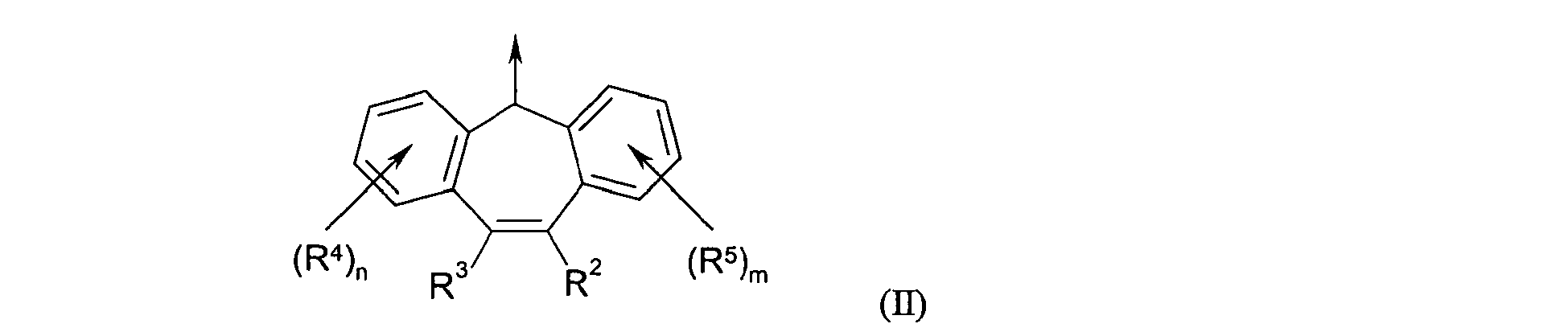
- entweder für einen Rest der Formel (II) steht

- R6
- für OR11 oder N(R11)2 steht, wobei N(R11)2 zusammen auch für einen 5 oder 6 gliedrigen cyclischen Aminorest stehen kann,
- R7 und R8
- jeweils unabhängig voneinander für Wasserstoff, C1-C8-Alkyl, C4-C10-Aryl, C5-C11-Arylalkyl oder C2-C8-Alkenyl stehen und
- R9 und R10
- jeweils unabhängig voneinander für Wasserstoff, C1-C8-Alkyl, C4-C14-Aryl, C5-C11-Arylalkyl oder C2-C8-Alkenyl stehen oder
- R7 und R9 oder R8 und R10
- jeweils zusammen für C3-C12-Alkylen oder C3-C12-Alkenylen stehen.
- Die Verbindungen der Formel (I) können je nach Substitution auch chiral sein. Die Erfindung umfasst auch die gegebenenfalls auftretenden Stereoisomeren sowie beliebige Mischungen davon. Die Begriffe stereoisomerenangereichert (enantiomerenangereichert bzw. diastereomerenangereichert) bedeuten im Rahmen der Erfindung stereoisomerenreine (enantiomerenreine bzw. diastereomerenreine) Verbindungen oder Mischungen von Stereoisomeren (Enantiomeren bzw. Diastereomeren), in denen ein Stereoisomeres (Enantiomeres bzw. Diastereomeres) in einem größeren Anteil vorliegt als ein anderes bzw. das andere. Stereoisomerenangereichert bedeutet beispielsweise und bevorzugt einen Gehalt eines Stereoisomeren von 50 % bis 100 Gew.-%, besonders bevorzugt 70 % bis 100 Gew.-% und ganz besonders bevorzugt 90 bis 100 Gew.-%, bezogen auf die Summe der jeweiligen Stereoisomeren.
- Der Rahmen der Erfindung umfasst alle Kombinationen der oben stehenden und im Folgenden aufgeführten, allgemeinen oder in Vorzugsbereichen genannten Restedefinitionen, Parameter und Erläuterungen untereinander, also auch beliebige Kombinationen zwischen den jeweiligen Bereichen und Vorzugsbereichen.
- Aryl steht im Rahmen der Erfindung, sofern nicht gesondert angegeben, für carbocyclische aromatische Reste wie vorzugsweise Phenyl, Naphtyl, Phenanthrenyl und Anthracenyl, oder für heteroaromatische Reste, in denen keines, ein, zwei oder drei Gerüstkohlenstoffatome pro Cyclus, im gesamten Molekül mindestens jedoch ein Gerüstkohlenstoffatom durch Heteroatome substituiert sind, die ausgewählt sind aus der Gruppe Stickstoff, Schwefel oder Sauerstoff, wie vorzugsweise Pyridinyl, Oxazolyl, Thiophen-yl, Benzofuranyl, Benzothiophen-yl, Dibenzofuranyl, Dibenzothiophen-yl, Furanyl, Indolyl, Pyridazinyl, Pyrazinyl, Imidazolyl, Pyrimidinyl und Chinolinyl.
- Weiterhin können die carbocyclischen, aromatischen Reste oder heteroaromatischen Reste mit bis zu fünf gleichen oder verschiedenen Substituenten pro Cyclus substituiert sein. Beispielsweise und bevorzugt sind die Substituenten ausgewählt aus der Gruppe Brom, Fluor, Chlor, Nitro, Cyano, freies oder geschütztes Formyl, freies oder geschütztes Hydroxy, C1-C12-Alkyl, C1-C12-Halogenalkyl, C1-C12-Alkoxy, C1-C12-Halogenalkoxy, C4-C14-Aryl wie zum Beispiel Phenyl, C5-C15-Arylalkyl wie zum Beispiel Benzyl, Di(C1-C12-alkyl)-amino, (C1-C12-Alkyl)-amino, CO(C1-C12-Alkyl), OCO(C1-C12-Alkyl), NHCO(C1-C12-Alkyl), N(C1-C8-Alkyl)CO(C1-C12-Alkyl), CO(C4-C14-Aryl), OCO(C4-C14-Aryl), NHCO(C4-C14-Aryl), N(C1-C8-Alkyl)CO(C4-C14-Aryl), COO-(C1-C12-Alkyl), COO-(C4-C14-Aryl), CON(C1-C12-Alkyl)2 oder CONH(C1-C12-Alkyl) CO2M, CONH2, SO2NH2, SO2N(C1-C12-Alkyl)2, SO3M wobei M jeweils für gegebenenfalls substituiertes Ammonium, Lithium, Natrium oder Kalium steht.
- Beispielsweise und bevorzugt steht Aryl für Phenyl oder Naphthyl, das mit keinem, einem, zwei oder drei Resten pro Cyclus weiter substituiert sein kann, die ausgewählt sind aus der Gruppe Fluor, Chlor, Cyano, C1-C8-Alkyl, C1-C8-Perfluoralkyl, C1-C8-Alkoxy, Phenyl, Benzyl, Di(C1-C12-alkyl)-amino, CO(C1-C12-Alkyl), COO-(C1-C12-Alkyl), CON(C1-C12-Alkyl)2 oder SO2N(C1-C12-Alkyl)2.
- Besonders bevorzugt steht Aryl für Phenyl, das mit keinem, einem oder zwei Resten pro Cyclus weiter substituiert sein kann, die ausgewählt sind aus der Gruppe Fluor, Chlor, Cyano, C1-C4-Alkyl, C1-C4-Perfluoralkyl, C1-C4-Alkoxy, Phenyl oder SO2N(C1-C4-Alkyl)2.
- Analog gelten die Definition und die Vorzugsbereiche im Rahmen der Erfindung auch für Aryloxy-Substituenten und den Arylteil eines Arylalkyl-Restes.
- Geschütztes Formyl steht im Rahmen der Erfindung, sofern nicht gesondert angegeben, für einen Formyl-Rest, der durch Überführung in ein Aminal, Acetal oder ein gemischtes Aminalacetal geschützt ist, wobei die Aminale, Acetale und gemischten Aminalacetale acyclisch oder cyclisch sein können.
- Beispielsweise und bevorzugt steht geschütztes Formyl für einen 1,1-(2,4-Dioxycyclopentandiyl)-Rest.
- Geschütztes Hydroxy steht im Rahmen der Erfindung, sofern nicht gesondert angegeben, für einen Hydroxy-Rest, der durch Überführung in ein Ketal, Acetal oder ein gemischtes Aminalacetal geschützt ist, wobei die Acetale und gemischten Aminalacetale acyclisch oder cyclisch sein können.
- Beispielsweise und bevorzugt steht geschütztes Hydroxy für einen Tetrahydropyranyl-Rest (O-THP).
- Alkyl bzw. Alkylen, bzw. Alkoxy bzw. Alkenyl bzw. Alkenylen steht im Rahmen der Erfindung, sofern nicht gesondert angegeben, für einen geradkettigen, cyclischen, verzweigten oder unverzweigten Alkyl- bzw. Alkylen- bzw. Alkoxy- bzw. Alkenyl- bzw. Alkenylen-Rest, der gegebenenfalls durch C1-C4-Alkoxy in der Art weiter substituiert sein kann, dass jedes Kohlenstoffatom des Alkyl- bzw. Alkylen-, bzw. Alkoxy bzw. Alkenyl- bzw. Alkenylen-Restes höchstens ein Heteroatom ausgewählt aus der Gruppe Sauerstoff, Stickstoff oder Schwefel trägt.
- Gleiches gilt analog für den Alkylenteil eines Arylalkyl-Restes.
- Beispielsweise steht im Rahmen der Erfindung C1-C4-Alkyl bevorzugt für Methyl, Ethyl, 2-Ethoxyethyl, n-Propyl, Isopropyl, n-Butyl, tert.-Butyl, C1-C8-Alkyl darüber hinaus beispielsweise für n-Pentyl, Cyclohexyl, n-Hexyl, n-Heptyl, n-Octyl oder iso-Octyl, C1-C12-Alkyl, weiter darüber hinaus z.B. für Norbornyl, Adamantyl, n-Decyl und n-Dodecyl und C1-C18-Alkyl noch weiter darüber hinaus für n-Hexadecyl und n-Octadecyl.
- Beispielsweise steht im Rahmen der Erfindung C1-C8-Alkylen bevorzugt für Methylen, 1,1-Ethylen, 1,2-Ethylen, 1,1-Propylen, 1,2-Propylen, 1,3-Propylen, 1,1-Butylen, 1,2-Butylen, 2,3-Butylen und 1,4-Butylen, 1,5-Pentylen, 1,6-Hexylen, 1,1-Cyclohexylen, 1,4-Cyclohexylen, 1,2-Cyclohexylen und 1,8-Octylen.
- Beispielsweise steht im Rahmen der Erfmdung C1-C4-Alkoxy bevorzugt für Methoxy, Ethoxy, Isopropoxy, n-Propoxy, n-Butoxy und tert.-Butoxy, C1-C8-Alkoxy darüber hinaus für Cyclohexyloxy.
- Beispielsweise steht im Rahmen der Erfindung C2-C8-Alkenyl bevorzugt für Allyl, 3-Propenyl und 4-Butenyl.
- Beispielsweise steht im Rahmen der Erfindung C3-C8-Alkenylen bevorzugt für 2-Butendiyl.
- Halogenalkyl bzw. Halogenalkoxy, steht im Rahmen der Erfindung, sofern nicht gesondert angegeben, für einen geradkettigen, cyclischen, verzweigten oder unverzweigten Alkyl- bzw. Alkoxy-Rest, der durch Halogenatome einfach, mehrfach oder vollständig substituiert ist. Reste die vollständig durch Fluor substituiert sind, werden mit Perfluoralkyl bzw. Perfluoralkoxy bezeichnet.
- Beispielsweise steht im Rahmen der Erfindung C1-C12-Halogenalkyl für Trifluormethyl, 2,2,2-Trifluorethyl, Chlormethyl, Fluormethyl, Brommethyl, 2-Bromethyl, 2-Chlorethyl, Nonafluorbutyl, n-Perfluoroctyl oder n-Perfluordodecyl.
- Im Folgenden werden die bevorzugten Substitutionsmuster für Verbindungen der Formel (I) definiert:
- R1
- steht bevorzugt entweder für einen Rest der Formel (II),
in der R2 und R3 jeweils unabhängig voneinander für Wasserstoff, Fluor, Iod, C1- C12-Alkyl, C1-C12-Alkoxy, C4-C10-Aryl oder für Reste der Formel (IV) stehen, in der wiederum T für Carbonyl und Het für Sauerstoff oder NR11 steht und in der
n und m jeweils unabhängig voneinander für 0 oder 1 stehen und
R4 und R5 jeweils unabhängig voneinander ausgewählt sind aus der Gruppe Fluor, Brom, Nitro, C1-C4-Alkyl, C1-C4-Alkoxy oder Resten der Formeln (VIb) und (VIg),
oder für einen Rest der Formel (III),
in der R6 für OR11 oder N(R11)2 steht, wobei N(R11)2 zusammen auch für einen 5 oder 6 gliedrigen cyclischen Aminorest stehen kann, R7 und R8 jeweils unabhängig voneinander für Wasserstoff, C1-C4-Alkyl, oder C2-C8-Alkenyl stehen und R9 und R10 jeweils unabhängig voneinander für Wasserstoff, C1-C4-Alkyl, C4- C14-Aryl oder C2-C8-Alkenyl stehen, oder alternativ R8 und R10 jeweils zusammen für C3-C8-Alkendiyl stehen. - R1
- steht besonders bevorzugt entweder für einen Rest der Formel (II),
in der R2 und R3 jeweils unabhängig voneinander für Wasserstoff, C1-C12-Alkyl, C1-C12-Alkoxy, C4-C10-Aryl n und m jeweils identisch für 0 oder 1 stehen und
R4 und R5 jeweils identisch ausgewählt sind aus der Gruppe Fluor oder Resten der Formeln (VIb) und (VIg),
oder für einen Rest der Formel (III),
in der R6 für OR11, R7 und R9 jeweils unabhängig voneinander für Wasserstoff, oder C1-C4-Alkyl und R8 und R10 jeweils zusammen für C3-C8-Alkendiyl stehen. - R1
- steht ganz besonders bevorzugt entweder für einen Rest der Formel (II),
in der R2 und R3 jeweils unabhängig voneinander für Wasserstoff, C1-C12-Alkyl, C1-C12-Alkoxy oder C4-C10-Aryl und
n und m jeweils für 0 stehen
oder für einen Rest der Formel (III),
in der R6 für OR11, R7 und R9 jeweils identisch für Wasserstoff und R8 und R10 jeweils zusammen für C3-C8-Alkendiyl stehen. - R2 und R3
- stehen bevorzugt jeweils unabhängig voneinander für Wasserstoff, Fluor, Iod, C1- C12-Alkyl, C4-C10-Aryl oder für Reste der Formel (IV), in der wiederum T für Carbonyl und Het für Sauerstoff oder NR11 steht,
und stehen besonders bevorzugt jeweils unabhängig voneinander für Wasserstoff, C1-C12-Alkyl, C1C12-Alkoxy, C4-C10-Aryl. - R4 und R5
- sind bevorzugt jeweils unabhängig voneinander ausgewählt aus der Gruppe Fluor, Brom, Nitro, C1-C4-Alkyl, C1-C4-Alkoxy oder Resten der Formeln (VIb) und (VIg),
und besonders bevorzugt jeweils identisch ausgewählt aus der Gruppe Fluor oder Resten der Formeln (VIb) und (VIg), - n und m
- stehen bevorzugt jeweils unabhängig voneinander für 0 oder 1 stehen, n und m besonders bevorzugt jeweils identisch für 0 oder 1 stehen und ganz besonders bevorzugt jeweils für 0.
- R6
- steht bevorzugt für OR11 oder N(R11)2, wobei N(R11)2 zusammen auch für einen 5 oder 6 gliedrigen cyclischen Aminorest stehen kann, besonders bevorzugt für OR11.
- Bevorzugt stehen
- R7 und R8 jeweils unabhängig voneinander für Wasserstoff, C1-C4-Alkyl, oder C2-C8-Alkenyl und
- R9 und R10 jeweils unabhängig voneinander für Wasserstoff, C1-C4-Alkyl, C4-C14-Aryl oder C2-C8-Alkenyl, oder alternativ
- R8 und R10 jeweils zusammen für C3-C8-Alkendiyl.
- Besonders bevorzugt stehen
- R7 und R9 jewells unabhängig voneinander für Wasserstoff oder C1-C4-Alkyl und
- R8 und R10 jeweils zusammen für C3-C8-Alkendiyl.
- Ganz besonders bevorzugt stehen
- R7und R9 jeweils identisch für Wasserstoff und
- R8und R10 jeweils zusammen für C3-C8-Alkendiyl.
- Von Verbindungen der Formel (I) sind solche ganz besonders bevorzugt, die am Stickstoffatom Reste tragen, die ausgewählt sind aus der Gruppe
10-Cyano-5H-dibenzo[a,d]cyclohepten-5-yl (CNtrop), 5H-dibenzo[a,d]cydohepten-5-yl (trop), 10-Methyl-5H dibenzo[a,d]cyclohepten-5-yl (Metrop),10-Methoxy-5H-dibenzo[a,d]cyclohepten-5-yl (MeOtrop), 10-Phenyl-5H-dibenzo[a,d]cyclohepten-5-yl (Phtrop), 10,11-Diphenyl-5H-dibenzo[a,d]cyclohepten-5-yl(Ph2trop) [(5S)-10-[(-)-Menthyloxy]-5H-dibenzo[a,d]cyclohepten-5-yl], (S-Menthyloxytrop) und [(5R)-10-[(-)-Menthyloxy]-5H-dibenzo[a,d]cyclohepten-5-yl] (R-Menthyloxytrop). - Zur Herstellung von Verbindungen der Formel (I) geht man vorzugsweise so vor, dass Verbindungen der Formel (IV)
H2NR1 (V)
in der R1 die vorstehend genannte Bedeutung besitzt
gegebenenfalls in Gegenwart von organischem Lösungsmittel mit Verbindungen der Formel (V) umgesetzt werden,
Akt für Chlor, Brom, Iod, Trifluoracetyl oder einen Sulfonyloxy-Rest steht,
die dabei entstehenden Ammoniumsalze der Formel (VI)
- Die Verbindungen der Formel (IV) und (V) sind entweder literaturbekannt oder analog zur Literatur synthetisierbar.
- Die Umsetzung kann gegebenenfalls und wird bevorzugt in Gegenwart von organischem Lösungsmittel durchgeführt. Als organische Lösungsmittel sind beispielsweise geeignet:
- Aliphatische oder aromatische, gegebenenfalls halogenierte Kohlenwasserstoffe, wie beispielsweise verschiedene Benzine, Benzol, Toluol, Xylol, Chlorbenzol, Dichlorbenzol, verschiedene Petrolether, Hexan, Cyclohexan, Dichlormethan, Chloroform, Tetrachlorkohlenstoff; Ether, wie Diethylether, Methyl-tert.-butylether, Diisopropylether, Dioxan, Tetrahydrofuran oder Ethylenglykoldimethyl- oder -diethylether oder Gemische solcher organischen Lösungsmittel.
- Als Basen sind beispielsweise geeignet: Erdalkali- oder Alkalimetallhydride, -hydroxide, -amide, alkylsubstituierte -disilylamide, -dialkylamide, -alkoholate, oder -carbonate wie beispielsweise Natriumhydrid, Natriumamid, Lithium-diethylamid, Natriummethylat, Natriumbistrimethylsilylamid, Natriumethylat, Kalium-tert.-butylat, Natriumhydroxid, Kaliumhydroxid, Natriumcarbonat und Kaliumcarbonat, tertiäre Amine, wie Trimethylamin, Triethylamin, Tributylamin, Trioctylamin, Di-isopropyl-ethylamin, Tetramethylguanidin, N,N-Dimethylanilin, Diazabicyclooctan (DABCO), Diazabicyclononen (DBN) oder Diazabicycloundecen (DBU), Piperidin und N-Methylpiperidin.
- Sowohl das Herstellungsverfahren für die Verbindungen der Formel (I) als auch die Verbindungen der Formel (VI) als unverzichtbare Intermediate sind von der Erfindung vollumfänglich umfasst.
- Die Erfindung schließt auch Übergangsmetallkomplexe von Verbindungen der Formel (I) ein sowie Katalysatoren ein, die die erfindungsgemäßen Übergangsmetallkomplexe von Verbindungen der Formel (I) enthalten.
- Bevorzugte Übergangsmetallkomplexe sind Übergangsmetallkomplexe von Ruthenium, Osmium, Cobalt, Rhodium, Iridium, Nickel, Palladium, Platin und Kupfer, bevorzugt solche von Ruthenium, Rhodium, Iridium, Nickel, Palladium und Platin, besonders bevorzugt solche von Rhodium und Iridium.
- Als Katalysatoren können beispielsweise isolierte Übergangsmetallkomplexe eingesetzt werden, die beispielsweise aus den Verbindungen der Formel (I) und einer Metallverbindung erzeugt wurden, oder Übergangsmetallkomplexe, die aus den Verbindungen der Formel (I) und einer Metallverbindung im Reaktionsmedium der Katalyse erzeugt werden.
- Geeignete Metallverbindungen sind beispielsweise und bevorzugt solche der Formel (VIIa)
M1(Y1)p (VIIa)
in der - M1
- für Ruthenium, Rhodium, Iridium, Nickel, Palladium, Platin oder Kupfer und
- Y1
- für Chlorid, Bromid, Acetat, Nitrat, Methansulfonat, Trifluormethansulfonat oder Acetylacetonat und
- p
- im Falle von Ruthenium, Rhodium und Iridium für 3, im Falle von Nickel, Palladium und Platin für 2 und im Falle von Kupfer für 1 steht,
- Y2
- für ein Anion wie beispielsweise Chlorid, Bromid, Acetat, Methansulfonat, Trifluormethansulfonat, Tetrafluoroborat, Hexafluorophosphat, Perchlorat, Hexafluoroantimonat, Tetra(bis-3,5-trifluormethylphenyl)borat oder Tetraphenylborat steht und
- p
- im Falle von Rhodium und Iridium für 1, im Falle von Nickel, Palladium, Platin und Ruthenium für 2 und im Falle von Kupfer für 1 steht,
- B1
- jeweils für ein C2-C12-Alken wie beispielsweise Ethylen oder Cycloocten, oder ein Nitril wie beispielsweise Acetonitril, Benzonitril oder Benzylnitril steht, oder
- B1 2
- zusammen für ein (C4-C12)-Dien wie beispielsweise Norbornadien oder 1,5-Cyclooctadien steht
- M2
- für Ruthenium und
- B2
- für Arylreste wie zum Beispiel Cymol, Mesityl, Phenyl oder Cyclooctadien, Norbornadien oder Methylallyl steht
- M3
- für Palladium, Nickel, Iridium oder Rhodium und
- Y3
- für Chlorid oder Bromid steht und
- Me
- für Lithium, Natrium, Kalium, Ammonium oder organisches Ammonium steht und
- p
- im Falle von Rhodium und Iridium 3, im Falle von Nickel, Palladium und Platin für 2 steht,
- M4
- für Iridium oder Rhodium und
- B3
- für ein (C4-C12)-Dien wie beispielsweise Norbornadien oder 1,5-Cyclooctadien steht
- An
- für ein nicht oder schwach koordinierendes Anion wie zum Beispiel Methansulfonat, Trifluormethansulfonat, Tetrafluoroborat, Hexafluorophosphat, Perchlorat, Hexafluoroantimonat, Tetra(bis-3,5-trifluormethylphenyl)borat oder Tetraphenylborat steht.
- Darüberhinaus sind als Metallverbindungen beispielsweise Ni(1,5-Cyclooctadien)2, Pd2(dibenzylidenaceton)3, Pd[PPh3]4 Cyclopentadienyl2Ru, Rh(acac)(CO)2, [RhCl(CO)2]; Ir(pyridin)2(1,5-Cyclooctadien), Ir(acac)(CO)2, [IrCl(CO)2], Cu(Phenyl)Br, Cu(Phenyl)Cl, Cu(Phenyl)I, Cu(PPh3)2Br, [Cu(CH3CN)4]BF4 und [Cu(CH3CN)4]PF6 oder mehrkernige verbrückte Komplexe wie beispielsweise [Rh(1,5-cyclooctadien)Cl]2 und [Rh(1,5-cyclooctadien)Br]2, [Rh(Ethen)2Cl]2, [Rh(Cycloocten)2Cl]2 geeignet.
- Bevorzugt werden als Metallverbindungen eingesetzt:
- [Rh(COD)Cl]2, [Rh(COD)2Br], [Rh(COD)2]ClO4, [Rh(COD)2]BF4, [Rh(COD)2]PF6, [Rh(COD)2]OTf, [Rh(COD)2]BAr4 (Ar = 3,5-bistrifluormethylphenyl) [Rh(COD)2]SbF6 RuCl2(COD), [(Cymol)RuCl2]2, [(Benzol)RuCl2]2, [Mesitylen)RuCl2]2, [(Cymol)RuBr2]2, [(Cymol)RuI2]2, [(Cymol)Ru(BF4)2]2, [(Cymol)Ru(PF6)2]2, [(Cymol)Ru(BAr4)2]2, (Ar = 3,5-bistrifluormethylphenyl), [(Cymol)Ru(SbF6)2]2, [Ir(COD)2Cl]2, [Ir(COD)2]PF6, [Ir(COD)2]ClO4, [Ir(COD)2]SbF6 [Ir(COD)2]BF4, [Ir(COD)2]OTf, [Ir(COD)2]BAr4 (Ar = 3,5-bistrifluormethylphenyl), RuCl3, NiCl2, RhCl3, PdCl2, PdBr2, Pd(OAc)2, Pd2(dibenzylidenaceton)3, Pd(acetylacetonat)2, Rh(acetylacetonat)(CO)2, [RhCl(CO)2]; Ir(pyridin)2(COD), Ir(acac)(CO)2' [IrCl(CO)2] [Rh(nbd)Cl]2, [Rh(nbd)2Br], [Rh(nbd)2]ClO4, [Rh(nbd)2]BF4, [Rh(nbd)2]PF6, [Rh(nbd)2]OTf, [Rh(nbd)2]BAr4 (Ar = 3,5-bistrifluormethylphenyl) [Rh(nbd)2]SbF6 RuCl2(nbd), [Ir(nbd)2]PF6, [Ir(nbd)2]ClO4, [Ir(nbd)2]SbF6 [Ir(nbd)2]BF4, [Ir(nbd)2]OTf, [Ir(nbd)2]BAr4 (Ar = 3,5-bistrifluormethylphenyl), Ir(pyridin)2(nbd), [Ru(DMSO)4Cl2], [Ru(CH3CN)4Cl2], [Ru(PhCN)4Cl2], [Ru(COD)Cl2]n, [Ru(COD)(Methallyl)2], [Ru(acetylacetonat)3]
- Noch weiter bevorzugt sind Rh(acetylacetonat)(CO)2, [RhCl(CO)2] und Ir(acetylacetonat)(CO)2, [IrCl(CO)2].
- Die Menge der eingesetzten Metallverbindung kann bezogen auf den Metallgehalt beispielsweise 25 bis 200 mol-% im Bezug auf die eingesetzte Verbindung der Formel (I) betragen, bevorzugt sind 80 bis 140 mol-%, ganz besonders bevorzugt 90 bis 120 mol-% und noch weiter bevorzugt 95 bis 105 mol% .
- Ganz besonders bevorzugte Übergangsmetallkomplexe von Verbindungen der Formel (I) sind solche die der Formel (VIII) gehorchen
[M5(I)(L)]An (VIII)
in denen jeweils - M5
- für Rhodium oder Iridium
- (I)
- für eine Verbindung der Formel (I)
- (L)
- für einen neutralen mono- oder bidentanten Liganden steht und
- An
- ohne Rücksicht auf eine mögliche Koordination an das Metall für ein Anion wie beispielsweise Chlorid, Bromid, Iodid, Methansulfonat, Trifluormethansulfonat, Tetrafluoroborat, Hexafluorophosphat, Perchlorat, Hexafluoroantimonat, Tetra(bis-3,5-trifluormethylphenyl)borat oder Tetraphenylborat steht.
- Bevorzugte neutrale mono-dentante Liganden sind beispielsweise Olefine wie Cyclohexen, Carbonyl, Nitrile wie beispielsweise Acetonitril oder Benzonitril, Phosphane wie beispielsweise Tri-(C4-C14-Aryl)phosphane, Tri-(C1-C8-alkyl)phosphane, Bis-(C4-C14-aryl)(C1-C8-alkyl)phosphane, (C4-C14-Aryl)-di(C1-C8-alkyl)phosphane, Phosphite wie beispielsweise Tri-(C4-C14-Aryl)phosphite, Tri-(C1-C8-alkyl)phosphite, Bis-(C4-C14-aryl)(C1C9-alkyl)phosphite und (C4-C14-Aryl)-di(C1-C8-alkyl)phosphite.
- Bevorzugte neutrale bidentante Liganden sind beispielsweise Diolefine wie 1,5-Cyclooctadien, Norbornadien, Distickstoffverbindungen wie beispielsweise 2,2'-Bipyridin und Diphosphorverbindungen wie beispielsweise solche der Formel (IX),
(R13-E)2P-E-Z-E-P(E-R13)2 (IX)
in der - E
- jeweils unabhängig voneinander und unabhängig von R13 und Z fehlt oder für Sauerstoff steht und die Reste R13 unabhängig voneinander für C1-C8-Alkyl oder für unsubstituiertes, ein-, zwei oder dreifach durch R14 substituiertes Phenyl- , Naphtyl- oder Heteroaryl mit 5 bis 12 Gerüstkohlenstoffatomen stehen, wobei
R14 jeweils unabhängig ausgewählt ist aus der Gruppe C1-C8-Alkyl, C1-C8-Alkoxy, Fluor oder Cyano und - Z
- für einen unsubstituierten oder substituierten Rest aus der Gruppe C1-C4-Alkylen, 1,2-Phenylen, 1,3-Phenylen, 1,2-Cyclohexyl, 1,1'-Ferrocenyl, 1,2-Ferrocenyl, 2,2'-(1,1'-Binaphtyl) und 1,1'-Biphenylyl steht.
- Katalysatoren, die die erfindungsgemäßen Übergangsmetallkomplexe enthalten, eignen sich insbesondere für den Einsatz in der homogenen Katalyse.
- Den genannten Übergangsmetallkomplexen ist gemeinsam, dass das Proton, das am Stickstoffatom des zentralen Siebenringes der Verbindung der Formel (I) gebunden ist, sehr azide ist und sich durch Base leicht entfernen lässt.
- Solche Übergangsmetallkomplexe sind für den Einsatz als Katalysator ebenfalls geeignet, und stellen nach Erkenntnis des Anmelders auch Intermediate des katalytischen Cyclus dar.
- Von der Erfindung sind daher weiterhin Übergangsmetallkomplexe umfasst, die die Verbindungen der Formel (I) in der Art enthalten, dass das Stickstoffatom des zentralen Siebenringes von Verbindungen der Formel (I) als Amid an das Metallatom koordiniert.
- Für solche Komplexe gelten oben genannte Vorzugsbereiche für die Verbindungen der Formel (I) und die Übergangsmetallkomplexe in analoger Weise.
- Besonders bevorzugte Übergangsmetallkomplexe dieser Art sind dementsprechend solche der Formel (X)
[M6(I-)(L)] (X)
in denen jeweils - M6
- für Rhodium oder Iridium
- (I-)
- für eine Verbindung der Formel (I) steht, in der das Stickstoffatom des zentralen Siebenringes als Amid an das Metallatom koordiniert und
- (L)
- für einen neutralen mono- oder bidentanten Liganden steht.
- Bevorzugt werden die erfindungsgemäßen Katalysatoren und Übergangsmetallkomplexe für Hydrogenierungen eingesetzt, besonders bevorzugt für asymmetrische Hydrogenierungen, sofern die Verbindungen unter eingangs beschriebenen Voraussetzungen chiral sind.
- Bevorzugte Hydrogenierungen sind beispielsweise Hydrogenierungen von prochiralen C=C-Bindungen wie zum Beispiel prochiralen Enaminen, Olefinen, Enolethern, C=O-Bindungen wie zum Beispiel prochiralen Ketonen und C=N-Bindungen wie zum Beispiel prochiralen Iminen. Besonders bevorzugte asymmetrische Hydrogenierungen sind Hydrogenierungen von C=O-Bindungen wie zum Beispiel prochiralen Ketonen.
- In einer bevorzugten Ausführungsform wird die Hydrogenierung in Gegenwart eines Wasserstoffspendermoleküls und gegebenenfalls einer Base durchgeführt.
- Wasserstoffspendermoleküle sind beispielsweise molekularer Wasserstoff, Ameisensäure, Ethanol oder Isopropanol, Basen beispielsweise Alkoholate oder tertiäre Amine. Besonders bevorzugte Mischungen von Wasserstoffspendermolekül und Base sind Mischungen von Ameisensäure und Triethylamin wie insbesondere das azeotrope Gemisch daraus, sowie Mischungen von Kaliumisopropylat und Isopropanol.
- Die Menge der eingesetzten Metallverbindung oder des eingesetzten Übergangsmetallkomplexes kann bezogen auf den jeweiligen Metallgehalt beispielsweise 0.001 bis 20 mol-%, bezogen auf das eingesetzte Substrat betragen, bevorzugt sind 0.001 bis 2 mol-%, ganz besonders bevorzugt 0.001 bis 1 mol-%.
- In einer bevorzugten Ausführungsform können asymmetrische Hydrogenierungen beispielsweise so durchgeführt werden, dass der Katalysator in situ aus einer Metallverbindung und einer Verbindung der Formel (I) gegebenenfalls in einem geeigneten organischen Lösungsmittel erzeugt wird, das Substrat zugegeben wird und die Reaktionsmischung bei Reaktionstemperatur entweder unter Wasserstoffdruck gesetzt oder mit einer Mischung aus einem anderen Wasserstoffspendermolekül und einer Base versetzt wird.
- Die erfindungsgemäßen Katalysatoren eignen sich insbesondere in einem Verfahren zur Herstellung von Wirkstoffen von Arzneimitteln und Agrarchemikalien, oder Zwischenprodukten dieser beiden Klassen.
- Der Vorteil der vorliegenden Erfindung liegt darin, dass unter Verwendung von einfach erhältlichen und gefahrlos handhabbaren Verbindungen eine ganze Klasse leistungsfähiger Katalysatoren hergestellt werden können.
- 3 g 5H-Dibenzo[a,d]cyclohepten-5-yl)chlorid (13.2 mmol) wurden in 60 ml Toluol gelöst und mit 1 ml (1.41 g; 8.7 mmol; 30% Überschuss) 1,1,1,3,3,3-Hexamethyl-disilazan versetzt. Die Mischung wurde 4 h unter Rückfluss erhitzt. Anschließend wurden alle flüchtigen Bestandteile im Vakuum entfernt. Anschließend wurden 30 ml Hexan zugesetzt und die entstehende Suspension erhitzt. Dabei fiel ein weißes Pulver mit einer Ausbeute von 95 % d. Th. an.
- In 7 ml Dichlormethan wurden 0.47 g (1.2 mmol) Bis(5H-dibenzo[a,d]cyclohepten-5-yl)amin gemäß Beispiel 1 und 0.28 g (0.56 mmol) Di-µ-chloro-bis[(η-1,5-cyclooctadien)rhodium(I)] gelöst und zwei Tage stehen gelassen. Dabei wuchsen dunkelrote Kristall. Das überstehende Lösungsmittel wurde dekantiert. Die Kristalle wurden mit Dichlormethan gewaschen und im Vakuum getrocknet.
- 0.63 g (0.59 mmol) Di-µ-chloro-bis[(bis(5H-dibenzo[a,d]cyclohepten-5-yl)amin)-rhodium(I)] aus Beispiel 2 wurden in THF suspendiert. Die Luft wurde aus dem Kolben entfernt. Daraufhin wurde Kohlenmonoxid durch die Suspension geleitet, worauf die trübe orange Lösung klar und gelb wurde. Dabei wurde 3a erhalten Nach Zugabe von 0.31 g (1.2 mmol) Silbertriflat wurde die Lösung rot. Nach 24 Stunden wurde der Silberchloridniederschlag abfiltriert, die Lösung zum Teil eingeengt und der Komplex 3b als oranges Pulver mit Hexan ausgefällt. Ausbeute: 0.58 g (86 %).
- 0.16 g (0.15 mmol) Di-µ-chloro-bis[(bis(5H-dibenzo[a,d]cyclohepten-5-yl)amin)rhodium(I)] und 0.09 g (0.3 mmol) Triphenylphosphin wurden in 20 ml THF suspendiert. Die Suspension wurde bei 60°C eine klare Lösung. Es wurden ca. 30 ml Toluol und 100 ml Hexan zugegeben, worauf (Bis(5H-dibenzo[a,d]cyclohepten-5-yl)amin)chloro-(triphenylphosphin)-rhodium(I) ausfiel.
Dieses konnte abfiltriert werden. Ausbeute: 0.17 g (70 %)
1H NMR (250 MHz, CDCl3) δ = 0.4 (s b, 1H, amin) 3.8 (s, 2 H, benzyl) 5.3 (t, J=7.5 Hz, 2 H, olefin) 5.4 (t, J=8.5 Hz, 2 H, olefin) 5.6 (ddd, J=9.4, 5.7, 1.5 Hz, 2 H, phenyl) 6.5 (d, J=6.8 Hz, 2 H, arom) 6.6-7.3 (m, 17 H, arom) 7.4 (d, J=5.3 Hz, 6 H, arom) 8.1 (m, 4 H, phenyl) 31P NMR (101 MHz) δ = 7.7 (d, J=110.9 Hz, 1 P) - 0.17 g (0.21 mmol) (Bis(5H-dibenzo[a,d]cyclohepten-5-yl)amin)chloro-(triphenyl-phosphin)-rhodium(I) aus Beispiel 4 und 0.06 g (0.3 mmol) Silbertriflat wurden bei 60°C eine halbe Stunde gerührt. Die Suspension wurde über einen Papierfilter filtriert. Das Produkt wurde mit Hexan aus der Mutterlauge ausgefällt. Ausbeute: 0.147 g (70 %).
1H NMR (250 MHz, CDCl3) δ = 5.0 (d, J=8.7 Hz, 4 H, 2 olefin, 2 benzyl) 5.5 (td, J=9.4, 3.0 Hz, 2 H, olefin) 5.7 (d, J=5.3 Hz, 1 H, amin) 6.8 (m, 8 H, arom) 7.3 (m, 8 H, arom) 7.6 (s, 9 H, m u. p phenyl) 7.9 (m, 6 H, o phenyl)
31P NMR (101 MHz, CDCl3) δ = 38.8 (d, J=138.0 Hz, 1 P) - 500 mg des Komplexes aus Beispiel 3b (0,74 mmol) wurden in 60 ml THF gelöst und mit 0,5 ml Trimethylphosphit versetzt. Die Farbe der Lösung schlug dabei von Gelb nach blassgelb um und es fielen nach 2 Stunden gelbe Nadeln des gewünschten Produktes aus. Ausbeute: 99 % d. Th.
1H NMR (400.1 MHz, CD2Cl2) δ = 3.34 (d, 3 J PH = 10.5 Hz, 9 H, H12), 3.99 (d, 3 J HH= 10.7 Hz, 9 H, H13), 4.17 (d, 3 J PH = 5.7 Hz, 1 H, NH), 4.83 (d, 4 J PH = 13.0 Hz, 2 H, H5), 5.15 (m, 2 H, H11), 5.17 (m, 2 H, H10), 6.90 (d, 3 J HH = 7.8 Hz, 2 H, H4), 6.91 (dd, 3 J HH = 7.7 Hz, 3 J HH = 7.7 Hz, 2 H, H2), 6.97 (m, 2 H, H3), 6.99 (m, 2 H, H1), 7.20 (ddd, 3 J HH = 7.4 Hz, 3 J HH = 7.4 Hz, 4 J HH = 1.2 Hz, 2 H, H7), 7.28 (ddd, 3 J HH = 7.5 Hz, 3 J HH = 7.5 Hz,4 J HH = 1.4 Hz, 2 H, H8), 7.30 (dd, 3 J HH = 7.4 Hz, 4 J HH = 1.4 Hz, 2 H, H6), 7.49 (dd, 3 J HH = 7.53 Hz, 4 J HH = 1.1 Hz, 2 H, H9)
31P NMR (162.0 MHz, CD2Cl2) δ = 112.1 (dd, 1 J RhP = 190 Hz, 2 J PP = 68 Hz, P axial), 124.5 (dd, 1 J RhP = 200 Hz, 2 J PP = 68 Hz, P equat) - 200 mg des Komplexes aus Beispiel 5 wurden in 50 ml THF suspendiert und mit 30 mg (0,267 mmol) KOtBu versetzt. Die Farbe der Lösung schlug dabei nach grün und homogenisierte sich innerhalb von 30 Minuten. Nach Filtration des ausgefallenen KOTf und Trocknen im Vakuum wurde das gewünsche Produkt in einer nahezu quantitativen Ausbeute erhalten.
1H NMR (400.1 MHz, THF-d8, 200 K) δ = 4.69 (ddd, 3 J HH = 9.0 Hz, 3 J PH = 6.2 Hz, 2 J RhH = 1.2 Hz, 2 H, H10), 4.92 (d, 4 J PH = 13.5 Hz, 2 H, H5), 5.62 (ddd, 3 J HH = 9.0 Hz, 2 J RhH = 3.3 Hz, 3 J PH = 2.9 Hz, 2 H, H11), 6.57 (dd, 3 J HH = 7.3 Hz, 3 J HH = 7.3 Hz, 2 H, H2), 6.67 (dd, 3 J HH = 7.2 Hz, 3 J HH = 7.2 Hz, 2 H, H3), 6.79 (d, 3 J HH =7.6 Hz, 2 H, H1), 6.90 (d, 3 J HH = 7.3 Hz, 2 H, H4), 6.95 (d, 3 J HH = 7.0 Hz, 2 H, H9), 7.03 (m, 4 H, H7/ H8), 7.22 (d, 3 J HH =6.7 Hz, 2 H, H6), 7.56 (m, 9 H, m-PPh3/ p-PPh3), 7.63 (m, 6 H, o-PPh3) - Eine Lösung von 5 mg (0.0066 mmol) des Komplexes aus Beispiel 7 in 5 ml THF wurde mit 129 mg Cyclohexanon (1.31 mmol, 200 eq.) versetzt und während 18 h unter einer Wasserstoffatmosphäre (4 bar) gerührt. Gaschromatographie der Reaktionslösung zeigte vollständigen Umsatz zu Cyclohexanol.
-
Katalysator aus Beispiel Substrat C/Sappm Alkoho 1 TONb TOFi c[1/h] TOFt d [1/h] tmax e [h] (Umax [%]) 9 3b Cyclohexanon 1000 iPrOH 950 1700 640 1.5 (97) 10 3b Cyclohexanon 250 iPrOH 3900 990 420 9.2 (96) 11 3b Cyclohexanon 730 iPrOH 1400 1300 370 3.7 (98) 12 3b Cyclohexanon 250 EtOH 3800 3300 1900 2.0 (100) 13 3b Acetophenon 980 iPrOH 760 530 28 27.0 (74) 14 3b Benzophenon 990 iPrOH 360 850 40 9.0 (35) 15 3b Benzophenon 4000 iPrOH 290 1200 35 9.2 (61) 16 6 Cyclohexanon 980 iPrOH 1000 - 4100 <0.25 (100) 17 6 Cyclohexanon 63 iPrOH 15300 23900 46000 0.3(97) 18 6 Cyclohexanon 4.4 iPrOH 18100 15400 120000 3.7 (79) 19 6 Benzophenon 1000 iPrOH 940 9500 1100 0.8 (97) 20 5 Cyclohexanon 1000 iPrOH 1000 - 4000 <0.25 (100) 21 5 Cyclohexanon 49 iPrOH 20300 126000 120000 0.18 (100) 22 5 Cyclohexanon 49 EtOH 20250 22000 81000 <0.25 (100) 23 5 Acetophenon 49 EtOH 20100 79000 60000 0.3 (100) a) C/S = (Stoffmenge an Katalysator)* 106/(Stoffmenge an Substrat), b) TON = (Stoffmenge an Produkt)/(Stoffmenge an Katalysator) am Ende der Katalyse angegeben, beziehungsweise zum Zeitpunkt, an welchem die Reaktion abgebrochen wurde, c) TOF am Anfang der Katalyse, d) TOF am Ende der Katalyse, e) Zeit, nach welcher maximaler Umsatz erreicht war. Der maximal erreichte Umsatz steht in Klammern dahinter. - Zu 0.915 g (4.2 mmol) Cyclohexadienylalaninmethylester in 10 ml trockenem CH2Cl2 wurden 0.42 g (4.2 mmol) Triethylamin tropfenweise zugegeben. Nach Rühren für 30 Minuten wurden 0.952 g (4.2 mmol) 5H-Dibenzo[a,d]cyclohepten-5-yl-chlorid über einen Pulvertrichter zugegeben und weitere 2,0 g Triethylamin in einer Portion zugegeben. Nach weiteren 2 h Rühren wurde die organische Phase mit 2x10 ml Wasser gewaschen, über MgSO4 getrocknet und filtriert, Nach Abziehen des Lösungsmittels im Vakuum wurden 1.52 g (97%) des Produktes als farbloses Öl erhalten.
1H-NMR (300 MHz, 25°C, CDCl3): δ 7.85 - 7.30 (m, 8H), 7.08 (dd, 2H), 5.87-5.74 (m, 2H), 5.50 (s, 1H), 5.00 (s, 1H), 3.85, 3.74 (each s, together 3H), 3.11 (dd, 1H), 2.90-2.00 (m, 7H) ppm. - Zu einer Lösung von 220 mg (0.59 mmol) des Liganden aus Beispiel 24 in 10 ml trockenem CH2Cl2 wurden 97 mg (0.25 mmol) [Rh(CO)2Cl]2 bei Raumtemperatur zugegeben. Dabei wurde starke Entwicklung von Kohlenmonoxid beobachtet. Die Lösung wurde auf etwa 3 ml eingeengt und mit 10 ml Hexan überschichtet. Über Nacht kristallisierten 245 mg (92%) des Komplexes in Form fahlgelber Kristalle.
1H-NMR (300 MHz, 25°C, CDCl3): δ 7.60 - 7.05 (m, 8H), 5.77 (dm, 3J (H,H) = 9.9 Hz, 1H), 5.64 (dm, 3J (H,H) = 9.9 Hz, 1H), 5.24 (dd, 3J (H,H) = 9.3 Hz, 2J (Rh,H) = 1.2 Hz, 1H), 5.15 (dd, 3J (H,H) = 9.3 Hz, 2J (Rh,H) = 2.4 Hz, 1H), 4.43 (br, 1H), 4.39 (s, 1H), 3.84 (br, 1H), 3.79 (s, 3H), 3.45 (m, 1 H), 2.92 - 2.38 (m, 6H) ppm. - Zu einer Lösung von 119 mg (0.22 mmol) des Komplexes aus Beispiel 25 in 10 ml trockenem CH2Cl2 wurden 64 mg (0.25 mmol) Silbertriflat bei Raumtemperatur zugegeben. Nach zweistündigem Rühren wurde die Lösung über Celite filtriert, auf etwa 3 ml eingeengt und mit 10 ml Hexan überschichtet. Über Nacht kristallisierte das Produkt in nahezu quantitativer Ausbeute.
1H-NMR (300 MHz, 25°C, CDCl3): δ 7.68 - 7.22 (m, 8H), 5.91 (dm, 3J (H,H) = 10.5 Hz, 1H), 5.75 (dm, 3J (H,H) = 10.5 Hz, 1H), 5.68 (dd, 3J (H,H) = 9.0 Hz, 2J (Rh,H) = 3.0 Hz, 1H), 5.45 (dd, 3J (H,H) = 9.0 Hz, 2J (Rh,H) = 0.9 Hz, 1H), 4.64 (br, 1H), 4.47 (br, 1H), 4.43 (br, 1H), 3.87 (s, 3H), 3.38 - 2.50 (m, 7H) ppm. -
Katalysatormenge [mol-%] Temp. [°C] Zeit [min] Substrat Umsatz Enantiomeren- überschuss [%ee] 0,1 25 25 Acetophenon 40 % 58 0,1 25 100 Acetophenon 77% 58 - Reaktionsmedium: 2,0 g Acetophenon, 5mM Lösung von Kaliumisopropoxid in 16,6 ml Isopropanol
die Pfeile jeweils die Bindung des gesamten Restes zum Stickstoffatom anzeigen oder, sofern sie in die Mitte eines aromatischen Systems zeigen, eine Bindung der jeweiligen Reste zum aromatischen Gerüst in beliebiger Position,
R2 und R3 jeweils unabhängig voneinander für Wasserstoff, Cyano, Fluor, Chlor, Brom, Iod, C1-C18-Alkyl, C4-C24-Aryl, C5-C25-Arylalkyl, CO2M, wobei M für ein Alkalimetallion oder ein gegebenenfalls organisches Ammoniumion stehen kann, CONH2, SO2N(R11)2, wobei R11 für Wasserstoff, C1-C12-Alkyl, C4-C14-Aryl oder C5-C15-Arylalkyl steht, SO3M oder für Reste der Formel (IV) stehen,
T-Het-R12 (IV)
in der
T fehlt oder für Carbonyl steht,
Het für Sauerstoff oder NR11 steht,
R12 für C1-C18-Alkyl, C4-C24-Aryl oder C5-C25-Arylalkyl oder N(R12)2 als Ganzes für einen 5 oder 6 gliedrigen cyclischen Aminorest steht und
n und m jeweils unabhängig voneinander für 0, 1, 2 oder 3 stehen und
R4 und R5 jeweils unabhängig voneinander ausgewählt sind aus der Gruppe Fluor, Chlor, Brom, Iod, Nitro, freies oder geschütztes Formyl, C1-C12-Alkyl, C1-C12-Alkoxy, C1C12-Halogenalkoxy, C1-C12-Halogenalkyl, C4-C14-Aryl, C5-C15-Arylalkyl oder Resten der Formel (V),
L-Q-T-W (V)
in der unabhängig voneinander
L fehlt oder für C1-C8-Alkylen oder C2-C8-Alkenylen steht und
Q fehlt oder für Sauerstoff, Schwefel oder NR11 steht,
T für eine Carbonyl-Gruppe steht und
W für R11, OR11, NHR12 oder N(R12)2 steht,
wobei N(R12)2 weiterhin als Ganzes für einen 5 oder 6 gliedrigen cyclischen Aminorest stehen kann oder Resten der Formeln (VIa-g)
| L-W | (VIa) | L-SO2-W | (VIb) |
| L-NR12SO2R12 | (VIc) | L-SO3Z | (VId) |
| L-P03Z2 | (VIe) | L-COZ | (VIf) |
| L-CN | (VIg) |
M1(Y2)pB1 2 (VIIb)
in der
[M2B2Y1 2]2 (VIIc)
in der
Mep[M3(Y3)4] (VIId),
wobei
[M4(B3)2]An (VIIe),
wobei
Claims (9)
- Verbindungen der Formel (I),
 R1 entweder für einen Rest der Formel (II) steht
 die Pfeile jeweils die Bindung des gesamten Restes zum Stickstoffatom anzeigen oder, sofern sie in die Mitte eines aromatischen Systems zeigen, eine Bindung der jeweiligen Reste zum aromatischen Gerüst in beliebiger Position,R2 und R3 jeweils unabhängig voneinander für Wasserstoff, Cyano, Fluor, Chlor, Brom, Iod, C1-C18-Alkyl, C4-C24-Aryl, C5-C25-Arylalkyl, CO2M, wobei M für ein Alkalimetallion oder ein gegebenenfalls organisches Ammoniumion stehen kann, CONH2, SO2N(R11)2, wobei R11 für Wasserstoff, C1-C12-Alkyl, C4-C14-Aryl oder C5- C15-Arylalkyl steht, SO3M oder für Reste der Formel (IV) stehen,
T-Het-R12 (IV)
in derT fehlt oder für Carbonyl steht,Het für Sauerstoff oder NR11 steht,R12 für C1-C18-Alkyl, C4-C24-Aryl oder C5-C25-Arylalkyl oder N(R12)2 als Ganzes für einen 5 oder 6 gliedrigen cyclischen Aminorest steht undn und m jeweils unabhängig voneinander für 0, 1, 2 oder 3 stehen undR4 und R5 jeweils unabhängig voneinander ausgewählt sind aus der Gruppe Fluor, Chlor, Brom, Iod, Nitro, freies oder geschütztes Formyl, C1-C12-Alkyl, C1-C12-Alkoxy, C1-C12-Halogenalkoxy, C1-C12- Halogenalkyl, C4-C14-Aryl, C5-C15-Arylalkyl oder Resten der Formel (V),
L-Q-T-W (V)
in der unabhängig voneinanderL fehlt oder für C1-C8-Alkylen oder C2-C8-Alkenylen steht undQ fehlt oder für Sauerstoff, Schwefel oder NR11 steht,T für eine Carbonyl-Gruppe steht undW für R11, OR11, NHR12 oder N(R12)2 steht, ,oder Resten der Formeln (VIa-g)
wobei N(R12)2 weiterhin als Ganzes für einen 5 oder 6 gliedrigen cyclischen Aminorest stehen kannL-W (VIa) L-SO2-W (VIb) L-NR12SO2R12 (VIc) L-SO3Z (VId) L-PO3Z2 (VIe) L-COZ (VIf) L-CN (VIg)
und in Formel (III)R6 für OR11 oder N(R11)2 steht, wobei N(R11)2 zusammen auch für einen 5 oder 6 gliedrigen cyclischen Aminorest stehen kann,R7 und R8 jeweils unabhängig voneinander für Wasserstoff, C1-C8-Alkyl, C4-C10- Aryl, C5-C11-Arylalkyl oder C2-C8-Alkenyl stehen undR9 und R10 jeweils unabhängig voneinander für Wasserstoff, C1-C8-Alkyl, C4-C14- Aryl, C5-C11-Arylalkyl oder C2-C8-Alkenyl stehen oderR7 und R9 oder R8 und R10 jeweils zusammen für C3-C12-Alkylen oder C3-C12-Alkenylen stehen. - Verfahren zur Herstellung von Verbindungen der Formel (I) gemäß Anspruch 1, dadurch gekennzeichnet, dass Verbindungen der Formel (IV)
H2NR1 (IV)
in der R1 die in Anspruch 1 genannte Bedeutung besitzt,
mit Verbindungen der Formel (V) umgesetzt werden,
Akt für Chlor, Brom, Iod, Trifluoracetyl oder einen Sulfonyloxy-Rest steht,
die dabei entstehenden Ammoniumsalze der Formel (VI)
- Verbindungen der Formel (VI) gemäß Anspruch 2.
- Übergangsmetallkomplexe von Verbindungen der Formel (I) gemäß Anspruch 1.
- Übergangsmetallkomplexe nach Anspruch 4, dadurch gekennzeichnet, dass sie der Formel (VIII) gehorchen
[M5(I)(L)]An (VIII)
in derM5 für Rhodium oder Iridium(I) für eine Verbindung der Formel (I)(L) für einen neutralen mono- oder bidentanten Liganden steht undAn ohne Rücksicht auf eine mögliche Koordination an das Metall für ein Anion steht. - Übergangsmetallkomplexe enthaltend Verbindungen der Formel (I) gemäß Anspruch 1 in der Art, dass das Stickstoffatom des zentralen Siebenringes von den Verbindungen der Formel (I) als Amid an das Metallatom koordiniert.
- Übergangsmetallkomplexe nach Anspruch 6, dadurch gekennzeichnet, dass sie der Formel (X) gehorchen
[M6(I-)(L)] (X)
in derM6 für Rhodium oder Iridium(I-) für eine Verbindung der Formel (I) steht, in der das Stickstoffatom des zentralen Siebenringes als Amid an das Metallatom koordiniert und(L) für einen neutralen mono- oder bidentanten Liganden steht. - Katalysatoren, enthaltend Übergangsmetallkomplexe gemäß Anspruch 4, 5, 6 oder 7.
- Verwendung von Katalysatoren gemäß Anspruch 8 für Hydrogenierungen.
Applications Claiming Priority (1)
| Application Number | Priority Date | Filing Date | Title |
|---|---|---|---|
| DE102004027771A DE102004027771A1 (de) | 2004-06-08 | 2004-06-08 | Tropylidenamine und deren Verwendung |
Publications (2)
| Publication Number | Publication Date |
|---|---|
| EP1614674A2 true EP1614674A2 (de) | 2006-01-11 |
| EP1614674A3 EP1614674A3 (de) | 2006-02-01 |
Family
ID=34937024
Family Applications (1)
| Application Number | Title | Priority Date | Filing Date |
|---|---|---|---|
| EP05011539A Withdrawn EP1614674A3 (de) | 2004-06-08 | 2005-05-27 | Tropylidenamine und deren Verwendung |
Country Status (5)
| Country | Link |
|---|---|
| US (1) | US20060036109A1 (de) |
| EP (1) | EP1614674A3 (de) |
| JP (1) | JP2006008682A (de) |
| CN (1) | CN1706805A (de) |
| DE (1) | DE102004027771A1 (de) |
-
2004
- 2004-06-08 DE DE102004027771A patent/DE102004027771A1/de not_active Withdrawn
-
2005
- 2005-05-27 EP EP05011539A patent/EP1614674A3/de not_active Withdrawn
- 2005-06-06 US US11/146,372 patent/US20060036109A1/en not_active Abandoned
- 2005-06-07 JP JP2005167425A patent/JP2006008682A/ja active Pending
- 2005-06-08 CN CNA2005100792088A patent/CN1706805A/zh active Pending
Non-Patent Citations (5)
| Title |
|---|
| BOEHLER C ET AL: "BEND THE COIN YOUR WAY: LIGAND DESIGN AND MAIN GROUP ELEMENT CHEMISTRY" CHIMIA, AARAU, CH, Bd. 55, Nr. 10, 2001, Seiten 814-817, XP001093847 ISSN: 0009-4293 * |
| BUETTNER, TORSTEN ET AL: "A Stable Aminyl Radical Metal Complex" SCIENCE (WASHINGTON, DC, UNITED STATES) , 307, 235-238 CODEN: SCIEAS; ISSN: 0036-8075, 5707, XP002343985 * |
| BUETTNER, TORSTEN ET AL: "Amine olefin rhodium(I) complexes: pKa and NH bond strength" CHEMICAL COMMUNICATIONS (CAMBRIDGE, UNITED KINGDOM) , (24), 2820-2821 CODEN: CHCOFS; ISSN: 1359-7345, 2004, XP002343984 * |
| J.S. DEBLON: "Dissertation ETH Nr. 13920: Neue Tropylidenphosphane - Koordinationsverhalten und Anwendung in der homogenen Katalyse" [Online] 2000, ETH E-COLLECTION , ETH ZURICH, CH , XP002343988 Gefunden im Internet: URL:http://e-collection.ethbib.ethz.ch/eco l-pool/diss/abstracts/p13920.pdf> * Zusammenfassung * * |
| P. F. MAIRE: "Dissertation ETH Nr. 14396: Chirale Tropylidenphosphane - Synthese, Koordinationschemie und Anwendung in der asymmetrischen Katalyse" [Online] 2001, ETH E-COLLECTION , ETH ZURICH, CH , XP002343989 Gefunden im Internet: URL:http://e-collection.ethbib.ethz.ch/eco l-pool/diss/abstracts/p14396.pdf> * Zusammenfassung * * |
Also Published As
| Publication number | Publication date |
|---|---|
| EP1614674A3 (de) | 2006-02-01 |
| JP2006008682A (ja) | 2006-01-12 |
| DE102004027771A1 (de) | 2006-01-05 |
| CN1706805A (zh) | 2005-12-14 |
| US20060036109A1 (en) | 2006-02-16 |
Similar Documents
| Publication | Publication Date | Title |
|---|---|---|
| EP3489213B1 (de) | Zusammensetzung zur verwendung in einem verfahren zur herstellung optisch aktiver carbonylverbindungen | |
| DE69906723T2 (de) | Kationische heterocyclische carbene enthaltende organometallkomplexe | |
| DE10037961A1 (de) | Neue Phosphanliganden, deren Herstellung und ihre Verwendung in katalytischen Reaktionen | |
| EP1507783B1 (de) | Hydroxydiphosphine und deren verwendung in der katalyse | |
| DE69114986T2 (de) | Eine Phosphino-Binapthyl-Verbindung und Übergangsmetall-Komplexe davon. | |
| EP0780157B1 (de) | Rutheniumkomplexe mit einem chiralen, zweizähnigen Phosphinoxazolin-Liganden zur enantioselektiven Transferhydrierung von prochiralen Ketonen | |
| DE69203629T2 (de) | Optisch-aktive Diphenylphosphinobinaphtyl-Verbindungen und katalytische Übergangsmetalkomplexe davon. | |
| DE69921588T2 (de) | Aminophosphin-Metallkomplex für asymmetrische Reaktionen | |
| JP5473900B2 (ja) | (p−p)配位されたフェロセニルジホスフィン配位子を有するルテニウム錯体、該錯体の製造方法、および均一系触媒での該錯体の使用 | |
| EP0218970B1 (de) | Chirale Rhodium-diphosphinkomplexe für asymmetrische Hydrierungen | |
| DE69111358T2 (de) | Optisch aktiver Iridiumphosphinkomplex und dessen Verwendung zur katalytischen Herstellung von optisch aktiven Alkoholen. | |
| EP1394168B1 (de) | Verfahren zur Herstellung von Phosphiten und Übergangsmetallkomplexen | |
| DE69505349T2 (de) | Selektive asymmetrische hydrierung von dehydroaminosäuren mit rhodium- oder iridium-diphosphinite-kohlenhydrat-katalysatoren | |
| DE10040726A1 (de) | Cycloaliphatisch-aromatische Diphosphine und ihre Verwendung in der Katalyse | |
| WO2003033510A1 (de) | Neue chirale liganden und deren übergangsmetallkomplexe sowie deren katalytische anwendung | |
| EP1862446A2 (de) | Verfahren zur Herstellung von enantiomerenangereicherten Hydroxylaminderivaten | |
| DE102004027771A1 (de) | Tropylidenamine und deren Verwendung | |
| DE10321421A1 (de) | Verfahren zur selektiven Hydroaminomethylierung von Alkenen | |
| EP1298136A2 (de) | Chirale Monophosphorverbindungen | |
| DE10339790A1 (de) | Rhodium(I)-Dien-Bis-Aqua-Komplexe, Verfahren zu deren Herstellung und deren Verwendung | |
| DE102004027772A1 (de) | Bistropylidenamine und deren Verwendung | |
| DE3018388A1 (de) | Verfahren zur herstellung von optisch aktiven verbindungen und deren verwendung zur herstellung von vitamin e | |
| EP0900779A2 (de) | Einstufiges Verfahren zur Herstellung von Aminen | |
| DE19631322A1 (de) | Verfahren zur Hydroformylierung von Olefinen im Zweiphasensystem | |
| EP1636243B1 (de) | Chirale liganden zur anwendung in asymmetrischen synthesen |
Legal Events
| Date | Code | Title | Description |
|---|---|---|---|
| PUAI | Public reference made under article 153(3) epc to a published international application that has entered the european phase |
Free format text: ORIGINAL CODE: 0009012 |
|
| PUAL | Search report despatched |
Free format text: ORIGINAL CODE: 0009013 |
|
| AK | Designated contracting states |
Kind code of ref document: A2 Designated state(s): AT BE BG CH CY CZ DE DK EE ES FI FR GB GR HU IE IS IT LI LT LU MC NL PL PT RO SE SI SK TR |
|
| AX | Request for extension of the european patent |
Extension state: AL BA HR LV MK YU |
|
| AK | Designated contracting states |
Kind code of ref document: A3 Designated state(s): AT BE BG CH CY CZ DE DK EE ES FI FR GB GR HU IE IS IT LI LT LU MC NL PL PT RO SE SI SK TR |
|
| AX | Request for extension of the european patent |
Extension state: AL BA HR LV MK YU |
|
| RAP1 | Party data changed (applicant data changed or rights of an application transferred) |
Owner name: SALTIGO GMBH |
|
| 17P | Request for examination filed |
Effective date: 20060801 |
|
| AKX | Designation fees paid |
Designated state(s): AT BE BG CH CY CZ DE DK EE ES FI FR GB GR HU IE IS IT LI LT LU MC NL PL PT RO SE SI SK TR |
|
| RAP1 | Party data changed (applicant data changed or rights of an application transferred) |
Owner name: SALTIGO GMBH |
|
| STAA | Information on the status of an ep patent application or granted ep patent |
Free format text: STATUS: THE APPLICATION IS DEEMED TO BE WITHDRAWN |
|
| 18D | Application deemed to be withdrawn |
Effective date: 20081202 |