EP1613645B1 - Analytisches verfahren und kit dafür - Google Patents
Analytisches verfahren und kit dafür Download PDFInfo
- Publication number
- EP1613645B1 EP1613645B1 EP04725578A EP04725578A EP1613645B1 EP 1613645 B1 EP1613645 B1 EP 1613645B1 EP 04725578 A EP04725578 A EP 04725578A EP 04725578 A EP04725578 A EP 04725578A EP 1613645 B1 EP1613645 B1 EP 1613645B1
- Authority
- EP
- European Patent Office
- Prior art keywords
- peptide
- sle
- patients
- sera
- antibodies
- Prior art date
- Legal status (The legal status is an assumption and is not a legal conclusion. Google has not performed a legal analysis and makes no representation as to the accuracy of the status listed.)
- Expired - Lifetime
Links
- 238000004458 analytical method Methods 0.000 title description 12
- 108090000765 processed proteins & peptides Proteins 0.000 claims abstract description 111
- 201000000596 systemic lupus erythematosus Diseases 0.000 claims abstract description 68
- 208000003250 Mixed connective tissue disease Diseases 0.000 claims abstract description 32
- 125000000637 arginyl group Chemical class N[C@@H](CCCNC(N)=N)C(=O)* 0.000 claims abstract description 14
- 238000003745 diagnosis Methods 0.000 claims abstract description 11
- 230000004069 differentiation Effects 0.000 claims abstract description 7
- 102000004196 processed proteins & peptides Human genes 0.000 claims description 26
- 238000012360 testing method Methods 0.000 claims description 24
- 229920001184 polypeptide Polymers 0.000 claims description 12
- 108020004414 DNA Proteins 0.000 claims description 11
- 102000053602 DNA Human genes 0.000 claims description 9
- 230000009266 disease activity Effects 0.000 claims description 7
- 238000000034 method Methods 0.000 claims description 7
- 238000000338 in vitro Methods 0.000 claims description 4
- 230000000694 effects Effects 0.000 claims description 3
- 238000012544 monitoring process Methods 0.000 claims description 3
- 125000003275 alpha amino acid group Chemical group 0.000 claims 2
- 238000003748 differential diagnosis Methods 0.000 claims 1
- 238000004519 manufacturing process Methods 0.000 claims 1
- 230000011987 methylation Effects 0.000 abstract description 12
- 238000007069 methylation reaction Methods 0.000 abstract description 12
- 230000001900 immune effect Effects 0.000 abstract description 2
- 101150030482 SMD1 gene Proteins 0.000 description 22
- 230000009257 reactivity Effects 0.000 description 21
- 238000003556 assay Methods 0.000 description 18
- 238000002965 ELISA Methods 0.000 description 16
- 239000000427 antigen Substances 0.000 description 12
- 208000037265 diseases, disorders, signs and symptoms Diseases 0.000 description 12
- 210000002966 serum Anatomy 0.000 description 12
- 108091007433 antigens Proteins 0.000 description 10
- 102000036639 antigens Human genes 0.000 description 10
- 210000004899 c-terminal region Anatomy 0.000 description 10
- 108010033040 Histones Proteins 0.000 description 9
- 241000701044 Human gammaherpesvirus 4 Species 0.000 description 9
- 206010039073 rheumatoid arthritis Diseases 0.000 description 9
- 235000009697 arginine Nutrition 0.000 description 8
- 206010025135 lupus erythematosus Diseases 0.000 description 8
- 230000035945 sensitivity Effects 0.000 description 8
- 239000004475 Arginine Substances 0.000 description 7
- ODKSFYDXXFIFQN-UHFFFAOYSA-N arginine Natural products OC(=O)C(N)CCCNC(N)=N ODKSFYDXXFIFQN-UHFFFAOYSA-N 0.000 description 7
- 230000027455 binding Effects 0.000 description 7
- 201000010099 disease Diseases 0.000 description 6
- 102000006947 Histones Human genes 0.000 description 5
- 150000001413 amino acids Chemical class 0.000 description 5
- 230000000890 antigenic effect Effects 0.000 description 5
- 150000001483 arginine derivatives Chemical class 0.000 description 5
- 238000010790 dilution Methods 0.000 description 5
- 239000012895 dilution Substances 0.000 description 5
- 238000013507 mapping Methods 0.000 description 5
- 230000009885 systemic effect Effects 0.000 description 5
- 206010042953 Systemic sclerosis Diseases 0.000 description 4
- 235000001014 amino acid Nutrition 0.000 description 4
- YDGMGEXADBMOMJ-UHFFFAOYSA-N asymmetrical dimethylarginine Natural products CN(C)C(N)=NCCCC(N)C(O)=O YDGMGEXADBMOMJ-UHFFFAOYSA-N 0.000 description 4
- 230000001363 autoimmune Effects 0.000 description 4
- 208000015181 infectious disease Diseases 0.000 description 4
- 241000894007 species Species 0.000 description 4
- 208000035473 Communicable disease Diseases 0.000 description 3
- DHMQDGOQFOQNFH-UHFFFAOYSA-N Glycine Chemical group NCC(O)=O DHMQDGOQFOQNFH-UHFFFAOYSA-N 0.000 description 3
- 241000282414 Homo sapiens Species 0.000 description 3
- 230000000903 blocking effect Effects 0.000 description 3
- 238000001514 detection method Methods 0.000 description 3
- 208000035475 disorder Diseases 0.000 description 3
- 238000011156 evaluation Methods 0.000 description 3
- 238000003018 immunoassay Methods 0.000 description 3
- 235000018102 proteins Nutrition 0.000 description 3
- 102000004169 proteins and genes Human genes 0.000 description 3
- 108090000623 proteins and genes Proteins 0.000 description 3
- 238000005406 washing Methods 0.000 description 3
- NWGZOALPWZDXNG-LURJTMIESA-N (2s)-5-(diaminomethylideneamino)-2-(dimethylamino)pentanoic acid Chemical compound CN(C)[C@H](C(O)=O)CCCNC(N)=N NWGZOALPWZDXNG-LURJTMIESA-N 0.000 description 2
- 239000004471 Glycine Substances 0.000 description 2
- 101000972485 Homo sapiens Lupus La protein Proteins 0.000 description 2
- 102100022742 Lupus La protein Human genes 0.000 description 2
- YDGMGEXADBMOMJ-LURJTMIESA-N N(g)-dimethylarginine Chemical compound CN(C)C(\N)=N\CCC[C@H](N)C(O)=O YDGMGEXADBMOMJ-LURJTMIESA-N 0.000 description 2
- ONIBWKKTOPOVIA-UHFFFAOYSA-N Proline Chemical compound OC(=O)C1CCCN1 ONIBWKKTOPOVIA-UHFFFAOYSA-N 0.000 description 2
- 208000025747 Rheumatic disease Diseases 0.000 description 2
- 230000002583 anti-histone Effects 0.000 description 2
- 238000003491 array Methods 0.000 description 2
- 210000003719 b-lymphocyte Anatomy 0.000 description 2
- 210000004369 blood Anatomy 0.000 description 2
- 239000008280 blood Substances 0.000 description 2
- 238000012512 characterization method Methods 0.000 description 2
- 239000011248 coating agent Substances 0.000 description 2
- 238000000576 coating method Methods 0.000 description 2
- 230000008094 contradictory effect Effects 0.000 description 2
- 230000009260 cross reactivity Effects 0.000 description 2
- 238000002474 experimental method Methods 0.000 description 2
- 230000028993 immune response Effects 0.000 description 2
- 238000005259 measurement Methods 0.000 description 2
- 239000012528 membrane Substances 0.000 description 2
- 238000011160 research Methods 0.000 description 2
- 239000007790 solid phase Substances 0.000 description 2
- 239000000243 solution Substances 0.000 description 2
- 239000000758 substrate Substances 0.000 description 2
- 208000011580 syndromic disease Diseases 0.000 description 2
- GOJUJUVQIVIZAV-UHFFFAOYSA-N 2-amino-4,6-dichloropyrimidine-5-carbaldehyde Chemical group NC1=NC(Cl)=C(C=O)C(Cl)=N1 GOJUJUVQIVIZAV-UHFFFAOYSA-N 0.000 description 1
- 208000023275 Autoimmune disease Diseases 0.000 description 1
- 101710132601 Capsid protein Proteins 0.000 description 1
- 102000014914 Carrier Proteins Human genes 0.000 description 1
- 108010078791 Carrier Proteins Proteins 0.000 description 1
- 102000011682 Centromere Protein A Human genes 0.000 description 1
- 108010076303 Centromere Protein A Proteins 0.000 description 1
- 108010008655 Epstein-Barr Virus Nuclear Antigens Proteins 0.000 description 1
- 208000005176 Hepatitis C Diseases 0.000 description 1
- 241000713772 Human immunodeficiency virus 1 Species 0.000 description 1
- 241000699670 Mus sp. Species 0.000 description 1
- 108010038807 Oligopeptides Proteins 0.000 description 1
- 102000015636 Oligopeptides Human genes 0.000 description 1
- 206010068786 Overlap syndrome Diseases 0.000 description 1
- 102000003992 Peroxidases Human genes 0.000 description 1
- 241000702619 Porcine parvovirus Species 0.000 description 1
- 241000219061 Rheum Species 0.000 description 1
- 206010039710 Scleroderma Diseases 0.000 description 1
- 208000021386 Sjogren Syndrome Diseases 0.000 description 1
- 101710149279 Small delta antigen Proteins 0.000 description 1
- 101710171870 Small nuclear ribonucleoprotein-associated protein B Proteins 0.000 description 1
- 101710083342 Small nuclear ribonucleoprotein-associated protein B' Proteins 0.000 description 1
- 108091026838 U1 spliceosomal RNA Proteins 0.000 description 1
- 230000004075 alteration Effects 0.000 description 1
- 238000000540 analysis of variance Methods 0.000 description 1
- 230000003172 anti-dna Effects 0.000 description 1
- 230000001978 anti-ribosomal effect Effects 0.000 description 1
- 206010003246 arthritis Diseases 0.000 description 1
- 238000003149 assay kit Methods 0.000 description 1
- 230000008901 benefit Effects 0.000 description 1
- 230000015572 biosynthetic process Effects 0.000 description 1
- 238000010241 blood sampling Methods 0.000 description 1
- 238000006243 chemical reaction Methods 0.000 description 1
- 230000003247 decreasing effect Effects 0.000 description 1
- 230000001419 dependent effect Effects 0.000 description 1
- 201000001981 dermatomyositis Diseases 0.000 description 1
- 238000011161 development Methods 0.000 description 1
- 230000003053 immunization Effects 0.000 description 1
- 238000002649 immunization Methods 0.000 description 1
- 230000002163 immunogen Effects 0.000 description 1
- 238000001727 in vivo Methods 0.000 description 1
- 239000012073 inactive phase Substances 0.000 description 1
- 238000011534 incubation Methods 0.000 description 1
- 201000006747 infectious mononucleosis Diseases 0.000 description 1
- 238000002347 injection Methods 0.000 description 1
- 239000007924 injection Substances 0.000 description 1
- 230000003834 intracellular effect Effects 0.000 description 1
- 238000011835 investigation Methods 0.000 description 1
- 108020004999 messenger RNA Proteins 0.000 description 1
- 108091005601 modified peptides Proteins 0.000 description 1
- 230000000869 mutational effect Effects 0.000 description 1
- AEMBWNDIEFEPTH-UHFFFAOYSA-N n-tert-butyl-n-ethylnitrous amide Chemical compound CCN(N=O)C(C)(C)C AEMBWNDIEFEPTH-UHFFFAOYSA-N 0.000 description 1
- 239000013642 negative control Substances 0.000 description 1
- 230000009871 nonspecific binding Effects 0.000 description 1
- 238000001807 normal pulse voltammetry Methods 0.000 description 1
- 238000004803 parallel plate viscometry Methods 0.000 description 1
- 230000008506 pathogenesis Effects 0.000 description 1
- 230000001717 pathogenic effect Effects 0.000 description 1
- 238000010647 peptide synthesis reaction Methods 0.000 description 1
- 108040007629 peroxidase activity proteins Proteins 0.000 description 1
- 229920000553 poly(phenylenevinylene) Polymers 0.000 description 1
- 208000005987 polymyositis Diseases 0.000 description 1
- 239000002243 precursor Substances 0.000 description 1
- 238000002360 preparation method Methods 0.000 description 1
- 230000008569 process Effects 0.000 description 1
- 238000009877 rendering Methods 0.000 description 1
- 230000004044 response Effects 0.000 description 1
- 230000001177 retroviral effect Effects 0.000 description 1
- 238000012206 semi-quantitative assay Methods 0.000 description 1
- 230000000405 serological effect Effects 0.000 description 1
- 108010039827 snRNP Core Proteins Proteins 0.000 description 1
- 102000015380 snRNP Core Proteins Human genes 0.000 description 1
- 239000011550 stock solution Substances 0.000 description 1
- 230000008685 targeting Effects 0.000 description 1
Images



Classifications
-
- C—CHEMISTRY; METALLURGY
- C07—ORGANIC CHEMISTRY
- C07K—PEPTIDES
- C07K14/00—Peptides having more than 20 amino acids; Gastrins; Somatostatins; Melanotropins; Derivatives thereof
- C07K14/435—Peptides having more than 20 amino acids; Gastrins; Somatostatins; Melanotropins; Derivatives thereof from animals; from humans
- C07K14/52—Cytokines; Lymphokines; Interferons
- C07K14/525—Tumour necrosis factor [TNF]
-
- C—CHEMISTRY; METALLURGY
- C07—ORGANIC CHEMISTRY
- C07K—PEPTIDES
- C07K14/00—Peptides having more than 20 amino acids; Gastrins; Somatostatins; Melanotropins; Derivatives thereof
- C07K14/435—Peptides having more than 20 amino acids; Gastrins; Somatostatins; Melanotropins; Derivatives thereof from animals; from humans
- C07K14/46—Peptides having more than 20 amino acids; Gastrins; Somatostatins; Melanotropins; Derivatives thereof from animals; from humans from vertebrates
- C07K14/47—Peptides having more than 20 amino acids; Gastrins; Somatostatins; Melanotropins; Derivatives thereof from animals; from humans from vertebrates from mammals
- C07K14/4701—Peptides having more than 20 amino acids; Gastrins; Somatostatins; Melanotropins; Derivatives thereof from animals; from humans from vertebrates from mammals not used
- C07K14/4713—Autoimmune diseases, e.g. Insulin-dependent diabetes mellitus, multiple sclerosis, rheumathoid arthritis, systemic lupus erythematosus; Autoantigens
-
- G—PHYSICS
- G01—MEASURING; TESTING
- G01N—INVESTIGATING OR ANALYSING MATERIALS BY DETERMINING THEIR CHEMICAL OR PHYSICAL PROPERTIES
- G01N33/00—Investigating or analysing materials by specific methods not covered by groups G01N1/00 - G01N31/00
- G01N33/48—Biological material, e.g. blood, urine; Haemocytometers
- G01N33/50—Chemical analysis of biological material, e.g. blood, urine; Testing involving biospecific ligand binding methods; Immunological testing
- G01N33/53—Immunoassay; Biospecific binding assay; Materials therefor
- G01N33/564—Immunoassay; Biospecific binding assay; Materials therefor for pre-existing immune complex or autoimmune disease, i.e. systemic lupus erythematosus, rheumatoid arthritis, multiple sclerosis, rheumatoid factors or complement components C1-C9
-
- G—PHYSICS
- G01—MEASURING; TESTING
- G01N—INVESTIGATING OR ANALYSING MATERIALS BY DETERMINING THEIR CHEMICAL OR PHYSICAL PROPERTIES
- G01N2800/00—Detection or diagnosis of diseases
- G01N2800/10—Musculoskeletal or connective tissue disorders
- G01N2800/101—Diffuse connective tissue disease, e.g. Sjögren, Wegener's granulomatosis
- G01N2800/104—Lupus erythematosus [SLE]
Definitions
- the present invention relates to a peptide comprising a symmetrical dimethylated arginine, and constitute an immunologic determinant of antibodies present in sera from patients with systemic lupus erythematosus (SLE), and wherein the methylation is a prerequisite for reacting with said antibodies.
- SLE systemic lupus erythematosus
- the invention also relates to the use of said peptide for diagnosis of SLE and the differentiation of SLE and mixed connective tissue disease (MCTD).
- MCTD mixed connective tissue disease
- Systemic rheumatic diseases are characterized by the occurrence of circulating autoantibodies to defined intracellular targets (reviewed in von Mühlen and Tan, 1995).
- autoantibodies to be identified were the anti-Sm, which are closely associated with systemic lupus erythrematosus (SLE) (Tan and Kunkel 1966).
- anti-Sm antibodies have been included as one of the American College of Rheumatology classification criteria for this disease (Tan et al., 1982). Apart from autoantibodies targeting the Sm-complex anti-DNA, anti-PCNA, anti-U1-RNP, anti-nucleosome, anti-histone, anti-Ro/SS-A, anti-La/SS-B, anti-ribosomal RNP and anti-phopholipid antibodies are frequently found in patients suffering from SLE (von Mühlen and Tan 1995).
- anti-Sm reactivity is found in 5-30% of patients with SLE, although the specific frequency will vary depending on the detection system and the ethnicity of the SLE population (Abuaf et al., 1990; Jaekel et al., 2001).
- the Sm-antigen is part of the spliceosomal complex that catalyzes the splicing of nuclear pre-mRNA (Seraphin, 1995; Lerner et al., 1980).
- the complex itself comprises at least nine different polypeptides with molecular weights ranging from 9 - 29.5 kDa [B (B1, 28 kDa), B'(B2, 29 kDa), N (B3, 29.5 kDa), D1 (16 kDa), D2 (16.5 kDa), D3 (18 kDa), E (12 kDa), F (11 kDa) and G (9 kDa)] (Hoch, 1994). All of those core proteins can serve as targets of the anti-Sm immune response, most frequently the B and D polypeptides, which are therefore considered the major antigens (Hoch, 1994; Brahms et al., 1997; Ou et al., 1997).
- SmD1/D3 pattern is at least four times more common than SmD1/D2/D3 recognition with a pronounced immunoreactivity to SmD 1 (Hoch et al., 1999).
- the epitope PPPGMRPP (SEQ ID NO:2) that occurs three times within the C-terminal extensions of SmBB' was shown to crossreact with other prolin rich structures of spliceosomal autoantigens such as the U 1 specific antigens and of retroviral proteins such as p24 gag of HIV-1 (De Keyser et al., 1992).
- SmBB' epitope acting as starting point of epitope-spreading events within the BB' molecule and to the SmD- polypeptides (Arbuckle, 1999; Greidinger and Hoffman, 2001).
- a synthetic peptide corresponding to the C-terminal extension of SmD 1 was used to develop an ELISA, system with diagnostic sensitivities and specificities ranging from 36-70% and from 91.7% and 97.2%, respectively (Riemekasten et al., 1998; Jaekel et al., 2001). Recently, it has been shown, that the polypeptides D1, D3 and BB' contain symmetrical dimethylarginine (sdR) constituting a major autoepitope within the C-terminus of SmD1 (Brahms et al., 2000; Brahms et al., 2001).
- sdR symmetrical dimethylarginine
- WO 99/11667 a method is described for producing peptides containing methylated arginines and that constitute immunogenic determinants of antibodies present in sera from patients with SLE or Epstein-Barr virus (EBV) and wherein the methylation is a prerequisite for reacting with said antibodies.
- SLE SLE
- Epstein-Barr virus EBV
- these peptides are generally described and no connection between peptide sequence and ability to diagnose autoimmune disease has been disclosed.
- our claimed peptide comprising a symmetrical dimethylated arginine at a defined position is essential for the diagnosis of SLE, and it has surprisingly been shown that this peptide can be used in a highly specific and reliable diagnostic immunoassay for selection of SLE patients and for the differentiation between SLE and MCTD. Multimers of the peptide can also be used for the same purposes.
- a kit comprising the claimed peptide kan be used for diagnosis of SLE as well as for differentiation between SLE and MCTD.
- the advantage of the claimed invention is that it does not pick up false positive samples from the group of MCTD samples. It is an object of the present invention to provide an analytical method for detection of anti-Sm antibodies.
- the present invention provides a peptide (S33) containing 15-16 amino acids, comprising symmetrical dimethylated arginine (sdR), that is able to react with antibodies and with said dimethylation being crucial for the reaction between said peptide and said antibodies and wherein said antibodies are present in sera from patients with systemic lupus erythematosus (SLE), wherein the S33 peptide comprises the amino acid sequence AARG sdR GRGMGRGNIF (SEQ ID NO:1)
- the symmetric dimethylated arginine has the position 112 in the polypeptide sequence of SmD3.
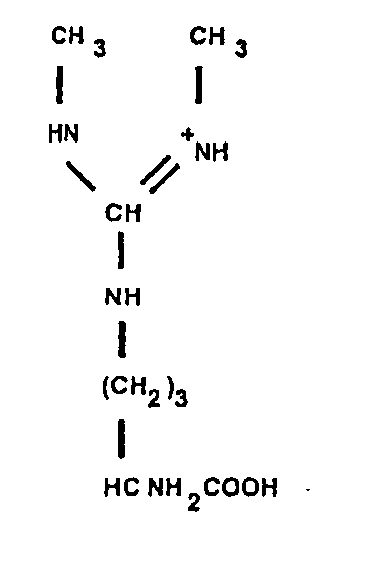
- the S33 peptide comprises a symmetric dimethylated arginine with the structure
- the invention is a method for use of the S33 peptide for in vitro diagnosis of SLE
- the invention is a method for use of the S33 peptide for differentiation of SLE and mixed connective tissue disease (MCTD).
- MCTD mixed connective tissue disease
- the invention is a kit for use of the S33 peptide for in vitro monitoring of the disease activity in dsDNA negative SLE patients, wherein the disease activity is defined as a correlation between the antibody titer and to the new mimotope peptide and the disease activity.
- the invention is a multimer peptide comprising multiples of the S33 peptide.
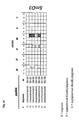
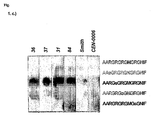
- a highly reactive peptide of SmD3 was synthesized with certain combinations of natural arginine and sdR. Following completion of the peptide synthesis non-specific binding sites were blocked by over-night incubation of the membranes in blocking buffer (BB) at room temperature (RT). After one washing step membranes were incubated with serum samples at a dilution of 1:100 in BB for 2 h at RT. Unbound antibodies were removed by three washing steps. For detection peroxidase conjugated goat-anti-human IgG antibody was diluted 1:5000 in BB and incubated for 75 min (RT). Superfluous secondary antibodies were removed by three washing steps. Finally, bound antibodies were visualized using the enhanced chemoluminiscence (ECL) detection-system. Assay conditions were used under which negative sera showed no reactivity.
- ECL enhanced chemoluminiscence
- ELISA-plates Preparation of ELISA-plates.
- the lyophilized S33 peptide was used to prepare a stock solution of 10 ⁇ g/ ⁇ l, which was stored in aliquots at -20°C until use. Binding of the peptide to ELISA plates was carried out using 2.5 ⁇ g/ml of the peptide in coating buffer in a final volume of 120 ⁇ l per well. The coating procedure was carried out at 15°C for 20h. Unspecific binding sites were blocked with blocking solution. After discarding the blocking solution solid phases were dried at 37°C for 2h and sealed.
- the assay was performed according to the general protocol of the Varelisa® system (Pharmacia Diagnostics, Freiburg). Blood donors demonstrated a reactivity range of 0.4-11.5 U/ml resulting in a mean value of 2.2 U/ml and a SD of 1.2 U/ml.
- the cut-off was technically set to 13 U/ml after ROC-analysis. PPVs and NPVs were calculated at different cut-off values.
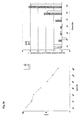
- linearity was analyzed by testing dilutions (1:1; 2:3; 1:2; 1:4; 1:8; 1:16; 1:32) of the highest standard point (S6) and of the high value sample from the precision analysis (H). For each dilution point, a ratio of the measured reactivity to the expected value was calculated, and 1 was substracted from this quotient.
- a male SLE patient was clinically and serologically observed over a time period of 18 month (6 serum samples; see figure 3).
- the patient was tested for antibodies to the RNP/Sm complex, to the Sm antigen, to the isolated UI-RNP complex, to histones, to dsDNA and to the S33 peptide using the respective test kits from Pharmacia Diagnostics.
- SmD1 polypeptides containing DMA represent a rather unspecific substrate for anti-Sm antibodies since they were also target of anti-ccntromere antibodies (ACA; #serum CEN (centromer)).
- ACA anti-ccntromere antibodies
- those ACA bound also to peptides containing the asymmetrical form of DMA.
- a 15 amino acid soluble peptide displaying highest sensitivity and specificity in the SPOT-assay ( 108 AARG sdR GRGMGRGNIF 122 ) SEQ ID NO:1 was synthesized for technical reasons with an additional Cys at the C-terminus. This peptide was subsequently used to develop an ELISA system based on the general protocol of the Varelisa® tests (Pharmacia, Freiburg, Germany).
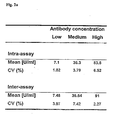
- Assay performance characteristic To evaluate the assay performance characteristics precision, reproducibility and linearity were analyzed. The intra- and interassay variability (CV%) of three samples were found ranging from 1,82 to 6.52% and from 2.27 to 7.42%, respectively. Dilution series of two samples demonstrated a linear range on five subsequent dilutions (>20% deviation). For the cut-off definition a receiver operating characteristic (ROC)- analysis was performed with SLE and control sera.
- the assay performance characteristics of the new anti-S33-test including intra- and interassay variability (a.), linearity (b.), ROC-analysis, PPV, NPV and efficiency (c.) are summarized in figure 2 (a. - c.).
- the false positive ra sample contains high titers of antibodies to the u1-rnps- 68kda (ratio 4.5), ul-c (ratio 9.4) and histones (133.8 u/ml) (see table 3).
- Anti-smbb'and anti-smd titers as determined by elisa were elevated when compared to the controls, but still below the cut-off values (see table 3). Table 3.
- anti-S33 demonstrated a sensitivity of 14.9% and a specificity of 99,7% for lupus resulting in a high positive (PPV; 93.7%) and negative predictive value (NPV; 80.2%) and thus a high diagnostic efficiency (80.7%). Therefore this test offers new opportunities for the diagnosis of systemic lupus erythrematosus, especially for the differentiation between SLE and MCTD as revealed by the correlation study.
- EBV, EBNA and anti-SmD antibodies Epitope-mapping studies on SmD1 have identified an epitope-motif (aa 95-119) that cross-reacts with a homologue sequence 35-58 of the Epstein-Barr virus nuclear antigen 1 (EBNA-1) (Sabbatini et al., 1993; Sabbatini et al., 1993; Marchini et al., 1994). A more recent study has shown that this epitope also cross-reacts with a homologue region of SmD3 containing glycine arginine repeats (RGRGRGMGR) SEG ID No:5 (McClain et al., 2002).
- EBNA-1 Epstein-Barr virus nuclear antigen 1
- GPRR (aa 114-119 on SmD1) represents a common cross-reactive autoepitope motif, which is present not only on EBNA-1, but also on a variety of autoantigens including CENP-A, B, C, 5mBB', SmD1 and Ro-52, to term only a few (Mahler et al., 2001).
- patients suffering from infectious mononucleosis or SLE related disorders might be tested false positive in ELISAs using the C-terminal extensions of SmD1 or SmD3
- several studies have suggested an influence of EBY on the development of Lupus-like conditions (James et al., 1997).
- Riemekasten vs Brahms The obvious conflict between the results of Riemekasten et al. and Brahms et al. might be explained by the existence of different epitopes on the C-terminal extensions of SmD1.
- the peptide aa 83-119 (Riemekasten et al., 1998) may form a conformational epitope, whereas the shorter peptides used in the second study contain linear, sdR dependent binding sites (Brahms et al., 2000).
- SmD1 83-119 fused to a carrier protein is able to accelerate the pathogenic process of Lupusprone mice (Riemekasten et al., 2001).
- Rhupus Rheumatoid Arthritis (RA) and systemic lupus erythremtosus (SLE) are related disorders with an autoimmune etiology. Both diseases are accompanied by the occurrence of self-reactive antibodies to defined structures.
- RA Rheumatoid Arthritis
- SLE systemic lupus erythremtosus
- RA and Lupus Several studies have reported overlap syndromes between RA and Lupus, which were therefore sometimes called the ''Rhupus''-Syndrom (Miyachi and Tan, 1979; Panush et al., 1988; Brand et al., 1992), In the presented examples one patient was found within the RA group who demonstrated anti-S33 reactivity (24.6 U/ml). Whether this result reflects a false positive testing or wether autoantibodies to the S33 peptide represent a precursor of lupus-like conditions remains unclear and has to be investigated.
Landscapes
- Health & Medical Sciences (AREA)
- Life Sciences & Earth Sciences (AREA)
- Chemical & Material Sciences (AREA)
- Immunology (AREA)
- Hematology (AREA)
- Organic Chemistry (AREA)
- Molecular Biology (AREA)
- General Health & Medical Sciences (AREA)
- Biochemistry (AREA)
- Engineering & Computer Science (AREA)
- Medicinal Chemistry (AREA)
- Biophysics (AREA)
- Proteomics, Peptides & Aminoacids (AREA)
- Gastroenterology & Hepatology (AREA)
- Urology & Nephrology (AREA)
- Zoology (AREA)
- Toxicology (AREA)
- Rehabilitation Therapy (AREA)
- Rheumatology (AREA)
- Genetics & Genomics (AREA)
- Biomedical Technology (AREA)
- Diabetes (AREA)
- Cell Biology (AREA)
- Microbiology (AREA)
- Biotechnology (AREA)
- Food Science & Technology (AREA)
- Physics & Mathematics (AREA)
- Analytical Chemistry (AREA)
- General Physics & Mathematics (AREA)
- Pathology (AREA)
- Peptides Or Proteins (AREA)
- Investigating Or Analysing Biological Materials (AREA)
- Other Investigation Or Analysis Of Materials By Electrical Means (AREA)
Claims (12)
- Peptid, das die Aminosäuresequenz AARGsdRGRGMGRGNIF (SEQ ID NO: 1) aufweist, das dazu fähig ist, mit Antikörpern zu reagieren, die in Seren von Patienten mit systemischem Lupus erythematosus (SLE) vorhanden sind, worin sdR ein symmetrisch dimethyliertes Arginin ist.
- Peptid nach Anspruch 1, worin das symmetrisch dimethylierte Arginin die Position 112 in der Polypeptidsequenz von SmD3 aufweist.
- Peptid nach Anspruch 1 oder 2, worin die Struktur des symmetrisch dimethylierten Arginins ist
- Verwendung eines Peptids, das die Aminosäuresequenz AARGsdRGRGMGRGNIF (SEQ ID NO: 1) aufweist, das dazu fähig ist, mit Antikörpern zu reagieren, die in Seren von Patienten mit systemischem Lupus erythematosus (SLE) vorhanden sind, zur Herstellung einer Zusammensetzung zur Diagnose von SLE-Patienten.
- Verwendung nach Anspruch 4, worin die Diagnose eine Differentialdiagnose ist, um zwischen SLE-Patienten und Patienten mit Sharp-Syndrom (mixed connective tissue disease) (MCTD) zu unterscheiden.
- Verwendung nach Anspruch 4, worin die Diagnose eine in vitro-Diagnose von SLE ist.
- Verwendung nach Anspruch 4, worin die Zusammensetzung zur in vitro-Überwachung der Krankheitsaktivität von dsDNA-negativen SLE-Patienten verwendet wird.
- Verwendung nach Anspruch 4, worin die Zusammensetzung zur Differenzierung zwischen SLE und MCTD verwendet wird.
- Verwendung nach einem der Ansprüche 4 bis 8, worin das symmetrisch dimethylierte Arginin die Position 112 in der Polypeptidsequenz von SmD3 aufweist.
- Verwendung eines Multimer-Peptids, das das Peptid nach Anspruch 1 umfasst.
- Verwendung nach einem der Ansprüche 4 bis 10, worin die Struktur des symmetrisch dimethylierten Arginins ist

- Verfahren zur Überwachung einer Krankheitsaktivität, umfassend ein wiederholtes Testen zur Überprüfung des Titers von Antikörpern, die dazu fähig sind, mit dem Peptid nach einem der Ansprüche 1 bis 3 zu reagieren, um die Wirkung der Behandlung oder die Krankheitsaktivität zu beobachten.
Applications Claiming Priority (2)
| Application Number | Priority Date | Filing Date | Title |
|---|---|---|---|
| SE0300958A SE0300958D0 (sv) | 2003-04-02 | 2003-04-02 | Analytical method and kit therof |
| PCT/SE2004/000526 WO2004087745A1 (en) | 2003-04-02 | 2004-04-02 | Analytical method and kit thereof |
Publications (2)
| Publication Number | Publication Date |
|---|---|
| EP1613645A1 EP1613645A1 (de) | 2006-01-11 |
| EP1613645B1 true EP1613645B1 (de) | 2007-11-07 |
Family
ID=20290899
Family Applications (1)
| Application Number | Title | Priority Date | Filing Date |
|---|---|---|---|
| EP04725578A Expired - Lifetime EP1613645B1 (de) | 2003-04-02 | 2004-04-02 | Analytisches verfahren und kit dafür |
Country Status (11)
| Country | Link |
|---|---|
| US (1) | US7833983B2 (de) |
| EP (1) | EP1613645B1 (de) |
| JP (1) | JP4769712B2 (de) |
| AT (1) | ATE377607T1 (de) |
| AU (1) | AU2004226015B2 (de) |
| DE (1) | DE602004009906T2 (de) |
| DK (1) | DK1613645T3 (de) |
| ES (1) | ES2295847T3 (de) |
| PT (1) | PT1613645E (de) |
| SE (1) | SE0300958D0 (de) |
| WO (1) | WO2004087745A1 (de) |
Families Citing this family (1)
| Publication number | Priority date | Publication date | Assignee | Title |
|---|---|---|---|---|
| CA2905178A1 (en) | 2013-03-15 | 2014-09-18 | Hycor Biomedical, Inc. | Device and associated methods for performing luminescence and fluorescence measurements of a sample |
Family Cites Families (1)
| Publication number | Priority date | Publication date | Assignee | Title |
|---|---|---|---|---|
| AU751784B2 (en) * | 1997-08-29 | 2002-08-29 | Innogenetics N.V. | Methylated, SmD homologous peptides, reactive with the antibodies from sera of living beings affected with systemic lupus erythematosus |
-
2003
- 2003-04-02 SE SE0300958A patent/SE0300958D0/xx unknown
-
2004
- 2004-04-02 AT AT04725578T patent/ATE377607T1/de active
- 2004-04-02 DE DE602004009906T patent/DE602004009906T2/de not_active Expired - Lifetime
- 2004-04-02 EP EP04725578A patent/EP1613645B1/de not_active Expired - Lifetime
- 2004-04-02 AU AU2004226015A patent/AU2004226015B2/en not_active Ceased
- 2004-04-02 WO PCT/SE2004/000526 patent/WO2004087745A1/en not_active Ceased
- 2004-04-02 ES ES04725578T patent/ES2295847T3/es not_active Expired - Lifetime
- 2004-04-02 PT PT04725578T patent/PT1613645E/pt unknown
- 2004-04-02 JP JP2006508002A patent/JP4769712B2/ja not_active Expired - Lifetime
- 2004-04-02 US US10/551,636 patent/US7833983B2/en active Active
- 2004-04-02 DK DK04725578T patent/DK1613645T3/da active
Non-Patent Citations (1)
| Title |
|---|
| GARY JD ET AL.: "The Predominant Protein-arginine Methyltransferase from Saccharomyces cerevisiae", THE JOURNAL OF BIOLOGICAL CHEMISTRY, vol. 271, no. 21, 24 May 1996 (1996-05-24), pages 12585 - 12594 * |
Also Published As
| Publication number | Publication date |
|---|---|
| ES2295847T3 (es) | 2008-04-16 |
| DE602004009906D1 (de) | 2007-12-20 |
| ATE377607T1 (de) | 2007-11-15 |
| JP2007528840A (ja) | 2007-10-18 |
| JP4769712B2 (ja) | 2011-09-07 |
| WO2004087745A1 (en) | 2004-10-14 |
| DE602004009906T2 (de) | 2008-09-11 |
| PT1613645E (pt) | 2008-02-15 |
| AU2004226015A1 (en) | 2004-10-14 |
| EP1613645A1 (de) | 2006-01-11 |
| AU2004226015B2 (en) | 2010-07-08 |
| US7833983B2 (en) | 2010-11-16 |
| US20060240477A1 (en) | 2006-10-26 |
| DK1613645T3 (da) | 2008-03-17 |
| SE0300958D0 (sv) | 2003-04-02 |
Similar Documents
| Publication | Publication Date | Title |
|---|---|---|
| Mahler et al. | Identification of a SmD3 epitope with a single symmetrical dimethylation of an arginine residue as a specific target of a subpopulation of anti-Sm antibodies | |
| Schulte-Pelkum et al. | Latest update on the Ro/SS-A autoantibody system | |
| US8772448B2 (en) | Peptides immunoreactive with autoantibodies from patients suffering from rheumatoid arthritis | |
| Vittecoq et al. | Autoantibodies recognizing citrullinated rat filaggrin in an ELISA using citrullinated and non-citrullinated recombinant proteins as antigens are highly diagnostic for rheumatoid arthritis | |
| McClain et al. | Anti-sm autoantibodies in systemic lupus target highly basic surface structures of complexed spliceosomal autoantigens | |
| Routsias et al. | The clinical value of intracellular autoantigens B-cell epitopes in systemic rheumatic diseases | |
| Routsias et al. | Autoantibodies to intracellular autoantigens and their B-cell epitopes: molecular probes to study the autoimmune response | |
| CN102138072B (zh) | 皮肌炎的诊断方法和诊断试剂盒 | |
| WO2012001103A1 (en) | Histone citrullinated peptides and uses thereof | |
| López-Longo et al. | Simultaneous identification of various antinuclear antibodies using an automated multiparameter line immunoassay system | |
| Jaekel et al. | Reactivities to the Sm autoantigenic complex and the synthetic SmD1-aa83–119 peptide in systemic lupus erythematosus and other autoimmune diseases | |
| Zamanou et al. | Anti‐smooth muscle antibodies (ASMAs) and anti‐cytoskeleton antibodies (ACTAs) in liver diseases: a comparison of classical indirect immunofluorescence with ELISA | |
| Mahler et al. | PM1-Alpha ELISA: the assay of choice for the detection of anti-PM/Scl autoantibodies? | |
| AU2004226015B2 (en) | Analytical method and kit thereof | |
| CN103748468A (zh) | 诊断类风湿性关节炎的方法 | |
| Pérez et al. | Synthesis of overlapping fibrin citrullinated peptides and their use for diagnosing rheumatoid arthritis | |
| Kurien et al. | Autoantibody to the leucine zipper region of 52 kDa Ro/SSA binds native 60 kDa Ro/SSA: identification of a tertiary epitope with components from 60 kDa Ro/SSA and 52 kDa Ro/SSA | |
| Chen et al. | Characterization of monoclonal antibodies recognizing citrulline-modified residues | |
| Chou et al. | B-cell epitopes of autoantigenic DNA-binding proteins | |
| US8597955B2 (en) | HNRNP A3 related peptides and use thereof for diagnosis of rheumatoid arthritis | |
| Hiepe | Autoantibodies in systemic lupus erythematosus | |
| KR20260068070A (ko) | 시트룰린화된 setdb1 폴리펩티드 및 이를 이용한 류마티스 관절염 진단 | |
| Yano et al. | Anti-Ki antibodies recognize an epitope homologous with SV40 nuclear localization signal: clinical significance and reactivities in various immunoassays | |
| Henriksson et al. | Human anti-RNP sera contain both human-specific and cross-reactive anti-70K autoantibodies | |
| Tzioufas et al. | B-cell epitopes of sjögren’s syndrome-related autoantigens Ro/SSA and La/SSB |
Legal Events
| Date | Code | Title | Description |
|---|---|---|---|
| PUAI | Public reference made under article 153(3) epc to a published international application that has entered the european phase |
Free format text: ORIGINAL CODE: 0009012 |
|
| 17P | Request for examination filed |
Effective date: 20051020 |
|
| AK | Designated contracting states |
Kind code of ref document: A1 Designated state(s): AT BE BG CH CY CZ DE DK EE ES FI FR GB GR HU IE IT LI LU MC NL PL PT RO SE SI SK TR |
|
| AX | Request for extension of the european patent |
Extension state: AL HR LT LV MK |
|
| DAX | Request for extension of the european patent (deleted) | ||
| 17Q | First examination report despatched |
Effective date: 20060814 |
|
| RAP1 | Party data changed (applicant data changed or rights of an application transferred) |
Owner name: PHADIA AB |
|
| 17Q | First examination report despatched |
Effective date: 20060814 |
|
| GRAP | Despatch of communication of intention to grant a patent |
Free format text: ORIGINAL CODE: EPIDOSNIGR1 |
|
| GRAS | Grant fee paid |
Free format text: ORIGINAL CODE: EPIDOSNIGR3 |
|
| GRAA | (expected) grant |
Free format text: ORIGINAL CODE: 0009210 |
|
| AK | Designated contracting states |
Kind code of ref document: B1 Designated state(s): AT BE BG CH CY CZ DE DK EE ES FI FR GB GR HU IE IT LI LU MC NL PL PT RO SE SI SK TR |
|
| REG | Reference to a national code |
Ref country code: GB Ref legal event code: FG4D |
|
| REG | Reference to a national code |
Ref country code: IE Ref legal event code: FG4D |
|
| REG | Reference to a national code |
Ref country code: CH Ref legal event code: EP |
|
| REF | Corresponds to: |
Ref document number: 602004009906 Country of ref document: DE Date of ref document: 20071220 Kind code of ref document: P |
|
| REG | Reference to a national code |
Ref country code: SE Ref legal event code: TRGR |
|
| REG | Reference to a national code |
Ref country code: PT Ref legal event code: SC4A Free format text: AVAILABILITY OF NATIONAL TRANSLATION Effective date: 20080201 |
|
| REG | Reference to a national code |
Ref country code: CH Ref legal event code: NV Representative=s name: PATENTANWAELTE SCHAAD, BALASS, MENZL & PARTNER AG |
|
| REG | Reference to a national code |
Ref country code: DK Ref legal event code: T3 |
|
| REG | Reference to a national code |
Ref country code: ES Ref legal event code: FG2A Ref document number: 2295847 Country of ref document: ES Kind code of ref document: T3 |
|
| PG25 | Lapsed in a contracting state [announced via postgrant information from national office to epo] |
Ref country code: BG Free format text: LAPSE BECAUSE OF FAILURE TO SUBMIT A TRANSLATION OF THE DESCRIPTION OR TO PAY THE FEE WITHIN THE PRESCRIBED TIME-LIMIT Effective date: 20080207 Ref country code: SI Free format text: LAPSE BECAUSE OF FAILURE TO SUBMIT A TRANSLATION OF THE DESCRIPTION OR TO PAY THE FEE WITHIN THE PRESCRIBED TIME-LIMIT Effective date: 20071107 Ref country code: PL Free format text: LAPSE BECAUSE OF FAILURE TO SUBMIT A TRANSLATION OF THE DESCRIPTION OR TO PAY THE FEE WITHIN THE PRESCRIBED TIME-LIMIT Effective date: 20071107 |
|
| ET | Fr: translation filed | ||
| PG25 | Lapsed in a contracting state [announced via postgrant information from national office to epo] |
Ref country code: CZ Free format text: LAPSE BECAUSE OF FAILURE TO SUBMIT A TRANSLATION OF THE DESCRIPTION OR TO PAY THE FEE WITHIN THE PRESCRIBED TIME-LIMIT Effective date: 20071107 |
|
| PG25 | Lapsed in a contracting state [announced via postgrant information from national office to epo] |
Ref country code: SK Free format text: LAPSE BECAUSE OF FAILURE TO SUBMIT A TRANSLATION OF THE DESCRIPTION OR TO PAY THE FEE WITHIN THE PRESCRIBED TIME-LIMIT Effective date: 20071107 Ref country code: RO Free format text: LAPSE BECAUSE OF FAILURE TO SUBMIT A TRANSLATION OF THE DESCRIPTION OR TO PAY THE FEE WITHIN THE PRESCRIBED TIME-LIMIT Effective date: 20071107 |
|
| PLBE | No opposition filed within time limit |
Free format text: ORIGINAL CODE: 0009261 |
|
| STAA | Information on the status of an ep patent application or granted ep patent |
Free format text: STATUS: NO OPPOSITION FILED WITHIN TIME LIMIT |
|
| 26N | No opposition filed |
Effective date: 20080808 |
|
| PG25 | Lapsed in a contracting state [announced via postgrant information from national office to epo] |
Ref country code: MC Free format text: LAPSE BECAUSE OF NON-PAYMENT OF DUE FEES Effective date: 20080430 |
|
| PG25 | Lapsed in a contracting state [announced via postgrant information from national office to epo] |
Ref country code: EE Free format text: LAPSE BECAUSE OF FAILURE TO SUBMIT A TRANSLATION OF THE DESCRIPTION OR TO PAY THE FEE WITHIN THE PRESCRIBED TIME-LIMIT Effective date: 20071107 Ref country code: GR Free format text: LAPSE BECAUSE OF FAILURE TO SUBMIT A TRANSLATION OF THE DESCRIPTION OR TO PAY THE FEE WITHIN THE PRESCRIBED TIME-LIMIT Effective date: 20080208 |
|
| PG25 | Lapsed in a contracting state [announced via postgrant information from national office to epo] |
Ref country code: IE Free format text: LAPSE BECAUSE OF NON-PAYMENT OF DUE FEES Effective date: 20080402 |
|
| PG25 | Lapsed in a contracting state [announced via postgrant information from national office to epo] |
Ref country code: CY Free format text: LAPSE BECAUSE OF FAILURE TO SUBMIT A TRANSLATION OF THE DESCRIPTION OR TO PAY THE FEE WITHIN THE PRESCRIBED TIME-LIMIT Effective date: 20071107 |
|
| PG25 | Lapsed in a contracting state [announced via postgrant information from national office to epo] |
Ref country code: LU Free format text: LAPSE BECAUSE OF NON-PAYMENT OF DUE FEES Effective date: 20080402 Ref country code: HU Free format text: LAPSE BECAUSE OF FAILURE TO SUBMIT A TRANSLATION OF THE DESCRIPTION OR TO PAY THE FEE WITHIN THE PRESCRIBED TIME-LIMIT Effective date: 20080508 |
|
| PG25 | Lapsed in a contracting state [announced via postgrant information from national office to epo] |
Ref country code: TR Free format text: LAPSE BECAUSE OF FAILURE TO SUBMIT A TRANSLATION OF THE DESCRIPTION OR TO PAY THE FEE WITHIN THE PRESCRIBED TIME-LIMIT Effective date: 20071107 |
|
| REG | Reference to a national code |
Ref country code: FR Ref legal event code: PLFP Year of fee payment: 13 |
|
| REG | Reference to a national code |
Ref country code: FR Ref legal event code: PLFP Year of fee payment: 14 |
|
| REG | Reference to a national code |
Ref country code: FR Ref legal event code: PLFP Year of fee payment: 15 |
|
| PGFP | Annual fee paid to national office [announced via postgrant information from national office to epo] |
Ref country code: NL Payment date: 20230330 Year of fee payment: 20 |
|
| PGFP | Annual fee paid to national office [announced via postgrant information from national office to epo] |
Ref country code: PT Payment date: 20230403 Year of fee payment: 20 Ref country code: IT Payment date: 20230427 Year of fee payment: 20 Ref country code: FR Payment date: 20230428 Year of fee payment: 20 Ref country code: ES Payment date: 20230510 Year of fee payment: 20 Ref country code: DK Payment date: 20230419 Year of fee payment: 20 Ref country code: DE Payment date: 20230411 Year of fee payment: 20 Ref country code: CH Payment date: 20230502 Year of fee payment: 20 |
|
| PGFP | Annual fee paid to national office [announced via postgrant information from national office to epo] |
Ref country code: SE Payment date: 20230425 Year of fee payment: 20 Ref country code: FI Payment date: 20230427 Year of fee payment: 20 Ref country code: AT Payment date: 20230427 Year of fee payment: 20 |
|
| PGFP | Annual fee paid to national office [announced via postgrant information from national office to epo] |
Ref country code: BE Payment date: 20230428 Year of fee payment: 20 |
|
| PGFP | Annual fee paid to national office [announced via postgrant information from national office to epo] |
Ref country code: GB Payment date: 20230418 Year of fee payment: 20 |
|
| REG | Reference to a national code |
Ref country code: DE Ref legal event code: R071 Ref document number: 602004009906 Country of ref document: DE |
|
| REG | Reference to a national code |
Ref country code: NL Ref legal event code: MK Effective date: 20240401 |
|
| REG | Reference to a national code |
Ref country code: DK Ref legal event code: EUP Expiry date: 20240402 |
|
| REG | Reference to a national code |
Ref country code: CH Ref legal event code: PL |
|
| REG | Reference to a national code |
Ref country code: GB Ref legal event code: PE20 Expiry date: 20240401 |
|
| PG25 | Lapsed in a contracting state [announced via postgrant information from national office to epo] |
Ref country code: ES Free format text: LAPSE BECAUSE OF EXPIRATION OF PROTECTION Effective date: 20240403 |
|
| REG | Reference to a national code |
Ref country code: ES Ref legal event code: FD2A Effective date: 20240426 |
|
| PG25 | Lapsed in a contracting state [announced via postgrant information from national office to epo] |
Ref country code: ES Free format text: LAPSE BECAUSE OF EXPIRATION OF PROTECTION Effective date: 20240403 Ref country code: GB Free format text: LAPSE BECAUSE OF EXPIRATION OF PROTECTION Effective date: 20240401 |
|
| REG | Reference to a national code |
Ref country code: BE Ref legal event code: MK Effective date: 20240402 |
|
| REG | Reference to a national code |
Ref country code: AT Ref legal event code: MK07 Ref document number: 377607 Country of ref document: AT Kind code of ref document: T Effective date: 20240402 |
|
| REG | Reference to a national code |
Ref country code: SE Ref legal event code: EUG |
|
| PG25 | Lapsed in a contracting state [announced via postgrant information from national office to epo] |
Ref country code: PT Free format text: LAPSE BECAUSE OF EXPIRATION OF PROTECTION Effective date: 20240410 |
|
| PG25 | Lapsed in a contracting state [announced via postgrant information from national office to epo] |
Ref country code: PT Free format text: LAPSE BECAUSE OF EXPIRATION OF PROTECTION Effective date: 20240410 |