EP1607379A1 - Material for thermal barrier coating - Google Patents
Material for thermal barrier coating Download PDFInfo
- Publication number
- EP1607379A1 EP1607379A1 EP04722995A EP04722995A EP1607379A1 EP 1607379 A1 EP1607379 A1 EP 1607379A1 EP 04722995 A EP04722995 A EP 04722995A EP 04722995 A EP04722995 A EP 04722995A EP 1607379 A1 EP1607379 A1 EP 1607379A1
- Authority
- EP
- European Patent Office
- Prior art keywords
- barrier coating
- thermal barrier
- oxide
- sio
- coating material
- Prior art date
- Legal status (The legal status is an assumption and is not a legal conclusion. Google has not performed a legal analysis and makes no representation as to the accuracy of the status listed.)
- Withdrawn
Links
Images






Classifications
-
- F—MECHANICAL ENGINEERING; LIGHTING; HEATING; WEAPONS; BLASTING
- F01—MACHINES OR ENGINES IN GENERAL; ENGINE PLANTS IN GENERAL; STEAM ENGINES
- F01D—NON-POSITIVE DISPLACEMENT MACHINES OR ENGINES, e.g. STEAM TURBINES
- F01D5/00—Blades; Blade-carrying members; Heating, heat-insulating, cooling or antivibration means on the blades or the members
- F01D5/12—Blades
- F01D5/28—Selecting particular materials; Particular measures relating thereto; Measures against erosion or corrosion
- F01D5/288—Protective coatings for blades
-
- C—CHEMISTRY; METALLURGY
- C04—CEMENTS; CONCRETE; ARTIFICIAL STONE; CERAMICS; REFRACTORIES
- C04B—LIME, MAGNESIA; SLAG; CEMENTS; COMPOSITIONS THEREOF, e.g. MORTARS, CONCRETE OR LIKE BUILDING MATERIALS; ARTIFICIAL STONE; CERAMICS; REFRACTORIES; TREATMENT OF NATURAL STONE
- C04B35/00—Shaped ceramic products characterised by their composition; Ceramics compositions; Processing powders of inorganic compounds preparatory to the manufacturing of ceramic products
- C04B35/01—Shaped ceramic products characterised by their composition; Ceramics compositions; Processing powders of inorganic compounds preparatory to the manufacturing of ceramic products based on oxide ceramics
-
- C—CHEMISTRY; METALLURGY
- C04—CEMENTS; CONCRETE; ARTIFICIAL STONE; CERAMICS; REFRACTORIES
- C04B—LIME, MAGNESIA; SLAG; CEMENTS; COMPOSITIONS THEREOF, e.g. MORTARS, CONCRETE OR LIKE BUILDING MATERIALS; ARTIFICIAL STONE; CERAMICS; REFRACTORIES; TREATMENT OF NATURAL STONE
- C04B35/00—Shaped ceramic products characterised by their composition; Ceramics compositions; Processing powders of inorganic compounds preparatory to the manufacturing of ceramic products
- C04B35/01—Shaped ceramic products characterised by their composition; Ceramics compositions; Processing powders of inorganic compounds preparatory to the manufacturing of ceramic products based on oxide ceramics
- C04B35/16—Shaped ceramic products characterised by their composition; Ceramics compositions; Processing powders of inorganic compounds preparatory to the manufacturing of ceramic products based on oxide ceramics based on silicates other than clay
-
- C—CHEMISTRY; METALLURGY
- C04—CEMENTS; CONCRETE; ARTIFICIAL STONE; CERAMICS; REFRACTORIES
- C04B—LIME, MAGNESIA; SLAG; CEMENTS; COMPOSITIONS THEREOF, e.g. MORTARS, CONCRETE OR LIKE BUILDING MATERIALS; ARTIFICIAL STONE; CERAMICS; REFRACTORIES; TREATMENT OF NATURAL STONE
- C04B35/00—Shaped ceramic products characterised by their composition; Ceramics compositions; Processing powders of inorganic compounds preparatory to the manufacturing of ceramic products
- C04B35/01—Shaped ceramic products characterised by their composition; Ceramics compositions; Processing powders of inorganic compounds preparatory to the manufacturing of ceramic products based on oxide ceramics
- C04B35/16—Shaped ceramic products characterised by their composition; Ceramics compositions; Processing powders of inorganic compounds preparatory to the manufacturing of ceramic products based on oxide ceramics based on silicates other than clay
- C04B35/18—Shaped ceramic products characterised by their composition; Ceramics compositions; Processing powders of inorganic compounds preparatory to the manufacturing of ceramic products based on oxide ceramics based on silicates other than clay rich in aluminium oxide
-
- C—CHEMISTRY; METALLURGY
- C04—CEMENTS; CONCRETE; ARTIFICIAL STONE; CERAMICS; REFRACTORIES
- C04B—LIME, MAGNESIA; SLAG; CEMENTS; COMPOSITIONS THEREOF, e.g. MORTARS, CONCRETE OR LIKE BUILDING MATERIALS; ARTIFICIAL STONE; CERAMICS; REFRACTORIES; TREATMENT OF NATURAL STONE
- C04B35/00—Shaped ceramic products characterised by their composition; Ceramics compositions; Processing powders of inorganic compounds preparatory to the manufacturing of ceramic products
- C04B35/01—Shaped ceramic products characterised by their composition; Ceramics compositions; Processing powders of inorganic compounds preparatory to the manufacturing of ceramic products based on oxide ceramics
- C04B35/16—Shaped ceramic products characterised by their composition; Ceramics compositions; Processing powders of inorganic compounds preparatory to the manufacturing of ceramic products based on oxide ceramics based on silicates other than clay
- C04B35/20—Shaped ceramic products characterised by their composition; Ceramics compositions; Processing powders of inorganic compounds preparatory to the manufacturing of ceramic products based on oxide ceramics based on silicates other than clay rich in magnesium oxide, e.g. forsterite
-
- C—CHEMISTRY; METALLURGY
- C04—CEMENTS; CONCRETE; ARTIFICIAL STONE; CERAMICS; REFRACTORIES
- C04B—LIME, MAGNESIA; SLAG; CEMENTS; COMPOSITIONS THEREOF, e.g. MORTARS, CONCRETE OR LIKE BUILDING MATERIALS; ARTIFICIAL STONE; CERAMICS; REFRACTORIES; TREATMENT OF NATURAL STONE
- C04B35/00—Shaped ceramic products characterised by their composition; Ceramics compositions; Processing powders of inorganic compounds preparatory to the manufacturing of ceramic products
- C04B35/01—Shaped ceramic products characterised by their composition; Ceramics compositions; Processing powders of inorganic compounds preparatory to the manufacturing of ceramic products based on oxide ceramics
- C04B35/16—Shaped ceramic products characterised by their composition; Ceramics compositions; Processing powders of inorganic compounds preparatory to the manufacturing of ceramic products based on oxide ceramics based on silicates other than clay
- C04B35/22—Shaped ceramic products characterised by their composition; Ceramics compositions; Processing powders of inorganic compounds preparatory to the manufacturing of ceramic products based on oxide ceramics based on silicates other than clay rich in calcium oxide, e.g. wollastonite
-
- C—CHEMISTRY; METALLURGY
- C04—CEMENTS; CONCRETE; ARTIFICIAL STONE; CERAMICS; REFRACTORIES
- C04B—LIME, MAGNESIA; SLAG; CEMENTS; COMPOSITIONS THEREOF, e.g. MORTARS, CONCRETE OR LIKE BUILDING MATERIALS; ARTIFICIAL STONE; CERAMICS; REFRACTORIES; TREATMENT OF NATURAL STONE
- C04B35/00—Shaped ceramic products characterised by their composition; Ceramics compositions; Processing powders of inorganic compounds preparatory to the manufacturing of ceramic products
- C04B35/01—Shaped ceramic products characterised by their composition; Ceramics compositions; Processing powders of inorganic compounds preparatory to the manufacturing of ceramic products based on oxide ceramics
- C04B35/46—Shaped ceramic products characterised by their composition; Ceramics compositions; Processing powders of inorganic compounds preparatory to the manufacturing of ceramic products based on oxide ceramics based on titanium oxides or titanates
- C04B35/462—Shaped ceramic products characterised by their composition; Ceramics compositions; Processing powders of inorganic compounds preparatory to the manufacturing of ceramic products based on oxide ceramics based on titanium oxides or titanates based on titanates
-
- C—CHEMISTRY; METALLURGY
- C04—CEMENTS; CONCRETE; ARTIFICIAL STONE; CERAMICS; REFRACTORIES
- C04B—LIME, MAGNESIA; SLAG; CEMENTS; COMPOSITIONS THEREOF, e.g. MORTARS, CONCRETE OR LIKE BUILDING MATERIALS; ARTIFICIAL STONE; CERAMICS; REFRACTORIES; TREATMENT OF NATURAL STONE
- C04B35/00—Shaped ceramic products characterised by their composition; Ceramics compositions; Processing powders of inorganic compounds preparatory to the manufacturing of ceramic products
- C04B35/01—Shaped ceramic products characterised by their composition; Ceramics compositions; Processing powders of inorganic compounds preparatory to the manufacturing of ceramic products based on oxide ceramics
- C04B35/46—Shaped ceramic products characterised by their composition; Ceramics compositions; Processing powders of inorganic compounds preparatory to the manufacturing of ceramic products based on oxide ceramics based on titanium oxides or titanates
- C04B35/462—Shaped ceramic products characterised by their composition; Ceramics compositions; Processing powders of inorganic compounds preparatory to the manufacturing of ceramic products based on oxide ceramics based on titanium oxides or titanates based on titanates
- C04B35/465—Shaped ceramic products characterised by their composition; Ceramics compositions; Processing powders of inorganic compounds preparatory to the manufacturing of ceramic products based on oxide ceramics based on titanium oxides or titanates based on titanates based on alkaline earth metal titanates
- C04B35/47—Shaped ceramic products characterised by their composition; Ceramics compositions; Processing powders of inorganic compounds preparatory to the manufacturing of ceramic products based on oxide ceramics based on titanium oxides or titanates based on titanates based on alkaline earth metal titanates based on strontium titanates
-
- C—CHEMISTRY; METALLURGY
- C04—CEMENTS; CONCRETE; ARTIFICIAL STONE; CERAMICS; REFRACTORIES
- C04B—LIME, MAGNESIA; SLAG; CEMENTS; COMPOSITIONS THEREOF, e.g. MORTARS, CONCRETE OR LIKE BUILDING MATERIALS; ARTIFICIAL STONE; CERAMICS; REFRACTORIES; TREATMENT OF NATURAL STONE
- C04B35/00—Shaped ceramic products characterised by their composition; Ceramics compositions; Processing powders of inorganic compounds preparatory to the manufacturing of ceramic products
- C04B35/01—Shaped ceramic products characterised by their composition; Ceramics compositions; Processing powders of inorganic compounds preparatory to the manufacturing of ceramic products based on oxide ceramics
- C04B35/495—Shaped ceramic products characterised by their composition; Ceramics compositions; Processing powders of inorganic compounds preparatory to the manufacturing of ceramic products based on oxide ceramics based on vanadium, niobium, tantalum, molybdenum or tungsten oxides or solid solutions thereof with other oxides, e.g. vanadates, niobates, tantalates, molybdates or tungstates
-
- C—CHEMISTRY; METALLURGY
- C23—COATING METALLIC MATERIAL; COATING MATERIAL WITH METALLIC MATERIAL; CHEMICAL SURFACE TREATMENT; DIFFUSION TREATMENT OF METALLIC MATERIAL; COATING BY VACUUM EVAPORATION, BY SPUTTERING, BY ION IMPLANTATION OR BY CHEMICAL VAPOUR DEPOSITION, IN GENERAL; INHIBITING CORROSION OF METALLIC MATERIAL OR INCRUSTATION IN GENERAL
- C23C—COATING METALLIC MATERIAL; COATING MATERIAL WITH METALLIC MATERIAL; SURFACE TREATMENT OF METALLIC MATERIAL BY DIFFUSION INTO THE SURFACE, BY CHEMICAL CONVERSION OR SUBSTITUTION; COATING BY VACUUM EVAPORATION, BY SPUTTERING, BY ION IMPLANTATION OR BY CHEMICAL VAPOUR DEPOSITION, IN GENERAL
- C23C30/00—Coating with metallic material characterised only by the composition of the metallic material, i.e. not characterised by the coating process
-
- C—CHEMISTRY; METALLURGY
- C23—COATING METALLIC MATERIAL; COATING MATERIAL WITH METALLIC MATERIAL; CHEMICAL SURFACE TREATMENT; DIFFUSION TREATMENT OF METALLIC MATERIAL; COATING BY VACUUM EVAPORATION, BY SPUTTERING, BY ION IMPLANTATION OR BY CHEMICAL VAPOUR DEPOSITION, IN GENERAL; INHIBITING CORROSION OF METALLIC MATERIAL OR INCRUSTATION IN GENERAL
- C23C—COATING METALLIC MATERIAL; COATING MATERIAL WITH METALLIC MATERIAL; SURFACE TREATMENT OF METALLIC MATERIAL BY DIFFUSION INTO THE SURFACE, BY CHEMICAL CONVERSION OR SUBSTITUTION; COATING BY VACUUM EVAPORATION, BY SPUTTERING, BY ION IMPLANTATION OR BY CHEMICAL VAPOUR DEPOSITION, IN GENERAL
- C23C4/00—Coating by spraying the coating material in the molten state, e.g. by flame, plasma or electric discharge
- C23C4/04—Coating by spraying the coating material in the molten state, e.g. by flame, plasma or electric discharge characterised by the coating material
- C23C4/10—Oxides, borides, carbides, nitrides or silicides; Mixtures thereof
- C23C4/11—Oxides
-
- C—CHEMISTRY; METALLURGY
- C04—CEMENTS; CONCRETE; ARTIFICIAL STONE; CERAMICS; REFRACTORIES
- C04B—LIME, MAGNESIA; SLAG; CEMENTS; COMPOSITIONS THEREOF, e.g. MORTARS, CONCRETE OR LIKE BUILDING MATERIALS; ARTIFICIAL STONE; CERAMICS; REFRACTORIES; TREATMENT OF NATURAL STONE
- C04B2235/00—Aspects relating to ceramic starting mixtures or sintered ceramic products
- C04B2235/02—Composition of constituents of the starting material or of secondary phases of the final product
- C04B2235/30—Constituents and secondary phases not being of a fibrous nature
- C04B2235/32—Metal oxides, mixed metal oxides, or oxide-forming salts thereof, e.g. carbonates, nitrates, (oxy)hydroxides, chlorides
- C04B2235/3205—Alkaline earth oxides or oxide forming salts thereof, e.g. beryllium oxide
-
- C—CHEMISTRY; METALLURGY
- C04—CEMENTS; CONCRETE; ARTIFICIAL STONE; CERAMICS; REFRACTORIES
- C04B—LIME, MAGNESIA; SLAG; CEMENTS; COMPOSITIONS THEREOF, e.g. MORTARS, CONCRETE OR LIKE BUILDING MATERIALS; ARTIFICIAL STONE; CERAMICS; REFRACTORIES; TREATMENT OF NATURAL STONE
- C04B2235/00—Aspects relating to ceramic starting mixtures or sintered ceramic products
- C04B2235/02—Composition of constituents of the starting material or of secondary phases of the final product
- C04B2235/30—Constituents and secondary phases not being of a fibrous nature
- C04B2235/32—Metal oxides, mixed metal oxides, or oxide-forming salts thereof, e.g. carbonates, nitrates, (oxy)hydroxides, chlorides
- C04B2235/3205—Alkaline earth oxides or oxide forming salts thereof, e.g. beryllium oxide
- C04B2235/3206—Magnesium oxides or oxide-forming salts thereof
-
- C—CHEMISTRY; METALLURGY
- C04—CEMENTS; CONCRETE; ARTIFICIAL STONE; CERAMICS; REFRACTORIES
- C04B—LIME, MAGNESIA; SLAG; CEMENTS; COMPOSITIONS THEREOF, e.g. MORTARS, CONCRETE OR LIKE BUILDING MATERIALS; ARTIFICIAL STONE; CERAMICS; REFRACTORIES; TREATMENT OF NATURAL STONE
- C04B2235/00—Aspects relating to ceramic starting mixtures or sintered ceramic products
- C04B2235/02—Composition of constituents of the starting material or of secondary phases of the final product
- C04B2235/30—Constituents and secondary phases not being of a fibrous nature
- C04B2235/32—Metal oxides, mixed metal oxides, or oxide-forming salts thereof, e.g. carbonates, nitrates, (oxy)hydroxides, chlorides
- C04B2235/3205—Alkaline earth oxides or oxide forming salts thereof, e.g. beryllium oxide
- C04B2235/3208—Calcium oxide or oxide-forming salts thereof, e.g. lime
-
- C—CHEMISTRY; METALLURGY
- C04—CEMENTS; CONCRETE; ARTIFICIAL STONE; CERAMICS; REFRACTORIES
- C04B—LIME, MAGNESIA; SLAG; CEMENTS; COMPOSITIONS THEREOF, e.g. MORTARS, CONCRETE OR LIKE BUILDING MATERIALS; ARTIFICIAL STONE; CERAMICS; REFRACTORIES; TREATMENT OF NATURAL STONE
- C04B2235/00—Aspects relating to ceramic starting mixtures or sintered ceramic products
- C04B2235/02—Composition of constituents of the starting material or of secondary phases of the final product
- C04B2235/30—Constituents and secondary phases not being of a fibrous nature
- C04B2235/32—Metal oxides, mixed metal oxides, or oxide-forming salts thereof, e.g. carbonates, nitrates, (oxy)hydroxides, chlorides
- C04B2235/3205—Alkaline earth oxides or oxide forming salts thereof, e.g. beryllium oxide
- C04B2235/3213—Strontium oxides or oxide-forming salts thereof
-
- C—CHEMISTRY; METALLURGY
- C04—CEMENTS; CONCRETE; ARTIFICIAL STONE; CERAMICS; REFRACTORIES
- C04B—LIME, MAGNESIA; SLAG; CEMENTS; COMPOSITIONS THEREOF, e.g. MORTARS, CONCRETE OR LIKE BUILDING MATERIALS; ARTIFICIAL STONE; CERAMICS; REFRACTORIES; TREATMENT OF NATURAL STONE
- C04B2235/00—Aspects relating to ceramic starting mixtures or sintered ceramic products
- C04B2235/02—Composition of constituents of the starting material or of secondary phases of the final product
- C04B2235/30—Constituents and secondary phases not being of a fibrous nature
- C04B2235/32—Metal oxides, mixed metal oxides, or oxide-forming salts thereof, e.g. carbonates, nitrates, (oxy)hydroxides, chlorides
- C04B2235/3205—Alkaline earth oxides or oxide forming salts thereof, e.g. beryllium oxide
- C04B2235/3215—Barium oxides or oxide-forming salts thereof
-
- C—CHEMISTRY; METALLURGY
- C04—CEMENTS; CONCRETE; ARTIFICIAL STONE; CERAMICS; REFRACTORIES
- C04B—LIME, MAGNESIA; SLAG; CEMENTS; COMPOSITIONS THEREOF, e.g. MORTARS, CONCRETE OR LIKE BUILDING MATERIALS; ARTIFICIAL STONE; CERAMICS; REFRACTORIES; TREATMENT OF NATURAL STONE
- C04B2235/00—Aspects relating to ceramic starting mixtures or sintered ceramic products
- C04B2235/02—Composition of constituents of the starting material or of secondary phases of the final product
- C04B2235/30—Constituents and secondary phases not being of a fibrous nature
- C04B2235/32—Metal oxides, mixed metal oxides, or oxide-forming salts thereof, e.g. carbonates, nitrates, (oxy)hydroxides, chlorides
- C04B2235/3224—Rare earth oxide or oxide forming salts thereof, e.g. scandium oxide
-
- C—CHEMISTRY; METALLURGY
- C04—CEMENTS; CONCRETE; ARTIFICIAL STONE; CERAMICS; REFRACTORIES
- C04B—LIME, MAGNESIA; SLAG; CEMENTS; COMPOSITIONS THEREOF, e.g. MORTARS, CONCRETE OR LIKE BUILDING MATERIALS; ARTIFICIAL STONE; CERAMICS; REFRACTORIES; TREATMENT OF NATURAL STONE
- C04B2235/00—Aspects relating to ceramic starting mixtures or sintered ceramic products
- C04B2235/02—Composition of constituents of the starting material or of secondary phases of the final product
- C04B2235/30—Constituents and secondary phases not being of a fibrous nature
- C04B2235/32—Metal oxides, mixed metal oxides, or oxide-forming salts thereof, e.g. carbonates, nitrates, (oxy)hydroxides, chlorides
- C04B2235/3224—Rare earth oxide or oxide forming salts thereof, e.g. scandium oxide
- C04B2235/3225—Yttrium oxide or oxide-forming salts thereof
-
- C—CHEMISTRY; METALLURGY
- C04—CEMENTS; CONCRETE; ARTIFICIAL STONE; CERAMICS; REFRACTORIES
- C04B—LIME, MAGNESIA; SLAG; CEMENTS; COMPOSITIONS THEREOF, e.g. MORTARS, CONCRETE OR LIKE BUILDING MATERIALS; ARTIFICIAL STONE; CERAMICS; REFRACTORIES; TREATMENT OF NATURAL STONE
- C04B2235/00—Aspects relating to ceramic starting mixtures or sintered ceramic products
- C04B2235/02—Composition of constituents of the starting material or of secondary phases of the final product
- C04B2235/30—Constituents and secondary phases not being of a fibrous nature
- C04B2235/32—Metal oxides, mixed metal oxides, or oxide-forming salts thereof, e.g. carbonates, nitrates, (oxy)hydroxides, chlorides
- C04B2235/3224—Rare earth oxide or oxide forming salts thereof, e.g. scandium oxide
- C04B2235/3227—Lanthanum oxide or oxide-forming salts thereof
-
- C—CHEMISTRY; METALLURGY
- C04—CEMENTS; CONCRETE; ARTIFICIAL STONE; CERAMICS; REFRACTORIES
- C04B—LIME, MAGNESIA; SLAG; CEMENTS; COMPOSITIONS THEREOF, e.g. MORTARS, CONCRETE OR LIKE BUILDING MATERIALS; ARTIFICIAL STONE; CERAMICS; REFRACTORIES; TREATMENT OF NATURAL STONE
- C04B2235/00—Aspects relating to ceramic starting mixtures or sintered ceramic products
- C04B2235/02—Composition of constituents of the starting material or of secondary phases of the final product
- C04B2235/30—Constituents and secondary phases not being of a fibrous nature
- C04B2235/32—Metal oxides, mixed metal oxides, or oxide-forming salts thereof, e.g. carbonates, nitrates, (oxy)hydroxides, chlorides
- C04B2235/3224—Rare earth oxide or oxide forming salts thereof, e.g. scandium oxide
- C04B2235/3229—Cerium oxides or oxide-forming salts thereof
-
- C—CHEMISTRY; METALLURGY
- C04—CEMENTS; CONCRETE; ARTIFICIAL STONE; CERAMICS; REFRACTORIES
- C04B—LIME, MAGNESIA; SLAG; CEMENTS; COMPOSITIONS THEREOF, e.g. MORTARS, CONCRETE OR LIKE BUILDING MATERIALS; ARTIFICIAL STONE; CERAMICS; REFRACTORIES; TREATMENT OF NATURAL STONE
- C04B2235/00—Aspects relating to ceramic starting mixtures or sintered ceramic products
- C04B2235/02—Composition of constituents of the starting material or of secondary phases of the final product
- C04B2235/30—Constituents and secondary phases not being of a fibrous nature
- C04B2235/32—Metal oxides, mixed metal oxides, or oxide-forming salts thereof, e.g. carbonates, nitrates, (oxy)hydroxides, chlorides
- C04B2235/3231—Refractory metal oxides, their mixed metal oxides, or oxide-forming salts thereof
- C04B2235/3232—Titanium oxides or titanates, e.g. rutile or anatase
-
- C—CHEMISTRY; METALLURGY
- C04—CEMENTS; CONCRETE; ARTIFICIAL STONE; CERAMICS; REFRACTORIES
- C04B—LIME, MAGNESIA; SLAG; CEMENTS; COMPOSITIONS THEREOF, e.g. MORTARS, CONCRETE OR LIKE BUILDING MATERIALS; ARTIFICIAL STONE; CERAMICS; REFRACTORIES; TREATMENT OF NATURAL STONE
- C04B2235/00—Aspects relating to ceramic starting mixtures or sintered ceramic products
- C04B2235/02—Composition of constituents of the starting material or of secondary phases of the final product
- C04B2235/30—Constituents and secondary phases not being of a fibrous nature
- C04B2235/32—Metal oxides, mixed metal oxides, or oxide-forming salts thereof, e.g. carbonates, nitrates, (oxy)hydroxides, chlorides
- C04B2235/3231—Refractory metal oxides, their mixed metal oxides, or oxide-forming salts thereof
- C04B2235/3239—Vanadium oxides, vanadates or oxide forming salts thereof, e.g. magnesium vanadate
-
- C—CHEMISTRY; METALLURGY
- C04—CEMENTS; CONCRETE; ARTIFICIAL STONE; CERAMICS; REFRACTORIES
- C04B—LIME, MAGNESIA; SLAG; CEMENTS; COMPOSITIONS THEREOF, e.g. MORTARS, CONCRETE OR LIKE BUILDING MATERIALS; ARTIFICIAL STONE; CERAMICS; REFRACTORIES; TREATMENT OF NATURAL STONE
- C04B2235/00—Aspects relating to ceramic starting mixtures or sintered ceramic products
- C04B2235/02—Composition of constituents of the starting material or of secondary phases of the final product
- C04B2235/30—Constituents and secondary phases not being of a fibrous nature
- C04B2235/32—Metal oxides, mixed metal oxides, or oxide-forming salts thereof, e.g. carbonates, nitrates, (oxy)hydroxides, chlorides
- C04B2235/3231—Refractory metal oxides, their mixed metal oxides, or oxide-forming salts thereof
- C04B2235/3241—Chromium oxides, chromates, or oxide-forming salts thereof
-
- C—CHEMISTRY; METALLURGY
- C04—CEMENTS; CONCRETE; ARTIFICIAL STONE; CERAMICS; REFRACTORIES
- C04B—LIME, MAGNESIA; SLAG; CEMENTS; COMPOSITIONS THEREOF, e.g. MORTARS, CONCRETE OR LIKE BUILDING MATERIALS; ARTIFICIAL STONE; CERAMICS; REFRACTORIES; TREATMENT OF NATURAL STONE
- C04B2235/00—Aspects relating to ceramic starting mixtures or sintered ceramic products
- C04B2235/02—Composition of constituents of the starting material or of secondary phases of the final product
- C04B2235/30—Constituents and secondary phases not being of a fibrous nature
- C04B2235/32—Metal oxides, mixed metal oxides, or oxide-forming salts thereof, e.g. carbonates, nitrates, (oxy)hydroxides, chlorides
- C04B2235/3231—Refractory metal oxides, their mixed metal oxides, or oxide-forming salts thereof
- C04B2235/3244—Zirconium oxides, zirconates, hafnium oxides, hafnates, or oxide-forming salts thereof
-
- C—CHEMISTRY; METALLURGY
- C04—CEMENTS; CONCRETE; ARTIFICIAL STONE; CERAMICS; REFRACTORIES
- C04B—LIME, MAGNESIA; SLAG; CEMENTS; COMPOSITIONS THEREOF, e.g. MORTARS, CONCRETE OR LIKE BUILDING MATERIALS; ARTIFICIAL STONE; CERAMICS; REFRACTORIES; TREATMENT OF NATURAL STONE
- C04B2235/00—Aspects relating to ceramic starting mixtures or sintered ceramic products
- C04B2235/02—Composition of constituents of the starting material or of secondary phases of the final product
- C04B2235/30—Constituents and secondary phases not being of a fibrous nature
- C04B2235/32—Metal oxides, mixed metal oxides, or oxide-forming salts thereof, e.g. carbonates, nitrates, (oxy)hydroxides, chlorides
- C04B2235/3231—Refractory metal oxides, their mixed metal oxides, or oxide-forming salts thereof
- C04B2235/3251—Niobium oxides, niobates, tantalum oxides, tantalates, or oxide-forming salts thereof
-
- C—CHEMISTRY; METALLURGY
- C04—CEMENTS; CONCRETE; ARTIFICIAL STONE; CERAMICS; REFRACTORIES
- C04B—LIME, MAGNESIA; SLAG; CEMENTS; COMPOSITIONS THEREOF, e.g. MORTARS, CONCRETE OR LIKE BUILDING MATERIALS; ARTIFICIAL STONE; CERAMICS; REFRACTORIES; TREATMENT OF NATURAL STONE
- C04B2235/00—Aspects relating to ceramic starting mixtures or sintered ceramic products
- C04B2235/02—Composition of constituents of the starting material or of secondary phases of the final product
- C04B2235/30—Constituents and secondary phases not being of a fibrous nature
- C04B2235/32—Metal oxides, mixed metal oxides, or oxide-forming salts thereof, e.g. carbonates, nitrates, (oxy)hydroxides, chlorides
- C04B2235/3231—Refractory metal oxides, their mixed metal oxides, or oxide-forming salts thereof
- C04B2235/3251—Niobium oxides, niobates, tantalum oxides, tantalates, or oxide-forming salts thereof
- C04B2235/3255—Niobates or tantalates, e.g. silver niobate
-
- C—CHEMISTRY; METALLURGY
- C04—CEMENTS; CONCRETE; ARTIFICIAL STONE; CERAMICS; REFRACTORIES
- C04B—LIME, MAGNESIA; SLAG; CEMENTS; COMPOSITIONS THEREOF, e.g. MORTARS, CONCRETE OR LIKE BUILDING MATERIALS; ARTIFICIAL STONE; CERAMICS; REFRACTORIES; TREATMENT OF NATURAL STONE
- C04B2235/00—Aspects relating to ceramic starting mixtures or sintered ceramic products
- C04B2235/02—Composition of constituents of the starting material or of secondary phases of the final product
- C04B2235/30—Constituents and secondary phases not being of a fibrous nature
- C04B2235/32—Metal oxides, mixed metal oxides, or oxide-forming salts thereof, e.g. carbonates, nitrates, (oxy)hydroxides, chlorides
- C04B2235/3231—Refractory metal oxides, their mixed metal oxides, or oxide-forming salts thereof
- C04B2235/3258—Tungsten oxides, tungstates, or oxide-forming salts thereof
-
- C—CHEMISTRY; METALLURGY
- C04—CEMENTS; CONCRETE; ARTIFICIAL STONE; CERAMICS; REFRACTORIES
- C04B—LIME, MAGNESIA; SLAG; CEMENTS; COMPOSITIONS THEREOF, e.g. MORTARS, CONCRETE OR LIKE BUILDING MATERIALS; ARTIFICIAL STONE; CERAMICS; REFRACTORIES; TREATMENT OF NATURAL STONE
- C04B2235/00—Aspects relating to ceramic starting mixtures or sintered ceramic products
- C04B2235/02—Composition of constituents of the starting material or of secondary phases of the final product
- C04B2235/30—Constituents and secondary phases not being of a fibrous nature
- C04B2235/32—Metal oxides, mixed metal oxides, or oxide-forming salts thereof, e.g. carbonates, nitrates, (oxy)hydroxides, chlorides
- C04B2235/327—Iron group oxides, their mixed metal oxides, or oxide-forming salts thereof
- C04B2235/3272—Iron oxides or oxide forming salts thereof, e.g. hematite, magnetite
-
- C—CHEMISTRY; METALLURGY
- C04—CEMENTS; CONCRETE; ARTIFICIAL STONE; CERAMICS; REFRACTORIES
- C04B—LIME, MAGNESIA; SLAG; CEMENTS; COMPOSITIONS THEREOF, e.g. MORTARS, CONCRETE OR LIKE BUILDING MATERIALS; ARTIFICIAL STONE; CERAMICS; REFRACTORIES; TREATMENT OF NATURAL STONE
- C04B2235/00—Aspects relating to ceramic starting mixtures or sintered ceramic products
- C04B2235/02—Composition of constituents of the starting material or of secondary phases of the final product
- C04B2235/30—Constituents and secondary phases not being of a fibrous nature
- C04B2235/32—Metal oxides, mixed metal oxides, or oxide-forming salts thereof, e.g. carbonates, nitrates, (oxy)hydroxides, chlorides
- C04B2235/327—Iron group oxides, their mixed metal oxides, or oxide-forming salts thereof
- C04B2235/3275—Cobalt oxides, cobaltates or cobaltites or oxide forming salts thereof, e.g. bismuth cobaltate, zinc cobaltite
-
- C—CHEMISTRY; METALLURGY
- C04—CEMENTS; CONCRETE; ARTIFICIAL STONE; CERAMICS; REFRACTORIES
- C04B—LIME, MAGNESIA; SLAG; CEMENTS; COMPOSITIONS THEREOF, e.g. MORTARS, CONCRETE OR LIKE BUILDING MATERIALS; ARTIFICIAL STONE; CERAMICS; REFRACTORIES; TREATMENT OF NATURAL STONE
- C04B2235/00—Aspects relating to ceramic starting mixtures or sintered ceramic products
- C04B2235/02—Composition of constituents of the starting material or of secondary phases of the final product
- C04B2235/30—Constituents and secondary phases not being of a fibrous nature
- C04B2235/32—Metal oxides, mixed metal oxides, or oxide-forming salts thereof, e.g. carbonates, nitrates, (oxy)hydroxides, chlorides
- C04B2235/327—Iron group oxides, their mixed metal oxides, or oxide-forming salts thereof
- C04B2235/3279—Nickel oxides, nickalates, or oxide-forming salts thereof
-
- C—CHEMISTRY; METALLURGY
- C04—CEMENTS; CONCRETE; ARTIFICIAL STONE; CERAMICS; REFRACTORIES
- C04B—LIME, MAGNESIA; SLAG; CEMENTS; COMPOSITIONS THEREOF, e.g. MORTARS, CONCRETE OR LIKE BUILDING MATERIALS; ARTIFICIAL STONE; CERAMICS; REFRACTORIES; TREATMENT OF NATURAL STONE
- C04B2235/00—Aspects relating to ceramic starting mixtures or sintered ceramic products
- C04B2235/02—Composition of constituents of the starting material or of secondary phases of the final product
- C04B2235/30—Constituents and secondary phases not being of a fibrous nature
- C04B2235/32—Metal oxides, mixed metal oxides, or oxide-forming salts thereof, e.g. carbonates, nitrates, (oxy)hydroxides, chlorides
- C04B2235/3286—Gallium oxides, gallates, indium oxides, indates, thallium oxides, thallates or oxide forming salts thereof, e.g. zinc gallate
-
- C—CHEMISTRY; METALLURGY
- C04—CEMENTS; CONCRETE; ARTIFICIAL STONE; CERAMICS; REFRACTORIES
- C04B—LIME, MAGNESIA; SLAG; CEMENTS; COMPOSITIONS THEREOF, e.g. MORTARS, CONCRETE OR LIKE BUILDING MATERIALS; ARTIFICIAL STONE; CERAMICS; REFRACTORIES; TREATMENT OF NATURAL STONE
- C04B2235/00—Aspects relating to ceramic starting mixtures or sintered ceramic products
- C04B2235/02—Composition of constituents of the starting material or of secondary phases of the final product
- C04B2235/30—Constituents and secondary phases not being of a fibrous nature
- C04B2235/32—Metal oxides, mixed metal oxides, or oxide-forming salts thereof, e.g. carbonates, nitrates, (oxy)hydroxides, chlorides
- C04B2235/3289—Noble metal oxides
-
- C—CHEMISTRY; METALLURGY
- C04—CEMENTS; CONCRETE; ARTIFICIAL STONE; CERAMICS; REFRACTORIES
- C04B—LIME, MAGNESIA; SLAG; CEMENTS; COMPOSITIONS THEREOF, e.g. MORTARS, CONCRETE OR LIKE BUILDING MATERIALS; ARTIFICIAL STONE; CERAMICS; REFRACTORIES; TREATMENT OF NATURAL STONE
- C04B2235/00—Aspects relating to ceramic starting mixtures or sintered ceramic products
- C04B2235/65—Aspects relating to heat treatments of ceramic bodies such as green ceramics or pre-sintered ceramics, e.g. burning, sintering or melting processes
- C04B2235/656—Aspects relating to heat treatments of ceramic bodies such as green ceramics or pre-sintered ceramics, e.g. burning, sintering or melting processes characterised by specific heating conditions during heat treatment
-
- C—CHEMISTRY; METALLURGY
- C04—CEMENTS; CONCRETE; ARTIFICIAL STONE; CERAMICS; REFRACTORIES
- C04B—LIME, MAGNESIA; SLAG; CEMENTS; COMPOSITIONS THEREOF, e.g. MORTARS, CONCRETE OR LIKE BUILDING MATERIALS; ARTIFICIAL STONE; CERAMICS; REFRACTORIES; TREATMENT OF NATURAL STONE
- C04B2235/00—Aspects relating to ceramic starting mixtures or sintered ceramic products
- C04B2235/70—Aspects relating to sintered or melt-casted ceramic products
- C04B2235/74—Physical characteristics
- C04B2235/76—Crystal structural characteristics, e.g. symmetry
-
- C—CHEMISTRY; METALLURGY
- C04—CEMENTS; CONCRETE; ARTIFICIAL STONE; CERAMICS; REFRACTORIES
- C04B—LIME, MAGNESIA; SLAG; CEMENTS; COMPOSITIONS THEREOF, e.g. MORTARS, CONCRETE OR LIKE BUILDING MATERIALS; ARTIFICIAL STONE; CERAMICS; REFRACTORIES; TREATMENT OF NATURAL STONE
- C04B2235/00—Aspects relating to ceramic starting mixtures or sintered ceramic products
- C04B2235/70—Aspects relating to sintered or melt-casted ceramic products
- C04B2235/74—Physical characteristics
- C04B2235/77—Density
-
- C—CHEMISTRY; METALLURGY
- C04—CEMENTS; CONCRETE; ARTIFICIAL STONE; CERAMICS; REFRACTORIES
- C04B—LIME, MAGNESIA; SLAG; CEMENTS; COMPOSITIONS THEREOF, e.g. MORTARS, CONCRETE OR LIKE BUILDING MATERIALS; ARTIFICIAL STONE; CERAMICS; REFRACTORIES; TREATMENT OF NATURAL STONE
- C04B2235/00—Aspects relating to ceramic starting mixtures or sintered ceramic products
- C04B2235/70—Aspects relating to sintered or melt-casted ceramic products
- C04B2235/80—Phases present in the sintered or melt-cast ceramic products other than the main phase
-
- C—CHEMISTRY; METALLURGY
- C04—CEMENTS; CONCRETE; ARTIFICIAL STONE; CERAMICS; REFRACTORIES
- C04B—LIME, MAGNESIA; SLAG; CEMENTS; COMPOSITIONS THEREOF, e.g. MORTARS, CONCRETE OR LIKE BUILDING MATERIALS; ARTIFICIAL STONE; CERAMICS; REFRACTORIES; TREATMENT OF NATURAL STONE
- C04B2235/00—Aspects relating to ceramic starting mixtures or sintered ceramic products
- C04B2235/70—Aspects relating to sintered or melt-casted ceramic products
- C04B2235/80—Phases present in the sintered or melt-cast ceramic products other than the main phase
- C04B2235/81—Materials characterised by the absence of phases other than the main phase, i.e. single phase materials
-
- C—CHEMISTRY; METALLURGY
- C04—CEMENTS; CONCRETE; ARTIFICIAL STONE; CERAMICS; REFRACTORIES
- C04B—LIME, MAGNESIA; SLAG; CEMENTS; COMPOSITIONS THEREOF, e.g. MORTARS, CONCRETE OR LIKE BUILDING MATERIALS; ARTIFICIAL STONE; CERAMICS; REFRACTORIES; TREATMENT OF NATURAL STONE
- C04B2235/00—Aspects relating to ceramic starting mixtures or sintered ceramic products
- C04B2235/70—Aspects relating to sintered or melt-casted ceramic products
- C04B2235/96—Properties of ceramic products, e.g. mechanical properties such as strength, toughness, wear resistance
- C04B2235/9607—Thermal properties, e.g. thermal expansion coefficient
-
- Y—GENERAL TAGGING OF NEW TECHNOLOGICAL DEVELOPMENTS; GENERAL TAGGING OF CROSS-SECTIONAL TECHNOLOGIES SPANNING OVER SEVERAL SECTIONS OF THE IPC; TECHNICAL SUBJECTS COVERED BY FORMER USPC CROSS-REFERENCE ART COLLECTIONS [XRACs] AND DIGESTS
- Y02—TECHNOLOGIES OR APPLICATIONS FOR MITIGATION OR ADAPTATION AGAINST CLIMATE CHANGE
- Y02T—CLIMATE CHANGE MITIGATION TECHNOLOGIES RELATED TO TRANSPORTATION
- Y02T50/00—Aeronautics or air transport
- Y02T50/60—Efficient propulsion technologies, e.g. for aircraft
Definitions
- the present invention relates to a thermal barrier coating material applicable to equipment parts used in a high temperature environment such as of a rotor blade of a gas turbine for power generation, a stator blade, a combustor, and a jet engine.
- thermal barrier coating (TBC) is coated on the surface of the parts.
- ceramic having a low thermal conductivity such as rare earth stabilized zirconia is used (for example, refer to Japanese Unexamined Patent Applications, First Publications No. Hei 08-074505, and No. Hei 10-183013).
- the above thermal barrier coating is applied by means of atmospheric pressure plasma spraying over a metallic adhering layer applied to a substrate, which is the metal part, by means of low pressure plasma spraying or the like.
- FIG. 1 shows a schematic diagram of the constitution of the thermal barrier coating.
- the structure of the thermal barrier coating is such that a zirconia substrate 1 has various kinds of pores such as large pores 2 with diameters of several tens of microns, small pores 3 with diameters of several microns, and narrow, line-shaped pores 4 and 5.
- the zirconia substrate 1 itself is a ceramic having a low thermal conductivity, and at the same time, a large number of such pores 2 to 5 inside maintain the thermal insulation property of the material. As a result, the substrate, which is the metal part, can be used in a high temperature environment.
- Zirconia which is used as a material for high temperature structures including thermal barrier coatings, is not a single composition (ZrO 2 ), but is used in a state in which several mol % of rare earth oxide are added as a stabilizing agent (partially stabilized zirconia).
- La 2 Zr 2 O 7 is a suitable material for a thermal barrier coating because its thermal conductivity and oxygen permeability are smaller than that of zirconia.
- phase stability must be secured.
- the melting point needs to be high and the thermal conductivity needs to be as small as possible, and the thermal expansion coefficient is required to be as close as possible to that of the metal part in order not to let tensile stress occur between the coating and the substrate metal part.
- the present invention has been achieved in order to solve the above problems, and its object is to provide a novel thermal barrier coating material which does not have a problem of phase transition, whose melting point is higher than its working temperature range, whose thermal conductivity is smaller than that of zirconia, and whose thermal expansion coefficient is greater than that of zirconia.
- the "first principle calculation” is a method of obtaining various physical property values on a nanometer scale by changing the conditions for solving a primitive equation of quantum mechanics.
- compositions having an orthorhombic or monoclinic structure derived from perovskite for example, a tabular perovskite structure expressed by the composition formula A 2 B 2 O 7
- a tetragonal layer structure having a c axis / a axis ratio equal to or greater than 3 for example, a K 2 NiF 4 structure, a Sr 3 Ti 2 O 7 structure or a Sr 4 Ti 3 O 10 structure
- a composition expressed by the composition formula LaTaO 4 satisfy the above requirements.
- crystal structures of these materials are more complex than that of zirconia material, which has a fluorite type structure, or that of cubic pyrochlore material, they can be expected to display low thermal conductivity, and since they are long in one axial direction, they can be expected to display a high thermal expansivity, and they are considered to be suitable materials for a thermal barrier coating.
- the above component element A is selected from the group consisting of La, Nd and Sr
- the above component element B is selected from the group consisting of Ti, Si, Nb and Ta. It has been confirmed by the present inventors that by using these elements, a suitable material for forming a thermal barrier coating film with a thermal expansion coefficient greater than that of zirconia, and a thermal conductivity smaller than that of zirconia can be obtained.
- the thermal barrier coating material of the present invention that has the above K 2 NiF 4 structure and is expressed by the composition formula X 2 YO 4
- the above component element X is preferably La or Sr
- the component element Y is preferably Ni or Ti. It has been confirmed by the present inventors that by using these elements, a suitable material for forming a thermal barrier coating film with a thermal expansion coefficient greater than that of zirconia, and a thermal conductivity smaller than that of zirconia can be obtained.
- the above thermal barrier coating materials have sufficiently high thermal expansivities and low thermal conductivities as they are. However, when combining two or more kinds of compositions selected from these compositions, it can be easily presumed that their high thermal expansivities and low thermal conductivities would not be derogated. As a result, they are considered to be sufficiently suitable materials for a thermal barrier coating. Alternatively, even when another element is added to the above thermal barrier materials or to a material that is a combination thereof, it can be easily presumed that their high thermal expansivities and low thermal conductivities would not be derogated as long as their crystal structures are not derogated.
- a material having an olivine type structure expressed by the composition formula M 2 SiO 4 or (MM') 2 SiO 4 conforms to the conditions of having a higher melting point than the temperature of its working temperature, a low thermal conductivity, and a large thermal expansivity.
- the above component element M is preferably Mg or Ni
- the above component element M' is preferably a metal element selected from the group consisting of Ca, Co, Ni, Fe, and Mn.
- the majority of these metal elements are olivine group mineral substances that naturally stably exist.
- Mg and Ca among the above metal elements are inexpensive compared to rare earths.
- M 2 SiO 4 is approximately 1/2 to 5/6 of zirconia, a reduction in total weight can be achieved when applying it as a thermal barrier coating, and M 2 SiO 4 is also suitable for practical use as it can be expected to produce a good effect on the efficiency of a gas turbine and the like.
- these materials derived in the calculations, and in the investigation and research of the present invention have sufficiently high thermal expansivities and low thermal conductivities as they are.
- their high thermal expansivities and low thermal conductivities would not be derogated as long as the combination conforms to the combination expression described in examples described later.
- these materials are considered to be sufficiently suitable for a thermal barrier coating material even when combined with zirconia material.
- a material that comprises as a main component an oxide containing Nb and either an alkaline earth metal or a rare earth element a material that comprises as a main component a composition having a metal element selected from the group consisting of Al, V, Cr, Fe, Ga, Y, Rh, In, Ce, Nd, Sm, Eu, Gd, Dy, Ho, Er, Tm, Yb, and Lu replacing La in the composition expressed by the composition formula LaTaO 4 ; or by a material that comprises as a main component an alkaline earth metal and an oxide containing Ta.
- An oxide selected from the group consisting of Sr 4 Nb 2 O 9 , Sr 5 Nb 4 O 15 , Ca 2 Nb 2 O 7 , YNbO 4 and LaNbO 4 has been confirmed to be preferable as an oxide containing Nb and the above alkaline earth metal or rare earth element.
- Ca 4 Ta 2 O 9 or BaTa 2 O 6 have been confirmed to be preferable as an oxide containing the above alkaline earth metal and Ta.
- the present inventors have confirmed that in a thermal barrier coating material containing the composition expressed by the composition formula X 2 YO 4 described above, the component element X is preferably any one of Pr, Nd and Eu, and the above component element Y is preferably Ni.
- compositions that can constitute a thermal barrier coating material relating to the present invention can be mutually combined or can be combined with zirconia material to be used.
- zirconia material to be used.
- these ceramic compositions can be suitably used for a thermal barrier coating material even when combined with: a composition expressed by the composition formula A 2 B 2 O 7 (where the component element A is an element selected from the group consisting of La, Nd and Sr, and the component element B is an element selected from the group consisting of Ti, Si, Nb and Ta); a composition that has a K 2 NiF 4 structure and is expressed by the composition formula X 2 YO 4 , where the component element X is La or Sr, and the component element Y is Ni or Ti; a composition expressed by the composition formula Sr 3 Ti 2 O 7 or Sr 4 Ti 3 O 10 ; or a composition expressed by the composition formula LaTaO 4 .
- the above oxide may be an oxide expressed by Sr 2 Nb 2-x Ti x O 7 (0 ⁇ x ⁇ 2), or by Sr 2 Nb 2-x Zr x O 7 (0 ⁇ x ⁇ 2) , or by Sr 4 Nb 2-x Ti x O 9 (0 ⁇ x ⁇ 2), or by Sr 4 Nb 2-x Zr x O 9 (0 ⁇ x ⁇ 2).
- SrYb 2 O 4 and Sr 4 Yb 2 O 9 as well as Ca 11 Nb 4 O 21 , La 3 NbO 7 and DyNbO 4 come to have low thermal conductivities as they maintain a structure similar to the crystal structure described so far. As a result, they can be suitably used for a thermal barrier coating material.
- the thermal barrier coating material of the present invention may comprise as a main component a combined oxide containing tungsten oxide. Specifically, it may comprise as a main component a composition expressed by the composition formulas J 6 WO 12 and J 2 WO 6 (where the component element J is an element selected from rare earth elements).
- compositions that can constitute a thermal barrier coating material relating to the present invention can be mutually combined or can be combined with zirconia material to be used.
- a combined material can be suitably used for a thermal barrier coating material even when the combination is made between: a Sr-Nb combined oxide Sr 2 Nb 2 O 7 or Sr 4 Nb 2 O 9 and a solid soution in which the Nb site in the Sr-Nb combined oxide is replaced with Ti or Zr; SrYb 2 O 4 and Sr 4 Yb 2 O 9 or Ca 11 Nb 4 O 21 , La 3 NbO 7 , and DyNbO 4 ; BaTa 2 O 6 and a solid solution in which the Ta site in BaTa 2 O 6 is replaced with Ti or Zr to bring to a solid solution; and between LaNiO 4 and a solid solution in which the La site in LaNiO 4 is replaced with Ca.
- a heat resistant member of the present invention is characterized in that the thermal barrier coating film, which uses the thermal barrier coating material of the present invention described above, is formed on a substrate.
- the thermal barrier coating film which uses the thermal barrier coating material of the present invention described above, is formed on a substrate.
- a thermal barrier coating material that has a higher thermal expansion coefficient and lower thermal conductivity than that of currently used zirconia can be provided by having the material contain: an alkaline earth metal or rare earth element and an oxide containing Nb; a composition in which La in the composition expressed by the composition formula LaTaO 4 is replaced with a metal element selected from the group consisting of Al, V, Cr, Fe, Ga, Y, Rh, In, Ce, Nd, Sm, Eu, Gd, Dy, Ho, Er, Tm, Yb, and Lu; or an oxide containing alkaline earth metal and Ta.
- a thermal barrier coating material for which the thermal expansion coefficient and thermal conductivity are controlled within a more appropriate range can be provided, by having the material contain the above ceramic compositions combined either mutually or with a commonly known zirconia material.
- the present inventors examined the thermal expansion coefficient ⁇ and the thermal conductivity ⁇ that are estimated from the crystal structure, using the first principle calculation, and selected compositions that are expressed by composition formulas Nd 2 Ti 2 O 7 , La 2 Si 2 O 7 , La 2 Ti 2 O 7 , Sr 2 Nb 2 O 7 , Sr 2 Ta 2 O 7 , Sr 3 Ti 2 O 7 , La 2 NiO 4 and LaTaO 4 .
- oxides or carbonates of respective component elements were selected as a starting material, and weighed to achieve a predetermined ratio, and were solid-phase mixed using a ball mill. After being dehydrated, the mixed particles were presintered at 1200°C. As a result of identifying the obtained presintered particles using particle X-ray diffraction, it was confirmed that no unreacted material component was left, and all specimens were single-phased.
- Table 1 shows values of thermal expansion coefficients at 1000°C.
- a thermal expansion coefficient value of 3YSZ (3 mol % Y 2 O 3 -ZrO 2 : yttria partially stabilized zirconia) is also shown in the table as a comparative material.
- Nd 2 Ti 2 O 7 , Sr 2 Nb 2 O 7 , Sr 3 Ti 2 O 7 and La 2 NiO 4 exhibit thermal expansion coefficient values that are greater than that of 3YSZ. This suggests that when these materials are used as thermal barrier coatings, tensile stress is less likely to occur between the substrate metal part and the coatings than in the case of using the currently used zirconia.
- Nd 2 Ti 2 O 7 , La 2 Si 2 O 7 , La 2 Ti 2 O 7 , Sr 2 Nb 2 O 7 , Sr 2 Ta 2 O 7 , Sr 3 Ti 2 O 7 , La 2 NiO 4 , and LaTaO 4 were sintered at 1400°C, disk shaped specimens of diameter 100 mm ⁇ and thickness 1 mm were cut out from their sintered compacts, and their thermal conductivities were measured using a laser flash method.
- Table 2 shows values of thermal conductivities at room temperature.
- a thermal conductivity value of 3YSZ 1000°C literature value) is also shown in the table as a comparative material.
- the thermal conductivities of Nd 2 Ti 2 O 7 , La 2 Si 2 O 7 , La 2 Ti 2 O 7 , Sr 2 Nb 2 O 7 , Sr 2 Ta 2 O 7 , Sr 3 Ti 2 O 7 and La 2 NiO 4 shown in Table 2, are the values that were measured at room temperature (approximately 300K). According to expression (2), the thermal conductivity of these materials at 1000°C (1273K) can be presumed to be approximately one fourth of the value at the room temperature. Table 3 shows their presumed thermal conductivity values at 1000°C.
- thermal conductivities of all of these materials at 1000°C can be presumed to be smaller than that of zirconia, and they are thus considered to be suitable as materials for a thermal barrier coating.
- Material Presumed thermal conductivity at 1000°C (W/mK) 3YSZ (comparative material) 2.2 (1000°C, literature value) Nd 2 Ti 2 O 7 0.643 La 2 Si 2 O 7 0.420 La 2 Ti 2 O 7 0.570 Sr 2 Nb 2 O 7 0.435 Sr 2 Ta 2 O 7 0.748 Sr 3 Ti 2 O 7 1.41 La 2 NiO 4 0.665 LaTaO 4 0.528
- the thermal expansion coefficient of the combined material ( ⁇ c ) is expressed by the following expression (3), known as Turner's expression.
- ⁇ is the thermal expansion coefficient
- K is the bulk-modulus
- V is the volume fraction
- subscript m is the matrix
- subscript p is the added phase.
- the thermal conductivity of the combined material ( ⁇ c ) is expressed by the following expression (4), known as Maxwell-Eucken's expression.
- ⁇ is the thermal expansion coefficient
- V is the volume fraction
- subscript m is the matrix
- subscript p is the added phase.
- ⁇ c ⁇ m ⁇ 1 + 2 V p (1 - ⁇ m / ⁇ p ) / (2 ⁇ m / ⁇ p + 1) ⁇ / ⁇ 1 - V p (1 - ⁇ m / ⁇ p ) / ( ⁇ m / ⁇ p + 1) ⁇
- Sr 3 Ti 2 O 7 is taken as the matrix and LaTaO 4 is taken as the phase to be added.
- Vp 0.1
- the combined material of two or more kinds of materials shown in Table 1 and 2 can also be considered suitable as a material for a thermal barrier coating.
- Mg 2 SiO 4 is used as an insulation material for electronic/electrical devices such as IC substrates and packages. However, it has not been used for a high temperature structure material such as a thermal barrier coating. The present inventors focused on the high thermal expansion property and low thermal conductivity of Mg 2 SiO 4 , and considered its application for a thermal barrier coating. First, Mg 2 SiO 4 and similar compounds were investigated.
- Mg 2 SiO 4 is known by the mineral name, Forsterite, and belongs to the materials which are categorized as orthorhombic and space group Pmnb, and have an olivine type structure of M 2 SiO 4 (M is a divalent metal element) .
- M is a divalent metal element
- the divalent metal element expressed by the above composition formulas by M does not have to be one kind in particular, and materials of (M, M') 2 SiO 4 form, such as (Fe, Mg) 2 SiO 4 (Olivine), (Ca, Mg) 2 SiO 4 (Monticellite), (Fe, Mn) 2 SiO 4 (Knebelite), (Ca, Mn) 2 SiO 4 (Glaucochroite), (Ca, Fe) 2 SiO 4 (Kirschsteinite), also exist.
- M and M' do not necessarily have a proportion of 1:1, and their proportion may be arbitrary.
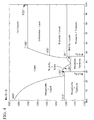
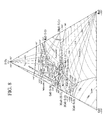
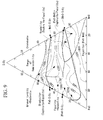
- FIG. 2 to FIG. 11 show phase diagrams of the respective materials.
- Table 4 shows melting points (and decomposition temperatures) that can be read from the respective phase diagrams.
- reference sources for the respective phase diagrams in FIG. 2 to FIG. 11 are listed in Table 9.
- Material Melting point (and decomposition temperature) (°C) Mg 2 SiO 4 1890 Fe 2 SiO 4 1205 Mn 2 SiO 4 1345 Ni 2 SiO 4 1545 Co 2 SiO 4 1420 (Fe, Mg) 2 SiO 4 1205 to 1890 (Ca, Mg) 2 SiO 4 1430 to 1490 (Fe, Mn) 2 SiO 4 1205 to 1250 (Mg, Mn) 2 SiO 4 1345 to 1890 (Mg, Ni) 2 SiO 4 1630 to 1890 CaMnSiO 4 1355 CaFeSiO 4 1230
- oxide fine particles of respective component elements were weighed to predetermined proportions and were solid-phase mixed using a ball mill. After that they were dehydrated and presintered at 1200°C to manufacture presintered particles. As a result of identifying these presintered particles using particle X-ray diffraction, it was confirmed that no unreacted material component such as SiO 2 was left, and all specimens were single-phased.
- Table 5 shows theoretical densities of the materials shown in Table 4. However, those which are inappropriate for use in a thermal barrier coating due to their melting points being below 1400°C are omitted. Moreover, Table 5 also shows the results from measuring the densities of sintered compacts of the respective presintered particles, Mg 2 SiO 4 , Ni 2 SiO 4 , Co 2 SiO 4 , (Ca, Mg) 2 SiO 4 , (Mg, Co) 2 SiO 4 , (Mg, Ni) 2 SiO 4 and (Ni, Co) 2 SiO 4 manufactured as described above, after sintering them at 1400°C. However, among these, Co 2 SiO 4 has been excluded from measurement because its sintered compact partially melted.
- 3YSZ (3 mol % Y 2 O 3 -ZrO 2 : yttria partially stabilized zirconia) is also shown in the table as a comparative material.
- the relative density of 3YSZ shown as a comparative material, is approximately 97% and is a rather dense body.
- the other materials show lower relative density values of 75 to 94%. This can be presumed to mean that M 2 SiO 4 and (MM') 2 SiO 4 materials are generally unlikely to sinter compared to zirconia.
- thermal-sprayed onto metal parts as a thermal barrier coating it is in a state having a large number of pores as shown in FIG. 1.
- materials which have an olivine type structure of M 2 SiO 4 and (MM') 2 SiO 4 and are considered to be unlikely to be denser than the currently used zirconia, are considered to be suitable for a thermal barrier coating.
- compositions expressed by the composition formulas, Mg 2 SiO 4 , Ni 2 SiO 4 , (Ca, Mg) 2 SiO 4 , (Mg, Co) 2 SiO 4 , (Mg, Ni) 2 SiO 4 and (Ni, Co) 2 SiO 4 were manufactured by sintering at 1400°C. Then rod shaped specimens of 4 ⁇ 4 ⁇ 15 mm were cut out from each of obtained sintered compacts to measure their thermal expansion coefficients. Table 6 shows values of thermal expansion coefficients at 1000°C. A thermal expansion coefficient value of 3YSZ is also shown in the table as a comparative material.
- compositions expressed by the composition formulas Mg 2 SiO 4 , Ni 2 SiO 4 , (Ca, Mg) 2 SiO 4 and (Mg, Co) 2 SiO 4 were manufactured by sintering at 1400°C, and disk shaped specimens of diameter 10 mm ⁇ and thickness 1 mm were cut out from each of the obtained sintered compacts. Then their thermal conductivities were measured using a laser flash method. Table 7 shows values of thermal conductivities at room temperature. A thermal conductivity value of 3YSZ (1000°C literature value) is also shown in the table as a comparative material.
- the thermal conductivities of Mg 2 SiO 4 , Ni 2 SiO 4 , (Ca, Mg) 2 SiO 4 and (Mg, Co) 2 SiO 4 at 1000°C (1273K) shown in Table 7 can be presumed to be approximately 1/4 of the thermal conductivity values at room temperature (approximately 300K).
- Table 8 shows the presumed thermal conductivity values at 1000°C. Material Presumed thermal conductivity at 1000°C (W/mK) 3YSZ (comparative material) 2.2 (1000°C, literature value) Mg 2 SiO 4 1.00 Ni 2 SiO 4 2.13 (Ca, Mg) 2 SiO 4 0.963 (Mg, Co) 2 SiO 4 0.823
- the materials selected here were: Sr 4 Nb 2 O 9 and Sr 5 Nb 4 O 15 having changed proportions of Sr and Nb; Ca 2 Nb 2 O 7 using the same alkali earth metal Ca instead of Sr; oxides containing Nb, such as YNbO 4 and LaNbO 4 , which use a rare earth element instead of Sr; Nd 2 NiO 4 , which replaces Nd for La in La 2 NiO 4 , and NdTaO 4 , which replaces Nd for La in LaTaO 4 ; Ca 4 Ta 2 O 9 ; and BaTa 2 O 6 . Table 10 shows these materials.
- melting points of these materials are all equal to or greater than 1400°C, and their thermal stabilities are considered to pose no problems within the applicable temperature range of a thermal barrier coating.
- oxides, hydroxides, or carbonates of respective component elements were selected as a starting material, and were weighed to achieve a predetermined ratio, and were solid-phase mixed using a ball mill. After being dehydrated, the mixed particles were presintered at 1400°C. As a result of identifying the obtained presintered particles using particle X-ray diffraction, it was confirmed that no unreacted material component was left, and all specimens were single-phased. Next, each of the above specimens was sinteredat 1500°C, and rod shaped specimens of 4 ⁇ 4 ⁇ 15 mm were cut out from the sintered compacts to measure their thermal expansion coefficients. Table 11 shows values of thermal expansion coefficients at 1000°C.
- a thermal expansion coefficient of 3YSZ is also shown in the table as a comparative material.
- Material Thermal expansion coefficient ( ⁇ 10 -6 /°C) 3YSZ (comparative material) 9.92 Sr 4 Nb 2 O 9 14.47 Sr 5 Nb 4 O 15 11.27 Ca 2 Nb 2 O 7 12.06 YNbO 4 9.22 LaNbO 4 12.64 Nd 2 NiO 4 14.05 NdTaO 4 9.87 Ca 4 Ta 2 O 9 7.38 BaTa 2 O 6 7.79
- the thermal expansion coefficient values of Sr 4 Nb 2 O 9 , Sr 5 Nb 4 O 15 , Ca 2 Nb 2 O 7 and LaNbO 4 show greater values than that of 3YSZ. This suggests that when these materials are used as thermal barrier coatings, tensile stress is less likely to occur between the substrate metal part and the coating than when the currently used zirconia is used. Also, although the thermal expansion coefficient of YNbO 4 is smaller than that of zirconia, it is substantially equal to that of zirconia.
- the tensile stress that occurs between the substrate metal part and itself can be presumed to be equal to that in the case of using the currently used zirconia, and it is not considered to have any problem as a thermal barrier material in terms of thermal expansion.
- the thermal expansion coefficients of only 9 kinds of specimens, shown in Table 11, have been measured in the present example.
- an oxide having rare earth elements other than Nd such as Pr and Eu replacing La in La 2 NiO 4
- an oxide having trivalent metal elements other than Nd such as Al, V, Cr, Fe, Ga, Y, Rh, In, Ce, Sm, Eu, Gd, Dy, Ho, Er, Tm, Yb and Lu replacing La in LaTaO 4
- their thermal expansion coefficients can be easily presumed to be substantially the same.
- thermal conductivities of all of these materials at 1000°C can be presumed to be smaller than that of zirconia, and they are thus considered to be suitable as materials for a thermal barrier coating.
- the combined material of two or more kinds of materials shown in Table 11 and Table 12 is also considered to be a sufficiently suitable material for a thermal barrier coating.
- the combined material of two or more kinds of materials shown in Table 1 and Table 2 in example 1 and shown in Table 11 and Table 12 in the present example is also considered to be a sufficiently suitable material for a thermal barrier coating.
- the thermal conductivities were measured for only 7 kinds of specimens shown in Table 12.
- an oxide where La in La 2 NiO 4 is replaced by rare earth elements other than Nd, such as Pr and Eu
- an oxide where La in LaTaO 4 is replaced by trivalent metal elements other than Nd such as Al, V, Cr, Fe, Ga, Y, Rh, In, Ce, Sm, Eu, Gd, Dy, Ho, Er, Tm, Yb and Lu
- the crystal structure is similar to that of Nd 2 NiO 4 and NdTaO 4 . Therefore, it can be easily presumed to have substantially the same thermal conductivity.
- the materials selected here were: Ca 4 Nb 2 O 9 , Ca 11 Nb 4 O 21 , BaTa 1.8 Ti 0.2 O 6 , BaTa 1.8 Zr 0.2 O 6 , Sr 2 Nb 1.8 Ti 0.2 O 7 , Sr 2 Nb 2-x Zr x O 7 , Sr 4 Nb 2-x Ti x O 9 , Sr 4 Nb 1.8 Zr 0.2 O 9 , La 3 NbO 7 , DyNbO 4 , La 1.8 Ca 0.2 NiO 4 , La 6 WO 12 , Ce 6 WO 12 , Dy 6 WO 12 , Sm 6 WO 12 , Yb 6 WO 12 , Y 6 WO 12 , Dy 2 WO 6 , Yb 2 WO 6 , SrYb 2 O 4 , La 6 WO 12 and Dy 2 WO 6 .
- the melting point of these materials are all equal to or greater than 1700°C, and the melting point of some of these materials exceeds 2500°C, which is equal to or greater than the melting point of a solid solution of zirconia having yttria dissolved therein. Accordingly, the thermal stabilities of these materials are considered to pose no problems within the applicable temperature range of a thermal barrier coating.
- the materials shown in Table 15 were combined.
- oxides, hydroxides or carbonates of respective component elements were selected as a starting material, and were weighed to achieve a predetermined ratio, and were solid-phase mixed using a ball mill. After being dehydrated, the mixed particles were presintered at 1400°C. As a result of identifying the obtained presintered particles using particle X-ray diffraction, it was confirmed that no unreacted material component was left, and all specimens were single-phased. Having examined closely each peak of the specimens, in which formation of solid solutions by substitution was intended, a peak shift in a constant direction was confirmed, and the added dissolved component was confirmed to be properly dissolved in the crystal.
- each of the above specimens was sintered at 1500°C, and rod shaped specimens of 4 ⁇ 4 ⁇ 15 mm were cut out from the sintered compacts to measure their thermal expansion coefficients.
- thermal conductivities often vary greatly among similar compounds and similar crystal structures due to their slight differences.
- thermal expansion coefficients seldom vary significantly.
- the thermal expansion coefficient values of Ca 4 Nb 2 O 9 and Ca 11 Nb 4 O 21 are equal to that of Ca 2 Nb 2 O 7 ;
- the thermal expansion coefficient values of BaTa 2-x Ti x O 6 and BaTa 2-x Zr x O 6 are equal to that of BaTa 2 O 6 ;
- the thermal expansion coefficient values of Sr 2 Nb 2-x Ti x O 7 and Sr 2 Nb 2-x Zr x O 7 are equal to that of Sr 2 Nb 2 O 7 ;
- the thermal expansion coefficient values of Sr 4 Nb 2-x Ti x O 9 and Sr 4 Nb 2-x Zr x O 9 are equal to that of Sr 4 Nb 2 O 9 ;
- the thermal expansion coefficient values of La 3 NbO 7 and DyNbO 4 are equal to that of LaNbO 4 ;
- the thermal expansion coefficient value of La 2-x Ca x NiO 4 is equal to that of LaNiO 4 ;
- a thermal expansion coefficient of 3YSZ is also shown in the table as a comparative material.
- the thermal expansion coefficient values of SrYb 2 O 9 , La 6 WO 12 and Dy 2 WO 6 show greater values than that of 3YSZ. This suggests that when these materials are used as thermal barrier coatings, tensile stress is less likely to occur between the substrate metal part (base metal) and the coating than when the currently used zirconia is used.
- Ca 4 Nb 2 O 9 , Ca 11 Nb 4 O 21 , BaTa 1.8 Ti 0.2 O 6 , BaTa 1.8 Zr 0.2 O 6 , Sr 2 Nb 1.8 Ti 0.2 O 7 , Sr 2 Nb 2-x Zr x O 7 , Sr 4 Nb 2-x Ti x O 9 , Sr 4 Nb 1.8 Zr 0.2 O 9 , La 3 NbO 7 , DyNbO 4 , La 1.8 Ca 0.2 NiO 4 , La 6 WO 12 , Ce 6 WO 12 , Dy 6 WO 12 , Sm 6 WO 12 , Yb 6 WO 12 , Y 6 WO 12 , Dy 2 WO 6 and Yb 2 WO 6 were sintered at 1400°C, and disk shaped specimens of diameter 10 mm ⁇ and thickness 1 mm were cut out from their sintered compacts, and their thermal conductivities were measured using a laser flash method.
- Table 16 shows values of thermal conductivities at room temperature.
- a thermal conductivity value of 3YSZ (1000°C literature value) is also shown in the table as a comparative material.
- Material Thermal conductivity (W/mK) 3YSZ (comparative material) 2.2 (1000°C, literature value) Ca 4 Nb 2 O 9 2.06 Ca 11 Nb 4 O 21 2.01 BaTa 1.8 Ti 0.2 O 6 1.54 BaTa 1.8 Zr 0.2 O 6 1.58 Sr 2 Nb 1.8 Ti 0.2 O 7 1.49 Sr 2 Nb 1.8 Zr 0.2 O 7 1.50 Sr 4 Nb 1.8 Ti 0.2 O 9 1.58 Sr 4 Nb 1.8 Zr 0.2 O 9 1.53 La 3 NbO 7 1.91 DyNbO 4 1.84 La 1.8 Ca 0.2 NiO 4 1.83 La 6 WO 12 1.83 Ce 6 WO 12 1.92 Dy 6 WO 12 1.84 Sm 6 WO 12 1.88 Yb 6 WO 12 1.92 Y 6 WO 12 1.91 Dy 2 WO
- thermal conductivities of all of these materials at room temperature and at 1000°C can be presumed to be smaller than that of zirconia, and they are thus considered to be suitable as materials for a thermal barrier coating.
- the combined material of two or more kinds of materials shown in Table 15 and Table 16 is also considered to be a sufficiently suitable material for a thermal barrier coating.
- the combined material of two or more kinds of materials shown in Table 1 and Table 2 in example 1 and shown in Table 15 and Table 16 in the present example is also considered to be a sufficiently suitable material for a thermal barrier coating.
- the thermal conductivities were measured for only 19 kinds of specimen shown in Table 16.
- the crystal structure is similar to that of La 6 WO 12 and Dy 2 WO 6 . Therefore, it can be easily presumed can to have substantially the same thermal conductivity.
- a verification test was carried out to verify that a material with a thermal expansion coefficient presumed to be greater than that of zirconia, and a thermal conductivity presumed to be smaller than that of zirconia is suitable as a material for a thermal barrier coating.
- the operating status of a gas turbine was taken as the target of application, and consideration was given to the thermal stress applied at the time of starting and stopping, as the states in which the largest stress is applied.
- a factorial examination of the phenomenon of fatigue due to this thermal stress was carried out by a thermal cycle test.
- a Ni-base heat resistant alloy of the composition Ni-16Cr-8.5Co-1.7Mo-2.6W-1.7T-0.9Nb-3.4Al-3.4Ti (at %), was cut out in a disk shape as a specimen substrate.
- a bond coat layer formed from CoNiCrAlY alloy of composition Co-32Ni-21Cr-8Al-0.5Y (at %) was formed thereon as a metallic binder layer by means of a low pressure spraying method.
- a ceramic layer (a film formed from a thermal barrier coating material) was laminated on this bond coat layer of CoNiCrAlY alloy by means of an atmospheric pressure plasma spraying method, to form a thermal barrier coating film as a specimen.
- the thickness of the bond coat layer (CoNiCrAlY alloy film) was 0.1 mm, and the thickness of the ceramic layer was 0.5 mm.
- a thermal cycle test was carried out in which heat was applied to this test specimen by focusing the light from a large infrared lamp onto the surface on the thermal barrier coating film side. Once the surface temperature reached a predetermined temperature, the surface was cooled down by shielding the light of the lamp using a shutter, and once the surface temperature had cooled down to a predetermined temperature, the shutter was re-opened to re-apply the heat, and this heat/cooling cycle was repeated.
- thermal barrier coating film formed from Sr 2 Nb 2 O 7 was subjected to the above thermal cycle test.
- the thermal cycle test was repeatedly carried out under a condition where the maximum temperature of the heated area (thermal barrier coating film surface) of the specimen was 1450°C and the maximum interface temperature (the maximum temperature of the interface between the thermal barrier coating film and the substrate) was 850°C. At that point, a heating time of one minute and a cooling time of one minute were repeated over.
- Table 18 The result of this thermal cycle test is shown in Table 18.
- Table 18 the case of using a thermal barrier coating film of 3YSZ is also shown for comparison. Material No. of cycles until thermal barrier coating film surface peeled off 3YSZ (comparative material) 80 Sr 2 Nb 2 O 7 600
- thermal barrier coating film having a high thermal expansion coefficient and a low thermal conductivity can be formed.
- this coating film for a heat resistant protection film for a gas turbine and the like, excellent heat resistance and durability can be obtained.
- a high performance gas turbine capable of easily handling high temperature combustion gas can be obtained.
Landscapes
- Chemical & Material Sciences (AREA)
- Engineering & Computer Science (AREA)
- Ceramic Engineering (AREA)
- Materials Engineering (AREA)
- Organic Chemistry (AREA)
- Structural Engineering (AREA)
- Manufacturing & Machinery (AREA)
- Mechanical Engineering (AREA)
- Chemical Kinetics & Catalysis (AREA)
- Metallurgy (AREA)
- General Engineering & Computer Science (AREA)
- Plasma & Fusion (AREA)
- Physics & Mathematics (AREA)
- Compositions Of Oxide Ceramics (AREA)
- Coating By Spraying Or Casting (AREA)
- Inorganic Compounds Of Heavy Metals (AREA)
- Other Surface Treatments For Metallic Materials (AREA)
- Turbine Rotor Nozzle Sealing (AREA)
- Oxygen, Ozone, And Oxides In General (AREA)
- Paints Or Removers (AREA)
Abstract
Description
Monoclinic ← up to 1000°C → tetragonal ← 2370°C → cubic
and the volume of pure zirconia itself changes acutely as its temperature rises or drops, with the result that it is destroyed in the phase transition between monoclinic and tetragonal phases, so that pure zirconia cannot be used as a material for high temperature structure. Consequently, it is necessary to add several mol % of rare earth oxide and to stabilize the tetragonal phase, which is the phase in the working temperature range, even at low temperature, so as not to generate a monoclinic phase. It has been reported that even for partially stabilized zirconia, for which the amount of stabilizing agent is controlled in order to stabilize the tetragonal phase, a monoclinic phase progressively precipitates when used for a long period of time at a high temperature and in a heat cycle where the temperature is repeatedly increased and decreased, and this has been an important problem in using zirconia as a thermal barrier coating.
According to this constitution, by having a film formed from the thermal barrier coating material of the present invention, which has a higher thermal expansion coefficient and lower thermal conductivity compared to currently used zirconia, an excellent heat resistance is achieved, and an excellent peeling resistance of the coating in a heat cycle can be achieved. As a result, a heat resistant member which can be used for a long period of time can be provided.
(Reference: "Science & Technology Trends", December issue 2001,
"http://www.nistep.go.jp/achiev/ftx/jpn/stfc/stt009j/feature3. html#4-0", Ministry of Education, Culture, Sports, Science and Technology Japan, National Institute of Science and Technology Policy, Science and Technology Foresight Center).
| Material | Thermal expansion coefficient (×10-6/°C) |
| 3YSZ (comparative material) | 9.92 |
| Nd2Ti2O7 | 10.01 |
| La2Si2O7 | 7.97 |
| La2Ti2O7 | 9.60 |
| Sr2Nb2O7 | 10.77 |
| Sr2Ta2O7 | 7.93 |
| Sr3Ti2O7 | 11.99 |
| La2NiO4 | 13.98 |
| LaTaO4 | 5.33 |
| Material | Thermal conductivity (W/mK) |
| 3YSZ (comparative material) | 2.2 (1000°C, literature value) |
| Nd2Ti2O7 | 2.57 |
| La2Si2O7 | 1.68 |
| La2Ti2O7 | 2.28 |
| Sr2Nb2O7 | 1.74 |
| Sr2Ta2O7 | 2.99 |
| Sr3Ti2O7 | 5.64 |
| La2NiO4 | 2.66 |
| LaTaO4 | 2.11 |
| Material | Presumed thermal conductivity at 1000°C (W/mK) |
| 3YSZ (comparative material) | 2.2 (1000°C, literature value) |
| Nd2Ti2O7 | 0.643 |
| La2Si2O7 | 0.420 |
| La2Ti2O7 | 0.570 |
| Sr2Nb2O7 | 0.435 |
| Sr2Ta2O7 | 0.748 |
| Sr3Ti2O7 | 1.41 |
| La2NiO4 | 0.665 |
| LaTaO4 | 0.528 |
αc = 11.06 according to expression (3), and
λc = 5.11 according to expression (4).
| Material | Melting point (and decomposition temperature) (°C) |
| Mg2SiO4 | 1890 |
| Fe2SiO4 | 1205 |
| Mn2SiO4 | 1345 |
| Ni2SiO4 | 1545 |
| Co2SiO4 | 1420 |
| (Fe, Mg)2SiO4 | 1205 to 1890 |
| (Ca, Mg)2SiO4 | 1430 to 1490 |
| (Fe, Mn)2SiO4 | 1205 to 1250 |
| (Mg, Mn)2SiO4 | 1345 to 1890 |
| (Mg, Ni)2SiO4 | 1630 to 1890 |
| CaMnSiO4 | 1355 |
| CaFeSiO4 | 1230 |
| Material | Theoretical density (g/cm3) | Measurement density (g/cm3) | Relative density (%) |
| 3YSZ (comparative material) | ≤ 6.00 | 5.844 | ≤ 97.4 |
| Mg2SiO4 | 3.222 | 2.538 | 78.22 |
| Ni2SiO4 | 4.923 | 4.040 | 82.06 |
| Co2SiO4 | 4.7 08 | - | - |
| (Ca, Mg)2SiO4 | 3.057 | 2.374 | 89.43 |
| (Mg, Co)2SiO4 | ≤ 3.97 | 3.722 | ≤ 93.8 |
| (Mg, Ni)2SiO4 | ≤ 4.07 | 3.088 | ≤ 75.9 |
| (Ni, Co)2SiO4 | ≤ 4.82 | 4.249 | ≤ 88.2 |
| Material | Thermal expansion coefficient (×10-6/°C) |
| 3YSZ (comparative material) | 9.92 |
| Mg2SiO4 | 11.59 |
| Ni2SiO4 | 12.59 |
| (Ca, Mg)2SiO4 | 11.89 |
| (Mg, Co)2SiO4 | 11.40 |
| (Mg, Ni)2SiO4 | 10.97 |
| (Ni, Co)2SiO4 | 10.42 |
Table 7 shows values of thermal conductivities at room temperature. A thermal conductivity value of 3YSZ (1000°C literature value) is also shown in the table as a comparative material.
| Material | Thermal conductivity (W/mK) |
| 3YSZ (comparative material) | 2.2 (1000°C, literature value) |
| Mg2SiO4 | 4.00 |
| Ni2SiO4 | 8.52 |
| (Ca, Mg)2SiO4 | 3.85 |
| (Mg, Co)2SiO4 | 3.29 |
| Material | Presumed thermal conductivity at 1000°C (W/mK) |
| 3YSZ (comparative material) | 2.2 (1000°C, literature value) |
| Mg2SiO4 | 1.00 |
| Ni2SiO4 | 2.13 |
| (Ca, Mg)2SiO4 | 0.963 |
| (Mg, Co)2SiO4 | 0.823 |
| Publisher: AMERICAN CERAMIC SOCIETY | ||||
| Title: "PHASE DIAGRAMS FOR CERAMISTS" vols. 1 to 6 | ||||
| Editors: Ernst M. Levin, Carl R. Robbins, Howard F. McMurdie | ||||
| Published Year: Vol. 1: 1964; Vol. 2: 1969 | ||||
| Fig. No. | Composition formula | Volume | Page | Reference diagram |
| Fig. 2 | MgO-SiO2 | Vol. 1 | 112 | Fig. 266 |
| Fig. 3 | Fe-Si-O | Vol. 1 | 59 | Fig. 80 |
| Fig. 4 | Mn-Si-O | Vol. 1 | 65 | Fig. 101 |
| Fig. 5 | NiO-SiO2 | Vol. 2 | 90 | Fig. 2324 |
| Fig. 6 | Co-Si-O | Vol. 2 | 23 | Fig. 2120 |
| Fig. 7 | FeO-MgO-SiO2 | Vol. 1 | 236 | Fig. 682 |
| Fig. 8 | CaO-MgO-SiO2 | Vol. 1 | 210 | Fig. 598 |
| Fig. 9 | FeO-MnO-SiO2 | Vol. 1 | 239 | Fig. 689 |
| Fig. 10 | MgO-MnO-SiO2 | Vol. 1 | 242 | Fig. 699 |
| Fig. 11 | MgO-NiO-SiO2 | Vol. 1 | 243 | Fig. 702 |
| Material | Melting point (°C) |
| Sr4Nb2O9 | 1700 |
| Sr5Nb4O15 | 1475 |
| Ca2Nb2O7 | 1571 |
| | 2000 |
| LaNbO4 | 1620 |
| Nd2NiO4 | 1900 |
| | 1900 |
| Ca4Ta2O9 | 1990 |
| BaTa2O6 | 1875 |
| Material | Thermal expansion coefficient (×10-6/°C) |
| 3YSZ (comparative material) | 9.92 |
| Sr4Nb2O9 | 14.47 |
| Sr5Nb4O15 | 11.27 |
| Ca2Nb2O7 | 12.06 |
| YNbO4 | 9.22 |
| LaNbO4 | 12.64 |
| Nd2NiO4 | 14.05 |
| NdTaO4 | 9.87 |
| Ca4Ta2O9 | 7.38 |
| BaTa2O6 | 7.79 |
| Material | Thermal conductivity (W/mK) |
| 3YSZ (comparative material) | 2.2 (1000°C, literature value) |
| Sr4Nb2O9 | 1.02 |
| Ca2Nb2O7 | 2.10 |
| YNbO4 | 1.95 |
| Nd2NiO4 | 1.84 |
| NdTaO4 | 2.15 |
| Ca4Ta2O9 | 2.18 |
| BaTa2O6 | 1.60 |
| Material | Presumed thermal conductivity at 1000°C (W/mK) |
| 3YSZ (comparative material) | 2.2 (1000°C, literature value) |
| Sr4Nb2O9 | 0.255 |
| Ca2Nb2O7 | 0.525 |
| YNbO4 | 0.488 |
| Nd2NiO4 | 0.460 |
| NdTaO4 | 0.538 |
| Ca4Ta2O9 | 0.545 |
| BaTa2O6 | 0.400 |
| Material | Melting point (°C) |
| Ca4Nb2O9 | 1700 |
| Ca11Nb4O21 | 2005 |
| BaTa1.8Ti0.2O6 | 1880 |
| BaTa1.8Zr0.2O6 | 1890 |
| Sr2Nb1.8Ti0.2O7 | 1705 |
| Sr2Nb1.8Zr0.2O7 | 1702 |
| Sr4Nb1.8Ti0.2O9 | 1710 |
| Sr4Nb1.8Zr0.2O9 | 1700 |
| La3NbO7 | 1900 |
| DyNbO4 | 1950 |
| La1.8Ca0.2 NiO4 | 1857 |
| La6WO12 | 2150 |
| Ce6WO12 | 2030 |
| Dy6WO12 | 2300 |
| Sm6WO12 | 2240 |
| Yb6WO12 | 2525 |
| Y6WO12 | 2400 |
| Dy2WO6 | 2200 |
| Yb2WO6 | 2200 |
When combining the materials, oxides, hydroxides or carbonates of respective component elements were selected as a starting material, and were weighed to achieve a predetermined ratio, and were solid-phase mixed using a ball mill. After being dehydrated, the mixed particles were presintered at 1400°C.
As a result of identifying the obtained presintered particles using particle X-ray diffraction, it was confirmed that no unreacted material component was left, and all specimens were single-phased. Having examined closely each peak of the specimens, in which formation of solid solutions by substitution was intended, a peak shift in a constant direction was confirmed, and the added dissolved component was confirmed to be properly dissolved in the crystal. Next, each of the above specimens was sintered at 1500°C, and rod shaped specimens of 4 × 4 × 15 mm were cut out from the sintered compacts to measure their thermal expansion coefficients. In general, thermal conductivities often vary greatly among similar compounds and similar crystal structures due to their slight differences. However, thermal expansion coefficients seldom vary significantly. Specifically, since it is clear that: the thermal expansion coefficient values of Ca4Nb2O9 and Ca11Nb4O21 are equal to that of Ca2Nb2O7; the thermal expansion coefficient values of BaTa2-xTixO6 and BaTa2-xZrxO6 are equal to that of BaTa2O6; the thermal expansion coefficient values of Sr2Nb2-xTixO7 and Sr2Nb2-xZrxO7 are equal to that of Sr2Nb2O7; the thermal expansion coefficient values of Sr4Nb2-xTixO9 and Sr4Nb2-x ZrxO9 are equal to that of Sr4Nb2O9; the thermal expansion coefficient values of La3NbO7 and DyNbO4 are equal to that of LaNbO4; the thermal expansion coefficient value of La2-xCaxNiO4 is equal to that of LaNiO4; the thermal expansion coefficient values of Ce6WO12, Dy6WO12, Sm6WO12, Yb6WO12 and Y6WO12 are equal to that of La6WO12; and the thermal expansion coefficient value of Yb2WO6 is equal to that of Dy2WO6, these thermal expansion coefficients are omitted here, and the thermal expansion coefficient values of SrYb2O4, La6WO12 and Dy2WO6 at 1000°C are listed in Table 15. A thermal expansion coefficient of 3YSZ is also shown in the table as a comparative material.
| Material | Thermal expansion coefficient (×10-6/°C) |
| 3YSZ (comparative material) | 9.92 |
| SrYb2O4 | 10.85 |
| La6WO12 | 10.92 |
| Dy2WO6 | 10.60 |
| Material | Thermal conductivity (W/mK) |
| 3YSZ (comparative material) | 2.2 (1000°C, literature value) |
| Ca4Nb2O9 | 2.06 |
| Ca11Nb4O21 | 2.01 |
| BaTa1.8Ti0.2O6 | 1.54 |
| BaTa1.8Zr0.2O6 | 1.58 |
| Sr2Nb1.8Ti0.2O7 | 1.49 |
| Sr2Nb1.8Zr0.2O7 | 1.50 |
| Sr4Nb1.8Ti0.2O9 | 1.58 |
| Sr4Nb1.8Zr0.2O9 | 1.53 |
| La3NbO7 | 1.91 |
| DyNbO4 | 1.84 |
| La1.8Ca0.2NiO4 | 1.83 |
| La6WO12 | 1.83 |
| Ce6WO12 | 1.92 |
| Dy6WO12 | 1.84 |
| Sm6WO12 | 1.88 |
| Yb6WO12 | 1.92 |
| Y6WO12 | 1.91 |
| Dy2WO6 | 1.89 |
| Yb2WO6 | 1.82 |
| Material | Presumed thermal conductivity at 1000°C (W/mK) |
| 3YSZ (comparative material) | 2.2 (1000°C, literature value) |
| Ca4Nb2O9 | 0.515 |
| Ca11Nb4O21 | 0.503 |
| BaTa1.8Ti0.2O6 | 0.385 |
| BaTa1.8Zr0.2O6 | 0.395 |
| Sr2Nb1.8Ti0.2O7 | 0.383 |
| Sr2Nb1.8Zr0.2O7 | 0.375 |
| Sr4Nb1.8Ti0.2O9 | 0.395 |
| Sr4Nb1.8Zr0.2O9 | 0.383 |
| DyNbO4 | 0.460 |
| La1.8Ca0.2NiO4 | 0.485 |
| La6WO12 | 0.458 |
| Ce6WO12 | 0.480 |
| Dy6WO12 | 0.460 |
| Sm6WO12 | 0.470 |
| Yb6WO12 | 0.480 |
| Y6WO12 | 0.488 |
| Dy2WO6 | 0.473 |
| Yb2WO6 | 0.455 |
| Material | No. of cycles until thermal barrier coating film surface peeled off |
| 3YSZ (comparative material) | 80 |
| Sr2Nb2O7 | 600 |
Claims (29)
- A thermal barrier coating material applicable to a thermal barrier coating for coating the surface of a base metal,
comprising as a main component, an oxide expressed by the composition formula A2B2O7 (where A is an element selected from the group consisting of La, Nd and Sr, and B is an element selected from the group consisting of Ti, Si, Nb and Ta). - A thermal barrier coating material applicable to a thermal barrier coating for coating the surface of a base metal,
comprising as a main component, an oxide having a K2NiF4 structure expressed by the composition formula X2YO4. - A thermal barrier coating material according to claim 2, wherein X of the oxide expressed by said composition formula X2YO4 is La or Sr, and Y is Ni or Ti.
- A thermal barrier coating material applicable to a thermal barrier coating for coating the surface of a base metal,
comprising as a main component, an oxide expressed by the composition formula Sr3Ti2O7 or Sr4Ti3O10. - A thermal barrier coating material applicable to a thermal barrier coating for coating the surface of a base metal,
comprising as a main component, an oxide expressed by the composition formula LaTaO4. - A thermal barrier coating material comprising as a main component, a ceramic composition of a combination of two or more kinds of compositions selected from the oxides as in claim 1 and claim 3 through claim 5.
- A thermal barrier coating material applicable to a thermal barrier coating for coating the surface of a base metal,
comprising as a main component, an oxide having an olivine type structure expressed by the composition formula M2SiO4 (where M is a divalent metal element). - A thermal barrier coating material according to claim 7, wherein M of the oxide expressed by said composition formula M2SiO4 is Mg or Ni.
- A thermal barrier coating material applicable to a thermal barrier coating for coating the surface of a base metal,
comprising as a main component, an oxide having an olivine type structure expressed by the composition formula (MM')2SiO4 (where M, M' are both divalent metal elements). - A thermal barrier coating material according to claim 9, wherein M of the composition formula (MM')2SiO4 is Mg or Ni, and M' is a metal element selected from the group consisting of Ca, Co, Ni, Fe, and Mn.
- A thermal barrier coating material comprising as a main component, a composition of a combination of a zirconia material and an oxide as in any one of claim 1 through claim 10.
- A thermal barrier coating material applicable to a thermal barrier coating for coating the surface of a base metal,
comprising as a main component, an oxide containing Nb and either an alkaline earth metal or a rare earth element. - A thermal barrier coating material according to claim 12, wherein said oxide is an oxide selected from the group consisting of Sr4Nb2O9, Sr5Nb4O15, Ca2Nb2O7, YNbO4 and LaNbO4.
- A thermal barrier coating material according to claim 2, wherein an X of the oxide expressed by said composition formula X2YO4 is any one of Pr, Nd and Eu, and Y is Ni.
- A thermal barrier coating material applicable to a thermal barrier coating for coating the surface of a base metal,
comprising as a main component, an oxide expressed by the composition formula La(1-x)M''xTaO4 (where 0 < x ≤ 1, and M" is a metal element selected from the group consisting of Al, V, Cr, Fe, Ga, Y, Rh, In, Ce, Nd, Sm, Eu, Gd, Dy, Ho, Er, Tm, Yb, and Lu). - A thermal barrier coating material applicable to a thermal barrier coating for coating the surface of a base metal,
comprising as a main component, an oxide containing Ta and an alkaline earth metal. - A thermal barrier coating material according to claim 16, wherein said oxide is Ca4Ta2O9 or BaTa2O6.
- A thermal barrier coating material comprising as a main component, a ceramic composition of a combination of oxides of two or more kinds selected from the oxides as in any one of claim 13 to claim 15, and claim 17.
- A thermal barrier coating material comprising as a main component, a ceramic composition of a combination of; oxides of one or more kinds selected from oxides expressed by the composition formulas A2B2O7 (where A is an element selected from the group consisting of La, Nd and Sr, and B is an element selected from the group consisting of Ti, Si, Nb and Ta), X2YO4 (where X is La or Sr, and Y is Ni or Ti), Sr3Ti2O7, Sr4Ti3O10, and LaTaO4, and oxides of one or more kinds selected from oxides expressed by the composition formulas Sr4Nb2O9, Sr5Nb4O15, Ca2Nb2O7 , YNbO4 , LaNbO4 , X2YO4 (where X is any one of Pr, Nd and Eu, and Y is Ni), M"xTaO4 (where M" is a metal element selected from the group consisting of Al, V, Cr, Fe, Ga, Y, Rh, In, Ce, Nd, Sm, Eu, Gd, Dy, Ho, Er, Tm, Yb, and Lu), Ca4Ta2O9 and BaTa2O6.
- A thermal barrier coating material, comprising as a main component, a composition of a combination of a zirconia material and an oxide as in any one of claim 12 through claim 17.
- A thermal barrier coating material according to claim 1, wherein said oxide is an oxide selected from the group consisting of Sr2Nb2-xTixO7, and Sr2Nb2-xZrxO7 (0 < x ≤ 2).
- A thermal barrier coating material according to claim 12, wherein said oxide is an oxide selected from the group consisting of Sr4Nb2-xTixO9, and Sr4Nb2-xZrxO9 (0 < x ≤ 2).
- A thermal barrier coating material according to claim 12, wherein said oxide is an oxide selected from the group consisting of Ca11Nb4O21, La3NbO7, and DyNbO4.
- A thermal barrier coating material according to claim 16, wherein said oxide is an oxide selected from the group consisting of BaTa2-xTixO6, and BaTa2-xZrxO6 (0 < x ≤ 2).
- A thermal barrier coating material according to claim 2, wherein said oxide is La2-xCaxNiO4 (0 < x ≤ 2).
- A thermal barrier coating material applicable to a thermal barrier coating for coating the surface of a base metal,
comprising an oxide selected from the group consisting of composition formulas SrYb2O4 and Sr4Yb2O9. - A thermal barrier coating material applicable to a thermal barrier coating for coating the surface of a base metal,
comprising as a main component, an oxide expressed by the composition formula J6WO12 and J2WO6 (where J is an element selected from rare earth elements). - A thermal barrier coating material comprising as a main component, a ceramic composition of a combination of materials of two or more kinds selected from the oxides as in any one of claim 1, claim 3 to claim 5, claim 13 to claim 15, claim 17, and claim 23 to claim 27.
- A thermal barrier coating material comprising as a main component, a composition of a combination of zirconia material and an oxide as in any one of claim 21 through claim 27, or a ceramic compositions of claim 28.
Applications Claiming Priority (7)
| Application Number | Priority Date | Filing Date | Title |
|---|---|---|---|
| JP2003085609 | 2003-03-26 | ||
| JP2003085609 | 2003-03-26 | ||
| JP2003377119 | 2003-11-06 | ||
| JP2003377119 | 2003-11-06 | ||
| JP2004061427 | 2004-03-04 | ||
| JP2004061427A JP2005154885A (en) | 2003-03-26 | 2004-03-04 | Material for thermal barrier coating |
| PCT/JP2004/004010 WO2004085338A1 (en) | 2003-03-26 | 2004-03-24 | Material for thermal barrier coating |
Publications (2)
| Publication Number | Publication Date |
|---|---|
| EP1607379A1 true EP1607379A1 (en) | 2005-12-21 |
| EP1607379A4 EP1607379A4 (en) | 2011-01-12 |
Family
ID=33101957
Family Applications (1)
| Application Number | Title | Priority Date | Filing Date |
|---|---|---|---|
| EP04722995A Withdrawn EP1607379A4 (en) | 2003-03-26 | 2004-03-24 | Material for thermal barrier coating |
Country Status (5)
| Country | Link |
|---|---|
| US (1) | US7622411B2 (en) |
| EP (1) | EP1607379A4 (en) |
| JP (1) | JP2005154885A (en) |
| CA (1) | CA2519842C (en) |
| WO (1) | WO2004085338A1 (en) |
Cited By (4)
| Publication number | Priority date | Publication date | Assignee | Title |
|---|---|---|---|---|
| EP1908859A1 (en) * | 2006-10-02 | 2008-04-09 | Siemens Aktiengesellschaft | Pyrochlore materials and a thermal barrier coating with these pyrochlore materials |
| EP2186919A4 (en) * | 2008-02-12 | 2010-09-29 | Mitsubishi Heavy Ind Ltd | THERMAL SHIELD COATING MATERIAL |
| CN111893487A (en) * | 2020-08-28 | 2020-11-06 | 昆明理工大学 | Alloy material with composite coating deposited on surface and preparation method thereof |
| CN111960837A (en) * | 2020-08-28 | 2020-11-20 | 昆明理工大学 | Preparation method of rare earth tantalate or niobate thermal barrier coating |
Families Citing this family (37)
| Publication number | Priority date | Publication date | Assignee | Title |
|---|---|---|---|---|
| US20090258247A1 (en) * | 2008-04-11 | 2009-10-15 | Siemens Power Generation, Inc. | Anisotropic Soft Ceramics for Abradable Coatings in Gas Turbines |
| JP2006124734A (en) * | 2004-10-26 | 2006-05-18 | Mitsubishi Heavy Ind Ltd | Film material |
| JP2006124735A (en) * | 2004-10-26 | 2006-05-18 | Mitsubishi Heavy Ind Ltd | Thermal barrier coating material |
| NO20045639D0 (en) | 2004-12-23 | 2004-12-23 | Uni I Oslo | Rare earth orthoniobates and orthotantalates as solid proton conducting electrolytes |
| JP4511987B2 (en) * | 2005-04-20 | 2010-07-28 | 三菱重工業株式会社 | Thermal barrier coating material |
| JP2007076994A (en) * | 2005-09-16 | 2007-03-29 | Angstrom Technologies:Kk | Semiconductor device material and semiconductor device |
| US7504157B2 (en) * | 2005-11-02 | 2009-03-17 | H.C. Starck Gmbh | Strontium titanium oxides and abradable coatings made therefrom |
| CN101636518B (en) * | 2007-03-30 | 2011-06-08 | 富士钛工业株式会社 | Vapor deposition material and optical thin film obtained from the same |
| EP1990328B1 (en) * | 2007-05-07 | 2011-10-26 | Siemens Aktiengesellschaft | Ceramic powder, ceramic layer and layer system with two pyrochlorphases and oxides |
| KR100915920B1 (en) | 2008-01-24 | 2009-09-07 | 한국세라믹기술원 | Low thermal conductivity ceramic material with pyrochlore crystal structure and its manufacturing method |
| TWI471269B (en) * | 2008-05-23 | 2015-02-01 | Ishihara Sangyo Kaisha | Infrared reflective material, method for preparing the same, paint and resin composition comprising the same |
| JP5424195B2 (en) * | 2009-03-27 | 2014-02-26 | 独立行政法人物質・材料研究機構 | Raw powder for thermal spraying and film formation method using the same |
| JP5767209B2 (en) * | 2010-03-30 | 2015-08-19 | 日本碍子株式会社 | Corrosion resistant member for semiconductor manufacturing equipment and method for manufacturing the same |
| US20120258266A1 (en) * | 2011-04-06 | 2012-10-11 | Basf Corporation | Coatings For Engine And Powertrain Components To Prevent Buildup Of Deposits |
| JPWO2012157072A1 (en) * | 2011-05-17 | 2014-07-31 | 伊藤光学工業株式会社 | Optical element and manufacturing method thereof |
| US9347126B2 (en) | 2012-01-20 | 2016-05-24 | General Electric Company | Process of fabricating thermal barrier coatings |
| US8685545B2 (en) | 2012-02-13 | 2014-04-01 | Siemens Aktiengesellschaft | Thermal barrier coating system with porous tungsten bronze structured underlayer |
| JP6092615B2 (en) * | 2012-12-26 | 2017-03-08 | 一般財団法人ファインセラミックスセンター | Thermal barrier coating materials |
| US9139477B2 (en) | 2013-02-18 | 2015-09-22 | General Electric Company | Ceramic powders and methods therefor |
| JP6173778B2 (en) * | 2013-06-05 | 2017-08-02 | 一般財団法人ファインセラミックスセンター | Thermal barrier coating materials |
| WO2016029108A1 (en) * | 2014-08-22 | 2016-02-25 | Hopkins Patrick E | Method of forming a thermal barrier coating |
| US9790587B2 (en) * | 2014-10-28 | 2017-10-17 | General Electric Company | Article and method of making thereof |
| JP6430545B2 (en) * | 2015-02-09 | 2018-11-28 | 三菱重工航空エンジン株式会社 | COATING MEMBER, COATING MATERIAL, AND METHOD FOR PRODUCING COATING MEMBER |
| WO2016129591A1 (en) | 2015-02-09 | 2016-08-18 | 三菱重工航空エンジン株式会社 | Coated member and method for producing coated member |
| JP6614842B2 (en) * | 2015-07-29 | 2019-12-04 | 日本碍子株式会社 | Ceramic material, manufacturing method thereof, and member for semiconductor manufacturing apparatus |
| US9970305B2 (en) * | 2015-09-18 | 2018-05-15 | General Electric Company | Treatment process, oxide-forming treatment composition, and treated component |
| JP7154752B2 (en) * | 2016-12-11 | 2022-10-18 | ゼネラル・エレクトリック・カンパニイ | Thermal barrier coating with low thermal conductivity |
| JP6926213B2 (en) * | 2017-01-30 | 2021-08-25 | シーメンス エナジー インコーポレイテッド | Additional manufacturing method for components |
| CN110078504B (en) * | 2019-04-26 | 2020-10-30 | 清华大学 | In-situ synthesized pseudo-binary complex phase rare earth niobate ceramic and preparation method thereof |
| CN112979312A (en) * | 2021-04-30 | 2021-06-18 | 昆明理工大学 | AB2O6Niobate ceramic and preparation method thereof |
| CN112939600B (en) * | 2021-04-30 | 2023-03-17 | 昆明理工大学 | Nanocrystalline A4B2O9 type niobate ceramic prepared by ultralow temperature sintering and method thereof |
| CN112979311B (en) * | 2021-04-30 | 2022-10-14 | 昆明理工大学 | Nanocrystalline A4B2O9 type tantalate ceramic prepared by ultralow temperature sintering and method thereof |
| CN114106828B (en) * | 2021-12-20 | 2022-11-11 | 内蒙古大学 | Cr (chromium) 3+ Doped near-infrared fluorescent powder with broadband emission and preparation method thereof |
| CN115368133B (en) * | 2022-09-20 | 2023-10-10 | 中国科学院长春应用化学研究所 | Preparation method and application of high-temperature ceramic powder |
| CN115403382B (en) * | 2022-09-30 | 2023-03-21 | 中国地质大学(武汉) | High-entropy yttrium salt ceramic material for thermal barrier coating and preparation method and application thereof |
| CN118146658B (en) * | 2024-03-11 | 2025-03-18 | 中国科学院兰州化学物理研究所 | A high-entropy perovskite-type absorption coating with ultra-broadband electromagnetic wave absorption properties |
| CN118373687B (en) * | 2024-04-22 | 2026-03-24 | 昆明理工大学 | A rare-earth tantalate environmental barrier coating ceramic material with low thermal diffusivity and sintering resistance, its preparation method and application |
Family Cites Families (21)
| Publication number | Priority date | Publication date | Assignee | Title |
|---|---|---|---|---|
| US3856545A (en) * | 1971-07-20 | 1974-12-24 | T Ferrigno | Pigmentary composition |
| US3953173A (en) * | 1972-07-08 | 1976-04-27 | Hitachi, Ltd. | Gas-sensor element and method for detecting oxidizable gas |
| US4173518A (en) * | 1974-10-23 | 1979-11-06 | Sumitomo Aluminum Smelting Company, Limited | Electrodes for aluminum reduction cells |
| JPS592124B2 (en) * | 1975-04-09 | 1984-01-17 | 日本電気株式会社 | Ondohoshiyoyoujikiyudenzairiyou |
| JPS57144546A (en) * | 1981-03-03 | 1982-09-07 | Nippon Telegr & Teleph Corp <Ntt> | Photoreceptor |
| US4511636A (en) * | 1983-11-07 | 1985-04-16 | The United States Of America As Represented By The United States Department Of Energy | Molten carbonate fuel cell matrices |
| US5008221A (en) * | 1985-04-11 | 1991-04-16 | Corning Incorporated | High toughness ceramic alloys |
| JP2802770B2 (en) * | 1989-03-31 | 1998-09-24 | 昭栄化学工業株式会社 | Resistance composition |
| US5013360A (en) * | 1989-09-15 | 1991-05-07 | Vlsi Packaging Materials, Inc. | Sealing glass compositions |
| JPH04231451A (en) | 1990-12-28 | 1992-08-20 | Nippon Steel Corp | Thermal spray material and sprayed heat-resistant member |
| US5114742A (en) * | 1991-07-17 | 1992-05-19 | The United States Of America As Represented By The Secretary Of The Army | Preparing a scandate cathode by impregnating a porous tungsten billet with Ba3 Al2 O6, coating the top surface with a mixture of Sc6 WO12, Sc2 (WO4)3, and W in a 1:3:2 mole ratio, and heating in a vacuum |
| JP3475258B2 (en) * | 1994-05-23 | 2003-12-08 | 株式会社海水化学研究所 | Ceramic film forming agent and method for producing the same |
| US6258467B1 (en) * | 2000-08-17 | 2001-07-10 | Siemens Westinghouse Power Corporation | Thermal barrier coating having high phase stability |
| US6117560A (en) | 1996-12-12 | 2000-09-12 | United Technologies Corporation | Thermal barrier coating systems and materials |
| JPH10330157A (en) * | 1997-05-30 | 1998-12-15 | Sumitomo Metal Ind Ltd | Ceramic dielectric material and method of manufacturing the same |
| JP3410955B2 (en) | 1998-03-17 | 2003-05-26 | 株式会社東芝 | Heat resistant member and method of manufacturing the same |
| US6194083B1 (en) * | 1997-07-28 | 2001-02-27 | Kabushiki Kaisha Toshiba | Ceramic composite material and its manufacturing method, and heat resistant member using thereof |
| JP3975518B2 (en) * | 1997-08-21 | 2007-09-12 | 株式会社豊田中央研究所 | Piezoelectric ceramics |
| US6190579B1 (en) * | 1997-09-08 | 2001-02-20 | Integrated Thermal Sciences, Inc. | Electron emission materials and components |
| KR100539490B1 (en) * | 2002-01-28 | 2005-12-29 | 쿄세라 코포레이션 | Dielectric ceramic composition and dielectric ceramic |
| EP1657536A1 (en) * | 2004-11-05 | 2006-05-17 | Siemens Aktiengesellschaft | Device comprising at least one luminescent thermal barrier coating on a substrate |
-
2004
- 2004-03-04 JP JP2004061427A patent/JP2005154885A/en not_active Withdrawn
- 2004-03-24 US US10/550,097 patent/US7622411B2/en not_active Expired - Lifetime
- 2004-03-24 EP EP04722995A patent/EP1607379A4/en not_active Withdrawn
- 2004-03-24 WO PCT/JP2004/004010 patent/WO2004085338A1/en not_active Ceased
- 2004-03-24 CA CA2519842A patent/CA2519842C/en not_active Expired - Fee Related
Cited By (8)
| Publication number | Priority date | Publication date | Assignee | Title |
|---|---|---|---|---|
| EP1908859A1 (en) * | 2006-10-02 | 2008-04-09 | Siemens Aktiengesellschaft | Pyrochlore materials and a thermal barrier coating with these pyrochlore materials |
| WO2008040574A1 (en) | 2006-10-02 | 2008-04-10 | Siemens Aktiengesellschaft | Pyrochlore materials and a thermal barrier coating with these pyrochlore materials |
| EP2302101A1 (en) * | 2006-10-02 | 2011-03-30 | Siemens Aktiengesellschaft | Pyrochlore materials and a thermal barrier coating with these pyrochlore materials |
| US8278232B2 (en) | 2006-10-02 | 2012-10-02 | Siemens Aktiengesellschaft | Pyrochlore materials and a thermal barrier coating with these pyrochlore materials |
| EP2186919A4 (en) * | 2008-02-12 | 2010-09-29 | Mitsubishi Heavy Ind Ltd | THERMAL SHIELD COATING MATERIAL |
| CN111893487A (en) * | 2020-08-28 | 2020-11-06 | 昆明理工大学 | Alloy material with composite coating deposited on surface and preparation method thereof |
| CN111960837A (en) * | 2020-08-28 | 2020-11-20 | 昆明理工大学 | Preparation method of rare earth tantalate or niobate thermal barrier coating |
| CN111960837B (en) * | 2020-08-28 | 2021-10-26 | 昆明理工大学 | Preparation method of rare earth tantalate or niobate thermal barrier coating |
Also Published As
| Publication number | Publication date |
|---|---|
| US20070151481A1 (en) | 2007-07-05 |
| US7622411B2 (en) | 2009-11-24 |
| CA2519842A1 (en) | 2004-10-07 |
| CA2519842C (en) | 2010-08-24 |
| JP2005154885A (en) | 2005-06-16 |
| WO2004085338A1 (en) | 2004-10-07 |
| EP1607379A4 (en) | 2011-01-12 |
Similar Documents
| Publication | Publication Date | Title |
|---|---|---|
| US7622411B2 (en) | Thermal barrier coating material | |
| CN100376505C (en) | Thermal insulation coating material | |
| Yuan et al. | SrCeO3 as a novel thermal barrier coating candidate for high–temperature applications | |
| Zhang et al. | Thermal and mechanical properties of Ta2O5 doped La2Ce2O7 thermal barrier coatings prepared by atmospheric plasma spraying | |
| Shen et al. | Thermal property and failure behaviour of Pr doped Gd2Zr2O7 thermal barrier coatings | |
| Xu et al. | Novel thermal barrier coatings based on La2 (Zr0. 7Ce0. 3) 2O7/8YSZ double-ceramic-layer systems deposited by electron beam physical vapor deposition | |
| CN101802243B (en) | Heat-shielding coating material | |
| JP2010255121A (en) | Film material | |
| US9045830B2 (en) | Luminescent material compositions and structures incorporating the same | |
| Yuan et al. | TaZr2. 75O8 ceramics as a potential thermal barrier coating material for high-temperature applications | |
| US20210047968A1 (en) | Thermal barrier coating | |
| KR20230156902A (en) | Chemically Composite Ceramic Abrasive Sealant Materials | |
| EP1862568A1 (en) | Thermal barrier coating with tungsten-bronze structure | |
| Liu et al. | Microstructures, thermophysical properties and thermal cycling behavior of LaZnAl 11 O 19 thermal barrier coatings deposited by atmospheric plasma spraying | |
| Wang et al. | Preparation and thermo-physical properties of La2AlTaO7 ceramic for thermal barrier coating application | |
| JP4511987B2 (en) | Thermal barrier coating material | |
| EP3848481A1 (en) | Thermal barrier coating material, and article | |
| Deijkers et al. | Two doping strategies for modifying radiative transport in ZrO2-YTaO4 thermal barrier coating materials | |
| CN102187013B (en) | Thermal barrier coating material, thermal barrier coating, turbine member, and gas turbine | |
| Fu et al. | Progress in the deposition mechanisms and key performance evaluation of thermal barrier coatings for turbine blades: a review | |
| Huo et al. | Microstructures and properties of Sm2 (Zr0. 7Ce0. 3) 2O7/8YSZ double-ceramic-layer thermal barrier coatings deposited by atmospheric plasma spraying | |
| JP2006124734A (en) | Film material | |
| JP2009191297A (en) | Thermal barrier coating material | |
| GB2439389A (en) | Multi layer coatings | |
| Ali et al. | Thermal and Mechanical Properties of (Y1/3Gd1/3Yb1/3) NbO4: A Mid-Entropy Niobate for Thermal Barrier Coatings |
Legal Events
| Date | Code | Title | Description |
|---|---|---|---|
| PUAI | Public reference made under article 153(3) epc to a published international application that has entered the european phase |
Free format text: ORIGINAL CODE: 0009012 |
|
| 17P | Request for examination filed |
Effective date: 20050927 |
|
| AK | Designated contracting states |
Kind code of ref document: A1 Designated state(s): AT BE BG CH CY CZ DE DK EE ES FI FR GB GR HU IE IT LI LU MC NL PL PT RO SE SI SK TR |
|
| AX | Request for extension of the european patent |
Extension state: AL LT LV MK |
|
| RBV | Designated contracting states (corrected) |
Designated state(s): AT BE BG CH CY CZ DE DK EE ES FI FR GB GR HU IE IT LI LU MC NL PL PT RO SE SI SK TR |
|
| DAX | Request for extension of the european patent (deleted) | ||
| RBV | Designated contracting states (corrected) |
Designated state(s): CH DE FR GB IT LI |
|
| A4 | Supplementary search report drawn up and despatched |
Effective date: 20101214 |
|
| STAA | Information on the status of an ep patent application or granted ep patent |
Free format text: STATUS: THE APPLICATION IS DEEMED TO BE WITHDRAWN |
|
| 18D | Application deemed to be withdrawn |
Effective date: 20110314 |
|
| RIN1 | Information on inventor provided before grant (corrected) |
Inventor name: OTA, SATOSHI,;C/O RYONICHI ENGINEERING CO., LTD., Inventor name: SHIDA, MASATO,;C/O ADVANCED TECHNOLOGY RESEARCH C Inventor name: NAGANO, ICHIRO,;C/O ADVANCED TECHNOLOGY RESEARCH Inventor name: AKIYAMA, KATSUNORI;C/O ADVANCED TECHNOLOGY RESEAR |