EP1604971A1 - Cinnamyl alcohol derivative compounds and drugs containing the compounds as the active ingredient - Google Patents
Cinnamyl alcohol derivative compounds and drugs containing the compounds as the active ingredient Download PDFInfo
- Publication number
- EP1604971A1 EP1604971A1 EP04719139A EP04719139A EP1604971A1 EP 1604971 A1 EP1604971 A1 EP 1604971A1 EP 04719139 A EP04719139 A EP 04719139A EP 04719139 A EP04719139 A EP 04719139A EP 1604971 A1 EP1604971 A1 EP 1604971A1
- Authority
- EP
- European Patent Office
- Prior art keywords
- biphenyl
- phenyl
- trifluoromethyl
- acetic acid
- oxy
- Prior art date
- Legal status (The legal status is an assumption and is not a legal conclusion. Google has not performed a legal analysis and makes no representation as to the accuracy of the status listed.)
- Withdrawn
Links
- GESHNKNCZKTYSY-VIQXGMBJSA-N C/C=C(\C=C(/C)\c1cccc(CC(OC)=O)c1)/OC/C=C/c(cc1)ccc1-c1ccccc1 Chemical compound C/C=C(\C=C(/C)\c1cccc(CC(OC)=O)c1)/OC/C=C/c(cc1)ccc1-c1ccccc1 GESHNKNCZKTYSY-VIQXGMBJSA-N 0.000 description 1
- ZBBUWSWHUXAKGA-UHFFFAOYSA-N CC(C(N1)=O)OC1=O Chemical compound CC(C(N1)=O)OC1=O ZBBUWSWHUXAKGA-UHFFFAOYSA-N 0.000 description 1
- PTXFGUVCXVEZET-UHFFFAOYSA-N CC(C(N1)=O)SC1=O Chemical compound CC(C(N1)=O)SC1=O PTXFGUVCXVEZET-UHFFFAOYSA-N 0.000 description 1
- MQTSFGICUKJYPJ-UHFFFAOYSA-N CC(C(NO1)=O)C1=O Chemical compound CC(C(NO1)=O)C1=O MQTSFGICUKJYPJ-UHFFFAOYSA-N 0.000 description 1
- SHCJTIUGKXHXGW-UHFFFAOYSA-N CN(C(N1)=O)OC1=O Chemical compound CN(C(N1)=O)OC1=O SHCJTIUGKXHXGW-UHFFFAOYSA-N 0.000 description 1
Classifications
-
- C—CHEMISTRY; METALLURGY
- C07—ORGANIC CHEMISTRY
- C07D—HETEROCYCLIC COMPOUNDS
- C07D277/00—Heterocyclic compounds containing 1,3-thiazole or hydrogenated 1,3-thiazole rings
- C07D277/02—Heterocyclic compounds containing 1,3-thiazole or hydrogenated 1,3-thiazole rings not condensed with other rings
- C07D277/20—Heterocyclic compounds containing 1,3-thiazole or hydrogenated 1,3-thiazole rings not condensed with other rings having two or three double bonds between ring members or between ring members and non-ring members
- C07D277/22—Heterocyclic compounds containing 1,3-thiazole or hydrogenated 1,3-thiazole rings not condensed with other rings having two or three double bonds between ring members or between ring members and non-ring members with only hydrogen atoms, hydrocarbon or substituted hydrocarbon radicals, directly attached to ring carbon atoms
- C07D277/24—Radicals substituted by oxygen atoms
-
- A—HUMAN NECESSITIES
- A61—MEDICAL OR VETERINARY SCIENCE; HYGIENE
- A61K—PREPARATIONS FOR MEDICAL, DENTAL OR TOILETRY PURPOSES
- A61K31/00—Medicinal preparations containing organic active ingredients
- A61K31/21—Esters, e.g. nitroglycerine, selenocyanates
- A61K31/215—Esters, e.g. nitroglycerine, selenocyanates of carboxylic acids
- A61K31/22—Esters, e.g. nitroglycerine, selenocyanates of carboxylic acids of acyclic acids, e.g. pravastatin
- A61K31/222—Esters, e.g. nitroglycerine, selenocyanates of carboxylic acids of acyclic acids, e.g. pravastatin with compounds having aromatic groups, e.g. dipivefrine, ibopamine
-
- A—HUMAN NECESSITIES
- A61—MEDICAL OR VETERINARY SCIENCE; HYGIENE
- A61K—PREPARATIONS FOR MEDICAL, DENTAL OR TOILETRY PURPOSES
- A61K31/00—Medicinal preparations containing organic active ingredients
- A61K31/33—Heterocyclic compounds
- A61K31/395—Heterocyclic compounds having nitrogen as a ring hetero atom, e.g. guanethidine or rifamycins
- A61K31/41—Heterocyclic compounds having nitrogen as a ring hetero atom, e.g. guanethidine or rifamycins having five-membered rings with two or more ring hetero atoms, at least one of which being nitrogen, e.g. tetrazole
- A61K31/42—Oxazoles
- A61K31/421—1,3-Oxazoles, e.g. pemoline, trimethadione
-
- A—HUMAN NECESSITIES
- A61—MEDICAL OR VETERINARY SCIENCE; HYGIENE
- A61K—PREPARATIONS FOR MEDICAL, DENTAL OR TOILETRY PURPOSES
- A61K31/00—Medicinal preparations containing organic active ingredients
- A61K31/33—Heterocyclic compounds
- A61K31/395—Heterocyclic compounds having nitrogen as a ring hetero atom, e.g. guanethidine or rifamycins
- A61K31/41—Heterocyclic compounds having nitrogen as a ring hetero atom, e.g. guanethidine or rifamycins having five-membered rings with two or more ring hetero atoms, at least one of which being nitrogen, e.g. tetrazole
- A61K31/4245—Oxadiazoles
-
- A—HUMAN NECESSITIES
- A61—MEDICAL OR VETERINARY SCIENCE; HYGIENE
- A61K—PREPARATIONS FOR MEDICAL, DENTAL OR TOILETRY PURPOSES
- A61K31/00—Medicinal preparations containing organic active ingredients
- A61K31/33—Heterocyclic compounds
- A61K31/395—Heterocyclic compounds having nitrogen as a ring hetero atom, e.g. guanethidine or rifamycins
- A61K31/41—Heterocyclic compounds having nitrogen as a ring hetero atom, e.g. guanethidine or rifamycins having five-membered rings with two or more ring hetero atoms, at least one of which being nitrogen, e.g. tetrazole
- A61K31/425—Thiazoles
- A61K31/426—1,3-Thiazoles
-
- A—HUMAN NECESSITIES
- A61—MEDICAL OR VETERINARY SCIENCE; HYGIENE
- A61K—PREPARATIONS FOR MEDICAL, DENTAL OR TOILETRY PURPOSES
- A61K31/00—Medicinal preparations containing organic active ingredients
- A61K31/33—Heterocyclic compounds
- A61K31/395—Heterocyclic compounds having nitrogen as a ring hetero atom, e.g. guanethidine or rifamycins
- A61K31/41—Heterocyclic compounds having nitrogen as a ring hetero atom, e.g. guanethidine or rifamycins having five-membered rings with two or more ring hetero atoms, at least one of which being nitrogen, e.g. tetrazole
- A61K31/425—Thiazoles
- A61K31/428—Thiazoles condensed with carbocyclic rings
-
- A—HUMAN NECESSITIES
- A61—MEDICAL OR VETERINARY SCIENCE; HYGIENE
- A61K—PREPARATIONS FOR MEDICAL, DENTAL OR TOILETRY PURPOSES
- A61K31/00—Medicinal preparations containing organic active ingredients
- A61K31/33—Heterocyclic compounds
- A61K31/395—Heterocyclic compounds having nitrogen as a ring hetero atom, e.g. guanethidine or rifamycins
- A61K31/435—Heterocyclic compounds having nitrogen as a ring hetero atom, e.g. guanethidine or rifamycins having six-membered rings with one nitrogen as the only ring hetero atom
- A61K31/44—Non condensed pyridines; Hydrogenated derivatives thereof
-
- A—HUMAN NECESSITIES
- A61—MEDICAL OR VETERINARY SCIENCE; HYGIENE
- A61K—PREPARATIONS FOR MEDICAL, DENTAL OR TOILETRY PURPOSES
- A61K31/00—Medicinal preparations containing organic active ingredients
- A61K31/33—Heterocyclic compounds
- A61K31/395—Heterocyclic compounds having nitrogen as a ring hetero atom, e.g. guanethidine or rifamycins
- A61K31/435—Heterocyclic compounds having nitrogen as a ring hetero atom, e.g. guanethidine or rifamycins having six-membered rings with one nitrogen as the only ring hetero atom
- A61K31/44—Non condensed pyridines; Hydrogenated derivatives thereof
- A61K31/4409—Non condensed pyridines; Hydrogenated derivatives thereof only substituted in position 4, e.g. isoniazid, iproniazid
-
- A—HUMAN NECESSITIES
- A61—MEDICAL OR VETERINARY SCIENCE; HYGIENE
- A61K—PREPARATIONS FOR MEDICAL, DENTAL OR TOILETRY PURPOSES
- A61K31/00—Medicinal preparations containing organic active ingredients
- A61K31/33—Heterocyclic compounds
- A61K31/395—Heterocyclic compounds having nitrogen as a ring hetero atom, e.g. guanethidine or rifamycins
- A61K31/435—Heterocyclic compounds having nitrogen as a ring hetero atom, e.g. guanethidine or rifamycins having six-membered rings with one nitrogen as the only ring hetero atom
- A61K31/44—Non condensed pyridines; Hydrogenated derivatives thereof
- A61K31/445—Non condensed piperidines, e.g. piperocaine
-
- A—HUMAN NECESSITIES
- A61—MEDICAL OR VETERINARY SCIENCE; HYGIENE
- A61K—PREPARATIONS FOR MEDICAL, DENTAL OR TOILETRY PURPOSES
- A61K31/00—Medicinal preparations containing organic active ingredients
- A61K31/33—Heterocyclic compounds
- A61K31/395—Heterocyclic compounds having nitrogen as a ring hetero atom, e.g. guanethidine or rifamycins
- A61K31/435—Heterocyclic compounds having nitrogen as a ring hetero atom, e.g. guanethidine or rifamycins having six-membered rings with one nitrogen as the only ring hetero atom
- A61K31/44—Non condensed pyridines; Hydrogenated derivatives thereof
- A61K31/445—Non condensed piperidines, e.g. piperocaine
- A61K31/4523—Non condensed piperidines, e.g. piperocaine containing further heterocyclic ring systems
- A61K31/454—Non condensed piperidines, e.g. piperocaine containing further heterocyclic ring systems containing a five-membered ring with nitrogen as a ring hetero atom, e.g. pimozide, domperidone
-
- A—HUMAN NECESSITIES
- A61—MEDICAL OR VETERINARY SCIENCE; HYGIENE
- A61K—PREPARATIONS FOR MEDICAL, DENTAL OR TOILETRY PURPOSES
- A61K31/00—Medicinal preparations containing organic active ingredients
- A61K31/33—Heterocyclic compounds
- A61K31/395—Heterocyclic compounds having nitrogen as a ring hetero atom, e.g. guanethidine or rifamycins
- A61K31/435—Heterocyclic compounds having nitrogen as a ring hetero atom, e.g. guanethidine or rifamycins having six-membered rings with one nitrogen as the only ring hetero atom
- A61K31/44—Non condensed pyridines; Hydrogenated derivatives thereof
- A61K31/445—Non condensed piperidines, e.g. piperocaine
- A61K31/4523—Non condensed piperidines, e.g. piperocaine containing further heterocyclic ring systems
- A61K31/4545—Non condensed piperidines, e.g. piperocaine containing further heterocyclic ring systems containing a six-membered ring with nitrogen as a ring hetero atom, e.g. pipamperone, anabasine
-
- A—HUMAN NECESSITIES
- A61—MEDICAL OR VETERINARY SCIENCE; HYGIENE
- A61K—PREPARATIONS FOR MEDICAL, DENTAL OR TOILETRY PURPOSES
- A61K31/00—Medicinal preparations containing organic active ingredients
- A61K31/33—Heterocyclic compounds
- A61K31/395—Heterocyclic compounds having nitrogen as a ring hetero atom, e.g. guanethidine or rifamycins
- A61K31/495—Heterocyclic compounds having nitrogen as a ring hetero atom, e.g. guanethidine or rifamycins having six-membered rings with two or more nitrogen atoms as the only ring heteroatoms, e.g. piperazine or tetrazines
- A61K31/496—Non-condensed piperazines containing further heterocyclic rings, e.g. rifampin, thiothixene or sparfloxacin
-
- A—HUMAN NECESSITIES
- A61—MEDICAL OR VETERINARY SCIENCE; HYGIENE
- A61K—PREPARATIONS FOR MEDICAL, DENTAL OR TOILETRY PURPOSES
- A61K31/00—Medicinal preparations containing organic active ingredients
- A61K31/33—Heterocyclic compounds
- A61K31/395—Heterocyclic compounds having nitrogen as a ring hetero atom, e.g. guanethidine or rifamycins
- A61K31/535—Heterocyclic compounds having nitrogen as a ring hetero atom, e.g. guanethidine or rifamycins having six-membered rings with at least one nitrogen and one oxygen as the ring hetero atoms, e.g. 1,2-oxazines
- A61K31/5355—Non-condensed oxazines and containing further heterocyclic rings
-
- A—HUMAN NECESSITIES
- A61—MEDICAL OR VETERINARY SCIENCE; HYGIENE
- A61K—PREPARATIONS FOR MEDICAL, DENTAL OR TOILETRY PURPOSES
- A61K31/00—Medicinal preparations containing organic active ingredients
- A61K31/33—Heterocyclic compounds
- A61K31/395—Heterocyclic compounds having nitrogen as a ring hetero atom, e.g. guanethidine or rifamycins
- A61K31/535—Heterocyclic compounds having nitrogen as a ring hetero atom, e.g. guanethidine or rifamycins having six-membered rings with at least one nitrogen and one oxygen as the ring hetero atoms, e.g. 1,2-oxazines
- A61K31/5375—1,4-Oxazines, e.g. morpholine
- A61K31/5377—1,4-Oxazines, e.g. morpholine not condensed and containing further heterocyclic rings, e.g. timolol
-
- A—HUMAN NECESSITIES
- A61—MEDICAL OR VETERINARY SCIENCE; HYGIENE
- A61K—PREPARATIONS FOR MEDICAL, DENTAL OR TOILETRY PURPOSES
- A61K31/00—Medicinal preparations containing organic active ingredients
- A61K31/33—Heterocyclic compounds
- A61K31/395—Heterocyclic compounds having nitrogen as a ring hetero atom, e.g. guanethidine or rifamycins
- A61K31/54—Heterocyclic compounds having nitrogen as a ring hetero atom, e.g. guanethidine or rifamycins having six-membered rings with at least one nitrogen and one sulfur as the ring hetero atoms, e.g. sulthiame
- A61K31/541—Non-condensed thiazines containing further heterocyclic rings
-
- A—HUMAN NECESSITIES
- A61—MEDICAL OR VETERINARY SCIENCE; HYGIENE
- A61P—SPECIFIC THERAPEUTIC ACTIVITY OF CHEMICAL COMPOUNDS OR MEDICINAL PREPARATIONS
- A61P3/00—Drugs for disorders of the metabolism
- A61P3/04—Anorexiants; Antiobesity agents
-
- A—HUMAN NECESSITIES
- A61—MEDICAL OR VETERINARY SCIENCE; HYGIENE
- A61P—SPECIFIC THERAPEUTIC ACTIVITY OF CHEMICAL COMPOUNDS OR MEDICINAL PREPARATIONS
- A61P3/00—Drugs for disorders of the metabolism
- A61P3/06—Antihyperlipidemics
-
- A—HUMAN NECESSITIES
- A61—MEDICAL OR VETERINARY SCIENCE; HYGIENE
- A61P—SPECIFIC THERAPEUTIC ACTIVITY OF CHEMICAL COMPOUNDS OR MEDICINAL PREPARATIONS
- A61P43/00—Drugs for specific purposes, not provided for in groups A61P1/00-A61P41/00
-
- C—CHEMISTRY; METALLURGY
- C07—ORGANIC CHEMISTRY
- C07C—ACYCLIC OR CARBOCYCLIC COMPOUNDS
- C07C235/00—Carboxylic acid amides, the carbon skeleton of the acid part being further substituted by oxygen atoms
- C07C235/02—Carboxylic acid amides, the carbon skeleton of the acid part being further substituted by oxygen atoms having carbon atoms of carboxamide groups bound to acyclic carbon atoms and singly-bound oxygen atoms bound to the same carbon skeleton
- C07C235/32—Carboxylic acid amides, the carbon skeleton of the acid part being further substituted by oxygen atoms having carbon atoms of carboxamide groups bound to acyclic carbon atoms and singly-bound oxygen atoms bound to the same carbon skeleton the carbon skeleton containing six-membered aromatic rings
- C07C235/34—Carboxylic acid amides, the carbon skeleton of the acid part being further substituted by oxygen atoms having carbon atoms of carboxamide groups bound to acyclic carbon atoms and singly-bound oxygen atoms bound to the same carbon skeleton the carbon skeleton containing six-membered aromatic rings having the nitrogen atoms of the carboxamide groups bound to hydrogen atoms or to acyclic carbon atoms
-
- C—CHEMISTRY; METALLURGY
- C07—ORGANIC CHEMISTRY
- C07C—ACYCLIC OR CARBOCYCLIC COMPOUNDS
- C07C255/00—Carboxylic acid nitriles
- C07C255/01—Carboxylic acid nitriles having cyano groups bound to acyclic carbon atoms
- C07C255/32—Carboxylic acid nitriles having cyano groups bound to acyclic carbon atoms having cyano groups bound to acyclic carbon atoms of a carbon skeleton containing at least one six-membered aromatic ring
- C07C255/37—Carboxylic acid nitriles having cyano groups bound to acyclic carbon atoms having cyano groups bound to acyclic carbon atoms of a carbon skeleton containing at least one six-membered aromatic ring the carbon skeleton being further substituted by etherified hydroxy groups
-
- C—CHEMISTRY; METALLURGY
- C07—ORGANIC CHEMISTRY
- C07C—ACYCLIC OR CARBOCYCLIC COMPOUNDS
- C07C311/00—Amides of sulfonic acids, i.e. compounds having singly-bound oxygen atoms of sulfo groups replaced by nitrogen atoms, not being part of nitro or nitroso groups
- C07C311/50—Compounds containing any of the groups, X being a hetero atom, Y being any atom
- C07C311/51—Y being a hydrogen or a carbon atom
-
- C—CHEMISTRY; METALLURGY
- C07—ORGANIC CHEMISTRY
- C07C—ACYCLIC OR CARBOCYCLIC COMPOUNDS
- C07C323/00—Thiols, sulfides, hydropolysulfides or polysulfides substituted by halogen, oxygen or nitrogen atoms, or by sulfur atoms not being part of thio groups
- C07C323/10—Thiols, sulfides, hydropolysulfides or polysulfides substituted by halogen, oxygen or nitrogen atoms, or by sulfur atoms not being part of thio groups containing thio groups and singly-bound oxygen atoms bound to the same carbon skeleton
- C07C323/18—Thiols, sulfides, hydropolysulfides or polysulfides substituted by halogen, oxygen or nitrogen atoms, or by sulfur atoms not being part of thio groups containing thio groups and singly-bound oxygen atoms bound to the same carbon skeleton having the sulfur atom of at least one of the thio groups bound to a carbon atom of a six-membered aromatic ring of the carbon skeleton
- C07C323/19—Thiols, sulfides, hydropolysulfides or polysulfides substituted by halogen, oxygen or nitrogen atoms, or by sulfur atoms not being part of thio groups containing thio groups and singly-bound oxygen atoms bound to the same carbon skeleton having the sulfur atom of at least one of the thio groups bound to a carbon atom of a six-membered aromatic ring of the carbon skeleton with singly-bound oxygen atoms bound to acyclic carbon atoms of the carbon skeleton
-
- C—CHEMISTRY; METALLURGY
- C07—ORGANIC CHEMISTRY
- C07C—ACYCLIC OR CARBOCYCLIC COMPOUNDS
- C07C51/00—Preparation of carboxylic acids or their salts, halides or anhydrides
-
- C—CHEMISTRY; METALLURGY
- C07—ORGANIC CHEMISTRY
- C07C—ACYCLIC OR CARBOCYCLIC COMPOUNDS
- C07C69/00—Esters of carboxylic acids; Esters of carbonic or haloformic acids
- C07C69/66—Esters of carboxylic acids having esterified carboxylic groups bound to acyclic carbon atoms and having any of the groups OH, O—metal, —CHO, keto, ether, acyloxy, groups, groups, or in the acid moiety
- C07C69/73—Esters of carboxylic acids having esterified carboxylic groups bound to acyclic carbon atoms and having any of the groups OH, O—metal, —CHO, keto, ether, acyloxy, groups, groups, or in the acid moiety of unsaturated acids
- C07C69/734—Ethers
-
- C—CHEMISTRY; METALLURGY
- C07—ORGANIC CHEMISTRY
- C07D—HETEROCYCLIC COMPOUNDS
- C07D211/00—Heterocyclic compounds containing hydrogenated pyridine rings, not condensed with other rings
- C07D211/04—Heterocyclic compounds containing hydrogenated pyridine rings, not condensed with other rings with only hydrogen or carbon atoms directly attached to the ring nitrogen atom
- C07D211/06—Heterocyclic compounds containing hydrogenated pyridine rings, not condensed with other rings with only hydrogen or carbon atoms directly attached to the ring nitrogen atom having no double bonds between ring members or between ring members and non-ring members
- C07D211/08—Heterocyclic compounds containing hydrogenated pyridine rings, not condensed with other rings with only hydrogen or carbon atoms directly attached to the ring nitrogen atom having no double bonds between ring members or between ring members and non-ring members with hydrocarbon or substituted hydrocarbon radicals directly attached to ring carbon atoms
- C07D211/18—Heterocyclic compounds containing hydrogenated pyridine rings, not condensed with other rings with only hydrogen or carbon atoms directly attached to the ring nitrogen atom having no double bonds between ring members or between ring members and non-ring members with hydrocarbon or substituted hydrocarbon radicals directly attached to ring carbon atoms with substituted hydrocarbon radicals attached to ring carbon atoms
-
- C—CHEMISTRY; METALLURGY
- C07—ORGANIC CHEMISTRY
- C07D—HETEROCYCLIC COMPOUNDS
- C07D213/00—Heterocyclic compounds containing six-membered rings, not condensed with other rings, with one nitrogen atom as the only ring hetero atom and three or more double bonds between ring members or between ring members and non-ring members
- C07D213/02—Heterocyclic compounds containing six-membered rings, not condensed with other rings, with one nitrogen atom as the only ring hetero atom and three or more double bonds between ring members or between ring members and non-ring members having three double bonds between ring members or between ring members and non-ring members
- C07D213/04—Heterocyclic compounds containing six-membered rings, not condensed with other rings, with one nitrogen atom as the only ring hetero atom and three or more double bonds between ring members or between ring members and non-ring members having three double bonds between ring members or between ring members and non-ring members having no bond between the ring nitrogen atom and a non-ring member or having only hydrogen or carbon atoms directly attached to the ring nitrogen atom
- C07D213/24—Heterocyclic compounds containing six-membered rings, not condensed with other rings, with one nitrogen atom as the only ring hetero atom and three or more double bonds between ring members or between ring members and non-ring members having three double bonds between ring members or between ring members and non-ring members having no bond between the ring nitrogen atom and a non-ring member or having only hydrogen or carbon atoms directly attached to the ring nitrogen atom with substituted hydrocarbon radicals attached to ring carbon atoms
- C07D213/28—Radicals substituted by singly-bound oxygen or sulphur atoms
- C07D213/30—Oxygen atoms
-
- C—CHEMISTRY; METALLURGY
- C07—ORGANIC CHEMISTRY
- C07D—HETEROCYCLIC COMPOUNDS
- C07D213/00—Heterocyclic compounds containing six-membered rings, not condensed with other rings, with one nitrogen atom as the only ring hetero atom and three or more double bonds between ring members or between ring members and non-ring members
- C07D213/02—Heterocyclic compounds containing six-membered rings, not condensed with other rings, with one nitrogen atom as the only ring hetero atom and three or more double bonds between ring members or between ring members and non-ring members having three double bonds between ring members or between ring members and non-ring members
- C07D213/04—Heterocyclic compounds containing six-membered rings, not condensed with other rings, with one nitrogen atom as the only ring hetero atom and three or more double bonds between ring members or between ring members and non-ring members having three double bonds between ring members or between ring members and non-ring members having no bond between the ring nitrogen atom and a non-ring member or having only hydrogen or carbon atoms directly attached to the ring nitrogen atom
- C07D213/24—Heterocyclic compounds containing six-membered rings, not condensed with other rings, with one nitrogen atom as the only ring hetero atom and three or more double bonds between ring members or between ring members and non-ring members having three double bonds between ring members or between ring members and non-ring members having no bond between the ring nitrogen atom and a non-ring member or having only hydrogen or carbon atoms directly attached to the ring nitrogen atom with substituted hydrocarbon radicals attached to ring carbon atoms
- C07D213/54—Radicals substituted by carbon atoms having three bonds to hetero atoms with at the most one bond to halogen, e.g. ester or nitrile radicals
- C07D213/55—Acids; Esters
-
- C—CHEMISTRY; METALLURGY
- C07—ORGANIC CHEMISTRY
- C07D—HETEROCYCLIC COMPOUNDS
- C07D257/00—Heterocyclic compounds containing rings having four nitrogen atoms as the only ring hetero atoms
- C07D257/02—Heterocyclic compounds containing rings having four nitrogen atoms as the only ring hetero atoms not condensed with other rings
- C07D257/04—Five-membered rings
-
- C—CHEMISTRY; METALLURGY
- C07—ORGANIC CHEMISTRY
- C07D—HETEROCYCLIC COMPOUNDS
- C07D263/00—Heterocyclic compounds containing 1,3-oxazole or hydrogenated 1,3-oxazole rings
- C07D263/02—Heterocyclic compounds containing 1,3-oxazole or hydrogenated 1,3-oxazole rings not condensed with other rings
- C07D263/30—Heterocyclic compounds containing 1,3-oxazole or hydrogenated 1,3-oxazole rings not condensed with other rings having two or three double bonds between ring members or between ring members and non-ring members
- C07D263/32—Heterocyclic compounds containing 1,3-oxazole or hydrogenated 1,3-oxazole rings not condensed with other rings having two or three double bonds between ring members or between ring members and non-ring members with only hydrogen atoms, hydrocarbon or substituted hydrocarbon radicals, directly attached to ring carbon atoms
-
- C—CHEMISTRY; METALLURGY
- C07—ORGANIC CHEMISTRY
- C07D—HETEROCYCLIC COMPOUNDS
- C07D271/00—Heterocyclic compounds containing five-membered rings having two nitrogen atoms and one oxygen atom as the only ring hetero atoms
- C07D271/02—Heterocyclic compounds containing five-membered rings having two nitrogen atoms and one oxygen atom as the only ring hetero atoms not condensed with other rings
- C07D271/06—1,2,4-Oxadiazoles; Hydrogenated 1,2,4-oxadiazoles
- C07D271/07—1,2,4-Oxadiazoles; Hydrogenated 1,2,4-oxadiazoles with oxygen, sulfur or nitrogen atoms, directly attached to ring carbon atoms, the nitrogen atoms not forming part of a nitro radical
-
- C—CHEMISTRY; METALLURGY
- C07—ORGANIC CHEMISTRY
- C07D—HETEROCYCLIC COMPOUNDS
- C07D277/00—Heterocyclic compounds containing 1,3-thiazole or hydrogenated 1,3-thiazole rings
- C07D277/02—Heterocyclic compounds containing 1,3-thiazole or hydrogenated 1,3-thiazole rings not condensed with other rings
- C07D277/20—Heterocyclic compounds containing 1,3-thiazole or hydrogenated 1,3-thiazole rings not condensed with other rings having two or three double bonds between ring members or between ring members and non-ring members
- C07D277/22—Heterocyclic compounds containing 1,3-thiazole or hydrogenated 1,3-thiazole rings not condensed with other rings having two or three double bonds between ring members or between ring members and non-ring members with only hydrogen atoms, hydrocarbon or substituted hydrocarbon radicals, directly attached to ring carbon atoms
- C07D277/30—Radicals substituted by carbon atoms having three bonds to hetero atoms with at the most one bond to halogen, e.g. ester or nitrile radicals
-
- C—CHEMISTRY; METALLURGY
- C07—ORGANIC CHEMISTRY
- C07D—HETEROCYCLIC COMPOUNDS
- C07D277/00—Heterocyclic compounds containing 1,3-thiazole or hydrogenated 1,3-thiazole rings
- C07D277/02—Heterocyclic compounds containing 1,3-thiazole or hydrogenated 1,3-thiazole rings not condensed with other rings
- C07D277/20—Heterocyclic compounds containing 1,3-thiazole or hydrogenated 1,3-thiazole rings not condensed with other rings having two or three double bonds between ring members or between ring members and non-ring members
- C07D277/32—Heterocyclic compounds containing 1,3-thiazole or hydrogenated 1,3-thiazole rings not condensed with other rings having two or three double bonds between ring members or between ring members and non-ring members with hetero atoms or with carbon atoms having three bonds to hetero atoms with at the most one bond to halogen, e.g. ester or nitrile radicals, directly attached to ring carbon atoms
- C07D277/38—Nitrogen atoms
- C07D277/42—Amino or imino radicals substituted by hydrocarbon or substituted hydrocarbon radicals
-
- C—CHEMISTRY; METALLURGY
- C07—ORGANIC CHEMISTRY
- C07D—HETEROCYCLIC COMPOUNDS
- C07D277/00—Heterocyclic compounds containing 1,3-thiazole or hydrogenated 1,3-thiazole rings
- C07D277/60—Heterocyclic compounds containing 1,3-thiazole or hydrogenated 1,3-thiazole rings condensed with carbocyclic rings or ring systems
- C07D277/62—Benzothiazoles
- C07D277/64—Benzothiazoles with only hydrocarbon or substituted hydrocarbon radicals attached in position 2
-
- C—CHEMISTRY; METALLURGY
- C07—ORGANIC CHEMISTRY
- C07D—HETEROCYCLIC COMPOUNDS
- C07D285/00—Heterocyclic compounds containing rings having nitrogen and sulfur atoms as the only ring hetero atoms, not provided for by groups C07D275/00 - C07D283/00
- C07D285/01—Five-membered rings
- C07D285/02—Thiadiazoles; Hydrogenated thiadiazoles
- C07D285/04—Thiadiazoles; Hydrogenated thiadiazoles not condensed with other rings
- C07D285/08—1,2,4-Thiadiazoles; Hydrogenated 1,2,4-thiadiazoles
-
- C—CHEMISTRY; METALLURGY
- C07—ORGANIC CHEMISTRY
- C07D—HETEROCYCLIC COMPOUNDS
- C07D291/00—Heterocyclic compounds containing rings having nitrogen, oxygen and sulfur atoms as the only ring hetero atoms
- C07D291/02—Heterocyclic compounds containing rings having nitrogen, oxygen and sulfur atoms as the only ring hetero atoms not condensed with other rings
- C07D291/04—Five-membered rings
-
- C—CHEMISTRY; METALLURGY
- C07—ORGANIC CHEMISTRY
- C07D—HETEROCYCLIC COMPOUNDS
- C07D317/00—Heterocyclic compounds containing five-membered rings having two oxygen atoms as the only ring hetero atoms
- C07D317/08—Heterocyclic compounds containing five-membered rings having two oxygen atoms as the only ring hetero atoms having the hetero atoms in positions 1 and 3
- C07D317/44—Heterocyclic compounds containing five-membered rings having two oxygen atoms as the only ring hetero atoms having the hetero atoms in positions 1 and 3 ortho- or peri-condensed with carbocyclic rings or ring systems
- C07D317/46—Heterocyclic compounds containing five-membered rings having two oxygen atoms as the only ring hetero atoms having the hetero atoms in positions 1 and 3 ortho- or peri-condensed with carbocyclic rings or ring systems condensed with one six-membered ring
- C07D317/48—Methylenedioxybenzenes or hydrogenated methylenedioxybenzenes, unsubstituted on the hetero ring
- C07D317/50—Methylenedioxybenzenes or hydrogenated methylenedioxybenzenes, unsubstituted on the hetero ring with only hydrogen atoms, hydrocarbon or substituted hydrocarbon radicals, directly attached to atoms of the carbocyclic ring
- C07D317/54—Radicals substituted by oxygen atoms
-
- C—CHEMISTRY; METALLURGY
- C07—ORGANIC CHEMISTRY
- C07D—HETEROCYCLIC COMPOUNDS
- C07D333/00—Heterocyclic compounds containing five-membered rings having one sulfur atom as the only ring hetero atom
- C07D333/02—Heterocyclic compounds containing five-membered rings having one sulfur atom as the only ring hetero atom not condensed with other rings
- C07D333/04—Heterocyclic compounds containing five-membered rings having one sulfur atom as the only ring hetero atom not condensed with other rings not substituted on the ring sulphur atom
- C07D333/06—Heterocyclic compounds containing five-membered rings having one sulfur atom as the only ring hetero atom not condensed with other rings not substituted on the ring sulphur atom with only hydrogen atoms, hydrocarbon or substituted hydrocarbon radicals, directly attached to the ring carbon atoms
- C07D333/24—Radicals substituted by carbon atoms having three bonds to hetero atoms with at the most one bond to halogen, e.g. ester or nitrile radicals
-
- C—CHEMISTRY; METALLURGY
- C07—ORGANIC CHEMISTRY
- C07D—HETEROCYCLIC COMPOUNDS
- C07D413/00—Heterocyclic compounds containing two or more hetero rings, at least one ring having nitrogen and oxygen atoms as the only ring hetero atoms
- C07D413/02—Heterocyclic compounds containing two or more hetero rings, at least one ring having nitrogen and oxygen atoms as the only ring hetero atoms containing two hetero rings
- C07D413/04—Heterocyclic compounds containing two or more hetero rings, at least one ring having nitrogen and oxygen atoms as the only ring hetero atoms containing two hetero rings directly linked by a ring-member-to-ring-member bond
-
- C—CHEMISTRY; METALLURGY
- C07—ORGANIC CHEMISTRY
- C07D—HETEROCYCLIC COMPOUNDS
- C07D413/00—Heterocyclic compounds containing two or more hetero rings, at least one ring having nitrogen and oxygen atoms as the only ring hetero atoms
- C07D413/02—Heterocyclic compounds containing two or more hetero rings, at least one ring having nitrogen and oxygen atoms as the only ring hetero atoms containing two hetero rings
- C07D413/10—Heterocyclic compounds containing two or more hetero rings, at least one ring having nitrogen and oxygen atoms as the only ring hetero atoms containing two hetero rings linked by a carbon chain containing aromatic rings
Definitions
- the present invention relates to synnamyl alcohol derivative compounds.
- the present invention relates to
- PPAR peroxisome proliferator activated receptor
- PPAR ⁇ isoform predominantly expresses in adipose tissues, immune cells, adrenal gland, spleen, small intestine
- PPAR ⁇ isoform mainly expresses in adipose tissue, liver, retina
- PPAR ⁇ isoform universally expresses without specificity for tissue (see Endocrinology. , 137 , 3 54 (1996)).
- thiazolidine derivatives such as pioglitazone hydrochloride, rosiglitazone maleate etc . are known as agents for the treatment of non-insulin dependent diabetes mellitus (NIDDM) and are hypoglycemic agents which are used for the improvement of hyperglycemia in the patients suffering from diabetes. They are also effective for the improvement of hyperinsulinemia, glucose tolerance and decrease of serum lipid and therefore they are thought to be considerably hopeful as agents for the improvement of insulin resistance.
- NIDDM non-insulin dependent diabetes mellitus
- one of the intracellular target proteins of these thiazolidine derivatives is exactly PPAR ⁇ and it is resolved that they enhance the transcription activity of PPAR ⁇ (see Endocrinology ., 137 , 4189 (1996); Cell ., 83 , 803 (1995); Cell ., 83 , 813 (1995); J. Biol. Chem., 270 , 12953 (1995)). Therefore, a PPAR ⁇ activator (agonist) which enhances its transcription activity is thought to be hopeful as a hypoglycemic agent and/or a hypolipidemic agent.
- PPAR ⁇ Intracellular receptor, PPAR ⁇ is related to adipocytes differentiation (see J. Biol. Chem., 272 , 5637 (1997) and Cell ., 83 , 803 (1995)). It is known that thiazolidine derivatives which activate this receptor promote adipocytes differentiation. Recently it was reported that thiazolidine derivatives increase body fat and cause man to gain weight and to become obese (see Lancet., 349 , 952 (1997)). Therefore, it is also thought that antagonists which inhibit PPAR ⁇ activity and agents that decrease the expression of PPAR ⁇ protein itself are also clinically applicable. On the other hand, a compound that phosphorylates PPAR ⁇ protein and decreases its activity is reported (Science., 274 , 2100 (1996)). This implies that an agent which does not bind on PPAR ⁇ protein as a ligand, but inhibits its activity is also clinically applicable.
- PPAR ⁇ activators agonists
- PPAR ⁇ regulators for its expression that can increase the expression of the protein itself are expected to be useful as hypoglycemic agents, hypolipidemic agents, and agents for prevention and/or treatment of diseases associated with metabolic disorders such as diabetes, adiposity, metabolic syndrome, hypercholesterolemia and hyperlipoproteinemia etc ., hyperlipidemia, atherosclerosis, hypertension, circulatory diseases and overeating etc .
- antagonists that inhibit the transcription activity of PPAR ⁇ or PPAR ⁇ regulators that inhibit the expression of the protein itself are expected to be useful as hypoglycemic agents and agents for prevention and/or treatment of diseases associated with metabolic disorders such as diabetes, obesity and metabolic syndrome, etc., hyperlipidemia, atherosclerosis, hypertension and overeating etc .
- fibrate compound e . g ., chlofibrate
- fibrate compound e . g ., chlofibrate
- PPAR ⁇ one of the intracellular target proteins of fibrate compounds
- PPAR ⁇ regulators which can be activated by fibrate compounds are thought to have a hypolipidemic effect, and so they are expected to be useful as agents for prevention and/or treatment of hyperlipidemia etc.
- PPAR ⁇ possesses anti-obese activity in the specification of WO 9736579.
- HDL high density lipoprotein
- LDL low density lipoprotein
- VLDL very low density lipoprotein
- triglyceride levels were induced by activation of PPAR ⁇ ( J. Lipid Res., 39, 17 (1998)).
- composition of fatty acids in blood, hypertension and insulin resistance were improved by administration of bezafibrate which is one of fibrate compounds ( Diabetes ., 46 , 348 (1997)).
- agonists that activate PPAR ⁇ and PPAR ⁇ regulators that promote expression of PPAR a protein itself are useful as hypolipidemic agents and agents for treatment of hyperlipidemia, and are expected to have HDL cholesterol level-elevating effect, LDL cholesterol and/or VLDL cholesterol levels-lowering effect, inhibition on the progress of atherosclerosis and anti-obese effect. Therefore, they are thought to be hopeful agents for the treatment and/or prevention of diabetes as hypoglycemic agents, for the improvement of hypertension, for the relief from risk factor of metabolic syndrome and for the prevention of occurrence of ischemic coronary diseases.
- PPAR ⁇ is sometimes called PPAR ⁇ , or it is also called NUC1 in human.
- activity of PPAR ⁇ it is disclosed in the specification of WO 9601430 that hNUC1B (PPAR subtype whose structure is different from that of human NUC1 in one amino acid) inhibited the transcription activities of human PPAR ⁇ and thyroid hormone receptor.
- WO 9728149 it was reported that the compounds, which possessed high affinity to PPAR ⁇ protein and which could activate PPAR ⁇ significantly (i.e. agonists) were found out and that they had HDL (high density lipoprotein) cholesterol level-elevating activity.
- agonists that can activate PPAR ⁇ are expected to have HDL cholesterol level-elevating effect, and so they are expected to be useful for the inhibition on the progress of atherosclerosis and treatment thereof, as hypolipidemic agents and hypoglycemic agents, for the treatment of hyperlipidemia, as hypoglycemic agents, for the treatment of diabetes, for the relief from risk factor of metabolic syndrome, and for the prevention of occurrence of ischemic heart diseases.
- PPAR regulator which is useful for preventing and/or treatment agent for hyperlipidemia etc ., has superior oral absorption and is safe is developed.
- the present invention relates to
- Hydrocarbon group in hydrocarbon group which may have a substituent(s) represented by R 1 , R 2 , R 3 and R 4 means, for example, alkyl, alkenyl or alkynyl and so on.
- Alkyl means straight-chain or branched-chain C1-8 alkyl, for example, methyl, ethyl, n-propyl, isopropyl, n-butyl, isobutyl, sec-butyl, tert-butyl, pentyl, isopentyl, neopentyl, hexyl, heptiyl, octyl and so on.
- Alkenyl means straight-chain or branched-chain C2-8 alkenyl, for example, ethenyl, propenyl, butenyl, pentenyl, hexenyl, heptenyl, octenyl and so on.
- Alkynyl means straight-chain or branched-chain C2-8 alkynyl, for example, ethynyl, propynyl, butynyl, pentynyl, hexynyl, heptynyl, octynyl and so on.
- Substituent in hydrocarbon group which may have a substituent(s) represented by R 1 , R 2 , R 3 and R 4 means, for example, 1-5 group selected from hydroxyl, C1-8 alkoxy, C2-C8 acyl, amino, mono(C1-8 alkyl)amino, di(C1-8 alkyl)amino, C1-8 acyloxy, mercapto, C1-8 alkylthio, halogen atom, (C1-8 alkyl)sulfonyl, (C1-8 alkyl)sulfonylamino, C2-8 acylamino, oxo, cyano, nitro, carbamoyl, acidic group, carbocyclic ring and heterocyclic ring.
- C1-8 alkoxy in substituent means straight-chain or branched-chain C1-8 alkoxy, for example, methoxy, ethoxy, propoxy, ispropoxy, butoxy, isobutoxy, sec-butoxy, pentyloxy, isopentyloxy, neopentyloxy, hexyloxy, heptyloxy, octyloxy and so on.
- C2-8 acyl in substituent means, for example, acetyl, propionyl, butyryl, valeryl, hexanoyl, heptanoyl, octanoyl, the isomers thereof and so on.
- Mono(C1-8 alkyl)amino in substituent means amino substituted with one C1-8 alkyl, for example, methylamino, ethylamino, propylamino, butylamino, pentylamino, hexylamino, heptylamino, octylamino, the isomers thereof and so on.
- Di(C1-8 alkyl)amino in substituent means amino substituted with two independent C1-8 alkyl, for example, dimethylamino, diethylamino, dipropylamino, dibutylamino, dipentylamino, dihexylamino, diheptylamino, dioctylamino, ethylmethylamino, methylpropylamino, ethylpropylamino, the isomers thereof and so on.
- C1-8 acyloxy in substituent means, for example, formyloxy, acetyloxy, propionyloxy, butyryloxy, valeryloxy, hexanoyloxy, heptanoyloxy, octanoyloxy, the isomers thereof and so on.
- C1-8 alkylthio in substituent means, for example, methylthio, ethylthio, propylthio, butylthio, pentylthio, hexylthio, heptylthio, octylthio, the isomers thereof.
- Halogen atom in substituent means fluorine, chlorine, bromine and iodine.
- (C1-8 alkyl)sulfonyl in substituent means, for example, methylsulfonyl, ethylsulfonyl, propylsulfonyl, butylsulfonyl, pentylsulfonyl, hexylsulfonyl, heptylsulfonyl, octylsulfonyl, and the isomers thereof.
- (C1-8 alkyl)sulfonylamino in substituent means, for example, methylsulfonylamino, ethylsulfonylamino, propylsulfonylamino, butylsulfonylamino, pentylsulfonylamino, hexylsulfonylamino, heptylsulfonyl amino, octylsulfonyl, and the isomers thereof
- C2-8 acylamino in substituent means, for example, acethylamino, propionylamino, butyrylamino, valerylamino, hexanoylamino, heptanoylamino, octanoylamino and the isomers thereof
- Acidic group in substituent means, for example, carboxyl which may be esterified (as carboxyl which may be esterified, it is used, for example, one used as synthetic intermediate, pharmaceutically acceptable one, or pharmaceutically acceptable one within an organism for the first time, or one that converts into pharmaceutically one within an organism for the first time and so on. It means, for example, alkyl (C1-6 alkyl e .
- benzyl which may have 1-3 substituent(s) selected from nitro and C1-6 alkoxy and so on (e.g., benzyl, nitrobenzyl, methoxybenzyl etc .), phenyl which may have 1-3 substituent(s) selected from nitro and C1-6 alkoxy and so on (e.g., phenyl, nitrophenyl, methoxyphenyl etc .), and so on), sulfo, -SO 2 NHR X (R X is hydrogen atom or hydrocarbon which may have a substituent(s)), -NHSO 2 R Y (R Y is hydro
- Carbocyclic ring in substituent means, for example, C3-15 mono-, bi-, or tri-aromatic carbocyclic ring which may be partially or fully saturated and so on.
- C3-15 mono-, bi-, or tri-aromatic carbocyclic ring which may be partially or fully saturated means, for example, cyclopropane, cyclobutane, cyclopentane, cyclohexane, cycloheptane, cyclooctane, cyclononane, cyclodecane, cycloundecane, cyclododecane, cyclotridecane, cyclotetradecane, cyclopentadecane, cyclopentene, cyclohexene, cycloheptene, cyclooctene, cyclopentadiene, cyclohexadiene, cycloheptadiene, cyclooctadiene, benzene, pentalene, perhydropentalene, azulene, perhydroazulene, indene, perhydroindene, indane, naphthalene, di
- C3-15 mono-, bi-, or tri-aromatic carbocyclic ring which may be partially or fully saturated includes spiro-linked bi-carbocyclic ring, and bridged bi-carbocyclic ring, for example, spiro[4.4]nonane, spiro[4.5]decane, spiro[5.5]undecane, bicyclo[2.2.1]heptane, bicyclo[2.2.1]hepta-2-ene, bicyclo[3.1.1]heptane, bicyclo[3.1.1]hepta-2-ene, bicyclo[2.2.2]actane, bicyclo[2.2.2]octa-2-ene, adamantane, noradamantane and so on.
- Heterocyclic ring in substituent means, for example, 3-15 membered mono-, bi-, or tri-aromatic heterocyclic ring which may be partially or fully saturated containing 1 to 5 hetero atom(s) selected from oxygen, nitrogen and sulfur atom(s).
- 3-15 membered mono-, bi-, or tri-aromatic heterocyclic ring containing 1 to 5 hetero atom(s) selected from oxygen, nitrogen and sulfur atom(s) among 3-15 membered mono-, bi-, or tri-aromatic heterocyclic ring which may be partially or fully saturated containing 1 to 5 hetero atom(s) selected from oxygen, nitrogen and sulfur atom(s) means, for example, pyrrole, imidazole, triazole, tetrazole, pyrazole, pyridine, pyrazine, pyrimidine, pyridazine, azepine, diazepine, furan, pyran, oxepine, thiophene, thiopyran, thiepine, oxazole, isoxazole, thiazole, isothiazole, furazan, oxadiazole, oxazine, oxadiazine, oxazepine, o
- 3-15 membered mono-, bi-, or tri-aromatic heterocyclic ring partially or fully saturated containing 1 to 5 hetero atom(s) selected from oxygen, nitrogen and sulfur atom(s) among 3-15 membered mono-, bi-, or tri-aromatic heterocyclic ring which may be partially or fully saturated containing 1 to 5 hetero atom(s) selected from oxygen, nitrogen and sulfur atom(s) means, for example, aziridine, azetidine, pyrroline, pyrrolidine, imidazoline, imidazolidine, triazoline, triazolidine, tetrazoline, tetrazolidine, pyrazoline, pyrazolidine, dihydropyridine, tetrahydropyridine, piperidine, dihydropyrazine, tetrahydropyrazine, piperazine, dihydropyrimidine, tetrahydropyrimidine, perhydropyrimidine, dihydropyridazine, tetrahydro
- Halogen atom represented by R 1 , R 2 , R 3 and R 4 means, for example, fluorine, chlorine, bromine and iodine.
- Cyclic ring in cyclic ring which may have a substituent(s) represented by R 1 , R 2 , R 3 , R 4 , ringA and ringB means carbocyclic ring and heterocyclic ring in substituent of the above-mentioned hydrocarbon group which may have a substituent(s).
- substituent in cyclic ring which may have a substituent(s) represented by R 1 , R 2 , R 3 , R 4 , ringA and ringB means, for example, (1) hydrocarbon which may have a substituent(s), (2) hydroxyl, (3) alkoxy which may have a substituent(s), (4) mercapto, (5) alkylthio which may have a substituent(s), (6) amino which may have a substituent(s), (7) halogen atom ( e.g ., fluorine, chlorine, bromine, iodine) (8) cyano, (9) nitro, (10) acidic group, (11) carbocyclic ring which may have a substituent(s), (12) heterocyclic ring which may have a substituent(s) and so on. These optional substituents may be substituted 1-5 at the replaceable position.
- Hydrocarbon in (1) hydrocarbon which may have a substituent(s) as substituent means, for example, alkyl, alkenyl, alkynyl (alkyl, alkenyl, alkynyl have the same meanings as defined above) and so on.
- substituent of hydrocarbon means hydroxyl, amino, carboxyl which may be esterified (carboxyl which may be esterified has the same meaning as defined above), nitro, mono- or di-C1-6 alkylamino ( e . g ., methylamino, ethylamino, propylamino, dimethylamino, diethylamino etc .), C1-6 alkoxy ( e .
- Alkoxy which may have a substituent(s) as substituent has the same meaning as defined above C1-8 alkoxy.
- substituent of alkoxy has the same meaning as defined above (1) hydrocarbon which may have a substituent(s).
- alkylthio in (5) alkylthio which may have a substituent(s) as substituent means straight-chain or branched-chain C1-8 alkyltho, for example, methylthio, ethylthio, propylthio, isopropylthio, butylthio, isobutylthio, sec-butylthio, pentylthio, isopentylthio, neopentylthio, hexylthio, heptylthio, octylthio and so on.
- substituent of alkylthio has the same meaning as defined above hydrocarbon which may have a substituent(s).
- Substituent in (6) amino which may have a substituent(s) as substituent means, for example, alkyl (straight-chain or branched-chain C1-4 alkyl, e . g ., methyl, ethyl, n-propyl, isopropyl, n-butyl, isobutyl, sec-butyl, tert-butyl etc .), aryl ( e . g ., phenyl, 4-methylphenyl etc .), aralkyl ( e . g ., benzyl, phenethyl etc .), acyl (e.g., C1-6 alkanoyl ( e .
- alkyl straight-chain or branched-chain C1-4 alkyl, e . g ., methyl, ethyl, n-propyl, isopropyl, n-butyl, isobutyl, sec-buty
- cyclic amino e . g ., aziridine, azetidine, pyrrolidine, piperidine, piperazine which may be substituted with lower alkyl ( e . g ., methyl, ethyl, propyl, butyl etc .), azepane, morpholine etc .).
- (10) acidic group as substituent has the same meaning as that of acidic group represented by substituent in hydrocarbon which may have a substituent(s) represented by the above-mentioned R 1 , R 2 , R 3 , R 4 , ringA and ringB.
- Carbocyclic ring in (11) carbocyclic ring which may have a substituent(s) as substituent has the same meaning as that of carbocyclic ring represented by substituent in hydrocarbon which may have a substituent(s) represented by the above-mentioned R 1 , R 2 , R 3 , R 4 , ringA and ringB.
- heterocyclic ring in (12) heterocyclic ring which may have a substituent(s) as substituent has the same meaning as that of heterocyclic ring represented by substituent in cyclic ring which may have a substituent(s) represented by the above-mentioned R 1 , R 2 , R 3 , R 4 , ringA and ringB.
- Substituent of said carbocyclic ring and heterocyclic ring means, for example, hydrocarbon which may have a substituent(s), hydroxyl, alkoxy which may have a substituent(s), mercapto, alkylthio which may have a substituent(s), amino which may have a substituent(s), halogen atom ( e . g ., fluorine, chlorine, bromine, iodine), cyano, nitro, carboxyl which may be esterified, carbocyclic ring, heterocyclic ring and so on.
- These optional substituents may be substituted 1-4 at the replaceable position.
- hydrocarbon which may have a substituent(s) has the same meaning as that of hydrocarbon which may have a substituent(s) represented by the above-mentioned R 1 , R 2 , R 3 and R 4 .
- Alkoxy which may have a substituent(s), alkylthio which may have a substituent(s), amino which may have a substituent(s), carboxyl which may be esterified, carbocyclic ring and heterocyclic ring have the same meanings as that of hydrocarbon which may have a substituent(s) represented by the above-mentioned R 1 , R 2 , R 3 , R 4 , ringA and ringB.
- Hydrocarbon which may have a substituent(s) represented by R X and R Y has the same meaning as that of hydrocarbon which may have a substituent(s) represented by the above-mentioned R 1 , R 2 , R 3 and R 4 .
- C5-10 mono- or bi-aromatic carbocyclic ring which may be partially or fully saturated and may have a substituent(s) is preferred.
- C5-10 mono-aromatic carbocyclic ring which may have a substituent(s) is more preferred.
- Benzene which may have a substituent(s) is particular preferred.
- heterocyclic ring represented by ringA 5-10 membered mono- or bi-aromatic heterocyclic ring whcih may be partially or fully saturated containing 1 to 3 hetero atom(s) selected from oxygen, nitrogen and sulfur atom(s) and may have a substituent(s) is preferred.
- 1,3-Oxazol, 1,3-thiazol, piperidine, pyridine, 1,3-benzothiazol and 1,3-benzodioxol which may have a substituent(s) are more preferred.
- substituent of ringA hydrocarbon, halogen atom, trihalomethyl, trihalomethyloxy, trihalomethylthio, carbocyclic ring which may have a substituent(s), heterocyclic ring which may have a substituent(s) are preferred.
- Fluorine, trifluoromethyl, trifluoromethyloxy, trifluoromethylthio, phenyl which may have a substituent(s), pyridyl, morpholino, thiomorpholino, piperidino, piperazino are more preferred.
- C5-10 mono- or bi-aromatic carbocyclic ring which may be partially or fully saturated and may have a substituent(s) is preferred.
- C5-10 mono-aromatic carbocyclic ring which may be partially or fully saturated and may have a substituent(s) is more preferred.
- Benzene which may have a substituent(s) is particular preferred.
- substituent of ringB 1-2 substituent(s) selected from halogen atom, hydroxyl, alkoxy which may have a substituent(s), carbocyclic ring which may have a substituent(s), or heterocyclic ring which may have a substituent(s) is(are) preferred. Carbocyclic ring which may have a substituent(s), or heterocyclic ring which may have a substituent(s) is more preferred.
- C5-10 mono- or bi-aromatic carbocyclic ring which may be partially or fully saturated and may have a substituent(s) is preferred.
- C5-10 mono-aromatic carbocyclic ring which may have a substituent(s) is more preferred.
- Benzene which may have a substituent(s) is particular preferred.
- heterocyclic ring in heterocyclic ring which may have a substituent(s) of substituent of ringB 5-10 membered mono- or bi- heterocyclic ring which may be partially or fully saturated containing 1 to 3 hetero atom(s) selected from oxygen, nitrogen and sulfur atom(s) and may have a substituent(s) is preferred.
- 5-10 membered mono-heterocyclic ring which may be partially or fully saturated containing 1 to 2 hetero atom(s) selected from oxygen, nitrogen and sulfur atom(s) and may have a substituent(s) is more preferred.
- Thiophen, pyridine, furan, thiazol, oxazol which may have a substituent(s) is particularly preferred.
- substituent in carbocyclic ring which may have a substituent(s) and heterocyclic ring which may have a substituent(s) of substituent of ringB 1-3 substituent(s) selected from alkyl which may have a substituent(s), alkoxy which may have a substituent(s), halogen atom and acidic group is (are) preferred. Acidic group and alkyl which may have a substituent(s) are more preferred.
- alkyl which may have a substituent(s) methyl, ethyl or propyl substituted with acidic acid is preferred. Methyl substituted with methyl is more preferred.
- acidic group carboxyl which may be esterified is preferred.
- carboxyl which may be esterified carboxyl is preferred.
- substituents of ringB As at least one substituent among substituents of ringB, (wherein r is an integer of 1-6, Q is acidic group) is preferred. Among these, as r, an integer of 1 to 4 is preferred. An integer of 1 or 2 is more preferred. 1 is particularly preferred. As Q, carboxyl which may be esterified is preferred. Carboxyl is more preferred.
- n is 1 and n is 1, or m is 0 and n is 1 that is preferred. m is 1 and n is 1 that is more preferred.
- the compound represented by formula (I-A) (wherein G is substituent of ringB, y is 0 or an integer of 1 to 4, T has the same meaning as that of substituent in cyclic group of substituent of ringB, U is substituent of ringA, v is 0 or an integer of 1 to 5, w is 0 or an integer of 1 to 4, the other symbols have the same meanings as defined above), or the salt thereof, or the compound represented by formula (I-B) or the salt thereof is particularly preferred.
- alkyl, alkenyl, alkynyl, alkoxy, alkylthio, alkylene alkenylene and alkynylene group means straight-chain or branched-chain ones.
- isomers on double bond, ring, fused ring (E-, Z-, cis-, trans-isomer), isomers generated from asymmetric carbon atom(s) (R-, S-isomer, ⁇ -, ⁇ -configuration, enantiomer, diastereomer), optically active isomers (D-, L-, d-, l-isomer), polar compounds generated by chromatographic separation (more polar compound, less polar compound), equilibrium compounds, rotational isomers, mixtures thereof at voluntary ratios and racemic mixtures are also included in the present invention.
- the symbol means that the ⁇ -configuration substituent, the symbol means that the ⁇ -configuration substituent, the symbol means ⁇ -configuration, ⁇ -configuration or a voluntary mixture of ⁇ -configuration and ⁇ -configuration, and the symbol means that there is a voluntary mixture of ⁇ -configuration and ⁇ -configuration as would be clear to the person skilled in the art.
- the salts of the compounds represented by formula (I) include all of pharmaceutically acceptable ones.
- pharmaceutically salts non-toxic, water-soluble salts are preferred.
- suitable salts include for example, salts of alkali metals (e.g ., potassium, sodium, lithium, etc .), salts of alkaline earth metals ( e .
- ammonium salts e.g ., tetramethylammonium salt, tetrabutylammonium salt, etc .
- pharmaceutical acceptable salts of organic amine e.g ., triethylamine, methylamine, dimethylamine, cyclopentylamine, benzylamine, phenethylamine, piperidine, monoethanolamine, diethanolamine, tris(hydroxymethyl)methylamine, lysine, arginine, N-methyl-D-glucamine, etc .
- acid addition salts salts of inorganic acids (e .
- N-oxide means nitrogen atom of the compound represented by formula (I) is oxidized.
- the compound of the invention may be converted into N-oxide by voluntary methods.
- the salts and N-oxide of the compound of the invention include solvent, or the above-mentioned solvents of salts of alkali (earth) metals, ammonium salts, salts of organic amine and acid addition salts of the compound of the invention.
- the suitable solvates include for example, hydrates, solvates of the alcohols ( e . g ., ethanol etc.), and so on.
- the compound of the invention is converted into pharmaceutically acceptable salt by known methods.
- the prodrug of the compounds represented by formula (I) means a compound is the compound represented by formula (I) by reaction with enzymes, gastric acids and so on within an organism.
- the prodrug of the compounds represented by formula (I) include, when the compounds represented by formula (I) have amino, the prodrug is the compounds the amino of which is acylated, alkylated, phosphorylated ( e.g ., the compounds are that the amino of the compounds represented by formula (I) is eicosanoated, alanylated, pentylaminocarbonylated, (5-methyl-2-oxo-1,3-dioxolan-4-yl)methoxycarbonylated, tetrahydrofuranated, pyrrolidylmethylated, pivaloyloxymethylated, acetoxymethylated, tert-butylated, etc.); when the compounds represented by formula (I) have hydroxyl, the prodrug is the compounds the hydroxyl of which are acy
- the compounds are that the carboxyl of the compounds represented by formula (I) is ethylesterified, isopropylesterified, phenylesterified, carboxymethylesterified, dimethylaminomethylesterified, pivaloyloxymethylesterified, ethoxycarbonyloxyethylesterified, phthalidylesterified, (5-methyl-2-oxo-1,3-dioxolen-4-yl)methylesterified, cyclohexyloxycarbonylethylesterified, methylamidated etc .); and so on.
- the prodrug of the compound represented by formula (I) may be either hydrate or non-hydrate.
- PPAR regulator includes all regulators of PPAR ⁇ regulator, PPAR ⁇ regulator, PPAR ⁇ regulator, PPAR ⁇ + ⁇ regulator, PPAR ⁇ + ⁇ regulator, PPAR ⁇ + ⁇ regulator, PPAR ⁇ + ⁇ + ⁇ regulator.
- PPAR ⁇ regulator, or PPAR ⁇ + ⁇ regulator is preferred.
- PPAR regulator of the invention includes PPAR agonist and PPAR antagonist.
- PPAR agonist is preferred.
- PPAR ⁇ agonist or PPAR ⁇ + ⁇ regulator is more preferred.
- the compound of the present invention represented by formula (I) can be prepared by combining the known processes, for example, the following processes, or the processes shown in Examples, which is the properly improved processes described in Comprehensive Organic Transformations : A Guide to Functional Group Preparations, 2nd Edition, Richard C. Larock, Wiley & Sons Inc, 1999 and so on, Still, ingredients may be used as salts in the following each processes for the preparation. As these salts, the salts described as the pharmaceutically acceptable ones in the above-mentioned formula (I) are used.
- the compound represented by formula (I) can be prepared by reacting a compound represented by formula (II) (wherein R 5 is a leaving group (halogen atom ( e . g ., fluorine, chlorine, bromine, iodine), mesyloxy, tosyloxy, etc .), ringA' has the same meaning as that of ringA, but carboxyl, hydroxyl amino and mercapto included the group represented by ringA' are, if necessary, followed by subjecting to a deprotection reaction of the protective group.
- R 5 is a leaving group (halogen atom ( e . g ., fluorine, chlorine, bromine, iodine), mesyloxy, tosyloxy, etc .)
- ringA' has the same meaning as that of ringA, but carboxyl, hydroxyl amino and mercapto included the group represented by ringA' are, if necessary, followed by subjecting to a deprotection reaction
- the above-mentioned reaction is known. It is carried out, for example, in an organic solvent (e . g ., tetrahydrofuran (THF), diethylether, methylene chloride, chloroform, carbon tetrachloride, pentane, hexane, benzene, toluene, N,N-dimetylformamide (DMF), dimethylsulfoxide (DMSO), hexamethylphosphoramide (HMPF), acetonitrile, etc.) in the presence of a base (e.g ., sodium hydroxide, potassium carbonate, triethylamine, pyridine, sodium iodide, cesium carbonate, etc .) at a temperature of 0 to 100°C.
- an organic solvent e . g ., tetrahydrofuran (THF), diethylether, methylene chloride, chloroform, carbon tetrachloride, pentan
- the deprotection reaction of the protective group may be carried out by following method.
- the deprotection reaction of a protective group for carboxyl, hydroxyl, amino, or mercapto is known, and it includes;
- the deprotection reaction except the above-mentioned processes can be carried out, for example, by the process described in T.W. Greene, Protective Groups in Organic Synthesis, Wiley, New York, 1999.
- the intended compounds of the invention may be readily prepared through selective use of these deprotecting reaction.
- the protection group for carboxyl includes, for example, methyl, ethyl, allyl, t-butyl, trichloroethyl, benzyl (Bn), phenacyl, and so on.
- the protection group for hydroxyl includes, for example, methyl, trytyl, methoxymethyl (MOM), 1-ethoxyethyl (EE), methoxyethoxymethyl (MEM), 2-tetrahydropyranyl(THP), trimethylsyryl (TMS), triethylsyryl (TES), t-butyldimethylsyryl (TBDMS), t-butyldiphenylsyryl (TBDPS), acetyl (Ac), pivaloyl, benzoyl, benzyl (Bn), p-methoxybenzyl, allyloxycarbonyl (Alloc), 2,2,2-trichloroethoxycarbonyl (Troc), and so on.
- MOM methoxymethyl
- EE 1-ethoxyethyl
- MEM methoxyethoxymethyl
- TMS trimethylsyryl
- TES triethylsy
- the protection group of amino includes benzyloxycarbonyl, t-butoxycarbonyl, allyloxycarbonyl (Alloc), 1-methyl-1-(4-biphenyl) ethoxycarbonyl (Bpoc), trifluoroacetyl, 9-fluorenylmethoxycarbonyl, benzyl (Bn), p-methoxybenzyl, benzyloxymethyl (BOM), 2-(trimethylsyryl) ethoxymethyl (SEM) and so on.
- the protection group of mercapto includes, for example, benzyl, methoxybenzyl, methoxymethyl (MOM), 2-tetrahydropyranyl (THP), diphenylmethyl, acetyl (Ac) and so on.
- the protective group for carboxyl, hydroxyl, amino or mercapto is not particularly limited to the above mentioned groups, so long as it can be easily and selectively left.
- those described in T.W. Greene, Protective Groups in Organic Synthesis, Wiley, New York, 1999 can be used.
- the compound represented by formula (I) can be prepared by reacting a compound represented by formula (IV) (wherein all symbols have the same meanings as defined above) with the above-mentioned compound represented by formula (III), if necessary, followed by subjecting to a deprotection reaction of the protective group.
- the above-mentioned reaction is known. It is carried out, for example, by reacting with a corresponding alcohol compound in an organic solvent (e . g ., methylene chloride, diethylether, THF, acetonitrile, benzene, toluene, etc .) in the presence of an azocompound (e.g ., diethyl azodicarboxylate, diisopropyl azodicarboxylate, 1,1'-(azodicarbonyl)dipiperidine, 1,1'-azobis(N,N-dimethylformamide), etc .) and a phosphinecompound ( e.g ., triphenylphosphine, tributylphosphine, trimethylphosphine, etc .) at a temperature of 0 to 60°C.
- an organic solvent e . g ., methylene chloride, diethylether, THF, acetonitrile
- the deprotection reaction of the protective group may be carried out by the above-mentioned similar method.
- the above-mentioned reductive reaction is known. It is carried out, for example, in a solvent (ethers ( e . g ., THF, dioxane, DME, diethylether, etc.), alcohols (e.g., methanol, ethanol, etc.), benzenes ( e.g ., benzene, toluene, etc.), ketones ( e.g ., acetone, methylethylketone, etc .), nitriles ( e .
- ethers e . g ., THF, dioxane, DME, diethylether, etc.
- alcohols e.g., methanol, ethanol, etc.
- benzenes e.g ., benzene, toluene, etc.
- ketones e.g ., acetone, methylethylketone, etc .
- acetonitrile etc.
- amides e.g ., DMF, etc.
- water ethyl acetate
- a catalyst e.g ., palladium-carbon, palladium black, palladium hydroxide, platinum oxide, or Raney nickel, etc .
- ammonium formate at a temperature of 0 to 200°C.
- 2-(5-methyl-2-phenyloxazol-4-yl)ethanol can be prepared according to the method described in J. Med. Chem ., 35 , 1853-1864 (1992).
- reaction products may be purified in an ordinary manner, for example, through normal-pressure or reduced-pressure distillation, or through high-performance liquid chromatography with silica gel or magnesium silicate, thin-layer chromatography, or column chromatography, or through washing or recrystallization and so on.
- the purification may be effected in each reaction stage or after some reaction stages.
- hypoglycemic effect and hypolipidemic effect of the compound of the invention can be measured by methods as follows.
- mice Male, 8-weeks old KKAy/Ta Jcl mice (five mice per group) are pre-breaded individually in single cages for approximately one week and provided pellet diet and tap water from bottle of feed water ad libitum. Mice are acclimatized to switch over to milled diet for three days. On the first day of the experiment (Day 0), the body weight of mice are measured. Blood samples are collected from coccygeal vein using a microcapillary to measure plasma glucose concentration. Based on plasma glucose concentration, mice are divided into some groups (five mice per group) using a stratified randomization method.
- mice The body weight of mice are measured on the morning of the next day, and from the next day for six days they are given compounds by food mixture containing 0.03 % (w/w), 0.01% (w/w) or 0.003% (w/w) of the compound of the present invention or by milled diet only. On the morning of the fourth and the seventh day, body weights and food intakes of them are determined to calculate the mean administered dose. On the morning of the sixth day, blood samples were collected from coccygeal vein to measure glucose and triglyceride (TG) levels.
- TG glucose and triglyceride
- RNAs are prepared from left lobe of the liver and measured a gene expression level of bifunctional enzyme by Northern blot method.
- control group milled diet only
- compounds-treated group milled diet containing 0.03 %, 0.01% or 0.003% of compounds.
- the calculated dose is approximately 40 mg/kg/day in the group given diet containing 0.03% of the compound.
- mice Male, 8-weeks old Zucker fa/fa rats (Strain: Crj-[ZUC]-fa/fa) and healthy Zucker lean rats (Strain: Crj-[ZUC]-lean) to be purchased are pre-breaded individually in single cages for approximately two weeks and provided pellet diet and tap water from automatic water supplying equipment ad libitum. For five days before the treatment, rats are acclimatized to oral gavage administration. During this period, a general condition of them is observed, and healthy rats with 10-weeks of age are used for experiment.
- the body weight of each rats are measured on the morning of the first day of experiment (Day 0) and blood samples are collected from coccygeal vein using a microcapillary to measure plasma glucose, TG, NEFA concentrations and HbA1c. Based on the HbA1c and body weight, rats are assigned to groups comprised of five animals each using a stratified randomization method. Additionally, rats are interchanged optionally to prevent the deflection of other parameters' averages between groups. The body weight of each animal was measured every morning from the day after grouping. Volumes to be administered are calculated on the basis of body weight measured on the day of administration, and oral gavage administration of compound of the present invention or vehicle only (0.5% methylcellulose) is conducted once a day for 13 days. The healthy animals (lean rats) are given vehicle only.
- Food consumption is measured on the morning of Day 1, 4, 7, 10 and 13 to calculate mean food intakes.
- blood samples are corrected from coccygeal vein using microcapillary to measure plasma glucose, TG, NEFA concentrations and HbA1c.
- oral glucose tolerance test OGTT
- Rats are fasted on the previous day (Day 13) to perform OGTT.
- 40% glucose solution is loaded at a volume of 2 g/5 ml/kg per oral administration. 60 and 120 minutes after loading, blood samples are collected from coccygeal vein using microcapillary to determine plasma glucose levels.
- Animals are given food after the OGTT and administered compound of the present invention on Day 15.
- blood samples are collected from abdominal vena cava under anesthetized condition by ether to determine plasma glucose, plasma insulin, TG, NEFA, GOT and GPT levels.
- the liver is removed and weighed.
- Toxicity of the compound represented by formula (I) is very low, and it is safe enough to use as a pharmaceutical agent.
- the compound represented by formula (I) of the present invention and nontoxic salt thereof have a PPAR modulating activity, it is expected to be applied as hypoglycemic agents, hypolipidemic agents, agents for preventing and/or treating of diseases associated with metabolic disorders such as diabetes, obesity, metabolic syndrome, hypercholesterolemia and hyperlipoproteinemia etc ., hyperlipidemia, atherosclerosis, hypertension, circulatory diseases, overeating, ischemic heart diseases etc ., HDL cholesterol-elevating agents, LDL cholesterol and/or VLDL cholesterol-lowering agents and agents for relieving risk factors of diabetes or metabolic syndrome.
- the compound represented by formula (I) of the present invention and the salts thereof, have particularly a PPAR ⁇ agonist effect, it is expected to be useful as HDL cholesterol-elevating agent, inhibitory agent of progress of and therapeutic agent for atherosclerosis, hypolipidemic agent, hypoglycemic agent, therapeutic agent for hyperlipidemia, or therapeutic agent for diabetes. In addition, it is expected to be useful for relieving risk factors of metabolic syndrome or preventing onset of ischemic heart diseases.
- the compound represented by formula (I) or the salts thereof may be administered in combination with other drugs for the purpose of
- the compound represented by formula (I) or the salts thereof and other pharmaceutical preparations may be administered in the form of formulation having these components incorporated in one preparation or may be administered in separate preparations. In the case where these pharmaceutical preparations are administered in separate preparations, they may be administered simultaneously or at different times. In the latter case, the compound represented by formula (I) or the salts thereof may be administered before the other pharmaceutical preparations. Alternatively, the other pharmaceutical preparations may be administered before the compound represented by formula (I) or the salts thereof. The method for the administration of these pharmaceutical preparations may be the same or different.
- the diseases on which the preventive and/or treatment effect of the above-mentioned combined preparations works are not specifically limited but may be those for which the preventive and/or treatment effect of the compound represented by formula (I) is compensated for and/or enhanced.
- drugs to compensate and/or enhance for hypolipidemic effect of the compound represented by formula (I) or the salts thereof, i.e. lipid improvement agents
- they include, for example, MTP (Microsomal Triglyceride Transfer Protein) inhibitor, HMG-CoA reductase inhibitor, squalene synthase inhibitor, fibrate (fibric acid derivative), ACAT (acyl CoA: Cholesterol O-acyltransferase) inhibitor, 5-lipoxygenase inhibitor, cholesterol absorption inhibitor, bile acid absorption inhibitor, ileal Na+/bile acid transporter (IBAT) inhibitor, LDL receptor activator/expression enhancer, lipase inhibitor, probucol formulation, nicotine acid formulation, other anti-hypercholesterolemia therapeutic agent and so on.
- MTP Mericrosomal Triglyceride Transfer Protein
- HMG-CoA reductase inhibitor HMG-CoA reductase inhibitor
- squalene synthase inhibitor fibrate
- MTP inhibitor examples include BMS-201038, BMS-212122, BMS-200150, GW-328713, R-143757, and so on.
- HMG-CoA reductase inhibitor examples include atorvastatin, fulvastatin, lovastatin, pitavastatin, pravastatin, rosuvastatin, simvastatin, and so on.
- ACAT inhibitor examples include F-12511, F-1394, CI-1011, melinamide and so on.
- squalene synthase inhibitor examples include TAK-475 and so on.
- fibrate examples include gemfibrozil, clofibrate, bezafibrate, fenofibrate, and so on.
- Examples of ACAT inhibitor include Cl-1101, FCE27677, RP73163, and so on.
- Examples of cholesterol absorption inhibitor include SCH48461 and so on.
- Examples of bile acid absorption inhibitor include cholestyramine, colesevelam, and so on.
- Examples of LDL receptor activator/expression enhancer include MD-700, LY295427, and so on
- Examples of lipase inhibitor include orlistat and so on. It is known that there are sometimes associated with rhabdomyolysis in case of a combination of fibrate and HMG-CoA reductase inhibitor. In the above-mentioned combination, there is possibility to correct abnormal lipid metabolism without developing rhabdomyolysis.
- HMG-CoA reductase inhibitor As combination drugs, HMG-CoA reductase inhibitor, cholesterol absorption inhibitor, bile acid absorption inhibitor, pancreatic lipase inhibitor is preferred.
- drugs to compensate and/or enhance for hypoglycemic effect of the compound represented by formula (I), and to enhance effect of the treatment of complication of diabetes i.e. therapeutic agents for diabetes
- they include, for example, sulfonylurea type hypoglycemic agent, biguanide preparation, alfa-glucosidase inhibitor, fast-acting insulin secretion accelerator, insulin preparation, dipeptidyl peptidase 4 inhibitor, ⁇ 3 adrenaline receptor activator, PPAR agonist, other therapeutic agents for diabetes, therapeutic agents for complication of diabetes and so on.
- Examples of sulfonylurea type hypoglycemic agents include acetohexamide, glibenclamide, gliclazide, glyclopyramide, chlorpropamide, tolazamide, tolbutamide and glimepiride, and so on.
- Examples of biguanide preparations include buformin hydrochloride and metformin hydrochloride, and so on.
- Examples of alfa-glucosidase inhibitors include acarbose and voglibose, and so on.
- Examples of fast-acting insulin secretion accelerators include nateglinide and repaglinide, and so on.
- Examples of dipeptidyl peptidase 4 inhibitor include NVP-DPP728A and so on.
- beta-3 adrenaline receptor activators examples include AJ-9677, BMS-210285, CP-331679, KUL-1248, LY-362884, L-750335 and CP331648, and so on.
- PPAR agonist examples include tesaglitazar (AZ-242), muraglitazar (BMS-298585), TAK-559, LY-510929, ONO-5129, netoglitazone (isaglitazone), GW-501516, LY-465608, GW-590735, RO-205-2349, GW-409544, pioglitazone hydrochloride, rosiglitazone maleate and so on.
- Examples of therapeutic agents for complication of diabetes include aldose reductase inhibitor (epalrestat, fidarestat, zenarestat etc .) and so on.
- anti-adiposity agents include, for example, appetite suppressing agent, pancreatic lipase inhibitor, beta-3 adrenaline receptor activator, serotonin norepinephrine dopamine reuptake inhibitor and so on.
- appetite suppressing agent include leptin, mazindol, amphetamine, methamphetamine, and so on.
- pancreatic lipase inhibitor include orlistat and so on.
- beta-3 adrenaline receptor activator examples include AJ-967, BMS-210285, CP-331679, KUL-1248, LY-362884, L-750335, CP-331648, and so on.
- serotonin norepinephrine dopamine reuptake inhibitor examples include sibutramine and so on.
- the weight proportion of the compound represented by formula (I) or a salt thereof and the other drugs is not specifically limited.
- Arbitrary two or more of the other drugs may be administered in combination.
- Examples of the other pharmaceutical preparations for compensating for and/or enhancing the preventive and/or treatment effect of the compound represented by formula (I) or a salt thereof include not only those which have so far been found but also those which will be found on the basis of the above-mentioned mechanism.
- these compounds depends on the age, weight and symptom of the patient, the remedial value, the administration method, the treatment time, etc. In practice, however, these compounds are administered orally once or several times per day each in an amount of from 1 mg to 1000 mg per adult, parenterally once or several times per day each in an amount of from 1 mg to 100 mg per adult or continuously administered into vein for 1 hour to 24 hours per day.
- the dose of these compounds may be less than the above-mentioned value or may need to exceed the above-mentioned range because the dose varies under various conditions as mentioned above.
- the compounds of the invention represented by formula (I) or a salt thereof, or the compound represented by formula (I) or a salt thereof is administered in combination with the other pharmaceutical preparations, they are used in the form of solid or liquid agent for oral administration, injection, agent for external application, suppository, eye drops or inhalant for parenteral administration or the like.
- Examples of the solid agent for oral administration include tablet, pill, capsule, powder, and pellet.
- Examples of the capsule include hard capsule, and soft capsule.
- one or more active materials are used in the form of preparation produced by an ordinary method singly or in admixture with a vehicle (e . g ., lactose, mannitol, glucose, microcrystalline cellulose, starch etc.), binder ( e . g ., hydroxypropyl cellulose, polyvinyl pyrrolidone, magnesium metasilicoaluminate etc .), disintegrant (e . g ., calcium fibrinoglycolate etc .), glidant (e.g., magnesium stearate etc .), stabilizer, dissolution aid (e.g., glutamic acid, aspartic acid etc .) or the like.
- a vehicle e . g ., lactose, mannitol, glucose, microcrystalline cellulose, starch etc.
- binder e . g ., hydroxypropyl cellulose, polyvinyl pyrrolidone, magnesium metasilicoaluminate etc
- the solid agent may be coated with a coating agent (e.g., white sugar, gelatin, hydroxypropyl cellulose, hydroxypropyl methyl cellulose phthalate etc. ) or two or more layers.
- a coating agent e.g., white sugar, gelatin, hydroxypropyl cellulose, hydroxypropyl methyl cellulose phthalate etc.
- the solid agent may be capsulated by an absorbable material such as gelatin.
- liquid agent for oral administration examples include pharmaceutically acceptable aqueous solution, suspension, emulsion, syrup, and elixir.
- a liquid agent one or more active agents are dissolved, suspended or emulsified in a commonly used diluent (e . g ., purified water, ethanol, mixture thereof etc .).
- a liquid agent may comprise a wetting agent, a suspending agent, an emulsifier, a sweetening agent, a flavor, a preservative, a buffer, etc.
- the agent for parenteral administration may be in the form of, e . g ., ointment, gel, cream, wet compress, paste, liniment, nebula, inhalant, spray, aerosol, eye drops, collunarium or the like.
- These agents each contain one or more active materials and are prepared by any known method or commonly used formulation.
- the ointment is prepared by any known or commonly used formulation.
- one or more active materials are triturated or dissolved in a base to prepare such an ointment.
- the ointment base is selected from known or commonly used materials.
- higher aliphatic acid or higher aliphatic acid ester e . g ., adipic acid, myristic acid, palmitic acid, stearic acid, oleic acid, adipic acid ester, myristic acid ester, palmitic acid ester, stearic acid ester, oleic acid ester etc .
- wax e .
- the base may further comprise a humectant, a preservative, a stabilizer, an antioxidant, a perfume, etc .
- the gel is prepared by any known or commonly used formulation.
- one or more active materials are dissolved in a base to prepare such a gel.
- the gel base is selected from known or commonly used materials.
- lower alcohol e . g ., ethanol, isopropyl alcohol etc .
- gelling agent e . g ., carboxymethyl cellulose, hydroxyethyl cellulose, hydroxypropyl cellulose, ethyl cellulose etc .
- neutralizing agent e . g ., triethanolamine, diisopropanolamine etc .
- surface active agent e .
- the gel base may further comprise a preservative, an antioxidant, a perfume, etc.
- the cream is prepared by any known or commonly used formulation.
- one or more active materials are dissolved in a base to prepare such a cream.
- the cream base is selected from known or commonly used materials. For example, higher aliphatic acid ester, lower alcohol, hydrocarbon, polyvalent alcohol (e . g ., propylene glycol, 1,3-butylene glycol etc .), higher alcohol ( e . g ., 2-hexyl decanol, cetanol etc.), emulsifier ( e .
- the cream base may further comprise a preservative, an antioxidant, a perfume, etc .
- the wet compress is prepared by any known or commonly used formulation. For example, one or more active materials are dissolved in a base to prepare a kneaded mixture which is then spread over a support to prepare such a wet compress.
- the wet compress base is selected from known or commonly used materials. For example, thickening agent (e . g ., polyacrylic acid, polyvinyl pyrrolidone, gum arabic, starch, gelatin, methyl cellulose etc .), wetting agent ( e . g ., urea, glycerin, propylene glycol etc .), filler ( e .
- the wet compress base may further comprise a preservative, an antioxidant, a perfume, etc.
- the pasting agent is prepared by any known or commonly used formulation. For example, one or more active materials are dissolved in a base to prepare a kneaded mixture which is then spread over a support to prepare such a pasting agent.
- the pasting agent base is selected from known or commonly used materials. For example, polymer base, fat and oil, higher aliphatic acid, tackifier and rash preventive may be used singly or in admixture of two or more thereof
- the pasting agent base may further comprise a preservative, an antioxidant, a perfume, etc.
- the liniment is prepared by any known or commonly used formulation. For example, one or more active materials are dissolved, suspended or emulsified in water, alcohol (e . g ., ethanol, polyethylene glycol etc .), higher aliphatic acid, glycerin, soap, emulsifier, suspending agent, etc., singly or in combination of two or more thereof, to prepare such a liniment.
- the liniment may further comprise a preservative, an antioxidant, a perfume, etc .
- the nebula, inhalant, spray and aerozol each may comprise a commonly used diluent, additionally, a stabilizer such as sodium hydrogen sulfite and a buffer capable of providing isotonicity such as isotonic agent (e . g ., sodium chloride, sodium citrate, or citric acid etc .).
- a stabilizer such as sodium hydrogen sulfite
- a buffer capable of providing isotonicity such as isotonic agent (e . g ., sodium chloride, sodium citrate, or citric acid etc .).
- the injection for parenteral administration consists of solid injection used to be dissolved or suspended in the form of solution, suspension, emulsion and a solvent to be dissolved before use.
- the injection is prepared by dissolving, suspending or emulsifying one or more active materials in a solvent.
- a solvent there may be used distilled water for injection, physiological saline, vegetable oil, alcohol such as propylene glycol, polyethylene glycol and ethanol, etc ., singly or in combination thereof.
- the injection may further comprise a stabilizer, a dissolution aid ( e .
- an aseptic solid agent such as freeze-dried product which has previously been prepared may be rendered aseptic or dissolved in an aseptic distilled water for injection or other solvents before use.
- the inhalant for parenteral administration may be in the form of aerosol, powder for inhalation or liquid for inhalation.
- the liquid for inhalation may be dissolved or suspended in water or other proper medium in use.
- the liquid for inhalation is prepared from materials properly selected from preservatives (e . g ., benzalconium chloride, Paraben etc .), colorants, buffering agents ( e . g ., sodium phosphate, sodium acetate etc .), isotonic agents ( e . g ., sodium chloride, concentrated glycerin etc .), thickening agents ( e . g ., carboxyvinyl polymer etc .), absorption accelerators, etc . as necessary.
- preservatives e . g ., benzalconium chloride, Paraben etc .
- colorants e . g ., sodium phosphate, sodium acetate etc .
- isotonic agents e . g ., sodium chloride, concentrated glycerin etc .
- thickening agents e . g ., carboxyvinyl polymer etc .
- absorption accelerators etc . as necessary
- the powder for inhalation is prepared from materials properly selected from glidants (e . g ., stearic acid and salt thereof etc .), binders ( e . g ., starch, dextrin etc .), vehicles (e.g., lactose, cellulose etc .), colorants, preservatives ( e . g ., benzalconium chloride, Paraben etc .), absorption accelerators, etc., if necessary.
- glidants e . g ., stearic acid and salt thereof etc .
- binders e. g ., starch, dextrin etc .
- vehicles e.g., lactose, cellulose etc .
- preservatives e . g ., benzalconium chloride, Paraben etc .
- absorption accelerators etc., if necessary.
- a sprayer e . g ., atomizer, nebulizer etc .
- a powder inhaler is normally used.
- composition for parenteral administration examples include suppository for rectal administration and pessary for vaginal administration prepared by an ordinary formulation comprising one or more active materials.
- the solvents in parentheses at chromatographic separations section and TLC section show the developing or eluting solvents and the ratios of the solvents used are indicated by volume,
- the solvents in parentheses indicated in NMR section show solvents used in determination.
- the whole operations were based on the basic gene engineering techniques and the conventional methods in yeast One-hybrid or Two-hybrid system were carried out.
- the measurement of present invention is the method which has advancement of the measurement accuracy and improvement of the measurement sensitivity in order to evaluate the compounds of the present invention as follows.
- luciferase structural gene was excised from PicaGene Basic Vector 2 (trade name, Toyo Ink Inc., catalogue No. 309-04821), to prepare luciferase gene expression vector pTK-Luc. under the control of TK promoter (-105/+51) as a minimum essential promoter activity from pTK ⁇ having TK promoter (Chrontech Inc., catalogue No. 6179-1).
- TK promoter a minimum essential promoter activity from pTK ⁇ having TK promoter
- UAS sequence was inserted, which is the response sequence of Gal4 protein, a basic transcription factor in yeast, to construct 4 X UAS-TK-Luc. as reporter gene.
- a vector was prepared as described hereafter which expresses chimeric receptor protein wherein in carboxyl terminus of yeast Gal4 protein DNA binding domain was fused to ligand binding domain of human PPAR ⁇ , ⁇ or ⁇ . That is to say, PicaGene Basic Vector 2 (trade name, Toyo Ink Inc., catalogue No. 309-04821) was used as a basic expression vector, the structural gene was exchanged for that of chimeric receptor protein, while promoter and enhancer domains were kept as they were.
- DNA encoding ligand binding domain of human PPAR ⁇ , ⁇ or ⁇ fused to DNA encoding Gal4 protein DNA binding domain, the downstream of DNA encoding the 1st to 147th amino acid sequence for fitting their frames and inserted to the downstream of promoter/enhancer in PicaGene Basic Vector 2 (trade name, Toyo Ink Inc., catalogue No. 309-04821).
- DNA sequence was aligned as follows, the amino terminus of human PPAR ⁇ , ⁇ or ⁇ ligand binding domain was sequenced nuclear translocation signal originated from SV-40 T-antigen, Ala Pro Lys Lys Lys Arg Lys Val Gly (SEQ ID NO:2), to make an expressed chimeric protein localizing intranuclearly.
- CV-1 cells used as host cells were cultured by a conventional technique. That is to say, Dulbecco's modified Eagle medium (DMEM) supplemented 10% bovine fetal serum (GIBCO BRL Inc., catalogue No. 26140-061) and 50 U/ ml of penicillin G and 50 ⁇ g/ ml of streptomycin sulfate were used to culture CV-1 cells under the atmosphere of 5% carbon dioxide gas at 37°C.
- DMEM Dulbecco's modified Eagle medium
- bovine fetal serum G-derived bovine fetal serum
- streptomycin sulfate 50 U/ ml of penicillin G and 50 ⁇ g/ ml of streptomycin sulfate were used to culture CV-1 cells under the atmosphere of 5% carbon dioxide gas at 37°C.
- both reporter gene and Gal4-PPAR expression vector were seeded in a 10 cm dish, and once washed with the medium without serum, followed by addition of the medium (10 ml) thereto.
- Reporter gene (10 ⁇ g), Gal4-PPAR expression vector (0.5 ⁇ g) and 50 ⁇ l of LipofectAMINE were well mixed and added to the culture dishes. They were cultured at 37°C for 5 to 6 hours, and thereto was added 10 ml of medium containing 20% of dialyzed bovine fetal serum (GIBRO BRL Inc., catalogue No.
- the relative activity of the compounds of the present invention (10 ⁇ M) was measured under the condition that luciferase activity was defined as 1.0 in case of carbacyclin (10 ⁇ M) as a positive control compound, which could activate transcription of luciferase gene significantly to PPAR ⁇ (See Eur. J. Bioche m., 233 , 242 (1996); Genes & Development ., 10 , 974 (1996)).
- the relative activity of the compounds of the present invention (10 ⁇ M) was measured under the condition that luciferase activity was defined as 1.0 in case of troglitazone (10 ⁇ M) as a positive control compound, which could activate transcription of luciferase gene significantly to PPAR ⁇ (See Cell ., 83 , 863 (1995); Endocrinology ., 137 , 4189 (1996) and J. Med. Chem ., 39 , 665 (1996)) and has been already launched as hypoglycemic agent.
- PPAR ⁇ activity the relative activity of the compounds of the present invention was measured under the condition that luciferase activity was defined as 1.0 in case of addition of only solvent without the compounds.
- the compounds of the present invention showed superior agonistic activity against, particularly, PPAR ⁇ .
- body weight of fasted rat was measured in the morning (a.m. 9:00 - a.m. 11:00) at the current day of dividing group (Day 0).
- blood samples were collected from coccygeal vein and various parameters in plasma were measured.
- the measurement items were low density lipoprotein (LDL), high density lipoprotein (HDL), neutral fat (triglyceride (TG) level), non-esterified fatty acid (NFEA), and total cholesterol (TC) level. Based on HDL concentration, rats were divided into some groups (five rats per group).
- the body weight of rats were measured in the morning of the next day (1st day) of dividing groups and the compounds were compellingly orally administered into rats once a day for six days in a row and loads of high cholesterol diet were continued.
- the compounds of the present invention were dissolved by 0.5% methyl cellulose (MC) aqueous solution and then the administration solution was orally administered.
- MC methyl cellulose
- the compound of the present invention raised HDL depending on dose, and lowered LDL. Therefore, the compounds of the present invention are useful for therapeutic agent for hyperlipidemia.
- mice were pre-bred and 14 days and 2 weeks and 1 week before the test, the body weight of animals was measured, and then blood samples were collected from hindlimb saphenous vein to execute hematological test (measurement of the number of red blood cells, hematocrit, hemoglobin content, the number of platelets and the number of leukocytes) and blood biochemical test (measurement of GOT, GPT, alkaline phosphatase, total protein, blood urea nitrogen, creatinine, creatinine kinase, total bilirubin, blood glucose, total cholesterol, HDL, LDL and TG). Additionally, a general condition of animals is observed and individuals well grown during habituation and pre-breeding were selected to be used for test. Also, food intakes of all animals were measured everyday including the period of pre-breeding.
- each animals were divided into some groups (three animals pre group) using a stratified randomization method.
- body weight of animals was measured and administration volumes of the compounds of the present invention were calculated based on the latest body weight.
- the drug solution including diluted solution or the compounds of the present invention (3-100mg/kg/day) was nasally intragastric administered into animals with nutrition catheters and syringes once a day for 14 days iteratively.
- blood samples were collected before administration of the compounds of the present invention to measure the above-mentioned hematological test and blood biochemical test. It confirmed that the compounds of the present invention were not effect blood glucose.
- blood sample were collected from hindlimb saphenous vein or antebrachial vein at 1, 2 and 4 hours after administration, and at 1, 2 and 3 hours after feeding a diet, to measure blood glucose, total cholesterol, HDL, LDL and TG.
- the compounds of the invention showed lowering effect of TG level in plasma, TC value and LDL value during fasting state. Additionally, the compounds of the present invention showed inhibitory effect of TG rising after feeding diets. Therefore, the compounds of the invention are useful for therapeutic agent for hyperlipidemia.
Landscapes
- Chemical & Material Sciences (AREA)
- Organic Chemistry (AREA)
- Health & Medical Sciences (AREA)
- Medicinal Chemistry (AREA)
- Pharmacology & Pharmacy (AREA)
- Life Sciences & Earth Sciences (AREA)
- Animal Behavior & Ethology (AREA)
- General Health & Medical Sciences (AREA)
- Public Health (AREA)
- Veterinary Medicine (AREA)
- Epidemiology (AREA)
- Engineering & Computer Science (AREA)
- General Chemical & Material Sciences (AREA)
- Bioinformatics & Cheminformatics (AREA)
- Chemical Kinetics & Catalysis (AREA)
- Nuclear Medicine, Radiotherapy & Molecular Imaging (AREA)
- Emergency Medicine (AREA)
- Oil, Petroleum & Natural Gas (AREA)
- Diabetes (AREA)
- Hematology (AREA)
- Obesity (AREA)
- Child & Adolescent Psychology (AREA)
- Pharmaceuticals Containing Other Organic And Inorganic Compounds (AREA)
- Nitrogen- Or Sulfur-Containing Heterocyclic Ring Compounds With Rings Of Six Or More Members (AREA)
- Heterocyclic Carbon Compounds Containing A Hetero Ring Having Nitrogen And Oxygen As The Only Ring Hetero Atoms (AREA)
- Medicines That Contain Protein Lipid Enzymes And Other Medicines (AREA)
- Organic Low-Molecular-Weight Compounds And Preparation Thereof (AREA)
- Heterocyclic Compounds Containing Sulfur Atoms (AREA)
- Hydrogenated Pyridines (AREA)
- Pyridine Compounds (AREA)
- Plural Heterocyclic Compounds (AREA)
- Thiazole And Isothizaole Compounds (AREA)
- Acyclic And Carbocyclic Compounds In Medicinal Compositions (AREA)
Abstract
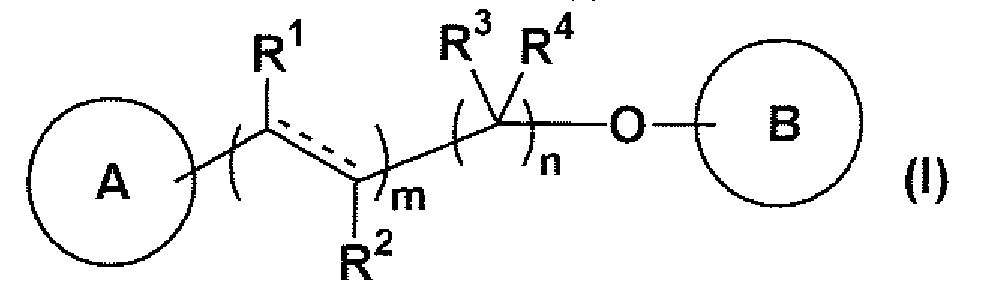
Description


ringA and ringB each independently represents a cyclic group which may have a substituent(s),
m and n each independently represents 0 or 1, in which a sum of m and n is 1 or 2,
a salt thereof, a solvent thereof or an N-oxide thereof, or a prodrug thereof,

a salt thereof, a solvent thereof or an N-oxide thereof, or a prodrug thereof,
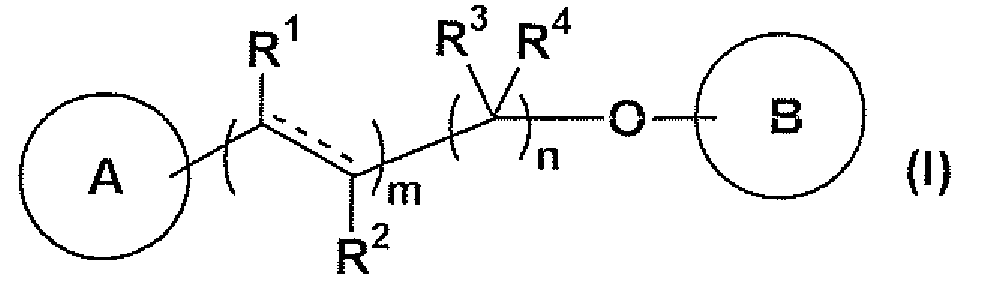
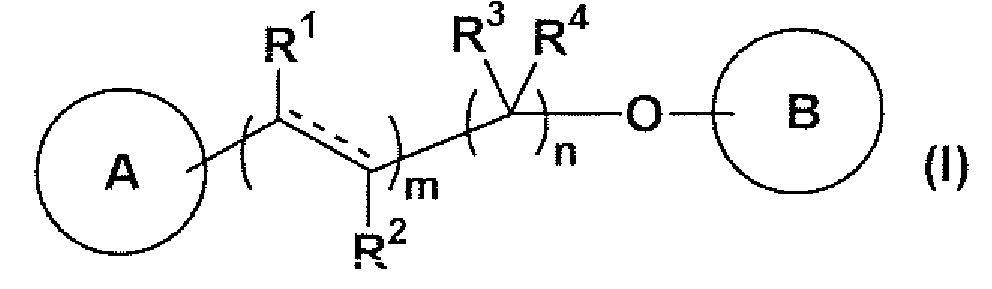
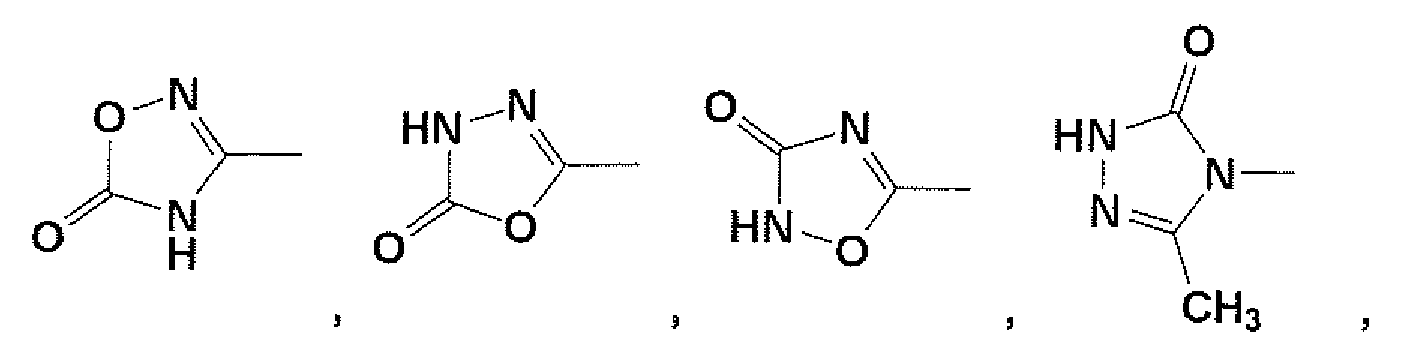


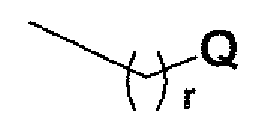


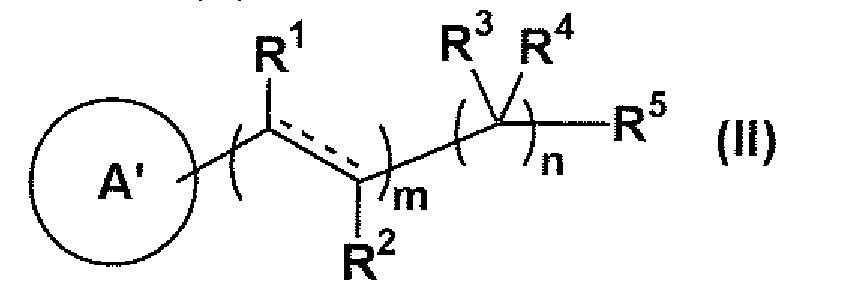
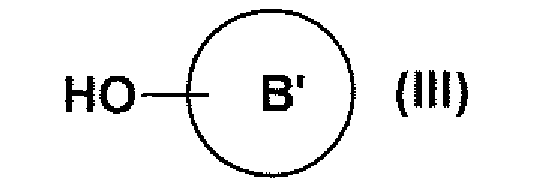

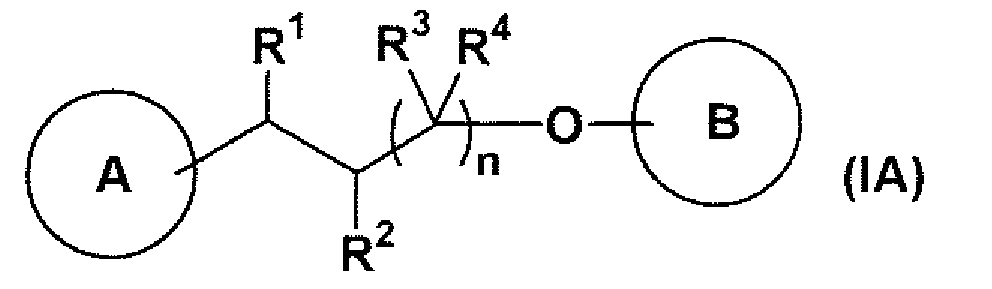

TLC: Rf 0.80 (hexane : ethyl acetate = 2 : 1).
TLC: Rf 0.47 (hexane : ethyl acetate = 1 : 1)
TLC: Rf 0.60 (hexane : ethyl acetate = 2 : 1);
NMR(CDCl3):δ 3.51 (s, 3H), 3.69 (s, 2H), 3.71 (s, 3H), 5.23 (s, 2H), 7.03 (m, 1H), 7.25 (m, 3H), 7.37 (m, 2H), 7.49 (m, 2H).
TLC: Rf 0.60 (hexane : ethyl acetate = 2 : 1);
NMR(CDCl3):δ 3.69 (s, 2H), 3.72 (s, 3H), 5.12 (s, 1H), 6.82 (m, 1H), 7.05 (dd, 1H), 7.15 (m, 1H), 7.28 (m, 2H), 7.38 (m, 1H), 7.47 (m, 2H).

TLC: Rf 0.43 (hexane : ethyl acetate = 4 : 1);
NMR(CDCl3):δ 3.69 (s, 2H), 3.71 (s, 3H), 4.79 (dd, 2H), 6.54 (dt, 1H), 6.81 (d, 1H), 6.95 (m, 1H), 7.20 (m, 2H), 7.28 (m, 1H), 7.39 (m, 2H), 7.50 (m, 4H), 7.59 (d, 2H).

TLC: Rf 0.41 (chloroform : methanol = 9 : 1);
NMR(CDCl3):δ 7.58 (d, 2H), 7.51 (m, 4H), 7.40 (dd, 1H), 7.36 (dd, 1H), 7.28 (m, 1H), 7.19 (m, 2H), 6.94 (ddd, 1H), 6.80 (d, 1H), 6.52 (dt, 1H), 4.78 (dd, 2H), 3.71 (s, 2H).

TLC: Rf 0.40 (hexane : ethyl acetate = 5 : 1);
NMR(CDCl3):δ 7.62-7.20 (m, 16H), 7.00 (m, 1H), 6.82 (d, 1H), 6.49 (dt, 1H), 4.78 (dd, 2H), 3.70 (s, 3H), 3.69 (s, 2H).
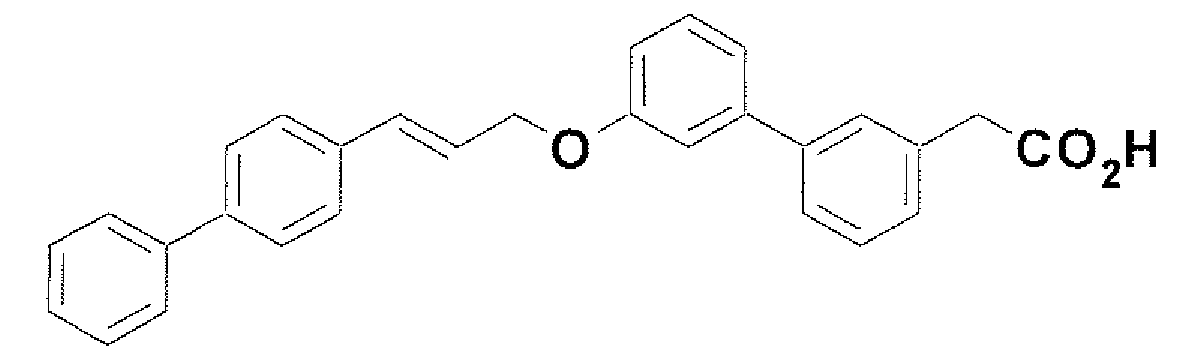
TLC: Rf 0.63 (chloroform : methanol = 9 : 1);
NMR(CDCl3):δ 7.64-7.27 (m, 14H), 7.22-7.16 (m, 2H), 7.00-6.92 (m, 1H), 6.80 (brd, 1H), 6.48 (dt, 1H), 4.78 (dd, 2H), 3.71 (s, 2H).

TLC:Rf0.52 (chloroform : methanol = 10 : 1);
NMR(CDCl3):δ 2.13 (m, 2H), 2.89 (t, 2H), 3.70 (s, 2H), 4.01 (t, 2H), 5.48 (s, 1H), 6.87 (dd, 1H), 7.09 (m, 1H), 7.16 (d, 1H), 7.33 (m, 5H), 7.52 (m, 4 H).

TLC: Rf 0.51 (methylene chloride : methanol = 10 : 1);
NMR(DMSO-d6):δ 7.91(t, 1H), 7.66(d, 1H), 7.55(d, 1H), 7.38(t, 1H), 7.31-7.20(m, 2H), 7.15-7.05(m, 3H), 7.02(d, 1H), 6.93(d, 1H), 6.83(dt, 1H), 4.85(d, 2H), 3.40(s, 2H).

TLC: Rf0.44 (methylene chloride : methanol = 10 : 1).
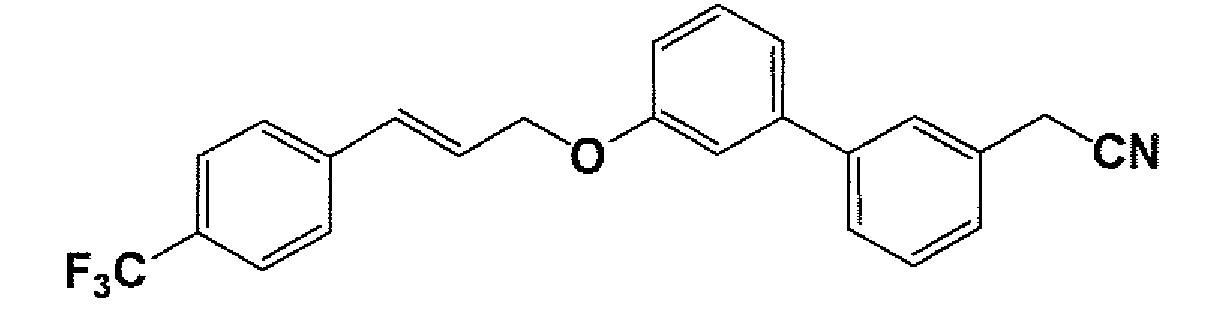
TLC: Rf 0.37 (hexane : ethyl acetate = 4 : 1).

TLC: Rf 0.53 (methylene chloride : methanol = 10 : 1);
NMR(DMSO-d6):δ 4.36 (s, 2H), 4.84 (d, 1H), 6.72 (dt, 1H), 6.89 (d, 1H), 7.02 (dd, 1H), 7.23-7.21 (m, 3H), 7.38 (d, 1H), 7.43 (d, 1H), 7.57 (d, 1H), 7.62 (m, 1H), 7.75-7.66 (m, 4H), 16.18(m, 1H).
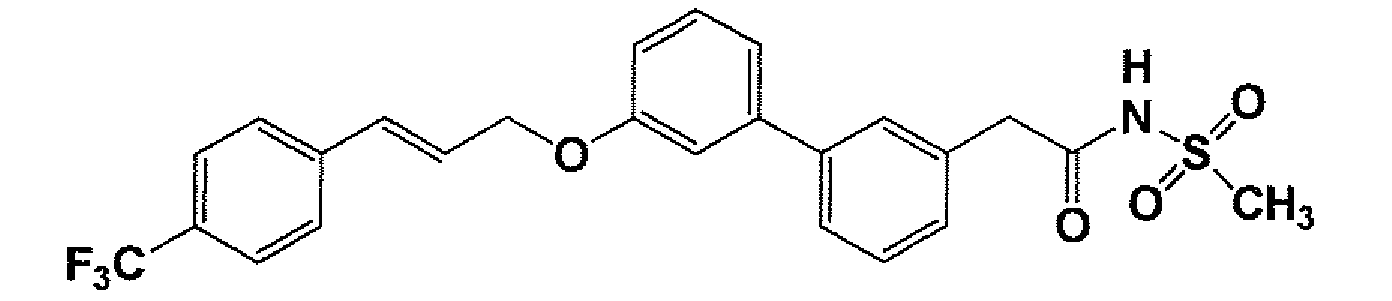
TLC: Rf 0.89 (n-hexane : ethyl acetate = 1 : 1);
NMR(CDCl3):δ 3.27 (s, 3H), 3.76 (s, 2H), 4.79 (d, 2H), 6.54 (dt, 1H), 6.81 (d, 1H), 6.98 (m, 1H), 7.25-7.15 (m, 3H), 7.39 (t, 1H), 7.62-7.43 (m, 8H).
TLC: Rf 0.36 (hexane : ethyl acetate = 4 : 1).
TLC: Rf 0.69 (methylene chloride : methanol = 9 : 1).
TLC: Rf 0.61 (hexane : ethyl acetate = 1 : 1).
TLC: Rf 0.27 (hexane : ethyl acetate = 2 : 1).
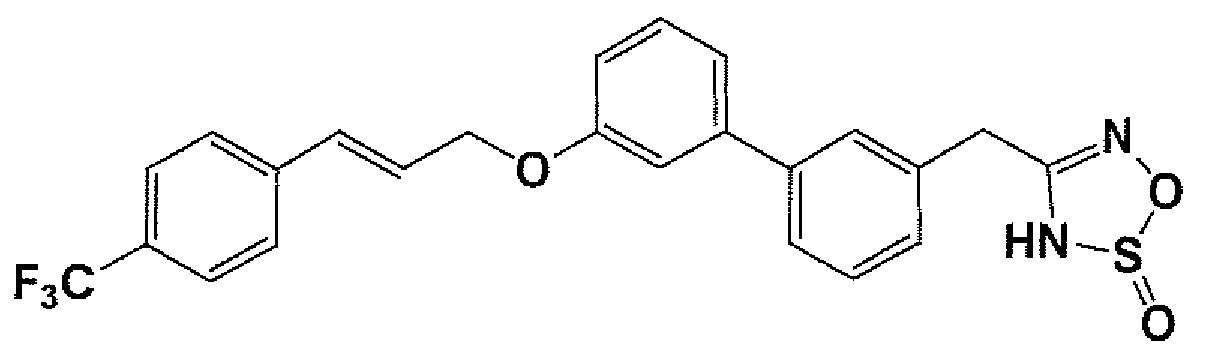
TLC: Rf 0.51 (n-hexane : ethyl acetate = 2: 1);
NMR(DMSO-d6):δ 4.53 (d, 2H), 5.81 (s, 2H), 6.56 (dt, 1H), 6.78-6.65 (m, 2H), 7.05-6.97 (m, 2H), 7.21 (t, 1H), 7.27 (d, 1H), 7.33 (t, 1H), 7.42 (d, 1H), 7.54 (s, 1H), 7.59 (d, 2H), 7.64 (d, 2H), 9.51 (s, 1H).
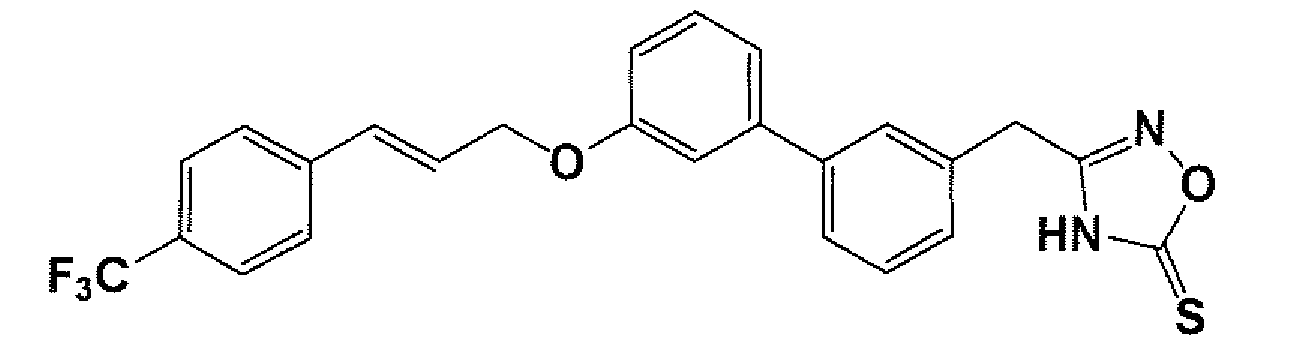
TLC: Rf 0.73 (n-hexane : ethyl acetate = 1 : 1);
NMR(DMSO-d6):δ 4.137 (s, 2H), 4.14 (d, 2H), 6.54 (dt, 1H), 6.79-6.71 (m, 2H), 7.05-6.97 (m, 2H), 7.22 (t, 1H), 7.26 (d, 1H), 7.36 (t, 1H), 7.48 (d, 1H), 7.57-7.51 (m, 3H), 7.62 (d, 2H), 9.52 (s, 1H).
TLC: Rf 0.61 (hexane : ethyl acetate = 1 : 1).
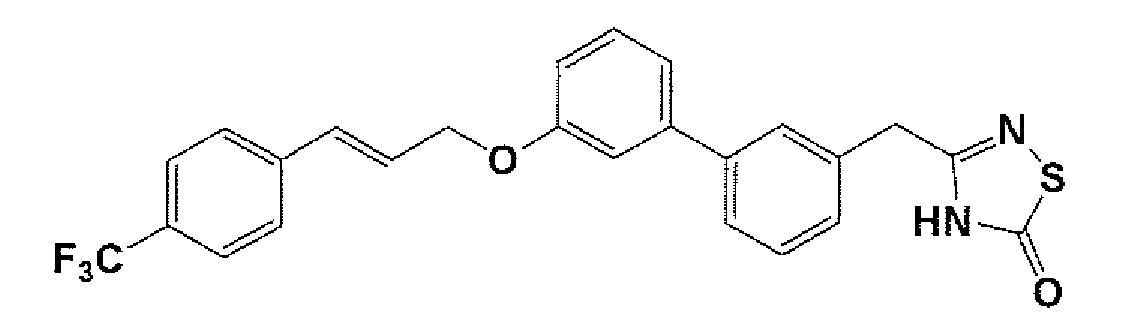
TLC: Rf 0.65 (n-hexane : ethyl acetate = 1 : 1);
NMR(DMSO-d6):δ 4.21 (s, 2H), 4.58 (d, 2H), 6.24 (dt, 1H), 6.48 (d, 1H), 6.75 (m, 1H), 6.99-6.93 (m, 2H), 7.21 (t, 1H), 7.27 (d, 1H), 7.39 (t, 1H), 7.46 (d, 1H), 7.55-7.47 (m, 3H), 7.62 (d, 2H), 9.50 (s, 1H).
TLC: Rf 0.47 (hexane : ethyl acetate).

TLC: Rf 0.51 (n-hexane : ethyl acetate = 1 : 1)
NMR(DMSO-d6):δ 4.17 (s, 2H), 4.37 (d, 2H), 6.13 (dt, 1H), 6.45 (d, 1H), 6.74 (m, 1H), 7.00-6.93 (m, 2H), 7.21 (t, 1H), 7.31 (d, 1H), 7.48-7.35 (m, 4H), 7.64-7.55 (m, 3H), 9.51 (s, 1H).
SEQ ID NO:1: Enhancer sequence repeating Gal4 protein response sequence

| [3'-({(2E)-3-[4-(Trifluoromethyl)phenyl]-2-propen-1-yl}oxy)biphenyl-3-yl]acetic acid | 100 g |
| Carboxymethylcellulosecalcium (disintegrant) | 4 g |
| Magnesium stearate (lubricant) | 2 g |
| Microcrystalline cellulose | 94 g |
| [3'-({(2E)-3-[4-(Trifluoromethyl)phenyl]-2-propen-1-yl}oxy)biphenyl-3-yl]acetic acid | 200 g |
| Mannitol | 2 kg |
| Distilled water | 50 L |
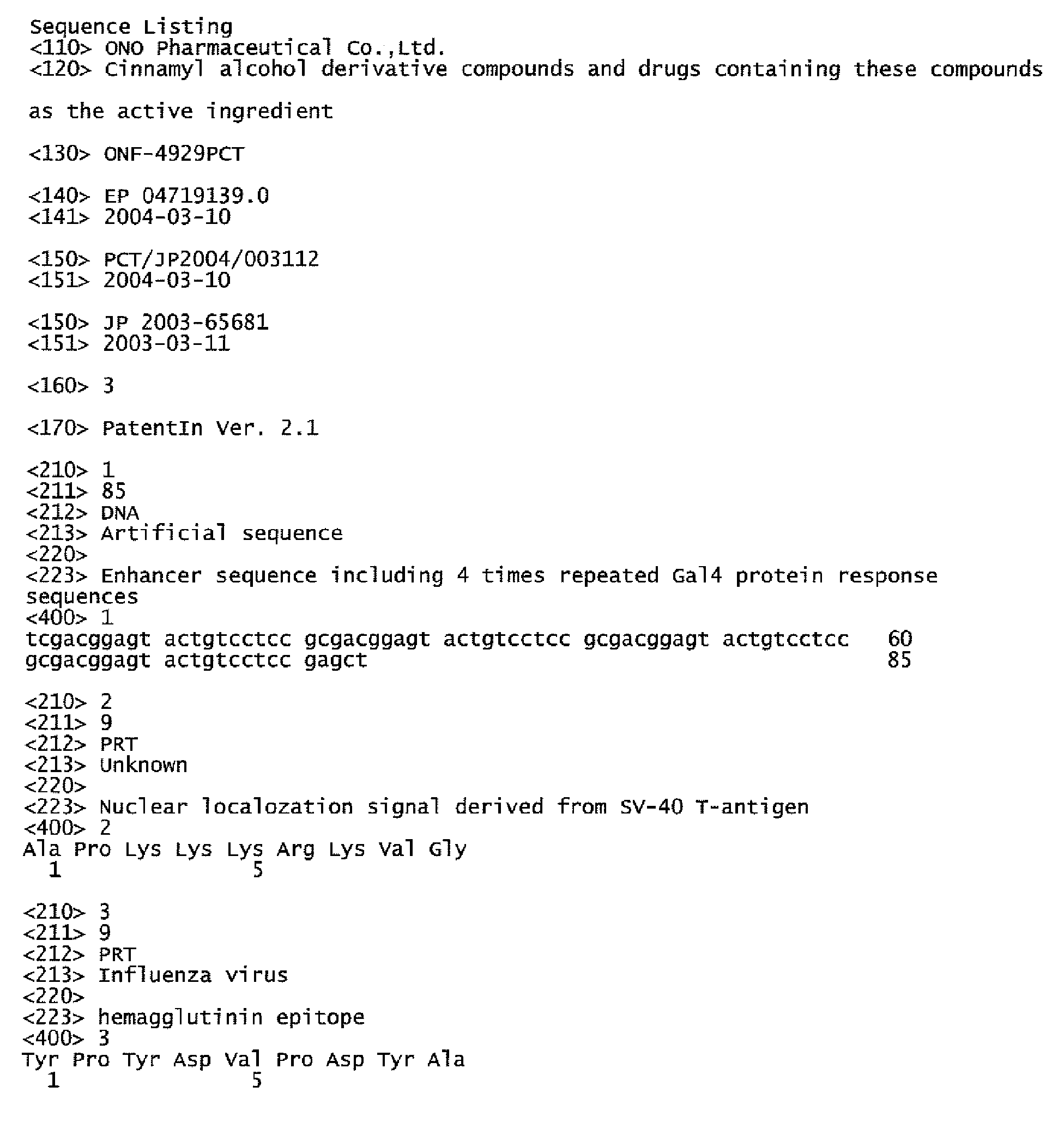
Claims (15)
- A compound represented by formula (I):wherein R1, R2, R3 and R4 each independently represents a hydrogen atom, a hydrocarbon group which may have a substituent(s), a halogen atom or a cyclic group which may have a substituent(s);

ringA and ringB each independently represents a cyclic group which may have a substituent(s),
- - - - - represents a single bond or a double bond;
m and n each independently represents 0 or 1, in which a sum of m and n is 1 or 2,
a salt thereof, a solvent thereof or an N-oxide thereof, or a prodrug thereof - The compound according to claim 1, wherein
----- is a double bond; m is 1, or a salt thereof, a solvent, or an N-oxide, or a prodrug thereof. - The compound according to claim 1, wherein at least one substituent among the substituent of ringB iswherein r represents an integer of 1 to 6; and Q represents an acidic group,
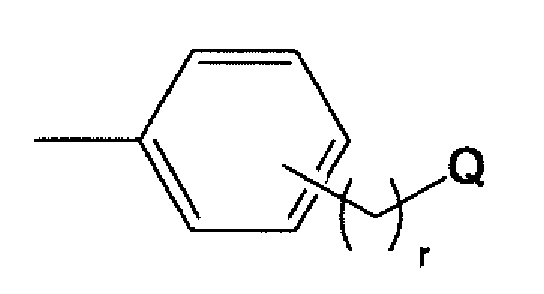
a salt thereof, a solvent thereof or an N-oxide thereof, or a prodrug thereof - The compound according to claim 3, wherein r is an integer of 1 to 4; and Q is carboxyl which may be esterified, a salt thereof, a solvent thereof or an N-oxide thereof, or a prodrug thereof
- The compound according to claim 3, wherein r is 1; and Q is carboxyl, a salt thereof, a solvent thereof or an N-oxide thereof, or a prodrug thereof.
- The compound according to claim 1, which is selected froma salt thereof, a solvent thereof or an N-oxide thereof, or a prodrug thereof(1) [3'-({(2E)-3-[4-(trifluoromethyl)phenyl]-2-propen-1-yl}oxy)biphenyl-3-yl]acetic acid,(2) {2-[3-({(2E)-3-[4-(trifluoromethyl)phenyl]-2-propen-1-yl}oxy)phenyl]-1,3-thiazol-4-yl}acetic acid,(3) [2-methoxy-3'-({(2E)-3-[4-(trifluoromethyl)phenyl]-2-propen-1-yl}oxy)biphenyl-3-yl]acetic acid,(4) [6-methoxy-3'-({(2E)-3-[4-(trifluoromethyl)phenyl]-2-propen-1-yl}oxy)biphenyl-3-yl]acetic acid,(5) [3'-({(2E)-3-[2-fluoro-4-(trifluoromethyl)phenyl]-2-propen-1-yl}oxy)biphenyl-3-yl]acetic acid,(6) [5-fluoro-3'-({(2E)-3-[4-(trifluoromethyl)phenyl]-2-propen-1-yl}oxy)biphenyl-3-yl]aceteic acid,(7) (3'-{[6-(trifluoromethyl)-1,3-benzothiazol-2-yl]methoxy}biphenyl-3-yl)acetic acid,(8) [2-chloro-6-methyl-3'-({(2E)-3-[4-(trifluoromethyl)phenyl]-2-propen-1-yl}oxy)biphenyl-3-yl]acetic acid,(9) [4-fluoro-3'-({(2E)-3-[4-(trifluoromethyl)phenyl]-2-propen-1-yl}oxy)biphenyl-3-yl]acetic acid,(10) [2-methyl-3'-({(2E)-3-[4-(trifluoromethyl)phenyl]-2-propen-1-yl}oxy)biphenyl-3-yl]acetic acid,(11) [2-fluoro-3'-({(2E)-3-[4-(trifluoromethyl)phenyl]-2-propen-1yl}oxy)biphenyl-3-yl]acetic acid, and(12) [2-fluoro-3'-({(2E)-3-[2-fluoro-4-(trifluoromethyl)phenyl]prop-2-en-1-yl}oxy)biphenyl-3-yl)acetic acid sodium salt,
- A pharmaceutical composition comprising the compound according to claim 1, a salt thereof, a solvent thereof or an N-oxide thereof, or a prodrug thereof.
- The pharmaceutical composition according to claim 7, which is a preventive and/or therapeutic agent for a disease caused by PPAR δ.
- The pharmaceutical composition according to claim 8, wherein the disease caused by PPAR δ is hyperlipidemia or adiposity.
- A method for prevention and/or treatment for a disease caused by PPAR δ in a mammal, which comprises administering to a mammal an effective amount of a compound represented by formula (I):wherein all symbols have the same meanings as defined in claim 1, a salts thereof, a solvent thereof or an N-oxide thereof, or a prodrug thereof.
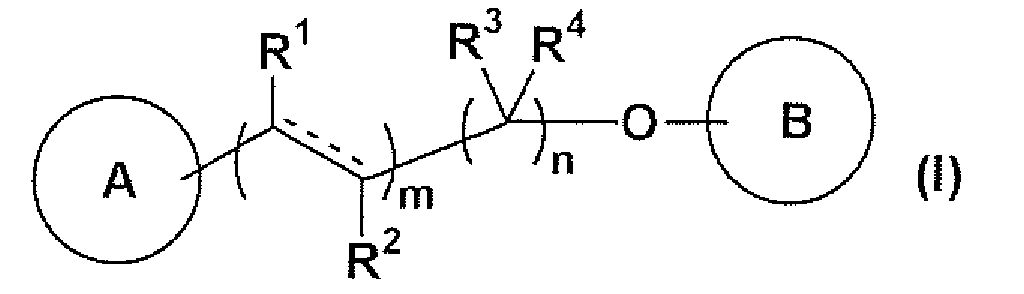
- The method for prevention and/or treatment according to claim 10, wherein the disease caused by PPAR δ is hyperlipidemia or adiposity.
- Use of a compound represented by formula (I)wherein all symbols have the same meanings as defined in claim 1, a salts thereof, a solvent thereof or an N-oxide thereof, or a prodrug thereof for preparing a prevention and/or treatment agent for a disease caused by PPAR δ,
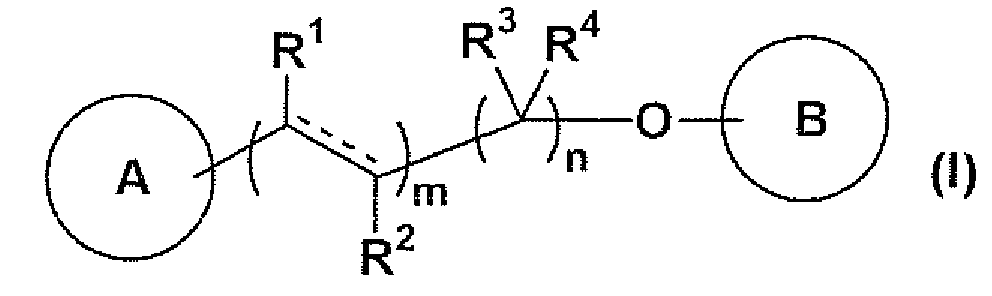
- The use of the compound according to claim 12, a salt thereof, a solvent thereof or an N-oxide thereof, or a prodrug thereof, wherein the disease caused by PPAR δ is hyperlipidemia or adiposity.
- A medicine comprising the compound according to claim 1, a salt thereof, a solvent thereof or an N-oxide thereof, or a prodrug thereof and one kind or more kinds selected from an anti-adiposity drug, a therapeutic agent for diabetes and a lipid improvement drug.
- The medicine according to claim 14, wherein the lipid improvement drug is an ACAT inhibitor, an MTP inhibitor, an HMG-CoA reductase inhibitor, a bile acid absorption inhibitor or a cholesterol absorption inhibitor.
Applications Claiming Priority (3)
| Application Number | Priority Date | Filing Date | Title |
|---|---|---|---|
| JP2003065681 | 2003-03-11 | ||
| JP2003065681 | 2003-03-11 | ||
| PCT/JP2004/003112 WO2004080943A1 (en) | 2003-03-11 | 2004-03-10 | Cinnamyl alcohol derivative compounds and drugs containing the compounds as the active ingredient |
Publications (2)
| Publication Number | Publication Date |
|---|---|
| EP1604971A1 true EP1604971A1 (en) | 2005-12-14 |
| EP1604971A4 EP1604971A4 (en) | 2006-08-16 |
Family
ID=32984506
Family Applications (1)
| Application Number | Title | Priority Date | Filing Date |
|---|---|---|---|
| EP04719139A Withdrawn EP1604971A4 (en) | 2003-03-11 | 2004-03-10 | PROCESS FOR ADDING ACTIVE CHARCOAL IN WATER PURIFICATION AND WATER PURIFICATION METHOD |
Country Status (4)
| Country | Link |
|---|---|
| US (1) | US20070105959A1 (en) |
| EP (1) | EP1604971A4 (en) |
| JP (1) | JPWO2004080943A1 (en) |
| WO (1) | WO2004080943A1 (en) |
Cited By (1)
| Publication number | Priority date | Publication date | Assignee | Title |
|---|---|---|---|---|
| EP1932843A1 (en) * | 2006-12-14 | 2008-06-18 | sanofi-aventis | Sulfonyl-phenyl-2H-(1,2,4) oxadiazole-5-one derivatives, processes for their preparation and their use as pharmaceuticals |
Families Citing this family (19)
| Publication number | Priority date | Publication date | Assignee | Title |
|---|---|---|---|---|
| EP1745014B1 (en) | 2004-05-05 | 2011-07-06 | High Point Pharmaceuticals, LLC | Novel compounds, their preparation and use |
| JP2007536343A (en) | 2004-05-05 | 2007-12-13 | ノボ ノルディスク アクティーゼルスカブ | Phenoxyacetic acid derivatives as PPAR agonists |
| TW200606157A (en) * | 2004-07-02 | 2006-02-16 | Sankyo Co | Suppressant of production of tissue factor |
| KR101021828B1 (en) | 2004-10-27 | 2011-03-17 | 다이이찌 산쿄 가부시키가이샤 | Benzene Compounds Having Two or More Substituents |
| US7943669B2 (en) | 2005-06-30 | 2011-05-17 | High Point Pharmaceuticals, Llc | Phenoxy acetic acids as PPAR delta activators |
| US8097610B2 (en) * | 2005-08-26 | 2012-01-17 | Shionogi & Co., Ltd. | Derivative having PPAR agonistic activity |
| CA2624102A1 (en) | 2005-09-29 | 2007-04-12 | Sanofi-Aventis | Phenyl- and pyridinyl- 1, 2 , 4 - oxadiazolone derivatives, processes for their preparation and their use as pharmaceuticals |
| WO2007039172A1 (en) | 2005-09-29 | 2007-04-12 | Sanofi-Aventis | Phenyl- and pyridyl-i, 2 , 4 -oxadiazolone derivatives with phenyl group, processes for their preparation and their use as pharmaceuticals |
| EA201101084A1 (en) | 2005-12-22 | 2012-04-30 | ХАЙ ПОЙНТ ФАРМАСЬЮТИКАЛЗ, ЭлЭлСи | PHENOXYACIC ACIDS AS PPAR DELTA ACTIVATORS |
| EA019879B1 (en) | 2005-12-29 | 2014-07-30 | Лексикон Фармасьютикалз, Инк. | Multicyclic amino acid derivatives, pharmaceutical composition containing them and method of treatment using these derivatives |
| JP2009529512A (en) | 2006-03-09 | 2009-08-20 | ハイ ポイント ファーマシューティカルズ,リミティド ライアビリティ カンパニー | Novel compounds, methods for their production and use |
| CL2007001873A1 (en) * | 2006-06-27 | 2008-01-04 | Takeda Pharmaceutical | ((3s)) - 6 - ((¨2,6-dimethyl-4- (3- (methylsulfonyl) -propoxy) biphenyl-3-yl) methoxy-2,3-dihydro-1-benzofuran-3-yl acid ) acetic or salt thereof |
| UA99270C2 (en) * | 2006-12-12 | 2012-08-10 | Лексикон Фармасьютикалз, Инк. | 4-phenyl-6-(2,2,2-trifluoro-1-phenylethoxy)pyrimidine-based compounds and methods of their use |
| KR101104773B1 (en) * | 2009-06-24 | 2012-01-12 | 동국대학교 경주캠퍼스 산학협력단 | Composition for preventing and treating hypertension containing cinnamic alcohol |
| ES2811087T3 (en) | 2013-09-09 | 2021-03-10 | Vtv Therapeutics Llc | Use of PPAR-delta agonists to treat muscle atrophy |
| GB201516504D0 (en) | 2015-09-17 | 2015-11-04 | Astrazeneca Ab | Imadazo(4,5-c)quinolin-2-one Compounds and their use in treating cancer |
| WO2017126524A1 (en) * | 2016-01-19 | 2017-07-27 | 第一三共株式会社 | Combined usage of diabetes therapeutic agents |
| KR101901491B1 (en) * | 2016-08-25 | 2018-09-21 | 호서대학교 산학협력단 | Anti-obesity composition containing absolute or cinnamyl alcohol extracted from castanea crenata var. dulcis flower |
| WO2023147309A1 (en) | 2022-01-25 | 2023-08-03 | Reneo Pharmaceuticals, Inc. | Use of ppar-delta agonists in the treatment of disease |
Family Cites Families (9)
| Publication number | Priority date | Publication date | Assignee | Title |
|---|---|---|---|---|
| WO1995027692A1 (en) * | 1994-04-08 | 1995-10-19 | Smithkline Beecham Corporation | Subtituted biphenyl tnf inhibitors |
| US6204293B1 (en) * | 1995-11-06 | 2001-03-20 | University Of Pittsburgh | Inhibitors of protein isoprenyl transferases |
| PT933346E (en) * | 1996-07-31 | 2004-03-31 | Shionogi & Co | NEW P-TERPHENYL COMPOUNDS |
| WO2000037433A1 (en) * | 1998-12-18 | 2000-06-29 | Abbott Laboratories | Inhibitors of matrix metalloproteinases |
| US6288261B1 (en) * | 1998-12-18 | 2001-09-11 | Abbott Laboratories | Inhibitors of matrix metalloproteinases |
| DK1206457T3 (en) * | 1999-08-27 | 2004-02-16 | Lilly Co Eli | Biaryl-oxa (thia) zole derivatives and their use as modulators PPAPs |
| US7687664B2 (en) * | 2001-06-04 | 2010-03-30 | Eisai R&D Management Co., Ltd. | Carboxylic acid derivative, a salt thereof or an ester of them, and medicament comprising it |
| WO2004011446A1 (en) * | 2002-07-26 | 2004-02-05 | Bayer Pharmaceuticals Corporation | Indane, dihydrobenzofuran, and tetrahydronaphthalene carboxylic acid derivatives and their use as antidiabetics |
| US7553867B2 (en) * | 2002-09-06 | 2009-06-30 | Takeda Pharmaceutical Company Limited | Furan or thiophene derivative and medicinal use thereof |
-
2004
- 2004-03-10 JP JP2005503546A patent/JPWO2004080943A1/en not_active Withdrawn
- 2004-03-10 US US10/548,474 patent/US20070105959A1/en not_active Abandoned
- 2004-03-10 EP EP04719139A patent/EP1604971A4/en not_active Withdrawn
- 2004-03-10 WO PCT/JP2004/003112 patent/WO2004080943A1/en not_active Ceased
Non-Patent Citations (3)
| Title |
|---|
| LOPEZ, FERNANDO ET AL: "Regio- and Enantioselective Iridium-Catalyzed Intermolecular Allylic Etherification of Achiral Allylic Carbonates with Phenoxides" JOURNAL OF THE AMERICAN CHEMICAL SOCIETY , 125(12), 3426-3427 CODEN: JACSAT; ISSN: 0002-7863, 2003, XP002382700 * |
| See also references of WO2004080943A1 * |
| SHIMIZU, TOMIO ET AL: "Intramolecular 1,3-dipolar cycloadditions and intramolecular ene reactions of 2-(alkenyloxy)benzaldehyde arylhydrazones" BULLETIN OF THE CHEMICAL SOCIETY OF JAPAN , 55(8), 2450-5 CODEN: BCSJA8; ISSN: 0009-2673, 1982, XP008064690 * |
Cited By (3)
| Publication number | Priority date | Publication date | Assignee | Title |
|---|---|---|---|---|
| EP1932843A1 (en) * | 2006-12-14 | 2008-06-18 | sanofi-aventis | Sulfonyl-phenyl-2H-(1,2,4) oxadiazole-5-one derivatives, processes for their preparation and their use as pharmaceuticals |
| WO2008071311A1 (en) * | 2006-12-14 | 2008-06-19 | Sanofi-Aventis | Sulfonyl-phenyl-2h-[1,2,4]oxodiazol-5-one derivatives, processes for their preparation and their use as pharmaceuticals |
| US8173674B2 (en) | 2006-12-14 | 2012-05-08 | Sanofi-Aventis | Sulfonyl-phenyl-2H-[1,2,4]oxadiazol-5-one derivatives, processes for their preparation and their use as pharmaceuticals |
Also Published As
| Publication number | Publication date |
|---|---|
| JPWO2004080943A1 (en) | 2006-06-08 |
| EP1604971A4 (en) | 2006-08-16 |
| US20070105959A1 (en) | 2007-05-10 |
| WO2004080943A1 (en) | 2004-09-23 |
Similar Documents
| Publication | Publication Date | Title |
|---|---|---|
| US20100267778A1 (en) | Diphenyl ether compound, process for producing the same, and use | |
| US20070105959A1 (en) | Cynnamyl alcohol derivative compounds and drugs containing the compounds as active ingredient | |
| EP1354879B1 (en) | Dihydronaphthalene derivative compounds and drugs containing these compounds as the active ingredient | |
| US6924295B2 (en) | Tetrahydroquinoline derivative compound and drug containing the compound as active ingredient | |
| US20070167490A1 (en) | Imino ether derivative compounds and drugs containing the compounds as the active ingredient | |
| US7560475B2 (en) | Phenylacetic acid derivative, process for producing the same, and use | |
| AU2002363776B2 (en) | Carboxylic acid derivative compounds and drugs containing the same as the active ingredient | |
| JP2005119998A (en) | Fused benzene ring compounds and uses thereof | |
| JP2004026679A (en) | Dihydronaphthalene derivative | |
| JP2004123721A (en) | Dihydronaphthalene derivative compound and drug containing the compound as active ingredient | |
| JP2004189659A (en) | Inhalant containing neutrophil elastase inhibitor as active ingredient |
Legal Events
| Date | Code | Title | Description |
|---|---|---|---|
| PUAI | Public reference made under article 153(3) epc to a published international application that has entered the european phase |
Free format text: ORIGINAL CODE: 0009012 |
|
| 17P | Request for examination filed |
Effective date: 20050930 |
|
| AK | Designated contracting states |
Kind code of ref document: A1 Designated state(s): AT BE BG CH CY CZ DE DK EE ES FI FR GB GR HU IE IT LI LU MC NL PL PT RO SE SI SK TR |
|
| AX | Request for extension of the european patent |
Extension state: AL LT LV MK |
|
| DAX | Request for extension of the european patent (deleted) | ||
| A4 | Supplementary search report drawn up and despatched |
Effective date: 20060609 |
|
| RA4 | Supplementary search report drawn up and despatched (corrected) |
Effective date: 20060714 |
|
| 17Q | First examination report despatched |
Effective date: 20090701 |
|
| STAA | Information on the status of an ep patent application or granted ep patent |
Free format text: STATUS: THE APPLICATION IS DEEMED TO BE WITHDRAWN |
|
| 18D | Application deemed to be withdrawn |
Effective date: 20091111 |