EP1604850A1 - Verfahren zum Betreiben eines brennstoffbetriebenen Fahrzeugheizgerätes - Google Patents
Verfahren zum Betreiben eines brennstoffbetriebenen Fahrzeugheizgerätes Download PDFInfo
- Publication number
- EP1604850A1 EP1604850A1 EP05007809A EP05007809A EP1604850A1 EP 1604850 A1 EP1604850 A1 EP 1604850A1 EP 05007809 A EP05007809 A EP 05007809A EP 05007809 A EP05007809 A EP 05007809A EP 1604850 A1 EP1604850 A1 EP 1604850A1
- Authority
- EP
- European Patent Office
- Prior art keywords
- information
- vehicle
- phase
- starting
- heater
- Prior art date
- Legal status (The legal status is an assumption and is not a legal conclusion. Google has not performed a legal analysis and makes no representation as to the accuracy of the status listed.)
- Granted
Links
Images

Classifications
-
- B—PERFORMING OPERATIONS; TRANSPORTING
- B60—VEHICLES IN GENERAL
- B60H—ARRANGEMENTS OF HEATING, COOLING, VENTILATING OR OTHER AIR-TREATING DEVICES SPECIALLY ADAPTED FOR PASSENGER OR GOODS SPACES OF VEHICLES
- B60H1/00—Heating, cooling or ventilating devices
- B60H1/22—Heating, cooling or ventilating devices the heat source being other than the propulsion plant
- B60H1/2203—Heating, cooling or ventilating devices the heat source being other than the propulsion plant the heat being derived from burners
- B60H1/2206—Heating, cooling or ventilating devices the heat source being other than the propulsion plant the heat being derived from burners controlling the operation of burners
Definitions
- the present invention relates to a method for operating a fuel-powered vehicle heater.
- Such fuel-operated heaters for example, as parking heaters used.
- the heat generated during combustion can used to warm or preheat the vehicle interior, and can continue to be used, such as the coolant preheat an effective as a drive unit internal combustion engine.
- the use of such auxiliary heaters is generally done in this way that, for example, by the driver, a switch is actuated, the starts the heater. It then runs off a startup procedure, in which first for a predetermined period of, for example, 20 seconds by electrical excitation, a heating arrangement, for example comprising a Glühzündux or the like., Is activated to ignite, so the Start the combustion required thermal conditions provide.
- this predetermined period of time After the expiration of this predetermined period of time becomes it assumed that these framework conditions, ie sufficiently high Temperatures, and it is then for example by combustion air feed and fuel feed an ignitable mixture provided from combustion air and fuel, due to the The fact that there are already sufficiently high temperatures, in general then it will ignite.
- this second ignition or combustion phase is then achieved by continuously providing the combustible mixture first the combustion stabilized and then changed so far, as the heating power in the direction of a desired heating, so for example a maximum possible heating power is changed.
- this object can be achieved by a method for operating a fuel-powered vehicle heater, in which at a start procedure in a first start phase of predetermined time duration an electrically energizable heating arrangement is operated and in a second start phase after expiration of the first start phase an ignitable Fuel / air mixture is provided for starting the combustion, wherein the starting procedure with the first starting phase in the presence of a start information is started and after the first start phase in the second Start phase is only transitioned when a transition release information is present.
- the method according to the invention can further be provided that when, after the lapse of the predetermined period of time, the transition enable information is not present, the first start phase maximum until the expiration an extension time interval is continued. In this way can be ensured that an excessively long arousal of the electrically energizable heating arrangement does not take place. Nevertheless, it is ensured that not already then, if in principle by sufficient long excitation of the heating arrangement the ignition could be done, a corresponding one Release but not yet available, the startup procedure again is canceled and may need to be restarted. It can continue be provided that, if after expiration of the predetermined period of time the transitional release information is not available, the first launch phase continues until the transitional release information is available.
- transition release information not before can be provided according to the invention, that after the expiration of Extension time interval without presence of the transition release information the excitation of the electrically energizable heating arrangement is terminated.
- the present invention relates to a method for operating a fuel-powered vehicle heater, in which at a start procedure in the presence of a start information in one first start phase an electrically energizable heating arrangement is operated and if there is transitional release information in a second Start phase an ignitable fuel / air mixture to start combustion provided.
- a schematically illustrated vehicle is generally designated 10.
- This vehicle includes as a drive unit, for example, a Internal combustion engine 12, and further comprises a generally designated 14 fuel-operated heater.
- This includes a combustion chamber 16, in which by a schematically indicated fuel supply 18 first liquid fuel, for example, in a porous evaporator medium 20 can be initiated.
- combustion air supply for generating an ignitable or combustible Mixture required combustion air introduced.
- an ignition 24 for example in Shape of a Glühzündstattes, available.
- the heater 14 as an evaporator burner with the already mentioned porous Evaporating medium 20 may this one after the manner of a heating coil configured heater 26 may be assigned to in particular in the Start phase to support the fuel evaporation.
- the heater 14 is further associated with a generally designated 28 controller, the based on the following also described sensor inputs basically controls the operation of the heater 14.
- various sensors are present. Such is for example in association with the drive unit or the internal combustion engine 12 there is a sensor 30 which provides information about that or whether it has been started. This sensor 30 can therefore be general the turning of the ignition key or the current flowing thereafter or the like. to capture.
- a temperature sensor 32 may be provided, the in association with the internal combustion engine 12, the temperature of the coolant of the same.
- a temperature sensor 36 may be provided, which detects the interior temperature, and it can in association with a seat, in particular to the driver's seat 38, a seat occupancy sensor 40 may be provided, which detects whether the seat 38 is occupied or in case of occupancy a corresponding signal or corresponding information provides.
- a Gurtschsensor 44 may be provided which detects that or whether the seat belt closed, so has been created and thus the buckle 42 has been locked.
- a sensor 48 may be provided to the may be formed to detect that or whether, for example, by remote control the door lock 50 has been unlocked or / and if the door is open or has been closed.
- Different ones can be used for this purpose Be provided sensor areas, on the one hand the locking state of the central locking system or even a door can detect and on the other hand, the operating state of the door, so the opening or closing them.
- All these sensor signals can be used in the control unit 28, the Control operation of the heater 14 in a suitable manner. So there are between the various sensors and the controller 28 information exchange connections, for example via a data bus system. Further it should be noted that the various electrically excitable System areas can be fed from an on-board system 52, for example, a battery, of course, a sensor 54 may be assigned to monitor the voltage state.
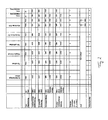
- the heater 14 may be operated be that in a two-step decision process the different be triggered at a startup procedure phases.
- the first of these phases involves the thermal conditioning of the heater 14, in particular the combustion chamber 16, there to sufficiently high temperatures be able to provide so that subsequently carried out an ignition becomes.
- This generally involves the energization of the igniter 24 appropriate energization, and may be in a supportive manner also include the excitation of the heater 26.
- This first startup phase the startup procedure is then triggered if appropriate startup information is present, which suggests that with a certain probability the vehicle 10 will soon be put into operation. For example This information can be obtained by evaluating the sensor signals of the sensors 48, so for example by detecting whether a door lock unlocked has been.
- This first starting phase until the sufficient Preheating the heater 14 is required generally takes about 20 seconds. That is, this time period of about 20 seconds is specified in the start procedure according to the invention. Done within this 20 seconds no further manipulation on the vehicle 10 or no further change of the state of the same, so may after expiration of this period for example, 20 seconds for a predetermined security interval to be awaited, whether this change of state still entry. For example, this interval can be 10-20 seconds long.
- the provision transitional release information then, as described below, in the combustion chamber 16, the required fuel / air mixture provided and thus started the combustion.
- This transitional release information can be provided, for example, that detected by the sensor 40 that a person on the seat 38 place took.
- the opening of the door 46 or re-closing the Door 46 may serve as an enhanced indication of intended use and the basis for the transitional release information form.
- the next phase in the commissioning of the vehicle is opening the Door and boarding at least one driver. This too becomes sensory detected, namely by the sensors 48 and 40. Has the driver space he will generally close the door again, which in turn will can be detected by the sensor 48.
- this phase changes initially nothing at the drive of the heater 14, i. it always takes still the first starting phase, in which the two electrically excitable System areas, namely the ignition device 24 and the heater 26, operated become.
- the next action will be putting on the seatbelt be detectable by the sensor 44. At this time is still no heating power requested, but it can already anticipating the combustion air supply 18, ie an associated fan, activated to provide a certain airflow already.
- the time from the opening of the locking system to the start of the Internal combustion engine 12 ie from providing the start information to the Providing the transitional release information is variable and of it depends on how fast a driver performs the various actions.
- the situation could occur that the internal combustion engine 12 is already started before in the combustion chamber 16 sufficiently high temperatures to ignite. It can therefore be provided that the time period for the first start phase, ie from Providing the start information until the transition to the second Starting phase, so for the introduction of liquid fuel, fixed predetermined is, for example, in the range of 20 seconds, this size is of course depending on external conditions, e.g. the ambient temperature, can change.
- the excitation of the ignition 24th or the heater 26 can be weakened, ie with reduced electric power can be heated, since at this stage in principle only a steady state must be maintained and no further increase the temperature is required. This too can lower the Energy consumption contribute. Also, for example, is a stepped lowering the heating power of the ignition device 24 and heater 26 with increasing continuation of the safety time interval possible, possibly to to completely stop the arousal.
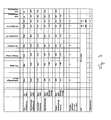
- a procedure is shown, which is basically the preceding one Procedure corresponds, for example, however, due to the fact that lower outside temperatures are present in the first starting phase, ie until for providing the transition release information, the electric heating power is increased in phases. This is how it comes to the very beginning, ie with providing the start information, the ignition device 24 and the heater 26 operated with maximum heating power to enter as quickly as possible Rise the temperature to achieve.
- the heating power can then be provided, for example, by providing the information that the door has been closed again, which means that the time of commissioning of the internal combustion engine 12 is approaching, Also, the heating power can be increased again by appropriate Energy input ensure that a sufficiently high temperature in the Area of the combustion chamber 16, in particular in which the ignition device 24 surrounding Volume range is present.
- start information become. For example, opening the door, seating a Driver, closing the door or closing the buckle as Start information to be interpreted.
- Start information a combination of different Signals or information can be interpreted as start information.
- the start information could then be present or then be provided when the door has been closed and also the Belt buckle has been locked, i. the belt has been put on.
- the transition release information may be represented by other signals be provided on the basis of other signals. So could already closing the door or locking the Gurtsches be interpreted as such release information.
- the heater 14 is not required to provide Heat energy to operate when the temperature inside the vehicle 34 is sufficiently high or the temperature of the coolant of the internal combustion engine 12 is sufficiently high. For example, assign both sensor signals the sensors 32 and 36 on above respective limit temperatures lying temperatures, so in principle the heater 14 against Operate to be locked. Is not sufficient in one of the areas one high temperature, so the heater 14 may be in operation be set, but possibly with reduced heating power. Also The state of the electrical energy supply can be used as a decision parameter be used for, whether or in what way the startup procedure is carried out.
- the on-board voltage system 52 in a comparatively poor state of charge, the correct completion of the startup procedure and in particular also the subsequent starting of the internal combustion engine 12 not guaranteed, so the operation of the heater 14 may be suppressed. If the state of charge is in a middle state, then Although the startup procedure will be released, but with, for example reduced electrical heating power to overload the on-board voltage system to avoid. Is detected during the startup procedure, that the tension breaks down, so not enough anymore electrical energy can be provided, especially for it sufficient that the internal combustion engine 12 can still be started, so the startup procedure can be aborted. Next, for example during the startup procedure, proceed so that the heater 26 is operated only if it is ensured that sufficient electrical energy can be provided.
- All these related with the performance of the on-board voltage system 52 standing information can be provided by the sensors 54, the corresponding signals or a corresponding signal to the Controller 28 provides.
- the sensors 54 For example, after generating the startup information based on the opening of the locking system, detected by the sensor 48, does not record that a person has taken place in the vehicle, so an adjustment of the electric heating power can be made to that effect will be reduced because it can be assumed that In principle then more time is available for the startup procedure. After all the vehicle can only be put into operation or with the Driving operation can be started when a driver sits in the vehicle.
- the safety time interval something be extended to maintain the ignition by maintaining Temperatures in the combustion chamber 16 in a steady state at reduced Entry of electrical energy the possibility of combustion start to get over a longer period of time.
- the closing or not yet detected closing of the door in particular the driver's door, can be used as a trigger for going into a "power saving mode" with reduced input of electrical energy can be used. Will that be Closing the door is detected so it can then be used in normal operation For example, be transferred to maximum electrical heating power.
- the heater can stop of the vehicle and stopping the internal combustion engine 12 further operated be, for example, with low combustion heat output, as long For example, the driver is still sitting in the vehicle, so the sensor 40th provides a corresponding signal and / or locks the buckle 42 is or the door 46 is still closed. Only when then actually is indicated by appropriate signals that the driver Vehicle also leaves, for example, the belt has been unlocked, the seat occupancy indicates the exit or open the door has been, then the heater can be transferred to its off state become.
- Heater 14 for saving energy on various Information is being reacted. So, for example, if recognized is that the driver's door or other vehicle door is open, the heating power will be shut down.
- the procedure according to the invention to start the combustion operation in the heater 14 the gradual presence of more information, in particular the start information and then the transition release information, requires, it becomes possible to start the startup procedure to move forward so that as quickly as possible and with highest reliability then when the vehicle is put into operation is, even sufficient heat energy can be provided, i.e.
- the combustion can be reliably designed in good time. It are basically no further interactions of the driver required, to put the heater into operation. It will also be possible the heater 14 with very high efficiency, ie with the lowest possible To use energy.
Landscapes
- Physics & Mathematics (AREA)
- Thermal Sciences (AREA)
- Engineering & Computer Science (AREA)
- Mechanical Engineering (AREA)
- Air-Conditioning For Vehicles (AREA)
Abstract
Description
- dass eine Fahrzeugtüre entriegelt worden ist oder/und
- dass eine Fahrzeugtüre geöffnet worden ist oder/und
- dass ein Fahrzeugsitzplatz belegt worden ist oder/und
- dass eine Fahrzeugtüre geschlossen worden ist oder/und
- dass ein Gurtschloss verriegelt worden ist.
- dass ein Fahrzeugsitzplatz belegt worden ist oder/und
- dass ein Gurtschloss verriegelt worden ist oder/und
- dass ein Fahrzeugantriebsaggregat gestartet worden ist.
- dass die Temperatur eines zu erwärmenden Mediums, vorzugsweise eines Kühlmittels eines Fahrzeugantriebsaggregats, unter einer zugeordneten Grenztemperatur liegt oder/und
- dass die Temperatur in einem Fahrzeuginnenraum unter einer zugeordneten Grenztemperatur liegt oder/und
- dass von einem elektrischen Energieversorgungssystem ausreichend elektrische Energie bereitgestellt werden kann.
- Fig. 1
- eine Prinzip-Ansicht eines Fahrzeugs, bei dem die Erfindung implementiert sein kann;
- Fig. 2
- eine Tabelle, die den Ablauf einer erfindungsgemäß durchzuführenden Startprozedur veranschaulicht;
- Fig. 3
- eine der Fig. 2 entsprechende Tabelle einer alternativen Ausgestaltungsart.
Claims (9)
- Verfahren zum Betreiben eines brennstoffbetriebenen Fahrzeugheizgerätes (14), bei welchem bei einer Startprozedur in einer ersten Startphase vorbestimmter Zeitdauer eine elektrisch erregbare Heizanordnung (24, 26) betrieben wird und in einer zweiten Startphase nach Ablauf der ersten Startphase ein zündfähiges Brennstoff/Luft-Gemisch zum Starten der Verbrennung bereitgestellt wird, wobei die Startprozedur mit der ersten Startphase bei Vorliegen einer Startinformation gestartet wird und nach Ablauf der ersten Startphase in die zweite Startphase nur dann übergegangen wird, wenn eine Übergangsfreigabeinformation vorliegt.
- Verfahren nach Anspruch 1,
dadurch gekennzeichnet, dass dann, wenn nach Ablauf der vorbestimmten Zeitdauer die Übergangsfreigabeinformation nicht vorliegt, die erste Startphase maximal bis zum Ablauf eines Verlängerungszeitintervalls fortgesetzt wird. - Verfahren nach Anspruch 2,
dadurch gekennzeichnet, dass dann, wenn nach Ablauf der vorbestimmten Zeitdauer die Übergangsfreigabeinformation nicht vorliegt, die erste Startphase bis zum Vorliegen der Übergangsfreigabeinformation fortgesetzt wird. - Verfahren nach Anspruch 2 oder 3,
dadurch gekennzeichnet, dass nach Ablauf des Verlängerungszeitintervalls ohne Vorliegen der Übergangsfreigabeinformation die Erregung der elektrisch erregbaren Heizanordnung (24, 26) beendet wird. - Verfahren nach einem der Ansprüche 1 bis 4,
dadurch gekennzeichnet, dass die Startinformation Information darüber umfasst,dass eine Fahrzeugtüre (46) entriegelt worden ist oder/unddass eine Fahrzeugtüre (46) geöffnet worden ist oder/unddass ein Fahrzeugsitzplatz (38) belegt worden ist oder/unddass eine Fahrzeugtüre (46) geschlossen worden ist oder/unddass ein Gurtschloss (42) verriegelt worden ist. - Verfahren nach einem der Ansprüche 1 bis 5,
dadurch gekennzeichnet, dass die Übergangsfreigabeinformation Information darüber umfasst,dass ein Fahrzeugsitzplatz (38) belegt worden ist oder/unddass ein Gurtschloss (42) verriegelt worden ist oder/unddass ein Fahrzeugantriebsaggregat (12) gestartet worden ist. - Verfahren nach Anspruch 6,
dadurch gekennzeichnet, dass bei Vorliegen der Startinformation die Startprozedur nur dann gestartet oder/und fortgesetzt wird, wenn eine Startfreigabeinformation vorliegt. - Verfahren nach Anspruch 7,
dadurch gekennzeichnet, dass die Startfreigabeinformation Information darüber umfasst,dass die Temperatur eines zu erwärmenden Mediums, vorzugsweise eines Kühlmittels eines Fahrzeugantriebsaggregats (12), unter einer zugeordneten Grenztemperatur liegt oder/unddass die Temperatur in einem Fahrzeuginnenraum (34) unter einer zugeordneten Grenztemperatur liegt oder/unddass von einem elektrischen Energieversorgungssystem (52) ausreichend elektrische Energie bereitgestellt werden kann. - Verfahren zum Betreiben eines brennstoffbetriebenen Fahrzeugheizgeräts (14), bei welchem bei einer Startprozedur bei Vorliegen einer Startinformation in einer ersten Startphase eine elektrisch erregbare Heizanordnung (24, 26) betrieben wird und bei Vorliegen einer Übergangsfreigabeinformation in einer zweiten Startphase ein zündfähiges Brennstoff/Luft-Gemisch zum Starten der Verbrennung bereitgestellt wird.
Applications Claiming Priority (2)
| Application Number | Priority Date | Filing Date | Title |
|---|---|---|---|
| DE102004028304 | 2004-06-11 | ||
| DE200410028304 DE102004028304A1 (de) | 2004-06-11 | 2004-06-11 | Verfahren zum Betreiben eines brennstoffbetriebenen Fahrzeugheizgerätes |
Publications (2)
| Publication Number | Publication Date |
|---|---|
| EP1604850A1 true EP1604850A1 (de) | 2005-12-14 |
| EP1604850B1 EP1604850B1 (de) | 2008-01-23 |
Family
ID=34934942
Family Applications (1)
| Application Number | Title | Priority Date | Filing Date |
|---|---|---|---|
| EP20050007809 Expired - Lifetime EP1604850B1 (de) | 2004-06-11 | 2005-04-08 | Verfahren zum Betreiben eines brennstoffbetriebenen Fahrzeugheizgerätes |
Country Status (2)
| Country | Link |
|---|---|
| EP (1) | EP1604850B1 (de) |
| DE (2) | DE102004028304A1 (de) |
Cited By (1)
| Publication number | Priority date | Publication date | Assignee | Title |
|---|---|---|---|---|
| DE102006052370A1 (de) * | 2006-11-07 | 2008-05-08 | GM Global Technology Operations, Inc., Detroit | Steuervorrichtung für eine Zusatzeinrichtung eines Fahrzeugs |
Families Citing this family (2)
| Publication number | Priority date | Publication date | Assignee | Title |
|---|---|---|---|---|
| DE102006057434A1 (de) | 2006-12-06 | 2008-06-12 | Robert Bosch Gmbh | Fahrzeug mit einem Verbrennungsmotor für Ethanol enthaltende Kraftstoffe und einer Standheizung |
| DE102008008895B4 (de) * | 2008-02-13 | 2017-11-09 | Eberspächer Climate Control Systems GmbH & Co. KG | Verfahren zum Wiederholstart des Brennbetriebs in einem brennstoffbetriebenen Heizgerät |
Citations (3)
| Publication number | Priority date | Publication date | Assignee | Title |
|---|---|---|---|---|
| US4773588A (en) * | 1986-12-27 | 1988-09-27 | Isuzu Motors Limited | Heater device for motor vehicle |
| DE19605326C1 (de) * | 1996-02-14 | 1997-02-27 | Webasto Thermosysteme Gmbh | Verfahren zum Starten eines Fahrzeugzusatzheizgerätes |
| DE19605216A1 (de) * | 1996-02-13 | 1997-08-14 | Webasto Thermosysteme Gmbh | Glüheinrichtung und Verfahren zum Betreiben eines Fahrzeugzusatzheizgerätes |
Family Cites Families (4)
| Publication number | Priority date | Publication date | Assignee | Title |
|---|---|---|---|---|
| DE19847607A1 (de) * | 1998-10-15 | 2000-04-20 | Volkswagen Ag | Heizungskreislauf für Kraftfahrzeuge |
| DE10143459B4 (de) * | 2001-09-05 | 2011-09-29 | Webasto Ag | Verfahren und System zum Betreiben eines Fahrzeugheizgerätes |
| DE10253659C1 (de) * | 2002-11-18 | 2003-12-18 | Eberspaecher J Gmbh & Co | Verfahren zum Ansteuern eines Glühzündorgans eines Heizgerätes |
| DE10311898B4 (de) * | 2003-03-18 | 2005-04-21 | Webasto Ag | Heizgerät f∢r ein Fahrzeug |
-
2004
- 2004-06-11 DE DE200410028304 patent/DE102004028304A1/de not_active Ceased
-
2005
- 2005-04-08 EP EP20050007809 patent/EP1604850B1/de not_active Expired - Lifetime
- 2005-04-08 DE DE200550002615 patent/DE502005002615D1/de not_active Expired - Lifetime
Patent Citations (3)
| Publication number | Priority date | Publication date | Assignee | Title |
|---|---|---|---|---|
| US4773588A (en) * | 1986-12-27 | 1988-09-27 | Isuzu Motors Limited | Heater device for motor vehicle |
| DE19605216A1 (de) * | 1996-02-13 | 1997-08-14 | Webasto Thermosysteme Gmbh | Glüheinrichtung und Verfahren zum Betreiben eines Fahrzeugzusatzheizgerätes |
| DE19605326C1 (de) * | 1996-02-14 | 1997-02-27 | Webasto Thermosysteme Gmbh | Verfahren zum Starten eines Fahrzeugzusatzheizgerätes |
Cited By (2)
| Publication number | Priority date | Publication date | Assignee | Title |
|---|---|---|---|---|
| DE102006052370A1 (de) * | 2006-11-07 | 2008-05-08 | GM Global Technology Operations, Inc., Detroit | Steuervorrichtung für eine Zusatzeinrichtung eines Fahrzeugs |
| EP1920953A3 (de) * | 2006-11-07 | 2009-01-07 | GM Global Technology Operations, Inc. | Steuervorrichtung für eine Zusatzeinrichtung eines Fahrzeugs |
Also Published As
| Publication number | Publication date |
|---|---|
| EP1604850B1 (de) | 2008-01-23 |
| DE102004028304A1 (de) | 2006-01-05 |
| DE502005002615D1 (de) | 2008-03-13 |
Similar Documents
| Publication | Publication Date | Title |
|---|---|---|
| DE102005022204A1 (de) | Batterietemperatursteuerung für Fahrzeuge | |
| WO2010031642A1 (de) | Verfahren zum betreiben eines einspritzventils | |
| DE102007005359B4 (de) | Fahrzeug mit einem Brennstoffzellensystem, ein Brennstoffzellensystem und eine Sicherheitseinrichtung umfassende Anordnung und Verfahren zum Betreiben des Brennstoffzellensystems | |
| DE102008008895B4 (de) | Verfahren zum Wiederholstart des Brennbetriebs in einem brennstoffbetriebenen Heizgerät | |
| EP3279566B1 (de) | Verfahren zum betreiben eines brennstoffbetriebenen fahrzeugheizgerätes | |
| EP1455077B1 (de) | Verfahren zum Betreiben einer Kraftstoffanlage für einen LPG-Motor | |
| EP1604850B1 (de) | Verfahren zum Betreiben eines brennstoffbetriebenen Fahrzeugheizgerätes | |
| DE19605216C2 (de) | Verfahren zum Betreiben eines Fahrzeugzusatzheizgerätes und Glüheinrichtung | |
| EP1880200A1 (de) | Vorrichtung und verfahren zum betreiben eines messfühlers für gase, insbesondere einer lambdasonde | |
| EP1279829B1 (de) | Verfahren und Vorrichtung zum Steuern der Aufheizung der Glühkerzen eines Dieselmotors | |
| EP1916479B1 (de) | Verfahren zum Betreiben eines brennsoffbetriebenen Fahrzeugheizgerätes in einer Startphase | |
| DE102011004514A1 (de) | Verfahren und Steuergerät zur Einstellung einer Temperatur einer Glühstiftkerze | |
| EP1561617B1 (de) | Fahrzeugtemperiersystem | |
| DE19524261B4 (de) | Verfahren zum Starten eines Verdampfungsbrenners | |
| EP1645803B1 (de) | Verfahren zum Starten eines Heizgerätes, insbesondere Fahrzeugheizgerätes | |
| DE10253659C1 (de) | Verfahren zum Ansteuern eines Glühzündorgans eines Heizgerätes | |
| EP1674794B1 (de) | Verfahren zum Starten eines Fahrzeugheizgerätes und Fahrzeugheizgerät | |
| EP1681192B1 (de) | Fahrzeugheizsystem mit einem brennstoffbetriebenen Heizgerät und Verfahren zu dessen Betrieb | |
| DE19547401B4 (de) | Steuerung der Zündung eines Verdampfungsbrenners | |
| DE19605326C1 (de) | Verfahren zum Starten eines Fahrzeugzusatzheizgerätes | |
| EP2025540B1 (de) | Verfahren zum Betreiben eines brennstoffbetriebenen Heizgeräts | |
| DE102006049113B4 (de) | Verfahren zur Überprüfung und Einstellung einer Zündeinrichtung | |
| EP1493969B1 (de) | Verfahren zum betreiben eines glühzündelements einer fahrzeugheizeinrichtung beim starten der fahrzeugheizeinrichtung | |
| DE102005052879A1 (de) | Verfahren zum Betreiben einer Brennkraftmaschine und Brennkraftmaschine | |
| EP0585478B1 (de) | Steuereinrichtung für Gasbrenner |
Legal Events
| Date | Code | Title | Description |
|---|---|---|---|
| PUAI | Public reference made under article 153(3) epc to a published international application that has entered the european phase |
Free format text: ORIGINAL CODE: 0009012 |
|
| AK | Designated contracting states |
Kind code of ref document: A1 Designated state(s): AT BE BG CH CY CZ DE DK EE ES FI FR GB GR HU IE IS IT LI LT LU MC NL PL PT RO SE SI SK TR |
|
| AX | Request for extension of the european patent |
Extension state: AL BA HR LV MK YU |
|
| 17P | Request for examination filed |
Effective date: 20060614 |
|
| AKX | Designation fees paid |
Designated state(s): CZ DE PL SE |
|
| 17Q | First examination report despatched |
Effective date: 20070124 |
|
| GRAP | Despatch of communication of intention to grant a patent |
Free format text: ORIGINAL CODE: EPIDOSNIGR1 |
|
| GRAS | Grant fee paid |
Free format text: ORIGINAL CODE: EPIDOSNIGR3 |
|
| GRAA | (expected) grant |
Free format text: ORIGINAL CODE: 0009210 |
|
| AK | Designated contracting states |
Kind code of ref document: B1 Designated state(s): CZ DE PL SE |
|
| REF | Corresponds to: |
Ref document number: 502005002615 Country of ref document: DE Date of ref document: 20080313 Kind code of ref document: P |
|
| REG | Reference to a national code |
Ref country code: SE Ref legal event code: TRGR |
|
| PG25 | Lapsed in a contracting state [announced via postgrant information from national office to epo] |
Ref country code: PL Free format text: LAPSE BECAUSE OF FAILURE TO SUBMIT A TRANSLATION OF THE DESCRIPTION OR TO PAY THE FEE WITHIN THE PRESCRIBED TIME-LIMIT Effective date: 20080123 |
|
| PG25 | Lapsed in a contracting state [announced via postgrant information from national office to epo] |
Ref country code: CZ Free format text: LAPSE BECAUSE OF FAILURE TO SUBMIT A TRANSLATION OF THE DESCRIPTION OR TO PAY THE FEE WITHIN THE PRESCRIBED TIME-LIMIT Effective date: 20080123 |
|
| PLBE | No opposition filed within time limit |
Free format text: ORIGINAL CODE: 0009261 |
|
| STAA | Information on the status of an ep patent application or granted ep patent |
Free format text: STATUS: NO OPPOSITION FILED WITHIN TIME LIMIT |
|
| 26N | No opposition filed |
Effective date: 20081024 |
|
| PGFP | Annual fee paid to national office [announced via postgrant information from national office to epo] |
Ref country code: SE Payment date: 20100423 Year of fee payment: 6 |
|
| REG | Reference to a national code |
Ref country code: SE Ref legal event code: EUG |
|
| PG25 | Lapsed in a contracting state [announced via postgrant information from national office to epo] |
Ref country code: SE Free format text: LAPSE BECAUSE OF NON-PAYMENT OF DUE FEES Effective date: 20110409 |
|
| REG | Reference to a national code |
Ref country code: DE Ref legal event code: R082 Ref document number: 502005002615 Country of ref document: DE Representative=s name: WEICKMANN & WEICKMANN, DE |
|
| REG | Reference to a national code |
Ref country code: DE Ref legal event code: R081 Ref document number: 502005002615 Country of ref document: DE Owner name: EBERSPAECHER CLIMATE CONTROL SYSTEMS GMBH & CO, DE Free format text: FORMER OWNER: J. EBERSPAECHER GMBH & CO. KG, 73730 ESSLINGEN, DE Effective date: 20130607 Ref country code: DE Ref legal event code: R082 Ref document number: 502005002615 Country of ref document: DE Representative=s name: WEICKMANN & WEICKMANN, DE Effective date: 20130607 Ref country code: DE Ref legal event code: R082 Ref document number: 502005002615 Country of ref document: DE Representative=s name: RUTTENSPERGER LACHNIT TROSSIN GOMOLL PATENT- U, DE Effective date: 20130607 |
|
| REG | Reference to a national code |
Ref country code: DE Ref legal event code: R082 Ref document number: 502005002615 Country of ref document: DE Representative=s name: RUTTENSPERGER LACHNIT TROSSIN GOMOLL PATENT- U, DE |
|
| REG | Reference to a national code |
Ref country code: DE Ref legal event code: R082 Ref document number: 502005002615 Country of ref document: DE Representative=s name: RUTTENSPERGER LACHNIT TROSSIN GOMOLL, PATENT- , DE Ref country code: DE Ref legal event code: R081 Ref document number: 502005002615 Country of ref document: DE Owner name: EBERSPAECHER CLIMATE CONTROL SYSTEMS GMBH, DE Free format text: FORMER OWNER: EBERSPAECHER CLIMATE CONTROL SYSTEMS GMBH & CO. KG, 73730 ESSLINGEN, DE |
|
| PGFP | Annual fee paid to national office [announced via postgrant information from national office to epo] |
Ref country code: DE Payment date: 20240430 Year of fee payment: 20 |
|
| REG | Reference to a national code |
Ref country code: DE Ref legal event code: R071 Ref document number: 502005002615 Country of ref document: DE |