EP1604682A1 - Gonadal function improving agents - Google Patents
Gonadal function improving agents Download PDFInfo
- Publication number
- EP1604682A1 EP1604682A1 EP04719659A EP04719659A EP1604682A1 EP 1604682 A1 EP1604682 A1 EP 1604682A1 EP 04719659 A EP04719659 A EP 04719659A EP 04719659 A EP04719659 A EP 04719659A EP 1604682 A1 EP1604682 A1 EP 1604682A1
- Authority
- EP
- European Patent Office
- Prior art keywords
- salt
- amino acid
- acid sequence
- polypeptide
- seq
- Prior art date
- Legal status (The legal status is an assumption and is not a legal conclusion. Google has not performed a legal analysis and makes no representation as to the accuracy of the status listed.)
- Withdrawn
Links
Images





Classifications
-
- G—PHYSICS
- G01—MEASURING; TESTING
- G01N—INVESTIGATING OR ANALYSING MATERIALS BY DETERMINING THEIR CHEMICAL OR PHYSICAL PROPERTIES
- G01N33/00—Investigating or analysing materials by specific methods not covered by groups G01N1/00 - G01N31/00
- G01N33/48—Biological material, e.g. blood, urine; Haemocytometers
- G01N33/50—Chemical analysis of biological material, e.g. blood, urine; Testing involving biospecific ligand binding methods; Immunological testing
- G01N33/68—Chemical analysis of biological material, e.g. blood, urine; Testing involving biospecific ligand binding methods; Immunological testing involving proteins, peptides or amino acids
- G01N33/689—Chemical analysis of biological material, e.g. blood, urine; Testing involving biospecific ligand binding methods; Immunological testing involving proteins, peptides or amino acids related to pregnancy or the gonads
-
- A—HUMAN NECESSITIES
- A61—MEDICAL OR VETERINARY SCIENCE; HYGIENE
- A61K—PREPARATIONS FOR MEDICAL, DENTAL OR TOILETRY PURPOSES
- A61K31/00—Medicinal preparations containing organic active ingredients
-
- A—HUMAN NECESSITIES
- A61—MEDICAL OR VETERINARY SCIENCE; HYGIENE
- A61K—PREPARATIONS FOR MEDICAL, DENTAL OR TOILETRY PURPOSES
- A61K31/00—Medicinal preparations containing organic active ingredients
- A61K31/70—Carbohydrates; Sugars; Derivatives thereof
- A61K31/7088—Compounds having three or more nucleosides or nucleotides
-
- A—HUMAN NECESSITIES
- A61—MEDICAL OR VETERINARY SCIENCE; HYGIENE
- A61K—PREPARATIONS FOR MEDICAL, DENTAL OR TOILETRY PURPOSES
- A61K38/00—Medicinal preparations containing peptides
- A61K38/16—Peptides having more than 20 amino acids; Gastrins; Somatostatins; Melanotropins; Derivatives thereof
- A61K38/17—Peptides having more than 20 amino acids; Gastrins; Somatostatins; Melanotropins; Derivatives thereof from animals; from humans
- A61K38/1703—Peptides having more than 20 amino acids; Gastrins; Somatostatins; Melanotropins; Derivatives thereof from animals; from humans from vertebrates
- A61K38/1709—Peptides having more than 20 amino acids; Gastrins; Somatostatins; Melanotropins; Derivatives thereof from animals; from humans from vertebrates from mammals
-
- A—HUMAN NECESSITIES
- A61—MEDICAL OR VETERINARY SCIENCE; HYGIENE
- A61P—SPECIFIC THERAPEUTIC ACTIVITY OF CHEMICAL COMPOUNDS OR MEDICINAL PREPARATIONS
- A61P15/00—Drugs for genital or sexual disorders; Contraceptives
-
- A—HUMAN NECESSITIES
- A61—MEDICAL OR VETERINARY SCIENCE; HYGIENE
- A61P—SPECIFIC THERAPEUTIC ACTIVITY OF CHEMICAL COMPOUNDS OR MEDICINAL PREPARATIONS
- A61P15/00—Drugs for genital or sexual disorders; Contraceptives
- A61P15/08—Drugs for genital or sexual disorders; Contraceptives for gonadal disorders or for enhancing fertility, e.g. inducers of ovulation or of spermatogenesis
-
- A—HUMAN NECESSITIES
- A61—MEDICAL OR VETERINARY SCIENCE; HYGIENE
- A61P—SPECIFIC THERAPEUTIC ACTIVITY OF CHEMICAL COMPOUNDS OR MEDICINAL PREPARATIONS
- A61P35/00—Antineoplastic agents
-
- A—HUMAN NECESSITIES
- A61—MEDICAL OR VETERINARY SCIENCE; HYGIENE
- A61P—SPECIFIC THERAPEUTIC ACTIVITY OF CHEMICAL COMPOUNDS OR MEDICINAL PREPARATIONS
- A61P5/00—Drugs for disorders of the endocrine system
-
- A—HUMAN NECESSITIES
- A61—MEDICAL OR VETERINARY SCIENCE; HYGIENE
- A61P—SPECIFIC THERAPEUTIC ACTIVITY OF CHEMICAL COMPOUNDS OR MEDICINAL PREPARATIONS
- A61P5/00—Drugs for disorders of the endocrine system
- A61P5/06—Drugs for disorders of the endocrine system of the anterior pituitary hormones, e.g. TSH, ACTH, FSH, LH, PRL, GH
- A61P5/08—Drugs for disorders of the endocrine system of the anterior pituitary hormones, e.g. TSH, ACTH, FSH, LH, PRL, GH for decreasing, blocking or antagonising the activity of the anterior pituitary hormones
Definitions
- the present invention relates to gonadal function improving agents. More particularly, the present invention relates to agents for preventing/treating sterility, ovulation inducers or promoters, gonadotropin secretion promoters or inhibitors, sex hormone secretion promoters or inhibitors, agents for preventing/treating hormone-sensitive cancers, and screening for these agents, diagnosis for sterility, and so on.
- Treatment of sterility due to disorders of ovulation in women involves stimulation of follicular development by recombinant FSH (follicle stimulating hormone) or human menopausal gonadotropins (hMG preparations), induction of ovulation by human chorionic gonadotropins (hCG), and the like. Artificial insemination has also frequently been used, and superovulation treatment through hMG-hCG therapy has been applied widely.
- luteinizing hormone (LH) surged up from the pituitary is received on LH receptors in mature follicular granulosa cells, whereby ovulation is induced.
- LH luteinizing hormone
- the hCG described above is based on the mimicry of this endogenous LH surge, and stimulation of LH receptors by hCG in lieu of LH is the mechanism of inducing ovulation.
- production techniques for recombinant human LH (rhLH) was developed recently, and ovulation induction treatment with rhLH has also started (J. Clin. Endocrinol. Metab., 86 , 2607-2618, 2001).
- rhLH recombinant human LH
- ovulation induction treatment with rhLH has also started (J. Clin. Endocrinol. Metab., 86 , 2607-2618, 2001).
- the expression of many genes is induced, which subsequently leads to ovulation. What is directly involved in ovulation phenomenon is a gene product induced by LH, rather than LH itself.
- OHSS ovarian hyperstimulation syndrome
- Gonadotropins gonad-stimulating hormone
- FSH gonad-stimulating hormone
- LH sperm-stimulating hormone
- GnRH gonadotropin-releasing hormone
- Pulsatile release of GnRH is crucial for maintenance of gonadotropins in blood to a certain level and continuous administration of GnRH conversely results in decreased level of gonadotropins in blood (Science, 202 , 631-633, 1978).
- FSH and LH released pulsatile stimulate maturation of the ovum and sperm in the ovary and testicle, respectively, synthesis of sex hormones, and the like.
- the pulsatile release of GnRH and gonadotropins also takes part in development of reproductive organs in childhood and maturation of the reproductive organs during adolescence.
- ovulation is induced by an LH and FSH surge immediately before ovulation, and reportedly GnRH is surged strongly also in this occasion.
- GnRH and gonadotropins are important factors for supporting reproductive functions in both female and male individuals and abnormalities in these functions are reflected as reproductive abnormalities involving infertility mainly (Endocrinology, 143 , 2823-2835, 2002).
- human metastin human KiSS-1 peptide
- KiSS-1 peptide is a peptide consisting of 54 amino acids, purified from human placenta and was found to be the ligand for a G-protein-coupled human OT7T175 (WO 00/24890).
- Rat type (rat metastin) and mouse type (mouse metastin) of human metastin are also reported (WO 01/75104).
- Metastin has a cancer metastasis inhibiting activity and is useful for the prevention/treatment of cancers (e.g., lung cancer, gastric cancer, liver cancer, pancreatic cancer, colorectal cancer, rectal cancer, colon cancer, prostate cancer, ovarian cancer, cervical cancer, breast cancer, kidney cancer, bladder cancer, brain tumor, etc.); metastin has a pancreatic function regulating action and is useful for the prevention/treatment of pancreatic diseases (e.g., acute or chronic pancreatitis, pancreatic cancer, etc.), and metastin has a placenta function regulating action and is useful for the prevention/treatment of choriocarcinoma, hydatid moles, invasive moles, miscarriage, fetal hypoplasia, sugar dysbolism, lipid dysbolism or abnormal delivery (WO 00/24890, WO 01/75104, etc.).
- cancers e.g., lung cancer, gastric cancer, liver cancer, pancreatic
- OHSS Since the actual mechanism for the onset of OHSS remains elusive, women with severe infertility should be given hMG-hCG therapy, etc., OHSS is considered an unavoidable disease in the current fertility treatment. It has been desired to develop ovulation inducers having an ovulation-promoting effect comparable to conventional ovulation inducers represented by hCG without causing OHSS. It has also been desired to develop drugs effective for male infertility.
- metastin has a gonadotropin release-promoting effect, a gonadal function improving effect, an ovulation promoting effect, etc.
- the inventors have further clarified that ovulation by metastin is a phenomenon of ovulation mediated by normal differentiation of estrogen-producing granulosa cells into progesterone-producing luteal cells, and continuous administration of metastin reduces the release of gonadotropins and production of testosterone in the testis.
- the inventors have come to accomplish the present invention.
- the present invention relates to the following features, and so on.
- polypeptide comprising the same or substantially the same amino acid sequence as the amino acid sequence represented by SEQ ID NO: 1 may be any polypeptide derived from any cells of human and other warm-blooded animals (e.g.
- guinea pig, rat, mouse, fowl, rabbit, swine, sheep, bovine, monkey, etc.) for example, retina cell, liver cell, splenocyte, nerve cell, glial cell, ⁇ cell of pancreas, bone marrow cell, mesangial cell, Langerhans' cell, epidermic cell, epithelial cell, endothelial cell, fibroblast, fibrocyte, myocyte, fat cell, immune cell (e.g., macrophage, T cell, B cell, natural killer cell, mast cell, neutrophil, basophil, eosinophil, monocyte), megakaryocyte, synovial cell, chondrocyte, bone cell, osteoblast, osteoclast, mammary gland cell, hepatocyte, interstitial cell, etc., or the corresponding precursor cells, stem cells, cancer cells, etc.), or any tissues where such cells are present, such as brain or any of brain regions (e.g., retina, olfactory bulb, amygd
- Substantially the same amino acid sequence as the amino acid sequence represented by SEQ ID NO: 1 includes an amino acid sequence having at least about 70% homology, preferably at least about 80% homology, more preferably at least about 90% homology, much more preferably at least about 95% homology, and most preferably at least about 98% homology, to the amino acid sequence represented by SEQ ID NO: 1.
- substantially the same amino acid sequence as the amino acid sequence represented by SEQ ID NO: 1 includes:
- polypeptide comprising substantially the same amino acid sequence as the amino acid sequence represented by SEQ ID NO: 1 examples include a polypeptide comprising substantially the same amino acid sequence as the amino acid sequence represented by SEQ ID NO: 1 and having an activity substantially equivalent to that of the amino acid sequence represented by SEQ ID NO: 1, and the like.
- the substantially equivalent activity refers to, for example, the activities the polypeptide of the present invention possess (e.g., an activity of binding to receptors or a cell stimulating activity, an action of promoting ovulation, an activity of promoting gonadotropic hormone secretion, an activity of inhibiting gonadotropic hormone secretion, an activity of promoting sex hormone secretion, an activity of inhibiting sex hormone secretion, etc.) and the like.
- the term substantially equivalent activities are used to mean that these activities are equivalent in nature (for example, biochemically or pharmacologically).
- the activity of binding to receptors or the cell stimulating activity can be determined by publicly known methods with some modifications thereof.
- the activity of promoting ovulation can be determined by publicly known methods with some modifications thereof, for example, in accordance with the method described in, e.g., European Journal of Endocrinology, 138 , 594-600, 1998 or its modifications, the method described in EXAMPLES later stated, etc.
- the activity of promoting gonadotropic hormone secretion can be determined by publicly known methods with some modifications thereof, for example, in accordance with the method described in, e.g., Toxicology, 147 , 15-22, 2000 or its modifications, the method described in EXAMPLES later stated, etc.
- amino acid sequences represented by SEQ ID NO: 1 include amino acid sequences represented by SEQ ID NO: 2, SEQ ID NO: 11, SEQ ID NO: 13 or SEQ ID NO: 15, and the like.
- polypeptide comprising the amino acid sequence represented by SEQ ID NO: 1 include amino acid sequences represented by SEQ ID NO: 1 or SEQ ID NO: 9, and the like.
- polypeptide of the present invention examples include a polypeptide having the amino acid sequence represented by SEQ ID NO: 1 [hereinafter sometimes briefly referred to as human metastin (45-54)], a polypeptide having the amino acid sequence represented by SEQ ID NO: 2 [hereinafter sometimes briefly referred to as mouse metastin (43-52) or rat metastin (43-52)], a polypeptide having the amino acid sequence represented by SEQ ID NO: 3 [hereinafter sometimes briefly referred to as human metastin or human metastin(1-54)], a polypeptide having the amino acid sequence represented by SEQ ID NO: 5 [hereinafter sometimes briefly referred to as mouse metastin], a polypeptide having the amino acid sequence represented by SEQ ID NO: 7 [hereinafter sometimes briefly referred to as rat metastin], a polypeptide having the amino acid sequence represented by SEQ ID NO: 9 [hereinafter sometimes briefly referred to as human metastin (40-54)], a polypeptide having the amino acid
- the receptors to the polypeptide of the present invention are those having the activity of binding to the polypeptide of the present invention, in which the cell-stimulating activity of the receptor-expressed cells (e.g., the activity that promotes arachidonic acid release, acetylcholine release, intracellular Ca 2+ release, intracellular cAMP production/suppression, intracellular cGMP production, inositol phosphate production, change in cell membrane potential, phosphorylation of intracellular protein, activation of c-fos, pH reduction, GTP ⁇ S binding activity, etc.) is observed by the polypeptide of the present invention, and the like.
- the cell-stimulating activity of the receptor-expressed cells e.g., the activity that promotes arachidonic acid release, acetylcholine release, intracellular Ca 2+ release, intracellular cAMP production/suppression, intracellular cGMP production, inositol phosphate production, change in cell membrane potential, phosphorylation of
- Examples of the receptors include a protein comprising substantially the same amino acid sequence as the amino acid sequence represented by SEQ ID NO: 20, a protein comprising substantially the same amino acid sequence as the amino acid sequence represented by SEQ ID NO: 22, a protein comprising substantially the same amino acid sequence as the amino acid sequence represented by SEQ ID NO: 24, and the like.
- the protein comprising the same or substantially the same amino acid sequence as the amino acid sequence represented by SEQ ID NO: 20, the protein comprising the same or substantially the same amino acid sequence as the amino acid sequence represented by SEQ ID NO: 22, and the protein comprising the same or substantially the same amino acid sequence as the amino acid sequence represented by SEQ ID NO: 24 may be any protein derived from any cells of human and other warm-blooded animals (e.g.
- guinea pig, rat, mouse, fowl, rabbit, swine, sheep, bovine, monkey, etc.) for example, retina cell, liver cell, splenocyte, nerve cell, glial cell, ⁇ cell of pancreas, bone marrow cell, mesangial cell, Langerhans' cell, epidermic cell, epithelial cell, endothelial cell, fibroblast, fibrocyte, myocyte, fat cell, immune cell (e.g., macrophage, T cell, B cell, natural killer cell, mast cell, neutrophil, basophil, eosinophil, monocyte), megakaryocyte, synovial cell, chondrocyte, bone cell, osteoblast, osteoclast, mammary gland cell, hepatocyte, interstitial cell, etc., or the corresponding precursor cells, stem cells, cancer cells, etc.), or any tissues where such cells are present, such as brain or any of brain regions (e.g., retina, olfactory bulb, amygd
- amino acid sequence which is substantially the same as the amino acid sequence represented by SEQ ID NO: 20, SEQ ID NO: 22 or SEQ ID NO: 24, includes amino acid sequences having at least about 70% homology, preferably at least about 80% homology, and more preferably at least about 90% homology, to the amino acid sequence represented by SEQ ID NO: 20, SEQ ID NO: 22 or SEQ ID NO: 24, etc.
- Examples of the protein comprising substantially the same amino acid sequence as the amino acid sequence represented by SEQ ID NO: 20, SEQ ID NO: 22 or SEQ ID NO: 24 include a protein containing substantially the same amino acid sequence as the amino acid sequence represented by SEQ ID NO: 20, SEQ ID NO: 22 or SEQ ID NO: 24 and having an activity substantially equivalent to that of the amino acid sequence represented by SEQ ID NO: 20, SEQ ID NO: 22 or SEQ ID NO: 24, and the like.
- the substantially equivalent activities include, for example, an activity of binding to the polypeptide of the present invention, etc.
- the term substantially equivalent activities are used to mean that these activities are equivalent in nature (for example, biochemically or pharmacologically).
- amino acid sequences which are substantially the same as the amino acid sequence represented by SEQ ID NO: 20, SEQ ID NO: 22 or SEQ ID NO: 24, include (i) the amino acid sequence represented by SEQ ID NO: 20, SEQ ID NO: 22 or SEQ ID NO: 24, of which 1 to 100 (preferably 1 to 50, preferably 1 to 10, preferably 1 to 5 and preferably 1 to 3) amino acids are deleted; (ii) the amino acid sequence represented by SEQ ID NO: 20, SEQ ID NO: 22 or SEQ ID NO: 24, to which 1 to 100 (preferably 1 to 50, preferably 1 to 10, preferably 1 to 5 and preferably 1 to 3) amino acids are added; (iii) the amino acid sequence represented by SEQ ID NO: 20, SEQ ID NO: 22 or SEQ ID NO: 24, in which 1 to 100 (preferably 1 to 50, preferably 1 to 10, preferably 1 to 5 and preferably 1 to 3) amino acids are inserted; (iv) the amino acid sequence represented by SEQ ID NO: 20, SEQ ID NO: 22 or SEQ ID NO: 24, in which
- a protein comprising the amino acid sequence represented by SEQ ID NO: 20 hereinafter sometimes referred to as human OT7T175
- a protein comprising the amino acid sequence represented by SEQ ID NO: 22 hereinafter sometimes referred to as rat OT7T175
- a protein comprising the amino acid sequence represented by SEQ ID NO: 24 hereinafter sometimes referred to as mouse OT7T175), and the like.
- any partial peptide can be used as the partial peptide of the receptor for the polypeptide of the present invention (hereinafter sometimes referred to as the partial peptide of the present invention), as long as it is a partial peptide available for the method of screening for pharmaceutical drugs, etc. later described.
- the partial peptide of the present invention there may be used partial peptides capable of binding to the polypeptide of the present invention, partial peptides containing the corresponding amino acid sequence in the extracellular region, and the like.
- desired peptides are those having a sequence of at least 20, preferably at least 50 and more preferably at least 100 amino acids; and the like.
- They may be peptides having the amino acid sequences described above, (i) of which at least 1 or 2 (preferably approximately 1 to 10, more preferably several (1 to 5)) amino acids are deleted; (ii) to which at least 1 or 2 (preferably approximately 1 to 20, more preferably approximately 1 to 10 and most preferably several (1 to 5)) amino acids are added; (iii) in which at least 1 or 2 (preferably approximately 1 to 10, more preferably several and most preferably approximately 1 to 5) amino acids are substituted by other amino acids.
- the C-terminus may be in any form of a carboxyl group (-COOH), carboxylate (-COO - ), an amide (-CONH 2 ) or an ester (-COOR).
- ester group shown by R examples include a C 1-6 alkyl group such as methyl, ethyl, n-propyl, isopropyl, n-butyl, etc.; a C 3-8 cycloalkyl group such as cyclopentyl, cyclohexyl, etc.; a C 6-12 aryl group such as phenyl, ⁇ -naphthyl, etc.; an aralkyl having 7 to 14 carbon atoms such as a phenyl-C 1-2 alkyl group, e.g., benzyl, phenethyl, etc.; an ⁇ -naphthyl-C 1-2 alkyl group such as ⁇ -naphthylmethyl, etc.; and the like.
- pivaloyloxymethyl or the like which is used widely as an ester for oral administration, may also be used.
- polypeptides, receptors or partial peptides of the present invention contain a carboxyl group (or a carboxylate) at a position other than the C-terminus, it may be amidated or esterified and such an amide or ester is also included within the polypeptide of the present invention.
- the ester group may be the C-terminal esters, etc. described above.
- the polypeptides, receptors or partial peptides of the present invention further include those wherein the amino group at the N-terminal amino acid residues (e.g., methionine residue) is protected with a protecting group (e.g., a C 1-6 acyl group, e.g., a C 1-6 alkanoyl group such as formyl group, acetyl group, etc.); those wherein the N-terminal region is cleaved in vivo and the glutamyl group thus formed is pyroglutaminated; those wherein a substituent (e.g., -OH, -SH, amino group, imidazole group, indole group, guanidino group, etc.) on the side chain of an amino acid in the molecule is protected with a suitable protecting group (such as a C 1-6 acyl group, e.g., a C 1-6 alkanoyl group such as formyl group, acetyl group, etc.
- salts of the polypeptides, receptors or partial peptides of the present invention there are used salts with physiologically acceptable acids (e.g., inorganic acids, organic acids) or bases (e.g., alkali metal bases, etc.), or the like, with particular preference in the form of physiologically acceptable acid addition salts.
- physiologically acceptable acids e.g., inorganic acids, organic acids
- bases e.g., alkali metal bases, etc.
- salts examples include salts with inorganic acids (e.g., hydrochloric acid, phosphoric acid, hydrobromic acid, and sulfuric acid), salts with organic acids (e.g., acetic acid, formic acid, propionic acid, fumaric acid, maleic acid, succinic acid, tartaric acid, citric acid, malic acid, oxalic acid, benzoic acid, methanesulfonic acid, benzenesulfonic acid) and the like.
- inorganic acids e.g., hydrochloric acid, phosphoric acid, hydrobromic acid, and sulfuric acid
- organic acids e.g., acetic acid, formic acid, propionic acid, fumaric acid, maleic acid, succinic acid, tartaric acid, citric acid, malic acid, oxalic acid, benzoic acid, methanesulfonic acid, benzenesulfonic acid
- polypeptides, receptors or partial peptides of the present invention may be manufactured by a publicly known method used to purify polypeptides from human or other mammalian cells or tissues described above, or may also be manufactured by culturing a transformant containing a DNA encoding the polypeptide, as will be later described. Furthermore, the polypeptides, receptors or partial peptides may also be manufactured by modifications of the protein synthesis, which will be described hereinafter. These polypeptides, receptors or partial peptides may be manufactured by modifications of the methods described in, e.g., WO 00/24890, WO 01/75104, WO 02/072816, etc.
- polypeptides, receptors or partial peptides are manufactured from human or mammalian tissues or cells
- human or mammalian tissues or cells are homogenized and extracted with an acid or the like, and they are purified and isolated by a combination of chromatography techniques such as reversed phase chromatography, ion exchange chromatography, and the like are carried out on the extract.
- resins that are used for polypeptide synthesis may normally be used.
- resins include chloromethyl resin, hydroxymethyl resin, benzhydrylamine resin, aminomethyl resin, 4-benzyloxybenzyl alcohol resin, 4-methylbenzhydrylamine resin, PAM resin, 4-hydroxymethylmethylphenyl acetamidomethyl resin, polyacrylamide resin, 4-(2',4'-dimethoxyphenyl-hydroxymethyl)phenoxy resin, 4-(2',4'-dimethoxyphenyl-Fmoc-aminoethyl) phenoxy resin, etc.
- amino acids in which ⁇ -amino groups and functional groups on the side chains are appropriately protected, are condensed on the resin in the order of the sequences of the objective polypeptide according to various condensation methods publicly known in the art.
- the polypeptide is excised from the resin and at the same time, the protecting groups are removed.
- intramolecular disulfide bond-forming reaction is performed in a highly diluted solution to obtain the objective polypeptides, receptors or partial peptides.
- carbodiimides are particularly preferably employed.
- carbodiimides include DCC, N,N'-diisopropylcarbodiimide, N-ethyl-N'-(3-dimethylaminopropyl)carbodiimide, etc.
- the protected amino acids in combination with a racemization inhibitor e.g., HOBt, HOOBt
- a racemization inhibitor e.g., HOBt, HOOBt
- the protected amino acids are previously activated in the form of symmetric acid anhydrides, HOBt esters or HOOBt esters, followed by adding the thus activated protected amino acids to the resin.
- Solvents suitable for use to activate the protected amino acids or condense with the resin may be chosen from solvents that are known to be usable for polypeptide condensation reactions.
- solvents include acid amides such as N,N-dimethylformamide, N,N-dimethylacetamide, N-methylpyrrolidone, etc.; halogenated hydrocarbons such as methylene chloride, chloroform, etc.; alcohols such as trifluoroethanol, etc.; sulfoxides such as dimethylsulfoxide, etc.; ethers such as pyridine, dioxan, tetrahydrofuran, etc.; nitriles such as acetonitrile, propionitrile, etc.; esters such as methyl acetate, ethyl acetate, etc.; and appropriate mixtures of these solvents.
- the reaction temperature is appropriately chosen from the range known to be applicable to polypeptide bond-forming reactions and is usually selected in the range of approximately -20°C to 50°C.
- the activated amino acid derivatives are used generally in an excess of 1.5 to 4 times.
- the condensation is examined using the ninhydrin reaction; when the condensation is insufficient, the condensation can be completed by repeating the condensation reaction without removal of the protecting groups. When the condensation is yet insufficient even after repeating the reaction, unreacted amino acids are acetylated with acetic anhydride or acetylimidazole to cancel any possible adverse affect on the subsequent reaction.
- Examples of the protecting groups used to protect the starting amino groups include Z, Boc, t-pentyloxycarbonyl, isobornyloxycarbonyl, 4-methoxybenzyloxycarbonyl, Cl-Z, Br-Z, adamantyloxycarbonyl, trifluoroacetyl, phthaloyl, formyl, 2-nitrophenylsulphenyl, diphenylphosphinothioyl, Fmoc, etc.
- a carboxyl group can be protected by, e.g., alkyl esterification (in the form of linear, branched or cyclic alkyl esters of the alkyl moiety such as methyl, ethyl, propyl, butyl, t-butyl, cyclopentyl, cyclohexyl, cycloheptyl, cyclooctyl, 2-adamantyl, etc.), aralkyl esterification (e.g., esterification in the form of benzyl ester, 4-nitrobenzyl ester, 4-methoxybenzyl ester, 4-chlorobenzyl ester, benzhydryl ester, etc.), phenacyl esterification, benzyloxycarbonyl hydrazidation, t-butoxycarbonyl hydrazidation, trityl hydrazidation, or the like.
- alkyl esterification in the form of linear, branched
- the hydroxyl group of serine can be protected through, for example, its esterification or etherification.
- groups appropriately used for the esterification include a lower (C 1-6 ) alkanoyl group, such as acetyl group, an aroyl group such as benzoyl group, and a group derived from carbonic acid such as benzyloxycarbonyl group and ethoxycarbonyl group.
- groups appropriately used for the etherification include benzyl group, tetrahydropyranyl group, t-butyl group, etc.
- Examples of groups for protecting the phenolic hydroxyl group of tyrosine include Bzl, Cl 2 -Bzl, 2-nitrobenzyl, Br-Z, t-butyl, etc.
- Examples of groups used to protect the imidazole moiety of histidine include Tos, 4-methoxy-2,3,6-trimethylbenzenesulfonyl, DNP, benzyloxymethyl, Bum, Boc, Trt, Fmoc, etc.
- Examples of the activated carboxyl groups in the starting amino acids include the corresponding acid anhydrides, azides, activated esters [esters with alcohols (e.g., pentachlorophenol, 2,4,5-trichlorophenol, 2,4-dinitrophenol, cyanomethyl alcohol, p-nitrophenol, HONB, N-hydroxysuccimide, N-hydroxyphthalimide, HOBt)], etc.
- activated amino acids in which the amino groups are activated in the starting material the corresponding phosphoric amides are employed.
- the protecting groups there are used catalytic reduction under hydrogen gas flow in the presence of a catalyst such as Pd-black or Pd-carbon; an acid treatment with anhydrous hydrogen fluoride, methanesulfonic acid, trifluoromethanesulfonic acid or trifluoroacetic acid, or a mixture solution of these acids; a treatment with a base such as diisopropylethylamine, triethylamine, piperidine or piperazine; and reduction with sodium in liquid ammonia.
- a catalyst such as Pd-black or Pd-carbon
- an acid treatment with anhydrous hydrogen fluoride, methanesulfonic acid, trifluoromethanesulfonic acid or trifluoroacetic acid, or a mixture solution of these acids a treatment with a base such as diisopropylethylamine, triethylamine, piperidine or piperazine
- reduction with sodium in liquid ammonia The elimination of the protecting group by the acid treatment described above is carried out
- a cation scavenger such as anisole, phenol, thioanisole, m-cresol, p-cresol, dimethylsulfide, 1,4-butanedithiol or 1,2-ethanedithiol.
- 2,4-dinitrophenyl group known as the protecting group for the imidazole of histidine is removed by a treatment with thiophenol.
- Formyl group used as the protecting group for the indole of tryptophan is eliminated by the aforesaid acid treatment in the presence of 1,2-ethanedithiol, 1,4-butanedithiol, etc. as well as by a treatment with an alkali such as a dilute sodium hydroxide solution, dilute ammonia, etc.
- Protection of functional groups that should not be involved in the reaction of the starting materials, protecting groups, elimination of the protecting groups and activation of functional groups involved in the reaction may be appropriately selected from publicly known groups and publicly known means.
- the ⁇ -carboxyl group of the carboxy terminal amino acid is first protected by amidation; the peptide (polypeptide) chain is then extended from the amino group side to a desired length. Thereafter, a polypeptide in which only the protecting group of the N-terminal ⁇ -amino group of the peptide chain has been eliminated from the polypeptide and a polypeptide in which only the protecting group of the C-terminal carboxyl group has been eliminated are prepared.
- the two polypeptides are condensed in a mixture of the solvents described above. The details of the condensation reaction are the same as described above.
- esterified polypeptides, receptors or partial peptides of the present invention for example, the ⁇ -carboxyl group of the carboxy terminal amino acid is condensed with a desired alcohol to prepare the amino acid ester, which is followed by procedure similar to the preparation of the amidated protein above to give the desired esterified polypeptides or receptors, or partial peptides thereof.
- the polypeptides, receptors or partial peptides of the present invention can be manufactured by publicly known methods for peptide synthesis; or the partial peptides of the receptors may be manufactured by cleaving the receptors with an appropriate peptidase.
- the peptide synthesis for example, either solid phase synthesis or liquid phase synthesis may be used. That is, the partial peptides or amino acids that can construct the polypeptides, receptors or partial peptides of the present invention are condensed with the remaining part. Where the product contains protecting groups, these protecting groups are removed to give the desired peptide.
- Publicly known methods for condensation and elimination of the protecting groups are described in (a) - (e) below.
- the product may be purified and isolated by a combination of conventional purification methods such as solvent extraction, distillation, column chromatography, liquid chromatography, recrystallization, etc. to give the polypeptides, receptors or partial peptides of the present invention.
- conventional purification methods such as solvent extraction, distillation, column chromatography, liquid chromatography, recrystallization, etc.
- the polypeptides, receptors or partial peptides of the present invention obtained by the above methods is in a free form, they may be converted into appropriate salts by publicly known methods or modifications thereof; when they are obtained in a salt form, they may be converted into their free form or in the form of different salts by publicly known methods or modifications thereof.
- any DNA can be used so long as it contains the base sequence encoding the polypeptides, receptors or partial peptides of the present invention described above.
- the DNA may be any of genomic DNA, genomic DNA library, cDNA derived from the cells/tissues described above, cDNA library derived from the cells/tissues described above, and synthetic DNA.
- the vector to be used for the library may be any of bacteriophage, plasmid, cosmid, phagemid, and the like.
- the DNA can be directly amplified by reverse transcriptase polymerase chain reaction (hereinafter abbreviated as RT-PCR) with total RNA or mRNA fraction prepared from the above-described cells or tissues.
- RT-PCR reverse transcriptase polymerase chain reaction
- the polynucleotide (e.g., DNA) encoding the polypeptide of the present invention may be any DNA, so long as it is, for example, (a) a DNA comprising the base sequence represented by SEQ ID NO: 4, SEQ ID NO: 6, SEQ ID NO: 8, SEQ ID NO: 10, SEQ ID NO: 12, SEQ ID NO: 14, SEQ ID NO: 16, SEQ ID NO: 17, SEQ ID NO: 18, or SEQ ID NO: 19, (b) a DNA comprising a base sequence hybridizable under high stringent conditions to the base sequence represented by SEQ ID NO: 4, SEQ ID NO: 6, SEQ ID NO: 8, SEQ ID NO: 10, SEQ ID NO: 12, SEQ ID NO: 14, SEQ ID NO: 16, SEQ ID NO: 17, SEQ ID NO: 18, or SEQ ID NO: 19 and encoding a polypeptide which has the activity substantially equivalent to that of the polypeptide of the present invention; etc.
- DNAs comprising base sequences having at least about 70% homology, preferably at least about 80% homology, more preferably at least about 90% homology and most preferably at least about 95% homology, to the base sequence represented by SEQ ID NO: 4, SEQ ID NO: 6, SEQ ID NO: 8, SEQ ID NO: 10, SEQ ID NO: 12, SEQ ID NO: 14, SEQ ID NO: 16, SEQ ID NO: 17, SEQ ID NO: 18, or SEQ ID NO: 19 and the like.
- the hybridization can be carried out by publicly known methods or by modifications thereof, for example, according to the method described in Molecular Cloning, 2nd Ed., J. Sambrook et al., Cold Spring Harbor Lab. Press, 1989, etc. A commercially available library may also be used according to the instructions of the attached manufacturer's protocol.
- the hybridization can be carried out preferably under high stringent conditions.
- the high stringent conditions used herein are, for example, those in a sodium concentration at approximately 19 to 40 mM, preferably approximately 19 to 20 mM at a temperature of approximately 50 to 70°C, preferably approximately 60 to 65°C.
- hybridization conditions in a sodium concentration at about 19 mM at a temperature of about 65°C are most preferred.
- the DNA encoding the receptor of the present invention includes, for example, (i) a DNA comprising the base sequence represented by SEQ ID NO: 21, SEQ ID NO: 23 or SEQ ID NO: 25, or (ii) a DNA having a base sequence hybridizable to the base sequence represented by SEQ ID NO: 21, SEQ ID NO: 23 or SEQ ID NO: 25 under high stringent conditions and (ii) encoding a protein having an activity substantially equivalent to that of the protein comprising the amino acid sequence represented by SEQ ID NO: 21, SEQ ID NO: 23 or SEQ ID NO: 25, and the like. Any of such DNAs may be employed.
- Examples of the DNA that is hybridizable to the base sequence represented by SEQ ID NO: 21, SEQ ID NO: 23 or SEQ ID NO: 25 include a DNA containing a base sequence having at least about 70% homology, preferably at least about 80% homology, more preferably at least about 90% homology and most preferably at least about 95% homology, to the base sequence represented by SEQ ID NO: 21, SEQ ID NO: 23 or SEQ ID NO: 25, and the like.
- the hybridization can be carried out by publicly known methods or by modifications thereof, for example, according to the method described in Molecular Cloning, 2nd (J. Sambrook et al., Cold Spring Harbor Lab. Press, 1989), etc. A commercially available library may also be used according to the instructions of the attached manufacturer's protocol.
- the hybridization can be carried out preferably under high stringent conditions.
- the high stringent conditions used herein are, for example, those in a sodium concentration at approximately 19 to 40 mM, preferably approximately 19 to 20 mM at a temperature of approximately 50 to 70°C, preferably approximately 60 to 65°C.
- hybridization conditions in a sodium concentration at about 19 mM at a temperature of about 65°C are most preferred.
- a DNA containing the base sequence represented by SEQ ID NO: 21, or the like is used as the DNA encoding the protein comprising the amino acid sequence represented by SEQ ID NO: 20; a DNA containing the base sequence represented by SEQ ID NO: 23, or the like is used as the DNA encoding the protein comprising the amino acid sequence represented by SEQ ID NO: 22; a DNA containing the base sequence represented by SEQ ID NO: 25, or the like is used as the DNA encoding the protein comprising the amino acid sequence represented by SEQ ID NO: 24.
- any DNA can be used, so far as it contains a base sequence encoding the partial peptide of the receptor of the present invention described above.
- the DNA may be any of genomic DNA, genomic DNA library, cDNA derived from the cells/tissues described above, cDNA library derived from the cells/tissues described above, and synthetic DNA.
- the DNA encoding the partial peptide of the receptor of the present invention includes, for example, a DNA having a partial base sequence of DNA comprising the base sequence represented by SEQ ID NO: 21, SEQ ID NO: 23 or SEQ ID NO: 25, or a DNA comprising a base sequence hybridizable to the base sequence represented by SEQ ID NO: 21, SEQ ID NO: 23 or SEQ ID NO: 25 under high stringent conditions and having a partial base sequence of DNA encoding a protein having an activity substantially equivalent to the protein comprising the amino acid represented by SEQ ID NO: 20, SEQ ID NO: 22 or SEQ ID NO: 24, and the like.
- the DNA that is hybridizable to the base sequence represented by SEQ ID NO: 21, SEQ ID NO: 23 or SEQ ID NO: 25 has the same significance as described above.
- the DNA encoding the polypeptide, receptor or partial peptide of the present invention may be labeled by public known methods.
- the labeling agents used for labeling include, for example, radioactive isotopes (e.g., [ 125 I], [ 131 I], [ 3 H], [ 14 C], [ 32 P], [ 33 P], [ 35 S], etc.), fluorescent substances (e.g., cyanine fluorescent dyes (e.g., Cy2, Cy3, Cy5, Cy5.5, Cy7 (manufactured by Amersham Bioscience), etc.), fluorescamine, fluorescein isothiocyanate, and the like.), enzymes (e.g., ⁇ -galactosidase, ⁇ -glucosidase, alkaline phosphatase, peroxidase, malate dehydrogenase, and the like), luminescent substances(e.g., luminol, luminol derivatives, luciferin, lucigenin, etc.), biotin
- these DNAs may be either amplified by publicly known PCR using synthetic DNA primers containing a part of the base sequence of the polypeptide of the present invention, or the DNA inserted into an appropriate vector can be selected by hybridization with a labeled DNA fragment or synthetic DNA that encodes a part or entire region of the polypeptide of the present invention.
- the hybridization can be carried out, for example, according to the method described in Molecular Cloning, 2nd (J. Sambrook et al., Cold Spring Harbor Lab. Press, 1989), etc. Where a commercially available library is used, the hybridization can be performed in accordance with the protocol described in the attached instructions.
- Conversion of the base sequence of DNA can be effected by publicly known methods such as the ODA-LA PCR method, the Gapped duplex method or the Kunkel method or modification thereof by using a publicly known kit available as MutanTM-Super Express Km, MutanTM-K (both by Takara Shuzo Co., Ltd.), etc.
- the cloned DNA encoding the polypeptide can be used as it is, depending upon purpose or, if desired, after digestion with a restriction enzyme or after addition of a linker thereto.
- the DNA may contain ATG as a translation initiation codon at the 5' end thereof and TAA, TGA or TAG as a translation termination codon at the 3' end thereof. These translation initiation and termination codons may also be added by using an appropriate synthetic DNA adapter.
- the expression vector of the polypeptide of the present invention can be manufactured, for example, by (a) excising the desired DNA fragment from the DNA encoding the polypeptide of the present invention, (b) and then ligating the DNA fragment with an appropriate expression vector downstream a promoter in the vector.
- Examples of the vector include plasmids derived form E. coli (e.g., pBR322, pBR325, pUC12, pUC13), plasmids derived from Bacillus subtilis (e.g., pUB110, pTP5, pC194), plasmids derived from yeast (e.g., pSH19, pSH15), bacteriophages such as ⁇ phage, etc., animal viruses such as retrovirus, vaccinia virus, baculovirus, etc. as well as pA1-11, pXT1, pRc/CMV, pRc/RSV, pcDNAI/Neo, etc.
- E. coli e.g., pBR322, pBR325, pUC12, pUC13
- Bacillus subtilis e.g., pUB110, pTP5, pC194
- yeast e.g., pSH19,
- the promoter used in the present invention may be any promoter if it matches well with a host to be used for gene expression.
- examples of the promoter include SR ⁇ promoter, SV40 promoter, LTR promoter, CMV promoter, HSV-TK promoter, etc.
- CMV (cytomegalovirus) promoter or SR ⁇ promoter is preferably used.
- the host is bacteria of the genus Escherichia
- preferred examples of the promoter include trp promoter, lac promoter, recA promoter, ⁇ P L promoter, lpp promoter, T7 promoter, etc.
- preferred example of the promoter are SPO1 promoter, SPO2 promoter, penP promoter, etc.
- preferred examples of the promoter are PHO5 promoter, PGK promoter, GAP promoter, ADH promoter, etc.
- preferred examples of the promoter include polyhedrin prompter, P10 promoter, etc.
- the expression vector may further optionally contain an enhancer, a splicing signal, a poly A addition signal, a selection marker, SV40 replication origin (hereinafter sometimes abbreviated as SV40ori), etc.
- the selection marker include dihydrofolate reductase (hereinafter sometimes abbreviated as dhfr) gene [methotrexate (MTX)-resistant], ampicillin resistant gene (hereinafter sometimes abbreviated as Amp r ), neomycin resistant gene (hereinafter sometimes abbreviated as Neo r , G418-resistant), etc.
- dhfr gene when dhfr gene is used as the selection marker using dhfr gene-deficient Chinese hamster cells, recombinants may also be selected on thymidine free media.
- a signal sequence that matches with a host is added to the N-terminus of the polypeptide of the present invention.
- the signal sequence that can be used are PhoA signal sequence, OmpA signal sequence, etc. in the case of using bacteria of the genus Escherichia as the host; ⁇ -amylase signal sequence, subtilisin signal sequence, etc. in the case of using bacteria of the genus Bacillus as the host; MF ⁇ signal sequence, SUC2 signal sequence, etc. in the case of using yeast as the host; and insulin signal sequence, ⁇ -interferon signal sequence, antibody molecule signal sequence, etc. in the case of using animal cells as the host, respectively.
- transformants can be manufactured.
- bacteria belonging to the genus Escherichia there may be employed, e.g., bacteria belonging to the genus Escherichia, bacteria belonging to the genus Bacillus, yeast, insect cells, insects, animal cells, and the like.
- bacteria belonging to the genus Escherichia include Escherichia coli K12 DH1 [Proc. Natl. Acad. Sci. USA, 60 , 160 (1968)], JM103 [Nucleic Acids Research, 9 , 309 (1981)], JA221 [Journal of Molecular Biology, 120 , 517 (1978)], HB101 [Journal of Molecular Biology, 41 , 459 (1969)], C600 [Genetics, 39 , 440 (1954)], etc.
- Bacillus subtilis MI114 Bacillus subtilis MI114 [(Gene, 24 , 255 (1983)), 207-21 [Journal of Biochemistry, 95 , 87 (1984)], etc.
- yeast examples include Saccharomyces cerevisiae AH22, AH22R - , NA87-11A, DKD-5D, 20B-12, Schizosaccharomyces pombe NCYC1913, NCYC2036, Pichia pastoris KM71, etc.
- insect cells examples include, for the virus AcNPV, Spodoptera frugiperda cell (Sf cell), MG1 cell derived from mid-intestine of Trichoplusia ni, High FiveTM cell derived from egg of Trichoplusia ni, cells derived from Mamestra brassicae, cells derived from Estigmena acrea, etc.; and for the virus BmNPV, Bombyx mori N cell (BmN cell), etc. is used.
- Sf cell which can be used are Sf9 cell (ATCC CRL1711), Sf21 cell (both cells are described in In Vivo, 13 , 213-217 (1977) and the like.
- Bombyx mori a larva of Bombyx mori can be used [Nature, 315, 592 (1985)].
- animal cells examples include monkey cell COS-7, Vero, Chinese hamster cell CHO (hereinafter referred to as CHO cell), dhfr gene deficient Chinese hamster cell CHO (hereinafter simply referred to as CHO (dhfr - ) cell), mouse L cell, mouse AtT-20, mouse myeloma cell, rat GH3, human FL cell, etc.
- Bacteria belonging to the genus Escherichia can be transformed, for example, by the method described in Proc. Natl. Acad. Sci. USA, 69 , 2110 (1972), Gene, 17 , 107 (1982), etc.
- Bacteria belonging to the genus Bacillus can be transformed, for example, by the method described in Molecular & General Genetics, 168 , 111 (1979), etc.
- Yeast can be transformed, for example, by the method described in Methods in Enzymology, 194 , 182-187 (1991), Proc. Natl. Acad. Sci. USA, 75 , 1929 (1978), etc.
- Insect cells or insects can be transformed, for example, according to the method described in Bio/Technology, 6 , 47-55(1988), etc.
- Animal cells can be transformed, for example, according to the method described in Saibo Kogaku (Cell Engineering), extra issue 8, Shin Saibo Kogaku Jikken Protocol (New Cell Engineering Experimental Protocol), 263-267 (1995), published by Shujunsha, or Virology, 52 , 456 (1973).
- the transformant transformed with the expression vector containing the DNA encoding the polypeptide can be obtained.
- the transformant can be appropriately cultured in a liquid medium which contains materials required for growth of the transformant such as carbon sources, nitrogen sources, inorganic materials, etc.
- materials required for growth of the transformant such as carbon sources, nitrogen sources, inorganic materials, etc.
- the carbon sources include glucose, dextrin, soluble starch, sucrose, etc.
- the nitrogen sources include inorganic or organic materials such as ammonium salts, nitrate salts, corn steep liquor, peptone, casein, meat extract, soybean cake, potato extract, etc.
- the inorganic materials are calcium chloride, sodium dihydrogenphosphate, magnesium chloride, etc.
- yeast, vitamins, growth promoting factors etc. may also be added to the medium.
- pH of the medium is adjusted to about 5 to about 8.
- a preferred example of the medium for culturing the bacteria belonging to the genus Escherichia is M9 medium supplemented with glucose and Casamino acids [Journal of Experiments in Molecular Genetics, 431-433, Cold Spring Harbor Laboratory, New York, 1972]. If necessary, a chemical such as 3 ⁇ -indolylacrylic acid can be added to the medium thereby to activate the promoter efficiently.
- the transformant is usually cultivated at about 15°C to about 43°C for about 3 hours to about 24 hours. If necessary, the culture may be aerated or agitated.
- the transformant is cultivated generally at about 30°C to about 40°C for about 6 hours to about 24 hours. If necessary, the culture can be aerated or agitated.
- the transformant is cultivated, for example, in Burkholder's minimal medium [Proc. Natl. Acad. Sci. USA, 77 , 4505 (1980)] or in SD medium supplemented with 0.5% Casamino acids [Proc. Natl. Acad. Sci. USA, 81 , 5330 (1984)].
- pH of the medium is adjusted to about 5 to about 8.
- the transformant is cultivated at about 20°C to about 35°C for about 24 hours to about 72 hours. If necessary, the culture can be aerated or agitated.
- the transformant is cultivated in, for example, Grace's Insect Medium (Nature, 195, 788 (1962)) to which an appropriate additive such as immobilized 10% bovine serum is added.
- pH of the medium is adjusted to about 6.2 to about 6.4.
- the transformant is cultivated at about 27°C for about 3 days to about 5 days and, if necessary, the culture can be aerated or agitated.
- the transformant is cultivated in, for example, MEM medium containing about 5% to about 20% fetal bovine serum [Science, 122 , 501 (1952)], DMEM medium [Virology, 8 , 396 (1959)], RPMI 1640 medium [The Journal of the American Medical Association, 199 , 519 (1967)], 199 medium [Proceeding of the Society for the Biological Medicine, 73 , 1 (1950)], etc.
- pH of the medium is adjusted to about 6 to about 8.
- the transformant is usually cultivated at about 30°C to about 40°C for about 15 hours to about 60 hours and, if necessary, the culture can be aerated or agitated.
- polypeptide of the present invention can be produced in the cell membrane of the transformant, etc.
- polypeptide of the present invention can be separated and purified from the culture described above by the following procedures.
- the transformant or cell is collected by a publicly known method and suspended in a appropriate buffer.
- the transformant or cell is then disrupted by publicly known methods such as ultrasonication, a treatment with lysozyme and/or freeze-thaw cycling, followed by centrifugation, filtration, etc.
- the buffer used for the procedures may contain a protein modifier such as urea or guanidine hydrochloride, or a surfactant such as Triton X-100TM, etc.
- the supernatant or polypeptide contained in the extract thus obtained can be purified by appropriately combining the publicly known methods for separation and purification.
- Such publicly known methods for separation and purification include a method utilizing difference in solubility such as salting out, solvent precipitation, etc.; a method mainly utilizing difference in molecular weight such as dialysis, ultrafiltration, gel filtration, SDS-polyacrylamide gel electrophoresis, etc.; a method utilizing difference in electric charge such as ion exchange chromatography, etc.; a method utilizing difference in specific affinity such as affinity chromatography, etc.; a method utilizing difference in hydrophobicity such as reverse phase high performance liquid chromatography, etc.; a method utilizing difference in isoelectric point such as isoelectrofocusing electrophoresis; and the like.
- the polypeptide thus obtained when in a free form, it can be converted into the salt by publicly known methods or modifications thereof.
- the polypeptide when the polypeptide is obtained in the form of a salt, it can be converted into the free form or in the form of a different salt by publicly known methods or modifications thereof.
- the polypeptide produced by the recombinant can be treated, prior to or after the purification, with an appropriate protein modifying enzyme or proteinase so that the polypeptide can be appropriately modified to partially remove the polypeptide.
- protein modifying enzymes include trypsin, chymotrypsin, arginyl endopeptidase, protein kinase, glycosidase, and the like.
- Antibodies to the polypeptide or receptor of the present invention may be any of polyclonal antibodies and monoclonal antibodies, as long as they are capable of recognizing the polypeptide or receptor of the present invention.
- the antibodies to the polypeptide or receptor of the present invention may be manufactured by publicly known methods for manufacturing antibodies or antisera, using as antigens the polypeptide or receptor of the present invention.
- the polypeptide or receptor of the present invention is administered to warm-blooded animals either solely or together with carriers or diluents to the site where the production of antibody is possible by the administration.
- complete Freund's adjuvants or incomplete Freund's adjuvants may be administered.
- the administration is usually carried out once every 2 to 6 weeks and 2 to 10 times in total.
- Examples of the applicable warm-blooded animals are monkeys, rabbits, dogs, guinea pigs, mice, rats, sheep, goats and fowl, with the use of mice and rats being preferred.
- a warm-blooded animal e.g., mice
- immunized with an antigen wherein the antibody titer is noted is selected, then spleen or lymph node is collected after 2 to 5 days from the final immunization and antibody-producing cells contained therein are fused with myeloma cells from homozoic or heterozoic animal to give monoclonal antibody-producing hybridomas.
- Measurement of the antibody titer in antisera may be carried out, for example, by reacting a labeled polypeptide, which will be described later, with the antiserum followed by assaying the binding activity of the labeling agent bound to the antibody.
- the fusion may be carried out, for example, by the known method by Koehler and Milstein [Nature, 256 , 495, (1975)].
- the fusion promoter are polyethylene glycol (PEG), Sendai virus, etc.; among them, PEG is preferably employed.
- Examples of the myeloma cells are those collected from warm-blooded animals such as NS-1, P3U1, SP2/0, AP-1, etc.
- P3U1 is preferably employed.
- a preferred ratio of the count of the antibody-producing cells used (spleen cells) to the count of myeloma cells is within a range of approximately 1:1 to 20:1.
- PEG preferably, PEG 1000 to PEG 6000
- PEG preferably, PEG 1000 to PEG 6000
- an efficient cell fusion can be carried out.
- Various methods can be used for screening of a monoclonal antibody-producing hybridoma.
- examples of such methods include a method which comprises adding the supernatant of hybridoma to a solid phase (e.g., microplate) adsorbed with the polypeptide (protein) as an antigen directly or together with a carrier, adding an anti-immunoglobulin antibody (where mouse cells are used for the cell fusion, anti-mouse immunoglobulin antibody is used) labeled with a radioactive substance or an enzyme or Protein A and detecting the monoclonal antibody bound to the solid phase, and a method which comprises adding the supernatant of hybridoma to a solid phase adsorbed with an anti-immunoglobulin antibody or Protein A, adding the polypeptide labeled with a radioactive substance or an enzyme and detecting the monoclonal antibody bound to the solid phase.
- the monoclonal antibody can be selected according to publicly known methods or their modifications. In general, the selection can be effected in a medium for animal cells supplemented with HAT (hypoxanthine, aminopterin and thymidine). Any selection and growth medium can be employed as far as the hybridoma can grow there.
- HAT hyperxanthine, aminopterin and thymidine
- Any selection and growth medium can be employed as far as the hybridoma can grow there.
- RPMI 1640 medium containing 1% to 20%, preferably 10% to 20% fetal bovine serum, GIT medium (Wako Pure Chemical Industries, Ltd.) containing 1% to 10% fetal bovine serum, a serum free medium for cultivation of a hybridoma (SFM-101, Nissui Seiyaku Co., Ltd.) and the like can be used for the selection and growth medium.
- the cultivation is carried out generally at 20°C to 40°C, preferably at 37°C, for about 5 days to about 3 weeks, preferably 1 to 2 weeks, normally in 5% CO 2 .
- the antibody titer of the culture supernatant of a hybridoma can be determined as in the assay for the antibody titer in antisera described above.
- Separation and purification of a monoclonal antibody can be carried out by publicly known methods, such as separation and purification of immunoglobulins [for example, salting-out, alcohol precipitation, isoelectric point precipitation, electrophoresis, adsorption and desorption with ion exchangers (e.g., DEAE), ultracentrifugation, gel filtration, or a specific purification method which comprises collecting only an antibody with an activated adsorbent such as an antigen-binding solid phase, Protein A or Protein G and dissociating the binding to obtain the antibody].
- separation and purification of immunoglobulins for example, salting-out, alcohol precipitation, isoelectric point precipitation, electrophoresis, adsorption and desorption with ion exchangers (e.g., DEAE), ultracentrifugation, gel filtration, or a specific purification method which comprises collecting only an antibody with an activated adsorbent such as an antigen-binding solid phase, Protein A or Protein G and
- the polyclonal antibody of the present invention can be manufactured by publicly known methods or modifications thereof. For example, a warm-blooded animal is immunized with an immunogen (polypeptide antigen) per se, or a complex of immunogen and a carrier protein is formed and a warm-blooded animal is immunized with the complex in a manner similar to the method described above for the manufacture of monoclonal antibodies.
- the product containing the antibody to the polypeptide of the present invention is collected from the immunized animal followed by separation and purification of the antibody.
- the type of carrier protein and the mixing ratio of carrier to hapten may be any type and in any ratio, as long as the antibody is efficiently produced to the hapten immunized by crosslinking to the carrier.
- bovine serum albumin, bovine thyroglobulin or hemocyanin is coupled to hapten in a carrier-to-hapten weight ratio of approximately 0.1 to 20, preferably about 1 to about 5.
- condensation agents can be used for the coupling of carrier to hapten.
- Glutaraldehyde, carbodiimide, maleimide activated ester and activated ester reagents containing thiol group or dithiopyridyl group are used for the coupling.
- the condensation product is administered to warm-blooded animals either solely or together with carriers or diluents to the site that can produce the antibody by the administration.
- complete Freund's adjuvant or incomplete Freund's adjuvant may be administered.
- the administration is usually made once every 2 to 6 weeks and approximately 3 to 10 times in total.
- the polyclonal antibody can be collected from the blood, ascites, etc., preferably from the blood of warm-blooded animal immunized by the method described above.
- the polyclonal antibody titer in antiserum can be assayed by the same procedure as that for the determination of serum antibody titer described above.
- the separation and purification of the polyclonal antibody can be carried out, following the method for the separation and purification of immunoglobulins performed as in the separation and purification of monoclonal antibodies described hereinabove.
- the antisense polynucleotide (preferably DNA) (hereinafter sometimes referred to as the antisense DNA) having a complementary or substantial complementary base sequence to the DNA encoding the polypeptide, receptor or its partial peptide of the present invention (hereinafter sometimes referred to as the DNA of the present invention) can be any antisense DNA so long as it possesses a base sequence complementary or substantially complementary to that of the DNA of the present invention and capable of suppressing expression of the DNA.
- the base sequence which is substantially complementary to the DNA of the present invention, may be, for example, a base sequence having at least about 70% homology, preferably at least about 80% homology, more preferably at least about 90% homology and most preferably at least about 95% homology, to the full-length base sequence or partial base sequence of the base sequence complementary to the DNA of the present invention (i.e., complementary strand to the DNA of the present invention).
- an antisense DNA having at least about 70% homology, preferably at least about 80% homology, more preferably at least about 90% homology and most preferably at least about 95% homology, to the complementary strand of the base sequence, which encodes the N-terminal region of the polypeptide of the present invention, is preferable.
- These antisense DNAs can be synthesized using a publicly known DNA synthesizer, etc.
- the antisense DNA of the present invention may contain changed or modified sugars, bases or linkages.
- the antisense DNA may also be provided in a specialized form such as liposomes, microspheres, or may be applied to gene therapy, or may be provided in combination with attached moieties.
- attached moieties include polycations such as polylysine that act as charge neutralizers of the phosphate backbone, or hydrophobic moieties such as lipids (e.g., phospholipids, cholesterols, etc.) that enhance the interaction with cell membranes or increase uptake of the nucleic acid.
- Preferred examples of the lipids to be attached are cholesterols or derivatives thereof (e.g., cholesteryl chloroformate, cholic acid, etc.).
- moieties may be attached to the nucleic acid at the 3' or 5' ends thereof and may also be attached thereto through a base, sugar, or intramolecular nucleoside linkage.
- Other moieties may be capping groups specifically placed at the 3' or 5' ends of the nucleic acid to prevent degradation by nucleases such as exonuclease, RNase, etc.
- capping groups include, but are not limited to, hydroxyl protecting groups known in the art, including glycols such as polyethylene glycol, tetraethylene glycol and the like.
- the inhibitory action of the antisense DNA can be examined using the transformant of the present invention, the gene expression system of the present invention in vivo and in vitro, or the translation system of the peptide or receptor of the present invention in vivo and in vitro.
- the polypeptide of the present invention which has a cell-stimulating activity of the cells where the receptor of the present invention is expressed and is an endogenous ligand for the receptor of the present invention, possesses the activity of promoting or inhibiting gonadotropic hormones (e.g., FSH, LH, etc.), the activity of promoting or inhibiting the secretion of sex hormones [for example, androgens (e.g., testosterone, androstenedione, etc.), estrogens (e.g., estradiol, estrone, etc.), progesterone, etc.], the gonadal function improving activity, the action of inducing or promoting ovulation, the action on sexual maturation, etc.
- gonadotropic hormones e.g., FSH, LH, etc.
- sex hormones for example, androgens (e.g., testosterone, androstenedione, etc.), estrogens (e.g., estradiol, estrone, etc.), pro
- polypeptide of the present invention or the DNA of the present invention are found to be abnormal or deficient, or where the receptor of the present invention or the DNA encoding the said receptor are found to be abnormal or deficient, it is highly likely to suffer from, for example, gonadal dysfunction/hypogonadism, sterility [e.g., irregular menstruation, dysmenorrhea, amenorrhea, weight loss-induced amenorrhea, secondary amenorrhea, anovulation, hypoovarianism, hypogonadism, spermatogenetic failure, hypogonadism (e.g., impotence, etc.), genital atrophy, testicular atrophy, testicular dysfunction, azoospermia, hypoandrogenemia, etc.] hormone-sensitive cancers (e.g., hormone-sensitive prostate cancer, hormone-sensitive breast cancer, etc.), or to receive an artificial insemination treatment, etc.
- gonadal dysfunction/hypogonadism sterility
- the polypeptide of the present invention and the DNA of the present invention are useful as gonadal function improving agents, ovulation inducers or promoters, gonadotropic hormone secretion promoters, gonadotropic hormone secretion inhibitors, sex hormone secretion promoters, sex hormone secretion inhibitors, etc., and can be used as agents for preventing/treating, for example, sterility [e.g., irregular menstruation, dysmenorrhea, amenorrhea, weight loss-induced amenorrhea, secondary amenorrhea, anovulation, hypoovarianism, hypogonadism, spermatogenetic failure, hypogonadism (e.g., impotence, etc.), genital atrophy, testicular atrophy, testicular dysfunction, azoospermia, hypoandrogenemia, etc.], hormone-sensitive cancers (e.g., hormone-sensitive prostate cancer, hormone-sensitive breast cancer, etc.), endometrio
- polypeptide of the present invention and the DNA of the present invention are useful as gonadotropic hormone secretion suppressors (inhibitors) and (or) sex hormone secretion inhibitors, and can be used as agents for preventing/treating hormone-sensitive cancers or endometriosis, ovarian follicular maturation inhibitors, menstrual cycle-suspending agents, etc., where the polypeptide and the DNA are retained in the site, tissue, etc. where the pharmaceutical effects are to be exhibited, at a level more than required (for example, preferably by continuous administration, sustained administration, etc.).
- the polypeptide and the DNA which are usable as gonadotropic hormone secretion promoters and (or) sex hormone secretion promoters, can be used as, e.g., ovulation inducers or promoters, etc.
- the continuous administration and sustained administration described above also include a dosing method which involves gradually releasing pharmaceutically active ingredients through bolus administration.
- the polypeptide of the present invention and the DNA of the present invention can provide the role of the polypeptide of the present invention sufficiently or properly for the patient, (a) by administering the DNA of the present invention to the patient to express the polypeptide of the present invention in vivo, (b) by inserting the DNA of the present invention into a cell, expressing the polypeptide of the present invention and then transplanting the cell to the patient, or
- the DNA of the present invention is used as the prophylactic/therapeutic agents described above, the DNA per se is administered directly to human or other warm-blooded animal; alternatively, the DNA is inserted into an appropriate vector such as retrovirus vector, adenovirus vector, adenovirus-associated virus vector, etc.
- the DNA of the present invention may also be administered as naked DNA, or with adjuvants to assist its uptake by gene gun or through a catheter such as a catheter with a hydrogel.
- the polypeptide of the present invention is used as the aforesaid therapeutic/prophylactic agents, the polypeptide is advantageously used on a purified level of at least 90%, preferably at least 95%, more preferably at least 98% and most preferably at least 99%.
- the polypeptide of the present invention can be used orally, for example, in the form of tablets which may be sugar coated if necessary, capsules, elixirs, microcapsules etc., or parenterally in the form of injectable preparations such as a sterile solution and a suspension in water or with other pharmaceutically acceptable liquid.
- injectable preparations such as a sterile solution and a suspension in water or with other pharmaceutically acceptable liquid.
- These preparations can be manufactured by mixing the polypeptide of the present invention with a physiologically acceptable known carrier, a flavoring agent, an excipient, a vehicle, an antiseptic agent, a stabilizer, a binder, etc. in a unit dosage form required in a generally accepted manner that is applied to making pharmaceutical preparations.
- the active ingredient in the preparation is controlled in such a dose that an appropriate dose is obtained within the specified range given.
- the polypeptide of the present invention can also be used as a sustained preparation, which is described in WO 02/85399.
- an aqueous medium for injection examples include physiological saline and an isotonic solution containing glucose and other auxiliary agents (e.g., D-sorbitol, D-mannitol, sodium chloride, etc.) and may be used in combination with an appropriate dissolution aid such as an alcohol (e.g., ethanol or the like), a polyalcohol (e.g., propylene glycol, polyethylene glycol, etc.), a nonionic surfactant (e.g., polysorbate 80TM, HCO-50, etc.), etc.
- an alcohol e.g., ethanol or the like
- a polyalcohol e.g., propylene glycol, polyethylene glycol, etc.
- a nonionic surfactant e.g., polysorbate 80TM, HCO-50, etc.
- the oily medium examples include sesame oil and soybean oil, which may also be used in combination with a dissolution aid such as benzyl benzoate and benzyl alcohol
- the prophylactic/therapeutic agent described above may further be formulated with a buffer (e.g., phosphate buffer, sodium acetate buffer, etc.), a soothing agent (e.g., benzalkonium chloride, procaine hydrochloride, etc.), a stabilizer (e.g., human serum albumin, polyethylene glycol, etc.), a preservative (e.g., benzyl alcohol, phenol, etc.), an antioxidant, etc.
- a buffer e.g., phosphate buffer, sodium acetate buffer, etc.
- a soothing agent e.g., benzalkonium chloride, procaine hydrochloride, etc.
- a stabilizer e.g., human serum albumin, polyethylene glycol, etc.
- a preservative e.g., benzyl alcohol, phenol, etc.
- an antioxidant e.g., benzyl alcohol, phenol, etc.
- Additives miscible with tablets, capsules, etc. include a binder such as gelatin, corn starch, tragacanth and gum arabic, an excipient such as crystalline cellulose, a swelling agent such as corn starch, gelatin and alginic acid, a lubricant such as magnesium stearate, a sweetening agent such as sucrose, lactose and saccharin, and a flavoring agent such as peppermint, akamono oil and cherry.
- a binder such as gelatin, corn starch, tragacanth and gum arabic
- an excipient such as crystalline cellulose
- a swelling agent such as corn starch, gelatin and alginic acid
- a lubricant such as magnesium stearate
- a sweetening agent such as sucrose, lactose and saccharin
- a flavoring agent such as peppermint, akamono oil and cherry.
- liquid carriers such as oils and fats may further be used together with the additives
- a sterile composition for injection may be formulated according to a conventional manner used to make pharmaceutical compositions, e.g., by dissolving or suspending the active ingredients in a vehicle such as water for injection with a naturally occurring vegetable oil such as sesame oil and coconut oil, etc. to prepare the pharmaceutical composition.
- the vector in which the DNA of the present invention has been inserted may also be prepared into pharmaceutical preparations in a manner similar to the procedures above. Such preparations are generally used parenterally.
- the preparation can be administered to human or other warm-blooded animal (e.g., rat, mouse, guinea pig, rabbit, fowl, sheep, swine, bovine, horse, cat, dog, monkey, etc.).
- human or other warm-blooded animal e.g., rat, mouse, guinea pig, rabbit, fowl, sheep, swine, bovine, horse, cat, dog, monkey, etc.
- the dose of the polypeptide of the present invention varies depending on target disease, subject to be administered, route for administration, etc.
- the dose is normally about 0.1 mg to about 100 mg, preferably about 1.0 to about 50 mg, and more preferably about 1.0 to about 20 mg per day for adult (as 60 kg body weight).
- the corresponding dose as converted per 60 kg body weight can be administered.
- polypeptide of the present invention and the DNA of the present invention may be used in combination with other drugs, including alkylating agents (e.g., cyclophosphamide, ifosamide, etc.), metabolic antagonists (e.g., methotrexate, 5-fluorouracil, etc.), antitumor antibiotics (e.g., mitomycin, adriamycin, etc.), plant-derived antitumor agents (e.g., vincristine, vindesine, Taxol, etc.), cisplatin, carboplatin, etoposide, etc.
- alkylating agents e.g., cyclophosphamide, ifosamide, etc.
- metabolic antagonists e.g., methotrexate, 5-fluorouracil, etc.
- antitumor antibiotics e.g., mitomycin, adriamycin, etc.
- plant-derived antitumor agents e.g.,
- the polypeptide of the present invention possesses the action of promoting or inhibiting gonadotropic hormones (e.g., FSH, LH, etc.), the action of promoting or inhibiting sex hormones [for example, androgens (e.g., testosterone, androstenedione, etc.), estrogens (e.g., estradiol, estrone, etc.), progesterone, etc.], the gonadal function improving action, the action of inducing or promoting ovulation, the action on sexual maturation, etc.
- gonadotropic hormones e.g., FSH, LH, etc.
- sex hormones for example, androgens (e.g., testosterone, androstenedione, etc.), estrogens (e.g., estradiol, estrone, etc.), progesterone, etc.
- gonadal function improving action
- the action of inducing or promoting ovulation the action on sexual maturation, etc.
- the compound or its salts that promote the activities of the polypeptide of the present invention are useful as, e.g., gonadal function improving agents, ovulation inducers or promoters, gonadotropic hormone secretion promoters, gonadotropic hormone secretion inhibitors, sex hormone secretion promoters, sex hormone secretion inhibitors, etc., and can be used as agents for improving gonadal dysfunction/hypogonadism, agents for preventing/treating, for example, sterility [e.g., irregular menstruation, dysmenorrhea, amenorrhea, weight loss-induced amenorrhea, secondary amenorrhea, anovulation, hypoovarianism, hypogonadism, spermatogenetic failure, hypogonadism (e.g., impotence, etc.), genital atrophy, testicular atrophy, testicular dysfunction, azoospermia, hypoandrogenemia, etc.], hormone-sensitive
- the compound or its salts that promote the activity of the polypeptide of the present invention are retained in the site, tissue, etc., where its pharmaceutical effects are to be exhibited, at a level more than required (for example, preferably by continuous administration, sustained administration, etc.), they are usable as gonadotropic hormone secretion inhibitors and (or) sex hormone secretion inhibitors and can be used as agents for preventing/treating, e.g., hormone-sensitive cancers or endometriosis, etc., ovarian follicular maturation inhibitors, menstrual cycle-suspending agents, or the like.
- the compounds which are useful as gonadotropic hormone secretion promoters and (or) sex hormone secretion promoters, can be used as ovulation inducers or promoters, etc.
- the continuous administration and sustained administration described above also include a dosing method which involves gradually releasing pharmaceutically active ingredients through bolus administration.
- a compound or its salts that inhibit the activities of the polypeptide of the present invention works as ovulation inhibitors, ovarian function regulators, etc. and can be used as, e.g., contraceptives or agents for preventing/treating precocious puberty, hormone-sensitive cancers (e.g., hormone-sensitive prostate cancer, hormone-sensitive breast cancer, etc.), endometriosis, etc.
- hormone-sensitive cancers e.g., hormone-sensitive prostate cancer, hormone-sensitive breast cancer, etc.
- endometriosis etc.
- the compound or its salts that alter the binding property of the polypeptide of the present invention to its receptors can be selected.
- the compounds that promote or inhibit the activities of the polypeptide of the present invention e.g., peptides, proteins, non-peptide compounds, synthetic compounds, fermentation products, etc.
- Such compounds include compounds that have the cell-stimulating activity (e.g., the activity that promotes arachidonic acid release, acetylcholine release, intracellular Ca 2+ release, intracellular cAMP production/suppression, intracellular cGMP production, inositol phosphate production, change in cell membrane potential, phosphorylation of intracellular proteins, activation of c-fos, pH reduction, GTP ⁇ S binding activity, etc.) mediated by the receptors of the present invention (i.e., receptor agonists for the polypeptide of the present invention); compounds that do not have the cell-stimulating activity (i.e., receptor antagonists to the polypeptide of the present invention); and the like.
- the term "alter the binding property to the polypeptide of the present invention” is used to include both cases of inhibiting the binding to the polypeptide of the present invention and promoting the binding to the polypeptide of the present invention.
- the method of screening for a compound or its salt that promotes or inhibits the activity of the polypeptide of the present invention includes a method of screening for a compound that alters the binding property of the polypeptide of the present invention to its receptors (a compound that promote or inhibit the activity of the polypeptide of the present invention) or a salt thereof, which comprises comparing (i) the case wherein the polypeptide of the present invention is brought in contact with the receptor of the present invention or its partial peptide (hereinafter they are sometimes briefly referred to as the receptor of the present invention) and (ii) the case wherein the polypeptide of the present invention and a test compound are brought in contact with the aforesaid receptor of the present invention.
- the method comprises assaying, for example, the binding amount of ligand for the receptor of the present invention, the cell-stimulating activity, or the like, (i) when the polypeptide of the present invention is brought in contact with the receptor of the present invention described above and (ii) when the polypeptide of the present invention and a test compound are brought in contact with the receptor of the present invention described above, and comparing (i) and (ii).
- screening method of the present invention include:
- Preferred examples of the labeled polypeptide of the present invention include a polypeptide comprising the amino acid sequence represented by SEQ ID NO: 1, SEQ ID NO: 2, SEQ ID NO: 3, SEQ ID NO: 5, SEQ ID NO: 7, SEQ ID NO: 9, SEQ ID NO: 11, SEQ ID NO: 13 or SEQ ID NO: 15, each labeled with [ 125 I], and the like.
- the screening method of the present invention is described below more specifically.
- the receptor of the present invention which is used for the screening method of the present invention, may be any protein, so long as it recognizes the polypeptide of the present invention as a ligand, and membrane fractions from human or other warm-blooded animal organs are preferably employed. However, it is very difficult to obtain human-derived organs especially, and the receptor of the present invention, etc. expressed abundantly by use of recombinants are suitable for use in the screening.
- the method may be carried out in accordance with the procedures later described.
- the cell containing the receptor of the present invention When the cell containing the receptor of the present invention is used, the cell may be fixed with glutaraldehyde, formalin, etc.
- the fixation may be carried out by a publicly known method.
- the cell containing the receptor of the present invention refers to a host cell wherein the receptor of the present invention has been expressed.
- a host cell examples include Escherichia coli, Bacillus subtilis, yeast, insect cells, animal cells, etc.
- Host cells wherein the receptor of the present invention has been expressed may be prepared in a manner similar to the above-stated method for manufacturing transformants transformed by expression vectors bearing the polypeptide of the present invention.
- the membrane fraction refers to a fraction that abundantly contains cell membranes prepared by publicly known methods after disrupting cells.
- Examples of the cell disruption include cell squashing using a Potter-Elvehjem homogenizer, disruption using a Waring blender or Polytron (manufactured by Kinematica Inc.), disruption by ultrasonication, disruption by cell spraying via a thin nozzle under increasing pressure using a French press, etc., and the like.
- Cell membranes are fractionated mainly by fractionation using a centrifugal force such as for fractionation centrifugation, density gradient centrifugation, etc.
- cell disruption fluid is centrifuged at a low rate (500 rpm to 3,000 rpm) for a short period of time (normally about 1 minute to about 10 minutes), the resulting supernatant is then centrifuged at a higher rate (15,000 rpm to 30,000 rpm) normally for 30 minutes to 2 hours.
- the precipitate thus obtained is used as the membrane fraction.
- the membrane fraction is rich in the receptor of the present invention expressed and membrane components such as cell-derived phospholipids, membrane proteins, or the like.
- the amount of the receptor of the present invention contained in the cells containing the receptor of the present invention or in the membrane fraction is preferably 10 3 to 10 8 molecules per cell, more preferably 10 5 to 10 7 molecules per cell.
- the ligand binding activity per unit of membrane fraction increases so that not only the highly sensitive screening system can be constructed but also large quantities of samples can be assayed with the same lot.
- an appropriate fraction of the receptor of the present invention and a labeled form of the polypeptide of the present invention, etc. are required.
- the fraction of the receptor of the present invention is preferably a fraction of a naturally occurring form of the receptor of the present invention or a fraction of a recombinant type of the receptor of the present invention having an equivalent activity.
- the term equivalent activity is intended to mean an equivalent ligand binding activity, etc.
- a receptor preparation is prepared by suspending cells containing the receptor of the present invention or a membrane fraction of the cells in a buffer appropriate for use in the screening method. Any buffer can be used, so long as it does not interfere the polypeptide-receptor binding, including a phosphate buffer or a Tris-HCl buffer, having pH of 4 to 10 (preferably pH of 6 to 8), etc.
- a surfactant such as CHAPS, Tween-80 TM (Kao-Atlas Inc.), digitonin, deoxycholate, etc.
- CHAPS CHAPS
- Tween-80 TM Kao-Atlas Inc.
- digitonin deoxycholate
- deoxycholate deoxycholate
- a surfactant such as CHAPS, Tween-80 TM (Kao-Atlas Inc.), digitonin, deoxycholate, etc.
- a protease inhibitor such as PMSF, leupeptin, E-64 (manufactured by Peptide Institute, Inc.), pepstatin, etc.
- a given amount (5,000 cpm to 500,000 cpm) of a labeled form of the polypeptide of the present invention is added to 0.01 ml to 10 ml of the receptor solution, in which 10 -10 M to 10 -7 M of a test compound is co-present.
- a reaction tube charged with an unlabeled form of the polypeptide of the present invention in a large excess is also provided.
- the reaction is carried out at approximately 0°C to 50°C, preferably 4°C to 37°C for 20 minutes to 24 hours, preferably 30 minutes to 3 hours.
- the reaction mixture is filtrated through glass fiber filter paper, etc. and washed with an appropriate volume of the same buffer.
- the test compound showing the specific binding amount (B minus NSB) of, e.g., 50% or less may be selected as a candidate compound capable of competitive inhibition.
- the method (d) or (e) above for screening for the compound that alters the binding property of the polypeptide of the present invention to the receptor of the present invention can be performed as follows.
- the cell stimulating activity e.g., the activity that promotes or inhibits arachidonic acid release, acetylcholine release, intracellular Ca 2+ release, intracellular cAMP production/suppression, intracellular cGMP production, inositol phosphate production, change in cell membrane potential, phosphorylation of intracellular proteins, activation of c-fos, pH reduction, GTP ⁇ S binding activity, etc.
- the receptor of the present invention may be determined by a publicly known method, or using an assay kit commercially available. Specifically, the cells containing the receptor of the present invention are first cultured on a multiwell plate, etc.
- the medium Prior to screening, the medium is replaced with fresh medium or with an appropriate non-cytotoxic buffer, followed by incubation for a given period of time in the presence of a test compound, etc. Subsequently, the cells are extracted or the supernatant is recovered and the resulting product is quantified by appropriate procedures.
- an inhibitor against such as a degrading enzyme may be added prior to the assay.
- the activity such as the cAMP production suppression is detectable as the inhibiting action against the baseline production, which has been increased previously by forskolin or the like.
- Preferred cells wherein the receptor of the present invention has been expressed are the aforesaid cell line in which the receptor of the present invention has been expressed, etc.
- test compounds examples include peptides, proteins, non-peptide compounds, synthetic compounds, fermentation products, cell extracts, plant extracts, animal tissue extracts, etc.
- a kit for screening for the compound that alters the binding property of the polypeptide of the present invention to the receptor of the present invention comprises the receptor of the present invention or its salt, a partial peptide of the receptor of the present invention or its salt, a cell containing the receptor of the present invention or a membrane fraction of the cell containing the receptor of the present invention, and the polypeptide of the present invention.
- the solution is sterilized by filtration through a 0.45 ⁇ m filter and stored at 4°C. Alternatively, the solution may be prepared at use.
- CHO cells on which the receptor of the present invention has been expressed are subcultured in a 12-well plate at the rate of 5 ⁇ 105 cells/well and then cultured at 37°C under 5% CO 2 and 95% air for 2 days.
- polypeptide of the present invention labeled with commercially available [ 3 H], [ 125 I], [ 14 C], [ 35 S], etc. is dissolved in a suitable solvent or buffer.
- the solution is stored at 4°C or -20°C, which is diluted to 1 ⁇ M with an assay buffer at use.
- polypeptide of the present invention is dissolved in PBS supplemented with 0.1% bovine serum albumin (manufactured by Sigma Corp.) in a concentration of 1 mM, and the solution is stored at -20°C.
- bovine serum albumin manufactured by Sigma Corp.
- the compound or its salt obtainable by the screening method or the screening kit of the present invention is the compound that alters the binding property of the polypeptide of the present invention to the receptor of the present invention (the compound that promotes or inhibits the activity of the polypeptide of the present invention).
- these compounds are compounds or salts thereof that exhibit the cell stimulating activity mediated by the receptor of the present invention (so-called agonists for the receptor of the present invention), or compounds that do not exhibit the cell stimulating activity (so-called antagonists to the receptor of the present invention).
- Examples of such compounds include peptides, proteins, non-peptide compounds, synthetic compounds and fermentation products. These compounds may be either novel or publicly known compounds.
- the receptor agonists of the present invention exhibit physiological activities, which are similar to the activities on the receptor of the present invention the polypeptide of the present invention has, and hence are useful as gonadal function improving agents, ovulation inducers or promoters, gonadotropic hormone secretion promoters, gonadotropic hormone secretion inhibitors, sex hormone secretion promoters, sex hormone secretion inhibitors, etc., in the same way as in the polypeptide of the present invention and can be used as safe and non-toxic agents for preventing/treating, for example, sterility [e.g., irregular menstruation, dysmenorrhea, amenorrhea, weight loss-induced amenorrhea, secondary amenorrhea, anovulation, hypoovarianism, hypogonadism, spermatogenetic failure, hypogonadism (e.g., impotence, etc.), genital atrophy, testicular atrophy, testicular dysfunction, azoospermi
- the receptor agonists can also be used as ovulation inducers, etc. for an artificial insemination treatment.
- the receptor agonists can be used as gonadotropic hormone secretion inhibitors and (or) sex hormone secretion inhibitors in agents for preventing/treating, e.g., hormone-sensitive cancers or endometriosis, etc., ovarian follicular maturation inhibitors, menstrual cycle-suspending agents, or the like.
- the agonists which are useful as gonadotropic hormone secretion promoters and (or) sex hormone secretion promoters, can be used as ovulation inducers or promoters, etc.
- the continuous administration and sustained administration described above also include a dosing method which involves gradually releasing pharmaceutically active ingredients through bolus administration.
- the receptor antagonists of the present invention can suppress the physiological activities that the polypeptide of the present invention has on the receptor of the present invention, and hence can be used as, e.g., ovulation inhibitors, ovarian function regulators, etc. for, e.g., contraceptives, agents for preventing/treating precocious puberty, hormone-sensitive cancers (e.g., hormone-sensitive prostate cancer, hormone-sensitive breast cancer, etc.), endometriosis, etc.
- hormone-sensitive cancers e.g., hormone-sensitive prostate cancer, hormone-sensitive breast cancer, etc.
- endometriosis etc.
- the compound or its salt which is obtainable using the screening method or the screening kit of the present invention, is selected from, e.g., peptides, proteins, non-peptide compounds, synthetic compounds, fermentation products, cell extracts, plant extracts, animal tissue extracts, plasma, etc., and is the compound that promotes or inhibits the activities or functions of the polypeptide of the present invention.
- salts of the compound there may be used those similar to the salts of the polypeptide of the present invention described above.
- the compound obtained by the screening method or screening kit of the present invention can be prepared into pharmaceutical preparations in a conventional manner.
- the compound may be prepared in the form of tablets, capsules, elixir, microcapsule, a sterile solution, a suspension, etc., as in the aforesaid drugs containing the polypeptide of the present invention.
- the preparation may be administered to human or other warm-blooded animal (e.g., mouse, rat, rabbit, sheep, swine, bovine, horse, fowl, cat, dog, monkey, chimpanzee, etc.).
- human or other warm-blooded animal e.g., mouse, rat, rabbit, sheep, swine, bovine, horse, fowl, cat, dog, monkey, chimpanzee, etc.
- the dose of the compound or its salt varies depending on its activity, target disease, subject to be administered, route for administration, etc.; for example, where the compound that promotes the activity of the polypeptide of the present invention is subcutaneous administered for the treatment of sterility, the dose is normally about 0.1 to about 100 mg, preferably about 1.0 to about 50 mg, and more preferably about 1.0 to about 20 mg per day for adult (as 60 kg body weight). For other animal species, the corresponding dose as converted per 60 kg body weight can be administered.
- the compound that inhibits the activity of the polypeptide of the present invention is administered subcutaneously to an adult (as 60 kg body weight) as a contraceptive
- the compound is administered generally in a daily dose of about 0.1 to about 100 mg, preferably about 1.0 to about 50 mg, and more preferably about 1.0 to about 20 mg.
- the corresponding dose as converted per 60 kg body weight can be administered.
- the compound or its salts that promote the activity of the polypeptide of the present invention may be used in combination with other drugs, for example, alkylating agents (e.g., cyclophosphamide, ifosamide, etc.), metabolic antagonists (e.g., methotrexate, 5-fluorouracil, etc.), antitumor antibiotics (e.g., mitomycin, adriamycin, etc.), plant-derived antitumor agents (e.g., vincristine, vindesine, Taxol, etc.), cisplatin, carboplatin, etoposide, etc.
- alkylating agents e.g., cyclophosphamide, ifosamide, etc.
- metabolic antagonists e.g., methotrexate, 5-fluorouracil, etc.
- antitumor antibiotics e.g., mitomycin, adriamycin, etc.
- the antibody of the present invention is capable of specifically recognizing the polypeptide or receptor of the present invention, and can thus be used for quantification of the polypeptide or receptor of the present invention in a sample fluid, in particular, for quantification by sandwich immunoassay, etc.
- the present invention provides:
- one antibody is capable of recognizing the N-terminal region of the polypeptide of the present invention, while another antibody is capable of recognizing the C-terminal region of the polypeptide of the present invention.
- the monoclonal antibody to the polypeptide or receptor of the present invention may be used to quantify the polypeptide or receptor of the present invention.
- the polypeptide may also be detected by means of a tissue staining, etc.
- the antibody molecule per se may be used, or F(ab')2, Fab' or Fab fractions of the antibody molecule may be used as well.
- the method of quantifying the polypeptide or receptor of the present invention using the antibody of the present invention is not particularly limited, but any method may be used, so far as it relates to a method, in which the amount of an antibody, antigen or antibody-antigen complex can be detected by a chemical or a physical means, depending on or corresponding to the amount of antigen (e.g., the amount of polypeptide) in a sample fluid to be assayed, and then calculated using a standard curve prepared by a standard solution containing the known amount of antigen.
- Advantageously used are, for example, nephrometry, competitive method, immunometric method and sandwich method; in terms of sensitivity and specificity, the sandwich method, which will be described later, is particularly preferred.
- the labeling agents used for the assay method using labeling substances include, for example, radioactive isotopes (e.g., [ 125 I], [ 131 I], [ 3 H], [ 14 C], [ 32 P], [ 33 P], [ 35 S], etc.), fluorescent substances [for example, cyanine fluorescent dyes (e.g., Cy2, Cy3, Cy5, Cy5.5, Cy7 (manufactured by Amersham Bioscience), etc.), fluorescamine, fluorescein isothiocyanate, etc.], enzymes (e.g., ⁇ -galactosidase, ⁇ -glucosidase, alkaline phosphatase, peroxidase, malate dehydrogenase, and the like), luminescent substances (e.g., luminol, luminol derivatives, luciferin, lucigenin, etc.), biotin, lanthanide elements, etc. Furthermore, the biotin-avidin system may be used for binding antibody or antigen to the
- insoluble polysaccharides such as agarose, dextran, cellulose, etc.
- synthetic resin such as polystyrene, polyacrylamide, silicon, etc., and glass or the like are used.
- a sample fluid is reacted with an immobilized form of the monoclonal antibody of the present invention (primary reaction), then reacted with a labeled form of the monoclonal antibody of the present invention (secondary reaction) and the activity of the labeling agent on the insoluble carrier is assayed; thus, the amount of polypeptide of the present invention in a sample fluid can be determined.
- the primary and secondary reactions may be carried out in a reversed order, simultaneously or sequentially with time intervals.
- the type of the labeling agent and the method of immobilization may be the same as those described hereinabove.
- the antibody used for the labeled antibody and for the solid phase should be one type or one species but a mixture of two or more antibodies may also be used for the purpose of improving the assay sensitivity, etc.
- preferred monoclonal antibodies of the present invention used for the primary and the secondary reactions are antibodies, which binding sites to the polypeptide of the present invention are different from each other.
- the antibodies used in the primary and secondary reactions are those wherein, when the antibody used in the secondary reaction recognizes the C-terminal region of the polypeptide of the present invention, the antibody recognizing the site other than the C-terminal regions, e.g., recognizing the N-terminal region, is preferably used in the primary reaction.
- the monoclonal antibody of the present invention may be used in an assay system other than the sandwich method, such as the competitive method, the immunometric method or the nephrometry.
- an antigen in a sample fluid and a labeled antigen are competitively reacted with an antibody, then an unreacted labeled antigen (F) and a labeled antigen bound to the antibody (B) are separated (i.e., B/F separation) and the labeled amount of either B or F is measured to determine the amount of the antigen in the sample fluid.
- an antigen in a sample fluid and an immobilized antigen are competitively reacted with a given amount of a labeled antibody followed by separating the solid phase from the liquid phase; or an antigen in a sample fluid and an excess amount of labeled antibody are reacted, then an immobilized antigen is added to bind an unreacted labeled antibody to the solid phase and the solid phase is separated from the liquid phase. Thereafter, the labeled amount of any of the phases is measured to determine the antigen amount in the sample fluid.
- the amount of insoluble sediment which is produced as a result of the antigen-antibody reaction in a gel or in a solution, is measured. Even when the amount of an antigen in a sample fluid is small and only a small amount of the sediment is obtained, a laser nephrometry utilizing laser scattering can be suitably used.
- any special conditions, operations, etc. are not required.
- the assay system for the polypeptide of the present invention may be constructed in addition to conditions or operations conventionally used for each of the methods, taking technical consideration by one skilled in the art into account. For the details of such conventional technical means, a variety of reviews, reference books, etc. may be referred to, for example,
- Hiroshi Irie (ed.): “Radioimmunoassay” (published by Kodansha, 1974); Hiroshi Irie (ed.): “Radioimmunoassay; Second Series” (published by Kodansha, 1979); Eiji Ishikawa, et al. (ed.): “Enzyme Immunoassay” (published by Igaku Shoin, 1978); Eiji Ishikawa, et al. (ed.): “Enzyme Immunoassay” (Second Edition) (published by Igaku Shoin, 1982); Eiji Ishikawa, et al.
- the polypeptide or receptor of the present invention can be quantified with high sensitivity, using the antibody of the present invention.
- a reduced level of the polypeptide or receptor of the present invention is detected by quantifying a level of the polypeptide or receptor of the present invention using the antibody of the present invention, it can be diagnosed that one suffers from diseases such as sterility [e.g., irregular menstruation, dysmenorrhea, amenorrhea, weight loss-induced amenorrhea, secondary amenorrhea, anovulation, hypoovarianism, hypogonadism, spermatogenetic failure, hypogonadism (e.g., impotence, etc.), genital atrophy, testicular atrophy, testicular dysfunction, azoospermia, hypoandrogenemia, etc.], hormone-sensitive cancers (e.g., hormone-sensitive prostate cancer, hormone-sensitive breast cancer, etc.), endometriosis, etc., or it is highly likely for one to suffer from these disease in the future.
- diseases such as sterility [e.g., irregular menstruation, dysmenorr
- an increased level of the polypeptide or receptor of the present invention When an increased level of the polypeptide or receptor of the present invention is detected, it can be diagnosed that one suffers from diseases, e.g., precocious puberty, etc., or it is highly likely for one to suffer from such a disease in the future.
- diseases e.g., precocious puberty, etc.
- the antibody of the present invention can also be employed to detect the polypeptide or receptor of the present invention present in a sample fluid such as body fluids, tissues, etc.
- the antibody can further be used for the preparation of an antibody column used to purify the polypeptide o or receptor the present invention, detect the polypeptide or receptor of the present invention in each fraction upon purification, analysis of the behavior of the polypeptide or receptor of the present invention in the cells under investigation.
- abnormality e.g., gene abnormality
- human or other warm-blooded animal e.g., rat, mouse, guinea pig, rabbit, fowl, sheep, swine, bovine, horse, cat, dog, monkey, etc.
- the DNA is useful as a gene diagnostic agent for damages, mutation or decreased expression of the DNA or mRNA, or an increased expression or overexpression of the DNA or mRNA; etc.
- the gene diagnosis described above using the DNA of the present invention can be performed by, for example, the publicly known Northern hybridization assay or the PCR-SSCP assay (Genomics, 5 , 874-879 (1989); Proceedings of the National Academy of Sciences of the United States of America, 86 , 2766-2770 (1989)), etc.
- a decreased expression of a gene for the polypeptide or receptor of the present invention is detected, e.g., by the Northern hybridization, it can be diagnosed that one is likely to suffer from diseases such as sterility [e.g., irregular menstruation, dysmenorrhea, amenorrhea, weight loss-induced amenorrhea, secondary amenorrhea, anovulation, hypoovarianism, hypogonadism, spermatogenetic failure, hypogonadism (e.g., impotence, etc.), genital atrophy, testicular atrophy, testicular dysfunction, azoospermia, hypoandrogenemia, etc.], hormone-sensitive cancers (e.g., hormone-sensitive prostate cancer, hormone-sensitive breast cancer, etc.), endometriosis, etc., or it is highly likely for one to suffer from these disease in the future.
- diseases such as sterility [e.g., irregular menstruation, dysmenorrhea, amenor
- composition comprising the antibody of the present invention
- the antibody of the present invention can be used as, e.g., gonadal function improving agents, ovulation inducers or promoters, gonadotropic hormone secretion promoters, gonadotropic hormone secretion inhibitors, sex hormone secretion promoters, sex hormone secretion inhibitors, etc., and are useful as agents for preventing/treating, for example, sterility [e.g., irregular menstruation, dysmenorrhea, amenorrhea, weight loss-induced amenorrhea, secondary amenorrhea, anovulation, hypoovarianism, hypogonadism, spermatogenetic failure, hypogonadism (e.g., impotence, etc.), genital atrophy, testicular atrophy, testicular dysfunction, azoospermia, hypoandrogenemia, etc.], hormone-sensitive cancers (e.g., hormone-sensitive prostate cancer, hormone-sensitive breast cancer, etc.
- hormone-sensitive cancers
- the antibody of the present invention e.g., activated antibody
- the antibody can be used as a gonadotropic hormone secretion inhibitor and (or) a sex hormone secretion inhibitor in an agent for preventing/treating, e.g., hormone-sensitive cancers or endometriosis, etc., an ovarian follicular maturation inhibitor, a menstrual cycle-suspending agent, or the like.
- the antibody which is useful as a gonadotropic hormone secretion promoter and (or) a sex hormone secretion promoter, can be used as an ovulation inducer or promoter, etc.
- the continuous administration and sustained administration described above also include a dosing method which involves gradually releasing pharmaceutically active ingredients through bolus administration.
- the neutralizing antibody of the present invention which is useful as, e.g., an ovulation inhibitor, an ovarian function regulator, etc., can be used as a contraceptive, an agent for preventing/treating, e.g., precocious puberty, hormone-sensitive cancers (e.g., hormone-sensitive prostate cancer, hormone-sensitive breast cancer, etc.), endometriosis, etc.
- an agent for preventing/treating e.g., precocious puberty
- hormone-sensitive cancers e.g., hormone-sensitive prostate cancer, hormone-sensitive breast cancer, etc.
- endometriosis e.g., endometriosis
- agents for diseases described above comprising the antibody of the present invention can be administered orally or parenterally to human or other warm-blooded animal (e.g., rat, rabbit, sheep, swine, bovine, cat, dog, monkey, etc.) either directly as a liquid preparation, or as a pharmaceutical composition in an appropriate preparation form.
- human or other warm-blooded animal e.g., rat, rabbit, sheep, swine, bovine, cat, dog, monkey, etc.
- the dose varies depending on subject to be administered, target disease, conditions, route for administration, etc.; when the antibody of the present invention is used for the treatment/prevention of, e.g., sterility in an adult, the antibody is advantageously administered by intravenous injection, normally in a single dose of approximately 0.01 to 20 mg/kg body weight, preferably about 0.1 to about 10 mg/kg body weight, and more preferably about 0.1 to about 5 mg/kg body weight, approximately 1 to 5 times, preferably approximately 1 to 3 times, per day. For other parenteral administration and oral administration, the corresponding dose may be administered. When the conditions are extremely severe, the dose may be increased depending on the conditions.
- the antibody of the present invention may be administered directly as it is or as an appropriate pharmaceutical composition.
- the pharmaceutical composition used for the administration described above contains a pharmacologically acceptable carrier with the aforesaid compounds or salts thereof, a diluent or excipient. Such a composition is provided in the preparation suitable for oral or parenteral administration.
- examples of the composition for oral administration include solid or liquid preparations, specifically, tablets (including dragees and film-coated tablets), pills, granules, powdery preparations, capsules (including soft capsules), syrup, emulsions, suspensions, etc.
- Such a composition is manufactured by publicly known methods and contains a vehicle, a diluent or excipient conventionally used in the field of pharmaceutical preparations. Examples of the vehicle or excipient used for tablets are lactose, starch, sucrose, magnesium stearate, etc.
- compositions for parenteral administration examples include injections, suppositories, etc. and the injections include the form of intravenous, subcutaneous, transcutaneous, intramuscular and drip injections, etc.
- injections are prepared by publicly known methods, e.g., by dissolving, suspending or emulsifying the aforesaid antibody or its salts in a sterile aqueous or oily liquid medium.
- aqueous medium for injection for example, physiological saline and isotonic solutions containing glucose and other adjuvant, etc. are used.
- dissolution aids for example, alcohol (e.g., ethanol), polyalcohol (e.g., propylene glycol or polyethylene glycol), nonionic surfactant [e.g., polysorbate 80, HCO-50 (polyoxyethylene (50 mol) adduct of hydrogenated castor oil)] may be used in combination.
- alcohol e.g., ethanol
- polyalcohol e.g., propylene glycol or polyethylene glycol
- nonionic surfactant e.g., polysorbate 80, HCO-50 (polyoxyethylene (50 mol) adduct of hydrogenated castor oil)
- dissolution aids such as benzyl benzoate, benzyl alcohol, etc.
- the thus-prepared liquid for injection is normally filled in an appropriate ampoule.
- the suppository used for rectal administration is prepared by mixing the aforesaid antibody or its salts with conventional suppository base.
- the oral or parenteral pharmaceutical composition described above is advantageously prepared in a unit dosage form suitable for the dose of the active ingredient.
- unit dosage form include tablets, pills, capsules, injections (ampoules), suppositories, etc.
- the antibody described above is contained generally in a dose of 5 to 500 mg per unit dosage form, 5 to 100 mg especially for injections and 10 to 250 mg for other preparations.
- composition described above may further contain other active components unless formulation with the antibody causes any adverse interaction.
- the antibody of the present invention may be used in combination with other drugs, including alkylating agents (e.g., cyclophosphamide, ifosamide, etc.), metabolic antagonists (e.g., methotrexate, 5-fluorouracil, etc.), antitumor antibiotics (e.g., mitomycin, adriamycin, etc.), plant-derived antitumor agents (e.g., vincristine, vindesine, Taxol, etc.), cisplatin, carboplatin, etoposide, etc.
- alkylating agents e.g., cyclophosphamide, ifosamide, etc.
- metabolic antagonists e.g., methotrexate, 5-fluorouracil, etc.
- antitumor antibiotics e.g., mitomycin, adriamycin, etc.
- plant-derived antitumor agents e.g., vincristine, vindesine
- composition comprising antisense DNA
- the antisense DNA of the present invention which is usable as, e.g., an ovulation inhibitor, an ovarian function regulator, etc., can be used as, e.g., contraceptives, agents for preventing/treating, e.g., precocious puberty, hormone-sensitive cancers (e.g., hormone-sensitive prostate cancer, hormone-sensitive breast cancer, etc.), endometriosis, etc.
- contraceptives agents for preventing/treating, e.g., precocious puberty, hormone-sensitive cancers (e.g., hormone-sensitive prostate cancer, hormone-sensitive breast cancer, etc.), endometriosis, etc.
- the antisense DNA may be administered directly, or the DNA is inserted into an appropriate vector such as retrovirus vector, adenovirus vector, adenovirus-associated virus vector, etc. and then administered in a conventional manner.
- the antisense DNA may also be administered as intact DNA, or with adjuvants to assist its uptake by gene gun or through a catheter such as a catheter with a hydrogel.
- antisense DNA may also be employed as an oligonucleotide probe for diagnosis to examine the presence of the DNA of the present invention in tissues or cells and states of its expression.
- the present invention provides a non-human mammal bearing an exogenous DNA encoding the polypeptide or receptor of the present invention (hereinafter merely referred to as the exogenous DNA of the present invention) or its variant DNA (sometimes simply referred to as the exogenous variant DNA of the present invention).
- the non-human mammal bearing the exogenous DNA of the present invention or its variant DNA can be prepared by transfecting a desired DNA into an unfertilized egg, a fertilized egg, a spermatozoon, a germinal cell containing a primordial germinal cell thereof, or the like, preferably in the embryogenic stage in the development of a non-human mammal (more preferably in the single cell or fertilized cell stage and generally before the 8-cell phase), by standard means, such as the calcium phosphate method, the electric pulse method, the lipofection method, the agglutination method, the microinjection method, the particle gun method, the DEAE-dextran method etc.
- standard means such as the calcium phosphate method, the electric pulse method, the lipofection method, the agglutination method, the microinjection method, the particle gun method, the DEAE-dextran method etc.
- these cells may be fused with the above-described germinal cell by a publicly known cell fusion method to prepare the transgenic animal of the present invention.
- mice examples include bovine, swine, sheep, goats, rabbits, dogs, cats, guinea pigs, hamsters, mice, rats, and the like.
- rodents especially mice (e.g., C57BL/6 strain, DBA2 strain, etc. for a pure line and for a cross line, B6C3F1 strain, BDF 1 strain B6D2F 1 strain, BALB/c strain, ICR strain, etc.) or rats (Wistar, SD, etc.), since they are relatively short in ontogeny and life cycle from a standpoint of preparing model animals for human disease.
- mammals in a recombinant vector that can be expressed in the mammals include the aforesaid non-human mammals and human.
- the exogenous DNA of the present invention refers to the DNA of the present invention that is once isolated/extracted from mammals, not the DNA of the present invention inherently possessed by the non-human mammals.
- the mutant DNA of the present invention includes mutants resulting from variation (e.g., mutation, etc.) in the base sequence of the original DNA of the present invention, specifically DNAs resulting from base addition, deletion, substitution with other bases, etc. and further including abnormal DNA.
- variation e.g., mutation, etc.
- the abnormal DNA is intended to mean such a DNA that expresses the polypeptide of the present invention, which is abnormal, and exemplified by the DNA that expresses a polypeptide to inhibit the functions of the normal polypeptide of the present invention.
- the exogenous DNA of the present invention may be any one of those derived from a mammal of the same species as, or a different species from, the mammal as the target animal.
- transfecting the DNA of the present invention it is generally advantageous to use the DNA as a DNA construct in which the DNA is ligated downstream a promoter capable of expressing the DNA in the target animal.
- a DNA transgenic mammal that expresses the DNA of the present invention to a high level can be prepared by microinjecting a DNA construct (e.g., vector, etc.) ligated with the human DNA of the present invention into a fertilized egg of the target non-human mammal downstream various promoters, which are capable of expressing the DNA derived from various mammals (e.g., rabbits, dogs, cats, guinea pigs, hamsters, rats, mice, etc.) bearing the DNA of the present invention highly homologous to the human DNA.
- a DNA construct e.g., vector, etc.
- various promoters which are capable of expressing the DNA derived from various mammals (e.g., rabbits, dogs, cats, guinea pigs, hamsters, rats, mice, etc.) bearing the DNA of the present invention highly homologous to the human DNA.
- Escherichia coli-derived plasmids there are Escherichia coli-derived plasmids, Bacillus subtilis-derived plasmids, yeast-derived plasmids, bacteriophages such as ⁇ phage, retroviruses such as Moloney leukemia virus, etc., and animal viruses such as vaccinia virus, baculovirus, etc.
- Escherichia coli-derived plasmids, Bacillus subtilis-derived plasmids, or yeast-derived plasmids, etc. are preferably used.
- promoters for regulating the DNA expression include (a) promoters for the DNA derived from viruses (e.g., simian virus, cytomegalovirus, Moloney leukemia virus, JC virus, breast cancer virus, poliovirus, etc.), and (b) promoters derived from various mammals (human, rabbits, dogs, cats, guinea pigs, hamsters, rats, mice, etc.), for example, promoters of albumin, insulin II, uroplakin II, elastase, erythropoietin, endothelin, muscular creatine kinase, glial fibrillary acidic protein, glutathione S-transferase, platelet-derived growth factor ⁇ , keratins K1, K10 and K14, collagen types I and II, cyclic AMP-dependent protein kinase ⁇ I subunit, dystrophin, tartarate-resistant alkaline phosphatase, atrial na
- the vectors described above have a sequence for terminating the transcription of the desired messenger RNA in the DNA transgenic animal (generally termed a terminator); for example, a sequence of each DNA derived from viruses and various mammals. SV40 terminator of the simian virus, etc. is preferably used.
- the splicing signal and enhancer region of each DNA may also be ligated at the 5' upstream of the promoter region, or between the promoter region and the translational region, or at the 3' downstream of the translational region, depending upon purposes.
- the translational region for the normal polypeptide of the present invention can be acquired as a whole or a part of DNA derived from liver, kidney, thyroid cell or fibroblast of human or various mammals (e.g., rabbits, dogs, cats, guinea pigs, hamsters, rats, mice, etc.) or of the genomic DNA from various commercially available genomic DNA libraries, or using as a starting material complementary DNA prepared by a publicly known method from RNA derived from liver, kidney, thyroid cell or fibroblast.
- an exogenous abnormal DNA can produce a translational region, which is obtained by point mutagenesis variation of the translational region in a normal polypeptide obtained from the cells or tissues described above.
- the said translational region can be prepared by a conventional DNA engineering technique, in which the DNA is ligated downstream the aforesaid promoter and if desired, upstream the translation termination site, as a DNA construct capable of being expressed in the transgenic animal.
- the exogenous DNA of the present invention is transfected at the fertilized egg cell stage in a manner such that the DNA is certainly present in all the germinal cells and somatic cells of the target mammal.
- the fact that the exogenous DNA of the present invention is present in the germinal cells of the animal prepared by DNA transfection means that all offspring of the prepared animal will maintain the exogenous DNA of the present invention in all of the germinal cells and somatic cells thereof.
- the offspring of the animal that inherits the exogenous DNA of the present invention also have the exogenous DNA in all of the germinal cells and somatic cells thereof.
- the non-human mammal in which the normal exogenous DNA of the present invention has been transfected can be passaged as the DNA-bearing animal under ordinary rearing environment, by confirming that the exogenous DNA is stably retained by mating.
- the DNA is retained to be excess in all of the germinal and somatic cells.
- the fact that the exogenous DNA of the present invention is excessively present in the germinal cells of the prepared animal after transfection means that the exogenous DNA of the present invention is excessively present in all of the germinal cells and somatic cells thereof.
- the offspring of the animal that inherits the exogenous DNA of the present invention have excessively the exogenous DNA of the present invention in all of the germinal cells and somatic cells thereof.
- the normal DNA of the present invention has expressed to a high level, and may eventually develop the hyperfunction of the polypeptide of the present invention by promoting the function of endogenous normal DNA. Therefore, the animal can be utilized as a pathologic model animal for such a disease. Specifically, using the normal DNA transgenic animal of the present invention, it is possible to elucidate the mechanism of the hyperfunction of the polypeptide of the present invention and the pathological mechanism of the disease associated with the polypeptide of the present invention and to determine how to treat the disease.
- the animal is usable for screening for therapeutic agents for the disease associated with the polypeptide of the present invention.
- non-human mammal having the exogenous abnormal DNA of the present invention can be passaged under normal breeding conditions as the DNA-bearing animal by confirming the stable retaining of the exogenous DNA via crossing. Further, the exogenous DNA to be subjected can be utilized as a starting material by inserting the DNA into the plasmid described above.
- the DNA construct with promoter can be prepared by conventional DNA engineering techniques. The transfection of the abnormal DNA of the present invention at the fertilized egg cell stage is preserved to be present in all of the germinal and somatic cells of the mammals to be subjected.
- the fact that the abnormal DNA of the present invention is present in the germinal cells of the animal after DNA transfection means that all of the offspring of the prepared animal have the abnormal DNA of the present invention in all of the germinal and somatic cells.
- Such an offspring passaged the exogenous DNA of the present invention contains the abnormal DNA of the present invention in all of the germinal and somatic cells.
- a homozygous animal having the introduced DNA on both of homologous chromosomes can be acquired and then by mating these male and female animals, all the offspring can be bled to have the DNA.
- non-human mammal having the abnormal DNA of the present invention may express the abnormal DNA of the present invention at a high level
- the animal may be the function inactivation type inadaptability to the polypeptide of the present invention by inhibiting the function of the endogenous normal DNA and can be utilized as its disease model animal.
- the abnormal DNA-transgenic animal of the present invention it is possible to elucidate the mechanism of inadaptability to the polypeptide of the present invention and to perform to study a method for treatment of this disease.
- the transgenic animal of the present invention expressing the abnormal DNA of the present invention to a higher level is also expected to serve as an experimental model for elucidation of the mechanism of the functional inhibition (dominant negative effect) of a normal polypeptide by the abnormal polypeptide of the present invention in the function inactive type inadaptability to the polypeptide of the present invention.
- a mammal bearing the abnormal exogenous DNA of the present invention is also expected to serve for screening a candidate drug for the treatment of the function inactive type inadaptability to the polypeptide of the present invention, since the polypeptide of the present invention is increased in such an animal in its free form.
- clinical conditions of a disease associated wit the polypeptide of the present invention including the function inactive type inadaptability to the polypeptide of the present invention can be determined using the DNA transgenic animal of the present invention.
- pathological findings on each organ in a disease model associated with the polypeptide of the present invention can be obtained in more detail, leading to the development of a new method for treatment as well as the research and therapy of any secondary diseases associated with the disease.
- DNA transgenic animal of the present invention can serve as identification of cells capable of producing the polypeptide of the present invention, and as studies on association with apoptosis, differentiation or proliferation or on the mechanism of signal transduction in these properties to inspect any abnormality therein.
- the DNA transgenic animal can provide an effective research material to elucidate the polypeptide of the present invention and its function and effect.
- an effective and rapid method for screening can be provided by using the method for inspection and the method for quantification, etc. described above. It is also possible to investigate and develop a method for DNA therapy for the treatment of diseases associated with the polypeptide of the present invention, using the DNA transgenic animal of the present invention or a vector capable of expressing the exogenous DNA of the present invention.
- Both the non-human mammal embryonic stem cell bearing the DNA of the present invention inactivated and the non-human mammal deficient in expressing the DNA of the present invention are used for screening for gonadal function improving agents, preventive/therapeutic agents for sterility, ovulation inducers or promoters, gonadotropic hormone secretion promoters or sex hormone secretion promoters.
- the non-human mammal embryonic stem cell in which the DNA of the present invention is inactivated refers to a non-human mammal embryonic stem cell that suppresses the ability of the non-human mammal to express the DNA by artificially mutating the DNA of the present invention, or the DNA has no substantial ability to express the polypeptide of the present invention (hereinafter sometimes referred to as the knockout DNA of the present invention) by substantially inactivating the activity of the polypeptide of the present invention encoded by the DNA (hereinafter merely referred to as ES cell).
- the knockout DNA of the present invention may be prepared, for example, by shifting the reading frame of a codon or by disrupting the function of a promoter or exon.
- the non-human mammal embryonic stem cell in which the DNA of the present invention is inactivated (hereinafter merely referred to as the ES cell with the DNA of the present invention inactivated or the knockout ES cell of the present invention) can be obtained by, for example, isolating the DNA of the present invention the desired non-human mammal has, inserting a reporter gene, etc. including a neomycin resistant gene or a hygromycin resistant gene, or a reporter gene such as lacZ ( ⁇ -galactosidase gene) or cat (chloramphenicol acetyltransferase gene), etc.
- a reporter gene etc. including a neomycin resistant gene or a hygromycin resistant gene, or a reporter gene such as lacZ ( ⁇ -galactosidase gene) or cat (chloramphenicol acetyltransferase gene), etc.
- targeting vector a DNA strand having the thus constructed DNA strand (hereinafter simply referred to as targeting vector) to a chromosome of the subject animal by, e.g., homologous recombination.
- ES cells are analyzed by the southern hybridization analysis using a DNA sequence on or near the DNA of the present invention as a probe, or by PCR analysis using a DNA sequence on the targeting vector and another DNA sequence near the DNA of the present invention, which is not included in the targeting vector as primers, thereby to select the knockout ES cell of the present invention.
- the parent ES cells to inactivate the DNA of the present invention by homologous recombination, etc. may be the strain already established as described above, or may be originally established by the publicly known method by Evans and Kaufman with modifications.
- mouse ES cells currently it is common practice to use ES cells of the 129 strain.
- the C57BL/6 mouse or the BDF 1 mouse F 1 hybrid between C57BL/6 and DBA/2
- the low ovum availability per C57BL/6 in the C57BL/6 mouse has been improved by crossing with DBA/2
- the BDF 1 mouse is advantageous in that, when a pathologic model mouse is generated using ES cells obtained therefrom, the genetic background can be changed to that of the C57BL/6 mouse by back-crossing with the C57BL/6 mouse, since its background is of the C57BL/6 mouse, in addition to the advantages that the ovum availability per animal is high and ova are robust.
- blastocytes at 3.5 days after fertilization are commonly used.
- embryos are preferably collected at the 8-cell stage, after culturing until the blastocyte stage, the embryos are used to efficiently obtain a large number of early stage embryos.
- ES cells used may be of either sex
- male ES cells are generally more convenient for generation of a germ cell line chimera and are therefore preferred. It is also desirable that sexes are identified as soon as possible to save painstaking culture time.
- Methods for sex identification of the ES cell include the method in which a gene in the sex-determining region on the Y-chromosome is amplified by the PCR process and detected.
- this method one colony of ES cells (about 50 cells) is sufficient for sex-determination analysis, which karyotype analysis, for example G-banding method, requires about 10 6 cells; therefore, the first selection of ES cells at the early stage of culture can be based on sex identification, and male cells can be selected early, which saves a significant amount of time at the early stage of culture.
- the embryonic stem cell line shows a very high growth potential, it must be subcultured with great care, since it tends to lose its ontogenic capability.
- the embryonic stem cell line is cultured at about 37°C in a carbon dioxide incubator (preferably about 5% carbon dioxide and about 95% air, or about 5% oxygen, about 5% carbon dioxide and 90% air) in the presence of LIF (1-10000 U/ml) on appropriate feeder cells such as STO fibroblasts, treated with a trypsin/EDTA solution (normally about 0.001 to about 0.5% trypsin/about 0.1 to about 5 mM EDTA, preferably about 0.1% trypsin/1 mM EDTA) at the time of passage to obtain separate single cells, which are then seeded on freshly prepared feeder cells.
- This passage is normally conducted every 1 to 3 other days; it is desirable that cells be observed at passage and cells found to be morphologically abnormal in culture, if any, be abandoned.
- ES cells are allowed to reach a high density in mono-layers or to form cell aggregates in suspension under appropriate conditions, they will spontaneously differentiate to various cell types, for example, pariental and visceral muscles, cardiac muscle or the like [M. J. Evans and M. H. Kaufman, Nature, 292 , 154, 1981; G. R. Martin, Proc. Natl. Acad. Sci. USA, 78 , 7634, 1981; T. C. Doetschman et al., Journal of Embryology Experimental Morphology, 87 , 27, 1985].
- the cells deficient in expression of the DNA of the present invention which are obtainable from the differentiated ES cells of the present invention, are useful for studying the polypeptide of the present invention or the receptor of the present invention from an aspect of cell biology.
- the non-human mammal deficient in expression of the DNA of the present invention can be identified from a normal animal by measuring the mRNA amount in the subject animal by a publicly known method, and indirectly comparing the levels of expression.
- the DNA of the present invention can be knocked out by transfecting a targeting vector, prepared as described above, to non-human mammal embryonic stem cells or oocytes thereof, and conducting homologous recombination in which a targeting vector DNA sequence, wherein the DNA of the present invention is inactivated by the transfection, is replaced with the DNA of the present invention on a chromosome of a non-human mammal embryonic stem cell or embryo thereof.
- the cells in which the DNA of the present invention has been knocked out can be identified by the Southern hybridization analysis using a DNA sequence on or near the DNA of the present invention as a probe, or by PCR analysis using as primers a DNA sequence on the targeting vector and another DNA sequence, which is not included in the targeting vector.
- a cell line wherein the DNA of the present invention is inactivated by homologous recombination is cloned; the resulting cloned cell line is injected to, e.g., a non-human mammalian embryo or blastocyst, at an appropriate stage such as the 8-cell stage.
- the resulting chimeric embryos are transplanted to the uterus of the pseudopregnant non-human mammal.
- the resulting animal is a chimeric animal composed of both cells having the normal locus of the DNA of the present invention and those having an artificially mutated locus of the DNA of the present invention.
- an individual which entire tissue is composed of cells having a mutated locus of the DNA of the present invention can be selected from a series of offspring obtained by crossing between such a chimeric animal and a normal animal, e.g., by coat color identification, etc.
- the individuals thus obtained are normally deficient in heterozygous expression of the polypeptide of the present invention.
- the individuals deficient in homozygous expression of the polypeptide of the present invention or the receptor of the present invention can be obtained from offspring of the intercross between the heterozygotes of the polypeptide of the present invention or the receptor of the present invention.
- a DNA solution may be injected, e.g., to the prenucleus by microinjection thereby to obtain a transgenic non-human mammal having a targeting vector introduced in a chromosome thereof. From such transgenic non-human mammals, those having a mutation at the locus of the DNA of the present invention can be obtained by selection based on homologous recombination.
- the genital system may be obtained and maintained by conventional methods. That is, by crossing male and female animals each having the inactivated DNA, homozygote animals having the inactivated DNA in both loci can be obtained.
- the homozygotes thus obtained may be reared so that one normal animal and two or more homozygotes are produced from a mother animal to efficiently obtain such homozygotes.
- homozygotes and heterozygotes having the inactivated DNA are proliferated and passaged.
- the non-human mammal embryonic stem cell in which the DNA of the present invention is inactivated, is very useful for preparing a non-human mammal deficient in expression of the DNA of the present invention.
- the non-human mammal in which the DNA of the present invention is inactivated, lacks various biological activities derived from the polypeptide of the present invention or the receptor of the present invention, such an animal can be a disease model suspected of inactivated biological activities of the polypeptide of the present invention or the receptor of the present invention and thus, offers an effective study to investigate causes for and therapy for these diseases.
- the non-human mammal deficient in expression of the DNA of the present invention can be employed for screening for compounds having therapeutic/preventive effects on diseases caused by deficiency, damages, etc. of the DNA of the present invention.
- the present invention provides a method for screening for a compound having therapeutic/preventive effects for diseases caused by deficiency, damages, etc. of the DNA of the present invention, which comprises administering a test compound to the non-human mammal deficient in expression of the DNA of the present invention and observing and measuring a change occurred in the animal.
- test compounds examples include peptides, proteins, non-peptide compounds, synthetic compounds, fermentation products, cell extracts, vegetable extracts, animal tissue extracts, blood plasma, etc. These compounds may be novel compounds or publicly known compounds.
- the non-human mammal deficient in expression of the DNA of the present invention is treated with a test compound, comparison is made with an intact animal for control and a change in each organ, tissue, disease conditions, etc. of the animal is used as an indicator to assess the therapeutic/preventive effects of the test compound.
- test compound for example, oral administration, intravenous injection, etc. are applied and the treatment is appropriately selected depending upon conditions of the test animal, properties of the test compound, etc. Furthermore, a dose of test compound to be administered can be appropriately chosen depending on method for administration, nature of test compound, etc.
- a non-human mammal deficient in expression of the DNA of the present invention is PMS-treated; the animal is given a test compound 48 hours after the PMS treatment and further 48 hours after, the number of ova, blood hormone level, etc. of the animal are determined with passage of time.
- test compound when administered to a test animal and found to increase the number of ova in the test animal to at least about 10%, preferably at least about 30% and more preferably at least about 50%, the test compound can be selected as a compound having a therapeutic/preventive effect on the diseases described above.
- the compound obtained by using the screening method above is a compound selected from the test compounds described above and exerts therapeutic/preventive effects on the diseases caused by deficiencies, damages, etc. of the polypeptide of the present invention. Therefore, the compound can be employed as a safe and low toxic drug such as an agent for preventing/treating these diseases. Furthermore, compounds derived from such a compound obtained by the screening described above can be employed as well.
- the compound obtained by the screening method above may form a salt thereof.
- a salt there may be used a salt with a physiologically acceptable acid (e.g., an inorganic acid, an organic acid, etc.) or a base (e.g., an alkali metal salt, etc.), preferably in the form of a physiologically acceptable acid addition salt.
- a physiologically acceptable acid e.g., an inorganic acid, an organic acid, etc.
- a base e.g., an alkali metal salt, etc.
- the salt examples include a salt with an inorganic acid (e.g., hydrochloric acid, phosphoric acid, hydrobromic acid, sulfuric acid, etc.), a salt with an organic acid (e.g., acetic acid, formic acid, propionic acid, fumaric acid, maleic acid, succinic acid, tartaric acid, citric acid, malic acid, oxalic acid, benzoic acid, methanesulfonic acid, benzenesulfonic acid, etc.) and the like.
- an inorganic acid e.g., hydrochloric acid, phosphoric acid, hydrobromic acid, sulfuric acid, etc.
- an organic acid e.g., acetic acid, formic acid, propionic acid, fumaric acid, maleic acid, succinic acid, tartaric acid, citric acid, malic acid, oxalic acid, benzoic acid, methanesulfonic acid, benzenesulfonic acid, etc.
- a pharmaceutical composition comprising the compound obtained by the above screening method or salts thereof may be manufactured in a manner similar to the method for preparing the pharmaceutical composition comprising the polypeptide of the present invention described hereinabove.
- the pharmaceutical composition thus obtained is safe and low toxic, it can be administered to human or other mammal (e.g., rat, mouse, guinea pig, rabbit, sheep, swine, bovine, horse, cat, dog, monkey, etc.).
- human or other mammal e.g., rat, mouse, guinea pig, rabbit, sheep, swine, bovine, horse, cat, dog, monkey, etc.
- a dose of the compound or its salt to be administered varies depending upon particular disease, subject to be administered, route of administration, etc. and in subcutaneous administration, the compound is administered to an adult patient (as 60 kg body weight) generally in a dose of approximately 0.1 to 100 mg, preferably approximately 1.0 to 50 mg, more preferably approximately 1.0 to 20 mg per day.
- a single dose of the compound may vary depending on the subject to be administered, target disease, etc.
- the compound that promotes the activity of a promoter for the DNA of the present invention is administered to an adult patient (as 60 kg body weight) with sterility in the form of an injectable preparation, it is advantageous to administer the compound intravenously in a dose of approximately 0.01 to 30 mg, preferably approximately 0.1 to 20 mg, more preferably approximately 0.1 to 10 mg per day.
- the corresponding dose as converted per 60 kg body weight can be administered.
- the present invention provides a method of screening for a compound or its salt that promotes or inhibits the activity of a promoter for the DNA of the present invention, which comprises administering a test compound to a non-human mammal deficient in expression of the DNA of the present invention and detecting expression of the reporter gene.
- the non-human mammal deficient in expression of the DNA of the present invention is selected from the aforesaid non-human mammal deficient in expression of the DNA of the present invention, as an animal in which the DNA of the present invention is inactivated by introducing a reporter gene and the reporter gene can be expressed under control of a promoter for the DNA of the present invention.
- test compound applies to specific compounds used for the screening.
- reporter gene As the reporter gene, the same specific examples apply to this screening method.
- ⁇ -galactosidase lacZ
- soluble alkaline phosphatase gene luciferase gene, and the like.
- the reporter gene is present under control of a promoter for the DNA of the present invention in the non-human mammal deficient in expression of the DNA of the present invention wherein the DNA of the present invention is replaced by the reporter gene, the activity of the promoter can be detected by tracing the expression of a substance encoded by the reporter gene.
- ⁇ -galactosidase gene lacZ
- ⁇ -galactosidase is expressed in a tissue where the polypeptide of the present invention should originally be expressed, instead of the polypeptide of the present invention.
- a reagent e.g., 5-bromo-4-chloro-3-indolyl- ⁇ -galactopyranoside (X-gal) which is substrate for ⁇ -galactosidase.
- a mouse deficient in the polypeptide of the present invention, or its tissue slice section is fixed with glutaraldehyde, etc.
- PBS phosphate buffered saline
- the system is reacted with a staining solution containing X-gal at room temperature or about 37°C for approximately 30 minutes to an hour.
- the ⁇ -galactosidase reaction is terminated by washing the tissue preparation with 1 mM EDTA/PBS solution, the color formed is observed.
- mRNA encoding lacZ may be detected in a conventional manner.
- the compound or salts thereof obtained using the aforesaid screening method are compounds that are selected from the test compounds described above and the compounds that promote or inhibit the activity of a promoter for the DNA of the present invention.
- the compound obtained by the screening method above may form salts.
- salts of the compound there may be used salts with physiologically acceptable acids (e.g., inorganic acids, etc.) or bases (e.g., organic acids, etc.), and especially preferred are physiologically acceptable acid addition salts.
- salts examples include salts with inorganic acids (e.g., hydrochloric acid, phosphoric acid, hydrobromic acid, sulfuric acid, etc.), salts with organic acids (e.g., acetic acid, formic acid, propionic acid, fumaric acid, maleic acid, succinic acid, tartaric acid, citric acid, malic acid, oxalic acid, benzoic acid, methanesulfonic acid, benzenesulfonic acid, etc.) and the like.
- inorganic acids e.g., hydrochloric acid, phosphoric acid, hydrobromic acid, sulfuric acid, etc.
- organic acids e.g., acetic acid, formic acid, propionic acid, fumaric acid, maleic acid, succinic acid, tartaric acid, citric acid, malic acid, oxalic acid, benzoic acid, methanesulfonic acid, benzenesulfonic acid, etc.
- the compound or its salts that promote the activity of a promoter for the DNA of the present invention can promote expression of the polypeptide of the present invention thereby to promote the function of the polypeptide and is thus useful as, e.g., gonadal function improving agents, ovulation inducers or promoters, gonadotropic hormone secretion promoters, gonadotropic hormone secretion inhibitors, sex hormone secretion promoters, sex hormone secretion inhibitors, etc.
- the compound or its salts can be used as agents for preventing/treating, for example, sterility [e.g., irregular menstruation, dysmenorrhea, amenorrhea, weight loss-induced amenorrhea, secondary amenorrhea, anovulation, hypoovarianism, hypogonadism, spermatogenetic failure, hypogonadism (e.g., impotence, etc.), genital atrophy, testicular atrophy, testicular dysfunction, azoospermia, hypoandrogenemia, etc.], hormone-sensitive cancers (e.g., hormone-sensitive prostate cancer, hormone-sensitive breast cancer, etc.), endometriosis, etc., ovarian follicular maturation inhibitors, menstrual cycle-suspending agents, or the like.
- the compound or its salts can also be used as ovulation inducers for artificial insemination, or the like.
- the compound or its salts that inhibit the activity of a promoter for the DNA of the present invention can inhibit expression of the polypeptide of the present invention thereby to inhibit the function of the polypeptide and hence, are usable as, e.g., ovulation inhibitors, ovarian function regulators, etc..
- the compound or its salts can be used as, e.g., contraceptives or agents for preventing/treating precocious puberty, hormone-sensitive cancers (e.g., hormone-sensitive prostate cancer, hormone-sensitive breast cancer, etc.), endometriosis, etc.
- the pharmaceuticals comprising the compound obtained by the screening method or its salt may be manufactured as in the aforesaid pharmaceuticals comprising the polypeptide of the present invention or its salt.
- the pharmaceutical composition thus obtained is safe and low toxic, it can be administered to human and another mammal (e.g., rat, mouse, guinea pig, rabbit, sheep, swine, bovine, horse, cat, dog, monkey, etc.).
- another mammal e.g., rat, mouse, guinea pig, rabbit, sheep, swine, bovine, horse, cat, dog, monkey, etc.
- a dose of the compound or its salt to be administered varies depending upon target disease, subject to be administered, route of administration, etc.
- the compound when a compound that promotes the activity of a promoter for the DNA of the present invention is orally administered, the compound is administered to an adult patient (as 60 kg body weight), generally in a dose of approximately 0.1 to 100 mg, preferably approximately 1.0 to 50 mg and more preferably approximately 1.0 to 20 mg per day.
- parenteral administration a single dose of the compound varies depending upon subject to be administered, target disease, etc.
- a compound that promotes the activity of a promoter for the DNA of the present invention when administered to an adult patient (as 60 kg body weight) in the form of an injectable preparation, it is advantageous to administer the compound intravenously in a dose of approximately 0.01 to 30 mg, preferably approximately 0.1 to 20 mg, more preferably approximately 0.1 to 10 mg per day.
- the corresponding dose as converted per 60 kg body weight can be administered.
- the compound when a compound that inhibits the activity of a promoter for the DNA of the present invention is orally administered, the compound is administered to an adult patient (as 60 kg body weight) generally in a dose of approximately 0.1 to 100 mg, preferably approximately 1.0 to 50 mg and more preferably approximately 1.0 to 20 mg per day.
- a single dose of the compound varies depending upon subject to be administered, target disease, etc.
- a compound that inhibits the activity of a promoter for the DNA of the present invention when administered to an adult patient (as 60 kg body weight) in the form of an injectable preparation, it is advantageous to administer the compound intravenously in a dose of approximately 0.01 to 30 mg, preferably approximately 0.1 to 20 mg, more preferably approximately 0.1 to 10 mg per day.
- the corresponding dose as converted per 60 kg body weight can be administered.
- the non-human mammal deficient in expressing the DNA of the present invention is extremely useful for screening for a compound or its salt that promotes or inhibits the activity of promoter for the DNA of the present invention, and can thus greatly contribute to investigations of causes for various diseases caused by failure to express the DNA of the present invention or to development of preventive/therapeutic agents for these diseases.
- transgenic animal gene-transfected animal
- the polypeptide can be specifically synthesized by the animal so that it becomes possible to investigate the activity in vivo.
- an appropriate reporter gene is ligated to the promoter region described above to establish a cell line so as to express the gene, such can be used as a survey system of low molecular weight compounds that specifically promotes or suppresses the ability of producing the polypeptide itself of the present invention in vivo.
- sequence identification numbers in the sequence listing of the specification indicate the following sequences, respectively.
- Equine chorionic gonadotropin (eCG, Serotropin, Dainippon Pharmaceutical Co., Ltd.) was dissolved in physiological saline (Otsuka Pharmaceutical Co., Ltd.) in 100 IU/mL. From 9:30 to 10:00 AM, female Wistar rats of 23 days old after birth (Nippon Charles River) received 10 IU of eCG per animal subcutaneously in the back through a 1 mL tuberculin syringe with a 26 gauge needle (both by Terumo). The rats were assigned to the following groups 47 to 48 hours after the administration of eCG, to each of which groups a drug was given.
- the animals were sacrificed after additional 24 to 25 hours by decapitation to collect blood, bilateral uterine tubes and uterus.
- 90 ⁇ L of 10 KIU/mL aprotinin solution (Trasylol, Bayer) supplemented with 3 mg /mL EDTA was previously filled in a centrifuging tube for collection to prevent blood clotting.
- the blood was thoroughly stirred and centrifuged at 2,000G for 25 minutes. The supernatant was recovered and used as a plasma sample.
- the number of ova was counted as follows.
- the ampulla was punctured with a 27-gauge syringe needle (Terumo) to retrieve the ova. After granulosa cells surrounding the ova were removed by trypsin treatment, the number of ova was counted.
- a 27-gauge syringe needle with the polished tip was inserted into the tubal ostium and more than 400 ⁇ L of saline was flushed into the uterine tube and uterus for rinsing. Then, the presence or absence of ova in the effluent was observed.
- the number of ova obtained is shown in Table 1.
- Group A Group B Group C Group D 1 36 29 29 0 2 35 56 39 0 3 40 17 32 0 4 42 25 22 0 5 35 32 16 0 Average number of ova 37.6 31.8 27.6 0.00 Standard deviation 3.21 14.65 8.91 0.00
- numerals 1 to 5 indicate rat identification number.
- Group A which is a multipurpose superovulation treatment group
- ovulation of 37.6 ova in average per rat was confirmed.
- Groups B and C receiving the metastin, ovulation of 31.8 and 27.6 ova in average were confirmed, respectively.
- Group D receiving saline, the number of ova was 0.6 in average, indicating that voluntary ovulation was little observed without ovulation stimulation.
- the level of estradiol contained in plasma collected from the rats shown in Table 1 was determined by radioimmunoassay (DPC-Estradiol Kit; Diagnostic Products Corporation). The results are shown in FIG. 1.
- the level of progesterone contained in plasma was determined by radioimmunoassay (DPC.Progesterone; Diagnostic Products Corporation). The results are shown in FIG. 2.
- the major steroid hormone produced in rat, mouse and human ovaries is estrogen in the mature phase of ovarian follicle, whereas the hormone is progesterone after ovulation was induced.
- Group D receiving saline maintained the state where estrogen was highly produced, because of no induction of ovulation; whereas in Group A receiving hCG, estrogen production decreased but progesterone production increased.
- Groups B and C which are groups receiving the metastin, the plasma estrogen level was very low but the progesterone level increased, indicating that the metastin induced ovulation in the rat ovary via its normal ovulatory process. Since the progesterone level in Groups B and C was lower than in Group A, it is considered that the metastin would have a milder ovarian stimulation, when compared to hCG.
- Human metastin dissolved in saline in a concentration of 33.3 nmol/mL was subcutaneously injected into the dorsal area of female Wistar rats of 25 days old after birth (Charles River Japan, Inc.) in a dose of 200 ⁇ L/animal, i.e., 6.67 nmol as human metastin, between 9:00 and 10:00 AM.
- the animal Prior to the metastin injection and 1, 2 and 4 hours after the injection, the animal was sacrificed by decapitation to collect blood. In blood collection, 90 ⁇ L of 10 KIU/mL aprotinin solution (Trasylol, Bayer) containing 3 mg/mL EDTA had been previously filled in a centrifuging tube for blood collection to prevent blood clotting.
- FSH follicle-stimulating hormone
- LH luteinizing hormone
- progesterone contained in plasma were determined by radioimmunoassay (Rat Follicle Stimulating Hormone (rFSH) [ 125 I] Biotrack Assay System with Magnetic Separation, Rat Luteinizing Hormone (rLH) [ 125 I] Biotrack Assay System with Magnetic Separation, all by Amersham Biosciences, and DPC.Progesterone by Diagnostic Products Corporation).
- FIG. 3 The results obtained by monitoring changes in the FSH level in plasma from the immature rats by the metastin injection are shown in FIG. 3.
- the plasma FSH level began to significantly increase and reached the maximum 2 hours after. While a decrease in the plasma FSH level was noted 4 hours after, the FSH level was still maintained higher than the level prior to the injection.
- FIGS. 3 and 4 reveal that peripheral administration of the metastin induces release of gonadotropins such as FSH, LH, etc.
- gonadotropins such as FSH, LH, etc.
- the induction of ovulation by the metastin demonstrated in EXAMPLE 1 is considered to be mediated by this gonadotropin release, particularly LH release.
- EXAMPLE 1 The effect of inducing ovulation demonstrated in EXAMPLE 1 is an effect in rats receiving eCG but the effect in this EXAMPLE shows the results obtained using intact rats. No eCG pretreatment is required for the effect of releasing gonadotropins by the metastin.
- results shown in FIG. 5 mean that the release of gonadotropins by the metastin injection imparts physiological stimulation also to the ovary, resulting in increased production of progesterone.
- Human metastin dissolved in saline in a concentration of 175 nmol/mL was subcutaneously injected into the dorsal area of male Wistar rats of 11 weeks old after birth (Charles River Japan, Inc.) in a dose of 200 ⁇ L/animal, i.e., 35 nmol as human metastin, between 10:30 and 11:30 AM.
- the animal Prior to the metastin injection and 1, 2 and 4 hours after the injection, the animal was sacrificed by decapitation to collect blood. In blood collection, 300 ⁇ L of 10 KIU/mL aprotinin solution (Trasylol, Bayer) containing 3 mg/mL EDTA had been previously filled in a centrifuging tube for blood collection to prevent blood clotting.
- FSH follicle-stimulating hormone
- LH luteinizing hormone
- testosterone contained in plasma were determined by radioimmunoassay (Rat Follicle Stimulating Hormone (rFSH) [ 125 I] Biotrack Assay System with Magnetic Separation, Rat Luteinizing Hormone (rLH) [ 125 I] Biotrack Assay System with Magnetic Separation, all by Amersham Biosciences, and DPC.Total Testosterone by Diagnostic Products Corporation).
- FIG. 7 The results obtained by monitoring changes in the plasma LH level in rats by the metastin injection are shown in FIG. 7. Similarly to the case of FSH, the plasma LH level began to significantly increase 1 hour after and reached the maximum 2 hours after. While a decrease in the plasma LH level was noted 4 hours after, the LH level was still maintained higher than the level prior to the injection.
- the results obtained by monitoring changes in the plasma testosterone level in rats by the metastin injection are shown in FIG. 8.
- the plasma testosterone level showed a rapid increase in 1 hour after the metastin injection. While a decrease in the testosterone level was noted 2 and 4 hours after, the testosterone level was still maintained at any point of time, which was higher than the level prior to the injection.
- FIGS. 6 and 7 reveal that peripheral administration of the metastin induces release of gonadotropins such as FSH, LH, etc. in male rats.
- gonadotropins such as FSH, LH, etc.
- the metastin is considered to be an extremely important factor in both female and male rats, for stimulating the release of gonadotropins.
- results shown in FIG. 8 mean that the release of gonadotropins by the metastin injection imparts physiological stimulation also to the testis, resulting in increased production of testosterone.
- FSH follicle-stimulating hormone
- LH luteinizing hormone
- testosterone contained in plasma were determined by radioimmunoassay (Rat Follicle Stimulating Hormone (rFSH) [ 125 I] Biotrack Assay System with Magnetic Separation, Rat Luteinizing Hormone (rLH) [ 125 I] Biotrack Assay System with Magnetic Separation, all by Amersham Biosciences, and DPC.Total Testosterone by Diagnostic Products Corporation).
- a mean level of human metastin after the sustained administration of human metastin was approximately 3.2 pmol/mL.
- the weight of rat testis (percentage % based on the body weight) after the sustained administration of human metastin is shown in FIG. 12. It is noted that the weight of testis significantly decreased after the sustained administration of human metastin.
- the polypeptide and receptors of the present invention, the DNA of the present invention, etc. are useful for screening for, e.g., gonadal function improving agents, agents for preventing/treating sterility, ovulation inducers or promoters, gonadotropic hormone secretion promoters, gonadotropic hormone secretion inhibitors, sex hormone secretion promoters, sex hormone secretion inhibitors, etc.
- polypeptide and receptors of the present invention, the DNA of the present invention, and the compound or its salts that promote the function/activity of the polypeptide or receptors of the present invention possess an excellent gonadotropic hormone secretion promoting activity, gonadotropic hormone secretion inhibiting activity, sex hormone secretion promoting activity, sex hormone secretion inhibiting activity, ovulation inducing or promoting activity, etc. and are useful as low toxic and safe, e.g., gonadal function improving agents, agents for preventing/treating sterility, ovulation inducers or promoters, gonadotropic hormone secretion promoters or sex hormone secretion promoters, etc.
- polypeptide and receptors of the present invention are useful as gonadotropic hormone secretion inhibitors, sex hormone secretion inhibitors, agents for preventing/treating hormone-sensitive cancers or endometriosis, ovarian follicular maturation inhibitors, menstrual cycle-suspending agents, etc., either by administering these agents in an effective dose sufficient to inhibit the secretion of gonadotropic hormone or sex hormone (e.g., by continuous administration, sustained administration, etc.), or by retaining these agents in a mammal at the site or tissue where the pharmaceutical effects are to be exhibited, at a level more than required.
- the compound or its salts that inhibit the function/activity of the polypeptide or receptors of the present invention are usable as ovulation inhibitors, ovarian function regulators, etc. and can be used as contraceptives or agents for preventing/treating precocious puberty, hormone-sensitive cancers, endometriosis, etc.
Landscapes
- Health & Medical Sciences (AREA)
- Life Sciences & Earth Sciences (AREA)
- Chemical & Material Sciences (AREA)
- General Health & Medical Sciences (AREA)
- Medicinal Chemistry (AREA)
- Engineering & Computer Science (AREA)
- Pharmacology & Pharmacy (AREA)
- Veterinary Medicine (AREA)
- Public Health (AREA)
- Animal Behavior & Ethology (AREA)
- Molecular Biology (AREA)
- Bioinformatics & Cheminformatics (AREA)
- Epidemiology (AREA)
- Immunology (AREA)
- Chemical Kinetics & Catalysis (AREA)
- Reproductive Health (AREA)
- Organic Chemistry (AREA)
- General Chemical & Material Sciences (AREA)
- Nuclear Medicine, Radiotherapy & Molecular Imaging (AREA)
- Endocrinology (AREA)
- Urology & Nephrology (AREA)
- Biomedical Technology (AREA)
- Hematology (AREA)
- Proteomics, Peptides & Aminoacids (AREA)
- Gynecology & Obstetrics (AREA)
- Pregnancy & Childbirth (AREA)
- Gastroenterology & Hepatology (AREA)
- Biotechnology (AREA)
- Cell Biology (AREA)
- Zoology (AREA)
- Microbiology (AREA)
- Marine Sciences & Fisheries (AREA)
- Diabetes (AREA)
- Food Science & Technology (AREA)
- Physics & Mathematics (AREA)
- Analytical Chemistry (AREA)
- Biochemistry (AREA)
- General Physics & Mathematics (AREA)
- Pathology (AREA)
- Medicines That Contain Protein Lipid Enzymes And Other Medicines (AREA)
Abstract
Metastin, compounds that promote the activity of metastin or its receptors
and the like are excellent gonadal function improving agents, ovulation inducers or
promoters, gonadotropic hormone secretion promoters, gonadotropic hormone
secretion inhibitors, sex hormone secretion promoters, sex hormone secretion
inhibitors, etc., and can be used as agents for preventing/treating sterility,
hormone-sensitive cancers, endometriosis, etc. Metastin and its receptors are useful
for screening for these pharmaceuticals.
Description
The present invention relates to gonadal function improving agents. More
particularly, the present invention relates to agents for preventing/treating sterility,
ovulation inducers or promoters, gonadotropin secretion promoters or inhibitors, sex
hormone secretion promoters or inhibitors, agents for preventing/treating
hormone-sensitive cancers, and screening for these agents, diagnosis for sterility, and
so on.
Increased rates of infertility accompanied by the delay in age at marriage
and declining birthrates have been global problems in advanced countries of the day.
It is likely that interest in sterility treatment will continue to grow more and more in
the future.
Treatment of sterility due to disorders of ovulation in women involves
stimulation of follicular development by recombinant FSH (follicle stimulating
hormone) or human menopausal gonadotropins (hMG preparations), induction of
ovulation by human chorionic gonadotropins (hCG), and the like. Artificial
insemination has also frequently been used, and superovulation treatment through
hMG-hCG therapy has been applied widely. In the normal menstrual cycle,
luteinizing hormone (LH) surged up from the pituitary is received on LH receptors in
mature follicular granulosa cells, whereby ovulation is induced. The hCG described
above is based on the mimicry of this endogenous LH surge, and stimulation of LH
receptors by hCG in lieu of LH is the mechanism of inducing ovulation. In addition,
production techniques for recombinant human LH (rhLH) was developed recently,
and ovulation induction treatment with rhLH has also started (J. Clin. Endocrinol.
Metab., 86, 2607-2618, 2001). In the ovary which receives LH, the expression of
many genes is induced, which subsequently leads to ovulation. What is directly
involved in ovulation phenomenon is a gene product induced by LH, rather than LH
itself. It is reported that when downstream genes for LH such as progesterone
receptor or cyclooxygenase-2 are knocked out, ovulation is inhibited (reviews:
Steroids, 65, 559-570, 2000; Endocrinology, 143, 2823-2835, 2002). With expanding
hMG-hCG therapy, patients with developed complications increased, which has
become a clinically serious problem. One of the highest incidences of complications
is ovarian hyperstimulation syndrome (OHSS). OHSS is an iatrogenic disorder and is
onset by administration of hMG or hCG or overproduction of hCG in mother body
after conception. In its severe form, ovarian enlargement and ascites occur, and may
be even life-threatening for patients. For this reason, there are a variety of diagnostic
techniques for preventing OHSS in the clinical phase. When blood estrogen shows a
high level, or when polycystic ovaries are observed by ultrasound scanning,
measures to discontinue ovulation induction, etc. are taken (Acta Obstet. Gynecol.
Scand. 80, 878-882, 2001).
For sterility having causes relating to the man, medical or surgical treatment
is available when physical factors such as varicoceles or seminal tract obstruction,
etc. are found. However, when its causes are found in reproductive functions such as
disorder of sperm producing function, ejaculatory dysfunction, etc., any effective
treatment has hardly been established.
Gonadotropins (gonad-stimulating hormone) such as FSH, LH, etc., which
are released from the pituitary are largely involved in maturation of ova or sperm and
stimulate the secretion of estrogen and progesterone from the ovaries. Release of
these gonadotropins is induced by GnRH (gonadotropin-releasing hormone) secreted
from the hypothalamus. Normally, GnRH is released intermittently so that FSH and
LH are released at certain intervals. Pulsatile release of GnRH is crucial for
maintenance of gonadotropins in blood to a certain level and continuous
administration of GnRH conversely results in decreased level of gonadotropins in
blood (Science, 202, 631-633, 1978). FSH and LH released pulsatile stimulate
maturation of the ovum and sperm in the ovary and testicle, respectively, synthesis of
sex hormones, and the like. The pulsatile release of GnRH and gonadotropins also
takes part in development of reproductive organs in childhood and maturation of the
reproductive organs during adolescence. In addition, ovulation is induced by an LH
and FSH surge immediately before ovulation, and reportedly GnRH is surged
strongly also in this occasion. As such, GnRH and gonadotropins are important
factors for supporting reproductive functions in both female and male individuals and
abnormalities in these functions are reflected as reproductive abnormalities involving
infertility mainly (Endocrinology, 143, 2823-2835, 2002).
On the other hand, human metastin (human KiSS-1 peptide) is a peptide
consisting of 54 amino acids, purified from human placenta and was found to be the
ligand for a G-protein-coupled human OT7T175 (WO 00/24890). Rat type (rat
metastin) and mouse type (mouse metastin) of human metastin are also reported
(WO 01/75104). Metastin has a cancer metastasis inhibiting activity and is useful for
the prevention/treatment of cancers (e.g., lung cancer, gastric cancer, liver cancer,
pancreatic cancer, colorectal cancer, rectal cancer, colon cancer, prostate cancer,
ovarian cancer, cervical cancer, breast cancer, kidney cancer, bladder cancer, brain
tumor, etc.); metastin has a pancreatic function regulating action and is useful for the
prevention/treatment of pancreatic diseases (e.g., acute or chronic pancreatitis,
pancreatic cancer, etc.), and metastin has a placenta function regulating action and is
useful for the prevention/treatment of choriocarcinoma, hydatid moles, invasive
moles, miscarriage, fetal hypoplasia, sugar dysbolism, lipid dysbolism or abnormal
delivery (WO 00/24890, WO 01/75104, etc.). Furthermore, sustained preparations
containing metastin are reported (WO 02/85399). Recently, it is reported that the
metastin level in blood from pregnant women rapidly rises with initiation of
pregnancy and its expression is maintained at a high level until delivery (J. Clin.
Endocrinol Metab., 88, 914-919, 2003).
Since the actual mechanism for the onset of OHSS remains elusive, women
with severe infertility should be given hMG-hCG therapy, etc., OHSS is considered
an unavoidable disease in the current fertility treatment. It has been desired to
develop ovulation inducers having an ovulation-promoting effect comparable to
conventional ovulation inducers represented by hCG without causing OHSS. It has
also been desired to develop drugs effective for male infertility.
Under the present circumstances, the present inventors made extensive
investigations and have thus found that human metastin has a gonadotropin
release-promoting effect, a gonadal function improving effect, an ovulation
promoting effect, etc. The inventors have further clarified that ovulation by metastin
is a phenomenon of ovulation mediated by normal differentiation of
estrogen-producing granulosa cells into progesterone-producing luteal cells, and
continuous administration of metastin reduces the release of gonadotropins and
production of testosterone in the testis. As a result of further studies, the inventors
have come to accomplish the present invention.
More specifically, the present invention relates to the following features, and
so on.
The polypeptide comprising the same or substantially the same amino acid
sequence as the amino acid sequence represented by SEQ ID NO: 1 (hereinafter
sometimes referred to as the polypeptide of the present invention) may be any
polypeptide derived from any cells of human and other warm-blooded animals (e.g.
guinea pig, rat, mouse, fowl, rabbit, swine, sheep, bovine, monkey, etc.) (for example,
retina cell, liver cell, splenocyte, nerve cell, glial cell, β cell of pancreas, bone
marrow cell, mesangial cell, Langerhans' cell, epidermic cell, epithelial cell,
endothelial cell, fibroblast, fibrocyte, myocyte, fat cell, immune cell (e.g.,
macrophage, T cell, B cell, natural killer cell, mast cell, neutrophil, basophil,
eosinophil, monocyte), megakaryocyte, synovial cell, chondrocyte, bone cell,
osteoblast, osteoclast, mammary gland cell, hepatocyte, interstitial cell, etc., or the
corresponding precursor cells, stem cells, cancer cells, etc.), or any tissues where
such cells are present, such as brain or any of brain regions (e.g., retina, olfactory
bulb, amygdaloid nucleus, basal ganglia, hippocampus, thalamus, hypothalamus,
cerebral cortex, medulla oblongata, cerebellum), spinal cord, hypophysis, stomach,
pancreas, kidney, liver, gonad, thyroid, gall-bladder, bone marrow, adrenal gland,
skin, muscle, lung, gastrointestinal tract (e.g., large intestine and small intestine),
blood vessel, heart, thymus, spleen, submandibular gland, peripheral blood, prostate,
testis, ovary, placenta, uterus, bone, joint, skeletal muscle, etc.; polypeptides derived
from hemocyte type cells or their cultured cells (e.g., MEL, M1, CTLL-2, HT-2,
WEHI-3, HL-60, JOSK-1, K562, ML-1, MOLT-3, MOLT-4, MOLT-10, CCRF-CEM,
TALL-1, Jurkat, CCRT-HSB-2, KE-37, SKW-3, HUT-78, HUT-102, H9, U937,
THP-1, HEL, JK-1, CMK, KO-812, MEG-01, etc.); the polypeptides may also be
synthetic polypeptides.
Substantially the same amino acid sequence as the amino acid sequence
represented by SEQ ID NO: 1 includes an amino acid sequence having at least about
70% homology, preferably at least about 80% homology, more preferably at least
about 90% homology, much more preferably at least about 95% homology, and most
preferably at least about 98% homology, to the amino acid sequence represented by
SEQ ID NO: 1.
Specifically, substantially the same amino acid sequence as the amino acid
sequence represented by SEQ ID NO: 1 includes:
Examples of the polypeptide comprising substantially the same amino acid
sequence as the amino acid sequence represented by SEQ ID NO: 1 include a
polypeptide comprising substantially the same amino acid sequence as the amino
acid sequence represented by SEQ ID NO: 1 and having an activity substantially
equivalent to that of the amino acid sequence represented by SEQ ID NO: 1, and the
like.
The substantially equivalent activity refers to, for example, the activities the
polypeptide of the present invention possess (e.g., an activity of binding to receptors
or a cell stimulating activity, an action of promoting ovulation, an activity of
promoting gonadotropic hormone secretion, an activity of inhibiting gonadotropic
hormone secretion, an activity of promoting sex hormone secretion, an activity of
inhibiting sex hormone secretion, etc.) and the like. The term substantially equivalent
activities are used to mean that these activities are equivalent in nature (for example,
biochemically or pharmacologically).
The activity of binding to receptors or the cell stimulating activity can be
determined by publicly known methods with some modifications thereof.
The activity of promoting ovulation can be determined by publicly known
methods with some modifications thereof, for example, in accordance with the
method described in, e.g., European Journal of Endocrinology, 138, 594-600, 1998 or
its modifications, the method described in EXAMPLES later stated, etc.
The activity of promoting gonadotropic hormone secretion can be
determined by publicly known methods with some modifications thereof, for
example, in accordance with the method described in, e.g., Toxicology, 147, 15-22,
2000 or its modifications, the method described in EXAMPLES later stated, etc.
Specific examples of substantially the same amino acid sequence as the
amino acid sequence represented by SEQ ID NO: 1 include amino acid sequences
represented by SEQ ID NO: 2, SEQ ID NO: 11, SEQ ID NO: 13 or SEQ ID NO: 15,
and the like.
Specific examples of the polypeptide comprising the amino acid sequence
represented by SEQ ID NO: 1 include amino acid sequences represented by SEQ ID
NO: 1 or SEQ ID NO: 9, and the like.
Specific examples of the polypeptide of the present invention include a
polypeptide having the amino acid sequence represented by SEQ ID NO: 1
[hereinafter sometimes briefly referred to as human metastin (45-54)], a polypeptide
having the amino acid sequence represented by SEQ ID NO: 2 [hereinafter
sometimes briefly referred to as mouse metastin (43-52) or rat metastin (43-52)], a
polypeptide having the amino acid sequence represented by SEQ ID NO: 3
[hereinafter sometimes briefly referred to as human metastin or human
metastin(1-54)], a polypeptide having the amino acid sequence represented by SEQ
ID NO: 5 [hereinafter sometimes briefly referred to as mouse metastin], a
polypeptide having the amino acid sequence represented by SEQ ID NO: 7
[hereinafter sometimes briefly referred to as rat metastin], a polypeptide having the
amino acid sequence represented by SEQ ID NO: 9 [hereinafter sometimes briefly
referred to as human metastin (40-54)], a polypeptide having the amino acid
sequence represented by SEQ ID NO: 11 [hereinafter sometimes briefly referred to
as human metastin (46-54)], a polypeptide having the amino acid sequence
represented by SEQ ID NO: 13 [hereinafter sometimes briefly referred to as human
metastin (47-54)], a polypeptide having the amino acid sequence represented by SEQ
ID NO: 15 [hereinafter sometimes briefly referred to as human metastin (48-54)],
and the like.
In various receptors, the receptors to the polypeptide of the present
invention are those having the activity of binding to the polypeptide of the present
invention, in which the cell-stimulating activity of the receptor-expressed cells (e.g.,
the activity that promotes arachidonic acid release, acetylcholine release, intracellular
Ca2+ release, intracellular cAMP production/suppression, intracellular cGMP
production, inositol phosphate production, change in cell membrane potential,
phosphorylation of intracellular protein, activation of c-fos, pH reduction, GTPγS
binding activity, etc.) is observed by the polypeptide of the present invention, and the
like. Examples of the receptors include a protein comprising substantially the same
amino acid sequence as the amino acid sequence represented by SEQ ID NO: 20, a
protein comprising substantially the same amino acid sequence as the amino acid
sequence represented by SEQ ID NO: 22, a protein comprising substantially the
same amino acid sequence as the amino acid sequence represented by SEQ ID NO:
24, and the like.
The protein comprising the same or substantially the same amino acid
sequence as the amino acid sequence represented by SEQ ID NO: 20, the protein
comprising the same or substantially the same amino acid sequence as the amino acid
sequence represented by SEQ ID NO: 22, and the protein comprising the same or
substantially the same amino acid sequence as the amino acid sequence represented
by SEQ ID NO: 24 (hereinafter sometimes collectively referred to as the receptor of
the present invention) may be any protein derived from any cells of human and other
warm-blooded animals (e.g. guinea pig, rat, mouse, fowl, rabbit, swine, sheep,
bovine, monkey, etc.) (for example, retina cell, liver cell, splenocyte, nerve cell, glial
cell, β cell of pancreas, bone marrow cell, mesangial cell, Langerhans' cell,
epidermic cell, epithelial cell, endothelial cell, fibroblast, fibrocyte, myocyte, fat cell,
immune cell (e.g., macrophage, T cell, B cell, natural killer cell, mast cell, neutrophil,
basophil, eosinophil, monocyte), megakaryocyte, synovial cell, chondrocyte, bone
cell, osteoblast, osteoclast, mammary gland cell, hepatocyte, interstitial cell, etc., or
the corresponding precursor cells, stem cells, cancer cells, etc.), or any tissues where
such cells are present, such as brain or any of brain regions (e.g., retina, olfactory
bulb, amygdaloid nucleus, basal ganglia, hippocampus, thalamus, hypothalamus,
cerebral cortex, medulla oblongata, cerebellum), spinal code, hypophysis, stomach,
pancreas, kidney, liver, gonad, thyroid, gall-bladder, bone marrow, adrenal gland,
skin, muscle, lung, gastrointestinal tract (e.g., large intestine and small intestine),
blood vessel, heart, thymus, spleen, submandibular gland, peripheral blood, prostate,
testis, ovary, placenta, uterus, bone, joint, skeletal muscle, etc.; proteins derived from
hemocyte type cells or their cultured cells (e.g., MEL, M1, CTLL-2, HT-2, WEHI-3,
HL-60, JOSK-1, K562, ML-1, MOLT-3, MOLT-4, MOLT-10, CCRF-CEM, TALL-1,
Jurkat, CCRT-HSB-2, KE-37, SKW-3, HUT-78, HUT-102, H9, U937, THP-1, HEL,
JK-1, CMK, KO-812, MEG-01, etc.). These proteins may also be synthetic proteins.
The amino acid sequence, which is substantially the same as the amino acid
sequence represented by SEQ ID NO: 20, SEQ ID NO: 22 or SEQ ID NO: 24,
includes amino acid sequences having at least about 70% homology, preferably at
least about 80% homology, and more preferably at least about 90% homology, to the
amino acid sequence represented by SEQ ID NO: 20, SEQ ID NO: 22 or SEQ ID
NO: 24, etc.
Examples of the protein comprising substantially the same amino acid
sequence as the amino acid sequence represented by SEQ ID NO: 20, SEQ ID NO:
22 or SEQ ID NO: 24 include a protein containing substantially the same amino acid
sequence as the amino acid sequence represented by SEQ ID NO: 20, SEQ ID NO:
22 or SEQ ID NO: 24 and having an activity substantially equivalent to that of the
amino acid sequence represented by SEQ ID NO: 20, SEQ ID NO: 22 or SEQ ID
NO: 24, and the like.
The substantially equivalent activities include, for example, an activity of
binding to the polypeptide of the present invention, etc. The term substantially
equivalent activities are used to mean that these activities are equivalent in nature
(for example, biochemically or pharmacologically).
The amino acid sequences, which are substantially the same as the amino
acid sequence represented by SEQ ID NO: 20, SEQ ID NO: 22 or SEQ ID NO: 24,
include (i) the amino acid sequence represented by SEQ ID NO: 20, SEQ ID NO: 22
or SEQ ID NO: 24, of which 1 to 100 (preferably 1 to 50, preferably 1 to 10,
preferably 1 to 5 and preferably 1 to 3) amino acids are deleted; (ii) the amino acid
sequence represented by SEQ ID NO: 20, SEQ ID NO: 22 or SEQ ID NO: 24, to
which 1 to 100 (preferably 1 to 50, preferably 1 to 10, preferably 1 to 5 and
preferably 1 to 3) amino acids are added; (iii) the amino acid sequence represented
by SEQ ID NO: 20, SEQ ID NO: 22 or SEQ ID NO: 24, in which 1 to 100
(preferably 1 to 50, preferably 1 to 10, preferably 1 to 5 and preferably 1 to 3) amino
acids are inserted; (iv) the amino acid sequence represented by SEQ ID NO: 20, SEQ
ID NO: 22 or SEQ ID NO: 24, in which 1 to 100 (preferably 1 to 50, preferably 1 to
10, preferably 1 to 5 and preferably 1 to 3) amino acids are substituted with other
amino acids; and, (v) a combination of the amino acid sequences (i) through (iv)
described above, etc.
As specific examples of the receptors of the present invention, there are
employed, for example, a protein comprising the amino acid sequence represented by
SEQ ID NO: 20 (hereinafter sometimes referred to as human OT7T175), a protein
comprising the amino acid sequence represented by SEQ ID NO: 22 (hereinafter
sometimes referred to as rat OT7T175), a protein comprising the amino acid
sequence represented by SEQ ID NO: 24 (hereinafter sometimes referred to as
mouse OT7T175), and the like.
Any partial peptide can be used as the partial peptide of the receptor for the
polypeptide of the present invention (hereinafter sometimes referred to as the partial
peptide of the present invention), as long as it is a partial peptide available for the
method of screening for pharmaceutical drugs, etc. later described. Preferably, there
may be used partial peptides capable of binding to the polypeptide of the present
invention, partial peptides containing the corresponding amino acid sequence in the
extracellular region, and the like. In the amino acid sequence which constitutes the
receptor of the present invention, desired peptides are those having a sequence of at
least 20, preferably at least 50 and more preferably at least 100 amino acids; and the
like. They may be peptides having the amino acid sequences described above, (i) of
which at least 1 or 2 (preferably approximately 1 to 10, more preferably several (1 to
5)) amino acids are deleted; (ii) to which at least 1 or 2 (preferably approximately 1
to 20, more preferably approximately 1 to 10 and most preferably several (1 to 5))
amino acids are added; (iii) in which at least 1 or 2 (preferably approximately 1 to 10,
more preferably several and most preferably approximately 1 to 5) amino acids are
substituted by other amino acids.
In the polypeptides, receptors or partial peptides of the present invention, the
C-terminus may be in any form of a carboxyl group (-COOH), carboxylate (-COO-),
an amide (-CONH2) or an ester (-COOR).
Examples of the ester group shown by R include a C1-6 alkyl group such as
methyl, ethyl, n-propyl, isopropyl, n-butyl, etc.; a C3-8 cycloalkyl group such as
cyclopentyl, cyclohexyl, etc.; a C6-12 aryl group such as phenyl, α-naphthyl, etc.; an
aralkyl having 7 to 14 carbon atoms such as a phenyl-C1-2 alkyl group, e.g., benzyl,
phenethyl, etc.; an α-naphthyl-C1-2 alkyl group such as α-naphthylmethyl, etc.; and
the like. In addition, pivaloyloxymethyl or the like, which is used widely as an ester
for oral administration, may also be used.
Where the polypeptides, receptors or partial peptides of the present
invention contain a carboxyl group (or a carboxylate) at a position other than the
C-terminus, it may be amidated or esterified and such an amide or ester is also
included within the polypeptide of the present invention. In this case, the ester group
may be the C-terminal esters, etc. described above.
The polypeptides, receptors or partial peptides of the present invention
further include those wherein the amino group at the N-terminal amino acid residues
(e.g., methionine residue) is protected with a protecting group (e.g., a C1-6 acyl group,
e.g., a C1-6 alkanoyl group such as formyl group, acetyl group, etc.); those wherein
the N-terminal region is cleaved in vivo and the glutamyl group thus formed is
pyroglutaminated; those wherein a substituent (e.g., -OH, -SH, amino group,
imidazole group, indole group, guanidino group, etc.) on the side chain of an amino
acid in the molecule is protected with a suitable protecting group (such as a C1-6 acyl
group, e.g., a C1-6 alkanoyl group such as formyl group, acetyl group, etc.), or
conjugated proteins such as so-called glycoproteins having sugar chains, and the like.
As salts of the polypeptides, receptors or partial peptides of the present
invention, there are used salts with physiologically acceptable acids (e.g., inorganic
acids, organic acids) or bases (e.g., alkali metal bases, etc.), or the like, with
particular preference in the form of physiologically acceptable acid addition salts.
Examples of such salts are salts with inorganic acids (e.g., hydrochloric acid,
phosphoric acid, hydrobromic acid, and sulfuric acid), salts with organic acids (e.g.,
acetic acid, formic acid, propionic acid, fumaric acid, maleic acid, succinic acid,
tartaric acid, citric acid, malic acid, oxalic acid, benzoic acid, methanesulfonic acid,
benzenesulfonic acid) and the like.
The polypeptides, receptors or partial peptides of the present invention may
be manufactured by a publicly known method used to purify polypeptides from
human or other mammalian cells or tissues described above, or may also be
manufactured by culturing a transformant containing a DNA encoding the
polypeptide, as will be later described. Furthermore, the polypeptides, receptors or
partial peptides may also be manufactured by modifications of the protein synthesis,
which will be described hereinafter. These polypeptides, receptors or partial peptides
may be manufactured by modifications of the methods described in, e.g., WO
00/24890, WO 01/75104, WO 02/072816, etc.
Where the polypeptides, receptors or partial peptides are manufactured from
human or mammalian tissues or cells, human or mammalian tissues or cells are
homogenized and extracted with an acid or the like, and they are purified and
isolated by a combination of chromatography techniques such as reversed phase
chromatography, ion exchange chromatography, and the like are carried out on the
extract.
To synthesize the polypeptides, receptors or partial peptides of the present
invention, or salts thereof, commercially available resins that are used for
polypeptide synthesis may normally be used. Examples of such resins include
chloromethyl resin, hydroxymethyl resin, benzhydrylamine resin, aminomethyl resin,
4-benzyloxybenzyl alcohol resin, 4-methylbenzhydrylamine resin, PAM resin,
4-hydroxymethylmethylphenyl acetamidomethyl resin, polyacrylamide resin,
4-(2',4'-dimethoxyphenyl-hydroxymethyl)phenoxy resin,
4-(2',4'-dimethoxyphenyl-Fmoc-aminoethyl) phenoxy resin, etc. Using these resins,
amino acids, in which α-amino groups and functional groups on the side chains are
appropriately protected, are condensed on the resin in the order of the sequences of
the objective polypeptide according to various condensation methods publicly known
in the art. At the end of the reaction, the polypeptide is excised from the resin and at
the same time, the protecting groups are removed. Then, intramolecular disulfide
bond-forming reaction is performed in a highly diluted solution to obtain the
objective polypeptides, receptors or partial peptides.
For condensation of the protected amino acids described above, a variety of
activation reagents for polypeptide synthesis may be used, but carbodiimides are
particularly preferably employed. Examples of such carbodiimides include DCC,
N,N'-diisopropylcarbodiimide, N-ethyl-N'-(3-dimethylaminopropyl)carbodiimide,
etc. For activation by these reagents, the protected amino acids in combination with a
racemization inhibitor (e.g., HOBt, HOOBt) are added directly to the resin, or the
protected amino acids are previously activated in the form of symmetric acid
anhydrides, HOBt esters or HOOBt esters, followed by adding the thus activated
protected amino acids to the resin.
Solvents suitable for use to activate the protected amino acids or condense
with the resin may be chosen from solvents that are known to be usable for
polypeptide condensation reactions. Examples of such solvents are acid amides such
as N,N-dimethylformamide, N,N-dimethylacetamide, N-methylpyrrolidone, etc.;
halogenated hydrocarbons such as methylene chloride, chloroform, etc.; alcohols
such as trifluoroethanol, etc.; sulfoxides such as dimethylsulfoxide, etc.; ethers such
as pyridine, dioxan, tetrahydrofuran, etc.; nitriles such as acetonitrile, propionitrile,
etc.; esters such as methyl acetate, ethyl acetate, etc.; and appropriate mixtures of
these solvents. The reaction temperature is appropriately chosen from the range
known to be applicable to polypeptide bond-forming reactions and is usually selected
in the range of approximately -20°C to 50°C. The activated amino acid derivatives
are used generally in an excess of 1.5 to 4 times. The condensation is examined using
the ninhydrin reaction; when the condensation is insufficient, the condensation can
be completed by repeating the condensation reaction without removal of the
protecting groups. When the condensation is yet insufficient even after repeating the
reaction, unreacted amino acids are acetylated with acetic anhydride or
acetylimidazole to cancel any possible adverse affect on the subsequent reaction.
Examples of the protecting groups used to protect the starting amino groups
include Z, Boc, t-pentyloxycarbonyl, isobornyloxycarbonyl,
4-methoxybenzyloxycarbonyl, Cl-Z, Br-Z, adamantyloxycarbonyl, trifluoroacetyl,
phthaloyl, formyl, 2-nitrophenylsulphenyl, diphenylphosphinothioyl, Fmoc, etc.
A carboxyl group can be protected by, e.g., alkyl esterification (in the form
of linear, branched or cyclic alkyl esters of the alkyl moiety such as methyl, ethyl,
propyl, butyl, t-butyl, cyclopentyl, cyclohexyl, cycloheptyl, cyclooctyl, 2-adamantyl,
etc.), aralkyl esterification (e.g., esterification in the form of benzyl ester,
4-nitrobenzyl ester, 4-methoxybenzyl ester, 4-chlorobenzyl ester, benzhydryl ester,
etc.), phenacyl esterification, benzyloxycarbonyl hydrazidation, t-butoxycarbonyl
hydrazidation, trityl hydrazidation, or the like.
The hydroxyl group of serine can be protected through, for example, its
esterification or etherification. Examples of groups appropriately used for the
esterification include a lower (C1-6) alkanoyl group, such as acetyl group, an aroyl
group such as benzoyl group, and a group derived from carbonic acid such as
benzyloxycarbonyl group and ethoxycarbonyl group. Examples of a group
appropriately used for the etherification include benzyl group, tetrahydropyranyl
group, t-butyl group, etc.
Examples of groups for protecting the phenolic hydroxyl group of tyrosine
include Bzl, Cl2-Bzl, 2-nitrobenzyl, Br-Z, t-butyl, etc.
Examples of groups used to protect the imidazole moiety of histidine
include Tos, 4-methoxy-2,3,6-trimethylbenzenesulfonyl, DNP, benzyloxymethyl,
Bum, Boc, Trt, Fmoc, etc.
Examples of the activated carboxyl groups in the starting amino acids
include the corresponding acid anhydrides, azides, activated esters [esters with
alcohols (e.g., pentachlorophenol, 2,4,5-trichlorophenol, 2,4-dinitrophenol,
cyanomethyl alcohol, p-nitrophenol, HONB, N-hydroxysuccimide,
N-hydroxyphthalimide, HOBt)], etc. As the activated amino acids in which the
amino groups are activated in the starting material, the corresponding phosphoric
amides are employed.
To eliminate (split off) the protecting groups, there are used catalytic
reduction under hydrogen gas flow in the presence of a catalyst such as Pd-black or
Pd-carbon; an acid treatment with anhydrous hydrogen fluoride, methanesulfonic
acid, trifluoromethanesulfonic acid or trifluoroacetic acid, or a mixture solution of
these acids; a treatment with a base such as diisopropylethylamine, triethylamine,
piperidine or piperazine; and reduction with sodium in liquid ammonia. The
elimination of the protecting group by the acid treatment described above is carried
out generally at a temperature of approximately -20°C to 40°C. In the acid treatment,
it is efficient to add a cation scavenger such as anisole, phenol, thioanisole, m-cresol,
p-cresol, dimethylsulfide, 1,4-butanedithiol or 1,2-ethanedithiol. Furthermore,
2,4-dinitrophenyl group known as the protecting group for the imidazole of histidine
is removed by a treatment with thiophenol. Formyl group used as the protecting
group for the indole of tryptophan is eliminated by the aforesaid acid treatment in the
presence of 1,2-ethanedithiol, 1,4-butanedithiol, etc. as well as by a treatment with an
alkali such as a dilute sodium hydroxide solution, dilute ammonia, etc.
Protection of functional groups that should not be involved in the reaction of
the starting materials, protecting groups, elimination of the protecting groups and
activation of functional groups involved in the reaction may be appropriately selected
from publicly known groups and publicly known means.
In another method for obtaining the amides of the polypeptides, receptors or
partial peptides of the present invention, for example, the α-carboxyl group of the
carboxy terminal amino acid is first protected by amidation; the peptide
(polypeptide) chain is then extended from the amino group side to a desired length.
Thereafter, a polypeptide in which only the protecting group of the N-terminal
α-amino group of the peptide chain has been eliminated from the polypeptide and a
polypeptide in which only the protecting group of the C-terminal carboxyl group has
been eliminated are prepared. The two polypeptides are condensed in a mixture of
the solvents described above. The details of the condensation reaction are the same as
described above. After the protected polypeptide obtained by the condensation is
purified, all the protecting groups are eliminated by the method described above to
obtain the desired crude polypeptide. This crude polypeptide is purified by various
known purification means. Lyophilization of the major fraction gives the amide of
the desired polypeptides or receptors, or partial peptides thereof.
To prepare the esterified polypeptides, receptors or partial peptides of the
present invention, for example, the α-carboxyl group of the carboxy terminal amino
acid is condensed with a desired alcohol to prepare the amino acid ester, which is
followed by procedure similar to the preparation of the amidated protein above to
give the desired esterified polypeptides or receptors, or partial peptides thereof.
The polypeptides, receptors or partial peptides of the present invention can
be manufactured by publicly known methods for peptide synthesis; or the partial
peptides of the receptors may be manufactured by cleaving the receptors with an
appropriate peptidase. For the peptide synthesis, for example, either solid phase
synthesis or liquid phase synthesis may be used. That is, the partial peptides or amino
acids that can construct the polypeptides, receptors or partial peptides of the present
invention are condensed with the remaining part. Where the product contains
protecting groups, these protecting groups are removed to give the desired peptide.
Publicly known methods for condensation and elimination of the protecting groups
are described in (a) - (e) below.
After completion of the reaction, the product may be purified and isolated
by a combination of conventional purification methods such as solvent extraction,
distillation, column chromatography, liquid chromatography, recrystallization, etc. to
give the polypeptides, receptors or partial peptides of the present invention. When the
polypeptides, receptors or partial peptides of the present invention obtained by the
above methods is in a free form, they may be converted into appropriate salts by
publicly known methods or modifications thereof; when they are obtained in a salt
form, they may be converted into their free form or in the form of different salts by
publicly known methods or modifications thereof.
For the DNA encoding the polypeptides, receptors or partial peptides of the
present invention, any DNA can be used so long as it contains the base sequence
encoding the polypeptides, receptors or partial peptides of the present invention
described above. The DNA may be any of genomic DNA, genomic DNA library,
cDNA derived from the cells/tissues described above, cDNA library derived from the
cells/tissues described above, and synthetic DNA.
The vector to be used for the library may be any of bacteriophage, plasmid,
cosmid, phagemid, and the like. In addition, the DNA can be directly amplified by
reverse transcriptase polymerase chain reaction (hereinafter abbreviated as RT-PCR)
with total RNA or mRNA fraction prepared from the above-described cells or tissues.
The polynucleotide (e.g., DNA) encoding the polypeptide of the present
invention may be any DNA, so long as it is, for example, (a) a DNA comprising the
base sequence represented by SEQ ID NO: 4, SEQ ID NO: 6, SEQ ID NO: 8, SEQ
ID NO: 10, SEQ ID NO: 12, SEQ ID NO: 14, SEQ ID NO: 16, SEQ ID NO: 17,
SEQ ID NO: 18, or SEQ ID NO: 19, (b) a DNA comprising a base sequence
hybridizable under high stringent conditions to the base sequence represented by
SEQ ID NO: 4, SEQ ID NO: 6, SEQ ID NO: 8, SEQ ID NO: 10, SEQ ID NO: 12,
SEQ ID NO: 14, SEQ ID NO: 16, SEQ ID NO: 17, SEQ ID NO: 18, or SEQ ID NO:
19 and encoding a polypeptide which has the activity substantially equivalent to that
of the polypeptide of the present invention; etc.
Specific examples of the DNA that is hybridizable under high stringent
conditions to the base sequence represented by SEQ ID NO: 4, SEQ ID NO: 6, SEQ
ID NO: 8, SEQ ID NO: 10, SEQ ID NO: 12, SEQ ID NO: 14, SEQ ID NO: 16, SEQ
ID NO: 17, SEQ ID NO: 18, or SEQ ID NO: 19 are DNAs comprising base
sequences having at least about 70% homology, preferably at least about 80%
homology, more preferably at least about 90% homology and most preferably at least
about 95% homology, to the base sequence represented by SEQ ID NO: 4, SEQ ID
NO: 6, SEQ ID NO: 8, SEQ ID NO: 10, SEQ ID NO: 12, SEQ ID NO: 14, SEQ ID
NO: 16, SEQ ID NO: 17, SEQ ID NO: 18, or SEQ ID NO: 19 and the like.
The hybridization can be carried out by publicly known methods or by
modifications thereof, for example, according to the method described in Molecular
Cloning, 2nd Ed., J. Sambrook et al., Cold Spring Harbor Lab. Press, 1989, etc. A
commercially available library may also be used according to the instructions of the
attached manufacturer's protocol. The hybridization can be carried out preferably
under high stringent conditions.
The high stringent conditions used herein are, for example, those in a
sodium concentration at approximately 19 to 40 mM, preferably approximately 19 to
20 mM at a temperature of approximately 50 to 70°C, preferably approximately 60 to
65°C. In particular, hybridization conditions in a sodium concentration at about 19
mM at a temperature of about 65°C are most preferred.
More specifically,
The DNA encoding the receptor of the present invention includes, for
example, (i) a DNA comprising the base sequence represented by SEQ ID NO: 21,
SEQ ID NO: 23 or SEQ ID NO: 25, or (ii) a DNA having a base sequence
hybridizable to the base sequence represented by SEQ ID NO: 21, SEQ ID NO: 23 or
SEQ ID NO: 25 under high stringent conditions and (ii) encoding a protein having an
activity substantially equivalent to that of the protein comprising the amino acid
sequence represented by SEQ ID NO: 21, SEQ ID NO: 23 or SEQ ID NO: 25, and
the like. Any of such DNAs may be employed.
Examples of the DNA that is hybridizable to the base sequence represented
by SEQ ID NO: 21, SEQ ID NO: 23 or SEQ ID NO: 25 include a DNA containing a
base sequence having at least about 70% homology, preferably at least about 80%
homology, more preferably at least about 90% homology and most preferably at least
about 95% homology, to the base sequence represented by SEQ ID NO: 21, SEQ ID
NO: 23 or SEQ ID NO: 25, and the like.
The hybridization can be carried out by publicly known methods or by
modifications thereof, for example, according to the method described in Molecular
Cloning, 2nd (J. Sambrook et al., Cold Spring Harbor Lab. Press, 1989), etc. A
commercially available library may also be used according to the instructions of the
attached manufacturer's protocol. The hybridization can be carried out preferably
under high stringent conditions.
The high stringent conditions used herein are, for example, those in a
sodium concentration at approximately 19 to 40 mM, preferably approximately 19 to
20 mM at a temperature of approximately 50 to 70°C, preferably approximately 60 to
65°C. In particular, hybridization conditions in a sodium concentration at about 19
mM at a temperature of about 65°C are most preferred.
More specifically, a DNA containing the base sequence represented by SEQ
ID NO: 21, or the like is used as the DNA encoding the protein comprising the amino
acid sequence represented by SEQ ID NO: 20; a DNA containing the base sequence
represented by SEQ ID NO: 23, or the like is used as the DNA encoding the protein
comprising the amino acid sequence represented by SEQ ID NO: 22; a DNA
containing the base sequence represented by SEQ ID NO: 25, or the like is used as
the DNA encoding the protein comprising the amino acid sequence represented by
SEQ ID NO: 24.
For the DNA encoding the partial peptide of the receptor of the present
invention, any DNA can be used, so far as it contains a base sequence encoding the
partial peptide of the receptor of the present invention described above. The DNA
may be any of genomic DNA, genomic DNA library, cDNA derived from the
cells/tissues described above, cDNA library derived from the cells/tissues described
above, and synthetic DNA.
The DNA encoding the partial peptide of the receptor of the present
invention includes, for example, a DNA having a partial base sequence of DNA
comprising the base sequence represented by SEQ ID NO: 21, SEQ ID NO: 23 or
SEQ ID NO: 25, or a DNA comprising a base sequence hybridizable to the base
sequence represented by SEQ ID NO: 21, SEQ ID NO: 23 or SEQ ID NO: 25 under
high stringent conditions and having a partial base sequence of DNA encoding a
protein having an activity substantially equivalent to the protein comprising the
amino acid represented by SEQ ID NO: 20, SEQ ID NO: 22 or SEQ ID NO: 24, and
the like.
The DNA that is hybridizable to the base sequence represented by SEQ ID
NO: 21, SEQ ID NO: 23 or SEQ ID NO: 25 has the same significance as described
above.
In the methods for hybridization and high stringent conditions, the same
methods and conditions as described above are used.
The DNA encoding the polypeptide, receptor or partial peptide of the
present invention may be labeled by public known methods. The labeling agents used
for labeling include, for example, radioactive isotopes (e.g., [125I], [131I], [3H], [14C],
[32P], [33P], [35S], etc.), fluorescent substances (e.g., cyanine fluorescent dyes (e.g.,
Cy2, Cy3, Cy5, Cy5.5, Cy7 (manufactured by Amersham Bioscience), etc.),
fluorescamine, fluorescein isothiocyanate, and the like.), enzymes (e.g.,
β-galactosidase, β-glucosidase, alkaline phosphatase, peroxidase, malate
dehydrogenase, and the like), luminescent substances(e.g., luminol, luminol
derivatives, luciferin, lucigenin, etc.), biotin, lanthanide elements, etc. Preferably
used are radioactive isotopes.
For cloning of the DNAs that completely encode the polypeptides, receptors
or partial peptides of the present invention (hereinafter these polypeptides, etc. are
sometimes collectively referred to as the polypeptide of the present invention in the
following description of the cloning and expression of DNAs encoding these
polypeptides, etc.), these DNAs may be either amplified by publicly known PCR
using synthetic DNA primers containing a part of the base sequence of the
polypeptide of the present invention, or the DNA inserted into an appropriate vector
can be selected by hybridization with a labeled DNA fragment or synthetic DNA that
encodes a part or entire region of the polypeptide of the present invention. The
hybridization can be carried out, for example, according to the method described in
Molecular Cloning, 2nd (J. Sambrook et al., Cold Spring Harbor Lab. Press, 1989),
etc. Where a commercially available library is used, the hybridization can be
performed in accordance with the protocol described in the attached instructions.
Conversion of the base sequence of DNA can be effected by publicly known
methods such as the ODA-LA PCR method, the Gapped duplex method or the
Kunkel method or modification thereof by using a publicly known kit available as
Mutan™-Super Express Km, Mutan™-K (both by Takara Shuzo Co., Ltd.), etc.
The cloned DNA encoding the polypeptide can be used as it is, depending
upon purpose or, if desired, after digestion with a restriction enzyme or after addition
of a linker thereto. The DNA may contain ATG as a translation initiation codon at the
5' end thereof and TAA, TGA or TAG as a translation termination codon at the 3' end
thereof. These translation initiation and termination codons may also be added by
using an appropriate synthetic DNA adapter.
The expression vector of the polypeptide of the present invention can be
manufactured, for example, by (a) excising the desired DNA fragment from the DNA
encoding the polypeptide of the present invention, (b) and then ligating the DNA
fragment with an appropriate expression vector downstream a promoter in the vector.
Examples of the vector include plasmids derived form E. coli (e.g., pBR322,
pBR325, pUC12, pUC13), plasmids derived from Bacillus subtilis (e.g., pUB110,
pTP5, pC194), plasmids derived from yeast (e.g., pSH19, pSH15), bacteriophages
such as λ phage, etc., animal viruses such as retrovirus, vaccinia virus, baculovirus,
etc. as well as pA1-11, pXT1, pRc/CMV, pRc/RSV, pcDNAI/Neo, etc.
The promoter used in the present invention may be any promoter if it
matches well with a host to be used for gene expression. In the case of using animal
cells as the host, examples of the promoter include SRα promoter, SV40 promoter,
LTR promoter, CMV promoter, HSV-TK promoter, etc.
Among them, CMV (cytomegalovirus) promoter or SRα promoter is
preferably used. Where the host is bacteria of the genus Escherichia, preferred
examples of the promoter include trp promoter, lac promoter, recA promoter, λPL
promoter, lpp promoter, T7 promoter, etc. In the case of using bacteria of the genus
Bacillus as the host, preferred example of the promoter are SPO1 promoter, SPO2
promoter, penP promoter, etc. When yeast is used as the host, preferred examples of
the promoter are PHO5 promoter, PGK promoter, GAP promoter, ADH promoter, etc.
When insect cells are used as the host, preferred examples of the promoter include
polyhedrin prompter, P10 promoter, etc.
In addition to the foregoing examples, the expression vector may further
optionally contain an enhancer, a splicing signal, a poly A addition signal, a selection
marker, SV40 replication origin (hereinafter sometimes abbreviated as SV40ori), etc.
Examples of the selection marker include dihydrofolate reductase (hereinafter
sometimes abbreviated as dhfr) gene [methotrexate (MTX)-resistant], ampicillin
resistant gene (hereinafter sometimes abbreviated as Ampr), neomycin resistant gene
(hereinafter sometimes abbreviated as Neor, G418-resistant), etc. In particular, when
dhfr gene is used as the selection marker using dhfr gene-deficient Chinese hamster
cells, recombinants may also be selected on thymidine free media.
If necessary, a signal sequence that matches with a host is added to the
N-terminus of the polypeptide of the present invention. Examples of the signal
sequence that can be used are PhoA signal sequence, OmpA signal sequence, etc. in
the case of using bacteria of the genus Escherichia as the host; α-amylase signal
sequence, subtilisin signal sequence, etc. in the case of using bacteria of the genus
Bacillus as the host; MFα signal sequence, SUC2 signal sequence, etc. in the case of
using yeast as the host; and insulin signal sequence, α-interferon signal sequence,
antibody molecule signal sequence, etc. in the case of using animal cells as the host,
respectively.
Using the vector bearing the DNA encoding the polypeptide of the present
invention thus constructed, transformants can be manufactured.
As the host, there may be employed, e.g., bacteria belonging to the genus
Escherichia, bacteria belonging to the genus Bacillus, yeast, insect cells, insects,
animal cells, and the like.
Specific examples of the bacteria belonging to the genus Escherichia
include Escherichia coli K12 DH1 [Proc. Natl. Acad. Sci. USA, 60, 160 (1968)],
JM103 [Nucleic Acids Research, 9, 309 (1981)], JA221 [Journal of Molecular
Biology, 120, 517 (1978)], HB101 [Journal of Molecular Biology, 41, 459 (1969)],
C600 [Genetics, 39, 440 (1954)], etc.
Examples of the bacteria belonging to the genus Bacillus include Bacillus
subtilis MI114 [(Gene, 24, 255 (1983)), 207-21 [Journal of Biochemistry, 95, 87
(1984)], etc.
Examples of yeast include Saccharomyces cerevisiae AH22, AH22R-,
NA87-11A, DKD-5D, 20B-12, Schizosaccharomyces pombe NCYC1913,
NCYC2036, Pichia pastoris KM71, etc.
Examples of insect cells include, for the virus AcNPV, Spodoptera
frugiperda cell (Sf cell), MG1 cell derived from mid-intestine of Trichoplusia ni,
High Five™ cell derived from egg of Trichoplusia ni, cells derived from Mamestra
brassicae, cells derived from Estigmena acrea, etc.; and for the virus BmNPV,
Bombyx mori N cell (BmN cell), etc. is used. Examples of the Sf cell which can be
used are Sf9 cell (ATCC CRL1711), Sf21 cell (both cells are described in In Vivo, 13,
213-217 (1977) and the like.
As the insect, for example, a larva of Bombyx mori can be used [Nature, 315,
592 (1985)].
Examples of animal cells include monkey cell COS-7, Vero, Chinese
hamster cell CHO (hereinafter referred to as CHO cell), dhfr gene deficient Chinese
hamster cell CHO (hereinafter simply referred to as CHO (dhfr-) cell), mouse L cell,
mouse AtT-20, mouse myeloma cell, rat GH3, human FL cell, etc.
Bacteria belonging to the genus Escherichia can be transformed, for
example, by the method described in Proc. Natl. Acad. Sci. USA, 69, 2110 (1972),
Gene, 17, 107 (1982), etc.
Bacteria belonging to the genus Bacillus can be transformed, for example,
by the method described in Molecular & General Genetics, 168, 111 (1979), etc.
Yeast can be transformed, for example, by the method described in Methods
in Enzymology, 194, 182-187 (1991), Proc. Natl. Acad. Sci. USA, 75, 1929 (1978),
etc.
Insect cells or insects can be transformed, for example, according to the
method described in Bio/Technology, 6, 47-55(1988), etc.
Animal cells can be transformed, for example, according to the method
described in Saibo Kogaku (Cell Engineering), extra issue 8, Shin Saibo Kogaku
Jikken Protocol (New Cell Engineering Experimental Protocol), 263-267 (1995),
published by Shujunsha, or Virology, 52, 456 (1973).
Thus, the transformant transformed with the expression vector containing
the DNA encoding the polypeptide can be obtained.
Where the host is bacteria belonging to the genus Escherichia or the genus
Bacillus, the transformant can be appropriately cultured in a liquid medium which
contains materials required for growth of the transformant such as carbon sources,
nitrogen sources, inorganic materials, etc. Examples of the carbon sources include
glucose, dextrin, soluble starch, sucrose, etc. Examples of the nitrogen sources
include inorganic or organic materials such as ammonium salts, nitrate salts, corn
steep liquor, peptone, casein, meat extract, soybean cake, potato extract, etc.
Examples of the inorganic materials are calcium chloride, sodium
dihydrogenphosphate, magnesium chloride, etc. In addition, yeast, vitamins, growth
promoting factors etc. may also be added to the medium. Preferably, pH of the
medium is adjusted to about 5 to about 8.
A preferred example of the medium for culturing the bacteria belonging to
the genus Escherichia is M9 medium supplemented with glucose and Casamino acids
[Journal of Experiments in Molecular Genetics, 431-433, Cold Spring Harbor
Laboratory, New York, 1972]. If necessary, a chemical such as 3β-indolylacrylic acid
can be added to the medium thereby to activate the promoter efficiently.
Where the bacteria belonging to the genus Escherichia are used as the host,
the transformant is usually cultivated at about 15°C to about 43°C for about 3 hours
to about 24 hours. If necessary, the culture may be aerated or agitated.
Where the bacteria belonging to the genus Bacillus are used as the host, the
transformant is cultivated generally at about 30°C to about 40°C for about 6 hours to
about 24 hours. If necessary, the culture can be aerated or agitated.
Where yeast is used as the host, the transformant is cultivated, for example,
in Burkholder's minimal medium [Proc. Natl. Acad. Sci. USA, 77, 4505 (1980)] or in
SD medium supplemented with 0.5% Casamino acids [Proc. Natl. Acad. Sci. USA,
81, 5330 (1984)]. Preferably, pH of the medium is adjusted to about 5 to about 8. In
general, the transformant is cultivated at about 20°C to about 35°C for about 24
hours to about 72 hours. If necessary, the culture can be aerated or agitated.
Where insect cells or insects are used as the host, the transformant is
cultivated in, for example, Grace's Insect Medium (Nature, 195, 788 (1962)) to
which an appropriate additive such as immobilized 10% bovine serum is added.
Preferably, pH of the medium is adjusted to about 6.2 to about 6.4. Normally, the
transformant is cultivated at about 27°C for about 3 days to about 5 days and, if
necessary, the culture can be aerated or agitated.
Where animal cells are employed as the host, the transformant is cultivated
in, for example, MEM medium containing about 5% to about 20% fetal bovine
serum [Science, 122, 501 (1952)], DMEM medium [Virology, 8, 396 (1959)], RPMI
1640 medium [The Journal of the American Medical Association, 199, 519 (1967)],
199 medium [Proceeding of the Society for the Biological Medicine, 73, 1 (1950)],
etc. Preferably, pH of the medium is adjusted to about 6 to about 8. The transformant
is usually cultivated at about 30°C to about 40°C for about 15 hours to about 60
hours and, if necessary, the culture can be aerated or agitated.
As described above, the polypeptide of the present invention can be
produced in the cell membrane of the transformant, etc.
The polypeptide of the present invention can be separated and purified from
the culture described above by the following procedures.
When the polypeptide of the present invention is extracted from the culture
or cells, after cultivation the transformant or cell is collected by a publicly known
method and suspended in a appropriate buffer. The transformant or cell is then
disrupted by publicly known methods such as ultrasonication, a treatment with
lysozyme and/or freeze-thaw cycling, followed by centrifugation, filtration, etc. Thus,
the crude extract of the polypeptide can be obtained. The buffer used for the
procedures may contain a protein modifier such as urea or guanidine hydrochloride,
or a surfactant such as Triton X-100™, etc. When the polypeptide is secreted in the
culture broth, after completion of the cultivation the supernatant can be separated
from the transformant or cell to collect the supernatant by a publicly known method.
The supernatant or polypeptide contained in the extract thus obtained can be
purified by appropriately combining the publicly known methods for separation and
purification. Such publicly known methods for separation and purification include a
method utilizing difference in solubility such as salting out, solvent precipitation,
etc.; a method mainly utilizing difference in molecular weight such as dialysis,
ultrafiltration, gel filtration, SDS-polyacrylamide gel electrophoresis, etc.; a method
utilizing difference in electric charge such as ion exchange chromatography, etc.; a
method utilizing difference in specific affinity such as affinity chromatography, etc.;
a method utilizing difference in hydrophobicity such as reverse phase high
performance liquid chromatography, etc.; a method utilizing difference in isoelectric
point such as isoelectrofocusing electrophoresis; and the like.
When the polypeptide thus obtained is in a free form, it can be converted
into the salt by publicly known methods or modifications thereof. On the other hand,
when the polypeptide is obtained in the form of a salt, it can be converted into the
free form or in the form of a different salt by publicly known methods or
modifications thereof.
The polypeptide produced by the recombinant can be treated, prior to or
after the purification, with an appropriate protein modifying enzyme or proteinase so
that the polypeptide can be appropriately modified to partially remove the
polypeptide. Examples of these enzymes include trypsin, chymotrypsin, arginyl
endopeptidase, protein kinase, glycosidase, and the like.
Antibodies to the polypeptide or receptor of the present invention
(hereinafter sometimes briefly referred to as the antibodies of the present invention)
may be any of polyclonal antibodies and monoclonal antibodies, as long as they are
capable of recognizing the polypeptide or receptor of the present invention.
The antibodies to the polypeptide or receptor of the present invention may
be manufactured by publicly known methods for manufacturing antibodies or
antisera, using as antigens the polypeptide or receptor of the present invention.
The polypeptide or receptor of the present invention is administered to
warm-blooded animals either solely or together with carriers or diluents to the site
where the production of antibody is possible by the administration. In order to
potentiate the antibody productivity upon the administration, complete Freund's
adjuvants or incomplete Freund's adjuvants may be administered. The administration
is usually carried out once every 2 to 6 weeks and 2 to 10 times in total. Examples of
the applicable warm-blooded animals are monkeys, rabbits, dogs, guinea pigs, mice,
rats, sheep, goats and fowl, with the use of mice and rats being preferred.
In the preparation of monoclonal antibody-producing cells, a warm-blooded
animal, e.g., mice, immunized with an antigen wherein the antibody titer is noted is
selected, then spleen or lymph node is collected after 2 to 5 days from the final
immunization and antibody-producing cells contained therein are fused with
myeloma cells from homozoic or heterozoic animal to give monoclonal
antibody-producing hybridomas. Measurement of the antibody titer in antisera may
be carried out, for example, by reacting a labeled polypeptide, which will be
described later, with the antiserum followed by assaying the binding activity of the
labeling agent bound to the antibody. The fusion may be carried out, for example, by
the known method by Koehler and Milstein [Nature, 256, 495, (1975)]. Examples of
the fusion promoter are polyethylene glycol (PEG), Sendai virus, etc.; among them,
PEG is preferably employed.
Examples of the myeloma cells are those collected from warm-blooded
animals such as NS-1, P3U1, SP2/0, AP-1, etc. In particular, P3U1 is preferably
employed. A preferred ratio of the count of the antibody-producing cells used (spleen
cells) to the count of myeloma cells is within a range of approximately 1:1 to 20:1.
When PEG (preferably, PEG 1000 to PEG 6000) is added in a concentration of
approximately 10 to 80% followed by culturing at 20 to 40°C, preferably at 30 to
37°C for 1 to 10 minutes, an efficient cell fusion can be carried out.
Various methods can be used for screening of a monoclonal
antibody-producing hybridoma. Examples of such methods include a method which
comprises adding the supernatant of hybridoma to a solid phase (e.g., microplate)
adsorbed with the polypeptide (protein) as an antigen directly or together with a
carrier, adding an anti-immunoglobulin antibody (where mouse cells are used for the
cell fusion, anti-mouse immunoglobulin antibody is used) labeled with a radioactive
substance or an enzyme or Protein A and detecting the monoclonal antibody bound to
the solid phase, and a method which comprises adding the supernatant of hybridoma
to a solid phase adsorbed with an anti-immunoglobulin antibody or Protein A, adding
the polypeptide labeled with a radioactive substance or an enzyme and detecting the
monoclonal antibody bound to the solid phase.
The monoclonal antibody can be selected according to publicly known
methods or their modifications. In general, the selection can be effected in a medium
for animal cells supplemented with HAT (hypoxanthine, aminopterin and thymidine).
Any selection and growth medium can be employed as far as the hybridoma can
grow there. For example, RPMI 1640 medium containing 1% to 20%, preferably
10% to 20% fetal bovine serum, GIT medium (Wako Pure Chemical Industries, Ltd.)
containing 1% to 10% fetal bovine serum, a serum free medium for cultivation of a
hybridoma (SFM-101, Nissui Seiyaku Co., Ltd.) and the like can be used for the
selection and growth medium. The cultivation is carried out generally at 20°C to
40°C, preferably at 37°C, for about 5 days to about 3 weeks, preferably 1 to 2 weeks,
normally in 5% CO2. The antibody titer of the culture supernatant of a hybridoma
can be determined as in the assay for the antibody titer in antisera described above.
Separation and purification of a monoclonal antibody can be carried out by
publicly known methods, such as separation and purification of immunoglobulins
[for example, salting-out, alcohol precipitation, isoelectric point precipitation,
electrophoresis, adsorption and desorption with ion exchangers (e.g., DEAE),
ultracentrifugation, gel filtration, or a specific purification method which comprises
collecting only an antibody with an activated adsorbent such as an antigen-binding
solid phase, Protein A or Protein G and dissociating the binding to obtain the
antibody].
The polyclonal antibody of the present invention can be manufactured by
publicly known methods or modifications thereof. For example, a warm-blooded
animal is immunized with an immunogen (polypeptide antigen) per se, or a complex
of immunogen and a carrier protein is formed and a warm-blooded animal is
immunized with the complex in a manner similar to the method described above for
the manufacture of monoclonal antibodies. The product containing the antibody to
the polypeptide of the present invention is collected from the immunized animal
followed by separation and purification of the antibody.
In the complex of immunogen and carrier protein used to immunize a
warm-blooded animal, the type of carrier protein and the mixing ratio of carrier to
hapten may be any type and in any ratio, as long as the antibody is efficiently
produced to the hapten immunized by crosslinking to the carrier. For example,
bovine serum albumin, bovine thyroglobulin or hemocyanin is coupled to hapten in a
carrier-to-hapten weight ratio of approximately 0.1 to 20, preferably about 1 to about
5.
A variety of condensation agents can be used for the coupling of carrier to
hapten. Glutaraldehyde, carbodiimide, maleimide activated ester and activated ester
reagents containing thiol group or dithiopyridyl group are used for the coupling.
The condensation product is administered to warm-blooded animals either
solely or together with carriers or diluents to the site that can produce the antibody by
the administration. In order to potentiate the antibody productivity upon the
administration, complete Freund's adjuvant or incomplete Freund's adjuvant may be
administered. The administration is usually made once every 2 to 6 weeks and
approximately 3 to 10 times in total.
The polyclonal antibody can be collected from the blood, ascites, etc.,
preferably from the blood of warm-blooded animal immunized by the method
described above.
The polyclonal antibody titer in antiserum can be assayed by the same
procedure as that for the determination of serum antibody titer described above. The
separation and purification of the polyclonal antibody can be carried out, following
the method for the separation and purification of immunoglobulins performed as in
the separation and purification of monoclonal antibodies described hereinabove.
The antisense polynucleotide (preferably DNA) (hereinafter sometimes
referred to as the antisense DNA) having a complementary or substantial
complementary base sequence to the DNA encoding the polypeptide, receptor or its
partial peptide of the present invention (hereinafter sometimes referred to as the
DNA of the present invention) can be any antisense DNA so long as it possesses a
base sequence complementary or substantially complementary to that of the DNA of
the present invention and capable of suppressing expression of the DNA.
The base sequence, which is substantially complementary to the DNA of the
present invention, may be, for example, a base sequence having at least about 70%
homology, preferably at least about 80% homology, more preferably at least about
90% homology and most preferably at least about 95% homology, to the full-length
base sequence or partial base sequence of the base sequence complementary to the
DNA of the present invention (i.e., complementary strand to the DNA of the present
invention). Particularly in the entire base sequence of the complementary strand to
the DNA of the present invention, an antisense DNA having at least about 70%
homology, preferably at least about 80% homology, more preferably at least about
90% homology and most preferably at least about 95% homology, to the
complementary strand of the base sequence, which encodes the N-terminal region of
the polypeptide of the present invention, is preferable. These antisense DNAs can be
synthesized using a publicly known DNA synthesizer, etc.
The antisense DNA of the present invention may contain changed or
modified sugars, bases or linkages. The antisense DNA may also be provided in a
specialized form such as liposomes, microspheres, or may be applied to gene therapy,
or may be provided in combination with attached moieties. Such attached moieties
include polycations such as polylysine that act as charge neutralizers of the
phosphate backbone, or hydrophobic moieties such as lipids (e.g., phospholipids,
cholesterols, etc.) that enhance the interaction with cell membranes or increase
uptake of the nucleic acid. Preferred examples of the lipids to be attached are
cholesterols or derivatives thereof (e.g., cholesteryl chloroformate, cholic acid, etc.).
These moieties may be attached to the nucleic acid at the 3' or 5' ends thereof and
may also be attached thereto through a base, sugar, or intramolecular nucleoside
linkage. Other moieties may be capping groups specifically placed at the 3' or 5' ends
of the nucleic acid to prevent degradation by nucleases such as exonuclease, RNase,
etc. Such capping groups include, but are not limited to, hydroxyl protecting groups
known in the art, including glycols such as polyethylene glycol, tetraethylene glycol
and the like.
The inhibitory action of the antisense DNA can be examined using the
transformant of the present invention, the gene expression system of the present
invention in vivo and in vitro, or the translation system of the peptide or receptor of
the present invention in vivo and in vitro.
Hereinafter, applications of (a) the polypeptide of the present invention, (b)
the receptor of the present invention (hereinafter, the receptor also includes its partial
peptides), (c) the DNA of the present invention, (d) the antibody of the present
invention, (e) the antisense DNA, and the like, will be described.
The polypeptide of the present invention, which has a cell-stimulating
activity of the cells where the receptor of the present invention is expressed and is an
endogenous ligand for the receptor of the present invention, possesses the activity of
promoting or inhibiting gonadotropic hormones (e.g., FSH, LH, etc.), the activity of
promoting or inhibiting the secretion of sex hormones [for example, androgens (e.g.,
testosterone, androstenedione, etc.), estrogens (e.g., estradiol, estrone, etc.),
progesterone, etc.], the gonadal function improving activity, the action of inducing or
promoting ovulation, the action on sexual maturation, etc.
Where the polypeptide of the present invention or the DNA of the present
invention are found to be abnormal or deficient, or where the receptor of the present
invention or the DNA encoding the said receptor are found to be abnormal or
deficient, it is highly likely to suffer from, for example, gonadal
dysfunction/hypogonadism, sterility [e.g., irregular menstruation, dysmenorrhea,
amenorrhea, weight loss-induced amenorrhea, secondary amenorrhea, anovulation,
hypoovarianism, hypogonadism, spermatogenetic failure, hypogonadism (e.g.,
impotence, etc.), genital atrophy, testicular atrophy, testicular dysfunction,
azoospermia, hypoandrogenemia, etc.] hormone-sensitive cancers (e.g.,
hormone-sensitive prostate cancer, hormone-sensitive breast cancer, etc.), or to
receive an artificial insemination treatment, etc.
Therefore, the polypeptide of the present invention and the DNA of the
present invention are useful as gonadal function improving agents, ovulation
inducers or promoters, gonadotropic hormone secretion promoters, gonadotropic
hormone secretion inhibitors, sex hormone secretion promoters, sex hormone
secretion inhibitors, etc., and can be used as agents for preventing/treating, for
example, sterility [e.g., irregular menstruation, dysmenorrhea, amenorrhea, weight
loss-induced amenorrhea, secondary amenorrhea, anovulation, hypoovarianism,
hypogonadism, spermatogenetic failure, hypogonadism (e.g., impotence, etc.),
genital atrophy, testicular atrophy, testicular dysfunction, azoospermia,
hypoandrogenemia, etc.], hormone-sensitive cancers (e.g., hormone-sensitive
prostate cancer, hormone-sensitive breast cancer, etc.), endometriosis, etc., ovarian
follicular maturation inhibitors, menstrual cycle-suspending agents, or the like. In
addition, the polypeptide of the present invention and the DNA of the present
invention are useful as gonadotropic hormone secretion suppressors (inhibitors) and
(or) sex hormone secretion inhibitors, and can be used as agents for
preventing/treating hormone-sensitive cancers or endometriosis, ovarian follicular
maturation inhibitors, menstrual cycle-suspending agents, etc., where the polypeptide
and the DNA are retained in the site, tissue, etc. where the pharmaceutical effects are
to be exhibited, at a level more than required (for example, preferably by continuous
administration, sustained administration, etc.). Further by applying, e.g., bolus
administration, the polypeptide and the DNA, which are usable as gonadotropic
hormone secretion promoters and (or) sex hormone secretion promoters, can be used
as, e.g., ovulation inducers or promoters, etc. The continuous administration and
sustained administration described above also include a dosing method which
involves gradually releasing pharmaceutically active ingredients through bolus
administration.
When a patient has a reduced level of, or is deficient of the polypeptide of
the present invention in vivo, the polypeptide of the present invention and the DNA
of the present invention can provide the role of the polypeptide of the present
invention sufficiently or properly for the patient, (a) by administering the DNA of the
present invention to the patient to express the polypeptide of the present invention in
vivo, (b) by inserting the DNA of the present invention into a cell, expressing the
polypeptide of the present invention and then transplanting the cell to the patient, or
Where the DNA of the present invention is used as the
prophylactic/therapeutic agents described above, the DNA per se is administered
directly to human or other warm-blooded animal; alternatively, the DNA is inserted
into an appropriate vector such as retrovirus vector, adenovirus vector,
adenovirus-associated virus vector, etc. The DNA of the present invention may also
be administered as naked DNA, or with adjuvants to assist its uptake by gene gun or
through a catheter such as a catheter with a hydrogel.
Where the polypeptide of the present invention is used as the aforesaid
therapeutic/prophylactic agents, the polypeptide is advantageously used on a purified
level of at least 90%, preferably at least 95%, more preferably at least 98% and most
preferably at least 99%.
The polypeptide of the present invention can be used orally, for example, in
the form of tablets which may be sugar coated if necessary, capsules, elixirs,
microcapsules etc., or parenterally in the form of injectable preparations such as a
sterile solution and a suspension in water or with other pharmaceutically acceptable
liquid. These preparations can be manufactured by mixing the polypeptide of the
present invention with a physiologically acceptable known carrier, a flavoring agent,
an excipient, a vehicle, an antiseptic agent, a stabilizer, a binder, etc. in a unit dosage
form required in a generally accepted manner that is applied to making
pharmaceutical preparations. The active ingredient in the preparation is controlled in
such a dose that an appropriate dose is obtained within the specified range given.
Moreover, the polypeptide of the present invention can also be used as a sustained
preparation, which is described in WO 02/85399.
Examples of an aqueous medium for injection include physiological saline
and an isotonic solution containing glucose and other auxiliary agents (e.g.,
D-sorbitol, D-mannitol, sodium chloride, etc.) and may be used in combination with
an appropriate dissolution aid such as an alcohol (e.g., ethanol or the like), a
polyalcohol (e.g., propylene glycol, polyethylene glycol, etc.), a nonionic surfactant
(e.g., polysorbate 80™, HCO-50, etc.), etc. Examples of the oily medium include
sesame oil and soybean oil, which may also be used in combination with a
dissolution aid such as benzyl benzoate and benzyl alcohol. The
prophylactic/therapeutic agent described above may further be formulated with a
buffer (e.g., phosphate buffer, sodium acetate buffer, etc.), a soothing agent (e.g.,
benzalkonium chloride, procaine hydrochloride, etc.), a stabilizer (e.g., human serum
albumin, polyethylene glycol, etc.), a preservative (e.g., benzyl alcohol, phenol, etc.),
an antioxidant, etc. The thus-prepared liquid for injection is normally filled in an
appropriate ampoule.
Additives miscible with tablets, capsules, etc. include a binder such as
gelatin, corn starch, tragacanth and gum arabic, an excipient such as crystalline
cellulose, a swelling agent such as corn starch, gelatin and alginic acid, a lubricant
such as magnesium stearate, a sweetening agent such as sucrose, lactose and
saccharin, and a flavoring agent such as peppermint, akamono oil and cherry. When
the unit dosage is in the form of capsules, liquid carriers such as oils and fats may
further be used together with the additives described above. A sterile composition for
injection may be formulated according to a conventional manner used to make
pharmaceutical compositions, e.g., by dissolving or suspending the active ingredients
in a vehicle such as water for injection with a naturally occurring vegetable oil such
as sesame oil and coconut oil, etc. to prepare the pharmaceutical composition.
The vector in which the DNA of the present invention has been inserted may
also be prepared into pharmaceutical preparations in a manner similar to the
procedures above. Such preparations are generally used parenterally.
Since the thus obtained pharmaceutical preparation is safe and low toxic, the
preparation can be administered to human or other warm-blooded animal (e.g., rat,
mouse, guinea pig, rabbit, fowl, sheep, swine, bovine, horse, cat, dog, monkey, etc.).
The dose of the polypeptide of the present invention varies depending on
target disease, subject to be administered, route for administration, etc. Where the
polypeptide of the present invention is subcutaneously administered for the treatment
of, e.g., sterility, the dose is normally about 0.1 mg to about 100 mg, preferably about
1.0 to about 50 mg, and more preferably about 1.0 to about 20 mg per day for adult
(as 60 kg body weight). For other animal species, the corresponding dose as
converted per 60 kg body weight can be administered.
Furthermore, the polypeptide of the present invention and the DNA of the
present invention may be used in combination with other drugs, including alkylating
agents (e.g., cyclophosphamide, ifosamide, etc.), metabolic antagonists (e.g.,
methotrexate, 5-fluorouracil, etc.), antitumor antibiotics (e.g., mitomycin, adriamycin,
etc.), plant-derived antitumor agents (e.g., vincristine, vindesine, Taxol, etc.),
cisplatin, carboplatin, etoposide, etc. The polypeptide of the present invention or the
DNA of the present invention and the drugs described above may be administered to
the patient at the same time or at a different time.
The polypeptide of the present invention possesses the action of promoting
or inhibiting gonadotropic hormones (e.g., FSH, LH, etc.), the action of promoting or
inhibiting sex hormones [for example, androgens (e.g., testosterone, androstenedione,
etc.), estrogens (e.g., estradiol, estrone, etc.), progesterone, etc.], the gonadal
function improving action, the action of inducing or promoting ovulation, the action
on sexual maturation, etc. Therefore, the compound or its salts that promote the
activities of the polypeptide of the present invention are useful as, e.g., gonadal
function improving agents, ovulation inducers or promoters, gonadotropic hormone
secretion promoters, gonadotropic hormone secretion inhibitors, sex hormone
secretion promoters, sex hormone secretion inhibitors, etc., and can be used as agents
for improving gonadal dysfunction/hypogonadism, agents for preventing/treating, for
example, sterility [e.g., irregular menstruation, dysmenorrhea, amenorrhea, weight
loss-induced amenorrhea, secondary amenorrhea, anovulation, hypoovarianism,
hypogonadism, spermatogenetic failure, hypogonadism (e.g., impotence, etc.),
genital atrophy, testicular atrophy, testicular dysfunction, azoospermia,
hypoandrogenemia, etc.], hormone-sensitive cancers (e.g., hormone-sensitive
prostate cancer, hormone-sensitive breast cancer, etc.), endometriosis, etc., ovarian
follicular maturation inhibitors, menstrual cycle-suspending agents, or the like.
Moreover, when the compound or its salts that promote the activity of the
polypeptide of the present invention are retained in the site, tissue, etc., where its
pharmaceutical effects are to be exhibited, at a level more than required (for example,
preferably by continuous administration, sustained administration, etc.), they are
usable as gonadotropic hormone secretion inhibitors and (or) sex hormone secretion
inhibitors and can be used as agents for preventing/treating, e.g., hormone-sensitive
cancers or endometriosis, etc., ovarian follicular maturation inhibitors, menstrual
cycle-suspending agents, or the like. Further by applying, e.g., bolus administration,
the compounds, which are useful as gonadotropic hormone secretion promoters and
(or) sex hormone secretion promoters, can be used as ovulation inducers or
promoters, etc. The continuous administration and sustained administration described
above also include a dosing method which involves gradually releasing
pharmaceutically active ingredients through bolus administration.
On the other hand, a compound or its salts that inhibit the activities of the
polypeptide of the present invention works as ovulation inhibitors, ovarian function
regulators, etc. and can be used as, e.g., contraceptives or agents for
preventing/treating precocious puberty, hormone-sensitive cancers (e.g.,
hormone-sensitive prostate cancer, hormone-sensitive breast cancer, etc.),
endometriosis, etc.
By using the polypeptide of the present invention, or by constructing the
expression system of recombinant polypeptide of the present invention and using the
receptor-binding assay system via the expression system, the compound or its salts
that alter the binding property of the polypeptide of the present invention to its
receptors (the compounds that promote or inhibit the activities of the polypeptide of
the present invention) (e.g., peptides, proteins, non-peptide compounds, synthetic
compounds, fermentation products, etc.) can be selected. Such compounds include
compounds that have the cell-stimulating activity (e.g., the activity that promotes
arachidonic acid release, acetylcholine release, intracellular Ca2+ release, intracellular
cAMP production/suppression, intracellular cGMP production, inositol phosphate
production, change in cell membrane potential, phosphorylation of intracellular
proteins, activation of c-fos, pH reduction, GTPγS binding activity, etc.) mediated by
the receptors of the present invention (i.e., receptor agonists for the polypeptide of
the present invention); compounds that do not have the cell-stimulating activity (i.e.,
receptor antagonists to the polypeptide of the present invention); and the like. The
term "alter the binding property to the polypeptide of the present invention" is used
to include both cases of inhibiting the binding to the polypeptide of the present
invention and promoting the binding to the polypeptide of the present invention.
More specifically, the method of screening for a compound or its salt that
promotes or inhibits the activity of the polypeptide of the present invention includes
a method of screening for a compound that alters the binding property of the
polypeptide of the present invention to its receptors (a compound that promote or
inhibit the activity of the polypeptide of the present invention) or a salt thereof,
which comprises comparing (i) the case wherein the polypeptide of the present
invention is brought in contact with the receptor of the present invention or its partial
peptide (hereinafter they are sometimes briefly referred to as the receptor of the
present invention) and (ii) the case wherein the polypeptide of the present invention
and a test compound are brought in contact with the aforesaid receptor of the present
invention.
According to the screening method of the present invention, the method
comprises assaying, for example, the binding amount of ligand for the receptor of the
present invention, the cell-stimulating activity, or the like, (i) when the polypeptide
of the present invention is brought in contact with the receptor of the present
invention described above and (ii) when the polypeptide of the present invention and
a test compound are brought in contact with the receptor of the present invention
described above, and comparing (i) and (ii).
Further specific examples of the screening method of the present invention
include:
Preferred examples of the labeled polypeptide of the present invention
include a polypeptide comprising the amino acid sequence represented by SEQ ID
NO: 1, SEQ ID NO: 2, SEQ ID NO: 3, SEQ ID NO: 5, SEQ ID NO: 7, SEQ ID NO:
9, SEQ ID NO: 11, SEQ ID NO: 13 or SEQ ID NO: 15, each labeled with [125I], and
the like.
The screening method of the present invention is described below more
specifically.
First, the receptor of the present invention, which is used for the screening
method of the present invention, may be any protein, so long as it recognizes the
polypeptide of the present invention as a ligand, and membrane fractions from
human or other warm-blooded animal organs are preferably employed. However, it is
very difficult to obtain human-derived organs especially, and the receptor of the
present invention, etc. expressed abundantly by use of recombinants are suitable for
use in the screening.
In manufacturing the receptor of the present invention, the manufacturing
methods described above, etc. are employed.
Where the cell containing the receptor of the present invention or its cell
membrane fraction is used in the screening method of the present invention, the
method may be carried out in accordance with the procedures later described.
When the cell containing the receptor of the present invention is used, the
cell may be fixed with glutaraldehyde, formalin, etc. The fixation may be carried out
by a publicly known method.
The cell containing the receptor of the present invention refers to a host cell
wherein the receptor of the present invention has been expressed. Examples of such a
host cell include Escherichia coli, Bacillus subtilis, yeast, insect cells, animal cells,
etc. Host cells wherein the receptor of the present invention has been expressed may
be prepared in a manner similar to the above-stated method for manufacturing
transformants transformed by expression vectors bearing the polypeptide of the
present invention.
The membrane fraction refers to a fraction that abundantly contains cell
membranes prepared by publicly known methods after disrupting cells. Examples of
the cell disruption include cell squashing using a Potter-Elvehjem homogenizer,
disruption using a Waring blender or Polytron (manufactured by Kinematica Inc.),
disruption by ultrasonication, disruption by cell spraying via a thin nozzle under
increasing pressure using a French press, etc., and the like. Cell membranes are
fractionated mainly by fractionation using a centrifugal force such as for
fractionation centrifugation, density gradient centrifugation, etc. For example, cell
disruption fluid is centrifuged at a low rate (500 rpm to 3,000 rpm) for a short period
of time (normally about 1 minute to about 10 minutes), the resulting supernatant is
then centrifuged at a higher rate (15,000 rpm to 30,000 rpm) normally for 30 minutes
to 2 hours. The precipitate thus obtained is used as the membrane fraction. The
membrane fraction is rich in the receptor of the present invention expressed and
membrane components such as cell-derived phospholipids, membrane proteins, or
the like.
The amount of the receptor of the present invention contained in the cells
containing the receptor of the present invention or in the membrane fraction is
preferably 103 to 108 molecules per cell, more preferably 105 to 107 molecules per
cell. As the amount of expression increases, the ligand binding activity per unit of
membrane fraction (specific activity) increases so that not only the highly sensitive
screening system can be constructed but also large quantities of samples can be
assayed with the same lot.
To perform the aforesaid (a) through (c) for screening for the compound that
alters the binding property of the polypeptide of the present invention to the receptor
of the present invention (the compound that promotes or inhibits the activity of the
polypeptide of the present invention), an appropriate fraction of the receptor of the
present invention and a labeled form of the polypeptide of the present invention, etc.
are required. The fraction of the receptor of the present invention is preferably a
fraction of a naturally occurring form of the receptor of the present invention or a
fraction of a recombinant type of the receptor of the present invention having an
equivalent activity. Herein, the term equivalent activity is intended to mean an
equivalent ligand binding activity, etc. For example, there may be used polypeptide
that are labeled with [3H], [125I], [14C], [35S], etc. Of these, [125I]-labeled polypeptide
is preferred.
More specifically, the compound that alters the binding property of the
polypeptide of the present invention to the receptor of the present invention is
screened by the following procedures. First, a receptor preparation is prepared by
suspending cells containing the receptor of the present invention or a membrane
fraction of the cells in a buffer appropriate for use in the screening method. Any
buffer can be used, so long as it does not interfere the polypeptide-receptor binding,
including a phosphate buffer or a Tris-HCl buffer, having pH of 4 to 10 (preferably
pH of 6 to 8), etc. For the purpose of minimizing non-specific binding, a surfactant
such as CHAPS, Tween-80 ™ (Kao-Atlas Inc.), digitonin, deoxycholate, etc., may
optionally be added to the buffer. Further for the purpose of suppressing the
degradation of the receptor of the present invention or the polypeptide of the present
invention with a protease, a protease inhibitor such as PMSF, leupeptin, E-64
(manufactured by Peptide Institute, Inc.), pepstatin, etc. may also be added. A given
amount (5,000 cpm to 500,000 cpm) of a labeled form of the polypeptide of the
present invention is added to 0.01 ml to 10 ml of the receptor solution, in which 10-10
M to 10-7 M of a test compound is co-present. To determine the amount of
non-specific binding (NSB), a reaction tube charged with an unlabeled form of the
polypeptide of the present invention in a large excess is also provided. The reaction
is carried out at approximately 0°C to 50°C, preferably 4°C to 37°C for 20 minutes
to 24 hours, preferably 30 minutes to 3 hours. After completion of the reaction, the
reaction mixture is filtrated through glass fiber filter paper, etc. and washed with an
appropriate volume of the same buffer. The residual radioactivity on the glass fiber
filter paper is then measured by means of a liquid scintillation counter or γ-counter.
When nonspecific binding (NSB) is subtracted from the count (B0) where any
antagonizing substance is absent and the resulting count (B0 minus NSB) is made
100%, the test compound showing the specific binding amount (B minus NSB) of,
e.g., 50% or less may be selected as a candidate compound capable of competitive
inhibition.
The method (d) or (e) above for screening for the compound that alters the
binding property of the polypeptide of the present invention to the receptor of the
present invention (the compound that promotes or inhibits the activity of the
polypeptide of the present invention) can be performed as follows. For example, the
cell stimulating activity (e.g., the activity that promotes or inhibits arachidonic acid
release, acetylcholine release, intracellular Ca2+ release, intracellular cAMP
production/suppression, intracellular cGMP production, inositol phosphate
production, change in cell membrane potential, phosphorylation of intracellular
proteins, activation of c-fos, pH reduction, GTPγS binding activity, etc.) mediated by
the receptor of the present invention may be determined by a publicly known method,
or using an assay kit commercially available. Specifically, the cells containing the
receptor of the present invention are first cultured on a multiwell plate, etc. Prior to
screening, the medium is replaced with fresh medium or with an appropriate
non-cytotoxic buffer, followed by incubation for a given period of time in the
presence of a test compound, etc. Subsequently, the cells are extracted or the
supernatant is recovered and the resulting product is quantified by appropriate
procedures. Where it is difficult to detect the production of the cell-stimulating
activity indicator (e.g., arachidonic acid, etc.) due to a degrading enzyme contained
in the cells, an inhibitor against such as a degrading enzyme may be added prior to
the assay. The activity such as the cAMP production suppression is detectable as the
inhibiting action against the baseline production, which has been increased
previously by forskolin or the like.
For screening by assaying the cell stimulating activity, appropriate cells
where the receptor of the present invention has been expressed are required.
Preferred cells wherein the receptor of the present invention has been expressed are
the aforesaid cell line in which the receptor of the present invention has been
expressed, etc.
Examples of the test compounds include peptides, proteins, non-peptide
compounds, synthetic compounds, fermentation products, cell extracts, plant extracts,
animal tissue extracts, etc.
A kit for screening for the compound that alters the binding property of the
polypeptide of the present invention to the receptor of the present invention (the
compound that promotes or inhibits the activity of the polypeptide of the present
invention), or a salt thereof, comprises the receptor of the present invention or its salt,
a partial peptide of the receptor of the present invention or its salt, a cell containing
the receptor of the present invention or a membrane fraction of the cell containing
the receptor of the present invention, and the polypeptide of the present invention.
Examples of the screening kit of the present invention are given below:
Hanks' Balanced Salt Solution (manufactured by Gibco Co.) supplemented
with 0.05% bovine serum albumin (manufactured by Sigma Corp.).
The solution is sterilized by filtration through a 0.45 µm filter and stored at
4°C. Alternatively, the solution may be prepared at use.
CHO cells on which the receptor of the present invention has been
expressed are subcultured in a 12-well plate at the rate of 5 × 10⁵ cells/well and then
cultured at 37°C under 5% CO2 and 95% air for 2 days.
The polypeptide of the present invention labeled with commercially
available [3H], [125I], [14C], [35S], etc. is dissolved in a suitable solvent or buffer. The
solution is stored at 4°C or -20°C, which is diluted to 1 µM with an assay buffer at
use.
The polypeptide of the present invention is dissolved in PBS supplemented
with 0.1% bovine serum albumin (manufactured by Sigma Corp.) in a concentration
of 1 mM, and the solution is stored at -20°C.
- PMB:
- percent of the maximum binding
- B:
- value when a sample is added
- NSB:
- non-specific binding
- B0:
- maximum binding
The compound or its salt obtainable by the screening method or the
screening kit of the present invention is the compound that alters the binding
property of the polypeptide of the present invention to the receptor of the present
invention (the compound that promotes or inhibits the activity of the polypeptide of
the present invention). Specifically, these compounds are compounds or salts thereof
that exhibit the cell stimulating activity mediated by the receptor of the present
invention (so-called agonists for the receptor of the present invention), or compounds
that do not exhibit the cell stimulating activity (so-called antagonists to the receptor
of the present invention). Examples of such compounds include peptides, proteins,
non-peptide compounds, synthetic compounds and fermentation products. These
compounds may be either novel or publicly known compounds.
In order to evaluate whether the compound is the receptor agonist or
antagonist of the present invention described above, it is determined by (i) or (ii)
below.
The receptor agonists of the present invention exhibit physiological
activities, which are similar to the activities on the receptor of the present invention
the polypeptide of the present invention has, and hence are useful as gonadal
function improving agents, ovulation inducers or promoters, gonadotropic hormone
secretion promoters, gonadotropic hormone secretion inhibitors, sex hormone
secretion promoters, sex hormone secretion inhibitors, etc., in the same way as in the
polypeptide of the present invention and can be used as safe and non-toxic agents for
preventing/treating, for example, sterility [e.g., irregular menstruation, dysmenorrhea,
amenorrhea, weight loss-induced amenorrhea, secondary amenorrhea, anovulation,
hypoovarianism, hypogonadism, spermatogenetic failure, hypogonadism (e.g.,
impotence, etc.), genital atrophy, testicular atrophy, testicular dysfunction,
azoospermia, hypoandrogenemia, etc.], hormone-sensitive cancers (e.g.,
hormone-sensitive prostate cancer, hormone-sensitive breast cancer, etc.),
endometriosis, etc., ovarian follicular maturation inhibitors, menstrual
cycle-suspending agents, or the like. The receptor agonists can also be used as
ovulation inducers, etc. for an artificial insemination treatment. Besides, in the case
that the receptor agonists are retained in the site, tissue, etc., where its
pharmaceutical effects are to be exhibited, at a level more than required (for example,
preferably by continuous administration, sustained administration, etc.), they can be
used as gonadotropic hormone secretion inhibitors and (or) sex hormone secretion
inhibitors in agents for preventing/treating, e.g., hormone-sensitive cancers or
endometriosis, etc., ovarian follicular maturation inhibitors, menstrual
cycle-suspending agents, or the like. Further by applying, e.g., bolus administration,
the agonists, which are useful as gonadotropic hormone secretion promoters and (or)
sex hormone secretion promoters, can be used as ovulation inducers or promoters,
etc. The continuous administration and sustained administration described above also
include a dosing method which involves gradually releasing pharmaceutically active
ingredients through bolus administration.
The receptor antagonists of the present invention can suppress the
physiological activities that the polypeptide of the present invention has on the
receptor of the present invention, and hence can be used as, e.g., ovulation inhibitors,
ovarian function regulators, etc. for, e.g., contraceptives, agents for
preventing/treating precocious puberty, hormone-sensitive cancers (e.g.,
hormone-sensitive prostate cancer, hormone-sensitive breast cancer, etc.),
endometriosis, etc.
The compound or its salt, which is obtainable using the screening method or
the screening kit of the present invention, is selected from, e.g., peptides, proteins,
non-peptide compounds, synthetic compounds, fermentation products, cell extracts,
plant extracts, animal tissue extracts, plasma, etc., and is the compound that promotes
or inhibits the activities or functions of the polypeptide of the present invention.
As salts of the compound, there may be used those similar to the salts of the
polypeptide of the present invention described above.
When the compound obtained by the screening method or screening kit of
the present invention is used as the preventive/therapeutic agents described above,
the compound can be prepared into pharmaceutical preparations in a conventional
manner. For example, the compound may be prepared in the form of tablets, capsules,
elixir, microcapsule, a sterile solution, a suspension, etc., as in the aforesaid drugs
containing the polypeptide of the present invention.
Since the thus obtained pharmaceutical preparation is safe and low toxic, the
preparation may be administered to human or other warm-blooded animal (e.g.,
mouse, rat, rabbit, sheep, swine, bovine, horse, fowl, cat, dog, monkey, chimpanzee,
etc.).
The dose of the compound or its salt varies depending on its activity, target
disease, subject to be administered, route for administration, etc.; for example, where
the compound that promotes the activity of the polypeptide of the present invention
is subcutaneous administered for the treatment of sterility, the dose is normally about
0.1 to about 100 mg, preferably about 1.0 to about 50 mg, and more preferably about
1.0 to about 20 mg per day for adult (as 60 kg body weight). For other animal species,
the corresponding dose as converted per 60 kg body weight can be administered.
When the compound that inhibits the activity of the polypeptide of the present
invention is administered subcutaneously to an adult (as 60 kg body weight) as a
contraceptive, the compound is administered generally in a daily dose of about 0.1 to
about 100 mg, preferably about 1.0 to about 50 mg, and more preferably about 1.0 to
about 20 mg. For other animal species, the corresponding dose as converted per 60
kg body weight can be administered.
The compound or its salts that promote the activity of the polypeptide of the
present invention (e.g., agonists for the polypeptide of the present invention or the
receptor of the present invention, etc.) may be used in combination with other drugs,
for example, alkylating agents (e.g., cyclophosphamide, ifosamide, etc.), metabolic
antagonists (e.g., methotrexate, 5-fluorouracil, etc.), antitumor antibiotics (e.g.,
mitomycin, adriamycin, etc.), plant-derived antitumor agents (e.g., vincristine,
vindesine, Taxol, etc.), cisplatin, carboplatin, etoposide, etc. The compounds
described above or its salts and the drugs described above may be administered to the
patient at the same time or at a different time.
The antibody of the present invention is capable of specifically recognizing
the polypeptide or receptor of the present invention, and can thus be used for
quantification of the polypeptide or receptor of the present invention in a sample
fluid, in particular, for quantification by sandwich immunoassay, etc.
That is, the present invention provides:
In the quantification method (ii) described above, it is preferred that one
antibody is capable of recognizing the N-terminal region of the polypeptide of the
present invention, while another antibody is capable of recognizing the C-terminal
region of the polypeptide of the present invention.
The monoclonal antibody to the polypeptide or receptor of the present
invention may be used to quantify the polypeptide or receptor of the present
invention. In addition, the polypeptide may also be detected by means of a tissue
staining, etc. For these purposes, the antibody molecule per se may be used, or
F(ab')2, Fab' or Fab fractions of the antibody molecule may be used as well.
The method of quantifying the polypeptide or receptor of the present
invention using the antibody of the present invention is not particularly limited, but
any method may be used, so far as it relates to a method, in which the amount of an
antibody, antigen or antibody-antigen complex can be detected by a chemical or a
physical means, depending on or corresponding to the amount of antigen (e.g., the
amount of polypeptide) in a sample fluid to be assayed, and then calculated using a
standard curve prepared by a standard solution containing the known amount of
antigen. Advantageously used are, for example, nephrometry, competitive method,
immunometric method and sandwich method; in terms of sensitivity and specificity,
the sandwich method, which will be described later, is particularly preferred.
The labeling agents used for the assay method using labeling substances
include, for example, radioactive isotopes (e.g., [125I], [131I], [3H], [14C], [32P], [33P],
[35S], etc.), fluorescent substances [for example, cyanine fluorescent dyes (e.g., Cy2,
Cy3, Cy5, Cy5.5, Cy7 (manufactured by Amersham Bioscience), etc.),
fluorescamine, fluorescein isothiocyanate, etc.], enzymes (e.g., β-galactosidase,
β-glucosidase, alkaline phosphatase, peroxidase, malate dehydrogenase, and the like),
luminescent substances (e.g., luminol, luminol derivatives, luciferin, lucigenin, etc.),
biotin, lanthanide elements, etc. Furthermore, the biotin-avidin system may be used
for binding antibody or antigen to the label.
For immobilization of the antigen or antibody, physical adsorption may be
used. Chemical binding methods conventionally used for insolubilization or
immobilization of polypeptides, enzymes or the like may also be used. As the carrier,
for example, insoluble polysaccharides such as agarose, dextran, cellulose, etc.;
synthetic resin such as polystyrene, polyacrylamide, silicon, etc., and glass or the like
are used.
In the sandwich method, a sample fluid is reacted with an immobilized form
of the monoclonal antibody of the present invention (primary reaction), then reacted
with a labeled form of the monoclonal antibody of the present invention (secondary
reaction) and the activity of the labeling agent on the insoluble carrier is assayed;
thus, the amount of polypeptide of the present invention in a sample fluid can be
determined. The primary and secondary reactions may be carried out in a reversed
order, simultaneously or sequentially with time intervals. The type of the labeling
agent and the method of immobilization may be the same as those described
hereinabove. In the immunoassay by the sandwich method, it is not always necessary
that the antibody used for the labeled antibody and for the solid phase should be one
type or one species but a mixture of two or more antibodies may also be used for the
purpose of improving the assay sensitivity, etc.
In the method of assaying the polypeptide of the present invention by the
sandwich method according to the present invention, preferred monoclonal
antibodies of the present invention used for the primary and the secondary reactions
are antibodies, which binding sites to the polypeptide of the present invention are
different from each other. Thus, the antibodies used in the primary and secondary
reactions are those wherein, when the antibody used in the secondary reaction
recognizes the C-terminal region of the polypeptide of the present invention, the
antibody recognizing the site other than the C-terminal regions, e.g., recognizing the
N-terminal region, is preferably used in the primary reaction.
The monoclonal antibody of the present invention may be used in an assay
system other than the sandwich method, such as the competitive method, the
immunometric method or the nephrometry.
In the competitive method, an antigen in a sample fluid and a labeled
antigen are competitively reacted with an antibody, then an unreacted labeled antigen
(F) and a labeled antigen bound to the antibody (B) are separated (i.e., B/F
separation) and the labeled amount of either B or F is measured to determine the
amount of the antigen in the sample fluid. In the reactions for such a method, there
are a liquid phase method in which a soluble antibody is used as the antibody and the
B/F separation is effected by polyethylene glycol, while a second antibody to the
antibody is used, and a solid phase method in which an immobilized antibody is used
as the first antibody or a soluble antibody is used as the first antibody, while an
immobilized antibody is used as the second antibody.
In the immunometric method, an antigen in a sample fluid and an
immobilized antigen are competitively reacted with a given amount of a labeled
antibody followed by separating the solid phase from the liquid phase; or an antigen
in a sample fluid and an excess amount of labeled antibody are reacted, then an
immobilized antigen is added to bind an unreacted labeled antibody to the solid
phase and the solid phase is separated from the liquid phase. Thereafter, the labeled
amount of any of the phases is measured to determine the antigen amount in the
sample fluid.
In the nephrometry, the amount of insoluble sediment, which is produced as
a result of the antigen-antibody reaction in a gel or in a solution, is measured. Even
when the amount of an antigen in a sample fluid is small and only a small amount of
the sediment is obtained, a laser nephrometry utilizing laser scattering can be suitably
used.
In applying each of those immunoassays to the assay method of the present
invention, any special conditions, operations, etc. are not required. The assay system
for the polypeptide of the present invention may be constructed in addition to
conditions or operations conventionally used for each of the methods, taking
technical consideration by one skilled in the art into account. For the details of such
conventional technical means, a variety of reviews, reference books, etc. may be
referred to, for example,
Hiroshi Irie (ed.): "Radioimmunoassay" (published by Kodansha, 1974);
Hiroshi Irie (ed.): "Radioimmunoassay; Second Series" (published by Kodansha,
1979); Eiji Ishikawa, et al. (ed.): "Enzyme Immunoassay" (published by Igaku Shoin,
1978); Eiji Ishikawa, et al. (ed.): "Enzyme Immunoassay" (Second Edition)
(published by Igaku Shoin, 1982); Eiji Ishikawa, et al. (ed.): "Enzyme Immunoassay"
(Third Edition) (published by Igaku Shoin, 1987); "Methods in Enzymology" Vol. 70
(Immunochemical Techniques (Part A)); ibid., Vol. 73 (Immunochemical Techniques
(Part B)); ibid., Vol. 74 (Immunochemical Techniques (Part C)); ibid., Vol. 84
(Immunochemical Techniques (Part D: Selected Immunoassays)); ibid., Vol. 92
(Immunochemical Techniques (Part E: Monoclonal Antibodies and General
Immunoassay Methods)); ibid., Vol. 121 (Immunochemical Techniques (Part I:
Hybridoma Technology and Monoclonal Antibodies)) (all published by Academic
Press); etc.
As described above, the polypeptide or receptor of the present invention can
be quantified with high sensitivity, using the antibody of the present invention.
Furthermore when a reduced level of the polypeptide or receptor of the
present invention is detected by quantifying a level of the polypeptide or receptor of
the present invention using the antibody of the present invention, it can be diagnosed
that one suffers from diseases such as sterility [e.g., irregular menstruation,
dysmenorrhea, amenorrhea, weight loss-induced amenorrhea, secondary amenorrhea,
anovulation, hypoovarianism, hypogonadism, spermatogenetic failure,
hypogonadism (e.g., impotence, etc.), genital atrophy, testicular atrophy, testicular
dysfunction, azoospermia, hypoandrogenemia, etc.], hormone-sensitive cancers (e.g.,
hormone-sensitive prostate cancer, hormone-sensitive breast cancer, etc.),
endometriosis, etc., or it is highly likely for one to suffer from these disease in the
future.
When an increased level of the polypeptide or receptor of the present
invention is detected, it can be diagnosed that one suffers from diseases, e.g.,
precocious puberty, etc., or it is highly likely for one to suffer from such a disease in
the future.
The antibody of the present invention can also be employed to detect the
polypeptide or receptor of the present invention present in a sample fluid such as
body fluids, tissues, etc. The antibody can further be used for the preparation of an
antibody column used to purify the polypeptide o or receptor the present invention,
detect the polypeptide or receptor of the present invention in each fraction upon
purification, analysis of the behavior of the polypeptide or receptor of the present
invention in the cells under investigation.
By using the DNA of the present invention, e.g., as a probe, abnormality
(gene abnormality) of the DNA or mRNA encoding the polypeptide of the present
invention in human or other warm-blooded animal (e.g., rat, mouse, guinea pig,
rabbit, fowl, sheep, swine, bovine, horse, cat, dog, monkey, etc.) can be detected.
Thus, the DNA is useful as a gene diagnostic agent for damages, mutation or
decreased expression of the DNA or mRNA, or an increased expression or
overexpression of the DNA or mRNA; etc.
The gene diagnosis described above using the DNA of the present invention
can be performed by, for example, the publicly known Northern hybridization assay
or the PCR-SSCP assay (Genomics, 5, 874-879 (1989); Proceedings of the National
Academy of Sciences of the United States of America, 86, 2766-2770 (1989)), etc.
When a decreased expression of a gene for the polypeptide or receptor of the
present invention is detected, e.g., by the Northern hybridization, it can be diagnosed
that one is likely to suffer from diseases such as sterility [e.g., irregular menstruation,
dysmenorrhea, amenorrhea, weight loss-induced amenorrhea, secondary amenorrhea,
anovulation, hypoovarianism, hypogonadism, spermatogenetic failure,
hypogonadism (e.g., impotence, etc.), genital atrophy, testicular atrophy, testicular
dysfunction, azoospermia, hypoandrogenemia, etc.], hormone-sensitive cancers (e.g.,
hormone-sensitive prostate cancer, hormone-sensitive breast cancer, etc.),
endometriosis, etc., or it is highly likely for one to suffer from these disease in the
future.
When overexpression of a gene for the polypeptide or receptor of the
present invention is detected by the Northern hybridization, it can be diagnosed that
one is likely to suffer from diseases such as precocious puberty, etc., or it is highly
likely for one to suffer from such a disease in the future.
The antibody of the present invention (e.g., activated antibody) can be used
as, e.g., gonadal function improving agents, ovulation inducers or promoters,
gonadotropic hormone secretion promoters, gonadotropic hormone secretion
inhibitors, sex hormone secretion promoters, sex hormone secretion inhibitors, etc.,
and are useful as agents for preventing/treating, for example, sterility [e.g., irregular
menstruation, dysmenorrhea, amenorrhea, weight loss-induced amenorrhea,
secondary amenorrhea, anovulation, hypoovarianism, hypogonadism,
spermatogenetic failure, hypogonadism (e.g., impotence, etc.), genital atrophy,
testicular atrophy, testicular dysfunction, azoospermia, hypoandrogenemia, etc.],
hormone-sensitive cancers (e.g., hormone-sensitive prostate cancer,
hormone-sensitive breast cancer, etc.), endometriosis, etc., ovarian follicular
maturation inhibitors, menstrual cycle-suspending agents, or the like. Further in the
case that the antibody of the present invention (e.g., activated antibody) are retained
in the site, tissue, etc., where its pharmaceutical effects are to be exhibited, at a level
more than required (for example, preferably by continuous administration, sustained
administration, etc.), the antibody can be used as a gonadotropic hormone secretion
inhibitor and (or) a sex hormone secretion inhibitor in an agent for
preventing/treating, e.g., hormone-sensitive cancers or endometriosis, etc., an ovarian
follicular maturation inhibitor, a menstrual cycle-suspending agent, or the like.
Further by applying, e.g., bolus administration, the antibody, which is useful as a
gonadotropic hormone secretion promoter and (or) a sex hormone secretion promoter,
can be used as an ovulation inducer or promoter, etc. The continuous administration
and sustained administration described above also include a dosing method which
involves gradually releasing pharmaceutically active ingredients through bolus
administration.
The neutralizing antibody of the present invention, which is useful as, e.g.,
an ovulation inhibitor, an ovarian function regulator, etc., can be used as a
contraceptive, an agent for preventing/treating, e.g., precocious puberty,
hormone-sensitive cancers (e.g., hormone-sensitive prostate cancer,
hormone-sensitive breast cancer, etc.), endometriosis, etc.
The agents for diseases described above comprising the antibody of the
present invention can be administered orally or parenterally to human or other
warm-blooded animal (e.g., rat, rabbit, sheep, swine, bovine, cat, dog, monkey, etc.)
either directly as a liquid preparation, or as a pharmaceutical composition in an
appropriate preparation form. The dose varies depending on subject to be
administered, target disease, conditions, route for administration, etc.; when the
antibody of the present invention is used for the treatment/prevention of, e.g.,
sterility in an adult, the antibody is advantageously administered by intravenous
injection, normally in a single dose of approximately 0.01 to 20 mg/kg body weight,
preferably about 0.1 to about 10 mg/kg body weight, and more preferably about 0.1
to about 5 mg/kg body weight, approximately 1 to 5 times, preferably approximately
1 to 3 times, per day. For other parenteral administration and oral administration, the
corresponding dose may be administered. When the conditions are extremely severe,
the dose may be increased depending on the conditions.
The antibody of the present invention may be administered directly as it is
or as an appropriate pharmaceutical composition. The pharmaceutical composition
used for the administration described above contains a pharmacologically acceptable
carrier with the aforesaid compounds or salts thereof, a diluent or excipient. Such a
composition is provided in the preparation suitable for oral or parenteral
administration.
That is, examples of the composition for oral administration include solid or
liquid preparations, specifically, tablets (including dragees and film-coated tablets),
pills, granules, powdery preparations, capsules (including soft capsules), syrup,
emulsions, suspensions, etc. Such a composition is manufactured by publicly known
methods and contains a vehicle, a diluent or excipient conventionally used in the
field of pharmaceutical preparations. Examples of the vehicle or excipient used for
tablets are lactose, starch, sucrose, magnesium stearate, etc.
Examples of the composition for parenteral administration that can be used
are injections, suppositories, etc. and the injections include the form of intravenous,
subcutaneous, transcutaneous, intramuscular and drip injections, etc. Such injections
are prepared by publicly known methods, e.g., by dissolving, suspending or
emulsifying the aforesaid antibody or its salts in a sterile aqueous or oily liquid
medium. For the aqueous medium for injection, for example, physiological saline
and isotonic solutions containing glucose and other adjuvant, etc. are used.
Appropriate dissolution aids, for example, alcohol (e.g., ethanol), polyalcohol (e.g.,
propylene glycol or polyethylene glycol), nonionic surfactant [e.g., polysorbate 80,
HCO-50 (polyoxyethylene (50 mol) adduct of hydrogenated castor oil)] may be used
in combination. For the oily solution, for example, sesame oil, soybean oil and the
like are used, and dissolution aids such as benzyl benzoate, benzyl alcohol, etc. may
be used in combination. The thus-prepared liquid for injection is normally filled in an
appropriate ampoule. The suppository used for rectal administration is prepared by
mixing the aforesaid antibody or its salts with conventional suppository base.
The oral or parenteral pharmaceutical composition described above is
advantageously prepared in a unit dosage form suitable for the dose of the active
ingredient. Examples of such unit dosage form include tablets, pills, capsules,
injections (ampoules), suppositories, etc. It is preferred that the antibody described
above is contained generally in a dose of 5 to 500 mg per unit dosage form, 5 to 100
mg especially for injections and 10 to 250 mg for other preparations.
Each composition described above may further contain other active
components unless formulation with the antibody causes any adverse interaction.
Furthermore, the antibody of the present invention may be used in
combination with other drugs, including alkylating agents (e.g., cyclophosphamide,
ifosamide, etc.), metabolic antagonists (e.g., methotrexate, 5-fluorouracil, etc.),
antitumor antibiotics (e.g., mitomycin, adriamycin, etc.), plant-derived antitumor
agents (e.g., vincristine, vindesine, Taxol, etc.), cisplatin, carboplatin, etoposide, etc.
The antibody of the present invention and the drugs described above may be
administered to the patient at the same time or at a different time.
The antisense DNA of the present invention, which is usable as, e.g., an
ovulation inhibitor, an ovarian function regulator, etc., can be used as, e.g.,
contraceptives, agents for preventing/treating, e.g., precocious puberty,
hormone-sensitive cancers (e.g., hormone-sensitive prostate cancer,
hormone-sensitive breast cancer, etc.), endometriosis, etc.
When the antisense DNA is used, the antisense DNA may be administered
directly, or the DNA is inserted into an appropriate vector such as retrovirus vector,
adenovirus vector, adenovirus-associated virus vector, etc. and then administered in a
conventional manner. The antisense DNA may also be administered as intact DNA,
or with adjuvants to assist its uptake by gene gun or through a catheter such as a
catheter with a hydrogel.
In addition, the antisense DNA may also be employed as an oligonucleotide
probe for diagnosis to examine the presence of the DNA of the present invention in
tissues or cells and states of its expression.
The present invention provides a non-human mammal bearing an exogenous
DNA encoding the polypeptide or receptor of the present invention (hereinafter
merely referred to as the exogenous DNA of the present invention) or its variant
DNA (sometimes simply referred to as the exogenous variant DNA of the present
invention).
The non-human mammal bearing the exogenous DNA of the present
invention or its variant DNA (hereinafter simply referred to as the DNA transgenic
animal of the present invention) can be prepared by transfecting a desired DNA into
an unfertilized egg, a fertilized egg, a spermatozoon, a germinal cell containing a
primordial germinal cell thereof, or the like, preferably in the embryogenic stage in
the development of a non-human mammal (more preferably in the single cell or
fertilized cell stage and generally before the 8-cell phase), by standard means, such
as the calcium phosphate method, the electric pulse method, the lipofection method,
the agglutination method, the microinjection method, the particle gun method, the
DEAE-dextran method etc. Also, it is possible to transfect the exogenous DNA of the
present invention into a somatic cell, a living organ, a tissue cell, or the like by the
DNA transfection methods, and to utilize the transformant for cell culture, tissue
culture, etc. In addition, these cells may be fused with the above-described germinal
cell by a publicly known cell fusion method to prepare the transgenic animal of the
present invention.
Examples of the non-human mammal that can be used include bovine, swine,
sheep, goats, rabbits, dogs, cats, guinea pigs, hamsters, mice, rats, and the like.
Above all, preferred are rodents, especially mice (e.g., C57BL/6 strain, DBA2 strain,
etc. for a pure line and for a cross line, B6C3F1 strain, BDF1 strain B6D2F1 strain,
BALB/c strain, ICR strain, etc.) or rats (Wistar, SD, etc.), since they are relatively
short in ontogeny and life cycle from a standpoint of preparing model animals for
human disease.
"Mammals" in a recombinant vector that can be expressed in the mammals
include the aforesaid non-human mammals and human.
The exogenous DNA of the present invention refers to the DNA of the
present invention that is once isolated/extracted from mammals, not the DNA of the
present invention inherently possessed by the non-human mammals.
The mutant DNA of the present invention includes mutants resulting from
variation (e.g., mutation, etc.) in the base sequence of the original DNA of the
present invention, specifically DNAs resulting from base addition, deletion,
substitution with other bases, etc. and further including abnormal DNA.
The abnormal DNA is intended to mean such a DNA that expresses the
polypeptide of the present invention, which is abnormal, and exemplified by the
DNA that expresses a polypeptide to inhibit the functions of the normal polypeptide
of the present invention.
The exogenous DNA of the present invention may be any one of those
derived from a mammal of the same species as, or a different species from, the
mammal as the target animal. In transfecting the DNA of the present invention, it is
generally advantageous to use the DNA as a DNA construct in which the DNA is
ligated downstream a promoter capable of expressing the DNA in the target animal.
For example, in the case of transfecting the human DNA of the present invention, a
DNA transgenic mammal that expresses the DNA of the present invention to a high
level, can be prepared by microinjecting a DNA construct (e.g., vector, etc.) ligated
with the human DNA of the present invention into a fertilized egg of the target
non-human mammal downstream various promoters, which are capable of
expressing the DNA derived from various mammals (e.g., rabbits, dogs, cats, guinea
pigs, hamsters, rats, mice, etc.) bearing the DNA of the present invention highly
homologous to the human DNA.
As expression vectors for the polypeptide of the present invention, there are
Escherichia coli-derived plasmids, Bacillus subtilis-derived plasmids, yeast-derived
plasmids, bacteriophages such as λ phage, retroviruses such as Moloney leukemia
virus, etc., and animal viruses such as vaccinia virus, baculovirus, etc. Of these
vectors, Escherichia coli-derived plasmids, Bacillus subtilis-derived plasmids, or
yeast-derived plasmids, etc. are preferably used.
Examples of these promoters for regulating the DNA expression include (a)
promoters for the DNA derived from viruses (e.g., simian virus, cytomegalovirus,
Moloney leukemia virus, JC virus, breast cancer virus, poliovirus, etc.), and (b)
promoters derived from various mammals (human, rabbits, dogs, cats, guinea pigs,
hamsters, rats, mice, etc.), for example, promoters of albumin, insulin II, uroplakin II,
elastase, erythropoietin, endothelin, muscular creatine kinase, glial fibrillary acidic
protein, glutathione S-transferase, platelet-derived growth factor β, keratins K1, K10
and K14, collagen types I and II, cyclic AMP-dependent protein kinase βI subunit,
dystrophin, tartarate-resistant alkaline phosphatase, atrial natriuretic factor,
endothelial receptor tyrosine kinase (generally abbreviated as Tie2),
sodium-potassium adenosine triphosphorylase (Na,K-ATPase), neurofilament light
chain, metallothioneins I and IIA, metalloproteinase I tissue inhibitor, MHC class I
antigen (H-2L), H-ras, renin, dopamine β-hydroxylase, thyroid peroxidase (TPO),
polypeptide chain elongation factor 1α (EF-1α), β actin, α and β myosin heavy
chains, myosin light chains 1 and 2, myelin base protein, thyroglobulins, Thy-1,
immunoglobulins, H-chain variable region (VNP), serum amyloid component P,
myoglobin, troponin C, smooth muscle α actin, preproencephalin A, vasopressin, etc.
Among others them, cytomegalovirus promoters, human polypeptide elongation
factor 1α (EF-1α) promoters, human and chicken β actin promoters etc., which
protein can highly express in the whole body are preferred.
It is preferred that the vectors described above have a sequence for
terminating the transcription of the desired messenger RNA in the DNA transgenic
animal (generally termed a terminator); for example, a sequence of each DNA
derived from viruses and various mammals. SV40 terminator of the simian virus, etc.
is preferably used.
In addition, for the purpose of increasing the expression of the desired
exogenous DNA to a higher level, the splicing signal and enhancer region of each
DNA, a portion of the intron of an eukaryotic DNA may also be ligated at the 5'
upstream of the promoter region, or between the promoter region and the
translational region, or at the 3' downstream of the translational region, depending
upon purposes.
The translational region for the normal polypeptide of the present invention
can be acquired as a whole or a part of DNA derived from liver, kidney, thyroid cell
or fibroblast of human or various mammals (e.g., rabbits, dogs, cats, guinea pigs,
hamsters, rats, mice, etc.) or of the genomic DNA from various commercially
available genomic DNA libraries, or using as a starting material complementary
DNA prepared by a publicly known method from RNA derived from liver, kidney,
thyroid cell or fibroblast. Also, an exogenous abnormal DNA can produce a
translational region, which is obtained by point mutagenesis variation of the
translational region in a normal polypeptide obtained from the cells or tissues
described above.
The said translational region can be prepared by a conventional DNA
engineering technique, in which the DNA is ligated downstream the aforesaid
promoter and if desired, upstream the translation termination site, as a DNA
construct capable of being expressed in the transgenic animal.
The exogenous DNA of the present invention is transfected at the fertilized
egg cell stage in a manner such that the DNA is certainly present in all the germinal
cells and somatic cells of the target mammal. The fact that the exogenous DNA of the
present invention is present in the germinal cells of the animal prepared by DNA
transfection means that all offspring of the prepared animal will maintain the
exogenous DNA of the present invention in all of the germinal cells and somatic cells
thereof. The offspring of the animal that inherits the exogenous DNA of the present
invention also have the exogenous DNA in all of the germinal cells and somatic cells
thereof.
The non-human mammal in which the normal exogenous DNA of the
present invention has been transfected can be passaged as the DNA-bearing animal
under ordinary rearing environment, by confirming that the exogenous DNA is stably
retained by mating.
By the transfection of the exogenous DNA of the present invention at the
fertilized egg cell stage, the DNA is retained to be excess in all of the germinal and
somatic cells. The fact that the exogenous DNA of the present invention is
excessively present in the germinal cells of the prepared animal after transfection
means that the exogenous DNA of the present invention is excessively present in all
of the germinal cells and somatic cells thereof. The offspring of the animal that
inherits the exogenous DNA of the present invention have excessively the exogenous
DNA of the present invention in all of the germinal cells and somatic cells thereof.
By acquiring a homozygotic animal having the transfected DNA in both of
homologous chromosomes and mating a male and female of the animal, all offspring
can be passaged to retain the DNA.
In a non-human mammal bearing the normal DNA of the present invention,
the normal DNA of the present invention has expressed to a high level, and may
eventually develop the hyperfunction of the polypeptide of the present invention by
promoting the function of endogenous normal DNA. Therefore, the animal can be
utilized as a pathologic model animal for such a disease. Specifically, using the
normal DNA transgenic animal of the present invention, it is possible to elucidate the
mechanism of the hyperfunction of the polypeptide of the present invention and the
pathological mechanism of the disease associated with the polypeptide of the present
invention and to determine how to treat the disease.
In addition, since a mammal transfected the exogenous normal DNA of the
present invention exhibits an increasing symptom of the polypeptide of the present
invention librated, the animal is usable for screening for therapeutic agents for the
disease associated with the polypeptide of the present invention.
On the other hand, non-human mammal having the exogenous abnormal
DNA of the present invention can be passaged under normal breeding conditions as
the DNA-bearing animal by confirming the stable retaining of the exogenous DNA
via crossing. Further, the exogenous DNA to be subjected can be utilized as a starting
material by inserting the DNA into the plasmid described above. The DNA construct
with promoter can be prepared by conventional DNA engineering techniques. The
transfection of the abnormal DNA of the present invention at the fertilized egg cell
stage is preserved to be present in all of the germinal and somatic cells of the
mammals to be subjected. The fact that the abnormal DNA of the present invention is
present in the germinal cells of the animal after DNA transfection means that all of
the offspring of the prepared animal have the abnormal DNA of the present invention
in all of the germinal and somatic cells. Such an offspring passaged the exogenous
DNA of the present invention contains the abnormal DNA of the present invention in
all of the germinal and somatic cells. A homozygous animal having the introduced
DNA on both of homologous chromosomes can be acquired and then by mating these
male and female animals, all the offspring can be bled to have the DNA.
Since non-human mammal having the abnormal DNA of the present
invention may express the abnormal DNA of the present invention at a high level, the
animal may be the function inactivation type inadaptability to the polypeptide of the
present invention by inhibiting the function of the endogenous normal DNA and can
be utilized as its disease model animal. For example, using the abnormal
DNA-transgenic animal of the present invention, it is possible to elucidate the
mechanism of inadaptability to the polypeptide of the present invention and to
perform to study a method for treatment of this disease.
More specifically, the transgenic animal of the present invention expressing
the abnormal DNA of the present invention to a higher level is also expected to serve
as an experimental model for elucidation of the mechanism of the functional
inhibition (dominant negative effect) of a normal polypeptide by the abnormal
polypeptide of the present invention in the function inactive type inadaptability to the
polypeptide of the present invention.
A mammal bearing the abnormal exogenous DNA of the present invention is
also expected to serve for screening a candidate drug for the treatment of the function
inactive type inadaptability to the polypeptide of the present invention, since the
polypeptide of the present invention is increased in such an animal in its free form.
Other potential applications of two kinds of the transgenic animals described
above include, for example:
Furthermore, clinical conditions of a disease associated wit the polypeptide
of the present invention, including the function inactive type inadaptability to the
polypeptide of the present invention can be determined using the DNA transgenic
animal of the present invention. Also, pathological findings on each organ in a
disease model associated with the polypeptide of the present invention can be
obtained in more detail, leading to the development of a new method for treatment as
well as the research and therapy of any secondary diseases associated with the
disease.
It is also possible to acquire a liberated DNA-transfected cell by
withdrawing each organ from the DNA transgenic animal of the present invention,
mincing the organ and digesting with a proteinase such as trypsin, etc., followed by
establishing the line of culturing or cultured cells. Furthermore, the DNA transgenic
animal of the present invention can serve as identification of cells capable of
producing the polypeptide of the present invention, and as studies on association with
apoptosis, differentiation or proliferation or on the mechanism of signal transduction
in these properties to inspect any abnormality therein. Thus, the DNA transgenic
animal can provide an effective research material to elucidate the polypeptide of the
present invention and its function and effect..
To develop a therapeutic drug for the treatment of diseases associated with
the polypeptide of the present invention, including the function inactive type
inadaptability to the polypeptide of the present invention, using the DNA transgenic
animal of the present invention, an effective and rapid method for screening can be
provided by using the method for inspection and the method for quantification, etc.
described above. It is also possible to investigate and develop a method for DNA
therapy for the treatment of diseases associated with the polypeptide of the present
invention, using the DNA transgenic animal of the present invention or a vector
capable of expressing the exogenous DNA of the present invention.
Both the non-human mammal embryonic stem cell bearing the DNA of the
present invention inactivated and the non-human mammal deficient in expressing the
DNA of the present invention are used for screening for gonadal function improving
agents, preventive/therapeutic agents for sterility, ovulation inducers or promoters,
gonadotropic hormone secretion promoters or sex hormone secretion promoters.
The non-human mammal embryonic stem cell in which the DNA of the
present invention is inactivated refers to a non-human mammal embryonic stem cell
that suppresses the ability of the non-human mammal to express the DNA by
artificially mutating the DNA of the present invention, or the DNA has no substantial
ability to express the polypeptide of the present invention (hereinafter sometimes
referred to as the knockout DNA of the present invention) by substantially
inactivating the activity of the polypeptide of the present invention encoded by the
DNA (hereinafter merely referred to as ES cell).
As the non-human mammal, the same examples as described above apply.
Strategies for artificially mutating the DNA of the present invention include
deletion of a part or all of the DNA sequence and insertion of or substitution with
other DNA, by genetic engineering. By these variations, the knockout DNA of the
present invention may be prepared, for example, by shifting the reading frame of a
codon or by disrupting the function of a promoter or exon.
Specifically, the non-human mammal embryonic stem cell in which the
DNA of the present invention is inactivated (hereinafter merely referred to as the ES
cell with the DNA of the present invention inactivated or the knockout ES cell of the
present invention) can be obtained by, for example, isolating the DNA of the present
invention the desired non-human mammal has, inserting a reporter gene, etc.
including a neomycin resistant gene or a hygromycin resistant gene, or a reporter
gene such as lacZ (β-galactosidase gene) or cat (chloramphenicol acetyltransferase
gene), etc. into its exon site thereby to disable the functions of exon; or by inserting a
DNA sequence which terminates gene transcription (e.g., polyA additional signal,
etc.) in the intron between exons thereby to inhibit the synthesis of complete
messenger RNA to eventually destroy the gene, transfecting a DNA strand having the
thus constructed DNA strand (hereinafter simply referred to as targeting vector) to a
chromosome of the subject animal by, e.g., homologous recombination. The thus
obtained ES cells are analyzed by the southern hybridization analysis using a DNA
sequence on or near the DNA of the present invention as a probe, or by PCR analysis
using a DNA sequence on the targeting vector and another DNA sequence near the
DNA of the present invention, which is not included in the targeting vector as
primers, thereby to select the knockout ES cell of the present invention.
The parent ES cells to inactivate the DNA of the present invention by
homologous recombination, etc. may be the strain already established as described
above, or may be originally established by the publicly known method by Evans and
Kaufman with modifications. For example, in the case of mouse ES cells, currently it
is common practice to use ES cells of the 129 strain. However, since their
immunological background is obscure, the C57BL/6 mouse or the BDF1 mouse (F1
hybrid between C57BL/6 and DBA/2), wherein the low ovum availability per
C57BL/6 in the C57BL/6 mouse has been improved by crossing with DBA/2, may
be preferably used, instead of obtaining a pure line of ES cells with the clear
immunological genetic background and for other purposes. The BDF1 mouse is
advantageous in that, when a pathologic model mouse is generated using ES cells
obtained therefrom, the genetic background can be changed to that of the C57BL/6
mouse by back-crossing with the C57BL/6 mouse, since its background is of the
C57BL/6 mouse, in addition to the advantages that the ovum availability per animal
is high and ova are robust.
In establishing ES cells, blastocytes at 3.5 days after fertilization are
commonly used. In the present invention, embryos are preferably collected at the
8-cell stage, after culturing until the blastocyte stage, the embryos are used to
efficiently obtain a large number of early stage embryos.
Although the ES cells used may be of either sex, male ES cells are generally
more convenient for generation of a germ cell line chimera and are therefore
preferred. It is also desirable that sexes are identified as soon as possible to save
painstaking culture time.
Methods for sex identification of the ES cell include the method in which a
gene in the sex-determining region on the Y-chromosome is amplified by the PCR
process and detected. When this method is used, one colony of ES cells (about 50
cells) is sufficient for sex-determination analysis, which karyotype analysis, for
example G-banding method, requires about 106 cells; therefore, the first selection of
ES cells at the early stage of culture can be based on sex identification, and male
cells can be selected early, which saves a significant amount of time at the early stage
of culture.
Second selection can be achieved by, for example, the number of
chromosome confirmation by the G-banding method. It is usually desirable that the
chromosome number of the obtained ES cells be 100% of the normal number.
However, when it is difficult to obtain the cells having the normal number of
chromosomes due to physical operation etc. in cell establishment, it is desirable that
the ES cell be again cloned to a normal cell (e.g., in mouse cells having the number
of chromosomes being 2n = 40) after the gene of the ES cells is knocked out.
Although the embryonic stem cell line thus obtained shows a very high
growth potential, it must be subcultured with great care, since it tends to lose its
ontogenic capability. For example, the embryonic stem cell line is cultured at about
37°C in a carbon dioxide incubator (preferably about 5% carbon dioxide and about
95% air, or about 5% oxygen, about 5% carbon dioxide and 90% air) in the presence
of LIF (1-10000 U/ml) on appropriate feeder cells such as STO fibroblasts, treated
with a trypsin/EDTA solution (normally about 0.001 to about 0.5% trypsin/about 0.1
to about 5 mM EDTA, preferably about 0.1% trypsin/1 mM EDTA) at the time of
passage to obtain separate single cells, which are then seeded on freshly prepared
feeder cells. This passage is normally conducted every 1 to 3 other days; it is
desirable that cells be observed at passage and cells found to be morphologically
abnormal in culture, if any, be abandoned.
Where ES cells are allowed to reach a high density in mono-layers or to
form cell aggregates in suspension under appropriate conditions, they will
spontaneously differentiate to various cell types, for example, pariental and visceral
muscles, cardiac muscle or the like [M. J. Evans and M. H. Kaufman, Nature, 292,
154, 1981; G. R. Martin, Proc. Natl. Acad. Sci. USA, 78, 7634, 1981; T. C.
Doetschman et al., Journal of Embryology Experimental Morphology, 87, 27, 1985].
The cells deficient in expression of the DNA of the present invention, which are
obtainable from the differentiated ES cells of the present invention, are useful for
studying the polypeptide of the present invention or the receptor of the present
invention from an aspect of cell biology.
The non-human mammal deficient in expression of the DNA of the present
invention can be identified from a normal animal by measuring the mRNA amount in
the subject animal by a publicly known method, and indirectly comparing the levels
of expression.
As the non-human mammal, the same examples supra apply.
With respect to the non-human mammal deficient in expression of the DNA
of the present invention, the DNA of the present invention can be knocked out by
transfecting a targeting vector, prepared as described above, to non-human mammal
embryonic stem cells or oocytes thereof, and conducting homologous recombination
in which a targeting vector DNA sequence, wherein the DNA of the present invention
is inactivated by the transfection, is replaced with the DNA of the present invention
on a chromosome of a non-human mammal embryonic stem cell or embryo thereof.
The cells in which the DNA of the present invention has been knocked out
can be identified by the Southern hybridization analysis using a DNA sequence on or
near the DNA of the present invention as a probe, or by PCR analysis using as
primers a DNA sequence on the targeting vector and another DNA sequence, which
is not included in the targeting vector. When non-human mammalian embryonic stem
cells are used, a cell line wherein the DNA of the present invention is inactivated by
homologous recombination is cloned; the resulting cloned cell line is injected to, e.g.,
a non-human mammalian embryo or blastocyst, at an appropriate stage such as the
8-cell stage. The resulting chimeric embryos are transplanted to the uterus of the
pseudopregnant non-human mammal. The resulting animal is a chimeric animal
composed of both cells having the normal locus of the DNA of the present invention
and those having an artificially mutated locus of the DNA of the present invention.
When some germ cells of the chimeric animal have a mutated locus of the
DNA of the present invention, an individual, which entire tissue is composed of cells
having a mutated locus of the DNA of the present invention can be selected from a
series of offspring obtained by crossing between such a chimeric animal and a
normal animal, e.g., by coat color identification, etc. The individuals thus obtained
are normally deficient in heterozygous expression of the polypeptide of the present
invention. The individuals deficient in homozygous expression of the polypeptide of
the present invention or the receptor of the present invention can be obtained from
offspring of the intercross between the heterozygotes of the polypeptide of the
present invention or the receptor of the present invention.
When an oocyte or egg cell is used, a DNA solution may be injected, e.g., to
the prenucleus by microinjection thereby to obtain a transgenic non-human mammal
having a targeting vector introduced in a chromosome thereof. From such transgenic
non-human mammals, those having a mutation at the locus of the DNA of the present
invention can be obtained by selection based on homologous recombination.
As described above, individuals in which the DNA of the present invention
is knocked out permit passage rearing under ordinary rearing conditions, after the
individuals obtained by their crossing have proven to be knocked out.
Furthermore, the genital system may be obtained and maintained by
conventional methods. That is, by crossing male and female animals each having the
inactivated DNA, homozygote animals having the inactivated DNA in both loci can
be obtained. The homozygotes thus obtained may be reared so that one normal
animal and two or more homozygotes are produced from a mother animal to
efficiently obtain such homozygotes. By crossing male and female heterozygotes,
homozygotes and heterozygotes having the inactivated DNA are proliferated and
passaged.
The non-human mammal embryonic stem cell, in which the DNA of the
present invention is inactivated, is very useful for preparing a non-human mammal
deficient in expression of the DNA of the present invention.
Since the non-human mammal, in which the DNA of the present invention is
inactivated, lacks various biological activities derived from the polypeptide of the
present invention or the receptor of the present invention, such an animal can be a
disease model suspected of inactivated biological activities of the polypeptide of the
present invention or the receptor of the present invention and thus, offers an effective
study to investigate causes for and therapy for these diseases.
The non-human mammal deficient in expression of the DNA of the present
invention can be employed for screening for compounds having
therapeutic/preventive effects on diseases caused by deficiency, damages, etc. of the
DNA of the present invention.
That is, the present invention provides a method for screening for a
compound having therapeutic/preventive effects for diseases caused by deficiency,
damages, etc. of the DNA of the present invention, which comprises administering a
test compound to the non-human mammal deficient in expression of the DNA of the
present invention and observing and measuring a change occurred in the animal.
As the non-human mammal deficient in expression of the DNA of the
present invention which can be employed for the screening method, the same
examples as given hereinabove apply.
Examples of the test compounds include peptides, proteins, non-peptide
compounds, synthetic compounds, fermentation products, cell extracts, vegetable
extracts, animal tissue extracts, blood plasma, etc. These compounds may be novel
compounds or publicly known compounds.
Specifically, the non-human mammal deficient in expression of the DNA of
the present invention is treated with a test compound, comparison is made with an
intact animal for control and a change in each organ, tissue, disease conditions, etc.
of the animal is used as an indicator to assess the therapeutic/preventive effects of the
test compound.
For treating an animal to be tested with a test compound, for example, oral
administration, intravenous injection, etc. are applied and the treatment is
appropriately selected depending upon conditions of the test animal, properties of the
test compound, etc. Furthermore, a dose of test compound to be administered can be
appropriately chosen depending on method for administration, nature of test
compound, etc.
In the case of screening for, e.g., a gonadal function improving agent, an
agent for preventing/treating sterility, an ovulation inducer or promoter, a
gonadotropic hormone secretion promoter, a gonadotropic hormone secretion
inhibitor, a sex hormone secretion promoter, a sex hormone secretion inhibitor, etc., a
non-human mammal deficient in expression of the DNA of the present invention is
PMS-treated; the animal is given a test compound 48 hours after the PMS treatment
and further 48 hours after, the number of ova, blood hormone level, etc. of the animal
are determined with passage of time.
In the screening method above, when a test compound is administered to a
test animal and found to increase the number of ova in the test animal to at least
about 10%, preferably at least about 30% and more preferably at least about 50%, the
test compound can be selected as a compound having a therapeutic/preventive effect
on the diseases described above.
The compound obtained by using the screening method above is a
compound selected from the test compounds described above and exerts
therapeutic/preventive effects on the diseases caused by deficiencies, damages, etc.
of the polypeptide of the present invention. Therefore, the compound can be
employed as a safe and low toxic drug such as an agent for preventing/treating these
diseases. Furthermore, compounds derived from such a compound obtained by the
screening described above can be employed as well.
The compound obtained by the screening method above may form a salt
thereof. As such a salt, there may be used a salt with a physiologically acceptable
acid (e.g., an inorganic acid, an organic acid, etc.) or a base (e.g., an alkali metal salt,
etc.), preferably in the form of a physiologically acceptable acid addition salt.
Examples of the salt include a salt with an inorganic acid (e.g., hydrochloric acid,
phosphoric acid, hydrobromic acid, sulfuric acid, etc.), a salt with an organic acid
(e.g., acetic acid, formic acid, propionic acid, fumaric acid, maleic acid, succinic acid,
tartaric acid, citric acid, malic acid, oxalic acid, benzoic acid, methanesulfonic acid,
benzenesulfonic acid, etc.) and the like.
A pharmaceutical composition comprising the compound obtained by the
above screening method or salts thereof may be manufactured in a manner similar to
the method for preparing the pharmaceutical composition comprising the polypeptide
of the present invention described hereinabove.
Since the pharmaceutical composition thus obtained is safe and low toxic, it
can be administered to human or other mammal (e.g., rat, mouse, guinea pig, rabbit,
sheep, swine, bovine, horse, cat, dog, monkey, etc.).
A dose of the compound or its salt to be administered varies depending upon
particular disease, subject to be administered, route of administration, etc. and in
subcutaneous administration, the compound is administered to an adult patient (as 60
kg body weight) generally in a dose of approximately 0.1 to 100 mg, preferably
approximately 1.0 to 50 mg, more preferably approximately 1.0 to 20 mg per day. In
parenteral administration, a single dose of the compound may vary depending on the
subject to be administered, target disease, etc. but when the compound that promotes
the activity of a promoter for the DNA of the present invention is administered to an
adult patient (as 60 kg body weight) with sterility in the form of an injectable
preparation, it is advantageous to administer the compound intravenously in a dose of
approximately 0.01 to 30 mg, preferably approximately 0.1 to 20 mg, more
preferably approximately 0.1 to 10 mg per day. For other animals, the corresponding
dose as converted per 60 kg body weight can be administered.
The present invention provides a method of screening for a compound or its
salt that promotes or inhibits the activity of a promoter for the DNA of the present
invention, which comprises administering a test compound to a non-human mammal
deficient in expression of the DNA of the present invention and detecting expression
of the reporter gene.
In the screening method supra, the non-human mammal deficient in
expression of the DNA of the present invention is selected from the aforesaid
non-human mammal deficient in expression of the DNA of the present invention, as
an animal in which the DNA of the present invention is inactivated by introducing a
reporter gene and the reporter gene can be expressed under control of a promoter for
the DNA of the present invention.
The same examples of the test compound apply to specific compounds used
for the screening.
As the reporter gene, the same specific examples apply to this screening
method. Preferably employed are β-galactosidase (lacZ), soluble alkaline
phosphatase gene, luciferase gene, and the like.
Since the reporter gene is present under control of a promoter for the DNA
of the present invention in the non-human mammal deficient in expression of the
DNA of the present invention wherein the DNA of the present invention is replaced
by the reporter gene, the activity of the promoter can be detected by tracing the
expression of a substance encoded by the reporter gene.
When a part of the DNA region encoding the polypeptide of the present
invention is substituted with, e.g., β-galactosidase gene (lacZ) derived from
Escherichia coli, β-galactosidase is expressed in a tissue where the polypeptide of the
present invention should originally be expressed, instead of the polypeptide of the
present invention. Thus, the state of expression condition of the polypeptide of the
present invention can be readily observed in vivo of an animal by staining with a
reagent, e.g., 5-bromo-4-chloro-3-indolyl-β-galactopyranoside (X-gal) which is
substrate for β-galactosidase. Specifically, a mouse deficient in the polypeptide of the
present invention, or its tissue slice section is fixed with glutaraldehyde, etc. After
washing with phosphate buffered saline (PBS), the system is reacted with a staining
solution containing X-gal at room temperature or about 37°C for approximately 30
minutes to an hour. After the β-galactosidase reaction is terminated by washing the
tissue preparation with 1 mM EDTA/PBS solution, the color formed is observed.
Alternatively, mRNA encoding lacZ may be detected in a conventional manner.
The compound or salts thereof obtained using the aforesaid screening
method are compounds that are selected from the test compounds described above
and the compounds that promote or inhibit the activity of a promoter for the DNA of
the present invention.
The compound obtained by the screening method above may form salts. As
salts of the compound, there may be used salts with physiologically acceptable acids
(e.g., inorganic acids, etc.) or bases (e.g., organic acids, etc.), and especially
preferred are physiologically acceptable acid addition salts. Examples of such salts
are salts with inorganic acids (e.g., hydrochloric acid, phosphoric acid, hydrobromic
acid, sulfuric acid, etc.), salts with organic acids (e.g., acetic acid, formic acid,
propionic acid, fumaric acid, maleic acid, succinic acid, tartaric acid, citric acid,
malic acid, oxalic acid, benzoic acid, methanesulfonic acid, benzenesulfonic acid,
etc.) and the like.
The compound or its salts that promote the activity of a promoter for the
DNA of the present invention can promote expression of the polypeptide of the
present invention thereby to promote the function of the polypeptide and is thus
useful as, e.g., gonadal function improving agents, ovulation inducers or promoters,
gonadotropic hormone secretion promoters, gonadotropic hormone secretion
inhibitors, sex hormone secretion promoters, sex hormone secretion inhibitors, etc.
Accordingly, the compound or its salts can be used as agents for preventing/treating,
for example, sterility [e.g., irregular menstruation, dysmenorrhea, amenorrhea,
weight loss-induced amenorrhea, secondary amenorrhea, anovulation,
hypoovarianism, hypogonadism, spermatogenetic failure, hypogonadism (e.g.,
impotence, etc.), genital atrophy, testicular atrophy, testicular dysfunction,
azoospermia, hypoandrogenemia, etc.], hormone-sensitive cancers (e.g.,
hormone-sensitive prostate cancer, hormone-sensitive breast cancer, etc.),
endometriosis, etc., ovarian follicular maturation inhibitors, menstrual
cycle-suspending agents, or the like. The compound or its salts can also be used as
ovulation inducers for artificial insemination, or the like.
The compound or its salts that inhibit the activity of a promoter for the DNA
of the present invention can inhibit expression of the polypeptide of the present
invention thereby to inhibit the function of the polypeptide and hence, are usable as,
e.g., ovulation inhibitors, ovarian function regulators, etc.. Thus, the compound or its
salts can be used as, e.g., contraceptives or agents for preventing/treating precocious
puberty, hormone-sensitive cancers (e.g., hormone-sensitive prostate cancer,
hormone-sensitive breast cancer, etc.), endometriosis, etc.
Furthermore, compounds derived from the compounds obtained by the
screening described above can also be used as well.
The pharmaceuticals comprising the compound obtained by the screening
method or its salt may be manufactured as in the aforesaid pharmaceuticals
comprising the polypeptide of the present invention or its salt.
Since the pharmaceutical composition thus obtained is safe and low toxic, it
can be administered to human and another mammal (e.g., rat, mouse, guinea pig,
rabbit, sheep, swine, bovine, horse, cat, dog, monkey, etc.).
A dose of the compound or its salt to be administered varies depending upon
target disease, subject to be administered, route of administration, etc. For example,
when a compound that promotes the activity of a promoter for the DNA of the
present invention is orally administered, the compound is administered to an adult
patient (as 60 kg body weight), generally in a dose of approximately 0.1 to 100 mg,
preferably approximately 1.0 to 50 mg and more preferably approximately 1.0 to 20
mg per day. In parenteral administration, a single dose of the compound varies
depending upon subject to be administered, target disease, etc. For example, when a
compound that promotes the activity of a promoter for the DNA of the present
invention is administered to an adult patient (as 60 kg body weight) in the form of an
injectable preparation, it is advantageous to administer the compound intravenously
in a dose of approximately 0.01 to 30 mg, preferably approximately 0.1 to 20 mg,
more preferably approximately 0.1 to 10 mg per day. For other animals, the
corresponding dose as converted per 60 kg body weight can be administered.
On the other hand, for example, when a compound that inhibits the activity
of a promoter for the DNA of the present invention is orally administered, the
compound is administered to an adult patient (as 60 kg body weight) generally in a
dose of approximately 0.1 to 100 mg, preferably approximately 1.0 to 50 mg and
more preferably approximately 1.0 to 20 mg per day. In parenteral administration, a
single dose of the compound varies depending upon subject to be administered,
target disease, etc. For example, when a compound that inhibits the activity of a
promoter for the DNA of the present invention is administered to an adult patient (as
60 kg body weight) in the form of an injectable preparation, it is advantageous to
administer the compound intravenously in a dose of approximately 0.01 to 30 mg,
preferably approximately 0.1 to 20 mg, more preferably approximately 0.1 to 10 mg
per day. For other animals, the corresponding dose as converted per 60 kg body
weight can be administered.
As described above, the non-human mammal deficient in expressing the
DNA of the present invention is extremely useful for screening for a compound or its
salt that promotes or inhibits the activity of promoter for the DNA of the present
invention, and can thus greatly contribute to investigations of causes for various
diseases caused by failure to express the DNA of the present invention or to
development of preventive/therapeutic agents for these diseases.
Moreover, when a so-called transgenic animal (gene-transfected animal) is
prepared by using a DNA containing the promoter region of the polypeptide of the
present invention, ligating genes encoding various proteins downstream the same and
injecting the genes into animal oocyte, the polypeptide can be specifically
synthesized by the animal so that it becomes possible to investigate the activity in
vivo. Furthermore, when an appropriate reporter gene is ligated to the promoter
region described above to establish a cell line so as to express the gene, such can be
used as a survey system of low molecular weight compounds that specifically
promotes or suppresses the ability of producing the polypeptide itself of the present
invention in vivo.
In the specification and drawings, the codes of bases and amino acids are
shown by abbreviations and in this case, they are denoted in accordance with the
IUPAC-IUB Commission on Biochemical Nomenclature or by the common codes in
the art, examples of which are shown below. For amino acids which may have the
optical isomer, L form is presented unless otherwise indicated.
- DNA :
- deoxyribonucleic acid
- cDNA :
- complementary deoxyribonucleic acid
- A :
- adenine
- T :
- thymine
- G :
- guanine
- C :
- cytosine
- I :
- inosine
- R :
- adenine (A) or guanine (G)
- Y :
- thymine (T) or cytosine (C)
- M :
- adenine (A) or cytosine (C)
- K :
- guanine (G) or thymine (T)
- S :
- guanine (G) or cytosine (C)
- W :
- adenine (A) or thymine (T)
- B :
- guanine (G), guanine (G) or thymine (T)
- D :
- adenine (A), guanine (G) or thymine (T)
- V :
- adenine (A), guanine (G) or cytosine (C)
- N :
- adenine (A), guanine (G), cytosine (C) or thymine (T), or unknown or other base
- RNA :
- ribonucleic acid
- mRNA :
- messenger ribonucleic acid
- dATP :
- deoxyadenosine triphosphate
- dTTP :
- deoxythymidine triphosphate
- dGTP :
- deoxyguanosine triphosphate
- dCTP :
- deoxycytidine triphosphate
- ATP :
- adenosine triphosphate
- EDTA :
- ethylenediaminetetraacetic acid
- SDS :
- sodium dodecyl sulfate
- BHA :
- benzhydrylamine
- pMBHA:
- p-methylbenzhydrylamine
- Tos :
- p-toluenesulfonyl
- Bzl :
- benzyl
- Bom :
- benzyloxymethyl
- Boc :
- t-butyloxycarbonyl
- DCM :
- dichloromethane
- HOBt :
- 1-hydroxybenztriazole
- DCC :
- N,N'-dicyclohexylcarbodiimide
- TFA :
- trifluoroacetic acid
- DIEA :
- diisopropylethylamine
- BSA :
- bovine serum albumin
- CHAPS :
- 3-[(3-cholamidopropyl)dimethylammonio]-1-propanesulphonate
- Gly or G:
- glycine
- Ala or A :
- alanine
- Val or V :
- valine
- Leu or L:
- leucine
- Ile or I :
- isoleucine
- Ser or S :
- serine
- Thr or T :
- threonine
- Cys or C :
- cysteine
- Met or M:
- methionine
- Glu or E :
- glutamic acid
- Asp or D:
- aspartic acid
- Lys or K:
- lysine
- Arg or R:
- arginine
- His or H:
- histidine
- Phe or F:
- phenylalanine
- Tyr or Y:
- tyrosine
- Trp or W:
- tryptophan
- Pro or P :
- proline
- Asn or N:
- asparagine
- Gln or Q:
- glutamine
- pGlu :
- pyroglutamic acid
- Tyr (I) :
- 3-iodotyrosine
- DMF :
- N,N-dimethylformamide
- Fmoc :
- N-9-fluorenylmethoxycarbonyl
- Trt :
- trityl
- Pbf :
- 2,2,4,6,7-pentamethyldihydrobenzofuran-5-sulfonyl
- Clt :
- 2-chlorotrityl
- But :
- t-butyl
- Met (O) :
- methionine sulfoxide
The sequence identification numbers in the sequence listing of the
specification indicate the following sequences, respectively.
Hereinafter, the present invention is described in more detail with reference
to EXAMPLES AND PREPARATION EXAMPLE, but is not deemed to limit the
scope of the present invention thereto.
Equine chorionic gonadotropin (eCG, Serotropin, Dainippon Pharmaceutical
Co., Ltd.) was dissolved in physiological saline (Otsuka Pharmaceutical Co., Ltd.) in
100 IU/mL. From 9:30 to 10:00 AM, female Wistar rats of 23 days old after birth
(Nippon Charles River) received 10 IU of eCG per animal subcutaneously in the
back through a 1 mL tuberculin syringe with a 26 gauge needle (both by Terumo).
The rats were assigned to the following groups 47 to 48 hours after the
administration of eCG, to each of which groups a drug was given.
After administration of the drug described above, the animals were
sacrificed after additional 24 to 25 hours by decapitation to collect blood, bilateral
uterine tubes and uterus. Before blood collection, 90 µL of 10 KIU/mL aprotinin
solution (Trasylol, Bayer) supplemented with 3 mg /mL EDTA was previously filled
in a centrifuging tube for collection to prevent blood clotting. After the blood
collection, the blood was thoroughly stirred and centrifuged at 2,000G for 25 minutes.
The supernatant was recovered and used as a plasma sample.
The number of ova was counted as follows.
Where retained ova in the ampulla of uterine tube were confirmed by
stereomicroscopic observation of the uterine tube, the ampulla was punctured with a
27-gauge syringe needle (Terumo) to retrieve the ova. After granulosa cells
surrounding the ova were removed by trypsin treatment, the number of ova was
counted. Where the retained ova in the ampulla of uterine tube were not confirmed
by stereomicroscopic observation of the uterine tube, a 27-gauge syringe needle with
the polished tip was inserted into the tubal ostium and more than 400 µL of saline
was flushed into the uterine tube and uterus for rinsing. Then, the presence or
absence of ova in the effluent was observed.
The number of ova obtained is shown in Table 1.
| Group A | Group B | Group | Group D | ||
| 1 | 36 | 29 | 29 | 0 | |
| 2 | 35 | 56 | 39 | 0 | |
| 3 | 40 | 17 | 32 | 0 | |
| 4 | 42 | 25 | 22 | 0 | |
| 5 | 35 | 32 | 16 | 0 | |
| Average number of ova | 37.6 | 31.8 | 27.6 | 0.00 | |
| Standard deviation | 3.21 | 14.65 | 8.91 | 0.00 | |
| In the table, |
In Group A, which is a multipurpose superovulation treatment group,
ovulation of 37.6 ova in average per rat was confirmed. In Groups B and C receiving
the metastin, ovulation of 31.8 and 27.6 ova in average were confirmed, respectively.
Turning to Group D receiving saline, the number of ova was 0.6 in average,
indicating that voluntary ovulation was little observed without ovulation stimulation.
The level of estradiol contained in plasma collected from the rats shown in
Table 1 was determined by radioimmunoassay (DPC-Estradiol Kit; Diagnostic
Products Corporation). The results are shown in FIG. 1.
The results reveal that among Groups A, B and C, there is no difference in
the level of estradiol contained in plasma, showing that the level of estradiol was
extremely high only in Group D receiving saline.
The level of progesterone contained in plasma was determined by
radioimmunoassay (DPC.Progesterone; Diagnostic Products Corporation). The
results are shown in FIG. 2.
The results reveal that the level of progesterone was the highest in Group A
and in Groups B and C, the plasma level was approximately half that of Group A.
The results also reveal that the progesterone level was extremely low in Group D.
In general, the major steroid hormone produced in rat, mouse and human
ovaries is estrogen in the mature phase of ovarian follicle, whereas the hormone is
progesterone after ovulation was induced. In fact, it is understood also from the
results shown in FIGS. 1 and 2 that Group D receiving saline maintained the state
where estrogen was highly produced, because of no induction of ovulation; whereas
in Group A receiving hCG, estrogen production decreased but progesterone
production increased. In Groups B and C, which are groups receiving the metastin,
the plasma estrogen level was very low but the progesterone level increased,
indicating that the metastin induced ovulation in the rat ovary via its normal
ovulatory process. Since the progesterone level in Groups B and C was lower than in
Group A, it is considered that the metastin would have a milder ovarian stimulation,
when compared to hCG.
Human metastin dissolved in saline in a concentration of 33.3 nmol/mL was
subcutaneously injected into the dorsal area of female Wistar rats of 25 days old after
birth (Charles River Japan, Inc.) in a dose of 200 µL/animal, i.e., 6.67 nmol as
human metastin, between 9:00 and 10:00 AM. Prior to the metastin injection and 1, 2
and 4 hours after the injection, the animal was sacrificed by decapitation to collect
blood. In blood collection, 90 µL of 10 KIU/mL aprotinin solution (Trasylol, Bayer)
containing 3 mg/mL EDTA had been previously filled in a centrifuging tube for
blood collection to prevent blood clotting. After the blood collection, the blood was
thoroughly stirred and centrifuged at 2,000G for 25 minutes. The supernatant was
recovered and used as a plasma sample. The levels of FSH (follicle-stimulating
hormone), LH (luteinizing hormone) and progesterone contained in plasma were
determined by radioimmunoassay (Rat Follicle Stimulating Hormone (rFSH) [125I]
Biotrack Assay System with Magnetic Separation, Rat Luteinizing Hormone (rLH)
[125I] Biotrack Assay System with Magnetic Separation, all by Amersham
Biosciences, and DPC.Progesterone by Diagnostic Products Corporation).
The results obtained by monitoring changes in the FSH level in plasma from
the immature rats by the metastin injection are shown in FIG. 3. One hour after the
metastin injection, the plasma FSH level began to significantly increase and reached
the maximum 2 hours after. While a decrease in the plasma FSH level was noted 4
hours after, the FSH level was still maintained higher than the level prior to the
injection.
The results obtained by monitoring changes in the LH level in plasma from
the immature rats by the metastin injection are shown in FIG. 4. Similarly to the case
of FSH, the plasma LH level began to significantly increase 1 hour after and reached
the maximum 2 hours after. While a decrease in the plasma LH level was noted 4
hours after, the LH level was still maintained higher than the level prior to the
injection.
The results obtained by monitoring changes in the progesterone level in
plasma from the immature rats by the metastin injection are shown in FIG. 5.
Reflecting the increased plasma LH level, the progesterone level in plasma began to
gently increase 1 hour after the metastin injection and showed a significantly higher
level 2 hours after, than the level prior to the injection.
The results shown in FIGS. 3 and 4 reveal that peripheral administration of
the metastin induces release of gonadotropins such as FSH, LH, etc. The induction of
ovulation by the metastin demonstrated in EXAMPLE 1 is considered to be mediated
by this gonadotropin release, particularly LH release.
The effect of inducing ovulation demonstrated in EXAMPLE 1 is an effect
in rats receiving eCG but the effect in this EXAMPLE shows the results obtained
using intact rats. No eCG pretreatment is required for the effect of releasing
gonadotropins by the metastin.
The results shown in FIG. 5 mean that the release of gonadotropins by the
metastin injection imparts physiological stimulation also to the ovary, resulting in
increased production of progesterone.
Human metastin dissolved in saline in a concentration of 175 nmol/mL was
subcutaneously injected into the dorsal area of male Wistar rats of 11 weeks old after
birth (Charles River Japan, Inc.) in a dose of 200 µL/animal, i.e., 35 nmol as human
metastin, between 10:30 and 11:30 AM. Prior to the metastin injection and 1, 2 and 4
hours after the injection, the animal was sacrificed by decapitation to collect blood.
In blood collection, 300 µL of 10 KIU/mL aprotinin solution (Trasylol, Bayer)
containing 3 mg/mL EDTA had been previously filled in a centrifuging tube for
blood collection to prevent blood clotting. After blood collection, the blood was
thoroughly stirred and centrifuged at 2,000G for 25 minutes. The supernatant was
recovered and used as a plasma sample. The levels of FSH (follicle-stimulating
hormone), LH (luteinizing hormone) and testosterone contained in plasma were
determined by radioimmunoassay (Rat Follicle Stimulating Hormone (rFSH) [125I]
Biotrack Assay System with Magnetic Separation, Rat Luteinizing Hormone (rLH)
[125I] Biotrack Assay System with Magnetic Separation, all by Amersham
Biosciences, and DPC.Total Testosterone by Diagnostic Products Corporation).
The results obtained by monitoring changes in the plasma FSH level in rats
by the metastin injection are shown in FIG. 6. One hour after the metastin injection,
the plasma FSH level began to significantly increase and reached the maximum after
2 hours, and even after 4 hours, still maintained a higher state.
The results obtained by monitoring changes in the plasma LH level in rats
by the metastin injection are shown in FIG. 7. Similarly to the case of FSH, the
plasma LH level began to significantly increase 1 hour after and reached the
maximum 2 hours after. While a decrease in the plasma LH level was noted 4 hours
after, the LH level was still maintained higher than the level prior to the injection.
The results obtained by monitoring changes in the plasma testosterone level
in rats by the metastin injection are shown in FIG. 8. The plasma testosterone level
showed a rapid increase in 1 hour after the metastin injection. While a decrease in the
testosterone level was noted 2 and 4 hours after, the testosterone level was still
maintained at any point of time, which was higher than the level prior to the
injection.
The results of FIGS. 6 and 7 reveal that peripheral administration of the
metastin induces release of gonadotropins such as FSH, LH, etc. in male rats. In view
of the results of EXAMPLE 1, the metastin is considered to be an extremely
important factor in both female and male rats, for stimulating the release of
gonadotropins.
The results shown in FIG. 8 mean that the release of gonadotropins by the
metastin injection imparts physiological stimulation also to the testis, resulting in
increased production of testosterone.
From these results it is considered that administration of the metastin would
stimulate the testis mediated by the release of gonadotropins. This suggests that the
metastin possibly affects the male reproductive function including seminal
maturation, hormone secretion, etc.
Male Copenhagen rats of 8 weeks old after birth (Charles River Laboratories,
US) were anesthetized by giving an intraperitoneal injection of sodium pentobarbital
(Nembutal, Dainippon Pharmaceutical Co., Ltd.) in a dose of 50 mg/kg body weight.
Then, two ALZET osmotic pumps (Model 2001, volume: 200 µL, rate: 1.0 µL/hr)
filled with a 3 mM human metastin solution in distilled water (metastin group) or
with distilled water (distilled water group) were implanted subcutaneously in rats at
the back (5 rats in each group), whereby human metastin was continuously
administered at a rate of 6.0 nmol/hr in the metastin group. For the intraperitoneal
administration of sodium pentobarbital, a 1 mL tuberculin syringe and a 26-gauge
needle (both by Terumo Co., Ltd.) were used. Following weighing the body weight 7
days after the implantation of the pumps, the animal was sacrificed by decapitation to
collect blood. At the same time, the weight of testis was weighed. The level of
human metastin in plasma was assayed by enzyme immunoassay (EIA) (J. Clin.
Endocrinol. Metab. 88(2): 914-919 (2003)). The levels of FSH (follicle-stimulating
hormone), LH (luteinizing hormone) and testosterone contained in plasma were
determined by radioimmunoassay (Rat Follicle Stimulating Hormone (rFSH) [125I]
Biotrack Assay System with Magnetic Separation, Rat Luteinizing Hormone (rLH)
[125I] Biotrack Assay System with Magnetic Separation, all by Amersham
Biosciences, and DPC.Total Testosterone by Diagnostic Products Corporation).
The assay results are shown in FIGS. 9 through 12.
A mean level of human metastin after the sustained administration of human
metastin was approximately 3.2 pmol/mL.
The levels of FSH, LH and testosterone in rat plasma after the sustained
administration of human metastin are shown in FIG. 9, FIG. 10 and FIG. 11,
respectively. It is noted that FSH and testosterone significantly decreased after the
sustained administration of human metastin. With regard to LH, any significant
change was not detectable.
The weight of rat testis (percentage % based on the body weight) after the
sustained administration of human metastin is shown in FIG. 12. It is noted that the
weight of testis significantly decreased after the sustained administration of human
metastin.
The foregoing results reveal that the release of gonadotropins and the
production of testosterone in the testis were reduced by sustained administration of
human metastin. In general, reduction in the stimulation of testosterone production
results in reduction in the testis weight. It is considered that the reduction in the testis
weight by the sustained administration of human metastin in this EXAMPLE reflects
the reduction in the stimulation of testosterone production.
| (1) Human metastin | 5.0 mg |
| (2) Sodium chloride | 20.0 mg |
| (3) Distilled water | To make the |
After 5.0 mg of human metastin and 20.0 mg of sodium chloride are
dissolved in distilled water, water is added to the solution to make the whole volume
2 ml. The solution is filtrated and the filtrate is filled up in an ampoule of 2 ml under
sterile conditions. The ampoule is sterilized and sealed to give a solution for
injection.
The polypeptide and receptors of the present invention, the DNA of the
present invention, etc. are useful for screening for, e.g., gonadal function improving
agents, agents for preventing/treating sterility, ovulation inducers or promoters,
gonadotropic hormone secretion promoters, gonadotropic hormone secretion
inhibitors, sex hormone secretion promoters, sex hormone secretion inhibitors, etc.
The polypeptide and receptors of the present invention, the DNA of the
present invention, and the compound or its salts that promote the function/activity of
the polypeptide or receptors of the present invention possess an excellent
gonadotropic hormone secretion promoting activity, gonadotropic hormone secretion
inhibiting activity, sex hormone secretion promoting activity, sex hormone secretion
inhibiting activity, ovulation inducing or promoting activity, etc. and are useful as
low toxic and safe, e.g., gonadal function improving agents, agents for
preventing/treating sterility, ovulation inducers or promoters, gonadotropic hormone
secretion promoters or sex hormone secretion promoters, etc. In addition, the
polypeptide and receptors of the present invention, the DNA of the present invention
and the compound or its salts that promote the function/activity of the polypeptide or
receptors of the present invention are useful as gonadotropic hormone secretion
inhibitors, sex hormone secretion inhibitors, agents for preventing/treating
hormone-sensitive cancers or endometriosis, ovarian follicular maturation inhibitors,
menstrual cycle-suspending agents, etc., either by administering these agents in an
effective dose sufficient to inhibit the secretion of gonadotropic hormone or sex
hormone (e.g., by continuous administration, sustained administration, etc.), or by
retaining these agents in a mammal at the site or tissue where the pharmaceutical
effects are to be exhibited, at a level more than required. The compound or its salts
that inhibit the function/activity of the polypeptide or receptors of the present
invention are usable as ovulation inhibitors, ovarian function regulators, etc. and can
be used as contraceptives or agents for preventing/treating precocious puberty,
hormone-sensitive cancers, endometriosis, etc.
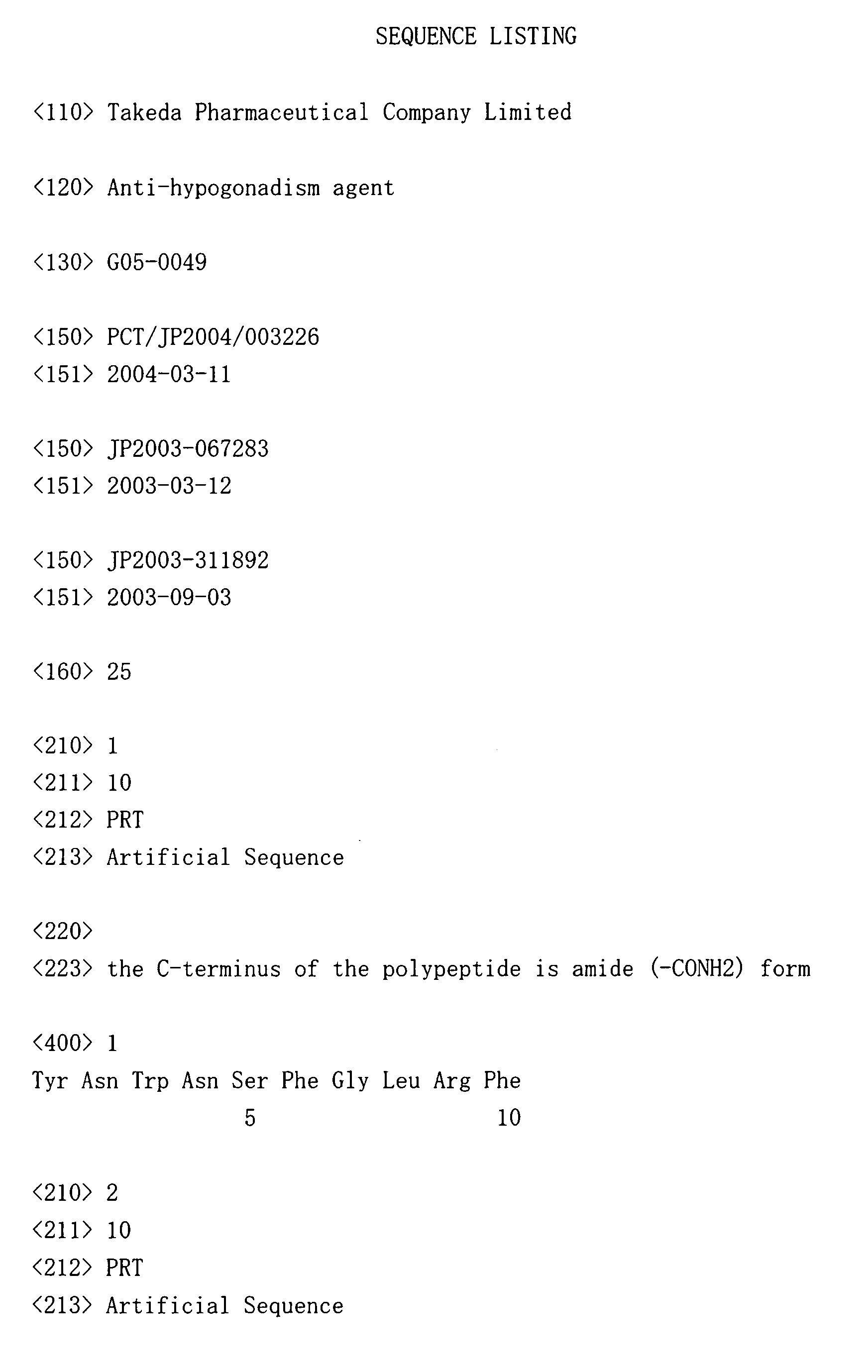
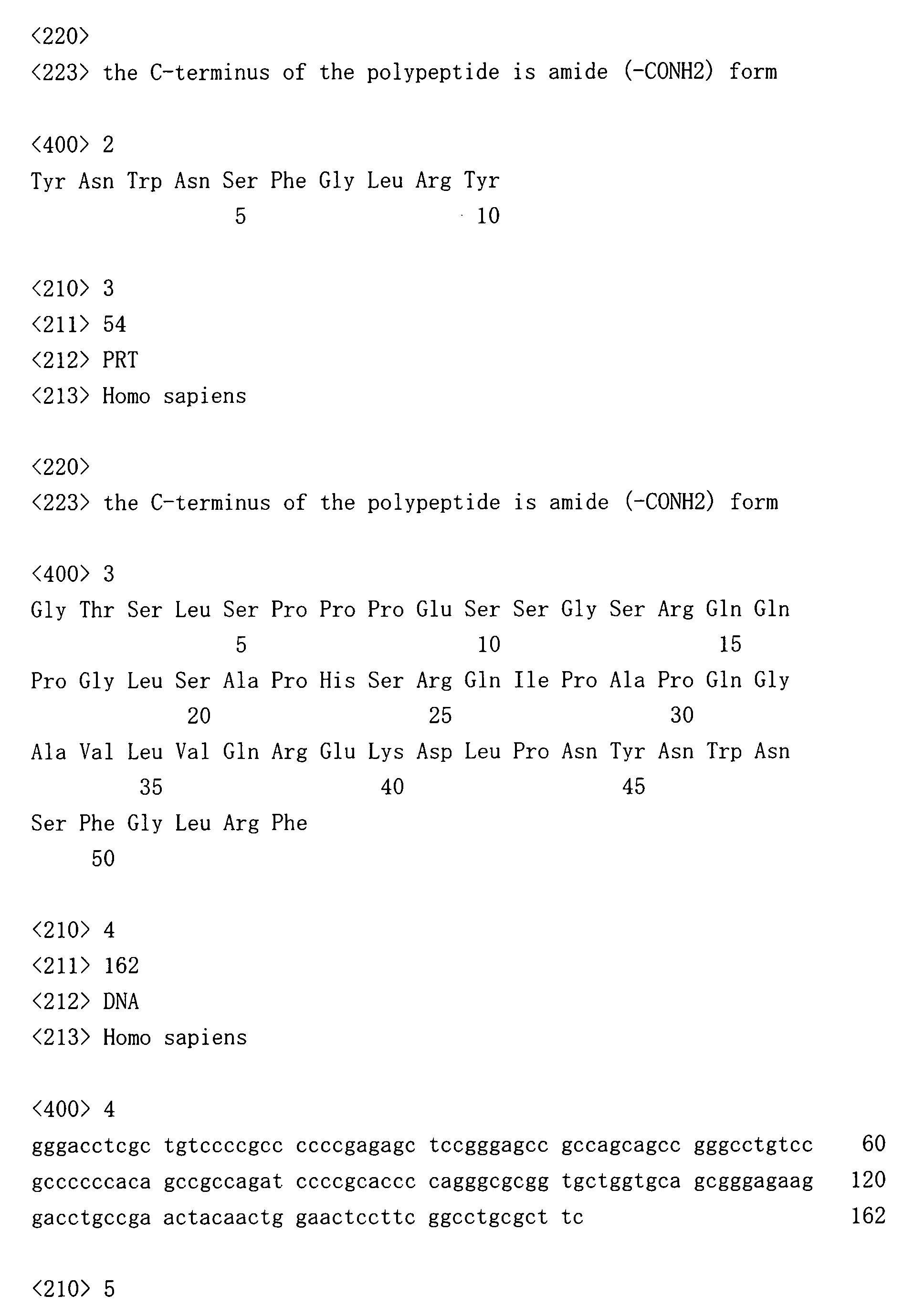
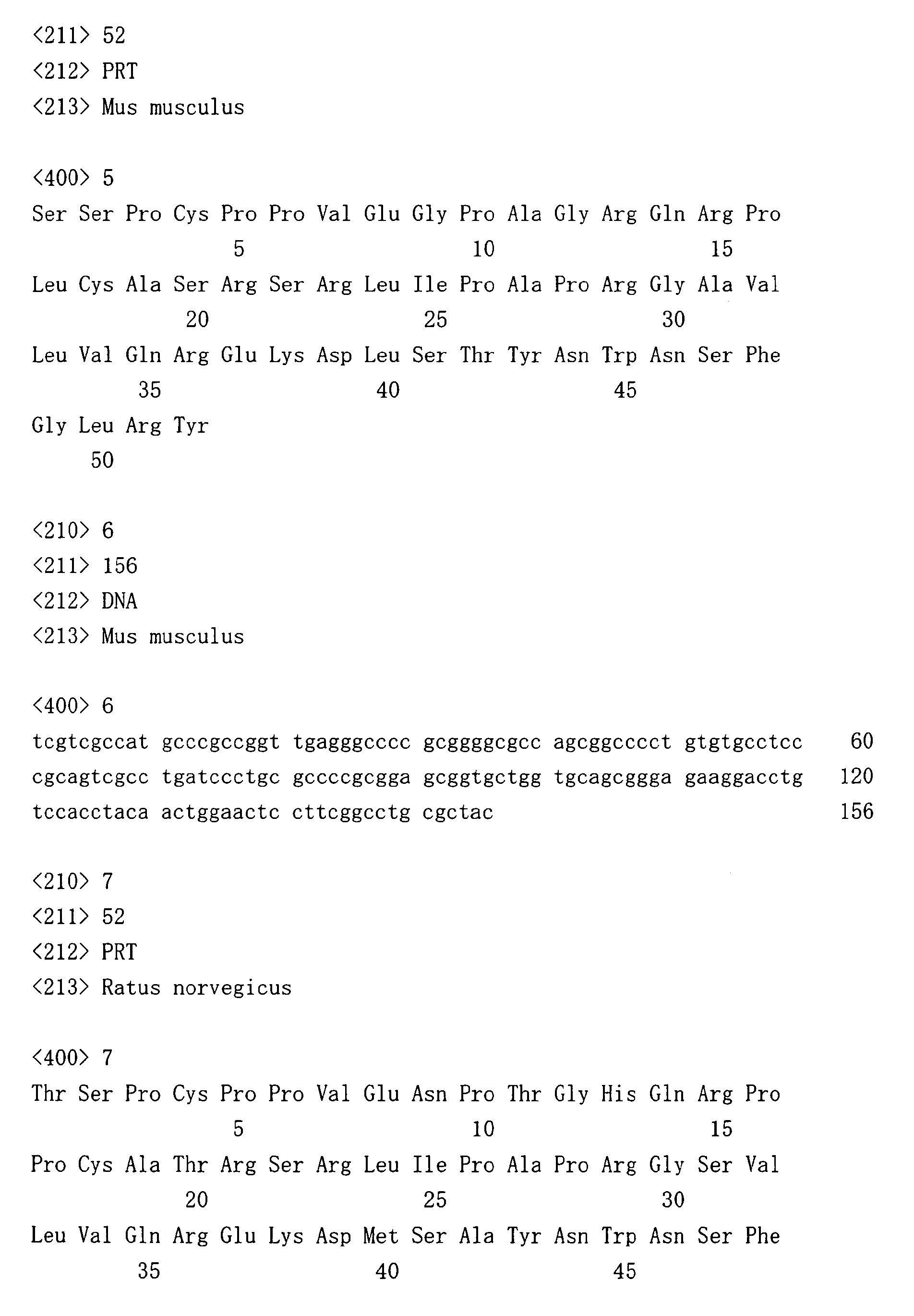

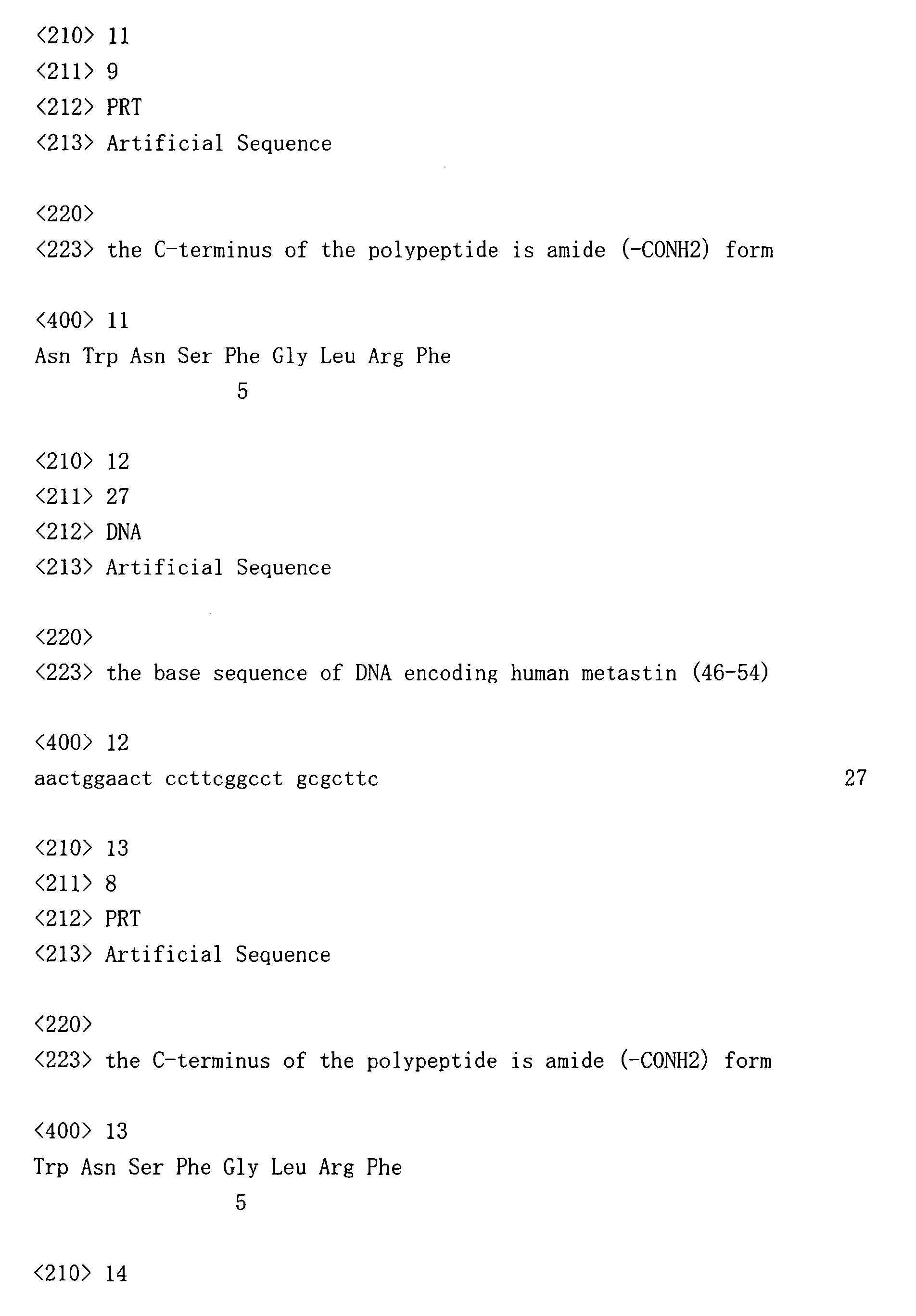


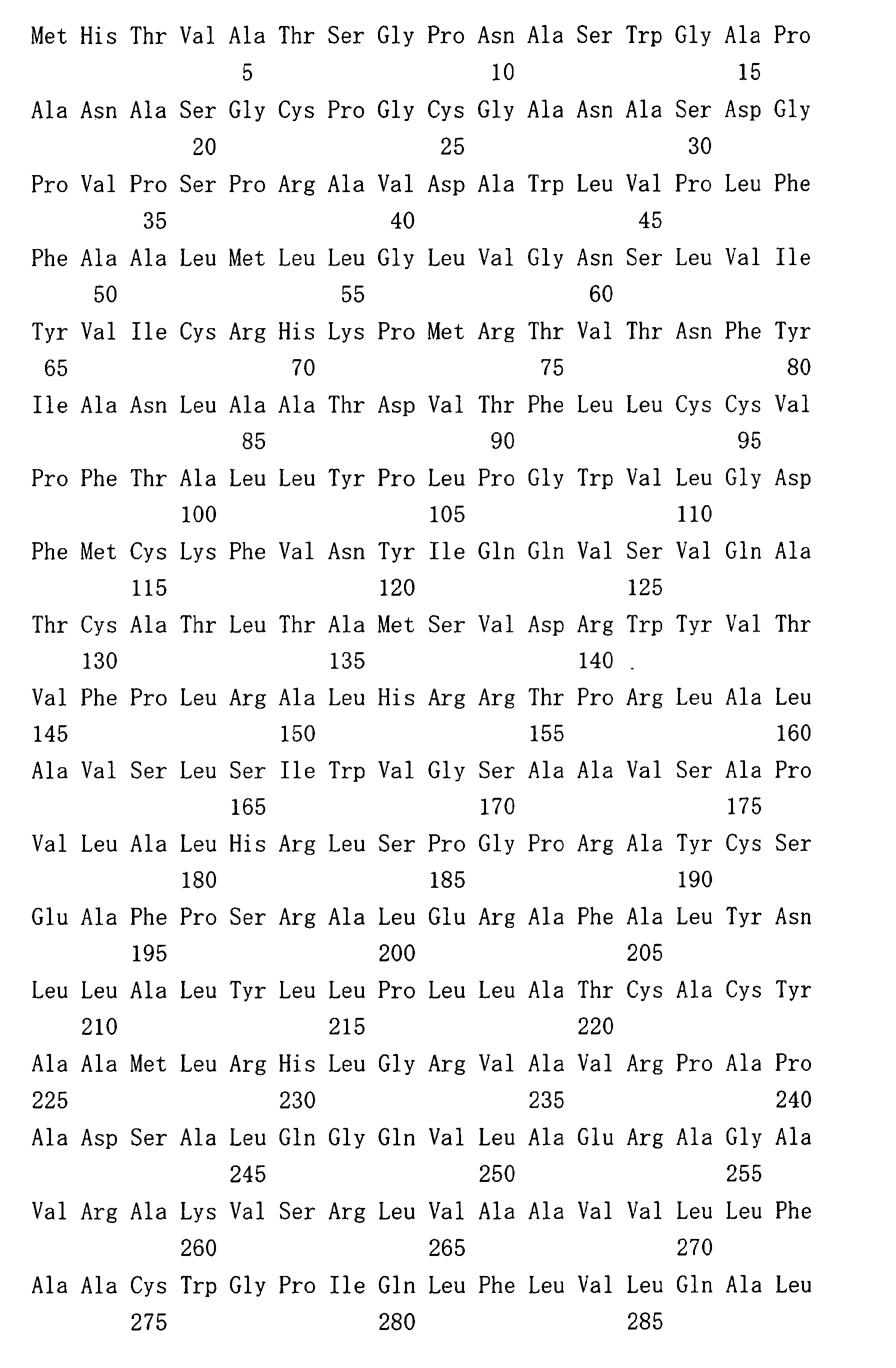


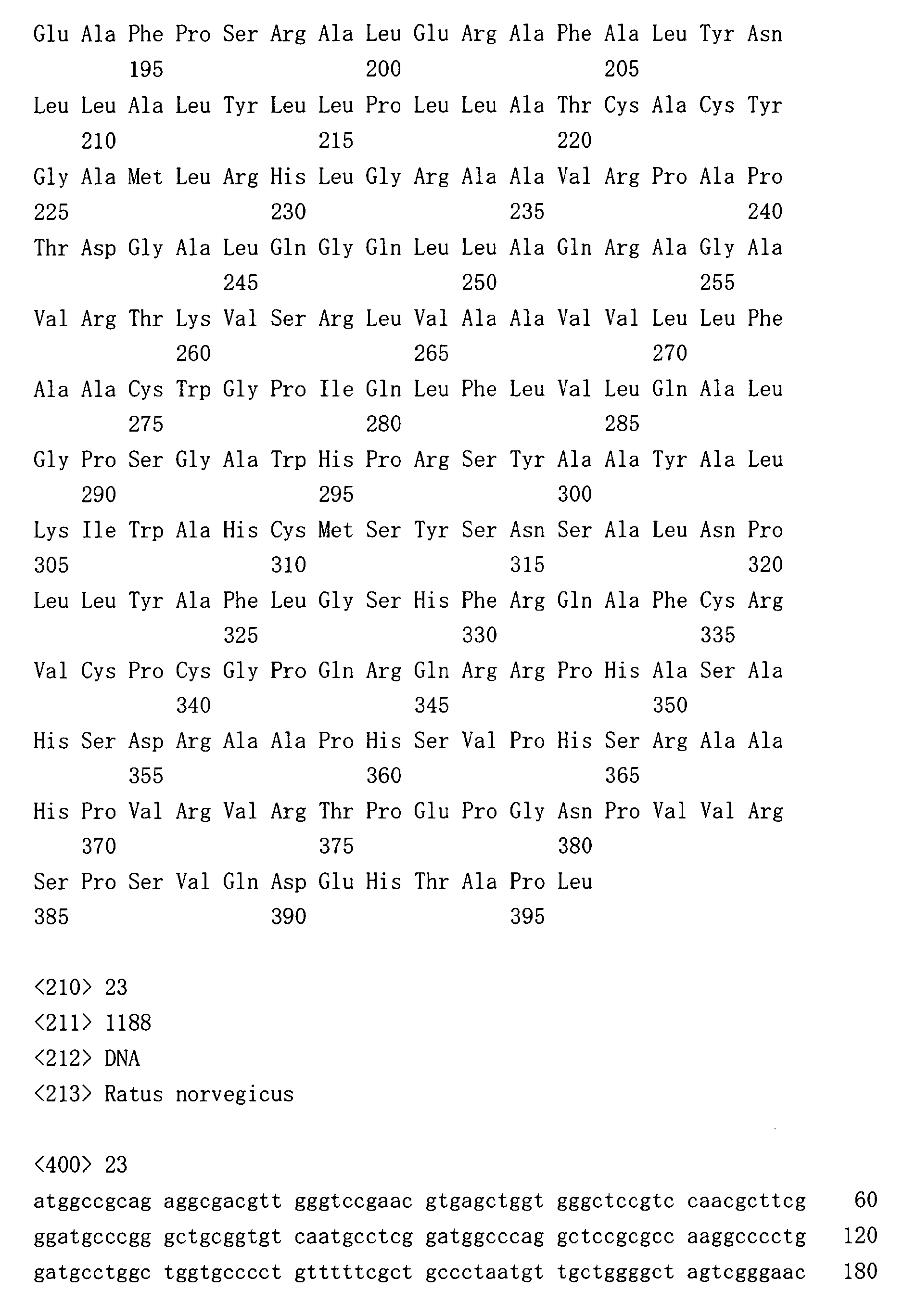

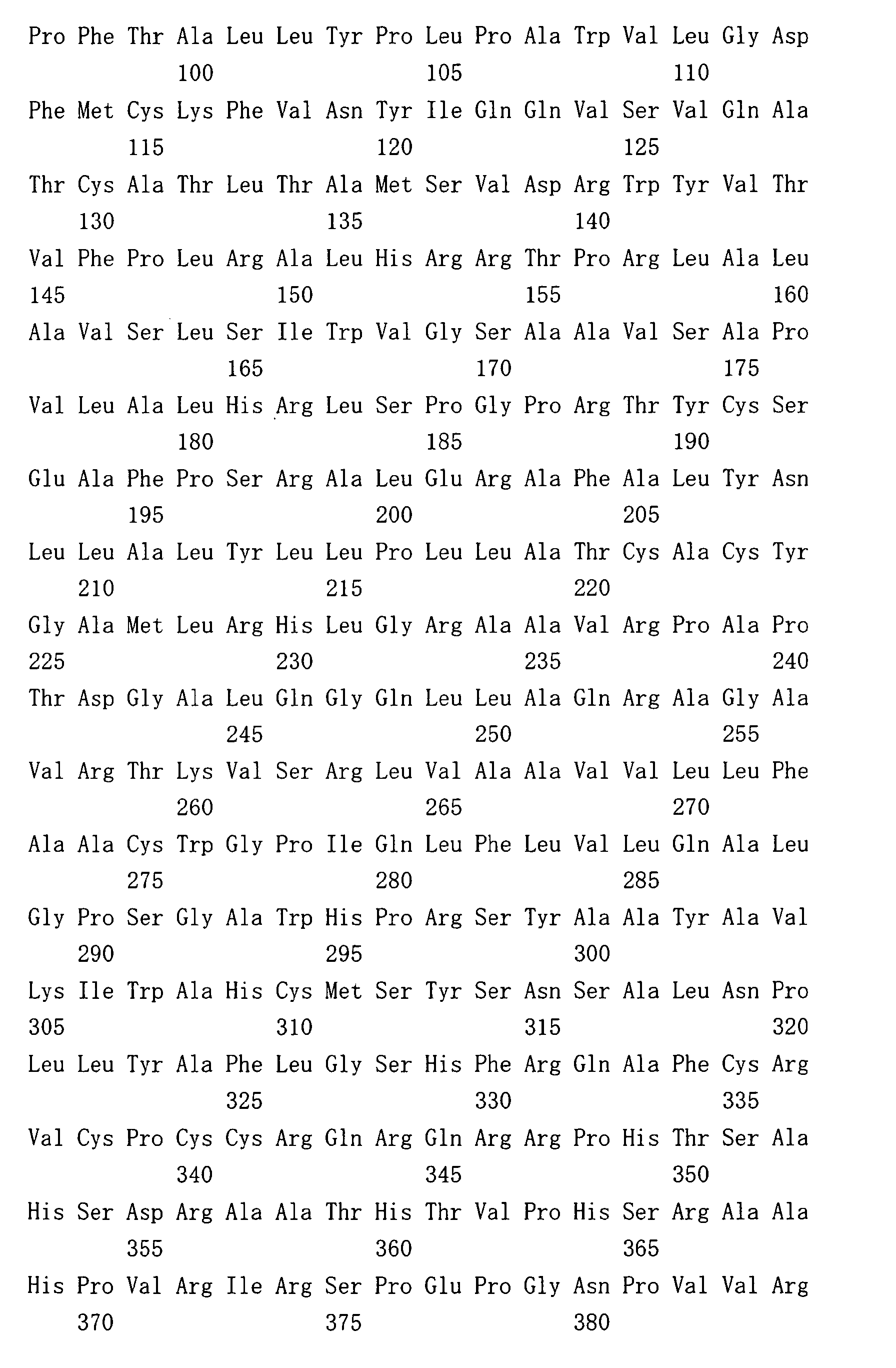

Claims (31)
- A gonadal function improving agent, which comprises a polypeptide comprising the same or substantially the same amino acid sequence as the amino acid sequence represented by SEQ ID NO: 1, or a salt thereof.
- The gonadal function improving agent according to claim 1, which comprises a polypeptide consisting of the amino acid sequence represented by SEQ ID NO: 3, or a salt thereof.
- The gonadal function improving agent according to claim 1, wherein the amino acid sequence which is substantially the same as the amino acid sequence represented by SEQ ID NO: 1 is the amino acid sequence represented by SEQ ID NO: 2.
- A gonadal function improving agent, which comprises a polynucleotide encoding a polypeptide comprising the same or substantially the same amino acid sequence as the amino acid sequence represented by SEQ ID NO: 1, or a salt thereof.
- A gonadal function improving agent, which comprises a compound or its salt that promotes the activity of a polypeptide comprising the same or substantially the same amino acid sequence as the amino acid sequence represented by SEQ ID NO: 1, or a salt thereof.
- A gonadal function improving agent, which comprises a compound or its salt that promotes the activity of a protein comprising the same or substantially the same amino acid sequence as the amino acid sequence represented by SEQ ID NO: 20, its partial peptide, or a salt thereof.
- A gonadal function improving agent, which comprises a compound or its salt that promotes the activation of a polypeptide comprising the same or substantially the same amino acid sequence as the amino acid sequence represented by SEQ ID NO: 1, or a salt thereof, into a protein comprising the same or substantially the same amino acid sequence as the amino acid sequence represented by SEQ ID NO: 20, its partial peptide, or a salt thereof.
- The gonadal function improving agent according to claims 1 through 7, which is an agent for preventing/treating sterility.
- The gonadal function improving agent according to claims 1 through 7, which is an ovulation inducer or promoter.
- The gonadal function improving agent according to claims 1 through 7, which is a gonadotropic hormone secretion promoter.
- The gonadal function improving agent according to claims 1 through 7, which is a gonadotropic hormone secretion inhibitor.
- The gonadal function improving agent according to claims 1 through 7, which is a sex hormone secretion promoter.
- The gonadal function improving agent according to claims 1 through 7, which is a sex hormone secretion inhibitor.
- The gonadal function improving agent according to claims 1 through 7, which is an agent for preventing/treating a hormone-sensitive cancer.
- The gonadal function improving agent according to claims 1 through 7, which is an agent for preventing/treating endometriosis.
- A diagnostic agent for sterility, which comprises a polynucleotide encoding a polypeptide comprising the same or substantially the same amino acid sequence as the amino acid sequence represented by SEQ ID NO: 1, or a salt thereof, or a polynucleotide encoding a protein comprising the same or substantially the same amino acid sequence as the amino acid sequence represented by SEQ ID NO: 20, its partial peptide, or a salt thereof.
- A diagnostic agent for sterility, which comprises an antibody to a polypeptide comprising the same or substantially the same amino acid sequence as the amino acid sequence represented by SEQ ID NO: 1, or a salt thereof, or an antibody to a protein comprising the same or substantially the same amino acid sequence as the amino acid sequence represented by SEQ ID NO: 20, its partial peptide, or a salt thereof.
- A method of screening for a gonadal function improving agent, which comprises using a polypeptide comprising the same or substantially the same amino acid sequence as the amino acid sequence represented by SEQ ID NO: 1, or a salt thereof, and/or a protein comprising the same or substantially the same amino acid sequence as the amino acid sequence represented by SEQ ID NO: 20, its partial peptide, or a salt thereof.
- The screening method according to claim 18, wherein the gonadal function improving agent is a sex hormone secretion inhibitor or a sex hormone secretion promoter.
- The screening method according to claim 18, wherein the gonadal function improving agent is a gonadotropic hormone secretion inhibitor or a gonadotropic hormone secretion promoter.
- A kit for screening for a gonadal function improving agent, which comprises a polypeptide comprising the same or substantially the same amino acid sequence as the amino acid sequence represented by SEQ ID NO: 1, or a salt thereof, and/or a protein comprising the same or substantially the same amino acid sequence as the amino acid sequence represented by SEQ ID NO: 20, its partial peptide, or a salt thereof.
- A method of screening for a gonadal function improving agent, which comprises using a polynucleotide encoding a polypeptide comprising the same or substantially the same amino acid sequence as the amino acid sequence represented by SEQ ID NO: 1, or a salt thereof, and/or a polynucleotide encoding a protein comprising the same or substantially the same amino acid sequence as the amino acid sequence represented by SEQ ID NO: 20, its partial peptide, or a salt thereof.
- A kit for screening for a gonadal function improving agent, which comprises a polynucleotide encoding a polypeptide comprising the same or substantially the same amino acid sequence as the amino acid sequence represented by SEQ ID NO: 1, or a salt thereof, and/or a polynucleotide encoding a protein comprising the same or substantially the same amino acid sequence as the amino acid sequence represented by SEQ ID NO: 20, its partial peptide, or a salt thereof.
- A method of improving gonadal function, which comprises administering to a mammal an effective dose of (i) a polypeptide comprising the same or substantially the same amino acid sequence as the amino acid sequence represented by SEQ ID NO: 1, or a salt thereof, (ii) a polynucleotide encoding said polypeptide or a salt thereof, (iii) a compound or its salt that promotes the activity of said polypeptide or a salt thereof, (iv) a compound or its salt that promotes the activity of a protein comprising the same or substantially the same amino acid sequence as the amino acid sequence represented by SEQ ID NO: 20, its partial peptide, or a salt thereof, or (v) a compound or its salt that promotes the activation of said polypeptide or a salt thereof into said protein, its partial peptide, or a salt thereof.
- A method of improving gonadal function, which comprises (i) promoting the activity of a polypeptide comprising the same or substantially the same amino acid sequence as the amino acid sequence represented by SEQ ID NO: 1, or a salt thereof, (ii) promoting the activity of a protein comprising the same or substantially the same amino acid sequence as the amino acid sequence represented by SEQ ID NO: 20, its partial peptide, or a salt thereof, or (iii) promoting the activation of said polypeptide or a salt thereof into said protein, its partial peptide, or a salt thereof.
- Use of (i) a polypeptide comprising the same or substantially the same amino acid sequence as the amino acid sequence represented by SEQ ID NO: 1, or a salt thereof, (ii) a polynucleotide encoding said polypeptide or a salt thereof, (iii) a compound or its salt that promotes the activity of said polypeptide or a salt thereof, (iv) a compound or its salt that promotes the activity of a protein comprising the same or substantially the same amino acid sequence as the amino acid sequence represented by SEQ ID NO: 20, its partial peptide, or a salt thereof, or (v) a compound or its salt that promotes the activation of said polypeptide or a salt thereof into said protein, its partial peptide, or a salt thereof, to manufacture a gonadal function improving agent.
- A method of inhibiting gonadotropic hormone secretion and/or a method of inhibiting sex hormone secretion, which comprises administering to a mammal an effective dose of (i) a polypeptide comprising the same or substantially the same amino acid sequence as the amino acid sequence represented by SEQ ID NO: 1, or a salt thereof, (ii) a polynucleotide encoding said polypeptide or a salt thereof, (iii) a compound or its salt that promotes the activity of said polypeptide or a salt thereof, (iv) a compound or its salt that promotes the activity of a protein comprising the same or substantially the same amino acid sequence as the amino acid sequence represented by SEQ ID NO: 20, its partial peptide, or a salt thereof, or (v) a compound or its salt that promotes the activation of said polypeptide or a salt thereof into said protein, its partial peptide, or a salt thereof.
- A method of preventing/treating a hormone-sensitive cancer or endometriosis, which comprises uninterruptedly or continuously administering to a mammal an effective dose of (i) a polypeptide comprising the same or substantially the same amino acid sequence as the amino acid sequence represented by SEQ ID NO: 1, or a salt thereof, (ii) a polynucleotide encoding said polypeptide or a salt thereof, (iii) a compound or its salt that promotes the activity of said polypeptide or a salt thereof, (iv) a compound or its salt that promotes the activity of a protein comprising the same or substantially the same amino acid sequence as the amino acid sequence represented by SEQ ID NO: 20, its partial peptide, or a salt thereof, or (v) a compound or its salt that promotes the activation of said polypeptide or a salt thereof into said protein, its partial peptide, or a salt thereof.
- A method of inhibiting follicular maturation and/or a method of suspending a menstrual cycle, which comprises uninterruptedly or continuously administering to a mammal an effective dose of (i) a polypeptide comprising the same or substantially the same amino acid sequence as the amino acid sequence represented by SEQ ID NO: 1, or a salt thereof, (ii) a polynucleotide encoding said polypeptide or a salt thereof, (iii) a compound or its salt that promotes the activity of said polypeptide or a salt thereof, (iv) a compound or its salt that promotes the activity of a protein comprising the same or substantially the same amino acid sequence as the amino acid sequence represented by SEQ ID NO: 20, its partial peptide, or a salt thereof, or (v) a compound or its salt that promotes the activation of said polypeptide or a salt thereof into said protein, its partial peptide, or a salt thereof.
- A method of promoting gonadotropic hormone secretion and/or a method of promoting sex hormone secretion, which comprises applying bolus administration to a mammal in an effective dose of (i) a polypeptide comprising the same or substantially the same amino acid sequence as the amino acid sequence represented by SEQ ID NO: 1, or a salt thereof, (ii) a polynucleotide encoding said polypeptide or a salt thereof, (iii) a compound or its salt that promotes the activity of said polypeptide or a salt thereof, (iv) a compound or its salt that promotes the activity of a protein comprising the same or substantially the same amino acid sequence as the amino acid sequence represented by SEQ ID NO: 20, its partial peptide, or a salt thereof, or (v) a compound or its salt that promotes the activation of said polypeptide or a salt thereof into said protein, its partial peptide, or a salt thereof.
- A method of inducing or promoting ovulation, which comprises applying bolus administration to a mammal in an effective dose of (i) a polypeptide comprising the same or substantially the same amino acid sequence as the amino acid sequence represented by SEQ ID NO: 1, or a salt thereof, (ii) a polynucleotide encoding said polypeptide or a salt thereof, (iii) a compound or its salt that promotes the activity of said polypeptide or a salt thereof, (iv) a compound or its salt that promotes the activity of a protein comprising the same or substantially the same amino acid sequence as the amino acid sequence represented by SEQ ID NO: 20, its partial peptide, or a salt thereof, or (v) a compound or its salt that promotes the activation of said polypeptide or a salt thereof into said protein, its partial peptide, or a salt thereof.
Applications Claiming Priority (5)
| Application Number | Priority Date | Filing Date | Title |
|---|---|---|---|
| JP2003067283 | 2003-03-12 | ||
| JP2003067283 | 2003-03-12 | ||
| JP2003311892 | 2003-09-03 | ||
| JP2003311892 | 2003-09-03 | ||
| PCT/JP2004/003226 WO2004080479A1 (en) | 2003-03-12 | 2004-03-11 | Gonadal function improving agents |
Publications (2)
| Publication Number | Publication Date |
|---|---|
| EP1604682A1 true EP1604682A1 (en) | 2005-12-14 |
| EP1604682A4 EP1604682A4 (en) | 2009-06-24 |
Family
ID=32992962
Family Applications (1)
| Application Number | Title | Priority Date | Filing Date |
|---|---|---|---|
| EP04719659A Withdrawn EP1604682A4 (en) | 2003-03-12 | 2004-03-11 | Gonadal function improving agents |
Country Status (4)
| Country | Link |
|---|---|
| US (2) | US7754220B2 (en) |
| EP (1) | EP1604682A4 (en) |
| CA (1) | CA2518541C (en) |
| WO (1) | WO2004080479A1 (en) |
Cited By (5)
| Publication number | Priority date | Publication date | Assignee | Title |
|---|---|---|---|---|
| WO2007072997A1 (en) * | 2005-12-22 | 2007-06-28 | Takeda Pharmaceutical Company Limited | Metastin derivatives and use thereof |
| US7625869B2 (en) | 2004-06-25 | 2009-12-01 | Takeda Pharmaceutical Company Limited | Metastin derivatives and use thereof |
| US7786083B2 (en) | 2006-10-25 | 2010-08-31 | Takeda Pharmaceutical Company Limited | Metastin derivatives and use thereof |
| US8361968B2 (en) | 2002-12-26 | 2013-01-29 | Takeda Pharmaceutical Company Limited | Metastin derivatives and use thereof |
| US8404643B2 (en) | 2005-12-22 | 2013-03-26 | Takeda Pharmaceutical Company Limited | Metastin derivatives and use thereof |
Families Citing this family (10)
| Publication number | Priority date | Publication date | Assignee | Title |
|---|---|---|---|---|
| JP4486187B2 (en) * | 1998-10-27 | 2010-06-23 | 武田薬品工業株式会社 | Novel G protein-coupled receptor protein, its DNA and its ligand |
| CA2518541C (en) | 2003-03-12 | 2013-05-21 | Takeda Pharmaceutical Company Limited | Gonadal function improving agents |
| JP2007533748A (en) * | 2004-04-23 | 2007-11-22 | アプライド リサーチ システムズ エーアールエス ホールディング ナームロゼ フェンノートシャップ | Use of GPCR54 ligand for the treatment of infertility |
| US20090093615A1 (en) * | 2005-12-22 | 2009-04-09 | Takeda Pharmaceutical Company Limited | Metastin derivatives and use thereof |
| US20090099334A1 (en) * | 2005-12-22 | 2009-04-16 | Takeda Pharmaceutical Company Limited | Metastin derivatives and use thereof |
| LT2314609T (en) * | 2008-07-30 | 2017-04-10 | Takeda Pharmaceutical Company Limited | Metastin derivative and use thereof |
| TW201605907A (en) * | 2014-08-12 | 2016-02-16 | 國立臺灣大學 | Use of a short-chain peptide capable of controlling spermatozoa fertilization performance to increasing success rates of in vitro fertilization |
| TWI778979B (en) * | 2016-09-30 | 2022-10-01 | 瑞士商麥歐文科學有限公司 | Methods of treating female infertility |
| CN109206481B (en) | 2017-07-05 | 2023-08-18 | 尚华医药科技(江西)有限公司 | Peptide compound, application thereof and composition containing peptide compound |
| WO2025184411A1 (en) | 2024-02-27 | 2025-09-04 | Calidi Biotherapeutics (Nevada), Inc. | Serum-resistant eev viruses and uses thereof |
Family Cites Families (29)
| Publication number | Priority date | Publication date | Assignee | Title |
|---|---|---|---|---|
| IL74827A (en) | 1984-05-21 | 1989-06-30 | Salk Inst For Biological Studi | Peptides active as gnrh antagonists and pharmaceutical compositions containing them |
| US6497872B1 (en) * | 1991-07-08 | 2002-12-24 | Neurospheres Holdings Ltd. | Neural transplantation using proliferated multipotent neural stem cells and their progeny |
| JPH09169735A (en) * | 1995-10-19 | 1997-06-30 | Takeda Chem Ind Ltd | Quinoline derivative, its production and use thereof |
| JP2000510453A (en) | 1996-04-19 | 2000-08-15 | ノボ ノルディスク アクティーゼルスカブ | Compounds having growth hormone releasing properties |
| WO1998039448A2 (en) | 1997-03-07 | 1998-09-11 | Human Genome Sciences, Inc. | 186 human secreted proteins |
| JP4486187B2 (en) | 1998-10-27 | 2010-06-23 | 武田薬品工業株式会社 | Novel G protein-coupled receptor protein, its DNA and its ligand |
| CN1411509A (en) | 1999-12-17 | 2003-04-16 | 武田药品工业株式会社 | Process for producing Kiss-1 peptide |
| AU2001244609A1 (en) | 2000-03-30 | 2001-10-15 | Takeda Chemical Industries Ltd. | Novel protein, dna thereof and process for producing the same |
| US7834141B1 (en) | 2000-03-31 | 2010-11-16 | Theresa Siler-Khodr | Non-mammalian GnRH analogs and uses thereof in tumor cell growth regulation and cancer therapy |
| JP2003026601A (en) * | 2000-11-29 | 2003-01-29 | Takeda Chem Ind Ltd | Medicinal composition and method for producing the same |
| JP2002320496A (en) | 2001-02-26 | 2002-11-05 | Takeda Chem Ind Ltd | NEW MOUSE-TYPE KiSS-1 RECEPTOR PROTEIN AND DNA |
| WO2002085399A1 (en) | 2001-04-20 | 2002-10-31 | Takeda Chemical Industries, Ltd. | Peptide-containing preparations |
| KR100599419B1 (en) | 2001-05-17 | 2006-07-10 | 가부시키가이샤 시마즈세이사쿠쇼 | Preparation of Peptides |
| US7112662B2 (en) | 2001-09-19 | 2006-09-26 | Takeda Pharmaceutical Company Limited | Anti-metasin antibodies and their methods of use |
| WO2003060125A1 (en) | 2002-01-11 | 2003-07-24 | Takeda Chemical Industries, Ltd. | PROCESS FOR PRODUCING KiSS-1 PEPTIDE |
| JP2003300906A (en) | 2002-04-12 | 2003-10-21 | Daiichi Fine Chemical Co Ltd | Stabilization of metastasis suppressing factor |
| DE60327344D1 (en) | 2002-10-25 | 2009-06-04 | Takeda Pharmaceutical | GPR54 'KNOCK-OUT' MAMMALS AND SCREENING PROCEDURES YOU USE |
| JP4804714B2 (en) | 2002-12-26 | 2011-11-02 | 武田薬品工業株式会社 | Metastin derivatives and uses thereof |
| CN1761680A (en) * | 2002-12-26 | 2006-04-19 | 武田药品工业株式会社 | Metastin derivative and use thereof |
| US6800611B2 (en) | 2003-01-06 | 2004-10-05 | Takeda Chemical Industries, Ltd. | Metastin derivatives and their use |
| CA2518541C (en) | 2003-03-12 | 2013-05-21 | Takeda Pharmaceutical Company Limited | Gonadal function improving agents |
| EP1464652A1 (en) | 2003-04-02 | 2004-10-06 | Institut National De La Sante Et De La Recherche Medicale (Inserm) | GPR54 receptor agonist and antagonist useful for the treatment of gonadotropin related diseases |
| EP1618384A2 (en) | 2003-04-28 | 2006-01-25 | Wyeth | Methods utilising g-protein coupled receptor 54 |
| WO2004101747A2 (en) | 2003-05-07 | 2004-11-25 | The General Hospital Corporation | Identification and use of gpr54 and its ligands for reproductive disorders and contraception |
| EP1633702B1 (en) | 2003-05-30 | 2008-07-02 | Prozymex A/S | Protease inhibitors |
| WO2005095973A2 (en) | 2004-03-25 | 2005-10-13 | Bayer Healthcare Ag | Diagnostics and therapeutics for diseases associated with g-protein coupled receptor 54 (gpr54) |
| CA2571420A1 (en) | 2004-06-25 | 2006-01-05 | Takeda Pharmaceutical Company Limited | Metastin derivatives and use thereof |
| WO2007084211A2 (en) | 2005-11-11 | 2007-07-26 | The General Hospital Corporation | Use of gpr54 ligands for treatment of reproductive disorders, proliferative disorders, and for contraception |
| AR058584A1 (en) | 2005-12-22 | 2008-02-13 | Takeda Pharmaceutical | METASTININE DERIVATIVES AND USE OF THE SAME |
-
2004
- 2004-03-11 CA CA2518541A patent/CA2518541C/en not_active Expired - Lifetime
- 2004-03-11 EP EP04719659A patent/EP1604682A4/en not_active Withdrawn
- 2004-03-11 US US10/547,974 patent/US7754220B2/en not_active Expired - Lifetime
- 2004-03-11 WO PCT/JP2004/003226 patent/WO2004080479A1/en not_active Ceased
-
2010
- 2010-02-23 US US12/710,864 patent/US20110052563A1/en not_active Abandoned
Cited By (10)
| Publication number | Priority date | Publication date | Assignee | Title |
|---|---|---|---|---|
| US8361968B2 (en) | 2002-12-26 | 2013-01-29 | Takeda Pharmaceutical Company Limited | Metastin derivatives and use thereof |
| US7625869B2 (en) | 2004-06-25 | 2009-12-01 | Takeda Pharmaceutical Company Limited | Metastin derivatives and use thereof |
| US8778871B2 (en) | 2004-06-25 | 2014-07-15 | Takeda Pharmaceutical Company Limited | Metastin derivatives and use thereof |
| WO2007072997A1 (en) * | 2005-12-22 | 2007-06-28 | Takeda Pharmaceutical Company Limited | Metastin derivatives and use thereof |
| US7960348B2 (en) | 2005-12-22 | 2011-06-14 | Takeda Pharmaceutical Company Limited | Metastin derivatives and use thereof |
| RU2430107C2 (en) * | 2005-12-22 | 2011-09-27 | Такеда Фармасьютикал Компани Лимитед | Metastin derivatives and application thereof |
| US8404643B2 (en) | 2005-12-22 | 2013-03-26 | Takeda Pharmaceutical Company Limited | Metastin derivatives and use thereof |
| NO341879B1 (en) * | 2005-12-22 | 2018-02-12 | Takeda Pharmaceuticals Co | Metastatic derivatives and their use. |
| US7786083B2 (en) | 2006-10-25 | 2010-08-31 | Takeda Pharmaceutical Company Limited | Metastin derivatives and use thereof |
| US8765909B2 (en) | 2006-10-25 | 2014-07-01 | Takeda Pharmaceutical Company Limited | Metastin derivatives and use thereof |
Also Published As
| Publication number | Publication date |
|---|---|
| CA2518541A1 (en) | 2004-09-23 |
| WO2004080479A1 (en) | 2004-09-23 |
| CA2518541C (en) | 2013-05-21 |
| US20110052563A1 (en) | 2011-03-03 |
| US7754220B2 (en) | 2010-07-13 |
| EP1604682A4 (en) | 2009-06-24 |
| US20060287227A1 (en) | 2006-12-21 |
Similar Documents
| Publication | Publication Date | Title |
|---|---|---|
| US20110052563A1 (en) | Gonadal function improving agents | |
| EP1424392B1 (en) | RF-peptide ligands of G-protein coupled receptor | |
| US7556926B2 (en) | Methods for screening insulin-sensitizing agents | |
| US7247705B2 (en) | Proteins having glucose transporter activity | |
| US7172876B2 (en) | Method of screening therapeutic agents for nerve degeneration associated diseases | |
| EP1829969B1 (en) | Novel polypeptide and the use thereof | |
| EP1550720A1 (en) | Mutated androgen receptor, cancer cells expressing the same, method of constructing the same and use thereof | |
| US20040048314A1 (en) | Novel physiologically active peptide and use thereof | |
| EP1433849A1 (en) | NOVEL POLYPEPTIDE, DNA THEREOF AND USE OF THE SAME | |
| JP4639052B2 (en) | Gonadal function improving agent | |
| EP1557178A1 (en) | Use of sglt homolog | |
| EP1447411A1 (en) | Novel protein, its dna and use thereof | |
| EP1296138A1 (en) | Use of disease-associated gene | |
| EP1323734A1 (en) | Irap-binding protein | |
| EP1617216A1 (en) | Novel method of screening | |
| EP1233023B1 (en) | Transcription factor and dna thereof | |
| EP1602380A1 (en) | Preventive/remedy for diseases in upper digestive tract | |
| EP1862180A1 (en) | Prophylactic/therapeutic agent for cancer | |
| EP1514557A1 (en) | Preventives/remedies for bone and joint diseases | |
| EP1876238A1 (en) | Novel polypeptide and use thereof | |
| EP1333091A1 (en) | Novel disease-associated gene and use thereof | |
| EP1300467A1 (en) | Novel polypeptide and dna thereof |
Legal Events
| Date | Code | Title | Description |
|---|---|---|---|
| PUAI | Public reference made under article 153(3) epc to a published international application that has entered the european phase |
Free format text: ORIGINAL CODE: 0009012 |
|
| 17P | Request for examination filed |
Effective date: 20050902 |
|
| AK | Designated contracting states |
Kind code of ref document: A1 Designated state(s): AT BE BG CH CY CZ DE DK EE ES FI FR GB GR HU IE IT LI LU MC NL PL PT RO SE SI SK TR |
|
| AX | Request for extension of the european patent |
Extension state: AL LT LV MK |
|
| DAX | Request for extension of the european patent (deleted) | ||
| A4 | Supplementary search report drawn up and despatched |
Effective date: 20090526 |
|
| 17Q | First examination report despatched |
Effective date: 20100422 |
|
| STAA | Information on the status of an ep patent application or granted ep patent |
Free format text: STATUS: THE APPLICATION IS DEEMED TO BE WITHDRAWN |
|
| 18D | Application deemed to be withdrawn |
Effective date: 20140624 |