EP1604642A1 - Antiperspirant composition comprising polyol active, antiperspirant article containing same and method for using same - Google Patents
Antiperspirant composition comprising polyol active, antiperspirant article containing same and method for using same Download PDFInfo
- Publication number
- EP1604642A1 EP1604642A1 EP05252785A EP05252785A EP1604642A1 EP 1604642 A1 EP1604642 A1 EP 1604642A1 EP 05252785 A EP05252785 A EP 05252785A EP 05252785 A EP05252785 A EP 05252785A EP 1604642 A1 EP1604642 A1 EP 1604642A1
- Authority
- EP
- European Patent Office
- Prior art keywords
- weight
- parts
- antiperspirant active
- polyol
- antiperspirant
- Prior art date
- Legal status (The legal status is an assumption and is not a legal conclusion. Google has not performed a legal analysis and makes no representation as to the accuracy of the status listed.)
- Withdrawn
Links
- 239000000203 mixture Substances 0.000 title claims abstract description 83
- 230000001166 anti-perspirative effect Effects 0.000 title claims abstract description 82
- 239000003213 antiperspirant Substances 0.000 title claims abstract description 82
- 229920005862 polyol Polymers 0.000 title claims abstract description 56
- 150000003077 polyols Chemical class 0.000 title claims abstract description 47
- 238000000034 method Methods 0.000 title claims abstract description 21
- PEDCQBHIVMGVHV-UHFFFAOYSA-N Glycerine Chemical compound OCC(O)CO PEDCQBHIVMGVHV-UHFFFAOYSA-N 0.000 claims abstract description 34
- -1 alkane polyol Chemical class 0.000 claims abstract description 27
- 230000028327 secretion Effects 0.000 claims abstract description 21
- FBPFZTCFMRRESA-JGWLITMVSA-N D-glucitol Chemical compound OC[C@H](O)[C@@H](O)[C@H](O)[C@H](O)CO FBPFZTCFMRRESA-JGWLITMVSA-N 0.000 claims abstract description 20
- 235000011187 glycerol Nutrition 0.000 claims abstract description 17
- 210000000804 eccrine gland Anatomy 0.000 claims abstract description 16
- 210000000040 apocrine gland Anatomy 0.000 claims abstract description 15
- 210000004243 sweat Anatomy 0.000 claims abstract description 13
- 230000035900 sweating Effects 0.000 claims abstract description 11
- FBPFZTCFMRRESA-FSIIMWSLSA-N D-Glucitol Natural products OC[C@H](O)[C@H](O)[C@@H](O)[C@H](O)CO FBPFZTCFMRRESA-FSIIMWSLSA-N 0.000 claims abstract description 10
- FBPFZTCFMRRESA-KVTDHHQDSA-N D-Mannitol Chemical compound OC[C@@H](O)[C@@H](O)[C@H](O)[C@H](O)CO FBPFZTCFMRRESA-KVTDHHQDSA-N 0.000 claims abstract description 10
- 229930195725 Mannitol Natural products 0.000 claims abstract description 10
- 230000002401 inhibitory effect Effects 0.000 claims abstract description 10
- 239000000594 mannitol Substances 0.000 claims abstract description 10
- 235000010355 mannitol Nutrition 0.000 claims abstract description 10
- 239000000600 sorbitol Substances 0.000 claims abstract description 10
- 125000002887 hydroxy group Chemical group [H]O* 0.000 claims abstract description 8
- ZWVMLYRJXORSEP-UHFFFAOYSA-N 1,2,6-Hexanetriol Chemical compound OCCCCC(O)CO ZWVMLYRJXORSEP-UHFFFAOYSA-N 0.000 claims abstract description 5
- 150000004292 cyclic ethers Chemical class 0.000 claims abstract description 5
- 230000008569 process Effects 0.000 claims abstract description 4
- 239000003205 fragrance Substances 0.000 claims description 26
- 239000004205 dimethyl polysiloxane Substances 0.000 claims description 14
- 235000013870 dimethyl polysiloxane Nutrition 0.000 claims description 14
- 150000002736 metal compounds Chemical class 0.000 claims description 14
- 229920000435 poly(dimethylsiloxane) Polymers 0.000 claims description 14
- RTZKZFJDLAIYFH-UHFFFAOYSA-N Diethyl ether Chemical compound CCOCC RTZKZFJDLAIYFH-UHFFFAOYSA-N 0.000 claims description 12
- 125000001183 hydrocarbyl group Chemical group 0.000 claims description 12
- 239000000126 substance Substances 0.000 claims description 12
- WNWHHMBRJJOGFJ-UHFFFAOYSA-N 16-methylheptadecan-1-ol Chemical compound CC(C)CCCCCCCCCCCCCCCO WNWHHMBRJJOGFJ-UHFFFAOYSA-N 0.000 claims description 11
- LFQSCWFLJHTTHZ-UHFFFAOYSA-N Ethanol Chemical compound CCO LFQSCWFLJHTTHZ-UHFFFAOYSA-N 0.000 claims description 11
- 125000002496 methyl group Chemical group [H]C([H])([H])* 0.000 claims description 10
- 230000000845 anti-microbial effect Effects 0.000 claims description 9
- XEFQLINVKFYRCS-UHFFFAOYSA-N Triclosan Chemical group OC1=CC(Cl)=CC=C1OC1=CC=C(Cl)C=C1Cl XEFQLINVKFYRCS-UHFFFAOYSA-N 0.000 claims description 7
- 239000000443 aerosol Substances 0.000 claims description 7
- 239000004599 antimicrobial Substances 0.000 claims description 7
- 125000004122 cyclic group Chemical group 0.000 claims description 7
- 150000001241 acetals Chemical class 0.000 claims description 6
- 229910052783 alkali metal Inorganic materials 0.000 claims description 6
- 150000001340 alkali metals Chemical class 0.000 claims description 6
- 230000000699 topical effect Effects 0.000 claims description 6
- DHKHKXVYLBGOIT-UHFFFAOYSA-N acetaldehyde Diethyl Acetal Natural products CCOC(C)OCC DHKHKXVYLBGOIT-UHFFFAOYSA-N 0.000 claims description 5
- 125000003342 alkenyl group Chemical group 0.000 claims description 5
- 125000000217 alkyl group Chemical group 0.000 claims description 5
- 150000002373 hemiacetals Chemical class 0.000 claims description 5
- RYYKJJJTJZKILX-UHFFFAOYSA-M sodium octadecanoate Chemical compound [Na+].CCCCCCCCCCCCCCCCCC([O-])=O RYYKJJJTJZKILX-UHFFFAOYSA-M 0.000 claims description 5
- 230000003028 elevating effect Effects 0.000 claims description 4
- 150000002334 glycols Chemical class 0.000 claims description 4
- 230000007246 mechanism Effects 0.000 claims description 2
- 239000007921 spray Substances 0.000 claims description 2
- 230000000844 anti-bacterial effect Effects 0.000 claims 1
- 229910052751 metal Inorganic materials 0.000 description 10
- 239000002184 metal Substances 0.000 description 10
- 102000011420 Phospholipase D Human genes 0.000 description 9
- 108090000553 Phospholipase D Proteins 0.000 description 9
- 238000009472 formulation Methods 0.000 description 8
- 229940008099 dimethicone Drugs 0.000 description 7
- DHMQDGOQFOQNFH-UHFFFAOYSA-N Glycine Chemical compound NCC(O)=O DHMQDGOQFOQNFH-UHFFFAOYSA-N 0.000 description 6
- WSDISUOETYTPRL-UHFFFAOYSA-N dmdm hydantoin Chemical compound CC1(C)N(CO)C(=O)N(CO)C1=O WSDISUOETYTPRL-UHFFFAOYSA-N 0.000 description 6
- 239000000463 material Substances 0.000 description 6
- DNIAPMSPPWPWGF-UHFFFAOYSA-N Propylene glycol Chemical compound CC(O)CO DNIAPMSPPWPWGF-UHFFFAOYSA-N 0.000 description 5
- WWHZEXDIQCJXSV-UHFFFAOYSA-N aluminum;trihypochlorite Chemical class [Al+3].Cl[O-].Cl[O-].Cl[O-] WWHZEXDIQCJXSV-UHFFFAOYSA-N 0.000 description 5
- 150000001875 compounds Chemical class 0.000 description 5
- ADGFKRMKSIAMAI-UHFFFAOYSA-L oxygen(2-);zirconium(4+);chloride;hydroxide Chemical class [OH-].[O-2].[Cl-].[Zr+4] ADGFKRMKSIAMAI-UHFFFAOYSA-L 0.000 description 5
- XLYOFNOQVPJJNP-UHFFFAOYSA-N water Substances O XLYOFNOQVPJJNP-UHFFFAOYSA-N 0.000 description 5
- NIXOWILDQLNWCW-UHFFFAOYSA-N 2-Propenoic acid Natural products OC(=O)C=C NIXOWILDQLNWCW-UHFFFAOYSA-N 0.000 description 4
- WLAMNBDJUVNPJU-UHFFFAOYSA-N 2-methylbutyric acid Chemical compound CCC(C)C(O)=O WLAMNBDJUVNPJU-UHFFFAOYSA-N 0.000 description 4
- OYPRJOBELJOOCE-UHFFFAOYSA-N Calcium Chemical class [Ca] OYPRJOBELJOOCE-UHFFFAOYSA-N 0.000 description 4
- LYCAIKOWRPUZTN-UHFFFAOYSA-N Ethylene glycol Chemical compound OCCO LYCAIKOWRPUZTN-UHFFFAOYSA-N 0.000 description 4
- GSEJCLTVZPLZKY-UHFFFAOYSA-N Triethanolamine Chemical compound OCCN(CCO)CCO GSEJCLTVZPLZKY-UHFFFAOYSA-N 0.000 description 4
- OIPILFWXSMYKGL-UHFFFAOYSA-N acetylcholine Chemical compound CC(=O)OCC[N+](C)(C)C OIPILFWXSMYKGL-UHFFFAOYSA-N 0.000 description 4
- 229960004373 acetylcholine Drugs 0.000 description 4
- 230000009471 action Effects 0.000 description 4
- 230000015572 biosynthetic process Effects 0.000 description 4
- 239000011575 calcium Chemical class 0.000 description 4
- 229910052791 calcium Inorganic materials 0.000 description 4
- OEYIOHPDSNJKLS-UHFFFAOYSA-N choline Chemical compound C[N+](C)(C)CCO OEYIOHPDSNJKLS-UHFFFAOYSA-N 0.000 description 4
- 229960001231 choline Drugs 0.000 description 4
- 239000002781 deodorant agent Substances 0.000 description 4
- 230000000694 effects Effects 0.000 description 4
- 229920000642 polymer Polymers 0.000 description 4
- SMZOUWXMTYCWNB-UHFFFAOYSA-N 2-(2-methoxy-5-methylphenyl)ethanamine Chemical compound COC1=CC=C(C)C=C1CCN SMZOUWXMTYCWNB-UHFFFAOYSA-N 0.000 description 3
- ATVJXMYDOSMEPO-UHFFFAOYSA-N 3-prop-2-enoxyprop-1-ene Chemical compound C=CCOCC=C ATVJXMYDOSMEPO-UHFFFAOYSA-N 0.000 description 3
- 239000004471 Glycine Substances 0.000 description 3
- FYYHWMGAXLPEAU-UHFFFAOYSA-N Magnesium Chemical class [Mg] FYYHWMGAXLPEAU-UHFFFAOYSA-N 0.000 description 3
- CZMRCDWAGMRECN-UGDNZRGBSA-N Sucrose Chemical compound O[C@H]1[C@H](O)[C@@H](CO)O[C@@]1(CO)O[C@@H]1[C@H](O)[C@@H](O)[C@H](O)[C@@H](CO)O1 CZMRCDWAGMRECN-UGDNZRGBSA-N 0.000 description 3
- 229930006000 Sucrose Natural products 0.000 description 3
- HCHKCACWOHOZIP-UHFFFAOYSA-N Zinc Chemical class [Zn] HCHKCACWOHOZIP-UHFFFAOYSA-N 0.000 description 3
- QCWXUUIWCKQGHC-UHFFFAOYSA-N Zirconium Chemical class [Zr] QCWXUUIWCKQGHC-UHFFFAOYSA-N 0.000 description 3
- 230000002411 adverse Effects 0.000 description 3
- 239000002585 base Substances 0.000 description 3
- 229910052799 carbon Inorganic materials 0.000 description 3
- 239000003349 gelling agent Substances 0.000 description 3
- 229910052735 hafnium Inorganic materials 0.000 description 3
- VBJZVLUMGGDVMO-UHFFFAOYSA-N hafnium atom Chemical class [Hf] VBJZVLUMGGDVMO-UHFFFAOYSA-N 0.000 description 3
- 239000004615 ingredient Substances 0.000 description 3
- 229910052746 lanthanum Inorganic materials 0.000 description 3
- FZLIPJUXYLNCLC-UHFFFAOYSA-N lanthanum atom Chemical class [La] FZLIPJUXYLNCLC-UHFFFAOYSA-N 0.000 description 3
- 239000006210 lotion Substances 0.000 description 3
- 239000011777 magnesium Chemical class 0.000 description 3
- 229910052749 magnesium Inorganic materials 0.000 description 3
- 229920001296 polysiloxane Polymers 0.000 description 3
- GHBFNMLVSPCDGN-UHFFFAOYSA-N rac-1-monooctanoylglycerol Chemical compound CCCCCCCC(=O)OCC(O)CO GHBFNMLVSPCDGN-UHFFFAOYSA-N 0.000 description 3
- 239000007787 solid Substances 0.000 description 3
- 239000005720 sucrose Substances 0.000 description 3
- 239000004094 surface-active agent Substances 0.000 description 3
- 239000011701 zinc Chemical class 0.000 description 3
- 229910052725 zinc Inorganic materials 0.000 description 3
- 229910052726 zirconium Inorganic materials 0.000 description 3
- XMGQYMWWDOXHJM-JTQLQIEISA-N (+)-α-limonene Chemical compound CC(=C)[C@@H]1CCC(C)=CC1 XMGQYMWWDOXHJM-JTQLQIEISA-N 0.000 description 2
- ZCTQGTTXIYCGGC-UHFFFAOYSA-N Benzyl salicylate Chemical compound OC1=CC=CC=C1C(=O)OCC1=CC=CC=C1 ZCTQGTTXIYCGGC-UHFFFAOYSA-N 0.000 description 2
- OKTJSMMVPCPJKN-UHFFFAOYSA-N Carbon Chemical compound [C] OKTJSMMVPCPJKN-UHFFFAOYSA-N 0.000 description 2
- RYGMFSIKBFXOCR-UHFFFAOYSA-N Copper Chemical compound [Cu] RYGMFSIKBFXOCR-UHFFFAOYSA-N 0.000 description 2
- FKUPPRZPSYCDRS-UHFFFAOYSA-N Cyclopentadecanolide Chemical compound O=C1CCCCCCCCCCCCCCO1 FKUPPRZPSYCDRS-UHFFFAOYSA-N 0.000 description 2
- XMSXQFUHVRWGNA-UHFFFAOYSA-N Decamethylcyclopentasiloxane Chemical compound C[Si]1(C)O[Si](C)(C)O[Si](C)(C)O[Si](C)(C)O[Si](C)(C)O1 XMSXQFUHVRWGNA-UHFFFAOYSA-N 0.000 description 2
- KFZMGEQAYNKOFK-UHFFFAOYSA-N Isopropanol Chemical compound CC(C)O KFZMGEQAYNKOFK-UHFFFAOYSA-N 0.000 description 2
- BTJXBZZBBNNTOV-UHFFFAOYSA-N Linalyl benzoate Chemical compound CC(C)=CCCC(C)(C=C)OC(=O)C1=CC=CC=C1 BTJXBZZBBNNTOV-UHFFFAOYSA-N 0.000 description 2
- 229920002125 Sokalan® Polymers 0.000 description 2
- 150000001299 aldehydes Chemical class 0.000 description 2
- 230000004075 alteration Effects 0.000 description 2
- 229910052782 aluminium Inorganic materials 0.000 description 2
- XAGFODPZIPBFFR-UHFFFAOYSA-N aluminium Chemical class [Al] XAGFODPZIPBFFR-UHFFFAOYSA-N 0.000 description 2
- CFAFEJHONLMPQY-UHFFFAOYSA-N beta-Dimethylamino-aethan-alpha-sulfonsaeure Natural products CN(C)CCS(O)(=O)=O CFAFEJHONLMPQY-UHFFFAOYSA-N 0.000 description 2
- 229910052797 bismuth Inorganic materials 0.000 description 2
- JCXGWMGPZLAOME-UHFFFAOYSA-N bismuth atom Chemical compound [Bi] JCXGWMGPZLAOME-UHFFFAOYSA-N 0.000 description 2
- KBPLFHHGFOOTCA-UHFFFAOYSA-N caprylic alcohol Natural products CCCCCCCCO KBPLFHHGFOOTCA-UHFFFAOYSA-N 0.000 description 2
- 229940082484 carbomer-934 Drugs 0.000 description 2
- HQKQRXZEXPXXIG-VJOHVRBBSA-N chembl2333940 Chemical compound C1[C@]23[C@H](C)CC[C@H]3C(C)(C)[C@H]1[C@@](OC(C)=O)(C)CC2 HQKQRXZEXPXXIG-VJOHVRBBSA-N 0.000 description 2
- NEHNMFOYXAPHSD-UHFFFAOYSA-N citronellal Chemical compound O=CCC(C)CCC=C(C)C NEHNMFOYXAPHSD-UHFFFAOYSA-N 0.000 description 2
- 239000000470 constituent Substances 0.000 description 2
- 229910052802 copper Inorganic materials 0.000 description 2
- 239000010949 copper Substances 0.000 description 2
- 239000006071 cream Substances 0.000 description 2
- 229940086555 cyclomethicone Drugs 0.000 description 2
- DDJSWKLBKSLAAZ-UHFFFAOYSA-N cyclotetrasiloxane Chemical compound O1[SiH2]O[SiH2]O[SiH2]O[SiH2]1 DDJSWKLBKSLAAZ-UHFFFAOYSA-N 0.000 description 2
- GPLRAVKSCUXZTP-UHFFFAOYSA-N diglycerol Chemical compound OCC(O)COCC(O)CO GPLRAVKSCUXZTP-UHFFFAOYSA-N 0.000 description 2
- 239000000839 emulsion Substances 0.000 description 2
- 150000002170 ethers Chemical class 0.000 description 2
- 239000012530 fluid Substances 0.000 description 2
- 210000004907 gland Anatomy 0.000 description 2
- 125000003976 glyceryl group Chemical group [H]C([*])([H])C(O[H])([H])C(O[H])([H])[H] 0.000 description 2
- BXWNKGSJHAJOGX-UHFFFAOYSA-N hexadecan-1-ol Chemical compound CCCCCCCCCCCCCCCCO BXWNKGSJHAJOGX-UHFFFAOYSA-N 0.000 description 2
- FHKSXSQHXQEMOK-UHFFFAOYSA-N hexane-1,2-diol Chemical compound CCCCC(O)CO FHKSXSQHXQEMOK-UHFFFAOYSA-N 0.000 description 2
- 208000002557 hidradenitis Diseases 0.000 description 2
- 239000000314 lubricant Substances 0.000 description 2
- WPBNNNQJVZRUHP-UHFFFAOYSA-L manganese(2+);methyl n-[[2-(methoxycarbonylcarbamothioylamino)phenyl]carbamothioyl]carbamate;n-[2-(sulfidocarbothioylamino)ethyl]carbamodithioate Chemical compound [Mn+2].[S-]C(=S)NCCNC([S-])=S.COC(=O)NC(=S)NC1=CC=CC=C1NC(=S)NC(=O)OC WPBNNNQJVZRUHP-UHFFFAOYSA-L 0.000 description 2
- 239000012071 phase Substances 0.000 description 2
- OSORMYZMWHVFOZ-UHFFFAOYSA-N phenethyl benzoate Chemical compound C=1C=CC=CC=1C(=O)OCCC1=CC=CC=C1 OSORMYZMWHVFOZ-UHFFFAOYSA-N 0.000 description 2
- WTJKGGKOPKCXLL-RRHRGVEJSA-N phosphatidylcholine Chemical compound CCCCCCCCCCCCCCCC(=O)OC[C@H](COP([O-])(=O)OCC[N+](C)(C)C)OC(=O)CCCCCCCC=CCCCCCCCC WTJKGGKOPKCXLL-RRHRGVEJSA-N 0.000 description 2
- 150000003904 phospholipids Chemical class 0.000 description 2
- YPFDHNVEDLHUCE-UHFFFAOYSA-N propane-1,3-diol Chemical compound OCCCO YPFDHNVEDLHUCE-UHFFFAOYSA-N 0.000 description 2
- 230000009467 reduction Effects 0.000 description 2
- 230000011514 reflex Effects 0.000 description 2
- 210000003491 skin Anatomy 0.000 description 2
- 239000002904 solvent Substances 0.000 description 2
- 210000000106 sweat gland Anatomy 0.000 description 2
- 238000003786 synthesis reaction Methods 0.000 description 2
- 210000001519 tissue Anatomy 0.000 description 2
- NPNUFJAVOOONJE-ZIAGYGMSSA-N β-(E)-Caryophyllene Chemical compound C1CC(C)=CCCC(=C)[C@H]2CC(C)(C)[C@@H]21 NPNUFJAVOOONJE-ZIAGYGMSSA-N 0.000 description 2
- FMZUHGYZWYNSOA-VVBFYGJXSA-N (1r)-1-[(4r,4ar,8as)-2,6-diphenyl-4,4a,8,8a-tetrahydro-[1,3]dioxino[5,4-d][1,3]dioxin-4-yl]ethane-1,2-diol Chemical group C([C@@H]1OC(O[C@@H]([C@@H]1O1)[C@H](O)CO)C=2C=CC=CC=2)OC1C1=CC=CC=C1 FMZUHGYZWYNSOA-VVBFYGJXSA-N 0.000 description 1
- 239000001306 (7E,9E,11E,13E)-pentadeca-7,9,11,13-tetraen-1-ol Substances 0.000 description 1
- ORTVZLZNOYNASJ-UPHRSURJSA-N (z)-but-2-ene-1,4-diol Chemical compound OC\C=C/CO ORTVZLZNOYNASJ-UPHRSURJSA-N 0.000 description 1
- NVSXSBBVEDNGPY-UHFFFAOYSA-N 1,1,1,2,2-pentafluorobutane Chemical compound CCC(F)(F)C(F)(F)F NVSXSBBVEDNGPY-UHFFFAOYSA-N 0.000 description 1
- 229940015975 1,2-hexanediol Drugs 0.000 description 1
- JLHMJWHSBYZWJJ-UHFFFAOYSA-N 1,2-thiazole 1-oxide Chemical class O=S1C=CC=N1 JLHMJWHSBYZWJJ-UHFFFAOYSA-N 0.000 description 1
- OVNGNLFUHIRXDR-UHFFFAOYSA-N 1,3-bis(hydroxymethyl)-5,5-dimethylimidazolidine-2,4-dione Chemical compound CC1(C)N(CO)C(=O)N(CO)C1=O.CC1(C)N(CO)C(=O)N(CO)C1=O OVNGNLFUHIRXDR-UHFFFAOYSA-N 0.000 description 1
- VDBHOHJWUDKDRW-UHFFFAOYSA-N 1-(1,1,2,3,3,6-hexamethyl-2h-inden-5-yl)ethanone Chemical compound CC1=C(C(C)=O)C=C2C(C)(C)C(C)C(C)(C)C2=C1 VDBHOHJWUDKDRW-UHFFFAOYSA-N 0.000 description 1
- QHZLMUACJMDIAE-SFHVURJKSA-N 1-hexadecanoyl-sn-glycerol Chemical compound CCCCCCCCCCCCCCCC(=O)OC[C@@H](O)CO QHZLMUACJMDIAE-SFHVURJKSA-N 0.000 description 1
- FDCJDKXCCYFOCV-UHFFFAOYSA-N 1-hexadecoxyhexadecane Chemical compound CCCCCCCCCCCCCCCCOCCCCCCCCCCCCCCCC FDCJDKXCCYFOCV-UHFFFAOYSA-N 0.000 description 1
- HDIFHQMREAYYJW-FMIVXFBMSA-N 2,3-dihydroxypropyl (e)-12-hydroxyoctadec-9-enoate Chemical compound CCCCCCC(O)C\C=C\CCCCCCCC(=O)OCC(O)CO HDIFHQMREAYYJW-FMIVXFBMSA-N 0.000 description 1
- KMZHZAAOEWVPSE-UHFFFAOYSA-N 2,3-dihydroxypropyl acetate Chemical compound CC(=O)OCC(O)CO KMZHZAAOEWVPSE-UHFFFAOYSA-N 0.000 description 1
- BVIQZSQUDHUPDC-UHFFFAOYSA-N 2,3-dihydroxypropyl heptanoate Chemical compound CCCCCCC(=O)OCC(O)CO BVIQZSQUDHUPDC-UHFFFAOYSA-N 0.000 description 1
- ZIIUUSVHCHPIQD-UHFFFAOYSA-N 2,4,6-trimethyl-N-[3-(trifluoromethyl)phenyl]benzenesulfonamide Chemical compound CC1=CC(C)=CC(C)=C1S(=O)(=O)NC1=CC=CC(C(F)(F)F)=C1 ZIIUUSVHCHPIQD-UHFFFAOYSA-N 0.000 description 1
- LCZVSXRMYJUNFX-UHFFFAOYSA-N 2-[2-(2-hydroxypropoxy)propoxy]propan-1-ol Chemical compound CC(O)COC(C)COC(C)CO LCZVSXRMYJUNFX-UHFFFAOYSA-N 0.000 description 1
- KXEPVQFFLXAUBR-UHFFFAOYSA-N 2-benzyl-2-methylhexanal Chemical group CCCCC(C)(C=O)CC1=CC=CC=C1 KXEPVQFFLXAUBR-UHFFFAOYSA-N 0.000 description 1
- QVAWYSMXZZXSRU-UHFFFAOYSA-N 3-[2-(2,3-dihydroxypropoxy)propan-2-yloxy]propane-1,2-diol Chemical compound OCC(O)COC(C)(C)OCC(O)CO QVAWYSMXZZXSRU-UHFFFAOYSA-N 0.000 description 1
- 229940113178 5 Alpha reductase inhibitor Drugs 0.000 description 1
- 239000002677 5-alpha reductase inhibitor Substances 0.000 description 1
- WGPCZPLRVAWXPW-NSHDSACASA-N 5-octyloxolan-2-one Chemical compound CCCCCCCC[C@H]1CCC(=O)O1 WGPCZPLRVAWXPW-NSHDSACASA-N 0.000 description 1
- BSYNRYMUTXBXSQ-FOQJRBATSA-N 59096-14-9 Chemical compound CC(=O)OC1=CC=CC=C1[14C](O)=O BSYNRYMUTXBXSQ-FOQJRBATSA-N 0.000 description 1
- 235000019489 Almond oil Nutrition 0.000 description 1
- CIWBSHSKHKDKBQ-JLAZNSOCSA-N Ascorbic acid Chemical compound OC[C@H](O)[C@H]1OC(=O)C(O)=C1O CIWBSHSKHKDKBQ-JLAZNSOCSA-N 0.000 description 1
- LKUNXBRZDFMZOK-GFCCVEGCSA-N Capric acid monoglyceride Natural products CCCCCCCCCC(=O)OC[C@H](O)CO LKUNXBRZDFMZOK-GFCCVEGCSA-N 0.000 description 1
- 241000723198 Cupressus Species 0.000 description 1
- FXNFFCMITPHEIT-UHFFFAOYSA-N Ethyl 10-undecenoate Chemical compound CCOC(=O)CCCCCCCCC=C FXNFFCMITPHEIT-UHFFFAOYSA-N 0.000 description 1
- 239000004347 Glyceryl monoacetate Substances 0.000 description 1
- PDEQKAVEYSOLJX-UHFFFAOYSA-N Hexahydronerolidol Natural products C1C2C3(C)C2CC1C3(C)CCC=C(CO)C PDEQKAVEYSOLJX-UHFFFAOYSA-N 0.000 description 1
- 101000583175 Homo sapiens Prolactin-inducible protein Proteins 0.000 description 1
- 102000003839 Human Proteins Human genes 0.000 description 1
- 108090000144 Human Proteins Proteins 0.000 description 1
- UFHFLCQGNIYNRP-UHFFFAOYSA-N Hydrogen Chemical compound [H][H] UFHFLCQGNIYNRP-UHFFFAOYSA-N 0.000 description 1
- BJIOGJUNALELMI-ONEGZZNKSA-N Isoeugenol Natural products COC1=CC(\C=C\C)=CC=C1O BJIOGJUNALELMI-ONEGZZNKSA-N 0.000 description 1
- QHZLMUACJMDIAE-UHFFFAOYSA-N Palmitic acid monoglyceride Natural products CCCCCCCCCCCCCCCC(=O)OCC(O)CO QHZLMUACJMDIAE-UHFFFAOYSA-N 0.000 description 1
- ZOZIRNMDEZKZHM-UHFFFAOYSA-N Phenethyl phenylacetate Chemical compound C=1C=CC=CC=1CCOC(=O)CC1=CC=CC=C1 ZOZIRNMDEZKZHM-UHFFFAOYSA-N 0.000 description 1
- 102000015439 Phospholipases Human genes 0.000 description 1
- 108010064785 Phospholipases Proteins 0.000 description 1
- 102100030350 Prolactin-inducible protein Human genes 0.000 description 1
- 240000007164 Salvia officinalis Species 0.000 description 1
- 235000002912 Salvia officinalis Nutrition 0.000 description 1
- XUIMIQQOPSSXEZ-UHFFFAOYSA-N Silicon Chemical compound [Si] XUIMIQQOPSSXEZ-UHFFFAOYSA-N 0.000 description 1
- 235000021355 Stearic acid Nutrition 0.000 description 1
- QLRICECRKJGSKQ-SDNWHVSQSA-N [(2e)-3,7-dimethylocta-2,6-dienyl] 2-aminobenzoate Chemical compound CC(C)=CCC\C(C)=C\COC(=O)C1=CC=CC=C1N QLRICECRKJGSKQ-SDNWHVSQSA-N 0.000 description 1
- WERKSKAQRVDLDW-ANOHMWSOSA-N [(2s,3r,4r,5r)-2,3,4,5,6-pentahydroxyhexyl] (z)-octadec-9-enoate Chemical compound CCCCCCCC\C=C/CCCCCCCC(=O)OC[C@H](O)[C@@H](O)[C@H](O)[C@H](O)CO WERKSKAQRVDLDW-ANOHMWSOSA-N 0.000 description 1
- 239000013543 active substance Substances 0.000 description 1
- 238000013019 agitation Methods 0.000 description 1
- 150000001298 alcohols Chemical class 0.000 description 1
- 125000005907 alkyl ester group Chemical group 0.000 description 1
- 150000005215 alkyl ethers Chemical class 0.000 description 1
- 239000008168 almond oil Substances 0.000 description 1
- HMKKIXGYKWDQSV-KAMYIIQDSA-N alpha-Amylcinnamaldehyde Chemical compound CCCCC\C(C=O)=C\C1=CC=CC=C1 HMKKIXGYKWDQSV-KAMYIIQDSA-N 0.000 description 1
- PDEQKAVEYSOLJX-AIEDFZFUSA-N alpha-Santalol Natural products CC(=CCC[C@@]1(C)[C@H]2C[C@@H]3[C@H](C2)[C@]13C)CO PDEQKAVEYSOLJX-AIEDFZFUSA-N 0.000 description 1
- PDEQKAVEYSOLJX-BKKZDLJQSA-N alpha-santalol Chemical compound C1C2[C@]3(C)C2C[C@H]1[C@@]3(C)CC/C=C(CO)/C PDEQKAVEYSOLJX-BKKZDLJQSA-N 0.000 description 1
- 229940037003 alum Drugs 0.000 description 1
- AZDRQVAHHNSJOQ-UHFFFAOYSA-N alumane Chemical class [AlH3] AZDRQVAHHNSJOQ-UHFFFAOYSA-N 0.000 description 1
- 150000001408 amides Chemical class 0.000 description 1
- 150000001412 amines Chemical class 0.000 description 1
- 229940062909 amyl salicylate Drugs 0.000 description 1
- 239000003242 anti bacterial agent Substances 0.000 description 1
- 239000012298 atmosphere Substances 0.000 description 1
- NPNUFJAVOOONJE-UHFFFAOYSA-N beta-cariophyllene Natural products C1CC(C)=CCCC(=C)C2CC(C)(C)C21 NPNUFJAVOOONJE-UHFFFAOYSA-N 0.000 description 1
- 125000004432 carbon atom Chemical group C* 0.000 description 1
- MMCOUVMKNAHQOY-UHFFFAOYSA-N carbonoperoxoic acid Chemical class OOC(O)=O MMCOUVMKNAHQOY-UHFFFAOYSA-N 0.000 description 1
- 150000001735 carboxylic acids Chemical class 0.000 description 1
- NPNUFJAVOOONJE-UONOGXRCSA-N caryophyllene Natural products C1CC(C)=CCCC(=C)[C@@H]2CC(C)(C)[C@@H]21 NPNUFJAVOOONJE-UONOGXRCSA-N 0.000 description 1
- SVURIXNDRWRAFU-OGMFBOKVSA-N cedrol Chemical compound C1[C@]23[C@H](C)CC[C@H]3C(C)(C)[C@@H]1[C@@](O)(C)CC2 SVURIXNDRWRAFU-OGMFBOKVSA-N 0.000 description 1
- 229940026455 cedrol Drugs 0.000 description 1
- PCROEXHGMUJCDB-UHFFFAOYSA-N cedrol Natural products CC1CCC2C(C)(C)C3CC(C)(O)CC12C3 PCROEXHGMUJCDB-UHFFFAOYSA-N 0.000 description 1
- AHZYNUWTBDLJHG-RHBQXOTJSA-N cedryl formate Chemical compound C1[C@]23[C@H](C)CC[C@H]3C(C)(C)[C@@H]1[C@@](OC=O)(C)CC2 AHZYNUWTBDLJHG-RHBQXOTJSA-N 0.000 description 1
- 210000000170 cell membrane Anatomy 0.000 description 1
- 229960000541 cetyl alcohol Drugs 0.000 description 1
- 239000003795 chemical substances by application Substances 0.000 description 1
- BJIOGJUNALELMI-ARJAWSKDSA-N cis-isoeugenol Chemical compound COC1=CC(\C=C/C)=CC=C1O BJIOGJUNALELMI-ARJAWSKDSA-N 0.000 description 1
- 229930003633 citronellal Natural products 0.000 description 1
- 235000000983 citronellal Nutrition 0.000 description 1
- 229920001577 copolymer Polymers 0.000 description 1
- NUQDJSMHGCTKNL-UHFFFAOYSA-N cyclohexyl 2-hydroxybenzoate Chemical compound OC1=CC=CC=C1C(=O)OC1CCCCC1 NUQDJSMHGCTKNL-UHFFFAOYSA-N 0.000 description 1
- 239000008367 deionised water Substances 0.000 description 1
- 229910021641 deionized water Inorganic materials 0.000 description 1
- 230000001419 dependent effect Effects 0.000 description 1
- 229940087101 dibenzylidene sorbitol Drugs 0.000 description 1
- 235000014113 dietary fatty acids Nutrition 0.000 description 1
- KPUWHANPEXNPJT-UHFFFAOYSA-N disiloxane Chemical class [SiH3]O[SiH3] KPUWHANPEXNPJT-UHFFFAOYSA-N 0.000 description 1
- 210000001339 epidermal cell Anatomy 0.000 description 1
- 210000002615 epidermis Anatomy 0.000 description 1
- 150000002148 esters Chemical class 0.000 description 1
- NYNCZOLNVTXTTP-UHFFFAOYSA-N ethyl 2-(1,3-dioxoisoindol-2-yl)acetate Chemical compound C1=CC=C2C(=O)N(CC(=O)OCC)C(=O)C2=C1 NYNCZOLNVTXTTP-UHFFFAOYSA-N 0.000 description 1
- 239000000194 fatty acid Substances 0.000 description 1
- 229930195729 fatty acid Natural products 0.000 description 1
- 150000004665 fatty acids Chemical class 0.000 description 1
- 230000009969 flowable effect Effects 0.000 description 1
- WGPCZPLRVAWXPW-LLVKDONJSA-N gamma-Dodecalactone Natural products CCCCCCCC[C@@H]1CCC(=O)O1 WGPCZPLRVAWXPW-LLVKDONJSA-N 0.000 description 1
- 229910052732 germanium Inorganic materials 0.000 description 1
- GNPVGFCGXDBREM-UHFFFAOYSA-N germanium atom Chemical compound [Ge] GNPVGFCGXDBREM-UHFFFAOYSA-N 0.000 description 1
- 229940074076 glycerol formal Drugs 0.000 description 1
- 229940087068 glyceryl caprylate Drugs 0.000 description 1
- 235000019442 glyceryl monoacetate Nutrition 0.000 description 1
- 150000001469 hydantoins Chemical class 0.000 description 1
- 229930195733 hydrocarbon Natural products 0.000 description 1
- 150000002430 hydrocarbons Chemical class 0.000 description 1
- 229910052739 hydrogen Inorganic materials 0.000 description 1
- 239000001257 hydrogen Substances 0.000 description 1
- 150000004679 hydroxides Chemical class 0.000 description 1
- WGCNASOHLSPBMP-UHFFFAOYSA-N hydroxyacetaldehyde Natural products OCC=O WGCNASOHLSPBMP-UHFFFAOYSA-N 0.000 description 1
- 238000010348 incorporation Methods 0.000 description 1
- 150000008040 ionic compounds Chemical class 0.000 description 1
- SVURIXNDRWRAFU-UHFFFAOYSA-N juniperanol Natural products C1C23C(C)CCC3C(C)(C)C1C(O)(C)CC2 SVURIXNDRWRAFU-UHFFFAOYSA-N 0.000 description 1
- 150000002576 ketones Chemical class 0.000 description 1
- 150000003951 lactams Chemical class 0.000 description 1
- 150000002596 lactones Chemical class 0.000 description 1
- 239000007788 liquid Substances 0.000 description 1
- 239000007791 liquid phase Substances 0.000 description 1
- 159000000003 magnesium salts Chemical class 0.000 description 1
- 150000002739 metals Chemical class 0.000 description 1
- 244000005700 microbiome Species 0.000 description 1
- TVMXDCGIABBOFY-UHFFFAOYSA-N n-Octanol Natural products CCCCCCCC TVMXDCGIABBOFY-UHFFFAOYSA-N 0.000 description 1
- 125000003506 n-propoxy group Chemical group [H]C([H])([H])C([H])([H])C([H])([H])O* 0.000 description 1
- 150000002825 nitriles Chemical class 0.000 description 1
- QIQXTHQIDYTFRH-UHFFFAOYSA-N octadecanoic acid Chemical compound CCCCCCCCCCCCCCCCCC(O)=O QIQXTHQIDYTFRH-UHFFFAOYSA-N 0.000 description 1
- OQCDKBAXFALNLD-UHFFFAOYSA-N octadecanoic acid Natural products CCCCCCCC(C)CCCCCCCCC(O)=O OQCDKBAXFALNLD-UHFFFAOYSA-N 0.000 description 1
- 235000019645 odor Nutrition 0.000 description 1
- 239000003921 oil Substances 0.000 description 1
- 235000019198 oils Nutrition 0.000 description 1
- 239000004006 olive oil Substances 0.000 description 1
- 235000008390 olive oil Nutrition 0.000 description 1
- 238000010979 pH adjustment Methods 0.000 description 1
- 238000005192 partition Methods 0.000 description 1
- 239000006072 paste Substances 0.000 description 1
- 239000002304 perfume Substances 0.000 description 1
- 238000005191 phase separation Methods 0.000 description 1
- 150000002989 phenols Chemical class 0.000 description 1
- 230000001766 physiological effect Effects 0.000 description 1
- 229940023565 ppg-10 cetyl ether Drugs 0.000 description 1
- 238000002360 preparation method Methods 0.000 description 1
- 239000003755 preservative agent Substances 0.000 description 1
- 230000002335 preservative effect Effects 0.000 description 1
- 239000003380 propellant Substances 0.000 description 1
- 125000002572 propoxy group Chemical group [*]OC([H])([H])C(C([H])([H])[H])([H])[H] 0.000 description 1
- LKUNXBRZDFMZOK-UHFFFAOYSA-N rac-1-monodecanoylglycerol Chemical compound CCCCCCCCCC(=O)OCC(O)CO LKUNXBRZDFMZOK-UHFFFAOYSA-N 0.000 description 1
- 230000008263 repair mechanism Effects 0.000 description 1
- 235000002020 sage Nutrition 0.000 description 1
- 150000003839 salts Chemical class 0.000 description 1
- 230000035945 sensitivity Effects 0.000 description 1
- 230000011664 signaling Effects 0.000 description 1
- 210000004927 skin cell Anatomy 0.000 description 1
- 229960004274 stearic acid Drugs 0.000 description 1
- 239000008117 stearic acid Substances 0.000 description 1
- 238000003756 stirring Methods 0.000 description 1
- 239000002562 thickening agent Substances 0.000 description 1
- 150000003568 thioethers Chemical class 0.000 description 1
- 150000003573 thiols Chemical class 0.000 description 1
- BJIOGJUNALELMI-UHFFFAOYSA-N trans-isoeugenol Natural products COC1=CC(C=CC)=CC=C1O BJIOGJUNALELMI-UHFFFAOYSA-N 0.000 description 1
- UFTFJSFQGQCHQW-UHFFFAOYSA-N triformin Chemical compound O=COCC(OC=O)COC=O UFTFJSFQGQCHQW-UHFFFAOYSA-N 0.000 description 1
- 230000000007 visual effect Effects 0.000 description 1
- 239000000341 volatile oil Substances 0.000 description 1
- 239000010497 wheat germ oil Substances 0.000 description 1
Classifications
-
- A—HUMAN NECESSITIES
- A61—MEDICAL OR VETERINARY SCIENCE; HYGIENE
- A61K—PREPARATIONS FOR MEDICAL, DENTAL OR TOILETRY PURPOSES
- A61K8/00—Cosmetics or similar toiletry preparations
- A61K8/18—Cosmetics or similar toiletry preparations characterised by the composition
- A61K8/30—Cosmetics or similar toiletry preparations characterised by the composition containing organic compounds
- A61K8/33—Cosmetics or similar toiletry preparations characterised by the composition containing organic compounds containing oxygen
- A61K8/34—Alcohols
- A61K8/345—Alcohols containing more than one hydroxy group
-
- A—HUMAN NECESSITIES
- A61—MEDICAL OR VETERINARY SCIENCE; HYGIENE
- A61Q—SPECIFIC USE OF COSMETICS OR SIMILAR TOILETRY PREPARATIONS
- A61Q15/00—Anti-perspirants or body deodorants
-
- A—HUMAN NECESSITIES
- A45—HAND OR TRAVELLING ARTICLES
- A45D—HAIRDRESSING OR SHAVING EQUIPMENT; EQUIPMENT FOR COSMETICS OR COSMETIC TREATMENTS, e.g. FOR MANICURING OR PEDICURING
- A45D40/00—Casings or accessories specially adapted for storing or handling solid or pasty toiletry or cosmetic substances, e.g. shaving soaps or lipsticks
- A45D40/02—Casings wherein movement of the lipstick or like solid is a sliding movement
- A45D40/04—Casings wherein movement of the lipstick or like solid is a sliding movement effected by a screw
Definitions
- Antiperspirant compositions effecting diminution of sweat secreted by the apocrine sweat glands and/or the eccrine sweat glands over a substantial period of time in the form of aqueous creams, lotions, sticks, roll-ons and the like are well known in the art.
- Antiperspirant formulations have in the past relied on the use of antiperspirant actives which are polyvalent metal compounds, for example, alum and inorganic and organic salts of aluminum, zirconium, zinc, calcium, magnesium, lanthanum and hafnium, such as, aluminum chlorhydroxide, zirconyl hydroxychloride or mixtures of glycine, zirconyl hydroxychloride and aluminum chlorhydroxide as described in U.S.
- the presence of such polyvalent metal-containing compounds in compositions which come into contact with the mammalian epidermal tissue causes adverse physiological reactions to the mammalian epidermal tissue and restricts the type of fragrance formulation which can be used in conjunction with such compositions as a result of the necessary pH constraints on the compositions.
- Considerable efforts have been made to (i) effect diminution of the effects, including adverse physiological effects of such polyvalent metal compounds, for example, by means of incorporation of the polyvalent metal compound with a polyol as disclosed in U.S.
- Table I is indicative of attempts to create antiperspirant compositions where the polyvalent metal compound antiperspirant active is attempted to be replaced with an alternative antiperspirant active: U.S.Patent or Published Patent Application Antiperspirant Active U.S.Patent 5,688,495 acetyl salicylic acid, cetyl alcohol and stearic acid mixture U.S.
- Patent 5,730,964 5- ⁇ -reductase inhibitor U.S, Patent 6,001,341 alkyl ester
- Patent Application 2002/0131947 polyhydric alcohol-modified silicone
- U.S. Patent Application 2003/0206973 olive oil, almond oil or wheat germ oil in combination with Salvia Officinalis or Cupressus Semperiens.
- U.S. Patent Application 2004/0096409 A1 copolymer of acyloyl dimethyltaurine and Si- or F-containing component
- the efficacy of the attempted prior art replacement materials for the polyvalent metal compound antiperspirant actives is substantially less than the efficacy of such polyvalent metal compound antiperspirant actives.
- MEDLINE 38671 (Title: "Mechanical properties and functions of the myoepithelium in the eccrine sweat gland")) that (a) phospholipase D signals the eccrine and apocrine sweat glands into action, and (b) glycerin, through its action with phosphlipase D effects moisturization of the mammalian epidermis by means of signaling a repair mechanism for the mammalian epidermal cells, we have found that the action of phospholipase D on surface skin secretions where synaptosomal phospholipase D catalyzes the release of choline from phosphatidylcholine for acetylcholine formation can be substantially and efficaciously inhibited and thus aprocrine gland sweating and eccrine gland sweating is efficaciously inhibited by means of topical application to the epidermal area of said a
- Our invention is directed to a method for inhibiting apocrine gland sweating or eccrine gland sweating apparently enabled by the action of phospholipase D on surface skin cell secretions whereby synaptosomal phospholipase D catalyzes the release of choline from phosphatidylcholine for acetylcholine formation.
- the method of our invention specifically involves topically applying to at least one area of occurrence of (i) epidermal apocrine gland sweat secretions or (ii) epidermal eccrine gland secretions, in a phospholipase D inhibiting amount and at a phospholipase D inhibiting rate an organic polyol antiperspirant active-containing composition which is hydrocarbyl diol-free and polyvalent metal compound-free, comprising a phospholipase D inhibiting concentration of a C 3 -C 6 alkane polyol antiperspirant active which polyol has bonded thereto from three to six hydroxyl moieties and/or monoester, monoether, monohemiacetal, monoacetal, monohemiketal or monoketal derivatives thereof.
- the C 3 -C 6 alkane polyol antiperspirant active substances useful in the practice of our invention are one or more of glycerine, sorbitol, sorbitol internal cyclic ether anyhydride, mannitol, mannitol internal cyclic ether anhydride having the structure: glucitol, glucitol internal cyclic ether anhydride having the structure: and 1,2,6-hexane triol and/or a C 2 -C 18 alkyl or alkenyl mono-ester thereof, a C 2 -C 12 alkyl monoether thereof, a mono[(C 2 -C 3 oxy) 1-15 ]ether thereof, a mono-C 2 -C 8 hemiacetal thereof, a mono-C 1 -C 8 acetal thereof, a mono-C 3 -C 8 hemiketal thereof and/or a mono-C 3 -C 8 ketal thereof.
- polyvalent metal compounds in the absence of any polyvalent metal compounds
- polyvalent metal compound-free are herein intended to mean “in the absence of any compounds containing metals having a valence of greater than one including, but not limited to organic and inorganic ionic and non-ionic compounds containing calcium, magnesium, aluminum, zirconium, copper, zinc, bismuth, manganese, germanium, lanthanum or hafnium, such as, aluminum chlorhydroxide, zirconyl hydroxychloride and mixtures of glycine, zirconyl hydroxychloride and aluminum chlorhydroxide".
- polyvalent metal is not herein intended to include silicon-, sulfur- or carbon-containing compounds.
- hydrocarbyl in the absence of glycols of the formula R(OH) 2 where R is hydrocarbyl
- hydrocarbyl glycol-free are herein intended to mean “in the absence of such hydrocarbyl diols as 1,2-ethylene glycol; 1,2-propylene glycol; 1,3-propylene glycol; 1,2-hexylene glycol; 2-butene-1,4-diol and the like" wherein the term, "hydrocarbyl” defines a moiety consisting solely of carbon and hydrogen.
- Topical application to the area of occurrence of (i) epidermal apocrine gland sweat secretions or (ii) epidermal eccrine gland secretions of organic polyol antiperspirant active-containing composition in accordance with the practice of our invention may be by means of the use of any application device using product forms familiar to those having ordinary skill in the art including, but not limited to solid or gel solid sticks, soft solids or creams, pastes, lotions or other liquids including "roll-on's” and aerosol or pump sprays each of which product form employs an organic polyol antiperspirant active-containing composition of our invention.
- an antiperspirant gel stick article composition of our invention employing the organic polyol antiperspirant active-containing composition of our invention contains a polyvalent metal compound-free and hydrocarbyl glycol-free, consistently-maintained stiff, clear, monophasic composition having dimensional integrity and comprises at least one fully methylated cyclic dimethyl polysiloxane having the formula [(CH 3 ) 2 SiO] 3-7 serving as a lubricant, at least one C 12 -C 18 monoalkanol, at least one organic C 3 -C 6 alkane polyol antiperspirant active which organic polyol has bonded thereto from three to six hydroxyl moieties and/or one or more monoester, monoether, monohemiacetal, monoacetal, monohemiketal or monoketal derivatives thereof , at least one [(C 2 -C 4 oxy) 5-15 ]C 12 -C 18 alkanol, at least one alkali metal C 12 -C 22 alkanoate as a gellant
- composition having dimensional integrity is intended herein to mean that when the stick article of our invention is in use in applying an organic polyol antiperspirant active-containing film to an area of occurrence of epidermal apocrine or eccrine gland sweating, the proportions of the constituents and the chemical properties of the functional composition, e.g., the fragrance composition that is evolved into the environment on use of the stick article of our invention are substantially identical to the proportions and chemical properties of the constituents originally present in the stick article and originally admixed with the remainder of the system, including the organic polyol antiperspirant active; and the geometric dimensions thereof with reference to the "x","y” and “z” axes on use thereof are substantially identical to the geometric dimensions originally existant in the stick article.
- the proportions of the constituents and the chemical properties of the functional composition e.g., the fragrance composition that is evolved into the environment on use of the stick article of our invention are substantially identical to the proportions and chemical properties of the constituents originally present in the stick article and originally admixe
- the term, "stiff" is herein intended to mean that the stick article of our invention is self-supporting and non-flowable at ambient temperatures or less and at ambient pressures, e.g., at temperatures of ⁇ 35°C and at pressures of about 1 atmosphere absolute.
- a "roll-on" article composition of our invention employing the organic polyol antiperspirant active-composition of our invention contains a stable emulsion which comprises water as a solvent, at least one organic C 3 -C 6 alkane polyol antiperspirant active which organic polyol has bonded thereto from three to six hydroxyl moieties and/or one or more monoester, monoether, monohemiacetal, monoacetal, monohemiketal or monoketal derivatives thereof, a system-compatible thickening agent which is preferably a polymer of acrylic acid cross-linked with an allyl ether of sucrose, a pH adjustment agent, preferably a tri-lower alkanolamine and most preferably triethanolamine, a preservative, preferably a hydantoin derivative and most preferably bis(hydroxymethyl)-5,5-dimethylhydantoin (1,3-bis(hydroxymethyl)-5,5-dimethylimidazolidinedione) and a lubricant
- compositions as are used in the practice of our invention may optionally contain, in addition, one or more fragrance components which have n-octanol/water partition coefficients, "P" such that each of the fragrance components have no molecular weight limitations and can have a C log 10 P in the range of from about 0.5 to about 10 including, but not limited to aldehydes, ketones, esters, hemiacetals, acetals, hemiketals, ketals, alcohols, carboxylic acids, ethers, thioethers, thiols, amides, shiff bases, lactones, thiolactones, lactams, hydrocarbons, natural essential oils and nitriles without restriction concerning sensitivity of the fragrance components or combination thereof to the pH of the composition.
- P n-octanol/water partition coefficients
- fragrance compositions can also be malodour-counteracting fragrance compositions as described in U.S. Patent 6,737,395 or antimicrobial fragrance compositions as described in U.S. Patent 6,495,512 or fragrance/anti-microbial compositions as described in U.S. Patent 6,517,759.
- compositions as are used in the practice of our invention may contain one or more anti-microbial agents such as the antimicrobial deodorant compositions as set forth in U.S. Patent Application 2003/0059396 A1 or other antimicrobial agents such as isothiazolone compounds, alkali metal pyrithiones, polymethoxy bicyclic oxazolidines and halogenated compounds as described in U.S. Patent Application 2003/0035748 A1, or halogenated phenol derivatives such as 5-chloro-2-(2,4-dichlorophenoxy)phenol.
- anti-microbial agents such as the antimicrobial deodorant compositions as set forth in U.S. Patent Application 2003/0059396 A1
- other antimicrobial agents such as isothiazolone compounds, alkali metal pyrithiones, polymethoxy bicyclic oxazolidines and halogenated compounds as described in U.S. Patent Application 2003/0035748 A1, or halogenated phenol derivatives
- the polyvalent metal compound-free, hydrocarbyl glycol-free composition of our invention used for topical application of the organic polyol antiperspirant active of our invention contains from about 10 to about 50 parts by weight of the organic polyol antiperspirant active; preferably from about 25 to about 40 parts by weight of the organic polyol antiperspirant active and most preferably from about 28 to about 35 parts by weight of the organic polyol antiperspirant active based on 100 parts by weight of the composition in which it is used, e.g., stick article composition, "roll-on" article composition, aerosol composition, lotion and the like.
- the organic polyol antiperspirant active is at least one of of glycerine, sorbitol, sorbitol internal cyclic ether anyhydride, mannitol, mannitol internal cyclic ether anhydride having the structure: glucitol, glucitol internal cyclic ether anhydride having the structure: and 1,2,6-hexane triol and/or a C 2 -C 18 alkyl or alkenyl mono-ester thereof, a C 2 -C 12 alkyl monoether thereof, a mono[(C 2 -C 3 oxy) 1-15 ]ether thereof, a mono-C 2 -C 8 hemiacetal thereof, a mono-C 1 -C 8 acetal thereof , a mono-C 3 -C 8 hemiketal thereof and/or a mono-C 3 -C 8 ketal thereof.
- glycerine sorbitol, sorbitol internal cyclic ether any
- alkyl or alkenyl monoesters examples include glyceryl monoacetate, glyceryl/sorbitol monooleate, the mixture of glyceryl monocaprylate and glyceryl monocaprate marketed as ESTOL 3601, Uniquema Chemie, B.V. of Gouda, The Netherlands, glyceryl monopalmitate, glyceryl monoricinoleate marketed as LONZEST GMR, Lonza Inc. of Fair Lawn, New Jersey 07410 and glyceryl monoheptanoate marketed as CAPMUL 707G, Abitec Corporation of Columbus, Ohio 43215.
- alkyl ethers are 2-glyceryl monoisopropyl ether and 3-glyceryl-mono-n-heptyl ether.
- alkoxyglyceryl ethers are PPG-3-glyceryl ether (CAS No. 25791-96-2), a mixture of 1- and 2-(propoxy) 3 glyceryl ethers marketed as NEWPOL GP-250, Sanyo Chemical Co. and PPG-3-Glycereth-4, a mixture of 1- and 2-(propoxy) 3 (ethoxy) 4 glyceryl monoethers.
- An example of an acetal useful in the practice of our invention is glycerol formal (CAS No. 5464-28-8) marketed as ELCOTAL GF, Lambiotte et Cie.
- An example of a ketal useful in the practice of our invention is 2,2-diglyceroxypropane.
- Glycerine having the formula (H 2 COH)COH(H 2 COH) is the preferred organic polyol antiperspirant active for use in the practice of our invention.
- Such packages for the stick article of our invention comprise means for supporting the organic polyol antiperspirant active-containing substance-providing stick article of our invention such that an end portion of said stick article can be exposed for use, with the means for supporting said stick article including a stick-surrounding member for surrounding the stick article, the stick-surrounding member having an opening such that the stick article can be exposed for use, and a border of the stick-surrounding member forming the opening, said border forming a top end of the supporting means, such that said end portion can be elevated from said means for supporting and can protrude therefrom so as to be exposed for use, said stick article being contained within said stick-surrounding member.
- the means for elevating includes a screw feed mechanism having an elevator screw such that upon rotation of the elevator screw the stick article is pushed up from the bottom such that the end portion protrudes and is exposed for use.
- the means for elevating is a means for pushing up the stick article so that the end portion protrudes from the means for supporting and is exposed for use.
- our invention is directed to a process for applying a controllably releasable antiperspirant active-containing substance optionally including other functional substances such as a perfume composition or an anti-microbial composition to an area of occurrence of (i) epidermal apocrine gland sweat secretions or (ii) epidermal eccrine gland secretions comprising the steps of providing a package as described above; exposing for use the end portion of said stick article contained within said package; epidermal surface to be treated; and applying the end portion of said stick article contained within said package to a finite area of epidermal surface.
- composition of the stick article is as follows, in the stated ranges of use: from about 10 to about 50 parts by weight, preferably from about 25 to about 35 parts by weight of a fully methylated cyclic dimethyl polysiloxane having the formula [(CH 3 ) 2 SiO] 3-7 (for example, cyclomethicone (CAS No. 69430-24-6) marketed as DOW CORNING 244 Fluid, Dow Corning Corporation of Midland, Michigan 48686-0994, and cyclotetrasiloxane (CAS No. 293-51-6) having the formula [(CH 3 ) 2 SiO] 4 marketed as KF994, Shin-Etsu Chemical Co., Ltd.
- a fully methylated cyclic dimethyl polysiloxane having the formula [(CH 3 ) 2 SiO] 3-7 (for example, cyclomethicone (CAS No. 69430-24-6) marketed as DOW CORNING 244 Fluid, Dow Corning Corporation of Midland, Michigan 48686-0994, and cyclotet
- C 12 -C 18 monoalkanol for example isostearyl alcohol (CAS No. 27458-93-1), 16-methyl-1-heptadecanol marketed as JARCOL 1-18CG, trademark of the Jarchem Co.
- from about 8 parts by weight to about 15 parts by weight, preferably from about 9 to about 12 parts by weight of at least one [(C 2 -C 4 oxy) 5-15 ]C 12 -C 18 alkanyl ether for example, PPG-10 cetyl ether ((n-propoxy) 10 cetane , (CAS No.
- PROCETYL 10 Croda, International plc of East Yorkshire, England, U.K.
- alkali metal C 12 -C 22 alkanoate for example, and preferably sodium stearate
- C 2 -C 3 lower alkanol for example cosmetic-grade ethanol or isopropanol
- the range of the amount used in the formulation is from about 0.001 to about 0.5 parts by weight, preferably from about 0.08 to about 0.3 parts by weight.
- a "roll-on" article employing an antiperspirant "roll-on” composition containing the organic polyol antiperspirant active of our invention may be used for topical application of a "roll-on” antiperspirant composition to the area of occurrence of (i) epidermal apocrine gland sweat secretions or (ii) epidermal eccrine gland secretions of the organic polyol antiperspirant active-containing composition in accordance with the practice of our invention.
- Such "roll-on" articles useful in the practice of our invention are described in U.S. Patent 5,553,957.
- an "aerosol" device employing an antiperspirant composition containing the organic polyol antiperspirant active of our invention admixed with a propellant such as 1,1,1,2,2-pentafluorobutane may be used for topical application of an aerosol antiperspirant composition to the area of occurrence of (i) epidermal apocrine gland sweat secretions or (ii) epidermal eccrine gland secretions of the organic polyol antiperspirant active-containing composition in accordance with the practice of our invention.
- aerosol devices useful in the practice of our invention are described at Column 23, lines 48-67 and Column 24, lines 1-11 and lines 25-30 of U.S. Patent 6,682,694.
- fragrance composition containing the components as set forth in the following Table II: Fragrance Component Clog 10 P value Molecular Weight Parts by Weight 1-phenyl hexanol-5 3.299 178.28 3.0 ⁇ -santalol 3.800 220.36 5.0 iso-eugenol 2.547 164.21 8.0 amyl salicylate 4.601 208.26 4.0 benzyl salicylate 4.383 228.25 9.0 ⁇ -caryophyllene 6.333 204.36 3.0 cedrol 4.530 222.37 5.0 cedryl acetate 5.436 264.41 5.0 cedryl formate 5.070 238.37 1.5 cyclohexyl salicylate 5.265 220.29 9.0 ⁇ -dodecalactone 4.359 198.31 7.5 ethyl unde
- a clear antiperspirant stick was prepared as follows:
- the resulting mixture was heated until clear (90°C for a period of 0.3 hours).
- the clear mixture was cooled to 45°C and admixed with 7.50 parts by weight of ethanol (alcohol SD#40) the resulting molten, clear mixture was poured into a mold, whereby an antiperspration stick was formed.
- the antiperspirant stick was then placed in an article as described in U.S. Patent 5,275,496.
- the antiperspirant stick was used and compared with a stick where the glycerine was replaced with a mixture of aluminum chlorhydroxide, zirconyl hydroxychloride and glycine in a ratio of 7.5:4.6:2.0 and the sodium stearate gelling agent was replaced with a dibenzylidene sorbitol gelling agent.
- Each of the sticks had an equivalent antiperspirant efficacy with respect to (i) degree of reduction of epidermal aprocrine gland perspiration; (ii) degree of reduction of epidermal eccrine gland perspiration; and (iii) time of effectiveness.
- a 10 member panel unanimously preferred the stick containing the glycerine in view of the total lack of irritancy on use thereof.
- the CARBOPOL was dispersed in the water, and subjected to intense agitation until a single liquid phase (solution) existed.
- the triethanolamine was then added to the resulting CARBOPOL solution, with stirring.
- the remaining ingredients were added to the resulting solution.
- the resulting product was employed in the "roll-on" article of U.S. Patent 5,553,957, yielding excellent results as an antiperspirant.
Landscapes
- Health & Medical Sciences (AREA)
- Life Sciences & Earth Sciences (AREA)
- Animal Behavior & Ethology (AREA)
- General Health & Medical Sciences (AREA)
- Public Health (AREA)
- Veterinary Medicine (AREA)
- Emergency Medicine (AREA)
- Birds (AREA)
- Epidemiology (AREA)
- Cosmetics (AREA)
Abstract
Described is a method for inhibiting apocrine gland sweating or eccrine gland sweating comprising the step of topically applying an organic polyol antiperspirant active-containing composition comprising a sweat secretion inhibiting concentration of a C<sub>3</sub>-C<sub>6</sub> alkane polyol antiperspirant active which polyol has bonded thereto from three to six hydroxyl moieties and/or monoester, monoether, monohemiacetal, monoacetal, monohemiketal or monoketal derivatives thereof and is selected from the group consisting of glycerine, sorbitol, sorbitol internal cyclic ether anyhydride, mannitol, mannitol internal cyclic ether anhydride, glucitol, glucitol internal cyclic ether anhydride and 1,2,6-hexane triol. Also described are specific organic polyol antiperspirant active-containing compositions useful for carrying out such processes and antiperspirant stick articles.
Description
- Use as an antiperspirant of at least one organic C3-C6 alkane polyol antiperspirant active which organic polyol has bonded thereto from three to six hydroxyl moieties and/or one or more monoester, monoether, monohemiacetal, monoacetal, monohemiketal or monoketal derivatives thereof in the absence of any polyvalent metal compounds or hydrocarbyl glycols of the formula R(OH)2 where R is hydrocarbyl.
- Antiperspirant compositions effecting diminution of sweat secreted by the apocrine sweat glands and/or the eccrine sweat glands over a substantial period of time in the form of aqueous creams, lotions, sticks, roll-ons and the like are well known in the art. Antiperspirant formulations have in the past relied on the use of antiperspirant actives which are polyvalent metal compounds, for example, alum and inorganic and organic salts of aluminum, zirconium, zinc, calcium, magnesium, lanthanum and hafnium, such as, aluminum chlorhydroxide, zirconyl hydroxychloride or mixtures of glycine, zirconyl hydroxychloride and aluminum chlorhydroxide as described in U.S. Patents 3,792,068, 5,534,246, and 6,524,562 and mixtures thereof with calcium and/or magnesium salts as described in U.S. Patents 3,998,788 and 6,042,816. The presence of such polyvalent metal-containing compounds in compositions which come into contact with the mammalian epidermal tissue causes adverse physiological reactions to the mammalian epidermal tissue and restricts the type of fragrance formulation which can be used in conjunction with such compositions as a result of the necessary pH constraints on the compositions. Considerable efforts have been made to (i) effect diminution of the effects, including adverse physiological effects of such polyvalent metal compounds, for example, by means of incorporation of the polyvalent metal compound with a polyol as disclosed in U.S. Patent Application 2003/0157044 or with a fatty acid or triglyceride thereof as disclosed in U.S. Patent 6,713,051 or with a 1,2-hexanediol carrier as disclosed in U.S. Patent 5,968,489 or with a glycol-containing base gel as disclosed in U.S. Patent 5,730,963 or in a structured continuous oil phase as disclosed in U.S. Patent 6,737,048 or (ii) to entirely replace such polyvalent metal compound-containing antiperspirant actives with materials which have antiperspirant efficacies similar to those of the typically-employed polyvalent metal-containing compounds, but do not give rise to the adverse physiological reactions which apparently result from the use of antiperspirant compositions containing the polyvalent metal-containing antiperspirant actives. Table I is indicative of attempts to create antiperspirant compositions where the polyvalent metal compound antiperspirant active is attempted to be replaced with an alternative antiperspirant active:
U.S.Patent or Published Patent Application Antiperspirant Active U.S.Patent 5,688,495 acetyl salicylic acid, cetyl alcohol and stearic acid mixture U.S. Patent 5,730,964 5-α-reductase inhibitor U.S, Patent 6,001,341 alkyl ester U.S. Patent Application 2002/0131947 polyhydric alcohol-modified silicone U.S. Patent Application 2003/0206973 olive oil, almond oil or wheat germ oil in combination with Salvia Officinalis or Cupressus Semperiens. U.S. Patent Application 2004/0096409 A1 copolymer of acyloyl dimethyltaurine and Si- or F-containing component - The efficacy of the attempted prior art replacement materials for the polyvalent metal compound antiperspirant actives is substantially less than the efficacy of such polyvalent metal compound antiperspirant actives.
- Commencing with the application of the earlier findings ((i)as published in the "Alchemist" , American Chemical Society online publication, Zheng and Bollag, December 8, 2003, "Avoiding Thick Skin"; (ii) as published in Hattori and Kaufer, J. Neurochem.1985 Nov.;45(5):1578-84 and abstracted in MEDLINE 4045465, (Title: "Synaptosomal phospholipase D potential role in providing choline for acetylcholine synthesis"); (iii) as published in BMC Neurosci.2001;2(1):16.Epub 2001 Oct 19 and abstracted in MEDLINE 11734063 (Title: "Generation of choline for acetylcholine synthesis by phospholipase informs"); and (iv) as published in Sato et al. Am.J. Physiol. 1979 September;237(3):C177-84 and abstracted in MEDLINE 38671 (Title: "Mechanical properties and functions of the myoepithelium in the eccrine sweat gland")) that (a) phospholipase D signals the eccrine and apocrine sweat glands into action, and (b) glycerin, through its action with phosphlipase D effects moisturization of the mammalian epidermis by means of signaling a repair mechanism for the mammalian epidermal cells, we have found that the action of phospholipase D on surface skin secretions where synaptosomal phospholipase D catalyzes the release of choline from phosphatidylcholine for acetylcholine formation can be substantially and efficaciously inhibited and thus aprocrine gland sweating and eccrine gland sweating is efficaciously inhibited by means of topical application to the epidermal area of said apocrine gland or eccrine gland of one or more organic C3-C6 alkane polyols, each of which polyol has bonded thereto from three to six hydroxyl moieties and/or monoester, monoether, monohemiacetal, monoacetal, monohemiketal or monoketal derivatives thereof, e.g., glycerine, used as an antiperspirant active, in the absence of any (i) polyvalent metal compounds, e.g., zirconium, zinc, manganese, calcium, bismuth, lanthanum, copper, hafnium, magnesium or aluminum salts, hydroxides or amine complexes or (ii) hydrocarbyl glycols of the formula R(OH)2 where R is hydrocarbyl.
- The use of such polyvalent metal compound-free and hydrocarbyl glycol-free polyols as antiperspirant inactives is unexpected and unobvious, notwithstanding the disclosures of (a) a process of suppressing odors employing deodorants containing dihydroxycarboxylic acid esters having 2-4 carbon atoms in U.S. Patent 4,005,189 or (b) deodorant compositions consisting essentially of a mixture diglycerol, tripropylene glycol and propylene glycol in U.S. Patent 6,652,842 or (c) the preparation of a "Antiperspirant/Deodorant Base" in Example III (i), at Col. 9, lines 12-24 of U.S. Patent 6,368,633. The chemical nature of the human proteins secreted is disclosed in U.S. Patent Application 2003/0027999. Examples of phospholipid derivatives involved are set forth in PCT Patent Application WO 2004/000854. The fundamentals concerning (i) employment of phospholipids in the human cytoplasmic membrane and (ii) malodour development from sweat secreted from the apocrine gland is set forth at pages 28, 29, 388 and 389 of Brock et al., "Biology of Microorganisms", 6 th Ed., 1991, published by Prentice Hall Publishing Co.
- Our invention is directed to a method for inhibiting apocrine gland sweating or eccrine gland sweating apparently enabled by the action of phospholipase D on surface skin cell secretions whereby synaptosomal phospholipase D catalyzes the release of choline from phosphatidylcholine for acetylcholine formation. The method of our invention specifically involves topically applying to at least one area of occurrence of (i) epidermal apocrine gland sweat secretions or (ii) epidermal eccrine gland secretions, in a phospholipase D inhibiting amount and at a phospholipase D inhibiting rate an organic polyol antiperspirant active-containing composition which is hydrocarbyl diol-free and polyvalent metal compound-free, comprising a phospholipase D inhibiting concentration of a C3-C6 alkane polyol antiperspirant active which polyol has bonded thereto from three to six hydroxyl moieties and/or monoester, monoether, monohemiacetal, monoacetal, monohemiketal or monoketal derivatives thereof. More specifically the C3-C6 alkane polyol antiperspirant active substances useful in the practice of our invention are one or more of glycerine, sorbitol, sorbitol internal cyclic ether anyhydride, mannitol, mannitol internal cyclic ether anhydride having the structure:glucitol, glucitol internal cyclic ether anhydride having the structure:
 and 1,2,6-hexane triol and/or a C2-C18 alkyl or alkenyl mono-ester thereof, a C2-C12 alkyl monoether thereof, a mono[(C2-C3 oxy)1-15]ether thereof, a mono-C2-C8 hemiacetal thereof, a mono-C1-C8 acetal thereof, a mono-C3-C8 hemiketal thereof and/or a mono-C3-C8 ketal thereof.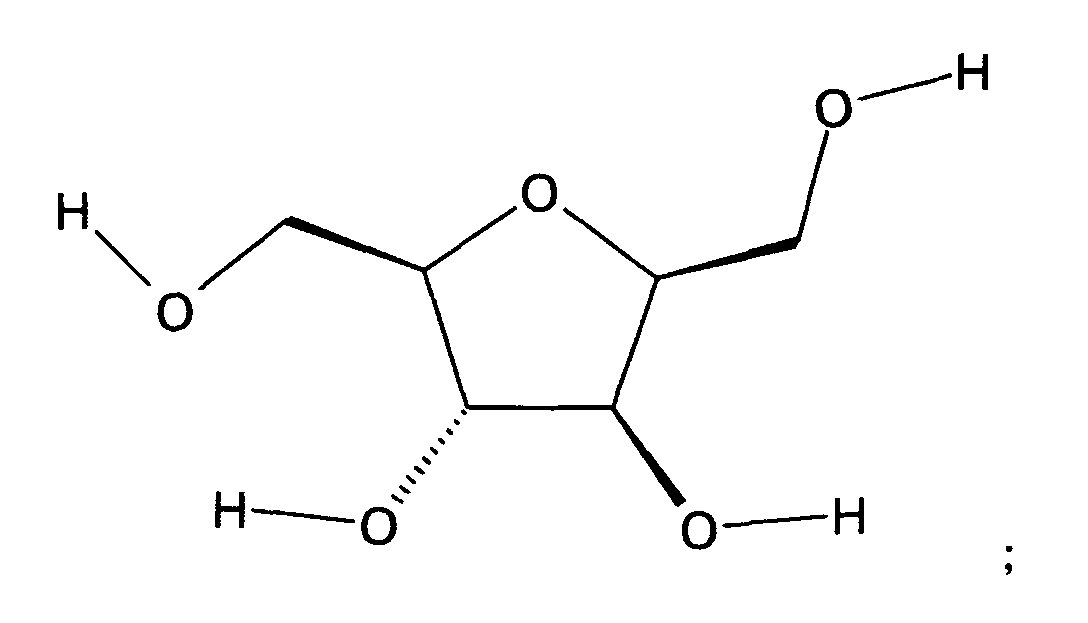
- The terms: "in the absence of any polyvalent metal compounds" and "polyvalent metal compound-free" are herein intended to mean "in the absence of any compounds containing metals having a valence of greater than one including, but not limited to organic and inorganic ionic and non-ionic compounds containing calcium, magnesium, aluminum, zirconium, copper, zinc, bismuth, manganese, germanium, lanthanum or hafnium, such as, aluminum chlorhydroxide, zirconyl hydroxychloride and mixtures of glycine, zirconyl hydroxychloride and aluminum chlorhydroxide". However, the term "polyvalent metal" is not herein intended to include silicon-, sulfur- or carbon-containing compounds.
- The terms, "in the absence of glycols of the formula R(OH)2 where R is hydrocarbyl" and "hydrocarbyl glycol-free" are herein intended to mean "in the absence of such hydrocarbyl diols as 1,2-ethylene glycol; 1,2-propylene glycol; 1,3-propylene glycol; 1,2-hexylene glycol; 2-butene-1,4-diol and the like" wherein the term, "hydrocarbyl" defines a moiety consisting solely of carbon and hydrogen.
- Topical application to the area of occurrence of (i) epidermal apocrine gland sweat secretions or (ii) epidermal eccrine gland secretions of organic polyol antiperspirant active-containing composition in accordance with the practice of our invention may be by means of the use of any application device using product forms familiar to those having ordinary skill in the art including, but not limited to solid or gel solid sticks, soft solids or creams, pastes, lotions or other liquids including "roll-on's" and aerosol or pump sprays each of which product form employs an organic polyol antiperspirant active-containing composition of our invention.
- Thus, an antiperspirant gel stick article composition of our invention employing the organic polyol antiperspirant active-containing composition of our invention contains a polyvalent metal compound-free and hydrocarbyl glycol-free, consistently-maintained stiff, clear, monophasic composition having dimensional integrity and comprises at least one fully methylated cyclic dimethyl polysiloxane having the formula [(CH3)2SiO]3-7 serving as a lubricant, at least one C12-C18 monoalkanol, at least one organic C3-C6 alkane polyol antiperspirant active which organic polyol has bonded thereto from three to six hydroxyl moieties and/or one or more monoester, monoether, monohemiacetal, monoacetal, monohemiketal or monoketal derivatives thereof , at least one [(C2-C4 oxy)5-15]C12-C18alkanol, at least one alkali metal C12-C22 alkanoate as a gellant and at least one C2-C3 lower alkanol solvent.
- The term "consistently-maintained... composition having dimensional integrity" is intended herein to mean that when the stick article of our invention is in use in applying an organic polyol antiperspirant active-containing film to an area of occurrence of epidermal apocrine or eccrine gland sweating, the proportions of the constituents and the chemical properties of the functional composition, e.g., the fragrance composition that is evolved into the environment on use of the stick article of our invention are substantially identical to the proportions and chemical properties of the constituents originally present in the stick article and originally admixed with the remainder of the system, including the organic polyol antiperspirant active; and the geometric dimensions thereof with reference to the "x","y" and "z" axes on use thereof are substantially identical to the geometric dimensions originally existant in the stick article.
- The term, "stiff" is herein intended to mean that the stick article of our invention is self-supporting and non-flowable at ambient temperatures or less and at ambient pressures, e.g., at temperatures of ≤ 35°C and at pressures of about 1 atmosphere absolute.
- The term "monophasic" is herein intended to mean that the stick article of our invention on use or when not in use exists in one unitary clear phase without any phase separation resulting from the inclusion in the system of a functional composition, e.g., a fragrance composition.
- Furthermore, a "roll-on" article composition of our invention employing the organic polyol antiperspirant active-composition of our invention contains a stable emulsion which comprises water as a solvent, at least one organic C3-C6 alkane polyol antiperspirant active which organic polyol has bonded thereto from three to six hydroxyl moieties and/or one or more monoester, monoether, monohemiacetal, monoacetal, monohemiketal or monoketal derivatives thereof, a system-compatible thickening agent which is preferably a polymer of acrylic acid cross-linked with an allyl ether of sucrose, a pH adjustment agent, preferably a tri-lower alkanolamine and most preferably triethanolamine, a preservative, preferably a hydantoin derivative and most preferably bis(hydroxymethyl)-5,5-dimethylhydantoin (1,3-bis(hydroxymethyl)-5,5-dimethylimidazolidinedione) and a lubricant/surfactant, preferably a dimethicone copolyol (a hydroxy(ethoxy)15-30(propoxy)2-30 dimethicone, where the term "dimethicone" is "a mixture of fully methylated linear siloxane polymers blocked with trimethylsiloxy units conforming to the formula:
- Such compositions as are used in the practice of our invention may optionally contain, in addition, one or more fragrance components which have n-octanol/water partition coefficients, "P" such that each of the fragrance components have no molecular weight limitations and can have a C log10P in the range of from about 0.5 to about 10 including, but not limited to aldehydes, ketones, esters, hemiacetals, acetals, hemiketals, ketals, alcohols, carboxylic acids, ethers, thioethers, thiols, amides, shiff bases, lactones, thiolactones, lactams, hydrocarbons, natural essential oils and nitriles without restriction concerning sensitivity of the fragrance components or combination thereof to the pH of the composition. This lack of restriction is enabled as a result of the absence of polyvalent metal compounds which, if present, can effect (i) a physical and/or visual alteration (e.g., color and/or transparency) in which the antiperspirant active is employed and (ii) a chemical alteration of the fragrance composition particularly where aldehydes such as citronellal or alkylsubstituted arylalkylcarboxaldehydes such as para-tertiary butyl-α-methylhydrocinnamaldehyde are employed. Such fragrance compositions can also be malodour-counteracting fragrance compositions as described in U.S. Patent 6,737,395 or antimicrobial fragrance compositions as described in U.S. Patent 6,495,512 or fragrance/anti-microbial compositions as described in U.S. Patent 6,517,759.
- Furthermore, such compositions as are used in the practice of our invention may contain one or more anti-microbial agents such as the antimicrobial deodorant compositions as set forth in U.S. Patent Application 2003/0059396 A1 or other antimicrobial agents such as isothiazolone compounds, alkali metal pyrithiones, polymethoxy bicyclic oxazolidines and halogenated compounds as described in U.S. Patent Application 2003/0035748 A1, or halogenated phenol derivatives such as 5-chloro-2-(2,4-dichlorophenoxy)phenol.
- The polyvalent metal compound-free, hydrocarbyl glycol-free composition of our invention used for topical application of the organic polyol antiperspirant active of our invention contains from about 10 to about 50 parts by weight of the organic polyol antiperspirant active; preferably from about 25 to about 40 parts by weight of the organic polyol antiperspirant active and most preferably from about 28 to about 35 parts by weight of the organic polyol antiperspirant active based on 100 parts by weight of the composition in which it is used, e.g., stick article composition, "roll-on" article composition, aerosol composition, lotion and the like. As stated above, the organic polyol antiperspirant active is at least one of of glycerine, sorbitol, sorbitol internal cyclic ether anyhydride, mannitol, mannitol internal cyclic ether anhydride having the structure:glucitol, glucitol internal cyclic ether anhydride having the structure:
 and 1,2,6-hexane triol and/or a C2-C18 alkyl or alkenyl mono-ester thereof, a C2-C12 alkyl monoether thereof, a mono[(C2-C3 oxy)1-15]ether thereof, a mono-C2-C8 hemiacetal thereof, a mono-C1-C8 acetal thereof , a mono-C3-C8 hemiketal thereof and/or a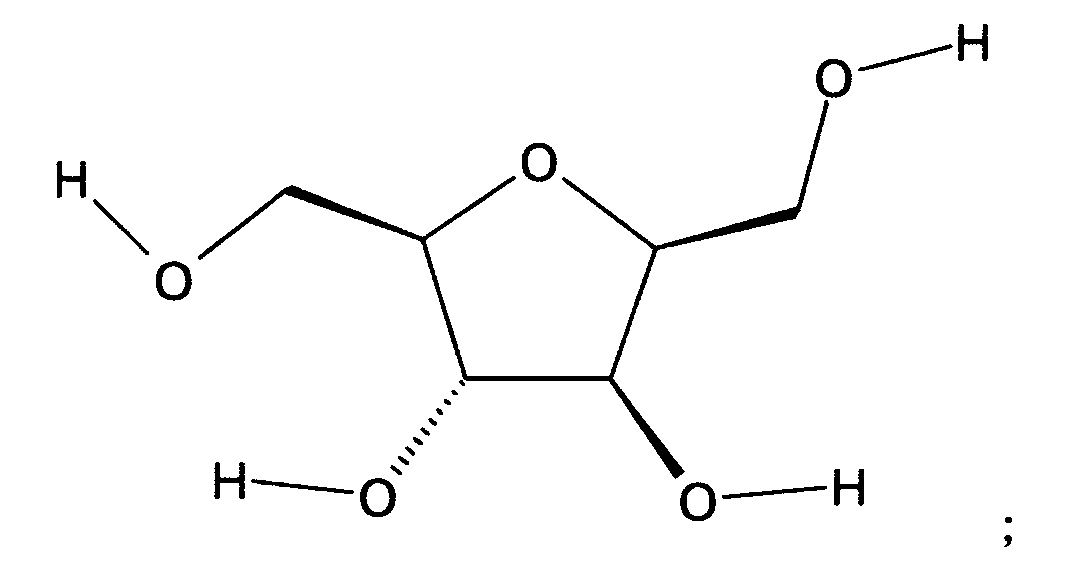
mono-C3-C8 ketal thereof. Examples of alkyl or alkenyl monoesters are glyceryl monoacetate, glyceryl/sorbitol monooleate, the mixture of glyceryl monocaprylate and glyceryl monocaprate marketed as ESTOL 3601, Uniquema Chemie, B.V. of Gouda, The Netherlands, glyceryl monopalmitate, glyceryl monoricinoleate marketed as LONZEST GMR, Lonza Inc. of Fair Lawn, New Jersey 07410 and glyceryl monoheptanoate marketed as CAPMUL 707G, Abitec Corporation of Columbus, Ohio 43215. Examples of alkyl ethers are 2-glyceryl monoisopropyl ether and 3-glyceryl-mono-n-heptyl ether. Examples of alkoxyglyceryl ethers are PPG-3-glyceryl ether (CAS No. 25791-96-2), a mixture of 1- and 2-(propoxy)3 glyceryl ethers marketed as NEWPOL GP-250, Sanyo Chemical Co. and PPG-3-Glycereth-4, a mixture of 1- and 2-(propoxy)3(ethoxy)4 glyceryl monoethers. An example of an acetal useful in the practice of our invention is glycerol formal (CAS No. 5464-28-8) marketed as ELCOTAL GF, Lambiotte et Cie. An example of a ketal useful in the practice of our invention is 2,2-diglyceroxypropane. - Glycerine having the formula (H2COH)COH(H2COH) is the preferred organic polyol antiperspirant active for use in the practice of our invention.
- The stick articles of our invention, when used in a preferred manner in the practice of our invention are contained, for example, in a package described in detail in U.S. Patents 5,275,496 and 6,386,778 and U.S. Patent Application US 2001/0002962 A.
- Such packages for the stick article of our invention comprise means for supporting the organic polyol antiperspirant active-containing substance-providing stick article of our invention such that an end portion of said stick article can be exposed for use, with the means for supporting said stick article including a stick-surrounding member for surrounding the stick article, the stick-surrounding member having an opening such that the stick article can be exposed for use, and a border of the stick-surrounding member forming the opening, said border forming a top end of the supporting means, such that said end portion can be elevated from said means for supporting and can protrude therefrom so as to be exposed for use, said stick article being contained within said stick-surrounding member. Thus, for example, the means for elevating includes a screw feed mechanism having an elevator screw such that upon rotation of the elevator screw the stick article is pushed up from the bottom such that the end portion protrudes and is exposed for use. As a second example, the means for elevating is a means for pushing up the stick article so that the end portion protrudes from the means for supporting and is exposed for use.
- Furthermore, our invention is directed to a process for applying a controllably releasable antiperspirant active-containing substance optionally including other functional substances such as a perfume composition or an anti-microbial composition to an area of occurrence of (i) epidermal apocrine gland sweat secretions or (ii) epidermal eccrine gland secretions comprising the steps of providing a package as described above; exposing for use the end portion of said stick article contained within said package; epidermal surface to be treated; and applying the end portion of said stick article contained within said package to a finite area of epidermal surface.
- Other optional materials useful in formulation of the composition of the stick article are as follows, in the stated ranges of use:
from about 10 to about 50 parts by weight, preferably from about 25 to about 35 parts by weight of a fully methylated cyclic dimethyl polysiloxane having the formula [(CH3)2SiO]3-7 (for example, cyclomethicone (CAS No. 69430-24-6) marketed as DOW CORNING 244 Fluid, Dow Corning Corporation of Midland, Michigan 48686-0994, and cyclotetrasiloxane (CAS No. 293-51-6) having the formula [(CH3)2SiO]4 marketed as KF994, Shin-Etsu Chemical Co., Ltd. of Tokyo, Japan); from about 10 to about 30 parts by weight, preferably from about 15 to about 25 parts by weight of at least one C12-C18 monoalkanol (for example isostearyl alcohol (CAS No. 27458-93-1), 16-methyl-1-heptadecanol marketed as JARCOL 1-18CG, trademark of the Jarchem Co.); from about 8 parts by weight to about 15 parts by weight, preferably from about 9 to about 12 parts by weight of at least one [(C2-C4 oxy)5-15]C12-C18 alkanyl ether (for example, PPG-10 cetyl ether ((n-propoxy)10 cetane , (CAS No. 9035-85-2) marketed as PROCETYL 10, Croda, International plc of East Yorkshire, England, U.K.; from about 5 parts by weight to about 15 parts by weight, preferably from about 7 to about 11 parts by weight of at least one alkali metal C12-C22 alkanoate (for example, and preferably sodium stearate); and from about 5 parts by weight to about 25 parts by weight, preferably from about 6 to about 10 parts by weight, of at least one C2-C3 lower alkanol (for example cosmetic-grade ethanol or isopropanol). - When an optional antibacterial agent is employed in the formulation, for example, 5-chloro-2-(2,4-dichlorophenoxy)phenol, the range of the amount used in the formulation is from about 0.001 to about 0.5 parts by weight, preferably from about 0.08 to about 0.3 parts by weight.
- Similarly, a "roll-on" article employing an antiperspirant "roll-on" composition containing the organic polyol antiperspirant active of our invention may be used for topical application of a "roll-on" antiperspirant composition to the area of occurrence of (i) epidermal apocrine gland sweat secretions or (ii) epidermal eccrine gland secretions of the organic polyol antiperspirant active-containing composition in accordance with the practice of our invention. Such "roll-on" articles useful in the practice of our invention are described in U.S. Patent 5,553,957.
- Other optional materials useful in formulation of the composition useful in conjunction with the "roll-on" article are:
- from about 50 to about 70 parts by weight, preferably from about 55 to about 65 parts by weight of water;
- from about 0.2 to about 0.5 parts by weight, preferably about 0.3 parts by weight of a at least one polymer of acrylic acid cross-linked with the allyl ether of sucrose (CAS No. 9003-01-4) for example Carbomer 934, marketed as CARBOPOL 934, Noveon IP Holdings Corp. of Cleveland, Ohio 44141-3247.;
- from about 0.7 to about 1.4 parts by weight, preferably about 1.0 parts by weight of triethanolamine;
- from about 0.001 to about 0.5 parts by weight, preferably about 0.3 parts by weight of DMDM hydantoin (CAS No. 6440-58-0)(bis(hydroxymethyl)-5,5-dimethylhydantoin marketed as GLYDANT, Lonza, Inc. of Fair Lawn, New Jersey 07410;
- from about 1.75 to about 3.0 parts by weight, preferably about 2.3 parts by weight of dimethicone polyol for example SILSOFT 430 dimethicone polyol and SILSOFT 475 dimethicone polyol, Crompton Corporation of Greenwich, Connecticut 06831 and DOW CORNING 193 surfactant, Dow Corning Corporation of Midland, Michigan 48686-0994.
-
- Similarly, an "aerosol" device employing an antiperspirant composition containing the organic polyol antiperspirant active of our invention admixed with a propellant such as 1,1,1,2,2-pentafluorobutane may be used for topical application of an aerosol antiperspirant composition to the area of occurrence of (i) epidermal apocrine gland sweat secretions or (ii) epidermal eccrine gland secretions of the organic polyol antiperspirant active-containing composition in accordance with the practice of our invention. Such "aerosol" devices useful in the practice of our invention are described at Column 23, lines 48-67 and Column 24, lines 1-11 and lines 25-30 of U.S. Patent 6,682,694.
- When an optional fragrance component or composition is employed in the stick article formulation or in a "roll-on" article formulation, or with an "aerosol" device, for example, a fragrance composition containing the components as set forth in the following Table II:
Fragrance Component Clog10P value Molecular Weight Parts by Weight 1-phenyl hexanol-5 3.299 178.28 3.0 α-santalol 3.800 220.36 5.0 iso-eugenol 2.547 164.21 8.0 amyl salicylate 4.601 208.26 4.0 benzyl salicylate 4.383 228.25 9.0 β-caryophyllene 6.333 204.36 3.0 cedrol 4.530 222.37 5.0 cedryl acetate 5.436 264.41 5.0 cedryl formate 5.070 238.37 1.5 cyclohexyl salicylate 5.265 220.29 9.0 γ-dodecalactone 4.359 198.31 7.5 ethyl undecylenate 4.888 212.34 7.7 geranyl anthranilate 4.216 273.38 7.7 β-phenylethyl benzoate 4.058 226.38 3.0 β-phenylethyl phenyl acetate 3.767 240.31 3.5 5-acetyl-1,1,2,3,3,6-hexamethyl indane 5.977 258.41 5.6 cyclopentadecanolide 6.246 240.39 7.3 d-limonene 4.232 136.24 2.0 cis-p-t-butylcyclohexyl acetate 4.019 198.31 1.5 amyl cinnamic aldehyde 4.324 202.30 5.5 linalyl benzoate 5.233 258.36 4.4 - The following examples are not meant to define or otherwise limit the scope of the invention. Rather the scope of the invention is to be ascertained according to the claims that follow the examples.
- A clear antiperspirant stick was prepared as follows:
- The following materials were admixed:
Ingredients Parts by Weight Cyclomethicone (TBF-505 Silicone Fluid marketed by Path Silicone Co.) 39.70 Isostearyl Alcohol (JARCOL 1-18CG marketed by the Jarchem Co.) 19.80 Glycerine 18.90 (Propoxy)10Cetyl Ether (PROCETYL 10 marketed by Croda International plc of East Yorkshire, England, U.K. 10.00 Sodium Stearate 8.00 5-chloro-2-(2,4-dichlorophenoxy)phenol(IRGASAN DB-300, marketed by Ciba Specialty Chemicals Corporation of Tarrytown, New York 10591) 0.10 - The resulting mixture was heated until clear (90°C for a period of 0.3 hours). The clear mixture was cooled to 45°C and admixed with 7.50 parts by weight of ethanol (alcohol SD#40) the resulting molten, clear mixture was poured into a mold, whereby an antiperspration stick was formed. The antiperspirant stick was then placed in an article as described in U.S. Patent 5,275,496.
- The antiperspirant stick was used and compared with a stick where the glycerine was replaced with a mixture of aluminum chlorhydroxide, zirconyl hydroxychloride and glycine in a ratio of 7.5:4.6:2.0 and the sodium stearate gelling agent was replaced with a dibenzylidene sorbitol gelling agent. Each of the sticks had an equivalent antiperspirant efficacy with respect to (i) degree of reduction of epidermal aprocrine gland perspiration; (ii) degree of reduction of epidermal eccrine gland perspiration; and (iii) time of effectiveness. A 10 member panel unanimously preferred the stick containing the glycerine in view of the total lack of irritancy on use thereof.
- A "roll-on" antiperspirant emulsion for use with the "roll-on" article illustrated in Figure 1 and 4 of U.S. Patent 5,553,957 was prepared as follows:
- The following materials were admixed in the manner set forth below:
Ingredients Parts by Weight Deionized water 61.9 Carbomer 934 (polymer of acrylic acid cross linked with the allyl ether of sucrose) marketed as CARBOPOL 934, Noveon IP Holdings Corp.) 0.3 triethanolamine 1.0 glycerine 34.2 DMDM Hydantoin (bis(hydroxymethyl)-5,5-dimethylhydantoin) marketed as GLYDANT, Lonza, Inc. 0.3 Dimethicone Polyol (DOW CORNING 193 Surfactant) 2.3 - The CARBOPOL was dispersed in the water, and subjected to intense agitation until a single liquid phase (solution) existed. The triethanolamine was then added to the resulting CARBOPOL solution, with stirring. The remaining ingredients were added to the resulting solution. The resulting product was employed in the "roll-on" article of U.S. Patent 5,553,957, yielding excellent results as an antiperspirant.
- Each of the disclosures of each of the U.S. Patents and Published U.S. Patent Applications cited herein is herein incorporated by reference. The reader is directed to read the patent applications referred to now and to consider their disclosure as part of the disclosure of this patent application.
- Optional features disclosed herein, including optional features of the claims (e.g. dependent claims) may be used together in any combination and in any number.
Claims (21)
- A method for inhibiting apocrine gland sweating or eccrine gland sweating comprising the step of topically applying to at least one area of occurrence of (i) epidermal apocrine gland sweat secretions or (ii) epidermal eccrine gland secretions, an organic polyol antiperspirant active-containing composition comprising a sweat secretion inhibiting concentration of a C3-C6 alkane polyol antiperspirant active which polyol has bonded thereto from three to six hydroxyl moieties and/or monoester, monoether,monohemiacetal, monoacetal, monohemiketal or monoketal derivatives thereof and is selected from the group consisting of glycerine, sorbitol, sorbitol internal cyclic ether anyhydride, mannitol, mannitol internal cyclic ether anhydride, glucitol, glucitol internal cyclic ether anhydride and 1,2,6-hexane triol and a C2-C18 alkyl or alkenyl mono-ester thereof, a C2-C12 alkyl monoether thereof, a mono[(C2-C3 oxy)1-15]ether thereof, a mono-C2-C8 hemiacetal thereof, a mono-C1-C8 acetal thereof, a mono-C3-C8 hemiketal thereof and a mono-C3-C8 ketal thereof in the absence of (i) polyvalent metal compounds or (ii) glycols of the formula R(OH)2 where R is hydrocarbyl.
- A method for inhibiting apocrine gland sweating or eccrine gland sweating comprising the step of topically applying to at least one area of occurrence of (i) epidermal apocrine gland sweat secretions or (ii) epidermal eccrine gland secretions, a sweat secretion inhibiting amount of a glycerine antiperspirant active in the absence of (i) polyvalent metal compounds and (ii) glycols of the formula R(OH)2 where R is hydrocarbyl.
- The method of claim 1 wherein the organic polyol antiperspirant active-containing composition is in the form of a stick article having a consistently-maintained stiff, clear, monophasic composition having dimensional integrity and comprises at least one fully methylated cyclic dimethyl polysiloxane having the formula [(CH3)2SiO]3-7, at least one C12-C18 monoalkanol, glycerine, at least one [(C2-C4 oxy)5-15]C12-C18 alkanol, at least one alkali metal C12-C22 alkanoate and at least one C2-C3 lower alkanol.
- The method of claim 3 wherein the organic polyol antiperspirant active-containing composition additionally comprises an antimicrobial substance.
- The method of claim 3 wherein the organic polyol antiperspirant active-containing composition additionally comprises a fragrance.
- The method of claim 3 wherein the organic polyol antiperspirant active-containing composition comprises:(a) from about 10 to about 50 parts by weight of a fully methylated cyclic dimethyl polysiloxane having the formula [(CH3)2SiO]3-7;(b) from about 10 to about 30 parts by weight of at least one C12-C18 monoalkanol;(c) from about 10 to about 50 parts by weight of glycerine antiperspirant active;(d) from about 8 parts by weight to about 15 parts by weight of at least one
[(C2-C4 oxy)5-15]C12-C18 alkanyl ether;(e) from about 5 parts by weight to about 15 parts by weight of at least one alkali metal C12-C22 alkanoate; and(f) from about 5 parts by weight to about 25 parts by weight of at least one C2-C3 lower alkanol. - The method of claim 6 wherein the organic polyol antiperspirant active-containing composition additionally comprises from about 0.001to about 0.50 parts by weight of an antimicrobial substance.
- The method of claim 6 wherein the organic polyol antiperspirant active-containing composition additionally comprises from about 0.01 to about 5.0 parts by weight of a compatible fragrance and, optionally, from about 0.001 to about 0.50 parts by weight of an antimicrobial substance.
- The method of claim 7 wherein the antimicrobial substance is 5-chloro-2-(2,4-dichlorophenoxy)phenol.
- The method of claim 8 wherein the compatible fragrance comprises at least one malodour-counteracting fragrance component and/or at least one antimicrobial fragrance component.
- An antiperspirant stick article having a consistently-maintained stiff, clear, monophasic composition having dimensional integrity comprising at least one fully methylated cyclic dimethyl polysiloxane having the formula [(CH3)2SiO]3-7, at least one C12-C18 monoalkanol, at least one [(C2-C4 oxy)5-15]C12-C18 alkanol, at least one alkali metal C12-C22 alkanoate, at least one C2-C3 lower alkanol and at least one C3-C6 alkane polyol antiperspirant active which polyol has bonded thereto from three to six hydroxyl moieties and/or monoester, monoether, monohemiacetal, monoacetal, monohemiketal or monoketal derivatives thereof and is selected from the group consisting of glycerine, sorbitol, sorbitol internal cyclic ether anyhydride, mannitol, mannitol internal cyclic ether anhydride, glucitol, glucitol internal cyclic ether anhydride, 1,2,6-hexane triol, a C2-C18 alkyl or alkenyl mono-ester thereof, a C2-C12 alkyl monoether thereof, a mono[(C2-C3 oxy)1-15]ether thereof, a mono-C2-C8 hemiacetal thereof, a mono-C1-C8 acetal thereof, a mono-C3-C8 hemiketal thereof and a mono-C3-C8 ketal thereof in the absence of (i) any polyvalent metal compounds or (ii) glycols of the formula R(OH)2 where R is hydrocarbyl.
- A package for utilization of the polyol antiperspirant active-containing composition-providing stick article of claim 11 comprising means for supporting said polyol antiperspirant active-containing composition-providing stick article such that an end portion of said stick article can be exposed for use, the means for supporting said stick article including a stick-surrounding member for surrounding the stick article, the stick-surrounding member having an opening such that the stick article can be exposed for use, and a border of the stick-surrounding member forming the opening, said border forming a top end of the supporting means, such that said end portion can be elevated from said means for supporting and can protrude therefrom so as to be exposed for use, said stick article being contained within said stick-surrounding member.
- The package of claim 12 wherein said means for elevating includes a screw feed mechanism having an elevator screw such that upon rotation of the elevator screw the stick article is pushed up from the bottom such that the end portion protrudes and is exposed for use.
- The package of claim 12 wherein the means for elevating is a means for pushing up the stick article so that the end portion protrudes from the means for supporting and is exposed for use.
- A process for applying a controllably releasable polyol antiperspirant active-containing antiperspirant composition to a mammalian epidermal surface area of occurrence of (i) epidermal apocrine gland sweat secretions or (ii) epidermal eccrine gland secretions comprising the steps of providing the package of claim 12; exposing for use the end portion of said stick article contained within said package; providing a mammalian epidermal surface to be treated; and applying the end portion of said stick article contained within said package to a finite area of said mammalian epidermal surface.
- The method of claim 6 wherein the polyol antiperspirant active-containing composition comprises (a) from about 10 to about 50 parts by weight of a fully methylated cyclic dimethyl polysiloxane having the formula [(CH3)2SiO]3-7; (b) from about 10 to about 30 parts by weight of isostearyl alcohol; (c) from about 10 to about 50 parts by weight of glycerine antiperspirant active; (d) from about 8 to about 15 parts by weight of decapropoxy-n-cetane; (e) from about 5 to about 15 parts by weight of sodium stearate; (f) from about 5 to about 25 parts by weight of ethanol and (g) from about 0.001 to about 0.5 parts by weight of 5-chloro-2-(2,4-dichlorophenoxy)phenol.
- The antiperspirant stick article of claim 11 comprising (a) from about 10 to about 50 parts by weight of a fully methylated cyclic dimethyl polysiloxane having the formula [(CH3)2SiO]3-7; (b) from about 10 to about 30 parts by weight of isostearyl alcohol; (c) from about 10 to about 50 parts by weight of glycerine antiperspirant active; (d) from about 8 to about 15 parts by weight of decapropoxy-n-cetane; (e) from about 5 to about 15 parts by weight of sodium stearate; (f) from about 5 to about 25 parts by weight of ethanol and (g) from about 0.001 to about 0.5 parts by weight of 5-chloro-2-(2,4-dichlorophenoxy)phenol.
- The method of claim 16 wherein the organic polyol antiperspirant active-containing composition additionally comprises from about 0.01 to about 5.0 parts by weight of a fragrance.
- The antiperspirant stick article of claim 17 which additionally comprises from about 0.01 to about 5.0 parts by weight of a fragrance.
- The antiperspirant stick article of claim 19 wherein the fragrance comprises at least one malodour-counteracting fragrance component and/or at least one antibacterial fragrance component.
- The method of claim 1 wherein the topical application is effected by means of a roll- on or by means of an aerosol spray.
Applications Claiming Priority (2)
| Application Number | Priority Date | Filing Date | Title |
|---|---|---|---|
| US865007 | 2004-06-10 | ||
| US10/865,007 US20050276772A1 (en) | 2004-06-10 | 2004-06-10 | Antiperspirant composition comprising polyol, antiperspirant active article containing same and method for using same |
Publications (1)
| Publication Number | Publication Date |
|---|---|
| EP1604642A1 true EP1604642A1 (en) | 2005-12-14 |
Family
ID=34941168
Family Applications (1)
| Application Number | Title | Priority Date | Filing Date |
|---|---|---|---|
| EP05252785A Withdrawn EP1604642A1 (en) | 2004-06-10 | 2005-05-06 | Antiperspirant composition comprising polyol active, antiperspirant article containing same and method for using same |
Country Status (2)
| Country | Link |
|---|---|
| US (1) | US20050276772A1 (en) |
| EP (1) | EP1604642A1 (en) |
Cited By (5)
| Publication number | Priority date | Publication date | Assignee | Title |
|---|---|---|---|---|
| WO2009007089A3 (en) * | 2007-07-11 | 2009-04-09 | Beiersdorf Ag | Use of short-chain vicinal diols as agents having antiperspirant activity |
| DE102009004270A1 (en) * | 2009-01-07 | 2010-07-08 | Beiersdorf Ag | Cosmetic or dermatological preparation, useful as an antitranspirant preparation, comprises aromatic diol compound |
| DE102009004269A1 (en) * | 2009-01-07 | 2010-07-08 | Beiersdorf Ag | Diols as an antiperspirant active agent |
| EP2353579A1 (en) | 2010-02-09 | 2011-08-10 | Unilever N.V. | Deodorant composition |
| EP2484337A3 (en) * | 2011-02-04 | 2013-04-03 | Janssen Pharmaceuticals, Inc. | Treatment of sweating |
Families Citing this family (1)
| Publication number | Priority date | Publication date | Assignee | Title |
|---|---|---|---|---|
| US20070190089A1 (en) * | 2006-02-07 | 2007-08-16 | Leonard Mackles | Antiperspirants with water soluble esters |
Citations (6)
| Publication number | Priority date | Publication date | Assignee | Title |
|---|---|---|---|---|
| DE3207940A1 (en) * | 1982-03-05 | 1983-09-15 | Peter 7772 Uhldingen Schölzel | Composition to counteract perspiration and process for its production |
| US4617185A (en) * | 1984-07-13 | 1986-10-14 | The Procter & Gamble Company | Improved deodorant stick |
| US5275496A (en) * | 1988-02-08 | 1994-01-04 | The Mennen Company | Stick package with applicator surface |
| US5902572A (en) * | 1997-06-23 | 1999-05-11 | Procter & Gamble Company | Anhydrous gel deodorant compositions |
| WO2003039505A2 (en) * | 2001-11-06 | 2003-05-15 | Henkel Kommanditgesellschaft Auf Aktien | ss-GLUCURONIDASE INHIBITORS FOR USE IN DEODORANTS AND ANTIPERSPIRANTS |
| WO2003055559A1 (en) * | 2001-12-22 | 2003-07-10 | Beiersdorf Ag | Dialkyl-substituted acetic acid and glyceric acid based active substance combinations against bacteria, mycota and viruses |
Family Cites Families (29)
| Publication number | Priority date | Publication date | Assignee | Title |
|---|---|---|---|---|
| US3792068A (en) * | 1971-04-02 | 1974-02-12 | Procter & Gamble | Dry powder aerosol antiperspirant composition incorporating dry powder antiperspirant active complex and process for its preparation |
| US3998788A (en) * | 1974-01-08 | 1976-12-21 | Armour Pharmaceutical Company | Aluminum-zirconium anti-perspirant systems with trace amounts of alkaline earth metals |
| DE2418362B2 (en) * | 1974-04-16 | 1979-05-03 | Henkel Kgaa, 4000 Duesseldorf | Use of aliphatic hydroxycarboxylic acid esters as deodorants in cosmetic preparations |
| US5688495A (en) * | 1993-03-30 | 1997-11-18 | Rosen; Steven E. | Topical deodorant compositions |
| JPH09510119A (en) * | 1994-03-09 | 1997-10-14 | ザ、プロクター、エンド、ギャンブル、カンパニー | Product dispenser with large attachment / dispensing surface that does not dispense product |
| US5512555A (en) * | 1994-07-21 | 1996-04-30 | Merck & Co., Inc. | Method of treating sweat-related conditions using finasteride, epristeride and a cholestan-3-one |
| BR9701048A (en) * | 1994-08-12 | 1998-12-15 | Procter & Gamble | Non-complex odor cyclodextrin solutions on inanimate surfaces |
| US5534246A (en) * | 1994-08-29 | 1996-07-09 | Helene Curtis, Inc. | Topically-effective compositions |
| ZA966811B (en) * | 1995-08-18 | 1998-02-12 | Colgate Palmolive Co | Cosmetic gel composition having reduced skin irritation. |
| IT1283042B1 (en) * | 1996-05-21 | 1998-04-07 | Condea Augusta Spa | COSMETIC COMPOUNDS DEODORANT AND / OR ANTI-BREATHING |
| AR017716A1 (en) * | 1998-04-27 | 2001-09-12 | Procter & Gamble | ARTICLE OF MANUFACTURE IN THE FORM OF A NON-MANUALLY OPERATED ATOMIZING EXPENDER |
| US5968489A (en) * | 1998-05-01 | 1999-10-19 | The Procter & Gamble Company | Antiperspirant composition containing 1,2-hexanediol |
| GB9814653D0 (en) * | 1998-07-07 | 1998-09-02 | Quest Int | Method of reducing or preventing malodour |
| GB9817813D0 (en) * | 1998-08-14 | 1998-10-14 | Unilever Plc | Dispensing container |
| US6042816A (en) * | 1998-08-19 | 2000-03-28 | The Gillette Company | Enhanced antiperspirant salts stabilized with calcium and concentrated aqueous solutions of such salts |
| AU5129600A (en) * | 1999-05-13 | 2000-12-05 | Human Genome Sciences, Inc. | 143 human secreted proteins |
| US6235274B1 (en) * | 1999-12-21 | 2001-05-22 | International Flavors & Fragrances Inc. | Microparticles which controllably release olfactorily active substances, methods of using same and processes for preparing same |
| US6207274B1 (en) * | 1999-12-21 | 2001-03-27 | International Flavors & Fragrances Inc. | Fragrance containing fiber |
| US6495512B1 (en) * | 2000-06-23 | 2002-12-17 | International Flavors & Fragrances Inc. | Salicylaldehyde-containing composition having antimicrobial and fragrancing properties and process for using same |
| DE10059823A1 (en) * | 2000-12-01 | 2002-06-13 | Clariant Gmbh | Deodorants and antiperspirants |
| JP3976226B2 (en) * | 2000-12-08 | 2007-09-12 | 信越化学工業株式会社 | Polyhydric alcohol-modified silicone and cosmetics containing the same |
| US6524562B2 (en) * | 2000-12-12 | 2003-02-25 | The Procter & Gamble Company | Single-phase antiperspirant compositions containing solubilized antiperspirant active and silicone elastomer |
| US6386778B1 (en) * | 2001-01-05 | 2002-05-14 | The Gillette Company | Systems and methods for dispensing multi-component products |
| WO2002055043A1 (en) * | 2001-01-16 | 2002-07-18 | Unilever N.V. | Oral composition |
| GB0106601D0 (en) * | 2001-03-16 | 2001-05-09 | Unilever Plc | Antiperspirant formulations |
| GB0114848D0 (en) * | 2001-06-18 | 2001-08-08 | Unilever Plc | Antiperspirant or deodorant compositions |
| US6652842B2 (en) * | 2001-11-13 | 2003-11-25 | Noville, Inc. | Deodorant compositions comprising diglycerol |
| US6719965B2 (en) * | 2002-02-19 | 2004-04-13 | Unilever Home & Personal Care Usa Division Of Conopco, Inc. | Antiperspirant or deodorant composition |
| US20030206973A1 (en) * | 2002-05-01 | 2003-11-06 | Carolyn Gale | All natural gentle deodorant and antiperspirant |
-
2004
- 2004-06-10 US US10/865,007 patent/US20050276772A1/en not_active Abandoned
-
2005
- 2005-05-06 EP EP05252785A patent/EP1604642A1/en not_active Withdrawn
Patent Citations (6)
| Publication number | Priority date | Publication date | Assignee | Title |
|---|---|---|---|---|
| DE3207940A1 (en) * | 1982-03-05 | 1983-09-15 | Peter 7772 Uhldingen Schölzel | Composition to counteract perspiration and process for its production |
| US4617185A (en) * | 1984-07-13 | 1986-10-14 | The Procter & Gamble Company | Improved deodorant stick |
| US5275496A (en) * | 1988-02-08 | 1994-01-04 | The Mennen Company | Stick package with applicator surface |
| US5902572A (en) * | 1997-06-23 | 1999-05-11 | Procter & Gamble Company | Anhydrous gel deodorant compositions |
| WO2003039505A2 (en) * | 2001-11-06 | 2003-05-15 | Henkel Kommanditgesellschaft Auf Aktien | ss-GLUCURONIDASE INHIBITORS FOR USE IN DEODORANTS AND ANTIPERSPIRANTS |
| WO2003055559A1 (en) * | 2001-12-22 | 2003-07-10 | Beiersdorf Ag | Dialkyl-substituted acetic acid and glyceric acid based active substance combinations against bacteria, mycota and viruses |
Cited By (9)
| Publication number | Priority date | Publication date | Assignee | Title |
|---|---|---|---|---|
| WO2009007089A3 (en) * | 2007-07-11 | 2009-04-09 | Beiersdorf Ag | Use of short-chain vicinal diols as agents having antiperspirant activity |
| DE102009004270A1 (en) * | 2009-01-07 | 2010-07-08 | Beiersdorf Ag | Cosmetic or dermatological preparation, useful as an antitranspirant preparation, comprises aromatic diol compound |
| DE102009004269A1 (en) * | 2009-01-07 | 2010-07-08 | Beiersdorf Ag | Diols as an antiperspirant active agent |
| WO2010078932A2 (en) | 2009-01-07 | 2010-07-15 | Beiersdorf Ag | Diols as antiperspirant agents |
| WO2010078932A3 (en) * | 2009-01-07 | 2011-07-07 | Beiersdorf Ag | Diols as antiperspirant agents |
| EP2353579A1 (en) | 2010-02-09 | 2011-08-10 | Unilever N.V. | Deodorant composition |
| WO2011099849A2 (en) | 2010-02-09 | 2011-08-18 | Unilever N.V. | Deodorant composition |
| WO2011099849A3 (en) * | 2010-02-09 | 2012-04-05 | Unilever N.V. | Deodorant composition |
| EP2484337A3 (en) * | 2011-02-04 | 2013-04-03 | Janssen Pharmaceuticals, Inc. | Treatment of sweating |
Also Published As
| Publication number | Publication date |
|---|---|
| US20050276772A1 (en) | 2005-12-15 |
Similar Documents
| Publication | Publication Date | Title |
|---|---|---|
| US6485716B1 (en) | High efficacy liquid gel product | |
| EP1171086B1 (en) | Structured cosmetic compositions | |
| US20090257968A1 (en) | Gels containing anionic surfactants and coupling agents | |
| AU727783B2 (en) | Cosmetic gel composition having reduced skin irritation | |
| US5770185A (en) | Deodorizing preparations | |
| JP2002544153A (en) | Antiperspirant stick | |
| AU8065498A (en) | Gel deodorant compositions having reduced skin irritation | |
| BRPI0418070B1 (en) | PERSONAL CARE COMPOSITION, USE OF A REPLACED UREA AND METHOD TO REDUCE COLOR DEGRADATION OF A PERSONAL CARE COMPOSITION | |
| CN1373654A (en) | Skin-balance moisturizing cream | |
| EP0623338B1 (en) | Transparent clear cosmetic stick composition containing sodium salts of methyl carboxyl derivatives of ethoxylated lauryl alcohol | |
| CN109414391A (en) | Emulsification composition and the cosmetics for using it | |
| US20050276772A1 (en) | Antiperspirant composition comprising polyol, antiperspirant active article containing same and method for using same | |
| WO2003013446A1 (en) | Oily thickened gel-like composition, emulsified composition using the composition and preparation method thereof | |
| AU2001238372A1 (en) | Low tack cosmetic composition sticks | |
| CA2400453A1 (en) | Low tack cosmetic composition sticks | |
| CA3055798C (en) | Topical compositions containing synthetic esters of sinapinic acid and methods for treating keratin surfaces | |
| JP3286350B2 (en) | Transparent aqueous composition | |
| TW200902076A (en) | Malodor reduction of cosmetic products | |
| US6531119B1 (en) | Compositions with low irritancy | |
| US20240156691A1 (en) | Two-phase composition | |
| US20050220832A1 (en) | Gels containing metallic soaps and coupling agents | |
| EP1199311B1 (en) | Cellobiose octanonanoate | |
| EP4216913A1 (en) | Two-phase composition | |
| EP4537908A1 (en) | Cosmetic composition | |
| JP7859793B2 (en) | two-phase composition |
Legal Events
| Date | Code | Title | Description |
|---|---|---|---|
| PUAI | Public reference made under article 153(3) epc to a published international application that has entered the european phase |
Free format text: ORIGINAL CODE: 0009012 |
|
| AK | Designated contracting states |
Kind code of ref document: A1 Designated state(s): AT BE BG CH CY CZ DE DK EE ES FI FR GB GR HU IE IS IT LI LT LU MC NL PL PT RO SE SI SK TR |
|
| AX | Request for extension of the european patent |
Extension state: AL BA HR LV MK YU |
|
| 17P | Request for examination filed |
Effective date: 20060321 |
|
| AKX | Designation fees paid |
Designated state(s): DE FR GB IT |
|
| STAA | Information on the status of an ep patent application or granted ep patent |
Free format text: STATUS: THE APPLICATION HAS BEEN WITHDRAWN |
|
| 18W | Application withdrawn |
Effective date: 20081027 |