EP1601617B1 - Electrode materials - Google Patents
Electrode materials Download PDFInfo
- Publication number
- EP1601617B1 EP1601617B1 EP04711411A EP04711411A EP1601617B1 EP 1601617 B1 EP1601617 B1 EP 1601617B1 EP 04711411 A EP04711411 A EP 04711411A EP 04711411 A EP04711411 A EP 04711411A EP 1601617 B1 EP1601617 B1 EP 1601617B1
- Authority
- EP
- European Patent Office
- Prior art keywords
- electrode
- metal
- carbon matrix
- weight
- inclusions
- Prior art date
- Legal status (The legal status is an assumption and is not a legal conclusion. Google has not performed a legal analysis and makes no representation as to the accuracy of the status listed.)
- Expired - Lifetime
Links
Images

Classifications
-
- C—CHEMISTRY; METALLURGY
- C02—TREATMENT OF WATER, WASTE WATER, SEWAGE, OR SLUDGE
- C02F—TREATMENT OF WATER, WASTE WATER, SEWAGE, OR SLUDGE
- C02F1/00—Treatment of water, waste water, or sewage
- C02F1/46—Treatment of water, waste water, or sewage by electrochemical methods
- C02F1/461—Treatment of water, waste water, or sewage by electrochemical methods by electrolysis
- C02F1/46104—Devices therefor; Their operating or servicing
- C02F1/46109—Electrodes
-
- C—CHEMISTRY; METALLURGY
- C25—ELECTROLYTIC OR ELECTROPHORETIC PROCESSES; APPARATUS THEREFOR
- C25B—ELECTROLYTIC OR ELECTROPHORETIC PROCESSES FOR THE PRODUCTION OF COMPOUNDS OR NON-METALS; APPARATUS THEREFOR
- C25B11/00—Electrodes; Manufacture thereof not otherwise provided for
- C25B11/04—Electrodes; Manufacture thereof not otherwise provided for characterised by the material
- C25B11/042—Electrodes formed of a single material
- C25B11/043—Carbon, e.g. diamond or graphene
-
- H—ELECTRICITY
- H01—ELECTRIC ELEMENTS
- H01M—PROCESSES OR MEANS, e.g. BATTERIES, FOR THE DIRECT CONVERSION OF CHEMICAL ENERGY INTO ELECTRICAL ENERGY
- H01M4/00—Electrodes
- H01M4/86—Inert electrodes with catalytic activity, e.g. for fuel cells
- H01M4/88—Processes of manufacture
- H01M4/8875—Methods for shaping the electrode into free-standing bodies, like sheets, films or grids, e.g. moulding, hot-pressing, casting without support, extrusion without support
-
- H—ELECTRICITY
- H01—ELECTRIC ELEMENTS
- H01M—PROCESSES OR MEANS, e.g. BATTERIES, FOR THE DIRECT CONVERSION OF CHEMICAL ENERGY INTO ELECTRICAL ENERGY
- H01M4/00—Electrodes
- H01M4/86—Inert electrodes with catalytic activity, e.g. for fuel cells
- H01M4/88—Processes of manufacture
- H01M4/8878—Treatment steps after deposition of the catalytic active composition or after shaping of the electrode being free-standing body
- H01M4/8882—Heat treatment, e.g. drying, baking
- H01M4/8885—Sintering or firing
-
- H—ELECTRICITY
- H01—ELECTRIC ELEMENTS
- H01M—PROCESSES OR MEANS, e.g. BATTERIES, FOR THE DIRECT CONVERSION OF CHEMICAL ENERGY INTO ELECTRICAL ENERGY
- H01M4/00—Electrodes
- H01M4/86—Inert electrodes with catalytic activity, e.g. for fuel cells
- H01M4/88—Processes of manufacture
- H01M4/8878—Treatment steps after deposition of the catalytic active composition or after shaping of the electrode being free-standing body
- H01M4/8892—Impregnation or coating of the catalyst layer, e.g. by an ionomer
-
- H—ELECTRICITY
- H01—ELECTRIC ELEMENTS
- H01M—PROCESSES OR MEANS, e.g. BATTERIES, FOR THE DIRECT CONVERSION OF CHEMICAL ENERGY INTO ELECTRICAL ENERGY
- H01M4/00—Electrodes
- H01M4/86—Inert electrodes with catalytic activity, e.g. for fuel cells
- H01M4/96—Carbon-based electrodes
-
- C—CHEMISTRY; METALLURGY
- C02—TREATMENT OF WATER, WASTE WATER, SEWAGE, OR SLUDGE
- C02F—TREATMENT OF WATER, WASTE WATER, SEWAGE, OR SLUDGE
- C02F1/00—Treatment of water, waste water, or sewage
- C02F1/46—Treatment of water, waste water, or sewage by electrochemical methods
- C02F1/461—Treatment of water, waste water, or sewage by electrochemical methods by electrolysis
- C02F1/46104—Devices therefor; Their operating or servicing
- C02F1/46109—Electrodes
- C02F2001/46133—Electrodes characterised by the material
-
- Y—GENERAL TAGGING OF NEW TECHNOLOGICAL DEVELOPMENTS; GENERAL TAGGING OF CROSS-SECTIONAL TECHNOLOGIES SPANNING OVER SEVERAL SECTIONS OF THE IPC; TECHNICAL SUBJECTS COVERED BY FORMER USPC CROSS-REFERENCE ART COLLECTIONS [XRACs] AND DIGESTS
- Y02—TECHNOLOGIES OR APPLICATIONS FOR MITIGATION OR ADAPTATION AGAINST CLIMATE CHANGE
- Y02E—REDUCTION OF GREENHOUSE GAS [GHG] EMISSIONS, RELATED TO ENERGY GENERATION, TRANSMISSION OR DISTRIBUTION
- Y02E60/00—Enabling technologies; Technologies with a potential or indirect contribution to GHG emissions mitigation
- Y02E60/30—Hydrogen technology
- Y02E60/50—Fuel cells
Definitions
- This invention relates to electrode materials and is particularly applicable to water purification electrodes as used in the process of WO99/01382 .
- WO99/01382 discloses a water purification process in which water is treated electrolytically to destroy bacteria and in which metal electrodes, for example aluminium, are provided.
- the technique uses a process called 'electroflocculation' which combines the process of electrocoagulation and electroflotation.
- Electrocoagulation is a process whereby a flocculant is added into a liquid at a controlled concentration by the electrolytic dissolution of a sacrificial anode at controlled voltages, the dissolved ions eventually form flocs, onto which particulate materials are preferentially absorbed.
- the flocs may be carried to the surface of the liquid by hydrogen bubbles generated at the cathode, and which combine with the flocs in a process called electroflotation.
- sacrificial metallic anodes can be used, for example, aluminium can be used to produced aluminium ions which combine with hydroxyl ions (generated by electrolysis of water at the cathode) to form a polymeric coagulant aluminium hydroxide, which absorbs colloidal material present in the solution to form a insoluble floc and which is carried away by the hydrogen gas bubbles generated at the cathode to the surface of the liquid.
- Other sacrificial metallic electrodes include iron to generate ferric ions which may be used to destabilise oil or oil emulsions.
- the efficiency of the above process is dependent upon both the turbulence of the fluid flowing through the said fluid treatment unit, as build up of reaction products such as floc, electrolytically deposited material or gas bubbles at one or each of the electrodes would lead to reduced amperage across the electrodes. Introducing turbulence and/or fluid flow allows these reaction products to be swept away easily. Efficiency may be increased through the generation of small bubbles produced at lower amperage, since small bubbles will have a larger surface area than larger bubbles produced at higher amperage. For the latter effect, it is, thus, advantageous to add a salt such as sodium chloride or calcium chloride to the fluid before or during its passage between the electrodes, which results in a reduction in the size of the bubble formed at the cathode. Equally, the efficiency is dependent upon the contact area of the fluid or electrolyte with the exposed metallic electrode.
- metal electrodes can passivate. This means that a layer of oxide material may be formed that reduces the efficiency of the electrode process. Additionally, as the electrodes are consumed in the process of electrolysis, they have to be replaced. A significant amount of metal remains when the electrodes are replaced.
- Carbon/graphite materials containing metallic inclusions either by infiltration or dispersion are commonly known for a number applications such as EDM electrodes ( US4469654 ).
- Glassy (vitrified) carbon composites are known as a support to carry metallic particles such as platinum to catalyze a chemical reaction or to catalyze an electrochemical reaction in an electrochemical cell, e.g. a fuel cell, a cell for electrochemical synthesis, or a sensor ( WO94/19515 and WO00/15576 )
- the present inventors have provided an electrode material that has several advantages in the process of WO99/01382 , and which may be usable for other such processes.
- the present invention provides a fluid treatment electrode comprising a bonded carbon matrix having electrochemically active metal inclusions comprising aluminium, the carbon matrix comprising 1-90% graphite based on the weight of the carbon matrix.
- the amount of metal is greater than 1% by weight, more preferably greater than 5% by weight.
- the amount of metal is preferably up to 40%.
- the carbon matrix may comprise one or more of:-
- the carbon matrix may be a kilned resin bonded composite.
- the metal may further include one or more of the following elements : copper, silver, nickel, iron.
- the electrodes of the present invention have the advantage over metal electrodes that:-
- the electrode comprises a bonded carbon matrix with metallic inclusions.
- the electrodes of the invention may be pressed, extruded, or otherwise formed from particles of raw materials forming the carbon matrix and the metal inclusions and then fired at a temperature sufficient to provide a bond between the particles, but not so high as to melt the metal.
- the porous carbon matrix may be formed and then impregnated with molten metal which on freezing forms the metal inclusions.
- Electrodes Other methods of forming the electrodes will be apparent to the person skilled in the art, e.g. hot pressing, extruding, chemical deposition of the metal within the carbon matrix etc..
- the electrode may be fabricated by blending coke, graphite and metal powder with a polymeric binder such phenolic resin.
- a cross-linking agent such as hexamine may be used to cure/catalyse phenol formaldehyde reaction in the resin through heat treatment.
- the invention is not limited to resin binders but these are particularly useful. Other carbon forming binders may be used in place of resin.
- the material had a bending strength typically 20-45 MPa and a resistivity of 500-1000 ⁇ .m.
- the material had a bending strength typically 25-50 MPa, and a resistivity of 3000-500 ⁇ .m.
- the material had a bending strength of 15-40MPa and a resistivity of 500-1000 ⁇ ohm.cm.
- Electrodes of this material were used in tests of efficacy in the process of WO99/01382 .
- the consent level in the UK for aluminium in water is 200 ⁇ g/l, but on sensitive waters this could be lowered to 100 ⁇ g/l.
- Fig 3 shows that the aluminium content of post-treated water using an aluminium electrode is close to the upper level; whereas the aluminium content using an electrode in accordance with the invention is much lower, and is well below not only the existing UK consent level, but also below the lower level of 100 ⁇ g/l.
- the metal inclusions comprising aluminium may be of aluminium alone or may be mixed with elements intended to produce different effects in the process for which the electrode is used.
Landscapes
- Chemical & Material Sciences (AREA)
- Chemical Kinetics & Catalysis (AREA)
- Electrochemistry (AREA)
- General Chemical & Material Sciences (AREA)
- Engineering & Computer Science (AREA)
- Manufacturing & Machinery (AREA)
- Organic Chemistry (AREA)
- Life Sciences & Earth Sciences (AREA)
- Water Supply & Treatment (AREA)
- Environmental & Geological Engineering (AREA)
- Materials Engineering (AREA)
- Metallurgy (AREA)
- Hydrology & Water Resources (AREA)
- Physics & Mathematics (AREA)
- Thermal Sciences (AREA)
- Water Treatment By Electricity Or Magnetism (AREA)
- Battery Electrode And Active Subsutance (AREA)
- Inert Electrodes (AREA)
- Electrodes For Compound Or Non-Metal Manufacture (AREA)
Abstract
Description
- This invention relates to electrode materials and is particularly applicable to water purification electrodes as used in the process of
WO99/01382 -
WO99/01382 - The efficiency of the above process is dependent upon both the turbulence of the fluid flowing through the said fluid treatment unit, as build up of reaction products such as floc, electrolytically deposited material or gas bubbles at one or each of the electrodes would lead to reduced amperage across the electrodes. Introducing turbulence and/or fluid flow allows these reaction products to be swept away easily. Efficiency may be increased through the generation of small bubbles produced at lower amperage, since small bubbles will have a larger surface area than larger bubbles produced at higher amperage. For the latter effect, it is, thus, advantageous to add a salt such as sodium chloride or calcium chloride to the fluid before or during its passage between the electrodes, which results in a reduction in the size of the bubble formed at the cathode. Equally, the efficiency is dependent upon the contact area of the fluid or electrolyte with the exposed metallic electrode.
- A problem with metal electrodes is that the metal can passivate. This means that a layer of oxide material may be formed that reduces the efficiency of the electrode process. Additionally, as the electrodes are consumed in the process of electrolysis, they have to be replaced. A significant amount of metal remains when the electrodes are replaced.
- Carbon/graphite materials containing metallic inclusions either by infiltration or dispersion are commonly known for a number applications such as EDM electrodes (
US4469654 ). Glassy (vitrified) carbon composites are known as a support to carry metallic particles such as platinum to catalyze a chemical reaction or to catalyze an electrochemical reaction in an electrochemical cell, e.g. a fuel cell, a cell for electrochemical synthesis, or a sensor (WO94/19515 WO00/15576 - Techniques for producing metallic dispersions into carbon are widely known in the prior art. These range from infiltration of porous carbon bodies with molten copper under pressure and heat, pre-blending carbon or graphite granules with a metal, typically copper and in some cases a refractory material is added such as molybdenum to improve their wetability to carbon and this is either pressed or injected moulded in combination with an organic binder.
- The present inventors have provided an electrode material that has several advantages in the process of
WO99/01382 - The present invention provides a fluid treatment electrode comprising a bonded carbon matrix having electrochemically active metal inclusions comprising aluminium, the carbon matrix comprising 1-90% graphite based on the weight of the carbon matrix.
- Preferably the amount of metal is greater than 1% by weight, more preferably greater than 5% by weight. The amount of metal is preferably up to 40%.
- The carbon matrix may comprise one or more of:-
- 1 - 90 % (by weight) graphite,
- 0 - 50% coke,
- 10 - 50% carbon or hydrocarbon
- The carbon matrix may be a kilned resin bonded composite.
- Typically the metal may further include one or more of the following elements : copper, silver, nickel, iron.
- The electrodes of the present invention have the advantage over metal electrodes that:-
- the metal does not passivate to the same extent as a solid metal electrode
- in operation, gas bubbles generated tend to be much smaller than with a solid metal electrode - smaller bubbles lead to more efficient electroflotation
- because the metal is dispersed in a carbon matrix, the electrodes retain strength, whereas a solid metal electrode has to be replaced while there is still a significant amount of metal left.
- The full scope of the invention will be evident from the appended claims in the light of the following non-limitative description with reference to the accompanying drawings in which:-
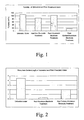
- Fig. 1
- shows the turbidity of untreated and treated water using comparative electrodes and electrodes in accordance with the present invention;
- Fig. 2
- shows the phosphate content of untreated and treated water using comparative electrodes and electrodes in accordance with the present invention;
and - Fig. 3
- shows the aluminium content of untreated and treated water using comparative electrodes and electrodes in accordance with the present invention.
- The electrode comprises a bonded carbon matrix with metallic inclusions.
- The electrodes of the invention may be pressed, extruded, or otherwise formed from particles of raw materials forming the carbon matrix and the metal inclusions and then fired at a temperature sufficient to provide a bond between the particles, but not so high as to melt the metal.
- Alternatively, the porous carbon matrix may be formed and then impregnated with molten metal which on freezing forms the metal inclusions.
- Other methods of forming the electrodes will be apparent to the person skilled in the art, e.g. hot pressing, extruding, chemical deposition of the metal within the carbon matrix etc..
- Conveniently, the electrode may be fabricated by blending coke, graphite and metal powder with a polymeric binder such phenolic resin. A cross-linking agent such as hexamine may be used to cure/catalyse phenol formaldehyde reaction in the resin through heat treatment. The invention is not limited to resin binders but these are particularly useful. Other carbon forming binders may be used in place of resin.
- 20 kg of coke was blended with 50kg of graphite and 20kg of phenolic resin with hexamine catalyst and 10kg of aluminium powder. The material was extruded at 0.5 - 2 tsi (~7.7 MPa- ~31MPa) prior to kilning between 150 and 250 °C.
- The material had a bending strength typically 20-45 MPa and a resistivity of 500-1000 µΩ.m.
- 59 kg of coke was blended with 3.2 kg of graphite, 10.4kg of lamp black,2kg of nylon fibre, 10kg of aluminium and 24 kg of phenolic resin with hexamine catalyst. The material was hot pressed at 0.5 - 3 tsi (~7.7 MPa - ~46MPa) at 100 - 200 °C before kilning between 150 and 250 deg C.
- The material had a bending strength typically 25-50 MPa, and a resistivity of 3000-500µΩ.m.
-
50% of natural graphite,
20% petroleum coke,
10% aluminium powder with a particle size distribution:-> 850um 2% >710um 7% >600um 22% >500um 44% <500um 25%
18% phenolic resin
and 2% hexamine curing agent were blended in a high shear mixer. The resultant blend was extruded at a pressure of ~10MPa (1500psi) and cured to 180°C for 4 hours. - The material had a bending strength of 15-40MPa and a resistivity of 500-1000 µohm.cm.
- Electrodes of this material were used in tests of efficacy in the process of
WO99/01382 -
Fig.1 , shows that whereas an iron electrode can reduce turbidity slightly in waste waters, an aluminium electrode hardly affects turbidity. In contrast, a carbon electrode with 10% aluminium metal dispersions, considerably reduces turbidity (NTU, Nephelometric Turbidity Unit) showing an increased efficacy in removing contaminants. -
Fig. 2 shows that although phosphate removal is lower for an electrode according to the present invention than A1 treatment alone, it still achieves a low level of 2.00 mg/l. However, the use of sacrificial metallic anodes, particularly aluminium, for the treatment of effluent can be problematic when the fluid is being discharged to an environmentally sensitive area, as levels of aluminium discharged in water must be controlled to some extent. - The consent level in the UK for aluminium in water is 200µg/l, but on sensitive waters this could be lowered to 100µg/l.
Fig 3 shows that the aluminium content of post-treated water using an aluminium electrode is close to the upper level; whereas the aluminium content using an electrode in accordance with the invention is much lower, and is well below not only the existing UK consent level, but also below the lower level of 100µg/l. - The metal inclusions comprising aluminium may be of aluminium alone or may be mixed with elements intended to produce different effects in the process for which the electrode is used.
Claims (10)
- A water purification electrode comprising a bonded carbon matrix having electrochemically active metal inclusions comprising aluminium, the carbon matrix comprising 1-90% graphite based on the weight of the carbon matrix.
- An electrode, as claimed in Claim 1, in which the amount of metal inclusions is greater than 1% by weight.
- An electrode, as claimed in Claim 2, in which the amount of metal inclusions is greater than 5% by weight.
- An electrode, as claimed in any one of Claims 1 to 3, in which the amount of metal inclusions is up to 40% by weight.
- An electrode, as claimed in any one of Claims 1 to 4, in which the carbon matrix comprises up to 50% coke based on the weight of the carbon matrix.
- An electrode, as claimed in any one of Claims 1 to 5, in which the carbon matrix comprises 10 - 50% carbon or hydrocarbon.
- An electrode, as claimed in any one of Claims 1 to 6, in which the carbon matrix is a kilned resin bonded composite.
- An electrode, as claimed in any one of Claims 1 to 7, in which the metal further comprises one or more of: copper, silver, nickel, iron.
- A method of making an electrode as claimed in any one of Claims 1 to 8, in which particles of raw materials forming the carbon matrix and the metal inclusions are formed into a body that is then fired at a temperature sufficient to provide a bond between the particles, but not so high as to melt the metal.
- A method of making an electrode as claimed in any one of Claims 1 to 8, in which a porous carbon matrix is formed and then impregnated with molten metal which on freezing forms the metal inclusions.
Applications Claiming Priority (3)
| Application Number | Priority Date | Filing Date | Title |
|---|---|---|---|
| GB0303753 | 2003-02-18 | ||
| GB0303753A GB2398575B (en) | 2003-02-18 | 2003-02-18 | Electrode materials |
| PCT/GB2004/000607 WO2004074189A1 (en) | 2003-02-18 | 2004-02-16 | Electrode materials |
Publications (2)
| Publication Number | Publication Date |
|---|---|
| EP1601617A1 EP1601617A1 (en) | 2005-12-07 |
| EP1601617B1 true EP1601617B1 (en) | 2010-09-01 |
Family
ID=9953258
Family Applications (1)
| Application Number | Title | Priority Date | Filing Date |
|---|---|---|---|
| EP04711411A Expired - Lifetime EP1601617B1 (en) | 2003-02-18 | 2004-02-16 | Electrode materials |
Country Status (5)
| Country | Link |
|---|---|
| EP (1) | EP1601617B1 (en) |
| AT (1) | ATE479632T1 (en) |
| DE (1) | DE602004028911D1 (en) |
| GB (1) | GB2398575B (en) |
| WO (1) | WO2004074189A1 (en) |
Cited By (1)
| Publication number | Priority date | Publication date | Assignee | Title |
|---|---|---|---|---|
| WO2014090508A1 (en) | 2012-12-11 | 2014-06-19 | Unilever N.V. | Impregnated electrode for capacitive deionisation, process for preparing it and apparatus employing the electrodes |
Family Cites Families (9)
| Publication number | Priority date | Publication date | Assignee | Title |
|---|---|---|---|---|
| NL251323A (en) * | 1959-05-07 | |||
| FR1526317A (en) * | 1967-04-14 | 1968-05-24 | Lorraine Carbone | Improvement in the impregnation of a carbon-based material by molten metals |
| US4469654A (en) * | 1980-02-06 | 1984-09-04 | Minnesota Mining And Manufacturing Company | EDM Electrodes |
| US4373127A (en) * | 1980-02-06 | 1983-02-08 | Minnesota Mining And Manufacturing Company | EDM Electrodes |
| US5453169A (en) * | 1991-08-21 | 1995-09-26 | The Ohio State University | Glassy carbon containing metal particles and its use on an electrode in an electrochemical cell where the particles are less than 10 nm |
| JPH087895A (en) * | 1994-06-24 | 1996-01-12 | Japan Energy Corp | Carbon material for lithium secondary battery electrode and method for producing the same |
| GB9713856D0 (en) | 1997-07-01 | 1997-09-03 | Morgan Philip G | Tangential cross-flow electroflocculation |
| JP2000048811A (en) * | 1998-05-25 | 2000-02-18 | Adchemco Corp | Lithium ion secondary battery negative electrode material, manufacture thereof and the battery |
| GB9820109D0 (en) * | 1998-09-15 | 1998-11-11 | Nat Power Plc | Vitrified carbon compositions |
-
2003
- 2003-02-18 GB GB0303753A patent/GB2398575B/en not_active Expired - Fee Related
-
2004
- 2004-02-16 DE DE602004028911T patent/DE602004028911D1/en not_active Expired - Lifetime
- 2004-02-16 AT AT04711411T patent/ATE479632T1/en not_active IP Right Cessation
- 2004-02-16 EP EP04711411A patent/EP1601617B1/en not_active Expired - Lifetime
- 2004-02-16 WO PCT/GB2004/000607 patent/WO2004074189A1/en not_active Ceased
Cited By (1)
| Publication number | Priority date | Publication date | Assignee | Title |
|---|---|---|---|---|
| WO2014090508A1 (en) | 2012-12-11 | 2014-06-19 | Unilever N.V. | Impregnated electrode for capacitive deionisation, process for preparing it and apparatus employing the electrodes |
Also Published As
| Publication number | Publication date |
|---|---|
| WO2004074189A1 (en) | 2004-09-02 |
| ATE479632T1 (en) | 2010-09-15 |
| DE602004028911D1 (en) | 2010-10-14 |
| GB2398575B (en) | 2005-02-02 |
| EP1601617A1 (en) | 2005-12-07 |
| GB0303753D0 (en) | 2003-03-26 |
| GB2398575A (en) | 2004-08-25 |
Similar Documents
| Publication | Publication Date | Title |
|---|---|---|
| US4265727A (en) | Composite electrodes | |
| CN104761024A (en) | Efficient heterogeneous catalytic oxidation ferric-carbon micro-electrolysis packing and preparation method thereof | |
| CN106698764A (en) | Method for removing phosphorus and nickel in electroless nickel-plating wastewater and treatment system | |
| CN104556307B (en) | A kind of compound micro-electrolysis stuffing and preparation method thereof | |
| CN110885113B (en) | A method of making electrodes using natural graphite ore | |
| Gao et al. | A novel bio-electrochemical system with sand/activated carbon separator, Al anode and bio-anode integrated micro-electrolysis/electro-flocculation cost effectively treated high load wastewater with energy recovery | |
| JP2017043846A (en) | Porous carbon electrode for water treatment and waste water treatment method using the same | |
| CN101774714A (en) | Method and device for pretreatment of high CODCr sewage by electrocoagulation-diatomite technology | |
| WO2023078105A1 (en) | Sewage treatment system and method | |
| CN1654344A (en) | Method and apparatus for treating high concentrated organic wastewater by hydrothermal electrical catalytic oxidation | |
| EP1601617B1 (en) | Electrode materials | |
| CN106186460A (en) | A kind of processing method of waste water containing thallium | |
| JP2005087860A (en) | Treatment method of leachate from industrial waste disposal site. | |
| CN109626677B (en) | Coking wastewater advanced treatment process | |
| CN110002546B (en) | Activated (Cu-Fe-Ce)/Al2O3Preparation and application of nanoparticle electrode | |
| CN100402441C (en) | A method for treating sewage by catalytic iron electrolysis and the filler used therefor | |
| CN106865835B (en) | Treatment method and device for shale gas fracturing flowback waste liquid | |
| CN109803930A (en) | Electrocoagulation device and method | |
| CN204918095U (en) | Electrolytic device in electro -catalysis of fluidization attitude | |
| CN107349933A (en) | A kind of Industrial Wastewater Treatment active iron C catalyst | |
| CN212425730U (en) | Micro-electrolysis wastewater treatment system | |
| CN103962138B (en) | Foam catalytic iron filler and method of application thereof | |
| CN117566865B (en) | Clay mineral-based composite material and preparation method and application thereof | |
| WO2012028052A1 (en) | Transition board of eft inert composite electrode, preparation method thereof and electrolytic apparatus including the same | |
| CN112850984A (en) | Electric field-based wastewater comprehensive treatment method |
Legal Events
| Date | Code | Title | Description |
|---|---|---|---|
| PUAI | Public reference made under article 153(3) epc to a published international application that has entered the european phase |
Free format text: ORIGINAL CODE: 0009012 |
|
| 17P | Request for examination filed |
Effective date: 20050825 |
|
| AK | Designated contracting states |
Kind code of ref document: A1 Designated state(s): AT BE BG CH CY CZ DE DK EE ES FI FR GB GR HU IE IT LI LU MC NL PT RO SE SI SK TR |
|
| AX | Request for extension of the european patent |
Extension state: AL LT LV MK |
|
| DAX | Request for extension of the european patent (deleted) | ||
| 17Q | First examination report despatched |
Effective date: 20080211 |
|
| GRAP | Despatch of communication of intention to grant a patent |
Free format text: ORIGINAL CODE: EPIDOSNIGR1 |
|
| RAP1 | Party data changed (applicant data changed or rights of an application transferred) |
Owner name: MORGANITE ELECTRICAL CARBON LIMITED |
|
| GRAS | Grant fee paid |
Free format text: ORIGINAL CODE: EPIDOSNIGR3 |
|
| GRAA | (expected) grant |
Free format text: ORIGINAL CODE: 0009210 |
|
| AK | Designated contracting states |
Kind code of ref document: B1 Designated state(s): AT BE BG CH CY CZ DE DK EE ES FI FR GB GR HU IE IT LI LU MC NL PT RO SE SI SK TR |
|
| REG | Reference to a national code |
Ref country code: GB Ref legal event code: FG4D |
|
| REG | Reference to a national code |
Ref country code: CH Ref legal event code: EP |
|
| REG | Reference to a national code |
Ref country code: IE Ref legal event code: FG4D |
|
| REF | Corresponds to: |
Ref document number: 602004028911 Country of ref document: DE Date of ref document: 20101014 Kind code of ref document: P |
|
| REG | Reference to a national code |
Ref country code: NL Ref legal event code: VDEP Effective date: 20100901 |
|
| PG25 | Lapsed in a contracting state [announced via postgrant information from national office to epo] |
Ref country code: FI Free format text: LAPSE BECAUSE OF FAILURE TO SUBMIT A TRANSLATION OF THE DESCRIPTION OR TO PAY THE FEE WITHIN THE PRESCRIBED TIME-LIMIT Effective date: 20100901 Ref country code: AT Free format text: LAPSE BECAUSE OF FAILURE TO SUBMIT A TRANSLATION OF THE DESCRIPTION OR TO PAY THE FEE WITHIN THE PRESCRIBED TIME-LIMIT Effective date: 20100901 |
|
| PG25 | Lapsed in a contracting state [announced via postgrant information from national office to epo] |
Ref country code: SI Free format text: LAPSE BECAUSE OF FAILURE TO SUBMIT A TRANSLATION OF THE DESCRIPTION OR TO PAY THE FEE WITHIN THE PRESCRIBED TIME-LIMIT Effective date: 20100901 Ref country code: CY Free format text: LAPSE BECAUSE OF FAILURE TO SUBMIT A TRANSLATION OF THE DESCRIPTION OR TO PAY THE FEE WITHIN THE PRESCRIBED TIME-LIMIT Effective date: 20100901 |
|
| PG25 | Lapsed in a contracting state [announced via postgrant information from national office to epo] |
Ref country code: NL Free format text: LAPSE BECAUSE OF FAILURE TO SUBMIT A TRANSLATION OF THE DESCRIPTION OR TO PAY THE FEE WITHIN THE PRESCRIBED TIME-LIMIT Effective date: 20100901 Ref country code: SE Free format text: LAPSE BECAUSE OF FAILURE TO SUBMIT A TRANSLATION OF THE DESCRIPTION OR TO PAY THE FEE WITHIN THE PRESCRIBED TIME-LIMIT Effective date: 20100901 Ref country code: GR Free format text: LAPSE BECAUSE OF FAILURE TO SUBMIT A TRANSLATION OF THE DESCRIPTION OR TO PAY THE FEE WITHIN THE PRESCRIBED TIME-LIMIT Effective date: 20101202 |
|
| PG25 | Lapsed in a contracting state [announced via postgrant information from national office to epo] |
Ref country code: IT Free format text: LAPSE BECAUSE OF FAILURE TO SUBMIT A TRANSLATION OF THE DESCRIPTION OR TO PAY THE FEE WITHIN THE PRESCRIBED TIME-LIMIT Effective date: 20100901 Ref country code: PT Free format text: LAPSE BECAUSE OF FAILURE TO SUBMIT A TRANSLATION OF THE DESCRIPTION OR TO PAY THE FEE WITHIN THE PRESCRIBED TIME-LIMIT Effective date: 20110103 Ref country code: EE Free format text: LAPSE BECAUSE OF FAILURE TO SUBMIT A TRANSLATION OF THE DESCRIPTION OR TO PAY THE FEE WITHIN THE PRESCRIBED TIME-LIMIT Effective date: 20100901 Ref country code: RO Free format text: LAPSE BECAUSE OF FAILURE TO SUBMIT A TRANSLATION OF THE DESCRIPTION OR TO PAY THE FEE WITHIN THE PRESCRIBED TIME-LIMIT Effective date: 20100901 Ref country code: CZ Free format text: LAPSE BECAUSE OF FAILURE TO SUBMIT A TRANSLATION OF THE DESCRIPTION OR TO PAY THE FEE WITHIN THE PRESCRIBED TIME-LIMIT Effective date: 20100901 Ref country code: SK Free format text: LAPSE BECAUSE OF FAILURE TO SUBMIT A TRANSLATION OF THE DESCRIPTION OR TO PAY THE FEE WITHIN THE PRESCRIBED TIME-LIMIT Effective date: 20100901 |
|
| PG25 | Lapsed in a contracting state [announced via postgrant information from national office to epo] |
Ref country code: BE Free format text: LAPSE BECAUSE OF FAILURE TO SUBMIT A TRANSLATION OF THE DESCRIPTION OR TO PAY THE FEE WITHIN THE PRESCRIBED TIME-LIMIT Effective date: 20100901 Ref country code: ES Free format text: LAPSE BECAUSE OF FAILURE TO SUBMIT A TRANSLATION OF THE DESCRIPTION OR TO PAY THE FEE WITHIN THE PRESCRIBED TIME-LIMIT Effective date: 20101212 |
|
| PLBE | No opposition filed within time limit |
Free format text: ORIGINAL CODE: 0009261 |
|
| STAA | Information on the status of an ep patent application or granted ep patent |
Free format text: STATUS: NO OPPOSITION FILED WITHIN TIME LIMIT |
|
| PGFP | Annual fee paid to national office [announced via postgrant information from national office to epo] |
Ref country code: GB Payment date: 20110121 Year of fee payment: 8 |
|
| 26N | No opposition filed |
Effective date: 20110606 |
|
| PG25 | Lapsed in a contracting state [announced via postgrant information from national office to epo] |
Ref country code: DK Free format text: LAPSE BECAUSE OF FAILURE TO SUBMIT A TRANSLATION OF THE DESCRIPTION OR TO PAY THE FEE WITHIN THE PRESCRIBED TIME-LIMIT Effective date: 20100901 |
|
| PG25 | Lapsed in a contracting state [announced via postgrant information from national office to epo] |
Ref country code: MC Free format text: LAPSE BECAUSE OF NON-PAYMENT OF DUE FEES Effective date: 20110228 |
|
| REG | Reference to a national code |
Ref country code: CH Ref legal event code: PL |
|
| REG | Reference to a national code |
Ref country code: DE Ref legal event code: R097 Ref document number: 602004028911 Country of ref document: DE Effective date: 20110606 |
|
| PG25 | Lapsed in a contracting state [announced via postgrant information from national office to epo] |
Ref country code: LI Free format text: LAPSE BECAUSE OF NON-PAYMENT OF DUE FEES Effective date: 20110228 Ref country code: CH Free format text: LAPSE BECAUSE OF NON-PAYMENT OF DUE FEES Effective date: 20110228 |
|
| REG | Reference to a national code |
Ref country code: FR Ref legal event code: ST Effective date: 20111102 |
|
| REG | Reference to a national code |
Ref country code: IE Ref legal event code: MM4A |
|
| PG25 | Lapsed in a contracting state [announced via postgrant information from national office to epo] |
Ref country code: IE Free format text: LAPSE BECAUSE OF NON-PAYMENT OF DUE FEES Effective date: 20110216 Ref country code: FR Free format text: LAPSE BECAUSE OF NON-PAYMENT OF DUE FEES Effective date: 20110228 |
|
| PGFP | Annual fee paid to national office [announced via postgrant information from national office to epo] |
Ref country code: FR Payment date: 20120209 Year of fee payment: 9 |
|
| PGRI | Patent reinstated in contracting state [announced from national office to epo] |
Ref country code: FR Effective date: 20120118 |
|
| PGFP | Annual fee paid to national office [announced via postgrant information from national office to epo] |
Ref country code: DE Payment date: 20120221 Year of fee payment: 9 |
|
| PG25 | Lapsed in a contracting state [announced via postgrant information from national office to epo] |
Ref country code: LU Free format text: LAPSE BECAUSE OF NON-PAYMENT OF DUE FEES Effective date: 20110216 |
|
| PG25 | Lapsed in a contracting state [announced via postgrant information from national office to epo] |
Ref country code: BG Free format text: LAPSE BECAUSE OF FAILURE TO SUBMIT A TRANSLATION OF THE DESCRIPTION OR TO PAY THE FEE WITHIN THE PRESCRIBED TIME-LIMIT Effective date: 20101201 Ref country code: TR Free format text: LAPSE BECAUSE OF FAILURE TO SUBMIT A TRANSLATION OF THE DESCRIPTION OR TO PAY THE FEE WITHIN THE PRESCRIBED TIME-LIMIT Effective date: 20100901 |
|
| GBPC | Gb: european patent ceased through non-payment of renewal fee |
Effective date: 20130216 |
|
| PG25 | Lapsed in a contracting state [announced via postgrant information from national office to epo] |
Ref country code: HU Free format text: LAPSE BECAUSE OF FAILURE TO SUBMIT A TRANSLATION OF THE DESCRIPTION OR TO PAY THE FEE WITHIN THE PRESCRIBED TIME-LIMIT Effective date: 20100901 |
|
| REG | Reference to a national code |
Ref country code: FR Ref legal event code: ST Effective date: 20131031 |
|
| REG | Reference to a national code |
Ref country code: DE Ref legal event code: R119 Ref document number: 602004028911 Country of ref document: DE Effective date: 20130903 |
|
| PG25 | Lapsed in a contracting state [announced via postgrant information from national office to epo] |
Ref country code: GB Free format text: LAPSE BECAUSE OF NON-PAYMENT OF DUE FEES Effective date: 20130216 Ref country code: DE Free format text: LAPSE BECAUSE OF NON-PAYMENT OF DUE FEES Effective date: 20130903 Ref country code: FR Free format text: LAPSE BECAUSE OF NON-PAYMENT OF DUE FEES Effective date: 20130228 |