EP1599798B1 - Verfahren zur erzeugung eines computerprogramms und eines computerprogrammprodukts - Google Patents
Verfahren zur erzeugung eines computerprogramms und eines computerprogrammprodukts Download PDFInfo
- Publication number
- EP1599798B1 EP1599798B1 EP04717632A EP04717632A EP1599798B1 EP 1599798 B1 EP1599798 B1 EP 1599798B1 EP 04717632 A EP04717632 A EP 04717632A EP 04717632 A EP04717632 A EP 04717632A EP 1599798 B1 EP1599798 B1 EP 1599798B1
- Authority
- EP
- European Patent Office
- Prior art keywords
- computer program
- packages
- package
- user
- functions
- Prior art date
- Legal status (The legal status is an assumption and is not a legal conclusion. Google has not performed a legal analysis and makes no representation as to the accuracy of the status listed.)
- Expired - Lifetime
Links
Images


Definitions
- the present invention relates to the field of generating computer programs and more particularly to a method for generating a computer program which can be easily customized by a user installing the computer program.
- the invention further relates to a computer program product with a computer-readable medium and a computer program stored on the computer-readable medium with program coding means which are suitable for carrying out such a method when the computer program is run on a computer system.
- a computer program upon download installation by a user, can be customized.
- the installation or setup routine of the program comprises an interactive window which can be used by the user to define whether he wishes standard settings or customized settings to be set up.
- there are computer programs which ask for an extensive amount of set up details to be provided by the user in order to design the desired "shape" of the one version of the computer program to be executed on the user's system.
- EP 0 802 480 A1 discloses a multiple-package distribution software pack and installation of the same, with the installation of the entire software being split into installation of each dominant or primary package and installation of the dependent or secondary packages dependent on that dominant package.
- the disclosed system allows for installation of the dependent packages first or last depending upon the constraints of the target system, and also allows for immediate or deferred installation of the dominant package.
- US 2002/0133814 A1 discloses a system to facilitate installation of software components with an interface for identifying which components a user decides to install on one or more computers.
- the disclosed system includes selected components to be installed and determining an installation procedure based on dependency requirements for the selected components.
- This method includes all possible parts of computer programs like functions, process descriptions, table and/or object design descriptions, table data and/or file data, configuration data, etc.
- the computer program is divided into a plurality of packages in modular manner, the packages corresponding to functional subunits of the computer program and representing in their entirety the complete computer program, the packages being individually selectable by a user when installing the computer program on a computer system in order to create a customized computer program.
- This allows a user to select whole functional subunits when setting up a computer program instead of having to select each and every function of the computer program to be "designed", i.e. to be custom-installed.
- This enables users without detailed knowledge of computer technology and/or a given computer program to generate a customized computer program as they merely have to choose from modular packages corresponding to functional subunits of the computer program, thus allowing for fast, easy and reliable design setup of a customized computer program.
- the plurality of packages comprise at least one core package and at least one additional package, a core package representing a base computer program module forming the basis for at/on computer program modules contained in the additional package(s).
- a core package representing a base computer program module forming the basis for at/on computer program modules contained in the additional package(s).
- each computer program comprises exactly one core package which is the basic subunit of the computer program and provides all the basic functions of the computer program, the core package being able to be installed and run independently from the additional packages which provide add-on functions.
- the term "to install” is to be understood in the sense of setting up a computer program on a user's computer or computer system.
- the term “to install” in the context of this invention is aimed to describe the action a user is taking in order to create his customized computer program application on the basis of the modularly built up program according to the invention, the latter being already loaded down on the user's system with all its plurality of packages and serving the user to create at his discretion one or more customized computer program applications according to his wishes.
- the invention treats the manner how to set up or how to configurate a computer program divided into a plurality of packages that is already resident on a user's computer.
- Figure 1 shows in schematic representation a computer program 10 according to the invention divided into a plurality of packages in modular manner.
- the computer program 10 consists of a core package K and additional packages A, B1, B2, C, D and E.
- Packages K and A to E represent in their entirety the complete and full computer program with all possible functions, each package comprising a functional subunit of the computer program.
- Each subunit of the computer program consists of a multitude of functions and contains customizing rules.
- Core package K represents the smallest independent functional subunit of the computer program 10, i.e. the computer program 10 could be installed by only selecting the core package K and would then constitute a customized computer program stripped down to its basic functions.
- a computer program according to the invention comprises exactly one core package which determines the nature of the computer program. This means that core packages cannot be combined with other (core) packages but only with additional packages. This makes the set up of a customized computer program very easy for a user.
- Each of the additional packages requires at least one further package, i.e. a core package or another additional package. Selection of the additional packages determines the scope of the software solution.
- Packages can have various relations as to prerequisites or conditions, with a more complex logic being allowed.
- core package K is a prerequisite for additional package A (A ⁇ K), or in other words additional package A requires core package K.
- additional package C requires additional package A (C ⁇ A)
- additional package E requires either additional package B1 or B2 (E ⁇ B1 v B2)
- additional package D requires additional package A and either additional package B1 or additional package B2 (D ⁇ A ⁇ (B1 ⁇ B2)).
- two packages bar each other as it is the case for additional packages B1 and B2 in the example of Figure 1 ( ⁇ (B1 ⁇ B2) or B1 ⁇ ⁇ B2, B2 ⁇ ⁇ B1). While the bar is symmetrical, the prerequisite is anti-symmetrical, i.e. two packages may not require each other.
- the first option is to prohibit concurrent selection of certain packages. Incompatible packages, like packages B1 and B2 in the example of Figure 1 , may have unlimited overlap.
- a second option is to implement rules of dominance, e.g. for packages of different status or rank (as for example packages A and C in the example Figure 1 ) it applies that the higher package (here: C) dominates and may modify settings of the lower package (here: A).
- the third option consists in prohibiting overlaps for packages of the same status or rank (e.g. packages C and D in the example of Figure 1 ).
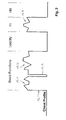
- Figure 2 shows a schematic client profile 12 representing the requirement of a client or user as to the desired functions of the software to be installed and customized.
- the software to be installed is a computer program in the field of commission payments offering basic functions as well as functions in the fields of Liability, Finance FI and Human Resources HR.
- the client requirement profile of Figure 2 the client desires certain basic functions 12.1 and 12.2, however with a gap 12.3 in the profile of the basic functions which means that the client does not need the function(s) corresponding to the gap 12.3.
- the profile is flat which means that the client does not wish any function in these fields.
- the client wishes to have functions according to a profile 12.4.
- the client or user selects certain packages when installing or setting up the computer program. First, he selects a core package of the computer program which is package P1, and subsequently selects a first additional package P2 which builds up on the core package P1. With these two packages, the main portion of the desired basic functions is already available. However, in order to reproduce the fine profile 12.1 and 12.2 of the basic functions, user further selects smaller additional packages P3, P4, P5 and P6 (the packages are shown as rectangles and squares which is for illustrative purposes only).
- the user does not select any packages, but in the field of FI he selects a first package P7 which provides for the basic functions of the Finance module and further additional packages P8, P9, P10 and P11 in order to reproduce as finely as possible the profile 12.4.
- the functions missing could be added in a conventional manner by selecting these functions from a menu containing all available functions one after the other (assumed that the software basically provides these functions), and the excess functions could be left or - in case they waste valuable storage - could be deinstalled in conventional manner by choosing the corresponding functions from a menu of all functions one after the other.
- the process of setting up a computer program according to the invention is designed very user friendly by providing a list of all packages of the computer program to the user who can select (via an appropriate device like keyboard or mouse) the desired packages, the selected packages appearing in a second list.
- indication elements appear next to the remaining packages in the list of available packages, indicating whether a package can be selected additionally to the packages already selected, whether a package requires further packages or whether a package is incompatible with a package already selected.
- the invention thus provides a useful tool in generating computer programs and installing such a computer program according to the invention in order to create a customized computer program.
- Handling for users, particularly for inexperienced users, is simplified and setup time is minimized due to the modular concept of the packages constituting the computer program in contrast to the "atomised" design of conventional custom setup systems.
- the concept of the invention enables a user to load the program according to the invention with its modular packages on his computer or computer system and, in a next step, create or set up various applications according to his needs on the basis of the modular design of the computer program according to the invention.
- "to install" the computer program according to the invention means to create and configurate a customized application, which creation can be repeated several times in order to create several distinct customized applications which can co-exist an be run on the same system.
- the invention it also becomes possible to ship parts of a computer program separately which leads to an enhanced flexibility of a software producer as well as the software client.
Landscapes
- Stored Programmes (AREA)
Claims (17)
- Verfahren zum Erzeugen eines Computerprogramms, wobei das Computerprogramm (10) in modularer Weise in eine Mehrzahl von Paketen (K, A, B1, B2, C, D, E) unterteilt wird, wobei die Pakete (K, A, B1, B2, C, D, E) in ihrer Gesamtheit das vollständige Computerprogramm (10) darstellen und von einem Benutzer individuell auswählbar sind, wenn er das Computerprogramm (10) auf einem Computersystem installiert, um ein kundenspezifisches Computerprogramm zu erzeugen, wobei die Pakete (K, A, B1, B2, C, D, E) hierarchisch sortiert werden, wobei Pakete, die in der Hierarchie auf einer höheren Rangstufe liegen, Pakete, die in der Hierarchie auf einer niedrigeren Rangstufe liegen, dominieren und wobei Dominanzregeln, welche sich auf die Rangstufen der Pakete (K, A, B1, B2, C, D, E) untereinander beziehen, bereitgestellt werden, wobei diese Dominanzregeln in dem Fall gelten, in dem die Paketauswahl durch den Benutzer zu einer Überlappung des Inhalts von zweien der Pakete (K, A, B1, B2, C, D, E) führt, und wobei die Dominanzregeln implizieren, dass ein Paket (C) mit einer höheren Rangstufe ein Paket (A) mit einer niedrigeren Rangstufe dominiert und daher Einstellungen des niedrigeren Pakets (A) modifizieren kann.
- Verfahren nach Anspruch 1, wobei die Mehrzahl von Paketen (K, A, B1, B2, C, D, E) mindestens ein Kernpaket (K) und mindestens ein zusätzliches Paket (A, B1, B2, C, D, E) umfasst.
- Verfahren nach Anspruch 1, wobei die Mehrzahl von Paketen (K, A, B1, B2, C, D, E) ein Kernpaket (K) und mindestens ein zusätzliches Paket (A, B1, B2, C, D, E) umfasst.
- Verfahren nach einem der Ansprüche 1 bis 3, wobei die Mehrzahl von Computerprogrammpaketen (K, A, B1, B2, C, D, E) gepackt ist.
- Verfahren nach einem der Ansprüche 1 bis 4, wobei jedes der Mehrzahl von Paketen (K, A, B1, B2, C, D, E) eine funktionelle Untereinheit des Computerprogramms repräsentiert.
- Computerprogramm (10), wobei das Computerprogramm (10) in modularer Weise in eine Mehrzahl von Paketen (K, A, B1, B2, C, D, E) unterteilt ist, wobei die Pakete (K, A, B1, B2, C, D, E) in ihrer Gesamtheit das vollständige Computerprogramm (10) darstellen und von einem Benutzer individuell auswählbar sind, wenn er das Computerprogramm (10) auf einem Computersystem installiert, um ein kundenspezifisches Computerprogramm zu erzeugen, wobei die Pakete (K, A, B1, B2, C, D, E) hierarchisch sortiert sind, wobei Pakete, die in der Hierarchie auf einer höheren Rangstufe liegen, Pakete, die in der Hierarchie auf einer niedrigeren Rangstufe liegen, dominieren und wobei Dominanzregeln, welche sich auf die Rangstufen der Pakete (K, A, B1, B2, C, D, E) untereinander beziehen, bereitgestellt sind, wobei diese Dominanzregeln in dem Fall gelten, in dem die Paketauswahl durch den Benutzer zu einer Überlappung des Inhalts von zweien der Pakete (K, A, B1, B2, C, D, E) führt, und wobei die Dominanzregeln implizieren, dass ein Paket (C) mit einer höheren Rangstufe ein Paket (A) mit einer niedrigeren Rangstufe dominiert und daher Einstellungen des niedrigeren Pakets (A) modifizieren kann.
- Verfahren zum Installieren eines Computerprogramms (10), das in modularer Weise in eine Mehrzahl von Paketen (K, A, B1, B2, C, D, E) unterteilt wird, wobei die Pakete (K, A, B1, B2, C, D, E) in ihrer Gesamtheit das vollständige Computerprogramm (10) darstellen und von einem Benutzer individuell auswählbar sind, wenn er das Computerprogramm (10) auf einem Computersystem installiert, um ein kundenspezifisches Computerprogramm zu erzeugen, wobei die Pakete (K, A, B1, B2, C, D, E) hierarchisch sortiert werden, wobei Pakete, die in der Hierarchie auf einer höheren Rangstufe liegen, Pakete, die in der Hierarchie auf einer niedrigeren Rangstufe liegen, dominieren, wobei das Verfahren folgende Schritte aufweist:Definieren eines Profils (12) von Funktionen, die von dem zu installierenden Computerprogramm auszuführen sind,Bereitstellen von Dominanzregeln, die sich auf die Rangstufen der Pakete (K, A, B1, B2, C, D, E) untereinander beziehen, wobei diese Dominanzregeln in dem Fall gelten, in dem die Paketauswahl durch den Benutzer zu einer Überlappung des Inhalts von zweien der Pakete (K, A, B1, B2, C, D, E) führt, und wobei die Dominanzregeln implizieren, dass ein Paket (C) mit einer höheren Rangstufe ein Paket (A) mit einer niedrigeren Rangstufe dominiert und daher Einstellungen des niedrigeren Pakets (A) modifizieren kann,Auswählen eines ersten Pakets (P1) aus der Mehrzahl von Paketen, das Grundfunktionen des zu installierenden Computerprogramms enthält,anschließendes Auswählen eines weiteren Pakets (P2 bis P11) auf der Grundlage des ersten Pakets, welches weitere Paket Computerprogrammfunktionen bereitstellt, die auf das zuvor ausgewählte Paket aufbauen, während Kombinationsbeschränkungen beachtet werden,Anwenden von mindestens einer der Dominanzregeln, falls zwischen dem ersten Paket und dem folgenden Paket eine Inhaltsüberlappung auftritt,Wiederholen des Schritts des anschließenden Auswählens eines weiteren Pakets, bis die Funktionen der ausgewählten Pakete das zuvor definierte Profil (12) von Funktionen erfüllen.
- Verfahren nach Anspruch 7, wobei das erste ausgewählte Paket (P1) ein Kernpaket (K) des zu installierenden Computerprogramms (10) ist.
- Verfahren nach Anspruch 7 oder 8, wobei das weitere ausgewählte Paket (P2 bis P11) eines von einer Vielzahl zusätzlicher Pakete des zu installierenden Computerprogramms ist.
- Computerlesbares Medium mit einem darauf gespeicherten Computerprogramm (10) nach Anspruch 6, welches des weiteren eine Einrichtungsroutine aufweist, die eine individuelle Auswahl von Paketen durch einen Benutzer ermöglicht, wenn das Computerprogramm (10) auf einem Computersystem installiert wird, um ein kundenspezifisches Computerprogramm gemäß einem Verfahren nach einem der Ansprüche 7 bis 9 zu erzeugen.
- System zum Einrichten eines Computerprogramms mit Mitteln, die dazu eingerichtet sind, ein Verfahren nach Anspruch 7 auszuführen, welches des weiteren ein interaktives Mittel aufweist, das einem Benutzer Einrichtungsinformationen über die Computerprogrammpakete (K, A, B1, B2, C, D, E) bereitstellt und es dem Benutzer ermöglicht, aus den Paketen individuell auszuwählen, um ein kundenspezifisches Computerprogramm zu erzeugen.
- System zum Einrichten eines Computerprogramms nach Anspruch 11, wobei es das interaktive Mittel dem Benutzer ermöglicht, ein Profil (12) von Funktionen zu definieren, die von dem zu installierenden Computerprogramm auszuführen sind, und dann ein erstes Paket (P1) aus der Mehrzahl von Paketen, das Grundfunktionen des zu installierenden Computerprogramms enthält, auszuwählen, und auf der Grundlage des ersten Pakets anschließend ein weiteres Paket (P2 bis P11) auszuwählen, das Computerprogrammfunktionen bereitstellt, die auf das zuvor ausgewählte Paket aufbauen, während Kombinationsbeschränkungen beachtet werden, und den letztgenannten Schritt zu wiederholen, bis die Funktionen der ausgewählten Pakete das zuvor definierte Profil (12) von Funktionen erfüllen.
- System zum Einrichten eines Computerprogramms nach Anspruch 11 oder 12, wobei der Benutzer aus mindestens einem Kernpaket (K) und mindestens einem zusätzlichen Paket (A, B1, B2, C, D, E) auswählen kann.
- System zum Einrichten eines Computerprogramms nach Anspruch 11 oder 12, wobei der Benutzer zuerst ein Kernpaket (K) auswählt und anschließend aus mindestens einem zusätzlichen Paket (A, B1, B2, C, D, E) auswählen kann.
- System zum Einrichten eines Computerprogramms nach einem der Ansprüche 11 bis 14, wobei das interaktive Mittel dem Benutzer Informationen über mögliche Kombinationen der Pakete (K, A, B1, B2, C, D, E) bereitstellt.
- System zum Einrichten eines Computerprogramms nach Anspruch 14 oder 15, wobei das interaktive Mittel dem Benutzer Informationen über mögliche Kombinationen von zusätzlichen Paketen (A, B1, B2, C, D, E) bereitstellt.
- Computerprogramm mit Programmcodemitteln, die geeignet sind, um ein Verfahren nach einem der Ansprüche 1 bis 5 oder 7 bis 9 auszuführen, wenn das Computerprogramm auf einem Computer ausgeführt wird.
Priority Applications (1)
| Application Number | Priority Date | Filing Date | Title |
|---|---|---|---|
| EP04717632A EP1599798B1 (de) | 2003-03-06 | 2004-03-05 | Verfahren zur erzeugung eines computerprogramms und eines computerprogrammprodukts |
Applications Claiming Priority (6)
| Application Number | Priority Date | Filing Date | Title |
|---|---|---|---|
| DE10310998 | 2003-03-06 | ||
| DE10310998 | 2003-03-06 | ||
| WOPCT/EP03/03352 | 2003-03-31 | ||
| PCT/EP2003/003352 WO2004079569A1 (en) | 2003-03-06 | 2003-03-31 | A method for generating a computer program and a computer program product |
| EP04717632A EP1599798B1 (de) | 2003-03-06 | 2004-03-05 | Verfahren zur erzeugung eines computerprogramms und eines computerprogrammprodukts |
| PCT/EP2004/002305 WO2004079476A2 (en) | 2003-03-06 | 2004-03-05 | A method for generating a computer program and a computer program product |
Publications (2)
| Publication Number | Publication Date |
|---|---|
| EP1599798A2 EP1599798A2 (de) | 2005-11-30 |
| EP1599798B1 true EP1599798B1 (de) | 2008-05-07 |
Family
ID=35140644
Family Applications (1)
| Application Number | Title | Priority Date | Filing Date |
|---|---|---|---|
| EP04717632A Expired - Lifetime EP1599798B1 (de) | 2003-03-06 | 2004-03-05 | Verfahren zur erzeugung eines computerprogramms und eines computerprogrammprodukts |
Country Status (1)
| Country | Link |
|---|---|
| EP (1) | EP1599798B1 (de) |
-
2004
- 2004-03-05 EP EP04717632A patent/EP1599798B1/de not_active Expired - Lifetime
Also Published As
| Publication number | Publication date |
|---|---|
| EP1599798A2 (de) | 2005-11-30 |
Similar Documents
| Publication | Publication Date | Title |
|---|---|---|
| US7761870B2 (en) | Methods and systems for generating an application consistent with a profile | |
| US6513152B1 (en) | Object oriented framework mechanism for customization of object oriented frameworks | |
| EP0317477B1 (de) | Software-Verwaltungsstruktur | |
| CA2145923C (en) | Computer operating system providing means for formatting information in accordance with specified cultural preferences | |
| US6678885B2 (en) | System and method for common code generation | |
| US7716665B2 (en) | System and method for developing portal applications and for automatically deploying portal applications into a portal server application | |
| US7761869B2 (en) | Method for generating a computer program and a computer program product | |
| US9582288B1 (en) | Method for integrating software components into a spreadsheet application | |
| EP0798635A1 (de) | Internetfähiges Portfolioverwaltungssystem und Verfahren | |
| US7428733B2 (en) | System and method for custom module creation and deployment | |
| WO1997040443A1 (en) | An object oriented framework mechanism for multi-target source code processing | |
| Ossher et al. | Subject-oriented programming: Supporting decentralized development of objects | |
| US5995100A (en) | Method of automatically generating custom controls for selected modules in a library | |
| Szyperski | Component software and the way ahead | |
| US20030066047A1 (en) | General-purpose software development support system | |
| CA2138661C (en) | Sequential information integration service for integrating transfer of files or other data entities between a plurality of program modules and a storage in a computer | |
| Levy et al. | IUP/LED: a portable user interface development tool | |
| CN114546457B (zh) | 多版本应用的插件实现方法、电子设备及存储介质 | |
| EP1599798A2 (de) | Verfahren zur erzeugung eines computerprogramms und eines computerprogrammprodukts | |
| Haupt et al. | Web based metacomputing | |
| US20020152291A1 (en) | Universal customization tool for providing customized computer programs | |
| Bellman | An approach to integrating and creating flexible software environments supporting the design of complex systems. | |
| CN114464269B (zh) | 一种虚拟药物生成方法、装置及计算机设备 | |
| US20040194022A1 (en) | Kernel configuration tool | |
| Kukla et al. | A general and scalable solution for heterogeneous workflow invocation and nesting |
Legal Events
| Date | Code | Title | Description |
|---|---|---|---|
| PUAI | Public reference made under article 153(3) epc to a published international application that has entered the european phase |
Free format text: ORIGINAL CODE: 0009012 |
|
| 17P | Request for examination filed |
Effective date: 20050812 |
|
| AK | Designated contracting states |
Kind code of ref document: A2 Designated state(s): AT BE BG CH CY CZ DE DK EE ES FI FR GB GR HU IE IT LI LU MC NL PL PT RO SE SI SK TR |
|
| AX | Request for extension of the european patent |
Extension state: AL LT LV MK |
|
| DAX | Request for extension of the european patent (deleted) | ||
| RIN1 | Information on inventor provided before grant (corrected) |
Inventor name: WESTENDORF, FRANK Inventor name: GAUB, MARTIN |
|
| 17Q | First examination report despatched |
Effective date: 20070525 |
|
| GRAP | Despatch of communication of intention to grant a patent |
Free format text: ORIGINAL CODE: EPIDOSNIGR1 |
|
| GRAS | Grant fee paid |
Free format text: ORIGINAL CODE: EPIDOSNIGR3 |
|
| GRAA | (expected) grant |
Free format text: ORIGINAL CODE: 0009210 |
|
| AK | Designated contracting states |
Kind code of ref document: B1 Designated state(s): AT BE BG CH CY CZ DE DK EE ES FI FR GB GR HU IE IT LI LU MC NL PL PT RO SE SI SK TR |
|
| REG | Reference to a national code |
Ref country code: GB Ref legal event code: FG4D |
|
| REG | Reference to a national code |
Ref country code: CH Ref legal event code: EP |
|
| REG | Reference to a national code |
Ref country code: IE Ref legal event code: FG4D Free format text: LANGUAGE OF EP DOCUMENT: FRENCH |
|
| REF | Corresponds to: |
Ref document number: 602004013552 Country of ref document: DE Date of ref document: 20080619 Kind code of ref document: P |
|
| PG25 | Lapsed in a contracting state [announced via postgrant information from national office to epo] |
Ref country code: SI Free format text: LAPSE BECAUSE OF FAILURE TO SUBMIT A TRANSLATION OF THE DESCRIPTION OR TO PAY THE FEE WITHIN THE PRESCRIBED TIME-LIMIT Effective date: 20080507 |
|
| PG25 | Lapsed in a contracting state [announced via postgrant information from national office to epo] |
Ref country code: FI Free format text: LAPSE BECAUSE OF FAILURE TO SUBMIT A TRANSLATION OF THE DESCRIPTION OR TO PAY THE FEE WITHIN THE PRESCRIBED TIME-LIMIT Effective date: 20080507 Ref country code: ES Free format text: LAPSE BECAUSE OF FAILURE TO SUBMIT A TRANSLATION OF THE DESCRIPTION OR TO PAY THE FEE WITHIN THE PRESCRIBED TIME-LIMIT Effective date: 20080818 |
|
| PG25 | Lapsed in a contracting state [announced via postgrant information from national office to epo] |
Ref country code: AT Free format text: LAPSE BECAUSE OF FAILURE TO SUBMIT A TRANSLATION OF THE DESCRIPTION OR TO PAY THE FEE WITHIN THE PRESCRIBED TIME-LIMIT Effective date: 20080507 Ref country code: PL Free format text: LAPSE BECAUSE OF FAILURE TO SUBMIT A TRANSLATION OF THE DESCRIPTION OR TO PAY THE FEE WITHIN THE PRESCRIBED TIME-LIMIT Effective date: 20080507 |
|
| PG25 | Lapsed in a contracting state [announced via postgrant information from national office to epo] |
Ref country code: CZ Free format text: LAPSE BECAUSE OF FAILURE TO SUBMIT A TRANSLATION OF THE DESCRIPTION OR TO PAY THE FEE WITHIN THE PRESCRIBED TIME-LIMIT Effective date: 20080507 Ref country code: DK Free format text: LAPSE BECAUSE OF FAILURE TO SUBMIT A TRANSLATION OF THE DESCRIPTION OR TO PAY THE FEE WITHIN THE PRESCRIBED TIME-LIMIT Effective date: 20080507 Ref country code: SE Free format text: LAPSE BECAUSE OF FAILURE TO SUBMIT A TRANSLATION OF THE DESCRIPTION OR TO PAY THE FEE WITHIN THE PRESCRIBED TIME-LIMIT Effective date: 20080807 Ref country code: PT Free format text: LAPSE BECAUSE OF FAILURE TO SUBMIT A TRANSLATION OF THE DESCRIPTION OR TO PAY THE FEE WITHIN THE PRESCRIBED TIME-LIMIT Effective date: 20081007 |
|
| PG25 | Lapsed in a contracting state [announced via postgrant information from national office to epo] |
Ref country code: BE Free format text: LAPSE BECAUSE OF FAILURE TO SUBMIT A TRANSLATION OF THE DESCRIPTION OR TO PAY THE FEE WITHIN THE PRESCRIBED TIME-LIMIT Effective date: 20080507 Ref country code: SK Free format text: LAPSE BECAUSE OF FAILURE TO SUBMIT A TRANSLATION OF THE DESCRIPTION OR TO PAY THE FEE WITHIN THE PRESCRIBED TIME-LIMIT Effective date: 20080507 Ref country code: RO Free format text: LAPSE BECAUSE OF FAILURE TO SUBMIT A TRANSLATION OF THE DESCRIPTION OR TO PAY THE FEE WITHIN THE PRESCRIBED TIME-LIMIT Effective date: 20080507 |
|
| PLBE | No opposition filed within time limit |
Free format text: ORIGINAL CODE: 0009261 |
|
| STAA | Information on the status of an ep patent application or granted ep patent |
Free format text: STATUS: NO OPPOSITION FILED WITHIN TIME LIMIT |
|
| 26N | No opposition filed |
Effective date: 20090210 |
|
| PG25 | Lapsed in a contracting state [announced via postgrant information from national office to epo] |
Ref country code: EE Free format text: LAPSE BECAUSE OF FAILURE TO SUBMIT A TRANSLATION OF THE DESCRIPTION OR TO PAY THE FEE WITHIN THE PRESCRIBED TIME-LIMIT Effective date: 20080507 Ref country code: BG Free format text: LAPSE BECAUSE OF FAILURE TO SUBMIT A TRANSLATION OF THE DESCRIPTION OR TO PAY THE FEE WITHIN THE PRESCRIBED TIME-LIMIT Effective date: 20080807 |
|
| PG25 | Lapsed in a contracting state [announced via postgrant information from national office to epo] |
Ref country code: IT Free format text: LAPSE BECAUSE OF FAILURE TO SUBMIT A TRANSLATION OF THE DESCRIPTION OR TO PAY THE FEE WITHIN THE PRESCRIBED TIME-LIMIT Effective date: 20080507 |
|
| PG25 | Lapsed in a contracting state [announced via postgrant information from national office to epo] |
Ref country code: MC Free format text: LAPSE BECAUSE OF NON-PAYMENT OF DUE FEES Effective date: 20090331 |
|
| REG | Reference to a national code |
Ref country code: CH Ref legal event code: PL |
|
| PG25 | Lapsed in a contracting state [announced via postgrant information from national office to epo] |
Ref country code: LI Free format text: LAPSE BECAUSE OF NON-PAYMENT OF DUE FEES Effective date: 20090331 Ref country code: CH Free format text: LAPSE BECAUSE OF NON-PAYMENT OF DUE FEES Effective date: 20090331 Ref country code: IE Free format text: LAPSE BECAUSE OF NON-PAYMENT OF DUE FEES Effective date: 20090305 |
|
| PG25 | Lapsed in a contracting state [announced via postgrant information from national office to epo] |
Ref country code: GR Free format text: LAPSE BECAUSE OF FAILURE TO SUBMIT A TRANSLATION OF THE DESCRIPTION OR TO PAY THE FEE WITHIN THE PRESCRIBED TIME-LIMIT Effective date: 20080808 |
|
| PG25 | Lapsed in a contracting state [announced via postgrant information from national office to epo] |
Ref country code: LU Free format text: LAPSE BECAUSE OF NON-PAYMENT OF DUE FEES Effective date: 20090305 |
|
| PG25 | Lapsed in a contracting state [announced via postgrant information from national office to epo] |
Ref country code: HU Free format text: LAPSE BECAUSE OF FAILURE TO SUBMIT A TRANSLATION OF THE DESCRIPTION OR TO PAY THE FEE WITHIN THE PRESCRIBED TIME-LIMIT Effective date: 20081108 |
|
| PG25 | Lapsed in a contracting state [announced via postgrant information from national office to epo] |
Ref country code: TR Free format text: LAPSE BECAUSE OF FAILURE TO SUBMIT A TRANSLATION OF THE DESCRIPTION OR TO PAY THE FEE WITHIN THE PRESCRIBED TIME-LIMIT Effective date: 20080507 |
|
| PG25 | Lapsed in a contracting state [announced via postgrant information from national office to epo] |
Ref country code: CY Free format text: LAPSE BECAUSE OF FAILURE TO SUBMIT A TRANSLATION OF THE DESCRIPTION OR TO PAY THE FEE WITHIN THE PRESCRIBED TIME-LIMIT Effective date: 20080507 |
|
| REG | Reference to a national code |
Ref country code: DE Ref legal event code: R082 Ref document number: 602004013552 Country of ref document: DE Representative=s name: HOESSLE PATENTANWAELTE PARTNERSCHAFT, DE |
|
| REG | Reference to a national code |
Ref country code: DE Ref legal event code: R082 Ref document number: 602004013552 Country of ref document: DE Representative=s name: HOESSLE PATENTANWAELTE PARTNERSCHAFT, DE Effective date: 20141210 Ref country code: DE Ref legal event code: R082 Ref document number: 602004013552 Country of ref document: DE Effective date: 20141210 Ref country code: DE Ref legal event code: R082 Ref document number: 602004013552 Country of ref document: DE Representative=s name: RAIBLE, DEISSLER, LEHMANN PATENTANWAELTE PARTG, DE Effective date: 20141210 Ref country code: DE Ref legal event code: R081 Ref document number: 602004013552 Country of ref document: DE Owner name: SAP SE, DE Free format text: FORMER OWNER: SAP AG, 69190 WALLDORF, DE Effective date: 20141210 Ref country code: DE Ref legal event code: R082 Ref document number: 602004013552 Country of ref document: DE Representative=s name: GLAWE DELFS MOLL PARTNERSCHAFT MBB VON PATENT-, DE Effective date: 20141210 |
|
| REG | Reference to a national code |
Ref country code: FR Ref legal event code: PLFP Year of fee payment: 13 |
|
| REG | Reference to a national code |
Ref country code: DE Ref legal event code: R082 Ref document number: 602004013552 Country of ref document: DE Representative=s name: GLAWE DELFS MOLL PARTNERSCHAFT MBB VON PATENT-, DE Ref country code: DE Ref legal event code: R082 Ref document number: 602004013552 Country of ref document: DE Ref country code: DE Ref legal event code: R082 Ref document number: 602004013552 Country of ref document: DE Representative=s name: RAIBLE, DEISSLER, LEHMANN PATENTANWAELTE PARTG, DE |
|
| REG | Reference to a national code |
Ref country code: DE Ref legal event code: R082 Ref document number: 602004013552 Country of ref document: DE Representative=s name: RAIBLE, DEISSLER, LEHMANN PATENTANWAELTE PARTG, DE Ref country code: DE Ref legal event code: R082 Ref document number: 602004013552 Country of ref document: DE |
|
| REG | Reference to a national code |
Ref country code: DE Ref legal event code: R082 Ref document number: 602004013552 Country of ref document: DE Representative=s name: RAIBLE, DEISSLER, LEHMANN PATENTANWAELTE PARTG, DE |
|
| REG | Reference to a national code |
Ref country code: FR Ref legal event code: PLFP Year of fee payment: 14 |
|
| REG | Reference to a national code |
Ref country code: FR Ref legal event code: PLFP Year of fee payment: 15 |
|
| PGFP | Annual fee paid to national office [announced via postgrant information from national office to epo] |
Ref country code: NL Payment date: 20220321 Year of fee payment: 19 |
|
| PGFP | Annual fee paid to national office [announced via postgrant information from national office to epo] |
Ref country code: FR Payment date: 20230322 Year of fee payment: 20 |
|
| PGFP | Annual fee paid to national office [announced via postgrant information from national office to epo] |
Ref country code: GB Payment date: 20230321 Year of fee payment: 20 Ref country code: DE Payment date: 20220620 Year of fee payment: 20 |
|
| REG | Reference to a national code |
Ref country code: NL Ref legal event code: MM Effective date: 20230401 |
|
| PG25 | Lapsed in a contracting state [announced via postgrant information from national office to epo] |
Ref country code: NL Free format text: LAPSE BECAUSE OF NON-PAYMENT OF DUE FEES Effective date: 20230401 |
|
| REG | Reference to a national code |
Ref country code: DE Ref legal event code: R071 Ref document number: 602004013552 Country of ref document: DE |
|
| REG | Reference to a national code |
Ref country code: GB Ref legal event code: PE20 Expiry date: 20240304 |
|
| PG25 | Lapsed in a contracting state [announced via postgrant information from national office to epo] |
Ref country code: GB Free format text: LAPSE BECAUSE OF EXPIRATION OF PROTECTION Effective date: 20240304 |