EP1599017A1 - Sichern von Netzdienstleistungen - Google Patents
Sichern von Netzdienstleistungen Download PDFInfo
- Publication number
- EP1599017A1 EP1599017A1 EP05252685A EP05252685A EP1599017A1 EP 1599017 A1 EP1599017 A1 EP 1599017A1 EP 05252685 A EP05252685 A EP 05252685A EP 05252685 A EP05252685 A EP 05252685A EP 1599017 A1 EP1599017 A1 EP 1599017A1
- Authority
- EP
- European Patent Office
- Prior art keywords
- service
- web
- access
- web service
- policy
- Prior art date
- Legal status (The legal status is an assumption and is not a legal conclusion. Google has not performed a legal analysis and makes no representation as to the accuracy of the status listed.)
- Granted
Links
- 238000000034 method Methods 0.000 claims abstract description 25
- 230000004044 response Effects 0.000 claims abstract description 17
- 230000008569 process Effects 0.000 abstract description 7
- 238000011156 evaluation Methods 0.000 abstract description 6
- 238000012545 processing Methods 0.000 abstract description 2
- 238000004891 communication Methods 0.000 description 10
- 230000008901 benefit Effects 0.000 description 5
- 230000015654 memory Effects 0.000 description 5
- 238000011161 development Methods 0.000 description 4
- 238000013475 authorization Methods 0.000 description 3
- 238000004364 calculation method Methods 0.000 description 3
- 229910003460 diamond Inorganic materials 0.000 description 3
- 239000010432 diamond Substances 0.000 description 3
- 230000010354 integration Effects 0.000 description 3
- 238000005516 engineering process Methods 0.000 description 2
- 230000003993 interaction Effects 0.000 description 2
- 230000007246 mechanism Effects 0.000 description 2
- 238000012546 transfer Methods 0.000 description 2
- RWSOTUBLDIXVET-UHFFFAOYSA-N Dihydrogen sulfide Chemical compound S RWSOTUBLDIXVET-UHFFFAOYSA-N 0.000 description 1
- 239000008186 active pharmaceutical agent Substances 0.000 description 1
- 239000000969 carrier Substances 0.000 description 1
- 230000002860 competitive effect Effects 0.000 description 1
- 238000010276 construction Methods 0.000 description 1
- 238000013499 data model Methods 0.000 description 1
- 238000013461 design Methods 0.000 description 1
- 230000000694 effects Effects 0.000 description 1
- 230000002452 interceptive effect Effects 0.000 description 1
- 230000014759 maintenance of location Effects 0.000 description 1
- 238000007726 management method Methods 0.000 description 1
- 230000003287 optical effect Effects 0.000 description 1
- 230000000737 periodic effect Effects 0.000 description 1
- 239000004065 semiconductor Substances 0.000 description 1
- 238000001228 spectrum Methods 0.000 description 1
- 230000003068 static effect Effects 0.000 description 1
Images


Classifications
-
- H—ELECTRICITY
- H04—ELECTRIC COMMUNICATION TECHNIQUE
- H04L—TRANSMISSION OF DIGITAL INFORMATION, e.g. TELEGRAPHIC COMMUNICATION
- H04L63/00—Network architectures or network communication protocols for network security
- H04L63/08—Network architectures or network communication protocols for network security for authentication of entities
- H04L63/0807—Network architectures or network communication protocols for network security for authentication of entities using tickets, e.g. Kerberos
-
- H—ELECTRICITY
- H04—ELECTRIC COMMUNICATION TECHNIQUE
- H04L—TRANSMISSION OF DIGITAL INFORMATION, e.g. TELEGRAPHIC COMMUNICATION
- H04L63/00—Network architectures or network communication protocols for network security
- H04L63/10—Network architectures or network communication protocols for network security for controlling access to devices or network resources
-
- H—ELECTRICITY
- H04—ELECTRIC COMMUNICATION TECHNIQUE
- H04L—TRANSMISSION OF DIGITAL INFORMATION, e.g. TELEGRAPHIC COMMUNICATION
- H04L63/00—Network architectures or network communication protocols for network security
- H04L63/08—Network architectures or network communication protocols for network security for authentication of entities
Definitions
- This invention relates generally to telecommunications, and more particularly, to wireless communications.
- Web Services are open-standard (eXtensible Markup Language (XML), Simple Object Access Protocol (SOAP), etc.) based web applications that interact with other web applications for the purpose of exchanging data.
- XML extensible Markup Language
- SOAP Simple Object Access Protocol
- Web Services are evolving to include transactions over the public Internet.
- Lucent Technologies' MiLife TM VoiceXML Gateway provides telephone access to voice-enabled Web Services. It retrieves VoiceXML formatted ⁇ content from web servers, converting it into interactive voice dialogs with end users via fixed or mobile phones.
- Core Web Services specifications include SOAP and Web Services Definition Language (WDSL) both of which were standardized around the end of the 20 th century. Both standards specify ways to use a syntax based on eXtensible Markup Language (XML) to invoke respectively Web Services. Since then, a number of standards have been created addressing various aspects of security concerns related to Web Services. These include WS-Security, XML signature and the like. For example, X.509v3 certificates can be used for mutual identification of both requestor and target service provider. HTTPS is a transport protocol suitable in this context.
- Kerberos is an architecture that uses signed tokens for authenticated access to resources
- eXtensible Access Control Markup Language (XACML) is an XML format used to express policies, and policy decision requests / replies.
- SAML Security Assertion Markup Language
- SAML is another specification that specifies a format for an (optionally signed) XML token containing the identity of a requestor.
- SOAP is silent on the semantics of any application-specific data it conveys, as it is on issues such as the routing of SOAP messages, reliable data transfer, firewall traversal, etc.
- SAML introduces the concept of a signed token containing identity and authorization information. However, it does not specify how to use this token in a larger context, or how to combine it with service discovery to achieve efficiency and scalability benefits.
- SAML suggests the use of a request reply based protocol upon every service access.
- SAML is a protocol specification, not an architecture or solution. Therefore, an architecture that provides a clear and convincing solution to implement a scalable access-control framework for Web Services is a missing link in many standards specifications.
- the present invention is directed to overcoming, or at least reducing, the effects of, one or more of the problems set forth above.
- a method for securing a Web Service that separates access control policies from the actual services.
- the method comprises discovering a Web Service in response to a service request and determining an access policy for the Web Service separately from the actual service based on the service request.
- a computer readable medium comprising programming instructions for a web server coupled to a network for serving service requests.
- the web server is linked to a plurality of clients.
- the programming instructions comprise discovering the Web Service in response to a service request and determining an access policy for the Web Service separately from the actual service based on the service request.
- a web server for serving Web Services to a plurality of clients linked via a network comprises an interface coupled to a cache for storing identity and access policy information, an access controller including a policy engine to evaluate access policies and encode its decision in a security token, and a module for securing a Web Service based on an access policy determined for the Web Service separately from the actual service based on a service request.
- a system for securing a Web Service comprises a client that sends a service request for a Web Service over a network and a web server coupled to the network to serve the Web Service across different administrative domains based on a pre-computed policy.
- a method on a server linked to a network of a plurality of clients comprises receiving a service request from a client, using a first access controller element to discover a service in response to the service request, and using a second access controller element which separates access control enforcement from the actual service based on the service request.
- a scalable, policy-based web-services security architecture that incorporates a combination of existing network elements, protocols, and concepts is provided.
- the web-services security architecture advantageously employs a combination of authentication with service discovery, evaluation of access policies, and capturing the result of this process in a signed, security token allowing efficient processing for each service request.
- a policy engine connected to a smart Universal Description, Discovery and Integration (UDDI) element evaluates access policies and encodes its decision in the security token according to one embodiment of the present invention.
- UDDI Universal Description, Discovery and Integration
- a scalable access-control framework for Web Services is provided. This results in a pre-computed policy.
- An access controller uses the pre-computed policy to evaluate access conditions in the context of the actual request. In this manner, a scalable access control framework for Web Services may be implemented.
- a Web Service in response to a service request is discovered. For example, given a Uniform Resource Locator (URL) to a discovery document residing on a web server, a developer of a client application can learn that a Web Service exists, what its capabilities are, and how to properly interact with it. This process is known as Web Service discovery and may be based on a Universal Description Discovery Integration (UDDI) query Application Programming Interface (API) for locating services.
- UDDI Universal Description Discovery Integration
- API Application Programming Interface
- the access policy for the Web Service is separately determined from the actual service based on the service request. Cost of the authentication and access policy evaluations may be amortized over many service requests in a Web Service system.
- SOAP Simple Object Access Protocol
- SAML Security Assertion Markup Language
- the system 100 comprises a plurality of requestor clients 105 linked via a network 110 to a web server 115.
- the web server 115 includes a Web Service security module 120 for securing a Web Service based on an access policy 125 determined for the Web Service separately from the actual service based on a service request, in accordance with one embodiment of the present invention.
- the access policy 125 may be a set of domain-specific policy statements where a policy statement may be a group of policy assertions such that a policy assertion may represent an individual preference, requirement, capability or alike. For example, policy-based telephone access to voice-enabled Web Services may be provided in one embodiment.
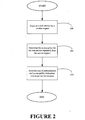
- a stylized representation of a method for securing a Web Service is depicted.
- a Web Service based upon a service request may be discovered by the Web Service security module 120.
- the access policy 125 for the Web Service may be determined separately from the service request.
- the Web Service security module 120 may amortize the cost of the authentication and access policy evaluations over many service requests consistent with one embodiment of the present invention.
- the Web Service registration proceeds as in a regular UDDI case having periodic updates with dynamic service load information.
- the Web Service requestor the requestor client 105, connects with a UDDI registry which may be part of a UDDI module (as shown in Figures 3 and 4) and authenticates.
- the Web Service requestor sends registry service discovery criteria.
- the UDDI registry factors in search criteria along with authenticated identity and applies policies (e.g., the access policy 125) in the Web Service security module 120.
- the UDDI registry may be implemented based on the specification developed by the Universal Description Discovery Integration (UDDI) standard.
- UDDI Universal Description Discovery Integration
- the UDDI registry is a core element of the infrastructure that supports Web Services.
- the UDDI registry provides a place for a company to register its business and the services that it offers. People or businesses that need a service, such as a Web Service can use this registry to find a business that provides the service.
- the UDDI registry generates a service ticket, returns it with discovered service list to the Web Service requestor (e.g., the requestor client 105).
- the Web Service requestor connects with a Web Service over authenticated or unauthenticated connection (depends on service) and presents ticket. Thereafter, the service request response interactions proceed.
- the Web Service uses signed information in the ticket as requests are processed. (i.e. ticket contains "pre-computed" policies).
- an additional proprietary HTTP header may be used that encodes this new information.
- a Uniform Resource Locator URL
- extra parameters e.g., FAT URL
- back-office channels may be used for the Web Service discovery and selection process.
- a back-office channel communication may contain the same information as in the ticket.
- the UDDI registry factors in search criteria along with authenticated identity and applies policies, the UDDI registry returns the list of discovered services to the Web Service requestor.
- the Web Service requestor connects to the Web Service and makes requests.
- the Web Service applies local policies, or connects to the UDDI registry over back-office channels, and requests treatment information. In this manner, requests are processed and responses are returned.
- a pre-computed policy may be used by the web server security module 120 for determining the access policy 125 for the Web Service. In doing so, access policies for the Web Service may be evaluated to determine identity and access policy information by the Web Service security module 120. The identity and access policy information may be encoded in a security token based on the pre-computed policy.
- the Web Service security module 120 may capture the security token in a signed security token for use with each subsequent service request in some embodiments of the present invention.
- the requestor client 105 may comprise a requestor 305 capable of running a client application 310 on an application server using a client Application Programming Interface (API) 320 in accordance with one embodiment of the present invention.
- the network 110 may comprise network resources to carry messages from the requestor client 105 to the web server 115.
- Network resources may include protocols 330 and network elements 335 in a communication network 350.
- the SOAP protocol (e.g., Version 1.2) provides a definition of the XML-based information which can be used for exchanging structured and typed information between peers in a decentralized, distributed environment.
- the SOAP protocol is fundamentally a state-less, one-way message exchange paradigm, but applications can create more complex interaction patterns (e.g., request/response, request/multiple responses, etc.) by combining such one-way exchanges with features provided by an underlying protocol and/or application-specific information.
- the SOAP protocol provides the framework by which application-specific information may be conveyed in an extensible manner. Also, the SOAP protocol provides a description of the required actions taken by a SOAP node on receiving a SOAP message.
- the SOAP protocol defines a SOAP envelope, which is a construct that defines an overall framework for representing the contents of a SOAP message (e.g., messages 325), identifying who should deal with all or part of it, and whether handling such parts are optional or mandatory. It also defines a protocol binding framework, which describes how the specification for a binding of SOAP onto another underlying protocol may be written.
- the SOAP protocol further defines a data model, a particular encoding scheme for data types which may be used for conveying remote procedure calls (RPC), as well as one concrete realization of the underlying protocol binding framework. This binding allows the exchange of SOAP messages either as payload of a HTTP POST request and response or as a SOAP message in the response to a HTTP GET.
- the web server 115 for an application service provider 360 may include a service capability server 365 coupled to an intelligent services gateway 370 in accordance with one embodiment of the present invention.
- the service capability server 365 may comprise an access controller 375 including a policy engine 380, a smartUDDI 385 and deployed services 390. While the access controller 375 may authenticate and enforce the access policy 125, the policy engine 380 may evaluate access policies and encode its decision in a security token. More specifically, the smartUDDI 385 authenticates, authorizes, applies policy, achieves load balance by tracking dynamic information of each service instance and return response. While the Web Service security module 120 authenticates and provides service, the client application 310 authenticates and makes requests.
- the smartUDDI 385 based on the UDDI specification enables businesses to quickly, easily, and dynamically find and transact with one another.
- the smartUDDI 385 enables a business to (i) describe its business and its services, (ii) discover other businesses that offer desired services, and (iii) integrate with these other businesses.
- private implementations of UDDI registries are those that are compliant with the UDDI specification and reside within intranets, extranets or private networks on the Internet. They may offer functionality and services oriented or tailored for a specific set of authorized users.
- the Web Service security module 120 may secure a Web Service according to an access policy indicated by the policy engine 380.
- the intelligent services gateway 370 may comprise a server Application Programming interface (API) 395 coupled to a cache 397. While the server API 395 may enable communications with the client application 310, the cache 397 may store identity and access policy information.
- API Application Programming interface
- the client application 310 may access the service capability server 365 using the client API 320 over the communication network 350 through the server API 395. Both the APIs 320, 395 provide the communication means, between the client application 310 and the service capability server 365, for one or more messages 325 to go over the communication network 350 using the protocols 330 on the network elements 335. In this way, the client application 310 may become independent from the underlying network resources including, but not limited to, the protocols 330 and the network elements 335.
- the service capability server 365 may provide the client application 310 with service capability features in accordance with one embodiment of the present invention.
- the intelligent services gateway 370 may provide a standard way for carriers to open their network resources (the protocols 330 and the network elements 335) to the application service provider 360 or third-party client application developers. In this manner, the intelligent services gateway 370 may hide the details of the underlying network resources and shield the application developers from the complexities of the communication network 350.
- the intelligent services gateway 370 may provide a set of Open Services Architecture (OSA) methods for the server API 395 to provide secure access to the underlying network resources.
- the server API 395 may be defined by OSA standard in one embodiment.
- the client application 310 may send a service request from the requestor 305 to the intelligent services gateway 370 over the communication network 350 via the client API 320.
- the service capability server 365 may provide the interface and functionality to interact with the network elements 335.
- Examples of the client application 310 include location of a user identification and call routing. Using the intelligent services gateway 370 and the service capability server 365, the client application 310 may have access to the location of a user. The client application 310 may then notify a third party, when that user moves outside or inside a specified area, for advertising client applications. Likewise, the client application 310 may combine Internet based Web Services with intelligent network functionality such as call routing.
- the Web Service system 300 brings the advantages of a web-based development and content delivery to the content application 310, creating new value-added service opportunities for telecommunications service providers.
- voice portals and network-hosted services can generate revenues from additional minutes of use at premium rate tariffs, end user subscription fees and revenue sharing agreements with content partners.
- End users gain universal and easy access to services via simple user interfaces.
- the delivery of personalized and dynamically updated Internet content to subscribers can lead to increased minutes of phone use and greater customer retention.
- the intelligent services gateway 370 architecture separates content development from the service delivery mechanism, so the application service provider 360 (e.g., operators of telephony equipment) and content providers (owners of services) can focus on their core expertise.
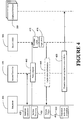
- a web-services security architecture is depicted in accordance with one embodiment of the present invention.
- the requestor 305 discovers a service before sending one or more service invocations to that service. That is, a particular service access pattern is assumed for the realization of efficiency gains. In this manner, the discovery is done once, followed by potentially many service invocations. As a result, the cost of relatively expensive authentication and access policy evaluations may be amortized over many service requests. Thus, the expensive calculations are done once as part of the discovery process. The results of these calculations may be cached in a signed access token and reused for every service invocation.
- HTTPS HyperText Transfer Protocol over SSL Specification
- the smartUDDI 385 generates a token.
- the smartUDDI 385 signs the token, encoding the identity in block 415.
- the requestor 305 passes the token in service invocation to the deployed services 390.
- the access controller 375 in block 425, examines the token and enforces access policies for the deployed service 390.
- access check for each service request becomes an efficient, local operation, without, for example, needing to go to an external database or query another server. That is, the service invocation operation essentially becomes state-less, meaning that the access controller 375 and the deployed services 390 may easily be replicated for increased scalability in accordance with one embodiment of the present invention.
- the requestor 305 discovers a service before sending one or more service invocations to that service.
- the token is returned at block 435 and the access controller 375 issues a proxy request to the smartUDDI 385 for the requestor 305 in block 440.
- the access controller 375 caches token information from the smartUDDI 445 for the requestor 305 at block 445.
- the Web Service may be deployed in different administrative domains because the access policy 125 is determined separately from the actual service, this allows third party hosting of services, while the application service provider 360 retains control. Because the Web Services requests travel through the access controller 375, they are subject to security checks. However, for operation across different administrative domains, it is possible that the access controller element used for discovery is different from the one used for service invocations in some embodiments of the present invention.
- an administrative domain may be network elements grouped together under the same administrative controls.
- a network domain refers to any domain that shares a common Quality of Service (QoS) policy.
- An administrative domain may overlap other domains (i.e. NT or IP).
- NT or IP For example, a section of the Internet or a local network under the control of one administrator or authority may form an administrative management domain.
- a single administrative domain may include more than one server (computer or system that acts as a host or provides other resources on the Net) and may be addressed by one or more domain names (Network addresses). It might also have multiple administrators.
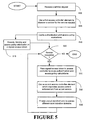
- a stylized representation of a method for securing a Web Service includes receiving a service request, at block 500, by the web server 115, in accordance with one embodiment of the present invention.
- a first access controller element 375 and a smartUDDI 385 may be used by a requestor 305 to discover a service and obtain a signed access token. Then the requestor 305 would then utilize the deployed service 390 via a second access controller element 375, which would enforce this policy separately from the deployed service 390.
- the web server 115 may cache the authentication and access policy evaluations in the cache 397.
- the smartUDDI 385 at block 515, may encode the identity and access policy information in a signed access token.
- a determination as to service invocation may be made. If a service invocation is indicated at the diamond 520, at block 525, the requestor 305 may pass the signed access token to the access controller 375 to reuse authentication and access policy calculations. At block 530, the access controller 375, using a second access controller element, may separate access control enforcement from the actual service based on the service request. At block 535, use of standard service across different administrative domains may be enabled. Depending on any pending service invocations, an attempt to determine any subsequent service invocation may be made at the diamond 520.
- control units may include a microprocessor, a microcontroller, a digital signal processor, a processor card (including one or more microprocessors or controllers), or other control or computing devices as well as executable instructions contained within one or more storage devices.
- the storage devices may include one or more machine-readable storage media for storing data and instructions.
- the storage media may include different forms of memory including semiconductor memory devices such as dynamic or static random access memories (DRAMs or SRAMs), erasable and programmable read-only memories (EPROMs), electrically erasable and programmable read-only memories (EEPROMs) and flash memories; magnetic disks such as fixed, floppy, removable disks; other magnetic media including tape; and optical media such as compact disks (CDs) or digital video disks (DVDs).
- DRAMs or SRAMs dynamic or static random access memories
- EPROMs erasable and programmable read-only memories
- EEPROMs electrically erasable and programmable read-only memories
- flash memories such as fixed, floppy, removable disks
- CDs compact disks
- DVDs digital video disks
Landscapes
- Engineering & Computer Science (AREA)
- Computer Hardware Design (AREA)
- Computer Security & Cryptography (AREA)
- Computing Systems (AREA)
- General Engineering & Computer Science (AREA)
- Computer Networks & Wireless Communication (AREA)
- Signal Processing (AREA)
- Storage Device Security (AREA)
- Mobile Radio Communication Systems (AREA)
Applications Claiming Priority (2)
| Application Number | Priority Date | Filing Date | Title |
|---|---|---|---|
| US849487 | 1986-04-08 | ||
| US10/849,487 US20060041669A1 (en) | 2004-05-19 | 2004-05-19 | Securing web services |
Publications (2)
| Publication Number | Publication Date |
|---|---|
| EP1599017A1 true EP1599017A1 (de) | 2005-11-23 |
| EP1599017B1 EP1599017B1 (de) | 2012-04-25 |
Family
ID=34941106
Family Applications (1)
| Application Number | Title | Priority Date | Filing Date |
|---|---|---|---|
| EP05252685A Ceased EP1599017B1 (de) | 2004-05-19 | 2005-04-29 | Sichern von Netzdienstleistungen |
Country Status (3)
| Country | Link |
|---|---|
| US (1) | US20060041669A1 (de) |
| EP (1) | EP1599017B1 (de) |
| JP (1) | JP2005354679A (de) |
Cited By (1)
| Publication number | Priority date | Publication date | Assignee | Title |
|---|---|---|---|---|
| US7747540B2 (en) | 2006-02-24 | 2010-06-29 | Microsoft Corporation | Account linking with privacy keys |
Families Citing this family (60)
| Publication number | Priority date | Publication date | Assignee | Title |
|---|---|---|---|---|
| US20050015340A1 (en) * | 2003-06-27 | 2005-01-20 | Oracle International Corporation | Method and apparatus for supporting service enablers via service request handholding |
| US7873716B2 (en) | 2003-06-27 | 2011-01-18 | Oracle International Corporation | Method and apparatus for supporting service enablers via service request composition |
| US7860490B2 (en) * | 2004-12-01 | 2010-12-28 | Oracle International Corporation | Methods and systems for exposing access network capabilities using an enabler proxy |
| US8321498B2 (en) * | 2005-03-01 | 2012-11-27 | Oracle International Corporation | Policy interface description framework |
| US8073810B2 (en) * | 2007-10-29 | 2011-12-06 | Oracle International Corporation | Shared view of customers across business support systems (BSS) and a service delivery platform (SDP) |
| US8966498B2 (en) | 2008-01-24 | 2015-02-24 | Oracle International Corporation | Integrating operational and business support systems with a service delivery platform |
| US9245236B2 (en) * | 2006-02-16 | 2016-01-26 | Oracle International Corporation | Factorization of concerns to build a SDP (service delivery platform) |
| US9565297B2 (en) | 2004-05-28 | 2017-02-07 | Oracle International Corporation | True convergence with end to end identity management |
| US9038082B2 (en) | 2004-05-28 | 2015-05-19 | Oracle International Corporation | Resource abstraction via enabler and metadata |
| US8458703B2 (en) | 2008-06-26 | 2013-06-04 | Oracle International Corporation | Application requesting management function based on metadata for managing enabler or dependency |
| CN101789951B (zh) * | 2004-09-06 | 2011-12-28 | 佳能株式会社 | 信息处理装置及信息处理方法 |
| US20060116912A1 (en) * | 2004-12-01 | 2006-06-01 | Oracle International Corporation | Managing account-holder information using policies |
| US8032920B2 (en) * | 2004-12-27 | 2011-10-04 | Oracle International Corporation | Policies as workflows |
| US7584499B2 (en) * | 2005-04-08 | 2009-09-01 | Microsoft Corporation | Policy algebra and compatibility model |
| US20060242101A1 (en) * | 2005-04-21 | 2006-10-26 | Rama Akkiraju | Method and system for semantic matching of Web Service policies |
| US20070005739A1 (en) * | 2005-06-30 | 2007-01-04 | International Business Machines Corporation | Method and apparatus for dynamically controlling the selection and redundancy of web service components |
| US20070101145A1 (en) * | 2005-10-31 | 2007-05-03 | Axalto Inc. | Framework for obtaining cryptographically signed consent |
| US8380979B2 (en) * | 2005-12-22 | 2013-02-19 | At&T Intellectual Property I, L.P. | Methods, systems, and computer program products for invoking trust-controlled services via application programming interfaces (APIs) respectively associated therewith |
| US8769021B2 (en) * | 2006-01-12 | 2014-07-01 | Broadcom Corporation | Method and system for light-weight SOAP transport for web services based management |
| EP1826979A1 (de) * | 2006-02-27 | 2007-08-29 | BRITISH TELECOMMUNICATIONS public limited company | System und Verfahren zur Einrichtung einer sicheren Gruppe von Dateneinheiten in einem Computernetzwerk |
| US8856862B2 (en) * | 2006-03-02 | 2014-10-07 | British Telecommunications Public Limited Company | Message processing methods and systems |
| US8914493B2 (en) * | 2008-03-10 | 2014-12-16 | Oracle International Corporation | Presence-based event driven architecture |
| US20080083009A1 (en) * | 2006-09-29 | 2008-04-03 | Microsoft Corporation | Policy fault |
| US8347403B2 (en) * | 2006-12-19 | 2013-01-01 | Canon Kabushiki Kaisha | Single point authentication for web service policy definition |
| US8171535B2 (en) * | 2006-12-19 | 2012-05-01 | Canon Kabushiki Kaisha | Dynamic web service policy broadcasting/enforcement for applications |
| US8930555B2 (en) | 2007-03-08 | 2015-01-06 | Microsoft Corporation | Extending functionality of web-based applications |
| US8214503B2 (en) * | 2007-03-23 | 2012-07-03 | Oracle International Corporation | Factoring out dialog control and call control |
| EP1976220A1 (de) * | 2007-03-30 | 2008-10-01 | British Telecommunications Public Limited Company | Computernetzwerk |
| EP1975830A1 (de) * | 2007-03-30 | 2008-10-01 | British Telecommunications Public Limited Company | Verteiltes Computersystem |
| US8528058B2 (en) | 2007-05-31 | 2013-09-03 | Microsoft Corporation | Native use of web service protocols and claims in server authentication |
| US8290152B2 (en) | 2007-08-30 | 2012-10-16 | Microsoft Corporation | Management system for web service developer keys |
| US8539097B2 (en) * | 2007-11-14 | 2013-09-17 | Oracle International Corporation | Intelligent message processing |
| US8161171B2 (en) * | 2007-11-20 | 2012-04-17 | Oracle International Corporation | Session initiation protocol-based internet protocol television |
| US9654515B2 (en) * | 2008-01-23 | 2017-05-16 | Oracle International Corporation | Service oriented architecture-based SCIM platform |
| US8589338B2 (en) | 2008-01-24 | 2013-11-19 | Oracle International Corporation | Service-oriented architecture (SOA) management of data repository |
| US8401022B2 (en) * | 2008-02-08 | 2013-03-19 | Oracle International Corporation | Pragmatic approaches to IMS |
| US20100011207A1 (en) * | 2008-07-11 | 2010-01-14 | The Boeing Company | Service Oriented Architecture Device |
| US8505067B2 (en) * | 2008-08-21 | 2013-08-06 | Oracle International Corporation | Service level network quality of service policy enforcement |
| US7979512B2 (en) * | 2008-11-07 | 2011-07-12 | Microsoft Corporation | Service delivery online |
| US8301690B2 (en) * | 2009-02-06 | 2012-10-30 | International Business Machines Corporation | Correlator system for web services |
| US8879547B2 (en) * | 2009-06-02 | 2014-11-04 | Oracle International Corporation | Telephony application services |
| US8583830B2 (en) * | 2009-11-19 | 2013-11-12 | Oracle International Corporation | Inter-working with a walled garden floor-controlled system |
| US20110125913A1 (en) * | 2009-11-20 | 2011-05-26 | Oracle International Corporation | Interface for Communication Session Continuation |
| US20110125909A1 (en) * | 2009-11-20 | 2011-05-26 | Oracle International Corporation | In-Session Continuation of a Streaming Media Session |
| US9269060B2 (en) * | 2009-11-20 | 2016-02-23 | Oracle International Corporation | Methods and systems for generating metadata describing dependencies for composable elements |
| US8533773B2 (en) * | 2009-11-20 | 2013-09-10 | Oracle International Corporation | Methods and systems for implementing service level consolidated user information management |
| US9509790B2 (en) * | 2009-12-16 | 2016-11-29 | Oracle International Corporation | Global presence |
| US9503407B2 (en) | 2009-12-16 | 2016-11-22 | Oracle International Corporation | Message forwarding |
| US8640189B1 (en) * | 2011-03-07 | 2014-01-28 | Raytheon Company | Communicating results of validation services |
| US8595797B2 (en) | 2011-03-28 | 2013-11-26 | Lars Reinertsen | Enforcing web services security through user specific XML schemas |
| US9015320B2 (en) | 2011-07-12 | 2015-04-21 | Bank Of America Corporation | Dynamic provisioning of service requests |
| US9369307B2 (en) | 2011-07-12 | 2016-06-14 | Bank Of America Corporation | Optimized service integration |
| US8719919B2 (en) | 2011-07-12 | 2014-05-06 | Bank Of America Corporation | Service mediation framework |
| CN102413114B (zh) * | 2011-08-12 | 2014-09-10 | 华南理工大学 | 一种面向组合的语义web服务发现方法 |
| WO2014011376A1 (en) * | 2012-07-12 | 2014-01-16 | Bank Of America Corporation | Optimized service integration |
| CN103428287B (zh) * | 2013-08-09 | 2017-04-12 | 华为技术有限公司 | 一种连接建立的方法及装置 |
| US9276933B2 (en) * | 2013-12-20 | 2016-03-01 | Sharp Laboratories Of America, Inc. | Security token caching in centralized authentication systems |
| KR20210131436A (ko) | 2014-11-14 | 2021-11-02 | 콘비다 와이어리스, 엘엘씨 | 허가 기반 리소스 및 서비스 발견 |
| US10291622B1 (en) * | 2016-03-15 | 2019-05-14 | Amazon Technologies, Inc. | Quorum-based access management |
| EP3815401B1 (de) * | 2018-06-29 | 2025-04-23 | Nokia Technologies Oy | Sicherheitsverwaltung für dienstzugang in einem kommunikationssystem |
Citations (2)
| Publication number | Priority date | Publication date | Assignee | Title |
|---|---|---|---|---|
| US20040088352A1 (en) * | 2002-04-08 | 2004-05-06 | Kurth Lloyd N. | Business to business integration via the web |
| US20040093515A1 (en) * | 2002-11-12 | 2004-05-13 | Microsoft Corporation | Cross platform network authentication and authorization model |
Family Cites Families (4)
| Publication number | Priority date | Publication date | Assignee | Title |
|---|---|---|---|---|
| US7603469B2 (en) * | 2002-01-15 | 2009-10-13 | International Business Machines Corporation | Provisioning aggregated services in a distributed computing environment |
| CN1650303A (zh) * | 2002-02-27 | 2005-08-03 | 康坦夹德控股股份有限公司 | 联网服务许可系统和方法 |
| US7225464B2 (en) * | 2002-04-03 | 2007-05-29 | Yodlee.Com, Inc. | Method for verifying the identity of a user for session authentication purposes during Web navigation |
| US8108920B2 (en) * | 2003-05-12 | 2012-01-31 | Microsoft Corporation | Passive client single sign-on for web applications |
-
2004
- 2004-05-19 US US10/849,487 patent/US20060041669A1/en not_active Abandoned
-
2005
- 2005-04-29 EP EP05252685A patent/EP1599017B1/de not_active Ceased
- 2005-05-19 JP JP2005146119A patent/JP2005354679A/ja active Pending
Patent Citations (2)
| Publication number | Priority date | Publication date | Assignee | Title |
|---|---|---|---|---|
| US20040088352A1 (en) * | 2002-04-08 | 2004-05-06 | Kurth Lloyd N. | Business to business integration via the web |
| US20040093515A1 (en) * | 2002-11-12 | 2004-05-13 | Microsoft Corporation | Cross platform network authentication and authorization model |
Non-Patent Citations (1)
| Title |
|---|
| TSAI W T ET AL: "Verification of web services using an enhanced UDDI server", OBJECT-ORIENTED REAL-TIME DEPENDABLE SYSTEMS, 2003. (WORDS 2003). PROCEEDINGS OF THE EIGHTH INTERNATIONAL WORKSHOP ON JAN 15-17, 2003, PISCATAWAY, NJ, USA,IEEE, 15 January 2003 (2003-01-15), pages 131 - 138, XP010648743, ISBN: 0-7695-1929-6 * |
Cited By (1)
| Publication number | Priority date | Publication date | Assignee | Title |
|---|---|---|---|---|
| US7747540B2 (en) | 2006-02-24 | 2010-06-29 | Microsoft Corporation | Account linking with privacy keys |
Also Published As
| Publication number | Publication date |
|---|---|
| EP1599017B1 (de) | 2012-04-25 |
| US20060041669A1 (en) | 2006-02-23 |
| JP2005354679A (ja) | 2005-12-22 |
Similar Documents
| Publication | Publication Date | Title |
|---|---|---|
| EP1599017B1 (de) | Sichern von Netzdienstleistungen | |
| US9369307B2 (en) | Optimized service integration | |
| CN101155227B (zh) | 提供人与人之间通信中上下文控制的方法、系统和装置 | |
| US7873716B2 (en) | Method and apparatus for supporting service enablers via service request composition | |
| US10070165B2 (en) | System and method for managing entitlements to data over a network | |
| US7949871B2 (en) | Method for creating virtual service connections to provide a secure network | |
| US7463637B2 (en) | Public and private network service management systems and methods | |
| JP4709721B2 (ja) | 通信サービスのためのサードパーティアクセスゲートウェイ | |
| US7860882B2 (en) | Method and system for distributed retrieval of data objects using tagged artifacts within federated protocol operations | |
| US20130268676A1 (en) | Application programming interface routing system and method of operating the same | |
| US20110173108A1 (en) | Gateway for enabling cloud-based service exposure | |
| US20070124585A1 (en) | Authorizing an endpoint node for a communication service | |
| US20070112578A1 (en) | Infrastructure Architecture for Secure Network Management with Peer to Peer Functionality | |
| US20070050376A1 (en) | System And Methods For Secure Service Oriented Architectures | |
| US20050015340A1 (en) | Method and apparatus for supporting service enablers via service request handholding | |
| CA2479183A1 (en) | Single sign-on secure service access | |
| TW200810460A (en) | Authentication of a principal in a federation | |
| US12132807B2 (en) | Third party gateway | |
| WO2014011376A1 (en) | Optimized service integration | |
| Brose | A gateway to web services security–Securing SOAP with proxies | |
| Subenthiran et al. | Requirements for identity management in next generation networks | |
| CN111935125B (zh) | 基于分布式架构的鉴权方法、装置及微服务系统 | |
| van Bemmel et al. | 3PAC: Enforcing access policies for web services | |
| HK1177565A (en) | A method, system and apparatus that provides for contextual control of inter-human communication | |
| Hassan | Conceptual Design of Identity Management in a profile-based access control |
Legal Events
| Date | Code | Title | Description |
|---|---|---|---|
| PUAI | Public reference made under article 153(3) epc to a published international application that has entered the european phase |
Free format text: ORIGINAL CODE: 0009012 |
|
| 17P | Request for examination filed |
Effective date: 20050517 |
|
| AK | Designated contracting states |
Kind code of ref document: A1 Designated state(s): AT BE BG CH CY CZ DE DK EE ES FI FR GB GR HU IE IS IT LI LT LU MC NL PL PT RO SE SI SK TR |
|
| AX | Request for extension of the european patent |
Extension state: AL BA HR LV MK YU |
|
| AKX | Designation fees paid |
Designated state(s): DE FR GB |
|
| 17Q | First examination report despatched |
Effective date: 20060905 |
|
| RAP3 | Party data changed (applicant data changed or rights of an application transferred) |
Owner name: LUCENT TECHNOLOGIES INC. |
|
| GRAP | Despatch of communication of intention to grant a patent |
Free format text: ORIGINAL CODE: EPIDOSNIGR1 |
|
| RIN1 | Information on inventor provided before grant (corrected) |
Inventor name: MURPHY, GEORGE RANSOM Inventor name: VEMURI, KUMAR VENKATA Inventor name: WEGDAM, MAARTEN Inventor name: VAN BEMMEL, JEROEN Inventor name: VARNEY, DOUGLAS WILLIAM |
|
| RAP1 | Party data changed (applicant data changed or rights of an application transferred) |
Owner name: ALCATEL-LUCENT USA INC. |
|
| RAP1 | Party data changed (applicant data changed or rights of an application transferred) |
Owner name: ALCATEL LUCENT |
|
| GRAS | Grant fee paid |
Free format text: ORIGINAL CODE: EPIDOSNIGR3 |
|
| GRAA | (expected) grant |
Free format text: ORIGINAL CODE: 0009210 |
|
| AK | Designated contracting states |
Kind code of ref document: B1 Designated state(s): DE FR GB |
|
| REG | Reference to a national code |
Ref country code: GB Ref legal event code: FG4D |
|
| REG | Reference to a national code |
Ref country code: DE Ref legal event code: R096 Ref document number: 602005033828 Country of ref document: DE Effective date: 20120621 |
|
| PLBE | No opposition filed within time limit |
Free format text: ORIGINAL CODE: 0009261 |
|
| STAA | Information on the status of an ep patent application or granted ep patent |
Free format text: STATUS: NO OPPOSITION FILED WITHIN TIME LIMIT |
|
| 26N | No opposition filed |
Effective date: 20130128 |
|
| REG | Reference to a national code |
Ref country code: DE Ref legal event code: R097 Ref document number: 602005033828 Country of ref document: DE Effective date: 20130128 |
|
| REG | Reference to a national code |
Ref country code: GB Ref legal event code: 732E Free format text: REGISTERED BETWEEN 20130926 AND 20131002 |
|
| REG | Reference to a national code |
Ref country code: FR Ref legal event code: GC Effective date: 20131018 |
|
| REG | Reference to a national code |
Ref country code: FR Ref legal event code: RG Effective date: 20141016 |
|
| REG | Reference to a national code |
Ref country code: FR Ref legal event code: PLFP Year of fee payment: 12 |
|
| REG | Reference to a national code |
Ref country code: FR Ref legal event code: PLFP Year of fee payment: 13 |
|
| REG | Reference to a national code |
Ref country code: FR Ref legal event code: PLFP Year of fee payment: 14 |
|
| PGFP | Annual fee paid to national office [announced via postgrant information from national office to epo] |
Ref country code: DE Payment date: 20180420 Year of fee payment: 14 |
|
| PGFP | Annual fee paid to national office [announced via postgrant information from national office to epo] |
Ref country code: FR Payment date: 20180420 Year of fee payment: 14 |
|
| PGFP | Annual fee paid to national office [announced via postgrant information from national office to epo] |
Ref country code: GB Payment date: 20180418 Year of fee payment: 14 |
|
| REG | Reference to a national code |
Ref country code: DE Ref legal event code: R119 Ref document number: 602005033828 Country of ref document: DE |
|
| GBPC | Gb: european patent ceased through non-payment of renewal fee |
Effective date: 20190429 |
|
| PG25 | Lapsed in a contracting state [announced via postgrant information from national office to epo] |
Ref country code: DE Free format text: LAPSE BECAUSE OF NON-PAYMENT OF DUE FEES Effective date: 20191101 Ref country code: GB Free format text: LAPSE BECAUSE OF NON-PAYMENT OF DUE FEES Effective date: 20190429 |
|
| PG25 | Lapsed in a contracting state [announced via postgrant information from national office to epo] |
Ref country code: FR Free format text: LAPSE BECAUSE OF NON-PAYMENT OF DUE FEES Effective date: 20190430 |