EP1598998A1 - Verfahren und Vorrichtung zum Voraussagen der Unterbrechung von einer Verbindung in einem mobilen adhoc Netzwerk - Google Patents
Verfahren und Vorrichtung zum Voraussagen der Unterbrechung von einer Verbindung in einem mobilen adhoc Netzwerk Download PDFInfo
- Publication number
- EP1598998A1 EP1598998A1 EP05290887A EP05290887A EP1598998A1 EP 1598998 A1 EP1598998 A1 EP 1598998A1 EP 05290887 A EP05290887 A EP 05290887A EP 05290887 A EP05290887 A EP 05290887A EP 1598998 A1 EP1598998 A1 EP 1598998A1
- Authority
- EP
- European Patent Office
- Prior art keywords
- router
- link
- neighboring
- father
- routers
- Prior art date
- Legal status (The legal status is an assumption and is not a legal conclusion. Google has not performed a legal analysis and makes no representation as to the accuracy of the status listed.)
- Withdrawn
Links
- 238000000034 method Methods 0.000 title claims abstract description 13
- 238000004891 communication Methods 0.000 claims abstract description 11
- 238000012545 processing Methods 0.000 claims description 19
- 230000005540 biological transmission Effects 0.000 claims description 14
- 238000001514 detection method Methods 0.000 claims description 8
- 230000011664 signaling Effects 0.000 description 5
- 238000005259 measurement Methods 0.000 description 4
- 244000208734 Pisonia aculeata Species 0.000 description 1
- 230000006978 adaptation Effects 0.000 description 1
- 230000000295 complement effect Effects 0.000 description 1
- 238000010276 construction Methods 0.000 description 1
- 238000012217 deletion Methods 0.000 description 1
- 230000037430 deletion Effects 0.000 description 1
- 239000013589 supplement Substances 0.000 description 1
Images


Classifications
-
- H—ELECTRICITY
- H04—ELECTRIC COMMUNICATION TECHNIQUE
- H04W—WIRELESS COMMUNICATION NETWORKS
- H04W40/00—Communication routing or communication path finding
- H04W40/24—Connectivity information management, e.g. connectivity discovery or connectivity update
- H04W40/30—Connectivity information management, e.g. connectivity discovery or connectivity update for proactive routing
-
- H—ELECTRICITY
- H04—ELECTRIC COMMUNICATION TECHNIQUE
- H04L—TRANSMISSION OF DIGITAL INFORMATION, e.g. TELEGRAPHIC COMMUNICATION
- H04L45/00—Routing or path finding of packets in data switching networks
- H04L45/02—Topology update or discovery
- H04L45/04—Interdomain routing, e.g. hierarchical routing
-
- H—ELECTRICITY
- H04—ELECTRIC COMMUNICATION TECHNIQUE
- H04L—TRANSMISSION OF DIGITAL INFORMATION, e.g. TELEGRAPHIC COMMUNICATION
- H04L45/00—Routing or path finding of packets in data switching networks
- H04L45/16—Multipoint routing
-
- H—ELECTRICITY
- H04—ELECTRIC COMMUNICATION TECHNIQUE
- H04W—WIRELESS COMMUNICATION NETWORKS
- H04W24/00—Supervisory, monitoring or testing arrangements
- H04W24/08—Testing, supervising or monitoring using real traffic
-
- H—ELECTRICITY
- H04—ELECTRIC COMMUNICATION TECHNIQUE
- H04W—WIRELESS COMMUNICATION NETWORKS
- H04W40/00—Communication routing or communication path finding
- H04W40/02—Communication route or path selection, e.g. power-based or shortest path routing
- H04W40/12—Communication route or path selection, e.g. power-based or shortest path routing based on transmission quality or channel quality
-
- H—ELECTRICITY
- H04—ELECTRIC COMMUNICATION TECHNIQUE
- H04W—WIRELESS COMMUNICATION NETWORKS
- H04W84/00—Network topologies
- H04W84/18—Self-organising networks, e.g. ad-hoc networks or sensor networks
Definitions
- the invention relates to the field of communication networks ad to MANET routing protocol (for "Mobile Ad hoc NETwork ").
- routing within a network ad hoc is intended to allow optimal routing of data between least one source router and one or more destination routers (or receptors). Routing can be reactive or proactive.
- Routing is said to be “responsive” when each router must request each routing path because it does not know the topology of the network.
- a routing is said to be “proactive” when each router can calculate each routing path thanks to his knowledge of the network topology.
- ad-hoc communication networks can be of type point to point (or “unicast”) or point-to-multipoint type (or “multicast”).
- a proactive multicast routing protocol can be based on a Mesh (or mesh-based) or tree-based (or "tree-based") routing.
- a Mesh multicast routing involves defining multiple paths between each source router of a network and receiving routers, while routing tree multicast is to define a single optimal routing path between a source router and receiver routers, defining a hierarchical tree.
- Proactive unicast protocols have been designed to allow each router to communicate to each of its neighboring routers routing information signaling it to all neighboring routers to which it is linked.
- the TBRPF protocol is such a protocol and is for example described in US Patent Application 2002/0012320.
- each router is able to determine the optimal path for transmitting data to a router recipient.
- the routers neighboring these two routers must wait for them to forward their updated routing information in order to be able to account of the interrupted link in their routing path calculations. By therefore, until the routers have received an update, some calculated paths are not optimized.
- the application to participate preferably includes a "unicast” address designating the source router and a group address "Multicast”.
- each network router In the presence of a unicast routing protocol, we measure at level of each network router the intensity of the signals that come from each of its neighboring routers, then compare each intensity measured at a chosen threshold. So, when a router detects that the intensity measured signals from a link with one of its neighboring routers is below the threshold, it transmits to each of its neighboring routers a message containing information representative of the interruption of the link, and preferably designating the router that can not be joined anymore because this interruption of the link.
- the invention also proposes a device dedicated to the prediction of link interruption between routers, for a router of a network of ad hoc communications to MANET type routing protocol.
- This device is characterized by the fact that it comprises means of treatment to compare to a chosen threshold, at the level of the router they equip, the measured intensity of the signals coming from at least one of its neighboring routers.
- the processing means detect a measured intensity below the threshold on a link with a neighboring router they consider this link as interrupted and order transmission to one least routers neighboring a message intended to overcome the interruption of link.
- the device can be broken down in different ways depending on whether routing protocol is multicast or unicast type.
- the means of treatment are responsible for compare to the selected threshold the measured intensity of the signals that come from the router of the tree that is the father of their router. So when the processing means detect a measured intensity lower than the threshold on the link with the father router, they order the transmission of the message in unicast mode to a neighboring network router, different from the father router, this message with a request to join the tree (or "Join"), designating the source router.
- This request for participation preferably includes a unicast address designating the source router and a group address multicast.
- the means of treatment are responsible for comparing the measured signals that come from each of the router's neighboring routers they equip.
- the processing means detect that an intensity measured is below the threshold on the link with one of the neighboring routers they order transmission to each of the neighboring routers of a message information representative of the interruption of the link, and preference designating the router that can no longer be joined because of this link interruption.
- the device can also comprise means of loaded count, if a lower measured intensity is detected at the threshold, to trigger a time count and to deliver a selected signal when the elapsed time since the beginning of the detection equals a duration chosen (the measured intensity must of course always remain lower than threshold throughout this period).
- the means of treatment are arranged to transmit their message only upon reception of the selected signal.
- the object of the invention is to enable the prediction of interruption of link between routers and the triggering of appropriate consecutive actions, within an ad hoc communications network with a routing protocol proactive or reactive, multicast or unicast, of the MANET type.
- An ad hoc network can be assimilated very schematically but sufficient for the understanding of the invention, a set, or one or several groups of routers that can be fixed or mobile.
- the invention proposes to measure level of each router an ad hoc network the intensity of the signals that come from at least one of its neighboring routers and then compare each intensity measured at a chosen threshold. So when one of the routers the network detects that the measured intensity of the signals coming from a link with one of its neighboring routers is below the chosen threshold it considers that this link is interrupted and transmits to at least one of its neighboring routers a message intended to overcome this link interruption.
- the ad hoc network uses a proactive routing protocol multicast, such as TBRPF (Topology-Based and Disseminated with Reverse Path Forwarding) or OLSR (Optimized Link State Routing).
- a proactive routing protocol multicast such as TBRPF (Topology-Based and Disseminated with Reverse Path Forwarding) or OLSR (Optimized Link State Routing).
- TBRPF Topic-Based and Disseminated with Reverse Path Forwarding
- OLSR Optimized Link State Routing
- an ad hoc multicast network can be assimilated to at least one group G of routers comprising a source router RS and routers RR1, R A and R NA which, as long as a hierarchical tree have not been introduced, are not linked in pairs according to a "father / son" hierarchy. Potential links between routers that do not belong to a hierarchical tree are shown in the figures as simple black lines.
- the reference RR1 denotes a router, called a receiver router, which is momentarily connected to a network equipment H, of type "Host", belonging for example to a customer subscribed to the ad hoc network.
- an optimal routing path must be defined between said source router RS and the receiving router RR1 to which he is connected.
- each router knows the network topology, so it is able to determine the shortest routing path (or optimal path) to transmit data to the RS source router. Therefore, each router is capable to determine the neighboring router that is placed above it in the hierarchy and to which he must transmit data received for the purpose of routing to the RS source router.
- the router that is the least placed two hierarchically is called son router, while his Neighbor router is called father router (neighbor).
- An optimal path between an RR1 receive router and an RS source router follows a hierarchical tree.
- An example of a hierarchical tree is illustrated in FIG. 1. More specifically in this example, the hierarchical tree starts from the receiving router RR1, goes through a first "intermediate" router R1 A , then through a second intermediate router R2 A , then through a third intermediate router R3 A , and ends at the source router RS.
- the signals it transmits on a link of the hierarchical tree arrive with a increasingly weaker intensity at the neighboring router which is located at the other end of this link.
- the intensity of the signals received by one of the two routers concerned becomes less than a first threshold S1
- the link is interrupted.
- each ad hoc network router of a prediction device D of the type of that illustrated in Figure 3.
- Such a prediction device D comprises a processing module MT for comparing, at a second selected threshold S2 (greater than the first threshold S1), the measured intensity of the signals coming from the router of the hierarchical tree, for example R3 A , which is the router's father, for example R2 A , in which it is installed.
- Intensity measurements can be provided by a module of MM intensity measurement of the router R, independent of the device D and coupled to IER transmit / receive interface, as shown in Figure 3.
- the intensity measurements can be transmitted, for example, to the device D by a management module MG of the router R.
- the device D may comprise an intensity measurement module coupled to the IER transmission / reception interface of the R router and its own MT treatment.
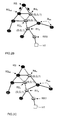
- the processing module MT When the processing module MT detects an intensity lower than the second threshold S2 and greater than the first threshold S1 on the link with the root router R3 A , it considers the link as interrupted and orders the transmission of a message in unicast mode to a router neighbor of the network, different from the parent router R3 A , for example R4 NA (as shown in Figure 2A). Such a transmission is shown in Figure 2A by a thick arrow.
- the prediction device D comprises also a counting module T coupled to its processing module MT and charged, whenever it detects a measured intensity less than the second threshold S2 and greater than the first threshold S1, trigger a time count.
- This counting module T which is by example, a timer (or "timer") delivers a selected signal to destination of the MT processing module whenever the time elapsed since the beginning of the detection becomes equal to a chosen duration, by example equal to 500 ms.
- the processing module MT is then authorized to order the transmission to the new father router of his message, containing the request to participate in the tree structure, provided that he has received a selected signal of the counting module T.
- the processing module MT notices, during its comparisons (that do not stop), that the signal intensity on the link during the interruption, becomes greater than the second threshold S2, then this interrupts the current time count at the module level counting T. The timer then returns to the value zero (0).
- the delay does not return to the value 0 and is stopped only if the signal passes over the second threshold S2 for a delay greater than a second duration T2 defined by another delay. This helps to be less sensitive to the environment radio frequency and the various reflections of the waves.
- the new parent router R4 NA is determined among the routers of the group G by the routing protocol of the child router R2 A , given the interruption of the link with the old router R3 A father.
- This routing protocol is for example implemented in the MG management module R router. It is important to note that the device D may be a complementary part of the routing protocol. It can therefore be implemented in the MG management module of the router R or in a routing module coupled to the MG management module.
- the message sent by the child router R2 A to the new father R4 NA router includes (or constitutes) a request for participation in the tree (called "join” in English), designating the source router RS.
- This request for participation preferably comprises the unicast address designating the source router RS and the multicast address of the group G.
- each request for participation received can be provided by an auxiliary module MA, for example implanted in the processing module MT of the prediction device D, as illustrated in FIG. Figure 3. But, alternatively, it could be provided by an auxiliary module MA the prediction device D independent of its processing module MT.
- the transmission of this request for participation is intended to initiate the reconstitution of a new upper part of the hierarchical tree, the former being no longer valid because of the interruption of a link, here between routers R2 A and R3 A.
- each router R A belonging to a tree of the group G is associated with a state defined by a triplet comprising the unicast address S designating the source router RS, the multicast address G of the group, and a state information of which the value represents the number of child routers associated with it.
- the parent router (R4 NA ) is associated with the requesting child router (R2 A ), in order to make it participate in the preexisting tree, and the value of the state information is incremented by one unit. of his triplet.
- the new parent router (R4 NA ) is not yet associated with a child router of the group G, no state is associated with it.
- This situation is illustrated in Figure 2A.
- the new parent router R4 NA is associated with the requesting child router R2 A , which is shown in FIG. 2B by a double line, and its triplet is constituted with the unicast address S designating the source router RS and the multicast address G of the group, contained in the participation request received, as well as with the value of the state information equal to one (1).
- the father router now has a state, it is considered to belong to the tree under construction and is now called R4 A.
- the source router RS When the source router RS receives from the router R4 A the participation request which designates it, they are both associated, which is shown in FIG. 2C by a double line.
- the neighboring father router here being the source router RS, the upper part of the tree has thus been reconstituted so that a partially new hierarchical tree is established.
- the R3 A router is no longer associated with a child router, and is associated with the source router RS by a link constituting the old upper part, which has become irrelevant, it is preferable to delete this old upper part of the reformed tree. .
- a deletion does not occur when the parent router is still associated with at least one child router despite the link interruption. But every time a router no longer has any wires, it has to pull out of the reformed tree by sending a pullback request to its parent router.
- the router R3 A transmits to the source router RS (his father) a request to remove the tree (called "plum" in English). This transmission is shown in FIG. 2B by a dashed arrow.
- the father router whose link is interrupted with his only child router, wait a few moments before forward to his own father router his request for withdrawal of the tree.
- the interruption of a link can be momentary, and by example resulting from a slight movement of the router son or father.
- the parent router can trigger a timer programmed for a chosen duration, for example equal to 500 ms, as soon as detects the interruption of the link with his son.
- a timer programmed for a chosen duration, for example equal to 500 ms, as soon as detects the interruption of the link with his son.
- the parent router transmits its withdrawal request.
- the prediction device D according to the invention can be produced under the form of electronic circuits, software (or computer) modules, or a combination of circuits and software.
- the ad hoc network uses a proactive routing protocol unicast, such as OLSR or TBRPF.
- OLSR OLSR
- TBRPF Traffic Broadcast Protocol
- the invention is not limited to these examples of proactive unicast routing protocol. It also concerns unicast reactive routing protocols, such as AODV ("Ad hoc On-demand Distance Vector ”) and DSR (" Dynamic Source Routing ").
- a unicast protocol network does not have a tree.
- ad hoc network routers are exchanged between neighbors messages with routing information signaling including the neighbors to whom they are "related", that is with whom they can exchange data.
- the invention proposes measure at each of its routers the intensity of the signals that come from each of the neighboring routers to which it is linked, then from compare each intensity measured at the second threshold S2 (and at the first threshold S1).
- one of the routers detects that the measured intensity of the signals that come from a link with one of its neighboring routers is less than the second threshold S2 and greater than the first threshold S1, it considers the link as interrupted and transmits to each of its neighboring routers a message containing information representative of the interruption of the link.
- the message transmitted may be a standard message containing the routing information. But, it can also be in the form a dedicated message containing only the designation of the router that can not more be joined because of a link break.
- each neighboring router can update its routing information before the link is interrupted and by therefore calculate using its route routing protocol optimized taking into account the interruption of the link.
- both routers which are linked by a link about to be interrupted, may eventually detect each on their side that the measured intensity of the signals exchanged on the said link is less than the second threshold S2 and greater than the first threshold S1.
- two routers will transmit to each of their respective neighbors messages signaling the interruption of their link, which makes it possible to accelerate propagation of information within the network.
- routers R1 and R2 each have their side detected that the measured intensity of the signals exchanged on their link was less than second threshold S2. They then decide, each on their own, to transmit to each of their respective neighbor routers (and accessible) a message signaling the interruption of their link. More precisely, the router R1 transmits messages to its neighboring routers R3, R4 and R5, while router R2 transmits messages to its neighboring routers R7, R8 and R9. The transmission of these messages is shown in Figure 4 by thick arrows.
- this prediction method can be done within of each R router of the ad hoc network to unicast routing protocol to by means of a prediction device D of the type described above, in reference to FIG. 3, except for its auxiliary module MA, and with adaptations imposed by the use of a type routing protocol different, within the reach of those skilled in the art.
Landscapes
- Engineering & Computer Science (AREA)
- Computer Networks & Wireless Communication (AREA)
- Signal Processing (AREA)
- Data Exchanges In Wide-Area Networks (AREA)
- Mobile Radio Communication Systems (AREA)
- Small-Scale Networks (AREA)
Applications Claiming Priority (2)
| Application Number | Priority Date | Filing Date | Title |
|---|---|---|---|
| FR0450980A FR2870657B1 (fr) | 2004-05-18 | 2004-05-18 | Procede et dispositif de pridiction d'une interruption de lien dans un reseau de communication ad hoc a protocole de routage de type manet |
| FR0450980 | 2004-05-18 |
Publications (1)
| Publication Number | Publication Date |
|---|---|
| EP1598998A1 true EP1598998A1 (de) | 2005-11-23 |
Family
ID=34942183
Family Applications (1)
| Application Number | Title | Priority Date | Filing Date |
|---|---|---|---|
| EP05290887A Withdrawn EP1598998A1 (de) | 2004-05-18 | 2005-04-21 | Verfahren und Vorrichtung zum Voraussagen der Unterbrechung von einer Verbindung in einem mobilen adhoc Netzwerk |
Country Status (3)
| Country | Link |
|---|---|
| US (1) | US20050259588A1 (de) |
| EP (1) | EP1598998A1 (de) |
| FR (1) | FR2870657B1 (de) |
Cited By (1)
| Publication number | Priority date | Publication date | Assignee | Title |
|---|---|---|---|---|
| US11190597B1 (en) * | 2020-07-09 | 2021-11-30 | International Business Machines Corporation | Network bandwidth sharing |
Families Citing this family (24)
| Publication number | Priority date | Publication date | Assignee | Title |
|---|---|---|---|---|
| US9634940B2 (en) * | 2013-01-31 | 2017-04-25 | Mellanox Technologies, Ltd. | Adaptive routing using inter-switch notifications |
| US9548960B2 (en) | 2013-10-06 | 2017-01-17 | Mellanox Technologies Ltd. | Simplified packet routing |
| US10015720B2 (en) | 2014-03-14 | 2018-07-03 | GoTenna, Inc. | System and method for digital communication between computing devices |
| US9729473B2 (en) | 2014-06-23 | 2017-08-08 | Mellanox Technologies, Ltd. | Network high availability using temporary re-routing |
| US9806994B2 (en) | 2014-06-24 | 2017-10-31 | Mellanox Technologies, Ltd. | Routing via multiple paths with efficient traffic distribution |
| US9699067B2 (en) | 2014-07-22 | 2017-07-04 | Mellanox Technologies, Ltd. | Dragonfly plus: communication over bipartite node groups connected by a mesh network |
| US9894005B2 (en) | 2015-03-31 | 2018-02-13 | Mellanox Technologies, Ltd. | Adaptive routing controlled by source node |
| US9973435B2 (en) | 2015-12-16 | 2018-05-15 | Mellanox Technologies Tlv Ltd. | Loopback-free adaptive routing |
| US10819621B2 (en) | 2016-02-23 | 2020-10-27 | Mellanox Technologies Tlv Ltd. | Unicast forwarding of adaptive-routing notifications |
| US10178029B2 (en) | 2016-05-11 | 2019-01-08 | Mellanox Technologies Tlv Ltd. | Forwarding of adaptive routing notifications |
| US10200294B2 (en) | 2016-12-22 | 2019-02-05 | Mellanox Technologies Tlv Ltd. | Adaptive routing based on flow-control credits |
| US10420101B2 (en) * | 2017-09-29 | 2019-09-17 | Intel Corporation | Traffic-aware slot assignment |
| US10944669B1 (en) | 2018-02-09 | 2021-03-09 | GoTenna, Inc. | System and method for efficient network-wide broadcast in a multi-hop wireless network using packet echos |
| US10644995B2 (en) | 2018-02-14 | 2020-05-05 | Mellanox Technologies Tlv Ltd. | Adaptive routing in a box |
| US11082324B2 (en) | 2018-07-27 | 2021-08-03 | goTenna Inc. | Vine: zero-control routing using data packet inspection for wireless mesh networks |
| US11005724B1 (en) | 2019-01-06 | 2021-05-11 | Mellanox Technologies, Ltd. | Network topology having minimal number of long connections among groups of network elements |
| WO2020185707A1 (en) | 2019-03-08 | 2020-09-17 | goTenna Inc. | Method for utilization-based traffic throttling in a wireless mesh network |
| US11575594B2 (en) | 2020-09-10 | 2023-02-07 | Mellanox Technologies, Ltd. | Deadlock-free rerouting for resolving local link failures using detour paths |
| US11411911B2 (en) | 2020-10-26 | 2022-08-09 | Mellanox Technologies, Ltd. | Routing across multiple subnetworks using address mapping |
| US11870682B2 (en) | 2021-06-22 | 2024-01-09 | Mellanox Technologies, Ltd. | Deadlock-free local rerouting for handling multiple local link failures in hierarchical network topologies |
| US11765103B2 (en) | 2021-12-01 | 2023-09-19 | Mellanox Technologies, Ltd. | Large-scale network with high port utilization |
| US12155563B2 (en) | 2022-09-05 | 2024-11-26 | Mellanox Technologies, Ltd. | Flexible per-flow multipath managed by sender-side network adapter |
| US12328251B2 (en) | 2022-09-08 | 2025-06-10 | Mellano Technologies, Ltd. | Marking of RDMA-over-converged-ethernet (RoCE) traffic eligible for adaptive routing |
| CN120151241B (zh) * | 2025-05-16 | 2025-07-15 | 北京神州泰岳软件股份有限公司 | 一种基于时序关联的家庭内部网络中断识别方法及装置 |
Citations (3)
| Publication number | Priority date | Publication date | Assignee | Title |
|---|---|---|---|---|
| US20020012320A1 (en) * | 2000-03-16 | 2002-01-31 | Ogier Richard G. | Mobile ad hoc extensions for the internet |
| WO2003021886A2 (en) * | 2001-08-28 | 2003-03-13 | Toshiba Research Europe Limited | Channel adaptation in a communication network |
| WO2003090412A1 (en) * | 2002-04-22 | 2003-10-30 | Intel Corporation | Pre-notification of potential connection loss in a wireless local area network |
Family Cites Families (8)
| Publication number | Priority date | Publication date | Assignee | Title |
|---|---|---|---|---|
| US6400702B1 (en) * | 1991-10-01 | 2002-06-04 | Intermec Ip Corp. | Radio frequency local area network |
| US5331637A (en) * | 1993-07-30 | 1994-07-19 | Bell Communications Research, Inc. | Multicast routing using core based trees |
| US6078817A (en) * | 1997-04-24 | 2000-06-20 | Telefonaktiebolaget Lm Ericsson | System and method of dynamically increasing the capacity of a code division multiple access radio telecommunications network |
| JP3645140B2 (ja) * | 1999-12-28 | 2005-05-11 | 株式会社エヌ・ティ・ティ・ドコモ | 移動通信システム |
| US7360084B1 (en) * | 2000-05-15 | 2008-04-15 | Nortel Networks Limited | System, device, and method for controlling access in a multicast communication network |
| US7042912B2 (en) * | 2001-12-18 | 2006-05-09 | Nortel Networks Limited | Resynchronization of control and data path state for networks |
| US6788650B2 (en) * | 2002-06-06 | 2004-09-07 | Motorola, Inc. | Network architecture, addressing and routing |
| US7299038B2 (en) * | 2003-04-30 | 2007-11-20 | Harris Corporation | Predictive routing including the use of fuzzy logic in a mobile ad hoc network |
-
2004
- 2004-05-18 FR FR0450980A patent/FR2870657B1/fr not_active Expired - Fee Related
-
2005
- 2005-04-21 EP EP05290887A patent/EP1598998A1/de not_active Withdrawn
- 2005-05-11 US US11/126,216 patent/US20050259588A1/en not_active Abandoned
Patent Citations (3)
| Publication number | Priority date | Publication date | Assignee | Title |
|---|---|---|---|---|
| US20020012320A1 (en) * | 2000-03-16 | 2002-01-31 | Ogier Richard G. | Mobile ad hoc extensions for the internet |
| WO2003021886A2 (en) * | 2001-08-28 | 2003-03-13 | Toshiba Research Europe Limited | Channel adaptation in a communication network |
| WO2003090412A1 (en) * | 2002-04-22 | 2003-10-30 | Intel Corporation | Pre-notification of potential connection loss in a wireless local area network |
Cited By (1)
| Publication number | Priority date | Publication date | Assignee | Title |
|---|---|---|---|---|
| US11190597B1 (en) * | 2020-07-09 | 2021-11-30 | International Business Machines Corporation | Network bandwidth sharing |
Also Published As
| Publication number | Publication date |
|---|---|
| FR2870657B1 (fr) | 2006-10-27 |
| US20050259588A1 (en) | 2005-11-24 |
| FR2870657A1 (fr) | 2005-11-25 |
Similar Documents
| Publication | Publication Date | Title |
|---|---|---|
| EP1598998A1 (de) | Verfahren und Vorrichtung zum Voraussagen der Unterbrechung von einer Verbindung in einem mobilen adhoc Netzwerk | |
| EP3804408B1 (de) | Verfahren zur auswahl einer route in einem ad-hoc-netzwerk | |
| EP1598994B1 (de) | Generierung und Aktualisierung einer Baumhierarchie in einem ad hoc Kommunikationsnetz mit einem MANET Mehrfachsende-Leitweglenkungsprotokoll | |
| FR2954644A1 (fr) | Protocole de routage fiabilise | |
| WO2007099263A1 (fr) | Procede de routage dans un reseau ad hoc | |
| EP2119147B1 (de) | Verfahren und vorrichtung zur erkennung eines gateways und zur weiterleitung zu diesem gateway in einem drahtlosen hybridnetzwerk | |
| FR3064857A1 (fr) | Communication securisee de bout en bout pour capteur mobile dans un reseau iot | |
| FR2973981A1 (fr) | Procede pour optimiser les capacites d"un reseau de telecommunication de type ad-hoc | |
| EP2510656A1 (de) | Verfahren für qualitatives routing in einem multi-hop-kommunikationsnetz und einrichtung zur verwaltung von netzwerkknoten | |
| FR3015169A1 (fr) | Procede de communication dans un reseau de telecommunications sans fil, programme d'ordinateur et noeud de communication sans fil associes | |
| EP2345210B1 (de) | Verwaltung der routing-topologie in einem netzwerk | |
| WO2018145945A1 (fr) | Procede et dispositif de determination de chemin de routage econome en energie | |
| EP2332293B1 (de) | Verteilung von routen in einem netzwerk von routern | |
| WO2011144871A1 (fr) | Procede de routage a etats de liens pour router des flux de donnees dans un reseau maille comprenant des nœuds relies par des liens a trois etats | |
| EP2727403B1 (de) | Verfahren zum löschen von routern in einem kommunikationsnetz und router zur umsetzung dieses verfahrens | |
| EP1598997B1 (de) | Wegleitung in einem Kommunikationsnetzwerk | |
| WO2017016854A1 (fr) | Procede de determination d'une route dans un reseau cpl | |
| EP3934114B1 (de) | Regulierungsverfahren zur entlastung von staus in einem maschennetz zur kommunikation über eine trägerfrequenzanlage | |
| FR3052942B1 (fr) | Procede de dissemination de donnees dans un reseau maille | |
| EP2456135A1 (de) | Verfahren und Vorrichtung zur Bestimmung der Kommunikationswege zwischen Kommunikationsgeräten mit multiplen Kommunikationsschnittstellen | |
| Bendaoud et al. | Protocole de routage avec qualité de service basé sur l’énergie | |
| EP1964367B1 (de) | Routing und optimierung der punkt-zu-punkt-rate in einem multijump-ad hoc-netzwerk | |
| EP2456136A1 (de) | Vorrichtung und Verfahren zur Bestimmung der Kommunikationswege zwischen einem Gerät mit mehreren Kommunikationsschnittstellen und einem anderen Gerät mit mindestens einer Kommunikationsschnittstelle | |
| FR3096850A1 (fr) | Procede de transmission de donnees entre un emetteur et un recepteur dans un reseau de radiocommunications a capacite de bouclage local | |
| EP2835954A2 (de) | Datenverarbeitungsverfahren in einem Ad-hoc-Funknetz, entsprechende Funkstationen und Computerprogramme |
Legal Events
| Date | Code | Title | Description |
|---|---|---|---|
| PUAI | Public reference made under article 153(3) epc to a published international application that has entered the european phase |
Free format text: ORIGINAL CODE: 0009012 |
|
| AK | Designated contracting states |
Kind code of ref document: A1 Designated state(s): AT BE BG CH CY CZ DE DK EE ES FI FR GB GR HU IE IS IT LI LT LU MC NL PL PT RO SE SI SK TR |
|
| AX | Request for extension of the european patent |
Extension state: AL BA HR LV MK YU |
|
| 17P | Request for examination filed |
Effective date: 20051214 |
|
| AKX | Designation fees paid |
Designated state(s): AT BE BG CH CY CZ DE DK EE ES FI FR GB GR HU IE IS IT LI LT LU MC NL PL PT RO SE SI SK TR |
|
| RAP1 | Party data changed (applicant data changed or rights of an application transferred) |
Owner name: ALCATEL LUCENT |
|
| 17Q | First examination report despatched |
Effective date: 20071008 |
|
| STAA | Information on the status of an ep patent application or granted ep patent |
Free format text: STATUS: THE APPLICATION IS DEEMED TO BE WITHDRAWN |
|
| 18D | Application deemed to be withdrawn |
Effective date: 20080419 |