EP1595153B1 - System und verfahren zur bewegungsdetektion und staureaktion für ein transportschichtprotokoll - Google Patents
System und verfahren zur bewegungsdetektion und staureaktion für ein transportschichtprotokoll Download PDFInfo
- Publication number
- EP1595153B1 EP1595153B1 EP04710947A EP04710947A EP1595153B1 EP 1595153 B1 EP1595153 B1 EP 1595153B1 EP 04710947 A EP04710947 A EP 04710947A EP 04710947 A EP04710947 A EP 04710947A EP 1595153 B1 EP1595153 B1 EP 1595153B1
- Authority
- EP
- European Patent Office
- Prior art keywords
- receiver
- host
- subnet
- sender
- mobility
- Prior art date
- Legal status (The legal status is an assumption and is not a legal conclusion. Google has not performed a legal analysis and makes no representation as to the accuracy of the status listed.)
- Expired - Lifetime
Links
- 238000000034 method Methods 0.000 title claims abstract description 76
- 230000004044 response Effects 0.000 title claims abstract description 69
- 238000001514 detection method Methods 0.000 title description 36
- 230000008859 change Effects 0.000 claims abstract description 51
- 238000004891 communication Methods 0.000 claims abstract description 50
- 230000015654 memory Effects 0.000 claims description 16
- 230000005540 biological transmission Effects 0.000 claims description 10
- 230000001413 cellular effect Effects 0.000 claims description 8
- 238000012544 monitoring process Methods 0.000 claims description 6
- 230000001419 dependent effect Effects 0.000 claims description 2
- 230000000977 initiatory effect Effects 0.000 claims 2
- 230000003247 decreasing effect Effects 0.000 claims 1
- 239000010410 layer Substances 0.000 description 61
- 238000010586 diagram Methods 0.000 description 22
- 238000004422 calculation algorithm Methods 0.000 description 11
- 230000006870 function Effects 0.000 description 11
- 238000012545 processing Methods 0.000 description 10
- 230000003139 buffering effect Effects 0.000 description 5
- 238000003860 storage Methods 0.000 description 5
- 238000012546 transfer Methods 0.000 description 5
- 230000008901 benefit Effects 0.000 description 4
- 239000000872 buffer Substances 0.000 description 4
- 238000005516 engineering process Methods 0.000 description 4
- 238000005259 measurement Methods 0.000 description 3
- 230000007246 mechanism Effects 0.000 description 3
- 238000005457 optimization Methods 0.000 description 3
- 230000008569 process Effects 0.000 description 3
- 238000011084 recovery Methods 0.000 description 3
- 230000001960 triggered effect Effects 0.000 description 3
- 238000004458 analytical method Methods 0.000 description 2
- 238000004364 calculation method Methods 0.000 description 2
- 238000006243 chemical reaction Methods 0.000 description 2
- 230000010354 integration Effects 0.000 description 2
- 238000007726 management method Methods 0.000 description 2
- 238000004519 manufacturing process Methods 0.000 description 2
- 238000005316 response function Methods 0.000 description 2
- 230000002411 adverse Effects 0.000 description 1
- 230000003466 anti-cipated effect Effects 0.000 description 1
- 238000013459 approach Methods 0.000 description 1
- 230000009118 appropriate response Effects 0.000 description 1
- 238000003490 calendering Methods 0.000 description 1
- 238000004590 computer program Methods 0.000 description 1
- 238000012937 correction Methods 0.000 description 1
- 230000001186 cumulative effect Effects 0.000 description 1
- 230000006735 deficit Effects 0.000 description 1
- 230000000694 effects Effects 0.000 description 1
- 238000011156 evaluation Methods 0.000 description 1
- 238000001914 filtration Methods 0.000 description 1
- 230000008571 general function Effects 0.000 description 1
- 239000002346 layers by function Substances 0.000 description 1
- 239000004973 liquid crystal related substance Substances 0.000 description 1
- 239000000463 material Substances 0.000 description 1
- 238000010295 mobile communication Methods 0.000 description 1
- 238000012986 modification Methods 0.000 description 1
- 230000004048 modification Effects 0.000 description 1
- 230000006855 networking Effects 0.000 description 1
- 230000003287 optical effect Effects 0.000 description 1
- 230000008520 organization Effects 0.000 description 1
- 230000000246 remedial effect Effects 0.000 description 1
- 239000000523 sample Substances 0.000 description 1
- 239000004065 semiconductor Substances 0.000 description 1
- 230000009466 transformation Effects 0.000 description 1
- 238000000844 transformation Methods 0.000 description 1
- 238000013519 translation Methods 0.000 description 1
- 230000005641 tunneling Effects 0.000 description 1
- 230000003245 working effect Effects 0.000 description 1
Images





Classifications
-
- H—ELECTRICITY
- H04—ELECTRIC COMMUNICATION TECHNIQUE
- H04L—TRANSMISSION OF DIGITAL INFORMATION, e.g. TELEGRAPHIC COMMUNICATION
- H04L12/00—Data switching networks
- H04L12/54—Store-and-forward switching systems
- H04L12/56—Packet switching systems
- H04L12/5601—Transfer mode dependent, e.g. ATM
- H04L12/5602—Bandwidth control in ATM Networks, e.g. leaky bucket
Definitions
- This invention relates in general to communications, and more particularly to transport layer mobility detection and corresponding congestion response to accommodate situations involving user mobility.
- a primary enabler for such peer-to-peer communications is the advancement and integration of networking technologies.
- data communications models have been established.
- a well-known architectural model is the International Standards Organization's (ISO) Open Systems Interconnect (OSI) reference model.
- the standard OSI reference model also referred to as the protocol stack, includes seven layers that define the functions of communications protocols. Each layer of the model represents a function that is to be performed when data is between peer applications across a network(s). Within a functional layer, any number of protocols may be used to provide a suitable service to the function of that layer.
- the protocols of a layer communicate with peers of an analogous protocol in that layer on a remote system or device. There are also rules defining how the information is passed between layers within the stack.
- One layer of the protocol stack is the transport layer.
- the function of this layer is to guarantee that the receiving device receives data just as it was sent.
- Some transport layer protocols are considered “connectionless,” in that there is no handshaking to "establish” a virtual connection between sending and receiving devices.
- the User Datagram Protocol (UDP) is an example of one such connectionless transport layer protocol.
- other transport layer protocols provide a reliable, connection-oriented, byte-stream communication. These protocols will retransmit data for lost or damaged segments, and also establish logical end-to-end connections between the communicating hosts using handshaking techniques.
- TCP Transmission Control Protocol
- TCP is the predominant transfer layer protocol used in Internet data transmissions. TCP provides reliability by retransmitting data unless it receives an acknowledgment from the receiving device that the data successfully arrived at the receiving device. TCP also utilizes a handshake to establish the logical end-to-end connection between the communicating devices. This protocol also views data as a continuous stream, and maintains the sequence in which bytes/octets are sent and received to facilitate this byte-stream characteristic.
- SCTP Stream Control Transmission Protocol
- TCP connection-oriented transport layer protocol
- SCTP provides various functions that are different than that provided by TCP however, such as multi-streaming and multi-homing.
- multi-streaming allows data to be partitioned into multiple streams that have the property of being delivered independently, so that segment/packet loss in any of the streams will only affect delivery within that stream and not in other streams.
- Another core feature of SCTP is multi-homing, which refers to the ability for a single SCTP endpoint to support multiple IP addresses.
- connection-oriented transport layer protocols such as TCP and SCTP
- TCP and SCTP were designed under the assumption that the end-to-end path of such protocol connections does not change during a session, and therefore the congestion control algorithms are triggered solely on packet loss or timeout information.
- a change in the end-to-end path may occur in wireline IP networks due to router failure or load balancing, however this does not occur very frequently.
- a change in route due to router failure nearly always results in TCP timeouts, since all the packets associated with the "old" route are lost.
- a receiver or sender may move from one network.or sub-network ("subnet") to another network/subnet. This is particularly true in the case of mobile devices, which can move from location-to-location, cell-to-cell, network-to-network, etc.
- subnet sub-network
- the entire end-to-end path between the sender and receiver might change completely.
- a complete change in the end-to-end path may take place, for example, if a TCP receiver uses Mobile-IPv6 with route optimization to move from one subnet to another.
- the end-to-end path may also change where the receiver uses a first path in a first wireless "cell," and uses a second path when it moves to a second wireless cell.
- the buffering capacity on the first and second paths may be significantly different from one another.
- the sender's current estimate of the buffering capacity based on the first path may be inaccurate with respect to the new second path on which communication is now established.
- a bad estimate of such buffering capacity can result in buffer overflow and consequently additional network congestion on the new path, ultimately reducing the throughput for the connection due to "timeouts.”
- the present invention fulfills these and other needs, and offers other advantages over the prior art network congestion approaches.
- the present invention discloses a system, apparatus and method for detecting host mobility and providing an appropriate congestion response to accommodate situations involving user mobility
- a method for determining network capacity and managing network congestion in response to a change in an end-to-end communication path between a sender host and a receiver host.
- the method includes receiving, at the sender host, a receiver mobility notification from the receiver host.
- the sender host determines whether the receiver host has moved from a first subnet to a second subnet, using the receiver mobility notification. If the sender host determines that the receiver host has moved from the first subnet to the second subnet, a congestion state at the sender host is reset to correspond to the new end-to-end communication path established between the sender host and the receiver host in the second subnet.
- receiving the receiver mobility notification involves receiving the receiver mobility notification at the sender host by way of a transport layer protocol, such as TCP, SCTP, etc.
- receiving the receiver mobility notification involves receiving a mobility flag in a header field of segments sent from the receiver host to the sender host.
- the mobility flag may include one or more bits of the header field, where a first state of the mobility flag indicates that no receiver movement has occurred from the first subnet to the second subnet, and where a second state indicates that such movement has occurred.
- a method for determining network capacity and managing network congestion in response to a change in an end-to-end communication path between a sender host and a receiver host.
- the method includes determining whether the receiver host has moved from a first subnet to a second subnet. Where the receiver host moves to a new location in such a manner, it results in a new end-to-end communication path between the sender and receiver hosts at the transport layer.
- the sender host is notified of the receiver host's movement via a transport layer protocol.
- the receiver movement is detected at the sender host using the transport layer notification.
- a congestion state at the sender host is reset to accommodate the new end-to-end communication path.
- a host device for communicating data with at least one remote device capable of moving between subnets during communication with the host device.
- the host device includes a memory to store a remote subnet flag that identifies a most recent state of the remote device's location known to the host device.
- a retransmission queue is provided, which collects non-acknowledged transport layer segments sent from the host device to the remote device. The state of the remote subnet flag at the time of transmitting the transport layer segments is thus stored with each of the transport layer segments in the retransmission queue.
- the host device includes a processor (circuit-based, chip-based, etc.) that is configured to compare the state of the remote subnet flags of the transport layer segments with a mobility flag in each corresponding acknowledgment segment provided by the remote device.
- the processor directs the resetting of a congestion state of a communication path between the host and remote devices, if the mobility flag indicates relocation of the remote device from the first subnet to the second subnet.
- a system for facilitating data communication with at least one network including a plurality of subnets.
- the system includes at least one sender device for transmitting transport layer segments, and at least one receiver device for receiving the transport layer segments.
- the sender device includes a memory to store a remote subnet flag identifying a most recent state of the receiver device's location known to the sender device.
- the sender device further includes a retransmission queue of non-acknowledged transport layer segments sent from the sender device to the receiver device, where the state of the remote subnet flag at the time of transmitting the transport layer segments is stored with each of the transport layer segments in the retransmission queue.
- the sender device also includes a processor configured to compare the state of the remote subnet flags of the transport layer segments with a mobility flag in each corresponding acknowledgment segment provided by the receiver device.
- the processor is further configured to reset a congestion state of a communication path between the sender and receiver devices if the mobility flag indicates relocation of the receiver device from the first subnet to the second subnet.
- the receiver device at any given time may transmit data, in which case it serves as a sender device.
- the receiver device may also include the memory, retransmission queue, and processor to perform the functions of a sender device.
- a destination cache may also be provided, which is coupled to the receiver device to store receiver point of attachment information to the network.
- the receiver device sets the mobility flag to a state dependent on whether the receiver point of attachment has changed.
- the network represents one or more of a wireless and a landline network, and in a more particular embodiment, the network includes a cellular network having a plurality of cells, where each of the cells corresponds to one of the plurality of subnets.
- connection-oriented transport layer protocols such as TCP and SCTP were designed under the assumption that the end-to-end path using such protocol connections does not change during a session, and therefore the congestion control algorithms are triggered solely on packet loss or timeout information.
- this assumption does not hold true in certain situations.
- the end-to-end path may change due to user mobility. More particularly, a mobile terminal user may move from one network or sub-network ("subnet") to another, thereby inherently changing the path between the mobile terminal and the network element(s) to which it was communicating prior to the change of subnets.
- the present invention provides a "lightweight" mobility detection scheme and corresponding congestion response methodology that may be used effectively when there is such a change of subnets.
- subnet may include a portion of a network, or may refer to the entire set, i.e., network, to which the subnet is associated.
- TCP and other connection-oriented transport layer protocols dynamically measure end-to-end network capacity to avoid packet loss due to buffer overflows.
- the network capacity is measured in terms of Bandwidth Delay Product (BDP), and is maintained as a congestion control state by the TCP sender.
- BDP Bandwidth Delay Product
- the congestion state reflects the sender's estimate of the network's buffering space.
- the sender may gradually increase the number of packets sent into the network, and may then rely on the acknowledgements (ACKs) received in order to dynamically adjust to the changes in the network.
- ACKs acknowledgements
- FIG. 1 is a block diagram illustrating the change of data paths as a result of a receiving host ("receiver") migrating to a new subnet.
- the TCP receiver may be using path-1 100 in one wireless cell depicted by subnet-1 102, and may be using path-2 104 when it moves to another cell/subnet 106.
- the BDP on path-1 100 may be substantially different from the BDP on path-2 104, or in other words, BDP PATH-1 ⁇ BDP PATH-2 .
- TCP sender's 108 estimate of BDP on the new path may therefore be inaccurate.
- An inaccurate estimate of BDP may imply a significant buffer overflow that can cause network congestion (on path-2 104 in this case), and reduced throughput for the defaulting connection due to timeouts.
- a TCP sender 108 takes remedial action in accordance with the present invention.
- the TCP sender 108 will not know that a TCP receiver has moved from one subnet 102 to a new subnet 106, in which case the TCP sender 108 may not know whether it is using path-1 100 or path-2 104.
- users' mobility is completely transparent outside the cellular network, such as between a TCP sender and a Gateway GPRS Support Node (GGSN).
- GGSN Gateway GPRS Support Node
- a GGSN serves as a gateway between a General Packet Radio System (GPRS) mobile communications network and a packet switched public data network.
- GPRS General Packet Radio System
- a GGSN thus allows mobile subscribers to access public data networks and/or specified private networks. If the TCP sender 108 is located outside such a GGSN or analogous gateway, then the sender 108 will have no way of determining receiver mobility. The same holds true in networks that implement Mobile-IPv4, or Mobile-IPv6 (with reverse tunneling) for mobility management. While with Mobile-IPv6 a TCP sender may know about the receiver's mobility from the binding update and the destination cache if route optimization is enabled, route optimization is not mandatory in Mobile-IPv6, and the transport layer cannot exclusively rely on this.
- the present invention provides a manner of detecting such user mobility at the transport layer, and provides one or more manners of response in the event of the detection of user mobility.
- a system and methodology referred to herein as Lightweight Mobility Detected and Response (LMDR)
- LMDR Lightweight Mobility Detected and Response
- the sender can detect the mobility of the receiver at the transport layer, regardless of the type of underlying network architecture (e.g., cellular networks, networks using various versions of Mobile-IP as a mobility manager, etc.). Further, the sender can reset its congestion state after there is a change(s) in the point of attachment (POA) of a receiver, which is not currently performed due to the sender having no way of reliably knowing of such a change in the receiver's POA.
- POA point of attachment
- connection-oriented transfer layer protocol such as TCP, SCTP, etc.
- TCP connection-oriented transfer layer protocol
- SCTP SCTP
- FIG. 2 is a block diagram illustrating one manner in which host mobility may be detected and a response to a new congestion situation for the new path may be managed in accordance with the present invention
- TCP is assumed as the transport layer protocol, although the invention is equally applicable to other transport layer protocols.
- a TCP sender 200 and TCP receiver 202 communicate information therebetween. Either the sender 200 and/or the receiver 202 may be in a situation where it may move between networks/subnets, such that the established communication path is disrupted.
- a Mobility (M) flag 204 is implemented in the TCP (or other transport layer protocol) header 206 of the segment 208 to indicate whether the TCP receiver 202 is still in the same subnet.
- M Mobility
- the M flag 204 may be implemented using one or more bits, and in one embodiment of the invention is implemented using a single bit.
- the TCP receiver 202 moves from one subnet to another, it toggles the M flag bit 204 and uses the new value of M as long as the TCP receiver 202 stays in the new subnet.
- the TCP sender 200 maintains a state indicating the last value of M 204 from the receiver 202. If the incoming acknowledged signals (ACKs) have the same M bit, the sender 200 concludes that the receiver 202 is still in the same subnet. If the value of M flag 204 changes, the sender 200 concludes that the receiver 202 has changed subnets.
- ACKs incoming acknowledged signals
- the scheme Since the value of M is provided in each segment 208, the scheme is very robust to segment/packet or ACK losses. In addition, the scheme is very "lightweight" in that it does not require any additional overhead, apart from a small number of new states maintained by each sender 200 and receiver 202.
- the sender 200 can thus detect receiver 202 mobility by comparing 210 or otherwise analyzing the M flags 204 with respect to stored congestion state parameters 212. A difference in M flags, ⁇ M 214, can trigger the reset congestion window module 216. In other words, in response to detecting receiver 202 movement between subnets using the M flag 204 and maintained congestion state parameters 212, the TCP sender 200 attempts to reset the congestion window ( cwnd ) to account for the change of paths.
- the present invention contemplates various methodologies for providing such a response, which are described more fully below.
- the receiver 202 may determine that it has changed subnets by monitoring, for example, its destination cache or other module 218 revealing routing information from which receiver subnet movement can be ascertained from a change in the receiver's 20.2 point of attachment (POA). If the receiver determines a change in the POA, the receiver 202 will change the state of the M flag 204, which can then be detected by the sender 200. Analogously, the sender 200 can monitor its own destination cache or other module 220 revealing routing information from which sender subnet movement can be ascertained.
- POA point of attachment
- a ⁇ M 222 can be used to update the congestion state parameters 212 and ultimately the M flag when a segment is sent to the receiver 202, thereby allowing the receiver 202 to determine sender 200 mobility. It should be recognized that at any given time, the functions of the sender 200 and receiver 202 may switch such that the sender 200 becomes the receiver and the receiver 202 becomes the sender. Therefore, reference to a TCP "sender” and TCP “receiver” relates to the relative functionalities of such hosts with respect to the direction in which data is being transmitted.
- the TCP throughput may be improved while reducing network congestion. Further, the present invention does not adversely affect the performance or workings of traditional wireline networks. Existing TCP implementations that choose not to support mobile hosts will not require any change. Further, the present invention works with all underlying mobility management technologies.
- a mobile host and the associated link technology
- a mobile host has information related to the congestion of the new path.
- the congestion on the new path is low or otherwise below a predetermined threshold, it may optionally be decided not to indicate a change in mobility information (e.g ., change the state of the M flag 204) to the sender since there may be no need to reduce the data rate. If no such information related to the congestion of the new path is available, the mobility information will be changed in response to network/subnet mobility, in accordance with one embodiment of the invention.
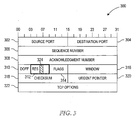
- FIG. 3 is a diagram illustrating a representative TCP header 300 incorporating such a bit, an M bit, in accordance with the principles of the present invention.
- the illustrated TCP header 300 is thirty-two bits wide (0-31), and includes a number of fields. Sixteen-bit source 302 and destination 304 ports identify the source and destination host addresses respectively.
- the sequence number 306 represents the initial sequence number (ISN) during sequence number synchronization (i.e., when the SYN bit within the flags 314 is set), and the first data octet in the segment when the SYN bit is not set.
- the acknowledgment number 308 contains the value of the next sequence number the sender of the segment is expecting to receive, if the ACK control bit of the flags 314 is set. Once a connection is established, an ACK number in field 308 is always sent.
- the data offset (DOFF) field 310 indicates the number of 32-bit words in the header 300, to identify where the data begins.
- the reserved bits 312 are reserved for future use, and as described more fully below, is where the M bit is located in accordance with one embodiment of the invention.
- the flags 314 include a number of identifiers, such as the urgent pointer valid flag (URG), acknowledgement number valid flag (ACK), push flag (PSH), reset connection flag (RST), synchronize sequence numbers flag (SYN), and the end of data flag (FIN).
- the window field 316 holds the number of data octets beginning with the one indicated in the ACK field 308 that the sender of this segment is willing to accept.
- the checksum 318 field stores a standard checksum value to provide for reliability of the connection, and the urgent pointer field 320 communicates the current value of the urgent pointer as an offset from the sequence number 306 in the segment.
- the TCP options field(s) 322 are optional fields used to convey specific information in specific cases. For example, a TCP Selective Acknowledgment (SACK) option may be utilized by way of the TCP options 322 such that receiving TCP sends back SACK packets to the sender to inform the sender of data that has been received.
- SACK TCP
- the M bit is implemented in the reserved field 312, as shown by the M bit field 324.
- the present day TCP reserved field already utilizes at least two of the reserved bits in field 312, including the CWR and ECR bits (not shown) that identify when a sender or receiver, respectively, cuts the congestion window in half. Any unused reserved field 31.2 bits may be used to house the M bit(s) 324.
- an M flag in accordance with the present invention may be included in any locationori(s) of a transport layer protocol header, and is limited only by existing and/or defmed header fields and the practicalities associated with reorganizing or otherwise moving fields/bits within such a header.
- an M flag could alternatively be provided via a different encapsulating header, trailing bits, or any other available location in which such a designator can be transmitted.
- the M flag 324 is provided via one of the bits of the reserved field 312 of the TCP header 300, due to the availability and convenience of doing so.
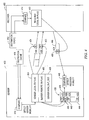
- FIG. 4 is a block diagram illustrating an exemplary manner in which user mobility can be detected in accordance with the present invention.
- the illustrated embodiment uses the M flag (one bit in this example) in the TCP header to monitor for user mobility. This is described below in terms of a TCP sender 400 and TCP receiver 402, where it will be assumed for purposes of explanation that the TCP receiver is implemented in a mobile device that can move between various subnets.
- Each TCP implementation maintains a number of state variables to facilitate mobility detection.
- these state variables include a sender local subnet (SN) flag 404 (e.g., my_subnet_flag ) , a sender remote SN flag 4.06 (e.g., remote_subnet_flag ) , and a sender variable 408 identifying the highest sequence number of the packet when a TCP receiver detects that its peer host has changed its POA to the network (e.g., high_out_old ) .
- SN sender local subnet
- 406 e.g., remote_subnet_flag
- the flags 404, 406 (1-bit values in one embodiment) hold the mobility state information about the local TCP host and the remote TCP host respectively, and the high_out_old 408 represents the highest sequence number of the packet when a TCP receiver detects that its peer host has changed its POA to the network.
- This.state information is used to make POA change information more robust to packet reordering and packet duplication.
- all these state parameters are initialized to zero at the start of the connection.
- both the hosts e.g., client/server
- M a predetermined state
- the TCP sender and receiver should initialize their respective local and remote SN flags.
- the sender local and remote SN flags 404, 406 are initialized.
- the receiver 402 would initialize such local variables in an analogous fashion (e.g., initialize receiver local SN flag 410 to "1" and receiver remote SN flag (not shown) to "1").
- both of the TCP hosts should check their destination cache/ routing cache, or other analogous module revealing routing information from which host subnet movement can be ascertained (hereinafter referred to as "destination cache").
- destination cache or other analogous module revealing routing information from which host subnet movement can be ascertained.
- POA point of attachment
- the TCP receiver 402 can monitor its destination cache 412, and compare 414 previous and current POA indicators to determine if its POA has changed.
- the TCP sender 400 can monitor its destination cache 416, and compare 418 previous and current POA indicators to determine if its POA has changed. If so, the sender local SN flag 404 (e.g., the my_subnet_flag variable maintained at the receiver 400) can be toggled in the same fashion as set forth in Equation 2 above.
- MTU Maximum Transmission Unit
- the MTU is the largest size packet that can be sent in a packet-based network, such as the Internet, GPRS network, etc.
- TCP uses the MTU to determine the maximum size of each packet in any transmission. Because TCP implementations often monitor destination caches already for information such as the MTU, monitoring for a change of subnets is therefore not a difficult task to include.
- the sender remote SN flag 406 is set for each of the M bits 430, 432, 434, 436 in respective packets 438, 440, 442, 444.
- the value of the M bit stored in the retransmission queue 428 is set to the sender remote SN flag 406 ( remote_subnet_flag ) , because when the TCP sender 400 receives the ACK 446 for that segment, the sender 400 can determine a change in subnet by comparing 448 the M bit 450 of the ACK 446 with the respective stored M bit (e.g., M bit 432) in the retransmission queue 428. If the M bit 432 is not equal to the M bit 450 received via the ACK 446, this indicates that a change in subnet has taken place. This is because the receiver 402 will have changed the state of its M bit using Equation 3 above when sending the ACK 446, due to its recognition of a change of POA.
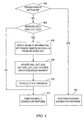
- FIG. 5 is a flow diagram illustrating one embodiment for detecting remote host mobility in accordance with the present invention.
- the example of FIG. 5 is a representative example of how remote host mobility may be detected, and many variations may also be used in connection with the present invention.
- An example of such a standard congestion response methodology is described in IETF RFC 2581 (April 1999), entitled “TCP Congestion Control," by M. Allman, V. Paxson, and W. Stevens . Any predefined standard congestion response methodology may be utilized.
- remote_subnet_flag determines whether the received ACK has an ACK number (see TCP header field 308 of FIG. 3 ) that is greater than the high_out_old variable (see high_out_old 408 of FIG. 4 ). If so, the mobility information is updated 506, such that the sender remote SN flag is set to M. More particularly, the remote_subnet_flag is set to M provided in the packet. Further, the high_out_old is updated 508 such that it is set to equal the highest unacknowledged packet, where the highest unacknowledged packet represents the sequence number of the last octet in the retransmission queue.
- the variables initialized as shown in Equation 5 are then used in performing 512 a mobile congestion response, the operation of which is described more fully below. It is also noted that if the received ACK does not have an ACK number that is greater than the high_out_old variable, the mobile congestion response may be directly performed 512.
- FIG. 6 illustrates an operational example of one manner in which a TCP sender 600 detects changes in the POA of a TCP receiver 602.
- control information referred to as a handshake is exchanged between the two endpoints of a TCP communication to establish a dialogue before data is transmitted.
- the type of handshake generally utilized by TCP is referred to as a three-way handshake, due to the exchange of three segments to establish the dialogue.
- the TCP sender 600 begins the connection by sending the TCP receiver 602 a segment with the SYN bit of the header "flags" field set (see field 314.
- This segment tells the TCP receiver 602 that the TCP sender 600 wants to establish a connection, and also tells the TCP receiver 602 what sequence number the TCP sender 600 will use as a starting number for its segments.
- the TCP sender 600 sends a segment 608 providing at least an ACK. Assuming both the TCP sender 600 and receiver 602 agree to mobility detection, the M bit will be set to "1" in each of the segments of the handshake.
- the TCP sender 600 then begins to transfer data.
- the packets P 0 through P N represent data packets sent by the TCP sender 600.
- a first number of packets 610 through 612 are sent by the sender 600 to the receiver 602 while the receiver 602 is in a first subnet-1 614.
- the TCP receiver 602 will recognize this movement by way of, for example, monitoring its destination cache.
- the receiver 602 toggles its my_subnet_flag, and uses this value for new M designations. This can be seen for packets 622 through 624, which were sent by the TCP sender 600, and received by the receiver 602 when it had moved to subnet-2 620. In this case, the receiver 602 responds with ACK packet 626 where the M bit has been toggled to "0" in this case.
- the TCP sender recognizes this movement by comparing the received M bit from the ACK packet and the corresponding packet entry in the retransmission queue, which indicates that the subnet has changed (e.g., the old subnet # M). In this case, the TCP sender then sets the old subnet to "0," e.g., by changing the remote_subnet _flag to reflect the new state of M bit. Packets then sent by the TCP sender 600 will then be stored in the retransmission queue with the new state of the M bit, to detect further receiver 602 subnet changes.
- the TCP sender 600 will have changed its remote_subnet_flag, and thus will identify packet 628 as having an old subnet equal to M (both "0" in this case).
- the TCP sender 600 may transmit further packets, such as packets 630 through 632.
- the TCP receiver 602 receives these packets, but has again moved to a new subnet, namely subnet-3 634.
- the TCP receiver 602 When the TCP receiver 602 recognizes a change of the POA when moving to subnet-3 634, it again toggles its my_subnet_flag (to "1" in this case), and uses this value for new M designations as seen in connection with packets 636 through 638. In response to packet 630 sent by the TCP sender 600, the receiver 602 therefore responds with ACK packet 636 where the M bit has been toggled to "1". The TCP sender recognizes this movement by comparing the received M bit from the ACK packet and the corresponding packet entry in the retransmission queue, which indicates that the subnet has again changed (e.g., the old subnet # M).
- FIG. 7 is a flow diagram illustrating one embodiment of an initialization and mobility detection methodology in accordance with the principles of the present invention.
- the flow diagram of FIG. 7 incorporates aspects of FIGs. 4 , 5 , and 6 as it pertains to initialization and mobility detection.
- State variables are initialized 700, such as setting the local SN flag (e.g., my_subnet_flag, remote SN flag (e.g., remote_subnet_flag ) , and high_out_old to zero.
- the specific initialization state is not relevant to the present invention, but rather that the initial states of these variables is set to an initial, known state.
- this initial, known state is set to binary "0.”
- the connection is initiated 702, where a TCP handshake procedure is performed. Assuming that the state variables were initialized to "0,” then the M flag is set 704 to "1" in the SYN segments of the sender and receiver if they respectively agree to (e.g., are capable of) mobility detection. If it is determined 706 that one or both the sender and receiver do not agree to mobility detection, standard congestion response techniques may be used as shown at block 708. Otherwise, the local and remote SN flags (my_subnet_flag; remote_subnet_flag ) are set 710 to "1.”
- the sender Prior to sending a packet, the sender sets 712 M equal to the local SN flag in the segment header, and sets 714 M equal to the remote SN flag in the retransmission queue. The packet is then sent 716. If the point of attachment (POA) has not changed at the receiver, the receiver will use 720 its current local SN flag (receiver my_subnet_flag ) to create the M flag, and send 724 the ACK to the sender with M equal to the receiver's current local SN flag. If the receiver's POA has changed as determined at decision block 718, the receiver toggles 722 its local SN flag.
- POA point of attachment
- any state(s) can be used to designate a change of POA in multi-bit M flags.
- the M flag is a two-bit field, the state can change from "00" to "01,” “10,” or "11” to designate receiver mobility.
- the M flag is assumed to be a single-bit field, such that toggling the state from "1" to "0,” for example, appropriately identifies a change of receiver subnets.
- the sender receives 726 the ACK with the receiver's local SN flag as the M flag. Depending on the state of the M flag, the sender will execute the appropriate remote mobility detection analysis. For example, the flow diagram previously described in connection with FIG. 5 provides one embodiment in which the sender can execute the remote mobility detection analysis. If more packets are to be sent as determined at decision block 728, the process can continue to block 712.
- a congestion response methodology is used after user mobility detection occurs. For example, one embodiment of the invention involves determining whether one or more users have moved between networks and/or subnets, and applying an appropriate congestion response methodology in response thereto. Therefore, in some instances, a standard congestion response algorithm may be implemented. The realization and benefits of standard congestion response algorithms may be determined in a manner described herein, and/or via known congestion response algorithms such as IETF RFC 2581 (April 1999), entitled “TCP Congestion Control," by M. Allman, V. Paxson, and W. Stevens .
- standard congestion response methodologies may include interoperable concepts such as slow start, congestion avoidance, fast retransmit, fast recovery, and/or other congestion control algorithms.
- Slow start (SS) and congestion avoidance algorithms are used by a sender to control the amount of outstanding data being introduced into the network.
- congestion control uses various parameters, including the congestion window ( cwnd ) and the slow start threshold (SS_THRESH).
- the cwnd is a state variables that refers to the sender-side limit of the quantity of data that the sender can transmit into the network before receiving an acknowledgement ( ACK ) .
- the SS _THRESH is a threshold value used to determine whether the slow start or congestion avoidance algorithm should be used to control data transmission.
- the TCP may set the cwnd to one Maximum Segment Size (MSS), and send one full-sized segment. If this segment is acknowledged (ACK'd) before the timeout, the sender may increase the cwnd by one MSS and send out two full-sized segments.
- SS_ THRESH may initially be set to a high value (e.g., 0xFFFF, hereinafter referred to as INFINITE ) .
- INFINITE a high value
- slow start may be used when data transfers are initiated, or in response to detected segment loss, or in any event when cwnd ⁇ SS_THRESH.
- Slow start ends when cwnd > SS_THRESH, or when congestion is identified. Congestion avoidance methodologies may thus be initiated when cwnd > SS_THRESH.
- cwnd grows linearly once reaching the SS_THRESH. For example, cwnd may be incremented by one full-sized segment per round-trip time (RTT). Other formulas may be used to update cwnd as well.
- the SS_THRESH may be set to a lesser value such as one half the current cwnd, and cwnd may be reset to one MSS.
- Other congestion control mechanisms may alternatively be used.
- certain congestion responses are provided after user's mobility detection occurs.
- Mobility results in a new communication path, which also results in a new Bandwidth Delay Product (BDP) as seen by the sender.
- BDP Bandwidth Delay Product
- the BDP represents the product of RTT and the estimated minimal bandwidth between the sender and receiver. Since a TCP sender is unaware of the BDP on the new path, it renegotiates the congestion control parameters.
- a TCP sender resets its SS_THRESH to a large value INFINITE (e.g., 0xFFFF) and updates its effective congestion window on the new path to the initial window size init-wnd.
- INFINITE e.g., 0xFFFF
- a first representative congestion response scheme used after mobility detection involves no TCP options.
- TCP options may be included with a packet header (see TCP options field 322 of FIG. 3 ).
- Existing options include, for example, a specification of the maximum segment size (MSS) that the receiver should use, selective acknowledgment (SACK) extensions, echo options for measuring the RTT, timestamps, and the like.
- MSS maximum segment size
- SACK selective acknowledgment
- echo options for measuring the RTT timestamps
- a congestion response scheme after mobility detection requires no such TCP options.
- a TCP sender To reset the congestion state, a TCP sender maintains information identifying which packets were sent into which subnet so that when a change of subnet is detected, the TCP sender does not increase its congestion window based on the ACK information generated from the "old" subnet (i.e., the subnet prior to the movement between subnets).
- the state variable hiigh_out_old maintains the highest sequence number of data packets sent at the time when the change of subnet was detected, and thus indicates the highest sequence number of data that was sent in the old subnet.
- the TCP sender also maintains another state variable that estimates the number of packets that was sent into the old subnet. In the event of packet loss, and recognizing that the TCP sender does not know if the duplicate ACK was generated for packets sent into the old or new network, such a count helps estimate the number of packets that were sent into the old network.
- the variable used for this count is referred to herein as old_outstanding.
- a quantity of data corresponding to INIT_WINDOW is sent, and no expansion of the congestion window is effected until all packets having sequence numbers up to high_out _old are recovered. In one embodiment, packets with sequence numbers less than high_out_old are recovered one lost packet per RTT.
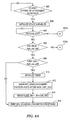
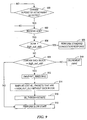
- FIG. 8 is a flow diagram illustrating one embodiment of a method for providing a congestion response after mobility detection, where no TCP options are utilized.
- the TCP sender For each subsequent ACK received, the TCP sender performs the mobile congestion response procedure, which in the illustrated embodiment utilizes no TCP options. Thus, when each ACK is received as determined at decision block 804, it is determined 806 whether the ACK packet sequence number is greater than high_out_old. Because high_out_old indicates the highest sequence number of data that was sent in the old subnet, decision block 806 thus determines whether the sequence number in the received ACK packet is greater than the highest sequence number of data that was sent in the old subnet. If so, the congestion response can ultimately follow established congestion response procedures, such as IETF RFC 2581 mentioned above, and IETF RFC 2988 (November 2000), entitled "Computing TCP's Retransmission Timer," by V. Paxson and M. Allman .
- IETF RFC 2581 mentioned above
- IETF RFC 2988 June 2000
- the timer is initialized 810. Such initialization may be effected pursuant to established techniques, such as described in IETF RFC 2988. More particularly, TCP uses a retransmission timer to guarantee data delivery in the absence of a response from the TCP receiver.
- the timer duration is referred to as the retransmission timeout (RTO), and initializing 810 the timer refers to the manner in which this retransmission timeout is set.
- the TCP sender maintains two state variables, including the smoothed round-trip time (SRTT) and the round-trip time variation (RTTVAR).
- SRTT smoothed round-trip time
- RTTVAR round-trip time variation
- a number of rules govern the computation of SRTT, RTTVAR, and RTO. These rules include, for example, setting RTO to three seconds until a round-trip time (RTT) measurement has been made for a segment sent between the sender and receiver. This or any other suitable timer initialization procedure may be used to initialize 810 the timer.
- the congestion window cwnd is set 812 equal to the INIT_WINDOW plus the number of packets acknowledged (ACK'd) after hiigh_out_old. In accordance with one embodiment, even if packets less than high_out_old are ACK'd by this ACK packet, they should still be discarded.
- the SRTT, RTTVAR, and RTO variables are then reinitialized 814. This may be effected in any suitable manner, one of which is described in IETF RFC 2988.
- SRTT is set to R
- RTTVAR is set to R/2
- SRTT is used in the updated calculation of RTTVAR
- the value of SRTT in this calculation is that prior to updating SRTT itself.
- the host updates RTO to equal SRTT + the maximum of the clock granularity (G) and the product of K and RTTVAR.
- G clock granularity
- the RTO should be rounded up to one second. Further, a maximum value may be placed on the RTO. In accordance with one embodiments of the invention, all previous samples of SRTT, RTTVAR, and RTO are ignored. At this point, any typical or otherwise suitable congestion response may be performed 816, such as those described in IETF RFC 2581 and RFC 2988.
- Processing can then return to monitor for the next received ACK, as depicted by links "B" 830B, 830A.
- DUPLICATE_COUNT corresponds to the number of duplicate ACKs received by the sender
- the foregoing mobile congestion response methodology does not require the use of any TCP options. However, it requires various state variables in its operation, because the cumulative acknowledgement of TCP does not allow the TCP sender to determine which packet triggered the duplicate ACK - i.e., whether the packets on the old path or the packets on the new path were responsible for triggering the timeout. Furthermore, this mobile congestion response methodology may result in the TCP sender experiencing a timeout before a loss recovery completes. If the TCP timer expires before the high_out_old is acknowledged, then the TCP sender may, in one embodiment of the invention, follow a general loss recovery scheme such as that described in IETF RFC 2581.
- FIG. 9 is a flow diagram illustrating another embodiment of a method for providing a congestion response after mobility detection, where TCP options are utilized.
- This embodiment utilizes the TCP Selective Acknowledgment (SACK) option, which is known in the art.
- SACK TCP Selective Acknowledgment
- the known SACK option is described in IETF RFC 2018 (October 1996), entitled “TCP Selective Acknowledgment Options," by M. Mathis, J. Mahdavi, S. Floyd, and A. Romanow.
- decision block 904 determines whether the ACK packet sequence number is greater than high_out _old. Because high_out _old indicates the highest sequence number of data that was sent in the old subnet, decision block 904 thus determines whether the sequence number in the received ACK packet is greater than the highest sequence number of data that was sent in the old subnet. If so, the congestion response can ultimately perform 906 established congestion response procedures, such as IETF RFC 2581 and IETF RFC 2988 mentioned above.
- cwnd is set to cwnd - 1 as shown at block 910. If the SACK block in the TCP options is greater than or equal to high_out_old, cwnd is set 912 to INIT_WINDOW +2 , and all packets less than high_out _old without a SACK block are marked 914 as lost.
- SS _THRESH is set 916 to INFINITE (e.g., 0xFFFF or other suitably large number), and a slow start is performed 918.
- the present invention thus provides a manner of detecting user mobility at the transport layer, and for providing an appropriate manner of responding in the event of the detection of user mobility.
- the sender can detect the mobility of the receiver at the transport layer, regardless of the type of underlying network architecture (e.g., cellular networks, networks using various versions of Mobile-IP as a mobility manager, etc.). Further, the sender can reset its congestion state after there is a change(s) in the point of attachment (POA) of a receiver, which is not currently performed due to the sender having no way of reliably knowing of such a change in the receiver's POA.
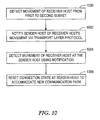
- FIG. 10 is a flow diagram illustrating such features of the present invention, and more particularly illustrates a method for determining network capacity and managing network congestion in response to a change in an end-to-end communication path between sender and receiver hosts.
- Movement of the receiver host from a first to a second subnet is detected 1000.
- the receiver host may determine its movement by monitoring a destination or routing cache.
- the movement of the receiver may result in a new end-to-end, transport layer communication path between the sender and receiver hosts.
- the sender host is notified 1002 of the receiver host' movement via the transport layer protocol, whether that be TCP, SCTP, or other connection-oriented transport protocol.
- the movement of the receiver host is detected 1004 at the sender host using the notification.
- the notification is provided via a created "M flag" provided in the transport layer protocol header.
- the sender host resets 1006 its congestion state to accommodate the new communication path.
- the present invention may be used to facilitate communications to/from TCP, SCTP, or other transport layer protocol applications in any type of device that can communicate with the network or other connection.
- Such devices include computing devices such as desktop computers, workstations, laptop computers, or any other computing system capable of accessing information via a network.
- Such computing devices also include network servers, such as content servers, storage servers, Multimedia Messaging Service Centers (MMSC) for Multimedia Messaging Service (MMS), Short Message Service Centers (SMSC) for Short Message Service (SMS), or any other network element capable of communicating with other systems and devices over a network, such as the Internet.
- MMSC Multimedia Messaging Service Centers
- SMSC Short Message Service Centers
- SMS Short Message Service
- These devices also include mobile devices, where network access is accomplished via a wireless network that may or may not ultimately be coupled to a landline network.
- These mobile devices may be any type of wireless device, such as wireless/cellular telephones, personal digital assistants (PDAs), or other wireless handsets, as well as portable computing devices capable of wireless communication.
- PDAs personal digital assistants
- These landline and mobile devices utilize computing circuitry and software to control and manage the conventional device activity as well as the functionality provided by the present invention.
- Hardware, firmware, software or a combination thereof may be used to perform the various mobility detection and congestion response operations described herein.
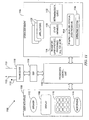
- FIG. 11 An example of a representative mobile terminal computing system capable of carrying out operations in accordance with the invention is illustrated in FIG. 11 .
- FIG. 11 An example of a representative mobile terminal computing system capable of carrying out operations in accordance with the invention is illustrated in FIG. 11 .
- the exemplary mobile computing environment 1100 is merely representative of general functions that may be associated with such mobile devices, and also that landline computing systems similarly include computing circuitry to perform such operations.
- the exemplary mobile computing arrangement 1100 suitable for performing the mobility detection and congestion response functions in accordance with the present invention may be associated with a number of different types of wireless devices.
- the representative mobile computing arrangement 1100 includes a processing/control unit 1102, such as a microprocessor, reduced instruction set computer (RISC), or other central processing module.
- the processing unit 1102 need not be a single device, and may include one or more processors.
- the processing unit may include a master processor and associated slave processors coupled to communicate with the master processor.
- the processing unit 1102 controls the basic functions of the mobile terminal as dictated by programs available in the program storage/memory 1104. Thus, the processing unit 1102 operating in connection with programs in the storage/memory 1104 is capable of executing mobility detection and congestion response functions associated with the present invention.
- the storage/memory may include one or more of read-only memory (ROM), flash ROM, programmable and/or erasable ROM, random access memory (RAM), subscriber interface module (SIM), wireless interface module (WIM), smart card, or other removable memory device, etc.
- the program modules associated with the storage/memory 1104 are stored in non-volatile electrically-erasable, programmable ROM (EEPROM), flash ROM, etc.
- the relevant software for carrying out conventional mobile terminal operations and operations in accordance with the present invention may also be transmitted to the mobile computing arrangement 1100 via data signals, such as being downloaded electronically via one or more networks, such as the Internet and an intermediate wireless network(s).
- the processor 1102 is also coupled to user-interface 1106 elements associated with the mobile terminal.
- the user-interface 1106 of the mobile terminal may include, for example, a display 1108 such as a liquid crystal display, a keypad 1110, speaker 1112, and microphone 1114. These and other user-interface components are coupled to the processor 1102 as is known in the art.
- Other user-interface mechanisms may be employed, such as voice commands, switches, touch pad/screen, graphical user interface using a pointing device, trackball, joystick, or any other user interface mechanism.
- the mobile computing arrangement 1100 also includes conventional circuitry for performing wireless transmissions.
- a digital signal processor (DSP) 1116 may be employed to perform a variety of functions, including analog-to-digital (A/D) conversion, digital-to-analog (D/A) conversion, speech coding/decoding, encryption/decryption, error detection and correction, bit stream translation, filtering, etc.
- the transceiver .1118, generally coupled to an antenna 1120, transmits the outgoing radio signals 1122 and receives the incoming radio signals 1124 associated with the wireless device.
- the mobility detection and congestion response functionality may be implemented in, for example, transport layer programs.
- the processor 1102 can provide the mobility detection and congestion response functionality under the direction of program modules stored in the program storage/memory 1104.
- Applications 1126 may represent device applications at the application layer, such as browsers, organizers, etc.
- Program modules 1128 associated with the transport layer functions are provided, such as TCP, SCTP, or other transport layer protocol software.
- such programs include instructions capable of performing operations previously described, such as manipulating the M flag in the TCP header, storing and utilizing state variables 1130, storing packets and manipulating the M flag for those packets stored in the retransmission queue 1132, etc.
- Other associated programs may be stored in the storage/memory 1104, such as internet layer (e.g., Internet Protocol), data link layer, and physical layer programs 1134, as well as an operating system 1136.
- the mobile computing arrangement 1100 of FIG. 11 is provided as a representative example of a computing environment in which the principles of the present invention may be applied. From the description provided herein, those skilled in the art will appreciate that the present invention is equally applicable in a variety of other currently known and future mobile and landline computing environments.
- desktop computing devices similarly include a processor, memory, a user interface, and data communication circuitry.
- the present invention is applicable in any known computing structure where data may be communicated via a network.
- the invention may be implemented as a machine, process, or article of manufacture by using standard programming and/or engineering techniques to produce programming software, firmware, hardware or any combination thereof.
- Any resulting program(s), having computer-readable program code may be embodied on one or more computer-usable media, such as disks, optical disks, removable memory devices, semiconductor memories such as RAM, ROM, PROMS, etc.
- Articles of manufacture encompassing code to carry out functions associated with the present invention are intended to encompass a computer program that exists permanently or temporarily on any computer-usable medium or in any transmitting medium which transmits such a program.
- Transmitting mediums include, but are not limited to, transmissions via wireless/radio wave communication networks, the Internet, intranets, telephone/modem-based network communication, hard-wired/cabled communication network, satellite communication, and other stationary or mobile network systems/communication links. From the description provided herein, those skilled in the art will be readily able to combine software created as described with appropriate general purpose or special purpose computer hardware to create a mobility detection and congestion response system and method in accordance with the present invention.
Landscapes
- Engineering & Computer Science (AREA)
- Computer Networks & Wireless Communication (AREA)
- Signal Processing (AREA)
- Data Exchanges In Wide-Area Networks (AREA)
- Controlling Sheets Or Webs (AREA)
Claims (35)
- Verfahren, umfassend:- Bestimmen einer Netzwerkkapazität und Verwalten eines Staus in einem Netzwerk, in Reaktion auf eine Veränderung in einem end-to-end Kommunikationspfad (100, 104) zwischen einem Sender-Host (108, 200, 400, 600) und einem Empfänger-Host (202, 402, 602) durch:- Empfangen einer Empfänger-Mobilitäts-Benachrichtigung von dem Empfänger-Host (202, 402, 602) an dem Sender-Host (108, 200, 400, 600) über ein Verbindungs-orientiertes Transportschicht-Protokoll, umfassend das Empfangen eines Mobility-Flags (204) in einem Kopfteil- (206) Feld von Segmenten (208), die von dem Empfänger-Host (202, 402, 602) an den Sender-Host (108, 200, 400, 600) gesendet werden,- Bestimmen (1004), an dem Sender-Host (108, 200, 400, 600), ob der Empfänger-Host (202, 402, 602) sich von einem ersten Subnetz (102) zu einem zweiten Subnetz (106) bewegt hat, unter Verwendung der Empfänger-Mobilitäts-Benachrichtigung, und- Rücksetzen (1006) eines Stauzustandes an dem Sender-Host (108, 200, 400, 600), um einem neuen end-to-end Kommunikationspfad zwischen dem Sender-Host (108, 200, 400, 600) und dem Empfänger-Host (202, 402, 602) in dem zweiten Subnetz (106) zu entsprechen, falls der Sender-Host (108, 200, 400, 600) bestimmt, dass sich der Empfänger-Host (202, 402, 602) von dem ersten Subnetz (102) zu dem zweiten Subnetz (106) bewegt hat.
- Verfahren nach Anspruch 1, wobei das Empfangen der Empfänger-Mobilitäts-Benachrichtigung an dem Sender-Host über ein Transportschicht-Protokoll das Empfangen der Empfänger-Mobilitäts-Benachrichtigung über ein Transport-Control-Protokoll, TCP, oder ein Stream-Control-Transmission-Protokoll, SCTP, umfasst.
- Verfahren nach Anspruch 1, wobei das Empfangen des Mobility-Flags in einem Kopfteilfeld das Empfangen eines Mobility-Bits mit einem ersten Zustand, der keine Bewegung von dem ersten Subnetz zu dem zweiten Subnetz anzeigt, und mit einem zweiten Zustand, der eine Bewegung von dem ersten Subnetz zu dem zweiten Subnetz anzeigt, umfasst.
- Verfahren nach Anspruch 1, weiter umfassend:Senden mindestens eines Datensegments von dem Sender-Host an den Empfänger-Host undVerknüpfen eines vom Sender aufrechterhaltenen Zustandes der Empfänger-Mobilitäts-Benachrichtigung mit einer Kopie des Datensegments,wobei das Empfangen der Empfänger-Mobilitäts-Benachrichtigung von dem Empfänger-Host das Empfangen der Empfänger-Mobilitäts-Benachrichtigung in einem Bestätigungssegment umfasst, das von dem Empfänger-Host in Reaktion auf das Datensegment bereitgestellt wird.
- Verfahren nach Anspruch 4, wobei das Bestimmen an dem Sender-Host, ob der Empfänger-Host sich bewegt hat, unter Verwendung der Empfänger-Mobilitäts-Benachrichtigung, das Vergleichen des, vom Sender aufrechterhaltenen Zustandes der Empfänger-Mobilitäts-Benachrichtigung mit der Empfänger-Mobilitäts-Benachrichtigung umfasst, die über das Bestätigungssegment empfangen wurde.
- Verfahren nach Anspruch 4, wobei das Verknüpfen des, von dem Sender aufrechterhaltenen Zustandes mit einer Kopie des Datensegments, das Einstellen des von dem Sender aufrechterhaltenen Zustand der Empfänger-Mobilitäts-Benachrichtigung in der Kopie des Datensegments und das Speichern der Kopie des Datensegments in einer Wiederübertragungs-Warteschlange umfasst.
- Verfahren nach Anspruch 1, wobei das Bestimmen an dem Sender-Host, ob der Empfänger-Host sich von einem ersten Subnetz zu einem zweiten Subnetz bewegt hat, das Vergleichen der Empfänger-Mobilitäts-Benachrichtigung mit einem erwarteten Zustand der Empfänger-Mobilitäts-Benachrichtigung umfasst.
- Verfahren nach Anspruch 1, wobei das Empfangen einer Empfänger-Mobilitäts-Benachrichtigung von dem Empfänger-Host das Empfangen der Empfänger-Mobilitäts-Benachrichtigung in einem Bestätigungssegment umfasst, das ein vorher von dem Sender-Host an den Empfänger-Host gesendetes Datensegment bestätigt.
- Verfahren nach Anspruch 8, wobei das Rücksetzen eines Stauzustandes an dem Sender-Host, das Durchführen einer Standard-Stau-Reaktion umfasst, falls die Segment-Sequenz-Nummer des Bestätigungssegments größer als die höchste Sequenz-Nummer von nicht-bestätigten Segmenten ist, die von dem Sender-Host gesendet wurden.
- Verfahren nach Anspruch 9, weiter umfassend Initialisieren eines Wiederübertragungs-Zeitgebers und Rücksetzen eines Staufensters, vor dem Durchführen der Standard-Stau-Reaktion, wobei das Rücksetzen des Staufensters das Bestimmen einer Summe eines anfänglichen Wertes des Staufensters bei Initialisierung einer Verbindung und einer Anzahl von Segmenten umfasst, die nach dem Segment bestätigt wurden, das der höchsten Sequenznummer von nicht-bestätigten Segmenten entspricht, die von dem Sender-Host gesendet wurden.
- Verfahren nach Anspruch 9, weiter umfassend: Bestimmen, ob das Bestätigungssegment einen Selective-Acknowledgment-, SACK, Block umfasst, der größer oder gleich der höchsten Sequenznummer der nicht-bestätigten Segmente ist, die von dem Sender-Host gesendet wurden, wobei die Bestimmung stattfindet, falls die Segment-Sequenznummer des Bestätigungs-Segments kleiner oder gleich der höchsten Sequenznummer nicht-bestätigter Segmente ist, die durch den Sender-Host gesendet wurden.
- Verfahren nach Anspruch 11, weiter umfassend: falls das Bestätigungssegment einen SACK-Block umfasst, der größer oder gleich der höchsten Sequenznummer von nicht-bestätigten Segmenten ist, die von dem Sender-Host gesendet wurden:- Rücksetzen eines Staufensters auf eine vorbestimmte Erhöhung über einen anfänglichen Wert des Staufensters bei Initiierung einer Verbindung,- Markieren aller Segmente als verloren, die eine Sequenznummer haben, die kleiner ist, als die höchste Sequenznummer von nicht-bestätigten Segmenten, die von dem Sender-Host gesendet wurden,- Einstellen eines Langsamstart-Schwellwertes auf einen vorbestimmten hohen Wert, und- Ausführen einer Langsamstart-Staureaktion.
- Verfahren nach Anspruch 12, weiter umfassend: Herabsetzen des Staufensters, falls das Bestätigungssegment einen SACK-Block umfasst, der kleiner ist, als die höchste Sequenznummer von nicht-bestätigten Segmenten, die von dem Sender-Host gesendet wurden.
- Verfahren nach Anspruch 8, wobei das Rücksetzen eines Stauzustandes an dem Sender-Host, das Bestimmen umfasst, ob das Bestätigungssegment ein Duplikat-Bestätigungssegment ist, falls die Segment-Sequenznummer des Bestätigungssegments kleiner oder gleich der höchsten Sequenznummer von nicht-bestätigten Segmenten ist, die von dem Sender-Host gesendet wurden.
- Verfahren nach Anspruch 14, weiter umfassend: Rücksetzen eines Staufensters durch Verringern des Staufensters um eine Anzahl von Segmenten, die bestätigt wurden, falls das Bestätigungssegment kein Duplikat-Bestätigungssegment ist.
- Verfahren nach Anspruch 15, weiter umfassend: Ermitteln einer Abschätzung einer Anzahl von Segmenten, die auf einem Kommunikationspfad zwischen dem Sender-Host und dem Empfänger-Host gesendet wurden, wenn in dem ersten Subnetz, durch Setzen der Abschätzung auf eine Anzahl von Segmenten zwischen der Sequenznummer des niedrigsten nicht-bestätigten Segments und der höchsten Sequenznummer von nicht-bestätigten Segmenten, die von dem Sender-Host gesendet wurden.
- Verfahren nach Anspruch 14, weiter umfassend: Senden eines verlorenen Segments, falls das Bestätigungssegment ein Duplikat-Bestätigungssegment ist, und falls eine Anzahl, der durch den Sender empfangenen Duplikat-Bestätigungssegmente einen Schwellwert erreicht hat, der die Anzahl von Paketen anzeigt, die in dem Netzwerk umgeordnet werden können.
- Verfahren nach Anspruch 17, weiter umfassend: Bestimmen, ob eine Abschätzung einer Anzahl von Segmenten, die auf einem Kommunikationspfad zwischen dem Sender-Host und dem Empfänger-Host gesendet wurden, wenn in dem ersten Subnetz, gleich null ist, und falls ja, Heraufsetzen des Staufensters.
- Verfahren nach Anspruch 17, weiter umfassend: Bestimmen, ob eine Abschätzung einer Anzahl von Segmenten, die auf einem Kommunikationspfad zwischen dem Sender-Host und dem Empfänger-Host gesendet wurden, wenn in dem ersten Subnetz, gleich null ist, und falls nein, Herabsetzen der Abschätzung.
- Verfahren, umfassend:- Bestimmen einer Netzwerkkapazität und Verwalten eines Staus in einem Netzwerk, in Reaktion auf eine Veränderung in einem end-to-end Kommunikationspfad (100, 104), zwischen einem Sender-Host (108, 200, 400, 600, 202, 402, 602) und einem Empfänger-Host (108, 200, 400, 600, 202, 402, 602) durch:- Bestimmen (1000), ob sich der Empfänger-Host (108, 200, 400, 600, 202, 402, 602), von einem ersten Subnetz (102) zu einem zweiten Subnetz (106) bewegt hat, wobei die Bewegung des Empfänger-Hosts (108, 200, 400, 600, 202, 402, 602), in einem neuen end-to-end Kommunikationspfad zwischen dem Sender-Host (108, 200, 400, 600, 202, 402, 602) und dem Empfänger-Host (108, 200, 400, 600, 202, 402, 602) auf der Transportschicht resultiert, und- Benachrichtigen (1002) des Sender-Hosts (108, 200, 400, 600, 202, 402, 602) über die Bewegung des Empfänger-Hosts (108, 200, 400, 600, 202, 402, 602) über ein Verbindungs-orientiertes Transportschicht-Protokoll, umfassend das Empfangen eines Mobility-Flags in einem Kopfteil- (206) Feld von Segmenten, die von dem Empfänger-Host (108, 200, 400, 600, 202, 402, 602) an den Sender-Host (108, 200, 400, 600, 202, 402, 602) gesendet werden.
- Verfahren nach Anspruch 20, wobei das Senden des Mobility-Flags, das Senden eines Mobility-Bits mit einem ersten Zustand, der keine Bewegung von dem ersten Subnetz zu dem zweiten Subnetz anzeigt, und mit einem zweiten Zustand, der eine Bewegung von dem ersten Subnetz zu dem zweiten Subnetz anzeigt, umfasst.
- Verfahren nach Anspruch 21, weiter umfassend: Senden des Mobility-Bits in dem ersten Zustand, falls sich der Empfänger-Host weiter von dem zweiten Subnetz zu einem dritten oder dem ersten Subnetz bewegt.
- Verfahren nach Anspruch 20, weiter umfassend: Erfassen einer Bewegung des Empfänger-Hosts von dem ersten Subnetz zu dem zweiten Subnetz und Einstellen der Empfänger-Mobilitäts-Benachrichtigung, um eine Veränderung in Subnetzen anzuzeigen.
- Verfahren nach Anspruch 23, wobei das Erfassen einer Bewegung des Empfänger-Hosts von dem ersten Subnetz zu dem zweiten Subnetz, das Überwachen eines Bestimmungs-Speichermoduls umfasst, um zu bestimmen, ob sich der Point of Attachment (POA) des Empfänger-Hosts an das Netzwerk verändert hat.
- Verfahren nach Anspruch 1, weiter umfassend: Verändern der Empfänger-Mobilitäts-Benachrichtigung, jedes Mal, wenn sich der Empfänger-Host von einem Subnetz zu einem anderen Subnetz bewegt.
- Verfahren nach Anspruch 25, wobei das Verändern der Empfänger-Mobilitäts-Benachrichtigung das Umschalten eines Mobilitäts-Bits von einem ersten Zustand zu einem zweiten Zustand umfasst, wenn sich der Empfänger-Host von einem Subnetz zu einem anderen Subnetz bewegt.
- Verfahren nach Anspruch 20, wobei die Empfänger-Mobilitäts-Benachrichtigung in Kopfteilen von jedem Segment bereitgestellt wird, das von dem Empfänger-Host (202, 402, 602) an den Sender-Host gesendet wird.
- Verfahren nach Anspruch 20, weiter umfassend: Identifizieren von Stauinformationen, die sich auf das zweite Subnetz beziehen, und Einstellen der Empfänger-Mobilitäts-Benachrichtigung, um keine Bewegung des Empfänger-Hosts von dem ersten Subnetz zu dem zweiten Subnetz anzuzeigen, falls die identifizierten Stauinformationen unterhalb eines vorbestimmten Schwellwerts liegen.
- Host-Vorrichtung (108, 200, 400, 600, 202, 402, 602), zum Kommunizieren von Daten über ein Verbindungs-orientiertes Transportschicht-Protokoll, mit mindestens einer entfernten Vorrichtung (108, 200, 400, 600, 202, 402, 602), die in der Lage ist, sich während einer Kommunikation mit der Host-Vorrichtung (108, 200, 400, 600, 202, 402, 602) von einem ersten Subnetz (102) zu einem zweiten Subnetz (106) zu bewegen, wobei die Host-Vorrichtung (108, 200, 400, 600, 202, 402, 602) umfasst:- einen Speicher, eingerichtet ein Flag (406) eines entfernten Subnetzes zu speichern, das einen letzten Zustand des Orts der entfernten Vorrichtung (108, 200, 400, 600, 202, 402, 602) angibt, der der Host-Vorrichtung (108, 200, 400, 600, 202, 402, 602) bekannt ist,- eine Wiederübertragungs-Warteschlange (428) von nicht-bestätigten Segmenten der Transportschicht, die von der Host-Vorrichtung (108, 200, 400, 600, 202, 402, 602) an die entfernte Vorrichtung (108, 200, 400, 600, 202, 402, 602) gesendet wurden, wobei ein Zustand des Flags (406) des entfernten Subnetzes zur Zeit des Übertragens der Transportschicht-Segmente mit jedem der Transportschicht-Segmente in der Wiederübertragungs-Warteschlange (428) gespeichert wird, und- einen Prozessor, der eingerichtet ist, den Zustand des Flags (406) des entfernten Subnetzes der Transportschicht-Segmente (208) mit einem Mobility-Flag (204) in jedem entsprechenden Bestätigungssegment zu vergleichen, das von der entfernten Vorrichtung (108, 200, 400, 600, 202, 402, 602) bereitgestellt wird, und einen Stauzustand eines Kommunikationspfades zwischen der Host-Vorrichtung (108, 200, 400, 600, 202, 402, 602) und der entfernten Vorrichtung (108, 200, 400, 600, 202, 402, 602) zurückzusetzen (1006), falls die Mobility-Flag einen Standortwechsel der entfernten Vorrichtung (108, 200, 400, 600, 202, 402, 602) von dem ersten Subnetz (102) zu dem zweiten Subnetz (106) anzeigt.
- Host-Vorrichtung nach Anspruch 29, wobei der Prozessor weiter eingerichtet ist, zu bestimmen, ob sich der Point of Attachment der Host-Vorrichtung verändert hat, und wobei der Speicher weiter eingerichtet ist, ein Flag eines lokalen Subnetzes zu speichern, das anzeigt, ob sich der Point of Attachment der Host-Vorrichtung verändert hat.
- Host-Vorrichtung nach Anspruch 32, wobei der Prozessor weiter eingerichtet ist, einen Kopfteil zu erzeugen, der das Flag des lokalen Subnetzes als ein Moblilitäts-Flag für die Transportschicht-Segmente umfasst, die von der Host-Vorrichtung gesendet wurden, um es der entfernten Vorrichtung zu ermöglichen, zu bestimmen, ob sich die Host-Vorrichtung zu einem neuen Subnetz bewegt hat.
- System zum Unterstützen der Datenkommunikation über ein Verbindungs-orientiertes Transportschicht-Protokoll, mit mindestens einem Netzwerk, das mehrere Subnetze (102, 106) umfasst, wobei das System umfasst:(a) mindestens eine Sender-Vorrichtung (108, 200, 400, 600), eingerichtet um Transportschicht-Segmente (208) zu übertragen,(b) mindestens eine Empfänger-Vorrichtung (202, 402, 602), eingerichtet die Transportschicht-Segmente (208) zu empfangen,(c) wobei die Sender-Vorrichtung (108, 200, 400, 600) umfast:(i) einen Speicher, eingerichtet, ein Flag (406) eines entfernten Subnetzes zu speichern, das einen letzten Zustand des Ortes der Empfänger-Vorrichtung (108, 200, 400, 600, 202, 402, 602) angibt, der der Sender-Vorrichtung (108, 200, 400, 600) bekannt ist,(ii) eine Wiederübertragungs-Warteschlange (428) von nicht-bestätigten Transportschicht-Segmenten, die von der Sender-Vorrichtung (108, 200, 400, 600) an die Empfänger Vorrichtung (202, 402, 602) gesendet wurden, wobei ein Zustand des Flags (406) des entfernten Subnetzes zur Zeit des Übertragens der Transportschicht-Segmente (208) mit jedem der Transportschicht-Segmente (208) in der Wiederübertragungs-Warteschlange (428) gespeichert wird, und(iii) einen Prozessor, der eingerichtet ist, den Zustand des Flags (406) des entfernten Subnetzes der Transportschicht-Segmente (208) mit einem Mobility-Flag (204) in jedem entsprechenden Bestätigungssegment zu vergleichen, das von der Empfänger-Vorrichtung (202, 402, 602) bereitgestellt wird, und um einen Stauzustand eines Kommunikationspfades zwischen der Sender-Vorrichtung (108, 200, 400, 600) und der Empfänger-Vorrichtung (202, 402, 602) zurückzusetzen (1006), falls das Mobility-Flag (204) einen Standortwechsel der Empfänger-Vorrichtung (202, 402, 602) von dem ersten Subnetz (102) zu dem zweiten Subnetz (106) anzeigt.
- System gemäß Anspruch 31, weiter umfassend einen Bestimmungs-Cachespeicher, der mit der Empfänger-Vorrichtung verbunden ist, und der eingerichtet ist, Point of Attachment-Informationen des Empfängers für das Netzwerk zu speichern, wobei die Empfängervorrichtung eingerichtet ist, das Mobility-Flag auf einen Zustand einzustellen, der davon abhängt, ob sich der Point of Attachment des Empfängers verändert hat.
- System gemäß Anspruch 31, wobei das Netzwerk ein drahtloses Netzwerk und/oder ein Festnetz umfasst.
- System gemäß Anspruch 31, wobei das Netzwerk ein zellulares Netzwerk mit mehreren Zellen umfasst, wobei jeder der Zellen einem der mehreren Subnetze entspricht.
Applications Claiming Priority (3)
| Application Number | Priority Date | Filing Date | Title |
|---|---|---|---|
| US371965 | 2003-02-21 | ||
| US10/371,965 US7366096B2 (en) | 2003-02-21 | 2003-02-21 | System and method for movement detection and congestion response for transport layer protocol |
| PCT/IB2004/000462 WO2004074969A2 (en) | 2003-02-21 | 2004-02-13 | System and method for movement detection and congestion response for transport layer protocol |
Publications (3)
| Publication Number | Publication Date |
|---|---|
| EP1595153A2 EP1595153A2 (de) | 2005-11-16 |
| EP1595153A4 EP1595153A4 (de) | 2009-03-04 |
| EP1595153B1 true EP1595153B1 (de) | 2010-03-31 |
Family
ID=32868455
Family Applications (1)
| Application Number | Title | Priority Date | Filing Date |
|---|---|---|---|
| EP04710947A Expired - Lifetime EP1595153B1 (de) | 2003-02-21 | 2004-02-13 | System und verfahren zur bewegungsdetektion und staureaktion für ein transportschichtprotokoll |
Country Status (5)
| Country | Link |
|---|---|
| US (2) | US7366096B2 (de) |
| EP (1) | EP1595153B1 (de) |
| AT (1) | ATE463106T1 (de) |
| DE (1) | DE602004026275D1 (de) |
| WO (1) | WO2004074969A2 (de) |
Families Citing this family (49)
| Publication number | Priority date | Publication date | Assignee | Title |
|---|---|---|---|---|
| US8233392B2 (en) | 2003-07-29 | 2012-07-31 | Citrix Systems, Inc. | Transaction boundary detection for reduction in timeout penalties |
| US7616638B2 (en) | 2003-07-29 | 2009-11-10 | Orbital Data Corporation | Wavefront detection and disambiguation of acknowledgments |
| US7630305B2 (en) | 2003-07-29 | 2009-12-08 | Orbital Data Corporation | TCP selective acknowledgements for communicating delivered and missed data packets |
| US8270423B2 (en) | 2003-07-29 | 2012-09-18 | Citrix Systems, Inc. | Systems and methods of using packet boundaries for reduction in timeout prevention |
| US7689686B2 (en) * | 2003-05-30 | 2010-03-30 | Microsoft Corporation | Active probing for sustainable capacity estimation of networked dataflows |
| US9106479B1 (en) * | 2003-07-10 | 2015-08-11 | F5 Networks, Inc. | System and method for managing network communications |
| US8437284B2 (en) | 2003-07-29 | 2013-05-07 | Citrix Systems, Inc. | Systems and methods for additional retransmissions of dropped packets |
| US7656799B2 (en) * | 2003-07-29 | 2010-02-02 | Citrix Systems, Inc. | Flow control system architecture |
| US8432800B2 (en) | 2003-07-29 | 2013-04-30 | Citrix Systems, Inc. | Systems and methods for stochastic-based quality of service |
| US8238241B2 (en) | 2003-07-29 | 2012-08-07 | Citrix Systems, Inc. | Automatic detection and window virtualization for flow control |
| US8185703B2 (en) | 2003-07-31 | 2012-05-22 | Silicon Graphics International Corp. | Detection and control of resource congestion by a number of processors |
| US8868716B2 (en) * | 2003-11-26 | 2014-10-21 | General Electric Company | Method and apparatus for dynamically adapting image updates based on network performance |
| WO2005055546A1 (ja) * | 2003-12-03 | 2005-06-16 | Nec Corporation | セッション中継装置、セッション中継方法及びセッション中継プログラム |
| US7995517B2 (en) * | 2004-03-24 | 2011-08-09 | Lg Electronics Inc. | System and method for transmitting units of messages in a mobile communication system |
| US8072945B2 (en) | 2004-09-24 | 2011-12-06 | Aes Corporation | Link layered networks |
| KR100619949B1 (ko) * | 2004-10-29 | 2006-09-13 | 엘지전자 주식회사 | 고속 이동통신망에서의 티씨피 흐름 제어방법 |
| US7480301B2 (en) * | 2004-12-16 | 2009-01-20 | International Business Machines Corporation | Method, system and article for improved TCP performance during retransmission in response to selective acknowledgement |
| US8184561B2 (en) * | 2004-12-22 | 2012-05-22 | Nokia Corporation | Terminal based packet loss due to mobility detection |
| US7886076B2 (en) * | 2005-01-12 | 2011-02-08 | International Business Machines Corporation | Bypassing routing stacks using mobile internet protocol |
| US20060268855A1 (en) * | 2005-05-31 | 2006-11-30 | Caterpillar Inc. | Communication apparatus for real-time embedded control |
| US8218770B2 (en) * | 2005-09-13 | 2012-07-10 | Agere Systems Inc. | Method and apparatus for secure key management and protection |
| US7912060B1 (en) * | 2006-03-20 | 2011-03-22 | Agere Systems Inc. | Protocol accelerator and method of using same |
| US8521955B2 (en) | 2005-09-13 | 2013-08-27 | Lsi Corporation | Aligned data storage for network attached media streaming systems |
| US8159943B2 (en) * | 2005-09-16 | 2012-04-17 | Jds Uniphase Corporation | Method of forming protocol data units, protocol data units and protocol data unit generation apparatus |
| US7719967B2 (en) * | 2005-09-28 | 2010-05-18 | Netapp, Inc. | Cumulative TCP congestion control |
| WO2007067693A2 (en) * | 2005-12-07 | 2007-06-14 | Tektronix, Inc. | Systems and methods for discovering sctp associations in a network |
| US7706281B2 (en) * | 2006-01-06 | 2010-04-27 | Cisco Technology, Inc. | Selecting paths in multi-homed transport-layer network associations |
| DK1989906T3 (en) * | 2006-02-28 | 2017-05-22 | Nokia Technologies Oy | COMMUNICATION NETWORK SUPPLY |
| US7633872B2 (en) * | 2006-06-09 | 2009-12-15 | Tekelec | Methods, systems, and computer program products for managing congestion in a multi-layer telecommunications signaling network protocol stack |
| JP4841353B2 (ja) * | 2006-08-02 | 2011-12-21 | 富士通株式会社 | データ通信方式 |
| US7894337B2 (en) * | 2007-06-29 | 2011-02-22 | Alcatel-Lucent Usa Inc. | Method and system for unified overload and overflow control to support VoIP and multiple QOS flow traffic in communication network |
| US8369348B2 (en) * | 2008-01-28 | 2013-02-05 | Broadcom Corporation | Method, and system, and computer program product for dynamically adjusting acknowledgement filtering for high-latency environments |
| CN101873259B (zh) * | 2010-06-01 | 2013-01-09 | 华为技术有限公司 | Sctp报文识别方法和装置 |
| US9294548B2 (en) | 2010-12-22 | 2016-03-22 | Telefonaktiebolaget L M Ericsson (Publ) | Mobility handling in a communication network |
| US9549343B2 (en) | 2012-12-06 | 2017-01-17 | At&T Intellectual Property I, L.P. | Traffic steering across radio access technologies and radio frequencies utilizing cell broadcast messages |
| US10129822B2 (en) | 2012-12-06 | 2018-11-13 | At&T Intellectual Property I, L.P. | Device-based idle mode load balancing |
| US9374773B2 (en) | 2012-12-06 | 2016-06-21 | At&T Intellectual Property I, L.P. | Traffic steering across cell-types |
| US9998983B2 (en) | 2012-12-06 | 2018-06-12 | At&T Intellectual Property I, L.P. | Network-assisted device-based intelligent radio access control |
| US9544842B2 (en) | 2012-12-06 | 2017-01-10 | At&T Intellectual Property I, L.P. | Network-based intelligent radio access control |
| US9544841B2 (en) | 2012-12-06 | 2017-01-10 | At&T Intellectual Property I, L.P. | Hybrid network-based and device-based intelligent radio access control |
| US9432458B2 (en) | 2013-01-09 | 2016-08-30 | Dell Products, Lp | System and method for enhancing server media throughput in mismatched networks |
| US9380646B2 (en) * | 2013-09-24 | 2016-06-28 | At&T Intellectual Property I, L.P. | Network selection architecture |
| US9241305B2 (en) | 2013-10-28 | 2016-01-19 | At&T Intellectual Property I, L.P. | Access network discovery and selection function enhancement with cell-type management object |
| US9398518B2 (en) | 2014-10-21 | 2016-07-19 | At&T Intellectual Property I, L.P. | Cell broadcast for signaling resource load from radio access networks |
| US9998360B2 (en) | 2014-11-17 | 2018-06-12 | Honeywell International Inc. | Minimizining message propagation times when brief datalink interruptions occur |
| US9660719B2 (en) * | 2014-11-17 | 2017-05-23 | Honeywell International Inc. | Minimizing propagation times of queued-up datalink TPDUs |
| EP3278517A4 (de) * | 2015-03-30 | 2018-02-21 | Telefonaktiebolaget LM Ericsson (publ) | Lastausgleich |
| US10128985B2 (en) | 2016-07-01 | 2018-11-13 | International Business Machines Corporation | ACK clock compensation for high-speed serial communication interfaces |
| US11134020B1 (en) * | 2020-04-16 | 2021-09-28 | Morgan Stanley Services Group Inc. | Flow control of two TCP streams between three network nodes |
Family Cites Families (7)
| Publication number | Priority date | Publication date | Assignee | Title |
|---|---|---|---|---|
| US5912878A (en) * | 1997-02-27 | 1999-06-15 | Motorola, Inc. | Method and end station with improved user reponse time in a mobile network |
| JPH11163947A (ja) * | 1997-09-22 | 1999-06-18 | Toshiba Corp | ゲートウェイ装置、無線端末装置、ルータ装置および通信ネットワークのゲートウェイ制御方法 |
| US6601101B1 (en) * | 2000-03-15 | 2003-07-29 | 3Com Corporation | Transparent access to network attached devices |
| US6876639B1 (en) * | 2000-06-01 | 2005-04-05 | Nortel Networks Limited | Transmission control protocol handoff notification system and method |
| EP1244255A1 (de) * | 2001-03-20 | 2002-09-25 | Telefonaktiebolaget L M Ericsson (Publ) | Verfahren und Vorrichtung zur Verbesserung eines Datendurchsatzes |
| US7706269B2 (en) * | 2002-03-22 | 2010-04-27 | Nokia Corporation | Method, system and device for controlling a transmission window size |
| US7286546B2 (en) * | 2002-07-31 | 2007-10-23 | Infosys Technologies Ltd. | Method and system for providing reliable and fast communications with mobile entities |
-
2003
- 2003-02-21 US US10/371,965 patent/US7366096B2/en not_active Expired - Fee Related
-
2004
- 2004-02-13 DE DE602004026275T patent/DE602004026275D1/de not_active Expired - Lifetime
- 2004-02-13 WO PCT/IB2004/000462 patent/WO2004074969A2/en not_active Ceased
- 2004-02-13 AT AT04710947T patent/ATE463106T1/de not_active IP Right Cessation
- 2004-02-13 EP EP04710947A patent/EP1595153B1/de not_active Expired - Lifetime
-
2008
- 2008-04-17 US US12/148,246 patent/US20090185485A1/en not_active Abandoned
Also Published As
| Publication number | Publication date |
|---|---|
| ATE463106T1 (de) | 2010-04-15 |
| EP1595153A4 (de) | 2009-03-04 |
| EP1595153A2 (de) | 2005-11-16 |
| WO2004074969A3 (en) | 2004-11-25 |
| DE602004026275D1 (de) | 2010-05-12 |
| US20040165538A1 (en) | 2004-08-26 |
| US7366096B2 (en) | 2008-04-29 |
| US20090185485A1 (en) | 2009-07-23 |
| WO2004074969A2 (en) | 2004-09-02 |
Similar Documents
| Publication | Publication Date | Title |
|---|---|---|
| US7366096B2 (en) | System and method for movement detection and congestion response for transport layer protocol | |
| US12506692B2 (en) | Method and apparatus for network congestion control based on transmission rate gradients | |
| KR100785293B1 (ko) | 다중 tcp확인응답을 이용한 tcp 혼잡 제어 시스템및 그 방법 | |
| JP4520032B2 (ja) | ヘッダ圧縮装置およびヘッダ圧縮方法 | |
| US7292533B2 (en) | System and method for controlling data transmission adapted for grid computing and computer readable recording medium of recording process thereof | |
| US7385923B2 (en) | Method, system and article for improved TCP performance during packet reordering | |
| US20040192312A1 (en) | Communication system for voice and data with wireless TCP server | |
| Dunkels | Minimal TCP/IP implementation with proxy support | |
| WO2001037473A1 (en) | Link layer acknowledgement and retransmission for cellular telecommunications | |
| US20070223529A1 (en) | Methods and apparatus for estimating bandwidth of a data network | |
| KR20080069910A (ko) | 통신 단말, 폭주제어 방법 및 폭주제어 프로그램 | |
| US20040264370A1 (en) | Congestion control method and system for reducing a retransmission timeout count in a transmission control protocol | |
| US20060209838A1 (en) | Method and system for estimating average bandwidth in a communication network based on transmission control protocol | |
| EP1278348A1 (de) | Langlebige TCP Verbindungen mit ICMP Nachrichten in drahtlosen Kommunikationsnetzwerken | |
| Hussain et al. | Analysis of TCP issues and their possible solutions in the internet of things. | |
| US20060262738A1 (en) | Administering acknowledgment messages in the transmission control protocol | |
| Daniel et al. | Employing cross-layer assisted TCP algorithms to improve TCP performance with vertical handoffs | |
| KR100913897B1 (ko) | 재전송 타임아웃 수를 줄이기 위한 전송 제어 프로토콜혼잡제어방법 | |
| Anastasi et al. | Towards a novel transport protocol for ad hoc networks | |
| JP2006005833A (ja) | データ通信装置、データ通信方法、データ通信プログラムおよび記録媒体 | |
| Chitre et al. | TCP in the IPSEC environment | |
| Raghavan | ICEI TCP: implicit congestion and explicit interference detection in TCP | |
| Li et al. | Transmission Control Protocol | |
| PROTOCOL | Transmission Control Protocol | |
| Ishibashi et al. | A scheme for adapting TCP to drastic changes in link characteristics |
Legal Events
| Date | Code | Title | Description |
|---|---|---|---|
| PUAI | Public reference made under article 153(3) epc to a published international application that has entered the european phase |
Free format text: ORIGINAL CODE: 0009012 |
|
| 17P | Request for examination filed |
Effective date: 20050818 |
|
| AK | Designated contracting states |
Kind code of ref document: A2 Designated state(s): AT BE BG CH CY CZ DE DK EE ES FI FR GB GR HU IE IT LI LU MC NL PT RO SE SI SK TR |
|
| AX | Request for extension of the european patent |
Extension state: AL LT LV MK |
|
| DAX | Request for extension of the european patent (deleted) | ||
| A4 | Supplementary search report drawn up and despatched |
Effective date: 20090204 |
|
| RIC1 | Information provided on ipc code assigned before grant |
Ipc: H04L 12/56 20060101AFI20090129BHEP |
|
| 17Q | First examination report despatched |
Effective date: 20090401 |
|
| GRAP | Despatch of communication of intention to grant a patent |
Free format text: ORIGINAL CODE: EPIDOSNIGR1 |
|
| GRAS | Grant fee paid |
Free format text: ORIGINAL CODE: EPIDOSNIGR3 |
|
| GRAA | (expected) grant |
Free format text: ORIGINAL CODE: 0009210 |
|
| AK | Designated contracting states |
Kind code of ref document: B1 Designated state(s): AT BE BG CH CY CZ DE DK EE ES FI FR GB GR HU IE IT LI LU MC NL PT RO SE SI SK TR |
|
| REG | Reference to a national code |
Ref country code: GB Ref legal event code: FG4D Ref country code: CH Ref legal event code: EP |
|
| REG | Reference to a national code |
Ref country code: IE Ref legal event code: FG4D |
|
| REF | Corresponds to: |
Ref document number: 602004026275 Country of ref document: DE Date of ref document: 20100512 Kind code of ref document: P |
|
| REG | Reference to a national code |
Ref country code: NL Ref legal event code: VDEP Effective date: 20100331 |
|
| PG25 | Lapsed in a contracting state [announced via postgrant information from national office to epo] |
Ref country code: AT Free format text: LAPSE BECAUSE OF FAILURE TO SUBMIT A TRANSLATION OF THE DESCRIPTION OR TO PAY THE FEE WITHIN THE PRESCRIBED TIME-LIMIT Effective date: 20100331 Ref country code: FI Free format text: LAPSE BECAUSE OF FAILURE TO SUBMIT A TRANSLATION OF THE DESCRIPTION OR TO PAY THE FEE WITHIN THE PRESCRIBED TIME-LIMIT Effective date: 20100331 Ref country code: SI Free format text: LAPSE BECAUSE OF FAILURE TO SUBMIT A TRANSLATION OF THE DESCRIPTION OR TO PAY THE FEE WITHIN THE PRESCRIBED TIME-LIMIT Effective date: 20100331 |
|
| PG25 | Lapsed in a contracting state [announced via postgrant information from national office to epo] |
Ref country code: EE Free format text: LAPSE BECAUSE OF FAILURE TO SUBMIT A TRANSLATION OF THE DESCRIPTION OR TO PAY THE FEE WITHIN THE PRESCRIBED TIME-LIMIT Effective date: 20100331 Ref country code: RO Free format text: LAPSE BECAUSE OF FAILURE TO SUBMIT A TRANSLATION OF THE DESCRIPTION OR TO PAY THE FEE WITHIN THE PRESCRIBED TIME-LIMIT Effective date: 20100331 Ref country code: NL Free format text: LAPSE BECAUSE OF FAILURE TO SUBMIT A TRANSLATION OF THE DESCRIPTION OR TO PAY THE FEE WITHIN THE PRESCRIBED TIME-LIMIT Effective date: 20100331 Ref country code: ES Free format text: LAPSE BECAUSE OF FAILURE TO SUBMIT A TRANSLATION OF THE DESCRIPTION OR TO PAY THE FEE WITHIN THE PRESCRIBED TIME-LIMIT Effective date: 20100712 Ref country code: SE Free format text: LAPSE BECAUSE OF FAILURE TO SUBMIT A TRANSLATION OF THE DESCRIPTION OR TO PAY THE FEE WITHIN THE PRESCRIBED TIME-LIMIT Effective date: 20100331 Ref country code: BE Free format text: LAPSE BECAUSE OF FAILURE TO SUBMIT A TRANSLATION OF THE DESCRIPTION OR TO PAY THE FEE WITHIN THE PRESCRIBED TIME-LIMIT Effective date: 20100331 Ref country code: CY Free format text: LAPSE BECAUSE OF FAILURE TO SUBMIT A TRANSLATION OF THE DESCRIPTION OR TO PAY THE FEE WITHIN THE PRESCRIBED TIME-LIMIT Effective date: 20100331 |
|
| PG25 | Lapsed in a contracting state [announced via postgrant information from national office to epo] |
Ref country code: CZ Free format text: LAPSE BECAUSE OF FAILURE TO SUBMIT A TRANSLATION OF THE DESCRIPTION OR TO PAY THE FEE WITHIN THE PRESCRIBED TIME-LIMIT Effective date: 20100331 Ref country code: SK Free format text: LAPSE BECAUSE OF FAILURE TO SUBMIT A TRANSLATION OF THE DESCRIPTION OR TO PAY THE FEE WITHIN THE PRESCRIBED TIME-LIMIT Effective date: 20100331 |
|
| PG25 | Lapsed in a contracting state [announced via postgrant information from national office to epo] |
Ref country code: PT Free format text: LAPSE BECAUSE OF FAILURE TO SUBMIT A TRANSLATION OF THE DESCRIPTION OR TO PAY THE FEE WITHIN THE PRESCRIBED TIME-LIMIT Effective date: 20100802 Ref country code: DK Free format text: LAPSE BECAUSE OF FAILURE TO SUBMIT A TRANSLATION OF THE DESCRIPTION OR TO PAY THE FEE WITHIN THE PRESCRIBED TIME-LIMIT Effective date: 20100331 |
|
| PLBE | No opposition filed within time limit |
Free format text: ORIGINAL CODE: 0009261 |
|
| STAA | Information on the status of an ep patent application or granted ep patent |
Free format text: STATUS: NO OPPOSITION FILED WITHIN TIME LIMIT |
|
| 26N | No opposition filed |
Effective date: 20110104 |
|
| PG25 | Lapsed in a contracting state [announced via postgrant information from national office to epo] |
Ref country code: IT Free format text: LAPSE BECAUSE OF FAILURE TO SUBMIT A TRANSLATION OF THE DESCRIPTION OR TO PAY THE FEE WITHIN THE PRESCRIBED TIME-LIMIT Effective date: 20100331 |
|
| PG25 | Lapsed in a contracting state [announced via postgrant information from national office to epo] |
Ref country code: MC Free format text: LAPSE BECAUSE OF NON-PAYMENT OF DUE FEES Effective date: 20110228 |
|
| REG | Reference to a national code |
Ref country code: CH Ref legal event code: PL |
|
| GBPC | Gb: european patent ceased through non-payment of renewal fee |
Effective date: 20110213 |
|
| PG25 | Lapsed in a contracting state [announced via postgrant information from national office to epo] |
Ref country code: CH Free format text: LAPSE BECAUSE OF NON-PAYMENT OF DUE FEES Effective date: 20110228 Ref country code: LI Free format text: LAPSE BECAUSE OF NON-PAYMENT OF DUE FEES Effective date: 20110228 |
|
| REG | Reference to a national code |
Ref country code: FR Ref legal event code: ST Effective date: 20111102 |
|
| REG | Reference to a national code |
Ref country code: IE Ref legal event code: MM4A |
|
| REG | Reference to a national code |
Ref country code: DE Ref legal event code: R119 Ref document number: 602004026275 Country of ref document: DE Effective date: 20110901 |
|
| PG25 | Lapsed in a contracting state [announced via postgrant information from national office to epo] |
Ref country code: IE Free format text: LAPSE BECAUSE OF NON-PAYMENT OF DUE FEES Effective date: 20110213 Ref country code: FR Free format text: LAPSE BECAUSE OF NON-PAYMENT OF DUE FEES Effective date: 20110228 |
|
| PG25 | Lapsed in a contracting state [announced via postgrant information from national office to epo] |
Ref country code: GB Free format text: LAPSE BECAUSE OF NON-PAYMENT OF DUE FEES Effective date: 20110213 |
|
| PG25 | Lapsed in a contracting state [announced via postgrant information from national office to epo] |
Ref country code: LU Free format text: LAPSE BECAUSE OF NON-PAYMENT OF DUE FEES Effective date: 20110213 |
|
| PG25 | Lapsed in a contracting state [announced via postgrant information from national office to epo] |
Ref country code: DE Free format text: LAPSE BECAUSE OF NON-PAYMENT OF DUE FEES Effective date: 20110901 |
|
| PG25 | Lapsed in a contracting state [announced via postgrant information from national office to epo] |
Ref country code: BG Free format text: LAPSE BECAUSE OF FAILURE TO SUBMIT A TRANSLATION OF THE DESCRIPTION OR TO PAY THE FEE WITHIN THE PRESCRIBED TIME-LIMIT Effective date: 20100630 Ref country code: TR Free format text: LAPSE BECAUSE OF FAILURE TO SUBMIT A TRANSLATION OF THE DESCRIPTION OR TO PAY THE FEE WITHIN THE PRESCRIBED TIME-LIMIT Effective date: 20100331 |
|
| PG25 | Lapsed in a contracting state [announced via postgrant information from national office to epo] |
Ref country code: HU Free format text: LAPSE BECAUSE OF FAILURE TO SUBMIT A TRANSLATION OF THE DESCRIPTION OR TO PAY THE FEE WITHIN THE PRESCRIBED TIME-LIMIT Effective date: 20100331 |
|
| PG25 | Lapsed in a contracting state [announced via postgrant information from national office to epo] |
Ref country code: GR Free format text: LAPSE BECAUSE OF FAILURE TO SUBMIT A TRANSLATION OF THE DESCRIPTION OR TO PAY THE FEE WITHIN THE PRESCRIBED TIME-LIMIT Effective date: 20100331 |