EP1592195B1 - Mobile station and communication control method - Google Patents
Mobile station and communication control method Download PDFInfo
- Publication number
- EP1592195B1 EP1592195B1 EP05008812.9A EP05008812A EP1592195B1 EP 1592195 B1 EP1592195 B1 EP 1592195B1 EP 05008812 A EP05008812 A EP 05008812A EP 1592195 B1 EP1592195 B1 EP 1592195B1
- Authority
- EP
- European Patent Office
- Prior art keywords
- connection
- security level
- mobile station
- external device
- application
- Prior art date
- Legal status (The legal status is an assumption and is not a legal conclusion. Google has not performed a legal analysis and makes no representation as to the accuracy of the status listed.)
- Expired - Lifetime
Links
Images



Classifications
-
- H—ELECTRICITY
- H04—ELECTRIC COMMUNICATION TECHNIQUE
- H04L—TRANSMISSION OF DIGITAL INFORMATION, e.g. TELEGRAPHIC COMMUNICATION
- H04L63/00—Network architectures or network communication protocols for network security
- H04L63/10—Network architectures or network communication protocols for network security for controlling access to devices or network resources
- H04L63/105—Multiple levels of security
Definitions
- the present invention relates to a procedure for a mobile station to make a connection with an external device while maintaining a predetermined security level.
- Patent Document 1 Japanese Patent Application Laid-Open No. 2002-281558
- Patent application GB 2348568 A describes a system for adapting the security level of an application running on a mobile terminal according to application settings stored in the terminal, and according to external parameters.
- the aforementioned conventional technology has a problem of concern that, depending upon the security level of the communication partner, the mobile station is not allowed to communicate with the external device in spite of a user's desire.
- One of effective means for solving this problem is to assure security at a high level, such as input of PIN (Personal Identification Number), for all applications requiring connection with an external device.
- PIN Personal Identification Number
- An object of the present invention is therefore to enable a mobile station to quickly establish communication while maintaining security at a certain level, by changing a connection procedure with an external device, according to a security level set in an application.
- a mobile station is disclosed according to claim 1.
- a communication control method according to the present invention is disclosed in claim 4.
- the connection procedure between the mobile station and the external device is determined according to the security level set in the application for performing communication with the external device. Specifically, when a high security level is set in the activated application, a stricter condition for connection is applied; e.g., the external device is demanded to transmit a PIN. On the other hand, when a low security level is set in the activated application, a looser condition for connection is applied; for example, the request for transmission of a PIN to the external device is omitted.
- the mobile station changes the connection procedure with the external device according to the security level set in the application, the mobile station circumvents indiscriminate execution of complicated authentication and encryption on the occasion of communication with a communication partner not requiring a so high security level, such as a registered external device. As a result, it becomes feasible to quickly establish communication between the mobile station and the external device while maintaining security at a certain level.
- the mobile station according to the present invention may be configured in a configuration further comprising selecting means for selecting an external device that can undergo an automatic connection using an application with a high security level set therein, wherein when the security level acquired by the acquiring means is the high security level, the connection means makes the automatic connection with the external device selected by the selecting means.
- connection at the high security level can eliminate connection with unauthorized third parties as much as possible, even in cases where the automatic connection is attempted without intervention of a user operation.
- the automatic connection with the external device is executed if the user permits the automatic connection and only if the high security level is set in the application in action. This enables the mobile station to quickly establish communication by the simple procedure without need for a user operation, while maintaining the fixed security level.
- the mobile station according to the present invention can also be configured in a configuration further comprising selecting means for selecting an external device that can undergo a connection using an application with a high security level set therein, wherein when the security level acquired by the acquiring means is the high security level, the connection means makes the connection with the external device on the occasion of receiving a connection request from the external device selected by the selecting means.
- the mobile station according to the present invention can manage connection targets at the high security level in a lump, it functions more effectively as the number of connection requests from external devices increases.
- connection means makes the connection between the mobile station and the external device by use of BLUETOOTH (registered trademark).
- the communication used for the connection between the mobile station and the external device is preferably, for example, BLUETOOTH communication. Since BLUETOOTH permits one-to-multiple connections in its standard and can be installed in many types of devices, it has many advantages suitable for consumer products. For this reason, it is necessary to anticipate unauthorized use by third parties on one hand and to adequately consider user's convenience on the other hand. Accordingly, the application of the technology according to the present invention to the BLUETOOTH communication can more effectively bring about the aforementioned effect of enabling quick communication while maintaining the security.
- the present invention involves changing the connection procedure with the external device in accordance with the security level set in the application, and thereby enables quick establishment of communication while maintaining security at the predetermined level.
- Fig. 1 is a block diagram showing a functional configuration of mobile station 10.
- the mobile station 10 has an application storage 11, an application executing part 12 (corresponding to the activating means), a device searching part 13, a display part 14, an input part 15 (corresponding to the selecting means), a security level acquirer 16 (corresponding to the acquiring means), and a BLUETOOTH connection part 17 (corresponding to the connection means).
- These parts are connected so as to be able to implement input/output of various signals through a bus.
- the application storage 11 is physically comprised of an embedded memory such as an EEPROM (Electrically Erasable and Programmable Read Only Memory).
- the application storage 11 stores a plurality of application programs that the mobile station 10 can execute by use of BLUETOOTH.
- the application programs are, for example, those of i- ⁇ ppli (registered trademark).
- each application program is correlated with an ADF (Application Description File), and a security level is set in each of these ADFs.
- ADF Application Description File
- the ADFs of all the application programs making use of BLUETOOTH must contain a description of UseBluetooth key. For example, when a parameter of the UseBluetooth key described in an ADF is "high,” the mobile station 10 executes a connection at a high security level, i.e., a connection procedure including the authentication and encryption by input of PIN. On the other hand, when the parameter is "low,” the mobile station 10 executes a connection at a low security level, i.e., a connection procedure without the authentication and encryption by input of PIN.
- the parameter is described in the ASCII format and is case-insensitive.
- the application executing part 12 retrieves this application from the application storage 11 into a memory area.
- the application executing part 12 instructs the device searching part 13 to search for external devices.
- the external devices as targets of the search are external devices that exist within a transmission range (e.g., approximately 10-100 m in radius) of the mobile station 10 and that can undergo a BLUETOOTH connection.
- the application executing part 12 outputs the security level described in the ADF of the application in action, in response to a request from the after-described security level acquirer 16.
- the device searching part 13 When receiving a connection command from an application in action, the device searching part 13 sends out a search signal to surroundings (polling) to search for external devices as candidates for BLUETOOTH connection.
- the aforementioned application executing part 12 is notified of the external devices detected as a result of the search.
- external devices 20, 30, and 40 are detected in the present embodiment, and thus identification information of these devices is outputted from the device searching part 13 to the application executing part 12.
- the display part 14 presents the result of the search by the device searching part 13 to the user of the mobile station 10 in accordance with a command from the application executing part 12.
- the display part 14 displays connection records with the detected external devices in a form that the user can visually recognize.
- the input part 15 is composed of a button as hardware and, when detecting a push or contact operation on the button by the user, the input part 15 instructs the application executing part 12 to execute the application.
- the input part 15 performs selection of an external device with which the mobile station 10 attempts to connect, out of the external devices displayed on the display part 14, in accordance with a user's selection operation.
- the input part 15 selects a specific external device out of a plurality of external devices registered in advance, in accordance with a selection operation according to a purpose of the user.
- the specific external device is, for example, an external device as a communication partner when the mobile station 10 performs an automatic connection by use of an application with the high security level set therein. In this case, the mobile station 10 transmits a connection request to the specific external device.
- the specific external device is also an external device as a communication partner when the mobile station 10 is searched and connected by use of an application with the high security level set therein. In this case, the specific external device transmits a connection request to the mobile station 10.
- the security level acquirer 16 asks the application executing part 12 about the security level ("high” or "low") described in the ADF of the application in action to acquire it.
- the security level acquirer 16 instructs the BLUETOOTH connection part 17 to make a BLUETOOTH connection using a procedure based on the acquired security level.
- FIGs. 3 to 6 are flowcharts for explaining BLUETOOTH connection processes according to communication partners selected.
- the BLUETOOTH connection processes are implemented by coordinated operation of the components of the mobile station 10, but Figs. 3 to 6 are depicted based on classification of process-executing entities into an ordinary application and a native application for convenience' sake of description.
- the ordinary application is, for example, i- ⁇ ppli and is described as "application” in the drawings.
- the native application is, for example, an address book or a browser, and is abbreviated as "native” in the drawings.
- the external devices 20, 30, and 40 are detected as candidates for a communication partner of BLUETOOTH connection.
- the external device 20 is a cell phone of Ichiro Suzuki and has a previous connection record at the high security level. Namely, the mobile station 10 contains a link key registered.
- the external device 30 is a PHS (Personal Handyphone System) of Jiro Tanaka, and has a previous connection record at the low security level only. Therefore, the mobile station 10 contains a device name registered but no link key registered. There is no connection record of the external device 40.
- the application executing part 12 of the mobile station 10 first activates an application for providing a service desired by the user.
- the activation of the application may be automatic activation triggered by detection of an external device or manual activation by a command from the user of the mobile station 10.
- the application outputs a command for BLUETOOTH connection (connect(long cod)) to the native.
- a command for BLUETOOTH connection connect(long cod)
- Examples of cases where an exception occurs include a case where the aforementioned UseBluetooth key is not described in the ADF, a case where the parameter of the UseBluetooth key described in the ADF is a character string except for "high” and "low,” a case where the BLUETOOTH connection is rejected in the setting of the application, and so on.
- the mobile station 10 is desirably configured to draw user's attention with its content.
- the native sends out a search signal (Inquiry) to search for a plurality of external devices including the external device 20 (S3).
- the external devices 20, 30, and 40 capable of BLUETOOTH connection send a search response signal (Inquiry Response) in order to notify the mobile station 10 of the detection (S4).
- the native makes the display part 14 display UIs (User Identifications) of the detected external devices, as a result of the search for devices. These external devices are candidates for a communication partner.
- the user of the mobile station 10 selects the external device 20 as a communication partner desired for BLUETOOTH connection, through the input part 15 (S5).
- the external device 20 corresponds to the cell phone of Mr. Ichiro Suzuki.
- Fig. 4(a) shows a state of the display part 14 where the "cell phone of Ichiro Suzuki" is selected as a communication partner.
- the native manages information about communication partners.
- the information about a communication partner is, for example, BD_ADDR, a device name, a link key, and an encryption key.
- BD_ADDR is an address specific to each BLUETOOTH connection, which can be displayed for the user, but which cannot be changed by the user (though it can be deleted).
- the device name is a character string (e.g., cell phone of Ichiro Suzuki) personally registered by the user, which can be subjected to all the processes of display, change, and deletion.
- the link key is a 128-bit authentication key, and is automatically registered between mobile station 10 and external device 20 upon a connection at the high security level. The link key cannot be displayed for the user but can be deleted by the user.
- the encryption key is a 128-bit encryption key, and is automatically registered between mobile station 10 and external device 20 upon a connection at the high security level. The encryption key cannot be displayed for the user, but can be deleted by the user only in conjunction with the link key.
- BD_ADDR of a communication partner, the device name registered on the partner side, etc. were displayed as UI upon a search for external devices by BLUETOOTH. For this reason, there were problems that it was difficult for the user of the mobile station 10 on the searching side to identify the communication partners and that there was a possibility of spoofing.
- the device name registered on the searching side is displayed for each communication partner already registered in a database of the native on the searching side, and a communication partner not registered on the searching side is displayed by its BD_ADDR on the searching side. Therefore, the aforementioned problems are overcome.
- mark ⁇ indicates a communication partner with a link key, i.e., a communication partner whose device name is registered and with which a connection has been made at the high security level.
- mark ⁇ indicates a communication partner without a link key, i.e., a communication partner whose device name is registered but with which no connection has been made at the high security level.
- each UI without any mark (“XXXXXX" in the same figure) indicates a communication partner not registered.
- the user of the mobile station 10 can readily check the reliability of the desired communication partner before establishment of connection. Since the mobile station 10 displays the result of the search for a communication partner on the native screen, it can also be expected to provide the effect of preventing the application from taking the liberty to rewrite BD_ADDR and display the rewritten BD_ADDR.
- connection button 141 The user of the mobile station 10 performs a selection operation on a connection button 141 to instruct a connection with the external device 20 selected as a communication partner.
- the native transmits a connection request signal (Page) to the external device 20.
- the external device 20 receives the connection request signal, the external device 20 sends a request response signal (PageResponse) to the mobile station 10 (S7).
- the mobile station 10 makes the security level acquirer 16 acquire the security level from the ADF of the application activated at S1 (S8).
- the mobile station 10 refers to the UseBluetooth key described in the ADF to determine whether the security level set in the application is high or low (S9).
- the mobile station 10 determines that the security level of the application in action is high, and moves to S10.
- the authentication and encryption processes are carried out between external device 20 as a communication partner and mobile station 10.
- the processes of authentication and encryption are well-known communication security technologies and thus omitted from detailed description.
- the authentication process is to examine the validity of the communication partner and thereby prevent unauthorized access
- the encryption process is to encrypt transmitted and received data and thereby assure confidentiality of communication.
- the link key thereof is already registered as described above, and thus there is no need for input of PIN in the authentication.
- the user of the mobile station 10 preliminarily sets the propriety of automatic connection with each external device under setting of the high security level. This enables the mobile station 10 to refer to the set content and automatically make a connection with an external device permitted to make an automatic connection. Since the automatic connection does not require the user to input a PIN or the like, it is desirably executed only with a reliable communication partner. In this respect, external devices as targets for the automatic connection are limited to devices designated by the user, and communication with the devices is executed at the high security level. For this reason, the automatic connection with high convenience to the user is implemented while assuring high security.
- a link is established by BLUETOOTH between mobile station 10 and external device 20.
- a PAN_EVENT_CONNECTED signal is sent to notify the application of the fact.
- the mobile station 10 may be configured to present the security level currently applied, during the BLUETOOTH connection.
- the presentation can be implemented, for example, by adopting a technique of displaying a character string indicating the security level, or a technique of changing the color of an icon indicating a progress of communication, according to the security level. This permits the user to readily and quickly grasp at which security level the communication is under way with the communication partner.
- This BLUETOOTH connection process includes a plurality of steps common to the BLUETOOTH connection process detailed with reference to Fig. 3 .
- processes at S21-S29, S31, and S32 in Fig. 5 are equivalent to those at S1-S9, S10, and S11, respectively, shown in Fig. 3 .
- these processes are somewhat different in detail and, particularly, the communication partner selected at S25 is the PHS of Jiro Tanaka.
- Fig. 4(b) shows a state of the display part 14 where the "PHS of Jiro Tanaka" is selected as a communication partner.
- the BLUETOOTH connection process includes a plurality of steps common to the BLUETOOTH connection process detailed with reference to Fig. 3 .
- processes at S41-S49, S51, and S52 in Fig. 6 are equivalent to those at S1-S9, S10, and S11, respectively, shown in Fig. 3 .
- these processes are different in that the communication partner selected at S45 is the external device 40 not registered.
- a dialog screen 142 to inquire the necessity of registration of the user, in combination with a detected device list (cf. Fig. 4(c) ), in consideration of occasions of reconnection.
- the mobile station 10 may also be configured to simultaneously notify the user that the target to which a connection is attempted is not registered, by wording to draw attention.
- the other processes at S50 and S52 are the same processes as at S30 and S32, respectively, shown in Fig. 5 .
- the mobile station 10 of the present embodiment performs the BLUETOOTH connection with the external device selected as a communication partner by the user of the mobile station 10, out of the plurality of external devices 20, 30, and 40 detected in conjunction with activation of the application.
- the external devices are generally classified under three types, registered (with a link key), registered (without a link key), and unregistered, depending upon differences of connection records.
- the mobile station 10 changes the procedure for connection with the external device by BLUETOOTH, according to the security level set in the application activated. Specifically, where the low security level is set in the application, the mobile station 10 omits the processes of device authentication and encryption, irrespective of the differences of connection records. This simplifies the connection procedure and reduces the connection time.
- the mobile station 10 executes the processes of device authentication and encryption, irrespective of the differences of connection records. This circumvents connections with unauthorized third parties and assures predetermined communication security.
- the security level can be variably set according to a kind of a service implemented by the application. Namely, a developer can develop an application with a security level suitable for an individual service.
- the present invention is not limited to the embodiment described above, and can be properly modified in various modification forms, without departing from the scope of the invention.
- the terminal for changing the display method of the search result according to the security level was the mobile station 10, i.e., the terminal that performed the search by transmission of the search signal.
- the technology of the present invention is also applicable to cases where the mobile station 10 is a terminal that is searched by reception of a transmitted search signal (accept command). In this mode, the mobile station 10 changes a display method of a connection request entity (searching entity) according to the security level.
- the user of the mobile station 10 registers the propriety of connection for each external device in the case where the high security level is set in an application, as a preliminary process.
- the propriety of connection is whether acceptance of a connection request is to be permitted or rejected, in other words.
- the mobile station 10 ignores a connection request from an external device not permitted to connect by the user, according to the registered content.
- the mobile station 10 displays the UI of the external device on the display part 14.
- the mobile station 10 accepts a connection request from all the external devices, regardless of their connection records, and displays UIs of these devices in time series.
- the aforementioned process preliminarily narrows down partners for which the connection request (search) is accepted. For this reason, the number of responses manually sent in response to the request is reduced for the user on the searched side (mobile station 10). This results in reducing the time and effort necessary for establishment of a link between mobile station 10 and an external device.
- the above embodiment adopted the authentication process and encryption process based on the input of PIN as means for assuring security at the high level.
- the mobile station 10 variably sets the propriety of automatic connection and disables the automatic connection only if the high security level is set in the application in action. This gets rid of concern that data is transmitted and received against user's intention between the mobile station 10 and an external device not going through the authentication process.
- the mobile station 10 is, for example, a cell phone, but may be any information equipment provided with a communication function, such as a PDA (Personal Digital Assistance) or a PHS, and the function and size thereof do not limit objects to which the present invention is applied. Furthermore, the above embodiment was configured on the assumption of the BLUETOOTH communication as short-range wireless communication between mobile station 10 and external devices 20, 30, 40. However, it is a matter of course that the present invention is also applicable to infrared communication including IrDA (Infrared Data Association) and to wireless LAN (Local Area Network) communication.
- IrDA Infrared Data Association
- wireless LAN Local Area Network
Landscapes
- Engineering & Computer Science (AREA)
- Computer Security & Cryptography (AREA)
- Computer Hardware Design (AREA)
- Computing Systems (AREA)
- General Engineering & Computer Science (AREA)
- Computer Networks & Wireless Communication (AREA)
- Signal Processing (AREA)
- Mobile Radio Communication Systems (AREA)
- Telephonic Communication Services (AREA)
Description
- The present invention relates to a procedure for a mobile station to make a connection with an external device while maintaining a predetermined security level.
- Conventionally, the mobile stations including cell phones can enjoy various services, using a preinstalled application program (hereinafter referred to as an "application") or an application downloaded via a network. Some of such services involve transmission and reception of various signals to and from an external device. In this case, the mobile station needs to select a reliable communication partner in order to maintain a predetermined security level during communication. For example,
Patent Document 1 is a document that discloses such technology, and it discloses a technical feature of determining the propriety of connection according to a security level of a communication partner.
[Patent Document 1] Japanese Patent Application Laid-Open No.2002-281558 - Patent application
GB 2348568 A - However, the aforementioned conventional technology has a problem of concern that, depending upon the security level of the communication partner, the mobile station is not allowed to communicate with the external device in spite of a user's desire. One of effective means for solving this problem is to assure security at a high level, such as input of PIN (Personal Identification Number), for all applications requiring connection with an external device.
- In reality, security levels of the respective applications necessary for connection with an external device are different according to types of services desired by the user. For this reason, the setting of the equal security level for all the applications is not always efficient in terms of reducing a processing load and a communication load on the mobile station, a communication time thereof, and so on. Particularly, if the input of PIN is requested even in a connection of the mobile station with an external device not requiring security at a so high level, for example, in a case of connection with a terminal registered in the mobile station, it can contribute to impedance of simple and quick communication.
- An object of the present invention is therefore to enable a mobile station to quickly establish communication while maintaining security at a certain level, by changing a connection procedure with an external device, according to a security level set in an application.
- In order to solve the above problem, a mobile station is disclosed according to
claim 1. - A communication control method according to the present invention is disclosed in claim 4.
- According to these aspects of the invention, the connection procedure between the mobile station and the external device is determined according to the security level set in the application for performing communication with the external device. Specifically, when a high security level is set in the activated application, a stricter condition for connection is applied; e.g., the external device is demanded to transmit a PIN. On the other hand, when a low security level is set in the activated application, a looser condition for connection is applied; for example, the request for transmission of a PIN to the external device is omitted. By this configuration wherein the mobile station changes the connection procedure with the external device according to the security level set in the application, the mobile station circumvents indiscriminate execution of complicated authentication and encryption on the occasion of communication with a communication partner not requiring a so high security level, such as a registered external device. As a result, it becomes feasible to quickly establish communication between the mobile station and the external device while maintaining security at a certain level.
- The mobile station according to the present invention may be configured in a configuration further comprising selecting means for selecting an external device that can undergo an automatic connection using an application with a high security level set therein, wherein when the security level acquired by the acquiring means is the high security level, the connection means makes the automatic connection with the external device selected by the selecting means.
- The connection at the high security level can eliminate connection with unauthorized third parties as much as possible, even in cases where the automatic connection is attempted without intervention of a user operation. According to the present invention, the automatic connection with the external device is executed if the user permits the automatic connection and only if the high security level is set in the application in action. This enables the mobile station to quickly establish communication by the simple procedure without need for a user operation, while maintaining the fixed security level.
- The mobile station according to the present invention can also be configured in a configuration further comprising selecting means for selecting an external device that can undergo a connection using an application with a high security level set therein, wherein when the security level acquired by the acquiring means is the high security level, the connection means makes the connection with the external device on the occasion of receiving a connection request from the external device selected by the selecting means.
- There possibly exist parties attempting to make unauthorized access among external devices, and it is thus undesirable, in terms of maintaining security, for the mobile station to make connections with unspecified majority of external devices performing a search (connection request) for the mobile station itself. On the other hand, to limit searching entities irrespective of the security levels of applications is inefficient in terms of easiness of connection in execution of an application not requiring a so high security level. Therefore, the mobile station ignores a search from an external device (an unspecified external device) not selected by the user, only if the application under execution is set at the high security level. Then the mobile station accepts only a search from a specific external device selected as connectible, and permits a connection with the device. This eliminates a need for the user of the mobile station to manually send a search response to a search from an external device. As a result, it becomes feasible to reduce the time and effort up to establishment of communication, while maintaining the predetermined security level. Since the mobile station according to the present invention can manage connection targets at the high security level in a lump, it functions more effectively as the number of connection requests from external devices increases.
- In the mobile station according to the present invention, preferably, the connection means makes the connection between the mobile station and the external device by use of BLUETOOTH (registered trademark).
- The communication used for the connection between the mobile station and the external device is preferably, for example, BLUETOOTH communication. Since BLUETOOTH permits one-to-multiple connections in its standard and can be installed in many types of devices, it has many advantages suitable for consumer products. For this reason, it is necessary to anticipate unauthorized use by third parties on one hand and to adequately consider user's convenience on the other hand. Accordingly, the application of the technology according to the present invention to the BLUETOOTH communication can more effectively bring about the aforementioned effect of enabling quick communication while maintaining the security.
- The present invention involves changing the connection procedure with the external device in accordance with the security level set in the application, and thereby enables quick establishment of communication while maintaining security at the predetermined level.
-
-
Fig. 1 is a block diagram showing a functional configuration of a mobile station according to the present invention. -
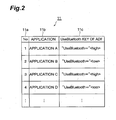
Fig. 2 is an illustration showing an example of correspondence between applications and security levels of ADFs. -
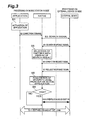
Fig. 3 is a flowchart showing an example of a BLUETOOTH connection process where a registered device with a link key is selected out of detected external devices. -
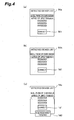
Fig. 4 is an illustration showing a display screen.Fig. 4(a) is an illustration showing a display screen where a registered device with a link key is selected from a list of detected devices displayed on the occasion of executing the BLUETOOTH connection process shown inFig. 3 .Fig. 4(b) is an illustration showing a display screen where a registered device without a link key is selected from the above list.Fig. 4(c) is an illustration showing a display screen where an unregistered device is selected from the above list. -
Fig. 5 is a flowchart showing an example of a BLUETOOTH connection process where a registered device without a link key is selected out of detected external devices. -
Fig. 6 is a flowchart showing an example of a BLUETOOTH connection process where an unregistered device is selected out of detected external devices. - An embodiment of the present invention will be described below with reference to the accompanying drawings presented for illustrative purposes. First, a configuration of
mobile station 10 in the present embodiment will be described.Fig. 1 is a block diagram showing a functional configuration ofmobile station 10. As shown inFig. 1 , themobile station 10 has anapplication storage 11, an application executing part 12 (corresponding to the activating means), adevice searching part 13, adisplay part 14, an input part 15 (corresponding to the selecting means), a security level acquirer 16 (corresponding to the acquiring means), and a BLUETOOTH connection part 17 (corresponding to the connection means). These parts are connected so as to be able to implement input/output of various signals through a bus. - Each of the components of the
mobile station 10 will be described below in detail.
Theapplication storage 11 is physically comprised of an embedded memory such as an EEPROM (Electrically Erasable and Programmable Read Only Memory). Theapplication storage 11 stores a plurality of application programs that themobile station 10 can execute by use of BLUETOOTH. The application programs are, for example, those of i-αppli (registered trademark). As shown inFig. 2 , each application program is correlated with an ADF (Application Description File), and a security level is set in each of these ADFs. When executing an application program to make a BLUETOOTH connection, themobile station 10 changes the procedure of connection according to the security level. - The ADFs of all the application programs making use of BLUETOOTH must contain a description of UseBluetooth key. For example, when a parameter of the UseBluetooth key described in an ADF is "high," the
mobile station 10 executes a connection at a high security level, i.e., a connection procedure including the authentication and encryption by input of PIN. On the other hand, when the parameter is "low," themobile station 10 executes a connection at a low security level, i.e., a connection procedure without the authentication and encryption by input of PIN. The parameter is described in the ASCII format and is case-insensitive. - When the user inputs a command of activating an application, through the
input part 15, theapplication executing part 12 retrieves this application from theapplication storage 11 into a memory area. When the application is activated in this manner, theapplication executing part 12 instructs thedevice searching part 13 to search for external devices. The external devices as targets of the search are external devices that exist within a transmission range (e.g., approximately 10-100 m in radius) of themobile station 10 and that can undergo a BLUETOOTH connection. In addition, theapplication executing part 12 outputs the security level described in the ADF of the application in action, in response to a request from the after-describedsecurity level acquirer 16. - When receiving a connection command from an application in action, the
device searching part 13 sends out a search signal to surroundings (polling) to search for external devices as candidates for BLUETOOTH connection. The aforementionedapplication executing part 12 is notified of the external devices detected as a result of the search. With reference toFig. 1 ,external devices device searching part 13 to theapplication executing part 12. - The
display part 14 presents the result of the search by thedevice searching part 13 to the user of themobile station 10 in accordance with a command from theapplication executing part 12. Preferably, thedisplay part 14 displays connection records with the detected external devices in a form that the user can visually recognize. - The
input part 15 is composed of a button as hardware and, when detecting a push or contact operation on the button by the user, theinput part 15 instructs theapplication executing part 12 to execute the application. Theinput part 15 performs selection of an external device with which themobile station 10 attempts to connect, out of the external devices displayed on thedisplay part 14, in accordance with a user's selection operation. - The
input part 15 selects a specific external device out of a plurality of external devices registered in advance, in accordance with a selection operation according to a purpose of the user. The specific external device is, for example, an external device as a communication partner when themobile station 10 performs an automatic connection by use of an application with the high security level set therein. In this case, themobile station 10 transmits a connection request to the specific external device. The specific external device is also an external device as a communication partner when themobile station 10 is searched and connected by use of an application with the high security level set therein. In this case, the specific external device transmits a connection request to themobile station 10. - The
security level acquirer 16 asks theapplication executing part 12 about the security level ("high" or "low") described in the ADF of the application in action to acquire it. Thesecurity level acquirer 16 instructs theBLUETOOTH connection part 17 to make a BLUETOOTH connection using a procedure based on the acquired security level. - In accordance with the instruction from the
security level acquirer 16, theBLUETOOTH connection part 17 executes the BLUETOOTH connection with the external device selected by theinput part 15. For example, where "UseBluetooth=" <high> is described as the UseBluetooth key of the ADF of the application in action (cf.Fig. 2 ), theBLUETOOTH connection part 17 executes a BLUETOOTH connection process including the authentication and encryption. - Next, the operation of the
mobile station 10 will be described together with a communication control method according to the present invention.Figs. 3 to 6 are flowcharts for explaining BLUETOOTH connection processes according to communication partners selected. The BLUETOOTH connection processes are implemented by coordinated operation of the components of themobile station 10, butFigs. 3 to 6 are depicted based on classification of process-executing entities into an ordinary application and a native application for convenience' sake of description. The ordinary application is, for example, i-αppli and is described as "application" in the drawings. The native application is, for example, an address book or a browser, and is abbreviated as "native" in the drawings. - As a premise for description of operation, it is assumed in the present embodiment that the
external devices external device 20 is a cell phone of Ichiro Suzuki and has a previous connection record at the high security level. Namely, themobile station 10 contains a link key registered. Theexternal device 30 is a PHS (Personal Handyphone System) of Jiro Tanaka, and has a previous connection record at the low security level only. Therefore, themobile station 10 contains a device name registered but no link key registered. There is no connection record of theexternal device 40. - At S1 in
Fig. 3 , theapplication executing part 12 of themobile station 10 first activates an application for providing a service desired by the user. The activation of the application may be automatic activation triggered by detection of an external device or manual activation by a command from the user of themobile station 10. - At S2, unless there occurs an exception of some kind, the application outputs a command for BLUETOOTH connection (connect(long cod)) to the native. Examples of cases where an exception occurs include a case where the aforementioned UseBluetooth key is not described in the ADF, a case where the parameter of the UseBluetooth key described in the ADF is a character string except for "high" and "low," a case where the BLUETOOTH connection is rejected in the setting of the application, and so on. In these cases where an exception occurs, the
mobile station 10 is desirably configured to draw user's attention with its content. - Receiving the connection command, the native sends out a search signal (Inquiry) to search for a plurality of external devices including the external device 20 (S3). Among external devices receiving the search signal, the
external devices mobile station 10 of the detection (S4). - The native makes the
display part 14 display UIs (User Identifications) of the detected external devices, as a result of the search for devices. These external devices are candidates for a communication partner. The user of themobile station 10 selects theexternal device 20 as a communication partner desired for BLUETOOTH connection, through the input part 15 (S5). In the present embodiment, theexternal device 20 corresponds to the cell phone of Mr. Ichiro Suzuki.Fig. 4(a) shows a state of thedisplay part 14 where the "cell phone of Ichiro Suzuki" is selected as a communication partner. - More specifically, the native manages information about communication partners. The information about a communication partner is, for example, BD_ADDR, a device name, a link key, and an encryption key. BD_ADDR is an address specific to each BLUETOOTH connection, which can be displayed for the user, but which cannot be changed by the user (though it can be deleted). The device name is a character string (e.g., cell phone of Ichiro Suzuki) personally registered by the user, which can be subjected to all the processes of display, change, and deletion. The link key is a 128-bit authentication key, and is automatically registered between
mobile station 10 andexternal device 20 upon a connection at the high security level. The link key cannot be displayed for the user but can be deleted by the user. The encryption key is a 128-bit encryption key, and is automatically registered betweenmobile station 10 andexternal device 20 upon a connection at the high security level. The encryption key cannot be displayed for the user, but can be deleted by the user only in conjunction with the link key. - Conventionally, BD_ADDR of a communication partner, the device name registered on the partner side, etc. were displayed as UI upon a search for external devices by BLUETOOTH. For this reason, there were problems that it was difficult for the user of the
mobile station 10 on the searching side to identify the communication partners and that there was a possibility of spoofing. In the present embodiment, however, the device name registered on the searching side is displayed for each communication partner already registered in a database of the native on the searching side, and a communication partner not registered on the searching side is displayed by its BD_ADDR on the searching side. Therefore, the aforementioned problems are overcome. - Furthermore, for each communication partner having been connected before at the high security level, a link key is registered in the database of the native. In
Fig. 4(a) , mark★ indicates a communication partner with a link key, i.e., a communication partner whose device name is registered and with which a connection has been made at the high security level. In contrast to it, mark ☆ indicates a communication partner without a link key, i.e., a communication partner whose device name is registered but with which no connection has been made at the high security level. Furthermore, each UI without any mark ("XXXXXX" in the same figure) indicates a communication partner not registered. By enabling reference to the presence or absence of the link key in combination with each UI in this manner, the user of themobile station 10 can readily check the reliability of the desired communication partner before establishment of connection. Since themobile station 10 displays the result of the search for a communication partner on the native screen, it can also be expected to provide the effect of preventing the application from taking the liberty to rewrite BD_ADDR and display the rewritten BD_ADDR. - The user of the
mobile station 10 performs a selection operation on aconnection button 141 to instruct a connection with theexternal device 20 selected as a communication partner. Returning toFig. 3 , at S6, as triggered by this instruction, the native transmits a connection request signal (Page) to theexternal device 20. Receiving the connection request signal, theexternal device 20 sends a request response signal (PageResponse) to the mobile station 10 (S7). - Thereafter, the
mobile station 10 makes thesecurity level acquirer 16 acquire the security level from the ADF of the application activated at S1 (S8). Themobile station 10 refers to the UseBluetooth key described in the ADF to determine whether the security level set in the application is high or low (S9). When the result of the determination is that "UseBluetooth=" <high> is described as the UseBluetooth key (S9; YES), themobile station 10 determines that the security level of the application in action is high, and moves to S10. - At S10, the authentication and encryption processes are carried out between
external device 20 as a communication partner andmobile station 10. The processes of authentication and encryption are well-known communication security technologies and thus omitted from detailed description. However, the authentication process is to examine the validity of the communication partner and thereby prevent unauthorized access, and the encryption process is to encrypt transmitted and received data and thereby assure confidentiality of communication. In this case, for theexternal device 20, the link key thereof is already registered as described above, and thus there is no need for input of PIN in the authentication. - It can also be contemplated that, prior to the execution of the processes at S10, the user of the
mobile station 10 preliminarily sets the propriety of automatic connection with each external device under setting of the high security level. This enables themobile station 10 to refer to the set content and automatically make a connection with an external device permitted to make an automatic connection. Since the automatic connection does not require the user to input a PIN or the like, it is desirably executed only with a reliable communication partner. In this respect, external devices as targets for the automatic connection are limited to devices designated by the user, and communication with the devices is executed at the high security level. For this reason, the automatic connection with high convenience to the user is implemented while assuring high security. - When the result of the determination at S9 is that "UseBluetooth=" <low> is described as the UseBluetooth key (S9; NO), the flow goes to a process of S11 without passing the authentication and encryption processes at S10.
- At S11, a link is established by BLUETOOTH between
mobile station 10 andexternal device 20. After establishment of the link, a PAN_EVENT_CONNECTED signal is sent to notify the application of the fact. At this time, themobile station 10 may be configured to present the security level currently applied, during the BLUETOOTH connection. The presentation can be implemented, for example, by adopting a technique of displaying a character string indicating the security level, or a technique of changing the color of an icon indicating a progress of communication, according to the security level. This permits the user to readily and quickly grasp at which security level the communication is under way with the communication partner. - Subsequently, the BLUETOOTH connection process executed between
mobile station 10 andexternal device 30 will be described with reference toFig. 5 . This BLUETOOTH connection process includes a plurality of steps common to the BLUETOOTH connection process detailed with reference toFig. 3 . Specifically, processes at S21-S29, S31, and S32 inFig. 5 are equivalent to those at S1-S9, S10, and S11, respectively, shown inFig. 3 . However, these processes are somewhat different in detail and, particularly, the communication partner selected at S25 is the PHS of Jiro Tanaka.Fig. 4(b) shows a state of thedisplay part 14 where the "PHS of Jiro Tanaka" is selected as a communication partner. - A process at S30 in
Fig. 5 is processes of input and collation of a PIN code, which are executed after the determination on whether the security level is high or low. These processes are executed when the security level is determined to be high (S29; YES), i.e., when "UseBluetooth=" <high> is described as the UseBluetooth key of the ADF. Since no link key is registered for theexternal device 30, the input of a PIN is carried out in themobile station 10 and a link key is generated based on the input PIN. The link key generated is registered in themobile station 10 upon establishment of a link (S32). In this manner, themobile station 10 registers the link key first after a success in authentication (pairing), thereby securing the credibility of the communication partner having the link key. - Next, the BLUETOOTH connection process executed between
mobile station 10 andexternal device 40 will be described with reference toFig. 6 . The BLUETOOTH connection process includes a plurality of steps common to the BLUETOOTH connection process detailed with reference toFig. 3 . Specifically, processes at S41-S49, S51, and S52 inFig. 6 are equivalent to those at S1-S9, S10, and S11, respectively, shown inFig. 3 . However, these processes are different in that the communication partner selected at S45 is theexternal device 40 not registered. When a connection with an unregistered device is selected as in this mode, it is desirable to display adialog screen 142 to inquire the necessity of registration of the user, in combination with a detected device list (cf.Fig. 4(c) ), in consideration of occasions of reconnection. Themobile station 10 may also be configured to simultaneously notify the user that the target to which a connection is attempted is not registered, by wording to draw attention. - The other processes at S50 and S52 are the same processes as at S30 and S32, respectively, shown in
Fig. 5 . The above described the connection procedures of themobile station 10 with theexternal devices mobile station 10 and all the external devices detected, without being limited to these external devices described above. - As described above, the
mobile station 10 of the present embodiment performs the BLUETOOTH connection with the external device selected as a communication partner by the user of themobile station 10, out of the plurality ofexternal devices mobile station 10 changes the procedure for connection with the external device by BLUETOOTH, according to the security level set in the application activated. Specifically, where the low security level is set in the application, themobile station 10 omits the processes of device authentication and encryption, irrespective of the differences of connection records. This simplifies the connection procedure and reduces the connection time. When the high security level is set in the application, themobile station 10 executes the processes of device authentication and encryption, irrespective of the differences of connection records. This circumvents connections with unauthorized third parties and assures predetermined communication security. - Eventually, in developing an application, the security level can be variably set according to a kind of a service implemented by the application. Namely, a developer can develop an application with a security level suitable for an individual service.
- The present invention is not limited to the embodiment described above, and can be properly modified in various modification forms, without departing from the scope of the invention.
For example, in the above embodiment the terminal for changing the display method of the search result according to the security level was themobile station 10, i.e., the terminal that performed the search by transmission of the search signal. However, the technology of the present invention is also applicable to cases where themobile station 10 is a terminal that is searched by reception of a transmitted search signal (accept command). In this mode, themobile station 10 changes a display method of a connection request entity (searching entity) according to the security level. - Specifically, the user of the
mobile station 10 registers the propriety of connection for each external device in the case where the high security level is set in an application, as a preliminary process. Here the propriety of connection is whether acceptance of a connection request is to be permitted or rejected, in other words. When an application with the high security level is in action upon being searched, themobile station 10 ignores a connection request from an external device not permitted to connect by the user, according to the registered content. In contrast to it, when a connection request is received from an external device permitted to connect by the user (e.g., an external device having a connection record at the high security level), themobile station 10 displays the UI of the external device on thedisplay part 14. On the other hand, when an application with the low security level is in action upon being searched, themobile station 10 accepts a connection request from all the external devices, regardless of their connection records, and displays UIs of these devices in time series. - This permits the user of the
mobile station 10 to readily check the reliability of the communication partner before connection, in accordance with the content of the service provided by the application. Particularly, where the high security level is set in the application, the aforementioned process preliminarily narrows down partners for which the connection request (search) is accepted. For this reason, the number of responses manually sent in response to the request is reduced for the user on the searched side (mobile station 10). This results in reducing the time and effort necessary for establishment of a link betweenmobile station 10 and an external device. - The above embodiment adopted the authentication process and encryption process based on the input of PIN as means for assuring security at the high level. However, it is also possible to adopt a configuration wherein the
mobile station 10 variably sets the propriety of automatic connection and disables the automatic connection only if the high security level is set in the application in action. This gets rid of concern that data is transmitted and received against user's intention between themobile station 10 and an external device not going through the authentication process. - The
mobile station 10 is, for example, a cell phone, but may be any information equipment provided with a communication function, such as a PDA (Personal Digital Assistance) or a PHS, and the function and size thereof do not limit objects to which the present invention is applied.
Furthermore, the above embodiment was configured on the assumption of the BLUETOOTH communication as short-range wireless communication betweenmobile station 10 andexternal devices - From the invention thus described, it will be obvious that the embodiments of the invention may be varied in many ways. Such variations are not to be regarded as a departure from the scope of the invention, and all such modifications as would be obvious to one skilled in the art are intended for inclusion within the scope of the following claims.
Claims (4)
- A mobile station (10) comprising:• activating means (12) for activating an application to communicate with an external device (20, 30, 40);• acquiring means (16) for acquiring a security level set in the application activated by the activating means (12);• connection means (17) for making a connection with the external device (20, 30, 40) by a procedure according to the security level acquired by the acquiring means; and.• selecting means (15) for selecting an external device that can undergo a connection when an application with a high security level set therein is in use,• wherein when the security level acquired by the acquiring means (16) is the high security level, the connection means (17) makes the connection with the external device selected by the selecting means after carrying out an authentication and encryption with the external device.
- The mobile station (10) according to Claim 1,
wherein when the security level acquired by the acquiring means (16) is the high security level, the connection means (17) makes the connection with the external device on the occasion of receiving a connection request from the external device selected by the selecting means (15). - The mobile station (10) according to Claim 1,
wherein when the security level acquired by the acquiring means (16) is a low security level, the connection means (17) does not carry out the authentication and encryption. - A communication control method comprising the following steps carried out by a mobile station (10):• an activating step (S1, S21, S41) of activating an application to communicate with an external device (20, 30, 40);• an acquiring step (S8, S28, S48) of acquiring a security level set in the application activated in the activating step (S1, S21, S41); and• a connection step (S10, S11, S31, S32, S51, S52) of making a connection with the external device (20, 30, 40) by a procedure according to the security level acquired in the acquiring step (S8, S28, S48); and• a selecting step of selecting an external device that can undergo a connection when an application with a high security level set therein is in use,• wherein when the security level acquired in the acquiring step (S8, S28, S48) is the high security level, the connection with the external device selected in the selecting step (S8, S28, S48) is made in the connection step (S10, S11, S31, S32, S51, S52), after carrying out an authentication and encryption with the external device.
Applications Claiming Priority (2)
| Application Number | Priority Date | Filing Date | Title |
|---|---|---|---|
| JP2004134262A JP3817249B2 (en) | 2004-04-28 | 2004-04-28 | Mobile device and communication control method |
| JP2004134262 | 2004-04-28 |
Publications (3)
| Publication Number | Publication Date |
|---|---|
| EP1592195A2 EP1592195A2 (en) | 2005-11-02 |
| EP1592195A3 EP1592195A3 (en) | 2009-06-17 |
| EP1592195B1 true EP1592195B1 (en) | 2014-12-31 |
Family
ID=34935570
Family Applications (1)
| Application Number | Title | Priority Date | Filing Date |
|---|---|---|---|
| EP05008812.9A Expired - Lifetime EP1592195B1 (en) | 2004-04-28 | 2005-04-21 | Mobile station and communication control method |
Country Status (6)
| Country | Link |
|---|---|
| US (1) | US7716475B2 (en) |
| EP (1) | EP1592195B1 (en) |
| JP (1) | JP3817249B2 (en) |
| CN (1) | CN1691812A (en) |
| ES (1) | ES2533831T3 (en) |
| TW (1) | TWI263452B (en) |
Families Citing this family (48)
| Publication number | Priority date | Publication date | Assignee | Title |
|---|---|---|---|---|
| US7545795B2 (en) * | 2004-08-05 | 2009-06-09 | Broadcom Corporation | Method for identification using bluetooth wireless key |
| US8090105B2 (en) * | 2004-11-24 | 2012-01-03 | International Business Machines Corporation | Broadcast encryption with dual tree sizes |
| US8787967B2 (en) * | 2005-08-23 | 2014-07-22 | Sony Corporation | Communication terminals with pull-based digital information distribution capability and pull-based methods for digital information distribution |
| KR100774292B1 (en) * | 2005-10-25 | 2007-11-08 | 삼성전자주식회사 | How to automatically connect Bluetooth on mobile terminal |
| KR100659253B1 (en) * | 2005-11-07 | 2006-12-20 | 삼성전자주식회사 | How to search for Bluetooth devices on your mobile device |
| KR101192016B1 (en) | 2005-11-21 | 2012-10-16 | 엘지전자 주식회사 | Method of communication for wireless universal serial bus |
| US7877815B2 (en) * | 2006-01-20 | 2011-01-25 | Kyocera Corporation | Battery authentication in a wireless communication device |
| US8037522B2 (en) * | 2006-03-30 | 2011-10-11 | Nokia Corporation | Security level establishment under generic bootstrapping architecture |
| US7668507B2 (en) * | 2006-06-15 | 2010-02-23 | Sony Ericsson Mobile Communications Ab | Short range connectivity usability by using contact information |
| JP4864592B2 (en) * | 2006-08-08 | 2012-02-01 | ソフトバンクモバイル株式会社 | Mobile communication terminal and system having the mobile communication terminal |
| US9233301B2 (en) | 2006-09-07 | 2016-01-12 | Rateze Remote Mgmt Llc | Control of data presentation from multiple sources using a wireless home entertainment hub |
| US8966545B2 (en) * | 2006-09-07 | 2015-02-24 | Porto Vinci Ltd. Limited Liability Company | Connecting a legacy device into a home entertainment system using a wireless home entertainment hub |
| US9319741B2 (en) | 2006-09-07 | 2016-04-19 | Rateze Remote Mgmt Llc | Finding devices in an entertainment system |
| US8607281B2 (en) | 2006-09-07 | 2013-12-10 | Porto Vinci Ltd. Limited Liability Company | Control of data presentation in multiple zones using a wireless home entertainment hub |
| US8935733B2 (en) * | 2006-09-07 | 2015-01-13 | Porto Vinci Ltd. Limited Liability Company | Data presentation using a wireless home entertainment hub |
| US9386269B2 (en) | 2006-09-07 | 2016-07-05 | Rateze Remote Mgmt Llc | Presentation of data on multiple display devices using a wireless hub |
| US9806772B2 (en) * | 2007-01-06 | 2017-10-31 | Apple Inc. | Apparatuses and methods that facilitate the transfer of power and information among radio frequency-based devices |
| JP4815359B2 (en) * | 2007-01-15 | 2011-11-16 | 株式会社リコー | Image forming apparatus |
| KR101496329B1 (en) * | 2008-03-28 | 2015-02-26 | 삼성전자주식회사 | Method and apparatus for adjusting device security level of a network |
| US8225106B2 (en) * | 2008-04-02 | 2012-07-17 | Protegrity Corporation | Differential encryption utilizing trust modes |
| DE102009032466B4 (en) * | 2008-07-16 | 2017-03-02 | Infineon Technologies Ag | Security in networks |
| US9160753B2 (en) * | 2009-05-22 | 2015-10-13 | Raytheon Company | Analog voice bridge |
| JP5369920B2 (en) * | 2009-06-12 | 2013-12-18 | 富士通モバイルコミュニケーションズ株式会社 | Wireless communication apparatus and wireless communication method |
| JP5321266B2 (en) * | 2009-06-15 | 2013-10-23 | 富士通モバイルコミュニケーションズ株式会社 | Wireless communication terminal |
| US8775801B2 (en) | 2009-06-12 | 2014-07-08 | Fujitsu Mobile Communications Limited | Radio communication apparatus and radio communication method |
| JP5353611B2 (en) * | 2009-09-30 | 2013-11-27 | 富士通モバイルコミュニケーションズ株式会社 | Wireless communication apparatus and wireless communication method |
| JP5436195B2 (en) * | 2009-12-22 | 2014-03-05 | キヤノン株式会社 | Image processing apparatus, control method, and program |
| KR101730357B1 (en) * | 2010-11-22 | 2017-04-27 | 삼성전자주식회사 | Apparatus and method for connecting access point in portable terminal |
| CN102075217B (en) * | 2010-12-22 | 2014-04-30 | 华为终端有限公司 | Method for managing Bluetooth connection and equipment |
| KR101868018B1 (en) | 2011-02-09 | 2018-06-18 | 삼성전자주식회사 | Method and apparatus for controlling connection between devices |
| WO2013002547A2 (en) | 2011-06-30 | 2013-01-03 | 주식회사 케이티 | Portable terminal capable of docking with an external device and method for controlling same |
| KR101554599B1 (en) | 2011-06-30 | 2015-09-21 | 주식회사 케이티 | Mobile Terminal for connection with external device, and method for running application thereof |
| US8370918B1 (en) | 2011-09-30 | 2013-02-05 | Kaspersky Lab Zao | Portable security device and methods for providing network security |
| KR101474927B1 (en) | 2011-12-22 | 2014-12-31 | 주식회사 케이티 | Method for outputting image data from terminal to display device and terminal thereof |
| KR101522399B1 (en) | 2011-12-23 | 2015-05-22 | 주식회사 케이티 | Method for displaying image from handheld terminal to display device and handheld terminal thereof |
| KR101546407B1 (en) | 2011-12-23 | 2015-08-24 | 주식회사 케이티 | Method and apparatus for execution controlling of application |
| KR101504655B1 (en) | 2011-12-26 | 2015-03-23 | 주식회사 케이티 | Method and apparatus for controlling application execution |
| KR101522397B1 (en) * | 2011-12-26 | 2015-05-22 | 주식회사 케이티 | Mobile terminal capable of connecting to multiple external devices and control method thereof |
| JP2014036238A (en) * | 2012-08-07 | 2014-02-24 | Hioki Ee Corp | Measuring device |
| WO2014082311A1 (en) * | 2012-11-30 | 2014-06-05 | 华为技术有限公司 | Authentication method and apparatus |
| KR20140146954A (en) * | 2013-06-18 | 2014-12-29 | 삼성전자주식회사 | Method and device for providing service |
| JP6028008B2 (en) * | 2014-09-12 | 2016-11-16 | パナソニック インテレクチュアル プロパティ コーポレーション オブ アメリカPanasonic Intellectual Property Corporation of America | Information device control method and program |
| KR102189648B1 (en) * | 2014-10-30 | 2020-12-11 | 삼성전자주식회사 | Display, controlling method thereof and display system |
| CN104821992B (en) * | 2015-05-25 | 2018-01-19 | 广东欧珀移动通信有限公司 | A kind of method and device of mobile phone automatically switching network connection type |
| CN106201833A (en) * | 2016-06-30 | 2016-12-07 | 北京小米移动软件有限公司 | The methods of exhibiting of WiFi signal icon, device and mobile terminal |
| JP6810555B2 (en) * | 2016-08-24 | 2021-01-06 | キヤノン株式会社 | Wireless communication equipment and its control method, and wireless communication system |
| KR102025758B1 (en) * | 2018-06-05 | 2019-11-05 | 삼성전자주식회사 | Method and apparatus for controlling connection between devices |
| JP7634430B2 (en) * | 2021-06-04 | 2025-02-21 | シャープ株式会社 | Communication device and communication method |
Family Cites Families (19)
| Publication number | Priority date | Publication date | Assignee | Title |
|---|---|---|---|---|
| US6272538B1 (en) * | 1996-07-30 | 2001-08-07 | Micron Technology, Inc. | Method and system for establishing a security perimeter in computer networks |
| US7167892B2 (en) * | 1998-03-19 | 2007-01-23 | Isochron, Inc. | System, method and apparatus for vending machine wireless audit and cashless transaction transport |
| GB2348568A (en) | 1999-03-31 | 2000-10-04 | Ibm | Enabling conformance to legislative requirements for mobile devices |
| AU4598899A (en) | 1999-07-21 | 2001-02-13 | Swisscom Mobile Ag | Method and associated devices for setting the security level of cryptographic functions |
| SE516779C2 (en) * | 1999-10-01 | 2002-02-26 | Ericsson Telefon Ab L M | Portable communication device with a user interface and a working method for the same |
| JP3544918B2 (en) | 2000-04-28 | 2004-07-21 | 株式会社東芝 | Wireless communication device and user authentication method |
| EP1158745B1 (en) | 2000-05-26 | 2003-09-03 | International Business Machines Corporation | Method and system for secure pervasive access |
| US6859879B2 (en) * | 2000-05-26 | 2005-02-22 | International Business Machine Corporation | Method and system for secure pervasive access |
| JP2002185450A (en) | 2000-12-15 | 2002-06-28 | Ntt Docomo Inc | Wireless adapter device, initial connection authentication method, and wireless device |
| JP3551937B2 (en) * | 2001-02-28 | 2004-08-11 | 日本電気株式会社 | Communication control method in mobile communication system and base station used therefor |
| JP3764345B2 (en) * | 2001-03-19 | 2006-04-05 | 株式会社エヌ・ティ・ティ・ドコモ | Mobile communication terminal device and server device |
| FR2825869B1 (en) * | 2001-06-08 | 2003-10-03 | France Telecom | AUTHENTICATION METHOD BETWEEN A PORTABLE TELECOMMUNICATION OBJECT AND A PUBLIC ACCESS TERMINAL |
| US8347104B2 (en) * | 2001-12-26 | 2013-01-01 | Research In Motion Limited | Security interface for a mobile device |
| WO2003077480A1 (en) * | 2002-03-12 | 2003-09-18 | Nokia Corporation | Method and device for wireless network formation |
| CA2482185A1 (en) | 2002-04-11 | 2003-10-16 | International Business Machines Corporation | Computer, computer security setting method, and program |
| US7162277B2 (en) * | 2003-10-14 | 2007-01-09 | Partner Tech Corp. | Wireless earphone with built-in mobile communications module and dial-up method of the same |
| US7941665B2 (en) * | 2003-12-05 | 2011-05-10 | Hewlett-Packard Development Company, L.P. | Device pairing |
| US7124222B2 (en) * | 2003-12-16 | 2006-10-17 | 1X1 Mobile, Ltd. | Control system and method for a communications interface |
| WO2006084960A1 (en) * | 2005-02-10 | 2006-08-17 | France Telecom | System for automatic selection of authentication |
-
2004
- 2004-04-28 JP JP2004134262A patent/JP3817249B2/en not_active Expired - Fee Related
-
2005
- 2005-04-01 TW TW094110553A patent/TWI263452B/en not_active IP Right Cessation
- 2005-04-18 US US11/107,751 patent/US7716475B2/en not_active Expired - Fee Related
- 2005-04-21 ES ES05008812.9T patent/ES2533831T3/en not_active Expired - Lifetime
- 2005-04-21 EP EP05008812.9A patent/EP1592195B1/en not_active Expired - Lifetime
- 2005-04-28 CN CNA200510068483XA patent/CN1691812A/en active Pending
Also Published As
| Publication number | Publication date |
|---|---|
| US20050257052A1 (en) | 2005-11-17 |
| EP1592195A2 (en) | 2005-11-02 |
| JP3817249B2 (en) | 2006-09-06 |
| US7716475B2 (en) | 2010-05-11 |
| ES2533831T3 (en) | 2015-04-15 |
| TWI263452B (en) | 2006-10-01 |
| TW200605694A (en) | 2006-02-01 |
| JP2005318298A (en) | 2005-11-10 |
| CN1691812A (en) | 2005-11-02 |
| EP1592195A3 (en) | 2009-06-17 |
Similar Documents
| Publication | Publication Date | Title |
|---|---|---|
| US7716475B2 (en) | Mobile station and communication control method | |
| US11729594B2 (en) | Network access method, device, and system | |
| US7308256B2 (en) | Mobile communication terminal, information processing apparatus, relay server apparatus, information processing system, and information processing method | |
| EP1395002A1 (en) | Apparatus for performing wireless communication and wireless communication control method applied to the apparatus | |
| KR20090086628A (en) | Automatic Localization of Devices | |
| US9921789B2 (en) | Image processing apparatus configured to perform image processing using setting information | |
| US20150236922A1 (en) | System and Method for Interface Content Transfer and Display, and Terminal | |
| CN115562570B (en) | Data migration method, system and electronic equipment | |
| EP1589723B1 (en) | A device capable of modifying its behaviour based on surrounding devices | |
| CN106714181B (en) | Method and device for connecting WiFi hotspot | |
| WO2008015655A2 (en) | Method for cross triggering and detection of platform dependent resources, features and events | |
| CN104992088A (en) | Device security protection method and apparatus | |
| US7474888B1 (en) | Method for bypassing passkey exchange and authentication procedures | |
| CN107466019A (en) | A kind of short message recognition methods and device | |
| WO2022262369A1 (en) | Wifi access method, terminal device, and storage medium | |
| KR20170138383A (en) | Method and apparatus for performing function in mobile terminal using short range communication | |
| CN112399242A (en) | Mobile network connection method, device, equipment and medium based on television | |
| JP2013085053A (en) | Portable terminal, control method therefor, and program | |
| KR20100006325A (en) | Apparatus and method for holding data between devices using local wireless communication | |
| US20130312063A1 (en) | Secure network connection | |
| WO2018040434A1 (en) | File sharing method, device and system based on wireless network | |
| WO2024212168A1 (en) | Method for message transmission between devices, device for forwarding messages between devices, and system for message transmission between devices | |
| WO2024212165A1 (en) | Method for message transmission between devices, device for forwarding messages between devices, and system for message transmission between devices | |
| JP2005165666A (en) | Receiving apparatus and program | |
| CN111885611A (en) | Output method of pseudo base station information, terminal equipment and storage medium |
Legal Events
| Date | Code | Title | Description |
|---|---|---|---|
| PUAI | Public reference made under article 153(3) epc to a published international application that has entered the european phase |
Free format text: ORIGINAL CODE: 0009012 |
|
| 17P | Request for examination filed |
Effective date: 20050421 |
|
| AK | Designated contracting states |
Kind code of ref document: A2 Designated state(s): AT BE BG CH CY CZ DE DK EE ES FI FR GB GR HU IE IS IT LI LT LU MC NL PL PT RO SE SI SK TR |
|
| AX | Request for extension of the european patent |
Extension state: AL BA HR LV MK YU |
|
| PUAL | Search report despatched |
Free format text: ORIGINAL CODE: 0009013 |
|
| AK | Designated contracting states |
Kind code of ref document: A3 Designated state(s): AT BE BG CH CY CZ DE DK EE ES FI FR GB GR HU IE IS IT LI LT LU MC NL PL PT RO SE SI SK TR |
|
| AX | Request for extension of the european patent |
Extension state: AL BA HR LV MK YU |
|
| AKX | Designation fees paid |
Designated state(s): AT BE BG CH CY CZ DE DK EE ES FI FR GB GR HU IE IS IT LI LT LU MC NL PL PT RO SE SI SK TR |
|
| 17Q | First examination report despatched |
Effective date: 20100511 |
|
| GRAP | Despatch of communication of intention to grant a patent |
Free format text: ORIGINAL CODE: EPIDOSNIGR1 |
|
| INTG | Intention to grant announced |
Effective date: 20140730 |
|
| RIN1 | Information on inventor provided before grant (corrected) |
Inventor name: KAKUNO, KOSUKE, INT.PRO. DPT., NTT DOCOMO INC. Inventor name: SHIBUTANI, AKIRA, INT.PRO. DPT., NTT DOCOMO INC. Inventor name: OL, TATSURO, INT. PROP. DPT., NTT DOCOMO, INC. Inventor name: ASAI, MAO, INT. PROP. DPT., NTT DOCOMO, INC. Inventor name: NAKATSUCHI, MASAHARU, I.P.D., NTT DOCOMO INC. |
|
| GRAS | Grant fee paid |
Free format text: ORIGINAL CODE: EPIDOSNIGR3 |
|
| GRAA | (expected) grant |
Free format text: ORIGINAL CODE: 0009210 |
|
| RIN1 | Information on inventor provided before grant (corrected) |
Inventor name: ASAI, MAO, INT. PROP. DPT., NTT DOCOMO, INC. Inventor name: KAKUNO, KOSUKE, INT.PRO. DPT., NTT DOCOMO INC. Inventor name: NAKATSUCHI, MASAHARU, I.P.D., NTT DOCOMO INC. Inventor name: OI, TATSURO, INT. PROP. DPT., NTT DOCOMO, INC. Inventor name: SHIBUTANI, AKIRA, INT.PRO. DPT., NTT DOCOMO INC. |
|
| AK | Designated contracting states |
Kind code of ref document: B1 Designated state(s): AT BE BG CH CY CZ DE DK EE ES FI FR GB GR HU IE IS IT LI LT LU MC NL PL PT RO SE SI SK TR |
|
| REG | Reference to a national code |
Ref country code: CH Ref legal event code: EP Ref country code: GB Ref legal event code: FG4D |
|
| REG | Reference to a national code |
Ref country code: IE Ref legal event code: FG4D |
|
| REG | Reference to a national code |
Ref country code: AT Ref legal event code: REF Ref document number: 704951 Country of ref document: AT Kind code of ref document: T Effective date: 20150215 |
|
| REG | Reference to a national code |
Ref country code: DE Ref legal event code: R096 Ref document number: 602005045546 Country of ref document: DE Effective date: 20150219 |
|
| REG | Reference to a national code |
Ref country code: NL Ref legal event code: T3 |
|
| REG | Reference to a national code |
Ref country code: ES Ref legal event code: FG2A Ref document number: 2533831 Country of ref document: ES Kind code of ref document: T3 Effective date: 20150415 |
|
| REG | Reference to a national code |
Ref country code: GR Ref legal event code: EP Ref document number: 20150400446 Country of ref document: GR Effective date: 20150318 |
|
| PG25 | Lapsed in a contracting state [announced via postgrant information from national office to epo] |
Ref country code: LT Free format text: LAPSE BECAUSE OF FAILURE TO SUBMIT A TRANSLATION OF THE DESCRIPTION OR TO PAY THE FEE WITHIN THE PRESCRIBED TIME-LIMIT Effective date: 20141231 Ref country code: FI Free format text: LAPSE BECAUSE OF FAILURE TO SUBMIT A TRANSLATION OF THE DESCRIPTION OR TO PAY THE FEE WITHIN THE PRESCRIBED TIME-LIMIT Effective date: 20141231 |
|
| REG | Reference to a national code |
Ref country code: LT Ref legal event code: MG4D |
|
| PG25 | Lapsed in a contracting state [announced via postgrant information from national office to epo] |
Ref country code: SE Free format text: LAPSE BECAUSE OF FAILURE TO SUBMIT A TRANSLATION OF THE DESCRIPTION OR TO PAY THE FEE WITHIN THE PRESCRIBED TIME-LIMIT Effective date: 20141231 |
|
| REG | Reference to a national code |
Ref country code: AT Ref legal event code: MK05 Ref document number: 704951 Country of ref document: AT Kind code of ref document: T Effective date: 20141231 |
|
| PG25 | Lapsed in a contracting state [announced via postgrant information from national office to epo] |
Ref country code: RO Free format text: LAPSE BECAUSE OF FAILURE TO SUBMIT A TRANSLATION OF THE DESCRIPTION OR TO PAY THE FEE WITHIN THE PRESCRIBED TIME-LIMIT Effective date: 20141231 Ref country code: CZ Free format text: LAPSE BECAUSE OF FAILURE TO SUBMIT A TRANSLATION OF THE DESCRIPTION OR TO PAY THE FEE WITHIN THE PRESCRIBED TIME-LIMIT Effective date: 20141231 Ref country code: SK Free format text: LAPSE BECAUSE OF FAILURE TO SUBMIT A TRANSLATION OF THE DESCRIPTION OR TO PAY THE FEE WITHIN THE PRESCRIBED TIME-LIMIT Effective date: 20141231 |
|
| PG25 | Lapsed in a contracting state [announced via postgrant information from national office to epo] |
Ref country code: AT Free format text: LAPSE BECAUSE OF FAILURE TO SUBMIT A TRANSLATION OF THE DESCRIPTION OR TO PAY THE FEE WITHIN THE PRESCRIBED TIME-LIMIT Effective date: 20141231 Ref country code: IS Free format text: LAPSE BECAUSE OF FAILURE TO SUBMIT A TRANSLATION OF THE DESCRIPTION OR TO PAY THE FEE WITHIN THE PRESCRIBED TIME-LIMIT Effective date: 20150430 Ref country code: PL Free format text: LAPSE BECAUSE OF FAILURE TO SUBMIT A TRANSLATION OF THE DESCRIPTION OR TO PAY THE FEE WITHIN THE PRESCRIBED TIME-LIMIT Effective date: 20141231 |
|
| REG | Reference to a national code |
Ref country code: DE Ref legal event code: R097 Ref document number: 602005045546 Country of ref document: DE |
|
| PG25 | Lapsed in a contracting state [announced via postgrant information from national office to epo] |
Ref country code: EE Free format text: LAPSE BECAUSE OF FAILURE TO SUBMIT A TRANSLATION OF THE DESCRIPTION OR TO PAY THE FEE WITHIN THE PRESCRIBED TIME-LIMIT Effective date: 20141231 Ref country code: DK Free format text: LAPSE BECAUSE OF FAILURE TO SUBMIT A TRANSLATION OF THE DESCRIPTION OR TO PAY THE FEE WITHIN THE PRESCRIBED TIME-LIMIT Effective date: 20141231 |
|
| PLBE | No opposition filed within time limit |
Free format text: ORIGINAL CODE: 0009261 |
|
| STAA | Information on the status of an ep patent application or granted ep patent |
Free format text: STATUS: NO OPPOSITION FILED WITHIN TIME LIMIT |
|
| PG25 | Lapsed in a contracting state [announced via postgrant information from national office to epo] |
Ref country code: LU Free format text: LAPSE BECAUSE OF FAILURE TO SUBMIT A TRANSLATION OF THE DESCRIPTION OR TO PAY THE FEE WITHIN THE PRESCRIBED TIME-LIMIT Effective date: 20150421 Ref country code: MC Free format text: LAPSE BECAUSE OF FAILURE TO SUBMIT A TRANSLATION OF THE DESCRIPTION OR TO PAY THE FEE WITHIN THE PRESCRIBED TIME-LIMIT Effective date: 20141231 |
|
| REG | Reference to a national code |
Ref country code: CH Ref legal event code: PL |
|
| 26N | No opposition filed |
Effective date: 20151001 |
|
| REG | Reference to a national code |
Ref country code: IE Ref legal event code: MM4A |
|
| PG25 | Lapsed in a contracting state [announced via postgrant information from national office to epo] |
Ref country code: LI Free format text: LAPSE BECAUSE OF NON-PAYMENT OF DUE FEES Effective date: 20150430 Ref country code: CH Free format text: LAPSE BECAUSE OF NON-PAYMENT OF DUE FEES Effective date: 20150430 |
|
| PG25 | Lapsed in a contracting state [announced via postgrant information from national office to epo] |
Ref country code: SI Free format text: LAPSE BECAUSE OF FAILURE TO SUBMIT A TRANSLATION OF THE DESCRIPTION OR TO PAY THE FEE WITHIN THE PRESCRIBED TIME-LIMIT Effective date: 20141231 |
|
| REG | Reference to a national code |
Ref country code: FR Ref legal event code: PLFP Year of fee payment: 12 |
|
| PG25 | Lapsed in a contracting state [announced via postgrant information from national office to epo] |
Ref country code: IE Free format text: LAPSE BECAUSE OF NON-PAYMENT OF DUE FEES Effective date: 20150421 |
|
| REG | Reference to a national code |
Ref country code: FR Ref legal event code: PLFP Year of fee payment: 13 |
|
| PG25 | Lapsed in a contracting state [announced via postgrant information from national office to epo] |
Ref country code: HU Free format text: LAPSE BECAUSE OF FAILURE TO SUBMIT A TRANSLATION OF THE DESCRIPTION OR TO PAY THE FEE WITHIN THE PRESCRIBED TIME-LIMIT; INVALID AB INITIO Effective date: 20050421 Ref country code: BG Free format text: LAPSE BECAUSE OF FAILURE TO SUBMIT A TRANSLATION OF THE DESCRIPTION OR TO PAY THE FEE WITHIN THE PRESCRIBED TIME-LIMIT Effective date: 20141231 |
|
| PG25 | Lapsed in a contracting state [announced via postgrant information from national office to epo] |
Ref country code: CY Free format text: LAPSE BECAUSE OF FAILURE TO SUBMIT A TRANSLATION OF THE DESCRIPTION OR TO PAY THE FEE WITHIN THE PRESCRIBED TIME-LIMIT Effective date: 20141231 |
|
| PG25 | Lapsed in a contracting state [announced via postgrant information from national office to epo] |
Ref country code: PT Free format text: LAPSE BECAUSE OF FAILURE TO SUBMIT A TRANSLATION OF THE DESCRIPTION OR TO PAY THE FEE WITHIN THE PRESCRIBED TIME-LIMIT Effective date: 20150501 |
|
| PG25 | Lapsed in a contracting state [announced via postgrant information from national office to epo] |
Ref country code: TR Free format text: LAPSE BECAUSE OF FAILURE TO SUBMIT A TRANSLATION OF THE DESCRIPTION OR TO PAY THE FEE WITHIN THE PRESCRIBED TIME-LIMIT Effective date: 20141231 |
|
| REG | Reference to a national code |
Ref country code: FR Ref legal event code: PLFP Year of fee payment: 14 |
|
| PGFP | Annual fee paid to national office [announced via postgrant information from national office to epo] |
Ref country code: NL Payment date: 20200312 Year of fee payment: 16 Ref country code: GR Payment date: 20200310 Year of fee payment: 16 |
|
| PGFP | Annual fee paid to national office [announced via postgrant information from national office to epo] |
Ref country code: BE Payment date: 20200316 Year of fee payment: 16 |
|
| PGFP | Annual fee paid to national office [announced via postgrant information from national office to epo] |
Ref country code: FR Payment date: 20200312 Year of fee payment: 16 |
|
| PGFP | Annual fee paid to national office [announced via postgrant information from national office to epo] |
Ref country code: DE Payment date: 20200408 Year of fee payment: 16 Ref country code: ES Payment date: 20200504 Year of fee payment: 16 |
|
| PGFP | Annual fee paid to national office [announced via postgrant information from national office to epo] |
Ref country code: IT Payment date: 20200312 Year of fee payment: 16 Ref country code: GB Payment date: 20200408 Year of fee payment: 16 |
|
| REG | Reference to a national code |
Ref country code: DE Ref legal event code: R119 Ref document number: 602005045546 Country of ref document: DE |
|
| REG | Reference to a national code |
Ref country code: DE Ref legal event code: R079 Ref document number: 602005045546 Country of ref document: DE Free format text: PREVIOUS MAIN CLASS: H04L0029060000 Ipc: H04L0065000000 |
|
| REG | Reference to a national code |
Ref country code: NL Ref legal event code: MM Effective date: 20210501 |
|
| GBPC | Gb: european patent ceased through non-payment of renewal fee |
Effective date: 20210421 |
|
| REG | Reference to a national code |
Ref country code: BE Ref legal event code: MM Effective date: 20210430 |
|
| PG25 | Lapsed in a contracting state [announced via postgrant information from national office to epo] |
Ref country code: FR Free format text: LAPSE BECAUSE OF NON-PAYMENT OF DUE FEES Effective date: 20210430 Ref country code: GB Free format text: LAPSE BECAUSE OF NON-PAYMENT OF DUE FEES Effective date: 20210421 Ref country code: DE Free format text: LAPSE BECAUSE OF NON-PAYMENT OF DUE FEES Effective date: 20211103 |
|
| PG25 | Lapsed in a contracting state [announced via postgrant information from national office to epo] |
Ref country code: GR Free format text: LAPSE BECAUSE OF NON-PAYMENT OF DUE FEES Effective date: 20211108 |
|
| PG25 | Lapsed in a contracting state [announced via postgrant information from national office to epo] |
Ref country code: NL Free format text: LAPSE BECAUSE OF NON-PAYMENT OF DUE FEES Effective date: 20210501 |
|
| REG | Reference to a national code |
Ref country code: ES Ref legal event code: FD2A Effective date: 20220701 |
|
| PG25 | Lapsed in a contracting state [announced via postgrant information from national office to epo] |
Ref country code: ES Free format text: LAPSE BECAUSE OF NON-PAYMENT OF DUE FEES Effective date: 20210422 Ref country code: BE Free format text: LAPSE BECAUSE OF NON-PAYMENT OF DUE FEES Effective date: 20210430 |
|
| PG25 | Lapsed in a contracting state [announced via postgrant information from national office to epo] |
Ref country code: IT Free format text: LAPSE BECAUSE OF NON-PAYMENT OF DUE FEES Effective date: 20200421 |
|
| PG25 | Lapsed in a contracting state [announced via postgrant information from national office to epo] |
Ref country code: IT Free format text: LAPSE BECAUSE OF NON-PAYMENT OF DUE FEES Effective date: 20210421 |