EP1591904B1 - Special-use heaps - Google Patents
Special-use heaps Download PDFInfo
- Publication number
- EP1591904B1 EP1591904B1 EP05102955.1A EP05102955A EP1591904B1 EP 1591904 B1 EP1591904 B1 EP 1591904B1 EP 05102955 A EP05102955 A EP 05102955A EP 1591904 B1 EP1591904 B1 EP 1591904B1
- Authority
- EP
- European Patent Office
- Prior art keywords
- data
- heap
- heaps
- memory
- request
- Prior art date
- Legal status (The legal status is an assumption and is not a legal conclusion. Google has not performed a legal analysis and makes no representation as to the accuracy of the status listed.)
- Expired - Lifetime
Links
Images


Classifications
-
- A—HUMAN NECESSITIES
- A47—FURNITURE; DOMESTIC ARTICLES OR APPLIANCES; COFFEE MILLS; SPICE MILLS; SUCTION CLEANERS IN GENERAL
- A47L—DOMESTIC WASHING OR CLEANING; SUCTION CLEANERS IN GENERAL
- A47L25/00—Domestic cleaning devices not provided for in other groups of this subclass
- A47L25/12—Devices or implements for cleaning lamp chimneys
-
- G—PHYSICS
- G06—COMPUTING OR CALCULATING; COUNTING
- G06F—ELECTRIC DIGITAL DATA PROCESSING
- G06F12/00—Accessing, addressing or allocating within memory systems or architectures
- G06F12/02—Addressing or allocation; Relocation
- G06F12/0223—User address space allocation, e.g. contiguous or non contiguous base addressing
- G06F12/023—Free address space management
-
- A—HUMAN NECESSITIES
- A46—BRUSHWARE
- A46B—BRUSHES
- A46B13/00—Brushes with driven brush bodies or carriers
- A46B13/02—Brushes with driven brush bodies or carriers power-driven carriers
- A46B13/04—Brushes with driven brush bodies or carriers power-driven carriers with reservoir or other means for supplying substances
-
- G—PHYSICS
- G06—COMPUTING OR CALCULATING; COUNTING
- G06F—ELECTRIC DIGITAL DATA PROCESSING
- G06F12/00—Accessing, addressing or allocating within memory systems or architectures
- G06F12/14—Protection against unauthorised use of memory or access to memory
- G06F12/1416—Protection against unauthorised use of memory or access to memory by checking the object accessibility, e.g. type of access defined by the memory independently of subject rights
Definitions
- the present invention relates generally to the field of computing, and, more particularly, to the use of plural heaps to manage data that is subject to different anticipated, expected, or required uses.
- programs that are running can generate or receive data that needs to be stored.
- a portion of memory referred to as a "heap" is used to store such data.
- a program that needs to perform dynamic memory allocation loads a library of memory management functions shortly after the program is started: The library then requests a large block of memory from the operating system to form the heap, and the program calls a routine from the library to request an allocation of some number of bytes of memory.
- the library services the program's request by providing bytes of memory from the heap.
- the program has one heap.
- the heap may be expanded or contracted depending on the needs of the program, but it is typical for all memory in the heap to be a single, undifferentiated class that encompasses all data for which space is dynamically allocated - i.e., there is no attempt to discriminate between different locations within the heap as to what can be stored at a particular location, or what can be done with a piece of data stored at a particular location.
- Certain types of data may fall into different classes that suggest limits on the way in which the different classes of data should be used.
- data may be classified as secret or non-secret, where "secret" data would include cryptographic keys, passwords, etc. It is quite common to send non-secret data outside of a program's address space to a venue such as a file, a network, etc. While secret data can also be sent outside of the program's address space, the sending of secret data should be done only under very limited circumstances.
- One class of security breach is the case where secret data is inadvertently sent out into the public due to programmer error. Since conventional systems store secret data in the same heap as any other data, there is no way to determine from a datum's location whether it secret or not.
- XP002495811 relates to partitioning memory and CPU resources among untested, mutually suspicious applications co-existing with the same Java virtual machine. It is described that different heaps are created for objects of different namespaces. A system heap is created for Java's system object classes, whereas private heaps are used for object classes of other namespaces.
- the present invention provides for the use of plural heaps to store different classes of data.
- Library functions that are available to programmers for building applications are designed to allocate data to a particular heap depending upon what type of data is being stored. Moreover, the library functions are designed not to copy data from one heap to another. Data can be copied from one heap to another if an explicit instruction to do so is issued, but there is a relatively low chance that a programmer would issue such an instruction by mistake. Thus, inadvertent leakage of secret data is greatly diminished.
- two heaps are allocated - one heap for general data, and the other heap for secrets (e.g., cryptographic keys, passwords, etc.).
- Library functions that create, manage, or otherwise store secrets allocate memory from the heap of secrets in order to store such secrets. Since the virtual address ranges of the memory pages that make up the heap of secrets are known, it can easily be determined from any given memory address whether the data contained at that address is, or is not, part of the heap of secrets. Thus, other functions in the library are designed not to perform certain action with data that is stored in a location that is known to be part of the heap of secrets.
- a function that sends data over a network can be configured not to send the data if an attempt is made to send data that is located on the heap of secrets.
- the function could be configured to issue a warning to the user if an attempt is made to send secret data over the network, and to give the user the option of aborting the send, as long as the relevant security model assumes that the user has an incentive to prevent secret leakage.
- heaps are not limited to two heaps for secret and non-secret data. More generally, any number of heaps can be designated for any number of classes of data.
- the different classes of data may include different classes of secrets - e.g., one heap for political party secrets, and another heap for medical secrets; or, as another example, encrypted E-mail may be categorized in different classes, and different heaps may be used to protect the various different secrets that protect each class.
- Any number of different types of classes may exist, and the invention is not limited to any particular way of classifying data, or any particular number of classes.
- each class may have its own rules as to what can, or cannot, be done with the data in that class, and the library of functions can be designed to obey those rules with respect to the heaps.
- the present invention provides a mechanism whereby different classes of data are stored on different heaps.
- Functions that handle the different classes of data can be configured to write data from each class only to the appropriate heap (or to read data that is supposed to belong to a particular class only from a particular heap), and to honor the rules governing a particular heap when using the data from that heap.
- two heaps can be created for storing secret and non-secret data respectively.
- Functions can be configured to store all secrets on the secret heap, and to refuse to write out data from the secret heap to any non-secure location.
- one heap can be designated to store data that has been subjected to certain standards of non-corruption (e.g.
- a function that uses and relies on such data can be configured to receive data only from that heap in order to prevent its input data from being corrupted.
- a function can be configured to refuse to write untrusted data (e.g., data from an untrusted source, or data that was otherwise created or obtained in some manner that does not meet the applicable standard of trust) onto the trusted heap, thereby preserving the integrity of the data on that heap.
- untrusted data e.g., data from an untrusted source, or data that was otherwise created or obtained in some manner that does not meet the applicable standard of trust
- rules on the separation of different memory regions can be used to keep secret data from getting out, as well as keeping bad data from getting in.
- different heaps can be used to store data that is subject to particular rules about that data, and functions can be configured to honor those rules by only using (i.e., reading and writing) the heaps in a manner that will respect those rules.
- FIG. 1 shows an exemplary computing environment in which aspects of the invention may be implemented.
- the computing system environment 100 is only one example of a suitable computing environment and is not intended to suggest any limitation as to the scope of use or functionality of the invention. Neither should the computing environment 100 be interpreted as having any dependency or requirement relating to any one or combination of components illustrated in the exemplary operating environment 100.
- the invention is operational with numerous other general purpose or special purpose computing system environments or configurations.
- Examples of well known computing systems, environments, and/or configurations that may be suitable for use with the invention include, but are not limited to, personal computers, server computers, hand-held or laptop devices, multiprocessor systems, microprocessor-based systems, set top boxes, programmable consumer electronics, network PCs, minicomputers, mainframe computers, embedded systems, distributed computing environments that include any of the above systems or devices, and the like.
- the invention may be described in the general context of computer-executable instructions, such as program modules, being executed by a computer.
- program modules include routines, programs, objects, components, data structures, etc. that perform particular tasks or implement particular abstract data types.
- the invention may also be practiced in distributed computing environments where tasks are performed by remote processing devices that are linked through a communications network or other data transmission medium.
- program modules and other data may be located in both local and remote computer storage media including memory storage devices.
- an exemplary system for implementing the invention includes a general purpose computing device in the form of a computer 110.
- Components of computer 110 may include, but are not limited to, a processing unit 120, a system memory 130, and a system bus 121 that couples various system components including the system memory to the processing unit 120.
- the processing unit 120 may represent multiple logical processing units such as those supported on a multi-threaded processor.
- the system bus 121 may be any of several types of bus structures including a memory bus or memory controller, a peripheral bus, and a local bus using any of a variety of bus architectures.
- ISA Industry Standard Architecture
- MCA Micro Channel Architecture
- EISA Enhanced ISA
- VESA Video Electronics Standards Association
- PCI Peripheral Component Interconnect
- the system bus 121 may also be implemented as a point-to-point connection, switching fabric, or the like, among the communicating devices.
- Computer 110 typically includes a variety of computer readable media.
- Computer readable media can be any available media that can be accessed by computer 110 and includes both volatile and nonvolatile media, removable and non-removable media.
- Computer readable media may comprise computer storage media and communication media.
- Computer storage media includes both volatile and nonvolatile, removable and non-removable media implemented in any method or technology for storage of information such as computer readable instructions, data structures, program modules or other data.
- Computer storage media includes, but is not limited to, RAM, ROM, EEPROM, flash memory or other memory technology, CDROM, digital versatile disks (DVD) or other optical disk storage, magnetic cassettes, magnetic tape, magnetic disk,storage or other magnetic storage devices, or any other medium which can be used to store the desired information and which can accessed by computer 110.
- Communication media typically embodies computer readable instructions, data structures, program modules or other data in a modulated data signal such as a carrier wave or other transport mechanism and includes any information delivery media.
- modulated data signal means a signal that has one or more of its characteristics set or changed in such a manner as to encode information in the signal.
- communication media includes wired media such as a wired network or direct-wired connection, and wireless media such as acoustic, RF, infrared and other wireless media. Combinations of any of the above should also be included within the scope of computer readable media.
- the system memory 130 includes computer storage media in the form of volatile and/or nonvolatile memory such as read only memory (ROM) 131 and random access memory (RAM) 132.
- ROM read only memory
- RAM random access memory
- BIOS basic input/output system
- RAM 132 typically contains data and/or program modules that are immediately accessible to and/or presently being operated on by processing unit 120.
- FIG. 1 illustrates operating system 134, application programs 135, other program modules 136, and program data 137.
- the computer 110 may also include other removable/non-removable, volatile/nonvolatile computer storage media.
- FIG. 1 illustrates a hard disk drive 140 that reads from or writes to non-removable, nonvolatile magnetic media, a magnetic disk drive 151 that reads from or writes to a removable, nonvolatile magnetic disk 152, and an optical disk drive 155 that reads from or writes to a removable, nonvolatile optical disk 156, such as a CD ROM or other optical media.
- removable/non-removable, volatile/nonvolatile computer storage media that can be used in the exemplary operating environment include, but are not limited to, magnetic tape cassettes, flash memory cards, digital versatile disks, digital video tape, solid state RAM, solid state ROM, and the like.
- the hard disk drive 141 is typically connected to the system bus 121 through a non-removable memory interface such as interface 140, and magnetic disk drive 151 and optical disk drive 155 are typically connected to the system bus 121 by a removable memory interface, such as interface 150.
- hard disk drive 141 is illustrated as storing operating system 144, application programs 145, other program modules 146, and program data 147. Note that these components can either be the same as or different from operating system 134, application programs 135, other program modules 136, and program data 137. Operating system 144, application programs 145, other program modules 146, and program data 147 are given different numbers here to illustrate that, at a minimum, they are different copies.
- a user may enter commands and information into the computer 20 through input devices such as a keyboard 162 and pointing device 161, commonly referred to as a mouse, trackball or touch pad.
- Other input devices may include a microphone, joystick, game pad, satellite dish, scanner, or the like.
- These and other input devices are often connected to the processing unit 120 through a user input interface 160 that is coupled to the system bus, but may be connected by other interface and bus structures, such as a parallel port, game port or a universal serial bus (USB).
- a monitor 191 or other type of display device is also connected to the system bus 121 via an interface, such as a video interface 190.
- computers may also include other peripheral output devices such as speakers 197 and printer 196, which may be connected through an output peripheral interface 195.
- the computer 110 may operate in a networked environment using logical connections to one or more remote computers, such as a remote computer 180.
- the remote computer 180 may be a personal computer, a server, a router, a network PC, a peer device or other common network node, and typically includes many or all of the elements described above relative to the computer 110, although only a memory storage device 181 has been illustrated in FIG. 1 .
- the logical connections depicted in FIG. 1 include a local area network (LAN) 171 and a wide area network (WAN) 173, but may also include other networks.
- LAN local area network
- WAN wide area network
- Such networking environments are commonplace in offices, enterprise-wide computer networks, intranets and the Internet.
- the computer 110 When used in a LAN networking environment, the computer 110 is connected to the LAN 171 through a network interface or adapter 170. When used in a WAN networking environment, the computer 110 typically includes a modem 172 or other means for establishing communications over the WAN 173, such as the Internet.
- the modem 172 which may be internal or external, may be connected to the system bus 121 via the user input interface 160, or other appropriate mechanism.
- program modules depicted relative to the computer 110, or portions thereof may be stored in the remote memory storage device.
- FIG. 1 illustrates remote application programs 185 as residing on memory device 181. It will be appreciated that the network connections shown are exemplary and other means of establishing a communications link between the computers may be used.
- a "heap" is one or more blocks of memory that has been designated to be divided out in order to satisfy such memory allocation requests.
- the program uses a library routine to request a quantity of memory; the library routine then allocates the memory from a heap and returns the address of the memory that has been allocated.
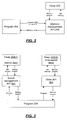
- FIG. 2 shows how a program obtains memory allocations from a heap.
- Program 204 is a program that executes in a computer environment. During its execution, program 204 may require memory to store some type of data. The memory for the entire operating environment is dividedled out by the operating system, and program 204 could use a system call to request a memory allocation directly from the operating system. However, it is more common for program 204 to use a standard library of functions, such as memory management API 208, to request the memory.
- program 204 When program 204 requires memory, program 204 issues a request 206 to memory management API 208 in order to request the quantity of memory required.
- Request 206 generally takes the form of a call to a function exposed by memory management API 208 (e.g., malloc(size)).
- Memory management API 208 locates, within heap 202, a contiguous block of unallocated memory of the specified size, and returns the base address of this block of memory to program 204.
- Heap 202 is one or more blocks of memory - typically large blocks of memory - that are managed by memory management API 208.
- Memory management API 208 obtains the memory for heap 202 by requesting one or more allocations from the operating system. Although, as noted above, it is possible for a program to request each memory allocation from the operating system directly, it is generally more efficient to use a memory management API 208 that obtains large blocks of memory (i.e., heap 202) to be divided out to program 204 on an as-needed basis, since this technique reduces the number of (expensive) system calls. Additionally, memory management API 208 can efficiently manage the memory in heap 202 by using techniques that tend to resist fragmentation, and by performing garbage collection.
- heap 202 since all memory that is allocated to program 204 through memory management API 208 are located in heap 202, all such memory is known to fall within one or more well-defined address ranges. As discussed below, the ability to identify memory as being on a particular heap based on whether the memory falls within a particular range of addresses is used advantageously to distinguish between different types of data that may need to be handled in different ways or according to different rules.
- the ability to enforce the separation of data based on which heap the data is located in is not limited to the case where such enforcement is performed only by a memory management API; in a preferred embodiment, all functions that manage memory - whether part of the memory management API, any other API, or the operating system (e.g., the underlying memory allocation functions of the operating system) - will be configured to enforce the separation of different classes of data into different heaps.
- FIG. 3 shows a scenario in which two different heaps 202(1) and 202(2) are maintained to manage different types of data.
- heap 202(1) is used to manage "secret” data
- heap 202(2) is used to manage other data.
- "Secret" data is data that should generally not be disseminated, or should be disseminated only under very specific conditions.
- Cryptographic keys are examples of secret data.
- heaps 202(1) and 202(2) are allocated by two different APIs - one that performs operations on secrets, and the other that does not. (Alternatively, there could be a single API that uses both heaps, and performs some operations on secrets and some operations on non-secrets.)
- secret management API 302 may expose functions that generate cryptographic keys, or that use such keys for encryption, decryption, digital signatures, etc.
- "Other" API 304 may perform other functions that do not relate to the management of secrets - e.g., input/output, sorting, mathematical calculations, or any other type of functions.
- Secret management API 302 maintains heap 202(1) to store secret data.
- "Other” API 304 maintains heap 202(2) to store non-secret data. For example, when secret management API 302 creates a cryptographic key and needs space to store the key, it obtains the memory to store the key from heap 202(1). When "other" API 304 needs memory (e.g., an I/O buffer), it obtains the memory from heap 202(2). In the example of FIG.
- APIs 302 and 304 are shown as separate APIs, although, as noted above, the secret management there could also be a single API that performs both secret management and other functions; such an API could maintain two heaps 202(1) and 202(2), and could use the different heaps depending on the type of data that a particular function is storing.
- Program 204 can invoke either API 302 or API 304, by calling a function that either of the APIs exposes to program 204. If the function that is called results in a memory allocation, the called function will be configured to allocate memory from the appropriate heap.
- memory from the heap can be identified because it will fall within the range of addresses that are known to constitute the heap.
- the address ranges that make up each heap are known, so a given address can be identified as being from one heap or the other (or from neither heap, in the case of memory that is not allocated from any heap).
- This ability to identify which of the two heaps a particular memory location comes from essentially defines two different classes of data, and this differentiation can be used advantageously to apply different rules to the different classes of data.
- APIs 302 and 304 can both be configured to understand that a secret should not normally be sent out on an I/O device (E.g., sending a secret cryptographic key to a network port may represent abnormal behavior.)
- the functions that make up the APIs can be configured to recognize when data on the secret heap is being used in an abnormal manner simply by checking where the data is located, and those functions can be configured to behave appropriately (e.g., by raising alarms, rendering a warning message, or refusing to perform the requested task).
- a function that takes an address as an argument, and that writes the contents of that address to an I/O device can be configured to compare the address to the known address range of the secret heap; if the address is part of the secret heap, the function can refuse to perform the write.
- APIs 302 and 304 may be configured to prevent misuse of the data in secret heap 202(1), it is still possible for a programmer to transfer data from one heap to another.
- This instruction will have the effect of copying secret data to the non-secret heap.
- configuring the APIs so that they are not complicit in the misuse of data on the secret heap forces the programmer to make explicit his intention to transfer data off the secret heap. This requirement that the programmer transfer data explicitly has the beneficial effect of reducing programmer error by forcing the programmer to openly acknowledge his or her intent to treat a secret as a non-secret.
- FIG. 3 shows the case of two heaps - one that is used to store secrets, and one that is used to store non-secrets - in greater generality
- a system can be configured to maintain any number of heaps, where different sets of rules apply to the different classes of data stored in the heaps.
- the API(s) can be configured to recognize which heap any data is stored on, and to follow whatever rules apply to that class of data.
- FIG. 4 shows an example of the functions exposed by APIs 302 and 304, which may be used to enforce the different rules that apply to different heaps.
- API 302 exposes the functions that operate on the secret heap 202(1)
- API 304 exposes functions that operate on other data (i.e., data stored in non-secret heap 202(2), or stored in other locations that are not part of secret heap 202(1)).
- API 302 exposes functions relating to cryptographic keys - e.g., createkey(), applysecret(), and decrypt().
- the createkey() function may, for example, allocate a portion of memory from secret heap 202(1) that is large enough to store data of type "SECRET," create a key, store the key in the allocated memory, and return a pointer to the stored secret.
- the sign() function may take a pointer to a secret and a pointer to a hash as an argument, compute a digital signature based on the hash and the secret, and write the signature to a known location.
- the decrypt() function may take, as arguments, a pointer to a secret, a pointer to a character string that contains ciphertext, and a pointer to a location in which the decrypted ciphertext ("cleartext") will be written, and may then use the secret to decrypt the ciphertext into the location provided for cleartext.
- the decrypt() function may not care where the ciphertext was located, but may require that the cleartext be located on a heap that has been designated for secrets (thereby preventing the cleartext from being used indiscriminately). All of these functions make appropriate use of secrets - i.e., they create or use secrets, but do not transmit the secrets over I/O devices.
- API 304 exposes functions that operate on data in general - e.g., printf(), which formats data and writes it to the standard output stream, or transmit(), which transmits arbitrary data to a specified IP ("Internet Protocol") address.
- printf() which formats data and writes it to the standard output stream
- transmit() which transmits arbitrary data to a specified IP ("Internet Protocol") address.
- IP Internet Protocol
- these functions may be configured to determine whether or not the address falls within a range that is part of secret heap 202(1). If the address falls within any such range, the functions can be configured to behave appropriately as described above (e.g., raising a warning, refusing to perform the requested task, etc.).
- an API will contain functions that perform some operations on secrets and some operations on non-secrets; such functions can use both the secret and non-secret heaps, according to the type of data on which they are operating.
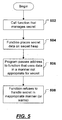
- FIG. 5 shows an example process that may take place when a special heap is used.
- FIG. 5 shows an example in which there are two heaps - one for secrets, and one for other data - although, as described above, the invention is not limited to the case where there are two heaps, or where one heap is designated for the storage of secrets.
- a program makes a call to a function that manages a secret (502) - e.g., the createkey() function described above.
- the program then allocates a place for the data on the secret heap, and stored the data in the allocated location (504).
- the program passes an address to a function that uses the contents of the address in a manner that is not appropriate for a secret (506) - e.g., the program may pass an address to the printf() function.
- the function that is called then checks the address to determine whether the address is part of the secret heap. If the address is not part of the secret heap, then the function performs the requested action normally. If the address is part of the secret heap, then the function takes appropriate action (508) - e.g., warning the user of the action that is about to be taken, refusing to perform the function, etc.
- NSCB Next Generation Secure Computing Base
- the present invention provides a way for programs to segregate particularly important secret data in a region that the system can identify.
- the present invention allows the system (and system services) to "help" the program not leak secrets, and also reduces the chance that secrets will be broadcast due to programmer error. In other words, the invention makes it harder to write code that accidentally leaks secrets.
- memory allocation functions require the caller to explicitly specify which heap their allocation should come from. Since the system knows the virtual address ranges of each heap, each system service can refuse to perform inappropriate actions on data. In one embodiment, virtual address ranges for each heap can be reserved at the time that an NGSCB trusted agent is started; if necessary, the sizes of the heaps can be adjusted at startup time based on information accompanying the executable image.
- a function that transfers data out of protected space can refuse to copy out of a buffer that could contain decryption keys; similarly, a function that transfers data into protected space can refuse to write data into the protected space that comes from an untrusted source, or that was created under circumstances that fail to guarantee that the data will meet whatever standard applies to the protected space, thereby preserving the integrity of the data in the protected space.
- a function that encrypts data could refuse to run if the provided key is not in the heap designated to store trusted data.
- a function that retrieves keying material from secure storage or a key pair generator can insist that the values they write go into the heap designated to store the secrets.
- a function that handles data that has no particular assurance of trustworthiness can refuse to write that data into a heap reserved for trusted data.
- the common theme among these examples is that different functions can make assumptions about the type of information that will be in certain parameters, and it's not possible for a program to leak information by, say, retrieving a key into a buffer and then sending that buffer out over a socket, or to corrupt a protected heap by writing untrusted data into that heap.
- a program can do this purposefully, but the above-described mechanisms resist such actions being performed due to error or accident.
Landscapes
- Engineering & Computer Science (AREA)
- Theoretical Computer Science (AREA)
- Physics & Mathematics (AREA)
- General Engineering & Computer Science (AREA)
- General Physics & Mathematics (AREA)
- Computer Security & Cryptography (AREA)
- Storage Device Security (AREA)
Applications Claiming Priority (2)
| Application Number | Priority Date | Filing Date | Title |
|---|---|---|---|
| US10/836,423 US7284107B2 (en) | 2004-04-30 | 2004-04-30 | Special-use heaps |
| US836423 | 2004-04-30 |
Publications (3)
| Publication Number | Publication Date |
|---|---|
| EP1591904A2 EP1591904A2 (en) | 2005-11-02 |
| EP1591904A3 EP1591904A3 (en) | 2008-11-05 |
| EP1591904B1 true EP1591904B1 (en) | 2016-08-10 |
Family
ID=34939285
Family Applications (1)
| Application Number | Title | Priority Date | Filing Date |
|---|---|---|---|
| EP05102955.1A Expired - Lifetime EP1591904B1 (en) | 2004-04-30 | 2005-04-14 | Special-use heaps |
Country Status (5)
| Country | Link |
|---|---|
| US (1) | US7284107B2 (enExample) |
| EP (1) | EP1591904B1 (enExample) |
| JP (1) | JP4094622B2 (enExample) |
| KR (1) | KR101130459B1 (enExample) |
| CN (1) | CN100437479C (enExample) |
Families Citing this family (25)
| Publication number | Priority date | Publication date | Assignee | Title |
|---|---|---|---|---|
| US7631179B2 (en) * | 2002-08-02 | 2009-12-08 | The Boeing Company | System, method and apparatus for securing network data |
| US7725739B2 (en) * | 2005-07-15 | 2010-05-25 | Microsoft Corporation | Securing sensitive data in memory |
| US20080016314A1 (en) * | 2006-07-12 | 2008-01-17 | Lixin Li | Diversity-based security system and method |
| EP1881404A1 (fr) * | 2006-07-20 | 2008-01-23 | Gemplus | Procédé de protection dynamique des données lors de l'exécution d'un code logiciel en langage intermédiaire dans un appareil numérique |
| US8782371B2 (en) | 2008-03-31 | 2014-07-15 | Konica Minolta Laboratory U.S.A., Inc. | Systems and methods for memory management for rasterization |
| US8682845B2 (en) * | 2008-07-09 | 2014-03-25 | The Boeing Company | Secure high performance multi-level security database systems and methods |
| US8817032B2 (en) * | 2008-08-29 | 2014-08-26 | Konica Minolta Laboratory U.S.A., Inc. | Systems and methods for framebuffer management |
| US8854680B2 (en) | 2008-09-11 | 2014-10-07 | Konica Minolta Laboratory U.S.A., Inc. | Systems and methods for optimal memory allocation units |
| US8861014B2 (en) | 2008-09-30 | 2014-10-14 | Konica Minolta Laboratory U.S.A., Inc. | Systems and methods for optimized printer throughput in a multi-core environment |
| US8918616B2 (en) | 2011-08-24 | 2014-12-23 | Microsoft Corporation | Memory allocation analysis |
| US9141510B2 (en) | 2011-08-24 | 2015-09-22 | Microsoft Technology Licensing, Llc | Memory allocation tracking |
| US8881107B2 (en) | 2011-08-24 | 2014-11-04 | Microsoft Corporation | Automatic memory leak detection |
| GB2520489A (en) * | 2013-11-20 | 2015-05-27 | Ibm | Deletion of content in digital storage systems |
| AU2016373662B2 (en) * | 2015-12-16 | 2019-07-11 | Ab Initio Technology Llc | High throughput, high reliability data processing system |
| KR101930596B1 (ko) * | 2016-10-06 | 2018-12-18 | 명지대학교 산학협력단 | 데이터 히든 장치 및 이에 있어서 프로그램 구동 방법 |
| US20210004817A1 (en) * | 2019-07-05 | 2021-01-07 | Talkdesk, Inc. | System and method for automated agent assistance within a cloud-based contact center |
| US20210117882A1 (en) | 2019-10-16 | 2021-04-22 | Talkdesk, Inc | Systems and methods for workforce management system deployment |
| US11736615B2 (en) | 2020-01-16 | 2023-08-22 | Talkdesk, Inc. | Method, apparatus, and computer-readable medium for managing concurrent communications in a networked call center |
| US11677875B2 (en) | 2021-07-02 | 2023-06-13 | Talkdesk Inc. | Method and apparatus for automated quality management of communication records |
| US11856140B2 (en) | 2022-03-07 | 2023-12-26 | Talkdesk, Inc. | Predictive communications system |
| US11736616B1 (en) | 2022-05-27 | 2023-08-22 | Talkdesk, Inc. | Method and apparatus for automatically taking action based on the content of call center communications |
| US11971908B2 (en) | 2022-06-17 | 2024-04-30 | Talkdesk, Inc. | Method and apparatus for detecting anomalies in communication data |
| US11943391B1 (en) | 2022-12-13 | 2024-03-26 | Talkdesk, Inc. | Method and apparatus for routing communications within a contact center |
| US12381983B2 (en) | 2023-03-06 | 2025-08-05 | Talkdesk, Inc. | System and method for managing communications in a networked call center |
| US12395588B2 (en) | 2023-08-28 | 2025-08-19 | Talkdesk, Inc. | Method and apparatus for creating a database of contact center response records |
Family Cites Families (33)
| Publication number | Priority date | Publication date | Assignee | Title |
|---|---|---|---|---|
| US5265221A (en) * | 1989-03-20 | 1993-11-23 | Tandem Computers | Access restriction facility method and apparatus |
| US5432936A (en) * | 1992-04-09 | 1995-07-11 | Microsoft Corporation | Method for implementing pointers to members in a compiler for an object-oriented programming language |
| US5590329A (en) * | 1994-02-04 | 1996-12-31 | Lucent Technologies Inc. | Method and apparatus for detecting memory access errors |
| US5644709A (en) * | 1994-04-21 | 1997-07-01 | Wisconsin Alumni Research Foundation | Method for detecting computer memory access errors |
| CA2136154C (en) * | 1994-11-18 | 1999-08-24 | Jay William Benayon | User control of multiple memory heaps |
| US5787309A (en) * | 1996-05-23 | 1998-07-28 | International Business Machines Corporation | Apparatus for protecting storage blocks from being accessed by unwanted I/O programs using I/O program keys and I/O storage keys having M number of bits |
| US5802397A (en) * | 1996-05-23 | 1998-09-01 | International Business Machines Corporation | System for storage protection from unintended I/O access using I/O protection key by providing no control by I/O key entries over access by CP entity |
| US6138210A (en) * | 1997-06-23 | 2000-10-24 | Sun Microsystems, Inc. | Multi-stack memory architecture |
| US6275916B1 (en) * | 1997-12-18 | 2001-08-14 | Alcatel Usa Sourcing, L.P. | Object oriented program memory management system and method using fixed sized memory pools |
| US6070168A (en) * | 1997-12-31 | 2000-05-30 | Nortel Networks Corporation | Platform-independent object memory manager |
| KR20010040981A (ko) * | 1998-02-26 | 2001-05-15 | 케네쓰 올센 | 스택에 기초한 보안 조건 |
| US6662234B2 (en) | 1998-03-26 | 2003-12-09 | National Semiconductor Corporation | Transmitting data from a host computer in a reduced power state by an isolation block that disconnects the media access control layer from the physical layer |
| US6381735B1 (en) * | 1998-10-02 | 2002-04-30 | Microsoft Corporation | Dynamic classification of sections of software |
| US6317756B1 (en) * | 1998-10-07 | 2001-11-13 | International Business Machines Corporation | On-the-fly garbage collector |
| US6581113B1 (en) | 1999-12-29 | 2003-06-17 | Advanced Micro Devices, Inc. | Apparatus and method for transferring frame data between a host system memory and a network interface buffer memory employing transmit descriptors without transmit status information |
| US6658652B1 (en) | 2000-06-08 | 2003-12-02 | International Business Machines Corporation | Method and system for shadow heap memory leak detection and other heap analysis in an object-oriented environment during real-time trace processing |
| US6971097B1 (en) * | 2000-06-09 | 2005-11-29 | Sun Microsystems, Inc. | Method and apparatus for implementing concurrently running jobs on an extended virtual machine using different heaps managers |
| US6832378B1 (en) * | 2000-06-20 | 2004-12-14 | International Business Machines Corporation | Parallel software processing system |
| WO2002019168A1 (en) * | 2000-08-25 | 2002-03-07 | Hayes Scott R | Heuristic automated method for ideal bufferpool tuning in a computer database |
| US6643753B2 (en) | 2000-10-04 | 2003-11-04 | Microsoft Corporation | Methods and systems for managing heap creation and allocation |
| GB0027053D0 (en) | 2000-11-06 | 2000-12-20 | Ibm | A computer system with two heaps in contiguous storage |
| GB0027041D0 (en) | 2000-11-06 | 2000-12-20 | Ibm | Computer system and multiple heaps |
| US7111294B2 (en) | 2001-01-16 | 2006-09-19 | Microsoft Corporation | Thread-specific heaps |
| US7185205B2 (en) * | 2001-03-26 | 2007-02-27 | Galois Connections, Inc. | Crypto-pointers for secure data storage |
| GB0107921D0 (en) | 2001-03-30 | 2001-05-23 | Ibm | Computer system with multiple heaps and heap reset facility |
| US6959430B2 (en) * | 2001-05-09 | 2005-10-25 | Sun Microsystems, Inc. | Specialized heaps for creation of objects in object-oriented environments |
| EP1331539B1 (en) * | 2002-01-16 | 2016-09-28 | Texas Instruments France | Secure mode for processors supporting MMU and interrupts |
| EP1329787B1 (en) * | 2002-01-16 | 2019-08-28 | Texas Instruments Incorporated | Secure mode indicator for smart phone or PDA |
| CA2479526C (en) * | 2002-03-20 | 2015-11-17 | Research In Motion Limited | System and method of secure garbage collection on a mobile device |
| US6865738B2 (en) * | 2002-10-08 | 2005-03-08 | Sun Microsystems, Inc. | Method and apparatus for managing independent asynchronous I/O operations within a virtual machine |
| CA2426619A1 (en) * | 2003-04-25 | 2004-10-25 | Ibm Canada Limited - Ibm Canada Limitee | Defensive heap memory management |
| US7356655B2 (en) * | 2003-05-15 | 2008-04-08 | International Business Machines Corporation | Methods, systems, and media for managing dynamic storage |
| GB2402236B (en) * | 2003-05-27 | 2005-04-27 | Simon Alan Spacey | A method and apparatus for securing a computer system |
-
2004
- 2004-04-30 US US10/836,423 patent/US7284107B2/en not_active Expired - Fee Related
-
2005
- 2005-03-28 KR KR1020050025488A patent/KR101130459B1/ko not_active Expired - Fee Related
- 2005-03-30 JP JP2005098014A patent/JP4094622B2/ja not_active Expired - Fee Related
- 2005-04-04 CN CNB2005100649183A patent/CN100437479C/zh not_active Expired - Fee Related
- 2005-04-14 EP EP05102955.1A patent/EP1591904B1/en not_active Expired - Lifetime
Also Published As
| Publication number | Publication date |
|---|---|
| EP1591904A2 (en) | 2005-11-02 |
| EP1591904A3 (en) | 2008-11-05 |
| CN100437479C (zh) | 2008-11-26 |
| US7284107B2 (en) | 2007-10-16 |
| CN1694062A (zh) | 2005-11-09 |
| KR101130459B1 (ko) | 2012-03-27 |
| US20050246511A1 (en) | 2005-11-03 |
| KR20060044845A (ko) | 2006-05-16 |
| JP2005327255A (ja) | 2005-11-24 |
| JP4094622B2 (ja) | 2008-06-04 |
Similar Documents
| Publication | Publication Date | Title |
|---|---|---|
| EP1591904B1 (en) | Special-use heaps | |
| JP4726449B2 (ja) | 信頼された環境から信頼されていない環境への信頼性の投影 | |
| US7529919B2 (en) | Boot blocks for software | |
| US7730318B2 (en) | Integration of high-assurance features into an application through application factoring | |
| JP4498735B2 (ja) | オペレーティングシステムおよびカスタマイズされた制御プログラムとインタフェースする安全なマシンプラットフォーム | |
| JP3866597B2 (ja) | 内部メモリ型耐タンパプロセッサおよび秘密保護方法 | |
| US7330981B2 (en) | File locker and mechanisms for providing and using same | |
| US20170220809A1 (en) | Secure object having protected region, integrity tree, and unprotected region | |
| EP1536307B1 (en) | Encryption of system paging file | |
| EP4141717B1 (en) | Application processing method and apparatus, cloud environment, medium, and program product | |
| CN113221171A (zh) | 一种加密文件读写方法、装置、电子设备和存储介质 | |
| JP4664055B2 (ja) | プログラム分割装置、プログラム実行装置、プログラム分割方法及びプログラム実行方法 | |
| US20050038790A1 (en) | Device and method for establishing a security policy in a distributed system | |
| Sadeghi et al. | Taming “trusted platforms” by operating system design | |
| CN101405705A (zh) | 用于外来代码检测的系统和方法 | |
| JP2005202523A (ja) | コンピュータ装置及びプロセス制御方法 | |
| US7426718B2 (en) | Overriding constructors to provide notification in order to detect foreign code | |
| US7725739B2 (en) | Securing sensitive data in memory | |
| Bove | Secure Services for Standard RISC-V Architectures | |
| WO2002044850A2 (en) | System and method for securing an application for execution on a computer | |
| Gameti | Decentralized Information Flow Control for the Robot Operating System |
Legal Events
| Date | Code | Title | Description |
|---|---|---|---|
| PUAI | Public reference made under article 153(3) epc to a published international application that has entered the european phase |
Free format text: ORIGINAL CODE: 0009012 |
|
| AK | Designated contracting states |
Kind code of ref document: A2 Designated state(s): AT BE BG CH CY CZ DE DK EE ES FI FR GB GR HU IE IS IT LI LT LU MC NL PL PT RO SE SI SK TR |
|
| AX | Request for extension of the european patent |
Extension state: AL BA HR LV MK YU |
|
| PUAL | Search report despatched |
Free format text: ORIGINAL CODE: 0009013 |
|
| AK | Designated contracting states |
Kind code of ref document: A3 Designated state(s): AT BE BG CH CY CZ DE DK EE ES FI FR GB GR HU IE IS IT LI LT LU MC NL PL PT RO SE SI SK TR |
|
| AX | Request for extension of the european patent |
Extension state: AL BA HR LV MK YU |
|
| 17P | Request for examination filed |
Effective date: 20090327 |
|
| 17Q | First examination report despatched |
Effective date: 20090515 |
|
| AKX | Designation fees paid |
Designated state(s): AT BE BG CH CY CZ DE DK EE ES FI FR GB GR HU IE IS IT LI LT LU MC NL PL PT RO SE SI SK TR |
|
| RAP1 | Party data changed (applicant data changed or rights of an application transferred) |
Owner name: MICROSOFT TECHNOLOGY LICENSING, LLC |
|
| GRAP | Despatch of communication of intention to grant a patent |
Free format text: ORIGINAL CODE: EPIDOSNIGR1 |
|
| INTG | Intention to grant announced |
Effective date: 20160225 |
|
| GRAS | Grant fee paid |
Free format text: ORIGINAL CODE: EPIDOSNIGR3 |
|
| GRAA | (expected) grant |
Free format text: ORIGINAL CODE: 0009210 |
|
| AK | Designated contracting states |
Kind code of ref document: B1 Designated state(s): AT BE BG CH CY CZ DE DK EE ES FI FR GB GR HU IE IS IT LI LT LU MC NL PL PT RO SE SI SK TR |
|
| REG | Reference to a national code |
Ref country code: GB Ref legal event code: FG4D |
|
| REG | Reference to a national code |
Ref country code: CH Ref legal event code: EP Ref country code: AT Ref legal event code: REF Ref document number: 819610 Country of ref document: AT Kind code of ref document: T Effective date: 20160815 |
|
| REG | Reference to a national code |
Ref country code: IE Ref legal event code: FG4D |
|
| REG | Reference to a national code |
Ref country code: DE Ref legal event code: R096 Ref document number: 602005049908 Country of ref document: DE |
|
| REG | Reference to a national code |
Ref country code: NL Ref legal event code: FP |
|
| REG | Reference to a national code |
Ref country code: LT Ref legal event code: MG4D |
|
| REG | Reference to a national code |
Ref country code: AT Ref legal event code: MK05 Ref document number: 819610 Country of ref document: AT Kind code of ref document: T Effective date: 20160810 |
|
| PG25 | Lapsed in a contracting state [announced via postgrant information from national office to epo] |
Ref country code: IT Free format text: LAPSE BECAUSE OF FAILURE TO SUBMIT A TRANSLATION OF THE DESCRIPTION OR TO PAY THE FEE WITHIN THE PRESCRIBED TIME-LIMIT Effective date: 20160810 Ref country code: FI Free format text: LAPSE BECAUSE OF FAILURE TO SUBMIT A TRANSLATION OF THE DESCRIPTION OR TO PAY THE FEE WITHIN THE PRESCRIBED TIME-LIMIT Effective date: 20160810 Ref country code: LT Free format text: LAPSE BECAUSE OF FAILURE TO SUBMIT A TRANSLATION OF THE DESCRIPTION OR TO PAY THE FEE WITHIN THE PRESCRIBED TIME-LIMIT Effective date: 20160810 Ref country code: IS Free format text: LAPSE BECAUSE OF FAILURE TO SUBMIT A TRANSLATION OF THE DESCRIPTION OR TO PAY THE FEE WITHIN THE PRESCRIBED TIME-LIMIT Effective date: 20161210 |
|
| PG25 | Lapsed in a contracting state [announced via postgrant information from national office to epo] |
Ref country code: SE Free format text: LAPSE BECAUSE OF FAILURE TO SUBMIT A TRANSLATION OF THE DESCRIPTION OR TO PAY THE FEE WITHIN THE PRESCRIBED TIME-LIMIT Effective date: 20160810 Ref country code: ES Free format text: LAPSE BECAUSE OF FAILURE TO SUBMIT A TRANSLATION OF THE DESCRIPTION OR TO PAY THE FEE WITHIN THE PRESCRIBED TIME-LIMIT Effective date: 20160810 Ref country code: PT Free format text: LAPSE BECAUSE OF FAILURE TO SUBMIT A TRANSLATION OF THE DESCRIPTION OR TO PAY THE FEE WITHIN THE PRESCRIBED TIME-LIMIT Effective date: 20161212 Ref country code: GR Free format text: LAPSE BECAUSE OF FAILURE TO SUBMIT A TRANSLATION OF THE DESCRIPTION OR TO PAY THE FEE WITHIN THE PRESCRIBED TIME-LIMIT Effective date: 20161111 Ref country code: AT Free format text: LAPSE BECAUSE OF FAILURE TO SUBMIT A TRANSLATION OF THE DESCRIPTION OR TO PAY THE FEE WITHIN THE PRESCRIBED TIME-LIMIT Effective date: 20160810 Ref country code: PL Free format text: LAPSE BECAUSE OF FAILURE TO SUBMIT A TRANSLATION OF THE DESCRIPTION OR TO PAY THE FEE WITHIN THE PRESCRIBED TIME-LIMIT Effective date: 20160810 |
|
| REG | Reference to a national code |
Ref country code: FR Ref legal event code: PLFP Year of fee payment: 13 |
|
| PG25 | Lapsed in a contracting state [announced via postgrant information from national office to epo] |
Ref country code: RO Free format text: LAPSE BECAUSE OF FAILURE TO SUBMIT A TRANSLATION OF THE DESCRIPTION OR TO PAY THE FEE WITHIN THE PRESCRIBED TIME-LIMIT Effective date: 20160810 Ref country code: EE Free format text: LAPSE BECAUSE OF FAILURE TO SUBMIT A TRANSLATION OF THE DESCRIPTION OR TO PAY THE FEE WITHIN THE PRESCRIBED TIME-LIMIT Effective date: 20160810 |
|
| REG | Reference to a national code |
Ref country code: DE Ref legal event code: R097 Ref document number: 602005049908 Country of ref document: DE |
|
| PG25 | Lapsed in a contracting state [announced via postgrant information from national office to epo] |
Ref country code: BE Free format text: LAPSE BECAUSE OF FAILURE TO SUBMIT A TRANSLATION OF THE DESCRIPTION OR TO PAY THE FEE WITHIN THE PRESCRIBED TIME-LIMIT Effective date: 20160810 Ref country code: CZ Free format text: LAPSE BECAUSE OF FAILURE TO SUBMIT A TRANSLATION OF THE DESCRIPTION OR TO PAY THE FEE WITHIN THE PRESCRIBED TIME-LIMIT Effective date: 20160810 Ref country code: SK Free format text: LAPSE BECAUSE OF FAILURE TO SUBMIT A TRANSLATION OF THE DESCRIPTION OR TO PAY THE FEE WITHIN THE PRESCRIBED TIME-LIMIT Effective date: 20160810 Ref country code: DK Free format text: LAPSE BECAUSE OF FAILURE TO SUBMIT A TRANSLATION OF THE DESCRIPTION OR TO PAY THE FEE WITHIN THE PRESCRIBED TIME-LIMIT Effective date: 20160810 Ref country code: BG Free format text: LAPSE BECAUSE OF FAILURE TO SUBMIT A TRANSLATION OF THE DESCRIPTION OR TO PAY THE FEE WITHIN THE PRESCRIBED TIME-LIMIT Effective date: 20161110 |
|
| PLBE | No opposition filed within time limit |
Free format text: ORIGINAL CODE: 0009261 |
|
| STAA | Information on the status of an ep patent application or granted ep patent |
Free format text: STATUS: NO OPPOSITION FILED WITHIN TIME LIMIT |
|
| 26N | No opposition filed |
Effective date: 20170511 |
|
| PG25 | Lapsed in a contracting state [announced via postgrant information from national office to epo] |
Ref country code: SI Free format text: LAPSE BECAUSE OF FAILURE TO SUBMIT A TRANSLATION OF THE DESCRIPTION OR TO PAY THE FEE WITHIN THE PRESCRIBED TIME-LIMIT Effective date: 20160810 |
|
| REG | Reference to a national code |
Ref country code: CH Ref legal event code: PL |
|
| REG | Reference to a national code |
Ref country code: IE Ref legal event code: MM4A |
|
| PG25 | Lapsed in a contracting state [announced via postgrant information from national office to epo] |
Ref country code: MC Free format text: LAPSE BECAUSE OF FAILURE TO SUBMIT A TRANSLATION OF THE DESCRIPTION OR TO PAY THE FEE WITHIN THE PRESCRIBED TIME-LIMIT Effective date: 20160810 |
|
| PG25 | Lapsed in a contracting state [announced via postgrant information from national office to epo] |
Ref country code: LI Free format text: LAPSE BECAUSE OF NON-PAYMENT OF DUE FEES Effective date: 20170430 Ref country code: CH Free format text: LAPSE BECAUSE OF NON-PAYMENT OF DUE FEES Effective date: 20170430 Ref country code: LU Free format text: LAPSE BECAUSE OF NON-PAYMENT OF DUE FEES Effective date: 20170414 |
|
| REG | Reference to a national code |
Ref country code: FR Ref legal event code: PLFP Year of fee payment: 14 |
|
| PG25 | Lapsed in a contracting state [announced via postgrant information from national office to epo] |
Ref country code: IE Free format text: LAPSE BECAUSE OF NON-PAYMENT OF DUE FEES Effective date: 20170414 |
|
| PGFP | Annual fee paid to national office [announced via postgrant information from national office to epo] |
Ref country code: GB Payment date: 20180329 Year of fee payment: 14 |
|
| PGFP | Annual fee paid to national office [announced via postgrant information from national office to epo] |
Ref country code: NL Payment date: 20180412 Year of fee payment: 14 |
|
| PGFP | Annual fee paid to national office [announced via postgrant information from national office to epo] |
Ref country code: DE Payment date: 20180404 Year of fee payment: 14 |
|
| PGFP | Annual fee paid to national office [announced via postgrant information from national office to epo] |
Ref country code: FR Payment date: 20190313 Year of fee payment: 15 |
|
| PG25 | Lapsed in a contracting state [announced via postgrant information from national office to epo] |
Ref country code: HU Free format text: LAPSE BECAUSE OF FAILURE TO SUBMIT A TRANSLATION OF THE DESCRIPTION OR TO PAY THE FEE WITHIN THE PRESCRIBED TIME-LIMIT; INVALID AB INITIO Effective date: 20050414 |
|
| PG25 | Lapsed in a contracting state [announced via postgrant information from national office to epo] |
Ref country code: CY Free format text: LAPSE BECAUSE OF NON-PAYMENT OF DUE FEES Effective date: 20160810 |
|
| REG | Reference to a national code |
Ref country code: DE Ref legal event code: R119 Ref document number: 602005049908 Country of ref document: DE |
|
| REG | Reference to a national code |
Ref country code: NL Ref legal event code: MM Effective date: 20190501 |
|
| GBPC | Gb: european patent ceased through non-payment of renewal fee |
Effective date: 20190414 |
|
| PG25 | Lapsed in a contracting state [announced via postgrant information from national office to epo] |
Ref country code: GB Free format text: LAPSE BECAUSE OF NON-PAYMENT OF DUE FEES Effective date: 20190414 Ref country code: NL Free format text: LAPSE BECAUSE OF NON-PAYMENT OF DUE FEES Effective date: 20190501 Ref country code: DE Free format text: LAPSE BECAUSE OF NON-PAYMENT OF DUE FEES Effective date: 20191101 |
|
| PG25 | Lapsed in a contracting state [announced via postgrant information from national office to epo] |
Ref country code: TR Free format text: LAPSE BECAUSE OF FAILURE TO SUBMIT A TRANSLATION OF THE DESCRIPTION OR TO PAY THE FEE WITHIN THE PRESCRIBED TIME-LIMIT Effective date: 20160810 |
|
| PG25 | Lapsed in a contracting state [announced via postgrant information from national office to epo] |
Ref country code: FR Free format text: LAPSE BECAUSE OF NON-PAYMENT OF DUE FEES Effective date: 20200430 |