EP1589454A1 - Point management method and point management system - Google Patents
Point management method and point management system Download PDFInfo
- Publication number
- EP1589454A1 EP1589454A1 EP04704731A EP04704731A EP1589454A1 EP 1589454 A1 EP1589454 A1 EP 1589454A1 EP 04704731 A EP04704731 A EP 04704731A EP 04704731 A EP04704731 A EP 04704731A EP 1589454 A1 EP1589454 A1 EP 1589454A1
- Authority
- EP
- European Patent Office
- Prior art keywords
- point
- point management
- common
- organization
- management device
- Prior art date
- Legal status (The legal status is an assumption and is not a legal conclusion. Google has not performed a legal analysis and makes no representation as to the accuracy of the status listed.)
- Ceased
Links
Images













Classifications
-
- G—PHYSICS
- G06—COMPUTING OR CALCULATING; COUNTING
- G06Q—INFORMATION AND COMMUNICATION TECHNOLOGY [ICT] SPECIALLY ADAPTED FOR ADMINISTRATIVE, COMMERCIAL, FINANCIAL, MANAGERIAL OR SUPERVISORY PURPOSES; SYSTEMS OR METHODS SPECIALLY ADAPTED FOR ADMINISTRATIVE, COMMERCIAL, FINANCIAL, MANAGERIAL OR SUPERVISORY PURPOSES, NOT OTHERWISE PROVIDED FOR
- G06Q30/00—Commerce
-
- G—PHYSICS
- G06—COMPUTING OR CALCULATING; COUNTING
- G06Q—INFORMATION AND COMMUNICATION TECHNOLOGY [ICT] SPECIALLY ADAPTED FOR ADMINISTRATIVE, COMMERCIAL, FINANCIAL, MANAGERIAL OR SUPERVISORY PURPOSES; SYSTEMS OR METHODS SPECIALLY ADAPTED FOR ADMINISTRATIVE, COMMERCIAL, FINANCIAL, MANAGERIAL OR SUPERVISORY PURPOSES, NOT OTHERWISE PROVIDED FOR
- G06Q30/00—Commerce
- G06Q30/02—Marketing; Price estimation or determination; Fundraising
- G06Q30/0207—Discounts or incentives, e.g. coupons or rebates
- G06Q30/0225—Avoiding frauds
-
- G—PHYSICS
- G06—COMPUTING OR CALCULATING; COUNTING
- G06Q—INFORMATION AND COMMUNICATION TECHNOLOGY [ICT] SPECIALLY ADAPTED FOR ADMINISTRATIVE, COMMERCIAL, FINANCIAL, MANAGERIAL OR SUPERVISORY PURPOSES; SYSTEMS OR METHODS SPECIALLY ADAPTED FOR ADMINISTRATIVE, COMMERCIAL, FINANCIAL, MANAGERIAL OR SUPERVISORY PURPOSES, NOT OTHERWISE PROVIDED FOR
- G06Q30/00—Commerce
- G06Q30/02—Marketing; Price estimation or determination; Fundraising
-
- G—PHYSICS
- G06—COMPUTING OR CALCULATING; COUNTING
- G06Q—INFORMATION AND COMMUNICATION TECHNOLOGY [ICT] SPECIALLY ADAPTED FOR ADMINISTRATIVE, COMMERCIAL, FINANCIAL, MANAGERIAL OR SUPERVISORY PURPOSES; SYSTEMS OR METHODS SPECIALLY ADAPTED FOR ADMINISTRATIVE, COMMERCIAL, FINANCIAL, MANAGERIAL OR SUPERVISORY PURPOSES, NOT OTHERWISE PROVIDED FOR
- G06Q30/00—Commerce
- G06Q30/02—Marketing; Price estimation or determination; Fundraising
- G06Q30/0207—Discounts or incentives, e.g. coupons or rebates
- G06Q30/0226—Incentive systems for frequent usage, e.g. frequent flyer miles programs or point systems
Definitions
- the present invention relates to a point management method and a point management system for exchange and/or management of a point assigned to a user such as a member, etc. from an enterprise, and more specifically to a point management method and a point management system for point conversion and/or point management for conversion of individual points provided by a plurality of enterprises to common points.
- each enterprise aims at enhancing client loyalty and acquiring high-grade clients, assigns to a client a "point" which can be exchanged for goods and services depending on the amount of purchase of goods, the frequency of use of services, the frequency of use of a card, etc., and stores and manages the exchange status of points obtained and accumulated by a client in a point exchange system or a point management system. These points are stored on a private point card and held by each client.
- point exchange/management system Since the point exchange/management system is individually introduced and performed by each enterprise, one client (user) holds many kinds of points, and has to use each point card for corresponding goods and services. Generally, it is possible to exchange each point for the goods and services relating to the enterprise as a point issuer. Therefore, if varieties of points can be integrated into one group, they can be a large value. However, there has been the problem that these points cannot be used as integrated values. In addition, for an enterprise as a point issuer, there has been the problem of the cost required in implementing necessary facilities, and maintaining, managing, and controlling the entire system.
- a common point management system is proposed by, for example, Japanese Patent Application Publication No. 2002-216060.
- each enterprise issues a common point, and a user can request any enterprise to exchange and convert a point for a desired type of point.
- Japanese Patent Application Publication No. 2002-298051 discloses a point system for converting a point issued and managed by a plurality of enterprises to a reference point available in the point system.
- this point system when a user requests point conversion from an original point to a conversion target point, it is checked with an original point issue organization (enterprise) whether or not a user holds a point.
- a point management organization and a common point management organization are provided at the site in a network, and a point can be used in the network by accessing a home page of each site.
- a point system is used by accessing a home page, unauthorized access is to be prevented, thereby ensuring security.
- a method for preventing unauthorized access to a home page there is a well-known method of setting a password on a home page.
- a method for setting a password on a home page for example, there is a method of prohibiting anonymous access by setting a WWW server, a method of setting an simple password using Java Script (registered trademark), a method of using a URL as a password, etc.
- Figure 29 is an explanatory view of a point system for converting a point provided by each enterprise to a common point.
- Each user (user a to user d) holds various points issued by an enterprise (enterprise A to enterprise C) . These points are converted to common points at a common point site.
- various services (service X to service Z) can be used.
- a user can be free of the trouble of managing and using points individually for each enterprise.
- FIG 30 is an explanatory view of the outline of the conventional point exchange/management system.
- each enterprise of a point issue organization, a point management organization, etc. is provided with an enterprise site 13 to issue a point and manage an issued point.
- a user normally accesses the site using a user terminal 12, and uses a point at each enterprise site 13.
- a common point site 14 provided in a common point management organization to have a point managed by each enterprise converted to a common point.
- a user uses the user terminal 12, accesses the common point site 14, selects the enterprise site 13 for managing a desired point, and instructs the common point site 14 to convert a point.
- the common point site 14 receives the access and the instruction, accesses the enterprise site 13 selected by the user, fetches point data and user information from a point account of a user managed by the enterprise site 13, converts the fetched point data to a common point, and records the point on the common point account assigned to the user.
- a common point account is used in managing a common point of each user at the common point site 14.
- the present invention aims at providing the technology of point conversion and point management to avoid unauthorized acquisition of user information, etc. in the system of converting/managing a point to a common point.
- the first aspect of the present invention in point conversion of converting a user point to a common point is, when point data of a user is transmitted to a common point site for managing a common point from an enterprise site for individually managing a user point, accessing from an enterprise site to a common point site in one direction, permitting transmission of data only from the enterprise site to the common point site, and disabling access to the enterprise site.
- point data of a user is transmitted to a common point site for managing a common point from an enterprise site for individually managing a user point, accessing from an enterprise site to a common point site in one direction, permitting transmission of data only from the enterprise site to the common point site, and disabling access to the enterprise site.
- the present invention has a configuration of directing access from a user to a common point site to convert a point in a single direction access from the enterprise site to the common point site. By moving the connection destination of the access, point data can be transmitted to the common point site without accessing from the common point site to the enterprise site.
- Conversion of a point from a user point to a common point can be performed at a common point site or each enterprise site.
- the site at which point conversion is performed holds a conversion rate, and using the conversion rate, a user requested point is converted to a common point.
- the present invention can be an aspect of a method and an aspect of a system, and an aspect of a medium recording a program to direct a computer to use a method.
- a point management method converts points issued by a plurality of point issue organizations to common points managed and operated by a common point management organization.
- a point management system converts a point issued by a plurality of point issue organizations to common points managed and operated by a common point management organization.
- the subject of embodying point conversion can be a common point management organization, a point issue organization, or a point management organization, and a combination of them.
- the point issue organization issues for each enterprise a point to be used by a user.
- the user can receive and use an issued point by accessing the enterprise site provided by each enterprise.
- the issued point can be managed not only by a point issue organization, but also by a point management organization.
- a point management organization manages a point issued by a point issue organization, and can be provided at an enterprise site.
- a user can use a point by accessing an enterprise site provided by each enterprise for management of a point.
- the point management method and the point management system according to the first mode of the present invention are embodied by a common point management organization.
- the point management method includes: a step of accepting from a user access for request to convert a user point issued by the point issue organization to a common point; a step of transferring a connection destination of access to the point issue organization which issues an original point or a point management organization which manages the point; and a step of receiving a transfer of a conversion-requested point from the point issue organization or the point management organization.
- a common point management device includes: means for transferring a connection destination of access from a user terminal device which requests to convert a point of a user issued by an individual point management device to a common point to the individual point management device which issues an original point; and means for receiving a transfer of a conversion-requested point from the individual point management device.
- the second mode of the point management method and the point management system according to the first aspect of the present invention is embodied by a point issue organization or a point management organization.
- the point management method includes: a step of a point issue organization which issues an original point or a point management organization which manages the point receiving access from a user for a point conversion request by transfer of the connection destination of access by the common point management organization; and a step of transferring a common point to a common point management organization according to a user conversion request.
- the point management system further includes means for transferring a conversion-requested point to a common point management organization by a point issue organization or a point management organization.
- the third mode of the point management method and the point management system according to the first aspect of the present invention is embodied by a common point management organization and a point issue organization or a point management organization.
- the point management method includes: a step of a common point management organization accepting access from a user requesting conversion of a user point issued by the point issue organization to a common point; a step of transferring a connection destination of access to the point issue organization which issues an original point or a point management organization which manages the point; a step of the point issue organization or the point management organization receiving access by transfer of a connection destination of access by the common point management organization, and transferring a user conversion-requested point to the common point management organization; and a step of the common point management organization receiving a transfer of a conversion-requested point from the point issue organization or the point management organization.
- the point management system includes: means for a common point management device transferring a connection destination of access from a user requesting conversion from a user point issued by an individual point management device to a common point to the individual point management device which issues an original point; and means for receiving a transfer of a conversion-requested point from the individual point management device.
- the individual point management device includes means for transferring a point conversion-requested by the user to the common point management device.
- the common point management organization records a history of a converted point, requests the point issue organization or the point management organization (individual point management device) to adjust a point based on the history.
- the point issue organization and/or the point management organization records a history of a conversion-requested point, and compares the record with a request from the common point management organization (common point management device) based on the history.
- the data transmission between the point issue organization or the point management organization (individual point management device) and the common point management organization (common point management device) can be unidirectional transmission from the point issue organization or the point management organization (common point management device) to the common point management organization (common point management device) .
- the common point management organization can hold a conversion rate from an original point to a common point.
- the conversion rate can be changed.
- the conversion rate can also be held by a point issue organization or a point management organization (individual point management device).
- unauthorized acquisition of user information can be avoided in the system of converting a point.
- the access from the enterprise site to the common point site is unidirectional, and only the data transferred from the enterprise site to the common point site is permitted, thereby disabling access to the enterprise site.
- a user In the access from the enterprise site to the common point site, a user first accesses the common point site, and then the connection destination of the access to the common point site is transferred to the enterprise site.
- the transfer of the connection destination of the access from the common point site to the enterprise site is performed by assigning an authentication code to the address information (for example, a URL, a URI, an IP address, etc.) about the point issue organization which issues an original point or the point management organization which manages the point at the common point site, and by transferring the connection destination of access to the point issue organization or the point management organization which is the enterprise site according to the URL provided with the authentication code.
- an authentication code for example, a URL, a URI, an IP address, etc.
- One of the features of the present aspect is to transfer the connection destination of access from a user to a common point site to an enterprise site to enable point conversion from an enterprise site to a common point site to be realized by unidirectional access.
- point data can be transmitted unidirectionally to a common point site from an enterprise site to a common point site without direct access from the common point site to the enterprise site.
- the present aspect can be realized by a method and a system, and also a medium recording a program used to direct a computer to user the method.
- the point management method converts points issued by a plurality of point issue organizations to common points managed and operated by a common point management organization.
- a point management system converts a point issued by a plurality of point issue organizations to common points managed and operated by a common point management organization.
- the subject of embodying point conversion can be a common point management organization, a point issue organization, or a point management organization, and a combination of them.
- the point issue organization issues for each enterprise a point to be used by a user.
- the user can receive and use an issued point by accessing the enterprise site provided by each enterprise.
- the issued point can be managed not only by a point issue organization, but also by a point management organization.
- a point management organization manages a point issued by a point issue organization, and can be provided at an enterprise site.
- a user can use a point by accessing an enterprise site provided by each enterprise for management of a point.
- the common point management organization manages a common point, cooperates with the point management organization and the point issue organization, converts a point issued and managed by the point management organization and the point issue organization to a common point, and uses the common point based on the mutual approval.
- the common point site includes means for receiving access from a user, and transferring a connection destination of access to a point management organization or a point issue organization; and means for issuing an authentication code for guarantee of correctness of access.
- the first mode of the point management method and the point management system according to the second aspect of the present invention is embodied by the common point management organization.
- the point management method includes: a step of accepting from a user access for requesting conversion from a user point issued by a point issue organization to a common point; a step of issuing an authentication code; a step of adding the authentication code to address information (for example, aURL, aURI, an IP address, etc.) about a point issue organization which issues an original point or a point management organization which manages the point; a step of transferring the connection destination of access to the point issue organization or the point management organization according to the address information with the added authentication code; a step of receiving a transfer of a conversion-requested point from the point issue organization or the point management organization based on confirmation of the authentication code transmitted from the point issue organization or the pointmanagement organization; and a step of adding a converted common point to a common point account.
- address information for example, aURL, aURI, an IP address, etc.
- the common point management organization includes: means for accepting from a user access requesting to convert a user point issued by the point issue organization (individual point management device) to a common point; means for issuing an authentication code; means for adding the authentication code to address information about the point issue organization which issues an original point or the point management organization (individual point management device) which manages the point; means for transferring a connection destination of access to the point issue organization or the point management organization according to address information with the added authentication code; and means for receiving a transfer of a conversion-requested point from the point issue organization or the point management organization (individual point management device) based on the confirmation of the authentication code transmitted from the point issue organization or the point management organization, and adding a converted common point to a common point account for management of a common point.
- the transfer of the connection destination of access performed by the transfer means is performed by adding the authentication code to the address information about the individual point management device which issues an original point, and using the address information
- the second mode of the point management method and the point management system according to the second aspect of the present invention is embodied by the point issue organization or the point management organization (individual point management device).
- the point management method includes: a step of obtaining an authentication code issued by the common point management organization (common point management device) added to the address information for use in transferring the connection destination of access from the common point management organization (common point management device); and a step of transferring a conversion-requested point by a user with the authentication code to the common point management organization (common point management device).
- common point management organization common point management device
- the common point management organization transfers a connection destination of access to the point issue organization or the point management organization (individual point management device), and the point issue organization or the point management organization (individual point management device) which receives the transfer of the connection destination of access transfers the conversion-requested point to the common point management organization (common point management organization).
- the point issue organization or the point management organization (individual point management device in the point management system includes: means for obtaining an authentication code issued by the common point management organization (common point management device) added to the address information used in transferring the connection destination of access from the common point management organization (common point management device); and means for transferring a conversion-requested point with the obtained authentication code to the point management organization (common point management device).
- the third mode of the point management method and the point management system according to the second aspect of the present invention is embodies by the common point management organization (common point management device) and the point issue organization or the point management organization (individual point management device).
- the point management method includes: a step of accepting from a user access for requesting conversion from a user point issued by a point issue organization (individual point management device) to a common point; a step of issuing an authentication code; a step of adding the authentication code to address information about a point issue organization which issues an original point or a point management organization (individual point management device) which manages the point; a step of transferring the connection destination of access to the point issue organization or the point management organization (individual point management device) according to the address information with the added authentication code; a step of the point issue organization or the point management organization (individual point management device) obtaining and holding an authentication code issued by the common point management organization (common point management device) added to the address information used in transferring the connection destination of access from the common point management organization (common point management device); a step of transferring a conversion-requested point from a user with the authentication code to the common point management organization (common point management device); and a step of accepting a
- the common point management device includes: means for transferring to the individual point management device which issues an original point the connection destination of access from the user requesting conversion from a user point issued by the individual point management device to a common point; means for receiving a transfer of a conversion-requested point from the individual point management device; means for issuing an authentication code; and means for adding a converted common point to a common point account for management of a common point based on a transfer received by the means of receiving the transfer.
- the transfer of the connection destination of access is performed by the transfer means by adding the authentication code to the address information about the individual point management device which issues an original point by using the address information with the added authentication code.
- the individual point management device includes: means for transferring a point conversion-requested by a user to the common point management device; and means for obtaining the authentication code added to the address information and transferring the point conversion-requested by the user together with the authentication code to the common point management device.
- the common point management organization records a history of a convertedpoint, requests the point issue organization or the point management organization to adjust a point based on the history.
- the point issue organization and/or the point management organization records a history of a conversion-requested point, and compares the record with a request from the common point management organization based on the history.
- an authentication code certifies that the accessing user is a member of the common point management organization.
- the unauthorized acquisition of user information can be avoided.
- Figure A1 is a block diagram of an example of the configuration of the point management system according to the present invention.
- the point management system performs the point management method according to the present invention.
- a point management system 1 is configured by a user terminal device 2 which can be connected or constantly connected to a network, an individual point management device 3 for providing an enterprise site 3S, and a common point management device 4 for providing a common point site 4S .
- the components of the point management system 1 are explained below.
- Anetwork (communicationnet) used by the point management system 1 enables communication of information among devices to be performed when a session is established for a target device connected to any of cable, radio, dedicated circuit, exchange circuit, etc.
- a network can be realized by a plurality of networks through a gateway like the Internet. The connection can be accepted although it is not connected to a basic circuit called a backbone, or it is temporarily connected through a PPP connection, etc. so far as information can be communicated when a session is established.
- the "network" includes a communication network using no exchange such as a dedicated line fixedly applied.
- the user terminal device 2 is an information processing unit having the function of connection to a network.
- the user terminal device 2 is connected to the enterprise site 3S and the common point site 4S over a network, and can communicate data.
- the user terminal device 2 can be terminal equipment, a mobile terminal, a mobile equipment, etc., for example, a PC (personal computer), a mobile telephone, a PDA (personal data assistant), a POS (point of sale).
- the enterprise site 3S is provided by a point issue organization or a point management organization.
- the point issue organization issues a point to a user as a member, and can also manage an issued point.
- the point management organization manages the point issued by the point issue organization.
- the individual point management device 3 having the function of providing the enterprise site 3S has an arithmetic operation unit (CPU), main memory (RAM), read-only memory (ROM), an input/output device (I/O), an external storage device such as a hard disk device, etc.
- CPU central processing unit
- RAM main memory
- ROM read-only memory
- I/O input/output device
- external storage device such as a hard disk device, etc.
- it is an information processing unit configured by combining a computer, a work station, a WWW (worldwide Web) server, or a WWW server, a database server, an application server.
- the ROM or a hard disk device, etc. stores a program for allowing the information processing unit to function as the individual point management device 3, or aprogramused to direct a computer to perform a part of the point management method.
- the program is loaded into the main memory, and the CPU executes the program to realize the individual point management device 3 or apart of the point management method. It is not always necessary that the program is stored in the storage device in the information processing unit, but can be provided from an external device (forexample, anASP (a server of an application service provider, etc.)) and loaded into the main memory.
- an external device forexample, anASP (a server of an application service provider, etc.)
- the individual point management device 3 When a user accesses the individual point management device 3 which provides the enterprise site 3S using the user terminal device 2, the individual point management device 3 provides the user terminal device 2 with information about a point account 3A for management of a point of each user and a point conversion menu 3B for performing a process of converting a point to be managed.
- the individual point management device 3 retrieves a point depending on a conversion request from a point held in a point account of a user based on the user specified point conversion request, transfers the point to a common point site, and stores the remaining point after the point conversion in the point account 3A.
- the device can transmit the common point to a user and obtain confirmation.
- the manager of the individual point management device 3 can optionally be a point issue organization, or a point issue organization and point management organization.
- the common point site 4S is provided by a common point management organization.
- the common point management organization converts an individual point issued and managed by each enterprise to a common point, and provides it for a user.
- the common point management organization can be a subject independent of an enterprise, and all or a part of the enterprise.
- a user uses various contents such as goods, services, etc. using the common point issued by common point management organization.
- a common point management device 4 has the function of providing the common point site 4Sfor the user terminal device 2 over a network.
- the common point management device 4 has an arithmetic operation unit (CPU), main memory (RAM), read-only memory (ROM), an input/output device (I/O), an external storage device such as a hard disk device, etc.
- CPU central processing unit
- RAM main memory
- ROM read-only memory
- I/O input/output device
- an external storage device such as a hard disk device, etc.
- it is an information processing unit configured by combining a computer, a work station, a WWW (worldwide Web) server, or a WWW server, a database server, an application server.
- the ROM or a hard disk device, etc. stores a program for allowing the information processing unit to function as the common point management device 4, or a program used to direct a computer to perform a part of the point management method.
- the program is loaded into the main memory, and the CPU executes the program to realize the common point management device 4 or apart of the point management method. It is not always necessary that the program is stored in the storage device in the information processing unit, but can be provided from an external device (for example, an ASP (a server of an application service provider, etc.)) and loaded into the main memory.
- an external device for example, an ASP (a server of an application service provider, etc.)
- the common point site 4S provided by the common point management device 4 has a common point account 4A for management of a common point obtained by converting an individual point for each user.
- a common point is used by retrieving a common point stored in the common point account 4Aby the user terminal device 2, a POS (post-of-sale), etc. provided at a shop, etc. of an enterprise.
- the enterprise sites 3S ⁇ and 3S ⁇ are managed by the point issue organization (or point management organization) using the individual point management devices 3 ⁇ and 3 ⁇ , and issue and manage a point.
- the commonpoint site 4S provided by the common point management device 4 is managed by the common point management organization, converts a point issued and managed by each of the enterprise sites 3S ⁇ and 3S ⁇ to a common point, and manages and operates the common point.
- Each enterprise is a supporter of a point for the common point management organization, reduces the point of each enterprise and provides it for the common point management organization in exchange for a corresponding value.
- the common point management organization provides a user with a point provided from each enterprise as a common point.
- the user of the user terminal device 2 is a member of the point system operated by the enterprise A, and has its own point account 3A in the enterprise site 3S ⁇ provided by the individual point management device 3 ⁇ .
- the enterprise A that is, the point issue organization managing the individual point management device 3 ⁇ , issues a point and manages the issued point, and manages the point of a user using the point account 3A.
- the point management organization performs only the point issued by the point issue organization, and manages the point of a user using the point account 3A as with the point issue organization.
- a user uses the user terminal device 2 such as a PC (personal computer), a portable terminal, amobile terminal, a dedicated terminal, etc. provided at a shop, etc. to first access the common point site 4S provided by the common point management device 4 (step S1).
- the user makes the registration in advance as a member of the common point management organization for operating the common point management device 4.
- the common point management device 4 receives access from the user, it performs an authentication process to determine whether or not the accessing user is a registered member of the common point management organization.
- the authentication process can be performed by, for example, setting in advance an ID and a password designating the user in the common point management organization, and matching them with those transmitted from the accessing user through the user terminal device 2 in addition to checking the personal information such as a name, gender, birthday, etc. (step S2).
- the user When the user requests to use the point held by the user as a common point, it operates the user terminal device 2, selects the enterprise A, which issues or manages the point to be converted, that is, the individual point management device 3 ⁇ , and notifies the common point management device 4 of the information designating the selected individual point management device 3 ⁇ (for example, URL, ID, etc.) (step S3).
- the common point management device 4 Upon receipt of the notification that the user has selected the enterprise A, the common point management device 4 transfers the connection destination of access of the user terminal device 2 currentlymade to the commonpointmanagement device 4 to the site of the selected enterprise A, that is, the individual point management device 3 ⁇ . This is performed by, for example, the redirect method of the HTTP, etc.
- the user terminal device 2 accesses the individual point management device 3 ⁇ which is the enterprise site 3S ⁇ (step S4).
- the individual point management device 3 ⁇ Upon receipt of access from the user terminal device 2, the individual point management device 3 ⁇ performs the authentication process of confirming the authentication of the accessing user (step S5) .
- the authentication process can be performed by, for example, using the ID and the password registered in the enterprise site A by the user.
- the user After completing the authentication process (step S5), the user notifies using the user terminal device 2 the individual point management device 3 ⁇ of the number of points to be converted from the points held by the user (step S6).
- the individual point management device 3 ⁇ checks the conversion condition by determining whether or not the number of points to be converted, which is notified through the user terminal device 2, exceeds the number of points held in the point account 3A of the user, whether or not the term of the points is valid, etc. If the conversion condition is satisfied, the individual point management device 3 ⁇ notifies the common point management device 4 of the requested number of points to transfer the number of conversion-requested points to the common point site, and subtracts the number of convertedpoints from the number of points stored in the point account 3A, thereby updating the data. The common point management device 4 converts the conversion-requested points notified by the individual point management device 3 ⁇ to common points, and records the result to the common point account 4A.
- the individual point management device 3 ⁇ issues a request to the common point management device 4 to obtain the information about the converted common point.
- the individual point management device 3 ⁇ can transmit the obtained common point information to the user terminal device 2.
- the individual point management device 3 ⁇ obtains an approval and confirmation for conversion from the user terminal device 2, it notifies the common point management device 4 of the approval for the conversion (step S7), and the common point site completes the point conversion process according to the notification.
- the user uses the user terminal device 2 to access the common point site 4S provided by the common point management device 4.
- the common point management device 4 accepts access from a user, it performs an authentication process to determine whether or not the accessing user is a member registered with the common point management organization.
- the authentication process can be performed by, for example, setting in advance an ID and a password designating the user in the common point management organization, and matching them with those transmitted from the accessing user through the user terminal device 2 in addition to checking the personal information such as a name, gender, birthday, etc.
- the user When the user requests to use the point held by the user and issued by the enterprise B after conversion to a common point, it operates the user terminal device 2, selects the enterprise B, which issues ormanages the point tobe converted, that is, the individual point management device 3 ⁇ , and notifies the common point management device 4 of the information designating the selected individual point management device 3 ⁇ (for example, URL, ID, etc.) (step S8).
- the common point management device 4 Upon receipt of the notification that the user has selected the enterprise B, the common point management device 4 transfers the connection destination of access of the user terminal device 2 currently made to the common point to device which provides the point site 3S ⁇ of the selected enterprise B, that is, the individual point management device 3 ⁇ (step S9). This is performed by, for example, the redirect method of the HTTP, etc.
- the user terminal device 2 accesses the device which provides the enterprise site 3S ⁇ of the enterprise B, that is, the individual point management device 3 ⁇ .
- the individual point management device 3 ⁇ Upon receipt of access from the user terminal device 2, the individual point management device 3 ⁇ performs the authentication process of confirming the authentication of the accessing user (step S10).
- the authentication process can be performed by, for example, using the user ID and the password registered in the enterprise site 3S ⁇ of the enterprise Bby the user.
- the user After completing the authentication process (step S10), the user notifies using the user terminal device 2 the individual point management device individual point management device 3 ⁇ of the number of points to be converted from the points held by the user (step S11).
- the individual point management device 3 ⁇ checks the conversion condition by determining whether or not the number of points to be converted, which is notified through the user terminal device 2, exceeds the number of points held in the point account 3A of the user, whether or not the term of the points is valid, etc. If the conversion condition is satisfied, the individual point management device individual point management device 3 ⁇ notifies the common point management device 4 of the requested number of points to transfer the number of conversion-requested points to the common point site 4S, and subtracts the number of converted points from the number of points stored in the point account 3A, thereby updating the data.
- the common point management device 4 converts the conversion-requested points notified by the individual point management device individual point management device 3 ⁇ to common points, and records the result to the common point account 4A.
- the individual point management device individual point management device 3 ⁇ issues a request to the common point management device 4 to obtain the information about the converted common point.
- the individual point management device individual point management device 3 ⁇ can transmit the obtained common point information to the user terminal device 2.
- the individual point management device individual point management device 3 ⁇ obtains an approval and confirmation for conversion from the user terminal device 2, it notifies the common point management device 4 of the approval for the conversion, and the common point site completes the point conversion process according to the notification (step S12).
- the user can purchase and use the goods, services, contents, (for example, exchange of goods, providing a service) using the stored common points in the common point account 4A (step S13).
- unidirectional transmission is performed from the individual point management device 3 (enterprise site 3S) to the common point management device 4 (common point site 4S) between each enterprise site (individual point management device 3; enterprise site 3S) and the common point site (common point management device 4; common point site 4S), and the individual point management device 3 only transfers the points conversion-requested by the user to the common point management device 4. Therefore, the point information held by each user or the user information is not externally disclosed from the individual point management device 3, thereby enhancing the sequence of the information.
- an unauthorized accessor 5 illegally accesses the individual point management device 3, the unauthorized accessor 5 can only obtain data of common points from the individual point management device 3, thereby preventing the disclosure of the user information.
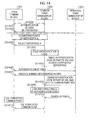
- the user operates the user terminal device 2, accesses the 4S, that is, the common point management device 4, and transmits a point conversion request to the common point management device 4 (21).
- the point conversion request contains data such as a code identifying the membership of a common point, the number of converted points, the enterprise as a point issuer, etc.
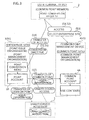
- the common point management device 4 Upon receipt of a point conversion request from the user terminal device 2, the common point management device 4 (common point site 4S) performs an authentication process to confirm whether or not the accessing person is a member of a common point (22) . If it is determined that the user is a member, the common point management device 4 performs the point management menu (23). When the point management menu is performed, the common point management device 4 transmits a unique ID and an authentication certificate for issue of a common point to the individual point management device 3 as a point issuer (24).
- the "authentication certificate” refers to data for certifying that the access of the user terminal device 2 is authorized, and the accessor is a correct member of a common point.
- the authentication certificate is encrypted using, for example, a public key.
- the menu provided by the individual point management device 3 input an ID or an authentication certificate transmitted from the common point management device 4 (common point site 4S) (25), and the ID and the authentication certificate are confirmed, thereby determining the correctness of the access (26). If the authentication certificate is encrypted using a public key, it is decoded using a secret key.
- the individual point management device 3 accepts the access from the user terminal device 2, and the subsequent point conversion process is performed between the individual point management device 3 (enterprise site 3S) and the user terminal device 2.
- the individual point management device 3 when the authentication is acknowledged in (25), the individual point management device 3 performs the authentication process to check whether or not the user is a point member at the enterprise site 3S (26) .
- the point member authentication process can be performed using, for example, a member number, an ID, a password, etc.
- a guide to a point membership can be issued (27).
- the individual point management device 3 determines as a result of the point member authentication (26) that the user is a point member, then the individual point management device 3 transmits necessary information to the common point management device 4 to transfer the conversion-requested point to the commonpoint site 4S, that is, the common point management device 4.
- the individual point management device 3 also subtracts the number of points used in conversion from the number of points accumulated in the point account 3A, and performs the update process on the number of points in the point account 3A (28). After the update process, the conversion result such as the number of remaining points, etc. is displayed on the user terminal device 2 as a result display process (29).
- the individual point management device 3 (enterprise site 3S) transmits the number of conversion-requested points requested by the user to the common point site 4S, that is, the common point management device 4, together with the ID of the common point site and the point conversion certificate (30) .
- the common point management device 4 confirms according to the ID of the common point site 4S, etc. transmitted from the individual point management device 3 that the transmission is based on the correctness point conversion request, and that the point conversion has been correctness performed according to the point conversion certificate. After the confirmation, the common point management device 4 receives a transfer of transmitted conversion-requested points.
- the common point management device 4 converts the transmitted number of points to common points in a predetermined point conversion process.
- the common point management device 4 stores in advance the conversion rate for use in the point conversion process for converting the number of points to the number of common points, and calculates the number of common points according to the conversion rate.
- the common point management device 4 records the calculated common points to the common point account (31), thereby terminating the point conversion.
- the individual point management device 3 can request the common point management device 4 to transmit the information about the common points after the point conversion, transmit the obtained information about the common points to the user terminal device 2 to obtain the user confirmation, and record the common points to the common point account 4A after obtaining the user confirmation (31).
- the common point management device 4 when the common point management device 4 receives a request to use common points from a user, it confirms the balance of the common point account 4A at the use request (32), and subtracts the number of points required for the use request from the common point account 4A (33).
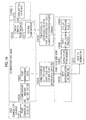
- Figure 5 is a detailed explanatory view of the process performed by the common point management device 4 (common point site 4S) and the individual point management device 3 (enterprise site 3S) .
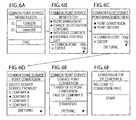
- Figure 6 shows an example of a display screen displayed on the user terminal device 2 when the user terminal device 2 accesses the common point management device 4 (common point site 4S).
- Figure 7 shows an example of the display screen displayed on the user terminal device 2 after access of the user terminal device 2 is transferred to the individual point management device 3 (enterprise site 3S).
- the following numbers enclosed by () correspond to the numbers shown in Figure 5.
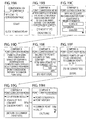
- Figures. 6A to 6F show examples of the transition of the screens displayed on the display unit (liquid crystal display, etc.) of the user terminal device 2 based on the point management menu.
- the point management menu When the user terminal device 2 accesses the common point management device 4 (common point site 4S), the point management menu displays the screen ( Figure 6A) requesting the ID and the password of the user to the user terminal device 2. The user inputs an ID and a password through the user terminal device 2. Figure 6A shows the status of inputting the ID and the password.
- the common point management device 4 (common point site 4S) records the ID and the password of the user which are predetermined, and matches them with the input ID and password, thereby confirming that the accessor is a member of a common point.
- Figure 6B shows an example of the member top screen displayed on the user terminal device 2, shows various process menus such as point management, changes in registered contents, display of contents, exchange for a free gift, etc., and also shows the number of remaining common points, the value of credit, etc.
- the credit corresponds to a rebate coupon for use in exchanging the common points for a free gift. Common points can be obtained in a game, etc., converted to the credit, and exchanged for a free gift.
- a user can select a "point management menu", etc. using input means such as a pointing device, a button, etc. of the user terminal device 2.
- input means such as a pointing device, a button, etc. of the user terminal device 2.
- the screen display of the user terminal device 2 transfers to the point management menu screen.
- Figure 6C shows an example of the point management menu screen.
- the "point conversion menu” for conversion of a point managed by the individual point management device 3 (enterprise site 3S) to a common point and the "point history menu" for referencing the common point history can be selected.
- FIG. 6D shows an example of the point conversion menu.
- the point conversion menu screen displays a list of enterprises (for example, the companies A, B, C, and D) for which individual points are provided.
- an enterprise for example, the company B
- the common point management device 4 performs access conversion by converting the destination of access of the user from the common point management device 4 (common point site 4S) to the selected individual point management device 3 (enterprise site 3S) .
- a message of a change of access to the company B is displayed.
- the screen of the user terminal device 2 shows the top screen display of the point conversion transmitted from the individual point management device 3 (enterprise site 3S) of the company B.
- Figure 6F shows an example of the top screen display of the conversion menu of the company B.
- Figure 7 shows an example of the screen display displayed on the display unit (liquid crystal display, etc.) of the user terminal device 2 by the point conversion menu of the individual point management device 3.
- the individual point management device 3 displays the point conversion top screen on the display unit of the user terminal device 2 (41).
- Figure 7A shows an example of the point conversion top screen.
- Figures. 7B and 7C show examples of the member introduction screen displayed on the display unit of the user terminal device 2.
- the user is prompted to input a predetermined member number and password, and they are transmitted from the user terminal device 2 to the individual point management device 3.
- the individual point management device 3 compares the stored member number/password withthereceivedmembernumber/password, andconfirmswhether or not the user is a member (42 in Figure 5).
- the individual point management device 3 When it is confirmed that the user is a member, the individual point management device 3 recognizes conversion certificate (43). On the other hand, if it is not confirmed that the user is a member as a result of the matching process, the individual point management device 3 determines that the conversion certificate cannot be obtained, and it is the first authentication process (45), the information for authentication is prompted (46), thereby performing the authentication process (47). If the authentication process cannot be successfully performed (48), the individual point management device 3 prompts the user to input the information for authentication through the user terminal device 2 (46), and the authentication process is performed according to the information for authentication (47). When the authentication is successfully performed, the individual point management device 3 notifies the user terminal device 2 of the completion of the authentication.
- Figure 7D shows an example of the screen displayed on the display unit of the user terminal device 2 to notify the user of the completion of the authentication process.
- the individual point management device 3 displays the point conversion screen on the user terminal device 2, and prompts the number of the desired points to be input (44).
- Figure 7E shows an example of the point conversion screen displayed on the display unit of the user terminal device 2. On the point conversion screen shown in Figure 7E, the balance of the current point is displayed, and there is an area provided for input of the number of points in requesting a conversion to common points. In the example shown in this figure, the user currently holds 1000 P, and now requests to convert 500 P of the 1000 P to common points.
- the point conversion menu After the user setting the number of points to be converted on the point conversion screen ( Figure 7E), the point conversion menu performs a point conversion process to display the number of common points after conversion on the display unit of the user terminal device 2.
- the number of points conversion-requested by the user is transferred to the common point management device 4 (common point site 4S), the information about the converted common points is obtained by the common point management device 4 (common point site 4S), and the common points are transmitted and displayed on the user terminal.
- Figure 7F shows an example of the display screen of the common points after conversion, and the number of common points after conversion and the conversion button "convert" are displayed.
- the conversion rate is set to 1/10, and the points of 500 P are converted to common points of 50 P.
- the point conversion menu of the individual point management device 3 performs the process of determine the common points (49), calculates the balance of points, and updates the point account 3A (50), thereby notifying the common point management device 4 (common point site 4S) of the confirmation.
- the commonpointmanagement device 4 (common point site 4S) updates the common point account 4Abased on the received confirmation notification (51).
- the point conversion menu displays the conversion result of the point conversion process on the user terminal device 2 (52).
- Figure 7G shows an example of the display screen as a conversion result of the point conversion process.
- the destination of access of the user terminal device 2 is returned from the individual point management device 3 to the common point management device 4 (common point site 4S) (53).
- the common point management device 4 (common point site 4S) returns access from the individual point management device 3 (enterprise site 3S), and performs the point management process through the point management menu.
- Figure 7H shows an example of the screen displayed by the common point management device 4 (common point site 4S) on the display unit of the user terminal device 2.
- the point conversion menu or the point history menu can be selected as a point management menu, and the number of common points accumulated in the common point account 4A and the number of credit are displayed.
- 100 P is displayed as common points
- 10 P is displayed as credit.
- the user can add up points by converting the points provided by each individual point management device 3 (enterprise site 3S) to common points.
- Figure 8 is an explanatory view of the use of common points.
- the points (individual points) issued by each point issue organization are converted to common points, and can be used in various service contents.
- the service contents can be, for example, a game for prize, credit conversion, use of contents, social services, etc.
- common points are increased using common points, or common points are consumed.
- points are exchanged for credit corresponding to a rebate coupon, and a present, goods, or services.
- the contents can be, for example, music, video, and other various services distributed to a user terminal over a network.
- the points can be used as social services.
- the contribution organizations use service contents using provided common points, and can also exchange common points for currencies.
- the points used in point conversion according to the present invention can be applied to the points provided by amusement facilities, points provided by various types of stores of domestic electric appliances, gas, etc., points provided by various service facilities which are issued by various types of enterprises as point issue organizations.
- the user terminal device 2 used by a user for access to the common point management device 4 (common point site 4S) or the individual point management device 3 (enterprise site 3S) can be terminals of each user such as a PC, a portable terminal, a mobile terminal, etc., and a dedicated terminal mounted in each store.
- the individual point management device 3 (enterprise site 3S) can be a point issue organization for issuing a point, and a point management organization for managing an issued point.
- a point issued and managed by a point issue organization and/or point management organization is debt obligations for users, and transferring a point to a common point management organization is to be responsible by the point issue organization and/or the point management organization for the debt obligations for the common point management organization.
- the common point management organization reduces the transferred point into a common point, provides a user who uses the common point with goods and services, thereby erasing the debt obligations, and charges an enterprise which is a point issue organization and/or a point management organization for the debt obligation process, thereby gain a profit.
- the individual point management device 3 (enterprise site 3S) and the common point management device 4 (common point site 4S) keep a point use history, and performs a billing process based on the point use history, thereby performing a point adjusting process.
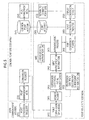
- Figure 9 shows the status of signals and data among the user, the common point management device 4 (common point site 4S) corresponding to the common point management organization, the individual point management device 3 (enterprise site 3S) corresponding to the point issue organization and/or point management organization, and the following numbers enclosed by ( ) correspond to the numbers shown in the figure.
- the user first accesses the common point management device 4 (common point site 4S) using the user terminal device 2 of a PC (personal computer), a portable terminal, a mobile terminal, or a dedicated terminal, etc. mounted in a store (step S901).
- the user makes the registration in advance as a member of the common point management organization.
- the common point management device 4 (common point site 4S) receives access from the user terminal device 2, it determines whether or not the accessing user is a registered member of the common point management organization.
- the authentication process can be performed by, for example, setting in advance an ID and a password designating the user in the common point management organization, and using these ID and password. In addition, it can be performed based on the personal information such as a name, gender, birthday, etc. (step S902).
- Described below is the case where the user requests to perform the process of converting a point issued by an enterprise A (and an enterprise B) as a point issue organization and/or point management organization to a common point.
- the user When the user requests to use the points held by the user as common points, the user selects using the user terminal device 2 the enterprise A (enterprise B) as an issuer of the points to be converted, and notifies the common point management device 4 (common point site 4S) of it (step S903 (step S910)).
- the common point management device 4 (common point site 4S) transfers the connection destination of access currently made to common points to the enterprise sites 3S ⁇ and 3S ⁇ of the selected enterprise A (enterprise B). By the transfer of the sites, the user accesses the individual point management devices 3 ⁇ and 3 ⁇ which are the enterprise sites 3S ⁇ and 3S ⁇ (step S904 (step S911)).
- the individual point management device 3 ⁇ (individual point management device 3 ⁇ ) performs an authentication process to confirm that the person currently accessing the user is the registered user.
- the authentication process can be performed using, for example, the ID and the password registered by the user in the enterprise site A (enterprise B) (step S905 (step S912)).
- the user notifies the individual point management device 3 ⁇ (individual point management device 3 ⁇ ) of the number of points to be converted from the points held by the user (step S906 (step S913)).
- the individual point management device 3 ⁇ determines checks the conversion condition by determining whether or not the number of converted points requested by the user exceeds the number of points held in the point account 3A of the user, whether or not the term of the points is valid, etc. If the conversion condition is satisfied, the individual point management device 3 ⁇ transfers the number of conversion-requested points to the common point management device 4 (common point site 4S) (step S907 (step S914)).
- the individual point management device 3 ⁇ (individual point management device 3 ⁇ ) transfers the number of conversion-requested points to the common point management device 4 (common point site 4S), and subtracts the number of points used in conversion from the number of points held in the point account 3A of the user, thereby updating the data.
- the common point management device 4 (common point site 4S) converts the transferred conversion-requested points to common points, and records them in the common point account 4A.
- the individual point management device 3 ⁇ (individual point management device 3 ⁇ ) records the history of the transferred points (step S908 (step S915)).
- Figures. 10A and 10B show examples of data of the point use history at the enterprise sites 3S ⁇ and 3S ⁇ . For example, the user and number of converted points of the user are recorded.
- the common point management device 4 (common point site 4S) also records the history of the points transferred from the individual point management device 3 ⁇ (individual point management device 3 ⁇ ) (step S909 (step S916)).
- Figure 11 shows an example of data of the point use history of the common point management device 4 (common point site 4S) . For example, each enterprise, user, and the number of converted points of the user, and the number of common points converted at a predetermined conversion rate are recorded.
- Figure 9 only shows the enterprisesAandB as enterprises, but any other enterprises cooperating with a common point management organization for point conversion can be processed likewise.
- each enterprise is responsible for the debt obligations in points for the common point management organization.
- the common point management organization is responsible for the debt obligations for each enterprise.
- the common point management device 4 which is a common point management organization charges each enterprise for points, and each enterprise pays a corresponding value for each charge, thereby settling the point adjustment.
- the billing from the common point management device 4 (common point site 4S) to each enterprise can be collectively performed at a predetermined time point, for example, at the end of week, at the end of month, at the end of quarter, etc. for a predetermined period (for example, in week units, in month units, in several month units, annually, etc.).
- the common point management device 4 (common point site 4S) accumulates points for each enterprise in a predetermined period based on the data of the point use history, calculates the amount of charge for the points, and charges each enterprise with the accumulated points and the amount of charge (step S918, step S919).
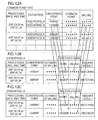
- Figure 12A shows an example of billing data to be transmitted to each enterprise from the common point management device 4 (common point site 4S) .
- the accumulated value of points transferred from an enterprise in each billing period, the value of common points, the amount of charge, etc. can be included in the billing data.
- Each enterprise accumulates the points in a predetermined period based on the data of point use history, and the amount of charge for the points is estimated.
- Figures. 12B and 12C show examples of data estimated by the enterprises A and B. For example, in each billing period, an enterprise can make a transfer to include the accumulated value of points, an estimated value, etc..
- Each enterprise compares the billing data such as accumulated points, the amount of charge, etc. transmitted from the common point management device 4 (common point site 4S) with the accumulated points and the amount of charge with the accumulated points and the amount of charge calculated by each enterprise to confirm whether or not the billing from the common point management device 4 (common point site 4S) is correct (step S920 shown in Figure 9).
- unidirectional transmission can be performed from the individual point management device 3 (enterprise site 3S) to the common point management device 4 (common point site 4S).
- the user information can be prevented from being disclosed from the individual point management device 3 (enterprise site 3S).
- the security can be successfully ensured.
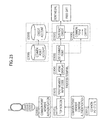
- Figure 13 is a block diagram showing an example of the configuration of the point management system according to the embodiment.
- FIG. 13 is a block diagram of an example of the configuration of the point management system according to the present invention, and the point management system performs the point management method according to the present invention.
- a point management system 1301 is configured by a user terminal device 1302 which can be connected or constantly connected to a network, a individual point management device 1303 for providing an enterprise site 1303S, and a common point management device 1304 for providing a common point site 1304S.
- the individual point management device 1303, the enterprise site 1303S, the common point management device 1304, and the common point site 1304S according to the second embodiment are similar to the user terminal device 2, the individual point management device 3, the enterprise site 3S, the common point management device 4, and the commonpoint site 4S according to the first embodiment, the detailed explanation is omitted here.
- the common point site 1304S is provided with a common point account 1304A for managing the common point obtained by point conversion for each user.
- a common point can be used by retrieving a common point stored in the common point account 1304A.
- the common point management device 1304 uses an authentication code to guarantee that a user is a member of a common point management organization and that the access between the individual point management device 1303 (enterprise site 1303S) and the common point management device 1304 (common point site 1304S) is correct.
- the common point management device 1304 (common point site 1304S) has the function of issuing an authentication code, the function of adding the issued authentication code to the address (for example, an URL) which is the address information about the individual point management device 1303 (enterprise site 1303S) and transferring the connection destination of access of the user terminal device 2 to the individual point management device 1303 (enterprise site 1303S), and the function of confirming the authentication code transmitted from the individual point management device 1303 (enterprise site 1303S).
- an authentication code for example, an URL
- the individual point management device 1303 (enterprise site 1303S) has the function of adding the transmitted authentication code to the address (for example, a URL) which is the address information about the common point management device 1304 (common point site 1304S), and transmitting it to the common point management device 1304 (common point site 1304S).
- a URL the address information about the common point management device 1304 (common point site 1304S)
- the common point management device 1304 (common point site 1304S) confirms the authentication code to confirm that the user is a member of a common point management organization, and that there is no unauthorized access between the individual point management device 1303 (enterprise site 1303S) and the common point management device 1304 (common point site 1304S).
- the enterprise site 1303S structured in the network by the individual point management device 3 is a site operated by a point issue organization (or a point management organization) for issuing and managing a point.
- the common point site 1304S structured in the network by the common point management device 1304 is a site operated by the common point management organization, converts the point issued and managed by the individual point management device 1303 to a common point, and manages and operates the common point.
- Each enterprise supports the point for the common point management organization, reduces the point of each enterprise, provides it for the common point management organization, and obtains a corresponding value in return.
- the common point management organization provides the point received from each enterprise for a user as a common point.
- a point account 1303A is open in the point issue organization or the point management organization managed by the enterprise site 1303S.
- the point issue organization issues a point and manages the issuedpoint. It manages the point of a user using the point account 1303A.
- the point management organization only manages a point issued by the point issue organization, and manages the point of a user using the point account 1303A as with the point issue organization.
- a user uses the user terminal device 1302 such as a PC (personal computer), a portable terminal, a mobile terminal, a dedicated terminal at a shop, etc. to first access the common point management device 1304 (common point site 1304S) (step S1401) .
- the user makes the registration in advance as a member of the common point management organization.
- the common point management device 1304 (common point site 1304S) receives access from the user, it determines whether or not the accessing user is a registered member of the common point management organization (step S1402).
- the authentication process can be performed by, for example, setting in advance an ID and a password designating the user in the common point management organization, and using these ID and password. Otherwise, it can be performed based on the personal information such as a name, gender, birthday of the user, etc.
- Described below is the process when a user requests the common point management device 1304 through the user terminal device 1302 to perform the process of converting a point issued by the enterprise A to a common point.
- the user When a user requests to use a point held by the user as a common point, the user operates the user terminal device 1302 and selects a point issuer of a point to be converted or a point manager as an enterprise A, that is, the individual point management device 1303, selects the process of notifying the common point management device 1304 of the information (for example, a URL, an ID, etc.) designating the selected individual point management device 3, and notifies the common point site of it (step S1403).
- the common point management device 1304 transfers the destination of access of the user terminal device 1302 currently directed to the common point management device 1304 to the site of the selected enterprise A, that is, the individual point management device 1303.
- the common point management device 1304 issues an authentication code to the individual point management device 1303.
- the authentication code can be a code for authentication certificate assigned to a member card, etc. indicating that the user is amemberof the common point management organization.
- the authentication code can be formed by, for example, 20 digits of alphanumeric characters, but the characters, symbols, and the number of digits can be optionally selected.
- the authentication code contains the record of valid term (for example, the valid term in several hour units), and the use of the expiring authentication code can be limited.
- the authentication code can be dynamically generated for each time of access, and a different code can be used for each time of access.
- the common point management device 1304 which issues an authentication code prevents the degradation of security by unauthorized access using an authentication code by limiting the multiple issue of the same code.
- the authentication code is configured such that it can be obtained only by the API (application program interface) for a common point member provided for the common point management device 1304.
- the API for a common point member can be accessed only by a common point member, and cannot be accessed from the individual point management device 1303 (enterprise site 1303S).
- the authentication code can be obtained only when a common point member accesses the common point site 1304S, and the authentication code cannot be obtained by access from the individual point management device 1303 (enterprise site 1303S).
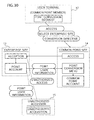
- a user first accesses the common point site 1304S, that is, the common point management device 1304 (steps S1401, S1402, and S1403), then the common point management device 1304 embeds the issued authentication code in the URL of the enterprise A selected by the user (step S1404), and accesses the individual point management device 1303 (step S1405).
- the access from the user terminal device 1302 is transferred to the individual point management device 1303 through the common point management device 1304.
- the user terminal device 1302 accesses the individual point management device 1303.
- the URL can take the form of, for example, http://partner-host (point management name) & (authentication code), etc.
- the common point management device 1304 specifies the enterprise ID designating the enterprise and an enterprise password in addition to the authentication code to the enterprise site API provided for the individual point management device 1303 to perform the process of point conversion.
- the individual point management device 1303 authenticates the user accessing the user terminal device 1302 as an authorized user (step S1406).
- the authentication can be performed using an ID and a password registered in the individual point management device 1303.
- the user operates the user terminal device 1302 to indicate the number of points to be converted from the point held by the user to the individual point management device 1303 (step S1407).
- the individual point management device 1303 checks the conversion condition by determining whether or not the number of converted points requested by the user terminal device 1302 has exceeded the points held in the point account 1303A, whether or not the point term is valid, etc. If the conversion condition is satisfied, the conversion-requested number of points is indicated to the common point management device 1304.
- the common point management device 1304 converts the number of conversion-requested points at the conversion rate, and obtains the number of common points.
- the conversion rate is determined by mutual agreement of the common point management organization and the enterprise (point issue organization, point management organization), and held and stored by the common point management device 1304.
- the conversion rate can be varied to be stored in the individual point management device 1303 and the user terminal device 1302 within the gist of the embodiment of the present invention.
- the individual point management device 1303 transmits the returned number of common points to the user terminal device 1302 .
- the user terminal device 1302 displays the number of converted common points, confirms the number of displayed common points, and represents the intention of confirming the number to the individual point management device 1303.
- the individual point management device 1303 retrieves the authentication code added to the URL transmitted when the connection destination of access is transferred (step S1405), embeds the retrieved authentication code in the URL of the common point management device 1304, and accesses the common point management device 1304 (step S1408).
- the URL used in the access can take the form of, for example, http://maps-host (point management name) & (authentication code), etc.
- the common point management device 1304 retrieves the authentication code embedded in the URL, and confirms the correctness of the authentication code (step S1409).
- the correctness of the authentication code can be confirmed by comparing the authentication code issued by the common point management device 1304 with the retrieved authentication code.
- the individual point management device 1303 transfers the number of conversion-requested points requested to the common point management device 1304 to common points (step S1410), and subtracts the number of converted points from the number of points held in the point account 1303A, thereby performing update.
- the common point management device 1304 converts the transferred conversion-requested points to common points, and records them in the common point account.
- the common point management device 1304 returns the converted common points to the individual point management device 1303, and the individual point management device 1303 notifies the user terminal device 2 of the returned common points. After confirmation of the user, the individual point management device 1303 notifies the common point management device 1304 of the information, and the common point management device 1304 completes the point conversion process.
- the point conversion process can be likewise performed by other individual point management devices except the individual point management device 1303.
- the common point management device 1304 can gain access by incorporating a newly issued authentication code in the URL of the other enterprise site 1303S.
- the user can use the contents (for example, exchange for goods and providing services) using the common points held in the common point account 1304A (step S1411).
- the communication of data between each individual point management device 1303 and the common point management device 1304 can be unidirectionally performed, and the individual point management device 1303 only has to transfer the common points converted at the individual point management device 1303 to the common point management device 1304. Therefore, the point information and the user information held by each user are not disclosed from the individual point management device 1303, thereby enhancing the security of the information.
- the authentication code has an expiration date, and the security can be ensured by limiting the multiple use of the issued authentication code.
- the data of the expiration date of the authentication code is embedded in the authentication code itself, and the common point management device 1304 does not hold the data of the expiration date. Therefore, it is not necessary for the common point management device 1304 to store the data for management of the expiration date of the authentication data, and it is only necessary to determine the expiration data about the valid term embedded in the authentication data.
- the data of the expiration date of the authentication code can be, for example, issue time data and valid time data (for example, the time interval after an issue date). If the data of the expiration date is equally set, only the issue time data can be used.
- the individual point management device 1303 can only obtain the data of common points, thereby preventing the unauthorized acquisition of the user information.
- the user terminal device 1302 accesses the common point management device 1304, and transmits a point conversion request (1601).
- the point conversion request contains data such as the code identifying that the user is a member of a common point, number of converted points, the enterprise issuing a point, etc.
- the common point management device 1304 receives a point conversion request (1601) transmitted from the user terminal device 1302, and performs authentication process as to whether or not the accessor is a correctness member of common points (1602). If the accessor is a correctness member, the point management menu is performed (1603).
- the point management menu provided for the common point management device 1304 transmits a unique ID to the common point management device 1304 and the authentication code as an authentication certificate issued by the common point site 1304S to the individual point management device 1303 corresponding to the enterprise as a point issuer (1604).
- the authentication code is to certify that the access is authorized, and the accessor is a correctness member of the common points.
- the menu (point issue menu) at the individual point management device 1303 accepts the access of the user terminal device 1302 through the common point management device 1304, and the subsequent point conversion process is performed between the individual point management device 1303 and the user terminal device 1302.
- the individual point management device 1303 performs the authentication process to check whether or not the user if a point member of the individual point management device 1303 by receiving input of authentication information (1605), and furthermore, performs the authentication process for a point member according to the accepted authentication information (1606).
- the authentication information used here is, any information uniquely identifying a user, for example, a member number, an ID, a password, etc.
- the individual point management device 1303 transmits a guide to be a point member to the user terminal device 1302 (1607).
- the individual point management device 1303 indicates the number of conversion-requested points to the common point management device 1304 (1608).
- the common point management device 1304 converts the number of conversion-requested points according to a conversion rate, and obtains the number of common points. The conversion rate is held at the common point management device 1304 .
- the common point management device 1304 returns the number of converted common points to the individual point management device 1303.
- the individual point management device 1303 transmits the returned number of common points to the user terminal device 1302, obtains the confirmation of the number of common points from the user terminal device 1302, and notifies the common point management device 1304 of the information.
- the individual point management device 1303 subtracts the number of points used in the conversion from the number of points stored in the point account 1303A, and updates the number of points stored in the point account 1303A.
- the individual point management device 1303 After the above-mentioned point conversion process, the individual point management device 1303 notifies the user terminal device 1302 of the conversion result such as the number of common points obtained in the point conversion, number of remaining points, etc., and displays the result on the display unit (1609).
- the individual point management device 1303 transmits the number of conversion-requested points requested by the user terminal device 1302 to the common point management device 1304 together with the ID, the point conversion certificate, and the authentication code stored in the common point management device 1304 (1610).
- the common point management device 1304 confirms the following items according to the ID and the authentication code stored in the common point management device 1304.
- the common point management device 1304 accepts the transfer of the transmitted number of conversion-requested points, converts the transferred points to common points, and records the data in the common point account 1304A. At this time, the common points can be transmitted to the individual point management device 1303 to obtain the confirmation of the user.
- the confirmation of the authentication code can be made by comparing the authentication code transmitted by the individual point management device 1303 with the authentication code issued by the common point management device 1304.
- the common point management device 1304 stores common points to the common points in the common point account 1304A (1611).
- the valid term data incorporated into the authentication code when the authentication codes are compared the validity of the authentication code is confirmed.
- the valid term of the authentication code expires, the point conversion process is stopped.
- the common point management device 1304 confirms the number of points stored in the common point account 1304A, that is, the balance of common points (1612), and consumes the requested common points (1613).
- Figure 17 is a detailed explanatory view of the process performed by the common point management device 1304 (common point site 1304S) and the individual point management device 1303 (enterprise site 1303S).
- Figure 18 shows an example of a display screen displayed on the user terminal device 1302 when the user terminal device 1302 accesses the common point management device 1304 (common point site 1304S) .
- Figure 19 shows an example of a display screen displayed on the user terminal device 1302 after the access of the user terminal device 1302 is transferred to the individual point management device 1303 (enterprise site 1303S) .
- the following numbers enclosed by the ( ) correspond to the numbers shown in Figure 17.
- the common point management device 1304 (common point site 1304S)
- the common point management device 1304 (common point site 1304S) operates the point management menu (1603).
- Figures. 18A to 18F show examples of display by the point management menu, and displayed on the display unit (liquid crystal display, etc.) of the user terminal device 1302.
- the point management menu can be performed by the API for a common point member implemented in the common point management device 1304, etc.
- the point management menu When the user terminal device 1302 accesses the common point management device 1304 (common point site 1304S), the point management menu displays the screen ( Figure 18A) requesting the user ID and password to the user terminal device 1302. The user inputs the ID and password through the user terminal device 1302. Figure 18A shows the status of input ID and password.
- the common point management device 1304 (common point site 1304S) records the user ID and password set in advance, and confirms that the accessor is a member of a common point by comparing the recorded ID and password with the input ID and password.
- Figure 18B shows an example of a member top screen displayed on the display unit of the user terminal device 1302, and displays various process menus such as point management, change of registered contents, introduction of contents, exchange for a free gift, etc. and the number of remaining common points, the value of credit, etc.
- the credit corresponds to a rebate coupon for use in exchanging for a free gift using common points. Common points are obtained by a game, etc., and the common points are converted to credit, and exchanged for a free gift.
- a user can select a "point management menu", etc. using input means such as a pointing device, a button, etc. of the user terminal device 1302.
- input means such as a pointing device, a button, etc. of the user terminal device 1302.
- the screen display of the user terminal device 1302 is transferred to the point management menu screen.
- Figure 18C shows an example of a point management menu screen.
- the "point conversion menu” for conversion of a point managed by the individual point management device 1303 (enterprise site 1303S) to a common point
- the "point history menu” referencing the history of common points
- FIG. 18D shows an example of the screen of the point conversion menu.
- a list of enterprises for example, companies A, B, C, and D
- the display of the list of enterprises is performed by obtaining a list of the enterprises by the API for common point members, and extracting an enterprise offering a point conversion service from among the obtained enterprises. Whether or not the enterprise offering the point conversion service can be determined by providing a point conversion service attribute in the data of enterprises.
- the common point management device 1304 transfers the destination of access from the common point management device 1304 (common point site 1304S) to the individual point management device 1303 (enterprise site 1303S) of the selected enterprise.
- an enterprise for example, a company B
- the common point management device 1304 transfers the destination of access from the common point management device 1304 (common point site 1304S) to the individual point management device 1303 (enterprise site 1303S) of the selected enterprise.
- a message to change the access to the individual point management device 1303 (enterprise site 1303S) corresponding to the company A is displayed.
- the common point management device 1304 transfers the destination of access from the common point management device 1304 to the individual point management device 1303 of the selected enterprise.
- an enterprise for example, a company A
- the enterprise ID of the selected enterprise is passed to the API for a common point member, and the URL in which the "host name for point conversion" of the enterprise and the “authentication certificate” certifying the registered membership are embedded is obtained, and it is set as a link destination.
- the common point management device 1304 changes the connection destination of access of the user terminal device 1302 to the site of "http: //maps-host (point management name) & (authentication certificate)".
- the "authentication certificate” can be an authentication code.
- the information that access is changed to the company A is displayed.
- the display unit of the user terminal device 1302 displays the top screen of conversion transmitted from the individual point management device 1303 of the company A.
- Figure 18F shows an example of the top screen display of the conversionmenu of the enterprise site 13035-corresponding to the company A.
- connection destination of access of the user terminal device 1302 is transferred from the common point management device 1304 to the individual point management device 1303, the individual point management device 1303 operates the point conversion menu.
- the "authentication certificate" passed as a URL is stored as a cookie.
- FIGS. 19A to 19H show examples of screen display on the display unit (liquid crystal display, etc.) of the user terminal device 1302 according to the point conversion menu.
- the individual point management device 1303 certifies that the access has passed through common points using pass-through data (1701 shown in Figure 17). After confirming the authentication (1702), the individual point management device 1303 displays the point conversion top screen on the display unit of the user terminal device 1302 (1703).
- Figure 19A shows an example of a point conversion top screen. When "start" is selected on the point conversion top screen, the member inquiry screen is displayed.
- Figures. 19B and 19C show examples of the member inquiry screen.
- the user is prompted to input the member number and password set in the individual point management device 1303, and they are inquired with the storedmember number and password, thereby confirming whether or not the user is a member (1704 shown in Figure 17).
- the individual point management device 1303 recognizes it as a conversion certificate (1705).
- the user is prompted to input the information for authentication on the user terminal device 1302 (1708), thereby performing the authentication process (1709).
- the user is prompted to input the information for authentication (1708), thereby performing the authentication process (1709).
- Figure 19D shows an example of a display unit of the user terminal device 1302 displaying the authentication.
- the individual point management device 1303 displays the point conversion screen on the user terminal device 1302 (1706).
- Figure 19E shows an example of the point conversion screen displayed on the user terminal device 1302.
- the current point balance is displayed, and there is an area for input of the number of points as a request of conversion to common points.
- the user currently holds 1000 P for the point services of the company A, and the user requests to convert 500 P in 1000 P to common points.
- the number of points is passed to the API for an enterprise.
- the point conversion menu (API for an enterprise) implemented in the individual point management device 1303 passes the number of points to the common point management device 1304 (1711), and receives the number of common points converted by the common point management device 1304.
- the received number of common points is transmitted to the user terminal device 1302 and the conversion result is displayed (1714), and the confirmation of the user is obtained.
- the individual point management device 1303 determines the number of common points.
- Figure 19F shows an example of the display screen of a converted common point, and shows the number of converted common points and the conversion button "convert points".
- the conversion rate is 1/10
- 500 P as the points of the company A are converted to 50 P of common points .
- the individual point management device 1303 passes the "number of points to be converted” and the "authentication certificate" passed on the enterprise exchange top page to the API for an enterprise for transfer to the common point management device 1304.
- the point conversion menu transmits the confirmation notification to the common point management device 1304, updates the balance of the points of the point account 1303A (1712), and transmits the data of the common points as a conversion result to the common point management devise 1304.
- the individual point management device 1303 After the conversion of points and the transfer of the points to the common point account 1304A, the individual point management device 1303 returns the number of converted points and the URL (for example, "http://maps-host (point management name) & (authentication certificate)" which can be linked to the point management screen at the common point management device 1304.
- the commonpoint management device 1304 updates the common point account 1304A based on the transmitted confirmation notification (1713).
- Figure 19G shows an example of a display of a conversion result of the point conversion process on the display unit of the user terminal device 1302.
- the individual point management device 1303 changes the access of the user terminal device 1302 to the common point management device 1304 using the URL (for example, http://maps-host (point management name) & (authentication certificate)) (1715).
- the common point management device 1304 returns access from the individual point management device 1303, and performs the point management process using the point management menu (1716).
- Figure 19H shows an example of a screen display on the user terminal device 1302 by the common point management device 1304.
- a point conversion menu and a point history menu are displayed as a point management menu, and the number of common points and the value of credit accumulated as common points are displayed.
- 100 P is displayed as common points and 10 P are displayed as credit accumulated.
- the user converts the points provided by each individual point management device 1303 to common points, thereby adding up the common points for use.
- the example of a process performed at a shop counter or by a dedicated terminal in the point management according to the present invention is explained below by referring to Figures. 20 to 23.
- the membership of a user in the common point management organization is authenticated using the common member authentication such as an ID, a password, etc.
- the common member authentication can also be an authentication code issued by the common point management device 1304 (common point site 13045).
- Figure 20 shows the outline of the process.
- the user can converts points to common points or receive goods and services using the converted common points through a process terminal 2001 such as a terminal mounted on a counter of a shop or facility for offering goods of services using common points, a terminal dedicated for common points, etc.
- the process terminal 2001 can be mounted in a station, convenient store, various facilities as public places, etc.
- the user When a user converts points issued by each enterprise and held by the user to common points, the user operates the process terminal 2001 as a point converting operation. At this time, after authentication of the point membership of the user in the enterprise, and the membership of commonpoints, the point converting operation is permitted.
- the point membership of a user in an enterprise can be confirmed by reading the identification data of a point member recorded on a card 2002 using reading means provided in the process terminal 2001 or reading the identification data of a point member recorded on a portable terminal 2003 such as a mobile telephone, a PDA, etc. using the infrared communication function through an IrDA terminal 2004, and matching the read identification data by the individual point management device 1303 (enterprise site 1303S).
- the membership of a user for common points can be confirmed by a matching operation after reading, for example, the common management authentication such as an ID, a password, etc. by the process terminal 2001 using the infrared communication function of the portable terminal 2003, or reading the common management authentication (for example, a two-dimensional bar code, etc.) displayed on the display screen of the portable terminal 2003 by the process terminal 2001 using a bar code reader 2005.
- the common management authentication such as an ID, a password, etc.
- the process terminal 2001 can include the IrDA terminal 2004 for infrared communication with the portable terminal 2003, or the bar code reader 2005 for reading the common management authentication displayed on the display screen of the portable terminal 2001.
- the means for reading the display of the common management authentication is not limited to a bar code reader, but the display can be recognized by a device which can perform image processing by reading the display using image reading means.
- Figure 21 shows an example of a process of a request for conversion of points and a request for exchange for a free gift using common points at a shop counter, and shows the operations of a user, a shop staff, and the common point management device 1304.
- the following numbers enclosed by ( ) correspond to the numbers shown in Figure 21.
- the user is assumed to be an enterprise point member and a common point member.
- the shop When a user enters a shop (2101), the user selects conversion to common points or conversion for a free gift at the shop counter (2102). When the user selects a conversion request for common points (2111), the shop authenticates the point membership (2112) and the common point membership (2113). After confirming the authentication for both memberships, the shop converts enterprise points to common points (2114). The common point management device 1304 receives the common point converting operation (2115), and performs the process of transferring common points (2116).
- the shop checks the point membership (2122), and the common point membership (2123), and after confirming both memberships, exchanges the common points for a free gift (2124).
- the common point management device 1304 processes the common points used for the exchange for the free gift (2125) and provides the free gift (2126).
- FIGS. 22 and 23 are explanatory views of the flow of processed using the portable terminal 2003.
- Figure 22 shows an example of an operation when the point conversion is performed.
- the portable terminal 2003 transmits to the process terminal 2001 the authentication for a common point membership such as an ID, a password, etc. through the short distance communication such as infrared communications, etc. and on the display screen, and requests the process (2200).
- the process terminal 2001 transmits to the common point management device 1304 the common point membership obtained from the portable terminal 2003 for confirmation of the authentication (2201).
- the process terminal 2001 receives the confirmation of the common point membership and displays the top screen (2202), allows the user to input the authentication code of the point member, and confirms the point membership (2203).
- the menu of the process contents is displayed on the screen of the process terminal device 2 (2204).
- the number of conversion-requested points is converted to the number of common points (2205), the point subtracting process is performed (2206), and the converted common points are transferred (2207).
- the point account 1303A managed by a database is updated in number of points in the point subtracting process (2208).
- the common point account 1304A is updated depending on the number of transferred common points (2209).
- Figure 23 shows an example of an operation performed when a common point is used.
- the user obtains common point member authentication from the common point management device 1304 by download, etc., and records the obtained common point member authentication in the portable terminal 2003.
- the portable terminal 2003 transmits the common point member authentication to the process terminal 2001 using the short distant communication such as infrared communication, etc. and the display screen, and requests the process (2300).
- the process terminal 2001 transmits the common point member authentication obtained from the portable terminal 2003 to the common point management device1304 for confirmation of the authentication (2301).
- the process terminal 2001 receives the authentication confirmation of the common point member authentication and displays the top screen (2302), prompts the user to input the authentication code of a point member, and confirms the point membership (2303). If the menu of the process contents is displayed on the screen (2304) and goods and services are selected through credit using common points (2305), then the common points are converted to credit (2306), and the credit corresponding to the goods and services to be used is subtracted (2307).
- the number of points of the common point account 1304A managed by a database is updated when common points are converted (2308), and the credit account is updated depending on the amount of credit used (2309).
- Figure 24 is an explanatory view of the use of common points.
- a point issued by each point issue organization is converted to a common point, and can be used for various service contents.
- Service contents can be, for example, a prize game, conversion to credit, use of contents, social services, etc.
- common points can be increased using added common points, or common points are consumed.
- credit conversion credit is converted to a rebate coupon for a free gift, goods, or services.
- Contents can be, for example, providing music, video, and various services distributed to a user terminal via a network.
- Common points can also be contributed to various contribution organizations for social services.
- a contribution organization can use service contents using common points, and convert common points to currencies.
- the points used in point conversion can be applied to points issued by various enterprises as point issue organizations such as points provided by amusement facilities, various shops of, for example, domestic electric appliances, gas, etc., points provided by various service facilities, etc.
- the user terminal device 1302 used by the user in accessing the common point management device 1304 or the individual point management device 1303 can be a terminal held by each user such as a PC, a portable terminal, a mobile terminal, etc., and a dedicated terminal mounted in each shop.
- the individual point management device 1303 can be a point issue organization for issuing a point, and a point management organization for managing an issued point.
- a point issued and managed by a point issue organization and/or a point management organization is a debt obligation, and transferring a point to a common point management organization is responsible for the common point management organization.
- the common point management organization reduces the transferred points as common points and provides goods and services for a user who uses the commonpoints, thereby settling the debt obligations, charging the enterprise as a point issue organization and/or point management organization for the process of the debt obligations, and gaining a profit.
- the individual point management device 1303 and the common point management device 1304 keep the point use history, and performing a billing process based on the point use history, thereby adjusting the points.
- Figure 25 shows the status of the signals and data between a user, the common point management device 1304 (common point site 1304S) and the individual point management device 1303 (enterprise site 1303S), and the following numbers enclosed by ( ) correspond to the numbers shown in Figure 25.
- a user uses the user terminal device 1302 such as a PC (personal computer), a portable terminal, a mobile terminal, a dedicated terminal, etc. provided at a shop, etc. to first access the common point management device 1304 (step S2501).
- the user makes the registration in advance as a member of the common point management organization.
- the common point management device 1304 receives access from the user, it confirms that the accessing user is a registered member of the common point management organization (step S2502).
- the authentication process can be performed by, for example, setting in advance an ID and a password designating the user in the common point management organization, and using them in addition to checking the personal information such as a name, gender, birthday, etc.
- the user When the user requests to use points held by the user as common points, the user selects the enterprise A (enterprise B) as an issuer of a point to be converted, and notifies the common point management device 1304 of the information (step S2503 (step S2510)).
- the connection destination of access currently made to the common point management device 1304 (common point site 1304S) is transferred to the site corresponding to the selected enterprise A (enterprise B) (step S2504 (step S2511)).
- the user accesses the individual point management device 1303 ⁇ (individual point management device 1303 ⁇ ).
- the individual point management device 1303 ⁇ (individual point management device 1303 ⁇ ) performs authentication by confirming that the currently accessing user to the current user is the same person (step S2505 (step S2512)).
- the authentication can be performed using, for example, an ID and a password registered by the user in the individual point management device 1303 ⁇ (individual point management device 1303 ⁇ ).
- the user notifies the individual point management device 1303 ⁇ (individual point management device 1303 ⁇ ) of the number of points to be converted from the points held by the user (step S2506 (step S2513)).
- the individual point management device 1303 ⁇ (individual point management device 1303 ⁇ ) checks the conversion conditions by determining whether or not the number of conversion-requested points requested by the user has exceeded the number of points held in the point account 1303A of the user, whether or not the point use term is valid. If the conversion conditions are satisfied, the number of conversion-requested points is transmitted to the common point management device 1304 to allow the common point management device 1304 to convert the points. The number of converted common points is returned to the individual point management device 1303 ⁇ (individual point management device 1303 ⁇ ). Thus, the user terminal device 1302 can make confirmation.
- the individual point management device 1303 ⁇ (individual point management device 1303 ⁇ ) transfers the number of converted common points to the common point account 1304A (step S2507 (step S2514)), subtracts the number of points used in conversion from the number of points held in the point account 1303A, thereby updating the data.
- the common point management device 1304 records the transferred common points in the common point account 1304A.
- the individual point management device 1303 ⁇ (individual point management device 1303 ⁇ ) records the history of the transferred points (step S2508 (step S2515)).
- Figures. 26A and 26B show examples of the data of the point use history of the individual point management device 1303 ⁇ and the individual point management device 1303 ⁇ . For example, the user and the number of converted points are recorded.
- the common point management device 1304 also records the history of the points transferred from the individual point management device 1303 ⁇ (individual point management device 1303 ⁇ ) (step S2509 (step S2516)).
- Figure 27 shows an example of data of the point use history of the common point management device 1304. For example, an enterprise, a user, the number of converted points, and the number of common points converted at a predetermined conversion rate are recorded.
- Figure 25 shows only two devices, that is, the individual point management device 1303 ⁇ and the individual point management device 1303 ⁇ , as the individual point management devices 1303.
- the present invention is not limited to this application, but can also be applied to any enterprise in cooperation with the common point management organization in converting point conversion.
- each enterprise is responsible for the debt obligations for the points for the common point management organization. Meanwhile, the common pointmanagement organization holdscredit for each enterprise.
- the common point management device 1304 as a common point management organization charges each enterprise for the points (step S2517), and each enterprise pays the corresponding value for each billing, thereby settling the adjustment of points.
- the billing from the common point management device 1304 to each enterprise can be collectively performed at a predetermined time point, for example, at the end of week, at the end of month, at the end of quarter, etc. for a predetermined period (for example, in week units, in month units, in several month units, annually, etc.).
- the common point management device 1304 accumulates points for each enterprise in a predetermined period based on the data of the point use history, calculates the amount of charge for the points, and charges each enterprise with the accumulated points and the amount of charge (step S2518, step S2519).
- Figure 28A shows an example of billing data to be transmitted to each enterprise or the individual point management device 1303 (enterprise site 1303S) from the common point management device 1304.
- the accumulated value of points transferred from an enterprise in each billing period, the value of common points, the amount of charge, etc. can be included in the billing data.
- Each enterprise accumulates the points in a predetermined period based on the data of point use history, and the amount of charge for the points is estimated.
- Figures. 28B and 28C show examples of data estimated by the enterprises A and B. For example, in each billing period, an enterprise can make a transfer to include the accumulated value of points, an estimated value, etc.
- Each enterprise compares the billing data such as accumulated points, the amount of charge, etc. transmitted from the common point management device 1304 with the accumulated points and the amount of charge with the accumulated points and the amount of charge calculated by each enterprise to confirm whether or not the billing from the common point management device 1304 is correct (step S2520).
- unidirectional transmission can be performed from the individual point management device 1303 to the common point management device 1304.
- the user information can be prevented from being disclosed from the individual point management device 1303.
- the security can be successfully ensured.
Landscapes
- Business, Economics & Management (AREA)
- Strategic Management (AREA)
- Engineering & Computer Science (AREA)
- Accounting & Taxation (AREA)
- Development Economics (AREA)
- Finance (AREA)
- General Physics & Mathematics (AREA)
- Economics (AREA)
- Marketing (AREA)
- Physics & Mathematics (AREA)
- General Business, Economics & Management (AREA)
- Theoretical Computer Science (AREA)
- Game Theory and Decision Science (AREA)
- Entrepreneurship & Innovation (AREA)
- Management, Administration, Business Operations System, And Electronic Commerce (AREA)
- Financial Or Insurance-Related Operations Such As Payment And Settlement (AREA)
- Cash Registers Or Receiving Machines (AREA)
Abstract
Different types of points of users are converted to common
points in a point conversion process. When a point data of
a user is transmitted from an enterprise site where user points
are individually managed to a common point site where user
points are commonly managed, access from the enterprise site
to the common point site is unidirectionally performed by
permitting the transfer of data only from the enterprise site
to the common point site. Thus, access to the enterprise site
is not permitted. Since the unidirectional access from the
enterprise site to the common point site is performed in point
conversion, the connection destination of access from a user
to a common point site is transferred to an enterprise site.
The above-mentioned transfer of access enables point data
to be transmitted to the common point site without access
from the common point site to the enterprise site.
Description
The present invention relates to a point management method
and a point management system for exchange and/or management
of a point assigned to a user such as a member, etc. from
an enterprise, and more specifically to a point management
method and a point management system for point conversion
and/or point management for conversion of individual points
provided by a plurality of enterprises to common points.
Recently, with the increasing variety of taste of
consumers and demanders, each enterprise aims at enhancing
client loyalty and acquiring high-grade clients, assigns to
a client a "point" which can be exchanged for goods and services
depending on the amount of purchase of goods, the frequency
of use of services, the frequency of use of a card, etc.,
and stores and manages the exchange status of points obtained
and accumulated by a client in a point exchange system or
a point management system. These points are stored on a
private point card and held by each client.
Since the point exchange/management system is
individually introduced and performed by each enterprise,
one client (user) holds many kinds of points, and has to use
each point card for corresponding goods and services.
Generally, it is possible to exchange each point for the goods
and services relating to the enterprise as a point issuer.
Therefore, if varieties of points can be integrated into one
group, they can be a large value. However, there has been
the problem that these points cannot be used as integrated
values. In addition, for an enterprise as a point issuer,
there has been the problem of the cost required in implementing
necessary facilities, and maintaining, managing, and
controlling the entire system.
To solve the above-mentioned problems, a common point
management system is proposed by, for example, Japanese Patent
Application Publication No. 2002-216060. In this common
point management system, each enterprise issues a common point,
and a user can request any enterprise to exchange and convert
a point for a desired type of point.
As another method for solving the above-mentioned
problems, Japanese Patent Application Publication No.
2002-298051 discloses a point system for converting a point
issued and managed by a plurality of enterprises to a reference
point available in the point system. In this point system,
when a user requests point conversion from an original point
to a conversion target point, it is checked with an original
point issue organization (enterprise) whether or not a user
holds a point.
In the above-mentioned system, a point management
organization and a common point management organization are
provided at the site in a network, and a point can be used
in the network by accessing a home page of each site. Thus,
when a point system is used by accessing a home page,
unauthorized access is to be prevented, thereby ensuring
security.
As a method for preventing unauthorized access to a home
page, there is a well-known method of setting a password on
a home page. As a method for setting a password on a home
page, for example, there is a method of prohibiting anonymous
access by setting a WWW server, a method of setting an simple
password using Java Script (registered trademark), a method
of using a URL as a password, etc.
Figure 29 is an explanatory view of a point system for
converting a point provided by each enterprise to a common
point. Each user (user a to user d) holds various points issued
by an enterprise (enterprise A to enterprise C) . These points
are converted to common points at a common point site. Using
the common point, various services (service X to service Z)
can be used.
When a user use a point issued by each enterprise, and
when there is no point held by the user, the opportunity of
using a point is reduced. This can be a problem for a user
not to be able to use remaining fractional points. Also for
an enterprise as a point issuer, remaining unexchanged points
cause the problem that an unrealized point processed as a
reserve for a predetermined period is regarded as a profit
on which a tax is levied.
According to the system for issuing the above-mentioned
common point and converting an individual point to a common
point by performing point conversion, a larger number of
opportunities to use the points are assigned to each user.
Thus, it is expected that unrealized points can be reduced.
According to a system in which a common point is issued
by each enterprise, a user can be free of the trouble of managing
and using points individually for each enterprise.
However, in a conventional system in which only common
points are issued and used, there is the problem that each
enterprise cannot issue a unique point, and also the problem
that it is necessary for an enterprise to reserve and manage
the facilities and personnel to prevent the disclosure of
client data managed by each enterprise among the enterprises
interconnected to one another through common points.
In a system which converts and uses points issued by
a plurality of enterprises, there is the problem that since
access can be gained between each enterprise and an
organization for managing a common point, facilities and
personnel for ensuring security are to be reserved and there
is an increasing cost for them.
That is, when a common point exchange/management system
is accessed and a user issues an instruction to convert a
point, control is performed such that a point issue/management
system of each enterprise can be accessed by a common point
exchange/management system and a point can be directly
converted. As a result, there is the possibility of
unauthorized access to a point of the point issue/management
system of each enterprise, and also the possibility of
unauthorized access to personal information held by the
enterprise having nothing to do with a point to be exchanged.
Figure 30 is an explanatory view of the outline of the
conventional point exchange/management system. In Figure 30,
each enterprise of a point issue organization, a point
management organization, etc. is provided with an enterprise
site 13 to issue a point and manage an issued point. A user
normally accesses the site using a user terminal 12, and uses
a point at each enterprise site 13.
When a user uses each point after obtaining it as a common
point, the user uses a common point site 14 provided in a
common point management organization to have a point managed
by each enterprise converted to a common point. To use a common
point, a user uses the user terminal 12, accesses the common
point site 14, selects the enterprise site 13 for managing
a desired point, and instructs the common point site 14 to
convert a point.
The common point site 14 receives the access and the
instruction, accesses the enterprise site 13 selected by the
user, fetches point data and user information from a point
account of a user managed by the enterprise site 13, converts
the fetched point data to a common point, and records the
point on the common point account assigned to the user. A
common point account is used in managing a common point of
each user at the common point site 14.
Since the system configuration shown in Figure 30 is
based on the data exchange between the common point site 14
and each enterprise site 13, it is necessary for the enterprise
site 13 to avoid access from an unauthorized accessor 15
pretending to be the common point site 14, and ensure security
againstunauthorized acquisition ofuserinformation and point
data by the unauthorized accessor 15.
In the situation, the present invention aims at providing
the technology of point conversion and point management to
avoid unauthorized acquisition of user information, etc. in
the system of converting/managing a point to a common point.
The first aspect of the present invention in point
conversion of converting a user point to a common point is,
when point data of a user is transmitted to a common point
site for managing a common point from an enterprise site for
individually managing a user point, accessing from an
enterprise site to a common point site in one direction,
permitting transmission of data only from the enterprise site
to the common point site, and disabling access to the enterprise
site. Thus, unauthorized acquisition of user information
from the enterprise site is avoided.
The present invention has a configuration of directing
access from a user to a common point site to convert a point
in a single direction access from the enterprise site to the
common point site. By moving the connection destination of
the access, point data can be transmitted to the common point
site without accessing from the common point site to the
enterprise site.
Conversion of a point from a user point to a common point
can be performed at a common point site or each enterprise
site. The site at which point conversion is performed holds
a conversion rate, and using the conversion rate, a user
requested point is converted to a common point.
The present invention can be an aspect of a method and
an aspect of a system, and an aspect of a medium recording
a program to direct a computer to use a method.
A point management method according to present invention
converts points issued by a plurality of point issue
organizations to common points managed and operated by a common
point management organization. A point management system
according to the present invention converts a point issued
by a plurality of point issue organizations to common points
managed and operated by a common point management
organization.
In an aspect of the method and system of the present
invention, the subject of embodying point conversion can be
a common point management organization, a point issue
organization, or a point management organization, and a
combination of them.
The point issue organization issues for each enterprise
a point to be used by a user. The user can receive and use
an issued point by accessing the enterprise site provided
by each enterprise. The issued point can be managed not only
by a point issue organization, but also by a point management
organization.
A point management organization manages a point issued
by a point issue organization, and can be provided at an
enterprise site. A user can use a point by accessing an
enterprise site provided by each enterprise for management
of a point.
The point management method and the point management
system according to the first mode of the present invention
are embodied by a common point management organization.
The point management method according to the first mode
includes: a step of accepting from a user access for request
to convert a user point issued by the point issue organization
to a common point; a step of transferring a connection
destination of access to the point issue organization which
issues an original point or a point management organization
which manages the point; and a step of receiving a transfer
of a conversion-requested point from the point issue
organization or the point management organization.
In the point management system according to the first
mode, a common point management device includes: means for
transferring a connection destination of access from a user
terminal device which requests to convert a point of a user
issued by an individual point management device to a common
point to the individual point management device which issues
an original point; and means for receiving a transfer of a
conversion-requested point from the individual point
management device.
The second mode of the point management method and the
point management system according to the first aspect of the
present invention is embodied by a point issue organization
or a point management organization.
The point management method according to the second mode
includes: a step of a point issue organization which issues
an original point or a point management organization which
manages the point receiving access from a user for a point
conversion request by transfer of the connection destination
of access by the common point management organization; and
a step of transferring a common point to a common point
management organization according to a user conversion
request.
The point management system according to the second mode
further includes means for transferring a
conversion-requested point to a common point management
organization by a point issue organization or a point
management organization.
The third mode of the point management method and the
point management system according to the first aspect of the
present invention is embodied by a common point management
organization and a point issue organization or a point
management organization.
The point management method according to the third mode
includes: a step of a common point management organization
accepting access from a user requesting conversion of a user
point issued by the point issue organization to a common point;
a step of transferring a connection destination of access
to the point issue organization which issues an original point
or a point management organization which manages the point;
a step of the point issue organization or the point management
organization receiving access by transfer of a connection
destination of access by the common point management
organization, and transferring a user conversion-requested
point to the common point management organization; and a step
of the common point management organization receiving a
transfer of a conversion-requested point from the point issue
organization or the point management organization.
The point management system according to the third mode
includes: means for a common point management device
transferring a connection destination of access from a user
requesting conversion from a user point issued by an individual
point management device to a common point to the individual
point management device which issues an original point; and
means for receiving a transfer of a conversion-requested point
from the individual point management device. The individual
point management device includes means for transferring a
point conversion-requested by the user to the common point
management device.
In adjusting a point based on point conversion between
a common point management organization (common point
management device) and a point issue organization or a point
management organization (individual point management device)
in the point management method and the system according to
the present invention, the common point management
organization (common point management device) records a
history of a converted point, requests the point issue
organization or the point management organization (individual
point management device) to adjust a point based on the history.
On the other hand, the point issue organization and/or the
point management organization (individual point management
device) records a history of a conversion-requested point,
and compares the record with a request from the common point
management organization (common point management device)
based on the history.
In each of the above-mentioned modes, the data
transmission between the point issue organization or the point
management organization (individual point management device)
and the common point management organization (common point
management device) can be unidirectional transmission from
the point issue organization or the point management
organization (common point management device) to the common
point management organization (common point management
device) .
Also in each of the above-mentioned modes, the common
point management organization (common point management
device) can hold a conversion rate from an original point
to a common point. The conversion rate can be changed. The
conversion rate can also be held by a point issue organization
or a point management organization (individual point
management device).
According to the point management method and the point
management system of the first aspect of the present invention,
unauthorized acquisition of user information can be avoided
in the system of converting a point.
According to the second aspect, in converting a point
from a user point to a common point, when a point is transmitted
from an enterprise site at which a user point is individually
managed to a common point site at which a user common point
is managed, the access from the enterprise site to the common
point site is unidirectional, and only the data transferred
from the enterprise site to the common point site is permitted,
thereby disabling access to the enterprise site. In the access
from the enterprise site to the common point site, a user
first accesses the common point site, and then the connection
destination of the access to the common point site is
transferred to the enterprise site. The transfer of the
connection destination of the access from the common point
site to the enterprise site is performed by assigning an
authentication code to the address information (for example,
a URL, a URI, an IP address, etc.) about the point issue
organization which issues an original point or the point
management organization which manages the point at the common
point site, and by transferring the connection destination
of access to the point issue organization or the point
management organization which is the enterprise site according
to the URL provided with the authentication code. Thus, the
unauthorized acquisition of the user information from the
enterprise site can be successfully avoided.
One of the features of the present aspect is to transfer
the connection destination of access from a user to a common
point site to an enterprise site to enable point conversion
from an enterprise site to a common point site to be realized
by unidirectional access. By transferring the connection
destination of access, point data can be transmitted
unidirectionally to a common point site from an enterprise
site to a common point site without direct access from the
common point site to the enterprise site.
The present aspect can be realized by a method and a
system, and also a medium recording a program used to direct
a computer to user the method.
The point management method according to the present
aspect converts points issued by a plurality of point issue
organizations to common points managed and operated by a common
point management organization. A point management system
according to the present invention converts a point issued
by a plurality of point issue organizations to common points
managed and operated by a common point management
organization.
In the point management method and the point management
system according to the second aspect of the present invention,
the subject of embodying point conversion can be a common
point management organization, a point issue organization,
or a point management organization, and a combination of them.
The point issue organization issues for each enterprise
a point to be used by a user. The user can receive and use
an issued point by accessing the enterprise site provided
by each enterprise. The issued point can be managed not only
by a point issue organization, but also by a point management
organization.
A point management organization manages a point issued
by a point issue organization, and can be provided at an
enterprise site. A user can use a point by accessing an
enterprise site provided by each enterprise for management
of a point.
The common point management organization manages a common
point, cooperates with the point management organization and
the point issue organization, converts a point issued and
managed by the point management organization and the point
issue organization to a common point, and uses the common
point based on the mutual approval.
The common point site includes means for receiving access
from a user, and transferring a connection destination of
access to a point management organization or a point issue
organization; and means for issuing an authentication code
for guarantee of correctness of access.
The first mode of the point management method and the
point management system according to the second aspect of
the present invention is embodied by the common point
management organization.
The point management method according to the first mode
includes: a step of accepting from a user access for requesting
conversion from a user point issued by a point issue
organization to a common point; a step of issuing an
authentication code; a step of adding the authentication code
to address information (for example, aURL, aURI, an IP address,
etc.) about a point issue organization which issues an original
point or a point management organization which manages the
point; a step of transferring the connection destination of
access to the point issue organization or the point management
organization according to the address information with the
added authentication code; a step of receiving a transfer
of a conversion-requested point from the point issue
organization or the point management organization based on
confirmation of the authentication code transmitted from the
point issue organization or the pointmanagement organization;
and a step of adding a converted common point to a common
point account.
In the point management system according to the first
mode of the present aspect, the common point management
organization (common point management device) includes: means
for accepting from a user access requesting to convert a user
point issued by the point issue organization (individual point
management device) to a common point; means for issuing an
authentication code; means for adding the authentication code
to address information about the point issue organization
which issues an original point or the point management
organization (individual point management device) which
manages the point; means for transferring a connection
destination of access to the point issue organization or the
point management organization according to address
information with the added authentication code; and means
for receiving a transfer of a conversion-requested point from
the point issue organization or the point management
organization (individual point management device) based on
the confirmation of the authentication code transmitted from
the point issue organization or the point management
organization, and adding a converted common point to a common
point account for management of a common point. The transfer
of the connection destination of access performed by the
transfer means is performed by adding the authentication code
to the address information about the individual point
management device which issues an original point, and using
the address information with the added authentication code.
The second mode of the point management method and the
point management system according to the second aspect of
the present invention is embodied by the point issue
organization or the point management organization (individual
point management device).
The point management method according to the second mode
of the present aspect includes: a step of obtaining an
authentication code issued by the common point management
organization (common point management device) added to the
address information for use in transferring the connection
destination of access from the common point management
organization (common point management device); and a step
of transferring a conversion-requested point by a user with
the authentication code to the common point management
organization (common point management device).
When access is performed from a user to a common point
management organization (common point management device) for
a conversion request to convert a user point issued by the
point issue organization (individual point management device)
to a common point, the common point management organization
(common point management device) transfers a connection
destination of access to the point issue organization or the
point management organization (individual point management
device), and the point issue organization or the point
management organization (individual point management device)
which receives the transfer of the connection destination
of access transfers the conversion-requested point to the
common point management organization (common point management
organization). In the transfer of the connection destination
of access from the common point management organization
(common point management device) to the point issue
organization or the point management organization (individual
point management device), unauthorized acquisition can be
avoided by using the authentication code issued by the common
point management organization (common point management
device) .
In the point management system according to the second
mode of the present aspect, the point issue organization or
the point management organization (individual point
management device in the point management system includes:
means for obtaining an authentication code issued by the common
point management organization (common point management
device) added to the address information used in transferring
the connection destination of access from the common point
management organization (common point management device);
and means for transferring a conversion-requested point with
the obtained authentication code to the point management
organization (common point management device).
The third mode of the point management method and the
point management system according to the second aspect of
the present invention is embodies by the common point
management organization (common point management device) and
the point issue organization or the point management
organization (individual point management device).
The point management method according to the third mode
of the present aspect includes: a step of accepting from a
user access for requesting conversion from a user point issued
by a point issue organization (individual point management
device) to a common point; a step of issuing an authentication
code; a step of adding the authentication code to address
information about a point issue organization which issues
an original point or a point management organization
(individual point management device) which manages the point;
a step of transferring the connection destination of access
to the point issue organization or the point management
organization (individual point management device) according
to the address information with the added authentication code;
a step of the point issue organization or the point management
organization (individual point management device) obtaining
and holding an authentication code issued by the common point
management organization (common point management device)
added to the address information used in transferring the
connection destination of access from the common point
management organization (common point management device);
a step of transferring a conversion-requested point from a
user with the authentication code to the common point
management organization (common point management device);
and a step of accepting a transfer of a point from the point
issue organization or the point management organization
(individual point management device) when the common point
management organization (common point management device)
confirms the correctness of the authentication code
transmitted from the point issue organization or the point
management organization (individual point management
device).
In the point management system according to the third
mode of the present aspect, the common point management device
includes: means for transferring to the individual point
management device which issues an original point the
connection destination of access from the user requesting
conversion from a user point issued by the individual point
management device to a common point; means for receiving a
transfer of a conversion-requested point from the individual
point management device; means for issuing an authentication
code; and means for adding a converted common point to a common
point account for management of a common point based on a
transfer received by the means of receiving the transfer.
The transfer of the connection destination of access is
performed by the transfer means by adding the authentication
code to the address information about the individual point
management device which issues an original point by using
the address information with the added authentication code.
The individual point management device includes: means for
transferring a point conversion-requested by a user to the
common point management device; and means for obtaining the
authentication code added to the address information and
transferring the point conversion-requested by the user
together with the authentication code to the common point
management device.
In adjusting a point based on point conversion between
a common point management organization (common point
management device) and a point issue organization or a point
management organization (individual point management device)
in the point management method and the system according to
the second aspect of the present invention, the common point
management organization records a history of a convertedpoint,
requests the point issue organization or the point management
organization to adjust a point based on the history. On the
other hand, the point issue organization and/or the point
management organization records a history of a
conversion-requested point, and compares the record with a
request from the common point management organization based
on the history.
In each of the above-mentioned modes, an authentication
code certifies that the accessing user is a member of the
common point management organization.
According to the point management method and the point
management system of the second aspect of the present invention
in the point management technology accompanied by point
conversion, the unauthorized acquisition of user information
can be avoided.
The point management method and the point management
system according to the first embodiment of the present
invention are explained below in detail by referring to the
attached drawings. Figure A1 is a block diagram of an example
of the configuration of the point management system according
to the present invention. The point management system
performs the point management method according to the present
invention.
As shown in Figure A1, a point management system 1 is
configured by a user terminal device 2 which can be connected
or constantly connected to a network, an individual point
management device 3 for providing an enterprise site 3S, and
a common point management device 4 for providing a common
point site 4S . The components of the point management system
1 are explained below.
Anetwork (communicationnet) used by the point management
system 1 enables communication of information among devices
to be performed when a session is established for a target
device connected to any of cable, radio, dedicated circuit,
exchange circuit, etc. A network can be realized by a
plurality of networks through a gateway like the Internet.
The connection can be accepted although it is not connected
to a basic circuit called a backbone, or it is temporarily
connected through a PPP connection, etc. so far as information
can be communicated when a session is established. The
"network" includes a communication network using no exchange
such as a dedicated line fixedly applied.
The user terminal device 2 is an information processing
unit having the function of connection to a network. The user
terminal device 2 is connected to the enterprise site 3S and
the common point site 4S over a network, and can communicate
data. The user terminal device 2 can be terminal equipment,
a mobile terminal, a mobile equipment, etc., for example,
a PC (personal computer), a mobile telephone, a PDA (personal
data assistant), a POS (point of sale).
The enterprise site 3S is provided by a point issue
organization or a point management organization. The point
issue organization issues a point to a user as a member, and
can also manage an issued point. The point management
organization manages the point issued by the point issue
organization.
The individual point management device 3 having the
function of providing the enterprise site 3S has an arithmetic
operation unit (CPU), main memory (RAM), read-only memory
(ROM), an input/output device (I/O), an external storage
device such as a hard disk device, etc. For example, it is
an information processing unit configured by combining a
computer, a work station, a WWW (worldwide Web) server, or
a WWW server, a database server, an application server. The
ROM or a hard disk device, etc. stores a program for allowing
the information processing unit to function as the individual
point management device 3, or aprogramused to direct a computer
to perform a part of the point management method. The program
is loaded into the main memory, and the CPU executes the program
to realize the individual point management device 3 or apart
of the point management method. It is not always necessary
that the program is stored in the storage device in the
information processing unit, but can be provided from an
external device (forexample, anASP (a server of an application
service provider, etc.)) and loaded into the main memory.
When a user accesses the individual point management
device 3 which provides the enterprise site 3S using the user
terminal device 2, the individual point management device
3 provides the user terminal device 2 with information about
a point account 3A for management of a point of each user
and a point conversion menu 3B for performing a process of
converting a point to be managed. By the user performing an
predetermined operation according to the point conversion
menu 3B, the individual point management device 3 retrieves
a point depending on a conversion request from a point held
in a point account of a user based on the user specified point
conversion request, transfers the point to a common point
site, and stores the remaining point after the point conversion
in the point account 3A.
When the individual point management device 3 obtains
a converted common point from the common point management
device 4, the device can transmit the common point to a user
and obtain confirmation.
The manager of the individual point management device
3 (enterprise site 3S) can optionally be a point issue
organization, or a point issue organization and point
management organization.
The common point site 4S is provided by a common point
management organization. The common point management
organization converts an individual point issued and managed
by each enterprise to a common point, and provides it for
a user. The common point management organization can be a
subject independent of an enterprise, and all or a part of
the enterprise. A user uses various contents such as goods,
services, etc. using the common point issued by common point
management organization.
A common point management device 4 has the function of
providing the common point site 4Sfor the user terminal device
2 over a network. The common point management device 4 has
an arithmetic operation unit (CPU), main memory (RAM),
read-only memory (ROM), an input/output device (I/O), an
external storage device such as a hard disk device, etc. For
example, it is an information processing unit configured by
combining a computer, a work station, a WWW (worldwide Web)
server, or a WWW server, a database server, an application
server. The ROM or a hard disk device, etc. stores a program
for allowing the information processing unit to function as
the common point management device 4, or a program used to
direct a computer to perform a part of the point management
method. The program is loaded into the main memory, and the
CPU executes the program to realize the common point management
device 4 or apart of the point management method. It is not
always necessary that the program is stored in the storage
device in the information processing unit, but can be provided
from an external device (for example, an ASP (a server of
an application service provider, etc.)) and loaded into the
main memory.
The common point site 4S provided by the common point
management device 4 has a common point account 4A for management
of a common point obtained by converting an individual point
for each user. A common point is used by retrieving a common
point stored in the common point account 4Aby the user terminal
device 2, a POS (post-of-sale), etc. provided at a shop, etc.
of an enterprise.
The communication of signals and data in the point
management system 1, that is, the communication of signals
and data among the user terminal device 2, the individual
point management device 3, and the common point management
device 4 is explained below by referring to Figures. 2 and
3. The following numbers enclosed by ( ) correspond to the
numbers shown in Figures. 2 and 3.
In this example, it is assumed that two different
individual point management devices 3 are included. To
distinguish the two devices, one is named an individual point
management device 3α, and the other an individual point
management device 3β. The enterprise site 3S provided by the
individual point management devices 3α and 3β are respectively
named enterprise sites 3Sα and 3Sβ.
As determined above, the enterprise sites 3Sα and 3Sβ
are managed by the point issue organization (or point
management organization) using the individual point
management devices 3α and 3β, and issue and manage a point.
The commonpoint site 4S provided by the common point management
device 4 is managed by the common point management organization,
converts a point issued and managed by each of the enterprise
sites 3Sα and 3Sβ to a common point, and manages and operates
the common point. Each enterprise is a supporter of a point
for the common point management organization, reduces the
point of each enterprise and provides it for the common point
management organization in exchange for a corresponding value.
The common point management organization provides a user with
a point provided from each enterprise as a common point.
On the other hand, the user of the user terminal device
2 is a member of the point system operated by the enterprise
A, and has its own point account 3A in the enterprise site
3Sα provided by the individual point management device 3α.
The enterprise A, that is, the point issue organization
managing the individual point management device 3α, issues
a point and manages the issued point, and manages the point
of a user using the point account 3A. The point management
organization performs only the point issued by the point issue
organization, and manages the point of a user using the point
account 3A as with the point issue organization.
A user uses the user terminal device 2 such as a PC (personal
computer), a portable terminal, amobile terminal, a dedicated
terminal, etc. provided at a shop, etc. to first access the
common point site 4S provided by the common point management
device 4 (step S1). The user makes the registration in advance
as a member of the common point management organization for
operating the common point management device 4. When the
common point management device 4 receives access from the
user, it performs an authentication process to determine
whether or not the accessing user is a registered member of
the common point management organization. The
authentication process can be performed by, for example,
setting in advance an ID and a password designating the user
in the common point management organization, and matching
them with those transmitted from the accessing user through
the user terminal device 2 in addition to checking the personal
information such as a name, gender, birthday, etc. (step S2).
Explained below is the process performed when the user
requests the common point management device 4 from the user
terminal device 2 to perform the process of converting a point
issued by the enterprise A to a common point.
When the user requests to use the point held by the user
as a common point, it operates the user terminal device 2,
selects the enterprise A, which issues or manages the point
to be converted, that is, the individual point management
device 3α, and notifies the common point management device
4 of the information designating the selected individual point
management device 3α (for example, URL, ID, etc.) (step S3).
Upon receipt of the notification that the user has selected
the enterprise A, the common point management device 4
transfers the connection destination of access of the user
terminal device 2 currentlymade to the commonpointmanagement
device 4 to the site of the selected enterprise A, that is,
the individual point management device 3α. This is performed
by, for example, the redirect method of the HTTP, etc. After
the change of the destination of access from the common point
site 4S to the individual point site 3Sα, the user terminal
device 2 accesses the individual point management device 3α
which is the enterprise site 3Sα (step S4).
Upon receipt of access from the user terminal device
2, the individual point management device 3α performs the
authentication process of confirming the authentication of
the accessing user (step S5) . The authentication process can
be performed by, for example, using the ID and the password
registered in the enterprise site A by the user. After
completing the authentication process (step S5), the user
notifies using the user terminal device 2 the individual point
management device 3α of the number of points to be converted
from the points held by the user (step S6).
The individual point management device 3α checks the
conversion condition by determining whether or not the number
of points to be converted, which is notified through the user
terminal device 2, exceeds the number of points held in the
point account 3A of the user, whether or not the term of the
points is valid, etc. If the conversion condition is satisfied,
the individual point management device 3α notifies the common
point management device 4 of the requested number of points
to transfer the number of conversion-requested points to the
common point site, and subtracts the number of convertedpoints
from the number of points stored in the point account 3A,
thereby updating the data. The common point management device
4 converts the conversion-requested points notified by the
individual point management device 3α to common points, and
records the result to the common point account 4A.
The individual point management device 3α issues a request
to the common point management device 4 to obtain the
information about the converted common point. The individual
point management device 3α can transmit the obtained common
point information to the user terminal device 2. When the
individual point management device 3α obtains an approval
and confirmation for conversion from the user terminal device
2, it notifies the common point management device 4 of the
approval for the conversion (step S7), and the common point
site completes the point conversion process according to the
notification.
When the user requests to perform the process of
converting a point issued by another enterprise B to a common
point, the similar process can be performed.
The user uses the user terminal device 2 to access the
common point site 4S provided by the common point management
device 4. When the common point management device 4 accepts
access from a user, it performs an authentication process
to determine whether or not the accessing user is a member
registered with the common point management organization.
The authentication process can be performed by, for example,
setting in advance an ID and a password designating the user
in the common point management organization, and matching
them with those transmitted from the accessing user through
the user terminal device 2 in addition to checking the personal
information such as a name, gender, birthday, etc.
Explained below is the process performed when the user
requests the common point management device 4 from the user
terminal device 2 to perform the process of converting a point
issued by the enterprise B to a common point.
When the user requests to use the point held by the user
and issued by the enterprise B after conversion to a common
point, it operates the user terminal device 2, selects the
enterprise B, which issues ormanages the point tobe converted,
that is, the individual point management device 3β, and
notifies the common point management device 4 of the
information designating the selected individual point
management device 3β (for example, URL, ID, etc.) (step S8).
Upon receipt of the notification that the user has selected
the enterprise B, the common point management device 4
transfers the connection destination of access of the user
terminal device 2 currently made to the common point to device
which provides the point site 3Sβ of the selected enterprise
B, that is, the individual point management device 3β (step
S9). This is performed by, for example, the redirect method
of the HTTP, etc. After the change of the destination of access
from the common point site 4S to the individual point site
3Sβ, the user terminal device 2 accesses the device which
provides the enterprise site 3Sβ of the enterprise B, that
is, the individual point management device 3α.
Upon receipt of access from the user terminal device
2, the individual point management device 3β performs the
authentication process of confirming the authentication of
the accessing user (step S10). The authentication process
can be performed by, for example, using the user ID and the
password registered in the enterprise site 3Sβ of the
enterprise Bby the user. After completing the authentication
process (step S10), the user notifies using the user terminal
device 2 the individual point management device individual
point management device 3β of the number of points to be
converted from the points held by the user (step S11).
The individual point management device 3α checks the
conversion condition by determining whether or not the number
of points to be converted, which is notified through the user
terminal device 2, exceeds the number of points held in the
point account 3A of the user, whether or not the term of the
points is valid, etc. If the conversion condition is satisfied,
the individual point management device individual point
management device 3β notifies the common point management
device 4 of the requested number of points to transfer the
number of conversion-requested points to the common point
site 4S, and subtracts the number of converted points from
the number of points stored in the point account 3A, thereby
updating the data. The common point management device 4
converts the conversion-requested points notified by the
individual point management device individual point
management device 3β to common points, and records the result
to the common point account 4A.
The individual point management device individual point
management device 3β issues a request to the common point
management device 4 to obtain the information about the
converted common point. The individual point management
device individual point management device 3β can transmit
the obtained common point information to the user terminal
device 2. When the individual point management device
individual point management device 3β obtains an approval
and confirmation for conversion from the user terminal device
2, it notifies the common point management device 4 of the
approval for the conversion, and the common point site
completes the point conversion process according to the
notification (step S12).
After the point conversion, the user can purchase and
use the goods, services, contents, (for example, exchange
of goods, providing a service) using the stored common points
in the common point account 4A (step S13).
According to the present invention, unidirectional
transmission is performed from the individual point management
device 3 (enterprise site 3S) to the common point management
device 4 (common point site 4S) between each enterprise site
(individual point management device 3; enterprise site 3S)
and the common point site (common point management device
4; common point site 4S), and the individual point management
device 3 only transfers the points conversion-requested by
the user to the common point management device 4. Therefore,
the point information held by each user or the user information
is not externally disclosed from the individual point
management device 3, thereby enhancing the sequence of the
information.
In Figure 3, for example, when the unauthorized accessor
5 intends to obtain the personal information stored by the
individual point management device 3 with illegal purpose
and accesses the individual point management device 3 by
pretending the common point site 4S, the individual point
management device 3 checks whether or not the accessor is
the common point management device 4. Thus, the individual
point management device 3 can determine whether or not the
access is unauthorized acquisition.
Although an unauthorized accessor 5 illegally accesses
the individual point management device 3, the unauthorized
accessor 5 can only obtain data of common points from the
individual point management device 3, thereby preventing the
disclosure of the user information.
Next, the transition of the menu performed by the common
point site 4S provided by the common point management device
4 and the menu performed by the enterprise site 3S provided
by the individual point management device 3, and the change
of processes are explained below by referring to Figure 4.
The numbers enclosed by ( ) correspond to the numbers shown
in Figure 4.
First, the user operates the user terminal device 2,
accesses the 4S, that is, the common point management device
4, and transmits a point conversion request to the common
point management device 4 (21). The point conversion request
contains data such as a code identifying the membership of
a common point, the number of converted points, the enterprise
as a point issuer, etc.
Upon receipt of a point conversion request from the user
terminal device 2, the common point management device 4 (common
point site 4S) performs an authentication process to confirm
whether or not the accessing person is a member of a common
point (22) . If it is determined that the user is a member,
the common point management device 4 performs the point
management menu (23). When the point management menu is
performed, the common point management device 4 transmits
a unique ID and an authentication certificate for issue of
a common point to the individual point management device 3
as a point issuer (24). The "authentication certificate"
refers to data for certifying that the access of the user
terminal device 2 is authorized, and the accessor is a correct
member of a common point. The authentication certificate is
encrypted using, for example, a public key.
The menu provided by the individual point management
device 3 (enterprise site 3S) input an ID or an authentication
certificate transmitted from the common point management
device 4 (common point site 4S) (25), and the ID and the
authentication certificate are confirmed, thereby
determining the correctness of the access (26). If the
authentication certificate is encrypted using a public key,
it is decoded using a secret key. When the correctness of
the access is confirmed, the individual point management
device 3 accepts the access from the user terminal device
2, and the subsequent point conversion process is performed
between the individual point management device 3 (enterprise
site 3S) and the user terminal device 2.
To be more concrete, when the authentication is
acknowledged in (25), the individual point management device
3 performs the authentication process to check whether or
not the user is a point member at the enterprise site 3S (26) .
The point member authentication process can be performed using,
for example, a member number, an ID, a password, etc. When
the authentication is negated or a user is not accepted as
a point member, a guide to a point membership can be issued
(27).
If the individual point management device 3 determines
as a result of the point member authentication (26) that the
user is a point member, then the individual point management
device 3 transmits necessary information to the common point
management device 4 to transfer the conversion-requested point
to the commonpoint site 4S, that is, the common point management
device 4. The individual point management device 3 also
subtracts the number of points used in conversion from the
number of points accumulated in the point account 3A, and
performs the update process on the number of points in the
point account 3A (28). After the update process, the
conversion result such as the number of remaining points,
etc. is displayed on the user terminal device 2 as a result
display process (29).
The individual point management device 3 (enterprise
site 3S) transmits the number of conversion-requested points
requested by the user to the common point site 4S, that is,
the common point management device 4, together with the ID
of the common point site and the point conversion certificate
(30) . The common point management device 4 confirms according
to the ID of the common point site 4S, etc. transmitted from
the individual point management device 3 that the transmission
is based on the correctness point conversion request, and
that the point conversion has been correctness performed
according to the point conversion certificate. After the
confirmation, the common point management device 4 receives
a transfer of transmitted conversion-requested points. The
common point management device 4 converts the transmitted
number of points to common points in a predetermined point
conversion process. The common point management device 4
stores in advance the conversion rate for use in the point
conversion process for converting the number of points to
the number of common points, and calculates the number of
common points according to the conversion rate. The common
point management device 4 records the calculated common points
to the common point account (31), thereby terminating the
point conversion.
At this time, the individual point management device
3 can request the common point management device 4 to transmit
the information about the common points after the point
conversion, transmit the obtained information about the common
points to the user terminal device 2 to obtain the user
confirmation, and record the common points to the common point
account 4A after obtaining the user confirmation (31).
Furthermore, when the common point management device
4 receives a request to use common points from a user, it
confirms the balance of the common point account 4A at the
use request (32), and subtracts the number of points required
for the use request from the common point account 4A (33).
Figure 5 is a detailed explanatory view of the process
performed by the common point management device 4 (common
point site 4S) and the individual point management device
3 (enterprise site 3S) . Figure 6 shows an example of a display
screen displayed on the user terminal device 2 when the user
terminal device 2 accesses the common point management device
4 (common point site 4S). Figure 7 shows an example of the
display screen displayed on the user terminal device 2 after
access of the user terminal device 2 is transferred to the
individual point management device 3 (enterprise site 3S).
The following numbers enclosed by () correspond to the numbers
shown in Figure 5.
First explained below is the operation of the status
when the user terminal device 2 accesses the common point
management device 4 (common point site 4S). When the user
accesses the common point management device 4 (common point
site 4S) through the user terminal device 2, the common point
management device 4 (common point site 4S) operates the point
management menu (23).
Figures. 6A to 6F show examples of the transition of
the screens displayed on the display unit (liquid crystal
display, etc.) of the user terminal device 2 based on the
point management menu.
When the user terminal device 2 accesses the common point
management device 4 (common point site 4S), the point
management menu displays the screen (Figure 6A) requesting
the ID and the password of the user to the user terminal device
2. The user inputs an ID and a password through the user
terminal device 2. Figure 6A shows the status of inputting
the ID and the password. The common point management device
4 (common point site 4S) records the ID and the password of
the user which are predetermined, and matches them with the
input ID and password, thereby confirming that the accessor
is a member of a common point.
When the point management menu confirms that the accessor
is a member, it transmits the member top screen (Figure 6B)
to the user terminal device 2 and displays the screen on it.
Figure 6B shows an example of the member top screen displayed
on the user terminal device 2, shows various process menus
such as point management, changes in registered contents,
display of contents, exchange for a free gift, etc., and also
shows the number of remaining common points, the value of
credit, etc. The credit corresponds to a rebate coupon for
use in exchanging the common points for a free gift. Common
points can be obtained in a game, etc., converted to the credit,
and exchanged for a free gift.
On the screen shown in Figure 6B, a user can select a
"point management menu", etc. using input means such as a
pointing device, a button, etc. of the user terminal device
2. When the user selects a point management menu, the screen
display of the user terminal device 2 transfers to the point
management menu screen. Figure 6C shows an example of the
point management menu screen. On the point management menu
screen, the "point conversion menu" for conversion of a point
managed by the individual point management device 3
(enterprise site 3S) to a common point and the "point history
menu" for referencing the common point history can be selected.
When the user selects the "point conversion menu" using
input means such as the pointing device, the button, etc.
of the user terminal device 2, the screen display of the user
terminal device 2 transfers to the screen of the point
conversion menu. Figure 6D shows an example of the point
conversion menu. The point conversion menu screen displays
a list of enterprises (for example, the companies A, B, C,
and D) for which individual points are provided. When the
user selects an enterprise (for example, the company B) as
the source of the original point from the displayed list of
the enterprises, the common point management device 4 performs
access conversion by converting the destination of access
of the user from the common point management device 4 (common
point site 4S) to the selected individual point management
device 3 (enterprise site 3S) . In the example of the screen
shown in Figure 6E, a message of a change of access to the
company B is displayed.
After transfer of the connection destination of access
of the user terminal device 2 to the company B (to be concrete,
the individual point management device 3 corresponding to
the point service of the company B), the screen of the user
terminal device 2 shows the top screen display of the point
conversion transmitted from the individual point management
device 3 (enterprise site 3S) of the company B. Figure 6F
shows an example of the top screen display of the conversion
menu of the company B.
Explained below is the operation of the status when the
user transfers the connection destination of access to the
individual point management device 3 (enterprise site 3S).
When the connection destination of access of the user is
transferred from the common point management device 4 (common
point site 4S) to the individual point management device 3
(enterprise site 3S), the individual point management device
3 (enterprise site 3S) operates the point conversion menu.
Figure 7 shows an example of the screen display displayed
on the display unit (liquid crystal display, etc.) of the
user terminal device 2 by the point conversion menu of the
individual point management device 3.
When the connection destination of access is transferred,
the individual point management device 3 displays the point
conversion top screen on the display unit of the user terminal
device 2 (41). Figure 7A shows an example of the point
conversion top screen. When "start" is selected on the point
conversion top screen, the screen of the member introduction
is displayed. Figures. 7B and 7C show examples of the member
introduction screen displayed on the display unit of the user
terminal device 2.
On the screen shown in Figure 7C, the user is prompted
to input a predetermined member number and password, and they
are transmitted from the user terminal device 2 to the
individual point management device 3. The individual point
management device 3 compares the stored member number/password
withthereceivedmembernumber/password, andconfirmswhether
or not the user is a member (42 in Figure 5).
When it is confirmed that the user is a member, the
individual point management device 3 recognizes conversion
certificate (43). On the other hand, if it is not confirmed
that the user is a member as a result of the matching process,
the individual point management device 3 determines that the
conversion certificate cannot be obtained, and it is the first
authentication process (45), the information for
authentication is prompted (46), thereby performing the
authentication process (47). If the authentication process
cannot be successfully performed (48), the individual point
management device 3 prompts the user to input the information
for authentication through the user terminal device 2 (46),
and the authentication process is performed according to the
information for authentication (47). When the
authentication is successfully performed, the individual
point management device 3 notifies the user terminal device
2 of the completion of the authentication. Figure 7D shows
an example of the screen displayed on the display unit of
the user terminal device 2 to notify the user of the completion
of the authentication process.
After the authentication, the individual point
management device 3 displays the point conversion screen on
the user terminal device 2, and prompts the number of the
desired points to be input (44). Figure 7E shows an example
of the point conversion screen displayed on the display unit
of the user terminal device 2. On the point conversion screen
shown in Figure 7E, the balance of the current point is displayed,
and there is an area provided for input of the number of points
in requesting a conversion to common points. In the example
shown in this figure, the user currently holds 1000 P, and
now requests to convert 500 P of the 1000 P to common points.
After the user setting the number of points to be converted
on the point conversion screen (Figure 7E), the point
conversion menu performs a point conversion process to display
the number of common points after conversion on the display
unit of the user terminal device 2. In the point conversion
process, the number of points conversion-requested by the
user is transferred to the common point management device
4 (common point site 4S), the information about the converted
common points is obtained by the common point management device
4 (common point site 4S), and the common points are transmitted
and displayed on the user terminal.
Figure 7F shows an example of the display screen of the
common points after conversion, and the number of common points
after conversion and the conversion button "convert" are
displayed. In this example, for example, the conversion rate
is set to 1/10, and the points of 500 P are converted to common
points of 50 P.
When the user selects and activates the conversion button
through the input means of the user terminal device 2, the
point conversion menu of the individual point management
device 3 performs the process of determine the common points
(49), calculates the balance of points, and updates the point
account 3A (50), thereby notifying the common point management
device 4 (common point site 4S) of the confirmation. The
commonpointmanagement device 4 (common point site 4S) updates
the common point account 4Abased on the received confirmation
notification (51).
Furthermore, the point conversion menu displays the
conversion result of the point conversion process on the user
terminal device 2 (52). Figure 7G shows an example of the
display screen as a conversion result of the point conversion
process.
After displaying the conversion result, the destination
of access of the user terminal device 2 is returned from the
individual point management device 3 to the common point
management device 4 (common point site 4S) (53). The common
point management device 4 (common point site 4S) returns access
from the individual point management device 3 (enterprise
site 3S), and performs the point management process through
the point management menu.
Figure 7H shows an example of the screen displayed by
the common point management device 4 (common point site 4S)
on the display unit of the user terminal device 2. In this
screen example, the point conversion menu or the point history
menu can be selected as a point management menu, and the number
of common points accumulated in the common point account 4A
and the number of credit are displayed. In Figure 7H, 100
P is displayed as common points, and 10 P is displayed as
credit.
As described above, the user can add up points by
converting the points provided by each individual point
management device 3 (enterprise site 3S) to common points.
Figure 8 is an explanatory view of the use of common
points. The points (individual points) issued by each point
issue organization are converted to common points, and can
be used in various service contents. The service contents
can be, for example, a game for prize, credit conversion,
use of contents, social services, etc.
In a game for prize, common points are increased using
common points, or common points are consumed. In credit
conversion, points are exchanged for credit corresponding
to a rebate coupon, and a present, goods, or services.
The contents can be, for example, music, video, and other
various services distributed to a user terminal over a network.
By contributing common points to various contribution
organizations, the points can be used as social services.
The contribution organizations use service contents using
provided common points, and can also exchange common points
for currencies.
The points used in point conversion according to the
present invention can be applied to the points provided by
amusement facilities, points provided by various types of
stores of domestic electric appliances, gas, etc., points
provided by various service facilities which are issued by
various types of enterprises as point issue organizations.
The user terminal device 2 used by a user for access
to the common point management device 4 (common point site
4S) or the individual point management device 3 (enterprise
site 3S) can be terminals of each user such as a PC, a portable
terminal, a mobile terminal, etc., and a dedicated terminal
mounted in each store.
The individual point management device 3 (enterprise
site 3S) can be a point issue organization for issuing a point,
and a point management organization for managing an issued
point.
Described below is the adjustment of points according
to the present invention. In the point management according
to the present invention, a point issued and managed by a
point issue organization and/or point management organization
is debt obligations for users, and transferring a point to
a common point management organization is to be responsible
by the point issue organization and/or the point management
organization for the debt obligations for the common point
management organization.
The common point management organization reduces the
transferred point into a common point, provides a user who
uses the common point with goods and services, thereby erasing
the debt obligations, and charges an enterprise which is a
point issue organization and/or a point management
organization for the debt obligation process, thereby gain
a profit.
In the point management system 1 according to the present
embodiment, the individual point management device 3
(enterprise site 3S) and the common point management device
4 (common point site 4S) keep a point use history, and performs
a billing process based on the point use history, thereby
performing a point adjusting process.
Examples of a billing process are explained below by
referring to the data status shown in Figure 9, data examples
of the point use history shown in Figures. 10 and 11, and
the billing data example shown in Figure 12.
Figure 9 shows the status of signals and data among the
user, the common point management device 4 (common point site
4S) corresponding to the common point management organization,
the individual point management device 3 (enterprise site
3S) corresponding to the point issue organization and/or point
management organization, and the following numbers enclosed
by ( ) correspond to the numbers shown in the figure.
The user first accesses the common point management device
4 (common point site 4S) using the user terminal device 2
of a PC (personal computer), a portable terminal, a mobile
terminal, or a dedicated terminal, etc. mounted in a store
(step S901). The user makes the registration in advance as
a member of the common point management organization. When
the common point management device 4 (common point site 4S)
receives access from the user terminal device 2, it determines
whether or not the accessing user is a registered member of
the common point management organization. The
authentication process can be performed by, for example,
setting in advance an ID and a password designating the user
in the common point management organization, and using these
ID and password. In addition, it can be performed based on
the personal information such as a name, gender, birthday,
etc. (step S902).
Described below is the case where the user requests to
perform the process of converting a point issued by an
enterprise A (and an enterprise B) as a point issue organization
and/or point management organization to a common point.
When the user requests to use the points held by the
user as common points, the user selects using the user terminal
device 2 the enterprise A (enterprise B) as an issuer of the
points to be converted, and notifies the common point
management device 4 (common point site 4S) of it (step S903
(step S910)). When the user selects the enterprise A
(enterprise B), in more detail, the individual point
management devices 3α and 3β (enterprise sites 3Sα and 3Sβ),
the common point management device 4 (common point site 4S)
transfers the connection destination of access currently made
to common points to the enterprise sites 3Sα and 3Sβ of the
selected enterprise A (enterprise B). By the transfer of the
sites, the user accesses the individual point management
devices 3α and 3β which are the enterprise sites 3Sα and 3Sβ
(step S904 (step S911)).
The individual point management device 3α (individual
point management device 3β) performs an authentication process
to confirm that the person currently accessing the user is
the registered user. The authentication process can be
performed using, for example, the ID and the password
registered by the user in the enterprise site A (enterprise
B) (step S905 (step S912)). After the authentication process
is completed, the user notifies the individual point
management device 3α (individual point management device 3β)
of the number of points to be converted from the points held
by the user (step S906 (step S913)).
The individual point management device 3α, (individual
point management device 3β) determines checks the conversion
condition by determining whether or not the number of converted
points requested by the user exceeds the number of points
held in the point account 3A of the user, whether or not the
term of the points is valid, etc. If the conversion condition
is satisfied, the individual point management device 3α
transfers the number of conversion-requested points to the
common point management device 4 (common point site 4S) (step
S907 (step S914)).
The individual point management device 3α (individual
point management device 3β) transfers the number of
conversion-requested points to the common point management
device 4 (common point site 4S), and subtracts the number
of points used in conversion from the number of points held
in the point account 3A of the user, thereby updating the
data. The common point management device 4 (common point site
4S) converts the transferred conversion-requested points to
common points, and records them in the common point account
4A.
The individual point management device 3α (individual
point management device 3β) records the history of the
transferred points (step S908 (step S915)). Figures. 10A and
10B show examples of data of the point use history at the
enterprise sites 3Sα and 3Sβ. For example, the user and number
of converted points of the user are recorded.
In addition, the common point management device 4 (common
point site 4S) also records the history of the points
transferred from the individual point management device 3α
(individual point management device 3β) (step S909 (step
S916)). Figure 11 shows an example of data of the point use
history of the common point management device 4 (common point
site 4S) . For example, each enterprise, user, and the number
of converted points of the user, and the number of common
points converted at a predetermined conversion rate are
recorded.
Figure 9 only shows the enterprisesAandB as enterprises,
but any other enterprises cooperating with a common point
management organization for point conversion can be processed
likewise.
By the transfer of points, each enterprise is responsible
for the debt obligations in points for the common point
management organization. Meanwhile, the common point
management organization is responsible for the debt
obligations for each enterprise. Thus, the common point
management device 4 (common point site 4S) which is a common
point management organization charges each enterprise for
points, and each enterprise pays a corresponding value for
each charge, thereby settling the point adjustment.
The billing from the common point management device 4
(common point site 4S) to each enterprise can be collectively
performed at a predetermined time point, for example, at the
end of week, at the end of month, at the end of quarter, etc.
for a predetermined period (for example, in week units, in
month units, in several month units, annually, etc.). The
common point management device 4 (common point site 4S)
accumulates points for each enterprise in a predetermined
period based on the data of the point use history, calculates
the amount of charge for the points, and charges each enterprise
with the accumulated points and the amount of charge (step
S918, step S919).
Figure 12A shows an example of billing data to be
transmitted to each enterprise from the common point
management device 4 (common point site 4S) . For example, the
accumulated value of points transferred from an enterprise
in each billing period, the value of common points, the amount
of charge, etc. can be included in the billing data.
Each enterprise accumulates the points in a predetermined
period based on the data of point use history, and the amount
of charge for the points is estimated. Figures. 12B and 12C
show examples of data estimated by the enterprises A and B.
For example, in each billing period, an enterprise can make
a transfer to include the accumulated value of points, an
estimated value, etc..
Each enterprise compares the billing data such as
accumulated points, the amount of charge, etc. transmitted
from the common point management device 4 (common point site
4S) with the accumulated points and the amount of charge with
the accumulated points and the amount of charge calculated
by each enterprise to confirm whether or not the billing from
the common point management device 4 (common point site 4S)
is correct (step S920 shown in Figure 9).
In Figure 12, the correctness of the charge is confirmed
with the number of points and the amount of charge, but it
is also possible to confirm it only based on the number of
points.
According to the embodiment of the present invention,
unidirectional transmission can be performed from the
individual point management device 3 (enterprise site 3S)
to the common point management device 4 (common point site
4S). With this communication system, the user information
can be prevented from being disclosed from the individual
point management device 3 (enterprise site 3S). Thus, the
security can be successfully ensured.
The second embodiment of the present invention is
described below in detail by referring to the attached drawings.
Figure 13 is a block diagram showing an example of the
configuration of the point management system according to
the embodiment.
Figure 13 is a block diagram of an example of the
configuration of the point management system according to
the present invention, and the point management system
performs the point management method according to the present
invention. As shown in Figure 13, a point management system
1301 is configured by a user terminal device 1302 which can
be connected or constantly connected to a network, a individual
point management device 1303 for providing an enterprise site
1303S, and a common point management device 1304 for providing
a common point site 1304S.
Since the user terminal device 1302, the individual point
management device 1303, the enterprise site 1303S, the common
point management device 1304, and the common point site 1304S
according to the second embodiment are similar to the user
terminal device 2, the individual point management device
3, the enterprise site 3S, the common point management device
4, and the commonpoint site 4S according to the first embodiment,
the detailed explanation is omitted here.
The common point site 1304S is provided with a common
point account 1304A for managing the common point obtained
by point conversion for each user. A common point can be used
by retrieving a common point stored in the common point account
1304A.
The common point management device 1304 (common point
site 1304S) uses an authentication code to guarantee that
a user is a member of a common point management organization
and that the access between the individual point management
device 1303 (enterprise site 1303S) and the common point
management device 1304 (common point site 1304S) is correct.
The common point management device 1304 (common point
site 1304S) has the function of issuing an authentication
code, the function of adding the issued authentication code
to the address (for example, an URL) which is the address
information about the individual point management device 1303
(enterprise site 1303S) and transferring the connection
destination of access of the user terminal device 2 to the
individual point management device 1303 (enterprise site
1303S), and the function of confirming the authentication
code transmitted from the individual point management device
1303 (enterprise site 1303S). The individual point
management device 1303 (enterprise site 1303S) has the
function of adding the transmitted authentication code to
the address (for example, a URL) which is the address
information about the common point management device 1304
(common point site 1304S), and transmitting it to the common
point management device 1304 (common point site 1304S).
The common point management device 1304 (common point
site 1304S) confirms the authentication code to confirm that
the user is a member of a common point management organization,
and that there is no unauthorized access between the individual
point management device 1303 (enterprise site 1303S) and the
common point management device 1304 (common point site 1304S).
Next, the communication of the signals and data among
the user terminal device 1302, the common point management
device 1304, (common point site 1304S), and the individual
point management device 1303 (enterprise site 1303S) is
explained below by referring to Figures. 14 and 15. The
numbers enclosed by following ( ) correspond to the numbers
shown in Figures. 14 and 15.
The enterprise site 1303S structured in the network by
the individual point management device 3 is a site operated
by a point issue organization (or a point management
organization) for issuing and managing a point. The common
point site 1304S structured in the network by the common point
management device 1304 is a site operated by the common point
management organization, converts the point issued and managed
by the individual point management device 1303 to a common
point, and manages and operates the common point. Each
enterprise supports the point for the common point management
organization, reduces the point of each enterprise, provides
it for the common point management organization, and obtains
a corresponding value in return. The common point management
organization provides the point received from each enterprise
for a user as a common point.
Meanwhile, the user is a member of a point system operated
by the enterprise A, and a point account 1303A is open in
the point issue organization or the point management
organization managed by the enterprise site 1303S. The point
issue organization issues a point and manages the issuedpoint.
It manages the point of a user using the point account 1303A.
The point management organization only manages a point issued
by the point issue organization, and manages the point of
a user using the point account 1303A as with the point issue
organization.
A user uses the user terminal device 1302 such as a PC
(personal computer), a portable terminal, a mobile terminal,
a dedicated terminal at a shop, etc. to first access the common
point management device 1304 (common point site 1304S) (step
S1401) . The user makes the registration in advance as a member
of the common point management organization. When the common
point management device 1304 (common point site 1304S)
receives access from the user, it determines whether or not
the accessing user is a registered member of the common point
management organization (step S1402). The authentication
process can be performed by, for example, setting in advance
an ID and a password designating the user in the common point
management organization, and using these ID and password.
Otherwise, it can be performed based on the personal
information such as a name, gender, birthday of the user,
etc.
Described below is the process when a user requests the
common point management device 1304 through the user terminal
device 1302 to perform the process of converting a point issued
by the enterprise A to a common point.
When a user requests to use a point held by the user
as a common point, the user operates the user terminal device
1302 and selects a point issuer of a point to be converted
or a point manager as an enterprise A, that is, the individual
point management device 1303, selects the process of notifying
the common point management device 1304 of the information
(for example, a URL, an ID, etc.) designating the selected
individual point management device 3, and notifies the common
point site of it (step S1403). When the user selects the
enterprise A, the common point management device 1304
transfers the destination of access of the user terminal device
1302 currently directed to the common point management device
1304 to the site of the selected enterprise A, that is, the
individual point management device 1303. At this time, the
common point management device 1304 issues an authentication
code to the individual point management device 1303. The
authentication code can be a code for authentication
certificate assigned to a member card, etc. indicating that
the user is amemberof the common point management organization.
The authentication code can be formed by, for example, 20
digits of alphanumeric characters, but the characters, symbols,
and the number of digits can be optionally selected. The
authentication code contains the record of valid term (for
example, the valid term in several hour units), and the use
of the expiring authentication code can be limited. The
authentication code can be dynamically generated for each
time of access, and a different code can be used for each
time of access.
The common point management device 1304 which issues
an authentication code prevents the degradation of security
by unauthorized access using an authentication code by
limiting the multiple issue of the same code.
The authentication code is configured such that it can
be obtained only by the API (application program interface)
for a common point member provided for the common point
management device 1304. The API for a common point member
can be accessed only by a common point member, and cannot
be accessed from the individual point management device 1303
(enterprise site 1303S). Thus, the authentication code can
be obtained only when a common point member accesses the common
point site 1304S, and the authentication code cannot be
obtained by access from the individual point management device
1303 (enterprise site 1303S).
Therefore, when a user converts a point managed by the
enterprise A to a common point, the user cannot access the
common point site 1304S from the enterprise site 1303S to
make confirmation using the authentication code. Therefore,
in the present invention, a user first accesses the common
point site 1304S, that is, the common point management device
1304 (steps S1401, S1402, and S1403), then the common point
management device 1304 embeds the issued authentication code
in the URL of the enterprise A selected by the user (step
S1404), and accesses the individual point management device
1303 (step S1405). Thus, the access from the user terminal
device 1302 is transferred to the individual point management
device 1303 through the common point management device 1304.
By the transfer of the connection destination of access, the
user terminal device 1302 accesses the individual point
management device 1303.
The URL can take the form of, for example,
http://partner-host (point management name) &
(authentication code), etc.
In the communications between the common point management
device 1304 and the individual point management device 1303,
the common point management device 1304 specifies the
enterprise ID designating the enterprise and an enterprise
password in addition to the authentication code to the
enterprise site API provided for the individual point
management device 1303 to perform the process of point
conversion.
Afterwards, the individual point management device 1303
authenticates the user accessing the user terminal device
1302 as an authorized user (step S1406). The authentication
can be performed using an ID and a password registered in
the individual point management device 1303. After
successfully performing the authentication, the user operates
the user terminal device 1302 to indicate the number of points
to be converted from the point held by the user to the individual
point management device 1303 (step S1407).
The individual point management device 1303 checks the
conversion condition by determining whether or not the number
of converted points requested by the user terminal device
1302 has exceeded the points held in the point account 1303A,
whether or not the point term is valid, etc. If the conversion
condition is satisfied, the conversion-requested number of
points is indicated to the common point management device
1304. The common point management device 1304 converts the
number of conversion-requested points at the conversion rate,
and obtains the number of common points. The conversion rate
is determined by mutual agreement of the common point
management organization and the enterprise (point issue
organization, point management organization), and held and
stored by the common point management device 1304. The
conversion rate can be varied to be stored in the individual
point management device 1303 and the user terminal device
1302 within the gist of the embodiment of the present invention.
The individual point management device 1303 transmits
the returned number of common points to the user terminal
device 1302 . The user terminal device 1302 displays the number
of converted common points, confirms the number of displayed
common points, and represents the intention of confirming
the number to the individual point management device 1303.
Next, the individual point management device 1303
retrieves the authentication code added to the URL transmitted
when the connection destination of access is transferred (step
S1405), embeds the retrieved authentication code in the URL
of the common point management device 1304, and accesses the
common point management device 1304 (step S1408).
The URL used in the access can take the form of, for
example, http://maps-host (point management name) &
(authentication code), etc.
The common point management device 1304 retrieves the
authentication code embedded in the URL, and confirms the
correctness of the authentication code (step S1409). The
correctness of the authentication code can be confirmed by
comparing the authentication code issued by the common point
management device 1304 with the retrieved authentication code.
After authentication of about authorized access by the
common point management device 1304, the individual point
management device 1303 transfers the number of
conversion-requested points requested to the common point
management device 1304 to common points (step S1410), and
subtracts the number of converted points from the number of
points held in the point account 1303A, thereby performing
update. The common point management device 1304 converts the
transferred conversion-requested points to common points,
and records them in the common point account.
Then, the common point management device 1304 returns
the converted common points to the individual point management
device 1303, and the individual point management device 1303
notifies the user terminal device 2 of the returned common
points. After confirmation of the user, the individual point
management device 1303 notifies the common point management
device 1304 of the information, and the common point management
device 1304 completes the point conversion process.
The point conversion process can be likewise performed
by other individual point management devices except the
individual point management device 1303. When the point
conversion process is performed by other individual point
management devices, the common point management device 1304
can gain access by incorporating a newly issued authentication
code in the URL of the other enterprise site 1303S.
After point conversion, the user can use the contents
(for example, exchange for goods and providing services) using
the common points held in the common point account 1304A (step
S1411).
According to the present embodiment, the communication
of data between each individual point management device 1303
and the common point management device 1304 can be
unidirectionally performed, and the individual point
management device 1303 only has to transfer the common points
converted at the individual point management device 1303 to
the common point management device 1304. Therefore, the point
information and the user information held by each user are
not disclosed from the individual point management device
1303, thereby enhancing the security of the information.
Furthermore, the authentication code has an expiration
date, and the security can be ensured by limiting the multiple
use of the issued authentication code.
The data of the expiration date of the authentication
code is embedded in the authentication code itself, and the
common point management device 1304 does not hold the data
of the expiration date. Therefore, it is not necessary for
the common point management device 1304 to store the data
for management of the expiration date of the authentication
data, and it is only necessary to determine the expiration
data about the valid term embedded in the authentication data.
The data of the expiration date of the authentication code
can be, for example, issue time data and valid time data (for
example, the time interval after an issue date). If the data
of the expiration date is equally set, only the issue time
data can be used.
If the unauthorized accessor 5 illegally accesses the
individual point management device 1303 (enterprise site
1303S), the individual point management device 1303
(enterprise site 1303S) can only obtain the data of common
points, thereby preventing the unauthorized acquisition of
the user information.
Next, the relationship between the menu performed at
the common point management device 1304 and the menu performed
at the individual point management device 1303 is explained
by referring to Figure 16. The numbers enclosed by the
following ( ) correspond to the numbers shown in Figure 16.
The user terminal device 1302 accesses the common point
management device 1304, and transmits a point conversion
request (1601). The point conversion request contains data
such as the code identifying that the user is a member of
a common point, number of converted points, the enterprise
issuing a point, etc.
The common point management device 1304 receives a point
conversion request (1601) transmitted from the user terminal
device 1302, and performs authentication process as to whether
or not the accessor is a correctness member of common points
(1602). If the accessor is a correctness member, the point
management menu is performed (1603). The point management
menu provided for the common point management device 1304
transmits a unique ID to the common point management device
1304 and the authentication code as an authentication
certificate issued by the common point site 1304S to the
individual point management device 1303 corresponding to the
enterprise as a point issuer (1604). The authentication code
is to certify that the access is authorized, and the accessor
is a correctness member of the common points.
The menu (point issue menu) at the individual point
management device 1303 accepts the access of the user terminal
device 1302 through the common point management device 1304,
and the subsequent point conversion process is performed
between the individual point management device 1303 and the
user terminal device 1302.
The individual point management device 1303 performs
the authentication process to check whether or not the user
if a point member of the individual point management device
1303 by receiving input of authentication information (1605),
and furthermore, performs the authentication process for a
point member according to the accepted authentication
information (1606). The authentication information used
here is, any information uniquely identifying a user, for
example, a member number, an ID, a password, etc.
If it is determined in the point member authentication
process that the user is not a point member, then the individual
point management device 1303 transmits a guide to be a point
member to the user terminal device 1302 (1607).
Meanwhile, if it is determined in the point member
authentication process that the user is a point member, the
individual point management device 1303 indicates the number
of conversion-requested points to the common point management
device 1304 (1608). The common point management device 1304
converts the number of conversion-requested points according
to a conversion rate, and obtains the number of common points.
The conversion rate is held at the common point management
device 1304 . The common point management device 1304 returns
the number of converted common points to the individual point
management device 1303. The individual point management
device 1303 transmits the returned number of common points
to the user terminal device 1302, obtains the confirmation
of the number of common points from the user terminal device
1302, and notifies the common point management device 1304
of the information. The individual point management device
1303 subtracts the number of points used in the conversion
from the number of points stored in the point account 1303A,
and updates the number of points stored in the point account
1303A.
After the above-mentioned point conversion process, the
individual point management device 1303 notifies the user
terminal device 1302 of the conversion result such as the
number of common points obtained in the point conversion,
number of remaining points, etc., and displays the result
on the display unit (1609).
The individual point management device 1303 transmits
the number of conversion-requested points requested by the
user terminal device 1302 to the common point management device
1304 together with the ID, the point conversion certificate,
and the authentication code stored in the common point
management device 1304 (1610). The common point management
device 1304 confirms the following items according to the
ID and the authentication code stored in the common point
management device 1304.
When the confirmation (1) and (2) above is performed,
the common point management device 1304 accepts the transfer
of the transmitted number of conversion-requested points,
converts the transferred points to common points, and records
the data in the common point account 1304A. At this time,
the common points can be transmitted to the individual point
management device 1303 to obtain the confirmation of the user.
The confirmation of the authentication code can be made
by comparing the authentication code transmitted by the
individual point management device 1303 with the
authentication code issued by the common point management
device 1304. When the authentication codes match each other,
the common point management device 1304 stores common points
to the common points in the common point account 1304A (1611).
Using the valid term data incorporated into the authentication
code when the authentication codes are compared, the validity
of the authentication code is confirmed. When the valid term
of the authentication code expires, the point conversion
process is stopped.
Afterwards, when the user requests the use of common
points, the common point management device 1304 confirms the
number of points stored in the common point account 1304A,
that is, the balance of common points (1612), and consumes
the requested common points (1613).
Figure 17 is a detailed explanatory view of the process
performed by the common point management device 1304 (common
point site 1304S) and the individual point management device
1303 (enterprise site 1303S). Figure 18 shows an example of
a display screen displayed on the user terminal device 1302
when the user terminal device 1302 accesses the common point
management device 1304 (common point site 1304S) . Figure 19
shows an example of a display screen displayed on the user
terminal device 1302 after the access of the user terminal
device 1302 is transferred to the individual point management
device 1303 (enterprise site 1303S) . The following numbers
enclosed by the ( ) correspond to the numbers shown in Figure
17.
Explained first below is the operation performed when
the user terminal device 1302 accesses the common point
management device 1304 (common point site 1304S) . When the
user accesses the common point management device 1304 (common
point site 1304S) using the user terminal device 1302, the
common point management device 1304 (common point site 1304S)
operates the point management menu (1603).
Figures. 18A to 18F show examples of display by the point
management menu, and displayed on the display unit (liquid
crystal display, etc.) of the user terminal device 1302. The
point management menu can be performed by the API for a common
point member implemented in the common point management device
1304, etc.
When the user terminal device 1302 accesses the common
point management device 1304 (common point site 1304S), the
point management menu displays the screen (Figure 18A)
requesting the user ID and password to the user terminal device
1302. The user inputs the ID and password through the user
terminal device 1302. Figure 18A shows the status of input
ID and password. The common point management device 1304
(common point site 1304S) records the user ID and password
set in advance, and confirms that the accessor is a member
of a common point by comparing the recorded ID and password
with the input ID and password.
When the point management menu confirms that the accessor
is a member, it transmits a member top screen (Figure 18B)
to the user terminal device 1302, and displays it on the device.
Figure 18B shows an example of a member top screen displayed
on the display unit of the user terminal device 1302, and
displays various process menus such as point management,
change of registered contents, introduction of contents,
exchange for a free gift, etc. and the number of remaining
common points, the value of credit, etc. The credit
corresponds to a rebate coupon for use in exchanging for a
free gift using common points. Common points are obtained
by a game, etc., and the common points are converted to credit,
and exchanged for a free gift.
On the screen shown in Figure 18B, a user can select
a "point management menu", etc. using input means such as
a pointing device, a button, etc. of the user terminal device
1302. When the user selects the point management menu, the
screen display of the user terminal device 1302 is transferred
to the point management menu screen. Figure 18C shows an
example of a point management menu screen. On the point
management menu screen, the "point conversion menu" for
conversion of a point managed by the individual point
management device 1303 (enterprise site 1303S) to a common
point, and the "point history menu" referencing the history
of common points can be selected.
When the user selects the "point conversion menu" using
the input means such as the pointing device, the button, etc.
of the user terminal device 1302, the screen display of the
user terminal device 1302 is transferred to the screen of
the point conversion menu. Figure 18D shows an example of
the screen of the point conversion menu. On the screen of
the point conversion menu, a list of enterprises (for example,
companies A, B, C, and D) as providers of individual points
is displayed. The display of the list of enterprises is
performed by obtaining a list of the enterprises by the API
for common point members, and extracting an enterprise
offering a point conversion service from among the obtained
enterprises. Whether or not the enterprise offering the point
conversion service can be determined by providing a point
conversion service attribute in the data of enterprises.
When a user selects an enterprise (for example, a company
B) as a point conversion source from the list of enterprises
displayed, the common point management device 1304 transfers
the destination of access from the common point management
device 1304 (common point site 1304S) to the individual point
management device 1303 (enterprise site 1303S) of the selected
enterprise. In the example of a screen shown in Figure 18E,
a message to change the access to the individual point
management device 1303 (enterprise site 1303S) corresponding
to the company A is displayed.
When a user selects an enterprise (for example, a company
A) as a point conversion source from the list of enterprises
displayed, the common point management device 1304 transfers
the destination of access from the common point management
device 1304 to the individual point management device 1303
of the selected enterprise.
At this time, the enterprise ID of the selected enterprise
is passed to the API for a common point member, and the URL
in which the "host name for point conversion" of the enterprise
and the "authentication certificate" certifying the
registered membership are embedded is obtained, and it is
set as a link destination.
The common point management device 1304 changes the
connection destination of access of the user terminal device
1302 to the site of "http: //maps-host (point management name)
& (authentication certificate)". The "authentication
certificate" can be an authentication code. On the screen
shown in Figure 18E, the information that access is changed
to the company A is displayed.
After the connection destination of access of the user
terminal device 1302 is changed to the individual point
management device 1303 (enterprise site 1303S) corresponding
to the company A, the display unit of the user terminal device
1302 displays the top screen of conversion transmitted from
the individual point management device 1303 of the company
A. Figure 18F shows an example of the top screen display of
the conversionmenu of the enterprise site 13035-corresponding
to the company A.
Explained below is the operation of transferring the
connection destination of access to the individual point
management device 1303. When the connection destination of
access of the user terminal device 1302 is transferred from
the common point management device 1304 to the individual
point management device 1303, the individual point management
device 1303 operates the point conversion menu. The
"authentication certificate" passed as a URL is stored as
a cookie.
Figures. 19A to 19H show examples of screen display on
the display unit (liquid crystal display, etc.) of the user
terminal device 1302 according to the point conversion menu.
When the connection destination of access is transferred,
the individual point management device 1303 certifies that
the access has passed through common points using pass-through
data (1701 shown in Figure 17). After confirming the
authentication (1702), the individual point management device
1303 displays the point conversion top screen on the display
unit of the user terminal device 1302 (1703). Figure 19A shows
an example of a point conversion top screen. When "start"
is selected on the point conversion top screen, the member
inquiry screen is displayed. Figures. 19B and 19C show
examples of the member inquiry screen.
On the screen shown in Figure 19C, the user is prompted
to input the member number and password set in the individual
point management device 1303, and they are inquired with the
storedmember number and password, thereby confirming whether
or not the user is a member (1704 shown in Figure 17).
When it is confirmed that the user is a member, the
individual point management device 1303 recognizes it as a
conversion certificate (1705). On the other hand, if it is
not confirmed by the member inquiry that the user is a member,
it is considered that the conversion certificate has not been
acquired, and it is the first authentication process (1707).
Thus, the user is prompted to input the information for
authentication on the user terminal device 1302 (1708),
thereby performing the authentication process (1709). When
the authentication is not acquired (1710), the user is prompted
to input the information for authentication (1708), thereby
performing the authentication process (1709). Figure 19D
shows an example of a display unit of the user terminal device
1302 displaying the authentication.
After the authentication, the individual point
management device 1303 displays the point conversion screen
on the user terminal device 1302 (1706). Figure 19E shows
an example of the point conversion screen displayed on the
user terminal device 1302. On the point conversion screen
shown in Figure 19E, the current point balance is displayed,
and there is an area for input of the number of points as
a request of conversion to common points. In the example shown
in Figure 19E, the user currently holds 1000 P for the point
services of the company A, and the user requests to convert
500 P in 1000 P to common points. The number of points is
passed to the API for an enterprise. After setting the number
of points to be converted, the point conversion menu (API
for an enterprise) implemented in the individual point
management device 1303 passes the number of points to the
common point management device 1304 (1711), and receives the
number of common points converted by the common point
management device 1304. The received number of common points
is transmitted to the user terminal device 1302 and the
conversion result is displayed (1714), and the confirmation
of the user is obtained. When the notification that the number
of common converted points is confirmed by the user is received
from the user terminal device 1302, the individual point
management device 1303 determines the number of common points.
Figure 19F shows an example of the display screen of
a converted common point, and shows the number of converted
common points and the conversion button "convert points".
In this example, assuming that the conversion rate is 1/10,
500 P as the points of the company A are converted to 50 P
of common points . The individual point management device 1303
passes the "number of points to be converted" and the
"authentication certificate" passed on the enterprise
exchange top page to the API for an enterprise for transfer
to the common point management device 1304.
When the user selects and activates the conversion button
using the input means of the user terminal device 1302, the
point conversion menu transmits the confirmation notification
to the common point management device 1304, updates the balance
of the points of the point account 1303A (1712), and transmits
the data of the common points as a conversion result to the
common point management devise 1304. After the conversion
of points and the transfer of the points to the common point
account 1304A, the individual point management device 1303
returns the number of converted points and the URL (for example,
"http://maps-host (point management name) & (authentication
certificate)") which can be linked to the point management
screen at the common point management device 1304.
The commonpoint management device 1304 updates the common
point account 1304A based on the transmitted confirmation
notification (1713).
Figure 19G shows an example of a display of a conversion
result of the point conversion process on the display unit
of the user terminal device 1302. After the display of the
conversion result, the individual point management device
1303 changes the access of the user terminal device 1302 to
the common point management device 1304 using the URL (for
example, http://maps-host (point management name) &
(authentication certificate)) (1715). The common point
management device 1304 returns access from the individual
point management device 1303, and performs the point
management process using the point management menu (1716).
Figure 19H shows an example of a screen display on the
user terminal device 1302 by the common point management device
1304. In this example of screen display, a point conversion
menu and a point history menu are displayed as a point management
menu, and the number of common points and the value of credit
accumulated as common points are displayed. In Figure 19H,
100 P is displayed as common points and 10 P are displayed
as credit accumulated.
If the transfer status of common points is not confirmed
(1717), the access is rejected (1718), and an error screen
is displayed (1719).
In the above-mentioned point management system, the user
converts the points provided by each individual point
management device 1303 to common points, thereby adding up
the common points for use.
The example of a process performed at a shop counter
or by a dedicated terminal in the point management according
to the present invention is explained below by referring to
Figures. 20 to 23. At a shop counter or by a dedicated terminal,
the membership of a user in the common point management
organization is authenticated using the common member
authentication such as an ID, a password, etc. The common
member authentication can also be an authentication code
issued by the common point management device 1304 (common
point site 13045).
Figure 20 shows the outline of the process. In Figure
20, the user can converts points to common points or receive
goods and services using the converted common points through
a process terminal 2001 such as a terminal mounted on a counter
of a shop or facility for offering goods of services using
common points, a terminal dedicated for common points, etc.
The process terminal 2001 can be mounted in a station,
convenient store, various facilities as public places, etc.
When a user converts points issued by each enterprise
and held by the user to common points, the user operates the
process terminal 2001 as a point converting operation. At
this time, after authentication of the point membership of
the user in the enterprise, and the membership of commonpoints,
the point converting operation is permitted.
The point membership of a user in an enterprise can be
confirmed by reading the identification data of a point member
recorded on a card 2002 using reading means provided in the
process terminal 2001 or reading the identification data of
a point member recorded on a portable terminal 2003 such as
a mobile telephone, a PDA, etc. using the infrared
communication function through an IrDA terminal 2004, and
matching the read identification data by the individual point
management device 1303 (enterprise site 1303S).
Furthermore, the membership of a user for common points
can be confirmed by a matching operation after reading, for
example, the common management authentication such as an ID,
a password, etc. by the process terminal 2001 using the infrared
communication function of the portable terminal 2003, or
reading the common management authentication (for example,
a two-dimensional bar code, etc.) displayed on the display
screen of the portable terminal 2003 by the process terminal
2001 using a bar code reader 2005.
The process terminal 2001 can include the IrDA terminal
2004 for infrared communication with the portable terminal
2003, or the bar code reader 2005 for reading the common
management authentication displayed on the display screen
of the portable terminal 2001. The means for reading the
display of the common management authentication is not limited
to a bar code reader, but the display can be recognized by
a device which can perform image processing by reading the
display using image reading means.
Figure 21 shows an example of a process of a request
for conversion of points and a request for exchange for a
free gift using common points at a shop counter, and shows
the operations of a user, a shop staff, and the common point
management device 1304. The following numbers enclosed by
( ) correspond to the numbers shown in Figure 21. The user
is assumed to be an enterprise point member and a common point
member.
When a user enters a shop (2101), the user selects
conversion to common points or conversion for a free gift
at the shop counter (2102). When the user selects a conversion
request for common points (2111), the shop authenticates the
point membership (2112) and the common point membership (2113).
After confirming the authentication for both memberships,
the shop converts enterprise points to common points (2114).
The common point management device 1304 receives the common
point converting operation (2115), and performs the process
of transferring common points (2116).
On the other hand, when a request to exchange for a free
gift is selected (2121), the shop checks the point membership
(2122), and the common point membership (2123), and after
confirming both memberships, exchanges the common points for
a free gift (2124). The common point management device 1304
processes the common points used for the exchange for the
free gift (2125) and provides the free gift (2126).
In addition to the exchange between common points and
a free gift, it is possible to exchange common points for
credit, and directly receive goods and services using the
credit.
When the point conversion and the exchange for a free
gift using common points are performed at a shop counter,
a portable terminal can be used in authenticating a common
point membership. Figures. 22 and 23 are explanatory views
of the flow of processed using the portable terminal 2003.
Figure 22 shows an example of an operation when the point
conversion is performed.
The portable terminal 2003 transmits to the process
terminal 2001 the authentication for a common point membership
such as an ID, a password, etc. through the short distance
communication such as infrared communications, etc. and on
the display screen, and requests the process (2200). The
process terminal 2001 transmits to the common point management
device 1304 the common point membership obtained from the
portable terminal 2003 for confirmation of the authentication
(2201). The process terminal 2001 receives the confirmation
of the common point membership and displays the top screen
(2202), allows the user to input the authentication code of
the point member, and confirms the point membership (2203).
The menu of the process contents is displayed on the screen
of the process terminal device 2 (2204). When the point
conversion is selected, the number of conversion-requested
points is converted to the number of common points (2205),
the point subtracting process is performed (2206), and the
converted common points are transferred (2207). The point
account 1303A managed by a database is updated in number of
points in the point subtracting process (2208). The common
point account 1304A is updated depending on the number of
transferred common points (2209).
Figure 23 shows an example of an operation performed
when a common point is used. The user obtains common point
member authentication from the common point management device
1304 by download, etc., and records the obtained common point
member authentication in the portable terminal 2003.
The portable terminal 2003 transmits the common point
member authentication to the process terminal 2001 using the
short distant communication such as infrared communication,
etc. and the display screen, and requests the process (2300).
The process terminal 2001 transmits the common point member
authentication obtained from the portable terminal 2003 to
the common point management device1304 for confirmation of
the authentication (2301). The process terminal 2001
receives the authentication confirmation of the common point
member authentication and displays the top screen (2302),
prompts the user to input the authentication code of a point
member, and confirms the point membership (2303). If the
menu of the process contents is displayed on the screen (2304)
and goods and services are selected through credit using common
points (2305), then the common points are converted to credit
(2306), and the credit corresponding to the goods and services
to be used is subtracted (2307). The number of points of the
common point account 1304A managed by a database is updated
when common points are converted (2308), and the credit account
is updated depending on the amount of credit used (2309).
Common points can be used for rental medals and balls
used in amusement facilities.
Figure 24 is an explanatory view of the use of common
points. A point issued by each point issue organization is
converted to a common point, and can be used for various service
contents. Service contents can be, for example, a prize game,
conversion to credit, use of contents, social services, etc.
In a prize game, common points can be increased using
added common points, or common points are consumed. In credit
conversion, credit is converted to a rebate coupon for a free
gift, goods, or services.
Contents can be, for example, providing music, video,
and various services distributed to a user terminal via a
network.
Common points can also be contributed to various
contribution organizations for social services. A
contribution organization can use service contents using
common points, and convert common points to currencies.
In the present embodiment, the points used in point
conversion can be applied to points issued by various
enterprises as point issue organizations such as points
provided by amusement facilities, various shops of, for
example, domestic electric appliances, gas, etc., points
provided by various service facilities, etc.
The user terminal device 1302 used by the user in accessing
the common point management device 1304 or the individual
point management device 1303 can be a terminal held by each
user such as a PC, a portable terminal, a mobile terminal,
etc., and a dedicated terminal mounted in each shop.
The individual point management device 1303 can be a
point issue organization for issuing a point, and a point
management organization for managing an issued point.
Described below is the adjustment of points according
to the present invention. In point management according to
the present invention, a point issued and managed by a point
issue organization and/or a point management organization
is a debt obligation, and transferring a point to a common
point management organization is responsible for the common
point management organization.
The common point management organization reduces the
transferred points as common points and provides goods and
services for a user who uses the commonpoints, thereby settling
the debt obligations, charging the enterprise as a point issue
organization and/or point management organization for the
process of the debt obligations, and gaining a profit.
In the point management system according to the present
invention, the individual point management device 1303 and
the common point management device 1304 keep the point use
history, and performing a billing process based on the point
use history, thereby adjusting the points.
The adjustment of points is described below in detail
by referring to the data status shown in Figure 25, examples
of data in the point use history shown in Figures. 26 and
27, and an example of billing data shown in Figure 28.
Figure 25 shows the status of the signals and data between
a user, the common point management device 1304 (common point
site 1304S) and the individual point management device 1303
(enterprise site 1303S), and the following numbers enclosed
by ( ) correspond to the numbers shown in Figure 25.
A user uses the user terminal device 1302 such as a PC
(personal computer), a portable terminal, a mobile terminal,
a dedicated terminal, etc. provided at a shop, etc. to first
access the common point management device 1304 (step S2501).
The user makes the registration in advance as a member of
the common point management organization. When the common
point management device 1304 receives access from the user,
it confirms that the accessing user is a registered member
of the common point management organization (step S2502).
The authentication process can be performed by, for example,
setting in advance an ID and a password designating the user
in the common point management organization, and using them
in addition to checking the personal information such as a
name, gender, birthday, etc.
Explained below is the case in which the user requests
a process of converting a point issued by the enterprise A
(and enterprise B) to a common point.
When the user requests to use points held by the user
as common points, the user selects the enterprise A (enterprise
B) as an issuer of a point to be converted, and notifies the
common point management device 1304 of the information (step
S2503 (step S2510)). When the user selects the enterprise
A (enterprise B), the connection destination of access
currently made to the common point management device 1304
(common point site 1304S) is transferred to the site
corresponding to the selected enterprise A (enterprise B)
(step S2504 (step S2511)). By the transfer of the connection
destination of access of the site, the user accesses the
individual point management device 1303α (individual point
management device 1303β).
The individual point management device 1303α (individual
point management device 1303β) performs authentication by
confirming that the currently accessing user to the current
user is the same person (step S2505 (step S2512)). The
authentication can be performed using, for example, an ID
and a password registered by the user in the individual point
management device 1303α (individual point management device
1303β). When the authentication is completed, the user
notifies the individual point management device 1303α
(individual point management device 1303β) of the number of
points to be converted from the points held by the user (step
S2506 (step S2513)).
The individual point management device 1303α (individual
point management device 1303β) checks the conversion
conditions by determining whether or not the number of
conversion-requested points requested by the user has exceeded
the number of points held in the point account 1303A of the
user, whether or not the point use term is valid. If the
conversion conditions are satisfied, the number of
conversion-requested points is transmitted to the common point
management device 1304 to allow the common point management
device 1304 to convert the points. The number of converted
common points is returned to the individual point management
device 1303α (individual point management device 1303β).
Thus, the user terminal device 1302 can make confirmation.
The individual point management device 1303α (individual
point management device 1303β) transfers the number of
converted common points to the common point account 1304A
(step S2507 (step S2514)), subtracts the number of points
used in conversion from the number of points held in the point
account 1303A, thereby updating the data. The common point
management device 1304 records the transferred common points
in the common point account 1304A.
The individual point management device 1303α (individual
point management device 1303β) records the history of the
transferred points (step S2508 (step S2515)). Figures. 26A
and 26B show examples of the data of the point use history
of the individual point management device 1303α and the
individual point management device 1303β. For example, the
user and the number of converted points are recorded.
The common point management device 1304 also records
the history of the points transferred from the individual
point management device 1303α (individual point management
device 1303β) (step S2509 (step S2516)). Figure 27 shows an
example of data of the point use history of the common point
management device 1304. For example, an enterprise, a user,
the number of converted points, and the number of common points
converted at a predetermined conversion rate are recorded.
Figure 25 shows only two devices, that is, the individual
point management device 1303α and the individual point
management device 1303β, as the individual point management
devices 1303. However the present invention is not limited
to this application, but can also be applied to any enterprise
in cooperation with the common point management organization
in converting point conversion.
By the transfer of the points, each enterprise is
responsible for the debt obligations for the points for the
common point management organization. Meanwhile, the common
pointmanagement organization holdscredit for each enterprise.
Thus, the common point management device 1304 as a common
point management organization charges each enterprise for
the points (step S2517), and each enterprise pays the
corresponding value for each billing, thereby settling the
adjustment of points.
The billing from the common point management device 1304
to each enterprise can be collectively performed at a
predetermined time point, for example, at the end of week,
at the end of month, at the end of quarter, etc. for a
predetermined period (for example, in week units, in month
units, in several month units, annually, etc.). The common
point management device 1304 accumulates points for each
enterprise in a predetermined period based on the data of
the point use history, calculates the amount of charge for
the points, and charges each enterprise with the accumulated
points and the amount of charge (step S2518, step S2519).
Figure 28A shows an example of billing data to be
transmitted to each enterprise or the individual point
management device 1303 (enterprise site 1303S) from the common
point management device 1304. For example, the accumulated
value of points transferred from an enterprise in each billing
period, the value of common points, the amount of charge,
etc. can be included in the billing data.
Each enterprise accumulates the points in a predetermined
period based on the data of point use history, and the amount
of charge for the points is estimated. Figures. 28B and 28C
show examples of data estimated by the enterprises A and B.
For example, in each billing period, an enterprise can make
a transfer to include the accumulated value of points, an
estimated value, etc.
Each enterprise compares the billing data such as
accumulated points, the amount of charge, etc. transmitted
from the common point management device 1304 with the
accumulated points and the amount of charge with the
accumulated points and the amount of charge calculated by
each enterprise to confirm whether or not the billing from
the common point management device 1304 is correct (step
S2520).
In Figure 28, the correctness of the charge is confirmed
with the number of points and the amount of charge, but it
is also possible to confirm it only based on the number of
points.
According to the embodiment of the present invention,
unidirectional transmission can be performed from the
individual point management device 1303 to the common point
management device 1304. With this communication system, the
user information can be prevented from being disclosed from
the individual point management device 1303. Thus, the
security can be successfully ensured.
Claims (24)
- A point management method which converts points issued by a plurality of point issue organizations to common points managed and operated by a common point management organization,
characterized in that:the common point management organization accepts access from a user requesting to convert a user point issued by the point issue organization to a common point; transfers a connection destination of the access to a point issue organization which issues an original point or a point management organization which manages the point; and receives a transfer of a conversion-requested point from the point issue organization or point management organization. - The point management method according to claim 1,
characterized in that:the common point management organization issues an authentication code for transfer of the connection destination of access to a point management organization; adds the authentication code to address information about the point issue organization which issues an original point or the point management organization which manages the point; transfers the connection destination of access to the point issue organization or the point management organization according to the address information with the authentication code added to the information; receives a transfer of conversion-requested points from the point issue organization or the point management organization based on confirmation of the authentication code transmitted from the point issue organization or the point management organization; and converts the transferred conversion-requested points to common points, and adds the converted common points to a common point account for management of common points. - A point management method which converts points issued by a plurality of point issue organizations to common points managed and operated by a common point management organization,
characterized in that
the point issue organization which issues an original point or the point management organization which manages the point receives access from a user requesting to convert a point by a transfer of a connection destination of access by the common point management organization, and transfers the point to a user conversion-requested common point management organization. - The point management method according to claim 3,
characterized in that
the point issue organization or the point management organization obtains an authentication code issued by the common point management organization and added to address information used in transferring the connection destination of access from the common point management organization, and transfers the user conversion-requested point to the common point management organization with the authentication code. - A point management method which converts points issued by a plurality of point issue organizations to common points managed and operated by a common point management organization, comprising:the common point management organization accepts access from a user requesting to convert a user point issued by the point issue organization to a common point; and transfers a connection destination of the access to the point issue organization which issues an original point or the point management organization which manages the point;the point issue organization or the point management organization accepts the access by the transfer of the connection destination of access by the common point management organization and transfers the user conversion-requested point to a common point management organization; andthe common point management organization receives the transfer of the conversion-requested point from the point issue organization or the point management organization.
- The point management method according to claim 5,
characterized in that:the common point management organization accepts the access requesting the conversion request, issues an authentication code, and adds the authentication code to address information about the point issue organization which issues an original point or the point management organization which manages the point, and transfers the connection destination of access to the point issue organization or the point management organization according to the address information with the authentication code added to the information;the point issue organization or the point management organization obtains the authentication code added to the address information; and transfers the user conversion-requested point to the common point management organization with the authentication code; andthe common point management organization accepts the point transferred by the point issue organization or the point management organization when correctness of the authentication code transmitted from the point issue organization or the point management organization is confirmed. - The point management method according to any of claims 2, 4, and 6, characterized in that
the authentication code certifies that an accessing user is a member of the common point management organization. - The point management method according to any of claims 1, 2, 5, and 6, characterized in that
the common point management organization keeps a history of converted points, and requests the point issue organization or the point management organization to adjust the points based on the history. - The point management method according to any of claims 1, 2, 5, and 6, characterized in that
the common point management organization holds a conversion rate from a conversion-requested point to a common point, and converts the conversion-requested point to the common point using the conversion rate. - The point management method according to claim 3 or 4,
characterized in that
the point issue organization or the point management organization receives access from the user requesting to convert a point by the transfer of the connection destination of access by the common point management organization, and transfers the point to the common point management organization conversion-requested by the user. - The point management method according to claim 3 or 4,
characterized in that
the point issue organization and/or the point management organization keeps a history of the conversion-requested point, and matches the history with a request from the common point management organization. - The point management method according to any of claims 1 to 11, characterized in that
data transmission between the point issue organization or the point management organization and the common point management organization is unidirectional transmission from the point issue organization or the point management organization to the common point management organization. - A point management system which converts points issued by a plurality of individual point management device to common points managed and operated by a common point management device,
characterized in that
the common point management device comprises:means for transferring a connection destination of access from a user terminal device requesting to convert a user point issued by the individual point management device to a common point to the individual point management device which issues an original point; andmeans for receiving a transfer of the conversion-requested point from the individual point management device. - The point management system according to claim 13,
characterized in that:the common point management device further comprises:means for issuing an authentication code:means for adding a converted common point to a common point account for management of common points after receiving transfer from means for receiving the transfer; andthe transfer of the connection destination of access performed by the means for the transfer is performed by adding the authentication code to the address information about the individual point management device which issues the original point, and using the address information with the authentication code added to the information. - A point management system which converts points issued by a plurality of individual point management device to common points managed and operated by a common point management device,
characterized in that
the individual point management device comprises means for transferring a conversion-requested point by a user to the common point management device. - The point management system according to claim 15,
characterized in that
the individual point management device further comprises means for obtaining the authentication code added to the address information, and transferring a conversion-requested point by a user to the common point management device with the authentication code. - A point management system which converts points issued by a plurality of individual point management device to common points managed and operated by a common point management device,
characterized in that
the common point management device comprises:means for transferring a connection destination of access from a user requesting to convert a user point issued by the individual point management device to a common point to the individual point management device which issues an original point; andmeans for receiving a transfer of a conversion-requested point from the individual point management device; andthe individual point management device comprises means for transferring a user conversion-requested point to the common point management device. - The point management system according to claim 17, wherein:the common point management device further comprises:means for issuing an authentication code; andmeans for adding a converted common point to a common point account for management of common points after receiving the transfer from the means for receiving the transfer;the transfer of the connection destination of access performed by the means for the transfer is performed by adding the authentication code to the address information about the individual point management device which issues the original point, and using the address information with the authentication code added to the information; andthe individual point management device comprises means for obtaining the authentication code added to the address information, and transferring a user conversion-requested point to the common point management device with the authentication code.
- The point management system according to any of claims 14, 16, and 18, characterized in that
the authentication code certifies that an accessing user is a member of the common point management device. - The point management system according to any of claims 13, 14, 17, and 18, characterized in that
the common point management device further comprises means for keeping a history of converted points; and means for requesting the individual point management device to adjust points based on the history. - The point management system according to any of claims 13, 14, 17, and 18, characterized in that
the common point management device holds a conversion rate from a conversion-requested point to a common point, and converts the conversion-requested point to the common point using the conversion rate. - The point management system according to claim 15 or 16, characterized in that
the individual point management device receives access from a user requesting to convert a point by a transfer of a connection destination of access by the common point management device, and transfers the point to a user conversion-requested common point management device. - The point management system according to claim 15 or 16, characterized in that
the individual point management device further comprises: means for keeping a history of a conversion-requestedpoint,and means for matching the history with a request from the common point management device. - The point management system according to any of claims 13 to 18, characterized in that data transmission between the individual point management device and the common point management device is unidirectional transmission from the individual point management device to the common point management device.
Applications Claiming Priority (5)
| Application Number | Priority Date | Filing Date | Title |
|---|---|---|---|
| JP2003014927 | 2003-01-23 | ||
| JP2003014928 | 2003-01-23 | ||
| JP2003014928 | 2003-01-23 | ||
| JP2003014927 | 2003-01-23 | ||
| PCT/JP2004/000584 WO2004066179A1 (en) | 2003-01-23 | 2004-01-23 | Point management method and point management system |
Publications (2)
| Publication Number | Publication Date |
|---|---|
| EP1589454A1 true EP1589454A1 (en) | 2005-10-26 |
| EP1589454A4 EP1589454A4 (en) | 2006-01-25 |
Family
ID=32775179
Family Applications (1)
| Application Number | Title | Priority Date | Filing Date |
|---|---|---|---|
| EP04704731A Ceased EP1589454A4 (en) | 2003-01-23 | 2004-01-23 | METHOD AND SYSTEM FOR MANAGING POINTS |
Country Status (5)
| Country | Link |
|---|---|
| US (1) | US20060271423A1 (en) |
| EP (1) | EP1589454A4 (en) |
| JP (1) | JPWO2004066179A1 (en) |
| KR (1) | KR20050095861A (en) |
| WO (1) | WO2004066179A1 (en) |
Families Citing this family (16)
| Publication number | Priority date | Publication date | Assignee | Title |
|---|---|---|---|---|
| US11403602B2 (en) | 2005-02-07 | 2022-08-02 | RTS RecycleBank, LLC | Incentive-based waste reduction system and method thereof |
| US10185922B2 (en) | 2005-02-07 | 2019-01-22 | Recyclebank Llc | Methods and system for managing recycling of recyclable material |
| US7949557B2 (en) * | 2005-02-07 | 2011-05-24 | Recyclebank, Llc | Method and system for improving recycling through the use of financial incentives |
| US10445756B2 (en) * | 2005-02-07 | 2019-10-15 | Recyclebank Llc | System and method for managing an incentive-based recycling program |
| JP2007041673A (en) | 2005-08-01 | 2007-02-15 | Nec Corp | Conversion terminal, conversion system, conversion server, conversion method, and program |
| US20090149244A1 (en) * | 2007-12-10 | 2009-06-11 | Lutnick Howard W | Products and processes for a point exchange |
| US8454423B2 (en) | 2007-09-24 | 2013-06-04 | Cfph, Llc | Products and processes for gaming with points |
| US8262465B2 (en) | 2007-09-24 | 2012-09-11 | Cfph, Llc | Products and processes for a point exchange |
| WO2009137451A2 (en) * | 2008-05-05 | 2009-11-12 | Recyclebank, Llc | Point source asset system and method thereof |
| JP5364680B2 (en) * | 2010-11-18 | 2013-12-11 | 株式会社コナミデジタルエンタテインメント | Charge collection system using electronic currency |
| US10130887B2 (en) | 2011-02-17 | 2018-11-20 | Konami Digital Entertainment Co., Ltd. | Value computing system and a storage medium storing a computer program for value computing |
| JP2014032480A (en) * | 2012-08-02 | 2014-02-20 | Life Innovation Co Ltd | Point management device and point management system |
| US11055686B2 (en) | 2012-08-08 | 2021-07-06 | E2Interactive, Inc. | S/M for providing, reloading, and redeeming stored value cards used in transit applications |
| CN107180399A (en) * | 2016-03-10 | 2017-09-19 | 太赞(北京)网络科技有限公司 | A kind of chip based on internet exchanges conversion method and system |
| US11238551B2 (en) * | 2017-11-28 | 2022-02-01 | International Business Machines Corporation | Point-based license sharing |
| JP7514055B2 (en) * | 2019-08-30 | 2024-07-10 | 東洋ライフサービス株式会社 | Stamp management system, method, and program |
Family Cites Families (9)
| Publication number | Priority date | Publication date | Assignee | Title |
|---|---|---|---|---|
| JPS57212851A (en) * | 1981-06-25 | 1982-12-27 | Nec Corp | User admitting system |
| US5708780A (en) * | 1995-06-07 | 1998-01-13 | Open Market, Inc. | Internet server access control and monitoring systems |
| US6594640B1 (en) * | 1999-06-23 | 2003-07-15 | Richard Postrel | System for electronic barter, trading and redeeming points accumulated in frequent use reward programs |
| US7366695B1 (en) * | 2000-02-29 | 2008-04-29 | First Data Corporation | Electronic purchase method and funds transfer system |
| EP1193627A1 (en) * | 2000-06-28 | 2002-04-03 | Hitachi, Ltd. | Method and system for exchanging value points between IC cards |
| EP1299865A2 (en) * | 2000-07-11 | 2003-04-09 | Paypal, Inc. | System and method for third-party payment processing |
| JP2002099966A (en) * | 2000-09-22 | 2002-04-05 | Midicity Co Ltd | Point bank system and point-issuing terminal |
| WO2002039344A1 (en) * | 2000-11-09 | 2002-05-16 | G-Plan, Inc. | Communication system for managing premium points exchangeable amont different virtual shops |
| JP2002189667A (en) * | 2000-12-20 | 2002-07-05 | E Web:Kk | Advertisement mediating system having download confirming function |
-
2004
- 2004-01-23 EP EP04704731A patent/EP1589454A4/en not_active Ceased
- 2004-01-23 WO PCT/JP2004/000584 patent/WO2004066179A1/en not_active Ceased
- 2004-01-23 JP JP2005508123A patent/JPWO2004066179A1/en active Pending
- 2004-01-23 US US10/543,436 patent/US20060271423A1/en not_active Abandoned
- 2004-01-23 KR KR1020057013511A patent/KR20050095861A/en not_active Withdrawn
Also Published As
| Publication number | Publication date |
|---|---|
| US20060271423A1 (en) | 2006-11-30 |
| EP1589454A4 (en) | 2006-01-25 |
| KR20050095861A (en) | 2005-10-04 |
| JPWO2004066179A1 (en) | 2006-05-18 |
| WO2004066179A1 (en) | 2004-08-05 |
Similar Documents
| Publication | Publication Date | Title |
|---|---|---|
| EP1589454A1 (en) | Point management method and point management system | |
| US20200394620A1 (en) | System and method for cryptocurrency point of sale | |
| US7636673B2 (en) | Human resource auction system, human resource auction server, subscriber management server, license organization server, and application program | |
| US20130204787A1 (en) | Authentication & authorization of transactions using an external alias | |
| US20030014327A1 (en) | System and method in electronic commerce from hand-held computer units | |
| US20020049914A1 (en) | Electronic service system using safe user information management scheme | |
| KR100792147B1 (en) | Interactive financial settlement service method using mobile phone number or predetermined virtual number | |
| GB2362012A (en) | Payment for goods and services using a portable communications terminal | |
| KR20130000072A (en) | System for paying on/offline using nfc mobile phone and method therefor | |
| KR20010100380A (en) | Method and apparatus for paying a charge of goods or service using a mobile phone | |
| KR101327292B1 (en) | Goods/service price payment system based on ars authentication using variious payment means and price payment method of the same | |
| US20040068465A1 (en) | Electric commerce credit processing method and electric commerce system | |
| KR100448258B1 (en) | System and method for offering service using identification information and media for storing program source thereof | |
| US20060224453A1 (en) | Goods purchasing system and method using online commodity coupon | |
| KR20140047543A (en) | Insurance watch and pament agent system and method based on location of mobile | |
| US20160078509A1 (en) | Apparatus, system, and method of managing transactions of electronic books | |
| JP2004342036A (en) | Point management system | |
| JP4754505B2 (en) | Commodity transaction brokerage system, commodity transaction brokerage method, computer program | |
| JPWO2014045419A1 (en) | Electronic commerce system and authentication method thereof | |
| KR20020066231A (en) | electronic commerce for sanction of movile | |
| KR100630492B1 (en) | Game payment system and method using one-time affiliate card | |
| KR100669526B1 (en) | One time game integrated card system and method. | |
| KR101989081B1 (en) | Mobile coupon and promotion goods management system using url | |
| KR20020032747A (en) | Method for electronical lottery service in mobile communication network | |
| WO2025176302A1 (en) | Method of authenticating account data, transaction program, computer-readable data carrier, computing device and transaction system comprising same |
Legal Events
| Date | Code | Title | Description |
|---|---|---|---|
| PUAI | Public reference made under article 153(3) epc to a published international application that has entered the european phase |
Free format text: ORIGINAL CODE: 0009012 |
|
| 17P | Request for examination filed |
Effective date: 20050729 |
|
| AK | Designated contracting states |
Kind code of ref document: A1 Designated state(s): AT BE BG CH CY CZ DE DK EE ES FI FR GB GR HU IE IT LI LU MC NL PT RO SE SI SK TR |
|
| AX | Request for extension of the european patent |
Extension state: AL LT LV MK |
|
| A4 | Supplementary search report drawn up and despatched |
Effective date: 20051212 |
|
| DAX | Request for extension of the european patent (deleted) | ||
| 17Q | First examination report despatched |
Effective date: 20061005 |
|
| STAA | Information on the status of an ep patent application or granted ep patent |
Free format text: STATUS: THE APPLICATION HAS BEEN REFUSED |
|
| 18R | Application refused |
Effective date: 20101214 |