EP1589100A1 - Transcriptional activator - Google Patents
Transcriptional activator Download PDFInfo
- Publication number
- EP1589100A1 EP1589100A1 EP03741488A EP03741488A EP1589100A1 EP 1589100 A1 EP1589100 A1 EP 1589100A1 EP 03741488 A EP03741488 A EP 03741488A EP 03741488 A EP03741488 A EP 03741488A EP 1589100 A1 EP1589100 A1 EP 1589100A1
- Authority
- EP
- European Patent Office
- Prior art keywords
- gcx
- gene
- seq
- protein
- transcriptional activator
- Prior art date
- Legal status (The legal status is an assumption and is not a legal conclusion. Google has not performed a legal analysis and makes no representation as to the accuracy of the status listed.)
- Withdrawn
Links
Images


Classifications
-
- C—CHEMISTRY; METALLURGY
- C07—ORGANIC CHEMISTRY
- C07K—PEPTIDES
- C07K14/00—Peptides having more than 20 amino acids; Gastrins; Somatostatins; Melanotropins; Derivatives thereof
- C07K14/435—Peptides having more than 20 amino acids; Gastrins; Somatostatins; Melanotropins; Derivatives thereof from animals; from humans
- C07K14/46—Peptides having more than 20 amino acids; Gastrins; Somatostatins; Melanotropins; Derivatives thereof from animals; from humans from vertebrates
- C07K14/47—Peptides having more than 20 amino acids; Gastrins; Somatostatins; Melanotropins; Derivatives thereof from animals; from humans from vertebrates from mammals
- C07K14/4701—Peptides having more than 20 amino acids; Gastrins; Somatostatins; Melanotropins; Derivatives thereof from animals; from humans from vertebrates from mammals not used
- C07K14/4702—Regulators; Modulating activity
-
- A—HUMAN NECESSITIES
- A61—MEDICAL OR VETERINARY SCIENCE; HYGIENE
- A61P—SPECIFIC THERAPEUTIC ACTIVITY OF CHEMICAL COMPOUNDS OR MEDICINAL PREPARATIONS
- A61P15/00—Drugs for genital or sexual disorders; Contraceptives
-
- A—HUMAN NECESSITIES
- A61—MEDICAL OR VETERINARY SCIENCE; HYGIENE
- A61P—SPECIFIC THERAPEUTIC ACTIVITY OF CHEMICAL COMPOUNDS OR MEDICINAL PREPARATIONS
- A61P15/00—Drugs for genital or sexual disorders; Contraceptives
- A61P15/08—Drugs for genital or sexual disorders; Contraceptives for gonadal disorders or for enhancing fertility, e.g. inducers of ovulation or of spermatogenesis
-
- A—HUMAN NECESSITIES
- A61—MEDICAL OR VETERINARY SCIENCE; HYGIENE
- A61P—SPECIFIC THERAPEUTIC ACTIVITY OF CHEMICAL COMPOUNDS OR MEDICINAL PREPARATIONS
- A61P19/00—Drugs for skeletal disorders
- A61P19/08—Drugs for skeletal disorders for bone diseases, e.g. rachitism, Paget's disease
- A61P19/10—Drugs for skeletal disorders for bone diseases, e.g. rachitism, Paget's disease for osteoporosis
-
- A—HUMAN NECESSITIES
- A61—MEDICAL OR VETERINARY SCIENCE; HYGIENE
- A61P—SPECIFIC THERAPEUTIC ACTIVITY OF CHEMICAL COMPOUNDS OR MEDICINAL PREPARATIONS
- A61P43/00—Drugs for specific purposes, not provided for in groups A61P1/00-A61P41/00
-
- A—HUMAN NECESSITIES
- A61—MEDICAL OR VETERINARY SCIENCE; HYGIENE
- A61K—PREPARATIONS FOR MEDICAL, DENTAL OR TOILETRY PURPOSES
- A61K38/00—Medicinal preparations containing peptides
Definitions
- the present invention relates to a transcriptional activator, more specifically, to a transcriptional activator GCX-1 expressed specifically in reproductive organs.
- GIOT-1 gonadotropin-inducible ovarian transcription factor-1, Mol Endocrinol 15: 1693-1705 (2001)
- Ad4BP/SF-1 and DAX-1 Transcriptional factors that are known to be expressed in gonadal tissues include Ad4BP/SF-1 and DAX-1 (Endocr Rev 18: 361-377 (1997); Recent Prog Horm Res 51: 241-260 (1996); Mol Endocrinol 10: 1261-1272 (1996)).
- Ad4BP/SF-1 regulates many genes that are related to steroidogenesis, including steroidogenic enzymes, StAR or GIOT-1.
- Ad4BP/SF-1 also plays important roles in the development of gonadal systems during embryogenesis.
- DAX-1 also participates in tissue development through antagonizing against the functions of Ad4BP/SF-1. However, these factors are also expressed in the adrenal gland and participate in its development and therefore are not specific to reproductive organs.
- the present invention provides a novel transcriptional factor GCX-1, which is specific to reproductive tissues and may play significant roles in the hypothalamo-pituitary-gonadal axis, unlike Ad4BP/SF-1 and DAX-1, which are transcriptional factors expressed in reproductive tissues (Endocr Rev 18: 361-377 (1997); Recent Prog Horm Res 51: 241-260 (1996); Mol Endocrinol 10: 1261-1272 (1996)).
- the inventors isolated a novel clone of gene encoding a transcriptional factor-like protein containing an HMG-box domain from a cDNA library of rat ovarian granulosa cells during research on transcriptional factors in reproductive tissues (Mol Endocrinol 15: 1693-1705 (2001)).
- the inventors isolated this novel gene GCX-1 (granulosa cell HMG-box protein-1, SEQ ID NO: 2), determined the structure and localization of GCX-1 and analyzed the function of the gene to clarify the role of GCX-1 in the reproductive system, particularly in the ovary. Furthermore, the inventors examined the expression pattern of GCX-1 and found that GCX-1 is expressed only in tissues related to reproduction, i.e.
- the hypothalamus, pituitary, gonads and uterus and also found that the GCX-1 protein is localized in the nucleus.
- the inventors also confirmed that the GCX-1 protein activates gene transcription, as evidenced by a GAL-4-based heterologous transcription assay.
- the present invention is a transctiptional activator comprising the following (a) or (b):
- the transcriptional activator activity is expressed in tissues related to reproduction, i.e. the hypothalamus, pituitary, gonads and uterus, and could be assayed by a conventional method using reporter genes.
- the present invention is a medical agent for activation of transcription, comprising the transcriptional activator of claim 1 as an effective component.
- the present invention is an antibody or antagonist which recognizes and binds selectively to the transcriptional activator.
- the antibody could be obtained from antibody producing tissues, i.e. spleen, of an appropriate animal, like a mouse, which is administrated and immunized with the transcriptional activator or its active portion according to the present invention.
- the antagonist could be obtained by screening of chemical compounds, which is able to bind to the transcriptional factor, based on the three-dimensional protein structure of the transcriptional activator or the active portion of said activator of the present invention, or by screening the peptide library, which contains peptides binding to the transcriptional activator or the active portion of said activator of the present invention using a two hybrid system.
- the present invention is a method for examining the diseases based on the abnormality of a reproductive organ, which comprises the steps of obtaining cells from tissues of said reproductive organ of a patient and examining the reactivity of the antibody or antagonist against said cells.
- a reproductive organ is referred to the hypothalamus, pituitary, gonads and uterus, and a disease based on the abnormality of a reproductive organ is referred to the sterility disease, polycystic ovary syndrome, endometriosis, precocious puberty, osteoporosis and others.
- the present invention is a screening agent for medical drugs to activate the transcription, comprising the antibody or antagonist as an effective component.
- GCX-1 transcriptional activator
- the inventors isolated a novel gene, GCX-1, which is expressed predominantly in the ovary, from a cDNA library of rat ovarian granulosa cells.
- the GCX-1 gene encodes a protein containing an HMG-box motif, a well-known DNA-binding motif that is widely distributed to all eukaryotic organisms, from yeast to mammals.
- the HMG-box is one of DNA-binding motif that is widely distributed throughout eukaryotic organisms from yeast to mammals (Trends Genet 10: 94-100 (1994); Trends Biochem Sci 26: 163-174 (2001)), and a number of HMG-box proteins are known to play important roles in various physiological events: for example the upstream binding factor (UBF, Science 241: 1192-1197 (1988); Nature 344: 830-836 (1990)) as rRNA transcriptional regulator, the sex determining region Y (SRY, Nature 346: 240-244 (1990); Nature 346: 245-250 (1990)) as a protein essential for sex determination, the T cell factor (TCF, Nature 374: 70-74 (1995)) and the thymus HMG-box (TOX, Nature Imnmol 3: 272-280 (2002)) as T cell differentiation regulators.
- UPF upstream binding factor
- SRY sex determining region Y
- T cell factor T cell factor
- TCF Nature
- HMG-box proteins function not as transcriptional regulators but rather as intercellular signal transducers (Science 1999 285: 248-251 (1999); J Exp Med 1 92: 565-570 (2000); Nature 418: 191-195 (2002)).
- HMG-box proteins interact with nuclear steroid hormone receptors and function as transcriptional coregulators (Mol Cell Biol 18: 4471-4487 (1998); Steroids 64: 576-586 (1999)). Therefore, HMG-box proteins may potentially participate in the biological functions of reproductive-endocrine systems.
- a protein family having an HMG-box motif is roughly divided into two groups with respect to the mode of DNA-binding. Proteins in one group, such as SRY and TCF, recognize specific DNA sequences on their target genes. Proteins belonging to the other group, such as HMGB1, UBF, and others, show nonspecific DNA-binding.
- the former proteins contain only one HMG-box motif, whereas the latter proteins contain two or more HMG-box motif (Mol Endocrinol 10: 1261-1272 (1996); Trends Genet 10: 94-100 (1994)).
- GCX-1 has only one HMG-box motif, similar to specific type HMG-box proteins (Example 1), the amino acid sequence within the HMG-box of GCX-1 shows a low, but significant, similarity to those of nonspecific type HMG-box proteins (Trends Genet 10: 94- 100 (1994); Trends Biochem Sci 26: 163-174 (2001)), and has no similarity to a specific type protein. Therefore, GCX-1 may belong to a novel type of HMG-box proteins.
- GCX-1 The gene expression of GCX-1 is limited to the ovary, testis, pituitary, and hypothalamus, suggesting that GCX-1 functions at the hypothalamo-pituitary-gonadal axis (Example 2).
- Transcriptional factors, Ad4BP/SF-1 and DAX-1 are essential for steroidogenesis and the embryonic development of endocrine tissues, and show gene expression patterns similar to that of GCX-1 (Endocr Rev 18: 361-377 (1997); Recent Prog Horm Res 51 : 241-260 (1996); Mol Endocrinol 10: 1261-1272 (1996)).
- these genes are also expressed in the adrenal glands, where GCX-1 is not expressed and transcriptional factors expressed only in reproductive tissues have not been known.
- GCX-1 in situ hybridization study revealed that the strong gene expression of GCX-1 was limited to granulosa cells at the early follicle stages (Example 3), where steroidogenesis activity is still very low. Because the gene expression of GCX-1 was not observed in some other steroidogenic tissues, such as the adrenal gland or placenta, GCX-1 may play less important roles in the biosynthesis of steroid hormones. It is possible that GCX-1 may play some roles in embryonic development of reproductive tissues or in the growth and development of early-stage follicles. Events in the early-stage follicles are thought to be independent of gonadotropin stimulation. The observation that the expression of GCX-1 was not significantly changed by gonadotropin in cultured granulosa cells may be consistent with the above speculation.
- the GCX-1 also contains regions that are rich in serine, proline or lysine residues, respectively, but these regions were not essential for its transcriptional activity.
- the activation domain does not contain typical transcriptional activation motif, such as the LXXLL motif (Genes Dev 12: 3357-3368 (1998); Cell 108: 465-474 (2002); Endocrinology 143: 2461-2465 (2002))
- the region is rich in hydrophobic amino acid residues, and contains LXXLL-like sequences.
- the LXXLL motif is known to be necessary for interactions with nuclear steroid hormone receptors or nuclear coactivators. However, the inventors were not able to confirm interactions between the GCX-1 activation domain and several known coactivators (data not shown).
- the inventors conclude that the entire structure of the GCX-1 activation domain might be necessary for its full activity to be exerted.
- the above observations suggest that the GCX-1 activation domain may represent a novel type of transactivation domain, although little information is available concerning its secondary or tertiary structure.
- the gene (SEQ ID NO: 2) and the gene product (SEQ ID NO: 1) are expressed only in reproductive system, particularly in the ovary, they could be responsible to abnormal ovulation or abnormal steroidogenesis. Therefore, examination of abnormality in the gene or gene products could contribute to the pathological inspection and the therapy of the diseases, such as the sterility disease, polycystic ovary syndrome, endometriosis, precocious puberty, osteoporosis and others, based on the abnormality of reproductive organs.
- the development of the agents effective to the transcriptional activator domain in the amino acid sequence of SEQ ID NO: 1 contributes to the medical agents for said diseases.
- rat granulosa cells were cultured. Immature Wister rats (21 days old) were used. The rats were treated with 2 mg diethylstilbestrol (Sigma Chemical Co., St. Louis, MO) in 0.1 ml sesame oil, once daily for 4 days, to stimulate the proliferation of ovarian granulosa cells. The rats were treated always according to the guideline of National Institute of Health. The ovaries were excised, and granulosa cells were isolated by punctuating the follicles with a 26-gauge needle, and the released granulosa cells were collected.
- diethylstilbestrol Sigma Chemical Co., St. Louis, MO
- the cells were washed and collected by a brief centrifugation at 500 x g for 5 min at room temperature, and cell viability was determined by trypan blue staining. Cell viability was in excess of 90%.
- the granulosa cells were then cultured in Ham F-12:Dulbecco Modified Eagle Medium (1:1, vol:vol) supplemented with antibiotics and 0.1% BSA on collagen-coated plates in a humidified atmosphere containing 5% CO 2 -95% air at 37°C.
- yeast two hybrid screening was conducted.
- a kit purchased from CLONTECH Laboratories, Inc. (Palo Alto, CA) was used for the yeast two hybrid system. All procedures were performed as described in the manufacture's instruction unless otherwise stated.
- the pGBKT7 vector a parent vector for the yeast two-hybrid system, expresses the GAL4 DNA binding domain (DBD) fusion protein in yeast.
- the pGBKT7-GIOT1 vector, a bait plasmid was generated as described previously (Mol Endocrinol 15: 1693-1705 (2001)).
- AH109 cells were transformed with the indicated bait plasmid by means of a TE/lithium acetate-based high-efficiency transformation method (Ref.
- pACT2-GCX-1 a 758-bp EcoRI/BamHI fragment (nt-160/597) of the pACT2-GCX-1 was subcloned into the EcoRI/BamHI sites of the pBluescript II SK(+) vector (Stratagene, La Jolla, CA), and the resulting plasmid was designated as pBS-GCX-1.
- cDNA was synthesized from 15 ⁇ g poly(A) + -RNA with the cDNA synthesis system and Superscript II (Invitrogen) using oligo-dT as a primer.
- the EcoRI/NotI adaptor was then ligated to a double-stranded cDNA, and both ends were phosphorylated with a T4 polynucleotide kinase.
- the cDNA was ligated to ⁇ ZAP Express phage arms (Stratagene), followed by in vitro packaging using Gigapack III gold (Stratagene), to generate cDNA library.
- the cDNA library contained 1 x 10 7 independent clones.
- the library was screened with a 758-base ⁇ - 32 P dCTP -labeled EcoRI/BamHI fragment of the pBS-GCX-1, which was labeled with the BcaBest DNA labeling kit (Takara BIOMEDICALS). Eleven positive clones were isolated from approximately 60,000 cDNA clones.
- the cDNA library was screened using the isolated clone as a probe, and the inventors obtained a full-length cDNA clone of the gene (SEQ ID NO: 2), which encodes a 473-amino-acid protein.
- the amino acid sequence (SEQ ID NO: 1) was obtained from the nucleotide sequence.
- the protein contains one HMG-box motif (amino acids 205-272 of SEQ ID NO: 1) at the center of the protein. Therefore, the inventors refer to it as GCX-1 (granulosa cell HMG-box protein-1).
- NLS nuclear localization signal
- amino acids 180-199 of SEQ ID NO: 1 amino acids 180-199 of SEQ ID NO: 1 at the N-terminal side of the HMG-box, and three domains consisting of serine-rich (amino acids 124-164 of SEQ ID NO: 1), proline-rich (amino acids 348-431 of SEQ ID NO: 1), and lysine-rich (amino acids 180-199 of SEQ ID NO: 1) regions, respectively.
- RNA was separated by electrophoresis on a 1% denaturing agarose gel, transferred to a nylon membrane (Biodyne, ICN Biomedicals, Inc., Glen Cove, NY) and cross-linked by UV irradiation.
- ExpressHyb hybridization solution (CLONTECH) was used for prehybridization and hybridization.
- Primers for GCX-1 were 5'-CCCAATGAGCCACAGAAGCCA-3'(5'-primer: nt 589/609, SEQ ID NO: 3) and 5'-GGAAAGCCTGCAGGTCGGAG-3'(3'- primer: nt 936/955, SEQ ID NO: 4), respectively.
- Reaction conditions were 30 cycles, by denaturing at 94°C for 20 sec, annealing at 55°C for 30 sec and extending at 72°C for 45 sec using the FastStart Taq DNA Polymerase (Roche).
- Ten microliters of the PCR products were electrophoresed on a 1.5% agarose gel and subsequently visualized by ethidium bromide staining. The results are shown in Fig. 2.
- GCX-1 functions on the hypothalamo-pituitary-gonadal axis.
- GCX-1 The expression of GCX-1 at various stages of folicular development was examined by in situ hybridization.
- pBS-GCX-1 linearlized with EcoRI
- T3 RNA polymerase (Roche) and ⁇ - 35 S CTP.
- the sence probe for GCX-1 was transcribed from BamHI-digested pBS-GCX-1 with T7 RNA polymerase (Roche) and ⁇ - 35 S CTP.
- rat ovaries were embedded in a matrix and frozen in dry ice. Twelve to fourteen-micron-thick sections were cut by a cryostat and mounted on APS-coated glass slides for in situ hybridization.
- the sections were treated with proteinase K and were acetylated before hybridization. Hybridization with the 3s S-labeled cRNA probes was performed at 60°C for 6 h and the sections were then washed under conditions of high stringency and autoradiographed using a NTB3 emulsion (Eastman Kodak Co., Rochester, NY).
- Fig. 3 Ovaries from 8-day-old (A), 21-day-old (B) or adult rats (C) were sectioned and hybridized with 35 S-labeled antisence strand cRNA probes of GCX-1. Sections of ovaries from 21-day-old rat were hybridized with sense strand cRNA probe (D).
- GCX-1 An antibody against GCX-1 was prepared and endogeneous GCX-1 protein was identified.
- the GCX-1 specific rabbit polyclonal antiserum was generated using the peptide sequence NH 2 -SLLHLGDHEAGYHSLC-CO 2 H (amino acids 39-54 of SEQ ID NO: 1) and purified IgG.
- Granulosa cells were cultured for 24 h under hormone-free conditions in 60-mm dishes containing 5 x 10 6 viable cells in 5 ml medium and the cells were then collected by means of a scraper and washed with 10 ml PBS.
- the cells were allowed to swell on ice for 15 min; after which, 37.5 ⁇ l of a 10% solution of Nonidet P-40 was added and the tube vigorously vortexed for 10 sec. The homogenate was centrifuged at 17,000 x g for 5 min at 4°C. The supernatant was served as a cytoplasmic fraction for protein analysis and the nuclear pellet was resuspended in 40 ⁇ l ice-cold buffer C (20 mM HEPES, pH 7.9; 0.4 M NaCl; 1 mM EGTA; 1mM DTT; and 1 mM PMSF) and the tube was vigorously shaken for 15 min at 4°C on a shaking-fro.
- 40 ⁇ l ice-cold buffer C (20 mM HEPES, pH 7.9; 0.4 M NaCl; 1 mM EGTA; 1mM DTT; and 1 mM PMSF
- Nuclear extracts from HepG2 cells expressing GFC-GCX-fusion protein were prepared by the same protocol.
- the cytoplasmic and nuclear extracts (100 ⁇ g each) were electrophoresed by SDS-PAGE on 10% acrylamide gel under reducing conditions.
- Proteins were then electrophoretically transferred to an Immobilon-P nitrocellulose membrane (Millipore Co., Bedford, MA) followed by blocking in milk buffer (58% skim milk in PBS-T[PBS containing 0.0001% of Tween-20]) and incubation with the IgG-purified GCX-1 antibody (0.019 ⁇ g/ml) in milk buffer for 1 h at room temperature.
- the membrane was washed using PBS-T and immunoreactive GCX-1 protein was subsequently detected using the ECL-Plus kit (Amersham Biosciences Co., Piscataway, NJ) according to the manufacturer's instructions.
- FIG. 4 A shows the analysis of GCX-1 specific antiserum. Nuclear extracts from pEGFP-C1E1 (lane 1)- or pEGFP-GCX-1 (-61-473) (lane 2)-transfected HepG2 cells were subjected to Western blot analysis with anti-GCX-1 antiserum (IgG purified). A specific band corresponding to the GFP-GCX-1 fusion protein is indicated.
- B shows the detection of endogeneous GCX-1 protein in rat ovarian granulosa cells. Cytoplasmic (lane 1) or nuclear (lane 2) extracts were separated from cultured granulosa cells and then subjected to Western blot analysis with the same antiserum. A GCX-1 specific band is indicated.
- the polyclonal antibody efficiently recognized the GFP-GCX-1 protein (lane 2).
- the immunoreactive GCX-1 was detected only in the nuclear extracts of rat granulosa cells (Fig. 4B, lane 2) but not in the cytoplasmic fraction (Fig. 4B, lane 1).
- GCX-1 Transcriptional activity of GCX-1 was investigated, since GCX-1 is a nuclear protein and contains an HMG-box motif, one of the typical motifs of transcriptional factors.
- a GAL4-based heterologous luciferase reporter system was used to verify the transcriptional activity of GCX-1, because target genes of this protein are not known at this time.
- 100 ng of the 5 x GAL4-E1b/Luc firefly luciferase reporter plasmid or the pGL3-basic reporter plasmid, and 1 ng of the pRL-CMV were cotransfected into HepG2 cells.
- the indicated amounts of pSG-GCX-1 (-61-473) were transfected into the cells as shown in Fig.
- pSG424, which expresses only GAL4 DBD was added to some samples so that each sample contained the same amount of DNA. The results are shown in Fig. 5.
- the expression of the GAL4 DBD-GCX-1 fusion protein greatly enhanced the reporter luciferase activity.
- the addition of 0.1 ng of GCX-1 plasmid resulted in about a 25-fold induction of luciferase activity and 1 ng of the plasmid caused about a 100-fold induction.
- a reporter plasmid that does not possess the GAL4 binding sequences was used instead of 5 x GAL4-E1b/Luc, no induction was observed by GCX-1 plasmid cotransfection.
- a region between 25 and 63 amino acid residues from N terminus was proved to be essential for the transcriptional activity of GCX-1.
- the region contains no typical transcriptional activation motifs that have been reported to date.
Landscapes
- Health & Medical Sciences (AREA)
- Chemical & Material Sciences (AREA)
- Organic Chemistry (AREA)
- Life Sciences & Earth Sciences (AREA)
- General Health & Medical Sciences (AREA)
- Medicinal Chemistry (AREA)
- General Chemical & Material Sciences (AREA)
- Nuclear Medicine, Radiotherapy & Molecular Imaging (AREA)
- Chemical Kinetics & Catalysis (AREA)
- Pharmacology & Pharmacy (AREA)
- Bioinformatics & Cheminformatics (AREA)
- Animal Behavior & Ethology (AREA)
- Public Health (AREA)
- Veterinary Medicine (AREA)
- Engineering & Computer Science (AREA)
- Reproductive Health (AREA)
- Physical Education & Sports Medicine (AREA)
- Genetics & Genomics (AREA)
- Proteomics, Peptides & Aminoacids (AREA)
- Toxicology (AREA)
- Zoology (AREA)
- Gastroenterology & Hepatology (AREA)
- Biochemistry (AREA)
- Biophysics (AREA)
- Rheumatology (AREA)
- Molecular Biology (AREA)
- Endocrinology (AREA)
- Orthopedic Medicine & Surgery (AREA)
- Gynecology & Obstetrics (AREA)
- Pregnancy & Childbirth (AREA)
- Peptides Or Proteins (AREA)
- Measuring Or Testing Involving Enzymes Or Micro-Organisms (AREA)
- Medicines That Contain Protein Lipid Enzymes And Other Medicines (AREA)
- Investigating Or Analysing Biological Materials (AREA)
Abstract
The present invention provides a novel transcriptional factor GCX-1, which is specific to reproductive organs and may play significant roles in the hypothalamo-pituitary-gonadal axis. <??>The inventors isolated a novel gene, GCX-1 (SEQ ID NO: 2), which is expressed predominantly in the ovary, from a cDNA library of rat ovarian granulosa cells. Examination of abnormality in the gene or gene products (SEQ ID NO: 1) and development of medical agents effective to the transcriptional activator domain of the gene could contribute to the pathological inspection and the therapy of the diseases, such as the sterility disease, polycystic ovary syndrome, endometriosis, precocious puberty, osteoporosis and others, based on the abnormality of reproductive organs.
Description
The present invention relates to a transcriptional activator, more specifically, to a
transcriptional activator GCX-1 expressed specifically in reproductive organs.
Specific events in the ovary, namely folliculogenesis, ovulation, or steroidogenesis are
strictly dependent on gene expression in the related tissues. Many studies are carried out
with the goal of establishing the relationships between functional events and gene
expression in the ovary (Endocr Rev 15 : 725-751 (1994); Mol Cell Endocrinol 163: 61-66
(2000); Endocrinology 142: 2184-2193 (2001); Trends Endocrinol Metab 13: 1 69-173
(2002); Biol Reprod 67: 900-910 (2002).
By focusing on the molecular mechanism of follicular development, the inventors have
been able to identify a number of ovarian genes induced in the rat ovary by gonadotropin
treatment (Biochem Biophys Res Commun 230: 518-523 (1997); J Biol Chem 275:
22512-22519 (2000); Biol Reprod 64: 1315-1319 (2001); Biol Reprod 66: 1813-1819
(2002); Sekiguchi T et al., Transcriptional regulation of epiregulin gene in the rat ovary.
Endocrinology 143: 4718-4729 (2002)). The inventors recently reported a novel
transcriptional factor that is strongly induced in rat ovary by gonadotropin treatment, and
designated it as GIOT-1 (gonadotropin-inducible ovarian transcription factor-1, Mol
Endocrinol 15: 1693-1705 (2001)). In subsequent studies, the inventors attempted to
identify proteins that interact with GIOT-1 in the ovary to reveal physiological functions of
GIOT-1 and reported that a transcriptional coregulator, transcriptional intermediary factor 1
β (TIF1 β, Proc Natl Acad Sci USA 93: 1422-1426 (2001); Mol Cell Biol 18: 5880-5887
(1998); Genes Dev 15: 3023-3038 (2001)) and a transcriptional regulator, rat homologs of
human I-mfa domain containing protein, (RIC, J Biol Chem 275: 4848-4857 (2000))
interact with GIOT-1 (Mol Endocrinol 15: 1693-1705 (2001)).
Transcriptional factors that are known to be expressed in gonadal tissues include
Ad4BP/SF-1 and DAX-1 (Endocr Rev 18: 361-377 (1997); Recent Prog Horm Res 51:
241-260 (1996); Mol Endocrinol 10: 1261-1272 (1996)). Ad4BP/SF-1 regulates many
genes that are related to steroidogenesis, including steroidogenic enzymes, StAR or
GIOT-1. Ad4BP/SF-1 also plays important roles in the development of gonadal systems
during embryogenesis. DAX-1 also participates in tissue development through
antagonizing against the functions of Ad4BP/SF-1. However, these factors are also
expressed in the adrenal gland and participate in its development and therefore are not
specific to reproductive organs.
The present invention provides a novel transcriptional factor GCX-1, which is specific to
reproductive tissues and may play significant roles in the hypothalamo-pituitary-gonadal
axis, unlike Ad4BP/SF-1 and DAX-1, which are transcriptional factors expressed in
reproductive tissues (Endocr Rev 18: 361-377 (1997); Recent Prog Horm Res 51: 241-260
(1996); Mol Endocrinol 10: 1261-1272 (1996)).
The inventors isolated a novel clone of gene encoding a transcriptional factor-like protein
containing an HMG-box domain from a cDNA library of rat ovarian granulosa cells during
research on transcriptional factors in reproductive tissues (Mol Endocrinol 15: 1693-1705
(2001)). The inventors isolated this novel gene GCX-1 (granulosa cell HMG-box
protein-1, SEQ ID NO: 2), determined the structure and localization of GCX-1 and
analyzed the function of the gene to clarify the role of GCX-1 in the reproductive system,
particularly in the ovary. Furthermore, the inventors examined the expression pattern of
GCX-1 and found that GCX-1 is expressed only in tissues related to reproduction, i.e. the
hypothalamus, pituitary, gonads and uterus, and also found that the GCX-1 protein is
localized in the nucleus. The inventors also confirmed that the GCX-1 protein activates
gene transcription, as evidenced by a GAL-4-based heterologous transcription assay.
Namely, the present invention is a transctiptional activator comprising the following (a)
or (b):
The transcriptional activator activity is expressed in tissues related to reproduction, i.e.
the hypothalamus, pituitary, gonads and uterus, and could be assayed by a conventional
method using reporter genes.
Also, it is possible to activate intracellular transcription by introducing said factor into
the cells derived from reproductive tissues for the purpose of a gene therapy.
Therefore, the present invention is a medical agent for activation of transcription,
comprising the transcriptional activator of claim 1 as an effective component.
Furthermore, the present invention is an antibody or antagonist which recognizes and
binds selectively to the transcriptional activator.
The antibody could be obtained from antibody producing tissues, i.e. spleen, of an
appropriate animal, like a mouse, which is administrated and immunized with the
transcriptional activator or its active portion according to the present invention.
Moreover, the antagonist could be obtained by screening of chemical compounds, which
is able to bind to the transcriptional factor, based on the three-dimensional protein structure
of the transcriptional activator or the active portion of said activator of the present
invention, or by screening the peptide library, which contains peptides binding to the
transcriptional activator or the active portion of said activator of the present invention
using a two hybrid system.
Still furthermore, it is possible to detect abnormal production of GCX-1 by producing an
antibody recognizing the amino acid sequence of GCX-1 and by examining the quantity of
GCX-1 in the ovarian granulosa cells from patients (Since the cells are obtained together
with ova in therapy of external fertilization, they can be applied for the examination).
Namely, the present invention is a method for examining the diseases based on the
abnormality of a reproductive organ, which comprises the steps of obtaining cells from
tissues of said reproductive organ of a patient and examining the reactivity of the antibody
or antagonist against said cells.
In the above paragraph, a reproductive organ is referred to the hypothalamus, pituitary,
gonads and uterus, and a disease based on the abnormality of a reproductive organ is
referred to the sterility disease, polycystic ovary syndrome, endometriosis, precocious
puberty, osteoporosis and others.
In addition, the present invention is a screening agent for medical drugs to activate the
transcription, comprising the antibody or antagonist as an effective component.
Still moreover, the present invention is a transcriptional activator (GCX-1) gene
comprising the following (a) or (b):
The inventors isolated a novel gene, GCX-1, which is expressed predominantly in the
ovary, from a cDNA library of rat ovarian granulosa cells. The GCX-1 gene encodes a
protein containing an HMG-box motif, a well-known DNA-binding motif that is widely
distributed to all eukaryotic organisms, from yeast to mammals.
The HMG-box is one of DNA-binding motif that is widely distributed throughout
eukaryotic organisms from yeast to mammals (Trends Genet 10: 94-100 (1994); Trends
Biochem Sci 26: 163-174 (2001)), and a number of HMG-box proteins are known to play
important roles in various physiological events: for example the upstream binding factor
(UBF, Science 241: 1192-1197 (1988); Nature 344: 830-836 (1990)) as rRNA
transcriptional regulator, the sex determining region Y (SRY, Nature 346: 240-244 (1990);
Nature 346: 245-250 (1990)) as a protein essential for sex determination, the T cell factor
(TCF, Nature 374: 70-74 (1995)) and the thymus HMG-box (TOX, Nature Imnmol 3:
272-280 (2002)) as T cell differentiation regulators. Moreover, recent studies have
reported that some HMG-box proteins function not as transcriptional regulators but rather
as intercellular signal transducers (Science 1999 285: 248-251 (1999); J Exp Med 1 92:
565-570 (2000); Nature 418: 191-195 (2002)). In addition, it has been reported that
HMG-box proteins interact with nuclear steroid hormone receptors and function as
transcriptional coregulators (Mol Cell Biol 18: 4471-4487 (1998); Steroids 64: 576-586
(1999)). Therefore, HMG-box proteins may potentially participate in the biological
functions of reproductive-endocrine systems.
A protein family having an HMG-box motif is roughly divided into two groups with
respect to the mode of DNA-binding. Proteins in one group, such as SRY and TCF,
recognize specific DNA sequences on their target genes. Proteins belonging to the other
group, such as HMGB1, UBF, and others, show nonspecific DNA-binding. The former
proteins contain only one HMG-box motif, whereas the latter proteins contain two or more
HMG-box motif (Mol Endocrinol 10: 1261-1272 (1996); Trends Genet 10: 94-100 (1994)).
Although GCX-1 has only one HMG-box motif, similar to specific type HMG-box
proteins (Example 1), the amino acid sequence within the HMG-box of GCX-1 shows a
low, but significant, similarity to those of nonspecific type HMG-box proteins (Trends
Genet 10: 94- 100 (1994); Trends Biochem Sci 26: 163-174 (2001)), and has no similarity
to a specific type protein. Therefore, GCX-1 may belong to a novel type of HMG-box
proteins.
The gene expression of GCX-1 is limited to the ovary, testis, pituitary, and hypothalamus,
suggesting that GCX-1 functions at the hypothalamo-pituitary-gonadal axis (Example 2).
Transcriptional factors, Ad4BP/SF-1 and DAX-1, are essential for steroidogenesis and the
embryonic development of endocrine tissues, and show gene expression patterns similar to
that of GCX-1 (Endocr Rev 18: 361-377 (1997); Recent Prog Horm Res 51 : 241-260
(1996); Mol Endocrinol 10: 1261-1272 (1996)). However, these genes are also expressed
in the adrenal glands, where GCX-1 is not expressed and transcriptional factors expressed
only in reproductive tissues have not been known. On the other hand, gene encoding
P450 aromatase (Endocr Rev 15: 342-355 (1994)) and 17 β -hydoroxysteroid
dehydrogenase type I (Mol Cell Endocrinol 171: 71-76 (2001); Endocr Rev 18: 281-305
(1997)) are known to be expressed only in reproductive tissues, but they are not expressed
in the pituitary gland. Therefore, GCX-1 may play an important role in the
hypothalamo-pituitary-gonadal system.
An in situ hybridization study revealed that the strong gene expression of GCX-1 was
limited to granulosa cells at the early follicle stages (Example 3), where steroidogenesis
activity is still very low. Because the gene expression of GCX-1 was not observed in
some other steroidogenic tissues, such as the adrenal gland or placenta, GCX-1 may play
less important roles in the biosynthesis of steroid hormones. It is possible that GCX-1
may play some roles in embryonic development of reproductive tissues or in the growth
and development of early-stage follicles. Events in the early-stage follicles are thought to
be independent of gonadotropin stimulation. The observation that the expression of
GCX-1 was not significantly changed by gonadotropin in cultured granulosa cells may be
consistent with the above speculation.
Western blotting analysis of GCX-1 revealed that the GCX-1 gene product was actually
present in the nucleus of ovarian granulosa cells and a GFP fusion protein analysis
indicated that a putative NLS motif was essential for the nuclear translocation of GCX-1
(results not shown). In addition, a GAL4 fusion protein-based heterologous reporter
assay revealed that GCX-1 functions as a strong transcriptional activator. These data
suggest that GCX-1 functions in reproductive tissues as a transcriptional activator. The
activation domain of GCX-1 was mapped to a region between 25 and 63 residues from N
terminus. The GCX-1 also contains regions that are rich in serine, proline or lysine
residues, respectively, but these regions were not essential for its transcriptional activity.
Although the activation domain does not contain typical transcriptional activation motif,
such as the LXXLL motif (Genes Dev 12: 3357-3368 (1998); Cell 108: 465-474 (2002);
Endocrinology 143: 2461-2465 (2002)), the region is rich in hydrophobic amino acid
residues, and contains LXXLL-like sequences. The LXXLL motif is known to be
necessary for interactions with nuclear steroid hormone receptors or nuclear coactivators.
However, the inventors were not able to confirm interactions between the GCX-1
activation domain and several known coactivators (data not shown). From the
site-directed mutagenesis analyses, the inventors conclude that the entire structure of the
GCX-1 activation domain might be necessary for its full activity to be exerted. The
above observations suggest that the GCX-1 activation domain may represent a novel type
of transactivation domain, although little information is available concerning its secondary
or tertiary structure.
Since the gene (SEQ ID NO: 2) and the gene product (SEQ ID NO: 1) are expressed only
in reproductive system, particularly in the ovary, they could be responsible to abnormal
ovulation or abnormal steroidogenesis. Therefore, examination of abnormality in the
gene or gene products could contribute to the pathological inspection and the therapy of the
diseases, such as the sterility disease, polycystic ovary syndrome, endometriosis,
precocious puberty, osteoporosis and others, based on the abnormality of reproductive
organs.
Additionally, the development of the agents effective to the transcriptional activator
domain in the amino acid sequence of SEQ ID NO: 1 contributes to the medical agents for
said diseases.
The following examples illustrate this invention, however, these are not constructed to
limit the scope of this invention.
First of all, rat granulosa cells were cultured. Immature Wister rats (21 days old) were
used. The rats were treated with 2 mg diethylstilbestrol (Sigma Chemical Co., St. Louis,
MO) in 0.1 ml sesame oil, once daily for 4 days, to stimulate the proliferation of ovarian
granulosa cells. The rats were treated always according to the guideline of National
Institute of Health. The ovaries were excised, and granulosa cells were isolated by
punctuating the follicles with a 26-gauge needle, and the released granulosa cells were
collected. The cells were washed and collected by a brief centrifugation at 500 x g for 5
min at room temperature, and cell viability was determined by trypan blue staining. Cell
viability was in excess of 90%. The granulosa cells were then cultured in Ham
F-12:Dulbecco Modified Eagle Medium (1:1, vol:vol) supplemented with antibiotics and
0.1% BSA on collagen-coated plates in a humidified atmosphere containing 5% CO2-95%
air at 37°C.
In the next step, yeast two hybrid screening was conducted. A kit purchased from
CLONTECH Laboratories, Inc. (Palo Alto, CA) was used for the yeast two hybrid system.
All procedures were performed as described in the manufacture's instruction unless
otherwise stated. The pGBKT7 vector, a parent vector for the yeast two-hybrid system,
expresses the GAL4 DNA binding domain (DBD) fusion protein in yeast. The
pGBKT7-GIOT1 vector, a bait plasmid, was generated as described previously (Mol
Endocrinol 15: 1693-1705 (2001)). AH109 cells were transformed with the indicated bait
plasmid by means of a TE/lithium acetate-based high-efficiency transformation method
(Ref. Biotechniques 24: 596-600 (1998)). The construction of a plasmid cDNA library
from rat granulosa cells for yeast two-hybrid screening was described (Ref. Biol Reprod
64: 1315-1319 (2001)). When a yeast strain harboring pGBKT7-GIOT-1 was
transformed with the library, approximately 7 x 10⁶ primary transformants were obtained.
All clones were then screened, and seven HIS3+/ADE2+/MEL1+ positive clones were
subsequently obtained. All clones were characterized by nucleotide sequence analysis by
use of a Big Dye terminator FS cycle sequencing kit and a 3100 Genetic Analyzer (Applied
Biosystems Japan) and by a subsequent homology search on the Gen Bank DNA databases.
A database search revealed that the nucleotide sequences of four clones showed a high
similarity with the genes encoding known proteins (Mol Endocrinol 15: 1693-1705 (2001)),
whereas the other three clones encoded novel proteins. From the three novel clones, a
plasmid, referred to as pACT2-GCX-1, containing a 1219-bp insert with an HMG-box
motif, was isolated. In a further analysis, a 758-bp EcoRI/BamHI fragment (nt-160/597)
of the pACT2-GCX-1 was subcloned into the EcoRI/BamHI sites of the pBluescript II
SK(+) vector (Stratagene, La Jolla, CA), and the resulting plasmid was designated as
pBS-GCX-1.
Then, construction of λ -phage cDNA library and cloning of full-length GCX-1-cDNA
were performed. Total RNA was prepared from granulosa cells that had been treated with
30 ng/ ml goat FSH (National Hormone and Pituitary Distribution Program, Bethesda,
MD) for 3 h, by using TRIzol reagent (Invitrogen, Groningen, Netherlands).
Poly(A)+-RNA was isolated with the oligotex dT-30 super (Roche Molecular Biochemicals,
Indianapolis, IN). cDNA was synthesized from 15 µ g poly(A)+-RNA with the cDNA
synthesis system and Superscript II (Invitrogen) using oligo-dT as a primer. The
EcoRI/NotI adaptor was then ligated to a double-stranded cDNA, and both ends were
phosphorylated with a T4 polynucleotide kinase. The cDNA was ligated to λ ZAP
Express phage arms (Stratagene), followed by in vitro packaging using Gigapack III gold
(Stratagene), to generate cDNA library. The cDNA library contained 1 x 10⁷ independent
clones.
To isolate the full-length cDNA corresponding to GCX-1, the library was screened with a
758-base α-32P dCTP -labeled EcoRI/BamHI fragment of the pBS-GCX-1, which was
labeled with the BcaBest DNA labeling kit (Takara BIOMEDICALS). Eleven positive
clones were isolated from approximately 60,000 cDNA clones.
To isolate a full-length cDNA clone encoding the protein (GCX-1), the cDNA library was
screened using the isolated clone as a probe, and the inventors obtained a full-length cDNA
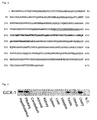
clone of the gene (SEQ ID NO: 2), which encodes a 473-amino-acid protein. The amino
acid sequence (SEQ ID NO: 1) was obtained from the nucleotide sequence. As
schematically drawn in Fig. 1, the protein contains one HMG-box motif (amino acids
205-272 of SEQ ID NO: 1) at the center of the protein. Therefore, the inventors refer to it
as GCX-1 (granulosa cell HMG-box protein-1). It also contains a NLS (nuclear
localization signal)-like motif (amino acids 180-199 of SEQ ID NO: 1) at the N-terminal
side of the HMG-box, and three domains consisting of serine-rich (amino acids 124-164 of
SEQ ID NO: 1), proline-rich (amino acids 348-431 of SEQ ID NO: 1), and lysine-rich
(amino acids 180-199 of SEQ ID NO: 1) regions, respectively. These structural features
are typical of transcriptional regulators.
To examine the tissue distribution of GCX-1, RT-PCR of various tissues from 21-day-old
rats and Northern blot analysis were performed. Twenty-one-day-old female rats were
primed with 30 IU of PMSG (Teikokuzouki, Inc., Tokyo, Japan) or with 50 IU of hCG
(Sankyo Co., Ltd., Tokyo, Japan) and the ovaries were collected at the indicated times.
Total RNA was extracted from various tissues (hypothalamus, pituitary, cerebellum,
adrenal gland, kidney, spleen, intestine, liver, uterus and ovary) of immature female rats
and from the testis of an immature male rat using TRIzol reagent. For Northern blot
analysis, 10 µ g total RNA was separated by electrophoresis on a 1% denaturing agarose
gel, transferred to a nylon membrane (Biodyne, ICN Biomedicals, Inc., Glen Cove, NY)
and cross-linked by UV irradiation. For prehybridization and hybridization, ExpressHyb
hybridization solution (CLONTECH) was used. A 758-base radiolabeled EcoRI /BamHI
fragmant of the pBS-GCX-1, which was mentioned above, or a 1.4-kbp α -32P
dCTP-labeled BamHI fragment of the rat USF-2 (upstream stimulatory factor-2) was used
as probe. Conditions for prehybridization, hybridization and washing procedures were
performed according to the protocol provided by the supplier. The blot was exposed to a
FUJIX imaging plate (Fuji Photo Film, Kanagawa, Japan). Hybridization signals were
detected with a FUJIX BAS-2000 image analyzing system. For RT-PCR, 5 µg total RNA
was reverse-transcribed and a portion (1/100) of the reaction mixture was subjected to the
PCR. Primers for GCX-1 were 5'-CCCAATGAGCCACAGAAGCCA-3'(5'-primer: nt
589/609, SEQ ID NO: 3) and 5'-GGAAAGCCTGCAGGTCGGAG-3'(3'- primer: nt
936/955, SEQ ID NO: 4), respectively. Reaction conditions were 30 cycles, by
denaturing at 94°C for 20 sec, annealing at 55°C for 30 sec and extending at 72°C for 45
sec using the FastStart Taq DNA Polymerase (Roche). Ten microliters of the PCR
products were electrophoresed on a 1.5% agarose gel and subsequently visualized by
ethidium bromide staining. The results are shown in Fig. 2.
The expression of the GCX-1 gene was detected in several restricted tissues, the
hypothalamus, pituitary, testis, uterus, and ovary. The expression of GCX-1 was the
highest in the ovary, whereas no expression was observed in the adrenal gland and placenta
(data not shown). This strongly suggests that GCX-1 functions on the
hypothalamo-pituitary-gonadal axis.
The expression of GCX-1 at various stages of folicular development was examined by in
situ hybridization. For the GCX-1antisence cRNA probe, pBS-GCX-1, linearlized with
EcoRI, was in vitro transcribed with T3 RNA polymerase (Roche) and α-35S CTP. The
sence probe for GCX-1 was transcribed from BamHI-digested pBS-GCX-1 with T7 RNA
polymerase (Roche) and α-35S CTP. Then, rat ovaries were embedded in a matrix and
frozen in dry ice. Twelve to fourteen-micron-thick sections were cut by a cryostat and
mounted on APS-coated glass slides for in situ hybridization. The sections were treated
with proteinase K and were acetylated before hybridization. Hybridization with the
3sS-labeled cRNA probes was performed at 60°C for 6 h and the sections were then washed
under conditions of high stringency and autoradiographed using a NTB3 emulsion
(Eastman Kodak Co., Rochester, NY).
The results are shown in Fig. 3. Ovaries from 8-day-old (A), 21-day-old (B) or adult
rats (C) were sectioned and hybridized with 35S-labeled antisence strand cRNA probes of
GCX-1. Sections of ovaries from 21-day-old rat were hybridized with sense strand cRNA
probe (D).
As shown in A of Fig. 3, strong signals were detected in follicles at very early preantral
stages and the expression was restricted to the granulosa cell layers. Similar levels of
expression were also observed in follicles at slightly advanced stages with two or more
granulosa cell layers. As shown in B of Fig. 3, signals were also detected in the follicles
at large preantral and small antral stages, whereas much lower levels of expression were
observed in large antral follicles at more advanced stages. Moreover, weak signals were
actually detected in the corpus luteum as shown in C of Fig. 3. These observations
indicate that GCX-1 gene expression is restricted to undifferentiated granulosa cells in
follicles of early developmental stages.
An antibody against GCX-1 was prepared and endogeneous GCX-1 protein was
identified. The GCX-1 specific rabbit polyclonal antiserum was generated using the
peptide sequence NH2-SLLHLGDHEAGYHSLC-CO2H (amino acids 39-54 of SEQ ID
NO: 1) and purified IgG. Granulosa cells were cultured for 24 h under hormone-free
conditions in 60-mm dishes containing 5 x 10⁶ viable cells in 5 ml medium and the cells
were then collected by means of a scraper and washed with 10 ml PBS. Then resulting
cells were suspended in 1 ml PBS, transferred to an Eppendorf tube and pelleted by
centrifugation at 1,500 x g for 10 min at 4°C. Cell extracts from granulosa cells were
prepared by the method previously reported (Nucleic Acid Res 17: 6419 (1989)). The
cell pellet was resuspended in 600 µl cold buffer A (10mM HEPES, pH 7.9; 10 mM KCl;
1 mM EDTA; 0.5 mM EGTA; 1mM DTT; and 0.5 mM PMSF) by gentle pipetting. The
cells were allowed to swell on ice for 15 min; after which, 37.5 µl of a 10% solution of
Nonidet P-40 was added and the tube vigorously vortexed for 10 sec. The homogenate
was centrifuged at 17,000 x g for 5 min at 4°C. The supernatant was served as a
cytoplasmic fraction for protein analysis and the nuclear pellet was resuspended in 40 µl
ice-cold buffer C (20 mM HEPES, pH 7.9; 0.4 M NaCl; 1 mM EGTA; 1mM DTT; and 1
mM PMSF) and the tube was vigorously shaken for 15 min at 4°C on a shaking-plattform.
The mixture was centrifuged at 17,000 x g for 15 min at 4°C and the supernatant was
recovered and used as a nuclear fraction for protein analysis. Nuclear extracts from
HepG2 cells expressing GFC-GCX-fusion protein were prepared by the same protocol.
The cytoplasmic and nuclear extracts (100 µ g each) were electrophoresed by SDS-PAGE
on 10% acrylamide gel under reducing conditions. Proteins were then electrophoretically
transferred to an Immobilon-P nitrocellulose membrane (Millipore Co., Bedford, MA)
followed by blocking in milk buffer (58% skim milk in PBS-T[PBS containing 0.0001% of
Tween-20]) and incubation with the IgG-purified GCX-1 antibody (0.019 µ g/ml) in milk
buffer for 1 h at room temperature. The membrane was washed using PBS-T and
immunoreactive GCX-1 protein was subsequently detected using the ECL-Plus kit
(Amersham Biosciences Co., Piscataway, NJ) according to the manufacturer's instructions.
The results are shown in Fig. 4. In Fig. 4, A shows the analysis of GCX-1 specific
antiserum. Nuclear extracts from pEGFP-C1E1 (lane 1)- or pEGFP-GCX-1 (-61-473)
(lane 2)-transfected HepG2 cells were subjected to Western blot analysis with anti-GCX-1
antiserum (IgG purified). A specific band corresponding to the GFP-GCX-1 fusion
protein is indicated. B shows the detection of endogeneous GCX-1 protein in rat ovarian
granulosa cells. Cytoplasmic (lane 1) or nuclear (lane 2) extracts were separated from
cultured granulosa cells and then subjected to Western blot analysis with the same
antiserum. A GCX-1 specific band is indicated.
As shown in Fig. 4A, the polyclonal antibody efficiently recognized the GFP-GCX-1
protein (lane 2). The immunoreactive GCX-1 was detected only in the nuclear extracts of
rat granulosa cells (Fig. 4B, lane 2) but not in the cytoplasmic fraction (Fig. 4B, lane 1).
Transcriptional activity of GCX-1 was investigated, since GCX-1 is a nuclear protein and
contains an HMG-box motif, one of the typical motifs of transcriptional factors. A
GAL4-based heterologous luciferase reporter system was used to verify the transcriptional
activity of GCX-1, because target genes of this protein are not known at this time. 100 ng
of the 5 x GAL4-E1b/Luc firefly luciferase reporter plasmid or the pGL3-basic reporter
plasmid, and 1 ng of the pRL-CMV were cotransfected into HepG2 cells. Simultaneously,
the indicated amounts of pSG-GCX-1 (-61-473) were transfected into the cells as shown in
Fig. 5. pSG424, which expresses only GAL4 DBD, was added to some samples so that
each sample contained the same amount of DNA. The results are shown in Fig. 5. The
expression of the GAL4 DBD-GCX-1 fusion protein greatly enhanced the reporter
luciferase activity. The addition of 0.1 ng of GCX-1 plasmid resulted in about a 25-fold
induction of luciferase activity and 1 ng of the plasmid caused about a 100-fold induction.
On the other hand, when a reporter plasmid that does not possess the GAL4 binding
sequences was used instead of 5 x GAL4-E1b/Luc, no induction was observed by GCX-1
plasmid cotransfection. These observations clearly indicate that GCX-1 is a very strong
transcriptional activator.
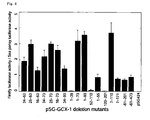
Then, the transactivation domain of GCX-1 was investigated. Various plasmid
constructs of GAL4 DBD-GCX-1 deletion mutants were prepared and 1 ng of the
pSG-GCX-1 deletion mutants were cotransfected with 1 ng of the pRL-CMV, 100 ng of
the 5 x GAL4-E1b/Luc reporter plasmid into HepG2 cells. The results are shown in Fig.
6.
As shown in Fig. 6, a region between 25 and 63 amino acid residues from N terminus was
proved to be essential for the transcriptional activity of GCX-1. The region contains no
typical transcriptional activation motifs that have been reported to date.


Claims (7)
- A transctiptional activator comprising the following (a) or (b):(a) A protein comprising an amino acid sequence of SEQ ID NO: 1.(b) A protein, with a transcriptional activator activity, comprising an amino acid sequence, wherein one or several amino acids are deleted, substituted or added in the amino acid sequence of (a).
- A medical agent for activation of transcription, comprising the transcriptional activator of claim 1 as an effective component.
- An antibody or antagonist which recognizes and binds selectively to the transcriptional activator of claim 1.
- A method for examining the diseases based on the abnormality of a reproductive organ, which comprises the steps of obtaining cells from tissues of said reproductive organ of a patient and examining the reactivity of the antibody or antagonist of claim 3 against said cells.
- A screening agent for medical drugs to activate the transcription, comprising the antibody or antagonist of claim 3 as an effective component.
- A transcriptional activator (GCX-1) gene comprising the following (a) or (b):(a) DNA comprising a nucleotide sequence of SEQ ID NO: 2.(b) DNA encoding a protein comprising an amino acid sequence of SEQ ID NO: 1 or a protein, with transcriptional activator activity, comprising an amino acid sequence, wherein one or several amino acids are deleted, substituted or added in said amino acid sequence of SEQ ID NO: 1.
- A method for examining the diseases based on the abnormality of a reproductive organ, which comprises the steps of obtaining DNA containing the region of the gene of claim 6 from a patient and comparing the obtained DNA with the nucleotide sequence of the gene of claim 6.
Applications Claiming Priority (3)
| Application Number | Priority Date | Filing Date | Title |
|---|---|---|---|
| JP2003018343A JP2004229507A (en) | 2003-01-28 | 2003-01-28 | Transcription activator |
| JP2003018343 | 2003-01-28 | ||
| PCT/JP2003/009165 WO2004067741A1 (en) | 2003-01-28 | 2003-07-18 | Transcriptional activator |
Publications (2)
| Publication Number | Publication Date |
|---|---|
| EP1589100A1 true EP1589100A1 (en) | 2005-10-26 |
| EP1589100A4 EP1589100A4 (en) | 2006-07-26 |
Family
ID=32820581
Family Applications (1)
| Application Number | Title | Priority Date | Filing Date |
|---|---|---|---|
| EP03741488A Withdrawn EP1589100A4 (en) | 2003-01-28 | 2003-07-18 | TRANSCRIPTIONAL ACTIVATOR |
Country Status (5)
| Country | Link |
|---|---|
| US (1) | US20060040267A1 (en) |
| EP (1) | EP1589100A4 (en) |
| JP (1) | JP2004229507A (en) |
| CA (1) | CA2508340A1 (en) |
| WO (1) | WO2004067741A1 (en) |
Cited By (2)
| Publication number | Priority date | Publication date | Assignee | Title |
|---|---|---|---|---|
| WO2017140897A1 (en) * | 2016-02-19 | 2017-08-24 | Immatics Biotechnologies Gmbh | Novel peptides and combination of peptides for use in immunotherapy against nhl and other cancers |
| US10702592B2 (en) | 2016-02-19 | 2020-07-07 | Immatics Biotechnologies Gmbh | Peptides and combination of peptides for use in immunotherapy against NHL and other cancers |
Family Cites Families (2)
| Publication number | Priority date | Publication date | Assignee | Title |
|---|---|---|---|---|
| US6743619B1 (en) * | 2001-01-30 | 2004-06-01 | Nuvelo | Nucleic acids and polypeptides |
| JP2003088388A (en) * | 2001-09-14 | 2003-03-25 | Herikkusu Kenkyusho:Kk | NEW FULL-LENGTH cDNA |
-
2003
- 2003-01-28 JP JP2003018343A patent/JP2004229507A/en active Pending
- 2003-07-18 US US10/542,161 patent/US20060040267A1/en not_active Abandoned
- 2003-07-18 CA CA002508340A patent/CA2508340A1/en not_active Abandoned
- 2003-07-18 EP EP03741488A patent/EP1589100A4/en not_active Withdrawn
- 2003-07-18 WO PCT/JP2003/009165 patent/WO2004067741A1/en not_active Ceased
Non-Patent Citations (4)
| Title |
|---|
| HIRANO S ET AL: "Rat zinc-fingers and homeoboxes 1 (ZHX1), a nuclear factor-YA-interacting nuclear protein, forms a homodimer" GENE: AN INTERNATIONAL JOURNAL ON GENES AND GENOMES, ELSEVIER, AMSTERDAM, NL, vol. 290, no. 1-2, 15 May 2002 (2002-05-15), pages 107-114, XP004362093 ISSN: 0378-1119 * |
| MIZUTANI TETSUYA ET AL: "Cloning and characterization of gonadotropin-inducible ovarian transcription factors (GIOT1 and -2) that are novel members of the (Cys)2-(His)2-type zinc finger protein family" MOLECULAR ENDOCRINOLOGY, BALTIMORE, MD, US, vol. 15, no. 10, October 2001 (2001-10), pages 1693-1705, XP002986468 ISSN: 0888-8809 * |
| See also references of WO2004067741A1 * |
| YAMADA KAZUYA ET AL: "Functional analysis and the molecular dissection of zinc-fingers and homeoboxes 1 (ZHX1)" BIOCHEMICAL AND BIOPHYSICAL RESEARCH COMMUNICATIONS, ACADEMIC PRESS, SAN DIEGO, CA, US, vol. 297, no. 2, 20 September 2002 (2002-09-20), pages 368-374, XP002366208 ISSN: 0006-291X * |
Cited By (10)
| Publication number | Priority date | Publication date | Assignee | Title |
|---|---|---|---|---|
| WO2017140897A1 (en) * | 2016-02-19 | 2017-08-24 | Immatics Biotechnologies Gmbh | Novel peptides and combination of peptides for use in immunotherapy against nhl and other cancers |
| CN108713024A (en) * | 2016-02-19 | 2018-10-26 | 伊玛提克斯生物技术有限公司 | Novel peptides and peptide compositions for NHL and other cancer immunotherapy |
| US10293036B2 (en) | 2016-02-19 | 2019-05-21 | Immatics Biotechnologies Gmbh | Peptides and combination of peptides for use in immunotherapy against NHL and other cancers |
| US10314898B2 (en) | 2016-02-19 | 2019-06-11 | Immatics Biotechnologies Gmbh | Peptides and combination of peptides for use in immunotherapy against NHL and other cancers |
| US10335475B2 (en) | 2016-02-19 | 2019-07-02 | Immatics Biotechnologies Gmbh | Peptides and combination of peptides for use in immunotherapy against NHL and other cancers |
| US10363295B2 (en) | 2016-02-19 | 2019-07-30 | Immatics Biotechnologies Gmbh | Peptides and combination of peptides for use in immunotherapy against NHL and other cancers |
| US10702592B2 (en) | 2016-02-19 | 2020-07-07 | Immatics Biotechnologies Gmbh | Peptides and combination of peptides for use in immunotherapy against NHL and other cancers |
| US10702593B2 (en) | 2016-02-19 | 2020-07-07 | Immatics Biotechnologies Gmbh | Peptides and combination of peptides for use in immunotherapy against NHL and other cancers |
| US10813986B2 (en) | 2016-02-19 | 2020-10-27 | Immatics Biotechnologies Gmbh | Peptides and combination of peptides for use in immunotherapy against NHL and other cancers |
| US10933125B2 (en) | 2016-02-19 | 2021-03-02 | Immatics Biotechnologies Gmbh | Peptides and combination of peptides for use in immunotherapy against NHL and other cancers |
Also Published As
| Publication number | Publication date |
|---|---|
| JP2004229507A (en) | 2004-08-19 |
| CA2508340A1 (en) | 2004-08-12 |
| US20060040267A1 (en) | 2006-02-23 |
| EP1589100A4 (en) | 2006-07-26 |
| WO2004067741A1 (en) | 2004-08-12 |
Similar Documents
| Publication | Publication Date | Title |
|---|---|---|
| Morgan et al. | Aiolos, a lymphoid restricted transcription factor that interacts with Ikaros to regulate lymphocyte differentiation | |
| Wang et al. | A PDZ protein regulates the distribution of the transmembrane semaphorin, M-SemF | |
| Sparrow et al. | MEF‐2 function is modified by a novel co‐repressor, MITR | |
| Fujita et al. | Ropporin, a sperm-specific binding protein of rhophilin, that is localized in the fibrous sheath of sperm flagella | |
| West et al. | Regulation of the follicle-stimulating hormone β gene by the LHX3 LIM-homeodomain transcription factor | |
| Khetchoumian et al. | TIF1δ, a novel HP1-interacting member of the transcriptional intermediary factor 1 (TIF1) family expressed by elongating spermatids | |
| Zhao et al. | Bovine glucose transporter GLUT8: cloning, expression, and developmental regulation in mammary gland | |
| Ben-Zimra et al. | Transcription of cholesterol side-chain cleavage cytochrome P450 in the placenta: activating protein-2 assumes the role of steroidogenic factor-1 by binding to an overlapping promoter element | |
| Wang et al. | TRIM45, a novel human RBCC/TRIM protein, inhibits transcriptional activities of ElK-1 and AP-1 | |
| Foletta et al. | Cloning of rat ARHGAP4/C1, a RhoGAP family member expressed in the nervous system that colocalizes with the Golgi complex and microtubules | |
| Yu et al. | Disruption of Zar1 leads to arrested oogenesis by regulating polyadenylation via Cpeb1 in tilapia (Oreochromis niloticus) | |
| Mizutani et al. | Cloning and characterization of gonadotropin-inducible ovarian transcription factors (GIOT1 and-2) that are novel members of the (Cys) 2-(His) 2-type zinc finger protein family | |
| Gou et al. | Identification and functional analysis of a novel human KRAB/C2H2 zinc finger gene ZNF300 | |
| Kajitani et al. | Cloning and characterization of granulosa cell high-mobility group (HMG)-box protein-1, a novel HMG-box transcriptional regulator strongly expressed in rat ovarian granulosa cells | |
| Pang et al. | Characterization, relative abundances of mRNA transcripts, and subcellular localization of two forms of membrane progestin receptors (mPRs) in the common Chinese cuttlefish, Sepiella japonica | |
| EP1589100A1 (en) | Transcriptional activator | |
| Weng et al. | Isolation and characterization of chondrolectin (Chodl), a novel C-type lectin predominantly expressed in muscle cells | |
| Párraga et al. | XYbp, a novel RING-finger protein, is a component of the XY body of spermatocytes and centrosomes | |
| Flores et al. | Isolation and functional analysis of a keratinocyte-derived, ligand-regulated nuclear receptor comodulator | |
| Burke et al. | Zfp-37, a new murine zinc finger encoding gene, is expressed in a developmentally regulated pattern in the male germ line | |
| Wen et al. | Differential expression and characterization analysis of a new gene with WD domains in fish oogenesis | |
| Talakhun et al. | Characterization, expression and localization of valosin-containing protein in ovaries of the giant tiger shrimp Penaeus monodon | |
| He et al. | Molecular cloning and characterization of CT120, a novel membrane-associated gene involved in amino acid transport and glutathione metabolism | |
| Wu et al. | Identification and characterization of two novel human SCAN domain-containing zinc finger genes ZNF396 and ZNF397 | |
| EP1407269B1 (en) | A method for diagnosing a person having multiple sclerosis |
Legal Events
| Date | Code | Title | Description |
|---|---|---|---|
| PUAI | Public reference made under article 153(3) epc to a published international application that has entered the european phase |
Free format text: ORIGINAL CODE: 0009012 |
|
| 17P | Request for examination filed |
Effective date: 20050527 |
|
| AK | Designated contracting states |
Kind code of ref document: A1 Designated state(s): DE FR GB SE |
|
| A4 | Supplementary search report drawn up and despatched |
Effective date: 20060627 |
|
| 17Q | First examination report despatched |
Effective date: 20070529 |
|
| STAA | Information on the status of an ep patent application or granted ep patent |
Free format text: STATUS: THE APPLICATION IS DEEMED TO BE WITHDRAWN |
|
| 18D | Application deemed to be withdrawn |
Effective date: 20080821 |