EP1587367B1 - Selective herbicides based on substituted cyclic dicarbonyl compounds and safeners - Google Patents
Selective herbicides based on substituted cyclic dicarbonyl compounds and safeners Download PDFInfo
- Publication number
- EP1587367B1 EP1587367B1 EP04700451A EP04700451A EP1587367B1 EP 1587367 B1 EP1587367 B1 EP 1587367B1 EP 04700451 A EP04700451 A EP 04700451A EP 04700451 A EP04700451 A EP 04700451A EP 1587367 B1 EP1587367 B1 EP 1587367B1
- Authority
- EP
- European Patent Office
- Prior art keywords
- methyl
- ethyl
- represents hydrogen
- methoxy
- optionally
- Prior art date
- Legal status (The legal status is an assumption and is not a legal conclusion. Google has not performed a legal analysis and makes no representation as to the accuracy of the status listed.)
- Expired - Lifetime
Links
- 239000004009 herbicide Substances 0.000 title abstract description 13
- 150000001875 compounds Chemical class 0.000 claims abstract description 67
- -1 cyclic dicarbonyl compound Chemical class 0.000 claims abstract description 35
- COYBRKAVBMYYSF-UHFFFAOYSA-N heptan-2-yl [(5-chloroquinolin-8-yl)oxy]acetate Chemical group C1=CN=C2C(OCC(=O)OC(C)CCCCC)=CC=C(Cl)C2=C1 COYBRKAVBMYYSF-UHFFFAOYSA-N 0.000 claims abstract description 13
- 238000000034 method Methods 0.000 claims abstract description 11
- OPGCOAPTHCZZIW-UHFFFAOYSA-N diethyl 1-(2,4-dichlorophenyl)-5-methyl-4h-pyrazole-3,5-dicarboxylate Chemical group CCOC(=O)C1(C)CC(C(=O)OCC)=NN1C1=CC=C(Cl)C=C1Cl OPGCOAPTHCZZIW-UHFFFAOYSA-N 0.000 claims abstract description 8
- 125000002496 methyl group Chemical group [H]C([H])([H])* 0.000 claims description 68
- 239000000460 chlorine Substances 0.000 claims description 47
- 125000001495 ethyl group Chemical group [H]C([H])([H])C([H])([H])* 0.000 claims description 47
- 239000001257 hydrogen Substances 0.000 claims description 27
- 229910052739 hydrogen Inorganic materials 0.000 claims description 27
- 239000000203 mixture Substances 0.000 claims description 25
- 244000038559 crop plants Species 0.000 claims description 23
- 125000000956 methoxy group Chemical group [H]C([H])([H])O* 0.000 claims description 18
- UFHFLCQGNIYNRP-UHFFFAOYSA-N Hydrogen Chemical compound [H][H] UFHFLCQGNIYNRP-UHFFFAOYSA-N 0.000 claims description 17
- 125000002023 trifluoromethyl group Chemical group FC(F)(F)* 0.000 claims description 17
- ZAMOUSCENKQFHK-UHFFFAOYSA-N Chlorine atom Chemical compound [Cl] ZAMOUSCENKQFHK-UHFFFAOYSA-N 0.000 claims description 14
- 229910052801 chlorine Inorganic materials 0.000 claims description 14
- 229910052760 oxygen Inorganic materials 0.000 claims description 12
- 239000001301 oxygen Substances 0.000 claims description 12
- 239000011737 fluorine Substances 0.000 claims description 11
- 229910052731 fluorine Inorganic materials 0.000 claims description 11
- WKBOTKDWSSQWDR-UHFFFAOYSA-N Bromine atom Chemical compound [Br] WKBOTKDWSSQWDR-UHFFFAOYSA-N 0.000 claims description 10
- VYNOULHXXDFBLU-UHFFFAOYSA-N Cumyluron Chemical compound C=1C=CC=CC=1C(C)(C)NC(=O)NCC1=CC=CC=C1Cl VYNOULHXXDFBLU-UHFFFAOYSA-N 0.000 claims description 10
- NRFQZTCQAYEXEE-UHFFFAOYSA-N Fenclorim Chemical compound ClC1=CC(Cl)=NC(C=2C=CC=CC=2)=N1 NRFQZTCQAYEXEE-UHFFFAOYSA-N 0.000 claims description 10
- PXGOKWXKJXAPGV-UHFFFAOYSA-N Fluorine Chemical compound FF PXGOKWXKJXAPGV-UHFFFAOYSA-N 0.000 claims description 10
- GDTBXPJZTBHREO-UHFFFAOYSA-N bromine Substances BrBr GDTBXPJZTBHREO-UHFFFAOYSA-N 0.000 claims description 10
- 229910052794 bromium Inorganic materials 0.000 claims description 10
- BWUPSGJXXPATLU-UHFFFAOYSA-N dimepiperate Chemical compound C=1C=CC=CC=1C(C)(C)SC(=O)N1CCCCC1 BWUPSGJXXPATLU-UHFFFAOYSA-N 0.000 claims description 10
- MWKVXOJATACCCH-UHFFFAOYSA-N isoxadifen-ethyl Chemical group C1C(C(=O)OCC)=NOC1(C=1C=CC=CC=1)C1=CC=CC=C1 MWKVXOJATACCCH-UHFFFAOYSA-N 0.000 claims description 10
- MCNOFYBITGAAGM-UHFFFAOYSA-N 2,2-dichloro-1-[5-(furan-2-yl)-2,2-dimethyl-1,3-oxazolidin-3-yl]ethanone Chemical compound C1N(C(=O)C(Cl)Cl)C(C)(C)OC1C1=CC=CO1 MCNOFYBITGAAGM-UHFFFAOYSA-N 0.000 claims description 9
- NINIDFKCEFEMDL-UHFFFAOYSA-N Sulfur Chemical compound [S] NINIDFKCEFEMDL-UHFFFAOYSA-N 0.000 claims description 9
- 229910052799 carbon Inorganic materials 0.000 claims description 9
- 125000000876 trifluoromethoxy group Chemical group FC(F)(F)O* 0.000 claims description 9
- 125000005913 (C3-C6) cycloalkyl group Chemical group 0.000 claims description 8
- GMBRUAIJEFRHFQ-UHFFFAOYSA-N Fenchlorazole-ethyl Chemical group N1=C(C(=O)OCC)N=C(C(Cl)(Cl)Cl)N1C1=CC=C(Cl)C=C1Cl GMBRUAIJEFRHFQ-UHFFFAOYSA-N 0.000 claims description 8
- QVGXLLKOCUKJST-UHFFFAOYSA-N atomic oxygen Chemical compound [O] QVGXLLKOCUKJST-UHFFFAOYSA-N 0.000 claims description 8
- 125000001153 fluoro group Chemical group F* 0.000 claims description 7
- 150000001721 carbon Chemical group 0.000 claims description 6
- 229910052717 sulfur Inorganic materials 0.000 claims description 6
- 239000011593 sulfur Substances 0.000 claims description 6
- 125000004178 (C1-C4) alkyl group Chemical group 0.000 claims description 4
- OKTJSMMVPCPJKN-UHFFFAOYSA-N Carbon Chemical group [C] OKTJSMMVPCPJKN-UHFFFAOYSA-N 0.000 claims description 3
- 125000004093 cyano group Chemical group *C#N 0.000 claims description 3
- 125000004786 difluoromethoxy group Chemical group [H]C(F)(F)O* 0.000 claims description 3
- 125000001301 ethoxy group Chemical group [H]C([H])([H])C([H])([H])O* 0.000 claims description 3
- 125000002510 isobutoxy group Chemical group [H]C([H])([H])C([H])(C([H])([H])[H])C([H])([H])O* 0.000 claims description 3
- 125000001449 isopropyl group Chemical group [H]C([H])([H])C([H])(*)C([H])([H])[H] 0.000 claims description 3
- 125000001570 methylene group Chemical group [H]C([H])([*:1])[*:2] 0.000 claims description 3
- 125000004123 n-propyl group Chemical group [H]C([H])([H])C([H])([H])C([H])([H])* 0.000 claims description 3
- 125000000449 nitro group Chemical group [O-][N+](*)=O 0.000 claims description 3
- 125000001997 phenyl group Chemical group [H]C1=C([H])C([H])=C(*)C([H])=C1[H] 0.000 claims description 3
- 125000001436 propyl group Chemical group [H]C([*])([H])C([H])([H])C([H])([H])[H] 0.000 claims description 3
- 125000004076 pyridyl group Chemical group 0.000 claims description 3
- 229920006395 saturated elastomer Polymers 0.000 claims description 3
- 125000004429 atom Chemical group 0.000 claims description 2
- 125000004430 oxygen atom Chemical group O* 0.000 claims description 2
- 125000000999 tert-butyl group Chemical group [H]C([H])([H])C(*)(C([H])([H])[H])C([H])([H])[H] 0.000 claims description 2
- 125000004435 hydrogen atom Chemical class [H]* 0.000 claims 13
- 125000001309 chloro group Chemical group Cl* 0.000 claims 1
- 239000003795 chemical substances by application Substances 0.000 abstract description 7
- 239000013543 active substance Substances 0.000 abstract description 6
- 230000008635 plant growth Effects 0.000 abstract description 3
- 241000196324 Embryophyta Species 0.000 description 74
- 230000002363 herbicidal effect Effects 0.000 description 18
- 240000008042 Zea mays Species 0.000 description 17
- 235000002017 Zea mays subsp mays Nutrition 0.000 description 17
- 235000005824 Zea mays ssp. parviglumis Nutrition 0.000 description 13
- 235000005822 corn Nutrition 0.000 description 13
- XEJNEDVTJPXRSM-UHFFFAOYSA-N 1-(2,4-dichlorophenyl)-5-methyl-4,5-dihydro-1H-pyrazole-3,5-dicarboxylic acid Chemical compound OC(=O)C1(C)CC(C(O)=O)=NN1C1=CC=C(Cl)C=C1Cl XEJNEDVTJPXRSM-UHFFFAOYSA-N 0.000 description 12
- 150000002431 hydrogen Chemical class 0.000 description 11
- 241000219146 Gossypium Species 0.000 description 10
- 238000009472 formulation Methods 0.000 description 10
- 239000000126 substance Substances 0.000 description 10
- 238000012360 testing method Methods 0.000 description 9
- 229920000742 Cotton Polymers 0.000 description 8
- 235000010469 Glycine max Nutrition 0.000 description 8
- 241000209140 Triticum Species 0.000 description 8
- 235000021307 Triticum Nutrition 0.000 description 8
- 230000000694 effects Effects 0.000 description 7
- 108090000623 proteins and genes Proteins 0.000 description 7
- 239000002689 soil Substances 0.000 description 7
- NNYRZQHKCHEXSD-UHFFFAOYSA-N Daimuron Chemical compound C1=CC(C)=CC=C1NC(=O)NC(C)(C)C1=CC=CC=C1 NNYRZQHKCHEXSD-UHFFFAOYSA-N 0.000 description 6
- 241000209219 Hordeum Species 0.000 description 6
- 241000209094 Oryza Species 0.000 description 6
- 0 C*[N+2](C)c1c(C(C(C)C(*2*3CCCC2)=O)(C3=[O+2])N)c(NC)cc(-c(cc2)ccc2N)c1 Chemical compound C*[N+2](C)c1c(C(C(C)C(*2*3CCCC2)=O)(C3=[O+2])N)c(NC)cc(-c(cc2)ccc2N)c1 0.000 description 5
- 244000061456 Solanum tuberosum Species 0.000 description 5
- 235000002595 Solanum tuberosum Nutrition 0.000 description 5
- 239000004480 active ingredient Substances 0.000 description 5
- 239000008187 granular material Substances 0.000 description 5
- 229910052500 inorganic mineral Inorganic materials 0.000 description 5
- 230000009261 transgenic effect Effects 0.000 description 5
- 235000005781 Avena Nutrition 0.000 description 4
- 244000075850 Avena orientalis Species 0.000 description 4
- MYMOFIZGZYHOMD-UHFFFAOYSA-N Dioxygen Chemical compound O=O MYMOFIZGZYHOMD-UHFFFAOYSA-N 0.000 description 4
- DHMQDGOQFOQNFH-UHFFFAOYSA-N Glycine Chemical compound NCC(O)=O DHMQDGOQFOQNFH-UHFFFAOYSA-N 0.000 description 4
- 235000007340 Hordeum vulgare Nutrition 0.000 description 4
- 235000021506 Ipomoea Nutrition 0.000 description 4
- 241000207783 Ipomoea Species 0.000 description 4
- 235000007164 Oryza sativa Nutrition 0.000 description 4
- 241000209117 Panicum Species 0.000 description 4
- 235000006443 Panicum miliaceum subsp. miliaceum Nutrition 0.000 description 4
- 235000009037 Panicum miliaceum subsp. ruderale Nutrition 0.000 description 4
- 235000002634 Solanum Nutrition 0.000 description 4
- 241000207763 Solanum Species 0.000 description 4
- 241000209072 Sorghum Species 0.000 description 4
- 235000011684 Sorghum saccharatum Nutrition 0.000 description 4
- 235000016383 Zea mays subsp huehuetenangensis Nutrition 0.000 description 4
- 230000009471 action Effects 0.000 description 4
- 239000000654 additive Substances 0.000 description 4
- 239000000729 antidote Substances 0.000 description 4
- 229940075522 antidotes Drugs 0.000 description 4
- 239000000890 drug combination Substances 0.000 description 4
- 235000009973 maize Nutrition 0.000 description 4
- 239000000843 powder Substances 0.000 description 4
- 238000002360 preparation method Methods 0.000 description 4
- 239000000047 product Substances 0.000 description 4
- 235000009566 rice Nutrition 0.000 description 4
- 150000003839 salts Chemical class 0.000 description 4
- 238000009331 sowing Methods 0.000 description 4
- XLYOFNOQVPJJNP-UHFFFAOYSA-N water Substances O XLYOFNOQVPJJNP-UHFFFAOYSA-N 0.000 description 4
- ZWEHNKRNPOVVGH-UHFFFAOYSA-N 2-Butanone Chemical compound CCC(C)=O ZWEHNKRNPOVVGH-UHFFFAOYSA-N 0.000 description 3
- CSCPPACGZOOCGX-UHFFFAOYSA-N Acetone Chemical compound CC(C)=O CSCPPACGZOOCGX-UHFFFAOYSA-N 0.000 description 3
- 240000002791 Brassica napus Species 0.000 description 3
- 235000004977 Brassica sinapistrum Nutrition 0.000 description 3
- YMWUJEATGCHHMB-UHFFFAOYSA-N Dichloromethane Chemical compound ClCCl YMWUJEATGCHHMB-UHFFFAOYSA-N 0.000 description 3
- 244000068988 Glycine max Species 0.000 description 3
- ZMXDDKWLCZADIW-UHFFFAOYSA-N N,N-Dimethylformamide Chemical compound CN(C)C=O ZMXDDKWLCZADIW-UHFFFAOYSA-N 0.000 description 3
- 241000209056 Secale Species 0.000 description 3
- YXFVVABEGXRONW-UHFFFAOYSA-N Toluene Chemical compound CC1=CC=CC=C1 YXFVVABEGXRONW-UHFFFAOYSA-N 0.000 description 3
- 238000009395 breeding Methods 0.000 description 3
- 239000000969 carrier Substances 0.000 description 3
- 235000013339 cereals Nutrition 0.000 description 3
- 235000013399 edible fruits Nutrition 0.000 description 3
- 239000000839 emulsion Substances 0.000 description 3
- 238000010353 genetic engineering Methods 0.000 description 3
- XDDAORKBJWWYJS-UHFFFAOYSA-N glyphosate Chemical compound OC(=O)CNCP(O)(O)=O XDDAORKBJWWYJS-UHFFFAOYSA-N 0.000 description 3
- 230000012010 growth Effects 0.000 description 3
- 239000007788 liquid Substances 0.000 description 3
- 239000002480 mineral oil Substances 0.000 description 3
- 230000008569 process Effects 0.000 description 3
- 102000004169 proteins and genes Human genes 0.000 description 3
- VYPSYNLAJGMNEJ-UHFFFAOYSA-N silicon dioxide Inorganic materials O=[Si]=O VYPSYNLAJGMNEJ-UHFFFAOYSA-N 0.000 description 3
- 239000007787 solid Substances 0.000 description 3
- 239000002904 solvent Substances 0.000 description 3
- 238000005507 spraying Methods 0.000 description 3
- 230000007480 spreading Effects 0.000 description 3
- 238000003892 spreading Methods 0.000 description 3
- 125000001424 substituent group Chemical group 0.000 description 3
- 235000015112 vegetable and seed oil Nutrition 0.000 description 3
- 239000008158 vegetable oil Substances 0.000 description 3
- CAAMSDWKXXPUJR-UHFFFAOYSA-N 3,5-dihydro-4H-imidazol-4-one Chemical class O=C1CNC=N1 CAAMSDWKXXPUJR-UHFFFAOYSA-N 0.000 description 2
- 241000219144 Abutilon Species 0.000 description 2
- 241000209136 Agropyron Species 0.000 description 2
- 241000743339 Agrostis Species 0.000 description 2
- 241000234282 Allium Species 0.000 description 2
- 241000743985 Alopecurus Species 0.000 description 2
- 241000219318 Amaranthus Species 0.000 description 2
- 244000099147 Ananas comosus Species 0.000 description 2
- 241000404028 Anthemis Species 0.000 description 2
- 241001666377 Apera Species 0.000 description 2
- 235000003911 Arachis Nutrition 0.000 description 2
- 244000105624 Arachis hypogaea Species 0.000 description 2
- 235000005340 Asparagus officinalis Nutrition 0.000 description 2
- 241000894006 Bacteria Species 0.000 description 2
- 241000611157 Brachiaria Species 0.000 description 2
- 241000339490 Brachyachne Species 0.000 description 2
- 241000219198 Brassica Species 0.000 description 2
- 235000011331 Brassica Nutrition 0.000 description 2
- 241000209200 Bromus Species 0.000 description 2
- OAWUUPVZMNKZRY-UHFFFAOYSA-N COc(cccc1)c1C(NS(c(cc1)ccc1C(NC1CC1)=O)(=O)=O)=O Chemical compound COc(cccc1)c1C(NS(c(cc1)ccc1C(NC1CC1)=O)(=O)=O)=O OAWUUPVZMNKZRY-UHFFFAOYSA-N 0.000 description 2
- 241000320316 Carduus Species 0.000 description 2
- 241000132570 Centaurea Species 0.000 description 2
- 241000219312 Chenopodium Species 0.000 description 2
- 235000000509 Chenopodium ambrosioides Nutrition 0.000 description 2
- 244000098897 Chenopodium botrys Species 0.000 description 2
- 235000005490 Chenopodium botrys Nutrition 0.000 description 2
- 244000192528 Chrysanthemum parthenium Species 0.000 description 2
- 241000132536 Cirsium Species 0.000 description 2
- 241000207892 Convolvulus Species 0.000 description 2
- 244000024469 Cucumis prophetarum Species 0.000 description 2
- 235000010071 Cucumis prophetarum Nutrition 0.000 description 2
- 241000234653 Cyperus Species 0.000 description 2
- 241000320605 Dactyloctenium Species 0.000 description 2
- 241000208296 Datura Species 0.000 description 2
- 241000208175 Daucus Species 0.000 description 2
- 235000017896 Digitaria Nutrition 0.000 description 2
- 241001303487 Digitaria <clam> Species 0.000 description 2
- IAZDPXIOMUYVGZ-UHFFFAOYSA-N Dimethylsulphoxide Chemical compound CS(C)=O IAZDPXIOMUYVGZ-UHFFFAOYSA-N 0.000 description 2
- 241000192043 Echinochloa Species 0.000 description 2
- 241000202829 Eleocharis Species 0.000 description 2
- 241000209215 Eleusine Species 0.000 description 2
- 235000007351 Eleusine Nutrition 0.000 description 2
- 244000294661 Emex spinosa Species 0.000 description 2
- 235000006369 Emex spinosa Nutrition 0.000 description 2
- LYCAIKOWRPUZTN-UHFFFAOYSA-N Ethylene glycol Chemical compound OCCO LYCAIKOWRPUZTN-UHFFFAOYSA-N 0.000 description 2
- 241000234642 Festuca Species 0.000 description 2
- 239000004606 Fillers/Extenders Substances 0.000 description 2
- 241001290564 Fimbristylis Species 0.000 description 2
- 241000233866 Fungi Species 0.000 description 2
- 241000816457 Galeopsis Species 0.000 description 2
- 241000748465 Galinsoga Species 0.000 description 2
- 241001101998 Galium Species 0.000 description 2
- 239000004471 Glycine Substances 0.000 description 2
- 239000005562 Glyphosate Substances 0.000 description 2
- 235000009438 Gossypium Nutrition 0.000 description 2
- 241000208818 Helianthus Species 0.000 description 2
- 241000238631 Hexapoda Species 0.000 description 2
- XEEYBQQBJWHFJM-UHFFFAOYSA-N Iron Chemical class [Fe] XEEYBQQBJWHFJM-UHFFFAOYSA-N 0.000 description 2
- UQSXHKLRYXJYBZ-UHFFFAOYSA-N Iron oxide Chemical compound [Fe]=O UQSXHKLRYXJYBZ-UHFFFAOYSA-N 0.000 description 2
- 241001327265 Ischaemum Species 0.000 description 2
- 241000208822 Lactuca Species 0.000 description 2
- 241000520028 Lamium Species 0.000 description 2
- 241000801118 Lepidium Species 0.000 description 2
- 241000064140 Lindernia Species 0.000 description 2
- 241000208204 Linum Species 0.000 description 2
- 241000209082 Lolium Species 0.000 description 2
- 235000002262 Lycopersicon Nutrition 0.000 description 2
- 241000227653 Lycopersicon Species 0.000 description 2
- 235000017945 Matricaria Nutrition 0.000 description 2
- 235000007232 Matricaria chamomilla Nutrition 0.000 description 2
- 235000003990 Monochoria hastata Nutrition 0.000 description 2
- 240000000178 Monochoria vaginalis Species 0.000 description 2
- LRHPLDYGYMQRHN-UHFFFAOYSA-N N-Butanol Chemical compound CCCCO LRHPLDYGYMQRHN-UHFFFAOYSA-N 0.000 description 2
- 241000208125 Nicotiana Species 0.000 description 2
- 235000011096 Papaver Nutrition 0.000 description 2
- 240000001090 Papaver somniferum Species 0.000 description 2
- 241001330453 Paspalum Species 0.000 description 2
- 241000219833 Phaseolus Species 0.000 description 2
- 241000746981 Phleum Species 0.000 description 2
- IAJOBQBIJHVGMQ-UHFFFAOYSA-N Phosphinothricin Natural products CP(O)(=O)CCC(N)C(O)=O IAJOBQBIJHVGMQ-UHFFFAOYSA-N 0.000 description 2
- 241000219843 Pisum Species 0.000 description 2
- 241000209048 Poa Species 0.000 description 2
- 229920003171 Poly (ethylene oxide) Polymers 0.000 description 2
- 241000205407 Polygonum Species 0.000 description 2
- 241000219295 Portulaca Species 0.000 description 2
- 241000218206 Ranunculus Species 0.000 description 2
- 241000490453 Rorippa Species 0.000 description 2
- 241000341978 Rotala Species 0.000 description 2
- 241000209051 Saccharum Species 0.000 description 2
- 240000009132 Sagittaria sagittifolia Species 0.000 description 2
- 241000202758 Scirpus Species 0.000 description 2
- 241000780602 Senecio Species 0.000 description 2
- 244000275012 Sesbania cannabina Species 0.000 description 2
- 235000005775 Setaria Nutrition 0.000 description 2
- 241000232088 Setaria <nematode> Species 0.000 description 2
- 241000220261 Sinapis Species 0.000 description 2
- 241000488874 Sonchus Species 0.000 description 2
- 244000273618 Sphenoclea zeylanica Species 0.000 description 2
- 235000017967 Sphenoclea zeylanica Nutrition 0.000 description 2
- 240000006694 Stellaria media Species 0.000 description 2
- 229940100389 Sulfonylurea Drugs 0.000 description 2
- 241000245665 Taraxacum Species 0.000 description 2
- 241000219793 Trifolium Species 0.000 description 2
- 241000219422 Urtica Species 0.000 description 2
- 240000005592 Veronica officinalis Species 0.000 description 2
- 241000219873 Vicia Species 0.000 description 2
- 241000405217 Viola <butterfly> Species 0.000 description 2
- 241000700605 Viruses Species 0.000 description 2
- 241001506766 Xanthium Species 0.000 description 2
- 241000209149 Zea Species 0.000 description 2
- 230000000895 acaricidal effect Effects 0.000 description 2
- 230000001133 acceleration Effects 0.000 description 2
- 230000000996 additive effect Effects 0.000 description 2
- 244000193174 agave Species 0.000 description 2
- 150000001338 aliphatic hydrocarbons Chemical class 0.000 description 2
- 125000003545 alkoxy group Chemical group 0.000 description 2
- 125000000217 alkyl group Chemical group 0.000 description 2
- 150000003863 ammonium salts Chemical class 0.000 description 2
- 230000001488 breeding effect Effects 0.000 description 2
- JHIVVAPYMSGYDF-UHFFFAOYSA-N cyclohexanone Chemical compound O=C1CCCCC1 JHIVVAPYMSGYDF-UHFFFAOYSA-N 0.000 description 2
- 230000007123 defense Effects 0.000 description 2
- 239000002270 dispersing agent Substances 0.000 description 2
- 239000000975 dye Substances 0.000 description 2
- 239000003995 emulsifying agent Substances 0.000 description 2
- 150000002170 ethers Chemical class 0.000 description 2
- 238000002474 experimental method Methods 0.000 description 2
- IAJOBQBIJHVGMQ-BYPYZUCNSA-N glufosinate-P Chemical compound CP(O)(=O)CC[C@H](N)C(O)=O IAJOBQBIJHVGMQ-BYPYZUCNSA-N 0.000 description 2
- 229940097068 glyphosate Drugs 0.000 description 2
- 238000003306 harvesting Methods 0.000 description 2
- 125000005842 heteroatom Chemical group 0.000 description 2
- ITGSCCPVERXFGN-UHFFFAOYSA-N isoxadifen Chemical compound C1C(C(=O)O)=NOC1(C=1C=CC=CC=1)C1=CC=CC=C1 ITGSCCPVERXFGN-UHFFFAOYSA-N 0.000 description 2
- 239000000463 material Substances 0.000 description 2
- 239000011707 mineral Substances 0.000 description 2
- 235000015097 nutrients Nutrition 0.000 description 2
- 235000016709 nutrition Nutrition 0.000 description 2
- 239000006072 paste Substances 0.000 description 2
- 150000003254 radicals Chemical class 0.000 description 2
- 239000000243 solution Substances 0.000 description 2
- 239000000725 suspension Substances 0.000 description 2
- 230000002195 synergetic effect Effects 0.000 description 2
- 230000021918 systemic acquired resistance Effects 0.000 description 2
- 229960000278 theophylline Drugs 0.000 description 2
- ZFXYFBGIUFBOJW-UHFFFAOYSA-N theophylline Chemical compound O=C1N(C)C(=O)N(C)C2=C1NC=N2 ZFXYFBGIUFBOJW-UHFFFAOYSA-N 0.000 description 2
- 239000003053 toxin Substances 0.000 description 2
- 231100000765 toxin Toxicity 0.000 description 2
- 108700012359 toxins Proteins 0.000 description 2
- 230000017260 vegetative to reproductive phase transition of meristem Effects 0.000 description 2
- 239000004563 wettable powder Substances 0.000 description 2
- PPTXVXKCQZKFBN-UHFFFAOYSA-N (S)-(-)-1,1'-Bi-2-naphthol Chemical compound C1=CC=C2C(C3=C4C=CC=CC4=CC=C3O)=C(O)C=CC2=C1 PPTXVXKCQZKFBN-UHFFFAOYSA-N 0.000 description 1
- 244000215068 Acacia senegal Species 0.000 description 1
- 241000238876 Acari Species 0.000 description 1
- RGCKGOZRHPZPFP-UHFFFAOYSA-N Alizarin Natural products C1=CC=C2C(=O)C3=C(O)C(O)=CC=C3C(=O)C2=C1 RGCKGOZRHPZPFP-UHFFFAOYSA-N 0.000 description 1
- 235000007119 Ananas comosus Nutrition 0.000 description 1
- 241000193388 Bacillus thuringiensis Species 0.000 description 1
- ZOXJGFHDIHLPTG-UHFFFAOYSA-N Boron Chemical compound [B] ZOXJGFHDIHLPTG-UHFFFAOYSA-N 0.000 description 1
- 229910021532 Calcite Inorganic materials 0.000 description 1
- 229920002134 Carboxymethyl cellulose Polymers 0.000 description 1
- 244000060011 Cocos nucifera Species 0.000 description 1
- 235000013162 Cocos nucifera Nutrition 0.000 description 1
- RYGMFSIKBFXOCR-UHFFFAOYSA-N Copper Chemical compound [Cu] RYGMFSIKBFXOCR-UHFFFAOYSA-N 0.000 description 1
- XDTMQSROBMDMFD-UHFFFAOYSA-N Cyclohexane Chemical compound C1CCCCC1 XDTMQSROBMDMFD-UHFFFAOYSA-N 0.000 description 1
- 229920000084 Gum arabic Polymers 0.000 description 1
- 239000005909 Kieselgur Substances 0.000 description 1
- 244000070406 Malus silvestris Species 0.000 description 1
- 241001465754 Metazoa Species 0.000 description 1
- NTIZESTWPVYFNL-UHFFFAOYSA-N Methyl isobutyl ketone Chemical compound CC(C)CC(C)=O NTIZESTWPVYFNL-UHFFFAOYSA-N 0.000 description 1
- UIHCLUNTQKBZGK-UHFFFAOYSA-N Methyl isobutyl ketone Natural products CCC(C)C(C)=O UIHCLUNTQKBZGK-UHFFFAOYSA-N 0.000 description 1
- ZOKXTWBITQBERF-UHFFFAOYSA-N Molybdenum Chemical compound [Mo] ZOKXTWBITQBERF-UHFFFAOYSA-N 0.000 description 1
- 244000061176 Nicotiana tabacum Species 0.000 description 1
- 235000002637 Nicotiana tabacum Nutrition 0.000 description 1
- CTQNGGLPUBDAKN-UHFFFAOYSA-N O-Xylene Chemical compound CC1=CC=CC=C1C CTQNGGLPUBDAKN-UHFFFAOYSA-N 0.000 description 1
- IHPVFYLOGNNZLA-UHFFFAOYSA-N Phytoalexin Natural products COC1=CC=CC=C1C1OC(C=C2C(OCO2)=C2OC)=C2C(=O)C1 IHPVFYLOGNNZLA-UHFFFAOYSA-N 0.000 description 1
- 239000004372 Polyvinyl alcohol Substances 0.000 description 1
- 108010009736 Protein Hydrolysates Proteins 0.000 description 1
- 241000220324 Pyrus Species 0.000 description 1
- 108020004511 Recombinant DNA Proteins 0.000 description 1
- 235000007238 Secale cereale Nutrition 0.000 description 1
- 239000004113 Sepiolite Substances 0.000 description 1
- GWEVSGVZZGPLCZ-UHFFFAOYSA-N Titan oxide Chemical compound O=[Ti]=O GWEVSGVZZGPLCZ-UHFFFAOYSA-N 0.000 description 1
- BZHJMEDXRYGGRV-UHFFFAOYSA-N Vinyl chloride Chemical class ClC=C BZHJMEDXRYGGRV-UHFFFAOYSA-N 0.000 description 1
- 241000219094 Vitaceae Species 0.000 description 1
- 229920002522 Wood fibre Polymers 0.000 description 1
- 241000607479 Yersinia pestis Species 0.000 description 1
- HCHKCACWOHOZIP-UHFFFAOYSA-N Zinc Chemical compound [Zn] HCHKCACWOHOZIP-UHFFFAOYSA-N 0.000 description 1
- 239000000205 acacia gum Substances 0.000 description 1
- 235000010489 acacia gum Nutrition 0.000 description 1
- 239000000642 acaricide Substances 0.000 description 1
- 239000000853 adhesive Substances 0.000 description 1
- 230000001070 adhesive effect Effects 0.000 description 1
- 239000003905 agrochemical Substances 0.000 description 1
- 150000001298 alcohols Chemical class 0.000 description 1
- HFVAFDPGUJEFBQ-UHFFFAOYSA-M alizarin red S Chemical compound [Na+].O=C1C2=CC=CC=C2C(=O)C2=C1C=C(S([O-])(=O)=O)C(O)=C2O HFVAFDPGUJEFBQ-UHFFFAOYSA-M 0.000 description 1
- 125000003342 alkenyl group Chemical group 0.000 description 1
- 125000002877 alkyl aryl group Chemical group 0.000 description 1
- 150000008051 alkyl sulfates Chemical class 0.000 description 1
- 229940045714 alkyl sulfonate alkylating agent Drugs 0.000 description 1
- 150000008052 alkyl sulfonates Chemical class 0.000 description 1
- 125000005530 alkylenedioxy group Chemical group 0.000 description 1
- PNEYBMLMFCGWSK-UHFFFAOYSA-N aluminium oxide Inorganic materials [O-2].[O-2].[O-2].[Al+3].[Al+3] PNEYBMLMFCGWSK-UHFFFAOYSA-N 0.000 description 1
- 235000012211 aluminium silicate Nutrition 0.000 description 1
- BFNBIHQBYMNNAN-UHFFFAOYSA-N ammonium sulfate Chemical compound N.N.OS(O)(=O)=O BFNBIHQBYMNNAN-UHFFFAOYSA-N 0.000 description 1
- 229910052921 ammonium sulfate Inorganic materials 0.000 description 1
- 235000011130 ammonium sulphate Nutrition 0.000 description 1
- SOIFLUNRINLCBN-UHFFFAOYSA-N ammonium thiocyanate Chemical compound [NH4+].[S-]C#N SOIFLUNRINLCBN-UHFFFAOYSA-N 0.000 description 1
- 125000000129 anionic group Chemical group 0.000 description 1
- 230000003042 antagnostic effect Effects 0.000 description 1
- 235000021016 apples Nutrition 0.000 description 1
- 125000005228 aryl sulfonate group Chemical group 0.000 description 1
- 229960000892 attapulgite Drugs 0.000 description 1
- 229940097012 bacillus thuringiensis Drugs 0.000 description 1
- 238000010352 biotechnological method Methods 0.000 description 1
- 229910052796 boron Inorganic materials 0.000 description 1
- CODNYICXDISAEA-UHFFFAOYSA-N bromine monochloride Chemical compound BrCl CODNYICXDISAEA-UHFFFAOYSA-N 0.000 description 1
- 239000001768 carboxy methyl cellulose Substances 0.000 description 1
- 235000010948 carboxy methyl cellulose Nutrition 0.000 description 1
- 239000008112 carboxymethyl-cellulose Substances 0.000 description 1
- 150000008422 chlorobenzenes Chemical class 0.000 description 1
- 235000020971 citrus fruits Nutrition 0.000 description 1
- 239000010941 cobalt Substances 0.000 description 1
- 229910017052 cobalt Inorganic materials 0.000 description 1
- GUTLYIVDDKVIGB-UHFFFAOYSA-N cobalt atom Chemical compound [Co] GUTLYIVDDKVIGB-UHFFFAOYSA-N 0.000 description 1
- 239000013065 commercial product Substances 0.000 description 1
- 239000012141 concentrate Substances 0.000 description 1
- 238000007796 conventional method Methods 0.000 description 1
- 229910052802 copper Inorganic materials 0.000 description 1
- 239000010949 copper Substances 0.000 description 1
- 235000012343 cottonseed oil Nutrition 0.000 description 1
- 238000005520 cutting process Methods 0.000 description 1
- 125000004122 cyclic group Chemical group 0.000 description 1
- 125000000753 cycloalkyl group Chemical group 0.000 description 1
- 230000000254 damaging effect Effects 0.000 description 1
- GUJOJGAPFQRJSV-UHFFFAOYSA-N dialuminum;dioxosilane;oxygen(2-);hydrate Chemical compound O.[O-2].[O-2].[O-2].[Al+3].[Al+3].O=[Si]=O.O=[Si]=O.O=[Si]=O.O=[Si]=O GUJOJGAPFQRJSV-UHFFFAOYSA-N 0.000 description 1
- 235000005911 diet Nutrition 0.000 description 1
- 230000037213 diet Effects 0.000 description 1
- 235000014113 dietary fatty acids Nutrition 0.000 description 1
- 239000012895 dilution Substances 0.000 description 1
- 238000010790 dilution Methods 0.000 description 1
- 238000007598 dipping method Methods 0.000 description 1
- 239000010459 dolomite Substances 0.000 description 1
- 229910000514 dolomite Inorganic materials 0.000 description 1
- 239000005712 elicitor Substances 0.000 description 1
- 230000001804 emulsifying effect Effects 0.000 description 1
- 238000005538 encapsulation Methods 0.000 description 1
- 150000002148 esters Chemical class 0.000 description 1
- 230000003631 expected effect Effects 0.000 description 1
- 239000000194 fatty acid Substances 0.000 description 1
- 229930195729 fatty acid Natural products 0.000 description 1
- 235000013312 flour Nutrition 0.000 description 1
- 235000003599 food sweetener Nutrition 0.000 description 1
- 229910021485 fumed silica Inorganic materials 0.000 description 1
- 239000000417 fungicide Substances 0.000 description 1
- 230000004927 fusion Effects 0.000 description 1
- 230000002068 genetic effect Effects 0.000 description 1
- 235000003869 genetically modified organism Nutrition 0.000 description 1
- 235000021021 grapes Nutrition 0.000 description 1
- 239000003102 growth factor Substances 0.000 description 1
- 230000009931 harmful effect Effects 0.000 description 1
- 150000002430 hydrocarbons Chemical group 0.000 description 1
- WGCNASOHLSPBMP-UHFFFAOYSA-N hydroxyacetaldehyde Natural products OCC=O WGCNASOHLSPBMP-UHFFFAOYSA-N 0.000 description 1
- 239000001023 inorganic pigment Substances 0.000 description 1
- 230000000749 insecticidal effect Effects 0.000 description 1
- 239000002917 insecticide Substances 0.000 description 1
- 229910052742 iron Inorganic materials 0.000 description 1
- 150000002576 ketones Chemical class 0.000 description 1
- 239000004816 latex Substances 0.000 description 1
- 229920000126 latex Polymers 0.000 description 1
- 239000000787 lecithin Substances 0.000 description 1
- 235000010445 lecithin Nutrition 0.000 description 1
- WPBNNNQJVZRUHP-UHFFFAOYSA-L manganese(2+);methyl n-[[2-(methoxycarbonylcarbamothioylamino)phenyl]carbamothioyl]carbamate;n-[2-(sulfidocarbothioylamino)ethyl]carbamodithioate Chemical class [Mn+2].[S-]C(=S)NCCNC([S-])=S.COC(=O)NC(=S)NC1=CC=CC=C1NC(=S)NC(=O)OC WPBNNNQJVZRUHP-UHFFFAOYSA-L 0.000 description 1
- 239000004579 marble Substances 0.000 description 1
- 229910052751 metal Inorganic materials 0.000 description 1
- 239000002184 metal Substances 0.000 description 1
- 229920000609 methyl cellulose Polymers 0.000 description 1
- 239000001923 methylcellulose Substances 0.000 description 1
- 230000000813 microbial effect Effects 0.000 description 1
- 230000004048 modification Effects 0.000 description 1
- 238000012986 modification Methods 0.000 description 1
- 229910052750 molybdenum Inorganic materials 0.000 description 1
- 239000011733 molybdenum Substances 0.000 description 1
- 229910052901 montmorillonite Inorganic materials 0.000 description 1
- 238000002703 mutagenesis Methods 0.000 description 1
- 231100000350 mutagenesis Toxicity 0.000 description 1
- SYSQUGFVNFXIIT-UHFFFAOYSA-N n-[4-(1,3-benzoxazol-2-yl)phenyl]-4-nitrobenzenesulfonamide Chemical class C1=CC([N+](=O)[O-])=CC=C1S(=O)(=O)NC1=CC=C(C=2OC3=CC=CC=C3N=2)C=C1 SYSQUGFVNFXIIT-UHFFFAOYSA-N 0.000 description 1
- 229940042880 natural phospholipid Drugs 0.000 description 1
- 239000005645 nematicide Substances 0.000 description 1
- 230000003287 optical effect Effects 0.000 description 1
- 238000005457 optimization Methods 0.000 description 1
- 210000000056 organ Anatomy 0.000 description 1
- 239000011368 organic material Substances 0.000 description 1
- 239000003960 organic solvent Substances 0.000 description 1
- JCGNDDUYTRNOFT-UHFFFAOYSA-N oxolane-2,4-dione Chemical class O=C1COC(=O)C1 JCGNDDUYTRNOFT-UHFFFAOYSA-N 0.000 description 1
- 229910052625 palygorskite Inorganic materials 0.000 description 1
- 235000021017 pears Nutrition 0.000 description 1
- 150000003904 phospholipids Chemical class 0.000 description 1
- 239000001007 phthalocyanine dye Substances 0.000 description 1
- 239000000280 phytoalexin Substances 0.000 description 1
- 150000001857 phytoalexin derivatives Chemical class 0.000 description 1
- 230000003032 phytopathogenic effect Effects 0.000 description 1
- 239000004033 plastic Substances 0.000 description 1
- 229920003023 plastic Polymers 0.000 description 1
- 239000002798 polar solvent Substances 0.000 description 1
- 229920000151 polyglycol Polymers 0.000 description 1
- 239000010695 polyglycol Substances 0.000 description 1
- 229920000642 polymer Polymers 0.000 description 1
- 239000011118 polyvinyl acetate Substances 0.000 description 1
- 229920002689 polyvinyl acetate Polymers 0.000 description 1
- 229920002451 polyvinyl alcohol Polymers 0.000 description 1
- 235000012015 potatoes Nutrition 0.000 description 1
- 239000003531 protein hydrolysate Substances 0.000 description 1
- 210000001938 protoplast Anatomy 0.000 description 1
- 239000008262 pumice Substances 0.000 description 1
- 239000010453 quartz Substances 0.000 description 1
- 239000011435 rock Substances 0.000 description 1
- 229930195734 saturated hydrocarbon Natural products 0.000 description 1
- 229910052624 sepiolite Inorganic materials 0.000 description 1
- 235000019355 sepiolite Nutrition 0.000 description 1
- 150000004760 silicates Chemical class 0.000 description 1
- 239000003516 soil conditioner Substances 0.000 description 1
- 238000001228 spectrum Methods 0.000 description 1
- 239000007921 spray Substances 0.000 description 1
- 238000003860 storage Methods 0.000 description 1
- 239000004094 surface-active agent Substances 0.000 description 1
- 239000003765 sweetening agent Substances 0.000 description 1
- HOWHQWFXSLOJEF-MGZLOUMQSA-N systemin Chemical compound NCCCC[C@H](N)C(=O)N[C@@H](CCSC)C(=O)N[C@@H](CCC(N)=O)C(=O)N[C@@H]([C@@H](C)O)C(=O)N[C@@H](CC(O)=O)C(=O)OC(=O)[C@@H]1CCCN1C(=O)[C@H]1N(C(=O)[C@H](CC(O)=O)NC(=O)[C@H](CCCN=C(N)N)NC(=O)[C@H](CCCCN)NC(=O)[C@H](CO)NC(=O)[C@H]2N(CCC2)C(=O)[C@H]2N(CCC2)C(=O)[C@H](CCCCN)NC(=O)[C@H](CO)NC(=O)[C@H](CCC(N)=O)NC(=O)[C@@H](NC(=O)[C@H](C)N)C(C)C)CCC1 HOWHQWFXSLOJEF-MGZLOUMQSA-N 0.000 description 1
- 108010050014 systemin Proteins 0.000 description 1
- 239000000454 talc Substances 0.000 description 1
- 229910052623 talc Inorganic materials 0.000 description 1
- 230000002123 temporal effect Effects 0.000 description 1
- OGIDPMRJRNCKJF-UHFFFAOYSA-N titanium oxide Inorganic materials [Ti]=O OGIDPMRJRNCKJF-UHFFFAOYSA-N 0.000 description 1
- 229930195735 unsaturated hydrocarbon Natural products 0.000 description 1
- 230000008016 vaporization Effects 0.000 description 1
- 239000000080 wetting agent Substances 0.000 description 1
- 239000002025 wood fiber Substances 0.000 description 1
- 239000008096 xylene Substances 0.000 description 1
- 239000011701 zinc Substances 0.000 description 1
- 229910052725 zinc Inorganic materials 0.000 description 1
Classifications
-
- A—HUMAN NECESSITIES
- A01—AGRICULTURE; FORESTRY; ANIMAL HUSBANDRY; HUNTING; TRAPPING; FISHING
- A01N—PRESERVATION OF BODIES OF HUMANS OR ANIMALS OR PLANTS OR PARTS THEREOF; BIOCIDES, e.g. AS DISINFECTANTS, AS PESTICIDES OR AS HERBICIDES; PEST REPELLANTS OR ATTRACTANTS; PLANT GROWTH REGULATORS
- A01N43/00—Biocides, pest repellants or attractants, or plant growth regulators containing heterocyclic compounds
- A01N43/34—Biocides, pest repellants or attractants, or plant growth regulators containing heterocyclic compounds having rings with one nitrogen atom as the only ring hetero atom
- A01N43/36—Biocides, pest repellants or attractants, or plant growth regulators containing heterocyclic compounds having rings with one nitrogen atom as the only ring hetero atom five-membered rings
- A01N43/38—Biocides, pest repellants or attractants, or plant growth regulators containing heterocyclic compounds having rings with one nitrogen atom as the only ring hetero atom five-membered rings condensed with carbocyclic rings
-
- A—HUMAN NECESSITIES
- A01—AGRICULTURE; FORESTRY; ANIMAL HUSBANDRY; HUNTING; TRAPPING; FISHING
- A01N—PRESERVATION OF BODIES OF HUMANS OR ANIMALS OR PLANTS OR PARTS THEREOF; BIOCIDES, e.g. AS DISINFECTANTS, AS PESTICIDES OR AS HERBICIDES; PEST REPELLANTS OR ATTRACTANTS; PLANT GROWTH REGULATORS
- A01N43/00—Biocides, pest repellants or attractants, or plant growth regulators containing heterocyclic compounds
- A01N43/48—Biocides, pest repellants or attractants, or plant growth regulators containing heterocyclic compounds having rings with two nitrogen atoms as the only ring hetero atoms
- A01N43/56—1,2-Diazoles; Hydrogenated 1,2-diazoles
-
- A—HUMAN NECESSITIES
- A01—AGRICULTURE; FORESTRY; ANIMAL HUSBANDRY; HUNTING; TRAPPING; FISHING
- A01N—PRESERVATION OF BODIES OF HUMANS OR ANIMALS OR PLANTS OR PARTS THEREOF; BIOCIDES, e.g. AS DISINFECTANTS, AS PESTICIDES OR AS HERBICIDES; PEST REPELLANTS OR ATTRACTANTS; PLANT GROWTH REGULATORS
- A01N43/00—Biocides, pest repellants or attractants, or plant growth regulators containing heterocyclic compounds
- A01N43/90—Biocides, pest repellants or attractants, or plant growth regulators containing heterocyclic compounds having two or more relevant hetero rings, condensed among themselves or with a common carbocyclic ring system
Definitions
- the invention relates to novel selective herbicidal active substance combinations which contain substituted cyclic ketoenols on the one hand and at least one compound which improves the crop plant compatibility, and on the other hand can be used with particular success for selective weed control in various crops.
- hydrocarbon chains as in alkyl or alkanediyl - even in combination with heteroatoms, such as in alkoxy - are each straight-chain or branched.
- the compounds of the formula (I) can be present in different compositions as geometric and / or optical isomers or mixtures of isomers, which can optionally be separated in a customary manner. Both the pure isomers and the isomer mixtures, as well as their use and agents containing them are the subject of the present invention. In the following, however, for the sake of simplicity, reference is always made to compounds of the formula (I), although both the pure compounds and, if appropriate, mixtures with different proportions of isomeric compounds are meant.
- Saturated or unsaturated hydrocarbon radicals such as alkyl or alkenyl
- heteroatoms e.g. in alkoxy, as far as possible, in each case straight-chain or branched.
- optionally substituted radicals may be monosubstituted or polysubstituted, with multiple substituents the substituents being the same or different.
- the compounds of the formula (I) are known (cf., WO 03/029 213) and / or can be prepared by processes known per se. Compounds of the formula (I) and their preparation are also described in German patent applications DE 102 490 55, DE 103 018 05 and DE 103 374 96, which have not yet been published.
- the crop plant compatibility-improving compound [component (b)] are cloquintocet-mexyl, fenchlorazole-ethyl, isoxadifen-ethyl, mefenpyr-diethyl, furilazoles, fenclorim, cumyluron, dymron, dimepiperate and the compounds and Cloquintocet-mexyl and mefenpyr-diethyl being particularly emphasized.
- the compounds to be used according to the invention as safeners are known and / or can be prepared by processes known per se (cf., WO-A-91/07874, WO-A-95/07897) (cf EP-A-191736), (see DE-A-2218097, DE-A-2350547), (see DE-A-19621522 / US-A-6235680), (see WO-A-99/66795 / US-A-6251827),
- plants and parts of plants can be treated.
- plants are understood as meaning all plants and plant populations, such as desired and undesired wild plants or crop plants (including naturally occurring crop plants).
- Crop plants can be plants which can be obtained by conventional breeding and optimization methods or by biotechnological and genetic engineering methods or combinations of these methods, including the transgenic plants and including the plant varieties which can or can not be protected by plant breeders' rights.
- Plant parts are to be understood as meaning all aboveground and subterranean parts and organs of the plants, such as shoot, leaf, flower and root, examples of which include leaves, needles, stems, stems, flowers, fruiting bodies, fruits and seeds, and roots, tubers and rhizomes.
- the plant parts also include crops and vegetative and generative propagation material, such as cuttings, tubers, rhizomes, offshoots and seeds.
- the treatment according to the invention of the plants and plant parts with the active ingredients is carried out directly or by acting on their environment, habitat or storage space according to the usual treatment methods, e.g. by dipping, spraying, vaporizing, atomizing, spreading, spreading and in propagation material, in particular in seeds, further by single or multi-layer wrapping.
- the advantageous effect of the crop plant compatibility of the active compound combinations according to the invention is particularly pronounced in certain concentration ratios.
- the weight ratios of the active ingredients in the drug combinations can be varied in relatively large ranges.
- 1 part by weight of active compound of the formula (I) salts accounts for 0.001 to 1000 parts by weight, preferably 0.01 to 100 parts by weight, more preferably 0.05 to 10 parts by weight and most preferably 0.07 to 1.5 parts by weight of one of the above (b), the crop-compatibility-improving compounds (antidotes / safeners).
- the active compounds or active compound combinations can be converted into the customary formulations, such as solutions, emulsions, wettable powders, suspensions, powders, dusts, pastes, soluble powders, granules, suspension-emulsion concentrates, active substance-impregnated natural and synthetic substances, as well as micro-encapsulations polymeric substances.
- formulations are prepared in a known manner, for. Example, by mixing the active compounds with extenders, that is liquid solvents and / or solid carriers, optionally with the use of surfactants, emulsifiers and / or dispersants and / or foam-forming agents.
- Suitable liquid solvents are essentially: aromatics, such as xylene, toluene, or alkylnaphthalenes, chlorinated aromatics and chlorinated aliphatic hydrocarbons, such as chlorobenzenes, chloroethylenes or methylene chloride, aliphatic hydrocarbons, such as cyclohexane or paraffins, e.g.
- Suitable solid carriers are:
- Ammonium salts and ground natural minerals such as kaolins, clays, talc, chalk, quartz, attapulgite, montmorillonite or diatomaceous earth, and ground synthetic minerals, such as fumed silica, alumina and silicates, as solid carriers for granules are suitable: e.g. crushed and fractionated natural rocks such as calcite, marble, pumice, sepiolite, dolomite and synthetic granules of inorganic and organic flours and granules of organic material such as sawdust, coconut shells, corn cobs and tobacco stalks; suitable emulsifying and / or odor-producing agents are: e.g.
- nonionic and anionic emulsifiers such as polyoxyethylene fatty acid esters, polyoxyethylene fatty alcohol ethers, e.g. Alkylaryl polyglycol ethers, alkylsulfonates, alkylsulfates, arylsulfonates and protein hydrolysates; suitable dispersants are: e.g. Lignin-sulphite liquors and methylcellulose.
- Adhesives such as carboxymethylcellulose, natural and synthetic, powdery, granular or latex polymers may be used in the formulations, such as gum arabic, polyvinyl alcohol, polyvinyl acetate, and natural phospholipids such as cephalins and lecithins and synthetic phospholipids.
- Other additives may be mineral and vegetable oils.
- Dyes such as inorganic pigments, e.g. Iron oxide, titanium oxide, ferrocyan blue and organic dyes such as alizarin, azo and metal phthalocyanine dyes and trace nutrients such as salts of iron, manganese, boron, copper, cobalt, molybdenum and zinc.
- inorganic pigments e.g. Iron oxide, titanium oxide, ferrocyan blue and organic dyes such as alizarin, azo and metal phthalocyanine dyes and trace nutrients such as salts of iron, manganese, boron, copper, cobalt, molybdenum and zinc.
- the formulations generally contain between 0.1 and 95% by weight of active ingredients including safener agents, preferably between 0.5 and 90%.
- the active compound combinations according to the invention are generally used in the form of ready-to-use formulations.
- the active substances contained in the active ingredient combinations can also be mixed in individual formulations in the application, i. in the form of tank mixes are used.
- novel drug combinations can continue to be used as such or in their formulations in admixture with other known herbicides, which in turn finished formulations or tank mixes are possible.
- a mixture with other known active ingredients such as fungicides, insecticides, acaricides, nematicides, bird repellants, growth factors, plant nutrients and soil conditioner improvers is also possible.
- plant-compatible mineral or vegetable oils for example the commercial product "Rako.binol”
- ammonium salts such as e.g. Ammonium sulfate or ammonium thiocyanate.
- novel drug combinations may be used as such, in the form of their formulations or the use forms prepared therefrom by further dilution, such as ready-to-use solutions, suspensions, emulsions, powders, pastes and granules.
- the application is done in the usual way, e.g. by pouring, spraying, spraying, dusts or spreading.
- the application rates of the active compound combinations according to the invention can be varied within a certain range; they hang u.a. weather and soil factors. In general, the application rates are between 0.005 and 5 kg per ha, preferably between 0.01 and 2 kg per ha, more preferably between 0.05 and 1.0 kg per ha.
- the active compound combinations according to the invention can be applied before and after the emergence of the plants, that is, in the pre-emergence and postemergence process.
- the safeners to be used according to the invention can be used for pretreatment of the seed of the crop (seed dressing) or introduced into the seed furrows before sowing or applied together with the herbicide before or after the plants have run off.
- the dicarbonyl compound of the formula (I) and the crop plant compatibility-improving compound can also be applied separately in a timely manner. Even when the safener compound is applied shortly before or after the treatment with the dicarbonyl compound of the formula (I), the compatibility improvements according to the invention are achieved.
- Timely means in this context preferably one week and more preferably one to two days.
- the invention therefore also includes a method for controlling unwanted plant growth, which comprises allowing a dicarbonyl compound of the formula (I) and the crop plant compatibility-improving compound to act separately on the plants or their environment in close temporal sequence.
- plants and their parts can be treated.
- wild-type or plant species obtained by conventional biological breeding methods such as crossing or protoplast fusion
- plant cultivars and their parts are treated.
- transgenic plants and plant cultivars obtained by genetic engineering methods optionally in combination with conventional methods (Genetically Modified Organisms), and parts thereof are treated.
- the term “parts” or “parts of plants” or “plant parts” has been explained above.
- plants of the respective commercially available or used plant cultivars are particularly preferably treated.
- Plant varieties are understood as meaning plants with specific traits which have been obtained by conventional breeding, by mutagenesis or also by recombinant DNA techniques. These can be varieties, biotypes and genotypes.
- the treatment according to the invention may also give rise to superadditive ("synergistic") effects.
- superadditive for example, reduced application rates and / or extensions of the spectrum of action and / or an increase in the effect of the substances and agents which can be used according to the invention.
- better growth of crops increased tolerance of crops to high or low temperatures, increased tolerance of crops against drought or against water or soil salt content, increased flowering, easier harvest, acceleration of maturity, higher crop yields Higher quality and / or higher nutritional value of the harvested products, higher shelf life and / or workability of the harvested products possible, which go beyond the expected effects actually.
- the preferred plants or plant cultivars to be treated according to the invention which are to be treated include all plants which, as a result of the genetic engineering modification, obtained genetic material which gives these plants particularly advantageous valuable properties ("Traits").
- Traits are better plant growth, increased tolerance to high or low temperatures, increased tolerance to drought or soil salt content, increased flowering efficiency, easier harvest, acceleration of ripeness, higher crop yields, higher quality and / or higher nutritional value of the harvested products. higher shelf life and / or workability of the harvested products.
- Further and particularly emphasized examples of such properties are an increased defense of the plants against animal and microbial pests, as against insects, mites, phytopathogenic fungi, bacteria and / or viruses as well as an increased tolerance of the plants to certain herbicidal active substances.
- transgenic plants include the important crops such as cereals (wheat, rice), corn, soy, potato, cotton, rapeseed and fruit plants (with the fruits apples, pears, citrus fruits and grapes), with corn, soy, potato, cotton and rapeseed should be highlighted.
- Traits which are particularly emphasized are the increased defense of the plants against insects by toxins which are formed in the plants, in particular those which are produced by the genetic material from Bacillus thuringiensis (for example by the genes CryIA (a), CryIA (b), CryIA (c), CryIIA, CryIIIA, CryIIIB2, Cry9c Cry2Ab, Cry3Bb and CryIF and their combinations) are produced in the plants (hereinafter "Bt plants”). Traits also highlight the increased resistance of plants to fungi, bacteria and viruses by systemic acquired resistance (SAR), systemin, phytoalexins, elicitors and resistance genes and correspondingly expressed proteins and toxins.
- SAR systemic acquired resistance
- Traits which are furthermore particularly emphasized are the increased tolerance of the plants to certain herbicidal active compounds, for example imidazolinones, sulfonylureas, glyphosate or phosphinothricin (eg "PAT" gene).
- the genes which confer the desired properties (“traits") can also occur in combinations with one another in the transgenic plants.
- Examples of “Bt plants” are maize varieties, cotton varieties, soybean varieties and potato varieties which are sold under the trade names YIELD GARD® (eg corn, cotton, soya), KnockOut® (eg maize), StarLink® (eg maize), Bollgard® ( Cotton), Nucotn® (cotton) and NewLeaf® (potato).
- herbicide-tolerant plants are maize varieties, cotton varieties and soybean varieties, which are sold under the trade names Roundup Ready® (tolerance to glyphosate eg corn, cotton, soy), Liberty Link® (tolerance to phosphinothricin, eg rapeseed), IMI® (tolerance against imidazolinone) and STS® (tolerance to sulfonylureas eg corn).
- Roundup Ready® tolerance to glyphosate eg corn, cotton, soy
- Liberty Link® tolerance to phosphinothricin, eg rapeseed
- IMI® tolerance against imidazolinone
- STS® tolerance to sulfonylureas eg corn
- Clearfield® varieties eg corn
- the listed plants can be treated particularly advantageously according to the invention with the compounds of the general formula I or the active substance mixtures according to the invention, wherein in addition to the good control of the weed plants the above-mentioned synergistic effects with the transgenic plants or plant varieties occur.
- the preferred ranges given above for the active compounds or mixtures also apply to the treatment of these plants. Particularly emphasized is the plant treatment with the compounds or mixtures specifically mentioned in the present text.
- Test plants are laid out in sandy loam soil in wood fiber pots or in plastic pots, covered with soil and grown in the greenhouse, during the vegetation period outdoors in the greenhouse, under good growth conditions. 2-3 weeks after sowing, the test plants are treated in the one to three leaf stage.
- the test compounds formulated as wettable powder (WP) or liquid (EC) are sprayed onto the plants and the soil surface in various dosages with a water application rate of 300 l / ha with the addition of wetting agent (0.2 to 0.3%).
- WP wettable powder
- EC liquid
- the effect of the sweetener substance can be assessed.
- Cultivated plants are treated with the safener (100 g / ha as application rate) one day before application of the compounds of the formula (I).
- connection Application rate of herbicide spring barley spring wheat Verb.-Nr. I-1-4 0.100 kg / ha 10 10 Verb. No. I-1-4 + Mefenpyr 0.100 kg / ha 0 10 Verb.-Nr. I-1-5 0.100 kg / ha 92 65 0.050 kg / ha 50 60 0.025 kg / ha 20 30 Verb.-Nr. I-1-5 0.100 kg / ha 40 25 + Mefenpyr 0.050 kg / ha 20 10 0.025 kg / ha 10 5 Verb.-Nr.
- I-4-1 0.100 kg / ha 8.0 60 0.050 kg / ha 80 60 0.025 kg / ha 20 20 Verb.-Nr. I-4-1 0.100 kg / ha 20 15 + mefenpyr 0.050 kg / ha 0 5 0.025 kg / ha 0 0 Verb.-Nr. I-4-2 0.100 kg / ha 97 97 0.050 kg / ha 95 97 0.025 kg / ha 40 60 Verb.-Nr. I-4-2 0.100 kg / ha 20 80 + Mefenpyr 0.050 kg / ha 10 40 0.025 kg / ha 0 20
- the herbicide was formulated as WP20 and the safener as WP10.
- connection Application rate of herbicide Corn Compound I-1-1 0.050 kg / ha 100 0.025 kg / ha 100 0.013 kg / ha 99 Compound I-1-1 0.050 kg / ha 100 + Safener additive according to a) 0.025 kg / ha 95 0.013 kg / ha 65 Compound I-1-1 0.050 kg / ha 100 + Safener addition to b) 0.025 kg / ha 100 0.013 kg / ha 90 Compound I-1-1 0.050 kg / ha 100 + Safen addition to c) 0.025 kg / ha 100 0.013 kg / ha 100 Compound I-1-3 0.050 kg / ha 85 0.025 kg / ha 0 0.013 kg / ha 0 Compound I-1-3 0.050 kg / ha 5 + Safener additive according to a) 0,025kg / ha 0 0.013 kg / ha 0 Compound I-1-3 0.050 kg / ha 10
Landscapes
- Life Sciences & Earth Sciences (AREA)
- Agronomy & Crop Science (AREA)
- Pest Control & Pesticides (AREA)
- Plant Pathology (AREA)
- Health & Medical Sciences (AREA)
- Engineering & Computer Science (AREA)
- Dentistry (AREA)
- General Health & Medical Sciences (AREA)
- Wood Science & Technology (AREA)
- Zoology (AREA)
- Environmental Sciences (AREA)
- Agricultural Chemicals And Associated Chemicals (AREA)
- Plural Heterocyclic Compounds (AREA)
Abstract
Description
Die Erfindung betrifft neue selektiv-herbizide Wirkstoffkombinationen, die substituierte, cyclische Ketoenole einerseits und zumindest eine die Kulturpflanzen-Verträglichkeit, verbessernde Verbindung andererseits enthalten und mit besonders gutem Erfolg zur selektiven Unkrautbekämpfung in verschiedenen Nutzpflanzenkulturen verwendet werden können.The invention relates to novel selective herbicidal active substance combinations which contain substituted cyclic ketoenols on the one hand and at least one compound which improves the crop plant compatibility, and on the other hand can be used with particular success for selective weed control in various crops.
Bekannt mit herbizider Wirkung sind 4-Chlor- und 4-Nitro-4-phenyl-pyrazolyl-3,5-dione (WO 99/20610) und mit akarizider und insektizider Wirkung 3-Halogen- und 3-Nitro-3-phenylsubstituierte Pyrrolidin-2,4-dione und 4-Oxofuran-2-one (JP 12 086 628) sowie Chlorketolaktame (WO 03/029 213).4-Chloro- and 4-nitro-4-phenyl-pyrazolyl-3,5-diones (WO 99/20610) and having acaricidal and insecticidal action are known to have 3-halogen- and 3-nitro-3-phenyl-substituted pyrrolidine -2,4-diones and 4-oxofuran-2-ones (JP 12 086 628) and also chloroketolactams (WO 03/029 213).
Die Wirkung dieser Verbindungen und/oder ihre Verträglichkeit gegenüber Kulturpflanzen sind jedoch nicht unter allen Bedingungen ganz zufriedenstellend.However, the action of these compounds and / or their tolerance to crops are not entirely satisfactory under all conditions.
Überraschenderweise wurde nun gefunden, dass bestimmte substituierte, cyclische Dicarbonylverbindungen bei gemeinsamer Anwendung mit den im weiteren beschriebenen, die Kulturpflanzen-Verträglichkeit verbessernden Verbindungen (Safenern/Antidots) ausgesprochen gut die Schädigung der Kulturpflanzen verhindern und besonders vorteilhaft als breit wirksame Kombinationspräparate zur selektiven Bekämpfung von unerwünschten Pflanzen in Nutzpflanzenkulturen, wie z.B. in Getreide aber auch Mais, Soja und Reis, verwendet werden können.Surprisingly, it has now been found that certain substituted, cyclic dicarbonyl compounds, when used together with the compounds (safeners / antidotes) which improve the crop plants compatibility, very well prevent the damage to the crop plants and are particularly advantageous as broadly effective combination preparations for the selective control of undesired ones Plants in crops, such as in corn but also corn, soy and rice can be used.
Gegenstand der Erfindung sind selektiv-herbizide Mittel enthaltend einen wirksamen Gehalt an einer Wirkstoffkombination umfassend.
- (a) mindestens eine substituierte, cyclische Dicarbonylverbindung der Formel (I)

- W
- für Wasserstoff, Chlor, Brom; Methyl, Ethyl, Methoxy oder Ethoxy steht,
- X
- für Chlor, Brom, Methyl, Ethyl, Propyl, Methoxy, Ethoxy, Trifluormethyl, Difluormethoxy, Trifluormethoxy oder Cyano steht,
- Y
- für Wasserstoff, Chlor, Brom, Methyl, Triflourmethyl oder für den Rest

- V1
- für Wasserstoff, Fluor, Chlor, Brom, Methyl, Ethyl, tert.-Butyl, Methoxy, Trifluormethyl oder Trifluormethoxy steht,
- V2
- für Wasserstoff, Fluor, Chlor, Methyl, Methoxy oder Trifluormethyl steht,
- CDC
- für eine der Gruppen


- A
- für Wasserstoff, jeweils gegebenenfalls einfach bis dreifach durch Fluor substituiertes C1-C4-Alkyl oder C1-C2-Alkoxy-C1-C2-alkyl, gegebenenfalls einfach durch Fluor, Methyl oder Methoxy substituiertes C3-C6-Cycloalkyl steht,
- B
- für Wasserstoff, Methyl oder Ethyl steht, oder
- A, B
- und das Kohlenstoffatom an das sie gebunden sind für gesättigtes C5-C6-Cycloalkyl stehen, in welchem gegebenenfalls ein Ringglied durch Sauerstoff ersetzt ist und welches gegebenenfalls einfach durch Methyl, Trifluormethyl, Methoxy, Ethoxy, Propoxy, Butoxy oder Isobutoxy substituiert ist, mit der Maßgabe, dass Q3 dann ganz besonders bevorzugt für Wasserstoff steht, oder
- A, B
- und das Kohlenstoffatom, an das sie gebunden sind, für C5-C6-Cycloalkyl stehen, welches durch eine mit zwei nicht direkt benachbarten Sauerstoffatomen enthaltende Alkylendioxyl-Gruppe substituiert ist, mit der Maßgabe, dass Q3 dann ganz besonders bevorzugt für Wasserstoff steht,
- D
- für Wasserstoff, für jeweils gegebenenfalls einfach bis dreifach durch Fluor substituiertes C1-C4-Alkyl, C3-C4-Alkenyl, C1-C2-Alkoxy-C2-C3-akyl oder C3-C6-Cycloalkyl, in welchem gegebenenfalls eine Methylengruppe durch Sauerstoff oder Schwefel ersetzt ist oder (jedoch nicht im Fall der Verbindungen der Formeln (I-1)) für jeweils gegebenenfalls einfach bis zweifach durch Fluor, Chlor, Brom, Methyl, Ethyl, n-Propyl, iso-Propyl, Methoxy, Ethoxy, Trifluormethyl oder Trifluormethoxy substituiertes Phenyl oder Pyridyl steht, oder
- A und D
- gemeinsam für gegebenenfalls substituiertes C3-C5-Alkandiyl stehen, worin gegebenenfalls ein Kohlenstoffatom durch Sauerstoff oder Schwefel ersetzt ist und welches gegebenenfalls einfach oder zweifach durch Methyl substituiert ist, oder
A und D (im Fall der Verbindungen der Formel (I-1)) gemeinsam mit den Atomen, an die sie gebunden sind, für die Gruppe
AD-1 - A und Q1
- gemeinsam für gegebenenfalls einfach oder zweifach durch Methyl oder Methoxy substituiertes C3-C4-Alkandiyl stehen, oder
- Q1
- für Wasserstoff steht,
- Q2
- für Wasserstoff steht,
- Q4, Q5
- und unabhängig voneinander für Wasserstoff oder Methyl stehen,
- Q3
- für Wasserstoff, Methyl, Ethyl oder C3-C6-Cycloalkyl steht, oder
- Q3 und Q4
- gemeinsam mit dem Kohlenstoff, an den sie gebunden sind, für einen gegebenenfalls einfach durch Methyl oder Methoxy substituierten gesättigten C5-C6-Ringstehen, in welchem gegebenenfalls ein Ringglied durch Sauerstoff oder Schwefel ersetzt ist, mit der Maßgabe, dass A dann ganz besonders bevorzugt für Wasserstoff steht, und
- G
- für Chlor und Nitro steht, einschließlich aller isomeren Formen, und zumindest eine die Kulturpflanzen-Verträglichkeit verbessernde Verbindung ("Hesbizid-Safener") aus der folgenden Gruppe von Verbindungen. Cloquintocet-mexyl, Fanchlorazole-ethyl, Isoxadifen-ethyl, Mefenpyr-diethyl, Furilazole, Fenclorim, Cumyluron, Dymron Dimepiperate oder die Verbindungen


- (a) at least one substituted, cyclic dicarbonyl compound of the formula (I)
- W
- for hydrogen, chlorine, bromine; Methyl, ethyl, methoxy or ethoxy,
- X
- represents chlorine, bromine, methyl, ethyl, propyl, methoxy, ethoxy, trifluoromethyl, difluoromethoxy, trifluoromethoxy or cyano,
- Y
- for hydrogen, chlorine, bromine, methyl, trifluoromethyl or for the rest
- V 1
- represents hydrogen, fluorine, chlorine, bromine, methyl, ethyl, tert-butyl, methoxy, trifluoromethyl or trifluoromethoxy,
- V 2
- represents hydrogen, fluorine, chlorine, methyl, methoxy or trifluoromethyl,
- CDC
- for one of the groups
- A
- in each case optionally monosubstituted to trisubstituted by fluorine, C 1 -C 4 -alkyl or C 1 -C 2 -alkoxy-C 1 -C 2 -alkyl, optionally C 3 -C 6 which is monosubstituted by fluorine, methyl or methoxy, Is cycloalkyl,
- B
- is hydrogen, methyl or ethyl, or
- A, B
- and the carbon atom to which they are attached represent saturated C 5 -C 6 -cycloalkyl in which optionally one ring member is replaced by oxygen and which is optionally monosubstituted by methyl, trifluoromethyl, methoxy, ethoxy, propoxy, butoxy or isobutoxy with the proviso that Q 3 is then very particularly preferably hydrogen, or
- A, B
- and the carbon atom to which they are attached represent C 5 -C 6 -cycloalkyl which is substituted by an alkylenedioxy group containing two oxygen atoms which are not directly adjacent, with the proviso that Q 3 is then very particularly preferably hydrogen .
- D
- for hydrogen, in each case optionally mono- to trisubstituted by fluorine-substituted C 1 -C 4 -alkyl, C 3 -C 4 -alkenyl, C 1 -C 2 -alkoxy-C 2 -C 3 -acyl or C 3 -C 6 - Cycloalkyl in which optionally a methylene group is replaced by oxygen or sulfur or (but not in the case of the compounds of formulas (I-1)) each optionally optionally mono- to disubstituted by fluorine, chlorine, bromine, methyl, ethyl, n-propyl, iso-propyl, methoxy, ethoxy, trifluoromethyl or trifluoromethoxy substituted phenyl or pyridyl, or
- A and D
- together represent optionally substituted C 3 -C 5 -alkanediyl, in which optionally one carbon atom is replaced by oxygen or sulfur and which is optionally monosubstituted or disubstituted by methyl, or
A and D (in the case of the compounds of formula (I-1)) together with the atoms to which they are attached, for the group
AD-1 - A and Q 1
- together are C 3 -C 4 -alkanediyl which is optionally monosubstituted or disubstituted by methyl or methoxy, or
- Q 1
- stands for hydrogen,
- Q 2
- stands for hydrogen,
- Q 4 , Q 5
- and independently of one another are hydrogen or methyl,
- Q 3
- is hydrogen, methyl, ethyl or C 3 -C 6 -cycloalkyl, or
- Q 3 and Q 4
- together with the carbon to which they are attached represent a saturated C 5 -C 6 ring optionally substituted by methyl or methoxy in which optionally one ring member is replaced by oxygen or sulfur, with the proviso that A is then more particularly preferably represents hydrogen, and
- G
- represents chlorine and nitro, including all isomeric forms, and at least one crop plant compatibility-improving compound ("hesbicide safener") from the following group of compounds. Cloquintocet-mexyl, Fanchlorazole-ethyl, Isoxadifen-ethyl, Mefenpyr-diethyl, Furilazole, Fenclorim, Cumyluron, Dymron dimepiperate or the compounds
In den Definitionen sind die Kohlenwasserstoffketten, wie in Alkyl oder Alkandiyl - auch in Verbindung mit Heteroatomen, wie in Alkoxy -jeweils geradkettig oder verzweigt.In the definitions, the hydrocarbon chains, as in alkyl or alkanediyl - even in combination with heteroatoms, such as in alkoxy - are each straight-chain or branched.
Die Verbindungen der Formel (I) können, auch in Abhängigkeit von der Art der Substituenten, als geometrische und/oder optische Isomere oder Isomerengemische, in unterschiedlicher Zusammensetzung vorliegen, die gegebenenfalls in üblicher Art und Weise getrennt werden können. Sowohl die reinen Isomeren als auch die Isomerengemische, sowie deren Verwendung und sie enthaltende Mittel sind Gegenstand der vorliegenden Erfindung. Im folgenden wird der Einfachheit halber jedoch stets von Verbindungen der Formel (I) gesprochen, obwohl sowohl die reinen Verbindungen als gegebenenfalls auch Gemische mit unterschiedlichen Anteilen an isomeren Verbindungen gemeint sind.Depending on the nature of the substituents, the compounds of the formula (I) can be present in different compositions as geometric and / or optical isomers or mixtures of isomers, which can optionally be separated in a customary manner. Both the pure isomers and the isomer mixtures, as well as their use and agents containing them are the subject of the present invention. In the following, however, for the sake of simplicity, reference is always made to compounds of the formula (I), although both the pure compounds and, if appropriate, mixtures with different proportions of isomeric compounds are meant.
Unter Einbeziehung der Bedeutungen (1) bis (6) der Gruppe CDC ergeben, sich folgende hauptsächliche Strukturen (I-1) bis (I-6):


A, B, D, G, Q1, Q2, Q3, Q4, Q5, Q6, W, X und Y die oben angegebene Bedeutung haben.Including the meanings (1) to (6) of the group CDC, the following main structures (I-1) to (I-6) result:
A, B, D, G, Q 1 , Q 2 , Q 3 , Q 4 , Q 5 , Q 6 , W, X and Y are as defined above.
Gesättigte oder ungesättigte Kohlenwasserstoffreste wie Alkyl oder Alkenyl können, auch in Verbindung mit Heteroatomen, wie z.B. in Alkoxy, soweit möglich, jeweils geradkettig oder verzweigt sein.Saturated or unsaturated hydrocarbon radicals, such as alkyl or alkenyl, may also be used in conjunction with heteroatoms, e.g. in alkoxy, as far as possible, in each case straight-chain or branched.
Gegebenenfalls substituierte Reste können, sofern nichts anderes angegeben ist, einfach oder mehrfach substituiert sein, wobei bei Mehrfachsubstitutionen die Substituenten gleich oder verschieden sein können.Unless otherwise specified, optionally substituted radicals may be monosubstituted or polysubstituted, with multiple substituents the substituents being the same or different.
Im einzelnen seien außer den bei den Beispielen genannten Verbindungen die folgenden Verbindungen der Formel (I-1) genannt:


- Tabelle 2:
- A, B und D wie in Tabelle 1 angegeben
W=CH3; X=CH3; Y=Cl. - Tabelle 3:
- A, B und D wie in Tabelle 1 angegeben
W = CH3; X = CH3; Y = Br. - Tabelle 4:
- A, B und D wie in Tabelle 1 angegeben
W = C2H5; X = CH3; Y = Cl. - Tabelle 5:
- A, B und D wie in Tabelle 1 angegeben
W = C2H5; X = CH3; Y = Br. - Tabelle 6:
- A, B und D wie in Tabelle 1 angegeben
W = C2H5; X = C2H5; Y = Cl. - Tabelle 7:
- A, B und D wie in Tabelle 1 angegeben
W = C2H5; X = C2H5; Y =.Br. - Tabelle 8:
- A, B und D wie in Tabelle 1 angegeben
W = CH3; X = Cl; Y = Cl. - Tabelle 9:
- A, B und D wie in Tabelle 1 angegeben.
W = CH3; X = Br; Y = Br. - Tabelle 10:
- A, B und D wie in Tabelle 1 angegeben
W = CH3; X = Cl; Y = Br. - Tabelle 11:
- A, B und D wie in Tabelle 1 angegeben
W = CH3; X = Br; Y = Cl. - Tabelle 12:
- A, B und D wie in Tabelle 1 angegeben
W = C2H5; X = Cl; Y = Cl. - Tabelle 13:
- A, B und D wie in Tabelle 1 angegeben
W = C2H5; X = Br; Y = Br. - Tabelle 14:
- A, B und D wie in Tabelle 1 angegeben
W = C2H5; X = Cl; Y = Br. - Tabelle 15:
- A, B und.D wie in Tabelle 1 angegeben
W=C2H5; X=Br; Y=Cl - Tabelle 16:
- A, B und D wie in Tabelle 1 angegeben
W = CH3; X = CH3; Y = (4-Cl-C6H4). - Tabelle 17:
- A, B und D wie in Tabelle 1 angegeben
W = CH3; X = Cl; Y = (4-Cl-C6H4). - Tabelle 18:
- A, B und D wie in Tabelle 1 angegeben
W = C2H5; X = CH3; Y = (4-CI-C6H4). - Tabelle 19:
- A, B und D wie in Tabelle 1 angegeben
W = C2H5; X = Cl; Y = (4-Cl-C6H4). - Tabelle 20:
- A, B und D wie in Tabelle 1 angegeben
W = C2H5; X = C2H5; Y = (4-Cl-C6H4). - Tabelle 21:
- A, B und D wie in Tabelle 1 angegeben
W = C2H5; X = C2H5; Y = CH3 - Tabelle 22:
- A, B und D wie in Tabelle 1 angegeben
W = C2H5; X = CH3; Y = CH3. - Tabelle 23:
- A, B und D wie in Tabelle 1 angegeben
W = C2H5; X = Br; Y = CH3.
- Table 2 :
- A, B and D as shown in Table 1
W = CH 3 ; X = CH 3 ; Y = Cl. - Table 3 :
- A, B and D as shown in Table 1
W = CH 3 ; X = CH 3 ; Y = Br. - Table 4 :
- A, B and D as shown in Table 1
W = C 2 H 5 ; X = CH 3 ; Y = Cl. - Table 5 :
- A, B and D as shown in Table 1
W = C 2 H 5 ; X = CH 3 ; Y = Br. - Table 6 :
- A, B and D as shown in Table 1
W = C 2 H 5 ; X = C 2 H 5 ; Y = Cl. - Table 7 :
- A, B and D as shown in Table 1
W = C 2 H 5 ; X = C 2 H 5 ; Y = .Br. - Table 8 :
- A, B and D as shown in Table 1
W = CH 3 ; X = Cl; Y = Cl. - Table 9 :
- A, B and D as shown in Table 1.
W = CH 3 ; X = Br; Y = Br. - Table 10 :
- A, B and D as shown in Table 1
W = CH 3 ; X = Cl; Y = Br. - Table 11 :
- A, B and D as shown in Table 1
W = CH 3 ; X = Br; Y = Cl. - Table 12:
- A, B and D as shown in Table 1
W = C 2 H 5 ; X = Cl; Y = Cl. - Table 13:
- A, B and D as shown in Table 1
W = C 2 H 5 ; X = Br; Y = Br. - Table 14:
- A, B and D as shown in Table 1
W = C 2 H 5 ; X = Cl; Y = Br. - Table 15:
- A, B and D as indicated in Table 1
W = C 2 H 5 ; X = Br; Y = Cl - Table 16:
- A, B and D as shown in Table 1
W = CH 3 ; X = CH 3 ; Y = (4-Cl-C 6 H 4). - Table 17 :
- A, B and D as shown in Table 1
W = CH 3 ; X = Cl; Y = (4-Cl-C 6 H 4). - Table 18:
- A, B and D as shown in Table 1
W = C 2 H 5 ; X = CH 3 ; Y = (4-Cl-C 6 H 4). - Table 19:
- A, B and D as shown in Table 1
W = C 2 H 5; X = Cl; Y = (4-Cl-C 6 H 4). - Table 20:
- A, B and D as shown in Table 1
W = C 2 H 5 ; X = C 2 H 5 ; Y = (4-Cl-C 6 H 4). - Table 21:
- A, B and D as shown in Table 1
W = C 2 H 5 ; X = C 2 H 5 ; Y = CH 3 - Table 22:
- A, B and D as shown in Table 1
W = C 2 H 5 ; X = CH 3 ; Y = CH 3. - Table 23:
- A, B and D as shown in Table 1
W = C 2 H 5 ; X = Br; Y = CH 3.
Im einzelnen seien außer den bei den Herstellungsbeispielen genannten Verbindungen die folgenden Verbindungen der Formel (I-2-a) genannt:

- Tabelle 24:
- A und B wie in Tabelle 23 angegeben
W = CH3; X= CH3; Y = Cl. - Tabelle 25:
- A und B wie in Tabelle 23 angegeben
W = CH3; X = CH3; Y = Br. - Tabelle 26:
- A und B wie in Tabelle 23 angegeben
W=C2H5;X=CH3;Y=CI. - Tabelle 27:
- A und B wie in Tabelle 23 angegeben
W = C2H5; X = CH3; Y = Br. - Tabelle 28:
- A und B wie in Tabelle 23 angegeben
W = C2H5; X = C2H5; Y = Cl. - Tabelle 29:
- A und B wie in Tabelle 23 angegeben
W = C2H5; X = C2H5; Y = Br. - Tabelle 30:
- A und B wie in Tabelle 23 angegeben
W = CH3; X = CH3; Y = (4-Cl-C6H4). - Tabelle 31:
- A und B wie in Tabelle 23 angegeben
W = CH3; X = C2H5 Y = (4-Cl-C6H4). - Tabelle 32 :
- A und B wie in Tabelle 23 angegeben
W = C2H5; X = C2H5 ; Y = (4-Cl-C6H4). - Tabelle 33 :
- A und B wie in Tabelle 23 angegeben
W = Cl; X = CH3; Y = (4-Cl-C6H4). - Tabelle 34:
- A und B wie in Tabelle 23 angegeben
W = Cl; X = C2H5; Y = (4-Cl-C6H4). - Tabelle 35:
- A und B wie in Tabelle 23 angegeben
W = C2H5; X = C2H5; Y = CH3. - Tabelle 36:
- A und B wie in Tabelle 23 angegeben
W = C2H5; X = CH3; Y = CH3.
- Table 24:
- A and B as shown in Table 23
W = CH 3 ; X = CH 3 ; Y = Cl. - Table 25:
- A and B as shown in Table 23
W = CH 3 ; X = CH 3 ; Y = Br. - Table 26:
- A and B as shown in Table 23
W = C 2 H 5 ; X = CH 3 ; Y = CI. - Table 27:
- A and B as shown in Table 23
W = C 2 H 5 ; X = CH 3 ; Y = Br. - Table 28:
- A and B as shown in Table 23
W = C 2 H 5 ; X = C 2 H 5 ; Y = Cl. - Table 29:
- A and B as shown in Table 23
W = C 2 H 5 ; X = C 2 H 5 ; Y = Br. - Table 30:
- A and B as shown in Table 23
W = CH 3 ; X = CH 3 ; Y = (4-Cl-C 6 H 4). - Table 31:
- A and B as shown in Table 23
W = CH 3 ; X = C 2 H 5 Y = (4-Cl-C 6 H 4 ). - Table 32 :
- A and B as shown in Table 23
W = C 2 H 5 ; X = C 2 H 5 ; Y = (4-Cl-C 6 H 4). - Table 33:
- A and B as shown in Table 23
W = Cl; X = CH 3 ; Y = (4-Cl-C 6 H 4). - Table 34 :
- A and B as shown in Table 23
W = Cl; X = C 2 H 5 ; Y = (4-Cl-C 6 H 4). - Table 35 :
- A and B as shown in Table 23
W = C 2 H 5 ; X = C 2 H 5 ; Y = CH 3. - Table 36 :
- A and B as shown in Table 23
W = C 2 H 5 ; X = CH 3 ; Y = CH 3.
Die Verbindungen der Formel (I) sind bekannt (vgl. WO 03/029 213) und/oder können nach an sich bekannten Verfahren hergestellt werden. Verbindungen der Formel (I) und ihre Herstellung sind auch in den noch nicht veröffentlichten Deutschen Patentanmeldungen DE 102 490 55, DE 103 018 05 und DE 103 374 96 beschrieben.The compounds of the formula (I) are known (cf., WO 03/029 213) and / or can be prepared by processes known per se. Compounds of the formula (I) and their preparation are also described in German patent applications DE 102 490 55, DE 103 018 05 and DE 103 374 96, which have not yet been published.
Die die Kulturpflanzen-Verträglichkeit verbessernde Verbindung [Komponente (b)] sind Cloquintocet-mexyl, Fenchlorazol-ethyl, Isoxadifen-ethyl, Mefenpyr-diethyl, Furilazole, Fenclorim, Cumyluron, Dymron, Dimepiperate und die Verbindungen


Die als Safener erfindungsgemäß zu verwendenden Verbindungen sind bekannt und/oder können nach an sich bekannten Verfahren hergestellt werden (vgl. WO-A-91/07874, WO-A-95/07897), (vgl. EP-A-191736), (vgl. DE-A-2218097, DE-A-2350547), (vgl. DE-A-19621522 / US-A-6235680), (vgl. WO-A-99/66795 / US-A-6251827),The compounds to be used according to the invention as safeners are known and / or can be prepared by processes known per se (cf., WO-A-91/07874, WO-A-95/07897) (cf EP-A-191736), (see DE-A-2218097, DE-A-2350547), (see DE-A-19621522 / US-A-6235680), (see WO-A-99/66795 / US-A-6251827),
Beispiele für die erfindungsgemäßen selektiv herbiziden Kombinationen aus jeweils einem Wirkstoff der Formel (I) und jeweils einem der oben definierten Safener sind in der nachstehenden Tabelle 7 aufgeführt.
Es wurde nun überraschend gefunden, dass die oben definierten Wirkstoffkombinationen aus substituierten Arylketonen der allgemeinein Formel (I) und Safenern (Antidots) aus der oben aufgeführten Gruppe (b) bei sehr guter Nutzpflanzen-Verträglichkeit eine besonders hohe herbizide Wirksamkeit aufweisen und in verschiedenen Kulturen, insbesondere in Getreide (vor allem Weizen), aber auch in Soja, Kartoffeln, Mais und Reis zur selektiven Unkrautbekämpfung verwendet werden können.It has now surprisingly been found that the above-defined active compound combinations of substituted aryl ketones of the general formula (I) and safeners (antidotes) from the above-mentioned group (b) with very good crop tolerance have a particularly high herbicidal activity and in different crops, In particular, in cereals (especially wheat), but also in soy, potatoes, corn and rice for selective weed control can be used.
Dabei ist es als überraschend anzusehen, dass aus einer Vielzahl von bekannten Safenern oder Antidots, die befähigt sind, die schädigende Wirkung eines Herbizids auf die Kulturpflanzen zu antagonisieren, gerade die oben aufgeführten Verbindungen der Gruppe (b) geeignet sind, die schädigende Wirkung von substituierten Arylketonen auf die Kulturpflanzen annähernd vollständig aufzuheben, ohne dabei die herbizide Wirksamkeit gegenüber den Unkräutern zu beeinträchtigen.It is to be regarded as surprising that of a variety of known safeners or antidotes which are capable of antagonizing the harmful effect of a herbicide on the crop, especially the compounds of group (b) listed above are suitable, the damaging effect of substituted Aryl ketones on the crops almost completely cancel, without affecting the herbicidal activity against the weeds.
Hervorgehoben sei hierbei die besonders vorteilhafte Wirkung der besonders und am meisten bevorzugten Kombinationspartner aus der Gruppe (b), insbesondere hinsichtlich der Schonung von Getreidepflanzen, wie z.B. Weizen, Gerste und Roggen, aber auch Mais und Reis, als Kulturpflanzen.Emphasis should be given to the particularly advantageous effect of the particularly and most preferred combination partners from group (b), in particular with regard to the protection of cereal plants, such as. Wheat, barley and rye, but also corn and rice, as crops.
Die erfindungsgemäßen Wirkstoffkombinationen können z.B. bei den folgenden Pflanzen verwendet werden:
- Dikotyle Unkräuter der Gattungen: Sinapis, Lepidium, Galium, Stellaria, Matricaria, Anthemis, Galinsoga, Chenopodium, Urtica, Senecio, Amaranthus, Portulaca, Xanthium, Convolvulus, Ipomoea, Polygonum, Sesbania, Ambrosia, Cirsium, Carduus, Sonchus, Solanum, Rorippa, Rotala, Lindernia, Lamium, Veronica, Abutilon, Emex, Datura, Viola, Galeopsis, Papaver, Centaurea, Trifolium, Ranunculus, Taraxacum.
- Dikotyle Kulturen der Gattungen: Gossypium, Glycine, Beta, Daucus, Phaseolus, Pisum, Solanum, Linum, Ipomoea, Vicia, Nicotiana, Lycopersicon, Arachis, Brassica, Lactuca, Cucumis, Cuburbita, Helianthus.
- Monokotyle Unkräuter der Gattungen: Echinochloa, Setaria, Panicum, Digitaria, Phleum, Poa, Festuca, Eleusine, Brachiaria, Lolium, Bromus, Avena, Cyperus, Sorghum, Agropyron, Cynodon, Monochoria, Fimbristylis, Sagittaria, Eleocharis, Scirpus, Paspalum, Ischaemum, Sphenoclea, Dactyloctenium, Agrostis, Alopecurus, Apera.
- Monokotyle Kulturen der Gattungen: Oryza, Zea, Triticum, Hordeum, Avena, Secale, Sorghum, Panicum, Saccharum, Ananas, Asparagus, Allium.
- Dicotyledonous weeds of the genera: Sinapis, Lepidium, Galium, Stellaria, Matricaria, Anthemis, Galinsoga, Chenopodium, Urtica, Senecio, Amaranthus, Portulaca, Xanthium, Convolvulus, Ipomoea, Polygonum, Sesbania, Ambrosia, Cirsium, Carduus, Sonchus, Solanum, Rorippa , Rotala, Lindernia, Lamium, Veronica, Abutilon, Emex, Datura, Viola, Galeopsis, Papaver, Centaurea, Trifolium, Ranunculus, Taraxacum.
- Dicotyledonous cultures of the genera: Gossypium, Glycine, Beta, Daucus, Phaseolus, Pisum, Solanum, Linum, Ipomoea, Vicia, Nicotiana, Lycopersicon, Arachis, Brassica, Lactuca, Cucumis, Cuburbita, Helianthus.
- Monocotyledonous weeds of the genera: Echinochloa, Setaria, Panicum, Digitaria, Phleum, Poa, Festuca, Eleusine, Brachiaria, Lolium, Bromus, Avena, Cyperus, Sorghum, Agropyron, Cynodon, Monochoria, Fimbristylis, Sagittaria, Eleocharis, Scirpus, Paspalum, Ischaemum , Sphenoclea, Dactyloctenium, Agrostis, Alopecurus, Apera.
- Monocotyledonous cultures of the genera : Oryza, Zea, Triticum, Hordeum, Avena, Secale, Sorghum, Panicum, Saccharum, Pineapple, Asparagus, Allium.
Die Verwendung der erfindungsgemäßen Wirkstoffkombinationen ist jedoch keineswegs auf diese Gattungen beschränkt, sondern erstreckt sich in gleicher Weise auch auf andere Pflanzen.However, the use of the active compound combinations according to the invention is by no means restricted to these genera, but extends in the same way to other plants.
Erfindungsgemäß können alle Pflanzen und Pflanzenteile behandelt werden. Unter Pflanzen werden hierbei alle Pflanzen und Pflanzenpopulationen verstanden, wie erwünschte und unerwünschte Wildpflanzen oder Kulturpflanzen (einschließlich natürlich vorkommender Kulturpflanzen). Kulturpflanzen können Pflanzen sein, die durch konventionelle Züchtungs- und Optimierungsmethoden oder durch biotechnologische und gentechnologische Methoden oder Kombinationen dieser Methoden erhalten werden können, einschließlich der transgenen Pflanzen und einschließlich der durch Sortenschutzrechte schützbaren oder nicht schützbaren Pflanzensorten. Unter Pflanzenteilen sollen alle oberirdischen und unterirdischen Teile und Organe der Pflanzen, wie Sproß, Blatt, Blüte und Wurzel verstanden werden, wobei beispielhaft Blätter, Nadeln, Stengel, Stämme, Blüten, Fruchtkörper, Früchte und Samen sowie Wurzeln, Knollen und Rhizome aufgeführt werden. Zu den Pflanzenteilen gehört auch Erntegut sowie vegetatives und generatives Vermehrungsmaterial, beispielsweise Stecklinge, Knollen, Rhizome, Ableger und Samen.According to the invention, all plants and parts of plants can be treated. In this context, plants are understood as meaning all plants and plant populations, such as desired and undesired wild plants or crop plants (including naturally occurring crop plants). Crop plants can be plants which can be obtained by conventional breeding and optimization methods or by biotechnological and genetic engineering methods or combinations of these methods, including the transgenic plants and including the plant varieties which can or can not be protected by plant breeders' rights. Plant parts are to be understood as meaning all aboveground and subterranean parts and organs of the plants, such as shoot, leaf, flower and root, examples of which include leaves, needles, stems, stems, flowers, fruiting bodies, fruits and seeds, and roots, tubers and rhizomes. The plant parts also include crops and vegetative and generative propagation material, such as cuttings, tubers, rhizomes, offshoots and seeds.
Die erfindungsgemäße Behandlung der Pflanzen und Pflanzenteile mit den Wirkstoffen erfolgt direkt oder durch Einwirkung auf deren Umgebung, Lebensraum oder Lagerraum nach den üblichen Behandlungsmethoden, z.B. durch Tauchen, Sprühen, Verdampfen, Vernebeln, Streuen, Aufstreichen und bei Vermehrungsmaterial, insbesondere bei Samen, weiterhin durch ein- oder mehrschichtiges Umhüllen.The treatment according to the invention of the plants and plant parts with the active ingredients is carried out directly or by acting on their environment, habitat or storage space according to the usual treatment methods, e.g. by dipping, spraying, vaporizing, atomizing, spreading, spreading and in propagation material, in particular in seeds, further by single or multi-layer wrapping.
Der vorteilhafte Effekt der Kulturpflanzen-Verträglichkeit der erfindungsgemäßen Wirkstoffkombinationen ist bei bestimmten Konzentrationsverhältnissen besonders stark' ausgeprägt. Jedoch können die Gewichtsverhältnisse der Wirkstoffe in den Wirkstoffkombinationen in relativ großen Bereichen variiert werden. Im allgemeinen entfallen auf 1 Gewichtsteil Wirkstoff der Formel (I) Salzen 0,001 bis 1000 Gewichtsteile, vorzugsweise 0,01 bis 100 Gewichtsteile, besonders bevorzugt 0,05 bis 10 Gewichtsteile und am meisten bevorzugt 0,07 bis 1,5 Gewichtsteile einer der oben unter (b) genannten, die Kulturpflanzen Verträglichkeit verbessernden Verbindungen (Antidots/Safener).The advantageous effect of the crop plant compatibility of the active compound combinations according to the invention is particularly pronounced in certain concentration ratios. However, the weight ratios of the active ingredients in the drug combinations can be varied in relatively large ranges. In general, 1 part by weight of active compound of the formula (I) salts accounts for 0.001 to 1000 parts by weight, preferably 0.01 to 100 parts by weight, more preferably 0.05 to 10 parts by weight and most preferably 0.07 to 1.5 parts by weight of one of the above (b), the crop-compatibility-improving compounds (antidotes / safeners).
Die Wirkstoffe bzw. Wirkstoffkombinationen können in die üblichen Formulierungen übergeführt werden, wie Lösungen, Emulsionen, Spritzpulver, Suspensionen, Pulver, Stäubemittel, Pasten, lösliche Pulver, Granulate, Suspensions-Emulsions-Konzentrate, Wirkstoff-imprägnierte Natur- und synthetische Stoffe sowie Feinstverkapseltungen in polymeren Stoffen.The active compounds or active compound combinations can be converted into the customary formulations, such as solutions, emulsions, wettable powders, suspensions, powders, dusts, pastes, soluble powders, granules, suspension-emulsion concentrates, active substance-impregnated natural and synthetic substances, as well as micro-encapsulations polymeric substances.
Diese Formulierungen werden in bekannter Weise hergestellt, z. B. durch Vermischen der Wirkstoffe mit Streckmitteln, also flüssigen Lösungsmitteln und/oder festen Trägerstoffen, gegebenenfalls unter Verwendung von oberflächenaktiven Mitteln, also Emulgiermitteln und/oder Dispergiermitteln und/oder schaumerzeugenden Mitteln.These formulations are prepared in a known manner, for. Example, by mixing the active compounds with extenders, that is liquid solvents and / or solid carriers, optionally with the use of surfactants, emulsifiers and / or dispersants and / or foam-forming agents.
Im Falle der Benutzung von Wasser als Streckmittel können z.B. auch organische Lösungsmittel als Hilfslösungsmittel verwendet werden. Als flüssige Lösungsmittel kommen im wesentlichen in Frage: Aromaten, wie Xylol, Toluol, oder Alkylnaphthaline, chlorierte Aromaten und chlorierte aliphatische Kohlenwasserstoffe, wie Chlorbenzole, Chlorethylene oder Methylenchlorid, aliphatische Kohlenwasserstoffe, wie Cyclohexan oder Paraffine, z.B. Erdöfraktionen, mineralische und pflanzliche Öle, Alkohole, wie Butanol oder Glykol sowie deren Ether und Ester, Ketone wie Aceton, Methylethylketon, Methylisobutylketon oder Cyclohexanon, stark polare Lösungsmittel, wie Dimethylformamid und Dimethylsulfoxid, sowie Wasser.In the case of using water as an extender, e.g. also organic solvents can be used as auxiliary solvents. Suitable liquid solvents are essentially: aromatics, such as xylene, toluene, or alkylnaphthalenes, chlorinated aromatics and chlorinated aliphatic hydrocarbons, such as chlorobenzenes, chloroethylenes or methylene chloride, aliphatic hydrocarbons, such as cyclohexane or paraffins, e.g. Erdöfraktionen, mineral and vegetable oils, alcohols such as butanol or glycol and their ethers and esters, ketones such as acetone, methyl ethyl ketone, methyl isobutyl ketone or cyclohexanone, strongly polar solvents such as dimethylformamide and dimethyl sulfoxide, and water.
Als feste Trägerstoffe kommen in Frage:Suitable solid carriers are:
z.B. Ammoniumsalze und natürliche Gesteinsmehle, wie Kaoline, Tonerden, Talkum, Kreide, Quarz, Attapulgit, Montmorillonit oder Diatomeenerde und synthetische Gesteinsmehle, wie hochdisperse Kieselsäure, Aluminiumoxid und Silikate, als feste Trägerstoffe für Granulate kommen in Frage: z.B. gebrochene und fraktionierte natürliche Gesteine wie Calcit, Marmor, Bims, Sepiolith, Dolomit sowie synthetische Granulate aus.anorganischen und organischen Mehlen sowie Granulate aus organischem Material wie Sägemehl, Kokosnussschalen, Maiskolben und Tabakstengeln; als Emulgier-und/oder schaümerzeugende Mittel kommen in Frage: z.B. nicht-ionogene und anionische Emulgatoren, wie Polyoxyethylen-Fettsäure-Ester, Polyoxyethylen-Fettalkohol-Ether, z.B. Alkylarylpolyglykolether, Alkylsulfonate, Alkylsulfate, Arylsulfonate sowie Eiweißhydrolysate; als Dispergiermittel kommen in Frage: z.B. Lignin-Sulfitablaugen und Methylcellulose.e.g. Ammonium salts and ground natural minerals, such as kaolins, clays, talc, chalk, quartz, attapulgite, montmorillonite or diatomaceous earth, and ground synthetic minerals, such as fumed silica, alumina and silicates, as solid carriers for granules are suitable: e.g. crushed and fractionated natural rocks such as calcite, marble, pumice, sepiolite, dolomite and synthetic granules of inorganic and organic flours and granules of organic material such as sawdust, coconut shells, corn cobs and tobacco stalks; suitable emulsifying and / or odor-producing agents are: e.g. nonionic and anionic emulsifiers, such as polyoxyethylene fatty acid esters, polyoxyethylene fatty alcohol ethers, e.g. Alkylaryl polyglycol ethers, alkylsulfonates, alkylsulfates, arylsulfonates and protein hydrolysates; suitable dispersants are: e.g. Lignin-sulphite liquors and methylcellulose.
Es können in den Formulierungen Haftmittel wie Carboxymethylcellulose, natürliche und synthetische, pulvrige, körnige oder latexförmige Polymere verwendet werden, wie Gummiarabicum, Polyvinylalkohol, Polyvinylacetat, sowie natürliche Phospholipide, wie Kephaline und Lecithine und synthetische Phospholipide. Weitere Additive können mineralische und vegetabile Öle sein.Adhesives such as carboxymethylcellulose, natural and synthetic, powdery, granular or latex polymers may be used in the formulations, such as gum arabic, polyvinyl alcohol, polyvinyl acetate, and natural phospholipids such as cephalins and lecithins and synthetic phospholipids. Other additives may be mineral and vegetable oils.
Es können Farbstoffe wie anorganische Pigmente, z.B. Eisenoxid, Titanoxid, Ferrocyanblau und organische Farbstoffe, wie Alizarin-, Azo- und Metallphthalocyaninfarbstoffe und Spurennährstoffe wie Salze von Eisen, Mangan, Bor, Kupfer, Kobalt, Molybdän und Zink verwendet werden.Dyes such as inorganic pigments, e.g. Iron oxide, titanium oxide, ferrocyan blue and organic dyes such as alizarin, azo and metal phthalocyanine dyes and trace nutrients such as salts of iron, manganese, boron, copper, cobalt, molybdenum and zinc.
Die Formulierungen enthalten im allgemeinen zwischen 0,1 und 95 Gewichtsprozent an Wirkstoffen einschließlich der safenden Wirkstoffe, vorzugsweise zwischen 0,5 und 90 %.The formulations generally contain between 0.1 and 95% by weight of active ingredients including safener agents, preferably between 0.5 and 90%.
Die erfindungsgemäßen Wirkstoffkombinationen werden im allgemeinen in Form von Fertigformulierungen zur Anwendung gebracht. Die in den Wirkstoffkombinationen enthaltenen Wirkstoffe können aber auch in Einzelformulierungen bei der Anwendung gemischt, d.h. in Form von Tankmischungen zur Anwendung gebracht werden.The active compound combinations according to the invention are generally used in the form of ready-to-use formulations. However, the active substances contained in the active ingredient combinations can also be mixed in individual formulations in the application, i. in the form of tank mixes are used.
Die neuen Wirkstoffkombinationen können als solche oder in ihren Formulierungen weiterhin auch in Mischung mit anderen bekannten Herbiziden Verwendung finden, wobei wiederum Fertigformulierungen oder Tankmischungen möglich sind. Auch eine Mischung mit anderen bekannten Wirkstoffen, wie Fungiziden, Insektiziden, Akariziden, Nematiziden, Schutzstoffen gegen Vogelfraß, Wuchsstoffen, Pflanzennährstoffen und Bodenstruktur-Verbesserungsmitteln ist möglich. Für bestimmte Anwendungszwecke, insbesondere im Nachauflauf-Verfahren, kann es ferner vorteilhaft sein, in die Formulierungen als weitere Zusatzstoffe pflanzenverträgliche mineralische oder vegetabilische Öle (z.B. das Handelspräparat "Rako. Binol") oder Ammoniumsalze wie z.B. Ammoniumsulfat oder Ammoniumrhodanid aufzunehmen.The novel drug combinations can continue to be used as such or in their formulations in admixture with other known herbicides, which in turn finished formulations or tank mixes are possible. A mixture with other known active ingredients, such as fungicides, insecticides, acaricides, nematicides, bird repellants, growth factors, plant nutrients and soil conditioner improvers is also possible. For certain applications, in particular postemergence, it may also be advantageous to include in the formulations as further additives plant-compatible mineral or vegetable oils (for example the commercial product "Rako.binol") or ammonium salts such as e.g. Ammonium sulfate or ammonium thiocyanate.
Die neuen Wirkstoffkombinationen können als solche, in Form ihrer Formulierungen oder der daraus durch weiteres Verdünnen bereiteten Anwendungsformen, wie gebrauchsfertige Losungen, Suspensionen, Emulsionen, Pulver, Pasten und Granulate angewandt werden. Die Anwendung geschieht in üblicher Weise, z.B. durch Gießen, Spritzen, Sprühen, Stäuben oder Streuen.The novel drug combinations may be used as such, in the form of their formulations or the use forms prepared therefrom by further dilution, such as ready-to-use solutions, suspensions, emulsions, powders, pastes and granules. The application is done in the usual way, e.g. by pouring, spraying, spraying, dusts or spreading.
Die Aufwandmengen der erfindungsgemäßen Wirkstoffkombinationen können in einem gewissen Bereich variiert werden; sie hängen u.a. vom Wetter und von den Bodenfaktoren ab. Im allgemeinen liegen die Aufwandmengen zwischen 0,005 und 5 kg pro ha, vorzugsweise zwischen 0,01 und 2 kg pro ha, besonders bevorzugt zwischen 0,05 und 1,0 kg pro ha.The application rates of the active compound combinations according to the invention can be varied within a certain range; they hang u.a. weather and soil factors. In general, the application rates are between 0.005 and 5 kg per ha, preferably between 0.01 and 2 kg per ha, more preferably between 0.05 and 1.0 kg per ha.
Die erfindungsgemäßen Wirkstoffkombinationen können vor und nach dem Auflaufen der Pflanzen appliziert werden, also im Vorauflauf und Nachauflauf-Verfahren.The active compound combinations according to the invention can be applied before and after the emergence of the plants, that is, in the pre-emergence and postemergence process.
Die erfindungsgemäß einzusetzenden Safener können je nach ihren Eigenschaften zur Vorbehandlung des Saatgutes der Kulturpflanze (Beizung der Samen) verwendet werden oder vor der Saat in die Saatfurchen eingebracht oder zusammen mit dem Herbizid vor oder nach dem Ablaufen der Pflanzen angewendet werden.Depending on their properties, the safeners to be used according to the invention can be used for pretreatment of the seed of the crop (seed dressing) or introduced into the seed furrows before sowing or applied together with the herbicide before or after the plants have run off.
Erfindungsgemäß können die Dicarbonylverbindung der Formel (I) und die die KulturpflanzenVerträglichkeit verbessernde Verbindung auch zeitnah getrennt appliziert werden. Auch bei der Applikation der Safenerverbindung kurz vor oder nach der Behandlung mit der Dicarbonylverbindung der Formel (I) werden die erfindungsgemäßen Verträglichkeitsverbesserungen erzielt. Zeitnah bedeutet in diesem Zusammenhang bevorzugt eine Woche und besonders bevorzugt ein bis zwei Tage.According to the invention, the dicarbonyl compound of the formula (I) and the crop plant compatibility-improving compound can also be applied separately in a timely manner. Even when the safener compound is applied shortly before or after the treatment with the dicarbonyl compound of the formula (I), the compatibility improvements according to the invention are achieved. Timely means in this context preferably one week and more preferably one to two days.
Zur Erfindung gehört daher auch ein Verfahren zum Bekämpfen von unerwünschtem Pflanzenwuchs, dadurch gekennzeichnet, dass man eine Dicarbonylverbindung der Formel (I) und die die Kulturpflanzenverträglichkeit verbessernde Verbindung in zeitlich naher Abfolge getrennt auf die Pflanzen oder ihre Umgebung einwirken lässt.The invention therefore also includes a method for controlling unwanted plant growth, which comprises allowing a dicarbonyl compound of the formula (I) and the crop plant compatibility-improving compound to act separately on the plants or their environment in close temporal sequence.
Wie bereits oben erwähnt, können erfindungsgemäß alle Pflanzen und deren Teile behandelt werden. In einer bevorzugten Ausführungsform werden wild vorkommende oder durch konventionelle biologische Zuchtmethoden, wie Kreuzung oder Protoplastenfusion erhaltenen Pflanzenarten und Pflanzensorten sowie deren Teile behandelt. In einer weiteren bevorzugten Ausführungsform werden transgene Pflanzen und Pflanzensorten, die durch gentechnologische Methoden, gegebenenfalls in Kombination mit konventionellen Methoden erhalten wurden (Genetically Modified Organisms) und deren Teile behandelt. Der Begriff "Teile" bzw. "Teile von Pflanzen" oder "Pflanzenteile" wurde oben erläutert.As already mentioned above, according to the invention all plants and their parts can be treated. In a preferred embodiment, wild-type or plant species obtained by conventional biological breeding methods, such as crossing or protoplast fusion, and plant cultivars and their parts are treated. In a further preferred embodiment, transgenic plants and plant cultivars obtained by genetic engineering methods, optionally in combination with conventional methods (Genetically Modified Organisms), and parts thereof are treated. The term "parts" or "parts of plants" or "plant parts" has been explained above.
Besonders bevorzugt werden erfindungsgemäß Pflanzen der jeweils, handelsüblichen oder in Gebrauch befindlichen Pflanzensorten behandelt. Unter Pflanzensorten versteht man Pflanzen mit bestimmten Eigenschaften ("Traits"), die durch konventionelle Züchtung, durch Mutagenese, oder auch durch rekombinante DNA-Techniken erhalten worden sind. Dies können Sorten, Bio- und Genotypen sein.According to the invention, plants of the respective commercially available or used plant cultivars are particularly preferably treated. Plant varieties are understood as meaning plants with specific traits which have been obtained by conventional breeding, by mutagenesis or also by recombinant DNA techniques. These can be varieties, biotypes and genotypes.
Je nach Pflanzenarten bzw. Pflanzensorten, deren Standort und Wachstumsbedingungen (Böden, Klima, Vegetationsperiode, Ernährung) können durch die erfindungsgemäße Behandlung auch überadditive ("synergistische") Effekte auftreten. So sind beispielsweise erniedrigte Aufwandmengen und/oder Erweiterungen des Wirkungsspektrums und/oder eine Verstärkung der Wirkung der erfindungsgemäß verwendbaren Stoffe und Mittel. - auch in Kombination mit anderen agrochemischen Wirkstoffen, besseres Wachstum der Kulturpflanzen, erhöhte Toleranz der Kulturpflanzen gegenüber hohen oder niedrigen Temperaturen, erhöhte Toleranz der Kulturpflanzen gegen Trockenheit oder gegen Wasser- bzw. Bodensalzgehalt, erhöhte Blühleistung, erleichterte Ernte, Beschleunigung der Reife, höhere Ernteerträge, höhere Qualität und/oder höherer Ernährungswert der Ernteprodukte, höhere Lagerfähigkeit und/oder Bearbeitbarkeit der Ernteprodukte möglich, die über die eigentlich zu erwartenden Effekte hinausgehen.Depending on the plant species or plant cultivars, their location and growth conditions (soils, climate, vegetation period, diet), the treatment according to the invention may also give rise to superadditive ("synergistic") effects. Thus, for example, reduced application rates and / or extensions of the spectrum of action and / or an increase in the effect of the substances and agents which can be used according to the invention. - Also in combination with other agrochemicals, better growth of crops, increased tolerance of crops to high or low temperatures, increased tolerance of crops against drought or against water or soil salt content, increased flowering, easier harvest, acceleration of maturity, higher crop yields Higher quality and / or higher nutritional value of the harvested products, higher shelf life and / or workability of the harvested products possible, which go beyond the expected effects actually.
Zu den bevorzugten erfindungsgemäß zu behandelnden transgenen (gentechnologisch erhaltenen) Pflanzen bzw. Pflanzensorten gehören alle Pflanzen, die durch die gentechnologische Modifikation genetisches Material erhielten, welches diesen Pflanzen besondere vorteilhafte wertvolle Eigenschaften ("Traits") verleiht. Beispiele für solche Eigenschaften sind besseres Pflanzenwachstum erhöhte Toleranz gegenüber hohen oder niedrigen Temperaturen, erhöhte Toleranz gegen Trockenheit oder gegen Wasser- bzw. Bodensalzgehalt, erhöhte Blühleistung, erleichterte Ernte, Beschleunigung der Reife, höhere Ernteerträge, höhere Qualität und/oder höherer Ernährungswert der Ernteprodukte, höhere Lagerfähigkeit und/oder Bearbeitbarkeit der Ernteprodukte. Weitere und besonders hervorgehobene Beispiele für solche Eigenschaften sind eine erhöhte Abwehr der Pflanzen gegen tierische und mikrobielle Schädlinge, wie gegenüber Insekten, Milben, pflanzenpathogenen Pilzen, Bakterien und/oder Viren sowie eine erhöhte Toleranz der Pflanzen gegen bestimmte herbizide Wirkstoffe. Als Beispiele transgener Pflanzen werden die wichtigen Kulturpflanzen, wie Getreide (Weizen, Reis), Mais, Soja, Kartoffel, Baumwolle, Raps sowie Obstpflanzen (mit den Früchten Äpfel, Birnen, Zitrusfrüchten und Weintrauben) erwähnt, wobei Mais, Soja, Kartoffel, Baumwolle und Raps besonders hervorgehoben werden. Als Eigenschaften ("Traits") werden besonders hervorgehoben die erhöhte Abwehr der Pflanzen gegen Insekten durch in den Pflanzen entstehende Toxine, insbesondere solche, die durch das genetische Material aus Bacillus Thuringiensis (z.B. durch die Gene CryIA(a), CryIA(b), CryIA(c), CryIIA, CryIIIA, CryIIIB2, Cry9c Cry2Ab, Cry3Bb und CryIF sowie deren Kombinationen) in den Pflanzen erzeugt werden (im folgenden "Bt Pflanzen"). Als Eigenschaften ("Traits") werden auch besonders hervorgehoben die erhöhte Abwehr von Pflanzen gegen Pilze, Bakterien und Viren durch Systemische Akquirierte Resistenz (SAR), Systemin, Phytoalexine, Elicitoren sowie Resistenzgene und entsprechend exprimierte Proteine und Toxine. Als Eigenschaften ("Traits") werden weiterhin besonders hervorgehoben die erhöhte Toleranz der Pflanzen gegenüber bestimmten herbiziden Wirkstoffen, beispielsweise Imidazolinonen, Sulfonylharnstoffen, Glyphosate oder Phosphinothricin (z.B. "PAT"-Gen). Die jeweils die gewünschten Eigenschaften ("Traits") verleihenden Gene können auch in Kombinationen miteinander in den transgenen Pflanzen vorkommen. Als Beispiele für "Bt Pflanzen" seien Maissorten, Baumwollsorten, Sojasorten und Kartoffelsorten genannt, die unter den Handelsbezeichnungen YIELD GARD® (z.B. Mais, Baumwolle, Soja), KnockOut® (z.B. Mais), StarLink® (z.B. Mais), Bollgard® (Baumwolle), Nucotn® (Baumwolle) und NewLeaf® (Kartoffel) vertrieben werden. Als Beispiele für Herbizid-tolerante Pflanzen seien Maissorten, Baumwollsorten und Sojasorten genannt, die unter den Handelsbezeichnungen Roundup Ready® (Toleranz gegen Glyphosate z.B. Mais, Baumwolle, Soja), Liberty Link® (Toleranz gegen Phosphinothricin, z.B. Raps), IMI® (Toleranz gegen Imidazolinone) und STS® (Toleranz gegen Sulfonylharnstoffe z.B. Mais) vertrieben werden. Als Herbizid-resistente (konventionell auf Herbizid-Toleranz gezüchtete) Pflanzen seien auch die unter der Bezeichnung Clearfield® vertriebenen Sorten (z.B. Mais) erwähnt. Selbstverständlich gelten diese Aussagen auch für in der Zukunft entwickelte bzw. zukünftig auf den Markt kommende Pflanzensorten mit diesen oder zukünftig entwickelten genetischen Eigenschaften ("Traits").The preferred plants or plant cultivars to be treated according to the invention which are to be treated include all plants which, as a result of the genetic engineering modification, obtained genetic material which gives these plants particularly advantageous valuable properties ("Traits"). Examples of such properties are better plant growth, increased tolerance to high or low temperatures, increased tolerance to drought or soil salt content, increased flowering efficiency, easier harvest, acceleration of ripeness, higher crop yields, higher quality and / or higher nutritional value of the harvested products. higher shelf life and / or workability of the harvested products. Further and particularly emphasized examples of such properties are an increased defense of the plants against animal and microbial pests, as against insects, mites, phytopathogenic fungi, bacteria and / or viruses as well as an increased tolerance of the plants to certain herbicidal active substances. Examples of transgenic plants include the important crops such as cereals (wheat, rice), corn, soy, potato, cotton, rapeseed and fruit plants (with the fruits apples, pears, citrus fruits and grapes), with corn, soy, potato, cotton and rapeseed should be highlighted. Traits which are particularly emphasized are the increased defense of the plants against insects by toxins which are formed in the plants, in particular those which are produced by the genetic material from Bacillus thuringiensis (for example by the genes CryIA (a), CryIA (b), CryIA (c), CryIIA, CryIIIA, CryIIIB2, Cry9c Cry2Ab, Cry3Bb and CryIF and their combinations) are produced in the plants (hereinafter "Bt plants"). Traits also highlight the increased resistance of plants to fungi, bacteria and viruses by systemic acquired resistance (SAR), systemin, phytoalexins, elicitors and resistance genes and correspondingly expressed proteins and toxins. Traits which are furthermore particularly emphasized are the increased tolerance of the plants to certain herbicidal active compounds, for example imidazolinones, sulfonylureas, glyphosate or phosphinothricin (eg "PAT" gene). The genes which confer the desired properties ("traits") can also occur in combinations with one another in the transgenic plants. Examples of "Bt plants" are maize varieties, cotton varieties, soybean varieties and potato varieties which are sold under the trade names YIELD GARD® (eg corn, cotton, soya), KnockOut® (eg maize), StarLink® (eg maize), Bollgard® ( Cotton), Nucotn® (cotton) and NewLeaf® (potato). Examples of herbicide-tolerant plants are maize varieties, cotton varieties and soybean varieties, which are sold under the trade names Roundup Ready® (tolerance to glyphosate eg corn, cotton, soy), Liberty Link® (tolerance to phosphinothricin, eg rapeseed), IMI® (tolerance against imidazolinone) and STS® (tolerance to sulfonylureas eg corn). As herbicide-resistant (conventionally grown on herbicide tolerance) plants are also sold under the name Clearfield® varieties (eg corn). Of course, these statements also apply to future or future marketed plant varieties with these or future developed genetic traits.
Die aufgeführten Pflanzen können besonders vorteilhaft erfindungsgemäß mit den Verbindungen der allgemeinen Formel I bzw. den erfindungsgemäßen Wirkstoffmischungen behandelt werden, wobei zusätzlich zu der guten Bekämpfung der Unkrautpflanzen die oben genannten synergistischen Effekte mit den transgenen Pflanzen oder Pflanzensorten auftreten. Die bei den Wirkstoffen bzw. Mischungen oben angegebenen Vorzugsbereiche gelten auch für die Behandlung dieser Pflanzen. Besonders hervorgehoben sei die Pflanzenbehandlung mit den im vorliegenden Text speziell aufgeführten Verbindungen bzw. Mischungen.The listed plants can be treated particularly advantageously according to the invention with the compounds of the general formula I or the active substance mixtures according to the invention, wherein in addition to the good control of the weed plants the above-mentioned synergistic effects with the transgenic plants or plant varieties occur. The preferred ranges given above for the active compounds or mixtures also apply to the treatment of these plants. Particularly emphasized is the plant treatment with the compounds or mixtures specifically mentioned in the present text.
Samen von mono- bzw. dikotylen Unkraut- bzw. Kulturpflanzen werden in Holzfasertöpfen oder in Plastiktöpfen in sandigem Lehmboden ausgelegt, mit Erde abgedeckt und im Gewächshaus, während der Vegetationsperiode auch im Freien ausserhalb des Gewächshauses, unter guten Wachstumsbedingungen angezogen. 2-3 Wochen nach der Aussaat werden die Versuchspflanzen im Ein- bis Drei-Blattstadium behandelt. Die als Spritzpulver (WP) oder Flüssigkeit (EC) formulierten Testverbindungen werden in verschiedenen Dosierungen mit einer Wasseraufwandmenge von umgerechnet 300 1/ha unter Zusatz von Netzmittel (0,2 bis 0,3 %) auf die Pflanzen und die Bodenoberfläche gespritzt. 3 bis 4 Wochen nach Behandlung der Versuchspflanzen wird die Wirkung der Präparate visuell im Vergleich zu unbehandelten Kontrollen bonitiert (herbizide Wirkung in Prozent (%): 100% Wirkung = Pflanzen sind abgestorben, 0 % Wirkung = wie Kontrollpflanzen).Seeds of monocotyledonous or dicotyledonous weed or crop plants are laid out in sandy loam soil in wood fiber pots or in plastic pots, covered with soil and grown in the greenhouse, during the vegetation period outdoors in the greenhouse, under good growth conditions. 2-3 weeks after sowing, the test plants are treated in the one to three leaf stage. The test compounds formulated as wettable powder (WP) or liquid (EC) are sprayed onto the plants and the soil surface in various dosages with a water application rate of 300 l / ha with the addition of wetting agent (0.2 to 0.3%). 3 to 4 weeks after treatment of the test plants, the effect of the preparations is scored visually in comparison to untreated controls (herbicidal action in percent (%): 100% action = plants are dead, 0% action = like control plants).
Soll zusätzlich getestet werden, ob Safener die Pflanzenverträglichkeit von Testsubstanzen bei den Kulturpflanzen verbessern können, werden folgende Möglichkeiten für die Anwendung des Safeners verwendet:
- Samen der Kulturpflanzen werden vor der Aussaat mit der Safenersubstanz gebeizt (Angabe der Safenermenge in Prozent bezogen auf das Samengewicht)
- Kulturpflanzen werden vor Anwendung der Testsubstanzen mit dem Safener mit einer bestimmten Hektaraufwandmenge gespritzt (üblicherweise 1 Tag vor Anwendung der Prüfsubstanzen)
- der Safener wird zusammen mit der Testsubstanz als Tankmischung appliziert (Angabe der Safenermenge in g/ha oder als Verhältnis zum Herbizid).
- Seeds of the crop plants are stained with the safener substance before sowing (indication of the amount of safener in percent relative to the seed weight)
- Crop plants are sprayed before application of the test substances with the safener at a certain hectare application rate (usually 1 day before application of the test substances)
- the safener is applied together with the test substance as a tank mixture (indication of the amount of safener in g / ha or as a ratio to the herbicide).
Durch Vergleich der Wirkung von Testsubstanzen auf Kulturpflanzen, welche ohne und mit Safener behandelt wurden, kann die Wirkung der Safenersubstanz beurteilt werden.


Verhältnis Mefenpyr-diethyl : Verbindung der Formel (I) = 2 : 1
Kulturpflanzen werden einen Tag vor Anwendung der Verbindungen der Formel (I) mit dem Safener (100 g/ha als Aufwandmenge) behandelt.
Safenerzusatz:
- a) Samen der Kulturpflanzen werden vor der Aussaat mit der Verbindung der Formel (IIe-5) gebeizt (0,5 % Safener bezogen auf das Samengewicht).
- b) Kulturpflanzen werden einen Tag vor Anwendung der Verbindungen der Formel (I) mit der Verbindung der Formel (IIe-5) (100 g/ha als Aufwandmenge) behandelt.
- c) Kulturpflanzen, werden einen Tag vor Anwendung der Verbindungen der Formel (I) mit Isoxadifen (100 g/ha als Aufwandmenge) behandelt
- a) Seeds of the crops are pickled before sowing with the compound of formula (IIe-5) (0.5% safener based on the seed weight).
- b) crops are treated one day before application of the compounds of formula (I) with the compound of formula (IIe-5) (100 g / ha as an application rate).
- c) crops are treated one day before application of the compounds of formula (I) with isoxadifen (100 g / ha as an application rate)
Für die Spritzbehandlung wurde das Herbizid als WP20 und der Safener als WP 10 formuliert.
Claims (5)
- Composition, comprising an effective amount of an active compound combination comprising(a) at least one substituted cyclic dicarbonyl compound of the formula (I)
 W represents hydrogen, chlorine, bromine, methyl, ethyl, methoxy or ethoxy,X represents chlorine, bromine, methyl, ethyl, propyl, methoxy, ethoxy, trifluoromethyl, difluoromethoxy, trifluoromethoxy or cyano,Y represents hydrogen, chlorine, bromine, methyl, trifluoromethyl or represents the radical
 V1 represents hydrogen, fluorine, chlorine, bromine, methyl, ethyl, tert-butyl, methoxy, trifluoromethyl or trifluoromethoxy,V2 represents hydrogen, fluorine, chlorine, methyl, methoxy or trifluoromethyl,CDC represents one of the groups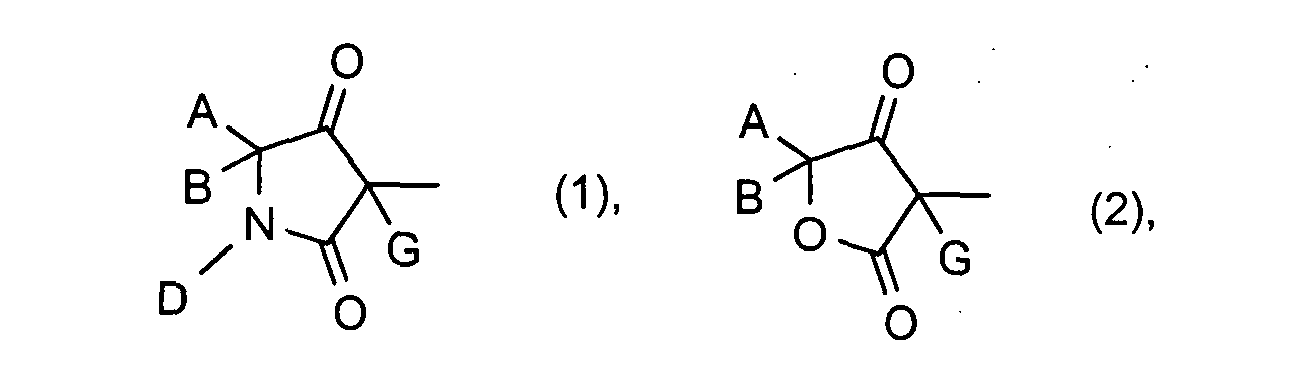

 A represents hydrogen, represents C1-C4-alkyl or C1-C2-alkoxy-C1-C2-alkyl, each of which is optionally mono- to trisubstituted by fluorine, represents C3-C6-cycloalkyl which is optionally monosubstituted by fluorine, methyl or methoxy,B represents hydrogen, methyl or ethyl, orA, B and the carbon atom to which they are attached represent saturated C5-C6-cycloalkyl in which optionally one ring member is replaced by oxygen and which is optionally monosubstituted by methyl, trifluoromethyl, methoxy, ethoxy, propoxy, butoxy or isobutoxy, with the proviso that Q3 in this case very particularly preferably represents hydrogen, orA, B and the carbon atom to which they are attached represent C5-C6-cycloalkyl which is substituted by an alkylenedioxyl group which contains two not directly adjacent oxygen atoms, with the proviso that Q3 in this case very particularly preferably represents hydrogen,D represents hydrogen, represents C1-C4-alkyl, C3-C4-alkenyl, C1-C2-alkoxy-C2-C3-alkyl or C3-C6-cycloalkyl in which optionally one methylene group is replaced by oxygen or sulfur, each of which radicals is optionally mono- to trisubstituted by fluorine, or (but not in the case of the compounds of the formulae (1-1)) represents phenyl or pyridyl, each of which is optionally mono- to disubstituted by fluorine, chlorine, bromine, methyl, ethyl, n-propyl, isopropyl, methoxy, ethoxy, trifluoromethyl or trifluoromethoxy, orA and D together represent optionally substituted C3-C5-alkanediyl in which optionally one carbon atom is replaced by oxygen or sulfur and which is optionally mono- or disubstituted by methyl, or
A and D (in the case of the compounds of the formula (I-1)) together with the atoms to which they are attached represent the group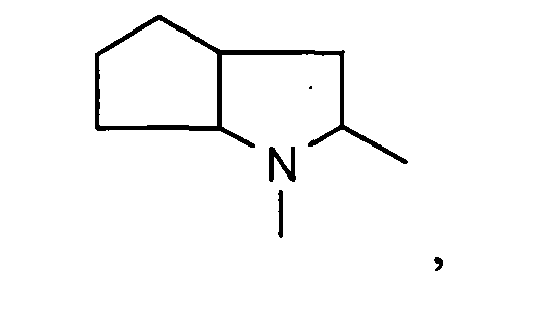 A and Q1 together represent C3-C4-alkanediyl which is optionally mono- or disubstituted by methyl or methoxy, orQ1 represents hydrogen,Q2 represents hydrogen,Q4, Q5 and independently of one another represent hydrogen or methyl,Q3 represents hydrogen, methyl, ethyl or C3-C6-cycloalkyl, orQ3 and Q4 together with the carbon to which they are attached represent a saturated C5-C6-ring which is optionally monosubstituted by methyl or methoxy and in which optionally one ring member is replaced by oxygen or sulfur, with the proviso that A in this case very particularly preferably represents hydrogen, andG represents chlorine and nitro, including all isomeric forms and at least one crop plant compatibility-improving compound from the following group of compounds:cloquintocet-mexyl, fenchlorazole-ethyl, isoxadifen-ethyl, mefenpyr-diethyl, furilazole, fenclorim, cumyluron, dymron, dimepiperate or the compounds

- Composition according to Claim 1, in which the crop plant compatibility-improving compound is cloquintocet-mexyl or mefenpyr-diethyl.
- Method for controlling unwanted vegetation, characterized in that a composition according to Claim 1 is allowed to act on the plants or their habitat.
- Use of a composition according to Claim 1 for controlling unwanted vegetation.
- Method for controlling unwanted vegetation, characterized in that a dicarbonyl compound of the formula (I) according to Claim 1 and the crop plant compatibility-improving compound according to Claim 1 are allowed to act on the plants or their habitat separately, one soon after the other.
Applications Claiming Priority (3)
| Application Number | Priority Date | Filing Date | Title |
|---|---|---|---|
| DE10301806A DE10301806A1 (en) | 2003-01-20 | 2003-01-20 | Herbicidal composition, used especially for selective weed control in crops such as cereals, contains cyclic dicarbonyl compound herbicide and safener, e.g. cloquintocet-mexyl or mefenpyr-diethyl |
| DE10301806 | 2003-01-20 | ||
| PCT/EP2004/000038 WO2004064520A1 (en) | 2003-01-20 | 2004-01-07 | Selective herbicides based on substituted cyclic dicarbonyl compounds and safeners |
Publications (2)
| Publication Number | Publication Date |
|---|---|
| EP1587367A1 EP1587367A1 (en) | 2005-10-26 |
| EP1587367B1 true EP1587367B1 (en) | 2007-05-23 |
Family
ID=32602705
Family Applications (1)
| Application Number | Title | Priority Date | Filing Date |
|---|---|---|---|
| EP04700451A Expired - Lifetime EP1587367B1 (en) | 2003-01-20 | 2004-01-07 | Selective herbicides based on substituted cyclic dicarbonyl compounds and safeners |
Country Status (17)
| Country | Link |
|---|---|
| US (1) | US20060160703A1 (en) |
| EP (1) | EP1587367B1 (en) |
| JP (1) | JP2006515366A (en) |
| KR (1) | KR20050094441A (en) |
| CN (1) | CN100591208C (en) |
| AR (1) | AR043689A1 (en) |
| AT (1) | ATE362703T1 (en) |
| AU (1) | AU2004206721B9 (en) |
| BR (1) | BRPI0406825A (en) |
| CA (1) | CA2513510C (en) |
| DE (2) | DE10301806A1 (en) |
| ES (1) | ES2286591T3 (en) |
| MX (1) | MXPA05007656A (en) |
| PL (1) | PL208294B1 (en) |
| PT (1) | PT1587367E (en) |
| UA (1) | UA81461C2 (en) |
| WO (1) | WO2004064520A1 (en) |
Families Citing this family (7)
| Publication number | Priority date | Publication date | Assignee | Title |
|---|---|---|---|---|
| DE10337496A1 (en) * | 2003-08-14 | 2005-04-14 | Bayer Cropscience Ag | 4-biphenyl-4-substituted-pyrazolidine-3,5-dione |
| DE102004035131A1 (en) * | 2004-07-20 | 2006-02-16 | Bayer Cropscience Ag | Selective insecticides and / or acaricides based on substituted cyclic dicarbonyl compounds and safeners |
| US20080200499A1 (en) * | 2004-07-20 | 2008-08-21 | Reiner Fischer | Selective Insecticides and/or Acaricides Based on Substituted Cyclic Dicarbonyl Compounds and Safeners |
| DE102004044827A1 (en) * | 2004-09-16 | 2006-03-23 | Bayer Cropscience Ag | Iodine-phenyl-substituted cyclic ketoenols |
| DE102005059471A1 (en) * | 2005-12-13 | 2007-07-12 | Bayer Cropscience Ag | Herbicidal compositions with improved action |
| WO2008096398A1 (en) * | 2007-02-02 | 2008-08-14 | Kumiai Chemical Industry Co., Ltd. | Herbicide composition |
| EP2145537A1 (en) * | 2008-07-09 | 2010-01-20 | Bayer CropScience AG | Plant growth regulator |
Family Cites Families (46)
| Publication number | Priority date | Publication date | Assignee | Title |
|---|---|---|---|---|
| US4415352A (en) * | 1971-04-16 | 1983-11-15 | Stauffer Chemical Company | Herbicide compositions |
| US4137070A (en) * | 1971-04-16 | 1979-01-30 | Stauffer Chemical Company | Herbicide compositions |
| US4971618A (en) * | 1971-04-16 | 1990-11-20 | Ici Americas Inc. | Herbicide compositions |
| US4708735A (en) * | 1971-04-16 | 1987-11-24 | Stauffer Chemical Co. | Herbicide compositions |
| US4415353A (en) * | 1971-04-16 | 1983-11-15 | Stauffer Chemical Company | Herbicide compositions |
| US4269618A (en) * | 1971-12-09 | 1981-05-26 | Stauffer Chemical Company | Herbicide compositions |
| US4021224A (en) * | 1971-12-09 | 1977-05-03 | Stauffer Chemical Company | Herbicide compositions |
| US4243811A (en) * | 1972-10-13 | 1981-01-06 | Stauffer Chemical Company | 2,2,4-Trimethyl-4-hydroxymethyl-3-dichloroacetyl oxazolidine |
| US4186130A (en) * | 1973-05-02 | 1980-01-29 | Stauffer Chemical Company | N-(haloalkanoyl) oxazolidines |
| MA19709A1 (en) * | 1982-02-17 | 1983-10-01 | Ciba Geigy Ag | APPLICATION OF QUINOLEIN DERIVATIVES TO THE PROTECTION OF CULTIVATED PLANTS. |
| DE3382743D1 (en) * | 1982-05-07 | 1994-05-11 | Ciba Geigy | Use of quinoline derivatives to protect crops. |
| DE3525205A1 (en) * | 1984-09-11 | 1986-03-20 | Hoechst Ag, 6230 Frankfurt | PLANT PROTECTIVE AGENTS BASED ON 1,2,4-TRIAZOLE DERIVATIVES AND NEW DERIVATIVES OF 1,2,4-TRIAZOLE |
| EP0191736B1 (en) * | 1985-02-14 | 1991-07-17 | Ciba-Geigy Ag | Use of quinoline derivatives for the protection of crop plants |
| DE3633840A1 (en) * | 1986-10-04 | 1988-04-14 | Hoechst Ag | PHENYLPYRAZOLIC CARBONIC ACID DERIVATIVES, THEIR PRODUCTION AND USE AS PLANT GROWTH REGULATORS AND SAFENERS |
| DE3808896A1 (en) * | 1988-03-17 | 1989-09-28 | Hoechst Ag | PLANT PROTECTION AGENTS BASED ON PYRAZOL CARBON SEA DERIVATIVES |
| DE3939010A1 (en) * | 1989-11-25 | 1991-05-29 | Hoechst Ag | ISOXAZOLINE, METHOD FOR THE PRODUCTION THEREOF AND THEIR USE AS A PLANT PROTECTIVE AGENT |
| US5700758A (en) * | 1989-11-30 | 1997-12-23 | Hoechst Aktiengesellschaft | Pyrazolines for protecting crop plants against herbicides |
| DE3939503A1 (en) * | 1989-11-30 | 1991-06-06 | Hoechst Ag | NEW PYRAZOLINE FOR THE PROTECTION OF CULTURAL PLANTS AGAINST HERBICIDES |
| DE59108636D1 (en) * | 1990-12-21 | 1997-04-30 | Hoechst Schering Agrevo Gmbh | New 5-chloroquinoline-8-oxyalkanecarboxylic acid derivatives, process for their preparation and their use as antidots of herbicides |
| TW259690B (en) * | 1992-08-01 | 1995-10-11 | Hoechst Ag | |
| US5407897A (en) * | 1993-03-03 | 1995-04-18 | American Cyanamid Company | Method for safening herbicides in crops using substituted benzopyran and tetrahydronaphthalene compounds |
| DE4331448A1 (en) * | 1993-09-16 | 1995-03-23 | Hoechst Schering Agrevo Gmbh | Substituted isoxazolines, processes for their preparation, compositions containing them and their use as safeners |
| EP0786937A2 (en) * | 1994-10-17 | 1997-08-06 | Novartis AG | Herbicidal compositions |
| DE19621522A1 (en) * | 1996-05-29 | 1997-12-04 | Hoechst Schering Agrevo Gmbh | New N-acylsulfonamides, new mixtures of herbicides and antidots and their use |
| CN1238003A (en) * | 1996-09-24 | 1999-12-08 | 普罗格特-甘布尔公司 | Liquid laundry detergent compositions containing proteases and protease inhibitors |
| CN1286369C (en) * | 1997-07-16 | 2006-11-29 | 辛根塔有限公司 | Herbicidal compositions of tetrazolinone herbicides and antidotes therefor |
| DE19742951A1 (en) * | 1997-09-29 | 1999-04-15 | Hoechst Schering Agrevo Gmbh | Acylsulfamoylbenzoic acid amides, crop protection agents containing them and process for their preparation |
| AU9457898A (en) * | 1997-10-21 | 1999-05-10 | Otsuka Kagaku Kabushiki Kaisha | 4-aryl-4-substituted pyrazolidine-3,5-dione derivatives |
| DE19818732A1 (en) * | 1998-04-27 | 1999-10-28 | Bayer Ag | New aryl substituted cyclic ketoenol compounds useful for control of insects and as herbicides |
| DE19827855A1 (en) * | 1998-06-23 | 1999-12-30 | Hoechst Schering Agrevo Gmbh | Combination of herbicide and safener, useful for selective weed control in cereals, soya or cotton |
| JP2000086628A (en) * | 1998-09-11 | 2000-03-28 | Otsuka Chem Co Ltd | 3-aryl-3-substituted-2,4-dione-five-membered ring compound, its production and insecticidal and acaricidal agent containing the compound |
| JP2002529379A (en) * | 1998-11-10 | 2002-09-10 | シンジェンタ パーティシペーションズ アクチェンゲゼルシャフト | Herbicide composition |
| DE69942269D1 (en) * | 1999-02-08 | 2010-06-02 | Ses Astra Sa | Method and device for distance measurement for satellites |
| DE19912637A1 (en) * | 1999-03-20 | 2000-09-21 | Aventis Cropscience Gmbh | 2,4-diamino-1,3,5-triazines, process for their preparation and use as herbicides and plant growth regulators |
| DE19924668A1 (en) * | 1999-05-28 | 2000-11-30 | Bayer Ag | Substituted alpha-phenyl-beta-ketosulfones |
| DE19935963A1 (en) * | 1999-07-30 | 2001-02-01 | Bayer Ag | Biphenyl substituted cyclic ketoenols |
| DK1209973T3 (en) * | 1999-09-07 | 2004-06-21 | Syngenta Participations Ag | Herbicide agent |
| HU228800B1 (en) * | 1999-09-07 | 2013-05-28 | Syngenta Participations Ag | Synergistic herbicidal composition and use thereof |
| DE19946625A1 (en) * | 1999-09-29 | 2001-04-05 | Bayer Ag | Trifluoromethyl substituted spirocyclic ketoenols |
| MXPA02004150A (en) * | 1999-10-26 | 2002-10-17 | Aventis Cropscience Gmbh | Herbicidal agent. |
| US6414163B1 (en) * | 2000-08-02 | 2002-07-02 | Board Of Trustees Of Michigan State University | Process and intermediate compounds for the preparation of pyrrolidines |
| DE10106420A1 (en) * | 2001-02-12 | 2002-08-14 | Bayer Ag | Selective herbicides based on substituted aryl ketones and safeners |
| DE10146910A1 (en) * | 2001-09-24 | 2003-04-10 | Bayer Cropscience Ag | Spirocyclic 3-phenyl-3-substituted-4-ketolactams and lactones |
| DE10158560A1 (en) * | 2001-11-29 | 2003-06-12 | Bayer Cropscience Ag | 3-biphenyl-substituted-3-substituted-4-ketolactams and lactones |
| DE10249055A1 (en) * | 2002-10-22 | 2004-05-06 | Bayer Cropscience Ag | 2-Phenyl-2-substituted-1,3-diketones |
| DE10301805A1 (en) * | 2003-01-20 | 2004-07-29 | Bayer Cropscience Ag | New 3-phenyl-2,4-dioxo-pyrrolidine or tetrahydrofuran derivatives, useful as herbicides, insecticides, acaricides and nematocides for protection of plants or animals |
-
2003
- 2003-01-20 DE DE10301806A patent/DE10301806A1/en not_active Withdrawn
-
2004
- 2004-01-07 MX MXPA05007656A patent/MXPA05007656A/en active IP Right Grant
- 2004-01-07 CN CN200480007513A patent/CN100591208C/en not_active Expired - Fee Related
- 2004-01-07 WO PCT/EP2004/000038 patent/WO2004064520A1/en not_active Ceased
- 2004-01-07 JP JP2006500521A patent/JP2006515366A/en active Pending
- 2004-01-07 ES ES04700451T patent/ES2286591T3/en not_active Expired - Lifetime
- 2004-01-07 EP EP04700451A patent/EP1587367B1/en not_active Expired - Lifetime
- 2004-01-07 PL PL377900A patent/PL208294B1/en not_active IP Right Cessation
- 2004-01-07 CA CA2513510A patent/CA2513510C/en not_active Expired - Fee Related
- 2004-01-07 KR KR1020057013249A patent/KR20050094441A/en not_active Ceased
- 2004-01-07 PT PT04700451T patent/PT1587367E/en unknown
- 2004-01-07 UA UAA200508165A patent/UA81461C2/en unknown
- 2004-01-07 US US10/542,513 patent/US20060160703A1/en not_active Abandoned
- 2004-01-07 AU AU2004206721A patent/AU2004206721B9/en not_active Ceased
- 2004-01-07 BR BR0406825-4A patent/BRPI0406825A/en not_active Application Discontinuation
- 2004-01-07 AT AT04700451T patent/ATE362703T1/en not_active IP Right Cessation
- 2004-01-07 DE DE502004003879T patent/DE502004003879D1/en not_active Expired - Lifetime
- 2004-01-20 AR ARP040100150A patent/AR043689A1/en unknown
Also Published As
| Publication number | Publication date |
|---|---|
| CA2513510C (en) | 2011-05-10 |
| BRPI0406825A (en) | 2005-12-27 |
| AR043689A1 (en) | 2005-08-10 |
| WO2004064520A1 (en) | 2004-08-05 |
| MXPA05007656A (en) | 2005-09-30 |
| DE502004003879D1 (en) | 2007-07-05 |
| DE10301806A1 (en) | 2004-07-29 |
| PL377900A1 (en) | 2006-02-20 |
| CN1761396A (en) | 2006-04-19 |
| ATE362703T1 (en) | 2007-06-15 |
| CN100591208C (en) | 2010-02-24 |
| ES2286591T3 (en) | 2007-12-01 |
| PT1587367E (en) | 2007-08-03 |
| PL208294B1 (en) | 2011-04-29 |
| CA2513510A1 (en) | 2004-08-05 |
| JP2006515366A (en) | 2006-05-25 |
| AU2004206721B9 (en) | 2010-06-10 |
| US20060160703A1 (en) | 2006-07-20 |
| UA81461C2 (en) | 2008-01-10 |
| KR20050094441A (en) | 2005-09-27 |
| EP1587367A1 (en) | 2005-10-26 |
| AU2004206721A1 (en) | 2004-08-05 |
| AU2004206721B2 (en) | 2010-05-06 |
Similar Documents
| Publication | Publication Date | Title |
|---|---|---|
| EP2272351B1 (en) | Herbicide based on substituted thien-3-yl-sulfonylamino(thio)carbonyl-triazolin(thi)ones and amidosulfuron | |
| EP2220939B1 (en) | Synergistic fungicidal combinations | |
| EP2842426B1 (en) | Herbicide based on a substituted thien-3-yl-sulfonylamino(thio)carbonyl-triazolin(thi)one and a 4-HPPD inhibitor | |
| EP1587367B1 (en) | Selective herbicides based on substituted cyclic dicarbonyl compounds and safeners | |
| EP0459243A2 (en) | Substituted Azines | |
| EP0472925A1 (en) | Substituted pyridins | |
| DE10142333A1 (en) | Herbicidal mixtures based on substituted aryl ketones | |
| DE3038652A1 (en) | 5-Chloro-benzoxazol-2-yl oxy:acetic acid amide derivs. - used as selective herbicides for cotton, soya, beet and cereal crops | |
| EP0065712A2 (en) | N-(1-alkenyl)-chloroacetic-acid anilides, process for their preparation, and their use as herbicides and regulators of plant growth | |
| EP0126249A1 (en) | Chlorinated phosphorylmethylcarbonyl derivatives, process for their preparation and their use in plant protecting agents | |
| DE10142334A1 (en) | Herbicides based on substituted aryl ketones | |
| EP1489907B1 (en) | Selective herbicides based on substituted aminotriazinones and substituted benzoylcyclohexandiones | |
| EP0115823A1 (en) | Derivatives of substituted alkane thiocarbonic acids | |
| DE3520390A1 (en) | IMIDAZO-PYRROLO-PYRIDINE DERIVATIVES | |
| EP0410238A2 (en) | Pyridazinone derivatives | |
| DE3822448A1 (en) | Ureidobenzoic acid derivatives | |
| DE3219821A1 (en) | Substituted diphenyl ethers, processes for their preparation, and their use as herbicides | |
| EP0089538A1 (en) | Optically active derivatives of phenoxy-benzoic acid, process for their preparation and their use as herbicides | |
| DE3425123A1 (en) | Optically active phenoxypropionic acid derivatives | |
| EP0012172A1 (en) | O-ethyl-S-n-propyl-dithiophosphoryloxy acetic acid N-methyl anilide, process for its preparation and its use as herbicide | |
| EP0126361A1 (en) | Optically active propionic-acid derivatives | |
| DE3337540A1 (en) | PHENOXYPROPIONYLPHOSPHONIC ACID ESTER | |
| DE3510786A1 (en) | 4-Alkylideneimino-6-t-butyl-3-methylthio-1,2,4-triazin-5-ones |
Legal Events
| Date | Code | Title | Description |
|---|---|---|---|
| PUAI | Public reference made under article 153(3) epc to a published international application that has entered the european phase |
Free format text: ORIGINAL CODE: 0009012 |
|
| 17P | Request for examination filed |
Effective date: 20050822 |
|
| AK | Designated contracting states |
Kind code of ref document: A1 Designated state(s): AT BE BG CH CY CZ DE DK EE ES FI FR GB GR HU IE IT LI LU MC NL PT RO SE SI SK TR |
|
| AX | Request for extension of the european patent |
Extension state: AL LT LV MK |
|
| DAX | Request for extension of the european patent (deleted) | ||
| GRAP | Despatch of communication of intention to grant a patent |
Free format text: ORIGINAL CODE: EPIDOSNIGR1 |
|
| GRAS | Grant fee paid |
Free format text: ORIGINAL CODE: EPIDOSNIGR3 |
|
| GRAA | (expected) grant |
Free format text: ORIGINAL CODE: 0009210 |
|
| AK | Designated contracting states |
Kind code of ref document: B1 Designated state(s): AT BE BG CH CY CZ DE DK EE ES FI FR GB GR HU IE IT LI LU MC NL PT RO SE SI SK TR |
|
| PG25 | Lapsed in a contracting state [announced via postgrant information from national office to epo] |
Ref country code: FI Free format text: LAPSE BECAUSE OF FAILURE TO SUBMIT A TRANSLATION OF THE DESCRIPTION OR TO PAY THE FEE WITHIN THE PRESCRIBED TIME-LIMIT Effective date: 20070523 |
|
| REG | Reference to a national code |
Ref country code: GB Ref legal event code: FG4D Free format text: NOT ENGLISH |
|
| REG | Reference to a national code |
Ref country code: CH Ref legal event code: EP |
|
| REG | Reference to a national code |
Ref country code: IE Ref legal event code: FG4D Free format text: LANGUAGE OF EP DOCUMENT: GERMAN |
|
| REF | Corresponds to: |
Ref document number: 502004003879 Country of ref document: DE Date of ref document: 20070705 Kind code of ref document: P |
|
| GBT | Gb: translation of ep patent filed (gb section 77(6)(a)/1977) |
Effective date: 20070704 |
|
| REG | Reference to a national code |
Ref country code: CH Ref legal event code: NV Representative=s name: E. BLUM & CO. AG PATENT- UND MARKENANWAELTE VSP |
|
| REG | Reference to a national code |
Ref country code: PT Ref legal event code: SC4A Free format text: AVAILABILITY OF NATIONAL TRANSLATION Effective date: 20070724 |
|
| PG25 | Lapsed in a contracting state [announced via postgrant information from national office to epo] |
Ref country code: SE Free format text: LAPSE BECAUSE OF FAILURE TO SUBMIT A TRANSLATION OF THE DESCRIPTION OR TO PAY THE FEE WITHIN THE PRESCRIBED TIME-LIMIT Effective date: 20070823 |
|
| REG | Reference to a national code |
Ref country code: GR Ref legal event code: EP Ref document number: 20070402453 Country of ref document: GR |
|
| ET | Fr: translation filed | ||
| REG | Reference to a national code |
Ref country code: ES Ref legal event code: FG2A Ref document number: 2286591 Country of ref document: ES Kind code of ref document: T3 |
|
| REG | Reference to a national code |
Ref country code: IE Ref legal event code: FD4D |
|
| PG25 | Lapsed in a contracting state [announced via postgrant information from national office to epo] |
Ref country code: SI Free format text: LAPSE BECAUSE OF FAILURE TO SUBMIT A TRANSLATION OF THE DESCRIPTION OR TO PAY THE FEE WITHIN THE PRESCRIBED TIME-LIMIT Effective date: 20070523 Ref country code: CZ Free format text: LAPSE BECAUSE OF FAILURE TO SUBMIT A TRANSLATION OF THE DESCRIPTION OR TO PAY THE FEE WITHIN THE PRESCRIBED TIME-LIMIT Effective date: 20070523 Ref country code: BG Free format text: LAPSE BECAUSE OF FAILURE TO SUBMIT A TRANSLATION OF THE DESCRIPTION OR TO PAY THE FEE WITHIN THE PRESCRIBED TIME-LIMIT Effective date: 20070823 Ref country code: DK Free format text: LAPSE BECAUSE OF FAILURE TO SUBMIT A TRANSLATION OF THE DESCRIPTION OR TO PAY THE FEE WITHIN THE PRESCRIBED TIME-LIMIT Effective date: 20070523 Ref country code: IE Free format text: LAPSE BECAUSE OF FAILURE TO SUBMIT A TRANSLATION OF THE DESCRIPTION OR TO PAY THE FEE WITHIN THE PRESCRIBED TIME-LIMIT Effective date: 20070523 |
|
| PG25 | Lapsed in a contracting state [announced via postgrant information from national office to epo] |
Ref country code: SK Free format text: LAPSE BECAUSE OF FAILURE TO SUBMIT A TRANSLATION OF THE DESCRIPTION OR TO PAY THE FEE WITHIN THE PRESCRIBED TIME-LIMIT Effective date: 20070523 |
|
| PLBE | No opposition filed within time limit |
Free format text: ORIGINAL CODE: 0009261 |
|
| STAA | Information on the status of an ep patent application or granted ep patent |
Free format text: STATUS: NO OPPOSITION FILED WITHIN TIME LIMIT |
|
| 26N | No opposition filed |
Effective date: 20080226 |
|
| PG25 | Lapsed in a contracting state [announced via postgrant information from national office to epo] |
Ref country code: RO Free format text: LAPSE BECAUSE OF FAILURE TO SUBMIT A TRANSLATION OF THE DESCRIPTION OR TO PAY THE FEE WITHIN THE PRESCRIBED TIME-LIMIT Effective date: 20070523 |
|
| PGFP | Annual fee paid to national office [announced via postgrant information from national office to epo] |
Ref country code: GR Payment date: 20071221 Year of fee payment: 5 Ref country code: NL Payment date: 20080103 Year of fee payment: 5 Ref country code: PT Payment date: 20071221 Year of fee payment: 5 |
|
| PG25 | Lapsed in a contracting state [announced via postgrant information from national office to epo] |
Ref country code: MC Free format text: LAPSE BECAUSE OF NON-PAYMENT OF DUE FEES Effective date: 20080131 |
|
| PGFP | Annual fee paid to national office [announced via postgrant information from national office to epo] |
Ref country code: BE Payment date: 20080403 Year of fee payment: 5 |
|
| PG25 | Lapsed in a contracting state [announced via postgrant information from national office to epo] |
Ref country code: EE Free format text: LAPSE BECAUSE OF FAILURE TO SUBMIT A TRANSLATION OF THE DESCRIPTION OR TO PAY THE FEE WITHIN THE PRESCRIBED TIME-LIMIT Effective date: 20070523 |
|
| PG25 | Lapsed in a contracting state [announced via postgrant information from national office to epo] |
Ref country code: AT Free format text: LAPSE BECAUSE OF NON-PAYMENT OF DUE FEES Effective date: 20080107 |
|
| REG | Reference to a national code |
Ref country code: PT Ref legal event code: MM4A Free format text: LAPSE DUE TO NON-PAYMENT OF FEES Effective date: 20090707 |
|
| PG25 | Lapsed in a contracting state [announced via postgrant information from national office to epo] |
Ref country code: CY Free format text: LAPSE BECAUSE OF FAILURE TO SUBMIT A TRANSLATION OF THE DESCRIPTION OR TO PAY THE FEE WITHIN THE PRESCRIBED TIME-LIMIT Effective date: 20070523 |
|
| NLV4 | Nl: lapsed or anulled due to non-payment of the annual fee |
Effective date: 20090801 |
|
| PG25 | Lapsed in a contracting state [announced via postgrant information from national office to epo] |
Ref country code: PT Free format text: LAPSE BECAUSE OF NON-PAYMENT OF DUE FEES Effective date: 20090707 |
|
| PG25 | Lapsed in a contracting state [announced via postgrant information from national office to epo] |
Ref country code: NL Free format text: LAPSE BECAUSE OF NON-PAYMENT OF DUE FEES Effective date: 20090801 |
|
| PG25 | Lapsed in a contracting state [announced via postgrant information from national office to epo] |
Ref country code: GR Free format text: LAPSE BECAUSE OF NON-PAYMENT OF DUE FEES Effective date: 20090804 Ref country code: BE Free format text: LAPSE BECAUSE OF NON-PAYMENT OF DUE FEES Effective date: 20090131 |
|
| PGFP | Annual fee paid to national office [announced via postgrant information from national office to epo] |
Ref country code: CH Payment date: 20100113 Year of fee payment: 7 |
|
| PG25 | Lapsed in a contracting state [announced via postgrant information from national office to epo] |
Ref country code: LU Free format text: LAPSE BECAUSE OF NON-PAYMENT OF DUE FEES Effective date: 20080107 Ref country code: HU Free format text: LAPSE BECAUSE OF FAILURE TO SUBMIT A TRANSLATION OF THE DESCRIPTION OR TO PAY THE FEE WITHIN THE PRESCRIBED TIME-LIMIT Effective date: 20071124 |
|
| REG | Reference to a national code |
Ref country code: CH Ref legal event code: PL |
|
| PG25 | Lapsed in a contracting state [announced via postgrant information from national office to epo] |
Ref country code: CH Free format text: LAPSE BECAUSE OF NON-PAYMENT OF DUE FEES Effective date: 20110131 Ref country code: LI Free format text: LAPSE BECAUSE OF NON-PAYMENT OF DUE FEES Effective date: 20110131 |
|
| PGFP | Annual fee paid to national office [announced via postgrant information from national office to epo] |
Ref country code: FR Payment date: 20120202 Year of fee payment: 9 |
|
| PGFP | Annual fee paid to national office [announced via postgrant information from national office to epo] |
Ref country code: DE Payment date: 20120104 Year of fee payment: 9 |
|
| PGFP | Annual fee paid to national office [announced via postgrant information from national office to epo] |
Ref country code: GB Payment date: 20120104 Year of fee payment: 9 Ref country code: IT Payment date: 20111223 Year of fee payment: 9 |
|
| PG25 | Lapsed in a contracting state [announced via postgrant information from national office to epo] |
Ref country code: TR Free format text: LAPSE BECAUSE OF NON-PAYMENT OF DUE FEES Effective date: 20110107 |
|
| PGFP | Annual fee paid to national office [announced via postgrant information from national office to epo] |
Ref country code: TR Payment date: 20100107 Year of fee payment: 7 |
|
| PGFP | Annual fee paid to national office [announced via postgrant information from national office to epo] |
Ref country code: ES Payment date: 20120127 Year of fee payment: 9 |
|
| GBPC | Gb: european patent ceased through non-payment of renewal fee |
Effective date: 20130107 |
|
| REG | Reference to a national code |
Ref country code: FR Ref legal event code: ST Effective date: 20130930 |
|
| PG25 | Lapsed in a contracting state [announced via postgrant information from national office to epo] |
Ref country code: DE Free format text: LAPSE BECAUSE OF NON-PAYMENT OF DUE FEES Effective date: 20130801 |
|
| REG | Reference to a national code |
Ref country code: DE Ref legal event code: R119 Ref document number: 502004003879 Country of ref document: DE Effective date: 20130801 |
|
| PG25 | Lapsed in a contracting state [announced via postgrant information from national office to epo] |
Ref country code: FR Free format text: LAPSE BECAUSE OF NON-PAYMENT OF DUE FEES Effective date: 20130131 Ref country code: GB Free format text: LAPSE BECAUSE OF NON-PAYMENT OF DUE FEES Effective date: 20130107 |
|
| PG25 | Lapsed in a contracting state [announced via postgrant information from national office to epo] |
Ref country code: IT Free format text: LAPSE BECAUSE OF NON-PAYMENT OF DUE FEES Effective date: 20130107 |
|
| REG | Reference to a national code |
Ref country code: ES Ref legal event code: FD2A Effective date: 20140613 |
|
| PG25 | Lapsed in a contracting state [announced via postgrant information from national office to epo] |
Ref country code: ES Free format text: LAPSE BECAUSE OF NON-PAYMENT OF DUE FEES Effective date: 20130108 |