EP1587299B1 - Compressing and decompressing image of a mobile communication terminal - Google Patents
Compressing and decompressing image of a mobile communication terminal Download PDFInfo
- Publication number
- EP1587299B1 EP1587299B1 EP05006807.1A EP05006807A EP1587299B1 EP 1587299 B1 EP1587299 B1 EP 1587299B1 EP 05006807 A EP05006807 A EP 05006807A EP 1587299 B1 EP1587299 B1 EP 1587299B1
- Authority
- EP
- European Patent Office
- Prior art keywords
- color
- identification code
- pixel
- color information
- colors
- Prior art date
- Legal status (The legal status is an assumption and is not a legal conclusion. Google has not performed a legal analysis and makes no representation as to the accuracy of the status listed.)
- Expired - Lifetime
Links
Images


Classifications
-
- H—ELECTRICITY
- H04—ELECTRIC COMMUNICATION TECHNIQUE
- H04B—TRANSMISSION
- H04B1/00—Details of transmission systems, not covered by a single one of groups H04B3/00 - H04B13/00; Details of transmission systems not characterised by the medium used for transmission
- H04B1/38—Transceivers, i.e. devices in which transmitter and receiver form a structural unit and in which at least one part is used for functions of transmitting and receiving
- H04B1/40—Circuits
-
- H—ELECTRICITY
- H04—ELECTRIC COMMUNICATION TECHNIQUE
- H04N—PICTORIAL COMMUNICATION, e.g. TELEVISION
- H04N1/00—Scanning, transmission or reproduction of documents or the like, e.g. facsimile transmission; Details thereof
- H04N1/46—Colour picture communication systems
- H04N1/64—Systems for the transmission or the storage of the colour picture signal; Details therefor, e.g. coding or decoding means therefor
- H04N1/644—Systems for the transmission or the storage of the colour picture signal; Details therefor, e.g. coding or decoding means therefor using a reduced set of representative colours, e.g. each representing a particular range in a colour space
Definitions
- the present invention relates to image compression and, more particularly, to a method for compressing and decompressing an image of a mobile communication system.
- a mobile communication terminal based on a text or a black and white screen includes a very small amount of display information, so it has a very small memory region allocated for the display information. Recently, however, as mobile communication terminals start implementing 4096 colors and 65000 colors, display information increasingly occupies the memory region, and accordingly, data storage capacity of the memory of the mobile communication terminals becomes larger. '
- a mobile communication terminal can implement 65000 colors and display an image of 128 pixels in width and length
- the total number of pixels of the images expressed by the mobile communication terminal is 16384 (128x128) and colors of each pixel need to be expressed by more than 16 bits of data.
- size of one image file stored in the memory of the mobile communication terminal can exceed 32 K bytes.
- the image information (or pixel information) of such size is not compressed, a large area of memory space is required.
- Image compression algorithms such as Run length, Huffman coding, LAW or a file compression algorithm of a GIF (Graphics Interchange Format) or a JPG (Joint Photographic Groups) format can be used. Different compression algorithms are employed according to the type of terminals or terminal manufacturers.
- WO 03/065709 A1 describes a method and apparatus for compression of color images for a portable communication device.
- the color image is compressed by associating a variable length color code with each color of the image, and then forming bitplanes each representing one bit position of the binary color codes for each pixel of the color image.
- the variable length codes are optimized, such as by a canonical Huffman algorithm.
- a method for compressing an image constituted by a plurality of pixels in a mobile communication terminal is provided.
- Each pixel has one of a plurality of colors, the color of each pixel is represented by color information of each pixel, an original identification code specific to each color is assigned to each color, and the color information of each pixel at least contains the original identification code assigned to the color of each pixel.
- the method comprises: scanning pixels constituting an image; for each one of the plurality of colors, counting the number of pixels having the one color; determining that the one color is a frequently presented color when the counted number of pixels is more than or equals to a reference number; assigning to each frequently presented color, a new identification code specific to each frequently presented color, wherein the size of the new identification code is determined according to the number of frequently presented colors and is smaller than that of the original identification code specific to each frequently presented color.
- the color information of the one pixel is stored in an image file; and when the color of the one pixel is the frequently presented color, the original identification code contained in the color information of the one pixel is replaced with the new identification code assigned to the color of the one pixel, and the color information of the one pixel is stored in the image file after replacing.
- the color information of each pixel is stored including a code discrimination bit for distinguishing whether an identification code provided to the color information is a new identification code or an original identification code.
- the image compression method comprises including a data structure comprising cross-references between the first and second identification codes and the plurality of pixels in the image.
- a method for decompressing a compressed image of a mobile communication terminal comprises detecting a look-up table and color information of pixels from a compressed image file. Color information of each pixel is checked and if a color identification code of a corresponding pixel has been newly assigned, a corresponding original identification code is searched from the look-up table and stored in a display buffer.
- the color of each pixel is displayed on a screen with reference to the information stored in the buffer.
- the storing comprises checking a code discrimination bit included in color information of each pixel to determine whether a color identification code of a corresponding pixel is a new identification code or an origination identification code.
- the method for decompressing a compressed image of a mobile communication terminal further comprises checking color information of each pixel. If the color identification code is the original identification code of the corresponding pixel, the identification code is stored as it is in the buffer.
- the present invention implements an image compressing method in which a storage code of a small size is newly assigned to a color with high presentation frequency and an original identification code is assigned as it is to a color with low presentation frequency in an image and then stored.
- a mobile communication terminal comprises a high resolution color LCD, for example, implementing 65000 colors and processes an image of a size of 16x16 pixels in width and length, for example.
- the image consists of 6 colors (A, B, C, D, E and F), for example.
- the mobile communication terminal checks color information of pixels constituting an image to obtain presentation frequency of each color (A, B, C, D, E and F).
- Presentation frequency for a color is the number of pixels having the corresponding color (e.g., A, B, C, D, E and F).
- the mobile communication terminal assigns a new identification code ('storage codes') to colors presented in pixels equal to or greater than a reference number (e.g., 50) ('frequently presented colors').
- a reference number e.g., 50
- Table 1 illustrates an exemplary color assignment table, in accordance with one embodiment.
- a different 2-bit storage code is assigned to colors A, E and F with presentation frequency equal to or greater than the reference value (e.g., 50).
- a length of the storage code is determined according to the number of frequently presented colors. For example, if there are four frequently presented colors, the length of the storage code can be 2 bits (00, 01, 10, 11). If there are five frequently presented colors, 3 bits (000, 001, 010, 011, 100) can be enough for the length of the storage code.
- the above reference values may vary and can be determined by a user or a system, depending on implementation.
- Table 2 shows sizes of storage codes according to the number of frequently presented colors, in accordance to an exemplary embodiment.
- the number of frequently presented colors Sizes of storage codes 1 or 2 1 bit 3 or 4 2 bit 5 ⁇ 8 3 bit 9 ⁇ 16 4 bit . . . . .
- the mobile communication terminal When analysis for the color information of pixels is completed, the mobile communication terminal assigns a new, for example, 2-bit storage code to pixels with frequently presented colors, instead of their original color identification codes. Meanwhile, for the less frequently presented colors, the mobile communication terminal maintains the original color identification code for each pixel.
- Table 3 is a look-up table showing original identification codes and storage codes of frequently presented colors (A, E and F). [Table 3] Frequently presented colors Identification code Storage code (binary) A Ox0000 0 ('00') E Oxff00 1 ('01') F Oxffff 2 (10')
- the mobile communication terminal When the mobile communication terminal stores color information of each pixel in the image file, it also stores the look-up table. Thus, when the mobile communication terminal decompresses data of the image file, it decompresses color information of each pixel stored in the image file with reference to the look-up table.
- a code discrimination bit (1 or 0) is added in front of the color information (e.g., identification code or storage code). If the code discrimination bit is '0' for example, the following color information is the original identification code, and if the code discrimination bit is '1' for example, the following color information is the new storage code (e.g., 2 bits).
- Table 4 shows a comparison between a binary code of each color stored without application of a compression algorithm and a binary code of each color stored according to a compression algorithm of the present invention.
- Colors Binary code of each color stored without application of a compression algorithm Binary code of each color stored according to a compression algorithm of the present invention (code discrimination bit + storage code (identification code) A "0000 0000 0000 0000" "1 + 00" B "0000 0000 0000 1111” "0 + 0000 0000 1111” C “1111 1111 0000 0000” "1 + 01” D "0000 1111 1111 0000" "0 + 0000 1111 1111 0000” E “0000 0000 1111 1111” "0 + 0000 0000 1111 1111” F “1111 1111 1111” "1 + 10"
- colors with high presentation frequency e.g., the frequently presented colors
- a smaller storage space e.g., 3 bits
- colors with low presentation frequency require a larger storage space (e.g., 17 bits).
- an exemplary stored image data comprises 'length of the storage code' + 'size of the look-up table' + look-up table' + 'image data'.
- the image data is the color information of each pixel.
- An exemplary storage form is shown in Table 4.
- the mobile communication terminal analyzes color information of pixels constituting the image.
- the mobile communication terminal inspects each presentation frequency of each color to detect frequently presented colors (S10).
- the mobile communication terminal assigns a different storage code to each frequently presented color as detected and then generates a look-up table as shown in Table 3 (S20).
- the mobile communication terminal stores the look-up table and color information of one or more pixels in a file according to the compression algorithm of the present invention ( S30 ⁇ S60 ).
- the construction of the data stored in the image file in this case is as shown in Figure 3 , for example.
- the mobile communication terminal When the mobile communication terminal stores the color information of pixels, if a color of a pixel is a frequently presented color, the mobile communication terminal stores a storage code (e.g., 2 bits) assigned to the corresponding frequently presented color. If the color of the pixel is not the frequently presented color, the mobile communication terminal stores an original identification code (e.g.,16 bits) of the corresponding color. And then, the mobile communication terminal adds a code discrimination bit (1 or 0) in front of the stored storage code of the identification code.
- a storage code e.g., 2 bits
- a look-up table is detected from a compressed image file (S110).
- Data stored in the image file namely, color information of each pixel, is decompressed with reference to the detected look-up table (S120 ⁇ S170).
- the mobile communication terminal checks whether an MSB (Most Significant Bit) of the color information of each pixel is 1 or 0 (S120). If the MSB is 1, then the bits (e.g., storage code) positioned next to the MSB are extracted (S140) and then an identification code (e.g., 16 bits corresponding to the extracted storage code) is searched from the look-up table and stored in the display buffer (S150).
- MSB Mobile Bit
- S140 storage code
- an identification code e.g., 16 bits corresponding to the extracted storage code
- the mobile communication decompresses the color information of each pixel. After the color information of every pixel constituting an image is stored in the display buffer (S170), colors of each pixel are displayed on the LCD with reference to the stored information.
- the method for compressing and decompressing an image of a mobile communication system in accordance with the present invention provides a compression rate for image data that is improved by newly assigning a specific identification code of a small size to a color with high presentation frequency.
- the image compression algorithm since the image compression algorithm is simply implemented, the amount of load and resources of a mobile communication required for compressing and decompressing an image.
Landscapes
- Engineering & Computer Science (AREA)
- Signal Processing (AREA)
- Multimedia (AREA)
- Computer Networks & Wireless Communication (AREA)
- Compression Of Band Width Or Redundancy In Fax (AREA)
- Compression, Expansion, Code Conversion, And Decoders (AREA)
- Telephonic Communication Services (AREA)
Description
- The present invention relates to image compression and, more particularly, to a method for compressing and decompressing an image of a mobile communication system.
- A mobile communication terminal based on a text or a black and white screen includes a very small amount of display information, so it has a very small memory region allocated for the display information. Recently, however, as mobile communication terminals start implementing 4096 colors and 65000 colors, display information increasingly occupies the memory region, and accordingly, data storage capacity of the memory of the mobile communication terminals becomes larger. '
- Assuming that a mobile communication terminal can implement 65000 colors and display an image of 128 pixels in width and length, the total number of pixels of the images expressed by the mobile communication terminal is 16384 (128x128) and colors of each pixel need to be expressed by more than 16 bits of data. As such, size of one image file stored in the memory of the mobile communication terminal can exceed 32 K bytes. Particularly, if the image information (or pixel information) of such size is not compressed, a large area of memory space is required.
- Image compression algorithms such as Run length, Huffman coding, LAW or a file compression algorithm of a GIF (Graphics Interchange Format) or a JPG (Joint Photographic Groups) format can be used. Different compression algorithms are employed according to the type of terminals or terminal manufacturers.
- For example,
WO 03/065709 A1 - The above described related art image compression methods have a problem in that since information of every pixel is compressed, load amount in decompressing the compressed information increases and a display speed is slow. In addition, file compression algorithms such as the GIF or the JPG have a problem of damaging an original image. Especially, in case of the GIF, color expression is limited to 256 colors, failing to sufficiently utilize the LCD (Liquid Crystal Display) implementing various colors (4096 colors or 65000 colors).
- A method and system is needed that can overcome the above problems.
- Features and advantages of the invention will be set forth in the description which follows, and in part will be apparent from the description, or may be learned by practice of the invention. The objectives and other advantages of the invention will be realized and attained by the structure particularly pointed out in the written description and claims hereof as well as the appended drawings. To achieve these and other advantages and in accordance with the purpose of the present invention, as embodied and broadly described, an image compression method is provided.
- In accordance with one embodiment of the invention, a method for compressing an image constituted by a plurality of pixels in a mobile communication terminal is provided. Each pixel has one of a plurality of colors, the color of each pixel is represented by color information of each pixel, an original identification code specific to each color is assigned to each color, and the color information of each pixel at least contains the original identification code assigned to the color of each pixel. The method comprises: scanning pixels constituting an image; for each one of the plurality of colors, counting the number of pixels having the one color; determining that the one color is a frequently presented color when the counted number of pixels is more than or equals to a reference number; assigning to each frequently presented color, a new identification code specific to each frequently presented color, wherein the size of the new identification code is determined according to the number of frequently presented colors and is smaller than that of the original identification code specific to each frequently presented color. For each one of the plurality of pixels, when the color of the one pixel is not the frequently presented color, the color information of the one pixel is stored in an image file; and when the color of the one pixel is the frequently presented color, the original identification code contained in the color information of the one pixel is replaced with the new identification code assigned to the color of the one pixel, and the color information of the one pixel is stored in the image file after replacing. The color information of each pixel is stored including a code discrimination bit for distinguishing whether an identification code provided to the color information is a new identification code or an original identification code.
- In one embodiment, the image compression method comprises including a data structure comprising cross-references between the first and second identification codes and the plurality of pixels in the image.
- In accordance with another aspect of the invention, a method for decompressing a compressed image of a mobile communication terminal comprises detecting a look-up table and color information of pixels from a compressed image file. Color information of each pixel is checked and if a color identification code of a corresponding pixel has been newly assigned, a corresponding original identification code is searched from the look-up table and stored in a display buffer.
- The color of each pixel is displayed on a screen with reference to the information stored in the buffer. The storing comprises checking a code discrimination bit included in color information of each pixel to determine whether a color identification code of a corresponding pixel is a new identification code or an origination identification code.
- The method for decompressing a compressed image of a mobile communication terminal further comprises checking color information of each pixel. If the color identification code is the original identification code of the corresponding pixel, the identification code is stored as it is in the buffer.
- Additional advantages, objects, and features of the invention will be set forth in part in the description which follows and in part will become apparent to those having ordinary skill in the art upon examination of the following or may be learned from practice of the invention. The objects and advantages of the invention may be realized and attained as particularly pointed out in the appended claims.
- The accompanying drawings, which are included to provide a further understanding of the invention and are incorporated in and constitute a part of this specification, illustrate embodiments of the invention and together with the description serve to explain the principles of the invention.
- The invention will be described in detail with reference to the following drawings in which like reference numerals refer to like elements wherein.
-
Figure 1 is a flow chart of an image compression method in accordance with one embodiment of the present invention. -
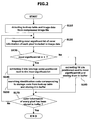
Figure 2 is a flow chart of a method for decompressing a compressed image in accordance with one embodiment of the present invention. -
Figure 3 illustrates the construction of image data stored in an image file in accordance with one embodiment of the present invention. - Features, elements, and aspects of the invention that are referenced by the same numerals in different figures represent the same, equivalent, or similar features, elements, or aspects in accordance with one or more embodiments of the system.
- The present invention implements an image compressing method in which a storage code of a small size is newly assigned to a color with high presentation frequency and an original identification code is assigned as it is to a color with low presentation frequency in an image and then stored.
- In accordance with one embodiment, a mobile communication terminal comprises a high resolution color LCD, for example, implementing 65000 colors and processes an image of a size of 16x16 pixels in width and length, for example. In one embodiment, the image consists of 6 colors (A, B, C, D, E and F), for example.
- For storing the image, the mobile communication terminal checks color information of pixels constituting an image to obtain presentation frequency of each color (A, B, C, D, E and F). Presentation frequency for a color is the number of pixels having the corresponding color (e.g., A, B, C, D, E and F). Then, the mobile communication terminal assigns a new identification code ('storage codes') to colors presented in pixels equal to or greater than a reference number (e.g., 50) ('frequently presented colors').
[Table 1] color Identification code number of pixels A Ox0000 50 B Ox000f 25 E Oxff00 70 D Ox0ff0 5 C Ox00ff 6 F Oxffff 100 - Table 1 illustrates an exemplary color assignment table, in accordance with one embodiment. In Table 1, a different 2-bit storage code is assigned to colors A, E and F with presentation frequency equal to or greater than the reference value (e.g., 50). A length of the storage code is determined according to the number of frequently presented colors. For example, if there are four frequently presented colors, the length of the storage code can be 2 bits (00, 01, 10, 11). If there are five frequently presented colors, 3 bits (000, 001, 010, 011, 100) can be enough for the length of the storage code. The above reference values may vary and can be determined by a user or a system, depending on implementation.
- Table 2 shows sizes of storage codes according to the number of frequently presented colors, in accordance to an exemplary embodiment.
[Table 2] The number of frequently presented colors Sizes of storage codes 1 or 2 1 bit 3 or 4 2 bit 5~8 3 bit 9~16 4 bit . . . . . . - When analysis for the color information of pixels is completed, the mobile communication terminal assigns a new, for example, 2-bit storage code to pixels with frequently presented colors, instead of their original color identification codes. Meanwhile, for the less frequently presented colors, the mobile communication terminal maintains the original color identification code for each pixel.
- Table 3 is a look-up table showing original identification codes and storage codes of frequently presented colors (A, E and F).
[Table 3] Frequently presented colors Identification code Storage code (binary) A Ox0000 0 ('00') E Oxff00 1 ('01') F Oxffff 2 (10') - When the mobile communication terminal stores color information of each pixel in the image file, it also stores the look-up table. Thus, when the mobile communication terminal decompresses data of the image file, it decompresses color information of each pixel stored in the image file with reference to the look-up table.
- In the present invention, in order to determine whether an identification code stored in each pixel is an original color identification code or a storage code of a corresponding pixel, a code discrimination bit (1 or 0) is added in front of the color information (e.g., identification code or storage code). If the code discrimination bit is '0' for example, the following color information is the original identification code, and if the code discrimination bit is '1' for example, the following color information is the new storage code (e.g., 2 bits).
- Table 4 shows a comparison between a binary code of each color stored without application of a compression algorithm and a binary code of each color stored according to a compression algorithm of the present invention.
[Table 4] Colors Binary code of each color stored without application of a compression algorithm Binary code of each color stored according to a compression algorithm of the present invention (code discrimination bit + storage code (identification code) A "0000 0000 0000 0000" "1 + 00" B "0000 0000 0000 1111" "0 + 0000 0000 0000 1111" C "1111 1111 0000 0000" "1 + 01" D "0000 1111 1111 0000" "0 + 0000 1111 1111 0000" E "0000 0000 1111 1111" "0 + 0000 0000 1111 1111" F "1111 1111 1111 1111" "1 + 10" - As noted in Table 4, when the compression algorithm in accordance with the present invention is applied, colors with high presentation frequency (e.g., the frequently presented colors) requires a smaller storage space (e.g., 3 bits) while colors with low presentation frequency require a larger storage space (e.g., 17 bits).
- Although it may vary according to an image, typically the frequently presented colors account for approximately 10~20% of the entire colors that are presented in 80 % of the entire pixels. Thus, a compression rate of the algorithm of the present invention can be quite high in such circumstances.
- Referring to
Figure 3 , an exemplary stored image data comprises 'length of the storage code' + 'size of the look-up table' + look-up table' + 'image data'. The image data is the color information of each pixel. An exemplary storage form is shown in Table 4. - Referring to
Figure 1 , to store an image, the mobile communication terminal analyzes color information of pixels constituting the image. The mobile communication terminal inspects each presentation frequency of each color to detect frequently presented colors (S10). The mobile communication terminal assigns a different storage code to each frequently presented color as detected and then generates a look-up table as shown in Table 3 (S20). - Thereafter, the mobile communication terminal stores the look-up table and color information of one or more pixels in a file according to the compression algorithm of the present invention (S30~S60). The construction of the data stored in the image file in this case is as shown in
Figure 3 , for example. - When the mobile communication terminal stores the color information of pixels, if a color of a pixel is a frequently presented color, the mobile communication terminal stores a storage code (e.g., 2 bits) assigned to the corresponding frequently presented color. If the color of the pixel is not the frequently presented color, the mobile communication terminal stores an original identification code (e.g.,16 bits) of the corresponding color. And then, the mobile communication terminal adds a code discrimination bit (1 or 0) in front of the stored storage code of the identification code.
- Referring to
Figure 2 , a method for decompressing a compressed image in accordance with the present invention will now be described. First, a look-up table is detected from a compressed image file (S110). Data stored in the image file, namely, color information of each pixel, is decompressed with reference to the detected look-up table (S120~S170). - In order to decompress the color information of each pixel, the mobile communication terminal checks whether an MSB (Most Significant Bit) of the color information of each pixel is 1 or 0 (S120). If the MSB is 1, then the bits (e.g., storage code) positioned next to the MSB are extracted (S140) and then an identification code (e.g., 16 bits corresponding to the extracted storage code) is searched from the look-up table and stored in the display buffer (S150).
- If, however, the MSB is 0, the original identification code positioned next to the MSB is extracted and stored in the display buffer (S160). Through such processes (S120~S160), the mobile communication decompresses the color information of each pixel. After the color information of every pixel constituting an image is stored in the display buffer (S170), colors of each pixel are displayed on the LCD with reference to the stored information.
- As so far described, the method for compressing and decompressing an image of a mobile communication system in accordance with the present invention provides a compression rate for image data that is improved by newly assigning a specific identification code of a small size to a color with high presentation frequency. In addition, since the image compression algorithm is simply implemented, the amount of load and resources of a mobile communication required for compressing and decompressing an image.
- The foregoing embodiments and advantages are merely exemplary and are not to be construed as limiting the present invention. The present teaching can be readily applied to other types of apparatuses. The description of the present invention is intended to be illustrative, and not to limit the scope of the claims. Many alternatives, modifications, and variations will be apparent to those skilled in the art. In the claims, means-plus-function clauses are intended to cover the structure described herein as performing the recited function and not only structural equivalents but also equivalent structures.
Claims (10)
- A method for compressing an image constituted by a plurality of pixels in a mobile communication terminal, wherein each pixel has one of a plurality of colors, the color of each pixel is represented by color information of each pixel, an original identification code specific to each color is assigned to each color, and the color information of each pixel at least contains the original identification code assigned to the color of each pixel, the method comprising the steps of:scanning pixels constituting an image;for each one of the plurality of colors, counting the number of pixels having the one color; determining that the one color is a frequently presented color when the counted number of pixels is more than or equals to a reference number;assigning to each frequently presented color, a new identification code specific to each frequently presented color, wherein the size of the new identification code is determined according to the number of frequently presented colors and is smaller than that of the original identification code specific to each frequently presented color, andfor each one of the plurality of pixels,when the color of the one pixel is not the frequently presented color, storing the color information of the one pixel in an image file;when the color of the one pixel is the frequently presented color, replacing the original identification code contained in the color information of the one pixel with the new identification code assigned to the color of the one pixel, and storing the color information of the one pixel after replacing in the image file,wherein the color information of each pixel is stored including a code discrimination bit for distinguishing whether an identification code provided to the color information is a new identification code or an original identification code.
- The method of claim 1, wherein the image file includes a look-up table arranged thereon with a frequently presented color emerging from more than or equal to the reference number of pixels and a new identification code provided to each frequently presented color.
- The method of claim 1, wherein the image file includes information about a length of the new identification code.
- The method of claim 2, wherein the image file includes information about a size of the look-up table.
- A method for decompressing a compressed image in a mobile communication terminal, wherein the compressed image is constituted by a plurality of pixels, each pixel of the compressed image has one of a plurality of colors, an original identification code specific to each color is assigned to each color, a new identification code specific to each of some of the plurality of colors is assigned to each of the some of the plurality of colors, the compressed image is represented by a compressed image file, the compressed image file contains at least color information of each pixel representing the color of the pixel, and or each pixel, the color information contains at least a color identification code being either the original identification code assigned to the color of the pixel or the new identification code assigned to the color of the pixel, wherein size of the original identification code is larger than that of the new identification code and wherein the size of the new identification codes is determined according to the number of the frequently presented colors, the method comprising the steps of: detecting the color information of each pixel contained in the compressed image file,
checking a code discrimination bit included in the color information of each pixel contained in the compressed image file to determine whether the color identification code of the pixel is the new identification code or the original identification code, wherein when the color identification code contained in the color information of the one pixel is determined to be the original identification code, maintaining the color identification code as it is;
for each pixel, when the color identification code contained in the color information of the one pixel is determined to be the new identification code, replacing the new identification code contained in the color information of the one pixel with the corresponding original identification code;
storing the color information of each pixel in a display buffer after replacing; and making reference to the color information of each pixel stored in the display buffer and displaying on a screen the color of each pixel represented by the color information of each pixel stored in the display buffer,
wherein the color information of each pixel includes a code discrimination bit for distinguishing whether the color identification code contained in the color information is the new identification code or the original identification code. - The method of claim 5, wherein the code discrimination bit is an MSB (Most Significant Bit) of the color information of each pixel.
- The method of claim 5, wherein the compressed image file further includes a look-up table which stores correspondence between the original identification code and the new identification code for each of the some of the plurality of colors, the method further comprising the step of:Detecting the look-up table in the compressed image file and searching the look-up table for the correspondence between the original identification code and the new identification code which is used in the step of replacing.
- The method of claim 5, wherein the compressed image file includes information on a length of a new identification code.
- The method of claim 5, wherein the compressed image file includes information on a size of the look-up table.
- The method of claim 5, wherein the some of the plurality of colors are colors which emerge from more than or equal to a reference number of pixels.
Applications Claiming Priority (2)
| Application Number | Priority Date | Filing Date | Title |
|---|---|---|---|
| KR1020040025525A KR100595663B1 (en) | 2004-04-13 | 2004-04-13 | How to compress / extend image files on your phone |
| KR2004025525 | 2004-04-13 |
Publications (3)
| Publication Number | Publication Date |
|---|---|
| EP1587299A2 EP1587299A2 (en) | 2005-10-19 |
| EP1587299A3 EP1587299A3 (en) | 2009-04-08 |
| EP1587299B1 true EP1587299B1 (en) | 2016-08-10 |
Family
ID=34934560
Family Applications (1)
| Application Number | Title | Priority Date | Filing Date |
|---|---|---|---|
| EP05006807.1A Expired - Lifetime EP1587299B1 (en) | 2004-04-13 | 2005-03-29 | Compressing and decompressing image of a mobile communication terminal |
Country Status (5)
| Country | Link |
|---|---|
| US (1) | US20050226501A1 (en) |
| EP (1) | EP1587299B1 (en) |
| JP (1) | JP4199208B2 (en) |
| KR (1) | KR100595663B1 (en) |
| CN (1) | CN1684496B (en) |
Families Citing this family (6)
| Publication number | Priority date | Publication date | Assignee | Title |
|---|---|---|---|---|
| KR100650865B1 (en) * | 2005-12-13 | 2006-11-27 | 주식회사 팬택 | File Compression and Management Method in Mobile Communication Terminal |
| KR100800653B1 (en) * | 2006-12-01 | 2008-02-01 | 삼성전자주식회사 | Apparatus and method for compressing 3D stereoscopic images |
| JP4538514B2 (en) * | 2008-07-30 | 2010-09-08 | シャープ株式会社 | Image compression method, image compression apparatus, image forming apparatus, computer program, and recording medium |
| US10142292B2 (en) | 2010-06-30 | 2018-11-27 | Pulse Secure Llc | Dual-mode multi-service VPN network client for mobile device |
| US8549617B2 (en) | 2010-06-30 | 2013-10-01 | Juniper Networks, Inc. | Multi-service VPN network client for mobile device having integrated acceleration |
| US8127350B2 (en) | 2010-06-30 | 2012-02-28 | Juniper Networks, Inc. | Multi-service VPN network client for mobile device |
Family Cites Families (9)
| Publication number | Priority date | Publication date | Assignee | Title |
|---|---|---|---|---|
| ES2079344T1 (en) * | 1993-11-18 | 1996-01-16 | Sega Enterprises Kk | DATA COMPRESSION METHOD, IMAGE DATA MEMORY, AND METHOD AND DEVICE FOR EXPANDING COMPRESSED DATA. |
| ES2145991T3 (en) * | 1995-02-03 | 2000-07-16 | Koninkl Philips Electronics Nv | VIDEO IMAGE COLOR CODING. |
| US5886790A (en) * | 1995-07-12 | 1999-03-23 | Asahi Kogaku Kogyo Kabushiki Kaisha | Image processing device |
| US6512853B2 (en) * | 1995-08-14 | 2003-01-28 | Barkfort Limited | Method and apparatus for compressing digital image data |
| EP0940994B1 (en) * | 1998-03-06 | 2014-04-16 | Canon Kabushiki Kaisha | Image processing apparatus and method and storage medium storing steps realizing such method |
| JP2000115782A (en) * | 1998-10-06 | 2000-04-21 | Canon Inc | Encoding device and method, and storage medium |
| FR2806227B1 (en) * | 2000-03-09 | 2003-09-05 | Auteuil Participation Et Conse | METHOD FOR CODING IMAGES |
| KR20040077921A (en) * | 2002-02-01 | 2004-09-07 | 코닌클리케 필립스 일렉트로닉스 엔.브이. | Compression of palettized color images with variable length color codes |
| US7164792B2 (en) * | 2003-03-11 | 2007-01-16 | Sun Microsystems, Inc. | Method and apparatus for compressing images using color palettes and rare colors |
-
2004
- 2004-04-13 KR KR1020040025525A patent/KR100595663B1/en not_active Expired - Fee Related
-
2005
- 2005-03-23 JP JP2005085046A patent/JP4199208B2/en not_active Expired - Fee Related
- 2005-03-29 EP EP05006807.1A patent/EP1587299B1/en not_active Expired - Lifetime
- 2005-04-11 US US11/104,344 patent/US20050226501A1/en not_active Abandoned
- 2005-04-13 CN CN2005100666085A patent/CN1684496B/en not_active Expired - Fee Related
Also Published As
| Publication number | Publication date |
|---|---|
| EP1587299A3 (en) | 2009-04-08 |
| US20050226501A1 (en) | 2005-10-13 |
| CN1684496B (en) | 2010-11-03 |
| CN1684496A (en) | 2005-10-19 |
| JP4199208B2 (en) | 2008-12-17 |
| JP2005304015A (en) | 2005-10-27 |
| EP1587299A2 (en) | 2005-10-19 |
| KR20050100297A (en) | 2005-10-18 |
| KR100595663B1 (en) | 2006-07-03 |
Similar Documents
| Publication | Publication Date | Title |
|---|---|---|
| EP0766223B1 (en) | Color image display apparatus and method therefor | |
| US6373890B1 (en) | Video compression and playback process | |
| US20050024380A1 (en) | Method for reducing random access memory of IC in display devices | |
| WO2002031806A1 (en) | Method of and system for low-bandwidth transmission of color video | |
| EP1587299B1 (en) | Compressing and decompressing image of a mobile communication terminal | |
| US8897558B2 (en) | Method of compressing a block-based binary image | |
| US6721455B1 (en) | Method and apparatus for icon compression and decompression | |
| US6370193B1 (en) | MPEG data compression and decompression using adjacent data value differencing | |
| US11006119B1 (en) | Compression encoding of images | |
| CN110619667B (en) | PNG picture compression method and system | |
| US8179971B1 (en) | Method and apparatus for video data compression | |
| EP1999946A1 (en) | Compression scheme using qualifier watermarking and apparatus using the compression scheme for temporarily storing image data in a frame memory | |
| US20110242112A1 (en) | Display device and driving circuit thereof | |
| US20080001939A1 (en) | Method of generating video driving signal and apparatus thereof | |
| US7580561B2 (en) | Image processing apparatus and method | |
| CN108200433A (en) | A kind of compression of images and decompression method | |
| WO2007135807A1 (en) | Image processing system and image processing program | |
| US20080055319A1 (en) | Apparatus and Method of Conversing Data | |
| JP2009111821A (en) | Image encoding device, image decoding device, image data processing device, image encoding method, and image decoding method | |
| US6690834B1 (en) | Compression of pixel data | |
| US7181078B2 (en) | Apparatus and method for compressing/decompressing images in a mobile communication terminal | |
| US8576246B2 (en) | Image processing method and device | |
| CN116361495A (en) | Sequence frame storage method, device and electronic equipment | |
| KR100513061B1 (en) | Method for compressing camera image | |
| CN113556540A (en) | Fixed ratio compression method and system for image display device |
Legal Events
| Date | Code | Title | Description |
|---|---|---|---|
| PUAI | Public reference made under article 153(3) epc to a published international application that has entered the european phase |
Free format text: ORIGINAL CODE: 0009012 |
|
| 17P | Request for examination filed |
Effective date: 20050329 |
|
| AK | Designated contracting states |
Kind code of ref document: A2 Designated state(s): AT BE BG CH CY CZ DE DK EE ES FI FR GB GR HU IE IS IT LI LT LU MC NL PL PT RO SE SI SK TR |
|
| AX | Request for extension of the european patent |
Extension state: AL BA HR LV MK YU |
|
| PUAL | Search report despatched |
Free format text: ORIGINAL CODE: 0009013 |
|
| AK | Designated contracting states |
Kind code of ref document: A3 Designated state(s): AT BE BG CH CY CZ DE DK EE ES FI FR GB GR HU IE IS IT LI LT LU MC NL PL PT RO SE SI SK TR |
|
| AX | Request for extension of the european patent |
Extension state: AL BA HR LV MK YU |
|
| AKX | Designation fees paid |
Designated state(s): AT BE BG CH CY CZ DE DK EE ES FI FR GB GR HU IE IS IT LI LT LU MC NL PL PT RO SE SI SK TR |
|
| RAP1 | Party data changed (applicant data changed or rights of an application transferred) |
Owner name: LG ELECTRONICS, INC. |
|
| 17Q | First examination report despatched |
Effective date: 20120410 |
|
| GRAP | Despatch of communication of intention to grant a patent |
Free format text: ORIGINAL CODE: EPIDOSNIGR1 |
|
| INTG | Intention to grant announced |
Effective date: 20160229 |
|
| GRAS | Grant fee paid |
Free format text: ORIGINAL CODE: EPIDOSNIGR3 |
|
| GRAA | (expected) grant |
Free format text: ORIGINAL CODE: 0009210 |
|
| AK | Designated contracting states |
Kind code of ref document: B1 Designated state(s): AT BE BG CH CY CZ DE DK EE ES FI FR GB GR HU IE IS IT LI LT LU MC NL PL PT RO SE SI SK TR |
|
| REG | Reference to a national code |
Ref country code: GB Ref legal event code: FG4D |
|
| REG | Reference to a national code |
Ref country code: CH Ref legal event code: EP Ref country code: AT Ref legal event code: REF Ref document number: 819970 Country of ref document: AT Kind code of ref document: T Effective date: 20160815 |
|
| REG | Reference to a national code |
Ref country code: IE Ref legal event code: FG4D |
|
| REG | Reference to a national code |
Ref country code: DE Ref legal event code: R096 Ref document number: 602005049901 Country of ref document: DE |
|
| REG | Reference to a national code |
Ref country code: LT Ref legal event code: MG4D |
|
| REG | Reference to a national code |
Ref country code: NL Ref legal event code: MP Effective date: 20160810 |
|
| REG | Reference to a national code |
Ref country code: AT Ref legal event code: MK05 Ref document number: 819970 Country of ref document: AT Kind code of ref document: T Effective date: 20160810 |
|
| PG25 | Lapsed in a contracting state [announced via postgrant information from national office to epo] |
Ref country code: IS Free format text: LAPSE BECAUSE OF FAILURE TO SUBMIT A TRANSLATION OF THE DESCRIPTION OR TO PAY THE FEE WITHIN THE PRESCRIBED TIME-LIMIT Effective date: 20161210 Ref country code: NL Free format text: LAPSE BECAUSE OF FAILURE TO SUBMIT A TRANSLATION OF THE DESCRIPTION OR TO PAY THE FEE WITHIN THE PRESCRIBED TIME-LIMIT Effective date: 20160810 Ref country code: FI Free format text: LAPSE BECAUSE OF FAILURE TO SUBMIT A TRANSLATION OF THE DESCRIPTION OR TO PAY THE FEE WITHIN THE PRESCRIBED TIME-LIMIT Effective date: 20160810 Ref country code: IT Free format text: LAPSE BECAUSE OF FAILURE TO SUBMIT A TRANSLATION OF THE DESCRIPTION OR TO PAY THE FEE WITHIN THE PRESCRIBED TIME-LIMIT Effective date: 20160810 Ref country code: LT Free format text: LAPSE BECAUSE OF FAILURE TO SUBMIT A TRANSLATION OF THE DESCRIPTION OR TO PAY THE FEE WITHIN THE PRESCRIBED TIME-LIMIT Effective date: 20160810 |
|
| PG25 | Lapsed in a contracting state [announced via postgrant information from national office to epo] |
Ref country code: AT Free format text: LAPSE BECAUSE OF FAILURE TO SUBMIT A TRANSLATION OF THE DESCRIPTION OR TO PAY THE FEE WITHIN THE PRESCRIBED TIME-LIMIT Effective date: 20160810 Ref country code: ES Free format text: LAPSE BECAUSE OF FAILURE TO SUBMIT A TRANSLATION OF THE DESCRIPTION OR TO PAY THE FEE WITHIN THE PRESCRIBED TIME-LIMIT Effective date: 20160810 Ref country code: PT Free format text: LAPSE BECAUSE OF FAILURE TO SUBMIT A TRANSLATION OF THE DESCRIPTION OR TO PAY THE FEE WITHIN THE PRESCRIBED TIME-LIMIT Effective date: 20161212 Ref country code: GR Free format text: LAPSE BECAUSE OF FAILURE TO SUBMIT A TRANSLATION OF THE DESCRIPTION OR TO PAY THE FEE WITHIN THE PRESCRIBED TIME-LIMIT Effective date: 20161111 Ref country code: SE Free format text: LAPSE BECAUSE OF FAILURE TO SUBMIT A TRANSLATION OF THE DESCRIPTION OR TO PAY THE FEE WITHIN THE PRESCRIBED TIME-LIMIT Effective date: 20160810 Ref country code: PL Free format text: LAPSE BECAUSE OF FAILURE TO SUBMIT A TRANSLATION OF THE DESCRIPTION OR TO PAY THE FEE WITHIN THE PRESCRIBED TIME-LIMIT Effective date: 20160810 |
|
| PG25 | Lapsed in a contracting state [announced via postgrant information from national office to epo] |
Ref country code: RO Free format text: LAPSE BECAUSE OF FAILURE TO SUBMIT A TRANSLATION OF THE DESCRIPTION OR TO PAY THE FEE WITHIN THE PRESCRIBED TIME-LIMIT Effective date: 20160810 Ref country code: EE Free format text: LAPSE BECAUSE OF FAILURE TO SUBMIT A TRANSLATION OF THE DESCRIPTION OR TO PAY THE FEE WITHIN THE PRESCRIBED TIME-LIMIT Effective date: 20160810 |
|
| REG | Reference to a national code |
Ref country code: DE Ref legal event code: R097 Ref document number: 602005049901 Country of ref document: DE |
|
| PG25 | Lapsed in a contracting state [announced via postgrant information from national office to epo] |
Ref country code: CZ Free format text: LAPSE BECAUSE OF FAILURE TO SUBMIT A TRANSLATION OF THE DESCRIPTION OR TO PAY THE FEE WITHIN THE PRESCRIBED TIME-LIMIT Effective date: 20160810 Ref country code: DK Free format text: LAPSE BECAUSE OF FAILURE TO SUBMIT A TRANSLATION OF THE DESCRIPTION OR TO PAY THE FEE WITHIN THE PRESCRIBED TIME-LIMIT Effective date: 20160810 Ref country code: BG Free format text: LAPSE BECAUSE OF FAILURE TO SUBMIT A TRANSLATION OF THE DESCRIPTION OR TO PAY THE FEE WITHIN THE PRESCRIBED TIME-LIMIT Effective date: 20161110 Ref country code: SK Free format text: LAPSE BECAUSE OF FAILURE TO SUBMIT A TRANSLATION OF THE DESCRIPTION OR TO PAY THE FEE WITHIN THE PRESCRIBED TIME-LIMIT Effective date: 20160810 Ref country code: BE Free format text: LAPSE BECAUSE OF FAILURE TO SUBMIT A TRANSLATION OF THE DESCRIPTION OR TO PAY THE FEE WITHIN THE PRESCRIBED TIME-LIMIT Effective date: 20160810 |
|
| PLBE | No opposition filed within time limit |
Free format text: ORIGINAL CODE: 0009261 |
|
| STAA | Information on the status of an ep patent application or granted ep patent |
Free format text: STATUS: NO OPPOSITION FILED WITHIN TIME LIMIT |
|
| 26N | No opposition filed |
Effective date: 20170511 |
|
| PG25 | Lapsed in a contracting state [announced via postgrant information from national office to epo] |
Ref country code: SI Free format text: LAPSE BECAUSE OF FAILURE TO SUBMIT A TRANSLATION OF THE DESCRIPTION OR TO PAY THE FEE WITHIN THE PRESCRIBED TIME-LIMIT Effective date: 20160810 |
|
| REG | Reference to a national code |
Ref country code: DE Ref legal event code: R119 Ref document number: 602005049901 Country of ref document: DE |
|
| REG | Reference to a national code |
Ref country code: CH Ref legal event code: PL |
|
| GBPC | Gb: european patent ceased through non-payment of renewal fee |
Effective date: 20170329 |
|
| PG25 | Lapsed in a contracting state [announced via postgrant information from national office to epo] |
Ref country code: MC Free format text: LAPSE BECAUSE OF FAILURE TO SUBMIT A TRANSLATION OF THE DESCRIPTION OR TO PAY THE FEE WITHIN THE PRESCRIBED TIME-LIMIT Effective date: 20160810 |
|
| REG | Reference to a national code |
Ref country code: IE Ref legal event code: MM4A |
|
| REG | Reference to a national code |
Ref country code: FR Ref legal event code: ST Effective date: 20171130 |
|
| PG25 | Lapsed in a contracting state [announced via postgrant information from national office to epo] |
Ref country code: FR Free format text: LAPSE BECAUSE OF NON-PAYMENT OF DUE FEES Effective date: 20170331 Ref country code: DE Free format text: LAPSE BECAUSE OF NON-PAYMENT OF DUE FEES Effective date: 20171003 Ref country code: LU Free format text: LAPSE BECAUSE OF NON-PAYMENT OF DUE FEES Effective date: 20170329 |
|
| PG25 | Lapsed in a contracting state [announced via postgrant information from national office to epo] |
Ref country code: GB Free format text: LAPSE BECAUSE OF NON-PAYMENT OF DUE FEES Effective date: 20170329 Ref country code: LI Free format text: LAPSE BECAUSE OF NON-PAYMENT OF DUE FEES Effective date: 20170331 Ref country code: IE Free format text: LAPSE BECAUSE OF NON-PAYMENT OF DUE FEES Effective date: 20170329 Ref country code: CH Free format text: LAPSE BECAUSE OF NON-PAYMENT OF DUE FEES Effective date: 20170331 |
|
| PG25 | Lapsed in a contracting state [announced via postgrant information from national office to epo] |
Ref country code: HU Free format text: LAPSE BECAUSE OF FAILURE TO SUBMIT A TRANSLATION OF THE DESCRIPTION OR TO PAY THE FEE WITHIN THE PRESCRIBED TIME-LIMIT; INVALID AB INITIO Effective date: 20050329 |
|
| PG25 | Lapsed in a contracting state [announced via postgrant information from national office to epo] |
Ref country code: CY Free format text: LAPSE BECAUSE OF NON-PAYMENT OF DUE FEES Effective date: 20160810 |
|
| PG25 | Lapsed in a contracting state [announced via postgrant information from national office to epo] |
Ref country code: TR Free format text: LAPSE BECAUSE OF FAILURE TO SUBMIT A TRANSLATION OF THE DESCRIPTION OR TO PAY THE FEE WITHIN THE PRESCRIBED TIME-LIMIT Effective date: 20160810 |