EP1586657A1 - Method of diagnosing depression - Google Patents
Method of diagnosing depression Download PDFInfo
- Publication number
- EP1586657A1 EP1586657A1 EP05006769A EP05006769A EP1586657A1 EP 1586657 A1 EP1586657 A1 EP 1586657A1 EP 05006769 A EP05006769 A EP 05006769A EP 05006769 A EP05006769 A EP 05006769A EP 1586657 A1 EP1586657 A1 EP 1586657A1
- Authority
- EP
- European Patent Office
- Prior art keywords
- depression
- mrna
- diagnosing
- human
- protein
- Prior art date
- Legal status (The legal status is an assumption and is not a legal conclusion. Google has not performed a legal analysis and makes no representation as to the accuracy of the status listed.)
- Ceased
Links
Images




Classifications
-
- C—CHEMISTRY; METALLURGY
- C12—BIOCHEMISTRY; BEER; SPIRITS; WINE; VINEGAR; MICROBIOLOGY; ENZYMOLOGY; MUTATION OR GENETIC ENGINEERING
- C12Q—MEASURING OR TESTING PROCESSES INVOLVING ENZYMES, NUCLEIC ACIDS OR MICROORGANISMS; COMPOSITIONS OR TEST PAPERS THEREFOR; PROCESSES OF PREPARING SUCH COMPOSITIONS; CONDITION-RESPONSIVE CONTROL IN MICROBIOLOGICAL OR ENZYMOLOGICAL PROCESSES
- C12Q1/00—Measuring or testing processes involving enzymes, nucleic acids or microorganisms; Compositions therefor; Processes of preparing such compositions
- C12Q1/68—Measuring or testing processes involving enzymes, nucleic acids or microorganisms; Compositions therefor; Processes of preparing such compositions involving nucleic acids
- C12Q1/6876—Nucleic acid products used in the analysis of nucleic acids, e.g. primers or probes
- C12Q1/6883—Nucleic acid products used in the analysis of nucleic acids, e.g. primers or probes for diseases caused by alterations of genetic material
-
- C—CHEMISTRY; METALLURGY
- C12—BIOCHEMISTRY; BEER; SPIRITS; WINE; VINEGAR; MICROBIOLOGY; ENZYMOLOGY; MUTATION OR GENETIC ENGINEERING
- C12Q—MEASURING OR TESTING PROCESSES INVOLVING ENZYMES, NUCLEIC ACIDS OR MICROORGANISMS; COMPOSITIONS OR TEST PAPERS THEREFOR; PROCESSES OF PREPARING SUCH COMPOSITIONS; CONDITION-RESPONSIVE CONTROL IN MICROBIOLOGICAL OR ENZYMOLOGICAL PROCESSES
- C12Q2600/00—Oligonucleotides characterized by their use
- C12Q2600/112—Disease subtyping, staging or classification
-
- C—CHEMISTRY; METALLURGY
- C12—BIOCHEMISTRY; BEER; SPIRITS; WINE; VINEGAR; MICROBIOLOGY; ENZYMOLOGY; MUTATION OR GENETIC ENGINEERING
- C12Q—MEASURING OR TESTING PROCESSES INVOLVING ENZYMES, NUCLEIC ACIDS OR MICROORGANISMS; COMPOSITIONS OR TEST PAPERS THEREFOR; PROCESSES OF PREPARING SUCH COMPOSITIONS; CONDITION-RESPONSIVE CONTROL IN MICROBIOLOGICAL OR ENZYMOLOGICAL PROCESSES
- C12Q2600/00—Oligonucleotides characterized by their use
- C12Q2600/158—Expression markers
-
- Y—GENERAL TAGGING OF NEW TECHNOLOGICAL DEVELOPMENTS; GENERAL TAGGING OF CROSS-SECTIONAL TECHNOLOGIES SPANNING OVER SEVERAL SECTIONS OF THE IPC; TECHNICAL SUBJECTS COVERED BY FORMER USPC CROSS-REFERENCE ART COLLECTIONS [XRACs] AND DIGESTS
- Y02—TECHNOLOGIES OR APPLICATIONS FOR MITIGATION OR ADAPTATION AGAINST CLIMATE CHANGE
- Y02A—TECHNOLOGIES FOR ADAPTATION TO CLIMATE CHANGE
- Y02A90/00—Technologies having an indirect contribution to adaptation to climate change
- Y02A90/10—Information and communication technologies [ICT] supporting adaptation to climate change, e.g. for weather forecasting or climate simulation
Definitions
- the present invention relates to a method of diagnosing depression. More particularly, the present invention relates to a method of diagnosing depression, wherein gene expression is analyzed using mRNA of patients' peripheral bloods to cluster patients afflicted with depression, and conditions thereof are then diagnosed.
- Depression is a disease with high lifetime morbidity of approximately up to 10%, and this rate is predicted to further increase in the future due to stress in contemporary society. This disease seriously afflicts patients mentally and physically and imposes enormous damage upon their social lives. In addition, it is a serious disease that often leads to suicide. It is deduced that many of the people who commit suicide (as many as 30,000 or more per year in Japan) are afflicted with depression. This disease is also deeply associated with societal problems such as truancy, unemployment, and social withdrawal or medical problems such as alcohol-related disorders. Establishment of methods of precisely diagnosing and promptly treating this disease is indispensable for improving the quality of life, and thus is an urgent need of society as a whole.
- Diagnosis of depression is, however, far from simple. Cardinal symptoms of depression are, for example, depressive mood, hypobulia, loss of interest and pleasure, disrupted concentration and attention, lowered self-esteem and self-confidence, feelings of guilt and worthlessness, pessimism about the future, thoughts of suicide, sleep disorders, and loss of appetite. These symptoms have features peculiar to depression, which differ from depressed feelings experienced by anyone, and also differ from the lowered mental activity and sense of exhaustion experienced by people afflicted with physical diseases.
- the symptoms of depression are mainly comprehended by taking a precise medical history, questioning when and how the symptoms in terms of mental activity were developed and what types of damages have been imposed upon their social and domestic lives, and confirming various symptoms based on a patient's attitude or the contents of conversations during consultation.
- family medical history, anamnesis, physical conditions, early developmental history, life history, personality inclination, premorbid social adaptation, and the occurrence of any episode(s) that had triggered the disease can be important references.
- an interview needs to be conducted by a highly skilled specialist in psychiatric medicine for approximately 1 hour. Further, it should be confirmed that a patient does not have any major abnormalities in terms of general physical or neurological conditions.
- depression which is a common disease with lifetime morbidity of approximately 10%, however, is often the subject of consultation with primary care doctors. Diagnosis of depression without objective medical findings is not always easy for general doctors who may not be acquainted with psychiatric consultation. Depression is a medical disease that requires treatment of the body (brain), including medication. Accordingly, it is difficult for specialists in clinical psychology, such as clinical psychotherapists, or mental health workers, such as public health nurses, to independently diagnose depression.
- depression causes functional alteration in brain monoamine systems. This alteration is known to have a considerable influence upon the neuroendocrine system, the neuroimmune system, and the autonomic nervous system via psychosomatic correlation.
- the application of the results of a dexamethasone suppression test that allows accurate comprehension of neuroendocrine abnormalities, i.e., a minor level of adrenal cortical hormone hypersecretion, to diagnosis of depression has been extensively examined from the 1980s onwards.
- Clinical application thereof was, however, not realized due to the necessity for complicated procedures such as the administration of test drugs and limitations in terms of sensitivity or specificity.
- genes such as those related to serotonin transporter, serotonin 1A/2C receptor, dopamine D2/D3 receptor, dopamine transporter, tyrosine hydroxylase, tryptophan hydroxylase, monoamine oxidase, and ATPase have been reported as candidate functional genes associated with depression.
- An object of the present invention is to provide a novel method of diagnosing the conditions of depression of a subject in a simple, objective, and accurate manner.
- the present inventors have focused on peripheral leukocytes that can be easily obtained as specimens and allow many receptors of factors associated with stress responses to be expressed therein in order to objectively diagnose the conditions of depression, in the development of which stress plays an important role. They have extensively analyzed the expression patterns of mRNAs of approximately 1,500 genes associated with stress responses and then developed certain patterns. Thus, they have found a method that is capable of classification patients afflicted with depression and diagnosing the conditions thereof. This has led to the completion of the present invention.
- the present invention relates to a method of diagnosing depression, wherein gene expression is analyzed using mRNA of a subject's peripheral blood to evaluate whether or not the subject is afflicted with depression, the type of depression of a subject who had been evaluated as being afflicted with depression is identified, and the conditions of depression are then diagnosed in accordance with the type of depression.
- the expression profiles of the marker gene for depression (an indicator for evaluating whether or not a subject has been afflicted with depression) selected from among the genes listed in Table 1 can be employed to evaluate whether or not a subject is afflicted with depression.
- the expression profiles of the marker gene for classification (an indicator for classifying a patient afflicted with depression) selected from among the genes listed in Table 2 can be employed to identify the type of depression in the subject to be type PA or PB.
- ATP2A2, SCYA5, STIP1, EEF1A1, GRB10, CASP6, TSSC1, RAB9, NFATC3, and TPR are particularly useful marker genes for depression.
- GNG10, CLK1, P2Y5, IFNGR1, TAF2F, PIM1, MAP2K3, HDGF, INSR, and COX6C are particularly useful marker genes for classification.
- the expression profile of the marker gene for diagnosing type PA depression (an indicator for the conditions or a course of treatment of a patient with type PA depression) selected from among the genes listed in Table 3 can be employed to more precisely diagnose the conditions thereof.
- the expression profile of the marker gene for diagnosing type PB depression (an indicator for the conditions or a course of treatment of a patient with type PB depression) selected from among the genes listed in Table 4 can be employed to more precisely diagnose the conditions thereof.
- CDC10, GZMA, TNFRSF6, HSPCA, NR3C1, TOPBP1, ARNTL, RAP1A, POLR2B, and ITGB1 are particularly useful marker genes for depression.
- POU2F2, BCL2L1, DAXX, COX4, CD3G, FCER1G, NME2, CPT1B, HSPE1, and COX7A2 are particularly useful marker genes for classification.
- the expression profiles of the marker gene for depression selected from among the genes listed in Table 7 can be employed to evaluate whether or not a subject is afflicted with depression.
- the expression profiles of the marker gene for classification selected from among the genes listed in Table 8 can be employed to identify the type of depression to be type PA or PB.
- HLA-G, HRH4, PSMB9, ATP2A2, SCYA5, SLC6A4, CASP6, CSF2, HSD3B1, and RAB9 are particularly useful marker genes for depression.
- HSPE1, PSMA4, ADH5, PSMA6, COX17, HMG1, GPR24, COX6C, FGF2, and COX7C are particularly useful marker genes for classification.
- the expression profile of the marker gene for diagnosing type PA depression selected from among the genes listed in Table 9 can be employed to more precisely diagnose the conditions thereof.
- the expression profile of the marker gene for diagnosing type PB depression selected from among the genes listed in Table 10 can be employed to more precisely diagnose the conditions thereof.
- CLK1, PSMC6, TAF2F, P2Y5, CASP3, HSPCA, MSH2, SLC38A2, B2M, and AKAP11 are particularly useful marker genes for diagnosing type PA depression.
- CCNA2, HGF, GPR24, PTGER3, COX7A2, BDKRB2, UFD1L, HMG1, PSMA4, and ATP6J are particularly useful marker genes for diagnosing type PB depression.
- the course of treating a single subject who had been diagnosed to be afflicted with depression can be accurately evaluated by comparing and analyzing the gene expression profiles before and after the treatment of the subject.
- DNA-immobilized solid substrates such as chips, arrays, membrane filters, and capillaries, are preferable.
- the present invention also provides a solid substrate for diagnosing depression having immobilized thereon probes that each independently specifically hybridize to any one of the genes listed in Tables 1 to 4 for detecting the target gene.
- the target genes at least include ATP2A2, SCYA5, STIP1, EEF1A1, GRB10, CASP6, TSSC1, RAB9, NFATC3, and TPR listed in Table 1, GNG10, CLK1, P2Y5, IFNGR1, TAF2F, PIM1, MAP2K3, HDGF, INSR, and COX6C listed in Table 2, CDC10, GZMA, TNFRSF6, HSPCA, NR3C1, TOPBP1, ARNTL, RAP1A, POLR2B, and ITGB1 listed in Table 3, and POU2F2, BCL2L1, DAXX, COX4, CD3G, FCER1G, NME2, CPT1B, HSPE1, and COX7A2 listed in Table 4.
- the present invention provides a solid substrate for diagnosing depression having immobilized thereon probes that each independently specifically hybridize to any one of the genes listed in Tables 7 to 10 for detecting the target gene.
- the target genes at least include HLA-G, HRH4, PSMB9, ATP2A2, SCYA5, SLC6A4, CASP6, CSF2, HSD3B1, and RAB9 listed in Table 7, HSPE1, PSMA4, ADH5, PSMA6, COX17, HMG1, GPR24, COX6C, FGF2, and COX7C listed in Table 8, CLK1, PSMC6, TAF2F, P2Y5, CASP3, HSPCA, MSH2, SLC38A2, B2M, and AKAP11 listed in Table 9, and CCNA2, HGF, GPR24, PTGER3, COX7A2, BDKRB2, UFD1L, HMG1, PSMA4, and ATP6J listed in Table 10.
- the present invention further provides a system for diagnosing depression for performing the method of diagnosing depression of the present invention.
- This system comprises a means for comparing and analyzing the gene expression data of a subject with that of a healthy volunteer and of a patient afflicted with depression, which had been previously obtained, and can diagnose the conditions of depression of the subject in accordance with the type of depression.
- the aforementioned system further comprises a means of comparing and analyzing the gene expression data of a subject, of a healthy volunteer, and of a patient afflicted with depression in combination with the data concerning their age and sex.
- gene expression is analyzed using patients' peripheral bloods to cluster patients afflicted with depression, and conditions thereof or the course of treatment are then diagnosed.
- depression can be diagnosed in a non-invasive, simple, and accurate manner.
- the present inventors extracted RNA from the whole blood collected from patients and healthy volunteers as described below, and gene expression of patients was then analyzed using DNA chips, along with that of healthy volunteers.
- the marker genes were determined based on the results.
- a DNA chip comprises DNA fragments having nucleotide sequences corresponding to numerous genes immobilized on a substrate such as a glass substrate, and it is used for detecting RNA in a sample by hybridization.
- a substrate such as a glass substrate
- other DNA-immobilized solid substrates such as DNA arrays, capillaries, or membrane filters
- quantitative assay techniques may be employed, as long as extensive analysis of gene expression is feasible.
- Target patients were those who had agreed with the written description for participating in the research for developing the present diagnostic method selected from among untreated patients afflicted with depression. Patients with serious physical complications or those taking therapeutic agents for physical diseases were excluded. Diagnosis was made in accordance with a depressive episode specified in the International Classification of Diseases, 10th revision (ICD-10). Healthy volunteers with the same sex and age conditions were selected for each of the patients for comparison.
- ICD-10 International Classification of Diseases, 10th revision
- Differences in gene expression levels between samples obtained from patients and samples obtained from healthy volunteers or those between samples obtained from a single patient before and after treatment were determined.
- a group of genes having fluorescence intensities of 300 or higher in both of the data on patient/healthy volunteer comparison and the data on before/after treatment comparison was selected as the target genes.
- the gene with a significantly higher or lower expression level was selected via a significant difference test.
- the gene of the patient with significantly higher or lower expression level compared to that of the healthy volunteer was then selected as an indicator for evaluating whether or not the patient has been afflicted with depression, i.e., as the "marker gene for depression.”
- the data on patient/healthy volunteer comparison was subjected to cluster analysis employing all the target genes (hierarchical clustering based on the cosine coefficient distance without a weight between clusters).
- the present inventors found that the patient/healthy volunteer comparison samples were roughly divided into two groups, i.e., the PA group and the PB group. The tests were carried out between groups, and the gene that was peculiar to each group was selected as an indicator for classifying a patient afflicted with depression, i.e., as the "marker gene for classification" of the patient afflicted with depression.
- the data on before/after treatment comparison was grouped.
- the data on patient/healthy volunteer comparison and the data on before/after treatment comparison were aligned for each patient in each group, and the data were compared and analyzed.
- the group of genes with reversed expression patterns between the data on patient/healthy volunteer comparison and the data on before/after treatment comparison was extracted.
- the reversed expression patterns between the data on patient/healthy volunteer comparison and the data on before/after treatment comparison indicate a change in gene expression that is observed characteristically when the patient afflicted with depression received treatment involving the use of an antidepressant.
- the extracted group of genes is useful as an indicator for the conditions or the course of treatment of the patients afflicted with depression in each group. This group of genes was selected as the "marker genes for diagnosing each group (e.g., the marker genes for diagnosing type PA depression and the marker genes for diagnosing type PB depression)."
- cytokine-associated genes such as SCYA5 encoding a T-cell-specific protein, TNFRSF9 or TNFSF10 belonging to the TNF superfamily, or ILIR2 or IL2RB (an interleukin receptor).
- ILIR2 or IL2RB an interleukin receptor
- ATRX is associated with X-chromosome-linked mental retardation (e.g., ATR-X syndrome, Carpenter syndrome, Juberg-Marsidi syndrome, or Smith-Fineman-Myers syndrome).
- the expression level of the genes associated with the renin-angiotensin system was found to vary in the case of patients afflicted with depression before and after treatment. Association of the renin-angiotensin system and sporadic Alzheimer's disease has been pointed out (Eur J Hum Genet. 2001: 9(6): 437-444). Also, association of the angiotensin-converting enzyme (ACE) gene polymorphism with schizophrenia has also been analyzed (Neuropsychobiology 2001; 44(1): 31-35).
- ACE angiotensin-converting enzyme
- ion channel serves as the most important function for neuron cell activity, and its association with epilepsy, ataxia, migraine, schizophrenia, Alzheimer's disease, and other neurodegenerative diseases has been pointed out (CNS Drug Rev 2001; 7(2): 214-240). Concerning Na/K-ATPase and psychiatric diseases, association of the ion channel with depression (Depress Anxiety 1997, 5, pp. 53-65) or dysthymia (J. Basic Clin. Physiol. Pharmacol. 2000, 11 (4), pp. 375-94) has been particularly noted.
- ATP1B3P1 is a pseudogene of ATP1B3 and is transcribed from the same genome.
- HSP heat shock protein
- RNA polymerase II subunits or binding protein genes were both found to have been lowered, and their expression levels were found to have been restored as the disease state reached a state of remission, although association thereof with depression has not yet been clarified.
- RNA polymerase II subunit protein gene POLR2B
- RNA polymerase II transcription elongation factor B SIII polypeptide 1
- TCEB1L RNA polymerase II transcription elongation factor B
- SLC35AI UDP-galactose transporter novel isozyme
- a monoamine receptor is a 7-transmembrane G-protein-coupled receptor that activates inositol phosphate cycles and protein kinase C (PKC). This receptor also activates the elevation of cyclic AMP and the protein kinase A (PKA) pathway. Further, transcription factors activated by these signal transducing molecules and their gene products are focused, and it is expected that associations of these pathways with functional disorders will be discovered.
- Lithium derivatives the effects of which as mood stabilizers for patients afflicted with bipolar disorders have been verified, are actually reported to act on signal-transducing pathways such as G-proteins, inositol phosphate cycles, PKC, PKA, glycogen synthase kinase 3- ⁇ , or Akt cascade, thereby exhibiting pharmacological actions (Br J Psychiatry 2001; 41: suppl 128-133).
- TGF- ⁇ receptor TGF- ⁇ -induced clone 22 homolog
- IRS4 insulin signal transducing molecule
- mRNA expression levels of CDKN2C, CDK7, CCNB2, and CCNG1 associated with a cell cycle were all lowered, and lowered mRNA expression levels of topoisomerase II ⁇ and topoisomerase II-binding protein (TOPBP1) associated with DNA replication were observed.
- TOPBP1 topoisomerase II ⁇ and topoisomerase II-binding protein
- mRNA is extracted from a subject's peripheral blood, and its expression profile is examined, thereby resulting in diagnosis of depression in the subject in accordance with the type of depression.
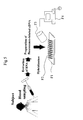
- Fig. 5 schematically shows the method of diagnosing depression of the present invention
- Fig. 6 schematically shows the system of diagnosing depression of the present invention.
- DNA-immobilized solid substrates such as DNA arrays or membrane filters
- quantitative PCR such as RT-PCR or real-time PCR
- Northern blotting subtraction
- differential display differential hybridization
- cross-hybridization can be employed.
- DNA-immobilized solid substrates such as DNA chips, DNA arrays, membrane filters, and capillaries, are particularly preferable since a large number of genes can be extensively analyzed at a single operation.
- the solid substrate that is employed in the present invention is prepared by immobilizing probes that each independently specifically hybridize to any one of the genes listed in Tables 1 to 4 to detect the target gene on a solid substrate, such as a glass or nylon membrane.
- the target genes to be immobilized on the substrate at least include ATP2A2, SCYA5, STIP1, EEF1A1, GRB10, CASP6, TSSC1, RAB9, NFATC3, and TPR listed in Table 1, GNG10, CLK1, P2Y5, IFNGR1, TAF2F, PIM1, MAP2K3, HDGF, INSR, and COX6C listed in Table 2, CDC10, GZMA, TNFRSF6, HSPCA, NR3C1, TOPBP1, ARNTL, RAP1A, POLR2B, and ITGB1 listed in Table 3, and POU2F2, BCL2L1, DAXX, COX4, CD3G, FCER1G, NME2, CPT1B, HSPE1, and COX7A2 listed in
- the solid substrate of the present invention is prepared by immobilizing probes that each independently specifically hybridize to any one of the genes listed in Tables 7 to 10 to detect the target gene on a solid substrate, such as a glasses or nylon membrane.
- the target genes to be immobilized on the substrate at least include HLA-G, HRH4, PSMB9, ATP2A2, SCYA5, SLC6A4, CASP6, CSF2, HSD3B1, and RAB9 listed in Table 7, HSPE1, PSMA4, ADH5, PSMA6, COX17, HMG1, GPR24, COX6C, FGF2, and COX7C listed in Table 8, CLK1, PSMC6, TAF2F, P2Y5, CASP3, HSPCA, MSH2, SLC38A2, B2M, and AKAP11 listed in Table 9, and CCNA2, HGF, GPR24, PTGER3, COX7A2, BDKRB2, UFD1L, HMG1, PSMA4, and ATP6J listed in Table 10.
- a probe that is employed to detect genes can be designed as a sequence that is complementary to a region with high specificity of the marker gene (e.g., 3' UTR) in accordance with a conventional technique.
- a synthetic oligo probe with a 25-100 base length or a PCR product with a 300-1,000 base length can be employed.
- a method of immobilizing a probe on a solid substrate is not particularly limited. In accordance with a conventional technique, a synthesized probe may be spotted on a solid substrate or a probe may be synthesized on a solid substrate.
- RNA sample collected from a subject and the RNA sample collected from a healthy volunteer are respectively labeled with fluorescent dyes having different emission wavelengths, and they are applied to the same DNA chip for diagnosing depression to conduct competitive hybridization.
- the fluorescence intensity of each probe on the chip represents the differences in the gene expression intensities between the subject and the healthy volunteer.
- the expression profiles thereof can be then examined to diagnose the conditions of depression in the subject.
- RNA sample for example, a commercialized universal RNA sample
- comparison and analysis of expression levels of the subject's sample and the standard sample are conducted separately from those of the healthy volunteer's sample and the standard sample in the aforementioned manner to analyze expression data for both groups in comparison with each other.
- the conditions of depression in the subject can be diagnosed.
- a subject and a healthy volunteer to be compared therewith preferably have the same age and sex conditions.
- an acceptable age gap between them is up to 5 years.
- the subject and a healthy volunteer can be compared and analyzed by simply retrieving the data that match the conditions of the subject in terms of age and sex from the database. Also, the expression data for patients afflicted with depression and those for healthy volunteers are previously stored in the computer, and the computer is allowed to determine which of the expression patterns for patients or healthy volunteers are more similar to the subject's expression data, thereby diagnosing the conditions of depression in the subject (see Fig. 6).
- the expression data for patients afflicted with depression is stored in the computer in accordance with the group (the PA group and the PB group), more accurate diagnosis in accordance with the type of depression in the subject can be realized.
- the computer is allowed to determine which of the expression patterns are more similar to those of the subject who had been diagnosed as afflicted with depression, and the evaluated data is then clustered.
- the clustered data of the subject is further evaluated by the computer in terms of the conditions or the course of treatment based on the expression profile of a diagnostic marker specific for each group.
- a method for data analysis is not limited to clustering. Any conventional analytical techniques in the art, for example, a machine learning algorithm such as the one utilizing a support vector machine can be employed.
- the method of the present invention can conduct the analysis with the use of 5 ml of blood obtained by conventional blood sampling without special cooperation provided by a patient.
- This diagnostic method can be carried out in a non-invasive, simple, and routine manner.
- This method of multidimensionally comprehending biological functions based on numerous mRNA expression levels is more adequate as a method of diagnosing complicated psychiatric diseases involving both mental and physical conditions such as depression in terms of its principle compared with the conventional method that assays only limited factors.
- the results attained by the method of the present invention can be simply and clearly evaluated, they can be easily employed by primary care doctors as objective indicators for depression, and they are extremely useful for the establishment of diagnosis and introduction of therapy.
- a high-risk group can be accurately selected from among the groups of people through medical checkups or complete physical examinations provided by workplaces, schools, and communities. This enables early detection of depression in a simple and cost-effective manner. Accordingly, the method of the present invention significantly contributes to the improvement of peoples' mental health from the viewpoint of preventive care.
- the usefulness of the method according to the present invention is not limited to primary care and medical checkups.
- Specialists in psychiatric medicine can apply this technique to the search for psychological, social, and environmental factors associated with the development of depression, evaluation of clinical conditions, diagnosis, evaluation of treatment, and determination of prognosis.
- this technique can be a revolutionary test technique in the field of psychiatric medicine, which dramatically improves a technique of diagnosing depression.
- Target patients were those who had agreed with the written description for participating in the research for developing the present diagnostic method selected from among untreated patients afflicted with depression who had visited the Department of Psychiatry and Neurology of the Tokushima University Hospital between November 2001 and June 2002. This research was approved by the ethics committee of Tokushima University Hospital. Diagnosis was made in accordance with a depressive episode specified in the International Classification of Diseases, 10th revision (ICD-10). Patients with serious physical complications or those taking therapeutic agents for physical diseases were excluded. Healthy volunteers with the same sex and age conditions were selected for each patient for comparison.
- ICD-10 International Classification of Diseases, 10th revision
- Samples were obtained from 15 patients after the treatment. They were 13 males and 2 females aged 27 to 68 (48.1 years old on average), and their Hamilton scores were between 2 and 25 (6.9 points on average). Treatment was mainly carried out by medication using antidepressants. The remission of symptoms was determined based on general clinical diagnosis. Samples satisfied the standard of having scores of 7 or less on the Hamilton Rating Scale, which are generally regarded as representing remission of symptoms, except for 5 samples. Samples after treatment were collected 68 to 211 days after the collection of samples before treatment (121 days on average). The mRNA expression level after treatment was compared with that of a sample taken from the same subject before treatment.
- RNA was extracted using a PAXgene Blood RNA System (Qiagen). Blood was collected by a doctor or nurse between 10:00 am and 1:00 pm from the patients under fasting conditions through cubitus veins under resting conditions. The yield of total RNA was 5 ⁇ g to 15 ⁇ g.
- RNA extracted from each patient was separated, annealed with an oligo (dT) 24 primer comprising a T7 promoter sequence added thereto, and first-strand DNA was synthesized. Thereafter, this first-strand DNA was used as a template to synthesize second-strand DNA having a T7 promoter sequence. Finally, the second-strand DNA was used as a template to synthesize RNA with the aid of T7 RNA polymerase. A random hexamer was annealed to 6 ⁇ g of the synthesized RNA to conduct a reverse transcriptase reaction, and Cy5-dCTP was incorporated into the strand. Thus, fluorescence-labeled cDNA was synthesized.
- cDNA was similarly synthesized except for the use of Cy3 as a fluorescent label.
- a group of genes (489 genes) having fluorescence intensities of 300 or higher in all 48 groups of data was selected as the object of analysis.
- the gene with a significantly higher or lower expression level was selected via a significant difference test.
- These 52 genes are useful for evaluating whether or not the subject has been afflicted with depression, i.e., they are useful as marker genes for depression.
- ATP2A2, SCYA5, STIP1, EEF1A1, GRB10, CASP6, TSSC1, RAB9, NFATC3, and TPR were significantly varied, and thus, they were considered to be particularly useful marker genes for depression.
- These 56 genes are useful for assigning patients afflicted with depression to the PA or PB group, i.e., they are useful as marker genes for classification the patients afflicted with depression.
- the expression levels of GNG10, CLK1, P2Y5, IFNGR1, TAF2F, PIM1, MAP2K3, HDGF, INSR, and COX6C were significantly varied, and thus, they were considered to be particularly useful marker genes for classification (Table 4).
- GenBank ID AFG3L2 AFG3 ATPase family gene 3, yeast
- Apoptosis inhibitor 1 Appoptosis, Signal U45879 ARHGAP8 Homo sapiens Rho GTPase activating protein 8 (ARHGAP8), mRNA Signal NM_015366 ARNTL Homo sapiens mRNA for BMAL1a
- aryl hydrocarbon receptor nucleartranslocator-like Ah receptor D89722 ATP2C1 ATPase Ca++-sequestering ATPase AF225981 CCNG1 Human cyclin G1 mRNA, complete cds CellCycle U47413 CD163 Homo sapiens CD163 antigen (CD163) expressed exclusively on human monocyte; glucocorticoid-inducibl e
- a disintegrin and metalloproteinase domain 17 (tumor necrosis factor, alpha, converting enzyme) Cytokine U92649 ADH5 Human alcohol dehydrogenase class III (ADH5) mRNA ADH M29872 ALDH10 Human microsomal aldehyde dehydrogenase (ALD10) mRNA ALDH U46689 AP1S2 Homo sapiens adaptor-related protein complex 1, sigma 2 subunit (AP1S2) AP-1 NM_003916 API1 Human inhibitor of apoptosis protein 2 mRNA; Apoptosis inhibitor 1 Appoptosis, Signal U45879 ARNTL Homo sapiens mRNA for BMAL1a; aryl hydrocarbon receptor nuclear translocator-like Ah receptor D89722 ATP2C1 ATPase, Ca++-sequestering ATPase AF225981 ATP6J ATPase, H+ transporting, lysosomal (
- E2F transcription factor 3(E2F3) TF Y10479 EEF1A1 Homo sapiens eukaryotic translation elongation factor 1 alpha 1 (EEF1A1) glucocorticoids (Cortisol) NM_001402 ESD Homo sapiens esterase D mRNA esterase AF112219 FCER1G Human Fc-epsilon-receptor gamma-chain mRNA; Fc fragment of IgE, high affinity I, receptor for; gamma polypeptide Signal M33195 FOS Homo sapiens v-fos FBJ murine osteosarcoma viral oncogene homolog (FOS), mRNA.
- EEF1A1 Homo sapiens eukaryotic translation elongation factor 1 alpha 1 (EEF1A1) glucocorticoids (Cortisol)
- ESD Homo sapiens esterase D mRNA esterase AF112219 FCER1G Human Fc-ep
- MADD Homo sapiens MAP kinase-activating death domain protein (MADD) mRNA Signal U77352 MAFG Homo sapiens basic-leucine zipper transcription factor MafG (MAFG), mRNA, complete cds oncogene, TF AF059195 MAX H.sapiens max mRNA Signal X60287 NFATC1 Human NF-ATc mRNA, complete cds Signal,
- TSSC1 Homo sapiens tumor suppressing STF cDNA 1 (TSSC1) mRNA, complete cds Supressor AF019952 VAV1 Human mRNA for vav oncogene oncogene
- Signal X16316 WISP2 Homo sapiens connective tissue growth factor related protein WISP-2 (WISP2) mRNA, complete cds.
- Signal AF100780 Changes in Hamilton scores before and after treatment Before treatment After treatment #02 20 4 #04 26 25 #05 25 9 #06 19 10 #07 12 2 #10 16 3 #13 29 7 #14 19 5 #15 31 9 #16 27 #17 19 3 #29 28 8 #30 34 7 #31 15 3 #33 23 2
- the samples obtained from patients afflicted with depression and the samples obtained from healthy volunteers were employed to cluster the patients afflicted with depression and the healthy volunteers and to evaluate the course of treatment for the patients afflicted with depression.
- RNA was extracted using a PAXgene Blood RNA System (Qiagen). The yield of total RNA was 5 ⁇ g to 15 ⁇ g. Subsequently, 5 ⁇ g of total RNA extracted from each subject was separated, annealed with an oligo (dT) 24 primer comprising a T7 promoter sequence added thereto, and first-strand DNA was synthesized. Thereafter, this first-strand DNA was used as a template to synthesize second-strand DNA having a T7 promoter sequence. Finally, the second-strand DNA was used as a template to synthesize RNA with the aid of T7 RNA polymerase. A random hexamer was annealed to 6 ⁇ g of RNA to conduct a reverse transcriptase reaction, and Cy5-dCTP was incorporated into the strand. Thus, fluorescence-labeled cDNA was synthesized.
- dT oligo
- Cy3-cDNA was synthesized in the same manner as in the case of the patients' samples.
- Cy5-cDNA prepared from each subject's sample (6 ⁇ g) was mixed with the equivalent amount of Cy3-cDNA as a standard sample, the resultant was applied to a DNA chip (a DNA chip for analyzing drug response, Hitachi Co., Ltd.), and hybridization was carried out at 62°C for 12 hours.
- these 6 subjects were subjected to hierarchical clustering based on the cosine coefficient distance without a weight between clusters with the 33 subjects for patient/healthy volunteer comparison who had been already analyzed.
- This analysis demonstrated that Subjects D and E belonged to the PA group, Subject B belonged to the PB group, and Subjects A, C, and F did not belong to either group (Fig. 7).
- the concealed sample names were examined in relation to the results of clustering. This demonstrated that Subjects B, D, and E were patients afflicted with depression, and Subjects A, C, and F were healthy volunteers, which were completely consistent with the results of clustering.
- the Hamilton scores of 3 patients afflicted with depression were as follows: Subject B: 22 points before treatment and 6 points after treatment; Subject D: 15 points before treatment and 1 point after treatment; and Subject E: 30 points before treatment and 2 points after treatment.
- Subject B 22 points before treatment and 6 points after treatment
- Subject D 15 points before treatment and 1 point after treatment
- Subject E 30 points before treatment and 2 points after treatment.
- Table 6 Changes in Hamilton scores before and after treatment are shown in Table 6. Changes in Hamilton scores before and after treatment Before treatment After treatment Subject B 30 2 Subject D 22 6 Subject E 15 1
- Target patients were those who had agreed with the written description for participating in the research for developing the present diagnostic method selected from among untreated patients afflicted with depression who had visited the Department of Psychiatry and Neurology of the Tokushima University Hospital between November 2001 and February 2004. This research was approved by the ethics committee of Tokushima University Hospital. Diagnosis was made in accordance with a depressive episode specified in the International Classification of Diseases, 10th revision (ICD-10). Patients with serious physical complications or those taking therapeutic agents for physical diseases were excluded. Healthy volunteers with the same sex and age conditions with each patient were selected for comparison.
- ICD-10 International Classification of Diseases, 10th revision
- Samples were obtained from 16 patients after the treatment. They were 9 males and 7 females aged 23 to 70 (47.5 years old on average), and their Hamilton scores were between 1 and 10 (4.3 points on average). Treatment was mainly carried out by medication using antidepressants. The remission of symptoms was determined based on general clinical diagnosis. After treatment, all the samples satisfied the standard of having scores of 7 or less on the Hamilton Rating Scale, which are generally regarded as representing remission of symptoms, or the standard such that the Hamilton scores were reduced to half or less those before treatment. Thus, all the samples were determined to have reached the state of remission after treatment.
- RNA was extracted using a PAXgene Blood RNA System (Qiagen). Blood was collected by a doctor or nurse between 10:00 am and 1:00 pm from the patients under fasting conditions through cubitus veins under resting conditions. The yield of total RNA was 5 ⁇ g to 15 ⁇ g.
- RNA extracted from each patient was separated, annealed with an oligo (dT) 24 primer comprising a T7 promoter sequence added thereto, and first-strand DNA was synthesized. Thereafter, this first-strand DNA was used as a template to synthesize second-strand DNA having a T7 promoter sequence. Finally, the second-strand DNA was used as a template to synthesize RNA with the aid of T7 RNA polymerase. A random hexamer was annealed to 6 ⁇ g of the synthesized RNA to conduct a reverse transcriptase reaction, and Cy5-dCTP was incorporated into the strand. Thus, fluorescence-labeled cDNA was synthesized.
- cDNA was similarly synthesized except for the use of Cy3 as a fluorescent label.
- a group of genes (801 genes) having fluorescence intensities of 300 or higher for Cy5 or Cy3 in all 48 groups of data was selected as the object of analysis.
- the gene with a significantly higher or lower expression level was selected via a significant difference test.
- HLA-G HLA-G
- HRH4 PSMB9
- ATP2A2 ATP2A2
- SCYA5 SLC6A4
- CASP6, CSF2HSD3B1 HSD3B1
- RAB9 RAB9
- These 75 genes are useful for assigning patients afflicted with depression to the PA or PB group, i.e., they are useful as marker genes for classification the patients afflicted with depression.
- the expression levels of HSPE1, PSMA4, ADH5, PSMA6, COX17, HMG1, GPR24, COX6C, FGF2, and COX7C were significantly varied, and thus, they were considered to be particularly useful marker genes for classification.
- RNA polymerase II subunit mRNA
- polymerase (RNA) DNA directed) polypeptide H II polymerase U37689 PSMA1 proteasome (prosome, macropain) subunit, alpha type, 1 - BC002577 PAP poly(A) polymerase polymerase X76770 HSPA10 Homo sapiens heat shock 70kD protein 10 (HSC71) (HSPA10), mRNA hsp NM_006597 PSMA5 proteasome (prosome, macropain) subunit, alpha type, 5 - X61970 P2Y5 Homo sapiens purinergic receptor P2Y5 mRNA Signal AF000546 SLC35A1 solute carrier family 35 (CMP-sialic acid transporter), member 1 polymerase D87969 COX7B Homo sapiens cytochrome c oxidase subunit VIIb mitcondria & stress
- Cytokine X59770 Group of genes exhibiting significant differences before and after treatment in PB group Symbol Name Category GenBank ID CCNA2 Human mRNA for cyclin A; Cyclin A2 CellCycle X51688 HGF Human hepatocyte growth factor mRNA (HGF); scatter factor (SF); hepatopoeitin A GF M60718 GPR24 G protein-coupled receptor 24 - BC001736 PTGER3 prostaglandin E receptor 3 (subtype EP3) - X83860 COX7A2 Homo sapiens cytochrome c oxidase subunit VIIa polypeptide 2 (liver) (COX7A2), nuclear gene encoding mitochondrial protein mitcondria & stress NM_001865 BDKRB2 Homo sapiens bradykinin receptor B2 heart stress NM_000623 UFD1L Ubiquitin fusion degradation 1-like - BC005087 HMG1 Human mRNA for high mobility group-1
- the method according to the present invention is a useful method for objectively diagnosing depression or evaluating the course of treatment for patients afflicted with depression in clinical settings.
Landscapes
- Chemical & Material Sciences (AREA)
- Life Sciences & Earth Sciences (AREA)
- Proteomics, Peptides & Aminoacids (AREA)
- Health & Medical Sciences (AREA)
- Organic Chemistry (AREA)
- Wood Science & Technology (AREA)
- Analytical Chemistry (AREA)
- Zoology (AREA)
- Genetics & Genomics (AREA)
- Engineering & Computer Science (AREA)
- Pathology (AREA)
- Immunology (AREA)
- Microbiology (AREA)
- Molecular Biology (AREA)
- Biotechnology (AREA)
- Biophysics (AREA)
- Physics & Mathematics (AREA)
- Biochemistry (AREA)
- Bioinformatics & Cheminformatics (AREA)
- General Engineering & Computer Science (AREA)
- General Health & Medical Sciences (AREA)
- Measuring Or Testing Involving Enzymes Or Micro-Organisms (AREA)
Abstract
This invention provides a novel method of diagnosing the conditions of depression of a patient in a simple, objective, and accurate manner In this method, gene expression is analyzed using mRNA of a subject's peripheral blood to evaluate whether or not the subject is afflicted with depression, the type of depression of a subject who had been evaluated as being afflicted with depression is identified, and the conditions of depression are then diagnosed in accordance with the type of depression.
Description
The present application claims priority from Japanese applications JP
2004-096068 filed on March 29, 2004 and JP 2005-042534 filed on February 18, 2005,
the contents of which are hereby incorporated by reference into this application.
The present invention relates to a method of diagnosing depression. More
particularly, the present invention relates to a method of diagnosing depression, wherein
gene expression is analyzed using mRNA of patients' peripheral bloods to cluster
patients afflicted with depression, and conditions thereof are then diagnosed.
Depression is a disease with high lifetime morbidity of approximately up to 10%,
and this rate is predicted to further increase in the future due to stress in contemporary
society. This disease seriously afflicts patients mentally and physically and imposes
enormous damage upon their social lives. In addition, it is a serious disease that often
leads to suicide. It is deduced that many of the people who commit suicide (as many as
30,000 or more per year in Japan) are afflicted with depression. This disease is also
deeply associated with societal problems such as truancy, unemployment, and social
withdrawal or medical problems such as alcohol-related disorders. Establishment of
methods of precisely diagnosing and promptly treating this disease is indispensable for
improving the quality of life, and thus is an urgent need of society as a whole.
Diagnosis of depression is, however, far from simple. Cardinal symptoms of
depression are, for example, depressive mood, hypobulia, loss of interest and pleasure,
disrupted concentration and attention, lowered self-esteem and self-confidence, feelings
of guilt and worthlessness, pessimism about the future, thoughts of suicide, sleep
disorders, and loss of appetite. These symptoms have features peculiar to depression,
which differ from depressed feelings experienced by anyone, and also differ from the
lowered mental activity and sense of exhaustion experienced by people afflicted with
physical diseases. The symptoms of depression are mainly comprehended by taking a
precise medical history, questioning when and how the symptoms in terms of mental
activity were developed and what types of damages have been imposed upon their social
and domestic lives, and confirming various symptoms based on a patient's attitude or the
contents of conversations during consultation. For example, family medical history,
anamnesis, physical conditions, early developmental history, life history, personality
inclination, premorbid social adaptation, and the occurrence of any episode(s) that had
triggered the disease can be important references. In order to accurately comprehend
these factors, an interview needs to be conducted by a highly skilled specialist in
psychiatric medicine for approximately 1 hour. Further, it should be confirmed that a
patient does not have any major abnormalities in terms of general physical or
neurological conditions. If necessary, the possibility of the existence of organic brain
disorders is to be eliminated by electroencephalography or brain imaging tests. The
patient is then subjected to diagnosis. The findings are compared with the diagnostic
standards issued by the World Health Organization (WHO) or the American Psychiatric
Association, and the diagnosis can be generally confirmed.
As a major drawback, conventional diagnostic methods require skilled
techniques. Needless to say, thorough knowledge and practice concerning depression
are required. However, there are numerous psychological, mental, and physical states
that result in the exhibition of depressive conditions even though they are not forms of
depression. Differential diagnosis also becomes essential. Accordingly, diagnosis
must be conducted by a thoroughly trained specialist in psychiatric medicine.
Depression, which is a common disease with lifetime morbidity of approximately 10%,
however, is often the subject of consultation with primary care doctors. Diagnosis of
depression without objective medical findings is not always easy for general doctors who
may not be acquainted with psychiatric consultation. Depression is a medical disease
that requires treatment of the body (brain), including medication. Accordingly, it is
difficult for specialists in clinical psychology, such as clinical psychotherapists, or
mental health workers, such as public health nurses, to independently diagnose
depression.
Technical skill is required for diagnosis mainly because of a lack of simple and
objective methods of diagnosis regarding symptoms. Although there is a screening
method utilizing a self-administered questionnaire, people tend to fill in the
questionnaire based on their subjective viewpoints. Thus, genuine depression cannot
be distinguished from depressed feelings caused by personality-based factors,
environmental factors, or poor physical conditions. Symptom rating scales employed
by doctors are often used in determination of severity, although adequate questioning is
required to evaluate each item. Thus, such methods cannot be alternatives to diagnosis.
Many testing methods have been heretofore attempted, with the aim of utilizing
them as objective indicators. Depression causes functional alteration in brain
monoamine systems. This alteration is known to have a considerable influence upon
the neuroendocrine system, the neuroimmune system, and the autonomic nervous system
via psychosomatic correlation. In particular, the application of the results of a
dexamethasone suppression test that allows accurate comprehension of neuroendocrine
abnormalities, i.e., a minor level of adrenal cortical hormone hypersecretion, to
diagnosis of depression has been extensively examined from the 1980s onwards.
Clinical application thereof was, however, not realized due to the necessity for
complicated procedures such as the administration of test drugs and limitations in terms
of sensitivity or specificity. At the study phase, other abnormalities in the
neuroendocrine system, the neuroimmune system, the autonomic nervous system,
circadian rhythms, sleep architecture, and the like had been reported. Recently,
changes regarding conditions of brain blood flow or brain monoamine receptors are also
pointed out as objective indicators, although they are still disadvantageous in terms of
sensitivity and reproducibility. Given the aforementioned factors, diagnosis of a
complicated psychiatric disease, i.e., depression, is difficult by a method of testing
limited factors. Enormous amounts of time and labor are required to perform
conventional testing methods and to diagnose the disease. From the viewpoint of
simplicity, conventional techniques cannot be applied to routine medical care at present.
In the past, the catecholamine hypothesis, the indoleamine hypothesis, the
GABA hypothesis, the glutamine hypothesis, the dopamine hypothesis, the neurogenesis
hypothesis, and the like have been proposed as causes of depression. Many
discrepancies of these hypotheses have been pointed out, and they have not yet resulted
in conclusions. Linkage studies and association studies based on molecular genetic
engineering and the search for sensitive domains of chromosomes by linkage analysis
have been carried out. In the case of a disease such as depression, the diathesis
(biological feature) of which is generated through interactions among multiple genes and
environmental factors such as stress, therefore analysis of the pathogenic gene is
extremely difficult. Based on past gene analysis, genes such as those related to
serotonin transporter, serotonin 1A/2C receptor, dopamine D2/D3 receptor, dopamine
transporter, tyrosine hydroxylase, tryptophan hydroxylase, monoamine oxidase, and
ATPase have been reported as candidate functional genes associated with depression.
For example, the correlation between Na/K-ATPase and psychiatric diseases, such as
depression (Depress Anxiety 1997, 5, pp. 53-65) or dysthymia (J. Basic Clin. Physiol.
Pharmacol. 2000, 11 (4), pp. 375-94), has been pointed out. Improvement of symptoms
caused by an antidepressant, i.e., carbamazepine, is reported to be correlated with
elevation of erythrocyte Na/K-ATPase activity (Neuropsychobiology 1999, 40 (3), pp.
134-9). Some researchers are, however, skeptical about the aforementioned reports,
and additional tests have been conducted thereon.
An object of the present invention is to provide a novel method of diagnosing
the conditions of depression of a subject in a simple, objective, and accurate manner.
The present inventors have focused on peripheral leukocytes that can be easily
obtained as specimens and allow many receptors of factors associated with stress
responses to be expressed therein in order to objectively diagnose the conditions of
depression, in the development of which stress plays an important role. They have
extensively analyzed the expression patterns of mRNAs of approximately 1,500 genes
associated with stress responses and then developed certain patterns. Thus, they have
found a method that is capable of classification patients afflicted with depression and
diagnosing the conditions thereof. This has led to the completion of the present
invention.
More specifically, the present invention relates to a method of diagnosing
depression, wherein gene expression is analyzed using mRNA of a subject's peripheral
blood to evaluate whether or not the subject is afflicted with depression, the type of
depression of a subject who had been evaluated as being afflicted with depression is
identified, and the conditions of depression are then diagnosed in accordance with the
type of depression.
According to this method, the expression profiles of the marker gene for
depression (an indicator for evaluating whether or not a subject has been afflicted with
depression) selected from among the genes listed in Table 1 can be employed to evaluate
whether or not a subject is afflicted with depression. When a subject was evaluated as
being afflicted with depression, the expression profiles of the marker gene for
classification (an indicator for classifying a patient afflicted with depression) selected
from among the genes listed in Table 2 can be employed to identify the type of
depression in the subject to be type PA or PB.
ATP2A2, SCYA5, STIP1, EEF1A1, GRB10, CASP6, TSSC1, RAB9, NFATC3,
and TPR are particularly useful marker genes for depression. GNG10, CLK1, P2Y5,
IFNGR1, TAF2F, PIM1, MAP2K3, HDGF, INSR, and COX6C are particularly useful
marker genes for classification.
When a subject was evaluated to have type PA depression, the expression profile
of the marker gene for diagnosing type PA depression (an indicator for the conditions or
a course of treatment of a patient with type PA depression) selected from among the
genes listed in Table 3 can be employed to more precisely diagnose the conditions
thereof. When a subject was evaluated to have type PB depression, the expression
profile of the marker gene for diagnosing type PB depression (an indicator for the
conditions or a course of treatment of a patient with type PB depression) selected from
among the genes listed in Table 4 can be employed to more precisely diagnose the
conditions thereof.
CDC10, GZMA, TNFRSF6, HSPCA, NR3C1, TOPBP1, ARNTL, RAP1A,
POLR2B, and ITGB1 are particularly useful marker genes for depression. POU2F2,
BCL2L1, DAXX, COX4, CD3G, FCER1G, NME2, CPT1B, HSPE1, and COX7A2 are
particularly useful marker genes for classification.
According to another embodiment of the present invention, the expression
profiles of the marker gene for depression selected from among the genes listed in Table
7 can be employed to evaluate whether or not a subject is afflicted with depression.
When a subject was evaluated to be afflicted with depression, the expression profiles of
the marker gene for classification selected from among the genes listed in Table 8 can be
employed to identify the type of depression to be type PA or PB.
HLA-G, HRH4, PSMB9, ATP2A2, SCYA5, SLC6A4, CASP6, CSF2, HSD3B1,
and RAB9 are particularly useful marker genes for depression. HSPE1, PSMA4, ADH5,
PSMA6, COX17, HMG1, GPR24, COX6C, FGF2, and COX7C are particularly useful
marker genes for classification.
When a subject was evaluated to have type PA depression, the expression profile
of the marker gene for diagnosing type PA depression selected from among the genes
listed in Table 9 can be employed to more precisely diagnose the conditions thereof.
When a subject was evaluated to have type PB depression, the expression profile of the
marker gene for diagnosing type PB depression selected from among the genes listed in
Table 10 can be employed to more precisely diagnose the conditions thereof.
CLK1, PSMC6, TAF2F, P2Y5, CASP3, HSPCA, MSH2, SLC38A2, B2M, and
AKAP11 are particularly useful marker genes for diagnosing type PA depression.
CCNA2, HGF, GPR24, PTGER3, COX7A2, BDKRB2, UFD1L, HMG1, PSMA4, and
ATP6J are particularly useful marker genes for diagnosing type PB depression.
According to the method of diagnosing depression of the present invention, the
course of treating a single subject who had been diagnosed to be afflicted with
depression can be accurately evaluated by comparing and analyzing the gene expression
profiles before and after the treatment of the subject.
The methods of analyzing gene expression that are employed in the present
invention are not particularly limited. DNA-immobilized solid substrates, such as chips,
arrays, membrane filters, and capillaries, are preferable.
The present invention also provides a solid substrate for diagnosing depression
having immobilized thereon probes that each independently specifically hybridize to any
one of the genes listed in Tables 1 to 4 for detecting the target gene. Preferably, the
target genes at least include ATP2A2, SCYA5, STIP1, EEF1A1, GRB10, CASP6, TSSC1,
RAB9, NFATC3, and TPR listed in Table 1, GNG10, CLK1, P2Y5, IFNGR1, TAF2F,
PIM1, MAP2K3, HDGF, INSR, and COX6C listed in Table 2, CDC10, GZMA,
TNFRSF6, HSPCA, NR3C1, TOPBP1, ARNTL, RAP1A, POLR2B, and ITGB1 listed in
Table 3, and POU2F2, BCL2L1, DAXX, COX4, CD3G, FCER1G, NME2, CPT1B,
HSPE1, and COX7A2 listed in Table 4.
According to another embodiment of the present invention, the present invention
provides a solid substrate for diagnosing depression having immobilized thereon probes
that each independently specifically hybridize to any one of the genes listed in Tables 7
to 10 for detecting the target gene. Preferably, the target genes at least include HLA-G,
HRH4, PSMB9, ATP2A2, SCYA5, SLC6A4, CASP6, CSF2, HSD3B1, and RAB9 listed
in Table 7, HSPE1, PSMA4, ADH5, PSMA6, COX17, HMG1, GPR24, COX6C, FGF2,
and COX7C listed in Table 8, CLK1, PSMC6, TAF2F, P2Y5, CASP3, HSPCA, MSH2,
SLC38A2, B2M, and AKAP11 listed in Table 9, and CCNA2, HGF, GPR24, PTGER3,
COX7A2, BDKRB2, UFD1L, HMG1, PSMA4, and ATP6J listed in Table 10.
The present invention further provides a system for diagnosing depression for
performing the method of diagnosing depression of the present invention. This system
comprises a means for comparing and analyzing the gene expression data of a subject
with that of a healthy volunteer and of a patient afflicted with depression, which had
been previously obtained, and can diagnose the conditions of depression of the subject in
accordance with the type of depression.
Preferably, the aforementioned system further comprises a means of comparing
and analyzing the gene expression data of a subject, of a healthy volunteer, and of a
patient afflicted with depression in combination with the data concerning their age and
sex.
In the present invention, gene expression is analyzed using patients' peripheral
bloods to cluster patients afflicted with depression, and conditions thereof or the course
of treatment are then diagnosed. Thus, depression can be diagnosed in a non-invasive,
simple, and accurate manner.
The present inventors extracted RNA from the whole blood collected from
patients and healthy volunteers as described below, and gene expression of patients was
then analyzed using DNA chips, along with that of healthy volunteers. The marker
genes were determined based on the results. A DNA chip comprises DNA fragments
having nucleotide sequences corresponding to numerous genes immobilized on a
substrate such as a glass substrate, and it is used for detecting RNA in a sample by
hybridization. Instead of the aforementioned DNA chip, other DNA-immobilized solid
substrates (such as DNA arrays, capillaries, or membrane filters) or quantitative assay
techniques may be employed, as long as extensive analysis of gene expression is
feasible.
Target patients were those who had agreed with the written description for
participating in the research for developing the present diagnostic method selected from
among untreated patients afflicted with depression. Patients with serious physical
complications or those taking therapeutic agents for physical diseases were excluded.
Diagnosis was made in accordance with a depressive episode specified in the
International Classification of Diseases, 10th revision (ICD-10). Healthy volunteers
with the same sex and age conditions were selected for each of the patients for
comparison.
Differences in gene expression levels between samples obtained from patients
and samples obtained from healthy volunteers or those between samples obtained from a
single patient before and after treatment were determined. A group of genes having
fluorescence intensities of 300 or higher in both of the data on patient/healthy volunteer
comparison and the data on before/after treatment comparison was selected as the target
genes.
Among the data on patient/healthy volunteer comparison, the gene with a
significantly higher or lower expression level was selected via a significant difference
test. The gene of the patient with significantly higher or lower expression level
compared to that of the healthy volunteer was then selected as an indicator for evaluating
whether or not the patient has been afflicted with depression, i.e., as the "marker gene
for depression."
Subsequently, the data on patient/healthy volunteer comparison was subjected to
cluster analysis employing all the target genes (hierarchical clustering based on the
cosine coefficient distance without a weight between clusters). As a result, the present
inventors found that the patient/healthy volunteer comparison samples were roughly
divided into two groups, i.e., the PA group and the PB group. The tests were carried
out between groups, and the gene that was peculiar to each group was selected as an
indicator for classifying a patient afflicted with depression, i.e., as the "marker gene for
classification" of the patient afflicted with depression.
Based on the above results, the data on before/after treatment comparison was
grouped. The data on patient/healthy volunteer comparison and the data on before/after
treatment comparison were aligned for each patient in each group, and the data were
compared and analyzed. The group of genes with reversed expression patterns between
the data on patient/healthy volunteer comparison and the data on before/after treatment
comparison was extracted. The reversed expression patterns between the data on
patient/healthy volunteer comparison and the data on before/after treatment comparison
indicate a change in gene expression that is observed characteristically when the patient
afflicted with depression received treatment involving the use of an antidepressant.
Specifically, the extracted group of genes is useful as an indicator for the conditions or
the course of treatment of the patients afflicted with depression in each group. This
group of genes was selected as the "marker genes for diagnosing each group (e.g., the
marker genes for diagnosing type PA depression and the marker genes for diagnosing
type PB depression)."
Expression levels of the marker gene was employed as an indicator to evaluate
whether or not the subject had been afflicted with depression and the course of treatment
by classification. This result was very consistent with the results of clinical finding.
Thus, the marker genes according to the present invention were found to be effective.
At present, mechanisms of depression are indefinite, although the following is
known as a correlation between the group of genes selected as marker genes and
depression or other psychiatric diseases.
The genes, the expression levels of which had been significantly varied in the
patient/healthy volunteer comparison samples, contained a large number of
cytokine-associated genes, such as SCYA5 encoding a T-cell-specific protein, TNFRSF9
or TNFSF10 belonging to the TNF superfamily, or ILIR2 or IL2RB (an interleukin
receptor). The association between cytokine and depression has been pointed out.
Inflammatory cytokines such as interleukins (IL)-1, 6, and 8 are associated with stress
responses, and affect the central nervous system, thereby causing drowsiness, loss of
appetite, and other symptoms. As a major side effect of interferon α used for treating
hepatitis C, development of depression is well known. Based on the results attained via
the present invention, significant changes in the expression level of cytokine-associated
genes were observed in patients afflicted with depression, in the development of which
stress may be involved, as anticipated. In particular, the expression level of
interferon-associated genes was significantly changed. Thus, development of
depression is considered to be associated with interferon therapy. Therefore, analysis
of mRNA expression patterns of factors regulating functions of immune system cells was
considered to be very useful for diagnosing depression.
It has been pointed out that ATRX is associated with X-chromosome-linked
mental retardation (e.g., ATR-X syndrome, Carpenter syndrome, Juberg-Marsidi
syndrome, or Smith-Fineman-Myers syndrome).
The expression level of the genes associated with the renin-angiotensin system,
such as NR3C1 and SGK2, was found to vary in the case of patients afflicted with
depression before and after treatment. Association of the renin-angiotensin system and
sporadic Alzheimer's disease has been pointed out (Eur J Hum Genet. 2001: 9(6):
437-444). Also, association of the angiotensin-converting enzyme (ACE) gene
polymorphism with schizophrenia has also been analyzed (Neuropsychobiology 2001;
44(1): 31-35).
Recently, the concept of perceiving clinical conditions involved with ion
channel dysfunctions as "channel diseases" has been proposed. An ion channel serves
as the most important function for neuron cell activity, and its association with epilepsy,
ataxia, migraine, schizophrenia, Alzheimer's disease, and other neurodegenerative
diseases has been pointed out (CNS Drug Rev 2001; 7(2): 214-240). Concerning
Na/K-ATPase and psychiatric diseases, association of the ion channel with depression
(Depress Anxiety 1997, 5, pp. 53-65) or dysthymia (J. Basic Clin. Physiol. Pharmacol.
2000, 11 (4), pp. 375-94) has been particularly noted. For example, the association
between the Na/K-ATPase α subunit ATP1A3 (Biol Psychiatry 1998; 44: 47-51) or β
subunit ATP1B3 (Biol Psychiatry 1995; 37: 235-244) and bipolar disorders has been
reported. Further, improvement of symptoms caused by an antidepressant,
carbamazepine, is known to be correlated with elevation of erythrocyte Na/K-ATPase
activity (Neuropsychobiology 1999, 40 (3), pp. 134-9). ATP1B3P1 is a pseudogene of
ATP1B3 and is transcribed from the same genome. In the present invention, changes in
the mRNA expression patterns of the gene encoding ATPase, such as ATP2A2, ATP2C1,
ATP5JD, or ATP6H, reflect the state of depression. Accordingly, it was suggested that
these genes were associated with depression in one way or another.
The expression level of the heat shock protein (HSP) family that is induced by a
variety of forms of environmental stress and that contributes to the acquisition of stress
responsiveness and stress resistance of cells also showed relatively major variation in
leukocytes of patients afflicted with depression. mRNA expression levels were varied
in HSPCB, HSPD1, HSPA10, or HSPA4. These HSP families are considered to be a
group of genes important for the diagnosis of depression.
At present, mRNA expression levels of RNA polymerase II subunits or binding
protein genes were both found to have been lowered, and their expression levels were
found to have been restored as the disease state reached a state of remission, although
association thereof with depression has not yet been clarified. Expression levels of a
group of polymerase-associated genes, such as 140 kDa RNA polymerase II subunit
protein gene (POLR2B), RNA polymerase II transcription elongation factor B (SIII)
polypeptide 1 (TCEB1), RNA polymerase II transcription elongation factor B (SIII)
polypeptide 1 homolog (TCEB1L), poly(A) polymerase, RNA polymerase β subunit,
RNA polymerase III, and UDP-galactose transporter novel isozyme (SLC35AI),
reflected conditions of depression.
Recently, research into the causes of depression in relation to receptor signalings
and transcription factors mediating distinct gene expressions has drawn attention, in
addition to the search for association of metabolism of neurotransmitters including
monoamine or receptors themselves with depression. A monoamine receptor is a
7-transmembrane G-protein-coupled receptor that activates inositol phosphate cycles and
protein kinase C (PKC). This receptor also activates the elevation of cyclic AMP and
the protein kinase A (PKA) pathway. Further, transcription factors activated by these
signal transducing molecules and their gene products are focused, and it is expected that
associations of these pathways with functional disorders will be discovered. Lithium
derivatives, the effects of which as mood stabilizers for patients afflicted with bipolar
disorders have been verified, are actually reported to act on signal-transducing pathways
such as G-proteins, inositol phosphate cycles, PKC, PKA, glycogen synthase kinase 3-β,
or Akt cascade, thereby exhibiting pharmacological actions (Br J Psychiatry 2001; 41:
suppl 128-133).
Evidence that would support such reports was found in a group of genes
associated with conditions of depression. Lowered mRNA expression levels of
signal-transducing factors, such as PKCη (PRKCH), PKCβ1 isozyme, and
phosphoinosidite 3'-kinase α subunit (PIK3CA), were observed. Lithium inactivates
glycogen synthase kinase 3 and intensifies Wnt signals. In the case of patients afflicted
with depression, expression levels of connective tissue growth factor-associated protein
WISP-3, β-catenin (CTNNB1), and transcription factor E2A (TCF3) were lowered, and
their expression levels were restored as the symptoms reached a state of remission.
Lowered mRNA expression levels of GTP-binding proteins, i.e., RAB4 and RAB7L1,
were observed, and their restoration through treatment was observed.
Concerning growth factor-associated proteins, mRNA expression levels of
TGF-β receptor, TGF-β-induced clone 22 homolog (TSC22), and the insulin signal
transducing molecule IRS4, reflected the symptoms of depression. In addition, mRNA
expression levels of anti-oncogenes, i.e., Rb-associated protein RBBP7 and growth
inhibitory factors ING1 and PTEN, were all lowered in patients afflicted with depression,
and these expression levels were restored as the disease condition reached a state of
remission. In a reflection of the expression patterns of these growth-associated genes,
mRNA expression levels of CDKN2C, CDK7, CCNB2, and CCNG1 associated with a
cell cycle were all lowered, and lowered mRNA expression levels of topoisomerase IIβ
and topoisomerase II-binding protein (TOPBP1) associated with DNA replication were
observed. The evidence that suggests lowered general mitogen activity was observed in
leukocytes of patients afflicted with depression. Expression levels of these genes were
also restored as the symptoms reached a state of remission. Lowered mRNA expression
levels of the DNA repair enzyme MSH6, an apoptosis signal molecule DAP3 or API1,
and caspase 10 were associated with symptoms of patients afflicted with depression.
When variations in growth-associated genes were examined altogether, a cell cycle was
deduced to be generally lowered in leukocytes of patients afflicted with depression.
The present invention has been completed based on the results of above
experimentation. In the present invention, mRNA is extracted from a subject's
peripheral blood, and its expression profile is examined, thereby resulting in diagnosis of
depression in the subject in accordance with the type of depression. Fig. 5
schematically shows the method of diagnosing depression of the present invention, and
Fig. 6 schematically shows the system of diagnosing depression of the present invention.
Techniques for examining the gene expression levels employed in the present
invention are not limited to the DNA chips shown in Fig. 5. Any conventional
techniques for analysis in the art can be employed. For example, nucleic acid
hybridization utilizing other DNA-immobilized solid substrates such as DNA arrays or
membrane filters, quantitative PCR such as RT-PCR or real-time PCR, Northern blotting,
subtraction, differential display, differential hybridization, and cross-hybridization, can
be employed. DNA-immobilized solid substrates, such as DNA chips, DNA arrays,
membrane filters, and capillaries, are particularly preferable since a large number of
genes can be extensively analyzed at a single operation.
The solid substrate that is employed in the present invention is prepared by
immobilizing probes that each independently specifically hybridize to any one of the
genes listed in Tables 1 to 4 to detect the target gene on a solid substrate, such as a glass
or nylon membrane. Preferably, the target genes to be immobilized on the substrate at
least include ATP2A2, SCYA5, STIP1, EEF1A1, GRB10, CASP6, TSSC1, RAB9,
NFATC3, and TPR listed in Table 1, GNG10, CLK1, P2Y5, IFNGR1, TAF2F, PIM1,
MAP2K3, HDGF, INSR, and COX6C listed in Table 2, CDC10, GZMA, TNFRSF6,
HSPCA, NR3C1, TOPBP1, ARNTL, RAP1A, POLR2B, and ITGB1 listed in Table 3,
and POU2F2, BCL2L1, DAXX, COX4, CD3G, FCER1G, NME2, CPT1B, HSPE1, and
COX7A2 listed in Table 4. Alternatively, the solid substrate of the present invention is
prepared by immobilizing probes that each independently specifically hybridize to any
one of the genes listed in Tables 7 to 10 to detect the target gene on a solid substrate,
such as a glasses or nylon membrane. Preferably, the target genes to be immobilized on
the substrate at least include HLA-G, HRH4, PSMB9, ATP2A2, SCYA5, SLC6A4,
CASP6, CSF2, HSD3B1, and RAB9 listed in Table 7, HSPE1, PSMA4, ADH5, PSMA6,
COX17, HMG1, GPR24, COX6C, FGF2, and COX7C listed in Table 8, CLK1, PSMC6,
TAF2F, P2Y5, CASP3, HSPCA, MSH2, SLC38A2, B2M, and AKAP11 listed in Table 9,
and CCNA2, HGF, GPR24, PTGER3, COX7A2, BDKRB2, UFD1L, HMG1, PSMA4,
and ATP6J listed in Table 10. A probe that is employed to detect genes can be designed
as a sequence that is complementary to a region with high specificity of the marker gene
(e.g., 3' UTR) in accordance with a conventional technique. A synthetic oligo probe
with a 25-100 base length or a PCR product with a 300-1,000 base length can be
employed. A method of immobilizing a probe on a solid substrate is not particularly
limited. In accordance with a conventional technique, a synthesized probe may be
spotted on a solid substrate or a probe may be synthesized on a solid substrate.
For example, the RNA sample collected from a subject and the RNA sample
collected from a healthy volunteer are respectively labeled with fluorescent dyes having
different emission wavelengths, and they are applied to the same DNA chip for
diagnosing depression to conduct competitive hybridization. The fluorescence intensity
of each probe on the chip represents the differences in the gene expression intensities
between the subject and the healthy volunteer. The expression profiles thereof can be
then examined to diagnose the conditions of depression in the subject.
Alternatively, a certain RNA sample, for example, a commercialized universal
RNA sample, is used as a standard sample, and comparison and analysis of expression
levels of the subject's sample and the standard sample are conducted separately from
those of the healthy volunteer's sample and the standard sample in the aforementioned
manner to analyze expression data for both groups in comparison with each other. Thus,
the conditions of depression in the subject can be diagnosed.
In any case, a subject and a healthy volunteer to be compared therewith
preferably have the same age and sex conditions. For example, an acceptable age gap
between them is up to 5 years.
If the expression data for healthy volunteers are classified in accordance with
their age and sex and stored in a database, the subject and a healthy volunteer can be
compared and analyzed by simply retrieving the data that match the conditions of the
subject in terms of age and sex from the database. Also, the expression data for
patients afflicted with depression and those for healthy volunteers are previously stored
in the computer, and the computer is allowed to determine which of the expression
patterns for patients or healthy volunteers are more similar to the subject's expression
data, thereby diagnosing the conditions of depression in the subject (see Fig. 6).
Further, if the expression data for patients afflicted with depression is stored in
the computer in accordance with the group (the PA group and the PB group), more
accurate diagnosis in accordance with the type of depression in the subject can be
realized. In accordance with the expression data of each group stored in the computer,
for example, the computer is allowed to determine which of the expression patterns are
more similar to those of the subject who had been diagnosed as afflicted with depression,
and the evaluated data is then clustered. The clustered data of the subject is further
evaluated by the computer in terms of the conditions or the course of treatment based on
the expression profile of a diagnostic marker specific for each group.
A method for data analysis is not limited to clustering. Any conventional
analytical techniques in the art, for example, a machine learning algorithm such as the
one utilizing a support vector machine can be employed.
The method of the present invention can conduct the analysis with the use of 5
ml of blood obtained by conventional blood sampling without special cooperation
provided by a patient. This diagnostic method can be carried out in a non-invasive,
simple, and routine manner. This method of multidimensionally comprehending
biological functions based on numerous mRNA expression levels is more adequate as a
method of diagnosing complicated psychiatric diseases involving both mental and
physical conditions such as depression in terms of its principle compared with the
conventional method that assays only limited factors.
The results attained by the method of the present invention can be simply and
clearly evaluated, they can be easily employed by primary care doctors as objective
indicators for depression, and they are extremely useful for the establishment of
diagnosis and introduction of therapy. A high-risk group can be accurately selected
from among the groups of people through medical checkups or complete physical
examinations provided by workplaces, schools, and communities. This enables early
detection of depression in a simple and cost-effective manner. Accordingly, the
method of the present invention significantly contributes to the improvement of peoples'
mental health from the viewpoint of preventive care.
The usefulness of the method according to the present invention is not limited to
primary care and medical checkups. Specialists in psychiatric medicine can apply this
technique to the search for psychological, social, and environmental factors associated
with the development of depression, evaluation of clinical conditions, diagnosis,
evaluation of treatment, and determination of prognosis. Thus, this technique can be a
revolutionary test technique in the field of psychiatric medicine, which dramatically
improves a technique of diagnosing depression.
The present invention is hereafter described in greater detail with reference to
the following examples, although it is not limited to these examples.
Target patients were those who had agreed with the written description for
participating in the research for developing the present diagnostic method selected from
among untreated patients afflicted with depression who had visited the Department of
Psychiatry and Neurology of the Tokushima University Hospital between November
2001 and June 2002. This research was approved by the ethics committee of
Tokushima University Hospital. Diagnosis was made in accordance with a depressive
episode specified in the International Classification of Diseases, 10th revision (ICD-10).
Patients with serious physical complications or those taking therapeutic agents for
physical diseases were excluded. Healthy volunteers with the same sex and age
conditions were selected for each patient for comparison.
Thirty three patients whose samples before treatment had been obtained were 25
males and 8 females aged 23 to 74 (45.7 years old on average), and their Hamilton scores
were between 10 and 38 points (23.2 points on average).
Samples were obtained from 15 patients after the treatment. They were 13
males and 2 females aged 27 to 68 (48.1 years old on average), and their Hamilton scores
were between 2 and 25 (6.9 points on average). Treatment was mainly carried out by
medication using antidepressants. The remission of symptoms was determined based
on general clinical diagnosis. Samples satisfied the standard of having scores of 7 or
less on the Hamilton Rating Scale, which are generally regarded as representing
remission of symptoms, except for 5 samples. Samples after treatment were collected
68 to 211 days after the collection of samples before treatment (121 days on average).
The mRNA expression level after treatment was compared with that of a sample taken
from the same subject before treatment.
Blood (5 ml) was collected from the patients, and total RNA was extracted using
a PAXgene Blood RNA System (Qiagen). Blood was collected by a doctor or nurse
between 10:00 am and 1:00 pm from the patients under fasting conditions through
cubitus veins under resting conditions. The yield of total RNA was 5 µg to 15 µg.
Subsequently, 5 µg of total RNA extracted from each patient was separated,
annealed with an oligo (dT) 24 primer comprising a T7 promoter sequence added thereto,
and first-strand DNA was synthesized. Thereafter, this first-strand DNA was used as a
template to synthesize second-strand DNA having a T7 promoter sequence. Finally, the
second-strand DNA was used as a template to synthesize RNA with the aid of T7 RNA
polymerase. A random hexamer was annealed to 6 µg of the synthesized RNA to
conduct a reverse transcriptase reaction, and Cy5-dCTP was incorporated into the strand.
Thus, fluorescence-labeled cDNA was synthesized.
In a manner similar to the case of the patients, 5 ml of blood was collected from
each of 33 healthy volunteers with the same sex and age conditions, and total RNA was
then extracted. cDNA was similarly synthesized except for the use of Cy3 as a
fluorescent label.
When comparing samples of a single subject before and after treatment, cDNA
labeled with Cy3 and cDNA labeled with Cy5 were synthesized from the samples before
and after treatment, respectively.
Equivalent amounts of two types of cDNAs for comparison and analysis were
mixed, the resultant was applied to a DNA chip (a DNA chip for analyzing drug response,
Hitachi Co., Ltd.), and hybridization was carried out at 62°C for 12 hours. After
washing, fluorescence intensity at each spot was assayed using a scanner (ScanArray
5000, GSI-Lumonics). Differences in gene expression levels between samples obtained
from patients and samples obtained from healthy volunteers or those between samples
obtained from a single patient before and after treatment were determined.
A group of genes (489 genes) having fluorescence intensities of 300 or higher in
all 48 groups of data was selected as the object of analysis. Among the data on
patient/healthy volunteer comparison, the gene with a significantly higher or lower
expression level was selected via a significant difference test. There were 30 genes of
the patient with a significantly higher expression level compared to that of the healthy
volunteer and 22 genes thereof with a significantly lower expression level (Fig. 1, Fig.
10, Table 1). These 52 genes are useful for evaluating whether or not the subject has
been afflicted with depression, i.e., they are useful as marker genes for depression.
Among them, the expression levels of ATP2A2, SCYA5, STIP1, EEF1A1, GRB10,
CASP6, TSSC1, RAB9, NFATC3, and TPR were significantly varied, and thus, they
were considered to be particularly useful marker genes for depression.
| Group of genes exhibiting significant differences between patient/healthy volunteer | ||||
| Symbol | Name | Category | GenBank ID | |
| AGTR1B | H.sapiens mRNA for angiotensin II receptor | angiotensin | X65699 | |
| AKAP6 | Homo sapiens A kinase (PRKA) anchor protein 6 (AKAP6) | Signal | NM_004274 | |
| ALDH8 | Human aldehyde dehydrogenase (ALDH8) mRNA | ALDH | U37519 | |
| ATP2A2 | ATPase, Ca++ transporting, cardiac muscle, | ATPase | M23114 | |
| ATP5J2 | ATP synthase, H+ transporting, mitochondrial F0 complex, subunit f, | ATPase | AF047436 | |
| ATP6J | ATPase, H+ transporting, lysosomal (vacuolar proton pump), member J | ATPase | AF038954 | |
| ATRX | Alpha thalassemia/mental retardation syndrome X-linked | ATPase | U72938 | |
| CASP4 | Human cysteine protease (ICErel-II) mRNA, complete cds | Appoptosis | U28014 | |
| CASP6 | Human cysteine protease Mch2 isoform alpha (Mch2) mRNA, complete cds | Appoptosis, Signal | U20536 | |
| CCNA2 | Human mRNA for cyclin A; Cyclin A2 | CeliCycle | X51688 | |
| CD3D | Homo sapiens CD3D antigen, delta polypeptide (TiT3 complex) (CD3D), mRNA | Signal | NM_000732 | |
| CD3E | Human mRNA for T3 epsilon chain (20K) of T-cell receptor (from peripheral blood lymphocytes). | Signal | X03884 | |
| CHST1 | Homo sapiens mRNA for keratan sulfate Gal-6-sulfotransferase | sulfotransferase | AB003791 | |
| CHST2 | Homo sapiens carbohydrate (N-acetylglucosamine-6-O) sulfotransferase 2 (CHST2) | sulfotransferase | NM_004267 | |
| COX7A2 | Homo sapiens cytochrome c oxidase subunit VIIa polypeptide 2 (liver)(COX7A2), nuclear gene encoding mitochondrial protein | mitochondria & stress | NM_001865 | |
| COX7C | Homo sapiens cytochrome c oxidase subunit VIIc | mitochondria & stress | NM_001867 | |
| CPT2 | Homo sapiens camitine palmitoyltransferase II (CPT2), nuclear gene encoding mitochondrial protein | mitochondria & stress | NM_000098 | |
| CYP8B1 | Homo sapiens sterol 12-alpha hydroxylase CYP8B1 (Cyp8b1) mRNA,partial cds | P450 | AF090318 | |
| EEF1A1 | Homo sapiens eukaryotic translation elongation factor 1 alpha 1 (EEF1A1) | glucocorticoids (Cortisol) | NM_001402 | |
| GNB2L1 | Human MHC protein homologous to chicken B complex protein mRNA; Guanine nucleotide binding protein (G protein), beta polypeptide 2-like 1 | Signal | M24194 | |
| GNG5 | Homo sapiens G protein gamma 5 subunit mRNA; Guanine nucleotide binding protein (G protein), gamma 5 | Signal | AF038955 | |
| GRB10 | Homo sapiens growth factor receptor-bound protein 10 (GRB10), mRNA | Insulin | NM_005311 | |
| HLA-DRA | Human HLA-DR alpha-chain mRNA; Class II MHC alpha | Signal | K01171 | |
| HSPCB | Human 90-kDa heat-shock protein gene, cDNA; Heat shock 90kD protein 1, beta | hsp | M16660 | |
| IL1R2 | H.sapiens IL-1 R2 mRNA for type II interleukin-1 receptor, (cell line CB23). | Cytokine | X59770 | |
| | Human interleukin | 2 receptor beta chain (p70-75) mRNA, complete cds | Cytokine, Signal | M26062 |
| IPF1 | Homo sapiens | Insulin | NM_000209 | |
| ISG20 | Human HEM45 mRNA, complete cds | Cytokine | U88964 | |
| KARP1 | Ku86 autoantigen related | Signal | AF039597 | |
| LBC | Human P47 LBC oncogene mRNA, complete cds | oncogene | U03634 | |
| NFATC3 | Homo sapiens NF-AT4c mRNA, complete cds | Signal, TF | L41067 | |
| NFKBIA | Homo sapiens MAD-3 mRNA encoding IkB-like activity, complete cds, IkBalpha | Signal | M69043 | |
| NPR2L | Homo sapiens candidate | Supressor | AF040708 | |
| | phosphoglycerate kinase | 1 | polymerase | V00572 |
| PPARA | Human peroxisome proliferator activated receptor mRNA, complete cds | PPAR | L02932 | |
| PRKCH | Human protein kinase C-L (PRKCL) mRNA; Protein kinase C, eta | Signal | M55284 | |
| PSMC5 | Proteasome (prosome, macropain) 26S subunit, ATPase, 5 | ATPase | AF035309 | |
| RAB9 | Human small GTP binding protein Rab9 mRNA, complete cds. | oncogene | U44103 | |
| RBBP5 | H.sapiens RBQ-3 mRNA | Signal | X85134 | |
| RPA1 | Replication protein A1 (70kD) | Signal | M63488 | |
| SCYA5 | Human T cell-specific protein (RANTES) mRNA, Small inducible cytokine A5 | Cytokine | M21121 | |
| SP100 | Human nuclear autoantigen (SP-100) mRNA | Signal | M60618 | |
| STAT3 | Homo sapiens DNA-binding protein (APRF) mRNA, complete cds | Signal, TF | L29277 | |
| STIP1 | Homo sapiens stress-induced-phosphoprotein 1 (Hsp70/Hsp90-organizing protein) | stress | NM_006819 | |
| SULT1C1 | Human sulfotransferase mRNA family 1C, member 1 (SULT1C1) | sulfotransferase | U66036 | |
| TNFRSF9 | Human activation dependent T cell mRNA, complete cds | Cytokine | L12964 | |
| TNFSF10 | Human TNF-related apoptosis inducing ligand TRAIL mRNA, complete cds | Cytokine | U37518 | |
| TPR | H.sapiens tpr mRNA; Translocated promoter region (to activated MET oncogene) | oncogene | X66397 | |
| TSC22 | Human putative regulatory protein TGF-beta-stimulated | GF | U35048 | |
| TSSC1 | Homo sapiens tumor suppressing STF cDNA 1 (TSSC1) mRNA, complete cds | Supressor | AF019952 | |
| UGT1 A6 | Homo sapiens phenol UDP-glucuronosyltransferase (UDPGT) mRNA | UGT | J04093 | |
| WNT1 | Homo sapiens wingless-type MMTV integration site family, member 1 (WNT1), mRNA | oncogene, Signal | NM_005430 |
Thirty three pairs of subjects for patient/healthy volunteer comparison were
subjected to cluster analysis utilizing all the genes (489 genes). Analysis was carried
out by hierarchical clustering based on the cosine coefficient distance without a weight
between clusters. This cluster analysis demonstrated that the patient/healthy volunteer
comparison samples were roughly divided into 2 groups. Such 2 groups were
designated as the PA group and the PB group. The 33 pairs of subjects for
patient/healthy volunteer comparison were divided into the PA group (16 pairs), the PB
group (16 pairs), and a pair that did not belong to either group. In order to extract the
genes that were peculiar to the PA group and to the PB group, these groups were
compared to each other. There were 56 genes that exhibited significant differences
between the PA group and the PB group (Fig. 2, Fig. 11, Table 2). These 56 genes are
useful for assigning patients afflicted with depression to the PA or PB group, i.e., they
are useful as marker genes for classification the patients afflicted with depression.
Among them, the expression levels of GNG10, CLK1, P2Y5, IFNGR1, TAF2F, PIM1,
MAP2K3, HDGF, INSR, and COX6C were significantly varied, and thus, they were
considered to be particularly useful marker genes for classification (Table 4).
| Genes exhibiting significant differences between PA group and PB group | |||
| Symbol | Name | Category | GenBank ID |
| AFG3L2 | AFG3 ( | ATPase | NM_006796 |
| API1 | Human inhibitor of | Appoptosis, Signal | U45879 |
| ARHGAP8 | Homo sapiens Rho GTPase activating protein 8 (ARHGAP8), mRNA | Signal | NM_015366 |
| ARNTL | Homo sapiens mRNA for BMAL1a; aryl hydrocarbon receptor nucleartranslocator-like | Ah receptor | D89722 |
| ATP2C1 | ATPase, Ca++-sequestering | ATPase | AF225981 |
| CCNG1 | Human cyclin G1 mRNA, complete cds | CellCycle | U47413 |
| CD163 | Homo sapiens CD163 antigen (CD163) | expressed exclusively on human monocyte; glucocorticoid-inducibl e | NM_004244 |
| CDC10 | hCDC10=CDC10 homolog [human, fetal lung, mRNA, 2314 nt]. | CellCycle | S72008 |
| CDK8 | Homo sapiens mRNA for CDK8 protein kinase. | CellCycle | X85753 |
| CLK1 | Homo sapiens clk1 mRNA; CDC- | CellCycle | L29222 |
| COX6C | Homo sapiens cytochrome c oxidase subunit VIc (COX6C), nuclear gene encoding mitochondrial protein | mitochondria & stress | NM_004374 |
| COX7B | Homo sapiens cytochrome c oxidase subunit VIIb | mitochondria & stress | NM_001866 |
| CRYBB1 | Human beta B1-crystallin mRNA | sulfotransferase | U35340 |
| CTNNB1 | H.sapiens mRNA for beta-catenin | Signal | X87838 |
| DAXX | Homo sapiens Fas-binding protein Daxx mRNA, complete cds | Signal | AF015956 |
| E2F4 | Homo sapiens | TF | NM_001950 |
| FCER1A | Human mRNA for high affinity IgE receptor alpha-subunit (FeERI); Fc fragment of IgE, high affinity I, receptor for, alpha polypeptide. | Signal | X06948 |
| GNG10 | Human G protein gamma-10 subunit mRNA; Guanine | Signal | U31383 |
| GSTM3 | Human glutathione transferase M3 (GSTM3) mRNA | GSTM | J05459 |
| HDGF | Human mRNA for hepatoma-derived growth factor, complete cds | GF | D16431 |
| HIF1A | Homo sapiens hypoxia- | hypoxia, TF | NM_001530 |
| HSBP1 | Homo sapiens heat shock | hsp | AF068754 |
| HSPD1 | Heat shock 60kD protein 1 (chaperonin) | hsp | M34664 |
| IFNAR1 | Human interferon-alpha receptor (HuIFN-alpha-Rec) mRNA, complete cds | Cytokine, Signal | J03171 |
| IFNGR1 | Human interferon-gamma receptor mRNA, complete cds | Cytokine, Signal | J03143 |
| ING1 | Homo sapiens growth inhibitor p33ING1 (ING1) mRNA, complete cds | Signal, Supressor | AF001954 |
| INSR | Homo sapiens insulin receptor (INSR), mRNA. | Insulin | NM_000208 |
| IRS4 | Homo sapiens insulin receptor substrate 4 (IRS4) | Insulin | NM_003604 |
| ITGB1 | Integrin, beta 1 (fibronectin receptor, beta polypeptide, antigen CD29 includes MDF2, MSK12); | Signal | X07979 |
| KRAS2 | Human K-ras oncogene protein mRNA (KRAS2) | oncogene | M54968 |
| MAP2K3 | Human mRNA for MAP kinase kinase 3b complete cds, MEK3 | Signal | D87116 |
| NCOR2 | Human silencing mediator of retinoid and thyroid hormone action (SMRT) mRNA, Nuclear receptor co-repressor 2 | NR | U37146 |
| NR1H4 | Human famesol receptor HRR-1 (HRR-1) mRNA, complete cds | NR1(FXR) | U68233 |
| NR3C1 | Human glucocorticoid receptor alpha mRNA, complete cds | glucocorticoids (Cortisol) | M10901 |
| NTE | Homo sapiens mRNA for neuropathy target esterase | esterase | AJ004832 |
| P2Y5 | Homo sapiens purinergic receptor P2Y5 mRNA | Signal | AF000546 |
| PAP | poly(A) polymerase | polymerase | X76770 |
| PIK3C3 | H.sapiens mRNA for phosphatidylinositol 3-kinase, Phosphoinositide-3-kinase, class 3 | Signal | Z46973 |
| PIK3CA | Human phosphoinositide 3'-hydroxykinase p110-alpha subunit mRNA, Phosphoinositide-3-kinase, catalytic, alpha polypeptide | Signal | U79143 |
| PIM1 | Human h-pim-1 protein (h-pim-1) mRNA, complete cds | oncogene | M54915 |
| PLG | Human mRNA for plasminogen | Signal | X05199 |
| POLB | polymerase (DNA directed), beta | polymerase | D29013 |
| POLQ | polymerase (DNA-directed), theta | polymerase | AF043628 |
| POLR2B | polymerase (RNA) II (DNA directed) polypeptide B (140kD) | polymerase | X63563 |
| PPARD | Human peroxisome proliferator activated receptor mRNA, complete cds | PPAR | L07592 |
| PRKCL2 | Human lipid-activated, protein kinase PRK2 mRNA; Protein kinase C-like 2 | Signal | U33052 |
| PTEN | Human mutated in multiple advanced cancers protein (MMAC1) mRNA; putative protein-tyrosine phosphatase PTEN | Supressor | U92436 |
| PTPRC | Human mRNA for T200 leukocyte common antigen (CD45, LC-A). | Signal | Y00062 |
| RAP1A | Human ras-related protein (Krev-1) mRNA, complete cds | Supressor | M22995 |
| RBBP1 | Homo sapiens retinoblastoma-binding protein 1 (RBBP1) mRNA | Signal | NM_002892 |
| TAF2F | TATA box binding protein (TBP)-associated factor, RNA polymerase II, F, | polymerase, TF | U18062 |
| 55kD | |||
| TANK | Human TRAF family member-associated NF-kB activator TANK mRNA, I-TRAF | Signal | U63830 |
| TCEB1 | transcription elongation factor B (SIII), polypeptide 1 (15kD, elongin C) | polymerase, TF | L34587 |
| TCF4 | Homo sapiens transcription factor 4 (TCF4) | Signal, TF | NM_003199 |
| TLR1 | Homo sapiens Toll-like receptor 1 (TLR1) mRNA, complete cds | Signal | U88540 |
| TNFRSF6 | H.sapiens mRNA for APO-1 cell surface antigen, FAS | Appoptosis, Cytokine, Signal | X63717 |
Based on the results attained above, 15 subjects for before/after treatment
comparison were divided into the PA group (7 subjects) and the PB group (8 subjects).
The data on patient/healthy volunteer comparison and the data on before/after treatment
comparison were aligned for each patient in each group, and the data were compared and
analyzed. The group of genes with reversed expression patterns between the
patient/healthy volunteer comparison sample and the before/after treatment comparison
sample was extracted (PA group: Fig. 3, Fig. 12, Table 3; PB group: Fig. 4 Fig. 13, Table
4). Concerning the PA group, variations in expression levels of CDC10, GZMA,
TNFRSF6, HSPCA, NR3C1, TOPBP1, ARNTL, RAP1A, POLR2B, and ITGB1 were
particularly significant among the genes listed in Table 3. Concerning the PB group,
variations in expression levels of POU2F2, BCL2L1, DAXX, COX4, CD3G, FCER1G,
NME2, CPT1B, HSPE1, and COX7A2 were particularly significant among the genes
listed in Table 4.
Changes in the Hamilton scores before and after the treatment are shown in
Table 5. The reversed expression patterns between the data on patient/healthy
volunteer comparison and the data on before/after treatment comparison indicate a
change in gene expression that is observed characteristically when the patient afflicted
with depression received treatment involving the use of an antidepressant. The group
of genes is useful as an indicator for the conditions or the course of treatment of the
patients afflicted with depression in each group. Specifically, they are useful
diagnostic marker genes that are specific for each group.
| Genes exhibiting significant differences before and after treatment in PA group | |||
| Symbol | Name | Category | GenBank ID |
| ADAM17 | Homo sapiens snake venom-like protease (cSVP) mRNA. A disintegrin and metalloproteinase domain 17 (tumor necrosis factor, alpha, converting enzyme) | Cytokine | U92649 |
| ADH5 | Human alcohol dehydrogenase class III (ADH5) mRNA | ADH | M29872 |
| ALDH10 | Human microsomal aldehyde dehydrogenase (ALD10) mRNA | ALDH | U46689 |
| AP1S2 | Homo sapiens adaptor-related | AP-1 | NM_003916 |
| API1 | Human inhibitor of | Appoptosis, Signal | U45879 |
| ARNTL | Homo sapiens mRNA for BMAL1a; aryl hydrocarbon receptor nuclear translocator-like | Ah receptor | D89722 |
| ATP2C1 | ATPase, Ca++-sequestering | ATPase | AF225981 |
| ATP6J | ATPase, H+ transporting, lysosomal (vacuolar proton pump), member J | ATPase | AF038954 |
| CASP1 | Human interleukin 1-beta converting enzyme isoform delta (IL1BCE) mRNA, complete cds | Appoptosis, Signal | U13699 |
| CASP5 | Human cysteine protease (ICErel-III) mRNA, complete cds | Appoptosis | U28015 |
| CD163 | Homo sapiens CD163 antigen (CD163) | expressed exclusively on human monocyte; glucocorticoid-ind ucible | NM_004244 |
| CDC10 | hCDC10=CDC10 homolog [human, fetal lung, mRNA, 2314 nt]. | CellCycle | S72008 |
| CLK1 | Homo sapiens clk1 mRNA; CDC-like kinase 1 | CellCycle | L29222 |
| COX6C | Homo sapiens cytochrome c oxidase subunit VIc (COX6C), nuclear gene encoding mitochondrial protein | mitochondria stress | & NM_004374 |
| COX7A2L | Homo sapiens cytochrome c oxidase subunit VIIa polypeptide 2 like | mitochondria & stress | NM_004718 |
| COX7B | Homo sapiens cytochrome c oxidase subunit VIIb | mitochondria & stress | NM_001866 |
| CTNNB1 | H.sapiens mRNA for beta-catenin | Signal | X87838 |
| DAP3 | Human ionizing radiation resistance conferring protein mRNA; Death associated protein 3 | Appoptosis | U18321 |
| ESD | Homo sapiens esterase D mRNA | esterase | AF112219 |
| FCER1A | Human mRNA for high affinity IgE receptor alpha-subunit (FcERI); Fc fragment of IgE, high affinity I, receptor for; alpha polypeptide | Signal | X06948 |
| FGF2 | Human basic fibroblast growth factor (FGF) mRNA (BFGF; FGFB; FGF2) | GF | M27968 |
| GNG10 | Human G protein gamma-10 subunit mRNA; Guanine nucleotide binding protein 10 | Signal | U31383 |
| GZMA | Human Hanukah factor serine protease (HuHF) mRNA (cytotoxic T-lymphocyte-associated serine esterase 3) | esterase | M18737 |
| HDAC1 | Human mRNA for RPD3 protein, Histone deacetylase 1 | Signal, TF | D50405 |
| HSBP1 | Homo sapiens heat shock factor binding protein 1 HSBP1 mRNA; Heat shock factor binding protein 1 | hsp | AF068754 |
| HSPA10 | Homo sapiens heat shock 70kD protein 10 (HSC71) (HSPA10), mRNA | hsp | NM_006597 |
| HSPA4 | Human heat shock protein 70 (hsp70) mRNA; Heat shock 70kD protein 4 | hsp | L12723 |
| HSPCA | Homo sapiens Hsp89-alpha-delta-N mRNA; Heat shock 90kD protein 1, alpha | hsp | AF028832 |
| HSPD1 | Heat shock 60kD protein 1 (chaperonin) | hsp | M34664 |
| HSPE1 | Human chaperonin 10 mRNA; Heat shock 10kD protein 1 | hsp | U07550 |
| IFNGR1 | Human interferon-gamma receptor mRNA, complete cds | Cytokine, Signal | J03143 |
| IL10RA | Human interleukin-10 receptor mRNA, complete cds | Cytokine | U00672 |
| ING1 | Homo sapiens growth inhibitor p331NG1 (ING1) mRNA, complete cds | Signal, Supressor | AF001954 |
| INS | Homo sapiens insulin (INS), mRNA | Tyrosine Hydroxylase, insulin | NM_000207 |
| IRS4 | Homo sapiens insulin receptor substrate 4 (IRS4) | Insulin | NM_003604 |
| ITGB1 | Integrin, beta 1 (fibronectin receptor, beta polypeptide, antigen CD29 includes MDF2, MSK12); | Signal | X07979 |
| KARP1 | Ku86 autoantigen related protein 1 | Signal | AF039597 |
| KRAS2 | Human K-ras oncogene protein mRNA (KRAS2) | oncogene | M54968 |
| MAP3K7 | Homo sapiens mitogen-activated protein kinase kinase kinase 7 (MAP3K7), mRNA, TAK1 | Signal | NM_003188 |
| MSH6 | Human DNA mismatch repair protein MSH6; mutS alpha 160-kDa subunit; G/T mismatch binding protein (GTMBP; GTBP) | DNArepair | U54777 |
| NR3C1 | Human glucocorticoid receptor alpha mRNA, complete cds | glucocorticoids (Cortisol) | M10901 |
| NRF | Homo sapiens transcription factor NRF | mitochondria & stress | NM_017544 |
| NTE | Homo sapiens mRNA for neuropathy target esterase | esterase | AJ004832 |
| P2Y5 | Homo sapiens purinergic receptor P2Y5 mRNA | Signal | AF000546 |
| PAP | poly(A) polymerase | polymerase | X76770 |
| PGK1 | phosphoglycerate kinase 1 | polymerase | V00572 |
| PIK3C3 | H.sapiens mRNA for phosphatidylinositol 3-kinase, Phosphoinositide-3-kinase, class 3 | Signal | Z46973 |
| PIK3CA | Human phosphoinositide 3'-hydroxykinase p110-alpha subunit mRNA, Phosphoinositide-3-kinase, catalytic, alpha polypeptide | Signal | U79143 |
| POLB | polymerase (DNA directed), beta | polymerase | D29013 |
| POLR2B | polymerase (RNA) II (DNA directed) polypeptide B (140kD) | polymerase | X63563 |
| PPP3CC | calcineurin A catalytic subunit [human, testis, mRNA, 2134 nt]; Protein phosphatase 3 (formerly 2B), catalytic subunit, gamma isoform (calcineurin A gamma) | Signal | S46622 |
| PRKCH | Human protein kinase C-L (PRKCL) mRNA; Protein kinase C, eta | Signal | M55284 |
| PTPN7 | Human mRNA for protein-tyrosine phosphatase; Protein tyrosine phosphatase, non-receptor type 7, HePTP | Signal | D11327 |
| RAB4 | Homo sapiens GTP-binding protein (RAB4) mRNA, complete cds. | oncogene | M28211 |
| RAB7L1 | Homo sapiens mRNA for small GTP-binding protein, complete cds | oncogene | D84488 |
| RAP1A | Human ras-related protein (Krev-1) mRNA, complete cds | Supressor | M22995 |
| RBBP1 | Homo sapiens retinoblastoma-binding protein 1 (RBBP1) mRNA | Signal | NM_002892 |
| RBBP4 | Human chromatin assembly factor 1 p48 subunit (CAF1 p48 subunit); Signal retinoblastoma-binding protein 4 | X74262 | |
| RBBP6 | H.sapiens RBQ-1 mRNA | Signal | X85133 |
| RBBP7 | Human retinoblastoma-binding protein (RbAp46) mRNA, complete cds | Signal | U35143 |
| RPC39 | polymerase (RNA) III (DNA directed) (39kD) | polymerase | U93869 |
| SGK2 | Homo sapiens serum/glucocorticoid regulated kinase 2 | hyperosmotic stress | NM_016276 |
| SLC35A1 | solute carrier family 35 (CMP-sialic acid transporter), member 1 | polymerase | D87969 |
| TAF2F | TATA box binding protein (TBP)-associated factor, RNA polymerase II, F, 55kD | polymerase, TF | U18062 |
| TAF2G | TATA box binding protein (TBP)-associated factor, RNA polymerase II, 32kD | G, polymerase, TF | U21858 |
| TCEB1 | transcription elongation factor B (SIII), polypeptide 1 (15kD, elongin C) | polymerase, TF | L34587 |
| TCEB1L | transcription elongation factor B (SIII), polypeptide 1-like | polymerase, TF | Z47087 |
| TNFRSF6 | H.sapiens mRNA for APO-1 cell surface antigen, FAS | Appoptosis, Cytokine, Signal | X63717 |
| TNFSF10 | Human TNF-related apoptosis inducing ligand TRAIL mRNA, complete cds | Cytokine | U37518 |
| TOP2B | H.sapiens TOP2 mRNA for DNA topoisomerase II (partial).; Topoisomerase topoiosomerase (DNA) II beta (180kD) | Z15115 | |
| TOPBP1 | Homo sapiens mRNA for DNA topoisomerase II binding protein, complete cds | topoiosomerase | AB019397 |
| Genes exhibiting significant differences before and after treatment in PB group | ||||
| Symbol | Name | Category | GenBank ID | |
| 5T4 | H.sapiens 5T4 gene for 5T4 Oncofetal antigen | oncogene | Z29083 | |
| AANAT | Human serotonin N-acetyltransferase mRNA, complete cds | NAT | U40347 | |
| ADCY9 | Homo sapiens adenylate cyclase 9 (ADCY9) | Signal | NM_001116 | |
| ADH5 | Human alcohol dehydrogenase class III (ADH5) mRNA | ADH | M29872 | |
| ADPRTL1 | ADP-ribosyltransferase (NAD+; poly (ADP-ribose) polymerase)-like 1 | polymerase | AF057160 | |
| AKAP6 | Homo sapiens A kinase (PRKA) anchor protein 6 (AKAP6) | Signal | NM_004274 | |
| AKR1B1 | Homo sapiens aldo-keto reductase family 1, member B1 (aldose reductase) | hyperosmotic stress | NM_001628 | |
| ALDH10 | Human microsomal aldehyde dehydrogenase (ALD10) mRNA | ALDH | U46689 | |
| APG-1 | Homo sapiens mRNA for heat shock protein apg-1; Heat shock protein (hsp110 family) | hsp | AB023421 | |
| ARNTL | Homo sapiens mRNA for BMAL1a; aryl hydrocarbon receptor nuclear translocator-like | Ah receptor | D89722 | |
| ATP2A2 | ATPase, Ca++ transporting, cardiac muscle, slow twitch 2 | ATPase | M23114 | |
| ATP5J2 | ATP synthase, H+ transporting, mitochondrial F0 complex, subunit f, isoform 2 | ATPase | AF047436 | |
| ATP5JD | ATP synthase, H+ transporting, mitochondrial F1F0, subunit d | ATPase | AF087135 | |
| ATP6DV | Vacuolar proton-ATPase, subunit D; V-ATPase, subunit D | ATPase | X71490 | |
| ATP6E | ATPase, H+ transporting, lysosomal (vacuolar proton pump) 31kD; Vacuolar proton-ATPase, subunit E; V-ATPase, subunit E | ATPase | X76228 | |
| ATP6H | ATPase, H+ transporting, lysosomal (vacuolar proton pump) 9kD | ATPase | Y15286 | |
| ATP6S14 | ATPase, vacuolar, 14 kD | ATPase | D49400 | |
| BAK1 | Human bcl2 homologous antagonist/killer (BAK) | Appoptosis | U23765 | |
| BCL2L1 | H.sapiens bcl-.xL mRNA; BCL2-like 1 | Signal | Z23115 | |
| CASP10 | Human apoptotic cysteine protease Mch4 (Mch4) mRNA, complete cds | Appoptosis, Signal | U60519 | |
| CCNB2 | Human cyclin B2 mRNA, complete cds | CellCycle | AF002822 | |
| CD3E | Human mRNA for T3 epsilon chain (20K) of T-cell receptor (from peripheral blood lymphocytes). | Signal | X03884 | |
| CD3G | Human mRNA for T-cell receptor T3 gamma polypeptide, RON alpha | Signal | X04145 | |
| CD86 | Human CD86 antigen mRNA, complete cds | Signal | U04343 | |
| CDC25C | Human cdc25Hs mRNA, complete cds | CellCycle | M34065 | |
| CDC2L5 | Human cdc2-related protein kinase (CHED) mRNA; Cell division cycle 2-like 5 (cholinesterase-related cell division controller) | CellCycle | M80629 | |
| CDC37 | Human CDC37 homolog mRNA, complete cds | CellCycle | U63131 | |
| CDK7 | H.sapiens CDK activating kinase mRNA | CellCycle | X77743 | |
| CDKN2C | Homo sapiens cyclin-dependent kinase inhibitor (CDKN2C) mRNA, complete cds.; p18 | CellCycle | AF041248 | |
| CHST1 | Homo sapiens mRNA for keratan sulfate Gal-6-sulfotransferase | sulfotransferase | AB003791 | |
| COX4 | Homo sapiens cytochrome c oxidase subunit IV (COX4), nuclear gene encoding mitochondrial protein | mitochondria stress | &NM_001861 | |
| COX5A | Homo sapiens cytochrome c oxidase subunit Va | mitochondria & stress | NM_004255 | |
| COX6C | Homo sapiens cytochrome c oxidase subunit VIc (COX6C), nuclear gene encoding mitochondrial protein | mitochondria & stress | NM_004374 | |
| COX7A2 | Homo sapiens cytochrome c oxidase subunit VIIa polypeptide 2 (liver) (COX7A2), nuclear gene encoding mitochondrial protein | mitochondria stress | & NM_001865 | |
| COX7A2L | Homo sapiens cytochrome c oxidase subunit VIIa polypeptide 2 like | mitochondria & stress | NM_004718 | |
| COX7B | Homo sapiens cytochrome c oxidase subunit VIIb | mitochondria & stress | NM_001866 | |
| COX7C | Homo sapiens cytochrome c oxidase subunit VIIc | mitochondria & stress | NM_001867 | |
| CPT1B | Homo sapiens camitine palmitoyltransferase I, muscle (CPT1B) | mitochondria stress | & NM_004377 | |
| CSF1R | Human macrophage colony stimulating factor I receptor precursor (CSF1 R); fms proto-oncogene (c-fms) | oncogene | X03663 | |
| CSF2RB | Human GM-CSF receptor beta chain mRNA; IL3R-beta | Cytokine, Signal | M59941 | |
| CSNK1A1 | Homo sapiens casein kinase I alpha isoform (CSNK1A1) mRNA | Signal | L37042 | |
| CYP2A7 | Human cytochrome P450 (CYP2A7) mRNA, complete cds | P450 | U22029 | |
| CYP2C19 | Human cytochrome P4502C19 (CYP2C19) mRNA, clone 11a | P450 | M61854 | |
| CYP3A5P 1 | Human cytochrome P450 pseudogene mRNA | P450 | L26985 | |
| DAXX | Homo sapiens Fas-binding protein Daxx mRNA, complete cds | Signal | AF015956 | |
| DCC | Human tumor suppressor protein DCC precursor; colorectal cancersuppressor | Supressor | X76132 | |
| DDOST | Human mRNA for KIAA0115 gene; Dolichyl-diphosphooligosac charide-protein glycosyltransferase | UGT | D29643 | |
| DOK1 | Docking protein 1, 62kD (downstream of tyrosine kinase 1) | Gap-junciton | U70987 | |
| DUSP1 | H.sapiens CL 100 mRNA for protein tyrosine phosphatase, Dual specificity phosphatase 1, MKP1 | Signal | X68277 | |
| E2F2 | Homo sapiens transcription factor E2F-2 mRNA, complete cds (clone 9). | TF | L22846 | |
| E2F3 | Homo sapiens E2F transcription factor 3(E2F3) | TF | Y10479 | |
| EEF1A1 | Homo sapiens eukaryotic | glucocorticoids (Cortisol) | NM_001402 | |
| ESD | Homo sapiens esterase D mRNA | esterase | AF112219 | |
| FCER1G | Human Fc-epsilon-receptor gamma-chain mRNA; Fc fragment of IgE, high affinity I, receptor for; gamma polypeptide | Signal | M33195 | |
| FOS | Homo sapiens v-fos FBJ murine osteosarcoma viral oncogene homolog (FOS), mRNA. | oncogene, Signal, TF | NM_005252 | |
| FRAT1 | Homo sapiens frequently rearranged in advanced T-cell lymphomas (FRAT1) mRNA | Signal | NM_005479 | |
| G22P1 | Human Ku protein subunit mRNA; Thyroid autoantigen 70kD (Ku antigen) | Signal | M32865 | |
| GJA5 | gap junction protein, | Gap-junciton | L34954 | |
| GNA15 | Human G- | Signal | M63904 | |
| GNB3 | Human guanine nucleotide-binding protein beta-3 subunit mRNA; Guanine nucleotide binding protein (G protein), | Signal | M31328 | |
| HLA-DRA | Human HLA-DR alpha-chain mRNA; Class II MHC alpha | Signal | K01171 | |
| HLA- | Human mRNA for HLA class II DR-beta 1 (Dw14); Class II MHC beta | Signal | X02902 | |
| HMG1 | Human mRNA for high mobility group-1 protein (HMG-1). | sulfotransferase | X12597 | |
| HSBP1 | Homo sapiens heat shock | hsp | AF068754 | |
| HSPA4 | Human heat shock protein 70 (hsp70) mRNA; Heat | hsp | L12723 | |
| HSPCB | Human 90-kDa heat-shock protein gene, cDNA; Heat | hsp | M16660 | |
| HSPD1 | Heat shock 60kD protein 1 (chaperonin) | hsp | M34664 | |
| | Human chaperonin | 10 mRNA; Heat | hsp | U07550 |
| IGF1R | Human mRNA for insulin-like growth factor I receptor | GF, Signal | X04434 | |
| IGFBP7 | prostacyclin-stimulating factor [human, cultured diploid fibroblastcells mRNA, 1124 nt]. | GF | S75725 | |
| IL1R2 | H.sapiens IL-1R2 mRNA for type II interleukin-1 receptor, (cell line CB23). | Cytokine | X59770 | |
| IL2RG | Human mRNA for interleukin 2 receptor gamma chain | Cytokine, Signal | D11086 | |
| ITGB2 | Human leukocyte adhesion protein (LFA-1/Mac-1/p150,95 family) beta subunit mRNA, CD18 | Signal | M15395 | |
| LOC51189 | ATPase inhibitor precursor | ATPase | AB029042 | |
| MADD | Homo sapiens MAP kinase-activating death domain protein (MADD) mRNA | Signal | U77352 | |
| MAFG | Homo sapiens basic-leucine zipper transcription factor MafG (MAFG), mRNA, complete cds | oncogene, TF | AF059195 | |
| MAX | H.sapiens max mRNA | Signal | X60287 | |
| NFATC1 | Human NF-ATc mRNA, complete cds | Signal, TF | U08015 | |
| NFATC3 | Homo sapiens NF-AT4c mRNA, complete cds | Signal, TF | L41067 | |
| NME2 | Human putative NDP kinase (nm23-H2S) mRNA, complete cds; c-myc purine-binding transcription factor puf | TF | M36981 | |
| NR1H4 | Human famesol receptor HRR-1 (HRR-1) mRNA, complete cds | NR1(FXR) | U68233 | |
| NRF | Homo sapiens transcription factor NRF | mitochondria & stress | NM_017544 | |
| NTRK1 | Human mRNA of transforming tyrosine kinase protein trk oncogene; high-affinity nerve growth factor receptor precursor; | oncogene | X03541 | |
| PDAP1 | Human PDGF associated protein mRNA (PAP) | GF | U41745 | |
| PDCD8 | Homo sapiens apoptosis-inducing factor AIF mRNA, nuclear gene encodingmitochondrial protein; Programmed cell death 8 | Signal | AF100928 | |
| PGK1 | phosphoglycerate kinase 1 | polymerase | V00572 | |
| PIK3C3 | H.sapiens mRNA for phosphatidylinositol 3-kinase, Phosphoinositide-3-kinase, class 3 | Signal | Z46973 | |
| PLCB4 | Homo sapiens phospholipase C beta 4 (PLCB4) mRNA; Phospholipase C, beta 4 | Signal | L41349 | |
| POLR2B | polymerase (RNA) II (DNA directed) polypeptide B (140kD) | polymerase | X63563 | |
| POLRMT | polymerase (RNA) mitochondrial (DNA directed) | polymerase | U75370 | |
| POU2F1 | Human mRNA for octamer-binding protein Oct-1; POU domain, class 2, transcription factor 1 | TF | X13403 | |
| POU2F2 | Human lymphoid-specific transcription factor mRNA; POU domain, class 2, transcription factor 2 | TF | M36542 | |
| PPARA | Human peroxisome proliferator activated receptor mRNA, complete cds | PPAR | L02932 | |
| PPARD | Human peroxisome proliferator activated receptor mRNA, complete cds | PPAR | L07592 | |
| PRKCBP1 | Homo sapiens protein kinase C-binding protein RACK7 mRNA, partial cds; Protein kinase C binding protein 1 | Signal | U48251 | |
| PRKCH | Human protein kinase C-L (PRKCL) mRNA; Protein kinase C, eta | Signal | M55284 | |
| PRKCQ | Human protein kinase C theta (PKC) mRNA; Protein kinase C, theta | Signal | L07032 | |
| PSMC1 | Proteasome (prosome, macropain) 26S subunit, ATPase, 1 | ATPase | L02426 | |
| PTPN11 | Homo sapiens SH-PTP3 mRNA for protein-tyrosine phosphatase; Protein tyrosine phosphatase, non-receptor type 11; Shp2 | Signal | D13540 | |
| PTPN6 | H.sapiens PTP1C mRNA for protein-tyrosine phosphatase 1C.; Protein tyrosine phosphatase, non-receptor type 6; SHP-1 | Signal | X62055 | |
| PTPN7 | Human mRNA for protein-tyrosine phosphatase; Protein tyrosine | Signal | D11327 | |
| phosphatase, non-receptor type 7, HePTP | ||||
| RAB7L1 | Homo sapiens mRNA for small GTP-binding protein, complete cds | oncogene | D84488 | |
| RASSF1 | Homo sapiens putative tumor suppressor protein (RDA32) mRNA, complete cds | Supressor | AF061836 | |
| RBBP2 | RBP2=retinoblastoma binding protein 2 [human, Nalm-6 pre-B cell leukemia, mRNA, 6455 nt]. | Signal | S66431 | |
| RDS | Retinal degeneration, slow (retinitis pigmentosa 7) | ATPase | M73531 | |
| RPA40 | RNA polymerase I subunit | polymerase | AF008442 | |
| RXRG | Human retinoid X receptor-gamma mRNA, complete cds | RXR | U38480 | |
| SGK2 | Homo sapiens serum/glucocorticoid regulated kinase 2 | hyperosmotic stress | NM_016276 | |
| SLC35A1 | solute carrier family 35 (CMP-sialic acid transporter), member 1 | polymerase | D87969 | |
| SLC7A2 | Homo sapiens solute carrier family 7 (cationic amino acid transporter, system), member 2 | y+ hyperosmotic stress | NM_003046 | |
| ST14 | Human SNC19 mRNA sequence Suppression of tumorigenicity 14 (colon carcinoma, matriptase, epithin) | Supressor | U20428 | |
| STAT3 | Homo sapiens DNA-binding protein (APRF) mRNA, complete cds | Signal, TF | L29277 | |
| STAT5 | Homo sapiens signal transducer and activator of transcription (STAT5) mRNA | Signal, TF | L41142 | |
| STAT5B | Human signal transducer and activator of transcription Stat5B mRNA, complete cds | TF | U47686 | |
| STAT6 | Human transcription factor IL-4 Stat mRNA, complete cds | Signal, TF | U16031 | |
| STIP1 | Homo sapiens stress-induced-phosphoprotein 1 (Hsp70/Hsp90-or ganizing protein) | stress | NM_006819 | |
| TAF2F | TATA box binding protein (TBP)-associated factor, RNA polymerase II, F, 55kD | polymerase, TF | U18062 | |
| TCEB1 | transcription elongation factor B (SIII), polypeptide 1 (15kD, elongin C) | polymerase, TF | L34587 | |
| TCEB1L | transcription elongation factor B (SIII), polypeptide 1-like | polymerase, TF | Z47087 | |
| TCF15 | Human basic helix-loop-helix transcription factor mRNA, complete cds | Signal, TF | U08336 | |
| TCF3 | Human transcription factor (E2A) mRNA, complete cds | Signal, TF | M31523 | |
| TCF7L2 | Homo sapiens mRNA for hTCF-4 | Signal, TF | Y11306 | |
| TCFL1 | Human YL-1 mRNA for YL-1 protein (nuclear protein with DNA-binding ability), complete cds | Signal, TF | D43642 | |
| TFDP2 | Human DP2 (Humdp2) mRNA; Transcription factor Dp-2 (E2F dimerization TF partner 2) | U18422 | ||
| TGFB1 | Human transforming growth factor-beta (TGF-beta; TGFB) | GF, Signal | X02812 | |
| TPST2 | Homo sapiens tyrosylprotein sulfotransferase-2 mRNA | sulfotransferase | AF049891 | |
| TRA@ | Human mRNA for T-cell receptor alpha chain (TCR-alpha). | Signal | X02592 | |
| TSSC1 | Homo sapiens tumor suppressing STF cDNA 1 (TSSC1) mRNA, complete cds | Supressor | AF019952 | |
| VAV1 | Human mRNA for vav oncogene | oncogene, Signal | X16316 | |
| WISP2 | Homo sapiens connective tissue growth factor related protein WISP-2 (WISP2) mRNA, complete cds. | Signal | AF100780 |
| Changes in Hamilton scores before and after treatment | ||
| Before treatment | After | |
| # | ||
| 02 | 20 | 4 |
| #04 | 26 | 25 |
| #05 | 25 | 9 |
| #06 | 19 | 10 |
| #07 | 12 | 2 |
| #10 | 16 | 3 |
| #13 | 29 | 7 |
| #14 | 19 | 5 |
| #15 | 31 | 9 |
| #16 | 27 | |
| #17 | 19 | 3 |
| #29 | 28 | 8 |
| #30 | 34 | 7 |
| #31 | 15 | 3 |
| #33 | 23 | 2 |
The samples obtained from patients afflicted with depression and the samples
obtained from healthy volunteers were employed to cluster the patients afflicted with
depression and the healthy volunteers and to evaluate the course of treatment for the
patients afflicted with depression.
Three patients afflicted with depression and three healthy volunteers were
employed as the subjects. Diagnosis was made in accordance with a depressive episode
specified in the International Classification of Diseases, 10th revision (ICD-10).
Patients with serious physical complications or those taking therapeutic agents for
physical diseases were excluded. The samples obtained from 6 subjects were concealed
whether they were patients afflicted with depression or healthy volunteers. Those
samples were designated as Subjects A, B, C, D, E, and F.
Blood (5 ml) was collected from the subjects, and total RNA was extracted using
a PAXgene Blood RNA System (Qiagen). The yield of total RNA was 5 µg to 15 µg.
Subsequently, 5 µg of total RNA extracted from each subject was separated, annealed
with an oligo (dT) 24 primer comprising a T7 promoter sequence added thereto, and
first-strand DNA was synthesized. Thereafter, this first-strand DNA was used as a
template to synthesize second-strand DNA having a T7 promoter sequence. Finally, the
second-strand DNA was used as a template to synthesize RNA with the aid of T7 RNA
polymerase. A random hexamer was annealed to 6 µg of RNA to conduct a reverse
transcriptase reaction, and Cy5-dCTP was incorporated into the strand. Thus,
fluorescence-labeled cDNA was synthesized.
For comparison, blood was collected from healthy volunteers having the same
age and sex conditions with the subjects, and Cy3-cDNA was synthesized in the same
manner as in the case of the patients' samples. Cy5-cDNA prepared from each
subject's sample (6 µg) was mixed with the equivalent amount of Cy3-cDNA as a
standard sample, the resultant was applied to a DNA chip (a DNA chip for analyzing
drug response, Hitachi Co., Ltd.), and hybridization was carried out at 62°C for 12 hours.
After washing, fluorescence intensity at each spot was assayed using a scanner
(ScanArray 5000, GSI-Lumonics), and the differences in the expression intensities of
each gene between the standard sample and the sample obtained from the subject were
determined using quantifying software (QuantArray, GSI-Lumonics).
In accordance with the method described in Example 1, these 6 subjects were
subjected to hierarchical clustering based on the cosine coefficient distance without a
weight between clusters with the 33 subjects for patient/healthy volunteer comparison
who had been already analyzed. This analysis demonstrated that Subjects D and E
belonged to the PA group, Subject B belonged to the PB group, and Subjects A, C, and F
did not belong to either group (Fig. 7). The concealed sample names were examined in
relation to the results of clustering. This demonstrated that Subjects B, D, and E were
patients afflicted with depression, and Subjects A, C, and F were healthy volunteers,
which were completely consistent with the results of clustering.
Subsequently, the samples obtained from Subjects B, D, and E after treatment
involving the use of antidepressants and the samples thereof before treatment were
similarly subjected to analysis via DNA chips. The groups of genes listed in Table 3
were employed to observe changes in the gene expression patterns before and after
treatment for Subjects D and E of the PA group. Similarly, the groups of genes listed in
Table 4 were employed for Subject B of the PB group. After treatment, the gene
expression patterns of all the patients were reversed from those before treatment. This
indicates that the clinical conditions are in recovery trends (Fig. 8, Fig. 9).
The Hamilton scores of 3 patients afflicted with depression were as follows:
Subject B: 22 points before treatment and 6 points after treatment; Subject D: 15 points
before treatment and 1 point after treatment; and Subject E: 30 points before treatment
and 2 points after treatment. Thus, the Hamilton scores were extremely consistent with
the recovery trends of the clinical conditions indicated by the expression patterns of the
groups of genes. Changes in the Hamilton scores before and after treatment are shown
in Table 6.
| Changes in Hamilton scores before and after treatment | ||
| Before treatment | After | |
| Subject B | ||
| 30 | 2 | |
| | 22 | 6 |
| | 15 | 1 |
As is apparent from the foregoing, diagnosis of depression via analysis of
expression levels of a specific group of genes was extremely consistent with the results
attained by clinical finding in terms of classification and evaluation of the course of
treatment of patients afflicted with depression. This indicates that the present invention
is very effective.
Target patients were those who had agreed with the written description for
participating in the research for developing the present diagnostic method selected from
among untreated patients afflicted with depression who had visited the Department of
Psychiatry and Neurology of the Tokushima University Hospital between November
2001 and February 2004. This research was approved by the ethics committee of
Tokushima University Hospital. Diagnosis was made in accordance with a depressive
episode specified in the International Classification of Diseases, 10th revision (ICD-10).
Patients with serious physical complications or those taking therapeutic agents for
physical diseases were excluded. Healthy volunteers with the same sex and age
conditions with each patient were selected for comparison.
Thirty two patients whose samples before treatment had been obtained were 20
males and 12 females aged 23 to 74 (45.1 years old on average), and their Hamilton
scores were between 10 and 35 points (21.3 points on average).
Samples were obtained from 16 patients after the treatment. They were 9
males and 7 females aged 23 to 70 (47.5 years old on average), and their Hamilton scores
were between 1 and 10 (4.3 points on average). Treatment was mainly carried out by
medication using antidepressants. The remission of symptoms was determined based
on general clinical diagnosis. After treatment, all the samples satisfied the standard of
having scores of 7 or less on the Hamilton Rating Scale, which are generally regarded as
representing remission of symptoms, or the standard such that the Hamilton scores were
reduced to half or less those before treatment. Thus, all the samples were determined to
have reached the state of remission after treatment.
Blood (5 ml) was collected from the patients, and total RNA was extracted using
a PAXgene Blood RNA System (Qiagen). Blood was collected by a doctor or nurse
between 10:00 am and 1:00 pm from the patients under fasting conditions through
cubitus veins under resting conditions. The yield of total RNA was 5 µg to 15 µg.
Subsequently, 5 µg of total RNA extracted from each patient was separated,
annealed with an oligo (dT) 24 primer comprising a T7 promoter sequence added thereto,
and first-strand DNA was synthesized. Thereafter, this first-strand DNA was used as a
template to synthesize second-strand DNA having a T7 promoter sequence. Finally, the
second-strand DNA was used as a template to synthesize RNA with the aid of T7 RNA
polymerase. A random hexamer was annealed to 6 µg of the synthesized RNA to
conduct a reverse transcriptase reaction, and Cy5-dCTP was incorporated into the strand.
Thus, fluorescence-labeled cDNA was synthesized.
In a manner similar to the case of the patients, 5 ml of blood was collected from
each of 32 healthy volunteers having the same sex and age conditions with the patients,
and total RNA was then extracted. cDNA was similarly synthesized except for the use
of Cy3 as a fluorescent label.
When comparing samples of a single subject before and after treatment, cDNA
labeled with Cy3 and cDNA labeled with Cy5 were synthesized from the samples before
and after treatment, respectively.
Equivalent amounts of two types of cDNAs for comparison and analysis were
mixed, the resultant was applied to a DNA chip (Stress Chip, Hitachi Co., Ltd.), and
hybridization was carried out at 62°C for 12 hours. After washing, fluorescence
intensity at each spot was assayed using a scanner (ScanArray 5000, GSI-Lumonics).
Differences in gene expression levels between samples obtained from patients and
samples obtained from healthy volunteers or those between samples obtained from a
single patient before and after treatment were determined.
A group of genes (801 genes) having fluorescence intensities of 300 or higher
for Cy5 or Cy3 in all 48 groups of data was selected as the object of analysis. Among
the data on patient/healthy volunteer comparison, the gene with a significantly higher or
lower expression level was selected via a significant difference test. There were 14
genes of the patient with a significantly higher expression level compared to that of the
healthy volunteer and 7 genes thereof with a significantly lower expression level (Fig. 14,
Table 7). These 21 genes are useful for evaluating whether or not the subject has been
afflicted with depression, i.e., they are useful as marker genes for depression. Among
them, the expression levels of HLA-G, HRH4, PSMB9, ATP2A2, SCYA5, SLC6A4,
CASP6, CSF2, HSD3B1, and RAB9 were significantly varied, and thus, they were
considered to be particularly useful marker genes for depression.
| Group of genes exhibiting significant differences between patient and healthy volunteer | ||||
| Symbol | Name | Category | GenBank ID | |
| HLA-G | HLA-G histocompatibility antigen, class I, G | - | M32800 | |
| HRH4 | histamine H4 receptor | - | NM_021624 | |
| PSMB9 | proteasome (prosome, macropain) subunit, beta type, 9 (large multifunctional protease 2) | - | BC008795 | |
| ATP2A2 | ATPase, Ca++ transporting, cardiac muscle, | ATPase | M23114 | |
| SCYA5 | Human T cell-specific protein (RANTES) mRNA, Small inducible cytokine A5 | Cytokine | M21121 | |
| SLC6A4 | solute carrier family 6 (neurotransmitter transporter, serotonin), member 4 | - | NM_001045 | |
| CASP6 | Human cysteine protease Mch2 isoform alpha (Mch2) mRNA, complete cds | Appoptosis, Signal | U20536 | |
| CSF2 | Human T-cell granulocyte-macrophage colony stimulating factor (GM-CSF) mRNA | Cytokine, Signal | M10663 | |
| HSD3B1 | Homo sapiens hydroxy-delta-5-steroid dehydrogenase, 3 beta- and steroid delta-isomerase 1 (HSD3B1) | glucocorticoids (Cortisol) | NM_000862 | |
| RAB9 | Human small GTP binding protein Rab9 mRNA, complete cds. | oncogene | U44103 | |
| TPR | H.sapiens tpr mRNA; Translocated promoter region (to activated MET oncogene) | oncogene | X66397 | |
| ABCF1 | Homo sapiens TNF-alpha stimulated ABC protein (ABC50) mRNA, complete cds | ABC transporter | AF027302 | |
| AKAP6 | Homo sapiens A kinase (PRKA) anchor protein 6 (AKAP6) | Signal | NM_004274 | |
| PSMC5 | Proteasome (prosome, macropain) 26S subunit, ATPase, 5 | ATPase | AF035309 | |
| Hs.14438 | Homo sapiens, Similar to histamine N-methyltransferase, clone MGC:14500 IMAGE:4249496, mRNA, complete cds | - | BC005907 | |
| KLK6 | kallikrein 6 (neurosin, zyme) | - | AF013988 | |
| STIP1 | Homo sapiens stress-induced-phosphoprotein 1 (Hsp70/Hsp90-organizing protein) | stress | NM_006819 | |
| | phosphoglycerate kinase | 1 | polymerase | V00572 |
| PSMD5 | proteasome (prosome, macropain) 26S subunit, non-ATPase, 5 | - | D31889 | |
| TGFBR3 | Human transforming growth factor-beta type III receptor (TGF-beta) mRNA, complete cds | GF | L07594 | |
| TSSC1 | Homo sapiens tumor suppressing STF cDNA 1 (TSSC1) mRNA, complete cds | Supressor | AF019952 |
Thirty two pairs of subjects for patient/healthy volunteer comparison were
subjected to cluster analysis utilizing all the genes (801 genes). Analysis was carried
out by hierarchical clustering based on the cosine coefficient distance without a weight
between clusters. This cluster analysis demonstrated that the patient/healthy volunteer
comparison samples were roughly divided into 2 groups. Such 2 groups were
designated as the PA group and the PB group. The 32 pairs of subjects for
patient/healthy volunteer comparison were divided into the PA group (16 pairs) and the
PB group (16 pairs). In order to extract the genes that were peculiar to the PA group
and to the PB group, these groups were compared to each other. There were 75 genes
that exhibited significant differences between the PA group and the PB group (Fig. 15,
Table 8). These 75 genes are useful for assigning patients afflicted with depression to
the PA or PB group, i.e., they are useful as marker genes for classification the patients
afflicted with depression. Among them, the expression levels of HSPE1, PSMA4,
ADH5, PSMA6, COX17, HMG1, GPR24, COX6C, FGF2, and COX7C were
significantly varied, and thus, they were considered to be particularly useful marker
genes for classification.
| Group of genes exhibiting significant differences between PA group and PB group | ||||
| Symbol | Name | Category | GenBank ID | |
| | Human chaperonin | 10 mRNA; Heat | hsp | U07550 |
| PSMA4 | proteasome (prosome, macropain) subunit, alpha type, 4 | - | BC005361 | |
| ADH5 | Human alcohol dehydrogenase class III (ADH5) mRNA | ADH | M29872 | |
| PSMA6 | proteasome (prosome, macropain) subunit, alpha type 6 | - | X59417 | |
| COX17 | Homo sapiens COX17 (yeast) homolog, cytochrome c oxidase assembly protein | mitcondria & stress | NM_005694 | |
| HMG1 | Human mRNA for high mobility group-1 protein (HMG-1). | sulfotransferase | X12597 | |
| GPR24 | G protein-coupled receptor 24 | - | BC001736 | |
| COX6C | Homo sapiens cytochrome c oxidase subunit Vic (COX6C), nuclear gene encoding mitochondrial protein | mitcondria & stress | NM_004374 | |
| FGF2 | Human basic fibroblast growth factor (FGF) mRNA (BFGF; FGFB; FGF2) | GF | M27968 | |
| COX7C | Homo sapiens cytochrome c oxidase subunit VIIc | mitcondria & stress | NM_001867 | |
| CCNA2 | Human mRNA for cyclin A; Cyclin A2 | CellCycle | X51688 | |
| PTGER3 | prostaglandin E receptor 3 (subtype EP3) | - | X83860 | |
| APG-1 | Homo sapiens mRNA for heat shock protein apg-1; Heat shock protein (hsp110 family) | hsp | AB023421 | |
| HSPCA | Homo sapiens Hsp89-alpha-delta-N mRNA; Heat shock 90kD protein 1, alpha | hsp | AF028832 | |
| UBL1 | ubiquitin-like 1 (sentrin) | Gap-junciton | U61397 | |
| UCHL3 | Human ubiquitin carboxyl-terminal hydrolase (PGP 9.5, UCH-L3) isozyme L3 mRNA | esterase | M30496 | |
| HINT | Homo sapiens protein kinase C inhibitor (PKCI-1) mRNA, Histidine triad nucleotide-binding protein | Signal | U51004 | |
| BDKRB2 | Homo sapiens bradykinin receptor B2 | heart stress | NM_000623 | |
| SOD1 | Homo sapiens superoxide dismutase 1, soluble (amyotrophic lateral sclerosis 1 (adult)) (SOD1); Superoxide dismutase 1, soluble (amyotrophic lateral sclerosis 1 (adult)) | SOD | NM_000454 | |
| IL13RA2 | Human interleukin-13 receptor mRNA, complete cds | Cytokine | U70981 | |
| HSBP1 | Homo sapiens heat shock factor binding protein 1 HSBP1 mRNA; Heat shock factor binding protein 1 | hsp | AF068754 | |
| EEF1A1 | Homo sapiens eukaryotic translation elongation factor 1 alpha 1 (EEF1A1) | glucocorticoids (Cortisol) | NM_001402 | |
| PSMA7 | proteasome (prosome, macropain) subunit, alpha type, 7 | - | BC004427 | |
| PSMA3 | proteasome (prosome, macropain) subunit, alpha type, 3 | - | BC005265 | |
| UFD1L | Ubiquitin fusion degradation 1-like | - | BC005087 | |
| CCNH | Human cyclin H mRNA, complete cds | CellCycle | U11791 | |
| ATP6J | ATPase, H+ transporting, lysosomal (vacuolar proton pump), member J | ATPase | AF038954 | |
| HGF | Human hepatocyte growth factor mRNA (HGF); scatter factor (SF); hepatopoeitin A | GF | M60718 | |
| PRDX4 | peroxiredoxin 4 | - | BC003609 | |
| GZMA | Human Hanukah factor serine protease (HuHF) mRNA (cytotoxic T-lymphocyte-associated serine esterase 3) | esterase | M18737 | |
| PSMD10 | proteasome (prosome, macropain) 26S subunit, non-ATPase, 10 | - | NM_002814 | |
| COX7A2 | Homo sapiens cytochrome c oxidase subunit VIIa polypeptide 2 (liver) (COX7A2), nuclear gene encoding mitochondrial protein | mitcondria & stress | NM_001865 | |
| HSJ2 | Human heat shock protein, E. coli DnaJ homologue mRNA, complete cds; Heat shock protein, DNAJ-like 2 | hsp | L08069 | |
| B2M | beta-2-microglobulin | - | AY007153 | |
| TCEB1 | transcription elongation factor B (SIII), polypeptide 1 (15kD, elongin C) | polymerase, TF | L34587 | |
| HTR6 | 5-hydroxytryptamine (serotonin) receptor 6 | - | NM_000871 | |
| TXN | thioredoxin | - | X77584 | |
| HSPD1 | Heat shock 60kD protein 1 (chaperonin) | hsp | M34664 | |
| PSMC6 | Proteasome (prosome, macropain) 26S subunit, ATPase, 6 | ATPase | AF006305 | |
| POLR2A | polymerase (RNA) II (DNA directed) polypeptide A (220kD); H.sapiens mRNA for RNA polymerase II largest subunit | polymerase | X63564 | |
| HSPA4 | Human heat shock protein 70 (hsp70) mRNA; Heat shock 70kD protein 4 | hsp | L12723 | |
| DAP3 | Human ionizing radiation resistance conferring protein mRNA; Death associated protein 3 | Appoptosis | U18321 | |
| NME2 | Human putative NDP kinase (nm23-H2S) mRNA, complete cds; c-myc purine-binding transcription factor puf | TF | M36981 | |
| CD86 | Human CD86 antigen mRNA, complete cds | Signal | U04343 | |
| IGBP1 | Immunoglobulin (CD79A) binding protein 1 | Signal | Y08915 | |
| WISP3 | Homo sapiens connective tissue growth factor related protein WISP-3 (WISP3) mRNA, complete cds. | Signal | AF100781 | |
| COPS5 | Human Jun activation domain binding protein mRNA, complete cds | oncogene | U65928 | |
| DBI | diazepam binding inhibitor (GABA receptor modulator, acyl-Coenzyme A binding protein) | - | BC006466 | |
| SCYA7 | Homo sapiens mRNA for monocyte chemotactic protein-3 (MCP-3), Small inducible cytokine A7 (monocyte chemotactic protein 3) | Cytokine | X72308 | |
| NCOR2 | Human silencing mediator of retinoid and thyroid hormone action (SMRT) mRNA, | NR | U37146 | |
| PSMB1 | proteasome (prosome, macropain) subunit, beta type, 1 | - | BC000508 | |
| DMBT1 | Homo sapiens mRNA for | Supressor | AJ000342 | |
| POLR2H | Human RNA polymerase II subunit (hsRPB8) mRNA; polymerase (RNA) (DNA directed) polypeptide H | II polymerase | U37689 | |
| PSMA1 | proteasome (prosome, macropain) subunit, alpha type, 1 | - | BC002577 | |
| PAP | poly(A) polymerase | polymerase | X76770 | |
| HSPA10 | Homo sapiens heat shock 70kD protein 10 (HSC71) (HSPA10), mRNA | hsp | NM_006597 | |
| PSMA5 | proteasome (prosome, macropain) subunit, alpha type, 5 | - | X61970 | |
| P2Y5 | Homo sapiens purinergic receptor P2Y5 mRNA | Signal | AF000546 | |
| SLC35A1 | solute carrier family 35 (CMP-sialic acid transporter), member 1 | polymerase | D87969 | |
| COX7B | Homo sapiens cytochrome c oxidase subunit VIIb | mitcondria & stress | NM_001866 | |
| HTR2A | 5-hydroxytryptamine (serotonin) receptor 2A | - | X57830 | |
| KLK12 | Homo sapiens kallikrein 12 (KLK12), mRNA | - | NM_019598 | |
| Hs.35129 0 | Homo sapiens cDNA FLJ30648 fis, clone CTONG2006449, moderately similar to Drosophila melanogaster 26S proteasome regulatory complex subunit p42A mRNA | - | AK055210 | |
| ACE | Homo sapiens dipeptidyl carboxypeptidase 1 (angiotensin I converting enzyme) (ACE) | angiotensin | NM_000789 | |
| NR1H4 | Human famesol receptor HRR-1 (HRR-1) mRNA, complete cds | NR1(FXR) | U68233 | |
| KIAA010 7 | KIAA0107 gene product | - | BC000904 | |
| COX7A2 L | Homo sapiens cytochrome c oxidase subunit VIIa polypeptide 2 like | mitcondria & stress | NM_004718 | |
| VCP | valosin-containing protein | - | BC007562 | |
| RPA40 | RNA polymerase I subunit | polymerase | AF008442 | |
| TXNL | thioredoxin-like, 32kD | - | BC001156 | |
| TAF2G | TATA box binding protein (TBP)-associated factor, RNA polymerase II, G, 32kD | polymerase, TF | U21858 | |
| TGFBR1 | Human activin receptor-like kinase (ALK-5) mRNA, complete cds | GF, Signal | L11695 | |
| DIA4 | Human, NAD(P)H:menadione oxidoreductase mRNA | NQO | J03934 | |
| MAP2K3 | Human mRNA for MAP kinase kinase 3b complete cds, MEK3 | Signal | D87116 | |
| ATP5JD | ATP synthase, H+ transporting, mitochondrial F1F0, subunit d | ATPase | AF087135 |
Based on the results attained above, 16 subjects for before/after treatment
comparison were divided into the PA group (7 subjects) and the PB group (9 subjects).
The data on patient/healthy volunteer comparison and the data on before/after treatment
comparison were aligned for each patient in each group, and the data were compared and
analyzed. The group of genes with reversed expression patterns between the data on
patient/healthy volunteer comparison and the data on before/after treatment comparison
was extracted (PA group: Fig. 16 (reversed patterns were clearly observed in 4
individuals), Table 9; PB group: Fig. 17, Table 10). Concerning the PA group,
variation in expression levels of CLK1, PSMC6, TAF2F, P2Y5, CASP3, HSPCA, MSH2,
SLC38A2, B2M, and AKAP11 were particularly significant among the genes listed in
Table 9. Concerning the PB group, variation in expression levels of CCNA2, HGF,
GPR24, PTGER3, COX7A2, BDKRB2, UFD1L, HMG1, PSMA4, and ATP6J were
particularly significant among the genes listed in Table 10.
| Group of genes exhibiting significant differences before and after treatment in PA group | |||
| Symbol | Name | Category | GenBank ID |
| CLK1 | Homo sapiens clk1 mRNA; CDC- | CellCycle | L29222 |
| PSMC6 | Proteasome (prosome, macropain) 26S subunit, ATPase, 6 | ATPase | AF006305 |
| TAF2F | TATA box binding protein (TBP)-associated factor, RNA polymerase II, F, 55kD | polymerase, TF | U18062 |
| P2Y5 | Homo sapiens purinergic receptor P2Y5 mRNA | Signal | AF000546 |
| CASP3 | Human cysteine protease CPP32 isoform alpha mRNA, complete cds | Appoptosis, Signal | U13737 |
| HSPCA | Homo sapiens Hsp89-alpha-delta-N mRNA; Heat | hsp | AF028832 |
| MSH2 | Human DNA mismatch repair protein MSH2 | DNArepair | U04045 |
| SLC38A2 | amino acid transporter 2 | - | AF259799 |
| B2M | beta-2-microglobulin | - | AY007153 |
| AKAP11 | A kinase (PRKA) anchor protein 11 (AKAP11); Homo sapiens mRNA for KIAA0629 protein, partial cds | Signal | AB014529 |
| PSMA4 | proteasome (prosome, macropain) subunit, alpha type, 4 | - | BC005361 |
| EEF1A1 | Homo sapiens eukaryotic | glucocorticoids (Cortisol) | NM_001402 |
| MAP2K6 | Human | Signal . | U39064 |
| BMI1 | Human prot-oncogene (BMI-1) mRNA, complete cds | oncogene | L13689 |
| GABPB1 | Homo sapiens GA-binding protein transcription factor, beta subunit 1 (53kD); nuclear respiratory factor-2 | mitcondria & stress | NM_005254 |
| PTPRC | Human mRNA for T200 leukocyte common antigen (CD45, LC-A). | Signal | Y00062 |
| TNFRSF6 | H.sapiens mRNA for APO-1 cell surface antigen, FAS | Appoptosis, Cytokine, Signal | X63717 |
| FGF2 | Human basic fibroblast growth factor (FGF) mRNA (BFGF; FGFB; FGF2) | GF | M27968 |
| GJA4 | gap junction protein, alpha 4, 37kD (connexin 37) | Gap-junciton | M96789 |
| BCL2 | Human bcl-2 mRNA; apoptosis regulator bcl2 | oncogene, Signal | M14745 |
| SMARCA 3 | SWI/SNF related, matrix associated, actin dependent regulator of chromatin, subfamily a, member 3 | ATPase | Z46606 |
| IFIT1 | Human mRNA for 56-KDa protein induced by interferon | Cytokine | X03557 |
| IFNGR1 | Human interferon-gamma receptor mRNA, complete cds | Cytokine, Signal | J03143 |
| FCER1A | Human mRNA for high affinity IgE receptor alpha-subunit (FcERI); Fc fragment of IgE, high affinity I, receptor for; alpha polypeptide | Signal | X06948 |
| GNG2 | Homo sapiens clone FLB4307 PRO1107 mRNA | Signal | AF130106 |
| E2F3 | Homo sapiens E2F transcription factor 3(E2F3) | TF | Y10479 |
| IL8 | Human beta-thromboglobulin-like protein mRNA, complete cds | Cytokine, Signal | M17017 |
| FRAT1 | Homo sapiens frequently rearranged in advanced T-cell lymphomas (FRAT1) mRNA | Signal | NM_005479 |
| COX17 | Homo sapiens COX17 (yeast) homolog, cytochrome c oxidase assembly protein | mitcondria & stress | NM_005694 |
| GZMA | Human Hanukah factor serine protease (HuHF) mRNA (cytotoxic T-lymphocyte-associated serine esterase 3) | esterase | M18737 |
| CDC10 | hCDC10=CDC10 homolog [human, fetal lung, mRNA, 2314 nt]. | CellCycle | S72008 |
| ADH5 | Human alcohol dehydrogenase class III (ADH5) mRNA | ADH | M29872 |
| API1 | Human inhibitor of | Appoptosis, Signal | U45879 |
| PPP3CB | Human calcineurin A2 mRNA; | Signal | M29551 |
| GNG10 | Human G protein gamma-10 subunit mRNA; Guanine | Signal | U31383 |
| MAP3K7 | Homo sapiens mitogen-activated protein kinase kinase kinase 7 (MAP3K7), mRNA, TAK1 | Signal | NM_003188 |
| POLB | polymerase (DNA directed), beta | polymerase | D29013 |
| NR3C1 | Human glucocorticoid receptor alpha mRNA, complete cds | glucocorticoids (Cortisol) | M10901 |
| ITGB1 | Integrin, beta 1 (fibronectin receptor, beta polypeptide, antigen CD29 includes MDF2, MSK12); | Signal | X07979 |
| COX6C | Homo sapiens cytochrome c oxidase subunit VIc (COX6C), nuclear gene encoding mitochondrial protein | mitcondria & stress | NM_004374 |
| HSJ2 | Human heat shock protein, E. coli DnaJ homologue mRNA, complete cds; Heat shock protein, DNAJ-like 2 | hsp | L08069 |
| AHR | Human AH-receptor mRNA, complete cds | Ah receptor | L19872 |
| TAF2G | TATA box binding protein (TBP)-associated factor, RNA polymerase II, G, 32kD | polymerase, TF | U21858 |
| IL1R2 | H.sapiens IL-1R2 mRNA for type II interleukin-1 receptor, (cell line CB23). | Cytokine | X59770 |
| Group of genes exhibiting significant differences before and after treatment in PB group | |||
| Symbol | Name | Category | GenBank ID |
| CCNA2 | Human mRNA for cyclin A; Cyclin A2 | CellCycle | X51688 |
| HGF | Human hepatocyte growth factor mRNA (HGF); scatter factor (SF); hepatopoeitin A | GF | M60718 |
| GPR24 | G protein-coupled receptor 24 | - | BC001736 |
| PTGER3 | prostaglandin E receptor 3 (subtype EP3) | - | X83860 |
| COX7A2 | Homo sapiens cytochrome c oxidase subunit VIIa polypeptide 2 (liver) (COX7A2), nuclear gene encoding mitochondrial protein | mitcondria & stress | NM_001865 |
| BDKRB2 | Homo sapiens bradykinin receptor B2 | heart stress | NM_000623 |
| UFD1L | Ubiquitin fusion degradation 1-like | - | BC005087 |
| HMG1 | Human mRNA for high mobility group-1 protein (HMG-1). | sulfotransferase | X12597 |
| PSMA4 | proteasome (prosome, macropain) subunit, alpha type, 4 | - | BC005361 |
| ATP6J | ATPase, H+ transporting, lysosomal (vacuolar proton pump), member J | ATPase | AF038954 |
| HSPE1 | Human chaperonin 10 mRNA; Heat shock 10kD protein 1 | hsp | U07550 |
| IL13RA2 | Human interleukin-13 receptor mRNA, complete cds | Cytokine | U70981 |
| COX17 | Homo sapiens COX17 (yeast) homolog, cytochrome c oxidase assembly protein | mitcondria & stress | NM_005694 |
| TSSC1 | Homo sapiens tumor suppressing STF cDNA 1 (TSSC1) mRNA, complete cds | Supressor | AF019952 |
| PSMA7 | proteasome (prosome, macropain) subunit, alpha type, 7 | - | BC004427 |
| ATP5J2 | ATP synthase, H+ transporting, mitochondrial F0 complex, subunit isoform 2 | f, ATPase | AF047436 |
| POLE | polymerase (DNA directed), epsilon | polymerase | L09561 |
| HTR6 | 5-hydroxytryptamine (serotonin) receptor 6 | - | NM_000871 |
| APG-1 | Homo sapiens mRNA for heat shock protein apg-1; Heat shock protein (hsp110 family) | hsp | AB023421 |
| CASP4 | Human cysteine protease (ICErel-II) mRNA, complete cds | Appoptosis | U28014 |
| HSPCA | Homo sapiens Hsp89-alpha-delta-N mRNA; Heat shock 90kD protein 1, hsp alpha | AF028832 | |
| FGF2 | Human basic fibroblast growth factor (FGF) mRNA (BFGF; FGFB; FGF2) | GF | M27968 |
| ADH5 | Human alcohol dehydrogenase class III (ADH5) mRNA | ADH | M29872 |
| PSMA6 | proteasome (prosome, macropain) subunit, alpha type 6 | - | X59417 |
| CCNH | Human cyclin H mRNA, complete cds | CellCycle | U11791 |
| COX7C | Homo sapiens cytochrome c oxidase subunit VIIc | mitcondria & stress | NM_001867 |
| SOD1 | Homo sapiens superoxide dismutase 1, soluble (amyotrophic lateral SOD sclerosis 1 (adult)) (SOD1); Superoxide dismutase 1, soluble (amyotrophic lateral sclerosis 1 (adult)) | NM_000454 | |
| HTR2A | 5-hydroxytryptamine (serotonin) receptor 2A | - | X57830 |
| HSJ2 | Human heat shock protein, E. coli DnaJ homologue mRNA, complete cds; Heat shock protein, DNAJ-like 2 | hsp | L08069 |
| DAP3 | Human ionizing radiation resistance conferring protein mRNA; Death associated protein 3 | Appoptosis | U18321 |
| UCHL3 | Human ubiquitin carboxyl-terminal hydrolase (PGP 9.5, UCH-L3) isozyme L3 mRNA | esterase | M30496 |
| CREBBP | Human CREB-binding protein (CBP) mRNA, complete cds | ATF/CREB | U47741 |
| GSTTLp2 | glutathione-S-transferase like; glutathione transferase omega | - | BC000127 |
| 8 | |||
| PSMA3 | proteasome (prosome, macropain) subunit, alpha type, 3 | - | BC005265 |
| UBL1 | ubiquitin-like 1 (sentrin) | Gap-junciton | U61397 |
| HSBP1 | Homo sapiens heat shock factor binding protein 1 HSBP1 mRNA; Heat shock factor binding protein 1 | hsp | AF068754 |
| NME2 | Human putative NDP kinase (nm23-H2S) mRNA, complete cds; c-myc purine-binding transcription factor puf | TF | M36981 |
| PRDX4 | peroxiredoxin 4 | - | BC003609 |
| COX4 | Homo sapiens cytochrome c oxidase subunit IV (COX4), nuclear gene encoding mitochondrial protein | mitcondria & stress | NM_001861 |
| TGFBR1 | Human activin receptor-like kinase (ALK-5) mRNA, complete cds | GF, Signal | L11695 |
| PSMB7 | proteasome (prosome, macropain) subunit, beta type, 7 | - | BC000509 |
| COX6C | Homo sapiens cytochrome c oxidase subunit VIc (COX6C), nuclear gene encoding mitochondrial protein | mitcondria & stress | NM_004374 |
| GABRR2 | gamma-aminobutyric acid (GABA) receptor, rho 2 | - | NM_002043 |
| CASP5 | Human cysteine protease (ICErel-III) mRNA, complete cds | Appoptosis | U28015 |
| POLR2H | Human RNA polymerase II subunit (hsRPB8) mRNA; polymerase (RNA) (DNA directed) polypeptide H | II polymerase | U37689 |
| PSMB4 | proteasome (prosome, macropain) subunit, beta type, 4 | - | S71381 |
| PSMB1 | proteasome (prosome, macropain) subunit, beta type, 1 | - | BC000508 |
| HSPD1 | Heat shock 60kD protein 1 (chaperonin) | hsp | M34664 |
| ESD | Homo sapiens esterase D mRNA | esterase | AF112219 |
| WISP3 | Homo sapiens connective tissue growth factor related protein WISP-3 (WISP3) mRNA, complete cds. | Signal | AF100781 |
| ATP5JD | ATP synthase, H+ transporting, mitochondrial F1F0, subunit d | ATPase | AF087135 |
The method according to the present invention is a useful method for objectively
diagnosing depression or evaluating the course of treatment for patients afflicted with
depression in clinical settings.
Claims (16)
- A method of diagnosing depression, wherein gene expression is analyzed using mRNA of a subject's peripheral blood to evaluate whether or not the subject is afflicted with depression, the type of depression of a subject who had been evaluated as being afflicted with depression is identified, and the conditions of depression are then diagnosed in accordance with the type of depression.
- The method of diagnosing depression according to claim 1, wherein the expression profiles of the marker gene for depression selected from among the genes listed in Table 1 are employed to evaluate whether or not a subject is afflicted with depression and the expression profiles of the marker gene for classification selected from among the genes listed in Table 2 are employed to identify the type of depression to be type PA or PB.
- The method of diagnosing depression according to claim 2, wherein the marker gene for depression includes at least ATP2A2, SCYA5, STIP1, EEF1A1, GRB10, CASP6, TSSC1, RAB9, NFATC3, and TPR listed in Table 1 and the marker gene for classification includes at least GNG10, CLK1, P2Y5, IFNGR1, TAF2F, PIM1, MAP2K3, HDGF, INSR, and COX6C listed in Table 2.
- The method of diagnosing depression according to claim 2, wherein the expression profiles of the marker gene for diagnosing type PA depression selected from among the genes listed in Table 3 are employed to diagnose the conditions of the type PA depression and the expression profiles of the marker gene for diagnosing type PB depression selected from among the genes listed in Table 4 are employed to diagnose the conditions of the type PB depression.
- The method of diagnosing depression according to claim 4, wherein the marker gene for diagnosing type PA depression includes at least CDC10, GZMA, TNFRSF6, HSPCA, NR3C1, TOPBP1, ARNTL, RAP1A, POLR2B, and ITGB1 listed in Table 3 and the marker gene for diagnosing type PB depression includes at least POU2F2, BCL2L1, DAXX, COX4, CD3G, FCER1G, NME2, CPT1B, HSPE1, and COX7A2 listed in Table 4.
- The method of diagnosing depression according to claim 1, wherein the course of treating a single subject is evaluated by comparing and analyzing the gene expression profiles of the subject before and after the treatment.
- The method of diagnosing depression according to claim 1, wherein the gene expression analysis is carried out using DNA-immobilized solid substrates including chips, arrays, membrane filters, and capillaries.
- The method of diagnosing depression according to claim 1, wherein the expression profiles of the marker gene for depression selected from among the genes listed in Table 7 are employed to evaluate whether or not a subject is afflicted with depression and the expression profiles of the marker gene for classification selected from among the genes listed in Table 8 are employed to identify the type'of depression to be type PA or PB.
- The method of diagnosing depression according to claim 8, wherein the marker gene for depression includes at least HLA-G, HRH4, PSMB9, ATP2A2, SCYA5, SLC6A4, CASP6, CSF2, HSD3B 1, and RAB9 and the marker gene for classification includes at least HSPE1, PSMA4, ADH5, PSMA6, COX17, HMG1, GPR24, COX6C, FGF2, and COX7C.
- The method of diagnosing depression according to claim 9, wherein the expression profile of the marker gene for diagnosing type PA depression selected from among the genes listed in Table 9 are employed to diagnose the conditions of the type PA depression and the expression profile of the marker gene for diagnosing type PB depression selected from among the genes listed in Table 10 are employed to diagnose the conditions of the type PB depression.
- The method of diagnosing depression according to claim 10, wherein the marker gene for diagnosing type PA depression includes at least CLK1, PSMC6, TAF2F, P2Y5, CASP3, HSPCA, MSH2, SLC38A2, B2M, and AKAP11 and the marker gene for diagnosing type PB depression includes at least CCNA2, HGF, GPR24, PTGER3, COX7A2, BDKRB2, UFD1L, HMG1, PSMA4, and ATP6J.
- A solid substrate for diagnosing depression having immobilized thereon probes each independently specifically hybridize to any one of the genes listed in Tables 1 to 4 or the genes listed in Tables 7 to 10 for detecting the target gene.
- A solid substrate for diagnosing depression according to claim 12 having immobilized thereon probes each independently specifically hybridize to any one of the genes listed in Tables 1 to 4 for detecting the target gene, wherein the genes at least include ATP2A2, SCYA5, STIP1, EEF1A1, GRB10, CASP6, TSSC1, RAB9, NFATC3, and TPR listed in Table 1, GNG10, CLK1, P2Y5, IFNGR1, TAF2F, PIM1, MAP2K3, HDGF, INSR, and COX6C listed in Table 2, CDC10, GZMA, TNFRSF6, HSPCA, NR3C1, TOPBP1, ARNTL, RAP1A, POLR2B, and ITGB1 listed in Table 3, and POU2F2, BCL2L1, DAXX, COX4, CD3G, FCER1G, NME2, CPT1B, HSPE1, and COX7A2 listed in Table 4.
- A solid substrate for diagnosing depression according to claim 12 having immobilized thereon probes each independently specifically hybridize to any one of the genes listed in Tables 7 to 10 for detecting the target gene, wherein the genes at least include HLA-G, HRH4, PSMB9, ATP2A2, SCYA5, SLC6A4, CASP6, CSF2, HSD3B1, and RAB9 listed in Table 7, HSPE1, PSMA4, ADH5, PSMA6, COX17, HMG1, GPR24, COX6C, FGF2, and COX7C listed in Table 8, CLK1, PSMC6, TAF2F, P2Y5, CASP3, HSPCA, MSH2, SLC38A2, B2M, and AKAP11 listed in Table 9, and CCNA2, HGF, GPR24, PTGER3, COX7A2, BDKRB2, UFD1L, HMG1, PSMA4, and ATP6J listed in Table 10.
- A system for diagnosing depression for performing the method of diagnosing depression according to claim 1, which comprises a means for comparing and analyzing the gene expression data of a subject with that of a healthy volunteer and of a patient afflicted with depression, which had been previously obtained, and diagnoses the conditions of depression of the subject in accordance with the type of depression.
- The system for diagnosing depression according to claim 15, which further comprises a means of comparing and analyzing the gene expression data of a subject, of a healthy volunteer, and of a patient afflicted with depression in combination with the data concerning their age and sex.
Applications Claiming Priority (4)
| Application Number | Priority Date | Filing Date | Title |
|---|---|---|---|
| JP2004096068 | 2004-03-29 | ||
| JP2004096068 | 2004-03-29 | ||
| JP2005042534A JP2005312435A (en) | 2004-03-29 | 2005-02-18 | How to evaluate depression |
| JP2005042534 | 2005-02-18 |
Publications (1)
| Publication Number | Publication Date |
|---|---|
| EP1586657A1 true EP1586657A1 (en) | 2005-10-19 |
Family
ID=34934553
Family Applications (1)
| Application Number | Title | Priority Date | Filing Date |
|---|---|---|---|
| EP05006769A Ceased EP1586657A1 (en) | 2004-03-29 | 2005-03-29 | Method of diagnosing depression |
Country Status (3)
| Country | Link |
|---|---|
| US (1) | US20050239110A1 (en) |
| EP (1) | EP1586657A1 (en) |
| JP (1) | JP2005312435A (en) |
Cited By (11)
| Publication number | Priority date | Publication date | Assignee | Title |
|---|---|---|---|---|
| EP2072625A1 (en) * | 2007-12-19 | 2009-06-24 | Vereniging voor christelijk hoger onderwijs, wetenschappelijk onderzoek en patiëntenzorg | Means and methods for typing a cell isolate of an individual suffering from a psychiatric disorder or at risk of suffering there from |
| EP1951908A4 (en) * | 2005-11-12 | 2009-12-09 | Univ Leland Stanford Junior | METHODS ASSOCIATED WITH FGF2 FOR DIAGNOSING AND TREATING A DEPRESSION |
| EP2134865A2 (en) * | 2007-04-14 | 2009-12-23 | Schlaak, Jörg Friedrich | Novel medical diagnostic method and therapy in the context of interferon-stimulated genes that induce depression |
| WO2010115061A2 (en) | 2009-04-01 | 2010-10-07 | Ridge Diagnostics, Inc. | Biomarkers for monitoring treatment of neuropsychiatric diseases |
| US8415298B2 (en) | 2004-06-21 | 2013-04-09 | The Board Of Trustees Of The Leland Stanford Junior University Of Stanford | Administration of FGF2 for treamtent of anxiety |
| US8440418B2 (en) | 2008-11-18 | 2013-05-14 | Ridge Diagnostics, Inc. | Metabolic syndrome and HPA axis biomarkers for major depressive disorder |
| US8450077B2 (en) | 2006-09-05 | 2013-05-28 | Ridge Diagnostics, Inc. | Quantitative diagnostic methods using multiple parameters |
| US20130178382A1 (en) * | 2008-11-19 | 2013-07-11 | Rutgers, The State University Of New Jersey | Identification of Modulators of Autophagy |
| CN114410773A (en) * | 2022-01-27 | 2022-04-29 | 宁波大学 | Marker combination for predicting or diagnosing relapse of depression and its application |
| CN114622007A (en) * | 2020-12-10 | 2022-06-14 | 深圳先进技术研究院 | Cox6c detection primer and application thereof |
| CN117137487A (en) * | 2023-09-08 | 2023-12-01 | 黑龙江中医药大学 | Auxiliary diagnosis device for depression |
Families Citing this family (22)
| Publication number | Priority date | Publication date | Assignee | Title |
|---|---|---|---|---|
| JP5856364B2 (en) | 2006-08-04 | 2016-02-09 | 味の素株式会社 | METHOD OF EVALUATION OF DEPRESSION, DEPRESSION EVALUATION DEVICE, DEPRESSION EVALUATION METHOD, DEPRESSION EVALUATION SYSTEM, DEPRESSION EVALUATION PROGRAM, RECORDING MEDIUM, AND TERMINAL DEVICE |
| US20080281531A1 (en) * | 2007-03-15 | 2008-11-13 | Kazuhito Rokutan | Method for Diagnosing Depression |
| WO2008124428A1 (en) * | 2007-04-03 | 2008-10-16 | Indiana University Research And Technology Corporation | Blood biomarkers for mood disorders |
| EP2272044A4 (en) * | 2008-03-12 | 2011-07-06 | Ridge Diagnostics Inc | INFLAMMATION BIOMARKERS FOR MONITORING DEPRESSION DISORDERS |
| US20110111417A1 (en) * | 2008-05-14 | 2011-05-12 | Millennium Pharmaceuticals, Inc. | Methods and kits for monitoring the effects of immunomodulators on adaptive immunity |
| CA2728171A1 (en) * | 2008-08-27 | 2010-03-04 | H. Lundbeck A/S | System and methods for measuring biomarker profiles |
| JP5540000B2 (en) * | 2008-10-15 | 2014-07-02 | リッジ ダイアグノスティックス,インコーポレイテッド | Human biomarker hypermapping of depressive disorder |
| CA2757659A1 (en) * | 2009-04-06 | 2010-10-14 | Ridge Diagnostics, Inc. | Biomarkers for monitoring treatment of neuropsychiatric diseases |
| FR2953023B1 (en) * | 2009-11-23 | 2011-12-09 | Commissariat Energie Atomique | USE OF AN ISOFORM OF HLA-G AS A MARKER OF OSTEOGENESIS |
| WO2011066132A1 (en) * | 2009-11-24 | 2011-06-03 | St. Jude Children's Research Hospital | Use of sarcoplasmic ca2+-atpase type 2 protein for diagnosing and treating learning or mental disorders |
| WO2011094308A2 (en) * | 2010-01-26 | 2011-08-04 | Ridge Diagnostics, Inc. | Multiple biomarker panels to stratify disease severity and monitor treatment of depression |
| WO2013012038A1 (en) * | 2011-07-21 | 2013-01-24 | 学校法人名城大学 | Method for determining depression, kit for analyzing serotonin transporter, and kit for analyzing ubiquitinated serotonin transporter in blood |
| CN104053785A (en) | 2011-11-14 | 2014-09-17 | 综合医院公司 | Assays For Selecting A Treatment Regimen For A Subject With Depression And Methods For Treatment |
| EP2906722A4 (en) * | 2012-10-12 | 2016-07-20 | Univ Northwestern | METHODS OF IDENTIFYING COMPOUNDS FOR TREATING DEPRESSION AND OTHER ASSOCIATED DISEASES |
| US10731216B2 (en) | 2014-09-10 | 2020-08-04 | Northernlight Diagnostics Ab | Methods and compositions for biomarkers of depression and pharmacoresponse |
| JP6544737B2 (en) * | 2015-06-09 | 2019-07-17 | 国立大学法人群馬大学 | Test method and test kit for depression using biomarker |
| CN108367033A (en) | 2015-08-31 | 2018-08-03 | 雀巢产品技术援助有限公司 | The method and composition of depressive symptom is treated or prevented using bifidobacterium longum |
| EP3895733A4 (en) | 2018-12-14 | 2022-03-02 | Konica Minolta, Inc. | METHOD FOR PREDICTING THE ARRIVAL OF A MEDICINE INSIDE DISEASED TISSUE |
| CN109988840A (en) * | 2019-03-31 | 2019-07-09 | 北京泱深生物信息技术有限公司 | The biological diagnosis and treatment marker of cervical lesions disease |
| JP2022534236A (en) * | 2019-05-23 | 2022-07-28 | ユニスト(ウルサン ナショナル インスティテュート オブ サイエンス アンド テクノロジー) | A method for discovering a marker for predicting depression or suicide risk using multiple omics analysis, a marker for predicting depression or suicide risk, and a method for predicting depression or suicide risk using multiple omics analysis |
| CN114438191B (en) * | 2022-01-27 | 2024-04-30 | 宁波大学 | Application of hypoxia-inducible factor-1α as a marker in the diagnosis of relapse of depression |
| CN115029427A (en) * | 2022-05-09 | 2022-09-09 | 武汉儿童医院 | Major depression screening reagent based on tar death gene expression, system and application |
Citations (2)
| Publication number | Priority date | Publication date | Assignee | Title |
|---|---|---|---|---|
| US6500938B1 (en) * | 1998-01-30 | 2002-12-31 | Incyte Genomics, Inc. | Composition for the detection of signaling pathway gene expression |
| WO2003039490A2 (en) * | 2001-11-09 | 2003-05-15 | Office Of Technology Licensing Stanford University | Compositions and methods for diagnosing and treating mental disorders |
Family Cites Families (2)
| Publication number | Priority date | Publication date | Assignee | Title |
|---|---|---|---|---|
| JP2004208547A (en) * | 2002-12-27 | 2004-07-29 | Hitachi Ltd | How to evaluate depression |
| US20040185475A1 (en) * | 2003-01-28 | 2004-09-23 | Affymetrix, Inc. | Methods for genotyping ultra-high complexity DNA |
-
2005
- 2005-02-18 JP JP2005042534A patent/JP2005312435A/en active Pending
- 2005-03-29 EP EP05006769A patent/EP1586657A1/en not_active Ceased
- 2005-03-29 US US11/091,674 patent/US20050239110A1/en not_active Abandoned
Patent Citations (2)
| Publication number | Priority date | Publication date | Assignee | Title |
|---|---|---|---|---|
| US6500938B1 (en) * | 1998-01-30 | 2002-12-31 | Incyte Genomics, Inc. | Composition for the detection of signaling pathway gene expression |
| WO2003039490A2 (en) * | 2001-11-09 | 2003-05-15 | Office Of Technology Licensing Stanford University | Compositions and methods for diagnosing and treating mental disorders |
Non-Patent Citations (2)
| Title |
|---|
| CALIFANO A ET AL: "Analysis of gene expression microarrays for phenotype classification.", PROCEEDINGS / ... INTERNATIONAL CONFERENCE ON INTELLIGENT SYSTEMS FOR MOLECULAR BIOLOGY ; ISMB. INTERNATIONAL CONFERENCE ON INTELLIGENT SYSTEMS FOR MOLECULAR BIOLOGY. 2000, vol. 8, 2000, pages 75 - 85, XP008049641, ISSN: 1553-0833 * |
| SIBILLE ETIENNE ET AL: "Gene expression profiling of depression and suicide in human prefrontal cortex.", NEUROPSYCHOPHARMACOLOGY, vol. 29, no. 2, February 2004 (2004-02-01), pages 351 - 361, XP002335317, ISSN: 0893-133X * |
Cited By (20)
| Publication number | Priority date | Publication date | Assignee | Title |
|---|---|---|---|---|
| US9486499B2 (en) | 2004-06-21 | 2016-11-08 | The Board Of Trustees Of The Leland Stanford Junior University | Administration of FGF9 for treatment of anxiety |
| US9957568B2 (en) | 2004-06-21 | 2018-05-01 | The Board Of Trustees Of The Leland Stanford Junior University | Administration of FGF9 for treatment and prevention of major depression |
| US8415298B2 (en) | 2004-06-21 | 2013-04-09 | The Board Of Trustees Of The Leland Stanford Junior University Of Stanford | Administration of FGF2 for treamtent of anxiety |
| EP1951908A4 (en) * | 2005-11-12 | 2009-12-09 | Univ Leland Stanford Junior | METHODS ASSOCIATED WITH FGF2 FOR DIAGNOSING AND TREATING A DEPRESSION |
| EP2564864A3 (en) * | 2005-11-12 | 2013-06-19 | The Board of Trustees of the Leland | FGF2-related methods for diagnosing and treating depression |
| US9234242B2 (en) | 2005-11-12 | 2016-01-12 | The Board Of The Trustees Of The Leland Stanford Junior University | Methods for treating depression using NCAM peptide mimetics |
| US8450077B2 (en) | 2006-09-05 | 2013-05-28 | Ridge Diagnostics, Inc. | Quantitative diagnostic methods using multiple parameters |
| EP2134865A2 (en) * | 2007-04-14 | 2009-12-23 | Schlaak, Jörg Friedrich | Novel medical diagnostic method and therapy in the context of interferon-stimulated genes that induce depression |
| WO2009078726A1 (en) * | 2007-12-19 | 2009-06-25 | Vereniging Voor Christelijk Hoger Onderwijs, Wetenschappelijk Onderzoek En Patiëntenzorg | Means and methods for typing a cell isolate of an individual suffering from a psychiatric disorder or at risk of suffering there from |
| EP2072625A1 (en) * | 2007-12-19 | 2009-06-24 | Vereniging voor christelijk hoger onderwijs, wetenschappelijk onderzoek en patiëntenzorg | Means and methods for typing a cell isolate of an individual suffering from a psychiatric disorder or at risk of suffering there from |
| US8440418B2 (en) | 2008-11-18 | 2013-05-14 | Ridge Diagnostics, Inc. | Metabolic syndrome and HPA axis biomarkers for major depressive disorder |
| US20130178382A1 (en) * | 2008-11-19 | 2013-07-11 | Rutgers, The State University Of New Jersey | Identification of Modulators of Autophagy |
| EP2414824A4 (en) * | 2009-04-01 | 2012-09-05 | Ridge Diagnostics Inc | Biomarkers for monitoring treatment of neuropsychiatric diseases |
| WO2010115061A2 (en) | 2009-04-01 | 2010-10-07 | Ridge Diagnostics, Inc. | Biomarkers for monitoring treatment of neuropsychiatric diseases |
| CN114622007A (en) * | 2020-12-10 | 2022-06-14 | 深圳先进技术研究院 | Cox6c detection primer and application thereof |
| WO2022120917A1 (en) * | 2020-12-10 | 2022-06-16 | 深圳先进技术研究院 | Cox6c detection primer and application thereof |
| CN114410773A (en) * | 2022-01-27 | 2022-04-29 | 宁波大学 | Marker combination for predicting or diagnosing relapse of depression and its application |
| CN114410773B (en) * | 2022-01-27 | 2024-05-03 | 宁波大学 | Marker combination for predicting or diagnosing depression recurrence and application thereof |
| CN117137487A (en) * | 2023-09-08 | 2023-12-01 | 黑龙江中医药大学 | Auxiliary diagnosis device for depression |
| CN117137487B (en) * | 2023-09-08 | 2024-03-29 | 黑龙江中医药大学 | Auxiliary diagnosis device for depression |
Also Published As
| Publication number | Publication date |
|---|---|
| JP2005312435A (en) | 2005-11-10 |
| US20050239110A1 (en) | 2005-10-27 |
Similar Documents
| Publication | Publication Date | Title |
|---|---|---|
| US20050239110A1 (en) | Method of diagnosing depression | |
| EP2504451B1 (en) | Methods to predict clinical outcome of cancer | |
| EP2604703B1 (en) | Methods for evaluating graft survival in a solid organ transplant recipient | |
| US6607879B1 (en) | Compositions for the detection of blood cell and immunological response gene expression | |
| US6905827B2 (en) | Methods and compositions for diagnosing or monitoring auto immune and chronic inflammatory diseases | |
| US20040185474A1 (en) | Method of diagnosing depression | |
| US20090253583A1 (en) | Hematological Cancer Profiling System | |
| AU2014346788A1 (en) | Method for subtyping lymphoma types by means of expression profiling | |
| US20040018513A1 (en) | Classification and prognosis prediction of acute lymphoblastic leukemia by gene expression profiling | |
| EP1334113A2 (en) | Leukocyte expression profiling | |
| US20060263813A1 (en) | Methods of monitoring functional status of transplants using gene panels | |
| US20080281531A1 (en) | Method for Diagnosing Depression | |
| EP4240238B1 (en) | Microneedle devices and methods, and skin condition assays | |
| CA2553551C (en) | Methods and compositions for determining a graft tolerant phenotype in a subject | |
| JP2004041121A (en) | Allergy analysis method and system | |
| US20100055686A1 (en) | Methods for diagnosis of pediatric common acute lymphoblastic leukemia by determining the level of gene expression | |
| US20050164253A1 (en) | Method for evaluating multiple sclerosis | |
| EP2922971B1 (en) | Gene expression profile in diagnostics | |
| Faiz et al. | How can microarrays unlock asthma? | |
| US20110046006A1 (en) | Means and methods for typing a cell isolate of an individual suffering from a psychiatric disorder or at risk of suffering there from | |
| USRE46843E1 (en) | Methods and compositions for evaluating graft survival in a solid organ transplant recipient | |
| HK40043378A (en) | Methods to predict clinical outcome of cancer | |
| HK1175820B (en) | Methods to predict clinical outcome of cancer | |
| HK1175820A (en) | Methods to predict clinical outcome of cancer | |
| US20070258990A1 (en) | Means and Methods for Detecting and/or Staging Follicular Lymphoma Cells |
Legal Events
| Date | Code | Title | Description |
|---|---|---|---|
| PUAI | Public reference made under article 153(3) epc to a published international application that has entered the european phase |
Free format text: ORIGINAL CODE: 0009012 |
|
| AK | Designated contracting states |
Kind code of ref document: A1 Designated state(s): AT BE BG CH CY CZ DE DK EE ES FI FR GB GR HU IE IS IT LI LT LU MC NL PL PT RO SE SI SK TR |
|
| AX | Request for extension of the european patent |
Extension state: AL BA HR LV MK YU |
|
| 17P | Request for examination filed |
Effective date: 20060119 |
|
| AKX | Designation fees paid |
Designated state(s): DE FR GB |
|
| STAA | Information on the status of an ep patent application or granted ep patent |
Free format text: STATUS: THE APPLICATION HAS BEEN REFUSED |
|
| 18R | Application refused |
Effective date: 20070830 |