Technical field
This invention relates, in general, to verifying components under test in a
verification environment, and in particular, to controlling the generation and
selection of addresses to be employed during verification of components
under test.
Background art
A component under test is typically a simulated component that has test
scenarios applied thereto to verify whether the component is behaving as
expected. The test scenarios are selected to stress the component to
ensure that the component when stressed still acts appropriately. For
example, if the component under test is a unit of memory, then test
scenarios are applied against the unit of memory to verify that the data
ultimately stored in the memory is the correct data.
One test scenario that is typically applied to a component under test is a
scenario that causes stressful address conflicts. Addresses are provided to
requestors and those requestors target the component under test using the
provided addresses. The goal is to stress the component under test to
verify how well the component responds.
The success of the test, however, depends on the addresses that are
provided to the requestors. Previously, techniques have been employed to
generate and select addresses to be used by the requestors. However, the
generation and selection techniques have heretofore been disjoint causing
the selection of addresses that did not meet the needs of the requestors.
For example, stressful address conflicts were unable to be created or were
difficult to create.
Disclosure of the invention
The present invention provides a method as claimed in claim 1; and
corresponding system and computer program products.
Brief description of the drawings
The subject matter which is regarded as the invention is particularly pointed
out and distinctly claimed in the claims at the conclusion of the
specification. The foregoing and other objects, features, and advantages of
the invention are apparent from the following detailed description taken in
conjunction with the accompanying drawings in which:
FIG. 1 depicts one embodiment of a computing environment to incorporate
and use one or more aspects of the present invention;
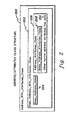
FIG. 2 depicts one example of an address/attributes class structure
employed in accordance with an aspect of the present invention;
FIG. 3 depicts one example of a selector/generator class structure used in
accordance with an aspect of the present invention;
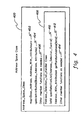
FIG. 4 depicts one example of an address space class employed in
accordance with an aspect of the present invention;
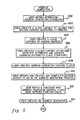
FIG. 5 depicts one embodiment of the logic associated with preparing for
address generation, in accordance with an aspect of the present invention;
FIG. 6 depicts one embodiment of the logic associated with preparing for
address selection, in accordance with an aspect of the present invention;
FIG. 7 depicts one embodiment of an overview of address generation, in
accordance with an aspect of the present invention;
FIG. 8 depicts one embodiment of an overview of address selection, in
accordance with an aspect of the present invention;
FIG. 9 depicts one embodiment of the logic associated with generating and
selecting an address, in accordance with an aspect of the present
invention; and
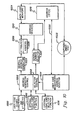
FIG. 10 depicts a pictorial overview of address generation and selection, in
accordance with an aspect of the present invention.
Best mode for carrying out the invention
In the preferred embodiment of the present invention, a capability is
provided to control the generation and selection of addresses to be
employed in verifying components under test, such as electrical
components of a simulated computing environment. As one example,
address generation is tightly coupled with address selection to be able to
specifically select a particular type of address to be forwarded to a
component being verified in, for instance, a pseudo-random functional
verification environment. Addresses are generated that have user defined
attributes associated therewith and a particular generated address is
selected based on a user defined filter. This capability may be used to
verify many types of components in various systems, including systems
based on the ESA/390 architecture offered by IBM®. (IBM® is a registered
trademark of International Business Machines Corporation, Armonk, New
York, U.S.A. ESA/390 and other names used herein may be registered
trademarks, trademarks or product names of International Business
Machines Corporation or other companies.)
One embodiment of a computing environment to incorporate and use one or
more aspects of the present invention is described with reference to FIG. 1.
In this particular example, a computing environment 100 is based on the
UNIX architecture and includes, for instance, an eServer pSeries, offered
by International Business Machines Corporation, Armonk, New York.
Computing environment 100 includes a central processing unit (CPU) 102,
a memory 104 (e.g., main memory) and one or more input/output (I/O)
devices 106 coupled to one another via, for example, one or more buses
Central processing unit 102 executes an operating system, such as AIX,
offered by International Business Machines Corporation, Armonk, New
York. Further, in one example, central processing unit 102 executes a
simulator 110 used to verify components under test. The simulator
emulates a particular component being verified allowing test scenarios to
be applied against the emulated component to stress the component and
obtain the results. There are various types of simulators that can be used
for verification, including, for instance, high level design simulators or cycle
simulators. One example of a cycle simulator is ZFS employed by
International Business Machines Corporation, Armonk, New York.
Central processing unit 102 also executes, in accordance with an aspect of
the present invention, logic 112 used to generate and select addresses to
be employed in verifying components under test (e.g., simulated
components). As one example, the generated and selected addresses are
provided to the simulator for use by the simulator in verifying emulated
components. Further, information may be provided by the simulator to the
logic indicating, for instance, the name of the component being tested.
Address generation/selection logic 112 provides a tight coupling between
address generation and address selection to ensure that one or more types
of addresses desired to verify a component are generated and then
selected for use. As one example, the addresses to be generated are
based on criteria that will ultimately be used to select an address. In order
to facilitate this tight coupling, various data structures are defined using, for
instance, C++. Examples of these structures are described prior to
describing the logic.
One structure that is created is the address/attributes class structure
depicted in FIG. 2. An address with attributes class 200 includes a base
address with attributes class 202 having a base address class 204 and an
address attributes class 206. Base address class 204 includes a generated
address, and address attributes class 206 includes one or more attributes
for the address. As one example, address attributes class 206 includes a
base address attributes class 208 designating user specified attributes to
be associated with the address, such as data patterns of interest (e.g., a
lock byte being zero or non-zero); type of address (e.g., absolute, virtual,
guest, host, etc.); location of address; indication of an address being
updated; a private indicator specifying who (e.g., component, function) can
use the address; store queue indicators; line lock indicators; other
indicators; etc., and other address attributes 210, such as data, directory
state information, etc. Any information associated with an address can be
designated as an attribute. If an attribute is user defined, then it is included
in the user specified attributes. Attributes can be forced on, off or
randomized.
Another class structure that is created is the selector/generator class
structure, one example of which is described with reference to FIG. 3. An
address selector control class 300 includes, for instance, a selector user
function 302 employed to install a function 303 used to test the acceptability
of a selected address, and a function 304 to uninstall function 303, when
that function is no longer desired. It also includes one or more address
selection variables 305 including, for instance, one or more address
constraints, such as a designated range, and/or one or more address
attributes, etc. It further includes zero or more additional address selection
member functions 306. These member functions may include user defined
functions that enable addresses to be filtered based on various information
associated with the address, address attributes, and/or information that
exists in the simulation environment.
Address selector control class 300 also includes an address generator
control class 308. This control class includes a generator user function 310
employed to install a function 311 used to test the acceptability of a
generated address, as well as a function 312 to uninstall function 311,
when the function is no longer desired. Generator user function 310 also
provides additional generation functions that may be more complex and not
easily described in the class structure. For example, they may include
constraints, behaviors, attributes and/or relationships thereof that are
implemented via the functions and registered with the class. Address
selector control class 300 further includes one or more address generation
variables 313 including, for instance, address attributes, address
constraints, etc.
Another class structure that is created is an address space class, one
example of which is depicted in FIG. 4. An address space class 400
includes a mapping 402 of an address and its associated attributes; an
update function 404 that allows the mapping to be updated; and zero or
more other member functions 406, as desired.
Address space class 400 also includes an address selection list handler
class 408 having, for instance, an address selector control function 410
used to create a list of addresses that includes one or more of the
generated addresses that satisfy a selector filter. It also includes an
address with attributes function 412 used to select an address from the list.
Further, address selection list handler class 408 may also include zero or
more member functions 414, as needed or desired.
To create the different class structures and to further prepare for address
generation and selection, various steps are performed as described below.
The steps have been organized into three categories including address
generation, address selection and address space. The steps associated
with preparing for address generation are described with reference to FIG.
5, while the steps associated with preparing for address selection are
described with reference to FIG. 6. Thereafter, creation of the address
space is described.
Referring to FIG. 5, initially, a user defines one or more address generation
attributes that are interesting to the user, STEP 500. There can be many
types of attributes assigned to an address. Any number of attributes can
exist and can be combined in many ways along with address values, data,
and other information saved with the address.
Subsequent to defining the attributes, the user creates a class capable of
holding the defined address generation attributes (e.g., address attributes
class 206), STEP 502. The user also creates a class capable of holding an
address (e.g., base address class 204), STEP 504, and a class capable of
holding both the attributes and the address (e.g., base address with
attributes class 202), STEP 506.
Additionally, the user creates a class capable of installing any defined user
address generation functions, plus any other functions which may be
helpful during address generation (e.g., address generator control class
308), STEP 508. The user also defines and creates any complex functions
needed or desired to aid in the address generation process, STEP 510.
Thereafter, the user installs the complex functions into the address
generator control class using supplied function calls, STEP 512.
Moreover, the user creates an address generator, which is part of a general
address generator class, STEP 514. The generator creates an address
based on the address generator control class and adds the
address/attributes to a common address space class (see FIG. 4). As one
example, the address generator may include a random number generator
that creates an address to which attributes may be associated. This
completes the steps associated with preparing for address generation.
In addition to preparing for address generation, steps are also taken to
prepare for address selection, as described with reference to FIG. 6.
Initially, the user defines address selection attributes that are interesting to
the user, STEP 600. In one example, at least a portion of the selection
attributes correspond to generation attributes to provide a tight coupling
between address generation and address selection. The user adds any
missing attributes to the address attributes class, described above, STEP
602.
The user also creates a class capable of installing any defined user address
selection functions, plus any other functions which may be helpful during
address selection, STEP 604. This class is referred to as the address
selector control class and it inherits from the address generator control
class.
Moreover, the user defines and creates any complex functions needed or
desired to aid in the address selection process, STEP 606. The user then
installs the defined functions into the address selector control class using
supplied function calls, STEP 608.
The user calls a general address selector to create an address list, STEP
610. The general address selector makes a copy of the selector control,
which the general address space uses to maintain the address list. The
general address space is capable of holding one or more selector controls.
Each general address selector is capable of maintaining one or more
address lists. This concludes the steps associated with preparing for
address selection.
In addition to creating the address/attribute class structure and the
selector/generator class structure, as well as an address generator and
address selector, an address space class is also created. This class is to
hold the address/attribute class structure and is to supply methods for
updating the address attributes in the address attributes class. This class is
also able to use a selector to provide the user with a list of addresses which
match the selector, and to update the address list, if any dependent
address attribute changes state.
Subsequent to defining and creating the various class structures, and the
generator and the selector, the user is able to open an address list based
on a given address selector. By having the address generator and address
selector use a common set of address attributes, there is a tight coupling of
the address generator/selector mechanism. This enables the achievement
of better verification results.
Following the preparation stage, addresses may be generated and then
selected. An overview of the logic associated with generating addresses is
described with reference to FIG. 7. Initially, the address generator control
class is initialized 700. As one example, it is initialized with desired
constraints, attributes, data and other fields, as shown at 702. At least
some of this information is retrieved from the base address with attributes
class 202 (FIG. 2). Further, since some constraints and behaviors are not
easily described in this class structure, they are implemented by describing
the relationship via a function. The function, if defined, is registered with the
generator class and a pointer to the function is included in the address
generator control class, as shown at 702 (FIG. 7). There may be zero or
more of these user functions.
The generator control class, once initialized with the desired information, is
then passed 704 to a general address generator class 706. For example,
the general address generator class is called by the user code. General
address generator class 706 generates a list of addresses 708 with values,
attributes and data that meet the constraint criteria. This list of generated
addresses is usually made available as a single set of addresses to all of
the requestors, although it need not be.
The list of generated addresses is then selected from to obtain one or more
addresses that meet a selected criteria. An overview associated with
address selection is described with reference to FIG. 8. An address selector
control class used as a filter input to select a subset of addresses from a list
of generated addresses is initialized 800. As one example, it is initialized
with desired constraints, attributes, etc., as well as with zero or more
pointers to zero or more optional user functions, as shown at 802. At least
some of the information is retrieved from the base address with attributes
class. The addresses can be filtered based on the value of the addresses
or the address attributes. Furthermore, through the use of custom user
defined functions, addresses can be filtered based on other information
associated with the address or information which exists in the simulation
environment.
The selector control class, once initialized, is passed 804 to a general
address selector class 806. For example, the general address selector
class is called by user code. General address selector class 806 uses one
or more filters to select addresses from the list of generated addresses that
match the filtered criteria. The one or more addresses that match are
placed in a list 808.
The generated address list has two main usage forms. The first form is the
public permanent list which is created at some point and used repeatedly
during the test case to select addresses which meet the filter criteria. The
same public address list can be referenced by more than one requestor
(e.g., the one to apply the addresses to the component under test, such as
a CPU), if the filter criteria matches exactly. A permanent address list is
generally public and the filters used to generate it do not change. Thus, two
permanent lists with the same filters will be identical, so that they can be
easily shared. The second form is a private temporary list which is generally
used to visit all of the addresses that meet the filter criteria once, in random
or sequential order. The list is usually destroyed with use as each address
is removed after it is visited. The temporary list tends to be private as the
intention of usage is to visit each address in the list and remove it along the
way leaving an empty list. A temporary list can be public to allow multiple
requestors to visit each address once across their combined actions. Since
permanent lists are used over time and the attributes and data associated
with the addresses may change, these lists may be updated and/or
invalidated. Temporary lists are not usually updated.
Invalidating lists and having to constantly regenerate them by applying the
filter to the source list can be time consuming depending on the size of the
source list. Thus, in one aspect of the present invention, the list is updated
when attribute information for an address changes states. Built-in filter
functions which use the address attributes automatically identify the
address attributes which would trigger an update. User filter functions which
are based on address attributes can register a subset of the attributes
which would trigger an update. Attributes updates are directed through the
main address list which manages the subset address lists created with
filters so that the subset lists can be updated when needed due to address
attributes changing.
Further details regarding the generation and selection of addresses, in
accordance with an aspect of the present invention, are described with
reference to FIGs. 9 and 10. In particular, FIG. 9 describes one
embodiment of the logic associated with generating and selecting
addresses, and FIG. 10 depicts a pictorial overview of the process. Both
figures are referenced in the following discussion. Reference numerals
beginning with 9 can be found in FIG. 9 and those beginning with 10 can be
found in FIG. 10.
Initially, a user defines one or more constraints and/or one or more
attributes to be used to generate an address, STEPS 900 (FIG. 9) and
1000 (FIG. 10). The constraints specify certain requirements, such as an
address is to be within a specific range. The attributes define characteristics
of or associated with the address, as described above. The user defined
constraints and/or attributes are passed to an address generator control
1002.
An address is then generated that meets the constraints, STEP 902. For
example, general address generator 1004 is used to generate an address
1006 that meets the constraints specified in address generator control
1002. Control 1002 may also call one or more optional user code generator
functions 1008 in order to apply one or more complex user constraints to
the address generation logic. The address generator uses the constraints
and the zero or more functions to create the address.
Assigned to the address are one or more attributes 1009, which are
obtained from address generator control 1002.
The generated address is then placed in address space 1010, along with
the associated attributes, STEP 904. For example, as each address is
generated, the mapping function of the address space class maps one or
more defined attributes to the address, and places the address along with
its attributes in a list in the address space. This list behaves, in one
example, as a database in that queries may be selected thereon. In one
example, one list is provided; however, in other examples, a plurality of lists
may be provided.
Additionally, a filter is created and passed to a selector control 1012, STEP
906. For instance, a user code requestor's address selector 1014 creates a
filter based on user defined selection attributes and passes the filter to
selector control 1012. The selector control may optionally call one or more
user functions 1016 to provide more complex selection criteria. The selector
control is input to a general address selector 1017 that parses the
addresses in the address space and creates a list of addresses 1018 based
on the filter, STEP 908. Thus, list 1018 includes the one or more addresses
that meet the selected criteria.
Thereafter, a requestor may request a specific type of address, STEP 910.
For example, user code requestor's address selector 1014 of the simulated
environment requests 1020 an address from address list 1018. The
requestor receives the requested address, STEP 912, and applies it to a
component under test 1022.
Component under test 1022 is monitored by user code monitors 1024 to
ensure the component is operating properly. Further, the user code
monitors detect when one or more of the attributes have changed, which
triggers the general address selectors to run the filters that may be affected
by the change causing one or more addresses to be added to and/or
deleted from list 1018. For example, monitors 1024 communicate one or
more changes to address space 1010. Address space 1010 informs
general address space selector 1017 via a function call causing selector
1017 to rerun one or more filters resulting in one or more changes to
address list(s) 1018.
Described in detail above is a capability for facilitating the generation and
selection of addresses to be used in a verification environment. The
generation and selection is tightly coupled to ensure that desired addresses
to be selected have been generated. This enhances the verification process
by ensuring that addresses that can stress a particular component have
been generated, and thus, can be selected.
By using address attributes, addresses which are shared among multiple
requestors and can result in address conflicts can be denoted, as well as
addresses which are reserved for a subset of requestors or for a particular
requestor which is often valuable during the early life of the design cycle
when the address conflict logic may not be present or working properly.
Addresses that are to be fetched from a particular location or marked as
having been updated or both can be identified by using attributes.
Advantageously, a capability is described herein for assigning attributes to
an address. The attributes include user attributes and/or other attribute
information, such as data, directory state information, storage protection
keys, etc. The capability provides a uniform mechanism for assigning and
relating attributes to addresses in the verification environment.
Furthermore, a user can easily sort and group the addresses into lists
based on the attributes. This ability allows the user to focus on various
specific address attributes in the verification process.
Attributes can be forced on, off, or randomized. A particular address can
have bits forced on, off , or randomized, as well as having its value
constrained within a specified address range or ranges. The attribute
information for generation can be extended to contain any information
associated with an address. For example, some addresses may contain
data in which the data may have patterns of interest, like lock bytes being
zero or non-zero. In cases where it is impractical to represent information
related to the address of an attribute, an extension is provided which
enables a custom user defined filter to be written in code. Sets of
addresses are stored in address lists. These address lists are constructed
based on address attributes plus the optional custom user defined filter.
Class functions are supplied for finding particular addresses or selecting
random addresses among other things.
The generated and selected addresses can be provided to one or more
requestors for use in a verification environment to stress a particular
component under test. For instance, if the component under test is
memory, addresses may be provided to one or more CPUs to test, for
instance, cache coherency.
Addresses can be selected at runtime (e.g., when a job is running) by using
an input file that is input to the address selector. The input file specifies the
filter to be used. Further, attributes can be defined at runtime by using an
input file that is input to the user code defines constraints and attributes.
Although an example of an environment to incorporate and use one or more
aspects of the present invention has been described, there may be many
variations without departing from the spirit of the present invention. For
example, other types of environments can benefit from one or more aspects
of the present invention. Further, other architectures, operating systems,
simulators etc. may be used without departing from the spirit of the present
invention. Additionally, many types of attributes and constraints may be
used. Those provided herein are only examples.
The capabilities of one or more aspects of the present invention can be
implemented in software, firmware, hardware or some combination thereof.
One or more aspects of the present invention can be included in an article
of manufacture (e.g., one or more computer program products) having, for
instance, computer usable media. The media has therein, for instance,
computer readable program code means or logic (e.g., instructions, code,
commands, etc.) to provide and facilitate the capabilities of the present
invention. The article of manufacture can be included as a part of a
computer system or sold separately.
Additionally, at least one program storage device readable by a machine
embodying at least one program of instructions executable by the machine
to perform the capabilities of the present invention can be provided.
The flow diagrams depicted herein are just examples. There may be many
variations to these diagrams or the steps (or operations) described therein
without departing from the spirit of the invention. For instance, the steps
may be performed in a differing order, or steps may be added, deleted or
modified. All of these variations are considered a part of the claimed
invention.