EP1582186B1 - Condom coated with lactobacillus compositions - Google Patents
Condom coated with lactobacillus compositions Download PDFInfo
- Publication number
- EP1582186B1 EP1582186B1 EP03702283A EP03702283A EP1582186B1 EP 1582186 B1 EP1582186 B1 EP 1582186B1 EP 03702283 A EP03702283 A EP 03702283A EP 03702283 A EP03702283 A EP 03702283A EP 1582186 B1 EP1582186 B1 EP 1582186B1
- Authority
- EP
- European Patent Office
- Prior art keywords
- lactobacillus
- condom
- compositions
- strain
- coated
- Prior art date
- Legal status (The legal status is an assumption and is not a legal conclusion. Google has not performed a legal analysis and makes no representation as to the accuracy of the status listed.)
- Expired - Lifetime
Links
Images

Classifications
-
- A—HUMAN NECESSITIES
- A61—MEDICAL OR VETERINARY SCIENCE; HYGIENE
- A61F—FILTERS IMPLANTABLE INTO BLOOD VESSELS; PROSTHESES; DEVICES PROVIDING PATENCY TO, OR PREVENTING COLLAPSING OF, TUBULAR STRUCTURES OF THE BODY, e.g. STENTS; ORTHOPAEDIC, NURSING OR CONTRACEPTIVE DEVICES; FOMENTATION; TREATMENT OR PROTECTION OF EYES OR EARS; BANDAGES, DRESSINGS OR ABSORBENT PADS; FIRST-AID KITS
- A61F6/00—Contraceptive devices; Pessaries; Applicators therefor
- A61F6/02—Contraceptive devices; Pessaries; Applicators therefor for use by males
- A61F6/04—Condoms, sheaths or the like, e.g. combined with devices protecting against contagion
-
- A—HUMAN NECESSITIES
- A61—MEDICAL OR VETERINARY SCIENCE; HYGIENE
- A61K—PREPARATIONS FOR MEDICAL, DENTAL OR TOILETRY PURPOSES
- A61K35/00—Medicinal preparations containing materials or reaction products thereof with undetermined constitution
- A61K35/66—Microorganisms or materials therefrom
- A61K35/74—Bacteria
- A61K35/741—Probiotics
- A61K35/744—Lactic acid bacteria, e.g. enterococci, pediococci, lactococci, streptococci or leuconostocs
- A61K35/747—Lactobacilli, e.g. L. acidophilus or L. brevis
-
- A—HUMAN NECESSITIES
- A61—MEDICAL OR VETERINARY SCIENCE; HYGIENE
- A61K—PREPARATIONS FOR MEDICAL, DENTAL OR TOILETRY PURPOSES
- A61K9/00—Medicinal preparations characterised by special physical form
- A61K9/0012—Galenical forms characterised by the site of application
- A61K9/0034—Urogenital system, e.g. vagina, uterus, cervix, penis, scrotum, urethra, bladder; Personal lubricants
-
- A—HUMAN NECESSITIES
- A61—MEDICAL OR VETERINARY SCIENCE; HYGIENE
- A61K—PREPARATIONS FOR MEDICAL, DENTAL OR TOILETRY PURPOSES
- A61K9/00—Medicinal preparations characterised by special physical form
- A61K9/0087—Galenical forms not covered by A61K9/02 - A61K9/7023
- A61K9/009—Sachets, pouches characterised by the material or function of the envelope
Definitions
- the present invention relates to a condom coated with lactobacillus compositions comprising natural or genic recombined lactobacillus for constructing, maintaining and reconstructing non-pathogenic, natural or genic recombined colonies in vagina to prevent vaginal pathogenic microbial infection and viral infection.
- Microbicidal and spermicidal compositions have been widely used in the prior art in creams, foams, suppositories by themselves and also in conjunction with various mechanical contraceptive devices, primarily for the purpose of contraception.
- Nonoxynol 9, a spermicidal agent has also been reported to have certain bactericidal action and capable of killing the human immunodeficiency virus (HIV) in the prior art.
- HIV human immunodeficiency virus
- spermicidal and bactericidal agent such as nonoxynol 9
- condom or other vaginally inserted suppositories is not without problems inasmuch as there agents tend to destroy or diminish the healthy bacterial flora of the vagina, and cause for the woman a risk to develop other microbial infections, such as yeast infection.
- the condom is the most effective and most frequently using contraceptive method. Using the condom also helps prevent sexually transmitting disease by interposing between the female and male, most importantly between the uterine cervix and the glands and orifice of the penis. However, the spermicidal agents and the latex material of the condoms can erode the mucosa if used too frequently, and even with infrequent use, can disrupt the protection of vaginal healthy bacterial flora.
- Lactobacillus such as Lactobacillus casei and Lactobacillus fermentum have been reported to have healthy action in vagina is not only in the natural form but also can be genetically modified.
- the prior art has indicated that a lactobacillus can be genetically modified to express the polypeptide or carbohydrate moiety on the bacterial surface or in the intracellular environment, which have the ability to bind, inactive or remove the pathogenic microbial from vagina and also have the ability to act on the immunity reaction of human to against the viral infection in vagina, such as human papillomavirus (HPV).
- HPV human papillomavirus
- compositions coated on the condom of this present invention comprise lactobacillus made in the form of powder or other forms, such as emulsion, foam, micro-encapsulated form, and comprise at least one kind of living lactobacillus strain, and selectively comprise one kind of lubricant.
- the living lactobacillus strains are micro-encapsulated, which can maintain the viability of the lactobacillus and also protect the living lactobacillus strain from the action of the antimicrobial or the other compositions during the "shelf-life" of the condom presented in the invention.
- the coating or substance which encapsulates the bacteria on the other hand is of such material which releases the bacteria in the vaginal milieu primarily due to the effect of moisture.
- the released lactobacillus serve to maintain or reestablish the healthy flora on the vaginal mucosa, and excrete hydrogen peroxide and other bactericidins which suppress pathogenic microbial that promote infections.
- the lactobacillus strain may be natural or genic recombined lactobacillus including acidophilic bacteria, bifidobacteria, the species Lactococcus lactis, Lactobacillus rhamnosus, Lactobacillus fermentum, Lactobacillus brevis, Lactobacillus plantarum, Lactobacillus casei, Lactobacillus delbruckii sbp. bulgaricus, Lactobacillus delbruckii sbp . lactis, Streptococcus thermophilus, Streptococcus gordonii or Leuconostoc mesenteroides.
- the present invention is a condom providing contraceptive effect, sexually transmitted disease prevention and vaginal healthy improvement, which is coated with lactobacillus compositions containing living lactobacillus strain.
- the living lactobacillus strain is the essential component of the condom of this present invention, which shall be acidophilic bacteria, bifidobacteria, the species Lactococcus lactis, Lactobacillus rhamnosus, Lactobacillus fermentum, Lactobacillus brevis, Lactobacillus plantarum, Lactobacillus casei, Lactobacillus delbruckii sbp . bulgaricus, Lactobacillus delbruckii sbp.
- lactis Streptococcus thermophilus, Streptococcus gordonii or Leuconostoc mesenteroides, and should be present at least in the range of 10 3 living lactobacillus strain per condom, a more preferred range being 10 5 to 10 7 , and the preferred number of living lactobacillus strain being approximately 1 million (10 6 ) per condom.
- lactobacillus As is know in the prior art, all the lactobacillus mentioned above are "friendly" bacteria, and form the healthy flora in the human body. Some of these bacteria are known to produce certain bactericidins and hydrogen peroxide, which helps to suppress pathogenic bacteria, called the probiotic lactobacillus.
- the probiotic lactobacillus are, to this effect, of particular interest within the framework of the present invention. These bacteria are in fact capable of adhering to human vaginal mucosa, of excluding pathogenic bacteria on human vaginal mucosa, and/or of acting on the human immune system by allowing it to react more strongly to external aggression (immunomodulatory capacity).
- lactobacillus used on the lactobacillus compositions of the invention may be freeze-dried and micro-encapsulated in the separation substance comprising solidified fatty acid, sodium alginate, polymerized hydroxypropylmethylcellulose, polymerized polyvinylpyrrolidone, or mixtures thereof, in order to protect them from the action of other antimicrobial agent, such as nonoxynol 9.
- the condom of the invention may be further coated with other compositions including non-essential ingredients or components, such as spermicidal and bactericidal agent or agents.
- non-essential ingredients or components such as spermicidal and bactericidal agent or agents.
- a method of coating lactobacillus compositions on a condom comprises coating the whole surface or necessary portion of a condom by dropping, dipping, coating or spraying a solution containing a lubricant as described before.
- a condom having the effect for constructing, maintaining and reconstructing non-pathogenic, natural or genic recombined colonies in vagina and additionally having a lubricating effect shall be obtained.
- a condom in another method, can be taken from a water vessel (pinhole examination vessel) remaining on the condom former as described before, dipped in a dipping vessel (liquid vat) containing a solution of the composition which comprises lactobacillus having multi-beneficial effect to be coated with lactobacillus compositions on the whole surface thereof, taken from the dipping vessel, dried, stripped off from the former and rolled up.
- a solution of lactobacillus compositions to a dipping vessel can be a gelled solution of lactobacillus compositions together with a lubricant, for example, isopropyl alcohol, as described before. In this way, a dried product coated with a multi-beneficial agent can be obtained.
- a lubricant for example, isopropyl alcohol
- the lactobacillus microorganisms of the present invention can be cultured in conventional culture conditions, which include, but are not limited to agar surface culture or broth fermentation. Both agar surface culture and broth fermentation methods are well known in the art.
- the Lactobacillus are preferably cultured anaerobically or microaerophilically.
- the temperature of the culture medium can be any temperature suitable for growth of the lactobacillus strains.
- the culture medium prior to inoculation of the culture medium with an inoculum, can be brought to and maintained at a temperature in the range of about 20° C.-35° C., and more preferably about 25° C.-35° C.
- the culture medium is inoculated with an actively growing culture of the lactobacillus strains of the present invention in an amount sufficient to produce, after a reasonable growth period, a suitable cell density for transfer to the next drying process, such as freeze drying or spay drying, which is in order to remove the medium.
- Typical inoculation cell densities are within the range of about 10 6 -10 9 CFUs/ml, and more preferably about 10 8 -10 9 CFUs/ml, based on the dry weight of the cells.
- the cells are then grown to a cell density in the range of about 10 7 -10 9 CFUs/ml, and more preferably to about 10 8 CFUs/ml. At this stage, the cells are harvested for the next drying and lyophilized process.
- the bacteria can be obtained from commercial sources, or can be obtained from laboratory strains. The organisms are grown to log phase in nutrient media. Suitable media include Thayer-Martin media, Trypticase Soy, Brain-Heart Infusion Broth, or any other enriched media suitable for the cultivation of these organisms, as no particular media is critical to the success of this suppository. The only important factors are the viability and quantity of the micro-organisms that are always determined by standard clinical laboratory dilution methods, such as plating the quantified dilution of bacteria on to blood agar plates or other enriched media, incubating at 37° C.
- the freshly obtained, washed and lyophilized bacteria obtained as described above are suspended in 10 ml of 5% glucose saline solution in such volume so as to obtain a heavy suspension of bacteria which contains between one to ten billion organisms per ml, at 0-4° C. All of these procedures are performed in the 0-4° C. temperature range unless otherwise noted, in order to maintain viability of the lactobacilli bacteria which at room temperature lose viability.
- the suspension of bacteria is rapidly, but gently, stirred while 0.2-0.4 ml of sodium alginate solution (1.5% weight by volume) is added.
- the above mixture is then transferred into a 4 liter round bottom flask by using a nitrogen stream through a sheathed 14 gauge needle.
- the 4 liter round bottom flask was previously washed with a 5% albumin solution, and thereafter heated for at least 10 hours at 65° C., and the needle and the tubing used in the process have also been treated this way.
- the gelled droplets or little spheres are further washed with at least a five fold excess of the 0.1% CHES 1.1% calcium chloride, and normal saline solution.
- the resultant spheres are then "snap frozen" in liquid nitrogen and then lyophilized. After these steps, the encapsulated organisms can be used in the formulations of the present invention.
- the following further steps are performed to render the bacteria more resistant to the cationic antimicrobials.
- the steps are performed at 0-4° C.
- the materials are reacted with poly L-lysine (Sigma) solution (0.05% w/v) spheres for ten minutes.
- the spheres are then washed with normal saline buffered to pH 4.5 with lactic acid.
- the resultant spheres are then "snap frozen" in liquid nitrogen and then lyophilized.
- the encapsulated organisms can be used in the formulations of the present invention.
- lactobacillus compositions was coated on a condom which was formed, examined, stripped off and rolled up, followed by heat-sealing thereof. Then these compositions gradually permeated and spread over the whole surface of the condom and a coated condom with wet and suitable lubricating properties was obtained.
- the condom was taken from the liquid vat, dried, stripped off from the former and rolled up. In this way a condom coated homogenously with the lactobacillus contained compositions was obtained.
- aqueous solution of a lubricant consisting of propylene glycol, sodium alginate and glycerine was coated on the condom obtained in example 2, followed by heat-sealing to make the condom coated homogeneously with the lactobacillus contained compositions and further with a lubricant.
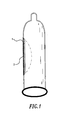
- FIG. 1 is an illustration, in partial cross-section, of a condom 1 coated on the outside with a layer 2 comprising a mixture of lubricant and the lactobacillus compositions.
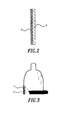
- FIG. 2 is a cross-section of a portion of a condom 1 coated with a layer 2 comprising the lactobacillus compositions. The coating is thinner than the condom 1.
- FIG. 3 is an illustration, in partial cross-section, of a rolled condom 1 coated on the outside with a layer comprising a mixture of lubricant and the lactobacillus compositions.
- FIG. 4 is an illustration in partial cross-section of a condom 1 coated with a layer 2 comprising the lactobacillus compositions, on the inside and the outside of the condom.
Landscapes
- Health & Medical Sciences (AREA)
- Life Sciences & Earth Sciences (AREA)
- Veterinary Medicine (AREA)
- Animal Behavior & Ethology (AREA)
- General Health & Medical Sciences (AREA)
- Public Health (AREA)
- Pharmacology & Pharmacy (AREA)
- Epidemiology (AREA)
- Medicinal Chemistry (AREA)
- Chemical & Material Sciences (AREA)
- Microbiology (AREA)
- Reproductive Health (AREA)
- Mycology (AREA)
- Gynecology & Obstetrics (AREA)
- Urology & Nephrology (AREA)
- Molecular Biology (AREA)
- Engineering & Computer Science (AREA)
- Biomedical Technology (AREA)
- Heart & Thoracic Surgery (AREA)
- Vascular Medicine (AREA)
- Medicines Containing Material From Animals Or Micro-Organisms (AREA)
- Micro-Organisms Or Cultivation Processes Thereof (AREA)
- Orthopedics, Nursing, And Contraception (AREA)
Abstract
Description
- The present invention relates to a condom coated with lactobacillus compositions comprising natural or genic recombined lactobacillus for constructing, maintaining and reconstructing non-pathogenic, natural or genic recombined colonies in vagina to prevent vaginal pathogenic microbial infection and viral infection.
- Microbicidal and spermicidal compositions have been widely used in the prior art in creams, foams, suppositories by themselves and also in conjunction with various mechanical contraceptive devices, primarily for the purpose of contraception. Nonoxynol 9, a spermicidal agent, has also been reported to have certain bactericidal action and capable of killing the human immunodeficiency virus (HIV) in the prior art. However, the use of spermicidal and bactericidal agent, such as nonoxynol 9, in condom or other vaginally inserted suppositories is not without problems inasmuch as there agents tend to destroy or diminish the healthy bacterial flora of the vagina, and cause for the woman a risk to develop other microbial infections, such as yeast infection.
- The condom is the most effective and most frequently using contraceptive method. Using the condom also helps prevent sexually transmitting disease by interposing between the female and male, most importantly between the uterine cervix and the glands and orifice of the penis. However, the spermicidal agents and the latex material of the condoms can erode the mucosa if used too frequently, and even with infrequent use, can disrupt the protection of vaginal healthy bacterial flora. Although the prior art has recognized the need to maintain or reestablish a healthy intra-vaginal bacterial flora, the only solution provide to this problem in the prior art was in the form of douches or other types of vaginal cleaning systems which contained a colony of Lactobacillus acidophilus (see, for example,
patent US 5466463 ). These douches or other vaginal cleaning systems are inconvenient, and they also contribute nothing to contraception, nor do they protect against transmission of sexually transmitted diseases during heterosexually intercourse. - Lactobacillus such as Lactobacillus casei and Lactobacillus fermentum have been reported to have healthy action in vagina is not only in the natural form but also can be genetically modified. The prior art has indicated that a lactobacillus can be genetically modified to express the polypeptide or carbohydrate moiety on the bacterial surface or in the intracellular environment, which have the ability to bind, inactive or remove the pathogenic microbial from vagina and also have the ability to act on the immunity reaction of human to against the viral infection in vagina, such as human papillomavirus (HPV).
- It is an object of the present invention to provide a condom coated with lactobacillus compositions for enhancing the effect of contraception and preventing venereal infection, and for constructing, maintaining and reconstructing non-pathogenic, natural or genic recombined colonies in vagina to prevent vaginal pathogenic microbial infection and viral infection.
- It is another object of the present invention to provide a method for the manufacture of a condom coated with lactobacillus compositions.
- The compositions coated on the condom of this present invention comprise lactobacillus made in the form of powder or other forms, such as emulsion, foam, micro-encapsulated form, and comprise at least one kind of living lactobacillus strain, and selectively comprise one kind of lubricant.
- When the micro-encapsulated form has been used, the living lactobacillus strains are micro-encapsulated, which can maintain the viability of the lactobacillus and also protect the living lactobacillus strain from the action of the antimicrobial or the other compositions during the "shelf-life" of the condom presented in the invention. The coating or substance which encapsulates the bacteria on the other hand is of such material which releases the bacteria in the vaginal milieu primarily due to the effect of moisture. The released lactobacillus serve to maintain or reestablish the healthy flora on the vaginal mucosa, and excrete hydrogen peroxide and other bactericidins which suppress pathogenic microbial that promote infections.
- The lactobacillus strain may be natural or genic recombined lactobacillus including acidophilic bacteria, bifidobacteria, the species Lactococcus lactis, Lactobacillus rhamnosus, Lactobacillus fermentum, Lactobacillus brevis, Lactobacillus plantarum, Lactobacillus casei, Lactobacillus delbruckii sbp. bulgaricus, Lactobacillus delbruckii sbp. lactis, Streptococcus thermophilus, Streptococcus gordonii or Leuconostoc mesenteroides.
- The drawings disclose an illustrative embodiment of the present invention which serves to exemplify the various advantages and objects hereof, and are as follows:
-
FIG. 1 is a diagrammatic representation of a condom, partially cut-away to show a condom coated with lactobacillus compositions on outside; -
FIG. 2 is a cross-sectional drawing to a portion of the condom shown inFIG. 1 ; -
FIG. 3 is a diagrammatic representation, partially cut-away to a rolled condom shown inFIG. 1 ; and -
FIG. 4 is a diagrammatic representation of a condom, partially cut-away to shown a condom coated with lactobacillus compositions on inside and outside. - The present invention is a condom providing contraceptive effect, sexually transmitted disease prevention and vaginal healthy improvement, which is coated with lactobacillus compositions containing living lactobacillus strain.
- The lactobacillus compositions comprise lactobacillus strains are prepared in the form of powder, or other forms, such as emulsion, foam, micro-encapsulated form to protect them from the action of other antimicrobial agent. Additionally, all the lactobacillus strain used in the present invention may be purchased from commercial sources, or may be obtained from laboratory strains, and the lactobacillus strain using in this present invention may be natural or genic recombined lactobacillus.
- The living lactobacillus strain is the essential component of the condom of this present invention, which shall be acidophilic bacteria, bifidobacteria, the species Lactococcus lactis, Lactobacillus rhamnosus, Lactobacillus fermentum, Lactobacillus brevis, Lactobacillus plantarum, Lactobacillus casei, Lactobacillus delbruckii sbp. bulgaricus, Lactobacillus delbruckii sbp. lactis, Streptococcus thermophilus, Streptococcus gordonii or Leuconostoc mesenteroides, and should be present at least in the range of 103 living lactobacillus strain per condom, a more preferred range being 105 to 107, and the preferred number of living lactobacillus strain being approximately 1 million (106) per condom.
- As is know in the prior art, all the lactobacillus mentioned above are "friendly" bacteria, and form the healthy flora in the human body. Some of these bacteria are known to produce certain bactericidins and hydrogen peroxide, which helps to suppress pathogenic bacteria, called the probiotic lactobacillus. The probiotic lactobacillus are, to this effect, of particular interest within the framework of the present invention. These bacteria are in fact capable of adhering to human vaginal mucosa, of excluding pathogenic bacteria on human vaginal mucosa, and/or of acting on the human immune system by allowing it to react more strongly to external aggression (immunomodulatory capacity).
- Additionally, the lactobacillus used on the lactobacillus compositions of the invention may be freeze-dried and micro-encapsulated in the separation substance comprising solidified fatty acid, sodium alginate, polymerized hydroxypropylmethylcellulose, polymerized polyvinylpyrrolidone, or mixtures thereof, in order to protect them from the action of other antimicrobial agent, such as nonoxynol 9.
- In addition to the lactobacillus compositions mentioned above, the condom of the invention may be further coated with other compositions including non-essential ingredients or components, such as spermicidal and bactericidal agent or agents. These components are considered non-essential because the basic objectives of the invention can be attained without them. Nevertheless, the embodiments of the invention which include these non-essential components offer certain advantages, and are therefore considered the preferred embodiments, and should also be considered novel and innovation, in their combination, to the basic embodiments.
- A method of coating lactobacillus compositions on a condom, if necessary, comprises coating the whole surface or necessary portion of a condom by dropping, dipping, coating or spraying a solution containing a lubricant as described before. In this way, a condom having the effect for constructing, maintaining and reconstructing non-pathogenic, natural or genic recombined colonies in vagina and additionally having a lubricating effect shall be obtained.
- On a condom manufactured in a usual method, for example, a condom which is stripped off from a condom-former and rolled up after the forming process followed by examination process, a composition containing lactobacillus is added and the condom is packaged with film to be spread with lactobacillus compositions on the whole surface thereof. As a healthy component, a powder form lactobacillus compositions added with a lubricant as described before may be used. In this way, a wet-type of product coated with a multi-beneficial effect in a creamy state shall be obtained.
- In another method, a condom can be taken from a water vessel (pinhole examination vessel) remaining on the condom former as described before, dipped in a dipping vessel (liquid vat) containing a solution of the composition which comprises lactobacillus having multi-beneficial effect to be coated with lactobacillus compositions on the whole surface thereof, taken from the dipping vessel, dried, stripped off from the former and rolled up.
- A solution of lactobacillus compositions to a dipping vessel can be a gelled solution of lactobacillus compositions together with a lubricant, for example, isopropyl alcohol, as described before. In this way, a dried product coated with a multi-beneficial agent can be obtained.
- In addition, on a condom, produced like this silicone oil or an aqueous solution of a lubricant can be added, followed by film packaging thereof.
- The present invention is further explained by the following examples, but these examples are illustrated to exemplify the present invention and the scope of the present invention is not restricted by these examples.
- At first, a concrete example of preparation of lactobacillus compositions used in the present invention is exemplified. The lactobacillus of the present invention can be grown in any medium which provides effective growth of the microbe without contamination, loss of genetic stability, or loss of any other desirable characteristics of the lactobacillus strains. More particularly, the lactobacillus strains of the present invention are grown in a culture medium which includes a source of assimilable organic carbon, a source of assimilable nitrogen and appropriate salts and trace metals. A preferred medium for culturing Lactobacillus strains of the present invention is MRS medium.
- The lactobacillus microorganisms of the present invention can be cultured in conventional culture conditions, which include, but are not limited to agar surface culture or broth fermentation. Both agar surface culture and broth fermentation methods are well known in the art. The Lactobacillus are preferably cultured anaerobically or microaerophilically.
- The temperature of the culture medium can be any temperature suitable for growth of the lactobacillus strains. For example, prior to inoculation of the culture medium with an inoculum, the culture medium can be brought to and maintained at a temperature in the range of about 20° C.-35° C., and more preferably about 25° C.-35° C.
- The culture medium is inoculated with an actively growing culture of the lactobacillus strains of the present invention in an amount sufficient to produce, after a reasonable growth period, a suitable cell density for transfer to the next drying process, such as freeze drying or spay drying, which is in order to remove the medium. Typical inoculation cell densities are within the range of about 106-109 CFUs/ml, and more preferably about 108-109 CFUs/ml, based on the dry weight of the cells. The cells are then grown to a cell density in the range of about 107-109 CFUs/ml, and more preferably to about 108 CFUs/ml. At this stage, the cells are harvested for the next drying and lyophilized process.
- Living, lyophilized lactobacillus that have been lyophilized after the removal of the media are used for encapsulation. The bacteria can be obtained from commercial sources, or can be obtained from laboratory strains. The organisms are grown to log phase in nutrient media. Suitable media include Thayer-Martin media, Trypticase Soy, Brain-Heart Infusion Broth, or any other enriched media suitable for the cultivation of these organisms, as no particular media is critical to the success of this suppository. The only important factors are the viability and quantity of the micro-organisms that are always determined by standard clinical laboratory dilution methods, such as plating the quantified dilution of bacteria on to blood agar plates or other enriched media, incubating at 37° C. for 24-48 hours in a 5-10% carbon dioxide atmosphere, and then performing a colony count. The removal of the nutrient media is done by centrifugation at 14,000.times.g at 0-4° C., and then washing with sterile, balanced salts and 5% glucose solution at least three times after the initial centrifugation. The bacteria are then "snap frozen" with liquid nitrogen and then lyophilized under high vacuum.
- The freshly obtained, washed and lyophilized bacteria obtained as described above are suspended in 10 ml of 5% glucose saline solution in such volume so as to obtain a heavy suspension of bacteria which contains between one to ten billion organisms per ml, at 0-4° C. All of these procedures are performed in the 0-4° C. temperature range unless otherwise noted, in order to maintain viability of the lactobacilli bacteria which at room temperature lose viability. The suspension of bacteria is rapidly, but gently, stirred while 0.2-0.4 ml of sodium alginate solution (1.5% weight by volume) is added. The above mixture is then transferred into a 4 liter round bottom flask by using a nitrogen stream through a sheathed 14 gauge needle. The 4 liter round bottom flask was previously washed with a 5% albumin solution, and thereafter heated for at least 10 hours at 65° C., and the needle and the tubing used in the process have also been treated this way.
- Thereafter the above mixture is forced through a 30 gauge multi-beveled needle under pressure using a large syringe and nitrogen stream. Very small droplets are generated at the end of the needle which are dried by the nitrogen and air stream around the 30 gauge needle, and the droplets are collected in an aqueous solution of 1.3-2% calcium chloride where they gel. Thereafter, they are washed at least three times with 0.08-0.13% 2-(N-cyclohexyl-amino) ethanesulfonic acid (CHES) solution and 1.0-1.5% calcium chloride solution.
- The gelled droplets or little spheres are further washed with at least a five fold excess of the 0.1% CHES 1.1% calcium chloride, and normal saline solution. The resultant spheres are then "snap frozen" in liquid nitrogen and then lyophilized. After these steps, the encapsulated organisms can be used in the formulations of the present invention.
- As an improvement over encapsulation method mentioned above, the following further steps are performed to render the bacteria more resistant to the cationic antimicrobials. The steps are performed at 0-4° C. Thus, after the washings described in encapsulation method mentioned above, the materials are reacted with poly L-lysine (Sigma) solution (0.05% w/v) spheres for ten minutes. The spheres are then washed with normal saline buffered to pH 4.5 with lactic acid. The resultant spheres are then "snap frozen" in liquid nitrogen and then lyophilized. After these steps, the encapsulated organisms can be used in the formulations of the present invention.
- The lactobacillus compositions was coated on a condom which was formed, examined, stripped off and rolled up, followed by heat-sealing thereof. Then these compositions gradually permeated and spread over the whole surface of the condom and a coated condom with wet and suitable lubricating properties was obtained.
- An aqueous solution of .lambda.-carrageenan mixed with isopropyl alcohol was put in a liquid vat and a condom (while still covering a condom-former) was dipped therein after the examination for pinholes.
- The condom was taken from the liquid vat, dried, stripped off from the former and rolled up. In this way a condom coated homogenously with the lactobacillus contained compositions was obtained.
- An aqueous solution of a lubricant consisting of propylene glycol, sodium alginate and glycerine was coated on the condom obtained in example 2, followed by heat-sealing to make the condom coated homogeneously with the lactobacillus contained compositions and further with a lubricant.
- The drawings disclose an illustrative embodiment of the present invention.
-
FIG. 1 is an illustration, in partial cross-section, of a condom 1 coated on the outside with alayer 2 comprising a mixture of lubricant and the lactobacillus compositions. -
FIG. 2 is a cross-section of a portion of a condom 1 coated with alayer 2 comprising the lactobacillus compositions. The coating is thinner than the condom 1. -
FIG. 3 is an illustration, in partial cross-section, of a rolled condom 1 coated on the outside with a layer comprising a mixture of lubricant and the lactobacillus compositions. -
FIG. 4 is an illustration in partial cross-section of a condom 1 coated with alayer 2 comprising the lactobacillus compositions, on the inside and the outside of the condom. - Many changes and modifications in the above described embodiment of the invention can, of course, be carried out without departing from the scope thereof. Accordingly, to promote the progress in science and the useful arts, the invention is disclosed and is intended to be limited only by the scope of the appended claims.
Claims (13)
- A condom coated with a layer (2) comprising lactobacillus compositions on outside or on inside and outside of the condom (1) for constructing, maintaining and reconstructing non-pathogenic, natural or genic recombined colonies in vagina, characterized in that the layer (2) comprising at least in the range of 103 living lactobacillus strain.
- The condom of claim 1, characterized in that the condom (1) is male condom or female condom
- The condom of claim 1, characterized in that the lactobacillus is natural lactobacillus strain.
- The condom of claim 1, characterized in that the lactobacillus is genic recombined lactobacillus.
- The condom of claim 1, characterized in that the lactobacillus strain is selected from a group consisting of acidophilic bacteria, bifidobacteria, Lactococcus lactis, Lactobacillus rhamnosus, Lactobacillus fermentum, Lactobacillus brevis, Lactobacillus plantarum, Lactobacillus casei, Lactobacillus delbruckii sbp. bulgaricus, Lactobacillus delbruckii sbp. lactis, Streptococcus thermophilus, Streptococcus gordonii, Leuconostoc mesenteroides and mixtures thereof.
- The condom of claim 1, characterized in that the lactobacillus compositions comprise at least a kind of lactobacillus strain.
- The condom of claim 1, characterized in that the lactobacillus strain adheres to human vaginal cells to prevent vaginal pathogenic microbial infection and viral infection.
- The condom of claim 1, characterized in that the lactobacillus compositions are made as a solution.
- The condom of claim 1, characterized in that the lactobacillus compositions are made as a solid.
- The condom of claim 1, characterized in that the lactobacillus compositions are made as a lubricant.
- The condom of claim 1, characterized in that the lactobacillus compositions comprising lactobacillus made in the form of powder.
- The condom of claim 1, characterized in that the lactobacillus compositions comprising encapsulated lactobacillus.
- The condom of claim 12, characterized in that the encapsulated lactobacillus are micro-encapsulated in a separation substance selected from a group consisting of solidified fatty acid, sodium alginate, polymerized hydroxypropylmethylcellulose, polymerized polyvinylpyrrolidone, and mixtures thereof.
Applications Claiming Priority (1)
| Application Number | Priority Date | Filing Date | Title |
|---|---|---|---|
| PCT/CN2003/000016 WO2004062538A1 (en) | 2003-01-09 | 2003-01-09 | Condom coated with lactobacillus compositions |
Publications (4)
| Publication Number | Publication Date |
|---|---|
| EP1582186A1 EP1582186A1 (en) | 2005-10-05 |
| EP1582186A4 EP1582186A4 (en) | 2006-07-19 |
| EP1582186B1 true EP1582186B1 (en) | 2008-03-19 |
| EP1582186B8 EP1582186B8 (en) | 2008-08-06 |
Family
ID=32686806
Family Applications (1)
| Application Number | Title | Priority Date | Filing Date |
|---|---|---|---|
| EP03702283A Expired - Lifetime EP1582186B8 (en) | 2003-01-09 | 2003-01-09 | Condom coated with lactobacillus compositions |
Country Status (7)
| Country | Link |
|---|---|
| EP (1) | EP1582186B8 (en) |
| JP (1) | JP2006512955A (en) |
| CN (1) | CN100421635C (en) |
| AT (1) | ATE389378T1 (en) |
| AU (1) | AU2003207063A1 (en) |
| DE (1) | DE60319878T2 (en) |
| WO (1) | WO2004062538A1 (en) |
Families Citing this family (7)
| Publication number | Priority date | Publication date | Assignee | Title |
|---|---|---|---|---|
| DE102007039837A1 (en) | 2007-08-23 | 2009-02-26 | Burkhard Koch | Condom packaging, has compartment containing condom, other compartment containing bacteria to convey vaginal flora, and partition arranged between condom and compartment containing bacteria that act totally or partly as Lacto bacteria |
| WO2009079607A1 (en) * | 2007-12-18 | 2009-06-25 | Osel, Inc. | Applicator for applying powder formulations and uses thereof |
| WO2014020613A1 (en) * | 2012-07-30 | 2014-02-06 | Plantus Health Supplements Private Limited | Probiotic layered condom |
| US9470676B2 (en) | 2014-12-19 | 2016-10-18 | Good Clean Love, Inc. | Systems and methods for bio-matching gels, creams and lotions |
| US10195169B2 (en) | 2014-12-19 | 2019-02-05 | Good Clean Love, Inc. | Systems and methods for bio-matching gels, creams and lotions |
| US10952979B2 (en) | 2014-12-19 | 2021-03-23 | Good Clean Love, Inc. | Topical fertility promoting product and manufacturing method |
| KR102486025B1 (en) * | 2022-09-19 | 2023-01-09 | 지비비 주식회사 | Composition for feminine cleanser comprising live lactic acid bacteria and helpful for improving vaginitis |
Family Cites Families (10)
| Publication number | Priority date | Publication date | Assignee | Title |
|---|---|---|---|---|
| US5804179A (en) * | 1985-12-31 | 1998-09-08 | Research Corporation Technologies, Inc. | Lactobacillus compositions and methods for treating urinary tract infections |
| US6074671A (en) * | 1993-10-01 | 2000-06-13 | Legere Pharmaceuticals, Ltd. | Method of using lectins for contraception and prophylaxis against diseases transmittable by sexual contact and condom containing lectins |
| ZA942302B (en) * | 1993-12-03 | 1995-09-29 | Lafor Lab Ltd | Viracidal bactericidal and spermicidal vaginal suppository |
| UA39965C2 (en) * | 1993-12-03 | 2001-07-16 | Лайфор Леборетріз Лтд | VIRUSIC, BACTERICIDAL AND DESTRUCTIVE SPERMATOSES VAGINAL PRODUCT AND VAGINAL SUPPOSITORY (OPTIONS) |
| JP2717497B2 (en) * | 1993-12-28 | 1998-02-18 | 不二ラテックス株式会社 | Acid polysaccharide coated condoms |
| US5778886A (en) * | 1996-02-27 | 1998-07-14 | Shihata; Alfred | Vaginal compositions combining a spermicidal agent and a peroxygen compound |
| CN1092966C (en) * | 1997-05-30 | 2002-10-23 | 刘文佐 | Lactobacillus ointment for treatment of vaginal diseases and preparation method therefor |
| JPH11192252A (en) * | 1997-12-29 | 1999-07-21 | Shiro Tajiri | Condom with antibacterial agent |
| WO2001095951A1 (en) * | 2000-06-12 | 2001-12-20 | Legere Pharmaceuticals, Ltd. | Method of using lectins for contraception and prophylaxis agains t diseases transmittable by sexual contact and condom containing lectins |
| CN1348746A (en) * | 2000-10-13 | 2002-05-15 | 郭晓勤 | Condom with Chinese medicine bactericide |
-
2003
- 2003-01-09 EP EP03702283A patent/EP1582186B8/en not_active Expired - Lifetime
- 2003-01-09 AT AT03702283T patent/ATE389378T1/en not_active IP Right Cessation
- 2003-01-09 JP JP2004565882A patent/JP2006512955A/en active Pending
- 2003-01-09 WO PCT/CN2003/000016 patent/WO2004062538A1/en not_active Ceased
- 2003-01-09 CN CNB038257068A patent/CN100421635C/en not_active Expired - Fee Related
- 2003-01-09 DE DE60319878T patent/DE60319878T2/en not_active Expired - Fee Related
- 2003-01-09 AU AU2003207063A patent/AU2003207063A1/en not_active Abandoned
Also Published As
| Publication number | Publication date |
|---|---|
| EP1582186B8 (en) | 2008-08-06 |
| AU2003207063A1 (en) | 2004-08-10 |
| CN1735392A (en) | 2006-02-15 |
| DE60319878D1 (en) | 2008-04-30 |
| WO2004062538A1 (en) | 2004-07-29 |
| ATE389378T1 (en) | 2008-04-15 |
| EP1582186A4 (en) | 2006-07-19 |
| DE60319878T2 (en) | 2009-04-30 |
| JP2006512955A (en) | 2006-04-20 |
| EP1582186A1 (en) | 2005-10-05 |
| CN100421635C (en) | 2008-10-01 |
Similar Documents
| Publication | Publication Date | Title |
|---|---|---|
| US6892732B2 (en) | Condom coated with lactic acid bacteria contained composition | |
| KR100336183B1 (en) | Virus killing, bactericidal and spermicide suppositories | |
| AU2002343282B2 (en) | Lactic acid producing bacteria for use as probiotic organisms in the human vagina | |
| JPS60501160A (en) | vaginal capsule | |
| JPH11506451A (en) | Microencapsulated Lactobacillus for medical use | |
| AU679310B2 (en) | Viracidal, bactericidal and spermicidal vaginal suppository | |
| US20240066078A1 (en) | Strains, compositions and methods of use | |
| CN114591875B (en) | Lactobacillus acidophilus LA88 for improving vaginal environment and culture method and application thereof | |
| EP1582186A1 (en) | Condom coated with lactobacillus compositions | |
| CN117357468A (en) | A probiotic gel preparation that can be stored for a long time and its use method and application | |
| CN116515686A (en) | Lactobacillus crispatus for treating female reproductive infection and regulating premenstrual psychological symptoms and application thereof | |
| US20040022775A1 (en) | Methods of treating viral infections in mammals | |
| CN107898815A (en) | A kind of animal inactivation lactobacillus preparation and application thereof | |
| WO2019180748A1 (en) | Probiotic formulation and uses thereof | |
| CN101543514A (en) | Compound lactobacillus vagina cleaning hygiene body lotion for preventing or treating vaginitis and technology thereof | |
| CN106459876A (en) | Preparation of small colony variants of therapeutic bacteria | |
| TWI381858B (en) | Vaginal cleaner and manufacture method thereof | |
| CN116801893A (en) | Strains, compositions and methods of use | |
| TW200409619A (en) | Condom coated with composition containing lactobacillus | |
| CN106943635A (en) | A kind of human body lubricants preparation method based on probiotic bacterial cultures | |
| CN117821309B (en) | Lactobacillus rhamnosus Lr-HS56 and application thereof in female private products | |
| Jayalalitha et al. | Survivability of encapsulated probiotics in frozen yoghurt. |
Legal Events
| Date | Code | Title | Description |
|---|---|---|---|
| PUAI | Public reference made under article 153(3) epc to a published international application that has entered the european phase |
Free format text: ORIGINAL CODE: 0009012 |
|
| 17P | Request for examination filed |
Effective date: 20050630 |
|
| AK | Designated contracting states |
Kind code of ref document: A1 Designated state(s): AT BE BG CH CY CZ DE DK EE ES FI FR GB GR HU IE IT LI LU MC NL PT SE SI SK TR |
|
| AX | Request for extension of the european patent |
Extension state: AL LT LV MK RO |
|
| A4 | Supplementary search report drawn up and despatched |
Effective date: 20060620 |
|
| 17Q | First examination report despatched |
Effective date: 20061109 |
|
| GRAP | Despatch of communication of intention to grant a patent |
Free format text: ORIGINAL CODE: EPIDOSNIGR1 |
|
| GRAS | Grant fee paid |
Free format text: ORIGINAL CODE: EPIDOSNIGR3 |
|
| RAP1 | Party data changed (applicant data changed or rights of an application transferred) |
Owner name: BIOLEADER TECHNOLOGY CORP. |
|
| RIN1 | Information on inventor provided before grant (corrected) |
Inventor name: WANG, CHIH-HONG,1 Inventor name: CHEN, HSIN-CHUNG,1 Inventor name: CHENG, YU-SHEN,1 |
|
| GRAA | (expected) grant |
Free format text: ORIGINAL CODE: 0009210 |
|
| AK | Designated contracting states |
Kind code of ref document: B1 Designated state(s): AT BE BG CH CY CZ DE DK EE ES FI FR GB GR HU IE IT LI LU MC NL PT SE SI SK TR |
|
| AX | Request for extension of the european patent |
Extension state: AL LT LV MK RO |
|
| REG | Reference to a national code |
Ref country code: GB Ref legal event code: FG4D |
|
| REG | Reference to a national code |
Ref country code: CH Ref legal event code: EP |
|
| REF | Corresponds to: |
Ref document number: 60319878 Country of ref document: DE Date of ref document: 20080430 Kind code of ref document: P |
|
| REG | Reference to a national code |
Ref country code: IE Ref legal event code: FG4D |
|
| RIN2 | Information on inventor provided after grant (corrected) |
Inventor name: CHEN, HSIN-CHUNG,1 Inventor name: WANG, CHIH-HONG,1 Inventor name: CHENG, YU-SHEN,1 |
|
| PG25 | Lapsed in a contracting state [announced via postgrant information from national office to epo] |
Ref country code: FI Free format text: LAPSE BECAUSE OF FAILURE TO SUBMIT A TRANSLATION OF THE DESCRIPTION OR TO PAY THE FEE WITHIN THE PRESCRIBED TIME-LIMIT Effective date: 20080319 |
|
| LTIE | Lt: invalidation of european patent or patent extension |
Effective date: 20080319 |
|
| PG25 | Lapsed in a contracting state [announced via postgrant information from national office to epo] |
Ref country code: AT Free format text: LAPSE BECAUSE OF FAILURE TO SUBMIT A TRANSLATION OF THE DESCRIPTION OR TO PAY THE FEE WITHIN THE PRESCRIBED TIME-LIMIT Effective date: 20080319 |
|
| NLV1 | Nl: lapsed or annulled due to failure to fulfill the requirements of art. 29p and 29m of the patents act | ||
| PG25 | Lapsed in a contracting state [announced via postgrant information from national office to epo] |
Ref country code: BE Free format text: LAPSE BECAUSE OF FAILURE TO SUBMIT A TRANSLATION OF THE DESCRIPTION OR TO PAY THE FEE WITHIN THE PRESCRIBED TIME-LIMIT Effective date: 20080319 Ref country code: SI Free format text: LAPSE BECAUSE OF FAILURE TO SUBMIT A TRANSLATION OF THE DESCRIPTION OR TO PAY THE FEE WITHIN THE PRESCRIBED TIME-LIMIT Effective date: 20080319 |
|
| PG25 | Lapsed in a contracting state [announced via postgrant information from national office to epo] |
Ref country code: SK Free format text: LAPSE BECAUSE OF FAILURE TO SUBMIT A TRANSLATION OF THE DESCRIPTION OR TO PAY THE FEE WITHIN THE PRESCRIBED TIME-LIMIT Effective date: 20080319 Ref country code: ES Free format text: LAPSE BECAUSE OF FAILURE TO SUBMIT A TRANSLATION OF THE DESCRIPTION OR TO PAY THE FEE WITHIN THE PRESCRIBED TIME-LIMIT Effective date: 20080630 Ref country code: CZ Free format text: LAPSE BECAUSE OF FAILURE TO SUBMIT A TRANSLATION OF THE DESCRIPTION OR TO PAY THE FEE WITHIN THE PRESCRIBED TIME-LIMIT Effective date: 20080319 Ref country code: PT Free format text: LAPSE BECAUSE OF FAILURE TO SUBMIT A TRANSLATION OF THE DESCRIPTION OR TO PAY THE FEE WITHIN THE PRESCRIBED TIME-LIMIT Effective date: 20080826 Ref country code: SE Free format text: LAPSE BECAUSE OF FAILURE TO SUBMIT A TRANSLATION OF THE DESCRIPTION OR TO PAY THE FEE WITHIN THE PRESCRIBED TIME-LIMIT Effective date: 20080619 |
|
| PG25 | Lapsed in a contracting state [announced via postgrant information from national office to epo] |
Ref country code: NL Free format text: LAPSE BECAUSE OF FAILURE TO SUBMIT A TRANSLATION OF THE DESCRIPTION OR TO PAY THE FEE WITHIN THE PRESCRIBED TIME-LIMIT Effective date: 20080319 |
|
| ET | Fr: translation filed | ||
| PLBE | No opposition filed within time limit |
Free format text: ORIGINAL CODE: 0009261 |
|
| STAA | Information on the status of an ep patent application or granted ep patent |
Free format text: STATUS: NO OPPOSITION FILED WITHIN TIME LIMIT |
|
| PG25 | Lapsed in a contracting state [announced via postgrant information from national office to epo] |
Ref country code: DK Free format text: LAPSE BECAUSE OF FAILURE TO SUBMIT A TRANSLATION OF THE DESCRIPTION OR TO PAY THE FEE WITHIN THE PRESCRIBED TIME-LIMIT Effective date: 20080319 |
|
| 26N | No opposition filed |
Effective date: 20081222 |
|
| PG25 | Lapsed in a contracting state [announced via postgrant information from national office to epo] |
Ref country code: BG Free format text: LAPSE BECAUSE OF FAILURE TO SUBMIT A TRANSLATION OF THE DESCRIPTION OR TO PAY THE FEE WITHIN THE PRESCRIBED TIME-LIMIT Effective date: 20080619 Ref country code: EE Free format text: LAPSE BECAUSE OF FAILURE TO SUBMIT A TRANSLATION OF THE DESCRIPTION OR TO PAY THE FEE WITHIN THE PRESCRIBED TIME-LIMIT Effective date: 20080319 |
|
| PG25 | Lapsed in a contracting state [announced via postgrant information from national office to epo] |
Ref country code: IT Free format text: LAPSE BECAUSE OF FAILURE TO SUBMIT A TRANSLATION OF THE DESCRIPTION OR TO PAY THE FEE WITHIN THE PRESCRIBED TIME-LIMIT Effective date: 20080319 Ref country code: MC Free format text: LAPSE BECAUSE OF NON-PAYMENT OF DUE FEES Effective date: 20090131 |
|
| REG | Reference to a national code |
Ref country code: CH Ref legal event code: PL |
|
| GBPC | Gb: european patent ceased through non-payment of renewal fee |
Effective date: 20090109 |
|
| PG25 | Lapsed in a contracting state [announced via postgrant information from national office to epo] |
Ref country code: CY Free format text: LAPSE BECAUSE OF FAILURE TO SUBMIT A TRANSLATION OF THE DESCRIPTION OR TO PAY THE FEE WITHIN THE PRESCRIBED TIME-LIMIT Effective date: 20080319 |
|
| REG | Reference to a national code |
Ref country code: IE Ref legal event code: MM4A |
|
| PG25 | Lapsed in a contracting state [announced via postgrant information from national office to epo] |
Ref country code: LI Free format text: LAPSE BECAUSE OF NON-PAYMENT OF DUE FEES Effective date: 20090131 Ref country code: CH Free format text: LAPSE BECAUSE OF NON-PAYMENT OF DUE FEES Effective date: 20090131 Ref country code: DE Free format text: LAPSE BECAUSE OF NON-PAYMENT OF DUE FEES Effective date: 20090801 |
|
| REG | Reference to a national code |
Ref country code: FR Ref legal event code: ST Effective date: 20091030 |
|
| PG25 | Lapsed in a contracting state [announced via postgrant information from national office to epo] |
Ref country code: GB Free format text: LAPSE BECAUSE OF NON-PAYMENT OF DUE FEES Effective date: 20090109 |
|
| PG25 | Lapsed in a contracting state [announced via postgrant information from national office to epo] |
Ref country code: IE Free format text: LAPSE BECAUSE OF NON-PAYMENT OF DUE FEES Effective date: 20090109 |
|
| PG25 | Lapsed in a contracting state [announced via postgrant information from national office to epo] |
Ref country code: FR Free format text: LAPSE BECAUSE OF NON-PAYMENT OF DUE FEES Effective date: 20090202 |
|
| PG25 | Lapsed in a contracting state [announced via postgrant information from national office to epo] |
Ref country code: GR Free format text: LAPSE BECAUSE OF FAILURE TO SUBMIT A TRANSLATION OF THE DESCRIPTION OR TO PAY THE FEE WITHIN THE PRESCRIBED TIME-LIMIT Effective date: 20080620 |
|
| PG25 | Lapsed in a contracting state [announced via postgrant information from national office to epo] |
Ref country code: LU Free format text: LAPSE BECAUSE OF NON-PAYMENT OF DUE FEES Effective date: 20090109 |
|
| PG25 | Lapsed in a contracting state [announced via postgrant information from national office to epo] |
Ref country code: HU Free format text: LAPSE BECAUSE OF FAILURE TO SUBMIT A TRANSLATION OF THE DESCRIPTION OR TO PAY THE FEE WITHIN THE PRESCRIBED TIME-LIMIT Effective date: 20080920 |
|
| PG25 | Lapsed in a contracting state [announced via postgrant information from national office to epo] |
Ref country code: TR Free format text: LAPSE BECAUSE OF FAILURE TO SUBMIT A TRANSLATION OF THE DESCRIPTION OR TO PAY THE FEE WITHIN THE PRESCRIBED TIME-LIMIT Effective date: 20080319 |