EP1581189B1 - Stabilised solid drug dispersions in an organic carrier and a process for preparing the same - Google Patents
Stabilised solid drug dispersions in an organic carrier and a process for preparing the same Download PDFInfo
- Publication number
- EP1581189B1 EP1581189B1 EP03813592A EP03813592A EP1581189B1 EP 1581189 B1 EP1581189 B1 EP 1581189B1 EP 03813592 A EP03813592 A EP 03813592A EP 03813592 A EP03813592 A EP 03813592A EP 1581189 B1 EP1581189 B1 EP 1581189B1
- Authority
- EP
- European Patent Office
- Prior art keywords
- drug
- carrier
- composite
- mixture
- cross
- Prior art date
- Legal status (The legal status is an assumption and is not a legal conclusion. Google has not performed a legal analysis and makes no representation as to the accuracy of the status listed.)
- Expired - Lifetime
Links
- 229940079593 drug Drugs 0.000 title claims abstract description 113
- 239000003814 drug Substances 0.000 title claims abstract description 113
- 239000006185 dispersion Substances 0.000 title abstract description 16
- 239000007787 solid Substances 0.000 title abstract description 5
- 238000004519 manufacturing process Methods 0.000 title description 2
- 239000000203 mixture Substances 0.000 claims abstract description 45
- 239000002245 particle Substances 0.000 claims abstract description 23
- 239000003937 drug carrier Substances 0.000 claims abstract description 20
- 238000002844 melting Methods 0.000 claims abstract description 17
- 230000008018 melting Effects 0.000 claims abstract description 17
- 239000008139 complexing agent Substances 0.000 claims abstract description 11
- 229920006037 cross link polymer Polymers 0.000 claims abstract description 9
- 238000000034 method Methods 0.000 claims description 43
- 239000002131 composite material Substances 0.000 claims description 38
- 229920000036 polyvinylpyrrolidone Polymers 0.000 claims description 32
- 235000013855 polyvinylpyrrolidone Nutrition 0.000 claims description 31
- 230000008569 process Effects 0.000 claims description 29
- XLYOFNOQVPJJNP-UHFFFAOYSA-N water Substances O XLYOFNOQVPJJNP-UHFFFAOYSA-N 0.000 claims description 21
- 229920000858 Cyclodextrin Polymers 0.000 claims description 18
- 229960001597 nifedipine Drugs 0.000 claims description 15
- 229960000965 nimesulide Drugs 0.000 claims description 15
- 229960001680 ibuprofen Drugs 0.000 claims description 14
- HYIMSNHJOBLJNT-UHFFFAOYSA-N nifedipine Chemical compound COC(=O)C1=C(C)NC(C)=C(C(=O)OC)C1C1=CC=CC=C1[N+]([O-])=O HYIMSNHJOBLJNT-UHFFFAOYSA-N 0.000 claims description 14
- HYWYRSMBCFDLJT-UHFFFAOYSA-N nimesulide Chemical compound CS(=O)(=O)NC1=CC=C([N+]([O-])=O)C=C1OC1=CC=CC=C1 HYWYRSMBCFDLJT-UHFFFAOYSA-N 0.000 claims description 13
- HEFNNWSXXWATRW-UHFFFAOYSA-N Ibuprofen Chemical compound CC(C)CC1=CC=C(C(C)C(O)=O)C=C1 HEFNNWSXXWATRW-UHFFFAOYSA-N 0.000 claims description 12
- 239000002904 solvent Substances 0.000 claims description 12
- WHGYBXFWUBPSRW-FOUAGVGXSA-N beta-cyclodextrin Chemical compound OC[C@H]([C@H]([C@@H]([C@H]1O)O)O[C@H]2O[C@@H]([C@@H](O[C@H]3O[C@H](CO)[C@H]([C@@H]([C@H]3O)O)O[C@H]3O[C@H](CO)[C@H]([C@@H]([C@H]3O)O)O[C@H]3O[C@H](CO)[C@H]([C@@H]([C@H]3O)O)O[C@H]3O[C@H](CO)[C@H]([C@@H]([C@H]3O)O)O3)[C@H](O)[C@H]2O)CO)O[C@@H]1O[C@H]1[C@H](O)[C@@H](O)[C@@H]3O[C@@H]1CO WHGYBXFWUBPSRW-FOUAGVGXSA-N 0.000 claims description 11
- 235000011175 beta-cyclodextrine Nutrition 0.000 claims description 11
- -1 polytetrafluoroethylene Polymers 0.000 claims description 11
- 230000008878 coupling Effects 0.000 claims description 9
- 238000010168 coupling process Methods 0.000 claims description 9
- 238000005859 coupling reaction Methods 0.000 claims description 9
- 238000002360 preparation method Methods 0.000 claims description 8
- 239000008194 pharmaceutical composition Substances 0.000 claims description 7
- 239000001267 polyvinylpyrrolidone Substances 0.000 claims description 7
- 239000003989 dielectric material Substances 0.000 claims description 6
- OKTJSMMVPCPJKN-UHFFFAOYSA-N Carbon Chemical compound [C] OKTJSMMVPCPJKN-UHFFFAOYSA-N 0.000 claims description 4
- RJKFOVLPORLFTN-LEKSSAKUSA-N Progesterone Chemical compound C1CC2=CC(=O)CC[C@]2(C)[C@@H]2[C@@H]1[C@@H]1CC[C@H](C(=O)C)[C@@]1(C)CC2 RJKFOVLPORLFTN-LEKSSAKUSA-N 0.000 claims description 4
- 229910002804 graphite Inorganic materials 0.000 claims description 4
- 239000010439 graphite Substances 0.000 claims description 4
- 239000006187 pill Substances 0.000 claims description 4
- 229920001343 polytetrafluoroethylene Polymers 0.000 claims description 4
- 239000004810 polytetrafluoroethylene Substances 0.000 claims description 4
- 229920002774 Maltodextrin Polymers 0.000 claims description 3
- 239000000546 pharmaceutical excipient Substances 0.000 claims description 3
- 229920002785 Croscarmellose sodium Polymers 0.000 claims description 2
- 229920002307 Dextran Polymers 0.000 claims description 2
- 239000004793 Polystyrene Substances 0.000 claims description 2
- 229920002472 Starch Polymers 0.000 claims description 2
- 239000002775 capsule Substances 0.000 claims description 2
- 239000001767 crosslinked sodium carboxy methyl cellulose Substances 0.000 claims description 2
- 235000010947 crosslinked sodium carboxy methyl cellulose Nutrition 0.000 claims description 2
- 239000008187 granular material Substances 0.000 claims description 2
- 239000003094 microcapsule Substances 0.000 claims description 2
- QYSPLQLAKJAUJT-UHFFFAOYSA-N piroxicam Chemical compound OC=1C2=CC=CC=C2S(=O)(=O)N(C)C=1C(=O)NC1=CC=CC=N1 QYSPLQLAKJAUJT-UHFFFAOYSA-N 0.000 claims description 2
- 229960002702 piroxicam Drugs 0.000 claims description 2
- 229920002223 polystyrene Polymers 0.000 claims description 2
- 229960003387 progesterone Drugs 0.000 claims description 2
- 239000000186 progesterone Substances 0.000 claims description 2
- 239000008107 starch Substances 0.000 claims description 2
- 235000019698 starch Nutrition 0.000 claims description 2
- 229940097362 cyclodextrins Drugs 0.000 claims 3
- 239000001116 FEMA 4028 Substances 0.000 claims 2
- 229960004853 betadex Drugs 0.000 claims 2
- DIWRORZWFLOCLC-HNNXBMFYSA-N (3s)-7-chloro-5-(2-chlorophenyl)-3-hydroxy-1,3-dihydro-1,4-benzodiazepin-2-one Chemical compound N([C@H](C(NC1=CC=C(Cl)C=C11)=O)O)=C1C1=CC=CC=C1Cl DIWRORZWFLOCLC-HNNXBMFYSA-N 0.000 claims 1
- 229920001450 Alpha-Cyclodextrin Polymers 0.000 claims 1
- QMBJSIBWORFWQT-DFXBJWIESA-N Chlormadinone acetate Chemical compound C1=C(Cl)C2=CC(=O)CC[C@]2(C)[C@@H]2[C@@H]1[C@@H]1CC[C@@](C(C)=O)(OC(=O)C)[C@@]1(C)CC2 QMBJSIBWORFWQT-DFXBJWIESA-N 0.000 claims 1
- HFHDHCJBZVLPGP-RWMJIURBSA-N alpha-cyclodextrin Chemical compound OC[C@H]([C@H]([C@@H]([C@H]1O)O)O[C@H]2O[C@@H]([C@@H](O[C@H]3O[C@H](CO)[C@H]([C@@H]([C@H]3O)O)O[C@H]3O[C@H](CO)[C@H]([C@@H]([C@H]3O)O)O[C@H]3O[C@H](CO)[C@H]([C@@H]([C@H]3O)O)O3)[C@H](O)[C@H]2O)CO)O[C@@H]1O[C@H]1[C@H](O)[C@@H](O)[C@@H]3O[C@@H]1CO HFHDHCJBZVLPGP-RWMJIURBSA-N 0.000 claims 1
- 229940043377 alpha-cyclodextrin Drugs 0.000 claims 1
- GDSRMADSINPKSL-HSEONFRVSA-N gamma-cyclodextrin Chemical compound OC[C@H]([C@H]([C@@H]([C@H]1O)O)O[C@H]2O[C@@H]([C@@H](O[C@H]3O[C@H](CO)[C@H]([C@@H]([C@H]3O)O)O[C@H]3O[C@H](CO)[C@H]([C@@H]([C@H]3O)O)O[C@H]3O[C@H](CO)[C@H]([C@@H]([C@H]3O)O)O[C@H]3O[C@H](CO)[C@H]([C@@H]([C@H]3O)O)O[C@H]3O[C@H](CO)[C@H]([C@@H]([C@H]3O)O)O3)[C@H](O)[C@H]2O)CO)O[C@@H]1O[C@H]1[C@H](O)[C@@H](O)[C@@H]3O[C@@H]1CO GDSRMADSINPKSL-HSEONFRVSA-N 0.000 claims 1
- 229940080345 gamma-cyclodextrin Drugs 0.000 claims 1
- 230000001678 irradiating effect Effects 0.000 claims 1
- 229960004391 lorazepam Drugs 0.000 claims 1
- 238000002560 therapeutic procedure Methods 0.000 claims 1
- 230000005672 electromagnetic field Effects 0.000 abstract description 7
- 238000002156 mixing Methods 0.000 abstract description 5
- 238000010438 heat treatment Methods 0.000 abstract description 4
- WHNWPMSKXPGLAX-UHFFFAOYSA-N N-Vinyl-2-pyrrolidone Chemical compound C=CN1CCCC1=O WHNWPMSKXPGLAX-UHFFFAOYSA-N 0.000 description 42
- 229960000913 crospovidone Drugs 0.000 description 19
- 229920000523 polyvinylpolypyrrolidone Polymers 0.000 description 19
- 235000013809 polyvinylpolypyrrolidone Nutrition 0.000 description 18
- 238000005280 amorphization Methods 0.000 description 16
- 239000000463 material Substances 0.000 description 12
- 239000001202 beta-cyclodextrine Substances 0.000 description 9
- 239000007962 solid dispersion Substances 0.000 description 6
- 239000000969 carrier Substances 0.000 description 5
- 238000004090 dissolution Methods 0.000 description 5
- 229920000642 polymer Polymers 0.000 description 5
- 238000012360 testing method Methods 0.000 description 5
- RZVAJINKPMORJF-UHFFFAOYSA-N Acetaminophen Chemical compound CC(=O)NC1=CC=C(O)C=C1 RZVAJINKPMORJF-UHFFFAOYSA-N 0.000 description 4
- 229910052799 carbon Inorganic materials 0.000 description 4
- 239000011521 glass Substances 0.000 description 4
- 239000006069 physical mixture Substances 0.000 description 4
- 239000005297 pyrex Substances 0.000 description 4
- NINIDFKCEFEMDL-UHFFFAOYSA-N Sulfur Chemical compound [S] NINIDFKCEFEMDL-UHFFFAOYSA-N 0.000 description 3
- 239000004480 active ingredient Substances 0.000 description 3
- 238000009826 distribution Methods 0.000 description 3
- 230000002209 hydrophobic effect Effects 0.000 description 3
- CGIGDMFJXJATDK-UHFFFAOYSA-N indomethacin Chemical compound CC1=C(CC(O)=O)C2=CC(OC)=CC=C2N1C(=O)C1=CC=C(Cl)C=C1 CGIGDMFJXJATDK-UHFFFAOYSA-N 0.000 description 3
- 230000003993 interaction Effects 0.000 description 3
- 239000011159 matrix material Substances 0.000 description 3
- VYPSYNLAJGMNEJ-UHFFFAOYSA-N Silicium dioxide Chemical compound O=[Si]=O VYPSYNLAJGMNEJ-UHFFFAOYSA-N 0.000 description 2
- 239000005864 Sulphur Substances 0.000 description 2
- 239000004809 Teflon Substances 0.000 description 2
- 229920006362 Teflon® Polymers 0.000 description 2
- 229960000074 biopharmaceutical Drugs 0.000 description 2
- 238000007707 calorimetry Methods 0.000 description 2
- 238000012512 characterization method Methods 0.000 description 2
- 239000013078 crystal Substances 0.000 description 2
- 238000011161 development Methods 0.000 description 2
- 238000005538 encapsulation Methods 0.000 description 2
- 238000005516 engineering process Methods 0.000 description 2
- 238000002474 experimental method Methods 0.000 description 2
- 230000004927 fusion Effects 0.000 description 2
- 239000008240 homogeneous mixture Substances 0.000 description 2
- 229960000905 indomethacin Drugs 0.000 description 2
- 239000007788 liquid Substances 0.000 description 2
- 238000012544 monitoring process Methods 0.000 description 2
- 238000012545 processing Methods 0.000 description 2
- 230000002035 prolonged effect Effects 0.000 description 2
- 239000008213 purified water Substances 0.000 description 2
- 239000002356 single layer Substances 0.000 description 2
- 238000003756 stirring Methods 0.000 description 2
- 239000000126 substance Substances 0.000 description 2
- 102100026816 DNA-dependent metalloprotease SPRTN Human genes 0.000 description 1
- 101710175461 DNA-dependent metalloprotease SPRTN Proteins 0.000 description 1
- 238000002441 X-ray diffraction Methods 0.000 description 1
- 238000002083 X-ray spectrum Methods 0.000 description 1
- 238000010521 absorption reaction Methods 0.000 description 1
- 229920006125 amorphous polymer Polymers 0.000 description 1
- 238000004458 analytical method Methods 0.000 description 1
- 239000003429 antifungal agent Substances 0.000 description 1
- 229940121375 antifungal agent Drugs 0.000 description 1
- 238000013459 approach Methods 0.000 description 1
- 238000004364 calculation method Methods 0.000 description 1
- 238000006243 chemical reaction Methods 0.000 description 1
- 150000001875 compounds Chemical class 0.000 description 1
- 238000007906 compression Methods 0.000 description 1
- 230000006835 compression Effects 0.000 description 1
- 230000007547 defect Effects 0.000 description 1
- 230000008021 deposition Effects 0.000 description 1
- 239000007884 disintegrant Substances 0.000 description 1
- 230000000694 effects Effects 0.000 description 1
- 239000003822 epoxy resin Substances 0.000 description 1
- 238000011156 evaluation Methods 0.000 description 1
- 238000009501 film coating Methods 0.000 description 1
- 239000007888 film coating Substances 0.000 description 1
- 235000003599 food sweetener Nutrition 0.000 description 1
- 238000007499 fusion processing Methods 0.000 description 1
- 238000005469 granulation Methods 0.000 description 1
- 230000003179 granulation Effects 0.000 description 1
- 238000000227 grinding Methods 0.000 description 1
- 239000003906 humectant Substances 0.000 description 1
- 230000036571 hydration Effects 0.000 description 1
- 238000006703 hydration reaction Methods 0.000 description 1
- 239000001866 hydroxypropyl methyl cellulose Substances 0.000 description 1
- 235000010979 hydroxypropyl methyl cellulose Nutrition 0.000 description 1
- 229920003088 hydroxypropyl methyl cellulose Polymers 0.000 description 1
- UFVKGYZPFZQRLF-UHFFFAOYSA-N hydroxypropyl methyl cellulose Chemical compound OC1C(O)C(OC)OC(CO)C1OC1C(O)C(O)C(OC2C(C(O)C(OC3C(C(O)C(O)C(CO)O3)O)C(CO)O2)O)C(CO)O1 UFVKGYZPFZQRLF-UHFFFAOYSA-N 0.000 description 1
- 239000012729 immediate-release (IR) formulation Substances 0.000 description 1
- 238000011065 in-situ storage Methods 0.000 description 1
- 238000010348 incorporation Methods 0.000 description 1
- 230000002452 interceptive effect Effects 0.000 description 1
- 230000001788 irregular Effects 0.000 description 1
- 239000000314 lubricant Substances 0.000 description 1
- 238000007726 management method Methods 0.000 description 1
- 238000005259 measurement Methods 0.000 description 1
- 230000007246 mechanism Effects 0.000 description 1
- 238000010309 melting process Methods 0.000 description 1
- 238000001000 micrograph Methods 0.000 description 1
- 238000000386 microscopy Methods 0.000 description 1
- 239000006186 oral dosage form Substances 0.000 description 1
- 238000004806 packaging method and process Methods 0.000 description 1
- 238000010587 phase diagram Methods 0.000 description 1
- 229920000647 polyepoxide Polymers 0.000 description 1
- 229920006316 polyvinylpyrrolidine Polymers 0.000 description 1
- 238000000634 powder X-ray diffraction Methods 0.000 description 1
- 239000002244 precipitate Substances 0.000 description 1
- 239000003755 preservative agent Substances 0.000 description 1
- 239000000047 product Substances 0.000 description 1
- 238000001953 recrystallisation Methods 0.000 description 1
- 238000009877 rendering Methods 0.000 description 1
- 238000011160 research Methods 0.000 description 1
- 238000012552 review Methods 0.000 description 1
- 238000001878 scanning electron micrograph Methods 0.000 description 1
- HFHDHCJBZVLPGP-UHFFFAOYSA-N schardinger α-dextrin Chemical compound O1C(C(C2O)O)C(CO)OC2OC(C(C2O)O)C(CO)OC2OC(C(C2O)O)C(CO)OC2OC(C(O)C2O)C(CO)OC2OC(C(C2O)O)C(CO)OC2OC2C(O)C(O)C1OC2CO HFHDHCJBZVLPGP-UHFFFAOYSA-N 0.000 description 1
- 239000000377 silicon dioxide Substances 0.000 description 1
- 235000012239 silicon dioxide Nutrition 0.000 description 1
- 239000006104 solid solution Substances 0.000 description 1
- 239000000243 solution Substances 0.000 description 1
- 238000001179 sorption measurement Methods 0.000 description 1
- 238000004611 spectroscopical analysis Methods 0.000 description 1
- 238000001228 spectrum Methods 0.000 description 1
- 230000006641 stabilisation Effects 0.000 description 1
- 238000011105 stabilization Methods 0.000 description 1
- 239000003765 sweetening agent Substances 0.000 description 1
- 230000007704 transition Effects 0.000 description 1
- 229920003169 water-soluble polymer Polymers 0.000 description 1
- 238000004846 x-ray emission Methods 0.000 description 1
Images



Classifications
-
- A—HUMAN NECESSITIES
- A61—MEDICAL OR VETERINARY SCIENCE; HYGIENE
- A61K—PREPARATIONS FOR MEDICAL, DENTAL OR TOILETRY PURPOSES
- A61K9/00—Medicinal preparations characterised by special physical form
- A61K9/14—Particulate form, e.g. powders, Processes for size reducing of pure drugs or the resulting products, Pure drug nanoparticles
- A61K9/16—Agglomerates; Granulates; Microbeadlets ; Microspheres; Pellets; Solid products obtained by spray drying, spray freeze drying, spray congealing,(multiple) emulsion solvent evaporation or extraction
- A61K9/1605—Excipients; Inactive ingredients
- A61K9/1629—Organic macromolecular compounds
- A61K9/1635—Organic macromolecular compounds obtained by reactions only involving carbon-to-carbon unsaturated bonds, e.g. polyvinyl pyrrolidone, poly(meth)acrylates
-
- A—HUMAN NECESSITIES
- A61—MEDICAL OR VETERINARY SCIENCE; HYGIENE
- A61K—PREPARATIONS FOR MEDICAL, DENTAL OR TOILETRY PURPOSES
- A61K9/00—Medicinal preparations characterised by special physical form
- A61K9/14—Particulate form, e.g. powders, Processes for size reducing of pure drugs or the resulting products, Pure drug nanoparticles
- A61K9/16—Agglomerates; Granulates; Microbeadlets ; Microspheres; Pellets; Solid products obtained by spray drying, spray freeze drying, spray congealing,(multiple) emulsion solvent evaporation or extraction
- A61K9/1605—Excipients; Inactive ingredients
- A61K9/1629—Organic macromolecular compounds
- A61K9/1652—Polysaccharides, e.g. alginate, cellulose derivatives; Cyclodextrin
Definitions
- the present invention refers to the field of rapid effect pharmaceutical compositions provided with high bioavailability.
- the preparation of new drug-carrier composites (stabilised solid dispersions) is described in which the drug is massively dispersed (in bulk) in amorphous form inside an organic carrier.
- EP-A-1308156 describes the preparation of solid dispersions of a drug in water-soluble polymers, such as linear polyvinylpyrrolidone, the dispersion being obtained by microwave treatment.
- US-A-6462093 describes the microwave-assisted preparation of drug-carrier composites; the examples show the use, as carriers, of hydroxypropylmethylcellulose, its acetosuccinate derivative, and linear polyvinylpyrrolidone. In both these references the microwave power (Watt) is kept constant throughout the entire treatment.
- US-A-5 972 381 and WO-A-9 800 113 which almost completely corresponds to US-A-5 972 381 , disclose substantially amorphous solid solutions of an antifungal agent and a soluble or insoluble polymer.
- Aim of the present invention is to provide a highly effective process capable to obtain both high dispersion of the active principle throughout the carrier and also a high degree of amorphisation of the active principle.
- the treatment with microwaves is carried out on homogeneous mixtures of drug and carrier pre-wetted with appropriate quantities of solvents, or on drug-carrier mixtures in the dry state, placed on dielectric material based supports which couples with the microwaves, such as for example polytetrafluoroethylene loaded with graphite.
- the microwave application cycle is such that the drug mixture is heated to a temperature higher than the melting temperature of the drug, and such temperature is subsequently maintained constant for at least 5 minutes.
- the composites obtained according to the present invention herein identified as "stabilised solid dispersions", are characterised by containing a quantity of amorphised drug greater than 50 % by weight with respect to the total drug present, and by the fact that the drug is also dispersed inside (in-bulk) of the carrier particles, hence not just on the external surface of the same.
- the present dispersion technique in-bulk of the drug in amorphous form is seen as being particularly effective and useful in the case of drugs poorly soluble in water, thus allowing the increase in the characteristics of solubility, and bioavailabitity in rapid times following administration.
- the invention is constituted by new composites obtainable by a process according to claim 1, containing a drug dispersed in an organic carrier, in which the drug is:
- drug in amorphous form is intended the drug when present in the form of molecular clusters, the structural organisation of which is not discernable with X-ray diffraction techniques (PXRD) or by differential scanning “calorimetry (DSC).
- PXRD X-ray diffraction techniques
- DSC differential scanning “calorimetry
- Preferred composites are these which contain at least 75%, or more preferably at least 85% of the drug in amorphous form; composites in which the drug is present at 100% in amorphous form have been obtained with the present invention, and are described in the experimental section.
- the organic carrier is selected from a cross-linked polymer, a complexing agent or mixtures thereof.
- the cross-linked polymer is typically water-insoluble, whereas the complexing agent is typically water-soluble.; the terms “soluble/insoluble” are meant with respect to water at room temperature (20° C); the term “cross-linked” refers to the existence of natural or synthetically induced inter-polymer bonds; a preferred example of an insoluble cross-linked polymer is cross-linked polyvinylpyrrolidone, commercially known as crospovidone; other examples of polymers of this class are cross-linked sodium-carboxymethylcellulose, cross-linked starch, cross-linked dextran, cross-linked polystyrene, cross-linked beta-cyclodextrine.
- Preferred members of the class of water-soluble complexing agents are cyclodextrines (such as: alpha-, beta-, gamma-clyclodextrine and derivatives thereof), maltodextrine.
- the complexing agents may contain water molecules of hydration.
- the organic carriers used in the present invention are preferably characterised by non high surface area, for example, between 0.05 and 20 m 2 /g; for example the CL-PVP and cyclodextrine, commercially available meet these requirement perfectly, with an average surface area of 0.5-2 m 2 /g.
- the present invention also comprises the use of mixtures of two or more organic carriers: for example the mixture of an water-insoluble cross-linked polymer with a water-soluble complexing agent.
- any active ingredient of pharmaceutical interest can be present in the composites claimed by the present invention; drugs sparingly soluble in water are preferred, also known as belonging to the class II of the biopharmaceutical system of classification (cf. Guidance for Industry: Immediate Release Solid Oral Dosage Forms, Ed. Centre for Drug Evaluation and Research, FDA, 1997 ): examples of such compounds are nimesulide, ibuprofen, nifedipine, grisofulvine, piroxicam, progesterone, indomethacine, Iorazepam, etc. As shown in the experimental section, it has been possible to obtain high to complete amorphisation of these products (originally present in the crystalline state with low solubility) and their dispersion in-bulk within the carrier.
- the drug and the carrier are present in weight ratios preferably comprised of between 1:0.5 and 1:20, more preferably between 1:1 and 1:10.
- the preparation process, of the composites according to claim 1, constitutes a second subject of the invention.
- the process comprises mixing the original drug (i.e. the drug in microcrystalline structure to be made amorphous and dispersed within the carrier) with the above mentioned organic carrier, followed by treatment with an oscillating electromagnetic field, at a frequency belonging to the microwave region, with the following particulars:
- the drug-carrier mixture is wetted with an appropriate amount of solvent, until forming a sufficiently dampened mass;
- the solvent generally water
- the solvent is added in an amount comprised of between 0.1 ml/g and 5 ml/g with respect to the dry drug-carrier mixture.
- the mixture thus pre-wetted, placed in a reactor (for example a Pyrex glass container), is introduced into the oven and then treated with microwaves at pressure preferably comprised of between 1 and 20 bar.
- the drug-carrier mixture is placed in a sample holder (reactor) made entirely or partially (for example of at least 10%) of a dielectric material coupling with microwaves, and thus introduced into the microwave applicator.
- a sample holder made entirely or partially (for example of at least 10%) of a dielectric material coupling with microwaves, and thus introduced into the microwave applicator.
- coupling capacity by microwaves is intended the fact that the material in question, when exposed to microwaves, increases the temperature in proportion to the power applied; a preferred example of a material having this property is polytetrafluoroethylene loaded with graphite.
- the amorphisation proceeds easily at atmospheric pressure, without the need to operate at high pressure, and without the need to add water or other humectants; that does not preclude however the possibility of adding water and/or operating under pressure, Whenever desired.
- the application of the oscillating electromagnetic field is carried out with microwaves having power comprised of between 100 W and 5000 W, for an overall time up to 120 minutes.
- the oscillating electromagnetic field can indifferently be focussed or non-focussed.
- the frequency range of the microwaves applied is generally comprised of between 400 MHz and 25000 MHz.
- the application of the microwaves can take place under conditions of constant or variable power.
- the microwave treatment cycle is fundamental according to the present invention. In fact it is required that the microwave power be tuned in such a way that the sample (i.e. the drug-carrier mixture being treated) reaches a temperature value (T°) higher than the melting temperature of the drug-contained in the mixture. The temperature T° must then be maintained steady for at least 5 minutes.
- T° can be from 1 to 20 degrees C° higher than the drug melting temperature.
- drug melting temperature it is meant the temperature corresponding to the peak of the endotherm, as measured by differential scansion calorimetry (DSC), performed at a scanning rate equal to the one set for the dielectric treatment with microwaves.
- the microwave treatment can be effected by temporarily setting a specific power level (e.g. 500 W), until the sample reaches the target temperature T°; the latter can be freely chosen by the operator, provide that it is higher than the melting temperature of the drug present in the mixture; once temperature T° is reached, the treatment is prolonged, turning (modulating) the microwave power so as to maintain the temperature of the sample steady at the temperature T°, for at least 5 minutes.
- a specific power level e.g. 500 W
- the sample temperature is gradually incremented (for e.g. 10-25 min.), until it reaches the target value T°; subsequently, the treatment is prolonged, tuning (modulating) the microwave power so as to maintain the temperature of the sample steady at the temperature T° for at least 5 minutes.
- the process is always performed at priority of sample temperature, i.e. not of supplied fixed power: the latter is modulated in order to reach and maintain for at least 5 minutes the pre-set temperature T° in the drug-carrier mixture.
- the equipment used for the application of the microwaves can be any microwave applicator which operates within the above describe intervals and is equipped with suitable means to set the microwave power in function of the sample temperature.
- Such applicators are known per se and already used in the pharmaceutical field for various applications, for example to evaporate solvents. They are generally made up of a microwave generator, a wave guide and an application chamber; the generator is a "magnetron" electronic tube; the wave guide is a corridor, the walls of which are metallic, through a multiple reflection mechanism, they transmit the wave towards the application chamber in which the material is exposed to the microwaves.
- the applicators are conveniently fitted with power distribution management and control systems, for the sample temperature and the pressure to which the sample is exposed.
- amorphisation in-bulk obtained by the present invention allows great exploitation of the entire volume of the available carrier for the incorporation of the drug in amorphous form: it therefore becomes possible to incorporate into the carrier, significantly greater-quantities of amorphous drug with respect to that previously possible.
- the composite (stabilised solid dispersions) obtained according to the present invention can be used directly as pharmaceutical compositions and as such administered to patients, or can be added to with excipients and treated according to conventional pharmaceutical techniques with the "aim of obtaining pharmaceutical forms suited to different administration needs.
- the composite can be integrated with disintegrants, glidants, lubricants, preservatives, sweeteners, other active ingredients, etc.
- the preparation' procedures of pharmaceutical compositions are known per se and comprise for example granulation, compression, film-coating, encapsulation, micro-encapsulation, etc.; the pharmaceutical forms in which the composite can be formulated include granulates for extemporaneous dissolution, pills, mini-pills, capsules, microcapsules, etc.
- the materials subjected to treatment with microwaves are:
- Both applicators are equipped with control systems for the delivered power, the developed pressure (up to 20 bar) and the temperature of the sample.
- the control and monitoring system for the monitoring of the sample temperature is constituted of two types of sensors: one fibre-optic and the other infrared (pyrometer).
- the degree of dispersion of the drug in the carrier has been evaluated by SEM-EDS (scanning electronic microscopy and energy dispersion spectroscopy).
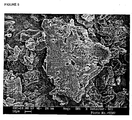
- SEM-EDS scanning electronic microscopy and energy dispersion spectroscopy. This technique allows to map, quali-quantitatively, the spatial distribution of single atoms onto the microscope image of the carrier particles; this is done via the acquisition of the X-ray emission spectrum caused by the interaction between the primary electrons and the material. Since it was desired to obtain a quantitative information on the dispersion of amorphous drug within the particles of composite, it was necessary to prepare a section of said particles by a microtome, and to fix it within a epoxy resin matrix. In figure 5 a SEM image of a section of a crospovidone particle is shown.
- Examples Beta/lbu13, Beta/lbu14, Beta/Nim01, Beta/Nim03 or 2 ml per gram of Crospovidone (samples PVP/Ibu01, PVP/Ibu02, PVP/Nim01), or 3 ml per gram of . Crospovidone (samples P.VP/Nim02, PVP/Nim03, PVP/Nim04, PVP/Nif02).
- the wet mixtures have then been subjected to treatment with microwaves at programed temperature and at atmospheric pressure, the operative conditions reported in tables 1 and 2.
- a monomode "Synthewaye 402" applicator from Prolabo has been used, operating at a frequency of 2.45 GHz and with a maximum deliverable power of 300 Watts.
- Table 1 operative Conditions of the process and values of residual crystallinity of the Ibuprofen ⁇ -cyclodextrine composites obtained with the monomode applicator.
- Samples Drug content (%) Temperature program Total time (minutes) Residual crystallinity (*) (%) Beta/Ibu13 10 From 25 °C to 90 °C in 15' 10' at 90 °C 25 22.7
- Table 2 operative conditions of the process and residual crystallinity values of the Ibuprofen Crospovidone composites.obtained with the monomode applicator. Samples Drug content (%) Temperature program Total time (minutes) Residual crystallinity (%) PVP/Ibu01 10 From 25 °C to 90 °C in 15' & 10' at 90 °C 25 0.0 PVP/Ibu02 10 From 25 °C to 80 °C in 15' & 15' at 80°C 30 0.0
- Table 3 operative conditions of the process and residual crystallinity values of the Nimesulide ⁇ -cyclodextrine composites obtained with a monomode applicator Samples Drug content (%) Temperature program Total time (minutes) Residual crystallinity (%) Beta/Nim01 10 From 25 °C to 160 °C in 20' & 10' at 160 °C 30 32.0 Beta/Nim03 10 From 25 °C to 160 °C in 20' & 20' at 160 °C 40 40.7
- Table 4 operative conditions of the process and residual crystallinity values of the Nimesulide Crospovidone composites obtained with a monomode applicator Samples Drug content (%) Temperature program Total time (minutes) Residual crystallinity (%) PVP/Nim01 10 From 25 °C to 150 °C in 20' & 10' at 150 °C 30 45.4 PVP/Nim02 10 From 25 °C to 150°C in 20' & 10' at 150 °C 30 39.4
- the presence of sulphur was quantitatively assessed in an area of the section of the particle of PVP/Nim 02m, shown in figure 6 .
- Sulphur which is part of the drug molecule (nimesulide), and not of the carrier (crospovidone), was searched in three points located at growing distance from the surface of the particles, marked with numbers 1,2,3 in figure 6 .
- the sulphur atom was detected in high amounts in all points, thus proving the presence of the drug also inside the polymeric carrier.
- the inner part of the section shows the homogeneity typical of a solid dispersion (amorphous drug dispersed within the amorphous polymer matrix).
- the drug molecules which can be stabilised in amorphous form on the surfaces of carriers constitute a molecular monolayer interacting with the surfaces themselves.
- the drug molecule can interact with the molecules of polyvolpyrrolidone, which are present on the surfaces of the carrier, with interactions which are either hydrophobic or hydrophilic in nature, (remembering the amphiphilic nature of the polymer used); estimating the molecular surface development of the nimesulide, characterised by these two interactions, one can calculate the area occupied by a single molecule interacting with the surface.
- the surface covered by a single molecule of nimesulide is equal to 2.65 nm 2 .
- Homogeneous physical mixtures of Nimesulide with Crospovidone and ⁇ -cyclodextrine have been prepared in weight ratios 1 to 2 and 1 to 5, physical mixtures of Nifedipine with Crospovidone 1 to 5 (w/w); approx. 5 grams of the mixture, for each test, have been inserted into a PTFE container loaded with graphite and then placed inside the application chamber of a multimode "Microsynth" oven (Mileston).
- a 1 to 9 Ibuprofen ⁇ -cyclodextrine mixture has been prepared and treated in the same oven, setting the power of the oven to a fixed and constant value, for the time of treatment, equal to 600 Watts. Water has not been added and the reaction environment has been maintained at atmospheric pressure (1 atm).
- the residual crystallinity values indicate also in this case a high degree of amorphisation of the drug.
- the distribution in-bulk of the drug has been confirmed with the above described methods.
- Example 4 To verify the criticality of the treatment used in the present invention, a Nimesulide-Crospovidone physical mixture has been prepared in the weight ratio 1 to 5; approx. 2 grams of mixture have been introduced into a general reactor (in Pyrex glass) inside a monomode applicator. Differently from that requested in the present invention, the reactor used is not based on dielectric materials coupling with the microwaves. The mixtures thus obtained have been successively subjected to treatment, with microwaves at temperature program temperature and at reduced pressure (0.1 * 10 5 Pa) under the operative conditions reported in the table 8. Table 8: operative conditions and residual crystallinity values of Nimesulide-Crospovidone composites.
- a drug-carrier mixture was dry-treated with microwaves; differently from the invention, linear polyvinylpyrrolidone was used as a carrier, which is neither a cross-linked polymer, or a complexing agent; the power applied was maintained constant throughout the entire treatment, following the teaching of the prior art, e.g. example 1 of EP 1308156 .
- the sample was wet-treated with microwaves, using nifedipine as a drug and cross-linked polyvinylpyrrolidone as a carrier; differently from the invention, the power applied was maintained constant throughout the entire treatment following the teaching of the prior art, e.g. example 4 of US 6462093 .
- 1.25 g of water were added to a mixture made of 1 g of Nifedipine and 5 g of crospovidone in a teflon reactor and treated with microwaves (2.45 GHz) with a power of 700 W for 20 minutes. After 5 minutes the treatment was suspended because the mixture was completely decomposed leaving only a carbonised residue. The same tests was repeated using only crospovidone without adding water.
Landscapes
- Health & Medical Sciences (AREA)
- Engineering & Computer Science (AREA)
- Bioinformatics & Cheminformatics (AREA)
- Epidemiology (AREA)
- Medicinal Chemistry (AREA)
- Pharmacology & Pharmacy (AREA)
- Chemical & Material Sciences (AREA)
- Life Sciences & Earth Sciences (AREA)
- Animal Behavior & Ethology (AREA)
- General Health & Medical Sciences (AREA)
- Public Health (AREA)
- Veterinary Medicine (AREA)
- Medicinal Preparation (AREA)
- Pharmaceuticals Containing Other Organic And Inorganic Compounds (AREA)
- Acyclic And Carbocyclic Compounds In Medicinal Compositions (AREA)
Abstract
Description
- The present invention refers to the field of rapid effect pharmaceutical compositions provided with high bioavailability. The preparation of new drug-carrier composites (stabilised solid dispersions) is described in which the drug is massively dispersed (in bulk) in amorphous form inside an organic carrier.
- The attainment of ready to use pharmaceutical compositions, which ensure high solubilisation kinetics of the drug and therefore a high bioavailability immediately following administration, is an important objective in pharmaceutical technology; such a need is particularly felt in the case of drugs sparingly soluble in water, which notoriously have a low bioavailability.
- Many drugs poorly soluble in water are present in the crystalline state: a system to improve the solubility of this group of drugs is that of destructuring the crystalline network, rendering them amorphous: in fact a substance in the amorphous state has both greater solubility and faster dissolution kinetics in water with respect to the corresponding crystalline state. The reason for which lies in the fact that whilst the dissolution of a crystal requires an additional intervention on the part of the solvent to break the intermolecular bonds in the crystalline network, such an intervention is not required in the case of the amorphous form: in the latter case the dissolution procedure requires less energy and the dissolution takes place more rapidly.
- The amorphisation procedures for crystalline drugs have been known for a long time (Yu L., Amorphous pharmaceutical solids: preparation characterisation and stabilization. Adv. Drug. Delivery Rev., 2001, 48, p. 27-42.). However, due to the greater stability of crystals, (a physical form with lower free energy and, therefore, thermodynamically more stable) the amorphised drugs have poor stability (metastable phase) and tend to easily recrystallise, thus losing their temporarily acquired increased solubility.
- With the aim of limiting this phenomenon, it has been proposed to make the amorphous drug deposit on the pharmaceutical carriers: in this case, the drug-carrier interactive forces limit the tendency of the amorphous phase molecule to re-aggregate, which allows them to have a greater stability. To obtain that, "solvent deposition" procedures have been proposed, according to which the drugs are initially dissolved in an appropriate solvent; to this solution are added insoluble carrier particles, and then the solvent is evaporated, thus making the drug in amorphous form precipitate on the carrier.
- These strategies however are only partially effective, in that they lead to not very high percentages of amorphisation; in addition, the drug remains deposited only on the external surface of the carrier particles i.e. not distributed internally (in bulk) inside the particles themselves (International Journal of Pharmaceutics, 33, 1986, p. 115-124): the drug lying on the surface still shows a notable freedom for reaggregation easily forming crystalline structures. Recently, some authors (Drug Dev. Ind. Pharm., 24(4), 1998, p.359-363) have proposed the use of microwaves to increase the solubility of crystalline drugs: the process provides the mixing of drug with an inorganic carrier with a high surface area (silicon dioxide), and exposure to microwaves; however, even in this case composites are obtained, denominated by the authors "surface solid dispersions", in which the amorphised drug is localised on the surface of the carrier particles. Even in this case the limitations of the previous systems are present, i.e. the drug is deposited only on the external surfaces of the carrier particles, and is therefore still subject to the phenomenon of re-crystallisation.
-
EP-A-1308156 describes the preparation of solid dispersions of a drug in water-soluble polymers, such as linear polyvinylpyrrolidone, the dispersion being obtained by microwave treatment.US-A-6462093 describes the microwave-assisted preparation of drug-carrier composites; the examples show the use, as carriers, of hydroxypropylmethylcellulose, its acetosuccinate derivative, and linear polyvinylpyrrolidone. In both these references the microwave power (Watt) is kept constant throughout the entire treatment. -
US-A-5 972 381 andWO-A-9 800 113 US-A-5 972 381 , disclose substantially amorphous solid solutions of an antifungal agent and a soluble or insoluble polymer. - The Abstract from WPI/Derwent AN-1993-408839[34] &
JP-A-5 306 225 - Until present, none of the available amorphisation processes is entirely satisfactory. Aim of the present invention is to provide a highly effective process capable to obtain both high dispersion of the active principle throughout the carrier and also a high degree of amorphisation of the active principle.
- It has now been surprisingly found that when a drug is mixed with an organic carrier and then treated with an oscillating electromagnetic field at frequencies belonging to the microwave region according to a specific heating cycle, a drug-carrier composite is obtained in which the drug is amorphised in higher quantities and in more stable form, with respect to these obtained by the prior art.
- In the present invention the treatment with microwaves is carried out on homogeneous mixtures of drug and carrier pre-wetted with appropriate quantities of solvents, or on drug-carrier mixtures in the dry state, placed on dielectric material based supports which couples with the microwaves, such as for example polytetrafluoroethylene loaded with graphite.
- The microwave application cycle is such that the drug mixture is heated to a temperature higher than the melting temperature of the drug, and such temperature is subsequently maintained constant for at least 5 minutes. The composites obtained according to the present invention, herein identified as "stabilised solid dispersions", are characterised by containing a quantity of amorphised drug greater than 50 % by weight with respect to the total drug present, and by the fact that the drug is also dispersed inside (in-bulk) of the carrier particles, hence not just on the external surface of the same.
- The present dispersion technique in-bulk of the drug in amorphous form is seen as being particularly effective and useful in the case of drugs poorly soluble in water, thus allowing the increase in the characteristics of solubility, and bioavailabitity in rapid times following administration.
-
-
Figure 1 : calibration lines for the Ibuprofen β-cyclodextrine, Ibuprofen Crospovidone and Nifedipine Crospovidone systems.- ● : Ibuprofen / beta-Cyclodextrine
- ■ : Ibuprofen / Crospovidone
- ▲ :Nifedipine / Crospovidone
-
Figure 2 : power (------) and temperature (------) profiles obtained, during the treatment of the sample PVP/Nif01. (example 4, table 8). -
Figure 3 : power (-------) and temperature (------) profiles-obtained during the treatment of the sample. PVP/Nim06 (example 4, table 8). -
Figure 4 : heating cycle applied in the production of composite PVP/Nif02 (example 1, table 5) -
Figure 5 : section of a particle of composite PVPINim02 (example 1, table 4) observe by scansion electronic microscope. -
Figure 6 : magnified image of the particle offigure 5 , with analysis of drug concentration in three different points of the particle section. - The invention is constituted by new composites obtainable by a process according to
claim 1, containing a drug dispersed in an organic carrier, in which the drug is: - present, in amorphous form in quantities greater than or equal to 50 % by weight with respect to the total of the drug present in the composite, and
- massive dispersed ("in-bulk") within the particles of the above mentioned carrier as described in
claim 10. - By "drug in amorphous form" is intended the drug when present in the form of molecular clusters, the structural organisation of which is not discernable with X-ray diffraction techniques (PXRD) or by differential scanning "calorimetry (DSC). Preferred composites are these which contain at least 75%, or more preferably at least 85% of the drug in amorphous form; composites in which the drug is present at 100% in amorphous form have been obtained with the present invention, and are described in the experimental section.
- For "massively dispersed (or in-bulk)" is intended the fact that the drug is deposited not only on the surfaces of the carrier particles, but also inside them in the present invention the drug is made to diffuse inside carrier particles and stabilised "in situ".
- The organic carrier is selected from a cross-linked polymer, a complexing agent or mixtures thereof. The cross-linked polymer is typically water-insoluble, whereas the complexing agent is typically water-soluble.; the terms "soluble/insoluble" are meant with respect to water at room temperature (20° C); the term "cross-linked" refers to the existence of natural or synthetically induced inter-polymer bonds; a preferred example of an insoluble cross-linked polymer is cross-linked polyvinylpyrrolidone, commercially known as crospovidone; other examples of polymers of this class are cross-linked sodium-carboxymethylcellulose, cross-linked starch, cross-linked dextran, cross-linked polystyrene, cross-linked beta-cyclodextrine.
- Preferred members of the class of water-soluble complexing agents are cyclodextrines (such as: alpha-, beta-, gamma-clyclodextrine and derivatives thereof), maltodextrine. The complexing agents may contain water molecules of hydration.
- The organic carriers used in the present invention are preferably characterised by non high surface area, for example, between 0.05 and 20 m2/g; for example the CL-PVP and cyclodextrine, commercially available meet these requirement perfectly, with an average surface area of 0.5-2 m2/g.
- The present invention also comprises the use of mixtures of two or more organic carriers: for example the mixture of an water-insoluble cross-linked polymer with a water-soluble complexing agent.
- Any active ingredient of pharmaceutical interest (also including mixtures of two or more of them) can be present in the composites claimed by the present invention; drugs sparingly soluble in water are preferred, also known as belonging to the class II of the biopharmaceutical system of classification (cf. Guidance for Industry: Immediate Release Solid Oral Dosage Forms, Ed. Centre for Drug Evaluation and Research, FDA, 1997): examples of such compounds are nimesulide, ibuprofen, nifedipine, grisofulvine, piroxicam, progesterone, indomethacine, Iorazepam, etc. As shown in the experimental section, it has been possible to obtain high to complete amorphisation of these products (originally present in the crystalline state with low solubility) and their dispersion in-bulk within the carrier.
- In the composites according to the invention, the drug and the carrier are present in weight ratios preferably comprised of between 1:0.5 and 1:20, more preferably between 1:1 and 1:10.
- The preparation process, of the composites according to
claim 1, constitutes a second subject of the invention. The process comprises mixing the original drug (i.e. the drug in microcrystalline structure to be made amorphous and dispersed within the carrier) with the above mentioned organic carrier, followed by treatment with an oscillating electromagnetic field, at a frequency belonging to the microwave region, with the following particulars: - (i) the application of the oscillating electromagnetic field is carried out on the previously wetted drug-carrier mixture, or
- (ii) the application of the oscillating electromagnetic field is carried out on the drug-carrier mixture placed in a container constituted of a dielectric material having coupling capacity with microwaves. In both cases a specific heating cycle is applied, as detailed below.
- In the first variant (i), the drug-carrier mixture is wetted with an appropriate amount of solvent, until forming a sufficiently dampened mass; the solvent, generally water, is added using known techniques, for example by nebulisation of the solvent through the mixture kept stirring, or simply pouring onto the mixture and mixing it. The solvent is added in an amount comprised of between 0.1 ml/g and 5 ml/g with respect to the dry drug-carrier mixture. The mixture, thus pre-wetted, placed in a reactor (for example a Pyrex glass container), is introduced into the oven and then treated with microwaves at pressure preferably comprised of between 1 and 20 bar.
- In variant (ii), the drug-carrier mixture is placed in a sample holder (reactor) made entirely or partially (for example of at least 10%) of a dielectric material coupling with microwaves, and thus introduced into the microwave applicator. For "coupling capacity by microwaves" is intended the fact that the material in question, when exposed to microwaves, increases the temperature in proportion to the power applied; a preferred example of a material having this property is polytetrafluoroethylene loaded with graphite.
- Using reactors containing the above mentioned coupling materials, the amorphisation proceeds easily at atmospheric pressure, without the need to operate at high pressure, and without the need to add water or other humectants; that does not preclude however the possibility of adding water and/or operating under pressure, Whenever desired.
- In both variants (i) and (ii), the application of the oscillating electromagnetic field is carried out with microwaves having power comprised of between 100 W and 5000 W, for an overall time up to 120 minutes. The oscillating electromagnetic field can indifferently be focussed or non-focussed. The frequency range of the microwaves applied is generally comprised of between 400 MHz and 25000 MHz. The application of the microwaves can take place under conditions of constant or variable power.
- The microwave treatment cycle is fundamental according to the present invention. In fact it is required that the microwave power be tuned in such a way that the sample (i.e. the drug-carrier mixture being treated) reaches a temperature value (T°) higher than the melting temperature of the drug-contained in the mixture. The temperature T° must then be maintained steady for at least 5 minutes.
- There is no specific limit as to how high the temperature T° must be with respect to the drug melting temperature: however it will be preferred to remain rather close to the melting temperature: for example, T° can be from 1 to 20 degrees C° higher than the drug melting temperature.
- By "drug melting temperature" it is meant the temperature corresponding to the peak of the endotherm, as measured by differential scansion calorimetry (DSC), performed at a scanning rate equal to the one set for the dielectric treatment with microwaves.
- The microwave treatment can be effected by temporarily setting a specific power level (e.g. 500 W), until the sample reaches the target temperature T°; the latter can be freely chosen by the operator, provide that it is higher than the melting temperature of the drug present in the mixture; once temperature T° is reached, the treatment is prolonged, turning (modulating) the microwave power so as to maintain the temperature of the sample steady at the temperature T°, for at least 5 minutes.
- Alternatively, it is possible to perform a fist step wherein the sample temperature is gradually incremented (for e.g. 10-25 min.), until it reaches the target value T°; subsequently, the treatment is prolonged, tuning (modulating) the microwave power so as to maintain the temperature of the sample steady at the temperature T° for at least 5 minutes.
- An example of this procedure is illustrated graphically in
figure 4 , showing the temperature recording for the sample PVP/Nif02, prepared and tested by the Applicant (cf. experimental section, example 1, table 5). - In all circumstances the process is always performed at priority of sample temperature, i.e. not of supplied fixed power: the latter is modulated in order to reach and maintain for at least 5 minutes the pre-set temperature T° in the drug-carrier mixture.
- In this respect it is important to remark that a melting substance absorbs energy in irregular way, depending on the relative amount of phases (solid, liquid) it goes through during melting. Therefore a steady administration of electromagnetic energy (microwaves power) during the melting process does not produce a parallel steady temperature in the sample; on the contrary, the thus treated sample inevitably shifts in temperature. In order to maintain the sample at a steady temperature, it is necessary to modulate the microwave power, thus compensating continuously for the variable degree of energy absorption of the sample, which takes place during the fusion process. Such compensations are obtainable by available means of electronic systems capable to detect any changes in the sample temperature and to modify immediately, in excess or defect, the microwave power so as to maintain the sample temperature steady at the pre-set T° value.
- The equipment used for the application of the microwaves can be any microwave applicator which operates within the above describe intervals and is equipped with suitable means to set the microwave power in function of the sample temperature. Such applicators are known per se and already used in the pharmaceutical field for various applications, for example to evaporate solvents. They are generally made up of a microwave generator, a wave guide and an application chamber; the generator is a "magnetron" electronic tube; the wave guide is a corridor, the walls of which are metallic, through a multiple reflection mechanism, they transmit the wave towards the application chamber in which the material is exposed to the microwaves. The applicators are conveniently fitted with power distribution management and control systems, for the sample temperature and the pressure to which the sample is exposed. Specific examples of the distributors used in the present invention are the Prolabo "Synthewave 402" (monomode applicator for focussed microwaves, freq. 2.45 G Hz, max. power. 300 W), or the Mileston "Microsynth" (multimode applicator non-focussed microwaves, with pre-mixing chamber and pyramidal diffuser, maximum power 1000 W). With respect to what allowed by the known art surface amorphisation, amorphisation in-bulk obtained by the present invention allows great exploitation of the entire volume of the available carrier for the incorporation of the drug in amorphous form: it therefore becomes possible to incorporate into the carrier, significantly greater-quantities of amorphous drug with respect to that previously possible. Analogously, with equal amorphous drug content, it is possible to reduce the amount of carrier, thus realising lower volume pharmaceutical formulations (e.g. smaller pills), with important advantages both for the saving of excipient, the economy of the process and packaging, and for the ease of administration and acceptability on the part of the patient.
- The composite (stabilised solid dispersions) obtained according to the present invention can be used directly as pharmaceutical compositions and as such administered to patients, or can be added to with excipients and treated according to conventional pharmaceutical techniques with the "aim of obtaining pharmaceutical forms suited to different administration needs. For example the composite can be integrated with disintegrants, glidants, lubricants, preservatives, sweeteners, other active ingredients, etc. The preparation' procedures of pharmaceutical compositions are known per se and comprise for example granulation, compression, film-coating, encapsulation, micro-encapsulation, etc.; the pharmaceutical forms in which the composite can be formulated include granulates for extemporaneous dissolution, pills, mini-pills, capsules, microcapsules, etc.
- The present invention will now be described through the following example applications for illustrative purposes.
- The materials subjected to treatment with microwaves are:
- Ibuprofen, Nimesutide and Nifedipine, representatives of sparingly hydrosoluble drugs, belonging to the biopharmaceutical class II.
- The thermal characteristics of Ibuprofen are the followings
- Melting temperature Tm= 75.6 °C,
- Melting enthalpy ΔHm= 126.6 J/g.
- The thermal characteristics of Nimesulide are the following:
- Melting temperature Tm= 148.9 °C
- Melting enthalpy ΔHm= 111.1 J/g).
- The thermal characteristics of Nifedipine are the following:
- Melting temperature Tm= 172.7 °C
- Melting enthalpy ΔHm= 101.4 J/g).
-
- Crospovidone, as an insoluble amphiphilic cross-linked polymer.
- β-cyclodextrine, as a carrier belonging to the class of the hydrosoluble complexing agents.
-
- The "Synthewave : 402" monomode applicator from Prolabo, operating at a frequency of 2.45 GHz and with a maximum deliverable power of 300 Watts. With this type of applicator the field results as being focused in a restricted spatial volume containing the sample for treatment.
- The "Microsynth" multimode applicator from Milestone fitted with a premixing chamber with a pyramidal microwave diffuser to obtain optimal uniformity of the field. The applicator works with two continuous generation magnetrons (non pulsed) and distributes a maximum power of 1000 Watts.
- Both applicators are equipped with control systems for the delivered power, the developed pressure (up to 20 bar) and the temperature of the sample. The control and monitoring system for the monitoring of the sample temperature is constituted of two types of sensors: one fibre-optic and the other infrared (pyrometer).
- The degree of dispersion of the drug in the carrier has been evaluated by SEM-EDS (scanning electronic microscopy and energy dispersion spectroscopy). This technique allows to map, quali-quantitatively, the spatial distribution of single atoms onto the microscope image of the carrier particles; this is done via the acquisition of the X-ray emission spectrum caused by the interaction between the primary electrons and the material. Since it was desired to obtain a quantitative information on the dispersion of amorphous drug within the particles of composite, it was necessary to prepare a section of said particles by a microtome, and to fix it within a epoxy resin matrix. In
figure 5 a SEM image of a section of a crospovidone particle is shown. - The percentage of crystalline residue has been calculated using the following relationship:

figure 1 ). The % of drug in the amorphous state (%A) is:
- In the following experiments (examples 1-3) a series of drug-carrier mixtures has been subjected to the amorphisation process according to the present invention.
- Physical homogeneous mixtures of Ibuprofen with β-cyclodextrine hydrate and Ibuprofen with Crospovidone in weight ratios of 1 to 9 have been prepared; approx. 5 grams of the mixture, for each test, have been inserted into a Pyrex glass reactor (a material non-coupling with the microwaves) inside the applicator of the monomode oven. To each mixture, appropriately kept stirring by a mechanical stirrer in Pyrex glass (operating at 3 revolutions per minute), has been added an amount of purified water equal to 1 ml per gram of β-cyclodextrine. (samples Beta/lbu13, Beta/lbu14, Beta/Nim01, Beta/Nim03) or 2 ml per gram of Crospovidone (samples PVP/Ibu01, PVP/Ibu02, PVP/Nim01), or 3 ml per gram of . Crospovidone (samples P.VP/Nim02, PVP/Nim03, PVP/Nim04, PVP/Nif02). The wet mixtures have then been subjected to treatment with microwaves at programed temperature and at atmospheric pressure, the operative conditions reported in tables 1 and 2.
- For irradiation, a monomode "Synthewaye 402" applicator from Prolabo has been used, operating at a frequency of 2.45 GHz and with a maximum deliverable power of 300 Watts.
- The results obtained are illustrated in the two following tables.
Table 1: operative Conditions of the process and values of residual crystallinity of the Ibuprofen β-cyclodextrine composites obtained with the monomode applicator. Samples Drug content (%) Temperature program Total time (minutes) Residual crystallinity (*) (%) Beta/ Ibu13 10 From 25 °C to 90 °C in 15' 10' at 90 ° C 25 22.7 Beta/ Ibu14 10 From 25°C to 90°C in 15' & 20' at 90°C 35 21.6 (*) % of crystallinity with respect to the crystallinity of the original drug (=100%). Table 2: operative conditions of the process and residual crystallinity values of the Ibuprofen Crospovidone composites.obtained with the monomode applicator. Samples Drug content (%) Temperature program Total time (minutes) Residual crystallinity (%) PVP/ Ibu01 10 From 25 °C to 90 °C in 15' & 10' at 90 ° C 25 0.0 PVP/ Ibu02 10 From 25 °C to 80 °C in 15' & 15' at 80° C 30 0.0 - The same approach has been used' with a drug having different thermal characteristics to the previous (Nimesulide, Tm= 148.9 °C, □Hm=111.1 J/g). The method variations and the crystallinity data are reported in tables 3 and 4.
Table 3: operative conditions of the process and residual crystallinity values of the Nimesulide β-cyclodextrine composites obtained with a monomode applicator Samples Drug content (%) Temperature program Total time (minutes) Residual crystallinity (%) Beta/ Nim01 10 From 25 °C to 160 °C in 20' & 10' at 160 ° C 30 32.0 Beta/ Nim03 10 From 25 °C to 160 °C in 20' & 20' at 160 ° C 40 40.7 Table 4: operative conditions of the process and residual crystallinity values of the Nimesulide Crospovidone composites obtained with a monomode applicator Samples Drug content (%) Temperature program Total time (minutes) Residual crystallinity (%) PVP/ Nim01 10 From 25 °C to 150 °C in 20' & 10' at 150 ° C 30 45.4 PVP/ Nim02 10 From 25 °C to 150°C in 20' & 10' at 150 ° C 30 39.4 PVP/Nim03 16.7 From 25 °C to 150 °C in 15' & 15' at 150 ° C 30 38.0 PVP/Nim04 16.7 From 25 °C to 150 °C in 15' & 30' at 150°C 45 36.6 - The same process has been used with Nifedipine, using the "Microsynth" multimode applicator. The process parameters and the crystallinity characteristics are reported in table 5.
Table 5: operative conditions of the process and residual crystallinity values of the Nifedipine Crospovidone composite obtained With the multimode applicator Samples Drug content (%) Temperature program Total time (minutes) Residual crystallinity (%) PVP/Nif02 16.7 From 25°C, to 175 °C in 15' &10'at175°C 35 0.0 - The graphic registration of the sample temperature in this test is shown in
figure 4 . The low or zero residual crystallinity percentages observed in the examples shown demonstrate the achievement of high grades of amorphisation. In particular, in the case of ibuprofen and nifedipine, composites characterised by complete amorphisation of the drug (0% residual crystallinity) are obtained. - The in-bulk dispersion of the active principle was confirmed, by SEM-EDS observations, as follows.
- The presence of sulphur was quantitatively assessed in an area of the section of the particle of PVP/Nim 02m, shown in
figure 6 . Sulphur, which is part of the drug molecule (nimesulide), and not of the carrier (crospovidone), was searched in three points located at growing distance from the surface of the particles, marked withnumbers figure 6 . As evident from the X ray spectra shown in the box offigure 6 , the sulphur atom was detected in high amounts in all points, thus proving the presence of the drug also inside the polymeric carrier. The inner part of the section shows the homogeneity typical of a solid dispersion (amorphous drug dispersed within the amorphous polymer matrix). - This demonstrates that a massive dispersion (in-bulk) of the amorphised drug is achieved, i.e. not only on the surfaces of the carrier particles, but deep within them.
- A further demonstration of the in-bulk dispersion of the drug is obtained via the following calculation:
- considering that the drug/polymer weight ratio used in the preceding experiments is equal to 1:5, (PVP/Nim 04) the mass balance of the composite is:

- wherein: MDC represents the mass of the crystalline drug in the composite, MDA the mass of the amorphous drug, MC the mass of the carrier and MT the total mass.
- For the examples reported, it will be:
- MDC = 206.4mg*0.366 = 75.5 ,
- MDA =206.4mg-75.5mg = 130.9,
- MC = 1028.9mg and MT = 1235.4mg.
- Since the PVP-CL used has a specific surface area of 4.5 m2/g (values determined experimentally by adsorption isotherms method B.E.T.) the weight fraction contained in the composite has a total surface development equal to 4.5 * 0.833= 3.75 m2/g.
- Reasonably, the drug molecules which can be stabilised in amorphous form on the surfaces of carriers constitute a molecular monolayer interacting with the surfaces themselves.
- The drug molecule can interact with the molecules of polyvolpyrrolidone, which are present on the surfaces of the carrier, with interactions which are either hydrophobic or hydrophilic in nature, (remembering the amphiphilic nature of the polymer used); estimating the molecular surface development of the nimesulide, characterised by these two interactions, one can calculate the area occupied by a single molecule interacting with the surface.
- Using the three dimensional molecular structure of nimesulide, minimised with both molecular mechanical (MMFF force field) and semi-empirical (AM1) algorithms with the software "Spartan 02", the two molecular descriptors involved can be calculated (molecular surface area with hydrophobic characteristics and molecular surface area with hydrophilic characteristics). The measurements of these descriptors has been performed with the molecular prediction software "QikProp" and has given the following values:
- hydrophobic molecular surface area = 0.9 nm2
- hydrophilic molecular surface area = 1.75 nm2
- Considering the two contributions, the surface covered by a single molecule of nimesulide is equal to 2.65 nm2.
- The quantity of molecules necessary to constitute an amorphous monolayer on the surface of the carrier will be given by 3.75 m2*g-1/ 2.65*10-18m2 = 140.7 *1016 molecules, i.e. 0.721 mg of nimesulide. Rewriting the equation to balance with these values for MDA, one obtains a value of MDC = 205.7 mg equal to 99.6% of crystallinity.
- Hence, one can conclude that the excess of amorphous drug involved in preparation PVPNIM02 is found dispersed to a large measure inside (in-bulk) the carrier particles.
- Homogeneous physical mixtures of Nimesulide with Crospovidone and β-cyclodextrine have been prepared in
weight ratios 1 to 2 and 1 to 5, physical mixtures of Nifedipine withCrospovidone 1 to 5 (w/w); approx. 5 grams of the mixture, for each test, have been inserted into a PTFE container loaded with graphite and then placed inside the application chamber of a multimode "Microsynth" oven (Mileston). In addition, a 1 to 9 Ibuprofen β-cyclodextrine mixture has been prepared and treated in the same oven, setting the power of the oven to a fixed and constant value, for the time of treatment, equal to 600 Watts. Water has not been added and the reaction environment has been maintained at atmospheric pressure (1 atm). - The process conditions and the physical characteristics of the composites obtained are reported in table 6.
Table 6: operative conditions of the process and residual crystallinity values of the Nimesulide P-cyclodextrine, lbuprofen β-cyclodextrine, Nimesulide Crospovidone and Nifedipine Crospovidone composites obtained with the multimode applicator. Samples (w/w)a Temperature program Total time (minutes) Residual crystallinity (%) PVP/ Nim05 1 to 2 From 25 °C to 150 °C in 10' & 10' at 150 ° C 30 27.3 PVP/ Nif04 1 to 5 From 25 °C to 175 °C in 15' & 10' at 17.5 ° C 25 1.0 Betalbu15 1 to 9 600 W up to 80°C & 5' at 80° C 5 23.8 Betalbu16 1 to 9 600 W up to 80°C & 3' at 80° C 3 38.4 (a) = weight ratio between drug and carrier - The residual crystallinity values indicate also in this case a high degree of amorphisation of the drug. The distribution in-bulk of the drug has been confirmed with the above described methods.
- A mixture of Nimesulide/Crospovidone in a weight ratio of 1 to 5 has been prepared; approx. 6 grams of mixture have been inserted into the reactor of the multimode applicator. To the mixture have been added approx. 10 ml of purified water. The mixture, thus wetted, has been subjected to treatment with microwaves at temperature program temperature and at increasing pressure according to the phase diagram of water (at constant volume): from 1 bar (at T=25 °C) up to 5 bar (at T=155 °C). The process conditions and the residual crystallinity obtained are reported in the following table 7:
Samples Drug content Temperature program Total time (minutes) Residual crystallinity (%) PVP/Nim07 16.7 16.7 From 25 °C to 155 °C in 10' & 10' at 155 °C and P=5 bar 25 . 45.0 - - Example 4 (reference) To verify the criticality of the treatment used in the present invention, a Nimesulide-Crospovidone physical mixture has been prepared in the
weight ratio 1 to 5; approx. 2 grams of mixture have been introduced into a general reactor (in Pyrex glass) inside a monomode applicator. Differently from that requested in the present invention, the reactor used is not based on dielectric materials coupling with the microwaves. The mixtures thus obtained have been successively subjected to treatment, with microwaves at temperature program temperature and at reduced pressure (0.1 * 105 Pa) under the operative conditions reported in the table 8.Table 8: operative conditions and residual crystallinity values of Nimesulide-Crospovidone composites. Samples Drug content (%) Temperature program Total time (minutes) Residual crystallinity. (%) PVP/Nim06 16.7 From 25 °C to 150 °C in 10' & 15' at 150 °C. 25 96.0 PVP/Nif01 16.7 From 25 °C to 170 °C in 10' & 15' at 170 ° C 25 97.5 - As is clear from the data of the percent residual crystallinity (96-97%), the treatment has not been able to obtain any amorphisation: the drug maintains its crystallinity substantially unaltered. These data demonstrate that, when operating in dry conditions, in the absence of reactors coupling with the microwaves, it is not possible to obtain any dispersion of amorphised drug. In
figures 2 and3 are shown the temperature profiles of the two reference samples during the treatment cycle: as is clear from the figures, both mixtures treated do not have significant temperature increases such as to induce solid-liquid transitions in the crystalline drugs, despite using the maximum power of the applicator used; that further confirms the absence of amorphisation of drug under these experimental conditions. - In this example a drug-carrier mixture was dry-treated with microwaves; differently from the invention, linear polyvinylpyrrolidone was used as a carrier, which is neither a cross-linked polymer, or a complexing agent; the power applied was maintained constant throughout the entire treatment, following the teaching of the prior art, e.g. example 1 of
EP 1308156 . - Thus 1 g of Nifedipine and 5 g of polyvinylpyrrolidone K30 were put into a teflon reactor and treated with microwaves for 4 minutes at a power of 630 W. The residual crystallinity of the thus treated material, determined by DSC, was 93.2 %. Accordingly, less than 7% of the drug was converted into amorphous form.
- In this example the sample was wet-treated with microwaves, using nifedipine as a drug and cross-linked polyvinylpyrrolidone as a carrier; differently from the invention, the power applied was maintained constant throughout the entire treatment following the teaching of the prior art, e.g. example 4 of
US 6462093 . Thus, 1.25 g of water were added to a mixture made of 1 g of Nifedipine and 5 g of crospovidone in a teflon reactor and treated with microwaves (2.45 GHz) with a power of 700 W for 20 minutes. After 5 minutes the treatment was suspended because the mixture was completely decomposed leaving only a carbonised residue. The same tests was repeated using only crospovidone without adding water. After about 10 minutes of treatment at 700 W the material was completely carbonised as in the previous test. This phenomenon is presumably due to a "thermal runaway" caused by a sudden increase of the imaginative part of complex permittivity (loss factor) with temperature. Such increase result in a growing dielectric coupling and thus a further increase in the sample temperature (for a review on these phenomena cf. Committee on microwave processing of materials: an emerging industrial technology. Microwave processing of materials, pag. 36, Publication NMAB-473. Washington: National academy Press, 1994).
Claims (19)
- A process for the preparation of a composite containing a drug dispersed in an organic carrier, wherein the drug is massively dispersed (in bulk) within the particles of said organic carrier and it is present in amorphous form in a quantity greater than or equal to 50% by weight with respect to the total of the drug present, comprising the following steps:a) forming a mixture of a drug with an organic carrier selected from the group consisting of water-soluble complexing agents chosen from cyclodextrins and maltodextrins, water-insoluble cross-linked polymers and mixtures thereof;b) irradiating the mixture obtained in a), with microwaves,wherein the microwave power is modulated so that the temperature of the mixture increases until it reaches a value higher than the melting temperature of the drug and it is then maintained constant at said value for at least 5 minutes and
wherein the irradiation is carried out either on the drug-carrier mixture, which has been previously wetted or on the drug-carrier mixture placed in a container constituted of a dielectric material having coupling capacity with microwaves. - Process according to claim 1, wherein when the irradiation is carried out on the drug-carrier mixture which has been previously wetted, a wet mixture is formed by adding a solvent in step a).
- Process according to claim 2, wherein said solvent is water.
- The process according to claim 3, in which said wet mixture is formed by adding water to the carrier-drug composite in a quantity comprised of between 0.1 ml/g and 5 ml/g with respect to the dry mixture of the composite.
- The process according to claims 2 to 4, in which the pressure at which the irradiation is carried out is comprised of between 1 and 20 bar.
- The process according to claim 1, wherein said dielectric material is polytetrafluoroethylene loaded with graphite.
- The process according to the claims 1 to 6, in which the irradiation with microwaves is carried out in an power range comprised of between 100 W and 5000 W, for an overall time up to 120 minutes.
- A process according to claims 1 to 7 wherein said cross-linked polymer is selected form the group consisting of cross-linked polyvinylpyrrolidone, cross-linked sodium carboxymethylcellulose, cross-linked starch, cross-linked dextran, cross-linked polystyrene and cross-linked β-cyclodextrin.
- A process according to claims 1 to 8 wherein said drug is a drug sparingly soluble in water.
- A composite obtainable by the process of anyone of claims 1-9 and containing a drug dispersed in carrier consisting of a water soluble complexing agent selected from cyclodextrins and maltodextrins, wherein the drug is massively dispersed (in-bulk) within the particles of said complexing agent and it is present in amorphous form in a quantity greater than or equal to 50 % by weight, with respect to the total of drug present in the composite.
- A composite according to claim 10, wherein said cyclodextrins are selected from alpha-cyclodextrin, beta-cyclodextrin, gamma-cyclodextrin and derivatives thereof.
- A composite according to claims 10 or 11, wherein the drug and the carrier are present in weight ratios comprised of between 1:0.5 and 1:20.
- A composite according to claim 12, wherein the drug and the carrier are present in weight ratios comprised of between 1:1 and 1:10.
- A composite according to claims 10 to 13, wherein said carrier has a surface area comprised of between 0.05 m2/g and 20 m2/g.
- A composite according to claims 10 to 14, wherein said drug is a drug sparingly soluble in water.
- A composite according to claim 15, wherein said drug is selected from nimesulide, ibuprofen, nifedipine, grisofulvine, piroxicam, progesterone, lorazepam.
- A composite as claimed in claims 10 to 16, for use in therapy.
- A pharmaceutical composition containing a composite as claimed in claims 10 to 17, optionally associated with pharmaceutically acceptable excipients.
- A pharmaceutical composition according to claim 18, formulated as a granulate, pill, mini-pill, capsule, micro-capsule.
Applications Claiming Priority (3)
| Application Number | Priority Date | Filing Date | Title |
|---|---|---|---|
| IT002748A ITMI20022748A1 (en) | 2002-12-23 | 2002-12-23 | STABILIZED SOLID DISPERSIONS OF DRUG IN AN ORGANIC CAREER AND PROCEDURE FOR THEIR PREPARATION. |
| ITMI20022748 | 2002-12-23 | ||
| PCT/EP2003/014740 WO2004056340A2 (en) | 2002-12-23 | 2003-12-22 | Stabilised solid drug dispersions in an organic carrier and a process for preparing the same |
Publications (2)
| Publication Number | Publication Date |
|---|---|
| EP1581189A2 EP1581189A2 (en) | 2005-10-05 |
| EP1581189B1 true EP1581189B1 (en) | 2012-02-08 |
Family
ID=32676862
Family Applications (1)
| Application Number | Title | Priority Date | Filing Date |
|---|---|---|---|
| EP03813592A Expired - Lifetime EP1581189B1 (en) | 2002-12-23 | 2003-12-22 | Stabilised solid drug dispersions in an organic carrier and a process for preparing the same |
Country Status (11)
| Country | Link |
|---|---|
| US (1) | US7951401B2 (en) |
| EP (1) | EP1581189B1 (en) |
| JP (1) | JP2006512344A (en) |
| AT (1) | ATE544446T1 (en) |
| AU (1) | AU2003303183B2 (en) |
| CA (1) | CA2529818C (en) |
| DK (1) | DK1581189T3 (en) |
| ES (1) | ES2382076T3 (en) |
| IT (1) | ITMI20022748A1 (en) |
| PT (1) | PT1581189E (en) |
| WO (1) | WO2004056340A2 (en) |
Families Citing this family (12)
| Publication number | Priority date | Publication date | Assignee | Title |
|---|---|---|---|---|
| DE10026698A1 (en) | 2000-05-30 | 2001-12-06 | Basf Ag | Self-emulsifying active ingredient formulation and use of this formulation |
| US8377952B2 (en) | 2003-08-28 | 2013-02-19 | Abbott Laboratories | Solid pharmaceutical dosage formulation |
| US8025899B2 (en) * | 2003-08-28 | 2011-09-27 | Abbott Laboratories | Solid pharmaceutical dosage form |
| CN102321234A (en) * | 2005-05-24 | 2012-01-18 | 日立化成工业株式会社 | Process for producing conjugated polymer |
| CN102481264B (en) | 2009-06-29 | 2015-04-22 | 本德尔分析控股有限公司 | Drug delivery system comprising polyoxazoline and a bioactive agent |
| CN102293734A (en) * | 2010-06-25 | 2011-12-28 | 江苏恒瑞医药股份有限公司 | Tolvaptan solid dispersion and preparation method thereof |
| US9327264B2 (en) * | 2011-01-31 | 2016-05-03 | Uchicago Argonne, Llc | Containerless synthesis of amorphous and nanophase organic materials |
| MX369121B (en) * | 2011-03-04 | 2019-10-30 | Gruenenthal Gmbh | Aqueous pharmaceutical formulation of tapentadol for oral administration. |
| TW201642843A (en) | 2015-03-27 | 2016-12-16 | 歌林達有限公司 | Stable formulation for parenteral administration of Tapentadol |
| EP3515412B1 (en) | 2016-09-23 | 2025-04-23 | Grünenthal GmbH | Stable formulation for parenteral administration of tapentadol |
| CA3172889C (en) | 2020-04-20 | 2024-05-28 | John Docherty | Compositions and methods for enhanced delivery of antiviral agents |
| WO2024227190A1 (en) * | 2023-04-28 | 2024-10-31 | Arizona Board Of Regents On Behalf Of The University Of Arizona | Druggable formulation for mu/delta opioid antagonist for enhancing pain therapy and treatment of opioid withdrawal |
Family Cites Families (16)
| Publication number | Priority date | Publication date | Assignee | Title |
|---|---|---|---|---|
| JPH0677510B2 (en) * | 1986-07-11 | 1994-10-05 | 雪印乳業株式会社 | Microwave cooking method and its cooking container |
| US4999205A (en) * | 1989-08-17 | 1991-03-12 | Kalamazoo Holdings, Inc. | Curcumin complexed on water-dispersible substrates |
| JPH03215226A (en) * | 1990-01-19 | 1991-09-20 | Matsushita Electric Ind Co Ltd | Pressure cooking vessel for electronic range |
| JP2516524B2 (en) | 1992-04-27 | 1996-07-24 | 大洋薬品工業株式会社 | Persistent formulation |
| DE4223116A1 (en) * | 1992-04-30 | 1993-11-04 | Mikrowellen Labor Systeme | DEVICE FOR THE EVAPORATION TREATMENT OF PREFERRED LIQUIDS, IN PARTICULAR REAGENTS, OR FOR THE PREPARATION OR ANALYSIS OF SAMPLING MATERIAL |
| IT1264960B1 (en) * | 1993-11-11 | 1996-10-17 | Eniricerche Spa | ISOCYANATE/EPOXIDE COMPOSITIONS POLYMERIZABLE BY MICROWAVE FOR TECHNICALLY DEMANDING APPLICATIONS |
| NZ285664A (en) * | 1994-05-18 | 1998-07-28 | Inhale Therapeutic Syst | Dry powder interferon composition adapted for pulmonary delivery |
| JPH08231165A (en) * | 1994-12-28 | 1996-09-10 | Ntn Corp | Guide shoe |
| TW487582B (en) * | 1995-08-11 | 2002-05-21 | Nissan Chemical Ind Ltd | Method for converting sparingly water-soluble medical substance to amorphous state |
| US5972381A (en) * | 1996-06-28 | 1999-10-26 | Schering Corporation | Solid solution of an antifungal agent with enhanced bioavailability |
| WO1998000113A1 (en) | 1996-06-28 | 1998-01-08 | Schering Corporation | Solid solution of an antifungal agent with enhanced bioavailability |
| US6174873B1 (en) * | 1998-11-04 | 2001-01-16 | Supergen, Inc. | Oral administration of adenosine analogs |
| JP2004538337A (en) * | 1999-10-29 | 2004-12-24 | ソルベイ アドバンスド ポリマーズ、エルエルシー | Polymer composition suitable for use in microwave cooking |
| HUP0300429A2 (en) * | 2000-04-19 | 2003-07-28 | Fujisawa Pharmaceutical Co., Ltd. | Solid dispersion with improved absorbability and process for its preparation |
| EP1308156A4 (en) | 2000-08-11 | 2009-07-15 | Eisai R&D Man Co Ltd | Drug-containing solid dispersion having improved solubility |
| FR2823209B1 (en) * | 2001-04-04 | 2003-12-12 | Fournier Lab Sa | NOVEL THIOHYDANTOINS AND THEIR USE IN THERAPEUTICS |
-
2002
- 2002-12-23 IT IT002748A patent/ITMI20022748A1/en unknown
-
2003
- 2003-12-22 EP EP03813592A patent/EP1581189B1/en not_active Expired - Lifetime
- 2003-12-22 CA CA2529818A patent/CA2529818C/en not_active Expired - Fee Related
- 2003-12-22 JP JP2004561412A patent/JP2006512344A/en active Pending
- 2003-12-22 WO PCT/EP2003/014740 patent/WO2004056340A2/en not_active Ceased
- 2003-12-22 PT PT03813592T patent/PT1581189E/en unknown
- 2003-12-22 AT AT03813592T patent/ATE544446T1/en active
- 2003-12-22 US US10/540,139 patent/US7951401B2/en not_active Expired - Fee Related
- 2003-12-22 AU AU2003303183A patent/AU2003303183B2/en not_active Ceased
- 2003-12-22 DK DK03813592.7T patent/DK1581189T3/en active
- 2003-12-22 ES ES03813592T patent/ES2382076T3/en not_active Expired - Lifetime
Also Published As
| Publication number | Publication date |
|---|---|
| PT1581189E (en) | 2012-05-25 |
| US20060051422A1 (en) | 2006-03-09 |
| ATE544446T1 (en) | 2012-02-15 |
| AU2003303183B2 (en) | 2010-02-25 |
| JP2006512344A (en) | 2006-04-13 |
| ES2382076T3 (en) | 2012-06-05 |
| EP1581189A2 (en) | 2005-10-05 |
| ITMI20022748A1 (en) | 2004-06-24 |
| AU2003303183A1 (en) | 2004-07-14 |
| CA2529818C (en) | 2012-10-30 |
| DK1581189T3 (en) | 2012-05-07 |
| WO2004056340A2 (en) | 2004-07-08 |
| WO2004056340A3 (en) | 2004-11-11 |
| US7951401B2 (en) | 2011-05-31 |
| CA2529818A1 (en) | 2004-07-08 |
Similar Documents
| Publication | Publication Date | Title |
|---|---|---|
| JP2823170B2 (en) | Carrier-supported drug with improved dissolution rate and method for producing the same | |
| Babu et al. | Evaluation of modified gum karaya as carrier for the dissolution enhancement of poorly water-soluble drug nimodipine | |
| AU2003303183B2 (en) | Stabilised solid drug dispersions in an organic carrier and a process for preparing the same | |
| Figueiras et al. | Solid-state characterization and dissolution profiles of the inclusion complexes of omeprazole with native and chemically modified β-cyclodextrin | |
| Fukuda et al. | Influence of sulfobutyl ether β-cyclodextrin (Captisol®) on the dissolution properties of a poorly soluble drug from extrudates prepared by hot-melt extrusion | |
| EP0852140B1 (en) | Methods for making hardly soluble medicine amorphous | |
| Malviya et al. | Stability facilitation of nanoparticles prepared by ultrasound assisted solvent-antisolvent method: Effect of neem gum, acrylamide grafted neem gum and carboxymethylated neem gum over size, morphology and drug release | |
| Obaidat et al. | Using supercritical fluid technology (SFT) in preparation of tacrolimus solid dispersions | |
| Jhaveri et al. | Improvement of oral bioavailability of carvedilol by liquisolid compact: optimization and pharmacokinetic study | |
| Kumar et al. | Pharmaceutical solid dispersion technology: a strategy to improve dissolution of poorly water-soluble drugs | |
| Reverchon et al. | Supercritical fluid assisted production of HPMC composite microparticles | |
| Tong et al. | Applications of complexation in the formulation of insoluble compounds | |
| Nandal et al. | β-Cyclodextrin mediated controlled release of phenothiazine from pH-responsive pectin and pullulan-based hydrogel optimized through experimental design | |
| Kong et al. | Physicochemical characteristics of the complexes of simvastatin and atorvastatin calcium with hydroxypropyl-β-cyclodextrin produced by mechanochemical activation | |
| Senthilvel et al. | [Retracted] Development of Atorvastatin Calcium Biloaded Capsules for Oral Administration of Hypercholesterolemia | |
| Pathak et al. | Enhanced oral bioavailability of etodolac by the liquisolid compact technique: optimisation, in-vitro and in-vivo evaluation | |
| Guo et al. | Screening and optimization of supercritical fluid process for the preparation of albendazole solid dispersion | |
| Ambrus et al. | Physico-chemical characterization and dissolution properties of nifluminic acid-cyclodextrin-PVP ternary systems | |
| Wolf | Bead cellulose products with film formers and solubilizers for controlled drug release | |
| ITMI20012749A1 (en) | PROCEDURE FOR THE PREPARATION BY MICROWAVE TREATMENT OF INCLUSION COMPOUNDS BETWEEN DRUG AND CYCLODESTRINE AND PRODUCTS OBTAINED | |
| Pabari et al. | Fast disintegrating crystalline solid dispersions of simvastatin for incorporation into orodispersible tablets | |
| Jadhav et al. | Preparation and Evaluation of Microwave Generated Nanocomposites for Solubility Enhancement of Ketoprofen | |
| Yadav et al. | Enhancement of dissolution Properties of candesartan Using Liquidsolid Technique | |
| Shaikh et al. | Preparation and Evaluation of Amorphous Solid Dispersion of Etoricoxib, Employing A Fast Approach for Polymer Selection | |
| AU2021102565A4 (en) | Carboxy-methylated polymer based drug nanosuspension formulation and method of preparation thereof |
Legal Events
| Date | Code | Title | Description |
|---|---|---|---|
| PUAI | Public reference made under article 153(3) epc to a published international application that has entered the european phase |
Free format text: ORIGINAL CODE: 0009012 |
|
| 17P | Request for examination filed |
Effective date: 20050722 |
|
| AK | Designated contracting states |
Kind code of ref document: A2 Designated state(s): AT BE BG CH CY CZ DE DK EE ES FI FR GB GR HU IE IT LI LU MC NL PT RO SE SI SK TR |
|
| AX | Request for extension of the european patent |
Extension state: AL LT LV MK |
|
| DAX | Request for extension of the european patent (deleted) | ||
| 17Q | First examination report despatched |
Effective date: 20070525 |
|
| GRAP | Despatch of communication of intention to grant a patent |
Free format text: ORIGINAL CODE: EPIDOSNIGR1 |
|
| GRAS | Grant fee paid |
Free format text: ORIGINAL CODE: EPIDOSNIGR3 |
|
| GRAA | (expected) grant |
Free format text: ORIGINAL CODE: 0009210 |
|
| AK | Designated contracting states |
Kind code of ref document: B1 Designated state(s): AT BE BG CH CY CZ DE DK EE ES FI FR GB GR HU IE IT LI LU MC NL PT RO SE SI SK TR |
|
| REG | Reference to a national code |
Ref country code: GB Ref legal event code: FG4D |
|
| REG | Reference to a national code |
Ref country code: CH Ref legal event code: EP Ref country code: AT Ref legal event code: REF Ref document number: 544446 Country of ref document: AT Kind code of ref document: T Effective date: 20120215 |
|
| RAP2 | Party data changed (patent owner data changed or rights of a patent transferred) |
Owner name: APTALIS PHARMA S.R.L. |
|
| REG | Reference to a national code |
Ref country code: DE Ref legal event code: R096 Ref document number: 60339978 Country of ref document: DE Effective date: 20120405 |
|
| REG | Reference to a national code |
Ref country code: CH Ref legal event code: NV Representative=s name: N&G PATENT SERVICES SA |
|
| REG | Reference to a national code |
Ref country code: DK Ref legal event code: T3 |
|
| REG | Reference to a national code |
Ref country code: SE Ref legal event code: TRGR |
|
| REG | Reference to a national code |
Ref country code: NL Ref legal event code: SD Effective date: 20120514 Ref country code: NL Ref legal event code: T3 |
|
| REG | Reference to a national code |
Ref country code: PT Ref legal event code: SC4A Free format text: AVAILABILITY OF NATIONAL TRANSLATION Effective date: 20120508 |
|
| REG | Reference to a national code |
Ref country code: ES Ref legal event code: FG2A Ref document number: 2382076 Country of ref document: ES Kind code of ref document: T3 Effective date: 20120605 |
|
| REG | Reference to a national code |
Ref country code: DE Ref legal event code: R081 Ref document number: 60339978 Country of ref document: DE Owner name: APTALIS PHARMA S.R.L., IT Free format text: FORMER OWNER: EURAND S.P.A., PESSANO CON BORNAGO, IT Effective date: 20120502 Ref country code: DE Ref legal event code: R081 Ref document number: 60339978 Country of ref document: DE Owner name: APTALIS PHARMA S.R.L., IT Free format text: FORMER OWNER: APTALIS PHARMA S.R.L., PESSANO CON BORNAGO, IT Effective date: 20120507 Ref country code: DE Ref legal event code: R081 Ref document number: 60339978 Country of ref document: DE Owner name: APTALIS PHARMA S.R.L., IT Free format text: FORMER OWNER: EURAND S.P.A., PESSANO CON BORNAGO, IT Effective date: 20120210 |
|
| REG | Reference to a national code |
Ref country code: PT Ref legal event code: PC4A Owner name: APTALIS PHARMA S.R.L., IT Effective date: 20120806 |
|
| REG | Reference to a national code |
Ref country code: GB Ref legal event code: 732E Free format text: REGISTERED BETWEEN 20120726 AND 20120801 |
|
| PG25 | Lapsed in a contracting state [announced via postgrant information from national office to epo] |
Ref country code: GR Free format text: LAPSE BECAUSE OF FAILURE TO SUBMIT A TRANSLATION OF THE DESCRIPTION OR TO PAY THE FEE WITHIN THE PRESCRIBED TIME-LIMIT Effective date: 20120509 |
|
| PG25 | Lapsed in a contracting state [announced via postgrant information from national office to epo] |
Ref country code: CY Free format text: LAPSE BECAUSE OF FAILURE TO SUBMIT A TRANSLATION OF THE DESCRIPTION OR TO PAY THE FEE WITHIN THE PRESCRIBED TIME-LIMIT Effective date: 20120208 |
|
| PG25 | Lapsed in a contracting state [announced via postgrant information from national office to epo] |
Ref country code: SI Free format text: LAPSE BECAUSE OF FAILURE TO SUBMIT A TRANSLATION OF THE DESCRIPTION OR TO PAY THE FEE WITHIN THE PRESCRIBED TIME-LIMIT Effective date: 20120208 Ref country code: RO Free format text: LAPSE BECAUSE OF FAILURE TO SUBMIT A TRANSLATION OF THE DESCRIPTION OR TO PAY THE FEE WITHIN THE PRESCRIBED TIME-LIMIT Effective date: 20120208 Ref country code: EE Free format text: LAPSE BECAUSE OF FAILURE TO SUBMIT A TRANSLATION OF THE DESCRIPTION OR TO PAY THE FEE WITHIN THE PRESCRIBED TIME-LIMIT Effective date: 20120208 Ref country code: CZ Free format text: LAPSE BECAUSE OF FAILURE TO SUBMIT A TRANSLATION OF THE DESCRIPTION OR TO PAY THE FEE WITHIN THE PRESCRIBED TIME-LIMIT Effective date: 20120208 |
|
| PG25 | Lapsed in a contracting state [announced via postgrant information from national office to epo] |
Ref country code: SK Free format text: LAPSE BECAUSE OF FAILURE TO SUBMIT A TRANSLATION OF THE DESCRIPTION OR TO PAY THE FEE WITHIN THE PRESCRIBED TIME-LIMIT Effective date: 20120208 |
|
| PLBE | No opposition filed within time limit |
Free format text: ORIGINAL CODE: 0009261 |
|
| STAA | Information on the status of an ep patent application or granted ep patent |
Free format text: STATUS: NO OPPOSITION FILED WITHIN TIME LIMIT |
|
| REG | Reference to a national code |
Ref country code: AT Ref legal event code: PC Ref document number: 544446 Country of ref document: AT Kind code of ref document: T Owner name: APTALIS PHARMA S.R.L., IT Effective date: 20121204 |
|
| 26N | No opposition filed |
Effective date: 20121109 |
|
| PGFP | Annual fee paid to national office [announced via postgrant information from national office to epo] |
Ref country code: FI Payment date: 20121231 Year of fee payment: 10 Ref country code: IE Payment date: 20121226 Year of fee payment: 10 Ref country code: DK Payment date: 20121228 Year of fee payment: 10 Ref country code: CH Payment date: 20121226 Year of fee payment: 10 |
|
| PGFP | Annual fee paid to national office [announced via postgrant information from national office to epo] |
Ref country code: IT Payment date: 20121219 Year of fee payment: 10 Ref country code: PT Payment date: 20120508 Year of fee payment: 10 Ref country code: GB Payment date: 20121227 Year of fee payment: 10 |
|
| REG | Reference to a national code |
Ref country code: DE Ref legal event code: R097 Ref document number: 60339978 Country of ref document: DE Effective date: 20121109 |
|
| PGFP | Annual fee paid to national office [announced via postgrant information from national office to epo] |
Ref country code: AT Payment date: 20121204 Year of fee payment: 10 Ref country code: FR Payment date: 20130110 Year of fee payment: 10 |
|
| PGFP | Annual fee paid to national office [announced via postgrant information from national office to epo] |
Ref country code: BE Payment date: 20121227 Year of fee payment: 10 Ref country code: ES Payment date: 20121226 Year of fee payment: 10 Ref country code: SE Payment date: 20130102 Year of fee payment: 10 Ref country code: DE Payment date: 20121231 Year of fee payment: 10 |
|
| PGFP | Annual fee paid to national office [announced via postgrant information from national office to epo] |
Ref country code: NL Payment date: 20121225 Year of fee payment: 10 |
|
| PG25 | Lapsed in a contracting state [announced via postgrant information from national office to epo] |
Ref country code: MC Free format text: LAPSE BECAUSE OF NON-PAYMENT OF DUE FEES Effective date: 20121231 Ref country code: BG Free format text: LAPSE BECAUSE OF FAILURE TO SUBMIT A TRANSLATION OF THE DESCRIPTION OR TO PAY THE FEE WITHIN THE PRESCRIBED TIME-LIMIT Effective date: 20120508 |
|
| PG25 | Lapsed in a contracting state [announced via postgrant information from national office to epo] |
Ref country code: TR Free format text: LAPSE BECAUSE OF FAILURE TO SUBMIT A TRANSLATION OF THE DESCRIPTION OR TO PAY THE FEE WITHIN THE PRESCRIBED TIME-LIMIT Effective date: 20120208 |
|
| PG25 | Lapsed in a contracting state [announced via postgrant information from national office to epo] |
Ref country code: LU Free format text: LAPSE BECAUSE OF NON-PAYMENT OF DUE FEES Effective date: 20121222 |
|
| BERE | Be: lapsed |
Owner name: APTALIS PHARMA S.R.L. Effective date: 20131231 |
|
| REG | Reference to a national code |
Ref country code: PT Ref legal event code: MM4A Free format text: LAPSE DUE TO NON-PAYMENT OF FEES Effective date: 20140623 Ref country code: DE Ref legal event code: R119 Ref document number: 60339978 Country of ref document: DE |
|
| REG | Reference to a national code |
Ref country code: DK Ref legal event code: EBP Effective date: 20131231 |
|
| REG | Reference to a national code |
Ref country code: NL Ref legal event code: V1 Effective date: 20140701 |
|
| REG | Reference to a national code |
Ref country code: SE Ref legal event code: EUG |
|
| PG25 | Lapsed in a contracting state [announced via postgrant information from national office to epo] |
Ref country code: HU Free format text: LAPSE BECAUSE OF FAILURE TO SUBMIT A TRANSLATION OF THE DESCRIPTION OR TO PAY THE FEE WITHIN THE PRESCRIBED TIME-LIMIT Effective date: 20031222 |
|
| REG | Reference to a national code |
Ref country code: CH Ref legal event code: PL |
|
| REG | Reference to a national code |
Ref country code: AT Ref legal event code: MM01 Ref document number: 544446 Country of ref document: AT Kind code of ref document: T Effective date: 20131222 |
|
| GBPC | Gb: european patent ceased through non-payment of renewal fee |
Effective date: 20131222 |
|
| PG25 | Lapsed in a contracting state [announced via postgrant information from national office to epo] |
Ref country code: PT Free format text: LAPSE BECAUSE OF NON-PAYMENT OF DUE FEES Effective date: 20140623 Ref country code: FI Free format text: LAPSE BECAUSE OF NON-PAYMENT OF DUE FEES Effective date: 20131222 Ref country code: SE Free format text: LAPSE BECAUSE OF NON-PAYMENT OF DUE FEES Effective date: 20131223 |
|
| REG | Reference to a national code |
Ref country code: IE Ref legal event code: MM4A |
|
| REG | Reference to a national code |
Ref country code: FR Ref legal event code: ST Effective date: 20140829 |
|
| REG | Reference to a national code |
Ref country code: DE Ref legal event code: R119 Ref document number: 60339978 Country of ref document: DE Effective date: 20140701 |
|
| PG25 | Lapsed in a contracting state [announced via postgrant information from national office to epo] |
Ref country code: BE Free format text: LAPSE BECAUSE OF NON-PAYMENT OF DUE FEES Effective date: 20131231 Ref country code: CH Free format text: LAPSE BECAUSE OF NON-PAYMENT OF DUE FEES Effective date: 20131231 Ref country code: DE Free format text: LAPSE BECAUSE OF NON-PAYMENT OF DUE FEES Effective date: 20140701 Ref country code: LI Free format text: LAPSE BECAUSE OF NON-PAYMENT OF DUE FEES Effective date: 20131231 Ref country code: NL Free format text: LAPSE BECAUSE OF NON-PAYMENT OF DUE FEES Effective date: 20140701 Ref country code: IE Free format text: LAPSE BECAUSE OF NON-PAYMENT OF DUE FEES Effective date: 20131222 |
|
| PG25 | Lapsed in a contracting state [announced via postgrant information from national office to epo] |
Ref country code: FR Free format text: LAPSE BECAUSE OF NON-PAYMENT OF DUE FEES Effective date: 20131231 Ref country code: GB Free format text: LAPSE BECAUSE OF NON-PAYMENT OF DUE FEES Effective date: 20131222 Ref country code: AT Free format text: LAPSE BECAUSE OF NON-PAYMENT OF DUE FEES Effective date: 20131222 |
|
| PG25 | Lapsed in a contracting state [announced via postgrant information from national office to epo] |
Ref country code: DK Free format text: LAPSE BECAUSE OF NON-PAYMENT OF DUE FEES Effective date: 20131231 |
|
| REG | Reference to a national code |
Ref country code: ES Ref legal event code: FD2A Effective date: 20150709 |
|
| PG25 | Lapsed in a contracting state [announced via postgrant information from national office to epo] |
Ref country code: ES Free format text: LAPSE BECAUSE OF NON-PAYMENT OF DUE FEES Effective date: 20131223 |
|
| PG25 | Lapsed in a contracting state [announced via postgrant information from national office to epo] |
Ref country code: IT Free format text: LAPSE BECAUSE OF NON-PAYMENT OF DUE FEES Effective date: 20131231 |
|
| PG25 | Lapsed in a contracting state [announced via postgrant information from national office to epo] |
Ref country code: IT Free format text: LAPSE BECAUSE OF NON-PAYMENT OF DUE FEES Effective date: 20131222 |