EP1580912B1 - Method for multi-user demodulation with variable spread spectrum coefficient - Google Patents
Method for multi-user demodulation with variable spread spectrum coefficient Download PDFInfo
- Publication number
- EP1580912B1 EP1580912B1 EP03770867.4A EP03770867A EP1580912B1 EP 1580912 B1 EP1580912 B1 EP 1580912B1 EP 03770867 A EP03770867 A EP 03770867A EP 1580912 B1 EP1580912 B1 EP 1580912B1
- Authority
- EP
- European Patent Office
- Prior art keywords
- spreading factor
- data
- tfci
- user
- demodulation
- Prior art date
- Legal status (The legal status is an assumption and is not a legal conclusion. Google has not performed a legal analysis and makes no representation as to the accuracy of the status listed.)
- Expired - Lifetime
Links
- 238000000034 method Methods 0.000 title claims description 36
- 238000001228 spectrum Methods 0.000 title description 3
- 108010003272 Hyaluronate lyase Proteins 0.000 claims description 111
- 238000001514 detection method Methods 0.000 claims description 25
- 238000012545 processing Methods 0.000 claims description 13
- 238000012805 post-processing Methods 0.000 claims description 2
- 102000001690 Factor VIII Human genes 0.000 description 3
- 238000010295 mobile communication Methods 0.000 description 3
- 239000000872 buffer Substances 0.000 description 2
- 230000001413 cellular effect Effects 0.000 description 2
- 238000005516 engineering process Methods 0.000 description 2
- YBJHBAHKTGYVGT-ZKWXMUAHSA-N (+)-Biotin Chemical compound N1C(=O)N[C@@H]2[C@H](CCCCC(=O)O)SC[C@@H]21 YBJHBAHKTGYVGT-ZKWXMUAHSA-N 0.000 description 1
- 230000005540 biological transmission Effects 0.000 description 1
- 238000004891 communication Methods 0.000 description 1
- 238000013461 design Methods 0.000 description 1
- 239000012464 large buffer Substances 0.000 description 1
- 238000012549 training Methods 0.000 description 1
- FEPMHVLSLDOMQC-UHFFFAOYSA-N virginiamycin-S1 Natural products CC1OC(=O)C(C=2C=CC=CC=2)NC(=O)C2CC(=O)CCN2C(=O)C(CC=2C=CC=CC=2)N(C)C(=O)C2CCCN2C(=O)C(CC)NC(=O)C1NC(=O)C1=NC=CC=C1O FEPMHVLSLDOMQC-UHFFFAOYSA-N 0.000 description 1
Images


Classifications
-
- H—ELECTRICITY
- H04—ELECTRIC COMMUNICATION TECHNIQUE
- H04B—TRANSMISSION
- H04B1/00—Details of transmission systems, not covered by a single one of groups H04B3/00 - H04B13/00; Details of transmission systems not characterised by the medium used for transmission
- H04B1/69—Spread spectrum techniques
- H04B1/707—Spread spectrum techniques using direct sequence modulation
- H04B1/7097—Interference-related aspects
- H04B1/7103—Interference-related aspects the interference being multiple access interference
-
- H—ELECTRICITY
- H04—ELECTRIC COMMUNICATION TECHNIQUE
- H04B—TRANSMISSION
- H04B2201/00—Indexing scheme relating to details of transmission systems not covered by a single group of H04B3/00 - H04B13/00
- H04B2201/69—Orthogonal indexing scheme relating to spread spectrum techniques in general
- H04B2201/707—Orthogonal indexing scheme relating to spread spectrum techniques in general relating to direct sequence modulation
- H04B2201/70703—Orthogonal indexing scheme relating to spread spectrum techniques in general relating to direct sequence modulation using multiple or variable rates
-
- H—ELECTRICITY
- H04—ELECTRIC COMMUNICATION TECHNIQUE
- H04J—MULTIPLEX COMMUNICATION
- H04J13/00—Code division multiplex systems
- H04J13/0007—Code type
- H04J13/004—Orthogonal
- H04J13/0044—OVSF [orthogonal variable spreading factor]
Definitions
- the invention relates to a demodulation technology, such as multiuser detection or Rake receiver, in the CDMA cellular mobile communication system; more specifically, to a multiuser detection method or other demodulation method at the receiving side, such as Rake receiver, wherein the method is used in a communication system that has a variable spreading factor at the transmitting end.
- the method of the invention relates to a technique that indicates the bit of physical code channel and spreading factor for the current frame (currently demodulated frame), such as the Transport Format Combination Indicator (TFCI) technique in a third generation mobile communication system.
- TFCI Transport Format Combination Indicator
- Multiuser detection can raise system performance obviously, and its spectrum efficiency is almost double, so the system capacity is raised.
- Multiuser detection is divided into two ways: the Interference Cancellation (IC) and the Joint Detection (JD), and either utilizes the user code channel estimation result to demodulate the desired user signal and to eliminate other user signals. Therefore, one pre-condition should be satisfied before using the multiuser detection is that the information about the transmitting side, such as the physical code channel, the spreading factor (SF) and the training sequence etc., need to be known.
- IC Interference Cancellation
- JD Joint Detection
- a transmitted data size changes one frame to another along with the data size generated at the transmitting source.
- the transmitted data size is non-constant, so the physical code channel and spreading factor used by each user in every Transmission Time Interval (TTI) are changed too, and the receiving side does not know before processing which physical code channel and spreading factor are used at the transmitting side for the user.
- TTI Transmission Time Interval
- One of the solutions is that the receiving side buffers all data sent by the transmitting side in one TTI, and after demodulating the TFCI data of transmitting side, the receiving side demodulates the TTI data.
- the receiving side buffers all data sent by the transmitting side in one TTI, and after demodulating the TFCI data of transmitting side, the receiving side demodulates the TTI data.
- the 3GPP has defined the TFCI used in a physical code channel.
- the wireless link of a user When the wireless link of a user has been established, which physical resources that can be used by this user are defined.
- the spreading factor of a user is S ⁇ F 4 0 (four is the code length of the SF, and the 0 th code channel is used), the user can use the spectrum resources drawn from the S ⁇ F 4 0 , which is shown by real lines after the S ⁇ F 4 0 in the code tree in Figure 1 .
- a code channel with spreading factor 4 S ⁇ F 4 0 is taken; when a small amount of data is transmitted, one code channel with spreading factor 8 S ⁇ F 8 0 and one code channel with spreading factor 16 S ⁇ F 16 2 are taken; when a smaller amount of data is transmitted, only one code channel with spreading factor 8 S ⁇ F 8 0 is taken; and when a smallest amount of data is transmitted, only one code channel with spreading factor 16 S ⁇ F 16 0 is taken.
- This is the variable spreading factor technique.
- which code channel is used is defined in the standard (for description, in this document the code channels shown in above parentheses are taken).
- the transmitting side can take larger spreading factor. Since the spreading factor is larger, the processing gain is larger too; so the transmitting power can be smaller. Therefore, on the one hand, the transmitting power is saved (This is useful for a terminal; if voice takes 50% of the transmitting side power, then with this method the transmitting side power can save 25%), and on the other hand, interference to other users is reduced. So, the whole system performance is raised.
- the TFCI indicates the channel-coding scheme, interleaving and holing pattern etc. for the current TTI (10, 20, 40 or 80ms), but in a physical frame (it is 5ms for TD-SCDMA) the physical code channel and spreading factor used by a user are unknown, so it is required that the receiver must adaptively detect the variable code channel.
- the multiuser detection technique uses the code channel estimation result to make either Interference Cancellation or Joint Detection, but there is a pre-condition that the physical code channel and spreading factor of current frame for all users have been known. Obviously, this is a conflict.
- the documents JP 2002 290275 A4 and US 2002/0136278 A1 originate from the same patent family and show a method for multiuser demodulation with a variable spreading factor, defined by a code-tree generation according to [H1] ⁇ [H1, H1] [H1,-H1].
- the documents further show that a data channel and a control channel are modulated using different spreading factors.
- the control channel is spread using a lowest spreading factor, while the data channel is spread using a higher spreading factor.
- the control channel and the data channel are despread using this lowest spreading factor.
- This despreading leads to a completely despread control channel comprising TFCI data and an intermediate demodulation result of the data channel.
- the real spreading factor of the data channel is taken from the TFCI data and used to finish the despreading of the intermediate result of the data channel.
- Objective of the invention is to design a multiuser demodulation method for variable spreading factor, and the method uses the multiuser detection and variable spreading factor at the same time.
- the method takes a new signal processing procedure, through which the multiuser detection and TFCI can be used in the system at the same time without increasing the system computation volume and time-delay.
- the technical scheme that implements the objective of the invention is shown in the following:
- the fixed spreading factor is unchanged when the real spreading factor is changed.
- Step B is:
- Step D is: performing post-processing to the intermediate demodulation result of the user data obtained in Step A with the obtained real spreading factor, and obtaining the final received user data.
- the invention proposes a new signal processing procedure at the receiving side.
- this signal processing procedure since the multiuser detection technique is used, the system demodulation performance is not degraded; and since it processes signal directly without waiting the demodulation result of indication for the physical code channel and spreading factor of the current frame, so it need not have a huge buffer to store the whole TTI original data, and needs only one time to use the multiuser detection. Therefore, the computation volume and computation time are saved. Comparing with the situation that demodulates a fixed user physical code channel and spreading factor, the computation volume is almost the same, but the receiving side supports that the transmitting side can change the physical code channel and spreading factor more freely.
- the method of the invention is a processing procedure for receiving signal that uses multiuser detection and variable spreading factor techniques at the same time.
- a low spreading factor is used first to demodulate the received data of the user. After the TFCI data have been demodulated, the real spreading factor is obtained according to the demodulated TFCI data; finally the received data can be obtained by the real spreading factor.
- FIG. 2 shows the signal-processing flowchart of the method, and it has four steps:
- the activated code channel for the user is S ⁇ F 4 0
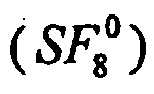
- a frame takes one SF 8 S ⁇ F 8 0 code channel and one SF 16 S ⁇ F 16 2 code channel.
- the user takes the low spreading factor S ⁇ F 4 0 to transmit the information and the receiver takes the low spreading factor to make multiuser detection.
- the S ⁇ F 8 0 or S ⁇ F 16 2 can be constituted by the S ⁇ F 4 0 , i.e. the lower spreading factor derives out the high spreading factors, or the father spreading factor constitutes the son spreading factors.
- Second Step Demodulate the TFCI data to obtain its intermediate demodulation result, and it can take either variable spreading factor or fixed spreading factor. All three demodulation situations are given below.
- the intermediate demodulation result is (d TFCI 1, d TFCI 2 d TFCI 3... d TFCI m), wherein m is the length of the intermediate demodulation result when taking the spreading factor 4 to demodulate the TFCI data.
- TFCI k d TFCI ⁇ 4 ⁇ k - 3 - d TFCI ⁇ 4 ⁇ k - 2 + d TFCI ⁇ 4 ⁇ k - 1 - d TFCI 4 ⁇ k / 4 ,
- the TFCI data at transmitting side must be mapped to an appropriate position (The TFCI data position is known), in other word, it is possible that the TFCI data and user data are interleaved.
- the third situation takes variable spreading factor to demodulate the TFCI data, but the position of the TFCI data is also non-fixed, and the TFCI data and user data are not interleaved. Since the spreading factor for TFCI data is unknown beforehand, and the position of the TFCI data is unknown too, so it takes blind detection for the TFCI data.
- the specific procedure is as follows:
- Third Step From the demodulation result of the TFCI data, obtaining the spreading factor and the code channel occupied by the current TTI, and with them the user data is demodulated. For example, from the demodulation result of the TFCI data, it is known that the current user data takes a spreading factor 8 code channel S ⁇ F 8 0 and a spreading factor 16 code channel S ⁇ F 16 2 .
- the code channel S ⁇ F 16 2 transmits data C 16 1
- the code channel S ⁇ F 8 0 transmit data C 8 1 and C 8 2 .
- C 8 1 S 4 1 + S 4 2 / 2 ;
- C 8 2 S 4 3 + S 4 4 / 2 ;
- C 16 1 S 4 1 - S 4 2 + S 4 3 - S 4 4 / 4.
- the C 8 1 , C 8 2 and C 16 1 are the final demodulation result of the received user data.
- the main computation volume of demodulation is to demodulate the S 4 1 , S 4 2 , S 4 3 , S 4 4 for each physical frame, it takes about 99% of the whole computation volume. Since the computation of the S 4 1 , S 4 2 , S 4 3 , S 4 4 need not wait the demodulation result of the TFCI data, every physical frame (for TD-SCDMA, it is 5ms) can compute independently. Later, when computing the C 8 1 , C 8 2 , C 16 1 , it is necessary to have the demodulation result of TFCI data, but the computation volume of them is very small. Therefore, with the method of the invention, the multiuser detection and variable spreading factor techniques are successfully used in the same system without increasing the system computation volume and time delay.
Landscapes
- Engineering & Computer Science (AREA)
- Computer Networks & Wireless Communication (AREA)
- Signal Processing (AREA)
- Mobile Radio Communication Systems (AREA)
Description
- The invention relates to a demodulation technology, such as multiuser detection or Rake receiver, in the CDMA cellular mobile communication system; more specifically, to a multiuser detection method or other demodulation method at the receiving side, such as Rake receiver, wherein the method is used in a communication system that has a variable spreading factor at the transmitting end. The method of the invention relates to a technique that indicates the bit of physical code channel and spreading factor for the current frame (currently demodulated frame), such as the Transport Format Combination Indicator (TFCI) technique in a third generation mobile communication system.
- When designing a cellular mobile communication system, it is considered that how to use the limited radio resources as much as possible and how to provide the subscribers with more and better services.
- Comparing with the Rake receiver technique, the multiuser detection technique can raise system performance obviously, and its spectrum efficiency is almost double, so the system capacity is raised. Multiuser detection is divided into two ways: the Interference Cancellation (IC) and the Joint Detection (JD), and either utilizes the user code channel estimation result to demodulate the desired user signal and to eliminate other user signals. Therefore, one pre-condition should be satisfied before using the multiuser detection is that the information about the transmitting side, such as the physical code channel, the spreading factor (SF) and the training sequence etc., need to be known.
- Nevertheless, in a real system, especially when a technique that directly indicates the physical code channel and spreading factor of current frame used, such as TFCI in a third generation (3G) mobile system, a transmitted data size changes one frame to another along with the data size generated at the transmitting source. This means that the transmitted data size is non-constant, so the physical code channel and spreading factor used by each user in every Transmission Time Interval (TTI) are changed too, and the receiving side does not know before processing which physical code channel and spreading factor are used at the transmitting side for the user. Usually, it is impossible to use the multiuser detection directly.
- One of the solutions is that the receiving side buffers all data sent by the transmitting side in one TTI, and after demodulating the TFCI data of transmitting side, the receiving side demodulates the TTI data. There are four disadvantages of this solution:
- 1. A large buffer is needed for storing the whole TTI received data;
- 2. The TFCI data needs to be demodulated first (when the physical code channel and spreading factor are unchanged and known), and it is better to take the multiuser detection to demodulate the TFCI data, otherwise the system performance will be worse because of bad TFCI data demodulation result; so the multiuser detection is used twice: one for the TFCI data and one for the demodulated data, so the computation volume is almost double;
- 3. The receiving side can demodulate only after a whole TTI data have been received; since the TTI and the physical frame time interval are not equal, for example in a TD-SCDMA system the physical frame time interval is 5ms and the TTI is possibly 10ms, the receiving side must wait 10ms and then makes the demodulation; this will delay the signal processing much longer, and cannot satisfy within the 150 ms delay requirement from terminal to terminal;
- 4. When directly indicating the current frame physical code channel and spreading factor technique is used, such as TFCI in the 3G, for a variable spreading factor case, it is necessary to look for a blind detection method, and for a fixed spreading factor case, it takes too many bits for indicating the current frame physical code channel and spreading factor, and the net payload bits for transmitting in a frame are too small.
- At present, in 3G except TD-SCDMA, other systems use the fixed spreading factor.
- The 3GPP has defined the TFCI used in a physical code channel. The TFCI is some physical parameters with very high processing gain, and they are transferred in each TTI to indicate its channel-coding scheme, interleaving and holing pattern etc. With these parameters, the current physical frame spreading factor and the code channel occupied situation can be derived. For example, N code channels have allocated to the users, and among them M code channels are needed to be occupied at an instance, M <= N; from the TFCI data, the demodulation side can derived that M code channels are occupied, and the spreading factor of the M code channels is defined in the standard in advance.
- When the wireless link of a user has been established, which physical resources that can be used by this user are defined. Suppose the spreading factor of a user is


Figure 1 . - When the user transmits many data, a code channel with spreading factor 4

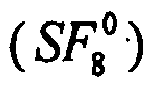


- When a smaller amount of data is transmitted, the transmitting side can take larger spreading factor. Since the spreading factor is larger, the processing gain is larger too; so the transmitting power can be smaller. Therefore, on the one hand, the transmitting power is saved (This is useful for a terminal; if voice takes 50% of the transmitting side power, then with this method the transmitting side power can save 25%), and on the other hand, interference to other users is reduced. So, the whole system performance is raised.
- It has been seen from the above analysis that the multiuser detection and TFCI techniques are very important. The TFCI indicates the channel-coding scheme, interleaving and holing pattern etc. for the current TTI (10, 20, 40 or 80ms), but in a physical frame (it is 5ms for TD-SCDMA) the physical code channel and spreading factor used by a user are unknown, so it is required that the receiver must adaptively detect the variable code channel. Nevertheless, the multiuser detection technique uses the code channel estimation result to make either Interference Cancellation or Joint Detection, but there is a pre-condition that the physical code channel and spreading factor of current frame for all users have been known. Obviously, this is a conflict.
- The documents
JP 2002 290275 A4 US 2002/0136278 A1 originate from the same patent family and show a method for multiuser demodulation with a variable spreading factor, defined by a code-tree generation according to [H1] → [H1, H1] [H1,-H1]. The documents further show that a data channel and a control channel are modulated using different spreading factors. The control channel is spread using a lowest spreading factor, while the data channel is spread using a higher spreading factor. In a first step, the control channel and the data channel are despread using this lowest spreading factor. This despreading leads to a completely despread control channel comprising TFCI data and an intermediate demodulation result of the data channel. The real spreading factor of the data channel is taken from the TFCI data and used to finish the despreading of the intermediate result of the data channel. - Objective of the invention is to design a multiuser demodulation method for variable spreading factor, and the method uses the multiuser detection and variable spreading factor at the same time. The method takes a new signal processing procedure, through which the multiuser detection and TFCI can be used in the system at the same time without increasing the system computation volume and time-delay. The technical scheme that implements the objective of the invention is shown in the following:
- A multiuser demodulation method for the variable spreading factor defined by a code-tree generation according to

- A. Demodulating received signals with a low spreading factor using the multiuser detection technique, and obtaining intermediate demodulation result of a TFCI data and intermediate demodulation result of a user data;
- B. Demodulating intermediate demodulation result of the TFCI data with a supposed variable spreading factor,
A position of the TFCI data is then non-fixed, and the TFCI data and user data are not interleaved. The method moreover comprises demodulating the intermediate demodulation result of the TFCI data with more than one assumed TFCI spreading factor respectively, obtaining various demodulation results of the TFCI data, obtaining spreading factors and code channel occupied by current TTI from the demodulation results; and determining one spreading factor that coincides with the assumed TFCI spreading factor as the current real spreading factor from these spreading factors of the code channel occupied by current TTI; - C. Obtaining a real spreading factor from the demodulated TFCI data intermediate result;
- D. Processing the intermediate demodulation result of the user data with the real spreading factor to obtain the final received user data.
- Demodulating intermediate demodulation result of the TFCI data with a fixed spreading factor, the fixed spreading factor is unchanged when the real spreading factor is changed.
- When the supposed spreading factor of the TFCI data is a variable spreading factor, and the TFCI data position is non-fixed, and the TFCI data and user data are not interleaved; wherein, the Step B is:
- demodulating the intermediate demodulation result of the TFCI data with more than one assumed TFCI spreading factor respectively, obtaining various demodulation results of the TFCI data, obtaining spreading factors and code channel occupied by current TTI from the demodulation results; and determining one spreading factor that coincides with the assumed TFCI spreading factor as the current real spreading factor from these spreading factors of the code channel occupied by current TTI.
- Step D is: performing post-processing to the intermediate demodulation result of the user data obtained in Step A with the obtained real spreading factor, and obtaining the final received user data.
- The invention proposes a new signal processing procedure at the receiving side. In this signal processing procedure, since the multiuser detection technique is used, the system demodulation performance is not degraded; and since it processes signal directly without waiting the demodulation result of indication for the physical code channel and spreading factor of the current frame, so it need not have a huge buffer to store the whole TTI original data, and needs only one time to use the multiuser detection. Therefore, the computation volume and computation time are saved. Comparing with the situation that demodulates a fixed user physical code channel and spreading factor, the computation volume is almost the same, but the receiving side supports that the transmitting side can change the physical code channel and spreading factor more freely.
-
-
Figure 1 shows a code-tree of the spreading factor. -
Figure 2 shows a signal-processing flowchart of the invention method when multiuser detection and variable spreading factor techniques are used at the same time. - The invention will be described in more detail with reference to drawings and an embodiment.
- The method of the invention is a processing procedure for receiving signal that uses multiuser detection and variable spreading factor techniques at the same time.
- In a variable spreading factor system, a high spreading factor is definitely derived from the low spreading factor. It takes the following formula:

- Therefore, each son spreading factor is constituted by the father spreading factor, for example:


- With this feature, when a user uses which spreading factor is unknown, a low spreading factor is used first to demodulate the received data of the user. After the TFCI data have been demodulated, the real spreading factor is obtained according to the demodulated TFCI data; finally the received data can be obtained by the real spreading factor.
-
Figure 2 shows the signal-processing flowchart of the method, and it has four steps: -
Step 1. Take the lowest spreading factor of the user, and suppose that this lowest spreading factor is used; -
Step 2. With the multiuser detection technique, the received data of the user are demodulated by the lowest spreading factor to obtain the intermediate demodulation result of TFCI data and the intermediate demodulation result of user data; -
Step 3. Demodulate the intermediate demodulation result of TFCI data; -
Step 4. Based on the demodulated TFCI data, the real spreading factor is obtained, and making overlay processing to the user data intermediate demodulation result obtained inStep 2 with the real spreading factor, the final user received data are obtained. - In the following, an embodiment of this method is described, which takes three steps.
- First Step. Suppose that the activated code channel for the user is


- It is seen that the


- Second Step. Demodulate the TFCI data to obtain its intermediate demodulation result, and it can take either variable spreading factor or fixed spreading factor. All three demodulation situations are given below.
- Suppose taking

d TFCI1, dTFCI2d TFCI3... dTFCIm), wherein m is the length of the intermediate demodulation result when taking the spreadingfactor 4 to demodulate the TFCI data. - First situation takes fixed spreading factor to demodulate the TFCI data, for example always taking SF,6 to demodulate TFCI data without changing with actual SF changing, then:

- Wherein the range of k is (1 ... m/4).
- Second situation takes a variable spreading factor to demodulate the TFCI data, but the position of the TFCI data is non-fixed; it is possible that the TFCI data and the user data are interleaved. Since the spreading factor for TFCI data is unknown beforehand, so suppose that the spreading factor for TFCI data is


- Wherein the range of k is (1 ... m/4).
- In this case, the TFCI data at transmitting side must be mapped to an appropriate position (The TFCI data position is known), in other word, it is possible that the TFCI data and user data are interleaved.
- The third situation takes variable spreading factor to demodulate the TFCI data, but the position of the TFCI data is also non-fixed, and the TFCI data and user data are not interleaved. Since the spreading factor for TFCI data is unknown beforehand, and the position of the TFCI data is unknown too, so it takes blind detection for the TFCI data. The specific procedure is as follows:
- Suppose to take the spreading
factor 4, 8 and 16 to demodulate the TFCI data, respectively, and obtain the results. Since the TFCI data indicates the channel-coding scheme, interleaving and holing pattern etc. of the current TTI code channels, the spreading factor and the code channel occupied by the current TTI can be obtained with the demodulation of the TFCI data. When the obtained spreading factor equals to the supposed spreading factor, the current real spreading factor for the TFCI is determined. - Third Step. From the demodulation result of the TFCI data, obtaining the spreading factor and the code channel occupied by the current TTI, and with them the user data is demodulated. For example, from the demodulation result of the TFCI data, it is known that the current user data takes a spreading factor 8 code channel

- Suppose in the 16 chips the code channel


- Demodulate user data with


- There are the following relationships:


- Therefore,


- The


- The main computation volume of demodulation is to demodulate the


Claims (2)
- A method for multiuser demodulation with a spreading factor, defined by a code-tree generation according to
 A. demodulating received signals from a user with a lowest spreading factor of the user by using a multiuser detection technique, and obtaining an intermediate demodulation result of TFCI data and an intermediate demodulation result of user data from the received signals;
characterized by the steps ofB. demodulating the intermediate demodulation result of the TFCI data with a supposed variable spreading factor,
wherein a position of the TFCI data is non-fixed, and the TFCI data and user data are not interleaved, and
wherein demodulating the intermediate demodulation result of the TFCI data with more than one assumed TFCI spreading factor respectively, obtaining various demodulation results of the TFCI data, obtaining spreading factors and code channel occupied by current TTI from the demodulation results; and determining one spreading factor that coincides with the assumed TFCI spreading factor as the current real spreading factor from these spreading factors of the code channel occupied by current TTI;C. obtaining a real spreading factor from the demodulated TFCI data intermediate result; andD. processing the intermediate demodulation result of the user data with the real spreading factor to obtain final received user data. - The method according to Claim 1, wherein Step D is: performing post-processing to the intermediate demodulation result of the user data obtained in Step A with the obtained real spreading factor, and obtaining the final received user data.
Applications Claiming Priority (3)
| Application Number | Priority Date | Filing Date | Title |
|---|---|---|---|
| CN02148623 | 2002-11-13 | ||
| CNB021486239A CN1186950C (en) | 2002-11-13 | 2002-11-13 | Demodulating method for customer with variable spectra expanding coefficient |
| PCT/CN2003/000960 WO2004045121A1 (en) | 2002-11-13 | 2003-11-13 | Method for multi-user demodulation with variable spread spectrum coefficient |
Publications (3)
| Publication Number | Publication Date |
|---|---|
| EP1580912A1 EP1580912A1 (en) | 2005-09-28 |
| EP1580912A4 EP1580912A4 (en) | 2008-02-13 |
| EP1580912B1 true EP1580912B1 (en) | 2015-02-11 |
Family
ID=27811351
Family Applications (1)
| Application Number | Title | Priority Date | Filing Date |
|---|---|---|---|
| EP03770867.4A Expired - Lifetime EP1580912B1 (en) | 2002-11-13 | 2003-11-13 | Method for multi-user demodulation with variable spread spectrum coefficient |
Country Status (7)
| Country | Link |
|---|---|
| US (1) | US7539236B2 (en) |
| EP (1) | EP1580912B1 (en) |
| JP (1) | JP4137057B2 (en) |
| KR (1) | KR100704350B1 (en) |
| CN (1) | CN1186950C (en) |
| AU (1) | AU2003280930A1 (en) |
| WO (1) | WO2004045121A1 (en) |
Families Citing this family (9)
| Publication number | Priority date | Publication date | Assignee | Title |
|---|---|---|---|---|
| US7599344B2 (en) * | 2004-06-08 | 2009-10-06 | Interdigital Technology Corporation | Method and apparatus for reducing multi-user processing in wireless communication systems |
| US7889755B2 (en) | 2005-03-31 | 2011-02-15 | Qualcomm Incorporated | HSDPA system with reduced inter-user interference |
| CN1863024B (en) * | 2005-05-09 | 2010-04-28 | 上海原动力通信科技有限公司 | A Blind User Distinguishing Method Based on Transmission Format Combination Indication Detection |
| US8315344B2 (en) * | 2009-04-09 | 2012-11-20 | Telefonaktiebolaget Lm Ericsson (Publ) | Blind detection of the transport format (TF) of a signal |
| CN101827443B (en) * | 2010-03-29 | 2012-07-04 | 普天信息技术研究院有限公司 | Method for allocating time division-synchronization code division multiple access (TD-SCDMA) system code resources |
| CN102340326B (en) * | 2011-09-09 | 2016-04-13 | 中兴通讯股份有限公司 | Blind multiuser detection method and device |
| US20130322333A1 (en) * | 2012-05-31 | 2013-12-05 | Mediatek Inc. | Network server, mobile communications device, and method thereof |
| JP6149356B2 (en) * | 2012-06-29 | 2017-06-21 | 株式会社Soken | Wireless communication system |
| KR102592197B1 (en) | 2023-05-18 | 2023-10-20 | 주식회사 미주산업 | Vision recognition-based shipbuilding equipment steel fittings shape assembly and welding automation system |
Citations (1)
| Publication number | Priority date | Publication date | Assignee | Title |
|---|---|---|---|---|
| US20020136278A1 (en) * | 2001-03-26 | 2002-09-26 | Tadashi Nakamura | Spread-spectrum signal receiver apparatus and interference cancellation apparatus |
Family Cites Families (10)
| Publication number | Priority date | Publication date | Assignee | Title |
|---|---|---|---|---|
| JPS6450620A (en) * | 1987-08-21 | 1989-02-27 | Toshiba Corp | Semiconductor logic element |
| US5254336A (en) * | 1992-09-24 | 1993-10-19 | Helene Curtis, Inc. | Method of increasing hair shine and repairing alkaline-damaged hair |
| KR19990052334A (en) * | 1997-12-22 | 1999-07-05 | 서평원 | Multiuser Detection Apparatus and Method of Direct Diffusion Code Division Multiple Access System |
| GB2349042B (en) * | 1999-04-12 | 2003-07-23 | Motorola Ltd | A communication apparatus and method of format adaptation therfor |
| KR100493750B1 (en) * | 1999-09-21 | 2005-06-07 | 인터디지탈 테크날러지 코포레이션 | Multiuser detector for variable spreading factors |
| US6532250B1 (en) * | 1999-12-21 | 2003-03-11 | Telefonaktiebolaget Lm Ericsson (Publ) | Methods and apparatus for spreading and despreading information signals in code division multiple access communications systems |
| GB2359966A (en) * | 2000-03-01 | 2001-09-05 | Roke Manor Research | Post processing of spreading codes in a mobile telecommunications system |
| EP1305884A2 (en) * | 2000-08-04 | 2003-05-02 | TELEFONAKTIEBOLAGET LM ERICSSON (publ) | Spreading factor detector |
| US6879576B1 (en) * | 2000-09-06 | 2005-04-12 | Qualcomm Incorporated | Method and apparatus for processing a physical channel with partial transport format information |
| KR100444730B1 (en) * | 2001-12-24 | 2004-08-16 | 한국전자통신연구원 | Demodulating apparatus of a base station for wideband code division multiple access system and method thereof |
-
2002
- 2002-11-13 CN CNB021486239A patent/CN1186950C/en not_active Expired - Fee Related
-
2003
- 2003-11-13 EP EP03770867.4A patent/EP1580912B1/en not_active Expired - Lifetime
- 2003-11-13 JP JP2004550624A patent/JP4137057B2/en not_active Expired - Fee Related
- 2003-11-13 KR KR20057008652A patent/KR100704350B1/en not_active Expired - Fee Related
- 2003-11-13 WO PCT/CN2003/000960 patent/WO2004045121A1/en not_active Ceased
- 2003-11-13 AU AU2003280930A patent/AU2003280930A1/en not_active Abandoned
-
2005
- 2005-05-10 US US11/125,612 patent/US7539236B2/en not_active Expired - Lifetime
Patent Citations (1)
| Publication number | Priority date | Publication date | Assignee | Title |
|---|---|---|---|---|
| US20020136278A1 (en) * | 2001-03-26 | 2002-09-26 | Tadashi Nakamura | Spread-spectrum signal receiver apparatus and interference cancellation apparatus |
Also Published As
| Publication number | Publication date |
|---|---|
| CN1446007A (en) | 2003-10-01 |
| KR20050086635A (en) | 2005-08-30 |
| JP4137057B2 (en) | 2008-08-20 |
| EP1580912A1 (en) | 2005-09-28 |
| WO2004045121A1 (en) | 2004-05-27 |
| KR100704350B1 (en) | 2007-04-06 |
| EP1580912A4 (en) | 2008-02-13 |
| AU2003280930A1 (en) | 2004-06-03 |
| US20050237986A1 (en) | 2005-10-27 |
| CN1186950C (en) | 2005-01-26 |
| JP2006506836A (en) | 2006-02-23 |
| US7539236B2 (en) | 2009-05-26 |
Similar Documents
| Publication | Publication Date | Title |
|---|---|---|
| EP1686697B1 (en) | Reverse link correlation filter in multi rate CDMA wireless communication systems | |
| CN101958730B (en) | Channel estimation for wireless communication | |
| US6879576B1 (en) | Method and apparatus for processing a physical channel with partial transport format information | |
| US7848288B2 (en) | Method and apparatus for estimating channelization codes in a wireless transmit/receive unit | |
| KR100445492B1 (en) | Radio communication apparatus and radio communication method | |
| EP1680868B1 (en) | Interference estimation in cdma systems using alternative scrambling codes | |
| KR100703382B1 (en) | Apparatus and method for transmitting control information in mobile communication system | |
| EP1961135A2 (en) | Despreading-on-demand for use in spread spectrum receivers | |
| EP1274179A1 (en) | Method for signal processing used in terminal device of code division multiple access mobile communication system | |
| US6507604B1 (en) | Rake receiver for CDMA wireless communications | |
| CN101278489A (en) | A method and apparatus for received communication signal processing | |
| US20020131534A1 (en) | System and method for multistage interference cancellation | |
| US7539236B2 (en) | Method for multi-user demodulation with variable spread spectrum coefficient | |
| US20060098600A1 (en) | Decreasing computational complexity of TD-SCDMA measurement process | |
| EP1895796A1 (en) | Wireless access method, wireless base station device, and wireless terminal device | |
| US20020191566A1 (en) | Method of cellular communication | |
| US8897339B2 (en) | Method and arrangement of increasing impairment co-variance matrix estimation accuracy | |
| EP1754326B1 (en) | Method and apparatus for reducing multi-user processing in wireless communication systems | |
| EP1408621A1 (en) | Cdma reception apparatus and cdma reception method | |
| CN1798002B (en) | Code detection method and device in TDS-CDMA mobile communication system | |
| KR100866759B1 (en) | Power control method and apparatus applied thereto in the TD-SCDMA system | |
| EP1580902A1 (en) | Receiver and receiving method | |
| KR100888839B1 (en) | Method and apparatus for reducing multiple user processing in a wireless communication system | |
| Lyu | Time offsets for non-orthogonal CDMA signals | |
| CN1998154A (en) | Deconvolution searcher for wireless communication system |
Legal Events
| Date | Code | Title | Description |
|---|---|---|---|
| PUAI | Public reference made under article 153(3) epc to a published international application that has entered the european phase |
Free format text: ORIGINAL CODE: 0009012 |
|
| 17P | Request for examination filed |
Effective date: 20050520 |
|
| AK | Designated contracting states |
Kind code of ref document: A1 Designated state(s): AT BE BG CH CY CZ DE DK EE ES FI FR GB GR HU IE IT LI LU MC NL PT RO SE SI SK TR |
|
| AX | Request for extension of the european patent |
Extension state: AL LT LV MK |
|
| DAX | Request for extension of the european patent (deleted) | ||
| A4 | Supplementary search report drawn up and despatched |
Effective date: 20080116 |
|
| RIC1 | Information provided on ipc code assigned before grant |
Ipc: H04B 1/707 20060101ALN20080110BHEP Ipc: H04J 11/00 20060101AFI20080110BHEP |
|
| 17Q | First examination report despatched |
Effective date: 20110404 |
|
| RAP1 | Party data changed (applicant data changed or rights of an application transferred) |
Owner name: CHINA ACADEMY OF TELECOMMUNICATIONS TECHNOLOGY |
|
| GRAP | Despatch of communication of intention to grant a patent |
Free format text: ORIGINAL CODE: EPIDOSNIGR1 |
|
| INTG | Intention to grant announced |
Effective date: 20141024 |
|
| GRAS | Grant fee paid |
Free format text: ORIGINAL CODE: EPIDOSNIGR3 |
|
| GRAA | (expected) grant |
Free format text: ORIGINAL CODE: 0009210 |
|
| AK | Designated contracting states |
Kind code of ref document: B1 Designated state(s): AT BE BG CH CY CZ DE DK EE ES FI FR GB GR HU IE IT LI LU MC NL PT RO SE SI SK TR |
|
| REG | Reference to a national code |
Ref country code: GB Ref legal event code: FG4D |
|
| REG | Reference to a national code |
Ref country code: CH Ref legal event code: EP |
|
| REG | Reference to a national code |
Ref country code: IE Ref legal event code: FG4D |
|
| REG | Reference to a national code |
Ref country code: AT Ref legal event code: REF Ref document number: 710207 Country of ref document: AT Kind code of ref document: T Effective date: 20150315 |
|
| REG | Reference to a national code |
Ref country code: DE Ref legal event code: R096 Ref document number: 60347299 Country of ref document: DE Effective date: 20150326 |
|
| REG | Reference to a national code |
Ref country code: NL Ref legal event code: VDEP Effective date: 20150211 |
|
| REG | Reference to a national code |
Ref country code: AT Ref legal event code: MK05 Ref document number: 710207 Country of ref document: AT Kind code of ref document: T Effective date: 20150211 |
|
| PG25 | Lapsed in a contracting state [announced via postgrant information from national office to epo] |
Ref country code: SE Free format text: LAPSE BECAUSE OF FAILURE TO SUBMIT A TRANSLATION OF THE DESCRIPTION OR TO PAY THE FEE WITHIN THE PRESCRIBED TIME-LIMIT Effective date: 20150211 Ref country code: FI Free format text: LAPSE BECAUSE OF FAILURE TO SUBMIT A TRANSLATION OF THE DESCRIPTION OR TO PAY THE FEE WITHIN THE PRESCRIBED TIME-LIMIT Effective date: 20150211 Ref country code: ES Free format text: LAPSE BECAUSE OF FAILURE TO SUBMIT A TRANSLATION OF THE DESCRIPTION OR TO PAY THE FEE WITHIN THE PRESCRIBED TIME-LIMIT Effective date: 20150211 |
|
| PG25 | Lapsed in a contracting state [announced via postgrant information from national office to epo] |
Ref country code: GR Free format text: LAPSE BECAUSE OF FAILURE TO SUBMIT A TRANSLATION OF THE DESCRIPTION OR TO PAY THE FEE WITHIN THE PRESCRIBED TIME-LIMIT Effective date: 20150512 Ref country code: NL Free format text: LAPSE BECAUSE OF FAILURE TO SUBMIT A TRANSLATION OF THE DESCRIPTION OR TO PAY THE FEE WITHIN THE PRESCRIBED TIME-LIMIT Effective date: 20150211 Ref country code: AT Free format text: LAPSE BECAUSE OF FAILURE TO SUBMIT A TRANSLATION OF THE DESCRIPTION OR TO PAY THE FEE WITHIN THE PRESCRIBED TIME-LIMIT Effective date: 20150211 |
|
| PG25 | Lapsed in a contracting state [announced via postgrant information from national office to epo] |
Ref country code: EE Free format text: LAPSE BECAUSE OF FAILURE TO SUBMIT A TRANSLATION OF THE DESCRIPTION OR TO PAY THE FEE WITHIN THE PRESCRIBED TIME-LIMIT Effective date: 20150211 Ref country code: CZ Free format text: LAPSE BECAUSE OF FAILURE TO SUBMIT A TRANSLATION OF THE DESCRIPTION OR TO PAY THE FEE WITHIN THE PRESCRIBED TIME-LIMIT Effective date: 20150211 Ref country code: DK Free format text: LAPSE BECAUSE OF FAILURE TO SUBMIT A TRANSLATION OF THE DESCRIPTION OR TO PAY THE FEE WITHIN THE PRESCRIBED TIME-LIMIT Effective date: 20150211 Ref country code: RO Free format text: LAPSE BECAUSE OF FAILURE TO SUBMIT A TRANSLATION OF THE DESCRIPTION OR TO PAY THE FEE WITHIN THE PRESCRIBED TIME-LIMIT Effective date: 20150211 Ref country code: SK Free format text: LAPSE BECAUSE OF FAILURE TO SUBMIT A TRANSLATION OF THE DESCRIPTION OR TO PAY THE FEE WITHIN THE PRESCRIBED TIME-LIMIT Effective date: 20150211 |
|
| REG | Reference to a national code |
Ref country code: DE Ref legal event code: R097 Ref document number: 60347299 Country of ref document: DE |
|
| REG | Reference to a national code |
Ref country code: FR Ref legal event code: PLFP Year of fee payment: 13 |
|
| PLBE | No opposition filed within time limit |
Free format text: ORIGINAL CODE: 0009261 |
|
| STAA | Information on the status of an ep patent application or granted ep patent |
Free format text: STATUS: NO OPPOSITION FILED WITHIN TIME LIMIT |
|
| PG25 | Lapsed in a contracting state [announced via postgrant information from national office to epo] |
Ref country code: IT Free format text: LAPSE BECAUSE OF FAILURE TO SUBMIT A TRANSLATION OF THE DESCRIPTION OR TO PAY THE FEE WITHIN THE PRESCRIBED TIME-LIMIT Effective date: 20150211 |
|
| 26N | No opposition filed |
Effective date: 20151112 |
|
| PG25 | Lapsed in a contracting state [announced via postgrant information from national office to epo] |
Ref country code: SI Free format text: LAPSE BECAUSE OF FAILURE TO SUBMIT A TRANSLATION OF THE DESCRIPTION OR TO PAY THE FEE WITHIN THE PRESCRIBED TIME-LIMIT Effective date: 20150211 |
|
| PG25 | Lapsed in a contracting state [announced via postgrant information from national office to epo] |
Ref country code: MC Free format text: LAPSE BECAUSE OF FAILURE TO SUBMIT A TRANSLATION OF THE DESCRIPTION OR TO PAY THE FEE WITHIN THE PRESCRIBED TIME-LIMIT Effective date: 20150211 Ref country code: LU Free format text: LAPSE BECAUSE OF FAILURE TO SUBMIT A TRANSLATION OF THE DESCRIPTION OR TO PAY THE FEE WITHIN THE PRESCRIBED TIME-LIMIT Effective date: 20151113 |
|
| REG | Reference to a national code |
Ref country code: CH Ref legal event code: PL |
|
| PG25 | Lapsed in a contracting state [announced via postgrant information from national office to epo] |
Ref country code: LI Free format text: LAPSE BECAUSE OF NON-PAYMENT OF DUE FEES Effective date: 20151130 Ref country code: CH Free format text: LAPSE BECAUSE OF NON-PAYMENT OF DUE FEES Effective date: 20151130 |
|
| REG | Reference to a national code |
Ref country code: IE Ref legal event code: MM4A |
|
| PG25 | Lapsed in a contracting state [announced via postgrant information from national office to epo] |
Ref country code: IE Free format text: LAPSE BECAUSE OF NON-PAYMENT OF DUE FEES Effective date: 20151113 |
|
| REG | Reference to a national code |
Ref country code: FR Ref legal event code: PLFP Year of fee payment: 14 |
|
| PG25 | Lapsed in a contracting state [announced via postgrant information from national office to epo] |
Ref country code: HU Free format text: LAPSE BECAUSE OF FAILURE TO SUBMIT A TRANSLATION OF THE DESCRIPTION OR TO PAY THE FEE WITHIN THE PRESCRIBED TIME-LIMIT; INVALID AB INITIO Effective date: 20031113 Ref country code: BG Free format text: LAPSE BECAUSE OF FAILURE TO SUBMIT A TRANSLATION OF THE DESCRIPTION OR TO PAY THE FEE WITHIN THE PRESCRIBED TIME-LIMIT Effective date: 20150211 |
|
| PG25 | Lapsed in a contracting state [announced via postgrant information from national office to epo] |
Ref country code: CY Free format text: LAPSE BECAUSE OF FAILURE TO SUBMIT A TRANSLATION OF THE DESCRIPTION OR TO PAY THE FEE WITHIN THE PRESCRIBED TIME-LIMIT Effective date: 20150211 |
|
| PG25 | Lapsed in a contracting state [announced via postgrant information from national office to epo] |
Ref country code: TR Free format text: LAPSE BECAUSE OF FAILURE TO SUBMIT A TRANSLATION OF THE DESCRIPTION OR TO PAY THE FEE WITHIN THE PRESCRIBED TIME-LIMIT Effective date: 20150211 |
|
| REG | Reference to a national code |
Ref country code: FR Ref legal event code: PLFP Year of fee payment: 15 |
|
| PG25 | Lapsed in a contracting state [announced via postgrant information from national office to epo] |
Ref country code: PT Free format text: LAPSE BECAUSE OF FAILURE TO SUBMIT A TRANSLATION OF THE DESCRIPTION OR TO PAY THE FEE WITHIN THE PRESCRIBED TIME-LIMIT Effective date: 20150211 |
|
| PGFP | Annual fee paid to national office [announced via postgrant information from national office to epo] |
Ref country code: DE Payment date: 20201109 Year of fee payment: 18 Ref country code: GB Payment date: 20201118 Year of fee payment: 18 Ref country code: FR Payment date: 20201130 Year of fee payment: 18 |
|
| PGFP | Annual fee paid to national office [announced via postgrant information from national office to epo] |
Ref country code: BE Payment date: 20201116 Year of fee payment: 18 |
|
| REG | Reference to a national code |
Ref country code: DE Ref legal event code: R081 Ref document number: 60347299 Country of ref document: DE Owner name: DATANG MOBILE COMMUNICATIONS EQUIPMENT CO., LT, CN Free format text: FORMER OWNER: CHINA ACADEMY OF TELECOMMUNICATIONS TECHNOLOGY, HAIDIAN, DISTRICT BEIJING, CN |
|
| REG | Reference to a national code |
Ref country code: BE Ref legal event code: PD Owner name: DATANG MOBILE COMMUNICATIONS EQUIPMENT CO., LTD.; CN Free format text: DETAILS ASSIGNMENT: CHANGE OF OWNER(S), ASSIGNMENT; FORMER OWNER NAME: CHINA ACADEMY OF TELECOMMUNICATIONS TECHNOLOGY Effective date: 20210624 |
|
| REG | Reference to a national code |
Ref country code: GB Ref legal event code: 732E Free format text: REGISTERED BETWEEN 20210729 AND 20210804 |
|
| REG | Reference to a national code |
Ref country code: DE Ref legal event code: R119 Ref document number: 60347299 Country of ref document: DE |
|
| GBPC | Gb: european patent ceased through non-payment of renewal fee |
Effective date: 20211113 |
|
| PG25 | Lapsed in a contracting state [announced via postgrant information from national office to epo] |
Ref country code: BE Free format text: LAPSE BECAUSE OF NON-PAYMENT OF DUE FEES Effective date: 20211130 |
|
| REG | Reference to a national code |
Ref country code: BE Ref legal event code: MM Effective date: 20211130 |
|
| PG25 | Lapsed in a contracting state [announced via postgrant information from national office to epo] |
Ref country code: GB Free format text: LAPSE BECAUSE OF NON-PAYMENT OF DUE FEES Effective date: 20211113 Ref country code: DE Free format text: LAPSE BECAUSE OF NON-PAYMENT OF DUE FEES Effective date: 20220601 |
|
| PG25 | Lapsed in a contracting state [announced via postgrant information from national office to epo] |
Ref country code: FR Free format text: LAPSE BECAUSE OF NON-PAYMENT OF DUE FEES Effective date: 20211130 |