EP1580681A2 - Verfahren zur Verarbeitung fehlender Werten in Messdaten - Google Patents
Verfahren zur Verarbeitung fehlender Werten in Messdaten Download PDFInfo
- Publication number
- EP1580681A2 EP1580681A2 EP05003419A EP05003419A EP1580681A2 EP 1580681 A2 EP1580681 A2 EP 1580681A2 EP 05003419 A EP05003419 A EP 05003419A EP 05003419 A EP05003419 A EP 05003419A EP 1580681 A2 EP1580681 A2 EP 1580681A2
- Authority
- EP
- European Patent Office
- Prior art keywords
- measured
- vertexes
- weights
- single nucleotide
- nucleotide polymorphism
- Prior art date
- Legal status (The legal status is an assumption and is not a legal conclusion. Google has not performed a legal analysis and makes no representation as to the accuracy of the status listed.)
- Ceased
Links
Images


Classifications
-
- G—PHYSICS
- G16—INFORMATION AND COMMUNICATION TECHNOLOGY [ICT] SPECIALLY ADAPTED FOR SPECIFIC APPLICATION FIELDS
- G16B—BIOINFORMATICS, i.e. INFORMATION AND COMMUNICATION TECHNOLOGY [ICT] SPECIALLY ADAPTED FOR GENETIC OR PROTEIN-RELATED DATA PROCESSING IN COMPUTATIONAL MOLECULAR BIOLOGY
- G16B40/00—ICT specially adapted for biostatistics; ICT specially adapted for bioinformatics-related machine learning or data mining, e.g. knowledge discovery or pattern finding
-
- C—CHEMISTRY; METALLURGY
- C12—BIOCHEMISTRY; BEER; SPIRITS; WINE; VINEGAR; MICROBIOLOGY; ENZYMOLOGY; MUTATION OR GENETIC ENGINEERING
- C12Q—MEASURING OR TESTING PROCESSES INVOLVING ENZYMES, NUCLEIC ACIDS OR MICROORGANISMS; COMPOSITIONS OR TEST PAPERS THEREFOR; PROCESSES OF PREPARING SUCH COMPOSITIONS; CONDITION-RESPONSIVE CONTROL IN MICROBIOLOGICAL OR ENZYMOLOGICAL PROCESSES
- C12Q1/00—Measuring or testing processes involving enzymes, nucleic acids or microorganisms; Compositions therefor; Processes of preparing such compositions
- C12Q1/68—Measuring or testing processes involving enzymes, nucleic acids or microorganisms; Compositions therefor; Processes of preparing such compositions involving nucleic acids
- C12Q1/6813—Hybridisation assays
- C12Q1/6827—Hybridisation assays for detection of mutation or polymorphism
-
- G—PHYSICS
- G16—INFORMATION AND COMMUNICATION TECHNOLOGY [ICT] SPECIALLY ADAPTED FOR SPECIFIC APPLICATION FIELDS
- G16B—BIOINFORMATICS, i.e. INFORMATION AND COMMUNICATION TECHNOLOGY [ICT] SPECIALLY ADAPTED FOR GENETIC OR PROTEIN-RELATED DATA PROCESSING IN COMPUTATIONAL MOLECULAR BIOLOGY
- G16B20/00—ICT specially adapted for functional genomics or proteomics, e.g. genotype-phenotype associations
- G16B20/20—Allele or variant detection, e.g. single nucleotide polymorphism [SNP] detection
-
- G—PHYSICS
- G16—INFORMATION AND COMMUNICATION TECHNOLOGY [ICT] SPECIALLY ADAPTED FOR SPECIFIC APPLICATION FIELDS
- G16B—BIOINFORMATICS, i.e. INFORMATION AND COMMUNICATION TECHNOLOGY [ICT] SPECIALLY ADAPTED FOR GENETIC OR PROTEIN-RELATED DATA PROCESSING IN COMPUTATIONAL MOLECULAR BIOLOGY
- G16B20/00—ICT specially adapted for functional genomics or proteomics, e.g. genotype-phenotype associations
Definitions
- the present invention relates to a method for processing missing values, and more particularly, to a method for processing missing values included in genetic data.
- a high-throughput genotyping technology has enabled genotyping of a plurality of genes with a large number of samples at the same time. This genotyping technology is used to find a nucleotide sequence of a predetermined sample or single nucleotide polymorphism (SNP) information of a predetermined gene part. Also, the high-throughput genotyping technology is used usefully biologically to search genes related to attacks of diseases or draws genetic maps based on the SNP information. The result of these experiments is expressed in a form of a matrix with samples in rows and genes or SNP positions in columns. Due to the characteristics of the high-throughput genotyping technology, however, it cannot be avoided that a number of values are often missing.
- a method for processing missing values in measured data including a plurality of missing values, including: assigning different weights to measured objects or measured items with respect to the importance of the measured objects or measured items; selecting a set minimizing sum of the weights, among sets of the measured objects or measured items including the missing values; and removing measured objects and measured items included in the selected set, from the measured data.
- a method for processing missing values including: assigning different weights to samples or single nucleotide polymorphism positions with respect to the importance of the samples or single nucleotide polymorphism positions in genetic data; selecting a set minimizing a sum of weights, among sets of the samples and single nucleotide polymorphism positions including missing values; and removing samples and single nucleotide polymorphism positions included in the selected set, from the genetic data.
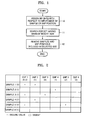
- FIG.1 is a flowchart of a method for processing missing values according to an embodiment of the present invention.
- a different weight is assigned to a measured object or a measured item according to an importance of the measured object or item in step 10.
- the measured object is a measured sample
- the measured item is a position of a single nucleotide polymorphism (SNP).
- SNP single nucleotide polymorphism
- FIG. 2 illustrates a case where an identical weight is assigned to 6 samples and different weights are assigned with respect to SNP positions.
- the numbers in parentheses represent weights assigned to corresponding samples or SNP positions, and '*' indicates that genetic data is missing.
- FIGS. 3A and 3B are showing different examples of sets of samples and SNP positions that can be removed in relation to the missing values shown in FIG. 2.
- samples 1, 4, and 5, and SNP positions 1, 3, and 4 can be removed, respectively, and at this time, a sum of weights of corresponding rows and columns is 5.5.
- samples 3 and 4, and SNP positions 1, 2, and 4 can be removed and a sum of weights of corresponding rows and columns is 4.5. Accordingly, between FIGS. 3A and 3B, the case in FIG. 3B having a smaller sum of weights is selected.
- the present embodiment adopts a bipartite graph and a method for solving a weighted vertex cover problem.
- the analyzed data is expressed through a bipartite graph.
- Data shown in FIG. 2 will be explained as an example.
- Samples are placed as vertexes of one side of a bipartite graph and SNP positions are placed as vertexes of the other side of the bipartite graph.
- a weight of a corresponding SNP position or sample is assigned to each vertex.
- vertexes corresponding to samples and SNP positions corresponding to respective missing values are connected with edges. That is, when a missing value occurs at SNP position j in sample i, vertexes corresponding to sample i and SNP position j are connected with an edge.
- the bipartite graph to which thus weights are assigned can convert to a weighted vertex cover problem.
- a vertex cover is a partial set of vertex sets covering all edges in the graph.
- the weighted vertex cover problem is to obtain a vertex cover that minimizes a sum of weights. That is, SNP positions or samples, corresponding to vertexes included in a set obtained as the solution of the weighted vertex cover problem are removed. The remaining vertexes not included in the solution form an independent set.
- FIG. 4 illustrates a bipartite graph of data shown in FIG. 2, and among vertexes, vertexes marked by solid lines correspond to samples and SNP positions to be removed.
- the vertex cover problem can be solved in a variety of methods, and Hungarian method is a leading one.
- the Hungarian method is disclosed in a book by Christos H. Papadimitiou and Kenneth Steiglitz, "Combinatorial optimization: Algorithms and complexity", 1982, Prentice-Hall.
- FIG. 5 illustrates an output of genetic data in which the number of SNP positions is 10, the number of samples is 20, and the number of missing values is 33.
- an empty cell represents a missing value
- 0, 1, and 2 are values expressing the types of nucleotide sequences, respectively, in numbers, which can be obtained from two chromosomes in one sample in each SNP position.
- 0 denotes AA
- 1 denotes AT
- 2 denotes TT.
- a weight for each sample is uniformly determined as 1, and a weight with respect to the SNP position is determined as shown in FIG. 6.
- FIG. 7 is a bipartite graph of missing values shown in FIG. 5.
- the method for processing missing values in genetic data can also be embodied as computer readable codes on a computer readable recording medium.
- the computer readable recording medium is any data storage device that can store data which can be thereafter read by a computer system.
- Examples of the computer readable recording medium include read-only memory (ROM), random-access memory (RAM), CD-ROMs, magnetic tapes, floppy disks, optical data storage devices, and carrier waves such as data transmission through the Internet.
- the computer readable recording medium can also be distributed over network coupled computer systems so that the computer readable code is stored and executed in a distributed fashion.
- weights are assigned with respect to the importance of a sample or a SNP position, and a set of samples and SNP positions that minimizes sum of weights is obtained and then, by removing missing data included in the set, loss of data with relatively higher importance can be minimized.
Landscapes
- Life Sciences & Earth Sciences (AREA)
- Engineering & Computer Science (AREA)
- Health & Medical Sciences (AREA)
- Physics & Mathematics (AREA)
- Bioinformatics & Cheminformatics (AREA)
- Medical Informatics (AREA)
- Biotechnology (AREA)
- Biophysics (AREA)
- General Health & Medical Sciences (AREA)
- Chemical & Material Sciences (AREA)
- Evolutionary Biology (AREA)
- Bioinformatics & Computational Biology (AREA)
- Theoretical Computer Science (AREA)
- Spectroscopy & Molecular Physics (AREA)
- Proteomics, Peptides & Aminoacids (AREA)
- Analytical Chemistry (AREA)
- Genetics & Genomics (AREA)
- Molecular Biology (AREA)
- Databases & Information Systems (AREA)
- Organic Chemistry (AREA)
- Public Health (AREA)
- Evolutionary Computation (AREA)
- Epidemiology (AREA)
- Data Mining & Analysis (AREA)
- Computer Vision & Pattern Recognition (AREA)
- Bioethics (AREA)
- Artificial Intelligence (AREA)
- Software Systems (AREA)
- Wood Science & Technology (AREA)
- Zoology (AREA)
- Microbiology (AREA)
- Immunology (AREA)
- Biochemistry (AREA)
- General Engineering & Computer Science (AREA)
- Measuring Or Testing Involving Enzymes Or Micro-Organisms (AREA)
- Testing Or Calibration Of Command Recording Devices (AREA)
- Indication And Recording Devices For Special Purposes And Tariff Metering Devices (AREA)
- Management, Administration, Business Operations System, And Electronic Commerce (AREA)
- Apparatus Associated With Microorganisms And Enzymes (AREA)
Applications Claiming Priority (2)
| Application Number | Priority Date | Filing Date | Title |
|---|---|---|---|
| KR1020040011001A KR100590538B1 (ko) | 2004-02-19 | 2004-02-19 | 측정 데이터에서 결측치 제거 방법 |
| KR2004011001 | 2004-02-19 |
Publications (2)
| Publication Number | Publication Date |
|---|---|
| EP1580681A2 true EP1580681A2 (de) | 2005-09-28 |
| EP1580681A3 EP1580681A3 (de) | 2006-02-01 |
Family
ID=34858745
Family Applications (1)
| Application Number | Title | Priority Date | Filing Date |
|---|---|---|---|
| EP05003419A Ceased EP1580681A3 (de) | 2004-02-19 | 2005-02-17 | Verfahren zur Verarbeitung fehlender Werten in Messdaten |
Country Status (3)
| Country | Link |
|---|---|
| US (1) | US7203627B2 (de) |
| EP (1) | EP1580681A3 (de) |
| KR (1) | KR100590538B1 (de) |
Families Citing this family (2)
| Publication number | Priority date | Publication date | Assignee | Title |
|---|---|---|---|---|
| KR20210143460A (ko) | 2020-05-20 | 2021-11-29 | 삼성에스디에스 주식회사 | 특징 추천 장치 및 그것의 특징 추천 방법 |
| CN115630053A (zh) * | 2022-09-28 | 2023-01-20 | 中国建设银行股份有限公司 | 数据补全方法、装置、设备、存储介质及产品 |
Family Cites Families (4)
| Publication number | Priority date | Publication date | Assignee | Title |
|---|---|---|---|---|
| NL8304214A (nl) * | 1983-12-07 | 1985-07-01 | Philips Nv | Werkwijze voor het korrigeren van foute waarden van monsters van een equidistant bemonsterd signaal en inrichting voor het uitvoeren van de werkwijze. |
| GB2354609B (en) * | 1999-09-25 | 2003-07-16 | Ibm | Method and system for predicting transactions |
| US6980691B2 (en) * | 2001-07-05 | 2005-12-27 | Corel Corporation | Correction of “red-eye” effects in images |
| JP2005092719A (ja) * | 2003-09-19 | 2005-04-07 | Nec Corp | ハプロタイプ推定方法、推定装置、プログラム |
-
2004
- 2004-02-19 KR KR1020040011001A patent/KR100590538B1/ko not_active Expired - Fee Related
-
2005
- 2005-02-17 EP EP05003419A patent/EP1580681A3/de not_active Ceased
- 2005-02-17 US US11/060,271 patent/US7203627B2/en not_active Expired - Lifetime
Non-Patent Citations (1)
| Title |
|---|
| None |
Also Published As
| Publication number | Publication date |
|---|---|
| KR100590538B1 (ko) | 2006-06-15 |
| US20050216202A1 (en) | 2005-09-29 |
| KR20050082530A (ko) | 2005-08-24 |
| EP1580681A3 (de) | 2006-02-01 |
| US7203627B2 (en) | 2007-04-10 |
Similar Documents
| Publication | Publication Date | Title |
|---|---|---|
| Wolff et al. | Galaxy HiCExplorer 3: a web server for reproducible Hi-C, capture Hi-C and single-cell Hi-C data analysis, quality control and visualization | |
| Rivera-Colón et al. | Population genomics analysis with RAD, reprised: Stacks 2 | |
| Bradbury et al. | The Practical Haplotype Graph, a platform for storing and using pangenomes for imputation | |
| Corander et al. | BAPS: Bayesian analysis of population structure | |
| Togninalli et al. | The AraGWAS Catalog: a curated and standardized Arabidopsis thaliana GWAS catalog | |
| Catchen et al. | Stacks: building and genotyping loci de novo from short-read sequences | |
| Slovak et al. | A scalable open-source pipeline for large-scale root phenotyping of Arabidopsis | |
| Stam | Construction of integrated genetic linkage maps by means of a new computer package: Join Map | |
| Torkamaneh et al. | Genome-wide SNP calling from genotyping by sequencing (GBS) data: a comparison of seven pipelines and two sequencing technologies | |
| Fonseca et al. | Tools for mapping high-throughput sequencing data | |
| Cone et al. | Genetic, physical, and informatics resources for maize. On the road to an integrated map | |
| Daley et al. | Modeling genome coverage in single-cell sequencing | |
| Tinker et al. | Haplotag: software for haplotype-based genotyping-by-sequencing analysis | |
| EP3622523A1 (de) | Halbüberwachtes lernen zum trainieren einer einheit von tiefen neuronalen faltungsnetzen | |
| EP2893478A1 (de) | Verwendung von haplotypen zur ableitung der abstammung von vor kurzem vermischten personen | |
| Cheng et al. | Machine learning for AI breeding in plants | |
| Gondro et al. | Quality control for genome-wide association studies | |
| Henden et al. | XIBD: software for inferring pairwise identity by descent on the X chromosome | |
| Yamazaki et al. | Biological ontologies in rice databases. An introduction to the activities in Gramene and Oryzabase | |
| Holtgrewe et al. | Methods for the detection and assembly of novel sequence in high-throughput sequencing data | |
| Kuhlwilm et al. | HuConTest: testing human contamination in great ape samples | |
| Tae et al. | ReviSTER: an automated pipeline to revise misaligned reads to simple tandem repeats | |
| EP1580681A2 (de) | Verfahren zur Verarbeitung fehlender Werten in Messdaten | |
| Teterina et al. | Genetic diversity estimates for the Caenorhabditis Intervention Testing Program screening panel | |
| Martini et al. | Lost in translation: On the problem of data coding in penalized whole genome regression with interactions |
Legal Events
| Date | Code | Title | Description |
|---|---|---|---|
| PUAI | Public reference made under article 153(3) epc to a published international application that has entered the european phase |
Free format text: ORIGINAL CODE: 0009012 |
|
| 17P | Request for examination filed |
Effective date: 20050217 |
|
| AK | Designated contracting states |
Kind code of ref document: A2 Designated state(s): AT BE BG CH CY CZ DE DK EE ES FI FR GB GR HU IE IS IT LI LT LU MC NL PL PT RO SE SI SK TR |
|
| AX | Request for extension of the european patent |
Extension state: AL BA HR LV MK YU |
|
| PUAL | Search report despatched |
Free format text: ORIGINAL CODE: 0009013 |
|
| AK | Designated contracting states |
Kind code of ref document: A3 Designated state(s): AT BE BG CH CY CZ DE DK EE ES FI FR GB GR HU IE IS IT LI LT LU MC NL PL PT RO SE SI SK TR |
|
| AX | Request for extension of the european patent |
Extension state: AL BA HR LV MK YU |
|
| AKX | Designation fees paid |
Designated state(s): DE FR GB |
|
| 17Q | First examination report despatched |
Effective date: 20070126 |
|
| STAA | Information on the status of an ep patent application or granted ep patent |
Free format text: STATUS: THE APPLICATION HAS BEEN REFUSED |
|
| 18R | Application refused |
Effective date: 20100721 |