EP1579652B1 - Qualite de service pour iscsi - Google Patents
Qualite de service pour iscsi Download PDFInfo
- Publication number
- EP1579652B1 EP1579652B1 EP03780444A EP03780444A EP1579652B1 EP 1579652 B1 EP1579652 B1 EP 1579652B1 EP 03780444 A EP03780444 A EP 03780444A EP 03780444 A EP03780444 A EP 03780444A EP 1579652 B1 EP1579652 B1 EP 1579652B1
- Authority
- EP
- European Patent Office
- Prior art keywords
- qos
- pdus
- initiator
- iscsi
- policies
- Prior art date
- Legal status (The legal status is an assumption and is not a legal conclusion. Google has not performed a legal analysis and makes no representation as to the accuracy of the status listed.)
- Expired - Lifetime
Links
- 239000003999 initiator Substances 0.000 claims abstract description 148
- 238000007493 shaping process Methods 0.000 claims abstract description 51
- 238000000034 method Methods 0.000 claims description 42
- 238000004590 computer program Methods 0.000 claims description 6
- 238000004891 communication Methods 0.000 claims description 2
- 239000003550 marker Substances 0.000 abstract description 5
- 230000005540 biological transmission Effects 0.000 abstract description 3
- 230000000694 effects Effects 0.000 description 8
- 230000004044 response Effects 0.000 description 7
- 230000006855 networking Effects 0.000 description 5
- 238000010586 diagram Methods 0.000 description 4
- 230000008569 process Effects 0.000 description 3
- 239000003795 chemical substances by application Substances 0.000 description 2
- 230000004069 differentiation Effects 0.000 description 2
- 238000012546 transfer Methods 0.000 description 2
- 230000015556 catabolic process Effects 0.000 description 1
- 238000007796 conventional method Methods 0.000 description 1
- 238000006731 degradation reaction Methods 0.000 description 1
- 230000001934 delay Effects 0.000 description 1
- 230000003111 delayed effect Effects 0.000 description 1
- 238000005516 engineering process Methods 0.000 description 1
- 238000007726 management method Methods 0.000 description 1
- 238000013507 mapping Methods 0.000 description 1
- 230000001052 transient effect Effects 0.000 description 1
Images

Classifications
-
- H—ELECTRICITY
- H04—ELECTRIC COMMUNICATION TECHNIQUE
- H04L—TRANSMISSION OF DIGITAL INFORMATION, e.g. TELEGRAPHIC COMMUNICATION
- H04L12/00—Data switching networks
- H04L12/28—Data switching networks characterised by path configuration, e.g. LAN [Local Area Networks] or WAN [Wide Area Networks]
-
- H—ELECTRICITY
- H04—ELECTRIC COMMUNICATION TECHNIQUE
- H04L—TRANSMISSION OF DIGITAL INFORMATION, e.g. TELEGRAPHIC COMMUNICATION
- H04L67/00—Network arrangements or protocols for supporting network services or applications
- H04L67/01—Protocols
- H04L67/10—Protocols in which an application is distributed across nodes in the network
- H04L67/1097—Protocols in which an application is distributed across nodes in the network for distributed storage of data in networks, e.g. transport arrangements for network file system [NFS], storage area networks [SAN] or network attached storage [NAS]
-
- H—ELECTRICITY
- H04—ELECTRIC COMMUNICATION TECHNIQUE
- H04L—TRANSMISSION OF DIGITAL INFORMATION, e.g. TELEGRAPHIC COMMUNICATION
- H04L47/00—Traffic control in data switching networks
- H04L47/10—Flow control; Congestion control
-
- H—ELECTRICITY
- H04—ELECTRIC COMMUNICATION TECHNIQUE
- H04L—TRANSMISSION OF DIGITAL INFORMATION, e.g. TELEGRAPHIC COMMUNICATION
- H04L47/00—Traffic control in data switching networks
- H04L47/10—Flow control; Congestion control
- H04L47/19—Flow control; Congestion control at layers above the network layer
- H04L47/193—Flow control; Congestion control at layers above the network layer at the transport layer, e.g. TCP related
-
- H—ELECTRICITY
- H04—ELECTRIC COMMUNICATION TECHNIQUE
- H04L—TRANSMISSION OF DIGITAL INFORMATION, e.g. TELEGRAPHIC COMMUNICATION
- H04L47/00—Traffic control in data switching networks
- H04L47/10—Flow control; Congestion control
- H04L47/22—Traffic shaping
-
- H—ELECTRICITY
- H04—ELECTRIC COMMUNICATION TECHNIQUE
- H04L—TRANSMISSION OF DIGITAL INFORMATION, e.g. TELEGRAPHIC COMMUNICATION
- H04L47/00—Traffic control in data switching networks
- H04L47/10—Flow control; Congestion control
- H04L47/24—Traffic characterised by specific attributes, e.g. priority or QoS
- H04L47/2408—Traffic characterised by specific attributes, e.g. priority or QoS for supporting different services, e.g. a differentiated services [DiffServ] type of service
-
- H—ELECTRICITY
- H04—ELECTRIC COMMUNICATION TECHNIQUE
- H04L—TRANSMISSION OF DIGITAL INFORMATION, e.g. TELEGRAPHIC COMMUNICATION
- H04L47/00—Traffic control in data switching networks
- H04L47/10—Flow control; Congestion control
- H04L47/31—Flow control; Congestion control by tagging of packets, e.g. using discard eligibility [DE] bits
-
- H—ELECTRICITY
- H04—ELECTRIC COMMUNICATION TECHNIQUE
- H04L—TRANSMISSION OF DIGITAL INFORMATION, e.g. TELEGRAPHIC COMMUNICATION
- H04L67/00—Network arrangements or protocols for supporting network services or applications
- H04L67/50—Network services
- H04L67/60—Scheduling or organising the servicing of application requests, e.g. requests for application data transmissions using the analysis and optimisation of the required network resources
- H04L67/61—Scheduling or organising the servicing of application requests, e.g. requests for application data transmissions using the analysis and optimisation of the required network resources taking into account QoS or priority requirements
-
- H—ELECTRICITY
- H04—ELECTRIC COMMUNICATION TECHNIQUE
- H04L—TRANSMISSION OF DIGITAL INFORMATION, e.g. TELEGRAPHIC COMMUNICATION
- H04L69/00—Network arrangements, protocols or services independent of the application payload and not provided for in the other groups of this subclass
- H04L69/16—Implementation or adaptation of Internet protocol [IP], of transmission control protocol [TCP] or of user datagram protocol [UDP]
- H04L69/161—Implementation details of TCP/IP or UDP/IP stack architecture; Specification of modified or new header fields
-
- H—ELECTRICITY
- H04—ELECTRIC COMMUNICATION TECHNIQUE
- H04L—TRANSMISSION OF DIGITAL INFORMATION, e.g. TELEGRAPHIC COMMUNICATION
- H04L9/00—Cryptographic mechanisms or cryptographic arrangements for secret or secure communications; Network security protocols
- H04L9/40—Network security protocols
-
- H—ELECTRICITY
- H04—ELECTRIC COMMUNICATION TECHNIQUE
- H04L—TRANSMISSION OF DIGITAL INFORMATION, e.g. TELEGRAPHIC COMMUNICATION
- H04L69/00—Network arrangements, protocols or services independent of the application payload and not provided for in the other groups of this subclass
- H04L69/16—Implementation or adaptation of Internet protocol [IP], of transmission control protocol [TCP] or of user datagram protocol [UDP]
-
- H—ELECTRICITY
- H04—ELECTRIC COMMUNICATION TECHNIQUE
- H04L—TRANSMISSION OF DIGITAL INFORMATION, e.g. TELEGRAPHIC COMMUNICATION
- H04L69/00—Network arrangements, protocols or services independent of the application payload and not provided for in the other groups of this subclass
- H04L69/30—Definitions, standards or architectural aspects of layered protocol stacks
- H04L69/32—Architecture of open systems interconnection [OSI] 7-layer type protocol stacks, e.g. the interfaces between the data link level and the physical level
- H04L69/322—Intralayer communication protocols among peer entities or protocol data unit [PDU] definitions
- H04L69/329—Intralayer communication protocols among peer entities or protocol data unit [PDU] definitions in the application layer [OSI layer 7]
Definitions
- the present invention relates to Quality of Service in general, and more particularly to Quality of Service in network storage systems.
- QoS Quality of Service
- QoS broadly refers to a network's ability to provide better service to selected network traffic.
- QoS can be characterized by several basic performance criteria, including availability, error performance, response time, lost traffic or poor transmission due to network congestion, and so on.
- IP Internet Protocol
- prior art QoS techniques are designed to address unidirectional traffic from server to client
- heavy traffic may be bi-directional, such as either a read activity or a write activity.
- Read activities may create heavy traffic from the storage server to the client.
- write activities may create heavy traffic from the client to the storage server.
- Prior art QoS techniques are not equipped to address bi-directional traffic.
- Another network storage issue is non-compliant clients.
- IP network traffic most of the traffic from the client is negligible in comparison to the traffic from the server. Consequently, damage caused by clients that are non-compliant with service level agreements is typically inconsequential.
- prior art QoS techniques do not address the issue of non-compliant clients.
- a non-compliant client may initiate a number of heavy traffic activities, such as read or write of data.
- QoS for network storage there is therefore a need to track and contain traffic of non-compliant clients. This need is currently not met by prior art QoS techniques.
- iSCSI Internet Small Computer System Interface
- TCP Transmission Control Protocol
- iSCSI traffic is typically bi-directional traffic between an initiator and a target that reside on separate network nodes. iSCSI traffic exploits shared network and input/output (I/O) resources, and thus is subject to congestion.
- I/O input/output
- One objective of the present invention is to provide QoS techniques and protocols to differentiate iSCSI traffic from other network traffic as disclosed in apparatus claim 1, system claim 6, method claim 10, and computer program claim 15. Similarly, it is an additional objective to provide QoS techniques and protocols that differentiate and prioritize various instances of iSCSI traffic, for example, traffic from different initiators and traffic to different logical units (LUs).
- LUs logical units
- a preferred embodiment of the present invention may provide end-to-end QoS for iSCSI.
- the present inventive QoS techniques and protocols may provide control and management of multiple resources along the flow path from initiator to target, and back.
- Some embodiments of the present invention may constrain iSCSI traffic to a certain portion of the network bandwidth, thus allowing other traffic sufficient quality of service.
- an initiator adapted to provide quality of service for an iSCSI environment.
- the initiator includes an iSCSI initiator and a TCP layer.
- the iSCSI initiator includes a QoS shaper for shaping one or more PDUs according to QoS policies.
- the TCP layer receives the PDUs from the iSCSI initiator, and includes a QoS marker for marking the PDUs according to the QoS policies.
- the QoS policies include policies for network resources and policies for I/O resources.
- the PDUs are command PDUs.
- the shaper shapes the command PDUs before they receive command sequence numbers.
- the PDUs are data PDUs and command PDUs.
- the data PDUs and command PDUs are shaped before being received in the TCP layer.
- the present embodiment may also include a second shaper in the TCP layer.
- the second shaper shapes network traffic of applications other than iSCSI.
- a target adapted to provide quality of service for an iSCSI environment.
- the target includes a first and second QoS component.
- the first QoS component is in an iSCSI target and handles I/O resources.
- the first QoS component shapes read commands and write commands according to QoS policies. As such, the first QoS component provides QoS for traffic from a non-compliant initiator.
- the second QoS component is in a TCP layer and handles network resources.
- iSCSI PDUs are shaped and marked according to QoS policies of iSCSI.
- the target provides access to a plurality of logical units (LU).
- LUs logical units
- Each of the LUs have multiple task-sets, and each of the task-sets have an associated class of service.
- two or more of the associated classes of service are the same.
- two or more of the associated classes of service are different from each other.
- a system adapted to provide quality of service (QoS) for an iSCSI environment.
- the system includes one or more initiators and one or more targets.
- the system also includes a service level agreement (SLA) agent.
- SLA service level agreement
- the agent communicates with the initiators and targets, and provides the initiators and the targets with the QoS policies.
- the QoS policies used by the initiator are different from the QoS policies used in the target.
- the initiators and the targets may support a multiplicity of separate connections for a multiplicity of classes of service per an iSCSI session.
- a QoS system adapted for an iSCSI environment.
- the QoS system includes a plurality of filter specification attributes.
- One or more of the filter specification attributes are adapted to reflect iSCSI traffic types.
- the filter specification attributes include TCP four-tuple, iSCSI session id, LUN, initiator user id and/or application identification attributes.
- the filter specification attributes are adapted to provide QoS for network resources and I/O resources.
- the filter specification attributes are used by one or more initiators and by one or more targets. In some cases the filter specification attributes used by the initiators are different from the filter specification attributes used by the targets.
- the QoS system includes a plurality of flow specification parameters.
- One or more of the flow specification parameters are adapted for iSCSI traffic types.
- the flow specification parameters include I/O rate, byte rate and/or I/O flow excess.
- the flow specification parameters are adapted to provide QoS for network resources and I/O resources.
- the flow specification parameters are used by one or more initiators and by one or more targets.
- the flow specification parameters used by the initiators are different from the flow specification parameters used by the targets.
- the QoS system includes a shaper, a marker and a first target QoS component.
- the shaper is in an iSCSI initiator and shapes one or more PDUs according to QoS policies.
- the marker is in a TCP layer in an initiator and receives the PDUs from the iSCSI initiator. The marker also marks the PDUs according to the QoS policies.
- the first target QoS component is in an iSCSI target. The first target QoS component receives one or more commands extracted from the PDUs and shapes the commands according to QoS policies.
- the first target QoS component handles I/O resources.
- the system also includes a second target QoS component in a TCP layer.
- the second target QoS component handles network resources.
- the iSCSI PDUs are shaped and marked according to QoS policies for iSCSI.
- a method for providing QoS for an iSCSI environment includes shaping one or more PDUs in an iSCSI initiator according to QoS policies.
- the method also includes marking the PDUs in a TCP layer at an initiator according to the QoS policies.
- the method includes shaping the command PDUs before assigning them command sequence numbers.
- the shaping of the command PDUs is typically done according to QoS policies for I/O resources.
- the command PDUs are write command PDUs containing immediate data.
- the write command PDUs are shaped according to QoS policies for network resources and also according to QoS policies for I/O resources.
- the PDUs are data PDUs and command PDUs.
- the shaping of the data PDUs and command PDUs in the iSCSI initiator occurs before sending the data PDUs and the command PDUs to the TCP layer.
- the data PDUs are data PDUs, the data PDUs are shaped according to QoS policies for network resources.
- the method alternatively includes sending the PDUs over an IP network to a target.
- Read commands and write commands are extracted from the PDUs, and shaped, in an iSCSI target, according to QoS policies for I/O resources, thereby providing QoS for non-compliant traffic.
- an additional method for providing QoS for an iSCSI environment includes receiving data from one or more LUs at an iSCSI target and shaping and marking the data in a QoS component according to QoS policies for iSCSI.
- the QoS policies are policies for network resources.
- a system for providing quality of service for in an iSCSI environment includes means for shaping one or more PDUs in an iSCSI initiator according to QoS policies.
- the system also includes means for marking in a TCP layer at an initiator the shaped PDUs according to the QoS policies.
- a computer program embodied on computer readable medium software.
- the computer program includes a first segment operative to shape one or more PDUs in an iSCSI initiator according to QoS policies.
- a second segment is operative to mark in a TCP layer at an initiator the shaped PDUs according to the QoS policies.
- the program includes a third segment operative to receive, over an IP network, the PDUs at a target.
- a fourth segment is operative to shape, in an iSCSI target, read commands and write commands according to QoS policies, thereby providing QoS for non-compliant traffic.
- Classes are determined by a set of attributes relevant to the traffic domain (see Filter Specification). The term is also used to refer to a specific class of service.
- the CDB is sent in a command PDU from an iSCSI initiator to an iSCSI target.
- the CDB is defined in the SCSI architecture.
- a command PDU in the iSCSI protocol that contains details of an SCSI command, specifically the CDB.
- a command PDU may also contain immediate data-out.
- Sequence numbers are assigned by the iSCSI initiator and carried in a field in the command PDU. Command sequence numbers are session-wide, and are used for sequential in-order delivery of commands at the target across all connections of the session. The iSCSI target is required to deliver commands to the SCSI execution engine in the sequential order of the command sequence numbers.
- TCP connection between an initiator node and a target node.
- Each connection belongs to a session. There may be multiple connections in a session.
- Each connection has a unique id in the iSCSI protocol.
- a connection can also be identified at each end by the local TCP port number.
- Each connection is associated with a single class of service. Multiple connections may be used to support multiple classes of service in a session.
- iSCSI requirement to send all PDUs of an individual SCSI command over the same connection, in both directions. This includes the command PDU, data PDUs, and response and control PDUs.
- Data that as part of the protocol of a SCSI read command is sent from a target to an initiator.
- Data that as part of the protocol of a SCSI write command is sent from an initiator to a target.
- Data-out can be either solicited by the target or unsolicited.
- DiffServ is defined by the Networking working group of the Internet Engineering Task Force (IETF).
- filter specification attributes may include TCP four-tuples, LUN, session id, etc.
- flow specification parameters may include bandwidth requirements, acceptable maximum delays, loss rates, etc.
- Each class of service has its own flow specification.
- the execution engine can either access local SCSI LUs, or serve as a gateway to another network, such as a storage area network (SAN).
- SAN storage area network
- Data-out that is sent as part of the iSCSI write command PDU It constitutes the first (or only) portion of unsolicited data. Immediate data has a maximum size, negotiable between initiator and target.
- the client in the iSCSI protocol sends requests to servers, known as targets, to access data stored in logical units.
- targets servers, known as targets, to access data stored in logical units.
- the term is also used to identify the system component (driver) that implements the initiator function.
- the term also refers to a client in the SCSI protocol, and to the system component (driver) that implements this function.
- Network node that embodies the functions of a SCSI and/or iSCSI initiator.
- initiator generically refers to iSCSI initiator, SCSI initiator, or initiator node, depending on the context.
- Internet SCSI - a mapping of the SCSI protocol onto the TCP transport.
- the initiator and the target reside on separate network nodes, and communicate via PDUs transmitted over TCP.
- iSCSI is a standard, defined by the Internet Protocol Storage (IPS) working group of the Internet Engineering Task Force (IETF).
- the term is loosely related to a task-set.
- Each target may provide access to multiple logical units. Each logical unit is uniquely identifiable.
- the unique number that identifies each logical unit at the target is also used to refer to a specific logical unit.
- Protocol Data Unit PDU
- PDUs Message sent from initiator to target or vice versa, as part of the iSCSI protocol.
- PDUs contain commands, responses, control information, and data.
- Small Computer System Interface a family of protocols for communicating with I/O devices, especially storage devices.
- SCSI is a standard defined by the T10 technical committee of the National Committee for Information Technology Standards (NCITS). It provides a client/server architecture where clients (called initiators) send commands to servers (called targets) to perform I/O services, such as reading and writing of data.
- initiators clients
- targets servers
- the SCSI execution engine is responsible for receiving from the iSCSI target SCSI commands extracted from command PDUs, and submitting the commands for execution.
- SLA Service Level Agreement
- Contract between a service provider and a customer that specifies, usually in measurable terms, what services will be furnished by the service provider to the customer.
- the SLA server is responsible for disseminating the policies to other network nodes.
- a session consists of one or more connections.
- the session provides to the initiator a consistent view of a collection of LUs accessible at the target.
- SCSI commands are delivered at the target in session-wide sequential order, enforced by command sequence numbers.
- Each session has a set of attributes that govern the protocol, and are negotiable between initiator and target.
- Each session is identified by a unique identifier at each side of the session. There may be multiple sessions between each initiator and target.
- Data-out that is sent in response to a solicitation from the target. Solicitation is in the form of a request to transmit (R2T) PDU from the target.
- R2T request to transmit
- the server in the iSCSI protocol It provides access to a collection of LUs.
- the target receives requests from clients (called initiators).
- clients called initiators.
- the term is also used to identify the system component (driver) that implements the target function.
- the term also refers to a server in the SCSI protocol and to the system component (driver) that implements this function.
- Network node that embodies the functions of a SCSI and/or iSCSI target. ** It is noted that herein the term “target” generically refers to iSCSI target, SCSI target, or target node, depending on the context.
- iSCSI request originating from the initiator, for which a response from the target is pending.
- the term also refers to a SCSI command or linked list of SCSI commands in progress, as defined in the SCSI architecture.
- IP version 4 header 'type of service' octet field, or the IP version 6 'traffic class' octet field, when interpreted in conformance with DiffServ.
- Unsolicited data has a negotiable maximum size, and is sent in one or more data PDUs.
- the first portion of unsolicited data may be immediate data.
- QoS 10 may provide techniques and protocols for end-to-end Quality of Service for iSCSI traffic.
- iSCSI enables transporting the SCSI protocol over TCP.
- a preferred embodiment of the present invention adapts existing networking QoS techniques for use in the iSCSI environment, however, with major methodological differences.
- a preferred embodiment of the present invention adapts DiffServ techniques and protocols for filter and flow specifications.
- the present invention has additionally identified new filter specification attributes and new flow specification parameters.
- each QoS component may handle a portion of the iSCSI traffic.
- each QoS component may be positioned at a different resource along the end-to-end path of the iSCSI traffic, and may handle a specific type of traffic, such as commands, data-in and data-out.
- the layout of the QoS components may be affected by the dependencies on iSCSI. Some of the QoS activities may occur in the TCP layer, while other QoS activities may occur in the iSCSI components.
- the present QoS techniques differ from the prior art network QoS techniques where all traffic is handled in the TCP layer.
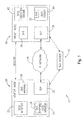
- QoS system 10 comprises an initiator node 20, a target node 30 and a SLA server 40.
- the elements in QoS 10 communicate via an IP network 46.
- IP network 46 may be a separate server that communicates with one or more initiators 20 and one or more targets 30. It is noted that SLA servers are known in the art elements and will not be discussed further herein.
- Initiator node 20 may comprise an SCSI initiator component 22, an iSCSI initiator component 24, a QoS shaping component 26, a QoS marking component 28 and TCP layer 32.
- Target node 30 may comprise a SCSI execution engine component 42, an iSCSI target component 44, TCP layer 34, and QoS components 36 and 38.
- a session may be established between initiator node 20 and target node 30. It is apparent to those skilled in the art that although only one session is illustrated in Fig. 1 , there may be multiple sessions between each initiator node 20 and each target node 30.
- QoS 10 uses QoS policies for two types of resources: network and I/O. It is noted that shaping component 26 at initiator 20 may handle both types of resources. Additionally noted, QoS components 36 and 38 may each handle one type of resource. QoS 36 handles the network resources and QoS 38 handles the I/O resources. Also noted, the QoS policies used at the initiator may be the same as, or different from, the QoS policies used at the target.
- SCSI execution engine 42 may be generic. When SCSI execution engine 42 is a gateway to another network, such as a storage area network (SAN), SCSI execution engine 42 may be responsible for continuing the enforcement of QoS in the other network.
- SAN storage area network
- both QoS shaping and marking take place in the TCP layer.
- shaping at the initiator node may be moved from TCP into the iSCSI initiator. Shaping is performed before TCP in order to resolve a potential race condition between QoS policy and iSCSI protocol requirements, as to be explained in full hereinbelow. Marking is then performed in TCP.
- both shaping and marking may be performed in TCP.
- FIG. 2A an illustration of the session between initiator 20 and target 30, overlaid with an exemplary traffic flow of SCSI read and write commands.
- SCSI commands originate in the SCSI initiator 22.
- the commands may then be transferred (arrow 50) to the iSCSI initiator 24.
- iSCSI initiator 24 may pack each command in a PDU and then submit the command PDUs to QoS shaping component 26 for shaping.
- shaping component 26 is in iSCSI, not in TCP, as is known in the art.
- a present purpose of performing the shaping in iSCSI before TCP is to resolve a potential race condition between QoS policy and iSCSI protocol requirements, as to be explained hereinnow.
- Command PDUs sent by the iSCSI initiator 24 to TCP carry a command sequence number.
- the command sequence numbers are used for sequential in-order delivery of commands at the target 30, over multiple connections of the same session. If shaping at the initiator were to be preformed in TCP, a command PDU with a lower command sequence number could be held back, in TCP, on a connection associated with a slow class of service. Meanwhile, another command PDU with a higher sequence number may arrive at the iSCSI target 44 over a connection with a fast class of service. Because of the order of sequence numbers, the latter command, with the fast network class of service, would be delayed at iSCSI target 44 waiting for the former command with the slow network class of service. This behavior could cause performance degradation and defeat the purpose of QoS.
- shaping at initiator 20 is performed before assigning a command sequence number.
- shaping component 26 is placed within iSCSI initiator 24.
- command PDUs are shaped according to QoS policies for I/O resources. If a command PDU also contains immediate data, the PDU is additionally shaped according to QoS policies for network resources.
- the iSCSI initiator 24 may then send (arrow 52) the command PDUs to TCP layer 32.
- TCP layer 32 may then send (arrow 54) the traffic to QoS marking component 28.
- the marked traffic may be returned (arrow 56) to the TCP layer 32.
- TCP layer 32 may send (arrow 58) the command PDUs via the IP network 46 to target 30.
- TCP layer 34 of target 30 may then receive (arrow 60) the command PDUs.
- TCP layer 34 may deliver (arrow 62) the command PDUs to the iSCSI target 44.
- iSCSI target 44 may extract the SCSI commands and submit them to QoS component 38 for shaping.
- QoS component 38 may shape the commands before delivering them to SCSI execution engine 42. It is noted that although the commands may already have been shaped by QoS shaping component 26, they may still be submitted to QoS component 38 for shaping. This is because of the potential existence of non-compliant initiators, as explained above in item 4 of issues addressed by the present invention.
- the iSCSI target 44 is unable to distinguish between compliant and non-compliant traffic, and must therefore submit all arriving command PDUs for shaping.
- commands from compliant initiators 20 that have already been shaped by QoS shaping component 26 may not be affected by additional shaping at QoS component 38.
- iSCSI target 44 then may deliver (arrow 64) the commands to the SCSI execution engine 42 in the appropriate order.
- QoS marking component 28 may be separate from TCP layer 32. However, in alternative embodiments, QoS marking component 28 may be within TCP layer 32 and still fall within the principles of the present embodiment.
- marking component 28 may be responsible for marking all network traffic outgoing from initiator node 20, including traffic from applications other than iSCSI.
- initiator node 20 may contain a second shaping component (not shown) in the TCP layer. The second shaping component may be responsible for shaping network traffic of applications other than iSCSI. It is appreciated that the above alternatives are included within the true spirit and scope of the present invention.
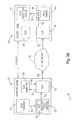
- FIG. 2B an illustration of the session between initiator 20 and target 30, overlaid with an exemplary traffic flow of data-out PDUs.
- Data-out originates in the SCSI initiator 22, which may transfer it (arrow 70) to iSCSI initiator 24.
- the iSCSI initiator 24 may create data-out PDUs, and the data-out PDUs may then be submitted to QoS shaping component 26 for shaping.
- QoS shaping component 26 may send (arrow 72) the data-out PDUs to TCP layer 32.
- TCP layer 32 may submit (arrow 74) the traffic to QoS marking component 28 for marking.
- QoS marking component 28 may then return (arrow 76) the marked traffic to TCP 32, which may send (arrow 78) the data-out PDUs to the target 30 over IP network 46.
- TCP layer 34 may receive (arrow 80) the data-out PDUs and deliver them (arrow 82) to the iSCSI target 44.
- the iSCSI target 44 may extract the data from the PDU and the data may then be delivered (arrow 84) to SCSI execution engine 42.
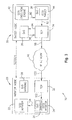
- FIG. 3 an illustration of the session between initiator 20 and target 30, overlaid with an exemplary traffic flow of data-in PDUs.
- SCSI execution engine 42 may transfer (arrow 90) data-in to iSCSI target 44.
- iSCSI target 44 may create data-in PDUs and conduit (arrow 92) the data-in PDUs to TCP layer 34.
- TCP layer 34 may then shape and mark the network traffic at the target. Accordingly, TCP layer 34 submits (arrow 94) the data-in PDUs to QoS component 36 for shaping and marking.
- the network filter specification at target node 30 may be simpler than at initiator node 20. This is because of iSCSI connection allegiance requirements and because each connection can have only one class of service in each direction.
- the initiator is responsible for selecting the connection for each command and the target must use this connection for all traffic of the command. Therefore, the class of service at the target may be determined simply from the identity of the connection or the identity of the initiator.
- QoS component 36 may then return (arrow 96) the shaped/marked traffic to TCP layer 34.
- TCP layer 34 may send (arrow 98) the data-in PDUs to initiator 20 via the IP network 46.
- TCP layer 32 may receive (arrow 100) the data-in PDUs and deliver (arrow 102) them to iSCSI initiator 24.
- iSCSI initiator 24 may extract the data from the PDU and deliver (arrow 104) the data-in to SCSI initiator 22.
- QoS marking component 36 may be within TCP layer 34 and still fall within the principles of the present embodiment.
- QoS component 36 may be responsible for shaping and marking of all network traffic going out of target node 30, including traffic from applications other than iSCSI.
- Each TCP connection can be associated with only one class of service in each direction. In order to provide multiple classes of service in a session, multiple connections may be used.
- iSCSI initiator 24 or iSCSI target 44 may be unable to support multiple connections per session.
- a separate session for each class of service may be used.
- the operating system environment or the file system used in initiator 20 may pose limitations requiring that multiple sessions access disjoint LUs. In this case, it may be impossible to use multiple network classes of service for access to the same LU from the same initiator.
- the SCSI architecture provides the ability to configure logical units to use a separate task-set per each I-T-L nexus.
- Preferred embodiments of the present invention may therefore define multiple I/O classes of service for the same LU.
- the task-set of each I-T-L nexus, with its read commands and write commands, may be assigned a different I/O class of service.
- I/O flow excess in selected I/O classes of service may include parameters for excess byte rate and excess I/O rate.
- non-compliant commands at the target may be rejected by QoS component 38 with a "task-set full” or "busy” error. These errors should be prevented as much as possible. I/O flow excess parameters may compensate for transient non-compliances caused by system and network fluctuations. I/O flow excess will not compensate for initiators that do not use QoS at all.
- Filter specification attributes may be selected that influence the differentiation of iSCSI flows in the presence of QoS.
- filter attributes include TCP four-tuples (initiator and target IP address and port), LUN, initiator user ID, session ID, application identification attributes, time of activity, and so on.
- TCP four-tuples initiator and target IP address and port
- LUN LUN
- initiator user ID session ID
- application identification attributes time of activity, and so on.
- the above list is by way of example only, and is not meant to be limiting; it is appreciated that other filter attributes that are not listed, however that may influence the performance of iSCSI flows, are included within the breadth of the present invention.
- the filter attributes there may be redundancy in the filter attributes.
- session id may be redundant when four-tuple is specified. Nevertheless, the redundancy may be used to support patterns when assigning a class of service. As an example, the same class may be assigned to all connections within a session.
- the classification methods allow using a subset of the attributes or a range of values for each attribute.
- QoS 10 may use separate flow specifications for networking resources and for I/O resources.
- standard flow specification parameters may be used, such as those as defined for DiffServ.
- network flow parameters may include average byte rate, peak byte rate, burst size.
- QoS 10 may select flow specification parameters that affect the sharing of I/O resources of SCSI execution engine 42.
- flow parameters may include byte rate, I/O rate, I/O flow excess, and so on.
- the above list is by way of example only, and is not meant to be limiting; it is appreciated that other flow specification parameters that are not listed, however that may influence the sharing of SCSI execution engine 42, are included within the breadth of the present invention.
- filter specification attributes and/or flow specification parameters used at the initiator may be different from those used at the target.
- I/O rate and byte rate may provide a tradeoff between random and sequential access. Random access is typically characterized by small data length, and is restricted mainly by I/O rate. On the other hand, sequential access is typically characterized by large data length, and is restricted mostly by byte rate.
- a node may have more than one network interface card or more than one network link. Also, multiple connections between initiator and target in the same session may use different IP addresses.
Landscapes
- Engineering & Computer Science (AREA)
- Computer Networks & Wireless Communication (AREA)
- Signal Processing (AREA)
- Computer Security & Cryptography (AREA)
- Data Exchanges In Wide-Area Networks (AREA)
- Crystals, And After-Treatments Of Crystals (AREA)
- Magnetic Resonance Imaging Apparatus (AREA)
- Separation Using Semi-Permeable Membranes (AREA)
Claims (15)
- Noeud initiateur (20) conçu pour fournir une qualité de service QoS pour un environnement iSCSI (10), le noeud initiateur (20) comprenant :un composant initiateur iSCSI (24) comprenant un composant de mise en forme de qualité QoS (26), ledit composant de mise en forme de qualité QoS (26) étant destiné à mettre en forme une ou plusieurs unités PDU en fonction de politiques de qualité QoS, etune couche de protocole TCP (32) destinée à recevoir lesdites unités PDU dudit composant initiateur iSCSI (24) et comprenant un composant de marquage de qualité QoS (28) destiné à marquer lesdites unités PDU en fonction desdites politiques de qualité QoS.
- Noeud initiateur (20) selon la revendication 1, dans lequel lesdites politiques de qualité QoS comprennent une ou plusieurs des politiques suivantes : des politiques pour les ressources de réseau et des politiques d'entrée/sortie I/O.
- Noeud initiateur (20) selon la revendication 1, dans lequel lesdites unités PDU sont des unités PDU de commande et dans lequel ledit composant de mise en forme (26) met en forme lesdites unités PDU de commande avant que lesdites unités PDU de commande ne reçoivent des numéros de séquence de commande.
- Noeud initiateur (20) selon la revendication 1, dans lequel lesdites unités PDU sont des unités PDU de données et des unités PDU de commande, dans lequel lesdites unités PDU de données et lesdites unités PDU de commande sont mises en forme avant d'être reçues dans ladite couche de protocole TCP (32).
- Noeud initiateur (20) selon la revendication 1, comprenant en outre :un deuxième composant de mise en forme dans la couche de protocole TCP (32) destiné à mettre en forme le trafic réseau d'applications autres que iSCSI.
- Système conçu pour fournir une qualité de service QoS pour un environnement iSCSI (10), le système comprenant :un ou plusieurs noeuds initiateurs (20), chaque dit noeud initiateur (20) comprenant :un composant initiateur iSCSI (24) comprenant un composant de mise en forme de qualité QoS initiateur (26), ledit composant de mise en forme de qualité QoS initiateur (26) étant destiné à mettre en forme une ou plusieurs unités PDU en fonction de politiques de qualité QoS, etune couche de protocole TCP (32) destinée à recevoir lesdites unités PDU dudit composant initiateur iSCSI (24) et comprenant un composant de marquage de qualité QoS (28) destiné à marquer lesdites unités PDU en fonction desdites politiques de qualité QoS, etun ou plusieurs noeuds cibles (30) destinés à recevoir lesdites unités PDU dudit noeud initiateur (20) sur un réseau à protocole IP (46), chaque dit noeud cible (30) comprenant :un premier composant de qualité QoS (38) dans un noeud cible iSCSI (44) destiné à gérer des ressources d'entrée/sortie I/O, ledit premier composant de qualité QoS (38) étant destiné à mettre en forme une ou plusieurs commandes de lecture et une ou plusieurs commandes d'écriture extraites desdites unités PDU en fonction de politiques de qualité QoS, etun deuxième composant de qualité QoS (36) dans une couche de protocole TCP (34) destiné à gérer des ressources de réseau, dans lequel les unités PDU iSCSI sont mises en forme et marquées en fonction de politiques de qualité QoS pour iSCSI.
- Système selon la revendication 6, dans lequel lesdites politiques de qualité QoS comprennent une ou plusieurs des politiques suivantes : des politiques pour les ressources de réseau et des politiques d'entrée/sortie I/O.
- Système selon la revendication 6, dans lequel lesdites politiques de qualité QoS utilisées par ledit composant de mise en forme de qualité QoS initiateur (26) sont différentes desdites politiques de qualité QoS utilisées par lesdits premier et deuxième composants de qualité QoS (36, 38) dans ledit noeud cible (30).
- Système selon la revendication 6, comprenant en outre :un serveur de contrat de niveau de service SLA (40) en communication avec lesdits noeuds initiateurs (20) et lesdits noeuds cibles (30), dans lequel ledit serveur de contrat SLA (40) fournit auxdits noeuds initiateurs (20) et auxdits noeuds cibles (30) lesdites politiques de qualité QoS.
- Procédé destiné à fournir une qualité QoS pour un environnement iSCSI (10), le procédé comprenant les étapes consistant à :mettre en forme une ou plusieurs unités PDU dans un composant initiateur iSCSI (24) au niveau d'un noeud initiateur (20) en fonction de politiques de qualité QoS, etmarquer dans une couche de protocole TCP (32) au niveau du noeud initiateur (20) lesdites unités PDU mises en forme en fonction desdites politiques de qualité QoS.
- Procédé selon la revendication 10, dans lequel lesdites politiques de qualité QoS comprennent une ou plusieurs des politiques suivantes : des politiques pour les ressources de réseau et des politiques d'entrée/sortie I/O.
- Procédé selon la revendication 10, dans lequel lesdites unités PDU sont des unités PDU de commande, dans lequel ladite mise en forme desdites unités PDU de commande se produit avant l'attribution de numéros de séquence de commande auxdites unités PDU de commande.
- Procédé selon la revendication 10, dans lequel ladite mise en forme desdites unités PDU de commande est effectuée en fonction de politiques de qualité QoS pour les ressources d'entrée/sortie I/O.
- Procédé selon la revendication 13, dans lequel lesdites unités PDU de commande sont des unités PDU de commande d'écriture contenant des données immédiates, et dans lequel ladite mise en forme desdites unités PDU de commande d'écriture est également effectuée en fonction de politiques de qualité QoS pour les ressources de réseau.
- Programme informatique incorporé dans un logiciel de support lisible par un ordinateur, le programme informatique comprenant un code de programme informatique destiné, lorsqu'il est chargé dans un système informatique et exécuté sur celui-ci, à amener ledit système informatique à effectuer les étapes du procédé selon l'une quelconque des revendications 10 à 14.
Applications Claiming Priority (3)
| Application Number | Priority Date | Filing Date | Title |
|---|---|---|---|
| US335323 | 1994-11-07 | ||
| US10/335,323 US7376082B2 (en) | 2002-12-31 | 2002-12-31 | Quality of service for iSCSI |
| PCT/IB2003/006061 WO2004059943A1 (fr) | 2002-12-31 | 2003-12-12 | Qualite de service pour iscsi |
Publications (2)
| Publication Number | Publication Date |
|---|---|
| EP1579652A1 EP1579652A1 (fr) | 2005-09-28 |
| EP1579652B1 true EP1579652B1 (fr) | 2010-10-27 |
Family
ID=32655325
Family Applications (1)
| Application Number | Title | Priority Date | Filing Date |
|---|---|---|---|
| EP03780444A Expired - Lifetime EP1579652B1 (fr) | 2002-12-31 | 2003-12-12 | Qualite de service pour iscsi |
Country Status (11)
| Country | Link |
|---|---|
| US (2) | US7376082B2 (fr) |
| EP (1) | EP1579652B1 (fr) |
| JP (1) | JP4474286B2 (fr) |
| KR (1) | KR100800344B1 (fr) |
| CN (1) | CN100505745C (fr) |
| AT (1) | ATE486440T1 (fr) |
| AU (1) | AU2003288601A1 (fr) |
| CA (1) | CA2511083C (fr) |
| DE (1) | DE60334739D1 (fr) |
| TW (1) | TWI239732B (fr) |
| WO (1) | WO2004059943A1 (fr) |
Families Citing this family (24)
| Publication number | Priority date | Publication date | Assignee | Title |
|---|---|---|---|---|
| US7269644B1 (en) * | 2003-02-21 | 2007-09-11 | Cisco Technology Inc. | Performance profiling for improved data throughput |
| US7447207B2 (en) * | 2003-10-27 | 2008-11-04 | Hewlett-Packard Development Company, L.P. | Method of and apparatus for transporting SCSI data over a network |
| US8572289B1 (en) | 2003-12-19 | 2013-10-29 | Nvidia Corporation | System, method and computer program product for stateless offloading of upper level network protocol operations |
| JP4550557B2 (ja) * | 2004-11-24 | 2010-09-22 | 株式会社日立製作所 | フィルタ定義管理方法、フィルタ定義管理装置、および、ストレージエリアネットワーク |
| US7555570B2 (en) * | 2006-02-17 | 2009-06-30 | Avocent Huntsville Corporation | Device and method for configuring a target device |
| US7844753B2 (en) * | 2006-11-13 | 2010-11-30 | Intel Corporation | Techniques to process integrity validation values of received network protocol units |
| US7792129B2 (en) * | 2006-12-01 | 2010-09-07 | International Business Machines Corporation | Multi-queue packet processing using Patricia tree |
| US20090141628A1 (en) * | 2007-12-04 | 2009-06-04 | Tsipora Barzilai | Quality of Service for iSCSI |
| TWI406545B (zh) * | 2008-01-09 | 2013-08-21 | Inventec Corp | Linux系統下的多路徑訪問遠端邏輯設備的方法 |
| US20100161786A1 (en) * | 2008-12-22 | 2010-06-24 | Inventec Corporation | Qos control method for iscsi |
| US8631154B2 (en) | 2011-06-29 | 2014-01-14 | International Business Machines Corporation | Dynamically modifying quality of service levels for resources in a networked computing environment |
| US8554976B2 (en) | 2011-07-08 | 2013-10-08 | Plx Technology, Inc. | Single pipe non-blocking architecture |
| US8539074B2 (en) | 2011-07-19 | 2013-09-17 | International Business Machines Corporation | Prioritizing data packets associated with applications running in a networked computing environment |
| KR101634322B1 (ko) * | 2013-02-12 | 2016-06-28 | 한국전자통신연구원 | 가상 물리 시스템에서의 데이터 분배 서비스를 지원하기 위한 QoS 프로파일 생성 장치 및 방법 |
| US9244694B2 (en) | 2012-12-27 | 2016-01-26 | Intel Corporation | Executing a command within a transport mechanism based on a get and set architecture |
| US9582218B2 (en) * | 2013-01-09 | 2017-02-28 | Cisco Technology, Inc. | Serial attached storage drive virtualization |
| US9882832B2 (en) * | 2013-09-10 | 2018-01-30 | Robin Systems, Inc. | Fine-grained quality of service in datacenters through end-host control of traffic flow |
| US9634944B2 (en) | 2013-10-24 | 2017-04-25 | Dell Products, Lp | Multi-level iSCSI QoS for target differentiated data in DCB networks |
| US20160065699A1 (en) * | 2014-08-26 | 2016-03-03 | Qsan Technology, Inc. | Bi-directional data transmission method and electronic device using the same |
| US10362507B2 (en) * | 2016-06-10 | 2019-07-23 | Huawei Technologies Co., Ltd. | Systems and method for quality of service monitoring, policy enforcement, and charging in a communications network |
| US10298437B2 (en) * | 2016-09-06 | 2019-05-21 | Quest Software Inc. | Distributed data collection in an enterprise network |
| CN108111571B (zh) * | 2017-11-15 | 2021-05-04 | 广东睿江云计算股份有限公司 | 一种基于iSCSI协议的存储QoS方法 |
| US11604712B2 (en) * | 2018-11-16 | 2023-03-14 | Vmware, Inc. | Active-active architecture for distributed ISCSI target in hyper-converged storage |
| US11218391B2 (en) * | 2018-12-04 | 2022-01-04 | Netapp, Inc. | Methods for monitoring performance of a network fabric and devices thereof |
Family Cites Families (22)
| Publication number | Priority date | Publication date | Assignee | Title |
|---|---|---|---|---|
| US5699361A (en) * | 1995-07-18 | 1997-12-16 | Industrial Technology Research Institute | Multimedia channel formulation mechanism |
| JPH09181740A (ja) * | 1995-10-26 | 1997-07-11 | Hitachi Ltd | ネットワークノード内フロー制御方法、並びにパケットスイッチングシステム |
| US6091731A (en) * | 1998-03-30 | 2000-07-18 | Lucent Technologies Inc. | Duplication in asychronous transfer mode (ATM) network fabrics |
| US6621792B1 (en) * | 1999-02-23 | 2003-09-16 | Avaya Technology Corp. | Computationally-efficient traffic shaper |
| JP3386117B2 (ja) | 2000-01-11 | 2003-03-17 | 日本電気株式会社 | マルチレイヤクラス識別通信装置と通信装置 |
| US6621793B2 (en) * | 2000-05-22 | 2003-09-16 | Telefonaktiebolaget Lm Ericsson (Publ) | Application influenced policy |
| JP3736293B2 (ja) * | 2000-05-31 | 2006-01-18 | 日本電信電話株式会社 | 暗号化通信におけるサービス品質制御方法及び装置サービス品質制御プログラムを格納した記憶媒体 |
| US6738361B1 (en) * | 2000-05-31 | 2004-05-18 | Nokia Ip Inc. | Method, apparatus and computer program for IP traffic prioritization in IP networks |
| JP2004526218A (ja) * | 2000-08-24 | 2004-08-26 | ボルテール アドバンスト データ セキュリティ リミテッド | 相互接続されたファブリックにおける高度にスケーラブルで高速のコンテンツ・ベース・フィルタリング及び負荷均衡化システム及び方法 |
| JP2002094572A (ja) * | 2000-09-12 | 2002-03-29 | Nec Corp | 通信システム及び通信方法 |
| AU2001296331A1 (en) * | 2000-09-29 | 2002-04-08 | Alacritech, Inc. | Intelligent network storage interface system and devices |
| US20050088977A1 (en) * | 2000-12-14 | 2005-04-28 | Nortel Networks Limited | Dynamic virtual private network (VPN) tunnel quality of service (QoS) treatment |
| US6914883B2 (en) * | 2000-12-28 | 2005-07-05 | Alcatel | QoS monitoring system and method for a high-speed DiffServ-capable network element |
| US8218555B2 (en) * | 2001-04-24 | 2012-07-10 | Nvidia Corporation | Gigabit ethernet adapter |
| US20020199205A1 (en) * | 2001-06-25 | 2002-12-26 | Narad Networks, Inc | Method and apparatus for delivering consumer entertainment services using virtual devices accessed over a high-speed quality-of-service-enabled communications network |
| US7088678B1 (en) * | 2001-08-27 | 2006-08-08 | 3Com Corporation | System and method for traffic shaping based on generalized congestion and flow control |
| US7421509B2 (en) * | 2001-09-28 | 2008-09-02 | Emc Corporation | Enforcing quality of service in a storage network |
| EP1301041A1 (fr) * | 2001-10-05 | 2003-04-09 | Matsushita Electric Industrial Co., Ltd. | Appareil et procédé pour la transmission de données vidéo |
| US7200144B2 (en) * | 2001-10-18 | 2007-04-03 | Qlogic, Corp. | Router and methods using network addresses for virtualization |
| US7055056B2 (en) * | 2001-11-21 | 2006-05-30 | Hewlett-Packard Development Company, L.P. | System and method for ensuring the availability of a storage system |
| US20030115447A1 (en) * | 2001-12-18 | 2003-06-19 | Duc Pham | Network media access architecture and methods for secure storage |
| US20030208614A1 (en) * | 2002-05-01 | 2003-11-06 | John Wilkes | System and method for enforcing system performance guarantees |
-
2002
- 2002-12-31 US US10/335,323 patent/US7376082B2/en not_active Expired - Fee Related
-
2003
- 2003-11-28 TW TW092133574A patent/TWI239732B/zh not_active IP Right Cessation
- 2003-12-12 JP JP2004563465A patent/JP4474286B2/ja not_active Expired - Fee Related
- 2003-12-12 KR KR1020057009755A patent/KR100800344B1/ko not_active Expired - Fee Related
- 2003-12-12 CA CA2511083A patent/CA2511083C/fr not_active Expired - Lifetime
- 2003-12-12 AT AT03780444T patent/ATE486440T1/de not_active IP Right Cessation
- 2003-12-12 AU AU2003288601A patent/AU2003288601A1/en not_active Abandoned
- 2003-12-12 DE DE60334739T patent/DE60334739D1/de not_active Expired - Lifetime
- 2003-12-12 WO PCT/IB2003/006061 patent/WO2004059943A1/fr not_active Ceased
- 2003-12-12 CN CNB2003801079491A patent/CN100505745C/zh not_active Expired - Fee Related
- 2003-12-12 EP EP03780444A patent/EP1579652B1/fr not_active Expired - Lifetime
-
2008
- 2008-04-03 US US12/061,671 patent/US8456990B2/en not_active Expired - Fee Related
Also Published As
| Publication number | Publication date |
|---|---|
| KR100800344B1 (ko) | 2008-02-04 |
| ATE486440T1 (de) | 2010-11-15 |
| US8456990B2 (en) | 2013-06-04 |
| CN1732664A (zh) | 2006-02-08 |
| DE60334739D1 (de) | 2010-12-09 |
| TW200423625A (en) | 2004-11-01 |
| US7376082B2 (en) | 2008-05-20 |
| CA2511083C (fr) | 2012-08-28 |
| CA2511083A1 (fr) | 2004-07-15 |
| EP1579652A1 (fr) | 2005-09-28 |
| US20100165841A9 (en) | 2010-07-01 |
| CN100505745C (zh) | 2009-06-24 |
| WO2004059943A1 (fr) | 2004-07-15 |
| TWI239732B (en) | 2005-09-11 |
| JP2006512662A (ja) | 2006-04-13 |
| KR20050086894A (ko) | 2005-08-30 |
| JP4474286B2 (ja) | 2010-06-02 |
| US20090252037A1 (en) | 2009-10-08 |
| US20040125806A1 (en) | 2004-07-01 |
| AU2003288601A1 (en) | 2004-07-22 |
Similar Documents
| Publication | Publication Date | Title |
|---|---|---|
| US8456990B2 (en) | Quality of service for iSCSI | |
| US9634944B2 (en) | Multi-level iSCSI QoS for target differentiated data in DCB networks | |
| US9397951B1 (en) | Quality of service using multiple flows | |
| US10027712B2 (en) | System and method for distributed load balancing with distributed direct server return | |
| Aboba et al. | Authentication, authorization and accounting (AAA) transport profile | |
| US7630368B2 (en) | Virtual network interface card loopback fastpath | |
| EP1303096B1 (fr) | Réseau virtuel avec distributeur adaptive | |
| CN102404229B (zh) | 负载均衡系统、装置及方法 | |
| US20030210686A1 (en) | Router and methods using network addresses for virtualization | |
| CN109922003B (zh) | 一种数据发送方法、系统及相关组件 | |
| US7792140B2 (en) | Reflecting the bandwidth assigned to a virtual network interface card through its link speed | |
| US20080046610A1 (en) | Priority and bandwidth specification at mount time of NAS device volume | |
| US7739736B1 (en) | Method and apparatus for dynamically isolating affected services under denial of service attack | |
| US7499463B1 (en) | Method and apparatus for enforcing bandwidth utilization of a virtual serialization queue | |
| US20070043738A1 (en) | Methods and systems for reputation based resource allocation for networking | |
| US20090141628A1 (en) | Quality of Service for iSCSI | |
| US7613132B2 (en) | Method and system for controlling virtual machine bandwidth | |
| US8537676B1 (en) | Rate limiting for DTCP message transport | |
| US20200036642A1 (en) | System and method for reactive path selection | |
| US8630296B2 (en) | Shared and separate network stack instances | |
| CN100391158C (zh) | 在基于规则的网络中配置规则的处理方法 | |
| US20080177881A1 (en) | System and Method for Applying Quality of Service (QoS) in iSCSI Through ISNS | |
| US7675920B1 (en) | Method and apparatus for processing network traffic associated with specific protocols | |
| US7672299B2 (en) | Network interface card virtualization based on hardware resources and software rings | |
| GopalaKrishna | Preemptive efficient queueing for scheduling deadline-bound data center flows |
Legal Events
| Date | Code | Title | Description |
|---|---|---|---|
| PUAI | Public reference made under article 153(3) epc to a published international application that has entered the european phase |
Free format text: ORIGINAL CODE: 0009012 |
|
| 17P | Request for examination filed |
Effective date: 20050620 |
|
| AK | Designated contracting states |
Kind code of ref document: A1 Designated state(s): AT BE BG CH CY CZ DE DK EE ES FI FR GB GR HU IE IT LI LU MC NL PT RO SE SI SK TR |
|
| AX | Request for extension of the european patent |
Extension state: AL LT LV MK |
|
| DAX | Request for extension of the european patent (deleted) | ||
| RAP1 | Party data changed (applicant data changed or rights of an application transferred) |
Owner name: INTERNATIONAL BUSINESS MACHINES CORPORATION |
|
| 17Q | First examination report despatched |
Effective date: 20090212 |
|
| GRAP | Despatch of communication of intention to grant a patent |
Free format text: ORIGINAL CODE: EPIDOSNIGR1 |
|
| R17C | First examination report despatched (corrected) |
Effective date: 20090212 |
|
| GRAS | Grant fee paid |
Free format text: ORIGINAL CODE: EPIDOSNIGR3 |
|
| GRAA | (expected) grant |
Free format text: ORIGINAL CODE: 0009210 |
|
| AK | Designated contracting states |
Kind code of ref document: B1 Designated state(s): AT BE BG CH CY CZ DE DK EE ES FI FR GB GR HU IE IT LI LU MC NL PT RO SE SI SK TR |
|
| REG | Reference to a national code |
Ref country code: GB Ref legal event code: FG4D |
|
| REG | Reference to a national code |
Ref country code: CH Ref legal event code: NV Representative=s name: IBM RESEARCH GMBH ZURICH RESEARCH LABORATORY INTEL Ref country code: CH Ref legal event code: EP |
|
| REG | Reference to a national code |
Ref country code: IE Ref legal event code: FG4D |
|
| REG | Reference to a national code |
Ref country code: GB Ref legal event code: 746 Effective date: 20101111 |
|
| REF | Corresponds to: |
Ref document number: 60334739 Country of ref document: DE Date of ref document: 20101209 Kind code of ref document: P |
|
| REG | Reference to a national code |
Ref country code: NL Ref legal event code: VDEP Effective date: 20101027 |
|
| PG25 | Lapsed in a contracting state [announced via postgrant information from national office to epo] |
Ref country code: PT Free format text: LAPSE BECAUSE OF FAILURE TO SUBMIT A TRANSLATION OF THE DESCRIPTION OR TO PAY THE FEE WITHIN THE PRESCRIBED TIME-LIMIT Effective date: 20110228 Ref country code: AT Free format text: LAPSE BECAUSE OF FAILURE TO SUBMIT A TRANSLATION OF THE DESCRIPTION OR TO PAY THE FEE WITHIN THE PRESCRIBED TIME-LIMIT Effective date: 20101027 Ref country code: NL Free format text: LAPSE BECAUSE OF FAILURE TO SUBMIT A TRANSLATION OF THE DESCRIPTION OR TO PAY THE FEE WITHIN THE PRESCRIBED TIME-LIMIT Effective date: 20101027 Ref country code: BG Free format text: LAPSE BECAUSE OF FAILURE TO SUBMIT A TRANSLATION OF THE DESCRIPTION OR TO PAY THE FEE WITHIN THE PRESCRIBED TIME-LIMIT Effective date: 20110127 Ref country code: FI Free format text: LAPSE BECAUSE OF FAILURE TO SUBMIT A TRANSLATION OF THE DESCRIPTION OR TO PAY THE FEE WITHIN THE PRESCRIBED TIME-LIMIT Effective date: 20101027 Ref country code: SI Free format text: LAPSE BECAUSE OF FAILURE TO SUBMIT A TRANSLATION OF THE DESCRIPTION OR TO PAY THE FEE WITHIN THE PRESCRIBED TIME-LIMIT Effective date: 20101027 Ref country code: SE Free format text: LAPSE BECAUSE OF FAILURE TO SUBMIT A TRANSLATION OF THE DESCRIPTION OR TO PAY THE FEE WITHIN THE PRESCRIBED TIME-LIMIT Effective date: 20101027 |
|
| PG25 | Lapsed in a contracting state [announced via postgrant information from national office to epo] |
Ref country code: BE Free format text: LAPSE BECAUSE OF FAILURE TO SUBMIT A TRANSLATION OF THE DESCRIPTION OR TO PAY THE FEE WITHIN THE PRESCRIBED TIME-LIMIT Effective date: 20101027 Ref country code: GR Free format text: LAPSE BECAUSE OF FAILURE TO SUBMIT A TRANSLATION OF THE DESCRIPTION OR TO PAY THE FEE WITHIN THE PRESCRIBED TIME-LIMIT Effective date: 20110128 |
|
| PG25 | Lapsed in a contracting state [announced via postgrant information from national office to epo] |
Ref country code: MC Free format text: LAPSE BECAUSE OF NON-PAYMENT OF DUE FEES Effective date: 20101231 Ref country code: CZ Free format text: LAPSE BECAUSE OF FAILURE TO SUBMIT A TRANSLATION OF THE DESCRIPTION OR TO PAY THE FEE WITHIN THE PRESCRIBED TIME-LIMIT Effective date: 20101027 Ref country code: ES Free format text: LAPSE BECAUSE OF FAILURE TO SUBMIT A TRANSLATION OF THE DESCRIPTION OR TO PAY THE FEE WITHIN THE PRESCRIBED TIME-LIMIT Effective date: 20110207 Ref country code: EE Free format text: LAPSE BECAUSE OF FAILURE TO SUBMIT A TRANSLATION OF THE DESCRIPTION OR TO PAY THE FEE WITHIN THE PRESCRIBED TIME-LIMIT Effective date: 20101027 |
|
| REG | Reference to a national code |
Ref country code: CH Ref legal event code: PL |
|
| PG25 | Lapsed in a contracting state [announced via postgrant information from national office to epo] |
Ref country code: DK Free format text: LAPSE BECAUSE OF FAILURE TO SUBMIT A TRANSLATION OF THE DESCRIPTION OR TO PAY THE FEE WITHIN THE PRESCRIBED TIME-LIMIT Effective date: 20101027 Ref country code: RO Free format text: LAPSE BECAUSE OF FAILURE TO SUBMIT A TRANSLATION OF THE DESCRIPTION OR TO PAY THE FEE WITHIN THE PRESCRIBED TIME-LIMIT Effective date: 20101027 Ref country code: SK Free format text: LAPSE BECAUSE OF FAILURE TO SUBMIT A TRANSLATION OF THE DESCRIPTION OR TO PAY THE FEE WITHIN THE PRESCRIBED TIME-LIMIT Effective date: 20101027 |
|
| PLBE | No opposition filed within time limit |
Free format text: ORIGINAL CODE: 0009261 |
|
| STAA | Information on the status of an ep patent application or granted ep patent |
Free format text: STATUS: NO OPPOSITION FILED WITHIN TIME LIMIT |
|
| 26N | No opposition filed |
Effective date: 20110728 |
|
| PG25 | Lapsed in a contracting state [announced via postgrant information from national office to epo] |
Ref country code: LI Free format text: LAPSE BECAUSE OF NON-PAYMENT OF DUE FEES Effective date: 20101231 Ref country code: IE Free format text: LAPSE BECAUSE OF NON-PAYMENT OF DUE FEES Effective date: 20101212 Ref country code: CH Free format text: LAPSE BECAUSE OF NON-PAYMENT OF DUE FEES Effective date: 20101231 |
|
| REG | Reference to a national code |
Ref country code: DE Ref legal event code: R097 Ref document number: 60334739 Country of ref document: DE Effective date: 20110728 |
|
| PG25 | Lapsed in a contracting state [announced via postgrant information from national office to epo] |
Ref country code: IT Free format text: LAPSE BECAUSE OF FAILURE TO SUBMIT A TRANSLATION OF THE DESCRIPTION OR TO PAY THE FEE WITHIN THE PRESCRIBED TIME-LIMIT Effective date: 20101027 |
|
| PG25 | Lapsed in a contracting state [announced via postgrant information from national office to epo] |
Ref country code: CY Free format text: LAPSE BECAUSE OF FAILURE TO SUBMIT A TRANSLATION OF THE DESCRIPTION OR TO PAY THE FEE WITHIN THE PRESCRIBED TIME-LIMIT Effective date: 20101027 |
|
| PG25 | Lapsed in a contracting state [announced via postgrant information from national office to epo] |
Ref country code: LU Free format text: LAPSE BECAUSE OF NON-PAYMENT OF DUE FEES Effective date: 20101212 Ref country code: HU Free format text: LAPSE BECAUSE OF FAILURE TO SUBMIT A TRANSLATION OF THE DESCRIPTION OR TO PAY THE FEE WITHIN THE PRESCRIBED TIME-LIMIT Effective date: 20110428 |
|
| PG25 | Lapsed in a contracting state [announced via postgrant information from national office to epo] |
Ref country code: TR Free format text: LAPSE BECAUSE OF FAILURE TO SUBMIT A TRANSLATION OF THE DESCRIPTION OR TO PAY THE FEE WITHIN THE PRESCRIBED TIME-LIMIT Effective date: 20101027 |
|
| PGFP | Annual fee paid to national office [announced via postgrant information from national office to epo] |
Ref country code: FR Payment date: 20130110 Year of fee payment: 10 |
|
| REG | Reference to a national code |
Ref country code: FR Ref legal event code: ST Effective date: 20140829 |
|
| PG25 | Lapsed in a contracting state [announced via postgrant information from national office to epo] |
Ref country code: FR Free format text: LAPSE BECAUSE OF NON-PAYMENT OF DUE FEES Effective date: 20131231 |
|
| REG | Reference to a national code |
Ref country code: DE Ref legal event code: R082 Ref document number: 60334739 Country of ref document: DE Representative=s name: KUISMA, SIRPA, FI |
|
| REG | Reference to a national code |
Ref country code: DE Ref legal event code: R079 Ref document number: 60334739 Country of ref document: DE Free format text: PREVIOUS MAIN CLASS: H04L0029060000 Ipc: H04L0065000000 |
|
| PGFP | Annual fee paid to national office [announced via postgrant information from national office to epo] |
Ref country code: DE Payment date: 20211208 Year of fee payment: 19 |
|
| PGFP | Annual fee paid to national office [announced via postgrant information from national office to epo] |
Ref country code: GB Payment date: 20221223 Year of fee payment: 20 |
|
| REG | Reference to a national code |
Ref country code: DE Ref legal event code: R119 Ref document number: 60334739 Country of ref document: DE |
|
| PG25 | Lapsed in a contracting state [announced via postgrant information from national office to epo] |
Ref country code: DE Free format text: LAPSE BECAUSE OF NON-PAYMENT OF DUE FEES Effective date: 20230701 |
|
| REG | Reference to a national code |
Ref country code: GB Ref legal event code: PE20 Expiry date: 20231211 |
|
| PG25 | Lapsed in a contracting state [announced via postgrant information from national office to epo] |
Ref country code: GB Free format text: LAPSE BECAUSE OF EXPIRATION OF PROTECTION Effective date: 20231211 |
|
| PG25 | Lapsed in a contracting state [announced via postgrant information from national office to epo] |
Ref country code: GB Free format text: LAPSE BECAUSE OF EXPIRATION OF PROTECTION Effective date: 20231211 |