EP1577798A2 - System und Verfahren zur intelligenten Empfehlung von Experten zur Unterstützung eines Benutzers - Google Patents
System und Verfahren zur intelligenten Empfehlung von Experten zur Unterstützung eines Benutzers Download PDFInfo
- Publication number
- EP1577798A2 EP1577798A2 EP05102193A EP05102193A EP1577798A2 EP 1577798 A2 EP1577798 A2 EP 1577798A2 EP 05102193 A EP05102193 A EP 05102193A EP 05102193 A EP05102193 A EP 05102193A EP 1577798 A2 EP1577798 A2 EP 1577798A2
- Authority
- EP
- European Patent Office
- Prior art keywords
- user
- expert
- profile
- recommendation
- trust
- Prior art date
- Legal status (The legal status is an assumption and is not a legal conclusion. Google has not performed a legal analysis and makes no representation as to the accuracy of the status listed.)
- Withdrawn
Links
Images





Classifications
-
- G—PHYSICS
- G06—COMPUTING OR CALCULATING; COUNTING
- G06F—ELECTRIC DIGITAL DATA PROCESSING
- G06F21/00—Security arrangements for protecting computers, components thereof, programs or data against unauthorised activity
- G06F21/50—Monitoring users, programs or devices to maintain the integrity of platforms, e.g. of processors, firmware or operating systems
- G06F21/51—Monitoring users, programs or devices to maintain the integrity of platforms, e.g. of processors, firmware or operating systems at application loading time, e.g. accepting, rejecting, starting or inhibiting executable software based on integrity or source reliability
-
- G—PHYSICS
- G06—COMPUTING OR CALCULATING; COUNTING
- G06F—ELECTRIC DIGITAL DATA PROCESSING
- G06F16/00—Information retrieval; Database structures therefor; File system structures therefor
- G06F16/90—Details of database functions independent of the retrieved data types
- G06F16/95—Retrieval from the web
- G06F16/953—Querying, e.g. by the use of web search engines
- G06F16/9535—Search customisation based on user profiles and personalisation
Definitions
- This invention pertains generally to the field of computer systems and technology. More particularly, the present invention relates to computer security and aiding user trust decisions for downloading content.
- Existing systems allow a user to configure downloading preferences, such that files will be downloaded without prompting the user, or such that files will not be downloaded at all. Any recommendation provided to the user will be the same, regardless of the user's past decisions. Thus, the recommendation for content from unknown site A will be the same recommendation for content from unknown site B.
- the existing systems are internal in that they consult information already present on the computer to establish a recommendation to a current user regarding whether or not to download the content.
- Embodiments of the present invention provide methods and systems for generating a recommendation for a user whether or not to trust content for potential downloading.
- a system is provided for computing default choices based on a user's prior choices, a user's profile and preferences and trust choices made by experts that the user trusts.
- the system uses Bayesian analysis and other statistical techniques to assign values and weightings to different inputs which, in their aggregate, result in modification to the default option displayed in the user interface.
- the invention helps the user to make logical decisions around trust based on his past trust decisions and the decisions of others who they trust, through the use of an expert system.
- the expert system rates the context and provides weighting of previous decisions to set a default based on logical modeling.
- the system also allows a user to drill-down to provide the details utilized to recommend this default.
- a user interface for facilitating recommending to a computer user a decision for downloading content, the user interface comprising a first trust option for allowing the user to cause the content to be downloaded, a second trust option for allowing the user to prevent the content from being downloaded, and a recommendation module for providing a recommendation for the user, the module taking as input for the recommendation a profile for the user and information about the content, wherein the recommendation comprises selecting as a default option the first trust option or the second trust option.
- the recommendation module further receives as input for the recommendation at least one expert profile associated with an at least one expert.
- the user interface further comprises an expert selection module for requesting the at least one expert profile to be transmitted to the module from a source external to the user's computer.
- a method for recommending to a computer user a decision for downloading content, the method comprising reading a profile for the user, obtaining information about the content, and providing a recommendation as a default option to the user whether or not to trust the content, wherein the recommendation is based upon the profile for the user and the information about the content.
- the method further comprises updating the user profile based on a user decision whether or not to trust the content.
- the recommendation further is based upon at least one expert profile associated with an at least one expert.
- the method further comprises requesting the at least one expert profile to be transmitted from a source external to the user's computer.
- a computer-readable medium including computer-executable instructions for facilitating recommending to a computer user a decision for downloading content, computer-executable instructions executing the steps of reading a profile for the user, obtaining information about the content, and providing a recommendation as a default option to the user whether or not to trust the content, wherein the recommendation is based upon the profile for the user and the information about the content.
- Figure 1 is a simplified schematic illustrating an exemplary architecture of a computing device for carrying out an embodiment of the present invention
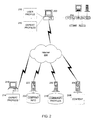
- Figure 2 is an exemplary network environment for carrying out an embodiment of the invention
- Figure 3 is a an exemplary software component architecture capable of carrying out an embodiment of the invention
- Figure 4 is a diagram of an exemplary user interface for expert selection and trust recommendation, in accordance with an embodiment of the invention.
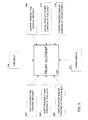
- Figure 5 is a diagram identifying factors used in computing a recommendation, in accordance with an embodiment of the invention.
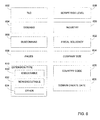
- Figure 6 is a data structure diagram illustrating fields of an XML schema for representing content metadata in accordance with an embodiment of the invention
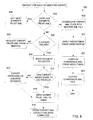
- Figure 7 is a flow diagram illustrating a method of recommending to a user whether or not to trust content for potential downloading, in accordance with an embodiment of the invention
- Figure 8 is a flow diagram illustrating a method of obtaining from an expert an XML file for the expert's profile, in accordance with an embodiment of the invention.
- Figure 9 is a flow diagram illustrating a method of obtaining via a network service an XML file for an expert profile, in accordance with an embodiment of the invention.
- the invention may also be practiced in distributed computing environments where tasks are performed by remote processing devices that are linked through a communications network.
- program modules may be located in both local and remote memory storage devices.
- the term computer system may be used to refer to a system of computers such as may be found in a distributed computing environment.
- Figure 1 illustrates an example of a suitable computing system environment 100 on which the invention may be implemented.
- the computing system environment 100 is only one example of a suitable computing environment and is not intended to suggest any limitation as to the scope of use or functionality of the invention. Neither should the computing environment 100 be interpreted as having any dependency or requirement relating to any one or combination of components illustrated in the exemplary operating environment 100.
- one embodiment of the invention does include each component illustrated in the exemplary operating environment 100, another more typical embodiment of the invention excludes non-essential components, for example, input/output devices other than those required for network communications.
- an exemplary system for implementing the invention includes a general purpose computing device in the form of a computer 110.
- Components of the computer 110 may include, but are not limited to, a processing unit 120, a system memory 130, and a system bus 121 that couples various system components including the system memory to the processing unit 120.
- the system bus 121 may be any of several types of bus structures including a memory bus or memory controller, a peripheral bus, and a local bus using any of a variety of bus architectures.
- such architectures include Industry Standard Architecture (ISA) bus, Micro Channel Architecture (MCA) bus, Enhanced ISA (EISA) bus, Video Electronics Standards Association (VESA) local bus, and Peripheral Component Interconnect (PCI) bus also known as Mezzanine bus.
- ISA Industry Standard Architecture
- MCA Micro Channel Architecture
- EISA Enhanced ISA
- VESA Video Electronics Standards Association
- PCI Peripheral Component Interconnect
- the computer 110 typically includes a variety of computer readable media.
- Computer readable media can be any available media that can be accessed by the computer 110 and includes both volatile and nonvolatile media, and removable and non-removable media.
- Computer readable media may comprise computer storage media and communication media.
- Computer storage media includes volatile and nonvolatile, removable and non-removable media implemented in any method or technology for storage of information such as computer readable instructions, data structures, program modules or other data.
- Computer storage media includes, but is not limited to, RAM, ROM, EEPROM, flash memory or other memory technology, CD-ROM, digital versatile disks (DVD) or other optical disk storage, magnetic cassettes, magnetic tape, magnetic disk storage or other magnetic storage devices, or any other medium which can be used to store the desired information and which can be accessed by the computer 110.
- Communication media typically embodies computer readable instructions, data structures, program modules or other data in a modulated data signal such as a carrier wave or other transport mechanism and includes any information delivery media.
- modulated data signal means a signal that has one or more of its characteristics set or changed in such a manner as to encode information in the signal.
- communication media includes wired media such as a wired network or direct-wired connection, and wireless media such as acoustic, RF, infrared and other wireless media. Combinations of the any of the above should also be included within the scope of computer readable media.
- the system memory 130 includes computer storage media in the form of volatile and/or nonvolatile memory such as read only memory (ROM) 131 and random access memory (RAM) 132.
- ROM read only memory
- RAM random access memory
- BIOS basic input/output system
- RAM 132 typically contains data and/or program modules that are immediately accessible to and/or presently being operated on by processing unit 120.
- Figure 1 illustrates operating system 134, application programs 135, other program modules 136 and program data 137.
- the computer 110 may also include other removable/non-removable, volatile/nonvolatile computer storage media.
- Figure 1 illustrates a hard disk drive 141 that reads from or writes to non-removable, nonvolatile magnetic media, a magnetic disk drive 151 that reads from or writes to a removable, nonvolatile magnetic disk 152, and an optical disk drive 155 that reads from or writes to a removable, nonvolatile optical disk 156 such as a CD ROM or other optical media.
- removable/non-removable, volatile/nonvolatile computer storage media that can be used in the exemplary operating environment include, but are not limited to, magnetic tape cassettes, flash memory cards, digital versatile disks, digital video tape, solid state RAM, solid state ROM, SmartCards, SecureDigital cards, SmartMedia cards, CompactFlash cards and the like.
- the hard disk drive 141 is typically connected to the system bus 121 through a non-removable memory interface such as interface 140, and magnetic disk drive 151 and optical disk drive 155 are typically connected to the system bus 121 by a removable memory interface, such as interface 150.
- hard disk drive 141 is illustrated as storing operating system 144, application programs 145, other program modules 146 and program data 147. Note that these components can either be the same as or different from operating system 134, application programs 135, other program modules 136, and program data 137. Operating system 144, application programs 145, other program modules 146, and program data 147 are given different numbers hereto illustrate that, at a minimum, they are different copies.
- a user may enter commands and information into the computer 110 through input devices such as a tablet, or electronic digitizer, 164, a microphone 163, a keyboard 162 and pointing device 161, commonly referred to as a mouse, trackball or touch pad.
- Other input devices may include a joystick, game pad, satellite dish, scanner, or the like.
- a monitor 191 or other type of display device is also connected to the system bus 121 via an interface, such as a video interface 190.
- the monitor 191 may also be integrated with a touch-screen panel or the like. Note that the monitor and/or touch screen panel can be physically coupled to a housing in which the computing device 110 is incorporated, such as in a tablet-type personal computer. In addition, computers such as the computing device 110 may also include other peripheral output devices such as speakers 197 and printer 196, which may be connected through an output peripheral interface 194 or the like.
- the computer 110 may operate in a networked environment using logical connections to one or more remote computers, such as a remote computer 180.
- the remote computer 180 may be a personal computer, a server, a router, a network PC, a peer device or other common network node, and typically includes many or all of the elements described above relative to the computer 110, although only a memory storage device 181 has been illustrated in Figure 1.
- the logical connections depicted in Figure 1 include a local area network (LAN) 171 and a wide area network (WAN) 173, but may also include other networks.
- LAN local area network
- WAN wide area network
- Such networking environments are commonplace in offices, enterprise-wide computer networks, intranets and the Internet.
- the computer 110 may comprise the source machine from which data is being migrated
- the remote computer 180 may comprise the destination machine.
- source and destination machines need not be connected by a network or any other means, but instead, data may be migrated via any media capable of being written by the source platform and read by the destination platform or platforms.
- the computer 110 When used in a LAN networking environment, the computer 110 is connected to the LAN 171 through a network interface or adapter 170. Alternatively, the computer 110 contains a wireless LAN network interface operating on, for example, the 802.11b protocol, allowing the computer 110 to connect to the LAN 171 without a physical connection.
- the computer 110 When used in a WAN networking environment, the computer 110 typically includes a modem 172 or other means for establishing communications over the WAN 173, such as the Internet.
- the modem 172 which may be internal or external, may be connected to the system bus 121 via the user input interface 160 or other appropriate mechanism.
- the computer 110 contains a wireless WAN network interface operating over, for example, the General Packet Radio Service (GPRS), allowing the computer 110 to connect to the WAN 173 without a physical connection.
- GPRS General Packet Radio Service
- program modules depicted relative to the computer 110, or portions thereof, may be stored in the remote memory storage device.
- Figure 1 illustrates remote application programs 185 as residing on memory device 181. It will be appreciated that the network connections shown are exemplary and other means of establishing a communications link between the computers may be used.
- variations of the computer 110 may be incorporated into other exemplary systems for implementing the invention, such as cellular phones, personal digital assistants, and the like.
- a user computer 200 communicates with other network resources over the Internet 202. Additionally or alternatively, the computer 200 communicates with other network resources over a local area network 204, either via wires or wirelessly through a wireless network communications protocol such as one of the 802.11 standard protocols.
- the computer 200 runs an application such as a web browser facilitating the viewing and downloading of content over the Internet 202. The application makes a request of a remote web server 206, which replies by attempting to send content 208 to the computer 200 over the Internet 202. Whether or not the content 208 is further transmitted to the computer 200 depends on the type of the content 208.
- the computer 200 typically receives the content 208 automatically.
- the application on the computer 200 presents the user with the option of receiving the content 208.
- the web browser also typically facilitates the viewing and downloading of content from a local hard drive or peripheral device such as a compact disc, hard drive, USB flash drive, etc.
- the user when the user is presented with the option of receiving the content 208, the user is further presented with a recommendation on which option - to receive the content 208 or no to receive it - to take.
- the recommendation generally takes the form of a highlighted interface button, such that the user hitting the "Return” or "Enter” key has the same effect as clicking on that button.
- the recommendation is thus a default choice, which the user must override manually by, for example, clicking on the non-highlighted interface button.
- an embodiment of the invention maintains a user profile 210.
- Embodiments of the invention additionally maintain a set of expert profiles 212.
- the user profile 210 and a local copy of the set of expert profiles 212 are preferably stored on the computer 200.
- the recommendation is generally computed mathematically as a function of the data in selected expert profiles, along with specific information regarding the content 208 and server 206. The method of computing the recommendation is more fully described below.
- the user of the computer 200 obtains expert profiles from remote sources, such as over the Internet 202.
- the computer 200 can, for example, request the profile 214 of a remote user from the remote user's computer 216.
- the computer 200 can request one or more profiles from a database of community profiles 218 by communicating with a community server 220.
- the community profiles 218 preferably comprise profiles of members of a particular community, such as an industry organization, interest group, subscribers to the same Internet Service Provider, etc.
- the community server 220 additionally preferably maintains at least one profile representing the community as a whole, which is either a composite of the individual members' profiles or a profile representing the community's administrative body or both.
- the community profile is an amalgam of the individual community member profiles representing the number of people (or percentage of people) trusting versus not trusting, along with a factor for the magnitude (numbers of participants, for example).
- the community owner provides weighting to individual members based on the quality, consistency or "value" of their contributions. This weighting becomes a part of the community profile.
- the computer 200 obtains remote user profiles from the community profiles database 218 or from a remote user 216, it preferably stores copies of the profiles locally with its expert profiles 212.
- the user of the computer 200 is further able to transmit his user profile 210 to remote computers upon request.
- the user profile 210 and expert profiles 212 are preferably stored as extensible markup language (XML) files.
- the computer 200 communicates with a company data server 222 to obtain information about companies from a company information database 224.
- the company information obtained by the computer 200 is used, preferably in conjunction with the user profile 210 and expert profiles 212, to recommend whether or not to receive the content 208 from the web server 206.
- the computer 200 queries the company data server 222 for information about the particular company.
- the company information database 224 stores this information, which includes, for example, the size of the company, whether the company is publicly traded, the country where the company is located, financial data about the company, etc.
- the computer 200 receives the company information and uses it to recommend whether to trust and receive the content 208.
- FIG. 3 a software architecture is shown for a set of components that execute on the computer 200 to recommend whether to trust content, in accordance with an embodiment of the invention.
- An operating system 302 such as an operating system from the Microsoft Windows family, runs on the user's computer 200.
- a trust manager 304 is associated with the operating system 302 to manage various security aspects in the operation of the computer 200.
- the trust manager 304 preferably includes a profile manager 306.
- the profile manager 306 manages and maintains a set of user and expert profiles 308.
- a user typically browses the Internet using a web browser application 310.
- the web browser 310 when presented with content for downloading that is of a potentially suspicious nature (e.g., an executable file from an unknown source), the web browser 310 communicates with the operating system 302 which in turn calls a set of modules 312 to make a recommendation and update the profiles 308.
- the modules 312 plug into the web browser 310, which directly invokes the one or more of the modules 312.
- the set of modules 312 are included as components of the trust center 304.
- a recommendation module 314 communicates with the profile manager 306, either directly or via the operating system 302, to obtain profiles for use in computing a recommendation of whether to download the suspicious content.
- An updating module 316 updates the user profile with trust decisions made by the user.
- the updating module 316 updates the expert profiles in response to trust decisions made by the user or other information regarding the experts.
- An expert selection module 318 communicates with remote computers and requests expert profiles, which are received and stored with the other local profiles 308.
- a transmission module 320 sends the user profile to remote computers upon request.
- FIG. 4 an exemplary user interface is shown for a browser application that uses expert profiles to recommend whether to download content, in accordance with an embodiment of the invention.
- the user interface comprises a dialog box 400 with two buttons: a "Don't trust this source” button 402 and a “Trust this source” button 404. If the user clicks the "Don't trust this source” button 402 then the content is not downloaded, whereas if the user clicks the "Trust this source” button 404 then the content is downloaded. Exactly one of these buttons is highlighted as a default choice, such that when the user hits the "Enter” or "Return” key on his keyboard, the default choice is selected without clicking on the corresponding button. The default choice is thus a recommendation made by the computer.
- the "Don't trust this source” button 402 is highlighted as the default choice, based upon the current user profile and the selected expert profiles.
- the user interface 400 contains a "Tell me more" link 405, which provides, when clicked by the user, infomiation on how the recommendation was computed, such as the weight given to each expert profile used in computing the recommendation.
- the user interface 400 also preferably contains an expert selection box 406. By pulling down the expert selection box 406, the user is presented with a list of individual experts (i.e., other users or groups) which can be used in computing a recommendation.
- One option in the selection box 406 is a "Consensus" choice 408, which causes the recommendation to be computed based on the input of all the given experts.
- the consensus is preferably computed by weighting each of the individual experts according to a Bayesian weighting system.
- the user manipulates the weightings of experts, or chooses a subset of experts to be used in computing a recommendation.
- the user chooses an individual expert from the selection box 406.
- an individual expert By choosing an individual expert, the user is presented with the recommendation from that particular expert.
- an individual expert's recommendation is made from reading the local copy of the expert's profile.
- an expert who is online at a remote computer is queried for his profile, which is transmitted to the user's computer in an XML format.
- the remote expert is notified when another user requests his profile, and must consent to allowing his profile to be transmitted to the user.
- the recommendation computed by the recommendation module 312 is shown in Figure 5 in terms of a trust quotient 500, in accordance with an embodiment of the invention.
- the recommendation module 312 maintains a trust quotient 500 for particular content to be downloaded from a particular site.
- the recommendation module 312 computes and adjusts the user's profile to see if the user trusted this content before 502; the user trusted other content from the same site 504; the user trusted similar content from other sites 506, where similarity is defined by the type of content or other metadata about the content; and other criteria from the user profiles. If the user trusted this content, this site, or similar content, then the trust quotient is increased.
- the recommendation module 312 inspects the selected experts' profiles to see if: the experts trusted this content before 508; the experts trusted other content from the same site 510; the experts trusted similar content from other sites 512; and other criteria from the expert profiles.
- the recommendation module 312 further considers the input 514 of third party accreditation agencies, or a privacy policy published by the site, such as a privacy statement complying with the P3P standard.
- the recommendation further considers additional inputs 516, such as information about the company purveying the content to be downloaded.
- the recommendation module computes an appropriate trust quotient 500 for the content.
- the trust quotient 500 is above a threshold value, the content is recommended for downloading by setting downloading as the default choice. Otherwise, the content is not recommended for downloading, by setting the default choice accordingly.
- the user by way of a preference setting establishes the threshold value.
- the recommendation module accounts for both the context of the content to be downloaded along with previous behaviors of the user and the experts, in some embodiments of the invention. For example, if the context is whether or not privacy is at risk, a user is more likely to listen to and trust a neutral third-party such as the Electronic Privacy Information Center than a commercial entity. Also, trust changes over time and is affected by reinforcement; if a user listens to and trusts Source X and it turns out that choice was inconsistent with the user's desires, he is less likely to trust that source in the future. The recommendation module accounts for these tendencies by setting and adjusting weights used in computing the trust quotient for the content.
- the weight initially given to an expert is generally assigned according to a predetermined categorization.
- One example categorization is presented in Table 1.
- Medium 3 rd party expert with dissimilar trust preferences Depends on how dissimilar, diametric opposition would be high if reverse choice made, otherwise, medium-low.
- 3 rd Party Attestation Higher 3 rd Party Trust Seal Higher Government entity Depends on individual WS-Privacy or P3P statement from site Higher
- the recommendation module factors previous trust choices made by the user.
- the recommendation module leverages mathematical weighting in some statistically valid manner based on previous trust choices. That is, when the user makes a trust choice, the system remembers that choice and uses it to update the weightings for future recommendations.
- Table 2 shows a simple example, with respect to a hypothetical user who is visiting a site for the first time.
- the site contains an ActiveX control for rendering particular information in a specific format.
- the site is operated by a publicly traded corporation based in the United States.
- the user has previously rendered files in the specific format on other sites and has installed other commercial off-the-shelf software from the developers of the specific format.
- the recommendation module recognizes these things and, based on previous trust decisions by that user, gives the scores shown in Table 2 in computing the trust quotient: Criterion Weight Site has not been visited previously -5 Requires ActiveX control be installed -5 Previously loaded and trusted control +5 Control is from a company trusted in other contexts +3 Site is a corporation +2 Company is publicly traded +0 Company is in the United States +0 Anti-virus software was updated 1 hour ago +3 User is currently running with admin credentials -5 There is no corporate policy relating to this content +0
- a recommendation module employing a simple weighting algorithm adds the positive total of 13 with the a negative total of 15 for an overall total of -2. If the threshold for trust is set to 0, then the recommended action in this case is "Do not trust" and the appropriate button is highlighted in the user interface.
- a preferred embodiment of the invention allows a user to configure the importance of individual criteria through a preference setting, so that, for example, being a publicly traded company is more important than being based in a particular country.
- Policy could be configured for corporate users that would either bar untrusted content or provide trust levels in aggregate from the company as a whole. Alternatively, policy could be configured to override individual preferences in the case of an enterprise configuration.
- a consensus of experts determines a recommendation for whether the user should download particular content.
- a recommendation module applies the various expert profiles to metadata about the content to be downloaded, giving appropriate weight to each expert based on the user's initial trust settings and subsequent recommendations.
- An example is shown in Table 3.
- a user visits the site http://support.microsoft.com and selects a download of an executable file (*.exe).
- the user is presented with a trust dialog box and chooses a "Consensus of all experts" option.
- the user has previously configured two experts: her cousin, who is an expert user; and the helpdesk of her office.
- the user Based on her confidence in the ability of each expert, the user has configured the experts with initial weightings of 10% for herself, 20% for her cousin, and 70% for her helpdesk.
- Several relevant criteria are reflected in the user's profile, such as that she has previously trusted *.exe files, and has trusted content from Microsoft corporation and from the domain *.microsoft.com.
- the cousin's expert profile reflects that he has distrusted *.exe files (by the negative value), has distrusted a similar website, but has previously trusted *.exe files from microsoft.com.
- the helpdesk's expert profile reflects that it has distrusted *.exe files, but has trusted the microsoft.com domain, has trusted companies with high fiscal solvency, has trusted companies with more than 5,000 employees, and has trusted domains over 10 years old.
- the totals for each expert are multiplied by their weights and summed together to obtain a weighted total.
- the total is greater than zero, and the recommendation module recommends downloading the content.
- Individual inspection of the experts reveals that the cousin would have recommended not trusting the content, since his weighted sub-total was less than zero. The user then has the choice of following this recommendation, or overriding it by choosing not to download the *.exe file.
- the weightings of the experts are updated using an algorithm such as those described in the above-cited references.
- the helpdesk of the user's company has a policy that its trust decisions override the choices of all employees. Because the user is using a computer configured by that team, she is bound by its policy. In this case, the helpdesk policy supercedes the other experts and is applied directly without further interaction by the user. The company has a policy that downloaded executable files are not to be trusted. This policy is enforced by allowing the weights of individual criteria to be non-equal, and assigning to the "Previously trusted .exe" criterion the value negative infinity. This prevents recommending the downloading of executables, even if they are from an otherwise trusted source. When the user attempts to download the executable file, her computer follows the recommendation of the helpdesk and does not allow the download.
- embodiments of the invention represent user and expert profiles as XML files. Metadata regarding content to be downloaded is further stored as XML files. An exemplary XML schema for representing content metadata is shown in Table 4.
- Figure 6 illustrates a conceptualization of the schemas XML file for user and expert profiles.
- the schema includes the following elements: TLD 602, domains 604, subdomains 606, pages 708, extension type 610, script risk level 618, industry 620, fiscal solvency 622, company size 624, country code 626, and domain create date 628.
- the TLD 602 element represents a top-level domain, constrained in some embodiments to .edu, .gov, .com, .net, .org, .us and .int.
- the domains 604 element and the subdomains 606 element are constrained in some embodiments to the requirements of IETF RFC 1101, and are not more than 24 characters.
- the extension type 610 element indicates one of three categories: executable 630, non-executable 632, or other 634.
- the executable 630 element indicates one of many file extensions used for a variety of executable programs. An exemplary listing of file extensions for executable files, as used in a Microsoft Windows environment, is shown in Table 5. An embodiment of the invention permits users to extend this list with additional file extensions.
- Exemplary non-executable file extensions include.txt, .doc, and .htm.
- An embodiment of the invention permits users to extend this list with additional file extensions.
- the other 636 element indicates file extensions that are not included in the executable 632 or non-executable 634 file extension lists.
- the script risk level 618 element indicates a risk level for indicating a level of risk associated with downloading the content. For example, in one embodiment, if the content to be downloaded manipulates only items on the displayed web page, it is assigned a script risk level 618 of "Low”. If it manipulates by copying and pasting, it is assigned a script risk level 618 of "Medium”. If it manipulates by trying to interact with the computer's file system, it is assigned a script risk level 618 of "High”.
- the industry 620 element indicates the industrial category for the owner of the site.
- the industry 620 element is set to one of: automobile, chemicals, computers/electronics, energy, entertainment/media, finance, health, telecommunication, travel/tourism, or additional categories.
- the fiscal solvency 622 element contains a financial rating for the owner of the site, obtained from, for example, Dun & Bradstreet. An exemplary listing of fiscal solvency 622 settings is given in Table 6.
- the company size 626 element contains a description of the size of the site-owner company.
- the company size 626 element is obtained from, for example, Dun & Bradstreet, in accordance with Table 7. Rating # Employees ER1 1,000 or more ER2 500-999 ER3 100-499 ER4 50-99 ER5 20-49 ER6 10-19 ER7 5-9 ER8 1-4 ERN Not Available
- the country code 626 element contains data regarding the location of the site-owner company, and is pulled, for example, from the WHOIS or another database.
- the domain create date 628 element contains the date the domain was created, and is pulled, for example, from the WHOIS database.
- a user uses a web browser to request content from remote computers; however, other embodiments are consistent with the principles of the invention.
- the user requests a web page at step 700.
- the user receives metadata regarding content to be potentially downloaded.
- the metadata includes, for example, information about the size, type, creator, domain name of content provider, etc., and is preferably stored as an XML file.
- a trust user interface e.g., dialog box
- the recommendation module obtains profiles for the selected experts, along with other evaluating criteria, at step 708.
- the profiles are preferably obtained either from a locally stored cache of profiles and evaluation information, or from remote computers over a network. If the user chooses not to select individual experts at step 705, then a consensus or aggregate or pre-selected subset of experts is used in the recommendation decision.
- the recommendation computes a trust quotient for the content at step 710. At step 712, the trust quotient is used along with the user's trust preferences to compute a recommendation for the user on whether or not to download the content.
- the recommendation is translated into a default button in the user interface at step 714, such that if the user hits the "Return” or "Enter” key, the recommended action is performed.
- the user chooses at step 716 whether to examine the details of the computed recommendation, including, for example, the weighting of the experts and the individual recommendations of the experts. If the user chooses to view them, these details are displayed at step 718.
- the user makes a choice whether or not to trust the content at step 720. If the user chooses to trust the content, it is downloaded at step 722.
- the user's profile is updated at step 724 with the trust decision made at step 720.
- a method for obtaining expert profiles in order to make a recommendation whether to download content, in accordance with an embodiment of the invention.
- experts store their profiles as XML files for transmission to users.
- the user For each expert requested by the user at step 708 of Figure 7, the user first checks if he has the expert's profile, stored as a trust.xml file, at step 802. If so, then the user proceeds to obtain the next user's trust.xml file at step 804. If not, then the user checks at step 806 if the expert is online.
- a user interface indicates graphically whether the expert is currently online.
- the user requests the expert's trust.xml file from a trust service, for later delivery, at step 808. If the expert is online, then the user sends a request to the expert at step 809. The expert is not obligated to send his trust.xml file to the user.
- the expert checks at step 810 if the user has been added to his profile. If not, the expert chooses at step 812 whether to approve the request or simply ignore it. If the request is approved, or if the user has already been added to the expert's profile, then the expert sends his trust.xml file to the user at step 816, labeled as "expert.xml". The user stores the expert.xml file on his local machine at step 818.
- the user aggregates the expert.xml files into a master.xml file, which includes individual expert names along with full trust.xml detail fro each expert. Master XML entries are preferably identifiable by expert. Weightings are applied to the master.xml entries at step 821 by using entries in the trust profile of the user. At step 822, the weightings are used to compute a consensus.xml file reflecting the weighted average of the experts. The consensus.xml file is output at step 824 and used to choose a default value for the download choice.
- FIG. 9 a method is shown for obtaining expert profiles from a trust service in order to make a recommendation whether to download content, in accordance with an embodiment of the invention.
- experts store their profiles as XML files for transmission to users, but additionally, the expert profiles are stored at a third party trust service.
- the trust service By using the trust service, a user requesting an expert profile can obtain or request the profile even if the expert is not online.
- the service For each trust.xml file requested by the user at step 808 of Figure 8, the service first checks at step 902 if the expert has added the user to his profile, thereby agreeing to allow the particular user to access the expert's trust.xml file.
- the service sends the expert's trust.xml file, labeled "expert.xml", to the user at step 904, and the user stores the expert.xml file locally on his machine at step 906. If not, then the service sends a request notification to the expert at step 910 and sends a notification of the request to the user at step 912. The user then can select another expert at step 914. When the expert later logs on, he receives the notification at step 916. At step 918, the expert either approves the request, causing the service to send the trust.xml file to the user at step 904, or the expert ignores the request.
- Embodiments of the invention are not limited to recommending whether or not to download content from the Internet. Embodiments also facilitate the recommending of whether or not to download content from a compact disc, hard drive, USB flash drive, or other storage device.
Landscapes
- Engineering & Computer Science (AREA)
- Databases & Information Systems (AREA)
- Theoretical Computer Science (AREA)
- Physics & Mathematics (AREA)
- General Engineering & Computer Science (AREA)
- General Physics & Mathematics (AREA)
- Computer Security & Cryptography (AREA)
- Data Mining & Analysis (AREA)
- Software Systems (AREA)
- Computer Hardware Design (AREA)
- Information Transfer Between Computers (AREA)
- User Interface Of Digital Computer (AREA)
- Information Retrieval, Db Structures And Fs Structures Therefor (AREA)
Applications Claiming Priority (2)
| Application Number | Priority Date | Filing Date | Title |
|---|---|---|---|
| US803364 | 1985-12-02 | ||
| US10/803,364 US7617519B2 (en) | 2004-03-18 | 2004-03-18 | System and method for intelligent recommendation with experts for user trust decisions |
Publications (2)
| Publication Number | Publication Date |
|---|---|
| EP1577798A2 true EP1577798A2 (de) | 2005-09-21 |
| EP1577798A3 EP1577798A3 (de) | 2006-04-05 |
Family
ID=34838918
Family Applications (1)
| Application Number | Title | Priority Date | Filing Date |
|---|---|---|---|
| EP05102193A Withdrawn EP1577798A3 (de) | 2004-03-18 | 2005-03-18 | System und Verfahren zur intelligenten Empfehlung von Experten zur Unterstützung eines Benutzers |
Country Status (6)
| Country | Link |
|---|---|
| US (1) | US7617519B2 (de) |
| EP (1) | EP1577798A3 (de) |
| JP (1) | JP2005353038A (de) |
| CN (1) | CN100416497C (de) |
| CA (1) | CA2501276A1 (de) |
| MX (1) | MXPA05003100A (de) |
Cited By (2)
| Publication number | Priority date | Publication date | Assignee | Title |
|---|---|---|---|---|
| EP2164227A1 (de) | 2008-09-15 | 2010-03-17 | Alcatel, Lucent | Bereitstellung digitaler Bestände und Netzwerk dafür |
| GB2566448A (en) * | 2017-09-07 | 2019-03-20 | Sony Corp | Data processing apparatuses and methods |
Families Citing this family (68)
| Publication number | Priority date | Publication date | Assignee | Title |
|---|---|---|---|---|
| US7346340B2 (en) * | 2004-12-23 | 2008-03-18 | Spyder Navigations L.L.C. | Provision of user policy to terminal |
| US9384345B2 (en) | 2005-05-03 | 2016-07-05 | Mcafee, Inc. | Providing alternative web content based on website reputation assessment |
| US8438499B2 (en) * | 2005-05-03 | 2013-05-07 | Mcafee, Inc. | Indicating website reputations during user interactions |
| US7856658B2 (en) * | 2005-06-20 | 2010-12-21 | Lijit Networks, Inc. | Method and system for incorporating trusted metadata in a computing environment |
| US20070156604A1 (en) * | 2005-06-20 | 2007-07-05 | Stanley James | Method and system for constructing and using a personalized database of trusted metadata |
| US10503418B2 (en) | 2005-12-01 | 2019-12-10 | Drive Sentry Limited | System and method to secure a computer system by selective control of write access to a data storage medium |
| US20070152119A1 (en) * | 2006-01-04 | 2007-07-05 | Chin-Yang Wang | Bracket apparatus |
| US9165282B2 (en) * | 2006-05-31 | 2015-10-20 | Red Hat, Inc. | Shared playlist management for open overlay for social networks and online services |
| US8185584B2 (en) * | 2006-05-31 | 2012-05-22 | Red Hat, Inc. | Activity history management for open overlay for social networks and online services |
| US8615550B2 (en) * | 2006-05-31 | 2013-12-24 | Red Hat, Inc. | Client-side data scraping for open overlay for social networks and online services |
| US8612483B2 (en) * | 2006-05-31 | 2013-12-17 | Red Hat, Inc. | Link swarming in an open overlay for social networks and online services |
| US7792903B2 (en) | 2006-05-31 | 2010-09-07 | Red Hat, Inc. | Identity management for open overlay for social networks and online services |
| US8688742B2 (en) | 2006-05-31 | 2014-04-01 | Red Hat, Inc. | Open overlay for social networks and online services |
| US8683373B2 (en) * | 2006-07-10 | 2014-03-25 | International Business Machines Corporation | Organizing files based on download locations |
| US8615801B2 (en) * | 2006-08-31 | 2013-12-24 | Microsoft Corporation | Software authorization utilizing software reputation |
| US9213535B1 (en) * | 2006-10-31 | 2015-12-15 | Hewlett Packard Enterprise Development Lp | Pre-computing computer software patch solutions |
| US20080114629A1 (en) * | 2006-11-09 | 2008-05-15 | Yahoo! Inc. | System for matching users and transportation providers |
| US20080133475A1 (en) * | 2006-11-30 | 2008-06-05 | Donald Fischer | Identification of interesting content based on observation of passive user interaction |
| US9405827B2 (en) * | 2006-11-30 | 2016-08-02 | Red Hat, Inc. | Playlist generation of content gathered from multiple sources |
| US8176191B2 (en) * | 2006-11-30 | 2012-05-08 | Red Hat, Inc. | Automated identification of high/low value content based on social feedback |
| US8812582B2 (en) * | 2006-11-30 | 2014-08-19 | Red Hat, Inc. | Automated screen saver with shared media |
| US8091032B2 (en) * | 2006-11-30 | 2012-01-03 | Red Hat, Inc. | Automatic generation of content recommendations weighted by social network context |
| US8943210B2 (en) * | 2006-11-30 | 2015-01-27 | Red Hat, Inc. | Mastering music played among a plurality of users |
| US8463893B2 (en) * | 2006-11-30 | 2013-06-11 | Red Hat, Inc. | Automatic playlist generation in correlation with local events |
| US8832277B2 (en) * | 2006-11-30 | 2014-09-09 | Red Hat, Inc. | Community tagging of a multimedia stream and linking to related content |
| US9021045B2 (en) * | 2006-11-30 | 2015-04-28 | Red Hat, Inc. | Sharing images in a social network |
| US8060827B2 (en) * | 2006-11-30 | 2011-11-15 | Red Hat, Inc. | Method and system for preloading suggested content onto digital video recorder based on social recommendations |
| US20080201705A1 (en) | 2007-02-15 | 2008-08-21 | Sun Microsystems, Inc. | Apparatus and method for generating a software dependency map |
| US7991841B2 (en) * | 2007-10-24 | 2011-08-02 | Microsoft Corporation | Trust-based recommendation systems |
| US10540616B2 (en) * | 2008-02-11 | 2020-01-21 | Clearshift Corporation | Trust level based task assignment in an online work management system |
| WO2009146238A1 (en) * | 2008-05-01 | 2009-12-03 | Chacha Search, Inc. | Method and system for improvement of request processing |
| US8112412B1 (en) * | 2008-06-30 | 2012-02-07 | Symantec Corporation | Automatic software categorization and recommendations |
| US20100004982A1 (en) * | 2008-07-03 | 2010-01-07 | Microsoft Corporation | Quantifying trust in computing networks |
| US8621635B2 (en) * | 2008-08-18 | 2013-12-31 | Microsoft Corporation | Web page privacy risk detection |
| US9495538B2 (en) * | 2008-09-25 | 2016-11-15 | Symantec Corporation | Graduated enforcement of restrictions according to an application's reputation |
| US8353021B1 (en) * | 2008-09-30 | 2013-01-08 | Symantec Corporation | Determining firewall rules for an application on a client based on firewall rules and reputations of other clients |
| US8577753B1 (en) * | 2008-10-22 | 2013-11-05 | Amazon Technologies, Inc. | Community-based shopping profiles |
| US8239953B1 (en) | 2009-03-26 | 2012-08-07 | Symantec Corporation | Applying differing security policies for users who contribute differently to machine hygiene |
| US20110191689A1 (en) * | 2009-04-20 | 2011-08-04 | Ming Han Chang | Enhanced knowledge creation system for a spontaneous online community |
| US8312543B1 (en) | 2009-06-30 | 2012-11-13 | Symantec Corporation | Using URL reputation data to selectively block cookies |
| US8201255B1 (en) | 2009-06-30 | 2012-06-12 | Symantec Corporation | Hygiene-based discovery of exploited portals |
| US8661050B2 (en) * | 2009-07-10 | 2014-02-25 | Microsoft Corporation | Hybrid recommendation system |
| US8566932B1 (en) | 2009-07-31 | 2013-10-22 | Symantec Corporation | Enforcing good network hygiene using reputation-based automatic remediation |
| US8776168B1 (en) | 2009-10-29 | 2014-07-08 | Symantec Corporation | Applying security policy based on behaviorally-derived user risk profiles |
| US20110137726A1 (en) * | 2009-12-03 | 2011-06-09 | Telefonica, S.A. | Recommender system based on expert opinions |
| US8347382B2 (en) * | 2009-12-17 | 2013-01-01 | International Business Machines Corporation | Malicious software prevention using shared information |
| CN102208086B (zh) * | 2010-03-31 | 2014-05-14 | 北京邮电大学 | 面向领域的个性化智能推荐系统及实现方法 |
| US8826444B1 (en) * | 2010-07-09 | 2014-09-02 | Symantec Corporation | Systems and methods for using client reputation data to classify web domains |
| US9984229B1 (en) * | 2010-09-01 | 2018-05-29 | Open Invention Network Llc | Method and apparatus providing a multiple source evidence application trust model |
| WO2012162873A1 (en) * | 2011-05-27 | 2012-12-06 | Nokia Corporation | Method and apparatus for role-based trust modeling and recommendation |
| WO2013061325A1 (en) * | 2011-10-24 | 2013-05-02 | Walkme Ltd. | Calling scripts based tutorials |
| US20130238470A1 (en) * | 2012-03-07 | 2013-09-12 | Z:Wordz, LLC | Substituting a user-defined word set in place of a formatted network resource address |
| US9390141B2 (en) | 2013-09-30 | 2016-07-12 | Google Inc. | Systems and methods for determining application installation likelihood based on probabilistic combination of subordinate methods |
| US9336278B2 (en) | 2013-09-30 | 2016-05-10 | Google Inc. | User experience and user flows for third-party application recommendation in cloud storage systems |
| US9633081B1 (en) | 2013-09-30 | 2017-04-25 | Google Inc. | Systems and methods for determining application installation likelihood based on user network characteristics |
| US9177255B1 (en) | 2013-09-30 | 2015-11-03 | Google Inc. | Cloud systems and methods for determining the probability that a second application is installed based on installation characteristics |
| US9753990B2 (en) * | 2014-03-28 | 2017-09-05 | Microsoft Technology Licensing, Llc | Building user trust in profile creation and recommendations based on managed interaction with user |
| US9928623B2 (en) * | 2014-09-12 | 2018-03-27 | International Business Machines Corporation | Socially generated and shared graphical representations |
| CN104462373A (zh) * | 2014-12-09 | 2015-03-25 | 南京大学 | 一种基于多Agent的个性化推荐引擎实现方法 |
| US10185480B1 (en) * | 2015-06-15 | 2019-01-22 | Symantec Corporation | Systems and methods for automatically making selections in user interfaces |
| US11217334B2 (en) | 2016-02-29 | 2022-01-04 | Mor Research Applications Ltd. | System and method for selecting optimal medications for a specific patient |
| US10949754B2 (en) * | 2017-07-26 | 2021-03-16 | Sap Portals Israel Ltd. | Decision support tool with interactive sliders |
| JP6557302B2 (ja) * | 2017-08-28 | 2019-08-07 | 京セラ株式会社 | 電子機器 |
| DE102017218547A1 (de) * | 2017-10-18 | 2019-04-18 | Robert Bosch Gmbh | Serveranwendung und Verfahren zur Plausibilisierung von Datenschutzangaben |
| CN111241423B (zh) * | 2020-01-17 | 2023-07-25 | 江西财经大学 | 融合信任不信任关系和注意力机制深度推荐方法及系统 |
| WO2021209901A1 (en) | 2020-04-15 | 2021-10-21 | Khalifa University of Science and Technology | Endorsement system and techniques for educational content |
| CN111523037B (zh) * | 2020-04-26 | 2023-08-04 | 上海理工大学 | 一种开源软件开发中Pull Request的评审者推荐方法 |
| US11757923B1 (en) * | 2022-10-11 | 2023-09-12 | Second Sight Data Discovery, Inc. | Apparatus and method for intelligent processing of cyber security risk data |
Family Cites Families (13)
| Publication number | Priority date | Publication date | Assignee | Title |
|---|---|---|---|---|
| US6356924B2 (en) * | 1997-11-26 | 2002-03-12 | International Business Machines Corporation | Configurable disablement of display objects in a browser |
| US6965999B2 (en) * | 1998-05-01 | 2005-11-15 | Microsoft Corporation | Intelligent trust management method and system |
| US6505300B2 (en) * | 1998-06-12 | 2003-01-07 | Microsoft Corporation | Method and system for secure running of untrusted content |
| US6321334B1 (en) * | 1998-07-15 | 2001-11-20 | Microsoft Corporation | Administering permissions associated with a security zone in a computer system security model |
| US6327590B1 (en) * | 1999-05-05 | 2001-12-04 | Xerox Corporation | System and method for collaborative ranking of search results employing user and group profiles derived from document collection content analysis |
| CN1411655A (zh) * | 1999-10-22 | 2003-04-16 | 通用仪器公司 | 数字通信终端的对象及特征授权 |
| EP1256042B1 (de) * | 2000-02-17 | 2005-07-20 | General Instrument Corporation | Methode und gerät für sicheres fernladen von software |
| US6901394B2 (en) * | 2000-06-30 | 2005-05-31 | Askme Corporation | Method and system for enhanced knowledge management |
| JP2002056133A (ja) * | 2000-08-07 | 2002-02-20 | Daikyo:Kk | 専門家評価システムおよび記録媒体 |
| JP2002339135A (ja) * | 2001-05-18 | 2002-11-27 | Fujitsu Ltd | ファッションコーディネート方法、ファッションコーディネートシステム、中央装置、端末装置及びコンピュータプログラム |
| US20030140037A1 (en) * | 2002-01-23 | 2003-07-24 | Kenneth Deh-Lee | Dynamic knowledge expert retrieval system |
| US7340770B2 (en) * | 2002-05-15 | 2008-03-04 | Check Point Software Technologies, Inc. | System and methodology for providing community-based security policies |
| JP4400059B2 (ja) * | 2002-10-17 | 2010-01-20 | 株式会社日立製作所 | ポリシー設定支援ツール |
-
2004
- 2004-03-18 US US10/803,364 patent/US7617519B2/en not_active Expired - Fee Related
-
2005
- 2005-03-17 CA CA002501276A patent/CA2501276A1/en not_active Abandoned
- 2005-03-18 EP EP05102193A patent/EP1577798A3/de not_active Withdrawn
- 2005-03-18 JP JP2005080094A patent/JP2005353038A/ja active Pending
- 2005-03-18 CN CNB200510065644XA patent/CN100416497C/zh not_active Expired - Fee Related
- 2005-03-18 MX MXPA05003100A patent/MXPA05003100A/es not_active Application Discontinuation
Cited By (3)
| Publication number | Priority date | Publication date | Assignee | Title |
|---|---|---|---|---|
| EP2164227A1 (de) | 2008-09-15 | 2010-03-17 | Alcatel, Lucent | Bereitstellung digitaler Bestände und Netzwerk dafür |
| WO2010028839A1 (en) * | 2008-09-15 | 2010-03-18 | Alcatel Lucent | Providing digital assets and a network therefor |
| GB2566448A (en) * | 2017-09-07 | 2019-03-20 | Sony Corp | Data processing apparatuses and methods |
Also Published As
| Publication number | Publication date |
|---|---|
| CA2501276A1 (en) | 2005-09-18 |
| EP1577798A3 (de) | 2006-04-05 |
| US7617519B2 (en) | 2009-11-10 |
| MXPA05003100A (es) | 2005-10-06 |
| JP2005353038A (ja) | 2005-12-22 |
| CN1677345A (zh) | 2005-10-05 |
| CN100416497C (zh) | 2008-09-03 |
| US20050210285A1 (en) | 2005-09-22 |
Similar Documents
| Publication | Publication Date | Title |
|---|---|---|
| US7617519B2 (en) | System and method for intelligent recommendation with experts for user trust decisions | |
| US7571459B2 (en) | System and method for zone transition mitigation with relation to a network browser | |
| US8443452B2 (en) | URL filtering based on user browser history | |
| EP1376981B1 (de) | Anpassung und Benachrichtigung der elterlichen Kontrolle | |
| US7107269B2 (en) | Methods and apparatus for providing privacy-preserving global customization | |
| JP6019484B2 (ja) | サーバで結合されたマルウェア防止のためのシステムと方法 | |
| US7343390B2 (en) | Systems and methods for conducting internet content usage experiments | |
| US8209760B1 (en) | Quantifying a property of a focus computing resource based on proximity to other computing resources | |
| US8020190B2 (en) | Enhanced browser security | |
| US20030208570A1 (en) | Method and apparatus for multi-modal document retrieval in the computer network | |
| US20070094260A1 (en) | Authenticating third party products via a secure extensibility model | |
| WO2009058740A2 (en) | A language framework and infrastructure for safe and composable applications | |
| KR20060122674A (ko) | 계층화된 오브젝트 관련 신뢰도 판정에 따른 사용자인터페이스 | |
| US20200074074A1 (en) | Systems, methods, and apparatus for securing user documents | |
| US7676833B2 (en) | Login screen with identifying data | |
| Heumann et al. | Quantifying the attack surface of a web application | |
| US8671175B2 (en) | Managing security features of a browser | |
| Koretz | Evaluating and validating indicators of mathematics and science education | |
| Hooton | Privacy Risks in the Metaverse: An Australian Human Rights Commission Submission | |
| Iussa | Speed Limits and Road Safety in Regional NSW: An Occupational Therapy Perspective | |
| Al-Arayed et al. | TISS-loc: Towards User Control of Privacy in Location Disclosure | |
| Luzzo | Vocational Congruence, Academic Success, and Career Maturity in College Students | |
| Homme | A Guide to Internet Resources for Language Arts (1994) | |
| Butler | Lessons from the Job Training Partnership Act for Vocational Training | |
| Burlingame | Sex Education in California Public Schools: A 2003 Survey |
Legal Events
| Date | Code | Title | Description |
|---|---|---|---|
| PUAI | Public reference made under article 153(3) epc to a published international application that has entered the european phase |
Free format text: ORIGINAL CODE: 0009012 |
|
| AK | Designated contracting states |
Kind code of ref document: A2 Designated state(s): AT BE BG CH CY CZ DE DK EE ES FI FR GB GR HU IE IS IT LI LT LU MC NL PL PT RO SE SI SK TR |
|
| AX | Request for extension of the european patent |
Extension state: AL BA HR LV MK YU |
|
| PUAL | Search report despatched |
Free format text: ORIGINAL CODE: 0009013 |
|
| AK | Designated contracting states |
Kind code of ref document: A3 Designated state(s): AT BE BG CH CY CZ DE DK EE ES FI FR GB GR HU IE IS IT LI LT LU MC NL PL PT RO SE SI SK TR |
|
| AX | Request for extension of the european patent |
Extension state: AL BA HR LV MK YU |
|
| 17P | Request for examination filed |
Effective date: 20061005 |
|
| AKX | Designation fees paid |
Designated state(s): AT BE BG CH CY CZ DE DK EE ES FI FR GB GR HU IE IS IT LI LT LU MC NL PL PT RO SE SI SK TR |
|
| 17Q | First examination report despatched |
Effective date: 20080123 |
|
| STAA | Information on the status of an ep patent application or granted ep patent |
Free format text: STATUS: THE APPLICATION IS DEEMED TO BE WITHDRAWN |
|
| 18D | Application deemed to be withdrawn |
Effective date: 20101001 |