EP1575246A1 - Verfahren und Anordnung zur Beschränkung der Wiederbenutzung von DNS Antworten - Google Patents
Verfahren und Anordnung zur Beschränkung der Wiederbenutzung von DNS Antworten Download PDFInfo
- Publication number
- EP1575246A1 EP1575246A1 EP05101500A EP05101500A EP1575246A1 EP 1575246 A1 EP1575246 A1 EP 1575246A1 EP 05101500 A EP05101500 A EP 05101500A EP 05101500 A EP05101500 A EP 05101500A EP 1575246 A1 EP1575246 A1 EP 1575246A1
- Authority
- EP
- European Patent Office
- Prior art keywords
- domain name
- name information
- server
- information
- level server
- Prior art date
- Legal status (The legal status is an assumption and is not a legal conclusion. Google has not performed a legal analysis and makes no representation as to the accuracy of the status listed.)
- Granted
Links
- 238000000034 method Methods 0.000 title claims abstract description 44
- 230000004044 response Effects 0.000 title claims abstract description 29
- 238000013507 mapping Methods 0.000 claims description 5
- WABPQHHGFIMREM-UHFFFAOYSA-N lead(0) Chemical compound [Pb] WABPQHHGFIMREM-UHFFFAOYSA-N 0.000 description 6
- 101100043229 Oryza sativa subsp. japonica SPL14 gene Proteins 0.000 description 3
- 230000006870 function Effects 0.000 description 2
- 238000012419 revalidation Methods 0.000 description 2
- 241001522296 Erithacus rubecula Species 0.000 description 1
- 238000013459 approach Methods 0.000 description 1
- 230000005540 biological transmission Effects 0.000 description 1
- 230000008859 change Effects 0.000 description 1
- 238000010586 diagram Methods 0.000 description 1
- 238000012986 modification Methods 0.000 description 1
- 230000004048 modification Effects 0.000 description 1
- 230000008569 process Effects 0.000 description 1
- 230000003068 static effect Effects 0.000 description 1
Images



Classifications
-
- H—ELECTRICITY
- H04—ELECTRIC COMMUNICATION TECHNIQUE
- H04L—TRANSMISSION OF DIGITAL INFORMATION, e.g. TELEGRAPHIC COMMUNICATION
- H04L61/00—Network arrangements, protocols or services for addressing or naming
- H04L61/45—Network directories; Name-to-address mapping
- H04L61/4505—Network directories; Name-to-address mapping using standardised directories; using standardised directory access protocols
- H04L61/4511—Network directories; Name-to-address mapping using standardised directories; using standardised directory access protocols using domain name system [DNS]
-
- H—ELECTRICITY
- H04—ELECTRIC COMMUNICATION TECHNIQUE
- H04L—TRANSMISSION OF DIGITAL INFORMATION, e.g. TELEGRAPHIC COMMUNICATION
- H04L61/00—Network arrangements, protocols or services for addressing or naming
- H04L61/58—Caching of addresses or names
-
- H—ELECTRICITY
- H04—ELECTRIC COMMUNICATION TECHNIQUE
- H04L—TRANSMISSION OF DIGITAL INFORMATION, e.g. TELEGRAPHIC COMMUNICATION
- H04L67/00—Network arrangements or protocols for supporting network services or applications
- H04L67/01—Protocols
- H04L67/10—Protocols in which an application is distributed across nodes in the network
- H04L67/1001—Protocols in which an application is distributed across nodes in the network for accessing one among a plurality of replicated servers
-
- H—ELECTRICITY
- H04—ELECTRIC COMMUNICATION TECHNIQUE
- H04L—TRANSMISSION OF DIGITAL INFORMATION, e.g. TELEGRAPHIC COMMUNICATION
- H04L67/00—Network arrangements or protocols for supporting network services or applications
- H04L67/01—Protocols
- H04L67/10—Protocols in which an application is distributed across nodes in the network
- H04L67/1001—Protocols in which an application is distributed across nodes in the network for accessing one among a plurality of replicated servers
- H04L67/10015—Access to distributed or replicated servers, e.g. using brokers
Definitions
- the present invention relates generally to computer network systems, and more particularly to a method and apparatus for limiting the reuse of domain name system information, such as internet protocol (IP) addresses assigned to a particular domain name, which is periodically validated.
- domain name system information such as internet protocol (IP) addresses assigned to a particular domain name, which is periodically validated.
- the domain name system is an integral part of the Internet and other networks that use Internet-type protocols and architectures, such as transmission control protocol internet protocol (TCP/IP).
- TCP/IP transmission control protocol internet protocol
- the primary function of the domain name system is to permit users to access information on different computers connected to the Internet by simply typing or selecting text names, without regard to the sequence of numbers that specify the actual machine addresses or the name servers where the information to be accessed is located.
- DNS is responsible for mapping an ASCII hostname, such as www.research.att.com to an IP address, such as 192.20.225.10.
- ASCII hostname such as www.research.att.com
- IP address such as 192.20.225.10.
- different IP addresses are returned in response to different queries, which may be a function of information, such as load and network location.
- a single response can provide multiple IP addresses.
- the entire database that is accessible over the Internet is divided into zones, which are distributed among name servers.
- the essential task of a name server is to answer queries using data in its zone.
- the reliability of the system and the information contained therein is of paramount importance. Consequently, and in order to ensure continued reliability, the DNS requires that at least two name servers within a zone contain data derived from an authoritative server, i.e., authoritative data.
- the two name servers may be denominated primary and secondary servers, or, as referred to herein, higher level DNS servers and lower level DNS servers.
- One of the chief responsibilities of name servers is to load the database files and maintain cached data acquired through resource records. Each resource record contains a so-called "time-to-live" field, which ensures that name servers do not cache data without a time bound.
- the DNS is a hierarchical service, in which one DNS server can obtain information from another and then reuse that information repeatedly until a time-based threshold is reached.
- the time-based threshold is referred to as "time-to-live" or TTL.
- TTL time-to-live
- a local DNS server acts on behalf of clients by requesting DNS records, caching them, and then serving them to other clients for a period of time, known as the TTL, without revalidating the information.
- the DNS server When an Internet user makes a request for a domain name record or information from a DNS server within the DNS, the DNS server must obtain the requested information or record and send it to the requesting party.
- One method of accomplishing this task is for the server to check its cache memory for a local list of domain names already matched to machine addresses. If the requested domain name is in cache, then the computer can respond with an answer in the form of the associated machine address within a very short period of time.
- a local list is referred to as a name cache. It is generally stored in random access memory, disk storage, or another storage device coupled to the name server computer. The name cache is updated periodically from other name servers in the Internet.
- a DNS server When a DNS server caches the data, it builds up a database with relevant information that may be useful the next time the same or a similar query is received. Essentially, once the information is cached, the name server acquires significant knowledge about the data and whether it is responsive to a particular query or class of queries. Thus, once the information is cached, the process of obtaining the data is shortened significantly because the server now has the answer to the query in its cache. This leads to greater efficiency and enhanced performance, insofar as the cached information can be used for future inquiries. The resolution of data that is already in the local cache is considerably more efficient than a remote resolution that requires maneuvering through network traffic. However, there is a tradeoff. There is a very real possibility that the cached information may become outdated by the time it is used.
- the local DNS server may serve a small number of clients, or an enormous community. Until the TTL expires, the local DNS will continue to use and distribute the same information. On the one hand, with a short TTL, the information will be fairly current, even with many clients using the specified host, because a new host can be selected before the load peaks too dramatically.
- DNS was intended to be static, that is, a hostname-to-IP address assignment would rarely change and would certainly not be different for different hosts requesting the same information.
- DNS is much more dynamic, but there is still a balance to be drawn between assigning a low TTL to ensure that too many hosts do not use the information before revalidating, and assigning a higher TTL to limit the delay in repeatedly obtaining the same DNS information.
- DNS is a hierarchical service, in which one DNS server can obtain information from another and then reuse that information until the TTL has expired. There is currently no control over whether the DNS server reuses this information to serve a small number of requests or a large number of requests. This results in what could be called a "hidden load" that can only be estimated using prior knowledge concerning a particular DNS server. For instance, a server associated with a high rate of usage would, if possible, be assigned a shorter TTL and/or directed to a host with greater capacity than a server having a more moderate rate of usage. In view of the foregoing considerations, a method and system are called for to address this hidden load problem.
- DNS domain name system
- a method of limiting reuse of domain name information in accordance with one form of the present invention includes the step of requesting domain name information by a local domain name server from an authoritative domain name server.
- the domain name information includes an allowable usage limit that represents a maximum number of times that the domain name information can be provided to a requestor, such as a client or server, before validating the domain name information.
- a system for limiting reuse of domain name information formed in accordance with one form of the present invention includes an authoritative domain name server, a local domain name server, and at least one requestor, such as a client or server.
- the local domain name server is operatively coupled to the authoritative domain name server, and the requestor is operatively couple to the local domain name server.
- the requestor requests domain name information from the local domain name server, and the local domain name server requests domain name information from the authoritative domain name server.
- the authoritative domain name server provides the domain name information in response to the local domain name server requesting domain name information.
- the domain name information includes an allowable usage limit, which represents a maximum number of times the domain name information can be provided to the requestor before validating the domain name information.
- Figure 1 is a block diagram of a system for limiting reuse of domain name information formed in accordance with the present invention.
- Figure 2a is a flowchart of a first embodiment of a method of limiting reuse of domain name information in accordance with the present invention.
- Figure 2b is a flowchart of a second embodiment of the method of limiting reuse of domain name information in accordance with the present invention.
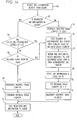
- Figure 3a is a flowchart of a third embodiment of the method of limiting reuse of domain name information in accordance with the present invention.
- Figure 3b is a flowchart of a fourth embodiment of the method of limiting reuse of domain name information in accordance with the present invention.
- Domain name system (DNS) information is generally requested from an authoritative DNS server by a local DNS server.
- the authoritative server responds by providing the DNS information to the local DNS server.
- the system and method in accordance with the present invention limits reuse of domain name information by returning the requested DNS information with an allowable usage limit, in addition to the customary time-to-live (TTL) threshold.
- TTL time-to-live
- the allowable usage limit represents the maximum number of times that the associated domain name information may be provided to requestors before it must be revalidated.
- the local DNS server returning the requested DNS information to a client preferably decrements a residual usage counter, which is a countdown of the allowable usage limit.
- the local DNS server that returns the requested DNS information to another DNS server would preferably issue a subset of its own allowable usage limit to the requesting server, and decrement its own residual usage counter by that portion of the allowable usage limit granted to the requesting server to ensure that the allowable usage limit remains constant.
- the local DNS server preferably enables another DNS server to permit a maximum number of clients to use a particular IP address before revalidating.
- the server at the requested IP address is lightly loaded, the number of uses and the duration of the TTL in the response are preferably relatively high.
- the TTL is preferably more conservative.
- Another embodiment in accordance with the present invention enables the DNS server requesting revalidation of DNS information to provide feedback information concerning the number times that the DNS information has been provided to other clients and servers as an observed usage count. This information is preferably used to improve the assignment of IP addresses to achieve improved load balancing of the network.
- the same or different allowable usage limits may be assigned to the IP addresses associated with a particular hostname.
- the DNS server requesting the DNS information could then assign the IP addresses to other servers or clients randomly, sequentially (round robin), or probabilistically in accordance with weights assigned to each of the plurality of IP addresses. For example, in a probabilistic assignment, assume that there are two IP addresses, IPA1 and IPA2, assigned to a hostname. Further assume that IPA1 is assigned a weighting of 0.4 (40%) and that IPA2 is assigned a weighting of 0.6 (60%). The DNS server requesting the DNS information could then assign IPA1 to 40% of its requestors and assign IPA2 to 60% of its requestors.
- Figure 1 shows a system 10 for limiting reuse of DNS information.
- the system includes an authoritative DNS server 12 operatively coupled to a local DNS server 14.
- the local DNS server 14 is operatively coupled to other local DNS servers 18, 21, 22.
- the system also includes at least one client 16 that is operatively coupled to and requests DNS information from the local DNS server 14.
- the clients 16 preferably access a web server 20 using DNS information obtained from the authoritative DNS server 12, and one or more of the local DNS servers 14, 18, 21, 22.
- the authoritative DNS server 12 which returns an A record or DNS information including a hostname-to-IP-address mapping, may realize that some local DNS servers tend to serve a large number of client 16s, and consequently may direct those servers to point their clients 16 at particular hosts that have unusually large capacity, and/or return a shorter than usual TTL.
- FIG. 2a is a flowchart of a first embodiment of a method of limiting reuse of domain name information in accordance with the present invention.
- a client requests DNS information in the form of a record from the local DNS server.
- the local DNS server Upon receiving the DNS information request from the client in step 24, the local DNS server preferably determines whether the requested DNS information is in its cache in step 26. If the requested information is in cache, the local DNS server then determines whether the cached DNS information has expired in step 28, that is, the server determines whether the time to live (TTL) threshold associated with the DNS information is zero.
- TTL time to live
- the local DNS server determines the value of a residual usage counter in step 30. If the value of the residual usage counter is not zero, the local DNS server decrements the value of the residual usage counter in step 32, and provides the requested DNS information to the client that initially requested the information in step 34.
- the local DNS server may determine that the requested DNS information is not cached in step 26, or if it is cached, that the cached DNS information has expired in step 28, or that although the TTL has not expired (TTL > 0), the residual usage counter value is 0.
- the local DNS server preferably requests and obtains the DNS information from the authoritative DNS server, which includes a new TTL and allowable usage limit N in step 36.
- the authoritative DNS server essentially eliminates the conditions that caused the local DNS server to request the information from the authoritative server.
- the TTL reflects the amount of time that the DNS information may exist before being revalidated.
- the residual usage counter value preferably reflects the number of times that the local DNS server may provide the domain name information to a requester, such as a client or another server.
- the local DNS server Upon receipt of the requested DNS information from the authoritative DNS server, the local DNS server preferably stores the information in its local cache in step 38. The local DNS server then preferably sets the residual usage counter to N-1 in step 40, and sends the requested DNS information to the client in step 34. By setting the residual usage counter to N-1, the local DNS server decrements the residual usage count by one to account for the DNS information being providing to the requesting client for the first time in step 34.
- Figure 2b represents a second embodiment of the method of limiting reuse of domain name information in accordance with the present invention, which is substantially similar to that shown in Figure 2a, except that the DNS information is being requested by and provided to a server rather than a client.
- the initial request for DNS information preferably originates from a local DNS server to another local DNS server, such as from server 18, 21 to server 14 or from server 22 to server 18 shown in Figure 1, rather than from the client 16 to the local DNS server 14.
- the server when the DNS server receives the request in step 42, the server preferably determines whether the requested information is already in its cache memory in step 44 of Figure 2b. If the requested DNS information exists in cache, the DNS server determines that the TTL has not expired in step 46, and the residual usage counter value is not zero in step 48, then the DNS server preferably decrements the residual usage counter in step 50, and sends the requested information to the requesting DNS server in step 52.
- the DNS server also preferably sends an allowable usage limit subset M in step 52 associated with the requested information, which represents a portion of the allowable usage limit originally provided with the DNS information by the authoritative DNS server when first validated.
- the allowable usage limit M preferably reflects the number of requesters, which include clients and servers, to which the requesting DNS server may subsequently provide the corresponding information. Accordingly, the residual usage counter is preferably decremented by M in step 50 to represent that portion of the allowable usage counter being granted to the requesting DNS server in step 52.
- the authoritative server sets the allowable usage limit N associated with the DNS information before sending it and the requested information to the local DNS server in step 54.
- the local DNS server preferably stores the information in cache in step 56, sets the residual usage counter to N-M in step 58, and sends the requested DNS information to the requesting DNS server with an allowable usage limit subset M, which represents a portion of the allowable usage limit N, in step 52.
- the requesting DNS server which has received the requested information and the associated allowable usage limit subset M, preferably decrements M each time this information is provided to a requestor by an amount equal to the usage limit granted to that requestor.
- Figure 3a shows a third embodiment of the method of limiting reuse of domain name information in accordance with the present invention.
- the server when the local DNS server receives a request for DNS information from the client in step 60 and determines that the requested information is not in its cache in step 62, the server preferably initializes an observed usage counter associated with the requested information to zero in step 74.
- the server then preferably sends a request for the DNS information to the authoritative DNS server with the current value of the observed usage counter in step 76.
- the authoritative DNS server preferably provides the requested DNS information with the associated TTL value and the allowable usage limit N to the requesting client in step 78.
- the requesting DNS server essentially obtains information from the authoritative server that is defined by a set of three parameters, namely, TTL and the allowable usage limit N provided by the authoritative server, as well as the observed usage counter provided by the requesting server.
- the DNS server preferably stores the information in its local cache in step 80 so that it is readily available for the next client requesting the same information.
- the local DNS server preferably sets the associated residual usage counter to N-1 in step 82 to account for the fact that is it about to provide the information to the requesting client.
- the server also preferably increments the observed usage counter in step 84 to represent that the information is being provided to the requesting client.
- the observed usage counter in step 84 to represent that the information is being provided to the requesting client.
- the server preferably requests the DNS information from the authoritative server and provides the current observed usage counter value to the authoritative server in step 76. If the requested DNS information is found to be in cache in step 62, the DNS information has not expired in step 64, and the associated residual usage counter is not zero in step 66, the observed usage counter is incremented in step 68 and the residual usage counter is decremented in step 70 to represent that the DNS information is being provided to the requesting client in step 72.
- Figure 3b is a flowchart of another embodiment in accordance with the present invention, which is substantially similar to that shown in Figure 3a, except that the flowchart represents the viewpoint of a mid-level server, such as server 18 in Figure 1, which receives a request for DNS information from a lower-level server, such as server 22 in Figure 1.
- the mid-level server preferably forwards the request for DNS information to an upper-level server, such as server 14 or the authoritative server 12 shown in Figure 1.
- the mid-level server preferably receives the DNS information request from the lower-level server with the allowable usage limit N L that the mid-level server previously granted to the lower-level server in response to the request from the lower-level server for the DNS information, a lower bound of the observed usage associated with the DNS information reported by the lower-level server O L,low , and an upper bound of the observed usage associated with the DNS information reported by the lower-level server O L,high . If, in step 88, the requested DNS information is not in the cache of the mid-level server, the value of the mid-level server variables corresponding to each of these variables is set to zero in step 90. The mid-level server then sends a request to the upper-level or authoritative server in step 92, which includes the current value of N M , O M,low , and O M,high .
- the mid-level server preferably receives the requested information with the TTL and allowable usage limit N from the upper-level or authoritative server.
- the mid-level server then initializes its residual usage counter to N, initializes the upper bound of observed usage reported by the mid-level server O high to zero, and initializes the lower bound of observed usage reported by the mid-level server at the lower-level server O low to zero in step 96.
- the DNS information is stored in local cache in the mid-level server in step 98 with the allowable usage limit N.
- an allowable usage limit for the DNS information response to the lower-level server N resp is chosen as less than or equal to the residual usage counter.
- the value of N resp can be chosen based on such factors as the remaining TTL of the DNS response, the number of requesters, which may include clients and lower-level DNS servers, to which the requesting DNS server may subsequently provide the requested information, past history of usage by this and other requesting DNS servers, etc.
- the lower bound for the observed usage at the mid-level server O low is incremented by one
- the upper bound for the observed usage at the mid-level server O high is incremented by the allowable usage limit for the DNS information response N resp
- the residual usage counter is decremented by the allowable usage limit for the DNS information response N resp in step 102.
- the lower bound for the observed usage at the mid-level server O low now indicates that the DNS information has been provided to at least one requestor, the lower-level server.
- the upper bound for the observed usage at the mid-level server O high now indicates that the maximum number of requestors the DNS information can be provided to is equal to the allowable usage limit N res p granted to the lower-level server.
- the residual usage counter now indicates the remaining usage that may be granted to additional requestors.
- the requested DNS information is then sent to the lower-level server with the allowable usage limit for the DNS information response N resp in step 104.
- the mid-level server variables are initialized in step 110. Specifically, N M is initialized to N, O M,low is initialized to O low , and O M,high is initialized to O high .
- O low is decremented by (1) in equation 1
- O high is decremented by N L in equation (2)
- N L is added to RUC in equation (3) since corresponding values (1, N resp , N resp ) were applied by the mid-level server to O low , O high , and RUC as presumed values for the lower-level server in step 102.
- the lower-level server is reporting observed values, which are being substituted for the values presumed in step 102.
- the method then preferably continues with step 110 as described above.
- the use of DNS information is preferably limited by the number of requestors to which the information has been provided (allowable usage limit).
- a request for revalidation of DNS information provides information concerning the number of requestors to which the DNS information has been provided (observed usage count).
Landscapes
- Engineering & Computer Science (AREA)
- Computer Networks & Wireless Communication (AREA)
- Signal Processing (AREA)
- Data Exchanges In Wide-Area Networks (AREA)
- Computer And Data Communications (AREA)
Applications Claiming Priority (2)
| Application Number | Priority Date | Filing Date | Title |
|---|---|---|---|
| US798076 | 2004-03-11 | ||
| US10/798,076 US7444371B2 (en) | 2004-03-11 | 2004-03-11 | Method and apparatus for limiting reuse of domain name system response information |
Publications (2)
| Publication Number | Publication Date |
|---|---|
| EP1575246A1 true EP1575246A1 (de) | 2005-09-14 |
| EP1575246B1 EP1575246B1 (de) | 2007-05-09 |
Family
ID=34827655
Family Applications (1)
| Application Number | Title | Priority Date | Filing Date |
|---|---|---|---|
| EP05101500A Expired - Fee Related EP1575246B1 (de) | 2004-03-11 | 2005-02-28 | Verfahren und Anordnung zur Beschränkung der Wiederbenutzung von DNS Antworten |
Country Status (4)
| Country | Link |
|---|---|
| US (2) | US7444371B2 (de) |
| EP (1) | EP1575246B1 (de) |
| CA (1) | CA2498118C (de) |
| DE (1) | DE602005001063T2 (de) |
Cited By (12)
| Publication number | Priority date | Publication date | Assignee | Title |
|---|---|---|---|---|
| EP1885101A1 (de) * | 2006-08-01 | 2008-02-06 | Alcatel Lucent | Methode zur Bereitstellung eines Telekomunikationsdienstes durch dynamische Kontrolle von Anfrage Rückmeldungen |
| WO2008112770A3 (en) * | 2007-03-12 | 2009-07-30 | Citrix Systems Inc | Systems and methods for cache operations |
| US7720936B2 (en) | 2007-03-12 | 2010-05-18 | Citrix Systems, Inc. | Systems and methods of freshening and prefreshening a DNS cache |
| US7783757B2 (en) | 2007-03-12 | 2010-08-24 | Citrix Systems, Inc. | Systems and methods of revalidating cached objects in parallel with request for object |
| US7809818B2 (en) | 2007-03-12 | 2010-10-05 | Citrix Systems, Inc. | Systems and method of using HTTP head command for prefetching |
| WO2011025694A1 (en) * | 2009-08-28 | 2011-03-03 | Apple Inc. | Chunked downloads over a content delivery network |
| US8037126B2 (en) | 2007-03-12 | 2011-10-11 | Citrix Systems, Inc. | Systems and methods of dynamically checking freshness of cached objects based on link status |
| US8074028B2 (en) | 2007-03-12 | 2011-12-06 | Citrix Systems, Inc. | Systems and methods of providing a multi-tier cache |
| US8103783B2 (en) | 2007-03-12 | 2012-01-24 | Citrix Systems, Inc. | Systems and methods of providing security and reliability to proxy caches |
| US8275829B2 (en) | 2007-03-12 | 2012-09-25 | Citrix Systems, Inc. | Systems and methods of prefetching objects for caching using QoS |
| US8504775B2 (en) | 2007-03-12 | 2013-08-06 | Citrix Systems, Inc | Systems and methods of prefreshening cached objects based on user's current web page |
| US10911520B2 (en) | 2007-03-12 | 2021-02-02 | Citrix Systems, Inc. | Systems and methods of using the refresh button to determine freshness policy |
Families Citing this family (34)
| Publication number | Priority date | Publication date | Assignee | Title |
|---|---|---|---|---|
| US9602538B1 (en) * | 2006-03-21 | 2017-03-21 | Trend Micro Incorporated | Network security policy enforcement integrated with DNS server |
| US7778189B2 (en) * | 2006-06-30 | 2010-08-17 | Nokia Corporation | Maintaining an existing connection between nodes |
| US7970891B1 (en) * | 2007-01-17 | 2011-06-28 | Google Inc. | Tracking links in web browsers |
| CN100502367C (zh) * | 2007-04-04 | 2009-06-17 | 华为技术有限公司 | 保存域名系统记录的方法、装置 |
| US20090216875A1 (en) * | 2008-02-26 | 2009-08-27 | Barracuda Inc. | Filtering secure network messages without cryptographic processes method |
| US8266288B2 (en) * | 2008-10-23 | 2012-09-11 | International Business Machines Corporation | Dynamic expiration of domain name service entries |
| US9258269B1 (en) * | 2009-03-25 | 2016-02-09 | Symantec Corporation | Methods and systems for managing delivery of email to local recipients using local reputations |
| US9292612B2 (en) | 2009-04-22 | 2016-03-22 | Verisign, Inc. | Internet profile service |
| US8521908B2 (en) | 2009-04-07 | 2013-08-27 | Verisign, Inc. | Existent domain name DNS traffic capture and analysis |
| US8676989B2 (en) | 2009-04-23 | 2014-03-18 | Opendns, Inc. | Robust domain name resolution |
| US8935428B2 (en) * | 2009-06-24 | 2015-01-13 | Broadcom Corporation | Fault tolerance approaches for DNS server failures |
| US20120079088A1 (en) * | 2010-09-27 | 2012-03-29 | Microsoft Corporation | Proving domain name ownership |
| CN102790809B (zh) * | 2011-05-16 | 2016-09-28 | 北京奇虎科技有限公司 | 域名系统解析方法、装置及客户端 |
| US10270755B2 (en) | 2011-10-03 | 2019-04-23 | Verisign, Inc. | Authenticated name resolution |
| US8990356B2 (en) | 2011-10-03 | 2015-03-24 | Verisign, Inc. | Adaptive name resolution |
| US20130290563A1 (en) * | 2011-10-19 | 2013-10-31 | Xerocole, Inc. | Answer augmentation system for authoritative dns servers |
| US9866448B2 (en) * | 2012-09-18 | 2018-01-09 | Htc Corporation | Electronic device and method for DNS processing |
| US9197487B2 (en) | 2013-03-15 | 2015-11-24 | Verisign, Inc. | High performance DNS traffic management |
| CN103475706B (zh) * | 2013-09-09 | 2016-06-29 | 中国科学技术大学苏州研究院 | 基于syn-ack双服务器反弹模式的伪tcp隐蔽通信方法 |
| CN103685599B (zh) * | 2013-12-09 | 2017-04-05 | 中国科学院计算机网络信息中心 | 一种域名递归服务的预判干预方法 |
| US9900281B2 (en) * | 2014-04-14 | 2018-02-20 | Verisign, Inc. | Computer-implemented method, apparatus, and computer-readable medium for processing named entity queries using a cached functionality in a domain name system |
| KR102154788B1 (ko) * | 2014-10-02 | 2020-09-11 | 삼성전자주식회사 | 무선 통신 시스템의 단말에서 DNS(Domain Name Service) 레졸루션 방법 및 장치 |
| US9372994B1 (en) * | 2014-12-13 | 2016-06-21 | Security Scorecard, Inc. | Entity IP mapping |
| US10791085B2 (en) | 2015-11-12 | 2020-09-29 | Verisign, Inc. | Techniques for directing a domain name service (DNS) resolution process |
| US20180013618A1 (en) * | 2016-07-11 | 2018-01-11 | Aruba Networks, Inc. | Domain name system servers for dynamic host configuration protocol clients |
| US10999240B1 (en) | 2016-08-31 | 2021-05-04 | Verisign, Inc. | Client controlled domain name service (DNS) resolution |
| CN108206814B (zh) * | 2016-12-20 | 2021-03-16 | 腾讯科技(深圳)有限公司 | 一种防御dns攻击的方法、装置及系统 |
| US10541967B2 (en) * | 2017-02-28 | 2020-01-21 | Roqos, Inc. | System and method for estimating and limiting usage of network applications |
| CN106953940B (zh) * | 2017-04-13 | 2018-11-20 | 网宿科技股份有限公司 | Dns服务器及配置加载方法、网络系统、域名解析方法及系统 |
| US11032127B2 (en) | 2017-06-26 | 2021-06-08 | Verisign, Inc. | Resilient domain name service (DNS) resolution when an authoritative name server is unavailable |
| US11444931B1 (en) * | 2020-06-24 | 2022-09-13 | F5, Inc. | Managing name server data |
| CN114124893A (zh) * | 2021-11-24 | 2022-03-01 | 广州方硅信息技术有限公司 | 域名缓存方法、装置、系统、存储介质以及计算机设备 |
| US12341786B1 (en) | 2022-06-28 | 2025-06-24 | F5, Inc. | Detecting malicious DNS requests using machine learning |
| CN116781663A (zh) * | 2023-07-05 | 2023-09-19 | 郑州龙名网络科技有限公司 | 一种基于云计算的域名续费管理系统及方法 |
Citations (2)
| Publication number | Priority date | Publication date | Assignee | Title |
|---|---|---|---|---|
| US6205477B1 (en) * | 1998-10-20 | 2001-03-20 | Cisco Technology, Inc. | Apparatus and method for performing traffic redirection in a distributed system using a portion metric |
| US6351743B1 (en) * | 1999-05-26 | 2002-02-26 | Lucent Technologies Inc. | Method and apparatus for operating domain name servers |
Family Cites Families (10)
| Publication number | Priority date | Publication date | Assignee | Title |
|---|---|---|---|---|
| US5884038A (en) * | 1997-05-02 | 1999-03-16 | Whowhere? Inc. | Method for providing an Internet protocol address with a domain name server |
| US6256671B1 (en) * | 1998-06-24 | 2001-07-03 | Nortel Networks Limited | Method and apparatus for providing network access control using a domain name system |
| US6480508B1 (en) * | 1999-05-12 | 2002-11-12 | Westell, Inc. | Router-based domain name system proxy agent using address translation |
| US20010049741A1 (en) * | 1999-06-18 | 2001-12-06 | Bryan D. Skene | Method and system for balancing load distribution on a wide area network |
| US6643707B1 (en) * | 2000-02-14 | 2003-11-04 | General Instrument Corporation | Method and apparatus for defining, managing and distributing broadcast names |
| US7454500B1 (en) * | 2000-09-26 | 2008-11-18 | Foundry Networks, Inc. | Global server load balancing |
| US6993583B2 (en) * | 2002-02-28 | 2006-01-31 | International Business Machines Corporation | Dynamically sharing a pool of IP addresses |
| US7086061B1 (en) * | 2002-08-01 | 2006-08-01 | Foundry Networks, Inc. | Statistical tracking of global server load balancing for selecting the best network address from ordered list of network addresses based on a set of performance metrics |
| US20030149581A1 (en) * | 2002-08-28 | 2003-08-07 | Imran Chaudhri | Method and system for providing intelligent network content delivery |
| US7299491B2 (en) * | 2003-04-30 | 2007-11-20 | Microsoft Corporation | Authenticated domain name resolution |
-
2004
- 2004-03-11 US US10/798,076 patent/US7444371B2/en not_active Expired - Fee Related
-
2005
- 2005-02-23 CA CA2498118A patent/CA2498118C/en not_active Expired - Fee Related
- 2005-02-28 DE DE602005001063T patent/DE602005001063T2/de not_active Expired - Lifetime
- 2005-02-28 EP EP05101500A patent/EP1575246B1/de not_active Expired - Fee Related
-
2008
- 2008-10-28 US US12/259,887 patent/US7725536B2/en not_active Expired - Fee Related
Patent Citations (2)
| Publication number | Priority date | Publication date | Assignee | Title |
|---|---|---|---|---|
| US6205477B1 (en) * | 1998-10-20 | 2001-03-20 | Cisco Technology, Inc. | Apparatus and method for performing traffic redirection in a distributed system using a portion metric |
| US6351743B1 (en) * | 1999-05-26 | 2002-02-26 | Lucent Technologies Inc. | Method and apparatus for operating domain name servers |
Non-Patent Citations (2)
| Title |
|---|
| COHEN E ET AL: "Proactive caching of DNS records: addressing a performance bottleneck", COMPUTER NETWORKS, ELSEVIER SCIENCE PUBLISHERS B.V., AMSTERDAM, NL, vol. 41, no. 6, 22 April 2003 (2003-04-22), pages 707 - 726, XP004414295, ISSN: 1389-1286 * |
| MICHELE COLAJANNI AND PHILIP S. YU: "A performance study of robust load sharing strategies for distributed heterogeneous Web server systems", IEEE TRANS KNOWL DATA ENG; IEEE TRANSACTIONS ON KNOWLEDGE AND DATA ENGINEERING MARCH/APRIL 2002, vol. 14, no. 2, March 2002 (2002-03-01), pages 398 - 414, XP002333859 * |
Cited By (16)
| Publication number | Priority date | Publication date | Assignee | Title |
|---|---|---|---|---|
| EP1885101A1 (de) * | 2006-08-01 | 2008-02-06 | Alcatel Lucent | Methode zur Bereitstellung eines Telekomunikationsdienstes durch dynamische Kontrolle von Anfrage Rückmeldungen |
| US8074028B2 (en) | 2007-03-12 | 2011-12-06 | Citrix Systems, Inc. | Systems and methods of providing a multi-tier cache |
| WO2008112770A3 (en) * | 2007-03-12 | 2009-07-30 | Citrix Systems Inc | Systems and methods for cache operations |
| US7783757B2 (en) | 2007-03-12 | 2010-08-24 | Citrix Systems, Inc. | Systems and methods of revalidating cached objects in parallel with request for object |
| US7809818B2 (en) | 2007-03-12 | 2010-10-05 | Citrix Systems, Inc. | Systems and method of using HTTP head command for prefetching |
| US10911520B2 (en) | 2007-03-12 | 2021-02-02 | Citrix Systems, Inc. | Systems and methods of using the refresh button to determine freshness policy |
| US8615583B2 (en) | 2007-03-12 | 2013-12-24 | Citrix Systems, Inc. | Systems and methods of revalidating cached objects in parallel with request for object |
| US7720936B2 (en) | 2007-03-12 | 2010-05-18 | Citrix Systems, Inc. | Systems and methods of freshening and prefreshening a DNS cache |
| US8364785B2 (en) | 2007-03-12 | 2013-01-29 | Citrix Systems, Inc. | Systems and methods for domain name resolution interception caching |
| US8037126B2 (en) | 2007-03-12 | 2011-10-11 | Citrix Systems, Inc. | Systems and methods of dynamically checking freshness of cached objects based on link status |
| US8275829B2 (en) | 2007-03-12 | 2012-09-25 | Citrix Systems, Inc. | Systems and methods of prefetching objects for caching using QoS |
| US8103783B2 (en) | 2007-03-12 | 2012-01-24 | Citrix Systems, Inc. | Systems and methods of providing security and reliability to proxy caches |
| US8504775B2 (en) | 2007-03-12 | 2013-08-06 | Citrix Systems, Inc | Systems and methods of prefreshening cached objects based on user's current web page |
| US20110055312A1 (en) * | 2009-08-28 | 2011-03-03 | Apple Inc. | Chunked downloads over a content delivery network |
| KR101424362B1 (ko) * | 2009-08-28 | 2014-08-12 | 애플 인크. | 컨텐츠 전송 네트워크를 통한 청크식 다운로드 |
| WO2011025694A1 (en) * | 2009-08-28 | 2011-03-03 | Apple Inc. | Chunked downloads over a content delivery network |
Also Published As
| Publication number | Publication date |
|---|---|
| DE602005001063D1 (de) | 2007-06-21 |
| US7725536B2 (en) | 2010-05-25 |
| US7444371B2 (en) | 2008-10-28 |
| CA2498118A1 (en) | 2005-09-11 |
| CA2498118C (en) | 2010-03-23 |
| US20050204039A1 (en) | 2005-09-15 |
| US20090070453A1 (en) | 2009-03-12 |
| EP1575246B1 (de) | 2007-05-09 |
| DE602005001063T2 (de) | 2008-01-10 |
Similar Documents
| Publication | Publication Date | Title |
|---|---|---|
| US7444371B2 (en) | Method and apparatus for limiting reuse of domain name system response information | |
| US10116584B2 (en) | Managing content delivery network service providers | |
| US8510448B2 (en) | Service provider registration by a content broker | |
| US8788671B2 (en) | Managing content delivery network service providers by a content broker | |
| US9734472B2 (en) | Request routing utilizing cost information | |
| US9608957B2 (en) | Request routing using network computing components | |
| US8041809B2 (en) | Method and system for providing on-demand content delivery for an origin server | |
| US6154777A (en) | System for context-dependent name resolution | |
| US8458360B2 (en) | Request routing utilizing client location information | |
| EP3567881B1 (de) | Anfragenrouting und aktualisierung von routinginformationen mithilfe von kundenstandortinformationen | |
| HK1132559A (en) | System and method for connection optimization |
Legal Events
| Date | Code | Title | Description |
|---|---|---|---|
| PUAI | Public reference made under article 153(3) epc to a published international application that has entered the european phase |
Free format text: ORIGINAL CODE: 0009012 |
|
| AK | Designated contracting states |
Kind code of ref document: A1 Designated state(s): AT BE BG CH CY CZ DE DK EE ES FI FR GB GR HU IE IS IT LI LT LU MC NL PL PT RO SE SI SK TR |
|
| AX | Request for extension of the european patent |
Extension state: AL BA HR LV MK YU |
|
| 17P | Request for examination filed |
Effective date: 20060222 |
|
| AKX | Designation fees paid |
Designated state(s): DE FR GB |
|
| GRAP | Despatch of communication of intention to grant a patent |
Free format text: ORIGINAL CODE: EPIDOSNIGR1 |
|
| GRAS | Grant fee paid |
Free format text: ORIGINAL CODE: EPIDOSNIGR3 |
|
| GRAA | (expected) grant |
Free format text: ORIGINAL CODE: 0009210 |
|
| AK | Designated contracting states |
Kind code of ref document: B1 Designated state(s): DE FR GB |
|
| REG | Reference to a national code |
Ref country code: GB Ref legal event code: FG4D |
|
| REF | Corresponds to: |
Ref document number: 602005001063 Country of ref document: DE Date of ref document: 20070621 Kind code of ref document: P |
|
| ET | Fr: translation filed | ||
| PLBE | No opposition filed within time limit |
Free format text: ORIGINAL CODE: 0009261 |
|
| STAA | Information on the status of an ep patent application or granted ep patent |
Free format text: STATUS: NO OPPOSITION FILED WITHIN TIME LIMIT |
|
| 26N | No opposition filed |
Effective date: 20080212 |
|
| REG | Reference to a national code |
Ref country code: FR Ref legal event code: PLFP Year of fee payment: 11 |
|
| PGFP | Annual fee paid to national office [announced via postgrant information from national office to epo] |
Ref country code: DE Payment date: 20150227 Year of fee payment: 11 |
|
| PGFP | Annual fee paid to national office [announced via postgrant information from national office to epo] |
Ref country code: FR Payment date: 20150126 Year of fee payment: 11 Ref country code: GB Payment date: 20150126 Year of fee payment: 11 |
|
| REG | Reference to a national code |
Ref country code: DE Ref legal event code: R119 Ref document number: 602005001063 Country of ref document: DE |
|
| GBPC | Gb: european patent ceased through non-payment of renewal fee |
Effective date: 20160228 |
|
| REG | Reference to a national code |
Ref country code: FR Ref legal event code: ST Effective date: 20161028 |
|
| PG25 | Lapsed in a contracting state [announced via postgrant information from national office to epo] |
Ref country code: GB Free format text: LAPSE BECAUSE OF NON-PAYMENT OF DUE FEES Effective date: 20160228 Ref country code: DE Free format text: LAPSE BECAUSE OF NON-PAYMENT OF DUE FEES Effective date: 20160901 Ref country code: FR Free format text: LAPSE BECAUSE OF NON-PAYMENT OF DUE FEES Effective date: 20160229 |