EP1575223A1 - Verfahren zum Aufbau einer Verbindung zwischen zwei ALL2-Endpunkten in einem Kommunikationsnetzwerk - Google Patents
Verfahren zum Aufbau einer Verbindung zwischen zwei ALL2-Endpunkten in einem Kommunikationsnetzwerk Download PDFInfo
- Publication number
- EP1575223A1 EP1575223A1 EP04425166A EP04425166A EP1575223A1 EP 1575223 A1 EP1575223 A1 EP 1575223A1 EP 04425166 A EP04425166 A EP 04425166A EP 04425166 A EP04425166 A EP 04425166A EP 1575223 A1 EP1575223 A1 EP 1575223A1
- Authority
- EP
- European Patent Office
- Prior art keywords
- endpoint
- aal2
- message
- originating
- signalling
- Prior art date
- Legal status (The legal status is an assumption and is not a legal conclusion. Google has not performed a legal analysis and makes no representation as to the accuracy of the status listed.)
- Granted
Links
- 230000011664 signaling Effects 0.000 title claims abstract description 70
- 238000000034 method Methods 0.000 title claims abstract description 32
- 238000004891 communication Methods 0.000 title claims description 8
- 238000012790 confirmation Methods 0.000 claims abstract description 8
- 230000006978 adaptation Effects 0.000 claims description 5
- 238000012546 transfer Methods 0.000 claims description 5
- 108091006146 Channels Proteins 0.000 description 16
- 230000005540 biological transmission Effects 0.000 description 8
- 238000005516 engineering process Methods 0.000 description 3
- 230000002457 bidirectional effect Effects 0.000 description 2
- 230000011218 segmentation Effects 0.000 description 2
- RYGMFSIKBFXOCR-UHFFFAOYSA-N Copper Chemical compound [Cu] RYGMFSIKBFXOCR-UHFFFAOYSA-N 0.000 description 1
- 238000005352 clarification Methods 0.000 description 1
- 229910052802 copper Inorganic materials 0.000 description 1
- 239000010949 copper Substances 0.000 description 1
- 238000000605 extraction Methods 0.000 description 1
- RGNPBRKPHBKNKX-UHFFFAOYSA-N hexaflumuron Chemical compound C1=C(Cl)C(OC(F)(F)C(F)F)=C(Cl)C=C1NC(=O)NC(=O)C1=C(F)C=CC=C1F RGNPBRKPHBKNKX-UHFFFAOYSA-N 0.000 description 1
- 238000012423 maintenance Methods 0.000 description 1
- 238000013507 mapping Methods 0.000 description 1
- 238000010295 mobile communication Methods 0.000 description 1
- RPOCQUTXCSLYFJ-UHFFFAOYSA-N n-(4-ethylphenyl)-2-(2-methyl-3,5-dioxothiomorpholin-4-yl)acetamide Chemical compound C1=CC(CC)=CC=C1NC(=O)CN1C(=O)C(C)SCC1=O RPOCQUTXCSLYFJ-UHFFFAOYSA-N 0.000 description 1
- 239000013307 optical fiber Substances 0.000 description 1
- 238000012545 processing Methods 0.000 description 1
- 238000003908 quality control method Methods 0.000 description 1
- -1 radio link Substances 0.000 description 1
- 230000001360 synchronised effect Effects 0.000 description 1
- 230000009897 systematic effect Effects 0.000 description 1
Images


Classifications
-
- H—ELECTRICITY
- H04—ELECTRIC COMMUNICATION TECHNIQUE
- H04L—TRANSMISSION OF DIGITAL INFORMATION, e.g. TELEGRAPHIC COMMUNICATION
- H04L12/00—Data switching networks
- H04L12/54—Store-and-forward switching systems
- H04L12/56—Packet switching systems
- H04L12/5601—Transfer mode dependent, e.g. ATM
-
- H—ELECTRICITY
- H04—ELECTRIC COMMUNICATION TECHNIQUE
- H04W—WIRELESS COMMUNICATION NETWORKS
- H04W76/00—Connection management
- H04W76/10—Connection setup
- H04W76/12—Setup of transport tunnels
-
- H—ELECTRICITY
- H04—ELECTRIC COMMUNICATION TECHNIQUE
- H04L—TRANSMISSION OF DIGITAL INFORMATION, e.g. TELEGRAPHIC COMMUNICATION
- H04L12/00—Data switching networks
- H04L12/54—Store-and-forward switching systems
- H04L12/56—Packet switching systems
- H04L12/5601—Transfer mode dependent, e.g. ATM
- H04L2012/5603—Access techniques
- H04L2012/5604—Medium of transmission, e.g. fibre, cable, radio
- H04L2012/5607—Radio
-
- H—ELECTRICITY
- H04—ELECTRIC COMMUNICATION TECHNIQUE
- H04L—TRANSMISSION OF DIGITAL INFORMATION, e.g. TELEGRAPHIC COMMUNICATION
- H04L12/00—Data switching networks
- H04L12/54—Store-and-forward switching systems
- H04L12/56—Packet switching systems
- H04L12/5601—Transfer mode dependent, e.g. ATM
- H04L2012/5629—Admission control
- H04L2012/563—Signalling, e.g. protocols, reference model
-
- H—ELECTRICITY
- H04—ELECTRIC COMMUNICATION TECHNIQUE
- H04L—TRANSMISSION OF DIGITAL INFORMATION, e.g. TELEGRAPHIC COMMUNICATION
- H04L12/00—Data switching networks
- H04L12/54—Store-and-forward switching systems
- H04L12/56—Packet switching systems
- H04L12/5601—Transfer mode dependent, e.g. ATM
- H04L2012/5629—Admission control
- H04L2012/5631—Resource management and allocation
-
- H—ELECTRICITY
- H04—ELECTRIC COMMUNICATION TECHNIQUE
- H04L—TRANSMISSION OF DIGITAL INFORMATION, e.g. TELEGRAPHIC COMMUNICATION
- H04L12/00—Data switching networks
- H04L12/54—Store-and-forward switching systems
- H04L12/56—Packet switching systems
- H04L12/5601—Transfer mode dependent, e.g. ATM
- H04L2012/5638—Services, e.g. multimedia, GOS, QOS
- H04L2012/5646—Cell characteristics, e.g. loss, delay, jitter, sequence integrity
- H04L2012/5652—Cell construction, e.g. including header, packetisation, depacketisation, assembly, reassembly
- H04L2012/5653—Cell construction, e.g. including header, packetisation, depacketisation, assembly, reassembly using the ATM adaptation layer [AAL]
- H04L2012/5656—Cell construction, e.g. including header, packetisation, depacketisation, assembly, reassembly using the ATM adaptation layer [AAL] using the AAL2
Definitions
- the present invention relates to the field of communications networks embodying ATM (Asynchronous Transfer Mode) technology and more precisely to a method to establish a connection between two AAL2 signalling endpoints inside a communications networks.
- ATM Asynchronous Transfer Mode
- the considered network is the UMTS (Universal Mobile Telecommunication System) one.
- a sub-system N that consists of one or more layer entities N, interacts only with the sub-systems placed above and beneath.
- a layer entity N performs functions within the layer N it belongs to.
- peer entities For the communication among N entities of equal layer (peer entities) a protocol called peer-to-peer is used.
- the information unit that is exchanged through a peer-to-peer protocol is called N-PDU (N-Protocol Data Unit), it includes data and a control information N-PCI (N-Protocol Control Information).
- N-PDU N-Protocol Data Unit
- N-PCI N-Protocol Control Information
- Entities of equal layer N communicate between them using the services supplied by the layer underneath.
- the services of the layer N are fed to layer N+1 at an access point called N-SAP (N-Service Access Point).
- N-SAP N-Service Access Point
- level N primitives are introduced.
- a level N primitive together with an associated data service unit N-SDU (N-Service Data Unit) are sent by the layer N to layer N+1, and vice versa, using to this purpose a level N service protocol.
- the primitives and the SDU units therefore enable the bi-directionality of the information flow along a stack.
- the CCS is a signalling method in which a single channel conveys, by means of labelled messages, signalling information relating to, for example, a multiplicity of circuits, or network management.
- a telecommunication network served by a common channel signalling is composed of a number of switching and processing nodes interconnected by transmission links.
- a number of parallel signalling links constitute a link-set.
- the combination of signalling points and their interconnecting signalling links form the SS7 signalling network.
- a given physical node may be defined as more than one signalling points.
- All signalling points in a SS7 network are identified by a unique code known as a Point Code.
- the term "signalling mode" refers to the association between the path taken by a signalling message and the signalling relation to which the message refers, where "signalling relation" means that for the signalling points which are the origin and the destination of the message the possibility exists of communicating between their corresponding User Part function.
- the SS7 system is specified for use in the associated and quasi-associated modes. In the associated mode of signalling the messages relating to a particular signalling relation between two adjacent points are conveyed over a link-set directly interconnecting those signalling points.
- a signalling point at which a message is generated is the originating point of the message and the relative Point Code is an Originating Point Code (OPC).
- OPC Originating Point Code
- a signalling point to which a message is destined is the destination point of the message and the relative Point Code is a Destination Point Code (DPC).
- DPC Destination Point Code
- a signalling point at which a message is received on one signalling link and is transferred to another link is a Signal Transfer Point (STP) addressed by its relevant Point Code.
- STP Signal Transfer Point
- a pre-determined path that a message takes through the various signalling points is the signalling route for that signalling relation. Address message is used to route the call to the appropriate called destination.
- a signalling message is an assembly of information, defined at level 3 or 4, pertaining to various signalling tasks, that is transferred as an entity by the message transfer function.
- Each message contains service information and signalling information, packed up into Message Signal Units (MSUs) which also includes control information related to the level 2 functions of the signalling link conveying the message.
- the signalling information of the message include the actual user information, such as one or more telephone or data call control signals, management and maintenance information, etc., and information identifying the type and format of the message.
- the signalling information of the message contains a standard label enabling the message to be routed towards its destination and then directed to the particular circuit, call, management or other transaction to which the message is related at the receiving User Part.
- the Routing Label the portion that is used for routing is called the Routing Label, it includes the OPC (14 bits), the DPC (14 bits), and a Signalling Link Selection (SLS) field (4 bits) used for load sharing.
- SLS Signalling Link Selection
- the standard routing label assumes that each signalling point in a signalling network is allocated a code according to a code plan that is unambiguous within is domain, either international or national in accordance with the Network Indicator (NI) code of the SIO field.
- the signalling concepts introduced above find application in all communications networks, in particular the Broadband Integrated Service Digital Networks (B-ISDN) based on ATM technology.
- B-ISDN Broadband Integrated Service Digital Networks
- Recent 3 rd generation PLMNs Public Land Mobile Network
- 3 rd generation ones are characterized by a noticeable increase of the transmission bandwidth with respect to the 2 rd generation ones, so that they are naturally tending towards the performances of a B-ISDN and due to increased throughput new real-time services are possible.
- the underlying transport provided for the radio specific protocols is ATM.
- Asynchronous Transmission Mode means that in a stream of continuously transmitted ATM cells the temporary distances between consecutive useful cells may be different.
- the first 5 consecutive bytes of each ATM cell constitute an Header for conveying the ATM-cell control information, the remaining 48 bytes being used for the Payload.
- the ATM Adaptation Layer performs functions required by the user, control and management planes and supports the mapping between the ATM layer and the next higher layer.
- AAL is functional divided into two sub-layers: the Convergence Sub-layer (CS) and the Segmentation And Re-assembly (SAR) sub-layer.
- the CS is responsible for adaptation of the ATM to upper layer and the recognition of the data type and synchronisation.
- the SAR is responsible for segmentation of the data flow into the 48 bytes ATM payload parts and the re-assembly of the ATM payload to the original data flow.
- the functions performed in the AAL depend upon the higher layer requirements. In short, the AAL supports all of the functions required to map information between the ATM network, and the non-ATM application that may be using it.
- Different adaptation layers exist to carry traffic as diverse as packet-based or isochronous (T1 or E1) over the ATM backbone.
- AALs are standardized in the ITU-T 1.363.x series of Recommendations.
- AAL1 (1.363.1), which supports isochronous transmission (circuit emulation, for example)
- AAL2 I.363.2
- AAL5 (1.363.5)
- AAL2 and AAL5 are the standardized ATM adaptation layers specified for use in the UTRAN (UMTS Terrestrial Radio Access Network) and in particular AAL2 connections are used on the lu-CS, lur and lub interfaces for transport of UMTS user data.
- AAL2 provides the capability to multiplex application packets from different user connections over the same ATM connection identified by VPI (Virtual Path Identifier) and VCI (Virtual Channel Identifier).
- the AAL2 effectively forms a new switching layer within the ATM network architecture.
- AAL2 performs a two-step operation. For this, it defines two CPS (Common Part Sublayer) packet formats, CPS-packet and CPS-PDU.
- the CPS-packet is a data-unit used to carry payload for one of the many instances that AAL2 supports.
- an identifier called CID is used: this identifies an AAL2 channel (i.e., one of the application entities running over AAL2).
- the AAL2 channel is a bidirectional medium so the same value of CID is used in both the directions.
- AAL2 channels are established over an ATM layer Permanent Virtual Circuit (PVC), Soft Permanent Virtual Circuit (SPVC) or Switched Virtual Circuit (SVC).
- PVC Permanent Virtual Circuit
- SPVC Soft Permanent Virtual Circuit
- SVC Switched Virtual Circuit
- ALCAP Access Link Control Application Part, ITU-T Q.2630.1
- Signalling is used between the user and the network, or between two Network Elements (NE) to establish, monitor, and release connections by exchanging control information.
- the AAL2 signalling protocol encompasses the control plane functions to establish, clear and maintain AAL2 connections (an AAL2 connection can be viewed as the logical concatenation of one or more AAL2 links between two AAL2 service end-points).
- ITU-T Recommendation Q.2630.1 describes an AAL type 2 signalling protocol which provides the signalling capability to establish, release and maintain AAL2 point-to-point connections across a series of ATM VCs that carry AAL2 links. These services are accessible via the AAL type 2 served user service access point (A2SU-SAP).
- A2SU-SAP AAL type 2 served user service access point
- the busy channel that is considered free in the peer end-point will be also referred as: Hanging CID, Hanging Channel or Hanging Resource.
- SW software
- the number of unavailable resources increases so the number of connection setup failure increases as well if the invention is not used.
- the problem of hanging resources is critical in case the CID allocation strategy of the originating endpoint is to allocate the last used (or released) resource.
- the originating AAL2 endpoint tries to use always the same resource that is considered busy in the destination AAL2 endpoint due to the misaligned status between the two endpoints.
- Misalignment means that the target endpoint status of these resources is 'busy' but in the originating AAL2 endpoint the same resources are in 'idle' state. This particular case may cause the unsuccessful connection setup for all the attempts, so the AAL2 link is completely unavailable.
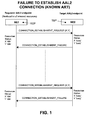
- FIG. 1 A message sequence chart which highlights the failure to establish one AAL2 connection is depicted in fig.1.
- the names of the messages are not corresponding to the standard ones.
- an originating AAL2 endpoint REP inside a first network element NE1 has the necessity to establish an AAL type 2 link with a destination (target) AAL2 endpoint TEP inside another network element NE2.
- the originating endpoint REP sends to the destination endpoint TEP a CONNECTION_ESTABLISHMENT_REQUEST message with the indication of the needed resources to be allocated inside network element NE2.
- the corresponding resource indicators are conventionally named X and Y.
- the indicated resources may corresponds to a channel with given bandwidth identified by VPI, VCI and CID. These resources are considered available inside NE1, for example because they are just released, and the relevant status is indicated as 'idle' consequently.
- the originating endpoint REP reasonably assumes that the same idle state is considered by the Target endpoint TEP. Nevertheless, due to internal error or other causes of misalignment, the status of the resources X and Y might be considered "busy" by the destination endpoint TEP, so it sends back a CONNECTION_ESTABLISHMENT_FAILURE message to the originating endpoint REP. At the reception of this message the originating endpoint REP re-attempts to establish the AAL2 connection, but every successive attempt to allocate the "hanged" resources fails. With that no resources establishment is possible for that CID.
- the main object of the present invention is that to overcome the drawbacks of the prior art in presence of misaligned status of the resources between two AAL2 endpoints when a new connection is attempted, and indicate a connection establishment method able to prevent the reduction of the overall data throughput.
- the invention achieves said object by providing a method to establish a connection between two AAL2 signalling endpoints in a communications network, as disclosed in the claims.
- the originating endpoint when an originating AAL2 endpoint requests the establishment of a new connection to a destination AAL2 endpoint, specifying the needed resources to be allocated, and the destination endpoint answers with a reject due to the busy state of the requested resources, the originating endpoint firstly recognises the misalignment status of the resources and then starts a procedure to resume the correct status, namely the same status of the resources stated by the originating AAL2 endpoint, so that a bidirectional link can be established between the two endpoints.
- the advantage of the method of the invention is that to correct the asymmetrical status of the resources at the two ends of the ATM link for preventing the total unavailability and consequent reduction of the overall throughput.
- the invention is useful for every AAL2 Nodes and in particular, referring to UTRAN, it can be applied over the lu-(CS) interface (the RNC is the originating AAL2 endpoint and the UMSC is the destination AAL2 endpoint), over lub interface (the RNC is the originating AAL2 endpoint and the Node B is the destination AAL2 endpoint), and over lur interface between two RNCs that can act as originating and destination AAL2 endpoint.
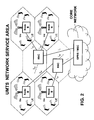
- a partial UMTS network deployed on a territory subdivided into contiguous service cells, each corresponding to the radio coverage area of a fixed base station, conventionally named Node B, placed at the centre.
- Node B is connected via radio with a plurality of mobile stations, also termed User Equipment (UE).
- UE User Equipment
- a cluster of contiguous fixed base stations is physically connected to a Radio Network Controller (RNC), in its turn connected to the Core Network CN.
- RNC Radio Network Controller
- the latter is schematically represented by a block SGSN / MSC (Serving GPRS Support Node /Message Switching Centre) for indicating either packet switching or circuit switching capability.
- the Core Network CN is shared between UMTS and the existing GSM (Global System for Mobile communications).
- the following interfaces are defined: an lu interface between the core network and the RNCs; an lub interface between the RNC and the Nodes B; and an Uu on-air interface between the Node B and the UEs.
- the UMTS network is subdivided into contiguous service areas, each including several cells.
- the mobile terminal in idle state is traceable into a service area by paging messages.
- the 3GPP (3rd Generation Partnership Project) in the ambit of the ITU-T has issued a complete set of Technical Specifications (TS) for the standardisation of the UMTS network.
- the UMTS system includes the Core Network CN, (see TS 23.002) connected to the mobile UEs through the interposed UTRAN (see TS 25.401).
- UTRAN includes a plurality of Node B blocks and the respective RNC controllers, and all the involved interfaces.
- Each UE includes a Mobile Equipment ME with a respective USIM card (UMTS Subscriber Identity Module).
- UMTS Subscriber Identity Module UMTS Subscriber Identity Module
- SRNC Serving RNC
- the RNC placed below is a DRNC (Drift RNC) connected to the SRNC by means of an internal lur interface.
- Each RNC controlling cells is named CRNC and is interfaced to the other type of RNCs through the lur interface.
- the UTRAN and the served UEs constitute a Radio Network Subsystem (RNS) disclosed in TS 23.110.
- the core network CN includes a CIRCUIT SWITCHED part and a PACKET SWITCHED part. The first one is connected to the PSTN (Public Switched Telephone Network) while the second one is connected to the IP (Internet Protocol) network.
- the circuit switched part includes the MSC / VLR (Visitor Location Register) network elements which together allow the wandering of users inside the network.
- the PACKET SWITCHED part packet switched part includes two network elements known as SGSN (Serving GPRS Support Node) and GGSN (Gateway GPRS Support Node).
- the first one is interfaced to the MSC / VLR and to the HLR (Home Location Register) to catch location information of the UEs in the packet switched domain.
- the SRNC is interfaced to the MSC/VLR block through the lu(CS) interface and to the SGSN node through the lu(PS) interface.
- the SGSN node is further interfaced to the GGSN node through the Gn interface.
- the GGSN node is further interfaced to the IP network through the Gi interface.
- the transmissions are based on the CDMA technique.
- the CDMA technique implies that multiple signals can be transmitted in the same time interval and in the same frequency band, but separated in the code domain.
- the CDMA transmissions can be further based on TDMA (Time Division Multiple Access) technique.
- the TDMA technique implies that each frame is subdivided in a fixed number of timeslots, each of them conveys one or more CDMA bursts, and different timeslots of the frame can be assigned to different users or alternatively to pilots or signalling channels. Still depending on the adopted standard, either Frequency Division Duplexing (FDD) or Time Division Duplexing (TDD) are possible.
- FDD Frequency Division Duplexing
- TDD Time Division Duplexing
- Non-limiting 3GPP system suitable to accommodate the invention are the following: WCDMA UTRA-FDD 3.84 Mcps (Mega chips); 3GPP UTRA-TDD 3.84 Mcps; 3GPP UTRA-TDD 1.28 Mcps; and TD-SCDMA ((Time Division ⁇ Synchronous CDMA) 1.28 Mcps standardised by CWTS (Chinese Wireless Telecommunication Standards) committee.
- Fig.4 shows a general protocol model of the UTRAN interface highlighting a subdivision into an User Plane and a Control Plane.
- the protocol structure is designed in horizontal layers and vertical planes, according to the current standardisation. Layers and Planes are taken as logically independent of each other to allow future changes, if necessary, of the only involved parts.
- Two main horizontal layers are present: an upper Radio Network Layer and a lower Transport Network Layer, the latter including Physical Layer.
- Three vertical planes are present, respectively: a Control Plane, an User Plane, and a Transport Network Control Plane.
- the User Plane includes Data Stream(s) and data Bearer(s) for Data Stream(s). Each data stream is characterised by one or more frame protocols specified for that interfaces.
- the User Plane is used to transport all user data, e.g.: speech data or packet data.
- the Control Plane is used for all control signalling which is UMTS-specific in the considered case. It includes (depending on the relevant interface) several Application Protocols, i.e. RANAP (Radio Access Network Application Part described in the TS 25.413; RNSAP (Radio Network Subsystem Application Part) described in the TS 25.423; and NBAP (Node B Application Part) described in the TS 25.433; the Control Plane also includes the Signalling Bearer(s) to transport the Application Protocols messages.
- the Transport Network Control Plane acts as plane between the Control Plane and the User Plane.
- the Transport Network Control Plane is based on the ALCAP (Access Link Control Application Part) concept described in TS 25.410, TS 25.420 & TS 45.430.
- the ALCAP is a set of protocols (ITU Q2630.1 and Q2150.1) used to set up Data Bearer(s) for the User Plane.
- the Layer 1 of the lu, lur and lub interfaces is defined identically in the TS 25.411, TS 25.421 and TS 25.431.
- Main L1 functions are those to interface to the physical medium (e.g.: optical fibre, radio link, copper cable) to offer the clock extraction capability and transmission quality control.
- the physical medium shall comply with some well known standards, i.e. SDH, SONET, Ex, Tx, etc.
- SDH Secure Digital
- SONET Simple Object Access Protocol
- Ex Transmission Control Protocol
- Tx Transport Network Layer
- fig.5 a message sequence chart is represented which highlights a method according to the present invention to establish one AAL2 connection on the lur link between the SRNC and DRNC network elements inside UTRAN (fig.3).
- the originating AAL2 endpoint SRNC sends to the destination AAL2 endpoint DRNC the ALCAP ERQ (Establish Request) message requesting to use a resource (a channel identified by VPI, VCI and CID).
- the originating AAL2 endpoint receives from the destination AAL2 endpoint the ALCAP RLC (Release Confirm) message instead of the ECF (Establish Confirm) message it considers the requested resource as unavailable (Hanging resource) and sends to the destination AAL2 endpoint a RES (Reset) message in order to force the destination AAL2 endpoint to release the relevant resource.
- the destination AAL2 endpoint sends to the originating AAL2 endpoint a RSC (Reset Confirm) confirmation message.
- the latter endpoint may repeats the sending of the ERQ (Establish Request) message requesting to use the released resource.
- the destination AAL2 endpoint allocates the resource to the lur link (whether not yet allocated) and sends back to the originating AAL2 endpoint the ECF (Establish Confirm) message. At this point the originating AAL2 endpoint considers the connection successfully established and the signalling procedure is completed.
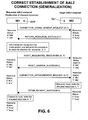
- the names and types of messages are considered in more general form not strictly tied to the ALCAP rules neither to the UMTS case, differently from the ones indicated in fig.5.
- the destination endpoint TEP replies to the resource request message with a message RETURN_RESOURCE_STATUS (X,Y) embedding a state indicator field of the pair resources X, Y.
- the originating endpoint REP upon the reception of this message, is able to recognise a misalignment from the comparison between the received state and the known one.
- the only misalignment having interest to the prosecution of the method corresponds to the return of a 'busy' indication from TEP (the return of 'idle' indication is handled with usual connection procedure).
- the originating endpoint REP send to the destination endpoint TEP a reset message RESET_REQUESTED_RESOURCES forcing the latter to change from "busy” to "idle” the state of the resources X and Y inside the element NE2.
- the destination endpoint TEP sends back a confirmation message RESET_ANSWER_SUCCESSFUL to the originating endpoint REP.
- the destination endpoint TEP upon the reception of the confirmation retransmits the CONNECTION_ESTABLISHMENT_REQUEST message. Being the status of X, Y considered equally idle by the two AAL2 endpoints, the destination endpoint TEP turns the state of the idle resources to busy and assigns them to the AAL2 link (whether not yet assigned); then it sends back a CONNECTION_ESTABLISHMENT_SUCCESSFUL confirmation message to the originating endpoint REP. The latter, at the reception of this message turns from idle to busy the state of the resources X, Y in order to preserve the alignment. From this time onwards the AAL2 service can be delivered on the AAL2 connection established on the ATM link.
- AAL2 endpoints and network elements NEs are useful. Some network elements can act as originating and destination AAL2 endpoints, but for different AAL2 connections established on the same ATM link.
- the single connection shall have its originating endpoint associated to a NE and its destination endpoint associated to a different NE.
- Other connections which share the same ATM link may have inverted the originating and terminating endpoints with respect to the two NEs. Translating these considerations on fig.6 , this means to have to foresee another configuration with NE1 associated to the destination endpoint TEP and NE2 associated to the originating endpoint REP.
- the SRNC and DRNC are an example of network elements which may act as originating and destination AAL2 endpoints, this because on the lur interface connections can be requested and released for the two directions of transmission. Hence, on the lur interface one RNC can request connections to the other and receive back requests. The same is not true, for example, on the lub and lu(CS) interfaces where is the only RNC which requests connections to the other endpoint but never receives back requests.
Landscapes
- Engineering & Computer Science (AREA)
- Computer Networks & Wireless Communication (AREA)
- Signal Processing (AREA)
- Data Exchanges In Wide-Area Networks (AREA)
- Mobile Radio Communication Systems (AREA)
- Communication Control (AREA)
- Radio Relay Systems (AREA)
Priority Applications (4)
| Application Number | Priority Date | Filing Date | Title |
|---|---|---|---|
| PL04425166T PL1575223T3 (pl) | 2004-03-12 | 2004-03-12 | Sposób ustanawiania połączenia pomiędzy dwoma sygnalizującymi punktami końcowymi wewnątrz sieci komunikacyjnej |
| EP04425166A EP1575223B1 (de) | 2004-03-12 | 2004-03-12 | Verfahren zum Aufbau einer Verbindung zwischen zwei ALL2-Endpunkten in einem Kommunikationsnetzwerk |
| DE602004004066T DE602004004066T2 (de) | 2004-03-12 | 2004-03-12 | Verfahren zum Aufbau einer Verbindung zwischen zwei ALL2-Endpunkten in einem Kommunikationsnetzwerk |
| AT04425166T ATE350843T1 (de) | 2004-03-12 | 2004-03-12 | Verfahren zum aufbau einer verbindung zwischen zwei all2-endpunkten in einem kommunikationsnetzwerk |
Applications Claiming Priority (1)
| Application Number | Priority Date | Filing Date | Title |
|---|---|---|---|
| EP04425166A EP1575223B1 (de) | 2004-03-12 | 2004-03-12 | Verfahren zum Aufbau einer Verbindung zwischen zwei ALL2-Endpunkten in einem Kommunikationsnetzwerk |
Publications (2)
| Publication Number | Publication Date |
|---|---|
| EP1575223A1 true EP1575223A1 (de) | 2005-09-14 |
| EP1575223B1 EP1575223B1 (de) | 2007-01-03 |
Family
ID=34814467
Family Applications (1)
| Application Number | Title | Priority Date | Filing Date |
|---|---|---|---|
| EP04425166A Expired - Lifetime EP1575223B1 (de) | 2004-03-12 | 2004-03-12 | Verfahren zum Aufbau einer Verbindung zwischen zwei ALL2-Endpunkten in einem Kommunikationsnetzwerk |
Country Status (4)
| Country | Link |
|---|---|
| EP (1) | EP1575223B1 (de) |
| AT (1) | ATE350843T1 (de) |
| DE (1) | DE602004004066T2 (de) |
| PL (1) | PL1575223T3 (de) |
Cited By (7)
| Publication number | Priority date | Publication date | Assignee | Title |
|---|---|---|---|---|
| CN100411452C (zh) * | 2006-03-08 | 2008-08-13 | 华为技术有限公司 | 一种修改传输带宽的方法和系统 |
| KR100892200B1 (ko) | 2007-09-28 | 2009-04-07 | 엘지노텔 주식회사 | Atm 시스템에서 alcap 호 설정 시 erq 충돌을처리하기 위한 방법 |
| US7643494B2 (en) * | 2004-12-06 | 2010-01-05 | Lg-Nortel Co., Ltd. | Interworking apparatus and method for accepting IP in WCDMA system |
| US20100035626A1 (en) * | 2008-08-07 | 2010-02-11 | Fujitsu Limited | Radio network control apparatus |
| EP2129071A4 (de) * | 2007-03-12 | 2011-04-20 | Zte Corp | Verfahren zum interaktiven abfragen des medienkanalstatus |
| WO2011057539A1 (zh) * | 2009-11-12 | 2011-05-19 | 中兴通讯股份有限公司 | 异步传输模式通信系统及建立异步传输模式连接的方法 |
| EP2451117A4 (de) * | 2009-06-30 | 2014-07-02 | Alcatel Lucent | Verfahren zur synchronisation des asynchronen transfermodus-adaptionsschicht typ 2-pfadstatus und vorrichtung dafür |
Citations (2)
| Publication number | Priority date | Publication date | Assignee | Title |
|---|---|---|---|---|
| WO2002056550A1 (en) * | 2001-01-09 | 2002-07-18 | Telefonaktiebolaget L M Ericsson (Publ) | Dynamic aal2 path configuration in atm system |
| US6493344B1 (en) * | 1997-02-21 | 2002-12-10 | Nortel Networks Limited | Telecommunications system |
-
2004
- 2004-03-12 PL PL04425166T patent/PL1575223T3/pl unknown
- 2004-03-12 AT AT04425166T patent/ATE350843T1/de not_active IP Right Cessation
- 2004-03-12 DE DE602004004066T patent/DE602004004066T2/de not_active Expired - Lifetime
- 2004-03-12 EP EP04425166A patent/EP1575223B1/de not_active Expired - Lifetime
Patent Citations (2)
| Publication number | Priority date | Publication date | Assignee | Title |
|---|---|---|---|---|
| US6493344B1 (en) * | 1997-02-21 | 2002-12-10 | Nortel Networks Limited | Telecommunications system |
| WO2002056550A1 (en) * | 2001-01-09 | 2002-07-18 | Telefonaktiebolaget L M Ericsson (Publ) | Dynamic aal2 path configuration in atm system |
Cited By (9)
| Publication number | Priority date | Publication date | Assignee | Title |
|---|---|---|---|---|
| US7643494B2 (en) * | 2004-12-06 | 2010-01-05 | Lg-Nortel Co., Ltd. | Interworking apparatus and method for accepting IP in WCDMA system |
| CN100411452C (zh) * | 2006-03-08 | 2008-08-13 | 华为技术有限公司 | 一种修改传输带宽的方法和系统 |
| EP2129071A4 (de) * | 2007-03-12 | 2011-04-20 | Zte Corp | Verfahren zum interaktiven abfragen des medienkanalstatus |
| KR100892200B1 (ko) | 2007-09-28 | 2009-04-07 | 엘지노텔 주식회사 | Atm 시스템에서 alcap 호 설정 시 erq 충돌을처리하기 위한 방법 |
| US20100035626A1 (en) * | 2008-08-07 | 2010-02-11 | Fujitsu Limited | Radio network control apparatus |
| EP2152037A3 (de) * | 2008-08-07 | 2012-01-18 | Fujitsu Limited | Funknetzsteuervorrichtung |
| EP2451117A4 (de) * | 2009-06-30 | 2014-07-02 | Alcatel Lucent | Verfahren zur synchronisation des asynchronen transfermodus-adaptionsschicht typ 2-pfadstatus und vorrichtung dafür |
| US9054897B2 (en) | 2009-06-30 | 2015-06-09 | Alcatel Lucent | Method and apparatus for synchronizing AAL2 path states |
| WO2011057539A1 (zh) * | 2009-11-12 | 2011-05-19 | 中兴通讯股份有限公司 | 异步传输模式通信系统及建立异步传输模式连接的方法 |
Also Published As
| Publication number | Publication date |
|---|---|
| DE602004004066T2 (de) | 2007-08-09 |
| EP1575223B1 (de) | 2007-01-03 |
| ATE350843T1 (de) | 2007-01-15 |
| DE602004004066D1 (de) | 2007-02-15 |
| PL1575223T3 (pl) | 2007-05-31 |
Similar Documents
| Publication | Publication Date | Title |
|---|---|---|
| EP0664658B1 (de) | Kommunikationssystem für digitale zellulare Daten | |
| US6801508B1 (en) | Asynchronous transfer mode packet network and method for transferring packet data in the same | |
| EP0829153B1 (de) | Auf virtuellen pfaden basierte statische leitweglenkung | |
| FI102713B (fi) | Menetelmä radioyhteyden muodostamiseksi osana ATM-verkkoa | |
| US6795437B1 (en) | Arrangement for interconnecting communications networks | |
| US6810258B1 (en) | Contention resolution method in channel allocation | |
| EP0660632A2 (de) | Verfahren und System zum sauften Überreichen einer Zellularen Mobil-Mobilverbindung | |
| CA2345034C (en) | Connection establishment in a wireless telecommunications network | |
| US7170865B2 (en) | Communications system having enhanced fault tolerance | |
| AU2295500A (en) | Flow control method in a telecommunications system | |
| US7085264B2 (en) | System and method for controlling media gateways that interconnect disparate networks | |
| US6181947B1 (en) | System for the wireless transmission of a frame-synchronized signal between a radio base station and at least one mobile terminal | |
| US9204491B2 (en) | Method of managing quality of service in a mobile radio system | |
| US6850763B1 (en) | System and method of servicing mobile communications with a proxy switch | |
| EP1575223B1 (de) | Verfahren zum Aufbau einer Verbindung zwischen zwei ALL2-Endpunkten in einem Kommunikationsnetzwerk | |
| CA2283757C (en) | Mobile networks using atm switching | |
| EP0967755B1 (de) | Steuerungsverfahren der bandbreite eines datenpakets in einem paketvermittlungsnetz und paketvermittlungsnetzsystem | |
| EP1645083A1 (de) | Adaptiver verbindungs-cache für kommunikationsnetzwerke | |
| US7327740B2 (en) | Facilitating reliable connection admission control for telecommunications system using AAL2 signaling | |
| JP2001275144A (ja) | ソフトハンドオフに対してサイト間逆方向トラヒック容量を向上させるためのシステムおよび方法 | |
| EP1416743A1 (de) | Verfahren zur Leitweglenkung von Zeichengabenachrichten basierend auf den MTP3 service indicator octet (SIO) code | |
| Marchent et al. | Support of mobile multimedia over radio for a wide range of QoS and traffic profiles |
Legal Events
| Date | Code | Title | Description |
|---|---|---|---|
| PUAI | Public reference made under article 153(3) epc to a published international application that has entered the european phase |
Free format text: ORIGINAL CODE: 0009012 |
|
| AK | Designated contracting states |
Kind code of ref document: A1 Designated state(s): AT BE BG CH CY CZ DE DK EE ES FI FR GB GR HU IE IT LI LU MC NL PL PT RO SE SI SK TR |
|
| AX | Request for extension of the european patent |
Extension state: AL LT LV MK |
|
| AKX | Designation fees paid | ||
| 17P | Request for examination filed |
Effective date: 20060418 |
|
| RBV | Designated contracting states (corrected) |
Designated state(s): AT BE BG CH CY CZ DE DK EE ES FI FR GB GR HU IE IT LI LU MC NL PL PT RO SE SI SK TR |
|
| RAP1 | Party data changed (applicant data changed or rights of an application transferred) |
Owner name: SIEMENS S.P.A. |
|
| REG | Reference to a national code |
Ref country code: DE Ref legal event code: 8566 |
|
| GRAP | Despatch of communication of intention to grant a patent |
Free format text: ORIGINAL CODE: EPIDOSNIGR1 |
|
| GRAS | Grant fee paid |
Free format text: ORIGINAL CODE: EPIDOSNIGR3 |
|
| GRAA | (expected) grant |
Free format text: ORIGINAL CODE: 0009210 |
|
| AK | Designated contracting states |
Kind code of ref document: B1 Designated state(s): AT BE BG CH CY CZ DE DK EE ES FI FR GB GR HU IE IT LI LU MC NL PL PT RO SE SI SK TR |
|
| PG25 | Lapsed in a contracting state [announced via postgrant information from national office to epo] |
Ref country code: NL Free format text: LAPSE BECAUSE OF FAILURE TO SUBMIT A TRANSLATION OF THE DESCRIPTION OR TO PAY THE FEE WITHIN THE PRESCRIBED TIME-LIMIT Effective date: 20070103 Ref country code: FI Free format text: LAPSE BECAUSE OF FAILURE TO SUBMIT A TRANSLATION OF THE DESCRIPTION OR TO PAY THE FEE WITHIN THE PRESCRIBED TIME-LIMIT Effective date: 20070103 Ref country code: CH Free format text: LAPSE BECAUSE OF FAILURE TO SUBMIT A TRANSLATION OF THE DESCRIPTION OR TO PAY THE FEE WITHIN THE PRESCRIBED TIME-LIMIT Effective date: 20070103 Ref country code: LI Free format text: LAPSE BECAUSE OF FAILURE TO SUBMIT A TRANSLATION OF THE DESCRIPTION OR TO PAY THE FEE WITHIN THE PRESCRIBED TIME-LIMIT Effective date: 20070103 Ref country code: AT Free format text: LAPSE BECAUSE OF FAILURE TO SUBMIT A TRANSLATION OF THE DESCRIPTION OR TO PAY THE FEE WITHIN THE PRESCRIBED TIME-LIMIT Effective date: 20070103 Ref country code: SI Free format text: LAPSE BECAUSE OF FAILURE TO SUBMIT A TRANSLATION OF THE DESCRIPTION OR TO PAY THE FEE WITHIN THE PRESCRIBED TIME-LIMIT Effective date: 20070103 |
|
| REG | Reference to a national code |
Ref country code: GB Ref legal event code: FG4D |
|
| REF | Corresponds to: |
Ref document number: 602004004066 Country of ref document: DE Date of ref document: 20070215 Kind code of ref document: P |
|
| REG | Reference to a national code |
Ref country code: IE Ref legal event code: FG4D |
|
| PG25 | Lapsed in a contracting state [announced via postgrant information from national office to epo] |
Ref country code: BG Free format text: LAPSE BECAUSE OF FAILURE TO SUBMIT A TRANSLATION OF THE DESCRIPTION OR TO PAY THE FEE WITHIN THE PRESCRIBED TIME-LIMIT Effective date: 20070403 |
|
| PG25 | Lapsed in a contracting state [announced via postgrant information from national office to epo] |
Ref country code: ES Free format text: LAPSE BECAUSE OF FAILURE TO SUBMIT A TRANSLATION OF THE DESCRIPTION OR TO PAY THE FEE WITHIN THE PRESCRIBED TIME-LIMIT Effective date: 20070414 |
|
| REG | Reference to a national code |
Ref country code: SE Ref legal event code: TRGR |
|
| REG | Reference to a national code |
Ref country code: PL Ref legal event code: T3 |
|
| PG25 | Lapsed in a contracting state [announced via postgrant information from national office to epo] |
Ref country code: PT Free format text: LAPSE BECAUSE OF FAILURE TO SUBMIT A TRANSLATION OF THE DESCRIPTION OR TO PAY THE FEE WITHIN THE PRESCRIBED TIME-LIMIT Effective date: 20070604 |
|
| NLV1 | Nl: lapsed or annulled due to failure to fulfill the requirements of art. 29p and 29m of the patents act | ||
| REG | Reference to a national code |
Ref country code: CH Ref legal event code: PL |
|
| ET | Fr: translation filed | ||
| PLBE | No opposition filed within time limit |
Free format text: ORIGINAL CODE: 0009261 |
|
| STAA | Information on the status of an ep patent application or granted ep patent |
Free format text: STATUS: NO OPPOSITION FILED WITHIN TIME LIMIT |
|
| PG25 | Lapsed in a contracting state [announced via postgrant information from national office to epo] |
Ref country code: SK Free format text: LAPSE BECAUSE OF FAILURE TO SUBMIT A TRANSLATION OF THE DESCRIPTION OR TO PAY THE FEE WITHIN THE PRESCRIBED TIME-LIMIT Effective date: 20070103 |
|
| 26N | No opposition filed |
Effective date: 20071005 |
|
| PG25 | Lapsed in a contracting state [announced via postgrant information from national office to epo] |
Ref country code: RO Free format text: LAPSE BECAUSE OF FAILURE TO SUBMIT A TRANSLATION OF THE DESCRIPTION OR TO PAY THE FEE WITHIN THE PRESCRIBED TIME-LIMIT Effective date: 20070103 Ref country code: CZ Free format text: LAPSE BECAUSE OF FAILURE TO SUBMIT A TRANSLATION OF THE DESCRIPTION OR TO PAY THE FEE WITHIN THE PRESCRIBED TIME-LIMIT Effective date: 20070103 Ref country code: BE Free format text: LAPSE BECAUSE OF FAILURE TO SUBMIT A TRANSLATION OF THE DESCRIPTION OR TO PAY THE FEE WITHIN THE PRESCRIBED TIME-LIMIT Effective date: 20070103 |
|
| PG25 | Lapsed in a contracting state [announced via postgrant information from national office to epo] |
Ref country code: IE Free format text: LAPSE BECAUSE OF NON-PAYMENT OF DUE FEES Effective date: 20070312 Ref country code: MC Free format text: LAPSE BECAUSE OF NON-PAYMENT OF DUE FEES Effective date: 20070331 |
|
| PG25 | Lapsed in a contracting state [announced via postgrant information from national office to epo] |
Ref country code: GR Free format text: LAPSE BECAUSE OF FAILURE TO SUBMIT A TRANSLATION OF THE DESCRIPTION OR TO PAY THE FEE WITHIN THE PRESCRIBED TIME-LIMIT Effective date: 20070404 |
|
| PGFP | Annual fee paid to national office [announced via postgrant information from national office to epo] |
Ref country code: PL Payment date: 20080221 Year of fee payment: 5 Ref country code: SE Payment date: 20080313 Year of fee payment: 5 |
|
| GBPC | Gb: european patent ceased through non-payment of renewal fee |
Effective date: 20080312 |
|
| PG25 | Lapsed in a contracting state [announced via postgrant information from national office to epo] |
Ref country code: EE Free format text: LAPSE BECAUSE OF FAILURE TO SUBMIT A TRANSLATION OF THE DESCRIPTION OR TO PAY THE FEE WITHIN THE PRESCRIBED TIME-LIMIT Effective date: 20070103 |
|
| PG25 | Lapsed in a contracting state [announced via postgrant information from national office to epo] |
Ref country code: GB Free format text: LAPSE BECAUSE OF NON-PAYMENT OF DUE FEES Effective date: 20080312 |
|
| PG25 | Lapsed in a contracting state [announced via postgrant information from national office to epo] |
Ref country code: CY Free format text: LAPSE BECAUSE OF FAILURE TO SUBMIT A TRANSLATION OF THE DESCRIPTION OR TO PAY THE FEE WITHIN THE PRESCRIBED TIME-LIMIT Effective date: 20070103 |
|
| PG25 | Lapsed in a contracting state [announced via postgrant information from national office to epo] |
Ref country code: LU Free format text: LAPSE BECAUSE OF NON-PAYMENT OF DUE FEES Effective date: 20070312 Ref country code: DK Free format text: LAPSE BECAUSE OF FAILURE TO SUBMIT A TRANSLATION OF THE DESCRIPTION OR TO PAY THE FEE WITHIN THE PRESCRIBED TIME-LIMIT Effective date: 20070403 |
|
| PG25 | Lapsed in a contracting state [announced via postgrant information from national office to epo] |
Ref country code: HU Free format text: LAPSE BECAUSE OF FAILURE TO SUBMIT A TRANSLATION OF THE DESCRIPTION OR TO PAY THE FEE WITHIN THE PRESCRIBED TIME-LIMIT Effective date: 20070704 Ref country code: TR Free format text: LAPSE BECAUSE OF FAILURE TO SUBMIT A TRANSLATION OF THE DESCRIPTION OR TO PAY THE FEE WITHIN THE PRESCRIBED TIME-LIMIT Effective date: 20070103 |
|
| EUG | Se: european patent has lapsed | ||
| REG | Reference to a national code |
Ref country code: PL Ref legal event code: LAPE |
|
| PG25 | Lapsed in a contracting state [announced via postgrant information from national office to epo] |
Ref country code: PL Free format text: LAPSE BECAUSE OF NON-PAYMENT OF DUE FEES Effective date: 20090312 |
|
| PG25 | Lapsed in a contracting state [announced via postgrant information from national office to epo] |
Ref country code: SE Free format text: LAPSE BECAUSE OF NON-PAYMENT OF DUE FEES Effective date: 20090313 |
|
| REG | Reference to a national code |
Ref country code: DE Ref legal event code: R082 Ref document number: 602004004066 Country of ref document: DE |
|
| REG | Reference to a national code |
Ref country code: DE Ref legal event code: R081 Ref document number: 602004004066 Country of ref document: DE Owner name: NOKIA SIEMENS NETWORKS ITALIA S.P.A., IT Free format text: FORMER OWNER: SIEMENS S.P.A., MAILAND/MILANO, IT Effective date: 20130620 |
|
| REG | Reference to a national code |
Ref country code: FR Ref legal event code: PLFP Year of fee payment: 12 |
|
| PGFP | Annual fee paid to national office [announced via postgrant information from national office to epo] |
Ref country code: DE Payment date: 20150320 Year of fee payment: 12 |
|
| PGFP | Annual fee paid to national office [announced via postgrant information from national office to epo] |
Ref country code: FR Payment date: 20150319 Year of fee payment: 12 |
|
| PGFP | Annual fee paid to national office [announced via postgrant information from national office to epo] |
Ref country code: IT Payment date: 20150330 Year of fee payment: 12 |
|
| REG | Reference to a national code |
Ref country code: FR Ref legal event code: TP Owner name: NOKIA SIEMENS NETWORKS ITALIA S.P.A., IT Effective date: 20151130 |
|
| REG | Reference to a national code |
Ref country code: DE Ref legal event code: R119 Ref document number: 602004004066 Country of ref document: DE |
|
| REG | Reference to a national code |
Ref country code: FR Ref legal event code: ST Effective date: 20161130 |
|
| PG25 | Lapsed in a contracting state [announced via postgrant information from national office to epo] |
Ref country code: FR Free format text: LAPSE BECAUSE OF NON-PAYMENT OF DUE FEES Effective date: 20160331 Ref country code: DE Free format text: LAPSE BECAUSE OF NON-PAYMENT OF DUE FEES Effective date: 20161001 |
|
| PG25 | Lapsed in a contracting state [announced via postgrant information from national office to epo] |
Ref country code: IT Free format text: LAPSE BECAUSE OF NON-PAYMENT OF DUE FEES Effective date: 20160312 |