EP1574982A1 - Information processing system using base sequence-related information - Google Patents
Information processing system using base sequence-related information Download PDFInfo
- Publication number
- EP1574982A1 EP1574982A1 EP03772858A EP03772858A EP1574982A1 EP 1574982 A1 EP1574982 A1 EP 1574982A1 EP 03772858 A EP03772858 A EP 03772858A EP 03772858 A EP03772858 A EP 03772858A EP 1574982 A1 EP1574982 A1 EP 1574982A1
- Authority
- EP
- European Patent Office
- Prior art keywords
- information
- polymorphism
- nucleotide sequence
- flag information
- flag
- Prior art date
- Legal status (The legal status is an assumption and is not a legal conclusion. Google has not performed a legal analysis and makes no representation as to the accuracy of the status listed.)
- Withdrawn
Links
Images







Classifications
-
- G—PHYSICS
- G16—INFORMATION AND COMMUNICATION TECHNOLOGY [ICT] SPECIALLY ADAPTED FOR SPECIFIC APPLICATION FIELDS
- G16B—BIOINFORMATICS, i.e. INFORMATION AND COMMUNICATION TECHNOLOGY [ICT] SPECIALLY ADAPTED FOR GENETIC OR PROTEIN-RELATED DATA PROCESSING IN COMPUTATIONAL MOLECULAR BIOLOGY
- G16B20/00—ICT specially adapted for functional genomics or proteomics, e.g. genotype-phenotype associations
-
- G—PHYSICS
- G16—INFORMATION AND COMMUNICATION TECHNOLOGY [ICT] SPECIALLY ADAPTED FOR SPECIFIC APPLICATION FIELDS
- G16B—BIOINFORMATICS, i.e. INFORMATION AND COMMUNICATION TECHNOLOGY [ICT] SPECIALLY ADAPTED FOR GENETIC OR PROTEIN-RELATED DATA PROCESSING IN COMPUTATIONAL MOLECULAR BIOLOGY
- G16B20/00—ICT specially adapted for functional genomics or proteomics, e.g. genotype-phenotype associations
- G16B20/20—Allele or variant detection, e.g. single nucleotide polymorphism [SNP] detection
-
- G—PHYSICS
- G16—INFORMATION AND COMMUNICATION TECHNOLOGY [ICT] SPECIALLY ADAPTED FOR SPECIFIC APPLICATION FIELDS
- G16B—BIOINFORMATICS, i.e. INFORMATION AND COMMUNICATION TECHNOLOGY [ICT] SPECIALLY ADAPTED FOR GENETIC OR PROTEIN-RELATED DATA PROCESSING IN COMPUTATIONAL MOLECULAR BIOLOGY
- G16B30/00—ICT specially adapted for sequence analysis involving nucleotides or amino acids
Definitions
- the present invention relates to an information processing system that provides information through a communication network.
- genomic nucleotide sequences of various organisms including humans are being rapidly determined and information on genomic nucleotide sequences is being accumulated in various databases.
- information network such as the Internet.
- differences in nucleotide sequences among individual organisms refer to a polymorphism defined by existence of a predetermined nucleotide difference at a frequency of 1% or more in an individual species and a variation defined by a predetermined nucleotide difference of less than 1% in an individual species.
- known polymorphisms are SNP (single nucleotide polymorphism), in which there is one nucleotide difference among individual organisms; an insertion/deletion polymorphism, in which one to several tens of nucleotides (sometimes several thousands of nucleotides) have been deleted or inserted; VNTR (variable number of tandem repeat), in which the number of repetitions of a sequence comprising two to several tens of nucleotides as one unit varies; and a microsatellite polymorphism (a repetition sequence having about two to four nucleotides).
- Such polymorphisms sometimes affect, for example, differences in amino acid sequences of proteins among individual organisms or differences in expression efficiency concerning predetermined genes among individual organisms. Such influences cause, for example, differences in the morbidity rate of predetermined diseases among individual organisms or differences in sensitiveness to predetermined medicaments among individual organisms.
- a system which provides semantic information useful for each organism among a plurality of individual organisms through effective utilization of differences in nucleotide sequence-related information, such as a polymorphism, is not yet constructed.
- the present invention is directed to construction of a highly safe system for processing information for providing semantic information and/or information associated with the semantic information useful for each individual organism through effective utilization of differences in nucleotide sequence-related information among individual organisms.
- adequacy of transmission of nucleotide sequence-related information corresponding to positional information is evaluated based on the flag information associated with the positional information.
- the flag information is associated with the positional information and explains adequacy of transmission of nucleotide sequence-related information corresponding to the positional information.
- processing of positional information corresponding to nucleotide sequence-related information is preferably cancelled when transmission thereof has been evaluated to be inadequate based on the flag information with the use of the positional information and nucleotide sequence-related information corresponding thereto.
- the flag information and/or information associated with the flag information may be obtained, and adequacy of transmission of nucleotide sequence-related information may be evaluated based on the obtained flag information and/or information associated with the flag information.
- the flag information may be gradationally set in accordance with the destination of nucleotide sequence information.
- the flag information may be associated with each piece of positional information or a combination of a plurality of pieces of positional information.
- the flag information is preferably rewritable and adequately updated.
- the method for processing information on nucleotide sequence according to the present invention can be executed in the form of a program that allows a computer comprising hardware, such as a control unit, a transmitter/receiver, and a memory unit, to execute each step of information processing.
- the method for processing information on nucleotide sequence according to the present invention can be also executed in the form of a recording medium comprising a program that allows a computer comprising hardware, such as a control unit, a transmitter/receiver, and a memory unit, to execute each step of information processing.
- the method for processing information on nucleotide sequence can be executed in the form of an information processor comprising hardware, such as a control unit, a transmitter/receiver, and a memory unit, that executes each step of information processing.
- the present invention also includes constitutions as disclosed in each claim.
- a system for processing information that provides a morbidity rate of a predetermined disease to a user is described as the first embodiment to which the present invention has been applied. Specifically, it is described with reference to the case where a user "requests an object and/or service," such as his/her morbidity rate relating to a predetermined disease.
- the present embodiment is directed to explaining a system for processing information that utilizes flag information for evaluating adequacy of transmission of nucleotide sequence-related information in which a user possesses such flag information. For the convenience of explanation, this system is explained as a simple model.
- An object and/or service is not limited to the aforementioned, and it includes, for example, objects such as pharmaceutical products, foods, and nonessential grocery items that suit individuals' (individual organisms') diatheses and services such as information that suits individuals' (individual organisms') diatheses and properties.
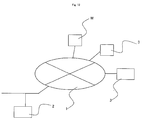
- the system for processing information comprises a communication network 1, such as the Internet, a shared computer 2 connected to communication network 1, and at least one personal computers 3 connected to communication network 1, and enables data communication between shared computer 2 and personal computers 3 through communication network 1.
- a communication network such as the Internet
- shared computer 2 connected to communication network 1
- personal computers 3 connected to communication network 1
- shared computer 2 is constituted by a CPU 4 that totally controls the operation of the shared computer 2; an input device 5, such as a keyboard and a mouse, with which information, instructions for executing a program and the like can be input; a display device 6 such as a display apparatus; a storage 7 in which temporary information, unrewritable information and the like are recorded; a database 8 for storing various data; a recorder 9 for writing predetermined information in storage 7 and database 8; and a transmitter/receiver 17 for transmission and reception of information to and from personal computers 3 through communication network 1.
- Storage 7 in shared computer 2 is constituted by a memory section A10 and a memory section B11 which respectively record different types of information; a screen memory 12 having recorded therein screen data displayed, for example, on personal computer 3 or display device 6; and a processing program 13 for operating the system.
- Shared computer 2 may have screen memory 12, processing program 13 and the like in an external recording apparatus (not shown) connected to shared computer 2 through communication network 1 instead of containing those in storage 7 inside shared computer 2.
- Database 8 in shared computer 2 is constituted by a main DB 14 in which a polymorphism address, a polymorphism pattern, and semantic information are recorded; a storage DB-A15 for saving information recorded in memory section A10; and a storage DB-B16 for saving information recorded in memory section B11.
- main DB 14 may also have recorded therein semantic information implied by a combination of polymorphism patterns in a plurality of polymorphism addresses (such as haplotype).
- polymorphism address refers to, at least, a position in a nucleotide sequence where a polymorphism is present.
- polymorphism includes, for example, a so-called SNP (single nucleotide polymorphism), RFLP (restriction fragment length of polymorphism), VNTR (variable number of tandem repeat), and microsatellite.
- SNP single nucleotide polymorphism
- RFLP restriction fragment length of polymorphism
- VNTR variable number of tandem repeat
- microsatellite microsatellite
- polymorphism address also includes a position in a nucleotide sequence which indicates a variation of a nucleotide and nucleotide sequences existing only at a frequency of less than 1% in an individual species.
- the "polymorphism address” indicates a position representing a polymorphism or the like by a combination of numerical values, letters, symbols, and the like.
- the polymorphism address is not particularly limited, for example, may be represented by a combination of a chromosome number, a symbol indicating a gene having a polymorphism therein, and a numerical value indicating a position of a polymorphism in the gene. Alternatively, it may be a combination of a symbol indicating a gene having polymorphism therein and a numerical value indicating a position of polymorphism in the gene.
- a "polymorphism address” may be a notation peculiar to a polymorphism imparted to each polymorphism.
- the polymorphism address does not directly indicate the position in the nucleotide sequence, instead, the position can be indirectly found by the notation peculiar to the polymorphism. Therefore, the "polymorphism address” includes the notation peculiar to the polymorphism.
- a "polymorphism pattern (nucleotide sequence-related information)" is information on nucleotide sequences which differ among individual organisms, and contains, at least, a pattern of nucleotides or nucleotide sequences in a polymorphism.
- the "polymorphism pattern” includes a pattern of nucleotide and nucleotide sequences existing only at a frequency of less than 1% in an individual species and is not limited to a polymorphism.
- the "polymorphism pattern” is represented either by "A” or "G".
- the "polymorphism pattern” may represent a heterozygote or homozygote in a homologous chromosome.
- the "polymorphism pattern” can be represented by "AA”, "GG”, or "AG” in the polymorphism address known to have A or G.
- the "polymorphism pattern” may indirectly represent a possible pattern in the predetermined polymorphism address instead of direct representation of patterns.
- the "polymorphism pattern” may be represented by "allele 1" when the polymorphism address has "A” or "allele 2" when the polymorphism address has "G”.
- the "polymorphism pattern” when the "polymorphism pattern” can be expressed as "AA”, “GG”, or "AG”, the "polymorphism pattern” may be represented by " ⁇ ” when expressed as “AA”, it may be represented by “ ⁇ ” when expressed as "GG”, and it may be represented by " ⁇ ” when expressed as "AG”.
- polymorphism pattern When the polymorphism is the microsatellite type the "polymorphism pattern" may be represented, for example, by numerical values indicating "the number of repetitions" and when the polymorphism is the insertion/deletion type the “polymorphism pattern” may be represented, for example, by symbols indicating "presence/absence”.
- the "polymorphism pattern" in each polymorphism address may be represented by, for example, “polymorphism 1," “polymorphism 2,” or “polymorphism 3,” in accordance with given rules and arrangements.
- polymorphism 1 For example, it can be represented by "polymorphism 1,” “polymorphism 2,” or “polymorphism 3,” in descending order of frequency regarding the "polymorphism pattern" that can appear in each polymorphism address.
- polymorphism 1 in a polymorphism address is not always the same as that in other polymorphism addresses.
- polymorphism 1" in a given polymorphism address represents "AA” that can appear with the highest frequency
- polymorphism 1" in other polymorphism addresses represents "GG” that can appear with the highest frequency.
- the term "semantic information” used herein refers to information associated with the "polymorphism pattern," for example, information including responsiveness to medicaments, side-effect caused by medicaments, a risk against diseases and disorders, diatheses and properties, interaction among proteins, and various phenotypes caused by differences in polymorphism patterns.
- "Semantic information” may directly represent a variety of phenotypes resulting from differences in "polymorphism patterns.” Alternatively, it may indirectly represent phenotypes with the use of symbols that indicate such phenotypes or the like.
- “Semantic information” is a type of information which is corrected and increases in the numbers of types accompanied by progress in research on genome and genetics, and constant updating is preferred. In other words, "semantic information” becomes more accurate through increases and decreases in the amount of information accumulated by updating a database using the results of research on genome and genetics.
- Information that is further induced from “semantic information” is "information associated with the semantic information" although it is not directly associated with the “polymorphism pattern.”
- semantic information is a risk against diseases
- specific “medical examination items” are derived. These specific “medical examination items” are "information associated with the semantic information.”
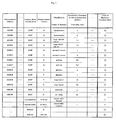
- semantic information is recorded in main DB 14 as "annotative information on the polymorphism pattern" associated with at least the predetermined "polymorphism address” and “polymorphism pattern” as shown in Fig. 3. Also, semantic information is associated with, for example, “polymorphism classification,” “classification (name of disease)” and the like corresponding to the predetermined "polymorphism address.” Consequently, when a predetermined "polymorphism address" is a predetermined "polymorphism pattern," types of diseases and annotative information (semantic information) on the morbidity rates of diseases can be obtained.
- semantic information can be associated with a combination of respective polymorphism patterns corresponding to a plurality of polymorphism addresses (such as haplotype).
- each combination of polymorphism patterns in a plurality of polymorphism addresses can be respectively associated with annotative information (semantic information) representing different morbidity rates for predetermined diseases.
- annotative information indicating the morbidity rate of a predetermined disease can be obtained.
- Semantic information can be further associated with a "level of disclosure” which is set in accordance with a predetermined standard.
- a standard in setting a "level of disclosure” can be determined by taking into consideration unpredictable disbenefits and the like for individuals that would be caused by disclosure of semantic information, i.e., the morbidity rate of "classification (name of disease)".
- a "level of disclosure” can be set such that semantic information, the disclosure of which is inappropriate from the view point of, for example, law, regulations, the behavioral norms of an organization having the shared computer 2 or a contract with the user, is not disclosed.
- annotative information representing a morbidity rate associated with a "level of disclosure” at which disclosure is not possible is not disclosed to users. This can prevent the provision of semantic information which could result in unpredictable disbenefit for users or the disclosure of semantic information to parties other than the contract party.
- the system may disclose semantic information having a predetermined "level of disclosure” associated therewith to the user through approval by the user of disclosure of semantic information having a predetermined "level of disclosure” associated therewith through, for example, informed consent.
- the "level of disclosure” can be set as a plurality of levels of three or more, for example, “1, 2, 3 ... " or "a, b, c ... ".
- the level can be set on the shared computer 2 side according to the type of user, such as the user's age, the user's qualification, and whether or not a contract exists with the user.
- the user can select the level of disclosure such that only annotative information is provided which represents the morbidity rate associated with the level of disclosure that is above (or below) the predetermined level of disclosure determined in accordance with the informed consent or the like.
- database 8 for example, data such as nucleotide sequence-related information that is the genetic information of the individual requester utilizing the system can be recorded in storage DB-B16.
- storage DB-A15 for example, data such as information distinguishing the requester from others utilizing the system can be recorded.
- the separate recording of the genetic information of individuals and the information for specifying individuals in storage DB-A15 and storage DB-B16, respectively makes it difficult to associate a user's genetic information with data that specifies the user.
- Shared computer 2 is not limited to one having database 8 therein, and it may have an external database (not shown) connected to shared computer 2 through communication network 1.
- Shared computer 2 may have a plurality of databases 8 therein or may have an internal database 8 and an external database connected to shared computer 2 through communication network 1.
- personal computer 3 is constituted by CPU 20 that totally controls operation of personal computer 3, input device 21 such as a keyboard and a mouse with which information and instructions for executing a program are input, display device 22 such as a display apparatus, storage 23 having temporary information, rewritable information and the like recorded therein, reading apparatus 25 for reading data from genome-related information recording medium 24, and transmitter/receiver 29 for transmitting and receiving information to and from shared computer 2 through communication network 1.
- Personal computer 3 is not limited to a commonly used computer. For example, it may be any form of cellular phone, personal digital assistance, or other mobile communication tool.
- Storage 23 in personal computer 3 has a memory section 26 for recording information provided from genome-related information recording medium 24 and the like, and is recorded a processing program 27 for operating the system for processing information.
- Genome-related information recording medium 24 has genome-related information 28 of an individual recorded thereon.
- Genome-related information recording medium 24 includes, for example, a magnetic recording medium such as a magnetic disk or a magnetic card, an optical recording medium employing such as a magneto-optic recording system or a phase-change recording system, and a semiconductor memory.
- This genome-related information recording medium 24 may be in any form such as, for example, card, disk, stick, tape, or drum.
- this genome-related information recording medium 24 may comprise genome-related information 28 of a single individual (an individual organism) recorded thereon. Alternatively, it may comprise a plurality of pieces of genome-related information 28 on a plurality of individuals (individual organisms) recorded thereon.
- Genome-related information 28 contained in genome-related information recording medium 24 refers to, at least, a "polymorphism address" and a "polymorphism pattern" in the predetermined polymorphism address obtained as a result of analysis of an individual's (individual organism's) nucleotide sequences, and "flag information" set for each polymorphism address in order to evaluate adequacy of transmission of the polymorphism pattern.
- polymorphism pattern and flag information are associated with polymorphism address.
- Genome-related information 28 may contain various information, such as information concerning anamnesis, characteristics, an individual's clinical record, or a result of medical examination.
- genome-related information recording medium 24 recorded as genome-related information 28 is, for example, as shown in Fig. 5, the individual's number "Gno.” (G number) peculiar to genome-related information 28 as well as the individual's information, such as date of birth, as data I; polymorphism addresses, polymorphism patterns and flag information as data II; anamnesis information as data III; characteristics as data IV; and information concerning the individual's clinical record and the like as data V.
- genome-related information 28 is constituted by data I, data II, data III, data IV, and data V.
- Data I and data II contain essential information and data III, data IV, and data V are respectively constituted by additional information. Additional information concerning a predetermined polymorphism address may be recorded as data II as a "comment" while being linked with a "polymorphism address.”
- genome-related information recording medium 24 having "flag information” recorded as data II is used in the present embodiment.
- the "flag information” refers to information that represents adequacy of transmission of a polymorphism pattern corresponding to a predetermined polymorphism address to shared computer 2 via communication network 1.
- An example of flag information is setting of "on/off" or "1 or 0" concerning a predetermined polymorphism address.
- transmission of a polymorphism pattern to shared computer 2 is inadequate concerning a polymorphism address having "on” set as flag information. Transmission of a polymorphism pattern to shared computer 2 is adequate concerning a polymorphism address having "off” set as flag information.
- the flag information is not limited to binary information, in which either one of the binary flags, such as "on/off," is related to a predetermined address.
- 3 or more gradable values can be set.
- a specific example of flag information is the case of 5-gradable values from level 1 to level 5.
- grades are previously set in a variety of shared computers 2.
- flag information i.e., from level 1 to level 5 corresponds to grades set in the shared computer 2 as the destination.
- a rule for example, that flag information preset more than a predetermined level cannot be transmitted to shared computer 2 of a predetermined grade may be set.
- the range of the polymorphism address and that of the polymorphism pattern that can be transmitted to each shared computer 2 can be altered when utilizing the present system.
- Flag information is preferably provided, for example, on a polymorphism address, disclosure to the public of which is restricted, or on a polymorphism address, disclosure of which is restricted from an ethical point of view. Specifically, flag information is provided on a polymorphism address that is related to, for example, an immedicable disease, lifespan, assessment of abilities such as IQ, or physical distinctions.
- Flag information may be updatable. That is, the flag information that has been once provided on a polymorphism address may be cancelled if transmission of a polymorphism pattern of the polymorphism address to shared computer 2 is evaluated as adequate later.
- An example of such case is a case where an immedicable disease becomes curable later, and thus, the flag information that has been provided on a polymorphism address related to the immedicable disease is cancelled later.
- a new piece of flag information may be provided on the polymorphism address on which flag information has not been provided when transmission thereof to shared computer 2 is evaluated as being inadequate later.
- An example of such case is a case where a predetermined polymorphism address is later found to be related to an immedicable disease and thus has flag information provided thereon.
- flag information is made updatable, accordingly, updating of genome-related information recording medium 24 at an adequate time results in that the genome-related information recording medium 24 possesses new flag information.
- Flag information can be set at an organization that produces genome-related information recording medium 24, at an organization that analyzes polymorphism patterns, or at other organizations. Flag information may be set by the organization that produces the genome-related information recording medium 24 simultaneously with the production thereof. Flag information may be set by the organization that analyzes polymorphism patterns simultaneously with the analysis thereof. Alternatively, flag information may be set after the production of genome-related information recording medium 24 by another organization.
- Flag information may be provided after informed consent, confirming whether or not flag information should be provided on a predetermined polymorphism address, to the party having genome-related information recording medium 24.
- flag information may be provided on a combination of a plurality of polymorphism addresses.
- flag information can be provided, for example, on a combination of polymorphism address a, polymorphism address b, and polymorphism address c (wherein a, b, and c each independently represent a position in a nucleotide sequence).
- polymorphism address a, polymorphism address b, and polymorphism address c are combined transmission of polymorphism address a, polymorphism address b, and polymorphism address c to shared computer 2 is inadequate.
- a combination of one or two polymorphism patterns in polymorphism address a, polymorphism address b, and polymorphism address c can be adequately transmitted to shared computer 2.
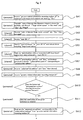
- Flag information can be set in accordance with, for example, a process shown in the flow chart shown in Fig. 6.
- a holder of genome-related information recording medium 24 is subjected to informed consent (hereafter abbreviated to "IC") and the result thereof is recorded in the IC table shown in Fig. 7.
- IC indicates confirmation of an intention to disclose, for example, a polymorphism address, a polymorphism pattern thereof, or the like, which enable evaluation of a morbidity rate of a disease that is hard to cure with modern medical care, to shared computer 2.
- the correlation between items, such as "IQ,” “lifespan,” or “immedicable disease,” and intention to refuse the disclosure of the polymorphism address and the polymorphism pattern related to the items, which the holder of genome-related information recording medium 24 of a predetermined "Gno.” makes, is shown in the IC table.
- "N" is recorded as an arbitrarily set item.
- flag information is forcibly set concerning the item, the disclosure of which to shared computer 2 is not allowed, based on laws and other rules.
- step 1 "N" is forcibly set concerning a predetermined item, and "N” is also set concerning an item, disclosure of which is refused by the holder, based on the results of IC.
- an IC table that is specific to the holder is prepared.
- step 2 items concerning which "N” has been set are extracted in accordance with the prepared IC table.
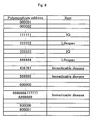
- step 3 polymorphism addresses related to the items extracted in step 2 are extracted from the polymorphism address-item correlation table shown in Fig. 8.
- the polymorphism address-item correlation table shows the correlation between items in the IC table and polymorphism addresses, based on the results of functional analysis of genetic polymorphisms.
- the polymorphism address-item correlation table comprises polymorphism addresses in association with items related thereto (such as "IQ,” "lifespan,” or “immedicable disease") recorded therein.
- step 4 genome-related information recording medium 24 is accessed to record flag information concerning the polymorphism address extracted in step 3.
- step 4 for example, "on” is recorded concerning a polymorphism address that matches the polymorphism address extracted in step 3 from genome-related information recording medium 24, and flag information is provided on the polymorphism address extracted in step 3.
- all the extracted polymorphism addresses have flag information provided thereon.
- genome-related information recording medium 24 comprising flag information can be prepared.
- the process shown in the above described flow chart can be employed when recording flag information, following the preparation of genome-related information recording medium 24.
- flag information may be recorded simultaneously with the preparation of genome-related information recording medium 24.
- personal computer 3 and genome-related information recording medium 24 are not limited to the construction as shown in Figs. 4 and 5 respectively.
- a genome-related information recording medium may be equipped with a memory section having a processing program and a personal computer may have the genome-related information recording medium mounted thereon to operate the processing program.
- a personal computer can be operated in accordance with a processing program recorded in a memory section on a genome-related information recording medium.
- processing program 13 recorded in storage 7 in shared computer 2 and processing program 27 recorded in storage 23 in personal computer 3 process information in accordance with, for example, flow charts as shown in Figs. 9 and 10.
- a step described as “(shared)” refers to processing in shared computer 2
- a step described as “(personal)” refers to processing in personal computer 3.
- the system for processing information is a system in which an individual possessing genome-related information recording medium 24 accesses shared computer 2 using personal computer 3 through communication network 1 and utilizes semantic information recorded in main DB 14 in shared computer 2.
- the system for processing information may be a system comprising the genome-related information recording medium 24, having genome-related information 28 on a plurality of individuals recorded thereon, to which individuals respectively access.
- An individual utilizing this system possesses, for example, genome-related information recording medium 24 comprising flag information.
- An individual utilizing this system (hereafter referred to as a "requester") first starts processing program 27, which is recorded in storage 23, in step A1 (SA1).
- Processing program 27 drives reading apparatus 25 in personal computer 3 to access genome-related information recording medium 24.
- "Gno.” recorded as data I on genome-related information recording medium 24 is read out and the read-out "Gno.” is stored in memory section 26.
- step A2 based on a screen image displayed by processing program 27 on display device 22, information, the provision of which is desired by the requester wishes to receive, for example, the "morbidity rate of large-bowel cancer" (requested information), is input to personal computer 3.
- the "morbidity rate of large-bowel cancer” and "Gno.” are transmitted to shared computer 2 from personal computer 3 through communication network 1.
- the requester writes the "morbidity rate of large-bowel cancer” and "Gno.” in shared computer 2 from personal computer 3 through communication network 1.
- step A3 shared computer 2 receives the "morbidity rate of large-bowel cancer" and "Gno.”
- the received "morbidity rate of large-bowel cancer” and “Gno.” are stored in memory section A10 as request information.
- step A4 upon the reception of request information, processing program 13 recorded in storage 7 is started to access main DB 14. This processing program 13 performs processing in shared computer 2.
- step A5 in accordance with processing program 13, "classification (name of disease)" recorded in main DB 14 is searched and information matching with the requested "morbidity rate of large-bowel cancer" (large-bowel cancer) is extracted.
- step A6 from among data recorded in main DB 14, a "polymorphism address" associated with “classification (name of disease)” (large-bowel cancer) that matches with the "morbidity rate of large-bowel cancer” is read out.
- the read-out "polymorphism address” is stored as positional information associated with request information in memory section A10. Specifically, the "morbidity rate of large-bowel cancer” and “polymorphism address” are recorded in memory section A10 in association with a predetermined "Gno.”
- step A7 "Gno.” and "polymorphism address" recorded in memory section A10 are transmitted to personal computer 3 and instruction information instructing submission of a "polymorphism pattern" corresponding to the transmitted "polymorphism address” is transmitted to personal computer 3.
- instruction information instructing submission of a "polymorphism pattern" corresponding to the transmitted "polymorphism address” is transmitted to personal computer 3.
- additional information such as that concerning anamnesis and characteristics may be optionally instructed depending on the types of request information.
- step A8 "Gno.,” “polymorphism address,” and instruction information transmitted from shared computer 2, are received.
- the received “Gno.” and “polymorphism address” are recorded in memory section 26.
- step A9 personal computer 3 accesses genome-related information recording medium 24 in order to confirm whether or not the "polymorphism address" contained in the received instruction information has "flag information" provided thereon.
- step A10 the polymorphism addresses recorded on genome-related information recording medium 24 are searched to find the polymorphism address that matches the received "polymorphism address," and whether or not the received "polymorphism address” has flag information provided thereon is evaluated.
- step A8 all the polymorphism addresses are inspected in order to evaluate whether or not they have flag information provided thereon.
- step A10 when the received polymorphism address has flag information provided thereon, a "yes” evaluation is made. When the received polymorphism address does not have any flag information provided thereon, a "no" evaluation is made.
- step A 10 When a "yes” evaluation is made in step A 10, the procedure is advanced to step A11 (SA11). When a "no" evaluation is made in step A10, the procedure is advanced to step A 12 (SA21).
- step A8 When a plurality of polymorphism addresses are received in step A8, either of the following evaluation may be made in step A10.
- a "no" evaluation may be made when none of the polymorphism addresses have flag information provided thereon (evaluation 1).
- a "yes” evaluation is selectively made concerning the polymorphism address having flag information provided thereon, and a "no” evaluation is made concerning the polymorphism address having no flag information provided thereon, among a plurality of polymorphism addresses (evaluation 2).
- step A8 When a plurality of polymorphism addresses are received in step A8, evaluation 1 is made in step A10, and at least one of the plurality of received polymorphism addresses has flag information provided thereon, a "yes" evaluation is made and the procedure is advanced to step A11. In such a case, the procedure is advanced to step A12 only when none of the received polymorphism address have flag information provided thereon.
- step A8 when a plurality of polymorphism addresses are received in step A8 and evaluation 2 is made in step A10, a "yes” evaluation is made concerning a polymorphism address having flag information provided thereon among the plurality of received polymorphism addresses.
- a "no” evaluation is made concerning a polymorphism address having no flag information provided thereon among the plurality of received polymorphism addresses.
- a procedure concerning the polymorphism address that has received a "yes” evaluation is selectively advanced to step A11, and a procedure concerning the polymorphism address that has received a "no" evaluation is advanced to step A 12.
- step A11 notification of refusal of exhibition of polymorphism addresses contained in the instruction information is given to shared computer 2.
- evaluation 1 is made in step A10
- exhibition of polymorphism patterns corresponding to any polymorphism address is refused and notification of cancellation of the use of the present system is given to shared computer 2 in step A11.
- evaluation 2 is made in step A10
- exhibition of the polymorphism pattern corresponding to the polymorphism address having flag information provided thereon is refused in step A11, and notification of continuation of the use of the present system is given.
- step A12 genome-related information recording medium 24 is accessed in accordance with processing program 27, data II is searched, a polymorphism pattern in the polymorphism address having no flag information provided thereon is read out, and the polymorphism address is then recorded in memory section 26 in association with the polymorphism pattern.
- evaluation 2 is made in step A10, polymorphism patterns are read out and recorded concerning only the polymorphism addresses having no flag information provided thereon among the plurality of received polymorphism addresses in step A12.
- step A12 whether the "Gno.” contained in the instruction information is correct or not is preferably confirmed by accessing data I.
- step A12 additional information recorded as data III, data IV, and data V is read out simultaneously with the polymorphism pattern and may be optionally recorded in memory section 26.
- step A13 the temporarily-recorded polymorphism pattern associated with the polymorphism address and the optionally-recorded additional information in memory section 26 are output to shared computer 2 together with "Gno.” through communication network 1.
- step A14 shared computer 2 receives the polymorphism pattern associated with the polymorphism address and the optionally-recorded additional information, and the received polymorphism pattern is recorded in memory section A10 in association with the polymorphism address.
- shared computer 2 transmits instruction information for exhibition of the "polymorphism pattern" in step A7, and personal computer 3 evaluates whether or not the polymorphism address contained in the instruction information has flag information provided thereon in step A10.
- the system may not transmit the instruction information in step A7.
- personal computer 3 searches for data II based on the polymorphism address received in step A8, and evaluates whether or not the received polymorphism address has flag information provided thereon in accordance with processing program 27.
- step A15 main DB 14 is accessed to search information matching with the received polymorphism address and polymorphism patterns. More specifically, a plurality of polymorphism patterns are recorded in main DB 14 for one polymorphism address. Thus, which polymorphism pattern in main DB 14 matches with the received polymorphism address and the polymorphism pattern thereof is searched.
- step A16 the morbidity rate of large-bowel cancer (semantic information) which is associated with the polymorphism pattern matching the received polymorphism pattern is read out in accordance with processing program 13.
- the morbidity rate of large-bowel cancer of a requester can be read out in accordance with the polymorphism address and polymorphism pattern submitted by the requester.
- the read-out morbidity rate is stored in memory section A10 in association with the requester's "Gno" and "polymorphism address," and "polymorphism pattern.”
- the morbidity rate of large-bowel cancer may be corrected in accordance with additional information and then stored. Alternatively, other information obtained from additional information may be stored in association with the requester's "Gno.”
- a morbidity rate can be read out with the use of some of the received polymorphism addresses and polymorphism patterns in step A16.
- step A17 the requester's "Gno.” and morbidity rate, which are stored in memory section A10, are transmitted as semantic information to personal computer 3 through communication network 1.
- personal computer 3 receives the requester's "Gno.” and morbidity rate (semantic information) in step A18 (SA18).
- the received semantic information is recorded in memory section 26.
- step A19 the morbidity rate of large-bowel cancer is displayed on display device 22 based on semantic information recorded in memory section 26 in accordance with processing program 27.
- shared computer 2 can read out (prepare) a screen that displays semantic information in accordance with processing program 13, and display it on display device 22 of personal computer 3 through communication network 1. Also in this case, semantic information is considered to be transmitted from shared computer 2 to personal computer 3. As a result, the requester can obtain the morbidity rate of large-bowel cancer using genome-related information 28 recorded on genome-related information recording medium 24.
- the requested functional foods can be provided together with information concerning the morbidity rate of large-bowel cancer of the requester when the morbidity rate exceeds a given standard.
- steps A3 to A7 and step A14 in shared computer 2 may be carried out with an organization different from that of steps A14 to A17. In such a case, steps that are carried out in shared computer 2 are divided into two parts.
- a polymorphism pattern may or may not be encrypted in this system.
- genome-related information recording medium 24 which has individuals' polymorphism patterns in association with polymorphism addresses and flag information recorded thereon, enables individuals to use semantic information recorded in main DB 14 through the polymorphism addresses in this system.
- an individual utilizing this system does not have to record semantic information on a genome-related information recording medium. Instead, the individual can obtain various semantic information simply by possessing genome-related information 28 having the polymorphism pattern associated with the polymorphism address.
- flag information is associated with the polymorphism address.
- whether or not a polymorphism pattern to be transmitted corresponds to a polymorphism address having flag information provided thereon or a polymorphism address having no flag information provided thereon is evaluated.
- leakage of polymorphism addresses and polymorphism patterns that should not be transmitted via communication network 1 can be prevented with the present system.
- transmission of polymorphism addresses and polymorphism patterns can be regulated in accordance with a type of shared computer 2 (including a type of business and the presence or absence of public authorization) and the like by setting 3 or more gradable values as flag information.
- the setting of 3 or more gradable values as flag information enables evaluation concerning adequacy of transmission of polymorphism addresses and polymorphism patterns for every shared computer 2 as a destination in the present system.
- inadequate leakage of polymorphism addresses and polymorphism patterns can be prevented.
- processing program 13 recorded in storage 7 of shared computer 2 and processing program 27 recorded in storage 23 of personal computer 3 may process information in accordance with, for example, the flow chart shown in Fig. 11. Also in the flow chart shown in Fig. 11, a step described as “(shared)” refers to processing in shared computer 2 and a step described as “(personal)” refers to processing in personal computer 3.
- processing program 27 When utilizing the system, the requester first starts processing program 27 recorded in storage 23 in step C1 (SC1). Processing program 27 drives reading apparatus 25 in personal computer 3 and accesses genome-related information recording medium 24, and searches for a polymorphism address having no flag information provided thereon from among all the "polymorphism addresses" recorded as data II. The polymorphism address having no flag information provided thereon that had been attained as a result of search is stored in memory section 26.
- step C1 a polymorphism pattern corresponding thereto, and "Gno.” are read out with the use of reading apparatus 25 in step C2 (SC2).
- the read-out "Gno.,” “polymorphism address,” and “polymorphism pattern” are stored in memory section 26.
- step C3 based on a screen image displayed in accordance with processing program 27 on display device 22, information which the requester wishes to receive, for example the "morbidity rate of large-bowel cancer" (request information), is input to personal computer 3.
- the "morbidity rate of large-bowel cancer” and "Gno.”, "polymorphism address,” and "polymorphism pattern” recorded in memory section 26 are transmitted to shared computer 2 from personal computer 3 through communication network 1.
- step C4 shared computer 2 receives "morbidity rate of large-bowel cancer," “Gno.”, “polymorphism address,” and “polymorphism pattern.”
- the received "morbidity rate of large-bowel cancer” is recorded as request information in memory section A10 and "Gno.”, "polymorphism address” and “polymorphism pattern” are also stored in memory section A10.
- Shared computer 2 starts processing program 13 upon reception of the request information and, in step C5 (SC5), accesses main DB 14 in accordance with processing program 13.
- step C6 in accordance with processing program 13, "classification (name of disease)" recorded in main DB 14 is searched and classification matching with the requested "morbidity rate of large-bowel cancer” (large-bowel cancer) is extracted.
- step C7 the "polymorphism address” classified as “large-bowel cancer," all the “polymorphism patterns” associated with the polymorphism address, and the “morbidity rate” in all the polymorphism patterns are read out from main DB 14 in accordance with processing program 13.
- the read-out "polymorphism address,” “polymorphism pattern,” and “morbidity rate” are stored in memory section A10.
- step C8 the data stored in memory section A10 in step C7 is searched based on the "polymorphism address" and the "polymorphism pattern" received in step C4, and a morbidity rate associated with polymorphism pattern matching with the received "polymorphism pattern” is extracted from memory section A10.
- step C9 the result of step C8, that is, the morbidity rate extracted according to which polymorphism pattern in main DB 14 matches with the polymorphism pattern contained in the received information in step C4, is transmitted to personal computer 3 through communication network 1.
- shared computer 2 transmits the extracted morbidity rate together with the requester's "Gno.”
- step C10 the "Gno.” and “morbidity rate (semantic information)" transmitted from shared computer 2 is received.
- the received "Gno.” and “morbidity rate” are recorded in memory section 26.
- data I recorded on genome-related information recording medium 24 is accessed and whether the received "Gno.” is correct or not can be confirmed.
- step C11 in accordance with processing program 27, the morbidity rate of large-bowel cancer is displayed on display device 22 based on semantic information recorded in memory section 26.
- shared computer 2 can read out (prepare) a screen that displays semantic information in accordance with processing program 13, and display it on display device 22 of personal computer 3 through communication network 1. Also in this case, semantic information is considered to be transmitted from shared computer 2 to personal computer 3. This enables the requester to obtain the morbidity rate of large-bowel cancer using genome-related information 28 recorded on genome-related information recording medium 24.
- leakage of polymorphism addresses and polymorphism patterns that should not be transmitted via communication network 1 can be prevented because of the use of the polymorphism pattern of the polymorphism address on which no flag information has been provided.
- transmission of polymorphism addresses and polymorphism patterns can be regulated in accordance with a type of shared computer 2 (including a type of business and the presence or absence of public authorization) by setting 3 or more gradable values as flag information.
- setting of 3 or more gradable values as flag information enables evaluation concerning adequacy of transmission of polymorphism addresses and polymorphism patterns for every shared computer 2 as a destination.
- inadequate leakage of polymorphism addresses and polymorphism patterns can be prevented.
- a recording medium prepared by removing information contained as data II from a genome-related information recording medium; that is, a recording medium having only data I and additionally data III to V may be used.
- information contained as data II is recorded in an external database (genome-related information recording medium) connected to personal computer 3 through communication network 1.
- the external database is accessed through communication network 1, a polymorphism pattern in the instructed polymorphism address and the flag information are read out, and the polymorphism address, the polymorphism pattern and the flag information can be recorded in memory section 26 in association with one another.
- step C1 of the flow charts shown in Fig. 11 the external database is accessed via communication network 1, the polymorphism patterns and flag information concerning all polymorphism addresses are read out, and the polymorphism address, the polymorphism pattern, and the flag information can be stored in memory section 26 in association with one another.
- the requester can obtain semantic information via this system.
- the system for processing information may be equipped with genome-related information recording medium 24 connected to personal computer 3 via communication network 1 instead of the requester has genome-related information recording medium 24 or the recording medium prepared by removing information contained in data II from such genome-related information recording medium.
- the requester can access genome-related information recording medium 24 through communication network 1 to download information such as "polymorphism addresses,” “polymorphism patterns,” and "flag information" recorded on genome-related information recording medium 24 into personal computer 3.
- genome-related information recording medium 24 may comprise genome-related information of a plurality of individuals (each "Gno.") recorded thereon.
- the present invention is not limited to the above-mentioned construction, i.e., shared computer 2 comprising main DB 14.
- the present invention is applicable to a system for processing information equipped with main DB 14 connected to shared computer 2 via communication network 1.
- shared computer 2 accesses main DB 14 through communication network 1 in a manner as shown in the flow charts shown in Figs. 9 and 10 and the flow chart shown in Figs. 11.
- the requester can also obtain desired semantic information in accordance with the processes of the flow charts shown in Figs. 9 and 10 or that of the flow chart shown in Fig. 11 according to the system for processing information.
- shared computer 2 can access a plurality of main DBs 14 owned by different organizations or groups through communication network 1 and can utilize semantic information contained in such plurality of main DBs 14, thereby providing information to the requester.
- shared computer 2 accesses various main DBs 14 containing information concerning the morbidity rate of large-bowel cancer as semantic information in step A4 as shown in the flow charts shown in Figs. 9 and 10 or in step C5 as shown in the flow chart shown in Fig. 11.
- the requester can obtain information concerning the morbidity rate of large-bowel cancer from information contained in a plurality of main DBs 14.
- shared computer 2 may transmit at least the requested information received from personal computer 3 to a so-called agent and obtain semantic information ("morbidity rate of large-bowel cancer" in this embodiment) through the agent as shown in the processes of the flow charts shown in Figs. 9 and 10 or that of the flow chart shown in Fig. 11.
- a system for providing information such as a morbidity rate of a given disease to a user, wherein a third party other than the user and the information provider possesses flag information is explained as a second embodiment of the present invention.
- the same numelations, symbols, and definitions are employed for the same constitutions and terms as those of the system for processing information according to the first embodiment, thereby omitting explanation of the constitution, operation, and terms of the system according to the present embodiment.
- the system is also explained as a simple model for the convenience of the explanation.
- the system for providing information comprises: a communication network 1, such as the Internet; shared computer 2 connected to communication network 1; at least one personal computers 3 connected to communication network 1; and computer W used for providing flag information comprising flag information.
- a communication network 1 such as the Internet
- shared computer 2 connected to communication network 1
- personal computers 3 connected to communication network 1
- computer W used for providing flag information comprising flag information.
- This system enables data communication among shared computer 2, personal computers 3, and computer W used for providing flag information via communication network 1.
- shared computer 2 has a constitution similar to that according to the first embodiment.
- personal computer 3 also has a constitution similar to that according to the first embodiment, except that flag information is not recorded on genome-related information recording medium 24.
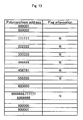
- Computer W used for providing flag information comprises, for example, a database as shown in Fig. 13 in which flag information is associated with polymorphism addresses.
- the database comprises the flag information explained in the first embodiment in association with the polymorphism addresses recorded therein.
- flag information may or may not be related to so-called semantic information, such as a disease, feature, character, lifespan, or IQ, involved with polymorphism addresses.
- Flag information is preferably varied in accordance with each genome-related information recording medium 24 in the database.
- the database may be common among a plurality of or all of genome-related information recording media 24.
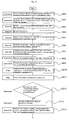
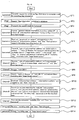
- This system for providing information processes information in accordance with, for example, the processes of the flow charts shown in Figs. 14 and 15.
- steps denoted as “(shared)” refer to processes in shared computer 2
- steps denoted as “(personal)” refer to processes in personal computer 3
- steps denoted as “(flag)” refer to processes in computer W used for providing flag information.
- a requester first starts processing program 27, which is recorded in storage 23, in step D1 (SD1).
- Processing program 27 drives reading apparatus 25 in personal computer 3 to access genome-related information recording medium 24.
- "Gno.” recorded as data I on genome-related information recording medium 24 is read out and the read-out "Gno.” is stored in memory section 26.
- step D2 (SD2), based on a screen image displayed by processing program 27 on display device 22, information, the provision of which is desired by the requester wishes to receive, for example, the "morbidity rate of large-bowel cancer" (requested information), is input to personal computer 3.
- the "morbidity rate of large-bowel cancer” and "Gno.” are transmitted to shared computer 2 from personal computer 3 through communication network 1.
- the requester writes the "morbidity rate of large-bowel cancer” and "Gno.” in shared computer 2 from personal computer 3 through communication network 1.
- step D3 shared computer 2 receives the "morbidity rate of large-bowel cancer" and "Gno.”
- the received "morbidity rate of large-bowel cancer” and “Gno.” are stored in memory section A10 as request information.
- step D4 upon the reception of request information, processing program 13 recorded in storage 7 is started to access main DB 14. This processing program 13 performs processing in shared computer 2.
- step D5 in accordance with processing program 13, "classification (name of disease)" recorded in main DB 14 is searched and information matching with the requested "morbidity rate of large-bowel cancer” (large-bowel cancer) is extracted.
- step D6 from among data recorded in main DB 14, a "polymorphism address" associated with “classification (name of disease)" (large-bowel cancer) that matches with the "morbidity rate of large-bowel cancer” is read out.
- the read-out "polymorphism address” is stored as positional information associated with request information in memory section A10. Specifically, the "morbidity rate of large-bowel cancer” and “polymorphism address” are recorded in memory section A10 in association with a predetermined "Gno.”
- step D7 "Gno.” and "polymorphism address" recorded in memory section A10 are transmitted to personal computer 3 and instruction information instructing submission of a "polymorphism pattern" corresponding to the transmitted "polymorphism address” is transmitted to personal computer 3.
- instruction information instructing submission of a "polymorphism pattern" corresponding to the transmitted "polymorphism address” is transmitted to personal computer 3.
- additional information such as that concerning anamnesis and characteristics may be optionally instructed depending on the types of request information.
- step D8 "Gno.,” “polymorphism address,” and instruction information transmitted from shared computer 2, are received.
- the received “Gno.” and “polymorphism address” are recorded in memory section 26.
- step D9 the received polymorphism address is transmitted to computer W used for providing flag information via communication network 1 in order to evaluate whether or not the "polymorphism address" received in step D8 has flag information provided thereon.
- the databases shown in Fig. 13 are independently constructed with different settings for each "Gno.,” “Gno.” is transmitted together with polymorphism addresses in step D9.
- step D10 computer W used for providing flag information receives the polymorphism address transmitted from personal computer 3, and accesses the database shown in Fig. 13 to inspect whether or not the received polymorphism address has flag information provided thereon. Specifically, computer W used for providing flag information searches for a polymorphism address that matches the received polymorphism address in the database shown in Fig. 13. When the received polymorphism address has flag information provided thereon, for example, such flag information is associated with the received polymorphism address.
- step D11 the search result attained in step D10 is transmitted from computer W for providing flag information to personal computer 3.
- the flag information may be associated with the polymorphism address received in step D10 and transmitted as the search result.
- Information that indicates whether or not some of the polymorphism addresses received in step D10 have flag information provided thereon, i.e., whether or not the instruction information contains a polymorphism address having flag information provided thereon, may be transmitted as the search result.
- information indicating that the instruction information contains a polymorphism address having flag information provided thereon and a polymorphism address having flag information provided thereon may be transmitted as the search result.
- step D12 personal computer 3 receives the search result transmitted from computer W used for providing flag information and confirms the search result. Thus, whether or not the polymorphism address contained in the instruction information has flag information provided thereon is evaluated. When a plurality of polymorphism addresses are received in step D8, whether or not all the polymorphism addresses have flag information provided thereon is evaluated.
- step D12 when the polymorphism address contained in the instruction information has flag information provided thereon, a "yes” evaluation is made. When the polymorphism address contained in the instruction information does not have flag information provided thereon, a "no” evaluation is made. When a "yes” evaluation is made in step D12, the procedure is advanced to step D13 (SD13). In contrast, when a "no" evaluation is made in step D12, the procedure is advanced to step D14 (SD14).
- step D8 When a plurality of polymorphism addresses are received in step D8, either of the following evaluation may be made in step D12. A “no" evaluation may be made when none of the polymorphism addresses have flag information provided thereon (evaluation 1). Alternatively, a “yes” evaluation is selectively made concerning the polymorphism address having flag information provided thereon, and a “no” evaluation is made concerning the polymorphism address having no flag information provided thereon, among a plurality of polymorphism addresses (evaluation 2).
- step D8 When a plurality of polymorphism addresses are received in step D8, evaluation 1 is made in step D12, and at least one of the plurality of received polymorphism addresses has flag information provided thereon, a "yes" evaluation is made and the procedure is advanced to step D13. In such a case, the procedure is advanced to step D14 only when none of the received polymorphism address have flag information provided thereon.
- step D8 when a plurality of polymorphism addresses are received in step D8 and evaluation 2 is made in step D12, a "yes” evaluation is made concerning a polymorphism address having flag information provided thereon among the plurality of received polymorphism addresses.
- a "no” evaluation is made concerning a polymorphism address having no flag information provided thereon among the plurality of received polymorphism addresses.
- a procedure concerning the polymorphism address that has received a "yes” evaluation is advanced to step D13, and a procedure concerning the polymorphism address that has received a "no” evaluation is selectively advanced to step D14.
- step D13 notification of refusal of exhibition of polymorphism addresses contained in the instruction information is given to shared computer 2.
- evaluation 1 is made in step D12
- exhibition of polymorphism patterns corresponding to any polymorphism address is refused and notification of cancellation of the use of the present system is given to shared computer 2 in step D13.
- evaluation 2 is made in step D12
- exhibition of the polymorphism pattern corresponding to the polymorphism address having flag information provided thereon is refused in step D13, and notification of continuation of the use of the present system is given.
- step D14 genome-related information recording medium 24 is accessed in accordance with processing program 27, data II is searched, a polymorphism pattern in the polymorphism address having no flag information provided thereon is read out, and the polymorphism address is then recorded in memory section 26 in association with the polymorphism pattern.
- evaluation 2 is made in step D12, polymorphism patterns are read out and recorded concerning only the polymorphism addresses having no flag information provided thereon among the plurality of received polymorphism addresses in step D14.
- step D14 whether the "Gno.” contained in the instruction information is correct or not is preferably confirmed by accessing data 1.
- step D14 additional information recorded in data III, data IV, and data V is read out simultaneously with the polymorphism pattern and may be optionally recorded in memory section 26.
- step D15 the temporarily-recorded polymorphism pattern associated with the polymorphism address and the optionally-recorded additional information in memory section 26 are output to shared computer 2 together with "Gno.” through communication network 1.
- step D16 shared computer 2 receives the polymorphism pattern associated with the polymorphism address and the optionally-recorded additional information, and the received polymorphism pattern is recorded in memory section A10 in association with the polymorphism address.
- shared computer 2 transmits instruction information for exhibition of the "polymorphism pattern" in step D7
- personal computer 3 transmits the polymorphism address to the computer used for providing flag information to evaluate whether or not the polymorphism address contained in the instruction information has flag information provided thereon in step D9.
- the system may not transmit the instruction information in step D7.
- personal computer 3 searches for data II in step D9 based on the polymorphism address received in step D8, and transmits the received polymorphism address to the computer used for providing flag information to evaluate whether or not the received polymorphism address has flag information provided thereon in accordance with processing program 27.
- step D17 main DB 14 is accessed to search information matching with the received polymorphism address and polymorphism patterns. More specifically, a plurality of polymorphism patterns are recorded in main DB 14 for one polymorphism address. Thus, which polymorphism pattern in main DB 14 matches with the received polymorphism address and the polymorphism pattern thereof is searched.
- step D18 the morbidity rate of large-bowel cancer (semantic information) which is associated with the polymorphism pattern matching the received polymorphism pattern is read out in accordance with processing program 13.
- the morbidity rate of large-bowel cancer of a requester can be read out in accordance with the polymorphism address and polymorphism pattern submitted by the requester.
- the read-out morbidity rate is stored in memory section A10 in association with the requester's "Gno" and "polymorphism address," and "polymorphism pattern.”
- the morbidity rate of large-bowel cancer may be corrected in accordance with additional information and then stored. Alternatively, other information obtained from additional information may be stored in association with the requester's "Gno.”
- a morbidity rate can be read out with the use of some of the received polymorphism addresses and polymorphism patterns in step D 18.
- step D19 the requester's "Gno.” and morbidity rate, which are stored in memory section A10, are transmitted as semantic information to personal computer 3 through communication network 1.
- personal computer 3 receives the requester's "Gno.” and morbidity rate (semantic information) in step D20 (SD20).
- the received semantic information is recorded in memory section 26.
- step D21 the morbidity rate of large-bowel cancer is displayed on display device 22 based on semantic information recorded in memory section 26 in accordance with processing program 27.
- shared computer 2 can read out (prepare) a screen that displays semantic information in accordance with processing program 13, and display it on display device 22 of personal computer 3 through communication network 1. Also in this case, semantic information is considered to be transmitted from shared computer 2 to personal computer 3. As a result, the requester can obtain the morbidity rate of large-bowel cancer using genome-related information 28 recorded on genome-related information recording medium 24.
- step D3 in case that information concerning the provision of "functional foods that prevent large-bowel cancer” is further received in step D3 as requested information in addition to "the morbidity rate of large-bowel cancer" requested by the requester when, for example, the morbidity rate exceeds a given standard, the requested functional foods can be provided together with information concerning the morbidity rate of large-bowel cancer of the requester when the morbidity rate exceeds a given standard.
- steps D3 to D7 and step D16 in shared computer 2 may be carried out with an organization different from that of steps D16 to D19. In such a case, steps that are carried out in shared computer 2 are divided into two parts.
- a polymorphism pattern may or may not be encrypted in this system.
- utilization of computer W used for providing flag information comprising a database having flag information recorded thereon and genome-related information recording medium 24, which has individuals' polymorphism patterns in association with polymorphism addresses recorded thereon, enables individuals to use semantic information recorded in main DB 14 through the polymorphism addresses in this system.
- An individual utilizing this system does not have to record semantic information on a genome-related information recording medium 24. Instead, the individual can obtain various types of semantic information simply by possessing genome-related information 28 having a polymorphism pattern related to the polymorphism address.
- flag information is not necessarily recorded on genome-related information recording medium 24 because of the use of the flag information recorded in the database of the computer W used for providing flag information. If the newest flag information is updated on the computer W used for providing flag information side, for example, the requester can utilize the present system based on the newest flag information without the necessity of updating genome-related information recording medium 24.
- transmission of polymorphism addresses and polymorphism patterns can be regulated in accordance with a type of shared computer 2 (including a type of business and the presence or absence of public authorization) by setting 3 or more gradable values as flag information.
- personal computer 3 preferably transmits information concerning shared computer 2, for example, the rate that has been previously set for shared computer 2 or the name of shared computer 2, together with the "polymorphism address" in step D9.
- This enables the computer W used for providing flag information to search for the flag information in accordance with, for example, the rate or name of shared computer 2 from a database in step D10 (SD10).
- SD10 database in step D10
- processing program 13 recorded in storage 7 of shared computer 2 and processing program 27 recorded in storage 23 of personal computer 3 may process information in accordance with, for example, the flow chart shown in Fig. 16. Also in the flow chart shown in Fig. 11, a step described as “(shared)” refers to processing in shared computer 2, a step described as “(personal)” refers to processing in personal computer 3, and a step described as “(flag)” refer to processes in computer W used for providing flag information.
- the requester When utilizing the system, the requester first starts processing program 27 recorded in storage 23 and requests the computer W used for providing flag information to exhibit flag information in step F1 (SF1) in accordance with processing program 27.
- the computer W used for providing flag information comprises databases shown in Fig. 13 for each Gno., a request for exhibition of flag information and "Gno.” are transmitted from personal computer 3.
- reading apparatus 25 may be driven to access genome-related information recording medium 24, and all the "polymorphism addresses" recorded as data II may be transmitted to computer W used for providing flag information to request exhibition of flag information concerning the transmitted polymorphism address.
- step F2 computer W used for providing flag information receives a request for exhibition of flag information and searches for flag information contained in the database. Specifically, when computer W used for providing flag information comprises databases for each "Gno.,” flag information contained in the database, which matches the received "Gno.,” is searched.
- step F2 when a request for exhibition of flag information is received together with the polymorphism address, a database is searched based on the received polymorphism address, and flag information associated therewith is searched.
- step F3 (SF3), the search result attained in step F2 is transmitted from computer W for providing flag information to personal computer 3.
- computer W for providing flag information transmits the polymorphism addresses in association with flag information contained in the database to personal computer 3.
- step F2 when a request for exhibition of flag information is received together with the polymorphism address, flag information is associated with the received polymorphism address and then transmitted to personal computer 3.
- step F4 personal computer 3 receives the search result transmitted from computer W used for providing flag information and confirms the search result.
- a polymorphism address having no flag information provided thereon can be extracted from among all the polymorphism addresses recorded on genome-related information recording medium 24.
- the polymorphism address having no flag information provided thereon is stored in memory section 26.
- step F4 a polymorphism pattern corresponding thereto, and "Gno.” are read out with the use of reading apparatus 25 in step F5 (SF5).
- the read-out "Gno.,” “polymorphism address,” and “polymorphism pattern” are stored in memory section 26.
- step F6 based on a screen image displayed in accordance with processing program 27 on display device 22, information which the requester wishes to receive, for example the "morbidity rate of large-bowel cancer" (request information), is input to personal computer 3.
- the "morbidity rate of large-bowel cancer” and "Gno.,” “polymorphism address,” and “polymorphism pattern” recorded in memory section 26 are transmitted to shared computer 2 from personal computer 3 through communication network 1.
- step F7 shared computer 2 receives "morbidity rate of large-bowel cancer," “Gno.,” “polymorphism address,” and “polymorphism pattern.”
- the received "morbidity rate of large-bowel cancer” is recorded as request information in memory section A10 and "Gno.,” “polymorphism address” and “polymorphism pattern” are also stored in memory section A10.
- Shared computer 2 starts processing program 13 upon reception of the request information and, in step F8 (SF8), accesses main DB 14 in accordance with processing program 13.
- step F9 in accordance with processing program 13, "classification (name of disease)" recorded in main DB 14 is searched and classification matching with the requested "morbidity rate of large-bowel cancer” (large-bowel cancer) is extracted.
- step F10 main DB 14 is accessed to read out the "polymorphism address” classified as “large-bowel cancer,” all the “polymorphism patterns” associated with the polymorphism address, and the "morbidity rate” in all the polymorphism patterns in accordance with processing program 13.
- the read-out "polymorphism address,” "polymorphism pattern,” and “morbidity rate” are stored in memory section A10.
- step F11 the data stored in memory section A10 in step F10 is searched based on the "polymorphism address" and the "polymorphism pattern" received in step F7, and a morbidity rate associated with polymorphism pattern matching with the received "polymorphism pattern” is extracted from memory section A10.
- step F12 the result of step F11, that is, the morbidity rate extracted according to which polymorphism pattern in main DB 14 matches with the polymorphism pattern contained in the received information in step F7, is transmitted to personal computer 3 through communication network 1.
- shared computer 2 transmits the extracted morbidity rate together with the requester's "Gno.”
- step F13 the "Gno.” and “morbidity rate (semantic information)" transmitted from shared computer 2 is received.
- the received "Gno.” and “morbidity rate” are recorded in memory section 26.
- data I recorded on genome-related information recording medium 24 is accessed and whether the received "Gno.” is correct or not can be confirmed.
- step F14 in accordance with processing program 27, the morbidity rate of large-bowel cancer is displayed on display device 22 based on semantic information recorded in memory section 26.
- shared computer 2 can read out (prepare) a screen that displays semantic information in accordance with processing program 13, and display it on display device 22 of personal computer 3 through communication network 1. Also in this case, semantic information is considered to be transmitted from shared computer 2 to personal computer 3. This enables the requester to obtain the morbidity rate of large-bowel cancer using genome-related information 28 recorded on genome-related information recording medium 24.
- leakage of polymorphism addresses and polymorphism patterns that should not be transmitted via communication network 1 can be prevented because of the use of the polymorphism pattern of the polymorphism address on which no flag information has been provided.
- flag information is not necessarily recorded on genome-related information recording medium 24 in accordance with the process of the flow chart shown in Fig. 16 because of the use of the flag information recorded in the database of the computer W used for providing flag information. If the newest flag information is updated on the computer W used for providing flag information side, for example, the requester can utilize the present system based on the newest flag information without the necessity of updating genome-related information recording medium 24.
- transmission of polymorphism addresses and polymorphism patterns can be regulated in accordance with a type of shared computer 2 (including a type of business and the presence or absence of public authorization) by setting 3 or more gradable values as flag information.
- personal computer 3 preferably transmits information concerning shared computer 2, for example, the grade that has been previously set for shared computer 2 or the name of shared computer 2, together with a "request for exhibition of flag information" in step F1.
- This enables the computer W used for providing flag information to search for the flag information in accordance with the grade or name of shared computer 2 from a database in step F2.
- the present system also enables evaluation concerning adequacy of transmission of polymorphism addresses and polymorphism patterns for every shared computer 2 as a destination. Thus, inadequate leakage of polymorphism addresses and polymorphism patterns can be prevented.
- a recording medium prepared by removing information contained as data II from a genome-related information recording medium; that is, a recording medium having only data I and additionally data III to V, may be used.
- information contained as data II is recorded in an external database (genome-related information recording medium) connected to personal computer 3 via communication network 1.
- the external database is accessed via communication network 1 to read out the polymorphism pattern of the polymorphism address having no flag information provided thereon, and the polymorphism pattern can be recorded in association with the polymorphism address in memory section 26 in step D14 of the flow charts shown in Figs. 14 and 15.
- the external database is accessed via communication network 1 to read out the polymorphism patterns of all the polymorphism addresses having no flag information provided thereon, and the polymorphism pattern can be recorded in association with the polymorphism address in memory section 26 in step F4 of the flow chart shown in Fig. 16.
- the requester can obtain semantic information via such system.
- the system for processing information may be equipped with genome-related information recording medium 24 connected to personal computer 3 via communication network 1 instead of the requester has genome-related information recording medium 24 or the recording medium prepared by removing information contained in data II from such genome-related information recording medium.
- the requester can access genome-related information recording medium 24 through communication network 1 to download information such as "polymorphism addresses" and "polymorphism patterns" recorded on genome-related information recording medium 24 into personal computer 3.
- genome-related information recording medium 24 may comprise genome-related information of a plurality of individuals (each "Gno.") recorded thereon.
- the present invention is not limited to the above-mentioned construction, i.e., shared computer 2 comprising main DB 14.
- the present invention is applicable to a system for processing information equipped with main DB 14 connected to shared computer 2 via communication network 1.
- shared computer 2 accesses main DB 14 through communication network 1 in a manner as shown in the flow charts shown in Figs. 14 and 15 and the flow chart shown in Figs. 16.
- the requester can also obtain desired semantic information in accordance with the processes of the flow charts shown in Figs. 14 and 15 or that of the flow chart shown in Fig. 16 according to the system for processing information.
- shared computer 2 can access a plurality of main DBs 14 owned by different organizations or groups through communication network 1 and can utilize semantic information contained in such plurality of main DBs 14, thereby providing information to the requester.
- shared computer 2 accesses various main DBs 14 containing information concerning the morbidity rate of large-bowel cancer as semantic information in step D4 as shown in the flow charts shown in Figs. 14 and 15 or in step F8 as shown in the flow chart shown in Fig. 16.
- the requester can obtain information concerning the morbidity rate of large-bowel cancer from information contained in a plurality of main DBs 14.
- shared computer 2 may transmit at least the requested information received from personal computer 3 to a so-called agent and obtain semantic information ("morbidity rate of large-bowel cancer" in this embodiment) through the agent as shown in the processes of the flow charts shown in Figs. 14 and 15 or that of the flow chart shown in Fig. 16.
- the present invention can provide a highly safe system for providing information that can provide useful semantic information for an individual via effective utilization of differences in nucleotide sequence information among individuals and that can certainly prevent unfavorable leakage of nucleotide sequence information.
Landscapes
- Life Sciences & Earth Sciences (AREA)
- Physics & Mathematics (AREA)
- Bioinformatics & Cheminformatics (AREA)
- Health & Medical Sciences (AREA)
- Engineering & Computer Science (AREA)
- Proteomics, Peptides & Aminoacids (AREA)
- Medical Informatics (AREA)
- Biophysics (AREA)
- Theoretical Computer Science (AREA)
- Spectroscopy & Molecular Physics (AREA)
- Chemical & Material Sciences (AREA)
- Bioinformatics & Computational Biology (AREA)
- Biotechnology (AREA)
- Evolutionary Biology (AREA)
- General Health & Medical Sciences (AREA)
- Analytical Chemistry (AREA)
- Molecular Biology (AREA)
- Genetics & Genomics (AREA)
- Information Retrieval, Db Structures And Fs Structures Therefor (AREA)
- Management, Administration, Business Operations System, And Electronic Commerce (AREA)
Abstract
This invention constructs a highly safe system for processing information for
providing semantic information and/or information associated with the semantic
information useful for each individual organism through effective utilization of
differences in nucleotide sequence-related information among individual organisms.
This system comprises steps of: (a) obtaining positional information representing a
position in a nucleotide sequence in accordance with a request for an object and/or
service; and (b) evaluating adequacy of transmission of nucleotide sequence-related
information corresponding to the positional information obtained in step (a), based on
the flag information associated with the positional information for evaluating adequacy
of transmission of nucleotide sequence-related information associated with the positional
information representing a position in a nucleotide sequence.
Description
The present invention relates to an information processing system that provides
information through a communication network.
Currently, genomic nucleotide sequences of various organisms including humans
are being rapidly determined and information on genomic nucleotide sequences is being
accumulated in various databases. For example, currently in progress is the
construction of a system which will enable various research institutes and researchers to
utilize information on genomic nucleotide sequences accumulated in databases through
an information network such as the Internet.
At the same time, research for the purpose of genomic drug discovery and
analysis of genetic information and the like have been actively conducted using
nucleotide sequences contained in such information on genomic nucleotide sequences,
and differences in nucleotide sequences among individual organisms represented by the
single nucleotide polymorphism are attracting attention. In general, differences in
nucleotide sequences among individual organisms refer to a polymorphism defined by
existence of a predetermined nucleotide difference at a frequency of 1% or more in an
individual species and a variation defined by a predetermined nucleotide difference of
less than 1% in an individual species. In particular, known polymorphisms are SNP
(single nucleotide polymorphism), in which there is one nucleotide difference among
individual organisms; an insertion/deletion polymorphism, in which one to several tens
of nucleotides (sometimes several thousands of nucleotides) have been deleted or
inserted; VNTR (variable number of tandem repeat), in which the number of repetitions
of a sequence comprising two to several tens of nucleotides as one unit varies; and a
microsatellite polymorphism (a repetition sequence having about two to four
nucleotides).
Such polymorphisms sometimes affect, for example, differences in amino acid
sequences of proteins among individual organisms or differences in expression
efficiency concerning predetermined genes among individual organisms. Such
influences cause, for example, differences in the morbidity rate of predetermined
diseases among individual organisms or differences in sensitiveness to predetermined
medicaments among individual organisms.
A system, however, which provides semantic information useful for each
organism among a plurality of individual organisms through effective utilization of
differences in nucleotide sequence-related information, such as a polymorphism, is not
yet constructed.
Under the above circumstances, the present invention is directed to construction
of a highly safe system for processing information for providing semantic information
and/or information associated with the semantic information useful for each individual
organism through effective utilization of differences in nucleotide sequence-related
information among individual organisms.
In the method for processing information on nucleotide sequence according to
the present invention, whereby the above objects have been accomplished, adequacy of
transmission of nucleotide sequence-related information corresponding to positional
information is evaluated based on the flag information associated with the positional
information. Specifically, the flag information is associated with the positional
information and explains adequacy of transmission of nucleotide sequence-related
information corresponding to the positional information.
In the method for processing information on nucleotide sequence according to
the present invention, processing of positional information corresponding to nucleotide
sequence-related information is preferably cancelled when transmission thereof has been
evaluated to be inadequate based on the flag information with the use of the positional
information and nucleotide sequence-related information corresponding thereto.
In the method for processing information on nucleotide sequence according to
the present invention, the flag information and/or information associated with the flag
information may be obtained, and adequacy of transmission of nucleotide
sequence-related information may be evaluated based on the obtained flag information
and/or information associated with the flag information.
In the method for processing information on nucleotide sequence according to
the present invention, the flag information may be gradationally set in accordance with
the destination of nucleotide sequence information. The flag information may be
associated with each piece of positional information or a combination of a plurality of
pieces of positional information. The flag information is preferably rewritable and
adequately updated.
The method for processing information on nucleotide sequence according to the
present invention can be executed in the form of a program that allows a computer
comprising hardware, such as a control unit, a transmitter/receiver, and a memory unit,
to execute each step of information processing. The method for processing information
on nucleotide sequence according to the present invention can be also executed in the
form of a recording medium comprising a program that allows a computer comprising
hardware, such as a control unit, a transmitter/receiver, and a memory unit, to execute
each step of information processing. Further, the method for processing information on
nucleotide sequence according to the present invention can be executed in the form of an
information processor comprising hardware, such as a control unit, a transmitter/receiver,
and a memory unit, that executes each step of information processing.
In addition, the present invention also includes constitutions as disclosed in each
claim.
This description includes part or all of the contents as disclosed in the
description and/or drawings of Japanese Patent Application No. 2002-334161, which is a
priority document of the present application.
Hereafter, the present invention is described in detail with reference to the
drawings.
A system for processing information that provides a morbidity rate of a
predetermined disease to a user is described as the first embodiment to which the present
invention has been applied. Specifically, it is described with reference to the case
where a user "requests an object and/or service," such as his/her morbidity rate relating
to a predetermined disease. The present embodiment is directed to explaining a system
for processing information that utilizes flag information for evaluating adequacy of
transmission of nucleotide sequence-related information in which a user possesses such
flag information. For the convenience of explanation, this system is explained as a
simple model. "An object and/or service" is not limited to the aforementioned, and it
includes, for example, objects such as pharmaceutical products, foods, and nonessential
grocery items that suit individuals' (individual organisms') diatheses and services such as
information that suits individuals' (individual organisms') diatheses and properties.
As shown in Fig. 1, the system for processing information comprises a
communication network 1, such as the Internet, a shared computer 2 connected to
communication network 1, and at least one personal computers 3 connected to
communication network 1, and enables data communication between shared computer 2
and personal computers 3 through communication network 1.
As shown in Fig. 2, shared computer 2 is constituted by a CPU 4 that totally
controls the operation of the shared computer 2; an input device 5, such as a keyboard
and a mouse, with which information, instructions for executing a program and the like
can be input; a display device 6 such as a display apparatus; a storage 7 in which
temporary information, unrewritable information and the like are recorded; a database 8
for storing various data; a recorder 9 for writing predetermined information in storage 7
and database 8; and a transmitter/receiver 17 for transmission and reception of
information to and from personal computers 3 through communication network 1.
The "polymorphism address (positional information)" refers to, at least, a
position in a nucleotide sequence where a polymorphism is present. In general, the
term "polymorphism" includes, for example, a so-called SNP (single nucleotide
polymorphism), RFLP (restriction fragment length of polymorphism), VNTR (variable
number of tandem repeat), and microsatellite. However, the term "polymorphism" used
herein is not limited to these and also includes a variation in nucleotides and nucleotide
sequences existing only at a frequency of less than 1% in an individual species.
Therefore, "polymorphism address" also includes a position in a nucleotide sequence
which indicates a variation of a nucleotide and nucleotide sequences existing only at a
frequency of less than 1% in an individual species. Specifically, the "polymorphism
address" indicates a position representing a polymorphism or the like by a combination
of numerical values, letters, symbols, and the like. The polymorphism address is not
particularly limited, for example, may be represented by a combination of a chromosome
number, a symbol indicating a gene having a polymorphism therein, and a numerical
value indicating a position of a polymorphism in the gene. Alternatively, it may be a
combination of a symbol indicating a gene having polymorphism therein and a numerical
value indicating a position of polymorphism in the gene.
Further, a "polymorphism address" may be a notation peculiar to a
polymorphism imparted to each polymorphism. When the notation peculiar to a
polymorphism is used as a polymorphism address, the polymorphism address does not
directly indicate the position in the nucleotide sequence, instead, the position can be
indirectly found by the notation peculiar to the polymorphism. Therefore, the
"polymorphism address" includes the notation peculiar to the polymorphism.
A "polymorphism pattern (nucleotide sequence-related information)" is information on
nucleotide sequences which differ among individual organisms, and contains, at least, a
pattern of nucleotides or nucleotide sequences in a polymorphism. In addition, the
"polymorphism pattern" includes a pattern of nucleotide and nucleotide sequences
existing only at a frequency of less than 1% in an individual species and is not limited to
a polymorphism. For example, in a polymorphism address known to have A or G, the
"polymorphism pattern" is represented either by "A" or "G".
The "polymorphism pattern" may represent a heterozygote or homozygote in a
homologous chromosome. For example, the "polymorphism pattern" can be
represented by "AA", "GG", or "AG" in the polymorphism address known to have A or
G.
Further, the "polymorphism pattern" may indirectly represent a possible pattern
in the predetermined polymorphism address instead of direct representation of patterns.
For example, in the polymorphism address known to have A or G the "polymorphism
pattern" may be represented by "allele 1" when the polymorphism address has "A" or
"allele 2" when the polymorphism address has "G". As described above, when the
"polymorphism pattern" can be expressed as "AA", "GG", or "AG", the "polymorphism
pattern" may be represented by "α" when expressed as "AA", it may be represented by
"β" when expressed as "GG", and it may be represented by "γ" when expressed as "AG".
When the polymorphism is the microsatellite type the "polymorphism pattern"
may be represented, for example, by numerical values indicating "the number of
repetitions" and when the polymorphism is the insertion/deletion type the
"polymorphism pattern" may be represented, for example, by symbols indicating
"presence/absence". The "polymorphism pattern" in each polymorphism address may
be represented by, for example, "polymorphism 1," "polymorphism 2," or
"polymorphism 3," in accordance with given rules and arrangements. For example, it
can be represented by "polymorphism 1," "polymorphism 2," or "polymorphism 3," in
descending order of frequency regarding the "polymorphism pattern" that can appear in
each polymorphism address. In this case, "polymorphism 1" in a polymorphism
address is not always the same as that in other polymorphism addresses. Specifically,
"polymorphism 1" in a given polymorphism address represents "AA" that can appear
with the highest frequency, and "polymorphism 1" in other polymorphism addresses
represents "GG" that can appear with the highest frequency.
The term "semantic information" used herein refers to information associated
with the "polymorphism pattern," for example, information including responsiveness to
medicaments, side-effect caused by medicaments, a risk against diseases and disorders,
diatheses and properties, interaction among proteins, and various phenotypes caused by
differences in polymorphism patterns. "Semantic information" may directly represent a
variety of phenotypes resulting from differences in "polymorphism patterns."
Alternatively, it may indirectly represent phenotypes with the use of symbols that
indicate such phenotypes or the like. "Semantic information" is a type of information
which is corrected and increases in the numbers of types accompanied by progress in
research on genome and genetics, and constant updating is preferred. In other words,
"semantic information" becomes more accurate through increases and decreases in the
amount of information accumulated by updating a database using the results of research
on genome and genetics.
Information that is further induced from "semantic information" is "information
associated with the semantic information" although it is not directly associated with the
"polymorphism pattern." When "semantic information" is a risk against diseases, when
the relevant risk exceeds a given standard, for example, specific "medical examination
items" are derived. These specific "medical examination items" are "information
associated with the semantic information."
In the present embodiment, semantic information is recorded in main DB 14 as
"annotative information on the polymorphism pattern" associated with at least the
predetermined "polymorphism address" and "polymorphism pattern" as shown in Fig. 3.
Also, semantic information is associated with, for example, "polymorphism
classification," "classification (name of disease)" and the like corresponding to the
predetermined "polymorphism address." Consequently, when a predetermined
"polymorphism address" is a predetermined "polymorphism pattern," types of diseases
and annotative information (semantic information) on the morbidity rates of diseases can
be obtained. For example, semantic information can be associated with a combination
of respective polymorphism patterns corresponding to a plurality of polymorphism
addresses (such as haplotype). In other words, each combination of polymorphism
patterns in a plurality of polymorphism addresses can be respectively associated with
annotative information (semantic information) representing different morbidity rates for
predetermined diseases. In this case, when a plurality of polymorphism addresses are
a combination of predetermined polymorphism patterns, annotative information
(semantic information) indicating the morbidity rate of a predetermined disease can be
obtained.
Semantic information can be further associated with a "level of disclosure"
which is set in accordance with a predetermined standard. For example, a standard in
setting a "level of disclosure" can be determined by taking into consideration
unpredictable disbenefits and the like for individuals that would be caused by disclosure
of semantic information, i.e., the morbidity rate of "classification (name of disease)".
In particular, in shared computer 2, a "level of disclosure" can be set such that semantic
information, the disclosure of which is inappropriate from the view point of, for example,
law, regulations, the behavioral norms of an organization having the shared computer 2
or a contract with the user, is not disclosed. In this case, with this system, annotative
information representing a morbidity rate associated with a "level of disclosure" at
which disclosure is not possible is not disclosed to users. This can prevent the
provision of semantic information which could result in unpredictable disbenefit for
users or the disclosure of semantic information to parties other than the contract party.
The system may disclose semantic information having a predetermined "level of
disclosure" associated therewith to the user through approval by the user of disclosure of
semantic information having a predetermined "level of disclosure" associated therewith
through, for example, informed consent.
The "level of disclosure" can be set as a plurality of levels of three or more, for
example, "1, 2, 3 ... " or "a, b, c ... ". In this case, the level can be set on the shared
computer 2 side according to the type of user, such as the user's age, the user's
qualification, and whether or not a contract exists with the user. The user can select the
level of disclosure such that only annotative information is provided which represents
the morbidity rate associated with the level of disclosure that is above (or below) the
predetermined level of disclosure determined in accordance with the informed consent or
the like.
In database 8, for example, data such as nucleotide sequence-related information
that is the genetic information of the individual requester utilizing the system can be
recorded in storage DB-B16. In storage DB-A15, for example, data such as
information distinguishing the requester from others utilizing the system can be recorded.
In this way, the separate recording of the genetic information of individuals and the
information for specifying individuals in storage DB-A15 and storage DB-B16,
respectively, makes it difficult to associate a user's genetic information with data that
specifies the user.
Shared computer 2 is not limited to one having database 8 therein, and it may
have an external database (not shown) connected to shared computer 2 through
communication network 1. Shared computer 2 may have a plurality of databases 8
therein or may have an internal database 8 and an external database connected to shared
computer 2 through communication network 1.
As shown in Fig. 4, personal computer 3 is constituted by CPU 20 that totally
controls operation of personal computer 3, input device 21 such as a keyboard and a
mouse with which information and instructions for executing a program are input,
display device 22 such as a display apparatus, storage 23 having temporary information,
rewritable information and the like recorded therein, reading apparatus 25 for reading
data from genome-related information recording medium 24, and transmitter/receiver 29
for transmitting and receiving information to and from shared computer 2 through
communication network 1. Personal computer 3 is not limited to a commonly used
computer. For example, it may be any form of cellular phone, personal digital
assistance, or other mobile communication tool.
Genome-related information recording medium 24 has genome-related
information 28 of an individual recorded thereon. Genome-related information
recording medium 24 includes, for example, a magnetic recording medium such as a
magnetic disk or a magnetic card, an optical recording medium employing such as a
magneto-optic recording system or a phase-change recording system, and a
semiconductor memory. This genome-related information recording medium 24 may
be in any form such as, for example, card, disk, stick, tape, or drum. Further, this
genome-related information recording medium 24 may comprise genome-related
information 28 of a single individual (an individual organism) recorded thereon.
Alternatively, it may comprise a plurality of pieces of genome-related information 28 on
a plurality of individuals (individual organisms) recorded thereon.
Genome-related information 28 contained in genome-related information
recording medium 24 refers to, at least, a "polymorphism address" and a "polymorphism
pattern" in the predetermined polymorphism address obtained as a result of analysis of
an individual's (individual organism's) nucleotide sequences, and "flag information" set
for each polymorphism address in order to evaluate adequacy of transmission of the
polymorphism pattern. Specifically, polymorphism pattern and flag information are
associated with polymorphism address. Genome-related information 28 may contain
various information, such as information concerning anamnesis, characteristics, an
individual's clinical record, or a result of medical examination.
On genome-related information recording medium 24, recorded as
genome-related information 28 is, for example, as shown in Fig. 5, the individual's
number "Gno." (G number) peculiar to genome-related information 28 as well as the
individual's information, such as date of birth, as data I; polymorphism addresses,
polymorphism patterns and flag information as data II; anamnesis information as data
III; characteristics as data IV; and information concerning the individual's clinical record
and the like as data V. In other words, genome-related information 28 is constituted by
data I, data II, data III, data IV, and data V. Data I and data II contain essential
information and data III, data IV, and data V are respectively constituted by additional
information. Additional information concerning a predetermined polymorphism
address may be recorded as data II as a "comment" while being linked with a
"polymorphism address."
In particular, genome-related information recording medium 24 having "flag
information" recorded as data II is used in the present embodiment. The "flag
information" refers to information that represents adequacy of transmission of a
polymorphism pattern corresponding to a predetermined polymorphism address to shared
computer 2 via communication network 1. An example of flag information is setting of
"on/off" or "1 or 0" concerning a predetermined polymorphism address. For example,
transmission of a polymorphism pattern to shared computer 2 is inadequate concerning a
polymorphism address having "on" set as flag information. Transmission of a
polymorphism pattern to shared computer 2 is adequate concerning a polymorphism
address having "off" set as flag information. In order to indicate that transmission of a
predetermined polymorphism address and polymorphism pattern is inadequate, "on" is
associated with the polymorphism address, for example, such state is represented by
"having flag information provided thereon" or "flag information has been provided" in
the present description. The polymorphism address with which "on" has been
associated as flag information is represented by "the polymorphism address having flag
information provided thereon" or "the polymorphism address on which flag information
has been provided" herein.
The flag information is not limited to binary information, in which either one of
the binary flags, such as "on/off," is related to a predetermined address. In addition, 3
or more gradable values can be set. A specific example of flag information is the case
of 5-gradable values from level 1 to level 5. For example, when flag information is set
with 5-gradable values from level 1 to level 5, grades are previously set in a variety of
shared computers 2. In such a case, flag information, i.e., from level 1 to level 5,
corresponds to grades set in the shared computer 2 as the destination. A rule, for
example, that flag information preset more than a predetermined level cannot be
transmitted to shared computer 2 of a predetermined grade may be set. Thus, the range
of the polymorphism address and that of the polymorphism pattern that can be
transmitted to each shared computer 2 can be altered when utilizing the present system.
Flag information is preferably provided, for example, on a polymorphism
address, disclosure to the public of which is restricted, or on a polymorphism address,
disclosure of which is restricted from an ethical point of view. Specifically, flag
information is provided on a polymorphism address that is related to, for example, an
immedicable disease, lifespan, assessment of abilities such as IQ, or physical
distinctions.
Flag information may be updatable. That is, the flag information that has been
once provided on a polymorphism address may be cancelled if transmission of a
polymorphism pattern of the polymorphism address to shared computer 2 is evaluated as
adequate later. An example of such case is a case where an immedicable disease
becomes curable later, and thus, the flag information that has been provided on a
polymorphism address related to the immedicable disease is cancelled later. In contrast,
a new piece of flag information may be provided on the polymorphism address on which
flag information has not been provided when transmission thereof to shared computer 2
is evaluated as being inadequate later. An example of such case is a case where a
predetermined polymorphism address is later found to be related to an immedicable
disease and thus has flag information provided thereon. When flag information is made
updatable, accordingly, updating of genome-related information recording medium 24 at
an adequate time results in that the genome-related information recording medium 24
possesses new flag information.
Flag information can be set at an organization that produces genome-related
information recording medium 24, at an organization that analyzes polymorphism
patterns, or at other organizations. Flag information may be set by the organization that
produces the genome-related information recording medium 24 simultaneously with the
production thereof. Flag information may be set by the organization that analyzes
polymorphism patterns simultaneously with the analysis thereof. Alternatively, flag
information may be set after the production of genome-related information recording
medium 24 by another organization.
Flag information may be provided after informed consent, confirming whether
or not flag information should be provided on a predetermined polymorphism address, to
the party having genome-related information recording medium 24.
Further, flag information may be provided on a combination of a plurality of
polymorphism addresses. Specifically, flag information can be provided, for example,
on a combination of polymorphism address a, polymorphism address b, and
polymorphism address c (wherein a, b, and c each independently represent a position in a
nucleotide sequence). In such a case, combined transmission of polymorphism address
a, polymorphism address b, and polymorphism address c to shared computer 2 is
inadequate. Also, a combination of one or two polymorphism patterns in
polymorphism address a, polymorphism address b, and polymorphism address c can be
adequately transmitted to shared computer 2.
Flag information can be set in accordance with, for example, a process shown in
the flow chart shown in Fig. 6. At the outset, in step 1 (S1), a holder of genome-related
information recording medium 24 is subjected to informed consent (hereafter
abbreviated to "IC") and the result thereof is recorded in the IC table shown in Fig. 7.
IC indicates confirmation of an intention to disclose, for example, a polymorphism
address, a polymorphism pattern thereof, or the like, which enable evaluation of a
morbidity rate of a disease that is hard to cure with modern medical care, to shared
computer 2.
As shown in Fig. 7, the correlation between items, such as "IQ," "lifespan," or
"immedicable disease," and intention to refuse the disclosure of the polymorphism
address and the polymorphism pattern related to the items, which the holder of
genome-related information recording medium 24 of a predetermined "Gno." makes, is
shown in the IC table. When the holder has intention to refuse the disclosure of the
polymorphism address and the polymorphism pattern related to a predetermined item,
"N" is recorded as an arbitrarily set item. Regardless of the result of IC, flag
information is forcibly set concerning the item, the disclosure of which to shared
computer 2 is not allowed, based on laws and other rules.
In step 1, "N" is forcibly set concerning a predetermined item, and "N" is also
set concerning an item, disclosure of which is refused by the holder, based on the results
of IC. Thus, an IC table that is specific to the holder is prepared.
In step 2 (S2), items concerning which "N" has been set are extracted in
accordance with the prepared IC table. In step 3 (S3), polymorphism addresses related
to the items extracted in step 2 are extracted from the polymorphism address-item
correlation table shown in Fig. 8. The polymorphism address-item correlation table
shows the correlation between items in the IC table and polymorphism addresses, based
on the results of functional analysis of genetic polymorphisms. Specifically, the
polymorphism address-item correlation table comprises polymorphism addresses in
association with items related thereto (such as "IQ," "lifespan," or "immedicable
disease") recorded therein. When a plurality of polymorphism addresses are related to
the item extracted in step 2 in the polymorphism address-item correlation table (when
"666666," "777777," and "888888" are related to the item "immedicable disease" in Fig.
8), all the polymorphism addresses related to this item are extracted in step 3.
In step 4 (S4), genome-related information recording medium 24 is accessed to
record flag information concerning the polymorphism address extracted in step 3. In
step 4, for example, "on" is recorded concerning a polymorphism address that matches
the polymorphism address extracted in step 3 from genome-related information
recording medium 24, and flag information is provided on the polymorphism address
extracted in step 3. When a plurality of polymorphism addresses related to a single
item has been extracted in step 3, for example, all the extracted polymorphism addresses
have flag information provided thereon.
Thus, genome-related information recording medium 24 comprising flag
information can be prepared. The process shown in the above described flow chart can
be employed when recording flag information, following the preparation of
genome-related information recording medium 24. Alternatively, flag information may
be recorded simultaneously with the preparation of genome-related information
recording medium 24.
According to the present invention, personal computer 3 and genome-related
information recording medium 24 are not limited to the construction as shown in Figs. 4
and 5 respectively. For example, a genome-related information recording medium may
be equipped with a memory section having a processing program and a personal
computer may have the genome-related information recording medium mounted thereon
to operate the processing program. In this case, a personal computer can be operated in
accordance with a processing program recorded in a memory section on a
genome-related information recording medium.
In a system for processing information having the above construction,
processing program 13 recorded in storage 7 in shared computer 2 and processing
program 27 recorded in storage 23 in personal computer 3 process information in
accordance with, for example, flow charts as shown in Figs. 9 and 10. In the flow
charts as shown in Figs. 9 and 10, a step described as "(shared)" refers to processing in
shared computer 2 and a step described as "(personal)" refers to processing in personal
computer 3.
The system for processing information is a system in which an individual
possessing genome-related information recording medium 24 accesses shared computer
2 using personal computer 3 through communication network 1 and utilizes semantic
information recorded in main DB 14 in shared computer 2. The system for processing
information may be a system comprising the genome-related information recording
medium 24, having genome-related information 28 on a plurality of individuals recorded
thereon, to which individuals respectively access.
An individual utilizing this system possesses, for example, genome-related
information recording medium 24 comprising flag information. An individual utilizing
this system (hereafter referred to as a "requester") first starts processing program 27,
which is recorded in storage 23, in step A1 (SA1). Processing program 27 drives
reading apparatus 25 in personal computer 3 to access genome-related information
recording medium 24. Thus, "Gno." recorded as data I on genome-related information
recording medium 24 is read out and the read-out "Gno." is stored in memory section 26.
In step A2 (SA2), based on a screen image displayed by processing program 27
on display device 22, information, the provision of which is desired by the requester
wishes to receive, for example, the "morbidity rate of large-bowel cancer" (requested
information), is input to personal computer 3. At the same time, the "morbidity rate of
large-bowel cancer" and "Gno." are transmitted to shared computer 2 from personal
computer 3 through communication network 1. Alternatively, the requester writes the
"morbidity rate of large-bowel cancer" and "Gno." in shared computer 2 from personal
computer 3 through communication network 1.
In step A3 (SA3), shared computer 2 receives the "morbidity rate of large-bowel
cancer" and "Gno." The received "morbidity rate of large-bowel cancer" and "Gno."
are stored in memory section A10 as request information.
In step A4 (SA4), upon the reception of request information, processingprogram 13
recorded in storage 7 is started to access main DB 14. This processing program 13
performs processing in shared computer 2.
In step A5 (SA5), in accordance withprocessing program 13, "classification (name of
disease)" recorded in main DB 14 is searched and information matching with the
requested "morbidity rate of large-bowel cancer" (large-bowel cancer) is extracted.
In step A4 (SA4), upon the reception of request information, processing
In step A5 (SA5), in accordance with
In step A6 (SA6), from among data recorded in main DB 14, a "polymorphism
address" associated with "classification (name of disease)" (large-bowel cancer) that
matches with the "morbidity rate of large-bowel cancer" is read out. The read-out
"polymorphism address" is stored as positional information associated with request
information in memory section A10. Specifically, the "morbidity rate of large-bowel
cancer" and "polymorphism address" are recorded in memory section A10 in association
with a predetermined "Gno."
In step A7 (SA7), "Gno." and "polymorphism address" recorded in memory
section A10 are transmitted to personal computer 3 and instruction information
instructing submission of a "polymorphism pattern" corresponding to the transmitted
"polymorphism address" is transmitted to personal computer 3. At this time, the
submission of additional information such as that concerning anamnesis and
characteristics may be optionally instructed depending on the types of request
information.
In step A8 (SA8), "Gno.," "polymorphism address," and instruction information
transmitted from shared computer 2, are received. The received "Gno." and
"polymorphism address" are recorded in memory section 26.
In step A9 (SA9), personal computer 3 accesses genome-related information
recording medium 24 in order to confirm whether or not the "polymorphism address"
contained in the received instruction information has "flag information" provided
thereon.
In step A10 (SA10), the polymorphism addresses recorded on genome-related
information recording medium 24 are searched to find the polymorphism address that
matches the received "polymorphism address," and whether or not the received
"polymorphism address" has flag information provided thereon is evaluated. When a
plurality of polymorphism addresses are received in step A8, all the polymorphism
addresses are inspected in order to evaluate whether or not they have flag information
provided thereon. In step A10, when the received polymorphism address has flag
information provided thereon, a "yes" evaluation is made. When the received
polymorphism address does not have any flag information provided thereon, a "no"
evaluation is made. When flag information is provided on a combination of a plurality
of polymorphism addresses, such as when flag information is provided on all the
polymorphism addresses constituting such combination, a "yes" evaluation is made.
When at least one of the polymorphism addresses constituting such combination does not
have any flag information, a "no" evaluation is made.
When a "yes" evaluation is made in step A 10, the procedure is advanced to step
A11 (SA11). When a "no" evaluation is made in step A10, the procedure is advanced
to step A 12 (SA21).
When a plurality of polymorphism addresses are received in step A8, either of
the following evaluation may be made in step A10. A "no" evaluation may be made
when none of the polymorphism addresses have flag information provided thereon
(evaluation 1). Alternatively, a "yes" evaluation is selectively made concerning the
polymorphism address having flag information provided thereon, and a "no" evaluation
is made concerning the polymorphism address having no flag information provided
thereon, among a plurality of polymorphism addresses (evaluation 2).
When a plurality of polymorphism addresses are received in step A8, evaluation
1 is made in step A10, and at least one of the plurality of received polymorphism
addresses has flag information provided thereon, a "yes" evaluation is made and the
procedure is advanced to step A11. In such a case, the procedure is advanced to step
A12 only when none of the received polymorphism address have flag information
provided thereon.
In contrast, when a plurality of polymorphism addresses are received in step A8
and evaluation 2 is made in step A10, a "yes" evaluation is made concerning a
polymorphism address having flag information provided thereon among the plurality of
received polymorphism addresses. A "no" evaluation is made concerning a
polymorphism address having no flag information provided thereon among the plurality
of received polymorphism addresses. A procedure concerning the polymorphism
address that has received a "yes" evaluation is selectively advanced to step A11, and a
procedure concerning the polymorphism address that has received a "no" evaluation is
advanced to step A 12.
In step A11, notification of refusal of exhibition of polymorphism addresses
contained in the instruction information is given to shared computer 2. When
evaluation 1 is made in step A10, exhibition of polymorphism patterns corresponding to
any polymorphism address is refused and notification of cancellation of the use of the
present system is given to shared computer 2 in step A11. When evaluation 2 is made
in step A10, exhibition of the polymorphism pattern corresponding to the polymorphism
address having flag information provided thereon is refused in step A11, and notification
of continuation of the use of the present system is given.
In step A12, genome-related information recording medium 24 is accessed in
accordance with processing program 27, data II is searched, a polymorphism pattern in
the polymorphism address having no flag information provided thereon is read out, and
the polymorphism address is then recorded in memory section 26 in association with the
polymorphism pattern. When evaluation 2 is made in step A10, polymorphism patterns
are read out and recorded concerning only the polymorphism addresses having no flag
information provided thereon among the plurality of received polymorphism addresses in
step A12.
In step A12, whether the "Gno." contained in the instruction information is
correct or not is preferably confirmed by accessing data I. In step A12, additional
information recorded as data III, data IV, and data V is read out simultaneously with the
polymorphism pattern and may be optionally recorded in memory section 26.
In step A13 (SA13), the temporarily-recorded polymorphism pattern associated
with the polymorphism address and the optionally-recorded additional information in
memory section 26 are output to shared computer 2 together with "Gno." through
communication network 1. In step A14 (SA14), shared computer 2 receives the
polymorphism pattern associated with the polymorphism address and the
optionally-recorded additional information, and the received polymorphism pattern is
recorded in memory section A10 in association with the polymorphism address.
In this embodiment, shared computer 2 transmits instruction information for
exhibition of the "polymorphism pattern" in step A7, and personal computer 3 evaluates
whether or not the polymorphism address contained in the instruction information has
flag information provided thereon in step A10. The system, however, may not transmit
the instruction information in step A7. In this a case, in step A10, personal computer 3
searches for data II based on the polymorphism address received in step A8, and
evaluates whether or not the received polymorphism address has flag information
provided thereon in accordance with processing program 27.
In step A15 (SA15), main DB 14 is accessed to search information matching
with the received polymorphism address and polymorphism patterns. More specifically,
a plurality of polymorphism patterns are recorded in main DB 14 for one polymorphism
address. Thus, which polymorphism pattern in main DB 14 matches with the received
polymorphism address and the polymorphism pattern thereof is searched.
In step A16 (SA16), the morbidity rate of large-bowel cancer (semantic
information) which is associated with the polymorphism pattern matching the received
polymorphism pattern is read out in accordance with processing program 13.
Specifically, in step A16, the morbidity rate of large-bowel cancer of a requester can be
read out in accordance with the polymorphism address and polymorphism pattern
submitted by the requester. The read-out morbidity rate is stored in memory section
A10 in association with the requester's "Gno" and "polymorphism address," and
"polymorphism pattern." At this time, the morbidity rate of large-bowel cancer may be
corrected in accordance with additional information and then stored. Alternatively,
other information obtained from additional information may be stored in association
with the requester's "Gno."
When some of the polymorphism addresses and polymorphism patterns among
the polymorphism addresses contained in the instruction information are received in step
A14, a morbidity rate can be read out with the use of some of the received polymorphism
addresses and polymorphism patterns in step A16.
Subsequently, in step A17 (SA17), the requester's "Gno." and morbidity rate,
which are stored in memory section A10, are transmitted as semantic information to
personal computer 3 through communication network 1. Personal computer 3 receives
the requester's "Gno." and morbidity rate (semantic information) in step A18 (SA18).
The received semantic information is recorded in memory section 26.
In step A19 (SA19), the morbidity rate of large-bowel cancer is displayed on
display device 22 based on semantic information recorded in memory section 26 in
accordance with processing program 27. Instead of steps A17 to A19, shared computer
2 can read out (prepare) a screen that displays semantic information in accordance with
processing program 13, and display it on display device 22 of personal computer 3
through communication network 1. Also in this case, semantic information is
considered to be transmitted from shared computer 2 to personal computer 3. As a
result, the requester can obtain the morbidity rate of large-bowel cancer using
genome-related information 28 recorded on genome-related information recording
medium 24.
When "information associated with semantic information" is further drawn out
from "semantic information" that has been read out in step A16, "semantic information"
and "information associated with the semantic information" are transmitted in
association with the polymorphism address in step A17, and they are received in step
A18 and "semantic information" and "information associated with the semantic
information" are displayed in step A19 in the same manner.
In this system, in case that information concerning the provision of "functional
foods that prevent large-bowel cancer" is further received in step A3 as requested
information in addition to "the morbidity rate of large-bowel cancer" requested by the
requester when, for example, the morbidity rate exceeds a given standard, the requested
functional foods can be provided together with information concerning the morbidity
rate of large-bowel cancer of the requester when the morbidity rate exceeds a given
standard.
Up to steps A3 to A7 and step A14 in shared computer 2 may be carried out with
an organization different from that of steps A14 to A17. In such a case, steps that are
carried out in shared computer 2 are divided into two parts.
A polymorphism pattern may or may not be encrypted in this system.
As mentioned above, utilization of genome-related information recording
medium 24, which has individuals' polymorphism patterns in association with
polymorphism addresses and flag information recorded thereon, enables individuals to
use semantic information recorded in main DB 14 through the polymorphism addresses
in this system. In other words, an individual utilizing this system does not have to
record semantic information on a genome-related information recording medium.
Instead, the individual can obtain various semantic information simply by possessing
genome-related information 28 having the polymorphism pattern associated with the
polymorphism address.
In the present system, flag information is associated with the polymorphism
address. Thus, whether or not a polymorphism pattern to be transmitted corresponds to
a polymorphism address having flag information provided thereon or a polymorphism
address having no flag information provided thereon is evaluated. Thus, leakage of
polymorphism addresses and polymorphism patterns that should not be transmitted via
communication network 1 can be prevented with the present system.
In this system, transmission of polymorphism addresses and polymorphism
patterns can be regulated in accordance with a type of shared computer 2 (including a
type of business and the presence or absence of public authorization) and the like by
setting 3 or more gradable values as flag information. In other words, the setting of 3
or more gradable values as flag information enables evaluation concerning adequacy of
transmission of polymorphism addresses and polymorphism patterns for every shared
computer 2 as a destination in the present system. Thus, inadequate leakage of
polymorphism addresses and polymorphism patterns can be prevented.
In the system for processing information, processing program 13 recorded in
storage 7 of shared computer 2 and processing program 27 recorded in storage 23 of
personal computer 3 may process information in accordance with, for example, the flow
chart shown in Fig. 11. Also in the flow chart shown in Fig. 11, a step described as
"(shared)" refers to processing in shared computer 2 and a step described as "(personal)"
refers to processing in personal computer 3.
When utilizing the system, the requester first starts processing program 27
recorded in storage 23 in step C1 (SC1). Processing program 27 drives reading
apparatus 25 in personal computer 3 and accesses genome-related information recording
medium 24, and searches for a polymorphism address having no flag information
provided thereon from among all the "polymorphism addresses" recorded as data II.
The polymorphism address having no flag information provided thereon that had been
attained as a result of search is stored in memory section 26.
Subsequently, the polymorphism address searched for in step C1, a
polymorphism pattern corresponding thereto, and "Gno." are read out with the use of
reading apparatus 25 in step C2 (SC2). The read-out "Gno.," "polymorphism address,"
and "polymorphism pattern" are stored in memory section 26.
In step C3 (SC3), based on a screen image displayed in accordance with
processing program 27 on display device 22, information which the requester wishes to
receive, for example the "morbidity rate of large-bowel cancer" (request information), is
input to personal computer 3. At the same time, the "morbidity rate of large-bowel
cancer" and "Gno.", "polymorphism address," and "polymorphism pattern" recorded in
memory section 26 are transmitted to shared computer 2 from personal computer 3
through communication network 1.
In step C4 (SC4), shared computer 2 receives "morbidity rate of large-bowel
cancer," "Gno.", "polymorphism address," and "polymorphism pattern." The received
"morbidity rate of large-bowel cancer" is recorded as request information in memory
section A10 and "Gno.", "polymorphism address" and "polymorphism pattern" are also
stored in memory section A10. Shared computer 2 starts processing program 13 upon
reception of the request information and, in step C5 (SC5), accesses main DB 14 in
accordance with processing program 13.
In step C6 (SC6), in accordance with processing program 13, "classification
(name of disease)" recorded in main DB 14 is searched and classification matching with
the requested "morbidity rate of large-bowel cancer" (large-bowel cancer) is extracted.
In step C7 (SC7), the "polymorphism address" classified as "large-bowel
cancer," all the "polymorphism patterns" associated with the polymorphism address, and
the "morbidity rate" in all the polymorphism patterns are read out from main DB 14 in
accordance with processing program 13. The read-out "polymorphism address,"
"polymorphism pattern," and "morbidity rate" are stored in memory section A10.
In step C8 (SC8), the data stored in memory section A10 in step C7 is searched
based on the "polymorphism address" and the "polymorphism pattern" received in step
C4, and a morbidity rate associated with polymorphism pattern matching with the
received "polymorphism pattern" is extracted from memory section A10.
In step C9 (SC9), the result of step C8, that is, the morbidity rate extracted
according to which polymorphism pattern in main DB 14 matches with the
polymorphism pattern contained in the received information in step C4, is transmitted to
personal computer 3 through communication network 1. In this case, shared computer
2 transmits the extracted morbidity rate together with the requester's "Gno."
In step C10 (SC10), the "Gno." and "morbidity rate (semantic information)"
transmitted from shared computer 2 is received. The received "Gno." and "morbidity
rate" are recorded in memory section 26. At this time, data I recorded on
genome-related information recording medium 24 is accessed and whether the received
"Gno." is correct or not can be confirmed.
In step C11 (SC11), in accordance with processing program 27, the morbidity
rate of large-bowel cancer is displayed on display device 22 based on semantic
information recorded in memory section 26. Instead of steps C9 to C11, shared
computer 2 can read out (prepare) a screen that displays semantic information in
accordance with processing program 13, and display it on display device 22 of personal
computer 3 through communication network 1. Also in this case, semantic information
is considered to be transmitted from shared computer 2 to personal computer 3. This
enables the requester to obtain the morbidity rate of large-bowel cancer using
genome-related information 28 recorded on genome-related information recording
medium 24.
More particularly, in accordance with the process of the flow chart shown in Fig.
11, all the polymorphism addresses having no flag information provided thereon and
polymorphism patterns are inputted to shared computer 2 and semantic information to be
provided to the requester is obtained in shared computer 2. In accordance with the
process of the flow chart shown in Fig. 11, even with a relatively small number of times
of reception/transmission of information between personal computer 3 and shared
computer 2, the requester can obtain semantic information. Even if the information
processing capacity of personal computer 3 is relatively low, therefore, the desired
semantic information can be adequately provided in accordance with the process of the
flow chart shown in Fig. 11. In addition, the requester can obtain semantic information
in a very simple manner.
Further, when the present system is utilized in accordance with the process of
the flow chart shown in Fig. 11, leakage of polymorphism addresses and polymorphism
patterns that should not be transmitted via communication network 1 can be prevented
because of the use of the polymorphism pattern of the polymorphism address on which
no flag information has been provided.
When the present system is utilized in accordance with the process of the flow
chart shown in Fig. 11, transmission of polymorphism addresses and polymorphism
patterns can be regulated in accordance with a type of shared computer 2 (including a
type of business and the presence or absence of public authorization) by setting 3 or
more gradable values as flag information. In such a case, therefore, setting of 3 or
more gradable values as flag information enables evaluation concerning adequacy of
transmission of polymorphism addresses and polymorphism patterns for every shared
computer 2 as a destination. Thus, inadequate leakage of polymorphism addresses and
polymorphism patterns can be prevented.
Meanwhile, in the system for processing information, a recording medium
prepared by removing information contained as data II from a genome-related
information recording medium; that is, a recording medium having only data I and
additionally data III to V, may be used. In this case, information contained as data II is
recorded in an external database (genome-related information recording medium)
connected to personal computer 3 through communication network 1. In such a system,
for example, in step A9 of the flow charts shown in Figs. 9 and 10, the external database
is accessed through communication network 1, a polymorphism pattern in the instructed
polymorphism address and the flag information are read out, and the polymorphism
address, the polymorphism pattern and the flag information can be recorded in memory
section 26 in association with one another. Alternatively, in step C1 of the flow charts
shown in Fig. 11, the external database is accessed via communication network 1, the
polymorphism patterns and flag information concerning all polymorphism addresses are
read out, and the polymorphism address, the polymorphism pattern, and the flag
information can be stored in memory section 26 in association with one another. As
shown in the processes of the flow charts shown in Figs. 9 and 10, and the flow chart
shown in Figs. 11, respectively, accordingly, the requester can obtain semantic
information via this system.
The system for processing information may be equipped with genome-related
information recording medium 24 connected to personal computer 3 via communication
network 1 instead of the requester has genome-related information recording medium 24
or the recording medium prepared by removing information contained in data II from
such genome-related information recording medium. In such a system, the requester
can access genome-related information recording medium 24 through communication
network 1 to download information such as "polymorphism addresses," "polymorphism
patterns," and "flag information" recorded on genome-related information recording
medium 24 into personal computer 3. In this case, genome-related information
recording medium 24 may comprise genome-related information of a plurality of
individuals (each "Gno.") recorded thereon.
In addition, the present invention is not limited to the above-mentioned
construction, i.e., shared computer 2 comprising main DB 14. For example, the present
invention is applicable to a system for processing information equipped with main DB
14 connected to shared computer 2 via communication network 1. In this case, shared
computer 2 accesses main DB 14 through communication network 1 in a manner as
shown in the flow charts shown in Figs. 9 and 10 and the flow chart shown in Figs. 11.
In such a case, the requester can also obtain desired semantic information in accordance
with the processes of the flow charts shown in Figs. 9 and 10 or that of the flow chart
shown in Fig. 11 according to the system for processing information.
More specifically, shared computer 2 can access a plurality of main DBs 14
owned by different organizations or groups through communication network 1 and can
utilize semantic information contained in such plurality of main DBs 14, thereby
providing information to the requester. In the system for processing information,
shared computer 2 accesses various main DBs 14 containing information concerning the
morbidity rate of large-bowel cancer as semantic information in step A4 as shown in the
flow charts shown in Figs. 9 and 10 or in step C5 as shown in the flow chart shown in
Fig. 11. According to the system for processing information, therefore, the requester
can obtain information concerning the morbidity rate of large-bowel cancer from
information contained in a plurality of main DBs 14.
In this system, shared computer 2 may transmit at least the requested
information received from personal computer 3 to a so-called agent and obtain semantic
information ("morbidity rate of large-bowel cancer" in this embodiment) through the
agent as shown in the processes of the flow charts shown in Figs. 9 and 10 or that of the
flow chart shown in Fig. 11.
Subsequently, a system for providing information such as a morbidity rate of a
given disease to a user, wherein a third party other than the user and the information
provider possesses flag information, is explained as a second embodiment of the present
invention. In the following description, the same appellations, symbols, and definitions
are employed for the same constitutions and terms as those of the system for processing
information according to the first embodiment, thereby omitting explanation of the
constitution, operation, and terms of the system according to the present embodiment.
In this embodiment, the system is also explained as a simple model for the convenience
of the explanation.
As shown in Fig. 12, the system for providing information comprises: a
communication network 1, such as the Internet; shared computer 2 connected to
communication network 1; at least one personal computers 3 connected to
communication network 1; and computer W used for providing flag information
comprising flag information. This system enables data communication among shared
computer 2, personal computers 3, and computer W used for providing flag information
via communication network 1.
In the present embodiment, shared computer 2 has a constitution similar to that
according to the first embodiment. Personal computer 3 also has a constitution similar
to that according to the first embodiment, except that flag information is not recorded on
genome-related information recording medium 24.
Computer W used for providing flag information comprises, for example, a
database as shown in Fig. 13 in which flag information is associated with polymorphism
addresses. The database comprises the flag information explained in the first
embodiment in association with the polymorphism addresses recorded therein. In this
database, flag information may or may not be related to so-called semantic information,
such as a disease, feature, character, lifespan, or IQ, involved with polymorphism
addresses.
Flag information is preferably varied in accordance with each genome-related
information recording medium 24 in the database. The database may be common
among a plurality of or all of genome-related information recording media 24.
This system for providing information processes information in accordance with,
for example, the processes of the flow charts shown in Figs. 14 and 15. In the flow
charts as shown in Figs. 14 and 15, the steps denoted as "(shared)" refer to processes in
shared computer 2, steps denoted as "(personal)" refer to processes in personal computer
3, and the steps denoted as "(flag)" refer to processes in computer W used for providing
flag information.
A requester first starts processing program 27, which is recorded in storage 23,
in step D1 (SD1). Processing program 27 drives reading apparatus 25 in personal
computer 3 to access genome-related information recording medium 24. Thus, "Gno."
recorded as data I on genome-related information recording medium 24 is read out and
the read-out "Gno." is stored in memory section 26.
In step D2 (SD2), based on a screen image displayed by processing program 27
on display device 22, information, the provision of which is desired by the requester
wishes to receive, for example, the "morbidity rate of large-bowel cancer" (requested
information), is input to personal computer 3. At the same time, the "morbidity rate of
large-bowel cancer" and "Gno." are transmitted to shared computer 2 from personal
computer 3 through communication network 1. Alternatively, the requester writes the
"morbidity rate of large-bowel cancer" and "Gno." in shared computer 2 from personal
computer 3 through communication network 1.
In step D3 (SD3), shared computer 2 receives the "morbidity rate of large-bowel
cancer" and "Gno." The received "morbidity rate of large-bowel cancer" and "Gno."
are stored in memory section A10 as request information.
In step D4 (SD4), upon the reception of request information, processing program
13 recorded in storage 7 is started to access main DB 14. This processing program 13
performs processing in shared computer 2.
In step D5 (SD5), in accordance with processing program 13, "classification
(name of disease)" recorded in main DB 14 is searched and information matching with
the requested "morbidity rate of large-bowel cancer" (large-bowel cancer) is extracted.
In step D6 (SD6), from among data recorded in main DB 14, a "polymorphism
address" associated with "classification (name of disease)" (large-bowel cancer) that
matches with the "morbidity rate of large-bowel cancer" is read out. The read-out
"polymorphism address" is stored as positional information associated with request
information in memory section A10. Specifically, the "morbidity rate of large-bowel
cancer" and "polymorphism address" are recorded in memory section A10 in association
with a predetermined "Gno."
In step D7 (SD7), "Gno." and "polymorphism address" recorded in memory
section A10 are transmitted to personal computer 3 and instruction information
instructing submission of a "polymorphism pattern" corresponding to the transmitted
"polymorphism address" is transmitted to personal computer 3. At this time, the
submission of additional information such as that concerning anamnesis and
characteristics may be optionally instructed depending on the types of request
information.
In step D8 (SD8), "Gno.," "polymorphism address," and instruction information
transmitted from shared computer 2, are received. The received "Gno." and
"polymorphism address" are recorded in memory section 26.
In step D9 (SD9), the received polymorphism address is transmitted to computer
W used for providing flag information via communication network 1 in order to evaluate
whether or not the "polymorphism address" received in step D8 has flag information
provided thereon. When the databases shown in Fig. 13 are independently constructed
with different settings for each "Gno.," "Gno." is transmitted together with
polymorphism addresses in step D9.
In step D10 (SD10), computer W used for providing flag information receives
the polymorphism address transmitted from personal computer 3, and accesses the
database shown in Fig. 13 to inspect whether or not the received polymorphism address
has flag information provided thereon. Specifically, computer W used for providing
flag information searches for a polymorphism address that matches the received
polymorphism address in the database shown in Fig. 13. When the received
polymorphism address has flag information provided thereon, for example, such flag
information is associated with the received polymorphism address.
In step D11 (SD11), the search result attained in step D10 is transmitted from
computer W for providing flag information to personal computer 3. The flag
information may be associated with the polymorphism address received in step D10 and
transmitted as the search result. Information that indicates whether or not some of the
polymorphism addresses received in step D10 have flag information provided thereon,
i.e., whether or not the instruction information contains a polymorphism address having
flag information provided thereon, may be transmitted as the search result. When some
of the polymorphism addresses received in step D10 have flag information provided
thereon, information indicating that the instruction information contains a polymorphism
address having flag information provided thereon and a polymorphism address having
flag information provided thereon may be transmitted as the search result.
When flag information is provided on a combination of a plurality of
polymorphism addresses in the database as shown in Fig. 13 and all the polymorphism
addresses constituting such combination are contained in the polymorphism addresses
received in step D10, it is evaluated that "instruction information contains a
polymorphism address having flag information provided thereon." When at least one of
the polymorphism addresses constituting the combination is not contained in the
polymorphism addresses received in step D10, it is evaluated that "instruction
information does not contain a polymorphism address having flag information provided
thereon.
In step D12 (SD12), personal computer 3 receives the search result transmitted
from computer W used for providing flag information and confirms the search result.
Thus, whether or not the polymorphism address contained in the instruction information
has flag information provided thereon is evaluated. When a plurality of polymorphism
addresses are received in step D8, whether or not all the polymorphism addresses have
flag information provided thereon is evaluated. In step D12, when the polymorphism
address contained in the instruction information has flag information provided thereon, a
"yes" evaluation is made. When the polymorphism address contained in the instruction
information does not have flag information provided thereon, a "no" evaluation is made.
When a "yes" evaluation is made in step D12, the procedure is advanced to step D13
(SD13). In contrast, when a "no" evaluation is made in step D12, the procedure is
advanced to step D14 (SD14).
When a plurality of polymorphism addresses are received in step D8, either of
the following evaluation may be made in step D12. A "no" evaluation may be made
when none of the polymorphism addresses have flag information provided thereon
(evaluation 1). Alternatively, a "yes" evaluation is selectively made concerning the
polymorphism address having flag information provided thereon, and a "no" evaluation
is made concerning the polymorphism address having no flag information provided
thereon, among a plurality of polymorphism addresses (evaluation 2).
When a plurality of polymorphism addresses are received in step D8, evaluation
1 is made in step D12, and at least one of the plurality of received polymorphism
addresses has flag information provided thereon, a "yes" evaluation is made and the
procedure is advanced to step D13. In such a case, the procedure is advanced to step
D14 only when none of the received polymorphism address have flag information
provided thereon.
In contrast, when a plurality of polymorphism addresses are received in step D8
and evaluation 2 is made in step D12, a "yes" evaluation is made concerning a
polymorphism address having flag information provided thereon among the plurality of
received polymorphism addresses. A "no" evaluation is made concerning a
polymorphism address having no flag information provided thereon among the plurality
of received polymorphism addresses. A procedure concerning the polymorphism
address that has received a "yes" evaluation is advanced to step D13, and a procedure
concerning the polymorphism address that has received a "no" evaluation is selectively
advanced to step D14.
In step D13, notification of refusal of exhibition of polymorphism addresses
contained in the instruction information is given to shared computer 2. When
evaluation 1 is made in step D12, exhibition of polymorphism patterns corresponding to
any polymorphism address is refused and notification of cancellation of the use of the
present system is given to shared computer 2 in step D13. When evaluation 2 is made
in step D12, exhibition of the polymorphism pattern corresponding to the polymorphism
address having flag information provided thereon is refused in step D13, and notification
of continuation of the use of the present system is given.
In step D14, genome-related information recording medium 24 is accessed in
accordance with processing program 27, data II is searched, a polymorphism pattern in
the polymorphism address having no flag information provided thereon is read out, and
the polymorphism address is then recorded in memory section 26 in association with the
polymorphism pattern. When evaluation 2 is made in step D12, polymorphism patterns
are read out and recorded concerning only the polymorphism addresses having no flag
information provided thereon among the plurality of received polymorphism addresses in
step D14.
In step D14, whether the "Gno." contained in the instruction information is
correct or not is preferably confirmed by accessing data 1. In step D14, additional
information recorded in data III, data IV, and data V is read out simultaneously with the
polymorphism pattern and may be optionally recorded in memory section 26.
In step D15 (SD15), the temporarily-recorded polymorphism pattern associated
with the polymorphism address and the optionally-recorded additional information in
memory section 26 are output to shared computer 2 together with "Gno." through
communication network 1. In step D16 (SD16), shared computer 2 receives the
polymorphism pattern associated with the polymorphism address and the
optionally-recorded additional information, and the received polymorphism pattern is
recorded in memory section A10 in association with the polymorphism address.
In this embodiment, shared computer 2 transmits instruction information for
exhibition of the "polymorphism pattern" in step D7, and personal computer 3 transmits
the polymorphism address to the computer used for providing flag information to
evaluate whether or not the polymorphism address contained in the instruction
information has flag information provided thereon in step D9. The system, however,
may not transmit the instruction information in step D7. In such a case, personal
computer 3 searches for data II in step D9 based on the polymorphism address received
in step D8, and transmits the received polymorphism address to the computer used for
providing flag information to evaluate whether or not the received polymorphism
address has flag information provided thereon in accordance with processing program
27.
In step D17 (SD17), main DB 14 is accessed to search information matching
with the received polymorphism address and polymorphism patterns. More specifically,
a plurality of polymorphism patterns are recorded in main DB 14 for one polymorphism
address. Thus, which polymorphism pattern in main DB 14 matches with the received
polymorphism address and the polymorphism pattern thereof is searched.
In step D18 (SD18), the morbidity rate of large-bowel cancer (semantic
information) which is associated with the polymorphism pattern matching the received
polymorphism pattern is read out in accordance with processing program 13.
Specifically, in step D 18, the morbidity rate of large-bowel cancer of a requester can be
read out in accordance with the polymorphism address and polymorphism pattern
submitted by the requester. The read-out morbidity rate is stored in memory section
A10 in association with the requester's "Gno" and "polymorphism address," and
"polymorphism pattern." At this time, the morbidity rate of large-bowel cancer may be
corrected in accordance with additional information and then stored. Alternatively,
other information obtained from additional information may be stored in association
with the requester's "Gno."
When some of the polymorphism addresses and polymorphism patterns among
the polymorphism addresses contained in the instruction information are received in step
D16, a morbidity rate can be read out with the use of some of the received polymorphism
addresses and polymorphism patterns in step D 18.
Subsequently, in step D19 (SD19), the requester's "Gno." and morbidity rate,
which are stored in memory section A10, are transmitted as semantic information to
personal computer 3 through communication network 1. Personal computer 3 receives
the requester's "Gno." and morbidity rate (semantic information) in step D20 (SD20).
The received semantic information is recorded in memory section 26.
In step D21 (SD21), the morbidity rate of large-bowel cancer is displayed on
display device 22 based on semantic information recorded in memory section 26 in
accordance with processing program 27. Instead of steps D19 to D21, shared computer
2 can read out (prepare) a screen that displays semantic information in accordance with
processing program 13, and display it on display device 22 of personal computer 3
through communication network 1. Also in this case, semantic information is
considered to be transmitted from shared computer 2 to personal computer 3. As a
result, the requester can obtain the morbidity rate of large-bowel cancer using
genome-related information 28 recorded on genome-related information recording
medium 24.
When "information associated with semantic information" is further drawn out
from "semantic information" that has been read out in step D18, "semantic information"
and "information associated with the semantic information" are transmitted in
association with the polymorphism address in step D19, and they are received in step
D20, and "semantic information" and "information associated with the semantic
information" are displayed in step D21
In this system, in case that information concerning the provision of "functional
foods that prevent large-bowel cancer" is further received in step D3 as requested
information in addition to "the morbidity rate of large-bowel cancer" requested by the
requester when, for example, the morbidity rate exceeds a given standard, the requested
functional foods can be provided together with information concerning the morbidity
rate of large-bowel cancer of the requester when the morbidity rate exceeds a given
standard.
Up to steps D3 to D7 and step D16 in shared computer 2 may be carried out with
an organization different from that of steps D16 to D19. In such a case, steps that are
carried out in shared computer 2 are divided into two parts.
A polymorphism pattern may or may not be encrypted in this system.
As mentioned above, utilization of computer W used for providing flag
information comprising a database having flag information recorded thereon and
genome-related information recording medium 24, which has individuals' polymorphism
patterns in association with polymorphism addresses recorded thereon, enables
individuals to use semantic information recorded in main DB 14 through the
polymorphism addresses in this system. An individual utilizing this system does not
have to record semantic information on a genome-related information recording medium
24. Instead, the individual can obtain various types of semantic information simply by
possessing genome-related information 28 having a polymorphism pattern related to the
polymorphism address.
In the present system, by accessing computer W used for providing flag
information prior to transmitting the polymorphism addresses and the polymorphism
patterns to shared computer 2 via communication network 1, whether or not the
polymorphism address to be transmitted has flag information provided thereon can be
evaluated. Thus, leakage of polymorphism addresses and polymorphism patterns that
should not be transmitted via communication network 1 can be prevented with the
present system.
According to the present system, flag information is not necessarily recorded on
genome-related information recording medium 24 because of the use of the flag
information recorded in the database of the computer W used for providing flag
information. If the newest flag information is updated on the computer W used for
providing flag information side, for example, the requester can utilize the present system
based on the newest flag information without the necessity of updating genome-related
information recording medium 24.
In the present system, transmission of polymorphism addresses and
polymorphism patterns can be regulated in accordance with a type of shared computer 2
(including a type of business and the presence or absence of public authorization) by
setting 3 or more gradable values as flag information. In this case, personal computer 3
preferably transmits information concerning shared computer 2, for example, the rate
that has been previously set for shared computer 2 or the name of shared computer 2,
together with the "polymorphism address" in step D9. This enables the computer W
used for providing flag information to search for the flag information in accordance with,
for example, the rate or name of shared computer 2 from a database in step D10 (SD10).
This system enables evaluation concerning adequacy of transmission of polymorphism
addresses and polymorphism patterns for every shared computer 2 as a destination.
Thus, inadequate leakage of polymorphism addresses and polymorphism patterns can be
prevented.
In the system for processing information, processing program 13 recorded in
storage 7 of shared computer 2 and processing program 27 recorded in storage 23 of
personal computer 3 may process information in accordance with, for example, the flow
chart shown in Fig. 16. Also in the flow chart shown in Fig. 11, a step described as
"(shared)" refers to processing in shared computer 2, a step described as "(personal)"
refers to processing in personal computer 3, and a step described as "(flag)" refer to
processes in computer W used for providing flag information.
When utilizing the system, the requester first starts processing program 27
recorded in storage 23 and requests the computer W used for providing flag information
to exhibit flag information in step F1 (SF1) in accordance with processing program 27.
For example, when the computer W used for providing flag information comprises
databases shown in Fig. 13 for each Gno., a request for exhibition of flag information
and "Gno." are transmitted from personal computer 3.
In step F1, reading apparatus 25 may be driven to access genome-related
information recording medium 24, and all the "polymorphism addresses" recorded as
data II may be transmitted to computer W used for providing flag information to request
exhibition of flag information concerning the transmitted polymorphism address.
In step F2 (SF2), computer W used for providing flag information receives a
request for exhibition of flag information and searches for flag information contained in
the database. Specifically, when computer W used for providing flag information
comprises databases for each "Gno.," flag information contained in the database, which
matches the received "Gno.," is searched.
In step F2, when a request for exhibition of flag information is received together
with the polymorphism address, a database is searched based on the received
polymorphism address, and flag information associated therewith is searched.
In step F3 (SF3), the search result attained in step F2 is transmitted from
computer W for providing flag information to personal computer 3. Specifically,
computer W for providing flag information transmits the polymorphism addresses in
association with flag information contained in the database to personal computer 3.
In step F2, when a request for exhibition of flag information is received together
with the polymorphism address, flag information is associated with the received
polymorphism address and then transmitted to personal computer 3.
In step F4 (SF4), personal computer 3 receives the search result transmitted from
computer W used for providing flag information and confirms the search result. Thus,
a polymorphism address having no flag information provided thereon can be extracted
from among all the polymorphism addresses recorded on genome-related information
recording medium 24. The polymorphism address having no flag information provided
thereon is stored in memory section 26.
Subsequently, the polymorphism address extracted in step F4, a polymorphism
pattern corresponding thereto, and "Gno." are read out with the use of reading apparatus
25 in step F5 (SF5). The read-out "Gno.," "polymorphism address," and
"polymorphism pattern" are stored in memory section 26.
In step F6 (SF6), based on a screen image displayed in accordance with
processing program 27 on display device 22, information which the requester wishes to
receive, for example the "morbidity rate of large-bowel cancer" (request information), is
input to personal computer 3. At the same time, the "morbidity rate of large-bowel
cancer" and "Gno.," "polymorphism address," and "polymorphism pattern" recorded in
memory section 26 are transmitted to shared computer 2 from personal computer 3
through communication network 1.
In step F7 (SF7), shared computer 2 receives "morbidity rate of large-bowel
cancer," "Gno.," "polymorphism address," and "polymorphism pattern." The received
"morbidity rate of large-bowel cancer" is recorded as request information in memory
section A10 and "Gno.," "polymorphism address" and "polymorphism pattern" are also
stored in memory section A10. Shared computer 2 starts processing program 13 upon
reception of the request information and, in step F8 (SF8), accesses main DB 14 in
accordance with processing program 13.
In step F9 (SF9), in accordance with processing program 13, "classification
(name of disease)" recorded in main DB 14 is searched and classification matching with
the requested "morbidity rate of large-bowel cancer" (large-bowel cancer) is extracted.
In step F10 (SF10), main DB 14 is accessed to read out the "polymorphism
address" classified as "large-bowel cancer," all the "polymorphism patterns" associated
with the polymorphism address, and the "morbidity rate" in all the polymorphism
patterns in accordance with processing program 13. The read-out "polymorphism
address," "polymorphism pattern," and "morbidity rate" are stored in memory section
A10.
In step F11 (SF11), the data stored in memory section A10 in step F10 is
searched based on the "polymorphism address" and the "polymorphism pattern" received
in step F7, and a morbidity rate associated with polymorphism pattern matching with the
received "polymorphism pattern" is extracted from memory section A10.
In step F12 (SF12), the result of step F11, that is, the morbidity rate extracted
according to which polymorphism pattern in main DB 14 matches with the
polymorphism pattern contained in the received information in step F7, is transmitted to
personal computer 3 through communication network 1. In this case, shared computer
2 transmits the extracted morbidity rate together with the requester's "Gno."
In step F13 (SF13), the "Gno." and "morbidity rate (semantic information)"
transmitted from shared computer 2 is received. The received "Gno." and "morbidity
rate" are recorded in memory section 26. At this time, data I recorded on
genome-related information recording medium 24 is accessed and whether the received
"Gno." is correct or not can be confirmed.
In step F14 (SF14), in accordance with processing program 27, the morbidity
rate of large-bowel cancer is displayed on display device 22 based on semantic
information recorded in memory section 26. Instead of steps F12 to F14, shared
computer 2 can read out (prepare) a screen that displays semantic information in
accordance with processing program 13, and display it on display device 22 of personal
computer 3 through communication network 1. Also in this case, semantic information
is considered to be transmitted from shared computer 2 to personal computer 3. This
enables the requester to obtain the morbidity rate of large-bowel cancer using
genome-related information 28 recorded on genome-related information recording
medium 24.
More particularly, in accordance with the process of the flow chart shown in Fig.
16, all the polymorphism addresses having no flag information provided thereon and
polymorphism patterns are inputted to shared computer 2 and semantic information to be
provided to the requester is obtained in shared computer 2. In accordance with the
process of the flow chart shown in Fig. 16, even with a relatively small number of times
of reception/transmission of information between personal computer 3 and shared
computer 2, the requester can obtain semantic information. Even if the information
processing capacity of personal computer 3 is relatively low, therefore, the desired
semantic information can be adequately provided in accordance with the process of the
flow chart shown in Fig. 16. In addition, the requester can obtain semantic information
in a very simple manner.
Further, when the present system is utilized in accordance with the process of
the flow chart shown in Fig. 16, leakage of polymorphism addresses and polymorphism
patterns that should not be transmitted via communication network 1 can be prevented
because of the use of the polymorphism pattern of the polymorphism address on which
no flag information has been provided.
According to the present system, flag information is not necessarily recorded on
genome-related information recording medium 24 in accordance with the process of the
flow chart shown in Fig. 16 because of the use of the flag information recorded in the
database of the computer W used for providing flag information. If the newest flag
information is updated on the computer W used for providing flag information side, for
example, the requester can utilize the present system based on the newest flag
information without the necessity of updating genome-related information recording
medium 24.
In the present system, transmission of polymorphism addresses and
polymorphism patterns can be regulated in accordance with a type of shared computer 2
(including a type of business and the presence or absence of public authorization) by
setting 3 or more gradable values as flag information. In this case, personal computer 3
preferably transmits information concerning shared computer 2, for example, the grade
that has been previously set for shared computer 2 or the name of shared computer 2,
together with a "request for exhibition of flag information" in step F1. This enables the
computer W used for providing flag information to search for the flag information in
accordance with the grade or name of shared computer 2 from a database in step F2.
Thus, the present system also enables evaluation concerning adequacy of transmission of
polymorphism addresses and polymorphism patterns for every shared computer 2 as a
destination. Thus, inadequate leakage of polymorphism addresses and polymorphism
patterns can be prevented.
In the system for processing information, a recording medium prepared by
removing information contained as data II from a genome-related information recording
medium; that is, a recording medium having only data I and additionally data III to V,
may be used. In this case, information contained as data II is recorded in an external
database (genome-related information recording medium) connected to personal
computer 3 via communication network 1. In such a system, for example, the external
database is accessed via communication network 1 to read out the polymorphism pattern
of the polymorphism address having no flag information provided thereon, and the
polymorphism pattern can be recorded in association with the polymorphism address in
memory section 26 in step D14 of the flow charts shown in Figs. 14 and 15.
Alternatively, for example, the external database is accessed via communication network
1 to read out the polymorphism patterns of all the polymorphism addresses having no
flag information provided thereon, and the polymorphism pattern can be recorded in
association with the polymorphism address in memory section 26 in step F4 of the flow
chart shown in Fig. 16. As shown in the processes of the flow charts shown in Figs. 14
and 15, and that of the flow chart shown in Fig 16, the requester can obtain semantic
information via such system.
The system for processing information may be equipped with genome-related
information recording medium 24 connected to personal computer 3 via communication
network 1 instead of the requester has genome-related information recording medium 24
or the recording medium prepared by removing information contained in data II from
such genome-related information recording medium. In such a system, the requester
can access genome-related information recording medium 24 through communication
network 1 to download information such as "polymorphism addresses" and
"polymorphism patterns" recorded on genome-related information recording medium 24
into personal computer 3. In this case, genome-related information recording medium
24 may comprise genome-related information of a plurality of individuals (each "Gno.")
recorded thereon.
In addition, the present invention is not limited to the above-mentioned
construction, i.e., shared computer 2 comprising main DB 14. For example, the present
invention is applicable to a system for processing information equipped with main DB
14 connected to shared computer 2 via communication network 1. In this case, shared
computer 2 accesses main DB 14 through communication network 1 in a manner as
shown in the flow charts shown in Figs. 14 and 15 and the flow chart shown in Figs. 16.
In such a case, the requester can also obtain desired semantic information in accordance
with the processes of the flow charts shown in Figs. 14 and 15 or that of the flow chart
shown in Fig. 16 according to the system for processing information.
More specifically, shared computer 2 can access a plurality of main DBs 14
owned by different organizations or groups through communication network 1 and can
utilize semantic information contained in such plurality of main DBs 14, thereby
providing information to the requester. In the system for processing information,
shared computer 2 accesses various main DBs 14 containing information concerning the
morbidity rate of large-bowel cancer as semantic information in step D4 as shown in the
flow charts shown in Figs. 14 and 15 or in step F8 as shown in the flow chart shown in
Fig. 16. According to the system for processing information, therefore, the requester
can obtain information concerning the morbidity rate of large-bowel cancer from
information contained in a plurality of main DBs 14.
In this system, shared computer 2 may transmit at least the requested
information received from personal computer 3 to a so-called agent and obtain semantic
information ("morbidity rate of large-bowel cancer" in this embodiment) through the
agent as shown in the processes of the flow charts shown in Figs. 14 and 15 or that of the
flow chart shown in Fig. 16.
All publications, patents, and patent applications cited herein are incorporated
herein by reference in their entirety.
As is apparent from the foregoing description, the present invention can provide
a highly safe system for providing information that can provide useful semantic
information for an individual via effective utilization of differences in nucleotide
sequence information among individuals and that can certainly prevent unfavorable
leakage of nucleotide sequence information.
Claims (8)
- A method for processing information on a nucleotide sequence comprising steps of:(a) obtaining positional information representing a position in a nucleotide sequence in accordance with a request for an object and/or service; and(b) evaluating adequacy of transmission of nucleotide sequence-related information corresponding to the positional information obtained in step (a), based on the flag information associated with the positional information for evaluating adequacy of transmission of nucleotide sequence-related information associated with the positional information representing a position in a nucleotide sequence.
- The method for processing information on a nucleotide sequence according to claim 1, which further comprises steps of:(c) obtaining the nucleotide sequence-related information that was evaluated adequate for transmission in step (b) from among nucleotide sequence-related information; and(d) transmitting the nucleotide sequence-related information obtained in step (c).
- The method for processing information on a nucleotide sequence according to claim 1, wherein processing is cancelled when some of the positional information obtained in step (a) correspond to the nucleotide sequence-related information that was evaluated inadequate for transmission in step (b).
- A method for processing information on a nucleotide sequence comprising steps of:(a) obtaining positional information representing a position in a nucleotide sequence in accordance with a request for an object and/or service;(b) obtaining flag information associated with the positional information and/or information concerning the flag information, wherein the flag information is for evaluating adequacy of transmission of nucleotide sequence-related information associated with the positional information representing a position in a nucleotide sequence; and(c) evaluating adequacy of transmission of nucleotide sequence-related information corresponding to the positional information obtained in step (a), based on the flag information and/or information concerning the flag information obtained in step (b).
- The method for processing information on a nucleotide sequence according to claim 4, which further comprises steps of:(d) obtaining the nucleotide sequence-related information that was evaluated adequate for transmission in step (c) from among nucleotide sequence-related information; and(e) transmitting the nucleotide sequence-related information obtained in step (d).
- The method for processing information on a nucleotide sequence according to claim 4, wherein processing is cancelled when some of the positional information obtained in step (a) correspond to the nucleotide sequence-related information that was evaluated inadequate for transmission in step (c).
- A method for processing information on a nucleotide sequence comprising steps of:(a) evaluating adequacy of transmission of nucleotide sequence-related information, based on the flag information associated with positional information for evaluating adequacy of transmission of nucleotide sequence-related information associated with the positional information representing a position in a nucleotide sequence;(b) obtaining the nucleotide sequence-related information that was evaluated adequate for transmission in step (a) from among nucleotide sequence-related information;(c) transmitting the nucleotide sequence-related information obtained in step (b); and(d) transmitting request information for an object and/or service.
- A method for processing information on a nucleotide sequence comprising steps of:(a) obtaining flag information associated with the positional information and/or information concerning the flag information, wherein the flag information is for evaluating adequacy of transmission of nucleotide sequence-related information associated with the positional information representing a position in a nucleotide sequence;(b) evaluating adequacy of transmission of nucleotide sequence-related information based on the flag information and/or information concerning the flag information obtained in step (a);(c) obtaining the nucleotide sequence-related information that was evaluated adequate for transmission in step (b) from among nucleotide sequence-related information;(d) transmitting the nucleotide sequence-related information obtained in step (c); and(e) transmitting request information for an object and/or service.
Applications Claiming Priority (3)
| Application Number | Priority Date | Filing Date | Title |
|---|---|---|---|
| JP2002334161 | 2002-11-18 | ||
| JP2002334161 | 2002-11-18 | ||
| PCT/JP2003/014653 WO2004046996A1 (en) | 2002-11-18 | 2003-11-18 | Information processing system using base sequence-related information |
Publications (2)
| Publication Number | Publication Date |
|---|---|
| EP1574982A1 true EP1574982A1 (en) | 2005-09-14 |
| EP1574982A4 EP1574982A4 (en) | 2007-12-19 |
Family
ID=32321719
Family Applications (1)
| Application Number | Title | Priority Date | Filing Date |
|---|---|---|---|
| EP03772858A Withdrawn EP1574982A4 (en) | 2002-11-18 | 2003-11-18 | INFORMATION PROCESSING SYSTEM USING INFORMATION RELATING TO A BASIC SEQUENCE |
Country Status (4)
| Country | Link |
|---|---|
| US (3) | US7337071B2 (en) |
| EP (1) | EP1574982A4 (en) |
| JP (1) | JP4090469B2 (en) |
| WO (1) | WO2004046996A1 (en) |
Families Citing this family (3)
| Publication number | Priority date | Publication date | Assignee | Title |
|---|---|---|---|---|
| CA2387277C (en) * | 2001-05-25 | 2015-03-03 | Hitachi, Ltd. | Information processing system using nucleotide sequence-related information |
| WO2004046996A1 (en) * | 2002-11-18 | 2004-06-03 | Hitachi, Ltd. | Information processing system using base sequence-related information |
| JP6790370B2 (en) * | 2016-02-04 | 2020-11-25 | 富士ゼロックス株式会社 | Developing equipment and image forming equipment |
Family Cites Families (31)
| Publication number | Priority date | Publication date | Assignee | Title |
|---|---|---|---|---|
| JPH10272123A (en) * | 1997-03-31 | 1998-10-13 | Hitachi Ltd | Gene information recording method |
| JPH11282740A (en) | 1998-03-31 | 1999-10-15 | Casio Comput Co Ltd | Database system control device and its program recording medium |
| JPH11353404A (en) * | 1998-06-11 | 1999-12-24 | Hitachi Ltd | Electronic medical record system |
| JP2000067139A (en) * | 1998-08-25 | 2000-03-03 | Hitachi Ltd | Electronic medical record system |
| US6802457B1 (en) * | 1998-09-21 | 2004-10-12 | Caterpillar Inc | Coatings for use in fuel system components |
| CA2381226A1 (en) * | 1999-08-05 | 2001-02-15 | Takeda Chemical Industries, Ltd. | Method of recording gene analysis data |
| AU1367201A (en) | 1999-10-01 | 2001-05-10 | Orchid Biosciences, Inc. | Method and system for providing genotype clinical information over a computer network |
| US6640211B1 (en) * | 1999-10-22 | 2003-10-28 | First Genetic Trust Inc. | Genetic profiling and banking system and method |
| GB2363874B (en) * | 1999-11-06 | 2004-08-04 | Dennis Sunga Fernandez | Bioinformatic transaction scheme |
| WO2001055942A1 (en) * | 2000-01-28 | 2001-08-02 | Acurian, Inc. | Systems and methods for selecting and recruiting investigators and subjects for clinical studies |
| US20010037340A1 (en) | 2000-02-07 | 2001-11-01 | Daniel Hawkins | System and method for providing medical services and administering medical protocols to individuals based upon biological testing |
| US6675166B2 (en) * | 2000-02-09 | 2004-01-06 | The John Hopkins University | Integrated multidimensional database |
| US6535821B2 (en) | 2000-02-11 | 2003-03-18 | University Of Iowa Research Foundation | System and method of bolus-chasing angiography with adaptive real-time computed tomography (CT) |
| US20030208454A1 (en) | 2000-03-16 | 2003-11-06 | Rienhoff Hugh Y. | Method and system for populating a database for further medical characterization |
| JP2001344340A (en) | 2000-03-28 | 2001-12-14 | Daynet:Kk | Automatic diagnostic system and method and recording medium thereof, and emergency communication rescue system |
| US20020010552A1 (en) * | 2000-05-26 | 2002-01-24 | Hugh Rienhoff | System for genetically characterizing an individual for evaluation using genetic and phenotypic variation over a wide area network |
| JP2002024385A (en) * | 2000-06-30 | 2002-01-25 | Coreflow Technologies:Kk | System and method for managing gene information |
| JP2002024416A (en) * | 2000-07-04 | 2002-01-25 | Sony Corp | DNA information management system and DNA information management method |
| EP1356412A2 (en) * | 2000-08-10 | 2003-10-29 | Glaxo Group Limited | A global electronic medicine response profile testing network |
| AU2001288410A1 (en) * | 2000-08-28 | 2002-03-13 | Patrick G. Morand | Use of blood and plasma donor samples and data in the drug discovery process |
| JPWO2002025519A1 (en) * | 2000-09-20 | 2004-01-29 | 株式会社東芝 | Genetic medical information providing method, medical information providing terminal, and medical information receiving terminal |
| EP1328880A4 (en) | 2000-10-12 | 2004-12-15 | Iconix Pharm Inc | INTERACTIVE CORRELATION OF COMPOUND DATA AND GENOMIC DATA |
| AU3118602A (en) | 2000-10-18 | 2002-04-29 | Genomic Health Inc | Genomic profile information systems and methods |
| US20050069874A1 (en) * | 2000-11-30 | 2005-03-31 | Kenji Yasuda | Method and system for offering gene analysis information and autentication identification method |
| AU2001297684A1 (en) | 2000-12-04 | 2002-08-19 | Genaissance Pharmaceuticals, Inc. | System and method for the management of genomic data |
| JP3440270B2 (en) * | 2000-12-18 | 2003-08-25 | エヌシーアンドエス株式会社 | Apparatus for providing physiological phenomenon-related gene information, method for providing the same, and recording medium storing a program for providing the same |
| JP2002318858A (en) * | 2001-04-19 | 2002-10-31 | Toshitada Kameda | System for supporting medical treatment program preparation and computer program |
| US20030040002A1 (en) * | 2001-08-08 | 2003-02-27 | Ledley Fred David | Method for providing current assessments of genetic risk |
| US20030055824A1 (en) * | 2001-09-19 | 2003-03-20 | Andrea Califano | Distributed personalized genetic safe |
| JP3357039B2 (en) * | 2001-10-16 | 2002-12-16 | 三井情報開発株式会社 | Anonymized clinical research support method and system |
| WO2004046996A1 (en) * | 2002-11-18 | 2004-06-03 | Hitachi, Ltd. | Information processing system using base sequence-related information |
-
2003
- 2003-11-18 WO PCT/JP2003/014653 patent/WO2004046996A1/en not_active Ceased
- 2003-11-18 US US10/534,979 patent/US7337071B2/en not_active Expired - Lifetime
- 2003-11-18 EP EP03772858A patent/EP1574982A4/en not_active Withdrawn
- 2003-11-18 JP JP2004553190A patent/JP4090469B2/en not_active Expired - Fee Related
-
2007
- 2007-12-19 US US12/003,012 patent/US7831394B2/en not_active Expired - Fee Related
-
2010
- 2010-09-28 US US12/891,906 patent/US8433522B2/en not_active Expired - Fee Related
Also Published As
| Publication number | Publication date |
|---|---|
| US7831394B2 (en) | 2010-11-09 |
| JPWO2004046996A1 (en) | 2006-03-16 |
| US8433522B2 (en) | 2013-04-30 |
| EP1574982A4 (en) | 2007-12-19 |
| US7337071B2 (en) | 2008-02-26 |
| US20060008805A1 (en) | 2006-01-12 |
| US20080154516A1 (en) | 2008-06-26 |
| JP4090469B2 (en) | 2008-05-28 |
| WO2004046996A1 (en) | 2004-06-03 |
| US20110015870A1 (en) | 2011-01-20 |
Similar Documents
| Publication | Publication Date | Title |
|---|---|---|
| Wheeler et al. | Database resources of the national center for biotechnology information | |
| US8571810B2 (en) | Information processing system using nucleotide sequence-related information | |
| Bulbul et al. | Ancestry inference of 96 population samples using microhaplotypes | |
| Wheeler et al. | Database resources of the national center for biotechnology information | |
| Lindblad et al. | Capture of complete ciliate chromosomes in single sequencing reads reveals widespread chromosome isoforms | |
| Praz et al. | CleanEx: a database of heterogeneous gene expression data based on a consistent gene nomenclature | |
| US8433522B2 (en) | Information processing system using nucleotide sequence-related information | |
| Rashidi et al. | An alpha‐defensin gene single nucleotide polymorphism modulates the gut microbiota and may alter the risk of acute graft‐versus‐host disease | |
| Venkatraman et al. | Comparative analysis of annotation pipelines using the first Japanese white-eye (Zosterops japonicus) genome | |
| US8364416B2 (en) | Information processing system using base sequence relevant information | |
| Hirakawa | HOWDY: an integrated database system for human genome research | |
| JP3677275B2 (en) | Information processing system using base sequence related information | |
| Deng et al. | Chromosome-level genome assembly of the cottony cushion scale Icerya purchasi | |
| Olmedo-Vicente et al. | Development of microsatellite markers for sister species Linum suffruticosum and Linum tenuifolium in their overlapping ranges | |
| US20060149502A1 (en) | Information processing system using base sequence relevant information | |
| Liu et al. | Chromosome-level genome assembly of the Adonis ladybird Hippodamia variegata | |
| EP1569154A1 (en) | Data processing system using base sequence-relating data | |
| Schaid et al. | Two-stage case–control designs for rare genetic variants |
Legal Events
| Date | Code | Title | Description |
|---|---|---|---|
| PUAI | Public reference made under article 153(3) epc to a published international application that has entered the european phase |
Free format text: ORIGINAL CODE: 0009012 |
|
| 17P | Request for examination filed |
Effective date: 20050613 |
|
| AK | Designated contracting states |
Kind code of ref document: A1 Designated state(s): AT BE BG CH CY CZ DE DK EE ES FI FR GB GR HU IE IT LI LU MC NL PT RO SE SI SK TR |
|
| RBV | Designated contracting states (corrected) |
Designated state(s): DE FR GB |
|
| A4 | Supplementary search report drawn up and despatched |
Effective date: 20071120 |
|
| STAA | Information on the status of an ep patent application or granted ep patent |
Free format text: STATUS: THE APPLICATION IS DEEMED TO BE WITHDRAWN |
|
| 18D | Application deemed to be withdrawn |
Effective date: 20080219 |