EP1572880B1 - Defensin polynucleotides and methods of use - Google Patents
Defensin polynucleotides and methods of use Download PDFInfo
- Publication number
- EP1572880B1 EP1572880B1 EP02756376.6A EP02756376A EP1572880B1 EP 1572880 B1 EP1572880 B1 EP 1572880B1 EP 02756376 A EP02756376 A EP 02756376A EP 1572880 B1 EP1572880 B1 EP 1572880B1
- Authority
- EP
- European Patent Office
- Prior art keywords
- prt
- plant
- dna
- peptide
- cds
- Prior art date
- Legal status (The legal status is an assumption and is not a legal conclusion. Google has not performed a legal analysis and makes no representation as to the accuracy of the status listed.)
- Expired - Lifetime
Links
- 108010002069 Defensins Proteins 0.000 title description 79
- 102000000541 Defensins Human genes 0.000 title description 73
- 238000000034 method Methods 0.000 title description 61
- 108091033319 polynucleotide Proteins 0.000 title description 7
- 102000040430 polynucleotide Human genes 0.000 title description 7
- 239000002157 polynucleotide Substances 0.000 title description 7
- 241000196324 Embryophyta Species 0.000 claims description 220
- 108020004414 DNA Proteins 0.000 claims description 199
- 244000098338 Triticum aestivum Species 0.000 claims description 103
- 240000008042 Zea mays Species 0.000 claims description 96
- 230000014509 gene expression Effects 0.000 claims description 81
- 108090000765 processed proteins & peptides Proteins 0.000 claims description 65
- 102000004196 processed proteins & peptides Human genes 0.000 claims description 55
- 229920001184 polypeptide Polymers 0.000 claims description 48
- 244000052769 pathogen Species 0.000 claims description 43
- 239000002773 nucleotide Substances 0.000 claims description 39
- 125000003729 nucleotide group Chemical group 0.000 claims description 39
- 244000068988 Glycine max Species 0.000 claims description 37
- 235000010469 Glycine max Nutrition 0.000 claims description 35
- 150000007523 nucleic acids Chemical class 0.000 claims description 33
- 241000238631 Hexapoda Species 0.000 claims description 32
- 235000002017 Zea mays subsp mays Nutrition 0.000 claims description 31
- 102000039446 nucleic acids Human genes 0.000 claims description 30
- 108020004707 nucleic acids Proteins 0.000 claims description 30
- 108091028043 Nucleic acid sequence Proteins 0.000 claims description 29
- 230000001717 pathogenic effect Effects 0.000 claims description 28
- 240000007594 Oryza sativa Species 0.000 claims description 24
- 235000007164 Oryza sativa Nutrition 0.000 claims description 24
- 244000000003 plant pathogen Species 0.000 claims description 22
- 241000700605 Viruses Species 0.000 claims description 18
- 241000894006 Bacteria Species 0.000 claims description 17
- 244000020551 Helianthus annuus Species 0.000 claims description 16
- 235000003222 Helianthus annuus Nutrition 0.000 claims description 16
- 241000244206 Nematoda Species 0.000 claims description 15
- 235000021307 Triticum Nutrition 0.000 claims description 12
- 244000053095 fungal pathogen Species 0.000 claims description 12
- 244000105624 Arachis hypogaea Species 0.000 claims description 10
- 235000009566 rice Nutrition 0.000 claims description 10
- 235000010777 Arachis hypogaea Nutrition 0.000 claims description 9
- 235000005824 Zea mays ssp. parviglumis Nutrition 0.000 claims description 9
- 235000005822 corn Nutrition 0.000 claims description 9
- 235000002637 Nicotiana tabacum Nutrition 0.000 claims description 8
- 235000011684 Sorghum saccharatum Nutrition 0.000 claims description 8
- 229920000742 Cotton Polymers 0.000 claims description 7
- 240000006394 Sorghum bicolor Species 0.000 claims description 7
- 230000000843 anti-fungal effect Effects 0.000 claims description 7
- 235000017587 Medicago sativa ssp. sativa Nutrition 0.000 claims description 6
- 244000062793 Sorghum vulgare Species 0.000 claims description 6
- 239000013604 expression vector Substances 0.000 claims description 6
- 235000007319 Avena orientalis Nutrition 0.000 claims description 5
- 244000075850 Avena orientalis Species 0.000 claims description 5
- 235000003255 Carthamus tinctorius Nutrition 0.000 claims description 5
- 244000020518 Carthamus tinctorius Species 0.000 claims description 5
- 235000007340 Hordeum vulgare Nutrition 0.000 claims description 5
- 240000005979 Hordeum vulgare Species 0.000 claims description 5
- 206010034133 Pathogen resistance Diseases 0.000 claims description 5
- 235000020232 peanut Nutrition 0.000 claims description 5
- 235000017060 Arachis glabrata Nutrition 0.000 claims description 4
- 235000018262 Arachis monticola Nutrition 0.000 claims description 4
- 235000011331 Brassica Nutrition 0.000 claims description 4
- 241000219198 Brassica Species 0.000 claims description 4
- 240000004658 Medicago sativa Species 0.000 claims description 4
- 244000061176 Nicotiana tabacum Species 0.000 claims description 4
- 235000019713 millet Nutrition 0.000 claims description 4
- 230000000295 complement effect Effects 0.000 claims description 3
- 235000007558 Avena sp Nutrition 0.000 claims 2
- 244000299507 Gossypium hirsutum Species 0.000 claims 2
- 125000003275 alpha amino acid group Chemical group 0.000 claims 2
- 108090000623 proteins and genes Proteins 0.000 description 97
- 210000004027 cell Anatomy 0.000 description 89
- 241000341871 Taraxacum kok-saghyz Species 0.000 description 73
- 235000007244 Zea mays Nutrition 0.000 description 63
- 239000000203 mixture Substances 0.000 description 61
- 102000004169 proteins and genes Human genes 0.000 description 48
- 235000018102 proteins Nutrition 0.000 description 47
- 241000722921 Tulipa gesneriana Species 0.000 description 45
- 239000002609 medium Substances 0.000 description 42
- 201000010099 disease Diseases 0.000 description 31
- 208000037265 diseases, disorders, signs and symptoms Diseases 0.000 description 31
- 244000007835 Cyamopsis tetragonoloba Species 0.000 description 25
- 210000001519 tissue Anatomy 0.000 description 24
- 210000002257 embryonic structure Anatomy 0.000 description 23
- 241000207746 Nicotiana benthamiana Species 0.000 description 22
- 235000016383 Zea mays subsp huehuetenangensis Nutrition 0.000 description 22
- 235000009973 maize Nutrition 0.000 description 22
- 230000009466 transformation Effects 0.000 description 22
- 230000001775 anti-pathogenic effect Effects 0.000 description 21
- 239000003795 chemical substances by application Substances 0.000 description 21
- 241001671292 Picramnia pentandra Species 0.000 description 19
- 230000000694 effects Effects 0.000 description 19
- 239000002245 particle Substances 0.000 description 18
- 239000000725 suspension Substances 0.000 description 18
- 150000001875 compounds Chemical class 0.000 description 17
- 241000736788 Gymnanthemum mespilifolium Species 0.000 description 16
- 235000014787 Vitis vinifera Nutrition 0.000 description 16
- 240000006365 Vitis vinifera Species 0.000 description 16
- 235000002532 grape seed extract Nutrition 0.000 description 16
- 238000011282 treatment Methods 0.000 description 16
- 240000004808 Saccharomyces cerevisiae Species 0.000 description 15
- 150000001413 amino acids Chemical group 0.000 description 15
- 230000000845 anti-microbial effect Effects 0.000 description 15
- 238000003556 assay Methods 0.000 description 15
- 241000335053 Beta vulgaris Species 0.000 description 14
- 235000021533 Beta vulgaris Nutrition 0.000 description 14
- LFQSCWFLJHTTHZ-UHFFFAOYSA-N Ethanol Chemical compound CCO LFQSCWFLJHTTHZ-UHFFFAOYSA-N 0.000 description 14
- 235000014680 Saccharomyces cerevisiae Nutrition 0.000 description 14
- -1 but not limited to Substances 0.000 description 14
- 244000005700 microbiome Species 0.000 description 14
- 239000000523 sample Substances 0.000 description 14
- 238000004166 bioassay Methods 0.000 description 13
- 239000000126 substance Substances 0.000 description 13
- 241000589158 Agrobacterium Species 0.000 description 12
- 229930006000 Sucrose Natural products 0.000 description 12
- CZMRCDWAGMRECN-UGDNZRGBSA-N Sucrose Chemical compound O[C@H]1[C@H](O)[C@@H](CO)O[C@@]1(CO)O[C@@H]1[C@H](O)[C@@H](O)[C@H](O)[C@@H](CO)O1 CZMRCDWAGMRECN-UGDNZRGBSA-N 0.000 description 12
- 230000002538 fungal effect Effects 0.000 description 12
- 230000012010 growth Effects 0.000 description 12
- 239000003550 marker Substances 0.000 description 12
- 239000005720 sucrose Substances 0.000 description 12
- 239000013598 vector Substances 0.000 description 12
- 241000233866 Fungi Species 0.000 description 11
- 230000007123 defense Effects 0.000 description 11
- 239000007788 liquid Substances 0.000 description 11
- 239000013612 plasmid Substances 0.000 description 11
- XLYOFNOQVPJJNP-UHFFFAOYSA-N water Substances O XLYOFNOQVPJJNP-UHFFFAOYSA-N 0.000 description 11
- 208000035240 Disease Resistance Diseases 0.000 description 10
- 241000255967 Helicoverpa zea Species 0.000 description 10
- 241000209140 Triticum Species 0.000 description 10
- SEOVTRFCIGRIMH-UHFFFAOYSA-N indole-3-acetic acid Chemical compound C1=CC=C2C(CC(=O)O)=CNC2=C1 SEOVTRFCIGRIMH-UHFFFAOYSA-N 0.000 description 10
- 150000003839 salts Chemical class 0.000 description 10
- 239000000243 solution Substances 0.000 description 10
- 241000894007 species Species 0.000 description 10
- 240000002791 Brassica napus Species 0.000 description 9
- 230000000692 anti-sense effect Effects 0.000 description 9
- 208000015181 infectious disease Diseases 0.000 description 9
- 239000000463 material Substances 0.000 description 9
- 208000024891 symptom Diseases 0.000 description 9
- 241001629132 Blissus leucopterus Species 0.000 description 8
- 241000400698 Elasmopalpus lignosellus Species 0.000 description 8
- 241001478965 Melanoplus femurrubrum Species 0.000 description 8
- 241001465754 Metazoa Species 0.000 description 8
- 241000256251 Spodoptera frugiperda Species 0.000 description 8
- 241001454293 Tetranychus urticae Species 0.000 description 8
- 241000332819 Tulipa fosteriana Species 0.000 description 8
- 102000044159 Ubiquitin Human genes 0.000 description 8
- 108090000848 Ubiquitin Proteins 0.000 description 8
- 241000607479 Yersinia pestis Species 0.000 description 8
- 238000007792 addition Methods 0.000 description 8
- 235000013601 eggs Nutrition 0.000 description 8
- 238000009472 formulation Methods 0.000 description 8
- 238000002360 preparation method Methods 0.000 description 8
- 239000002689 soil Substances 0.000 description 8
- 230000009261 transgenic effect Effects 0.000 description 8
- 235000011293 Brassica napus Nutrition 0.000 description 7
- 241000489976 Diabrotica undecimpunctata howardi Species 0.000 description 7
- 241001233195 Eucalyptus grandis Species 0.000 description 7
- 240000008669 Hedera helix Species 0.000 description 7
- 241000363023 Licania michauxii Species 0.000 description 7
- 244000302512 Momordica charantia Species 0.000 description 7
- 235000009811 Momordica charantia Nutrition 0.000 description 7
- 241001495453 Parthenium argentatum Species 0.000 description 7
- 240000000528 Ricinus communis Species 0.000 description 7
- 235000004443 Ricinus communis Nutrition 0.000 description 7
- 230000001580 bacterial effect Effects 0.000 description 7
- 208000031513 cyst Diseases 0.000 description 7
- 238000011161 development Methods 0.000 description 7
- 230000018109 developmental process Effects 0.000 description 7
- 235000005911 diet Nutrition 0.000 description 7
- 230000037213 diet Effects 0.000 description 7
- 230000002708 enhancing effect Effects 0.000 description 7
- 102000037865 fusion proteins Human genes 0.000 description 7
- 108020001507 fusion proteins Proteins 0.000 description 7
- 108020004999 messenger RNA Proteins 0.000 description 7
- 230000002103 transcriptional effect Effects 0.000 description 7
- WFKWXMTUELFFGS-UHFFFAOYSA-N tungsten Chemical compound [W] WFKWXMTUELFFGS-UHFFFAOYSA-N 0.000 description 7
- 229910052721 tungsten Inorganic materials 0.000 description 7
- 239000010937 tungsten Substances 0.000 description 7
- 241001014341 Acrosternum hilare Species 0.000 description 6
- 241000566547 Agrotis ipsilon Species 0.000 description 6
- 241001609607 Delia platura Species 0.000 description 6
- 241000219146 Gossypium Species 0.000 description 6
- 241000498254 Heterodera glycines Species 0.000 description 6
- 241001415015 Melanoplus differentialis Species 0.000 description 6
- 241001147398 Ostrinia nubilalis Species 0.000 description 6
- 108091005804 Peptidases Proteins 0.000 description 6
- 239000004365 Protease Substances 0.000 description 6
- 238000000338 in vitro Methods 0.000 description 6
- 230000001939 inductive effect Effects 0.000 description 6
- 230000000392 somatic effect Effects 0.000 description 6
- 238000012360 testing method Methods 0.000 description 6
- 229940088594 vitamin Drugs 0.000 description 6
- 235000013343 vitamin Nutrition 0.000 description 6
- 239000011782 vitamin Substances 0.000 description 6
- 229930003231 vitamin Natural products 0.000 description 6
- 229920002148 Gellan gum Polymers 0.000 description 5
- 241000723994 Maize dwarf mosaic virus Species 0.000 description 5
- 241000589615 Pseudomonas syringae Species 0.000 description 5
- 241000589636 Xanthomonas campestris Species 0.000 description 5
- 229920002494 Zein Polymers 0.000 description 5
- 230000001276 controlling effect Effects 0.000 description 5
- 244000038559 crop plants Species 0.000 description 5
- 238000005516 engineering process Methods 0.000 description 5
- 239000012634 fragment Substances 0.000 description 5
- 210000004408 hybridoma Anatomy 0.000 description 5
- 230000001965 increasing effect Effects 0.000 description 5
- 239000003617 indole-3-acetic acid Substances 0.000 description 5
- 230000000977 initiatory effect Effects 0.000 description 5
- 230000001404 mediated effect Effects 0.000 description 5
- 239000000137 peptide hydrolase inhibitor Substances 0.000 description 5
- 230000000361 pesticidal effect Effects 0.000 description 5
- 238000012545 processing Methods 0.000 description 5
- 230000001105 regulatory effect Effects 0.000 description 5
- 230000010076 replication Effects 0.000 description 5
- SUKJFIGYRHOWBL-UHFFFAOYSA-N sodium hypochlorite Chemical compound [Na+].Cl[O-] SUKJFIGYRHOWBL-UHFFFAOYSA-N 0.000 description 5
- 239000007787 solid Substances 0.000 description 5
- 239000005019 zein Substances 0.000 description 5
- 229940093612 zein Drugs 0.000 description 5
- 108091032973 (ribonucleotides)n+m Proteins 0.000 description 4
- 241000589155 Agrobacterium tumefaciens Species 0.000 description 4
- 240000006108 Allium ampeloprasum Species 0.000 description 4
- 235000005254 Allium ampeloprasum Nutrition 0.000 description 4
- 241000223602 Alternaria alternata Species 0.000 description 4
- 235000013479 Amaranthus retroflexus Nutrition 0.000 description 4
- 244000237956 Amaranthus retroflexus Species 0.000 description 4
- 241000343781 Chaetocnema pulicaria Species 0.000 description 4
- 108091026890 Coding region Proteins 0.000 description 4
- 241000489947 Diabrotica virgifera virgifera Species 0.000 description 4
- 241000122106 Diatraea saccharalis Species 0.000 description 4
- 101000844746 Drosophila melanogaster Drosomycin Proteins 0.000 description 4
- 238000002965 ELISA Methods 0.000 description 4
- 241000588724 Escherichia coli Species 0.000 description 4
- 241000223195 Fusarium graminearum Species 0.000 description 4
- DHMQDGOQFOQNFH-UHFFFAOYSA-N Glycine Chemical compound NCC(O)=O DHMQDGOQFOQNFH-UHFFFAOYSA-N 0.000 description 4
- 241001495426 Macrophomina phaseolina Species 0.000 description 4
- 241001422926 Mayetiola hordei Species 0.000 description 4
- 241000922538 Melanoplus sanguinipes Species 0.000 description 4
- NWBJYWHLCVSVIJ-UHFFFAOYSA-N N-benzyladenine Chemical compound N=1C=NC=2NC=NC=2C=1NCC1=CC=CC=C1 NWBJYWHLCVSVIJ-UHFFFAOYSA-N 0.000 description 4
- PVNIIMVLHYAWGP-UHFFFAOYSA-N Niacin Chemical compound OC(=O)C1=CC=CN=C1 PVNIIMVLHYAWGP-UHFFFAOYSA-N 0.000 description 4
- 241000208125 Nicotiana Species 0.000 description 4
- 241001160353 Oulema melanopus Species 0.000 description 4
- 241000286134 Phyllophaga crinita Species 0.000 description 4
- 241000233639 Pythium Species 0.000 description 4
- 102100037486 Reverse transcriptase/ribonuclease H Human genes 0.000 description 4
- 241000813090 Rhizoctonia solani Species 0.000 description 4
- 241000167882 Rhopalosiphum maidis Species 0.000 description 4
- 241000722027 Schizaphis graminum Species 0.000 description 4
- FAPWRFPIFSIZLT-UHFFFAOYSA-M Sodium chloride Chemical compound [Na+].[Cl-] FAPWRFPIFSIZLT-UHFFFAOYSA-M 0.000 description 4
- 241000256247 Spodoptera exigua Species 0.000 description 4
- 241000344246 Tetranychus cinnabarinus Species 0.000 description 4
- 108010076830 Thionins Proteins 0.000 description 4
- 241000339374 Thrips tabaci Species 0.000 description 4
- 208000002474 Tinea Diseases 0.000 description 4
- 238000004458 analytical method Methods 0.000 description 4
- GINJFDRNADDBIN-FXQIFTODSA-N bilanafos Chemical compound OC(=O)[C@H](C)NC(=O)[C@H](C)NC(=O)[C@@H](N)CCP(C)(O)=O GINJFDRNADDBIN-FXQIFTODSA-N 0.000 description 4
- 239000007844 bleaching agent Substances 0.000 description 4
- 238000004113 cell culture Methods 0.000 description 4
- 230000001413 cellular effect Effects 0.000 description 4
- 235000013339 cereals Nutrition 0.000 description 4
- 239000003153 chemical reaction reagent Substances 0.000 description 4
- 239000011248 coating agent Substances 0.000 description 4
- 238000000576 coating method Methods 0.000 description 4
- 230000006378 damage Effects 0.000 description 4
- 230000004665 defense response Effects 0.000 description 4
- 235000014113 dietary fatty acids Nutrition 0.000 description 4
- 239000012153 distilled water Substances 0.000 description 4
- 239000003814 drug Substances 0.000 description 4
- 230000000408 embryogenic effect Effects 0.000 description 4
- 239000000194 fatty acid Substances 0.000 description 4
- 229930195729 fatty acid Natural products 0.000 description 4
- 230000006870 function Effects 0.000 description 4
- 239000004009 herbicide Substances 0.000 description 4
- 229960000318 kanamycin Drugs 0.000 description 4
- 229930027917 kanamycin Natural products 0.000 description 4
- SBUJHOSQTJFQJX-NOAMYHISSA-N kanamycin Chemical compound O[C@@H]1[C@@H](O)[C@H](O)[C@@H](CN)O[C@@H]1O[C@H]1[C@H](O)[C@@H](O[C@@H]2[C@@H]([C@@H](N)[C@H](O)[C@@H](CO)O2)O)[C@H](N)C[C@@H]1N SBUJHOSQTJFQJX-NOAMYHISSA-N 0.000 description 4
- 229930182823 kanamycin A Natural products 0.000 description 4
- 210000001161 mammalian embryo Anatomy 0.000 description 4
- 238000004519 manufacturing process Methods 0.000 description 4
- 230000007246 mechanism Effects 0.000 description 4
- 239000012528 membrane Substances 0.000 description 4
- 230000001069 nematicidal effect Effects 0.000 description 4
- 239000013600 plasmid vector Substances 0.000 description 4
- 230000008488 polyadenylation Effects 0.000 description 4
- 238000001556 precipitation Methods 0.000 description 4
- 239000000047 product Substances 0.000 description 4
- 235000019419 proteases Nutrition 0.000 description 4
- 230000008929 regeneration Effects 0.000 description 4
- 238000011069 regeneration method Methods 0.000 description 4
- 238000012216 screening Methods 0.000 description 4
- SQGYOTSLMSWVJD-UHFFFAOYSA-N silver(1+) nitrate Chemical compound [Ag+].[O-]N(=O)=O SQGYOTSLMSWVJD-UHFFFAOYSA-N 0.000 description 4
- ATHGHQPFGPMSJY-UHFFFAOYSA-N spermidine Chemical compound NCCCCNCCCN ATHGHQPFGPMSJY-UHFFFAOYSA-N 0.000 description 4
- 239000004094 surface-active agent Substances 0.000 description 4
- 238000004114 suspension culture Methods 0.000 description 4
- DPJRMOMPQZCRJU-UHFFFAOYSA-M thiamine hydrochloride Chemical compound Cl.[Cl-].CC1=C(CCO)SC=[N+]1CC1=CN=C(C)N=C1N DPJRMOMPQZCRJU-UHFFFAOYSA-M 0.000 description 4
- 238000013518 transcription Methods 0.000 description 4
- 230000035897 transcription Effects 0.000 description 4
- 230000001131 transforming effect Effects 0.000 description 4
- 238000013519 translation Methods 0.000 description 4
- 244000283070 Abies balsamea Species 0.000 description 3
- 235000007173 Abies balsamea Nutrition 0.000 description 3
- 241001600124 Acidovorax avenae Species 0.000 description 3
- 229920001817 Agar Polymers 0.000 description 3
- 239000002028 Biomass Substances 0.000 description 3
- UXVMQQNJUSDDNG-UHFFFAOYSA-L Calcium chloride Chemical compound [Cl-].[Cl-].[Ca+2] UXVMQQNJUSDDNG-UHFFFAOYSA-L 0.000 description 3
- 241000254173 Coleoptera Species 0.000 description 3
- 244000241257 Cucumis melo Species 0.000 description 3
- 241000588698 Erwinia Species 0.000 description 3
- WSFSSNUMVMOOMR-UHFFFAOYSA-N Formaldehyde Chemical compound O=C WSFSSNUMVMOOMR-UHFFFAOYSA-N 0.000 description 3
- 241000654868 Frankliniella fusca Species 0.000 description 3
- 241000233732 Fusarium verticillioides Species 0.000 description 3
- 108700007698 Genetic Terminator Regions Proteins 0.000 description 3
- 241001480224 Heterodera Species 0.000 description 3
- 206010020649 Hyperkeratosis Diseases 0.000 description 3
- 241000258916 Leptinotarsa decemlineata Species 0.000 description 3
- 241000209510 Liliopsida Species 0.000 description 3
- 241000710118 Maize chlorotic mottle virus Species 0.000 description 3
- 241000219823 Medicago Species 0.000 description 3
- 229920001213 Polysorbate 20 Polymers 0.000 description 3
- 241000589516 Pseudomonas Species 0.000 description 3
- 241000918585 Pythium aphanidermatum Species 0.000 description 3
- 241000947063 Ramulispora sorghi Species 0.000 description 3
- 241000589180 Rhizobium Species 0.000 description 3
- 241000235070 Saccharomyces Species 0.000 description 3
- 241000228417 Sarocladium strictum Species 0.000 description 3
- 241000221696 Sclerotinia sclerotiorum Species 0.000 description 3
- 241000239226 Scorpiones Species 0.000 description 3
- 235000002595 Solanum tuberosum Nutrition 0.000 description 3
- 244000061456 Solanum tuberosum Species 0.000 description 3
- 241001250070 Sporisorium reilianum Species 0.000 description 3
- 235000004424 Tropaeolum majus Nutrition 0.000 description 3
- 240000001260 Tropaeolum majus Species 0.000 description 3
- 206010052428 Wound Diseases 0.000 description 3
- 208000027418 Wounds and injury Diseases 0.000 description 3
- 239000002671 adjuvant Substances 0.000 description 3
- 239000008272 agar Substances 0.000 description 3
- 150000001412 amines Chemical class 0.000 description 3
- 235000001014 amino acid Nutrition 0.000 description 3
- 229940024606 amino acid Drugs 0.000 description 3
- 239000003392 amylase inhibitor Substances 0.000 description 3
- 230000000840 anti-viral effect Effects 0.000 description 3
- 230000000890 antigenic effect Effects 0.000 description 3
- 230000003115 biocidal effect Effects 0.000 description 3
- 239000000872 buffer Substances 0.000 description 3
- 239000001110 calcium chloride Substances 0.000 description 3
- 229910001628 calcium chloride Inorganic materials 0.000 description 3
- 239000000969 carrier Substances 0.000 description 3
- 229960004261 cefotaxime Drugs 0.000 description 3
- AZZMGZXNTDTSME-JUZDKLSSSA-M cefotaxime sodium Chemical compound [Na+].N([C@@H]1C(N2C(=C(COC(C)=O)CS[C@@H]21)C([O-])=O)=O)C(=O)\C(=N/OC)C1=CSC(N)=N1 AZZMGZXNTDTSME-JUZDKLSSSA-M 0.000 description 3
- 239000007859 condensation product Substances 0.000 description 3
- 238000010276 construction Methods 0.000 description 3
- 238000001816 cooling Methods 0.000 description 3
- 230000008260 defense mechanism Effects 0.000 description 3
- 238000010410 dusting Methods 0.000 description 3
- 238000004520 electroporation Methods 0.000 description 3
- 230000008030 elimination Effects 0.000 description 3
- 238000003379 elimination reaction Methods 0.000 description 3
- 241001233957 eudicotyledons Species 0.000 description 3
- 238000002474 experimental method Methods 0.000 description 3
- 239000003337 fertilizer Substances 0.000 description 3
- 230000004927 fusion Effects 0.000 description 3
- 230000035784 germination Effects 0.000 description 3
- 239000001963 growth medium Substances 0.000 description 3
- 238000003306 harvesting Methods 0.000 description 3
- 230000002363 herbicidal effect Effects 0.000 description 3
- 108010002685 hygromycin-B kinase Proteins 0.000 description 3
- 238000011534 incubation Methods 0.000 description 3
- 230000005764 inhibitory process Effects 0.000 description 3
- 230000000749 insecticidal effect Effects 0.000 description 3
- 230000003902 lesion Effects 0.000 description 3
- 210000004962 mammalian cell Anatomy 0.000 description 3
- 230000000813 microbial effect Effects 0.000 description 3
- 239000008188 pellet Substances 0.000 description 3
- 238000002823 phage display Methods 0.000 description 3
- 229920000642 polymer Polymers 0.000 description 3
- 239000000256 polyoxyethylene sorbitan monolaurate Substances 0.000 description 3
- 235000010486 polyoxyethylene sorbitan monolaurate Nutrition 0.000 description 3
- 238000000746 purification Methods 0.000 description 3
- 229920005989 resin Polymers 0.000 description 3
- 239000011347 resin Substances 0.000 description 3
- 230000004044 response Effects 0.000 description 3
- 230000000284 resting effect Effects 0.000 description 3
- 238000010561 standard procedure Methods 0.000 description 3
- 230000001954 sterilising effect Effects 0.000 description 3
- 239000011550 stock solution Substances 0.000 description 3
- 150000003871 sulfonates Chemical class 0.000 description 3
- 229940124597 therapeutic agent Drugs 0.000 description 3
- 238000001890 transfection Methods 0.000 description 3
- 230000003612 virological effect Effects 0.000 description 3
- 150000003722 vitamin derivatives Chemical class 0.000 description 3
- JLIDBLDQVAYHNE-YKALOCIXSA-N (+)-Abscisic acid Chemical compound OC(=O)/C=C(/C)\C=C\[C@@]1(O)C(C)=CC(=O)CC1(C)C JLIDBLDQVAYHNE-YKALOCIXSA-N 0.000 description 2
- PVPBBTJXIKFICP-UHFFFAOYSA-N (7-aminophenothiazin-3-ylidene)azanium;chloride Chemical class [Cl-].C1=CC(=[NH2+])C=C2SC3=CC(N)=CC=C3N=C21 PVPBBTJXIKFICP-UHFFFAOYSA-N 0.000 description 2
- 239000005631 2,4-Dichlorophenoxyacetic acid Substances 0.000 description 2
- MKPCNMXYTMQZBE-UHFFFAOYSA-N 7h-purin-6-amine;sulfuric acid;dihydrate Chemical compound O.O.OS(O)(=O)=O.NC1=NC=NC2=C1NC=N2.NC1=NC=NC2=C1NC=N2 MKPCNMXYTMQZBE-UHFFFAOYSA-N 0.000 description 2
- 241001558877 Aceria tulipae Species 0.000 description 2
- 241000589220 Acetobacter Species 0.000 description 2
- 241001652650 Agrotis subterranea Species 0.000 description 2
- 241000588986 Alcaligenes Species 0.000 description 2
- 102000007698 Alcohol dehydrogenase Human genes 0.000 description 2
- 108010021809 Alcohol dehydrogenase Proteins 0.000 description 2
- NLXLAEXVIDQMFP-UHFFFAOYSA-N Ammonia chloride Chemical compound [NH4+].[Cl-] NLXLAEXVIDQMFP-UHFFFAOYSA-N 0.000 description 2
- 244000144725 Amygdalus communis Species 0.000 description 2
- 235000011437 Amygdalus communis Nutrition 0.000 description 2
- 244000226021 Anacardium occidentale Species 0.000 description 2
- 244000099147 Ananas comosus Species 0.000 description 2
- 235000007119 Ananas comosus Nutrition 0.000 description 2
- 241000625764 Anticarsia gemmatalis Species 0.000 description 2
- 102000044503 Antimicrobial Peptides Human genes 0.000 description 2
- 108700042778 Antimicrobial Peptides Proteins 0.000 description 2
- 241001600408 Aphis gossypii Species 0.000 description 2
- 241000223651 Aureobasidium Species 0.000 description 2
- 241000589151 Azotobacter Species 0.000 description 2
- 108010023063 Bacto-peptone Proteins 0.000 description 2
- 241000580217 Belonolaimus Species 0.000 description 2
- 102100026887 Beta-defensin 103 Human genes 0.000 description 2
- 241000228438 Bipolaris maydis Species 0.000 description 2
- 241000371633 Bipolaris sorghicola Species 0.000 description 2
- 241000228439 Bipolaris zeicola Species 0.000 description 2
- 241000701822 Bovine papillomavirus Species 0.000 description 2
- 235000006008 Brassica napus var napus Nutrition 0.000 description 2
- 241001674345 Callitropsis nootkatensis Species 0.000 description 2
- 241000222122 Candida albicans Species 0.000 description 2
- 206010007134 Candida infections Diseases 0.000 description 2
- 101710132601 Capsid protein Proteins 0.000 description 2
- 235000009467 Carica papaya Nutrition 0.000 description 2
- 240000006432 Carica papaya Species 0.000 description 2
- 241001536086 Cephus cinctus Species 0.000 description 2
- 241000256135 Chironomus thummi Species 0.000 description 2
- 206010008803 Chromoblastomycosis Diseases 0.000 description 2
- 208000015116 Chromomycosis Diseases 0.000 description 2
- 241001367803 Chrysodeixis includens Species 0.000 description 2
- 241000207199 Citrus Species 0.000 description 2
- 241001149956 Cladosporium herbarum Species 0.000 description 2
- 241000384516 Claviceps sorghi Species 0.000 description 2
- 235000013162 Cocos nucifera Nutrition 0.000 description 2
- 244000060011 Cocos nucifera Species 0.000 description 2
- 241000723377 Coffea Species 0.000 description 2
- 241001529599 Colaspis brunnea Species 0.000 description 2
- 241001429695 Colletotrichum graminicola Species 0.000 description 2
- 241000222239 Colletotrichum truncatum Species 0.000 description 2
- 241000218631 Coniferophyta Species 0.000 description 2
- 241001337994 Cryptococcus <scale insect> Species 0.000 description 2
- 235000009847 Cucumis melo var cantalupensis Nutrition 0.000 description 2
- 240000008067 Cucumis sativus Species 0.000 description 2
- 241000223211 Curvularia lunata Species 0.000 description 2
- 241001587738 Cyclocephala borealis Species 0.000 description 2
- 101710157752 Defensin-like protein Proteins 0.000 description 2
- 241001585354 Delia coarctata Species 0.000 description 2
- 241000489972 Diabrotica barberi Species 0.000 description 2
- 235000009355 Dianthus caryophyllus Nutrition 0.000 description 2
- 240000006497 Dianthus caryophyllus Species 0.000 description 2
- 241000382787 Diaporthe sojae Species 0.000 description 2
- 241000879145 Diatraea grandiosella Species 0.000 description 2
- 244000078127 Eleusine coracana Species 0.000 description 2
- 241000995027 Empoasca fabae Species 0.000 description 2
- 102000004190 Enzymes Human genes 0.000 description 2
- 108090000790 Enzymes Proteins 0.000 description 2
- 241000462639 Epilachna varivestis Species 0.000 description 2
- IAYPIBMASNFSPL-UHFFFAOYSA-N Ethylene oxide Chemical compound C1CO1 IAYPIBMASNFSPL-UHFFFAOYSA-N 0.000 description 2
- 241000206602 Eukaryota Species 0.000 description 2
- 240000002395 Euphorbia pulcherrima Species 0.000 description 2
- 241001619920 Euschistus servus Species 0.000 description 2
- 241000223221 Fusarium oxysporum Species 0.000 description 2
- 241001442498 Globodera Species 0.000 description 2
- 241000482313 Globodera ellingtonae Species 0.000 description 2
- 241001442497 Globodera rostochiensis Species 0.000 description 2
- 239000004471 Glycine Substances 0.000 description 2
- 241000256244 Heliothis virescens Species 0.000 description 2
- 241000258937 Hemiptera Species 0.000 description 2
- 241000379510 Heterodera schachtii Species 0.000 description 2
- 235000005206 Hibiscus Nutrition 0.000 description 2
- 235000007185 Hibiscus lunariifolius Nutrition 0.000 description 2
- 244000284380 Hibiscus rosa sinensis Species 0.000 description 2
- 241000282412 Homo Species 0.000 description 2
- 244000267823 Hydrangea macrophylla Species 0.000 description 2
- 235000014486 Hydrangea macrophylla Nutrition 0.000 description 2
- 241000370523 Hypena scabra Species 0.000 description 2
- 241001508564 Hypera punctata Species 0.000 description 2
- 108060003951 Immunoglobulin Proteins 0.000 description 2
- 244000017020 Ipomoea batatas Species 0.000 description 2
- 235000002678 Ipomoea batatas Nutrition 0.000 description 2
- KFZMGEQAYNKOFK-UHFFFAOYSA-N Isopropanol Chemical compound CC(C)O KFZMGEQAYNKOFK-UHFFFAOYSA-N 0.000 description 2
- 108010025815 Kanamycin Kinase Proteins 0.000 description 2
- 241000235649 Kluyveromyces Species 0.000 description 2
- 235000003228 Lactuca sativa Nutrition 0.000 description 2
- 240000008415 Lactuca sativa Species 0.000 description 2
- 241000255777 Lepidoptera Species 0.000 description 2
- 102000003820 Lipoxygenases Human genes 0.000 description 2
- 108090000128 Lipoxygenases Proteins 0.000 description 2
- 235000007688 Lycopersicon esculentum Nutrition 0.000 description 2
- 241000501345 Lygus lineolaris Species 0.000 description 2
- CSNNHWWHGAXBCP-UHFFFAOYSA-L Magnesium sulfate Chemical compound [Mg+2].[O-][S+2]([O-])([O-])[O-] CSNNHWWHGAXBCP-UHFFFAOYSA-L 0.000 description 2
- 241001447067 Maize red stripe virus Species 0.000 description 2
- 241000732113 Mamestra configurata Species 0.000 description 2
- 235000014826 Mangifera indica Nutrition 0.000 description 2
- 240000007228 Mangifera indica Species 0.000 description 2
- 240000003183 Manihot esculenta Species 0.000 description 2
- 241001477931 Mythimna unipuncta Species 0.000 description 2
- 241000721621 Myzus persicae Species 0.000 description 2
- SUZRRICLUFMAQD-UHFFFAOYSA-N N-Methyltaurine Chemical compound CNCCS(O)(=O)=O SUZRRICLUFMAQD-UHFFFAOYSA-N 0.000 description 2
- 241000234479 Narcissus Species 0.000 description 2
- 241000084931 Neohydatothrips variabilis Species 0.000 description 2
- 241000615716 Nephotettix nigropictus Species 0.000 description 2
- 240000007817 Olea europaea Species 0.000 description 2
- 235000007199 Panicum miliaceum Nutrition 0.000 description 2
- 241001143330 Paratrichodorus minor Species 0.000 description 2
- 241000721451 Pectinophora gossypiella Species 0.000 description 2
- 235000007195 Pennisetum typhoides Nutrition 0.000 description 2
- 102000035195 Peptidases Human genes 0.000 description 2
- 241000760727 Peronosclerospora philippinensis Species 0.000 description 2
- 241000596141 Peronosclerospora sorghi Species 0.000 description 2
- 244000025272 Persea americana Species 0.000 description 2
- 235000008673 Persea americana Nutrition 0.000 description 2
- 241000316608 Petrobia latens Species 0.000 description 2
- 240000007377 Petunia x hybrida Species 0.000 description 2
- 235000010627 Phaseolus vulgaris Nutrition 0.000 description 2
- 244000046052 Phaseolus vulgaris Species 0.000 description 2
- NBIIXXVUZAFLBC-UHFFFAOYSA-N Phosphoric acid Chemical compound OP(O)(O)=O NBIIXXVUZAFLBC-UHFFFAOYSA-N 0.000 description 2
- 108091000080 Phosphotransferase Proteins 0.000 description 2
- 241000235648 Pichia Species 0.000 description 2
- 241000218606 Pinus contorta Species 0.000 description 2
- 235000013267 Pinus ponderosa Nutrition 0.000 description 2
- 235000008577 Pinus radiata Nutrition 0.000 description 2
- 241000218621 Pinus radiata Species 0.000 description 2
- 235000008566 Pinus taeda Nutrition 0.000 description 2
- 241000218679 Pinus taeda Species 0.000 description 2
- 241000500437 Plutella xylostella Species 0.000 description 2
- 229920003171 Poly (ethylene oxide) Polymers 0.000 description 2
- 241000254101 Popillia japonica Species 0.000 description 2
- 241000590524 Protaphis middletonii Species 0.000 description 2
- 241000721694 Pseudatomoscelis seriatus Species 0.000 description 2
- 240000001416 Pseudotsuga menziesii Species 0.000 description 2
- 241001622914 Pythium arrhenomanes Species 0.000 description 2
- 241000599030 Pythium debaryanum Species 0.000 description 2
- 241001622911 Pythium graminicola Species 0.000 description 2
- 241001505297 Pythium irregulare Species 0.000 description 2
- 241001635622 Pythium splendens Species 0.000 description 2
- 241000918584 Pythium ultimum Species 0.000 description 2
- 241000235527 Rhizopus Species 0.000 description 2
- 241000208422 Rhododendron Species 0.000 description 2
- 241000223252 Rhodotorula Species 0.000 description 2
- 240000000111 Saccharum officinarum Species 0.000 description 2
- 235000007201 Saccharum officinarum Nutrition 0.000 description 2
- 235000007238 Secale cereale Nutrition 0.000 description 2
- 244000082988 Secale cereale Species 0.000 description 2
- 108010016634 Seed Storage Proteins Proteins 0.000 description 2
- 241000607720 Serratia Species 0.000 description 2
- 240000005498 Setaria italica Species 0.000 description 2
- 241000332749 Setosphaeria turcica Species 0.000 description 2
- 241001279786 Sipha flava Species 0.000 description 2
- 241000180219 Sitobion avenae Species 0.000 description 2
- 241000068648 Sitodiplosis mosellana Species 0.000 description 2
- 241000254152 Sitophilus oryzae Species 0.000 description 2
- 240000003768 Solanum lycopersicum Species 0.000 description 2
- 101000611441 Solanum lycopersicum Pathogenesis-related leaf protein 6 Proteins 0.000 description 2
- 241000532885 Sphenophorus Species 0.000 description 2
- 241000222068 Sporobolomyces <Sporidiobolaceae> Species 0.000 description 2
- 102100025252 StAR-related lipid transfer protein 13 Human genes 0.000 description 2
- 241000916142 Tetranychus turkestani Species 0.000 description 2
- 244000269722 Thea sinensis Species 0.000 description 2
- 244000299461 Theobroma cacao Species 0.000 description 2
- 235000009470 Theobroma cacao Nutrition 0.000 description 2
- 241000218638 Thuja plicata Species 0.000 description 2
- 241000130764 Tinea Species 0.000 description 2
- 241000723792 Tobacco etch virus Species 0.000 description 2
- 241000723873 Tobacco mosaic virus Species 0.000 description 2
- 108700019146 Transgenes Proteins 0.000 description 2
- 241000750338 Trialeurodes abutilonea Species 0.000 description 2
- 239000007984 Tris EDTA buffer Substances 0.000 description 2
- 241000722923 Tulipa Species 0.000 description 2
- 241001429320 Wheat streak mosaic virus Species 0.000 description 2
- 241000201423 Xiphinema Species 0.000 description 2
- 241000314934 Zygogramma exclamationis Species 0.000 description 2
- 230000001133 acceleration Effects 0.000 description 2
- 239000004480 active ingredient Substances 0.000 description 2
- 230000004075 alteration Effects 0.000 description 2
- 210000004102 animal cell Anatomy 0.000 description 2
- 230000000844 anti-bacterial effect Effects 0.000 description 2
- 229940019748 antifibrinolytic proteinase inhibitors Drugs 0.000 description 2
- 229940121375 antifungal agent Drugs 0.000 description 2
- 230000004888 barrier function Effects 0.000 description 2
- 239000011230 binding agent Substances 0.000 description 2
- 230000004071 biological effect Effects 0.000 description 2
- 229920001222 biopolymer Polymers 0.000 description 2
- 230000015572 biosynthetic process Effects 0.000 description 2
- 244000022203 blackseeded proso millet Species 0.000 description 2
- 238000009395 breeding Methods 0.000 description 2
- 229940041514 candida albicans extract Drugs 0.000 description 2
- 201000003984 candidiasis Diseases 0.000 description 2
- 150000007942 carboxylates Chemical class 0.000 description 2
- 230000008859 change Effects 0.000 description 2
- 239000012707 chemical precursor Substances 0.000 description 2
- 235000020971 citrus fruits Nutrition 0.000 description 2
- 239000012141 concentrate Substances 0.000 description 2
- 230000034994 death Effects 0.000 description 2
- 230000002939 deleterious effect Effects 0.000 description 2
- 239000003599 detergent Substances 0.000 description 2
- 238000010790 dilution Methods 0.000 description 2
- 239000012895 dilution Substances 0.000 description 2
- 229940042399 direct acting antivirals protease inhibitors Drugs 0.000 description 2
- 208000037765 diseases and disorders Diseases 0.000 description 2
- 239000003937 drug carrier Substances 0.000 description 2
- 229940088598 enzyme Drugs 0.000 description 2
- 150000002148 esters Chemical class 0.000 description 2
- 210000003527 eukaryotic cell Anatomy 0.000 description 2
- 150000002191 fatty alcohols Chemical class 0.000 description 2
- 239000000834 fixative Substances 0.000 description 2
- 239000012737 fresh medium Substances 0.000 description 2
- 239000000417 fungicide Substances 0.000 description 2
- IXORZMNAPKEEDV-OBDJNFEBSA-N gibberellin A3 Chemical compound C([C@@]1(O)C(=C)C[C@@]2(C1)[C@H]1C(O)=O)C[C@H]2[C@]2(C=C[C@@H]3O)[C@H]1[C@]3(C)C(=O)O2 IXORZMNAPKEEDV-OBDJNFEBSA-N 0.000 description 2
- 150000002334 glycols Chemical class 0.000 description 2
- PCHJSUWPFVWCPO-UHFFFAOYSA-N gold Chemical compound [Au] PCHJSUWPFVWCPO-UHFFFAOYSA-N 0.000 description 2
- 229910052737 gold Inorganic materials 0.000 description 2
- 239000010931 gold Substances 0.000 description 2
- 239000008187 granular material Substances 0.000 description 2
- 239000001307 helium Substances 0.000 description 2
- 229910052734 helium Inorganic materials 0.000 description 2
- SWQJXJOGLNCZEY-UHFFFAOYSA-N helium atom Chemical compound [He] SWQJXJOGLNCZEY-UHFFFAOYSA-N 0.000 description 2
- 230000003053 immunization Effects 0.000 description 2
- 230000002163 immunogen Effects 0.000 description 2
- 102000018358 immunoglobulin Human genes 0.000 description 2
- 230000001976 improved effect Effects 0.000 description 2
- 230000006698 induction Effects 0.000 description 2
- 230000002401 inhibitory effect Effects 0.000 description 2
- 239000012499 inoculation medium Substances 0.000 description 2
- 229910052500 inorganic mineral Inorganic materials 0.000 description 2
- CDAISMWEOUEBRE-GPIVLXJGSA-N inositol Chemical compound O[C@H]1[C@H](O)[C@@H](O)[C@H](O)[C@H](O)[C@@H]1O CDAISMWEOUEBRE-GPIVLXJGSA-N 0.000 description 2
- 239000002917 insecticide Substances 0.000 description 2
- 238000003780 insertion Methods 0.000 description 2
- 230000037431 insertion Effects 0.000 description 2
- 230000003993 interaction Effects 0.000 description 2
- 230000002147 killing effect Effects 0.000 description 2
- 230000000670 limiting effect Effects 0.000 description 2
- 239000002502 liposome Substances 0.000 description 2
- 229910052943 magnesium sulfate Inorganic materials 0.000 description 2
- 230000035800 maturation Effects 0.000 description 2
- 230000010534 mechanism of action Effects 0.000 description 2
- 244000000010 microbial pathogen Species 0.000 description 2
- 238000000520 microinjection Methods 0.000 description 2
- 230000004048 modification Effects 0.000 description 2
- 238000012986 modification Methods 0.000 description 2
- 230000017074 necrotic cell death Effects 0.000 description 2
- 239000005645 nematicide Substances 0.000 description 2
- 235000001968 nicotinic acid Nutrition 0.000 description 2
- 229960003512 nicotinic acid Drugs 0.000 description 2
- 239000011664 nicotinic acid Substances 0.000 description 2
- 108010058731 nopaline synthase Proteins 0.000 description 2
- 239000002674 ointment Substances 0.000 description 2
- ZQPPMHVWECSIRJ-KTKRTIGZSA-N oleic acid Chemical compound CCCCCCCC\C=C/CCCCCCCC(O)=O ZQPPMHVWECSIRJ-KTKRTIGZSA-N 0.000 description 2
- 230000037361 pathway Effects 0.000 description 2
- 102000020233 phosphotransferase Human genes 0.000 description 2
- 230000008635 plant growth Effects 0.000 description 2
- 229920000768 polyamine Polymers 0.000 description 2
- 239000001965 potato dextrose agar Substances 0.000 description 2
- 230000008569 process Effects 0.000 description 2
- 210000001236 prokaryotic cell Anatomy 0.000 description 2
- LXNHXLLTXMVWPM-UHFFFAOYSA-N pyridoxine Chemical compound CC1=NC=C(CO)C(CO)=C1O LXNHXLLTXMVWPM-UHFFFAOYSA-N 0.000 description 2
- 235000019171 pyridoxine hydrochloride Nutrition 0.000 description 2
- 239000011764 pyridoxine hydrochloride Substances 0.000 description 2
- 230000000717 retained effect Effects 0.000 description 2
- 108010004650 rho GTPase-activating protein Proteins 0.000 description 2
- YGSDEFSMJLZEOE-UHFFFAOYSA-N salicylic acid Chemical compound OC(=O)C1=CC=CC=C1O YGSDEFSMJLZEOE-UHFFFAOYSA-N 0.000 description 2
- 239000006152 selective media Substances 0.000 description 2
- 239000004460 silage Substances 0.000 description 2
- 229910001961 silver nitrate Inorganic materials 0.000 description 2
- 239000011780 sodium chloride Substances 0.000 description 2
- 229940063673 spermidine Drugs 0.000 description 2
- 239000008223 sterile water Substances 0.000 description 2
- 150000003467 sulfuric acid derivatives Chemical class 0.000 description 2
- 235000020238 sunflower seed Nutrition 0.000 description 2
- 238000010257 thawing Methods 0.000 description 2
- 230000001225 therapeutic effect Effects 0.000 description 2
- 229960003495 thiamine Drugs 0.000 description 2
- 230000005026 transcription initiation Effects 0.000 description 2
- 238000012546 transfer Methods 0.000 description 2
- 235000013311 vegetables Nutrition 0.000 description 2
- 229940011671 vitamin b6 Drugs 0.000 description 2
- 239000012138 yeast extract Substances 0.000 description 2
- WRIDQFICGBMAFQ-UHFFFAOYSA-N (E)-8-Octadecenoic acid Natural products CCCCCCCCCC=CCCCCCCC(O)=O WRIDQFICGBMAFQ-UHFFFAOYSA-N 0.000 description 1
- SQAINHDHICKHLX-UHFFFAOYSA-N 1-naphthaldehyde Chemical class C1=CC=C2C(C=O)=CC=CC2=C1 SQAINHDHICKHLX-UHFFFAOYSA-N 0.000 description 1
- OVSKIKFHRZPJSS-UHFFFAOYSA-N 2,4-D Chemical compound OC(=O)COC1=CC=C(Cl)C=C1Cl OVSKIKFHRZPJSS-UHFFFAOYSA-N 0.000 description 1
- 229940087195 2,4-dichlorophenoxyacetate Drugs 0.000 description 1
- SXGZJKUKBWWHRA-UHFFFAOYSA-N 2-(N-morpholiniumyl)ethanesulfonate Chemical compound [O-]S(=O)(=O)CC[NH+]1CCOCC1 SXGZJKUKBWWHRA-UHFFFAOYSA-N 0.000 description 1
- QKNYBSVHEMOAJP-UHFFFAOYSA-N 2-amino-2-(hydroxymethyl)propane-1,3-diol;hydron;chloride Chemical compound Cl.OCC(N)(CO)CO QKNYBSVHEMOAJP-UHFFFAOYSA-N 0.000 description 1
- ZBMRKNMTMPPMMK-UHFFFAOYSA-N 2-amino-4-[hydroxy(methyl)phosphoryl]butanoic acid;azane Chemical compound [NH4+].CP(O)(=O)CCC(N)C([O-])=O ZBMRKNMTMPPMMK-UHFFFAOYSA-N 0.000 description 1
- BFSVOASYOCHEOV-UHFFFAOYSA-N 2-diethylaminoethanol Chemical compound CCN(CC)CCO BFSVOASYOCHEOV-UHFFFAOYSA-N 0.000 description 1
- LQJBNNIYVWPHFW-UHFFFAOYSA-N 20:1omega9c fatty acid Natural products CCCCCCCCCCC=CCCCCCCCC(O)=O LQJBNNIYVWPHFW-UHFFFAOYSA-N 0.000 description 1
- UPMXNNIRAGDFEH-UHFFFAOYSA-N 3,5-dibromo-4-hydroxybenzonitrile Chemical compound OC1=C(Br)C=C(C#N)C=C1Br UPMXNNIRAGDFEH-UHFFFAOYSA-N 0.000 description 1
- CAAMSDWKXXPUJR-UHFFFAOYSA-N 3,5-dihydro-4H-imidazol-4-one Chemical class O=C1CNC=N1 CAAMSDWKXXPUJR-UHFFFAOYSA-N 0.000 description 1
- OSJPPGNTCRNQQC-UWTATZPHSA-N 3-phospho-D-glyceric acid Chemical compound OC(=O)[C@H](O)COP(O)(O)=O OSJPPGNTCRNQQC-UWTATZPHSA-N 0.000 description 1
- XDRVGXCIPIURSL-UHFFFAOYSA-N 5,8-diethyl-3,10-dimethyldodec-6-yne-5,8-diol Chemical compound CCC(C)CC(O)(CC)C#CC(O)(CC)CC(C)CC XDRVGXCIPIURSL-UHFFFAOYSA-N 0.000 description 1
- UHPMCKVQTMMPCG-UHFFFAOYSA-N 5,8-dihydroxy-2-methoxy-6-methyl-7-(2-oxopropyl)naphthalene-1,4-dione Chemical compound CC1=C(CC(C)=O)C(O)=C2C(=O)C(OC)=CC(=O)C2=C1O UHPMCKVQTMMPCG-UHFFFAOYSA-N 0.000 description 1
- QSBYPNXLFMSGKH-UHFFFAOYSA-N 9-Heptadecensaeure Natural products CCCCCCCC=CCCCCCCCC(O)=O QSBYPNXLFMSGKH-UHFFFAOYSA-N 0.000 description 1
- 235000004507 Abies alba Nutrition 0.000 description 1
- 235000014081 Abies amabilis Nutrition 0.000 description 1
- 244000101408 Abies amabilis Species 0.000 description 1
- 244000178606 Abies grandis Species 0.000 description 1
- 235000017894 Abies grandis Nutrition 0.000 description 1
- 235000004710 Abies lasiocarpa Nutrition 0.000 description 1
- 241000235389 Absidia Species 0.000 description 1
- 240000005020 Acaciella glauca Species 0.000 description 1
- QTBSBXVTEAMEQO-UHFFFAOYSA-M Acetate Chemical compound CC([O-])=O QTBSBXVTEAMEQO-UHFFFAOYSA-M 0.000 description 1
- 244000235858 Acetobacter xylinum Species 0.000 description 1
- 235000002837 Acetobacter xylinum Nutrition 0.000 description 1
- 102000007469 Actins Human genes 0.000 description 1
- 108010085238 Actins Proteins 0.000 description 1
- 241000673185 Aeolus Species 0.000 description 1
- 241000607534 Aeromonas Species 0.000 description 1
- 241001136249 Agriotes lineatus Species 0.000 description 1
- 241000993143 Agromyza Species 0.000 description 1
- 241000001996 Agrotis orthogonia Species 0.000 description 1
- 241000919507 Albugo candida Species 0.000 description 1
- 108010025188 Alcohol oxidase Proteins 0.000 description 1
- 241000724328 Alfalfa mosaic virus Species 0.000 description 1
- 241000234282 Allium Species 0.000 description 1
- 235000002732 Allium cepa var. cepa Nutrition 0.000 description 1
- 241000251169 Alopias vulpinus Species 0.000 description 1
- 241000223600 Alternaria Species 0.000 description 1
- 241001149961 Alternaria brassicae Species 0.000 description 1
- 241000323764 Alternaria zinnae Species 0.000 description 1
- 239000005995 Aluminium silicate Substances 0.000 description 1
- 108091093088 Amplicon Proteins 0.000 description 1
- 235000001274 Anacardium occidentale Nutrition 0.000 description 1
- 241000318389 Anaphothrips Species 0.000 description 1
- 241001673643 Anaphothrips obscurus Species 0.000 description 1
- 241000399940 Anguina tritici Species 0.000 description 1
- 241001427556 Anoplura Species 0.000 description 1
- 241000254175 Anthonomus grandis Species 0.000 description 1
- 101710120040 Antifungal peptide Proteins 0.000 description 1
- 101710083587 Antifungal protein Proteins 0.000 description 1
- 108020000948 Antisense Oligonucleotides Proteins 0.000 description 1
- 241001444080 Aphanomyces euteiches Species 0.000 description 1
- 241000134843 Aphelenchoides besseyi Species 0.000 description 1
- 241000293035 Apophysomyces Species 0.000 description 1
- 241000186063 Arthrobacter Species 0.000 description 1
- 240000005410 Ascochyta medicaginicola var. medicaginicola Species 0.000 description 1
- 241001414024 Ascochyta sorghi Species 0.000 description 1
- 244000309473 Ascochyta tritici Species 0.000 description 1
- 241000235349 Ascomycota Species 0.000 description 1
- 201000002909 Aspergillosis Diseases 0.000 description 1
- 241000228197 Aspergillus flavus Species 0.000 description 1
- 241001225321 Aspergillus fumigatus Species 0.000 description 1
- 208000036641 Aspergillus infections Diseases 0.000 description 1
- 241000228245 Aspergillus niger Species 0.000 description 1
- 241000132092 Aster Species 0.000 description 1
- 241001530056 Athelia rolfsii Species 0.000 description 1
- 241000223678 Aureobasidium pullulans Species 0.000 description 1
- 241000589154 Azotobacter group Species 0.000 description 1
- 241001112741 Bacillaceae Species 0.000 description 1
- 241000194110 Bacillus sp. (in: Bacteria) Species 0.000 description 1
- 241000709756 Barley yellow dwarf virus Species 0.000 description 1
- 241000221198 Basidiomycota Species 0.000 description 1
- KHBQMWCZKVMBLN-UHFFFAOYSA-N Benzenesulfonamide Chemical compound NS(=O)(=O)C1=CC=CC=C1 KHBQMWCZKVMBLN-UHFFFAOYSA-N 0.000 description 1
- 241000219310 Beta vulgaris subsp. vulgaris Species 0.000 description 1
- 241000190150 Bipolaris sorokiniana Species 0.000 description 1
- 241000895502 Blumeria graminis f. sp. tritici Species 0.000 description 1
- 229920002799 BoPET Polymers 0.000 description 1
- 241000255789 Bombyx mori Species 0.000 description 1
- 241000123650 Botrytis cinerea Species 0.000 description 1
- 239000011547 Bouin solution Substances 0.000 description 1
- 241000131971 Bradyrhizobiaceae Species 0.000 description 1
- 244000178993 Brassica juncea Species 0.000 description 1
- 235000014698 Brassica juncea var multisecta Nutrition 0.000 description 1
- 240000000385 Brassica napus var. napus Species 0.000 description 1
- 240000008100 Brassica rapa Species 0.000 description 1
- 235000006618 Brassica rapa subsp oleifera Nutrition 0.000 description 1
- 235000004977 Brassica sinapistrum Nutrition 0.000 description 1
- 241000220243 Brassica sp. Species 0.000 description 1
- 241000982105 Brevicoryne brassicae Species 0.000 description 1
- 241000724256 Brome mosaic virus Species 0.000 description 1
- 239000005489 Bromoxynil Substances 0.000 description 1
- 235000004936 Bromus mango Nutrition 0.000 description 1
- 206010006473 Bronchopulmonary aspergillosis Diseases 0.000 description 1
- 241000134389 Bursaphelenchus cocophilus Species 0.000 description 1
- 101100394003 Butyrivibrio fibrisolvens end1 gene Proteins 0.000 description 1
- 241000498608 Cadophora gregata Species 0.000 description 1
- 101100342815 Caenorhabditis elegans lec-1 gene Proteins 0.000 description 1
- 244000197813 Camelina sativa Species 0.000 description 1
- 244000045232 Canavalia ensiformis Species 0.000 description 1
- 241000222120 Candida <Saccharomycetales> Species 0.000 description 1
- 241000222173 Candida parapsilosis Species 0.000 description 1
- 241000283707 Capra Species 0.000 description 1
- BVKZGUZCCUSVTD-UHFFFAOYSA-L Carbonate Chemical compound [O-]C([O-])=O BVKZGUZCCUSVTD-UHFFFAOYSA-L 0.000 description 1
- 102000014914 Carrier Proteins Human genes 0.000 description 1
- 241000701489 Cauliflower mosaic virus Species 0.000 description 1
- 241000218645 Cedrus Species 0.000 description 1
- 241001435629 Cephalosporium gramineum Species 0.000 description 1
- 241001290235 Ceratobasidium cereale Species 0.000 description 1
- 241001658057 Cercospora kikuchii Species 0.000 description 1
- 244000309550 Cercospora medicaginis Species 0.000 description 1
- 241000113401 Cercospora sojina Species 0.000 description 1
- 241000437818 Cercospora vignicola Species 0.000 description 1
- 241000661337 Chilo partellus Species 0.000 description 1
- 108010022172 Chitinases Proteins 0.000 description 1
- 102000012286 Chitinases Human genes 0.000 description 1
- 235000007516 Chrysanthemum Nutrition 0.000 description 1
- 244000189548 Chrysanthemum x morifolium Species 0.000 description 1
- 235000014340 Chrysobalanus icaco Nutrition 0.000 description 1
- 240000000110 Chrysobalanus icaco Species 0.000 description 1
- 241000186650 Clavibacter Species 0.000 description 1
- 241001430230 Clavibacter nebraskensis Species 0.000 description 1
- 241000221751 Claviceps purpurea Species 0.000 description 1
- 241001508813 Clavispora lusitaniae Species 0.000 description 1
- DBPRUZCKPFOVDV-UHFFFAOYSA-N Clorprenaline hydrochloride Chemical compound O.Cl.CC(C)NCC(O)C1=CC=CC=C1Cl DBPRUZCKPFOVDV-UHFFFAOYSA-N 0.000 description 1
- 101710094648 Coat protein Proteins 0.000 description 1
- 241001330709 Cochliobolus pallescens Species 0.000 description 1
- 108020004705 Codon Proteins 0.000 description 1
- 108700010070 Codon Usage Proteins 0.000 description 1
- 102000008186 Collagen Human genes 0.000 description 1
- 108010035532 Collagen Proteins 0.000 description 1
- 241001480648 Colletotrichum dematium Species 0.000 description 1
- 241000683561 Conoderus Species 0.000 description 1
- 108091035707 Consensus sequence Proteins 0.000 description 1
- 241001663470 Contarinia <gall midge> Species 0.000 description 1
- 241000699802 Cricetulus griseus Species 0.000 description 1
- 101710190853 Cruciferin Proteins 0.000 description 1
- 241000195493 Cryptophyta Species 0.000 description 1
- 241000724252 Cucumber mosaic virus Species 0.000 description 1
- 241000219112 Cucumis Species 0.000 description 1
- 235000010071 Cucumis prophetarum Nutrition 0.000 description 1
- 235000010799 Cucumis sativus var sativus Nutrition 0.000 description 1
- 241000256113 Culicidae Species 0.000 description 1
- 241000235555 Cunninghamella Species 0.000 description 1
- 241001537312 Curvularia inaequalis Species 0.000 description 1
- 241001236083 Curvularia tropicalis Species 0.000 description 1
- 241001156075 Cyclocephala Species 0.000 description 1
- 206010011732 Cyst Diseases 0.000 description 1
- 108010066133 D-octopine dehydrogenase Proteins 0.000 description 1
- 238000001712 DNA sequencing Methods 0.000 description 1
- 241000450599 DNA viruses Species 0.000 description 1
- 241000289763 Dasygaster padockina Species 0.000 description 1
- 244000000626 Daucus carota Species 0.000 description 1
- 235000002767 Daucus carota Nutrition 0.000 description 1
- 241001414890 Delia Species 0.000 description 1
- 241001124144 Dermaptera Species 0.000 description 1
- 206010012504 Dermatophytosis Diseases 0.000 description 1
- 241000605716 Desulfovibrio Species 0.000 description 1
- 239000004375 Dextrin Substances 0.000 description 1
- 229920001353 Dextrin Polymers 0.000 description 1
- 241000489977 Diabrotica virgifera Species 0.000 description 1
- 241000866066 Diaporthe caulivora Species 0.000 description 1
- 241000042001 Diaporthe helianthi Species 0.000 description 1
- 241000588700 Dickeya chrysanthemi Species 0.000 description 1
- 241001422851 Didymella maydis Species 0.000 description 1
- 108090000204 Dipeptidase 1 Proteins 0.000 description 1
- 241000255925 Diptera Species 0.000 description 1
- 241000710421 Ditylenchus angustus Species 0.000 description 1
- 241000399949 Ditylenchus dipsaci Species 0.000 description 1
- 241001279823 Diuraphis noxia Species 0.000 description 1
- 235000014466 Douglas bleu Nutrition 0.000 description 1
- 241001517923 Douglasiidae Species 0.000 description 1
- 241001057636 Dracaena deremensis Species 0.000 description 1
- 241000255581 Drosophila <fruit fly, genus> Species 0.000 description 1
- KCXVZYZYPLLWCC-UHFFFAOYSA-N EDTA Chemical compound OC(=O)CN(CC(O)=O)CCN(CC(O)=O)CC(O)=O KCXVZYZYPLLWCC-UHFFFAOYSA-N 0.000 description 1
- 229920005682 EO-PO block copolymer Polymers 0.000 description 1
- 241001105160 Eleodes Species 0.000 description 1
- 235000007349 Eleusine coracana Nutrition 0.000 description 1
- 235000013499 Eleusine coracana subsp coracana Nutrition 0.000 description 1
- 241000710188 Encephalomyocarditis virus Species 0.000 description 1
- 241000792859 Enema Species 0.000 description 1
- 241000588921 Enterobacteriaceae Species 0.000 description 1
- 108010013369 Enteropeptidase Proteins 0.000 description 1
- 102100029727 Enteropeptidase Human genes 0.000 description 1
- YQYJSBFKSSDGFO-UHFFFAOYSA-N Epihygromycin Natural products OC1C(O)C(C(=O)C)OC1OC(C(=C1)O)=CC=C1C=C(C)C(=O)NC1C(O)C(O)C2OCOC2C1O YQYJSBFKSSDGFO-UHFFFAOYSA-N 0.000 description 1
- 241000738498 Epitrix pubescens Species 0.000 description 1
- 241000588722 Escherichia Species 0.000 description 1
- 241000220485 Fabaceae Species 0.000 description 1
- 108010074860 Factor Xa Proteins 0.000 description 1
- 241000218218 Ficus <angiosperm> Species 0.000 description 1
- 206010017533 Fungal infection Diseases 0.000 description 1
- 208000014260 Fungal keratitis Diseases 0.000 description 1
- 208000004770 Fusariosis Diseases 0.000 description 1
- 241000223218 Fusarium Species 0.000 description 1
- 241000122692 Fusarium avenaceum Species 0.000 description 1
- 241000223194 Fusarium culmorum Species 0.000 description 1
- 241001208371 Fusarium incarnatum Species 0.000 description 1
- 241000221779 Fusarium sambucinum Species 0.000 description 1
- 241000427940 Fusarium solani Species 0.000 description 1
- 241000145502 Fusarium subglutinans Species 0.000 description 1
- 241001508365 Gaeumannomyces tritici Species 0.000 description 1
- 239000005980 Gibberellic acid Substances 0.000 description 1
- 241000896533 Gliocladium Species 0.000 description 1
- 241000923667 Globodera tabacum Species 0.000 description 1
- 101710186901 Globulin 1 Proteins 0.000 description 1
- SXRSQZLOMIGNAQ-UHFFFAOYSA-N Glutaraldehyde Chemical compound O=CCCCC=O SXRSQZLOMIGNAQ-UHFFFAOYSA-N 0.000 description 1
- 102000005720 Glutathione transferase Human genes 0.000 description 1
- 108010070675 Glutathione transferase Proteins 0.000 description 1
- 108700037728 Glycine max beta-conglycinin Proteins 0.000 description 1
- 239000005562 Glyphosate Substances 0.000 description 1
- 102100021181 Golgi phosphoprotein 3 Human genes 0.000 description 1
- 241000896246 Golovinomyces cichoracearum Species 0.000 description 1
- 235000009438 Gossypium Nutrition 0.000 description 1
- 240000000047 Gossypium barbadense Species 0.000 description 1
- 235000009429 Gossypium barbadense Nutrition 0.000 description 1
- 241000308375 Graminicola Species 0.000 description 1
- 101000918874 Gymnadenia conopsea Defensin-like protein Proteins 0.000 description 1
- 241000190714 Gymnosporangium clavipes Species 0.000 description 1
- 241001201676 Hedya nubiferana Species 0.000 description 1
- 241001148481 Helicotylenchus Species 0.000 description 1
- 241001019752 Hemicriconemoides kanayaensis Species 0.000 description 1
- 244000309598 Hemicycliophora arenaria Species 0.000 description 1
- 241001481225 Heterodera avenae Species 0.000 description 1
- 241000040385 Heterodera cajani Species 0.000 description 1
- 241000040487 Heterodera trifolii Species 0.000 description 1
- 108010093488 His-His-His-His-His-His Proteins 0.000 description 1
- 241000228404 Histoplasma capsulatum Species 0.000 description 1
- 201000002563 Histoplasmosis Diseases 0.000 description 1
- 101000899240 Homo sapiens Endoplasmic reticulum chaperone BiP Proteins 0.000 description 1
- 101000742054 Homo sapiens Protein phosphatase 1D Proteins 0.000 description 1
- 241000630740 Homoeosoma electellum Species 0.000 description 1
- 241001254664 Hoplolaimus columbus Species 0.000 description 1
- 241001540500 Hoplolaimus galeatus Species 0.000 description 1
- 241000549404 Hyaloperonospora parasitica Species 0.000 description 1
- 241000257303 Hymenoptera Species 0.000 description 1
- 206010020751 Hypersensitivity Diseases 0.000 description 1
- DGAQECJNVWCQMB-PUAWFVPOSA-M Ilexoside XXIX Chemical compound C[C@@H]1CC[C@@]2(CC[C@@]3(C(=CC[C@H]4[C@]3(CC[C@@H]5[C@@]4(CC[C@@H](C5(C)C)OS(=O)(=O)[O-])C)C)[C@@H]2[C@]1(C)O)C)C(=O)O[C@H]6[C@@H]([C@H]([C@@H]([C@H](O6)CO)O)O)O.[Na+] DGAQECJNVWCQMB-PUAWFVPOSA-M 0.000 description 1
- 101000668058 Infectious salmon anemia virus (isolate Atlantic salmon/Norway/810/9/99) RNA-directed RNA polymerase catalytic subunit Proteins 0.000 description 1
- 108091092195 Intron Proteins 0.000 description 1
- 241001495069 Ischnocera Species 0.000 description 1
- 241000256602 Isoptera Species 0.000 description 1
- 240000007049 Juglans regia Species 0.000 description 1
- 235000009496 Juglans regia Nutrition 0.000 description 1
- 241000222058 Kabatiella Species 0.000 description 1
- 241000588748 Klebsiella Species 0.000 description 1
- 101100288095 Klebsiella pneumoniae neo gene Proteins 0.000 description 1
- 241000235058 Komagataella pastoris Species 0.000 description 1
- ONIBWKKTOPOVIA-BYPYZUCNSA-N L-Proline Chemical compound OC(=O)[C@@H]1CCCN1 ONIBWKKTOPOVIA-BYPYZUCNSA-N 0.000 description 1
- 229930182821 L-proline Natural products 0.000 description 1
- QIVBCDIJIAJPQS-VIFPVBQESA-N L-tryptophane Chemical compound C1=CC=C2C(C[C@H](N)C(O)=O)=CNC2=C1 QIVBCDIJIAJPQS-VIFPVBQESA-N 0.000 description 1
- 241001468155 Lactobacillaceae Species 0.000 description 1
- 241000186660 Lactobacillus Species 0.000 description 1
- GUBGYTABKSRVRQ-QKKXKWKRSA-N Lactose Natural products OC[C@H]1O[C@@H](O[C@H]2[C@H](O)[C@@H](O)C(O)O[C@@H]2CO)[C@H](O)[C@@H](O)[C@H]1O GUBGYTABKSRVRQ-QKKXKWKRSA-N 0.000 description 1
- 241000219729 Lathyrus Species 0.000 description 1
- 241000611348 Leifsonia xyli subsp. xyli Species 0.000 description 1
- 241000228457 Leptosphaeria maculans Species 0.000 description 1
- 244000309551 Leptotrochila medicaginis Species 0.000 description 1
- 241000192132 Leuconostoc Species 0.000 description 1
- 229920001732 Lignosulfonate Polymers 0.000 description 1
- 241000234280 Liliaceae Species 0.000 description 1
- 241000966204 Lissorhoptrus oryzophilus Species 0.000 description 1
- 101150050813 MPI gene Proteins 0.000 description 1
- 241000208467 Macadamia Species 0.000 description 1
- 235000018330 Macadamia integrifolia Nutrition 0.000 description 1
- 240000007575 Macadamia integrifolia Species 0.000 description 1
- 241000584607 Macrospora Species 0.000 description 1
- 241001598086 Magnaporthiopsis maydis Species 0.000 description 1
- 241000218922 Magnoliophyta Species 0.000 description 1
- 241000499445 Maize chlorotic dwarf virus Species 0.000 description 1
- 241000495102 Maize mosaic nucleorhabdovirus Species 0.000 description 1
- 241000611254 Maize rayado fino virus Species 0.000 description 1
- 241000702659 Maize rough dwarf virus Species 0.000 description 1
- 241000702489 Maize streak virus Species 0.000 description 1
- 241000724202 Maize stripe tenuivirus Species 0.000 description 1
- 101710125418 Major capsid protein Proteins 0.000 description 1
- 101710175625 Maltose/maltodextrin-binding periplasmic protein Proteins 0.000 description 1
- 241000124008 Mammalia Species 0.000 description 1
- 235000004456 Manihot esculenta Nutrition 0.000 description 1
- 235000016735 Manihot esculenta subsp esculenta Nutrition 0.000 description 1
- 101000763602 Manilkara zapota Thaumatin-like protein 1 Proteins 0.000 description 1
- 101000763586 Manilkara zapota Thaumatin-like protein 1a Proteins 0.000 description 1
- 235000010624 Medicago sativa Nutrition 0.000 description 1
- 241001062280 Melanotus <basidiomycete fungus> Species 0.000 description 1
- 241001143352 Meloidogyne Species 0.000 description 1
- 241000243784 Meloidogyne arenaria Species 0.000 description 1
- 241001113272 Meloidogyne exigua Species 0.000 description 1
- 241000243787 Meloidogyne hapla Species 0.000 description 1
- 241000243786 Meloidogyne incognita Species 0.000 description 1
- 241000243785 Meloidogyne javanica Species 0.000 description 1
- 241001013479 Meloidogyne naasi Species 0.000 description 1
- 241000254043 Melolonthinae Species 0.000 description 1
- 241000088587 Meromyza Species 0.000 description 1
- 241000235048 Meyerozyma guilliermondii Species 0.000 description 1
- 241001022799 Microdochium sorghi Species 0.000 description 1
- 241001460074 Microsporum distortum Species 0.000 description 1
- 241000235395 Mucor Species 0.000 description 1
- 241000699666 Mus <mouse, genus> Species 0.000 description 1
- 241000234295 Musa Species 0.000 description 1
- 101000966653 Musa acuminata Glucan endo-1,3-beta-glucosidase Proteins 0.000 description 1
- 240000005561 Musa balbisiana Species 0.000 description 1
- 235000018290 Musa x paradisiaca Nutrition 0.000 description 1
- 241000041810 Mycetoma Species 0.000 description 1
- 208000031888 Mycoses Diseases 0.000 description 1
- 241000131448 Mycosphaerella Species 0.000 description 1
- 231100000678 Mycotoxin Toxicity 0.000 description 1
- 102000018463 Myo-Inositol-1-Phosphate Synthase Human genes 0.000 description 1
- 108091000020 Myo-Inositol-1-Phosphate Synthase Proteins 0.000 description 1
- 241001477928 Mythimna Species 0.000 description 1
- 241001443590 Naganishia albida Species 0.000 description 1
- 241000033319 Naganishia diffluens Species 0.000 description 1
- 101710202365 Napin Proteins 0.000 description 1
- 241000912288 Neolasioptera Species 0.000 description 1
- 241000368696 Nigrospora oryzae Species 0.000 description 1
- 108091092724 Noncoding DNA Proteins 0.000 description 1
- 108091005461 Nucleic proteins Proteins 0.000 description 1
- 101710141454 Nucleoprotein Proteins 0.000 description 1
- 241001668536 Oculimacula yallundae Species 0.000 description 1
- 235000002725 Olea europaea Nutrition 0.000 description 1
- 239000005642 Oleic acid Substances 0.000 description 1
- ZQPPMHVWECSIRJ-UHFFFAOYSA-N Oleic acid Natural products CCCCCCCCC=CCCCCCCCC(O)=O ZQPPMHVWECSIRJ-UHFFFAOYSA-N 0.000 description 1
- 208000010195 Onychomycosis Diseases 0.000 description 1
- 108700026244 Open Reading Frames Proteins 0.000 description 1
- 208000007027 Oral Candidiasis Diseases 0.000 description 1
- 241000238814 Orthoptera Species 0.000 description 1
- 241000283973 Oryctolagus cuniculus Species 0.000 description 1
- 238000010222 PCR analysis Methods 0.000 description 1
- 229910019142 PO4 Inorganic materials 0.000 description 1
- 241000932831 Pantoea stewartii Species 0.000 description 1
- 241000222051 Papiliotrema laurentii Species 0.000 description 1
- 241000787361 Parastagonospora avenae Species 0.000 description 1
- 241000736122 Parastagonospora nodorum Species 0.000 description 1
- 241001220391 Paratrichodorus Species 0.000 description 1
- 241001220390 Paratrichodorus anemones Species 0.000 description 1
- 241001148650 Paratylenchus Species 0.000 description 1
- 101710096342 Pathogenesis-related protein Proteins 0.000 description 1
- 241000588701 Pectobacterium carotovorum Species 0.000 description 1
- 108010087702 Penicillinase Proteins 0.000 description 1
- 241000985513 Penicillium oxalicum Species 0.000 description 1
- 244000038248 Pennisetum spicatum Species 0.000 description 1
- 244000115721 Pennisetum typhoides Species 0.000 description 1
- 108010033276 Peptide Fragments Proteins 0.000 description 1
- 102000007079 Peptide Fragments Human genes 0.000 description 1
- 244000309515 Periconia circinata Species 0.000 description 1
- 241000760719 Peronosclerospora maydis Species 0.000 description 1
- 241001183114 Peronosclerospora sacchari Species 0.000 description 1
- 241001670203 Peronospora manshurica Species 0.000 description 1
- 241000342283 Peronospora trifoliorum Species 0.000 description 1
- 241000682645 Phakopsora pachyrhizi Species 0.000 description 1
- 235000010617 Phaseolus lunatus Nutrition 0.000 description 1
- 244000309499 Phoma insidiosa Species 0.000 description 1
- 241000607568 Photobacterium Species 0.000 description 1
- 241001478707 Phyllosticta sojicola Species 0.000 description 1
- 241000275069 Phyllotreta cruciferae Species 0.000 description 1
- 241000471406 Physoderma maydis Species 0.000 description 1
- 241001246239 Physopella Species 0.000 description 1
- 241000233620 Phytophthora cryptogea Species 0.000 description 1
- 241000233624 Phytophthora megasperma Species 0.000 description 1
- 241000948155 Phytophthora sojae Species 0.000 description 1
- 240000000020 Picea glauca Species 0.000 description 1
- 235000008127 Picea glauca Nutrition 0.000 description 1
- 241000218595 Picea sitchensis Species 0.000 description 1
- 241000235645 Pichia kudriavzevii Species 0.000 description 1
- 241000709664 Picornaviridae Species 0.000 description 1
- 235000005205 Pinus Nutrition 0.000 description 1
- 241000218602 Pinus <genus> Species 0.000 description 1
- 235000008331 Pinus X rigitaeda Nutrition 0.000 description 1
- 235000011613 Pinus brutia Nutrition 0.000 description 1
- 241000018646 Pinus brutia Species 0.000 description 1
- 235000008593 Pinus contorta Nutrition 0.000 description 1
- 235000011334 Pinus elliottii Nutrition 0.000 description 1
- 241000142776 Pinus elliottii Species 0.000 description 1
- 244000019397 Pinus jeffreyi Species 0.000 description 1
- 241000555277 Pinus ponderosa Species 0.000 description 1
- 235000013269 Pinus ponderosa var ponderosa Nutrition 0.000 description 1
- 235000013268 Pinus ponderosa var scopulorum Nutrition 0.000 description 1
- 241000219843 Pisum Species 0.000 description 1
- 235000010582 Pisum sativum Nutrition 0.000 description 1
- 240000004713 Pisum sativum Species 0.000 description 1
- 241000101040 Pityriasis Species 0.000 description 1
- 108020005120 Plant DNA Proteins 0.000 description 1
- 241000886313 Plenodomus lindquistii Species 0.000 description 1
- 241000276498 Pollachius virens Species 0.000 description 1
- 229920002732 Polyanhydride Polymers 0.000 description 1
- 229920000954 Polyglycolide Polymers 0.000 description 1
- 229920001710 Polyorthoester Polymers 0.000 description 1
- 239000004793 Polystyrene Substances 0.000 description 1
- 241000710078 Potyvirus Species 0.000 description 1
- 241000193943 Pratylenchus Species 0.000 description 1
- 241000193978 Pratylenchus brachyurus Species 0.000 description 1
- 241000193977 Pratylenchus musicola Species 0.000 description 1
- 241000193940 Pratylenchus penetrans Species 0.000 description 1
- 241000193953 Pratylenchus scribneri Species 0.000 description 1
- 241000193955 Pratylenchus thornei Species 0.000 description 1
- 241000193966 Pratylenchus vulnus Species 0.000 description 1
- 241000978522 Pratylenchus zeae Species 0.000 description 1
- 101710083689 Probable capsid protein Proteins 0.000 description 1
- 108010076504 Protein Sorting Signals Proteins 0.000 description 1
- 102100038675 Protein phosphatase 1D Human genes 0.000 description 1
- 241000588769 Proteus <enterobacteria> Species 0.000 description 1
- 241000947836 Pseudomonadaceae Species 0.000 description 1
- 241001480435 Pseudopeziza medicaginis Species 0.000 description 1
- 235000008572 Pseudotsuga menziesii Nutrition 0.000 description 1
- 235000005386 Pseudotsuga menziesii var menziesii Nutrition 0.000 description 1
- 241000508269 Psidium Species 0.000 description 1
- 240000001679 Psidium guajava Species 0.000 description 1
- 235000013929 Psidium pyriferum Nutrition 0.000 description 1
- 241000540505 Puccinia dispersa f. sp. tritici Species 0.000 description 1
- 241000221301 Puccinia graminis Species 0.000 description 1
- 241000183512 Puccinia helianthi Species 0.000 description 1
- 241001304534 Puccinia polysora Species 0.000 description 1
- 241001304535 Puccinia purpurea Species 0.000 description 1
- 241001123567 Puccinia sorghi Species 0.000 description 1
- 241001123583 Puccinia striiformis Species 0.000 description 1
- 208000004430 Pulmonary Aspergillosis Diseases 0.000 description 1
- 241001192932 Pustula tragopogonis Species 0.000 description 1
- 241000190117 Pyrenophora tritici-repentis Species 0.000 description 1
- 108020005067 RNA Splice Sites Proteins 0.000 description 1
- 241000216550 Radopholus citrophilus Species 0.000 description 1
- 241000201375 Radopholus similis Species 0.000 description 1
- 244000309516 Ramulispora sorghicola Species 0.000 description 1
- 241000235402 Rhizomucor Species 0.000 description 1
- 240000005384 Rhizopus oryzae Species 0.000 description 1
- 235000013752 Rhizopus oryzae Nutrition 0.000 description 1
- 241000235546 Rhizopus stolonifer Species 0.000 description 1
- 241000158450 Rhodobacter sp. KYW73 Species 0.000 description 1
- 241000191043 Rhodobacter sphaeroides Species 0.000 description 1
- 241000190932 Rhodopseudomonas Species 0.000 description 1
- 241000223253 Rhodotorula glutinis Species 0.000 description 1
- 241000223254 Rhodotorula mucilaginosa Species 0.000 description 1
- 241001135520 Robbsia andropogonis Species 0.000 description 1
- 235000011449 Rosa Nutrition 0.000 description 1
- 235000004789 Rosa xanthina Nutrition 0.000 description 1
- 241000109329 Rosa xanthina Species 0.000 description 1
- 241000702971 Rotylenchulus reniformis Species 0.000 description 1
- 241000209051 Saccharum Species 0.000 description 1
- 241000607142 Salmonella Species 0.000 description 1
- 241000220151 Saxifragaceae Species 0.000 description 1
- 241000235346 Schizosaccharomyces Species 0.000 description 1
- 241001183191 Sclerophthora macrospora Species 0.000 description 1
- 241000342322 Sclerospora graminicola Species 0.000 description 1
- 241000332476 Scutellonema Species 0.000 description 1
- 241000332477 Scutellonema bradys Species 0.000 description 1
- 241001479507 Senecio odorus Species 0.000 description 1
- 241001597349 Septoria glycines Species 0.000 description 1
- 241001138418 Sequoia sempervirens Species 0.000 description 1
- 241000607715 Serratia marcescens Species 0.000 description 1
- 241000661450 Sesamia cretica Species 0.000 description 1
- 235000008515 Setaria glauca Nutrition 0.000 description 1
- 235000007226 Setaria italica Nutrition 0.000 description 1
- 241000266353 Setosphaeria pedicellata Species 0.000 description 1
- 241000607768 Shigella Species 0.000 description 1
- 241000258242 Siphonaptera Species 0.000 description 1
- 101710110031 Small cysteine-rich protein Proteins 0.000 description 1
- DBMJMQXJHONAFJ-UHFFFAOYSA-M Sodium laurylsulphate Chemical compound [Na+].CCCCCCCCCCCCOS([O-])(=O)=O DBMJMQXJHONAFJ-UHFFFAOYSA-M 0.000 description 1
- 241001135883 Soil-borne wheat mosaic virus Species 0.000 description 1
- 241001492664 Solenopsis <angiosperm> Species 0.000 description 1
- 241000779864 Solenopsis fugax Species 0.000 description 1
- 235000007230 Sorghum bicolor Nutrition 0.000 description 1
- 238000002105 Southern blotting Methods 0.000 description 1
- 241000723811 Soybean mosaic virus Species 0.000 description 1
- 241000253368 Spirillaceae Species 0.000 description 1
- 241000605008 Spirillum Species 0.000 description 1
- 241000202917 Spiroplasma Species 0.000 description 1
- 235000009184 Spondias indica Nutrition 0.000 description 1
- 241000893482 Sporisorium sorghi Species 0.000 description 1
- 241000123675 Sporobolomyces roseus Species 0.000 description 1
- 206010041736 Sporotrichosis Diseases 0.000 description 1
- 101100289792 Squirrel monkey polyomavirus large T gene Proteins 0.000 description 1
- 241000266365 Stemphylium vesicarium Species 0.000 description 1
- 241000116011 Stenocarpella macrospora Species 0.000 description 1
- 241000692746 Stenocarpella maydis Species 0.000 description 1
- 241000187747 Streptomyces Species 0.000 description 1
- 241000196498 Subanguina radicicola Species 0.000 description 1
- 235000021536 Sugar beet Nutrition 0.000 description 1
- 241001575047 Suleima Species 0.000 description 1
- ULUAUXLGCMPNKK-UHFFFAOYSA-N Sulfobutanedioic acid Chemical class OC(=O)CC(C(O)=O)S(O)(=O)=O ULUAUXLGCMPNKK-UHFFFAOYSA-N 0.000 description 1
- 239000004098 Tetracycline Substances 0.000 description 1
- 235000006468 Thea sinensis Nutrition 0.000 description 1
- 102100036407 Thioredoxin Human genes 0.000 description 1
- 108090000190 Thrombin Proteins 0.000 description 1
- 241001414989 Thysanoptera Species 0.000 description 1
- 241000722093 Tilletia caries Species 0.000 description 1
- 241000167577 Tilletia indica Species 0.000 description 1
- 241000031845 Tilletia laevis Species 0.000 description 1
- 206010043871 Tinea nigra Diseases 0.000 description 1
- 241000723677 Tobacco ringspot virus Species 0.000 description 1
- 241000016010 Tomato spotted wilt orthotospovirus Species 0.000 description 1
- 244000288561 Torulaspora delbrueckii Species 0.000 description 1
- 235000014681 Torulaspora delbrueckii Nutrition 0.000 description 1
- 241001495125 Torulaspora pretoriensis Species 0.000 description 1
- 241000223261 Trichoderma viride Species 0.000 description 1
- 241001220308 Trichodorus Species 0.000 description 1
- 241000893966 Trichophyton verrucosum Species 0.000 description 1
- 241001414983 Trichoptera Species 0.000 description 1
- 208000007501 Trichosporonosis Diseases 0.000 description 1
- QIVBCDIJIAJPQS-UHFFFAOYSA-N Tryptophan Natural products C1=CC=C2C(CC(N)C(O)=O)=CNC2=C1 QIVBCDIJIAJPQS-UHFFFAOYSA-N 0.000 description 1
- 240000003021 Tsuga heterophylla Species 0.000 description 1
- 235000008554 Tsuga heterophylla Nutrition 0.000 description 1
- 241000287411 Turdidae Species 0.000 description 1
- 241000855019 Tylenchorhynchus Species 0.000 description 1
- 241001267621 Tylenchulus semipenetrans Species 0.000 description 1
- 241000083901 Urocystis agropyri Species 0.000 description 1
- 241000237690 Ustilago cruenta Species 0.000 description 1
- 235000015919 Ustilago maydis Nutrition 0.000 description 1
- 244000301083 Ustilago maydis Species 0.000 description 1
- 241000233791 Ustilago tritici Species 0.000 description 1
- 241000324230 Valsa translucens Species 0.000 description 1
- 241000020705 Verticillium alfalfae Species 0.000 description 1
- 241000607598 Vibrio Species 0.000 description 1
- 241000726445 Viroids Species 0.000 description 1
- 241000589634 Xanthomonas Species 0.000 description 1
- 241001423921 Xiphinema diversicaudatum Species 0.000 description 1
- 241000201421 Xiphinema index Species 0.000 description 1
- 241001423920 Xiphinema italiae Species 0.000 description 1
- 241000209149 Zea Species 0.000 description 1
- 101001036768 Zea mays Glucose-1-phosphate adenylyltransferase large subunit 1, chloroplastic/amyloplastic Proteins 0.000 description 1
- 101001040871 Zea mays Glutelin-2 Proteins 0.000 description 1
- 101000662549 Zea mays Sucrose synthase 1 Proteins 0.000 description 1
- 206010061418 Zygomycosis Diseases 0.000 description 1
- 241000588901 Zymomonas Species 0.000 description 1
- 241001360088 Zymoseptoria tritici Species 0.000 description 1
- 241000222126 [Candida] glabrata Species 0.000 description 1
- 230000036579 abiotic stress Effects 0.000 description 1
- 239000000443 aerosol Substances 0.000 description 1
- 238000001042 affinity chromatography Methods 0.000 description 1
- 238000013019 agitation Methods 0.000 description 1
- 239000003905 agrochemical Substances 0.000 description 1
- 239000012872 agrochemical composition Substances 0.000 description 1
- 150000001298 alcohols Chemical class 0.000 description 1
- 150000001299 aldehydes Chemical class 0.000 description 1
- 125000001931 aliphatic group Chemical group 0.000 description 1
- 150000003973 alkyl amines Chemical class 0.000 description 1
- 150000008055 alkyl aryl sulfonates Chemical class 0.000 description 1
- 235000020224 almond Nutrition 0.000 description 1
- 229910000147 aluminium phosphate Inorganic materials 0.000 description 1
- 235000012211 aluminium silicate Nutrition 0.000 description 1
- 150000001408 amides Chemical class 0.000 description 1
- 125000000539 amino acid group Chemical group 0.000 description 1
- 238000012870 ammonium sulfate precipitation Methods 0.000 description 1
- 229960000723 ampicillin Drugs 0.000 description 1
- AVKUERGKIZMTKX-NJBDSQKTSA-N ampicillin Chemical compound C1([C@@H](N)C(=O)N[C@H]2[C@H]3SC([C@@H](N3C2=O)C(O)=O)(C)C)=CC=CC=C1 AVKUERGKIZMTKX-NJBDSQKTSA-N 0.000 description 1
- 150000001449 anionic compounds Chemical class 0.000 description 1
- 238000000137 annealing Methods 0.000 description 1
- 239000003242 anti bacterial agent Substances 0.000 description 1
- 230000002924 anti-infective effect Effects 0.000 description 1
- 229940088710 antibiotic agent Drugs 0.000 description 1
- 210000000628 antibody-producing cell Anatomy 0.000 description 1
- 238000012458 antifungal assay Methods 0.000 description 1
- 239000000427 antigen Substances 0.000 description 1
- 102000036639 antigens Human genes 0.000 description 1
- 108091007433 antigens Proteins 0.000 description 1
- 229960005475 antiinfective agent Drugs 0.000 description 1
- 239000004599 antimicrobial Substances 0.000 description 1
- 239000000074 antisense oligonucleotide Substances 0.000 description 1
- 238000012230 antisense oligonucleotides Methods 0.000 description 1
- 239000003443 antiviral agent Substances 0.000 description 1
- 238000013459 approach Methods 0.000 description 1
- 229940091771 aspergillus fumigatus Drugs 0.000 description 1
- QVGXLLKOCUKJST-UHFFFAOYSA-N atomic oxygen Chemical compound [O] QVGXLLKOCUKJST-UHFFFAOYSA-N 0.000 description 1
- 239000005667 attractant Substances 0.000 description 1
- 210000003719 b-lymphocyte Anatomy 0.000 description 1
- 244000052616 bacterial pathogen Species 0.000 description 1
- 239000003899 bactericide agent Substances 0.000 description 1
- 230000009286 beneficial effect Effects 0.000 description 1
- OCBHHZMJRVXXQK-UHFFFAOYSA-M benzyl-dimethyl-tetradecylazanium;chloride Chemical compound [Cl-].CCCCCCCCCCCCCC[N+](C)(C)CC1=CC=CC=C1 OCBHHZMJRVXXQK-UHFFFAOYSA-M 0.000 description 1
- 102000006635 beta-lactamase Human genes 0.000 description 1
- 239000003833 bile salt Substances 0.000 description 1
- 229940093761 bile salts Drugs 0.000 description 1
- 108091008324 binding proteins Proteins 0.000 description 1
- 229920000249 biocompatible polymer Polymers 0.000 description 1
- 108010006025 bovine growth hormone Proteins 0.000 description 1
- DQXBYHZEEUGOBF-UHFFFAOYSA-N but-3-enoic acid;ethene Chemical compound C=C.OC(=O)CC=C DQXBYHZEEUGOBF-UHFFFAOYSA-N 0.000 description 1
- JIJAYWGYIDJVJI-UHFFFAOYSA-N butyl naphthalene-1-sulfonate Chemical compound C1=CC=C2C(S(=O)(=O)OCCCC)=CC=CC2=C1 JIJAYWGYIDJVJI-UHFFFAOYSA-N 0.000 description 1
- 239000001506 calcium phosphate Substances 0.000 description 1
- 229910000389 calcium phosphate Inorganic materials 0.000 description 1
- 235000011010 calcium phosphates Nutrition 0.000 description 1
- 150000004649 carbonic acid derivatives Chemical class 0.000 description 1
- 150000001732 carboxylic acid derivatives Chemical class 0.000 description 1
- 235000020226 cashew nut Nutrition 0.000 description 1
- 230000015556 catabolic process Effects 0.000 description 1
- 125000002091 cationic group Chemical group 0.000 description 1
- 230000030833 cell death Effects 0.000 description 1
- 230000032823 cell division Effects 0.000 description 1
- 230000003915 cell function Effects 0.000 description 1
- 210000000170 cell membrane Anatomy 0.000 description 1
- 210000002421 cell wall Anatomy 0.000 description 1
- 230000030570 cellular localization Effects 0.000 description 1
- 230000033077 cellular process Effects 0.000 description 1
- 230000007541 cellular toxicity Effects 0.000 description 1
- 108010040093 cellulose synthase Proteins 0.000 description 1
- 238000005119 centrifugation Methods 0.000 description 1
- 238000012512 characterization method Methods 0.000 description 1
- 230000031902 chemoattractant activity Effects 0.000 description 1
- 102000021178 chitin binding proteins Human genes 0.000 description 1
- 108091011157 chitin binding proteins Proteins 0.000 description 1
- 229960005091 chloramphenicol Drugs 0.000 description 1
- WIIZWVCIJKGZOK-RKDXNWHRSA-N chloramphenicol Chemical compound ClC(Cl)C(=O)N[C@H](CO)[C@H](O)C1=CC=C([N+]([O-])=O)C=C1 WIIZWVCIJKGZOK-RKDXNWHRSA-N 0.000 description 1
- 238000010367 cloning Methods 0.000 description 1
- 239000013599 cloning vector Substances 0.000 description 1
- 229940110456 cocoa butter Drugs 0.000 description 1
- 235000019868 cocoa butter Nutrition 0.000 description 1
- 229920001436 collagen Polymers 0.000 description 1
- 238000013329 compounding Methods 0.000 description 1
- 238000009833 condensation Methods 0.000 description 1
- 230000005494 condensation Effects 0.000 description 1
- 238000013270 controlled release Methods 0.000 description 1
- 238000007796 conventional method Methods 0.000 description 1
- 239000007799 cork Substances 0.000 description 1
- 239000006071 cream Substances 0.000 description 1
- 239000004062 cytokinin Substances 0.000 description 1
- UQHKFADEQIVWID-UHFFFAOYSA-N cytokinin Natural products C1=NC=2C(NCC=C(CO)C)=NC=NC=2N1C1CC(O)C(CO)O1 UQHKFADEQIVWID-UHFFFAOYSA-N 0.000 description 1
- 238000005202 decontamination Methods 0.000 description 1
- 230000003588 decontaminative effect Effects 0.000 description 1
- 230000003247 decreasing effect Effects 0.000 description 1
- 101150060629 def gene Proteins 0.000 description 1
- 238000006731 degradation reaction Methods 0.000 description 1
- 230000001419 dependent effect Effects 0.000 description 1
- 238000011033 desalting Methods 0.000 description 1
- FCRACOPGPMPSHN-UHFFFAOYSA-N desoxyabscisic acid Natural products OC(=O)C=C(C)C=CC1C(C)=CC(=O)CC1(C)C FCRACOPGPMPSHN-UHFFFAOYSA-N 0.000 description 1
- 238000001514 detection method Methods 0.000 description 1
- 235000019425 dextrin Nutrition 0.000 description 1
- 150000005690 diesters Chemical class 0.000 description 1
- 230000029087 digestion Effects 0.000 description 1
- 239000003085 diluting agent Substances 0.000 description 1
- KWABLUYIOFEZOY-UHFFFAOYSA-N dioctyl butanedioate Chemical compound CCCCCCCCOC(=O)CCC(=O)OCCCCCCCC KWABLUYIOFEZOY-UHFFFAOYSA-N 0.000 description 1
- 239000002270 dispersing agent Substances 0.000 description 1
- 244000013123 dwarf bean Species 0.000 description 1
- 210000005069 ears Anatomy 0.000 description 1
- 239000005712 elicitor Substances 0.000 description 1
- 239000004495 emulsifiable concentrate Substances 0.000 description 1
- 239000003995 emulsifying agent Substances 0.000 description 1
- 239000000839 emulsion Substances 0.000 description 1
- 239000008393 encapsulating agent Substances 0.000 description 1
- 238000005538 encapsulation Methods 0.000 description 1
- 206010014599 encephalitis Diseases 0.000 description 1
- 239000007920 enema Substances 0.000 description 1
- 229940079360 enema for constipation Drugs 0.000 description 1
- 239000003623 enhancer Substances 0.000 description 1
- 230000007613 environmental effect Effects 0.000 description 1
- 230000002255 enzymatic effect Effects 0.000 description 1
- 150000002170 ethers Chemical class 0.000 description 1
- 239000005038 ethylene vinyl acetate Substances 0.000 description 1
- 238000011156 evaluation Methods 0.000 description 1
- 238000001704 evaporation Methods 0.000 description 1
- 230000008020 evaporation Effects 0.000 description 1
- 239000000284 extract Substances 0.000 description 1
- 150000004665 fatty acids Chemical class 0.000 description 1
- 150000002194 fatty esters Chemical class 0.000 description 1
- 238000001914 filtration Methods 0.000 description 1
- 235000013305 food Nutrition 0.000 description 1
- 239000000576 food coloring agent Substances 0.000 description 1
- 235000012631 food intake Nutrition 0.000 description 1
- SLGWESQGEUXWJQ-UHFFFAOYSA-N formaldehyde;phenol Chemical class O=C.OC1=CC=CC=C1 SLGWESQGEUXWJQ-UHFFFAOYSA-N 0.000 description 1
- IECPWNUMDGFDKC-MZJAQBGESA-N fusidic acid Chemical class O[C@@H]([C@@H]12)C[C@H]3\C(=C(/CCC=C(C)C)C(O)=O)[C@@H](OC(C)=O)C[C@]3(C)[C@@]2(C)CC[C@@H]2[C@]1(C)CC[C@@H](O)[C@H]2C IECPWNUMDGFDKC-MZJAQBGESA-N 0.000 description 1
- 239000000499 gel Substances 0.000 description 1
- 230000002068 genetic effect Effects 0.000 description 1
- 238000010353 genetic engineering Methods 0.000 description 1
- IXORZMNAPKEEDV-UHFFFAOYSA-N gibberellic acid GA3 Natural products OC(=O)C1C2(C3)CC(=C)C3(O)CCC2C2(C=CC3O)C1C3(C)C(=O)O2 IXORZMNAPKEEDV-UHFFFAOYSA-N 0.000 description 1
- 125000005456 glyceride group Chemical group 0.000 description 1
- XDDAORKBJWWYJS-UHFFFAOYSA-N glyphosate Chemical compound OC(=O)CNCP(O)(O)=O XDDAORKBJWWYJS-UHFFFAOYSA-N 0.000 description 1
- 229940097068 glyphosate Drugs 0.000 description 1
- 235000021331 green beans Nutrition 0.000 description 1
- 239000003630 growth substance Substances 0.000 description 1
- 230000002140 halogenating effect Effects 0.000 description 1
- 238000003505 heat denaturation Methods 0.000 description 1
- 238000000265 homogenisation Methods 0.000 description 1
- 244000052637 human pathogen Species 0.000 description 1
- 239000003906 humectant Substances 0.000 description 1
- 230000002209 hydrophobic effect Effects 0.000 description 1
- 238000004191 hydrophobic interaction chromatography Methods 0.000 description 1
- 210000000987 immune system Anatomy 0.000 description 1
- 238000002649 immunization Methods 0.000 description 1
- 238000003018 immunoassay Methods 0.000 description 1
- 239000007943 implant Substances 0.000 description 1
- 230000006872 improvement Effects 0.000 description 1
- 238000001727 in vivo Methods 0.000 description 1
- 230000002779 inactivation Effects 0.000 description 1
- 238000001802 infusion Methods 0.000 description 1
- 238000011081 inoculation Methods 0.000 description 1
- 239000002054 inoculum Substances 0.000 description 1
- 230000016507 interphase Effects 0.000 description 1
- 230000003834 intracellular effect Effects 0.000 description 1
- 238000004255 ion exchange chromatography Methods 0.000 description 1
- 230000010220 ion permeability Effects 0.000 description 1
- 239000003621 irrigation water Substances 0.000 description 1
- 238000002955 isolation Methods 0.000 description 1
- QXJSBBXBKPUZAA-UHFFFAOYSA-N isooleic acid Natural products CCCCCCCC=CCCCCCCCCC(O)=O QXJSBBXBKPUZAA-UHFFFAOYSA-N 0.000 description 1
- OOYGSFOGFJDDHP-KMCOLRRFSA-N kanamycin A sulfate Chemical compound OS(O)(=O)=O.O[C@@H]1[C@@H](O)[C@H](O)[C@@H](CN)O[C@@H]1O[C@H]1[C@H](O)[C@@H](O[C@@H]2[C@@H]([C@@H](N)[C@H](O)[C@@H](CO)O2)O)[C@H](N)C[C@@H]1N OOYGSFOGFJDDHP-KMCOLRRFSA-N 0.000 description 1
- 229960002064 kanamycin sulfate Drugs 0.000 description 1
- NLYAJNPCOHFWQQ-UHFFFAOYSA-N kaolin Chemical compound O.O.O=[Al]O[Si](=O)O[Si](=O)O[Al]=O NLYAJNPCOHFWQQ-UHFFFAOYSA-N 0.000 description 1
- 229940039696 lactobacillus Drugs 0.000 description 1
- 239000008101 lactose Substances 0.000 description 1
- 235000021374 legumes Nutrition 0.000 description 1
- 239000003446 ligand Substances 0.000 description 1
- 235000014684 lodgepole pine Nutrition 0.000 description 1
- 150000004668 long chain fatty acids Chemical class 0.000 description 1
- 239000006166 lysate Substances 0.000 description 1
- 230000002934 lysing effect Effects 0.000 description 1
- 235000010335 lysozyme Nutrition 0.000 description 1
- 230000017156 mRNA modification Effects 0.000 description 1
- 238000012423 maintenance Methods 0.000 description 1
- 230000014759 maintenance of location Effects 0.000 description 1
- 201000011475 meningoencephalitis Diseases 0.000 description 1
- QSHDDOUJBYECFT-UHFFFAOYSA-N mercury Chemical compound [Hg] QSHDDOUJBYECFT-UHFFFAOYSA-N 0.000 description 1
- 229910052753 mercury Inorganic materials 0.000 description 1
- 230000002503 metabolic effect Effects 0.000 description 1
- 229910052751 metal Inorganic materials 0.000 description 1
- 239000002184 metal Substances 0.000 description 1
- 210000003632 microfilament Anatomy 0.000 description 1
- 239000011785 micronutrient Substances 0.000 description 1
- 235000013369 micronutrients Nutrition 0.000 description 1
- 239000011707 mineral Substances 0.000 description 1
- 239000002366 mineral element Substances 0.000 description 1
- 238000002156 mixing Methods 0.000 description 1
- 239000003750 molluscacide Substances 0.000 description 1
- 230000002013 molluscicidal effect Effects 0.000 description 1
- 238000012544 monitoring process Methods 0.000 description 1
- 201000007524 mucormycosis Diseases 0.000 description 1
- 238000002703 mutagenesis Methods 0.000 description 1
- 231100000350 mutagenesis Toxicity 0.000 description 1
- 239000002636 mycotoxin Substances 0.000 description 1
- 125000005609 naphthenate group Chemical group 0.000 description 1
- 239000007922 nasal spray Substances 0.000 description 1
- 239000006218 nasal suppository Substances 0.000 description 1
- 230000001338 necrotic effect Effects 0.000 description 1
- 229940049964 oleate Drugs 0.000 description 1
- 238000011275 oncology therapy Methods 0.000 description 1
- 210000000056 organ Anatomy 0.000 description 1
- 239000001301 oxygen Substances 0.000 description 1
- 229910052760 oxygen Inorganic materials 0.000 description 1
- 238000004806 packaging method and process Methods 0.000 description 1
- 235000002252 panizo Nutrition 0.000 description 1
- FJKROLUGYXJWQN-UHFFFAOYSA-N papa-hydroxy-benzoic acid Natural products OC(=O)C1=CC=C(O)C=C1 FJKROLUGYXJWQN-UHFFFAOYSA-N 0.000 description 1
- 230000003071 parasitic effect Effects 0.000 description 1
- 101150096397 pdf1 gene Proteins 0.000 description 1
- 229950009506 penicillinase Drugs 0.000 description 1
- 239000000575 pesticide Substances 0.000 description 1
- 239000003208 petroleum Substances 0.000 description 1
- RLZZZVKAURTHCP-UHFFFAOYSA-N phenanthrene-3,4-diol Chemical compound C1=CC=C2C3=C(O)C(O)=CC=C3C=CC2=C1 RLZZZVKAURTHCP-UHFFFAOYSA-N 0.000 description 1
- 150000002989 phenols Chemical class 0.000 description 1
- 235000021317 phosphate Nutrition 0.000 description 1
- 150000003013 phosphoric acid derivatives Chemical class 0.000 description 1
- 229910052615 phyllosilicate Inorganic materials 0.000 description 1
- 229930195732 phytohormone Natural products 0.000 description 1
- 230000003032 phytopathogenic effect Effects 0.000 description 1
- 208000005814 piedra Diseases 0.000 description 1
- 230000005080 plant death Effects 0.000 description 1
- 239000005648 plant growth regulator Substances 0.000 description 1
- 230000027086 plasmid maintenance Effects 0.000 description 1
- 229920001200 poly(ethylene-vinyl acetate) Polymers 0.000 description 1
- 229920000747 poly(lactic acid) Polymers 0.000 description 1
- 239000004633 polyglycolic acid Substances 0.000 description 1
- 239000004626 polylactic acid Substances 0.000 description 1
- 229920002223 polystyrene Polymers 0.000 description 1
- 238000004382 potting Methods 0.000 description 1
- 239000000843 powder Substances 0.000 description 1
- 239000002243 precursor Substances 0.000 description 1
- 230000002028 premature Effects 0.000 description 1
- 239000003755 preservative agent Substances 0.000 description 1
- 230000002335 preservative effect Effects 0.000 description 1
- 229960002429 proline Drugs 0.000 description 1
- 230000000644 propagated effect Effects 0.000 description 1
- 230000001681 protective effect Effects 0.000 description 1
- 230000004952 protein activity Effects 0.000 description 1
- 238000000164 protein isolation Methods 0.000 description 1
- 230000022558 protein metabolic process Effects 0.000 description 1
- 238000001742 protein purification Methods 0.000 description 1
- 210000001938 protoplast Anatomy 0.000 description 1
- 230000002685 pulmonary effect Effects 0.000 description 1
- 150000003242 quaternary ammonium salts Chemical class 0.000 description 1
- 238000003127 radioimmunoassay Methods 0.000 description 1
- 230000008707 rearrangement Effects 0.000 description 1
- 238000003259 recombinant expression Methods 0.000 description 1
- 238000010188 recombinant method Methods 0.000 description 1
- 238000011084 recovery Methods 0.000 description 1
- 230000002829 reductive effect Effects 0.000 description 1
- 235000003499 redwood Nutrition 0.000 description 1
- 230000022532 regulation of transcription, DNA-dependent Effects 0.000 description 1
- 230000002787 reinforcement Effects 0.000 description 1
- 230000008439 repair process Effects 0.000 description 1
- 238000012552 review Methods 0.000 description 1
- 229960004889 salicylic acid Drugs 0.000 description 1
- 229920006298 saran Polymers 0.000 description 1
- 230000003248 secreting effect Effects 0.000 description 1
- 230000028327 secretion Effects 0.000 description 1
- 230000008117 seed development Effects 0.000 description 1
- 230000007226 seed germination Effects 0.000 description 1
- 238000000926 separation method Methods 0.000 description 1
- 235000000673 shore pine Nutrition 0.000 description 1
- 150000003384 small molecules Chemical class 0.000 description 1
- 239000011734 sodium Substances 0.000 description 1
- 229910052708 sodium Inorganic materials 0.000 description 1
- 229940080236 sodium cetyl sulfate Drugs 0.000 description 1
- GGHPAKFFUZUEKL-UHFFFAOYSA-M sodium;hexadecyl sulfate Chemical compound [Na+].CCCCCCCCCCCCCCCCOS([O-])(=O)=O GGHPAKFFUZUEKL-UHFFFAOYSA-M 0.000 description 1
- NWZBFJYXRGSRGD-UHFFFAOYSA-M sodium;octadecyl sulfate Chemical compound [Na+].CCCCCCCCCCCCCCCCCCOS([O-])(=O)=O NWZBFJYXRGSRGD-UHFFFAOYSA-M 0.000 description 1
- 239000002904 solvent Substances 0.000 description 1
- 238000000527 sonication Methods 0.000 description 1
- 108010048090 soybean lectin Proteins 0.000 description 1
- 238000001228 spectrum Methods 0.000 description 1
- 230000004763 spore germination Effects 0.000 description 1
- 239000007921 spray Substances 0.000 description 1
- 238000005507 spraying Methods 0.000 description 1
- 238000012414 sterilization procedure Methods 0.000 description 1
- 150000003431 steroids Chemical class 0.000 description 1
- 230000035882 stress Effects 0.000 description 1
- 150000005846 sugar alcohols Polymers 0.000 description 1
- BDHFUVZGWQCTTF-UHFFFAOYSA-M sulfonate Chemical compound [O-]S(=O)=O BDHFUVZGWQCTTF-UHFFFAOYSA-M 0.000 description 1
- 201000009862 superficial mycosis Diseases 0.000 description 1
- 239000006228 supernatant Substances 0.000 description 1
- 239000013589 supplement Substances 0.000 description 1
- 239000000829 suppository Substances 0.000 description 1
- 239000002511 suppository base Substances 0.000 description 1
- 230000001629 suppression Effects 0.000 description 1
- 230000002459 sustained effect Effects 0.000 description 1
- 238000003786 synthesis reaction Methods 0.000 description 1
- 230000002194 synthesizing effect Effects 0.000 description 1
- 238000007910 systemic administration Methods 0.000 description 1
- HOWHQWFXSLOJEF-MGZLOUMQSA-N systemin Chemical compound NCCCC[C@H](N)C(=O)N[C@@H](CCSC)C(=O)N[C@@H](CCC(N)=O)C(=O)N[C@@H]([C@@H](C)O)C(=O)N[C@@H](CC(O)=O)C(=O)OC(=O)[C@@H]1CCCN1C(=O)[C@H]1N(C(=O)[C@H](CC(O)=O)NC(=O)[C@H](CCCN=C(N)N)NC(=O)[C@H](CCCCN)NC(=O)[C@H](CO)NC(=O)[C@H]2N(CCC2)C(=O)[C@H]2N(CCC2)C(=O)[C@H](CCCCN)NC(=O)[C@H](CO)NC(=O)[C@H](CCC(N)=O)NC(=O)[C@@H](NC(=O)[C@H](C)N)C(C)C)CCC1 HOWHQWFXSLOJEF-MGZLOUMQSA-N 0.000 description 1
- 108010050014 systemin Proteins 0.000 description 1
- BWMISRWJRUSYEX-SZKNIZGXSA-N terbinafine hydrochloride Chemical compound Cl.C1=CC=C2C(CN(C\C=C\C#CC(C)(C)C)C)=CC=CC2=C1 BWMISRWJRUSYEX-SZKNIZGXSA-N 0.000 description 1
- 229960002180 tetracycline Drugs 0.000 description 1
- 229930101283 tetracycline Natural products 0.000 description 1
- 235000019364 tetracycline Nutrition 0.000 description 1
- 150000003522 tetracyclines Chemical class 0.000 description 1
- 238000002560 therapeutic procedure Methods 0.000 description 1
- 108060008226 thioredoxin Proteins 0.000 description 1
- 229940094937 thioredoxin Drugs 0.000 description 1
- 229960004072 thrombin Drugs 0.000 description 1
- 201000004647 tinea pedis Diseases 0.000 description 1
- 201000005882 tinea unguium Diseases 0.000 description 1
- 230000006032 tissue transformation Effects 0.000 description 1
- UZKQTCBAMSWPJD-UQCOIBPSSA-N trans-Zeatin Natural products OCC(/C)=C\CNC1=NC=NC2=C1N=CN2 UZKQTCBAMSWPJD-UQCOIBPSSA-N 0.000 description 1
- UZKQTCBAMSWPJD-FARCUNLSSA-N trans-zeatin Chemical compound OCC(/C)=C/CNC1=NC=NC2=C1N=CN2 UZKQTCBAMSWPJD-FARCUNLSSA-N 0.000 description 1
- 238000000844 transformation Methods 0.000 description 1
- 230000007704 transition Effects 0.000 description 1
- 230000014621 translational initiation Effects 0.000 description 1
- QORWJWZARLRLPR-UHFFFAOYSA-H tricalcium bis(phosphate) Chemical compound [Ca+2].[Ca+2].[Ca+2].[O-]P([O-])([O-])=O.[O-]P([O-])([O-])=O QORWJWZARLRLPR-UHFFFAOYSA-H 0.000 description 1
- 230000001960 triggered effect Effects 0.000 description 1
- 230000007306 turnover Effects 0.000 description 1
- 241000701447 unidentified baculovirus Species 0.000 description 1
- 235000015112 vegetable and seed oil Nutrition 0.000 description 1
- 244000052613 viral pathogen Species 0.000 description 1
- 238000003260 vortexing Methods 0.000 description 1
- 235000020234 walnut Nutrition 0.000 description 1
- 230000003313 weakening effect Effects 0.000 description 1
- 230000003442 weekly effect Effects 0.000 description 1
- 238000001262 western blot Methods 0.000 description 1
- 239000004563 wettable powder Substances 0.000 description 1
- 239000000080 wetting agent Substances 0.000 description 1
- 229940023877 zeatin Drugs 0.000 description 1
Images

Classifications
-
- C—CHEMISTRY; METALLURGY
- C07—ORGANIC CHEMISTRY
- C07K—PEPTIDES
- C07K14/00—Peptides having more than 20 amino acids; Gastrins; Somatostatins; Melanotropins; Derivatives thereof
- C07K14/435—Peptides having more than 20 amino acids; Gastrins; Somatostatins; Melanotropins; Derivatives thereof from animals; from humans
- C07K14/46—Peptides having more than 20 amino acids; Gastrins; Somatostatins; Melanotropins; Derivatives thereof from animals; from humans from vertebrates
- C07K14/47—Peptides having more than 20 amino acids; Gastrins; Somatostatins; Melanotropins; Derivatives thereof from animals; from humans from vertebrates from mammals
- C07K14/4701—Peptides having more than 20 amino acids; Gastrins; Somatostatins; Melanotropins; Derivatives thereof from animals; from humans from vertebrates from mammals not used
- C07K14/4723—Cationic antimicrobial peptides, e.g. defensins
-
- C—CHEMISTRY; METALLURGY
- C07—ORGANIC CHEMISTRY
- C07K—PEPTIDES
- C07K14/00—Peptides having more than 20 amino acids; Gastrins; Somatostatins; Melanotropins; Derivatives thereof
- C07K14/415—Peptides having more than 20 amino acids; Gastrins; Somatostatins; Melanotropins; Derivatives thereof from plants
-
- C—CHEMISTRY; METALLURGY
- C12—BIOCHEMISTRY; BEER; SPIRITS; WINE; VINEGAR; MICROBIOLOGY; ENZYMOLOGY; MUTATION OR GENETIC ENGINEERING
- C12N—MICROORGANISMS OR ENZYMES; COMPOSITIONS THEREOF; PROPAGATING, PRESERVING, OR MAINTAINING MICROORGANISMS; MUTATION OR GENETIC ENGINEERING; CULTURE MEDIA
- C12N15/00—Mutation or genetic engineering; DNA or RNA concerning genetic engineering, vectors, e.g. plasmids, or their isolation, preparation or purification; Use of hosts therefor
- C12N15/09—Recombinant DNA-technology
- C12N15/63—Introduction of foreign genetic material using vectors; Vectors; Use of hosts therefor; Regulation of expression
- C12N15/79—Vectors or expression systems specially adapted for eukaryotic hosts
- C12N15/82—Vectors or expression systems specially adapted for eukaryotic hosts for plant cells, e.g. plant artificial chromosomes (PACs)
- C12N15/8241—Phenotypically and genetically modified plants via recombinant DNA technology
- C12N15/8261—Phenotypically and genetically modified plants via recombinant DNA technology with agronomic (input) traits, e.g. crop yield
- C12N15/8271—Phenotypically and genetically modified plants via recombinant DNA technology with agronomic (input) traits, e.g. crop yield for stress resistance, e.g. heavy metal resistance
- C12N15/8279—Phenotypically and genetically modified plants via recombinant DNA technology with agronomic (input) traits, e.g. crop yield for stress resistance, e.g. heavy metal resistance for biotic stress resistance, pathogen resistance, disease resistance
Definitions
- the invention relates to the field of the genetic manipulation of plants, particularly the modulation of gene activity and development in plants and increased disease resistance.
- Biotic causes include fungi, viruses, bacteria, and nematodes.
- An example of the importance of plant disease is illustrated by phytopathogenic fungi, which cause significant annual crop yield losses as well as devastating epidemics. Plant disease outbreaks have resulted in catastrophic crop failures that have triggered famines and caused major social change. All of the approximately 300,000 species of flowering plants are attacked by pathogenic fungi; however, a single plant species can be host to only a few fungal species, and similarly, most fungi usually have a limited host range.
- the best strategy for plant disease control is to use resistant cultivars selected or developed by plant breeders for this purpose.
- a host of cellular processes enable plants to defend themselves against diseases caused by pathogenic agents. These defense mechanisms are activated by initial pathogen infection in a process known as elicitation. In elicitation, the host plant recognizes a pathogen-derived compound known as an elicitor, the plant then activates disease gene expression to limit further spread of the invading organism. It is generally believed that to overcome these plant defense mechanisms, plant pathogens must find a way to suppress elicitation as well as to overcome more physically-based barriers to infection, such as reinforcement and/or rearrangement of the actin filament networks near the cell's plasma membrane.
- the present invention solves needs for enhancement of the plant's defensive elicitation response via a molecularly based mechanism which can be quickly incorporated into commercial crops.
- WO 00/68405 discloses plant defensins.
- UniProt Accession No. Q9XG53 discloses a gamma-thionin precursor.
- De Souza Castro et al (1996), Protein and Peptide Letters 3(4):267-274 discloses the complete amino acid sequences of two gamma-thionins from maize ( Zea mays L .) seeds.
- EMBL Accession No. X81706 discloses T. gesneriana Thi 1-1 mRNA for thionin class 1.
- EMBL Accession No. X81710 discloses T. gesneriana Thi -1 mRNA for thionin class 4.
- compositions relating to disease resistance and uses of said compositions are provided.
- isolated nucleic acid molecules having nucleotide and amino acid sequences for defensins from plants are provided.
- the nucleotide sequences of the invention encode small cysteine-rich proteins and are variously annotated or described as defensins, defensin-like proteins, antimicrobial peptides, anti-pathogenic peptides, thionins, antifungal peptides, protease inhibitors, amylase inhibitors, scorpion toxin-like proteins and small cysteine-rich peptides. They are referred to herein as defensins as they exhibit similarity in primary structure to insect defensins. Transformed plants can be obtained having altered metabolic states with respect to the defense response.
- the defensin gene of the present invention may find use in enhancing the plant pathogen defense system.
- the compositions of the invention can be used for enhancing resistance to plant pathogens including fungal pathogens, plant viruses, microorganisms, nematodes, insects, and the like. Such uses may involve stably transforming a plant with a nucleotide sequence capable of modulating the plant pathogen defense system operably linked with a promoter capable of driving expression of a gene in a plant cell.
- the defensin gene additionally find use in manipulating these processes in transformed plants and plant cells.
- Transformed plants, plant cells, and seeds are additionally provided. It is recognized that a variety of promoters will be useful in the invention, the choice of which will depend in part upon the desired level of expression of the disclosed genes. It is recognized that the levels of expression can be controlled to modulate the levels of expression in the plant cell.
- the invention therefore provides:
- the present invention provides, inter alia, compositions for modulating the total level of polypeptides of the present invention and/or altering their ratios in a plant and uses of said compositions.
- modulation an increase or decrease in a particular character, quality, substance, or response is intended.
- compositions comprise nucleotide and amino acid sequences from numerous plant species. Particularly, the nucleotide and amino acid sequences for a defensin are provided.
- plant defensin genes is intended genes that are structurally related to plant defensins, and include thionins, small cysteine-rich peptides, proteinase inhibitors, amylase inhibitors, and the like. They are called defensin genes after a structural classification of proteins (SCOP) classification system. Defensins play a role in defense, more specifically plant defense against pathogens, and they share similarity in primary and secondary structure with insect defensins.
- SFP structural classification of proteins
- Defensins of the invention are classified in the superfamily of Scorpion toxin-like proteins and in the Plant Defensin family. While not bound by any mechanism of action, expression of the sequences and related genes around disease induced lesions may control symptom development, as in a hypersensitive response (HR), by controlling the protease mediated cell death mechanism.
- the compositions may also function directly as antipathogenic proteins by inhibiting proteases produced by pathogens or by binding cell wall components of pathogens. Thirdly, they may also act as amphipathic proteins that perturb membrane function, leading to cellular toxicity of the pathogens.
- the defensins are generally small cysteine-rich peptides and demonstrate antimicrobial activity.
- antibacterial, antiviral, nematocidal, insecticidal, or and antifungal activity is intended. Accordingly, the polypeptides of the invention may enhance resistance to insects and nematodes. Any one defensin exhibits a spectrum of antimicrobial activity that may involve one or more antibacterial, antifungal, antiviral, insecticidal, nematocidal, or antipathogenic activities. They may also be useful in regulating seed storage protein turnover and metabolism.
- Plant defensins generally comprise about 45-54 amino acids with four disulfide bridges ( Broekaert et al. (1995) Plant Physiol. (Bethesda) 108:1353-1358 ). Defensins may inhibit the growth of a broad range of pathogens, including but not limited to fungi, nematocides, bacteria, insects, and viruses at micromolar concentrations. Thus, by "defensin-like activity" it is intended that the peptides inhibit pathogen growth or damage caused by a variety of pathogens, including but not limited to, fungi, insects, nematodes, viruses and bacteria.
- Defensins inhibit pathogen damage through a variety of mechanisms including, but not limited to, alteration of membrane ion permeability and induction of hyphal branching in fungal targets ( Garcia-Olmeda et al. (1998) Biopolymers, Peptide Science 47:479-491 .
- compositions of the invention can be used in a variety of methods whereby the protein products can be expressed in crop plants to function as antimicrobial proteins. Expression will result in alterations or modulation of the level, tissue, or timing of expression to achieve enhanced disease, insect, nematode, viral, fungal, or stress resistance.
- compositions of the invention may be expressed in the native species including, but not limited to Arachis hypogaea , Vitis vinifera , Licania michauxii , Cyamopsis tetragonoloba, Parthenium argentatum, Nicotiana benthamiana, Eucalyptus grandis, Tropaeolum majus, Ricinus communis, Vernonia mespilifolia, Chrysobalanus icaco, Glycine max, Triticum aestivum, Oryza sativa, Zea mays, Brassica napus, Tulipa gesneriana , Beta vulgaris, Allium porrum, Amaranthus retroflexus, Hedera helix, Picramnia pentandra , Taraxacum kok-saghyz., Tulipa fosteriana, Momordica charantia, or alternatively, can be heterologously expressed in any plant of interest.
- Arachis hypogaea Vitis vinifera
- the coding sequence for the defensin can be used in combination with a promoter that is introduced into a crop plant.
- a high-level expressing constitutive promoter may be utilized and would result in high levels of expression of the defensin.
- the coding sequence may be operably linked to a tissue-preferred promoter to direct the expression to a plant tissue known to be susceptible to a pathogen.
- manipulation of the timing of expression may be utilized. For example, by judicious choice of promoter, expression can be enhanced early in plant growth to prime the plant to be responsive to pathogen attack.
- pathogen inducible promoters can be used wherein expression of the defensin is turned on in the presence of the pathogen.
- a transit peptide can be utilized to direct cellular localization of the protein product.
- the native transit peptide or a heterologous transit peptide can be used.
- both extracellular expression and intracellular expression are encompassed by the methods of the invention.
- Sequences of the invention encompass coding sequences and antisense sequences. Expression of the sequences of the invention can be used to modulate or regulate the expression of corresponding defensin proteins.
- the defensin gene of the present invention additionally finds use in enhancing the plant pathogen defense system.
- the compositions of the invention can be used for enhancing resistance to plant pathogens including fungal pathogens, plant viruses, insect pathogens, bacterial pathogens, nematodes, and the like.
- the use of the compositions of the invention may involve stably transforming a plant with a nucleotide sequence capable of modulating the plant pathogen defense system operably linked with a promoter capable of driving expression of a gene in a plant cell.
- enhancing resistance increasing the tolerance of the plant to pathogens is intended. That is, the defensin may slow or prevent pathogen infection and/or spread.
- compositions of the invention include nucleotide sequences that have been identified as defensins. Defensins are involved in defense response and development.
- the present invention provides for isolated nucleic acid molecules comprising nucleotide sequences encoding the amino acid sequences shown in SEQ ID NO:101 or 102.
- the invention provides the mature polypeptide having the amino acid sequence set forth in SEQ ID NO: 102. Further provided is a polypeptide having an amino acid sequence encoded by a nucleic acid molecule set forth in SEQ ID NO: 100.
- the nucleotide sequences of the invention are sequences comprising a protein superfamily including defensins, thionins, protease inhibitors, amylase inhibitors, scorpion toxin-like proteins, and small cysteine-rich peptides.
- the claimed sequences are members of the plant defensin class of genes and polypeptides.
- the plant defensins are identified herein as "CS" followed by a three-digit number.
- Some of the maize plant defensins are identified as "Zm-PDF" for Zea mays plant defensins and designated as numbers ZmPDF or PDF (e.g. Zm-PDF1 or PDF1).
- Zm-PDF and PDF nomenclature has been described previously in U.S. Patent Applications Nos.60/300,152 , and 60/300,241, both filed June 22, 2001 .
- the defensin of the invention is aligned to a diverse set of mostly plant, some non-plant and some animal, proteinase-inhibitors, thionins, especially gamma-thionins, and defensins, and antifungal proteins.
- proteinase-inhibitors proteinase-inhibitors
- thionins especially gamma-thionins
- defensins and antifungal proteins.
- CS092 having the nucleotide sequence set forth in SEQ ID NO:100 and encoding the full-length and mature polypeptides set forth in SEQ ID NOS:101 and 102, was isolated from Tulipa fosteriana.
- the invention encompasses isolated or substantially purified nucleic acid or protein compositions.
- An "isolated” or “purified” nucleic acid molecule or protein, or biologically active portion thereof, is substantially or essentially free from components that normally accompany or interact with the nucleic acid molecule or protein as found in its naturally occurring environment.
- an isolated or purified nucleic acid molecule or protein is substantially free of other cellular material, or culture medium when produced by recombinant techniques, or substantially free of chemical precursors or other chemicals when chemically synthesized.
- an "isolate" nucleic acid is free of sequences (preferably protein encoding sequences) that naturally flank the nucleic acid (i.e., sequences located at the 5' and 3' ends of the nucleic acid) in the genomic DNA of the organism from which the nucleic acid is derived.
- the isolated nucleic acid molecule can contain less than about 5 kb, 4 kb, 3 kb, 2 kb, 1 kb, 0.5 kb, or 0.1 kb of nucleotide sequences that naturally flank the nucleic acid molecule in genomic DNA of the cell from which the nucleic acid is derived.
- a protein that is substantially free of cellular material includes preparations of protein having less than about 30%, 20%, 10%, 5%, or 1% (by dry weight) of contaminating protein.
- culture medium represents less than about 30%, 20%, 10%, 5%, or 1% (by dry weight) of chemical precursors or non-protein-of-interest chemicals.
- Bioactivity of the defensin polypeptides can be assayed by any method known in the art.
- Biological activity of the polypeptides of the present invention can be assayed by any method known in the art (see for example, U.S. Patent No. 5,614,395 ; Thomma et al. (1998) Plant Biology 95:15107-15111 ; Liu et al. (1994) Plant Biology 91:1888-1892 ; Hu et al. (1997) Plant Mol. Biol. 34:949-959 ; Cammue et al. (1992) J. Biol. Chem.
- assays to detect defensin-like activity include, for example, assessing antifungal and/or antimicrobial activity ( Terras et al. (1992) J. Biol. Chem. 267:14301-15309 ; Terras et al. (1993) Plant Physiol (Bethesda) 103:1311-1319 ; Terras et al. (1995) Plant Cell 7:573-588 , Moreno et al. (1994) Eur. J. Biochem. 223:135-139 ; and Osborn et al. (1995) FEBSLett. 368:257-262 ).
- compositions and methods for controlling pathogenic agents are provided.
- the anti-pathogenic compositions comprise plant defensin nucleotide and amino acid sequences.
- the plant nucleic acid and amino acid sequences and fragments and variants thereof set forth herein possess anti pathogenic activity. Accordingly, the compositions and methods are useful in protecting plants against fungal pathogens, viruses, nematodes, insects, and the like. Additionally provided are transformed plants, plant cells, plant tissues and seeds thereof
- Plant pathogen or "plant pest” any organism that can cause harm to a plant, by inhibiting or slowing the growth of a plant, by damaging the tissues of a plant, by weakening the immune system of a plant, reducing the resistance of a plant to abiotic stresses, and/or by causing the premature death of the plant, etc. is intended.
- Plant pathogens and plant pests include insects, nematodes, and organisms such as fungi, viruses, and bacteria.
- disease resistance or "pathogen resistance” it is intended that the organisms avoid the disease symptoms which are the outcome of organism-pathogen interactions. That is, pathogens are prevented from causing diseases and the associated disease symptoms, or alternatively, the disease symptoms caused by the pathogen is minimized or lessened.
- anti pathogenic compositions are capable of suppressing, controlling, and/or killing the invading pathogenic organism.
- An antipathogenic composition of the invention will reduce the disease symptoms resulting from pathogen challenge by at least about 5% to about 50%, at least about 10% to about 60%, at least about 30% to about 70%, at least about 40% to about 80%, or at least about 50% to about 90% or greater.
- the methods of the invention can be utilized to protect plants from disease, particularly those diseases that are caused by plant pathogens.
- an "antimicrobial agent,” a “pesticidal agent,” a “defensin,” an “antiviral agent,” and “insecticidal agent,” and/or a “fungicidal agent” will act similarly to suppress, control, and/or kill the invading pathogen.
- a defensive agent will possess defensive activity.
- defensive activity an anfipathogenic, antimicrobial, antiviral, insecticidal, or antifungal activity is intended.
- antipathogenic compositions it is intended that the compositions of the invention have activity against pathogens; including fungi, microorganisms, viruses, insects and nematodes, and thus are capable of suppressing, controlling, and/or killing the invading pathogenic organism.
- An antipathogenic composition of the invention will reduce the disease symptoms resulting from pathogen challenge by at least about 5% to about 50%, at least about 10% to about 60%, at least about 30% to about 70%, at least about 44% to about 80%, or at least about 50% to about 90% or greater.
- the methods of the invention can be utilized to protect organisms, particularly plants, from disease, particularly those diseases that are caused by invading paxhogens.
- Assays that measure antipathogenic activity are commonly known in the art, as are methods to quantitate disease resistance in plants following pathogen infection. See, for example, U.S. Patent No. 5,614,395 .
- Such techniques include, measuring over time, the average lesion diameter, the pathogen biomass, and the overall percentage of decayed plant tissues.
- a plant either expressing an antipathogenic polypeptide or having an antipathogenic composition applied to its surface shows a decrease in tissue necrosis (i.e ., lesion diameter) or a decrease in plant death following pathogen challenge when compared to a control plant that was not exposed to the antipathogenic composition.
- antipathogenic activity can be measured by a decrease in pathogen biomass.
- a plant expressing an antipathogenic polypeptide or exposed to an antipathogenitc composition is challenged with a pathogen of interest.
- tissue samples from the pathogen-inoculated tissues are obtained and RNA is extracted.
- the percent of a specific pathogen RNA transcript relative to the level of a plant specific transcript allows the level of pathogen biomass to be determined. See, for example, Thomma et al. (1998) Plant Biology 95:15107-15111 .
- in vitro antipathogenic assays include, for example, the addition of varying concentrations of the antipathogenic composition to paper disks and placing the disks on agar containing a suspension of the pathogen of interest. Following incubation, clear inhibition zones develop around the discs that contain an effective concentration of the antipathogenic polypeptide ( Liu et al. (1994) Plant Biology 91:1888-1892 ). Additionally, microspectrophotometrical analysis can be used to measure the in vitro antipathogenic properties of a composition ( Hu et al. (1997) Plant Mol. Biol. 34:949-959 and Cammue et al. (1992) J. Biol. Chem. 267: 2228-2233 ).
- Methods for increasing pathogen resistance in a plant may comprise stably transforming a plant with a DNA construct comprising an anti-pathogenic nucleotide sequence of the invention operably linked to promoter that drives expression in a plant.
- Such methods find use in agriculture particularly in limiting the impact of plant pathogens on crop plants. While the choice of promoter will depend on the desired timing and location of expression of the anti-pathogenic nucleotide sequences, preferred promoters include constitutive and pathogen-inducible promoters.
- the defensin sequences find use in disrupting cellular function of plant pathogens or insect pests as well as altering the defense mechanisms of a host plant to enhance resistance to disease or insect pests. While the invention is not bound by any particular mechanism of action to enhance disease resistance, the gene products of the defensin sequences function to inhibit or prevent diseases in a plant.
- compositions and uses of the invention can be used with methods available in the art for enhancing disease resistance in plants.
- any one of a variety of second nucleotide sequences may be utilized that, when expressed in a plant, help to increase the resistance of a plant to pathogens. It is recognized that such second nucleotide sequences may be used in either the sense or antisense orientation depending on the desired outcome.
- Other plant defense proteins include those described in PCT patent publications WO 99/43823 and WO 99/43821 .
- Pathogens impacted by the compositions of the invention include, but are not limited to, viruses, or viroids, bacteria, insects, nematodes, fungi and the like.
- Viruses include any plant virus, for example, tobacco or cucumber mosaic virus, ringspot virus, necrosis virus, maize dwarf mosaic virus, etc.
- Specific fungal and viral pathogens for the major crops include: Soybeans : Phytophthora megasperma f.sp. glycinea, Macrophomina phaseolina, Rhizoctonia solani, Sclerotinia sclerotiorum, Fusarium oxysporum, Diaporthe phaseolorum var.
- phaseoli Microsphaer a diffusa, Fusarium semitectum, Phialophora gregata, Soybean mosaic virus, Glomerella glycines, Tobacco Ring spot virus, Tobacco. Streak virus, Phakopsora pachyrhizi, Pythium aphanidermatum, Pythium ultilnum, Pythium debaryanum, Tomato spotted wilt virus, Heterodera glycines, Fusarium solani; Canola : Albugo candida, Alternaria brassicae, Leptosphaeria maculans, Rhizoctonia solani, Sclerotinia sclerotiorum, Mycosphaerella brassiccola, Pythium ultimum, Peronospora parasitica, Fusarium roseum, Alternaria alternata ; Alfalfa: Clavibacter Michigan's subsp.
- Nematodes include parasitic nematodes such as root-knot, cyst, and lesion nematodes, including Heterodera and Globodera spp.; particularly Globodera rostochiensis and Globodera pailida (potato cyst nematodes); Heterodera glyccines (soybean cyst nematode); Heterodera schachtii (beet cyst nematode); and Heterodera avenae (cereal cyst nematode).
- Additional nematodes include: Heterodera cajani; Heterodera trifolii; Heterodera oryzae; Globodera tabacum; Meloidogyne incognita; Meloidogyne javonica; Meloidogyne hapla; Meloidogyne arenaria ; Meloidogyne naasi; Meloidogyne exigua; Xiphinema index; Xiphinema italiae; Xiphinema americaitum; Xiphinema diversicaudatum; Pratylenchus penetrans; Pratylenchus brachyurus; Pratylenchus zeae; Pratylenchus coffeae; Pratylenchus thornei; Pratylenchus scribneri; Pratylenchus vulnus; Pratylenchus curvitatus; Radopholus similis; Rado
- Insect pests include insects selected from the orders Coleoptera, Diptera, Hymenoptera, Lepidoptera, Mallophaga, Homoptera, Hemiptera, Orthoptera, Thysanoptera, Dermaptera, Isoptera, Anoplura, Siphonaptera, Trichoptera, etc., particularly Coleoptera and Lepidoptera.
- Insect pests of the invention for the major crops include: Maize : Ostrinia nubilalis, European corn borer; Agrotis ipsilon, black cutworm; Helicoverpa zea, corn earworm; Spodoptera frugiperda, fall armyworm; Diatraea grandiosella, southwestern corn borer; Elasmopalpus lignosellus, lesser cornstalk borer; Diatraea saccharalis, sugarcane borer; Diabrotica virgifera, western corn rootworm; Diabrotica longicornis barberi, northern corn rootworm; Diabrotica undecimpunctata howardi, southern corn rootworm; Melanotus spp., wireworms; Cyclocephala borealis, northern masked chafer (white grub); Cyclocephala immaculata , southern masked chafer (white grub); Popillia japonica , Japanese beetle; Chaetocnema pu
- nucleic acid sequences of the present invention can be expressed in a host cell such as bacterial, fungal, yeast, insect, mammalian, or preferably plant cells. It is expected that those of skill in the art are knowledgeable in the numerous expression systems available for expression of a nucleic acid encoding a protein of the present invention. No attempt to describe in detail the various methods known for the expression of proteins in prokaryotes or eukaryotes will be made.
- heterologous in reference to a nucleic acid is a nucleic acid that originates from a foreign species, or, if from the same species, is substantially modified from its native form in composition and/or genomic locus by deliberate human intervention.
- a promoter operably linked to a heterologous nucleotide sequence can be from a species different from that from which the nucleotide sequence was derived, or, if from the same species, the promoter is not naturally found operably linked to the nucleotide sequence.
- a heterologous protein may originate from a foreign species, or if from the same species, is substantially modified from its original form by deliberate human intervention.
- host cell a cell, which comprises a heterologous nucleic acid sequence of the invention is meant.
- Host cells may be prokaryotic cells such as E . coli, or eukaryotic cells such as yeast, insect, amphibian, or mammalian cells.
- host cells are monocotyledonous or dicotyledonous plant cells.
- a particularly preferred monocotyledonous host cell is a maize host cell.
- the defensin sequence of the invention is provided in expression cassettes or DNA constructs for expression in the plant of interest.
- the cassette will include 5' and 3' regulatory sequences operably linked to a defensin sequence of the invention.
- operably linked a functional linkage between a promoter and a second sequence, wherein the promoter sequence initiates and mediates transcription of the DNA sequence corresponding to the second sequence is intended.
- operably linked means that the nucleic acid sequences being linked are contiguous and, where necessary to join two protein coding regions, contiguous and in the same reading frame.
- the cassette may additionally contain at least one additional gene to be cotransformed into the organism. Alternatively, the additional gene(s) can be provided on multiple expression cassettes.
- Such an expression cassette is provided with a plurality of restriction sites for insertion of the defensin sequence to be under the transcriptional regulation of the regulatory regions.
- the expression cassette may additionally contain selectable marker genes.
- the expression cassette will include in the 5'-3' direction of transcription, a transcriptional and translational initiation region, a defensin DNA sequence of the invention, and a transcriptional and translational termination region functional in plants.
- the transcriptional initiation region, the promoter may be native or analogous or foreign or heterologous to the plant host. Additionally, the promoter may be the natural sequence or alternatively a synthetic sequence. By “foreign” is intended that the transcriptional initiation region is not found in the native plant into which the transcriptional initiation region is introduced.
- a chimeric gene comprises a coding sequence operably linked to a transcription initiation region that is heterologous to the coding sequence.
- the native promoter sequences may be used. Such constructs would change expression levels of defensin in the host cell (i.e ., plant or plant cell). Thus, the phenotype of the host cell (i.e ., plant or plant cell) is altered
- the germination region may be native with the transcriptional initiation region, may be native with the operably linked DNA sequence of interest, or may be derived from another source.
- Convenient termination regions are available from the Ti-plasmid of A . tumefacieras, such as the octopine synthase and nopaline synthase termination regions. See also Guerineau et al. (1991) Mol. Gen. Genet. 262:141-144 ; Proudfoot (1991) Cell 64:671-674 ; Sanfacon et al. (1991) Genes Dev. 5:141-149 ; Mogen et al. (1990) Plant Cell 2:1261-1272 ; Munroe et al.
- the gene(s) may be optimized for increased expression in the transformed plant. That is, the genes can be synthesized using plant-preferred codons for improved expression. See, for example, Campbell and Gowri (1990) Plant Physiol. 92:1-11 for a discussion of host-preferred codon usage. Methods are available in the art for synthesizing plant preferred genes. See, for example, U.S. Patent Nos. 5,380,831 , 5,436,391 , and Murray et al. (1989) Nucleic Acids Res. 17:477-498 .
- Additional sequence modifications are known to enhance gene expression in a cellular host. These include elimination of sequences encoding spurious polyadenylation signals, exon-intron splice site signals, transposon-like repeats, and other such well-characterized sequences that maybe deleterious to gene expression.
- the G-C content of the sequence may be adjusted to levels average for a given cellular host, as calculated by reference to known genes expressed in the host cell. When possible, the sequence is modified to avoid predicted hairpin secondary mRNA structures.
- the expression cassettes may additionally contain 5' leader sequences in the expression cassette construct Such leader sequences can act to enhance translation.
- Translation leaders are known in the art and include: picornavirus leaders, for example, EMCV leader (Encephalomyocarditis 5' noncoding region) ( Elroy-Stein et al. (1989) PNAS USA 86:6126-6130 ); potyvirus leaders, for example, TEV leader (Tobacco Etch Virus) (Allison et al. (1986); MDMV leader (Maize Dwarf Mosaic Virus); Virology 154:9-20 ), and human immunoglobulin heavy-chain binding protein (BiP), ( Macejak et al.
- EMCV leader Engelphalomyocarditis 5' noncoding region
- potyvirus leaders for example, TEV leader (Tobacco Etch Virus) (Allison et al. (1986); MDMV leader (Maize Dwarf Mosaic Virus); Virology 154:9-20 ),
- the various DNA fragments may be manipulated, so as to provide for the DNA sequences in the proper orientation and, as appropriate, in the proper reading frame.
- adapters or linkers may be employed to join the DNA fragments or other manipulations may be involved to provide for convenient restriction sites, removal of superfluous DNA, removal of restriction sites, or the like.
- in vitro mutagenesis, primer repair, restriction, annealing, resubstitutions, e.g., transitions and transversions may be involved.
- the expression cassette will comprise a selectable marker gene for the selection of transformed cells.
- Selectable marker genes are utilized for the selection of transformed cells or tissues.
- Marker genes include genes encoding antibiotic resistance, such as those encoding neomycin phosphotransferase II (NEO) and hygromycin phosphotransferase (HPT), as well as genes conferring resistance to herbicidal compounds, such as glyphosate, glufosinate ammonium, bromoxynil, imidazolinones, and 2,4-dichlorophenoxyacetate (2,4-D). See generally, Yarranton (1992) Curro Opin. Biotech. 3:506-511 ; Christopherson et al. (1992) Proc.
- selectable marker genes are not meant to be limiting. Any selectable marker gene can be used in the present invention.
- a number of promoters can be used in the practice of the invention.
- the promoters can be selected based on the desired outcome. That is, the nucleic acids can be combined with constitutive, tissue-preferred, or other promoters for expression in the host cell of interest.
- constitutive promoters include, for example, the core promoter of the Rsyn7 promoter and other constitutive promoters disclosed in WO 99/43838 and U.S. Patent No. 6,072,050 ; the core CaMV 35S promoter ( Odell et al. (1985) Nature 313:810-812 ); rice actin ( McElroy et al. (1990) Plant Cell 2:163-171 ); ubiquitin ( Christensen et al. (1989) Plant mol.
- an inducible promoter particularly from a pathogen-inducible promoter.
- promoters include those from pathogenesis-related proteins (PR proteins), which are induced following infection by a pathogen; e.g., PR proteins, SAR proteins, beta-1,3-glucanase, chitinase, etc. See, for example, Redolfi et al. (1983) Neth. J. Plant Pathol. 89:245-254 ; Uknes et al. (1992) Plant Cell 4:645-656 ; and Van Loon (1985) Plant Mol. Virol. 4:111-116 . See also WO 99/43819 published September 9,1999 .
- promoters that are expressed locally at or near the site of pathogen infection. See, for example, Marineau et al. (1987) Plant Mol. Biol. 9:335-342 ; Matton et al. (1989) Molecular Plant-Microbe Interactions 2:325-331 ; Somsisch et al. (1986) Proc. Natl. Acad Sci. USA 83:2427-2430 ; Somsisch et al. (1988) Mol. Gen. Genet. 2:93-98 ; and Yang (1996) Proc. Natl. Acad. Sci. USA 93:14972-14977 . See also, Chen et al. (1996) Plant J. 10:955-966 ; Zhang et al.
- a wound-inducible promoter may be used in the constructions of the invention.
- Such wound-inducible promoters include potato proteinase inhibitor (pin II) gene ( Ryan (1990) Ann. Rev. Phytopath. 28:425-449 ; Duan et al. (1996) Nature Biotechnology 14:494-498 ); wun1 and wun2, U.S. Patent No. 5,428,148 ; win1 and win2 ( Stanford et al. (1989) Mol. Gen. Genet. 215:200-208 ); systemin ( McGurl et al. (1992) Science 225:1570-1573 ); WIP1 ( Rohmeier et al.
- Chemical-regulated promoters can be used to modulate the expression of a gene in a plant through the application of an exogenous chemical regulator.
- the promoter may be a chemical-inducible promoter, where application of the chemical induces gene expression, or a chemical-repressible promoter, where application of the chemical represses gene expression.
- Chemical-inducible promoters are known in the art and include, but are not limited to, the maize In2-2 promoter, which is activated by benzenesulfonamide herbicide safeners, the maize GST promoter, which is activated by hydrophobic electrophilic compounds that are used as pre-emergent herbicides, and the tobacco PR-1a promoter, which is activated by salicylic acid.
- promoters of interest include steroid-responsive promoters (see, for example, the glucocorticoid-inducible promoter in Schena et al. (1991) Proc. Natl. Acad Sci. USA 88:10421-10425 and McNellis et al. (1998) Plant J 14(2):247-257 ) and tetracycline-inducible and tetracycline-repressible promoters (see, for example, Gatz et al. (1991) Mol. Gen. Genet. 227:229-237 , and U.S. Patent Nos. 5,814,618 and 5,789,156 ).
- steroid-responsive promoters see, for example, the glucocorticoid-inducible promoter in Schena et al. (1991) Proc. Natl. Acad Sci. USA 88:10421-10425 and McNellis et al. (1998) Plant J 14(2):247-257
- Tissue-preferred promoters can be utilized to target enhanced defensin expression within a particular plant tissue.
- Tissue-preferred promoters include Yamamoto et al. (1997) Plant J. 12(2):255-265 ; Kawamata et al. (1997) Plant Cell Physiol. 38(7):792-803 ; Hansen et al. (1997) Mol. Gen Genet. 254(3):337-343 ; Russell et al. (1997) Transgenic Res. 6(2):157-168 ; Rinehart et al. (1996) Plant Physiol. 112(3):1331-1341 ; Van Camp et al. (1996) Plant Physiol. 112(2):525-535 ; Canevascini et al. (1996) Plant.Physiol.
- Leaf-specific promoters are known in the art. See, for example, Yamamoto et al. (1997) Plant J.12(2):255-265 ; Kwon et al. (1994) Plant Physiol. 105:357-67 ; Yamamoto et al. (1994) Plant Cell Physiol. 35(5):773-778 ; Gotor et al. (1993) Plant J. 3:509-18 ; Orozco et al. (1993) Plant Mol. Biol. 23(6):1129-1138 ; and Matsuoka et al. (1993) Proc. Natl. Acad. Sci. USA 90(20):9586-9590 .
- seed-preferred promoters include both “seed-specific” promoters (those promoters active during seed development such as promoters of seed storage proteins) as well as “seed-germinating” promoters (those promoters active during seed germination). See Thompson et al. (1989) BioEssays 10:108 .
- seed-preferred promoters include, but are not limited to, Cim1 (cytokinin-induced message); cZ19B1 (maize 19 kDa zein); milps (myo-inositol-1-phosphate synthase); and ce1A (cellulose synthase) (see WO 00/11177 ).
- Gama-zein is a preferred endosperm-specific promoter.
- Glob-1 is a preferred embryo-specific promoter.
- seed-specific promoters include, but are not limited to, bean P-phaseolin, napin, ß-conglycinin, soybean lectin, cruciferin, and the like.
- seed-specific promoters include, but are not limited to, maize 15 kDa zein, 22 kDa zein, 27 kDa zein, g-zein, waxy, shrunken 1, shrunken 2, globulin 1, etc. See also WO 00/12733 , where seed-preferred promoters from end1 and end2 genes are disclosed.
- transformation/tansfection is not critical to the instant invention; various methods of transformation or transfection are currently available. As newer methods are available to transform crops or other host cells they may be directly applied. Accordingly, a wide variety of methods have been developed to insert a DNA sequence into the genome of a host cell to obtain the transcription and/or translation of the sequence to effect phenotypic changes in the organism. Thus, any method, which provides for effective transformation/transfection may be employed.
- Transformation protocols as well as protocols for introducing nucleotide sequences into plants may vary depending on the type of plant or plant cell, i.e., monocot or dicot, targeted for transformation. Suitable methods of introducing nucleotide sequences into plant cells and subsequent insertion into the plant genome include microinjection ( Crossway et al. (1986) Biotechniques 4:320-334 ), electroporation ( Riggs et al. (1986) Proc. Natl. Acad Sci. USA 83:5602-5606 , Agrobacterium- mediated transformation ( Townsend et al., U.S. Patent No. 5,563,055 ; Zhao et al., U.S. Patent No.
- the cells that have been transformed may be grown into plants in accordance with conventional ways. See, for example, McCormick et al. (1986) Plant Cell Reports 5:81-84 . These plants may then be grown, and either pollinated with the same transformed strain or different strains, and the resulting hybrid having constitutive expression of the desired phenotypic characteristic identified. Two or more generations may be grown to ensure that expression of the desired phenotypic characteristic is stably maintained and inherited and then seeds harvested to ensure that expression of the desired phenotypic characteristic has been achieved.
- the present invention may be used for transformation of any plant species, including, but not limited to, monocots and dicots.
- plants of interest include, but are not limited to, corn ( Zea mays ), Brassica sp. ( e.g., B. napus, B. rapa, B.
- juncea particularly those Brassica species useful as sources of seed oil, alfalfa ( Medicago sativa ), rice ( Oryza sativa ), rye ( Secale cereale ), sorghum ( sorghum bicolor, Sorghum vulgare ), millet ( e.g ., pearl millet ( Pennisetum glaucum ), proso millet ( Panicum miliaceum ), foxtail millet ( Setaria italica ), finger millet ( Eleusine coracana )), sunflower ( Helianthus annuus ), safflower ( Carthamus tinctorius ), wheat ( Triticum aestivum ), soybean ( Glycine max ), tobacco ( Nicotiana tabacum ), potato ( Solanum tuberosum ), peanuts ( Arachis hypogaea ), cotton ( Gossypium barbadense, Gossypium hirstitum ), sweet potato ( Ipomoea
- Vegetables include tomatoes ( Lycopersicon esculentum ), lettuce ( e.g., Lactuca sativa ), green beans ( Phaseolus vulgaris ), lima beans ( Plaseolus limensis ), peas ( Lathyrus spp., Pisum spp .), and members of the genus Cucumis such as cucumber ( C . sativus ), cantaloupe ( C . cantalupensis ), and musk melon ( C . melo ).
- Ornamentals include azalea ( Rhododendron spp .), hydrangea ( Hydrangea macrophylla ), hibiscus ( Hibiscus rosasaneusis ), roses ( Rosa spp .), tulips ( Tulipa spp .), daffodils ( Narcissus spp .), petunias ( Petunia hybrida ), carnation ( Dianthus caryophyllus ), poinsettia ( Euphorbia pulcherrima ), and chrysanthemum.
- Conifers that may be employed in practicing the present invention include, for example, pines such as loblolly pine ( Pinus taeda ), slash pine ( Pinus elliotii ), ponderosa pine ( Pinus ponderosa ), lodgepole pine ( Pinus contorta ), and Monterey pine ( Pinus radiata ); Douglas-fir ( Pseudotsuga menziesii ); Western hemlock ( Tsuga canadensis ); Sitka spruce ( Picea glauca ); redwood ( Sequoia sempervirens ); true firs such as silver fir ( Abies amabilis ) and balsam fir ( Abies balsamea ); and cedars such as Western red cedar ( Thuja plicata ) and Alaska yellow-cedar ( Chamaecyparis nootkatensis ).
- pines such as loblolly pine ( Pinus taeda ),
- plants of the present invention are crop plants (for example, corn, alfalfa, sunflower, Brassica, soybean, cotton, safflower, peanut, sorghum, wheat, millet, tobacco, etc.), more preferably corn and soybean plants, yet more preferably corn plants.
- crop plants for example, corn, alfalfa, sunflower, Brassica, soybean, cotton, safflower, peanut, sorghum, wheat, millet, tobacco, etc.
- Prokaryotic cells may be used as hosts for expression. Prokaryotes most frequently are represented by various strains of E. coli; however, other microbial strains may also be used. Commonly used prokaryotic control sequences which are defined herein to include promoters for transcription initiation, optionally with an operator, along with ribosome binding sequences, include such commonly used promoters as the beta lactamase (penicillinase) and lactose (lac) promoter systems ( Chang et al. (1977) Nature 198:1056 ), the tryptophan (trp) promoter system ( Goeddel et al. (1980) Nucleic Acids Res.
- promoters for transcription initiation optionally with an operator, along with ribosome binding sequences
- promoters include such commonly used promoters as the beta lactamase (penicillinase) and lactose (lac) promoter systems ( Chang et al. (1977) Nature 198:1056 ), the tryptophan
- E. coli examples include, for example, genes specifying resistance to ampicillin, tetracycline, or chloramphenicol.
- Bacterial vectors are typically of plasmid or phage origin. Appropriate bacterial cells are infected with phage vector particles or transfected with naked phage vector DNA. If a plasmid vector is used, the bacterial cells are transfected with the plasmid vector DNA. Expression systems for expressing a protein of the present invention are available using Bacillus sp. and Sa / monella ( Palva et al. (1983) Gene 22:229-235 and Mosbach et al. (1983) Nature 302:543-545 ).
- eukaryotic expression systems such as yeast, insect cell lines, plant and mammalian cells, are known to those of skill in the art.
- a polynucleotide of the present invention can be expressed in these eukaryotic systems.
- transformed/transfected plant cells as discussed infra, are employed as expression systems for production of the proteins of the instant invention.
- antimicrobial proteins can be used for any application including coating surfaces to target microbes as described further infra .
- yeast Synthesis of heterologous nucleotide sequences in yeast is well known. Sherman, F., et al. (1982) Methods in Yeast Genetics, Cold Spring Harbor Laboratory is a well recognized work describing the various methods available to produce proteins in yeast. Two widely utilized yeasts for production of eukaryotic proteins are Saccharomyces cerevisiae and Pichia pastoris. Vectors, strains, and protocols for expression in Saccharomyces and Pichia are known in the art and available from commercial suppliers ( e.g ., Invitrogen). Suitable vectors usually have expression control sequences, such as promoters, including 3-phosphoglycerate kinase or alcohol oxidase, and an origin of replication, termination sequences and the like, as desired.
- promoters including 3-phosphoglycerate kinase or alcohol oxidase
- a protein of the present invention once expressed, can be isolated from yeast by lysing the cells and applying standard protein isolation techniques to the lysates.
- the monitoring of the purification process can be accomplished by using Western blot techniques, radioimmunoassay, or other standard immunoassay techniques.
- sequences of the present invention can also be ligated to various expression vectors for use in transecting cell cultures of, for instance, mammalian, insect, or plant origin.
- Illustrative cell cultures useful for the production of the peptides are mammalian cells.
- a number of suitable host cell lines capable of expressing intact proteins have been developed in the art, and include the HEK293, BHK21, and CHO cell lines.
- Expression vectors for these cells can include expression control sequences, such as an origin of replication, a promoter (e.g . the CMV promoter, a HSV tk promoter or pgk (phosphogiycerate kinase) promoter), an enhancer ( Queen et ad. (1986) Immunol. Rev.
- RNA splice sites e.g ., an SV40 large T Ag poly A addition site
- transcriptional terminator sequences e.g., an SV40 large T Ag poly A addition site
- Appropriate vectors for expressing proteins of the present invention in insect cells are usually derived from the SF9 baculovirus.
- suitable insect cell lines include mosquito larvae, silkworm, armyworm, moth and Drosophila cell lines such as a Schneider cell line (See, Schneider (1987) J. Embryol, Exp. Morphol. 27:353-365 ).
- polyadenylation or transcription terminator sequences are typically incorporated into the vector.
- An example of a terminator sequence is the polyadenylation sequence from the bovine growth hormone gene. Sequences for accurate splicing of the transcript may also be included.
- An example of a splicing sequence is the VP1 intron from SV40 ( Sprague, et al. (1983) J. Virol. 45:773-7881 ).
- gene sequences to control replication in the host cell may be incorporated into the vector such as those found in bovine papilloma virus type-vectors.
- Animal and lower eukaryotic (e.g ., yeast) host cells are competent or rendered competent for transfection by various means.
- e.g ., yeast There are several well-known methods of introducing DNA into animal cells. These include: calcium phosphate precipitation, fusion of the recipient cells with bacterial protoplasts containing the DNA, treatment of the recipient cells with liposomes containing the DNA, DEAE dextrin, electroporation, biolistics, and micro-injection of the DNA, directly into the cells.
- the transfected cells are cultured by means well known in the art. Kuchler, R.J. (1997) Biochenaical Methods in Cell Culture and Virology, Dowden, Hutchinson and Ross, Inc.
- antisense constructions complementary to at least a portion of the messenger RNA (mRNA) for the defensin sequences can be constructed.
- Antisense nucleotides are constructed to hybridize with the corresponding mRNA Modifications of the antisense sequences may be made as long as the sequences hybridize to and interfere with expression of the corresponding mRNA In this manner, antisense constructions having 70%, preferably 80%, more preferably 85% sequence identity to the corresponding antisensed sequences may be used.
- portions of the antisense nucleotides may be used to disrupt the expression of the target gene. Generally, sequences of at least 50 nucleotides, 100 nucleotides, 200 nucleotides, or greater may be used.
- the nucleotide sequences of the present invention may also be used in the sense orientation to suppress the expression of endogenous genes in plants.
- Methods for suppressing gene expression in plants using nucleotide sequences in the sense orientation are known in the art.
- the methods generally involve transforming plants with a DNA construct comprising a promoter that drives expression in a plant operably linked to at least a portion of a nucleotide sequence that corresponds to the transcript of the endogenous gene.
- a nucleotide sequence has substantial sequence identity to the sequence of the transcript of the endogenous gene, preferably grater than about 65% sequence identity, more preferably greater than about 85% sequence identity, most preferably greater than about 95% sequence identity. See U.S. Patent Nos. 5,283,184 and 5,034,323 .
- the content and/or composition of polypeptides of the present invention in a plant may be modulated by altering, in vivo or in vitro, the promoter of the nucleotide sequence to up- or down-regulate expression.
- the promoter of the nucleotide sequence to up- or down-regulate expression.
- an isolated nucleic acid comprising a promoter sequence operably linked to a polynucleotide of the present invention is transfected into a plant cell.
- a plant cell comprising the promoter operably linked to a polynucleotide of the present invention is selected for by means known to those of skill in the art such as, but not limited to, Southern blot, DNA sequencing, or PCR analysis using primers specific to the promoter and to the gene and detecting amplicons produced therefrom.
- a plant or plant part altered or modified by the foregoing embodiments is grown under plant forming conditions for a time sufficient to modulate the concentration and/or composition of polypeptides of the present invention in the plant Plant forming conditions are well known in the art and discussed briefly, supra. Detection of expression of a polypeptide of the invention occurs through any method known to one of skill in the art including, but not limited to, immunolocalization.
- concentration or composition of the polypeptides of the invention is increased or decreased by at least 5%, 10%, 20%, 30%, 40%, 50%, 60%, 70%, 80%, or 90% relative to a native control plant, plant part, or cell lacking the aforementioned recombinant expression cassette.
- Modulation in the present invention may occur during and/or subsequent to growth of the plant to the desired stage of development.
- Modulating nucleic acid expression temporally and/or in particular tissues can be controlled by employing the appropriate promoter operably linked to a polynucleotide of the present invention in, for example, sense or antisense orientation as discussed in greater detail, supra.
- Induction of expression of a polynucleotide of the present invention can also be controlled by exogenous administration of an effective amount of inducing compound.
- inducible promoters and inducing compounds, which activate expression from these promoters are well known in the art.
- the polypeptides of the present invention are modulated in crop plants, particularly maize, wheat, soybean, alfalfa, barley, oats, and rice.
- the methods of the invention can be used with other methods available in the art for enhancing disease resistance in plants.
- the antimicrobial compositions described herein may be used alone or in combination with other nucleotide sequences, polypeptides, or agents to protect against plant diseases and pathogens.
- any one of a variety of second nucleotide sequences may be utilized, specific embodiments of the invention encompass those second nucleotide sequences that, when expressed in a plant, help to increase the resistance of a plant to pathogens.
- Proteins, peptides, and lysozymes that naturally occur in insects ( Jaynes et al. (1987) Bioassays 6:263-270 ), plants ( Broekaert et al. (1997) Critical Reviews in Plant Sciences 16:297-323 ), animals ( Vunnam et al. (1997) J. Peptide Res. 49:59-66 ), and humans ( Mitra and Zang (1994) Plant Physiol. 106:977-981 ; Nakajima et al. (1997) Plant Cell Reports 16:674-679 ) are also a potential source of plant disease resistance (Ko, K.
- Examples of such plant resistance-conferring sequences include those encoding sunflower rhoGTPase-Activating Protein (rhoGAP), lipoxygenase (LOX), Alcohol Dehydrogenase (ADH), and Sclerotinia-Inducible Protein-1 (SCIP-1) described in U.S. application 09/714,767 .
- rhoGAP sunflower rhoGTPase-Activating Protein
- LOX lipoxygenase
- ADH Alcohol Dehydrogenase
- SCIP-1 Sclerotinia-Inducible Protein-1
- These nucleotide sequences enhance plant disease resistance through the modulation of development, development pathways, and the plant pathogen defense system.
- Other plant defense proteins include those described in WO 99/43823 and WO 99/43821 . It is recognized that such second nucleotide sequences may be used in either the sense or antisense orientation depending on the desired outcome.
- the defensins comprise isolated polypeptides of the invention.
- the defensins of the invention find use in the decontamination of plant pathogens during the processing of grain for animal or human food consumption; during the processing of feedstuffs, and during the processing of plant material for silage.
- the defensins of the invention are presented to grain, plant material for silage, or a contaminated food crop, or during an appropriate stage of the processing procedure, in amounts effective for antimicrobial activity.
- compositions can be applied to the environment of a plant pathogen by, for example, spraying, atomizing, dusting, scattering, coating or pouring, introducing into or on the soil, introducing into irrigation water, by seed treatment, or dusting at a time when the plant pathogen has begun to appear or before the appearance of pests as a protective measure. It is recognized that any means that bring the defensive agent polypeptides in contact with the plant pathogen can be used in the practice of the invention.
- compositions can be used in formulation used for their antimicrobial activities.
- Methods for controlling plant pathogens may comprise applying a decontaminating amount of a polypeptide or composition of the invention to the environment of the plant pathogen.
- the polypeptides of the invention can be formulated with an acceptable carrier into a composition(s) that is, for example, a suspension, a solution, an emulsion, a dusting powder, a dispersible granule, a wettable powder, an emulsifiable concentrate, an aerosol, an impregnated granule, an adjuvant, a coatable paste, and also encapsulations in, for example, polymer substances.
- compositions disclosed above may be obtained by the addition of a surface-active agent, an inert carrier, a preservative, a humectant, a feeding stimulant, an attractant, an encapsulating agent, a binder, an emulsifier, a dye, a UV protectant, a buffer, a flow agent or fertilizers, micronutrient donors or other preparations that influence plant growth.
- One or more agrochemicals including, but not limited to, herbicides, insecticides, fungicides, bacteriocides, nematocides, molluscicides, acaracides, plant growth regulators, harvest aids, and fertilizers, can be combined with carriers, surfactants, or adjuvants customarily employed in the art of formulation or other components to facilitate product handling and application for particular target mycotoxins.
- Suitable carriers and adjuvants can be solid or liquid and correspond to the substances ordinarily employed in formulation technology, e.g., natural or regenerated mineral substances, solvents, dispersants, wetting agents, tackifiers, binders, or fertilizers.
- the active ingredients of the present invention are normally applied in the form of compositions and can be applied to the crop area or plant to be treated, simultaneously or in succession, with other compounds.
- methods of applying an active ingredient of the present invention or an agrochemical composition of the present invention are foliar application, seed coating, and soil application.
- Suitable surface-active agents include, but are not limited to, anionic compounds such as a carboxylate of, for example, a metal; a carboxylate of a long chain fatty acid; an N-acylsarcosinate; mono or di-esters of phosphoric acid with fatty alcohol ethoxylates or salts of such esters; fatty alcohol sulfates such as sodium dodecyl sulfate, sodium octadecyl sulfate, or sodium cetyl sulfate; ethoxylated fatty alcohol sulfates; ethoxylated alkylphenol sulfates; lignin sulfonates; petroleum sulfonates; alkyl aryl sulfonates such as alkyl-benzene sulfonates or lower alkylnaphtalene sulfonates, e.g ,, butyl-naphthalene sulfonate
- Non-ionic agents include condensation products of fatty acid esters, fatty alcohols, fatty acid amides or fatty-alkyl- or alkenyl-substituted phenols with ethylene oxide, fatty esters of polyhydric alcohol ethers, e.g ., sorbitan fatty acid esters, condensation products of such esters with ethylene oxide, e.g . polyoxyethylene sorbitar fatty acid esters, block copolymers of ethylene oxide and propylene oxide, acetylenic glycols such as 2, 4, 7, 9-tetraethyl-5-decyn-4, 7-diol, or ethoxylated acetylenic glycols.
- a cationic surface-active agent examples include, for instance, an aliphatic mono-, di-, or polyamine such as an acetate, naphthenate, or oleate; or oxygen-containing amine such as an amine oxide of polyoxyethylene alkylamine; an amide-linked amine prepared by the condensation of a carboxylic acid with a di- or polyamine; or a quaternary ammonium salt.
- inert materials include; but are not limited to, inorganic minerals such as kaolin, phyllosilicates, carbonates, sulfates, phosphates, or botanical materials such as cork, powdered corncobs, peanut hulls, rice hulls, and walnut shells.
- inorganic minerals such as kaolin, phyllosilicates, carbonates, sulfates, phosphates, or botanical materials such as cork, powdered corncobs, peanut hulls, rice hulls, and walnut shells.
- compositions of the present invention can be in a suitable form for direct application or as concentrate of primary composition, which requires dilution with a suitable quantity of water or other diluent before application.
- the decontaminating concentration will vary depending upon the nature of the particular formulation, specifically, whether it is a concentrate or to be used directly.
- compositions, as well as the polypeptides of the present invention can be treated prior to formulation to prolong the activity when applied to the environment of a plant pathogen as long as the pretreatment is not deleterious to the activity.
- Such treatment can be by chemical and/or physical means as long as the treatment does not deleteriously affect the properties of the composition(s).
- chemical reagents include, but are not limited to, halogenating agents; aldehydes such as formaldehyde and glutaraldehyde; antiinfectives, such as zephiran chloride; alcohols, such as isopropanol and ethanol; and histological fixatives, such as Bouin's fixative and Helly's fixative (see, for example, Humason (1967) Animal Tissue Techniques (W.H. Freeman and Co. )).
- aldehydes such as formaldehyde and glutaraldehyde
- antiinfectives such as zephiran chloride
- alcohols such as isopropanol and ethanol
- histological fixatives such as Bouin's fixative and Helly's fixative (see, for example, Humason (1967) Animal Tissue Techniques (W.H. Freeman and Co. )).
- the compositions of the invention comprise a microbe having stably integrated the nucleotide sequence of a defensive agent.
- the resulting microbes can be processed and used as a microbial spray. Any suitable microorganism can be used for this purpose. See, for example, Gaertner et al. (1993) in Advanced Engineered Pesticides, Kim (Ed .).
- the nucleotide sequences of the invention are introduced into microorganisms that multiply on plants (epiphytes) to deliver the defensins to potential target crops.
- Epiphytes can be, for example, gram-positive or gram-negative bacteria.
- whole, i.e., unlysed, cells of the transformed microorganism can be treated with reagents that prolong the activity of the polypeptide produced in the microorganism when the microorganism is applied to the environment of a target plant.
- a secretion signal sequence may be used in combination with the gene of interest such that the resulting enzyme is secreted outside the microorganism for presentation to the target plant.
- a gene encoding a defensive agent of the invention may be introduced via a suitable vector into a microbial host, and said transformed host applied to the environment, plants, or animals.
- Microorganism hosts that are known to occupy the "phytosphere" (phylloplane, phyllosphere, rhizosphere, and/or rhizoplane) of one or more crops of interest may be selected for transformation. These microorganisms are selected so as to be capable of successfully competing in the particular environment with the wild-type microorganisms, to provide for stable maintenance and expression of the gene expressing the detoxifying polypeptide, and for improved protection of the proteins of the invention from environmental degradation and inactivation.
- Such microorganisms include bacteria, algae, and fungi.
- Illustrative prokaryotes both Gram-negative and -positive, include Enterobacteriaceae, such as Escherichia, Erwinia. Shigella, Salmonella, and Proteus; Bacillaceae; Rhizobiaceaen, such as Rhizobium; Spirillaceae, such as photobacterium, Zymomonas, Serratia, Aeromonas, Vibrio, Desulfovibrio, Spirillum; Lactobacillaceae; Pseudomonadaceae, such as Pseudomonas and Acetobacter ; Azotobacteraceae; and Nitrobacteraceae.
- fungi such as Phycomycetes and Ascomycetes, which includes yeast, such as Saccharomyces and Schizosaccharomyces; and Basidiomycetes yeast, such as Rhodotorula, Aureobasidium, Sporobolomyces, and the like.
- microorganisms such as bacteria, e.g., Pseudomonas, Erwinia, Serratia, Klebsiella, Xanthomonas, Streptomyces, Rhizobium, Rhodopseudomonas, Methylius, Agrobacterium, Acetobacter, Lactobacillus, Arthrobacter, Azotobacter, Leuconostoc, and Alcaligenes; fungi, particularly yeast, e.g., Saccharomyces, Pichia, Cryptococcus, Kluyveromyces, Sporobolomyces, Rhodotorula, Aureobasidium, and Gliocladium.
- bacteria e.g., Pseudomonas, Erwinia, Serratia, Klebsiella, Xanthomonas, Streptomyces, Rhizobium, Rhodopseudomonas, Methylius, Agrobacterium, Acetobacter,
- phytosphere bacterial species as Pseudomonas syringae, Pseudomonas, fluorescens, Serratia marcescens, Acetobacter xylinum, Agrobacteria, Rhodopseudomonas spheroides, Xanthomonas campestris, Rhizobium melioti, Alcaligenes entrophus, Clavibacter xyli, and Azotobacter vinlandii; and phytosphere yeast species such as Rhodotorula rubra, R. glutinis, R. marina, R. aurantiaca, Cryptococcus albidus, C. diffluens, C.
- the defensins of the invention may be used as a pharmaceutical compound for treatment of fungal and microbial pathogens in humans and other animals.
- Diseases and disorders caused by fungal and microbial pathogens include but are not limited to fungal meningoencephalitis, superficial fungal infections, ringworm, Athlete's foot, histoplasmosis, candidiasis, thrush, coccidioidoma, pulmonary cryptococcus, trichosporonosis, piedra, tinea nigra, fungal keratitis, onychomycosis, tinea rapitis, chromomycosis, aspergillosis, endobronchial pulmonary aspergillosis, mucormycosis, chromoblastomycosis, dermatophytosis, tinea, fusariosis, pityriasis, mycetoma, pseudallescheriasis, and sporotric
- compositions of the invention may be used as pharmaceutical compounds to provide treatment for diseases and disorders associated with, but not limited to, the following fungal pathogens: Histoplasma capsulatum, Candida spp. ( C. albicans, C. tropicalis, C. parapsilosis, C. guilliermondii, C. glabrata / Torulopsis glabrata, C. krusei, C. lusitaniae), Aspergillus fumigatus, A., flavus, A.
- fungal pathogens Histoplasma capsulatum, Candida spp. ( C. albicans, C. tropicalis, C. parapsilosis, C. guilliermondii, C. glabrata / Torulopsis glabrata, C. krusei, C. lusitaniae), Aspergillus fumigatus, A., flavus, A.
- compositions of the invention as anti-fungal treatments may be determined through anti-fungal assays known to one in the art.
- the defensins may be administered to a patient through numerous means.
- Systemic administration can also be by transmucosal or transdermal means.
- penetrants appropriate to the barrier to be permeated are used in the formulation.
- penetrants are generally known in the art, and include, for example, for transmucosal administration, detergents, bile salts, and fusidic acid derivatives.
- Transmucosal administration can be accomplished through the use of nasal sprays or suppositories.
- the active compounds are formulated into ointments, salves, gels, or creams as generally known in the art.
- the compounds can also be prepared in the form of suppositories (e.g., with conventional suppository bases such as cocoa butter and other glycerides) or retention enemas for rectal delivery.
- the active compounds are prepared with carriers that will protect the compound against rapid elimination from the body, such as a controlled release formulation, including implants and microencapsulated delivery systems.
- a controlled release formulation including implants and microencapsulated delivery systems.
- Biodegradable, biocompatible polymers can be used, such as ethylene vinyl acetate, polyanhydrides, polyglycolic acid, collagen, polyorthoesters, and polylactic acid. Methods for preparation of such formulations will be apparent to those skilled in the art.
- the materials can also be obtained commercially from Alza Corporation and Nova Pharmaceuticals, Inc.
- Liposomal suspensions (including liposomes targeted to infected cells with monoclonal antibodies to viral antigens) can also be used as pharmaceutically acceptable carriers. These can be prepared according to methods known to those skilled in the art, for example, as described in U.S. Patent No. 4,522,811 .
- Dosage unit form refers to physically discrete units suited as unitary dosages for the subject to be treated with each unit containing a predetermined quantity of active compound calculated to produce the desired therapeutic effect in association with the required pharmaceutical carrier.
- about 1 ⁇ g/kg to about 15 mg/kg (e.g., 0.1 to 20 mg/kg) of active compound is an initial candidate dosage for administration to the patient, whether, for example, by one or more separate administrations, or by continuous infusion.
- a typical daily dosage might range from about 1 ⁇ g/kg to about 100 mg/kg or more, depending on the factors mentioned above.
- the treatment is sustained until a desired suppression of disease symptoms occurs.
- other dosage regimens may be useful.
- the progress of this therapy is easily monitored by conventional techniques and assays.
- An exemplary dosing regimen is disclosed in WO 94/04188 .
- the specification for the dosage unit forms of the invention are dictated by and directly dependent on the unique characteristics of the active compound and the particular therapeutic effect to be achieved, and the limitations inherent in the art of compounding such an active compound for the treatment of individuals.
- Treatment is herein defined as the application or administration of a therapeutic agent to a patient, or application or administration of a therapeutic agent to an isolated tissue or cell line from a patient, who has a disease, a symptom of disease or a predisposition toward a disease, with the purpose to cure, heal, alleviate, relieve, alter, remedy, ameliorate, improve or affect the disease, the symptoms of disease or the predisposition toward disease.
- a “therapeutic agent” comprises, but is not limited to, the small molecules, peptides, antibodies, and antisense oligonucleotides of the invention.
- the defensin of the invention can be used for any application including coating surfaces to target microbes.
- target microbes include human pathogens or microorganisms.
- Surfaces that might be coated with the defensins of the invention include ca ⁇ ets and sterile medical facilities.
- Polymer bound polypeptides of the invention may be used to coat surfaces. Methods for incorporating compositions with antimicrobial properties into polymers are known in the art. See U.S. Patent No. 5,847,047 .
- An isolated polypeptide of the invention can be used as an immunogen to generate antibodies that bind defensins using standard techniques for polyclonal and monoclonal antibody preparation.
- the full-length defensins can be used or, alternatively, antigenic peptide fragments of defensins may be used as immunogens.
- the antigenic peptide of a defensive agent comprises at least 8, preferably 10, 15, 20, or 30 amino acid residues of the amino acid sequence shown in SEQ 3D NO:101, 102 and encompasses an epitope of a defensin such that an antibody raised against the peptide forms a specific immune complex with the antimicrobial polypeptides.
- Epitopes encompassed by the antigenic peptide are regions of defensins that are located on the surface of the protein, e.g., hydrophilic regions, which are readily ascertainable by those of skill in the art.
- Anti-defensin polyclonal and monoclonal antibodies may bind the defensin of the invention.
- Polyclonal defensin-like antibodies can be prepared by immunizing a suitable subject (e.g., rabbit, goat, mouse, or other mammal) with an defensive agent immunogen.
- the anti-defensin antibody titer in the immunized subject can be monitored over time by standard techniques, such as with an enzyme linked immunosorbent assay (ELISA) using immobilized antimicrobial polypeptides.
- ELISA enzyme linked immunosorbent assay
- antibody-producing cells can be obtained from the subject and used to prepare monoclonal antibodies by standard techniques, such as the hybridoma technique originally described by Kohler and Milstein (1975) Nature 256:495-497 , the human B cell hybridoma technique ( Kozbor et al. (1983) Immunol Today 4:72 ), the EBV-hybridoma technique ( Cole et al. (1985) in Monoclonal Antibodies and Cancer Therapy, ed. Reisfeld and Sell (Alan R. Liss, Inc., New York, NY), pp. 77-96 ) or trioma techniques.
- standard techniques such as the hybridoma technique originally described by Kohler and Milstein (1975) Nature 256:495-497 , the human B cell hybridoma technique ( Kozbor et al. (1983) Immunol Today 4:72 ), the EBV-hybridoma technique ( Cole et al. (1985) in Monoclonal Antibodies and Cancer Therapy, ed.
- hybridomas The technology for producing hybridomas is well known (see generally Coligan et al, eds. (1994) Current Protocols in Immunology (John Wiley & Sons, Inc., New York, NY ); Galfre et al. (1977) Nature 266:55052 ; Kenneth (1980) in Monoclonal Antibodies: A New Dimension in Biological Analyses (Plenum Publishing Corp., NY ; and Lerner (1981) Yale J. Biol. Med., 54:387-402 ).
- a monoclonal anti-defensin-like antibody can be identified-and isolated by screening a recombinant combinatorial immunoglobulin library (e.g., an antibody phage display library) with a defensin to thereby isolate immunoglobulin library members that bind the defensive agent.
- Kits for generating and screening phage display libraries are commercially available (e.g., the Pharmacia Recombinant Phage Antibody System, Catalog No. 27-9400-01; and the Stratagene SurfZAP TM Phage Display Kit, Catalog No. 240612).
- examples of methods and reagents particularly amenable for use in generating and screening an antibody display library can be found in, for example, U.S. Patent No. 5,223,409 ; PCT Publication Nos. WO 92/18619 ; WO 91/17271 ; WO 92/20791 ; WO 92115679 ; 93/01288 ; WO 92/01047 ; 92/09690 ; and 90/02809 ; Fuchs et al. (1991) BiolTechnology 9:1370-1372 ; Hay et al. (1992) Hum. Antibod. Hybridomas 3:81-85 ; Huse et al. (1989) Science 246:1275-1281 ; Griffiths et al. (1993) EMBO J. 12:725-734 .
- the antibodies can be used to identify homologs of the defensins of the invention.
- Immature maize embryos from greenhouse donor plants are bombarded with a plasmid containing a defensin nucleotide sequence of the invention operably linked to a ubiquitin promoter and the selectable marker gene PAT ( Wohlleben et al. (1988) Gene 70:25-37 ), which confers resistance to the herbicide Bialaphos.
- the selectable marker gene is provided on a separate plasmid. Transformation is performed as follows. Media recipes follow below.
- the ears are husked and surface sterilized in 30% Clorox bleach plus 0.5% Micro detergent for 20 minutes, and rinsed two times with sterile water.
- the immature embryos are excised and placed embryo axis side down (scutellum side up), 25 embryos per plate, on 560Y medium for 4 hours and then aligned within the 2.5-cm target zone in preparation for bombardment.
- a plasmid vector comprising a defensin nucleotide sequence of the invention operably linked to a ubiquitin promoter is made.
- This plasmid DNA plus plasmid DNA containing a PAT selectable marker is precipitated onto 1.1 ⁇ m (average diameter) tungsten pellets using a CaCl 2 precipitation procedure as follows:
- Each reagent is added sequentially to the tungsten particle suspension, while maintained on the multitube vortexer.
- the final mixture is sonicated briefly and allowed to incubate under constant vortexing for 10 minutes.
- the tubes are centrifuged briefly, liquid removed, washed with 500 ml 100% ethanol, and centrifuged for 30 seconds. Again the liquid is removed, and 105 ⁇ l 100% ethanol is added to the final tungsten particle pellet.
- the tungsten/DNA particles are briefly sonicated and 10 ⁇ l-spotted onto the center of each macrocarrier and allowed to dry about 2 minutes before bombardment.
- sample plates are bombarded at level #4 in particle gun #HE34-1 or #HE34-2. All samples receive a single shot at 650 PSI, with a total of ten aliquots taken from each tube of prepared particles/DNA,
- the embryos are kept on 560Y medium for 2 days, then transferred to 560R selection medium containing 3 mg/liter Bialaphos, and subcultured every 2 weeks. After approximately 10 weeks of selection, selection-resistant callus clones are transferred to 288J medium to initiate plant regeneration. Following somatic embryo maturation (2-4 weeks), well-developed somatic embryos are transferred to medium for germination and transferred to the lighted culture room. Approximately 7-10 days later, developing plantlets are transferred to 272V hormone-free medium in tubes for 7-10 days until plantlets are well established.
- Plants are then transferred to inserts in flats (equivalent to 2.5" pot) containing potting soil and grown for 1 week in a growth chamber, subsequently grown an additional 1-2 weeks in the greenhouse, then transferred to classic 600 pots (1.6 gallon) and grown to maturity. Plants are monitored and scored for altered defense response defensin activity, insect resistance, nematode resistance, viral resistance, or fungal resistance.
- Bombardment medium comprises 4.0 g/I N6 basal salts (SIGMA C-1416), 1.0 ml/l Eriksson's Vitamin Mix (1000X SIGMA-1511), 0.5 mg/l thiamine HCl, 120.0 g/l sucrose, 1.0 mg/12,4-D, and 2.88 g/l L-proline (brought to volume with D-1 H 2 0 following adjustment to pH 5.8 with KOH); 2.0 g/l Gelrite (added after bringing to volume with D-1 H 2 0); and 8.5 mg/l silver nitrate (added after sterilizing the medium and cooling to room temperature).
- Selection medium comprises 4.0 g/l N6 basal salts (SIGMA C-1416), 1.0 ml/l Eriksson's Vitamin Mix (1000X (SIGMA-1511), 0.5 mg/l thiamine HCl, 30.0 g/l sucrose, and 2.0 mg/l 2,4-D (brought to volume with D-I H 2 0 following adjustment to pH 5.8 with KOH); 3.0 g/l Gelrite (added after bringing to volume with D-I H 2 0); and 0.85 mg/l silver nitrate and 3.0 mg/l Bialaphos (both added after sterilizing the medium and cooling to room temperature).
- Plant regeneration medium (288J) comprises 4.3 g/l MS salts (GIBCO 11117-074), 5.0 ml/l MS vitamins stock solution (0.100 g nicotinic acid, 0.02 g/l thiamine HCL, 0.10 g/l pyridoxine HCl, and 0.40 g/l glycine brought to volume with polished D-I H 2 0) (Murashige and Skoog (1962) Physiol. Plant.
- Hormone-free medium comprises 4.3 g/l MS salts (GIBCO 11117-074), 5.0 ml/l MS vitamins stock solution (0.100 g/l nicotinic acid, 0.02 g/l thiamine HCL, 0.10 g/l pyridoxine HCL, and 0.40 g/l glycine brought to volume with polished D-I H 2 0), 0.1 g/l myo-inositol, and 40.0 g/l sucrose (brought to volume with polished D-I H 2 0 after adjusting pH to 5.6); and 6 g/l bacto-agar (added after bringing to volume with polished D-I H 2 0), sterilized and cooled to 60° C.
- step 1 the infection step.
- the immature embryos are preferably immersed in an Agrobacterium suspension for the initiation of inoculation.
- the embryos are co-cultured for a time with the Agrobacterium (step 2: the co-cultivation step).
- the immature embryos are cultured on solid medium following the infection step.
- an optional "resting" step is contemplated.
- the embryos are incubated in the presence of at least one antibiotic known to inhibit the growth of Agrobacterim without the addition of a selective agent for plant trausformants (step 3: resting step).
- the immature embryos are cultured on solid medium with antibiotic, but without a selecting agent, for elimination of Agrobacterium and for a resting phase for the infected cells.
- inoculated embryos are cultured on medium containing a selective agent and growing transformed callus is recovered (step 4: the selection step).
- the immature embryos are cultured on solid medium with a selective agent resulting in the selective growth of transformed cells.
- the callus is then regenerated into plants (step 5: the regeneration step), and preferably calli grown on selective medium are cultured on solid medium to regenerate the plants.
- Soybean embryos are bombarded with a plasmid containing the defensin nucleotide sequences operably linked to a ubiquitin promoter as follows.
- somatic embryos cotyledons, 3-5 mm in length dissected from surface-sterilized, immature seeds of the soybean cultivar A2872, are cultured in the light or dark at 26°C on an appropriate agar medium for six to ten weeks. Somatic embryos producing secondary embryos are then excised and placed into a suitable liquid medium. After repeated selection for clusters of somatic embryos that multiplied as early, globular-staged embryos, the suspensions are maintained as described below.
- Soybean embryogenic suspension cultures can be maintained in 35 ml liquid media on a rotary shaker, 150 rpm, at 26°C with florescent lights on a 16:8 hour day/night schedule. Cultures are subcultured every two weeks by inoculating approximately 35 mg of tissue into 35 ml of liquid medium.
- Soybean embryogenic suspension cultures may then be Transformed by the method of particle gun bombardment ( Klein et al. (1987) Nature (London) 327:70-73 , U.S. Patent No. 4,945,050 ).
- a Du Pont Biolistic PDS1000/HE instrument helium retrofit
- a selectable marker gene that can be used to facilitate soybean transformation is a transgene composed of the 35S promoter from Cauliflower Mosaic Virus ( Odell et al. (1985) Nature 313:810-812 ), the hygromycin phosphotransferase gene from plasmid pJR225 (from E. coli; Gritz et al. (1983) Gene 25:179-188 ), and the 3'region of the nopaline synthase gene from the T-DNA of the Ti plasmid of Agrobacterium tumefaciens.
- the expression cassette comprising the defensin nucleotide sequence operably linked to the ubiquitin promoter can be isolated as a restriction fragment. This fragment can then be inserted into a unique restriction site of the vector carrying the marker gene.
- Approximately 300-400 mg of a two-week-old suspension culture is placed in an empty 60x15 mm petri dish and the residual liquid removed from the tissue with a pipette.
- approximately 5-10 plates of tissue are normally bombarded.
- Membrane rupture pressure is set at 1100 psi, and the chamber is evacuated to a vacuum of 28 inches mercury.
- the tissue is placed approximately 3.5 inches away from the retaining screen and bombarded three times. Following bombardment, the tissue can be divided in half and placed back into liquid and cultured as described above.
- the liquid media may be exchanged with fresh media, and eleven to twelve days post-bombardment with fresh media containing 50 mg/ml hygromycin. This selective media can be refreshed weekly.
- Green, transformed tissue may be observed growing from untransfozmed, necrotic embryogenic clusters. Isolated green tissue is removed and inoculated into individual flasks to generate new, clonally propagated, transformed embryogenic suspension cultures. Each new line may be treated as an independent transformation event. These suspensions can then be subcultured and maintained as clusters of immature embryos or regenerated into whole plants by maturation and germination of individual somatic embryos.
- Sunflower meristem tissues are transformed with an expression cassette containing the defensin sequence operably linked to a ubiquitin promoter as follows (see also European Patent Number EP 0 486233 , and Malone-Schoneberg et al. (1994) Plant Science 103:199-207 ).
- Mature sunflower seed ( Helianthus annuus L.) are dehulled using a single wheat-head thresher. Seeds are surface sterilized for 30 minutes in a 20% Clorox bleach solution with the addition of two drops of Tween 20 per 50 ml of solution. The seeds are rinsed twice with sterile distilled water.
- Split embryonic axis explants are prepared by a modification of procedures described by Schrammeijer et al. ( Schrammeijer et al.(1990) Plant Cell Rep. 9: 55-60 ). Seeds are imbibed in distilled water for 60 minutes following the surface sterilization procedure. The cotyledons of each seed are then broken off, producing a clean fracture at the plane of the embryonic axis. Following excision of the root tip, the explants are bisected longitudinally between the primordial leaves. The two halves are placed, cut surface up, on GBA medium consisting of Murashige and Skoog mineral elements ( Murashige et al. (1962) Physiol.
- the explants are subjected to microprojectile bombardment prior to Agrobacterium treatment ( Bidney et al. (1992) Plant Mol. Biol. 18: 301-313 ). Thirty to forty explants are placed in a circle at the center of a 60 X 20 mm plate for this treatment Approximately 4:7 mg of 1.8 mm tungsten microprojectiles are resuspended in 25 ml of sterile TE buffer (10 mM Tris HCl, 1 mM EDTA, pH 8.0) and 1.5 ml aliquots are used per bombardment. Each plate is bombarded twice through a 150 mm nytex screen placed 2 cm above the samples in a PDS 1000 ® particle acceleration device.
- a binary plasmid vector comprising the expression cassette that contains the defensin gene operably linked to the ubiquitin promoter is introduced into Agrobacterium strain EHA105 via freeze-thawing as described by Holsters et al. (1978) Mol. Gen. Genet. 163:181-187 .
- This plasmid further comprises a kanamycin selectable marker gene (i.e., nptII ).
- Bacteria for plant transformation experiments are grown-overnight (28°C and 100 RPM continuous agitation) in liquid YEP medium (10 gm/l yeast extract, 10 gm/l Bactopeptone, and 5 gm/l NaCl, pH 7.0) with the appropriate antibiotics required for bacterial strain and binary plasmid maintenance.
- the suspension is used when it reaches an OD 600 of about 0.4 to 0.8.
- the Agrobacterium cells are pelleted and resuspended at a final OD 600 of 0.5 in an inoculation medium comprised of 12.5 mM MES pH 5.7, 1 gm/l NH 4 Cl, and 0.3 gm/l MgS04.
- Freshly bombarded explants are placed in an Agrobacterium suspension, mixed, and left undisturbed for 30 minutes. The explants are then transferred to GBA medium and co-cultivated, cut surface down, at 26°C and 18-hour days. After three days of co-cultivation, the explants are transferred to 374B (GBA medium lacking growth regulators and a reduced sucrose level of 1%) supplemented with 250 mg/l cefotaxime and 50 mg/l kanamycin sulfate. The explants are cultured for two to five weeks on selection and then transferred to fresh 374B medium lacking kanamycin for one to two weeks of continued development.
- Explants with differentiating, antibioticresistant areas of growth that have not produced shoots suitable for excision are transferred to GBA medium containing 250 mg/l cefotaxime for a second 3-day phytohormone treatment.
- Leaf samples from green, kanamycin-resistant shoots are assayed for the presence of NPTII by ELISA and for the presence of transgene expression by assaying for defensin-like activity.
- NPTH-positive shoots are grafted to Pioneer ® hybrid 6440 in vitro- grown sunflower seedling rootstock.
- Surface sterilized seeds are germinated in 48-0 medium (half-strength Murashige and Skoog salts, 0.5% sucrose, 0.3% gelrite, pH 5.6) and grown under conditions described for explant culture. The upper portion of the seedling is removed, a 1 cm vertical slice is made in the hypocotyl, and the transformed shoot inserted into the cut. The entire area is wrapped with parafilm to secure the shoot.
- Grafted plants can be transferred to soil following one week of in vitro culture. Grafts in soil are maintained under high humidity conditions followed by a slow acclimatization to the greenhouse environment.
- Transformed sectors of T 0 plants (parental generation) maturing in the greenhouse are identified by NPTII ELISA and/or by defensin-like activity analysis of leaf extracts while transgenic seeds harvested from NPTII-positive T 0 plants are identified by defensin-like activity analysis of small portions of dry seed cotyledon.
- An alternative sunflower transformation protocol allows the recovery of transgenic progeny without the use of chemical selection pressure. Seeds are dehulled and surface-sterilized for 20 minutes in a 20% Clorox bleach solution with the addition of two to three drops of Tween 20 per 100 ml of solution, then rinsed three times with distilled water. Sterilized seeds are imbibed in the dark at 26°C for 20 hours on filter paper moistened with water.
- the cotyledons and root radical are removed, and the meristem explants are cultured on 374E (GBA medium consisting of MS salts, Shepard vitamins, 40 mg/l adenine sulfate, 3% sucrose, 0.5 mg/l 6-BAP, 0.25 mg/l IAA, 0.1 mg/l GA, and 0.8% Phytagar at pH 5.6) for 24 hours under the dark.
- the primary leaves are removed to expose the apical meristem, around 40 explants are placed with the apical dome facing upward in a 2 cm circle in the center of 374M (GBA medium with 1.2% Phytagar), and then cultured on the medium for 24 hours in the dark.
- the plasmid of interest is introduced into Agrobacterium tumefaciens strain EHA105 via freeze thawing as described previously.
- the pellet of overnight-grown bacteria at 28°C in a liquid YEP medium (10 g/l yeast extract, 10 g/l Bactopeptone, and 5 g/l NaCl, pH 7.0) in the presence of 50 ⁇ g/l kanamycin is resuspended in an inoculation medium (12.5 mM 2-mM 2-(N-morpholino) ethanesulfonic acid, MES, 1 g/l NH 4 Cl and 0.3 g/l MgSO 4 at pH 5.7) to reach a final concentration of 4.0 at OD 600.
- Particle-bombarded explants are transferred to GBA medium (374E), and a droplet of bacteria suspension is placed directly onto the top of the meristem.
- the explants are co-cultivated on the medium for 4 days, after which the explants are transferred to 374C medium (GBA with 1% sucrose and no BAP, IAA, GA3 and supplemented with 250 ⁇ g/ml cefotaxime).
- the plantlets are cultured on the medium for about two weeks under 16-hour day and 26°C incubation conditions.
- Explants (around 2 cm long) from two weeks of culture in 374C medium are screened for defensin-like activity using assays known in the art. After positive (i.e., for defensin expression) explants are identified, those shoots that fail to exhibit defensin-like activity are discarded, and every positive explant is subdivided into nodal explants.
- One nodal explant contains at least one potential node.
- the nodal segments are cultured on GBA medium for three to four days to promote the formation of auxiliary buds from each node. Then they are transferred to 374C medium and allowed to develop for an additional four weeks. Developing buds are separated and cultured for an additional four weeks on 374C medium.
- Recovered shoots positive for defensin-like activity expression are grafted to Pioneer hybrid 6440 in vitro -grown sunflower seedling rootstock.
- the rootstocks are prepared in the following manner. Seeds are dehulled and surface-sterilized for 20 minutes in a 20% Clorox bleach solution with the addition of two to three drops of Tween 20 per 100 ml of solution, and are rinsed three times with distilled water. The sterilized seeds are germinated on the filter moistened with water for three days, then they are transferred into 48 medium (half-strength MS salt, 0.5% sucrose, 0.3% gelrite pH 5.0) and grown at 26°C under the dark for three days, then incubated at 16-hour-day culture conditions.
- the upper portion of selected seedling is removed, a vertical slice is made in each hypocotyl, and a transformed shoot is inserted into a V-cut.
- the cut area is wrapped with parafilm. After one week of culture on the medium, grafted plants are transferred to soil. In the first two weeks, they are maintained under high humidity conditions to acclimatize to a greenhouse environment.
- polypeptides described herein may be produced using any number of methods known to those skilled in the art. Such methods include, but are not limited to, expression in bacteria, eukaryotic cell cultures, in planta, and viral expression systems in suitably infected organisms or cell lines.
- the instant polypeptides may be expressed either as full-length polypeptides, mature forms, or as fusion proteins by covalent attachment to a variety of enzymes, proteins, or affinity tags.
- Common fusion protein partners include, but are not limited to, glutathione-S-transferase, thioredoxin, maltose binding protein, hexahistidine polypeptides, and chitin binding protein.
- the fusion proteins may be engineered with a protease recognition site at the fusion point so that fusion partners can be separated by protease digestion to yield intact mature peptides.
- proteases include, but are not limited to, thrombin, enterokinase, and factor Xa. Indeed, any protease which specifically cleaves the peptide connecting the fusion protein and polypeptide of the invention can be used.
- Purification of the polypeptides of the invention may utilize any number of separation technologies known to those skilled in the art of protein purification. Examples of such methods include, but are not limited to, homogenization, filtration, centrifugation, heat denaturation, ammonium sulfate precipitation, desalting, pH precipitation, ion exchange chromatography, hydrophobic interaction chromatography, and affinity chromatography.
- the purification protocol may include the use of an affinity resin specific for the fusion protein partner or for the polypeptide of interest. Additional suitable affinity resins may be synthesized by linking the appropriate ligands to a suitable resin such as Sepharose-4B.
- Crude, partially purified, or purified polypeptides of the invention may be utilized in assays to verify expression levels of functional plant defensins in host cells and transgenic plants. Assays may be conducted under well known experimental conditions which permit optimal enzymatic activity. See, for example, assays for plant defensin activities presented by Thevissen, K et al. (1996) J. Biol. Chem. 271:15018-15025 and WO 00/68405 .
- Bio-Serv diet (catalog number F9800B, from: BIOSERV, Entomology Division, One 8 th Street, Suite 1, Frenchtown, New Jersey 08825) is dispensed in 128-well CD International Bioassay trays (catalog number BIO-BA-128 from CD International, Pitman, New Jersey 08071).
- Protein samples are applied topically to the diet surface. Enough sample material is supplied to provide for replicate observations per sample. The trays are allowed to dry. Rootworms are dispensed into the wells of the bioassay trays. A lid (catalog number BIO-CV-16, CD International, Pitman, New Jersey, 08071) is placed on each tray, and the trays are placed in an incubator at 26°C for 4 to 7 days.
- insects are exposed to a solution comprising either buffer (50mM carbonate buffer (pH 10)) or a solution of protein sample at selected doses, for example, 50 or 5.0 ⁇ g/cm 2 .
- buffer 50mM carbonate buffer (pH 10)
- protein sample for example, 50 or 5.0 ⁇ g/cm 2 .
- bioassays are then scored by counting "live” versus "dead” larvae. Mortality is calculated as a percentage of dead larvae out of the total number of larvae tested.
- Bio-Serv diet (catalog number F9800B, from BIOSERV, Entomology Division, One 8th Street, Suite 1, Frenchtown, New Jersey 08825) is dispensed in a 96 well microtiter plate (catalog number 353918, Becton Dickinson, Franklin Lakes, NJ 07417-1886) having a surface area of 0.33 cm 2 .
- Protein samples of the invention are applied topically to the diet surface. Enough sample material is supplied to provide for 8 observations/sample. After the samples dry, 1 Colorado potato beetle neonate is added to each well providing for a total of 8 larvae/sample.
- a Mylar® lid (Clear Lam Packaging, Inc., 1950 Pratt Blvd., Elk Grove Village, IL 60007-5993) is affixed to each tray. Bioassay trays are placed in an incubator at 25°C. The test is scored for mortality on the 7th day following live infesting.
- Neonate larvae are reared according to standard protocols, such as those published by Czapla and Lang, J. Economic Entomology 83:2480-2485 (1990 ). Test compounds are either applied topically to the diet or incorporated into the larvae diet (see Czapla and Lang, J. Economic Entomology 83:2480-2485 (1990 )). The larvae diet is dispensed to bioassay trays. One larva is applied per well of the bioassay tray. Weight and mortality are recorded 7 days following the start of the test.
- This assay can be used for a variety of homopterans.
- the assay involves trapping the sample protein between two layers of maximally stretched parafilm which act as a sachet on top of a small vessel containing the insect of choice.
- the assay is prepared as follows: 1 cm diameter polystyrene tubing is cut into 15 mm lengths. One end of the tube is then capped with a fine mesh screen. Five insects are then added to the chamber after which the first layer of parafilm is stretched over the remaining open end. 25 ⁇ l of sample (polypeptide in a 5% sucrose solution containing McCormick green food coloring) is then placed on top of the stretched parafilm. A second layer of parafilm is then stretched by hand and placed over the sample. The sample is spread between the two layers of parafilm to make a continuous sachet on which the insects feed. The sachet is then covered tightly with saran wrap to prevent evaporation and produce a slightly pressurized sample. The assay tubes are monitored for insect reproduction and death on a 24 hour basis and compared to the 5% sucrose control.
- Soybean Cyst Nematodes are used to infest transgenic T0 soybean plants in soil.
- SCN egg inoculum is acquired by harvesting cysts from plants infested 4-6 weeks earlier. Briefly, the soil is rinsed from the roots and passed through nested 20 mesh and 60 mesh screens. The material retained by the 20 mesh screen is discarded but the material retained by the 60 mesh screen is washed thoroughly and the creamy white cysts are recovered (older brown cysts are ignored). Similarly, the plant's root system is scrubbed against the 20 mesh screen nested over the 60 mesh screen. Cysts are harvested from the debris on the 60 mesh screen. Eggs are released from the cysts by means of a dounce homogenizer in the presence of 0.5% Clorox for 2.5 minutes.
- the eggs are washed with sterile water from the homogenizer onto the surface of a 200 mesh screen.
- the eggs are then rinsed in water for an additional 5 minutes.
- Eggs are transferred to a 50 ml conical tube and counted.
- the eggs are diluted to 5000 eggs/ml. Plants grown in 15cm conical tubes are inoculated with about 5000 eggs. Plants are maintained in a 26°C growth chamber with 12:12 light:dark cycle for 1 month prior to harvest and counting of cysts.
- the proteins of the invention are suspended in dH20 to a final concentration of about 4 ⁇ g/ ⁇ l. 12 ⁇ g of purified protein is added to 200 ⁇ l of 1 ⁇ 2 strength potato dextrose broth (PDB) containing a spore suspension of the fungal pathogen to be tested.
- PDB potato dextrose broth
- the spore suspension contains approximately 2500 spores/ml. This results in a stock solution with a starting concentration of 10 ⁇ M.
- a 0.5X dilution series for the protein sample to be tested from10 ⁇ M through to about 0.05 ⁇ M is prepared by removing 100 ⁇ l of the 10 ⁇ M stock and adding it to 100 ⁇ l of spore suspension (2500 spores/ml), mixing thoroughly to achieve a 5 ⁇ M protein sample concentration, transferring 100 ⁇ l of the 5 ⁇ M suspension to a fresh 100 ⁇ l spore suspension etc., until about 0.005 ⁇ M is reached. Two replicates per pathogen are performed. The fungal assay plate is scored for inhibition of fungal growth after a 48 hour incubation at 28°C. Inhibition of fungal growth is defined as little to no spore germination without detectable hyphae growth.
Landscapes
- Health & Medical Sciences (AREA)
- Life Sciences & Earth Sciences (AREA)
- Genetics & Genomics (AREA)
- Chemical & Material Sciences (AREA)
- Organic Chemistry (AREA)
- Molecular Biology (AREA)
- Zoology (AREA)
- General Health & Medical Sciences (AREA)
- Biophysics (AREA)
- Engineering & Computer Science (AREA)
- Biochemistry (AREA)
- Gastroenterology & Hepatology (AREA)
- Wood Science & Technology (AREA)
- Proteomics, Peptides & Aminoacids (AREA)
- Bioinformatics & Cheminformatics (AREA)
- General Engineering & Computer Science (AREA)
- Biotechnology (AREA)
- Medicinal Chemistry (AREA)
- Biomedical Technology (AREA)
- Physics & Mathematics (AREA)
- Cell Biology (AREA)
- Plant Pathology (AREA)
- Botany (AREA)
- Microbiology (AREA)
- Toxicology (AREA)
- Peptides Or Proteins (AREA)
- Breeding Of Plants And Reproduction By Means Of Culturing (AREA)
- Micro-Organisms Or Cultivation Processes Thereof (AREA)
- Measuring Or Testing Involving Enzymes Or Micro-Organisms (AREA)
Description
- The invention relates to the field of the genetic manipulation of plants, particularly the modulation of gene activity and development in plants and increased disease resistance.
- Disease in plants is caused by biotic and abiotic causes. Biotic causes include fungi, viruses, bacteria, and nematodes. An example of the importance of plant disease is illustrated by phytopathogenic fungi, which cause significant annual crop yield losses as well as devastating epidemics. Plant disease outbreaks have resulted in catastrophic crop failures that have triggered famines and caused major social change. All of the approximately 300,000 species of flowering plants are attacked by pathogenic fungi; however, a single plant species can be host to only a few fungal species, and similarly, most fungi usually have a limited host range. Generally, the best strategy for plant disease control is to use resistant cultivars selected or developed by plant breeders for this purpose. However, the potential for serious crop disease epidemic persists today, as evidenced by outbreaks of the Victoria blight of oats and southern corn leaf blight. Molecular methods of crop protection have the potential to implement novel mechanisms for disease resistance and can also be implemented more quickly than traditional breeding methods. Accordingly, molecular methods are needed to supplement traditional breeding methods to protect plants from pathogen attack.
- A host of cellular processes enable plants to defend themselves against diseases caused by pathogenic agents. These defense mechanisms are activated by initial pathogen infection in a process known as elicitation. In elicitation, the host plant recognizes a pathogen-derived compound known as an elicitor, the plant then activates disease gene expression to limit further spread of the invading organism. It is generally believed that to overcome these plant defense mechanisms, plant pathogens must find a way to suppress elicitation as well as to overcome more physically-based barriers to infection, such as reinforcement and/or rearrangement of the actin filament networks near the cell's plasma membrane.
- Thus, the present invention solves needs for enhancement of the plant's defensive elicitation response via a molecularly based mechanism which can be quickly incorporated into commercial crops.
-
WO 00/68405 thionin class 1. EMBL Accession No. X81710 discloses T. gesneriana Thi -1 mRNA for thionin class 4. Garcia-Olmendo et al (1998) Biopolymers 47:479-491 discloses plant defense peptides. Broekaert et al (1995) Plant Physiol. 108:1353-1358 discloses plant defensins: novel antimicrobial peptides as components of the host defense system. Osborn et al (1995) FEBS Letters 368(2):257-262 discloses the isolation and characterisation of plant defensins from seeds of ateraceae, fabaceae, hippacatanaceae and saxifragaceae. - Compositions relating to disease resistance and uses of said compositions are provided. Particularly, isolated nucleic acid molecules having nucleotide and amino acid sequences for defensins from plants are provided. The nucleotide sequences of the invention encode small cysteine-rich proteins and are variously annotated or described as defensins, defensin-like proteins, antimicrobial peptides, anti-pathogenic peptides, thionins, antifungal peptides, protease inhibitors, amylase inhibitors, scorpion toxin-like proteins and small cysteine-rich peptides. They are referred to herein as defensins as they exhibit similarity in primary structure to insect defensins. Transformed plants can be obtained having altered metabolic states with respect to the defense response.
- The defensin gene of the present invention may find use in enhancing the plant pathogen defense system. The compositions of the invention can be used for enhancing resistance to plant pathogens including fungal pathogens, plant viruses, microorganisms, nematodes, insects, and the like. Such uses may involve stably transforming a plant with a nucleotide sequence capable of modulating the plant pathogen defense system operably linked with a promoter capable of driving expression of a gene in a plant cell. The defensin gene additionally find use in manipulating these processes in transformed plants and plant cells.
- Transformed plants, plant cells, and seeds are additionally provided. It is recognized that a variety of promoters will be useful in the invention, the choice of which will depend in part upon the desired level of expression of the disclosed genes. It is recognized that the levels of expression can be controlled to modulate the levels of expression in the plant cell.
- The invention therefore provides:
- An isolated nucleic acid molecule comprising a nucleotide sequence selected from the group consisting of:
- (a) a nucleotide sequence set forth in SEQ ID NO: 100;
- (b) a nucleotide sequence that encodes a polypeptide having the amino acid sequence set forth in SEQ ID NO: 101 or 102;
- (c) a nucleotide sequence that encodes a mature polypeptide having the amino acid sequence set forth in SEQ ID NO: 102; or
- (d) a nucleotide sequence consisting of a complement of any one of the nucleotide sequences in (a), (b) or (c).
- A DNA construct comprising said nucleotide sequence, which is operably linked to a promoter that drives expression in a host cell.
- An expression vector comprising said DNA construct.
- A host cell having stably incorporated into its genome at least one of said DNA, wherein said promoter is a heterologous promoter that drives expression in the host cell.
- A plant having stably incorporated into its genome said DNA construct, wherein said promoter is a heterologous promoter.
- Seed of the plant of claim 9, having stably incorporated into its genome said DNA construct.
- An isolated polypeptide encoded by said nucleotide sequence, which polypeptide has antifungal activity.
- Use of said nucleic acid molecule, DNA construct or expression vector to protect a plant against a plant pathogen, or to provide pathogen resistance to a plant.
- The present invention provides, inter alia, compositions for modulating the total level of polypeptides of the present invention and/or altering their ratios in a plant and uses of said compositions. By "modulation" an increase or decrease in a particular character, quality, substance, or response is intended.
- The compositions comprise nucleotide and amino acid sequences from numerous plant species. Particularly, the nucleotide and amino acid sequences for a defensin are provided. By "plant defensin genes" is intended genes that are structurally related to plant defensins, and include thionins, small cysteine-rich peptides, proteinase inhibitors, amylase inhibitors, and the like. They are called defensin genes after a structural classification of proteins (SCOP) classification system. Defensins play a role in defense, more specifically plant defense against pathogens, and they share similarity in primary and secondary structure with insect defensins. Defensins of the invention are classified in the superfamily of Scorpion toxin-like proteins and in the Plant Defensin family. While not bound by any mechanism of action, expression of the sequences and related genes around disease induced lesions may control symptom development, as in a hypersensitive response (HR), by controlling the protease mediated cell death mechanism. The compositions may also function directly as antipathogenic proteins by inhibiting proteases produced by pathogens or by binding cell wall components of pathogens. Thirdly, they may also act as amphipathic proteins that perturb membrane function, leading to cellular toxicity of the pathogens. The defensins are generally small cysteine-rich peptides and demonstrate antimicrobial activity. By "antimicrobial" or "antimicrobial activity" antibacterial, antiviral, nematocidal, insecticidal, or and antifungal activity is intended. Accordingly, the polypeptides of the invention may enhance resistance to insects and nematodes. Any one defensin exhibits a spectrum of antimicrobial activity that may involve one or more antibacterial, antifungal, antiviral, insecticidal, nematocidal, or antipathogenic activities. They may also be useful in regulating seed storage protein turnover and metabolism.
- Plant defensins generally comprise about 45-54 amino acids with four disulfide bridges (Broekaert et al. (1995) Plant Physiol. (Bethesda) 108:1353-1358). Defensins may inhibit the growth of a broad range of pathogens, including but not limited to fungi, nematocides, bacteria, insects, and viruses at micromolar concentrations. Thus, by "defensin-like activity" it is intended that the peptides inhibit pathogen growth or damage caused by a variety of pathogens, including but not limited to, fungi, insects, nematodes, viruses and bacteria. Defensins inhibit pathogen damage through a variety of mechanisms including, but not limited to, alteration of membrane ion permeability and induction of hyphal branching in fungal targets (Garcia-Olmeda et al. (1998) Biopolymers, Peptide Science 47:479-491.
- The compositions of the invention can be used in a variety of methods whereby the protein products can be expressed in crop plants to function as antimicrobial proteins. Expression will result in alterations or modulation of the level, tissue, or timing of expression to achieve enhanced disease, insect, nematode, viral, fungal, or stress resistance. The compositions of the invention may be expressed in the native species including, but not limited to Arachis hypogaea, Vitis vinifera, Licania michauxii, Cyamopsis tetragonoloba, Parthenium argentatum, Nicotiana benthamiana, Eucalyptus grandis, Tropaeolum majus, Ricinus communis, Vernonia mespilifolia, Chrysobalanus icaco, Glycine max, Triticum aestivum, Oryza sativa, Zea mays, Brassica napus, Tulipa gesneriana, Beta vulgaris, Allium porrum, Amaranthus retroflexus, Hedera helix, Picramnia pentandra, Taraxacum kok-saghyz., Tulipa fosteriana, Momordica charantia, or alternatively, can be heterologously expressed in any plant of interest. In this manner, the coding sequence for the defensin can be used in combination with a promoter that is introduced into a crop plant. In one embodiment, a high-level expressing constitutive promoter may be utilized and would result in high levels of expression of the defensin. In other embodiments, the coding sequence may be operably linked to a tissue-preferred promoter to direct the expression to a plant tissue known to be susceptible to a pathogen. Likewise, manipulation of the timing of expression may be utilized. For example, by judicious choice of promoter, expression can be enhanced early in plant growth to prime the plant to be responsive to pathogen attack. Likewise, pathogen inducible promoters can be used wherein expression of the defensin is turned on in the presence of the pathogen.
- If desired, a transit peptide can be utilized to direct cellular localization of the protein product. In this manner, the native transit peptide or a heterologous transit peptide can be used. However, it is recognized that both extracellular expression and intracellular expression are encompassed by the methods of the invention.
- Sequences of the invention, as discussed in more detail below, encompass coding sequences and antisense sequences. Expression of the sequences of the invention can be used to modulate or regulate the expression of corresponding defensin proteins.
- The defensin gene of the present invention additionally finds use in enhancing the plant pathogen defense system. The compositions of the invention can be used for enhancing resistance to plant pathogens including fungal pathogens, plant viruses, insect pathogens, bacterial pathogens, nematodes, and the like. The use of the compositions of the invention may involve stably transforming a plant with a nucleotide sequence capable of modulating the plant pathogen defense system operably linked with a promoter capable of driving expression of a gene in a plant cell. By "enhancing resistance" increasing the tolerance of the plant to pathogens is intended. That is, the defensin may slow or prevent pathogen infection and/or spread.
- Compositions of the invention include nucleotide sequences that have been identified as defensins. Defensins are involved in defense response and development. In particular, the present invention provides for isolated nucleic acid molecules comprising nucleotide sequences encoding the amino acid sequences shown in SEQ ID NO:101 or 102.
- In particular the invention provides the mature polypeptide having the amino acid sequence set forth in SEQ ID NO: 102. Further provided is a polypeptide having an amino acid sequence encoded by a nucleic acid molecule set forth in SEQ ID NO: 100.
- The nucleotide sequences of the invention are sequences comprising a protein superfamily including defensins, thionins, protease inhibitors, amylase inhibitors, scorpion toxin-like proteins, and small cysteine-rich peptides. The claimed sequences are members of the plant defensin class of genes and polypeptides. The plant defensins are identified herein as "CS" followed by a three-digit number. Some of the maize plant defensins are identified as "Zm-PDF" for Zea mays plant defensins and designated as numbers ZmPDF or PDF (e.g. Zm-PDF1 or PDF1). The Zm-PDF and PDF nomenclature has been described previously in
U.S. Patent Applications Nos.60/300,152 , and60/300,241, both filed June 22, 2001 - The defensin of the invention is aligned to a diverse set of mostly plant, some non-plant and some animal, proteinase-inhibitors, thionins, especially gamma-thionins, and defensins, and antifungal proteins. There are homologs to these sequences in soybeans, rice, wheat, and other crops. They represent a diverse and conserved supergene family in plants.
- CS092, having the nucleotide sequence set forth in SEQ ID NO:100 and encoding the full-length and mature polypeptides set forth in SEQ ID NOS:101 and 102, was isolated from Tulipa fosteriana.
- The invention encompasses isolated or substantially purified nucleic acid or protein compositions. An "isolated" or "purified" nucleic acid molecule or protein, or biologically active portion thereof, is substantially or essentially free from components that normally accompany or interact with the nucleic acid molecule or protein as found in its naturally occurring environment. Thus, an isolated or purified nucleic acid molecule or protein is substantially free of other cellular material, or culture medium when produced by recombinant techniques, or substantially free of chemical precursors or other chemicals when chemically synthesized. Preferably, an "isolate" nucleic acid is free of sequences (preferably protein encoding sequences) that naturally flank the nucleic acid (i.e., sequences located at the 5' and 3' ends of the nucleic acid) in the genomic DNA of the organism from which the nucleic acid is derived. For example, in various embodiments, the isolated nucleic acid molecule can contain less than about 5 kb, 4 kb, 3 kb, 2 kb, 1 kb, 0.5 kb, or 0.1 kb of nucleotide sequences that naturally flank the nucleic acid molecule in genomic DNA of the cell from which the nucleic acid is derived. A protein that is substantially free of cellular material includes preparations of protein having less than about 30%, 20%, 10%, 5%, or 1% (by dry weight) of contaminating protein. When the protein of the invention or biologically active portion thereof is recombinantly produced, preferably culture medium represents less than about 30%, 20%, 10%, 5%, or 1% (by dry weight) of chemical precursors or non-protein-of-interest chemicals.
- Biological activity of the defensin polypeptides (i.e.,.influencing the plant defense response and various developmental pathways, including, for example, influencing cell division) can be assayed by any method known in the art. Biological activity of the polypeptides of the present invention can be assayed by any method known in the art (see for example,
U.S. Patent No. 5,614,395 ; Thomma et al. (1998) Plant Biology 95:15107-15111; Liu et al. (1994) Plant Biology 91:1888-1892; Hu et al. (1997) Plant Mol. Biol. 34:949-959; Cammue et al. (1992) J. Biol. Chem. 267:2228-2233; and Thevissen et al. (1996) J. Biol. Chem. 271:15018-15025). Furthermore, assays to detect defensin-like activity include, for example, assessing antifungal and/or antimicrobial activity (Terras et al. (1992) J. Biol. Chem. 267:14301-15309; Terras et al. (1993) Plant Physiol (Bethesda) 103:1311-1319; Terras et al. (1995) Plant Cell 7:573-588, Moreno et al. (1994) Eur. J. Biochem. 223:135-139; and Osborn et al. (1995) FEBSLett. 368:257-262). - Compositions and methods for controlling pathogenic agents are provided. The anti-pathogenic compositions comprise plant defensin nucleotide and amino acid sequences. Particularly, the plant nucleic acid and amino acid sequences and fragments and variants thereof set forth herein possess anti pathogenic activity. Accordingly, the compositions and methods are useful in protecting plants against fungal pathogens, viruses, nematodes, insects, and the like. Additionally provided are transformed plants, plant cells, plant tissues and seeds thereof
- By "plant pathogen" or "plant pest" any organism that can cause harm to a plant, by inhibiting or slowing the growth of a plant, by damaging the tissues of a plant, by weakening the immune system of a plant, reducing the resistance of a plant to abiotic stresses, and/or by causing the premature death of the plant, etc. is intended. Plant pathogens and plant pests include insects, nematodes, and organisms such as fungi, viruses, and bacteria.
- By "disease resistance" or "pathogen resistance" it is intended that the organisms avoid the disease symptoms which are the outcome of organism-pathogen interactions. That is, pathogens are prevented from causing diseases and the associated disease symptoms, or alternatively, the disease symptoms caused by the pathogen is minimized or lessened.
- By "anti pathogenic compositions" is intended that the compositions of the invention are capable of suppressing, controlling, and/or killing the invading pathogenic organism. An antipathogenic composition of the invention will reduce the disease symptoms resulting from pathogen challenge by at least about 5% to about 50%, at least about 10% to about 60%, at least about 30% to about 70%, at least about 40% to about 80%, or at least about 50% to about 90% or greater. Hence, the methods of the invention can be utilized to protect plants from disease, particularly those diseases that are caused by plant pathogens.
- An "antimicrobial agent," a "pesticidal agent," a "defensin," an "antiviral agent," and "insecticidal agent," and/or a "fungicidal agent" will act similarly to suppress, control, and/or kill the invading pathogen.
- A defensive agent will possess defensive activity. By "defensive activity" an anfipathogenic, antimicrobial, antiviral, insecticidal, or antifungal activity is intended.
- By "antipathogenic compositions" it is intended that the compositions of the invention have activity against pathogens; including fungi, microorganisms, viruses, insects and nematodes, and thus are capable of suppressing, controlling, and/or killing the invading pathogenic organism. An antipathogenic composition of the invention will reduce the disease symptoms resulting from pathogen challenge by at least about 5% to about 50%, at least about 10% to about 60%, at least about 30% to about 70%, at least about 44% to about 80%, or at least about 50% to about 90% or greater. Hence, the methods of the invention can be utilized to protect organisms, particularly plants, from disease, particularly those diseases that are caused by invading paxhogens.
- Assays that measure antipathogenic activity are commonly known in the art, as are methods to quantitate disease resistance in plants following pathogen infection. See, for example,
U.S. Patent No. 5,614,395 . Such techniques include, measuring over time, the average lesion diameter, the pathogen biomass, and the overall percentage of decayed plant tissues. For example, a plant either expressing an antipathogenic polypeptide or having an antipathogenic composition applied to its surface shows a decrease in tissue necrosis (i.e., lesion diameter) or a decrease in plant death following pathogen challenge when compared to a control plant that was not exposed to the antipathogenic composition. Alternatively, antipathogenic activity can be measured by a decrease in pathogen biomass. For example, a plant expressing an antipathogenic polypeptide or exposed to an antipathogenitc composition is challenged with a pathogen of interest. Over time, tissue samples from the pathogen-inoculated tissues are obtained and RNA is extracted. The percent of a specific pathogen RNA transcript relative to the level of a plant specific transcript allows the level of pathogen biomass to be determined. See, for example, Thomma et al. (1998) Plant Biology 95:15107-15111. - Furthermore, in vitro antipathogenic assays include, for example, the addition of varying concentrations of the antipathogenic composition to paper disks and placing the disks on agar containing a suspension of the pathogen of interest. Following incubation, clear inhibition zones develop around the discs that contain an effective concentration of the antipathogenic polypeptide (Liu et al. (1994) Plant Biology 91:1888-1892). Additionally, microspectrophotometrical analysis can be used to measure the in vitro antipathogenic properties of a composition (Hu et al. (1997) Plant Mol. Biol. 34:949-959 and Cammue et al. (1992) J. Biol. Chem. 267: 2228-2233).
- Methods for increasing pathogen resistance in a plant may comprise stably transforming a plant with a DNA construct comprising an anti-pathogenic nucleotide sequence of the invention operably linked to promoter that drives expression in a plant. Such methods find use in agriculture particularly in limiting the impact of plant pathogens on crop plants. While the choice of promoter will depend on the desired timing and location of expression of the anti-pathogenic nucleotide sequences, preferred promoters include constitutive and pathogen-inducible promoters.
- It is understood in the art that plant DNA viruses and fungal pathogens remodel the control of the host replication and gene expression machinery to accomplish their own replication and effective infection. The present invention may be useful in preventing such corruption of the cell.
- The defensin sequences find use in disrupting cellular function of plant pathogens or insect pests as well as altering the defense mechanisms of a host plant to enhance resistance to disease or insect pests. While the invention is not bound by any particular mechanism of action to enhance disease resistance, the gene products of the defensin sequences function to inhibit or prevent diseases in a plant.
- The compositions and uses of the invention can be used with methods available in the art for enhancing disease resistance in plants. For example, any one of a variety of second nucleotide sequences may be utilized that, when expressed in a plant, help to increase the resistance of a plant to pathogens. It is recognized that such second nucleotide sequences may be used in either the sense or antisense orientation depending on the desired outcome. Other plant defense proteins include those described in
PCT patent publications WO 99/43823 WO 99/43821 - Pathogens impacted by the compositions of the invention include, but are not limited to, viruses, or viroids, bacteria, insects, nematodes, fungi and the like. Viruses include any plant virus, for example, tobacco or cucumber mosaic virus, ringspot virus, necrosis virus, maize dwarf mosaic virus, etc. Specific fungal and viral pathogens for the major crops include: Soybeans: Phytophthora megasperma f.sp. glycinea, Macrophomina phaseolina, Rhizoctonia solani, Sclerotinia sclerotiorum, Fusarium oxysporum, Diaporthe phaseolorum var. sojae (Phomopsis sojae), Diaporthe phaseolorum var. caulivora, Sclerotium rolfsii, Cercospora kikuchii, Cercospora sojina, Peronospora manshurica, Colletotrichum dematium (Colletotrichum truncatum), Corynespora cassiicola, Septoria glycines, Phyllosticta sojicola, Alternaria alternata, Pseudomonas syringae p.v. glycinea, Xanthomonas campestris p.v. phaseoli, Microsphaer a diffusa, Fusarium semitectum, Phialophora gregata, Soybean mosaic virus, Glomerella glycines, Tobacco Ring spot virus, Tobacco. Streak virus, Phakopsora pachyrhizi, Pythium aphanidermatum, Pythium ultilnum, Pythium debaryanum, Tomato spotted wilt virus, Heterodera glycines, Fusarium solani; Canola: Albugo candida, Alternaria brassicae, Leptosphaeria maculans, Rhizoctonia solani, Sclerotinia sclerotiorum, Mycosphaerella brassiccola, Pythium ultimum, Peronospora parasitica, Fusarium roseum, Alternaria alternata; Alfalfa: Clavibacter Michigan's subsp. insidiosum, Pythiunt ultimum, Pythium irregulare, Pythium splendens, Pythium debaryanum, Pythium aphanidermatum, Phytophthora megasperma, Peronospora trifoliorum, Phoma medicaginis var. medicaginis, Cercospora medicaginis, Pseudopeziza medicaginis, Leptotrochila medicaginis, Fusarium spp., Xanthomonas campestris p.v. alfalfae, Aphanomyces euteiches, Stemplylium herbarum, Stemphylium alfalfae; Wheat: Pseudomonas syringae p.v. atrofaciens, Urocystis agropyri, Xanthomonas campestris p.v. translucens, Pseudomonas syringae p.v. syringae, Alternaria alternata, Cladosporium herbarum, Fusarium graminearum, Fusarium avenaceum, Fusarium culmorum, Ustilago tritici, Ascochyta tritici, Cephalosporium gramineum, Collotetrychum graminicola, Erysiphe graminis f.sp. tritici, Puccinia graminis f.sp, tritici, Puccinia recondita f.sp. tritici, Puccinia striiformis, Pyrenophora tritici-repentis, Septoria nodorum, Septoria tritici, Septoria avenae, Pseudocercosporella herpotrichoides, Rhizoctonia solani, Rhizoctonia cerealis, Gaeumannomyces graminis var. tritici, Pythium aphanidermatum, Pythium arrhenomanes, Pythium ultimum, Bipolaris sorokiniana, Barley Yellow Dwarf Virus, Brome Mosaic Virus, Soil Borne Wheat Mosaic Virus, Wheat Streak Mosaic Virus, Wheat Spindle Streak Virus, American Wheat Striate Virus, Claviceps purpurea, Tilletia tritici, Tilletia laevis, Tilletia indica, Pythium gramicola, High Plains Virus, European wheat striate virus; Sunflower: Plasmophora halstedii, Sclerotinia sclerotiorum, Aster Yellows, Septorira helianthi, Phomopsis helianthi, Alternaria kelianthi, Alternaria zinniae, Botrytis cinerea, Phoma macdonaldii, Macrophomina phaseolina, Erysiphe cichoracearum, Rhizopus oryxae, Rhizopus arrhizus, Rhizopus stolonifer, Puccinia helianthi, Verticilliuni dahliae, Erwinia carotovorum p.v. carotovora, Cephalosporium acremonium, Phytophthora cryptogea, Albugo tragopogonis; Corn: Fusarium moniliforme var. subglutinans, Erwinia stewartii, Fusarium moniliforme, Gibberella zeae (Fusarium graminearum), Stellocarpella maydis (Diplodia maydis), Pythium irregulare, Pytlriurn debaeyanum, Pythium graminicola, Pythium splendens, Pythium u/timum, Pythium aphanizidermatum, Aspergillus flavus, Bipolaris maydis O, T (Cochliobolus heterostrophus), Helminthosporium carbonum I, II & III (Cochliobolus carbonum), Exserohilum turcicum I, II & III, Helminthosporium pedicellatum, Physoderma maydis, Phyllosticta maydis, Kabatiella maydis, Cercospora sorghi, Ustilago maydis, Puccinia sorghi, Puccinia polysora, Macrophomina phaseolina, Penicillium oxalicum, Nigrospora oryzae, Cladosporium herbarum, Curvularia lunata, Curvularia inaequalis, Curvularia pallescens, Clavibacter michiganense subsp. nebraskense, Trichoderma viride, Maize Dwarf Mosaic Virus A & B, Wheat Streak Mosaic Virus, Maize Chlorotic Dwarf Virus, Claviceps sorghi, Pseudomonas avenae, Erwinia chrysanthemi p.v. zea, Erwinia carotovora, Corn stunt spiroplasma, Diplodia macrospora, Sclerophthora macrospora, Peronosclerospora sorghi, Peronosclerospora philippinensis, Peronosclerospora maydis, Peronosclerospora sacchari, Sphacelotheca reiliana, Physopella zeae, Cephalosporium maydis, Cephalosporium acremonium, Maize Chlorotic Mottle Virus, High Plains Virus, Maize Mosaic Virus, Maize Rayado Fino Virus, Maize Streak Virus, Maize Stripe Virus, Maize Rough Dwarf Virus; Sorghum: Exserohilum turcicum, Colletotrichum graminicola (Glomerella graminicola), Cercospora sorghi, Gloeocercospora sorghi, Ascochyta sorghina, Pseudomonas syringae p.v. syringae, Xanthomonas campestris p.v. holcicola, Pseudomonas andropogonis, Puccinia purpurea, Macrophomina phaseolina, Periconia circinata, Fusarium moniliforme, Alternaria alternata, Bipolaris sorghicola, Helminthosporium sorghicola, Curvularia lunata, Phoma insidiosa, Pseudomonas avenae (Pseudomonas alboprecipitans), Ramulispora sorghi, Ramulispora sorghicola, Phyllachara sacchari, Sporisorium reilianum (Sphacelotheca reiliana), Sphacelotheca cruenta, Sporisorium sorghi, Sugarcane mosaic H, Maize Dwarf Mosaic Virus A & B, Claviceps sorghi, Rhizoctonia solani, Acremonium strictum, Sclerophthona macrospora, Peronosclerospora sorghi, Peronosclerospora philippinensis, Sclerospora graminicola, Fusarium graminearum, Fusarium oxysporum, Pythium arrhenomanes, Pythium graminicola, etc.
- Nematodes include parasitic nematodes such as root-knot, cyst, and lesion nematodes, including Heterodera and Globodera spp.; particularly Globodera rostochiensis and Globodera pailida (potato cyst nematodes); Heterodera glyccines (soybean cyst nematode); Heterodera schachtii (beet cyst nematode); and Heterodera avenae (cereal cyst nematode). Additional nematodes include: Heterodera cajani; Heterodera trifolii; Heterodera oryzae; Globodera tabacum; Meloidogyne incognita; Meloidogyne javonica; Meloidogyne hapla; Meloidogyne arenaria ; Meloidogyne naasi; Meloidogyne exigua; Xiphinema index; Xiphinema italiae; Xiphinema americaitum; Xiphinema diversicaudatum; Pratylenchus penetrans; Pratylenchus brachyurus; Pratylenchus zeae; Pratylenchus coffeae; Pratylenchus thornei; Pratylenchus scribneri; Pratylenchus vulnus; Pratylenchus curvitatus; Radopholus similis; Radopholus citrophilus; Ditylenchus dipsaci; Helicotylenchus multicintus; Rotylenchulus reniformis; Belonolaimus spp.; Paratrichodorus anemones; Trichodorus spp.; Primitivus spp.; Anguina tritici; Bider avenae; Subanguina radicicola; Tylenchorhynchus spp.; Haplolaimus seinhorsti; Tylenchulus semipenetrans; Hemicycliophora arenaria; Belonolaimus langicaudatus; Paratrichodorus xiphinema; Paratrichodorus christiei; Rhadinaphelenchus cocophilus; Paratrichodorus minor; Hoplolaimus galeatus; Hoplolaimus columbus; Criconemella spp.; Paratylenchus spp.; Nacoabbus aberrans; Aphelenchoides besseyi; Ditylenchus angustus; Hirchmaniella spp.; Scutellonema spp.; Hemicriconemoides kanayaensis; Tylenchorynchus claytoni; and Cacopaurus pestis.
- Insect pests include insects selected from the orders Coleoptera, Diptera, Hymenoptera, Lepidoptera, Mallophaga, Homoptera, Hemiptera, Orthoptera, Thysanoptera, Dermaptera, Isoptera, Anoplura, Siphonaptera, Trichoptera, etc., particularly Coleoptera and Lepidoptera. Insect pests of the invention for the major crops include: Maize: Ostrinia nubilalis, European corn borer; Agrotis ipsilon, black cutworm; Helicoverpa zea, corn earworm; Spodoptera frugiperda, fall armyworm; Diatraea grandiosella, southwestern corn borer; Elasmopalpus lignosellus, lesser cornstalk borer; Diatraea saccharalis, sugarcane borer; Diabrotica virgifera, western corn rootworm; Diabrotica longicornis barberi, northern corn rootworm; Diabrotica undecimpunctata howardi, southern corn rootworm; Melanotus spp., wireworms; Cyclocephala borealis, northern masked chafer (white grub); Cyclocephala immaculata, southern masked chafer (white grub); Popillia japonica, Japanese beetle; Chaetocnema pulicaria, corn flea beetle; Sphenophorus maidis, maize billbug; Rhopalosiphum maidis, corn leaf aphid; Anuraphis maidiradicis, corn root aphid; Blissus leucopterus leucopterus, chinch bug; Melanoplus femurrubrum, redlegged grasshopper; Melanoplus sanguinipes, migratory grasshopper; Hylemya platura, seedcorn maggot; Agromyza parvicornis, corn blotch leafminer; Anaphothrips obscrurus, grass thrips; Solenopsis milesta, thief ant; Tetranychus urticae, twospotted spider mite; Sorghum: Chilo partellus, sorghum borer; Spodoptera frugiperda, fall armyworm; Helicoverpa zea, corn earworm; Elasmopalpus lignosellus, lesser cornstalk borer, Feltia subterranea, granulate cutworm; Phyllophaga crinita, white grub; Eleodes, Conoderus, and Aeolus spp., wirewortns; Oulema melanopus, cereal leaf beetle; Chaetocnema pulicaria, corn flea beetle; Sphenophorus maidis, maize billbug; Rhopalosiphum maidis; corn leaf aphid, Sipha flava, yellow sugarcane aphid; Blissus leucopterus leucopterus, chinch bug; Contarinia sorghicola, sorghum midge; Tetranychus cinnabarinus, carmine spider mite; Tetranychus urticae, twospotted spider mite; Wheat: Pseudaletia unipunctata, army worm; Spodoptera frugiperda, fall armyworm; Elasmopalpus lignosellus, lesser cornstalk borer; Agrotis orthogonia, western cutworm; Elasmopalpus lignosellus, lesser cornstalk borer; Oulema melanopus, cereal leaf beetle; Hypera punctata, clover leaf weevil; Diabrotica undecimpunctata howardi, southern corn rootworm; Russian wheat aphid; Schizaphis graminum, greenbug; Macrosiphum avenae, English grain aphid; Melanoplus femurrubrum, redlegged grasshopper, Melanoplus differentialis, differential grasshopper; Melanoplus sanguinipes, migratory grasshopper; Mayetiola destructor, Hessian fly; Sitodiplosis mosellana, wheat midge; Meromyza americana, wheat stem maggot; Hylemya coarctata, wheat bulb fly; Frankliniella fusca, tobacco thrips; Cephus cinctus, wheat stem sawfly; Aceria tulipae, wheat curl mite; Sunflower: Suleima helianthana, sunflower bud moth; Homoeosoma electellum, sunflower moth; Zygogramma exclamationis, sunflower beetle; Bothyrus gibbosus, carrot beetle; Neolasioptera murtfeldtiana, sunflower seed midge; Cotton: Heliothis virescens, cotton budworm; Helicoverpa zea, cotton bollworm; Spodoptera exigua, beet armyworm; Pectinophora gossypiella, pink bollworm; Anthanomus grandis, boll weevil; Aphis gossypii, cotton aphid, Pseudatomoscelis seriatus, cotton fleahopper; Trialeurodes abutilonea, bandedwinged whitefly; Lygus lineolaris, tarnished plant bug; Melanoplus femurrubrum, redlegged grasshopper; Melanoplus differentialis, differential grasshopper, Thrips tabaci, onion thrips; Franklinkiella fusca, tobacco thrips; Tetranychus cinnabarinus, carmine spider mite; Tetranychus urticae, twospotted spider mite; Rice: Diatraea saccharalis, sugarcane borer; Spodoptera frugiperda, fall armyworm; Helicoverpa zea, corn earworm; Colaspis brunnea, grape colaspis; Lissorphoptrus oryzophilus, rice water weevil; Sitophilus oryzae, rice weevil; Nephotettix nigropictus, rice leafhopper; Blissus leucopterus leucopterus, chinch bug; Acrosternum hilare, green stink bug; Soybean: Pseudoplusia includens, soybean looper; Anticarsia gemmatalis, velvetbean caterpillar; Plathypena scabra, green cloverworm; Ostrinia nubilalis, European corn borer, Agrotis ipsilon, black cutworm; Spodoptera exigua, beet armyworm; Heliothis virescens, cotton budworm; Helicoverpa zea, cotton bollworm; Epilachna varivestis, Mexican bean beetle; Myzus persicae, green peach aphid; Empoasca fabae, potato leafhopper; Acrosternum hilare, green stink bug; Melanoplus femurrubrum, redlegged grasshopper; Melanoplus differentialis, differential grasshopper, Hylemya platura, seedcorn maggot; Sericothrips variabilis, soybean thrips; Thrips tabaci, onion thrips; Tetranychus turkestani, strawberry spider mite, Tetranychus urticae, twospotted spider mite; Barley: Ostrinia nubilalis, European corn borer; Agrotis ipsilon, black cutworm; Schizaphis graminum, greenbug; Blissus leucopterus leucopterus, chinch bug; Acrosternum hilare, green stink bug, Euschistus servus, brown stink bug; Delia platura, seedcorn maggot; Mayetiola destructor, Hessian fly; Petrobia latens, brown wheat mite; Oil Seed Rape: Brevicroryne brassicae, cabbage aphid; Phyllotreta cruciferae, Flea beetle; Mamestra configurata, Bertha armyworm; Plutella xylostella, Diamond-back moth; Delia spp., Root maggots.
- The nucleic acid sequences of the present invention can be expressed in a host cell such as bacterial, fungal, yeast, insect, mammalian, or preferably plant cells. It is expected that those of skill in the art are knowledgeable in the numerous expression systems available for expression of a nucleic acid encoding a protein of the present invention. No attempt to describe in detail the various methods known for the expression of proteins in prokaryotes or eukaryotes will be made.
- As used herein, "heterologous" in reference to a nucleic acid is a nucleic acid that originates from a foreign species, or, if from the same species, is substantially modified from its native form in composition and/or genomic locus by deliberate human intervention. For example, a promoter operably linked to a heterologous nucleotide sequence can be from a species different from that from which the nucleotide sequence was derived, or, if from the same species, the promoter is not naturally found operably linked to the nucleotide sequence. A heterologous protein may originate from a foreign species, or if from the same species, is substantially modified from its original form by deliberate human intervention.
- By "host cell" a cell, which comprises a heterologous nucleic acid sequence of the invention is meant. Host cells may be prokaryotic cells such as E. coli, or eukaryotic cells such as yeast, insect, amphibian, or mammalian cells. Preferably, host cells are monocotyledonous or dicotyledonous plant cells. A particularly preferred monocotyledonous host cell is a maize host cell.
- The defensin sequence of the invention is provided in expression cassettes or DNA constructs for expression in the plant of interest. The cassette will include 5' and 3' regulatory sequences operably linked to a defensin sequence of the invention. By "operably linked" a functional linkage between a promoter and a second sequence, wherein the promoter sequence initiates and mediates transcription of the DNA sequence corresponding to the second sequence is intended. Generally, operably linked means that the nucleic acid sequences being linked are contiguous and, where necessary to join two protein coding regions, contiguous and in the same reading frame. The cassette may additionally contain at least one additional gene to be cotransformed into the organism. Alternatively, the additional gene(s) can be provided on multiple expression cassettes.
- Such an expression cassette is provided with a plurality of restriction sites for insertion of the defensin sequence to be under the transcriptional regulation of the regulatory regions. The expression cassette may additionally contain selectable marker genes.
- The expression cassette will include in the 5'-3' direction of transcription, a transcriptional and translational initiation region, a defensin DNA sequence of the invention, and a transcriptional and translational termination region functional in plants. The transcriptional initiation region, the promoter, may be native or analogous or foreign or heterologous to the plant host. Additionally, the promoter may be the natural sequence or alternatively a synthetic sequence. By "foreign" is intended that the transcriptional initiation region is not found in the native plant into which the transcriptional initiation region is introduced. As used herein, a chimeric gene comprises a coding sequence operably linked to a transcription initiation region that is heterologous to the coding sequence.
- While it may be preferable to express the sequences using heterologous promoters, the native promoter sequences may be used. Such constructs would change expression levels of defensin in the host cell (i.e., plant or plant cell). Thus, the phenotype of the host cell (i.e., plant or plant cell) is altered
- The germination region may be native with the transcriptional initiation region, may be native with the operably linked DNA sequence of interest, or may be derived from another source. Convenient termination regions are available from the Ti-plasmid of A. tumefacieras, such as the octopine synthase and nopaline synthase termination regions. See also Guerineau et al. (1991) Mol. Gen. Genet. 262:141-144; Proudfoot (1991) Cell 64:671-674; Sanfacon et al. (1991) Genes Dev. 5:141-149; Mogen et al. (1990) Plant Cell 2:1261-1272; Munroe et al. (1990) Gene 91:151-158; Ballas et al. (1989) Nucleic Acids Res. 17:7891-7903; and Joshi et al. (1987) Nucleic Acid Res. 15:9627-9639.
- Where appropriate, the gene(s) may be optimized for increased expression in the transformed plant. That is, the genes can be synthesized using plant-preferred codons for improved expression. See, for example, Campbell and Gowri (1990) Plant Physiol. 92:1-11 for a discussion of host-preferred codon usage. Methods are available in the art for synthesizing plant preferred genes. See, for example,
U.S. Patent Nos. 5,380,831 ,5,436,391 , and Murray et al. (1989) Nucleic Acids Res. 17:477-498. - Additional sequence modifications are known to enhance gene expression in a cellular host. These include elimination of sequences encoding spurious polyadenylation signals, exon-intron splice site signals, transposon-like repeats, and other such well-characterized sequences that maybe deleterious to gene expression. The G-C content of the sequence may be adjusted to levels average for a given cellular host, as calculated by reference to known genes expressed in the host cell. When possible, the sequence is modified to avoid predicted hairpin secondary mRNA structures.
- The expression cassettes may additionally contain 5' leader sequences in the expression cassette construct Such leader sequences can act to enhance translation. Translation leaders are known in the art and include: picornavirus leaders, for example, EMCV leader (Encephalomyocarditis 5' noncoding region) (Elroy-Stein et al. (1989) PNAS USA 86:6126-6130); potyvirus leaders, for example, TEV leader (Tobacco Etch Virus) (Allison et al. (1986); MDMV leader (Maize Dwarf Mosaic Virus); Virology 154:9-20), and human immunoglobulin heavy-chain binding protein (BiP), (Macejak et al. (1991) Nature 353:90-94); untranslated leader from the coat protein mRNA of alfalfa mosaic virus (AMV RNA 4) (Jobling et al. (1987) Nature 325:622-625); tobacco mosaic virus leader (TMV) (Gallie et al. (1989) in Molecular Biology of RNA, ed. Cech (Liss, New York), pp. 237-256); and maize chlorotic mottle virus leader (MCMV) (Lommel et al. (1991) Virology 81:382-385). See also, Della-Cioppa et al. (1987) Plant Physiol. 84:965-968. Other methods known to enhance translation can also be utilized, for example, introns, and the like.
- In preparing the expression cassette, the various DNA fragments may be manipulated, so as to provide for the DNA sequences in the proper orientation and, as appropriate, in the proper reading frame. Toward this end, adapters or linkers may be employed to join the DNA fragments or other manipulations may be involved to provide for convenient restriction sites, removal of superfluous DNA, removal of restriction sites, or the like. For this purpose, in vitro mutagenesis, primer repair, restriction, annealing, resubstitutions, e.g., transitions and transversions, may be involved.
- Generally, the expression cassette will comprise a selectable marker gene for the selection of transformed cells. Selectable marker genes are utilized for the selection of transformed cells or tissues. Marker genes include genes encoding antibiotic resistance, such as those encoding neomycin phosphotransferase II (NEO) and hygromycin phosphotransferase (HPT), as well as genes conferring resistance to herbicidal compounds, such as glyphosate, glufosinate ammonium, bromoxynil, imidazolinones, and 2,4-dichlorophenoxyacetate (2,4-D). See generally, Yarranton (1992) Curro Opin. Biotech. 3:506-511; Christopherson et al. (1992) Proc. Natl. Acad: Sci. USA 89:6314-6318; Yao et al. (1992) Cell 71:63-72; Reznikoff (1992) Mol. Microbiol. 6:2419-2422; Barkley et al. (1980) in The Operon, pp. 177-220; Hu et al. (1987) Cell 48:555-566; Brown et al. (1987) Cell 49:603-612; Figge et al. (1988) Cell 52:713-722; Deuschle et al. (1989) Proc. Natl. Acad. Sci USA 86:5400-5404; Fuerst et al. (1989) Proc. Natl. Acad. Sci. USA 86:2549-2553; Deuschle et al. (1990) Science 248:480-483; Gossen (1993) Ph.D. Thesis, University of Heidelberg; Reines et al. (1993) Proc. Natl. Acad. Sci. USA 90:1917-1921; Labow et al. (1990) Mol. Cell. Biol. 10:3343-3356; Zambretti et al. (1992) Proc. Natl. Acad Sci. USA 89:3952-3956; Baim et al. (1991) Proc. Natl. Acad. Sci. USA 88:5072-5076; Wyborski et al. (1991) Nucleic Acids Res. 19:4647-4653; Hillenand-Wissman (1989) Topics Mol. Struc. Biol. 10:143-162; Degenkolb et al. (1991) Antimicrob. Agents Chemother. 35:1591-1595; Kleinschnidt et al. (1988) Biochemistry 27:1094-1104; Bonin (1993) Ph.D. Thesis, University of Heidelberg; Gossen et al. (1992) Proc. Natl. Acad Sci. USA 89:5547-5551; Oliva et al. (1992) Antimicrob. Agents Chemother. 36:913-919; Hlavka et al. (1985) Handbook of Experimental Pharmacology, Vol. 78 (Springer-Verlag, Berlin); Gill et al. (1988) Nature 334:721-724.
- The above list of selectable marker genes is not meant to be limiting. Any selectable marker gene can be used in the present invention.
- A number of promoters can be used in the practice of the invention. The promoters can be selected based on the desired outcome. That is, the nucleic acids can be combined with constitutive, tissue-preferred, or other promoters for expression in the host cell of interest. Such constitutive promoters include, for example, the core promoter of the Rsyn7 promoter and other constitutive promoters disclosed in
WO 99/43838 U.S. Patent No. 6,072,050 ; the core CaMV 35S promoter (Odell et al. (1985) Nature 313:810-812); rice actin (McElroy et al. (1990) Plant Cell 2:163-171); ubiquitin (Christensen et al. (1989) Plant mol. Biol. 12:619-632 and Christensen et al. (1992) Plant Mol. Biol. 18:675-689); pEMU (Last et al. (1991) Theor. Appl. Genet. 81:581-588); MAS (Velten et al. (1984) EMBO J. 3:2723-2730) and ALS promoter (U.S. Patent No. 5,659,026 ). Other constitutive promoters include, for example, those disclosed inU.S. Patent Nos. 5,608,149 ;5,608,144 ;5,604,121 ;5,569,597 ;5,466,785 ;5,399,680 ;5,268,463 ;5,608,142 ; and6,177,611 . - Generally, it will be beneficial to express the gene from an inducible promoter, particularly from a pathogen-inducible promoter. Such promoters include those from pathogenesis-related proteins (PR proteins), which are induced following infection by a pathogen; e.g., PR proteins, SAR proteins, beta-1,3-glucanase, chitinase, etc. See, for example, Redolfi et al. (1983) Neth. J. Plant Pathol. 89:245-254; Uknes et al. (1992) Plant Cell 4:645-656; and Van Loon (1985) Plant Mol. Virol. 4:111-116. See also
WO 99/43819 published September 9,1999 - Of interest are promoters that are expressed locally at or near the site of pathogen infection. See, for example, Marineau et al. (1987) Plant Mol. Biol. 9:335-342; Matton et al. (1989) Molecular Plant-Microbe Interactions 2:325-331; Somsisch et al. (1986) Proc. Natl. Acad Sci. USA 83:2427-2430; Somsisch et al. (1988) Mol. Gen. Genet. 2:93-98; and Yang (1996) Proc. Natl. Acad. Sci. USA 93:14972-14977. See also, Chen et al. (1996) Plant J. 10:955-966; Zhang et al. (1994) Proc. Natl. Acad. Sci. USA 91:2507-2511; Warner et al. (1993) Plant J. 3:191-201; Siebertz et al. (1989) Plant Cell 1:961-968; and
U.S. Patent No. 5,750,386 (nematode-inducible). Of particular interest is the inducible promoter for the maize PRms gene, whose expression is induced by the pathogen Fusarium moniliforme (see, for example, Cordero et al. (1992) Physiol. Mol. Plant Path. 41:189-200). - Additionally, as pathogens find entry into plants through wounds or insect damage, a wound-inducible promoter may be used in the constructions of the invention. Such wound-inducible promoters include potato proteinase inhibitor (pin II) gene (Ryan (1990) Ann. Rev. Phytopath. 28:425-449; Duan et al. (1996) Nature Biotechnology 14:494-498); wun1 and wun2,
U.S. Patent No. 5,428,148 ; win1 and win2 (Stanford et al. (1989) Mol. Gen. Genet. 215:200-208); systemin (McGurl et al. (1992) Science 225:1570-1573); WIP1 (Rohmeier et al. (1993) Plant Mol. Biol. 22:783-792; Eckelkamp et al. (1993) FEBS Letters 323:73-76); and MPI gene (Corderok et al. (1994) Plant J. 6(2):141-150). - Chemical-regulated promoters can be used to modulate the expression of a gene in a plant through the application of an exogenous chemical regulator. Depending upon the objective, the promoter may be a chemical-inducible promoter, where application of the chemical induces gene expression, or a chemical-repressible promoter, where application of the chemical represses gene expression. Chemical-inducible promoters are known in the art and include, but are not limited to, the maize In2-2 promoter, which is activated by benzenesulfonamide herbicide safeners, the maize GST promoter, which is activated by hydrophobic electrophilic compounds that are used as pre-emergent herbicides, and the tobacco PR-1a promoter, which is activated by salicylic acid. Other chemical-regulated promoters of interest include steroid-responsive promoters (see, for example, the glucocorticoid-inducible promoter in Schena et al. (1991) Proc. Natl. Acad Sci. USA 88:10421-10425 and McNellis et al. (1998) Plant J 14(2):247-257) and tetracycline-inducible and tetracycline-repressible promoters (see, for example, Gatz et al. (1991) Mol. Gen. Genet. 227:229-237, and
U.S. Patent Nos. 5,814,618 and5,789,156 ). - Tissue-preferred promoters can be utilized to target enhanced defensin expression within a particular plant tissue. Tissue-preferred promoters include Yamamoto et al. (1997) Plant J. 12(2):255-265; Kawamata et al. (1997) Plant Cell Physiol. 38(7):792-803; Hansen et al. (1997) Mol. Gen Genet. 254(3):337-343; Russell et al. (1997) Transgenic Res. 6(2):157-168; Rinehart et al. (1996) Plant Physiol. 112(3):1331-1341; Van Camp et al. (1996) Plant Physiol. 112(2):525-535; Canevascini et al. (1996) Plant.Physiol. 112(2):513-524; Yamamoto et al. (1994) Plant Cell Physiol. 35(5):773-778; Lam (1994) Results Probl. Cell Differ. 20: 181-196; Orozco et al. (1993) Plant Mol Biol. 23(6): 1129-1138; Matsuoka et al. (1993) Proc Natl. Acad Sci. USA 90(20):9586-9590; and Guevara-Garcia et al. (1993) Plant J. 4(3):495-505. Such promoters can be modified, if necessary, for weak expression.
- Leaf-specific promoters are known in the art. See, for example, Yamamoto et al. (1997) Plant J.12(2):255-265; Kwon et al. (1994) Plant Physiol. 105:357-67; Yamamoto et al. (1994) Plant Cell Physiol. 35(5):773-778; Gotor et al. (1993) Plant J. 3:509-18; Orozco et al. (1993) Plant Mol. Biol. 23(6):1129-1138; and Matsuoka et al. (1993) Proc. Natl. Acad. Sci. USA 90(20):9586-9590.
- "Seed-preferred" promoters include both "seed-specific" promoters (those promoters active during seed development such as promoters of seed storage proteins) as well as "seed-germinating" promoters (those promoters active during seed germination). See Thompson et al. (1989) BioEssays 10:108. Such seed-preferred promoters include, but are not limited to, Cim1 (cytokinin-induced message); cZ19B1 (maize 19 kDa zein); milps (myo-inositol-1-phosphate synthase); and ce1A (cellulose synthase) (see
WO 00/11177 globulin 1, etc. See alsoWO 00/12733 - The method of transformation/tansfection is not critical to the instant invention; various methods of transformation or transfection are currently available. As newer methods are available to transform crops or other host cells they may be directly applied. Accordingly, a wide variety of methods have been developed to insert a DNA sequence into the genome of a host cell to obtain the transcription and/or translation of the sequence to effect phenotypic changes in the organism. Thus, any method, which provides for effective transformation/transfection may be employed.
- Transformation protocols as well as protocols for introducing nucleotide sequences into plants may vary depending on the type of plant or plant cell, i.e., monocot or dicot, targeted for transformation. Suitable methods of introducing nucleotide sequences into plant cells and subsequent insertion into the plant genome include microinjection (Crossway et al. (1986) Biotechniques 4:320-334), electroporation (Riggs et al. (1986) Proc. Natl. Acad Sci. USA 83:5602-5606, Agrobacterium-mediated transformation (
Townsend et al., U.S. Patent No. 5,563,055 ;Zhao et al., U.S. Patent No. 5,981,840 ), direct gene transfer (Paszkowski et al. (1984) EMBO J. 3:2717-2722), and ballistic particle acceleration (see, for example,Sanford et al., U.S. Patent No. 4,945,050 ;Tomes et al., U.S. Patent No. 5,879,918 ;Tomes et al., U.S. Patent No. 5,886,244 ;Bidney et al., U.S. Patent No. 5,932,782 ; McCabe et al. (1988) Biotechnology 6:923-926); and Lec1 transformation (WO 00/28058 Tomes, U.S. Patent No. 5,240,855 ;Buising et al., U.S. Patent Nos. 5,322,783 and5,324,646 ; Tomes et al. (1995) Direct DNA Transfer into Intact Plant Cells via Microprojectile Bombardment," in Plant Cell, Tissue, and Organ Culture: Fundamental Methods, ed. Gramborg (Springer-Verlag, Berlin) (maize); Klein et al. (1988) Plant Physiol. 91:440-444 (maize); Fromm et al. (1990) Biotechnology 8:833-839 (maize); Hooykaas-Van Slogteren et al. (1984) Nature (London) 311:763-764;Bowen et al., U.S. Patent No. 5,736,369 (cereals); Bytebier et al. (1987) Proc. Natl. Acad. Sci. USA 84:5345-5349 (Liliaceae); De Wet et al. (1985) in The Experimental Manipulation of Ovule Tissues, ed. Chapman et al. (Longman, New York), pp. 197-209 (pollen); Kaeppler et al. (1990) Plant Cell Reports 9:415-418 and Kaeppler et al. (1992) Theor. Appl. Genet. 84:560-566 (whisker-mediated transformation); D'Halluin et al. (1992) Plant Cell 4:1495-1505 (electroporation); Li et al. (1993) Plant Cell Reports 12:250-255 and Christou and Ford (1995) Annals of Botany 75:407-413 (rice); Osjoda et al. (1996) Nature Biotechnology 14:745-750 (maize via Agrobacterium tumefaciens). - The cells that have been transformed may be grown into plants in accordance with conventional ways. See, for example, McCormick et al. (1986) Plant Cell Reports 5:81-84. These plants may then be grown, and either pollinated with the same transformed strain or different strains, and the resulting hybrid having constitutive expression of the desired phenotypic characteristic identified. Two or more generations may be grown to ensure that expression of the desired phenotypic characteristic is stably maintained and inherited and then seeds harvested to ensure that expression of the desired phenotypic characteristic has been achieved.
- The present invention may be used for transformation of any plant species, including, but not limited to, monocots and dicots. Examples of plants of interest include, but are not limited to, corn (Zea mays), Brassica sp. (e.g., B. napus, B. rapa, B. juncea), particularly those Brassica species useful as sources of seed oil, alfalfa (Medicago sativa), rice (Oryza sativa), rye (Secale cereale), sorghum (sorghum bicolor, Sorghum vulgare), millet (e.g., pearl millet (Pennisetum glaucum), proso millet (Panicum miliaceum), foxtail millet (Setaria italica), finger millet (Eleusine coracana)), sunflower (Helianthus annuus), safflower (Carthamus tinctorius), wheat (Triticum aestivum), soybean (Glycine max), tobacco (Nicotiana tabacum), potato (Solanum tuberosum), peanuts (Arachis hypogaea), cotton (Gossypium barbadense, Gossypium hirstitum), sweet potato (Ipomoea batatas), cassava (Manihot esculenta), coffee (Coffea spp.), coconut (Cocos nucifera), pineapple (Ananas comosus), citrus trees (Citrus spp.), cocoa (Theobroma cacao), tea (Camellia sinensis), banana (Musa spp.), avocado (Persea americana), fig (Ficus casica), guava (Psidium guajava), mango (Mangifera indica), olive (Olea europaea), papaya (Carica papaya), cashew (Anacardium occidentale), macadamia (Macadamia integrifolia), almond (Prunus amygdalus), sugar beets (Beta vulgaris), sugarcane (Saccharum spp.), oats, barley, vegetables, ornamentals, and conifers.
- Vegetables include tomatoes (Lycopersicon esculentum), lettuce (e.g., Lactuca sativa), green beans (Phaseolus vulgaris), lima beans (Plaseolus limensis), peas (Lathyrus spp., Pisum spp.), and members of the genus Cucumis such as cucumber (C. sativus), cantaloupe (C. cantalupensis), and musk melon (C. melo). Ornamentals include azalea (Rhododendron spp.), hydrangea (Hydrangea macrophylla), hibiscus (Hibiscus rosasaneusis), roses (Rosa spp.), tulips (Tulipa spp.), daffodils (Narcissus spp.), petunias (Petunia hybrida), carnation (Dianthus caryophyllus), poinsettia (Euphorbia pulcherrima), and chrysanthemum. Conifers that may be employed in practicing the present invention include, for example, pines such as loblolly pine (Pinus taeda), slash pine (Pinus elliotii), ponderosa pine (Pinus ponderosa), lodgepole pine (Pinus contorta), and Monterey pine (Pinus radiata); Douglas-fir (Pseudotsuga menziesii); Western hemlock (Tsuga canadensis); Sitka spruce (Picea glauca); redwood (Sequoia sempervirens); true firs such as silver fir (Abies amabilis) and balsam fir (Abies balsamea); and cedars such as Western red cedar (Thuja plicata) and Alaska yellow-cedar (Chamaecyparis nootkatensis). Preferably, plants of the present invention are crop plants (for example, corn, alfalfa, sunflower, Brassica, soybean, cotton, safflower, peanut, sorghum, wheat, millet, tobacco, etc.), more preferably corn and soybean plants, yet more preferably corn plants.
- Prokaryotic cells may be used as hosts for expression. Prokaryotes most frequently are represented by various strains of E. coli; however, other microbial strains may also be used. Commonly used prokaryotic control sequences which are defined herein to include promoters for transcription initiation, optionally with an operator, along with ribosome binding sequences, include such commonly used promoters as the beta lactamase (penicillinase) and lactose (lac) promoter systems (Chang et al. (1977) Nature 198:1056), the tryptophan (trp) promoter system (Goeddel et al. (1980) Nucleic Acids Res. 8:4057) and the lambda derived PL promoter and N-gene ribosome binding site (Simatake and Rosenberg (1981) Nature 292:128). Examples of selection markers for E. coli include, for example, genes specifying resistance to ampicillin, tetracycline, or chloramphenicol.
- The vector is selected to allow introduction into the appropriate host cell. Bacterial vectors are typically of plasmid or phage origin. Appropriate bacterial cells are infected with phage vector particles or transfected with naked phage vector DNA. If a plasmid vector is used, the bacterial cells are transfected with the plasmid vector DNA. Expression systems for expressing a protein of the present invention are available using Bacillus sp. and Sa/monella (Palva et al. (1983) Gene 22:229-235 and Mosbach et al. (1983) Nature 302:543-545).
- A variety of eukaryotic expression systems such as yeast, insect cell lines, plant and mammalian cells, are known to those of skill in the art. As explained briefly below, a polynucleotide of the present invention can be expressed in these eukaryotic systems. In some embodiments, transformed/transfected plant cells, as discussed infra, are employed as expression systems for production of the proteins of the instant invention. Such antimicrobial proteins can be used for any application including coating surfaces to target microbes as described further infra.
- Synthesis of heterologous nucleotide sequences in yeast is well known. Sherman, F., et al. (1982) Methods in Yeast Genetics, Cold Spring Harbor Laboratory is a well recognized work describing the various methods available to produce proteins in yeast. Two widely utilized yeasts for production of eukaryotic proteins are Saccharomyces cerevisiae and Pichia pastoris. Vectors, strains, and protocols for expression in Saccharomyces and Pichia are known in the art and available from commercial suppliers (e.g., Invitrogen). Suitable vectors usually have expression control sequences, such as promoters, including 3-phosphoglycerate kinase or alcohol oxidase, and an origin of replication, termination sequences and the like, as desired.
- A protein of the present invention, once expressed, can be isolated from yeast by lysing the cells and applying standard protein isolation techniques to the lysates. The monitoring of the purification process can be accomplished by using Western blot techniques, radioimmunoassay, or other standard immunoassay techniques.
- The sequences of the present invention can also be ligated to various expression vectors for use in transecting cell cultures of, for instance, mammalian, insect, or plant origin. Illustrative cell cultures useful for the production of the peptides are mammalian cells. A number of suitable host cell lines capable of expressing intact proteins have been developed in the art, and include the HEK293, BHK21, and CHO cell lines. Expression vectors for these cells can include expression control sequences, such as an origin of replication, a promoter (e.g. the CMV promoter, a HSV tk promoter or pgk (phosphogiycerate kinase) promoter), an enhancer (Queen et ad. (1986) Immunol. Rev. 89:49), and necessary processing information sites, such as ribosome binding sites, RNA splice sites, polyadenylation sites (e.g., an SV40 large T Ag poly A addition site), and transcriptional terminator sequences. Other animal cells useful for production of proteins of the present invention are available, for instance, from the American Type Culture Collection.
- Appropriate vectors for expressing proteins of the present invention in insect cells are usually derived from the SF9 baculovirus. Suitable insect cell lines include mosquito larvae, silkworm, armyworm, moth and Drosophila cell lines such as a Schneider cell line (See, Schneider (1987) J. Embryol, Exp. Morphol. 27:353-365).
- As with yeast, when higher animal or plant host cells are employed, polyadenylation or transcription terminator sequences are typically incorporated into the vector. An example of a terminator sequence is the polyadenylation sequence from the bovine growth hormone gene. Sequences for accurate splicing of the transcript may also be included. An example of a splicing sequence is the VP1 intron from SV40 (Sprague, et al. (1983) J. Virol. 45:773-7881). Additionally, gene sequences to control replication in the host cell may be incorporated into the vector such as those found in bovine papilloma virus type-vectors. Saveria-Campo, M., (1985) Bovine Papilloma Virus DNA a Eukaryotic Cloning Vector in DNA Cloning Vol. II a Practical Approach, D.M. Glover, Ed., IRL Press, Arlington, Virginia pp. 213-238.
- Animal and lower eukaryotic (e.g., yeast) host cells are competent or rendered competent for transfection by various means. There are several well-known methods of introducing DNA into animal cells. These include: calcium phosphate precipitation, fusion of the recipient cells with bacterial protoplasts containing the DNA, treatment of the recipient cells with liposomes containing the DNA, DEAE dextrin, electroporation, biolistics, and micro-injection of the DNA, directly into the cells. The transfected cells are cultured by means well known in the art. Kuchler, R.J. (1997) Biochenaical Methods in Cell Culture and Virology, Dowden, Hutchinson and Ross, Inc.
- It is recognized that with these nucleotide sequences, antisense constructions, complementary to at least a portion of the messenger RNA (mRNA) for the defensin sequences can be constructed. Antisense nucleotides are constructed to hybridize with the corresponding mRNA Modifications of the antisense sequences may be made as long as the sequences hybridize to and interfere with expression of the corresponding mRNA In this manner, antisense constructions having 70%, preferably 80%, more preferably 85% sequence identity to the corresponding antisensed sequences may be used. Furthermore, portions of the antisense nucleotides may be used to disrupt the expression of the target gene. Generally, sequences of at least 50 nucleotides, 100 nucleotides, 200 nucleotides, or greater may be used.
- The nucleotide sequences of the present invention may also be used in the sense orientation to suppress the expression of endogenous genes in plants. Methods for suppressing gene expression in plants using nucleotide sequences in the sense orientation are known in the art. The methods generally involve transforming plants with a DNA construct comprising a promoter that drives expression in a plant operably linked to at least a portion of a nucleotide sequence that corresponds to the transcript of the endogenous gene. Typically, such a nucleotide sequence has substantial sequence identity to the sequence of the transcript of the endogenous gene, preferably grater than about 65% sequence identity, more preferably greater than about 85% sequence identity, most preferably greater than about 95% sequence identity. See
U.S. Patent Nos. 5,283,184 and5,034,323 . - In some embodiments, the content and/or composition of polypeptides of the present invention in a plant may be modulated by altering, in vivo or in vitro, the promoter of the nucleotide sequence to up- or down-regulate expression. For instance, an isolated nucleic acid comprising a promoter sequence operably linked to a polynucleotide of the present invention is transfected into a plant cell. Subsequently, a plant cell comprising the promoter operably linked to a polynucleotide of the present invention is selected for by means known to those of skill in the art such as, but not limited to, Southern blot, DNA sequencing, or PCR analysis using primers specific to the promoter and to the gene and detecting amplicons produced therefrom. A plant or plant part altered or modified by the foregoing embodiments is grown under plant forming conditions for a time sufficient to modulate the concentration and/or composition of polypeptides of the present invention in the plant Plant forming conditions are well known in the art and discussed briefly, supra. Detection of expression of a polypeptide of the invention occurs through any method known to one of skill in the art including, but not limited to, immunolocalization.
- In general, concentration or composition of the polypeptides of the invention is increased or decreased by at least 5%, 10%, 20%, 30%, 40%, 50%, 60%, 70%, 80%, or 90% relative to a native control plant, plant part, or cell lacking the aforementioned recombinant expression cassette. Modulation in the present invention may occur during and/or subsequent to growth of the plant to the desired stage of development. Modulating nucleic acid expression temporally and/or in particular tissues can be controlled by employing the appropriate promoter operably linked to a polynucleotide of the present invention in, for example, sense or antisense orientation as discussed in greater detail, supra. Induction of expression of a polynucleotide of the present invention can also be controlled by exogenous administration of an effective amount of inducing compound. Inducible promoters and inducing compounds, which activate expression from these promoters, are well known in the art. In various embodiments, the polypeptides of the present invention are modulated in crop plants, particularly maize, wheat, soybean, alfalfa, barley, oats, and rice.
- The methods of the invention can be used with other methods available in the art for enhancing disease resistance in plants. Similarly, the antimicrobial compositions described herein may be used alone or in combination with other nucleotide sequences, polypeptides, or agents to protect against plant diseases and pathogens. Although any one of a variety of second nucleotide sequences may be utilized, specific embodiments of the invention encompass those second nucleotide sequences that, when expressed in a plant, help to increase the resistance of a plant to pathogens.
- Proteins, peptides, and lysozymes that naturally occur in insects (Jaynes et al. (1987) Bioassays 6:263-270), plants (Broekaert et al. (1997) Critical Reviews in Plant Sciences 16:297-323), animals (Vunnam et al. (1997) J. Peptide Res. 49:59-66), and humans (Mitra and Zang (1994) Plant Physiol. 106:977-981; Nakajima et al. (1997) Plant Cell Reports 16:674-679) are also a potential source of plant disease resistance (Ko, K. (2000) .http://www.scisoc.org/feature/BioTechnology/antimicrobial.html) Examples of such plant resistance-conferring sequences include those encoding sunflower rhoGTPase-Activating Protein (rhoGAP), lipoxygenase (LOX), Alcohol Dehydrogenase (ADH), and Sclerotinia-Inducible Protein-1 (SCIP-1) described in
U.S. application 09/714,767 . These nucleotide sequences enhance plant disease resistance through the modulation of development, development pathways, and the plant pathogen defense system. Other plant defense proteins include those described inWO 99/43823 WO 99/43821 - In another embodiment, the defensins comprise isolated polypeptides of the invention. The defensins of the invention find use in the decontamination of plant pathogens during the processing of grain for animal or human food consumption; during the processing of feedstuffs, and during the processing of plant material for silage. In this embodiment, the defensins of the invention are presented to grain, plant material for silage, or a contaminated food crop, or during an appropriate stage of the processing procedure, in amounts effective for antimicrobial activity. The compositions can be applied to the environment of a plant pathogen by, for example, spraying, atomizing, dusting, scattering, coating or pouring, introducing into or on the soil, introducing into irrigation water, by seed treatment, or dusting at a time when the plant pathogen has begun to appear or before the appearance of pests as a protective measure. It is recognized that any means that bring the defensive agent polypeptides in contact with the plant pathogen can be used in the practice of the invention.
- Additionally, the compositions can be used in formulation used for their antimicrobial activities. Methods for controlling plant pathogens may comprise applying a decontaminating amount of a polypeptide or composition of the invention to the environment of the plant pathogen. The polypeptides of the invention can be formulated with an acceptable carrier into a composition(s) that is, for example, a suspension, a solution, an emulsion, a dusting powder, a dispersible granule, a wettable powder, an emulsifiable concentrate, an aerosol, an impregnated granule, an adjuvant, a coatable paste, and also encapsulations in, for example, polymer substances.
- Such compositions disclosed above may be obtained by the addition of a surface-active agent, an inert carrier, a preservative, a humectant, a feeding stimulant, an attractant, an encapsulating agent, a binder, an emulsifier, a dye, a UV protectant, a buffer, a flow agent or fertilizers, micronutrient donors or other preparations that influence plant growth. One or more agrochemicals including, but not limited to, herbicides, insecticides, fungicides, bacteriocides, nematocides, molluscicides, acaracides, plant growth regulators, harvest aids, and fertilizers, can be combined with carriers, surfactants, or adjuvants customarily employed in the art of formulation or other components to facilitate product handling and application for particular target mycotoxins. Suitable carriers and adjuvants can be solid or liquid and correspond to the substances ordinarily employed in formulation technology, e.g., natural or regenerated mineral substances, solvents, dispersants, wetting agents, tackifiers, binders, or fertilizers. The active ingredients of the present invention are normally applied in the form of compositions and can be applied to the crop area or plant to be treated, simultaneously or in succession, with other compounds. In some embodiments, methods of applying an active ingredient of the present invention or an agrochemical composition of the present invention (which contains at least one of the proteins of the present invention) are foliar application, seed coating, and soil application.
- Suitable surface-active agents include, but are not limited to, anionic compounds such as a carboxylate of, for example, a metal; a carboxylate of a long chain fatty acid; an N-acylsarcosinate; mono or di-esters of phosphoric acid with fatty alcohol ethoxylates or salts of such esters; fatty alcohol sulfates such as sodium dodecyl sulfate, sodium octadecyl sulfate, or sodium cetyl sulfate; ethoxylated fatty alcohol sulfates; ethoxylated alkylphenol sulfates; lignin sulfonates; petroleum sulfonates; alkyl aryl sulfonates such as alkyl-benzene sulfonates or lower alkylnaphtalene sulfonates, e.g,, butyl-naphthalene sulfonate; salts of sulfonated naphthalene-formaldehyde condensates; salts of sulfonated phenol-formaldehyde condensates; more complex sulfonates such as the amide sulfonates, e.g., the sulfonated condensation product of oleic acid and N-methyl taurine; or the dialkyl sulfosuccinates, e.g., the sodium sulfonate or dioctyl succinate. Non-ionic agents include condensation products of fatty acid esters, fatty alcohols, fatty acid amides or fatty-alkyl- or alkenyl-substituted phenols with ethylene oxide, fatty esters of polyhydric alcohol ethers, e.g., sorbitan fatty acid esters, condensation products of such esters with ethylene oxide, e.g. polyoxyethylene sorbitar fatty acid esters, block copolymers of ethylene oxide and propylene oxide, acetylenic glycols such as 2, 4, 7, 9-tetraethyl-5-decyn-4, 7-diol, or ethoxylated acetylenic glycols. Examples of a cationic surface-active agent include, for instance, an aliphatic mono-, di-, or polyamine such as an acetate, naphthenate, or oleate; or oxygen-containing amine such as an amine oxide of polyoxyethylene alkylamine; an amide-linked amine prepared by the condensation of a carboxylic acid with a di- or polyamine; or a quaternary ammonium salt.
- Examples of inert materials include; but are not limited to, inorganic minerals such as kaolin, phyllosilicates, carbonates, sulfates, phosphates, or botanical materials such as cork, powdered corncobs, peanut hulls, rice hulls, and walnut shells.
- The compositions of the present invention can be in a suitable form for direct application or as concentrate of primary composition, which requires dilution with a suitable quantity of water or other diluent before application. The decontaminating concentration will vary depending upon the nature of the particular formulation, specifically, whether it is a concentrate or to be used directly.
- In a further embodiment, the compositions, as well as the polypeptides of the present invention can be treated prior to formulation to prolong the activity when applied to the environment of a plant pathogen as long as the pretreatment is not deleterious to the activity. Such treatment can be by chemical and/or physical means as long as the treatment does not deleteriously affect the properties of the composition(s). Examples of chemical reagents include, but are not limited to, halogenating agents; aldehydes such as formaldehyde and glutaraldehyde; antiinfectives, such as zephiran chloride; alcohols, such as isopropanol and ethanol; and histological fixatives, such as Bouin's fixative and Helly's fixative (see, for example, Humason (1967) Animal Tissue Techniques (W.H. Freeman and Co.)).
- In an embodiment of the invention, the compositions of the invention comprise a microbe having stably integrated the nucleotide sequence of a defensive agent. The resulting microbes can be processed and used as a microbial spray. Any suitable microorganism can be used for this purpose. See, for example, Gaertner et al. (1993) in Advanced Engineered Pesticides, Kim (Ed.). In one embodiment, the nucleotide sequences of the invention are introduced into microorganisms that multiply on plants (epiphytes) to deliver the defensins to potential target crops. Epiphytes can be, for example, gram-positive or gram-negative bacteria.
- It is further recognized that whole, i.e., unlysed, cells of the transformed microorganism can be treated with reagents that prolong the activity of the polypeptide produced in the microorganism when the microorganism is applied to the environment of a target plant. A secretion signal sequence may be used in combination with the gene of interest such that the resulting enzyme is secreted outside the microorganism for presentation to the target plant.
- In this manner, a gene encoding a defensive agent of the invention may be introduced via a suitable vector into a microbial host, and said transformed host applied to the environment, plants, or animals. Microorganism hosts that are known to occupy the "phytosphere" (phylloplane, phyllosphere, rhizosphere, and/or rhizoplane) of one or more crops of interest may be selected for transformation. These microorganisms are selected so as to be capable of successfully competing in the particular environment with the wild-type microorganisms, to provide for stable maintenance and expression of the gene expressing the detoxifying polypeptide, and for improved protection of the proteins of the invention from environmental degradation and inactivation.
- Such microorganisms include bacteria, algae, and fungi. Illustrative prokaryotes, both Gram-negative and -positive, include Enterobacteriaceae, such as Escherichia, Erwinia. Shigella, Salmonella, and Proteus; Bacillaceae; Rhizobiaceaen, such as Rhizobium; Spirillaceae, such as photobacterium, Zymomonas, Serratia, Aeromonas, Vibrio, Desulfovibrio, Spirillum; Lactobacillaceae; Pseudomonadaceae, such as Pseudomonas and Acetobacter; Azotobacteraceae; and Nitrobacteraceae. Among eukaryotes are fungi, such as Phycomycetes and Ascomycetes, which includes yeast, such as Saccharomyces and Schizosaccharomyces; and Basidiomycetes yeast, such as Rhodotorula, Aureobasidium, Sporobolomyces, and the like. Of particlular interest are microorganisms, such as bacteria, e.g., Pseudomonas, Erwinia, Serratia, Klebsiella, Xanthomonas, Streptomyces, Rhizobium, Rhodopseudomonas, Methylius, Agrobacterium, Acetobacter, Lactobacillus, Arthrobacter, Azotobacter, Leuconostoc, and Alcaligenes; fungi, particularly yeast, e.g., Saccharomyces, Pichia, Cryptococcus, Kluyveromyces, Sporobolomyces, Rhodotorula, Aureobasidium, and Gliocladium. Of particular interest are such phytosphere bacterial species as Pseudomonas syringae, Pseudomonas, fluorescens, Serratia marcescens, Acetobacter xylinum, Agrobacteria, Rhodopseudomonas spheroides, Xanthomonas campestris, Rhizobium melioti, Alcaligenes entrophus, Clavibacter xyli, and Azotobacter vinlandii; and phytosphere yeast species such as Rhodotorula rubra, R. glutinis, R. marina, R. aurantiaca, Cryptococcus albidus, C. diffluens, C. laurentii, Saccharomyces rosei, S. pretoriensis, S. cerevisiae, Sporobolomyces roseus, S. odorus, Kluyveromyces veronae, and Aureobasidium pullulans.
- The defensins of the invention may be used as a pharmaceutical compound for treatment of fungal and microbial pathogens in humans and other animals. Diseases and disorders caused by fungal and microbial pathogens include but are not limited to fungal meningoencephalitis, superficial fungal infections, ringworm, Athlete's foot, histoplasmosis, candidiasis, thrush, coccidioidoma, pulmonary cryptococcus, trichosporonosis, piedra, tinea nigra, fungal keratitis, onychomycosis, tinea rapitis, chromomycosis, aspergillosis, endobronchial pulmonary aspergillosis, mucormycosis, chromoblastomycosis, dermatophytosis, tinea, fusariosis, pityriasis, mycetoma, pseudallescheriasis, and sporotrichosis.
- In particular, the compositions of the invention may be used as pharmaceutical compounds to provide treatment for diseases and disorders associated with, but not limited to, the following fungal pathogens: Histoplasma capsulatum, Candida spp. (C. albicans, C. tropicalis, C. parapsilosis, C. guilliermondii, C. glabrata/Torulopsis glabrata, C. krusei, C. lusitaniae), Aspergillus fumigatus, A., flavus, A. niger, Rhizopus spp., Rhizomucor spp., Cunninghamella spp., Apophysomyces spp., Saksenaee spp., Mucor spp., and Absidia spp. Efficacy of the compositions of the invention as anti-fungal treatments may be determined through anti-fungal assays known to one in the art.
- The defensins may be administered to a patient through numerous means. Systemic administration can also be by transmucosal or transdermal means. For transmucosal or transdermal administration, penetrants appropriate to the barrier to be permeated are used in the formulation. Such penetrants are generally known in the art, and include, for example, for transmucosal administration, detergents, bile salts, and fusidic acid derivatives. Transmucosal administration can be accomplished through the use of nasal sprays or suppositories. For transdermal administration, the active compounds are formulated into ointments, salves, gels, or creams as generally known in the art. The compounds can also be prepared in the form of suppositories (e.g., with conventional suppository bases such as cocoa butter and other glycerides) or retention enemas for rectal delivery.
- In one embodiment, the active compounds are prepared with carriers that will protect the compound against rapid elimination from the body, such as a controlled release formulation, including implants and microencapsulated delivery systems. Biodegradable, biocompatible polymers can be used, such as ethylene vinyl acetate, polyanhydrides, polyglycolic acid, collagen, polyorthoesters, and polylactic acid. Methods for preparation of such formulations will be apparent to those skilled in the art. The materials can also be obtained commercially from Alza Corporation and Nova Pharmaceuticals, Inc. Liposomal suspensions (including liposomes targeted to infected cells with monoclonal antibodies to viral antigens) can also be used as pharmaceutically acceptable carriers. These can be prepared according to methods known to those skilled in the art, for example, as described in
U.S. Patent No. 4,522,811 . - It is especially-advantageous to formulate oral or parenteral compositions in dosage unit form for ease of administration and uniformity of dosage. Dosage unit form as used herein refers to physically discrete units suited as unitary dosages for the subject to be treated with each unit containing a predetermined quantity of active compound calculated to produce the desired therapeutic effect in association with the required pharmaceutical carrier. Depending on the type and severity of the disease, about 1 µg/kg to about 15 mg/kg (e.g., 0.1 to 20 mg/kg) of active compound is an initial candidate dosage for administration to the patient, whether, for example, by one or more separate administrations, or by continuous infusion. A typical daily dosage might range from about 1 µg/kg to about 100 mg/kg or more, depending on the factors mentioned above. For repeated administrations over several days or longer, depending on the condition, the treatment is sustained until a desired suppression of disease symptoms occurs. However, other dosage regimens may be useful. The progress of this therapy is easily monitored by conventional techniques and assays. An exemplary dosing regimen is disclosed in
WO 94/04188 - "Treatment" is herein defined as the application or administration of a therapeutic agent to a patient, or application or administration of a therapeutic agent to an isolated tissue or cell line from a patient, who has a disease, a symptom of disease or a predisposition toward a disease, with the purpose to cure, heal, alleviate, relieve, alter, remedy, ameliorate, improve or affect the disease, the symptoms of disease or the predisposition toward disease. A "therapeutic agent" comprises, but is not limited to, the small molecules, peptides, antibodies, and antisense oligonucleotides of the invention.
- The defensin of the invention can be used for any application including coating surfaces to target microbes. In this manner, target microbes include human pathogens or microorganisms. Surfaces that might be coated with the defensins of the invention include caϕets and sterile medical facilities. Polymer bound polypeptides of the invention may be used to coat surfaces. Methods for incorporating compositions with antimicrobial properties into polymers are known in the art. See
U.S. Patent No. 5,847,047 . - An isolated polypeptide of the invention can be used as an immunogen to generate antibodies that bind defensins using standard techniques for polyclonal and monoclonal antibody preparation. The full-length defensins can be used or, alternatively, antigenic peptide fragments of defensins may be used as immunogens. The antigenic peptide of a defensive agent comprises at least 8, preferably 10, 15, 20, or 30 amino acid residues of the amino acid sequence shown in SEQ 3D NO:101, 102 and encompasses an epitope of a defensin such that an antibody raised against the peptide forms a specific immune complex with the antimicrobial polypeptides. Epitopes encompassed by the antigenic peptide are regions of defensins that are located on the surface of the protein, e.g., hydrophilic regions, which are readily ascertainable by those of skill in the art.
- Anti-defensin polyclonal and monoclonal antibodies may bind the defensin of the invention. Polyclonal defensin-like antibodies can be prepared by immunizing a suitable subject (e.g., rabbit, goat, mouse, or other mammal) with an defensive agent immunogen. The anti-defensin antibody titer in the immunized subject can be monitored over time by standard techniques, such as with an enzyme linked immunosorbent assay (ELISA) using immobilized antimicrobial polypeptides. At an appropriate time after immunization, e.g., when the anti-defensive agent antibody titers are highest, antibody-producing cells can be obtained from the subject and used to prepare monoclonal antibodies by standard techniques, such as the hybridoma technique originally described by Kohler and Milstein (1975) Nature 256:495-497, the human B cell hybridoma technique (Kozbor et al. (1983) Immunol Today 4:72), the EBV-hybridoma technique (Cole et al. (1985) in Monoclonal Antibodies and Cancer Therapy, ed. Reisfeld and Sell (Alan R. Liss, Inc., New York, NY), pp. 77-96) or trioma techniques. The technology for producing hybridomas is well known (see generally Coligan et al, eds. (1994) Current Protocols in Immunology (John Wiley & Sons, Inc., New York, NY); Galfre et al. (1977) Nature 266:55052; Kenneth (1980) in Monoclonal Antibodies: A New Dimension in Biological Analyses (Plenum Publishing Corp., NY; and Lerner (1981) Yale J. Biol. Med., 54:387-402).
- Alternative to preparing monoclonal antibody-secreting hybridomas, a monoclonal anti-defensin-like antibody can be identified-and isolated by screening a recombinant combinatorial immunoglobulin library (e.g., an antibody phage display library) with a defensin to thereby isolate immunoglobulin library members that bind the defensive agent. Kits for generating and screening phage display libraries are commercially available (e.g., the Pharmacia Recombinant Phage Antibody System, Catalog No. 27-9400-01; and the Stratagene SurfZAP™ Phage Display Kit, Catalog No. 240612). Additionally, examples of methods and reagents particularly amenable for use in generating and screening an antibody display library can be found in, for example,
U.S. Patent No. 5,223,409 ;PCT Publication Nos. WO 92/18619 WO 91/17271 WO 92/20791 WO 92115679 93/01288 WO 92/01047 92/09690 90/02809 - The following examples are offered by way of illustration and not by way of limitation.
- Immature maize embryos from greenhouse donor plants are bombarded with a plasmid containing a defensin nucleotide sequence of the invention operably linked to a ubiquitin promoter and the selectable marker gene PAT (Wohlleben et al. (1988) Gene 70:25-37 ), which confers resistance to the herbicide Bialaphos. Alternatively, the selectable marker gene is provided on a separate plasmid. Transformation is performed as follows. Media recipes follow below.
- The ears are husked and surface sterilized in 30% Clorox bleach plus 0.5% Micro detergent for 20 minutes, and rinsed two times with sterile water. The immature embryos are excised and placed embryo axis side down (scutellum side up), 25 embryos per plate, on 560Y medium for 4 hours and then aligned within the 2.5-cm target zone in preparation for bombardment.
- A plasmid vector comprising a defensin nucleotide sequence of the invention operably linked to a ubiquitin promoter is made. This plasmid DNA plus plasmid DNA containing a PAT selectable marker is precipitated onto 1.1 µm (average diameter) tungsten pellets using a CaCl2 precipitation procedure as follows:
- 100 µl prepared tungsten particles in water
- 10 µl (1 µg) DNA in Tris EDTA buffer (1 µg total DNA)
- 100 µl 2.5 M CaCl2
- 10 µl 0.1 M spermidine
- Each reagent is added sequentially to the tungsten particle suspension, while maintained on the multitube vortexer. The final mixture is sonicated briefly and allowed to incubate under constant vortexing for 10 minutes. After the precipitation period, the tubes are centrifuged briefly, liquid removed, washed with 500
ml 100% ethanol, and centrifuged for 30 seconds. Again the liquid is removed, and 105µl 100% ethanol is added to the final tungsten particle pellet. For particle gun bombardment, the tungsten/DNA particles are briefly sonicated and 10 µl-spotted onto the center of each macrocarrier and allowed to dry about 2 minutes before bombardment. - The sample plates are bombarded at level #4 in particle gun #HE34-1 or #HE34-2. All samples receive a single shot at 650 PSI, with a total of ten aliquots taken from each tube of prepared particles/DNA,
- Following bombardment, the embryos are kept on 560Y medium for 2 days, then transferred to 560R selection medium containing 3 mg/liter Bialaphos, and subcultured every 2 weeks. After approximately 10 weeks of selection, selection-resistant callus clones are transferred to 288J medium to initiate plant regeneration. Following somatic embryo maturation (2-4 weeks), well-developed somatic embryos are transferred to medium for germination and transferred to the lighted culture room. Approximately 7-10 days later, developing plantlets are transferred to 272V hormone-free medium in tubes for 7-10 days until plantlets are well established. Plants are then transferred to inserts in flats (equivalent to 2.5" pot) containing potting soil and grown for 1 week in a growth chamber, subsequently grown an additional 1-2 weeks in the greenhouse, then transferred to classic 600 pots (1.6 gallon) and grown to maturity. Plants are monitored and scored for altered defense response defensin activity, insect resistance, nematode resistance, viral resistance, or fungal resistance.
- Bombardment medium (560Y) comprises 4.0 g/I N6 basal salts (SIGMA C-1416), 1.0 ml/l Eriksson's Vitamin Mix (1000X SIGMA-1511), 0.5 mg/l thiamine HCl, 120.0 g/l sucrose, 1.0 mg/12,4-D, and 2.88 g/l L-proline (brought to volume with D-1 H20 following adjustment to pH 5.8 with KOH); 2.0 g/l Gelrite (added after bringing to volume with D-1 H20); and 8.5 mg/l silver nitrate (added after sterilizing the medium and cooling to room temperature). Selection medium (560R) comprises 4.0 g/l N6 basal salts (SIGMA C-1416), 1.0 ml/l Eriksson's Vitamin Mix (1000X (SIGMA-1511), 0.5 mg/l thiamine HCl, 30.0 g/l sucrose, and 2.0 mg/l 2,4-D (brought to volume with D-I H20 following adjustment to pH 5.8 with KOH); 3.0 g/l Gelrite (added after bringing to volume with D-I H20); and 0.85 mg/l silver nitrate and 3.0 mg/l Bialaphos (both added after sterilizing the medium and cooling to room temperature).
- Plant regeneration medium (288J) comprises 4.3 g/l MS salts (GIBCO 11117-074), 5.0 ml/l MS vitamins stock solution (0.100 g nicotinic acid, 0.02 g/l thiamine HCL, 0.10 g/l pyridoxine HCl, and 0.40 g/l glycine brought to volume with polished D-I H20) (Murashige and Skoog (1962) Physiol. Plant. 15:473), 100 mg/l myo-inositol, 0.5 mg/l zeatin, 60 g/l sucrose, and 1.0 ml/l of 0.1 mM abscisic acid (brought to volume with polished D-I H20 after adjusting to pH 5.6); 3.0 g/l Gelrite (added after bringing to volume with D-I H20); and 1.0 mg/l indoleacetic acid and 3.0 mg/l Bialaphos (added after sterilizing the medium and cooling to 60°C). Hormone-free medium (272V) comprises 4.3 g/l MS salts (GIBCO 11117-074), 5.0 ml/l MS vitamins stock solution (0.100 g/l nicotinic acid, 0.02 g/l thiamine HCL, 0.10 g/l pyridoxine HCL, and 0.40 g/l glycine brought to volume with polished D-I H20), 0.1 g/l myo-inositol, and 40.0 g/l sucrose (brought to volume with polished D-I H20 after adjusting pH to 5.6); and 6 g/l bacto-agar (added after bringing to volume with polished D-I H20), sterilized and cooled to 60° C.
- For Agrobacterium-mediated transformation of maize with a defensin nucleotide sequence of the invention operably linked to a ubiquitin promoter, preferably the method of Zhao is employed (
U.S. Patent No. 5,981,840 , andPCT patent publication WO98/32326 - Soybean embryos are bombarded with a plasmid containing the defensin nucleotide sequences operably linked to a ubiquitin promoter as follows. To induce somatic embryos, cotyledons, 3-5 mm in length dissected from surface-sterilized, immature seeds of the soybean cultivar A2872, are cultured in the light or dark at 26°C on an appropriate agar medium for six to ten weeks. Somatic embryos producing secondary embryos are then excised and placed into a suitable liquid medium. After repeated selection for clusters of somatic embryos that multiplied as early, globular-staged embryos, the suspensions are maintained as described below.
- Soybean embryogenic suspension cultures can be maintained in 35 ml liquid media on a rotary shaker, 150 rpm, at 26°C with florescent lights on a 16:8 hour day/night schedule. Cultures are subcultured every two weeks by inoculating approximately 35 mg of tissue into 35 ml of liquid medium.
- Soybean embryogenic suspension cultures may then be Transformed by the method of particle gun bombardment (Klein et al. (1987) Nature (London) 327:70-73,
U.S. Patent No. 4,945,050 ). A Du Pont Biolistic PDS1000/HE instrument (helium retrofit) can be used for these transformations. - A selectable marker gene that can be used to facilitate soybean transformation is a transgene composed of the 35S promoter from Cauliflower Mosaic Virus (Odell et al. (1985) Nature 313:810-812), the hygromycin phosphotransferase gene from plasmid pJR225 (from E. coli; Gritz et al. (1983) Gene 25:179-188), and the 3'region of the nopaline synthase gene from the T-DNA of the Ti plasmid of Agrobacterium tumefaciens. The expression cassette comprising the defensin nucleotide sequence operably linked to the ubiquitin promoter can be isolated as a restriction fragment. This fragment can then be inserted into a unique restriction site of the vector carrying the marker gene.
- To 50 µl of a 60 mg/
ml 1 µm gold particle suspension is added (in order): 5 µl DNA (1 µg/µl), 20 µl spermidine (0.1 M), and 50 µl CaCl2 (2.5 M). The particle preparation is then agitated for three minutes, spun in a microfuge for 10 seconds and the supernatant removed. The DNA-coated particles are then washed once in 400 µl 70% ethanol and resuspended in 40 µl of anhydrous ethanol. The DNA/particle suspension can be sonicated three times for one second each. Five microliters of the DNA-coated gold particles are then loaded on each macro carrier disk. - Approximately 300-400 mg of a two-week-old suspension culture is placed in an empty 60x15 mm petri dish and the residual liquid removed from the tissue with a pipette. For each transformation experiment, approximately 5-10 plates of tissue are normally bombarded. Membrane rupture pressure is set at 1100 psi, and the chamber is evacuated to a vacuum of 28 inches mercury. The tissue is placed approximately 3.5 inches away from the retaining screen and bombarded three times. Following bombardment, the tissue can be divided in half and placed back into liquid and cultured as described above.
- Five to seven days post bombardment, the liquid media may be exchanged with fresh media, and eleven to twelve days post-bombardment with fresh media containing 50 mg/ml hygromycin. This selective media can be refreshed weekly. Seven to eight weeks post-bombardment, green, transformed tissue may be observed growing from untransfozmed, necrotic embryogenic clusters. Isolated green tissue is removed and inoculated into individual flasks to generate new, clonally propagated, transformed embryogenic suspension cultures. Each new line may be treated as an independent transformation event. These suspensions can then be subcultured and maintained as clusters of immature embryos or regenerated into whole plants by maturation and germination of individual somatic embryos.
- Sunflower meristem tissues are transformed with an expression cassette containing the defensin sequence operably linked to a ubiquitin promoter as follows (see also
European Patent Number EP 0 486233 , and Malone-Schoneberg et al. (1994) Plant Science 103:199-207). Mature sunflower seed (Helianthus annuus L.) are dehulled using a single wheat-head thresher. Seeds are surface sterilized for 30 minutes in a 20% Clorox bleach solution with the addition of two drops of Tween 20 per 50 ml of solution. The seeds are rinsed twice with sterile distilled water. - Split embryonic axis explants are prepared by a modification of procedures described by Schrammeijer et al. (Schrammeijer et al.(1990) Plant Cell Rep. 9: 55-60). Seeds are imbibed in distilled water for 60 minutes following the surface sterilization procedure. The cotyledons of each seed are then broken off, producing a clean fracture at the plane of the embryonic axis. Following excision of the root tip, the explants are bisected longitudinally between the primordial leaves. The two halves are placed, cut surface up, on GBA medium consisting of Murashige and Skoog mineral elements (Murashige et al. (1962) Physiol. Plant., 15: 473-497), Shepard's vitamin additions (Shepard (1980) in Emergent Techniques for the Genetic Improvement of Crops University of Minnesota Press, St. Paul, Minnesota), 40 mg/l adenine sulfate, 30 g/l sucrose, 0.5 mg/l 6-benzyl-aminopurine (BAP), 0.25 mg/l indole-3-acetic acid (IAA), 0.1 mg/l gibberellic acid (GA3), pH 5.6, and 8 g/l Phytagar.
- The explants are subjected to microprojectile bombardment prior to Agrobacterium treatment (Bidney et al. (1992) Plant Mol. Biol. 18: 301-313). Thirty to forty explants are placed in a circle at the center of a 60 X 20 mm plate for this treatment Approximately 4:7 mg of 1.8 mm tungsten microprojectiles are resuspended in 25 ml of sterile TE buffer (10 mM Tris HCl, 1 mM EDTA, pH 8.0) and 1.5 ml aliquots are used per bombardment. Each plate is bombarded twice through a 150 mm nytex screen placed 2 cm above the samples in a PDS 1000® particle acceleration device.
- Disarmed Agrobacterium tumefaciens strain EHA105 is used in all transformation experiments. A binary plasmid vector comprising the expression cassette that contains the defensin gene operably linked to the ubiquitin promoter is introduced into Agrobacterium strain EHA105 via freeze-thawing as described by Holsters et al. (1978) Mol. Gen. Genet. 163:181-187. This plasmid further comprises a kanamycin selectable marker gene (i.e., nptII). Bacteria for plant transformation experiments are grown-overnight (28°C and 100 RPM continuous agitation) in liquid YEP medium (10 gm/l yeast extract, 10 gm/l Bactopeptone, and 5 gm/l NaCl, pH 7.0) with the appropriate antibiotics required for bacterial strain and binary plasmid maintenance. The suspension is used when it reaches an OD600 of about 0.4 to 0.8. The Agrobacterium cells are pelleted and resuspended at a final OD600 of 0.5 in an inoculation medium comprised of 12.5 mM MES pH 5.7, 1 gm/l NH4Cl, and 0.3 gm/l MgS04.
- Freshly bombarded explants are placed in an Agrobacterium suspension, mixed, and left undisturbed for 30 minutes. The explants are then transferred to GBA medium and co-cultivated, cut surface down, at 26°C and 18-hour days. After three days of co-cultivation, the explants are transferred to 374B (GBA medium lacking growth regulators and a reduced sucrose level of 1%) supplemented with 250 mg/l cefotaxime and 50 mg/l kanamycin sulfate. The explants are cultured for two to five weeks on selection and then transferred to fresh 374B medium lacking kanamycin for one to two weeks of continued development. Explants with differentiating, antibioticresistant areas of growth that have not produced shoots suitable for excision are transferred to GBA medium containing 250 mg/l cefotaxime for a second 3-day phytohormone treatment. Leaf samples from green, kanamycin-resistant shoots are assayed for the presence of NPTII by ELISA and for the presence of transgene expression by assaying for defensin-like activity.
- NPTH-positive shoots are grafted to Pioneer® hybrid 6440 in vitro-grown sunflower seedling rootstock. Surface sterilized seeds are germinated in 48-0 medium (half-strength Murashige and Skoog salts, 0.5% sucrose, 0.3% gelrite, pH 5.6) and grown under conditions described for explant culture. The upper portion of the seedling is removed, a 1 cm vertical slice is made in the hypocotyl, and the transformed shoot inserted into the cut. The entire area is wrapped with parafilm to secure the shoot. Grafted plants can be transferred to soil following one week of in vitro culture. Grafts in soil are maintained under high humidity conditions followed by a slow acclimatization to the greenhouse environment. Transformed sectors of T0 plants (parental generation) maturing in the greenhouse are identified by NPTII ELISA and/or by defensin-like activity analysis of leaf extracts while transgenic seeds harvested from NPTII-positive T0 plants are identified by defensin-like activity analysis of small portions of dry seed cotyledon.
- An alternative sunflower transformation protocol allows the recovery of transgenic progeny without the use of chemical selection pressure. Seeds are dehulled and surface-sterilized for 20 minutes in a 20% Clorox bleach solution with the addition of two to three drops of Tween 20 per 100 ml of solution, then rinsed three times with distilled water. Sterilized seeds are imbibed in the dark at 26°C for 20 hours on filter paper moistened with water. The cotyledons and root radical are removed, and the meristem explants are cultured on 374E (GBA medium consisting of MS salts, Shepard vitamins, 40 mg/l adenine sulfate, 3% sucrose, 0.5 mg/l 6-BAP, 0.25 mg/l IAA, 0.1 mg/l GA, and 0.8% Phytagar at pH 5.6) for 24 hours under the dark. The primary leaves are removed to expose the apical meristem, around 40 explants are placed with the apical dome facing upward in a 2 cm circle in the center of 374M (GBA medium with 1.2% Phytagar), and then cultured on the medium for 24 hours in the dark.
- Approximately 18.8 mg of 1.8 µm tungsten particles are resuspended in 150 µl absolute ethanol. After sonication, 8 µl of it are dropped on the center of the surface of macrocarrier. Each plate is bombarded twice with 650 PSI rupture discs in the first shelf at 26 mm of Hg helium gun vacuum.
- The plasmid of interest is introduced into Agrobacterium tumefaciens strain EHA105 via freeze thawing as described previously. The pellet of overnight-grown bacteria at 28°C in a liquid YEP medium (10 g/l yeast extract, 10 g/l Bactopeptone, and 5 g/l NaCl, pH 7.0) in the presence of 50 µg/l kanamycin is resuspended in an inoculation medium (12.5 mM 2-mM 2-(N-morpholino) ethanesulfonic acid, MES, 1 g/l NH4Cl and 0.3 g/l MgSO4 at pH 5.7) to reach a final concentration of 4.0 at OD 600. Particle-bombarded explants are transferred to GBA medium (374E), and a droplet of bacteria suspension is placed directly onto the top of the meristem. The explants are co-cultivated on the medium for 4 days, after which the explants are transferred to 374C medium (GBA with 1% sucrose and no BAP, IAA, GA3 and supplemented with 250 µg/ml cefotaxime). The plantlets are cultured on the medium for about two weeks under 16-hour day and 26°C incubation conditions.
- Explants (around 2 cm long) from two weeks of culture in 374C medium are screened for defensin-like activity using assays known in the art. After positive (i.e., for defensin expression) explants are identified, those shoots that fail to exhibit defensin-like activity are discarded, and every positive explant is subdivided into nodal explants. One nodal explant contains at least one potential node. The nodal segments are cultured on GBA medium for three to four days to promote the formation of auxiliary buds from each node. Then they are transferred to 374C medium and allowed to develop for an additional four weeks. Developing buds are separated and cultured for an additional four weeks on 374C medium. Pooled leaf samples from each newly recovered shoot are screened again by the appropriate defensin-like protein activity assay. At this time, the positive shoots recovered from a single node will generally have been enriched in the transgenic sector detected in the initial assay prior to nodal culture.
- Recovered shoots positive for defensin-like activity expression are grafted to Pioneer hybrid 6440 in vitro-grown sunflower seedling rootstock. The rootstocks are prepared in the following manner. Seeds are dehulled and surface-sterilized for 20 minutes in a 20% Clorox bleach solution with the addition of two to three drops of Tween 20 per 100 ml of solution, and are rinsed three times with distilled water. The sterilized seeds are germinated on the filter moistened with water for three days, then they are transferred into 48 medium (half-strength MS salt, 0.5% sucrose, 0.3% gelrite pH 5.0) and grown at 26°C under the dark for three days, then incubated at 16-hour-day culture conditions. The upper portion of selected seedling is removed, a vertical slice is made in each hypocotyl, and a transformed shoot is inserted into a V-cut. The cut area is wrapped with parafilm. After one week of culture on the medium, grafted plants are transferred to soil. In the first two weeks, they are maintained under high humidity conditions to acclimatize to a greenhouse environment.
- The polypeptides described herein may be produced using any number of methods known to those skilled in the art. Such methods include, but are not limited to, expression in bacteria, eukaryotic cell cultures, in planta, and viral expression systems in suitably infected organisms or cell lines. The instant polypeptides may be expressed either as full-length polypeptides, mature forms, or as fusion proteins by covalent attachment to a variety of enzymes, proteins, or affinity tags. Common fusion protein partners include, but are not limited to, glutathione-S-transferase, thioredoxin, maltose binding protein, hexahistidine polypeptides, and chitin binding protein. The fusion proteins may be engineered with a protease recognition site at the fusion point so that fusion partners can be separated by protease digestion to yield intact mature peptides. Examples of such proteases include, but are not limited to, thrombin, enterokinase, and factor Xa. Indeed, any protease which specifically cleaves the peptide connecting the fusion protein and polypeptide of the invention can be used.
- Purification of the polypeptides of the invention may utilize any number of separation technologies known to those skilled in the art of protein purification. Examples of such methods include, but are not limited to, homogenization, filtration, centrifugation, heat denaturation, ammonium sulfate precipitation, desalting, pH precipitation, ion exchange chromatography, hydrophobic interaction chromatography, and affinity chromatography. When the polypeptides of the invention are expressed as fusion proteins, the purification protocol may include the use of an affinity resin specific for the fusion protein partner or for the polypeptide of interest. Additional suitable affinity resins may be synthesized by linking the appropriate ligands to a suitable resin such as Sepharose-4B.
- Crude, partially purified, or purified polypeptides of the invention, either alone or as a fusion protein, may be utilized in assays to verify expression levels of functional plant defensins in host cells and transgenic plants. Assays may be conducted under well known experimental conditions which permit optimal enzymatic activity. See, for example, assays for plant defensin activities presented by Thevissen, K et al. (1996) J. Biol. Chem. 271:15018-15025 and
WO 00/68405 - Bio-Serv diet (catalog number F9800B, from: BIOSERV, Entomology Division, One 8th Street,
Suite 1, Frenchtown, New Jersey 08825) is dispensed in 128-well CD International Bioassay trays (catalog number BIO-BA-128 from CD International, Pitman, New Jersey 08071). - Protein samples are applied topically to the diet surface. Enough sample material is supplied to provide for replicate observations per sample. The trays are allowed to dry. Rootworms are dispensed into the wells of the bioassay trays. A lid (catalog number BIO-CV-16, CD International, Pitman, New Jersey, 08071) is placed on each tray, and the trays are placed in an incubator at 26°C for 4 to 7 days.
- For the evaluation of pesticidal activity against SCRW and WCRW, insects are exposed to a solution comprising either buffer (50mM carbonate buffer (pH 10)) or a solution of protein sample at selected doses, for example, 50 or 5.0 µg/cm2.
- The bioassays are then scored by counting "live" versus "dead" larvae. Mortality is calculated as a percentage of dead larvae out of the total number of larvae tested.
- Briefly, bioassay parameters are as follows: Bio-Serv diet (catalog number F9800B, from BIOSERV, Entomology Division, One 8th Street,
Suite 1, Frenchtown, New Jersey 08825) is dispensed in a 96 well microtiter plate (catalog number 353918, Becton Dickinson, Franklin Lakes, NJ 07417-1886) having a surface area of 0.33 cm2. Protein samples of the invention are applied topically to the diet surface. Enough sample material is supplied to provide for 8 observations/sample. After the samples dry, 1 Colorado potato beetle neonate is added to each well providing for a total of 8 larvae/sample. A Mylar® lid (Clear Lam Packaging, Inc., 1950 Pratt Blvd., Elk Grove Village, IL 60007-5993) is affixed to each tray. Bioassay trays are placed in an incubator at 25°C. The test is scored for mortality on the 7th day following live infesting. - Neonate larvae are reared according to standard protocols, such as those published by Czapla and Lang, J. Economic Entomology 83:2480-2485 (1990). Test compounds are either applied topically to the diet or incorporated into the larvae diet (see Czapla and Lang, J. Economic Entomology 83:2480-2485 (1990)). The larvae diet is dispensed to bioassay trays. One larva is applied per well of the bioassay tray. Weight and mortality are recorded 7 days following the start of the test.
- This assay can be used for a variety of homopterans. The assay involves trapping the sample protein between two layers of maximally stretched parafilm which act as a sachet on top of a small vessel containing the insect of choice.
- The assay is prepared as follows: 1 cm diameter polystyrene tubing is cut into 15 mm lengths. One end of the tube is then capped with a fine mesh screen. Five insects are then added to the chamber after which the first layer of parafilm is stretched over the remaining open end. 25 µl of sample (polypeptide in a 5% sucrose solution containing McCormick green food coloring) is then placed on top of the stretched parafilm. A second layer of parafilm is then stretched by hand and placed over the sample. The sample is spread between the two layers of parafilm to make a continuous sachet on which the insects feed. The sachet is then covered tightly with saran wrap to prevent evaporation and produce a slightly pressurized sample. The assay tubes are monitored for insect reproduction and death on a 24 hour basis and compared to the 5% sucrose control.
- Soybean Cyst Nematodes (SCN) are used to infest transgenic T0 soybean plants in soil. SCN egg inoculum is acquired by harvesting cysts from plants infested 4-6 weeks earlier. Briefly, the soil is rinsed from the roots and passed through nested 20 mesh and 60 mesh screens. The material retained by the 20 mesh screen is discarded but the material retained by the 60 mesh screen is washed thoroughly and the creamy white cysts are recovered (older brown cysts are ignored). Similarly, the plant's root system is scrubbed against the 20 mesh screen nested over the 60 mesh screen. Cysts are harvested from the debris on the 60 mesh screen. Eggs are released from the cysts by means of a dounce homogenizer in the presence of 0.5% Clorox for 2.5 minutes. Following this treatment the eggs are washed with sterile water from the homogenizer onto the surface of a 200 mesh screen. The eggs are then rinsed in water for an additional 5 minutes. Eggs are transferred to a 50 ml conical tube and counted. The eggs are diluted to 5000 eggs/ml. Plants grown in 15cm conical tubes are inoculated with about 5000 eggs. Plants are maintained in a 26°C growth chamber with 12:12 light:dark cycle for 1 month prior to harvest and counting of cysts.
- The proteins of the invention are suspended in dH20 to a final concentration of about 4 µg/µl. 12 µg of purified protein is added to 200 µl of ½ strength potato dextrose broth (PDB) containing a spore suspension of the fungal pathogen to be tested. The spore suspension contains approximately 2500 spores/ml. This results in a stock solution with a starting concentration of 10 µM. A 0.5X dilution series for the protein sample to be tested from10 µM through to about 0.05 µM is prepared by removing 100µl of the 10µM stock and adding it to 100 µl of spore suspension (2500 spores/ml), mixing thoroughly to achieve a 5 µM protein sample concentration, transferring 100µl of the 5 µM suspension to a fresh 100 µl spore suspension etc., until about 0.005 µM is reached. Two replicates per pathogen are performed. The fungal assay plate is scored for inhibition of fungal growth after a 48 hour incubation at 28°C. Inhibition of fungal growth is defined as little to no spore germination without detectable hyphae growth.
-
- <110> Simmons, Carl R.
Navarro Acevedo, Pedro A.
Harvell, Leslie
Cahoon, Rebecca
McCutchen, Billy Fred
Lu, Albert
Herrmann, Rafael
Wong, James - <120> Defensin Polynucleotides and Methods of
Use - <130> 35718/245231
- <150>
60/300,152
<151> 2001-06-22 - <150>
60/300,241
<151> 2001-06-22 - <160> 469
- <170> FastSEQ for Windows Version 4.0
- <210> 1
<211> 559
<212> DNA
<213> Zea mays - <220>
<221> CDS
<222> (79)...(303) - <221> mat_peptide
<222> (160)...(300) - <400> 1
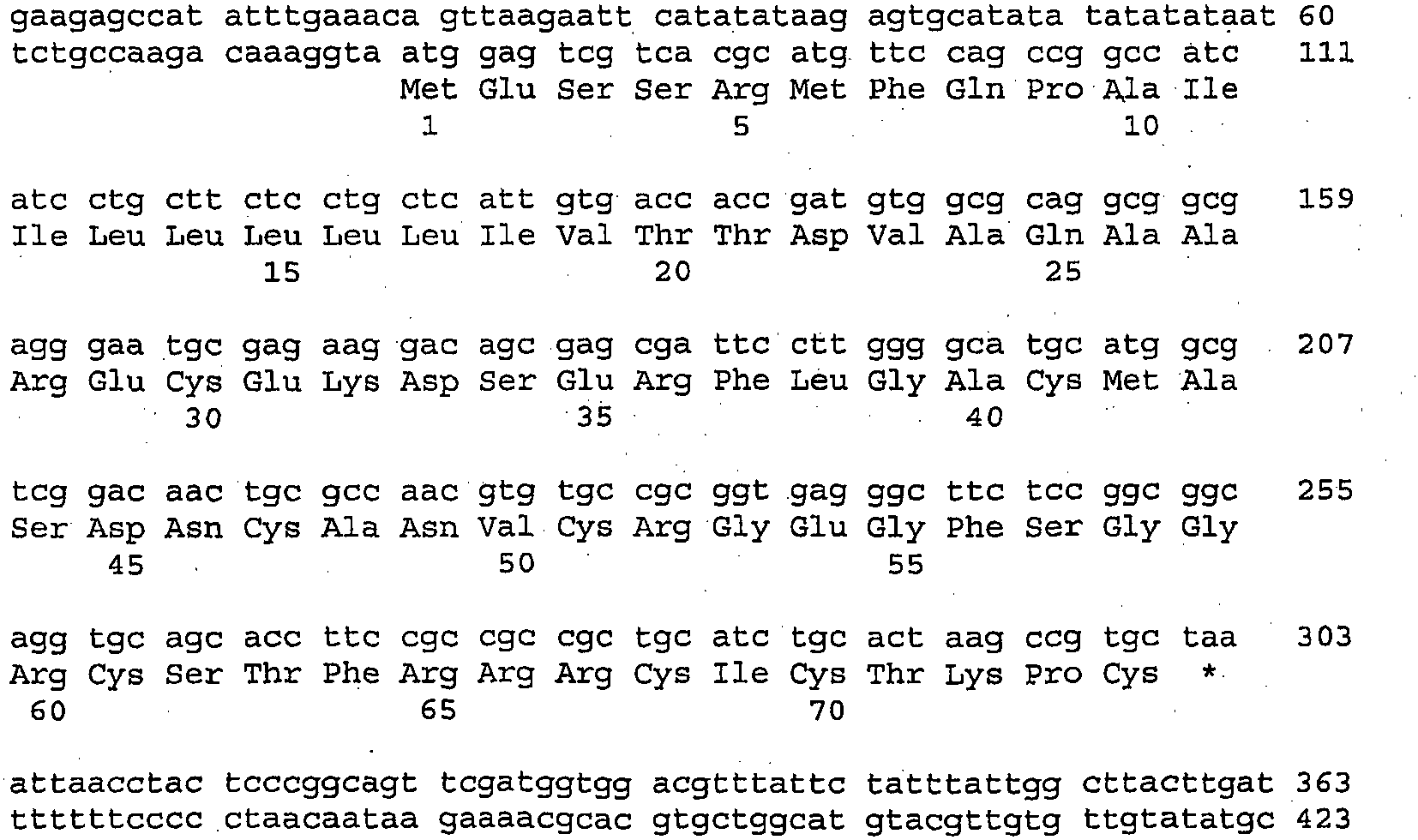

- <210> 2
<211> 74
<212> PRT
<213> Zea mays - <400> 2

- <210> 3
<211> 47
<212> PRT
<213> Zea mays - <400> 3

- <210> 4
<211> 524
<212> DNA
<213> Zea mays - <220>
<221> CDS
<222> (80)...(301) - <221> mat_peptide
<222> (158)...(298) - <400> 4


- <210> 5
<211> 73
<212> PRT
<213> Zea mays - <400> 5

- <210> 6
<211> 47
<212> PRT
<213> Zea mays - <400> 6

- <210> 7
<211> 463
<212> DNA
<213> Oryza sativa - <220>
<221> CDS
<222> (73)...(294) - <221> mat_peptide
<222> (151)...(291) - <221> misc_feature
<222> 363, 374, 382, 393, 402, 404, 410, 413, 423, 435, 442, 451
<223> n = A,T,C or G - <400> 7


- <210> 8
<211> 73
<212> PRT
<213> Oryza sativa - <400> 8

- <210> 9
<211> 47
<212> PRT
<213> Oryza sativa - <400> 9

- <210> 10
<211> 504
<212> DNA
<213> Zea mays - <220>
<221> CDS
<222> (120)...(362) - <221> mat_peptide
<222> (213)...(359) - <221> misc_feature
<222> 11, 14, 454, 462, 477, 494, 502
<223> n = A,T,C or G - <400> 10

- <210> 11
<211> 80
<212> PRT
<213> Zea mays - <400> 11

- <210> 12
<211> 49
<212> PRT
<213> Zea mays - <400> 12

- <210> 13
<211> 510
<212> DNA
<213> Zea mays - <220>
<221> CDS
<222> (13)...(402) - <221> mat_peptide
<222> (79)...(213) - <400> 13

- <210> 14
<211> 129
<212> PRT
<213> Zea mays - <400> 14


- <210> 15
<211> 45
<212> PRT
<213> Zea mays - <400> 15

- <210> 16
<211> 483
<212> DNA
<213> Zea mays - <220>
<221> CDS
<222> (50)...(355) - <221> mat_peptide
<222> (113)...(247) - <400> 16


- <210> 17
<211> 101
<212> PRT
<213> Zea mays - <400> 17

- <210> 18
<211> 45
<212> PRT
<213> Zea mays - <400> 18

- <210> 19
<211> 515
<212> DNA
<213> Oryza sativa - <220>
<221> CDS
<222> (43)...(285) - <221> mat_peptide
<222> (136)...(282) - <400> 19


- <210> 20
<211> 80
<212> PRT
<213> Oryza sativa - <400> 20

- <210> 21
<211> 49
<212> PRT
<213> Oryza sativa - <400> 21

- <210> 22
<211> 573
<212> DNA
<213> Oryza sativa - <220>
<221> CDS
<222> (55)...(297) - <221> mat_peptide
<222> (148)...(294) - <400> 22


- <210> 23
<211> 80
<212> PRT
<213> Oryza sativa - <400> 23

- <210> 24
<211> 49
<212> PRT
<213> Oryza sativa - <400> 24

- <210> 25
<211> 662
<212> DNA
<213> Triticum aestivum - <220>
<221> CDS
<222> (94)...(342) - <221> mat_peptide
<222> (193)...(339) - <400> 25

- <210> 26
<211> 82
<212> PRT
<213> Triticum aestivum - <400> 26

- <210> 27
<211> 49
<212> PRT
<213> Triticum aestivum - <400> 27

- <210> 28
<211> 557
<212> DNA
<213> Triticum aestivum - <220>
<221> CDS
<222> (36)...(296) - <221> mat_peptide
<222> (147)...(293) - <400> 28

- <210> 29
<211> 86
<212> PRT
<213> Triticum aestivum - <400> 29


- <210> 30
<211> 49
<212> PRT
<213> Triticum aestivum - <400> 30

- <210> 31
<211> 681
<212> DNA
<213> Triticum aestivum - <220>
<221> CDS
<222> (83)...(331) - <221> mat_peptide
<222> (182)...(328) - <400> 31


- <210> 32
<211> 82
<212> PRT
<213> Triticum aestivum - <400> 32

- <210> 33
<211> 49
<212> PRT
<213> Triticum aestivum - <400> 33

- <210> 34
<211> 465
<212> DNA
<213> Triticum aestivum - <220>
<221> CDS
<222> (49)...(297) - <221> mat_peptide
<222> (148)...(294) - <221> misc_feature
<222> 11
<223> n = A,T,C or G - <400> 34


- <210> 35
<211> 82
<212> PRT
<213> Triticum aestivum - <400> 35

- <210> 36
<211> 49
<212> PRT
<213> Triticum aestivum - <400> 36

- <210> 37
<211> 635
<212> DNA
<213> Triticum aestivum - <220>
<221> CDS
<222> (149)...(403) - <221> mat_peptide
<222> (254)...(400) - <400> 37

- <210> 38
<211> 84
<212> PRT
<213> Triticum aestivum - <400> 38

- <210> 39
<211> 49
<212> PRT
<213> Triticum aestivum - <400> 39


- <210> 40
<211> 632
<212> DNA
<213> Triticum aestivum - <220>
<221> CDS
<222> (134)...(382) - <221> mat_peptide
<222> (233)...(379) - <400> 40

- <210> 41
<211> 82
<212> PRT
<213> Triticum aestivum - <400> 41

- <210> 42
<211> 49
<212> PRT
<213> Triticum aestivum - <400> 42

- <210> 43
<211> 635
<212> DNA
<213> Triticum aestivum - <220>
<221> CDS
<222> (102)...(350) - <221> mat_peptide
<222> (201)...(347) - <400> 43

- <210> 44
<211> 82
<212> PRT
<213> Triticum aestivum - <400> 44

- <210> 45
<211> 49
<212> PRT
<213> Triticum aestivum - <400> 45

- <210> 46
<211> 629
<212> DNA
<213> Triticum aestivum - <220>
<221> CDS
<222> (108)...(359) - <221> mat_peptide
<222> (210)...(356) - <400> 46


- <210> 47
<211> 83
<212> PRT
<213> Triticum aestivum - <400> 47
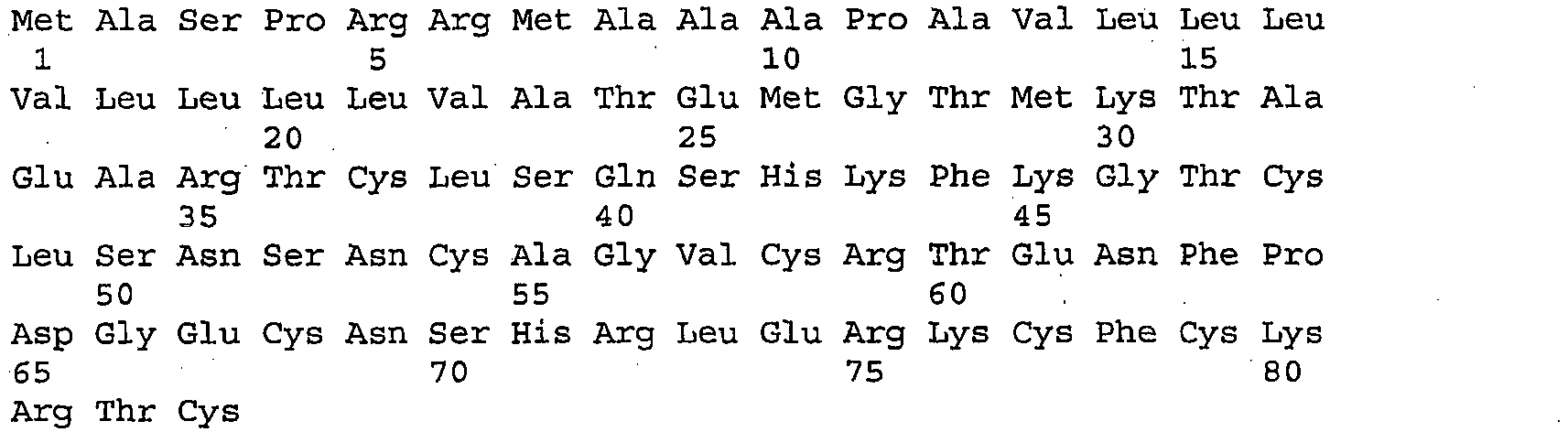
- <210> 48
<211> 49
<212> PRT
<213> Triticum aestivum - <400> 48

- <210> 49
<211> 628
<212> DNA
<213> Triticum aestivum - <220>
<221> CDS
<222> (127)...(369) - <221> mat_peptide
<222> (220)...(366) - <400> 49


- <210> 50
<211> 80
<212> PRT
<213> Triticum aestivum - <400> 50

- <210> 51
<211> 49
<212> PRT
<213> Triticum aestivum - <400> 51

- <210> 52
<211> 637
<212> DNA
<213> Triticum aestivum - <220>
<221> CDS
<222> (88)...(336) - <221> mat_peptide
<222> (187)...(333) - <221> misc_feature
<222> 629
<223> n = A,T,C or G - <400> 52

- <210> 53
<211> 82
<212> PRT
<213> Triticum aestivum - <400> 53

- <210> 54
<211> 49
<212> PRT
<213> Triticum aestivum - <400> 54

- <210> 55
<211> 631
<212> DNA
<213> Triticum aestivum - <220>
<221> CDS
<222> (57)...(305) - <221> mat_peptide
<222> (156)...(302) - <400> 55

- <210> 56
<211> 82
<212> PRT
<213> Triticum aestivum - <400> 56

- <210> 57
<211> 49
<212> PRT
<213> Triticum aestivum - <400> 57

- <210> 58
<211> 486
<212> DNA
<213> Glycine max - <220>
<221> CDS
<222> (30)...(254) - <221> mat_peptide
<222> (111)...(251) - <400> 58


- <210> 59
<211> 74
<212> PRT
<213> Glycine max - <400> 59

- <210> 60
<211> 47
<212> PRT
<213> Glycine max - <400> 60

- <210> 61
<211> 519
<212> DNA
<213> Glycine max - <220>
<221> CDS
<222> (49)...(273) - <221> mat_peptide
<222> (130)...(270) - <400> 61


- <210> 62
<211> 74
<212> PRT
<213> Glycine max - <400> 62
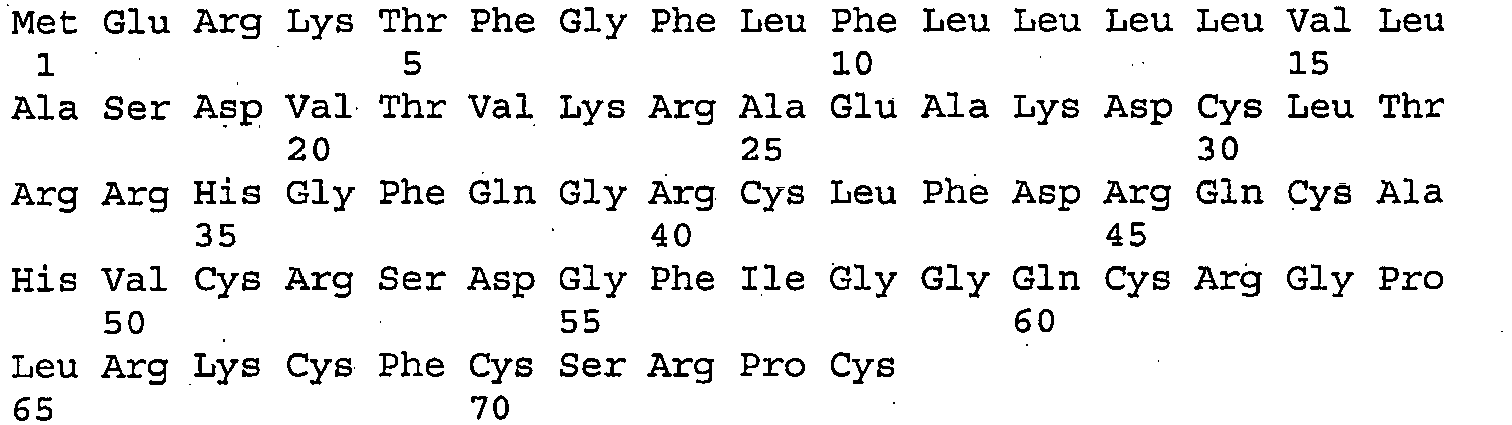
- <210> 63
<211> 47
<212> PRT
<213> Glycine max - <400> 63

- <210> 64
<211> 530
<212> DNA
<213> Glycine max - <220>
<221> CDS
<222> (37)...(261) - <221> mat_peptide
<222> (118)...(258) - <400> 64


- <210> 65
<211> 74
<212> PRT
<213> Glycine max - <400> 65

- <210> 66
<211> 47
<212> PRT
<213> Glycine max - <400> 66

- <210> 67
<211> 435
<212> DNA
<213> Triticum aestivum - <220>
<221> CDS
<222> (30)...(254) - <221> mat_peptide
<222> (111)...(251) - <400> 67

- <210> 68
<211> 74
<212> PRT
<213> Triticum aestivum - <400> 68

- <210> 69
<211> 47
<212> PRT
<213> Triticum aestivum - <400> 69

- <210> 70
<211> 507
<212> DNA
<213> Triticum aestivum - <220>
<221> CDS
<222> (58)...(285) - <221> mat_peptide
<222> (148)...(282) - <400> 70

- <210> 71
<211> 75
<212> PRT
<213> Triticum aestivum - <400> 71

- <210> 72
<211> 45
<212> PRT
<213> Triticum aestivum - <400> 72


- <210> 73
<211> 500
<212> DNA
<213> Triticum aestivum - <220>
<221> CDS
<222> (70)...(303) - <221> mat_peptide
<222> (160)...(300) - <400> 73

- <210> 74
<211> 77
<212> PRT
<213> Triticum aestivum - <400> 74

- <210> 75
<211> 47
<212> PRT
<213> Triticum aestivum - <400> 75

- <210> 76
<211> 512
<212> DNA
<213> Triticum aestivum - <220>
<221> CDS
<222> (85)...(342) - <221> mat_peptide
<222> (193)...(339) - <221> misc_feature
<222> 483, 491
<223> n = A,T,C or G - <400> 76

- <210> 77
<211> 85
<212> PRT
<213> Triticum aestivum - <400> 77


- <210> 78
<211> 49
<212> PRT
<213> Triticum aestivum - <400> 78

- <210> 79
<211> 587
<212> DNA
<213> Triticum aestivum - <220>
<221> CDS
<222> (74)...(328) - <221> mat_peptide
<222> (176)...(322) - <400> 79


- <210> 80
<211> 84
<212> PRT
<213> Triticum aestivum - <400> 80
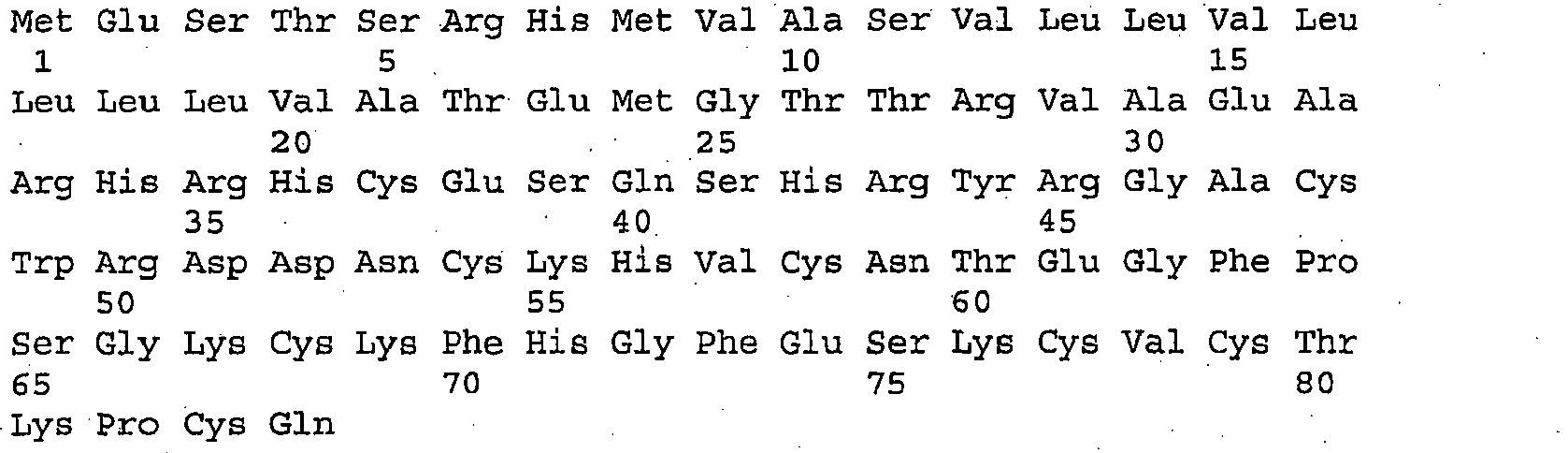
- <210> 81
<211> 49
<212> PRT
<213> Triticum aestivum - <400> 81

- <210> 82
<211> 516
<212> DNA
<213> Beta vulgaris - <220>
<221> CDS
<222> (31)...(267) - <221> mat_peptide
<222> (121)...(261) - <400> 82

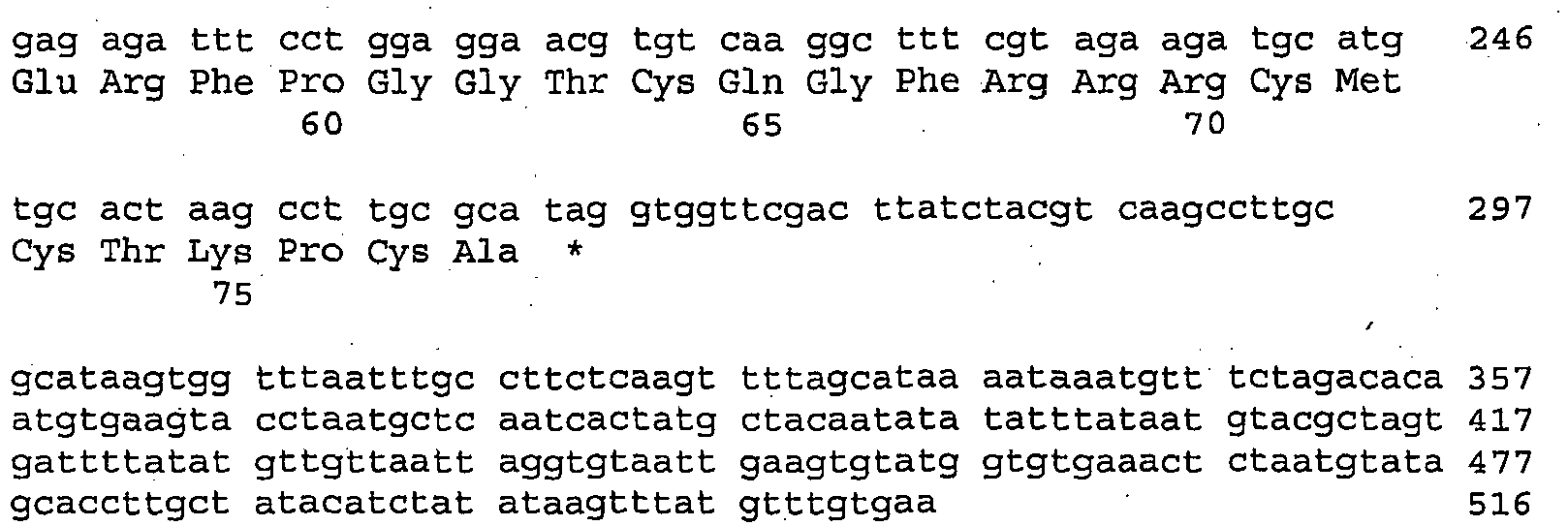
- <210> 83
<211> 78
<212> PRT
<213> Beta vulgaris - <400> 83
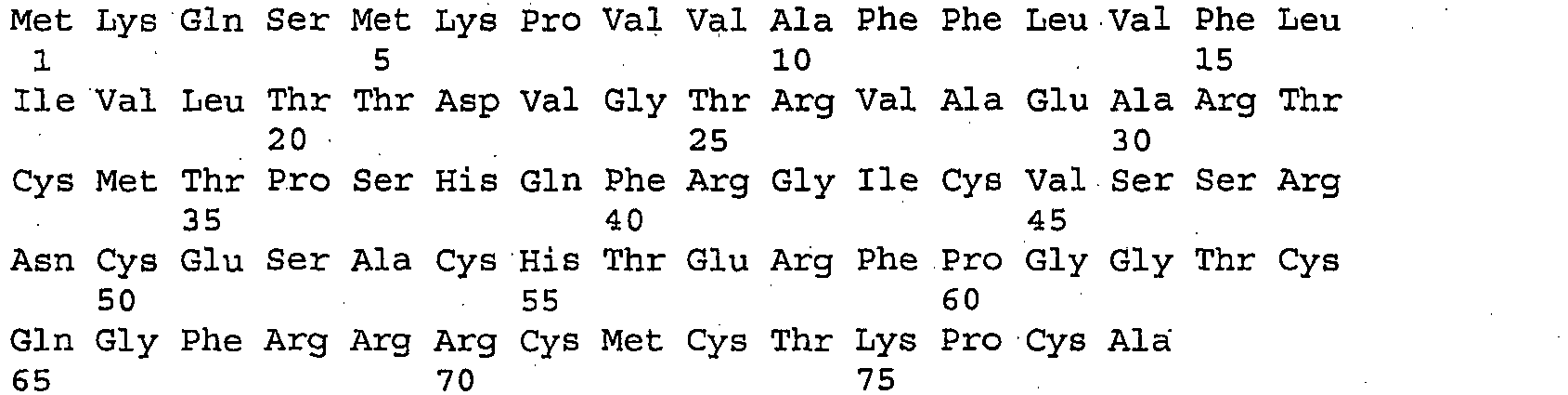
- <210> 84
<211> 47
<212> PRT
<213> Beta vulgaris - <400> 84

- <210> 85
<211> 508
<212> DNA
<213> Beta vulgaris - <220>
<221> CDS
<222> (31)...(267) - <221> mat_peptide
<222> (121)...(261) - <400> 85

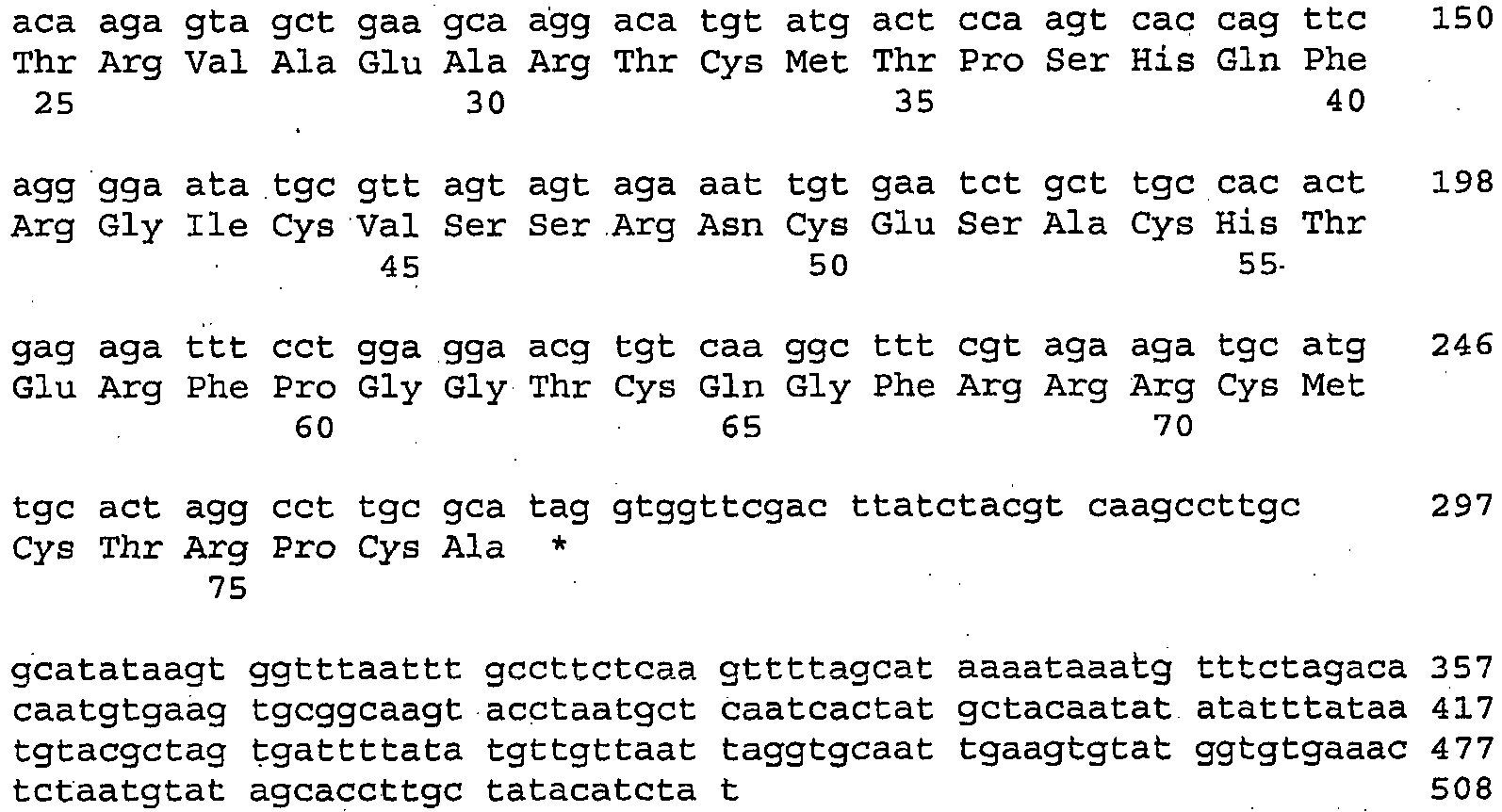
- <210> 86
<211> 78
<212> PRT
<213> Beta vulgaris - <400> 86

- <210> 87
<211> 47
<212> PRT
<213> Beta vulgaris - <400> 87

- <210> 88
<211> 470
<212> DNA
<213> Hedera helix - <220>
<221> CDS
<222> (20) ... (262) - <221> mat_peptide
<222> (113)...(259) - <400> 88

- <210> 89
<211> 80
<212> PRT
<213> Hedera helix - <400> 89

- <210> 90
<211> 49
<212> PRT
<213> Hedera helix - <400> 90

- <210> 91
<211> 469
<212> DNA
<213> Tulipa fosteriana - <220>
<221> CDS
<222> (3)...(233) - <221> mat_peptide
<222> (84)...(230) - <221> misc_feature
<222> 329, 390, 432, 457, 459, 463
<223> n = A,T,C or G - <400> 91

- <210> 92
<211> 76
<212> PRT
<213> Tulipa fosteriana - <400> 92

- <210> 93
<211> 49
<212> PRT
<213> Tulipa fosteriana - <400> 93


- <210> 94
<211> 416
<212> DNA
<213> Tulipa gesneriana - <220>
<221> CDS
<222> (3)...(233) - <221> mat_peptide
<222> (84)...(230) - <221> misc_feature
<222> 355, 380, 385, 396, 405
<223> n = A,T,C or G - <400> 94

- <210> 95
<211> 76
<212> PRT
<213> Tulipa gesneriana - <400> 95

- <210> 96
<211> 49
<212> PRT
<213> Tulipa gesneriana - <400> 96

- <210> 97
<211> 468
<212> DNA
<213> Tulipa gesneriana - <220>
<221> CDS
<222> (13)...(186) - <221> mat_peptide
<222> (49)...(183) - <221> misc_feature
<222> 467, 468
<223> n = A,T,C or G - <400> 97

- <210> 98
<211> 57
<212> PRT
<213> Tulipa gesneriana - <400> 98


- <210> 99
<211> 45
<212> PRT
<213> Tulipa gesneriana - <400> 99

- <210> 100
<211> 471
<212> DNA
<213> Tulipa fosteriana - <220>
<221> CDS
<222> (16)...(225) - <221> mat_peptide
<222> (91)...(222) - <221> misc_feature
<222> 147, 366, 371, 392, 396, 398, 415, 432, 438, 447, 453, 455,
458
<223> n = A,T,C or G - <400> 100

- <210> 101
<211> 69
<212> PRT
<213> Tulipa fosteriana - <400> 101

- <210> 102
<211> 44
<212> PRT
<213> Tulipa fosteriana - <400> 102

- <210> 103
<211> 534
<212> DNA
<213> Tulipa gesneriana - <220>
<221> CDS
<222> (21)...(233) - <221> mat_peptide
<222> (96)...(230) - <221> misc_feature
<222> 533
<223> n = A,T,C or G - <400> 103


- <210> 104
<211> 70
<212> PRT
<213> Tulipa gesneriana - <400> 104

- <210> 105
<211> 45
<212> PRT
<213> Tulipa gesneriana - <400> 105

- <210> 106
<211> 441
<212> DNA
<213> Tulipa gesneriana - <220>
<221> CDS
<222> (44)...(253) - <221> mat_peptide
<222> (119)...(250) - <221> misc_feature
<222> 24, 270, 294, 423
<223> n = A,T,C or G - <400> 106


- <210> 107
<211> 69
<212> PRT
<213> Tulipa gesneriana - <400> 107

- <210> 108
<211> 44
<212> PRT
<213> Tulipa gesneriana - <400> 108

- <210> 109
<211> 427
<212> DNA
<213> Tulipa gesneriana - <220>
<221> CDS
<222> (4)...(276) - <221> mat_peptide
<222> (82)...(249) - <221> misc_feature
<222> 398
<223> n = A,T,C or G - <400> 109

- <210> 110
<211> 90
<212> PRT
<213> Tulipa gesneriana - <400> 110

- <210> 111
<211> 56
<212> PRT
<213> Tulipa gesneriana - <400> 111

- <210> 112
<211> 468
<212> DNA
<213> Tulipa gesneriana - <220>
<221> CDS
<222> (9)...(284) - <221> mat_peptide
<222> (90)...(257) - <221> misc_feature
<222> 321, 380, 386, 414, 432, 436, 441, 452, 462, 467
<223> n = A,T,C or G - <400> 112

- <210> 113
<211> 91
<212> PRT
<213> Tulipa gesneriana - <400> 113

- <210> 114
<211> 56
<212> PRT
<213> Tulipa gesneriana - <400> 114

- <210> 115
<211> 416
<212> DNA
<213> Tulipa gesneriana - <220>
<221> CDS
<222> (36)...(263) - <221> mat_peptide
<222> (57)...(248) - <221> misc_feature
<222> 318, 403, 408
<223> n = A,T,C or G - <400> 115
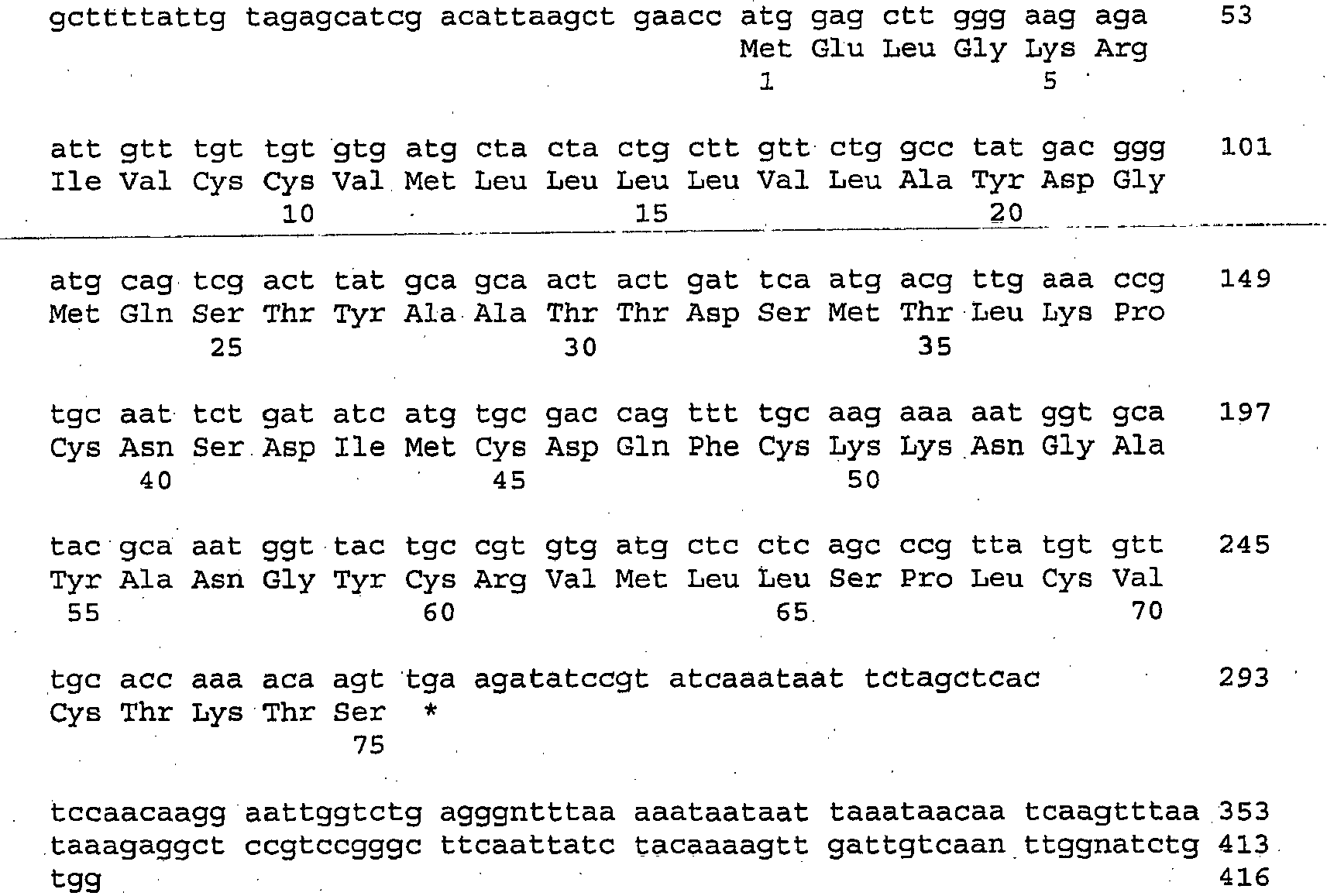
- <210> 116
<211> 75
<212> PRT
<213> Tulipa gesneriana - <400> 116


- <210> 117
<211> 64
<212> PRT
<213> Tulipa gesneriana - <400> 117

- <210> 118
<211> 416
<212> DNA
<213> Tulipa gesneriana - <220>
<221> CDS
<222> (36)...(263) - <221> mat_peptide
<222> (57)...(248) - <221> misc_feature
<222> 318, 403, 408
<223> n = A,T,C or G - <400> 118
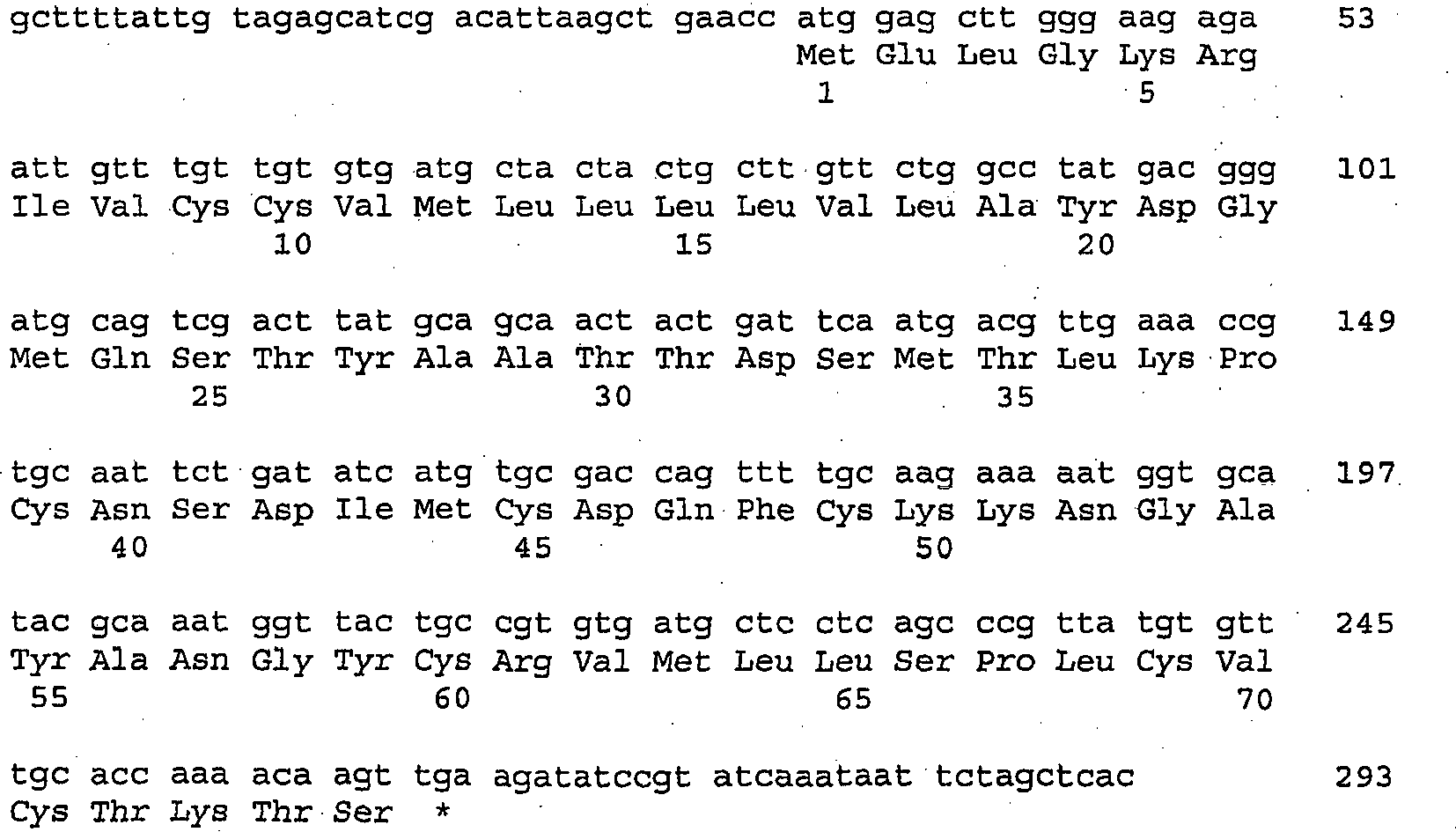

- <210> 119
<211> 75
<212> PRT
<213> Tulipa gesneriana - <400> 119
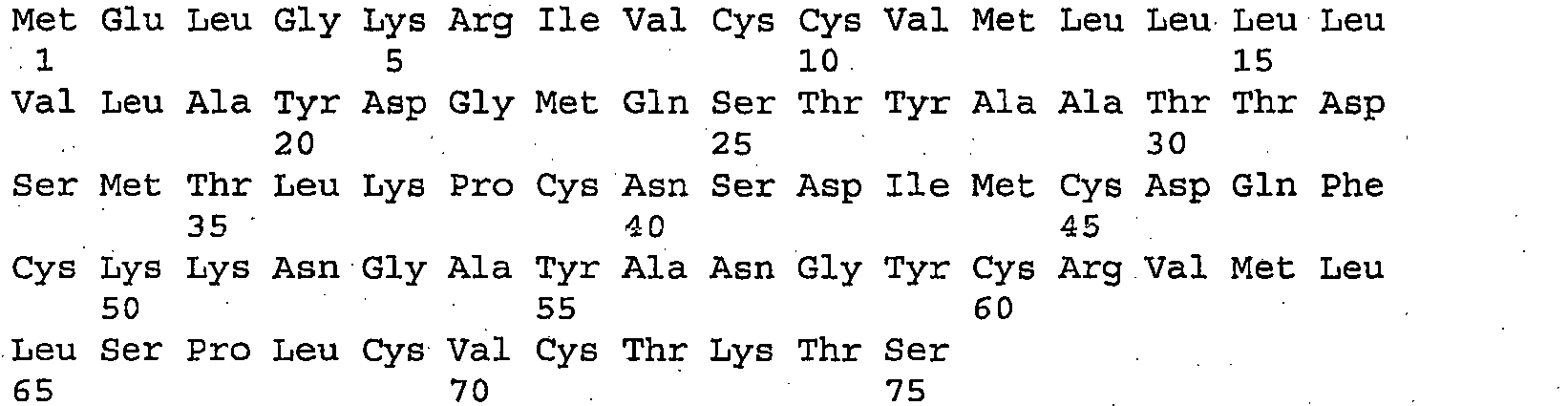
- <210> 120
<211> 64
<212> PRT
<213> Tulipa gesneriana - <400> 120

- <210> 121
<211> 367
<212> DNA
<213> Momordica charantia - <220>
<221> CDS
<222> (71)...(265) - <221> mat_peptide
<222> (107)...(262) - <400> 121

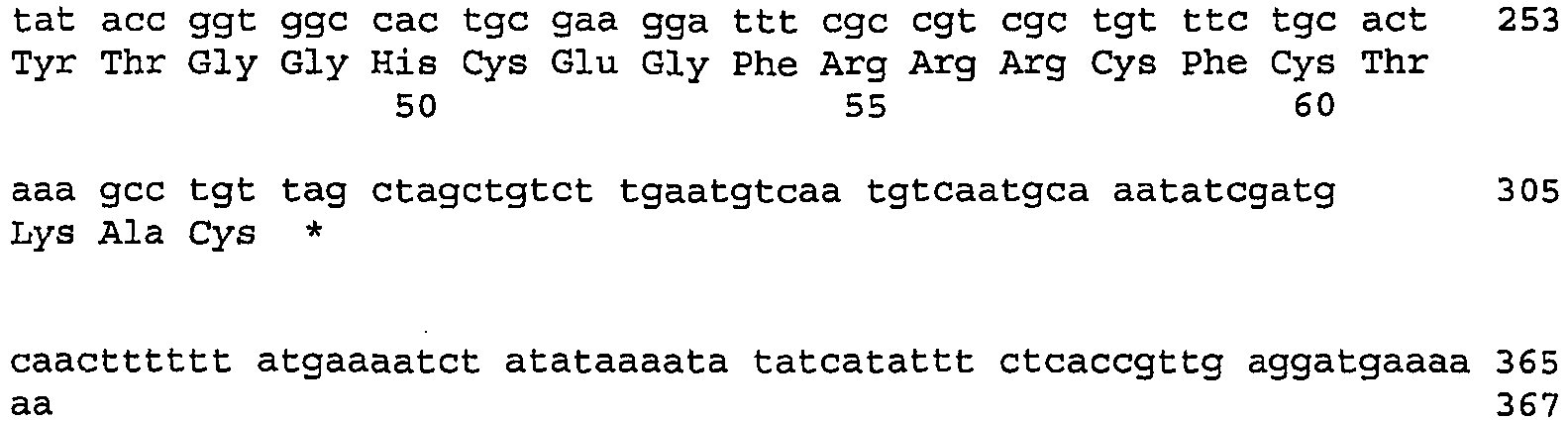
- <210> 122
<211> 64
<212> PRT
<213> Momordica charantia - <400> 122

- <210> 123
<211> 52
<212> PRT
<213> Momordica charantia - <400> 123

- <210> 124
<211> 363
<212> DNA
<213> Momordica charantia - <220>
<221> CDS
<222> (15)...(254) - <221> mat_peptide
<222> (96)...(251) - <400> 124
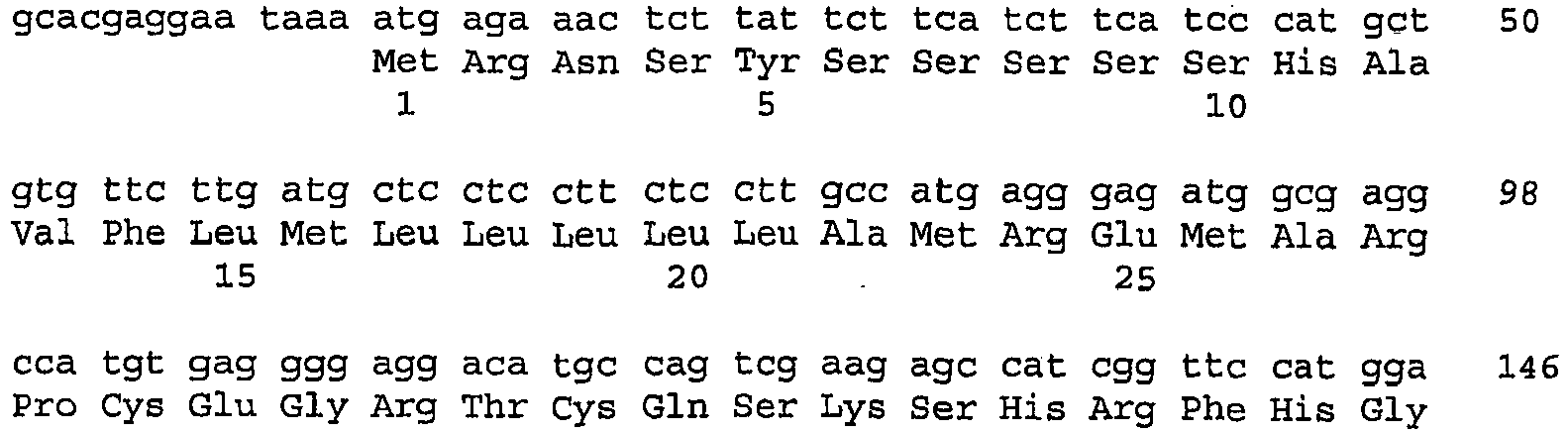
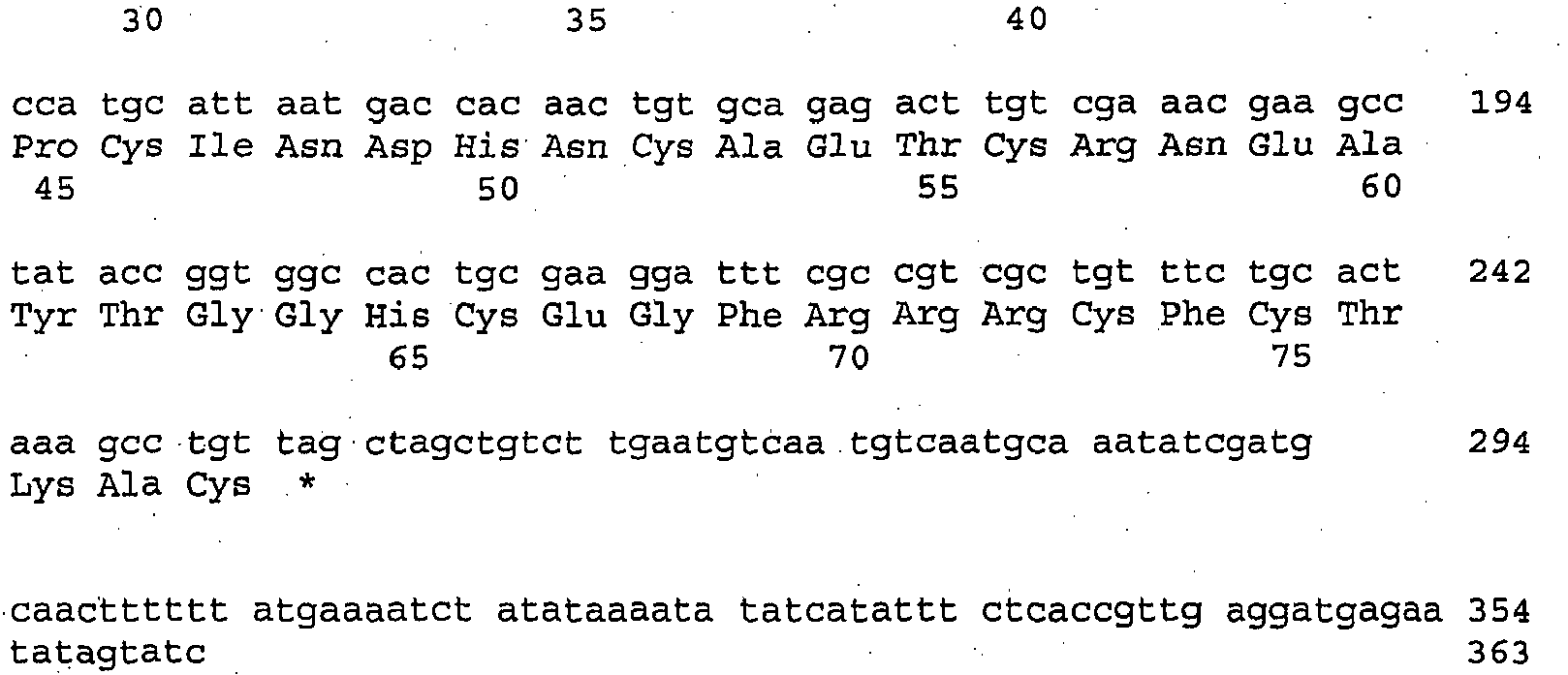
- <210> 125
<211> 79
<212> PRT
<213> Momordica charantia - <400> 125

- <210> 126
<211> 52
<212> PRT
<213> Momordica charantia - <400> 126

- <210> 127
<211> 476
<212> DNA
<213> Nicotiana benthamiana - <220>
<221> CDS
<222> (15)...(245) - <221> mat_peptide
<222> (108)...(242) - <221> misc_feature
<222> 296, 307, 322, 345, 380, 398, 416, 427, 430, 436
<223> n = A,T,C or G - <400> 127

- <210> 128
<211> 76
<212> PRT
<213> Nicotiana benthamiana - <400> 128

- <210> 129
<211> 45
<212> PRT
<213> Nicotiana benthamiana - <400> 129

- <210> 130
<211> 476
<212> DNA
<213> Nicotiana benthamiana - <220>
<221> CDS
<222> (15)...(245) - <221> mat_peptide
<222> (108)...(242) - <221> misc_feature
<222> 296, 307, 322, 345, 380, 398, 416, 427, 430, 436
<223> n = A,T,C or G - <400> 130

- <210> 131
<211> 76
<212> PRT
<213> Nicotiana benthamiana - <400> 131

- <210> 132
<211> 45
<212> PRT
<213> Nicotiana benthamiana - <400> 132

- <210> 133
<211> 424
<212> DNA
<213> Tulip fosteriana - <220>
<221> CDS
<222> (2)...(241) - <221> mat_peptide
<222> (95)...(238) - <221> misc_feàture
<222> 283, 320, 424
<223> n = A,T,C or G - <400> 133

- <210> 134
<211> 79
<212> PRT
<213> Tulip fosteriana - <400> 134


- <210> 135
<211> 48
<212> PRT
<213> Tulip fosteriana - <400> 135

- <210> 136
<211> 447
<212> DNA
<213> Tulipa gesneriana - <220>
<221> CDS
<222> (1)...(303) - <221> mat_peptide
<222> (157)...(300) - <400> 136

- <210> 137
<211> 100
<212> PRT
<213> Tulipa gesneriana - <400> 137

- <210> 138
<211> 48
<212> PRT
<213> Tulipa gesneriana - <400> 138

- <210> 139
<211> 387
<212> DNA
<213> Taraxacum kok-saghyz - <220>
<221> CDS
<222> (51)...(269) - <221> mat_peptide
<222> (132)...(266) - <221> misc_feature
<222> 304, 344, 351, 357, 365, 373, 375, 378
<223> n = A,T,C or G - <400> 139


- <210> 140
<211> 72
<212> PRT
<213> Taraxacum kok-saghyz - <400> 140
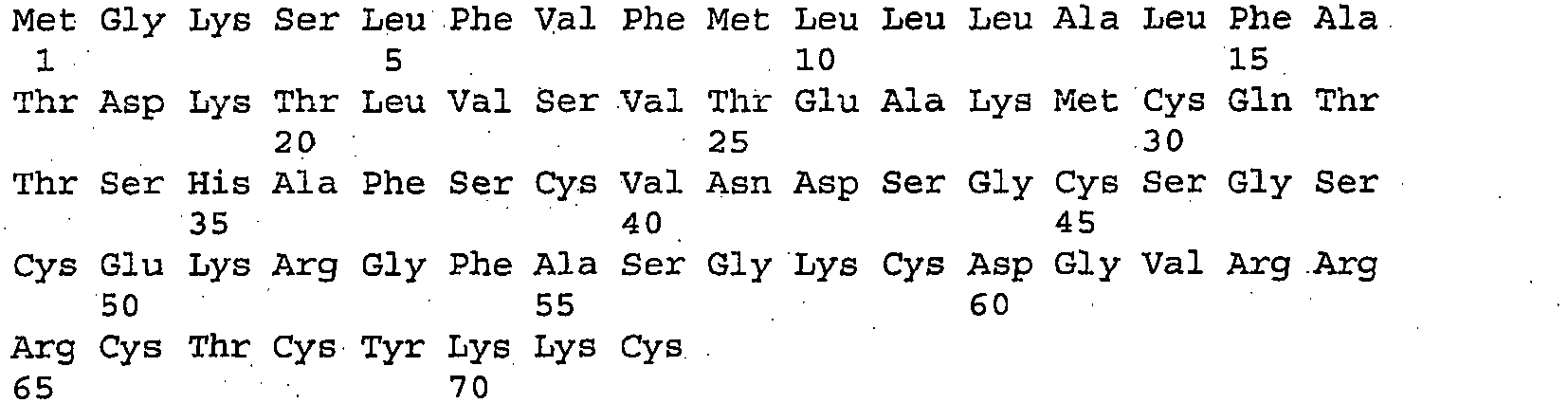
- <210> 141
<211> 45
<212> PRT
<213> Taraxacum kok-saghyz - <400> 141

- <210> 142
<211> 380
<212> DNA
<213> Taraxacum kok-saghyz - <220>
<221> CDS
<222> (51)...(269) - <221> mat_peptide
<222> (132)...(266) - <400> 142


- <210> 143
<211> 72
<212> PRT
<213> Taraxacum kok-saghyz - <400> 143

- <210> 144
<211> 45
<212> PRT
<213> Taraxacum kok-saghyz - <400> 144

- <210> 145
<211> 417
<212> DNA
<213> Taraxacum kok-saghyz - <220>
<221> CDS
<222> (71)...(286) - <221> mat_peptide
<222> (152)...(283) - <221> misc_feature
<222> 7, 9, 378, 396, 397
<223> n = A,T,C or G - <400> 145

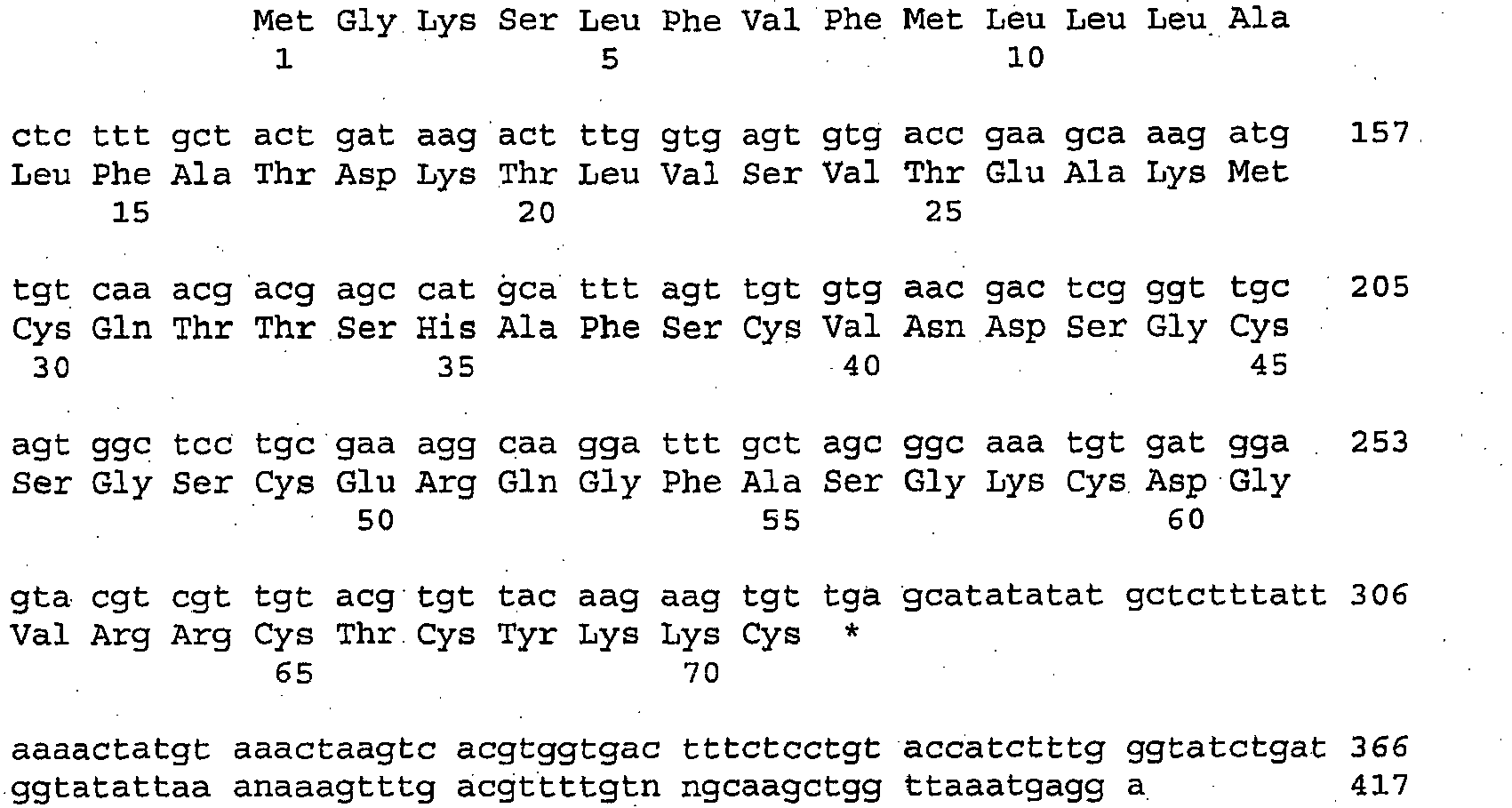
- <210> 146
<211> 71
<212> PRT
<213> Taraxacum kok-saghyz - <400> 146

- <210> 147
<211> 44
<212> PRT
<213> Taraxacum kok-saghyz - <400> 147

- <210> 148
<211> 410
<212> DNA
<213> Taraxacum kok-saghyz - <220>
<221> CDS
<222> (79)...(297) - <221> mat_peptide
<222> (160)...(294) - <221> misc_feature
<222> 1, 328, 401
<223> n = A,T,C or G - <400> 148

- <210> 149
<211> 72
<212> PRT
<213> Taraxacum kok-saghyz - <400> 149

- <210> 150
<211> 45
<212> PRT
<213> Taraxacum kok-saghyz - <400> 150

- <210> 151
<211> 385
<212> DNA
<213> Taraxacum kok-saghyz - <220>
<221> CDS
<222> (51)...(269) - <221> mat_peptide
<222> (132)...(266) - <221> misc_feature
<222> 380
<223> n = A,T,C or G - <400> 151

- <210> 152
<211> 72
<212> PRT
<213> Taraxacum kok-saghyz - <220>
<221> VARIANT
<222> 50
<223> Xaa = Any Amino Acid - <400> 152

- <210> 153
<211> 45
<212> PRT
<213> Taraxacum kok-saghyz - <220>
<221> VARIANT
<222> 23
<223> Xaa = Any Amino Acid - <400> 153

- <210> 154
<211> 408
<212> DNA
<213> Taraxacum kok-saghyz - <220>
<221> CDS
<222> (72)...(290) - <221> mat_peptide
<222> (153)...(287) - <221> misc_feature
<222> 8, 11, 333, 368, 374, 404
<223> n = A,T,C or G - <400> 154

- <210> 155
<211> 72
<212> PRT
<213> Taraxacum kok-saghyz - <400> 155


- <210> 156
<211> 45
<212> PRT
<213> Taraxacum kok-saghyz - <400> 156

- <210> 157
<211> 398
<212> DNA
<213> Taraxacum kok-saghyz - <220>
<221> CDS
<222> (70)...(264) - <221> mat_peptide
<222> (127)...(261) - <221> misc_feature
<222> 340, 341, 342, 372, 373, 374, 375, 379, 380, 381, 382, 383,
384, 387, 388, 391, 392, 393, 394, 398
<223> n = A,T,C or G - <400> 157

- <210> 158
<211> 64
<212> PRT
<213> Taraxacum kok-saghyz - <400> 158

- <210> 159
<211> 45
<212> PRT
<213> Taraxacum kok-saghyz - <400> 159

- <210> 160
<211> 398
<212> DNA
<213> Taraxacum kok-saghyz - <220>
<221> CDS
<222> (46)...(264) - <221> mat_peptide
<222> (127)...(261) - <221> misc_feature
<222> 371, 372, 373, 374, 375, 376, 377, 378, 379, 380, 381, 382, 383, 384, 385, 386, 387, 388, 389, 390, 391, 392, 393, 394, 395, 396, 397, 398
<223> n = A,T,C or G - <400> 160


- <210> 161
<211> 72
<212> PRT
<213> Taraxacum kok-saghyz - <400> 161

- <210> 162
<211> 45
<212> PRT
<213> Taraxacum kok-saghyz - <400> 162

- <210> 163
<211> 355
<212> DNA
<213> Taraxacum kok-saghyz - <220>
<221> CDS
<222> (46)...(264) - <221> mat_peptide
<222> (127)...(261) - <221> misc_feature
<222> 276, 277, 278, 325, 326, 327, 328, 329, 330, 331, 332, 333,
334, 335, 336, 337, 338, 347, 348, 355
<223> n = A,T,C or G - <400> 163


- <210> 164
<211> 72
<212> PRT
<213> Taraxacum kok-saghyz - <400> 164
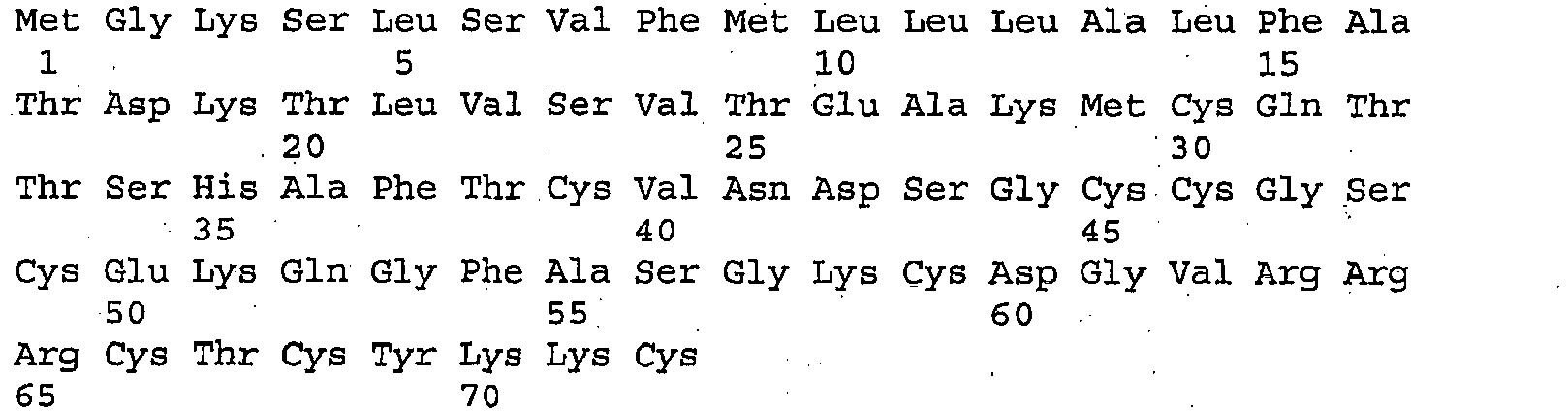
- <210> 165
<211> 45
<212> PRT
<213> Taraxacum kok-saghyz - <400> 165

- <210> 166
<211> 330
<212> DNA
<213> Taraxacum kok-saghyz - <220>
<221> CDS
<222> (46)...(264) - <221> mat_peptide
<222> (127)...(261) - <221> misc_feature
<222> 314, 316, 317, 318, 319, 320, 321, 328, 329, 330
<223> n = A,T,C or G - <400> 166

- <210> 167
<211> 72
<212> PRT
<213> Taraxacum kok-saghyz - <400> 167

- <210> 168
<211> 45
<212> PRT
<213> Taraxacum kok-saghyz - <400> 168

- <210> 169
<211> 375
<212> DNA
<213> Taraxacum kok-saghyz - <220>
<221> CDS
<222> (46)...(264) - <221> mat_peptide
<222> (127)...(261) - <221> misc_feature
<222> 374, 375
<223> n = A,T,C or G - <400> 169

- <210> 170
<211> 72
<212> PRT
<213> Taraxacum kok-saghyz - <400> 170

- <210> 171
<211> 45
<212> PRT
<213> Taraxacum kok-saghyz - <400> 171


- <210> 172
<211> 372
<212> DNA
<213> Taraxacum kok-saghyz - <220>
<221> CDS
<222> (45)...(263) - <221> mat_peptide
<222> (126)...(260) - <400> 172

- <210> 173
<211> 72
<212> PRT
<213> Taraxacum kok-saghyz - <400> 173

- <210> 174
<211> 45
<212> PRT
<213> Taraxacum kok-saghyz - <400> 174

- <210> 175
<211> 372
<212> DNA
<213> Taraxacum kok-saghyz - <220>
<221> CDS
<222> (45)...(263) - <221> mat_peptide
<222> (153)...(260) - <400> 175

- <210> 176
<211> 72
<212> PRT
<213> Taraxacum kok-saghyz - <400> 176

- <210> 177
<211> 36
<212> PRT
<213> Taraxacum kok-saghyz - <400> 177

- <210> 178
<211> 372
<212> DNA
<213> Taraxacum kok-saghyz - <220>
<221> CDS
<222> (43)...(261) - <221> mat_peptide
<222> (124)...(258) - <221> misc_feature
<222> 371, 372
<223> n = A,T,C or G - <400> 178

- <210> 179
<211> 72
<212> PRT
<213> Taraxacum kok-saghyz - <400> 179


- <210> 180
<211> 45
<212> PRT
<213> Taraxacum kok-saghyz - <400> 180

- <210> 181
<211> 351
<212> DNA
<213> Taraxacum kok-saghyz - <220>
<221> CDS
<222> (47)...(265) - <221> mat_peptide
<222> (128)...(262) - <221> misc_feature
<222> 1, 2
<223> n = A,T,C or G - <400> 181


- <210> 182
<211> 72
<212> PRT
<213> Taraxacum kok-saghyz - <400> 182

- <210> 183
<211> 45
<212> PRT
<213> Taraxacum kok-saghyz - <400> 183

- <210> 184
<211> 388
<212> DNA
<213> Taraxacum kok-saghyz - <220>
<221> CDS
<222> (20)...(277) - <221> mat_peptide
<222> (140)...(274) - <221> misc_feature
<222> 13, 14, 15, 383, 384, 385
<223> n = A,T,C or G - <400> 184

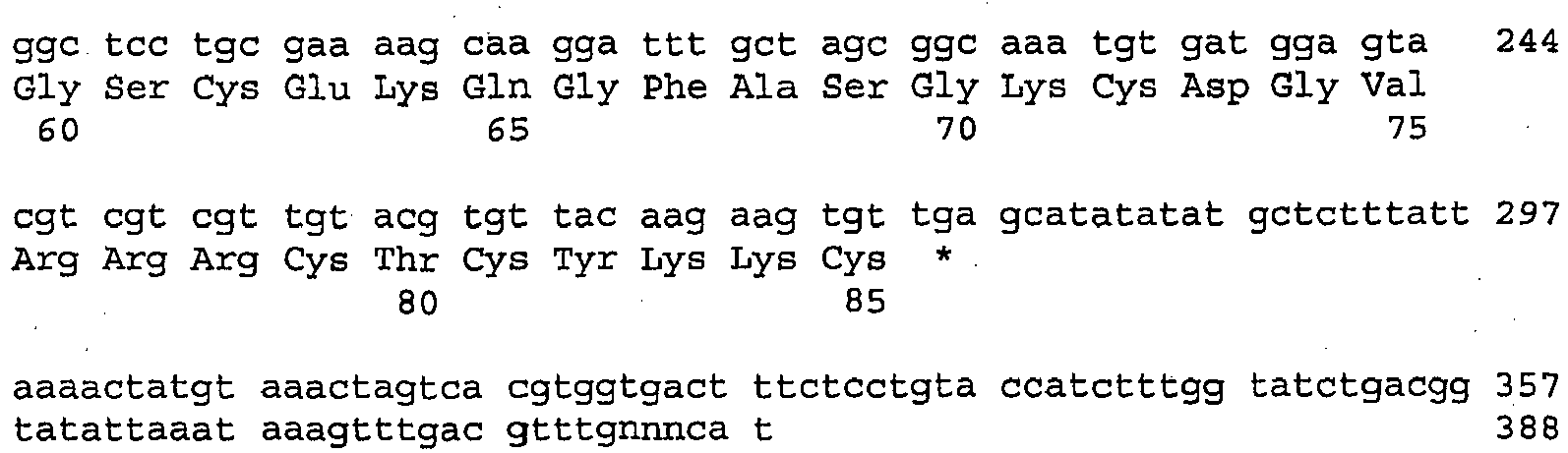
- <210> 185
<211> 85
<212> PRT
<213> Taraxacum kok-saghyz - <400> 185

- <210> 186
<211> 45
<212> PRT
<213> Taraxacum kok-saghyz - <400> 186

- <210> 187
<211> 388
<212> DNA
<213> Taraxacum kok-saghyz - <220>
<221> CDS
<222> (61)...(267) - <221> mat_peptide
<222> (142)...(264) - <221> misc_feature
<222> 14, 15, 16
<223> n = A,T,C or G - <400> 187


- <210> 188
<211> 68
<212> PRT
<213> Taraxacum kok-saghyz - <400> 188

- <210> 189
<211> 41
<212> PRT
<213> Taraxacum kok-saghyz - <400> 189

- <210> 190
<211> 378
<212> DNA
<213> Taraxacum kok-saghyz - <220>
<221> CDS
<222> (46)...(264) - <221> mat_peptide
<222> (127)...(261) - <221> misc_feature
<222> 1, 2, 3, 377, 378
<223> n = A,T,C or G - <400> 190

- <210> 191
<211> 72
<212> PRT
<213> Taraxacum kok-saghyz - <400> 191
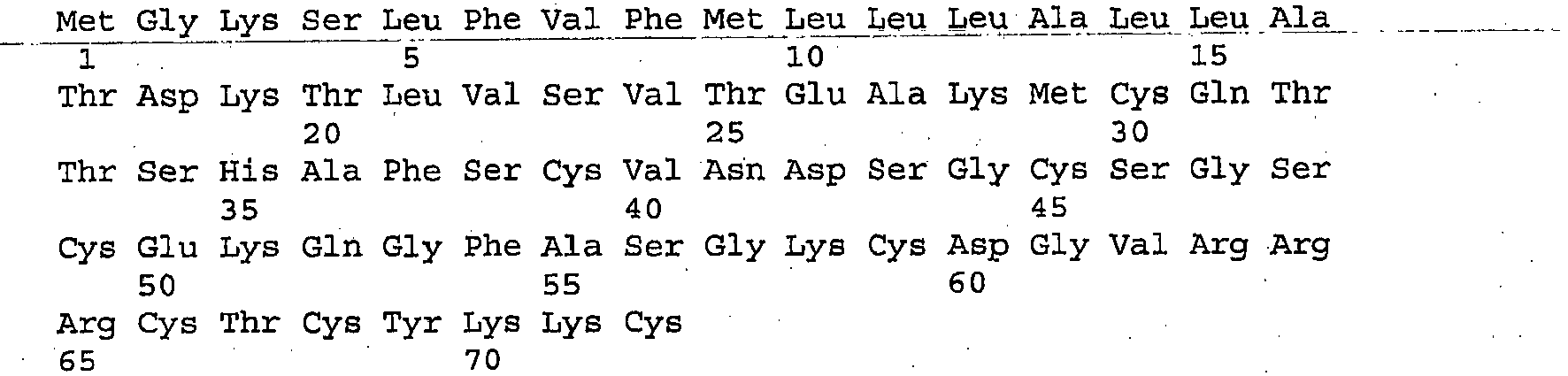
- <210> 192
<211> 45
<212> PRT
<213> Taraxacum kok-saghyz - <400> 192

- <210> 193
<211> 409
<212> DNA
<213> Taraxacum kok-saghyz - <220>
<221> CDS
<222> (44)...(262) - <221> mat_peptide
<222> (125)...(259) - <221> misc_feature
<222> 368, 369, 370, 389, 390, 391, 392, 393, 403, 405, 406, 407
<223> n = A,T,C or G - <400> 193

- <210> 194
<211> 72
<212> PRT
<213> Taraxacum kok-saghyz - <400> 194

- <210> 195
<211> 45
<212> PRT
<213> Taraxacum kok-saghyz - <400> 195


- <210> 196
<211> 410
<212> DNA
<213> Taraxacum kok-saghyz - <220>
<221> CDS
<222> (47)...(265) - <221> mat_peptide
<222> (128)...(262) - <221> misc_feature
<222> 1, 2, 20, 21, 22
<223> n = A,T,C or G - <400> 196

- <210> 197
<211> 72
<212> PRT
<213> Taraxacum kok-saghyz - <400> 197
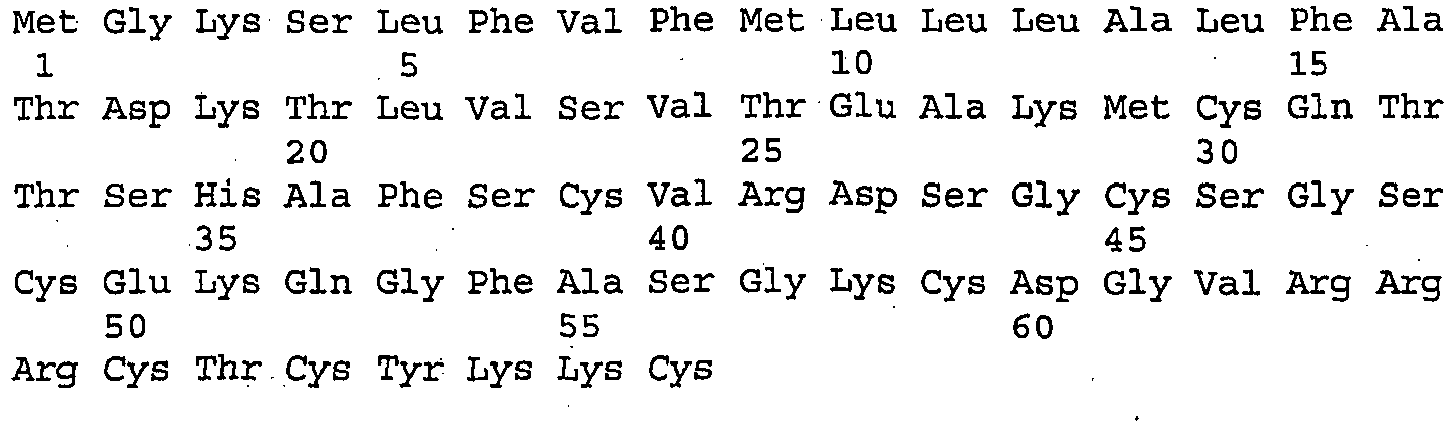

- <210> 198
<211> 45
<212> PRT
<213> Taraxacum kok-saghyz - <400> 198

- <210> 199
<211> 379
<212> DNA
<213> Taraxacum kok-saghyz - <220>
<221> CDS
<222> (50)...(268) - <221> mat_peptide
<222> (131)...(265) - <221> misc_feature
<222> 378, 379
<223> n = A,T,C or G - <400> 199

- <210> 200
<211> 72
<212> PRT
<213> Taraxacum kok-saghyz - <400> 200

- <210> 201
<211> 45
<212> PRT
<213> Taraxacum kok-saghyz - <400> 201

- <210> 202
<211> 373
<212> DNA
<213> Taraxacum kok-saghyz - <220>
<221> CDS
<222> (35)...(253) - <221> mat_peptide
<222> (116)...(250) - <221> misc_feature
<222> 298, 299, 300, 362, 363, 364, 365, 366, 367, 369, 370, 371, 372, 373
<223> n = A,T,C or G - <400> 202


- <210> 203
<211> 72
<212> PRT
<213> Taraxacum kok-saghyz - <400> 203

- <210> 204
<211> 45
<212> PRT
<213> Taraxacum kok-saghyz - <400> 204

- <210> 205
<211> 413
<212> DNA
<213> Taraxacum kok-saghyz - <220>
<221> CDS
<222> (43)...(261) - <221> mat_peptide
<222> (124)...(258) - <221> misc_feature
<222> 385, 386, 387, 388, 389, 391, 392, 393, 394, 395, 396, 397, 398, 399, 400, 401, 402, 403, 404, 405, 406, 407, 408, 409, 410, 411, 412
<223> n = A,T,C or G - <400> 205


- <210> 206
<211> 72
<212> PRT
<213> Taraxacum kok-saghyz - <400> 206

- <210> 207
<211> 45
<212> PRT
<213> Taraxacum kok-saghyz - <400> 207

- <210> 208
<211> 346
<212> DNA
<213> Taraxacum kok-saghyz - <220>
<221> CDS
<222> (46)...(264) - <221> mat_peptide
<222> (127)...(261) - <221> misc_feature
<222> 282, 283, 284, 285, 303, 334, 335, 336, 344
<223> n = A,T,C or G - <400> 208

- <210> 209
<211> 72
<212> PRT
<213> Taraxacum kok-saghyz - <400> 209

- <210> 210
<211> 45
<212> PRT
<213> Taraxacum kok-saghyz - <400> 210

- <210> 211
<211> 432
<212> DNA
<213> Picramnia pentandra - <220>
<221> CDS
<222> (38)...(271) - <221> mat_peptide
<222> (119)...(268) - <400> 211

- <210> 212
<211> 77
<212> PRT
<213> Picramnia pentandra - <400> 212

- <210> 213
<211> 50
<212> PRT
<213> Picramnia pentandra - <400> 213

- <210> 214
<211> 474
<212> DNA
<213> Picramnia pentandra - <220>
<221> CDS
<222> (47)...(280) - <221> mat_peptide
<222> (128)...(277) - <400> 214
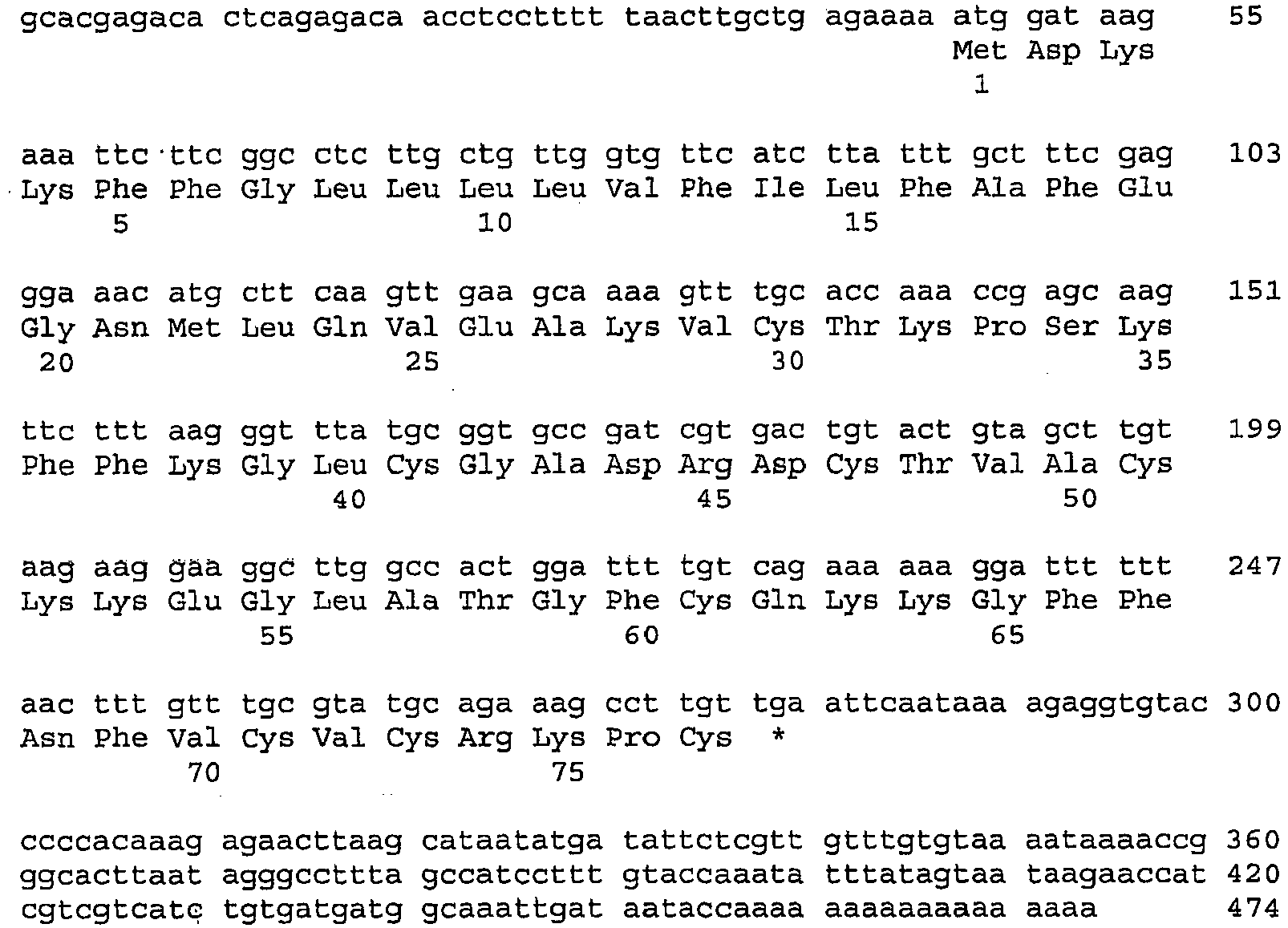
- <210> 215
<211> 77
<212> PRT
<213> Picramnia pentandra - <400> 215
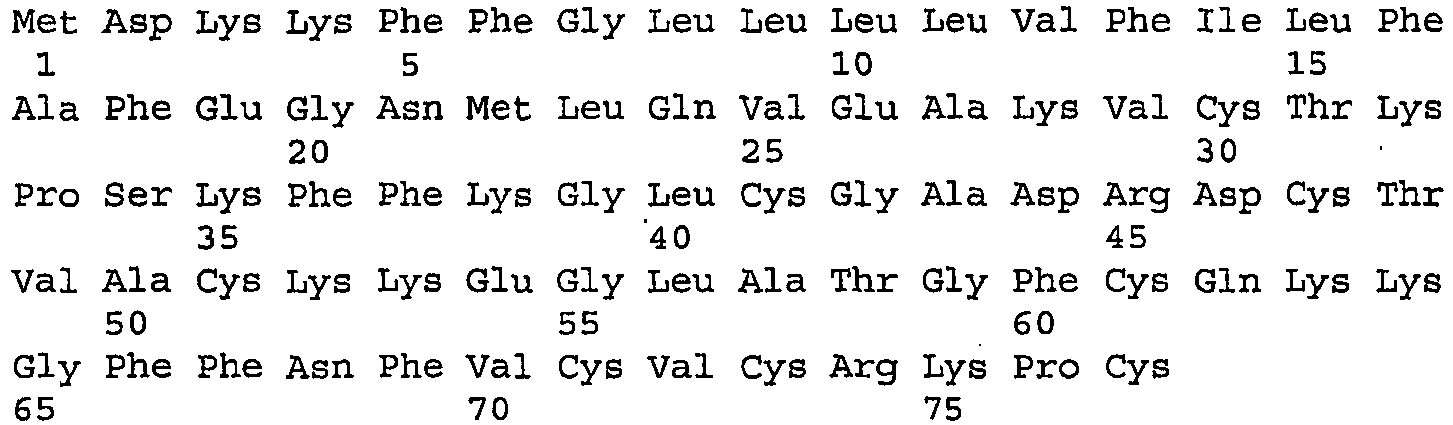
- <210> 216
<211> 50
<212> PRT
<213> Picramnia pentandra - <400> 216

- <210> 217
<211> 343
<212> DNA
<213> Picramnia pentandra - <220>
<221> CDS
<222> (38)...(268) - <221> mat_peptide
<222> (116)...(265) - <221> misc_feature
<222> 304, 313
<223> n = A,T,C or G - <400> 217

- <210> 218
<211> 76
<212> PRT
<213> Picramnia pentandra - <400> 218


- <210> 219
<211> 50
<212> PRT
<213> Picramnia pentandra - <400> 219

- <210> 220
<211> 512
<212> DNA
<213> Picramnia pentandra - <220>
<221> CDS
<222> (31)...(264) - <221> mat_peptide
<222> (112)...(261) - <221> misc_feature
<222> 330, 408, 409, 412, 425, 452, 457, 465, 488, 489, 490, 512
<223> n = A,T,C or G - <400> 220


- <210> 221
<211> 77
<212> PRT
<213> Picramnia pentandra - <400> 221

- <210> 222
<211> 50
<212> PRT
<213> Picramnia pentandra - <400> 222

- <210> 223
<211> 511
<212> DNA
<213> Picramnia pentandra - <220>
<221> CDS
<222> (31)...(264) - <221> mat_peptide
<222> (112)...(261) - <221> misc_feature
<222> 351, 430, 432, 443, 452, 460, 465, 467, 472, 486, 491, 498
<223> n = A,T,C or G - <400> 223


- <210> 224
<211> 77
<212> PRT
<213> Picramnia pentandra - <400> 224

- <210> 225
<211> 50
<212> PRT
<213> Picramnia pentandra - <400> 225

- <210> 226
<211> 498
<212> DNA
<213> Nicotiana benthamiana - <220>
<221> CDS
<222> (1)...(261) - <221> mat_peptide
<222> (82)...(255) - <400> 226


- <210> 227
<211> 86
<212> PRT
<213> Nicotiana benthamiana - <400> 227
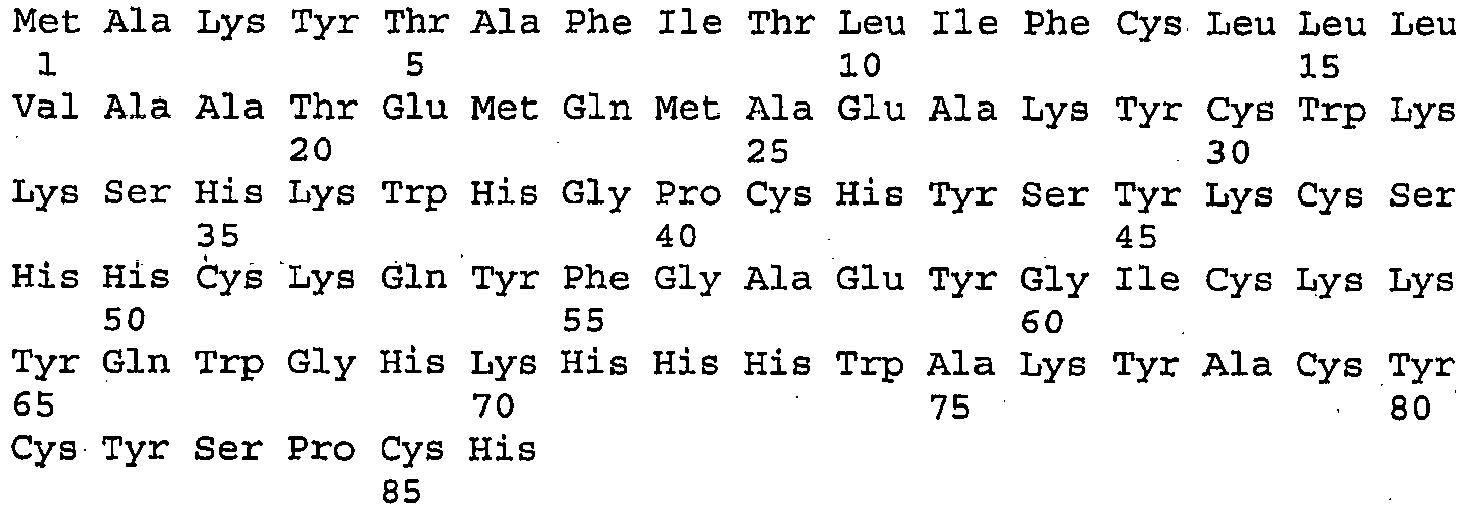
- <210> 228
<211> 58
<212> PRT
<213> Nicotiana benthamiana - <400> 228

- <210> 229
<211> 507
<212> DNA
<213> Nicotiana benthamiana - <220>
<221> CDS
<222> (5)...(265) - <221> mat_peptide
<222> (86)...(259) - <221> misc_feature
<222> 464, 469, 507
<223> n = A,T,C or G - <400> 229

- <210> 230
<211> 86
<212> PRT
<213> Nicotiana benthamiana - <400> 230

- <210> 231
<211> 58
<212> PRT
<213> Nicotiana benthamiana - <400> 231

- <210> 232
<211> 480
<212> DNA
<213> Nicotiana benthamiana - <220>
<221> CDS
<222> (4)...(264) - <221> mat_peptide
<222> (85)...(258) - <221> misc_feature
<222> 447, 472
<223> n = A,T,C or G - <400> 232

- <210> 233
<211> 86
<212> PRT
<213> Nicotiana benthamiana - <400> 233


- <210> 234
<211> 58
<212> PRT
<213> Nicotiana benthamiana - <400> 234

- <210> 235
<211> 683
<212> DNA
<213> Zea mays - <220>
<221> CDS
<222> (221)...(475) - <221> mat_peptide
<222> (326)...(472) - <400> 235


- <210> 236
<211> 84
<212> PRT
<213> Zea mays - <400> 236

- <210> 237
<211> 49
<212> PRT
<213> Zea mays - <400> 237

- <210> 238
<211> 441
<212> DNA
<213> Zea mays - <220>
<221> CDS
<222> (8)...(247) - <221> mat_peptide
<222> (89)...(241) - <400> 238


- <210> 239
<211> 79
<212> PRT
<213> Zea mays - <400> 239

- <210> 240
<211> 51
<212> PRT
<213> Zea mays - <400> 240

- <210> 241
<211> 446
<212> DNA
<213> Zea mays - <220>
<221> CDS
<222> (1)...(264) - <221> mat_peptide
<222> (76)...(228) - <400> 241


- <210> 242
<211> 87
<212> PRT
<213> Zea mays - <400> 242

- <210> 243
<211> 51
<212> PRT
<213> Zea mays - <400> 243

- <210> 244
<211> 481
<212> DNA
<213> Zea mays - <220>
<221> CDS
<222> (3)...(272) - <221> mat_peptide
<222> (87)...(239) - <400> 244

- <210> 245
<211> 89
<212> PRT
<213> Zea mays - <400> 245

- <210> 246
<211> 51
<212> PRT
<213> Zea mays - <400> 246


- <210> 247
<211> 458
<212> DNA
<213> Zea mays - <220>
<221> CDS
<222> (26)...(355) - <221> mat_peptide
<222> (128)...(256) - <400> 247

- <210> 248
<211> 109
<212> PRT
<213> Zea mays - <400> 248


- <210> 249
<211> 43
<212> PRT
<213> Zea mays - <400> 249

- <210> 250
<211> 405
<212> DNA
<213> Zea mays - <220>
<221> CDS
<222> (92)...(349) - <221> mat_peptide
<222> (275)...(343) - <221> misc_feature
<222> 361, 367, 374, 398
<223> n = A,T,C or G - <400> 250


- <210> 251
<211> 85
<212> PRT
<213> Zea mays - <400> 251

- <210> 252
<211> 23
<212> PRT
<213> Zea mays - <400> 252

- <210> 253
<211> 403
<212> DNA
<213> Zea mays - <220>
<221> CDS
<222> (27)...(284) - <221> mat_peptide
<222> (93)...(239) - <400> 253
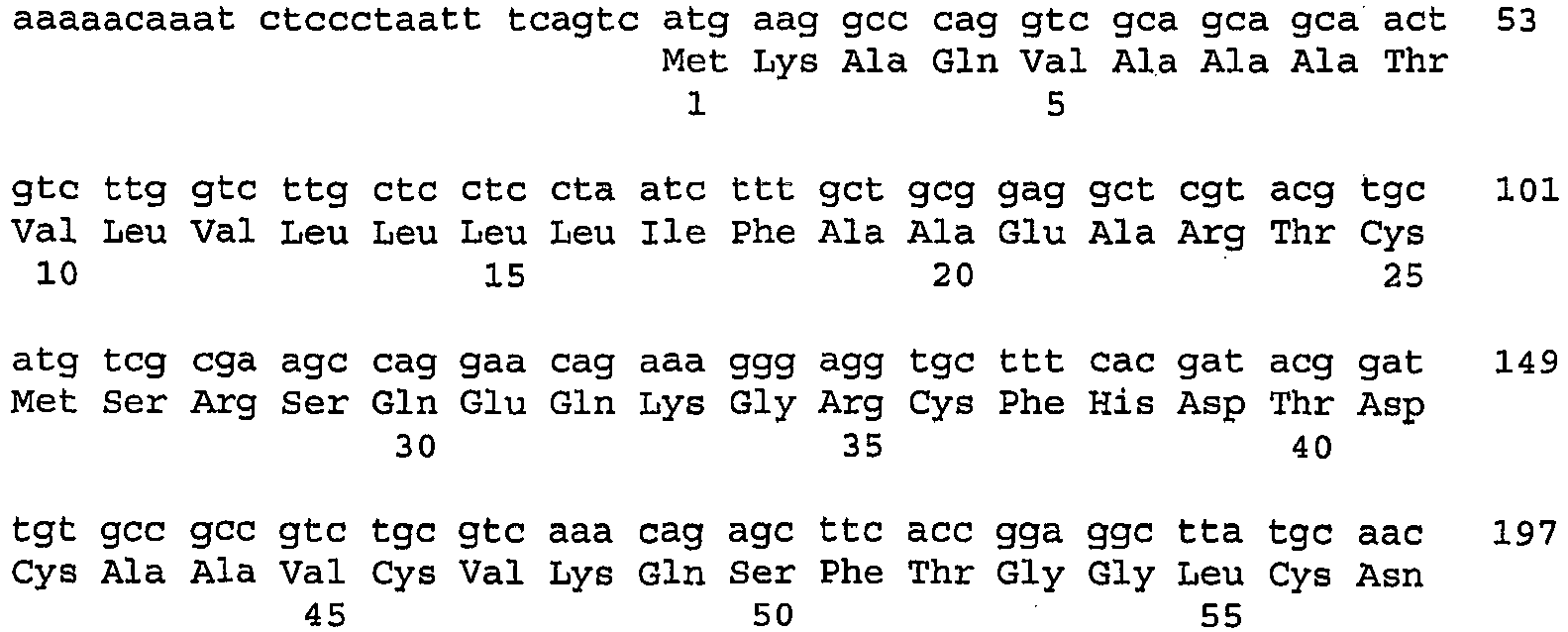

- <210> 254
<211> 85
<212> PRT
<213> Zea mays - <400> 254

- <210> 255
<211> 49
<212> PRT
<213> Zea mays - <400> 255

- <210> 256
<211> 600
<212> DNA
<213> Zea mays - <220>
<221> CDS
<222> (62)...(409) - <221> mat_peptide
<222> (218)...(352) - <400> 256


- <210> 257
<211> 115
<212> PRT
<213> Zea mays - <400> 257

- <210> 258
<211> 45
<212> PRT
<213> Zea mays - <400> 258


- <210> 259
<211> 507
<212> DNA
<213> Zea mays - <220>
<221> CDS
<222> (27)...(341) - <221> mat_peptide
<222> (144)...(272) - <400> 259

- <210> 260
<211> 104
<212> PRT
<213> Zea mays - <400> 260


- <210> 261
<211> 43
<212> PRT
<213> Zea mays - <400> 261

- <210> 262
<211> 398
<212> DNA
<213> Triticum aestivum - <220>
<221> CDS
<222> (36)...(266) - <221> mat_peptide
<222> (96)...(263) - <400> 262

- <210> 263
<211> 76
<212> PRT
<213> Triticum aestivum - <400> 263


- <210> 264
<211> 56
<212> PRT
<213> Triticum aestivum - <400> 264

- <210> 265
<211> 364
<212> DNA
<213> Triticum aestivum - <220>
<221> CDS
<222> (11)...(295) - <221> mat_peptide
<222> (122)...(265) - <400> 265


- <210> 266
<211> 94
<212> PRT
<213> Triticum aestivum - <400> 266
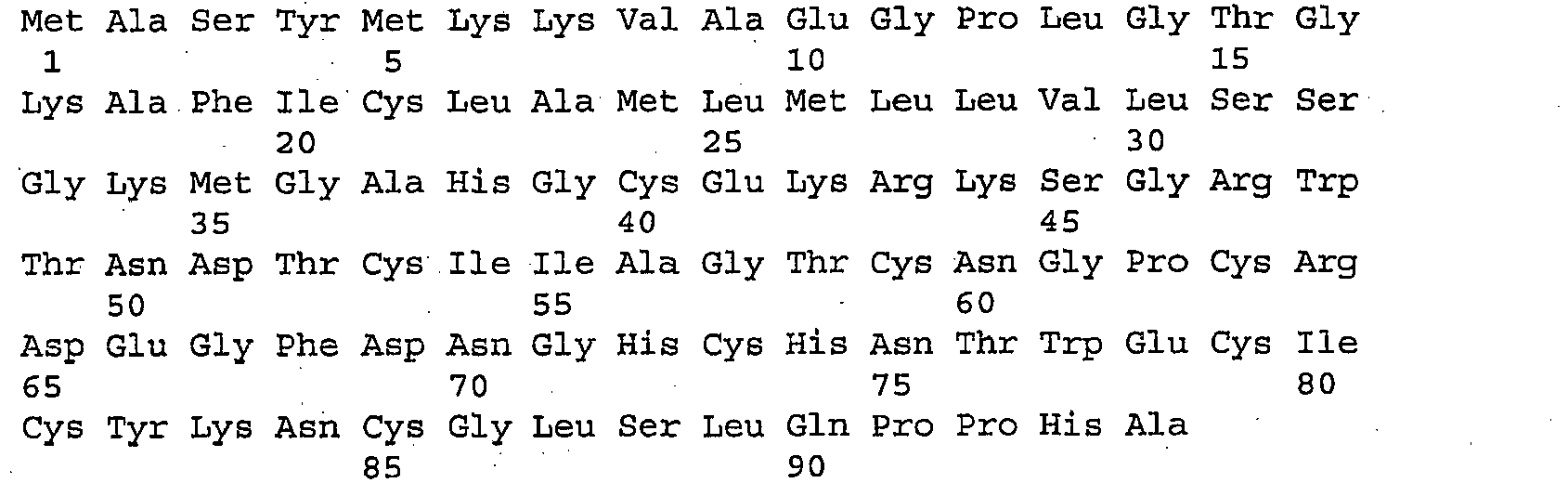
- <210> 267
<211> 48
<212> PRT
<213> Triticum aestivum - <400> 267

- <210> 268
<211> 527
<212> DNA
<213> Triticum aestivum - <220>
<221> CDS
<222> (41)...(364) - <221> mat_peptide
<222> (131)...(280) - <400> 268

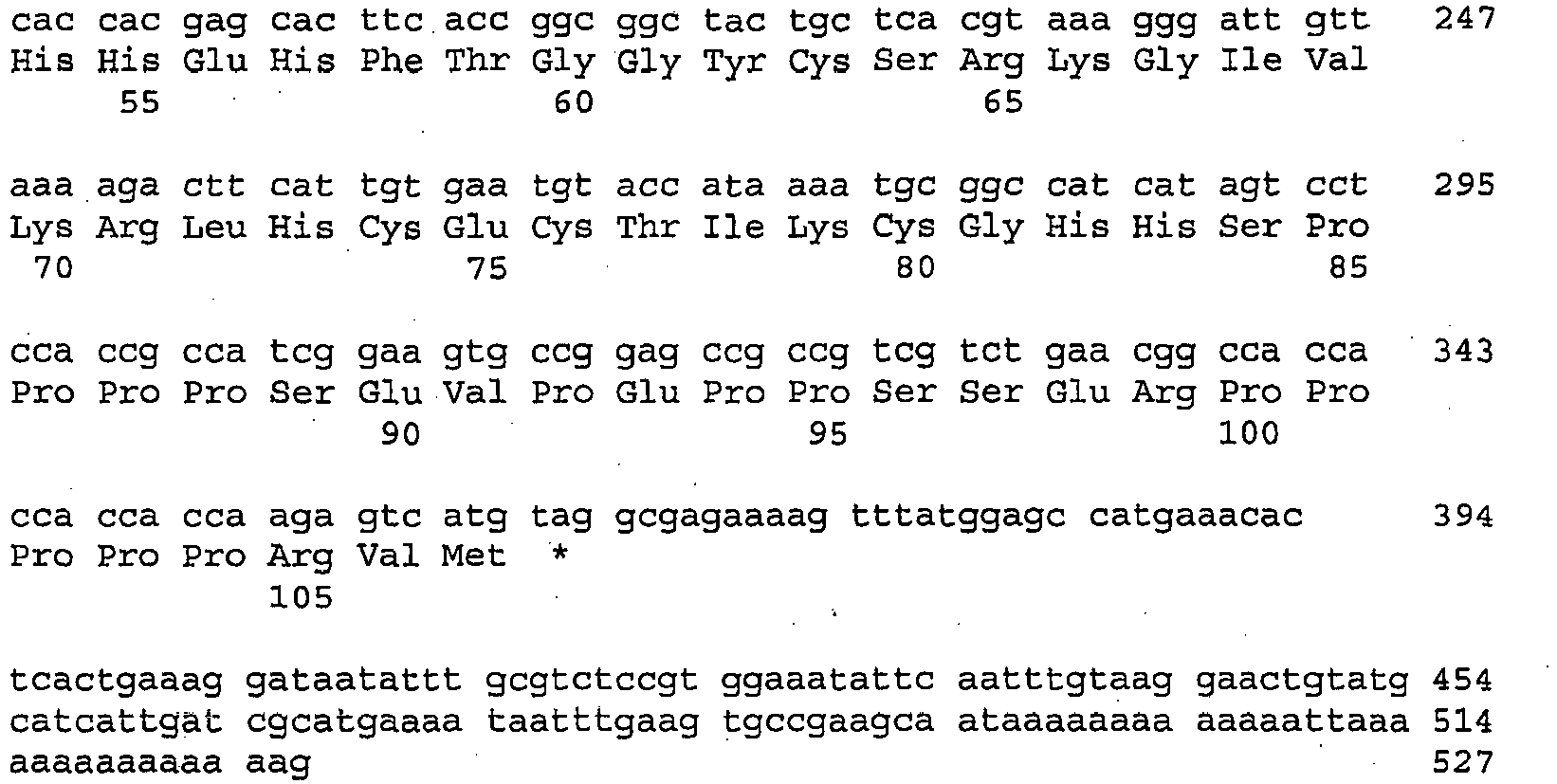
- <210> 269
<211> 107
<212> PRT
<213> Triticum aestivum - <400> 269

- <210> 270
<211> 50
<212> PRT
<213> Triticum aestivum - <400> 270

- <210> 271
<211> 626
<212> DNA
<213> Triticum aestivum - <220>
<221> CDS
<222> (238)...(468) - <221> mat_peptide
<222> (271)...(456) - <400> 271

- <210> 272
<211> 76
<212> PRT
<213> Triticum aestivum - <400> 272

- <210> 273
<211> 62
<212> PRT
<213> Triticum aestivum - <400> 273


- <210> 274
<211> 392
<212> DNA
<213> Triticum aestivum - <220>
<221> CDS
<222> (54)...(278) - <221> mat_peptide
<222> (141)...(275) - <400> 274

- <210> 275
<211> 74
<212> PRT
<213> Triticum aestivum - <400> 275

- <210> 276
<211> 45
<212> PRT
<213> Triticum aestivum
- <210> 277
<211> 640
<212> DNA
<213> Triticum aestivum - <220>
<221> CDS
<222> (58)...(294) - <221> mat_peptide
<222> (151)...(291) - <400> 277

- <210> 278
<211> 78
<212> PRT
<213> Triticum aestivum - <400> 278


- <210> 279
<211> 47
<212> PRT
<213> Triticum aestivum - <400> 279

- <210> 280
<211> 600
<212> DNA
<213> Triticum aestivum - <220>
<221> CDS
<222> (23)...(253) - <221> mat_peptide
<222> (107)...(250) - <221> misc_feature
<222> 566, 567, 568, 574, 575
<223> n = A,T,C or G - <400> 280


- <210> 281
<211> 76
<212> PRT
<213> Triticum aestivum - <400> 281

- <210> 282
<211> 48
<212> PRT
<213> Triticum aestivum - <400> 282

- <210> 283
<211> 630
<212> DNA
<213> Triticum aestivum - <220>
<221> CDS
<222> (102)...(350) - <221> mat_peptide
<222> (201)...(347) - <400> 283


- <210> 284
<211> 82
<212> PRT
<213> Triticum aestivum - <400> 284

- <210> 285
<211> 49
<212> PRT
<213> Triticum aestivum - <400> 285

- <210> 286
<211> 545
<212> DNA
<213> Triticum aestivum - <220>
<221> CDS
<222> (45)...(293) - <221> mat_peptide
<222> (135)...(290) - <400> 286


- <210> 287
<211> 82
<212> PRT
<213> Triticum aestivum - <400> 287

- <210> 288
<211> 52
<212> PRT
<213> Triticum aestivum - <400> 288

- <210> 289
<211> 601
<212> DNA
<213> Triticum aestivum - <220>
<221> CDS
<222> (70)...(297) - <221> mat_peptide
<222> (154)...(294) - <400> 289

- <210> 290
<211> 75
<212> PRT
<213> Triticum aestivum - <400> 290

- <210> 291
<211> 47
<212> PRT
<213> Triticum aestivum - <400> 291

- <210> 292
<211> 578
<212> DNA
<213> Beta vulgaris - <220>
<221> CDS
<222> (62)...(301) - <221> mat_peptide
<222> (152)...(292) - <400> 292

- <210> 293
<211> 79
<212> PRT
<213> Beta vulgaris - <400> 293
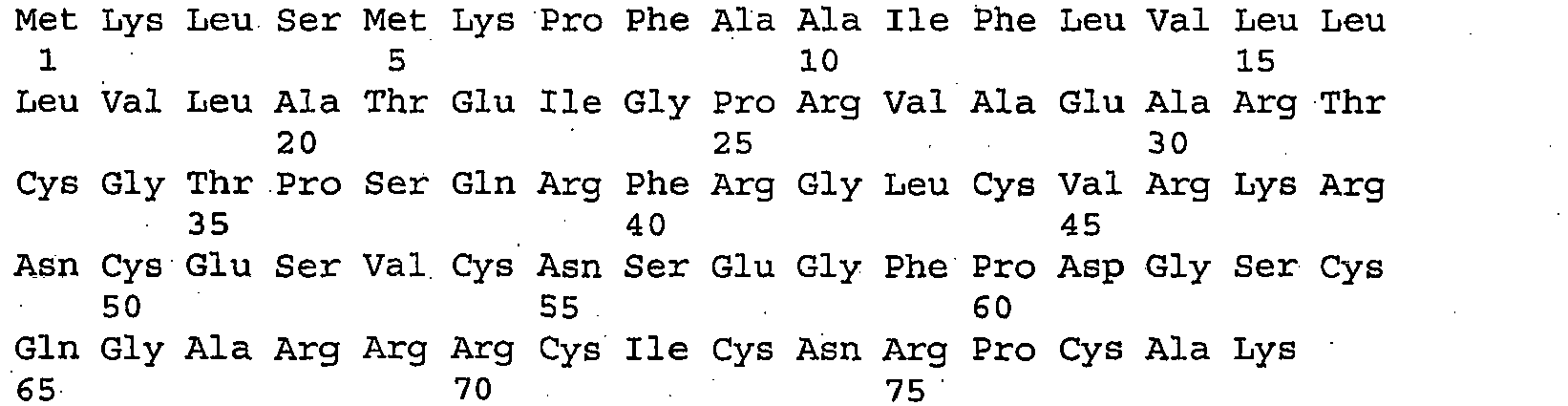
- <210> 294
<211> 47
<212> PRT
<213> Beta vulgaris - <400> 294

- <210> 295
<211> 307
<212> DNA
<213> Hedera helix - <220>
<221> CDS
<222> (3)...(158) - <221> mat_peptide
<222> (3)...(140) - <221> misc_feature
<222> 263, 270, 285, 294, 301, 306
<223> n = A,T,C or G - <400> 295

- <210> 296
<211> 51
<212> PRT
<213> Hedera helix - <400> 296

- <210> 297
<211> 46
<212> PRT
<213> Hedera helix - <400> 297

- <210> 298
<211> 385
<212> DNA
<213> Tulipa gesneriana - <220>
<221> CDS
<222> (1)...(195) - <221> mat_peptide
<222> (34)...(168) - <221> misc_feature
<222> 357, 364, 367, 369, 374, 379, 380
<223> n = A,T,C or G - <400> 298

- <210> 299
<211> 64
<212> PRT
<213> Tulipa gesneriana - <400> 299

- <210> 300
<211> 45
<212> PRT
<213> Tulipa gesneriana - <400> 300

- <210> 301
<211> 482
<212> DNA
<213> Amaranthus retroflexus - <220>
<221> CDS
<222> (31)...(258) - <221> mat_peptide
<222> (109)...(252) - <400> 301
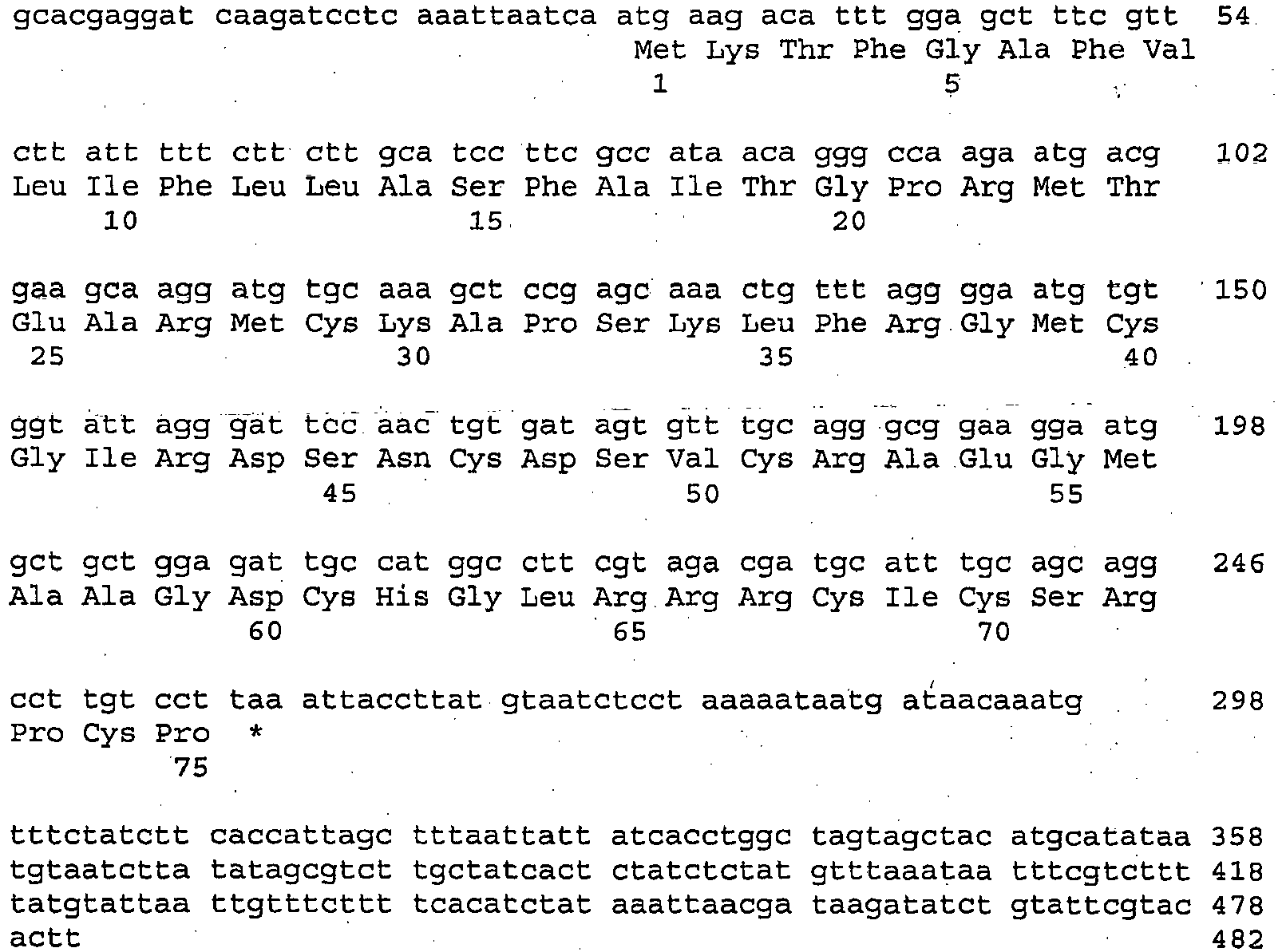
- <210> 302
<211> 75
<212> PRT
<213> Amaranthus retroflexus - <400> 302


- <210> 303
<211> 48
<212> PRT
<213> Amaranthus retroflexus - <400> 303

- <210> 304
<211> 462
<212> DNA
<213> Allium porrum - <220>
<221> CDS
<222> (30)...(224) - <221> mat_peptide
<222> (81)...(221) - <221> misc_feature
<222> 275, 364, 409, 413, 415, 424, 431, 454, 458
<223> n = A,T,C or G - <400> 304

- <210> 305
<211> 64
<212> PRT
<213> Allium porrum - <400> 305

- <210> 306
<211> 47
<212> PRT
<213> Allium porrum - <400> 306

- <210> 307
<211> 478
<212> DNA
<213> Nicotiana benthamiana - <220>
<221> CDS
<222> (31)...(264) - <221> mat_peptide
<222> (121)...(261) - <221> misc_feature
<222> 396
<223> n = A,T,C or G - <400> 307


- <210> 308
<211> 77
<212> PRT
<213> Nicotiana benthamiana - <400> 308

- <210> 309
<211> 47
<212> PRT
<213> Nicotiana benthamiana - <400> 309

- <210> 310
<211> 537
<212> DNA
<213> Tulipa gesneriana - <220>
<221> CDS
<222> (29)...(253) - <221> mat_peptide
<222> (107)...(250) - <221> misc_feature
<222> 426, 440, 479, 486, 511, 513, 528
<223> n = A,T,C or G - <400> 310


- <210> 311
<211> 74
<212> PRT
<213> Tulipa gesneriana - <400> 311

- <210> 312
<211> 48
<212> PRT
<213> Tulipa gesneriana - <400> 312

- <210> 313
<211> 469
<212> DNA
<213> Beta vulgaris - <220>
<221> CDS
<222> (21)...(257) - <221> mat_peptide
<222> (111)...(251) - <221> misc_feature
<222> 467, 468, 469
<223> n = A,T,C or G - <400> 313

- <210> 314
<211> 78
<212> PRT
<213> Beta vulgaris - <400> 314

- <210> 315
<211> 47
<212> PRT
<213> Beta vulgaris - <400> 315

- <210> 316
<211> 468
<212> DNA
<213> Cyamopsis tetragonoloba - <220>
<221> CDS
<222> (97)...(327) - <221> mat_peptide
<222> (184)...(324) - <400> 316

- <210> 317
<211> 76
<212> PRT
<213> Cyamopsis tetragonoloba - <400> 317

- <210> 318
<211> 47
<212> PRT
<213> Cyamopsis tetragonoloba - <400> 318


- <210> 319
<211> 425
<212> DNA
<213> Cyamopsis tetragonoloba - <220>
<221> CDS
<222> (51)...(281) - <221> mat_peptide
<222> (138)... (278) - <400> 319

- <210> 320
<211> 76
<212> PRT
<213> Cyamopsis tetragonoloba - <400> 320

- <210> 321
<211> 47
<212> PRT
<213> Cyamopsis tetragonoloba - <400> 321

- <210> 322
<211> 459
<212> DNA
<213> Cyamopsis tetragonoloba - <220>
<221> CDS
<222> (102)...(308) - <221> mat_peptide
<222> (165)...(305) - <400> 322

- <210> 323
<211> 68
<212> PRT
<213> Cyamopsis tetragonoloba - <400> 323
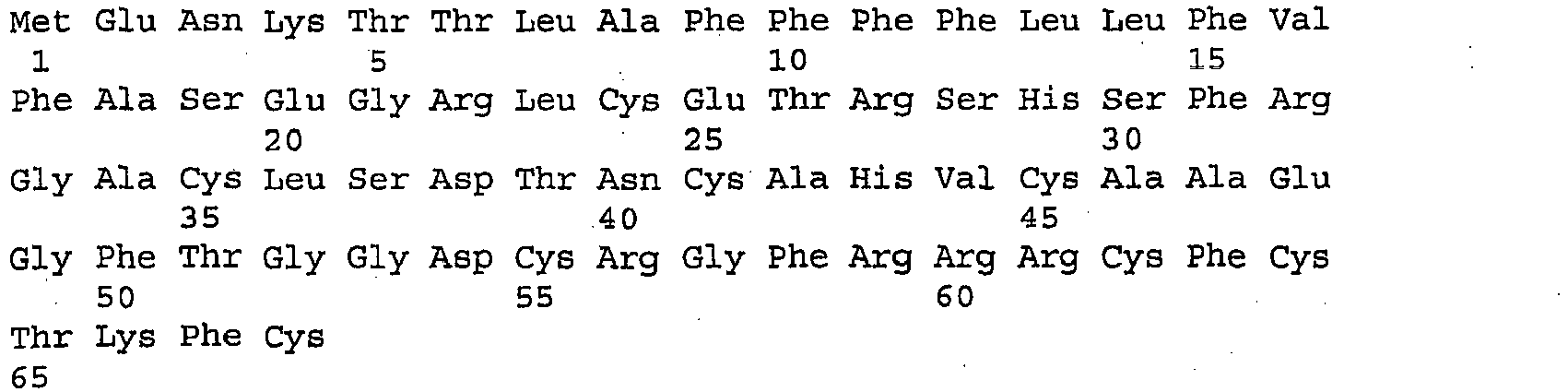
- <210> 324
<211> 47
<212> PRT
<213> Cyamopsis tetragonoloba - <400> 324

- <210> 325
<211> 425
<212> DNA
<213> Zea mays - <220>
<221> CDS
<222> (63)...(302) - <221> mat_peptide
<222> (156)...(296) - <400> 325

- <210> 326
<211> 79
<212> PRT
<213> Zea mays - <400> 326


- <210> 327
<211> 47
<212> PRT
<213> Zea mays - <400> 327

- <210> 328
<211> 442
<212> DNA
<213> Triticum aestivum - <220>
<221> CDS
<222> (51)...(287) - <221> mat_peptide
<222> (141)...(281) - <221> misc_feature
<222> 411
<223> n = A,T,C or G - <400> 328

- <210> 329
<211> 78
<212> PRT
<213> Triticum aestivum - <400> 329

- <210> 330
<211> 47
<212> PRT
<213> Triticum aestivum - <400> 330

- <210> 331
<211> 587
<212> DNA
<213> Triticum aestivum - <220>
<221> CDS
<222> (74)...(313) - <221> mat_peptide
<222> (167)...(307) - <400> 331
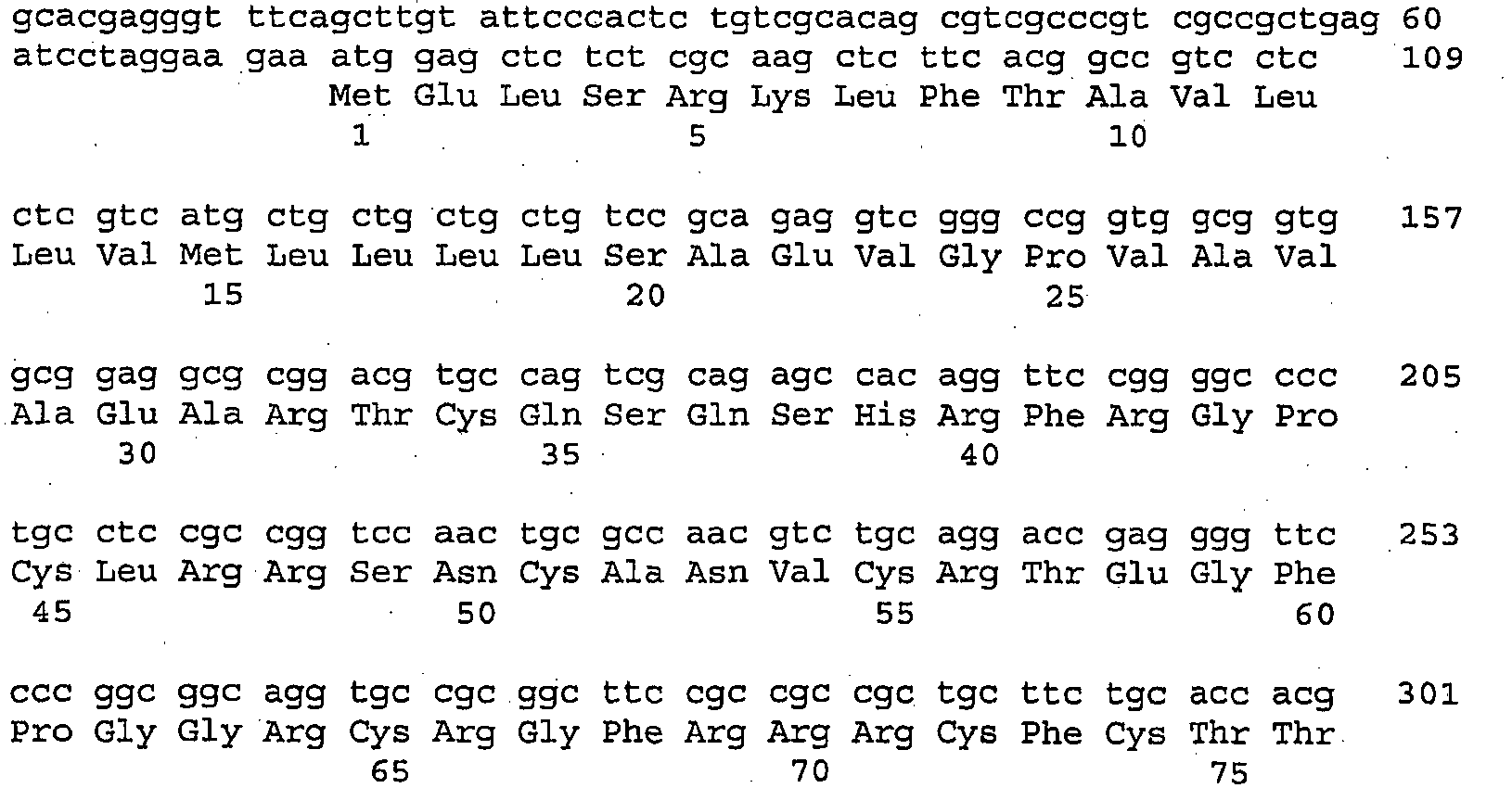

- <210> 332
<211> 79
<212> PRT
<213> Triticum aestivum - <400> 332

- <210> 333
<211> 47
<212> PRT
<213> Triticum aestivum - <400> 333

- <210> 334
<211> 459
<212> DNA
<213> Tulipa gesneriana - <220>
<221> CDS
<222> (3)...(224) - <221> mat_peptide
<222> (81)...(221) - <221> misc_feature
<222> 319, 357, 393, 395, 414, 418, 441
<223> n = A,T,C or G - <400> 334


- <210> 335
<211> 73
<212> PRT
<213> Tulipa gesneriana - <400> 335
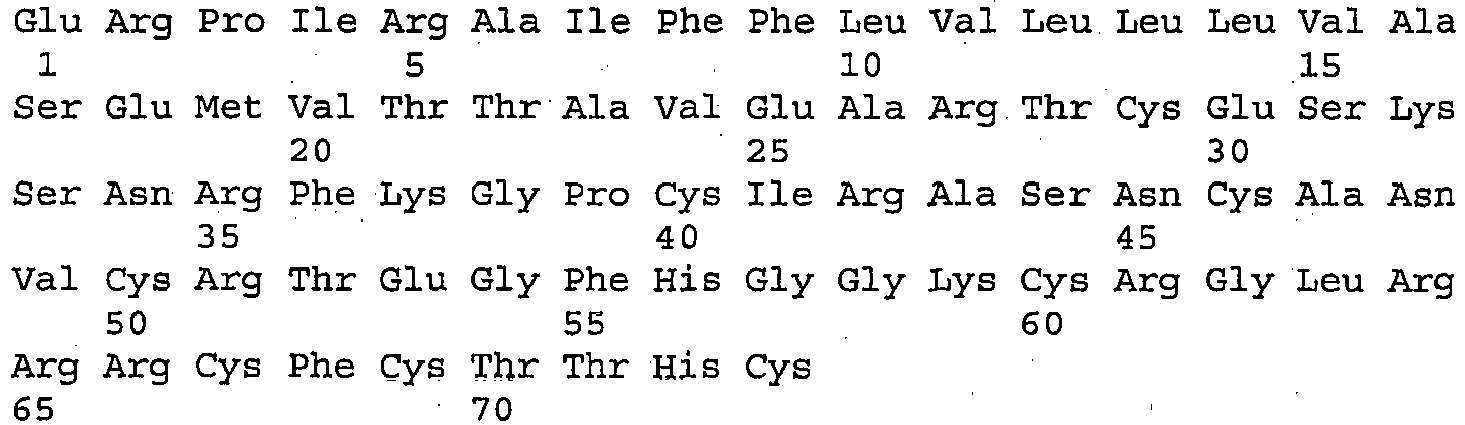
- <210> 336
<211> 47
<212> PRT
<213> Tulipa gesrieriana - <400> 336

- <210> 337
<211> 399
<212> DNA
<213> Triticum aestivum - <220>
<221> CDS
<222> (34)...(288) - <221> mat_peptide
<222> (139)...(279) - <400> 337


- <210> 338
<211> 84
<212> PRT
<213> Triticum aestivum - <400> 338

- <210> 339
<211> 47
<212> PRT
<213> Triticum aestivum - <400> 339

- <210> 340
<211> 553
<212> DNA
<213> Triticum aestivum - <220>
<221> CDS
<222> (52)...(300) - <221> mat_peptide
<222> (151)...(291) - <221> misc_feature
<222> 550
<223> n = A,T,C or G - <400> 340
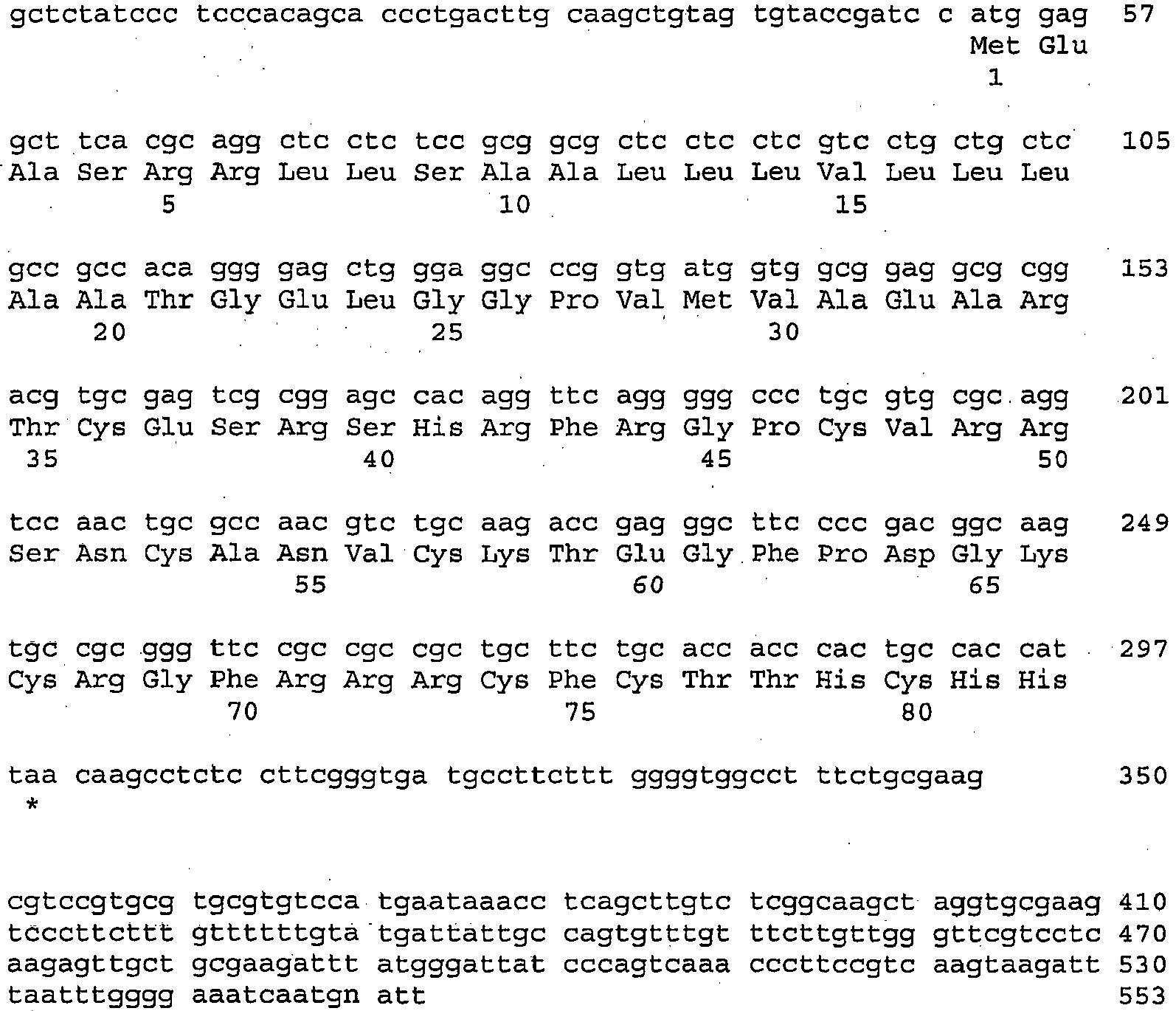
- <210> 341
<211> 82
<212> PRT
<213> Triticum aestivum - <400> 341

- <210> 342
<211> 47
<212> PRT
<213> Triticum aestivum - <400> 342

- <210> 343
<211> 445
<212> DNA
<213> Tulipa gesneriana - <220>
<221> CDS
<222> (3)...(218) - <221> mat_peptide
<222> (75)...(215) - <221> misc_feature
<222> 383, 425
<223> n = A,T,C or G - <400> 343

- <210> 344
<211> 71
<212> PRT
<213> Tulipa gesneriana - <400> 344


- <210> 345
<211> 47
<212> PRT
<213> Tulipa gesneriana - <400> 345

- <210> 346
<211> 609
<212> DNA
<213> Glycine max - <220>
<221> CDS
<222> (131)...(352) - <221> mat_peptide
<222> (209)...(349) - <400> 346

- <210> 347
<211> 73
<212> PRT
<213> Glycine max - <400> 347


- <210> 348
<211> 47
<212> PRT
<213> Glycine max - <400> 348

- <210> 349
<211> 477
<212> DNA
<213> Brassica napus - <220>
<221> CDS
<222> (58)...(291) - <221> mat_peptide
<222> (148)...(288) - <221> misc_feature
<222> 473, 474, 475, 476, 477
<223> n = A,T,C or G - <400> 349


- <210> 350
<211> 77
<212> PRT
<213> Brassica napus - <400> 350

- <210> 351
<211> 47
<212> PRT
<213> Brassica napus - <400> 351

- <210> 352
<211> 429
<212> DNA
<213> Triticum aestivum - <220>
<221> CDS
<222> (24)...(248) - <221> mat_peptide
<222> (111)...(245) - <400> 352

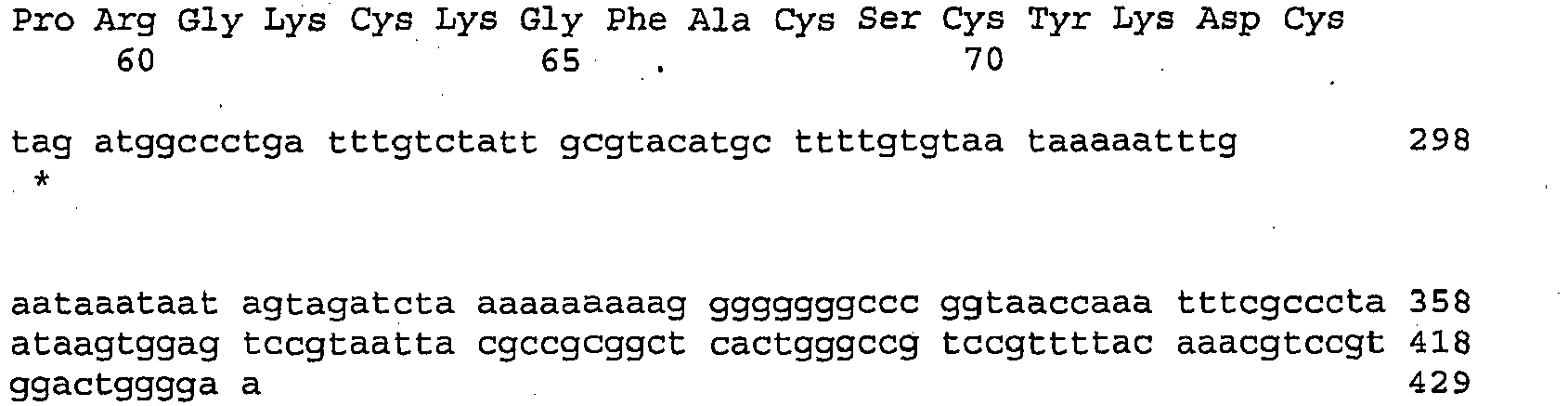
- <210> 353
<211> 74
<212> PRT
<213> Triticum aestivum - <400> 353

- <210> 354
<211> 45
<212> PRT
<213> Triticum aestivum - <400> 354

- <210> 355
<211> 347
<212> DNA
<213> Triticum aestivum - <220>
<221> CDS
<222> (61)...(291) - <221> mat_peptide
<222> (148)...(288) - <400> 355


- <210> 356
<211> 76
<212> PRT
<213> Triticum aestivum - <400> 356

- <210> 357
<211> 47
<212> PRT
<213> Triticum aestivum - <400> 357

- <210> 358
<211> 551
<212> DNA
<213> Zea mays - <220>
<221> CDS
<222> (70)...(306) - <221> mat_peptide
<222> (163)...(303) - <400> 358


- <210> 359
<211> 78
<212> PRT
<213> Zea mays - <400> 359

- <210> 360
<211> 47
<212> PRT
<213> Zea mays - <400> 360

- <210> 361
<211> 311
<212> DNA
<213> Vernonia mespilifolia - <220>
<221> CDS
<222> (2)...(145) - <221> mat_peptide
<222> (2)...(142) - <221> misc_feature
<222> 281, 289, 296
<223> n = A,T,C or G - <400> 361

- <210> 362
<211> 47
<212> PRT
<213> Vernonia mespilifolia - <400> 362

- <210> 363
<211> 47
<212> PRT
<213> Vernonia mespilifolia - <400> 363

- <210> 364
<211> 493
<212> DNA
<213> Picramnia pentandra - <220>
<221> CDS
<222> (25)...(249) - <221> mat_peptide
<222> (106)...(246) - <221> misc_feature
<222> 254, 271, 321, 370, 377, 408, 419, 424, 437, 439, 463, 480
<223> n = A,T,C or G - <400> 364

- <210> 365
<211> 74
<212> PRT
<213> Picramnia pentandra - <400> 365

- <210> 366
<211> 47
<212> PRT
<213> Picramnia pentandra - <400> 366

- <210> 367
<211> 345
<212> DNA
<213> Vernonia mespilifolia - <220>
<221> CDS
<222> (39)...(263) - <221> mat_peptide
<222> (132)...(260) - <400> 367
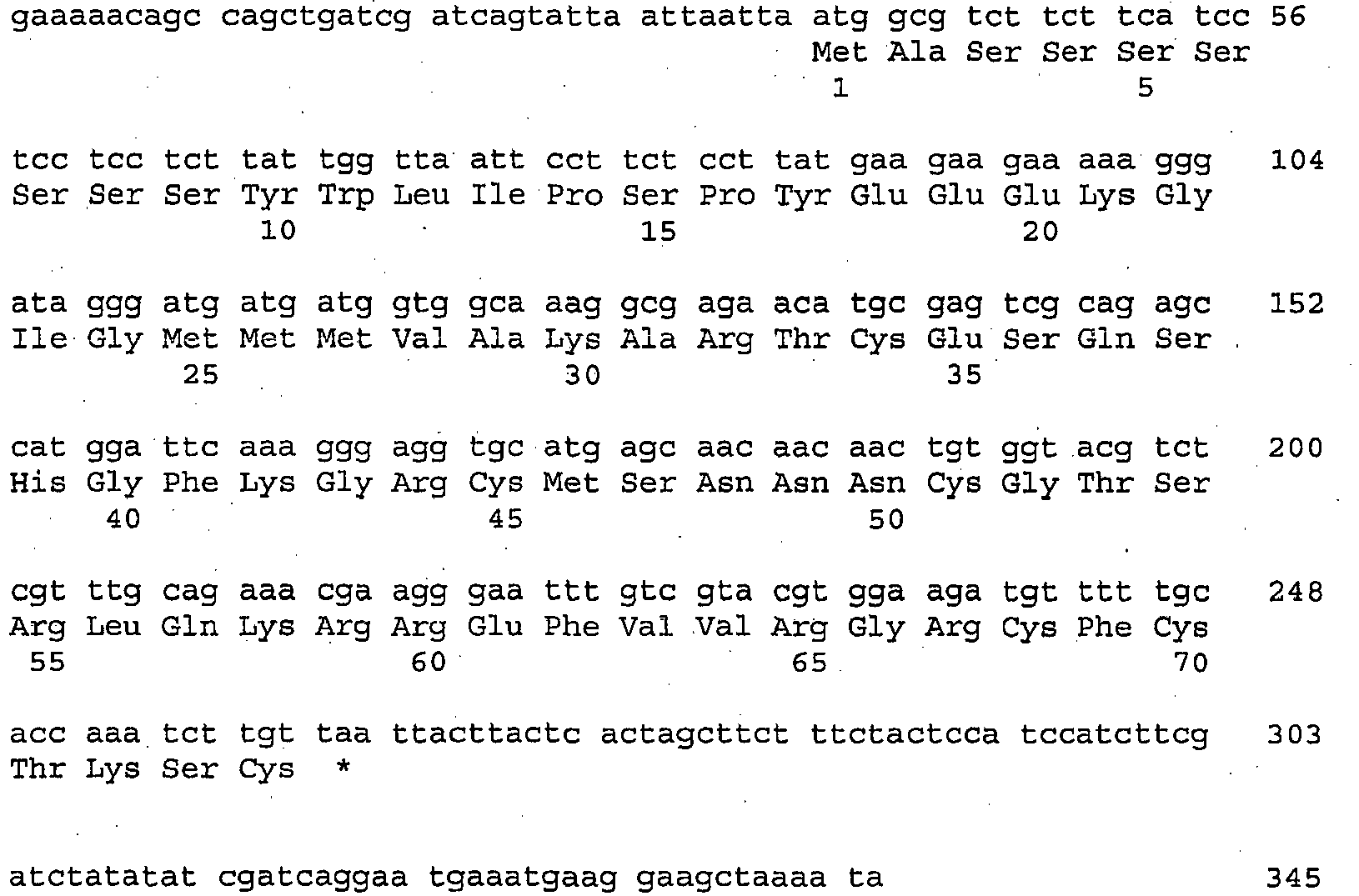
- <210> 368
<211> 74
<212> PRT
<213> Vernonia mespilifolia - <400> 368
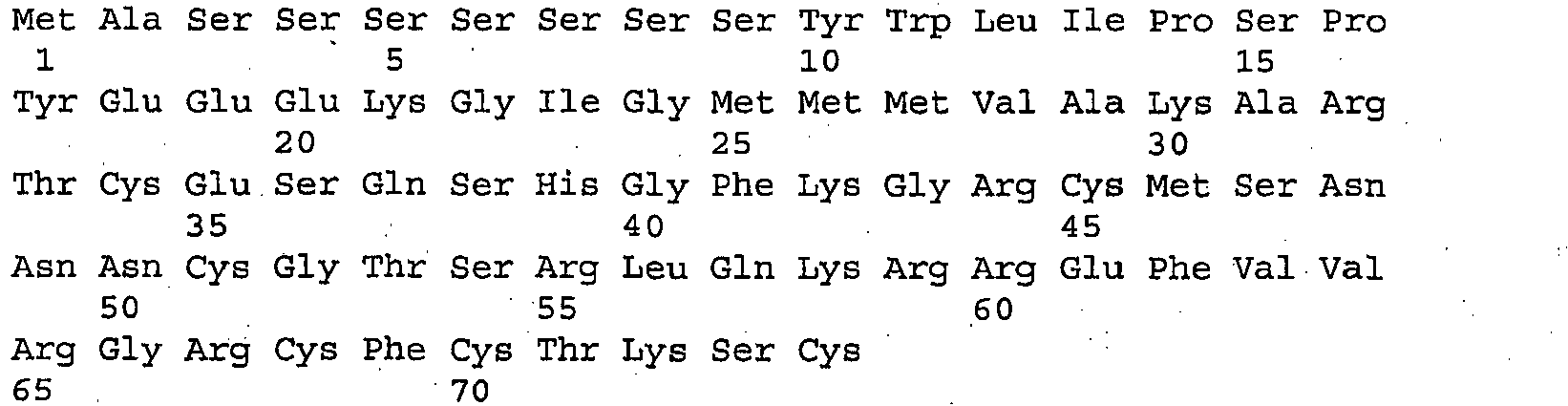
- <210> 369
<211> 43
<212> PRT
<213> Vernonia mespilifolia - <400> 369

- <210> 370
<211> 369
<212> DNA
<213> Vernonia mespilifolia - <220>
<221> CDS
<222> (1)...(234) - <221> mat_peptide
<222> (91)...(231) - <400> 370

- <210> 371
<211> 77
<212> PRT
<213> Vernonia mespilifolia - <400> 371

- <210> 372
<211> 47
<212> PRT
<213> Vernonia mespilifolia - <400> 372


- <210> 373
<211> 520
<212> DNA
<213> Oryza sativa - <220>
<221> CDS
<222> (3)...(467) - <221> mat_peptide
<222> (213)...(359) - <400> 373

- <210> 374
<211> 154
<212> PRT
<213> Oryza sativa - <400> 374


- <210> 375
<211> 49
<212> PRT
<213> Oryza sativa - <400> 375

- <210> 376
<211> 458
<212> DNA
<213> Parthenium argentatum - <220>
<221> CDS
<222> (7)...(243) - <221> mat_peptide
<222> (100)...(240) - <221> misc_feature
<222> 452
<223> n = A,T,C or G - <400> 376


- <210> 377
<211> 78
<212> PRT
<213> Parthenium argentatum - <400> 377

- <210> 378
<211> 47
<212> PRT
<213> Parthenium argentatum - <400> 378

- <210> 379
<211> 464
<212> DNA
<213> Cyamopsis tetragonoloba - <220>
<221> CDS
<222> (32)...(256) - <221> mat_peptide
<222> (116)...(253) - <221> misc_feature
<222> 1, 2
<223> n = A,T,C or G - <400> 379

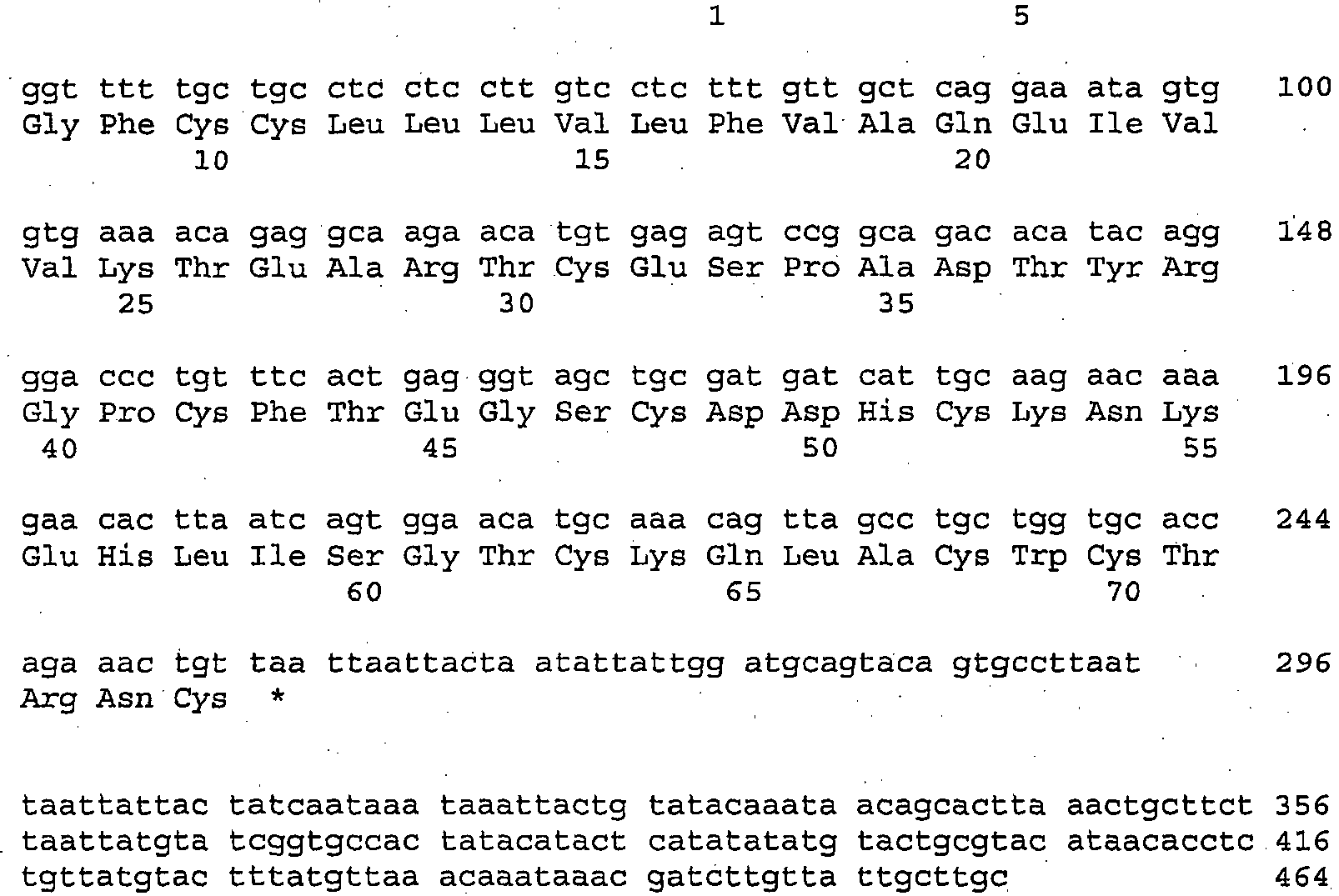
- <210> 380
<211> 74
<212> PRT
<213> Cyamopsis tetragonoloba - <400> 380

- <210> 381
<211> 46
<212> PRT
<213> Cyamopsis tetragonoloba - <400> 381

- <210> 382
<211> 538
<212> DNA
<213> Triticum aestivum - <220>
<221> CDS
<222> (89)...(334) - <221> mat_peptide
<222> (188)...(331) - <400> 382

- <210> 383
<211> 81
<212> PRT
<213> Triticum aestivum - <400> 383

- <210> 384
<211> 48
<212> PRT
<213> Triticum aestivum - <400> 384


- <210> 385
<211> 466
<212> DNA
<213> Glycine max - <220>
<221> CDS
<222> (33)...(287) - <221> mat_peptide
<222> (126)...(266) - <221> misc_feature
<222> 430
<223> n = A,T,C or G - <400> 385

- <210> 386
<211> 84
<212> PRT
<213> Glycine max - <400> 386

- <210> 387
<211> 47
<212> PRT
<213> Glycine max - <400> 387

- <210> 388
<211> 463
<212> DNA
<213> Licania michauxii - <220>
<222> CDS
<222> (57)...(281) - <221> mat_peptide
<222> (138)...(278) - <221> misc_feature
<222> 460
<223> n = A,T,C or G - <400> 388

- <210> 389
<211> 74
<212> PRT
<213> Licania michauxii - <400> 389

- <210> 390
<211> 47
<212> PRT
<213> Licania michauxii - <400> 390

- <210> 391
<211> 475
<212> DNA
<213> Chyrsobalanus icaco - <220>
<221> CDS
<222> (40)...(261) - <221> mat_peptide
<222> (118)...(258) - <221> misc_feature
<222> 462
<223> n = A,T,C or G - <400> 391


- <210> 392
<211> 73
<212> PRT
<213> Chyrsobalanus icaco - <400> 392

- <210> 393
<211> 47
<212> PRT
<213> Chyrsobalanus icaco - <400> 393

- <210> 394
<211> 486
<212> DNA
<213> Ricinus communis - <220>
<221> CDS
<222> (168)...(398) - <221> mat_peptide
<222> (255)...(395) - <221> misc_feature
<222> 69, 70
<223> n = A,T,C or G - <400> 394


- <210> 395
<211> 76
<212> PRT
<213> Ricinus communis - <400> 395
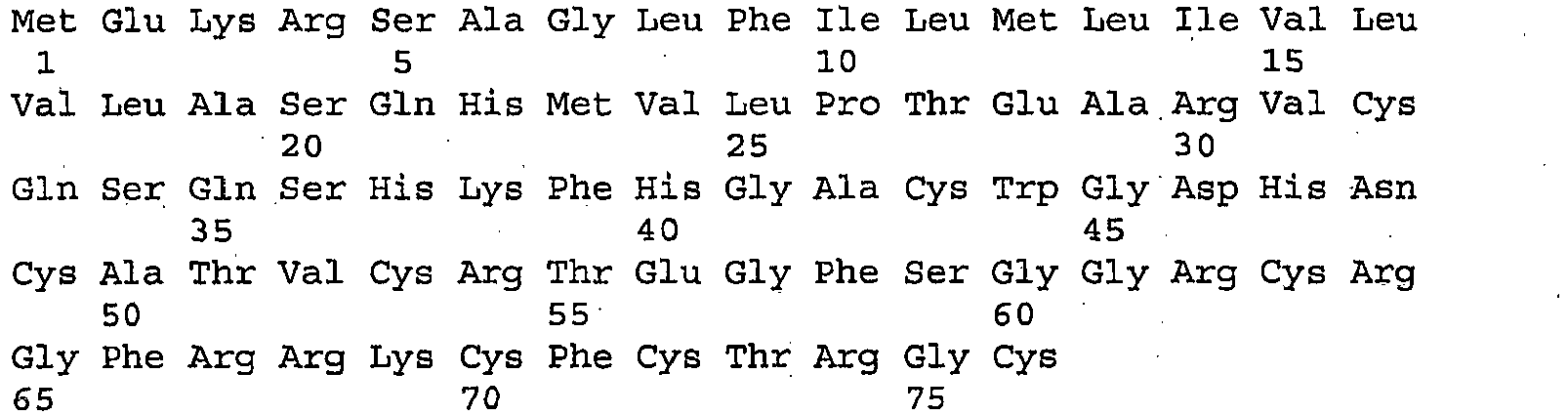
- <210> 396
<211> 47
<212> PRT
<213> Ricinus communis - <400> 396

- <210> 397
<211> 396
<212> DNA
<213> Vernonia mespilifolia - <220>
<221> CDS
<222> (19)...(252) - <221> mat_peptide
<222> (109)...(249) - <221> misc_feature
<222> 383
<223> n = A,T,C or G - <400> 397

- <210> 398
<211> 77
<212> PRT
<213> Vernonia mespilifolia - <400> 398

- <210> 399
<211> 47
<212> PRT
<213> Vernonia mespilifolia - <400> 399

- <210> 400
<211> 442
<212> DNA
<213> Vernonia mespilifolia - <220>
<221> CDS
<222> (19)...(246) - <221> mat_peptide
<222> (103)...(243) - <400> 400

- <210> 401
<211> 75
<212> PRT
<213> Vernonia mespilifolia - <400> 401

- <210> 402
<211> 47
<212> PRT
<213> Vernonia mespilifolia - <400> 402

- <210> 403
<211> 573
<212> DNA
<213> Ricinus communis - <220>
<221> CDS
<222> (14)...(244) - <221> mat_peptide
<222> (98)...(241) - <221> misc_feature
<222> 518, 519, 520, 522, 523
<223> n = A,T,C or G - <400> 403

- <210> 404
<211> 76
<212> PRT
<213> Ricinus communis - <400> 404

- <210> 405
<211> 48
<212> PRT
<213> Ricinus communis - <400> 405

- <210> 406
<211> 448
<212> DNA
<213> Eucalyptus grandis - <220>
<221> CDS
<222> (68)...(301) - <221> mat_peptide
<222> (158)...(298) - <400> 406

- <210> 407
<211> 77
<212> PRT
<213> Eucalyptus grandis - <400> 407


- <210> 408
<211> 47
<212> PRT
<213> Eucalyptus grandis - <400> 408

- <210> 409
<211> 504
<212> DNA
<213> Tropaeolum majus - <220>
<221> CDS
<222> (38)...(271) - <221> mat_peptide
<222> (128)...(268) - <400> 409

- <210> 410
<211> 77
<212> PRT
<213> Tropaeolum majus - <400> 410

- <210> 412
<211> 523
<212> DNA
<213> Cyamopsis tetragonoloba - <220>
<221> CDS
<222> (53)...(271) - <221> mat_peptide
<222> (128)...(268) - <221> misc_feature
<222> 497, 498, 499, 509, 510, 511, 512, 513, 514, 515, 516, 517, 518, 519, 520, 521, 522, 523
<223> n = A,T,C or G - <400> 412


- <210> 413
<211> 72
<212> PRT
<213> Cyamopsis tetragonoloba - <400> 413

- <210> 414
<211> 47
<212> PRT
<213> Cyamopsis tetragonoloba - <400> 414

- <210> 415
<211> 455
<212> DNA
<213> Vitis vinifera - <220>
<221> CDS
<222> (67)...(291) - <221> mat_peptide
<222> (148)...(288) - <221> misc_feature
<222> 64, 331, 335, 338, 389, 429, 442
<223> n = A,T,C or G - <400> 415
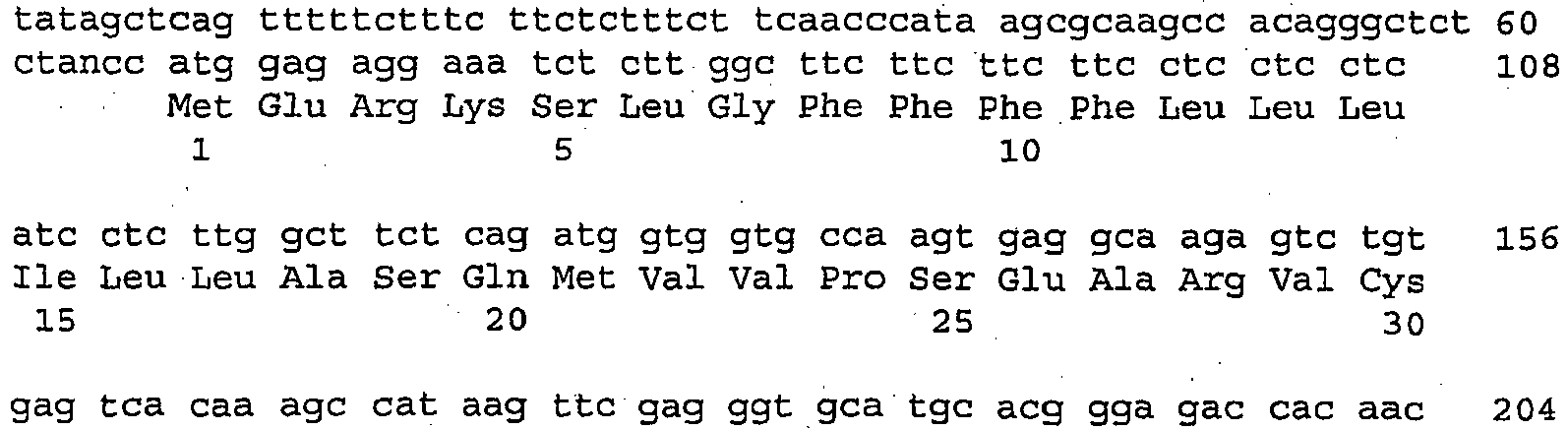

- <210> 416
<211> 74
<212> PRT
<213> Vitis vinifera - <400> 416

- <210> 417
<211> 47
<212> PRT
<213> Vitis vinifera - <400> 417

- <210> 418
<211> 438
<212> DNA
<213> Vitis vinifera - <220>
<221> CDS
<222> (73)...(297) - <221> mat_peptide
<222> (154)...(294) - <221> misc_feature
<222> 438
<223> n = A,T,C or G - <400> 418


- <210> 419
<211> 74
<212> PRT
<213> Vitis vinifera - <400> 419

- <210> 420
<211> 47
<212> PRT
<213> Vitis vinifera - <400> 420

- <210> 421
<211> 293
<212> DNA
<213> Vitis vinifera - <220>
<221> CDS
<222> (62)...(289) - <221> mat_peptide
<222> (146)...(286) - <400> 421

- <210> 422
<211> 75
<212> PRT
<213> Vitis vinifera - <400> 422

- <210> 423
<211> 47
<212> PRT
<213> Vitis vinifera - <400> 423

- <210> 424
<211> 550
<212> DNA
<213> Eucalyptus grandis - <220>
<221> CDS
<222> (8)...(226) - <221> mat_peptide
<222> (83)...(223) - <400> 424

- <210> 425
<211> 72
<212> PRT
<213> Eucalyptus grandis - <400> 425

- <210> 426
<211> 47
<212> PRT
<213> Eucalyptus grandis - <400> 426

- <210> 427
<211> 338
<212> DNA
<213> Cyamopsis tetragonoloba - <220>
<221> CDS
<222> (14)...(244) - <221> mat_peptide
<222> (101)...(241) - <400> 427

- <210> 428
<211> 76
<212> PRT
<213> Cyamopsis tetragonoloba - <400> 428

- <210> 429
<211> 47
<212> PRT
<213> Cyamopsis tetragonoloba - <400> 429

- <210> 430
<211> 494
<212> DNA
<213> Nicotiana benthamiana - <220>
<221> CDS
<222> (44)...(280) - <221> mat_peptide
<222> (137)...(277) - <221> misc_feature
<222> 417, 419, 449
<223> n = A,T,C or G - <400> 430

- <210> 431
<211> 78
<212> PRT
<213> Nicotiana benthamiana - <400> 431

- <210> 432
<211> 47
<212> PRT
<213> Nicotiana benthamiana - <400> 432

- <210> 433
<211> 469
<212> DNA
<213> Parthenium argentatum - <220>
<221> CDS
<222> (25)...(261) - <221> mat_peptide
<222> (118)...(261) - <221> misc_feature
<222> 428, 433, 442, 469
<223> n = A,T,C or G - <400> 433

- <210> 434
<211> 78
<212> PRT
<213> Parthenium argentatum - <400> 434


- <210> 435
<211> 47
<212> PRT
<213> Parthenium argentatum - <400> 435

- <210> 436
<211> 420
<212> DNA
<213> Cyamopsis tetragonoloba - <220>
<221> CDS
<222> (31)...(264) - <221> mat_peptide
<222> (118)...(261) - <400> 436

- <210> 437
<211> 77
<212> PRT
<213> Cyamopsis tetragonoloba - <400> 437

- <210> 438
<211> 48
<212> PRT
<213> Cyamopsis tetragonoloba - <400> 438

- <210> 439
<211> 563
<212> DNA
<213> Cyamopsis tetragonoloba - <220>
<221> CDS
<222> (106)...(333) - <221> mat_peptide
<222> (190)...(330) - <400> 439


- <210> 440
<211> 75
<212> PRT
<213> Cyamopsis tetragonoloba - <400> 440

- <210> 441
<211> 47
<212> PRT
<213> Cyamopsis tetragonoloba - <400> 441

- <210> 442
<211> 524
<212> DNA
<213> Licania michauxii - <220>
<221> CDS
<222> (42)...(278) - <221> mat_peptide
<222> (135)...(275) - <221> misc_feature
<222> 358, 380, 419, 455, 478, 497, 517, 523
<223> n = A,T,C or G - <400> 442


- <210> 443
<211> 78
<212> PRT
<213> Licania michauxii - <400> 443

- <210> 444
<211> 47
<212> PRT
<213> Licania michauxii - <400> 444

- <210> 445
<211> 447
<212> DNA
<213> Vitis vinifera - <220>
<221> CDS
<222> (27)...(260) - <221> mat_peptide
<222> (117)...(257) - <221> misc_feature
<222> 412, 434, 447
<223> n = A,T,C or G - <400> 445
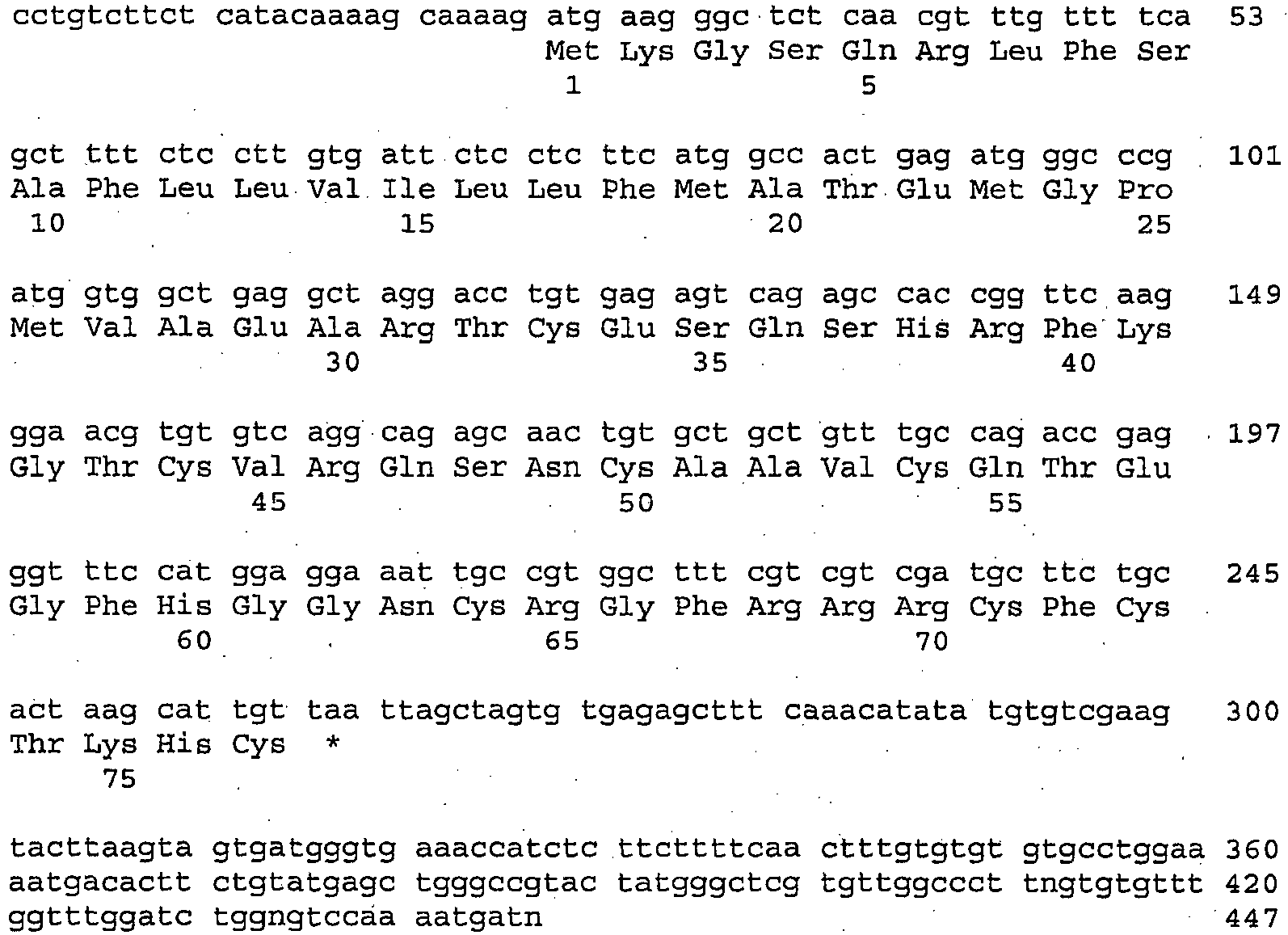
- <210> 446
<211> 77
<212> PRT
<213> Vitis vinifera - <400> 446

- <210> 447
<211> 47
<212> PRT
<213> Vitis vinifera - <400> 447

- <210> 448
<211> 473
<212> DNA
<213> Vitis vinifera - <220>
<221> CDS
<222> (31)...(264) - <221> mat_peptide
<222> (121)...(261) - <221> misc_feature
<222> 336, 378, 392, 399, 404, 412, 418, 442, 461
<223> n = A,T,C or G - <400> 448

- <210> 449
<211> 77
<212> PRT
<213> Vitis vinifera - <400> 449

- <210> 450
<211> 47
<212> PRT
<213> Vitis vinifera - <400> 450

- <210> 451
<211> 461
<212> DNA
<213> Arachis hypogaea - <220>
<221> CDS
<222> (44)...(271) - <221> mat_peptide
<222> (128)...(268) - <221> misc_feature
<222> 305, 319, 357, 372, 400, 406, 420, 443, 452, 455
<223> n = A,T,C or G - <400> 451

- <210> 452
<211> 75
<212> PRT
<213> Arachis hypogaea - <400> 452


- <210> 453
<211> 47
<212> PRT
<213> Arachis hypogaea - <400> 453

- <210> 454
<211> 527
<212> DNA
<213> Brassica napus - <220>
<221> CDS
<222> (80)...(313) - <221> mat_peptide
<222> (170)...(310) - <221> misc_feature
<222> 525, 526, 527
<223> n = A,T,C or G - <400> 454

- <210> 455
<211> 77
<212> PRT
<213> Brassica napus - <400> 455

- <210> 456
<211> 47
<212> PRT
<213> Brassica napus - <400> 456

- <210> 457
<211> 547
<212> DNA
<213> Zea mays - <220>
<221> CDS
<222> (75)...(317) - <221> mat_peptide
<222> (165)...(311) - <400> 457


- <210> 458
<211> 80
<212> PRT
<213> Zea mays - <400> 458

- <210> 459
<211> 49
<212> PRT
<213> Zea mays - <400> 459

- <210> 460
<211> 556
<212> DNA
<213> Zea mays - <220>
<221> CDS
<222> (63)...(365) - <221> mat_peptide
<222> (150)...(299) - <400> 460


- <210> 461
<211> 100
<212> PRT
<213> Zea mays - <400> 461

- <210> 462
<211> 50
<212> PRT
<213> Zea mays - <400> 462

- <210> 463
<211> 514
<212> DNA
<213> Zea mays - <220>
<221> CDS
<222> (56)...(304) - <400> 463

- <210> 464
<211> 82
<212> PRT
<213> Zea mays - <400> 464

- <210> 465
<211> 516
<212> DNA
<213> Zea mays - <220>
<221> CDS
<222> (50)...(325) - <400> 465

- <210> 466
<211> 91
<212> PRT
<213> Zea mays - <400> 466

- <210> 467
<211> 517
<212> DNA
<213> Zea mays - <220>
<221> CDS
<222> (50)...(289) - <400> 467


- <210> 468
<211> 79
<212> PRT
<213> Zea mays - <400> 468

- <210> 469
<211> 181
<212> DNA
<213> Artificial Sequence - <220>
<223> Consensus sequence for the Zm-PDF family - <400> 469

Claims (12)
- An isolated nucleic acid molecule comprising a nucleotide sequence selected from the group consisting of:(a) a nucleotide sequence set forth in SEQ ID NO: 100;(b) a nucleotide sequence that encodes a polypeptide having the amino acid sequence set forth in SEQ ID NO: 101 or 102;(c) a nucleotide sequence that encodes a mature polypeptide having the amino acid sequence set forth in SEQ ID NO: 102; or(d) a nucleotide sequence consisting of a complement of any one of the nucleotide sequences in (a), (b) or (c).
- A DNA construct comprising a nucleotide sequence of claim 1, wherein said nucleotide sequence is operably linked to a promoter that drives expression in a host cell.
- An expression vector comprising the DNA construct of claim 2.
- A host cell having stably incorporated into its genome at least one DNA construct of claim 2, wherein said promoter is a heterologous promoter that drives expression in the host cell.
- The host cell of claim 4, wherein said host cell is a plant cell.
- A plant having stably incorporated into its genome the DNA construct of claim 2, wherein said promoter is a heterologous promoter.
- A plant cell of claim 5 or a plant of claim 6 which is a corn, alfalfa, sunflower, Brassica, soybean, cotton, safflower, peanut, sorghum, wheat, millet, barley, rice, oat or tobacco plant cell or plant.
- Seed of the plant of claim 6, having stably incorporated into its genome the DNA construct of claim 2.
- An isolated polypeptide encoded by a sequence of claim 1, which polypeptide has antifungal activity.
- Use of a nucleic acid molecule of claim 1 or a DNA construct of claim 2 or an expression vector of claim 3 to protect a plant against a plant pathogen, or to provide pathogen resistance to a plant.
- Use according to claim 10 wherein said pathogen is a fungal pathogen, an insect, a virus, a nematode or a bacterium.
- Use according to claim 10 or 11 wherein the plant is a corn, alfalfa, sunflower, Brassica, soybean, cotton, safflower, peanut, sorghum, wheat, millet, barley, rice, oat or tobacco plant.
Priority Applications (7)
| Application Number | Priority Date | Filing Date | Title |
|---|---|---|---|
| EP10010644A EP2270188A3 (en) | 2001-06-22 | 2002-06-21 | Defensin polynucleotides and methods of use |
| EP10010641A EP2270187A3 (en) | 2001-06-22 | 2002-06-21 | Defensin polynucleotides and methods of use |
| EP10010409A EP2270186A3 (en) | 2001-06-22 | 2002-06-21 | Defensin polynucleotides and methods of use |
| EP10010407A EP2270184A3 (en) | 2001-06-22 | 2002-06-21 | Defensin polynucleotides and methods of use |
| EP10010643A EP2333070A3 (en) | 2001-06-22 | 2002-06-21 | Defensin polynucleotides and methods of use |
| EP10010642A EP2270165A3 (en) | 2001-06-22 | 2002-06-21 | Defensin polynucleotides and methods of use |
| EP10010408A EP2270185A3 (en) | 2001-06-22 | 2002-06-21 | Defensin polynucleotides and methods of use |
Applications Claiming Priority (5)
| Application Number | Priority Date | Filing Date | Title |
|---|---|---|---|
| US30024101P | 2001-06-22 | 2001-06-22 | |
| US30015201P | 2001-06-22 | 2001-06-22 | |
| US300152P | 2001-06-22 | ||
| PCT/US2002/021177 WO2003000863A2 (en) | 2001-06-22 | 2002-06-21 | Defensin polynucleotides and methods of use |
| US300241P | 2010-02-01 |
Related Child Applications (7)
| Application Number | Title | Priority Date | Filing Date |
|---|---|---|---|
| EP10010409A Division-Into EP2270186A3 (en) | 2001-06-22 | 2002-06-21 | Defensin polynucleotides and methods of use |
| EP10010407A Division-Into EP2270184A3 (en) | 2001-06-22 | 2002-06-21 | Defensin polynucleotides and methods of use |
| EP10010641A Division-Into EP2270187A3 (en) | 2001-06-22 | 2002-06-21 | Defensin polynucleotides and methods of use |
| EP10010642A Division-Into EP2270165A3 (en) | 2001-06-22 | 2002-06-21 | Defensin polynucleotides and methods of use |
| EP10010644A Division-Into EP2270188A3 (en) | 2001-06-22 | 2002-06-21 | Defensin polynucleotides and methods of use |
| EP10010408A Division-Into EP2270185A3 (en) | 2001-06-22 | 2002-06-21 | Defensin polynucleotides and methods of use |
| EP10010643A Division-Into EP2333070A3 (en) | 2001-06-22 | 2002-06-21 | Defensin polynucleotides and methods of use |
Publications (4)
| Publication Number | Publication Date |
|---|---|
| EP1572880A2 EP1572880A2 (en) | 2005-09-14 |
| EP1572880A3 EP1572880A3 (en) | 2005-10-20 |
| EP1572880A4 EP1572880A4 (en) | 2006-08-30 |
| EP1572880B1 true EP1572880B1 (en) | 2014-01-22 |
Family
ID=26971618
Family Applications (8)
| Application Number | Title | Priority Date | Filing Date |
|---|---|---|---|
| EP10010643A Withdrawn EP2333070A3 (en) | 2001-06-22 | 2002-06-21 | Defensin polynucleotides and methods of use |
| EP10010641A Withdrawn EP2270187A3 (en) | 2001-06-22 | 2002-06-21 | Defensin polynucleotides and methods of use |
| EP10010407A Withdrawn EP2270184A3 (en) | 2001-06-22 | 2002-06-21 | Defensin polynucleotides and methods of use |
| EP02756376.6A Expired - Lifetime EP1572880B1 (en) | 2001-06-22 | 2002-06-21 | Defensin polynucleotides and methods of use |
| EP10010644A Withdrawn EP2270188A3 (en) | 2001-06-22 | 2002-06-21 | Defensin polynucleotides and methods of use |
| EP10010642A Withdrawn EP2270165A3 (en) | 2001-06-22 | 2002-06-21 | Defensin polynucleotides and methods of use |
| EP10010409A Withdrawn EP2270186A3 (en) | 2001-06-22 | 2002-06-21 | Defensin polynucleotides and methods of use |
| EP10010408A Withdrawn EP2270185A3 (en) | 2001-06-22 | 2002-06-21 | Defensin polynucleotides and methods of use |
Family Applications Before (3)
| Application Number | Title | Priority Date | Filing Date |
|---|---|---|---|
| EP10010643A Withdrawn EP2333070A3 (en) | 2001-06-22 | 2002-06-21 | Defensin polynucleotides and methods of use |
| EP10010641A Withdrawn EP2270187A3 (en) | 2001-06-22 | 2002-06-21 | Defensin polynucleotides and methods of use |
| EP10010407A Withdrawn EP2270184A3 (en) | 2001-06-22 | 2002-06-21 | Defensin polynucleotides and methods of use |
Family Applications After (4)
| Application Number | Title | Priority Date | Filing Date |
|---|---|---|---|
| EP10010644A Withdrawn EP2270188A3 (en) | 2001-06-22 | 2002-06-21 | Defensin polynucleotides and methods of use |
| EP10010642A Withdrawn EP2270165A3 (en) | 2001-06-22 | 2002-06-21 | Defensin polynucleotides and methods of use |
| EP10010409A Withdrawn EP2270186A3 (en) | 2001-06-22 | 2002-06-21 | Defensin polynucleotides and methods of use |
| EP10010408A Withdrawn EP2270185A3 (en) | 2001-06-22 | 2002-06-21 | Defensin polynucleotides and methods of use |
Country Status (7)
| Country | Link |
|---|---|
| US (9) | US6911577B2 (en) |
| EP (8) | EP2333070A3 (en) |
| AU (1) | AU2002322388A1 (en) |
| BR (1) | BR0210593A (en) |
| CA (1) | CA2451517C (en) |
| MX (1) | MXPA03011890A (en) |
| WO (1) | WO2003000863A2 (en) |
Families Citing this family (106)
| Publication number | Priority date | Publication date | Assignee | Title |
|---|---|---|---|---|
| US7700831B2 (en) * | 2000-04-10 | 2010-04-20 | The Curators Of The University Of Missouri | Method for inducing resistance to fungal infection in transgenic plants using plant defense peptides |
| WO2002074906A2 (en) * | 2001-03-16 | 2002-09-26 | Eli Lilly And Company | Lp mammalian proteins; related reagents |
| AUPR502301A0 (en) | 2001-05-15 | 2001-06-07 | Commonwealth Scientific And Industrial Research Organisation | Phosphotriesterase from Agrobacterium radiobacter P230 |
| EP2333070A3 (en) * | 2001-06-22 | 2011-09-07 | Pioneer Hi-Bred International, Inc. | Defensin polynucleotides and methods of use |
| EP1848265A2 (en) * | 2005-01-26 | 2007-10-31 | Washington State University Research Foundation | Plant defense signal peptides |
| WO2007081487A2 (en) * | 2005-12-15 | 2007-07-19 | Ventria Bioscience | Production of human defensins in plant cells |
| CA2653404C (en) * | 2006-05-25 | 2015-06-30 | Hexima Limited | Multi-gene expression vehicle |
| US7825297B2 (en) * | 2006-12-22 | 2010-11-02 | Donald Danforth Plant Science Center | Expression of antifungal plant proteins in transgenic plants |
| AU2008241364B2 (en) * | 2007-04-20 | 2013-03-21 | Hexima Limited | Modified plant defensin |
| AR075257A1 (en) * | 2008-02-01 | 2011-03-23 | Hexima Ltd | PLANTS PROTECTION SYSTEM AGAINST INFECTION BY PATHOGEN AGENTS |
| US7964774B2 (en) | 2008-05-14 | 2011-06-21 | Monsanto Technology Llc | Plants and seeds of spring canola variety SCV384196 |
| US8829282B2 (en) | 2008-05-14 | 2014-09-09 | Monsanto Technology, Llc | Plants and seeds of spring canola variety SCV425044 |
| US7935870B2 (en) | 2008-05-14 | 2011-05-03 | Monsanto Technology Llc | Plants and seeds of spring canola variety SCV354718 |
| US7947877B2 (en) | 2008-05-14 | 2011-05-24 | Monosanto Technology LLC | Plants and seeds of spring canola variety SCV328921 |
| US8403899B2 (en) * | 2008-07-08 | 2013-03-26 | Monarch Labs Llc | Maggot debridement therapy dressings and methods |
| US9889184B2 (en) | 2008-08-05 | 2018-02-13 | Hexima Limited | Anti-pathogen systems |
| CA2733267A1 (en) * | 2008-08-05 | 2010-02-11 | Hexima Limited | Plant anti-pathogen systems |
| DE112009002061T5 (en) | 2008-08-27 | 2011-07-14 | BASF Plant Science GmbH, 67063 | Nematode resistant transgenic plants |
| WO2010059558A2 (en) * | 2008-11-21 | 2010-05-27 | Pioneer Hi-Bred International, Inc. | Plant defense genes and proteins and methods of use |
| CA2765034A1 (en) | 2009-06-09 | 2010-12-23 | Pioneer Hi-Bred International, Inc. | Early endosperm promoter and methods of use |
| US8071848B2 (en) | 2009-06-17 | 2011-12-06 | Monsanto Technology Llc | Plants and seeds of spring canola variety SCV218328 |
| US8440891B2 (en) | 2009-09-22 | 2013-05-14 | Board of Trustees of the University of Akransas, N.A. | Rice cultivar CL 142-AR |
| US8440892B2 (en) | 2009-10-15 | 2013-05-14 | Board Of Trustees Of The University Of Arkansas, N.A. | Rice cultivar CL 181-AR |
| CN102597244B (en) | 2009-10-26 | 2014-07-23 | 先锋国际良种公司 | Somatic ovule specific promoter and methods of use |
| US8138394B2 (en) | 2010-02-26 | 2012-03-20 | Monsanto Technology Llc | Plants and seeds of spring canola variety SCV431158 |
| US8148611B2 (en) | 2010-02-26 | 2012-04-03 | Monsanto Technology Llc | Plants and seeds of spring canola variety SCV453784 |
| US8143488B2 (en) | 2010-02-26 | 2012-03-27 | Monsanto Technoloy LLC | Plants and seeds of spring canola variety SCV470336 |
| US8581048B2 (en) | 2010-03-09 | 2013-11-12 | Monsanto Technology, Llc | Plants and seeds of spring canola variety SCV119103 |
| US8153865B2 (en) | 2010-03-11 | 2012-04-10 | Monsanto Technology Llc | Plants and seeds of spring canola variety SCV152154 |
| CA2807375A1 (en) * | 2010-08-19 | 2012-02-23 | Pioneer Hi-Bred International, Inc. | Novel bacillus thuringiensis gene with lepidopteran activity |
| WO2012024176A2 (en) * | 2010-08-19 | 2012-02-23 | Pioneer Hi-Bred International, Inc. | Novel bacillus thuringiensis gene with lepidopteran activity |
| CA2807425A1 (en) * | 2010-08-20 | 2012-02-23 | Pioneer Hi-Bred International, Inc. | Novel bacillus thuringiensis gene with coleopteran activity |
| US8865967B2 (en) | 2010-08-23 | 2014-10-21 | Pioneer Hi Bred International Inc | Defensin variants and methods of use |
| CA2807836A1 (en) * | 2010-09-01 | 2012-03-08 | Pioneer Hi-Bred International, Inc. | Vacuole targeting peptides and methods of use |
| US10967031B2 (en) | 2010-12-28 | 2021-04-06 | Kamedis Ltd. | Synergistic herbal compositions with prebiotic properties for treatment of skin infections, allergies and inflammation |
| CN107648341A (en) | 2010-12-28 | 2018-02-02 | 卡梅迪斯有限公司 | For treating and preventing the plant extracts of infection |
| US9127897B2 (en) | 2010-12-30 | 2015-09-08 | Kellogg Brown & Root Llc | Submersed heat exchanger |
| MX349741B (en) | 2011-02-07 | 2017-08-10 | Hexima Ltd * | Modified plant defensins useful as anti-pathogenic agents. |
| US8513487B2 (en) | 2011-04-07 | 2013-08-20 | Zenon LISIECZKO | Plants and seeds of spring canola variety ND-662c |
| US8513494B2 (en) | 2011-04-08 | 2013-08-20 | Chunren Wu | Plants and seeds of spring canola variety SCV695971 |
| US8507761B2 (en) | 2011-05-05 | 2013-08-13 | Teresa Huskowska | Plants and seeds of spring canola variety SCV372145 |
| US8513495B2 (en) | 2011-05-10 | 2013-08-20 | Dale Burns | Plants and seeds of spring canola variety SCV291489 |
| AU2012286529A1 (en) | 2011-07-20 | 2014-02-06 | Commonwealth Scientific And Industrial Research Organisation | Enzymes for degrading organophosphates |
| US8785729B2 (en) | 2011-08-09 | 2014-07-22 | Nunhems, B.V. | Lettuce variety redglace |
| US8754293B2 (en) | 2011-09-09 | 2014-06-17 | Nunhems B.V. | Lettuce variety intred |
| WO2013056308A1 (en) | 2011-10-19 | 2013-04-25 | Balmoral Australia Pty Ltd | Novel forms of plant defensins |
| WO2013096818A1 (en) | 2011-12-21 | 2013-06-27 | The Curators Of The University Of Missouri | Soybean variety s05-11268 |
| WO2013096810A1 (en) | 2011-12-21 | 2013-06-27 | The Curators Of The University Of Missouri | Soybean variety s05-11482 |
| US9380756B2 (en) | 2012-01-04 | 2016-07-05 | Nunhems B.V. | Lettuce variety multigreen 50 |
| US20130180008A1 (en) | 2012-01-06 | 2013-07-11 | Pioneer Hi Bred International Inc | Ovule Specific Promoter and Methods of Use |
| US9006515B2 (en) | 2012-01-06 | 2015-04-14 | Pioneer Hi Bred International Inc | Pollen preferred promoters and methods of use |
| US8878009B2 (en) | 2012-04-26 | 2014-11-04 | Monsanto Technology, LLP | Plants and seeds of spring canola variety SCV318181 |
| US8802935B2 (en) | 2012-04-26 | 2014-08-12 | Monsanto Technology Llc | Plants and seeds of spring canola variety SCV942568 |
| US8835720B2 (en) | 2012-04-26 | 2014-09-16 | Monsanto Technology Llc | Plants and seeds of spring canola variety SCV967592 |
| US8859857B2 (en) | 2012-04-26 | 2014-10-14 | Monsanto Technology Llc | Plants and seeds of spring canola variety SCV259778 |
| WO2014059155A1 (en) | 2012-10-11 | 2014-04-17 | Pioneer Hi-Bred International, Inc. | Guard cell promoters and uses thereof |
| AU2013260696A1 (en) * | 2012-11-23 | 2014-06-12 | Hexima Limited | Use of anti-fungal defensins |
| CN104902748A (en) * | 2012-11-23 | 2015-09-09 | 河西马有限公司 | Anti-pathogenic methods |
| EA028528B1 (en) | 2013-03-13 | 2017-11-30 | Пайонир Хай-Бред Интернэшнл, Инк. | Glyphosate application for weed control in brassica |
| BR112015023285B1 (en) | 2013-03-14 | 2022-03-03 | Pioneer Hi-Bred International, Inc. | Expression cassette, bacterial host cell and method for controlling a coleopteran-like plant pest |
| CA2901316A1 (en) | 2013-03-15 | 2014-09-25 | Pioneer Hi-Bred International, Inc. | Phi-4 polypeptides and methods for their use |
| MX359026B (en) | 2013-08-16 | 2018-09-12 | Pioneer Hi Bred Int | Insecticidal proteins and methods for their use. |
| US10667524B2 (en) | 2013-09-13 | 2020-06-02 | Pioneer Hi-Bred International, Inc. | Insecticidal proteins and methods for their use |
| WO2015120270A1 (en) | 2014-02-07 | 2015-08-13 | Pioneer Hi Bred International, Inc. | Insecticidal proteins and methods for their use |
| UA120608C2 (en) | 2014-02-07 | 2020-01-10 | Піонір Хай-Бред Інтернешнл, Інк. | PURIFIED PTIP-83 POLYPEPTIDE AND METHOD OF APPLICATION |
| CA2946163A1 (en) | 2014-04-24 | 2015-10-29 | Hexima Limited | Agents and methods of treatment |
| US20170218384A1 (en) | 2014-08-08 | 2017-08-03 | Pioneer Hi-Bred International, Inc. | Ubiquitin promoters and introns and methods of use |
| CA2961733A1 (en) | 2014-09-17 | 2016-03-24 | Pioneer Hi-Bred International, Inc. | Compositions and methods to control insect pests |
| CN107108705B (en) | 2014-10-16 | 2021-05-25 | 先锋国际良种公司 | Insecticidal protein and method of use |
| CN118453831A (en) | 2014-10-21 | 2024-08-09 | 戴夫生物技术私人有限公司 | A treatment method |
| US20170359965A1 (en) | 2014-12-19 | 2017-12-21 | E I Du Pont De Nemours And Company | Polylactic acid compositions with accelerated degradation rate and increased heat stability |
| EP3244727B1 (en) | 2015-01-15 | 2025-10-22 | Pioneer Hi-Bred International, Inc. | Insecticidal proteins and methods for their use |
| RU2017144238A (en) | 2015-05-19 | 2019-06-19 | Пайонир Хай-Бред Интернэшнл, Инк. | INSECTICIDAL PROTEINS AND METHODS OF THEIR APPLICATION |
| SG11201708815UA (en) * | 2015-05-29 | 2017-12-28 | Hexima Ltd | A method of in vivo treatment |
| WO2016205445A1 (en) | 2015-06-16 | 2016-12-22 | Pioneer Hi-Bred International, Inc. | Compositions and methods to control insect pests |
| HK1255944A1 (en) * | 2015-07-15 | 2019-09-06 | The Texas A&M University System | Pathogen resistant citrus compositions, organisms, systems, and methods |
| CN109475096B (en) | 2015-08-06 | 2022-08-23 | 先锋国际良种公司 | Plant-derived insecticidal proteins and methods of use thereof |
| WO2017035278A1 (en) | 2015-08-24 | 2017-03-02 | Halo-Bio Rnai Therapeutics, Inc. | Polynucleotide nanoparticles for the modulation of gene expression and uses thereof |
| CN108575091A (en) | 2015-12-18 | 2018-09-25 | 先锋国际良种公司 | Insecticidal proteins and methods of use thereof |
| BR112018012887B1 (en) | 2015-12-22 | 2024-02-06 | Pioneer Hi-Bred International, Inc | EXPRESSION CASSETTE, VECTOR, METHODS FOR OBTAINING PLANT CELL AND TRANSGENIC PLANT, METHODS FOR EXPRESSING A POLYNUCLEOTIDE |
| EA201892293A1 (en) | 2016-05-04 | 2019-04-30 | Пайонир Хай-Бред Интернэшнл, Инк. | INSECTICIDAL PROTEINS AND METHODS OF THEIR APPLICATION |
| BR112018076047A2 (en) | 2016-06-16 | 2019-03-26 | Pioneer Hi Bred Int | silencing element, dna construct, expression cassette, host cell, composition, plant cell, plant or plant part, transgenic seed, method for controlling a plant insect pest and kit |
| RU2019101793A (en) | 2016-06-24 | 2020-07-24 | Пайонир Хай-Бред Интернэшнл, Инк. | PLANT REGULATORY ELEMENTS AND METHODS OF THEIR APPLICATION |
| CA3026113A1 (en) | 2016-07-01 | 2018-01-04 | Pioneer Hi-Bred International, Inc. | Insecticidal proteins from plants and methods for their use |
| WO2018013333A1 (en) | 2016-07-12 | 2018-01-18 | Pioneer Hi-Bred International, Inc. | Compositions and methods to control insect pests |
| EP3535285B1 (en) | 2016-11-01 | 2022-04-06 | Pioneer Hi-Bred International, Inc. | Insecticidal proteins and methods for their use |
| US11116817B2 (en) | 2017-02-17 | 2021-09-14 | The Curators Of The University Of Missouri | Antimicrobial agents and compositions comprising the same |
| US20200270622A1 (en) | 2017-09-25 | 2020-08-27 | Pioneer Hi-Bred International, Inc. | Tissue-preferred promoters and methods of use |
| ES3036459T3 (en) | 2018-03-12 | 2025-09-19 | Pioneer Hi Bred Int | Methods for plant transformation |
| EP3764798B1 (en) | 2018-03-14 | 2025-12-17 | Pioneer Hi-Bred International, Inc. | Insecticidal proteins from plants and methods for their use |
| EP3764796B1 (en) | 2018-03-14 | 2025-12-03 | Pioneer Hi-Bred International, Inc. | Insecticidal proteins from plants and methods for their use |
| CA3096516A1 (en) | 2018-05-22 | 2019-11-28 | Pioneer Hi-Bred International, Inc. | Plant regulatory elements and methods of use thereof |
| BR112020026640A2 (en) | 2018-06-28 | 2021-04-06 | Pioneer Hi-Bred International, Inc. | METHODS FOR SELECTING TRANSFORMED PLANTS |
| AU2019369415A1 (en) | 2018-10-31 | 2021-03-25 | Pioneer Hi-Bred International, Inc. | Compositions and methods for Ochrobactrum-mediated plant transformation |
| US12492229B2 (en) * | 2019-01-07 | 2025-12-09 | Donald Danforth Plant Science Center | Antimicrobial peptides |
| WO2020206056A1 (en) * | 2019-04-04 | 2020-10-08 | Greenvenus Llc | Peptides and methods of plant protection |
| FR3109494B1 (en) * | 2020-04-24 | 2022-04-08 | Institut National De Rech Pour L’Agriculture L’Alimentation Et L’Environnement | METHODS FOR INHIBITING THE PRODUCTION OF MYCOTOXINS BY FUSARIUM |
| CA3186978A1 (en) | 2020-07-14 | 2022-01-20 | Pioneer Hi-Bred International, Inc. | Insecticidal proteins and methods for their use |
| US20260026500A1 (en) | 2022-12-29 | 2026-01-29 | Biotalys NV | Agrochemical compositions |
| EP4642233A1 (en) | 2022-12-30 | 2025-11-05 | Biotalys NV | Agglomerate |
| WO2024141638A1 (en) | 2022-12-30 | 2024-07-04 | Biotalys NV | Self-emulsifiable concentrate |
| EP4642916A2 (en) | 2022-12-30 | 2025-11-05 | Biotalys NV | Secretion signals |
| US12378306B2 (en) | 2023-12-22 | 2025-08-05 | Biotalys NV | Anti-fungal VHH antibodies |
| WO2026008785A1 (en) | 2024-07-03 | 2026-01-08 | Biotalys NV | Agrochemical compositions |
| EP4725303A1 (en) | 2024-10-11 | 2026-04-15 | Agrokray Limited Liability Company | Spelt, method of producing spelt plants, grain produced from spelt plant and food product produced therefrom |
| WO2026087355A1 (en) | 2024-10-22 | 2026-04-30 | Biotalys NV | Downstream processing |
Family Cites Families (79)
| Publication number | Priority date | Publication date | Assignee | Title |
|---|---|---|---|---|
| US452281A (en) | 1891-05-12 | Railway signaling device | ||
| NZ201918A (en) | 1981-09-18 | 1987-04-30 | Genentech Inc | N-terminal methionyl analogues of bovine growth hormone |
| US4522811A (en) | 1982-07-08 | 1985-06-11 | Syntex (U.S.A.) Inc. | Serial injection of muramyldipeptides and liposomes enhances the anti-infective activity of muramyldipeptides |
| US5380831A (en) | 1986-04-04 | 1995-01-10 | Mycogen Plant Science, Inc. | Synthetic insecticidal crystal protein gene |
| US4945050A (en) | 1984-11-13 | 1990-07-31 | Cornell Research Foundation, Inc. | Method for transporting substances into living cells and tissues and apparatus therefor |
| US5569597A (en) | 1985-05-13 | 1996-10-29 | Ciba Geigy Corp. | Methods of inserting viral DNA into plant material |
| US5268463A (en) | 1986-11-11 | 1993-12-07 | Jefferson Richard A | Plant promoter α-glucuronidase gene construct |
| US5608142A (en) | 1986-12-03 | 1997-03-04 | Agracetus, Inc. | Insecticidal cotton plants |
| US4873192A (en) | 1987-02-17 | 1989-10-10 | The United States Of America As Represented By The Department Of Health And Human Services | Process for site specific mutagenesis without phenotypic selection |
| US5614395A (en) | 1988-03-08 | 1997-03-25 | Ciba-Geigy Corporation | Chemically regulatable and anti-pathogenic DNA sequences and uses thereof |
| US5990387A (en) | 1988-06-10 | 1999-11-23 | Pioneer Hi-Bred International, Inc. | Stable transformation of plant cells |
| EP0768377A1 (en) | 1988-09-02 | 1997-04-16 | Protein Engineering Corporation | Generation and selection of recombinant varied binding proteins |
| US5223409A (en) | 1988-09-02 | 1993-06-29 | Protein Engineering Corp. | Directed evolution of novel binding proteins |
| US5231020A (en) | 1989-03-30 | 1993-07-27 | Dna Plant Technology Corporation | Genetic engineering of novel plant phenotypes |
| US5034323A (en) | 1989-03-30 | 1991-07-23 | Dna Plant Technology Corporation | Genetic engineering of novel plant phenotypes |
| US5240855A (en) | 1989-05-12 | 1993-08-31 | Pioneer Hi-Bred International, Inc. | Particle gun |
| US5879918A (en) | 1989-05-12 | 1999-03-09 | Pioneer Hi-Bred International, Inc. | Pretreatment of microprojectiles prior to using in a particle gun |
| US5322783A (en) | 1989-10-17 | 1994-06-21 | Pioneer Hi-Bred International, Inc. | Soybean transformation by microparticle bombardment |
| US4973192A (en) | 1990-03-22 | 1990-11-27 | Hair Roberta A | Interlocking paving stone and ground cover formed thereof |
| ES2187497T3 (en) | 1990-04-12 | 2003-06-16 | Syngenta Participations Ag | PROMOTERS PREFERREDLY IN FABRICS. |
| US5427908A (en) | 1990-05-01 | 1995-06-27 | Affymax Technologies N.V. | Recombinant library screening methods |
| JP3370090B2 (en) | 1990-06-15 | 2003-01-27 | ヘキスト・アクチェンゲゼルシャフト | Antimicrobial polypeptide and method for producing the same |
| US5498830A (en) | 1990-06-18 | 1996-03-12 | Monsanto Company | Decreased oil content in plant seeds |
| CA2109602C (en) | 1990-07-10 | 2002-10-01 | Gregory P. Winter | Methods for producing members of specific binding pairs |
| GB9015198D0 (en) | 1990-07-10 | 1990-08-29 | Brien Caroline J O | Binding substance |
| NZ239977A (en) | 1990-11-14 | 1993-08-26 | Pioneer Hi Bred Int | Transforming plants by the use of agrobacterium |
| US5932782A (en) | 1990-11-14 | 1999-08-03 | Pioneer Hi-Bred International, Inc. | Plant transformation method using agrobacterium species adhered to microprojectiles |
| ES2113940T3 (en) | 1990-12-03 | 1998-05-16 | Genentech Inc | ENRICHMENT METHOD FOR PROTEIN VARIANTS WITH ALTERED UNION PROPERTIES. |
| DE69233769D1 (en) | 1991-03-01 | 2009-09-24 | Dyax Corp | Chimeric protein with microprotein having two or more disulfide bonds and embodiments thereof |
| AU662148B2 (en) | 1991-04-10 | 1995-08-24 | Scripps Research Institute, The | Heterodimeric receptor libraries using phagemids |
| US5399680A (en) | 1991-05-22 | 1995-03-21 | The Salk Institute For Biological Studies | Rice chitinase promoter |
| DE4122599C2 (en) | 1991-07-08 | 1993-11-11 | Deutsches Krebsforsch | Phagemid for screening antibodies |
| DE69230290T2 (en) | 1991-08-27 | 2000-07-20 | Novartis Ag, Basel | PROTEINS WITH INSECTICIDAL PROPERTIES AGAINST HOMOPTERAN INSECTS AND THEIR USE IN PLANT PROTECTION |
| NZ244091A (en) | 1991-08-29 | 1994-10-26 | Zeneca Ltd | Biocidal proteins derived from plants, their manufacture, coding sequences and uses |
| US5538525A (en) | 1991-08-29 | 1996-07-23 | Zeneca Limited | Biocidal proteins |
| CA2112999C (en) | 1991-10-04 | 2007-04-24 | Mark A. Conkling | Pathogen-resistant transgenic plants |
| TW261517B (en) | 1991-11-29 | 1995-11-01 | Mitsubishi Shozi Kk | |
| US5324646A (en) | 1992-01-06 | 1994-06-28 | Pioneer Hi-Bred International, Inc. | Methods of regeneration of Medicago sativa and expressing foreign DNA in same |
| US5428148A (en) | 1992-04-24 | 1995-06-27 | Beckman Instruments, Inc. | N4 - acylated cytidinyl compounds useful in oligonucleotide synthesis |
| WO1994002620A2 (en) | 1992-07-27 | 1994-02-03 | Pioneer Hi-Bred International, Inc. | An improved method of agrobacterium-mediated transformation of cultured soybean cells |
| AU687755B2 (en) | 1992-08-21 | 1998-03-05 | Genentech Inc. | Method for treating an LFA-1-mediated disorder |
| GB9300281D0 (en) | 1993-01-08 | 1993-03-03 | Zeneca Ltd | Antimicrobial-protein-producing endosymbiotic micro-organisms |
| GB9303725D0 (en) * | 1993-02-24 | 1993-04-14 | Sandoz Ltd | Improvements in or relating to organic compounds |
| US5814618A (en) | 1993-06-14 | 1998-09-29 | Basf Aktiengesellschaft | Methods for regulating gene expression |
| US5789156A (en) | 1993-06-14 | 1998-08-04 | Basf Ag | Tetracycline-regulated transcriptional inhibitors |
| US5847047A (en) | 1993-06-22 | 1998-12-08 | E. I. Du Pont De Nemours And Company | Antimicrobial composition of a polymer and a peptide forming amphiphilic helices of the magainin-type |
| JPH09501424A (en) | 1993-08-04 | 1997-02-10 | ゼネカ・リミテッド | Antimicrobial protein |
| GB9326424D0 (en) | 1993-12-24 | 1994-02-23 | Zeneca Ltd | Biocidal proteins |
| US5412839A (en) * | 1994-01-07 | 1995-05-09 | General Electric Company | Soft touch appliance handle assembly |
| US5605793A (en) | 1994-02-17 | 1997-02-25 | Affymax Technologies N.V. | Methods for in vitro recombination |
| US5837458A (en) | 1994-02-17 | 1998-11-17 | Maxygen, Inc. | Methods and compositions for cellular and metabolic engineering |
| GB9404807D0 (en) | 1994-03-11 | 1994-04-27 | Zeneca Ltd | Biocidal proteins |
| US5736369A (en) | 1994-07-29 | 1998-04-07 | Pioneer Hi-Bred International, Inc. | Method for producing transgenic cereal plants |
| US5608144A (en) | 1994-08-12 | 1997-03-04 | Dna Plant Technology Corp. | Plant group 2 promoters and uses thereof |
| US5659026A (en) | 1995-03-24 | 1997-08-19 | Pioneer Hi-Bred International | ALS3 promoter |
| US5871697A (en) | 1995-10-24 | 1999-02-16 | Curagen Corporation | Method and apparatus for identifying, classifying, or quantifying DNA sequences in a sample without sequencing |
| GB9525474D0 (en) | 1995-12-13 | 1996-02-14 | Zeneca Ltd | Antifungal proteins |
| WO1997021815A2 (en) | 1995-12-13 | 1997-06-19 | Zeneca Limited | Antifungal proteins |
| US5773696A (en) | 1996-03-29 | 1998-06-30 | Monsanto Company | Antifungal polypeptide and methods for controlling plant pathogenic fungi |
| US6072050A (en) | 1996-06-11 | 2000-06-06 | Pioneer Hi-Bred International, Inc. | Synthetic promoters |
| GB9613753D0 (en) | 1996-07-01 | 1996-09-04 | Broekaert Willem F | Plant protection method |
| US5981840A (en) | 1997-01-24 | 1999-11-09 | Pioneer Hi-Bred International, Inc. | Methods for agrobacterium-mediated transformation |
| GB9714564D0 (en) | 1997-07-10 | 1997-09-17 | Zeneca Ltd | Composition |
| WO1999043823A1 (en) | 1998-02-26 | 1999-09-02 | Pioneer Hi-Bred International, Inc. | Methods for enhancing disease resistance in plants |
| ATE342985T1 (en) | 1998-02-26 | 2006-11-15 | Pioneer Hi Bred Int | CORN ALPHA-TUBULIN 3-18 PROMOTER |
| EP1056862A1 (en) | 1998-02-26 | 2000-12-06 | Pioneer Hi-Bred International, Inc. | Family of maize pr-1 genes and promoters |
| WO1999043821A1 (en) | 1998-02-26 | 1999-09-02 | Pioneer Hi-Bred International, Inc. | Genes for activation of plant pathogen defense systems |
| US20010051335A1 (en) * | 1998-04-21 | 2001-12-13 | Raghunath V. Lalgudi | Polynucleotides and polypeptides derived from corn tassel |
| GB9818003D0 (en) | 1998-08-18 | 1998-10-14 | Zeneca Ltd | Polynucleotide sequences |
| WO2000011177A1 (en) | 1998-08-20 | 2000-03-02 | Pioneer Hi-Bred International, Inc. | Seed-preferred promoters |
| AU5788299A (en) | 1998-08-28 | 2000-03-21 | Pioneer Hi-Bred International, Inc. | Seed-preferred promoters from (end) genes |
| US6689043B1 (en) * | 1998-11-06 | 2004-02-10 | Amersham Plc | Products and methods for brachytherapy |
| EP1131454A2 (en) | 1998-11-09 | 2001-09-12 | Pioneer Hi-Bred International, Inc. | Transcriptional activator nucleic acids, polypeptides and methods of use thereof |
| US20100293669A2 (en) | 1999-05-06 | 2010-11-18 | Jingdong Liu | Nucleic Acid Molecules and Other Molecules Associated with Plants and Uses Thereof for Plant Improvement |
| EP1849868B1 (en) * | 1999-05-07 | 2009-12-02 | E.I. Du Pont De Nemours And Company | Plant defensins |
| US6677503B1 (en) | 1999-06-23 | 2004-01-13 | Pioneer Hi-Bred International, Inc. | Sunflower anti-pathogene proteins and genes and their uses |
| DE60139874D1 (en) * | 2000-07-28 | 2009-10-22 | Christopher J Murphy | MEDIA FOR TRANSPLANT |
| NZ523345A (en) | 2001-02-08 | 2004-04-30 | Hexima Ltd | Plant-derived molecules and genetic sequences encoding same and uses therefor |
| EP2333070A3 (en) * | 2001-06-22 | 2011-09-07 | Pioneer Hi-Bred International, Inc. | Defensin polynucleotides and methods of use |
-
2002
- 2002-06-21 EP EP10010643A patent/EP2333070A3/en not_active Withdrawn
- 2002-06-21 AU AU2002322388A patent/AU2002322388A1/en not_active Abandoned
- 2002-06-21 WO PCT/US2002/021177 patent/WO2003000863A2/en not_active Ceased
- 2002-06-21 EP EP10010641A patent/EP2270187A3/en not_active Withdrawn
- 2002-06-21 US US10/178,213 patent/US6911577B2/en not_active Expired - Lifetime
- 2002-06-21 BR BRPI0210593-4A patent/BR0210593A/en not_active Application Discontinuation
- 2002-06-21 EP EP10010407A patent/EP2270184A3/en not_active Withdrawn
- 2002-06-21 EP EP02756376.6A patent/EP1572880B1/en not_active Expired - Lifetime
- 2002-06-21 EP EP10010644A patent/EP2270188A3/en not_active Withdrawn
- 2002-06-21 MX MXPA03011890A patent/MXPA03011890A/en active IP Right Grant
- 2002-06-21 CA CA2451517A patent/CA2451517C/en not_active Expired - Fee Related
- 2002-06-21 EP EP10010642A patent/EP2270165A3/en not_active Withdrawn
- 2002-06-21 EP EP10010409A patent/EP2270186A3/en not_active Withdrawn
- 2002-06-21 EP EP10010408A patent/EP2270185A3/en not_active Withdrawn
-
2005
- 2005-05-06 US US11/123,896 patent/US7396980B2/en not_active Expired - Fee Related
-
2008
- 2008-06-03 US US12/132,492 patent/US7897847B2/en not_active Expired - Fee Related
- 2008-06-03 US US12/132,513 patent/US7910806B2/en not_active Expired - Fee Related
- 2008-06-03 US US12/132,536 patent/US8026415B2/en not_active Expired - Fee Related
- 2008-06-03 US US12/132,478 patent/US7855328B2/en not_active Expired - Fee Related
- 2008-06-03 US US12/132,442 patent/US7855327B2/en not_active Expired - Fee Related
- 2008-06-03 US US12/132,529 patent/US7919686B2/en not_active Expired - Fee Related
-
2011
- 2011-03-29 US US13/074,416 patent/US8710296B2/en not_active Expired - Fee Related
Non-Patent Citations (6)
| Title |
|---|
| LAY FUNG T ET AL: "Isolation and properties of floral defensins from ornamental tobacco and petunia.", PLANT PHYSIOLOGY MAR 2003 LNKD- PUBMED:12644678, vol. 131, no. 3, March 2003 (2003-03-01), pages 1283 - 1293, ISSN: 0032-0889 * |
| OSBORN R W ET AL: "ISOLATION AND CHARACTERISATION OF PLANT DEFENSINS FROM SEEDS OF ATERACEAE, FABACEAE, HIPPOCASTANACEAE AND SAXIFRAGACEAE", FEBS LETTERS, ELSEVIER, AMSTERDAM, NL, vol. 368, no. 2, 17 July 1995 (1995-07-17), pages 257 - 262, XP002029835, ISSN: 0014-5793, DOI: 10.1016/0014-5793(95)00666-W * |
| PARK HYEONG CHEOL ET AL: "Characterization of a stamen-specific cDNA encoding a novel plant defensin in Chinese cabbage.", PLANT MOLECULAR BIOLOGY SEP 2002 LNKD- PUBMED:12139009, vol. 50, no. 1, September 2002 (2002-09-01), pages 59 - 69, ISSN: 0167-4412 * |
| SPELBRINK ROBERT G ET AL: "Differential antifungal and calcium channel-blocking activity among structurally related plant defensins.", PLANT PHYSIOLOGY AUG 2004 LNKD- PUBMED:15299136, vol. 135, no. 4, August 2004 (2004-08-01), pages 2055 - 2067, ISSN: 0032-0889 * |
| TERRAS F R ET AL: "Analysis of two novel classes of plant antifungal proteins from radish (Raphanus sativus L.) seeds.", THE JOURNAL OF BIOLOGICAL CHEMISTRY 5 AUG 1992 LNKD- PUBMED:1639777, vol. 267, no. 22, 5 August 1992 (1992-08-05), pages 15301 - 15309, ISSN: 0021-9258 * |
| THOMMA BART P H J ET AL: "Plant defensins.", PLANTA DEC 2002 LNKD- PUBMED:12447532, vol. 216, no. 2, December 2002 (2002-12-01), pages 193 - 202, ISSN: 0032-0935 * |
Also Published As
Similar Documents
| Publication | Publication Date | Title |
|---|---|---|
| US7396980B2 (en) | Defensin polynucleotides and methods of use | |
| US7238781B2 (en) | Plant defensin polynucleotides and methods of use thereof | |
| US7205453B2 (en) | Crop plant cystatin proteinase inhibitors encoding nucleic acids and methods of use | |
| CN103080127A (en) | Vacuole targeting peptides and methods of use | |
| CA2724313C (en) | Defensin polynucleotides and methods of use |
Legal Events
| Date | Code | Title | Description |
|---|---|---|---|
| PUAI | Public reference made under article 153(3) epc to a published international application that has entered the european phase |
Free format text: ORIGINAL CODE: 0009012 |
|
| 17P | Request for examination filed |
Effective date: 20040120 |
|
| AK | Designated contracting states |
Kind code of ref document: A2 Designated state(s): AT BE CH CY DE DK ES FI FR GB GR IE IT LI LU MC NL PT SE TR |
|
| AX | Request for extension of the european patent |
Extension state: AL LT LV MK RO SI |
|
| PUAK | Availability of information related to the publication of the international search report |
Free format text: ORIGINAL CODE: 0009015 |
|
| AK | Designated contracting states |
Kind code of ref document: A3 Designated state(s): AT BE CH CY DE DK ES FI FR GB GR IE IT LI LU MC NL PT SE TR |
|
| AX | Request for extension of the european patent |
Extension state: AL LT LV MK RO SI |
|
| RIC1 | Information provided on ipc code assigned before grant |
Ipc: 7C 12N 15/29 B Ipc: 7C 12N 15/82 B Ipc: 7C 12N 5/04 B Ipc: 7A 01H 5/10 B Ipc: 7A 01H 5/00 A |
|
| RIC1 | Information provided on ipc code assigned before grant |
Ipc: C07K 14/415 20060101ALI20060516BHEP Ipc: C12N 15/29 20060101AFI20060516BHEP |
|
| A4 | Supplementary search report drawn up and despatched |
Effective date: 20060731 |
|
| 17Q | First examination report despatched |
Effective date: 20070206 |
|
| DAX | Request for extension of the european patent (deleted) | ||
| REG | Reference to a national code |
Ref country code: DE Ref legal event code: R079 Ref document number: 60245960 Country of ref document: DE Free format text: PREVIOUS MAIN CLASS: C12N0001000000 Ipc: C12N0015290000 |
|
| GRAP | Despatch of communication of intention to grant a patent |
Free format text: ORIGINAL CODE: EPIDOSNIGR1 |
|
| RIC1 | Information provided on ipc code assigned before grant |
Ipc: C07K 14/415 20060101ALI20130724BHEP Ipc: C12N 15/82 20060101ALI20130724BHEP Ipc: C12N 15/29 20060101AFI20130724BHEP |
|
| INTG | Intention to grant announced |
Effective date: 20130806 |
|
| GRAS | Grant fee paid |
Free format text: ORIGINAL CODE: EPIDOSNIGR3 |
|
| GRAA | (expected) grant |
Free format text: ORIGINAL CODE: 0009210 |
|
| AK | Designated contracting states |
Kind code of ref document: B1 Designated state(s): AT BE CH CY DE DK ES FI FR GB GR IE IT LI LU MC NL PT SE TR |
|
| REG | Reference to a national code |
Ref country code: GB Ref legal event code: FG4D |
|
| REG | Reference to a national code |
Ref country code: CH Ref legal event code: EP |
|
| REG | Reference to a national code |
Ref country code: AT Ref legal event code: REF Ref document number: 650859 Country of ref document: AT Kind code of ref document: T Effective date: 20140215 |
|
| REG | Reference to a national code |
Ref country code: IE Ref legal event code: FG4D |
|
| REG | Reference to a national code |
Ref country code: DE Ref legal event code: R096 Ref document number: 60245960 Country of ref document: DE Effective date: 20140306 |
|
| REG | Reference to a national code |
Ref country code: NL Ref legal event code: VDEP Effective date: 20140122 |
|
| REG | Reference to a national code |
Ref country code: AT Ref legal event code: MK05 Ref document number: 650859 Country of ref document: AT Kind code of ref document: T Effective date: 20140122 |
|
| PG25 | Lapsed in a contracting state [announced via postgrant information from national office to epo] |
Ref country code: CY Free format text: LAPSE BECAUSE OF FAILURE TO SUBMIT A TRANSLATION OF THE DESCRIPTION OR TO PAY THE FEE WITHIN THE PRESCRIBED TIME-LIMIT Effective date: 20140122 Ref country code: ES Free format text: LAPSE BECAUSE OF FAILURE TO SUBMIT A TRANSLATION OF THE DESCRIPTION OR TO PAY THE FEE WITHIN THE PRESCRIBED TIME-LIMIT Effective date: 20140122 Ref country code: PT Free format text: LAPSE BECAUSE OF FAILURE TO SUBMIT A TRANSLATION OF THE DESCRIPTION OR TO PAY THE FEE WITHIN THE PRESCRIBED TIME-LIMIT Effective date: 20140522 Ref country code: NL Free format text: LAPSE BECAUSE OF FAILURE TO SUBMIT A TRANSLATION OF THE DESCRIPTION OR TO PAY THE FEE WITHIN THE PRESCRIBED TIME-LIMIT Effective date: 20140122 Ref country code: SE Free format text: LAPSE BECAUSE OF FAILURE TO SUBMIT A TRANSLATION OF THE DESCRIPTION OR TO PAY THE FEE WITHIN THE PRESCRIBED TIME-LIMIT Effective date: 20140122 Ref country code: FI Free format text: LAPSE BECAUSE OF FAILURE TO SUBMIT A TRANSLATION OF THE DESCRIPTION OR TO PAY THE FEE WITHIN THE PRESCRIBED TIME-LIMIT Effective date: 20140122 Ref country code: AT Free format text: LAPSE BECAUSE OF FAILURE TO SUBMIT A TRANSLATION OF THE DESCRIPTION OR TO PAY THE FEE WITHIN THE PRESCRIBED TIME-LIMIT Effective date: 20140122 |
|
| PG25 | Lapsed in a contracting state [announced via postgrant information from national office to epo] |
Ref country code: BE Free format text: LAPSE BECAUSE OF FAILURE TO SUBMIT A TRANSLATION OF THE DESCRIPTION OR TO PAY THE FEE WITHIN THE PRESCRIBED TIME-LIMIT Effective date: 20140122 |
|
| REG | Reference to a national code |
Ref country code: DE Ref legal event code: R097 Ref document number: 60245960 Country of ref document: DE |
|
| PG25 | Lapsed in a contracting state [announced via postgrant information from national office to epo] |
Ref country code: DK Free format text: LAPSE BECAUSE OF FAILURE TO SUBMIT A TRANSLATION OF THE DESCRIPTION OR TO PAY THE FEE WITHIN THE PRESCRIBED TIME-LIMIT Effective date: 20140122 |
|
| PLBE | No opposition filed within time limit |
Free format text: ORIGINAL CODE: 0009261 |
|
| STAA | Information on the status of an ep patent application or granted ep patent |
Free format text: STATUS: NO OPPOSITION FILED WITHIN TIME LIMIT |
|
| 26N | No opposition filed |
Effective date: 20141023 |
|
| REG | Reference to a national code |
Ref country code: DE Ref legal event code: R119 Ref document number: 60245960 Country of ref document: DE |
|
| PG25 | Lapsed in a contracting state [announced via postgrant information from national office to epo] |
Ref country code: MC Free format text: LAPSE BECAUSE OF FAILURE TO SUBMIT A TRANSLATION OF THE DESCRIPTION OR TO PAY THE FEE WITHIN THE PRESCRIBED TIME-LIMIT Effective date: 20140122 Ref country code: LU Free format text: LAPSE BECAUSE OF FAILURE TO SUBMIT A TRANSLATION OF THE DESCRIPTION OR TO PAY THE FEE WITHIN THE PRESCRIBED TIME-LIMIT Effective date: 20140621 |
|
| REG | Reference to a national code |
Ref country code: CH Ref legal event code: PL |
|
| REG | Reference to a national code |
Ref country code: DE Ref legal event code: R097 Ref document number: 60245960 Country of ref document: DE Effective date: 20141023 |
|
| GBPC | Gb: european patent ceased through non-payment of renewal fee |
Effective date: 20140621 |
|
| REG | Reference to a national code |
Ref country code: IE Ref legal event code: MM4A |
|
| REG | Reference to a national code |
Ref country code: FR Ref legal event code: ST Effective date: 20150227 |
|
| REG | Reference to a national code |
Ref country code: DE Ref legal event code: R119 Ref document number: 60245960 Country of ref document: DE Effective date: 20150101 |
|
| PG25 | Lapsed in a contracting state [announced via postgrant information from national office to epo] |
Ref country code: CH Free format text: LAPSE BECAUSE OF NON-PAYMENT OF DUE FEES Effective date: 20140630 Ref country code: DE Free format text: LAPSE BECAUSE OF NON-PAYMENT OF DUE FEES Effective date: 20150101 Ref country code: LI Free format text: LAPSE BECAUSE OF NON-PAYMENT OF DUE FEES Effective date: 20140630 Ref country code: IE Free format text: LAPSE BECAUSE OF NON-PAYMENT OF DUE FEES Effective date: 20140621 |
|
| PG25 | Lapsed in a contracting state [announced via postgrant information from national office to epo] |
Ref country code: GB Free format text: LAPSE BECAUSE OF NON-PAYMENT OF DUE FEES Effective date: 20140621 Ref country code: FR Free format text: LAPSE BECAUSE OF NON-PAYMENT OF DUE FEES Effective date: 20140630 |
|
| PG25 | Lapsed in a contracting state [announced via postgrant information from national office to epo] |
Ref country code: IT Free format text: LAPSE BECAUSE OF FAILURE TO SUBMIT A TRANSLATION OF THE DESCRIPTION OR TO PAY THE FEE WITHIN THE PRESCRIBED TIME-LIMIT Effective date: 20140122 Ref country code: GR Free format text: LAPSE BECAUSE OF FAILURE TO SUBMIT A TRANSLATION OF THE DESCRIPTION OR TO PAY THE FEE WITHIN THE PRESCRIBED TIME-LIMIT Effective date: 20140423 |
|
| PG25 | Lapsed in a contracting state [announced via postgrant information from national office to epo] |
Ref country code: TR Free format text: LAPSE BECAUSE OF FAILURE TO SUBMIT A TRANSLATION OF THE DESCRIPTION OR TO PAY THE FEE WITHIN THE PRESCRIBED TIME-LIMIT Effective date: 20140122 |