EP1571652A2 - Kombinieren von aktivem und halbüberwachtem Lernen für das Verstehen gesprochener Sprache - Google Patents
Kombinieren von aktivem und halbüberwachtem Lernen für das Verstehen gesprochener Sprache Download PDFInfo
- Publication number
- EP1571652A2 EP1571652A2 EP20050101425 EP05101425A EP1571652A2 EP 1571652 A2 EP1571652 A2 EP 1571652A2 EP 20050101425 EP20050101425 EP 20050101425 EP 05101425 A EP05101425 A EP 05101425A EP 1571652 A2 EP1571652 A2 EP 1571652A2
- Authority
- EP
- European Patent Office
- Prior art keywords
- classifier
- data
- unselected
- utterance data
- ones
- Prior art date
- Legal status (The legal status is an assumption and is not a legal conclusion. Google has not performed a legal analysis and makes no representation as to the accuracy of the status listed.)
- Withdrawn
Links
- 238000012549 training Methods 0.000 claims abstract description 29
- 238000002372 labelling Methods 0.000 claims abstract description 28
- 238000000034 method Methods 0.000 claims description 64
- 230000006870 function Effects 0.000 claims description 19
- 230000003190 augmentative effect Effects 0.000 claims description 8
- 230000008569 process Effects 0.000 description 22
- 238000009826 distribution Methods 0.000 description 9
- 238000004891 communication Methods 0.000 description 8
- 238000012545 processing Methods 0.000 description 7
- 230000003287 optical effect Effects 0.000 description 5
- 230000009471 action Effects 0.000 description 4
- 230000008901 benefit Effects 0.000 description 4
- 230000007246 mechanism Effects 0.000 description 4
- 238000013459 approach Methods 0.000 description 3
- 230000004044 response Effects 0.000 description 3
- 238000005070 sampling Methods 0.000 description 3
- 238000013518 transcription Methods 0.000 description 3
- 230000035897 transcription Effects 0.000 description 3
- 230000009118 appropriate response Effects 0.000 description 2
- 230000000694 effects Effects 0.000 description 2
- 238000010801 machine learning Methods 0.000 description 2
- 230000003068 static effect Effects 0.000 description 2
- 238000012360 testing method Methods 0.000 description 2
- 241000282412 Homo Species 0.000 description 1
- 238000004458 analytical method Methods 0.000 description 1
- 230000009286 beneficial effect Effects 0.000 description 1
- 230000008859 change Effects 0.000 description 1
- 238000013145 classification model Methods 0.000 description 1
- 239000012141 concentrate Substances 0.000 description 1
- 230000003247 decreasing effect Effects 0.000 description 1
- 230000001419 dependent effect Effects 0.000 description 1
- 230000006866 deterioration Effects 0.000 description 1
- 238000010586 diagram Methods 0.000 description 1
- 238000002474 experimental method Methods 0.000 description 1
- 238000000605 extraction Methods 0.000 description 1
- 238000000681 mass spectrometry of recoiled ion Methods 0.000 description 1
- 230000005055 memory storage Effects 0.000 description 1
- 238000009827 uniform distribution Methods 0.000 description 1
Images



Classifications
-
- G—PHYSICS
- G10—MUSICAL INSTRUMENTS; ACOUSTICS
- G10L—SPEECH ANALYSIS TECHNIQUES OR SPEECH SYNTHESIS; SPEECH RECOGNITION; SPEECH OR VOICE PROCESSING TECHNIQUES; SPEECH OR AUDIO CODING OR DECODING
- G10L15/00—Speech recognition
- G10L15/08—Speech classification or search
- G10L15/18—Speech classification or search using natural language modelling
- G10L15/1822—Parsing for meaning understanding
-
- G—PHYSICS
- G10—MUSICAL INSTRUMENTS; ACOUSTICS
- G10L—SPEECH ANALYSIS TECHNIQUES OR SPEECH SYNTHESIS; SPEECH RECOGNITION; SPEECH OR VOICE PROCESSING TECHNIQUES; SPEECH OR AUDIO CODING OR DECODING
- G10L15/00—Speech recognition
- G10L15/06—Creation of reference templates; Training of speech recognition systems, e.g. adaptation to the characteristics of the speaker's voice
- G10L15/063—Training
-
- G—PHYSICS
- G10—MUSICAL INSTRUMENTS; ACOUSTICS
- G10L—SPEECH ANALYSIS TECHNIQUES OR SPEECH SYNTHESIS; SPEECH RECOGNITION; SPEECH OR VOICE PROCESSING TECHNIQUES; SPEECH OR AUDIO CODING OR DECODING
- G10L15/00—Speech recognition
- G10L15/08—Speech classification or search
- G10L15/18—Speech classification or search using natural language modelling
- G10L15/183—Speech classification or search using natural language modelling using context dependencies, e.g. language models
Definitions
- the present invention relates to speech recognition and more specifically to call classification of speech for spoken language systems.
- An objective of spoken dialog systems is to identify a speaker's intent, expressed in natural language, and take actions accordingly, to satisfy the intent.
- a speaker's utterance may be recognized using an automatic speech recognizer (ASR).
- ASR automatic speech recognizer
- SLU spoken language understanding
- Identifying the speaker's intent may be framed as a classification problem for goal-oriented call routing systems. As a call classification example, consider the utterance "I would like to know my account balance," in a customer care application. Assuming that the utterance is recognized correctly, the corresponding intent or the call-type would be Request(Account Balance) and the action would be learning the account number and prompting the balance to the user or routing this call to the Billing Department.
- examples to be labeled are chosen randomly so that the training data matches the test set.
- learning from randomly selected examples is called passive learning.
- a new set of learning algorithms in which a learner acts on the examples to be labeled, have been proposed. These new learning algorithms are called active learning. Using active learning, it is possible to get better performances using a subset of the training data.
- the goal of active learning is to reduce a number of training examples to be labeled by selectively sampling a subset of the unlabeled data. This may be done by inspecting the unlabeled examples, and selecting the most informative ones with respect to a given cost function for human labeling. In other words, the goal of active learning algorithms is to select examples which will result in the largest increase in performance, and thereby reduce the human labeling effort. Selectively sampling utterances assumes that there is a pool of candidate utterances to label, which is much more than the capacity of the labelers. In a deployed natural dialog system, this is indeed the case, where a constant stream of raw data is collected from the field to continuously improve the performance of the system. Then the aim of active learning is to derive a smaller subset of all utterances collected from the field for human labeling.
- a complimentary problem involves knowing how to intelligently exploit the remaining set of utterances that are not labeled by a human.
- Techniques for building better call classification systems in a shorter time frame are desired.
- a method for training a spoken language understanding model classifier may be trained with human-labeled utterance data.
- Ones of a group of unselected utterance data may be selected, via active learning, for manual labeling.
- the classifier may be changed, via semi-supervised learning, based on the selected ones of the unselected utterance data.
- a machine-readable medium having instructions recorded therein.
- the instructions may include a set of instructions for training a classifier with human-labeled utterance data, a set of instructions for selecting, via active learning, ones of a plurality of unselected unlabeled utterance data for manual labeling, and a set of instructions for changing the classifier, via semi-supervised learning, based on the selected ones of the unselected unlabeled utterance data.
- a system may include at least one processor and storage to hold a group of instructions and data for use by the at least one processor.
- the at least one processor may be configured to train a model with human-labeled utterance, select, via active learning, ones of a group of unselected utterance data for manual labeling, and change the model, via semi-supervised learning, based on the selected ones of the unselected utterance data to produce an updated model.
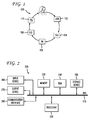
- Fig. 1 illustrates an exemplary spoken language dialog system consistent with principles of the invention
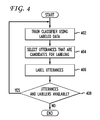
- Fig. 2 illustrates an exemplary system which may be used to implement a spoken language dialog system
- Fig. 3 illustrates an exemplary process including a boosting-style algorithm
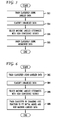
- Fig. 4 is a flowchart that illustrates an active learning method
- Fig. 5 is a flowchart that illustrates a semi-supervised learning method
- Fig. 6 is a flowchart that illustrates another semi-supervised learning method.
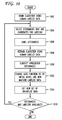
- Figs. 7-10 are flowcharts that illustrate combined active learning and semi-supervised methods consistent with the principles of the invention.
- Fig. 1 is a functional block diagram of an exemplary natural language spoken dialog system 100 consistent with the principles of the invention.
- Natural language spoken dialog system 100 may include an automatic speech recognition (ASR) module 102, a spoken language understanding (SLU) module 104, a dialog management (DM) module 106, a spoken language generation (SLG) module 108, and a text-to-speech (TTS) module 110.
- ASR automatic speech recognition
- SLU spoken language understanding
- DM dialog management
- SLG spoken language generation
- TTS text-to-speech
- ASR module 102 may analyze speech input and may provide a transcription of the speech input as output.
- SLU module 104 may receive the transcribed input and may use a natural language understanding model to analyze the group of words that are included in the transcribed input to derive a meaning from the input. One way that this may be done is by analyzing the group of words in the transcribed input in order to assign a label or call-type to the group of words. Thus, SLU module 104 may include a classifier for assigning the label or the call-type to the group of words.
- DM module 106 may receive the meaning or intent of the speech input from SLU module 104 and may determine an action, such as, for example, providing a spoken response, based on the input.
- SLG module 108 may generate a transcription of one or more words in response to the action provided by DM module 106.
- TTS module 110 may receive the transcription as input and may provide generated audible speech as output based on the transcribed speech.
- the modules of system 100 may recognize speech input, such as speech utterances, may transcribe the speech input, may identify (or understand) the meaning of the transcribed speech, may determine an appropriate response to the speech input, may generate text of the appropriate response and from that text, generate audible "speech" from system 100, which the user then hears. In this manner, the user can carry on a natural language dialog with system 100.
- speech input such as speech utterances
- the modules of system 100 may operate independent of a full dialog system.
- a computing device such as a smartphone (or any processing device having a phone capability) may have an ASR module wherein a user may say "call mom" and the smartphone may act on the instruction without a "spoken dialog.”
- Fig. 1 is an exemplary spoken dialog system.
- Other spoken dialog systems may include other types of modules and may have different quantities of various modules.
- Fig. 2 illustrates an exemplary processing system 200 in which one or more of the modules of system 100 may be implemented.
- system 100 may include at least one processing system, such as, for example, exemplary processing system 200.
- System 200 may include a bus 210, a processor 220, a memory 230, a read only memory (ROM) 240, a storage device 250, an input device 260, an output device 270, and a communication interface 280.
- Bus 210 may permit communication among the components of system 200.
- Processor 220 may include at least one conventional processor or microprocessor that interprets and executes instructions.
- Memory 230 may be a random access memory (RAM) or another type of dynamic storage device that stores information and instructions for execution by processor 220. Memory 230 may also store temporary variables or other intermediate information used during execution of instructions by processor 220.
- ROM 240 may include a conventional ROM device or another type of static storage device that stores static information and instructions for processor 220.
- Storage device 250 may include any type of media, such as, for example, magnetic or optical recording media and its corresponding drive.
- Input device 260 may include one or more conventional mechanisms that permit a user to input information to system 200, such as a keyboard, a mouse, a pen, a voice recognition device, etc.
- Output device 270 may include one or more conventional mechanisms that output information to the user, including a display, a printer, one or more speakers, or a medium, such as a memory, or a magnetic or optical disk and a corresponding disk drive.
- Communication interface 280 may include any transceiver-like mechanism that enables system 200 to communicate via a network.
- communication interface 180 may include a modem, or an Ethernet interface for communicating via a local area network (LAN).
- LAN local area network
- communication interface 180 may include other mechanisms for communicating with other devices and/or systems via wired, wireless or optical connections.
- System 200 may perform functions in response to processor 220 executing sequences of instructions contained in a computer-readable medium, such as, for example, memory 230, a magnetic disk, or an optical disk. Such instructions may be read into memory 230 from another computer-readable medium, such as storage device 250, or from a separate device via communication interface 280.
- a computer-readable medium such as, for example, memory 230, a magnetic disk, or an optical disk.
- Such instructions may be read into memory 230 from another computer-readable medium, such as storage device 250, or from a separate device via communication interface 280.
- Boosting has been used to combine "weak” base classifiers to produce a "strong” classifier.
- the boosting algorithm may be iterative and, in each iteration, a weak classifier may be learned so as to minimize training error.
- the algorithm may begin by initializing a uniform distribution, D 1 (i,l ), over training examples, i, and labels,1. After each round, this distribution may be updated so that example-class combinations, which are easier to classify get lower weights and vice versa.
- An intended effect is to force the weak learning algorithm to concentrate on examples and labels that will be the most beneficial to the overall goal of fmding a highly accurate classification rule.
- This algorithm can be seen as a procedure for finding a linear combination of base classifiers which attempts to minimize an exponential loss function.
- the exponential loss function may be:
- logistic loss function which may be:
- utterances are selected for labeling that the classifier is least confident about.
- Fig. 4 describes exemplary processing, consistent with the principles of the invention, for performing active learning.
- a classifier may be trained using a small set of human-labeled data, S t (act 402).
- the classifier may select utterances, from the unlabeled data, S t , as candidates for labeling (act 404).
- a check may be performed to determine whether additional utterances are available that have not been manually transcribed and whether labelers are available (act 408). If so, then acts 402-408 may be repeated. Otherwise, the process may be completed.
- the threshold, th may be mainly determined by the capacity of the manual labeling effort or by the performance of the current classifier.
- a different criterion for selecting the utterances for labeling may be used, such as, for example, a difference between the top two call-type confidence scores, or by using other call-type scores or all the call-type scores.
- One other parameter of the process may be characteristics of the pool used by the process. For, example, instead of assuming a fixed pool, a dynamic pool may be used. A constant stream of incoming data traffic may better reflect an actual SLU system. In such a case, active learning may again select the most informative utterances from a given pool, as in the above algorithm. However, at each iteration, a new pool may be provided to the process. Thus, the above process may be updated to obtain a new set of unlabeled data, Sp, after manually labeling the selected utterances.
- the distribution of the call-types in the selectively sampled training data have skewed from their priors. That is, the distribution of call-types in the training data has become different from the distribution of call-types in the test data.
- Classes that have a larger number of examples in the training data or that may be easy to classify may be under-represented by selective sampling.
- the classifier trained on selectively sampled data may be biased to infrequent or hard to classify classes. Divergence from the priors may be a problem that may cause deterioration of the performance of the classifier. A novel solution to this problem is presented later in this specification.
- the goal of semi-supervised learning is to exploit unlabeled utterances in order to improve the performance of the classifier.
- Two methods are discussed which achieve this goal. Both methods assume that there is some amount of training data available for training an initial classifier. These methods use the classifier to label the unlabeled data automatically, and improve the classifier performance by using the machine-labeled call-types as the labels of those unlabeled utterances, thus reducing the amount of human-labeling needed to build better statistical classifiers.
- Fig. 5 illustrates one exemplary process that may be used in implementations consistent with the principles of the invention.
- the threshold, th may be set by using a separate held-out set, which is not used for training. There may be a trade-off in selecting the threshold. If the threshold is set to a lower value, that means a larger amount of noisy data may be used. If the threshold is set to a higher value, that means less useful or informative data my be used.
- Fig. 6 illustrates another method that may be used in implementations consistent with the principles of the invention for semi-supervised learning.
- Acts 502-506 may be the same as in the method of Fig. 5.
- the boosting algorithm may be used to try to fit both the machine-labeled data and the prior model using the following loss function: where is the Kullback-Leibler divergence (or binary relative entropy) between two probability distributions p and q (act 608).
- This term is basically the distance from the initial model built by human-labeled data to the new model built with machine-labeled data. In a marginal case, if these two distributions are always the same then the KL term will be 0 and the loss function will be exactly the same as the first term, which is nothing but the logistic loss. ⁇ may be used to control the relative importance of these two terms. This weight may be determined empirically on a held-out set. Also, similar to the previously-discussed method, in order to reduce the noise added due to classifier errors, only those utterances which are classified with a confidence score higher than or equal to some threshold may be exploited.
- classifiers support a way of combining models or augmenting an existing model.
- this implementation is classifier (Boosting) dependent, the idea may be more general.
- Boosting classifier
- a Naive Bayes classifier may be implemented as linear model interpolation.
- the challenge with semi-supervised learning is that only the utterances which are classified with a confidence score larger than or equal to some threshold may be exploited in order to reduce the noise introduced by the classifier errors.
- the noise introduced would be decreased with better initial models, but in such a case, additional data would be less useful. So one may expect such semi-supervised techniques to work less well with very little or very large amounts of data.
- the classifier may be modified such that, at each iteration, the confidence scores of the call-types may contribute to the data distribution on a weighted basis.
- FIG. 7 is a high-level flowchart that describes an exemplary combined active and semi-supervised learning method.
- the process may begin with training utterance data, which may include some amount of human-labeled utterances.
- Active learning may be performed on the utterance data (act 702).
- the active learning may select candidates for manual labeling.
- the selected candidates may have been assigned a confidence score by a classifier. The confidence score of the selected candidates may be less than or equal to a lower threshold value.
- human labelers may manually label the selected candidates (act 706).
- Semi-supervised learning may then be performed (act 708).
- Fig. 8 is a flowchart of a more specific exemplary combined active and semi-supervised learning process that may be used in implementations consistent with the principles of the invention. Instead of leaving out the utterances classified with high confidence scores, this process may exploit them.
- the selected utterances may then be manually labeled (act 806).
- the classifier may then be augmented by changing the loss function to fit both the initial model and the new machine-labeled data (act 808).
- a new set of unlabeled data may be obtained (act 810) and a check may be performed to determine whether any unselected utterances are available and whether any labeling resources are available (act 812). If so, then acts 804-812 may be repeated. Otherwise, the process may be completed.
- one threshold may be used for active learning and another threshold may be used for semi-supervised learning. Otherwise, combining active and semi-supervised learning may eliminate the need for the second threshold. Since the utterances, which are already classified with low confidence scores, may be selected by active learning and sent to a human for labeling, for semi-supervised learning the noise is already reduced. Therefore, it may not be necessary to find an optimal threshold with which to work if a ratio of the unlabeled data to labeled data is comparable.
- the classifier may be retrained using human-labeled training data and then the unselected utterances, S u , may be classified to obtain machine-labeled data. Using more selectively sampled data may result in better classification.
- Fig. 9 is a is a flowchart of another specific exemplary combined active and semi-supervised learning process that may be used in implementations consistent with the principles of the invention as an alternative to the exemplary process of Fig. 8.
- an initial model may be trained using human-labeled data (act 902), and then the unlabeled data may be classified by the trained classifier.
- Machine-labeled utterances with a confidence score below a first threshold, th 1 may be selected as candidates for labeling (act 904).
- the candidates for labeling may be transcribed and manually labeled (act 906).
- the machine-labeled utterances having confidence scores higher than or equal to a threshold, th 2 may be added directly to the training data (act 908).
- the classifier may then be trained using the augmented data (the selected data) (act 910).
- a check may then be performed to determine whether any unselected and unlabeled utterances remain and whether any labeling resources are available (act 912). If so, acts 904-912 may be performed again. Otherwise, the process may be finished.
- Fig. 10 is a flowchart that illustrates another specific exemplary process that may be used as an alternative to the processes of Fig. 8 or Fig. 9 in implementations consistent with the principles of the invention.
- a classifier may be trained using human-labeled utterance data (act 1002).
- utterances may be selected as candidates for labeling (act 1004).
- the selected utterances may have a confidence score less that a threshold, th 1 .
- the selected utterances may then be manually transcribed and labeled (act 1006).
- the classifier may then be retrained using the human-labeled data (act 1006). Unselected utterances may then be classified by the classifier (act 1010).
- the loss function may be changed to fit the initial model and the new machine-labeled data (act 1012).
- a new set of unlabeled data may be obtained (act 1014) and a check may be performed to determined whether any unlabeled utterances are available and whether any labelers are available (act 1016). If so, then acts 1004-1016 may be performed again. Otherwise, the process may be completed.
- Semi-supervised learning techniques may only choose utterances which are classified with confidence scores higher than or equal to some threshold. Therefore, it is expected that well-represented or easy-to-classify call-types may dominate the automatically labeled data. This may produce the opposite effect of active learning, which may trim mostly such call-types.
- the combination of active learning and semi-supervised learning methods may alleviate the data imbalance problem due to each of the learning methods.
- a call classifier Active and semi-supervised learning algorithms for a spoken language understanding system, in this case a call classifier.
- candidate utterances with respect to the confidence score of the call classifier, may be selectively sampled.
- semi-supervised learning methods the utterances, which were confidently classified by the classifier, were exploited.
- active learning techniques and semi-supervised learning techniques are well known. Implementations of the invention are not limited to only the active and semi-supervised techniques disclosed in this specification, but may be used with any active and sem-supervised learning techniques. Further, it is clear that the active and semi-supervised learning methods may be easily applicable to other statistical SLU or classification tasks such as named entity extraction, part-of-speech tagging or text categorization.
- dialog level features such as the previous prompt played or the previous call-type
- customer related features such as location or account features
- Embodiments within the scope of the present invention may also include computer-readable media for carrying or having computer-executable instructions or data structures stored thereon.
- Such computer-readable media can be any available media that can be accessed by a general purpose or special purpose computer.
- Such computer-readable media can comprise RAM, ROM, EEPROM, CD-ROM or other optical disk storage, magnetic disk storage or other magnetic storage devices, or any other medium which can be used to carry or store desired program code means in the form of computer-executable instructions or data structures.
- a network or another communications connection either hardwired, wireless, or combination thereof
- any such connection is properly termed a computer-readable medium. Combinations of the above should also be included within the scope of the computer-readable media.
- Computer-executable instructions include, for example, instructions and data which cause a general purpose computer, special purpose computer, or special purpose processing device to perform a certain function or group of functions.
- Computer-executable instructions also include program modules that are executed by computers in stand-alone or network environments.
- program modules include routines, programs, objects, components, and data structures, etc. that perform particular tasks or implement particular abstract data types.
- Computer-executable instructions, associated data structures, and program modules represent examples of the program code means for executing steps of the methods disclosed herein. The particular sequence of such executable instructions or associated data structures represents examples of corresponding acts for implementing the functions described in such acts.
- Embodiments of the invention may be practiced in network computing environments with many types of computer system configurations, including personal computers, hand-held devices, multi-processor systems, microprocessor-based or programmable consumer electronics, network PCs, minicomputers, mainframe computers, and the like. Embodiments may also be practiced in distributed computing environments where tasks are performed by local and remote processing devices that are linked (either by hardwired links, wireless links, or by a combination thereof) through a communications network. In a distributed computing environment, program modules may be located in both local and remote memory storage devices.
Landscapes
- Engineering & Computer Science (AREA)
- Artificial Intelligence (AREA)
- Computational Linguistics (AREA)
- Health & Medical Sciences (AREA)
- Audiology, Speech & Language Pathology (AREA)
- Human Computer Interaction (AREA)
- Physics & Mathematics (AREA)
- Acoustics & Sound (AREA)
- Multimedia (AREA)
- Machine Translation (AREA)
- Image Analysis (AREA)
- Electrically Operated Instructional Devices (AREA)
Applications Claiming Priority (4)
| Application Number | Priority Date | Filing Date | Title |
|---|---|---|---|
| US54924004P | 2004-03-02 | 2004-03-02 | |
| US549240P | 2004-03-02 | ||
| US11/033,902 US8010357B2 (en) | 2004-03-02 | 2005-01-12 | Combining active and semi-supervised learning for spoken language understanding |
| US33902 | 2005-01-12 |
Publications (2)
| Publication Number | Publication Date |
|---|---|
| EP1571652A2 true EP1571652A2 (de) | 2005-09-07 |
| EP1571652A3 EP1571652A3 (de) | 2006-07-19 |
Family
ID=34752500
Family Applications (1)
| Application Number | Title | Priority Date | Filing Date |
|---|---|---|---|
| EP20050101425 Withdrawn EP1571652A3 (de) | 2004-03-02 | 2005-02-24 | Kombinieren von aktivem und halbüberwachtem Lernen für das Verstehen gesprochener Sprache |
Country Status (3)
| Country | Link |
|---|---|
| US (1) | US8010357B2 (de) |
| EP (1) | EP1571652A3 (de) |
| CA (1) | CA2498015C (de) |
Cited By (5)
| Publication number | Priority date | Publication date | Assignee | Title |
|---|---|---|---|---|
| US20170213546A1 (en) * | 2006-06-27 | 2017-07-27 | At&T Intellectual Property Ii, L.P. | Learning from interactions for a spoken dialog system |
| WO2019022840A1 (en) * | 2017-07-27 | 2019-01-31 | Microsoft Technology Licensing, Llc | DETENTION OF INTENT AND NECK FOR DIGITAL ASSISTANTS |
| CN109359697A (zh) * | 2018-10-30 | 2019-02-19 | 国网四川省电力公司广元供电公司 | 一种电力设备巡检中使用的图形图像识别方法及巡查系统 |
| CN109389180A (zh) * | 2018-10-30 | 2019-02-26 | 国网四川省电力公司广元供电公司 | 一款基于深度学习的电力设备图像识别方法及巡查机器人 |
| CN109933619A (zh) * | 2019-03-13 | 2019-06-25 | 西南交通大学 | 一种半监督分类预测方法 |
Families Citing this family (32)
| Publication number | Priority date | Publication date | Assignee | Title |
|---|---|---|---|---|
| US20050232408A1 (en) * | 2004-04-15 | 2005-10-20 | Hodson Jeffrey D | System for contact system entities beyond end-points to track state availability and capabilites by implementing SIP presence technologies |
| US8094790B2 (en) * | 2005-05-18 | 2012-01-10 | Mattersight Corporation | Method and software for training a customer service representative by analysis of a telephonic interaction between a customer and a contact center |
| US8364467B1 (en) * | 2006-03-31 | 2013-01-29 | Google Inc. | Content-based classification |
| US8275615B2 (en) * | 2007-07-13 | 2012-09-25 | International Business Machines Corporation | Model weighting, selection and hypotheses combination for automatic speech recognition and machine translation |
| US8195588B2 (en) * | 2008-04-03 | 2012-06-05 | At&T Intellectual Property I, L.P. | System and method for training a critical e-mail classifier using a plurality of base classifiers and N-grams |
| US8566260B2 (en) * | 2010-09-30 | 2013-10-22 | Nippon Telegraph And Telephone Corporation | Structured prediction model learning apparatus, method, program, and recording medium |
| WO2012105231A1 (ja) * | 2011-02-03 | 2012-08-09 | 日本電気株式会社 | モデル適応化装置、モデル適応化方法およびモデル適応化用プログラム |
| US9082403B2 (en) | 2011-12-15 | 2015-07-14 | Microsoft Technology Licensing, Llc | Spoken utterance classification training for a speech recognition system |
| US9031897B2 (en) | 2012-03-23 | 2015-05-12 | Nuance Communications, Inc. | Techniques for evaluation, building and/or retraining of a classification model |
| US20140279734A1 (en) * | 2013-03-15 | 2014-09-18 | Hewlett-Packard Development Company, L.P. | Performing Cross-Validation Using Non-Randomly Selected Cases |
| US20150149176A1 (en) * | 2013-11-27 | 2015-05-28 | At&T Intellectual Property I, L.P. | System and method for training a classifier for natural language understanding |
| US9792560B2 (en) | 2015-02-17 | 2017-10-17 | Microsoft Technology Licensing, Llc | Training systems and methods for sequence taggers |
| US10102481B2 (en) | 2015-03-16 | 2018-10-16 | Conduent Business Services, Llc | Hybrid active learning for non-stationary streaming data with asynchronous labeling |
| US10558754B2 (en) * | 2016-09-15 | 2020-02-11 | Infosys Limited | Method and system for automating training of named entity recognition in natural language processing |
| CN111712841A (zh) * | 2018-02-27 | 2020-09-25 | 国立大学法人九州工业大学 | 标签收集装置、标签收集方法以及标签收集程序 |
| US11669746B2 (en) * | 2018-04-11 | 2023-06-06 | Samsung Electronics Co., Ltd. | System and method for active machine learning |
| US11087748B2 (en) * | 2018-05-11 | 2021-08-10 | Google Llc | Adaptive interface in a voice-activated network |
| US11380306B2 (en) * | 2019-10-31 | 2022-07-05 | International Business Machines Corporation | Iterative intent building utilizing dynamic scheduling of batch utterance expansion methods |
| WO2021100606A1 (ja) * | 2019-11-19 | 2021-05-27 | 昭和電工株式会社 | 機械学習装置、方法、プログラム、およびシステム |
| DE102020200340A1 (de) * | 2020-01-14 | 2021-07-15 | Robert Bosch Gesellschaft mit beschränkter Haftung | Vorrichtung und computerimplementiertes Verfahren für dateneffizientes aktives maschinelles Lernen |
| CN112037782A (zh) * | 2020-06-30 | 2020-12-04 | 北京来也网络科技有限公司 | 一种结合rpa与ai的早媒体识别方法、装置、设备及存储介质 |
| US20230281394A1 (en) * | 2020-07-15 | 2023-09-07 | Sony Group Corporation | Information processing device and information processing method |
| TWI753576B (zh) * | 2020-09-21 | 2022-01-21 | 亞旭電腦股份有限公司 | 用於音訊辨識的模型建構方法 |
| CN114283845A (zh) * | 2020-09-21 | 2022-04-05 | 亚旭电脑股份有限公司 | 用于音频识别的模型建构方法 |
| US12260326B2 (en) | 2021-03-03 | 2025-03-25 | Capital One Services, Llc | Data labeling for synthetic data generation |
| US12148417B1 (en) * | 2021-06-22 | 2024-11-19 | Amazon Technologies, Inc. | Label confidence scoring |
| CN114154578B (zh) * | 2021-12-02 | 2023-10-31 | 内蒙古工业大学 | 面向非平衡数据基于半监督分布式训练的任务识别方法 |
| US12512095B2 (en) * | 2022-07-11 | 2025-12-30 | Google Llc | Unsupervised data selection via discrete speech representation for automatic speech recognition |
| CN115240659B (zh) * | 2022-09-21 | 2023-01-06 | 深圳市北科瑞声科技股份有限公司 | 分类模型训练方法、装置、计算机设备及存储介质 |
| US12548554B2 (en) * | 2022-12-06 | 2026-02-10 | Openstream Inc. | System and method for active learning based multilingual semantic parser |
| US20240202228A1 (en) * | 2022-12-16 | 2024-06-20 | Capital One Services, Llc | Systems and methods for dynamically generating groups of receveid textual data for collective labeling |
| CN116245177B (zh) * | 2023-05-06 | 2023-08-11 | 中国科学院自动化研究所 | 地理环境知识图谱自动化构建方法及系统、可读存储介质 |
Family Cites Families (10)
| Publication number | Priority date | Publication date | Assignee | Title |
|---|---|---|---|---|
| JP3004254B2 (ja) * | 1998-06-12 | 2000-01-31 | 株式会社エイ・ティ・アール音声翻訳通信研究所 | 統計的シーケンスモデル生成装置、統計的言語モデル生成装置及び音声認識装置 |
| US6208963B1 (en) * | 1998-06-24 | 2001-03-27 | Tony R. Martinez | Method and apparatus for signal classification using a multilayer network |
| JP4065936B2 (ja) * | 2001-10-09 | 2008-03-26 | 独立行政法人情報通信研究機構 | 機械学習法を用いた言語解析処理システムおよび機械学習法を用いた言語省略解析処理システム |
| US20040205482A1 (en) * | 2002-01-24 | 2004-10-14 | International Business Machines Corporation | Method and apparatus for active annotation of multimedia content |
| JP4034602B2 (ja) * | 2002-06-17 | 2008-01-16 | 富士通株式会社 | データ分類装置、データ分類装置の能動学習方法及び能動学習プログラム |
| US7149687B1 (en) * | 2002-07-29 | 2006-12-12 | At&T Corp. | Method of active learning for automatic speech recognition |
| US7606714B2 (en) * | 2003-02-11 | 2009-10-20 | Microsoft Corporation | Natural language classification within an automated response system |
| US7835910B1 (en) * | 2003-05-29 | 2010-11-16 | At&T Intellectual Property Ii, L.P. | Exploiting unlabeled utterances for spoken language understanding |
| US7490071B2 (en) * | 2003-08-29 | 2009-02-10 | Oracle Corporation | Support vector machines processing system |
| US20050182736A1 (en) * | 2004-02-18 | 2005-08-18 | Castellanos Maria G. | Method and apparatus for determining contract attributes based on language patterns |
-
2005
- 2005-01-12 US US11/033,902 patent/US8010357B2/en not_active Expired - Fee Related
- 2005-02-23 CA CA2498015A patent/CA2498015C/en not_active Expired - Fee Related
- 2005-02-24 EP EP20050101425 patent/EP1571652A3/de not_active Withdrawn
Non-Patent Citations (3)
| Title |
|---|
| A. K. MCCALLUM ET AL.: "Employing EM and pool-based active learning for text classification", PROCEEDINGS OF ICML, 27 July 1998 (1998-07-27) |
| G. TUR ET AL.: "Active learning for spoken language understanding", IEEE INTERNATIONAL CONFERENCE ON ACOUSTICS, SPEECH AND SIGNAL PROCESSING, vol. 1, 2003, pages 1 - 276 |
| TUR G ET AL: "Combining active and semi-supervised learning for spoken language understanding", SPEECH COMMUNICATION, ELSEVIER SCIENCE PUBLISHERS, AMSTERDAM, NL, vol. 45, no. 2, 1 February 2005 (2005-02-01), pages 171 - 186, XP004745789, ISSN: 0167-6393, DOI: 10.1016/J.SPECOM.2004.08.002 * |
Cited By (10)
| Publication number | Priority date | Publication date | Assignee | Title |
|---|---|---|---|---|
| US20170213546A1 (en) * | 2006-06-27 | 2017-07-27 | At&T Intellectual Property Ii, L.P. | Learning from interactions for a spoken dialog system |
| US10217457B2 (en) * | 2006-06-27 | 2019-02-26 | At&T Intellectual Property Ii, L.P. | Learning from interactions for a spoken dialog system |
| WO2019022840A1 (en) * | 2017-07-27 | 2019-01-31 | Microsoft Technology Licensing, Llc | DETENTION OF INTENT AND NECK FOR DIGITAL ASSISTANTS |
| US10453444B2 (en) | 2017-07-27 | 2019-10-22 | Microsoft Technology Licensing, Llc | Intent and slot detection for digital assistants |
| CN110945515A (zh) * | 2017-07-27 | 2020-03-31 | 微软技术许可有限责任公司 | 数字助理的意图和槽检测 |
| CN110945515B (zh) * | 2017-07-27 | 2024-04-30 | 微软技术许可有限责任公司 | 数字助理的意图和槽检测 |
| CN109359697A (zh) * | 2018-10-30 | 2019-02-19 | 国网四川省电力公司广元供电公司 | 一种电力设备巡检中使用的图形图像识别方法及巡查系统 |
| CN109389180A (zh) * | 2018-10-30 | 2019-02-26 | 国网四川省电力公司广元供电公司 | 一款基于深度学习的电力设备图像识别方法及巡查机器人 |
| CN109933619A (zh) * | 2019-03-13 | 2019-06-25 | 西南交通大学 | 一种半监督分类预测方法 |
| CN109933619B (zh) * | 2019-03-13 | 2022-02-08 | 西南交通大学 | 一种半监督分类预测方法 |
Also Published As
| Publication number | Publication date |
|---|---|
| US20090063145A1 (en) | 2009-03-05 |
| US8010357B2 (en) | 2011-08-30 |
| CA2498015A1 (en) | 2005-09-02 |
| CA2498015C (en) | 2012-11-27 |
| EP1571652A3 (de) | 2006-07-19 |
Similar Documents
| Publication | Publication Date | Title |
|---|---|---|
| US8010357B2 (en) | Combining active and semi-supervised learning for spoken language understanding | |
| US7835910B1 (en) | Exploiting unlabeled utterances for spoken language understanding | |
| US11664020B2 (en) | Speech recognition method and apparatus | |
| US9640176B2 (en) | Apparatus and method for model adaptation for spoken language understanding | |
| US11972753B2 (en) | System and method for performing automatic speech recognition system parameter adjustment via machine learning | |
| US10902845B2 (en) | System and methods for adapting neural network acoustic models | |
| US7562014B1 (en) | Active learning process for spoken dialog systems | |
| US8494853B1 (en) | Methods and systems for providing speech recognition systems based on speech recordings logs | |
| US7742918B1 (en) | Active learning for spoken language understanding | |
| JP6538779B2 (ja) | 音声対話システム、音声対話方法、および音声対話システムを適合させる方法 | |
| Ganapathiraju et al. | Applications of support vector machines to speech recognition | |
| EP1679694B1 (de) | Konfidenzmaß für ein Sprachdialogsystem | |
| US7904399B2 (en) | Method and apparatus for determining decision points for streaming conversational data | |
| CN102280106A (zh) | 用于移动通信终端的语音网络搜索方法及其装置 | |
| Van Segbroeck et al. | Rapid language identification | |
| US9984678B2 (en) | Factored transforms for separable adaptation of acoustic models | |
| JPWO2007105409A1 (ja) | 標準パタン適応装置、標準パタン適応方法および標準パタン適応プログラム | |
| JP5376341B2 (ja) | モデル適応装置、その方法及びそのプログラム | |
| HK1076185A (en) | Combining active and semi-supervised learning for spoken language understanding | |
| Tür et al. | Exploiting unlabeled utterances for spoken language understanding. | |
| US12609110B2 (en) | Techniques for utterance grouping and for improved training of machine learning models using grouped utterance data | |
| Depypere | Data Augmentation in Speech-to-Intent Systems | |
| Pons et al. | Two-level clustering towards unsupervised discovery of acoustic classes | |
| CA2518771A1 (en) | System and method for cost sensitive evaluation and call classification |
Legal Events
| Date | Code | Title | Description |
|---|---|---|---|
| PUAI | Public reference made under article 153(3) epc to a published international application that has entered the european phase |
Free format text: ORIGINAL CODE: 0009012 |
|
| AK | Designated contracting states |
Kind code of ref document: A2 Designated state(s): AT BE BG CH CY CZ DE DK EE ES FI FR GB GR HU IE IS IT LI LT LU MC NL PL PT RO SE SI SK TR |
|
| AX | Request for extension of the european patent |
Extension state: AL BA HR LV MK YU |
|
| 17P | Request for examination filed |
Effective date: 20051011 |
|
| REG | Reference to a national code |
Ref country code: HK Ref legal event code: DE Ref document number: 1076185 Country of ref document: HK |
|
| PUAL | Search report despatched |
Free format text: ORIGINAL CODE: 0009013 |
|
| AK | Designated contracting states |
Kind code of ref document: A3 Designated state(s): AT BE BG CH CY CZ DE DK EE ES FI FR GB GR HU IE IS IT LI LT LU MC NL PL PT RO SE SI SK TR |
|
| AX | Request for extension of the european patent |
Extension state: AL BA HR LV MK YU |
|
| 17Q | First examination report despatched |
Effective date: 20070202 |
|
| AKX | Designation fees paid |
Designated state(s): DE FR GB |
|
| GRAP | Despatch of communication of intention to grant a patent |
Free format text: ORIGINAL CODE: EPIDOSNIGR1 |
|
| INTG | Intention to grant announced |
Effective date: 20150508 |
|
| RIN1 | Information on inventor provided before grant (corrected) |
Inventor name: TUR, GOKHAN Inventor name: SCHAPIRE, ROBERT, ELIAS Inventor name: HAKKANI-TUR, DILEK, Z. |
|
| STAA | Information on the status of an ep patent application or granted ep patent |
Free format text: STATUS: THE APPLICATION IS DEEMED TO BE WITHDRAWN |
|
| 18D | Application deemed to be withdrawn |
Effective date: 20150919 |
|
| REG | Reference to a national code |
Ref country code: HK Ref legal event code: WD Ref document number: 1076185 Country of ref document: HK |