EP1571469A1 - Colored photosensitive composition for color filters, color filters, and process for the production thereof - Google Patents
Colored photosensitive composition for color filters, color filters, and process for the production thereof Download PDFInfo
- Publication number
- EP1571469A1 EP1571469A1 EP03813718A EP03813718A EP1571469A1 EP 1571469 A1 EP1571469 A1 EP 1571469A1 EP 03813718 A EP03813718 A EP 03813718A EP 03813718 A EP03813718 A EP 03813718A EP 1571469 A1 EP1571469 A1 EP 1571469A1
- Authority
- EP
- European Patent Office
- Prior art keywords
- hydrogen atom
- group
- photosensitive composition
- colored photosensitive
- color filter
- Prior art date
- Legal status (The legal status is an assumption and is not a legal conclusion. Google has not performed a legal analysis and makes no representation as to the accuracy of the status listed.)
- Withdrawn
Links
- 0 C*C(*C1(*)*)(C(*)(*)C(*)(*)C1(*)*=C)O Chemical compound C*C(*C1(*)*)(C(*)(*)C(*)(*)C1(*)*=C)O 0.000 description 2
Images

Classifications
-
- G—PHYSICS
- G03—PHOTOGRAPHY; CINEMATOGRAPHY; ANALOGOUS TECHNIQUES USING WAVES OTHER THAN OPTICAL WAVES; ELECTROGRAPHY; HOLOGRAPHY
- G03F—PHOTOMECHANICAL PRODUCTION OF TEXTURED OR PATTERNED SURFACES, e.g. FOR PRINTING, FOR PROCESSING OF SEMICONDUCTOR DEVICES; MATERIALS THEREFOR; ORIGINALS THEREFOR; APPARATUS SPECIALLY ADAPTED THEREFOR
- G03F7/00—Photomechanical, e.g. photolithographic, production of textured or patterned surfaces, e.g. printing surfaces; Materials therefor, e.g. comprising photoresists; Apparatus specially adapted therefor
- G03F7/004—Photosensitive materials
- G03F7/039—Macromolecular compounds which are photodegradable, e.g. positive electron resists
-
- G—PHYSICS
- G03—PHOTOGRAPHY; CINEMATOGRAPHY; ANALOGOUS TECHNIQUES USING WAVES OTHER THAN OPTICAL WAVES; ELECTROGRAPHY; HOLOGRAPHY
- G03F—PHOTOMECHANICAL PRODUCTION OF TEXTURED OR PATTERNED SURFACES, e.g. FOR PRINTING, FOR PROCESSING OF SEMICONDUCTOR DEVICES; MATERIALS THEREFOR; ORIGINALS THEREFOR; APPARATUS SPECIALLY ADAPTED THEREFOR
- G03F7/00—Photomechanical, e.g. photolithographic, production of textured or patterned surfaces, e.g. printing surfaces; Materials therefor, e.g. comprising photoresists; Apparatus specially adapted therefor
- G03F7/004—Photosensitive materials
- G03F7/027—Non-macromolecular photopolymerisable compounds having carbon-to-carbon double bonds, e.g. ethylenic compounds
- G03F7/032—Non-macromolecular photopolymerisable compounds having carbon-to-carbon double bonds, e.g. ethylenic compounds with binders
-
- C—CHEMISTRY; METALLURGY
- C08—ORGANIC MACROMOLECULAR COMPOUNDS; THEIR PREPARATION OR CHEMICAL WORKING-UP; COMPOSITIONS BASED THEREON
- C08G—MACROMOLECULAR COMPOUNDS OBTAINED OTHERWISE THAN BY REACTIONS ONLY INVOLVING UNSATURATED CARBON-TO-CARBON BONDS
- C08G65/00—Macromolecular compounds obtained by reactions forming an ether link in the main chain of the macromolecule
- C08G65/02—Macromolecular compounds obtained by reactions forming an ether link in the main chain of the macromolecule from cyclic ethers by opening of the heterocyclic ring
- C08G65/32—Polymers modified by chemical after-treatment
- C08G65/329—Polymers modified by chemical after-treatment with organic compounds
-
- G—PHYSICS
- G02—OPTICS
- G02B—OPTICAL ELEMENTS, SYSTEMS OR APPARATUS
- G02B5/00—Optical elements other than lenses
- G02B5/20—Filters
-
- G—PHYSICS
- G03—PHOTOGRAPHY; CINEMATOGRAPHY; ANALOGOUS TECHNIQUES USING WAVES OTHER THAN OPTICAL WAVES; ELECTROGRAPHY; HOLOGRAPHY
- G03F—PHOTOMECHANICAL PRODUCTION OF TEXTURED OR PATTERNED SURFACES, e.g. FOR PRINTING, FOR PROCESSING OF SEMICONDUCTOR DEVICES; MATERIALS THEREFOR; ORIGINALS THEREFOR; APPARATUS SPECIALLY ADAPTED THEREFOR
- G03F7/00—Photomechanical, e.g. photolithographic, production of textured or patterned surfaces, e.g. printing surfaces; Materials therefor, e.g. comprising photoresists; Apparatus specially adapted therefor
- G03F7/0005—Production of optical devices or components in so far as characterised by the lithographic processes or materials used therefor
- G03F7/0007—Filters, e.g. additive colour filters; Components for display devices
-
- G—PHYSICS
- G03—PHOTOGRAPHY; CINEMATOGRAPHY; ANALOGOUS TECHNIQUES USING WAVES OTHER THAN OPTICAL WAVES; ELECTROGRAPHY; HOLOGRAPHY
- G03F—PHOTOMECHANICAL PRODUCTION OF TEXTURED OR PATTERNED SURFACES, e.g. FOR PRINTING, FOR PROCESSING OF SEMICONDUCTOR DEVICES; MATERIALS THEREFOR; ORIGINALS THEREFOR; APPARATUS SPECIALLY ADAPTED THEREFOR
- G03F7/00—Photomechanical, e.g. photolithographic, production of textured or patterned surfaces, e.g. printing surfaces; Materials therefor, e.g. comprising photoresists; Apparatus specially adapted therefor
- G03F7/004—Photosensitive materials
- G03F7/027—Non-macromolecular photopolymerisable compounds having carbon-to-carbon double bonds, e.g. ethylenic compounds
-
- G—PHYSICS
- G03—PHOTOGRAPHY; CINEMATOGRAPHY; ANALOGOUS TECHNIQUES USING WAVES OTHER THAN OPTICAL WAVES; ELECTROGRAPHY; HOLOGRAPHY
- G03F—PHOTOMECHANICAL PRODUCTION OF TEXTURED OR PATTERNED SURFACES, e.g. FOR PRINTING, FOR PROCESSING OF SEMICONDUCTOR DEVICES; MATERIALS THEREFOR; ORIGINALS THEREFOR; APPARATUS SPECIALLY ADAPTED THEREFOR
- G03F7/00—Photomechanical, e.g. photolithographic, production of textured or patterned surfaces, e.g. printing surfaces; Materials therefor, e.g. comprising photoresists; Apparatus specially adapted therefor
- G03F7/004—Photosensitive materials
- G03F7/038—Macromolecular compounds which are rendered insoluble or differentially wettable
- G03F7/0388—Macromolecular compounds which are rendered insoluble or differentially wettable with ethylenic or acetylenic bands in the side chains of the photopolymer
Definitions
- the present invention relates to a colored photosensitive composition useful for producing a color filter, a black matrix, a photospacer for a liquid crystal, a TFT array, or the like used in a color liquid crystal display, a color video camera, an image scanner, or the like. More specifically, the present invention relates to a colored photosensitive liquid composition for a color filter which contains a coloring matter such as a pigment or a dye so as to be capable of forming an image through exposure to ultraviolet rays and development with a dilute alkaline aqueous solution after the formation of a coating film, and which is excellent in ultraviolet rays curability, compatibility, and developability. The present invention also relates to: a color filter using the colored photosensitive composition for a color filter; and a method of producing a color filter.
- a color filter is obtained by arranging pixels of three primary colors on a transparent substrate made of glass or the like in a triangle fashion, in a mosaic fashion, or in a stripe fashion.
- a pixel of a color filter for a charge-coupled device (CCD) is of a fine shape having a width in the range of 5 or 6 ⁇ m to 20 or 30 ⁇ m.
- pixels of a color filter for a liquid crystal display device (LCD) each have a width in the range of 20 or 30 ⁇ m to about 200 ⁇ m, and they must be arranged systematically in a predetermined order for each hue.
- a method has been conventionally employed as a method of producing a color filter, which involves: applying, to a glass substrate, a colored photosensitive composition obtained by dispersing a coloring matter such as a pigment into a photosensitive composition allowing development with an organic solvent or an alkaline aqueous solution; drying the applied composition; exposing the dried composition to ultraviolet rays; forming a pattern through development; and repeating the above steps.
- An alkali development type composition has gone mainstream owing to the recent environmental problems.
- JP 03-53201 A discloses a colored photosensitive composition obtained by incorporating a pigment and a polyfunctional acrylate into an acrylic resin.
- An epoxy (meth)acrylate resin obtained by subjecting an epoxy group of an epoxy resin to a ring-opening reaction with acrylic acid or methacrylic acid described in JP 06-157965 A can be used as an active energy ray-curable resin.
- an epoxy (meth) acrylate resin has disadvantages of being hard, being brittle, having no flexibility, and contracting to a large extent at the time of curing.
- a colored photosensitive composition using such a resin is excellent in weatherability, but the epoxy (meth)acrylate itself serving as a binder is not involved in curing, so sufficient resolution cannot be obtained.
- physical properties of a coating film after the curing, especially alkali resistance, solvent resistance, and humidity resistance are insufficient.
- JP 06-230212 A discloses a colored photosensitive composition composed of: a photosensitive compound in which a double bond is introduced into side chains of an acrylic resin having a hydroxyl group through isocyanate; and a pigment.
- the acrylic resin itself serving as a binder also cures, so a cured coating film excellent in alkali resistance and solvent resistance can be obtained.
- a colored photosensitive composition using such an acrylic resin has insufficient sensitivity and insufficient resolution, and keeps its tackiness even after the removal of a solvent, with the result that a photomask is often contaminated at the stage of exposure.
- JP 08-262221 A discloses a colored photosensitive composition for a color filter containing an unsaturated group-containing acrylic resin as an essential ingredient, but the composition is not always sufficient in terms of developability and photosensitivity of a coating film to be cured.
- a colored photosensitive composition for a color filter of the present invention containing as essential ingredients: a polyether compound containing multiple special unsaturated groups, an acid group, and the like; and a coloring matter has high developability and high photosensitivity. They have also found that a color filter obtained by curing the colored photosensitive composition can solve the above problems. Thus, they have completed the present invention.
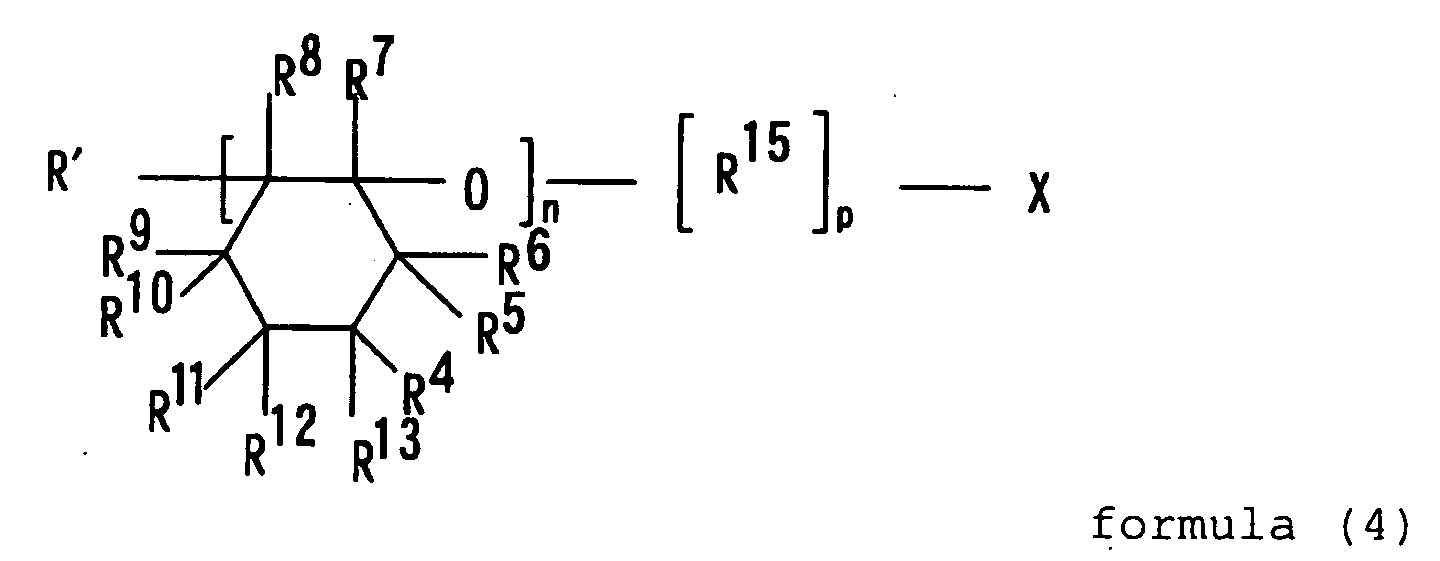
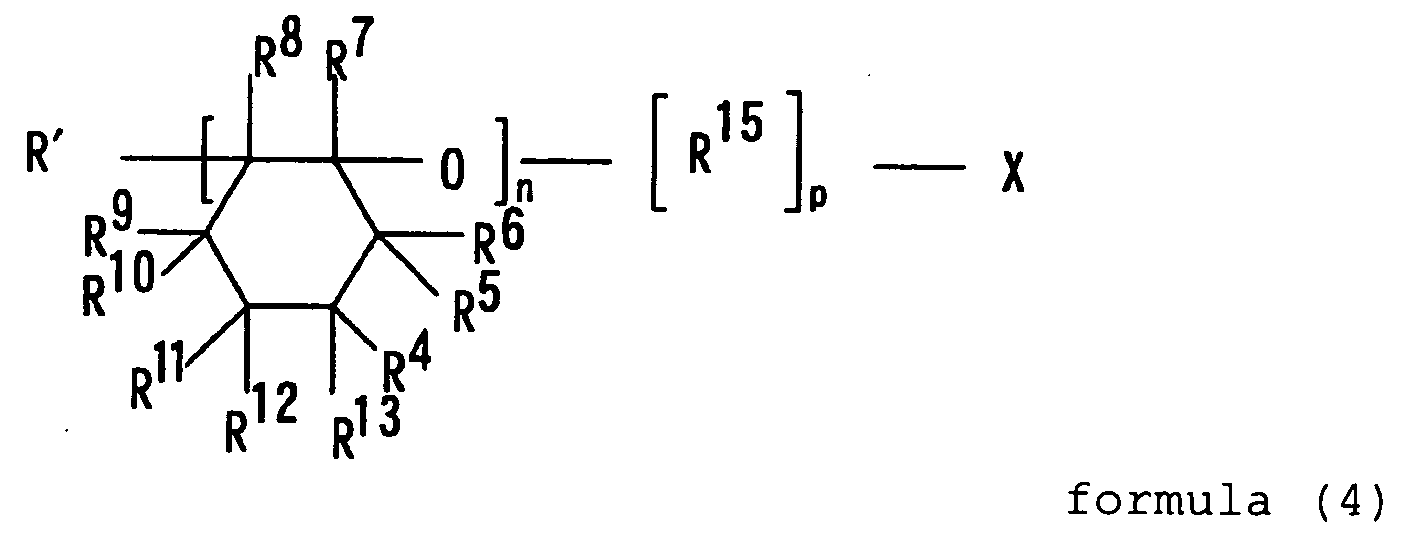
- a first invention provides a colored photosensitive composition for a color filter, characterized by including: a polyether compound represented by the following formula (4) having multiple polymerizable unsaturated groups and one or more acid groups in one molecule; a coloringmatter; and a curable resin and/or an ethylenically unsaturated compound to be optionally added,
- R' represents a residue -RH m-1 of an organic compound RH m containing "m" pieces of active hydrogen atoms in one molecule, or a group derived from the residue
- R represents a residue obtained by removing an active hydrogen atom from an organic compound having the active hydrogen atom
- "m" represents an integer of 1 to 30
- a second invention provides a colored photosensitive composition for a color filter according to the first invention, in which the polyether compound is one represented by the following formula (4A) having multiple (meth) acryloyl groups and one or more carboxyl groups in one molecule,
- the polyether compound is one represented by the following formula (4A) having multiple (meth) acryloyl groups and one or more carboxyl groups in one molecule
- R' represents a residue -RH m-1 of an organic compound RH m containing m or more active hydrogen atoms in one molecule, or a group derived from the residue
- R represents a residue obtained by removing an active hydrogen atom from an organic compound having the active hydrogen atom
- "m" represents an integer of 1 to 30
- R 4 to R 12 each represent a hydrogen atom or a hydrocarbon group having 1 to 10 carbon atoms
- a third invention provides a colored photosensitive composition for a color filter according to the first or second invention, in which the polybasic acid anhydride is at least one selected from the group consisting of tetrahydrophthalic anhydride, 4-methyltetrahydrophthalic anhydride, 3-methyltetrahydrophthalic anhydride, 3,4,5,6-tetrahydrophthalic anhydride, hexahydrophthalic anhydride, and 4-methyltetrahydrophthalic anhydride.
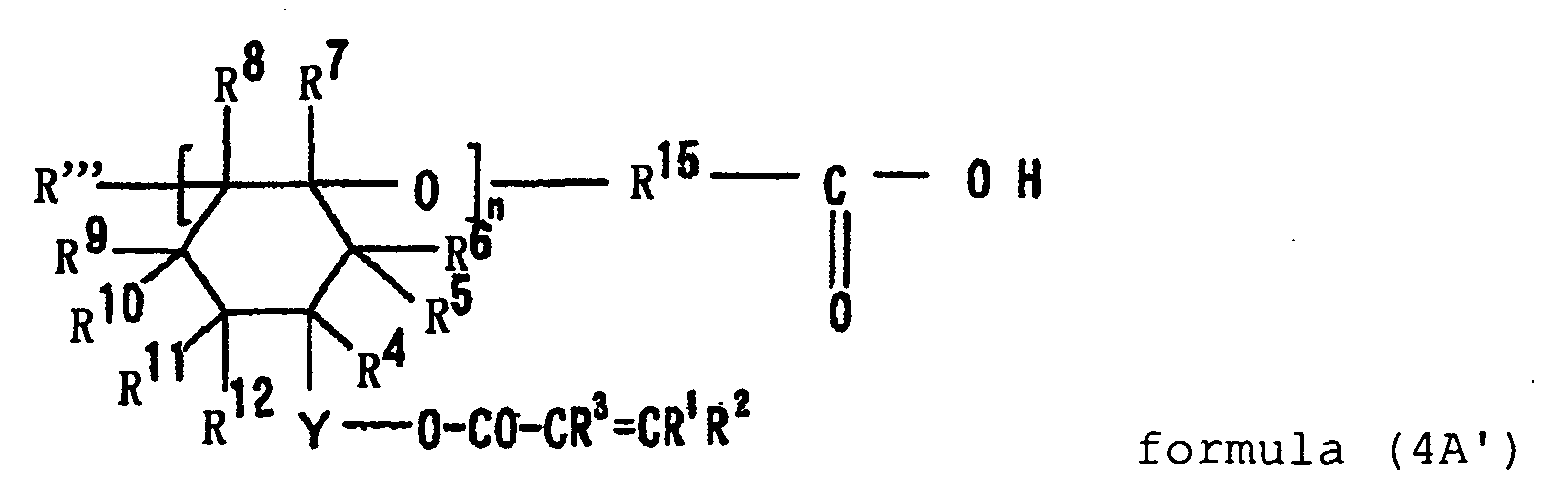
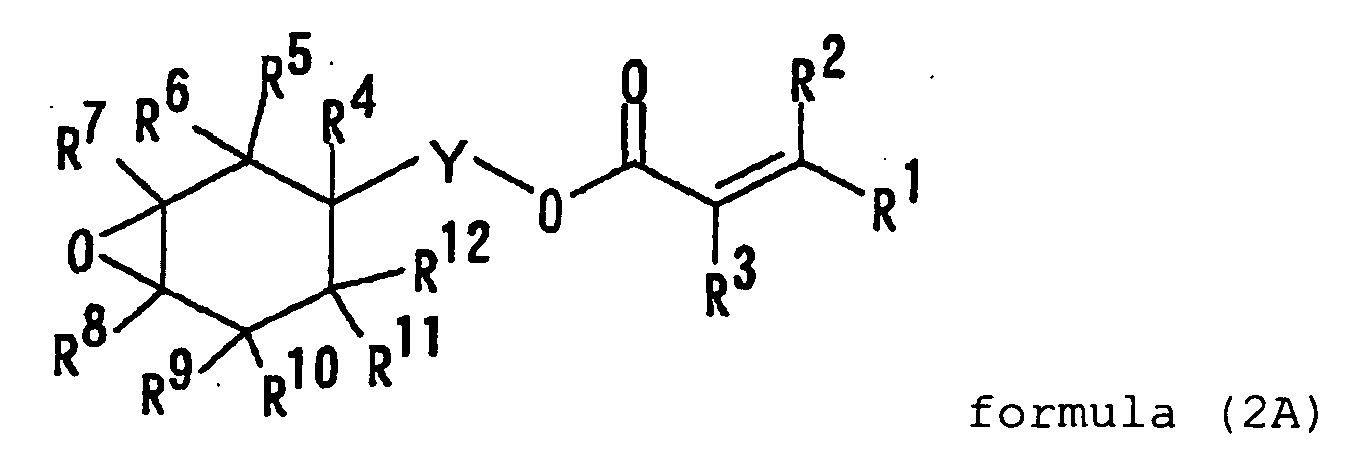
- a fourth invention provides a colored photosensitive composition for a color filter according to the first invention, in which the polyether compound is a polyether compound represented by the following formula (4A') obtained by reacting a compound represented by the following formula (3A) with a polybasic acid anhydride, the compound represented by the following formula (3A) being obtained by reacting an organic compound RH m containing "m" pieces of active hydrogen atoms in one molecule which is at least one selected from the group consisting of carboxylic acids, alcohols, phenols, amines, thiols, and silanols, and in which "m” represents an integer of 1 to 30 (hereinafter, they are represented by R*H m ) with a compound represented by the following formula (2A), ⁇ In the formula (2A), R 1 and R 2 each represent a hydrogen atom; R 3 represents a hydrogen atom or a methyl group; R 4 to R 12 each represent a hydrogen atom, a methyl group, an ethyl group, or a
- a fifth invention provides a colored photosensitive composition for a color filter according to any one of the first to fourth inventions, in which the organic compound containing "m" pieces of active hydrogen atoms in one molecule is trimethylolpropane.
- a sixth invention provides a colored photosensitive composition for a color filter according to the fourth or fifth invention, in which the compound represented by the formula (2A) is 3,4-epoxycyclohexylmethyl (meth)acrylate.
- a seventh invention provides a colored photosensitive composition for a color filter according to the first invention, in which the curable resin is a resin obtained by reacting a (meth) acrylic acid-(meth)acrylate copolymer with a compound represented by the formula (2A), ⁇ In the formula (2A), R 1 and R 2 each represent a hydrogen atom; R 3 represents a hydrogen atom or a methyl group; R 4 to R 12 each represent a hydrogen atom, a methyl group, an ethyl group, or a propyl group; and Y represents -(CH 2 ) n1 - where n1 represents an integer of 1 to 6, one obtained by substituting part of the hydrogen atoms constituting -(CH 2 ) n1 - by methyl groups, ethyl groups, or propyl groups, or one of the following structural formulae, where n2 represents an integer of 1 to 10>.
- the curable resin is a resin obtained by reacting a (meth) acrylic acid-(me
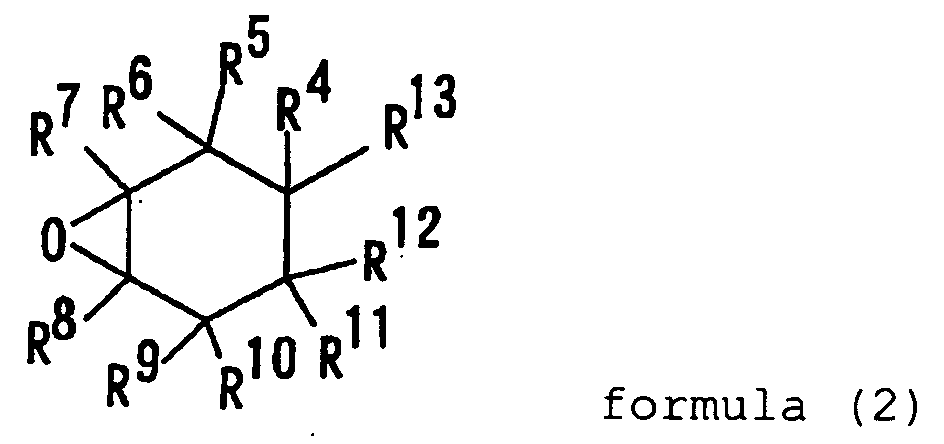
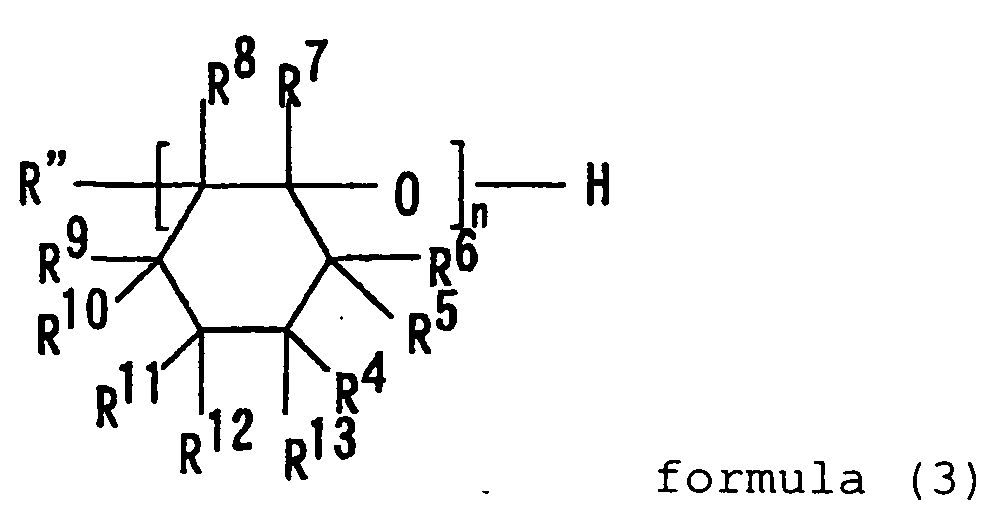
- An eighth invention provides a colored photosensitive composition for a color filter according to the first invention, in which the polyether compound is a polyether compound represented by the formula (4) obtained by reacting a compound represented by the following formula (3) with any one of a polybasic acid anhydride, phosphoric acid, ethyl phosphate, diethyl phosphate, a monoalkyl ester or dialkyl ester of glucose phosphate, sulfuric acid, methyl sulfate, and ethyl sulfate, the compound represented by the following formula (3) being obtained by reacting an organic compound RH m containing "m" pieces of active hydrogen atoms in one molecule (provided that "m" represents an integer of 1 to 30, and R represents a residue obtained by removing an active hydrogen atom from an organic compound having the active hydrogen atom) with a compound represented by the following formula (2), ⁇ R 4 to R 13 each represent a hydrogen atom, a hydrocarbon having 1 to 10 carbon atoms, or a hydrocarbon group having
- a ninth invention provides a colored photosensitive composition for a color filter according to the first invention, in which the curable resin and/or the ethylenically unsaturated compound to be optionally added are an epoxy group-containing resin and/or an acid group-containing resin.
- a tenth invention provides a colored photosensitive composition for a color filter according to any one of the first to ninth inventions, in which the polyether compound is a polyether compound synthesized by using a reactive diluent as a solvent.
- An eleventh invention provides a colored photosensitive composition for a color filter according to any one of the first to ninth inventions, in which the polyether compound is a polyether compound synthesized by passing a mixed gas containing oxygen through a reaction system.
- Atwelfth invention provides a color filter obtained by: applying the colored photosensitive composition for a color filter according to any one of the first to eleventh inventions; and curing the applied composition.
- a thirteenth invention provides a method of producing a color filter, characterized by including the steps of: applying the colored photosensitive composition for a color filter according to any one of the first to eleventh inventions onto a substrate; subjecting the colored photosensitive composition applied onto the substrate to pattern exposure to photo-cure the colored photosensitive composition in an exposed portion; and developing the colored photosensitive composition subjected to the pattern exposure to leave a pattern-like colored layer obtained by photo-curing the colored photosensitive composition on the substrate.
- An organic compound RH m containing one or more pieces of active hydrogen atoms in one molecule (provided that "m" represents an integer of 1 to 30, and R represents a residue obtained by removing an active hydrogen atom from an organic compound having the active hydrogen atom) is required as a raw material for a first-stage reaction in the synthesis of the polyether compound.
- Examples of such a compound include carboxylic acids, alcohols, phenols, amines, thiols, and silanols.
- carboxylic acids used at this time include formic acid, acetic acid, propionic acid, butanoic acid, aliphatic acids of animal and vegetable oils, phthalic acid, acrylic acid, methacrylic acid, maleic acid, fumaric acid, itaconic acid, succinic acid, adipic acid, azelaic acid, phthalic acid, isophthalic acid, terephthalic acid, hexahydrophthalic acid, methylhexahydrophthalic acid, tetrahydrophthalic acid, trimellitic acid, pyromellitic acid, biphenyl tetracarboxylic acid, diphenyl ether tetracarboxylic acid, diphenyl sulfone tetracarboxylic acid, tetracarboxybenzophenone, ⁇ -carboxyethyl (meth)acrylate, 2-(meth)acryloyloxyethyl succinic acid, 2-(meth)acrylate,
- (meth)acryl refers to both “acryl” and “methacryl”.
- alcohols include: aliphatic alcohols such as methanol, ethanol, propanol, butanol, hexanol, and octanol; aromatic alcohols such as benzyl alcohol; polyhydric alcohols such as ethylene glycol, diethylene glycol, triethylene glycol, polyethylene glycol, propylene glycol, dipropylene glycol, 1,3-propanediol, 1,3-butanediol, 1,4-butanediol, pentanediol, 1,6-hexanediol, neopentyl glycol, neopentyl glycol oxypyvalate, cyclohexanol, cyclohexanediol, cyclohexanedimethanol, glycerin, diglycerin, polyglycerin, trimethylolpropane, trimethylolethane, pentaerythritol, dip
- phenols examples include phenol, cresol, catechol, pyrogallol, hydroquinone, hydroquinone monomethyl ether, bisphenol, bisphenol A, bisphenol F, bisphenol S, 4,4-dihydroxybenzophenone, phenol resins, and cresol-novolac resins.
- amines examples include monomethylamine, dimethylamine, monoethylamine, diethylamine, monopropylamine, dipropylamine, monobutylamine, dibutylamine, benzylamine, hexylamine, cyclohexylamine, octylamine, dodecylamine, 4,4-diaminodiphenylmethane, isophoronediamine, toluenediamine, hexamethylenediamine, xylenediamine, diethylenetriamine, triethylenetetramine, and ethanolamine.
- Examples of the thiols include methyl mercaptan, ethyl mercaptan, propyl mercaptan, and phenyl mercaptan.
- Examples of the other compounds each having one or more pieces of active hydrogen atoms include: silicone compounds each having a silanol group; polyvinyl alcohol; partially hydrolyzed products of polyvinyl acetate; starch; acryl polyol resins; styrene allyl alcohol copolymer resins; styrene-maleic acid copolymer resins; alkyd resins; polyester polyol resins; polyester carboxylic acid resins; polycaprolactone polyol resins; polypropylene polyol; polytetramethylene glycol; polycarbonate polyols; polybutadiene having a hydroxyl group; cellulose; and cellulose-based polymers such as cellulose acetate, cellulose acetate butyrate, and hydroxyethylcellulose.
- a polyether compound represented by the formula (3) can be formed by acting moisture in the raw material as an initiator without using any one of the above compounds each having one or more pieces of active hydrogen atoms.
- a catalyst is preferably used at the time of a reaction between any one of the above organic compounds each having one or more active hydrogen atoms and the compound represented by the formula (2).
- the catalyst include: Lewis acids such as BF 3 , ZnCl 2 , AlCl 3 , and SnCl 4 ; and complexes of those acids with ethers and the like.
- sulfonium-based, ionium-based, and other photocationic catalysts that generate acids through irradiation with rays can be used.
- Such a catalyst is used in an amount in the range of preferably 0.01 to 10% by weight, particularly preferably 0.1 to 5% by weight with respect to the reactant.
- An amount of the catalyst to be used of less than 0.1% by weight is not preferable because the reaction requires a long time period.
- An amount of the catalyst to be used in excess of 10% by weight is not preferable either because a side reaction is apt to occur, so the product may be stained or gelled.
- the amount of the epoxy group used is preferably 3 chemical equivalents or more, particularly preferably in the range of 5 to 30 chemical equivalents.
- An amount of less than 2 chemical equivalents is not preferable because the coating film hardness of a cured product formed of the resultant polyether compound as a curable composition reduces.
- An amount in excess of 50 chemical equivalents is not preferable either because the product is apt to be gelled and a liquid viscosity is so high that handling, sensitivity at the time of ultraviolet rays curing, and the like deteriorate.
- a reaction time is preferably in the range of 0. 5 to 24 hours, particularly preferably in the range of 2 to 5 hours.
- a reaction temperature is preferably in the range of -50 to 100°C, particularly preferably in the range of -20 to 50°C. If the reaction temperature exceeds 100°C, the product is apt to be gelled and heavily discolored.
- the use of a solvent as described below is effective in suppressing gelation and discoloring.
- any one of the solvents having no active hydrogen atoms such as those described in JP 04-164921 A and JP 04-258617 A can be used as the solvent.
- examples of an available solvent include: ketones such as acetone, methyl ethyl ketone, methyl isobutyl ketone, and cyclohexanone; aromatic solvents such as benzene, toluene, and xylene; ethers; aliphatic hydrocarbons; and esters.
- the examples further include: a diacetate of ethylene glycol or of propylene glycol; a methyl ether acetate of ethylene glycol or of propylene glycol; and an acrylic monomer having neither an active hydroxyl group nor an active carboxyl group.
- the amount of the solvent to be used is 0.2 to 5 fold amounts, preferably 0.5 to 3 fold amounts on a weight basis with respect to starting raw materials.
- An amount of the solvent to be used of less than 0.2 fold amount is not preferable because a product has a high viscosity, so the heat of reaction is hardly removed and the resultant product is discolored.
- An amount of the solvent to be used in excess of 5 fold amounts is not preferable either because a curing rate is slow and the physical properties of a cured product deteriorate when the polyether compound represented by the formula (4) having multiple polymerizable unsaturated groups and one or more acid groups in one molecule is used for a colored photosensitive composition for a color filter.
- JP 04-258617 A mentioned above describes that a polymerization inhibitor such as hydroquinone, hydroquinone monomethyl ether, methyl hydroquinone, p-benzoquinone, or phenothiazine must be added at a concentration of 50 to 10,000 ppm to a reaction solution.
- a polymerization inhibitor having an active hydrogen atom reacts with a base to lose its effects. Therefore, in producing the polyether compound represented by the formula (4) in the present invention, an oxygen-containing gas such as air is preferably passed at the time of the reaction in order to prevent gelation.
- a mixed gas with an oxygen concentration of approximately 7% is desirably prepared by mixing nitrogen and air from the viewpoint of safety.
- Examples of the compound represented by the formula (2) include 3,4-epoxycyclohexylmethyl (meth)acrylate and ⁇ -caprolactone-modified 3,4-epoxycyclohexylmethyl (meth)acrylate.
- Any one of vinylhexene monoepoxide, cyclohexene oxide, ⁇ -pinene oxide, epoxidized tetrahydrobenzyl alcohol, caprolactone-modified epoxidized tetrahydrobenzyl alcohol, and the like, which are not represented by the formula (2), can be used in the same manner as that of the compound represented by the formula (2).
- 3,4-epoxycyclohexylmethyl (meth)acrylate (manufactured by Daicel Chemical Industries, Ltd., Cyclomer A-200 or the like) is preferable.
- the RH m may react with an epoxy ring at the side close to R 7 of the epoxy ring or the side close to R 8 .
- An example in which the RH m reacts with the epoxy ring at the side close to R 7 is exemplarily shown in the formula (3A) or (3).
- the polyether compound in the present invention represented by the formula (4) having multiple polymerizable unsaturated groups and one or more pieces of acid groups in one molecule can be obtained by further reacting the polyether compound of the formula (3) obtained as described above with a polybasic acid anhydride.
- a polybasic acid anhydride allowed to react is not particularly limited, and any one of a saturated polybasic acid anhydride, an unsaturated polybasic acid anhydride, and a dibasic acid anhydride containing an acid group such as a carboxyl group can be used.
- Examples of such a polybasic acid anhydride include succinic anhydride, maleic anhydride, phthalic anhydride, nadic anhydride, tetrahydrophthalic anhydride, tetrabromophthalic anhydride, hexahydrophthalic anhydride, methyltetrahydrophthalic anhydride, methylhexyahydrophthalic anhydride, endomethylenetetrahydrophthalic anhydride, methylendomethylenetetrahydrophthalic anhydride, methylbutenyltetrahydrophthalic anhydride, itaconic anhydride, octenyl succinic anhydride, pentadodecenyl succinic anhydride, chlorendic anhydride, biphenyltetracarboxylic monoanhydride/dianhydride, diphenylethertetracarboxylic monoanhydride/dianhydride, butanetetracarboxylic monoanhydride/dian
- succinic anhydride phthalic anhydride, tetrahydrophthalic anhydride, and methyltetrahydrophthalic anhydride can be suitably used.
- an aliphatic polybasic acid anhydride is particularly preferable.
- one kind of polybasic acid anhydride can be used alone, or two or more kinds of polybasic acid anhydrides may be used in combination.
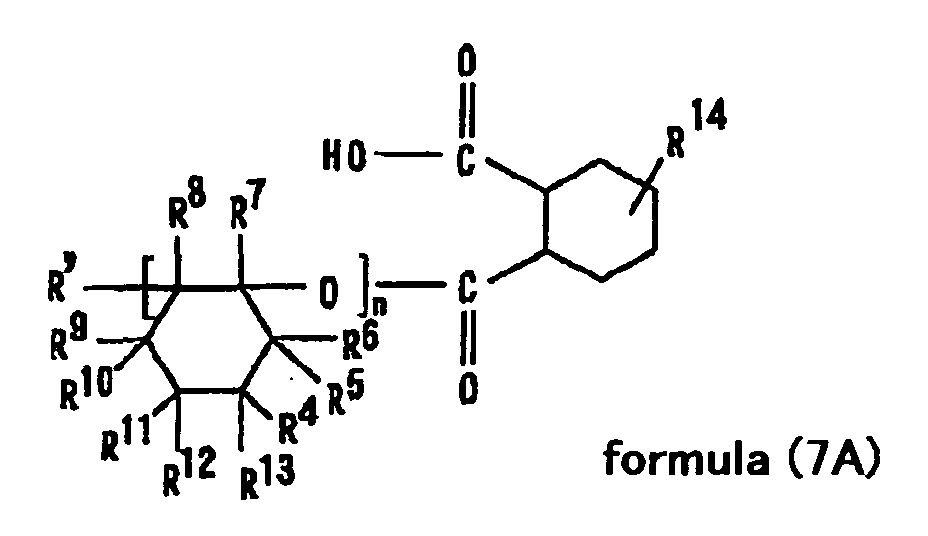
- X in the polyether compound of the formula (4) to be obtained represents -COOH, so the compound has the following structural formula.
- R 14 represents an hydrogen atom or an alkyl group such as a methyl group.
- phosphoric acid ethyl phosphate, diethyl phosphate, a monoalkyl ester or dialkyl ester of glucose phosphate, or the like (phosphoric acid-based compound) is used instead of the polybasic acid anhydride.
- sulfuric acid or an acidic sulfate such as ethyl sulfate or methyl sulfate, or the like is used instead of the polybasic acid anhydride.
- the reaction with the polybasic acid anhydride, the phosphoric acid-based compound, or the sulfuric acid-based compound can be performed by using a solution of a reactive diluent as it is without separating a reaction medium used at the time of the synthesis of the polyether compound of the formula (3), or may be performed after the separation of the reactive diluent.
- the polybasic acid anhydride may be dissolved for an addition reaction into, for example, an aromatic hydrocarbon such as toluene or xylene, an alcohol such as methanol, isopropanol, or cyclohexanol, an aliphatic hydrocarbon such as cyclohexane or methylcyclohexane, a petroleum-based solvent such as petroleum ether or petroleum naphtha, a cellosolve such as cellosolve or butylcellosolve, a carbitol such as carbitol or butylcarbitol, an acetate such as ethyl acetate, butyl acetate, cellosolve acetate, butylcellosolve acetate, carbitol acetate, or butylcarbitol acetate, or a ketone such as methyl ethyl ketone or cyclohexanone.
- an aromatic hydrocarbon such as toluene or xy
- a photopolymerizable monomer can be used as a reactive diluent in addition to any one of those organic solvents.
- a photopolymerizable monomer that can be used as a reactive diluent include: monofunctional acrylate compounds such as methyl (meth)acrylate, ethyl (meth)acrylate, n-propyl (meth)acrylate, n-butyl (meth)acrylate, 2-ethylhexyl (meth) acrylate, lauryl (meth)acrylate, stearyl (meth)acrylate, cyclohexyl (meth)acrylate, phenoxyethyl (meth)acrylate, 2-ethoxyethyl (meth)acrylate, 2-butoxyethyl (meth)acrylate, 2-hydroxyethyl (meth)acrylate, 2-hydroxypropyl (meth)acrylate, benzyl (meth)acrylate, and ethyl
- each of those reactive diluents can be used alone, or two or more of them can be used in combination.
- the reaction between the polyether compound of the formula (3) and the polybasic acid anhydride is preferably performed at a reaction temperature in the range of 80 to 120°C in the presence of a polymerization inhibitor such as hydroquinone or methoquinone while a mixed gas containing oxygen is passed. If the reaction temperature is less than 80°C, a reaction rate may be slow and the reaction may require a long time period. If the reaction temperature exceeds 120°C, a polyfunctional acrylate causes thermal polymerization, so gelation may occur during the reaction.
- any one of the catalysts including: tertiary amines such as triethylamine; quaternary ammonium salts such as triethylbenzylammonium chloride; imidazole compounds such as 2-ethyl-4-methylimidazole; and phosphorous compounds such as triphenylphosphine may be optionally added.
- tertiary amines such as triethylamine
- quaternary ammonium salts such as triethylbenzylammonium chloride
- imidazole compounds such as 2-ethyl-4-methylimidazole
- phosphorous compounds such as triphenylphosphine
- the polyether compound serving as a main resin component in the colored photosensitive composition for a color filter of the present invention is represented by the following formula (4) as a result of the ring-opening of the polybasic acid anhydride, and the reactions of the phosphoric acid-based or sulfuric acid-based compounds.
- R' represents a residue -RH m-1 of an organic compound RH m containing "m" pieces of active hydrogen atoms in one molecule, or a group derived from the residue;
- R represents a residue obtained by removing an active hydrogen atom from an organic compound having the active hydrogen atom;
- "m" represents an integer of 1 to 30;
- R 15 represents a residue of a polybasic acid anhydride, phosphoric acid, eth
- the number of structural units is greater than 50, the number of unsaturated groups in the polyether compound represented by the formula (4) to be obtained becomes excessively many. Therefore, when the polyether compound is used as a curable resin, a cross-link density is so high that a cured film to be obtained becomes brittle, which is not preferable.
- R 15 represents a ring-opening residue of the polybasic acid anhydride or the like, and preferably contains an cycloaliphatic group.
- the acid value (in terms of solid content) of the polyether compound represented by the formula (4) is in the range of 5 to 150 (KOHmg/g), typically 5 to 150 (KOHmg/g), preferably 25 to 150 (KOHmg/g) in view of alkali developability and sensitivity.
- An acid value of 5 or less (KOHmg/g) results in poor developability with a dilute alkaline aqueous solution.
- an acid value in excess of 300 (KOHmg/g) results in poor water resistance, poor alkali resistance, and poor humidity resistance of a coating film or color filter after curing.
- R' in the formula (4) may include various cases where one to (m-1) pieces of active hydrogen atoms react to provide branched structures each having (m-1) pieces of structures similar to the structure obtained by removing R' in the formula (4) as well as -RH m-1 in which its active hydrogen atoms remain as they are.
- R'' in the formula (3) may include various cases where one to (m-1) pieces of active hydrogen atoms react to provide branched structures each having (m-1) pieces of structures similar to the structure obtained by removing R" in the formula (3) as well as -RH m-1 in which its active hydrogen atoms remain as they are.
- group derived from the residue refers to such cases.
- R'' when trimethylolpropane is used as the organic compound containing "m" pieces of active hydrogen atoms in one molecule, in the formula (3), R'' may be a residue CH 3 CH 2 C(CH 2 OH) 2 CH 2 O- (remaining active hydrogen atoms are unreacted), or may be one as a result of the reaction with the compound of the formula (2) using one or both of the two active hydrogen atoms in the compound as an origin of the reaction, that is, a "group derived from the residue" having one or two pieces of structures similar to the structure obtained by removing R'' in the formula (3) (provided that the numbers corresponding to "n" in the respective structures are equal to or different from each other).
- the colored photosensitive composition for a color filter of the present invention preferably contains 15% by weight or more of the polyether compound represented by the formula (4).
- the colored photosensitive composition for a color filter of the present invention is obtained by blending the polyether compound with a curable resin and/or an ethylenically unsaturated compound like a resin obtained by adding the compound represented by the formula (2A) toa (meth)acrylic acid-(meth)acrylate copolymer.
- Specific examples of the curable resin include "ACA200 or Cyclomer P" manufactured by and available from Daicel Chemical Industries, Ltd.
- ethylenically unsaturated compound examples include: ⁇ -carboxyethyl (meth)acrylate; isobonyl (meth)acrylate; octyldecyl (meth)acrylate; ethoxyphenyl (meth)acrylate; diethylene glycol monoethylether (meth)acrylate; t-butylcyclohexyl (meth)acrylate; dipropylene glycol di(meth)acrylate; 1, 6-hexanediol di(meth)acrylate; tripropylene glycol di(meth)acrylate; modified bisphenol A di(meth)acrylate; dimethyloldicyclopentane di(meth)acrylate; various PEG di(meth)acrylates such as diethylene glycol di(meth)acrylate, triethylene glycol di(meth)acrylate, and tetraethylene glycol di(meth)acrylate; trimethylolpropane tri(meth)acrylate; and
- polyether compound represented by the formula (4) may be used in combination with any one of the other polymerizable oligomers such as various epoxy acrylates, urethane (meth)acrylates, unsaturated polyesters, polyester (meth)acrylates, polyether (meth)acrylates, and polymers of them.
- the curable resin and/or the ethylenically unsaturated compound like a resin obtained by adding the compound represented by the formula (2A) to a (meth)acrylic acid-(meth)acrylate copolymer can be used alone, or two or more kinds of them can be mixed at an arbitrary ratio and used.
- the curable resin and/or the ethylenically unsaturated compound like a resin obtained by adding the compound represented by the formula (2A) to a (meth)acrylic acid-(meth)acrylate copolymer are used in an amount in the range of 0 to 85% by weight, preferably 10 to 80% by weight, more preferably 50 to 80% by weight in the resin component.
- the amount of the curable resin and/or the ethylenically unsaturated compound to be used exceeds 85% by weight, no effect of the use of the polyether compound represented by the formula (4) in a color filter is obtained.
- the curable resin and the ethylenically unsaturated compound can be synthesized according to conventionally known methods, and are easily available from the market.
- the colored photosensitive (photo-curable) composition for a color filter of the present invention is obtained by combining the polyether compound having multiple polymerizable unsaturated groups and one or more pieces of acid groups in one molecule with a suitable coloring matter and the curable resin and/or the ethylenically unsaturated compound to be optionally added.
- Examples of an available photopolymerization initiator include benzophenone, orthobenzoyl methyl benzoate, 4-dimethylaminobenzoate (such as Kayacure EPA manufactured by Nippon Kayaku Co., Ltd.), 2,4-diethylthioxanthone (such as Kayacure DETX manufactured by Nippon Kayaku Co., Ltd.), 2-methyl-1-[4-(methyl)phenyl]-2-morpholinopropane(such as Irgacure 907 manufactured by Ciba-Geigy Ltd.), tetra(t-butylperoxycarbonyl)benzophenone, benzyl (that is, dibenzoyl), 2-hydroxy-2-methyl-1-phenyl-propan-1-on, 4,4-bisdiethylaminobenzophenone, and 2,2-bis(2-chlorophenyl)-4,5,4',5'-tetraphenyl-1,2'-biimidazole (such as B-
- Coloring matters to be incorporated into the colored photosensitive composition for a color filter of the present invention are composed of coloring matters of red, green, and blue called three primary colors of light and a coloring matter of black of a black matrix portion optionally used.
- Each of a dye and a pigment can be used as the coloring matter, but the pigment is preferable in terms of heat resistance and light resistance.
- Examples of such a pigment include: inorganic pigments such as barium sulfate, zinc white, lead sulfate, titanium oxide, yellow lead, red oxide, ultramarine blue, iron blue, chromium oxide, and carbon black; and organic pigments such as benzidine yellow G, benzidine yellow GR, sole fast orange 3GL, vulcan fast orange GC, pigment scarlet 3B, thiostoryomallon, phthalocyanine blue, phthalocyanine green, indanthrene blue, green gold, and malachite green lake. Specific examples of such a pigment are given below. All of them are represented by color index (C.I.) numbers. An organic pigment excellent in transparency is preferable as the pigment. C.I.
- a pigment having 50% by weight or more of primary particles each having a particle size of 0.3 ⁇ m or less and 5% by weight or less of primary particles each having a particle size of 1 ⁇ m or more is preferably used as a coloring matter from the viewpoints of the transparency and dispersability of a pigment.
- a pigment in which the particle sizes of all the primary particles are equal to or less than 0.1 ⁇ m and are sufficiently small as compared to the wavelength of visible light is more preferable. If the primary particles each having a particle size of 0.3 ⁇ m or less account for less than 50% by weight of all the particles or if the primary particles each having a particle size of 1 ⁇ m or more account for more than 5% by weight of all the particles, the transparency of the colored photosensitive composition for a color filter is poor. In particular, the composition is not suitable for color filter applications where transparency is required.
- a secondary particle is an agglomerate of primary particles.
- the loading of the coloring matter in the colored photosensitive composition for a color filter is in the range of 50 to 1,000 parts by weight, preferably 50 to 500 parts by weight with respect to 100 parts by weight of the solid content of the colored photosensitive composition.
- the loading of the coloring matter is lower than 50 parts by weight, characteristics as a filter are improved, but the filter thickness must be increased to obtain a predetermined optical density, so microprocessing becomes difficult.
- the colored photosensitive composition for a color filter of the present invention may contain a thermal polymerization inhibitor, a pigment dispersant, and the like as additives as required. Furthermore, a thermoplastic resin, a thermosetting resin, and the like can be incorporated into the composition.
- the weight ratio of the pigment dispersant to the pigment is preferably in the range of 0.01 to 0.2, but is not necessarily limited to this range.
- examples of an available pigment dispersant include: various surfactants such as cationic surfactants, anionic surfactants, and nonionic surfactants; and derivatives of organic pigments. Each of such dispersants provides a color filter excellent in transparency because of its excellent pigment dispersability and its great effect of preventing the reagglomeration of the pigments after the dispersion.
- cationic ones include Acetamin 24, Acetamin 86, and Cotamin 86P conc (each of which is manufactured by Kao Corporation), while specific examples of anionic ones include Demol P, Demol EP, Homogenol M-8, Homogenol L-18, Homogenol L-95, and Homogenol L-100 (each of which is manufactured by Kao Corporation).
- specific examples of nonionic ones include Emulgen A-60, Rheodol SP-L10, Rheodol SP-010, Emasol L-10H, and Emasol S-20 (each of which is manufactured by Kao Corporation).
- derivatives of organic pigments are particularly effective although their specifications differ from organic pigment to organic pigment.
- organic pigments serving as parent bodies include azo-based ones, phthalocyanine-based ones, quinacridone-based ones, anthraquinone-based ones, perylene-based ones, perynone-based ones, thioindigo-based ones, dioxazine-based ones, isoindolinone-based ones, quinophthalone-based ones, triphenylmethane-based ones, and metal complex salt-based ones. Derivatives of those organic pigments having substituents effective in dispersing pigments are used.
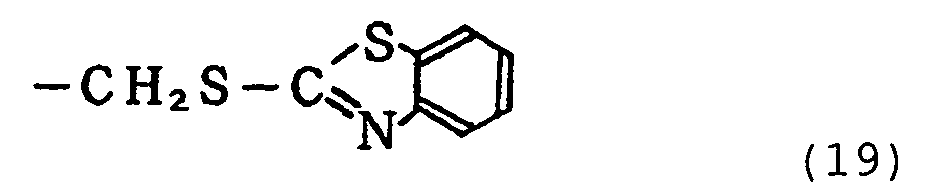
- substituents examples include a hydroxyl group, a carboxyl group, a sulfonic group, a carbonamide group, a sulfoneamide group, and any one of the substituents represented by the following general formulae (18) to (23).
- a derivative having at least one kind of substituent selected from those substituents is used.
- a pigment and an organic pigment to be combined to serve as the parent body of the pigment are typically the same, but are not necessarily identical to each other.
- -CH 2 -X-A (X: an oxygen or sulfur atom, A: an aryl group) -CH 2 OX-NR 1 R 2 (X: an alkylene group, R 1 , R 2 : a hydrogen atom or an alkyl group, or R 1 and R 2 bind to form a heterocyclic ring containing at least a nitrogen atom) -CH 2 NR 1 R 2 (R 1 : a hydrogen atom, an alkyl group, or an aryl group, R 2 : an alkyl group or an aryl group, or R 1 and R 2 bind to form a heterocyclic ring containing at least a nitrogen atom) -SO 2 NR 1 -A-NR 2 R 3 (R 1 : a hydrogen atom or an alkyl group, A: an alkylene group, R 2 : an alkyl group, an alkoxyalkyl group, or a cycloalkyl group, R 3 : a hydrogen atom or a cycl
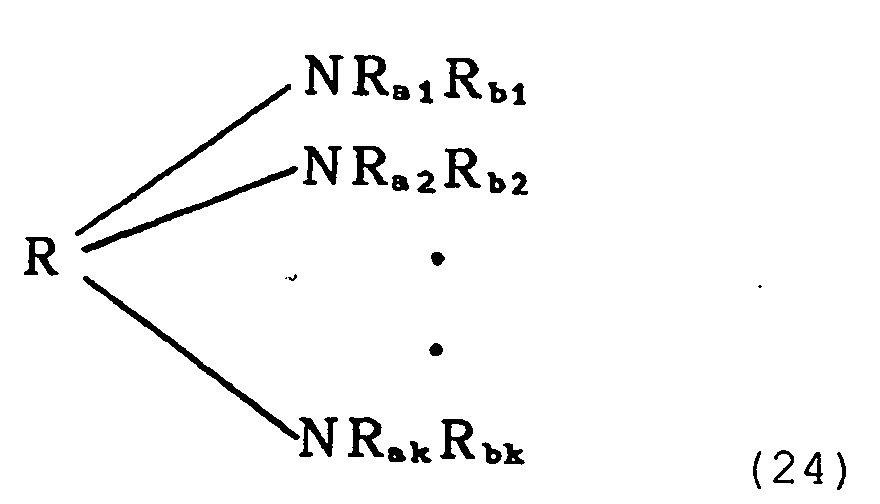
- each of the amino group-containing lactones each represented by the following formula (24) can be used as the pigment dispersant.
- an amino group-containing compound represented by the following general formula (26) can also be used as the pigment dispersant. That is, a polyester compound represented by the general formula (26) can be used, which contains, as an essential ingredient, a unit having: a functional group capable of causing a Michael addition reaction with an amino group at its terminal; and a polyester chain produced by ring-opening of a lactone compound represented by the general formula (27).
- a polyester compound represented by the general formula (26) can be used, which contains, as an essential ingredient, a unit having: a functional group capable of causing a Michael addition reaction with an amino group at its terminal; and a polyester chain produced by ring-opening of a lactone compound represented by the general formula (27).
- X represents a unit having a functional group capable of causing a Michael addition reaction with an amino group at its terminal
- Y represents a unit having a polyester chain produced by ring-opening of a lactone compound (27);
- R 1 represents an alkylene group having 1 to 10 carbon atoms which may be substituted by an aliphatic alkyl group having 1 to 10 carbon atoms]
- R represents an alkyl group having 1 to 20 carbon atoms, an aromatic group, an OH group, a cyano group, or a halogen atom.
- the composition is applied onto a glass substrate or the like serving as a transparent substrate by means of a coating method such as spray coating, spin coating, or slit coating.
- the dried coating film has a thickness in the range of 1 to 3 ⁇ m, and is exposed to ultraviolet rays while being in contact with or out of contact with a positive or negative mask having a predetermined pattern.
- the resultant is immersed in an alkali developer, or an alkali developer is sprayed onto the resultant by means of a spray or the like to remove an uncured portion. Subsequently, a similar operation is repeated. Furthermore, heating can be performed as required for the purpose of promoting the polymerization of the photosensitive resin.
- aqueous solution of sodium carbonate decahydrate, trialkylammonium hydroxide, caustic soda, or the like can be used as the alkali developer at the time of development.
- An amine such as dimethylbenzylamine or triethanolamine, or a trialkylammonium halide can be also added.
- a water-soluble or alkali-soluble resin such as a water-soluble acrylic resin or a polyvinyl alcohol resin may be applied and dried before exposure to ultraviolet rays in order to increase sensitivity to exposure to ultraviolet rays.
- Fig. 1 of JP 02-144502 mentioned above can be applied as it is as an example of application of a color filter using the colored photosensitive composition for a color filter of the present invention to a liquid crystal display device.
- the example is shown in Fig. 3 of this description, and a description will be made with reference to the figure.
- Fig. 3 shows an example of a liquid crystal display device using a color filter.
- White light emitted from a light source 1 such as a fluorescent tube passes through a pixel electrode 4 and an alignment layer 5 via a polarizing plate 2 and a transparent substrate 3 to travel toward a liquid crystal 6.
- the light passes through an alignment film 8 and a transparent electrode 9 to be separated into three primary colors by a color filter 10.
- the light passes through a transparent substrate 11 and a polarizing plate 12 to be visually identified as a color.
- the liquid crystal 6 is sealed between the alignment films 5 and 8 so as to be in contact with a sealer 7, and changes its orientation by means of an electrical signal applied between the pixel electrode 4 and the transparent electrode 9.
- the polarizing plates 2 and 12 serve as optical shutters to convert the light that has passed through the color filter into information.
- the size of each color of the color filter 10 is the same as that of the pixel electrode 4, and is of a several millimeter-square for a large display or a several tens of micron to several hundreds of micron-square for a handy-type display. Therefore, the color filter 10 must be composed of a material that can be subjected to microprocessing.
- a glass substrate, a transparent resin plate, a transparent resin film, or the like is applicable as the transparent substrate 11 shown in Fig. 3.
- the color filter 10 is placed on the transparent substrate 11 and the transparent electrode 9 is arranged on the color filter 10.
- a transparent electrode is arranged on the transparent substrate 11 and a color filter is placed on the electrode.
- the color filter 10 is composed of, for example, a red filter layer R, a green filter layer G, and a blue filter layer B.
- a black or opaque light-shielding or uncolored layer is placed between two arbitrary layers of the R, G, and B layers.
- the red filter layer R is mainly composed of: a polyether compound having multiple polymerizable unsaturated groups and one or more acid groups in one molecule; a curable resin and/or an ethylenically unsaturated compound to be optionally added; a red pigment; and a pigment dispersant.
- each of the green filter layer G and the blue filter layer B is mainly composed of: the polyether compound; the curable resin and/or the ethylenically unsaturated compound to be optionally added; a pigment; and a pigment dispersant.
- the roles of the polyether compound and the curable resin and/or the ethylenically unsaturated compound to be optionally added are: to fix a pigment of each color onto the transparent substrate 11; to optionally enable patterning in an arbitrary shape; and to serve as a base when the transparent electrode 9 is formed on the color filter 10.
- part means “part by weight” in the examples.
- TMP trimethylolpropane
- RH m organic compound having active hydrogen atoms
- 2,730 parts of 3,4-epoxycyclohexylmethyl acrylate manufactured by Daicel Chemical Industries, Ltd., Cyclomer A-200, indicated by A-200 in a table
- toluene was increased to 35°C.
- the solid content (solid dried for 1 hour at 120°C), viscosity, and molecular weight by GPC of the resultant compound corresponding to the formula (3) (which is referred to as a polyacrylate-based compound here, but may be referred to as a polymethacrylate-based compound depending on a raw material used in the following synthesis examples) were as follows.
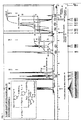
- Fig. 1 shows the NMR chart.
- toluene serving as the solvent showed peaks at 7.2 ppm (part of the peak is hidden by a chemical formula) and 2.3 ppm.
- the absorption by the polyacrylate-based compound obtained as described above had a peak of 3H by an acryloyl group at 6.4 to 5.8 ppm, a peak of methylene 2H sandwiched between a cyclo ring and an acryloid at 4 ppm, and a peak of an epoxy ring-opening portion 2H at 3.5 ppm as a main peak on which 2H protons of methylene adjacent to a hydroxyl group of TMP and a 1H proton of a hydroxyl group at the terminal of the resin overlapped.
- an intensity ratio between a methyl portion (CH 3 : 3H) of trimethylolpropane used as an initiator of the ring-opening and a 1H proton attached to tertiary carbon on the cyclo ring was 2:10, so it can be confirmed that the value coincides with the theoretical value of 1:15 derived from the feeding molar ratio.
- the polyacrylate-based compound obtained as described above was further subjected to an addition reaction with tetrahydrophthalic anhydride as a dibasic acid anhydride as follows.
- the solid content (dried for 1 hour at 120°C), viscosity, and molecular weight by GPC of the resultant polyether compound of the formula (4) (which is referred to as an acid anhydride-added polyacrylate-based compound here, but may be referred to as an acid anhydride-added polymethacrylate-based compound depending on a raw material used in the following synthesis examples) were as follows.
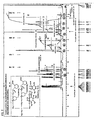
- Fig. 2 shows the NMR chart.
- toluene serving as the solvent showed proton peaks at 7.2 ppm (part of the peak is hidden by a chemical formula) and 2.3 ppm.
- the following three peaks by tetrahydrophthalic anhydride (THPA) are added to the NMR chart of Fig. 1.
- THPA tetrahydrophthalic anhydride
- TMP trimethylolpropane
- 1,092 parts of 3,4-epoxycyclohexylmethyl acrylate manufactured by Daicel Chemical Industries, Ltd., Cyclomer A-200
- the liquid temperature was increased to 35°C.
- 16. 4 parts of diethyl ether complex of boron trifluoride were dropped into the liquid over about 3 hours to carry out a reaction.
- the reaction was continued until an oxirane oxygen concentration in the mixed liquid became 0.05% or less.
- a mixed gas of nitrogen and air with an oxygen concentration of 7% was passed through the liquid at 50 ml/min by the end of the reaction in order to prevent gelation due to radical polymerization during the reaction.
- the solid content (dried for 1 hour at 120°C), viscosity, and molecular weight by GPC of the resultant polyacrylate-based compound were as follows.
- the polyacrylate-based compound obtained as described above was further subjected to an addition reaction with tetrahydrophthalic anhydride as a dibasic acid anhydride as follows.
- the solid content (dried for 1 hour at 120°C), viscosity, and molecular weight by GPC of the resultant acid anhydride-added polyacrylate-based compound were as follows.
- TMP trimethylolpropane
- 1,176 parts of 3,4-epoxycyclohexylmethyl methacrylate manufactured by Daicel Chemical Industries, Ltd., Cyclomer M-100, indicated by M-100 in a table
- the liquid temperature was increased to 35°C.
- 17.6 parts of diethyl ether complex of boron trifluoride were dropped into the liquid over about 3 hours to carry out a reaction.
- the reaction was continued until an oxirane oxygen concentration in the mixed liquid became 0.05% or less.
- a mixed gas of nitrogen and air with an oxygen concentration of 7% was passed through the liquid at 50 ml/min by the end of the reaction in order to prevent gelation due to radical polymerization during the reaction.
- the solid content (dried for 1 hour at 120°C), viscosity, and molecular weight by GPC of the resultant polymethacrylate-based compound were as follows.
- the polymethacrylate-based compound obtained as described above was further subjected to an addition reaction with tetrahydrophthalic anhydride as a dibasic acid anhydride as follows.
- a mixed gas of nitrogen and air with an oxygen concentration of 7% was passed through the liquid at 33 ml/min by the end of the reaction in order to prevent gelation due to radical polymerization during the reaction.
- the solid content (dried for 1 hour at 120°C), viscosity, and molecular weight by GPC of the resultant polyacrylate-based compound were as follows.
- the polyacrylate-based compound obtained as described above was further subjected to an addition reaction with tetrahydrophthalic anhydride as a dibasic acid anhydride as follows.
- Synthesis was performed in the same manner as in Synthesis Example 1 except that 1,540 parts of toluene as a reaction medium were changed to 740 parts of isobonyl acrylate and 800 parts of n-butyl acrylate.
- the solid content (dried for 120°C * 1 hour), viscosity, molecular weight by GPC, and the like of the resultant polyacrylate-based compound were as follows.
- the polyacrylate-based compound was further subjected to an addition reaction with tetrahydrophthalic anhydride as a dibasic acid anhydride in the same manner as in Synthesis Example 1 to yield an acid anhydride-added polyacrylate-based compound having the following physical properties.
- TMP trimethylolpropane
- 620 parts of vinylcyclohexene monoepoxide manufactured by Daicel Chemical Industries, Ltd., CEL 2000
- toluene 34.2 parts
- diethyl ether complex of boron trifluoride were dropped into the liquid over about 3 hours to carry out a reaction.
- the reaction was continued until an oxirane oxygen concentration in the mixed liquid became 0. 05% or less.
- a mixed gas of nitrogen and air with an oxygen concentration of 7% was passed through the liquid at 83 ml/min by the end of the reaction in order to prevent gelation due to radical polymerization during the reaction.
- the viscosity, molecular weight by GPC, and the like of the resultant compound were as follows.
- the compound (A) obtained as described above was further subjected to an addition reaction with tetrahydrophthalic anhydride as a dibasic acid anhydride as follows.
- the following synthesis was performed as one comparative synthesis example in order to obtain: an epoxy (meth)acrylate resin obtained by subjecting an epoxy group of an epoxy resin described in JP 06-157965 A to a ring-opening reaction with acrylic acid (AA) or methacrylic acid; and a product obtained by adding an acid anhydride to the epoxy (meth)acrylate resin.
- EHPE 3150 an epoxidized cyclohexane polyether resin (an epoxidized product of a product as a result of a reaction between 1 mole of trimethylolpropane and 15 moles of vinylcyclohexene monoepoxide, manufactured by Daicel Chemical Industries, Ltd., epoxy equivalent of 178) produced according to a method described in JP 60-166675 A, 602 parts of propylene glycol monomethylether acetate (MMPG-Ac), and 21.0 parts of dimethylbenzylamine, and the liquid temperature was increased to 100°C to dissolve EHPE 3150. After that, 202 parts of acrylic acid at which an equivalent ratio was established between an epoxy group and a carboxyl group were dropped into the liquid over 1 hour, and the whole was further aged at 100°C for 7 hours, followed by sampling.
- EHPE 3150 an epoxidized product of a product as a result of a reaction between 1 mole of trimethylolpropane and 15 moles of vinylcycl
- a sample had a measured acid value of 26 KOHmg/g.
- the mixture was heated to 110°C and the aging was continued for 3 hours before sampling was performed again. Thus, it was confirmed that the acid value was 4 KOHmg/g.
- a mixed gas of nitrogen and air with an oxygen concentration of 7% was passed through the liquid (17 ml/min) by the end of the reaction and the aging in order to prevent gelation.
- the viscosity, molecular weight by GPC, and the like of the resultant compound were as follows.
- the compound obtained as described above was further subjected to an addition reaction with tetrahydrophthalic anhydride as a dibasic acid anhydride as follows.
- the solid content (dried for 120°C * 1 hour), viscosity, and molecular weight by GPC of the resultant acid anhydride-added polyether compound were as follows.
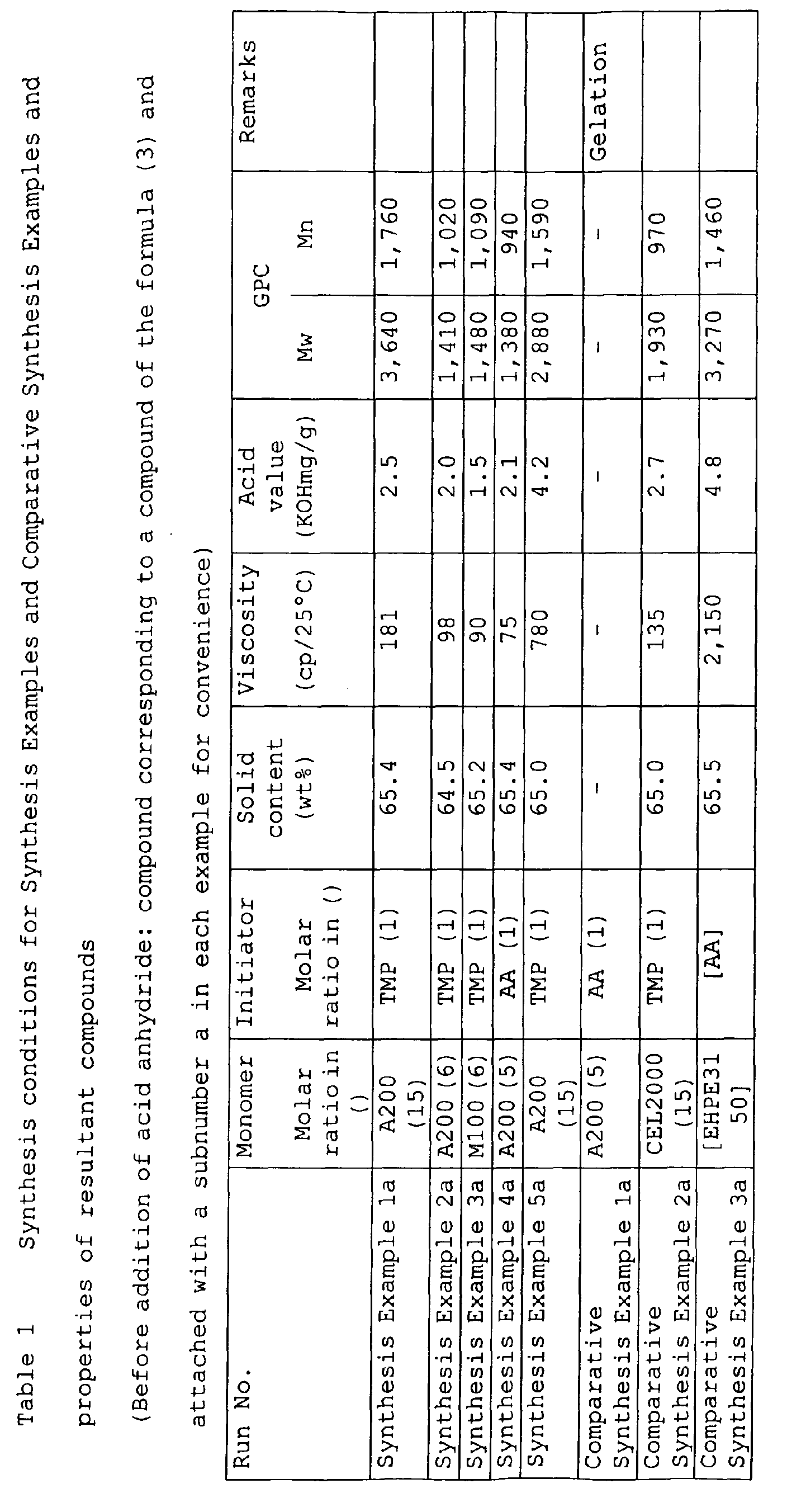
- Table 1 and Table 2 below collectively show the reaction compositions in Synthesis Examples and Comparative Synthesis Examples and the physical properties of the resultant mixed liquids.
- a commercially available product obtained by adding 3,4-epoxycyclohexylmethyl acrylate to a methacrylic acid-methyl methacrylate copolymer used in a field of an alkali development type resist was used to prepare resists of R (red), G (green), and B (blue) according to the followingmethod. After that, those resists were blended and cured with UV to evaluate tackiness, resolution, and the like.
- the above polyether compounds were represented by Synthesis Examples “1a” to “5a” and Comparative Synthesis Examples “2b” and “3b", and a system in which the polyacrylate-based compound of Synthesis Example 1 before the addition of a dibasic acid anhydride was blended was represented by Comparative Synthesis Example "4b". Furthermore, a system in which commercially available general-purpose hexafunctional DPHA (dipentaerythritol hexaacrylate having 6 acryloyl groups) was blended and a system in which none of the above was blended were added for comparison.
- general-purpose hexafunctional DPHA dipentaerythritol hexaacrylate having 6 acryloyl groups
- the red resist obtained as described above was subjected to microfiltration with a pore size of 1 ⁇ m, and was then spin-coated by means of a spin coater onto a glass substrate on which a black matrix pattern had been already formed in such a manner that the thickness after the drying of the solvent would be 1.3 ⁇ m. Subsequently, the resultant was pre-baked at 60°C for 20 minutes. Then, an aqueous solution of polyvinyl alcohol was spin-coated onto the resultant, and then water was dried. After that, the resultant was subjected to exposure by using a photomask for forming a pattern. The resultant was developed with a 1% aqueous solution of sodium carbonate decahydrate, washed with pure water, and post-baked at 230°C for 1 hour. Green and blue patterns were similarly formed to prepare a color filter.
- Color filters were produced in the same manner as in Examples 4 to 9 except that the polyether compound, the monomer (DHPA), and the like were changed.
- a coating film obtained in the same manner as in the resolution measurement was heated for 60 minutes in a warm air circulating-type drier at 230°C.
- the transmittance of the resultant cured coating film was measured by means of a spectrophotometer (manufactured by Nippon Kogaku Corporation) with light having a wavelength of 700 nm for a red-colored resist, light having a wavelength of 540 nm for a green resist, and light having a wavelength of 460 nm for a blue-colored resist.
- a colored photosensitive composition for a color filter which has no tackiness even after the removal of a solvent, which does not contaminate a photomask at the stage of exposure, and which has sufficient photosensitivity and sufficient resolution.
Landscapes
- Physics & Mathematics (AREA)
- General Physics & Mathematics (AREA)
- Spectroscopy & Molecular Physics (AREA)
- Chemical & Material Sciences (AREA)
- Chemical Kinetics & Catalysis (AREA)
- Health & Medical Sciences (AREA)
- General Chemical & Material Sciences (AREA)
- Medicinal Chemistry (AREA)
- Polymers & Plastics (AREA)
- Organic Chemistry (AREA)
- Optics & Photonics (AREA)
- Optical Filters (AREA)
- Materials For Photolithography (AREA)
Abstract

Description









and R represents an alkyl group having 1 to 20 carbon atoms, an aromatic group, an OH group, a cyano group, or a halogen atom.


Claims (13)
- A colored photosensitive composition for a color filter, characterized by comprising:a polyether compound represented by the following formula (4) having multiple polymerizable unsaturated groups and one or more acid groups in one molecule;a coloring matter; anda curable resin and/or an ethylenically unsaturated compound to be optionally added,[In the formula (4): R' represents a residue -RHm-1 of an organic compound RHm containing "m" pieces of active hydrogen atoms in one molecule, or a group derived from the residue; R represents a residue obtained by removing an active hydrogen atom from an organic compound having the active hydrogen atom; "m" represents an integer of 1 to 30; R4 to R13 each represent a hydrogen atom, a hydrocarbon group having 1 to 10 carbon atoms, or a hydrocarbon group having 1 to 10 carbon atoms and an unsaturated group, provided that the unsaturated group contains -OCO-CR3=CR1R2, R1 and R2 each represent a hydrogen atom, R3 represents a hydrogen atom or a hydrocarbon group having 1 to 10 carbon atoms, and at least one of R4 to R13 represents a hydrocarbon group having 1 to 10 carbon atoms and the unsaturated group; R15 represents a residue of a polybasic acid anhydride; X represents -COOH, -OPO(OH)a(OR)b, or -OSO3R (provided that R represents a hydrogen atom, a methyl group, or an ethyl group, "a" represents 1 or 0, and "a+b" = 2); "n" represents an integer of 1 or more, and the number of structural units in the entire molecule represented by n is in a range of 2 to 50; and "p" represents 0 when X represents -OPO(OH)a(OR)b or -OSO3R, while "p" represents an integer of 1 or more when X represents -COOH].
- A colored photosensitive composition for a color filter according to claim 1, wherein the polyether compound comprises one represented by the following formula (4A) having multiple (meth) acryloyl groups and one or more carboxyl groups in one molecule.[In the formula (4A), R' represents a residue -RHm-1 of an organic compound RHm containing m or more active hydrogen atoms in one molecule, or a group derived from the residue; R represents a residue obtained by removing an active hydrogen atom from an organic compound having the active hydrogen atom; "m" represents an integer of 1 to 30; R4 to R12 each represent a hydrogen atom or a hydrocarbon group having 1 to 10 carbon atoms; R1 and R2 of -OCO-CR3=CR1R2 each represent a hydrogen atom, and R3 of -OCO-CR3=CR1R2 represents a hydrogen atom or a methyl group; Y represents -(CH2)n1- where n1 represents an integer of 1 to 6, one obtained by substituting part of the hydrogen atoms constituting - (CH2)n1- by methyl groups, ethyl groups, or propyl groups, or one of the following structural formulae
 where n2 represents an integer of 1 to 10; R15 represents a residue produced by ring-opening of a polybasic acid anhydride; and "n" represents an integer of 1 or more, and the number of structural units in the entire molecule represented by "n" is in a range of 2 to 50].
- A colored photosensitive composition for a color filter according to claim 1 or 2, wherein the polybasic acid anhydride comprises at least one selected from the group consisting of tetrahydrophthalic anhydride, 4-methyltetrahydrophthalic anhydride, 3-methyltetrahydrophthalic anhydride, 3,4,5,6-tetrahydrophthalic anhydride, hexahydrophthalic anhydride, and 4-methyltetrahydrophthalic anhydride.
- A colored photosensitive composition for a color filter according to claim 1, wherein the polyether compound comprises a polyether compound represented by the following formula (4A') obtained by reacting a compound represented by the following formula (3A) with a polybasic acid anhydride, the compound represented by the following formula (3A) being obtained by reacting an organic compound RHm containing "m" pieces of active hydrogen atoms in one molecule which is at least one selected from the group consisting of carboxylic acids, alcohols, phenols, amines, thiols, and silanols, and in which "m" represents an integer of 1 to 30 (hereinafter, they are represented by R*Hm) with a compound represented by the following formula (2A),<In the formula (2A) : R1 and R2 each represent a hydrogen atom; R3 represents a hydrogen atom or a methyl group; R4 to R12 each represent a hydrogen atom, a methyl group, an ethyl group, or a propyl group; and Y represents -(CH2)n1- where n1 represents an integer of 1 to 6, one obtained by substituting part of the hydrogen atoms constituting -(CH2)n1- by methyl groups, ethyl groups, or propyl groups, or one of the following structural formulae
 where n2 represents an integer of 1 to 10>,
 <In the formula (3A), R'' represents a residue -R*Hm-1 of carboxylic acids, alcohols, phenols, amines, thiols, or silanols, or a group derived from the residue; R1 and R2 each represent a hydrogen atom; R3 represents a hydrogen atom or a methyl group; R4 to R12 each represent a hydrogen atom, a methyl group, an ethyl group, or a propyl group; Y is the same as that of the formula (2A); and "n" represents an integer of 2 to 50>,
 <In the formula (4A'), R15 represents a residue of a polybasic acid anhydride; and R''' represents a residue -R*Hm-1 or a group derived from the residue>.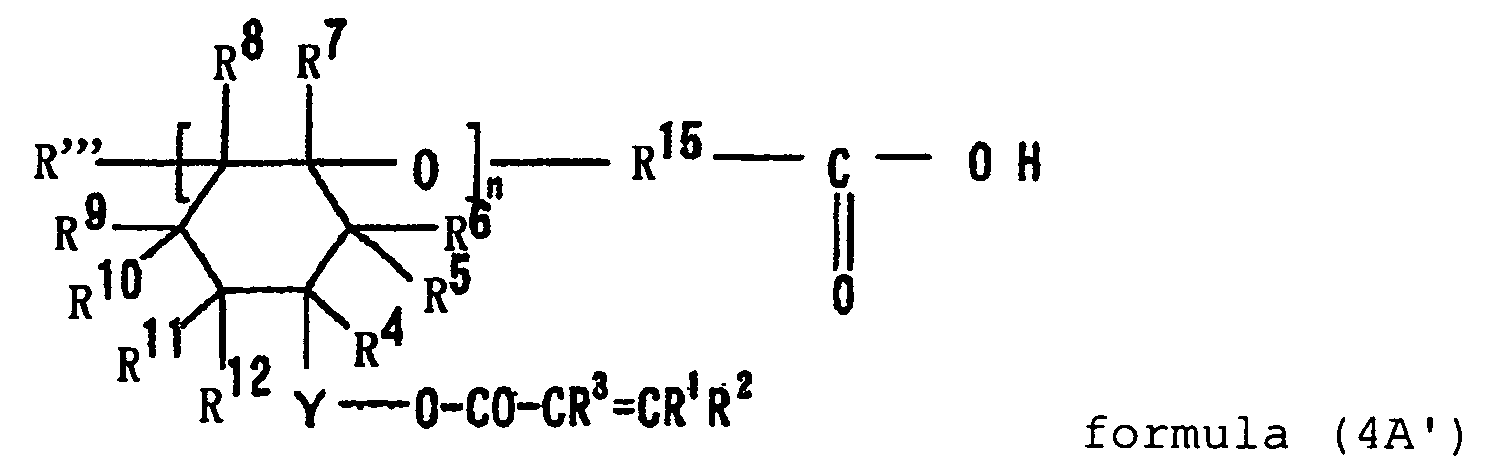
- A colored photosensitive composition for a color filter according to any one of claims 1 to 4, wherein the organic compound containing "m" pieces of active hydrogen atoms in one molecule comprises trimethylolpropane.
- A colored photosensitive composition for a color filter according to claim 4 or 5, wherein the compound represented by the formula (2A) comprises 3,4-epoxycyclohexylmethyl (meth)acrylate.
- A colored photosensitive composition for a color filter according to claim 1, wherein the curable resin comprises a resin obtained by reacting a (meth) acrylic acid- (meth) acrylate copolymer with a compound represented by the formula (2A),<In the formula (2A), R1 and R2 each represent a hydrogen atom; R3 represents a hydrogen atom or a methyl group; R4 to R12 each represent a hydrogen atom, a methyl group, an ethyl group, or a propyl group; and Y represents -(CH2)n1- where n1 represents an integer of 1 to 6, one obtained by substituting part of the hydrogen atoms constituting -(CH2)n1- by methyl groups, ethyl groups, or propyl groups, or one of the following structural formulae
 where n2 represents an integer of 1 to 10>.
- A colored photosensitive composition for a color filter according to claim 1, wherein the polyether compound comprises a polyether compound represented by the formula (4) obtained by reacting a compound represented by the following formula (3) with any one of a polybasic acid anhydride, phosphoric acid, ethyl phosphate, diethyl phosphate, a monoalkyl ester or dialkyl ester of glucose phosphate, sulfuric acid, methyl sulfate, and ethyl sulfate, the compound represented by the following formula (3) being obtained by reacting an organic compound RHm containing "m" pieces of active hydrogen atoms in one molecule (provided that "m" represents an integer of 1 to 30, and R represents a residue obtained by removing an active hydrogen atom from an organic compound having the active hydrogen atom) with a compound represented by the following formula (2),<R4 to R13 each represent a hydrogen atom, a hydrocarbon group having 1 to 10 carbon atoms, or a hydrocarbon group having 1 to 10 carbon atoms and an unsaturated group, provided that the unsaturated group contains -OCO-CR3=CR1R2, at least one of R4 to R13 represents the unsaturated group, R1 and R2 each represent a hydrogen atom, and R3 represents a hydrogen atom or a hydrocarbon group having 1 to 10 carbon atoms>,
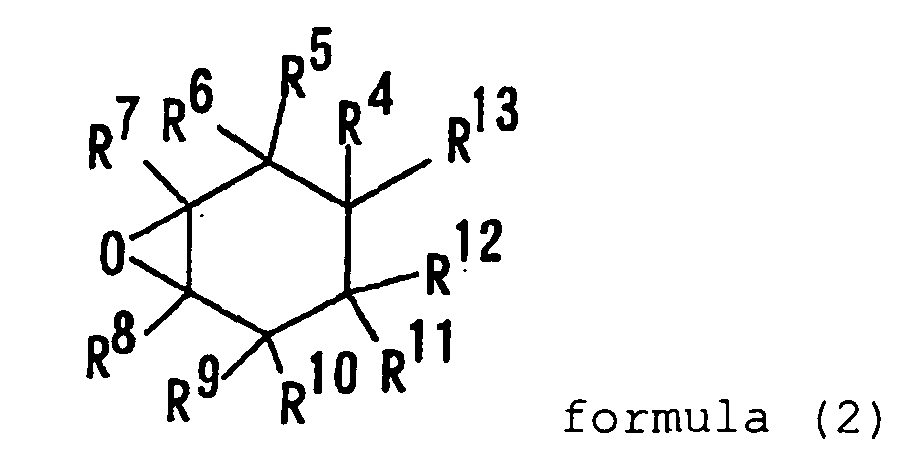 <In the formula (3), R'' represents a residue -RHm-1 of an organic compound containing "m" pieces of active hydrogen atoms in one molecule, or a group derived from the residue; R represents a residue obtained by removing an active hydrogen atom from an organic compound having the active hydrogen atom; and R4 to R13 each represent a hydrogen atom, a hydrocarbon group having 1 to 10 carbon atoms, or a hydrocarbon group having 1 to 10 carbon atoms and an unsaturated group, provided that the unsaturated group contains -OCO-CR3=CR1R2, R1 and R2 each represent a hydrogen atom, and R3 represents a hydrogen atom or a hydrocarbon group having 1 to 10 carbon atoms>,
 [In the formula (4), R' represents a residue -RHm-1 of an organic compound RHm containing "m" pieces of active hydrogen atoms in one molecule, or a group derived from the residue; R represents a residue obtained by removing an active hydrogen atom from an organic compound having the active hydrogen atom; "m" represents an integer of 1 to 30; R4 to R13 each represent a hydrogen atom, a hydrocarbon group having 1 to 10 carbon atoms, or a hydrocarbon group having 1 to 10 carbon atoms and an unsaturated group, provided that the unsaturated group contains -OCO-CR3=CR1R2, R1 and R2 each represent a hydrogen atom, R3 represents a hydrogen atom or a hydrocarbon group having 1 to 10 carbon atoms, and at least one of R4 to R13 represents a hydrocarbon group having 1 to 10 carbon atoms and the unsaturated group; R15 represents a residue of a polybasic acid anhydride; X represents -COOH, -OPO(OH)a(OR)b, or -OSO3R [provided that R represents a hydrogen atom, a methyl group, or an ethyl group, "a" represents 1 or 0, and "a+b" = 2]; "n" represents an integer of 1 or more, and the number of structural units in the entire molecule represented by "n" is in a range of 2 to 50; and "p" represents 0 when X represents -OPO(OH)a(OR)b or -OSO3R, while "p" represents an integer of 1 or more when X represents -COOH].
- A colored photosensitive composition for a color filter according to claim 1, wherein the curable resin and/or the ethylenically unsaturated compound to be optionally added comprise an epoxy group-containing resin and/or an acid group-containing resin.
- A colored photosensitive composition for a color filter according to any one of claims 1 to 9, wherein the polyether compound comprises a polyether compound synthesized by using a reactive diluent as a solvent.
- A colored photosensitive composition for a color filter according to any one of claims 1 to 9, wherein the polyether compound comprises a polyether compound synthesized by passing a mixed gas containing oxygen through a reaction system.
- A color filter obtained by: applying the colored photosensitive composition for a color filter according to any one of claims 1 to 11; and curing the applied composition.
- A method of producing a color filter, characterized by comprising the steps of:applying the colored photosensitive composition according to any one of claims 1 to 11 onto a substrate;subjecting the colored photosensitive composition applied onto the substrate to pattern exposure to photo-cure the colored photosensitive composition in an exposed portion; anddeveloping the colored photosensitive composition subjected to the pattern exposure to leave a pattern-like colored layer obtained by photo-curing the colored photosensitive composition on the substrate.
Applications Claiming Priority (3)
| Application Number | Priority Date | Filing Date | Title |
|---|---|---|---|
| JP2002349305 | 2002-11-29 | ||
| JP2002349305 | 2002-11-29 | ||
| PCT/JP2003/015293 WO2004057380A1 (en) | 2002-11-29 | 2003-11-28 | Colored photosensitive composition for color filters, color filters, and process for the production thereof |
Publications (2)
| Publication Number | Publication Date |
|---|---|
| EP1571469A1 true EP1571469A1 (en) | 2005-09-07 |
| EP1571469A4 EP1571469A4 (en) | 2006-12-20 |
Family
ID=32677048
Family Applications (1)
| Application Number | Title | Priority Date | Filing Date |
|---|---|---|---|
| EP03813718A Withdrawn EP1571469A4 (en) | 2002-11-29 | 2003-11-28 | PHOTOSENSITIVE COLORED COMPOSITION FOR COLOR FILTERS, COLOR FILTERS, AND PROCESS FOR PRODUCING THE SAME |
Country Status (8)
| Country | Link |
|---|---|
| US (1) | US20060257759A1 (en) |
| EP (1) | EP1571469A4 (en) |
| JP (1) | JPWO2004057380A1 (en) |
| KR (1) | KR20050086893A (en) |
| CN (1) | CN1717598A (en) |
| AU (1) | AU2003303281A1 (en) |
| TW (1) | TW200500335A (en) |
| WO (1) | WO2004057380A1 (en) |
Cited By (4)
| Publication number | Priority date | Publication date | Assignee | Title |
|---|---|---|---|---|
| WO2008081988A1 (en) * | 2006-12-28 | 2008-07-10 | Fujifilm Corporation | Curable composition, color filter, and manufacturing method of the same |
| EP1965255A1 (en) * | 2007-02-27 | 2008-09-03 | FUJIFILM Corporation | Colored photosensitive composition, color filter and method for making the color filter |
| WO2008123601A3 (en) * | 2007-03-30 | 2009-04-23 | Fujifilm Corp | Pigment-dispersed composition, curable composition, and color filter and production method thereof |
| TWI427408B (en) * | 2007-03-13 | 2014-02-21 | Jsr Corp | Radiation-sensitive composition for forming colored layer |
Families Citing this family (5)
| Publication number | Priority date | Publication date | Assignee | Title |
|---|---|---|---|---|
| TWI428691B (en) * | 2006-09-25 | 2014-03-01 | Fujifilm Corp | Curable composition, color filter and manufacturing method thereof |
| JP5019833B2 (en) * | 2006-09-25 | 2012-09-05 | 富士フイルム株式会社 | Curable composition, color filter and method for producing the same |
| JP4890388B2 (en) * | 2007-08-22 | 2012-03-07 | 富士フイルム株式会社 | Colored photosensitive composition, color filter and method for producing the same |
| TWI506306B (en) * | 2007-11-22 | 2015-11-01 | Toyo Ink Mfg Co | Green colored composition for color filter, and color filter |
| WO2015080147A1 (en) * | 2013-11-28 | 2015-06-04 | 日本化薬株式会社 | Active energy ray curable resin composition, and display element spacer and/or color filter protective film using same |
Family Cites Families (5)
| Publication number | Priority date | Publication date | Assignee | Title |
|---|---|---|---|---|
| EP0859021A3 (en) * | 1991-10-31 | 1998-11-11 | Daicel Chemical Industries, Ltd. | Epoxidised compositions |
| US5882843A (en) * | 1994-11-15 | 1999-03-16 | Hoechst Japan Limited | Photosensitive resin composition for color filter production |
| US5650233A (en) * | 1995-01-05 | 1997-07-22 | Daicel Chemical Industries, Ltd. | Photo-setting colored filter composition, a color filter, a process for the preparation thereof, and a curable resin composition |
| JPH09179296A (en) * | 1995-12-22 | 1997-07-11 | Mitsubishi Chem Corp | Photopolymerizable composition |
| US20050228162A1 (en) * | 2002-04-04 | 2005-10-13 | Akira Okazaki | Novel polyether compound containing acid group and unsaturated group, process for producing the same, and resin composition |
-
2003
- 2003-11-28 JP JP2004562016A patent/JPWO2004057380A1/en not_active Ceased
- 2003-11-28 WO PCT/JP2003/015293 patent/WO2004057380A1/en not_active Ceased
- 2003-11-28 KR KR1020057009668A patent/KR20050086893A/en not_active Withdrawn
- 2003-11-28 CN CNA2003801044223A patent/CN1717598A/en active Pending
- 2003-11-28 TW TW092133483A patent/TW200500335A/en unknown
- 2003-11-28 US US10/536,389 patent/US20060257759A1/en not_active Abandoned
- 2003-11-28 EP EP03813718A patent/EP1571469A4/en not_active Withdrawn
- 2003-11-28 AU AU2003303281A patent/AU2003303281A1/en not_active Abandoned
Cited By (6)
| Publication number | Priority date | Publication date | Assignee | Title |
|---|---|---|---|---|
| WO2008081988A1 (en) * | 2006-12-28 | 2008-07-10 | Fujifilm Corporation | Curable composition, color filter, and manufacturing method of the same |
| US8268519B2 (en) | 2006-12-28 | 2012-09-18 | Fujifilm Corporation | Curable composition, color filter, and manufacturing method of the same |
| EP1965255A1 (en) * | 2007-02-27 | 2008-09-03 | FUJIFILM Corporation | Colored photosensitive composition, color filter and method for making the color filter |
| TWI427408B (en) * | 2007-03-13 | 2014-02-21 | Jsr Corp | Radiation-sensitive composition for forming colored layer |
| WO2008123601A3 (en) * | 2007-03-30 | 2009-04-23 | Fujifilm Corp | Pigment-dispersed composition, curable composition, and color filter and production method thereof |
| US8551676B2 (en) | 2007-03-30 | 2013-10-08 | Fujifilm Corporation | Pigment-dispersed composition, curable composition, and color filter and production method thereof |
Also Published As
| Publication number | Publication date |
|---|---|
| WO2004057380A1 (en) | 2004-07-08 |
| TW200500335A (en) | 2005-01-01 |
| EP1571469A4 (en) | 2006-12-20 |
| JPWO2004057380A1 (en) | 2006-04-27 |
| KR20050086893A (en) | 2005-08-30 |
| US20060257759A1 (en) | 2006-11-16 |
| CN1717598A (en) | 2006-01-04 |
| AU2003303281A1 (en) | 2004-07-14 |
Similar Documents
| Publication | Publication Date | Title |
|---|---|---|
| KR100820610B1 (en) | Photosensitive Compositions, Photosensitive Coloring Compositions, Color Filters, and Liquid Crystal Display Devices | |
| CN111132963A (en) | Compound, composition, cured product, and manufacturing method of cured product | |
| TWI796387B (en) | Fluorine-containing active energy ray curable resin, production method thereof, liquid repellant, resin composition containing same, and cured film | |
| US20030175615A1 (en) | Photocurable resin composition | |
| EP1571469A1 (en) | Colored photosensitive composition for color filters, color filters, and process for the production thereof | |
| KR20250150020A (en) | Photosensitive coloring resin composition, display device, and method for producing a laminate of an organic light-emitting element and an external light antireflection film | |
| JP2023165728A (en) | Color filter coloring composition and color filter | |
| KR20100003531A (en) | A colored photo resist composition, a pattern forming method using the same and a color filter fabricated by the method | |
| EP1174765B1 (en) | Color filter and method for producing the same | |
| JP3599866B2 (en) | Photosensitive coloring composition for color filter, color filter and method for producing the same | |
| KR102218948B1 (en) | Black photosensitive resin composition, and black matrix and column spacer for liquid crystal display manufactured thereby | |
| KR20150012521A (en) | Colored photosensitive resin composition, color filter and liquid crystal display having the same | |
| KR20180086134A (en) | Black photosensitive resin composition, black matrix, column sapcer and column spacer combined with black matrix for image display device produced using the same | |
| KR20160035272A (en) | Color photosensitive resin composition, color filter manufactured thereby, and liquid crystal display comprising the same | |
| JP5142175B2 (en) | Epoxy resin, photosensitive resin and photosensitive resin composition | |
| JP4848936B2 (en) | Photosensitive black composition and color filter | |
| KR20210094780A (en) | Black photosensitive resin composition, cured film and black matrix produced using the same | |
| KR20180023249A (en) | Colored photosensitive resin composition, color filter and image display device produced using the same | |
| KR102529781B1 (en) | Black photosensitive resin composition, black matrix, column sapcer and column spacer combined with black matrix for image display device produced using the same | |
| JP2006350153A (en) | Photosensitive composition, photosensitive colored composition, color filter, and liquid crystal display device | |
| CN113267958B (en) | Black photosensitive resin composition, color filter including a black matrix produced using the same, and display device including the color filter | |
| KR101697362B1 (en) | A colored photo resist composition, a pattern forming method using the same and a color filter fabricated by the method | |
| JP2000241621A (en) | Photocurable composition for color filter, color filter, and liquid crystal display | |
| KR20190058126A (en) | Colored Photosensitive Resin Composition, Color Filter and Display Device | |
| KR20180109239A (en) | Colored photosensitive resin composition, color filter and image display device produced using the same |
Legal Events
| Date | Code | Title | Description |
|---|---|---|---|
| PUAI | Public reference made under article 153(3) epc to a published international application that has entered the european phase |
Free format text: ORIGINAL CODE: 0009012 |
|
| 17P | Request for examination filed |
Effective date: 20050622 |
|
| AK | Designated contracting states |
Kind code of ref document: A1 Designated state(s): AT BE BG CH CY CZ DE DK EE ES FI FR GB GR HU IE IT LI LU MC NL PT RO SE SI SK TR |
|
| AX | Request for extension of the european patent |
Extension state: AL LT LV MK |
|
| DAX | Request for extension of the european patent (deleted) | ||
| RBV | Designated contracting states (corrected) |
Designated state(s): BE CH DE FR GB IT LI |
|
| A4 | Supplementary search report drawn up and despatched |
Effective date: 20061117 |
|
| RBV | Designated contracting states (corrected) |
Designated state(s): BE CH DE FR GB IT LI |
|
| STAA | Information on the status of an ep patent application or granted ep patent |
Free format text: STATUS: THE APPLICATION IS DEEMED TO BE WITHDRAWN |
|
| 18D | Application deemed to be withdrawn |
Effective date: 20070320 |