Field of the Invention
The present invention relates generally to biologically active pyrazole
analogs capable of interacting with the CB1 and/or the CB2 cannabinoid
receptors. One aspect of the invention is concerned with new and improved
pyrazole analogs acting as antagonists for the CB1 and/or the CB2 receptors.
Another aspect of the invention is concerned with new and improved pyrazole
analogs having selectivity for the CB1 or CB2 cannabinoid receptor. Still other
aspects of the invention are concerned with pharmaceutical preparations
employing the inventive analogs and methods of administering therapeutically
effective amounts of the inventive analogs to provide a physiological effect.
Background of the Invention
The classical cannabinoid Δ9-Tetrahydrocannabinol (Δ9-THC) is the major
active constituent extracted from Cannabis sativa. The effects of such
cannabinoids are due to an interaction with specific high-affinity receptors.
Presently, two cannabinoid receptors have been characterized: CB1, a central
receptor found in the mammalian brain and a number of other sites in peripheral
tissues; and CB2, a peripheral receptor found principally in cells related to the
immune system. The CB1 receptor is believed to mediate the psychoactive
properties associated with classical cannabinoids. Characterization of these
receptors has been made possible by the development of specific synthetic
ligands such as the agonists WIN 55212-2 and CP 55,940.
In addition to acting at the cannabinoid receptors, cannabinoids such as Δ9-THC
also affect cellular membranes, thereby producing undesirable side effects
such as drowsiness, impairment of monoamine oxidase function and impairment
of non-receptor mediated brain function. The addictive and psychotropic
properties of some cannabinoids also limit their therapeutic value.
U.S. Patent No. 6,028,084 describes some pyrazole derivatives alleged to
have binding affinity for the central cannabinoid receptor. International Publication
Number WO 01/29007A1 also describes some pyrazole derivatives having
binding affinity for cannabinoid receptors.
The pharmacological effects of cannabinoids pertain to a variety of areas
such as the central nervous system, the cardiovascular system, the immune
system and/or endocrine system. Compounds possessing an affinity for the CB1
and/or the CB2 cannabinoid receptors are useful as agents acting on the central
nervous system and in a variety of other roles.
Summary of the Invention
Briefly stated, one aspect of the invention is concerned with new and
improved cannabimimetic (cannabinoid like) pyrazole analogs. The inventive
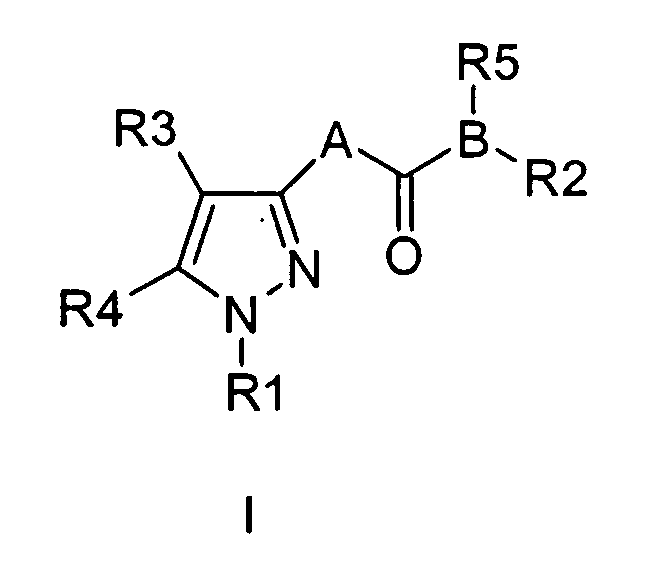
cannabimimetic pyrazole ligands of this aspect can be represented by general
formula I:
In a variation of the invention, R1 comprises -(CH2)n-Z.
n is an integer from 0 to about 7.
Z comprises a carbocyclic ring having about 4 to about 7 ring
members, a heterocyclic ring having about 4 to about 7 ring members, an
aromatic ring having about 5 to about 7 ring members, a heteroaromatic
ring having about 5 to about 7 ring members, a bicyclic ring, a
heterobicyclic ring, a tricyclic ring, a heterotricyclic ring, a polycyclic ring, a
heteropolycyclic ring; or any above group substituted on at least one
available ring atom by an alkyl group; or any above group substituted on at
least one available ring nitrogen atom by a benzyl group, a substituted
benzyl group, an alkoxybenzyl group, a substituted alkoxybenzyl group, a
benzhydryl group or a substituted benzhydryl group; and wherein the
connecting point between the -(CH2)n- group and the Z group can be any
available ring carbon atom or any available ring nitrogen atom.
In a variation of the invention, R1 comprises -(CH2)n-Z.
n is an integer from 0 to about 7.
Z comprises a 5 member unsaturated ring having 0 to 4
independently selected heteroatoms as ring members, a substituted 5
member unsaturated ring having 0 to 4 independently selected
heteroatoms as ring members, a 6 member aromatic ring having 0 to 5
independently selected heteroatoms as ring members or a substituted 6
member aromatic ring having 0 to 5 independently selected heteroatoms;
and wherein the connecting point between the -(CH2)n- group and the Z
group can be any available ring carbon atom or any available ring nitrogen
atom.
In a variation of the invention, R1 comprises -(CH2)n-Z.
n is an integer from 0 to about 7.
Z comprises 1-, 2- or 3-pyrrolidinyl, 1-, 2-, 3- or 4-piperidinyl, 2-, 3- or
4-morpholinyl, 2-, 3- or 4-thiomorpholinyl, 1-, 2- or 3-azetidinyl, 1- or 2-piperazinyl,
2- or 3-tetrahydrofuranyl; or any above group substituted on at
least one available ring atom by an alkyl group; or any above group
substituted on at least one available ring nitrogen atom by a benzyl group,
a substituted benzyl group, an alkoxybenzyl group, a substituted
alkoxybenzyl group, a benzhydryl group or a substituted benzhydryl group;
and wherein the connecting point between the -(CH2)n- group and the Z
group can be any available ring carbon atom or any available ring nitrogen
atom.
In a variation of the invention, R1 comprises -(CH
2)
n-Z.
n is an integer from 0 to about 7.
In a variation of the invention, R1 comprises a carbocyclic ring having 6
ring atoms fused to a heterocyclic ring having from 5 to 7 ring atoms, a carbocyclic
ring having 6 ring atoms fused to a heteroaromatic ring having from 5 to 7 ring
atoms, a heterocyclic ring having 6 ring atoms fused to a heterocyclic ring having
from 5 to 7 ring atoms, an heterocyclic ring having 6 ring atoms fused to a
heteroaromatic ring having from 5 to 7 ring atoms, an aromatic ring having 6 ring
atoms fused to a heterocyclic ring having from 5 to 7 ring atoms, an aromatic ring
having 6 ring atoms fused to a heteroaromatic ring having from 5 to 7 ring atoms,
a heteroaromatic ring having 6 ring atoms fused to a heterocyclic ring having from
5 to 7 ring atoms or a heteroaromatic ring having 6 ring atoms fused to a
heteroaromatic ring having from 5 to 7 ring atoms.
In any of the above R1 variations R1 can not be H when A is a direct bond and B
is N.
R2 comprises a carbocyclic ring having about 4 to about 7 members, a
heterocyclic ring having about 4 to about 7 members, an aromatic ring having
about 5 to about 7 ring members, a heteroaromatic ring having about 5 to about 7
members, a bicyclic ring, a heterobicyclic ring, a tricyclic ring, a heterotricyclic
ring, a polycyclic ring or a heteropolycyclic ring.
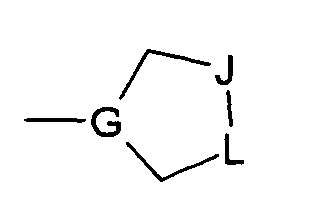
In a variation of the invention, R2 comprises
wherein G comprises CH or N, and L and J each independently
comprise (CH
2)
n, O, NH or S. n is an integer from 0 to about 7.
In a variation of the invention, R2 comprises
wherein G, L and J each independently comprise CH or N.
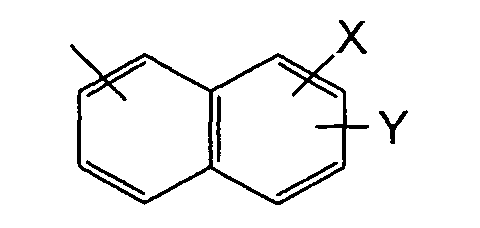
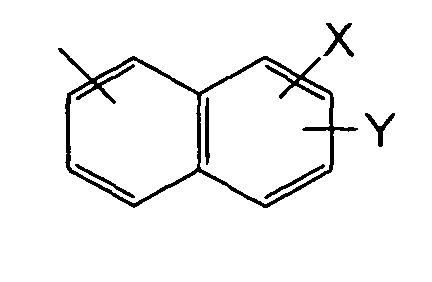
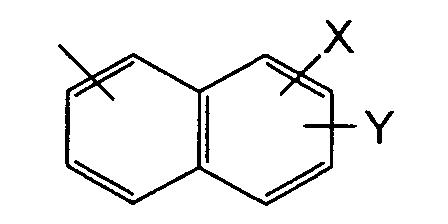
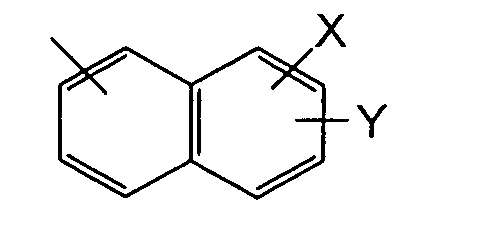
In a variation of the invention, R2 comprises
wherein X and Y each independently comprise H, halogen, N
3, NCS,
Ph (phenyl), CN, NO
2, NX
1X
2, OX
3, OAc, O-acyl, O-aroyl, NH-acyl, NH-aroyl,
CHO, CF
3, COOX
3, SO
3H, SO
2NX
1X
2, CONX
1X
2, alkyl, alcohol,
alkoxy, alkylmercapto, alkylamino, di-alkylamino, alkylsulfinyl or
alkylsulfonyl.
In a variation of the invention, R2 comprises a carbocyclic ring having 6
ring atoms fused to a heterocyclic ring having from 5 to 7 ring atoms, a carbocyclic
ring having 6 ring atoms fused to a heteroaromatic ring having from 5 to 7 ring
atoms, a heterocyclic ring having 6 ring atoms fused to a heterocyclic ring having
from 5 to 7 ring atoms, an heterocyclic ring having 6 ring atoms fused to a
heteroaromatic ring having from 5 to 7 ring atoms, an aromatic ring having 6 ring
atoms fused to a heterocyclic ring having from 5 to 7 ring atoms, an aromatic ring
having 6 ring atoms fused to a heteroaromatic ring having from 5 to 7 ring atoms,
a heteroaromatic ring having 6 ring atoms fused to a heterocyclic ring having from
5 to 7 ring atoms or a heteroaromatic ring having 6 ring atoms fused to a
heteroaromatic ring having from 5 to 7 ring atoms.
R3 comprises H, halogen, N
3, NCS, Ph, CN, NO
2, NX
1X
2, OX
3, OAc, O-acyl,
O-aroyl, O(CH
2)
dOH, O(CH
2)
dNX
1X
2, NH-acyl, NH-aroyl, CHO, CF
3, COOX
3,
SO
3H, SO
2NX
1X
2, CONX
1X
2, alkyl, alcohol, alkoxy, alkylmercapto, alkylamino or
di-alkylamino, alkylsulfinyl or alkylsulfonyl.
In a variation of the invention, R3 comprises a carbocyclic ring having
about 4 to about 7 ring members, a heterocyclic ring having about 4 to about 7
ring members, an aromatic ring having about 5 to about 7 ring members, a
heteroaromatic ring having about 5 to about 7 ring members, a bicyclic ring, a
heterobicyclic ring, a tricyclic ring, a heterotricyclic ring, a polycyclic ring or a
heteropolycyclic ring.
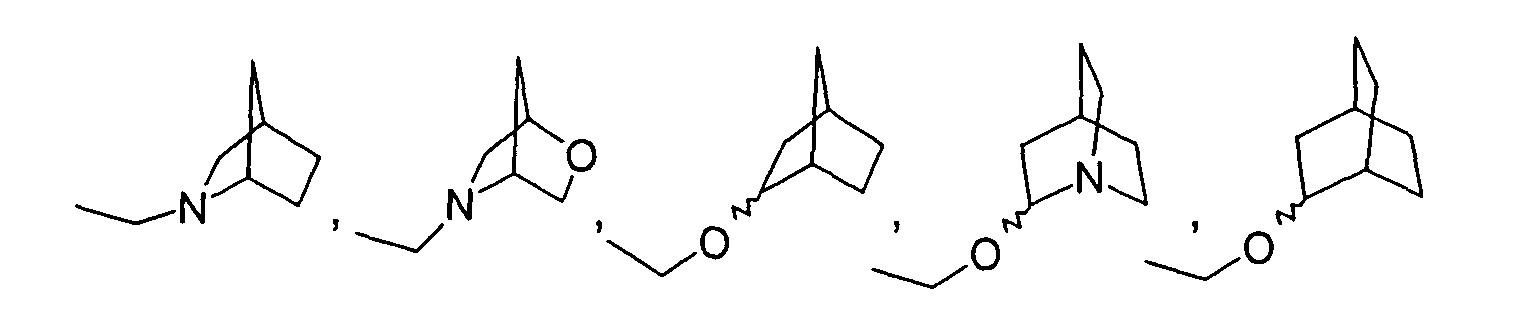
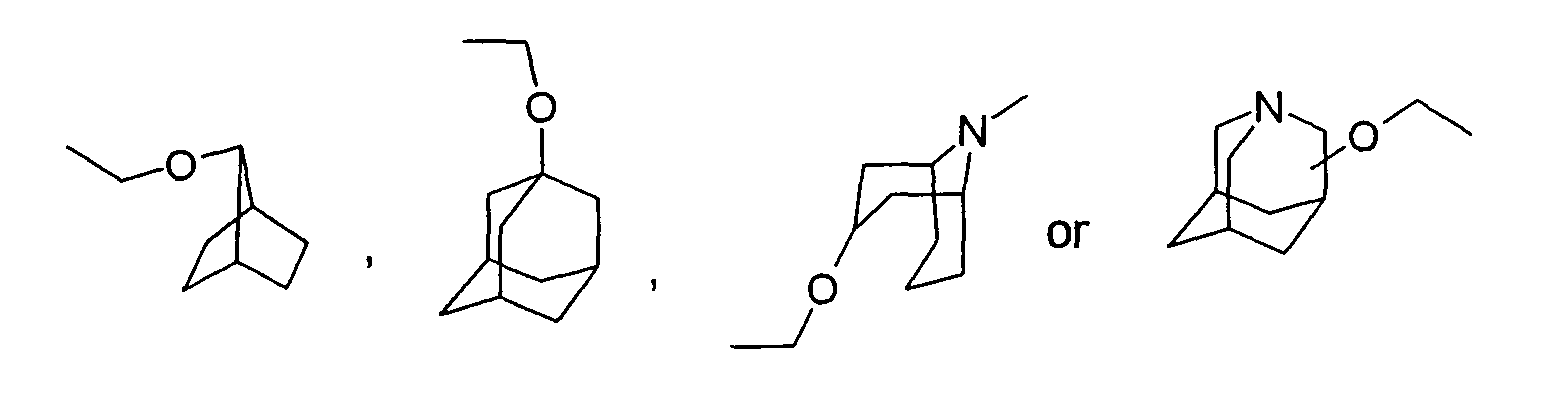
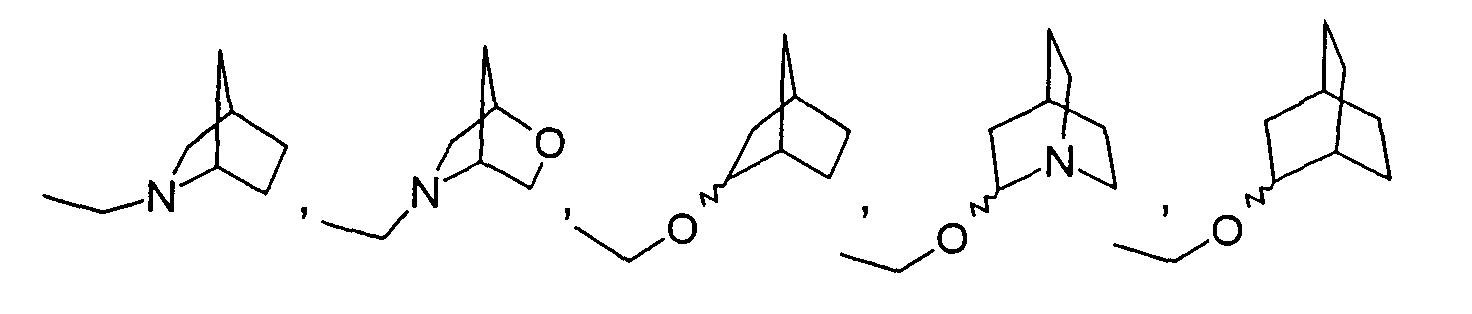
In an advantageous variation of the invention, R3 comprises
In a variation of the invention, R3 comprises -CH
2-Z.
In a variation of the invention, R3 comprises -CH2OH or -CH2Oalkyl.
In a variation of the invention, R3 comprises -CH
2-Z.
In a variation of the invention, R3 comprises -CH
2-Z.
In a variation of the invention R3 comprises -CH
2-Q-(CH
2)
n-Z.
In a variation of the invention R3 comprises -CH
2-Q-(CH
2)
n -Z.
In a variation of the invention R3 comprises -CH
2-Q-(CH
2)
n -Z.
In a variation of the invention, R3 comprises -CH
2-Q-(CH
2)
n -Z.
In any variation of R3 when A is not a direct bond and B is N then R3
cannot be H or a C1-C3 alkyl.
R4 comprises -(CH
2)
n-Z.
n comprises an integer from 0 to about 7.
In a variation of the invention, R4 comprises -(CH
2)
n-Z.
n comprises an integer from 0 to about 7.
In a variation of the invention, R4 comprises -(CH
2)
n-Z.
n comprises an integer from 0 to about 7.
In an advantageous variation of the invention, R4 comprises -(CH
2)
n-Z.
n comprises an integer from 0 to about 7.
In a variation of the invention, R4 comprises -(CH2)n-Z.
n comprises an integer from 0 to about 7.
Z comprises an unsaturated ring having 5 ring atoms and 0 to 4
independently selected heteroatoms as ring members fused to an
unsaturated ring having 5 ring atoms and 0 to 4 independently selected
heteroatoms as ring members, an unsaturated ring having 5 ring atoms and
0 to 4 independently selected heteroatoms as ring members fused to an
unsaturated ring having 6 or 7 ring atoms and 0 to 5 independently
selected heteroatoms as ring members or an unsaturated ring having 6 ring
atoms and 0 to 5 independently selected heteroatoms as ring members
fused to an unsaturated ring having 6 or 7 ring atoms and 0 to 5
independently selected heteroatoms as ring members.
In a variation of the invention, R4 comprises -CH
2-Q-(CH
2)
n-Z.
In a variation of the invention, R4 comprises -CH
2-Q-(CH
2)
n-Z.
In a variation of the invention, R4 comprises -CH
2-Q-(CH
2)
n-Z.
In a variation of the invention, R4 comprises -CH
2-Q-(CH
2)
n-Z.
In a variation of the invention R4 comprises -CH
2-Q-(CH
2)
n-Z.
In a variation of the invention, R4 comprises -(CH
2)
n-Q-(CH
2)
n-Z.
In a variation of the invention, R4 comprises -CH
2-Q-(CH
2)
n-Z.
In a variation of the invention R4 comprises -T-(CH
2)
n-Z.
n comprises an integer from 0 to about 7.
In a variation of the invention R4 comprises -T-(CH
2)
n-Z.
n comprises an integer from 0 to about 7.
In a variation of the invention R4 comprises -T-(CH
2)
n-Z.
n comprises an integer from 0 to about 7.
In a variation of the invention R4 comprises -T-(CH
2)
n-Z.
n comprises an integer from 0 to about 7.
In a variation of the invention R4 comprises -T-(CH
2)
n-Z.
n comprises an integer from 0 to about 7.
In another variation of the invention R4 comprises -Ph-(CH
2)
n-Z.
n comprises an integer from 0 to about 7.
In a variation of the invention, R4 comprises -Ph-(CH
2)
n-Z.
n comprises an integer from 0 to about 7.
In a variation of the invention R4 comprises -Ph-(CH
2)
n-Z.
n comprises an integer from 0 to about 7.
In a variation of the invention R4 comprises -Ph-(CH
2)
n-Z.
n comprises an integer from 0 to about 7.
In any of the above R4 variations when A is a direct bond and B is N and
R5 is hydrogen and R2 has a nitrogen directly connected to the nitrogen of the
amide at the 3-position of pyrazole ring, then R4 can not be a phenyl ring or a
phenyl ring having one to three substitutions selected from halogen,
trifluoromethyl, 1-pyrrolidinyl, 1-piperidinyl, 4-morpholinyl, 1-piperazinyl, lower-alkyl
substituted 1-pyrrolidinyl, lower-alkyl substituted 1-piperidinyl, lower-alkyl
substituted 4-morpholinyl, and lower-alkyl substituted 1-piperazinyl.
R5 is present only when B is N and if present comprises H, alkyl or
substituted alkyl.
It should be understood that:
The inventive compounds include any and all isomers and steroisomers. In
general, the compositions of the invention may be alternately formulated to
comprise, consist of, or consist essentially of, any appropriate components herein
disclosed. The compositions of the invention may additionally, or alternatively, be
formulated so as to be devoid, or substantially free, of any components, materials,
ingredients, adjuvants or species used in the prior art compositions or that are
otherwise not necessary to the achievement of the function and/or objectives of
the present invention.
Unless otherwise specifically defined, "acyl" refers to the general formula
-C(O)alkyl.
Unless otherwise specifically defined, "acyloxy" refers to the general
formula -O-acyl.
Unless otherwise specifically defined, "alcohol" refers to the general
formula alkyl-OH and includes primary, secondary and tertiary variations.
Unless otherwise specifically defined, "alkyl" or "lower alkyl" refers to a
linear, branched or cyclic alkyl group having from 1 to about 16 carbon atoms
including, for example, methyl, ethyl, propyl, butyl, hexyl, octyl, isopropyl, isobutyl,
tert-butyl, cyclopropyl, cyclohexyl, cyclooctyl, vinyl and allyl. The alkyl group can
be saturated or unsaturated. The alkyl group can be unsubstituted, singly
substituted or, if possible, multiply substituted, with substituent groups in any
possible position. Unless otherwise specifically limited, a cyclic alkyl group
includes monocyclic, bicyclic, tricyclic, tetracyclic and polycyclic rings, for example
norbomyl, adamantyl and related terpenes.
Unless otherwise specifically defined, "alkoxy" refers to the general formula
-O-alkyl.
Unless otherwise specifically defined, "alkylmercapto" refers to the general
formula -S-alkyl.
Unless otherwise specifically defined, "alkylamino" refers to the general
formula -(NH)-alkyl.
Unless otherwise specifically defined, "di-alkylamino" refers to the general
formula -N-(alkyl)2. Unless otherwise specifically limited di-alkylamino includes
cyclic amine compounds such as piperidine and morpholine.
Unless otherwise specifically defined, an aromatic ring is an unsaturated
ring structure having about 5 to about 7 ring members and including only carbon
as ring atoms. The aromatic ring structure can be unsubstituted, singly
substituted or, if possible, multiply substituted, with substituent groups in any
possible position.
Unless otherwise specifically defined, "aryl" refers to an aromatic ring
system that includes only carbon as ring atoms, for example phenyl, biphenyl or
naphthyl. The aryl group can be unsubstituted, singly substituted or, if possible,
multiply substituted, with substituent groups in any possible position.
Unless otherwise specifically defined, "aroyl" refers to the general formula
-C(=O)-aryl.
Unless otherwise specifically defined, a bicyclic ring structure comprises 2
fused rings that include only carbon as ring atoms. The bicyclic ring structure can
be saturated or unsaturated. The bicyclic ring structure can be unsubstituted,
singly substituted or, if possible, multiply substituted, with substituent groups in
any possible position. The individual rings may or may not be of the same type.
Examples of bicyclic ring structures include naphthalene and bicyclooctane.
Unless otherwise specifically defined, a carbocyclic ring is a non-aromatic
ring structure, saturated or unsaturated, having about 3 to about 8 ring members
that includes only carbon as ring atoms, for example, benzene or cyclohexane.
The carbocyclic ring can be unsubstituted, singly substituted or, if possible,
multiply substituted, with substituent groups in any possible position.
Unless otherwise specifically defined, "halogen" refers to an atom selected
from fluorine, chlorine, bromine and iodine.
Unless otherwise specifically defined, a heteroaromatic ring is an
unsaturated ring structure having about 5 to about 8 ring members independently
selected from carbon atoms and one or more heteroatoms, including oxygen,
nitrogen and/or sulfur, for example, pyridine, furan, quinoline, and their
derivatives. The heteroaromatic ring can be unsubstituted, singly substituted or, if
possible, multiply substituted, with substituent groups in any possible position.
Unless otherwise specifically defined, a heterobicyclic ring structure
comprises 2 fused rings having ring members independently selected from carbon
and one or more heteroatoms, including oxygen, nitrogen and/or sulfur. The
heterobicyclic ring structure is typically unsaturated. The heterobicyclic ring can
be unsubstituted, singly substituted or, if possible, multiply substituted, with
substituent groups in any possible position. The individual rings may or may not
be of the same type. Examples of heterobicyclic ring structures include
isobenzofuran and indole.
Unless otherwise specifically defined, a heterocyclic ring is a saturated ring
structure having about 3 to about 8 ring members independently selected from
carbon atoms and one or more heteroatoms, including oxygen, nitrogen and/or
sulfur; for example, piperidine, morpholine, piperazine, pyrrolidine, thiomorpholine,
and their derivatives. The heterocyclic ring can be unsubstituted, singly
substituted or, if possible, multiply substituted, with substituent groups in any
possible position.
Unless otherwise specifically defined, a heterotricyclic ring structure
comprises 3 fused rings having ring members independently selected from carbon
and one or more heteroatoms, including oxygen, nitrogen and/or sulfur. The
heterotricyclic ring structure is typically unsaturated. The heterotricyclic ring
structure can be unsubstituted, singly substituted or, if possible, multiply
substituted, with substituent groups in any possible position. The individual rings
may or may not be of the same type. Examples of heterotricyclic ring structures
include carbazole, phenanthroline and phenazine.
Unless otherwise specifically defined, a heteropolycyclic ring structure
comprises more than 3 fused rings having ring members independently selected
from carbon and one or more heteroatoms, including oxygen, nitrogen and/or
sulfur. The heteropolycyclic ring structure is typically unsaturated. The
heteropolycyclic ring structure can be unsubstituted, singly substituted or, if
possible, multiply substituted, with substituent groups in any possible position.
The individual rings may or may not be of the same type. Examples of
heteropolycyclic ring structures include azaadamantine, tropane and
homotropane.
Unless otherwise specifically defined, the term "phenacyl" refers to the
general formula -phenyl-acyl.
Unless otherwise specifically defined, a polycyclic ring structure comprises
more than 3 fused rings and includes carbon as ring atoms. The polycyclic ring
structure can be saturated or unsaturated. The polycyclic ring structure can be
unsubstituted, singly substituted or, if possible, multiply substituted, with
substituent groups in any possible position. The individual rings may or may not
be of the same type. Examples of polycyclic ring structures include adamantine,
bicyclooctane, norbornane and bicyclononanes.
Unless otherwise specifically defined, a spirocycle refers to a ring system
wherein a single atom is the only common member of two rings. A spirocycle can
comprise a saturated carbocyclic ring comprising about 3 to about 8 ring
members, a heterocyclic ring comprising about 3 to about 8 ring atoms wherein up
to about 3 ring atoms may be N, S, or O or a combination thereof.
Unless otherwise specifically defined, a tricyclic ring structure comprises 3
fused rings and includes carbon as ring atoms. The tricyclic ring structure can be
saturated or unsaturated. The tricyclic ring structure can be unsubstituted, singly
substituted or, if possible, multiply substituted, with substituent groups in any
possible position and may be substituted or unsubstituted. The individual rings
may or may not be of the same type. Examples of tricyclic ring structures include
fluorene and anthracene.
Substituent groups for the above moieties useful in the invention are those
groups that do not significantly diminish the biological activity of the inventive
compound. Substituent groups that do not significantly diminish the biological
activity of the inventive compound include, for example, H, halogen, N3, NCS, CN,
NO2, NX1X2, OX3, OAc, O-acyl, O-aroyl, NH-acyl, NH-aroyl, NHCOalkyl, CHO,
CF3, COOX3, SO3H, PO3H2, SO2NX1X2, CONX1X2, alkyl, alcohol, alkoxy,
alkylmercapto, alkylamino, di-alkylamino, sulfonamide, thioalkoxy or methylene
dioxy when the substituted structure has two adjacent carbon atoms, wherein X1
and X2 each independently comprise H or alkyl, or X1 and X2 together comprise
part of a heterocyclic ring having about 4 to about 7 ring members and optionally
one additional heteroatom selected from O, N or S, or X1 and X2 together
comprise part of an imide ring having about 5 to about 6 members and X3
comprises H, alkyl, hydroxyloweralkyl, or alkyl-NX1X2. Unless otherwise
specifically limited a substituent group may be in any possible position.
Some of the inventive compounds showed a high affinity for at least one of
the cannabinoid receptors. Thus, an aspect of the invention is use of at least one
of the inventive compounds to interact with cannabinoid receptors.
Some of the novel pyrazole derivatives show selectivity for the CB1
cannabinoid receptor. These inventive CB1 selective analogs are able to interact
with the CB1 receptor without affecting the peripheral (CB2) receptor to the same
degree. Therefore, still another aspect of the invention is use of at least one of
the inventive compounds to preferentially interact with the CB1 receptor.
Additionally, known cannabimimetic pyrazole ligands generally have long in
vivo half-lives and are more lipophilic than desired for optimal in vivo activity.
Some of the novel pyrazole analogs described herein are less lipophilic than
known cannabimimetic pyrazole ligands and have shorter in vivo half-lives then
known pyrazole analogs, providing the compounds of this embodiment with a
favorable therapeutic profile. Therefore, yet another aspect of the invention is a
cannabimimetic pyrazole analog that is less lipophilic than known cannabimimetic
pyrazole analogs.
Some of the novel pyrazole analogs described herein are CB1 cannabinoid
receptor antagonists that prevent binding of endogenous agonists to the
cannabinoid receptors and thereby block the biological actions of such
endogenous agonists. Therefore, a further aspect of the invention is use of at
least one of the inventive compounds to prevent binding of a cannabinoid agonist
to the CB1 cannabinoid receptor.
The inventive pyrazole analogs described herein, and physiologically
acceptable salts thereof, have pharmacological properties when administered in
therapeutically effective amounts for providing a physiological effect useful to treat
marijuana abuse, obesity, schizophrenia, epilepsy, stress, memory disorders,
migraine, vomiting, thymic disorders, dyskinesia, kinetic disorder, anxiety
disorders, psychotic disorders, cognitive disorders, appetite disorders, mood
disorders, delirious disorders, neuropathies, Parkinson's disease, Alzheimer's
disease, depression, psychosomatic-induced disease, as well as for alcohol,
opioid, nicotine and cocaine addiction, etc. Additionally, these analogs can be
used in cancer chemotherapy. Thus, another aspect of the invention is the
administration of a therapeutically effective amount of an inventive compound, or
a physiologically acceptable salt thereof, to an individual or animal to provide a
physiological effect.
A better understanding of the invention will be obtained from the following
detailed description of the article and the desired features, properties,
characteristics, and the relation of the elements as well as the process steps, one
with respect to each of the others, as set forth and exemplified in the description
and illustrative embodiments.
Brief Description of the Drawings
Figure 1 is a graph of a dose vs. response curve for inventive compound 1-5.
Description of Some Preferred Embodiments
As used herein a "therapeutically effective amount" of a compound, is the
quantity of a compound which, when administered to an individual or animal,
results in a sufficiently high level of that compound in the individual or animal to
cause a physiological response. The inventive compounds described herein, and
physiologically acceptable salts thereof, have pharmacological properties when
administered in therapeutically effective amounts for providing a physiological
response useful to treat marijuana abuse, obesity, schizophrenia, epilepsy, stress,
memory disorders, migraine, vomiting, thymic disorders, dyskinesia, kinetic
disorder, anxiety disorders, psychotic disorders, cognitive disorders, appetite
disorders, mood disorders, delirious disorders, neuropathies, Parkinson's disease,
Alzheimer's disease, depression, psychosomatic-induced disease, as well as for
alcohol, opioid, nicotine and cocaine addiction, etc. Additionally, these analogs
can be useful in cancer chemotherapy. Typically, a "therapeutically effective
amount" of an inventive compound is believed to range from about 10 mg/day to
about 1,000 mg/day.
As used herein, an "individual" refers to a human. An "animal" refers to, for
example, veterinary animals, such as dogs, cats, horses and the like, and farm
animals, such as cows, pigs and the like.
The compound of the present invention can be administered by a variety of
known methods, including orally, rectally, or by parenteral routes (e.g.,
intramuscular, intravenous, subcutaneous, nasal or topical). The form in which
the compounds are administered will be determined by the route of administration.
Such forms include, but are not limited to, capsular and tablet formulations (for
oral and rectal administration), liquid formulations (for oral, intravenous,
intramuscular, subcutaneous, ocular, intranasal, inhalation-based and transdermal
administration) and slow releasing microcarriers (for rectal, intramuscular or
intravenous administration). The formulations can also contain a physiologically
acceptable vehicle and optional adjuvants, flavorings, colorants and preservatives.
Suitable physiologically acceptable vehicles include, for example, saline, sterile
water, Ringer's solution and isotonic sodium chloride solutions. The specific
dosage level of active ingredient will depend upon a number of factors, including,
for example, biological activity of the particular preparation, age, body weight, sex
and general health of the individual being treated.
The following examples are given for purposes of illustration only in order
that the present invention may be more fully understood. These examples are not
intended to limit in any way the scope of the invention unless otherwise
specifically indicated.
Examples:
A number of inventive cannabimimetic pyrazole derivatives were prepared.
Table 1 illustrates some prepared CB1 selective pyrazole analogs (compounds 1-1
to 1-29).
Table 2 illustrates some prepared CB1 selective pyrazole analogs
(compounds 2-1 to 2-22)
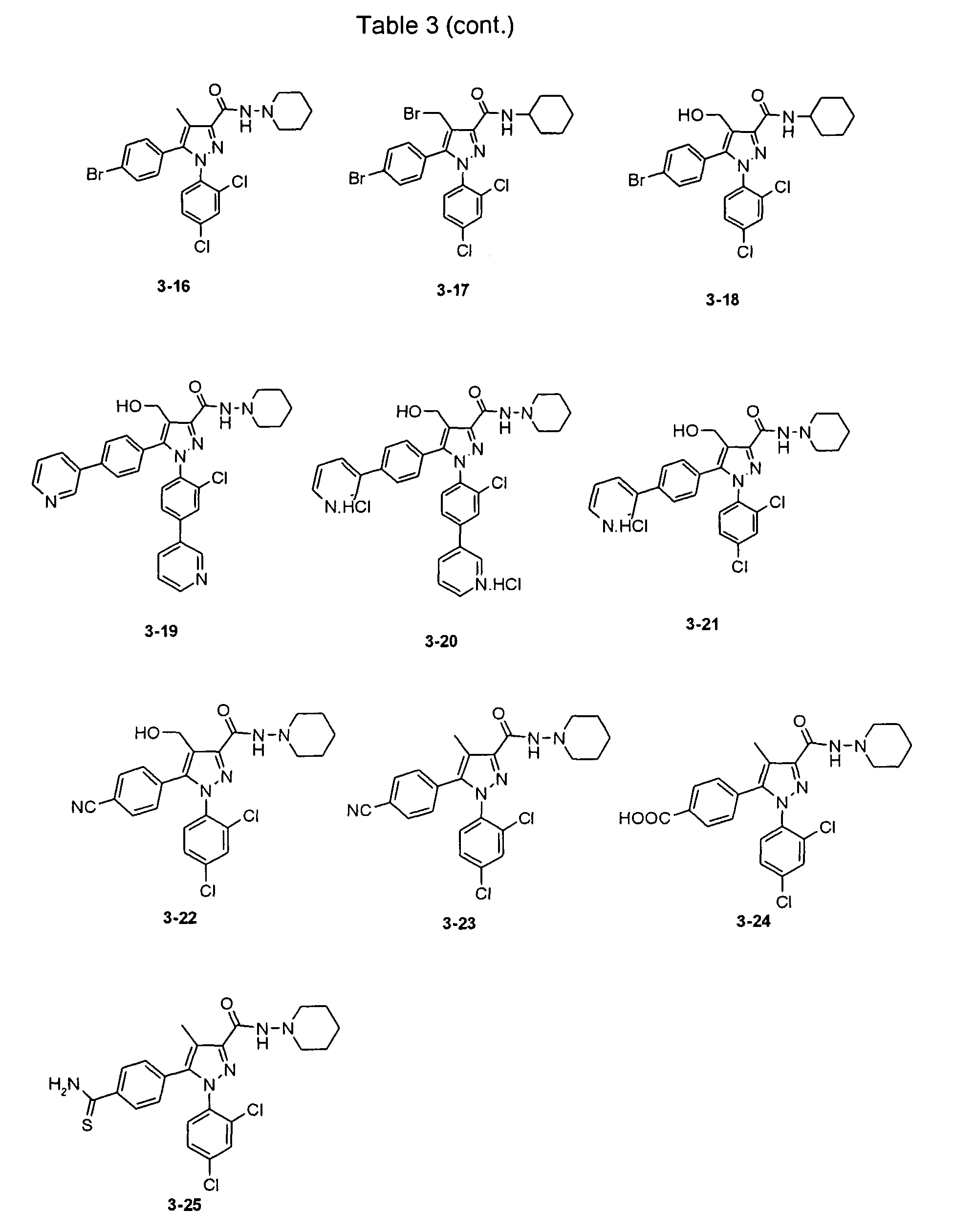
Table 3 illustrates some prepared pyrazole analogs (compounds 3-1 to
3-25).
Some of the inventive analogs were tested for CB2 receptor binding affinity
and for CB1 receptor affinity (to determine selectivity). As used herein, "binding
affinity" is represented by the Ki value which is the inhibition constant correlated
with the concentration of an analog required to occupy the 50% of the total
number (Bmax) of the receptors. The lower the Ki value the higher the binding
affinity. As used herein an analog is said to have "binding selectivity" if it has
higher binding affinity for one receptor compared to the other receptor; e.g. a
cannabinoid analog which has a Ki of 0.1 nM for CB1 and 10 nM for CB2, is 100
times more selective for the CB1 receptor.
For the CB1 receptor binding studies, membranes were prepared from rat
forebrain membranes according to the procedure of P.R. Dodd et al, A Rapid
Method for Preparing Synaptosomes: Comparison with Alternative Procedures,
Brain Res., 107 - 118 (1981). The binding of the novel analogues to the CB1
cannabinoid receptor was assessed as described in W.A. Devane et al,
Determination and Characterization of a Cannabinoid Receptor in a Rat Brain,
Mol. Pharmacol., 34, 605 - 613 (1988) and A. Charalambous et al, 5'-azido Δ 8 -
THC: A Novel Photoaffinity Label for the Cannabinoid Receptor, J. Med. Chem.,
35, 3076 - 3079 (1992) with the following changes. The above articles are
incorporated by reference herein.
Membranes, previously frozen at -80°C, were thawed on ice. To the stirred
suspension was added three volumes of TME (25 mM Tris-HCl buffer, 5 mM
MgCl2 and 1 mM EDTA) at a pH 7.4. The suspension was incubated at 4°C for 30
min. At the end of the incubation, the membranes were pelleted and washed
three times with TME.
The treated membranes were subsequently used in the binding assay
described below. Approximately 30 µg of membranes were incubated in silanized
96-well microtiter plate with TME containing 0.1% essentially fatty acid-free bovine
serum albumin (BSA), 0.8 nM [3H] CP-55,940, and various concentrations of test
materials in a final volume of 200 µL. The assays were incubated for 1 hour at 30
°C and then immediately filtered using Packard Filtermate 196 harvester and
Whatman GF/C filterplates and washed with wash buffer (TME) containing 0.5%
BSA. Radioactivity was detected using MicroScint 20 scintillation cocktail added
directly to the dried filterplates, and the filterplates were counted using a Packard
Instruments Top-Count. Nonspecific binding was assessed using 100 nM CP-55,940.
Data collected from three independent experiments performed with
duplicate determinations was normalized between 100% and 0% specific binding
for [3H] CP-55,940, determined using buffer and 100 nM CP-55,940. The
normalized data was analyzed using a 4-parameter nonlinear logistic equation to
yield IC50 values. Data from at least two independent experiments performed in
duplicate was used to calculate IC50 values which were converted to Ki values
using the assumptions of Cheng et al, Relationship Between the Inhibition
Constant (K i ) and the concentration of Inhibitor which causes 50% Inhibition (IC 50 )
of an Enzymatic Reaction, Biochem. Pharmacol., 22, 3099-3102, (1973), which is
incorporated by reference herein.
For the CB2 receptor binding studies, membranes were prepared from
frozen mouse spleen essentially according to the procedure of P.R. Dodd et al, A
Rapid Method for Preparing Synaptosomes: Comparison with Alternative
Procedures, Brain Res., 226, 107 - 118 (1981) which is incorporated by reference
herein. Silanized centrifuge tubes were used throughout to minimize receptor loss
due to adsorption. The CB2 binding assay was conducted in the same manner as
for the CB1 binding assay. The binding affinities (Ki) were also expressed in
nanomoles (nM).
For the compounds of Table 1 the CB1 cannabinoid receptor binding
affinities (Ki) for the synthesized analogs range between 1.51 and 85.1. The CB2
cannabinoid receptor binding affinities (Ki) for the synthesized analogs range
between 5.81 and 2312. The CB1 cannabinoid receptor selectivity for some of the
synthesized analogs range from about 2 to about 452. The CB2 cannabinoid
receptor selectivity for some of the synthesized analogs range from about 1 to
about 4. The results are summarized in Table 4.
| cmpnd no. | affinities | selectivity |
| | CB1 | CB2 | CB1 | CB2 |
| 1-1 | 1.5 | 741 | 491 |
| 1-2 | 5.8 | 1595 | 274 |
| 1-3 | 85.1 | 1370 | 16 |
| 1-4 | 11.2 | 1326 | 118 |
| 1-5 | 5.8 | 2312 | 398 |
| 1-6 | 15.1 | 1927 | 128 |
| 1-7 | 53 | 1676 | 32 |
| 1-8 | 19 | 561 | 31 |
| 1-9 | 4 | 495 | 124 |
| 1-10 | 54 | 842 | 16 |
| 1-11 | 105 | 47460 | 452 |
| 1-12 | 46 | 490 | 11 |
| 1-13 | 15 | 54 | 3.6 |
| 1-14 | 395 | 3102 | 7.8 |
| 1-15 | 172 | 397 | 2.3 |
| 1-16 | 24 | 140 | 5.8 |
| 1-17 | 241 | 968 | 4.0 |
| 1-18 | 62 | 646 | 10.4 |
| 1-19 | 160 | 2980 | 18.6 |
| 1-20 | 51 | 277 | 5.4 |
| 1-21 | 2970 | 2744 | | 1.1 |
| 1-22 | 15 | 675 | 45 |
| 1-23 | 331 | 16420 | 49.6 |
| 1-24 | 141 | 10570 | 75.0 |
| 1-25 | 17680 | 4006 | | 4.4 |
| 1-26 | 7677 | 52890 | 6.9 |
| 1-27 | 1043 | 26390 | 25.3 |
| 1-28 | 1067 | 3926 | 3.7 |
| 1-29 | 273 | 2038 | 7.5 |
For the compounds of Table 2 the CB1 cannabinoid receptor binding
affinities (Ki) for the synthesized analogs range between 6 and 1844. The CB2
cannabinoid receptor binding affinities (Ki) for the synthesized analogs range
between 36.5 and 13585. The CB1 cannabinoid receptor selectivity for some of
the synthesized analogs range from about 1 to about 546. The CB2 cannabinoid
receptor selectivity for compound 2-14 was 1.4. The results are summarized in
Table 5.
| cmpnd no. | affinities | selectivity |
| | CB1 | CB2 | CB1 | CB2 |
| 2-1 | 455 | 702 | 1.5 |
| 2-2 | 90 | 242 | 2.7 |
| 2-3 | 6 | 517 | 86.2 |
| 2-4 | 1844 | 13585 | 7.4 |
| 2-5 | 203 | 2128 | 10.5 |
| 2-6 | 18 | 2170 | 120.5 |
| 2-8 | 120 | 1069 | 8.9 |
| 2-9 | 20 | 381 | 19 |
| 2-10 | 192 | 463 | 2.4 |
| 2-11 | 118 | 122 | 1 |
| 2-12 | 37 | 36.5 | 1 |
| 2-13 | 543 | 6361 | 117.8 |
| 2-14 | 1271 | 941 | | 1.4 |
| 2-15 | 105 | 551 | 5.2 |
| 2-16 | 293 | 1119 | 3.8 |
| 2-17 | 1082 | 1414 | 1.3 |
| 2-18 | 210 | 641 | 3.0 |
| 2-19 | 9 | 4920 | 546.7 |
| 2-21 | 296 | 4473 | 15.1 |
| 2-22 | 29 | 10863 | 374.6 |
For the compounds of Table 3 the CB1 cannabinoid receptor binding
affinities (Ki) for the synthesized analogs range between 6 and 4232. The CB2
cannabinoid receptor binding affinities (Ki) for the synthesized analogs range
between 127 and 27054. The CB1 cannabinoid receptor selectivity for some of
the synthesized analogs range from about 1.3 to about 838. The results are
summarized in Table 6.
| | affinities | selectivity |
| cmpnd no. | CB1 | CB2 | CB1 |
| 3-1 | 29 | 1802 | 62.1 |
| 3-2 | 18 | 528 | 29.3 |
| 3-3 | 46 | 490 | 10.6 |
| 3-4 | 227 | 759 | 3.3 |
| 3-5 | 90 | 294 | 3.3 |
| 3-6 | 189 | 3289 | 17.4 |
| 3-7 | 38 | 136 | 3.6 |
| 3-8 | 6.8 | 4319 | 635.2 |
| 3-9 | 69 | 449 | 6.5 |
| 3-10 | 26 | 21791 | 838.1 |
| 3-11 | 29 | 917 | 31.6 |
| 3-12 | 259 | 756 | 2.9 |
| 3-13 | 47 | 284 | 6.0 |
| 3-14 | 4232 | 27054 | 6.4 |
| 3-15 | 50 | 10825 | 216.5 |
| 3-16 | 17 | 897 | 52.8 |
| 3-17 | 46 | 3475 | 75.5 |
| 3-18 | 6 | 2120 | 353.3 |
| 3-19 | 146 | 1921 | 13.2 |
| 3-2 | 154 | 1678 | 10.9 |
| 3-21 | 76 | 207 | 2.7 |
| 3-22 | 64 | 2737 | 42.8 |
| 3-23 | 22 | 4693 | 213.3 |
| 3-24 | 738 | 934 | 1.3 |
| 3-25 | 86 | 127 | 1.5 |
General. Column chromatography was carried out by using active silica gel
(230-400 mesh) available from Selecto Scientific of Suwanee, Georgia. Eluents
were distilled before use. Solvents for reactions were dried or purified as
required. Reactions were carried out under argon atmosphere unless otherwise
noted. All of the reagents are available from Sigma-Aldrich Fine Chemicals of
Milwaukee, Wisconsin and/or Lancaster Synthesis Inc. of Windham, New
Hampshire.
Modification of the direct aromatic substitution at pyrazole position 1 can be
obtained by varying the respective starting hydrazine (i.e. 2,4-dichlorophenylhydrazine
hydrochloride). Typically the starting hydrazine will
having the general formula:
Ar―NHNH2
Modification at pyrazole position 3 can be obtained by varying the respective
starting material (i.e. 1-aminopiperidine). Typically the starting material will have
the general formula:
RNH2
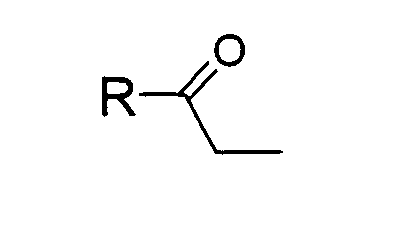
Most of the compounds with substitutions at pyrazole position 5 can be
obtained through method A, disclosed below, by varying the starting material (4'-bromopropiophenone
shown). Typically the starting material will have the general
formula:
The synthesis of most of the above starting materials is disclosed in the
existing literature. See, for example, Synthesis, 4, 1999, 588-592. Synthesis of
the starting materials not disclosed in the existing literature can be performed by a
person skilled in the art using analogous chemistries and with no more than
routine experimentation.
General procedure for the preparation of intermediate (Int.) A and Int B:
(a) LiHMDS, ether, then EtO2CCO2Et; (b) 2, 4-Dichlorophenylhydrazine
hydrochloride, EtOH; (c) AcOH; (d) KOH/MeOH, HCl/H2O; (e) SOCl2, toluene; (f)
1-Aminopiperidine, Et3N, CH2Cl2.
Lithium salt of ethyl 2,4-dioxo-3-methyl-4-(4-bromophenyl)butanoate.
To a magnetically stirred solution of lithium bis(trimethylsilyl)amide (40 mL, 1.0 M
solution in hexane, 40 mmol) in diethyl ether (120 mL) was added a solution of 4'-bromopropiophenone
(8.52 g, 40 mmol) in diethyl ether (50 mL) at -78 °C. After
the mixture was stirred at the same temperature for an additional 45 min, diethyl
oxalate (6.4 mL, 47 mmol) was added to the mixture. The reaction mixture was
allowed to warm to room temperature (RT) and stirred for 16 h. The precipitate
was filtered, washed with diethyl ether, and dried under vacuum to afford the
lithium salt.
1-(2,4-Dichlorophenyl)-4-methyl-5-(4-bromophenyl)-1 H -pyrazole-3-carboxylic
acid, Ethyl Ester (Int. A). To a magnetically stirred solution of the
above lithium salt (0.64g, 2.0 mmol) in 10 mL of ethanol was added 2,4-dichlorophenylhydrazine
hydrochloride (0.47g, 2.2 mmol) at room temperature.
The resulting mixture was stirred at room temperature for 20 h. The precipitate
was filtered, washed with ethanol and diethyl ether, and then dried under vacuum
to give a light yellow solid. This solid was dissolved in acetic acid (7 mL) and
heated under reflux for 24 h. The reaction mixture was poured into cold water and
extracted multiple times with ethyl acetate. The combined extracts were washed
with water, saturated aqueous sodium bicarbonate, and brine, dried over
anhydrous sodium sulfate, filtered, and evaporated. Purification by flash column
chromatography on silica gel gave the expected ester Int. A.
N -(Piperidin-1-yl)-5-(4-bromophenyl)-1-(2,4-dichlorophenyl)-4-methyl-1 H -pyrazole-3-carboxamide
(Int. B). To a magnetically stirred solution of
ester Int. A (0.625 g, 1.38 mmol) in methanol (7 mL) was added a solution of
potassium hydroxide (0.155 g, 2.76 mmol) in methanol (5 mL). The mixture was
heated under reflux for 3 h. The cooling reaction mixture was then poured into
water (10 mL) and acidified with 10% hydrochloric acid. The precipitate was
filtered, washed with water, and dried under vacuum to yield the corresponding
acid as a solid.
A solution of the crude acid (0.585 g) and thionyl chloride (0.492 g, 4.14
mmol) in toluene (10 mL) was refluxed for 3 h. Solvent was evaporated under
reduced pressure, and the residue was then redissolved in toluene (20 mL) and
evaporated to yield the crude carboxylic chloride as a solid. A solution of the
above carboxylic chloride (1.24 mmol) in dichloromethane (5 mL) was added
dropwise to a solution of 1-aminopiperidine (0.21 mL, 1.92 mmol) in
dichloromethane (5 mL) at 0 °C. After stirring at RT for 3 h, the reaction mixture
was added with brine and extracted multiple times with dichloromethane. The
combined extracts were washed with brine, dried over anhydrous sodium sulfate,
filtered, and evaporated. Purification by flash column chromatography on silica
gel gave the expected amide Int. B.
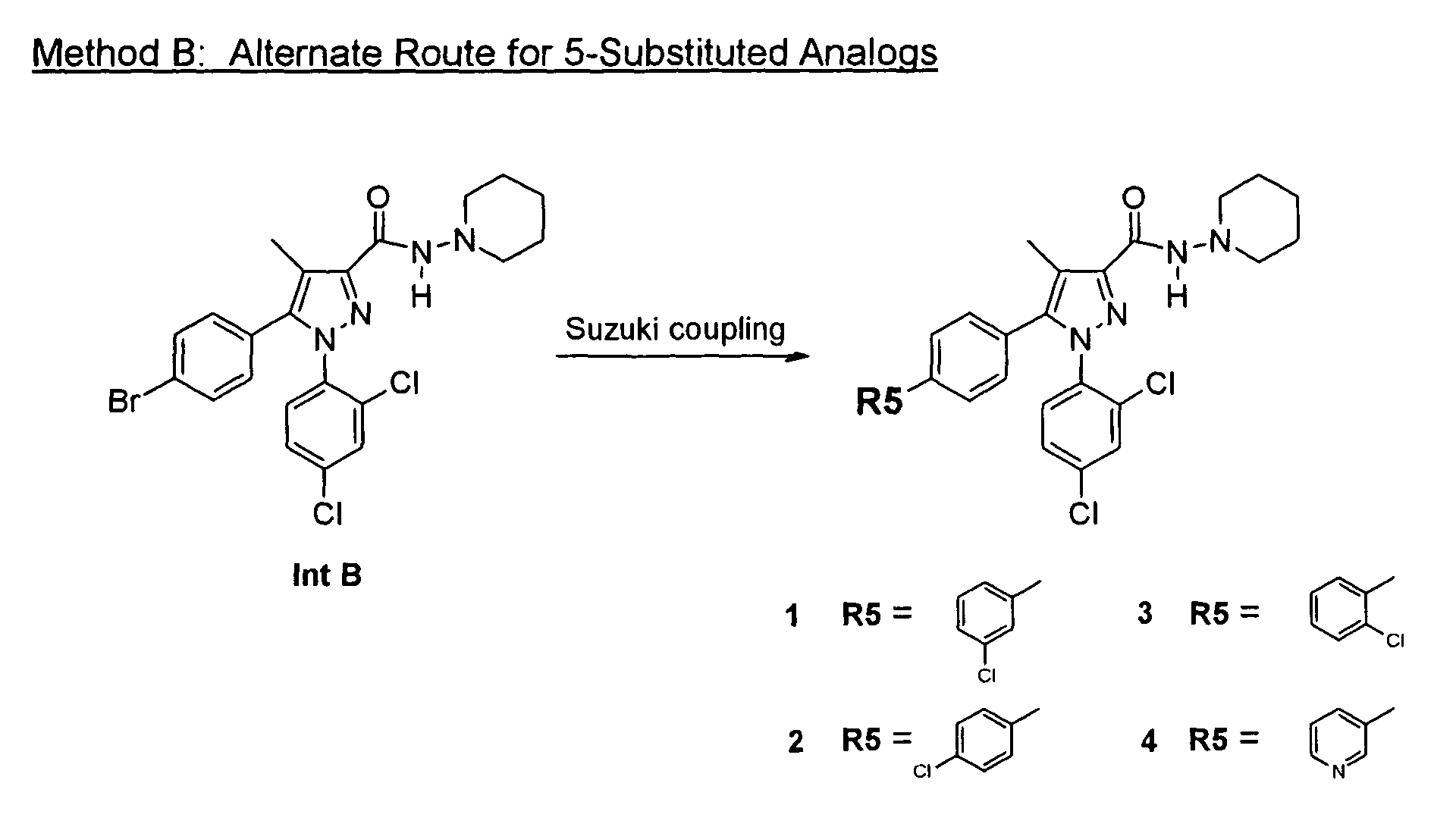
Some of the 5-substituted analogs can be prepared from Int. B via a Suzuki
coupling reaction. The Suzuki coupling reaction allows synthesis of novel
compounds in which the 5-phenyl ring is substituted with an aromatic ring or a
heteroaromatic ring.
The coupling of a saturated heterocyclic ring (for example, morpholine) on
the 5-phenyl ring can be obtained by Pd-catalyzed amination reaction (J. Org.
Chem. 2000, 65, 1144-1157).
General procedure for the Suzuki Coupling reaction:
To a degassed solution of Int. B (100 mg, 0.197 mmol) and Pd (PPh
3)
4
(0.0085 mmol, 5 mol%) in 2 mL of DME was added 0.218 mmol of diethyl (3-pyridyl)
borane or other aromatic boranic acid followed by 0.22 mmol of Na
2CO
3 in
1 mL of water. The resulting mixture was refluxed overnight. After reflux the
mixture was diluted with CH
2Cl
2 and water. The organic phase was separated,
and the water layer was extracted with CH
2Cl
2. The combined organic layer was
washed with brine, dried over anhydrous sodium sulfate, filtered, and evaporated.
Purification by flash column chromatography on silica gel gave the expected
product.
These are obtained by functionalizing the 4-methyl group of the parent
compound (Int. A). A variety of novel compounds having different substituents at
pyrazole position 4 can be obtained. Similarly, modifications at pyrazole positions
3 and 5 can be obtained as shown under Method C.
Int. C. To a magnetically stirred solution of Int. A (2.02g, 4.44 mmol) in
carbon tetrachloride (30 mL) was added N-bromosuccinimide (0.87 g, 4.89 mmol)
and 2,2'-azobisisobutyronitrile (AIBN, 10 mg). The resulting mixture was refluxed
for 3 h. After cooling to RT, the precipitate was filtered. The solvent was removed
from the filtrate under reduced pressure to give the title product.
Int. D. To a magnetically stirred solution of silver nitrate (2.65g, 15.6 mmol)
in 100 mL of 50% aqueous acetone at RT was added a suspension of Int. C
(2.36g, 4.43 mmol) in 70% aqueous acetone. The mixture was stirred at 60 °C
overnight. After cooling to RT, the insoluble material was filtered off and the
filtrate was concentrated under vacuum to evaporate acetone. The residue was
extracted with CH2Cl2. The organic layer was washed twice with water, dried over
anhydrous sodium sulfate. The solvent was removed under reduced pressure.
Purification by flash column chromatography on silica gel gave the title product.
Int. E. To a magnetically stirred suspension of AlCl3 (1.16g, 8.62 mmol) in
1,2-dichloroethane (20 mL) in an ice bath was added 1-aminopiperidine (2.0 mL,
18.0 mmol) in 1,2-dichloroethane (5 mL). The suspension was allowed to warm to
RT. The solution of Int. D (2.03g, 4.43 mmol) in 1,2-dichloroethane (5 mL) was
added into the above suspension and the mixture was stirred at RT for 2 h before
quenching with a mixture of ice and H2O. The mixture was stirred for a further 0.5
h and the resulting suspension was filtered through Celite and the organic phase
separated. The aqueous phase was extracted multiple times with CH2Cl2 and the
organic phases combined, washed with H2O, brine, dried over anhydrous Na2SO4.
The solvent was removed under reduced pressure. Purification by flash column
chromatography on silica gel gave the title product.
Compound 1-5. Compound 1-5 was obtained from Int. E using a
Suzuki coupling reaction as described above.
Compound 1-6. To a magnetically stirred solution of compound 1-5 (30
mg, 0.057 mmol) in 1.5 mL of CH2Cl2 at 0 °C was added DAST. After 1 h, the
reaction mixture was poured into saturated NaHCO3 (2 mL) and was extracted
with CH2Cl2. The organic phases combined, washed with H2O, brine, dried over
anhydrous Na2SO4. The solvent was removed under reduced pressure.
Purification by flash column chromatography on silica gel gave the title product.
An alternate method for obtaining analogs with 1-alkyl substituents is
described under Method D.
Int. F. To a magnetically stirred solution of lithium bis(trimethylsilyl)amide
(40 mL, 1.0 M solution in hexane, 40 mmol) in diethyl ether (120 mL) was added a
solution of propiophenone (5.30 g, 40 mmol) in diethyl ether (50 mL) at -78 °C.
After the mixture was stirred at the same temperature for additional 45 min, diethyl
oxalate (6.4 mL, 47 mmol) was added to the mixture. The reaction mixture was
allowed to warm to room temperature (RT) and stirred for 16 h. The precipitate
was filtered, washed with diethyl ether, and dried under vacuum to afford the
lithium salt (Int. F).
Int. G To a magnetically stirred solution of the above lithium salt (7.58 g,
32 mmol) in 250 mL of ethanol was added hydrazine hydrochloride (2.4 g, 35
mmol) at room temperature. The resulting mixture was stirred at room
temperature for 20 h. After stirring the solvent was removed under reduced
pressure and the mixture was added with brine and extracted multiple times with
dichloromethane. The combined extracts were washed with brine, dried over
anhydrous sodium sulfate, filtered, and evaporated. Purification by flash column
chromatography on silica gel gave the expected ester (Int. G).
Int. H To a magnetically stirred solution of ester Int. G (5.88 g, 26 mmol)
in methanol (150 mL) was added 10% aqueous potassium hydroxide (36 mL, 64
mmol). The resulting mixture was heated under reflux for 3 h. The cooling
reaction mixture was then poured into water and acidified with 10% hydrochloric
acid. The precipitate was filtered, washed with water, and dried under vacuum to
yield the corresponding acid as a solid.
To a magnetically stirred solution of the above acid (4.02 g, 16 mmol) in 45
mL of DMF was added 1,1'-carbonyldiimidazole (2.8 g, 17 mmol) in one portion at
RT and the mixture was stirred at 60 °C for 3 hrs. To the above mixture was
added a mixture of 1-adamantanamine (2.6 g, 17 mmol) in 45 mL of DMF. The
resulting mixture was heated at 60 °C overnight. DMF was removed under
reduced pressure. Ethyl acetate was added to the residue, and the mixture was
filtered to collect the solid.
Compound 1-7. To a magnetically stirred solution of Int. H (188 mg,
0.56 mmol) in 4 mL of DMF, was added NaH (60% dispersion in mineral oil, 35
mg, 0.87 mmol) at 0 °C and the mixture was stirred at RT for 3 hrs. After stirring,
the reaction mixture was cooled to 0 °C and a solution of 4-(2-chloroethyl)morpholine
(185 mg, 1.25 mmol) in 1 mL of DMF was added. The
resulting mixture was heated at 60 °C for 3 hrs. After heating, brine was added to
the mixture, which was subsequently extracted multiple times with
dichloromethane. The combined extracts were washed with brine, dried over
anhydrous sodium sulfate, filtered, and evaporated. Purification by flash column
chromatography on silica gel gave the expected product.
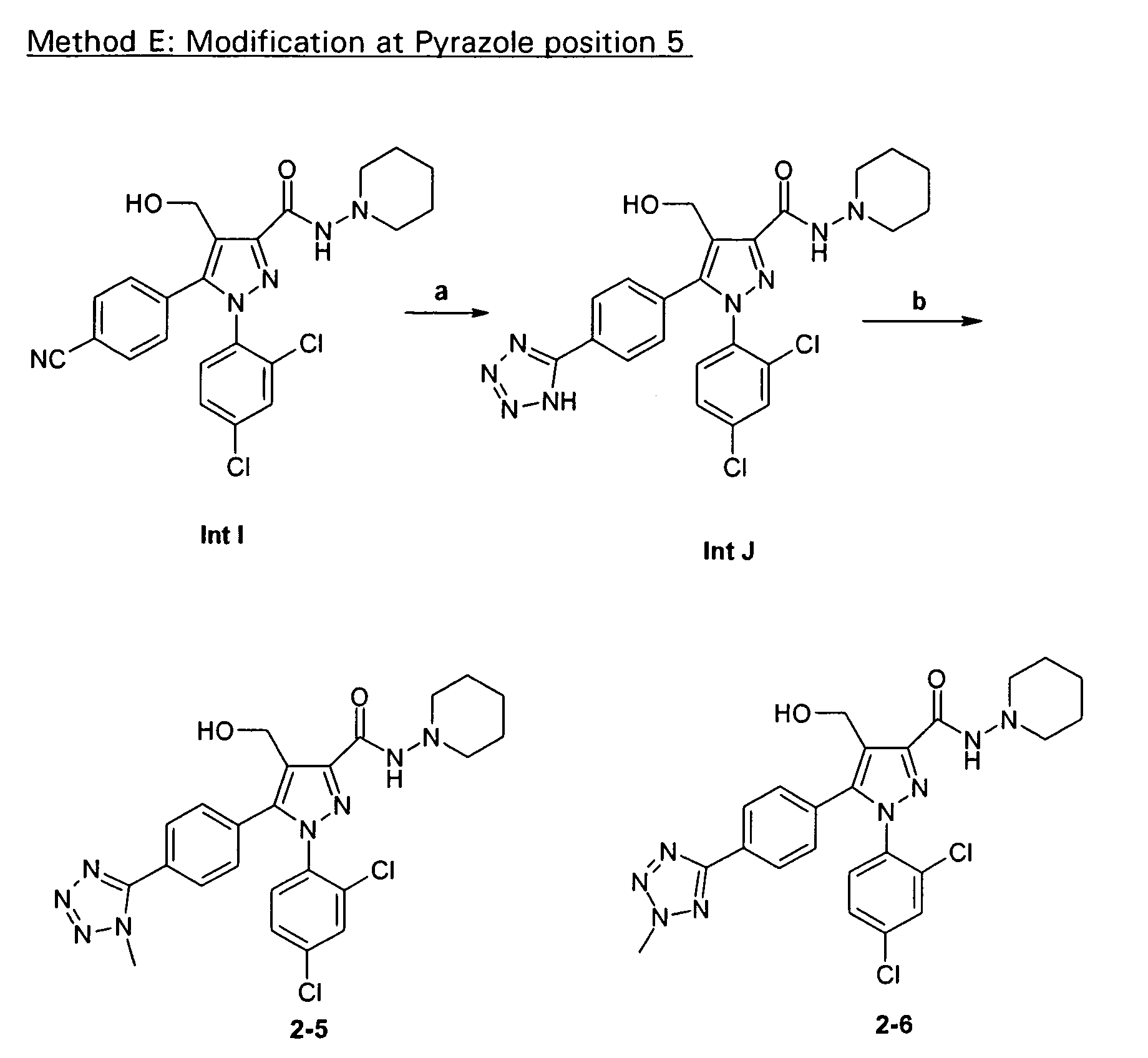
(a) NaN3, Et3N.HCl, toulene; (b) CH3l, K2CO3, CH3CN
Int. J. The mixture of Int I (1.50g, 3.19 mmol), NaN3 (0.65g, 10 mmol) and
Et3N.HCl (1.37g,10 mmol) in toluene (25 mL) was heated to 70 °C for 12h with
stirring. After cooling, the product was extracted with water. The aqueous layer,
36% HCl was added dropwise to salt out the title product. After filtration, the solid
was dried under reduced pressure. (see Synthesis, 6, 1998, 910).
Compounds 2.5 and 2-6. To the Int J (0.51 g, 1 mmol) in CH
3CN (10 mL)
K
2CO
3 (0.13g, 1 mmol) was added. To this CH
3l (0.12 ml, 2 mmol) was added.
The contents were stirred at room temperature for 4-5 hrs. The reaction was
quenched with water and extracted with ethyl acetate. The organic layer was
separated and dried over anhydrous MgSO
4. The solvent was removed under
reduced pressure. Two isomers 2-5 and 2-6 were separated and purified by flash
column chromatography on silica gel.
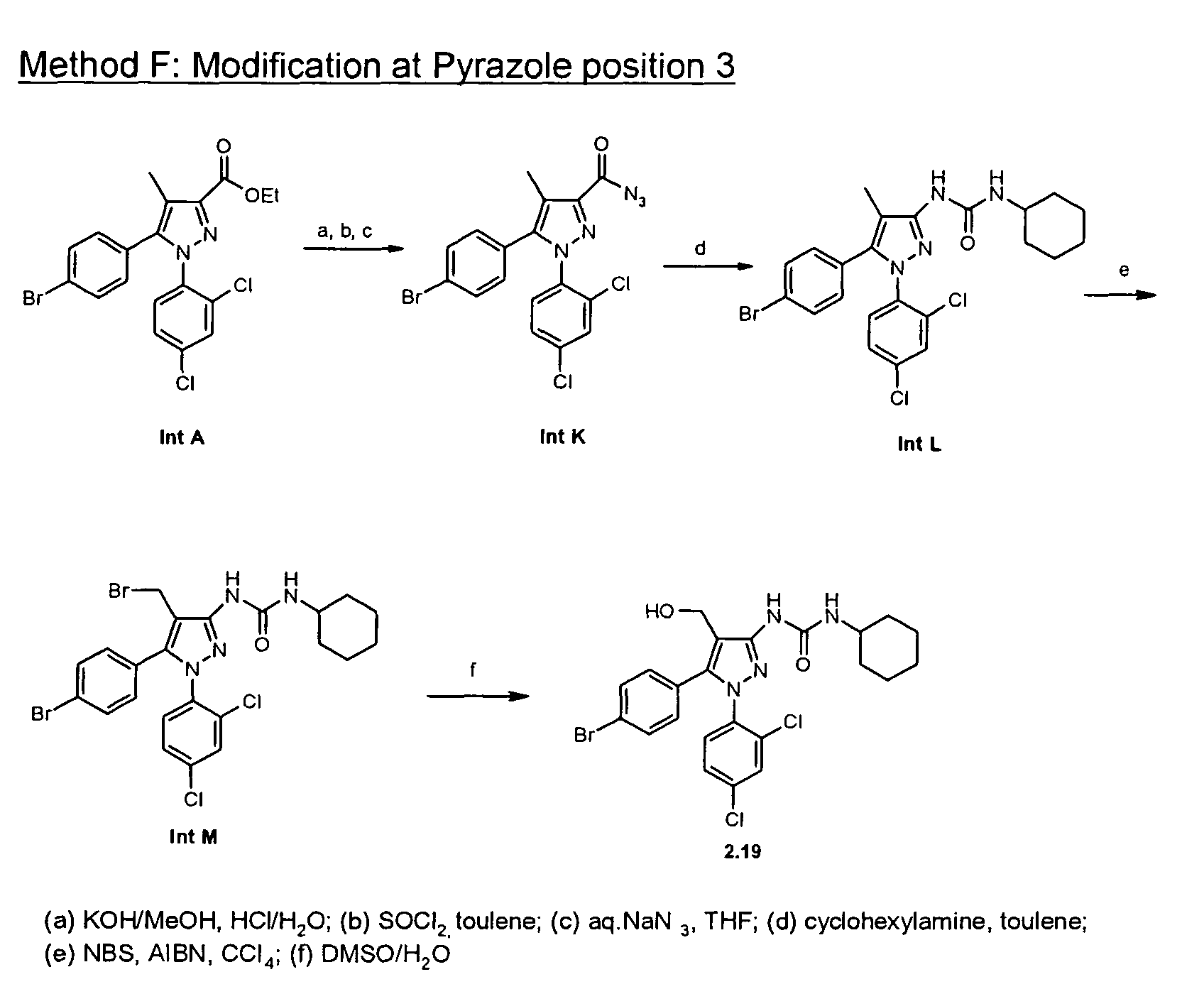
Int. K. To a magnetically stirred solution of ester Int. A (0.625 g, 1.38 mmol)
in methanol (7 mL) was added a solution of potassium hydroxide (0.155 g, 2.76
mmol) in methanol (5 mL). The mixture was heated under reflux for 3 h. The
cooling reaction mixture was then poured into water (10 mL) and acidified with
10% hydrochloric acid. The precipitate was filtered, washed with water, and dried
under vacuum to yield the corresponding acid as a solid.
A solution of the crude acid (0.585 g) and thionyl chloride (0.492 g, 4.14
mmol) in toluene (10 mL) was refluxed for 3 h. Solvent was evaporated under
reduced pressure, and the residue was then redissolved in toluene (20 mL) and
evaporated to yield the crude carboxylic chloride as a solid. To the solution of
above carboxylic chloride (1.24 mmol) in THF (5 mL), NaN3 (0.081 g, 1.24 mmol)
in 0.5mL of water was added at 0°C. The contents were stirred at that temperature
for I hr. The reaction was quenched with water (5 mL), both aqueous and organic
layers were separated. The organic layer was extracted using ethyl acetate (10
mL) and dried over anhydrous MgSO4. The solvent was evaporated under
reduced pressure to give the title product.
Int. L. To a magnetically stirred solution of Int. K (0.448 g, 1 mmol) in
toluene (10 mL) cyclohexyl amine (0.34 mL, 3 mmol) was added. The contents
were stirred at 100°C for 8h. After cooling to room temperature the reaction was
quenched by water (5 mL). Both aqueous and organic layers were separated, the
organic layer was dried over anhydrous MgSO4. The solvent was evaporated
under reduced pressure. Purification by flash chromatography on silica gel gave
the title product.
Int. M. To a magnetically stirred solution of Int. L (0.522g, 1 mmol) in
carbon tetrachloride (20 mL) was added N-bromosuccinimide (0.21 g, 1.2 mmol)
and 2,2'-azobisisobutyronitrile (AIBN, 5 mg). The resulting mixture was refluxed
for 3 h. After cooling to RT, the precipitate was filtered. The solvent was removed
from the filtrate under reduced pressure to give the title product.
Compound 2-19. To the Int. M (0.601g, 1 mmol), DMSO/H2O (5:1) were
added. The mixture was stirred at 60 °C for 5h. After cooling to RT, water (30 mL)
was added. The organic layer was extracted with ethyl acetate and dried over
anhydrous MgSO4. The solvent was removed under reduced pressure.
Purification by flash column chromatography on silica gel gave the title product.
11 rats were trained to press a lever five times to receive a 45 mg food
pellet. The training continued over a time period of several weeks. After the
training period all rats received drug treatments once per week. The specific rat
receiving a drug treatment and the dosage given were each randomly varied. The
treatments comprised administration of a vehicle control solution or various
dosages of inventive compound 1-5 in combination with the vehicle control
solution. All injections were given IP. Ten minutes after injection the rat was
placed in proximity to the lever.
Figure 1 illustrates a mean (±SEM) number of lever presses in 30 min for
treated animals. The overall suppression of food-reinforced lever pressing was
statistically significant (p<0.05). Figure 1 illustrates a classic dose response curve
wherein as the dose of drug (inventive compound 1-5) increases, lever pressing
consistently decreases. Without wishing to be bound to any theory, applicants
believe that inventive compound 1-5 antagonizes (blocks) the CB1 receptors,
thereby suppressing appetite and leading to decreased lever pressing.
Those skilled in the art will recognize, or be able to ascertain with no more
than routine experimentation, many equivalents to the specific embodiments of
the invention disclosed herein. Such equivalents are intended to be
encompassed by the scope of the invention.
























 B comprises N or O;R1 comprises -(CH2)n-Z,n is an integer from 0 to about 7,Z comprises a carbocyclic ring having about 4 to about 7 ring members, a heterocyclic ring having about 4 to about 7 ring members, an aromatic ring having about 5 to about 7 ring members, a heteroaromatic ring having about 5 to about 7 ring members, a bicyclic ring, a heterobicyclic ring, a tricyclic ring, a heterotricyclic ring, a polycyclic ring, a heteropolycyclic ring; or any above group substituted on at least one available ring atom by an alkyl group; or any above group substituted on at least one available ring nitrogen atom by a benzyl group, a substituted benzyl group, an alkoxybenzyl group, a substituted alkoxybenzyl group, a benzhydryl group or a substituted benzhydryl group; and wherein the connecting point between the -(CH2)n- group and the Z group can be any available ring carbon atom or any available ring nitrogen atom; orR1 comprises -(CH2)n-Z,n is an integer from 0 to about 7,Z comprises a 5 member unsaturated ring having 0 to 4 independently selected heteroatoms as ring members, a substituted 5 member unsaturated ring having 0 to 4 independently selected heteroatoms as ring members, a 6 member aromatic ring having 0 to 5 independently selected heteroatoms as ring members or a substituted 6 member aromatic ring having 0 to 5 independently selected heteroatoms; and wherein the connecting point between the -(CH2)n- group and the Z group can be any available ring carbon atom or any available ring nitrogen atom; orR1 comprises -(CH2)n-Z,n is an integer from 0 to about 7,Z comprises 1-, 2- or 3-pyrrolidinyl, 1-, 2-, 3- or 4-piperidinyl, 2-, 3- or 4-morpholinyl, 2-, 3- or 4-thiomorpholinyl, 1-, 2- or 3-azetidinyl, 1- or 2-piperazinyl, 2- or 3-tetrahydrofuranyl; or any above group substituted on at least one available ring atom by an alkyl group; or any above group substituted on at least one available ring nitrogen atom by a benzyl group, a substituted benzyl group, an alkoxybenzyl group, a substituted alkoxybenzyl group, a benzhydryl group or a substituted benzhydryl group; and wherein the connecting point between the -(CH2)n- group and the Z group can be any available ring carbon atom or any available ring nitrogen atom; orR1 comprises -(CH2)n-Z,n is an integer from 0 to about 7,Z comprises
 wherein X and Y each independently comprise H, halogen, N3, NCS, CN, NO2, NX1X2, OX3, OAc, O-acyl, O-aroyl, NH-acyl, NH-aroyl, CHO, CF3, COOX3, SO3H, SO2NX1X2, CONX1X2, alkoxy, alkylmercapto, alkylamino, di-alkylamino, alkylsulfinyl, alkylsulfonyl or (when Z comprises a structure having two adjacent carbon atoms methylene dioxy,
 X1 and X2 each independently comprise H or alkyl, orX1 and X2 together comprise part of a heterocyclic ring having about 4 to about 7 ring members and optionally one additional heteroatom selected from O, N or S, orX1 and X2 together comprise part of an imide ring having about 5 to about 6 members,X3 comprises H, alkyl, hydroxyloweralkyl or alkyl-NX1X2,X4 comprises H or alkyl; orR1 comprises a carbocyclic ring having 6 ring atoms fused to a heterocyclic ring having from 5 to 7 ring atoms, a carbocyclic ring having 6 ring atoms fused to a heteroaromatic ring having from 5 to 7 ring atoms, a heterocyclic ring having 6 ring atoms fused to a heterocyclic ring having from 5 to 7 ring atoms, an heterocyclic ring having 6 ring atoms fused to a heteroaromatic ring having from 5 to 7 ring atoms, an aromatic ring having 6 ring atoms fused to a heterocyclic ring having from 5 to 7 ring atoms, an aromatic ring having 6 ring atoms fused to a heteroaromatic ring having from 5 to 7 ring atoms, a heteroaromatic ring having 6 ring atoms fused to a heterocyclic ring having from 5 to 7 ring atoms or a heteroaromatic ring having 6 ring atoms fused to a heteroaromatic ring having from 5 to 7 ring atoms; orR2 comprises a carbocyclic ring having about 4 to about 7 members, a heterocyclic ring having about 4 to about 7 members, an aromatic ring having about 5 to about 7 ring members, a heteroaromatic ring having about 5 to about 7 members, a bicyclic ring, a heterobicyclic ring, a tricyclic ring, a heterotricyclic ring, a polycyclic ring or a heteropolycyclic ring; orR2 compriseswherein G comprises CH or N L and J each independently comprise (CH2)n, O, NH or S, n is an integer from 0 to about 7; or
 R2 compriseswherein G, L and J each independently comprise CH or N; or
 R2 compriseswherein X and Y each independently comprise H, halogen, N3, NCS, Ph (phenyl), CN, NO2, NX1X2, OX3, OAc, O-acyl, O-aroyl, NH-acyl, NH-aroyl, CHO, CF3, COOX3, SO3H, SO2NX1X2, CONX1X2, alkyl, alcohol, alkoxy, alkylmercapto, alkylamino, di-alkylamino, alkylsulfinyl or alkylsulfonyl,
 X1 and X2 each independently comprise H or alkyl, orX1 and X2 together comprise part of a heterocyclic ring having about 4 to about 7 ring members and optionally a second heteroatom selected from O, N or S, orX1 and X2 together comprise part of an imide ring having about 5 to about 6 members,X3 comprises H, alkyl, hydroxyloweralkyl or alkyl-NX1X2; orR2 comprises a carbocyclic ring having 6 ring atoms fused to a heterocyclic ring having from 5 to 7 ring atoms, a carbocyclic ring having 6 ring atoms fused to a heteroaromatic ring having from 5 to 7 ring atoms, a heterocyclic ring having 6 ring atoms fused to a heterocyclic ring having from 5 to 7 ring atoms, an heterocyclic ring having 6 ring atoms fused to a heteroaromatic ring having from 5 to 7 ring atoms, an aromatic ring having 6 ring atoms fused to a heterocyclic ring having from 5 to 7 ring atoms, an aromatic ring having 6 ring atoms fused to a heteroaromatic ring having from 5 to 7 ring atoms, a heteroaromatic ring having 6 ring atoms fused to a heterocyclic ring having from 5 to 7 ring atoms or a heteroaromatic ring having 6 ring atoms fused to a heteroaromatic ring having from 5 to 7 ring atoms;R3 comprises H, halogen, N3, NCS, Ph, CN, NO2, NX1X2, OX3, OAc, O-acyl, O-aroyl, O(CH2)dOH, O(CH2)dNX1X2, NH-acyl, NH-aroyl, CHO, CF3, COOX3, SO3H, SO2NX1X2, CONX1X2, alkyl, alcohol, alkoxy, alkylmercapto, alkylamino or di-alkylamino, alkylsulfinyl or alkylsulfonyl,X1 and X2 each independently comprise H or alkyl, orX1 and X2 together comprise part of a heterocyclic ring having about 4 to about 7 ring members and optionally a second heteroatom selected from O, N or S, orX1 and X2 together comprise part of an imide ring having about 5 to about 6 members,X3 comprises H, alkyl, hydroxyloweralkyl or alkyl-NX1X2,d is an integer from 0 to about 6; orR3 comprises a carbocyclic ring having about 4 to about 7 ring members, a heterocyclic ring having about 4 to about 7 ring members, an aromatic ring having about 5 to about 7 ring members, a heteroaromatic ring having about 5 to about 7 ring members, a bicyclic ring, a heterobicyclic ring, a tricyclic ring, a heterotricyclic ring, a polycyclic ring or a heteropolycyclic ring; orR3 comprises
 or
or R3 comprises -CH2-Z,Z comprises H, halogen, N3, NCS, Ph, CN, NO2, NX1X2, OX3, OAc, O-acyl, O-aroyl, O(CH2)dOH, O(CH2)dNX1X2, NH-acyl, NH-aroyl, CHO, CF3, COOX3, SO3H, SO2NX1X2, CONX1X2, alkyl, alcohol, alkoxy, alkylmercapto, alkylamino, di-alkylamino, alkylsulfinyl or alkylsulfonyl,X1 and X2 each independently comprise H or alkyl, orX1 and X2 together comprise part of a heterocyclic ring having about 4 to about 7 ring members and optionally a second heteroatom selected from O, N or S, orX1 and X2 together comprise part of an imide ring having about 5 to about 6 members,X3 comprises H, alkyl, hydroxyloweralkyl or alkyl-NX1X2,d is an integer from 0 to about 6; orR3 comprises -CH2OH or -CH2Oalkyl; orR3 comprises -CH2-Z,Z comprises a carbocyclic ring having about 4 to about 7 ring members, a heterocyclic ring having about 4 to about 7 ring members, an aromatic ring having about 5 to about 7 ring members, a heteroaromatic ring having about 5 to about 7 ring members, a bicyclic ring, a heterobicyclic ring, a tricyclic ring or a heterotricyclic ring; or any above group substituted on at least one available ring atom by an alkyl group; or any above group substituted on at least one available ring nitrogen atom by a benzyl group, a substituted benzyl group, an alkoxybenzyl group, a substituted alkoxybenzyl group, a benzhydryl group or a substituted benzhydryl group; and wherein the connecting point between the -(CH2)n-group and the Z group can be any available ring carbon atom or any available ring nitrogen atom; orR3 comprises -CH2-Z,Z comprises 1-, 2- or 3-pyrrolidinyl, 1-, 2-, 3- or 4-piperidinyl, 2-, 3- or 4-morpholinyl, 2-, 3- or 4-thiomorpholinyl, 1-, 2- or 3-azetidinyl, 1- or 2-piperazinyl, 2- or 3-tetrahydrofuranyl; or any above group substituted on at least one available ring nitrogen atom by a benzyl group, a substituted benzyl group, an alkoxybenzyl group, a substituted alkoxybenzyl group, a benzhydryl group or a substituted benzhydryl group; and wherein the connecting point between the -(CH2)n- group and the Z group can be any available ring carbon atom or any available ring nitrogen atom; orR3 comprises -CH2-Q-(CH2)n-Z,Q comprises N, O, S, CH3, SO2 or OSO2,n is an integer from 0 to about 7,Z comprises H, halogen, N3, NCS, Ph, CN, NO2, NX1X2, OX3, OAc, O-acyl, O-aroyl, NH-acyl, NH-aroyl, O(CH2)dOH, O(CH2)dNX1X2, CHO, CF3, COOX3, SO3H, SO2NX1X2, CONX1X2, alkyl, alcohol, alkoxy, alkylmercapto, alkylamino, di-alkylamino, alkylsulfinyl or alkylsulfonyl,X1 and X2 each independently comprise H or alkyl, orX1 and X2 together comprise part of a heterocyclic ring having about 4 to about 7 ring members and optionally a second heteroatom selected from O, N or S, orX1 and X2 together comprise part of an imide ring having about 5 to about 6 members,X3 comprises H, alkyl, hydroxyloweralkyl, or alkyl-NX1X2,d is an integer from 0 to about 6; orR3 comprises -CH2-Q-(CH2)n -Z,Q comprises N, O, S, CH3, SO2 or OSO2,n is an integer from 0 to about 7,Z comprises a carbocyclic ring having about 4 to about 7 ring members, a heterocyclic ring having about 4 to about 7 ring members, an aromatic ring having about 5 to about 7 ring members, a heteroaromatic ring having about 5 to about 7 ring members; or any above group substituted on at least one available ring atom by an alkyl group; or any above group substituted on at least one available ring nitrogen atom by a benzyl group, a substituted benzyl group, an alkoxybenzyl group, a substituted alkoxybenzyl group, a benzhydryl group or a substituted benzhydryl group; and wherein the connecting point between the -(CH2)n-group and the Z group can be any available ring carbon atom or any available ring nitrogen atom; orR3 comprises -CH2-Q-(CH2)n -Z,Q comprises N, O, S, CH3, SO2 or OSO2,n is an integer from 0 to about 7,Z comprises 1-, 2- or 3-pyrrolidinyl, 1-, 2-, 3- or 4-piperidinyl, 2-, 3- or 4-morpholinyl, 2-, 3- or 4-thiomorpholinyl, 1-, 2- or 3-azetidinyl, 1- or 2-piperazinyl, 2- or 3-tetrahydrofuranyl; or any above group substituted on at least one available ring atom by an alkyl group; or any above group substituted on at least one available ring nitrogen atom by a benzyl group, a substituted benzyl group, an alkoxybenzyl group, a substituted alkoxybenzyl group, a benzhydryl group or a substituted benzhydryl group; and wherein the connecting point between the -(CH2)n- group and the Z group can be any available ring carbon atom or any available ring nitrogen atom; orR3 comprises -CH2-Q-(CH2)n -Z,Q comprises N, O, S, CH3, SO2 or OSO2,n is an integer from 0 to about 7,Z compriseswherein X and Y each independently comprise H, halogen, N3, NCS, CN, NO2, NX1X2, OX3, OAc, O-acyl, O-aroyl, NH-acyl, NH-aroyl, CHO, CF3, alcohol, COOX3, SO3H, SO2NX1X2, CONX1X2, alkoxy, alkylmercapto, alkylamino, di-alkylamino, alkylsulfinyl, alkylsulfonyl or (when Z comprises a structure having two adjacent carbon atoms) methylene dioxy,
 X1 and X2 each independently comprise H or alkyl, orX1 and X2 together comprise part of a heterocyclic ring having about 4 to about 7 ring members and optionally a second heteroatom selected from O, N or S, orX1 and X2 together comprise part of an imide ring having about 5 to about 6 members,X3 comprises H, alkyl, hydroxyloweralkyl or alkyl-NX1X2;R4 comprises -(CH2)n-Z,n comprises an integer from 0 to about 7,Z comprises H, halogen, N3, NCS, CN, NO2, NX1X2, OX3, OAc, O-acyl, O-aroyl, NH-acyl, NH-aroyl, O(CH2)dOH, O(CH2)dNX1X2, CHO, CF3, COOX3, SO3H, SO2NX1X2, CONX1X2, alkoxy, alkylmercapto, alkylamino, di-alkylamino alkylsulfinyl or alkylsulfonyl,X1 and X2 each independently comprise H or alkyl, orX1 and X2 together comprise part of a heterocyclic ring having about 4 to about 7 ring members and optionally a second heteroatom selected from O, N or S, orX1 and X2 together comprise part of an imide ring having about 5 to about 6 members,X3 comprises H, alkyl, hydroxyloweralkyl or alkyl-NX1X2,d is an integer from 0 to about 6; orR4 comprises -(CH2)n-Z,n comprises an integer from 0 to about 7,Z comprises a carbocyclic ring having about 4 to about 7 ring members, a heterocyclic ring having about 4 to about 7 ring members, an aromatic ring having about 5 to about 7 ring members, a heteroaromatic ring having about 5 to about 7 ring members, a bicyclic ring, a heterobicyclic ring, a polycyclic ring, a heteropolycyclic ring; or any above group substituted on at least one available ring atom by an alkyl group; or any above group substituted on at least one available ring nitrogen atom by a benzyl group, a substituted benzyl group, an alkoxybenzyl group, a substituted alkoxybenzyl group, a benzhydryl group or a substituted benzhydryl group; and wherein the connecting point between the -(CH2)n-group and the Z group can be any available ring carbon atom or any available ring nitrogen atom; orR4 comprises -(CH2)n-Z,n comprises an integer from 0 to about 7,Z comprises 1-, 2- or 3-pyrrolidinyl, 1-, 2-, 3- or 4-piperidinyl, 2-, 3- or 4-morpholinyl, 2-, 3- or 4-thiomorpholinyl, 1-, 2- or 3-azetidinyl, 1- or 2-piperazinyl, 2- or 3-tetrahydrofuranyl; or any above group substituted on at least one available ring atom by an alkyl group; or any above group substituted on at least one available ring nitrogen atom by a benzyl group, a substituted benzyl group, an alkoxybenzyl group, a substituted alkoxybenzyl group, a benzhydryl group or a substituted benzhydryl group; and wherein the connecting point between the -(CH2)n- group and the Z group can be any available ring carbon atom or any available ring nitrogen atom; orR4 comprises -(CH2)n-Z,n comprises an integer from 0 to about 7,Z comprises
 or
or wherein X and Y each independently comprise H, halogen, N3, NCS, CN, NO2, NX1X2, OX3, OAc, O-acyl, O-aroyl, NH-acyl, NH-aroyl, alcohol, CHO, CF3, COOX3, SO3H, SO2NX1X2, CONX1X2, alkoxy, alkylmercapto, alkylamino, di-alkylamino, alkylsulfinyl, alkylsulfonyl or (when Z comprises a structure having two adjacent carbon atoms) methylene dioxy,
 X1 and X2 each independently comprise H or alkyl, orX1 and X2 together comprise part of a heterocyclic ring having about 4 to about 7 ring members and optionally a second heteroatom selected from O, N or S, orX1 and X2 together comprise part of an imide ring having about 5 to about 6 members,X3 comprises H, alkyl, hydroxyloweralkyl or alkyl-NX1X2,X4 comprises H or alkyl; orR4 comprises -(CH2)n-Z,n comprises an integer from 0 to about 7,Z comprises an unsaturated ring having 5 ring atoms and 0 to 4 independently selected heteroatoms as ring members fused to an unsaturated ring having 5 ring atoms and 0 to 4 independently selected heteroatoms as ring members, an unsaturated ring having 5 ring atoms and 0 to 4 independently selected heteroatoms as ring members fused to an unsaturated ring having 6 or 7 ring atoms and 0 to 5 independently selected heteroatoms as ring members or an unsaturated ring having 6 ring atoms and 0 to 5 independently selected heteroatoms as ring members fused to an unsaturated ring having 6 or 7 ring atoms and 0 to 5 independently selected heteroatoms as ring members; orR4 comprises -CH2-Q-(CH2)n-Z,Q comprises N, O, S, CH3, SO2 or OSO2,n is an integer from 0 to about 7,Z comprises H, halogen, N3, NCS, CN, NO2, NX1X2, OX3, OAc, O-acyl, O-aroyl, O(CH2)dOH, O(CH2)dNX1X2, NH-acyl, NH-aroyl, CHO, CF3, COOX3, SO3H, SO2NX1X2, CONX1X2, alkoxy, alkylmercapto, alkylamino or di-alkylamino,X1 and X2 each independently comprise H or alkyl, orX1 and X2 together comprise part of a heterocyclic ring having about 4 to about 7 ring members and optionally a second heteroatom selected from O, N or S, orX1 and X2 together comprise part of an imide ring having about 5 to about 6 members,X3 comprises H, alkyl, hydroxyloweralkyl, or alkyl-NX1X2,d is an integer from 0 to about 6; orR4 comprises -CH2-Q-(CH2)n-Z,Q comprises N, O, S, CH3, SO2 or OSO2,n is an integer from 0 to about 7,Z comprises a bicyclic ring, a heterobicyclic ring, a tricyclic ring, a heterotricyclic ring, a polycyclic ring or a heteropolycyclic ring; orR4 comprises -CH2-Q-(CH2)n-Z,Q comprises N, O, S, CH3, SO2 or OSO2,n is an integer from 0 to about 7,Z comprises a carbocyclic ring having about 4 to about 7 ring members, a heterocyclic ring having about 4 to about 7 ring members, an aromatic ring having about 5 to about 7 ring members, a heteroaromatic ring having about 5 to about 7 ring members; or any above group substituted on at least one available ring atom by an alkyl group; or any above group substituted on at least one available ring nitrogen atom by a benzyl group, a substituted benzyl group, an alkoxybenzyl group, a substituted alkoxybenzyl group, a benzhydryl group or a substituted benzhydryl group; and wherein the connecting point between the -(CH2)n-group and the Z group can be any available ring carbon atom or any available ring nitrogen atom; orR4 comprises -CH2-Q-(CH2)n-Z,Q comprises N, O, S, CH3, SO2 or OSO2,n is an integer from 0 to about 7,Z comprises 1-, 2- or 3-pyrrolidinyl, 1-, 2-, 3- or 4-piperidinyl, 2-, 3- or 4-morpholinyl, 2-, 3- or 4-thiomorpholinyl, 1-, 2- or 3-azetidinyl, 1- or 2-piperazinyl, 2- or 3-tetrahydrofuranyl; or any above group substituted on at least one available ring atom by an alkyl group; or any above group substituted on at least one available ring nitrogen atom by a benzyl group, a substituted benzyl group, an alkoxybenzyl group, a substituted alkoxybenzyl group, a benzhydryl group or a substituted benzhydryl group; and wherein the connecting point between the -(CH2)n- group and the Z group can be any available ring carbon atom or any available ring nitrogen atom; orR4 comprises -CH2-Q-(CH2)n-Z,Q comprises N, O, S, CH3, SO2 or OSO2,n is an integer from 0 to about 7,Z comprises
 or
or wherein X and Y each independently comprise H, halogen, N3, NCS, CN, NO2, NX1X2, OX3, OAc, O-acyl, O-aroyl, NH-acyl, NH-aroyl, alcohol, CHO, CF3, alcohol, COOX3, SO3H, SO2NX1X2, CONX1X2, alkoxy, alkylmercapto, alkylamino, di-alkylamino, alkylsulfinyl, alkylsulfonyl or (when Z comprises a structure having two adjacent carbon atoms) methylene dioxy and X4 comprises H or alkyl; or
 R4 comprises -(CH2)n-Q-(CH2)n-Z,Q comprises N, O, S, CH3, SO2 or OSO2, each n independently comprises an integer from 0 to about 7,Z comprises an unsaturated ring having 5 ring atoms and 0 to 4 independently selected heteroatoms as ring members fused to an unsaturated ring having 5 ring atoms and 0 to 4 independently selected heteroatoms as ring members, an unsaturated ring having 5 ring atoms and 0 to 4 independently selected heteroatoms as ring members fused to an unsaturated ring having 6 or 7 ring atoms and 0 to 5 independently selected heteroatoms as ring members or an unsaturated ring having 6 ring atoms and 0 to 5 independently selected heteroatoms as ring members fused to an unsaturated ring having 6 or 7 ring atoms and 0 to 5 independently selected heteroatoms as ring members; orR4 comprises -CH2-Q-(CH2)n-Z,Q comprises N, O, S, CH3, SO2 or OSO2, sn is an integer from 0 to about 7,Z comprises
 or
or R4 comprises -T-(CH2)n-Z,n comprises an integer from 0 to about 7,T comprises a carbocyclic ring having 3 to about 8 ring members, an unsaturated ring having 3 to about 8 carbon atoms as ring members, a heterocyclic ring having 3 to about 8 ring members, a heteroaromatic ring having 5 to about 8 ring members, a bicyclic ring, a heterobicyclic ring, a tricyclic ring, a heterotricyclic ring, a polycyclic ring or a heteropolycyclic ring,Z comprises H, halogen, N3, NCS, CN, NO2, NX1X2, OX3, OAc, O-acyl, O-aroyl, O(CH2)dOH, O(CH2)dNX1X2, NH-acyl, NH-aroyl, CHO, CF3, COOX3, SO3H, SO2NX1X2, CONX1X2, alkoxy, alkylmercapto, alkylamino, di-alkylamino alkylsulfinyl or alkylsulfonyl,X1 and X2 each independently comprise H or alkyl, orX1 and X2 together comprise part of a heterocyclic ring having about 4 to about 7 ring members and optionally a second heteroatom selected from O, N or S, orX1 and X2 together comprise part of an imide ring having about 5 to about 6 members,X3 comprises H, alkyl, hydroxyloweralkyl or alkyl-NX1X2,d is an integer from 0 to about 6; orR4 comprises -T-(CH2)n-Z,n comprises an integer from 0 to about 7,T comprises a carbocyclic ring having 3 to about 8 ring members, an unsaturated ring having 3 to about 8 carbon atoms as ring members, a heterocyclic ring having 3 to about 8 ring members, a heteroaromatic ring having 5 to about 8 ring members, a bicyclic ring, a heterobicyclic ring, a tricyclic ring, a heterotricyclic ring, a polycyclic ring or a heteropolycyclic ring,Z comprises a carbocyclic ring having about 4 to about 7 ring members, a heterocyclic ring having about 4 to about 7 ring members, an aromatic ring having about 5 to about 7 ring members, a heteroaromatic ring having about 5 to about 7 ring members, a bicyclic ring, a heterobicyclic ring, a polycyclic ring, a heteropolycyclic ring; or any above group substituted on at least one available ring atom by an alkyl group; or any above group substituted on at least one available ring nitrogen atom by a benzyl group, a substituted benzyl group, an alkoxybenzyl group, a substituted alkoxybenzyl group, a benzhydryl group or a substituted benzhydryl group; and wherein the connecting point between the -(CH2)n-group and the Z group can be any available ring carbon atom or any available ring nitrogen atom; orR4 comprises -T-(CH2)n-Z,n comprises an integer from 0 to about 7,T comprises a carbocyclic ring having 3 to about 8 ring members, an unsaturated ring having 3 to about 8 carbon atoms as ring members, a heterocyclic ring having 3 to about 8 ring members, a heteroaromatic ring having 5 to about 8 ring members, a bicyclic ring, a heterobicyclic ring, a tricyclic ring, a heterotricyclic ring, a polycyclic ring or a heteropolycyclic ring,Z comprises 1-, 2- or 3-pyrrolidinyl, 1-, 2-, 3- or 4-piperidinyl, 2-, 3- or 4-morpholinyl, 2-, 3- or 4-thiomorpholinyl, 1-, 2- or 3-azetidinyl, 1- or 2-piperazinyl, 2- or 3-tetrahydrofuranyl; or any above group substituted on at least one available ring atom by an alkyl group; or any above group substituted on at least one available ring nitrogen atom by a benzyl group, a substituted benzyl group, an alkoxybenzyl group, a substituted alkoxybenzyl group, a benzhydryl group or a substituted benzhydryl group; and wherein the connecting point between the -(CH2)n- group and the Z group can be any available ring carbon atom or any available ring nitrogen atom; orR4 comprises -T-(CH2)n-Z,n comprises an integer from 0 to about 7,T comprises a carbocyclic ring having 3 to about 8 ring members, an unsaturated ring having 3 to about 8 carbon atoms as ring members, a heterocyclic ring having 3 to about 8 ring members, a heteroaromatic ring having 5 to about 8 ring members, a bicyclic ring, a heterobicyclic ring, a tricyclic ring, a heterotricyclic ring, a polycyclic ring or a heteropolycyclic ring,Z comprises
 or
or wherein X and Y each independently comprise H, halogen, N3, NCS, CN, NO2, NX1X2, OX3, OAc, O-acyl, O-aroyl, NH-acyl, NH-aroyl, alcohol, CHO, CF3, COOX3, SO3H, SO2NX1X2, CONX1X2, alkoxy, alkylmercapto, alkylamino, di-alkylamino, alkylsulfinyl, alkylsulfonyl or (when Z comprises a structure having two adjacent carbon atoms) methylene dioxy,
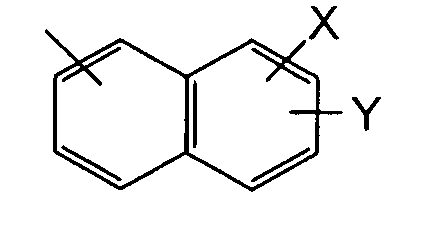 X1 and X2 each independently comprise H or alkyl, orX1 and X2 together comprise part of a heterocyclic ring having about 4 to about 7 ring members and optionally a second heteroatom selected from O, N or S, orX1 and X2 together comprise part of an imide ring having about 5 to about 6 members,X3 comprises H, alkyl, hydroxyloweralkyl or alkyl-NX1X2,X4 comprises H or alkyl; orR4 comprises -T-(CH2)n-Z,n comprises an integer from 0 to about 7,T comprises a carbocyclic ring having 3 to about 8 ring members, an unsaturated ring having 3 to about 8 carbon atoms as ring members, a heterocyclic ring having 3 to about 8 ring members, a heteroaromatic ring having 5 to about 8 ring members, a bicyclic ring, a heterobicyclic ring, a tricyclic ring, a heterotricyclic ring, a polycyclic ring or a heteropolycyclic ring,Z comprises an unsaturated ring having 5 ring atoms and 0 to 2 independently selected heteroatoms as ring members fused to an unsaturated ring having 5 ring atoms and 0 to 4 independently selected heteroatoms as ring members, an unsaturated ring having 5 ring atoms and 0 to 4 independently selected heteroatoms as ring members fused to an unsaturated ring having 6 or 7 ring atoms and 0 to 5 independently selected heteroatoms as ring members or an unsaturated ring having 6 ring atoms and 0 to 5 independently selected heteroatoms as ring members fused to an unsaturated ring having 6 or 7 ring atoms and 0 to 5 independently selected heteroatoms as ring members; orR4 comprises -Ph-(CH2)n-Z,n comprises an integer from 0 to about 7,Z comprises H, halogen, N3, NCS, CN, NO2, NX1X2, OX3, OAc, O-acyl, O-aroyl, O(CH2)dOH, O(CH2)dNX1X2, NH-acyl, NH-aroyl, CHO, CF3, COOX3, SO3H, SO2NX1X2, CONX1X2, alkoxy, alkylmercapto, alkylamino or di-alkylamino,X1 and X2 each independently comprise H or alkyl, orX1 and X2 together comprise part of a heterocyclic ring having about 4 to about 7 ring members and optionally heteroatom selected from O, N or S, orX1 and X2 together comprise part of an imide ring having about 5 to about 6 members,X3 comprises H, alkyl, hydroxyloweralkyl or alkyl-NX1X2,d is an integer from 0 to about 6; orR4 comprises -Ph-(CH2)n-Z,n comprises an integer from 0 to about 7,Z comprises
 or
or wherein X and Y each independently comprise H, halogen, N3, NCS, CN, NO2, NX1X2, OX3, OAc, O-acyl, O-aroyl, NH-acyl, NH-aroyl, CHO, CF3, alcohol, COOX3, SO3H, SO2NX1X2, CONX1X2, alkoxy, alkylmercapto, alkylamino, di-alkylamino, alkylsulfinyl, lower-alkylsulfonyl or (when Z comprises a structure having two adjacent carbon atoms) methylene dioxy,
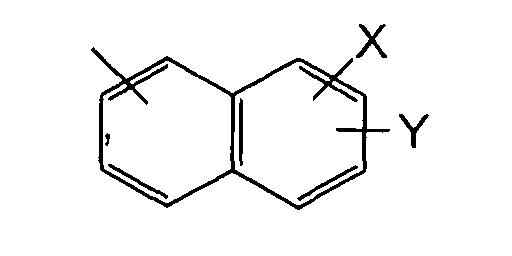 X1 and X2 each independently comprise H or alkyl, orX1 and X2 together comprise part of a heterocyclic ring having about 4 to about 7 ring members and optionally a second heteroatom selected from O, N or S, orX1 and X2 together comprise part of an imide ring having about 5 to about 6 members,X3 comprises H, alkyl, hydroxyloweralkyl or alkyl-NX1X2,X4 comprises H or alkyl; orR4 comprises -Ph-(CH2)n-Z,n comprises an integer from 0 to about 7,Z comprises
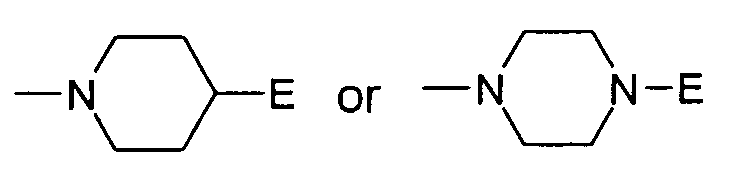 E comprises a C1 to about C4, linear or branched alkyl group, a phenyl group, a substituted phenyl group, a benzyl group or a substituted benzyl group; orIn a variation of the invention R4 comprises -Ph-(CH2)n-Z,n comprises an integer from 0 to about 7,Z comprises
 m is an integer from 1 to aboutA1 and A2 each independently comprise a C1 to about C4 alkyl group, a phenyl group or a substituted phenyl group; andR5 is present only when B is N and if present comprises H, alkyl or substituted alkyl;with the provisos that:when A is a direct bond and B is N then R1 cannot be H;when A is not a direct bond and B is N then R3 cannot be H or a C1-C3 alkyl;when A is a direct bond and B is N and R1 is a 6 member aromatic ring having 0 to 3 substituents independently selected from halogen, fluoromethyl and trifluoromethyl then R4 cannot be a 6 member aromatic ring having 0 to 3 substituents independently selected from halogen, fluoromethyl and trifluoromethyl;when A is a direct bond and B is N and R5 is hydrogen and R2 has a nitrogen directly connected to the nitrogen of the amide at the 3-position of pyrazole ring, then R4 can not be a phenyl ring or a phenyl ring having one to three substitutions selected from halogen, trifluoromethyl, 1-pyrrolidinyl, 1-piperidinyl, 4-morpholinyl, 1-piperazinyl, lower-alkyl substituted 1-pyrrolidinyl, lower-alkyl substituted 1-piperidinyl, lower-alkyl substituted 4-morpholinyl, and lower-alkyl substituted 1-piperazinyl.
 or
or wherein X and Y each independently comprise H, halogen, N3, NCS, CN, NO2, NX1X2, OX3, OAc, O-acyl, O-aroyl, NH-acyl, NH-aroyl, alcohol, CHO, CF3, COOX3, SO3H, SO2NX1X2, CONX1X2, alkoxy, alkylmercapto, alkylamino, di-alkylamino, alkylsulfinyl, alkylsulfonyl or (when Z comprises a structure having two adjacent carbon atoms) methylene dioxy,
 X1 and X2 each independently comprise H or alkyl, orX1 and X2 together comprise part of a heterocyclic ring having about 4 to about 7 ring members and optionally a second heteroatom selected from O, N or S, orX1 and X2 together comprise part of an imide ring having about 5 to about 6 members,X3 comprises H, alkyl, hydroxyloweralkyl or alkyl-NX1X2,X4 comprises H or alkyl.