EP1570368B1 - Stream sourcing content delivery system - Google Patents
Stream sourcing content delivery system Download PDFInfo
- Publication number
- EP1570368B1 EP1570368B1 EP03813470.6A EP03813470A EP1570368B1 EP 1570368 B1 EP1570368 B1 EP 1570368B1 EP 03813470 A EP03813470 A EP 03813470A EP 1570368 B1 EP1570368 B1 EP 1570368B1
- Authority
- EP
- European Patent Office
- Prior art keywords
- content
- stream
- playlist
- content delivery
- delivery system
- Prior art date
- Legal status (The legal status is an assumption and is not a legal conclusion. Google has not performed a legal analysis and makes no representation as to the accuracy of the status listed.)
- Expired - Lifetime
Links
- 238000012384 transportation and delivery Methods 0.000 title claims description 149
- 238000012358 sourcing Methods 0.000 title claims description 101
- 238000000034 method Methods 0.000 claims description 68
- 238000009826 distribution Methods 0.000 claims description 42
- 239000000872 buffer Substances 0.000 claims description 13
- 238000003860 storage Methods 0.000 claims description 5
- 208000034423 Delivery Diseases 0.000 claims 1
- 230000008569 process Effects 0.000 description 19
- 238000007726 management method Methods 0.000 description 17
- 230000000737 periodic effect Effects 0.000 description 10
- 238000004891 communication Methods 0.000 description 9
- 230000005540 biological transmission Effects 0.000 description 7
- 230000003139 buffering effect Effects 0.000 description 7
- 230000006399 behavior Effects 0.000 description 6
- 238000010586 diagram Methods 0.000 description 5
- 238000005516 engineering process Methods 0.000 description 4
- 238000012546 transfer Methods 0.000 description 4
- 230000006872 improvement Effects 0.000 description 3
- 230000007958 sleep Effects 0.000 description 3
- 230000008901 benefit Effects 0.000 description 2
- 230000008859 change Effects 0.000 description 2
- 238000001514 detection method Methods 0.000 description 2
- 238000011161 development Methods 0.000 description 2
- 238000003780 insertion Methods 0.000 description 2
- 230000037431 insertion Effects 0.000 description 2
- 238000012545 processing Methods 0.000 description 2
- 238000011084 recovery Methods 0.000 description 2
- 230000004913 activation Effects 0.000 description 1
- 230000003044 adaptive effect Effects 0.000 description 1
- 230000000903 blocking effect Effects 0.000 description 1
- 238000004590 computer program Methods 0.000 description 1
- 238000013500 data storage Methods 0.000 description 1
- 230000001419 dependent effect Effects 0.000 description 1
- 238000013461 design Methods 0.000 description 1
- 230000003467 diminishing effect Effects 0.000 description 1
- 238000005315 distribution function Methods 0.000 description 1
- 230000006870 function Effects 0.000 description 1
- 230000010354 integration Effects 0.000 description 1
- 230000003993 interaction Effects 0.000 description 1
- 238000004519 manufacturing process Methods 0.000 description 1
- 230000007246 mechanism Effects 0.000 description 1
- 238000011093 media selection Methods 0.000 description 1
- 238000012986 modification Methods 0.000 description 1
- 230000004048 modification Effects 0.000 description 1
- 230000036651 mood Effects 0.000 description 1
- 230000006855 networking Effects 0.000 description 1
- 238000002360 preparation method Methods 0.000 description 1
- 238000011160 research Methods 0.000 description 1
- 238000004088 simulation Methods 0.000 description 1
- 230000001360 synchronised effect Effects 0.000 description 1
- 238000012795 verification Methods 0.000 description 1
- 230000002618 waking effect Effects 0.000 description 1
Images




Classifications
-
- H—ELECTRICITY
- H04—ELECTRIC COMMUNICATION TECHNIQUE
- H04L—TRANSMISSION OF DIGITAL INFORMATION, e.g. TELEGRAPHIC COMMUNICATION
- H04L65/00—Network arrangements, protocols or services for supporting real-time applications in data packet communication
- H04L65/60—Network streaming of media packets
- H04L65/75—Media network packet handling
- H04L65/762—Media network packet handling at the source
-
- H—ELECTRICITY
- H04—ELECTRIC COMMUNICATION TECHNIQUE
- H04L—TRANSMISSION OF DIGITAL INFORMATION, e.g. TELEGRAPHIC COMMUNICATION
- H04L65/00—Network arrangements, protocols or services for supporting real-time applications in data packet communication
- H04L65/60—Network streaming of media packets
- H04L65/70—Media network packetisation
-
- H—ELECTRICITY
- H04—ELECTRIC COMMUNICATION TECHNIQUE
- H04L—TRANSMISSION OF DIGITAL INFORMATION, e.g. TELEGRAPHIC COMMUNICATION
- H04L65/00—Network arrangements, protocols or services for supporting real-time applications in data packet communication
- H04L65/60—Network streaming of media packets
- H04L65/75—Media network packet handling
- H04L65/765—Media network packet handling intermediate
Definitions
- the invention relates to the transfer, distribution, and play of streamed information or content in a network environment. More particularly, the invention relates to the creation of streamed and loopable content in a network environment.
- the Internet comprises a web of computers and networks, which are widely spread throughout the world.
- the Internet currently comprises millions of network connections, and is used by millions of people, such as for business, education, entertainment, and/or basic communication.
- Digital content such as sound recordings, e.g. songs
- numerous network enabled radio stations have been introduced, which provide content to listeners at computers across the Internet.
- Network enabled radio has significantly increased the magnitude and variety of content to recipients, as compared to conventional over-the-air radio broadcasts
- a short or long duration failure across the network e.g. a blackout, results in the cessation of a music presentation, further diminishing the user experience.
- a source complex makes an outbound connection to a distribution point, and pushes data to the distribution point at a rate determined by the source complex.
- broadcasters are required to be aware of the network architecture. Therefore, every time a distribution point is added, the broadcast configuration is required to change, to make an outbound connection to the new distribution point.
- the implementation of fail over and/or load balancing logic typically requires that a push system frequently reconfigure both the distribution points and the broadcaster hosts.
- a pull model typically requires less buffering logic than a push model for the broadcaster, because the broadcaster just sends data obliviously, i.e. the distribution point is required to receive the data and feed a local buffer appropriately.
- a distribution point initiates the connection with a broadcaster, and requests a desired stream identifier.
- N. Dwek, Multimedia Content Delivery System and Method, U.S. Patent No. 6,248,946 describes "A system and method for delivering multimedia content to computers over a computer network, such as the Internet, includes a novel media player which may be downloaded onto a user's personal computer.
- the media player includes a user interface which allows a listener to search an online database of media selections and build a custom playlist of exactly the music selections desired by the listener.
- the multimedia content delivery system delivers advertisements which remain visible on a user's computer display screen at all times when the application is open, for example, while music selections are being delivered to the user.
- the advertisements are displayed in a window which always remains on a topmost level of windows on the user's computer display screen, even if the user is executing one or more other programs with the computer.”
- a plurality of media data including audio data or audio/video data, are stored in a central database.
- a plurality of in-room, user interface systems access the media data through a central server.
- the central server presents to the in-room system a selection menu through which at least one of the media data may be selected.
- the central server accesses the selected media data from the central database and transmits it to the in-room system.
- the media data may be transmitted by downloading the data to an intermediate system, playing the media data at the intermediate system and outputting the played media data to the in-room system through a communications line.
- the media data may also be transmitted by streaming the media data to the in-room system through a communications line.
- the central server may present to the in-room system any of a number of additional menus including a purchase menu through which the selected media data may be purchased, an activation menu through which communication between the in-room system and the central server may be established for a period of time, a radio menu through which any of a plurality of programmed media-data channels may be accessed and a mood menu through which the brightness of the image displayed on the in-room system video monitor may be affected.”
- Patent Application Publication No. US 2002 0082914 System and Method for Delivering Plural Advertisement Information on a Data Network, International Publication Number WO 02/063414 ; Method for Recording and / or Reproducing Data on / from Recording / Recorded Medium, Reproducing Apparatus, Recording Medium, Method for Recognizing Recording / Recorded Medium, and Method for Recording and / or Reproducing Data for Apparatus Using Recording / Recorded Medium, European Patent Application No. EP 1 178 487 ; Method and System for Securely Distributing Computer Software Products, European Patent Application No. EP 1 229 476 ; Information Transmission System, Information Transmission Method, Computer Program Storage Medium Where Information Transmission Program is Stored, European Patent Application No.
- EP 1 244 021 Digital Content Publication, European Patent Application No. EP 1 267 247 ; File and Content Management, European Patent Application No. EP 1 286 351 ; S. Takao; Y. Kiyoshi; W. Kazuhiro; E. Kohei, Packet Synchronization Recovery Circuit; Section: E, Section No. 1225, Vol. 16, No. 294, Pg. 120; June 29, 1992 ; R. Sion, A. Elmagarmid, S. Prabhakar, and A. Rezgui, Challenges in Designing a Qos Aware Media Repository, Purdue University, http://www.cs.purdue.edu/homes/si on ; Z. Chen, S. Tan, R. Campbell, and Y.
- US 2001/044851 A1 discloses a system with scalable architecture that delivers real-time streaming media over a communications network, using a streaming media server system for efficient delivery of a plurality of streams including live, simulated live or looping programming, relayed streams, and on-demand media. Efficiency is attained using no load or low load control and processing of streams, including high-quality audio, video, graphics, text, or other types of information transmitted over a network.
- the server system operates in a total media delivery system which includes a plurality of streaming servers, a data storage system, a database, and front end and back end networks to deliver data to the various subsystems.
- the streaming server utilizes just-in-time playlist simulation, dynamic allocation of servers to listeners, and other techniques to reduce the computational, storage and network requirements of delivering streaming media.
- EP 0984584 A1 discloses a method and system for playback of live and pre-recorded multimedia data in real-time over a large scale communication network, such as the world-wide web.
- the invention allows a user connected to a specialized network to play back a multimedia broadcast.
- the invention includes a process that allows multimedia content to be created and scheduled as a playlist.
- the playlist data is compressed and transmitted to a host system as part of a capture protocol.
- the captured playlist data may then be "broadcast" to users.
- a user may choose a channel selection from a playlist, and cause the selected item to be downloaded and played back by means of a playback tool.
- the host system includes a highly efficient distribution system that allows a large number of users accessing the host through Terminal Information Handlers (TIH) to rapidly access one or more channels of multimedia data.
- TIH Terminal Information Handlers
- the system architecture provides a "fan out" mechanism that includes a master broadcast process that accepts a multi-stream data flow and then distributes the multi-stream data flow to essentially every TIH accessible to the host. The load of providing data streams is thus spread among a large number of TIHs, reducing access latency and providing support for hundreds of thousands of users over a large scale communication network.
- US 5996015 A discloses a method and computer system including a multimedia server connected in a network configuration with client computer systems.
- the multimedia server includes various functional units which are selectively operable for delivering and effecting the presentation of multimedia files to the client such that a plurality of multimedia files are seamlessly concatenated on the fly to enable a continuous and uninterrupted presentation to the client; the client selected video files are seamlessly joined together at the server just prior to file delivery from the server.
- the methodology includes the analog to digital encoding of multimedia segments followed by a commonization processing to ensure that all of the multimedia segments have common operating characteristics.
- a seamless sequential playlist or dynamically created playlist is assembled from the selected and commonized segments and the resources needed to deliver and play the playlist are reserved in advance to assure resource availability for continuous transmission and execution of the playlist.
- the next selected segment is initialized and aligned in memory in preparation for a seamless switch to the next segment at the end of a previous segment, thereby providing a seamless flow of data and a continuous presentation of a plurality of selected multimedia files to a client system.
- the stream sourcing content delivery system goes to a database and builds a physical stream, based on a schedule.
- the stream source content delivery system works at a station ID (SID), finds the order of the delivery of content for the station based upon the schedule, and downloads a plurality of music files, e.g. 6 hours of music, to its hard drive to enable play back.
- SID station ID
- the system then concatenates the files, to create a stream, and awaits the request of one or more stream recipients.
- Some preferred system embodiments further comprise a fail-safe mode, whereby a loop of music is generated from the downloaded stream, and is delivered to one or more users when further access to content is interrupted, such that recipients experience an uninterrupted delivery of a plurality of files, e.g. songs.
- a stream source content delivery system provides flexibility and scalability for large number of stations, e.g. up to 100 stations, and/or listeners.
- the invention is defined by a method of delivering streams of content according to claim 1, a corresponding content delivery system according to claim 10 and a non-transitory computer readable storage medium having instructions stored thereon for causing a computing device to perform said method according to claim 14. Further embodiments are defined by the dependent claims.
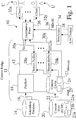
- FIG. 1 is a schematic view 10 of a stream source content delivery (SSCD) system 12, which acts as a bridge 11 between a scheduling system or database 14, a content storage system 20, and a distribution point 26.
- SSCD stream source content delivery
- a stream source content delivery system 12 fetches 22 songs 21, e.g. 21a-21n, from a content store 20 and stores them on a local disk 25 to be played by the user U.
- the system 12 loads these songs 21 into a memory 27, and streams the songs 21. It is sometimes the case that access to the content store 20 is lost. If a connection is lost between the stream sourcing content delivery server 12 and the content store 20 or local disk 25, the system 12 preferably goes into a looping behavior 200 ( FIG. 8 ), whereby the user's experience is uninterrupted.
- the looping behavior 200 avoids blackouts for the user, i.e. the loop 200 is of sufficient length 206 ( FIG. 8 ) that the loop 200 is typically not noticeable, and is preferably DMCA compliant.
- the stream sourcing content delivery system 12 fetches songs 21, e.g. 21a-21n, from a content store 20 and stores them on a local disk 25, to be played for a user U at a client terminal or computer 32, e.g. 32a in Figure 1 .
- Client terminals or computers 32 typically comprise personal computers, mobile devices, and other microprocessor-based devices, such as portable digital assistants or network enabled cell phones.
- the apparatus and techniques can be implemented for a wide variety of electronic devices and systems, or any combination thereof, as desired.
- the stream sourcing content delivery system 12 loads these songs 21 into memory 27 and streams them to listeners 32. If a connection is lost between the stream sourcing content delivery system 12 and the content store 20 or local disk 25, the system 12 goes into a looping behavior 200 ( FIG. 8 ), and the users experience is uninterrupted.
- the preferred looping behavior 200 avoids a blackout of content delivery to the user, and is typically compliant to the Digital Millennium Copyright Act (DMCA) standards. By contrast, in the prior art, no such avoidance of blackout is provided, and in the case of a lost connection, a user experiences a lockup.
- DMCA Digital Millennium Copyright Act
- Some preferred embodiments of the stream sourcing content delivery system 12 provide, on a per file basis, an adjustable bit rate at which a stream 28 is sent 190,192 ( FIG. 7 ), to avoid over running or under running at the receiving end of the stream 28. This avoids a situation where timing errors can accumulate and result in interruptions or glitches in the delivery of music 21.
- Some preferred embodiments of the stream sourcing content delivery system 12 also preferably provide the insertion of metadata 210 ( FIG. 8 ) into a stream 28, to create song boundaries and to associate information with songs 21.
- Some system embodiments 12 act as a component of a streaming architecture, such as for a Radio@ streaming architecture, available through Radio@AOL.
- the stream sourcing content delivery system 12 delivers a formatted stream 28, to a distribution point 26, based on a content store 26 and a scheduling database 14.
- the stream sourcing content delivery system 12 fetches playlists 18 from a database 15 for each station 30, e.g. 30a, that the system 12 serves.
- the system 12 analyzes the playlists 18, locally caches 24 the content 21a-21n for each station 30, and sets up a listen thread, i.e. stream 28.
- a distribution point 26 can then connect to the stream sourcing content delivery system 12, and relay the data stream 28, typically corresponding to a relay protocol.
- the stream sourcing content delivery system 12 shown in Figure 1 manages the retrieval 16 and caching of the playlists 18 from the scheduling database 14, manages content 21 on the local disk 25 and in memory 27, and relays content 21 to distribution points 26, during normal operation and various failure conditions.
- the stream sourcing content delivery system 12 typically logs the status of the system operation and hardware, such that operations personnel can properly manage the stream sourcing system hardware 12.
- Some preferred embodiments of stream sourcing content delivery system 12 comprehensively control the content 20, the source complex, the distribution point 26, the transport, and the clients 32a-32j, to provide integrated flexibility and control over how content 21a-21n is delivered to users U, to ensure both that the user experience is maximized, and that system improvements and upgrades are readily implemented.
- the stream sourcing content delivery system 12 improves user experience. For example, some preferred embodiments of the stream sourcing content delivery system 12 do not require buffering between tracks. Users do not have to wait to buffer between songs 21 on the same stations 30. Instead, there is typically a short buffering period when a user tunes into a station 30. While the user listens to a station 30, the user does not experience any buffering, unless the user has an abnormally bad network condition.
- some embodiments of the stream sourcing content delivery system 12 provide reduced network congestion, through the use of matched data transmission, e.g. 14kbps codec, and through the minimization of data overhead, which improves the delivery to data to a client 32, i.e. it is less likely that a client 32 is not able to receive the necessary data for a given time slice.
- the stream sourcing content delivery system 12 reduces a need to rebuffer in the middle of a song 21 due to network congestion, which further provides an improved user experience.
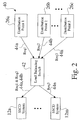
- FIG. 2 is a schematic diagram of stream sourcing content delivery systems 12a-12m implemented within a load balanced pull model distribution environment 40.
- Content delivery systems are typically configured to operate within either a push model architecture or a pull model architecture.
- a push model system architecture the system 12 makes an outbound connection to a distribution point 26, and "pushes" data, e.g. songs 21, to the distribution point 26, at any rate that is acceptable the system 12.
- a push model architecture requires less logic in the broadcaster 34 to deal with buffering, since the rate of the transmission of data 21 is not limited to external conditions, i.e. it is up to the distribution point 26 to receive the data 21a-21n, and feed it's own buffer appropriately.
- a push model architecture which includes fail over and/or load balancing becomes even more complex, and requires frequent reconfiguration of both the distribution points 28 and the broadcaster hosts 12.
- the stream sourcing content delivery system 12a shown in Figure 2 comprises a load-balanced "pull" model architecture 40, in which a distribution point 26, e.g. 26a, initiates a connection with stream sourcing content delivery system 12, e.g. 12a, and requests the stream ID 30 that the distribution point 26 is interested in relaying to one or more clients 32.
- Each stream sourcing content delivery system 12 in Figure 2 e.g. 12a, can accept multiple connections 30 ( FIG. 1 ), and begins feeding data for any stream 28 that it is configured for. Therefore, the source complex 12 in the stream sourcing content delivery system 12a does not have to be aware of the network architecture. Instead, the source complex 12 only needs to be aware of the streams 30 that it is configured to serve.
- a load-balancing switch 42 in preferably located front of the stream sourcing content delivery hosts 12, such that inbound connections from the distribution points 26 are automatically dispersed among the stream sourcing content delivery hosts 12.
- the addition of distribution points 26 and load balancing 42 is readily achieved in the load-balanced "pull" model architecture 40 shown in Figure 2 .
- the stream sourcing content delivery system 12a shown in Figure 2 comprises a pull model, to simplify the responsibilities of system operations.
- the stream sourcing content delivery system 12a has been tested using a SHOUTCASTTM complex, available through NullSoft, Inc., to readily provide controlled broadcast and distribution functions.
- the stream sourcing content delivery system 12 can be configured for a wide variety of song selection models, such as "Just in Time” song selection, or "Plan Ahead” song selection.
- a "Just-in-Time” song selection model requires that the song selection process verify the existence of the file 21 on disk just before it is ready to be played.
- tracks are typically scheduled three tracks in advance.
- Some embodiments of the stream sourcing content delivery system 12 comprise Just-in-Time song selection, such as to decrease the chance of violating DMCA rules, and/or to maximize the chance that content 21 is available on the system disk 25.
- some system embodiments 12 preferably comprise a "Plan Ahead” song selection model, in which song tracks 21 for each station 30 are scheduled far in advance, and in which the local content cache 24 is populated with an extended playlist 18 of songs 21.
- a "Plan Ahead” song selection model gives the broadcaster 34 an opportunity to plan ahead and pre-fetch the tracks 21 that the system 12 needs for the foreseeable future.
- a "Plan Ahead” song selection model also allows the caching of content 21 on the system 12, so that in the event of a failure of the database 14 and content store 20, the system 12 has sufficient content 21 to loop 200 ( FIG. 8 ) on a DMCA compliant playlist 18.
- the operating system of the stream sourcing content delivery system 12 manages the retrieval of schedules playlists 18 and content 21, the production of content streams 28, and the loop 200 of content as needed. Therefore, the system input and output (IO) hardware, comprising the network 11 and disk 25, is not the limiting factor in the performance of the system 12, since the performance of the stream sourcing content delivery system 12 is not limited by the overhead of the process. Therefore, the stream sourcing content delivery system 12 is readily scaled to meet the needs of a large number of streams per host, e.g. as much as 150 or more streams per host system 12, and/or as many as or more than 500 listeners or relays per host system 12.
- Figure 3 is a flowchart of periodic playlist retrieval 50 within the stream sourcing content delivery system 12.
- the system 12 typically communicates with the database 14, e.g. such as an Oracle database 14, through a database thread.
- the system 12 periodically wakes up 52, e.g. such as every five minutes. Upon waking 52, the system 12 logs 54 into the database 14, such as within a user/password/database format, e.g. via a PRO*C daemon.
- the stream sourcing content delivery system 12 then performs a query 56 of how many total streams 28 that the system 12 is required to source, in order to allocate memory for the stream structures 28.
- the system 12 queries 56 the database 14 for the current number of station identities (SIDs) 30, and determines 58 if there are more results. Once the number of streams 28 has been determined, the stream sourcing content delivery system 12 allocates the appropriate space, and continues.
- SIDs station identities
- a determination 68 is made whether the result is a new SID 30, at step 68. If the SID determination 68 is negative 70, i.e. the results are not a new SID 30, the new playlist items are fetched 72, not including what has been previously fetched. If the SID determination 68 is positive 76, i.e. the results correspond a new SID 30, the SID configuration for the new SID 30 is retrieved 78, and the playlist 18 is fetched 80, typically starting at the current time and extending for a time period, e.g. 5 minutes. The system 12 advances 74 to the next result in the result set, and returns to the result step 58, to repeatedly process any other results, before sleeping 62.
- the stream sourcing content delivery system 12 performs the periodic playlist retrieval process 50 after each sleep period, e.g. every 5 minutes.
- the stream sourcing content delivery system 12 then retrieves the details for each stream 28 it will source. The system 12 compares the result set to the list of streams 28 it currently has, and adds any new streams 28 to the list.
- the database thread For each stream configuration received in the previous step, the database thread queries the database 14, and retrieves the corresponding playlist 18 for the stream 28.
- the system 12 marks each playlist item 21 as "Not Cached”.
- FIG 4 is a flowchart of periodic playlist management 90 within the stream sourcing content delivery system 12, which illustrates normal operation for fetching new tracks.
- the stream sourcing content delivery system 12 queries 94 the database 14 and see if there are new tracks for the playlist for the given SID.
- the system 12 asks the database 14 if there are new tracks scheduled since the last time the stream sourcing content delivery system 12 retrieved this information (using a time and ID). If the determination is positive 96, i.e. there are new items, the stream sourcing content delivery system adds 98 the information for each item to the playlist 18, and returns 100 to the determination step 94. If the determination is negative 102, i.e. there are no new items, the periodic playlist management process 90 proceeds 104 to the next station ID 30, queries the database 14 for the playlist 18 of the next station ID 30, and then determines 94 if there are new tracks for the playlist 18 for the next SID 30.
- the periodic playlist management process 90 is therefore repeated for each station ID 30.
- the periodic playlist management process 90 guarantees that the stream sourcing content delivery system 12 has the maximum schedule for each station 30, such that the system has the greatest chance to fetch the content 21 and to prepare the content stream 28.
- the stream sourcing content delivery system 12 preferably caches content as far in the future as possible.
- the stream sourcing content delivery system 12 uses two types of cache management, disk cache management, and memory cache management. As well, the stream sourcing content delivery system 12 typically manages the removal of the content.
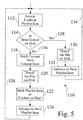
- FIG. 5 is a flowchart of an exemplary content cache marking process 110 within a stream sourcing content delivery system 12.
- the system 12 looks 112 at a playlist item 21, and determines 114 if the playlist item 21 is cached on the disk 25.
- the system 12 touches 130 the file on the disk 25, i.e. the system finds the content on disk 25, and marks the playlist item as cached. The system 12 then advances 132 to the next playlist item 21, and returns 134 to repeat the process, at step 112.
- the system fetches 118 the content 21 from the content store 20, touches 120 the file on the disk 25, and marks 122 the playlist item as cached on the disk 25.
- the system 12 then advances 124 to the next playlist item 21, and returns 126 to repeat the process, at step 112.
- the stream sourcing content delivery system 12 periodically analyzes the items 21 in the playlist 18 for each stream 18. If the system 12 sees an item in the playlist 18 that hasn't been marked as cached, the system 12 attempts to cache the content 21. Before the system 12 caches the content 21, the system 12 checks to see if the content 21 is already on disk 25, i.e. the content 21 may already be cached on disk from another station 30. If the system 12 finds the content 21 on disk 25, the system 12 marks the playlist entry as cached. Otherwise, the system 12 fetches the content 21, such as by using a corresponding URL from the database 14 to fetch the content 21 via HTTP. The system 12 then marks the content 21 cached on disk 25.
- Figure 6 is a flowchart of content caching in memory within a stream sourcing content delivery system 12.
- the stream sourcing content delivery system 12 not only caches content 21 on disk 25, but also caches content 21 in memory 27, shortly before the content 21 plays.
- the stream sourcing content delivery system 12 typically looks ahead at the next two tracks 21 that it will stream. The system 12 then checks to see if these tracks 21 are in memory 27. If such a track 21 is not in memory 27, the system 12 reads the track 21 off of disk 25 into memory 27. Therefore, at any given time, there are typically two tracks 21 per station 30 cached in memory 27 waiting to be streamed, which reduces the load on the system 12 when the data is sent.
- a determination 144 is made whether the next track is cached in memory 27. If the determination 152 is positive 152, the system 12 proceeds to analyze 154 the next track 21, while incrementing a counter. If the determination 152 is negative 146, the system 12 reads 148 the file off the disk 25 and caches to memory 27, while incrementing a counter.
- the removal of content 21 from disk 25 is left to operations to manage. Since the stream sourcing content delivery system 12 does a system "touch" 120,130 ( FIG. 5 ) on a file 21 when the system 12 anticipates using the file 21, the identification of stale content 21 is readily performed. In some embodiments of the stream sourcing content delivery system 12, a chronological content removal process, i.e. a "cron" job, is performed periodically, e.g. once every hour, in which any content 21 that is older than a specified time, e.g. 6-12 hours old, is removed.
- a chronological content removal process i.e. a "cron" job
- the system 12 When the stream sourcing content delivery system 12 finishes streaming a file, the system 12 frees the memory 27 for the track 21. Content 21 is typically cached in memory 27 uniquely for each stream 28. Therefore, there can be an overlap of content 21 between streams 28 in the stream sourcing content delivery system 12.
- FIG. 7 is a schematic diagram of content stream management within a stream sourcing content delivery system 12.
- the stream sourcing content delivery stream management functions similarly to "producer consumer” model.
- a buffer 186 e.g. 186a for each stream 28, e.g. 28a, that is required to receive new content 21, to remain as full 188 as possible.
- the input thread 181 attempts 182a-182p to fill 188 each of the buffers 186a-186p, such as through a loop process 184.
- a thread 190 e.g. 190a that is sending data from the buffer 186 to connected listeners/relays 192a-192p, such as through loop 194, preferably at the bit rate for each stream 28.
- the stream sourcing content delivery system 12 attempts to start playing the next track 21 at the scheduled start time for the track 21. This ensures that multiple stream sourcing content delivery instances 12 are synchronized, both with other stream sourcing content delivery instances 12, and with and database 14.
- Data is read from the cached files in memory 27, and is preferably encapsulated. The data is then fed into the circular buffer 186 for each stream 18.
- Metadata 210 for each track 21 is inserted just before the track data 21 is fed into the buffer 186. Metadata 210 is stored along with scheduled tracks 21 in the database 21.
- the metadata 210 is preferably formatted within the database 14.
- the stream sourcing content delivery system 12 retrieves metadata 210, along with the playlist item information 21. At the time that the track 21 will play, the metadata 210 is encapsulated, using the metaclass and metatype from the stream configuration, and the metadata message 210 is added the buffer 186. In some system embodiments 12, "0x3901" is used for cached metadata 210.
- the stream sourcing content delivery system 12 exposes a listen thread, which is responsible for listening for inbound connections.
- a relay negotiation occurs, such as in compliance with a relay protocol.
- the file descriptor for the non-blocking socket is added to the listener send list.
- Some embodiments of the stream sourcing content system 12 require that a client 32 be able to display a time elapsed per song 21. While song-lengths 204, e.g. 204a ( FIG. 8 ), are normally passed down along with song changes, a listener is not guaranteed to tune in during a song-change, i.e. just as a new song 21 begins. Therefore, some preferred embodiments of the stream sourcing content delivery system 12 are adapted to display time-remaining information 214 ( FIG. 8 ), such as within metadata 210, which is inserted into the datastream 28.
- the frequency of the repeated pass-thru metadata 210 is preferably configurable.
- the display of elapsed time 212 comprises the following features:
- Most embodiments of the stream sourcing content delivery system 12 keep a time snapshot, e.g. 5 minutes, of station information 30, playlists 18, and metadata 210. After each time period database sequence, e.g. after every 5 minutes, some embodiments of the stream sourcing content delivery system 12 writes a file to disk called FAIL0.bin. FAIL0.bin which contains station information 30, playlists 18, and metadata 210 for all streams 18.
- the stream sourcing content delivery system 12 increases the frequency of polling the database 14 to every 30 seconds. For HTTP content grabs, the following applies:
- the stream sourcing content delivery system 12 typically continues to advance through the playlist 18. If the system 12 reaches the second-to-last playlist item 21, the system 12 goes into a "looping mode" 200, and a log entry is preferably made, to note the required looping operation 200. The first track 21 in the playlist 18 is then cached into memory 27. After each track 21 finishes streaming, the stream sourcing content delivery system 12 checks for new items in the playlist 18, to stop the looping operation 200 if possible, i.e. to resume normal streaming of content 21.
- Some embodiments of the stream sourcing content delivery system 12 comprise a periodic synchronization, such as to compensate for any time drift between playlists 18.
- a synchronization may preferably be periodically performed, e.g. daily, to minimize the overall drift.
- the synchronization process is preferably performed at a time which minimizes the disruption of content playback for users, such as at late night or early morning.
- the stream sourcing content delivery system 12 stops and then begins streaming the next track that is scheduled for 5:00AM for a station 30. While such a synchronization could cause a cut in the song 21 that is being listening to, the process ensures that the system servers are synchronization, and would affect only a small group of users.
- Some embodiments of the stream sourcing content delivery system 12 allow for the configuration of the following parameters:
- Figure 9 is a first chart 220a of system logging for a stream sourcing content delivery system 12.
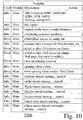
- Figure 10 is a second chart 220b of system logging for a stream sourcing content delivery system 12.
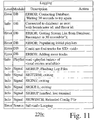
- Figure 11 is a third chart of system logging 220c for a stream sourcing content delivery system 12.
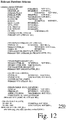
- Figure 12 shows database schema 250 for a stream sourcing content delivery system 12.
- the stream sourcing content delivery system 12 and associated methods provide significant advantages over existing content delivery and broadcast systems, and provides improvements to the scheduling, caching, and/or playing of content, e.g. songs.
- the stream sourcing content delivery system 12 delivers content 21 and metadata 210 to multiple distribution points 26, and is able to broadcast content indefinitely if the database 12 or content store 20 fails. If a connection is lost between the stream sourcing content delivery server 12 and the content store 20, the system 12 goes into a looping behavior 200, whereby the user's experience is uninterrupted.
- the looping behavior is avoids content blackouts for the user, i.e. the loop 200 is of sufficient length that it is typically not noticeable, and is preferably DMCA compliant.
- the stream sourcing content delivery system 12 is also readily scaled to the number of broadcast streams 28a-28k, and allows operations to easily manage the source complex.
- the stream sourcing content delivery system 12 is readily expanded and scaled for a large number of stations 32, distribution points 26, clients, relays, and/or listeners.
- a plurality of systems 12 can readily be operated together, and may further comprise load balancing between systems 12.
- datastreams within the stream sourcing content delivery system 12 preferably comprise metadata associated with the steam and/or songs, e.g. to create song boundaries, as well as controlled buffering and synchronization.
- Preferred embodiments of the stream sourcing content delivery system 12 sends content, on a per file basis, at a bit rate which matches the actual bit rate of reception and use, which avoids either over run or under run of data transfer.
- the apparatus and techniques can be implemented for a wide variety of electronic content, such as a wide variety of audio content, e.g. songs, dialog, discussion, video content, multimedia content, or any combination thereof, as desired.
- audio content e.g. songs, dialog, discussion, video content, multimedia content, or any combination thereof, as desired.
- stream sourcing content delivery system and methods of use are described herein in connection with personal computers, mobile devices, and other microprocessor-based devices, such as portable digital assistants or network enabled cell phones, the apparatus and techniques can be implemented for a wide variety of electronic devices and systems, or any combination thereof, as desired.
- stream sourcing content delivery system and methods of use are described herein in connection with interaction between a user terminals and one or more radio station sites across a network such as the Internet, the stream sourcing content delivery system and methods of use can be implemented for a wide variety of electronic devices and networks or any combination thereof, as desired.
Landscapes
- Engineering & Computer Science (AREA)
- Multimedia (AREA)
- Computer Networks & Wireless Communication (AREA)
- Signal Processing (AREA)
- Information Transfer Between Computers (AREA)
- Reverberation, Karaoke And Other Acoustics (AREA)
Description
- The invention relates to the transfer, distribution, and play of streamed information or content in a network environment. More particularly, the invention relates to the creation of streamed and loopable content in a network environment.
- The Internet comprises a web of computers and networks, which are widely spread throughout the world. The Internet currently comprises millions of network connections, and is used by millions of people, such as for business, education, entertainment, and/or basic communication.
- Digital content, such as sound recordings, e.g. songs, are often transferred across the Internet. In addition to the basic transfer of song files, numerous network enabled radio stations have been introduced, which provide content to listeners at computers across the Internet. Network enabled radio has significantly increased the magnitude and variety of content to recipients, as compared to conventional over-the-air radio broadcasts
While there are numerous Internet radio stations currently in operation, there are many technological shortcomings in the delivery of digital content to listeners. For example, buffering between songs, i.e. tracks, and even during tracks, is a common occurrence, which commonly diminishes the quality of a broadcast for listeners. As well, a short or long duration failure across the network, e.g. a blackout, results in the cessation of a music presentation, further diminishing the user experience. - As well, current content delivery systems do not offer sufficient flexibility and/or scalability for future network architectures and increased market demands. As the number of Internet radio stations increases to meet consumer demand, and as the number and variety of content recipients, i.e. listeners, increases, it will be necessary to provide substantial improvements in content delivery architectures.
- In content delivery systems which operate on a push distribution model, a source complex makes an outbound connection to a distribution point, and pushes data to the distribution point at a rate determined by the source complex. However, in a content delivery system which operates on a push distribution model, broadcasters are required to be aware of the network architecture. Therefore, every time a distribution point is added, the broadcast configuration is required to change, to make an outbound connection to the new distribution point. As well, the implementation of fail over and/or load balancing logic typically requires that a push system frequently reconfigure both the distribution points and the broadcaster hosts.
- A pull model typically requires less buffering logic than a push model for the broadcaster, because the broadcaster just sends data obliviously, i.e. the distribution point is required to receive the data and feed a local buffer appropriately. In a content delivery system which operates on a pull distribution model, a distribution point initiates the connection with a broadcaster, and requests a desired stream identifier.
- Several structures and methods have been described for the distribution of content in a network environment.
- N. Dwek, Multimedia Content Delivery System and Method,
U.S. Patent No. 6,248,946 , describes "A system and method for delivering multimedia content to computers over a computer network, such as the Internet, includes a novel media player which may be downloaded onto a user's personal computer. The media player includes a user interface which allows a listener to search an online database of media selections and build a custom playlist of exactly the music selections desired by the listener. The multimedia content delivery system delivers advertisements which remain visible on a user's computer display screen at all times when the application is open, for example, while music selections are being delivered to the user. The advertisements are displayed in a window which always remains on a topmost level of windows on the user's computer display screen, even if the user is executing one or more other programs with the computer." - M. DeLorenzo, Multi-Room Entertainment System with In-Room Media Player,
U.S. Patent No.6,438,450 , describes "A plurality of media data, including audio data or audio/video data, are stored in a central database. A plurality of in-room, user interface systems access the media data through a central server. The central server presents to the in-room system a selection menu through which at least one of the media data may be selected. Upon selection of a media data by the user interface, the central server accesses the selected media data from the central database and transmits it to the in-room system. The media data may be transmitted by downloading the data to an intermediate system, playing the media data at the intermediate system and outputting the played media data to the in-room system through a communications line. The media data may also be transmitted by streaming the media data to the in-room system through a communications line. The central server may present to the in-room system any of a number of additional menus including a purchase menu through which the selected media data may be purchased, an activation menu through which communication between the in-room system and the central server may be established for a period of time, a radio menu through which any of a plurality of programmed media-data channels may be accessed and a mood menu through which the brightness of the image displayed on the in-room system video monitor may be affected." - Other structures and methods have been described for the distribution of content in a network environment, such as: Streaming Information Providing Method, European Patent Application No.
1 187 423 ; O. Hodson, C. Perkins, and V. Hardman, Skew Detection and Compensation for Internet Audio Applications; 2000 IEEE International Conference on Multimedia and Expo; 2000; C. Aurrecoechea, A. Campbell, and Linda Hauw, A Survey of Qos Architectures, Center for Telecommunication Research, Columbia University; www.ctr.columbia.edu/comet/members.html; S. Cen, C. Pu, R. Staehli, and J. Walpole, A Distributed Real-Time MPEG Video Audio Player, Oregon Graduate Institute of Science and Technology; N. Manouselis, P. Karampiperis, I. Vardiambasis, and A. Maras, Digital Audio Broadcasting Systems under a Qos Perspective, Telecommunications Laboratory, Technical University of Crete; Helix Universal Gateway Configuration Guide, RealNetworks Technical Blueprint Series; July 21, 2002; Helix Universal Server from RealNetworks, www.realnetworks.com; Helix Universal Gateway, www.realnetworks.com; Helix Universal Server, www.realnetworks.com; Media Delivery, www.realnetworks.com; and Windows Media Services 9 Series, www.microsoft.com . - Other systems describe various details of audio distribution, streaming, and/or the transfer of content in a network environment, such as G. France and S. Lee, Method for Streaming Transmission of Compressed Music,
U.S. Patent No. 5,734,119 ; D. Marks, Group Communications Multiplexing System,U.S. Patent No. 5,956,491 ; M. Abecassis, Integration of Music From a Personal Library with Real-Time Information,U.S. Patent No. 6,192,340 ; J. Logan, D. Goessling, and C. Call, Audio Program Player Including a Dynamic Program Selection Controller,U.S. Patent No. 6,199,076 ; E. Sitnik, Multichannel Audio Distribution System Having Portable Receivers,U.S. Patent No. 6,300,880 ; M. Bowman-Amuah, Method For Providing Communication Services Over a Computer Network System,U.S. Patent No. 6,332,163 ; H. Ando, S. Ito, H. Takahashi, H. Unno, and H. Sogabe, Information Recording Device and A Method of Recording Information by Setting the Recording Area Based on Contiguous Data Area,U.S. Patent No. 6,530,037 ; P. Hunt and M. Bright, Method and Apparatus for Intelligent and Automatic Preference Detection of Media Content, U.S. Patent Application Publication No.US 2002 0078056 ; G. Beyda and K. Balasubramanian, Hybrid Network Based Advertising System and Method, U.S. Patent Application Publication No.US 2002 0082914 ; System and Method for Delivering Plural Advertisement Information on a Data Network, International Publication NumberWO 02/063414 EP 1 178 487EP 1 229 476EP 1 244 021EP 1 267 247EP 1 286 351 ; S. Takao; Y. Kiyoshi; W. Kazuhiro; E. Kohei, Packet Synchronization Recovery Circuit; Section: E, Section No. 1225, Vol. 16, No. 294, Pg. 120; June 29, 1992; R. Sion, A. Elmagarmid, S. Prabhakar, and A. Rezgui, Challenges in Designing a Qos Aware Media Repository, Purdue University, http://www.cs.purdue.edu/homes/si on; Z. Chen, S. Tan, R. Campbell, and Y. Li, Real Time Video and Audio in the World Wide Web, University of Illinois at Urbana-Champaign; Content Networking with the Helix Platform, RealNetworks White Paper Series; July 21, 2002; C. Hess, Media Streaming Protocol: An Adaptive Protocol for the Delivery of Audio and Video over the Internet, University of Illinois at Urbana-Champaign, 1998; R. Koster, Design of a Multimedia Player with Advanced Qos Control, Oregon Graduate Institute of Science and Technology, January 1997; C. Poellabauer and K. Schwan, Coordinated CPU and Event Scheduling for Distributed Multimedia Applications, College of Computing Georgia Institute of Technology, R. West, Computing Science Department Boston University; and Windows Media - www.microsoft.com. -
US 2001/044851 A1 discloses a system with scalable architecture that delivers real-time streaming media over a communications network, using a streaming media server system for efficient delivery of a plurality of streams including live, simulated live or looping programming, relayed streams, and on-demand media. Efficiency is attained using no load or low load control and processing of streams, including high-quality audio, video, graphics, text, or other types of information transmitted over a network. The server system operates in a total media delivery system which includes a plurality of streaming servers, a data storage system, a database, and front end and back end networks to deliver data to the various subsystems. The streaming server utilizes just-in-time playlist simulation, dynamic allocation of servers to listeners, and other techniques to reduce the computational, storage and network requirements of delivering streaming media. -
EP 0984584 A1 discloses a method and system for playback of live and pre-recorded multimedia data in real-time over a large scale communication network, such as the world-wide web. The invention allows a user connected to a specialized network to play back a multimedia broadcast. The invention includes a process that allows multimedia content to be created and scheduled as a playlist. The playlist data is compressed and transmitted to a host system as part of a capture protocol. The captured playlist data may then be "broadcast" to users. A user may choose a channel selection from a playlist, and cause the selected item to be downloaded and played back by means of a playback tool. The host system includes a highly efficient distribution system that allows a large number of users accessing the host through Terminal Information Handlers (TIH) to rapidly access one or more channels of multimedia data. The system architecture provides a "fan out" mechanism that includes a master broadcast process that accepts a multi-stream data flow and then distributes the multi-stream data flow to essentially every TIH accessible to the host. The load of providing data streams is thus spread among a large number of TIHs, reducing access latency and providing support for hundreds of thousands of users over a large scale communication network. -
US 5996015 A discloses a method and computer system including a multimedia server connected in a network configuration with client computer systems. The multimedia server includes various functional units which are selectively operable for delivering and effecting the presentation of multimedia files to the client such that a plurality of multimedia files are seamlessly concatenated on the fly to enable a continuous and uninterrupted presentation to the client; the client selected video files are seamlessly joined together at the server just prior to file delivery from the server. The methodology includes the analog to digital encoding of multimedia segments followed by a commonization processing to ensure that all of the multimedia segments have common operating characteristics. A seamless sequential playlist or dynamically created playlist is assembled from the selected and commonized segments and the resources needed to deliver and play the playlist are reserved in advance to assure resource availability for continuous transmission and execution of the playlist. At a predetermined point prior to an end point of each selected multimedia segment, the next selected segment is initialized and aligned in memory in preparation for a seamless switch to the next segment at the end of a previous segment, thereby providing a seamless flow of data and a continuous presentation of a plurality of selected multimedia files to a client system. - While some content delivery technologies describe the delivery of streamed content across a network, existing systems do not adequately provide a seamless delivery to a large number of recipients, nor do such technologies provide a "fail safe" seamless playback of content upon failure across the network.
- It would be advantageous to provide a system and an associated method which provides a seamless delivery of songs to a large number of recipients, which provides a "fail safe" seamless playback of content upon failure across the network. The development of such a content delivery system would constitute a major technological advance.
- It would also be advantageous to provide a system and an associated method which provides delivery of content as well as metadata to multiple distribution points, and has the capability of broadcasting content indefinitely, even if a database or content store fails. The development of such a content delivery system would constitute a major technological advance.
- The stream sourcing content delivery system goes to a database and builds a physical stream, based on a schedule. The stream source content delivery system works at a station ID (SID), finds the order of the delivery of content for the station based upon the schedule, and downloads a plurality of music files, e.g. 6 hours of music, to its hard drive to enable play back. The system then concatenates the files, to create a stream, and awaits the request of one or more stream recipients. Some preferred system embodiments further comprise a fail-safe mode, whereby a loop of music is generated from the downloaded stream, and is delivered to one or more users when further access to content is interrupted, such that recipients experience an uninterrupted delivery of a plurality of files, e.g. songs. A stream source content delivery system provides flexibility and scalability for large number of stations, e.g. up to 100 stations, and/or listeners. The invention is defined by a method of delivering streams of content according to
claim 1, a corresponding content delivery system according toclaim 10 and a non-transitory computer readable storage medium having instructions stored thereon for causing a computing device to perform said method according toclaim 14. Further embodiments are defined by the dependent claims. -
-
Figure 1 is a schematic view of a stream source content delivery system between a scheduling system, a content storage system, and a distribution point; -
Figure 2 is a schematic diagram of stream source content delivery systems implemented within a pull model load balancing distribution environment; -
Figure 3 is a flowchart of periodic playlist retrieval within the stream source content delivery system; -
Figure 4 is a flowchart of periodic playlist management within the stream source content delivery system; -
Figure 5 is a flowchart of content cache marking within the stream source content delivery system; -
Figure 6 is a flowchart of content cache in memory within the stream source content delivery system; -
Figure 7 is a schematic diagram of content stream management within the stream source content delivery system; -
Figure 8 is a schematic diagram of looped content; -
Figure 9 is a first chart of system logging for a stream source content delivery system; -
Figure 10 is a second chart of system logging for a stream source content delivery system; -
Figure 11 is a third chart of system logging for a stream source content delivery system; and -
Figure 12 shows database schema for a stream source content delivery system. -
Figure 1 is aschematic view 10 of a stream source content delivery (SSCD)system 12, which acts as abridge 11 between a scheduling system ordatabase 14, acontent storage system 20, and adistribution point 26. - A stream source
content delivery system 12 fetches 22 songs 21, e.g. 21a-21n, from acontent store 20 and stores them on alocal disk 25 to be played by the user U. Thesystem 12 loads these songs 21 into amemory 27, and streams the songs 21. It is sometimes the case that access to thecontent store 20 is lost. If a connection is lost between the stream sourcingcontent delivery server 12 and thecontent store 20 orlocal disk 25, thesystem 12 preferably goes into a looping behavior 200 (FIG. 8 ), whereby the user's experience is uninterrupted. The looping behavior 200 avoids blackouts for the user, i.e. the loop 200 is of sufficient length 206 (FIG. 8 ) that the loop 200 is typically not noticeable, and is preferably DMCA compliant. - The stream sourcing
content delivery system 12 fetches songs 21, e.g. 21a-21n, from acontent store 20 and stores them on alocal disk 25, to be played for a user U at a client terminal or computer 32, e.g. 32a inFigure 1 . Client terminals or computers 32 typically comprise personal computers, mobile devices, and other microprocessor-based devices, such as portable digital assistants or network enabled cell phones. However, the apparatus and techniques can be implemented for a wide variety of electronic devices and systems, or any combination thereof, as desired. - It is sometimes the case that access to the
content store 20 is lost. The stream sourcingcontent delivery system 12 loads these songs 21 intomemory 27 and streams them to listeners 32. If a connection is lost between the stream sourcingcontent delivery system 12 and thecontent store 20 orlocal disk 25, thesystem 12 goes into a looping behavior 200 (FIG. 8 ), and the users experience is uninterrupted. The preferred looping behavior 200 avoids a blackout of content delivery to the user, and is typically compliant to the Digital Millennium Copyright Act (DMCA) standards. By contrast, in the prior art, no such avoidance of blackout is provided, and in the case of a lost connection, a user experiences a lockup. - Some preferred embodiments of the stream sourcing
content delivery system 12 provide, on a per file basis, an adjustable bit rate at which a stream 28 is sent 190,192 (FIG. 7 ), to avoid over running or under running at the receiving end of the stream 28. This avoids a situation where timing errors can accumulate and result in interruptions or glitches in the delivery of music 21. - Some preferred embodiments of the stream sourcing
content delivery system 12 also preferably provide the insertion of metadata 210 (FIG. 8 ) into a stream 28, to create song boundaries and to associate information with songs 21. - Some system embodiments 12 act as a component of a streaming architecture, such as for a Radio@ streaming architecture, available through Radio@AOL. The stream sourcing
content delivery system 12 delivers a formatted stream 28, to adistribution point 26, based on acontent store 26 and ascheduling database 14. - From the high level view, the stream sourcing
content delivery system 12 fetchesplaylists 18 from a database 15 for eachstation 30, e.g. 30a, that thesystem 12 serves. Thesystem 12 analyzes theplaylists 18, locallycaches 24 thecontent 21a-21n for eachstation 30, and sets up a listen thread, i.e. stream 28. Adistribution point 26 can then connect to the stream sourcingcontent delivery system 12, and relay the data stream 28, typically corresponding to a relay protocol. - The stream sourcing
content delivery system 12 shown inFigure 1 manages theretrieval 16 and caching of theplaylists 18 from thescheduling database 14, manages content 21 on thelocal disk 25 and inmemory 27, and relays content 21 to distribution points 26, during normal operation and various failure conditions. - The stream sourcing
content delivery system 12 typically logs the status of the system operation and hardware, such that operations personnel can properly manage the streamsourcing system hardware 12. - Some preferred embodiments of stream sourcing
content delivery system 12 comprehensively control thecontent 20, the source complex, thedistribution point 26, the transport, and theclients 32a-32j, to provide integrated flexibility and control over how content 21a-21n is delivered to users U, to ensure both that the user experience is maximized, and that system improvements and upgrades are readily implemented. - In addition to improving the backend architecture of content delivery, the stream sourcing
content delivery system 12 improves user experience. For example, some preferred embodiments of the stream sourcingcontent delivery system 12 do not require buffering between tracks. Users do not have to wait to buffer between songs 21 on thesame stations 30. Instead, there is typically a short buffering period when a user tunes into astation 30. While the user listens to astation 30, the user does not experience any buffering, unless the user has an abnormally bad network condition. - As well, some embodiments of the stream sourcing
content delivery system 12 provide reduced network congestion, through the use of matched data transmission, e.g. 14kbps codec, and through the minimization of data overhead, which improves the delivery to data to a client 32, i.e. it is less likely that a client 32 is not able to receive the necessary data for a given time slice. The stream sourcingcontent delivery system 12 reduces a need to rebuffer in the middle of a song 21 due to network congestion, which further provides an improved user experience. - The
distribution point 26 shown inFigure 1 , which receives content streams 28, e.g. 28a-28k, from the stream sourcingcontent delivery system 12, may additionally receivecontent 38, e.g.live content 38, from abroadcaster 34, such as through abroadcast feed 36, e.g. SID=30. -
Figure 2 is a schematic diagram of stream sourcingcontent delivery systems 12a-12m implemented within a load balanced pullmodel distribution environment 40. Content delivery systems are typically configured to operate within either a push model architecture or a pull model architecture. In a push model system architecture, thesystem 12 makes an outbound connection to adistribution point 26, and "pushes" data, e.g. songs 21, to thedistribution point 26, at any rate that is acceptable thesystem 12. A push model architecture requires less logic in thebroadcaster 34 to deal with buffering, since the rate of the transmission of data 21 is not limited to external conditions, i.e. it is up to thedistribution point 26 to receive thedata 21a-21n, and feed it's own buffer appropriately. - However, the downside of a push model architecture is that
broadcasters 34 must be aware of the network architecture, such as the number and locations of distribution points 26. Therefore, each time adistribution point 26 is added, the broadcast configuration is required to change, to make outbound connections to thenew distribution point 26. Furthermore, a push model architecture which includes fail over and/or load balancing becomes even more complex, and requires frequent reconfiguration of both the distribution points 28 and the broadcaster hosts 12. - The stream sourcing
content delivery system 12a shown inFigure 2 comprises a load-balanced "pull"model architecture 40, in which adistribution point 26, e.g. 26a, initiates a connection with stream sourcingcontent delivery system 12, e.g. 12a, and requests thestream ID 30 that thedistribution point 26 is interested in relaying to one or more clients 32. Each stream sourcingcontent delivery system 12 inFigure 2 , e.g. 12a, can accept multiple connections 30 (FIG. 1 ), and begins feeding data for any stream 28 that it is configured for. Therefore, the source complex 12 in the stream sourcingcontent delivery system 12a does not have to be aware of the network architecture. Instead, the source complex 12 only needs to be aware of thestreams 30 that it is configured to serve. - In the "pull"
model architecture 40, it is the responsibility of operations personnel to craft the network architecture as needed, whereby the majority of the network architecture is controlled by the distribution points 26. - As seen in
Figure 2 , a load-balancingswitch 42 in preferably located front of the stream sourcing content delivery hosts 12, such that inbound connections from the distribution points 26 are automatically dispersed among the stream sourcing content delivery hosts 12. The addition of distribution points 26 and load balancing 42 is readily achieved in the load-balanced "pull"model architecture 40 shown inFigure 2 . - The stream sourcing
content delivery system 12a shown inFigure 2 comprises a pull model, to simplify the responsibilities of system operations. The stream sourcingcontent delivery system 12a has been tested using a SHOUTCAST™ complex, available through NullSoft, Inc., to readily provide controlled broadcast and distribution functions. - The stream sourcing
content delivery system 12 can be configured for a wide variety of song selection models, such as "Just in Time" song selection, or "Plan Ahead" song selection. - A "Just-in-Time" song selection model requires that the song selection process verify the existence of the file 21 on disk just before it is ready to be played. In some "Just-in-Time" song selection model embodiments, tracks are typically scheduled three tracks in advance. Some embodiments of the stream sourcing
content delivery system 12 comprise Just-in-Time song selection, such as to decrease the chance of violating DMCA rules, and/or to maximize the chance that content 21 is available on thesystem disk 25. - Since song verification and access can be an intensive and time-sensitive process, which can be disrupted with the failure of multiple parts of the system, some
system embodiments 12 preferably comprise a "Plan Ahead" song selection model, in which song tracks 21 for eachstation 30 are scheduled far in advance, and in which thelocal content cache 24 is populated with anextended playlist 18 of songs 21. A "Plan Ahead" song selection model gives thebroadcaster 34 an opportunity to plan ahead and pre-fetch the tracks 21 that thesystem 12 needs for the foreseeable future. A "Plan Ahead" song selection model also allows the caching of content 21 on thesystem 12, so that in the event of a failure of thedatabase 14 andcontent store 20, thesystem 12 has sufficient content 21 to loop 200 (FIG. 8 ) on a DMCAcompliant playlist 18. - The operating system of the stream sourcing
content delivery system 12 manages the retrieval ofschedules playlists 18 and content 21, the production of content streams 28, and the loop 200 of content as needed. Therefore, the system input and output (IO) hardware, comprising thenetwork 11 anddisk 25, is not the limiting factor in the performance of thesystem 12, since the performance of the stream sourcingcontent delivery system 12 is not limited by the overhead of the process. Therefore, the stream sourcingcontent delivery system 12 is readily scaled to meet the needs of a large number of streams per host, e.g. as much as 150 or more streams perhost system 12, and/or as many as or more than 500 listeners or relays perhost system 12. - While the stream sourcing
content delivery system 12, is readily adapted for a wide variety of operating environments, current system embodiments typically comprise the following features: - The
system 12 schedules songs several tracks into the future, i.e. planahead. - The
system 12 assumes that track time in thedatabase 14 is correct. - The
system 12 assumes that the bit rate of each clip in thedatabase 14 is correct and precise. - Content 21 is either available via http, or is pre-loaded onto the local disk
- The schema of the
system 12 preferably matches the database schema - The metadata in database is currently less than or equal to 4000 bytes
-
Figure 3 is a flowchart ofperiodic playlist retrieval 50 within the stream sourcingcontent delivery system 12. Thesystem 12 typically communicates with thedatabase 14, e.g. such as anOracle database 14, through a database thread. - The
system 12 periodically wakes up 52, e.g. such as every five minutes. Upon waking 52, thesystem 12logs 54 into thedatabase 14, such as within a user/password/database format, e.g. via a PRO*C daemon. - The stream sourcing
content delivery system 12 then performs aquery 56 of how many total streams 28 that thesystem 12 is required to source, in order to allocate memory for the stream structures 28. Thesystem 12queries 56 thedatabase 14 for the current number of station identities (SIDs) 30, and determines 58 if there are more results. Once the number of streams 28 has been determined, the stream sourcingcontent delivery system 12 allocates the appropriate space, and continues. - If there are no
more results 60, theprocess 50 is finished for that period, and begins 62 another sleep period, and then returns 64 to wake up 52. If there are 66 more results, adetermination 68 is made whether the result is anew SID 30, atstep 68. If theSID determination 68 is negative 70, i.e. the results are not anew SID 30, the new playlist items are fetched 72, not including what has been previously fetched. If theSID determination 68 is positive 76, i.e. the results correspond anew SID 30, the SID configuration for thenew SID 30 is retrieved 78, and theplaylist 18 is fetched 80, typically starting at the current time and extending for a time period, e.g. 5 minutes. Thesystem 12advances 74 to the next result in the result set, and returns to theresult step 58, to repeatedly process any other results, before sleeping 62. - As seen in
Figure 3 , the stream sourcingcontent delivery system 12 performs the periodicplaylist retrieval process 50 after each sleep period, e.g. every 5 minutes. - The stream sourcing
content delivery system 12 then retrieves the details for each stream 28 it will source. Thesystem 12 compares the result set to the list of streams 28 it currently has, and adds any new streams 28 to the list. - For each stream configuration received in the previous step, the database thread queries the
database 14, and retrieves the correspondingplaylist 18 for the stream 28. Thesystem 12 marks each playlist item 21 as "Not Cached". -
Figure 4 is a flowchart ofperiodic playlist management 90 within the stream sourcingcontent delivery system 12, which illustrates normal operation for fetching new tracks. Under normal operation, the stream sourcingcontent delivery system 12queries 94 thedatabase 14 and see if there are new tracks for the playlist for the given SID. Thesystem 12 asks thedatabase 14 if there are new tracks scheduled since the last time the stream sourcingcontent delivery system 12 retrieved this information (using a time and ID). If the determination is positive 96, i.e. there are new items, the stream sourcing content delivery system adds 98 the information for each item to theplaylist 18, and returns 100 to thedetermination step 94. If the determination is negative 102, i.e. there are no new items, the periodicplaylist management process 90proceeds 104 to thenext station ID 30, queries thedatabase 14 for theplaylist 18 of thenext station ID 30, and then determines 94 if there are new tracks for theplaylist 18 for thenext SID 30. - The periodic
playlist management process 90 is therefore repeated for eachstation ID 30. The periodicplaylist management process 90 guarantees that the stream sourcingcontent delivery system 12 has the maximum schedule for eachstation 30, such that the system has the greatest chance to fetch the content 21 and to prepare the content stream 28. - The stream sourcing
content delivery system 12 preferably caches content as far in the future as possible. The stream sourcingcontent delivery system 12 uses two types of cache management, disk cache management, and memory cache management. As well, the stream sourcingcontent delivery system 12 typically manages the removal of the content. -
Figure 5 is a flowchart of an exemplary contentcache marking process 110 within a stream sourcingcontent delivery system 12. Thesystem 12looks 112 at a playlist item 21, and determines 114 if the playlist item 21 is cached on thedisk 25. - If the determination is positive 128, e.g. the content is already cached on
disk 25 from anotherstation 30, thesystem 12 touches 130 the file on thedisk 25, i.e. the system finds the content ondisk 25, and marks the playlist item as cached. Thesystem 12 then advances 132 to the next playlist item 21, and returns 134 to repeat the process, atstep 112. - If the cache determination is negative 116, e.g. the content is not already cached on
disk 25 from anotherstation 30, the system fetches 118 the content 21 from thecontent store 20, touches 120 the file on thedisk 25, and marks 122 the playlist item as cached on thedisk 25. Thesystem 12 then advances 124 to the next playlist item 21, and returns 126 to repeat the process, atstep 112. - The stream sourcing
content delivery system 12 periodically analyzes the items 21 in theplaylist 18 for eachstream 18. If thesystem 12 sees an item in theplaylist 18 that hasn't been marked as cached, thesystem 12 attempts to cache the content 21. Before thesystem 12 caches the content 21, thesystem 12 checks to see if the content 21 is already ondisk 25, i.e. the content 21 may already be cached on disk from anotherstation 30. If thesystem 12 finds the content 21 ondisk 25, thesystem 12 marks the playlist entry as cached. Otherwise, thesystem 12 fetches the content 21, such as by using a corresponding URL from thedatabase 14 to fetch the content 21 via HTTP. Thesystem 12 then marks the content 21 cached ondisk 25. -
Figure 6 is a flowchart of content caching in memory within a stream sourcingcontent delivery system 12. The stream sourcingcontent delivery system 12 not only caches content 21 ondisk 25, but also caches content 21 inmemory 27, shortly before the content 21 plays. Each time a track 21 finishes streaming, the stream sourcingcontent delivery system 12 typically looks ahead at the next two tracks 21 that it will stream. Thesystem 12 then checks to see if these tracks 21 are inmemory 27. If such a track 21 is not inmemory 27, thesystem 12 reads the track 21 off ofdisk 25 intomemory 27. Therefore, at any given time, there are typically two tracks 21 perstation 30 cached inmemory 27 waiting to be streamed, which reduces the load on thesystem 12 when the data is sent. - As seen in
Figure 6 , when the system finishes 142 streaming a track 21, adetermination 144 is made whether the next track is cached inmemory 27. If thedetermination 152 is positive 152, thesystem 12 proceeds to analyze 154 the next track 21, while incrementing a counter. If thedetermination 152 is negative 146, thesystem 12 reads 148 the file off thedisk 25 and caches tomemory 27, while incrementing a counter. - At
step 154, a determination is made whether the second track to be played 21 is cached inmemory 27. If thedetermination 154 is positive 162, thesystem 12 proceeds to analyze 154 the third track 21. If thedetermination 154 is negative 156, thesystem 12 reads 158 the file off thedisk 25 and caches tomemory 27, while incrementing the counter. - At
step 164, a determination is made whether the third track to be played 21 is cached inmemory 27. If thedetermination 164 is positive 162, thesystem 12sleeps 174 until the next track 21 finishes streaming. If thedetermination 154 is negative 166, thesystem 12 reads 168 the file off thedisk 25 and caches tomemory 27, while incrementing the counter. - The removal of content 21 from
disk 25 is left to operations to manage. Since the stream sourcingcontent delivery system 12 does a system "touch" 120,130 (FIG. 5 ) on a file 21 when thesystem 12 anticipates using the file 21, the identification of stale content 21 is readily performed. In some embodiments of the stream sourcingcontent delivery system 12, a chronological content removal process, i.e. a "cron" job, is performed periodically, e.g. once every hour, in which any content 21 that is older than a specified time, e.g. 6-12 hours old, is removed. - When the stream sourcing
content delivery system 12 finishes streaming a file, thesystem 12 frees thememory 27 for the track 21. Content 21 is typically cached inmemory 27 uniquely for each stream 28. Therefore, there can be an overlap of content 21 between streams 28 in the stream sourcingcontent delivery system 12. -
Figure 7 is a schematic diagram of content stream management within a stream sourcingcontent delivery system 12. The stream sourcing content delivery stream management functions similarly to "producer consumer" model. - As seen in
Figure 7 , there is a buffer 186, e.g. 186a for each stream 28, e.g. 28a, that is required to receive new content 21, to remain as full 188 as possible. Theinput thread 181attempts 182a-182p to fill 188 each of the buffers 186a-186p, such as through aloop process 184. At the same time, there is a thread 190, e.g. 190a that is sending data from the buffer 186 to connected listeners/relays 192a-192p, such as throughloop 194, preferably at the bit rate for each stream 28. There is typically asingle thread 181 which feeds all of the buffers 186 from the files 21 cached inmemory 27, and one thread 190 persystem 12 CPU which sends data from the buffer 186 to receivers 192, e.g. 192a. - When a stream 28 first starts, unless the
system 12 is in a failure condition, the stream sourcingcontent delivery system 12 attempts to start playing the next track 21 at the scheduled start time for the track 21. This ensures that multiple stream sourcingcontent delivery instances 12 are synchronized, both with other stream sourcingcontent delivery instances 12, and with anddatabase 14. - Data is read from the cached files in
memory 27, and is preferably encapsulated. The data is then fed into the circular buffer 186 for eachstream 18. - Metadata 210 for each track 21 is inserted just before the track data 21 is fed into the buffer 186. Metadata 210 is stored along with scheduled tracks 21 in the database 21. The metadata 210 is preferably formatted within the
database 14. The stream sourcingcontent delivery system 12 retrieves metadata 210, along with the playlist item information 21. At the time that the track 21 will play, the metadata 210 is encapsulated, using the metaclass and metatype from the stream configuration, and the metadata message 210 is added the buffer 186. In somesystem embodiments 12, "0x3901" is used for cached metadata 210. - The stream sourcing
content delivery system 12 exposes a listen thread, which is responsible for listening for inbound connections. When a connection is established, a relay negotiation occurs, such as in compliance with a relay protocol. Upon a successful negotiation, the file descriptor for the non-blocking socket is added to the listener send list. - Some embodiments of the stream
sourcing content system 12 require that a client 32 be able to display a time elapsed per song 21. While song-lengths 204, e.g. 204a (FIG. 8 ), are normally passed down along with song changes, a listener is not guaranteed to tune in during a song-change, i.e. just as a new song 21 begins. Therefore, some preferred embodiments of the stream sourcingcontent delivery system 12 are adapted to display time-remaining information 214 (FIG. 8 ), such as within metadata 210, which is inserted into the datastream 28. - In an exemplary embodiment of the stream sourcing
content delivery system 12 which displays time-remaininginformation 214, thesystem 12 reads the length 204 of a track 21 as one of the data fields in the playlist fetch. As a song 21 is ready to be streamed, the stream sourcingcontent delivery system 12 looks at the corresponding time, and creates the following cached metadata message:Class = 0x5 Type = 0x000 MID = incremental from startup MTOT = 0x00000001 MCURR = 0x00000001 Payload = [size of track in bytes][bytes sent] (these are both integers) - After every N seconds, e.g. N = 2 seconds, until the end of the track 21, the stream sourcing
content delivery system 12 sends the 0x5000 message. However, instead of t=0 in the payload, the stream sourcingcontent delivery system 12 estimates the amount of time that has elapsed 212 (FIG. 8 ) in the track 21, and inserts that value:
- The frequency of the repeated pass-thru metadata 210 is preferably configurable.
- In some preferred system embodiments, the display of elapsed
time 212 comprises the following features: - The
system 12 looks for the first occurrence of a 0x5000 message, calculates the time remaining 214 for the given clipid, and initializes the display and timer to decrement the value. - The
system 12 disregards subsequent 0x5000 messages until the clipid changes. - If the timer hits 0 before the
system 12 sees a 0x5000 with a new clipid, thesystem 12 typically grays out the time remaining, i.e. this could occur if there is any drift, or if the time in the database is not exact. - On a song-change, the
system 12 uses the song-length information 204 in the 0x3000 message, to initialize the timer. - Most embodiments of the stream sourcing
content delivery system 12 keep a time snapshot, e.g. 5 minutes, ofstation information 30,playlists 18, and metadata 210. After each time period database sequence, e.g. after every 5 minutes, some embodiments of the stream sourcingcontent delivery system 12 writes a file to disk called FAIL0.bin. FAIL0.bin which containsstation information 30,playlists 18, and metadata 210 for all streams 18. - If FAIL0.bin doesn't exist and the
database 14 is unavailable, the stream sourcing content delivery system exits. - On a database sequence failure, the stream sourcing
content delivery system 12 increases the frequency of polling thedatabase 14 to every 30 seconds. For HTTP content grabs, the following applies: - HTTP 500 - retry in 10 seconds; log the error
- HTTP 404 - ignored; after X 404's in a row, log the error
- HTTP unavailable - retry in 30 seconds; log the error
- If the
database 14 andcontent store 20 fail for an extended period, the stream sourcingcontent delivery system 12 typically continues to advance through theplaylist 18. If thesystem 12 reaches the second-to-last playlist item 21, thesystem 12 goes into a "looping mode" 200, and a log entry is preferably made, to note the required looping operation 200. The first track 21 in theplaylist 18 is then cached intomemory 27. After each track 21 finishes streaming, the stream sourcingcontent delivery system 12 checks for new items in theplaylist 18, to stop the looping operation 200 if possible, i.e. to resume normal streaming of content 21. - Some embodiments of the stream sourcing
content delivery system 12 comprise a periodic synchronization, such as to compensate for any time drift betweenplaylists 18. - For example, in some
system embodiments 12, whereby multiple stream sourcing content delivery processes may drift in theirplaylists 18 by small amounts over time, e.g. the course of a day, a synchronization may preferably be periodically performed, e.g. daily, to minimize the overall drift. - For example, in a
system embodiment 12 which comprises a daily synchronization, the synchronization process is preferably performed at a time which minimizes the disruption of content playback for users, such as at late night or early morning. - For example, in an exemplary daily synchronization methodology, on embodiment of the stream sourcing
content delivery system 12 stops and then begins streaming the next track that is scheduled for 5:00AM for astation 30. While such a synchronization could cause a cut in the song 21 that is being listening to, the process ensures that the system servers are synchronization, and would affect only a small group of users. - Some embodiments of the stream sourcing
content delivery system 12 allow for the configuration of the following parameters: - PortBase: The port that listeners(blades) can connect to
- MaxUser: The maximum number of listeners that the server will accept.
- Password: Password for logging into the administrative interface.
- LogFile: Path to the logfile
- DBName: DatabaselD for Stream sourcing content delivery to use to log into the DB.
- DBUser: UserlD for Stream sourcing content delivery to use to log into the DB.
- DBPassword: Password for the DB.
- BroadcasterID: Maps to a table in the database to retrieve information about which streams this instance of stream sourcing content delivery is responsible for.
- FlavorlD: Streaming service
- MaxPlaylist: The maximum number of playlist items in memory for an individual; its what it will loop on, in the event of db failure
- RealTime
- ScreenLog
- CpuCount: number of CPU's in the machine, if Stream sourcing content delivery cant detect it, which it does for solaris, but for Linux, it cannot.
- GMTOffset: the "sysops" have to set this so that the DB, which is GMT based, returns the correct time to the stream sourcing content delivery for track play
-
Figure 9 is afirst chart 220a of system logging for a stream sourcingcontent delivery system 12.Figure 10 is asecond chart 220b of system logging for a stream sourcingcontent delivery system 12.Figure 11 is a third chart ofsystem logging 220c for a stream sourcingcontent delivery system 12.Figure 12 showsdatabase schema 250 for a stream sourcingcontent delivery system 12. - The stream sourcing
content delivery system 12 and associated methods provide significant advantages over existing content delivery and broadcast systems, and provides improvements to the scheduling, caching, and/or playing of content, e.g. songs. - The stream sourcing
content delivery system 12 delivers content 21 and metadata 210 to multiple distribution points 26, and is able to broadcast content indefinitely if thedatabase 12 orcontent store 20 fails. If a connection is lost between the stream sourcingcontent delivery server 12 and thecontent store 20, thesystem 12 goes into a looping behavior 200, whereby the user's experience is uninterrupted. The looping behavior is avoids content blackouts for the user, i.e. the loop 200 is of sufficient length that it is typically not noticeable, and is preferably DMCA compliant. - The stream sourcing
content delivery system 12 is also readily scaled to the number ofbroadcast streams 28a-28k, and allows operations to easily manage the source complex. The stream sourcingcontent delivery system 12 is readily expanded and scaled for a large number of stations 32, distribution points 26, clients, relays, and/or listeners. A plurality ofsystems 12 can readily be operated together, and may further comprise load balancing betweensystems 12. - As well, datastreams within the stream sourcing
content delivery system 12 preferably comprise metadata associated with the steam and/or songs, e.g. to create song boundaries, as well as controlled buffering and synchronization. - Preferred embodiments of the stream sourcing
content delivery system 12 sends content, on a per file basis, at a bit rate which matches the actual bit rate of reception and use, which avoids either over run or under run of data transfer. - Although the stream sourcing content delivery system and methods of use are described herein in connection with the delivery of music, i.e. songs, the apparatus and techniques can be implemented for a wide variety of electronic content, such as a wide variety of audio content, e.g. songs, dialog, discussion, video content, multimedia content, or any combination thereof, as desired.
- Although the stream sourcing content delivery system and methods of use are described herein in connection with personal computers, mobile devices, and other microprocessor-based devices, such as portable digital assistants or network enabled cell phones, the apparatus and techniques can be implemented for a wide variety of electronic devices and systems, or any combination thereof, as desired.
- As well, while the stream sourcing content delivery system and methods of use are described herein in connection with interaction between a user terminals and one or more radio station sites across a network such as the Internet, the stream sourcing content delivery system and methods of use can be implemented for a wide variety of electronic devices and networks or any combination thereof, as desired.
- Accordingly, although the invention has been described in detail with reference to a particular preferred embodiment, persons possessing ordinary skill in the art to which this invention pertains will appreciate that various modifications and enhancements may be made without departing from the scope of the claims that follow.
Claims (14)
- A method of delivering streams (28) of content (21), the method operating on a stream sourcing content delivery system, the method comprising:retrieving a playlist (18) from a database (14), wherein the playlist is associated with a first stream (28) and the playlist comprises multiple content elements (21);querying the database (14) to determine if new content elements have been scheduled in the playlist (18);determining if each content element (21) of the playlist (18) is locally cached (24);if one or more content elements are determined to not be locally cached, retrieving the one or more content elements from one or more content sources (20);locally storing the retrieved playlist items (21) in a local cache (24);constructing a first stream of the content elements from the local cache (24) based on the playlist associated with the first stream (28) and providing the first stream to at least one distribution point (26) for delivery to at least one client terminal (32); andif retrieval of new content elements (21) associated with the playlist (18) is disrupted:producing a loop of the first stream (28), such that the last content element (21) is linked to the first content element (21); andproviding the looped first stream to the at least one distribution point (26) for delivery to the at least one client terminal (32).
- The method of claim 1, further comprising:checking for new content elements (21) of the playlist (18) as delivery of each of the content element (21) of the first playlist (18) finishes; andif there are new content elements (21) of the playlist (18), resuming normal delivery of the first stream (28).
- The method of claim 1, further comprising:providing metadata (210) associated with the multiple content elements (21); andintegrating the metadata (210) with at least the first stream (28).
- The method of claim 1, wherein at least the first stream (28) is transmitted at a rate that is matched to a rate of play at the at least one client terminal (32).
- The method of claim 1, wherein the multiple content elements (21) include audio content.
- The method of claim 1, wherein the multiple content elements (21) include video content.
- The method of claim 3, wherein the metadata includes content (21) duration information.
- The method of claim 3, wherein the metadata (210) includes content time remaining information.
- The method of claim 1, wherein the at least one client terminal (32) includes at least one of a computer, a mobile device, a microprocessor-based device, a portable digital assistant, and a network enabled receiver.
- A content delivery system (12), comprising:a processor (25); anda memory (27),wherein the system (12) is configured to perform the method of any of claims 1 to 9.
- The method of claim 1, further comprising:for at least the first playlist (18), providing one or more buffers (186) with the first stream (28),wherein delivering the first stream (28) includes delivering the first stream (28) from the one or more buffers (186).
- The method of claim 1, further comprising removing locally stored items of content (21).
- The method of claim 1, further comprising synchronizing the first stream (28) with a first schedule.
- A non-transitory computer-readable storage medium (25) having instructions stored thereon for causing a computing device to perform the method of any of claims 1 to 4 and 11 to 13 for delivering streams (28) of content (21).
Applications Claiming Priority (5)
| Application Number | Priority Date | Filing Date | Title |
|---|---|---|---|
| US43373402P | 2002-12-13 | 2002-12-13 | |
| US433734P | 2002-12-13 | ||
| US688283 | 2003-10-16 | ||
| US10/688,283 US7912920B2 (en) | 2002-12-13 | 2003-10-16 | Stream sourcing content delivery system |
| PCT/US2003/040102 WO2004055648A2 (en) | 2002-12-13 | 2003-12-15 | Stream sourcing content delivery system |
Publications (3)
| Publication Number | Publication Date |
|---|---|
| EP1570368A2 EP1570368A2 (en) | 2005-09-07 |
| EP1570368A4 EP1570368A4 (en) | 2010-06-30 |
| EP1570368B1 true EP1570368B1 (en) | 2019-06-12 |
Family
ID=32600161
Family Applications (1)
| Application Number | Title | Priority Date | Filing Date |
|---|---|---|---|
| EP03813470.6A Expired - Lifetime EP1570368B1 (en) | 2002-12-13 | 2003-12-15 | Stream sourcing content delivery system |
Country Status (4)
| Country | Link |
|---|---|
| US (1) | US7912920B2 (en) |
| EP (1) | EP1570368B1 (en) |
| AU (1) | AU2003297209A1 (en) |
| WO (1) | WO2004055648A2 (en) |
Families Citing this family (66)
| Publication number | Priority date | Publication date | Assignee | Title |
|---|---|---|---|---|
| US20020002039A1 (en) | 1998-06-12 | 2002-01-03 | Safi Qureshey | Network-enabled audio device |
| US7716358B2 (en) | 2000-09-12 | 2010-05-11 | Wag Acquisition, Llc | Streaming media buffering system |
| US6766376B2 (en) | 2000-09-12 | 2004-07-20 | Sn Acquisition, L.L.C | Streaming media buffering system |
| US8595372B2 (en) | 2000-09-12 | 2013-11-26 | Wag Acquisition, Llc | Streaming media buffering system |
| US7797064B2 (en) * | 2002-12-13 | 2010-09-14 | Stephen Loomis | Apparatus and method for skipping songs without delay |
| US7412532B2 (en) | 2002-12-13 | 2008-08-12 | Aol Llc, A Deleware Limited Liability Company | Multimedia scheduler |
| US7370283B2 (en) * | 2003-08-11 | 2008-05-06 | Core Mobility, Inc. | Systems and methods for populating a ticker using multiple data transmission modes |
| US20060236258A1 (en) | 2003-08-11 | 2006-10-19 | Core Mobility, Inc. | Scheduling of rendering of location-based content |
| US7430724B2 (en) * | 2003-08-11 | 2008-09-30 | Core Mobility, Inc. | Systems and methods for displaying content in a ticker |
| US7343564B2 (en) * | 2003-08-11 | 2008-03-11 | Core Mobility, Inc. | Systems and methods for displaying location-based maps on communication devices |
| US8028323B2 (en) | 2004-05-05 | 2011-09-27 | Dryden Enterprises, Llc | Method and system for employing a first device to direct a networked audio device to obtain a media item |
| US8521529B2 (en) * | 2004-10-18 | 2013-08-27 | Creative Technology Ltd | Method for segmenting audio signals |
| US7631095B2 (en) * | 2005-02-16 | 2009-12-08 | Sharp Laboratories Of America, Inc. | Systems and methods for obtaining the metadata for an Internet radio station in a bandwidth-efficient manner |
| US20060217110A1 (en) * | 2005-03-25 | 2006-09-28 | Core Mobility, Inc. | Prioritizing the display of non-intrusive content on a mobile communication device |
| US7886068B1 (en) * | 2005-10-27 | 2011-02-08 | Network Appliance, Inc. | Management of streaming media playlists |
| US7860449B1 (en) * | 2005-12-05 | 2010-12-28 | Motricity, Inc. | Method and system for delivering contextual content to a mobile device |
| US8285595B2 (en) * | 2006-03-29 | 2012-10-09 | Napo Enterprises, Llc | System and method for refining media recommendations |
| US8903843B2 (en) | 2006-06-21 | 2014-12-02 | Napo Enterprises, Llc | Historical media recommendation service |
| US7970922B2 (en) | 2006-07-11 | 2011-06-28 | Napo Enterprises, Llc | P2P real time media recommendations |
| US8805831B2 (en) * | 2006-07-11 | 2014-08-12 | Napo Enterprises, Llc | Scoring and replaying media items |
| US7680959B2 (en) * | 2006-07-11 | 2010-03-16 | Napo Enterprises, Llc | P2P network for providing real time media recommendations |
| US8059646B2 (en) | 2006-07-11 | 2011-11-15 | Napo Enterprises, Llc | System and method for identifying music content in a P2P real time recommendation network |
| US8327266B2 (en) | 2006-07-11 | 2012-12-04 | Napo Enterprises, Llc | Graphical user interface system for allowing management of a media item playlist based on a preference scoring system |
| US9003056B2 (en) | 2006-07-11 | 2015-04-07 | Napo Enterprises, Llc | Maintaining a minimum level of real time media recommendations in the absence of online friends |
| US8090606B2 (en) | 2006-08-08 | 2012-01-03 | Napo Enterprises, Llc | Embedded media recommendations |
| US8620699B2 (en) | 2006-08-08 | 2013-12-31 | Napo Enterprises, Llc | Heavy influencer media recommendations |
| WO2008022338A2 (en) * | 2006-08-17 | 2008-02-21 | Core Mobility, Inc. | Presence-based communication between local wireless network access points and mobile devices |
| US8874655B2 (en) * | 2006-12-13 | 2014-10-28 | Napo Enterprises, Llc | Matching participants in a P2P recommendation network loosely coupled to a subscription service |
| US8527711B2 (en) * | 2006-12-27 | 2013-09-03 | International Business Machines Corporation | Method and system to preview new cacheable content |
| US9224427B2 (en) * | 2007-04-02 | 2015-12-29 | Napo Enterprises LLC | Rating media item recommendations using recommendation paths and/or media item usage |
| US8112720B2 (en) | 2007-04-05 | 2012-02-07 | Napo Enterprises, Llc | System and method for automatically and graphically associating programmatically-generated media item recommendations related to a user's socially recommended media items |
| US8285776B2 (en) * | 2007-06-01 | 2012-10-09 | Napo Enterprises, Llc | System and method for processing a received media item recommendation message comprising recommender presence information |
| US20090049045A1 (en) * | 2007-06-01 | 2009-02-19 | Concert Technology Corporation | Method and system for sorting media items in a playlist on a media device |
| US8839141B2 (en) * | 2007-06-01 | 2014-09-16 | Napo Enterprises, Llc | Method and system for visually indicating a replay status of media items on a media device |
| US20080301187A1 (en) * | 2007-06-01 | 2008-12-04 | Concert Technology Corporation | Enhanced media item playlist comprising presence information |
| US9037632B2 (en) * | 2007-06-01 | 2015-05-19 | Napo Enterprises, Llc | System and method of generating a media item recommendation message with recommender presence information |
| US9164993B2 (en) * | 2007-06-01 | 2015-10-20 | Napo Enterprises, Llc | System and method for propagating a media item recommendation message comprising recommender presence information |
| US20090049030A1 (en) * | 2007-08-13 | 2009-02-19 | Concert Technology Corporation | System and method for reducing the multiple listing of a media item in a playlist |
| US20090048992A1 (en) * | 2007-08-13 | 2009-02-19 | Concert Technology Corporation | System and method for reducing the repetitive reception of a media item recommendation |
| US7865522B2 (en) * | 2007-11-07 | 2011-01-04 | Napo Enterprises, Llc | System and method for hyping media recommendations in a media recommendation system |
| US9060034B2 (en) | 2007-11-09 | 2015-06-16 | Napo Enterprises, Llc | System and method of filtering recommenders in a media item recommendation system |
| US9224150B2 (en) | 2007-12-18 | 2015-12-29 | Napo Enterprises, Llc | Identifying highly valued recommendations of users in a media recommendation network |
| US8396951B2 (en) | 2007-12-20 | 2013-03-12 | Napo Enterprises, Llc | Method and system for populating a content repository for an internet radio service based on a recommendation network |
| US9015147B2 (en) | 2007-12-20 | 2015-04-21 | Porto Technology, Llc | System and method for generating dynamically filtered content results, including for audio and/or video channels |
| US9734507B2 (en) * | 2007-12-20 | 2017-08-15 | Napo Enterprise, Llc | Method and system for simulating recommendations in a social network for an offline user |
| US8060525B2 (en) | 2007-12-21 | 2011-11-15 | Napo Enterprises, Llc | Method and system for generating media recommendations in a distributed environment based on tagging play history information with location information |
| US8316015B2 (en) | 2007-12-21 | 2012-11-20 | Lemi Technology, Llc | Tunersphere |
| US8117193B2 (en) | 2007-12-21 | 2012-02-14 | Lemi Technology, Llc | Tunersphere |
| US8799494B1 (en) * | 2008-02-04 | 2014-08-05 | Symantec Corporation | Application streaming proactive failover |
| US8725740B2 (en) | 2008-03-24 | 2014-05-13 | Napo Enterprises, Llc | Active playlist having dynamic media item groups |
| US8484311B2 (en) | 2008-04-17 | 2013-07-09 | Eloy Technology, Llc | Pruning an aggregate media collection |
| US7886072B2 (en) | 2008-06-12 | 2011-02-08 | Apple Inc. | Network-assisted remote media listening |
| CN101640052A (en) * | 2008-07-31 | 2010-02-03 | 鸿富锦精密工业(深圳)有限公司 | Audio play method |
| US8484227B2 (en) | 2008-10-15 | 2013-07-09 | Eloy Technology, Llc | Caching and synching process for a media sharing system |
| US8880599B2 (en) | 2008-10-15 | 2014-11-04 | Eloy Technology, Llc | Collection digest for a media sharing system |
| US8494899B2 (en) | 2008-12-02 | 2013-07-23 | Lemi Technology, Llc | Dynamic talk radio program scheduling |
| US8669457B2 (en) * | 2008-12-22 | 2014-03-11 | Amazon Technologies, Inc. | Dynamic generation of playlists |
| US8200602B2 (en) | 2009-02-02 | 2012-06-12 | Napo Enterprises, Llc | System and method for creating thematic listening experiences in a networked peer media recommendation environment |
| US8621044B2 (en) * | 2009-03-16 | 2013-12-31 | Microsoft Corporation | Smooth, stateless client media streaming |
| US9143381B2 (en) * | 2009-04-16 | 2015-09-22 | Microsoft Technology Licenising, LLC | Sequenced transmission of digital content items |
| US10225590B2 (en) * | 2012-04-16 | 2019-03-05 | Excalibur Ip, Llc | Method and system of dynamic routing of aggregated online media streams |
| JP5853862B2 (en) * | 2012-05-23 | 2016-02-09 | ソニー株式会社 | Information processing apparatus, information processing system, and information processing method |
| US8495237B1 (en) | 2012-09-27 | 2013-07-23 | Google Inc. | Techniques for providing a media stream to a mobile computing device based on a predicted route of the mobile computing device |
| US9282403B1 (en) * | 2013-05-31 | 2016-03-08 | Amazon Technologies, Inc | User perceived gapless playback |
| US9998785B2 (en) | 2014-11-10 | 2018-06-12 | Ami Entertainment Network, Llc | Video caching system and method for a jukebox |
| CN105897672A (en) * | 2015-11-16 | 2016-08-24 | 乐视云计算有限公司 | Network broadcast method, device and system |
Family Cites Families (161)
| Publication number | Priority date | Publication date | Assignee | Title |
|---|---|---|---|---|
| US126275A (en) * | 1872-04-30 | Improvement in the manufacture of sulphide of sodium | ||
| US5168481A (en) * | 1989-12-29 | 1992-12-01 | Culbertson Charles R | Automated digital broadcast system |
| US5517672A (en) | 1990-03-13 | 1996-05-14 | Reussner; Thomas M. | Multi-channel device having storage modules in a loop configuration with main control unit for controlling data rates and modifying data selectively and independently therein |
| US5930765A (en) | 1990-06-15 | 1999-07-27 | Martin; John R. | Downloading method for songs and advertisements |
| JPH0724123B2 (en) | 1990-10-24 | 1995-03-15 | ソニー ミュージック エンターテインメント インコーポレイテッド | Method and apparatus for high speed duplication of audio or digital signals |
| US5790174A (en) | 1991-09-27 | 1998-08-04 | Bell Atlantic Network Services, Inc. | PSTN architecture for video-on-demand services |
| US5247347A (en) | 1991-09-27 | 1993-09-21 | Bell Atlantic Network Services, Inc. | Pstn architecture for video-on-demand services |
| CA2077061C (en) | 1991-11-22 | 1998-04-21 | Mark J. Baugher | Scheduling system for distributed multimedia resources |
| US20020032907A1 (en) | 1993-03-29 | 2002-03-14 | Daniels John J. | Initiating record from an electronic programming schedule |
| US5802502A (en) | 1993-05-24 | 1998-09-01 | British Telecommunications Public Limited Company | System for selective communication connection based on transaction pricing signals |
| JP3398423B2 (en) * | 1993-07-16 | 2003-04-21 | ブラザー工業株式会社 | Data transmission device and terminal device |
| US5585866A (en) | 1993-09-09 | 1996-12-17 | Miller; Larry | Electronic television program guide schedule system and method including virtual channels |
| US5528513A (en) | 1993-11-04 | 1996-06-18 | Digital Equipment Corp. | Scheduling and admission control policy for a continuous media server |
| US5629867A (en) | 1994-01-25 | 1997-05-13 | Goldman; Robert J. | Selection and retrieval of music from a digital database |
| WO1995025313A1 (en) | 1994-03-16 | 1995-09-21 | International Business Machines Corporation | Method and apparatus for synchronization and scheduling of multiple data streams and real time tasks |
| US5761417A (en) | 1994-09-08 | 1998-06-02 | International Business Machines Corporation | Video data streamer having scheduler for scheduling read request for individual data buffers associated with output ports of communication node to one storage node |
| US5910161A (en) | 1994-09-20 | 1999-06-08 | Fujita; Makoto | Refrigerating apparatus |
| US5715314A (en) * | 1994-10-24 | 1998-02-03 | Open Market, Inc. | Network sales system |
| US5758257A (en) | 1994-11-29 | 1998-05-26 | Herz; Frederick | System and method for scheduling broadcast of and access to video programs and other data using customer profiles |
| US5821742A (en) | 1994-11-30 | 1998-10-13 | Utility Test Equipment Company | Computerized solid state energy meter test system and method of testing |
| US6658568B1 (en) | 1995-02-13 | 2003-12-02 | Intertrust Technologies Corporation | Trusted infrastructure support system, methods and techniques for secure electronic commerce transaction and rights management |
| US5943422A (en) | 1996-08-12 | 1999-08-24 | Intertrust Technologies Corp. | Steganographic techniques for securely delivering electronic digital rights management control information over insecure communication channels |
| CN100365535C (en) | 1995-02-13 | 2008-01-30 | 英特特拉斯特技术公司 | Systems and methods for secure transaction management and electronic rights protection |
| US5892900A (en) | 1996-08-30 | 1999-04-06 | Intertrust Technologies Corp. | Systems and methods for secure transaction management and electronic rights protection |
| US6157721A (en) | 1996-08-12 | 2000-12-05 | Intertrust Technologies Corp. | Systems and methods using cryptography to protect secure computing environments |
| US5956321A (en) | 1995-03-16 | 1999-09-21 | Kabushiki Kaisha Toshiba | Stream scheduling system for real time stream server |
| US5963914A (en) | 1995-04-17 | 1999-10-05 | Skinner; Gary R. | Network time and work tracker |
| US5616876A (en) | 1995-04-19 | 1997-04-01 | Microsoft Corporation | System and methods for selecting music on the basis of subjective content |
| US6026368A (en) | 1995-07-17 | 2000-02-15 | 24/7 Media, Inc. | On-line interactive system and method for providing content and advertising information to a targeted set of viewers |
| US6505160B1 (en) | 1995-07-27 | 2003-01-07 | Digimarc Corporation | Connected audio and other media objects |
| US5787482A (en) | 1995-07-31 | 1998-07-28 | Hewlett-Packard Company | Deadline driven disk scheduler method and apparatus with thresholded most urgent request queue scan window |
| US6041354A (en) | 1995-09-08 | 2000-03-21 | Lucent Technologies Inc. | Dynamic hierarchical network resource scheduling for continuous media |
| US5784597A (en) | 1995-09-22 | 1998-07-21 | Hewlett-Packard Company | Communications network system including acknowledgement indicating successful receipt of request for reserved communication slots and start time for said reserved communication slots |
| US5792971A (en) | 1995-09-29 | 1998-08-11 | Opcode Systems, Inc. | Method and system for editing digital audio information with music-like parameters |
| EP1457896A3 (en) | 1995-10-26 | 2005-04-20 | Matsushita Electric Industrial Co., Ltd. | File system |
| US6300880B1 (en) * | 1996-01-16 | 2001-10-09 | Philips Electronics North America Corp. | Multichannel audio distribution system having portable receivers |
| JPH09261617A (en) | 1996-01-19 | 1997-10-03 | Matsushita Electric Ind Co Ltd | On-demand communication system |
| JPH09214895A (en) | 1996-02-07 | 1997-08-15 | Sony Corp | Video / audio signal editing / sending device and method thereof |
| CA2200929C (en) | 1996-03-28 | 2008-05-13 | Tadashi Takeuchi | Periodic process scheduling method |
| US5956491A (en) * | 1996-04-01 | 1999-09-21 | Marks; Daniel L. | Group communications multiplexing system |
| US6772435B1 (en) | 1996-04-15 | 2004-08-03 | Nds Limited | Digital video broadcast system |
| US5671195A (en) | 1996-05-31 | 1997-09-23 | Intellectual Science And Technology Inc. | Audio system programmable for recording preselected audio broadcasts |
| US5991867A (en) | 1996-09-12 | 1999-11-23 | Efficient Networks, Inc. | Transmit scheduler for an asynchronous transfer mode network and method of operation |
| US5819160A (en) | 1996-09-18 | 1998-10-06 | At&T Corp | Programmable radio subscription system for receiving selectively defined information |
| US6199076B1 (en) * | 1996-10-02 | 2001-03-06 | James Logan | Audio program player including a dynamic program selection controller |
| JP4120896B2 (en) | 1996-11-28 | 2008-07-16 | ソニー株式会社 | Video editing apparatus and method |
| US6029257A (en) | 1996-12-06 | 2000-02-22 | Intergraph Corporation | Apparatus and method for testing computer systems |
| US5734119A (en) * | 1996-12-19 | 1998-03-31 | Invision Interactive, Inc. | Method for streaming transmission of compressed music |
| US6061722A (en) | 1996-12-23 | 2000-05-09 | T E Network, Inc. | Assessing network performance without interference with normal network operations |
| US5725275A (en) * | 1997-01-16 | 1998-03-10 | Wigfall; Lenora | Chair for disabled |
| US5907827A (en) | 1997-01-23 | 1999-05-25 | Sony Corporation | Channel synchronized audio data compression and decompression for an in-flight entertainment system |
| US6112023A (en) | 1997-02-24 | 2000-08-29 | Lucent Technologies Inc. | Scheduling-based hardware-software co-synthesis of heterogeneous distributed embedded systems |
| US5920861A (en) | 1997-02-25 | 1999-07-06 | Intertrust Technologies Corp. | Techniques for defining using and manipulating rights management data structures |
| CA2199757C (en) * | 1997-03-12 | 2003-05-13 | Dean L. Lacheur | Information display system |
| US6446125B1 (en) | 1997-03-28 | 2002-09-03 | Honeywell International Inc. | Ripple scheduling for end-to-end global resource management |
| US5959945A (en) | 1997-04-04 | 1999-09-28 | Advanced Technology Research Sa Cv | System for selectively distributing music to a plurality of jukeboxes |
| US6226672B1 (en) | 1997-05-02 | 2001-05-01 | Sony Corporation | Method and system for allowing users to access and/or share media libraries, including multimedia collections of audio and video information via a wide area network |
| US6243725B1 (en) | 1997-05-21 | 2001-06-05 | Premier International, Ltd. | List building system |
| CA2293650C (en) | 1997-06-09 | 2012-09-25 | Christian Sven Collberg | Obfuscation techniques for enhancing software security |
| CA2311920C (en) | 1997-08-08 | 2005-05-03 | Qorvis Media Group, Inc. | A reconfigurable audiovisual previewing system and method of operation |
| US6594682B2 (en) | 1997-10-28 | 2003-07-15 | Microsoft Corporation | Client-side system for scheduling delivery of web content and locally managing the web content |
| US5996015A (en) | 1997-10-31 | 1999-11-30 | International Business Machines Corporation | Method of delivering seamless and continuous presentation of multimedia data files to a target device by assembling and concatenating multimedia segments in memory |
| US6112181A (en) | 1997-11-06 | 2000-08-29 | Intertrust Technologies Corporation | Systems and methods for matching, selecting, narrowcasting, and/or classifying based on rights management and/or other information |
| US6044398A (en) | 1997-11-21 | 2000-03-28 | International Business Machines Corporation | Virtual dynamic browsing system and method for automated web server and testing |
| US6185701B1 (en) | 1997-11-21 | 2001-02-06 | International Business Machines Corporation | Automated client-based web application URL link extraction tool for use in testing and verification of internet web servers and associated applications executing thereon |
| US6157940A (en) | 1997-11-21 | 2000-12-05 | International Business Machines Corporation | Automated client-based web server stress tool simulating simultaneous multiple user server accesses |
| US5955710A (en) * | 1998-01-20 | 1999-09-21 | Captivate Network, Inc. | Information distribution system for use in an elevator |
| US6477707B1 (en) | 1998-03-24 | 2002-11-05 | Fantastic Corporation | Method and system for broadcast transmission of media objects |
| US6430537B1 (en) | 1998-03-31 | 2002-08-06 | Walker Digital, Llc | Method and apparatus for priority-based jukebox queuing |
| US6243328B1 (en) | 1998-04-03 | 2001-06-05 | Sony Corporation | Modular media storage system and integrated player unit and method for accessing additional external information |
| US6160812A (en) | 1998-05-04 | 2000-12-12 | Cabletron Systems, Inc. | Method and apparatus for supplying requests to a scheduler in an input buffered multiport switch |
| US6446080B1 (en) | 1998-05-08 | 2002-09-03 | Sony Corporation | Method for creating, modifying, and playing a custom playlist, saved as a virtual CD, to be played by a digital audio/visual actuator device |
| US6247061B1 (en) | 1998-06-09 | 2001-06-12 | Microsoft Corporation | Method and computer program product for scheduling network communication packets originating from different flows having unique service requirements |
| US6031797A (en) | 1998-06-11 | 2000-02-29 | Sony Corporation | Media playback device capable of shuffled playback based on a user's preferences |
| US6266788B1 (en) | 1998-07-01 | 2001-07-24 | Support.Com, Inc. | System and method for automatically categorizing and characterizing data derived from a computer-based system |
| US6173325B1 (en) | 1998-07-31 | 2001-01-09 | Microsoft Corporation | Method computer program product, and system for assessing the performance of a packet schedule |
| US6226618B1 (en) | 1998-08-13 | 2001-05-01 | International Business Machines Corporation | Electronic content delivery system |
| US6222530B1 (en) | 1998-08-21 | 2001-04-24 | Corporate Media Partners | System and method for a master scheduler |
| US6263362B1 (en) | 1998-09-01 | 2001-07-17 | Bigfix, Inc. | Inspector for computed relevance messaging |
| US6256664B1 (en) | 1998-09-01 | 2001-07-03 | Bigfix, Inc. | Method and apparatus for computed relevance messaging |
| EP0984584A1 (en) | 1998-09-04 | 2000-03-08 | America Online, Inc. | Internet multimedia broadcast system |
| EP0986046A1 (en) | 1998-09-10 | 2000-03-15 | Lucent Technologies Inc. | System and method for recording and synthesizing sound and infrastructure for distributing recordings for remote playback |
| US20030195974A1 (en) | 1998-12-04 | 2003-10-16 | Ronning Joel A. | Apparatus and method for scheduling of search for updates or downloads of a file |
| US6496744B1 (en) | 1999-01-11 | 2002-12-17 | David Philip Cook | Method and system for custom manufacture and delivery of a data product |
| US6163683A (en) | 1999-02-24 | 2000-12-19 | International Business Machines Corporation | Broadcast data radio system and receiver apparatus therefor |
| JP4221803B2 (en) | 1999-03-02 | 2009-02-12 | ソニー株式会社 | Storage / reproduction apparatus and storage / reproduction method |
| JP2002540545A (en) | 1999-03-23 | 2002-11-26 | コーニンクレッカ フィリップス エレクトロニクス エヌ ヴィ | Multimedia server |
| JP2000276760A (en) | 1999-03-25 | 2000-10-06 | Sanyo Electric Co Ltd | Optical pickup |
| US6434621B1 (en) | 1999-03-31 | 2002-08-13 | Hannaway & Associates | Apparatus and method of using the same for internet and intranet broadcast channel creation and management |
| US6438450B1 (en) * | 1999-04-14 | 2002-08-20 | Dilorenzo Mark | Multi-room entertainment system with in-room media player |
| US6502194B1 (en) | 1999-04-16 | 2002-12-31 | Synetix Technologies | System for playback of network audio material on demand |
| US6391981B1 (en) | 1999-04-23 | 2002-05-21 | Kraton Polymers Us Llc | Increased throughput in the manufacture of anionic polymers by reduction in polymer cement viscosity through the addition of metal alkyls |
| US6536037B1 (en) | 1999-05-27 | 2003-03-18 | Accenture Llp | Identification of redundancies and omissions among components of a web based architecture |
| US6298266B1 (en) | 1999-08-10 | 2001-10-02 | Intermedics Inc. | Methods and apparatus for treating fibrillation and creating defibrillation waveforms |
| US6550057B1 (en) | 1999-08-31 | 2003-04-15 | Accenture Llp | Piecemeal retrieval in an information services patterns environment |
| US6434628B1 (en) | 1999-08-31 | 2002-08-13 | Accenture Llp | Common interface for handling exception interface name with additional prefix and suffix for handling exceptions in environment services patterns |
| US6332163B1 (en) * | 1999-09-01 | 2001-12-18 | Accenture, Llp | Method for providing communication services over a computer network system |
| US7222354B1 (en) * | 1999-10-05 | 2007-05-22 | International Business Machines, Corporation | Dynamic composition at the set-top box |
| US6438630B1 (en) | 1999-10-06 | 2002-08-20 | Sun Microsystems, Inc. | Scheduling storage accesses for multiple continuous media streams |
| US7809849B2 (en) | 1999-10-13 | 2010-10-05 | Starz Entertainment, Llc | Pre-storing multiple programs with user control of playback |
| US6192340B1 (en) * | 1999-10-19 | 2001-02-20 | Max Abecassis | Integration of music from a personal library with real-time information |
| US6526411B1 (en) | 1999-11-15 | 2003-02-25 | Sean Ward | System and method for creating dynamic playlists |
| US6925489B1 (en) | 1999-11-22 | 2005-08-02 | Agere Systems Inc. | Methods and apparatus for identification and purchase of broadcast digital music and other types of information |
| US6546397B1 (en) | 1999-12-02 | 2003-04-08 | Steven H. Rempell | Browser based web site generation tool and run time engine |
| US20010030660A1 (en) | 1999-12-10 | 2001-10-18 | Roustem Zainoulline | Interactive graphical user interface and method for previewing media products |
| WO2001045411A1 (en) * | 1999-12-17 | 2001-06-21 | Yotaro Murase | System and method for delivering interactive audio/visual product by server/client |
| TW497055B (en) | 1999-12-24 | 2002-08-01 | Inventec Corp | Method and system for downloading digital music |
| JP3319731B2 (en) | 1999-12-27 | 2002-09-03 | 敬介 山本 | Information transmission method |
| US6772340B1 (en) | 2000-01-14 | 2004-08-03 | Microsoft Corporation | Digital rights management system operating on computing device and having black box tied to computing device |
| US6519648B1 (en) | 2000-01-24 | 2003-02-11 | Friskit, Inc. | Streaming media search and continuous playback of multiple media resources located on a network |
| WO2001059786A1 (en) | 2000-02-10 | 2001-08-16 | Sony Corporation | Method for recording and/or reproducing data on/from recording/recorded medium, reproducing apparatus, recording medium, method for recognizing recording/recorded medium, and method for recording and/or reproducing data for apparatus using recording/recorded medium |
| US6248946B1 (en) * | 2000-03-01 | 2001-06-19 | Ijockey, Inc. | Multimedia content delivery system and method |
| US7136906B2 (en) | 2000-04-07 | 2006-11-14 | Clarity Visual Systems, Inc. | System for electronically distributing, displaying and controlling the play scheduling of advertising and other communicative media |
| JP4433560B2 (en) | 2000-04-11 | 2010-03-17 | ソニー株式会社 | Terminal device and information processing method |
| US7702995B2 (en) * | 2000-04-24 | 2010-04-20 | TVWorks, LLC. | Method and system for transforming content for execution on multiple platforms |
| US20010044851A1 (en) * | 2000-04-28 | 2001-11-22 | Rothman Peter Lorin | System and method for reducing the resources required to deliver streaming media |
| US7024485B2 (en) | 2000-05-03 | 2006-04-04 | Yahoo! Inc. | System for controlling and enforcing playback restrictions for a media file by splitting the media file into usable and unusable portions for playback |
| US20040064507A1 (en) * | 2000-06-02 | 2004-04-01 | Tsuyoshi Sakata | Information providing system and device constituting the same |
| DE60109376T2 (en) * | 2000-08-01 | 2006-01-19 | Command Audio Corp., Redwood City | Method and signal for transmitting a broadcast program to a wireless receiver |
| US20020059624A1 (en) | 2000-08-03 | 2002-05-16 | Kazuhiro Machida | Server based broadcast system, apparatus and method and recording medium and software program relating to this system |
| US7103905B2 (en) | 2000-08-28 | 2006-09-05 | Digeo, Inc. | System and method to provide media programs for synthetic channels |
| US6529586B1 (en) | 2000-08-31 | 2003-03-04 | Oracle Cable, Inc. | System and method for gathering, personalized rendering, and secure telephonic transmission of audio data |
| EP1187485B1 (en) | 2000-09-11 | 2003-04-02 | MediaBricks AB | Method for providing media content over a digital network |
| JP2002091863A (en) | 2000-09-12 | 2002-03-29 | Sony Corp | Information provision method |
| US6950623B2 (en) | 2000-09-19 | 2005-09-27 | Loudeye Corporation | Methods and systems for dynamically serving in-stream advertisements |
| JP2002108395A (en) | 2000-09-28 | 2002-04-10 | Kobe Steel Ltd | Digital music player |
| US7240358B2 (en) | 2000-12-08 | 2007-07-03 | Digital Fountain, Inc. | Methods and apparatus for scheduling, serving, receiving media-on demand for clients, servers arranged according to constraints on resources |
| US7035871B2 (en) * | 2000-12-19 | 2006-04-25 | Intel Corporation | Method and apparatus for intelligent and automatic preference detection of media content |
| US20020082914A1 (en) * | 2000-12-26 | 2002-06-27 | Gil Beyda | Hybrid network based advertising system and method |
| US20020091761A1 (en) * | 2001-01-10 | 2002-07-11 | Lambert James P. | Technique of generating a composite media stream |
| US7174568B2 (en) | 2001-01-31 | 2007-02-06 | Sony Computer Entertainment America Inc. | Method and system for securely distributing computer software products |
| US20030023975A1 (en) | 2001-03-02 | 2003-01-30 | Microsoft Corporation | Enhanced music services for television |
| US20030023973A1 (en) | 2001-03-22 | 2003-01-30 | Brian Monson | Live on-line advertisement insertion object oriented system and method |
| US20030069768A1 (en) | 2001-03-23 | 2003-04-10 | Hoffman George Harry | System, method and computer program product for restaurant food cost reporting in a supply chain |
| WO2002087214A2 (en) | 2001-04-20 | 2002-10-31 | Radio Computing Services, Inc. | Demand-based goal-driven scheduling system |
| US6670537B2 (en) | 2001-04-20 | 2003-12-30 | Sony Corporation | Media player for distribution of music samples |
| JP2002318587A (en) | 2001-04-23 | 2002-10-31 | Matsushita Electric Ind Co Ltd | Music distribution system and music data receiving device |
| US7574513B2 (en) * | 2001-04-30 | 2009-08-11 | Yahoo! Inc. | Controllable track-skipping |
| US7185352B2 (en) | 2001-05-11 | 2007-02-27 | Intel Corporation | Method and apparatus for combining broadcast schedules and content on a digital broadcast-enabled client platform |
| US8275716B2 (en) | 2001-05-31 | 2012-09-25 | Contentguard Holdings, Inc. | Method and system for subscription digital rights management |
| US7895123B1 (en) | 2001-06-12 | 2011-02-22 | Accenture Global Services Limited | Digital content publication |
| US7020893B2 (en) | 2001-06-15 | 2006-03-28 | Intel Corporation | Method and apparatus for continuously and opportunistically driving an optimal broadcast schedule based on most recent client demand feedback from a distributed set of broadcast clients |
| US20030014436A1 (en) | 2001-06-27 | 2003-01-16 | Spencer Donald J. | Closed-loop delivery to integrated download manager |
| US7043557B2 (en) | 2001-06-29 | 2006-05-09 | Hewlett-Packard Development Company, L.P. | Low power scheduling for multimedia systems |
| US8024766B2 (en) * | 2001-08-01 | 2011-09-20 | Ericsson Television, Inc. | System and method for distributing network-based personal video |
| EP1286349A1 (en) | 2001-08-21 | 2003-02-26 | Canal+ Technologies Société Anonyme | File and content management |
| JP4731762B2 (en) | 2001-08-27 | 2011-07-27 | 株式会社リコー | Copyrighted material copying system, image forming apparatus, image forming method, and computer program for executing the method |
| JP2003068968A (en) | 2001-08-29 | 2003-03-07 | Pfu Ltd | Semiconductor integrated circuit device |
| US6829033B2 (en) * | 2001-08-31 | 2004-12-07 | Qualcomm Incorporated | Presentation scheduling in digital cinema system |
| US20030069854A1 (en) * | 2001-10-09 | 2003-04-10 | Hsu Michael M. | Expiring content on playback devices |
| US7043479B2 (en) * | 2001-11-16 | 2006-05-09 | Sigmatel, Inc. | Remote-directed management of media content |
| US20030126275A1 (en) * | 2001-12-31 | 2003-07-03 | Change Masters, Incorporated | Digital distribution system for dynamic media |
| US20030135605A1 (en) | 2002-01-11 | 2003-07-17 | Ramesh Pendakur | User rating feedback loop to modify virtual channel content and/or schedules |
| US7020710B2 (en) | 2002-06-21 | 2006-03-28 | Thomson Licensing | Streaming media delivery on multicast networks for network and server bandwidth minimization and enhanced personalization |
| US7725557B2 (en) * | 2002-06-24 | 2010-05-25 | Microsoft Corporation | Client-side caching of streaming media content |
| US20030121050A1 (en) | 2002-10-01 | 2003-06-26 | Hari Kalva | System and method for scheduling interactive audiovisual presentations |
| US20040177115A1 (en) | 2002-12-13 | 2004-09-09 | Hollander Marc S. | System and method for music search and discovery |
| US7797064B2 (en) | 2002-12-13 | 2010-09-14 | Stephen Loomis | Apparatus and method for skipping songs without delay |
| US7412532B2 (en) | 2002-12-13 | 2008-08-12 | Aol Llc, A Deleware Limited Liability Company | Multimedia scheduler |
| US7493289B2 (en) | 2002-12-13 | 2009-02-17 | Aol Llc | Digital content store system |
| US7412203B2 (en) | 2004-01-20 | 2008-08-12 | Excelsior Radio Networks, Llc | Systems, methods and apparatus for operating a broadcast network |
-
2003
- 2003-10-16 US US10/688,283 patent/US7912920B2/en active Active
- 2003-12-15 EP EP03813470.6A patent/EP1570368B1/en not_active Expired - Lifetime
- 2003-12-15 AU AU2003297209A patent/AU2003297209A1/en not_active Abandoned
- 2003-12-15 WO PCT/US2003/040102 patent/WO2004055648A2/en not_active Ceased
Non-Patent Citations (1)
| Title |
|---|
| None * |
Also Published As
| Publication number | Publication date |
|---|---|
| WO2004055648A2 (en) | 2004-07-01 |
| WO2004055648B1 (en) | 2004-10-14 |
| EP1570368A2 (en) | 2005-09-07 |
| AU2003297209A1 (en) | 2004-07-09 |
| US20040186733A1 (en) | 2004-09-23 |
| AU2003297209A8 (en) | 2004-07-09 |
| EP1570368A4 (en) | 2010-06-30 |
| WO2004055648A3 (en) | 2004-08-26 |
| US7912920B2 (en) | 2011-03-22 |
Similar Documents
| Publication | Publication Date | Title |
|---|---|---|
| US7912920B2 (en) | Stream sourcing content delivery system | |
| US11350139B2 (en) | Video live broadcast method and apparatus | |
| US20230224527A1 (en) | Distributed scheduling of media channel playout | |
| US7203758B2 (en) | System and method for selective insertion of content into streaming media | |
| US20010044851A1 (en) | System and method for reducing the resources required to deliver streaming media | |
| US7324555B1 (en) | Streaming while fetching broadband video objects using heterogeneous and dynamic optimized segmentation size | |
| JP5025902B2 (en) | Streaming media delivery over multicast networks for network and server bandwidth minimization and enhanced personalization | |
| AU2010210639B2 (en) | Server-side support for seamless rewind and playback of video streaming | |
| US7246369B1 (en) | Broadband video distribution system using segments | |
| US8639830B2 (en) | System and method for streaming audio | |
| US20090249222A1 (en) | System and method for simultaneous media presentation | |
| US7143433B1 (en) | Video distribution system using dynamic segmenting of video data files | |
| US20020157034A1 (en) | Data streaming system substituting local content for unicasts | |
| KR100831342B1 (en) | Systems for Processing Broadcast Multimedia Program Content and Commercials and Methods of Operating Such Systems | |
| JP2019205175A (en) | Enhanced block-request streaming system using signaling or block creation | |
| JP2017118553A (en) | Enhanced block-request streaming using cooperative parallel http and forward error correction | |
| CN116346794B (en) | Methods and apparatus for receiving media data and non-volatile computer-readable storage media | |
| CN106507142B (en) | A kind of synchronous broadcast method, the device of non-Streaming Media audio-video document | |
| AU2005238949A1 (en) | A system for managing data in a distributed computing system | |
| CN1997160A (en) | A multi-channel program receiving and displaying system and method | |
| CN1781309A (en) | Method and arrangement for automatically searching information sources accessible through a network for contents satisfying predefined criteria | |
| CN113940086A (en) | Content modification system with broadcast schedule utilization feature | |
| US11818188B2 (en) | Synchronizing content and control signals using jitter buffer | |
| HK40055141A (en) | Method and apparatus for receiving media data and non-transitory computer-readable storage medium | |
| HK40055141B (en) | Method and apparatus for receiving media data and non-transitory computer-readable storage medium |
Legal Events
| Date | Code | Title | Description |
|---|---|---|---|
| PUAI | Public reference made under article 153(3) epc to a published international application that has entered the european phase |
Free format text: ORIGINAL CODE: 0009012 |
|
| 17P | Request for examination filed |
Effective date: 20050523 |
|
| AK | Designated contracting states |
Kind code of ref document: A2 Designated state(s): AT BE BG CH CY CZ DE DK EE ES FI FR GB GR HU IE IT LI LU MC NL PT RO SE SI SK TR |
|
| AX | Request for extension of the european patent |
Extension state: AL LT LV MK |
|
| DAX | Request for extension of the european patent (deleted) | ||
| RBV | Designated contracting states (corrected) |
Designated state(s): DE FR GB |
|
| RIN1 | Information on inventor provided before grant (corrected) |
Inventor name: DICKSON, ANDREW Inventor name: PEPPER, THOMAS Inventor name: GIBSON, SIMON Inventor name: BIDERMAN, DAVID Inventor name: LOOMIS, STEPHEN |
|
| RAP1 | Party data changed (applicant data changed or rights of an application transferred) |
Owner name: AOL LLC |
|
| A4 | Supplementary search report drawn up and despatched |
Effective date: 20100528 |
|
| RIC1 | Information provided on ipc code assigned before grant |
Ipc: G06F 15/16 20060101AFI20050610BHEP Ipc: H04L 29/06 20060101ALI20100521BHEP |
|
| RAP1 | Party data changed (applicant data changed or rights of an application transferred) |
Owner name: TARQUIN CONSULTING CO., LLC |
|
| 17Q | First examination report despatched |
Effective date: 20110207 |
|
| RAP1 | Party data changed (applicant data changed or rights of an application transferred) |
Owner name: CALLAHAN CELLULAR L.L.C. |
|
| GRAP | Despatch of communication of intention to grant a patent |
Free format text: ORIGINAL CODE: EPIDOSNIGR1 |
|
| INTG | Intention to grant announced |
Effective date: 20180903 |
|
| RIC1 | Information provided on ipc code assigned before grant |
Ipc: G06F 15/16 20060101AFI20050610BHEP Ipc: H04L 29/06 20060101ALI20100521BHEP |
|
| GRAS | Grant fee paid |
Free format text: ORIGINAL CODE: EPIDOSNIGR3 |
|
| GRAA | (expected) grant |
Free format text: ORIGINAL CODE: 0009210 |
|
| AK | Designated contracting states |
Kind code of ref document: B1 Designated state(s): DE FR GB |
|
| REG | Reference to a national code |
Ref country code: GB Ref legal event code: FG4D |
|
| REG | Reference to a national code |
Ref country code: DE Ref legal event code: R096 Ref document number: 60352089 Country of ref document: DE |
|
| REG | Reference to a national code |
Ref country code: DE Ref legal event code: R097 Ref document number: 60352089 Country of ref document: DE |
|
| PLBE | No opposition filed within time limit |
Free format text: ORIGINAL CODE: 0009261 |
|
| STAA | Information on the status of an ep patent application or granted ep patent |
Free format text: STATUS: NO OPPOSITION FILED WITHIN TIME LIMIT |
|
| 26N | No opposition filed |
Effective date: 20200313 |
|
| PGFP | Annual fee paid to national office [announced via postgrant information from national office to epo] |
Ref country code: FR Payment date: 20211117 Year of fee payment: 19 Ref country code: GB Payment date: 20211130 Year of fee payment: 19 Ref country code: DE Payment date: 20211110 Year of fee payment: 19 |
|
| REG | Reference to a national code |
Ref country code: DE Ref legal event code: R119 Ref document number: 60352089 Country of ref document: DE |
|
| GBPC | Gb: european patent ceased through non-payment of renewal fee |
Effective date: 20221215 |
|
| PG25 | Lapsed in a contracting state [announced via postgrant information from national office to epo] |
Ref country code: GB Free format text: LAPSE BECAUSE OF NON-PAYMENT OF DUE FEES Effective date: 20221215 Ref country code: DE Free format text: LAPSE BECAUSE OF NON-PAYMENT OF DUE FEES Effective date: 20230701 |
|
| PG25 | Lapsed in a contracting state [announced via postgrant information from national office to epo] |
Ref country code: FR Free format text: LAPSE BECAUSE OF NON-PAYMENT OF DUE FEES Effective date: 20221231 |