EP1569879B1 - Verfahren zur verbesserung der brenngeschwindigkeit und der entzündlichkeit von aluminium-treibmittelteilchen und so geändertem aluminium-treibmittel - Google Patents
Verfahren zur verbesserung der brenngeschwindigkeit und der entzündlichkeit von aluminium-treibmittelteilchen und so geändertem aluminium-treibmittel Download PDFInfo
- Publication number
- EP1569879B1 EP1569879B1 EP03774435A EP03774435A EP1569879B1 EP 1569879 B1 EP1569879 B1 EP 1569879B1 EP 03774435 A EP03774435 A EP 03774435A EP 03774435 A EP03774435 A EP 03774435A EP 1569879 B1 EP1569879 B1 EP 1569879B1
- Authority
- EP
- European Patent Office
- Prior art keywords
- fluoride
- aluminium
- complex
- powder
- aluminium fuel
- Prior art date
- Legal status (The legal status is an assumption and is not a legal conclusion. Google has not performed a legal analysis and makes no representation as to the accuracy of the status listed.)
- Expired - Lifetime
Links
Images



Classifications
-
- C—CHEMISTRY; METALLURGY
- C06—EXPLOSIVES; MATCHES
- C06B—EXPLOSIVES OR THERMIC COMPOSITIONS; MANUFACTURE THEREOF; USE OF SINGLE SUBSTANCES AS EXPLOSIVES
- C06B27/00—Compositions containing a metal, boron, silicon, selenium or tellurium or mixtures, intercompounds or hydrides thereof, and hydrocarbons or halogenated hydrocarbons
-
- C—CHEMISTRY; METALLURGY
- C06—EXPLOSIVES; MATCHES
- C06B—EXPLOSIVES OR THERMIC COMPOSITIONS; MANUFACTURE THEREOF; USE OF SINGLE SUBSTANCES AS EXPLOSIVES
- C06B45/00—Compositions or products which are defined by structure or arrangement of component of product
- C06B45/18—Compositions or products which are defined by structure or arrangement of component of product comprising a coated component
- C06B45/30—Compositions or products which are defined by structure or arrangement of component of product comprising a coated component the component base containing an inorganic explosive or an inorganic thermic component
Definitions
- the invention relates to a method of improving the bum rate and ignitability of aluminium fuel particles and also a thus modified aluminium fuel for use in propellant and explosive compositions and pyrotechnic charges.
- Particulate aluminium fuel for instance in the form of powder, flakes or fibres, is used, inter alia, in rocket propellant to achieve a high specific impulse and in explosive compositions to increase the capacity of the charge.
- a drawback of aluminium fuel is that it requires a very high ignition temperature.
- a first condition for combustion is that the oxidising agent, i.e. oxidising gases, can come into contact with the fuel.
- Aluminium has naturally a protective oxide layer on its surface. It is this oxide layer that allows aluminium to mix with oxidisers and explosives in propellant and explosive compositions without any great risks since the element in itself is highly reactive. However, the oxide layer is a great obstacle in combustion since it prevents the oxidising agent from coming into contact with the fuel.
- the surface of the aluminium particle must usually be heated until the oxide layer evaporates, which requires a temperature above 2000°C. Such a high temperature must also be maintained during the entire combustion process since otherwise a new oxide layer forming extinguishes the aluminium particle.
- the high temperature must initially be provided by combustion of other energetic materials in the composition, which restricts the possible choice of these materials. Also a small reduction of the ignition temperature makes a great difference in the ignitability of the aluminium fuel. If the limit temperature can be lowered by just some hundred degrees, it means that a much larger number of energetic materials can effectively ignite the aluminium fuel.
- US 4,017,342 discloses a method of improving the combustion properties of aluminium powder by treating the powder with hydrogen fluoride gas.
- the gas molecules are said to diffuse through the oxide layer and react with the pure aluminium underneath and, after treatment for some time, result in an aluminium fluoride coating, which lowers the ignition temperature of the metal powder and increases its bum rate.
- the method suffers from process-technical drawbacks since it is a gas-solid phase reaction that involves the handling of a highly aggressive hydrogen fluoride gas.
- the object of the present invention is to provide additional improvement of ignitability and bum rate of a particulate aluminium fuel. Another object is to provide an improved aluminium fuel by a simple treatment of aluminium fuel particles with an aqueous solution.
- the particulate aluminium fuel is treated with an aqueous solution of hydrofluoric acid and a fluoride and/or complex fluoride salt of an alkali metal and/or an alkaline earth metal.
- the solution reacts with the oxide layer of the particle and causes a surface layer of a fluoride complex on the fuel particle.
- the fluoride complex melts and dissolves any remaining oxide layer and then evaporates at a relatively low temperature so that pure aluminium is exposed to reaction with oxidising gases.
- Aluminium fuel particles such as a powder
- the powder being etched by the diluted hydrofluoric acid which can dissolve the aluminium oxide on the surface of the particles and replace oxygen atoms with fluorine.
- the aluminium is then dissolved as aluminium trifluoride in the acid but since at the same time the solution contains ions reacting with the produced aluminium fluoride to fluoride complex, a protective layer of this fluoride complex forms on the surface of the aluminium particles.
- an aqueous solution having the molar ratio 1:1 with regard to alkali metal/alkaline earth metal salt and hydrofluoric acid.
- concentration of the solution with regard to fluoride may vary within wide limits, for instance 0.01-10 moles per litre.
- the aluminium particles can be added to the treatment solution, or the treatment solution can be added to a suspension of the aluminium particles in water. In the latter case, a more concentrated treatment solution is suitably used.
- the temperature can be 0-100°C depending on the composition of the treatment solution.
- Some fluoride complexes such as trisodium hexafluoroaluminate, are partly soluble in water and the solubility increases with increasing temperature, and therefore a lower treatment temperature, for instance 25-40°C, should be used in some cases.
- the treatment solution can be modified with regard to the solubility of the fluoride complex so that also surface layers of partly soluble fluoride complexes can be produced at a higher temperature.
- the reaction temperature affects the thickness of the surface layer, and the surface layer will usually be thicker the higher the treatment temperature. A higher concentration of the solution also results in a thicker layer.
- Suitable alkali metal fluorides in the treatment solutions are sodium, potassium, rubidium or cesium fluoride. Sodium or potassium is particularly preferred.
- the counter-ion is sodium
- a surface layer of cryolite forms, which is a well-known solvent for aluminium oxide.
- the counter-ion is potassium
- the process is still easier to perform since the formed surface coating, tripotassium hexafluoroaluminate, has less solubility in the acid solution than cryolite.
- the surface layer will be denser and protects the fuel particle in a better way.
- Tripotassium hexafluoroaluminate melts at a lower temperature than cryolite and causes a greater reduction of the ignition temperature of the aluminium fuel.
- the complex fluoride in the treatment solution preferably is a hexafluoroaluminate, AIF 6 3- , or a hexafluorosilicate, SiF 6 2- .
- the treatment solution contains, in addition to HF, merely an alkali metal fluoride, a relatively large amount of aluminium must be dissolved from the aluminium particles in the reaction before the solution is saturated and the fluoride complex begins to form on the surface of the particles. If the treatment solution contains a complex fluoride even from the beginning, the need for dissolved aluminium decreases and the precipitation of the fluoride complex starts more quickly.
- Hexafluorosilicate in the solution is incorporated in the formed fluoride complex together with in situ formed and optionally added hexafluoroaluminate.
- the presence of complex fluoride in the treatment solution results in a denser coating, which makes the aluminium more stable to, for instance, moisture and air.
- the surface layer can also be made thicker, which is particularly important when relatively coarse aluminium particles (>80 ⁇ m) are treated.
- a higher treatment temperature can be used when complex fluoride is present in the treatment solution.
- the solubility of complex fluorides increases with temperature and at +40°C or higher, it is so high that it can be difficult to obtain a stable coating if the solution contains only hydrogen fluoride and alkali metal fluoride.
- the aluminium particles will be highly corroded instead. If the treatment solution is saturated in advance with complex fluoride, this problem disappears.
- the treatment temperature can be raised and thicker layers of fluoride complex can be produced.
- alkaline earth metals as counter-ion to the fluoride or the complex fluoride in the treatment solution, a surface layer will be obtained, which is much less soluble than in the case when alkali metal is used as counter-ion.
- an alkaline earth metal such as magnesium, calcium or strontium
- Alkaline earth metal complex fluorides for instance magnesium hexafluoroaluminate or magnesium hexafluorosilicate, can be added to the treatment solution when producing extremely thin surface layers. Extremely thin layers can be produced by low concentrations being used in the treatment solution. The presence of alkaline earth metal complex fluoride causes all dissolved aluminium to immediately precipitate as fluoride complex on the particles in spite of the low concentration.
- the treatment solution may contain, in addition to hydrogen fluoride, mixtures in all combinations of two or more of alkali metal fluoride, alkaline earth metal fluoride, alkali metal complex fluoride and alkaline earth metal complex fluoride. Different combinations can be used to obtain a desired layer structure and layer thickness.
- the layer structure can be controlled by the process being performed in several steps by components, which result in a fluoride complex which is more difficult to dissolve, being added to the treatment solution as the treatment proceeds.
- the process can be started, for instance, with a treatment solution containing HF and alkali metal fluoride, after which alkaline earth metal fluoride and/or alkaline earth metal complex fluoride is added.
- Alkaline earth metal ions can also be added in the final stage of the process to "empty" the solution of dissolved complex fluoride, which causes a thicker surface layer on the aluminium particles and a smaller amount of remaining fluoride in the waste solution.
- the added alkaline earth metal salt does not, in that case, have to be a fluoride or complex fluoride but can be an arbitrary, soluble alkaline earth metal salt, such as calcium chloride.
- TG analyses performed in oxygen demonstrate that after treatment the fuel particles are at least three, and in some cases fifty, times more reactive than before treatment. Aluminium powder treated in this manner can be ignited in air by being heated with a Bunsen burner, which is not possible with untreated aluminium.
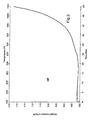
- TG graphs Thermogravimetric for the aluminium fuel particles produced according to the Examples and, for comparison, TG graphs for untreated aluminium powder and aluminium powder treated with hydrofluoric acid only.
- the TG graphs illustrate the percentage increase of the weight of the particles as a function of the temperature when heating a particle sample in oxygen atmosphere at a selected constant heating rate. The increase in weight indicates how the sample has oxidised at different temperatures. 188% corresponds to a complete oxidation of the aluminium powder to Al 2 O 3 . In all cases, the heating rate was 20°C/min; the initial temperature was 100°C and the final temperature 1100°C. The supply of oxygen was 50 ml/min in all cases.
- a solution of HF and NaF at a molar ratio of 1:1 was added to a suspension of aluminium powder (Carlfors Bruk A100) in pure water at a temperature of 30°C.
- the total concentration of fluoride in the solution was 0.5 M and the total amount of added fluoride was 2% of the molar amount of the aluminium.
- the fluoride solution was added to the suspension of aluminium powder under rigorous agitation. The rate of adding was controlled to prevent excessive frothing owing to generation of hydrogen.
- agitation was stopped and the powder was filtered off and dried.
- a surface layer of trisodium hexafluoroaluminate (cryolite) had formed on the particles.
- Fig. 3 shows the TG graph for the thus treated powder. As is evident from the graph, reactivity increases at a lower temperature compared with untreated powder ( Fig. 1 ) and powder treated with HF only ( Fig. 2 ).
- the method was repeated with suspensions of aluminium powder in pure water at temperatures between 0°C and 100°C. Owing to the solubility of the formed fluoride complex at a higher temperature, a treatment temperature of from 25°C to 40°C was preferred.
- the total concentration of fluoride in the added solution varied between 0.01 and 10 M. A preferred concentration was 0.1-5 M and preferably 0.2-1 M.
- the total amount of added fluoride varied between 0.01 % and 10% of the molar amount of the aluminium. A preferred addition was 0.1-5% and most preferably 0.5-2%.
- Powder treated in this manner burnt 5-10 times more quickly than untreated powder of the same particle size and shape.
- Powder treated in this manner burnt 10-20 times more quickly than untreated powder of the same particle size and shape.
- Example 2 was repeated, but with a treatment solution consisting of HF and LiF.
- Fig. 5 shows a TG graph for a thus treated powder where the total amount of added fluoride was 2%. The powder burnt 10-20 times more quickly than untreated powder of the same particle size and shape.
- Example 2 was repeated, but with a treatment solution consisting of HF and RbF.
- Fig. 6 shows a TG graph for a thus treated powder where the total amount of added fluoride was 2%. The powder burnt 10-20 times more quickly than untreated powder of the same particle size and shape.
- Example 2 was repeated, but with a treatment solution consisting of HF and CsF.
- Fig. 7 shows a TG graph for a thus treated powder where the total amount of added fluoride was 2%. The powder burnt 10-20 times more quickly than untreated powder of the same particle size and shape.
- a solution containing HF and KF (at a molar ratio of 1:1) and H 2 SiF 6 was added to a suspension of aluminium powder (Carlfors Bruk A100) in pure water at a temperature of about 80°C.
- the fluoride/complex fluoride solution was added to the suspension of aluminium powder under vigorous agitation. As soon as all the treatment solution had been added, agitation was stopped and the powder was filtered off and dried. A fluoride complex containing hexafluoroaluminate and hexafluorosilicate had formed on the particles.
- the procedure was repeated at different temperatures between 0°C and 100°C of the aluminium powder suspension. A higher treatment temperature resulted in a thicker surface layer. Powder treated in this way burnt 30-50 times more quickly than untreated powder of the same particle size and shape.
- Example 6 was repeated, but instead of H 2 SiF 6 , SiO 2 in fine powder form was added to the treatment solution.
- the silicon dioxide reacted with the other components in the treatment solution and formed hexafluorosilicate in situ.
- a fluoride complex of the same type as in Example 6 formed on the particles.
- Example 2 was repeated, but a CaCl 2 solution was added at the end of the treatment. A thicker surface layer formed when CaCl 2 was added to the treatment solution than in the case where merely HF and KF were used at the same temperature.
- the fluoride complex on the particles contained potassium and calcium hexafluoroaluminate. Powder treated in this manner burnt 30-50 times more quickly than untreated powder of the same particle size and shape.
- the residual solution from the treatment contained very small contents of dissolved hexafluoroaluminate.
Landscapes
- Chemical & Material Sciences (AREA)
- Organic Chemistry (AREA)
- Inorganic Chemistry (AREA)
- Crystallography & Structural Chemistry (AREA)
- Compounds Of Alkaline-Earth Elements, Aluminum Or Rare-Earth Metals (AREA)
- Liquid Carbonaceous Fuels (AREA)
- Coating With Molten Metal (AREA)
Claims (11)
- Verfahren zur Verbesserung der Entzündlichkeit und Brenngeschwindigkeit von Aluminium-Treibmittelteilchen, dadurch gekennzeichnet, dass die Aluminium-Treibmittelteilchen mit einer wässrigen Lösung von Fluorwasserstoffsäure und eines Fluorids und/oder eines komplexen Fluorids eines Alkalimetalls und/oder eines Erdalkalimetalls behandelt werden, um eine Oberflächenschicht eines Fluoridkomplexes zu bilden, der an die Aluminium-Treibmittelteilchen gebunden ist.
- Verfahren nach Anspruch 1, dadurch gekennzeichnet, dass auf der letzten Behandlungsstufe ein Erdalkalimetallion der wässrigen Lösung zugesetzt wird.
- Verfahren nach Anspruch 1, dadurch gekennzeichnet, dass das Alkalimetallfluorid aus Natrium-, Kalium-, Rubidium- und Cäsiumfluorid ausgewählt ist.
- Verfahren nach Anspruch 1, dadurch gekennzeichnet, dass das komplexe Fluorid ein Hexafluoroaluminat oder ein Hexafluorosilicat ist.
- Verfahren nach Anspruch 1, dadurch gekennzeichnet, dass das Alkalimetallfluorid Natriumfluorid und das komplexe Fluorid Kryolith ist.
- Verfahren nach Anspruch 1, dadurch gekennzeichnet, dass das Alkalimetallfluorid Kaliumfluorid und das komplexe Fluorid Trikaliumhexafluoroaluminat ist.
- Aluminium-Treibmittelteilchen zur Verwendung in Treibmittel-, Explosiv- und pyrotechnischen Zusammensetzungen, dadurch gekennzeichnet, dass die Treibmittelteilchen eine Oberflächenschicht eines komplexen Fluorids aufweisen, die durch die Behandlung von Aluminiumteilchen mit einer wässrigen Lösung von Fluorwasserstoffsäure und eines Fluorids und/oder eines komplexen Fluorids eines Alkalimetalls und/oder eines Erdalkalimetalls gebildet ist.
- Aluminium-Treibmittelteilchen nach Anspruch 7, dadurch gekennzeichnet, dass das Alkalimetallfluorid aus Natrium-, Kalium-, Rubidium- und Cäsiumfluorid ausgewählt ist.
- Aluminium-Treibmittelteilchen nach Anspruch 7, dadurch gekennzeichnet, dass der Fluoridkomplex ein Hexafluoroaluminat oder ein Hexafluorosilicat ist.
- Aluminium-Treibmittelteilchen nach Anspruch 7, dadurch gekennzeichnet, dass das Alkalimetallfluorid Natriumfluorid und der Fluoridkomplex Kryolith ist.
- Aluminium-Treibmittelteilchen nach Anspruch 7, dadurch gekennzeichnet, dass das Alkalimetallfluorid Kaliumfluorid und der Fluoridkomplex Trikaliumhexafluoroaluminat ist.
Applications Claiming Priority (3)
| Application Number | Priority Date | Filing Date | Title |
|---|---|---|---|
| SE0203520A SE524253C2 (sv) | 2002-11-28 | 2002-11-28 | Sätt att förbättra aluminiumbränslepartiklars brinnhastighet och antändbarhet samt ett så modifierat aluminiumbränsle |
| SE0203520 | 2002-11-28 | ||
| PCT/SE2003/001842 WO2004048295A1 (en) | 2002-11-28 | 2003-11-28 | Method of improving the burn rate and ignitability of aluminium fuel particles and aluminium fuel so modified |
Publications (3)
| Publication Number | Publication Date |
|---|---|
| EP1569879A1 EP1569879A1 (de) | 2005-09-07 |
| EP1569879B1 true EP1569879B1 (de) | 2008-07-02 |
| EP1569879B9 EP1569879B9 (de) | 2008-12-03 |
Family
ID=20289699
Family Applications (1)
| Application Number | Title | Priority Date | Filing Date |
|---|---|---|---|
| EP03774435A Expired - Lifetime EP1569879B9 (de) | 2002-11-28 | 2003-11-28 | Verfahren zur verbesserung der brenngeschwindigkeit und der entzündlichkeit von aluminium-treibmittelteilchen und so geändertem aluminium-treibmittel |
Country Status (8)
| Country | Link |
|---|---|
| US (1) | US7785430B2 (de) |
| EP (1) | EP1569879B9 (de) |
| AT (1) | ATE399746T1 (de) |
| AU (1) | AU2003282654A1 (de) |
| DE (1) | DE60321957D1 (de) |
| ES (1) | ES2309366T3 (de) |
| SE (1) | SE524253C2 (de) |
| WO (1) | WO2004048295A1 (de) |
Families Citing this family (4)
| Publication number | Priority date | Publication date | Assignee | Title |
|---|---|---|---|---|
| SE533687C2 (sv) * | 2009-04-09 | 2010-12-07 | Life Time Engineering Ab | Signaleringsanordning för undervattensfarkost |
| US8968824B2 (en) * | 2013-03-14 | 2015-03-03 | Dowa Electronics Materials Co., Ltd. | Method for producing silver conductive film |
| EP4624072A1 (de) * | 2014-01-09 | 2025-10-01 | RTX Corporation | Material und verfahren zur generativen fertigung eines oder mehrerer teile |
| US12570913B1 (en) * | 2025-01-29 | 2026-03-10 | Rouse Energy Enterprises Llc | Waste-based additive for solid fuel and related methods |
Family Cites Families (2)
| Publication number | Priority date | Publication date | Assignee | Title |
|---|---|---|---|---|
| US4017342A (en) * | 1976-04-05 | 1977-04-12 | The United States Of America As Represented By The Secretary Of The Air Force | Method for improving metal combustion in solid rocket propellants |
| US5391239A (en) * | 1993-11-01 | 1995-02-21 | Henkel Corporation | Conversion coating of aluminum and its alloys and compositions and concentrates therefor |
-
2002
- 2002-11-28 SE SE0203520A patent/SE524253C2/sv not_active IP Right Cessation
-
2003
- 2003-11-28 AU AU2003282654A patent/AU2003282654A1/en not_active Abandoned
- 2003-11-28 AT AT03774435T patent/ATE399746T1/de not_active IP Right Cessation
- 2003-11-28 ES ES03774435T patent/ES2309366T3/es not_active Expired - Lifetime
- 2003-11-28 US US10/534,023 patent/US7785430B2/en not_active Expired - Fee Related
- 2003-11-28 EP EP03774435A patent/EP1569879B9/de not_active Expired - Lifetime
- 2003-11-28 WO PCT/SE2003/001842 patent/WO2004048295A1/en not_active Ceased
- 2003-11-28 DE DE60321957T patent/DE60321957D1/de not_active Expired - Lifetime
Also Published As
| Publication number | Publication date |
|---|---|
| ES2309366T3 (es) | 2008-12-16 |
| EP1569879B9 (de) | 2008-12-03 |
| AU2003282654A1 (en) | 2004-06-18 |
| US20060101713A1 (en) | 2006-05-18 |
| SE524253C2 (sv) | 2004-07-13 |
| WO2004048295A1 (en) | 2004-06-10 |
| EP1569879A1 (de) | 2005-09-07 |
| SE0203520L (sv) | 2004-05-29 |
| SE0203520D0 (sv) | 2002-11-28 |
| DE60321957D1 (de) | 2008-08-14 |
| US7785430B2 (en) | 2010-08-31 |
| ATE399746T1 (de) | 2008-07-15 |
Similar Documents
| Publication | Publication Date | Title |
|---|---|---|
| Babrauskas et al. | Thermal decomposition of ammonium nitrate | |
| Streng | The oxygen fluorides | |
| US4459363A (en) | Synthesis of refractory materials | |
| KR100357040B1 (ko) | 열흡수첨가제를갖는비아지드개스발생조성물 | |
| CA2357632C (en) | Non-toxic primer mix | |
| US10519075B2 (en) | Solid-rocket propellants | |
| ES2249799T3 (es) | Mezclas fulminantes. | |
| US5388519A (en) | Low toxicity primer composition | |
| Zuo et al. | Thermal decomposition and combustion behavior of solid propellant containing Si-based composites | |
| BG61604B1 (bg) | Нетоксична детонаторна смес | |
| Ji et al. | Thermal behavior of Al/Zr/KClO4 pyrotechnic compositions at high temperature | |
| US3275484A (en) | Percussion sensitive pyrotechnic or pyrophoric alloy-type priming mixture | |
| EP1569879B9 (de) | Verfahren zur verbesserung der brenngeschwindigkeit und der entzündlichkeit von aluminium-treibmittelteilchen und so geändertem aluminium-treibmittel | |
| CA2382688A1 (en) | Non-toxic and non-corrosive ignition mixture | |
| US4642147A (en) | High energy composition | |
| US4979999A (en) | Tracer composition and method of producing same | |
| WO2026016566A1 (zh) | 气体发生剂和安全气囊 | |
| CA1322656C (en) | Perchlorate and metal or metalloid-containing explosive | |
| Koch | Special materials in pyrotechnics: IV. The chemistry of phosphorus and its compounds | |
| WO2002094381A1 (en) | Method of treatment | |
| Jennings-White et al. | Hazardous chemical combinations: a discussion | |
| US6969433B1 (en) | Granulated gas charges | |
| US9617193B2 (en) | Method for manufacturing energetic material composites | |
| US2885277A (en) | Hydrogen gas generating propellent compositions | |
| Pandzou et al. | Combustion and Thermal Behavior of Selected Metallic Fuels Used in Pyrotechnic Compositions |
Legal Events
| Date | Code | Title | Description |
|---|---|---|---|
| PUAI | Public reference made under article 153(3) epc to a published international application that has entered the european phase |
Free format text: ORIGINAL CODE: 0009012 |
|
| 17P | Request for examination filed |
Effective date: 20050622 |
|
| AK | Designated contracting states |
Kind code of ref document: A1 Designated state(s): AT BE BG CH CY CZ DE DK EE ES FI FR GB GR HU IE IT LI LU MC NL PT RO SE SI SK TR |
|
| AX | Request for extension of the european patent |
Extension state: AL LT LV MK |
|
| DAX | Request for extension of the european patent (deleted) | ||
| GRAP | Despatch of communication of intention to grant a patent |
Free format text: ORIGINAL CODE: EPIDOSNIGR1 |
|
| GRAS | Grant fee paid |
Free format text: ORIGINAL CODE: EPIDOSNIGR3 |
|
| GRAA | (expected) grant |
Free format text: ORIGINAL CODE: 0009210 |
|
| AK | Designated contracting states |
Kind code of ref document: B1 Designated state(s): AT BE BG CH CY CZ DE DK EE ES FI FR GB GR HU IE IT LI LU MC NL PT RO SE SI SK TR |
|
| REG | Reference to a national code |
Ref country code: GB Ref legal event code: FG4D |
|
| REG | Reference to a national code |
Ref country code: CH Ref legal event code: EP |
|
| REF | Corresponds to: |
Ref document number: 60321957 Country of ref document: DE Date of ref document: 20080814 Kind code of ref document: P |
|
| REG | Reference to a national code |
Ref country code: IE Ref legal event code: FG4D |
|
| REG | Reference to a national code |
Ref country code: CH Ref legal event code: NV Representative=s name: MICHELI & CIE SA |
|
| PG25 | Lapsed in a contracting state [announced via postgrant information from national office to epo] |
Ref country code: SI Free format text: LAPSE BECAUSE OF FAILURE TO SUBMIT A TRANSLATION OF THE DESCRIPTION OR TO PAY THE FEE WITHIN THE PRESCRIBED TIME-LIMIT Effective date: 20080702 |
|
| PG25 | Lapsed in a contracting state [announced via postgrant information from national office to epo] |
Ref country code: NL Free format text: LAPSE BECAUSE OF FAILURE TO SUBMIT A TRANSLATION OF THE DESCRIPTION OR TO PAY THE FEE WITHIN THE PRESCRIBED TIME-LIMIT Effective date: 20080702 |
|
| REG | Reference to a national code |
Ref country code: ES Ref legal event code: FG2A Ref document number: 2309366 Country of ref document: ES Kind code of ref document: T3 |
|
| NLV1 | Nl: lapsed or annulled due to failure to fulfill the requirements of art. 29p and 29m of the patents act | ||
| PG25 | Lapsed in a contracting state [announced via postgrant information from national office to epo] |
Ref country code: PT Free format text: LAPSE BECAUSE OF FAILURE TO SUBMIT A TRANSLATION OF THE DESCRIPTION OR TO PAY THE FEE WITHIN THE PRESCRIBED TIME-LIMIT Effective date: 20081202 |
|
| PG25 | Lapsed in a contracting state [announced via postgrant information from national office to epo] |
Ref country code: BG Free format text: LAPSE BECAUSE OF FAILURE TO SUBMIT A TRANSLATION OF THE DESCRIPTION OR TO PAY THE FEE WITHIN THE PRESCRIBED TIME-LIMIT Effective date: 20081002 Ref country code: FI Free format text: LAPSE BECAUSE OF FAILURE TO SUBMIT A TRANSLATION OF THE DESCRIPTION OR TO PAY THE FEE WITHIN THE PRESCRIBED TIME-LIMIT Effective date: 20080702 Ref country code: AT Free format text: LAPSE BECAUSE OF FAILURE TO SUBMIT A TRANSLATION OF THE DESCRIPTION OR TO PAY THE FEE WITHIN THE PRESCRIBED TIME-LIMIT Effective date: 20080702 |
|
| PG25 | Lapsed in a contracting state [announced via postgrant information from national office to epo] |
Ref country code: EE Free format text: LAPSE BECAUSE OF FAILURE TO SUBMIT A TRANSLATION OF THE DESCRIPTION OR TO PAY THE FEE WITHIN THE PRESCRIBED TIME-LIMIT Effective date: 20080702 Ref country code: DK Free format text: LAPSE BECAUSE OF FAILURE TO SUBMIT A TRANSLATION OF THE DESCRIPTION OR TO PAY THE FEE WITHIN THE PRESCRIBED TIME-LIMIT Effective date: 20080702 |
|
| PLBE | No opposition filed within time limit |
Free format text: ORIGINAL CODE: 0009261 |
|
| STAA | Information on the status of an ep patent application or granted ep patent |
Free format text: STATUS: NO OPPOSITION FILED WITHIN TIME LIMIT |
|
| PG25 | Lapsed in a contracting state [announced via postgrant information from national office to epo] |
Ref country code: RO Free format text: LAPSE BECAUSE OF FAILURE TO SUBMIT A TRANSLATION OF THE DESCRIPTION OR TO PAY THE FEE WITHIN THE PRESCRIBED TIME-LIMIT Effective date: 20080702 Ref country code: SK Free format text: LAPSE BECAUSE OF FAILURE TO SUBMIT A TRANSLATION OF THE DESCRIPTION OR TO PAY THE FEE WITHIN THE PRESCRIBED TIME-LIMIT Effective date: 20080702 |
|
| 26N | No opposition filed |
Effective date: 20090403 |
|
| PG25 | Lapsed in a contracting state [announced via postgrant information from national office to epo] |
Ref country code: MC Free format text: LAPSE BECAUSE OF NON-PAYMENT OF DUE FEES Effective date: 20081130 |
|
| PG25 | Lapsed in a contracting state [announced via postgrant information from national office to epo] |
Ref country code: IE Free format text: LAPSE BECAUSE OF NON-PAYMENT OF DUE FEES Effective date: 20081128 |
|
| PG25 | Lapsed in a contracting state [announced via postgrant information from national office to epo] |
Ref country code: SE Free format text: LAPSE BECAUSE OF FAILURE TO SUBMIT A TRANSLATION OF THE DESCRIPTION OR TO PAY THE FEE WITHIN THE PRESCRIBED TIME-LIMIT Effective date: 20081002 |
|
| PG25 | Lapsed in a contracting state [announced via postgrant information from national office to epo] |
Ref country code: CY Free format text: LAPSE BECAUSE OF FAILURE TO SUBMIT A TRANSLATION OF THE DESCRIPTION OR TO PAY THE FEE WITHIN THE PRESCRIBED TIME-LIMIT Effective date: 20080702 Ref country code: LU Free format text: LAPSE BECAUSE OF NON-PAYMENT OF DUE FEES Effective date: 20081128 Ref country code: HU Free format text: LAPSE BECAUSE OF FAILURE TO SUBMIT A TRANSLATION OF THE DESCRIPTION OR TO PAY THE FEE WITHIN THE PRESCRIBED TIME-LIMIT Effective date: 20090103 |
|
| PG25 | Lapsed in a contracting state [announced via postgrant information from national office to epo] |
Ref country code: TR Free format text: LAPSE BECAUSE OF FAILURE TO SUBMIT A TRANSLATION OF THE DESCRIPTION OR TO PAY THE FEE WITHIN THE PRESCRIBED TIME-LIMIT Effective date: 20080702 |
|
| PG25 | Lapsed in a contracting state [announced via postgrant information from national office to epo] |
Ref country code: GR Free format text: LAPSE BECAUSE OF FAILURE TO SUBMIT A TRANSLATION OF THE DESCRIPTION OR TO PAY THE FEE WITHIN THE PRESCRIBED TIME-LIMIT Effective date: 20081003 |
|
| PGFP | Annual fee paid to national office [announced via postgrant information from national office to epo] |
Ref country code: FR Payment date: 20101210 Year of fee payment: 8 |
|
| PGFP | Annual fee paid to national office [announced via postgrant information from national office to epo] |
Ref country code: CH Payment date: 20101117 Year of fee payment: 8 Ref country code: DE Payment date: 20101123 Year of fee payment: 8 |
|
| PGFP | Annual fee paid to national office [announced via postgrant information from national office to epo] |
Ref country code: IT Payment date: 20101116 Year of fee payment: 8 Ref country code: GB Payment date: 20101124 Year of fee payment: 8 Ref country code: BE Payment date: 20101118 Year of fee payment: 8 |
|
| PGFP | Annual fee paid to national office [announced via postgrant information from national office to epo] |
Ref country code: ES Payment date: 20101112 Year of fee payment: 8 |
|
| PGFP | Annual fee paid to national office [announced via postgrant information from national office to epo] |
Ref country code: CZ Payment date: 20110525 Year of fee payment: 8 |
|
| BERE | Be: lapsed |
Owner name: TOTALFORSVARETS FORSKNINGSINSTITUT Effective date: 20111130 |
|
| REG | Reference to a national code |
Ref country code: CH Ref legal event code: PL |
|
| GBPC | Gb: european patent ceased through non-payment of renewal fee |
Effective date: 20111128 |
|
| PG25 | Lapsed in a contracting state [announced via postgrant information from national office to epo] |
Ref country code: CZ Free format text: LAPSE BECAUSE OF NON-PAYMENT OF DUE FEES Effective date: 20111128 Ref country code: LI Free format text: LAPSE BECAUSE OF NON-PAYMENT OF DUE FEES Effective date: 20111130 Ref country code: CH Free format text: LAPSE BECAUSE OF NON-PAYMENT OF DUE FEES Effective date: 20111130 |
|
| REG | Reference to a national code |
Ref country code: FR Ref legal event code: ST Effective date: 20120731 |
|
| PG25 | Lapsed in a contracting state [announced via postgrant information from national office to epo] |
Ref country code: IT Free format text: LAPSE BECAUSE OF NON-PAYMENT OF DUE FEES Effective date: 20111128 Ref country code: BE Free format text: LAPSE BECAUSE OF NON-PAYMENT OF DUE FEES Effective date: 20111130 |
|
| REG | Reference to a national code |
Ref country code: DE Ref legal event code: R119 Ref document number: 60321957 Country of ref document: DE Effective date: 20120601 |
|
| PG25 | Lapsed in a contracting state [announced via postgrant information from national office to epo] |
Ref country code: GB Free format text: LAPSE BECAUSE OF NON-PAYMENT OF DUE FEES Effective date: 20111128 |
|
| PG25 | Lapsed in a contracting state [announced via postgrant information from national office to epo] |
Ref country code: FR Free format text: LAPSE BECAUSE OF NON-PAYMENT OF DUE FEES Effective date: 20111130 |
|
| REG | Reference to a national code |
Ref country code: ES Ref legal event code: FD2A Effective date: 20130603 |
|
| PG25 | Lapsed in a contracting state [announced via postgrant information from national office to epo] |
Ref country code: DE Free format text: LAPSE BECAUSE OF NON-PAYMENT OF DUE FEES Effective date: 20120601 |
|
| PG25 | Lapsed in a contracting state [announced via postgrant information from national office to epo] |
Ref country code: ES Free format text: LAPSE BECAUSE OF NON-PAYMENT OF DUE FEES Effective date: 20111129 |