EP1569393A1 - Vorrichtung und zugehöriges Verfahren zur Erleichterung der Netzwerkauswahl durch ein mobiles Endgerät für einen Packetdatenkommunikationsdienst - Google Patents
Vorrichtung und zugehöriges Verfahren zur Erleichterung der Netzwerkauswahl durch ein mobiles Endgerät für einen Packetdatenkommunikationsdienst Download PDFInfo
- Publication number
- EP1569393A1 EP1569393A1 EP04251131A EP04251131A EP1569393A1 EP 1569393 A1 EP1569393 A1 EP 1569393A1 EP 04251131 A EP04251131 A EP 04251131A EP 04251131 A EP04251131 A EP 04251131A EP 1569393 A1 EP1569393 A1 EP 1569393A1
- Authority
- EP
- European Patent Office
- Prior art keywords
- network
- mobile node
- database
- portions
- packet data
- Prior art date
- Legal status (The legal status is an assumption and is not a legal conclusion. Google has not performed a legal analysis and makes no representation as to the accuracy of the status listed.)
- Granted
Links
- 238000004891 communication Methods 0.000 claims abstract description 107
- 238000000034 method Methods 0.000 claims abstract description 20
- 230000010267 cellular communication Effects 0.000 claims description 7
- 230000001419 dependent effect Effects 0.000 claims description 6
- 238000010295 mobile communication Methods 0.000 claims description 6
- 230000003466 anti-cipated effect Effects 0.000 description 3
- 238000010586 diagram Methods 0.000 description 3
- 238000013459 approach Methods 0.000 description 2
- 230000007246 mechanism Effects 0.000 description 2
- 238000012544 monitoring process Methods 0.000 description 2
- 238000013475 authorization Methods 0.000 description 1
- 230000001413 cellular effect Effects 0.000 description 1
- 230000008030 elimination Effects 0.000 description 1
- 238000003379 elimination reaction Methods 0.000 description 1
- 238000005516 engineering process Methods 0.000 description 1
- 238000012423 maintenance Methods 0.000 description 1
- 230000011664 signaling Effects 0.000 description 1
Images


Classifications
-
- H—ELECTRICITY
- H04—ELECTRIC COMMUNICATION TECHNIQUE
- H04W—WIRELESS COMMUNICATION NETWORKS
- H04W48/00—Access restriction; Network selection; Access point selection
- H04W48/18—Selecting a network or a communication service
-
- H—ELECTRICITY
- H04—ELECTRIC COMMUNICATION TECHNIQUE
- H04W—WIRELESS COMMUNICATION NETWORKS
- H04W48/00—Access restriction; Network selection; Access point selection
- H04W48/20—Selecting an access point
-
- H—ELECTRICITY
- H04—ELECTRIC COMMUNICATION TECHNIQUE
- H04W—WIRELESS COMMUNICATION NETWORKS
- H04W8/00—Network data management
- H04W8/18—Processing of user or subscriber data, e.g. subscribed services, user preferences or user profiles; Transfer of user or subscriber data
Definitions
- the present invention relates generally to a manner by which to select, at a mobile node, a radio access network through which to communicate pursuant to a packet data service. More particularly, the present invention relates to apparatus, and an associated method, that facilitates selection at the mobile node of with which radio access network, if more than one radio access network is available, through which to communicate. Selection is dependent, e.g., on which available radio access network is able to provide packet data connectivity.
- a database is created and maintained at the mobile node.
- the database forms a listing that indexes radio access network identities together with their associated packet data connectivity capabilities.
- the mobile node detects which radio access networks are available through which to communicate and selects with which of the available radio access networks to communicate responsive to the listing formed of the database. Selection is made at the mobile node. And, dynamic updating of the database content better assures that the mobile node communicates with the radio access network that is best able to provide for packet data communications.
- a radio communication system is an exemplary type of communication system.
- radio channels are defined upon radio links extending between communication stations that are parties to a communication session. Data is sent on the radio channels to communicate the data between the communication stations pursuant to a communication service.
- Many of such radio communication systems make use of digital communication techniques that improve the communication efficiencies of such communication systems. Due to the bandwidth limitations that are regularly associated with bandwidth allocations in many radio communication systems, the improved efficiencies provided through the use of digital communication techniques are particularly advantageously applied therein.
- radio communication systems Because a wireline connection is not required to interconnect the communication stations of a radio communication system, communications are effectuable between communication stations between which wireline connections would be impractical or impossible. And, also because the use of a wireline connection is obviated, a radio communication system is amenable for implementation as a mobile communication system. In a mobile communication system, mobility of communications is provided to one, or more, of the communication stations.
- a cellular communication system is a type of radio communication system.
- a cellular communication system is formed of a network infrastructure that includes a plurality of spaced-apart, fixed-site transceivers, referred to as base transceiver stations, over an area that is encompassed by the communication system. Each base transceiver station defines a coverage area, referred to as a cell.
- Mobile nodes communicate data by way of radio communication channels extending between a base transceiver station and the mobile node. Due to the spaced-apart positioning of the plurality of base transceiver stations, the power levels at which the data is required to be communicated is relatively low, and the same frequencies are reusable at different base transceiver stations according to a cell reuse pattern. Relatively efficient utilization of the bandwidth allocated to the radio communication system is facilitated.
- the network infrastructures of more than one generation of cellular communication systems might, for instance, be installed to be operable concurrently with systems of other generations over a common geographic area. And separate networks, operated by separate network operators, of the same generation, might also be installed to be operable over a common geographic area.
- Authorization that is granted to a mobile node to communicate with a selected network is based, generally, upon a service subscription purchased by a user of the mobile node.
- a home network is associated with the mobile node, typically a network that is installed to encompass an area in which the user of the mobile node is anticipated to be positioned most regularly. Due to the inherent mobility of a mobile node, the mobile node might roam, subsequently to be positioned beyond communication range of the home network and within range, instead, of one or more visited networks.
- the mobile node When roaming beyond the home network, the mobile node is able to communicate through one or more of the visited networks, depending, for instance, upon the operating protocols and capabilities of the visited networks and agreements entered into between the operators of the visited networks and the home network.
- a decision is made as to which of the available networks that the mobile node communicates.
- Conventional mechanisms are used including the use of a defined set of preferred roaming partners.
- An operator of the home network associated with the mobile node maintains a list of preferred networks that are to be used through which to communicate when the mobile node roams beyond the home network.
- the preferred roaming lists are based upon the visiting networks having voice capability, i.e., having the capability of transceiving voice data.
- the present invention accordingly, advantageously provides apparatus, and an associated method, by which to select, at a mobile node, a radio access network through which to communicate pursuant to a packet data service.
- a manner is provided by which to facilitate selection at the mobile node of with which radio access network through which the mobile node communicates when the mobile node roams beyond its home network.
- selection is dependent, amongst other things, on which available radio access network is able to provide packet data connectivity.
- the mobile node When the mobile node is operating, or plans to operate, to effectuate a packet data communication service, and the mobile node roams beyond its home network, the mobile node detects which radio access networks are available through which to communicate. And, of the available networks, the mobile node selects with which of the networks to communicate.
- the selection is dependent, in part, upon whether the available radio access network provides packet data connectivity. Determinations of network capabilities are dynamically made, or at least updated, and decisions are made by the mobile node, not prescribed by a network operator.
- the mobile node includes a storage element at which values defining a database are stored.
- the database forms a listing that lists identities of radio access networks together with their communication capacities.
- the communication capacities include, for instance, indications of whether the network, identified by its identifier, provides packet data connectivity or provides voice data connectivity, or provides both packet data and voice data connectivity.
- the database is accessed to facilitate selection of the network through which the mobile node shall communicate when the mobile node roams beyond the home network of the mobile node. If a network provides for packet data connectivity, and packet data communications are to be effectuated, the network that provides for the packet data connectivity is selected to be the network through which the communications are effectuated.
- the mobile node monitors messages broadcast upon broadcast channels by base transceiver stations of different networks. Monitoring of the broadcast of the messages permits the mobile node to identify which networks are available for communications as well as, also, to determine whether the networks provide specific capabilities. That is to say, the message is broadcast by separate radio access networks, identify the networks and also indicate the network's capabilities.
- the values stored at the database are updated with current information regarding the capabilities of the networks, thereby dynamically to maintain a current status of the network capabilities. If, for instance, the data contained in the message detected by the mobile node during its monitoring of the broadcasts indicates that a network exhibits capabilities corresponding to capabilities already recorded at the database, the database entry is affirmed.
- the database listing is modified, at least to indicate the present, indicated capability.
- the database is updated to include a listing of the network together with its communication capability, also indicated in the message.
- the database is first populated with values forming a database that defines a listing of an initial set of radio access network identities together with their corresponding communication capabilities.
- the initial set is modified, as needed, during operation of the mobile node to monitor and detect messages broadcast by various radio access networks.
- the radio communication system When, for instance, the radio communication system is constructed pursuant to the operating specification of a GSM (Global System for Mobile communications), messages broadcast by radio access networks identify the mobile country code (MCC) and mobile network code (MNC) that together identify the radio access network that broadcasts the message.
- GSM Global System for Mobile communications
- MCC mobile country code
- MNC mobile network code
- the mobile node also includes a selector that selects with which network through which the mobile node shall communicate pursuant to a packet data service.
- the selector utilizes, in the selection, indications of which radio access networks are available and, of the available networks, which exhibit communication capabilities best to facilitate effectuation of the packet communication service.
- the selection of the network with which the mobile node communicates is based upon dynamically-maintained information and also based, at least in part, upon the communication capabilities of the available networks, improved selection is provided.
- the radio communication system has a mobile node that is selectably operable at least to communicate packet data with a network part.
- the network part is formed of a plurality of network portions.
- a first network portion of the plurality forms a home network associated with the mobile node. Selection of with which network portion of the plurality of network portions that the mobile node communicates is facilitated.
- a storage element is embodied at the mobile node.
- the storage element stores values that define a database.
- the database forms a listing identifying at least selected ones of the plurality of network portions together with an indication associated therewith of network portion capability to provide packet data connectivity with the mobile node to communicate packet data therewith.
- a selector is adapted to access the database defined at the storage element.
- the selector selects through which of the network portions of the plurality of network portions to communicate the packet data. Selection that is made by the selector is, at least in part, dependent upon the listing formed of the database defined at the storage element.
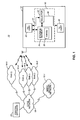
- a radio communication system shown generally at 10, provides for radio communications with mobile nodes, of which the mobile node 12 is representative.
- the mobile node operates, selectably, to provide packet communication services and circuit-switched, e.g., voice communication services.
- the mobile node operates at least to communicate pursuant to the operating standards and protocols of a GSM (Global System for Mobile communications) cellular communication system.
- the mobile node further forms a multi-node device, capable of communicating pursuant to two or more cellular, or other, communication standards. While the following description shall describe exemplary operation of the radio communication system in which the mobile node operates pursuant to the GSM operating protocols, in other implementations, the mobile node operates in other manners. Operation of an embodiment of the present invention is analogously implementable in other manners, pursuant to operating protocols other than the GSM operating protocols. And, analogous description of operation of the mobile node, and the radio communication system, can analogously be described with respect to its implementation in such other communication systems.
- GSM Global System for Mobile communications
- the communication system includes a network part, here having a plurality of radio access networks 16.
- Five radio access networks (RANs) are represented in the figure.
- One of the radio access networks, here radio access network 16-1 forms a home network associated with the mobile node 12. And, when the mobile node is positioned within the coverage area of its home network, communications by the mobile node are generally effectuated with the home network.
- the mobile node is movable to be positioned at a location beyond the coverage area of the home network and in the coverage area of another network.
- radio access networks 16-2, 16-3, 16-4, and 16-5 Others of the radio access networks are identified as 16-2, 16-3, 16-4, and 16-5.
- the radio access networks 16-2, 16-3, and 16-4 partially overlay one another and are representative of networks, operated by separate network operators, that are of at least partially overlapping coverage areas.
- the radio access network 16-5 is representative of another network into whose coverage area that the mobile node might roam during roaming operation beyond its home network.
- the separate radio access networks are suitably intercoupled, such as by way of a core network 18, or other appropriate mechanism, e.g., more than one core network, through which communication paths are formable.
- a central database 20 is connected to the network 18, or is otherwise accessible by way of the radio access networks 16.
- the mobile node includes transceiver circuitry, here including a receiver part 22 and a transmit part 24 that are operable to receive data communicated thereto on downlink channels defined upon radio air interface and to transmit data upon uplink channels to a radio access network through which the mobile node is communicating.
- transceiver circuitry here including a receiver part 22 and a transmit part 24 that are operable to receive data communicated thereto on downlink channels defined upon radio air interface and to transmit data upon uplink channels to a radio access network through which the mobile node is communicating.
- the mobile node When the mobile node roams beyond the coverage area of the home network, the mobile node must communicate by way of another radio access network. While conventional schemes have been utilized by which to select through which radio access network that communications are to be effectuated, the conventional schemes generally rely on the use of preferred roaming lists or otherwise do not take into account the packet communication capabilities of the radio access network.
- the mobile node includes apparatus 32 of an embodiment of the present invention.
- the apparatus facilitates selection by the mobile node of a radio access network through which to communicate when the mobile node roams beyond the home network coverage area, or otherwise does not communicate by way of its home network.
- the apparatus includes a storage element 34.
- the storage element that defines a database 36 that forms a listing identifying radio access networks together with their respective communication capabilities.
- the apparatus includes a selector 42 that has access to the database defined at the storage element.
- the selector is also coupled, here represented by way of the line 44, to the receive part to receive indications of with which radio access networks broadcast messages that are detected at the mobile node. Indications of such messages are also provided to the storage element.
- the selector operates to select with which of the available radio access networks that the mobile node shall communicate. Indications provided to the selector on the line 44 inform the selector of which radio access networks are potential networks through which the mobile node might be able to communicate. And, access is made to the listings contained in the database to determine if the communication capability of the available radio access networks correspond to the requirements of the mobile node.
- the capacity of the radio access network to provide packet communication connectivity is a significant selection criteria. Responsive to the accessed information, the selector makes selection of the radio access network with which the mobile node shall communicate and identifies the selection to the transmit part of the mobile node, here represented by way of the line 48. And, connection procedures are commenced to communicate by way of the selected radio access network.
- the mobile node when the mobile node roams beyond the coverage area of its home network 16-1 and into the coverage areas of the networks 16-2, 16-3, and 16-4, the mobile node receives indications of its presence in the coverage areas of the three networks. Indications are provided by way of the line 44 to the selector of the three networks 16-2, 16-3, and 16-4.
- the selector accesses listings in the database 36 of the identities of the corresponding networks. And, the network capabilities of the network listings are identified. Responsive to the accessed information, the selector makes selection of with which of the networks through which the mobile node shall communicate.
- the mobile node when the mobile node is not currently a party to a communication session or in which a communication session is not immediately anticipated, indications of the messages broadcast by the networks are monitored and used to update the contents of the database 36. Current information relating to the communication capabilities of the networks listed in the database is thereby better assured.
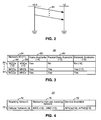
- FIG. 2 illustrates a message sequence diagram, shown generally at 62, representative of the broadcast of messages by a radio access network, such as the radio access network 16-2, during operation of the radio communication system 10 shown in Figure 1.
- messages are generated at the radio access network and broadcast, indicated by the segments 44 and delivered to the mobile node 12.
- the radio access network that broadcasts the messages is constructed generally in conformity with the GSM operating specification and provides for GPRS (General Packet Radio Service)
- the message is broadcast by the network form system information type 3 SI 3 rest octets that are coded to indicate GPRS capability.
- Messages broadcast by networks operable pursuant to other operating specifications, such as an IS-95 compliant CDMA operating specification or a UMTS operating specification are structured analogously to the messages generated by a GSM/GPRS network.
- a mobile country code (MCC) and a mobile network code (MNC) identifies the network. Values representative of the country code and network code are contained in the messages broadcast by the network.
- the messages broadcast by such networks indicate the improved capability by identifying the communication capabilities of such networks.
- EDGE Enhanced Data for GSM Evolution
- MSS, MMBS, and IM communication capabilities represent analogous communication upgrades.
- Figure 3 illustrates a representation of an exemplary database 36 embodied at the mobile node 12 (shown in Figure 1) pursuant to an embodiment of the present invention.
- the database forms a plurality of listings 52 each identifying a separate network by a network identifier 54.
- the network identifier is formed of a mobile country code 56 and a mobile network code 58. Communication capabilities of the listed network are identified in the columns 62 and 64, here indicating whether voice services are available and packet data services are available, respectively.
- the database is initially provisioned with values forming an initial database containing listings of selected radio access networks.
- GSM/GPRS/UMTS are identified by their mobile country codes and mobile network codes. Indexed together therewith are the services available, i.e., the communication capabilities, and the known APNs that are reachable by way of the associated network.
- the mobile node registers and authenticates itself with the selected network. Then, the mobile node requests and obtains a packet data service. Thereafter, the mobile node communicates with the central database 20.
- the database 20 is provided with the home network details of the home network of the mobile node and indicates which network in which the mobile node is registered, i.e., the selected network, together with an indication of what services are requested. The information is stored at the database 20. If another user from the same home network has already registered by way of the selected visited network, then only the services available by way of this selected network shall be updated, if required. Dynamic updating of the database categories is also permitted as incompatibilities between different implementations of a particular service are identified and as new generations of mobile networks are developed.
- Figure 4 illustrates a representation of an exemplary database 20.
- a listing 72 contains an identity of the network 74, a roaming network indication 76, and an indication of the services available in the network in the column 78. Additional columns, for reasons just-noted, are added, as needed.
- the initial provisioning forms an exact copy of the network database 20.
- the database 36 is initially provisioned with an abridged or compressed copy of the database 20.
- the database 36 is embodied on a portable memory card, such as a subscriber identity module (SIM) or the like. Analogous information is stored at the database if the mobile node is WLAN (Wireless Local Area Network) capable.
- SIM subscriber identity module
- Maintenance of the central database 20 and dissemination of information stored thereat is preferably effectuated without undue increase in network traffic load, while, also, maintaining the database with up-to-date information.
- a multi-level distribution approach is utilized. The approach makes use of the roaming history of the mobile node, e.g., the countries in which the mobile node has been operated and the frequency of non-home network operation, planned roaming operation of the mobile node, e.g., identification of the countries and dates, etc.
- the initial provisioning is performed in advance of use of the mobile node. Provisioning of a full or restricted set of central database information, depending upon the frequency bands and technologies pursuant to which the mobile node is operable. If a restricted set of data is initially provisioned, provisioning of information related to additional countries is subsequently loadable at the database. And, pursuant to anticipated trips, the database is selectively further provisioned.
- loading of data based on a specific user request triggers a local check by the mobile node, indicating any potential absence of networks in the selected countries, based on the desired APN and the home network operator associated with the mobile node. Updating of the databases with significant database changes, when the changes occur, is also permitted. For instance, such changes include addition of a first network in a selected country that has the desired APN or of potential elimination of the only network with the APN, based on the home network operator of the mobile node.
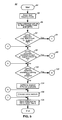
- Figure 5 illustrates a flow chart, shown generally at 82, representative of operation of an embodiment of the present invention.
- Operations commence with the start block 84.
- the mobile node scans selected channels and finds a country code identifying the country of the mobile node's location.
- database entries are selected for the identified country code that provide appropriate communication capabilities, here GPRS.
- Figure 6 illustrates the flow chart 94.
- a determination made, indicated by the decision block 112 as to whether any GPRS networks are left. If so, the yes branch is taken back to the decision block 96, shown in Figure 5. otherwise, the no branch is taken to the decision block 114.
- the decision block 114 a determination is made as to whether any GPRS networks are left on the preferred PLMN list. If not, the no branch is taken to the block 116 and a GPRS network is chosen at random from those not on a preferred PLMN list. Conversely, the yes branch is taken to the block 118. At the block 118, the GPRS is chosen at random from those on the preferred PLMN list.
- Branches are taken from both of the blocks 116 and 118 to the block 122 whereat the APN is activated. Thereafter, a branch is taken to the decision block 124. At the decision block 124, a determination is made as to whether the APN is working. If not, the no branch is taken back to the decision block 112. Otherwise, the yes branch is taken back to the block 108, shown in Figure 5.
- Figure 7 illustrates the flow chart 98.
- the flow chart commences when the yes branch is taken from the decision block 96, shown in Figure 5.
- a determination is made as to whether any GPRS networks remain. If not, the no branch is taken back to the decision block 132.
- a determination is made as to whether any of the remaining GPRS networks are on the preferred PLMN list. If not, the no branch is taken to the block 134.
- the GPRS network is chosen at random from the decision block, the GPRS network is chosen at random, indicated by the block 136, from those on the preferred PLMN list.
- Branches from the blocks 134 and 136 extend to the block 138 whereat the APN is activated. Then, and as indicated by the decision block, 142, a determination is made as to whether the APN is working. If not, the no branch is taken back to the decision block 128. Otherwise, the yes branch is taken back to the block 108, shown in Figure 5.
- Figure 8 illustrates the flow chart 102.
- the flow chart 102 commences when the yes branch is taken from the decision block 100, shown in Figure 5.
- Branches taken from the blocks 152 and 154 extend to the block 156 whereat the APN is activated. Then a branch is taken to the decision block 158 whereat a determination is made as to whether the APN is working. If not, the no branch is taken back to the block 146. Otherwise, the yes branch is taken to the block 108, shown in Figure 5.
Landscapes
- Engineering & Computer Science (AREA)
- Computer Security & Cryptography (AREA)
- Computer Networks & Wireless Communication (AREA)
- Signal Processing (AREA)
- Mobile Radio Communication Systems (AREA)
- Data Exchanges In Wide-Area Networks (AREA)
Priority Applications (10)
| Application Number | Priority Date | Filing Date | Title |
|---|---|---|---|
| DE602004014302T DE602004014302D1 (de) | 2004-02-27 | 2004-02-27 | Vorrichtung und zugehöriges Verfahren zur Erleichterung der Netzwerkauswahl durch ein mobiles Endgerät für einen Packetdatenkommunikationsdienst |
| EP04251131A EP1569393B1 (de) | 2004-02-27 | 2004-02-27 | Vorrichtung und zugehöriges Verfahren zur Erleichterung der Netzwerkauswahl durch ein mobiles Endgerät für einen Packetdatenkommunikationsdienst |
| ES04251131T ES2276234T3 (es) | 2004-02-27 | 2004-02-27 | Aparato y metodo asociado para facilitar la seleccion de red mediante un nodo movil de acuerdo con un servicio de comunicaccion de datos por paquetes. |
| ES07100074T ES2307291T3 (es) | 2004-02-27 | 2004-02-27 | Aparato y metodo asociado para facilitar la seleccion de red mediante un nodo movil de acuerdo con un servicio de comunicacion de datos por paquetes. |
| EP07100074A EP1764965B1 (de) | 2004-02-27 | 2004-02-27 | Vorrichtung und zugehöriges Verfahren zur Erleichterung der Netzwerkauswahl durch ein mobiles Endgerät für einen Packetdatenkommunikationsdienst |
| DE602004004239T DE602004004239T2 (de) | 2004-02-27 | 2004-02-27 | Vorrichtung und zugehöriges Verfahren zur Erleichterung der Netzwerkauswahl durch ein mobiles Endgerät für einen Packetdatenkommunikationsdienst |
| AT07100074T ATE397820T1 (de) | 2004-02-27 | 2004-02-27 | Vorrichtung und zugehöriges verfahren zur erleichterung der netzwerkauswahl durch ein mobiles endgerät für einen packetdatenkommunikationsdienst |
| CA2498455A CA2498455C (en) | 2004-02-27 | 2005-02-25 | Apparatus, and associated method, for facilitating network selection by a mobile node pursuant to a packet data communication service |
| HK06101158.0A HK1079017B (en) | 2006-01-25 | Apparatus, and associated method, for facilitating network selection by a mobile node pursuant to a packet data communication service | |
| HK07109868.3A HK1101876B (en) | 2007-09-12 | Apparatus and associated method, for facilitating network selection by a mobile node pursuant to a packet data communication service |
Applications Claiming Priority (1)
| Application Number | Priority Date | Filing Date | Title |
|---|---|---|---|
| EP04251131A EP1569393B1 (de) | 2004-02-27 | 2004-02-27 | Vorrichtung und zugehöriges Verfahren zur Erleichterung der Netzwerkauswahl durch ein mobiles Endgerät für einen Packetdatenkommunikationsdienst |
Related Child Applications (1)
| Application Number | Title | Priority Date | Filing Date |
|---|---|---|---|
| EP07100074A Division EP1764965B1 (de) | 2004-02-27 | 2004-02-27 | Vorrichtung und zugehöriges Verfahren zur Erleichterung der Netzwerkauswahl durch ein mobiles Endgerät für einen Packetdatenkommunikationsdienst |
Publications (2)
| Publication Number | Publication Date |
|---|---|
| EP1569393A1 true EP1569393A1 (de) | 2005-08-31 |
| EP1569393B1 EP1569393B1 (de) | 2007-01-10 |
Family
ID=34746114
Family Applications (2)
| Application Number | Title | Priority Date | Filing Date |
|---|---|---|---|
| EP04251131A Expired - Lifetime EP1569393B1 (de) | 2004-02-27 | 2004-02-27 | Vorrichtung und zugehöriges Verfahren zur Erleichterung der Netzwerkauswahl durch ein mobiles Endgerät für einen Packetdatenkommunikationsdienst |
| EP07100074A Expired - Lifetime EP1764965B1 (de) | 2004-02-27 | 2004-02-27 | Vorrichtung und zugehöriges Verfahren zur Erleichterung der Netzwerkauswahl durch ein mobiles Endgerät für einen Packetdatenkommunikationsdienst |
Family Applications After (1)
| Application Number | Title | Priority Date | Filing Date |
|---|---|---|---|
| EP07100074A Expired - Lifetime EP1764965B1 (de) | 2004-02-27 | 2004-02-27 | Vorrichtung und zugehöriges Verfahren zur Erleichterung der Netzwerkauswahl durch ein mobiles Endgerät für einen Packetdatenkommunikationsdienst |
Country Status (5)
| Country | Link |
|---|---|
| EP (2) | EP1569393B1 (de) |
| AT (1) | ATE397820T1 (de) |
| CA (1) | CA2498455C (de) |
| DE (2) | DE602004004239T2 (de) |
| ES (2) | ES2276234T3 (de) |
Cited By (1)
| Publication number | Priority date | Publication date | Assignee | Title |
|---|---|---|---|---|
| KR100979203B1 (ko) | 2007-12-14 | 2010-09-01 | 한국전자통신연구원 | 이동통신 시스템에서 네이밍 서비스를 이용한 핸드오프방법 |
Families Citing this family (1)
| Publication number | Priority date | Publication date | Assignee | Title |
|---|---|---|---|---|
| US9325737B2 (en) | 2007-06-28 | 2016-04-26 | Motorola Solutions, Inc. | Security based network access selection |
Citations (5)
| Publication number | Priority date | Publication date | Assignee | Title |
|---|---|---|---|---|
| EP0781064A2 (de) * | 1995-12-21 | 1997-06-25 | Nokia Mobile Phones Ltd. | Mobiles Endgerät für Multi-Mode-Betrieb |
| WO2001026409A1 (en) * | 1999-10-04 | 2001-04-12 | Telefonaktiebolaget Lm Ericsson (Publ) | Broadcasting of service capabilities in a cellular telecommunications network |
| WO2001063843A1 (en) * | 2000-02-24 | 2001-08-30 | Nokia Corporation | A method and equipment for accessing a telecommunication network |
| WO2003045095A1 (en) * | 2001-11-21 | 2003-05-30 | Nokia Corporation | Broadcasting information about eligible network operators to mobile user equipments |
| US20030186695A1 (en) * | 1998-03-06 | 2003-10-02 | Sbc Technology Resources, Inc. | Intelligent roaming system with over the air programming |
-
2004
- 2004-02-27 ES ES04251131T patent/ES2276234T3/es not_active Expired - Lifetime
- 2004-02-27 ES ES07100074T patent/ES2307291T3/es not_active Expired - Lifetime
- 2004-02-27 AT AT07100074T patent/ATE397820T1/de not_active IP Right Cessation
- 2004-02-27 DE DE602004004239T patent/DE602004004239T2/de not_active Expired - Lifetime
- 2004-02-27 EP EP04251131A patent/EP1569393B1/de not_active Expired - Lifetime
- 2004-02-27 EP EP07100074A patent/EP1764965B1/de not_active Expired - Lifetime
- 2004-02-27 DE DE602004014302T patent/DE602004014302D1/de not_active Expired - Lifetime
-
2005
- 2005-02-25 CA CA2498455A patent/CA2498455C/en not_active Expired - Fee Related
Patent Citations (5)
| Publication number | Priority date | Publication date | Assignee | Title |
|---|---|---|---|---|
| EP0781064A2 (de) * | 1995-12-21 | 1997-06-25 | Nokia Mobile Phones Ltd. | Mobiles Endgerät für Multi-Mode-Betrieb |
| US20030186695A1 (en) * | 1998-03-06 | 2003-10-02 | Sbc Technology Resources, Inc. | Intelligent roaming system with over the air programming |
| WO2001026409A1 (en) * | 1999-10-04 | 2001-04-12 | Telefonaktiebolaget Lm Ericsson (Publ) | Broadcasting of service capabilities in a cellular telecommunications network |
| WO2001063843A1 (en) * | 2000-02-24 | 2001-08-30 | Nokia Corporation | A method and equipment for accessing a telecommunication network |
| WO2003045095A1 (en) * | 2001-11-21 | 2003-05-30 | Nokia Corporation | Broadcasting information about eligible network operators to mobile user equipments |
Non-Patent Citations (1)
| Title |
|---|
| O2, T-MOBILE: "Clarification on the use of the RAT during background scanning", 3GPP TSG-CN1 MEETING 32, TDOC N1-031689, 27 October 2003 (2003-10-27) - 31 October 2003 (2003-10-31), pages 1-7, XP002290617, Retrieved from the Internet <URL:http://www.3gpp.org/ftp/tsg_cn/WG1_mm-cc-sm/TSGN1_32/Docs/N1-031689.zip> [retrieved on 20040729] * |
Cited By (1)
| Publication number | Priority date | Publication date | Assignee | Title |
|---|---|---|---|---|
| KR100979203B1 (ko) | 2007-12-14 | 2010-09-01 | 한국전자통신연구원 | 이동통신 시스템에서 네이밍 서비스를 이용한 핸드오프방법 |
Also Published As
| Publication number | Publication date |
|---|---|
| DE602004004239D1 (de) | 2007-02-22 |
| HK1079017A1 (en) | 2006-03-24 |
| ES2307291T3 (es) | 2008-11-16 |
| EP1764965A2 (de) | 2007-03-21 |
| ATE397820T1 (de) | 2008-06-15 |
| EP1569393B1 (de) | 2007-01-10 |
| EP1764965B1 (de) | 2008-06-04 |
| CA2498455C (en) | 2013-06-18 |
| ES2276234T3 (es) | 2007-06-16 |
| CA2498455A1 (en) | 2005-08-27 |
| DE602004014302D1 (de) | 2008-07-17 |
| HK1101876A1 (en) | 2007-10-26 |
| EP1764965A3 (de) | 2007-05-30 |
| DE602004004239T2 (de) | 2007-11-15 |
Similar Documents
| Publication | Publication Date | Title |
|---|---|---|
| US20050193150A1 (en) | Apparatus, and associated method, for facilitating network selection by a mobile node pursuant to a packet data communication service | |
| US9986500B2 (en) | Apparatus, and associated method, for facilitating WLAN selection by a mobile node | |
| US8301135B2 (en) | Apparatus, and associated method, for facilitating network selection by a roaming mobile node | |
| US7536185B2 (en) | Apparatus, and associated method, for facilitating network selection at a mobile node utilizing a network selection list maintained thereat | |
| EP1569484B1 (de) | Vorrichtung und zugehöriges Verfahren zur Erleichterung der Netzwerkauswahl eines mobilen Knotens | |
| EP1569393B1 (de) | Vorrichtung und zugehöriges Verfahren zur Erleichterung der Netzwerkauswahl durch ein mobiles Endgerät für einen Packetdatenkommunikationsdienst | |
| HK1079017B (en) | Apparatus, and associated method, for facilitating network selection by a mobile node pursuant to a packet data communication service | |
| HK1101876B (en) | Apparatus and associated method, for facilitating network selection by a mobile node pursuant to a packet data communication service | |
| HK1079651B (en) | Apparatus, and associated method, for facilitating network selection by a roaming mobile node | |
| HK1093276B (en) | Apparatus and associated method for faciliating network selection by a roaming mobile node | |
| MXPA06007804A (es) | Aparato y metodo asociado para facilitar la seleccion de red en un nodo movil utilizando una lista de seleccion de redes mantenida en el mismo | |
| HK1101003B (en) | Wlan selection by a mobile node |
Legal Events
| Date | Code | Title | Description |
|---|---|---|---|
| PUAI | Public reference made under article 153(3) epc to a published international application that has entered the european phase |
Free format text: ORIGINAL CODE: 0009012 |
|
| 17P | Request for examination filed |
Effective date: 20050623 |
|
| AK | Designated contracting states |
Kind code of ref document: A1 Designated state(s): AT BE BG CH CY CZ DE DK EE ES FI FR GB GR HU IE IT LI LU MC NL PT RO SE SI SK TR |
|
| AX | Request for extension of the european patent |
Extension state: AL LT LV MK |
|
| REG | Reference to a national code |
Ref country code: HK Ref legal event code: DE Ref document number: 1079017 Country of ref document: HK |
|
| AKX | Designation fees paid |
Designated state(s): AT BE BG CH CY CZ DE DK EE ES FI FR GB GR HU IE IT LI LU MC NL PT RO SE SI SK TR |
|
| AXX | Extension fees paid |
Extension state: LV Payment date: 20060216 Extension state: AL Payment date: 20060216 Extension state: LT Payment date: 20060216 Extension state: MK Payment date: 20060216 |
|
| GRAP | Despatch of communication of intention to grant a patent |
Free format text: ORIGINAL CODE: EPIDOSNIGR1 |
|
| GRAS | Grant fee paid |
Free format text: ORIGINAL CODE: EPIDOSNIGR3 |
|
| GRAA | (expected) grant |
Free format text: ORIGINAL CODE: 0009210 |
|
| AK | Designated contracting states |
Kind code of ref document: B1 Designated state(s): AT BE BG CH CY CZ DE DK EE ES FI FR GB GR HU IE IT LI LU MC NL PT RO SE SI SK TR |
|
| AX | Request for extension of the european patent |
Extension state: AL LT LV MK |
|
| PG25 | Lapsed in a contracting state [announced via postgrant information from national office to epo] |
Ref country code: NL Free format text: LAPSE BECAUSE OF FAILURE TO SUBMIT A TRANSLATION OF THE DESCRIPTION OR TO PAY THE FEE WITHIN THE PRESCRIBED TIME-LIMIT Effective date: 20070110 Ref country code: SI Free format text: LAPSE BECAUSE OF FAILURE TO SUBMIT A TRANSLATION OF THE DESCRIPTION OR TO PAY THE FEE WITHIN THE PRESCRIBED TIME-LIMIT Effective date: 20070110 Ref country code: LI Free format text: LAPSE BECAUSE OF FAILURE TO SUBMIT A TRANSLATION OF THE DESCRIPTION OR TO PAY THE FEE WITHIN THE PRESCRIBED TIME-LIMIT Effective date: 20070110 Ref country code: DK Free format text: LAPSE BECAUSE OF FAILURE TO SUBMIT A TRANSLATION OF THE DESCRIPTION OR TO PAY THE FEE WITHIN THE PRESCRIBED TIME-LIMIT Effective date: 20070110 Ref country code: AT Free format text: LAPSE BECAUSE OF FAILURE TO SUBMIT A TRANSLATION OF THE DESCRIPTION OR TO PAY THE FEE WITHIN THE PRESCRIBED TIME-LIMIT Effective date: 20070110 Ref country code: CH Free format text: LAPSE BECAUSE OF FAILURE TO SUBMIT A TRANSLATION OF THE DESCRIPTION OR TO PAY THE FEE WITHIN THE PRESCRIBED TIME-LIMIT Effective date: 20070110 |
|
| REG | Reference to a national code |
Ref country code: GB Ref legal event code: FG4D |
|
| REG | Reference to a national code |
Ref country code: IE Ref legal event code: FG4D |
|
| REF | Corresponds to: |
Ref document number: 602004004239 Country of ref document: DE Date of ref document: 20070222 Kind code of ref document: P |
|
| PG25 | Lapsed in a contracting state [announced via postgrant information from national office to epo] |
Ref country code: MC Free format text: LAPSE BECAUSE OF NON-PAYMENT OF DUE FEES Effective date: 20070228 |
|
| REG | Reference to a national code |
Ref country code: HK Ref legal event code: GR Ref document number: 1079017 Country of ref document: HK |
|
| PG25 | Lapsed in a contracting state [announced via postgrant information from national office to epo] |
Ref country code: BG Free format text: LAPSE BECAUSE OF FAILURE TO SUBMIT A TRANSLATION OF THE DESCRIPTION OR TO PAY THE FEE WITHIN THE PRESCRIBED TIME-LIMIT Effective date: 20070411 |
|
| REG | Reference to a national code |
Ref country code: SE Ref legal event code: TRGR |
|
| PG25 | Lapsed in a contracting state [announced via postgrant information from national office to epo] |
Ref country code: PT Free format text: LAPSE BECAUSE OF FAILURE TO SUBMIT A TRANSLATION OF THE DESCRIPTION OR TO PAY THE FEE WITHIN THE PRESCRIBED TIME-LIMIT Effective date: 20070611 |
|
| REG | Reference to a national code |
Ref country code: ES Ref legal event code: FG2A Ref document number: 2276234 Country of ref document: ES Kind code of ref document: T3 |
|
| LTIE | Lt: invalidation of european patent or patent extension |
Effective date: 20070110 |
|
| ET | Fr: translation filed | ||
| NLV1 | Nl: lapsed or annulled due to failure to fulfill the requirements of art. 29p and 29m of the patents act | ||
| REG | Reference to a national code |
Ref country code: CH Ref legal event code: PL |
|
| PLBE | No opposition filed within time limit |
Free format text: ORIGINAL CODE: 0009261 |
|
| STAA | Information on the status of an ep patent application or granted ep patent |
Free format text: STATUS: NO OPPOSITION FILED WITHIN TIME LIMIT |
|
| PG25 | Lapsed in a contracting state [announced via postgrant information from national office to epo] |
Ref country code: SK Free format text: LAPSE BECAUSE OF FAILURE TO SUBMIT A TRANSLATION OF THE DESCRIPTION OR TO PAY THE FEE WITHIN THE PRESCRIBED TIME-LIMIT Effective date: 20070110 |
|
| 26N | No opposition filed |
Effective date: 20071011 |
|
| PG25 | Lapsed in a contracting state [announced via postgrant information from national office to epo] |
Ref country code: CZ Free format text: LAPSE BECAUSE OF FAILURE TO SUBMIT A TRANSLATION OF THE DESCRIPTION OR TO PAY THE FEE WITHIN THE PRESCRIBED TIME-LIMIT Effective date: 20070110 Ref country code: RO Free format text: LAPSE BECAUSE OF FAILURE TO SUBMIT A TRANSLATION OF THE DESCRIPTION OR TO PAY THE FEE WITHIN THE PRESCRIBED TIME-LIMIT Effective date: 20070110 |
|
| PG25 | Lapsed in a contracting state [announced via postgrant information from national office to epo] |
Ref country code: IE Free format text: LAPSE BECAUSE OF NON-PAYMENT OF DUE FEES Effective date: 20070227 |
|
| PG25 | Lapsed in a contracting state [announced via postgrant information from national office to epo] |
Ref country code: GR Free format text: LAPSE BECAUSE OF FAILURE TO SUBMIT A TRANSLATION OF THE DESCRIPTION OR TO PAY THE FEE WITHIN THE PRESCRIBED TIME-LIMIT Effective date: 20070411 |
|
| PG25 | Lapsed in a contracting state [announced via postgrant information from national office to epo] |
Ref country code: EE Free format text: LAPSE BECAUSE OF FAILURE TO SUBMIT A TRANSLATION OF THE DESCRIPTION OR TO PAY THE FEE WITHIN THE PRESCRIBED TIME-LIMIT Effective date: 20070110 |
|
| PG25 | Lapsed in a contracting state [announced via postgrant information from national office to epo] |
Ref country code: CY Free format text: LAPSE BECAUSE OF FAILURE TO SUBMIT A TRANSLATION OF THE DESCRIPTION OR TO PAY THE FEE WITHIN THE PRESCRIBED TIME-LIMIT Effective date: 20070110 |
|
| PG25 | Lapsed in a contracting state [announced via postgrant information from national office to epo] |
Ref country code: LU Free format text: LAPSE BECAUSE OF NON-PAYMENT OF DUE FEES Effective date: 20070227 |
|
| PG25 | Lapsed in a contracting state [announced via postgrant information from national office to epo] |
Ref country code: HU Free format text: LAPSE BECAUSE OF FAILURE TO SUBMIT A TRANSLATION OF THE DESCRIPTION OR TO PAY THE FEE WITHIN THE PRESCRIBED TIME-LIMIT Effective date: 20070711 Ref country code: TR Free format text: LAPSE BECAUSE OF FAILURE TO SUBMIT A TRANSLATION OF THE DESCRIPTION OR TO PAY THE FEE WITHIN THE PRESCRIBED TIME-LIMIT Effective date: 20070110 |
|
| PGFP | Annual fee paid to national office [announced via postgrant information from national office to epo] |
Ref country code: FI Payment date: 20140211 Year of fee payment: 11 Ref country code: SE Payment date: 20140211 Year of fee payment: 11 |
|
| PGFP | Annual fee paid to national office [announced via postgrant information from national office to epo] |
Ref country code: FR Payment date: 20140211 Year of fee payment: 11 Ref country code: IT Payment date: 20140213 Year of fee payment: 11 Ref country code: BE Payment date: 20140214 Year of fee payment: 11 Ref country code: ES Payment date: 20140113 Year of fee payment: 11 |
|
| PGFP | Annual fee paid to national office [announced via postgrant information from national office to epo] |
Ref country code: GB Payment date: 20140226 Year of fee payment: 11 |
|
| PGFP | Annual fee paid to national office [announced via postgrant information from national office to epo] |
Ref country code: DE Payment date: 20140417 Year of fee payment: 11 |
|
| REG | Reference to a national code |
Ref country code: DE Ref legal event code: R082 Ref document number: 602004004239 Country of ref document: DE Representative=s name: MERH-IP MATIAS ERNY REICHL HOFFMANN, DE |
|
| REG | Reference to a national code |
Ref country code: DE Ref legal event code: R079 Ref document number: 602004004239 Country of ref document: DE Free format text: PREVIOUS MAIN CLASS: H04L0012560000 Ipc: H04W0088020000 |
|
| REG | Reference to a national code |
Ref country code: ES Ref legal event code: PC2A Owner name: BLACKBERRY LIMITED Effective date: 20141016 |
|
| REG | Reference to a national code |
Ref country code: DE Ref legal event code: R082 Ref document number: 602004004239 Country of ref document: DE Representative=s name: MERH-IP MATIAS ERNY REICHL HOFFMANN, DE Effective date: 20140925 Ref country code: DE Ref legal event code: R079 Ref document number: 602004004239 Country of ref document: DE Free format text: PREVIOUS MAIN CLASS: H04L0012560000 Ipc: H04W0088020000 Effective date: 20140926 Ref country code: DE Ref legal event code: R081 Ref document number: 602004004239 Country of ref document: DE Owner name: BLACKBERRY LIMITED, WATERLOO, CA Free format text: FORMER OWNER: RESEARCH IN MOTION LTD., WATERLOO, ONTARIO, CA Effective date: 20140925 |
|
| PG25 | Lapsed in a contracting state [announced via postgrant information from national office to epo] |
Ref country code: BE Free format text: LAPSE BECAUSE OF NON-PAYMENT OF DUE FEES Effective date: 20150228 |
|
| REG | Reference to a national code |
Ref country code: DE Ref legal event code: R119 Ref document number: 602004004239 Country of ref document: DE |
|
| REG | Reference to a national code |
Ref country code: SE Ref legal event code: EUG |
|
| GBPC | Gb: european patent ceased through non-payment of renewal fee |
Effective date: 20150227 |
|
| PG25 | Lapsed in a contracting state [announced via postgrant information from national office to epo] |
Ref country code: FI Free format text: LAPSE BECAUSE OF NON-PAYMENT OF DUE FEES Effective date: 20150227 |
|
| REG | Reference to a national code |
Ref country code: FR Ref legal event code: ST Effective date: 20151030 |
|
| PG25 | Lapsed in a contracting state [announced via postgrant information from national office to epo] |
Ref country code: SE Free format text: LAPSE BECAUSE OF NON-PAYMENT OF DUE FEES Effective date: 20150228 |
|
| PG25 | Lapsed in a contracting state [announced via postgrant information from national office to epo] |
Ref country code: IT Free format text: LAPSE BECAUSE OF NON-PAYMENT OF DUE FEES Effective date: 20150227 |
|
| PG25 | Lapsed in a contracting state [announced via postgrant information from national office to epo] |
Ref country code: GB Free format text: LAPSE BECAUSE OF NON-PAYMENT OF DUE FEES Effective date: 20150227 Ref country code: DE Free format text: LAPSE BECAUSE OF NON-PAYMENT OF DUE FEES Effective date: 20150901 |
|
| PG25 | Lapsed in a contracting state [announced via postgrant information from national office to epo] |
Ref country code: FR Free format text: LAPSE BECAUSE OF NON-PAYMENT OF DUE FEES Effective date: 20150302 |
|
| REG | Reference to a national code |
Ref country code: ES Ref legal event code: FD2A Effective date: 20160902 |
|
| PG25 | Lapsed in a contracting state [announced via postgrant information from national office to epo] |
Ref country code: ES Free format text: LAPSE BECAUSE OF NON-PAYMENT OF DUE FEES Effective date: 20150228 |