EP1568203B1 - Verfahren und systeme zum verteilen von zeichengabenachrichten zwischen mehreren prozessoren zur stateful- und/oder sequenzierten sequenzweisen verarbeitung der nachrichten - Google Patents
Verfahren und systeme zum verteilen von zeichengabenachrichten zwischen mehreren prozessoren zur stateful- und/oder sequenzierten sequenzweisen verarbeitung der nachrichten Download PDFInfo
- Publication number
- EP1568203B1 EP1568203B1 EP03796406A EP03796406A EP1568203B1 EP 1568203 B1 EP1568203 B1 EP 1568203B1 EP 03796406 A EP03796406 A EP 03796406A EP 03796406 A EP03796406 A EP 03796406A EP 1568203 B1 EP1568203 B1 EP 1568203B1
- Authority
- EP
- European Patent Office
- Prior art keywords
- signaling message
- message
- signaling
- sequence identifier
- stateful
- Prior art date
- Legal status (The legal status is an assumption and is not a legal conclusion. Google has not performed a legal analysis and makes no representation as to the accuracy of the status listed.)
- Expired - Lifetime
Links
- 230000011664 signaling Effects 0.000 title claims abstract description 123
- 238000012545 processing Methods 0.000 title claims abstract description 97
- 238000000034 method Methods 0.000 title claims abstract description 30
- 238000009826 distribution Methods 0.000 claims description 53
- 238000012216 screening Methods 0.000 claims description 52
- 238000012163 sequencing technique Methods 0.000 claims description 51
- 230000006870 function Effects 0.000 claims description 43
- 238000004891 communication Methods 0.000 claims description 31
- 238000012546 transfer Methods 0.000 claims description 14
- 230000005540 biological transmission Effects 0.000 claims description 7
- 230000000977 initiatory effect Effects 0.000 claims description 5
- 238000004590 computer program Methods 0.000 claims 7
- 238000010586 diagram Methods 0.000 description 14
- 238000013519 translation Methods 0.000 description 5
- 238000005315 distribution function Methods 0.000 description 4
- 238000012423 maintenance Methods 0.000 description 4
- 238000013507 mapping Methods 0.000 description 4
- 238000013459 approach Methods 0.000 description 3
- 230000003139 buffering effect Effects 0.000 description 1
- 238000004364 calculation method Methods 0.000 description 1
- 150000001875 compounds Chemical class 0.000 description 1
- 238000012937 correction Methods 0.000 description 1
- 238000001514 detection method Methods 0.000 description 1
- 230000008571 general function Effects 0.000 description 1
- 230000002093 peripheral effect Effects 0.000 description 1
- 238000009827 uniform distribution Methods 0.000 description 1
Images






Classifications
-
- H—ELECTRICITY
- H04—ELECTRIC COMMUNICATION TECHNIQUE
- H04Q—SELECTING
- H04Q3/00—Selecting arrangements
- H04Q3/0016—Arrangements providing connection between exchanges
- H04Q3/0025—Provisions for signalling
-
- H—ELECTRICITY
- H04—ELECTRIC COMMUNICATION TECHNIQUE
- H04M—TELEPHONIC COMMUNICATION
- H04M7/00—Arrangements for interconnection between switching centres
- H04M7/006—Networks other than PSTN/ISDN providing telephone service, e.g. Voice over Internet Protocol (VoIP), including next generation networks with a packet-switched transport layer
-
- H—ELECTRICITY
- H04—ELECTRIC COMMUNICATION TECHNIQUE
- H04Q—SELECTING
- H04Q2213/00—Indexing scheme relating to selecting arrangements in general and for multiplex systems
- H04Q2213/13176—Common channel signaling, CCS7
Definitions
- the present invention relates generally to the distribution and processing of messages in a communications network. More particularly, the present invention relates to methods and systems for distributing messages among multiple processors for stateful or sequenced processing of the messages on a per-sequence basis.
- ISUP ISDN user part
- GTT SS7 global title translation
- SCCP class 0 signaling connection control part
- FIG. 1 is a block diagram of an exemplary STP node 100 that performs internal GTT processing on SCCP messages.
- STP 100 employs a distributed, multi-processor architecture, which allows a number of independent processor cards to simultaneously receive and process SS7 signaling messages. More particularly, STP 100 includes an interprocessor message transport bus 102, a pair of maintenance and administration subsystem processors 104, a first SS7 link interface module (LIM) 110, a second LIM 112, a first GTT processor 120, and a second GTT processor 122.
- LIM SS7 link interface module
- an SCCP message received at LIM 110 may be identified as requiring GTT processing and may be directed to GTT processor 122.
- GTT processor 122 performs GTT address translation on the received SCCP message and determines the routing prior to directing the message to outbound LIM 112 for transmission.
- GTT processors 110 and 112 are identically provisioned so as to be operated in a load-sharing manner. That is, an inbound or receiving LIM module distributes received SCCP messages to a GTT processor based on the available capacity of each active GTT processor module in the system. Load-sharing among multiple redundant processors is advantageous for non-stateful processing of messages. For example, GTT processing of class 0 SCCP messages requires only that a received SCCP message be translated and routed to a final destination based on the translated address. Once the GTT processor performs an address translation and directs the SCCP message to an outbound LIM, that particular address translation is of no significance to translation operations performed on SCCP messages subsequently received by the STP.
- class 0 SCCP message may be load-shared among GTT processors on a per-message basis using any suitable message-based distribution function.
- ISUP message processing can be both stateful and sequenced.
- stateful processing refers to processing where state information must be stored by a processor in order to process messages relating to the same transaction.
- sequenced processing refers to processing that requires messages to be processed, sent or received in a particular sequence.
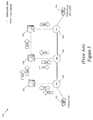
- Figure 2 is a simplified call setup scenario involving a sample telecommunication network 150 that includes a calling party 152, a called party 154, an originating end office exchange 156, a tandem office exchange 158, a terminating end office exchange 160, and three STP nodes 162 - 166.
- originating exchange 156 selects and reserves a voice trunk for the call.
- the selected voice trunk terminates at tandem exchange 158.
- an ISUP initial address message (IAM) is generated by originating exchange 156 and transmitted via STP nodes 162 and 164 to tandem exchange 158.
- This IAM message includes information necessary for the intermediate tandem exchange 158 to complete the call setup operation.
- tandem exchange 158 secures the voice trunk to exchange 156 and subsequently reserves a voice trunk to terminating exchange 160.
- Tandem exchange 158 then generates an ISUP address complete (ACM) message, which is transmitted back to the originating exchange, and a second IAM message (i.e., IAM*), which is transmitted to the terminating exchange 160 in a manner similar to that described above.
- ACM ISUP address complete
- IAM* IAM message
- the ITU ISUP protocol employs a subsequent address message (SAM) and a subsequent directory number message (SDM) to carry additional called party (CdPA) information in addition to that provided in an IAM message.
- SAM address message
- SDM directory number message
- CdPA called party
- FIG 3 illustrates sample telecommunications network 150 and a portion of the ITU ISUP signaling involved in a call setup operation.
- an IAM message is transmitted by the originating exchange 156 after the calling party 152 has dialed a sufficient number of digits (e.g., calling party dials "851") to enable the exchange 156 to determine which voice trunk to select.
- the remaining dialed digit information necessary to complete the call setup is communicated to the tandem office 158 via one (or more) SAM messages, as indicated in Figure 3 .
- a triggerless screening service routing node such as an STP
- screens call setup messages such as ISUP messages
- intelligent network services include calling party screening, called party screening, charged party screening, and redirecting party screening.
- Each of these applications may utilize dialed digits collected from call setup messages to make a screening decision. If the dialed digits are sent in multiple messages, processing of the multiple messages may be stateful because processors may remember the state of a call in order to determine the message to be expected next.
- a processor may enter a state, such as "waiting for SAM.” Such processing may also be sequenced in that IAM and SAM messages must be received, processed, and transmitted in order. Thus, in order to ensure such stateful and sequenced processing, it is necessary that these call setup messages be processed by the same processor or that call setup information from one processor be forwarded to another processor. Distributing the call state among processors is undesirable because such distribution information consumes processor cycles and inter-processor bandwidth.
- ISDN Integrated Services Digital Network
- SCCP Signalling Connection Control Part
- Part 1 Protocol specification ITU-T recommendations Q.711 to Q.716 (1996), modified
- Draft ETSI EN 300 009-1 ETSI Standards (1999-11)
- XP014023105 discloses that there are two classes of SCCP messages (class 0 and class 1) and that SLS values within class 0 are assigned in such a way as to load-share the messages across the network.
- the present invention includes a signal transfer point with multiple application processors for sharing the stateful or sequenced processing of messages, such as ISUP messages or class 1, 2, or 3 SCCP messages.
- the signal transfer point computes a sequence identifier that is unique to a given sequence of messages.
- the sequence identifier is used to distribute a particular message to an application processor. Because messages in the same sequence will have the same sequence identifier, messages relating to the same sequence will be distributed to the same application processor. As a result, the exchange of messages or state information between application processors is not needed.
- the present invention is more efficient than conventional message distribution algorithms.
- a stateful application screening and sequencing function which may be resident in the STP, computes the sequence identifier for each received message identified as requiring stateful or sequenced message processing.
- the stateful application screening and sequencing function may use the circuit identification code (CIC) and originating point code (OPC) values in received messages to compute the sequence identifier.
- the stateful application screening and sequencing function may use the signaling link selection (SLS) and OPC values in each received message to compute the sequence identifier.
- SLS signaling link selection
- the present invention includes a communications network routing node, such as a signaling system 7 (SS7) signal transfer point (STP), configured to distribute signaling messages among multiple processors so that stateful or sequenced processing of the signaling messages can be shared among the processors on a per-sequence basis.
- SS7 signaling system 7
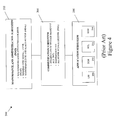
- FIG 4 is a block diagram illustrating an exemplary STP node 200 suitable for use with embodiments of the present invention.
- STP 200 is described herein as a collection of modules and functions. It is understood that these modules and functions may be implemented in software residing in memory and executed by one or more general-purpose microprocessors. Alternatively, the modules and functions described herein may be implemented in hardware, such as application-specific integrated circuits (ASICs) or programmable logic modules. Any combination of hardware, software, and firmware for distributing messages among multiple processors for stateful and/or sequenced on a per-sequence basis as described herein is intended to be within the scope of the invention.
- ASICs application-specific integrated
- STP 200 includes the following subsystems: a maintenance and administration subsystem (MAS) 202, a communication subsystem 204 and an application subsystem 206.
- MAS 202 provides maintenance communications, initial program loading, peripheral services, alarm processing and system disks.
- Communication subsystem 204 includes an interprocessor message transport (IMT) bus that is the main communication bus among subsystems in STP 200.
- the IMT bus may include 1 Gbps counter-rotating serial buses.
- Application subsystem 206 includes application cards or printed circuit boards capable of communicating with the other cards through the IMT bus. Numerous types of application cards can be included in STP 200. Exemplary application cards that may be included in STP 200 include a link interface module (LIM) 208 that provides SS7 links and X.25 links, a data communication module (DCM) 210 that provides an Internet protocol (IP) signaling interface to external nodes, and a high-speed asynchronous transfer mode (ATM) communication link module (HSL) 212.
- LIM link interface module
- DCM data communication module
- IP Internet protocol
- ATM high-speed asynchronous transfer mode
- HSL high-speed asynchronous transfer mode
- DSM database service modules
- DSM database service modules
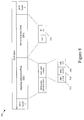
- FIG. 5 illustrates an exemplary internal architecture of an STP including a stateful application screening and sequencing module according to an embodiment of the present invention.
- STP node 200 includes a high-speed IMT communications bus 220.
- a number of distributed processing modules or cards are coupled to IMT bus 220, including: a pair of maintenance and administration subsystem processors 222, an SS7-capable link interface module 224, and an application subsystem 226 that includes a first application processor 228, a second application processor 230, a third application processor 232, and a fourth application processor 234.
- Application processors 228, 230, 232, and 234 may include any stateful and/or sequenced message processing applications, such as the ISUP screening applications described in the '674 Publication referenced above.
- the modules and application processors illustrated in Figure 5 may be physically connected to IMT bus 220 such that signaling and other types of messages may be routed internally between active cards or modules.
- application processors 228, 230, 232, and 234 may be DSM modules physically connected to IMT bus 220.
- application processors 228, 230, 232, and 234 may be external computing platforms, such as Tekelec TekServerTM platforms, which may be directly coupled to IMT bus 220 or indirectly coupled to IMT bus 220 via Ethernet interface modules (not shown in Figure 5 ).
- LIM 224 For simplicity of illustration, only a single LIM 224 is illustrated in Figure 5 . However, the distributed processing architecture of STP 200 enables multiple LIM, DSM, TekServerTM and other processing modules to be simultaneously coupled to IMT bus 220. Furthermore, although only one application processor group is illustrated in Figure 5 , multiple application processor groups or subsystems may be included in STP node 200 without departing from the scope of the invention.
- LIM 224 includes a number of functions including an SS7 MTP level 1 function 250, an MTP level 2 function 252, an I/O buffer 254, an SS7 MTP level 3 message handling and discrimination (HMDC) function 256, an application screening and sequencing function 258, a message routing function 260, a message handling and distribution (HMDT) function 262, and a routing information database 264.
- MTP level 1 function 250 sends and receives digital data over a particular physical interface.
- MTP level 2 function 252 provides error detection, error correction, and sequenced delivery of SS7 message packets.
- I/O buffer 254 provides temporary buffering of incoming and outgoing signaling message packets.
- HMDC function 256 receives an incoming signaling message from the lower processing layers and determines whether the message is addressed to and consequently requires processing by one or more application subsystems in STP node 200.
- Stateful application screening and sequencing function 258 is responsible for examining an incoming signaling message, which may not be addressed to STP node 200 and determining whether the message requires stateful and/or sequenced processing by an application subsystem in STP node 200.
- Stateful application screening and sequencing function 258 also generates a sequencing value for each message identified as requiring stateful and/or sequenced processing.
- the sequencing value is preferably unique on a per-sequence basis.
- the sequencing value along with the identified target application subsystem, determines the application processor module in the application subsystem to which the message should be distributed. Because the sequencing values are unique on a per-sequence basis, messages in the same sequence are distributed to the same processor. As a result, processing of the messages can be shared among multiple processors without requiring the communication of state information between processors.
- stateful application screening and sequencing function 258 examines the message transfer part (MTP) origination point code (OPC), destination point code (DPC), and service indicator octet (SIO) parameter values in a received call setup signaling message (e.g., ISUP IAM message) to determine the need for stateful processing by an application subsystem.
- MTP message transfer part
- OPC origination point code
- DPC destination point code
- SIO service indicator octet
- stateful application screening and sequencing function 258 applies a sequencing algorithm that uses information contained in the message to generate the sequencing value.
- the sequencing algorithm may use the CIC and OPC values from the messages to generate the sequencing value.
- the sequencing algorithm may use the SLS and OPC values from the message to generate the sequencing value.
- the message distribution algorithms of the present invention achieve superior performance when compared to round-robin message distribution.
- round-robin message distribution messages are distributed sequentially among processors on a per-message basis.
- Round-robin message distribution techniques ensure that messages are distributed equally to all active application processors in a system or service group regardless of the content of the messages.
- round-robin message distribution does not ensure that messages in the same sequence will be distributed to the same processor.
- using such round-robin distribution techniques when messages require stateful or sequenced processing means that a dynamic message distribution mapping must be constructed by each communication module and that this message distribution mapping information be continuously shared among all communications modules in the system.
- the communication module Before a message requiring stateful or sequenced processing is received by a communication module, before a first communication module that receives the message from the network can distribute the message to an application processor in the system, the communication module must determine if the message is the first message in a sequence of messages requiring stateful or sequenced processing. If another message associated with the sequence has already been received and distributed to a particular controlling application processor in the system, then the received message must be distributed to that same controlling application processor.
- each communication module Since there is no guarantee in round-robin message distribution that all messages related to the same messaging sequence will be received by the same communication module, each communication module must share its current distribution mapping information the other communication modules so that all messages associated with the same messaging sequence can be distributed to the same application processor. In even a relatively small distributed processing system, the processing overhead and bandwidth costs of maintaining real-time synchronization among a number of communication modules can be significant.
- the improved message sequencing and distribution methods according to the present invention provide guaranteed distribution of sequenced messages to the appropriate application processor without requiring the extensive processing overhead and bandwidth costs described above with respect to the round-robin approach.
- the present invention involves the use of a stateful message sequencing and distribution algorithm, which does not require the exchange of dynamic message distribution mapping information among communication modules in the system. Instead, stateful application screening and sequencing function 258 applies a stateful sequencing algorithm that uses information contained in a message to generate a sequence identifier value used to select the appropriate controlling application processor to which the message is distributed. Because the sequence identifier is the same for all messages in a sequence, messages in the same sequence will be automatically delivered to the same application processor. In addition, because different sequences of messages will sometimes have different sequence identifiers, the stateful or sequenced processing of messages can be shared on a per sequence basis.
- the stateful message distribution algorithm includes a normal condition component and a failure condition component.
- the normal condition component may be used first, regardless of the condition of the application processors.
- the failure condition component may be used when the normal condition component selects an unavailable application processor.
- Offset value v - E * ⁇ v / E ⁇
- v is the sequence identifier computed for a message
- E is the number of equipped processors associated with a particular application or service
- ⁇ ⁇ is the round down operator.
- Offset value A - ⁇ v / E ⁇ * F + N - A * ⁇ ⁇ / E v ⁇ * F + N / A ⁇
- v is the sequence identifier computed for a message
- A is the number of available processors associated with a particular application or service
- E is the number of equipped processors associated with a particular application or service
- F is the number of failed processors associated with a particular application or service
- N is the failure order of application processors determined via 0,1,2,3. (1 st to fail, 2 nd , etc...); and ⁇ ⁇ is the round down operator.
- the failure condition component of the algorithm is used only in cases where one or more application processors in the system have failed. Otherwise, only the normal condition component is employed. In both exemplary algorithm components, evaluated fractions are rounded down to the nearest integer.
- the value sequence identifier (v) may be calculated as the sum of the CIC code value and the OPC value.
- the sequence identifier (v) may be calculated as the sum of the SLS value and the OPC value.
- the present invention is not limited to using the CIC, OPC, and SLS values to compute sequence identifiers. Any suitable values from a received message that can be used to compute a value that is the same for each message in a sequence and that is unique on per-sequence basis is intended to be within the scope of the invention.
- the sequence identifier may be determined using the Call_ID, the Call_Sequence (Cseq), the Session_ID, the To, and the From parameters contained in each message.
- the Call_Reference_Value parameter may be used in determining the sequence identifier.
- lower level protocol parameters may be used to determine the sequence identifier.
- an SCTP association identifier and/or stream identifier may be used to determine the sequence identifier.
- an IP address and a TCP port may be used to determine the sequence identifier.
- An application processor sequence table may be accessible by stateful application screening and sequencing function 258 to determine the number of available processors for use in Equations (1) and (2).
- Table 1 includes an application group field, an application processor identifier field, and a processor status field.
- the application group field is used to distinguish groups of processors that are supporting different applications (e.g., prepaid calling service).
- a unique processor identifier is assigned to each application processor within a given application group. The information in this table is used in conjunction with the stateful distribution algorithm to determine the controlling application processor for a message in a given messaging sequence, as described below.
- Table 1 Application Processor Sequence And Status Application Group Processor ID Status Prepaid A Available Prepaid B Available Prepaid C Available Prepaid D Available
- FIG. 7 is a flow chart illustrating exemplary steps that may be performed by stateful application screening and sequencing function 258 and message distribution function 262 in distributing signaling messages among multiple processors for sequenced and/or stateful processing according to an embodiment of the present invention.
- a message is received at LIM 224 and is passed up the stack to stateful application screening and sequencing function 258.
- the received message is assumed to be an ISUP message, such as an ISUP LAM message.
- Stateful application screening and sequencing function 258 examines parameters associated with the received message 300 and determines whether stateful and/or sequenced processing is indicated and if so, to which group of application processors the message should be distributed (ST2).
- Table 2 is a sample screening table which may be used or accessed by function 258 to make such a determination.
- Table 2 includes a number of screening keys, including a service indicator (SI) key, a DPC key, an OPC key, a CIC code key, and an SCCP subsystem (SSN) key.
- SI service indicator
- DPC DPC key
- OPC OPC key
- CIC code key CIC code key
- SSN SCCP subsystem
- Associated with each compound key entry is an application group value that identifies a group of application processors for performing stateful, sequenced, and non-stateful, non-sequenced processing of received messages, depending on the message type.
- Table 2 Sample Application Screening Criteria APPLICATION SCREENING KEY(s) DATA SI DPC OPC CIC SSN App Group 3 2-3-7 * n/a * GTT 3 2-3-6 * n/a 23 GTT 5 3-2-2 4-1-1 42 n/a Prepaid 5 * 1-0-0 * n/a Prepaid
- the entries with "GTT" in the application group field identify messages that require non-stateful, non-sequenced processing, and thus messages matching these entries would not be selected for stateful and/or sequenced processing.
- the entries with "prepaid” in the application group column identify messages that require prepaid call screening. Since prepaid call screening may require stateful, sequenced processing, messages matching these entries may be identified for further distribution processing by stateful application screening and sequencing function 258. Some messages require sequenced but non-stateful processing. An example of these types of messages are SCCP type 1 messages. Accordingly, stateful application screening and sequencing function 258 may identify these messages as requiring further distribution processing by stateful application screening and sequencing function 258. SCCP type 1 and type 2 messages may require both stateful processing. Accordingly, stateful application screening and sequencing function 258 may identify these messages as requiring further distribution processing by stateful application screening and sequencing function 258.
- an ISUP message 300 includes an SI field 310 with a value of 5 identifying the ISUP message type, an OPC field 312 with a value of 1-0-0, a DPC field 314 with a value of 2-0-0, and a CIC field 316 with a value of 15.
- OPC and DPC values are 24 binary bits (commonly represented as 8 bits - 8 bits - 8 bits), while a CIC value may include up to 8 bits.
- screening function 258 locates a matching entry in Table 2 (i.e., the last record), indicating that processing is required by application B. If a matching entry had not been located in Table 2, no further screening and sequencing processing need be performed by function 258, and the message could be passed along for additional screening operations or simply routed on towards a final destination (ST3).
- the message undergoes further processing by screening function 258. More particularly, the OPC and CIC values in message 300 are extracted and mathematically combined to yield the sequence identifier (v), as described above (step ST3).
- the addition of the 24 bit OPC value (i.e., 00000001-00000000-00000000 binary or 65536 decimal) and the 8 bit CIC value (i.e., 00001111 binary or 15 decimal) yields a sequence identifier value of 65551 (decimal).
- the number of equipped or provisioned processors associated with the "prepaid" application group i.e., 4) is then obtained from Table 1. These two values are next plugged into Equation 1 above to compute the offset value, as indicated in step ST5.
- step ST6 Using a sequence identifier, v, of 65551 and an equipped processor count value, E, of 4 the distribution algorithm described above yields a resulting offset value of 3.
- a specific application processor is selected from the group of 4 processors using the offset value.
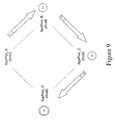
- Figure 9 graphically illustrates application processor selection based on the offset value according to an embodiment of the present invention.
- the four application processors that make up the prepaid application processor group can be thought of as a ring of processors for distribution purposes where the specific application processor for processing a message may be selected by stepping around the ring in a number of steps equal to the offset value.
- the values representing each application processor in a group may be stored in sequential memory locations and the offset may be used to step among the various memory locations.
- the calculated offset value of 3 is used to step around the 4 application processors of the conceptual ring illustrated in Figure 9 in a clockwise manner.
- each offset increment may lead to a new memory location where a new application processor identifier is stored.
- function 258 may return to the memory location of the first application processor identifier. As indicated in Figure 9 , beginning with application processor A, the first offset step leads to application processor B. The second offset step leads to application processor C, and the final third offset step leads to application processor D.
- step ST7 the application processor has been selected. Since application processor D is available, the message and selected processor information is passed to distribution function 262 on LIM 224 and the message is transmitted to application processor D via IMT bus 220 (step ST8).
- every LIM module in the system would be required to be made aware of where the ISUP IAM message was sent so that any subsequent, related messages (e.g., SAM or SDM messages) could be distributed to the same application processor.
- the present embodiment only requires that the LIMs know the status of each application processor.
- Ping or heartbeat messages can be used by screening and sequencing function 258 in order to maintain the application processor status information shown in Table 1. Such messages will not consume a significant portion of IMT bus bandwidth when compared to the exchange of state information.
- steps ST1-ST7 are the same as those steps described above for the normal or non-failure case.
- the offset is stepped off in a clockwise manner starting from application processor A. As in the previous example, the offset results in the selection of application processor D. However, in this case, application processor D has failed and can no longer accept traffic.
- the failure offset value is used to select the application processor.
- the failure offset value is applied to the application processor ring diagram; however, failure offset values are stepped off in a counterclockwise manner starting from application processor A. Furthermore, when stepping off a failure offset, only available nodes in the ring are counted (i.e., failed application processor nodes are skipped). Beginning with application processor A, the first offset step leads to application processor C. Application processor D is skipped since it is unavailable. The second offset step leads to application processor B, and the final third offset step leads to application processor A. Consequently, the message and selected processor information is passed to distribution function 262 on LIM 224, and the message is transmitted to application processor A via IMT bus 220, as indicated by step ST8 in Figure 7 .
- Certain applications may only require a copy of some or all of the received message contents, and in such instances the original received message may simply be copied and then routed from the system without being distributed to an application processor.
- the message copy may be distributed to the appropriate processor using the stateful message distribution and sequencing algorithms described above.
- the actual signaling message may be distributed to the appropriate application processor using the algorithms described above before being allowed to pass to the intended destination. Distributing both message copies and original messages using the algorithms described above is intended to be within the scope of the invention.
- FIG 11 illustrates another example of distributing messages that require stateful and/or sequenced processing on a per-sequence basis according to an embodiment of the present invention.
- STP 100 includes LIM 224 and IMT bus 220, as described above.
- STP 100 includes a plurality of external application processors 1100, 1102, 1104, and 1106.
- Application processors 1100, 1102, 1104, and 1106 may be any suitable stand-alone computing platforms for running one or more stateful and/or sequenced call processing applications.
- application processors 1100, 1102, 1104, and 1106 may be Tekelec TekserverTM platforms executing ISUP call screening applications described in the above-referenced '674 Publication.
- application processors 1100, 1102, 1104, and 1106 are labeled 0, 1, 2, and 3, respectively.
- ISUP call control messages are received by LIM 224 and that the offset values computed for the ISUP messages have values ranging from 0 to 31.
- Tables 3-5 shown below illustrate status, offset assignments, and traffic distribution for application processors 1100, 1102, 1104, and 1106.
- Table 3 Application Processor States Appln. Proc. 0 1 2 3 Status: A A A A A Table 4: Offset Assignments Value 0 1 2 3 4 5 6 7 8 9 10 11 12 13 14 15 Appln Proc.
- Table 8 illustrates the corresponding traffic distribution.
- failure offset counting starts with the first entry in the table and then proceeds backwards through the table from processor 3. Therefore, when an ISUP message with a computed sequencing value of 5 and a resulting offset value of 2 is processed by LIM 224, counting proceeds from processor 0 to processor 3, and to processor 2.
- Application processor 2 is available, and it is selected.
- Table 6 Application Processor States Appln. Proc. 0 1 2 3 Status A N/A A
- Table 7 Offset Assignments: Value 0 1 2 3 4 5 6 7 8 9 10 11 12 13 14 15 Appln: Proc.
- Tables 9-11 shown below illustrate the data structures used to select an application processor when two application processors have failed. As with the failure cases discussed above, failure offset counting proceeds right to left and failed application processors are not counted. Therefore, when an ISUP message with a computed sequencing value of 5 and a failure offset of 2 is processed by LIM 224, using Table 9, application processor 3 is first looked at since it is available.
- the present invention includes methods and systems for distributing messages that require stateful and/or sequenced processing among multiple processors.
- messages that require stateful and/or sequenced processing are identified.
- a sequence identifier is computed.
- Messages in the same sequence will have the same sequence identifiers, and messages in different sequences may have different sequence identifiers.
- the sequence value is then used to select an application processor. Because messages with different sequence identifiers result in different application processors, distribution is performed on a per sequence basis.
- exchange of state information between communication modules and/or application processors is not required.
Landscapes
- Engineering & Computer Science (AREA)
- Computer Networks & Wireless Communication (AREA)
- Telephonic Communication Services (AREA)
- Exchange Systems With Centralized Control (AREA)
- Time-Division Multiplex Systems (AREA)
- Data Exchanges In Wide-Area Networks (AREA)
Claims (26)
- Verfahren zum Verteilen von Signalisiernachrichten (300) zwischen einer Vielzahl von Prozessoren zum statusbehafteten und/oder aufeinanderfolgenden Verarbeiten der Signalisiernachrichten (300) auf einer Abfolgebasis, aufweisend:an einen Signalisiernachrichten-Routingknoten (200):Empfangen einer Signalisiernachricht (300);Bestimmen, ob mindestens ein statusbehaftetes oder aufeinanderfolgendes Verarbeiten für die Signalisiernachricht (300) notwendig ist; undals Reaktion auf das Bestimmen, dass zumindest ein statusbehaftetes oder aufeinanderfolgendes Verarbeiten für die Signalisiernachricht (300) notwendig ist:Identifizieren einer Gruppe von Anwendungsprozessoren (228, 230, 232, 234) zum Bereitstellen der Art von statusbehaftetem oder aufeinanderfolgendem Verarbeiten, welche für die Nachricht (300) notwendig ist, aus einer Vielzahl von unterschiedlichen Gruppen von Anwendungsprozessoren (228, 230, 232, 234) innerhalb des Signalisiernachrichten-Routingknotens (200), welche unterschiedliche Arten von Verarbeitungsfunktionen bereitstellen;Berechnen eines Sequenzidentifikators (v) für die Signalisiernachricht (300), wobei der Sequenzidentifikator (v) eine Sequenz von Signalisiernachrichten, zu welcher die Signalisiernachricht (300) gehört, eindeutig identifiziert; undAuswählen eines Anwendungsprozessors aus der Gruppe von identifizierten Anwendungsprozessoren (228, 230, 232, 234) basierend auf dem Sequenzidentifikator (v) und internes Routen der Signalisiernachricht (300) an den ausgewählten Anwendungsprozessor innerhalb des Signalisiernachrichten-Routingknotens (200), so dass empfangene Signalisiernachrichten (300), welche den gleichen Sequenzidentifikator (v) haben, intern an dem gleichen Anwendungsprozessor geroutet werden.
- Verfahren nach Anspruch 1, wobei das Empfangen einer Signalisiernachricht (300) das Empfangen einer SS7-Signalisiernachricht aufweist.
- Verfahren nach Anspruch 1, wobei das Empfangen einer Signalisiernachricht (300) das Empfangen einer Sitzungsinitiierungsprotokoll-Signalisiernachricht beinhaltet, und wobei das Berechnen eines Sequenzidentifikators (v) das Berechnen eines Sequenzidentifikators (v) basierend auf einem Sitzungsidentifikator in der Sitzungsinitiierungsprotokoll-Signalisiernachricht beinhaltet.
- Verfahren nach Anspruch 1, wobei das Empfangen einer Signalisiernachricht (300) das Empfangen einer "International Telecommunication Union" H.225 Signalisiernachricht beinhaltet und wobei das Berechnen eines Sequenzidentifikators (v) das Berechnen eines Sequenzidentifikators (v) basierend auf einem Anrufreferenzwert in der H.225 Signalisiernachricht beinhaltet.
- Verfahren nach Anspruch 1, wobei das Empfangen einer Signalisiernachricht (300) das Empfangen einer Flusskontrollübertragungsprotokollnachricht beinhaltet, und wobei das Berechnen eines Sequenzidentifikators (v) das Berechnen eines Sequenzidentifikators (v) basierend auf einem Flussidentifikator in der Flusskontrollübertragungsprotokollnachricht beinhaltet.
- Verfahren nach Anspruch 2, wobei das Empfangen einer SS7 Signalisiernachricht das Empfangen einer ISDN Benutzerteil-Signalisiernachricht beinhaltet, und wobei das Berechnen des Sequenzidentifikators (v) das Berechnen des Sequenzidentifikators (v) basierend auf einem Schaltungsidentifikationscode und einem Ursprungspunktcode, welche aus der Signalisiernachricht (300) extrahiert wurden, beinhaltet.
- Verfahren nach Anspruch 2, wobei das Empfangen einer SS7 Signalisiernachricht das Empfangen einer Verbindungskontrollteilklasse 1, 2 oder 3 Signalisiernachricht beinhaltet, und wobei das Berechnen des Sequenzidentifikators (v) das Berechnen des Sequenzidentifikators (v) basierend auf einem Signalisierverbindungsauswahlwert und einem Ursprungspunktcodewert in der empfangenen Signalisiernachricht (300) beinhaltet.
- Verfahren nach Anspruch 1, wobei das Empfangen einer Signalisiernachricht (300) das Empfangen einer Signalisiernachricht (300) an einem Signaltransferpunkt beinhaltet, und wobei das Verteilen der Signalisiernachricht (300) an einen Anwendungsprozessor beinhaltet, die Signalisiernachricht (300) an einen Anwendungsprozessor in dem Signaltransferpunkt zu verteilen.
- Verfahren nach Anspruch 1, wobei das Empfangen einer Signalisiernachricht das Empfangen einer Signalisiernachricht (300) an einem Signaltransferpunkt beinhaltet, und wobei das Verteilen der Signalisiernachricht (300) an einen Anwendungsprozessor das Verteilen der Signalisiernachricht (300) an einen Anwendungsprozessor beinhaltet, welcher zu dem Signaltransferpunkt extern liegt.
- Verfahren nach Anspruch 1, wobei das Verteilen der Signalisiernachricht (300) an einen Anwendungsprozessor basierend auf dem Sequenzidentifikator (v) das Berechnen eines Offsets, welcher auf dem Sequenzidentifikator (v) und der Anzahl an verfügbaren Anwendungsprozessoren basiert, und das Auswählen eines Anwendungsprozessors basierend auf dem Offset beinhaltet.
- Verfahren nach Anspruch 10, wobei das Auswählen eines Anwendungsprozessors basierend auf dem Offset beinhaltet:Berechnen eines ersten Offsets unter Verwendung einer ersten Gleichung basierend auf dem Sequenzidentifikator (v) und der Anzahl an verfügbaren Anwendungsprozessoren;Auswählen eines ersten Anwendungsprozessors, welcher dem ersten Offset entspricht;Bestimmen des Zustands des ersten Anwendungsprozessors;wenn der erste Anwendungsprozessor verfügbar ist, Verteilen der Nachricht an den ersten Anwendungsprozessor; undwenn der erste Anwendungsprozessor nicht verfügbar ist, Berechnen eines zweiten Offsets unter Verwendung einer zweiten Gleichung und Auswählen eines zweiten Anwendungsprozessors basierend auf dem zweiten Offset und Verteilen der Nachricht an den zweiten Anwendungsprozessor.
- System zum Verteilen von Nachrichten (300) zwischen einer Vielzahl von Prozessoren (228, 230, 232, 234) zum statusbehafteten oder aufeinanderfolgenden Verarbeiten von den Nachrichten (300) auf einer Abfolgebasis, aufweisend:einen Signalisiernachrichten-Routingknoten (200) aufweisend:ein Kommunikationsmodul (256) zum Empfangen von Signalisiernachrichten (300) von einem Signalisiernetzwerk;ein Modul zur Untersuchung statusbehafteter Anwendungen und zur Ablaufsteuerung (258) zum Identifizieren von Nachrichten (300), welche zumindest ein statusbehaftetes oder ein aufeinanderfolgendes Verarbeiten benötigen, und zum Identifizieren, für die Nachrichten (300), welche zumindest ein statusbehaftetes oder ein aufeinanderfolgendes Verarbeiten benötigen, aus einer Vielzahl von unterschiedlichen Gruppen von Anwendungsprozessoren (228, 230, 232, 234) innerhalb des Signalisiernachrichten-Routingknotens (200), welche unterschiedliche Arten von Verarbeitungsfunktionen bereitstellen, einer Gruppe von Anwendungsprozessoren zum Bereitstellen der Art von statusbehaftetem oder aufeinanderfolgendem Verarbeiten, welches für die Nachricht (300) benötigt wird, und zum Berechnen eines Sequenzidentifikators (v) für jede Nachricht, wobei der Sequenzidentifikator (v) eine Sequenz von Signalisiernachrichten (300) eindeutig identifiziert, zu welchen die Signalisiernachricht (300) gehört, und zum Auswählen, basierend auf dem Sequenzidentifikator (v), eines Anwendungsprozessors zum Verarbeiten der Signalisiernachricht (300) so, dass der gleiche Anwendungsprozessor für empfangene Signalisiernachrichten (300), welche den gleichen Sequenzidentifikator (v) haben, ausgewählt wird; undein Verteilungsmodul (260) zum internen Routen innerhalb des Signalisiernachrichten-Routingknotens (200) der identifizierten Signalisiernachrichten (300) an die Anwendungsprozessoren, welche durch das Modul zur Untersuchung statusbehafteter Anwendungen und zur Ablaufsteuerung (258) ausgewählt wurden.
- System nach Anspruch 12, wobei das Kommunikationsmodul (256) dazu ausgebildet ist, SS7 Signalisiernachrichten zu empfangen.
- System nach Anspruch 12, wobei das Kommunikationsmodul (256) dazu ausgebildet ist, Internetprotokoll-Signalisiernachrichten zu empfangen.
- System nach Anspruch 12, wobei, in Reaktion auf das Empfangen einer ISDN Benutzerteilnachricht, das Modul zur Untersuchung statusbehafteter Anwendungen und zur Ablaufsteuerung (258) dazu ausgebildet ist, den Sequenzidentifikator basierend auf dem Schaltungsidentifikationscode und dem Ursprungspunktcode in der ISDN Benutzerteilnachricht zu berechnen.
- System nach Anspruch 12, wobei das Modul zur Untersuchung statusbehafteter Anwendungen und zur Ablaufsteuerung (258) dazu ausgebildet ist, in Reaktion auf das Empfangen einer Klasse 0 Signalisierverbindungskontrollteilnachricht, den Sequenzidentifikator (v) basierend auf einem Signalisierverbindungsauswählcode und einem Ursprungspunktcode in der Signalisierverbindungskontrollteilnachricht zu berechnen.
- System nach Anspruch 12, wobei das Modul zur Untersuchung statusbehafteter Anwendungen und zur Ablaufsteuerung (258) dazu ausgebildet ist, einen Offset basierend auf dem Sequenzwert und verfügbaren Anwendungsprozessoren zu berechnen und einen Anwendungsprozessor von den verfügbaren Anwendungsprozessoren basierend auf dem Offset auszuwählen.
- System nach Anspruch 17, wobei das Modul zur Untersuchung statusbehafteter Anwendungen und zur Ablaufsteuerung (258) dazu ausgebildet ist, einen ersten Offset basierend auf dem Sequenzidentifikator (v) zu berechnen und einen ersten Anwendungsprozessor basierend auf dem ersten Offset auszuwählen, und wobei das Modul zur Untersuchung statusbehafteter Anwendungen und zur Ablaufsteuerung (258) dazu ausgebildet ist, in Reaktion auf das Bestimmen, dass der erste Anwendungsprozessor nicht verfügbar ist, einen zweiten Offset unter Verwendung einer zweiten Gleichung zu berechnen und den zweiten Offset zu benutzen, um den zweiten Anwendungsprozessor auszuwählen.
- System nach Anspruch 12, wobei das Kommunikationsmodul (256), das Modul zur Untersuchung statusbehafteter Anwendungen und zur Ablaufsteuerung (258) und das Verteilungsmodul (260) Komponenten eines SS7 Signaltransferpunktes sind.
- Computerprogrammprodukt aufweisend computerausführbare Anweisungen, welche in einem computerlesbaren Medium beinhaltet sind, zum Ausführen von Schritten, welche aufweisend:an einen Signalisiernachrichten-Routingknoten (200):Empfangen einer Signalisiernachricht (300);Bestimmen, ob zumindest ein statusbehaftetes oder ein aufeinanderfolgendes Verarbeiten für die Signalisiernachricht (300) benötigt wird;als Antwort auf das Bestimmen, dass zumindest ein statusbehaftetes oder aufeinanderfolgendes Verarbeiten für die Signalisiernachricht (300) notwendig ist;Identifizieren aus einer Vielzahl von unterschiedlichen Gruppen von Anwendungsprozessoren (228, 230, 232, 234) innerhalb des Signalisiernachrichten-Routingknotens (200), welche unterschiedliche Arten von Verarbeitungsfunktionen bereitstellen, einer Gruppe von Anwendungsprozessoren zum Bereitstellen der Art von statusbehaftetem oder aufeinanderfolgendem Verarbeiten, welches für die Nachricht (300) benötigt wird;Berechnen eines Sequenzidentifikators (v) für die Signalisiernachricht (300), wobei der Sequenzidentifikator (v) eine Sequenz von Signalisiernachrichten (300) eindeutig identifiziert, zu welchen die Signalisiernachricht (300) gehört; undAuswählen eines Anwendungsprozessors aus der Gruppe von identifizierten Anwendungsprozessoren (228, 230, 232, 234) basierend auf dem Sequenzidentifikator (v), und internes Routen der Signalisiernachricht (300) an den ausgewählten Anwendungsprozessor innerhalb des Signalisiernachrichten-Routingknotens (200), so dass empfangene Signalisiernachrichten (300), welche den gleichen Sequenzidentifikator (v) haben, intern zu dem gleichen Anwendungsprozessor geroutet werden.
- Computerprogrammprodukt nach Anspruch 20, wobei das Empfangen einer Signalisiernachricht (300) das Empfangen einer SS7 Signalisiernachricht beinhaltet.
- Computerprogrammprodukt nach Anspruch 20, wobei das Empfangen einer Signalisiernachricht (300) das Empfangen einer Sitzungsinitiierungsprotokoll-Signalisiernachricht beinhaltet, und wobei das Berechnen eines Sequenzidentifikators (v) das Berechnen eines Sequenzidentifikators (v) basierend auf einem Sitzungsidentifikator in der Sitzungsinitiierungsprotokoll-Signalisiernachricht beinhaltet.
- Computerprogrammprodukt nach Anspruch 20, wobei das Empfangen einer Signalisiernachricht (300) das Empfangen einer "International Telecommunications Union" H.225 Signalisiernachricht beinhaltet, und wobei das Berechnen eines Sequenzidentifikators (v) das Berechnen eines Sequenzidentifikators (v) basierend auf einem Anrufreferenzwert in der H.225 Signalisiernachricht beinhaltet.
- Computerprogrammprodukt nach Anspruch 20, wobei das Empfangen einer Signalisiernachricht (300) das Empfangen einer Flusskontrollübertragungsprotokollnachricht beinhaltet, und wobei das Berechnen eines Sequenzidentifikators (v) das Berechnen eines Sequenzidentifikators (v) basierend auf einem Flussidentifikator in der Flusskontrollübertragungsprotokollnachricht beinhaltet.
- Computerprogrammprodukt nach Anspruch 21, wobei das Empfangen einer SS7 Signalisiernachricht beinhaltet, eine ISDN Benutzerteil-Signalisiernachricht zu empfangen, und wobei das Berechnen des Sequenzidentifikators (v) das Berechnen des Sequenzidentifikators (v) basierend auf einem Schaltungsidentifikationscode und einem Ursprungspunktcode, welcher aus der Signalisiernachricht (200) extrahiert wurde, beinhaltet.
- Computerprogrammprodukt nach Anspruch 21, wobei das Empfangen einer SS7 Signalisiernachricht das Empfangen einer Signalisierverbindungskontrollteilklasse 1 Signalisiernachricht beinhaltet, und wobei das Berechnen des Sequenzidentifikators (v) das Berechnen des Sequenzidentifikators (v) basierend auf einem Signalisierverbindungsauswahlwert und einem Ursprungspunktcodewert in der empfangenen Signalisiernachricht (300) beinhaltet.
Applications Claiming Priority (3)
| Application Number | Priority Date | Filing Date | Title |
|---|---|---|---|
| US294400 | 2002-11-14 | ||
| US10/294,400 US6795546B2 (en) | 2002-11-14 | 2002-11-14 | Methods and systems for distributing signaling messages among multiple processors for stateful and/or sequenced processing of the messages on a per-sequence basis |
| PCT/US2003/036520 WO2004047458A2 (en) | 2002-11-14 | 2003-11-14 | Methods and systems for distributing signaling messages among multiple processors for stateful and/or sequenced processing of the messages on a per-sequence basis |
Publications (3)
| Publication Number | Publication Date |
|---|---|
| EP1568203A2 EP1568203A2 (de) | 2005-08-31 |
| EP1568203A4 EP1568203A4 (de) | 2006-06-07 |
| EP1568203B1 true EP1568203B1 (de) | 2011-07-27 |
Family
ID=32296973
Family Applications (1)
| Application Number | Title | Priority Date | Filing Date |
|---|---|---|---|
| EP03796406A Expired - Lifetime EP1568203B1 (de) | 2002-11-14 | 2003-11-14 | Verfahren und systeme zum verteilen von zeichengabenachrichten zwischen mehreren prozessoren zur stateful- und/oder sequenzierten sequenzweisen verarbeitung der nachrichten |
Country Status (5)
| Country | Link |
|---|---|
| US (1) | US6795546B2 (de) |
| EP (1) | EP1568203B1 (de) |
| AT (1) | ATE518375T1 (de) |
| AU (1) | AU2003298652A1 (de) |
| WO (1) | WO2004047458A2 (de) |
Families Citing this family (33)
| Publication number | Priority date | Publication date | Assignee | Title |
|---|---|---|---|---|
| WO2005003916A2 (en) * | 2003-06-27 | 2005-01-13 | Tekelec | Methods, systems, and computer program products for flexible global title translation (gtt) load sharing |
| US20050144316A1 (en) * | 2003-12-06 | 2005-06-30 | William Loo | Method and system for service node redundancy |
| US20050152278A1 (en) * | 2004-01-12 | 2005-07-14 | Schantz John L. | Traffic balancing for network messages |
| US7554974B2 (en) | 2004-03-09 | 2009-06-30 | Tekelec | Systems and methods of performing stateful signaling transactions in a distributed processing environment |
| US7864943B2 (en) * | 2004-08-20 | 2011-01-04 | Tekelec | Methods and systems for load sharing and preserving sequencing of signaling connection control part (SCCP) messages |
| US7535916B2 (en) * | 2005-02-07 | 2009-05-19 | Cisco Technology, Inc. | Method for sharing a transport connection across a multi-processor platform with limited inter-processor communications |
| US7856094B2 (en) | 2005-03-21 | 2010-12-21 | Tekelec | Methods, systems, and computer program products for providing telecommunications services between a session initiation protocol (SIP) network and a signaling system 7 (SS7) network |
| US7675905B2 (en) * | 2005-04-12 | 2010-03-09 | Tekelec | Methods, systems, and computer program products for selectively performing global title translation based on message type |
| US7760708B2 (en) | 2005-07-08 | 2010-07-20 | Tekelec | Methods, systems, and computer program products for triggering SIP nodes to include SS7 routing information in response messages including information requested by SS7 nodes |
| US20070047539A1 (en) * | 2005-09-01 | 2007-03-01 | Tekelec | Methods, systems, and computer program products for preserving sequencing of signaling messages at a routing node |
| EP1946537A4 (de) * | 2005-10-07 | 2010-09-29 | Tekelec Us | Verfahren, systeme und computerprogrammprodukte zur bereitstellung von adressenübersetzung unter verwendung nachfolgender adresseninformationen |
| US8050253B2 (en) * | 2006-01-09 | 2011-11-01 | Tekelec | Methods, systems, and computer program products for decentralized processing of signaling messages in a multi-application processing environment |
| US8059667B2 (en) * | 2007-01-31 | 2011-11-15 | Tekelec | Methods, systems, and computer program products for applying multiple communications services to a call |
| EP2143230A1 (de) * | 2007-04-20 | 2010-01-13 | Tekelec | Verfahren, systeme und computerprogrammprodukte zur bereitstellung einer fehlertoleranten dienstinteraktion und aushandlungsfunktion in einem kommunikationsnetz |
| US8254553B2 (en) * | 2007-08-10 | 2012-08-28 | Tekelec, Inc. | Systems, methods, and computer program products for number translation with local directory number support |
| US20090041223A1 (en) * | 2007-08-10 | 2009-02-12 | Devesh Agarwal | Systems, methods, and computer readable media for triggerless call redirection with release |
| US8126015B2 (en) * | 2008-04-11 | 2012-02-28 | Hewlett-Packard Development Company, L.P. | Multi-stream communication processing |
| US8516126B2 (en) * | 2008-09-24 | 2013-08-20 | International Business Machines Corporation | Processing SIP messages based on multiple cores |
| US9712341B2 (en) | 2009-01-16 | 2017-07-18 | Tekelec, Inc. | Methods, systems, and computer readable media for providing E.164 number mapping (ENUM) translation at a bearer independent call control (BICC) and/or session intiation protocol (SIP) router |
| US7940755B2 (en) * | 2009-03-19 | 2011-05-10 | Wisconsin Alumni Research Foundation | Lookup engine with programmable memory topology |
| US8958306B2 (en) | 2009-10-16 | 2015-02-17 | Tekelec, Inc. | Methods, systems, and computer readable media for providing diameter signaling router with integrated monitoring functionality |
| US8750126B2 (en) | 2009-10-16 | 2014-06-10 | Tekelec, Inc. | Methods, systems, and computer readable media for multi-interface monitoring and correlation of diameter signaling information |
| EP2534794B1 (de) * | 2010-02-12 | 2019-03-27 | Tekelec, Inc. | Verfahren, systeme und computerlesbare medien zur bereitstellung eines peer-routings an einem durchmesserknoten |
| US8527598B2 (en) | 2010-02-12 | 2013-09-03 | Tekelec, Inc. | Methods, systems, and computer readable media for answer-based routing of diameter request messages |
| WO2012100057A2 (en) | 2011-01-21 | 2012-07-26 | Tekelec | Methods, systems, and computer readable media for screening diameter messages within a diameter signaling router (dsr) having a distributed message processor architecture |
| CN103493522B (zh) | 2011-03-03 | 2016-12-07 | 泰科来股份有限公司 | 用于丰富Diameter信令消息的方法、系统和计算机可读介质 |
| EP2887617B1 (de) | 2012-06-11 | 2016-05-25 | Tekelec, Inc. | Verfahren, systeme und computerlesbare medien zum routing von diameter-nachrichten an einem diameter-signalisierungsrouter |
| US9148388B2 (en) | 2013-05-23 | 2015-09-29 | Tekelec, Inc. | Methods, systems, and computer readable media for performing enhanced service routing |
| US9537775B2 (en) | 2013-09-23 | 2017-01-03 | Oracle International Corporation | Methods, systems, and computer readable media for diameter load and overload information and virtualization |
| US9888001B2 (en) | 2014-01-28 | 2018-02-06 | Oracle International Corporation | Methods, systems, and computer readable media for negotiating diameter capabilities |
| US10027760B2 (en) | 2015-05-22 | 2018-07-17 | Oracle International Corporation | Methods, systems, and computer readable media for short and long term policy and charging rules function (PCRF) load balancing |
| US10117127B2 (en) | 2015-07-08 | 2018-10-30 | Oracle International Corporation | Methods, systems, and computer readable media for communicating radio access network congestion status information for large numbers of users |
| US11902725B2 (en) | 2020-11-11 | 2024-02-13 | Oracle International Corporation | Methods, systems, and computer readable media for load sharing class 1 signaling connection control part (SCCP) messages |
Family Cites Families (7)
| Publication number | Priority date | Publication date | Assignee | Title |
|---|---|---|---|---|
| EP0681405A1 (de) * | 1994-05-06 | 1995-11-08 | International Business Machines Corporation | System zur Umlenkung von Zeichenstreckenverkehr in einem Zeichengabesystem mit gemeinsamen Signalisierungskanal |
| US6002693A (en) * | 1997-06-04 | 1999-12-14 | Nortel Networks Corporation | Method and system for routing messages in a telecommunication network using an expanded signalling link selector field |
| GB9711788D0 (en) * | 1997-06-06 | 1997-08-06 | Northern Telecom Ltd | Method and interface for connecting communication traffic between narrowband and broadband networks |
| US6327267B1 (en) * | 1998-12-21 | 2001-12-04 | Ericssoninc | Systems and methods for routing a message through a signaling network associated with a public switched telephone network (PSTN), including a method for performing global title routing on an internet protocol (IP) address |
| US6434155B1 (en) | 1999-12-22 | 2002-08-13 | Alcatel Usa Sourcing, L.P. | Weighted round robin engine used in scheduling the distribution of ATM cells |
| ATE305701T1 (de) * | 2000-07-14 | 2005-10-15 | Tekelec Us | Triggerlose anrufabfangdiensten |
| US20020048360A1 (en) | 2000-09-05 | 2002-04-25 | Zambre Rajan A. | System and methods for distributed telecommunication applications for the public switched telephone network and the public land mobile network |
-
2002
- 2002-11-14 US US10/294,400 patent/US6795546B2/en not_active Expired - Lifetime
-
2003
- 2003-11-14 AU AU2003298652A patent/AU2003298652A1/en not_active Abandoned
- 2003-11-14 AT AT03796406T patent/ATE518375T1/de not_active IP Right Cessation
- 2003-11-14 WO PCT/US2003/036520 patent/WO2004047458A2/en not_active Ceased
- 2003-11-14 EP EP03796406A patent/EP1568203B1/de not_active Expired - Lifetime
Also Published As
| Publication number | Publication date |
|---|---|
| US20040096049A1 (en) | 2004-05-20 |
| AU2003298652A1 (en) | 2004-06-15 |
| WO2004047458A3 (en) | 2004-08-12 |
| US6795546B2 (en) | 2004-09-21 |
| AU2003298652A8 (en) | 2004-06-15 |
| ATE518375T1 (de) | 2011-08-15 |
| EP1568203A4 (de) | 2006-06-07 |
| WO2004047458A2 (en) | 2004-06-03 |
| EP1568203A2 (de) | 2005-08-31 |
Similar Documents
| Publication | Publication Date | Title |
|---|---|---|
| US6795546B2 (en) | Methods and systems for distributing signaling messages among multiple processors for stateful and/or sequenced processing of the messages on a per-sequence basis | |
| EP1738269B1 (de) | Systeme und verfahren zur durchführung von statefulsignalisierungstransaktionen in einer verteilten verarbeitungsumgebung | |
| US7633969B2 (en) | Methods, systems, and computer program products for dynamically adjusting load sharing distributions in response to changes in network conditions | |
| US8139562B2 (en) | Scalable call processing node | |
| EP1356686B1 (de) | Verteiltes signallisierungsdurchgangssystem | |
| EP1974282B1 (de) | Verfahren, systeme und computerprogrammprodukte zur dezentralisierten verarbeitung von signalisierungsnachrichten in einer mehrfachanwendungs-verarbeitungsumgebung | |
| US7068773B2 (en) | Methods and systems for load sharing signaling messages among signaling links in networks utilizing international signaling protocols | |
| US7372953B2 (en) | Methods and systems for default routing in a signaling network | |
| EP1511265A1 (de) | Verfahren und Vorrichtung zur Lastverteilung von Nachrichten zwischen einem Zeichengabeumwerter und entfernten Verarbeitungseinheiten | |
| US20070047539A1 (en) | Methods, systems, and computer program products for preserving sequencing of signaling messages at a routing node | |
| CN1219388C (zh) | 在信令网络层的用户适配层实现ip域信令转接点的方法 | |
| US7139388B2 (en) | Methods, systems, and computer program products for post-global-title-translation (GTT) load sharing | |
| WO2005003916A2 (en) | Methods, systems, and computer program products for flexible global title translation (gtt) load sharing | |
| CA2473091C (en) | Network maintenance | |
| US20070014294A1 (en) | Methods, systems, and computer program products for reducing signaling link congestion | |
| EP4245041B1 (de) | Methoden, systeme und computerlesbare medien für lastverteilung klasse 1 signaling connection control part (sccp)-meldungen |
Legal Events
| Date | Code | Title | Description |
|---|---|---|---|
| PUAI | Public reference made under article 153(3) epc to a published international application that has entered the european phase |
Free format text: ORIGINAL CODE: 0009012 |
|
| 17P | Request for examination filed |
Effective date: 20050614 |
|
| AK | Designated contracting states |
Kind code of ref document: A2 Designated state(s): AT BE BG CH CY CZ DE DK EE ES FI FR GB GR HU IE IT LI LU MC NL PT RO SE SI SK TR |
|
| AX | Request for extension of the european patent |
Extension state: AL LT LV MK |
|
| DAX | Request for extension of the european patent (deleted) | ||
| A4 | Supplementary search report drawn up and despatched |
Effective date: 20060510 |
|
| RIC1 | Information provided on ipc code assigned before grant |
Ipc: H04Q 3/00 20060101AFI20060503BHEP |
|
| 17Q | First examination report despatched |
Effective date: 20060928 |
|
| GRAP | Despatch of communication of intention to grant a patent |
Free format text: ORIGINAL CODE: EPIDOSNIGR1 |
|
| GRAS | Grant fee paid |
Free format text: ORIGINAL CODE: EPIDOSNIGR3 |
|
| GRAA | (expected) grant |
Free format text: ORIGINAL CODE: 0009210 |
|
| AK | Designated contracting states |
Kind code of ref document: B1 Designated state(s): AT BE BG CH CY CZ DE DK EE ES FI FR GB GR HU IE IT LI LU MC NL PT RO SE SI SK TR |
|
| REG | Reference to a national code |
Ref country code: GB Ref legal event code: FG4D |
|
| REG | Reference to a national code |
Ref country code: CH Ref legal event code: EP |
|
| REG | Reference to a national code |
Ref country code: DE Ref legal event code: R096 Ref document number: 60337861 Country of ref document: DE Effective date: 20110915 |
|
| REG | Reference to a national code |
Ref country code: NL Ref legal event code: VDEP Effective date: 20110727 |
|
| REG | Reference to a national code |
Ref country code: AT Ref legal event code: MK05 Ref document number: 518375 Country of ref document: AT Kind code of ref document: T Effective date: 20110727 |
|
| PG25 | Lapsed in a contracting state [announced via postgrant information from national office to epo] |
Ref country code: BE Free format text: LAPSE BECAUSE OF FAILURE TO SUBMIT A TRANSLATION OF THE DESCRIPTION OR TO PAY THE FEE WITHIN THE PRESCRIBED TIME-LIMIT Effective date: 20110727 Ref country code: PT Free format text: LAPSE BECAUSE OF FAILURE TO SUBMIT A TRANSLATION OF THE DESCRIPTION OR TO PAY THE FEE WITHIN THE PRESCRIBED TIME-LIMIT Effective date: 20111128 Ref country code: FI Free format text: LAPSE BECAUSE OF FAILURE TO SUBMIT A TRANSLATION OF THE DESCRIPTION OR TO PAY THE FEE WITHIN THE PRESCRIBED TIME-LIMIT Effective date: 20110727 Ref country code: SE Free format text: LAPSE BECAUSE OF FAILURE TO SUBMIT A TRANSLATION OF THE DESCRIPTION OR TO PAY THE FEE WITHIN THE PRESCRIBED TIME-LIMIT Effective date: 20110727 Ref country code: NL Free format text: LAPSE BECAUSE OF FAILURE TO SUBMIT A TRANSLATION OF THE DESCRIPTION OR TO PAY THE FEE WITHIN THE PRESCRIBED TIME-LIMIT Effective date: 20110727 |
|
| PG25 | Lapsed in a contracting state [announced via postgrant information from national office to epo] |
Ref country code: GR Free format text: LAPSE BECAUSE OF FAILURE TO SUBMIT A TRANSLATION OF THE DESCRIPTION OR TO PAY THE FEE WITHIN THE PRESCRIBED TIME-LIMIT Effective date: 20111028 Ref country code: AT Free format text: LAPSE BECAUSE OF FAILURE TO SUBMIT A TRANSLATION OF THE DESCRIPTION OR TO PAY THE FEE WITHIN THE PRESCRIBED TIME-LIMIT Effective date: 20110727 Ref country code: CY Free format text: LAPSE BECAUSE OF FAILURE TO SUBMIT A TRANSLATION OF THE DESCRIPTION OR TO PAY THE FEE WITHIN THE PRESCRIBED TIME-LIMIT Effective date: 20110727 Ref country code: SI Free format text: LAPSE BECAUSE OF FAILURE TO SUBMIT A TRANSLATION OF THE DESCRIPTION OR TO PAY THE FEE WITHIN THE PRESCRIBED TIME-LIMIT Effective date: 20110727 |
|
| PG25 | Lapsed in a contracting state [announced via postgrant information from national office to epo] |
Ref country code: SK Free format text: LAPSE BECAUSE OF FAILURE TO SUBMIT A TRANSLATION OF THE DESCRIPTION OR TO PAY THE FEE WITHIN THE PRESCRIBED TIME-LIMIT Effective date: 20110727 Ref country code: CZ Free format text: LAPSE BECAUSE OF FAILURE TO SUBMIT A TRANSLATION OF THE DESCRIPTION OR TO PAY THE FEE WITHIN THE PRESCRIBED TIME-LIMIT Effective date: 20110727 |
|
| PG25 | Lapsed in a contracting state [announced via postgrant information from national office to epo] |
Ref country code: EE Free format text: LAPSE BECAUSE OF FAILURE TO SUBMIT A TRANSLATION OF THE DESCRIPTION OR TO PAY THE FEE WITHIN THE PRESCRIBED TIME-LIMIT Effective date: 20110727 Ref country code: RO Free format text: LAPSE BECAUSE OF FAILURE TO SUBMIT A TRANSLATION OF THE DESCRIPTION OR TO PAY THE FEE WITHIN THE PRESCRIBED TIME-LIMIT Effective date: 20110727 Ref country code: IT Free format text: LAPSE BECAUSE OF FAILURE TO SUBMIT A TRANSLATION OF THE DESCRIPTION OR TO PAY THE FEE WITHIN THE PRESCRIBED TIME-LIMIT Effective date: 20110727 |
|
| PLBE | No opposition filed within time limit |
Free format text: ORIGINAL CODE: 0009261 |
|
| STAA | Information on the status of an ep patent application or granted ep patent |
Free format text: STATUS: NO OPPOSITION FILED WITHIN TIME LIMIT |
|
| PG25 | Lapsed in a contracting state [announced via postgrant information from national office to epo] |
Ref country code: DK Free format text: LAPSE BECAUSE OF FAILURE TO SUBMIT A TRANSLATION OF THE DESCRIPTION OR TO PAY THE FEE WITHIN THE PRESCRIBED TIME-LIMIT Effective date: 20110727 Ref country code: MC Free format text: LAPSE BECAUSE OF NON-PAYMENT OF DUE FEES Effective date: 20111130 |
|
| REG | Reference to a national code |
Ref country code: CH Ref legal event code: PL |
|
| 26N | No opposition filed |
Effective date: 20120502 |
|
| PG25 | Lapsed in a contracting state [announced via postgrant information from national office to epo] |
Ref country code: LI Free format text: LAPSE BECAUSE OF NON-PAYMENT OF DUE FEES Effective date: 20111130 Ref country code: CH Free format text: LAPSE BECAUSE OF NON-PAYMENT OF DUE FEES Effective date: 20111130 |
|
| REG | Reference to a national code |
Ref country code: DE Ref legal event code: R097 Ref document number: 60337861 Country of ref document: DE Effective date: 20120502 |
|
| REG | Reference to a national code |
Ref country code: IE Ref legal event code: MM4A |
|
| REG | Reference to a national code |
Ref country code: DE Ref legal event code: R082 Ref document number: 60337861 Country of ref document: DE Effective date: 20120906 Ref country code: DE Ref legal event code: R082 Ref document number: 60337861 Country of ref document: DE Representative=s name: ISARPATENT GBR PATENT- UND RECHTSANWAELTE, DE Effective date: 20120906 Ref country code: DE Ref legal event code: R081 Ref document number: 60337861 Country of ref document: DE Owner name: TEKELEC, INC.(N.D.GES.D.STAATES DELAWARE), US Free format text: FORMER OWNER: TEKELEC, CALABASAS, US Effective date: 20120906 Ref country code: DE Ref legal event code: R081 Ref document number: 60337861 Country of ref document: DE Owner name: TEKELEC, INC.(N.D.GES.D.STAATES DELAWARE), US Free format text: FORMER OWNER: TEKELEC GLOBAL INC., MORRISVILLE, US Effective date: 20120906 Ref country code: DE Ref legal event code: R081 Ref document number: 60337861 Country of ref document: DE Owner name: TEKELEC, INC.(N.D.GES.D.STAATES DELAWARE), MOR, US Free format text: FORMER OWNER: TEKELEC, CALABASAS, CALIF., US Effective date: 20110726 Ref country code: DE Ref legal event code: R081 Ref document number: 60337861 Country of ref document: DE Owner name: TEKELEC, INC.(N.D.GES.D.STAATES DELAWARE), MOR, US Free format text: FORMER OWNER: TEKELEC GLOBAL INC., MORRISVILLE, N.C., US Effective date: 20120906 Ref country code: DE Ref legal event code: R081 Ref document number: 60337861 Country of ref document: DE Owner name: TEKELEC, INC.(N.D.GES.D.STAATES DELAWARE), MOR, US Free format text: FORMER OWNER: TEKELEC, CALABASAS, CALIF., US Effective date: 20120906 |
|
| PG25 | Lapsed in a contracting state [announced via postgrant information from national office to epo] |
Ref country code: IE Free format text: LAPSE BECAUSE OF NON-PAYMENT OF DUE FEES Effective date: 20111114 |
|
| REG | Reference to a national code |
Ref country code: GB Ref legal event code: 732E Free format text: REGISTERED BETWEEN 20121122 AND 20121128 |
|
| PG25 | Lapsed in a contracting state [announced via postgrant information from national office to epo] |
Ref country code: ES Free format text: LAPSE BECAUSE OF FAILURE TO SUBMIT A TRANSLATION OF THE DESCRIPTION OR TO PAY THE FEE WITHIN THE PRESCRIBED TIME-LIMIT Effective date: 20111107 |
|
| PG25 | Lapsed in a contracting state [announced via postgrant information from national office to epo] |
Ref country code: LU Free format text: LAPSE BECAUSE OF NON-PAYMENT OF DUE FEES Effective date: 20111114 |
|
| PG25 | Lapsed in a contracting state [announced via postgrant information from national office to epo] |
Ref country code: BG Free format text: LAPSE BECAUSE OF FAILURE TO SUBMIT A TRANSLATION OF THE DESCRIPTION OR TO PAY THE FEE WITHIN THE PRESCRIBED TIME-LIMIT Effective date: 20111027 |
|
| PG25 | Lapsed in a contracting state [announced via postgrant information from national office to epo] |
Ref country code: TR Free format text: LAPSE BECAUSE OF FAILURE TO SUBMIT A TRANSLATION OF THE DESCRIPTION OR TO PAY THE FEE WITHIN THE PRESCRIBED TIME-LIMIT Effective date: 20110727 |
|
| PG25 | Lapsed in a contracting state [announced via postgrant information from national office to epo] |
Ref country code: HU Free format text: LAPSE BECAUSE OF FAILURE TO SUBMIT A TRANSLATION OF THE DESCRIPTION OR TO PAY THE FEE WITHIN THE PRESCRIBED TIME-LIMIT Effective date: 20110727 |
|
| REG | Reference to a national code |
Ref country code: FR Ref legal event code: CA Effective date: 20131003 Ref country code: FR Ref legal event code: TP Owner name: TEKELEC, INC., US Effective date: 20131003 Ref country code: FR Ref legal event code: CD Owner name: TEKELEC, INC., US Effective date: 20131003 |
|
| REG | Reference to a national code |
Ref country code: DE Ref legal event code: R082 Ref document number: 60337861 Country of ref document: DE |
|
| REG | Reference to a national code |
Ref country code: FR Ref legal event code: PLFP Year of fee payment: 13 |
|
| REG | Reference to a national code |
Ref country code: FR Ref legal event code: PLFP Year of fee payment: 14 |
|
| REG | Reference to a national code |
Ref country code: FR Ref legal event code: PLFP Year of fee payment: 15 |
|
| REG | Reference to a national code |
Ref country code: FR Ref legal event code: PLFP Year of fee payment: 16 |
|
| PGFP | Annual fee paid to national office [announced via postgrant information from national office to epo] |
Ref country code: GB Payment date: 20220930 Year of fee payment: 20 |
|
| PGFP | Annual fee paid to national office [announced via postgrant information from national office to epo] |
Ref country code: FR Payment date: 20221010 Year of fee payment: 20 |
|
| PGFP | Annual fee paid to national office [announced via postgrant information from national office to epo] |
Ref country code: DE Payment date: 20220930 Year of fee payment: 20 |
|
| P01 | Opt-out of the competence of the unified patent court (upc) registered |
Effective date: 20230516 |
|
| REG | Reference to a national code |
Ref country code: DE Ref legal event code: R071 Ref document number: 60337861 Country of ref document: DE |
|
| REG | Reference to a national code |
Ref country code: GB Ref legal event code: PE20 Expiry date: 20231113 |
|
| PG25 | Lapsed in a contracting state [announced via postgrant information from national office to epo] |
Ref country code: GB Free format text: LAPSE BECAUSE OF EXPIRATION OF PROTECTION Effective date: 20231113 |
|
| PG25 | Lapsed in a contracting state [announced via postgrant information from national office to epo] |
Ref country code: GB Free format text: LAPSE BECAUSE OF EXPIRATION OF PROTECTION Effective date: 20231113 |