EP1566984A1 - A method of delivering multimedia associated with a voice link - Google Patents
A method of delivering multimedia associated with a voice link Download PDFInfo
- Publication number
- EP1566984A1 EP1566984A1 EP05250718A EP05250718A EP1566984A1 EP 1566984 A1 EP1566984 A1 EP 1566984A1 EP 05250718 A EP05250718 A EP 05250718A EP 05250718 A EP05250718 A EP 05250718A EP 1566984 A1 EP1566984 A1 EP 1566984A1
- Authority
- EP
- European Patent Office
- Prior art keywords
- party
- calling
- service
- multimedia content
- uniform resource
- Prior art date
- Legal status (The legal status is an assumption and is not a legal conclusion. Google has not performed a legal analysis and makes no representation as to the accuracy of the status listed.)
- Granted
Links
Images




Classifications
-
- H—ELECTRICITY
- H04—ELECTRIC COMMUNICATION TECHNIQUE
- H04W—WIRELESS COMMUNICATION NETWORKS
- H04W4/00—Services specially adapted for wireless communication networks; Facilities therefor
- H04W4/20—Services signaling; Auxiliary data signalling, i.e. transmitting data via a non-traffic channel
-
- H—ELECTRICITY
- H05—ELECTRIC TECHNIQUES NOT OTHERWISE PROVIDED FOR
- H05B—ELECTRIC HEATING; ELECTRIC LIGHT SOURCES NOT OTHERWISE PROVIDED FOR; CIRCUIT ARRANGEMENTS FOR ELECTRIC LIGHT SOURCES, IN GENERAL
- H05B1/00—Details of electric heating devices
- H05B1/02—Automatic switching arrangements specially adapted to apparatus ; Control of heating devices
- H05B1/0202—Switches
-
- G—PHYSICS
- G01—MEASURING; TESTING
- G01R—MEASURING ELECTRIC VARIABLES; MEASURING MAGNETIC VARIABLES
- G01R15/00—Details of measuring arrangements of the types provided for in groups G01R17/00 - G01R29/00, G01R33/00 - G01R33/26 or G01R35/00
- G01R15/14—Adaptations providing voltage or current isolation, e.g. for high-voltage or high-current networks
- G01R15/18—Adaptations providing voltage or current isolation, e.g. for high-voltage or high-current networks using inductive devices, e.g. transformers
-
- H—ELECTRICITY
- H04—ELECTRIC COMMUNICATION TECHNIQUE
- H04M—TELEPHONIC COMMUNICATION
- H04M3/00—Automatic or semi-automatic exchanges
- H04M3/42—Systems providing special services or facilities to subscribers
- H04M3/42382—Text-based messaging services in telephone networks such as PSTN/ISDN, e.g. User-to-User Signalling or Short Message Service for fixed networks
-
- H—ELECTRICITY
- H04—ELECTRIC COMMUNICATION TECHNIQUE
- H04M—TELEPHONIC COMMUNICATION
- H04M7/00—Arrangements for interconnection between switching centres
- H04M7/0024—Services and arrangements where telephone services are combined with data services
-
- H—ELECTRICITY
- H04—ELECTRIC COMMUNICATION TECHNIQUE
- H04L—TRANSMISSION OF DIGITAL INFORMATION, e.g. TELEGRAPHIC COMMUNICATION
- H04L65/00—Network arrangements, protocols or services for supporting real-time applications in data packet communication
- H04L65/1066—Session management
- H04L65/1101—Session protocols
- H04L65/1104—Session initiation protocol [SIP]
-
- H—ELECTRICITY
- H04—ELECTRIC COMMUNICATION TECHNIQUE
- H04M—TELEPHONIC COMMUNICATION
- H04M2201/00—Electronic components, circuits, software, systems or apparatus used in telephone systems
- H04M2201/50—Telephonic communication in combination with video communication
-
- H—ELECTRICITY
- H04—ELECTRIC COMMUNICATION TECHNIQUE
- H04M—TELEPHONIC COMMUNICATION
- H04M2203/00—Aspects of automatic or semi-automatic exchanges
- H04M2203/65—Aspects of automatic or semi-automatic exchanges related to applications where calls are combined with other types of communication
- H04M2203/654—Pre, in or post-call message
-
- H—ELECTRICITY
- H04—ELECTRIC COMMUNICATION TECHNIQUE
- H04M—TELEPHONIC COMMUNICATION
- H04M3/00—Automatic or semi-automatic exchanges
- H04M3/42—Systems providing special services or facilities to subscribers
- H04M3/487—Arrangements for providing information services, e.g. recorded voice services or time announcements
-
- H—ELECTRICITY
- H04—ELECTRIC COMMUNICATION TECHNIQUE
- H04M—TELEPHONIC COMMUNICATION
- H04M3/00—Automatic or semi-automatic exchanges
- H04M3/42—Systems providing special services or facilities to subscribers
- H04M3/487—Arrangements for providing information services, e.g. recorded voice services or time announcements
- H04M3/4872—Non-interactive information services
- H04M3/4878—Advertisement messages
-
- H—ELECTRICITY
- H05—ELECTRIC TECHNIQUES NOT OTHERWISE PROVIDED FOR
- H05B—ELECTRIC HEATING; ELECTRIC LIGHT SOURCES NOT OTHERWISE PROVIDED FOR; CIRCUIT ARRANGEMENTS FOR ELECTRIC LIGHT SOURCES, IN GENERAL
- H05B2203/00—Aspects relating to Ohmic resistive heating covered by group H05B3/00
- H05B2203/035—Electrical circuits used in resistive heating apparatus
Definitions
- the present invention relates to telecommunications, and more particularly, to wireless communications.
- Wireless communications systems provide wireless service to a number of wireless or mobile units situated within a geographic region.
- the geographic region supported by a wireless communications system is divided into spatially distinct areas commonly referred to as "cells.”
- Each cell ideally, may be represented by a hexagon in a honeycomb pattern. In practice, however, each cell may have an irregular shape, depending on various factors including the topography of the terrain surrounding the cell.
- each cell is further broken into two or more sectors. Each cell is commonly divided into three sectors, each having a range of about 120 degrees, for example.
- a conventional cellular system comprises a number of cell sites or base stations geographically distributed to support the transmission and reception of communication signals to and from the wireless or mobile units. Each cell site handles voice communications within a cell. Moreover, the overall coverage area for the cellular system may be defined by the union of cells for all of the cell sites, where the coverage areas for nearby cell sites overlap to ensure, where possible, contiguous communication coverage within the outer boundaries of the system's coverage area.
- Each base station comprises at least one radio and at least one antenna for communicating with the wireless units in that cell. Moreover, each base station also comprises transmission equipment for communicating with a Mobile Switching Center (“MSC”).
- MSC Mobile Switching Center
- a mobile switching center is responsible for, among other things, establishing and maintaining calls between the wireless units, between a wireless unit and a wireline unit through a public switched telephone network (“PSTN”), as well as between a wireless unit and a packet data network (“PDN”), such as the Internet.
- PSTN public switched telephone network
- PDN packet data network
- a base station controller administers the radio resources for one or more base stations and relays this information to the MSC.
- a wireless unit When active, a wireless unit receives signals from at least one base station over a forward link or downlink and transmits signals to at least one base station over a reverse link or uplink.
- TDMA time-division multiple access
- OFDMA orthogonal-frequency division multiple access
- CDMA code-division multiple access
- TDMA Time Division Multiple Access
- the radio spectrum is divided into time slots.
- Each time slot is designed to allow only one user to transmit and/or receive in this scheme.
- TDMA may require precise timing between the transmitter and receiver so that each user may transmit their information during their allocated time.
- each wireless channel is distinguished by a distinct channelization code (e.g., spreading code, spread spectrum code or Walsh code).
- Each distinct channelization code is used to encode different information streams. These information streams may then be modulated at one or more different carrier frequencies for simultaneous transmission.
- a receiver may recover a particular stream from a received signal using the appropriate channelization code to decode the received signal.
- a carrier signal may be defined by a number (e.g., 1024) of sub-carriers or tones transmitted using a set of mathematically timed orthogonal continuous waveforms.
- Each wireless channel may be distinguished by a distinct channelization tone.
- continuous waveforms the transmission and/ or reception of the tones may be achieved because their orthogonality prevents them from interfering with one another.
- CS circuit-switched
- PS packet-switched
- WSPs wireless service providers
- WSPs One area for revenue generation that has not been fully explored by WSPs involves the close collaboration of voice, carried over a CS type network, in combination with data/multimedia, carried over a PS type network.
- CS and PS networks are relatively independent of each other from the end-user and services points of view.
- services and/or applications offered by WSPs use the strengths of one type network to the exclusion of the other. Consequently, end-users may not reap the benefits or enhanced user experience offered by the simultaneous use of both network types.
- WSPs have not, therefore, derived additional revenue from any enhanced services from the simultaneous use of both network types.
- WSPs' networks have not been utilized to their fullest potential.
- a method is needed to support the service to both network types.
- the present invention provides a method of providing service to multiple network types by a wireless unit in the context of person-to-person voice calling. More particularly, the present invention provides a method for cooperatively providing voice service(s), carried over a circuit-switched ("CS") type network, with multimedia service(s), carried over a packet-switched (“PS”) type network to a wireless unit.
- a multimedia service(s) includes the delivery of multimedia content, such as a video clip(s), a web page(s), as well as data services, such as the delivery of a non-multimedia content type data file(s), for example.
- providing collaboration of voice service(s) with multimedia service(s), as stated herein includes communication between a calling-from-party and a calling-to-party, one or both of which may be directed from a wireless or wireline unit.
- a method of the present invention involves the communication between a calling-from-party and a calling-to-party.
- the method includes the step of receiving an initiation signal from the calling-from-party for identifying the calling-to-party.
- the method selects multimedia content to be transmitted to the calling-from-party.
- a voice link may then be established to the calling-to-party in response to the initiation signal from the calling-from-party.
- the initiation signal may be bridged to establish a voice link between the calling-from-party the calling-to-party. This bridging may rely on the previously established voice link.
- a method of the present invention involves the communication between a calling-from-party and a calling-to-party.
- the method includes the step of transmitting a uniform resource locator to the calling-from-party in response to an initiation signal transmitted from the calling-from-party.
- the uniform resource locator may be transmitted over a data link (e.g., data session).
- the uniform resource locator identifies a location where multimedia content may be accessed by the calling-from-party if the calling-to-party is a service subscriber according to a database of service subscribers. Subsequently, another data link (e.g., data session) may be established for the downlink of the multimedia content.
- a voice link may then be established to the calling-to-party in response to the initiation signal from the calling-from-party. Thereafter, the initiation signal may be bridged to establish a voice link between the calling-from-party the calling-to-party. This bridging may rely on the previously established voice link.
- the established data links e.g., data sessions
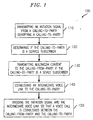
- a flow chart depicting one embodiment of the present invention is illustrated.
- an algorithmic method 100 is shown for use with multiple network types. More particularly, method 100 depicts a sequence of steps in providing a collaboration of a voice service(s), carried over a circuit-switched (“CS") type network, with multimedia service(s), carried over a packet-switched (“PS”) type network.
- a multimedia service(s) includes the delivery of multimedia content, such as a video clip(s), a web page(s), as well as data services, such as the delivery of a non-multimedia content type data file(s), for example.
- providing collaboration of voice service(s) with multimedia service(s), as stated herein includes communication between a calling-from-party and a calling-to-party, one or both of which may be directed from a wireless or wireline unit.
- Algorithmic method 100 initially provides for the step of transmitting an initiation signal from a calling-from-party (step 110).
- This initiation signal is received by a communication network infrastructure element, such as a service control point/service node (e.g., server), for example.
- the step of transmitting the initiation signal may include entering the telephone number of the calling-to-party into the temporary memory of the calling-from-party's wireless or wireline unit.
- a corresponding send button or the like on the calling-from-party's wireless or wireline unit may be depressing so as to commence the sequence of steps in formulating a telephonic connection between the calling-from- and calling-to- parties. Consequently, the initiation signal identifies the calling-to-party.
- the service control point/service node may determine if the calling-to-party is a subscriber to the collaboration of voice and multimedia services (step 120). This step of determining may include the step of looking up the telephone number of the calling-to-party in a database of service subscribers. If the calling-to-party is determined to be a service subscriber, algorithmic method 100 proceeds as depicted in the flow chart of FIG. 1. However, if the telephone number is not found within a database, the remainder of algorithmic method 100 may be terminated. In this case, the initiation signal triggers either a voice link or data link (e.g., sessions) connecting the calling-from-party with the calling-to-party.
- a voice link or data link e.g., sessions
- algorithmic method 100 may transmit multimedia content to the calling-from-party (step 130).
- the calling-to-party's identity e.g., telephone number
- This multimedia content may, for example, include commercial matter, such as advertising and/or marketing material, or general information, for example, selected in response to the calling-to-party's identity.
- the step of transmitting multimedia content may include establishing a data link (e.g., data session) in the event the calling-to-party is found to be a service subscriber.
- This established data link e.g., data session
- the service control point/service node e.g., server
- the established data link e.g., data session
- the service control point/service node and thusly, the established data link (e.g., data session) may serve as the sole resource for the step of transmitting multimedia content to the calling-from-party.
- this established data link e.g., data session
- PS packet switched
- algorithmic method 100 establishes an intermediate voice link to the calling-to-party (step 140).
- the intermediate voice link may be established by the service control point/service node supporting the transmissions of multimedia content to the calling-from-party.
- the intermediate voice link may rely on a circuit switched ("CS") type network.
- the service control point/service node may thereafter bridge the initiation signal and the intermediate voice link (step 150). Consequently, a voice call between the calling-from-party and the calling-to-party, as initiated at the onset of algorithmic method 100, may be established and completed. It should be noted that this step of bridging may be performed after the transmission of multimedia content is concluded, though it is may also occur prior thereto.
- Method 100 also depicts a sequence of steps in providing a collaboration of voice service(s), carried over a circuit-switched (“CS") type network, with multimedia service(s), carried over a packet-switched (“PS”) type network.
- CS circuit-switched
- PS packet-switched
- Algorithmic method 200 initially provides for the step of transmitting an initiation signal from a calling-from-party (step 110).
- This initiation signal is received by a communication network infrastructure element, such as a service control point/service node (e.g., server), for example.
- the step of transmitting the initiation signal may include entering the telephone number of the calling-to-party into the temporary memory of the calling-from-party's wireless or wireline unit.
- a corresponding send button or the like on the calling-from-party's wireless or wireline unit may be depressing so as to commence the sequence of steps in formulating a telephonic connection between the calling-from- and calling-to- parties. Consequently, the initiation signal identifies the calling-to-party.
- the service control point/service node may determine if the calling-to-party is a subscriber to the collaboration of voice and multimedia services (step 220). This step of determining may include the step of looking up the telephone number of the calling-to-party in a database of service subscribers. If the calling-to-party is determined to be a service subscriber, algorithmic method 200 proceeds as depicted in the flow chart of FIG. 2. In the alternative, should the telephone number of the calling-to-party not be found within a database, the offering of collaborative voice and multimedia services the remainder of algorithmic method 200 may be terminated. In this case, the initiation signal triggers either a voice link or data link (e.g., session) connecting the calling-from-party with the calling-to-party.
- a voice link or data link e.g., session
- algorithmic method 200 establishes a data link (e.g., data session) to the calling-from-party (step 230).
- a uniform resource locator (“URL") may be selected in response to affirming if calling-to-party is a service subscriber.
- This URL may identify the location where multimedia content may be received by the calling-from-party over a downlink. It should be noted that the URL might be designated in advance by the calling-to-party, as part of the service subscription.
- algorithmic method 200 establishes another data link (e.g., data session) (step 240).
- this subsequent data link e.g., data session
- this additional data link is intended in the scenario where the multimedia content cannot be transmitted over the same data link (e.g., data session) in which the URL is communicated. This may also arise, for example, if the multimedia content is stored in a network element physically separated from the network element storing the URL.
- algorithmic method 200 calls for establishing an intermediate voice link (step 250).
- This intermediate voice link is established to the calling-to-party.
- the intermediate voice link may be established by the service control point/service node supporting the transmissions of multimedia content to the calling-from-party.
- the intermediate voice link may rely on a circuit switched ("CS") type network.
- the aforementioned data links should be terminated in a logical sequence (step 260).
- the established data link e.g., data session
- the established data link for the transmission of the URL might be terminated in response to the establishing the intermediate voice link.
- the established data link e.g., data session
- the established data link for the transmission of the multimedia content may also be terminated.
- the service control point/service node may thereafter bridge the initiation signal and the intermediate voice link (step 270). Consequently, a voice call between the calling-from-party and the calling-to-party, as initiated at the onset of algorithmic method 200, may be established and completed. It should be noted that this step of bridging may be performed after the transmission of multimedia content is concluded, though it is may also occur prior thereto.
- data e.g., multimedia
- the service control point/service node may thereafter bridge the initiation signal and the intermediate voice link (step 270). Consequently, a voice call between the calling-from-party and the calling-to-party, as initiated at the onset of algorithmic method 200, may be established and completed. It should be noted that this step of bridging may be performed after the transmission of multimedia content is concluded, though it is may also occur prior thereto.
- the present invention may provide a framework for the creation of enhanced services utilizing simultaneous CS voice and PS data capabilities of the network.
- the present invention may be based on widely used telecommunication signaling technologies and Internet standards, such as a session initiation protocol ("SIP"), for example.
- SIP session initiation protocol
- the present invention may combine both in a manner that may minimize the impact to the existing network infrastructure.
- a call flow 300 supportive of the present invention is illustrated.
- a wireless circuit switched (“CS") network 310 and a wireless packet switched (“PS") network 320 may be included as part of a network configuration.
- the network configuration may also include a service control point/service node 330 (e.g., eMRS, which acts as both a SCP and SN) with a user information database formed therein, a first wireless unit supportive of simultaneous CS voice and PS data 340 (e.g., class A terminal), and a video server 360 to support call flow 300.
- a service control point/service node 330 e.g., eMRS, which acts as both a SCP and SN
- a first wireless unit supportive of simultaneous CS voice and PS data 340 e.g., class A terminal
- call flow 300 may process the call control when first wireless unit 340 initiates a voice call toward a called (wireline or wireless) receiving unit 370.
- call flow 300 may process call control if it receives other triggers from the network - e.g., answer and/or disconnect.
- the application of simultaneous CS voice and PS data may enable the performance of the appropriate tasks for the service, including, for example, initiating and/or terminating a data session.
- First wireless unit 340 may have a client application(s) for handling the needs of a service, such as a session initiation protocol ("SIP") stack to process the message, establishing a multimedia session, and for streaming video and/or audio, controls, for example.
- a service such as a session initiation protocol ("SIP") stack to process the message, establishing a multimedia session, and for streaming video and/or audio, controls, for example.
- User database 350 may store user, service subscription, network and/or session information for each user.
- the application servers may provide specific service subscriber resources - e.g., a video clip(s), a web page(s), a data file(s) - for the user.
- a calling-from-party 340 may initiate a voice call to a calling-to-party 370 over circuit-switched network 310.
- a Mobile Switching Center MSC
- MSC Mobile Switching Center
- service control point/service node 330 may determine if the calling-to-party 370 is a subscribers to the multimedia service (e.g., video greeting service). If so, service control point/service node 330 may transmit a video clip URL to the calling-from-party 340. This step may be realized through a SIP INVITE. Once the video clip URL is transmitted, calling-from-party 340 may receive the multimedia content associated with the URL from video server 360.
- Video server 350 may send the multimedia content (e.g., video greeting) to the calling-from-party 340.
- service control point/service node 330 may initiate a voice call to calling-to-party 370.
- service control point/service node 330 may transmit a termination message (e.g., BYE) to calling-from-party 340 to terminate the SIP session in which the video clip may be transmitted.
- termination message e.g., BYE
- service control point/service node 330 may then bridge the two voice call legs together. Consequently, calling-from-party 340 and calling-to-party 370 may now have a complete voice conversation.
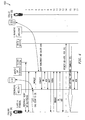
- Message flow 400 is illustrated in accordance with an exemplary personal video greeting service enabled with this framework.
- Message flow 400 may include a sequence of process steps, as follows:
- a message flow 600 is illustrated in accordance with another exemplary approach. Message flow 600 is reflected in the following steps:
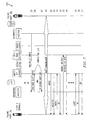
- Message flow 700 illustrates a methodology for invoking an alternative application(s) after the initial video greeting is complete.
- Message flow 700 incorporating the sequence of steps for delivering the personal video greeting, as depicted in message flow 400 of FIG. 4 and flow 500 of FIG. 5, also includes the following additional steps:
- processing circuitry required to implemenf and use the described system may be implemented in application specific integrated circuits, software-driven processing circuitry, firmware, programmable logic devices, hardware, discrete components or arrangements of the above components as would be understood by one of ordinary skill in the art with the benefit of this disclosure.
- processing circuitry required to implemenf and use the described system may be implemented in application specific integrated circuits, software-driven processing circuitry, firmware, programmable logic devices, hardware, discrete components or arrangements of the above components as would be understood by one of ordinary skill in the art with the benefit of this disclosure.
Landscapes
- Engineering & Computer Science (AREA)
- Signal Processing (AREA)
- Computer Networks & Wireless Communication (AREA)
- General Engineering & Computer Science (AREA)
- Power Engineering (AREA)
- Physics & Mathematics (AREA)
- General Physics & Mathematics (AREA)
- Mobile Radio Communication Systems (AREA)
- Telephonic Communication Services (AREA)
Abstract
Description
Claims (10)
- A method of communication between at least a calling-from-party and a calling-to-party, the method comprising:transmitting a uniform resource locator to the calling-from-party in response to an initiation signal from the calling-from-party; andestablishing a voice link to the calling-to-party in response to the initiation signal from the calling-from-party.
- The method of Claim 1, wherein the uniform resource locator identifies a location for a multimedia content, and wherein the step of transmitting a uniform resource locator comprises:establishing a first data session for downloading the multimedia content;determining if the calling-to-party is a service subscriber;looking up the calling-to-party in a database of service subscribers; andselecting the uniform resource locator if the calling-to-party is at least one of the service subscribers in the database.
- A method of communication with a calling-to-party, the method comprising:receiving a uniform resource locator associated with the calling-to-party in response to an initiation signal from a calling-from party; andestablishing a first data session in response to the received uniform resource locator.
- The method of Claim 3, wherein the step of receiving a uniform resource locator comprises:establishing a second data session for receiving the uniform resource locator.
- The method of Claim 4, wherein the uniform resource locator identifies a location for multimedia content to be received over the second data session, the multimedia content received over the second data session if the calling-to-party is a service subscriber, the method comprising:bridging the initiation signal from the calling-from party into a voice link from the calling-from-party to the calling-to-party;terminating the established second data session prior to the step of bridging the initiation signal; andterminating the established first data session after the step of terminating the established second data session.
- A method of communication with a calling-from-party, the method comprising:selecting multimedia content associated with a calling-to-party to be forwarded to the calling-from-party in response to identifying the calling-to-party, the multimedia content selected if the calling-to-party is a service subscriber; andestablishing a voice link from the calling-from-party to the calling-to-party in response to the identifying the calling-to-party.
- A method of communication between at least a calling-from-party and a calling-to-party, the method comprising:receiving an initiation signal from the calling-from-party identifying the calling-to-party;transmitting multimedia content to the calling-from-party, the multimedia content selected in response to the identifying of the calling-to-party; andestablishing a voice link to the calling-to-party in response to the initiation signal from the calling-from-party.
- The method of Claims 1 or 7, comprising:bridging the initiation signal from the calling-from-party with the established voice link to the calling-to-party.
- The method of Claim 7, wherein a uniform resource locator identifies a location for the selected multimedia content to be received from, and the step of transmitting multimedia content comprises:transmitting a uniform resource locator;determining if the calling-to-party is a service subscriber;looking up the calling-to-party in a database of service subscribers;selecting the uniform resource locator if the calling-to-party is at least one of the service subscribers in the database; andestablishing a first data session for the transmission of the multimedia content.
- The method of Claims 2 or 9, wherein the step of transmitting a uniform resource locator comprises:establishing a second data session for transmitting the uniform resource locator to the calling-from-party;terminating the established second data session in response to the step of establishing a voice link to the calling-to-party; andterminating the established first data session after the step of terminating the established second data session.
Applications Claiming Priority (2)
| Application Number | Priority Date | Filing Date | Title |
|---|---|---|---|
| US783308 | 2004-02-20 | ||
| US10/783,308 US20050185771A1 (en) | 2004-02-20 | 2004-02-20 | Method of delivering multimedia associated with a voice link |
Publications (2)
| Publication Number | Publication Date |
|---|---|
| EP1566984A1 true EP1566984A1 (en) | 2005-08-24 |
| EP1566984B1 EP1566984B1 (en) | 2007-06-27 |
Family
ID=34711875
Family Applications (1)
| Application Number | Title | Priority Date | Filing Date |
|---|---|---|---|
| EP05250718A Expired - Lifetime EP1566984B1 (en) | 2004-02-20 | 2005-02-08 | A method of delivering multimedia associated with a voice link |
Country Status (6)
| Country | Link |
|---|---|
| US (1) | US20050185771A1 (en) |
| EP (1) | EP1566984B1 (en) |
| JP (1) | JP2005237011A (en) |
| KR (1) | KR20060042977A (en) |
| CN (1) | CN1697534A (en) |
| DE (1) | DE602005001455T2 (en) |
Cited By (2)
| Publication number | Priority date | Publication date | Assignee | Title |
|---|---|---|---|---|
| EP2120440A4 (en) * | 2007-03-30 | 2010-08-18 | Huawei Tech Co Ltd | A method, terminal and system for implementing video binding in a voice communication network |
| EP2405638A1 (en) * | 2010-07-08 | 2012-01-11 | Deutsche Telekom AG | Method, system and device for audio-visual telecommunication |
Families Citing this family (16)
| Publication number | Priority date | Publication date | Assignee | Title |
|---|---|---|---|---|
| US7852828B2 (en) * | 2002-08-07 | 2010-12-14 | Cisco Technology, Inc. | Extended telephony functionality at end points |
| US20060104259A1 (en) * | 2004-11-15 | 2006-05-18 | Cisco Technology, Inc. | System and method for executing a multi-modal transfer in a session initiation protocol (SIP) environment |
| US8068593B2 (en) * | 2004-12-30 | 2011-11-29 | Alcatel Lucent | Method and apparatus for providing multimedia ringback services to mobile user devices in pre-IMS networks |
| US7693134B2 (en) * | 2004-12-30 | 2010-04-06 | Alcatel-Lucent Usa Inc. | Method and apparatus for providing multimedia ringback services to user devices in IMS networks |
| US20070121595A1 (en) * | 2005-11-30 | 2007-05-31 | Batni Ramachendra P | Method and apparatus for providing customized ringback to calling party devices in an IMS network |
| KR101247985B1 (en) * | 2006-06-09 | 2013-03-27 | 에스케이텔레콤 주식회사 | Method for providing early-media service based on session initiation protocol using early session |
| US8270590B2 (en) * | 2006-06-15 | 2012-09-18 | Alcatel Lucent | User message delivery to calling party device |
| US20070294263A1 (en) * | 2006-06-16 | 2007-12-20 | Ericsson, Inc. | Associating independent multimedia sources into a conference call |
| CN100454906C (en) * | 2006-07-04 | 2009-01-21 | 华为技术有限公司 | Method and gateway for transmitting voice stream based on network bearer in wireless packet network |
| CN1949889B (en) * | 2006-11-01 | 2010-09-29 | 华为技术有限公司 | A method and device for realizing call service |
| CN101217822B (en) * | 2008-01-17 | 2011-12-07 | 中兴通讯股份有限公司 | A method and system for transferring multimedia data information of caller in combined operations |
| US20090199255A1 (en) * | 2008-01-31 | 2009-08-06 | At&T Knowledge Ventures, Lp | Device and Methods for Customization of Communication Notification In A Converged Network |
| US20090316865A1 (en) * | 2008-06-20 | 2009-12-24 | Jones David A | Method for providing green service to a communication unit |
| US10812937B2 (en) * | 2008-12-11 | 2020-10-20 | Qualcomm Incorporated | Method and apparatus for obtaining contextually relevant content |
| WO2010127478A1 (en) * | 2009-05-04 | 2010-11-11 | 华为技术有限公司 | Switch method and equipment |
| WO2024079746A1 (en) * | 2022-10-12 | 2024-04-18 | Rajender Kumar Nangia | Method and system of rendering multimedia content during call establishment |
Citations (4)
| Publication number | Priority date | Publication date | Assignee | Title |
|---|---|---|---|---|
| WO2001006679A1 (en) * | 1999-07-16 | 2001-01-25 | Kise Co., Ltd. | Method and system for providing customized information during call setup process in telecommunication systems |
| US6222826B1 (en) * | 1997-11-19 | 2001-04-24 | Lucent Technologies Inc. | Multimedia calling method and apparatus |
| WO2002089448A2 (en) * | 2001-04-30 | 2002-11-07 | Nokia Corporation | Messaging system |
| US20030156687A1 (en) * | 2000-06-23 | 2003-08-21 | Jacques Messager | Data transmission method, in particular advertising information, on a user terminal |
Family Cites Families (5)
| Publication number | Priority date | Publication date | Assignee | Title |
|---|---|---|---|---|
| US5978806A (en) * | 1997-02-18 | 1999-11-02 | Ameritech Corporation | Method and apparatus for communicating information about a called party to a calling party |
| US6480484B2 (en) * | 1998-06-09 | 2002-11-12 | Avaya Technology Corp. | Internet-intranet greeting service |
| US6603840B2 (en) * | 2000-12-06 | 2003-08-05 | At&T Corp. | Technique for linking telephony and multimedia information |
| JP3873697B2 (en) * | 2001-10-01 | 2007-01-24 | 日本電気株式会社 | Transmission device and transmission / reception device, transmission program and transmission / reception program |
| US6934369B2 (en) * | 2003-03-31 | 2005-08-23 | Nortel Networks Limited | White and yellow page multimedia service |
-
2004
- 2004-02-20 US US10/783,308 patent/US20050185771A1/en not_active Abandoned
-
2005
- 2005-02-08 DE DE602005001455T patent/DE602005001455T2/en not_active Expired - Lifetime
- 2005-02-08 EP EP05250718A patent/EP1566984B1/en not_active Expired - Lifetime
- 2005-02-18 KR KR1020050013494A patent/KR20060042977A/en not_active Withdrawn
- 2005-02-18 JP JP2005041476A patent/JP2005237011A/en active Pending
- 2005-02-18 CN CNA200510009383XA patent/CN1697534A/en active Pending
Patent Citations (4)
| Publication number | Priority date | Publication date | Assignee | Title |
|---|---|---|---|---|
| US6222826B1 (en) * | 1997-11-19 | 2001-04-24 | Lucent Technologies Inc. | Multimedia calling method and apparatus |
| WO2001006679A1 (en) * | 1999-07-16 | 2001-01-25 | Kise Co., Ltd. | Method and system for providing customized information during call setup process in telecommunication systems |
| US20030156687A1 (en) * | 2000-06-23 | 2003-08-21 | Jacques Messager | Data transmission method, in particular advertising information, on a user terminal |
| WO2002089448A2 (en) * | 2001-04-30 | 2002-11-07 | Nokia Corporation | Messaging system |
Cited By (2)
| Publication number | Priority date | Publication date | Assignee | Title |
|---|---|---|---|---|
| EP2120440A4 (en) * | 2007-03-30 | 2010-08-18 | Huawei Tech Co Ltd | A method, terminal and system for implementing video binding in a voice communication network |
| EP2405638A1 (en) * | 2010-07-08 | 2012-01-11 | Deutsche Telekom AG | Method, system and device for audio-visual telecommunication |
Also Published As
| Publication number | Publication date |
|---|---|
| JP2005237011A (en) | 2005-09-02 |
| EP1566984B1 (en) | 2007-06-27 |
| DE602005001455T2 (en) | 2008-02-28 |
| DE602005001455D1 (en) | 2007-08-09 |
| KR20060042977A (en) | 2006-05-15 |
| US20050185771A1 (en) | 2005-08-25 |
| CN1697534A (en) | 2005-11-16 |
Similar Documents
| Publication | Publication Date | Title |
|---|---|---|
| EP1566984B1 (en) | A method of delivering multimedia associated with a voice link | |
| US8213418B2 (en) | Providing packet-based multimedia services via a circuit breaker | |
| US7904068B2 (en) | System and method for providing integrated voice and data services utilizing wired cordless access with unlicensed spectrum and wired access with licensed spectrum | |
| US7876743B2 (en) | Conversational bearer negotiation | |
| US10587991B2 (en) | Routing multiple numbers for one telecommunications device | |
| CN1993972B (en) | Method and system for retrieving network addresses in hybrid telecommunication networks | |
| JP2007528157A (en) | Domain ID mapping for wireless device identifier | |
| CN101455115A (en) | Call Delivery to Dual Mode Wireless Devices | |
| JP2005006328A (en) | Redirect of new media path between packet switched portion and circuit switched portion of mobile communication switching center using server component | |
| EP1736015B1 (en) | System and method for providing early ringback by a home legacy mobile station domain network | |
| KR101407383B1 (en) | Method, server and terminal device for playing multimedia ring tone during call | |
| US9615230B2 (en) | Method to manage multiple caller identities in a telecommunication system | |
| US8605648B2 (en) | Video traffic in a communications system | |
| US20070077918A1 (en) | System and method for providing customized ring back tones using a gateway switching node | |
| US20110306331A1 (en) | Selectively Terminating Camel Dialogues | |
| KR20060010071A (en) | File Transfer System and Method During Voice Call | |
| CN100396113C (en) | Implementation method of concurrent voice service after inter-office handover | |
| CN102056110A (en) | Method, system and device for 2-generation (2G) communication system and IP multimedia subsystem (IMS) communication system to share ring back tone service | |
| CN101646271A (en) | Method, device and system for realizing multimedia services before answering | |
| KR20130067057A (en) | Method for testing a junction line |
Legal Events
| Date | Code | Title | Description |
|---|---|---|---|
| PUAI | Public reference made under article 153(3) epc to a published international application that has entered the european phase |
Free format text: ORIGINAL CODE: 0009012 |
|
| 17P | Request for examination filed |
Effective date: 20050221 |
|
| AK | Designated contracting states |
Kind code of ref document: A1 Designated state(s): AT BE BG CH CY CZ DE DK EE ES FI FR GB GR HU IE IS IT LI LT LU MC NL PL PT RO SE SI SK TR |
|
| AX | Request for extension of the european patent |
Extension state: AL BA HR LV MK YU |
|
| AKX | Designation fees paid |
Designated state(s): DE FR GB |
|
| 17Q | First examination report despatched |
Effective date: 20050902 |
|
| GRAP | Despatch of communication of intention to grant a patent |
Free format text: ORIGINAL CODE: EPIDOSNIGR1 |
|
| GRAS | Grant fee paid |
Free format text: ORIGINAL CODE: EPIDOSNIGR3 |
|
| GRAA | (expected) grant |
Free format text: ORIGINAL CODE: 0009210 |
|
| AK | Designated contracting states |
Kind code of ref document: B1 Designated state(s): DE FR GB |
|
| REG | Reference to a national code |
Ref country code: GB Ref legal event code: FG4D |
|
| REF | Corresponds to: |
Ref document number: 602005001455 Country of ref document: DE Date of ref document: 20070809 Kind code of ref document: P |
|
| ET | Fr: translation filed | ||
| PLBE | No opposition filed within time limit |
Free format text: ORIGINAL CODE: 0009261 |
|
| STAA | Information on the status of an ep patent application or granted ep patent |
Free format text: STATUS: NO OPPOSITION FILED WITHIN TIME LIMIT |
|
| 26N | No opposition filed |
Effective date: 20080328 |
|
| REG | Reference to a national code |
Ref country code: GB Ref legal event code: 732E Free format text: REGISTERED BETWEEN 20131107 AND 20131113 |
|
| REG | Reference to a national code |
Ref country code: FR Ref legal event code: CD Owner name: ALCATEL-LUCENT USA INC. Effective date: 20131122 |
|
| REG | Reference to a national code |
Ref country code: FR Ref legal event code: GC Effective date: 20140410 |
|
| REG | Reference to a national code |
Ref country code: FR Ref legal event code: RG Effective date: 20141015 |
|
| REG | Reference to a national code |
Ref country code: FR Ref legal event code: PLFP Year of fee payment: 11 |
|
| REG | Reference to a national code |
Ref country code: FR Ref legal event code: PLFP Year of fee payment: 12 |
|
| REG | Reference to a national code |
Ref country code: FR Ref legal event code: PLFP Year of fee payment: 13 |
|
| PGFP | Annual fee paid to national office [announced via postgrant information from national office to epo] |
Ref country code: FR Payment date: 20170217 Year of fee payment: 13 |
|
| PGFP | Annual fee paid to national office [announced via postgrant information from national office to epo] |
Ref country code: GB Payment date: 20180216 Year of fee payment: 14 Ref country code: DE Payment date: 20180219 Year of fee payment: 14 |
|
| REG | Reference to a national code |
Ref country code: FR Ref legal event code: ST Effective date: 20181031 |
|
| REG | Reference to a national code |
Ref country code: GB Ref legal event code: 732E Free format text: REGISTERED BETWEEN 20190131 AND 20190206 |
|
| PG25 | Lapsed in a contracting state [announced via postgrant information from national office to epo] |
Ref country code: FR Free format text: LAPSE BECAUSE OF NON-PAYMENT OF DUE FEES Effective date: 20180228 |
|
| REG | Reference to a national code |
Ref country code: DE Ref legal event code: R081 Ref document number: 602005001455 Country of ref document: DE Owner name: PROVENANCE ASSET GROUP LLC, PITTSFORD, US Free format text: FORMER OWNER: LUCENT TECHNOLOGIES INC., MURRAY HILL, N.J., US |
|
| REG | Reference to a national code |
Ref country code: DE Ref legal event code: R081 Ref document number: 602005001455 Country of ref document: DE Owner name: PROVENANCE ASSET GROUP LLC, PITTSFORD, US Free format text: FORMER OWNER: NOKIA OF AMERICA CORP. (N. D. GES. D. STAATES DELAWARE), MURRAY HILL, NJ, US Ref country code: DE Ref legal event code: R081 Ref document number: 602005001455 Country of ref document: DE Owner name: PROVENANCE ASSET GROUP LLC, PITTSFORD, US Free format text: FORMER OWNER: ALCATEL-LUCENT USA INC. (N. D. GES. D. STAATES DELAWARE), MURRAY HILL, N.J., US |
|
| REG | Reference to a national code |
Ref country code: DE Ref legal event code: R119 Ref document number: 602005001455 Country of ref document: DE |
|
| GBPC | Gb: european patent ceased through non-payment of renewal fee |
Effective date: 20190208 |
|
| PG25 | Lapsed in a contracting state [announced via postgrant information from national office to epo] |
Ref country code: DE Free format text: LAPSE BECAUSE OF NON-PAYMENT OF DUE FEES Effective date: 20190903 Ref country code: GB Free format text: LAPSE BECAUSE OF NON-PAYMENT OF DUE FEES Effective date: 20190208 |