EP1564639A2 - Method for utilising a data memory medium having a trace memory - Google Patents
Method for utilising a data memory medium having a trace memory Download PDFInfo
- Publication number
- EP1564639A2 EP1564639A2 EP05002579A EP05002579A EP1564639A2 EP 1564639 A2 EP1564639 A2 EP 1564639A2 EP 05002579 A EP05002579 A EP 05002579A EP 05002579 A EP05002579 A EP 05002579A EP 1564639 A2 EP1564639 A2 EP 1564639A2
- Authority
- EP
- European Patent Office
- Prior art keywords
- memory
- malfunction
- data carrier
- stored
- log information
- Prior art date
- Legal status (The legal status is an assumption and is not a legal conclusion. Google has not performed a legal analysis and makes no representation as to the accuracy of the status listed.)
- Granted
Links
Images
Classifications
-
- G—PHYSICS
- G06—COMPUTING OR CALCULATING; COUNTING
- G06F—ELECTRIC DIGITAL DATA PROCESSING
- G06F11/00—Error detection; Error correction; Monitoring
- G06F11/30—Monitoring
- G06F11/34—Recording or statistical evaluation of computer activity, e.g. of down time, of input/output operation ; Recording or statistical evaluation of user activity, e.g. usability assessment
- G06F11/3466—Performance evaluation by tracing or monitoring
- G06F11/3476—Data logging
Definitions
- the invention relates to methods for operating a portable data carrier with a program code set up for execution in the data carrier, which when executed consists of a predetermined sequence of instructions.
- portable data carriers In many uses of portable data carriers is a high reliability of the portable data carrier of great importance. So, for example a malfunction up to the loss of one as cashless
- a means of payment or as a security module for a mobile telephone e.g., SIM card; USIM card
- SIM card e.g., SIM card
- USIM card e.g., SIM card
- portable data carriers e.g., SIM cards
- time intervals exchanged with the time intervals so measured are that there are likely to be virtually no malfunctions.
- a data carrier e.g., SIM card
- a central facility at least intermittently communicating that the central facility Over the network information about the functional state of the Data carrier are transmitted. Based on the transmitted health status the central facility can determine if an exchange of the Disk is required. This allows for each individual disk individually and promptly when errors occur over one If necessary, necessary exchange informed or decided ("over the air ", for example by SMS).
- the invention is based on the object, a method for operating to create a portable data carrier that allows malfunctions of the portable data carrier.
- a corresponding portable data carrier to be created.
- the corresponding data carrier has at least one continuous buffer memory and one or more expiration diagnostics memories.
- the data carrier an error detection device for recognizing said Malfunction.
- To read the expiry diagnostic memory of the Data carrier contacting possibilities for contact-related and / or for have contactless contact.
- the continuous buffer memory is optionally a volatile memory, e.g. a RAM, but depending on the embodiment, a non-volatile memory be. In order to save space will be optional in the continuous Cache old content overwritten by new content, with the requirement that the content according to claim 1 kept long enough be before they get overwritten. If necessary, e.g. if the LOG information only when the malfunction is canceled in the sequence diagnostics memory
- the continuous buffer memory can also be transferred be a non-volatile memory.
- the sequence diagnostic memory is preferably a nonvolatile memory, e.g. an EEPROM or flash memory.
- a volume has a plurality of sequential diagnostic memory.
- the program code in the disk may be an operating system or a Be application.
- the application can in particular be an authentication function be to authenticate the disk opposite one Background system.
- the application may have an authentication function for authentication of a subscriber card in a mobile radio system be, with the subscriber card a corresponding subscriber card (e.g., SIM card or USIM card).
- the application an authentication function for a payment transaction wherein the data carrier is a payment card (e.g. Wallet or credit card or debit card).
- the disk can also a multi-application card, in which several of the mentioned (payment transactions; Mobile phone) and / or other functionalities implemented are.
- the program code may be present as native code for execution is suitable by the CPU of the data carrier.
- the program code present as an intermediate code that is to be executed by a Interpreter (command interpreter) is provided.
- the program code, if present as an intermediate code, in the form of a Java byte code present for execution by a Java Card Virtual Machine (JCVM) is provided, wherein the data carrier is a Java Card with a Java Card Virtual Machine (JCVM).
- JCVM Java Card Virtual Machine
- the current one Contents of the continuous buffer memory in the sequence diagnostics memory stored.
- the LOG information includes a description of the detected ones Malfunction (or the malfunction itself).
- the current memory contents of the continuous buffer memory and possibly further LOG information together with a description the malfunction, on the occasion of the storing in the sequence diagnostic memory was stored in the expiration diagnostic memory, i.e. stored in a way that is understandable that the malfunction and the stored LOG information on the occasion of Malfunction were saved and belong together insofar. On this way is later comprehensible by which malfunction which Changes in the disk have been triggered.
- the LOG information has at least one status information in particular the state of a program counter (PC) and / or a stack pointer (SP) of the volume.
- PC program counter
- SP stack pointer
- the LOG information has the current memory value at least another memory area, in particular a register and / or a local variable for the volume.
- a disk with an interpreter it can be used as LOG information Information stored by the interpreter, e.g. the virtual java card machine, anyway directly provided, and which only have to be taken over into the sequence diagnostic memory, e.g. WTX sequences and / or R blocks.
- the interpreter e.g. the virtual java card machine
- the sequence diagnostic memory e.g. WTX sequences and / or R blocks.
- the malfunction that triggers the storage may be e.g. an exception at the execution of the program code, with Java e.g. an exception.
- the malfunction that triggers the memory can interrupt the power supply or power interruption.
- the malfunction, in particular Exception or power interruption may e.g. through the Disk itself may be caused by a malfunction of the outside or by an external attack on the disk. faulty operation can e.g. Premature removal of the data carrier from a reader be while the disk and the reader in communication so that a malfunction occurs (e.g., power interruption) or power interruption).
- the disk security-related information code parts (Data and / or program code) implemented, in particular a secret key and / or a secret identification number and / or an authentication application to authenticate the volume using a secret key.
- the secret key can e.g. an authentication key Ki for an authentication method, e.g. for authenticating the volume to a background system in a mobile radio system or in a payment transaction.
- the authentication method may e.g. an authentication algorithm be, e.g. for the authentication of the data medium against a background system in a mobile radio system or at a payment transaction.
- the sequence diagnostic memory Preferably, if the LOG information to be stored becomes secret Information code parts (data and / or program code), a store the secret information code parts in the sequence diagnostic memory prevented. Otherwise, there is a risk that the sequence diagnostic memory is read without authorization and from the read memory contents.
- the secret information code parts in particular secret information data, e.g. PIN, authentication key Ki.
- the expiry diagnosis memory causes predetermined portions of the one implemented in the volume Codes (in particular data and / or program code) (e.g., data, application etc.) are made illegible. This will prevent that when reading the expiry diagnosis memory unauthorized to parts of the volume to which access is denied.
- the unreadable making of code is conveniently carried out in such a way that the sequence diagnostic memory remains readable (possibly with the use of further Security measures such as authentication etc., cf. further down).
- the above can be made unreadable mentioned secret information code parts (PIN, Ki, etc.) count, since these secret information code parts are particularly vulnerable.
- the disk At a chosen time, for example, after the disk has completely failed, becomes the expiration diagnostic memory of the volume read by a reader to the life history of the disk understand.
- the read only after a successful authentication allows the reader to the disk. Can that be Does not authenticate the reader to the disk, the remains Denied access to the expiration diagnostics memory.
- the Access to the diagnostics memory secured by a PIN and / or the authentication is given by the fact that the reading of the Run diagnostics store requires Secure Messaging (for example, Java).
- a preferred embodiment of the invention is as continuous Cache for atomic writes Cache used.
- This preferred embodiment has the additional Advantage that the buffer memory for atomic writes anyway is ready, so that for the continuous buffer no additional Memory must be provided.
- additional data is added to the continuous buffer memory written that provided for performing an atomic write are.
- a predetermined record In an atomic write, a predetermined record must be complete transferred from a first memory to a second memory become. For this, the data set is first in an intermediate buffer step from the first memory to a buffer (intermediate buffers). After writing to the buffer memory is complete, a status flag of the buffer is set from invalid to valid. Just if the status flag is set to valid, the record will be in a Step of safely writing from the buffer into the second memory saved (transferred) (secure write). Once the record has been completely stored in the second memory is the status flag is set to invalid again to signal that the Contents of the buffer memory should not be used afterwards.
- the storing of the LOG information in the sequence diagnostics memory on the occasion of a cancellation the malfunction after the malfunction has occurred performed.
- the LOG information becomes preferable already provided for storage in the expiration diagnostic memory.
- this embodiment is particularly i.d.R. a non-volatile continuous Cache required.
- LOG information i. e.g. in the buffer memory and optionally in others Memory areas such as e.g. Registers contain LOG information in the sequence diagnostic memory to be transferred.
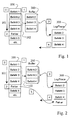
- Fig. 1 shows a schematic diagram for illustrating a method according to a first embodiment of the invention.
- Fig. 1 shows in more detail a sequence 100 of instructions, which in step 0 successively in Sequence of arrow 101 (command1, command2, ).
- Fig. 1 further shows a volatile continuous buffer memory 200 and, as a sequence diagnostic memory, a nonvolatile LOG / trace memory 300.
- the last one processed command, in Fig. 1, the command command 4 in a step 1 in transmit the continuous buffer memory 200, wherein each of the last three processed commands, in Fig. 1, the commands "Command 2", “Command 3" and Command 4 ", held in the continuous buffer 200 stored as indicated by bracket 102, which does not mean that that the three instructions are transferred to the buffer memory 200 at once have to.
- Fig. 2 illustrates a similar procedure as Fig. 1, with the Difference that when a malfunction occurs in step 3 not only the current content of the continuous buffer memory 200, but in addition a description of the malfunction that has occurred (for example type of malfunction) is transferred to the LOG / trace memory.
- the description of Malfunction is, for example, following the example of Fig. 1, "Exception".
- the description of the malfunction itself provides additional information that along with the stored last three processed commands can be used to fathom the cause of the malfunction.
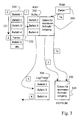
- step 3 shows a schematic diagram for illustrating a method according to a third embodiment of the invention, wherein as continuous Buffer memory 200, a memory 400 is used, the at the same time a nonvolatile buffer memory 400 for atomic write operations is.
- a step 1 analogously as in the examples of FIG. 1 and Fig. 2, commands 100 as LOG information in a continuous buffer memory 200, 400 collected.
- step 1a in the buffer memory 200 400 buffered data for one atomic write.
- a status flag of the buffer is set from invalid to valid.
- a secure write operation is started and partially performed in which the data 500 is in an EEPROM 600 are transmitted.
- step 2 Before the secure writing according to step 1b from the buffer memory 200, 400 in the EEPROM 600 is completed, a malfunction occurs in step 2 on. Since the secure writing has not been completed, that remains Status flag of the buffer memory 200, 400 to valid. Once the malfunction Once again, in step 3, the LOG information is removed from the buffer memory 200, 400 in the sequence diagnostics memory (LOG / trace memory) 300 transmitted. Further, the status flag of the buffer memory 200, 400 is checked. Since the status flag is valid, the data will be out of the buffer memory 200, 400 in the EEPROM 600 transferred (stored), whereby the previously incompletely stored EEPROM 600 is restored.
- Embodiments in which a non-volatile continuous buffer memory is used and in particular the above-mentioned third embodiment as shown in Fig. 3, wherein a buffer memory for atomic write operations are used, especially for malfunction, at which a power interruption (power interruption) between a Disk and a cooperating with the disk reader occurs.
- a power interruption power interruption
- the power interruption is canceled, the contents of the buffer memory in the sequence diagnostic memory from which the content will be read later can.
Landscapes
- Engineering & Computer Science (AREA)
- General Engineering & Computer Science (AREA)
- Theoretical Computer Science (AREA)
- Computer Hardware Design (AREA)
- Quality & Reliability (AREA)
- Physics & Mathematics (AREA)
- General Physics & Mathematics (AREA)
- Debugging And Monitoring (AREA)
- Test And Diagnosis Of Digital Computers (AREA)
Abstract
Description
Die Erfindung betrifft Verfahren zum Betreiben eines tragbaren Datenträgers mit einem zum Ausführen in dem Datenträger eingerichteten Programmcode, der beim Ausführen aus einer vorbestimmten Sequenz von Befehlen besteht.The invention relates to methods for operating a portable data carrier with a program code set up for execution in the data carrier, which when executed consists of a predetermined sequence of instructions.
Bei vielen Einsatzgebieten von tragbaren Datenträgern ist eine hohe Zuverlässigkeit des tragbaren Datenträgers von großer Bedeutung. So kann beispielsweise eine Fehlfunktion bis hin zum Ausfall eines als bargeldloses Zahlungsmittel oder als Sicherheitsmodul für ein Mobiltelefon (z.B. SIM-Karte; USIM-Karte) ausgebildeten tragbaren Datenträgers zu erheblichen Unannehmlichkeiten für dessen Inhaber und zu Imageschäden für den Herausgeber führen.In many uses of portable data carriers is a high reliability of the portable data carrier of great importance. So, for example a malfunction up to the loss of one as cashless A means of payment or as a security module for a mobile telephone (e.g., SIM card; USIM card) formed portable data carrier to considerable Inconvenience to its owner and damage to the image of the publisher to lead.
Herkömmlicherweise werden tragbare Datenträger (z.B. SIM-Karten) in regelmäßigen Zeitabständen ausgetauscht, wobei die Zeitabstände so bemessen sind, dass voraussichtlich so gut wie keine Fehlfunktionen auftreten.Conventionally, portable data carriers (e.g., SIM cards) are becoming regular Time intervals exchanged, with the time intervals so measured are that there are likely to be virtually no malfunctions.
Nach einem firmeninternen Stand der Technik ist es bekannt, bei einem Datenträger (z.B. SIM-Karte), der über ein Netzwerk mit einer zentralen Einrichtung zumindest zeitweise in Verbindung steht, dass der zentralen Einrichtung über das Netzwerk Informationen über den Funktionszustand des Datenträgers übermittelt werden. Auf Grundlage des übermittelten Funktionszustandes kann die zentrale Einrichtung feststellen, ob ein Austausch des Datenträgers erforderlich ist. Hierdurch kann für jeden einzelnen Datenträger individuell und unverzüglich beim Auftreten von Fehlern über einen ggf. erforderlichen Austausch informiert oder entschieden werden ("over the air", z.B. per SMS).According to an in-house state of the art, it is known in a data carrier (e.g., SIM card) connected over a network to a central facility at least intermittently communicating that the central facility Over the network information about the functional state of the Data carrier are transmitted. Based on the transmitted health status the central facility can determine if an exchange of the Disk is required. This allows for each individual disk individually and promptly when errors occur over one If necessary, necessary exchange informed or decided ("over the air ", for example by SMS).
Die Gründe, die einen Ausfall oder eine sonstige Fehlfunktion eines Datenträgers hervorrufen, können vielfältig sein. Dabei kommt es vor, dass durch systematische Fehler wie z.B. ein fehlerhaftes oder ungünstiges Design der Hardware und/oder der Software (z.B. Betriebssystem) des Datenträgers Fehlfunktionen gehäuft auftreten. Alterungsprozesse können eine andere Ursache für Fehlfunktionen sein. Zusätzlich können missbräuchliche Angriffe auf den Datenträger zu Fehlfunktionen führen. Für den Herausgeber wäre es wünschenswert, solche Fehlfunktionen des Datenträgers und ihre Ursachen zu erkennen, damit sie bei künftigen Datenträgern behoben werden können, z.B. durch ein verbessertes generelles Design oder durch verbesserte Abwehrmaßnahmen gegen Angriffe. Eine nachträgliche Analyse eines fehlerhaft funktionierenden oder ausgefallenen Datenträgers ist auf Grund der zunehmenden Komplexität heutiger Betriebssysteme in Datenträgern in der Regel unmöglich.The reasons that cause a failure or other malfunction of a volume can cause many things. It happens that through systematic errors such as a faulty or unfavorable design of the Hardware and / or the software (e.g., operating system) of the volume Malfunctions frequently occur. Aging processes can be another Cause of malfunctions. In addition, abusive attacks lead to malfunction on the disk. For the publisher would be It is desirable such malfunction of the disk and its causes to be identified so they can be fixed on future volumes can, e.g. through an improved general design or through improved Defense against attacks. A subsequent analysis of a faulty functioning or failed disk is due to the increasing complexity of today's operating systems in data carriers in the Usually impossible.
Der Erfindung liegt die Aufgabe zu Grunde, ein Verfahren zum Betreiben eines tragbaren Datenträgers zu schaffen, das es ermöglicht, Fehlfunktionen des tragbaren Datenträgers nachzuvollziehen. Zudem soll ein entsprechender tragbarer Datenträger geschaffen werden.The invention is based on the object, a method for operating to create a portable data carrier that allows malfunctions of the portable data carrier. In addition, a corresponding portable data carrier to be created.
Die Aufgabe wird gelöst durch ein Verfahren nach dem unabhängigen Anspruch
1 bzw. einen Datenträger nach Anspruch 18. Vorteilhafte Ausgestaltungen
der Erfindung sind in den abhängigen Ansprüchen angegeben. The object is achieved by a method according to the
Bei dem im unabhängigen Anspruch 1 angegebenen Verfahren wird ausgegangen
von einem tragbaren Datenträger mit einem zum Ausführen in dem
Datenträger eingerichteten Programmcode, der beim Ausführen aus einer
vorbestimmten Sequenz von Befehlen besteht. Im zeitlichen Ablauf wird
beim Ausführen des Programmcodes die Sequenz von Befehlen Befehl für
Befehl abgearbeitet. Gemäß der Erfindung wird jeder aktuell ausgeführte
Befehl der Sequenz in einen kontinuierlichen Pufferspeicher abgespeichert
und dort so lange abgespeichert gehalten, dass stets eine vorbestimmte Anzahl
von Befehlen vor oder bis zu dem aktuell ausgeführten Befehl oder eine
vorbestimmte Teilsequenz der Sequenz von Befehlen vor oder bis zu dem
aktuell ausgeführten Befehl in dem kontinuierlichen Pufferspeicher abgespeichert
gehalten ist. In Abhängigkeit von einer - vorzugsweise durch den
Datenträger selbst - erkannten Fehlfunktion des Datenträgers werden vorbestimmte
LOG-Informationen in Bezug auf die Ausführung des Programmcodes
in einen Ablaufdiagnosespeicher (LOG/Trace-Speicher) abgespeichert.In the method specified in the
Der entsprechende Datenträger hat zumindest einen kontinuierlichen Pufferspeicher und einen oder mehrere Ablaufdiagnosespeicher. Wahlweise hat der Datenträger eine Fehlererkennungseinrichtung zum Erkennen der genannten Fehlfunktion. Zum Auslesen des Ablaufdiagnosespeichers kann der Datenträger Kontaktierungsmöglichkeiten für kontaktbehaftete und/oder für kontaktlose Kontaktierung haben.The corresponding data carrier has at least one continuous buffer memory and one or more expiration diagnostics memories. Optionally has the data carrier an error detection device for recognizing said Malfunction. To read the expiry diagnostic memory of the Data carrier contacting possibilities for contact-related and / or for have contactless contact.
Beim Auftreten einer Fehlfunktion werden häufig die Werte von bestimmten, für Fehlfunktionen anfälligen Daten innerhalb des Datenträgers beeinflusst oder verändert. Die geänderten Werte dieser Daten lassen häufig Rückschlüsse auf die Fehlfunktion zu. Werden daher beim Auftreten der Fehlfunktion die aktuellen Werte der anfälligen Daten als LOG-Informationen aufbewahrt und gleich oder später, bei Wiederaufhebung der Fehlfunktion im Ablaufdiagnosespeicher abgespeichert, so kann später aus dem Inhalt des Ablaufdiagnosespeichers ein Rückschluss auf Fehlfunktionen gezogen werden, die im Laufe der Zeit im Datenträger aufgetreten sind.When a malfunction occurs, the values of certain, affected by malfunctioning data within the data carrier or changed. The changed values of this data often leave Conclusions about the malfunction too. Therefore, when the occurrence of Malfunction the current values of vulnerable data as LOG information stored and the same or later, when the malfunction is restored stored in the sequence diagnostic memory, so can later from the content the drain diagnostic memory a conclusion drawn on malfunction that occurred over time in the disk.
Daher ist gemäß Anspruch 1 ein Verfahren geschaffen, das es ermöglicht,
Fehlfunktionen eines tragbaren Datenträgers nachzuvollziehen. Der Datenträger
gemäß Anspruch 18 ist entsprechend dem Verfahren eingerichtet.Therefore, according to
Der kontinuierliche Pufferspeicher ist wahlweise ein flüchtiger Speicher, z.B.
ein RAM, kann aber je nach Ausführungsform auch ein nichtflüchtiger Speicher
sein. Um Speicherplatz zu sparen werden wahlweise in dem kontinuierlichen
Pufferspeicher alte Inhalte durch neue Inhalte überschrieben, mit
der Vorgabe, dass die Inhalte gemäß Anspruch 1 lange genug aufbewahrt
werden, bevor sie überschrieben werden. Bei Bedarf, z.B. falls die LOG-Informationen
erst bei Aufhebung der Fehlfunktion in den Ablaufdiagnosespeicher
übertragen werden, kann der kontinuierliche Pufferspeicher auch
ein nichtflüchtiger Speicher sein. Der Ablaufdiagnosespeicher ist vorzugsweise
ein nichtflüchtiger Speicher, z.B. ein EEPROM oder ein Flash-Speicher.
Wahlweise weist ein Datenträger mehrere Ablaufdiagnosespeicher auf.The continuous buffer memory is optionally a volatile memory, e.g.
a RAM, but depending on the embodiment, a non-volatile memory
be. In order to save space will be optional in the continuous
Cache old content overwritten by new content, with
the requirement that the content according to
Der Programmcode in dem Datenträger kann ein Betriebssystem oder eine Anwendung sein. Die Anwendung kann insbesondere eine Authentisierungsfunktion sein, zum Authentisieren des Datenträgers gegenüber einem Hintergrundsystem. Beispielsweise kann die Anwendung eine Authentisierungsfunktion zur Authentisierung einer Teilnehmerkarte in einem Mobilfunksystem sein, wobei die Teilnehmerkarte eine entsprechende Teilnehmerkarte (z.B. SIM-Karte oder USIM-Karte) ist. Alternativ kann die Anwendung eine Authentisierungsfunktion für eine Zahlungsverkehr-Transaktion sein, wobei der Datenträger eine Zahlungsverkehrkarte (z.B. elektronische Geldbörse oder Kreditkarte oder Debitkarte) ist. Der Datenträger kann auch eine Multiapplikations-Karte sein, in der mehrere der genannten (Zahlungsverkehr; Mobiltelefon) und/oder weiterer Funktionalitäten implementiert sind.The program code in the disk may be an operating system or a Be application. The application can in particular be an authentication function be to authenticate the disk opposite one Background system. For example, the application may have an authentication function for authentication of a subscriber card in a mobile radio system be, with the subscriber card a corresponding subscriber card (e.g., SIM card or USIM card). Alternatively, the application an authentication function for a payment transaction wherein the data carrier is a payment card (e.g. Wallet or credit card or debit card). The disk can also a multi-application card, in which several of the mentioned (payment transactions; Mobile phone) and / or other functionalities implemented are.
Der Programmcode kann als nativer Code vorliegen, der zur Ausführung durch die CPU des Datenträgers geeignet ist. Alternativ kann der Programmcode als Zwischencode vorliegen, der zur Ausführung durch einen Interpreter (Befehls-Interpreter) vorgesehen ist. Insbesondere kann der Programmcode, wenn er als Zwischencode vorliegt, in Gestalt eines Java Byte-Code vorliegen, der zur Ausführung durch eine virtuelle Java-Card-Maschine (JCVM) vorgesehen ist, wobei der Datenträger eine Java Card mit einer virtuellen Java-Card-Maschine (JCVM) ist.The program code may be present as native code for execution is suitable by the CPU of the data carrier. Alternatively, the program code present as an intermediate code that is to be executed by a Interpreter (command interpreter) is provided. In particular, the program code, if present as an intermediate code, in the form of a Java byte code present for execution by a Java Card Virtual Machine (JCVM) is provided, wherein the data carrier is a Java Card with a Java Card Virtual Machine (JCVM).
Vorzugsweise wird, als LOG-Informationen oder ein Teil davon, der aktuelle Inhalt des kontinuierlichen Pufferspeichers in den Ablaufdiagnosespeicher abgespeichert.Preferably, as LOG information or a part thereof, the current one Contents of the continuous buffer memory in the sequence diagnostics memory stored.
Vorzugsweise enthalten die LOG-Informationen eine Beschreibung der erkannten Fehlfunktion (bzw. die aufgetretene Fehlfunktion selbst).Preferably, the LOG information includes a description of the detected ones Malfunction (or the malfunction itself).
Vorzugsweise werden der aktuelle Speicherinhalt des kontinuierlichen Pufferspeichers und ggf. weitere LOG-Informationen zusammen mit einer Beschreibung der Fehlfunktion, anlässlich der das Abspeichern in den Ablaufdiagnosespeicher veranlasst wurde, in dem Ablaufdiagnosespeicher abgespeichert, d.h. in einer Weise abgespeichert, dass nachvollziehbar ist, dass die Fehlfunktion und die abgespeicherten LOG-Informationen anlässlich der Fehlfunktion abgespeichert wurden und insofern zusammengehören. Auf diese Weise ist später nachvollziehbar, durch welche Fehlfunktion welche Veränderungen in dem Datenträger ausgelöst worden sind.Preferably, the current memory contents of the continuous buffer memory and possibly further LOG information together with a description the malfunction, on the occasion of the storing in the sequence diagnostic memory was stored in the expiration diagnostic memory, i.e. stored in a way that is understandable that the malfunction and the stored LOG information on the occasion of Malfunction were saved and belong together insofar. On this way is later comprehensible by which malfunction which Changes in the disk have been triggered.
Wahlweise weisen die LOG-Informationen mindestens eine Zustandsinformation auf, insbesondere den Zustand eine Programmzählers (PC) und/oder eines Stack Pointers (SP) des Datenträgers.Optionally, the LOG information has at least one status information in particular the state of a program counter (PC) and / or a stack pointer (SP) of the volume.
Wahlweise weisen die LOG-Informationen den aktuellen Speicherwert mindestens eines weiteren Speicherbereichs, insbesondere eines Registers und/oder einer lokalen Variable für den Datenträger, auf.Optionally, the LOG information has the current memory value at least another memory area, in particular a register and / or a local variable for the volume.
Bei einem Datenträger mit einem Interpreter werden wahlweise als LOG-Informationen Informationen abgespeichert, die durch den Interpreter, z.B. die virtuelle Java-Card-Maschine, ohnehin direkt bereitgestellt werden, und die nur in den Ablaufdiagnosespeicher übernommen werden müssen, z.B. WTX-Sequenzen und/oder R-Blöcke.For a disk with an interpreter, it can be used as LOG information Information stored by the interpreter, e.g. the virtual java card machine, anyway directly provided, and which only have to be taken over into the sequence diagnostic memory, e.g. WTX sequences and / or R blocks.
Die Fehlfunktion, die das Abspeichern auslöst kann z.B. eine Ausnahme bei der Ausführung des Programmcodes sein, bei Java z.B. eine Exception. Alternativ kann die Fehlfunktion, die das Abspeichern auslöst, eine Spannungsunterbrechung oder Stromunterbrechung sein. Die Fehlfunktion, insbesondere Ausnahme oder Spannungsunterbrechung, kann z.B. durch den Datenträger selbst verursacht sein, durch eine Fehlbedienung von außen oder durch einen Angriff von außen auf den Datenträger. Fehlbedienung kann z.B. ein vorzeitiges Entfernen des Datenträgers aus einem Lesegerät sein, während der Datenträger und das Lesegerät in Kommunikationsverbindung standen, so dass eine Fehlfunktion auftritt (z.B. Spannungsunterbrechung oder Stromunterbrechung).The malfunction that triggers the storage may be e.g. an exception at the execution of the program code, with Java e.g. an exception. alternative The malfunction that triggers the memory can interrupt the power supply or power interruption. The malfunction, in particular Exception or power interruption, may e.g. through the Disk itself may be caused by a malfunction of the outside or by an external attack on the disk. faulty operation can e.g. Premature removal of the data carrier from a reader be while the disk and the reader in communication so that a malfunction occurs (e.g., power interruption) or power interruption).
Wahlweise sind in dem Datenträger sicherheitsrelevante Informations-Codeteile (Daten und/oder Programmcode) implementiert, insbesondere ein geheimer Schlüssel und/oder eine geheime Identifikationsnummer und/oder eine Authentifizierungsanwendung zur Authentifizierung des Datenträgers unter Verwendung eines geheimen Schlüssels. Der geheime Schlüssel kann z.B. ein Authentisierungsschlüssel Ki für ein Authentisierungsverfahren sein, z.B. für die Authentisierung des Datenträgers gegenüber einem Hintergrundsystem bei einem Mobilfunksystem oder bei einer Zahlungsverkehrtransaktion. Die Identifikationsnummer kann z.B. eine PIN-Nummer (PIN = personal identification number) sein, durch die der Zugriff auf den Datenträger abgesichert ist. Das Authentisierungsverfahren kann z.B. ein Authentisierungsalgorithmus sein, z.B. für die Authentisierung des Datenträgers gegenüber einem Hintergrundsystem bei einem Mobilfunksystem oder bei einer Zahlungsverkehrtransaktion.Optionally, in the disk security-related information code parts (Data and / or program code) implemented, in particular a secret key and / or a secret identification number and / or an authentication application to authenticate the volume using a secret key. The secret key can e.g. an authentication key Ki for an authentication method, e.g. for authenticating the volume to a background system in a mobile radio system or in a payment transaction. The identification number may e.g. a PIN number (PIN = personal identification number), through which the access to the data carrier is secured. The authentication method may e.g. an authentication algorithm be, e.g. for the authentication of the data medium against a background system in a mobile radio system or at a payment transaction.
Vorzugsweise wird, falls die abzuspeichernde LOG-Information geheime Informations-Codeteile (Daten und/oder Programmcode) aufweist, ein Abspeichern der geheimen Informations-Codeteile im Ablaufdiagnosespeicher verhindert. Andernfalls bestünde die Gefahr, dass der Ablaufdiagnosespeicher unbefugt ausgelesen wird und aus dem ausgelesenen Speicherinhalt Rückschlüsse auf die geheimen Informations-Codeteile (insb. geheimen Informations-Daten, z.B. PIN, Authentisierungsschlüssel Ki) gezogen werden.Preferably, if the LOG information to be stored becomes secret Information code parts (data and / or program code), a store the secret information code parts in the sequence diagnostic memory prevented. Otherwise, there is a risk that the sequence diagnostic memory is read without authorization and from the read memory contents Conclusions on the secret information code parts (in particular secret information data, e.g. PIN, authentication key Ki).
Weiter wird vorzugsweise anlässlich eines Auslesens des Ablaufdiagnosespeichers bewirkt, dass vorbestimmte Teile des in dem Datenträger implementierten Codes (insb. Daten und/oder Programmcode) (z.B. Daten, Anwendung etc.) unlesbar gemacht werden. Auf diese Weise wird verhindert, dass beim Auslesen des Ablaufdiagnosespeichers unbefugterweise auf Teile des Datenträgers zugegriffen wird, auf die der Zugriff verwehrt bleiben soll. Das unlesbar Machen von Code wird zweckmäßigerweise so durchgeführt, dass der Ablaufdiagnosespeicher auslesbar bleibt (ggf. unter Einsatz weiterer Sicherheitsmaßnahmen wie Authentisierung etc., vgl. weiter unten).Next is preferably on the occasion of reading the expiry diagnosis memory causes predetermined portions of the one implemented in the volume Codes (in particular data and / or program code) (e.g., data, application etc.) are made illegible. This will prevent that when reading the expiry diagnosis memory unauthorized to parts of the volume to which access is denied. The unreadable making of code is conveniently carried out in such a way that the sequence diagnostic memory remains readable (possibly with the use of further Security measures such as authentication etc., cf. further down).
Zu den vorbestimmten Teilen, die anlässlich eines Auslesens des Ablaufdiagnosespeichers unlesbar gemacht werden, können beispielsweise die oben genannten geheimen Informations-Codeteile (PIN, Ki etc.) zählen, da diese geheimen Informations-Codeteile besonders schutzbedürftig sind.To the predetermined parts, on the occasion of reading the expiry diagnosis memory For example, the above can be made unreadable mentioned secret information code parts (PIN, Ki, etc.) count, since these secret information code parts are particularly vulnerable.
Zu einem gewählten Zeitpunkt, beispielsweise, nachdem der Datenträger vollständig ausgefallen ist, wird der Ablaufdiagnosespeicher des Datenträgers mittels eines Lesegeräts ausgelesen, um die Lebensgeschichte des Datenträgers nachzuvollziehen.At a chosen time, for example, after the disk has completely failed, becomes the expiration diagnostic memory of the volume read by a reader to the life history of the disk understand.
Vorzugsweise wird das Auslesen nur nach einer erfolgreichen Authentisierung des Lesegeräts gegenüber dem Datenträger ermöglicht. Kann sich das Lesegerät gegenüber dem Datenträger nicht authentisieren, bleibt der Zugriff auf den Ablaufdiagnosespeicher verwehrt. Beispielsweise ist der Zugriff auf den Ablaufdiagnosespeicher durch eine PIN abgesichert und/oder die Authentisierung ist dadurch gegeben, dass das Auslesen des Ablaufdiagnosespeichers Secure Messaging erfordert (z.B. bei Java).Preferably, the read only after a successful authentication allows the reader to the disk. Can that be Does not authenticate the reader to the disk, the remains Denied access to the expiration diagnostics memory. For example, the Access to the diagnostics memory secured by a PIN and / or the authentication is given by the fact that the reading of the Run diagnostics store requires Secure Messaging (for example, Java).
Gemäß einer bevorzugten Ausführungsform der Erfindung wird als kontinuierlicher Pufferspeicher ein für atomare Schreibvorgänge bereitstehender Pufferspeicher verwendet. Diese bevorzugte Ausführungsform hat den zusätzlichen Vorteil, dass der Pufferspeicher für atomare Schreibvorgänge ohnehin bereitsteht, so dass für den kontinuierlichen Pufferspeicher kein zusätzlicher Speicher vorgesehen werden muss.According to a preferred embodiment of the invention is as continuous Cache for atomic writes Cache used. This preferred embodiment has the additional Advantage that the buffer memory for atomic writes anyway is ready, so that for the continuous buffer no additional Memory must be provided.
Wahlweise werden in den kontinuierlichen Pufferspeicher zusätzlich Daten geschrieben, die zur Durchführung eines atomaren Schreibvorgangs vorgesehen sind.Optionally, additional data is added to the continuous buffer memory written that provided for performing an atomic write are.
Bei einem atomaren Schreibvorgang muss ein vorbestimmter Datensatz vollständig von einem ersten Speicher in einen zweiten Speicher übertragen werden. Hierzu wird der Datensatz zuerst in einem Zwischenpuffer-Schritt vom ersten Speicher in einen Pufferspeicher geschrieben (Zwischenpuffern). Nachdem das Schreiben in den Pufferspeicher vollständig abgeschlossen ist, wird ein Status-Flag des Pufferspeichers von ungültig auf gültig gesetzt. Nur wenn das Status-Flag auf gültig gesetzt ist, wird der Datensatz in einem Schritt des sicheren Schreibens aus dem Pufferspeicher in den zweiten Speicher abgespeichert (übertragen) (sicherer Schreibvorgang). Sobald der Datensatz vollständig in den zweiten Speicher abgespeichert worden ist, wird das Status-Flag wieder auf ungültig gesetzt, um zu signalisieren, dass der Inhalt des Pufferspeichers nachfolgend nicht mehr verwendet werden soll. In an atomic write, a predetermined record must be complete transferred from a first memory to a second memory become. For this, the data set is first in an intermediate buffer step from the first memory to a buffer (intermediate buffers). After writing to the buffer memory is complete, a status flag of the buffer is set from invalid to valid. Just if the status flag is set to valid, the record will be in a Step of safely writing from the buffer into the second memory saved (transferred) (secure write). Once the record has been completely stored in the second memory is the status flag is set to invalid again to signal that the Contents of the buffer memory should not be used afterwards.
Tritt während des Abspeicherns vom Pufferspeicher in den zweiten Speicher eine Fehlfunktion auf, z.B. eine Spannungs- oder Stromunterbrechung, wird der Datensatz nur unvollständig in den zweiten Speicher übertragen. Das Status-Flag des Pufferspeichers bleibt auf gültig. Bei einer Wiederinbetriebnahme des Datenträgers, wenn die Fehlfunktion wieder behoben ist, ist im zweiten Speicher ein unvollständiger Datensatz enthalten, was unerwünscht ist. Andererseits ist das Status-Flag immer noch gültig. Daher wird bei der Behebung der Fehlfunktion der Inhalt des Zwischenspeichers automatisch in den zweiten Speicher abgespeichert (übertragen), d.h. der unvollständige Datensatz im zweiten Speicher wird aus dem Pufferspeicher heraus restauriert. Hierdurch ist sichergestellt, dass im zweiten Speicher kein unvollständiger Datensatz verbleiben kann.Occurs during storage from the buffer memory to the second memory a malfunction, e.g. a voltage or power interruption, will the record is only incompletely transferred to the second memory. The Status flag of the buffer remains valid. When restarting of the data carrier, when the malfunction is resolved again, is in second memory contain an incomplete record, which is undesirable is. On the other hand, the status flag is still valid. Therefore, at the Fix the malfunction of the contents of the cache automatically in the second memory is stored (transferred), i. the incomplete Record in the second memory is restored from the buffer memory. This ensures that the second memory is not an incomplete one Record can remain.
Das Abspeichern der LOG-Informationen in den Ablaufdiagnosespeicher wird gemäß einer Ausführungsform anlässlich des Auftretens der Fehlfunktion durchgeführt. Anlässlich des Auftretens der Fehlfunktion werden also z.B. der angesammelte Inhalt des kontinuierlichen Pufferspeichers und die Inhalte vorbestimmter Register in den Ablaufdiagnosespeicher abgespeichert (übertragen).Saving the LOG information to the diagnostics memory according to one embodiment, on the occasion of the occurrence of the malfunction carried out. On the occasion of the occurrence of the malfunction are so e.g. the accumulated contents of the continuous buffer and the Contents of predetermined registers stored in the sequence diagnostic memory (transfer).
Gemäß einer anderen Ausführungsform wird das Abspeichern der LOG-Informationen in den Ablaufdiagnosespeicher anlässlich einer Aufhebung der Fehlfunktion, nachdem die Fehlfunktion aufgetreten ist, durchgeführt. Bei Auftreten der Fehlfunktion werden die LOG-Informationen vorzugsweise bereits zum Abspeichern in den Ablaufdiagnosespeicher bereitgestellt. Bei dieser Ausführungsform ist insbesondere i.d.R. ein nichtflüchtiger kontinuierlicher Pufferspeicher erforderlich. According to another embodiment, the storing of the LOG information in the sequence diagnostics memory on the occasion of a cancellation the malfunction after the malfunction has occurred performed. When the malfunction occurs, the LOG information becomes preferable already provided for storage in the expiration diagnostic memory. at this embodiment is particularly i.d.R. a non-volatile continuous Cache required.
Anlässlich, vorzugsweise bei Aufhebung der Fehlfunktion werden bei Bedarf die Daten aus dem Pufferspeicher zur Restaurierung eines anderen Speicherbereichs verwendet, nach Art eines atomaren Schreibvorgangs, während LOG-Informationen, d.h. z.B. die im Pufferspeicher und wahlweise in anderen Speicherbereichen wie z.B. Registern enthaltenen LOG-Informationen in den Ablaufdiagnosespeicher übertragen werden.On occasion, preferably when reversing the malfunction will be required the data from the buffer memory for the restoration of another memory area used, in the manner of an atomic write, while LOG information, i. e.g. in the buffer memory and optionally in others Memory areas such as e.g. Registers contain LOG information in the sequence diagnostic memory to be transferred.
Im folgenden wird die Erfindung anhand von Ausführungsbeispielen und unter Bezugnahme auf die Zeichnung näher erläutert, in der zeigen:
- Fig. 1
- ein schematisches Diagramm zur Veranschaulichung eines Verfahrens gemäß einer ersten Ausführungsform der Erfindung;
- Fig. 2
- ein schematisches Diagramm zur Veranschaulichung eines Verfahrens gemäß einer zweiten Ausführungsform der Erfindung;
- Fig. 3
- ein schematisches Diagramm zur Veranschaulichung eines Verfahrens gemäß einer dritten Ausführungsform der Erfindung, wobei als kontinuierlicher Pufferspeicher ein Speicher verwendet wird, der zugleich ein Pufferspeicher für atomare Schreibvorgänge ist.
- Fig. 1
- a schematic diagram illustrating a method according to a first embodiment of the invention;
- Fig. 2
- a schematic diagram illustrating a method according to a second embodiment of the invention;
- Fig. 3
- a schematic diagram illustrating a method according to a third embodiment of the invention, wherein as a continuous buffer memory, a memory is used, which is also a buffer memory for atomic write operations.
Fig. 1 zeigt ein schematisches Diagramm zur Veranschaulichung eines Verfahrens
gemäß einer ersten Ausführungsform der Erfindung. Fig. 1 zeigt genauer
eine Sequenz 100 von Befehlen, die in einem Schritt 0 nacheinander in
Reihenfolge des Pfeils 101 ablaufen (Befehl1, Befehl2, ...). Fig. 1 zeigt weiter
einen flüchtigen kontinuierlichen Pufferspeicher 200 und, als Ablaufdiagnosespeicher,
einen nichtflüchtigen LOG/Trace-Speicher 300. Der jeweils letzte
abgearbeitete Befehl, in Fig. 1 der Befehl Befehl4, wird in einem Schritt 1 in
den kontinuierlichen Pufferspeicher 200 übertragen, wobei jeweils die letzten
drei abgearbeiteten Befehle, in Fig. 1 die Befehle "Befehl2", "Befehl3" und
Befehl4", in dem kontinuierlichen Pufferspeicher 200 abgespeichert gehalten
werden, wie durch die Klammer 102 angedeutet ist, die aber nicht bedeutet,
dass die drei Befehle auf einmal in den Pufferspeicher 200 übertragen werden
müssen. Sobald der nächste Befehl Befehl5 abgearbeitet wäre, würde
Befehl5 im kontinuierlichen Pufferspeicher 200 abgespeichert und dafür Befehl2
aus dem kontinuierlichen Pufferspeicher 200 entfernt (in Fig. 1 nicht
dargestellt). Bei oder nach der Abarbeitung des Befehls Befehl4 tritt in Schritt
2 eine Fehlfunktion auf, nämlich in Fig. 1 eine Java Exception. Anlässlich des
Auftretens der Fehlfunktion wird in einem Schritt 3 der aktuelle Inhalt des
Pufferspeichers 200 in den LOG/Trace-Speicher 300 übertragen. Der Verfahrensablauf
mit den Schritten 1, 2, und 3 kann mehrmals nacheinander auftreten,
so dass der LOG/Trace-Speicher schließlich mehrere Einträge wie den in
Fig. 1 dargestellten enthält. Zu einem späteren Zeitpunkt wird in einem
Schritt 4 der LOG/Trace-Speicher mit einem Lesegerät (nicht gezeigt in Fig.
1) ausgelesen, nachdem das Lesegerät sich erfolgreich gegenüber dem Datenträger
authentisiert hat. Die ausgelesenen drei Befehle "Befehl2", "Befehl3"
und "Befehl4" erlauben es, die Abläufe in dem Datenträger unmittelbar vor
dem Auftreten der Fehlfunktion nachzuvollziehen. Aus eventuellen Mustern,
nach denen die drei Befehle angeordnet oder gestaltet sind, lassen sich
Rückschlüsse auf die Ursache der Fehlfunktion ziehen.Fig. 1 shows a schematic diagram for illustrating a method
according to a first embodiment of the invention. Fig. 1 shows in more detail
a
Fig. 2 veranschaulicht einen ähnlichen Verfahrensablauf wie Fig. 1, mit dem
Unterschied, dass beim Auftreten einer Fehlfunktion in Schritt 3 nicht nur
der aktuelle Inhalt des kontinuierlichen Pufferspeichers 200, sondern zusätzlich
eine Beschreibung der aufgetretenen Fehlfunktion (z.B. Art der Fehlfunktion)
in den LOG/Trace-Speicher übertragen wird. Die Beschreibung der
Fehlfunktion lautet z.B., im Anschluss an das Beispiel aus Fig. 1, "Exception".
Die Beschreibung der Fehlfunktion selbst liefert zusätzliche Information, die
zusammen mit den abgespeicherten letzten drei abgearbeiteten Befehlen
verwendet werden kann, um die Ursache der Fehlfunktion zu ergründen.Fig. 2 illustrates a similar procedure as Fig. 1, with the
Difference that when a malfunction occurs in
Fig. 3 zeigt ein schematisches Diagramm zur Veranschaulichung eines Verfahrens
gemäß einer dritten Ausführungsform der Erfindung, wobei als kontinuierlicher
Pufferspeicher 200 ein Speicher 400 verwendet wird, der
zugleich ein nichtflüchtiger Pufferspeicher 400 für atomare Schreibvorgänge
ist. In einem Schritt 1 werden, analog wie in den Beispielen aus Fig. 1 und
Fig. 2, Befehle 100 als LOG-Informationen in einem kontinuierlichen Pufferspeicher
200, 400 gesammelt. Gleichzeitig werden in Schritt 1a in dem Pufferspeicher
200, 400 Daten für einen atomaren Schreibvorgang zwischengepuffert.
Sobald das Schreiben der Daten in den Pufferspeicher 200, 400 vollendet
ist, wird ein Status-Flag des Pufferspeichers von ungültig auf gültig gesetzt.
In einem nachfolgenden Schritt 1b wird ein sicherer Schreibvorgang begonnen
und teilweise durchgeführt, bei dem die Daten 500 in einen EEPROM
600 übertragen werden. Während des sicheren Schreibens werden nach wie
vor, Schritt 1, Befehle als LOG-Informationen im Pufferspeicher 200, 400 angesammelt.
Bevor das sichere Schreiben gemäß Schritt 1b vom Pufferspeicher
200, 400 in den EEPROM 600 vollendet ist, tritt in Schritt 2 eine Fehlfunktion
auf. Da das sichere Schreiben nicht beendet worden ist, bleibt das
Status-Flag des Pufferspeichers 200, 400 auf gültig. Sobald die Fehlfunktion
wieder behoben ist, werden in Schritt 3 die LOG-Informationen aus dem Pufferspeicher
200, 400 in den Ablaufdiagnosespeicher (LOG/Trace-Speicher)
300 übertragen. Weiter wird das Status-Flag des Pufferspeichers 200, 400 überprüft.
Da das Status-Flag gültig ist, werden die Daten aus dem Pufferspeicher
200, 400 in den EEPROM 600 übertragen (abgespeichert), wodurch
der zuvor unvollständig bespeicherte EEPROM 600 restauriert wird.3 shows a schematic diagram for illustrating a method
according to a third embodiment of the invention, wherein as
Ausführungsformen, bei denen ein nichtflüchtiger kontinuierlicher Pufferspeicher verwendet wird, und insbesondere die oben angeführte dritte Ausführungsform gemäß Fig. 3, bei der ein Pufferspeicher für atomare Schreibvorgänge verwendet wird, sind vor allem für Fehlfunktionen geeignet, bei denen eine Stromunterbrechung (Spannungsunterbrechung) zwischen einem Datenträger und einem mit dem Datenträger zusammenwirkenden Lesegerät auftritt. Beim Auftreten der Stromunterbrechung sind die zuletzt durchgeführten Befehle im nichtflüchtigen Pufferspeicher gepuffert und gehen auch durch die Stromunterbrechung nicht verloren. Sobald die Stromunterbrechung aufgehoben wird, wird der Inhalt des Pufferspeichers in den Ablaufdiagnosespeicher übertragen, aus dem der Inhalt später ausgelesen werden kann.Embodiments in which a non-volatile continuous buffer memory is used, and in particular the above-mentioned third embodiment as shown in Fig. 3, wherein a buffer memory for atomic write operations are used, especially for malfunction, at which a power interruption (power interruption) between a Disk and a cooperating with the disk reader occurs. When the power interruption occurs, the last performed Commands buffered in nonvolatile cache and go also not lost by the power interruption. Once the power interruption is canceled, the contents of the buffer memory in the sequence diagnostic memory from which the content will be read later can.
Claims (18)
Applications Claiming Priority (2)
| Application Number | Priority Date | Filing Date | Title |
|---|---|---|---|
| DE102004007614A DE102004007614A1 (en) | 2004-02-17 | 2004-02-17 | Data carrier with sequence diagnostics memory |
| DE102004007614 | 2004-02-17 |
Publications (3)
| Publication Number | Publication Date |
|---|---|
| EP1564639A2 true EP1564639A2 (en) | 2005-08-17 |
| EP1564639A3 EP1564639A3 (en) | 2007-01-17 |
| EP1564639B1 EP1564639B1 (en) | 2008-07-23 |
Family
ID=34684084
Family Applications (1)
| Application Number | Title | Priority Date | Filing Date |
|---|---|---|---|
| EP05002579A Expired - Lifetime EP1564639B1 (en) | 2004-02-17 | 2005-02-08 | Method for utilising a data memory medium having a trace memory |
Country Status (3)
| Country | Link |
|---|---|
| EP (1) | EP1564639B1 (en) |
| AT (1) | ATE402442T1 (en) |
| DE (2) | DE102004007614A1 (en) |
Family Cites Families (9)
| Publication number | Priority date | Publication date | Assignee | Title |
|---|---|---|---|---|
| FR2253425A5 (en) * | 1973-11-30 | 1975-06-27 | Honeywell Bull Soc Ind | |
| EP0449540B1 (en) * | 1990-03-27 | 2000-05-17 | Digital Equipment Corporation | Memory system and method with prefetch buffer |
| GB2281986B (en) * | 1993-09-15 | 1997-08-06 | Advanced Risc Mach Ltd | Data processing reset |
| US5754762A (en) * | 1997-01-13 | 1998-05-19 | Kuo; Chih-Cheng | Secure multiple application IC card using interrupt instruction issued by operating system or application program to control operation flag that determines the operational mode of bi-modal CPU |
| EP0955577B1 (en) * | 1998-05-04 | 2011-11-30 | International Business Machines Corporation | Method and device for creating an object in a non-persistent memory and/or keeping accessibility to said object |
| FR2790844B1 (en) * | 1999-03-09 | 2001-05-25 | Gemplus Card Int | METHOD AND DEVICE FOR MONITORING THE PROGRESS OF A PROGRAM, PROGRAM DEVICE FOR MONITORING ITS PROGRAM |
| DE19930120A1 (en) * | 1999-06-30 | 2001-01-11 | Siemens Ag | Multiprocessor-trace concept for system-on-semiconductor chip applications |
| DE10145783A1 (en) * | 2001-09-17 | 2003-04-24 | Giesecke & Devrient Gmbh | Generate a troubleshooting message for a portable disk |
| GB2389432B (en) * | 2002-06-07 | 2005-09-07 | Advanced Risc Mach Ltd | Instruction tracing in data processing systems |
-
2004
- 2004-02-17 DE DE102004007614A patent/DE102004007614A1/en not_active Withdrawn
-
2005
- 2005-02-08 AT AT05002579T patent/ATE402442T1/en not_active IP Right Cessation
- 2005-02-08 EP EP05002579A patent/EP1564639B1/en not_active Expired - Lifetime
- 2005-02-08 DE DE502005004762T patent/DE502005004762D1/en not_active Expired - Lifetime
Also Published As
| Publication number | Publication date |
|---|---|
| EP1564639A3 (en) | 2007-01-17 |
| DE102004007614A1 (en) | 2005-09-01 |
| EP1564639B1 (en) | 2008-07-23 |
| ATE402442T1 (en) | 2008-08-15 |
| DE502005004762D1 (en) | 2008-09-04 |
Similar Documents
| Publication | Publication Date | Title |
|---|---|---|
| EP1011080B1 (en) | Method for bidirectional datatransfer between a terminal and an ic-card and ic-card therefor | |
| DE102014220616A1 (en) | Method for loading executable program instructions into a chip card in active operation | |
| DE19626337C2 (en) | Processing long messages in a processor card | |
| DE10319585B4 (en) | Tamper-evident data processing system and associated method for manipulation protection | |
| EP2652665B1 (en) | Portable data storage medium with control error counter | |
| EP1564639B1 (en) | Method for utilising a data memory medium having a trace memory | |
| DE19932149A1 (en) | System for executing transactions | |
| DE69934612T2 (en) | CHIP CARD AND DEVICE, SYSTEM AND METHOD FOR ITS OUTPUT | |
| DE19548903C2 (en) | Method for performing a secret code comparison on a microprocessor-based portable data carrier | |
| DE10247794B4 (en) | Managing a failed trial counter in a portable disk | |
| DE2858819C2 (en) | Portable information carrier for the storage and processing of information | |
| DE102007027935A1 (en) | Portable data carrier and method for personalizing a portable data carrier | |
| DE102006009214A1 (en) | Contents writing method for e.g. uniform channel programming electrically erasable ROM, involves writing contents of output memory to target memory if selection memory indicates to output memory that target memory is not written | |
| EP0977160B1 (en) | Method and data processing device for the reliable execution of instructions | |
| DE19853730C2 (en) | Method and device for identifying and handling critical chip card commands | |
| DE10336568B4 (en) | Operating system for a portable data carrier | |
| DE10351745B4 (en) | Method and system for operating a portable data carrier | |
| EP1610218B1 (en) | Portable data carrier, system with said data carrier and method of operating said data carrier | |
| EP2002446B1 (en) | Method for operating a memory unit comprising the marking of memory blocks that are identified as defective | |
| DE102010035314B4 (en) | Method for managing a misoperation counter in a portable data carrier | |
| DE10360998A1 (en) | Protection of chips against attacks | |
| EP3469511B1 (en) | Memory management of a security module | |
| DE102007007481A1 (en) | Method for analyzing a software configuration of a portable data carrier | |
| DE10328238A1 (en) | Chip card initialization and personalization method in which chip card data is loaded using a common PC and read-write units that contain stored data blocks in which a part of the data to be loaded is stored | |
| DE10219731A1 (en) | Secure data transaction implementation with a chip card, whereby a partial data transaction is carried out by the chip card using a secure secondary data element prior to linking with transaction data in the main processing unit |
Legal Events
| Date | Code | Title | Description |
|---|---|---|---|
| PUAI | Public reference made under article 153(3) epc to a published international application that has entered the european phase |
Free format text: ORIGINAL CODE: 0009012 |
|
| AK | Designated contracting states |
Kind code of ref document: A2 Designated state(s): AT BE BG CH CY CZ DE DK EE ES FI FR GB GR HU IE IS IT LI LT LU MC NL PL PT RO SE SI SK TR |
|
| AX | Request for extension of the european patent |
Extension state: AL BA HR LV MK YU |
|
| PUAL | Search report despatched |
Free format text: ORIGINAL CODE: 0009013 |
|
| AK | Designated contracting states |
Kind code of ref document: A3 Designated state(s): AT BE BG CH CY CZ DE DK EE ES FI FR GB GR HU IE IS IT LI LT LU MC NL PL PT RO SE SI SK TR |
|
| AX | Request for extension of the european patent |
Extension state: AL BA HR LV MK YU |
|
| RIC1 | Information provided on ipc code assigned before grant |
Ipc: G06F 11/34 20060101AFI20061208BHEP |
|
| 17P | Request for examination filed |
Effective date: 20070717 |
|
| AKX | Designation fees paid |
Designated state(s): AT BE BG CH CY CZ DE DK EE ES FI FR GB GR HU IE IS IT LI LT LU MC NL PL PT RO SE SI SK TR |
|
| 17Q | First examination report despatched |
Effective date: 20070903 |
|
| GRAP | Despatch of communication of intention to grant a patent |
Free format text: ORIGINAL CODE: EPIDOSNIGR1 |
|
| GRAS | Grant fee paid |
Free format text: ORIGINAL CODE: EPIDOSNIGR3 |
|
| GRAA | (expected) grant |
Free format text: ORIGINAL CODE: 0009210 |
|
| AK | Designated contracting states |
Kind code of ref document: B1 Designated state(s): AT BE BG CH CY CZ DE DK EE ES FI FR GB GR HU IE IS IT LI LT LU MC NL PL PT RO SE SI SK TR |
|
| REG | Reference to a national code |
Ref country code: GB Ref legal event code: FG4D Free format text: NOT ENGLISH |
|
| REG | Reference to a national code |
Ref country code: CH Ref legal event code: EP |
|
| REG | Reference to a national code |
Ref country code: IE Ref legal event code: FG4D Free format text: LANGUAGE OF EP DOCUMENT: GERMAN |
|
| REF | Corresponds to: |
Ref document number: 502005004762 Country of ref document: DE Date of ref document: 20080904 Kind code of ref document: P |
|
| NLV1 | Nl: lapsed or annulled due to failure to fulfill the requirements of art. 29p and 29m of the patents act | ||
| PG25 | Lapsed in a contracting state [announced via postgrant information from national office to epo] |
Ref country code: PT Free format text: LAPSE BECAUSE OF FAILURE TO SUBMIT A TRANSLATION OF THE DESCRIPTION OR TO PAY THE FEE WITHIN THE PRESCRIBED TIME-LIMIT Effective date: 20081223 Ref country code: LT Free format text: LAPSE BECAUSE OF FAILURE TO SUBMIT A TRANSLATION OF THE DESCRIPTION OR TO PAY THE FEE WITHIN THE PRESCRIBED TIME-LIMIT Effective date: 20080723 Ref country code: ES Free format text: LAPSE BECAUSE OF FAILURE TO SUBMIT A TRANSLATION OF THE DESCRIPTION OR TO PAY THE FEE WITHIN THE PRESCRIBED TIME-LIMIT Effective date: 20081103 Ref country code: NL Free format text: LAPSE BECAUSE OF FAILURE TO SUBMIT A TRANSLATION OF THE DESCRIPTION OR TO PAY THE FEE WITHIN THE PRESCRIBED TIME-LIMIT Effective date: 20080723 Ref country code: IS Free format text: LAPSE BECAUSE OF FAILURE TO SUBMIT A TRANSLATION OF THE DESCRIPTION OR TO PAY THE FEE WITHIN THE PRESCRIBED TIME-LIMIT Effective date: 20081123 |
|
| PG25 | Lapsed in a contracting state [announced via postgrant information from national office to epo] |
Ref country code: SI Free format text: LAPSE BECAUSE OF FAILURE TO SUBMIT A TRANSLATION OF THE DESCRIPTION OR TO PAY THE FEE WITHIN THE PRESCRIBED TIME-LIMIT Effective date: 20080723 Ref country code: FI Free format text: LAPSE BECAUSE OF FAILURE TO SUBMIT A TRANSLATION OF THE DESCRIPTION OR TO PAY THE FEE WITHIN THE PRESCRIBED TIME-LIMIT Effective date: 20080723 Ref country code: BG Free format text: LAPSE BECAUSE OF FAILURE TO SUBMIT A TRANSLATION OF THE DESCRIPTION OR TO PAY THE FEE WITHIN THE PRESCRIBED TIME-LIMIT Effective date: 20081023 |
|
| REG | Reference to a national code |
Ref country code: IE Ref legal event code: FD4D |
|
| PG25 | Lapsed in a contracting state [announced via postgrant information from national office to epo] |
Ref country code: EE Free format text: LAPSE BECAUSE OF FAILURE TO SUBMIT A TRANSLATION OF THE DESCRIPTION OR TO PAY THE FEE WITHIN THE PRESCRIBED TIME-LIMIT Effective date: 20080723 Ref country code: IE Free format text: LAPSE BECAUSE OF FAILURE TO SUBMIT A TRANSLATION OF THE DESCRIPTION OR TO PAY THE FEE WITHIN THE PRESCRIBED TIME-LIMIT Effective date: 20080723 Ref country code: DK Free format text: LAPSE BECAUSE OF FAILURE TO SUBMIT A TRANSLATION OF THE DESCRIPTION OR TO PAY THE FEE WITHIN THE PRESCRIBED TIME-LIMIT Effective date: 20080723 |
|
| PG25 | Lapsed in a contracting state [announced via postgrant information from national office to epo] |
Ref country code: RO Free format text: LAPSE BECAUSE OF FAILURE TO SUBMIT A TRANSLATION OF THE DESCRIPTION OR TO PAY THE FEE WITHIN THE PRESCRIBED TIME-LIMIT Effective date: 20080723 Ref country code: CZ Free format text: LAPSE BECAUSE OF FAILURE TO SUBMIT A TRANSLATION OF THE DESCRIPTION OR TO PAY THE FEE WITHIN THE PRESCRIBED TIME-LIMIT Effective date: 20080723 Ref country code: SK Free format text: LAPSE BECAUSE OF FAILURE TO SUBMIT A TRANSLATION OF THE DESCRIPTION OR TO PAY THE FEE WITHIN THE PRESCRIBED TIME-LIMIT Effective date: 20080723 |
|
| PLBE | No opposition filed within time limit |
Free format text: ORIGINAL CODE: 0009261 |
|
| STAA | Information on the status of an ep patent application or granted ep patent |
Free format text: STATUS: NO OPPOSITION FILED WITHIN TIME LIMIT |
|
| 26N | No opposition filed |
Effective date: 20090424 |
|
| BERE | Be: lapsed |
Owner name: GIESECKE & DEVRIENT G.M.B.H. Effective date: 20090228 |
|
| PG25 | Lapsed in a contracting state [announced via postgrant information from national office to epo] |
Ref country code: IT Free format text: LAPSE BECAUSE OF FAILURE TO SUBMIT A TRANSLATION OF THE DESCRIPTION OR TO PAY THE FEE WITHIN THE PRESCRIBED TIME-LIMIT Effective date: 20080723 |
|
| PG25 | Lapsed in a contracting state [announced via postgrant information from national office to epo] |
Ref country code: MC Free format text: LAPSE BECAUSE OF NON-PAYMENT OF DUE FEES Effective date: 20090228 |
|
| REG | Reference to a national code |
Ref country code: CH Ref legal event code: PL |
|
| PG25 | Lapsed in a contracting state [announced via postgrant information from national office to epo] |
Ref country code: LI Free format text: LAPSE BECAUSE OF NON-PAYMENT OF DUE FEES Effective date: 20090228 Ref country code: CH Free format text: LAPSE BECAUSE OF NON-PAYMENT OF DUE FEES Effective date: 20090228 |
|
| PG25 | Lapsed in a contracting state [announced via postgrant information from national office to epo] |
Ref country code: SE Free format text: LAPSE BECAUSE OF FAILURE TO SUBMIT A TRANSLATION OF THE DESCRIPTION OR TO PAY THE FEE WITHIN THE PRESCRIBED TIME-LIMIT Effective date: 20081023 |
|
| PG25 | Lapsed in a contracting state [announced via postgrant information from national office to epo] |
Ref country code: BE Free format text: LAPSE BECAUSE OF NON-PAYMENT OF DUE FEES Effective date: 20090228 |
|
| PG25 | Lapsed in a contracting state [announced via postgrant information from national office to epo] |
Ref country code: PL Free format text: LAPSE BECAUSE OF FAILURE TO SUBMIT A TRANSLATION OF THE DESCRIPTION OR TO PAY THE FEE WITHIN THE PRESCRIBED TIME-LIMIT Effective date: 20080723 |
|
| PG25 | Lapsed in a contracting state [announced via postgrant information from national office to epo] |
Ref country code: AT Free format text: LAPSE BECAUSE OF NON-PAYMENT OF DUE FEES Effective date: 20090208 |
|
| PG25 | Lapsed in a contracting state [announced via postgrant information from national office to epo] |
Ref country code: GR Free format text: LAPSE BECAUSE OF FAILURE TO SUBMIT A TRANSLATION OF THE DESCRIPTION OR TO PAY THE FEE WITHIN THE PRESCRIBED TIME-LIMIT Effective date: 20081024 |
|
| PG25 | Lapsed in a contracting state [announced via postgrant information from national office to epo] |
Ref country code: LU Free format text: LAPSE BECAUSE OF NON-PAYMENT OF DUE FEES Effective date: 20090208 |
|
| PG25 | Lapsed in a contracting state [announced via postgrant information from national office to epo] |
Ref country code: HU Free format text: LAPSE BECAUSE OF FAILURE TO SUBMIT A TRANSLATION OF THE DESCRIPTION OR TO PAY THE FEE WITHIN THE PRESCRIBED TIME-LIMIT Effective date: 20090124 |
|
| PG25 | Lapsed in a contracting state [announced via postgrant information from national office to epo] |
Ref country code: TR Free format text: LAPSE BECAUSE OF FAILURE TO SUBMIT A TRANSLATION OF THE DESCRIPTION OR TO PAY THE FEE WITHIN THE PRESCRIBED TIME-LIMIT Effective date: 20080723 |
|
| PG25 | Lapsed in a contracting state [announced via postgrant information from national office to epo] |
Ref country code: CY Free format text: LAPSE BECAUSE OF FAILURE TO SUBMIT A TRANSLATION OF THE DESCRIPTION OR TO PAY THE FEE WITHIN THE PRESCRIBED TIME-LIMIT Effective date: 20080723 |
|
| REG | Reference to a national code |
Ref country code: DE Ref legal event code: R082 Ref document number: 502005004762 Country of ref document: DE |
|
| REG | Reference to a national code |
Ref country code: FR Ref legal event code: PLFP Year of fee payment: 12 |
|
| PGFP | Annual fee paid to national office [announced via postgrant information from national office to epo] |
Ref country code: DE Payment date: 20160229 Year of fee payment: 12 |
|
| PGFP | Annual fee paid to national office [announced via postgrant information from national office to epo] |
Ref country code: FR Payment date: 20160222 Year of fee payment: 12 Ref country code: GB Payment date: 20160222 Year of fee payment: 12 |
|
| REG | Reference to a national code |
Ref country code: DE Ref legal event code: R119 Ref document number: 502005004762 Country of ref document: DE |
|
| GBPC | Gb: european patent ceased through non-payment of renewal fee |
Effective date: 20170208 |
|
| REG | Reference to a national code |
Ref country code: FR Ref legal event code: ST Effective date: 20171031 |
|
| PG25 | Lapsed in a contracting state [announced via postgrant information from national office to epo] |
Ref country code: FR Free format text: LAPSE BECAUSE OF NON-PAYMENT OF DUE FEES Effective date: 20170228 Ref country code: DE Free format text: LAPSE BECAUSE OF NON-PAYMENT OF DUE FEES Effective date: 20170901 |
|
| PG25 | Lapsed in a contracting state [announced via postgrant information from national office to epo] |
Ref country code: GB Free format text: LAPSE BECAUSE OF NON-PAYMENT OF DUE FEES Effective date: 20170208 |