EP1560445A2 - Radio network controller and mobile communication control method - Google Patents
Radio network controller and mobile communication control method Download PDFInfo
- Publication number
- EP1560445A2 EP1560445A2 EP05001828A EP05001828A EP1560445A2 EP 1560445 A2 EP1560445 A2 EP 1560445A2 EP 05001828 A EP05001828 A EP 05001828A EP 05001828 A EP05001828 A EP 05001828A EP 1560445 A2 EP1560445 A2 EP 1560445A2
- Authority
- EP
- European Patent Office
- Prior art keywords
- mobile station
- base station
- cell
- mobile
- network controller
- Prior art date
- Legal status (The legal status is an assumption and is not a legal conclusion. Google has not performed a legal analysis and makes no representation as to the accuracy of the status listed.)
- Withdrawn
Links
Images
Classifications
-
- H—ELECTRICITY
- H04—ELECTRIC COMMUNICATION TECHNIQUE
- H04B—TRANSMISSION
- H04B7/00—Radio transmission systems, i.e. using radiation field
- H04B7/02—Diversity systems; Multi-antenna system, i.e. transmission or reception using multiple antennas
- H04B7/022—Site diversity; Macro-diversity
-
- H—ELECTRICITY
- H04—ELECTRIC COMMUNICATION TECHNIQUE
- H04W—WIRELESS COMMUNICATION NETWORKS
- H04W36/00—Hand-off or reselection arrangements
- H04W36/24—Reselection being triggered by specific parameters
- H04W36/30—Reselection being triggered by specific parameters by measured or perceived connection quality data
- H04W36/304—Reselection being triggered by specific parameters by measured or perceived connection quality data due to measured or perceived resources with higher communication quality
-
- H—ELECTRICITY
- H04—ELECTRIC COMMUNICATION TECHNIQUE
- H04W—WIRELESS COMMUNICATION NETWORKS
- H04W24/00—Supervisory, monitoring or testing arrangements
- H04W24/10—Scheduling measurement reports ; Arrangements for measurement reports
-
- H—ELECTRICITY
- H04—ELECTRIC COMMUNICATION TECHNIQUE
- H04W—WIRELESS COMMUNICATION NETWORKS
- H04W28/00—Network traffic management; Network resource management
- H04W28/02—Traffic management, e.g. flow control or congestion control
- H04W28/0231—Traffic management, e.g. flow control or congestion control based on communication conditions
- H04W28/0236—Traffic management, e.g. flow control or congestion control based on communication conditions radio quality, e.g. interference, losses or delay
-
- H—ELECTRICITY
- H04—ELECTRIC COMMUNICATION TECHNIQUE
- H04W—WIRELESS COMMUNICATION NETWORKS
- H04W36/00—Hand-off or reselection arrangements
- H04W36/0005—Control or signalling for completing the hand-off
- H04W36/0055—Transmission or use of information for re-establishing the radio link
- H04W36/0061—Transmission or use of information for re-establishing the radio link of neighbour cell information
-
- H—ELECTRICITY
- H04—ELECTRIC COMMUNICATION TECHNIQUE
- H04W—WIRELESS COMMUNICATION NETWORKS
- H04W36/00—Hand-off or reselection arrangements
- H04W36/16—Performing reselection for specific purposes
- H04W36/18—Performing reselection for specific purposes for allowing seamless reselection, e.g. soft reselection
-
- H—ELECTRICITY
- H04—ELECTRIC COMMUNICATION TECHNIQUE
- H04W—WIRELESS COMMUNICATION NETWORKS
- H04W36/00—Hand-off or reselection arrangements
- H04W36/24—Reselection being triggered by specific parameters
- H04W36/30—Reselection being triggered by specific parameters by measured or perceived connection quality data
- H04W36/302—Reselection being triggered by specific parameters by measured or perceived connection quality data due to low signal strength
-
- H—ELECTRICITY
- H04—ELECTRIC COMMUNICATION TECHNIQUE
- H04W—WIRELESS COMMUNICATION NETWORKS
- H04W36/00—Hand-off or reselection arrangements
- H04W36/24—Reselection being triggered by specific parameters
- H04W36/32—Reselection being triggered by specific parameters by location or mobility data, e.g. speed data
- H04W36/322—Reselection being triggered by specific parameters by location or mobility data, e.g. speed data by location data
-
- H—ELECTRICITY
- H04—ELECTRIC COMMUNICATION TECHNIQUE
- H04W—WIRELESS COMMUNICATION NETWORKS
- H04W36/00—Hand-off or reselection arrangements
- H04W36/34—Reselection control
- H04W36/38—Reselection control by fixed network equipment
-
- H—ELECTRICITY
- H04—ELECTRIC COMMUNICATION TECHNIQUE
- H04W—WIRELESS COMMUNICATION NETWORKS
- H04W88/00—Devices specially adapted for wireless communication networks, e.g. terminals, base stations or access point devices
- H04W88/12—Access point controller devices
Definitions
- the present invention relates to a radio network controller used in a mobile communication system in which same downlink signals can be transmitted to a mobile station via a plurality of base stations, and a mobile communication control method for controlling the mobile communication system.
- a "hard handover method" is employed when a mobile station moves between cells (sectors) during mobile communications.
- a radio communication link between the mobile station and a base station which manages the origination cell (sector) of the handover is firstly released, and then a radio communication link between the mobile station and a base station which manages the destination cell (sector) of the handover is set up.
- a "diversity handover method" is employed when a mobile station moves between cells (sectors) during mobile communications.
- a radio communication link between the mobile station and a base station which manages the destination cell (sector) of the handover is set up, before a radio communication link between the mobile station and a base station which manages the origination cell (sector) of the handover is released.
- the mobile station when the mobile station is located in a predetermined area near the border between cells (sectors), the mobile station is configured to set up a plurality of radio communication links so as to communicate with a plurality of base stations which manage those cells (sectors) .
- the mobile station is configured to perform "selective combining process" during the diversity handover process.
- the mobile station selects and receives the most reliable information from among information included in a plurality of downlink signals transmitted from a plurality of base stations, based on reliability information corresponding to reception qualities of those downlink signals (e.g. CRC check results, reception power, reception SIR, or the like).
- the mobile station may select information included in a particular downlink signal according to the reception qualities of the downlink signals in the mobile station or location information of the mobile station. As a result, there has been a problem that transmitting those downlink signals, which are not selected by the mobile station, is wasted.
- the present invention has been made in view of the above problems, and has an object of providing a radio network controller and a radio communication control method which can improve the reception quality of the downlink signal in the mobile station and utilize radio resources effectively, by transmitting the same downlink signals from both the first radio station and the second base station in accordance with the location information of the mobile station and the reception quality of the downlink signal in the mobile station.
- a first aspect of the present invention is summarized as a radio network controller in a mobile communication system in which same downlink signals can be transmitted to a mobile station via a plurality of base stations.
- the radio network controller includes an acquirer configured to acquire a reception quality of the downlink signal in the mobile station; a determiner configured to determine, based on an acquired reception quality, whether or not to transmit the same downlink signals to the mobile station via a first base station managing a first cell in which the mobile station is located and a second base station managing a second cell adjacent to the first cell; and an instructor configured to instruct the second base station to transmit the downlink signal to the mobile station.
- a second aspect of the present invention is summarized as a radio network controller in a mobile communication system in which same downlink signals can be transmitted to a mobile station via a plurality of base stations.
- the radio network controller includes an acquirer configured to acquire location information of the mobile station; a determiner configured to determine, based on acquired location information, whether or not to transmit the same downlink signals to the mobile station via a first base station managing a first cell in which the mobile station is located and a second base station managing a second cell adjacent to the first cell; and an instructor configured to instruct the second base station to transmit the downlink signal to the mobile station.
- the determiner can be configured to determine to transmit the same downlink signals to the mobile station via the first base station and the second base station, when the determiner judges that the mobile station is located in a predetermined area based on the location information.
- a third aspect of the present invention is summarized as a radio network controller in a mobile communication system in which same downlink signals can be transmitted to a mobile station via a plurality of base stations.
- the radio network controller includes an acquirer configured to acquire a selective combining result in the mobile station; a determiner configured to determine, based on an acquired selective combining result, whether or not to transmit the same downlink signals to the mobile station via a first base station managing a first cell in which the mobile station is located and a second base station managing a second cell adjacent to the first cell; and an instructor configured to instruct the second base station to stop transmitting the downlink signal to the mobile station.
- a fourth aspect of the present invention is summarized as a mobile communication control method.
- the method includes measuring, in a mobile station, a reception quality of a downlink signal received via a first base station managing a first cell in which the mobile station is located; acquiring, in a radio network controller, the reception quality in the mobile station; determining, in the radio network controller, based on an acquired reception quality, whether or not to transmit same downlink signals to the mobile station via a first base station managing a first cell in which the mobile station is located and a second base station managing a second cell adjacent to the first cell; instructing, in the radio network controller, the second base station to transmit the downlink signal to the mobile station; and performing, in the mobile station, combining process on the same downlink signals received via the first base station and the second base station.
- a fifth aspect of the present invention is summarized as a mobile communication control method.
- the method includes acquiring, in a radio network controller, location information of a mobile station; determining, in the radio network controller, based on acquired location information, whether or not to transmit same downlink signals to the mobile station via a first base station managing a first cell in which the mobile station is located and a second base station managing a second cell adjacent to the first cell; instructing, in the radio network controller, the second base station to transmit the downlink signal to the mobile station; and performing, in the mobile station, combining process on the same downlink signals received via the first base station and the second base station.
- a sixth aspect of the present invention is summarized as a mobile communication control method.
- the method includes performing, in a mobile station, selective combining process on same downlink signals received via a first base station managing a first cell in which the mobile station is located and a second base station managing a second cell adjacent to the first cell; acquiring, in a radio network controller, a result of the selective combining process in the mobile station; determining, in the radio network controller, based on an acquired result of selective combining process, whether or not to transmit the same downlink signals to the mobile station via the first base station and the second base station; and instructing, in the radio network controller, the second base station to stop transmitting the downlink signal to the mobile station.
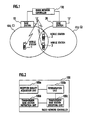
- FIG. 1 is a view showing a configuration of a mobile communication system according to embodiments of the present invention.
- the mobile communication systems according to the embodiments include two base stations 10 and 20 under control of a radio network controller 100.
- the base station 10 manages a cell C1 and the base station 20 manages a cell C2.
- the mobile stations 1 to 3 are located in the cell C1 which is controlled by the base station 10.
- the base station 10 is referred as a "first base station” managing a first cell C1 in which the mobile stations 1 to 3 are located.
- the base station 20 is referred as a "second base station” managing a second cell C2 which is adjacent to the first cell C1.
- the word "cell” used in the embodiments includes the aspects of both conventional cells and sectors.
- the base stations 10 and 20 are configured to be able to transmit same downlink signals to mobile stations 1 to 3 which are located in a plurality of cells C1 and C2.
- the mobile stations 1 to 3 are configured to be able to perform combining process (selective combining process, soft combining process or the like) on the same downlink signals transmitted from the base stations (the first base station 10 and the second base station 20).
- combining process selective combining process, soft combining process or the like
- FIGs. 2 and 3 a mobile communication system according to the first embodiment of the present invention will be described.
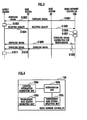
- the radio network controller 100 includes a reception quality acquisition unit 100a, a determination unit 100b, a transmission base station specifying unit 100c and a transmission base station instruction unit 100d.
- the reception quality acquisition unit 100a is configured to acquire a reception quality of a downlink signal in the mobile station 1. Specifically, the reception quality acquisition unit 100a receives the reception quality of the downlink signal (e.g. CRC check results, reception power, reception SIR or the like) periodically reported by the mobile station 1.
- the reception quality of the downlink signal e.g. CRC check results, reception power, reception SIR or the like
- the determination unit 100b is configured to determine whether or not to transmit same downlink signals to the mobile station 1 via the first base station (base station 10) and the second base station, based on the reception quality of the downlink signal acquired by the reception quality acquisition unit 100a.
- the determination unit 100b determines to start transmitting the downlink signal to the mobile station 1 via the second base station when the reception quality of the downlink signal in the mobile station 1 does not satisfy a predetermined reception quality level.
- the determination unit 100b determines to start transmitting the downlink signal to the mobile station 1 via the second base station.
- the determination unit 100b determines that it is not necessary to transmit the downlink signal to the mobile station 1 via the second base station when the reception quality of downlink signal in the mobile station 1 satisfies the predetermined reception quality level.
- the transmission base station specifying unit 100c is configured to specify the second base station managing the second cell adjacent to the first cell C1 in which the mobile station 1 is located, when the determination unit 100b determines to start transmitting the downlink signals to the mobile station 1 via the second base station.
- the base station 20 is specified as the second base station in the present embodiment.
- the transmission base station instruction unit 100d is configured to instruct the specified second base station (base station 20) , which is specified by the transmission base station specifying unit 100c, to transmit the downlink signal to the mobile station 1.
- step S1001 the radio network controller 100 transmits a downlink signal to the first base station (base station 10) managing the first cell C1 in which the mobile station 1 is located.
- step S1002 the base station 10 transmits the downlink signal to the mobile station 1 via a radio communication link.
- the mobile station 1 measures the reception quality of the received downlink signal in step S1003, and periodically reports the measured reception quality to the radio network controller 100 in steps S1004 and S1005.
- step S1006 the radio network controller 100 determines to transmit the same downlink signals to the mobile station 1 via the first base station (base station 10) and the second base station, when it is judged that the reception quality of the downlink signal transmitted from the mobile station 1 does not satisfy a predetermined reception quality level.
- the radio network controller 100 specifies the second base station (base station 20) managing the second cell (cell C2) adjacent to the first cell C1 in which the mobile station 1 is located.
- step S1008 the radio network controller 100 transmits the same downlink signals to the first base station 10 and the second base station 20.
- the radio network controller 100 instructs the second base station 20 to transmit the downlink signal to the mobile station 1.
- step S1009 the second base station 20 transmits the received downlink signal to the mobile station 1 via radio communication link.
- step S1010 the first base station 10 transmits the received downlink signal to the mobile station 1 via a radio communication link.
- step S1011 the mobile station 1 performs selective combining process (or soft combining process) on the same downlink signals received from the first base station 10 and the second base station 20.
- the mobile station 1 when the reception quality of the downlink signal is damaged, the same downlink signals are transmitted via the first base station 10 and the second base station 20.
- the mobile station 1 can perform selective combining process (or soft combining process) and the reception quality of the downlink signal in the mobile station 1 can be improved.
- FIGs. 4 and 5 a mobile communication system according to a second embodiment of the present invention will be described.
- the mobile communication system according to the present embodiment especially the differences from the above-described mobile communication system of the first embodiment, will be explained.
- the radio network controller 100 includes a location information acquisition unit 100e in place of the reception quality acquisition unit 100a.
- the location information acquisition unit 100e is configured to acquire location information of the mobile station 1.
- the location information acquisition unit 100e may acquire location information of the mobile station 1 in use of time difference or direction of radio waves which are transmitted from the mobile station 1 and reach to, or may acquire location information (latitude information or longitude information) of the mobile station 1 in use of the Global Positioning System.
- the location information acquisition unit 100e may acquire location information of the mobile station 1 in every prescribed period of time, or may acquire location information of the mobile station 1 when the mobile station 1 enters in (or leaves from) a predetermined area in the first cell C1.
- the determination unit 100b is configured to determine whether or not to transmit the same downlink signals to the mobile station 1 via the first base station (base station 10) and the second base station, based on the location information of the mobile station 1, which is acquired by the location information acquisition unit 100e.
- the determination unit 100b determines to transmit the same downlink signals to the mobile station 1 via the first base station (base station 10) and the second base station, when it is judged that the mobile station 1 is located in a predetermined area based on the location information of the mobile station 1.
- the determination unit 100b can be configured to determine the location of the mobile station 1 in accordance with the latitude information or the longitude information acquired by the location information acquisition unit 100e.
- the determination unit 100b can be configured to estimate the location of the mobile station 1 in accordance with signals which are transmitted from the mobile station 1 and received at more than three base stations.
- the determination unit 100b can be configured to determine the location of the mobile station 1 in accordance with the location information which the mobile station 1 calculates by using the signal transmitted from more than three base stations and reports to the radio network controller 100.
- an area near the border between the first cell C1 and the second cell C2 e.g. an area within a predetermined distance from the border between the first cell C1 and the second cell C2 can be set as the predetermined area.
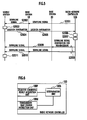
- step S2001 the radio network controller 100 transmits the downlink signal to the first base station (base station 10) managing the first cell C1 in which the mobile station 1 is located.
- step S2002 the base station 10 transmits the downlink signal to the mobile station 1 via a radio communication link.
- step S2003 the mobile station 1 enters into the predetermined area in the first cell C1.
- steps S2004 and S2005 the mobile station 1 reports its location information to the radio network controller 100.
- step S2006 when it is judged that the mobile station 1 is located in the predetermined area based on the received location information of the mobile station 1, the radio network controller 100 determines to transmit the same downlink signals to the mobile station 1 via the first base station (base station 10) and the second base station.
- step S2007 the radio network controller 100 specifies a second base station (base station 20) managing the second cell (cell C2) adjacent to the first cell C1 in which the mobile station 1 is located.
- base station 20 managing the second cell (cell C2) adjacent to the first cell C1 in which the mobile station 1 is located.
- step S2008 the radio network controller 100 transmits the same downlink signals to the first base station 10 and the second base station 20.
- the radio network controller 100 instructs the second base station 20 to transmit the downlink signal to the mobile station 1.
- step S2009 the second base station 20 transmits the received downlink signal to the mobile station 1 via a radio communication link.
- step 52010 the first base station 10 transmits the received downlink signal to the mobile station 1 via a radio communication link.
- step S2011 the mobile station 1 performs selective combining process (or soft combining process) on the same downlink signals which are received via the first base station 10 and the second base station 20.
- the mobile station 1 when the mobile station is located in an area geographically distant from the first base station such as an area near the border between the first cell and the second cell (a predetermined area), the same downlink signals are transmitted via the first base station 10 and the second base station 20. Therefore, the mobile station 1 can perform selective combination process (or soft combining process) and the reception quality of the downlink signal in the mobile station 1 can be improved.
- FIGs. 6 and 7 a mobile communication system according to a third embodiment of the present invention will be described. Especially the mobile communication system of the present embodiment will be explained with its differences from the above-described mobile communication system of the first embodiment.
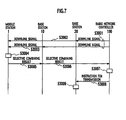
- the radio network controller 100 of the present embodiment includes a selective combining result acquisition unit 100f in place of the reception quality acquisition unit 100a in the radio network controller 100 of the first embodiment.
- the selective combining result acquisition unit 100f is configured to acquire a selective combining result in a mobile station 1. Specifically, the selective combining result acquisition unit 100f acquires information of a base station (e.g. a first base station 10 or a second base station 20) which transmits the downlink signal including downlink information selected in the selective combining process in the mobile station 1.
- a base station e.g. a first base station 10 or a second base station 20
- the selective combining result acquisition unit 100f may be configured to acquire actively the selective combining results in every predetermined period of time, or acquire the selective combining results transmitted from the mobile station 1.
- a determination unit 100b is configured to determine whether or not to transmit same downlink signals to the mobile station 1 via the first base station 10 and the second base station 20, based on the selective combining result acquired by the selective combining result acquisition unit 100f.
- the same downlink signals are transmitted to the mobile station 1 via the first base station 10 and the second base station 20, when the mobile station 1 moves away from the predetermined area, or the communication condition between the mobile station 1 and the second base station 20 is damaged or interrupted.
- the determination unit 100b determines to stop transmitting the downlink signal to the mobile station 1 via the second base station 20, in the case where the mobile station selects the downlink information included in the downlink signal from the first base station 10 predetermined times (e.g. three times) consecutively.
- the determination unit 100b can be configured to determine to stop transmitting the downlink signal to the mobile station 1 via the second base station 20, in the case where the error rate which is measured after the selective combing process on the data channels is smaller than a predetermined threshold, the mobile station 1 can receive signals which satisfy the required power level without receiving signals form a specified base stations.
- the transmission base station instruction unit 100d is configured to instruct the second base station 20, which is transmitting the downlink signal, to stop transmitting the downlink signal to the mobile station 1.
- step S3001 the radio network controller 100 transmits the same downlink signals to the first base station 10 and the second base station 20.
- step S3002 the second base station transmits the received downlink signal to the mobile station 1 via a radio communication link.
- step S3003 the first base station transmits the received downlink signal to the mobile station 1 via a radio communication link.
- step S3004 the mobile station 1 performs selective combining process on the received downlink signals from the first base station 10 and the second base station 20. As shown in the example in FIG. 7, the mobile station 1 selects downlink information included in the downlink signal received from the first base station 10 as reception information.
- step S3005 the mobile station 1 reports, to the radio network controller 100, the selective combining result in step S3004, that is, selective of the downlink information included in the downlink signal received from the first base station 10 as reception information.
- the mobile station 1 may configured to report the selective combining results in every prescribed period of time, or report the selective combining result when the downlink information included in the downlink signal from a same base station is selected as reception information predetermined number of times consecutively.
- step S3007 the radio network controller 100 determines whether or not to transmit the same downlink signals to the mobile station 1 via the first base station 10 and the second base station 20, based on the selective combining result in the mobile station 1.
- the radio network controller 100 determines to stop transmitting the downlink signal to mobile station 1 via the second base station, when the mobile station 1 selects the downlink information included in the downlink signal received via the first base station three times consecutively.
- step S3008 the radio network controller 100 instructs the second base station to stop transmitting the downlink signals to the mobile station 1.
- the transmission of same downlink signal via the second base station 20 is stopped, when the mobile station 1 selects the downlink signals from the first base station consecutively.
- an effective utilization of radio resources can be achieved.
Landscapes
- Engineering & Computer Science (AREA)
- Computer Networks & Wireless Communication (AREA)
- Signal Processing (AREA)
- Mobile Radio Communication Systems (AREA)
Abstract
Description
- This application is based upon and claims the benefit of priority from the prior Japanese Patent Application No. P2004-020449, filed on January 28, 2004; the entire contents of which are incorporated herein by reference.
- The present invention relates to a radio network controller used in a mobile communication system in which same downlink signals can be transmitted to a mobile station via a plurality of base stations, and a mobile communication control method for controlling the mobile communication system.
- In a conventional second-generation mobile communication system, such as PDC (Personal Digital Cellular) system, a "hard handover method" is employed when a mobile station moves between cells (sectors) during mobile communications. In this hard handover method, a radio communication link between the mobile station and a base station which manages the origination cell (sector) of the handover is firstly released, and then a radio communication link between the mobile station and a base station which manages the destination cell (sector) of the handover is set up.
- On the other hand, in a CDMA (Code Division Multiple Access) mobile communication system, a "diversity handover method" is employed when a mobile station moves between cells (sectors) during mobile communications. In this diversity handover method, a radio communication link between the mobile station and a base station which manages the destination cell (sector) of the handover is set up, before a radio communication link between the mobile station and a base station which manages the origination cell (sector) of the handover is released.
- In the diversity handover method, when the mobile station is located in a predetermined area near the border between cells (sectors), the mobile station is configured to set up a plurality of radio communication links so as to communicate with a plurality of base stations which manage those cells (sectors) .
- Further, in the diversity handover method, the mobile station is configured to perform "selective combining process" during the diversity handover process. In the selective combining process, the mobile station selects and receives the most reliable information from among information included in a plurality of downlink signals transmitted from a plurality of base stations, based on reliability information corresponding to reception qualities of those downlink signals (e.g. CRC check results, reception power, reception SIR, or the like).
- However, in such conventional mobile communication systems, even if same downlink signals are transmitted via a plurality of base stations, the mobile station may select information included in a particular downlink signal according to the reception qualities of the downlink signals in the mobile station or location information of the mobile station. As a result, there has been a problem that transmitting those downlink signals, which are not selected by the mobile station, is wasted.
- Further, in such conventional mobile communication systems, except during the diversity handover process, downlink signals are not transmitted via the second base station managing the second cell adjacent to the first cell in which the mobile station is located. Therefore, there has been a problem that the mobile station cannot perform selective combining process even when the reception quality of the downlink signal in the first cell is damaged or the mobile station is located away from the first base station, such as an area near the border between the first cell and the second cell.
- The present invention has been made in view of the above problems, and has an object of providing a radio network controller and a radio communication control method which can improve the reception quality of the downlink signal in the mobile station and utilize radio resources effectively, by transmitting the same downlink signals from both the first radio station and the second base station in accordance with the location information of the mobile station and the reception quality of the downlink signal in the mobile station.
- A first aspect of the present invention is summarized as a radio network controller in a mobile communication system in which same downlink signals can be transmitted to a mobile station via a plurality of base stations. The radio network controller includes an acquirer configured to acquire a reception quality of the downlink signal in the mobile station; a determiner configured to determine, based on an acquired reception quality, whether or not to transmit the same downlink signals to the mobile station via a first base station managing a first cell in which the mobile station is located and a second base station managing a second cell adjacent to the first cell; and an instructor configured to instruct the second base station to transmit the downlink signal to the mobile station.
- A second aspect of the present invention is summarized as a radio network controller in a mobile communication system in which same downlink signals can be transmitted to a mobile station via a plurality of base stations. The radio network controller includes an acquirer configured to acquire location information of the mobile station; a determiner configured to determine, based on acquired location information, whether or not to transmit the same downlink signals to the mobile station via a first base station managing a first cell in which the mobile station is located and a second base station managing a second cell adjacent to the first cell; and an instructor configured to instruct the second base station to transmit the downlink signal to the mobile station.
- In the second aspect, the determiner can be configured to determine to transmit the same downlink signals to the mobile station via the first base station and the second base station, when the determiner judges that the mobile station is located in a predetermined area based on the location information.
- A third aspect of the present invention is summarized as a radio network controller in a mobile communication system in which same downlink signals can be transmitted to a mobile station via a plurality of base stations. The radio network controller includes an acquirer configured to acquire a selective combining result in the mobile station; a determiner configured to determine, based on an acquired selective combining result, whether or not to transmit the same downlink signals to the mobile station via a first base station managing a first cell in which the mobile station is located and a second base station managing a second cell adjacent to the first cell; and an instructor configured to instruct the second base station to stop transmitting the downlink signal to the mobile station.
- A fourth aspect of the present invention is summarized as a mobile communication control method. The method includes measuring, in a mobile station, a reception quality of a downlink signal received via a first base station managing a first cell in which the mobile station is located; acquiring, in a radio network controller, the reception quality in the mobile station; determining, in the radio network controller, based on an acquired reception quality, whether or not to transmit same downlink signals to the mobile station via a first base station managing a first cell in which the mobile station is located and a second base station managing a second cell adjacent to the first cell; instructing, in the radio network controller, the second base station to transmit the downlink signal to the mobile station; and performing, in the mobile station, combining process on the same downlink signals received via the first base station and the second base station.
- A fifth aspect of the present invention is summarized as a mobile communication control method. The method includes acquiring, in a radio network controller, location information of a mobile station; determining, in the radio network controller, based on acquired location information, whether or not to transmit same downlink signals to the mobile station via a first base station managing a first cell in which the mobile station is located and a second base station managing a second cell adjacent to the first cell; instructing, in the radio network controller, the second base station to transmit the downlink signal to the mobile station; and performing, in the mobile station, combining process on the same downlink signals received via the first base station and the second base station.
- A sixth aspect of the present invention is summarized as a mobile communication control method. The method includes performing, in a mobile station, selective combining process on same downlink signals received via a first base station managing a first cell in which the mobile station is located and a second base station managing a second cell adjacent to the first cell; acquiring, in a radio network controller, a result of the selective combining process in the mobile station; determining, in the radio network controller, based on an acquired result of selective combining process, whether or not to transmit the same downlink signals to the mobile station via the first base station and the second base station; and instructing, in the radio network controller, the second base station to stop transmitting the downlink signal to the mobile station.
-
- FIG. 1 is a view of an entire configuration of a mobile communication system according to embodiments of the present invention;
- FIG. 2 is a functional block diagram of a radio network controller according to a first embodiment of the present invention;
- FIG. 3 is a sequence diagram showing a mobile communication control method according to the first embodiment of the present invention;
- FIG. 4 is a functional block diagram of a radio network controller according to a second embodiment of the present invention;
- FIG. 5 is a sequence diagram showing a mobile communication control method according to the second embodiment of the present invention;
- FIG. 6 is a functional block diagram of a radio network controller according to a third embodiment of the present invention; and
- FIG. 7 is a sequence diagram showing a mobile communication control method according to the third embodiment of the present invention.
-
- FIG. 1 is a view showing a configuration of a mobile communication system according to embodiments of the present invention. As shown in FIG. 1, the mobile communication systems according to the embodiments include two
base stations radio network controller 100. Thebase station 10 manages a cell C1 and thebase station 20 manages a cell C2. - Further, in the mobile communication systems according to the embodiments, the mobile stations 1 to 3 are located in the cell C1 which is controlled by the
base station 10. Here, thebase station 10 is referred as a "first base station" managing a first cell C1 in which the mobile stations 1 to 3 are located. Thebase station 20 is referred as a "second base station" managing a second cell C2 which is adjacent to the first cell C1. - Here, the word "cell" used in the embodiments includes the aspects of both conventional cells and sectors. In the mobile communication systems according to the embodiments, the
base stations - The mobile stations 1 to 3 are configured to be able to perform combining process (selective combining process, soft combining process or the like) on the same downlink signals transmitted from the base stations (the
first base station 10 and the second base station 20). - An example of the case where same downlink signals are transmitted to the mobile station 1 via the plurality of
base stations - Referring to FIGs. 2 and 3, a mobile communication system according to the first embodiment of the present invention will be described.
- As shown in FIG. 2, the
radio network controller 100 includes a receptionquality acquisition unit 100a, adetermination unit 100b, a transmission basestation specifying unit 100c and a transmission basestation instruction unit 100d. - The reception
quality acquisition unit 100a is configured to acquire a reception quality of a downlink signal in the mobile station 1. Specifically, the receptionquality acquisition unit 100a receives the reception quality of the downlink signal (e.g. CRC check results, reception power, reception SIR or the like) periodically reported by the mobile station 1. - The
determination unit 100b is configured to determine whether or not to transmit same downlink signals to the mobile station 1 via the first base station (base station 10) and the second base station, based on the reception quality of the downlink signal acquired by the receptionquality acquisition unit 100a. - Specifically, the
determination unit 100b determines to start transmitting the downlink signal to the mobile station 1 via the second base station when the reception quality of the downlink signal in the mobile station 1 does not satisfy a predetermined reception quality level. - For example, in the cases where CRC check processing fails predetermined times (e.g. three times), the power to interference ratio (Ec/N0, SIR, etc.) of a common pilot channel (CPICH) or a data channel is smaller than a predetermined threshold (e.g. -100 dB), the reception power (RSCP: Received signal code power) is smaller than a predetermined threshold (e.g. -100 dBm), or the like, the
determination unit 100b determines to start transmitting the downlink signal to the mobile station 1 via the second base station. - In other words, the
determination unit 100b determines that it is not necessary to transmit the downlink signal to the mobile station 1 via the second base station when the reception quality of downlink signal in the mobile station 1 satisfies the predetermined reception quality level. - The transmission base
station specifying unit 100c is configured to specify the second base station managing the second cell adjacent to the first cell C1 in which the mobile station 1 is located, when thedetermination unit 100b determines to start transmitting the downlink signals to the mobile station 1 via the second base station. Thebase station 20 is specified as the second base station in the present embodiment. - The transmission base
station instruction unit 100d is configured to instruct the specified second base station (base station 20) , which is specified by the transmission basestation specifying unit 100c, to transmit the downlink signal to the mobile station 1. - Referring to FIG. 3, an operation of the mobile communication system according the present embodiment will be described.
- As shown in FIG. 3, in step S1001, the
radio network controller 100 transmits a downlink signal to the first base station (base station 10) managing the first cell C1 in which the mobile station 1 is located. In step S1002, thebase station 10 transmits the downlink signal to the mobile station 1 via a radio communication link. - The mobile station 1 measures the reception quality of the received downlink signal in step S1003, and periodically reports the measured reception quality to the
radio network controller 100 in steps S1004 and S1005. - In step S1006, the
radio network controller 100 determines to transmit the same downlink signals to the mobile station 1 via the first base station (base station 10) and the second base station, when it is judged that the reception quality of the downlink signal transmitted from the mobile station 1 does not satisfy a predetermined reception quality level. - In step S1007, the
radio network controller 100 specifies the second base station (base station 20) managing the second cell (cell C2) adjacent to the first cell C1 in which the mobile station 1 is located. - In step S1008, the
radio network controller 100 transmits the same downlink signals to thefirst base station 10 and thesecond base station 20. Here, theradio network controller 100 instructs thesecond base station 20 to transmit the downlink signal to the mobile station 1. - In step S1009, the
second base station 20 transmits the received downlink signal to the mobile station 1 via radio communication link. In step S1010, thefirst base station 10 transmits the received downlink signal to the mobile station 1 via a radio communication link. - In step S1011, the mobile station 1 performs selective combining process (or soft combining process) on the same downlink signals received from the
first base station 10 and thesecond base station 20. - According to the mobile communication system of the present embodiment, when the reception quality of the downlink signal is damaged, the same downlink signals are transmitted via the
first base station 10 and thesecond base station 20. Thus, the mobile station 1 can perform selective combining process (or soft combining process) and the reception quality of the downlink signal in the mobile station 1 can be improved. - Referring to FIGs. 4 and 5, a mobile communication system according to a second embodiment of the present invention will be described. In the mobile communication system according to the present embodiment, especially the differences from the above-described mobile communication system of the first embodiment, will be explained.
- As shown in FIG. 4, the
radio network controller 100 according to the present embodiment includes a locationinformation acquisition unit 100e in place of the receptionquality acquisition unit 100a. - The location
information acquisition unit 100e is configured to acquire location information of the mobile station 1. The locationinformation acquisition unit 100e, for example, may acquire location information of the mobile station 1 in use of time difference or direction of radio waves which are transmitted from the mobile station 1 and reach to, or may acquire location information (latitude information or longitude information) of the mobile station 1 in use of the Global Positioning System. - Further, the location
information acquisition unit 100e may acquire location information of the mobile station 1 in every prescribed period of time, or may acquire location information of the mobile station 1 when the mobile station 1 enters in (or leaves from) a predetermined area in the first cell C1. - The
determination unit 100b is configured to determine whether or not to transmit the same downlink signals to the mobile station 1 via the first base station (base station 10) and the second base station, based on the location information of the mobile station 1, which is acquired by the locationinformation acquisition unit 100e. - Specifically, the
determination unit 100b determines to transmit the same downlink signals to the mobile station 1 via the first base station (base station 10) and the second base station, when it is judged that the mobile station 1 is located in a predetermined area based on the location information of the mobile station 1. - The
determination unit 100b can be configured to determine the location of the mobile station 1 in accordance with the latitude information or the longitude information acquired by the locationinformation acquisition unit 100e. - The
determination unit 100b can be configured to estimate the location of the mobile station 1 in accordance with signals which are transmitted from the mobile station 1 and received at more than three base stations. - The
determination unit 100b can be configured to determine the location of the mobile station 1 in accordance with the location information which the mobile station 1 calculates by using the signal transmitted from more than three base stations and reports to theradio network controller 100. - Here, an area near the border between the first cell C1 and the second cell C2 (e.g. an area within a predetermined distance from the border between the first cell C1 and the second cell C2) can be set as the predetermined area.
- Referring to FIG. 5, an operation of the mobile communication system according to the present embodiment will be described.
- As shown in FIG. 5, in step S2001, the
radio network controller 100 transmits the downlink signal to the first base station (base station 10) managing the first cell C1 in which the mobile station 1 is located. In step S2002, thebase station 10 transmits the downlink signal to the mobile station 1 via a radio communication link. - In step S2003, the mobile station 1 enters into the predetermined area in the first cell C1. In steps S2004 and S2005, the mobile station 1 reports its location information to the
radio network controller 100. - In step S2006, when it is judged that the mobile station 1 is located in the predetermined area based on the received location information of the mobile station 1, the
radio network controller 100 determines to transmit the same downlink signals to the mobile station 1 via the first base station (base station 10) and the second base station. - In step S2007, the
radio network controller 100 specifies a second base station (base station 20) managing the second cell (cell C2) adjacent to the first cell C1 in which the mobile station 1 is located. - In step S2008, the
radio network controller 100 transmits the same downlink signals to thefirst base station 10 and thesecond base station 20. Here, theradio network controller 100 instructs thesecond base station 20 to transmit the downlink signal to the mobile station 1. - In step S2009, the
second base station 20 transmits the received downlink signal to the mobile station 1 via a radio communication link. In step 52010, thefirst base station 10 transmits the received downlink signal to the mobile station 1 via a radio communication link. - In step S2011, the mobile station 1 performs selective combining process (or soft combining process) on the same downlink signals which are received via the
first base station 10 and thesecond base station 20. - According to the mobile communication system of the present embodiment, when the mobile station is located in an area geographically distant from the first base station such as an area near the border between the first cell and the second cell (a predetermined area), the same downlink signals are transmitted via the
first base station 10 and thesecond base station 20. Therefore, the mobile station 1 can perform selective combination process (or soft combining process) and the reception quality of the downlink signal in the mobile station 1 can be improved. - Referring to FIGs. 6 and 7, a mobile communication system according to a third embodiment of the present invention will be described. Especially the mobile communication system of the present embodiment will be explained with its differences from the above-described mobile communication system of the first embodiment.
- As shown in FIG. 6, the
radio network controller 100 of the present embodiment includes a selective combiningresult acquisition unit 100f in place of the receptionquality acquisition unit 100a in theradio network controller 100 of the first embodiment. - The selective combining
result acquisition unit 100f is configured to acquire a selective combining result in a mobile station 1. Specifically, the selective combiningresult acquisition unit 100f acquires information of a base station (e.g. afirst base station 10 or a second base station 20) which transmits the downlink signal including downlink information selected in the selective combining process in the mobile station 1. - The selective combining
result acquisition unit 100f may be configured to acquire actively the selective combining results in every predetermined period of time, or acquire the selective combining results transmitted from the mobile station 1. - A
determination unit 100b is configured to determine whether or not to transmit same downlink signals to the mobile station 1 via thefirst base station 10 and thesecond base station 20, based on the selective combining result acquired by the selective combiningresult acquisition unit 100f. - For example, the same downlink signals are transmitted to the mobile station 1 via the
first base station 10 and thesecond base station 20, when the mobile station 1 moves away from the predetermined area, or the communication condition between the mobile station 1 and thesecond base station 20 is damaged or interrupted. - The
determination unit 100b determines to stop transmitting the downlink signal to the mobile station 1 via thesecond base station 20, in the case where the mobile station selects the downlink information included in the downlink signal from thefirst base station 10 predetermined times (e.g. three times) consecutively. - The
determination unit 100b can be configured to determine to stop transmitting the downlink signal to the mobile station 1 via thesecond base station 20, in the case where the error rate which is measured after the selective combing process on the data channels is smaller than a predetermined threshold, the mobile station 1 can receive signals which satisfy the required power level without receiving signals form a specified base stations. - The transmission base
station instruction unit 100d is configured to instruct thesecond base station 20, which is transmitting the downlink signal, to stop transmitting the downlink signal to the mobile station 1. - Referring to FIG. 7, an operation of the mobile communication system according to the present embodiment will be described.
- As shown in FIG. 7, in step S3001, the
radio network controller 100 transmits the same downlink signals to thefirst base station 10 and thesecond base station 20. - In step S3002, the second base station transmits the received downlink signal to the mobile station 1 via a radio communication link. In step S3003, the first base station transmits the received downlink signal to the mobile station 1 via a radio communication link.
- In step S3004, the mobile station 1 performs selective combining process on the received downlink signals from the
first base station 10 and thesecond base station 20. As shown in the example in FIG. 7, the mobile station 1 selects downlink information included in the downlink signal received from thefirst base station 10 as reception information. - In steps S3005 and S3006, the mobile station 1 reports, to the
radio network controller 100, the selective combining result in step S3004, that is, selective of the downlink information included in the downlink signal received from thefirst base station 10 as reception information. - Here, the mobile station 1 may configured to report the selective combining results in every prescribed period of time, or report the selective combining result when the downlink information included in the downlink signal from a same base station is selected as reception information predetermined number of times consecutively.
- In step S3007, the
radio network controller 100 determines whether or not to transmit the same downlink signals to the mobile station 1 via thefirst base station 10 and thesecond base station 20, based on the selective combining result in the mobile station 1. - In the example shown in FIG. 7, the
radio network controller 100 determines to stop transmitting the downlink signal to mobile station 1 via the second base station, when the mobile station 1 selects the downlink information included in the downlink signal received via the first base station three times consecutively. - In step S3008, the
radio network controller 100 instructs the second base station to stop transmitting the downlink signals to the mobile station 1. - According to the mobile communication system of the present embodiment, the transmission of same downlink signal via the
second base station 20 is stopped, when the mobile station 1 selects the downlink signals from the first base station consecutively. As a result, an effective utilization of radio resources can be achieved. - Additional advantages and modifications will readily occur to those skilled in the art. Therefore, the invention in its broader aspects is not limited to the specific details and the representative embodiment shown and described herein. Accordingly, various modifications may be made without departing from the spirit or scope of the general inventive concept as defined by the appended claims and their equivalents.
Claims (7)
- A radio network controller in a mobile communication system in which same downlink signals can be transmitted to a mobile station via a plurality of base stations, comprising:an acquirer configured to acquire a reception quality of the downlink signal in the mobile station;a determiner configured to determine, based on an acquired reception quality, whether or not to transmit the same downlink signals to the mobile station via a first base station managing a first cell in which the mobile station is located and a second base station managing a second cell adjacent to the first cell; andan instructor configured to instruct the second base station to transmit the downlink signal to the mobile station.
- A radio network controller in a mobile communication system in which same downlink signals can be transmitted to a mobile station via a plurality of base stations, comprising:an acquirer configured to acquire location information of the mobile station;a determiner configured to determine, based on acquired location information, whether or not to transmit the same downlink signals to the mobile station via a first base station managing a first cell in which the mobile station is located and a second base station managing a second cell adjacent to the first cell; andan instructor configured to instruct the second base station to transmit the downlink signal to the mobile station.
- The radio network controller of claim 2, wherein the determiner is configured to determine to transmit the same downlink signals to the mobile station via the first base station and the second base station, when the determiner judges that the mobile station is located in a predetermined area based on the location information.
- A radio network controller in a mobile communication system in which same downlink signals can be transmitted to a mobile station via a plurality of base stations, comprising:an acquirer configured to acquire a selective combining result in the mobile station;a determiner configured to determine, based on an acquired selective combining result, whether or not to transmit the same downlink signals to the mobile station via a first base station managing a first cell in which the mobile station is located and a second base station managing a second cell adjacent to the first cell; andan instructor configured to instruct the second base station to stop transmitting the downlink signal to the mobile station.
- A mobile communication control method, comprising:measuring, in a mobile station, a reception quality of a downlink signal received via a first base station managing a first cell in which the mobile station is located;acquiring, in a radio network controller, the reception quality in the mobile station;determining, in the radio network controller, based on an acquired reception quality, whether or not to transmit same downlink signals to the mobile station via a first base station managing a first cell in which the mobile station is located and a second base station managing a second cell adjacent to the first cell;instructing, in the radio network controller, the second base station to transmit the downlink signal to the mobile station; andperforming, in the mobile station, combining process on the same downlink signals received via the first base station and the second base station.
- A mobile communication control method, comprising:acquiring, in a radio network controller, location information of a mobile station;determining, in the radio network controller, based on acquired location information, whether or not to transmit same downlink signals to the mobile station via a first base station managing a first cell in which the mobile station is located and a second base station managing a second cell adjacent to the first cell;instructing, in the radio network controller, the second base station to transmit the downlink signal to the mobile station; andperforming, in the mobile station, combining process on the same downlink signals received via the first base station and the second base station.
- A mobile communication control method, comprising:performing, in a mobile station, selective combining process on same downlink signals received via a first base station managing a first cell in which the mobile station is located and a second base station managing a second cell adjacent to the first cell;acquiring, in a radio network controller, a result of the selective combining process in the mobile station;determining, in the radio network controller, based on an acquired result of selective combining process, whether or not to transmit the same downlink signals to the mobile station via the first base station and the second base station; andinstructing, in the radio network controller, the second base station to stop transmitting the downlink signal to the mobile station.
Applications Claiming Priority (2)
| Application Number | Priority Date | Filing Date | Title |
|---|---|---|---|
| JP2004020449 | 2004-01-28 | ||
| JP2004020449 | 2004-01-28 |
Publications (2)
| Publication Number | Publication Date |
|---|---|
| EP1560445A2 true EP1560445A2 (en) | 2005-08-03 |
| EP1560445A3 EP1560445A3 (en) | 2008-06-25 |
Family
ID=34650804
Family Applications (1)
| Application Number | Title | Priority Date | Filing Date |
|---|---|---|---|
| EP05001828A Withdrawn EP1560445A3 (en) | 2004-01-28 | 2005-01-28 | Radio network controller and mobile communication control method |
Country Status (5)
| Country | Link |
|---|---|
| US (1) | US7395092B2 (en) |
| EP (1) | EP1560445A3 (en) |
| JP (1) | JP4163692B2 (en) |
| KR (1) | KR100648609B1 (en) |
| CN (1) | CN100588293C (en) |
Cited By (5)
| Publication number | Priority date | Publication date | Assignee | Title |
|---|---|---|---|---|
| WO2014082658A1 (en) * | 2012-11-27 | 2014-06-05 | Sigram Schindler Beteiligungsgesellschaft Mbh | Handover proactive association provisioning support method and system |
| WO2014082659A1 (en) * | 2012-11-27 | 2014-06-05 | Sigram Schindler Beteiligungsgesellschaft Mbh | Handover proactive association clearing support method and system |
| US8923864B2 (en) | 2011-05-26 | 2014-12-30 | Sigram Schindler Beteiligungsgesellschaft Mbh | Handover proactive association provisioning support method and system |
| US8929909B2 (en) | 2008-01-04 | 2015-01-06 | Sigram Schindler Beteiligungsgesellschaft Mbh | Handover proactive association clearing support method and system |
| JPWO2013190672A1 (en) * | 2012-06-20 | 2016-02-08 | 株式会社日立製作所 | Wireless communication system, method, and apparatus |
Families Citing this family (7)
| Publication number | Priority date | Publication date | Assignee | Title |
|---|---|---|---|---|
| JP4992977B2 (en) * | 2007-10-02 | 2012-08-08 | 富士通株式会社 | HANDOVER CONTROL DEVICE, MOBILE STATION, BASE STATION, HANDOVER CONTROL SERVER, AND HANDOVER CONTROL METHOD |
| US8767541B2 (en) | 2008-02-14 | 2014-07-01 | Qualcomm Incorporated | Scheduling policy-based traffic management |
| US8737314B2 (en) | 2008-02-14 | 2014-05-27 | Qualcomm Incorporated | Traffic management for multi-hop wireless communication |
| US8964651B2 (en) * | 2008-02-14 | 2015-02-24 | Qualcomm Incorporated | Traffic management employing interference management messages |
| KR20140084356A (en) * | 2010-02-22 | 2014-07-04 | 퀄컴 인코포레이티드 | Controlling access point transmit power based on event-triggered access terminal messaging |
| CN103582024B (en) | 2012-08-06 | 2018-01-23 | 华为技术有限公司 | The sending, receiving method and network system and terminal of downstream signal |
| WO2021097767A1 (en) * | 2019-11-21 | 2021-05-27 | 华为技术有限公司 | Data transmission method, apparatus, and system |
Citations (2)
| Publication number | Priority date | Publication date | Assignee | Title |
|---|---|---|---|---|
| WO1998025432A2 (en) | 1996-12-03 | 1998-06-11 | Telefonaktiebolaget Lm Ericsson (Publ) | Seamless soft handoff in a cdma cellular communications system |
| US20030060201A1 (en) | 2001-09-25 | 2003-03-27 | Soliman Samir S. | Method and system for optimizing system-access and soft-handoff parameters based on location information |
Family Cites Families (15)
| Publication number | Priority date | Publication date | Assignee | Title |
|---|---|---|---|---|
| JP3296822B2 (en) * | 1993-06-14 | 2002-07-02 | テレフオンアクチーボラゲツト エル エム エリクソン | Time alignment of transmission in downlink of CDMA system |
| US6157668A (en) * | 1993-10-28 | 2000-12-05 | Qualcomm Inc. | Method and apparatus for reducing the average transmit power of a base station |
| CN1235436C (en) | 1994-05-20 | 2006-01-04 | Ntt移动通信网株式会社 | Moblie communication method and base station side sub-system unit of using reliable information |
| JP2809179B2 (en) * | 1996-03-14 | 1998-10-08 | 日本電気株式会社 | Radio broadcast communication system |
| JPH09261711A (en) | 1996-03-25 | 1997-10-03 | Toshiba Corp | Mobile communication system adopting spread spectrum communication system and mobile station device thereof |
| JP2001025049A (en) | 1999-07-05 | 2001-01-26 | Matsushita Electric Ind Co Ltd | Handover control method and mobile station apparatus implementing the same |
| JP2001045539A (en) | 1999-07-27 | 2001-02-16 | Matsushita Electric Ind Co Ltd | Mobile station test apparatus and method |
| GB2392352B (en) * | 1999-08-20 | 2004-04-28 | Nec Corp | Power control for mobile communications |
| JP2001103529A (en) | 1999-09-30 | 2001-04-13 | Matsushita Electric Ind Co Ltd | Communication terminal device and transmission station selection method |
| JP2002171548A (en) | 2000-11-30 | 2002-06-14 | Ntt Docomo Inc | Multicast service providing method, wireless base station and wireless terminal |
| JP2002232353A (en) | 2001-01-30 | 2002-08-16 | Ntt Docomo Inc | Mobile communication system and transmission power control method, and mobile station apparatus and reception signal processing method thereof |
| JP2003032725A (en) | 2001-07-18 | 2003-01-31 | Ntt Docomo Inc | Radio base station selection method and system in mobile communication system and radio base station |
| JP2003319429A (en) | 2002-04-19 | 2003-11-07 | Matsushita Electric Ind Co Ltd | Wireless communication device and road-vehicle communication system |
| JP3908083B2 (en) | 2002-04-26 | 2007-04-25 | 三菱電機株式会社 | COMMUNICATION SYSTEM, MOBILE DEVICE, BASE STATION, AND RADIO TRANSMISSION CONTROL METHOD |
| US20050070285A1 (en) * | 2003-09-29 | 2005-03-31 | Telefonaktiebolaget Lm Ericsson (Publ) | Handover for use with adaptive antennas |
-
2005
- 2005-01-28 JP JP2005021861A patent/JP4163692B2/en not_active Expired - Fee Related
- 2005-01-28 KR KR1020050008123A patent/KR100648609B1/en not_active Expired - Fee Related
- 2005-01-28 EP EP05001828A patent/EP1560445A3/en not_active Withdrawn
- 2005-01-28 CN CN200510005126A patent/CN100588293C/en not_active Expired - Fee Related
- 2005-01-28 US US11/044,191 patent/US7395092B2/en not_active Expired - Fee Related
Patent Citations (2)
| Publication number | Priority date | Publication date | Assignee | Title |
|---|---|---|---|---|
| WO1998025432A2 (en) | 1996-12-03 | 1998-06-11 | Telefonaktiebolaget Lm Ericsson (Publ) | Seamless soft handoff in a cdma cellular communications system |
| US20030060201A1 (en) | 2001-09-25 | 2003-03-27 | Soliman Samir S. | Method and system for optimizing system-access and soft-handoff parameters based on location information |
Cited By (7)
| Publication number | Priority date | Publication date | Assignee | Title |
|---|---|---|---|---|
| US8929909B2 (en) | 2008-01-04 | 2015-01-06 | Sigram Schindler Beteiligungsgesellschaft Mbh | Handover proactive association clearing support method and system |
| US8923864B2 (en) | 2011-05-26 | 2014-12-30 | Sigram Schindler Beteiligungsgesellschaft Mbh | Handover proactive association provisioning support method and system |
| US9578552B2 (en) | 2011-05-26 | 2017-02-21 | Sigram Schindler Beteiligungsgesellschaft Mbh | Handover proactive association provisioning support method and system |
| US9820192B2 (en) | 2011-05-31 | 2017-11-14 | Sigram Schindler Beteilgungsgesellschaft mbH | Handover proactive association clearing support method and system |
| JPWO2013190672A1 (en) * | 2012-06-20 | 2016-02-08 | 株式会社日立製作所 | Wireless communication system, method, and apparatus |
| WO2014082658A1 (en) * | 2012-11-27 | 2014-06-05 | Sigram Schindler Beteiligungsgesellschaft Mbh | Handover proactive association provisioning support method and system |
| WO2014082659A1 (en) * | 2012-11-27 | 2014-06-05 | Sigram Schindler Beteiligungsgesellschaft Mbh | Handover proactive association clearing support method and system |
Also Published As
| Publication number | Publication date |
|---|---|
| CN100588293C (en) | 2010-02-03 |
| JP2005244963A (en) | 2005-09-08 |
| US7395092B2 (en) | 2008-07-01 |
| EP1560445A3 (en) | 2008-06-25 |
| CN1649282A (en) | 2005-08-03 |
| US20050186916A1 (en) | 2005-08-25 |
| JP4163692B2 (en) | 2008-10-08 |
| KR20050077801A (en) | 2005-08-03 |
| KR100648609B1 (en) | 2006-11-23 |
Similar Documents
| Publication | Publication Date | Title |
|---|---|---|
| US6308072B1 (en) | Method and apparatus for controlling a wireless communication system | |
| KR101475051B1 (en) | Decoupled downlink and uplink | |
| EP2566243B1 (en) | MBMS continuity in cell reselection | |
| EP1343347B1 (en) | A method for mobile intitated handover MIHO in a wireless communication systems. | |
| KR100973107B1 (en) | Method and system for optimizing system-access and soft-handoff parameters based on location information | |
| US9179345B2 (en) | Enhanced dedicated-channel reporting for UMTS | |
| EP1677442B1 (en) | Mobile communication system, mobile station, and radio control device | |
| EP0817517B1 (en) | Handover type judgement scheme for CDMA mobile communication system | |
| US6934546B1 (en) | Method and apparatus for control of soft handoff usage in radiocommunication systems | |
| US20090059861A1 (en) | Blind handover using load compensated measurements | |
| US9137732B2 (en) | Wireless communication system, base station device, and wireless communication route selection method | |
| US7395092B2 (en) | Radio network controller and mobile communication control method | |
| JP4480461B2 (en) | Mobile communication system and radio control apparatus | |
| US20120218946A1 (en) | Mobile communication system, mobile station apparatus and re-connection method | |
| CA2337141C (en) | Adaptive power margin for hard handoffs in code division multiple access based systems | |
| JP4959143B2 (en) | Wireless communication network and method for selecting a base station antenna for connection with a mobile user terminal | |
| EP1367849A1 (en) | A method for performing network control in a wireless communication system and network entity therefore | |
| JP4316805B2 (en) | Method and apparatus for controlling soft handoff use in a wireless communication system | |
| EP2755430B1 (en) | Soft handover techniques | |
| GB2377130A (en) | Handover criteria for mobile transceivers | |
| EP2943003A1 (en) | Small cell base station deployment in cellular networks | |
| AU769348B2 (en) | Method and apparatus for control of soft handoff usage in radiocommunication systems |
Legal Events
| Date | Code | Title | Description |
|---|---|---|---|
| PUAI | Public reference made under article 153(3) epc to a published international application that has entered the european phase |
Free format text: ORIGINAL CODE: 0009012 |
|
| 17P | Request for examination filed |
Effective date: 20050128 |
|
| AK | Designated contracting states |
Kind code of ref document: A2 Designated state(s): AT BE BG CH CY CZ DE DK EE ES FI FR GB GR HU IE IS IT LI LT LU MC NL PL PT RO SE SI SK TR |
|
| AX | Request for extension of the european patent |
Extension state: AL BA HR LV MK YU |
|
| PUAL | Search report despatched |
Free format text: ORIGINAL CODE: 0009013 |
|
| AK | Designated contracting states |
Kind code of ref document: A3 Designated state(s): AT BE BG CH CY CZ DE DK EE ES FI FR GB GR HU IE IS IT LI LT LU MC NL PL PT RO SE SI SK TR |
|
| AX | Request for extension of the european patent |
Extension state: AL BA HR LV MK YU |
|
| AKX | Designation fees paid |
Designated state(s): DE FR GB |
|
| 17Q | First examination report despatched |
Effective date: 20120203 |
|
| RIC1 | Information provided on ipc code assigned before grant |
Ipc: H04B 7/02 20060101AFI20140804BHEP Ipc: H04W 36/18 20090101ALI20140804BHEP |
|
| GRAP | Despatch of communication of intention to grant a patent |
Free format text: ORIGINAL CODE: EPIDOSNIGR1 |
|
| INTG | Intention to grant announced |
Effective date: 20141002 |
|
| RIN1 | Information on inventor provided before grant (corrected) |
Inventor name: MOON, SUNG UK, C/O INTELL. PROPERTY DEPARTMENT Inventor name: NAKAMURA, TAKEHIRO, C/O INTELL. PROPERTY DEPT. Inventor name: ISHII, MINAMI, C/O INTELL. PROPERTY DEPARTMENT |
|
| STAA | Information on the status of an ep patent application or granted ep patent |
Free format text: STATUS: THE APPLICATION IS DEEMED TO BE WITHDRAWN |
|
| 18D | Application deemed to be withdrawn |
Effective date: 20150213 |