EP1559003B1 - Carte a microcircuit comportant des moyens de publication de ses objets informatiques - Google Patents
Carte a microcircuit comportant des moyens de publication de ses objets informatiques Download PDFInfo
- Publication number
- EP1559003B1 EP1559003B1 EP03767872.9A EP03767872A EP1559003B1 EP 1559003 B1 EP1559003 B1 EP 1559003B1 EP 03767872 A EP03767872 A EP 03767872A EP 1559003 B1 EP1559003 B1 EP 1559003B1
- Authority
- EP
- European Patent Office
- Prior art keywords
- card
- computer
- local
- microcircuit
- terminal
- Prior art date
- Legal status (The legal status is an assumption and is not a legal conclusion. Google has not performed a legal analysis and makes no representation as to the accuracy of the status listed.)
- Expired - Lifetime
Links
Images
Classifications
-
- G—PHYSICS
- G07—CHECKING-DEVICES
- G07F—COIN-FREED OR LIKE APPARATUS
- G07F7/00—Mechanisms actuated by objects other than coins to free or to actuate vending, hiring, coin or paper currency dispensing or refunding apparatus
- G07F7/08—Mechanisms actuated by objects other than coins to free or to actuate vending, hiring, coin or paper currency dispensing or refunding apparatus by coded identity card or credit card or other personal identification means
- G07F7/10—Mechanisms actuated by objects other than coins to free or to actuate vending, hiring, coin or paper currency dispensing or refunding apparatus by coded identity card or credit card or other personal identification means together with a coded signal, e.g. in the form of personal identification information, like personal identification number [PIN] or biometric data
- G07F7/1008—Active credit-cards provided with means to personalise their use, e.g. with PIN-introduction/comparison system
-
- G—PHYSICS
- G06—COMPUTING OR CALCULATING; COUNTING
- G06F—ELECTRIC DIGITAL DATA PROCESSING
- G06F9/00—Arrangements for program control, e.g. control units
- G06F9/06—Arrangements for program control, e.g. control units using stored programs, i.e. using an internal store of processing equipment to receive or retain programs
- G06F9/44—Arrangements for executing specific programs
- G06F9/445—Program loading or initiating
- G06F9/44521—Dynamic linking or loading; Link editing at or after load time, e.g. Java class loading
-
- G—PHYSICS
- G06—COMPUTING OR CALCULATING; COUNTING
- G06Q—INFORMATION AND COMMUNICATION TECHNOLOGY [ICT] SPECIALLY ADAPTED FOR ADMINISTRATIVE, COMMERCIAL, FINANCIAL, MANAGERIAL OR SUPERVISORY PURPOSES; SYSTEMS OR METHODS SPECIALLY ADAPTED FOR ADMINISTRATIVE, COMMERCIAL, FINANCIAL, MANAGERIAL OR SUPERVISORY PURPOSES, NOT OTHERWISE PROVIDED FOR
- G06Q20/00—Payment architectures, schemes or protocols
- G06Q20/30—Payment architectures, schemes or protocols characterised by the use of specific devices or networks
- G06Q20/34—Payment architectures, schemes or protocols characterised by the use of specific devices or networks using cards, e.g. integrated circuit [IC] cards or magnetic cards
- G06Q20/355—Personalisation of cards for use
- G06Q20/3552—Downloading or loading of personalisation data
Definitions
- the present invention relates to a microcircuit card of the type that can be inserted in a computer system, the card comprising a data processing host system (processor, memory, ...) and at least one computer object (software program, variable , file, ...) used by this host system.
- a data processing host system processor, memory, 10.1.1.1
- a computer object software program, variable , file, 10.1.1.1
- the Java Card 2.2 standard defines an object language making it possible to simplify the development of software applications running on a microcircuit card.
- the host system of the microcircuit card traditionally comprises an operating system (OS, "Operating System” in English) etched in a read-only memory (ROM) of the card, this operating system comprising a Java Card virtual machine (JVM ).
- OS operating system
- ROM read-only memory
- JVM Java Card virtual machine
- communication between the host system of the card and the terminal is performed using a rudimentary standard communication protocol.
- the information exchanged between the host system and the terminal is coded in hexadecimal and placed in an array of bytes which constitutes either a command message from the terminal to the card, or a response message from the card to the terminal.
- a command or response message is called APDU ("Application Protocol Data Unit" in English).
- this mechanism does not allow easy manipulation of the objects of the card by an application running on a terminal system or a third party system.
- the invention relates to a terminal-type computer equipment comprising means adapted to implement a software application comprising at least a first instruction for using at least one computer object in a microcircuit card, the first statement using a logical identifier of this object.
- the terminal is characterized in that it comprises means for obtaining, from said logical identifier, at least a second local reference of said computer object by sending a message comprising said logical identifier to said card, said at least one second local reference being obtained by the microcircuit card from a first reference of said local computer object to said card, said first local reference and said logical identifier being in a register of said card, said second local reference of said computer object being temporary and being obtained by encrypting the first local reference of said computer object using an encryption key of the microcircuit card; means for translating said at least one first instruction into at least one second instruction executable on said card, said at least one second instruction using said at least one second local reference of said computer object; and communication means adapted to communicate said at least one second instruction to said card for said use.
- a software application running on the terminal may include instructions for executing a computer object of the card, these instructions using a logical identifier of this object instead of the local reference to the card.
- this software application may comprise high level instructions for the exchange of information between the terminal and the host system of the card, these high level instructions being translated by the abovementioned translation means into APDU messages. .
- the present invention thus facilitates the development of software applications running on the terminal, the developer having neither to know the hexadecimal codes to address the objects of the microcircuit card, nor to code the APDU commands.
- the computer object of the microcircuit card may especially be a computer program, a variable or a computer file.
- the microcircuit card further comprises means for publishing the logical identifier and the first local reference in the card register.
- the register of the card is created once and for all, that is statically at the time of creation of the microcircuit card.
- the publication means allow the dynamic publication of the logical identifier and the first local reference of the computer object in the register of the card.
- the computer objects needed at a given moment are accessible to the software applications running on the terminal.
- the computer object is a Java Card object belonging to a Java Card applet
- the second local reference of the computer object conforms to the Java Card 2.2 standard.
- the means for obtaining the terminal computer equipment are adapted to obtain from the microcircuit card this second local reference compliant with the Java Card 2.2 standard.
- the publication is done at the initialization of this applet.
- This preferred embodiment allows the developer of the Java applet running on the host system of the microcircuit card, the ability to make each computer object of this applet, accessible or not to software applications running on the terminal.
- the communication means are adapted to communicate an identifier of the applet on receipt of the first message.
- the identifier of the applet is obtained without the programmer needing to know his hexadecimal code. In accordance with the Java Card 2.2 standard, this identifier is necessary for later use of the computer objects of this applet.
- the communication means of the card communicate, on receipt of a second message, all the logical identifiers included in the register of the card.
- This variant is particularly advantageous because it allows the terminal system to know all the computer objects published by the microcircuit card and the different versions of these objects.
- the second local reference communicated by the communication means of the microcircuit card is the first local reference of the computer object itself.
- this second local reference is temporary and is obtained by encrypting the first local reference using an encryption key of the microcircuit card.
- the second local reference can only be used for a session defined by the selection of the applet.
- This preferred embodiment makes it possible to increase the security of the card, in accordance with the recommendations of the Java Card 2.2 standard, in order to guard against attacks by "replay", that is to say attacks aimed at fraudulently using the object. of the map, reusing its reference, without selecting the applet implementing this object.
- the terminal further comprises means for publishing in one of its registers a buffer object having an interface identical to that of the computer object of the card, this buffer object being adapted to translate an instruction executing on a third party system and using the logical identifier, in at least one second instruction that can be executed on the card and using the second local reference.
- This preferred embodiment allows the use of the computer objects of the microcircuit card by a software application running on a third party networked system with the terminal of the card.
- this register conforms to the "Java2 SE RMI Registry” standard.
- the publication means obtains and publishes in this register of the terminal system all the buffer objects of the computing objects published by said card.
- This variant is particularly advantageous because it allows the third party system to know all the computer objects published by the microcircuit card and the different versions of these objects.
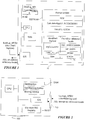
- the figure 1 represents a microcircuit card 10 according to the present invention.
- This card 10 comprises a data processing host system comprising a CPU processor, conventionally associated with a ROM, a volatile memory RAM, and a rewritable non-volatile memory EEPROM.
- the ROM comprises an operating system OS, this OS operating system comprising a Java Card JVM virtual machine.
- the microcircuit card 10 comprises input / output I / O means adapted to transmit digital data to a terminal and to receive digital data from this terminal.
- These input / output means I / O are for example constituted by a serial port known to those skilled in the art.
- the microcircuit card 10 described here comprises three computer objects.
- the microcircuit card 10 thus comprises a first computer object, namely a computer program belonging to a Java Card CalculatorApplet applet whose code, given in Appendix A, is stored in a rewritable memory EEPPROM.
- This computer object has a first reference 0060H local to the card 10 according to the Java Card standard. According to the prior art, the programmer of a software application running on the terminal must use this reference 0060H to execute this program on the card.
- this computer program also comprises a logic identifier "myCalculator" that can be used by a programmer of the terminal computer system instead of the reference 0060H.
- the microcircuit card 10 comprises a second computer object, namely a file stored in the rewritable non-volatile memory EEPROM.
- the word "file” in this document must be understood in a broad sense, this word designating both a file and a directory.
- the word file will designate in particular a directory DF (Dedicated file) and an EF file (Elementary File) within the meaning of ISO7816.
- the file comprises, in accordance with the ISO7816 standard, a first local reference to the card called FID (File Identifier) coded on two bytes in hexadecimal, or in the example described here "3F00H".
- FID Frazier Identifier
- this file comprises a logical identifier "CARD_HOLDER”.
- the microcircuit card 10 includes a third computer object, namely a variable (or "data object") in a register of the EEPROM rewritable memory.
- This variable has a first local reference to the hexadecimal double-byte card, in the example described here "0050H". It will be assumed that this variable is used to memorize a date.
- this variable comprises a logical identifier, here the string "date”.
- the microcircuit card includes a file storing a table having a line for each computer object accessible by a software application running on a terminal computer system or on a third party computer system.
- the microcircuit card 10 includes a CardManager application stored for example in ROM.
- the CardManager application is adapted, using the input / output means I / O, to exchange messages consisting of APDU commands and responses with the terminal computer system in which the microcircuit card is inserted.
- This CardManager application is also adapted to communicate to the terminal, using the file 20, a second local reference of the computer object, upon receipt of the Lookup_APDU message.
- the CardManager application extracts the logical identifier contained in the APDU message, searches the file containing this logical identifier in its second column and obtains the first local reference contained in the second column of this same line.
- the first local reference thus obtained is then encrypted with a function K which uses a KEY encryption key stored in rewritable memory EEPROM, which thus makes it possible to obtain a second local reference communicated to the terminal by the user.
- CardManager application uses a KEY encryption key stored in rewritable memory EEPROM, which thus makes it possible to obtain a second local reference communicated to the terminal by the user.
- the second local reference communicated to the terminal is the first local reference itself.
- the communication means are adapted to communicate, on receipt of a message comprising the logical identifier of a computer object conforming to the Java Card 2.2 standard, the AID identifier of the Java Card applet. CalculatorApplet with this computer object, for example the reference A000000000H.
- the CardManager application also provides the name Calculator for the computer object interface.
- the file 20 is built statically, at the time of creation of the card. This is for example a table stored in the ROM ROM.
- the file 20 is dynamically updated.
- the microcircuit card 10 includes means for publishing the logical identifier and the first local reference in the file 20 of the card.
- Binding_API stored in ROM memory
- Binding_API comprising a computer instruction bind
- an example of use for the publication of the program "myCalculator” is given on the line A33 of the Annex A.
- the terminal 100 is constituted by a PC personal computer, comprising means 110 for insertion of a microcircuit card 10 as described above with reference to the figure 1 .
- This terminal 100 comprises in particular known means for the implementation of a software application, namely a CPU processor associated with ROM and RAM memories and a hard disk DISK.
- the terminal 100 also comprises input / output I / O means adapted to transmit digital data to a microcircuit card according to the invention, and to receive data from such a card.
- These input / output means I / O are for example constituted by a serial port known to those skilled in the art.
- the terminal 100 can implement a software application DesktopApp stored in the hard disk DISK comprising at least a first instruction to use a computer object in a microcircuit card, this first instruction using the logical identifier of this object.
- a software application DesktopApp stored in the hard disk DISK comprising at least a first instruction to use a computer object in a microcircuit card, this first instruction using the logical identifier of this object.
- the code for the DesktopApp software application is given in lines B21 to B31 of Annex B. This code comprises in particular a line B23 using the logical identifier "myCalculator" of the computer program defined above with reference to the figure 1 .
- the terminal computer equipment 100 comprises means for obtaining, from this logical identifier, in cooperation with the input-output means I / O, a second local reference.
- This second local reference is obtained by the microcircuit card 10 from a first reference of the local computer object to the microcircuit card.
- these obtaining means are realized by a CardNaming.lookup program stored on the hard disk DISK, and whose source code is given in lines B12 to B20 of Appendix B.
- the CardNaming.cardManagerLookup method constructs a first APDU command containing the logical identifier myCalculator and sends this APDU command to the adapter.
- the card returns the corresponding AID, which is A000000000H.
- This first APDU command causes the map of the Lookup_AID instruction of the CardManager application to be executed on the card which obtains from the file 20 the value of the AID associated with the logical identifier myCalculator.
- the first APDU command is sent (after sending an APDU command to select the CardManager application, in accordance with the ISO7816 standard) by the CardNaming.cardManagerLookup method using the CardService class predefined by the OCF consortium. (Open Card Framework) for sending APDUs to a card.
- the syntax of this APDU command is given in Appendix C.
- the CardNaming.appletLookup program sends a second APDU command with two input parameters, namely the identifier AID (AOOOOOOOOOH) of the applet obtained previously and the logical identifier myCalculator of the computer object of the map.
- B 15 byte ref CardNaming.appletLookup AID , " myCalculator " ;
- This second APDU command whose syntax is given in appendix D , causes the map of the lookup_reference instruction of the CardManager application to be executed on the card, which obtains, from the file 20, the first local reference 0060H associated with the logical identifier myCalculator, then calculates the second local reference 0460h.
- the terminal computer equipment 100 further comprises means for translating the first instruction into at least a second instruction that can be executed on said card, this second instruction using said at least one second local reference.
- the translation means when the software application DesktopApp wishes to modify the contents of the variable of the microcircuit card 10 whose identifier logic is "date" with the value "01/01/2002", the translation means generate a second instruction, in the form of a Put_data APDU command, whose syntax is given in appendix E. This statement uses the first 0050H local reference of this object.
- the translation means are constituted by a proxy object created from the second local reference of the previously obtained object (0460H).
- the proxy object is an instance of the Proxy class known to those skilled in the art, and defined by Java 2 TM platform, Standard Edition V1.3.
- CardHandler class that includes an invoke method that allows the translation of method calls in cooperation with the proxy object.
- the invoke method uses the CardService class defined by the Open Card Framework (OCF) consortium.
- OCF Open Card Framework
- the pseudo code for the CardHandler class is given in lines B1 to B11 of Appendix B.
- the proxy object is built (lines B16 and B17) and returned (line B18) by the CardNaming.lookup method.
- the second reference ref, local to the map, of this translation calculator object is stored by the manufacturer of the CardHandler class described above (line B4, Appendix B).
- the translation object calculator can then be used in a program of the terminal to execute methods of the object of the microcircuit card whose logical reference is "myCalculator".
- the developer of such a program can for example write the line B24 of Appendix B to execute, on the microcircuit card, the addition of the numbers 5 and 6.
- the CalculatorApplet applet was selected at the time of the execution of the B15 line.
- the invoke statement thus communicated to the CalculatorApplet applet using this APDU command triggers the execution of the add method with parameters 5 and 6.
- the present invention further allows a software application running on a third party system to access a computer object of the microcircuit card using its logical identifier, when the card is inserted in a terminal connected to this third party system by a telecommunications network.
- the terminal computer equipment 100 includes means for publishing in a "Standard RMI Registry" register of a volatile RAM memory of this terminal, a remoteCalculator buffer object, presenting a interface identical to that of the computer object of the microcircuit card, and allowing a computer application running on a third party system, to use this computer object.
- an intermediate object calculator_invoker is first created (line B25, appendix B) from the translation object calculator described above.
- the object calculator_invoker belongs to the class InvokerImpl, this class being itself a UnicastRemoteObject class known to those skilled in the art and implementing the RMI mechanisms of Java SE 1.3.
- the code for the InvokerImpl class is given in Appendix F, lines F3 to F8.
- the intermediate object calculator_invoker includes the translation object calculator and an invokeMethod method, this method invokeMethod implementing a mechanism for translating calls to the methods of the calculator object, using the reflectivity mechanism of the Java language (line F7).
- the calculator_invoker object created on line B25 is an RMI object stored in the "Standard RMI Registry" terminal register, but it does not have the methods of the computer objects present on the microcircuit card. In particular, it does not have the add method.
- the "Standard RMI Registry" terminal register the remoteCalculator buffer object (lines B27 to B29) that implements the object's methods. of the card whose logical identifier is "myCalculator", this remoteCalculator object being also identified by the logical identifier "myCalculator” (line B29).
- the remoteCalculator object also contains the logical identifier and the RMI caller means to the intermediate object calculator_invoker, as can be seen in the code of the class InvokerHandler line F9 to F15.
- the remoteCalculator buffer object is adapted, by using the calculator_invoker object to translate an instruction executing on the third party system and using said logical identifier, into at least a second instruction that can be executed on said card and using the second reference local (0460H).
- Calculator calculator_tiers Calculator Naming . lookup "MyCalculator”
- the Naming.lookup method of Java2 SE reads the remoteCalculator buffer object from the terminal system's "Standard RMI registry", rebuilds it in the third-party system, and assigns it to the calculator_tiers object.
- the third-party system software application can then use the object calculator_tiers to access the corresponding object of the microcircuit card 10 via the intermediary object calculator_invoker of the terminal system.
- the computer objects of the microcircuit card 10 can be used on a third computer system connected in a network to the terminal computer system 100.
- the terminal system also provides the publication means described above for the publication of the calculator object in the form of a Java BindingService class whose The main instructions necessary for understanding are given in Annex F, lines F16 to F30.
- BindingService publication means are in particular adapted to obtain and publish in the "standard RMI Registry" register of the terminal the set of buffer objects of the computer objects published by the microcircuit card.
- the BindingService publication means use for this purpose the APDU get_bound_objects_APDU command whose syntax is given in Appendix G.
- ANNEX A A1 public interface Calculator extends Remote ⁇ A2 short add (short a, short b) throws RemoteException;
- A3 ⁇ A10 public class Calculatorlmpl extends CardRemoteObject implements Calculator ⁇ A11 public CalculatorImpl () ⁇ super (); ⁇ AT 12 short add (shorts a, short b) throws RemoteException ⁇ A13 return (short) (a + b);
- A14 ⁇ A15 ⁇ A20 public class CalculatorApplet extends Applet ⁇ A21 private Dispatcher dispatcher;
- A22 private final static byte CALCULATOR ⁇ (byte) m, (byte) y, (byte) C, (byte) a, (byte) l A23 , (byte) c, (byte) u, (byte) l, (byte) a, (byte) t, (byte) o, (byte) r ⁇ ;
- A30 private CalculatorApplet ⁇ A31 Calculator calculator new
- ANNEX H get_bound_objects APDU Field name (ISO 7816) Value in hexadecimal Description of the contents of the fields CLA 80h Proprietary class of call INS 44h Get_bound_objects statement P1 00h No parameter P2 00h No parameter The 00h Expected size of response
Landscapes
- Engineering & Computer Science (AREA)
- Software Systems (AREA)
- Physics & Mathematics (AREA)
- General Physics & Mathematics (AREA)
- Theoretical Computer Science (AREA)
- Business, Economics & Management (AREA)
- Microelectronics & Electronic Packaging (AREA)
- Computer Networks & Wireless Communication (AREA)
- General Engineering & Computer Science (AREA)
- Accounting & Taxation (AREA)
- Strategic Management (AREA)
- General Business, Economics & Management (AREA)
- Stored Programmes (AREA)
- Credit Cards Or The Like (AREA)
Description
- La présente invention concerne une carte à microcircuit du type de celles pouvant être insérées dans un système informatique, la carte comportant un système hôte de traitement de données (processeur, mémoires,...) et au moins un objet informatique (programme logicielle, variable, fichier,...) utilisé par ce système hôte.
- Dans la suite de ce document on conviendra d'appeler :
- "terminal", le système informatique comportant un lecteur de carte à microcircuit dans lequel la carte est insérée. Le terminal peut par exemple être un ordinateur personnel (PC), un appareil de télécommunications (téléphone, assistant personnel,...) ou un système de traitement de données numériques conçu pour effectuer un traitement particulier, par exemple des traitements cryptographiques ;
- "système tiers", un système informatique relié au terminal tel que défini ci-dessus par un réseau de télécommunications (réseau local, réseau Internet ou autre).
- De façon connue, la norme Java Card 2.2 définit un langage à objets permettant de simplifier le développement d'applications logicielles s'exécutant sur une carte à microcircuit. Le système hôte de la carte à microcircuit comporte traditionnellement un système d'exploitation (OS, "Operating System" en anglais) gravé dans une mémoire morte (ROM) de la carte, ce système d'exploitation comportant une machine virtuelle Java Card (JVM).
- Selon cette norme, la communication entre le système hôte de la carte et le terminal s'effectue au moyen d'un protocole de communication standard rudimentaire.
- Plus précisément, les informations échangées entre le système hôte et le terminal sont codées en hexadécimal et placées dans un tableau d'octets qui constitue soit un message de commande du terminal vers la carte, soit un message de réponse de la carte vers le terminal. Un tel message de commande ou de réponse est appelé APDU ("Application Protocol Data Unit" en anglais).
- Malheureusement, la norme Java Card 2.2 ne permet pas de publier la liste des objets informatiques accessibles sur la carte.
- Cette contrainte rend très difficile le développement d'applications logicielles s'exécutant sur un système terminal ou un système tiers. En effet, le développement d'applications logicielles s'exécutant sur un tel système nécessite le codage fastidieux des APDU, et en particulier la connaissance des codes hexadécimaux pour adresser les objets de la carte. Un exemple d'application logicielle conforme au standard Java Card 2.2 est donné à titre d'exemple à l'annexe A.
- De même, il est connu du document
EP 0 964 370 un mécanisme de chargement d'instructions et d'informations de lien dans une carte à microcircuit. Les informations de lien sont fournies à la carte à microcircuit de manière entrelacée avec les instructions. Un programme d'édition de lien est exécuté pendant le chargement afin de remplacer des références logiques des instructions par des références locales et relatives dans la carte à microcircuit. Pour ce faire, une table d'allocation interne à la carte à puce permet d'indiquer à des instructions l'adresse de renvoi de cette instruction. - Toutefois, ce mécanisme ne permet pas une manipulation aisée des objets de la carte par une application s'exécutant sur un système terminal ou un système tiers.
- La présente invention vise à résoudre les problèmes précités. Plus précisément, et selon un premier aspect, l'invention vise une carte à microcircuit comportant au moins un objet informatique, la carte étant caractérisée en ce qu'elle comporte :
- un registre comportant un identifiant logique dudit objet informatique et au moins une première référence dudit objet informatique locale à ladite carte; et
- des moyens adaptés à communiquer à un terminal, sur réception d'un premier message provenant du terminal comportant ledit identifiant logique, au moins une deuxième référence locale dudit objet informatique obtenue à partir de ladite au moins une première référence locale dudit objet informatique, ladite deuxième référence locale dudit objet informatique étant temporaire et étant obtenue par cryptage de la première référence locale dudit objet informatique en utilisant une clef de cryptage de la carte à microcircuit.
- Corrélativement, et selon un deuxième aspect, l'invention vise un équipement informatique de type terminal comportant des moyens adaptés à mettre en oeuvre une application logicielle comportant au moins une première instruction pour utiliser au moins un objet informatique dans une carte à microcircuit, la première instruction utilisant un identifiant logique de cet objet. Le terminal est caractérisé en ce qu'il comporte des moyens d'obtention, à partir dudit identifiant logique, d'au moins une deuxième référence locale dudit objet informatique par envoi d'un message comportant ledit identifiant logique à ladite carte, ladite au moins deuxième référence locale étant obtenue par la carte à microcircuit à partir d'une première référence dudit objet informatique locale à ladite carte, ladite première référence locale et ledit identifiant logique étant dans un registre de ladite carte, ladite deuxième référence locale dudit objet informatique étant temporaire et étant obtenue par cryptage de la première référence locale dudit objet informatique en utilisant une clef de cryptage de la carte à microcircuit; des moyens de traduction de ladite au moins une première instruction en au moins une deuxième instruction pouvant être exécutée sur ladite carte, ladite au moins une deuxième instruction utilisant ladite au moins une deuxième référence locale dudit objet informatique; et des moyens de communication adaptés à communiquer ladite au moins une deuxième instruction à ladite carte en vue de ladite utilisation.
- Ainsi, une application logicielle s'exécutant sur le terminal peut comporter des instructions pour exécuter un objet informatique de la carte, ces instructions utilisant un identifiant logique de cet objet au lieu de la référence locale à la carte.
- D'autre part, cette application logicielle peut comporter des instructions de haut niveau pour l'échange d'informations entre le terminal et le système hôte de la carte, ces instructions de haut niveau étant traduites, par les moyens de traduction précités en messages APDU.
- La présente invention facilite ainsi le développement d'applications logicielles s'exécutant sur le terminal, le développeur n'ayant ni à connaître les codes hexadécimaux pour adresser les objets de la carte à microcircuit, ni à coder les commandes APDU.
- Il est décrit dans les présentations intitulées « Developing and deploying Java Card applications» de J.J. Vandewalle et «Service Registry for Open Smart Cards» de A. Macaire, des mécanismes tels que Java Card, JINI et JNDI qui permettent l'appel d'objets dans une carte à puce.
- L'objet informatique de la carte à microcircuit peut notamment être un programme informatique, une variable ou un fichier informatique.
- Selon une caractéristique avantageuse, la carte à microcircuit comporte en outre des moyens de publication de l'identifiant logique et de la première référence locale dans le registre de la carte.
- Dans un premier mode de réalisation, le registre de la carte est créé une fois pour toutes, c'est à dire de façon statique au moment de la création de la carte à microcircuit.
- En revanche, dans un mode préféré de réalisation conforme à la présente invention, les moyens de publication permettent la publication dynamique de l'identifiant logique et de la première référence locale de l'objet informatique dans le registre de la carte. Ainsi, seuls les objets informatiques nécessaires à un moment donné sont accessibles aux applications logicielles s'exécutant sur le terminal.
- Dans un mode préféré de réalisation, l'objet informatique est un objet de type Java Card appartenant à une applet Java Card, et la deuxième référence locale de l'objet informatique est conforme à la norme Java Card 2.2. Dans ce mode préféré de réalisation, les moyens d'obtention de l'équipement informatique terminal sont adaptés à obtenir de la carte à microcircuit cette deuxième référence locale conforme à la norme Java Card 2.2.
- Préférentiellement, la publication est effectuée à l'initialisation de cette applet.
- Ce mode préféré de réalisation laisse au développeur de l'applet Java s'exécutant sur le système hôte de la carte à microcircuit, la possibilité de rendre chaque objet informatique de cette applet, accessible ou non aux applications logicielles s'exécutant sur le terminal.
- Dans une variante de ce mode préféré de réalisation, les moyens de communication sont adaptés à communiquer un identifiant de l'applet sur réception du premier message.
- On obtient ainsi dans cette variante l'identifiant de l'applet sans que le programmeur n'ait besoin de connaître son code hexadécimal. Conformément à la norme Java Card 2.2, cet identifiant est nécessaire pour pouvoir utiliser ultérieurement, les objets informatiques de cette applet.
- Dans une autre variante préférée de réalisation de la carte à microcircuit selon l'invention, les moyens de communication de la carte communiquent, sur réception d'un deuxième message, l'ensemble des identifiants logiques compris dans le registre de la carte.
- Cette variante est particulièrement avantageuse car elle permet au système terminal de connaître tous les objets informatiques publiés par la carte à microcircuit et les différentes versions de ces objets.
- Dans une première variante de réalisation, la deuxième référence locale communiqué par les moyens de communication de la carte à microcircuit est la première référence locale de l'objet informatique proprement dite.
- Dans une variante préférée de réalisation, cette deuxième référence locale est temporaire et est obtenue par cryptage de la première référence locale en utilisant une clef de cryptage de la carte à microcircuit.
- Ainsi, la deuxième référence locale ne peut être utilisée que pour une session définie par la sélection de l'applet. Cette variante préférée de réalisation permet d'augmenter la sécurité de la carte, conformément aux recommandations de la norme Java Card 2.2, afin de se prémunir de attaques par "rejeux", c'est à dire des attaques visant à utiliser frauduleusement l'objet de la carte, en réutilisant sa référence, sans sélectionner l'applet implémentant cet objet.
- Dans un mode préféré de réalisation, le terminal comporte en outre des moyens de publication dans un de ses registres d'un objet tampon comportant une interface identique à celle de l'objet informatique de la carte, cet objet tampon étant adapté à traduire une instruction s'exécutant sur un système tiers et utilisant l'identifiant logique, en au moins une deuxième instruction pouvant être exécutée sur la carte et utilisant la deuxième référence locale.
- Ce mode préféré de réalisation permet l'utilisation des objets informatiques de la carte à microcircuit par une application logicielle s'exécutant sur un système tiers en réseau avec le terminal de la carte.
- Préférentiellement, ce registre est conforme au standard "Java2 SE RMI Registry".
- Dans une variante préférée de ce mode de réalisation, les moyens de publication obtiennent et publient dans ce registre du système terminal l'ensemble des objets tampons des objets informatiques publiés par ladite carte.
- Cette variante est particulièrement avantageuse car elle permet au système tiers de connaître tous les objets informatiques publiés par la carte à microcircuit et les différentes versions de ces objets.
- L'invention sera mieux comprise et d'autres avantages apparaîtront plus clairement à la lumière de la description qui va suivre d'une carte à microcircuit et d'un système informatique terminal conformes à son principe, cette description étant donnée uniquement à titre d'exemple et faite en référence aux dessins annexés dans lesquels :
- la
figure 1 est un schéma bloc d'une carte à microcircuit conforme à la présente invention, dans un mode particulier de réalisation ; et - la
figure 2 est un schéma bloc d'un système informatique terminal conforme à l'invention dans un mode préféré de réalisation. - Par ailleurs la description est accompagnée des annexes suivantes :
- annexe A : code source d'une applet Java Card de la carte à microcircuit de la
figure 1 ; - annexe B : première partie du code source d'un code client du système informatique terminal de la
figure 2 ; - annexe C : tableau de syntaxe d'une commande APDU pour obtenir l'identificateur d'une applet;
- annexe D : tableau de syntaxe d'une commande APDU pour obtenir la référence d'un objet;
- annexe E : tableau de syntaxe d'une commande APDU d'affectation d'une valeur à un objet informatique conformément à la norme ISO7816 ;
- annexe F : deuxième partie du code source d'un code client du système informatique terminal de la
figure 2 ; - annexe G : tableau de syntaxe d'une commande APDU pour exécuter un programme à distance sur une carte à microcircuit; et
- annexe H : : tableau de syntaxe d'une commande APDU pour obtenir les identifiants logiques de tous les objets d'une carte à microcircuit.
- La
figure 1 représente une carte à microcircuit 10 conforme à la présente invention. Cette carte 10 comporte un système hôte de traitement de données comportant un processeur CPU, associé de façon classique à une mémoire morte ROM, une mémoire volatile RAM, et une mémoire non volatile réinscriptible EEPROM. - La mémoire morte ROM comporte un système d'exploitation OS, ce système d'exploitation OS comportant une machine virtuelle Java Card JVM.
- La carte à microcircuit 10 comporte des moyens d'entrée-sortie E/S adaptés à émettre des données numériques à destination d'un terminal et à recevoir des données numériques en provenance de ce terminal.
- Ces moyens d'entrée-sortie E/S sont par exemple constitués par un port série connu de l'homme du métier.
- La carte à microcircuit 10 décrite ici comporte trois objets informatiques.
- De façon connue de l'homme du métier, un objet conforme à la norme Java Card est un cas particulier de programme informatique. Par souci de simplification, on conviendra dans la suite de ce document qu'un objet peut être vu comme un programme informatique.
- La carte à microcircuit 10 comporte ainsi un premier objet informatique, à savoir un programme informatique appartenant à une applet Java Card CalculatorApplet dont le code, donné à l'annexe A, est mémorisé dans une mémoire réinscriptible EEPPROM.
- Cet objet informatique comporte une première référence 0060H locale à la carte 10 conforme à la norme Java Card. Selon l'art antérieur, le programmeur d'une application logicielle s'exécutant sur le terminal doit utiliser cette référence 0060H pour exécuter ce programme sur la carte.
- Conformément à la présente invention, ce programme informatique comporte également un identifiant logique "myCalculator" pouvant être utilisé par un programmeur du système informatique terminal à la place de la référence 0060H.
- La carte à microcircuit 10 comporte un deuxième objet informatique, à savoir un fichier mémorisé dans la mémoire non volatile réinscriptible EEPROM.
- On notera tout d'abord, que le mot "fichier" doit, dans ce document, être compris au sens large, ce mot désignant aussi bien un fichier qu'un répertoire. Notamment, le mot fichier désignera en particulier un répertoire DF (Dedicated file) et un fichier EF (Elementary File) au sens de la norme ISO7816.
- De façon connue de l'homme du métier des cartes à microcircuit, le fichier comporte, conformément à la norme ISO7816, une première référence locale à la carte appelée FID (File Identifier) codée sur deux octets en hexadécimal, soit dans l'exemple décrit ici "3F00H".
- Conformément à la présente invention, ce fichier comporte un identifiant logique "CARD_HOLDER".
- La carte à microcircuit 10 comporte un troisième objet informatique, à savoir une variable (ou "data objet") dans un registre de la mémoire réinscriptible EEPROM.
- Cette variable comporte une première référence locale à la carte codée sur deux octets en hexadécimal, soit dans l'exemple décrit ici "0050H". On supposera que cette variable sert à mémoriser une date.
- Conformément à la présente invention, cette variable comporte un identifiant logique, ici la chaîne de caractères "date".
- Conformément à la présente invention, la carte à microcircuit comporte un fichier 20 mémorisant une table comportant une ligne pour chaque objet informatique accessible par une application logicielle s'exécutant sur un système informatique terminal ou sur un système informatique tiers.
- Chacune des lignes de la table du fichier 20 comporte :
- un enregistrement comportant l'identifiant logique de l'objet informatique ; et
- un enregistrement comportant une première référence de cet objet locale à la carte.
- La carte à microcircuit 10 comporte une application CardManager mémorisée par exemple en mémoire ROM.
- De façon connue, l'application CardManager est adaptée, en utilisant les moyens d'entrée-sortie E/S, à échanger des messages constitués de commandes et de réponses APDU avec le système informatique terminal dans lequel la carte à microcircuit est insérée.
- Elle est en particulier adaptée à recevoir un message Lookup_APDU en provenance du terminal précité, ce message comportant l'identifiant logique d'un objet informatique.
- Cette application CardManager est également adaptée à communiquer au terminal, en utilisant le fichier 20, une deuxième référence locale de l'objet informatique, sur réception du message Lookup_APDU.
- Plus précisément, l'application CardManager extrait l'identifiant logique contenu dans le message APDU, recherche dans le fichier 20 la ligne comportant cet identifiant logique dans sa deuxième colonne et obtient la première référence locale contenue dans la deuxième colonne de cette même ligne.
- Dans un mode de réalisation décrit ici, la première référence locale ainsi obtenue est ensuite cryptée avec une fonction K qui utilise une clef de cryptage KEY mémorisée en mémoire réinscriptible EEPROM, ce qui permet ainsi d'obtenir une deuxième référence locale communiquée au terminal par l'application CardManager.
- En variante, la deuxième référence locale communiquée au terminal est la première référence locale elle-même.
- Dans le mode de réalisation préféré, les moyens de communication sont adaptés à communiquer, sur réception d'un message comportant l'identifiant logique d'un objet informatique conforme à la norme Java Card 2.2, l'identifiant AID de l'applet Java Card CalculatorApplet comportant cet objet informatique, soit par exemple la référence A000000000H.
- Ainsi, sur réception d'un message comportant l'identifiant logique "myCalculator", les moyens de communication communiquent d'une part l'identificateur AID A000000000H de l'applet Java CalculatorApplet et d'autre part la deuxième référence locale K(0060H)= 0460h obtenue par cryptage, avec la clef KEY, de la référence locale 0060H.
- L'application CardManager fournit également le nom Calculator de l'interface de l'objet informatique.
- Par ailleurs :
- sur réception d'un message comportant l'identifiant logique "CARD_HOLDER", les moyens de communication communiquent la deuxième référence locale K(0004H) ; et
- sur réception d'un message comportant l'identifiant logique "date", les moyens de communication communiquent la deuxième référence locale K(0050H).
- Dans un premier mode de réalisation, le fichier 20 est construit de façon statique, au moment de la création de la carte. Il s'agit par exemple d'un tableau mémorisé dans la mémoire morte ROM.
- Dans le mode préféré de réalisation décrit ici, le fichier 20 est mis à jour de façon dynamique. A cette fin, la carte à microcircuit 10 comporte des moyens de publication de l'identifiant logique et de la première référence locale dans le fichier 20 de la carte.
- Ces moyens de publication sont constitués ici par un programme informatique Binding_API mémorisé en mémoire ROM, ce programme informatique Binding_API comportant une instruction informatique bind, dont un exemple d'utilisation pour la publication du programme "myCalculator" est donné à la ligne A33 de l'annexe A.
- Préférentiellement et tel que décrit ici en référence à l'annexe A, cette publication s'effectue à l'initialisation de l'applet Java CalculatorApplet.
- Nous allons maintenant décrire en référence à la
figure 2 , un équipement informatique 100 de type terminal conforme à la présente invention. - Dans l'exemple décrit ici, le terminal 100 est constitué par un ordinateur personnel PC, comportant des moyens 110 d'insertion d'une carte à microcircuit 10 telle que décrite précédemment en référence à la
figure 1 . - Ce terminal 100 comporte notamment des moyens connus pour la mise en oeuvre d'une application logicielle, à savoir un processeur CPU associé à des mémoires ROM et RAM et un disque dur DISK.
- Le terminal 100 comporte également des moyens d'entrée-sortie E/S, adaptés à émettre des données numériques à destination d'une carte à microcircuit conforme à l'invention, et à recevoir des données d'une telle carte.
- Ces moyens d'entrée-sortie E/S sont par exemple constitués par un port série connu de l'homme du métier.
- Conformément à la présente invention, le terminal 100 peut mettre en oeuvre une application logicielle DesktopApp mémorisée dans le disque dur DISK comportant au moins une première instruction pour utiliser un objet informatique dans une carte à microcircuit, cette première instruction utilisant l'identifiant logique de cet objet.
- Le code de l'application logicielle DesktopApp est donné aux lignes B21 à B31 de l'annexe B. Ce code comporte en particulier une ligne B23 utilisant l'identifiant logique "myCalculator" du programme informatique définie précédemment en référence à la
figure 1 . - Afin de pouvoir utiliser cet identifiant logique, et pour assurer une compatibilité avec la norme Java Card 2.2, l'équipement informatique terminal 100 comporte des moyens d'obtention, à partir de cet identifiant logique, en coopération avec les moyens d'entrée-sortie E/S, d'une deuxième référence locale. Cette deuxième référence locale est obtenue par la carte à microcircuit 10 à partir d'une première référence de l'objet informatique locale à la carte à microcircuit.
- Dans le mode de réalisation décrit ici, ces moyens d'obtention sont réalisés par un programme CardNaming.lookup mémorisé sur le disque dur DISK, et dont le code source est donné aux lignes B12 à B20 de l'annexe B.
- Dans le mode de réalisation décrit ici, les moyens d'obtention obtiennent tout d'abord l'identifiant AID de l'applet CalculatorApplet comportant l'objet informatique :

- Dans l'exemple décrit ici, la méthode CardNaming.cardManagerLookup construit une première commande APDU contenant l'identifiant logique myCalculator et envoie cette commande APDU à la carte.
- La carte retourne en réponse l'identifiant AID correspondant, soit la valeur A000000000H.
- Cette première commande APDU provoque l'exécution sur la carte de l'instruction Lookup_AID de l'application CardManager qui obtient, à partir du fichier 20, la valeur de l'AID associée à l'identifiant logique myCalculator.
- De façon connue, la première commande APDU est envoyée (après l'envoi d'une commande APDU de sélection de l'application CardManager, conformément à la norme ISO7816) par la méthode CardNaming.cardManagerLookup en utilisant la classe CardService prédéfinie par le consortium OCF (Open Card Framework) permettant d'envoyer des APDU à une carte. La syntaxe de cette commande APDU est donnée à l'annexe C.
- Dans un deuxième temps, le programme CardNaming.appletLookup envoie une deuxième commande APDU avec deux paramètres d'entrée, à savoir l'identifiant AID (AOOOOOOOOOH) de l'applet obtenu précédemment et l'identifiant logique myCalculator de l'objet informatique de la carte.
- Le programme CardNaming.appletLookup obtient en retour la deuxième référence locale temporaire K(0060H)=0460h obtenue par cryptage à partir de la première référence locale 0060H de cet objet sur la carte à microcircuit.

- Cette deuxième commande APDU, dont la syntaxe est donnée à l'annexe D, provoque l'exécution sur la carte de l'instruction lookup_reference de l'application CardManager qui obtient, à partir du fichier 20, la première référence locale 0060H associée à l'identifiant logique myCalculator, puis calcule la deuxième référence locale 0460h.
- L'équipement informatique terminal 100 comporte en outre des moyens de traduction de la première instruction en au moins une deuxième instruction pouvant être exécutée sur ladite carte, cette deuxième instruction utilisant ladite au moins une deuxième référence locale.
- Ainsi par exemple, lorsque l'application logicielle DesktopApp désire modifier le contenu de la variable de la carte à microcircuit 10 dont l'identifiant logique est "date" avec la valeur "01/01/2002", les moyens de traduction génèrent une deuxième instruction, sous la forme d'une commande Put_data APDU, dont la syntaxe est donnée à l'annexe E. Cette instruction utilise la première référence locale 0050H de cet objet.
- Dans le mode de réalisation décrit ici, les moyens de traduction sont constitués par un objet proxy créé à partir de la deuxième référence locale de l'objet obtenue précédemment (0460H). Dans ce mode de réalisation, l'objet proxy est une instance de la classe Proxy connue de l'homme du métier, et définie par Java 2™ platform, Standard Edition V1.3.
- Conformément au standard Java 2™ platform, Standard Edition V1.3, on construit une classe CardHandler qui comporte une méthode invoke permettant la traduction des appels de méthode en coopération avec l'objet proxy. La méthode invoke utilise la classe CardService définie par le consortium OCF (Open Card Framework). Le pseudo code de la classe CardHandler est donné aux lignes B1 à B11 de l'annexe B.
- Dans l'exemple décrit ici, l'objet proxy est construit (lignes B16 et B17) et retourné (ligne B18) par la méthode CardNaming.lookup.
- Ainsi, après l'exécution de l'instruction de la ligne B23 de l'annexe B, un objet calculator est créé dans le terminal, cet objet permettant la traduction des instructions utilisant l'objet informatique de la carte dont la référence logique est « myCalculator ».
- La deuxième référence ref, locale à la carte, de cet objet calculator de traduction est mémorisée par le constructeur de la classe CardHandler décrite ci-dessus (ligne B4, annexe B).
- L'objet de traduction calculator peut ensuite être utilisé dans un programme du terminal pour exécuter des méthodes de l'objet de la carte à microcircuit dont la référence logique est « myCalculator ».
- Le développeur d'un tel programme peut par exemple écrire la ligne B24 de l'annexe B pour exécuter, sur la carte à microcircuit, l'addition des nombres 5 et 6.
- A l'exécution de l'instruction de la ligne B24, la méthode Invoke de l'objet CardHandler décrite précédemment, créé et envoie la commande APDU Invoke conformément à la norme Java 2.2. La syntaxe de cette commande est donnée à l'annexe G.
- Préalablement, l'applet CalculatorApplet a été sélectionnée au moment de l'exécution de la ligne B15.
- Conformément à la norme Java Card 2.2, l'instruction invoke ainsi communiquée à l'applet CalculatorApplet au moyen de cette commande APDU déclenche l'exécution de la méthode add avec les paramètres 5 et 6.
- La présente invention permet en outre, à une application logicielle s'exécutant sur un système tiers d'accéder à un objet informatique de la carte à microcircuit en utilisant son identifiant logique, lorsque la carte est insérée dans un terminal relié à ce système tiers par un réseau de télécommunications.
- A cette fin, et dans un mode préféré de réalisation, l'équipement informatique terminal 100 comporte des moyens de publication dans un registre "Standard RMI Registry" d'une mémoire volatile RAM de ce terminal, d'un objet tampon remoteCalculator, présentant une interface identique à celle de l'objet informatique de la carte à microcircuit, et permettant à une application informatique s'exécutant sur un système tiers, d'utiliser cet objet informatique.
- Pour cela, un objet intermédiaire calculator_invoker est tout d'abord créé (ligne B25, annexe B) à partir de l'objet de traduction calculator décrit précédemment.
- L'objet calculator_invoker appartient à la classe InvokerImpl, cette classe étant elle-même une classe UnicastRemoteObject connue de l'homme du métier et implémentant les mécanismes RMI de Java SE 1.3. Le code de la classe InvokerImpl est donné à l'annexe F, lignes F3 à F8.
- De façon connue, l'objet intermédaire calculator_invoker comporte l'objet de traduction calculator et une méthode invokeMethod, cette méthode invokeMethod implémentant un mécanisme de traduction des appels aux méthodes de l'objet calculator, en utilisant le mécanisme de réflectivité du langage Java (ligne F7).
- L'objet calculator_invoker créé à la ligne B25 est un objet RMI mémorisé dans le registre du terminal "Standard RMI Registry", mais il ne possède pas les méthodes des objets informatiques présents sur la carte à microcircuit. En particulier, il ne possède pas la méthode add.
- Pour permettre l'utilisation de cette méthode par une application s'exécutant sur un système tiers, on mémorise dans le registre du terminal "Standard RMI Registry" l'objet tampon remoteCalculator (lignes B27 à B29) qui implémente les méthodes de l'objet de la carte dont l'identifiant logique est "myCalculator", cet objet remoteCalculator étant identifié également par l'identifiant logique "myCalculator" (ligne B29). L'objet remoteCalculator contient en outre l'identifiant logique et les moyens d'appel RMI à l'objet intermédiare calculator_invoker, comme on peut le voir dans le code de la classe InvokerHandler ligne F9 à F15. L'objet tampon remoteCalculator est adapté, en faisant appel à l'objet calculator_invoker à traduire une instruction s'exécutant sur le système tiers et utilisant ledit identifiant logique, en au moins une deuxième instruction pouvant être exécutée sur ladite carte et utilisant la deuxième référence locale (0460H).
- Deux objets sont ainsi enregistrés dans le registre du terminal "Standard RMI registry", à savoir d'une part l'objet intermédiaire calculator_invoker sous l'identifiant "myCalculator_Invoker" (ligne B26) et l'objet tampon remoteCalculator avec l'identifiant logique "myCalculator" (ligne B29).
- Ainsi, lorsque une application logicielle du système tiers exécute l'instruction suivante :

- L'application logicielle du système tiers peut ensuite utiliser l'objet calculator_tiers pour accéder à l'objet correspondant de la carte à microcircuit 10 via l'objet intermédiaire calculator_invoker du système terminal.
- Ainsi, les objets informatiques de la carte à microcircuit 10 peuvent être utilisés sur un système informatique tiers connecté en réseau au système informatique terminal 100.
- Dans le mode préféré de réalisation décrit ici, le système terminal fournit également les moyens de publication décrits précédemment pour la publication de l'objet calculator sous forme d'une classe Java BindingService dont les principales instructions, nécessaires à la compréhension, sont données à l'annexe F, lignes F16 à F30.
- Ces moyens de publication BindingService sont en particulier adaptés à obtenir et publier dans le registre "standard RMI Registry" du terminal l'ensemble des objets tampons des objets informatiques publiés par la carte à microcircuit.
- Dans le mode préféré de réalisation décrit ici, les moyens de publication BindingService utilisent à cette fin la commande APDU get_bound_objects_APDU dont la syntaxe est donnée à l'annexe G.
-
ANNEXE A A1 public interface Calculator extends Remote { A2 short add (short a, short b) throws RemoteException ; A3 } A10 public class Calculatorlmpl extends CardRemoteObject implements Calculator { A11 public CalculatorImpl ( ) { super ( ); } A12 short add(short a, short b) throws RemoteException { A13 return (short) (a+b) ; A14 } A15 } A20 public class CalculatorApplet extends Applet { A21 private Dispatcher dispatcher ; A22 private final static byte CALCULATOR = { (byte)m, (byte)y, (byte)C, (byte)a, (byte)l A23 , (byte)c, (byte)u, (byte)l, (byte)a, (byte)t, (byte)o, (byte)r}; A30 private CalculatorApplet{ A31 Calculator calculator = new CalculatorImpl ( ); A32 OCSRMIService rmi = new OCSRMIService (calculator) ; A33 RMIRegistry.bind (CALCULATOR, (short) 0, (byte) CALCULATOR.length, A34 calculator); A35 dispatcher = new Dispatcher(1); A36 dispatcher.addService(rmi, Dispatcher.PROCESS_COMMAND); A37 } A40 public static void install(byte[ ] buffer, short offset, byte length) { A41 (new CalculatorApplet( )).register( ); A42 }; A50 public void process (APDU apdu) {install(byte[ ] buffer, short offset, byte length) { A51 dispatcher.process (apdu); A52 } A53 } ANNEXE B B1 class CardHandler implements Invocation Handler { B2 private byte [ ] ref ; B3 CardHandler(byte[ ] ref) { B4 this.ref = ref; B5 } B6 public Object invoke(Objet proxy, Method method, Object[ ] params) { B7 /* Code de traduction de l'appel à la méthode method */ B8 /* Construction d'une APDU, en utilisant ref pour lancer l'exécution de la méthode method sur la carte */ B9 /* Envoi de l'APDU à la carte et récupération de la réponse retournée par la méthode */ B10 } B11 } B12 class CardNaming { B13 public static Remote lookup(String name) { B14 byte aid[] = CardNaming.cardManagerLookup (name) ; B15 byte ref[] = CardNaming.appletLookup(aid, name) ; B16 Cardhandler ch = new Cardhandler(K(ref)) ; B17 Remote proxy = (Remote) Proxy.newProxyInstance(..., ch, ...); B18 return proxy ; B19 } B20 } B21 public class DesktopApp { B22 void main (String [ ] args) { B23 Calculator calculator = (Calculator) CardNaming.lookup ("myCalculator"); B24 short result = calculator.add((short) 5, (short) 6); B25 Invokerlmpl calculator_invoker = new InvokerImpl(calculator); B26 Naming.bind("myCalculator_invoker",calculator_invoker); B27 InvokerHandler handler = new InvokerHandler("myCalculator_invoker"); B28 Remote remoteCalculator = Proxy.newProxyInstance(..., handler,...); B29 Naming.bind("myCalculator", remoteCalculator); B30 } B31 } ANNEXE C AID Lookup_APDU Nom du champs (ISO 7816) Valeur en hexadécimal Description du contenu du champs CLA 80h Classe d'appel propriétaire INS 42h Instruction lookup_AID P1 00h Pas de paramètre P2 00h Pas de paramètre Lc 0Ch Longueur de l'identifiant logique myCalculator Data Field 6D7943616C63756C61746F72h Identifiant logique myCalculator codé en format UTF-8 Le 00h Taille attendue de la réponse inconnue ANNEXE D Référence Lookup_APDU Nom du champs (ISO 7816) Valeur en hexadécimal Description du contenu du champs CLA 80h Classe d'appel propriétaire INS 40h Instruction lookup_référence P1 00h Pas de paramètre P2 10h Paramètre spécial Lc 0Ch Longueur de l'identifiant logique Data Field 6D7943616C63756C61746F72h Identifiant logique codé en format UTF-8 Le 00h Taille attendue de la réponse inconnue ANNEXE E Put_data APDU Nom du champs (ISO 7816) Valeur en hexadécimal Description du contenu du champs CLA 80h Classe d'appel propriétaire INS Dah Instruction Put_data P1 00h premier octet du tag date P2 50h deuxième octet du tag date Lc 04h Longueur de la date 01/01/2002 Data 01012002h Date 01/01/2002 ANNEXE F F1 public interface Invoker extends Remote { F2 public Object invoke(OMethod method, Object[] args); } F3 public class InvokerImpl extends UnicastRemoteObject implements Invoker { F4 private Remote cardObject; F5 InvokerImpl(Remote cardObject) {Super(); this.cardObject = cardObject;} F6 public Object invokeMethod(String method, Object[] args) { F7 /** use Reflectivity **/ } F8 } F9 public class InvokerHandler implements InvocationHandler, Serializable { F10 private String invokerName; F11 InvokerHandler(String invokerName) {this.invokerName = invokerName;} F12 public Object invoke(Object proxy, Method method, Object[] args) { F13 Invoker invoker = Naming.lookup(invokerName); F14 return invoker.invokeMethod(getString(method), args); } F15 } F16 public class BindingService { F17 public static main(String[] args) { F18 String registryURL = args[1]; F19 Iterator iterator = getBoundObjects(); F20 while (iterator.hasNext()) { F21 String name = (String)iterator.next(); F22 Remote cardObject = CardNaming.lookup(name); F23 InvokerImpl invoker = new InvokerImpl(cardObject); F24 String invokerName = registryURL + name + "_Invoker"; F25 Naming.bind(invokerName, invoker); F26 InvokerHandler handler = new InvokerHandler(invokerName); F27 Remote remoteObject = Proxy.nexProxyInstance(..., handler,...); F28 Naming.bind(registryURL + name, remoteObject); F29 } F30 } F31 } ANNEXE G Invoke APDU Nom du champs (ISO 7816) Valeur en hexadécimal Description du contenu du champs CLA 80h Classe d'appel propriétaire INS 38h Instruction Invoke P1 02h premier octet de version Java Card P2 02h deuxième octet de version Java Card Lc 08h Longueur des données Data 0460 A7F6 0005 0006h Données :référence (2 octets), méthode add (2 octets), paramètre "5" (2 octets) et paramètre "6" (2 octets). ANNEXE H get_bound_objects APDU Nom du champs (ISO 7816) Valeur en hexadécimal Description du contenu du champs CLA 80h Classe d'appel propriétaire INS 44h Instruction get_bound_objects P1 00h Pas de paramètre P2 00h Pas de paramètre Le 00h Taille attendue de la réponse
Claims (13)
- Carte à microcircuit (10) comportant au moins un objet informatique caractérisée en ce qu'elle comporte :- un registre (20) comportant un identifiant logique (myCalculator) dudit objet et au moins une première référence (0060H) dudit objet informatique locale à ladite carte; et- des moyens (CardManager) adaptés à communiquer à un terminal (100), sur réception d'un premier message (lookup_APDU) provenant du terminal comportant ledit identifiant logique (myCalculator), au moins une deuxième référence locale (K(0060H)= 0460H) dudit objet informatique obtenue à partir de ladite au moins une première référence locale (0060H) dudit objet informatique,
ladite deuxième référence locale (0460H) dudit objet informatique étant temporaire et étant obtenue par cryptage de la première référence locale (0060H) dudit objet informatique en utilisant une clef (KEY) de cryptage de la carte à microcircuit. - Carte à microcircuit selon la revendication 1, caractérisée en ce qu'elle comporte en outre des moyens de publication (bind) dudit identifiant logique (myCalculator) et de ladite au moins une première référence locale (0060H) dans ledit registre (20) de la carte.
- Carte à microcircuit selon la revendication 1 ou 2 dans laquelle ledit objet informatique est un objet de type Java Card appartenant à une applet Java Card (CalculatorApplet), la carte étant caractérisée en ce que ladite deuxième référence locale (0460H) dudit objet informatique est conforme à la norme Java Card 2.2.
- Carte à microcircuit selon les revendications 2 et 3, caractérisée en ce que ladite publication est effectuée à l'initialisation de ladite applet (CalculatorApplet).
- Carte à microcircuit selon la revendication 3 ou 4, caractérisée en ce que les moyens de communication (card manager) sont adaptés à communiquer un identifiant (AOOOOOOOOOH) de ladite applet sur réception dudit premier message (lookup_APDU).
- Carte à microcircuit selon l'une quelconque des revendications 1 à 5, caractérisée en ce que ledit objet informatique est un programme informatique (myCalculator), une variable (date) ou un fichier informatique (CARD_HOLDER).
- Carte à microcircuit selon l'une quelconque des revendications 1 à 6, caractérisée en ce que lesdits moyens de communication communiquent, sur réception d'un deuxième message (get_bound_objects_APDU) l'ensemble des identifiants logiques compris dans ledit registre (20).
- Equipement informatique (terminal) de type terminal (100) comportant des moyens (CPU, ROM, RAM) adaptés à mettre en oeuvre une application logicielle (DesktopApp) comportant au moins une première instruction pour utiliser au moins un objet informatique dans une carte à microcircuit (10), caractérisé en ce que ladite au moins une première instruction utilisant un identifiant logique (myCalculator) dudit objet informatique, ledit équipement informatique comporte:- des moyens d'obtention (CardNaming.lookup), à partir dudit identifiant logique (myCalculator), d'au moins une deuxième référence locale (K(0060H) = 0460H) dudit objet informatique par envoi d'un message comportant ledit identifiant logique (myCalculator) à ladite carte, ladite au moins deuxième référence locale (0460H) étant obtenue par la carte à microcircuit à partir d'une première référence (0060H) dudit objet informatique locale à ladite carte, ladite première référence locale (0060H) et ledit identifiant logique (myCalculator) étant dans un registre (20) de ladite carte (10), ladite deuxième référence locale (0460H) dudit objet informatique étant temporaire et étant obtenue par cryptage de la première référence locale (0060H) dudit objet informatique en utilisant une clef (KEY) de cryptage de la carte à microcircuit;- des moyens de traduction (proxy, invoke) de ladite au moins une première instruction en au moins une deuxième instruction pouvant être exécutée sur ladite carte, ladite au moins une deuxième instruction utilisant ladite au moins une deuxième référence locale (0460H) dudit objet informatique; et- des moyens de communication adaptés à communiquer ladite au moins une deuxième instruction à ladite carte en vue de ladite utilisation.
- Equipement informatique selon la revendication 8 dans lequel ledit objet informatique est un objet de type Java Card appartenant à une applet Java Card (CalculatorApplet) de la carte à microcircuit, l'équipement informatique étant caractérisé en ce que les moyens d'obtention (CardNaming.lookup) sont adaptés à obtenir ladite au moins deuxième référence dudit objet informatique (0460H) conforme à la norme Java Card 2.2.
- Equipement informatique selon la revendication 8, caractérisé en ce que les moyens d'obtention (CardNamingAPI lookup) sont adaptés à obtenir un identifiant (AOOOOOOOOOH) de ladite applet (CalculatorApplet).
- Equipement informatique selon l'une quelconque des revendications 8 à 10, caractérisé en ce que ledit objet informatique est un programme informatique (myCalculator), une variable (date) ou un fichier informatique (CARD_HOLDER).
- Equipement informatique selon l'une quelconque des revendications 8 à 11, caractérisé en ce qu'il comporte en outre des moyens de publication (BindingService), dans un registre dudit système informatique terminal (standard RMI Registry), d'un objet tampon (remoteCalculator) comportant une interface identique à celle de l'objet informatique de la carte, cet objet tampon étant adapté à traduire (invokeMethod) une instruction s'exécutant sur un système tiers et utilisant ledit identifiant logique, en au moins une deuxième instruction pouvant être exécutée sur ladite carte et utilisant ladite deuxième référence locale (0460H) dudit objet informatique.
- Equipement informatique selon la revendication 12, caractérisé en ce que les moyens de publication (BindingService) sont adaptés à obtenir et publier dans le registre dudit système informatique terminal (standard RMI Registry), l'ensemble des objets tampons des objets informatiques publiés par ladite carte.
Applications Claiming Priority (3)
| Application Number | Priority Date | Filing Date | Title |
|---|---|---|---|
| FR0213750 | 2002-11-04 | ||
| FR0213750A FR2846770B1 (fr) | 2002-11-04 | 2002-11-04 | Carte a microcircuit comportant des moyens de publication de ses objets informatiques |
| PCT/FR2003/003257 WO2004042572A2 (fr) | 2002-11-04 | 2003-10-31 | Carte a microcircuit comportant des moyens de publication de ses objets informatiques |
Publications (2)
| Publication Number | Publication Date |
|---|---|
| EP1559003A2 EP1559003A2 (fr) | 2005-08-03 |
| EP1559003B1 true EP1559003B1 (fr) | 2019-03-27 |
Family
ID=32104405
Family Applications (1)
| Application Number | Title | Priority Date | Filing Date |
|---|---|---|---|
| EP03767872.9A Expired - Lifetime EP1559003B1 (fr) | 2002-11-04 | 2003-10-31 | Carte a microcircuit comportant des moyens de publication de ses objets informatiques |
Country Status (6)
| Country | Link |
|---|---|
| US (1) | US8122456B2 (fr) |
| EP (1) | EP1559003B1 (fr) |
| AU (1) | AU2003292306A1 (fr) |
| CA (1) | CA2504431C (fr) |
| FR (1) | FR2846770B1 (fr) |
| WO (1) | WO2004042572A2 (fr) |
Families Citing this family (6)
| Publication number | Priority date | Publication date | Assignee | Title |
|---|---|---|---|---|
| DE102004040296B3 (de) | 2004-08-19 | 2006-03-02 | Giesecke & Devrient Gmbh | Schreiben von Daten in einen nichtflüchtigen Speicher eines tragbaren Datenträgers |
| US20070033291A1 (en) * | 2005-07-22 | 2007-02-08 | Axalto Inc. | System and method for support of legacy communications protocols in a smart card |
| CN101866463A (zh) * | 2009-04-14 | 2010-10-20 | 中兴通讯股份有限公司 | 一种eNFC终端、eNFC智能卡及其通信方法 |
| DE102011122242A1 (de) | 2011-12-23 | 2013-06-27 | Giesecke & Devrient Gmbh | Verfahren zur Kommunikation mit einer Applikation auf einem portablen Datenträger sowie ein solcher portabler Datenträger |
| US9110680B1 (en) * | 2013-03-14 | 2015-08-18 | Amazon Technologies, Inc. | Avoiding or deferring data copies |
| CN105592023B (zh) * | 2014-11-13 | 2018-12-07 | 中国科学院沈阳计算技术研究所有限公司 | SIPHelloSDK与语音板卡的通话系统和方法 |
Citations (2)
| Publication number | Priority date | Publication date | Assignee | Title |
|---|---|---|---|---|
| WO1998032073A1 (fr) * | 1997-01-17 | 1998-07-23 | International Business Machines Corporation | Protection des ressources dans un systeme d'informatique repartie |
| US20020082847A1 (en) * | 2000-12-21 | 2002-06-27 | Jean-Jacques Vandewalle | Automatic client proxy configuration for portable services |
Family Cites Families (11)
| Publication number | Priority date | Publication date | Assignee | Title |
|---|---|---|---|---|
| FR2667171B1 (fr) * | 1990-09-25 | 1994-08-26 | Gemplus Card Int | Support portable a micro-circuit facilement programmable et procede de programmation de ce micro-circuit. |
| US6698654B1 (en) * | 1995-05-09 | 2004-03-02 | Smartmove (Nz) Ltd. | Method of interfacing with data storage card |
| EP0753816A1 (fr) | 1995-07-07 | 1997-01-15 | Thomson Consumer Electronics, Inc. | Méthode et appareil de stockage sécurisé d'information sensible dans un support de données relativement non-sécurisé |
| DE69714752C5 (de) * | 1996-10-25 | 2015-08-13 | Gemalto Sa | Verwendung einer hohen programmiersprache in einem mikrokontroller |
| EP1004992A3 (fr) * | 1997-03-24 | 2001-12-05 | Visa International Service Association | Système et méthode pour une carte à puce multi-application permettant de télécharger une application sur la carte postérieurement à son émission |
| DE69817333T2 (de) * | 1998-06-05 | 2004-06-09 | International Business Machines Corp. | Verfahren und Vorrichtung zum Laden von Befehlskodes in einen Speicher und zum Verbinden dieser Befehlskodes |
| DE19827415A1 (de) * | 1998-06-19 | 1999-12-23 | Ibm | Entwicklungswerkzeug für Chipkartenanwendungen |
| US20040154027A1 (en) * | 1998-10-14 | 2004-08-05 | Jean-Jacques Vandewalle | Method and means for managing communications between local and remote objects in an object oriented client server system in which a client application invokes a local object as a proxy for a remote object on the server |
| US7127605B1 (en) * | 1999-05-10 | 2006-10-24 | Axalto, Inc. | Secure sharing of application methods on a microcontroller |
| ATE290744T1 (de) * | 1999-11-19 | 2005-03-15 | Swisscom Mobile Ag | Anpassbare chipkarte |
| US6807561B2 (en) * | 2000-12-21 | 2004-10-19 | Gemplus | Generic communication filters for distributed applications |
-
2002
- 2002-11-04 FR FR0213750A patent/FR2846770B1/fr not_active Expired - Fee Related
-
2003
- 2003-10-31 WO PCT/FR2003/003257 patent/WO2004042572A2/fr not_active Ceased
- 2003-10-31 AU AU2003292306A patent/AU2003292306A1/en not_active Abandoned
- 2003-10-31 EP EP03767872.9A patent/EP1559003B1/fr not_active Expired - Lifetime
- 2003-10-31 US US10/533,772 patent/US8122456B2/en not_active Expired - Fee Related
- 2003-10-31 CA CA2504431A patent/CA2504431C/fr not_active Expired - Fee Related
Patent Citations (2)
| Publication number | Priority date | Publication date | Assignee | Title |
|---|---|---|---|---|
| WO1998032073A1 (fr) * | 1997-01-17 | 1998-07-23 | International Business Machines Corporation | Protection des ressources dans un systeme d'informatique repartie |
| US20020082847A1 (en) * | 2000-12-21 | 2002-06-27 | Jean-Jacques Vandewalle | Automatic client proxy configuration for portable services |
Also Published As
| Publication number | Publication date |
|---|---|
| US20060266843A1 (en) | 2006-11-30 |
| FR2846770A1 (fr) | 2004-05-07 |
| CA2504431A1 (fr) | 2004-05-21 |
| US8122456B2 (en) | 2012-02-21 |
| AU2003292306A1 (en) | 2004-06-07 |
| FR2846770B1 (fr) | 2005-01-28 |
| WO2004042572A3 (fr) | 2005-05-06 |
| EP1559003A2 (fr) | 2005-08-03 |
| CA2504431C (fr) | 2010-02-09 |
| WO2004042572A2 (fr) | 2004-05-21 |
Similar Documents
| Publication | Publication Date | Title |
|---|---|---|
| US7191288B2 (en) | Method and apparatus for providing an application on a smart card | |
| US7374099B2 (en) | Method and apparatus for processing an application identifier from a smart card | |
| US7165727B2 (en) | Method and apparatus for installing an application onto a smart card | |
| CA2332283C (fr) | Procede permettant d'acceder a un objet virtuel a l'aide d'un navigateur de type "web" associe a une carte a puce et architecture de mise en oeuvre connexe | |
| US7003663B2 (en) | Distribution of deployment information for remote applications | |
| EP1004100B1 (fr) | Dispositif portable electronique pour systeme de communication securisee, et procede d'initialisation de ses parametres | |
| US20050184165A1 (en) | Method and appatatus for selecting a desired application on a smart card | |
| US20010044902A1 (en) | Secure software system and related techniques | |
| US7340748B2 (en) | Automatic client proxy configuration for portable services | |
| IL135612A (en) | Point-to-point point-to-point communication method and device for performing such a method | |
| AU741232B2 (en) | Method and apparatus capable of embedding, extracting and processing data within a file having an HTML format | |
| CN113434582B (zh) | 业务数据处理方法、装置、计算机设备和存储介质 | |
| WO2000049584A1 (fr) | Systeme embarque possedant des moyens d'interface de reseau, et procede d'activation d'applications localisees dans ce systeme embarque | |
| EP1046108B1 (fr) | Procede mettant en oeuvre un protocole d'echange interne de donnees entre applications d'un objet portatif multi-applications et objet portatif multi-applications correspondant | |
| CA2504431C (fr) | Carte a microcircuit comportant des moyens de publication de ses objets informatiques | |
| EP2124153A1 (fr) | Procédés et dispositif de mise en oeuvre de périphériques multifonction avec un gestionnaire de périphérique standard unique | |
| EP0606791B1 (fr) | Dispositif et procédé d'utilisation de fonctions de pseudo point de communication déportées (pseudo sockets) | |
| EP1575005B1 (fr) | Procédé et dispositif pour le traitement d'un identificateur d'application issu d' une carte à puce | |
| EP1665044A1 (fr) | Procede et systeme d'acces par carte a distance, programme informatique associe | |
| EP1054332A1 (fr) | Système et procédé de gestion d'attributs dans un environnement orienté objet | |
| WO2002008897A1 (fr) | Protocole d'echange de messages entre applications implantees sur un systeme embarque, et systeme embarque correspondant | |
| EP2304559B1 (fr) | Procédé de basculement entre deux versions d'une même application au sein d'un dispositif de traitement de l'information et ledit dispositif | |
| FR3146738A1 (fr) | Procédé et dispositif de paiement confidentiel sur chaîne de blocs | |
| Markantonakis et al. | Implementing a Secure Log File Download Manager for the Java Card | |
| Costlow | Web developers continue to focus on interoperability |
Legal Events
| Date | Code | Title | Description |
|---|---|---|---|
| PUAI | Public reference made under article 153(3) epc to a published international application that has entered the european phase |
Free format text: ORIGINAL CODE: 0009012 |
|
| 17P | Request for examination filed |
Effective date: 20050413 |
|
| AK | Designated contracting states |
Kind code of ref document: A2 Designated state(s): AT BE BG CH CY CZ DE DK EE ES FI FR GB GR HU IE IT LI LU MC NL PT RO SE SI SK TR |
|
| AX | Request for extension of the european patent |
Extension state: AL LT LV MK |
|
| REG | Reference to a national code |
Ref country code: HK Ref legal event code: DE Ref document number: 1072998 Country of ref document: HK |
|
| DAX | Request for extension of the european patent (deleted) | ||
| RIN1 | Information on inventor provided before grant (corrected) |
Inventor name: CONTRERAS TORRES, JAVIER Inventor name: LOUIS, CHRISTOPHE Inventor name: FLATTIN, DAVID |
|
| STAA | Information on the status of an ep patent application or granted ep patent |
Free format text: STATUS: EXAMINATION IS IN PROGRESS |
|
| RAP1 | Party data changed (applicant data changed or rights of an application transferred) |
Owner name: OBERTHUR TECHNOLOGIES |
|
| RAP1 | Party data changed (applicant data changed or rights of an application transferred) |
Owner name: IDEMIA FRANCE |
|
| REG | Reference to a national code |
Ref country code: DE Ref legal event code: R079 Ref document number: 60351896 Country of ref document: DE Free format text: PREVIOUS MAIN CLASS: G06F0009460000 Ipc: G06F0009445000 |
|
| GRAP | Despatch of communication of intention to grant a patent |
Free format text: ORIGINAL CODE: EPIDOSNIGR1 |
|
| RIC1 | Information provided on ipc code assigned before grant |
Ipc: G07F 7/10 19740701ALI20181019BHEP Ipc: G06F 9/445 19900101AFI20181019BHEP Ipc: G06Q 20/34 20050803ALI20181019BHEP |
|
| STAA | Information on the status of an ep patent application or granted ep patent |
Free format text: STATUS: GRANT OF PATENT IS INTENDED |
|
| INTG | Intention to grant announced |
Effective date: 20181129 |
|
| RIC1 | Information provided on ipc code assigned before grant |
Ipc: G06Q 20/34 20120101ALI20181019BHEP Ipc: G06F 9/445 20180101AFI20181019BHEP Ipc: G07F 7/10 20060101ALI20181019BHEP |
|
| RIC1 | Information provided on ipc code assigned before grant |
Ipc: G06F 9/445 20180101AFI20181019BHEP Ipc: G06Q 20/34 20120101ALI20181019BHEP Ipc: G07F 7/10 20060101ALI20181019BHEP |
|
| GRAS | Grant fee paid |
Free format text: ORIGINAL CODE: EPIDOSNIGR3 |
|
| GRAA | (expected) grant |
Free format text: ORIGINAL CODE: 0009210 |
|
| STAA | Information on the status of an ep patent application or granted ep patent |
Free format text: STATUS: THE PATENT HAS BEEN GRANTED |
|
| RAP1 | Party data changed (applicant data changed or rights of an application transferred) |
Owner name: IDEMIA FRANCE |
|
| AK | Designated contracting states |
Kind code of ref document: B1 Designated state(s): AT BE BG CH CY CZ DE DK EE ES FI FR GB GR HU IE IT LI LU MC NL PT RO SE SI SK TR |
|
| REG | Reference to a national code |
Ref country code: GB Ref legal event code: FG4D Free format text: NOT ENGLISH |
|
| REG | Reference to a national code |
Ref country code: CH Ref legal event code: EP |
|
| REG | Reference to a national code |
Ref country code: AT Ref legal event code: REF Ref document number: 1113858 Country of ref document: AT Kind code of ref document: T Effective date: 20190415 |
|
| REG | Reference to a national code |
Ref country code: IE Ref legal event code: FG4D Free format text: LANGUAGE OF EP DOCUMENT: FRENCH |
|
| REG | Reference to a national code |
Ref country code: DE Ref legal event code: R096 Ref document number: 60351896 Country of ref document: DE |
|
| PG25 | Lapsed in a contracting state [announced via postgrant information from national office to epo] |
Ref country code: FI Free format text: LAPSE BECAUSE OF FAILURE TO SUBMIT A TRANSLATION OF THE DESCRIPTION OR TO PAY THE FEE WITHIN THE PRESCRIBED TIME-LIMIT Effective date: 20190327 Ref country code: SE Free format text: LAPSE BECAUSE OF FAILURE TO SUBMIT A TRANSLATION OF THE DESCRIPTION OR TO PAY THE FEE WITHIN THE PRESCRIBED TIME-LIMIT Effective date: 20190327 |
|
| REG | Reference to a national code |
Ref country code: NL Ref legal event code: MP Effective date: 20190327 |
|
| PG25 | Lapsed in a contracting state [announced via postgrant information from national office to epo] |
Ref country code: BG Free format text: LAPSE BECAUSE OF FAILURE TO SUBMIT A TRANSLATION OF THE DESCRIPTION OR TO PAY THE FEE WITHIN THE PRESCRIBED TIME-LIMIT Effective date: 20190627 Ref country code: NL Free format text: LAPSE BECAUSE OF FAILURE TO SUBMIT A TRANSLATION OF THE DESCRIPTION OR TO PAY THE FEE WITHIN THE PRESCRIBED TIME-LIMIT Effective date: 20190327 |
|
| REG | Reference to a national code |
Ref country code: AT Ref legal event code: MK05 Ref document number: 1113858 Country of ref document: AT Kind code of ref document: T Effective date: 20190327 |
|
| PG25 | Lapsed in a contracting state [announced via postgrant information from national office to epo] |
Ref country code: CZ Free format text: LAPSE BECAUSE OF FAILURE TO SUBMIT A TRANSLATION OF THE DESCRIPTION OR TO PAY THE FEE WITHIN THE PRESCRIBED TIME-LIMIT Effective date: 20190327 Ref country code: SK Free format text: LAPSE BECAUSE OF FAILURE TO SUBMIT A TRANSLATION OF THE DESCRIPTION OR TO PAY THE FEE WITHIN THE PRESCRIBED TIME-LIMIT Effective date: 20190327 Ref country code: RO Free format text: LAPSE BECAUSE OF FAILURE TO SUBMIT A TRANSLATION OF THE DESCRIPTION OR TO PAY THE FEE WITHIN THE PRESCRIBED TIME-LIMIT Effective date: 20190327 Ref country code: PT Free format text: LAPSE BECAUSE OF FAILURE TO SUBMIT A TRANSLATION OF THE DESCRIPTION OR TO PAY THE FEE WITHIN THE PRESCRIBED TIME-LIMIT Effective date: 20190727 Ref country code: ES Free format text: LAPSE BECAUSE OF FAILURE TO SUBMIT A TRANSLATION OF THE DESCRIPTION OR TO PAY THE FEE WITHIN THE PRESCRIBED TIME-LIMIT Effective date: 20190327 Ref country code: EE Free format text: LAPSE BECAUSE OF FAILURE TO SUBMIT A TRANSLATION OF THE DESCRIPTION OR TO PAY THE FEE WITHIN THE PRESCRIBED TIME-LIMIT Effective date: 20190327 Ref country code: IT Free format text: LAPSE BECAUSE OF FAILURE TO SUBMIT A TRANSLATION OF THE DESCRIPTION OR TO PAY THE FEE WITHIN THE PRESCRIBED TIME-LIMIT Effective date: 20190327 |
|
| PG25 | Lapsed in a contracting state [announced via postgrant information from national office to epo] |
Ref country code: AT Free format text: LAPSE BECAUSE OF FAILURE TO SUBMIT A TRANSLATION OF THE DESCRIPTION OR TO PAY THE FEE WITHIN THE PRESCRIBED TIME-LIMIT Effective date: 20190327 |
|
| REG | Reference to a national code |
Ref country code: DE Ref legal event code: R097 Ref document number: 60351896 Country of ref document: DE |
|
| PG25 | Lapsed in a contracting state [announced via postgrant information from national office to epo] |
Ref country code: DK Free format text: LAPSE BECAUSE OF FAILURE TO SUBMIT A TRANSLATION OF THE DESCRIPTION OR TO PAY THE FEE WITHIN THE PRESCRIBED TIME-LIMIT Effective date: 20190327 |
|
| PLBE | No opposition filed within time limit |
Free format text: ORIGINAL CODE: 0009261 |
|
| STAA | Information on the status of an ep patent application or granted ep patent |
Free format text: STATUS: NO OPPOSITION FILED WITHIN TIME LIMIT |
|
| PG25 | Lapsed in a contracting state [announced via postgrant information from national office to epo] |
Ref country code: SI Free format text: LAPSE BECAUSE OF FAILURE TO SUBMIT A TRANSLATION OF THE DESCRIPTION OR TO PAY THE FEE WITHIN THE PRESCRIBED TIME-LIMIT Effective date: 20190327 |
|
| 26N | No opposition filed |
Effective date: 20200103 |
|
| PG25 | Lapsed in a contracting state [announced via postgrant information from national office to epo] |
Ref country code: TR Free format text: LAPSE BECAUSE OF FAILURE TO SUBMIT A TRANSLATION OF THE DESCRIPTION OR TO PAY THE FEE WITHIN THE PRESCRIBED TIME-LIMIT Effective date: 20190327 |
|
| REG | Reference to a national code |
Ref country code: DE Ref legal event code: R119 Ref document number: 60351896 Country of ref document: DE |
|
| PG25 | Lapsed in a contracting state [announced via postgrant information from national office to epo] |
Ref country code: MC Free format text: LAPSE BECAUSE OF FAILURE TO SUBMIT A TRANSLATION OF THE DESCRIPTION OR TO PAY THE FEE WITHIN THE PRESCRIBED TIME-LIMIT Effective date: 20190327 |
|
| REG | Reference to a national code |
Ref country code: CH Ref legal event code: PL |
|
| REG | Reference to a national code |
Ref country code: HK Ref legal event code: WD Ref document number: 1072998 Country of ref document: HK |
|
| PG25 | Lapsed in a contracting state [announced via postgrant information from national office to epo] |
Ref country code: DE Free format text: LAPSE BECAUSE OF NON-PAYMENT OF DUE FEES Effective date: 20200501 Ref country code: CH Free format text: LAPSE BECAUSE OF NON-PAYMENT OF DUE FEES Effective date: 20191031 Ref country code: LI Free format text: LAPSE BECAUSE OF NON-PAYMENT OF DUE FEES Effective date: 20191031 Ref country code: LU Free format text: LAPSE BECAUSE OF NON-PAYMENT OF DUE FEES Effective date: 20191031 |
|
| REG | Reference to a national code |
Ref country code: BE Ref legal event code: MM Effective date: 20191031 |
|
| PG25 | Lapsed in a contracting state [announced via postgrant information from national office to epo] |
Ref country code: BE Free format text: LAPSE BECAUSE OF NON-PAYMENT OF DUE FEES Effective date: 20191031 |
|
| GBPC | Gb: european patent ceased through non-payment of renewal fee |
Effective date: 20191031 |
|
| PG25 | Lapsed in a contracting state [announced via postgrant information from national office to epo] |
Ref country code: FR Free format text: LAPSE BECAUSE OF NON-PAYMENT OF DUE FEES Effective date: 20191031 Ref country code: GB Free format text: LAPSE BECAUSE OF NON-PAYMENT OF DUE FEES Effective date: 20191031 Ref country code: IE Free format text: LAPSE BECAUSE OF NON-PAYMENT OF DUE FEES Effective date: 20191031 |
|
| PG25 | Lapsed in a contracting state [announced via postgrant information from national office to epo] |
Ref country code: CY Free format text: LAPSE BECAUSE OF FAILURE TO SUBMIT A TRANSLATION OF THE DESCRIPTION OR TO PAY THE FEE WITHIN THE PRESCRIBED TIME-LIMIT Effective date: 20190327 |
|
| PG25 | Lapsed in a contracting state [announced via postgrant information from national office to epo] |
Ref country code: GR Free format text: LAPSE BECAUSE OF FAILURE TO SUBMIT A TRANSLATION OF THE DESCRIPTION OR TO PAY THE FEE WITHIN THE PRESCRIBED TIME-LIMIT Effective date: 20190327 |
|
| PG25 | Lapsed in a contracting state [announced via postgrant information from national office to epo] |
Ref country code: HU Free format text: LAPSE BECAUSE OF FAILURE TO SUBMIT A TRANSLATION OF THE DESCRIPTION OR TO PAY THE FEE WITHIN THE PRESCRIBED TIME-LIMIT; INVALID AB INITIO Effective date: 20031031 |