EP1557463A1 - Verbesserte Methoden zur Verarbeitung von aktiviertem Protein C - Google Patents
Verbesserte Methoden zur Verarbeitung von aktiviertem Protein C Download PDFInfo
- Publication number
- EP1557463A1 EP1557463A1 EP05101650A EP05101650A EP1557463A1 EP 1557463 A1 EP1557463 A1 EP 1557463A1 EP 05101650 A EP05101650 A EP 05101650A EP 05101650 A EP05101650 A EP 05101650A EP 1557463 A1 EP1557463 A1 EP 1557463A1
- Authority
- EP
- European Patent Office
- Prior art keywords
- activated protein
- protein
- des
- apc
- formulation
- Prior art date
- Legal status (The legal status is an assumption and is not a legal conclusion. Google has not performed a legal analysis and makes no representation as to the accuracy of the status listed.)
- Withdrawn
Links
- 101800004937 Protein C Proteins 0.000 title claims abstract description 67
- 101800001700 Saposin-D Proteins 0.000 title claims abstract description 66
- 229960000856 protein c Drugs 0.000 title claims abstract description 66
- 238000000034 method Methods 0.000 title claims abstract description 25
- 102100036546 Salivary acidic proline-rich phosphoprotein 1/2 Human genes 0.000 title claims abstract 20
- FAPWRFPIFSIZLT-UHFFFAOYSA-M Sodium chloride Chemical compound [Na+].[Cl-] FAPWRFPIFSIZLT-UHFFFAOYSA-M 0.000 claims description 44
- 239000000243 solution Substances 0.000 claims description 25
- 239000011780 sodium chloride Substances 0.000 claims description 22
- 239000000203 mixture Substances 0.000 claims description 18
- 238000009472 formulation Methods 0.000 claims description 16
- 239000001509 sodium citrate Substances 0.000 claims description 12
- NLJMYIDDQXHKNR-UHFFFAOYSA-K sodium citrate Chemical compound O.O.[Na+].[Na+].[Na+].[O-]C(=O)CC(O)(CC([O-])=O)C([O-])=O NLJMYIDDQXHKNR-UHFFFAOYSA-K 0.000 claims description 12
- 229930006000 Sucrose Natural products 0.000 claims description 9
- 239000005720 sucrose Substances 0.000 claims description 9
- CZMRCDWAGMRECN-UGDNZRGBSA-N Sucrose Chemical compound O[C@H]1[C@H](O)[C@@H](CO)O[C@@]1(CO)O[C@@H]1[C@H](O)[C@@H](O)[C@H](O)[C@@H](CO)O1 CZMRCDWAGMRECN-UGDNZRGBSA-N 0.000 claims description 8
- 239000004067 bulking agent Substances 0.000 claims description 8
- 238000004108 freeze drying Methods 0.000 claims description 7
- 239000007864 aqueous solution Substances 0.000 claims description 5
- 239000008194 pharmaceutical composition Substances 0.000 claims description 3
- HDTRYLNUVZCQOY-UHFFFAOYSA-N α-D-glucopyranosyl-α-D-glucopyranoside Natural products OC1C(O)C(O)C(CO)OC1OC1C(O)C(O)C(O)C(CO)O1 HDTRYLNUVZCQOY-UHFFFAOYSA-N 0.000 claims description 2
- 102000009027 Albumins Human genes 0.000 claims description 2
- 108010088751 Albumins Proteins 0.000 claims description 2
- HNDVDQJCIGZPNO-YFKPBYRVSA-N L-histidine Chemical compound OC(=O)[C@@H](N)CC1=CN=CN1 HNDVDQJCIGZPNO-YFKPBYRVSA-N 0.000 claims description 2
- BVHLGVCQOALMSV-JEDNCBNOSA-N L-lysine hydrochloride Chemical compound Cl.NCCCC[C@H](N)C(O)=O BVHLGVCQOALMSV-JEDNCBNOSA-N 0.000 claims description 2
- MUPFEKGTMRGPLJ-RMMQSMQOSA-N Raffinose Natural products O(C[C@H]1[C@@H](O)[C@H](O)[C@@H](O)[C@@H](O[C@@]2(CO)[C@H](O)[C@@H](O)[C@@H](CO)O2)O1)[C@@H]1[C@H](O)[C@@H](O)[C@@H](O)[C@@H](CO)O1 MUPFEKGTMRGPLJ-RMMQSMQOSA-N 0.000 claims description 2
- HDTRYLNUVZCQOY-WSWWMNSNSA-N Trehalose Natural products O[C@@H]1[C@@H](O)[C@@H](O)[C@@H](CO)O[C@@H]1O[C@@H]1[C@H](O)[C@@H](O)[C@@H](O)[C@@H](CO)O1 HDTRYLNUVZCQOY-WSWWMNSNSA-N 0.000 claims description 2
- MUPFEKGTMRGPLJ-UHFFFAOYSA-N UNPD196149 Natural products OC1C(O)C(CO)OC1(CO)OC1C(O)C(O)C(O)C(COC2C(C(O)C(O)C(CO)O2)O)O1 MUPFEKGTMRGPLJ-UHFFFAOYSA-N 0.000 claims description 2
- HDTRYLNUVZCQOY-LIZSDCNHSA-N alpha,alpha-trehalose Chemical compound O[C@@H]1[C@@H](O)[C@H](O)[C@@H](CO)O[C@@H]1O[C@@H]1[C@H](O)[C@@H](O)[C@H](O)[C@@H](CO)O1 HDTRYLNUVZCQOY-LIZSDCNHSA-N 0.000 claims description 2
- 239000003795 chemical substances by application Substances 0.000 claims description 2
- HNDVDQJCIGZPNO-UHFFFAOYSA-N histidine Natural products OC(=O)C(N)CC1=CN=CN1 HNDVDQJCIGZPNO-UHFFFAOYSA-N 0.000 claims description 2
- 229960005337 lysine hydrochloride Drugs 0.000 claims description 2
- MUPFEKGTMRGPLJ-ZQSKZDJDSA-N raffinose Chemical compound O[C@H]1[C@H](O)[C@@H](CO)O[C@@]1(CO)O[C@@H]1[C@H](O)[C@@H](O)[C@H](O)[C@@H](CO[C@@H]2[C@@H]([C@@H](O)[C@@H](O)[C@@H](CO)O2)O)O1 MUPFEKGTMRGPLJ-ZQSKZDJDSA-N 0.000 claims description 2
- 238000000746 purification Methods 0.000 abstract description 7
- 102000017975 Protein C Human genes 0.000 description 47
- 108090000623 proteins and genes Proteins 0.000 description 19
- 235000018102 proteins Nutrition 0.000 description 18
- 102000004169 proteins and genes Human genes 0.000 description 18
- 101500025568 Homo sapiens Saposin-D Proteins 0.000 description 12
- 239000007983 Tris buffer Substances 0.000 description 12
- 229940100689 human protein c Drugs 0.000 description 12
- LENZDBCJOHFCAS-UHFFFAOYSA-N tris Chemical compound OCC(N)(CO)CO LENZDBCJOHFCAS-UHFFFAOYSA-N 0.000 description 12
- 239000000872 buffer Substances 0.000 description 9
- 102000010911 Enzyme Precursors Human genes 0.000 description 8
- 108010062466 Enzyme Precursors Proteins 0.000 description 8
- 108090000190 Thrombin Proteins 0.000 description 8
- 229960004072 thrombin Drugs 0.000 description 8
- 239000011347 resin Substances 0.000 description 6
- 229920005989 resin Polymers 0.000 description 6
- KCXVZYZYPLLWCC-UHFFFAOYSA-N EDTA Chemical compound OC(=O)CN(CC(O)=O)CCN(CC(O)=O)CC(O)=O KCXVZYZYPLLWCC-UHFFFAOYSA-N 0.000 description 5
- 230000004913 activation Effects 0.000 description 5
- 150000001413 amino acids Chemical class 0.000 description 5
- 230000015572 biosynthetic process Effects 0.000 description 5
- 210000004027 cell Anatomy 0.000 description 5
- 238000004587 chromatography analysis Methods 0.000 description 5
- 238000001914 filtration Methods 0.000 description 5
- 239000012528 membrane Substances 0.000 description 5
- 239000000825 pharmaceutical preparation Substances 0.000 description 5
- 150000003839 salts Chemical class 0.000 description 5
- UXVMQQNJUSDDNG-UHFFFAOYSA-L Calcium chloride Chemical compound [Cl-].[Cl-].[Ca+2] UXVMQQNJUSDDNG-UHFFFAOYSA-L 0.000 description 4
- 206010053567 Coagulopathies Diseases 0.000 description 4
- XSQUKJJJFZCRTK-UHFFFAOYSA-N Urea Chemical compound NC(N)=O XSQUKJJJFZCRTK-UHFFFAOYSA-N 0.000 description 4
- 235000001014 amino acid Nutrition 0.000 description 4
- 239000001110 calcium chloride Substances 0.000 description 4
- 229910001628 calcium chloride Inorganic materials 0.000 description 4
- 230000006652 catabolic pathway Effects 0.000 description 4
- 230000035602 clotting Effects 0.000 description 4
- 230000037361 pathway Effects 0.000 description 4
- 239000013612 plasmid Substances 0.000 description 4
- 230000008569 process Effects 0.000 description 4
- 239000000047 product Substances 0.000 description 4
- 230000002829 reductive effect Effects 0.000 description 4
- PIEPQKCYPFFYMG-UHFFFAOYSA-N tris acetate Chemical compound CC(O)=O.OCC(N)(CO)CO PIEPQKCYPFFYMG-UHFFFAOYSA-N 0.000 description 4
- PGOHTUIFYSHAQG-LJSDBVFPSA-N (2S)-6-amino-2-[[(2S)-5-amino-2-[[(2S)-2-[[(2S)-2-[[(2S)-2-[[(2S)-4-amino-2-[[(2S)-2-[[(2S)-2-[[(2S)-2-[[(2S)-2-[[(2S)-5-amino-2-[[(2S)-5-amino-2-[[(2S)-2-[[(2S)-2-[[(2S)-2-[[(2S,3R)-2-[[(2S)-5-amino-2-[[(2S)-2-[[(2S)-2-[[(2S,3R)-2-[[(2S)-2-[[(2S)-2-[[(2S)-2-[[(2S)-2-[[(2S)-5-amino-2-[[(2S)-1-[(2S,3R)-2-[[(2S)-2-[[(2S)-2-[[(2R)-2-[[(2S)-2-[[(2S)-2-[[2-[[(2S)-2-[[(2S)-2-[[(2S)-2-[[(2S)-1-[(2S)-2-[[(2S)-2-[[(2S)-2-[[(2S)-2-amino-4-methylsulfanylbutanoyl]amino]-3-(1H-indol-3-yl)propanoyl]amino]-5-carbamimidamidopentanoyl]amino]propanoyl]pyrrolidine-2-carbonyl]amino]-3-methylbutanoyl]amino]-4-methylpentanoyl]amino]-4-methylpentanoyl]amino]acetyl]amino]-3-hydroxypropanoyl]amino]-4-methylpentanoyl]amino]-3-sulfanylpropanoyl]amino]-4-methylsulfanylbutanoyl]amino]-5-carbamimidamidopentanoyl]amino]-3-hydroxybutanoyl]pyrrolidine-2-carbonyl]amino]-5-oxopentanoyl]amino]-3-hydroxypropanoyl]amino]-3-hydroxypropanoyl]amino]-3-(1H-imidazol-5-yl)propanoyl]amino]-4-methylpentanoyl]amino]-3-hydroxybutanoyl]amino]-3-(1H-indol-3-yl)propanoyl]amino]-5-carbamimidamidopentanoyl]amino]-5-oxopentanoyl]amino]-3-hydroxybutanoyl]amino]-3-hydroxypropanoyl]amino]-3-carboxypropanoyl]amino]-3-hydroxypropanoyl]amino]-5-oxopentanoyl]amino]-5-oxopentanoyl]amino]-3-phenylpropanoyl]amino]-5-carbamimidamidopentanoyl]amino]-3-methylbutanoyl]amino]-4-methylpentanoyl]amino]-4-oxobutanoyl]amino]-5-carbamimidamidopentanoyl]amino]-3-(1H-indol-3-yl)propanoyl]amino]-4-carboxybutanoyl]amino]-5-oxopentanoyl]amino]hexanoic acid Chemical compound CSCC[C@H](N)C(=O)N[C@@H](Cc1c[nH]c2ccccc12)C(=O)N[C@@H](CCCNC(N)=N)C(=O)N[C@@H](C)C(=O)N1CCC[C@H]1C(=O)N[C@@H](C(C)C)C(=O)N[C@@H](CC(C)C)C(=O)N[C@@H](CC(C)C)C(=O)NCC(=O)N[C@@H](CO)C(=O)N[C@@H](CC(C)C)C(=O)N[C@@H](CS)C(=O)N[C@@H](CCSC)C(=O)N[C@@H](CCCNC(N)=N)C(=O)N[C@@H]([C@@H](C)O)C(=O)N1CCC[C@H]1C(=O)N[C@@H](CCC(N)=O)C(=O)N[C@@H](CO)C(=O)N[C@@H](CO)C(=O)N[C@@H](Cc1cnc[nH]1)C(=O)N[C@@H](CC(C)C)C(=O)N[C@@H]([C@@H](C)O)C(=O)N[C@@H](Cc1c[nH]c2ccccc12)C(=O)N[C@@H](CCCNC(N)=N)C(=O)N[C@@H](CCC(N)=O)C(=O)N[C@@H]([C@@H](C)O)C(=O)N[C@@H](CO)C(=O)N[C@@H](CC(O)=O)C(=O)N[C@@H](CO)C(=O)N[C@@H](CCC(N)=O)C(=O)N[C@@H](CCC(N)=O)C(=O)N[C@@H](Cc1ccccc1)C(=O)N[C@@H](CCCNC(N)=N)C(=O)N[C@@H](C(C)C)C(=O)N[C@@H](CC(C)C)C(=O)N[C@@H](CC(N)=O)C(=O)N[C@@H](CCCNC(N)=N)C(=O)N[C@@H](Cc1c[nH]c2ccccc12)C(=O)N[C@@H](CCC(O)=O)C(=O)N[C@@H](CCC(N)=O)C(=O)N[C@@H](CCCCN)C(O)=O PGOHTUIFYSHAQG-LJSDBVFPSA-N 0.000 description 3
- OYPRJOBELJOOCE-UHFFFAOYSA-N Calcium Chemical compound [Ca] OYPRJOBELJOOCE-UHFFFAOYSA-N 0.000 description 3
- 108010022999 Serine Proteases Proteins 0.000 description 3
- 102000012479 Serine Proteases Human genes 0.000 description 3
- 108010000499 Thromboplastin Proteins 0.000 description 3
- 102000002262 Thromboplastin Human genes 0.000 description 3
- 230000003024 amidolytic effect Effects 0.000 description 3
- 239000003957 anion exchange resin Substances 0.000 description 3
- 239000003146 anticoagulant agent Substances 0.000 description 3
- 229940127219 anticoagulant drug Drugs 0.000 description 3
- 239000011575 calcium Substances 0.000 description 3
- 229910052791 calcium Inorganic materials 0.000 description 3
- 238000013375 chromatographic separation Methods 0.000 description 3
- 238000009295 crossflow filtration Methods 0.000 description 3
- 239000012538 diafiltration buffer Substances 0.000 description 3
- 230000000694 effects Effects 0.000 description 3
- 239000006167 equilibration buffer Substances 0.000 description 3
- UHBYWPGGCSDKFX-VKHMYHEASA-N gamma-carboxy-L-glutamic acid Chemical compound OC(=O)[C@@H](N)CC(C(O)=O)C(O)=O UHBYWPGGCSDKFX-VKHMYHEASA-N 0.000 description 3
- 230000002209 hydrophobic effect Effects 0.000 description 3
- 239000000463 material Substances 0.000 description 3
- 230000036961 partial effect Effects 0.000 description 3
- 238000002360 preparation method Methods 0.000 description 3
- 230000002797 proteolythic effect Effects 0.000 description 3
- 239000002904 solvent Substances 0.000 description 3
- 238000011282 treatment Methods 0.000 description 3
- HZAXFHJVJLSVMW-UHFFFAOYSA-N 2-Aminoethan-1-ol Chemical compound NCCO HZAXFHJVJLSVMW-UHFFFAOYSA-N 0.000 description 2
- WCUXLLCKKVVCTQ-UHFFFAOYSA-M Potassium chloride Chemical compound [Cl-].[K+] WCUXLLCKKVVCTQ-UHFFFAOYSA-M 0.000 description 2
- 229920002684 Sepharose Polymers 0.000 description 2
- PXIPVTKHYLBLMZ-UHFFFAOYSA-N Sodium azide Chemical compound [Na+].[N-]=[N+]=[N-] PXIPVTKHYLBLMZ-UHFFFAOYSA-N 0.000 description 2
- 208000007536 Thrombosis Diseases 0.000 description 2
- 125000000539 amino acid group Chemical group 0.000 description 2
- 238000003556 assay Methods 0.000 description 2
- 230000008033 biological extinction Effects 0.000 description 2
- 239000004202 carbamide Substances 0.000 description 2
- 238000006243 chemical reaction Methods 0.000 description 2
- 239000003153 chemical reaction reagent Substances 0.000 description 2
- 230000015271 coagulation Effects 0.000 description 2
- 238000005345 coagulation Methods 0.000 description 2
- 239000007857 degradation product Substances 0.000 description 2
- 238000010790 dilution Methods 0.000 description 2
- 239000012895 dilution Substances 0.000 description 2
- 239000013024 dilution buffer Substances 0.000 description 2
- 238000010828 elution Methods 0.000 description 2
- 230000002255 enzymatic effect Effects 0.000 description 2
- 238000001727 in vivo Methods 0.000 description 2
- 210000003734 kidney Anatomy 0.000 description 2
- 125000003588 lysine group Chemical group [H]N([H])C([H])([H])C([H])([H])C([H])([H])C([H])([H])C([H])(N([H])[H])C(*)=O 0.000 description 2
- 238000004519 manufacturing process Methods 0.000 description 2
- 239000002609 medium Substances 0.000 description 2
- 230000014508 negative regulation of coagulation Effects 0.000 description 2
- 230000002093 peripheral effect Effects 0.000 description 2
- 230000020978 protein processing Effects 0.000 description 2
- 238000001742 protein purification Methods 0.000 description 2
- 239000012460 protein solution Substances 0.000 description 2
- 238000011403 purification operation Methods 0.000 description 2
- 230000028327 secretion Effects 0.000 description 2
- 238000000926 separation method Methods 0.000 description 2
- 239000001488 sodium phosphate Substances 0.000 description 2
- 229910000162 sodium phosphate Inorganic materials 0.000 description 2
- 241000894007 species Species 0.000 description 2
- RYFMWSXOAZQYPI-UHFFFAOYSA-K trisodium phosphate Chemical compound [Na+].[Na+].[Na+].[O-]P([O-])([O-])=O RYFMWSXOAZQYPI-UHFFFAOYSA-K 0.000 description 2
- 238000010977 unit operation Methods 0.000 description 2
- 238000005406 washing Methods 0.000 description 2
- XLYOFNOQVPJJNP-UHFFFAOYSA-N water Substances O XLYOFNOQVPJJNP-UHFFFAOYSA-N 0.000 description 2
- NWUYHJFMYQTDRP-UHFFFAOYSA-N 1,2-bis(ethenyl)benzene;1-ethenyl-2-ethylbenzene;styrene Chemical compound C=CC1=CC=CC=C1.CCC1=CC=CC=C1C=C.C=CC1=CC=CC=C1C=C NWUYHJFMYQTDRP-UHFFFAOYSA-N 0.000 description 1
- JKMHFZQWWAIEOD-UHFFFAOYSA-N 2-[4-(2-hydroxyethyl)piperazin-1-yl]ethanesulfonic acid Chemical compound OCC[NH+]1CCN(CCS([O-])(=O)=O)CC1 JKMHFZQWWAIEOD-UHFFFAOYSA-N 0.000 description 1
- YBHYYFYQHRADCQ-UHFFFAOYSA-N 2-aminoacetic acid;2-hydroxypropane-1,2,3-tricarboxylic acid Chemical compound NCC(O)=O.OC(=O)CC(O)(C(O)=O)CC(O)=O YBHYYFYQHRADCQ-UHFFFAOYSA-N 0.000 description 1
- 206010003178 Arterial thrombosis Diseases 0.000 description 1
- 241000283690 Bos taurus Species 0.000 description 1
- BHPQYMZQTOCNFJ-UHFFFAOYSA-N Calcium cation Chemical compound [Ca+2] BHPQYMZQTOCNFJ-UHFFFAOYSA-N 0.000 description 1
- 206010051055 Deep vein thrombosis Diseases 0.000 description 1
- 239000007995 HEPES buffer Substances 0.000 description 1
- 241001465754 Metazoa Species 0.000 description 1
- 102000001708 Protein Isoforms Human genes 0.000 description 1
- 108010029485 Protein Isoforms Proteins 0.000 description 1
- 108010076504 Protein Sorting Signals Proteins 0.000 description 1
- 208000010378 Pulmonary Embolism Diseases 0.000 description 1
- 239000012564 Q sepharose fast flow resin Substances 0.000 description 1
- 206010043647 Thrombotic Stroke Diseases 0.000 description 1
- 206010047249 Venous thrombosis Diseases 0.000 description 1
- 229930003448 Vitamin K Natural products 0.000 description 1
- 208000037919 acquired disease Diseases 0.000 description 1
- 230000003213 activating effect Effects 0.000 description 1
- 230000001154 acute effect Effects 0.000 description 1
- 206010000891 acute myocardial infarction Diseases 0.000 description 1
- 230000006978 adaptation Effects 0.000 description 1
- 150000001412 amines Chemical class 0.000 description 1
- 238000005349 anion exchange Methods 0.000 description 1
- 125000000129 anionic group Chemical group 0.000 description 1
- 150000001450 anions Chemical group 0.000 description 1
- 125000000637 arginyl group Chemical group N[C@@H](CCCNC(N)=N)C(=O)* 0.000 description 1
- 210000001367 artery Anatomy 0.000 description 1
- 230000033228 biological regulation Effects 0.000 description 1
- 230000000903 blocking effect Effects 0.000 description 1
- 230000023555 blood coagulation Effects 0.000 description 1
- 239000007853 buffer solution Substances 0.000 description 1
- 239000008366 buffered solution Substances 0.000 description 1
- 229910001424 calcium ion Inorganic materials 0.000 description 1
- 150000001720 carbohydrates Chemical class 0.000 description 1
- 230000021523 carboxylation Effects 0.000 description 1
- 238000006473 carboxylation reaction Methods 0.000 description 1
- 230000015556 catabolic process Effects 0.000 description 1
- 239000003729 cation exchange resin Substances 0.000 description 1
- 125000002091 cationic group Chemical group 0.000 description 1
- 239000013522 chelant Substances 0.000 description 1
- 238000003776 cleavage reaction Methods 0.000 description 1
- 238000004440 column chromatography Methods 0.000 description 1
- 238000010276 construction Methods 0.000 description 1
- 239000006184 cosolvent Substances 0.000 description 1
- 238000005859 coupling reaction Methods 0.000 description 1
- 239000012531 culture fluid Substances 0.000 description 1
- 230000003247 decreasing effect Effects 0.000 description 1
- 238000006731 degradation reaction Methods 0.000 description 1
- 230000001419 dependent effect Effects 0.000 description 1
- 238000011026 diafiltration Methods 0.000 description 1
- 208000009190 disseminated intravascular coagulation Diseases 0.000 description 1
- 238000011143 downstream manufacturing Methods 0.000 description 1
- 230000003241 endoproteolytic effect Effects 0.000 description 1
- 238000005516 engineering process Methods 0.000 description 1
- 230000000058 esterolytic effect Effects 0.000 description 1
- 210000003527 eukaryotic cell Anatomy 0.000 description 1
- 230000007717 exclusion Effects 0.000 description 1
- 238000000855 fermentation Methods 0.000 description 1
- 230000004151 fermentation Effects 0.000 description 1
- 125000000291 glutamic acid group Chemical group N[C@@H](CCC(O)=O)C(=O)* 0.000 description 1
- 230000023597 hemostasis Effects 0.000 description 1
- 125000000487 histidyl group Chemical group [H]N([H])C(C(=O)O*)C([H])([H])C1=C([H])N([H])C([H])=N1 0.000 description 1
- 230000013632 homeostatic process Effects 0.000 description 1
- 238000000338 in vitro Methods 0.000 description 1
- 230000000415 inactivating effect Effects 0.000 description 1
- 238000011534 incubation Methods 0.000 description 1
- 230000003993 interaction Effects 0.000 description 1
- 238000002955 isolation Methods 0.000 description 1
- 238000012417 linear regression Methods 0.000 description 1
- 210000004185 liver Anatomy 0.000 description 1
- 238000011068 loading method Methods 0.000 description 1
- 239000008176 lyophilized powder Substances 0.000 description 1
- 230000014759 maintenance of location Effects 0.000 description 1
- 238000004949 mass spectrometry Methods 0.000 description 1
- 229910052751 metal Inorganic materials 0.000 description 1
- 239000002184 metal Substances 0.000 description 1
- 238000001471 micro-filtration Methods 0.000 description 1
- 230000004048 modification Effects 0.000 description 1
- 238000012986 modification Methods 0.000 description 1
- 239000000546 pharmaceutical excipient Substances 0.000 description 1
- 125000001997 phenyl group Chemical group [H]C1=C([H])C([H])=C(*)C([H])=C1[H] 0.000 description 1
- 150000003904 phospholipids Chemical class 0.000 description 1
- SHUZOJHMOBOZST-UHFFFAOYSA-N phylloquinone Natural products CC(C)CCCCC(C)CCC(C)CCCC(=CCC1=C(C)C(=O)c2ccccc2C1=O)C SHUZOJHMOBOZST-UHFFFAOYSA-N 0.000 description 1
- 229920001184 polypeptide Polymers 0.000 description 1
- 230000004481 post-translational protein modification Effects 0.000 description 1
- 239000001103 potassium chloride Substances 0.000 description 1
- 235000011164 potassium chloride Nutrition 0.000 description 1
- 239000001508 potassium citrate Substances 0.000 description 1
- 229960002635 potassium citrate Drugs 0.000 description 1
- QEEAPRPFLLJWCF-UHFFFAOYSA-K potassium citrate (anhydrous) Chemical compound [K+].[K+].[K+].[O-]C(=O)CC(O)(CC([O-])=O)C([O-])=O QEEAPRPFLLJWCF-UHFFFAOYSA-K 0.000 description 1
- 235000011082 potassium citrates Nutrition 0.000 description 1
- 230000003389 potentiating effect Effects 0.000 description 1
- 239000002243 precursor Substances 0.000 description 1
- 230000000019 pro-fibrinolytic effect Effects 0.000 description 1
- 102000004196 processed proteins & peptides Human genes 0.000 description 1
- 108090000765 processed proteins & peptides Proteins 0.000 description 1
- 238000005086 pumping Methods 0.000 description 1
- 238000003127 radioimmunoassay Methods 0.000 description 1
- 230000000717 retained effect Effects 0.000 description 1
- 210000001525 retina Anatomy 0.000 description 1
- 230000002441 reversible effect Effects 0.000 description 1
- 230000007017 scission Effects 0.000 description 1
- 239000004017 serum-free culture medium Substances 0.000 description 1
- 239000012475 sodium chloride buffer Substances 0.000 description 1
- 238000002415 sodium dodecyl sulfate polyacrylamide gel electrophoresis Methods 0.000 description 1
- 238000010129 solution processing Methods 0.000 description 1
- 238000000638 solvent extraction Methods 0.000 description 1
- 238000001179 sorption measurement Methods 0.000 description 1
- 238000003860 storage Methods 0.000 description 1
- 239000000126 substance Substances 0.000 description 1
- 125000000185 sucrose group Chemical group 0.000 description 1
- 230000009261 transgenic effect Effects 0.000 description 1
- 238000002054 transplantation Methods 0.000 description 1
- 238000000108 ultra-filtration Methods 0.000 description 1
- 238000011100 viral filtration Methods 0.000 description 1
- 230000003612 virological effect Effects 0.000 description 1
- 235000019168 vitamin K Nutrition 0.000 description 1
- 239000011712 vitamin K Substances 0.000 description 1
- 150000003721 vitamin K derivatives Chemical class 0.000 description 1
- 229940046010 vitamin k Drugs 0.000 description 1
Images
Classifications
-
- C—CHEMISTRY; METALLURGY
- C12—BIOCHEMISTRY; BEER; SPIRITS; WINE; VINEGAR; MICROBIOLOGY; ENZYMOLOGY; MUTATION OR GENETIC ENGINEERING
- C12Y—ENZYMES
- C12Y304/00—Hydrolases acting on peptide bonds, i.e. peptidases (3.4)
- C12Y304/21—Serine endopeptidases (3.4.21)
- C12Y304/21069—Protein C activated (3.4.21.69)
-
- A—HUMAN NECESSITIES
- A61—MEDICAL OR VETERINARY SCIENCE; HYGIENE
- A61K—PREPARATIONS FOR MEDICAL, DENTAL OR TOILETRY PURPOSES
- A61K47/00—Medicinal preparations characterised by the non-active ingredients used, e.g. carriers or inert additives; Targeting or modifying agents chemically bound to the active ingredient
- A61K47/06—Organic compounds, e.g. natural or synthetic hydrocarbons, polyolefins, mineral oil, petrolatum or ozokerite
- A61K47/26—Carbohydrates, e.g. sugar alcohols, amino sugars, nucleic acids, mono-, di- or oligo-saccharides; Derivatives thereof, e.g. polysorbates, sorbitan fatty acid esters or glycyrrhizin
-
- A—HUMAN NECESSITIES
- A61—MEDICAL OR VETERINARY SCIENCE; HYGIENE
- A61K—PREPARATIONS FOR MEDICAL, DENTAL OR TOILETRY PURPOSES
- A61K9/00—Medicinal preparations characterised by special physical form
- A61K9/0012—Galenical forms characterised by the site of application
- A61K9/0019—Injectable compositions; Intramuscular, intravenous, arterial, subcutaneous administration; Compositions to be administered through the skin in an invasive manner
-
- A—HUMAN NECESSITIES
- A61—MEDICAL OR VETERINARY SCIENCE; HYGIENE
- A61K—PREPARATIONS FOR MEDICAL, DENTAL OR TOILETRY PURPOSES
- A61K9/00—Medicinal preparations characterised by special physical form
- A61K9/14—Particulate form, e.g. powders, Processes for size reducing of pure drugs or the resulting products, Pure drug nanoparticles
- A61K9/19—Particulate form, e.g. powders, Processes for size reducing of pure drugs or the resulting products, Pure drug nanoparticles lyophilised, i.e. freeze-dried, solutions or dispersions
-
- C—CHEMISTRY; METALLURGY
- C12—BIOCHEMISTRY; BEER; SPIRITS; WINE; VINEGAR; MICROBIOLOGY; ENZYMOLOGY; MUTATION OR GENETIC ENGINEERING
- C12N—MICROORGANISMS OR ENZYMES; COMPOSITIONS THEREOF; PROPAGATING, PRESERVING, OR MAINTAINING MICROORGANISMS; MUTATION OR GENETIC ENGINEERING; CULTURE MEDIA
- C12N9/00—Enzymes; Proenzymes; Compositions thereof; Processes for preparing, activating, inhibiting, separating or purifying enzymes
- C12N9/14—Hydrolases (3)
- C12N9/48—Hydrolases (3) acting on peptide bonds (3.4)
- C12N9/50—Proteinases, e.g. Endopeptidases (3.4.21-3.4.25)
- C12N9/64—Proteinases, e.g. Endopeptidases (3.4.21-3.4.25) derived from animal tissue
- C12N9/6421—Proteinases, e.g. Endopeptidases (3.4.21-3.4.25) derived from animal tissue from mammals
- C12N9/6424—Serine endopeptidases (3.4.21)
- C12N9/6464—Protein C (3.4.21.69)
Definitions
- the present invention is broadly directed to a method for reducing autodegradation of activated protein C during processing and purification.
- Protein C is a serine protease and naturally occurring anticoagulant that plays a role in the regulation of homeostasis by inactivating Factors V a and VIII a in the coagulation cascade. Human protein C is made in vivo primarily in the liver as a single polypeptide of 461 amino acids.
- This precursor molecule undergoes multiple post-translational modifications including 1) cleavage of a 42 amino acid signal sequence; 2) proteolytic removal from the one chain zymogen of the lysine residue at position 156 and the arginine residue at position 157 to make the 2-chain form of the molecule, (i.e., a light chain of 155 amino acid residues attached through a disulfide bridge to the serine protease-containing heavy chain of 262 amino acid residues); 3) vitamin K-dependent carboxylation of nine glutamic acid residues clustered in the first 42 amino acids of the light chain, resulting in 9 gamma-carboxyglutamic acid (GLA) residues; and 4) carbohydrate attachment at four sites (one in the light chain and three in the heavy chain).
- GLA gamma-carboxyglutamic acid
- the heavy chain contains the well established serine protease triad of Asp 257, His 211 and Ser 360.
- the circulating 2-chain zymogen is activated in vivo by thrombin at a phospholipid surface in the presence of calcium ion. Activation results from removal of a dodecapeptide at the N-terminus of the heavy chain, producing activated protein C (aPC) possessing enzymatic activity. In concert with other proteins, activated protein C functions as perhaps the most important down-regulator of blood coagulation resulting in thrombosis.
- An art recognized degradation pathway for activated protein C is a proteolytic clip at the lysine residue at position 308 of the heavy chain yielding a 111 amino acid fragment. This degradation product is recognized in the art as the EAK fragment.
- the present invention provides for processing activated protein C at an ionic strength of greater than 150 mM and at a pH of about 5.5 to less than 6.3. Under these conditions the formation of des(1-9)aPC and des(1-10)aPC is significantly reduced.
- the present invention therefore provides an improved method for processing an aqueous solution of activated protein C without undesirable degradation.
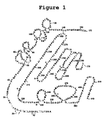
- Figure 1 provides the primary structure of activated human protein C to assist in illustrating the autodegradation pathways described herein.
- the nomenclature adopted herein is based on the numbering of the primary sequence of human activated protein C.
- One skilled in the art would recognize that other species of activated protein C may vary slightly in primary sequence thereby resulting in shifts in the nomenclature defined herein.
- the present invention provides aqueous activated protein C solutions and an improved method of processing such solutions, comprising conducting the processing at an ionic strength of greater than 150 mM and at a pH of about 5.5 to less than 6.3.
- the invention further provides a method for purifying activated protein C by chromatographic separation, comprising eluting said activated protein C during said chromotographic separation using an aqueous elution solution having an ionic strength above 150 mM and a pH of about 5.5 to less than 6.3.
- the invention further provides a method for concentrating a solution of activated protein C by filtration, comprising feeding said activated protein C to a filtration membrane as an aqueous solution having an ionic strength of greater than 150 mM and a pH of about 5.5 to less than 6.3.
- the invention also provides activated protein C prepared by the processes described herein.
- the invention finally provides activated protein C pharmaceutical preparations having less than 10% des(1-9)aPC and/or des(1-10)aPC by weight.
- aPC or activated protein C - refers to protein C whether recombinant or plasma derived.
- aPC includes and is preferably human protein C although aPC may also include other species or derivatives having protein C proteolytic, amidolytic, esterolytic, and biological (anticoagulant or pro-fibrinolytic) activities. Examples of protein C derivatives are described by Gerlitz, et al., U.S. patent No. 5,453,373, and Foster, et al., U.S. patent No. 5,516,650, the entire teachings of which are hereby incorporated by reference.
- Aqueous - includes cosolvent systems as well as use of water only as a solvent.
- aqueous means water only as the solvent.
- Chromatographic separation - includes chromatographic techniques recognized and appreciated in the art, including size exclusions, anionic, cationic, hydrophobic, reverse phase and the like.
- Cross-flow filtration - refers to partitioning by tangential flow across a filtration membrane where the product is either retained by the membrane (as in concentration or diafiltration) or passed by the membrane (as in viral clearance filtration).
- Processing - refers to unit operations useful in the manufacture of activated protein C, such as column chromatography, filtration (tangential, cross-flow, dead-end), lyophilization, pumping, or storage.
- r-aPC - recombinant activated protein C produced by activating PC in vitro or by direct secretion of the activated form of protein C from procaryotic cells, eukaryotic cells, or transgenic animals including, for example, secretion from human kidney 293 cells as a zymogen then purified and activated by techniques well known to the skilled artisan and demonstrated in Yan, U.S. Patent No. 4,981,952, and Cottingham, WO 97/20043.
- the present invention relates to an improved method for processing activated protein C.
- the invention particularly pertains to processing activated protein C through protein enrichment or concentration and protein purification operations, while reducing autodegradation.
- the invention is characterized by having such processing, and especially such modification, enrichment and purification operations, conducted using an aqueous solution of the protein under the condition described herein.
- Des(1-9)aPC and des(1-10)aPC are exceedingly difficult to remove by known purification methodology so it is desirable to minimize their formation during manufacturing of pharmaceutical preparations of aPC.
- Activated protein C prepared under the claimed conditions is substantially free of des(1-9)aPC and des(1-10)aPC variants.
- pharmaceutical preparations of aPC prepared under these conditions are substantively free of des(1-9)aPC and des(1-10)aPC, generally having less than 10%, preferably less than 8%, more preferably less than 5%, and most preferably less than 3% of these variants, individually or in combination, by weight.
- lyophilized pharmaceutical formulations prepared using aPC prepared as described and claimed herein demonstrate improved stability in the solution state (prior to lyophilizing), and 24 to 48 hours stability upon reconstitution. Not more than a 5% loss in potency is observed up to five days at 2 to 8°C, up to 50 hours at 15°C, and up to 40 hours at 25°C. Prior to the present invention, such stability was previously unachievable.
- the autodegradation of activated protein C in aqueous solutions during processing and in formulations can be reduced to levels previously unobtainable - particularly in the absences of urea or other denaturing agents, histidine, lysine hydrochloride, or albumin.
- processing protein C includes a wide variety of unit operations, physical separations and purification operations, including chromatographic treatment and cross-flow filtration such as for purifying the protein composition, concentrating the protein solution or for solvent exchange, as well as possibly chemical and enzymatic treatments.
- Protein processing contemplated by the present invention particularly includes purification by standard chromatographic methods such as ionic exchange chromatography, hydrophobic chromatography and the like, and protein concentration by ultrafiltration and similar processes. Protein processing is also intended to encompass the retention of the protein solution in holding tanks and the like preparatory to such purification and concentration steps. To reduce the instability, all processing of the activated protein C solution, including various protein purification and protein concentration steps, is conducted under the conditions described herein. Such processing steps are directed to the ultimate isolation of the protein, usually as a lyophilized powder, for formulation in a pharmaceutical preparation.
- the pH of the aqueous processing solution is about 5.5 to less than 6.3. More preferably, 5.7 to less than 6.3. Still more preferably, a pH between about 5.6 to about 6.2. Even more preferred is a pH between about 5.8 to about 6.2. Still even more preferred is a pH between about 5.9 to about 6.1.
- the most preferred pH is about pH 6.0.
- Representative buffer systems to maintain effective pH control include Tris-acetate, sodium citrate, potassium citrate, citrate-glycine and sodium phosphate. More preferred buffer systems include sodium citrate and sodium phosphate. The most preferred buffer is sodium citrate.
- the preferred molarity of the buffer system is 10 mM to 50 mM. The most preferred molarity is 20 to 40 mM. The skilled artisan will recognize that many other buffer systems are available which also can be used to maintain the pH in the claimed range.
- the ionic strength of the processing solutions is the second critical element of the present invention.
- Ionic strength is generally derived from the addition of pharmaceutically acceptable salts - preferably sodium chloride or potassium chloride.
- the ionic strength is preferably greater than or equal to 150 mM, derived from a salt concentration of greater than 150 mM in a buffered solution.
- the salt concentration is no more than about 1000 mM to facilitate downstream processing.
- the salt concentration is from about 200 mM to 1000 mM. Concentrations of greater than 50 mM and below 400 mM were previously believed to be unacceptable.
- the processing temperature during solution processing is between 0°C and 10°C, more preferably 2°C to 8°C outside of these temperatures, significant autodegradation of activated protein C occurs. However, exceeding 10°C for short periods of time can be tolerated without comprising the integrity of the activated protein C.
- the concentration of activated protein C is not critical to the present invention. Significantly, the ability to process the protein at high concentrations is significantly enhanced under the conditions described herein.
- the preferred protein concentration is from about 1 mg/mL to about 50 mg/mL, more preferably 1 to 30 mg/mL, still more preferably 1 to 20 mg/mL, and most preferably 1 to 10 mg/mL, although higher or lower concentrations are considered operable.
- Activated protein C prepared as described herein is useful in the treatment of a wide variety of acquired disease states involving intravascular coagulation, including thrombotic stroke, deep vein thrombosis, pulmonary embolism, peripheral arterial thrombosis, emboli originating from the heart or peripheral arteries, acute myocardial infarction, disseminated intravascular coagulation, and acute pre-or postcapillary occlusions, including transplantations or retina thrombosis.
- Activated protein C is ideally formulated in the lyophilized state with a bulking agent.
- the bulking agent is ideally selected so that it improves the solid-state stability of the molecule. Examples of such excipients are sucrose, trehalose, and raffinose. The skilled artisan will recognize that many other bulking agents are available which also can be used in activated protein C.
- the bulking agent concentration of the formulation is a critical formulation variable of the freeze drying process.
- a preferred bulking agent is sucrose at a concentration in the solution to be lyophilized of 15 to 30 mg/mL.
- the most preferred concentration of sucrose in the solution to be lyophilized is 15 mg/mL in a formulation of aPC at 2.5 mg/mL.
- the most preferred concentration of sucrose in the solution to be lyophilized is 30 mg/mL in a formulation of aPC at 5.0 mg/mL.
- Recombinant human protein C (zymogen) was produced in Human Kidney 293 cells by techniques well known to the skilled artisan such as those set forth in Yan, U.S. Patent No. 4,981,952, the entire teaching of which is herein incorporated by reference.
- the gene encoding human protein C is disclosed and claimed in Bang et al. , U.S. Patent No. 4,775,624, the entire teaching of which is incorporated herein by reference.
- the plasmid used to express human protein C in 293 cells was plasmid pLPC which is disclosed in Bang et al. , U.S. Patent No. 4,992,373, the entire teaching of which is incorporated herein by reference.
- the construction of plasmid pLPC is also described in European Patent Publication No.
- the plasmid was transfected into 293 cells, then stable transformants were identified, subcultured and grown in serum-free media. After fermentation, cell-free medium was obtained by microfiltration.
- the human protein C zymogen was separated from the culture fluid by an adaptation of the techniques of Yan, U.S. Patent No. 4,981,952, the entire teaching of which is herein incorporated by reference.
- the clarified medium was made 4 mM in EDTA before it was absorbed to an anion exchange resin (Fast-Flow Q, Pharmacia).
- an anion exchange resin Frazier-Flow Q, Pharmacia.
- the bound recombinant human protein C zymogen was eluted with 20 mM Tris, 150 mM NaCl, 10 mM CaCl 2 , pH 7.4.
- the eluted protein was greater than 95% pure after elution as judged by SDS-polyacrylamide gel electrophoresis.
- Bovine thrombin was coupled to Activated CH-Sepharose 4B (Pharmacia) in the presence of 50 mM HEPES, pH 7.5 at 4°C. The coupling reaction was done on resin already packed into a column using approximately 5000 units thrombin/mL resin. The thrombin solution was circulated through the column for approximately 3 hours before adding 2-aminoethanol (MEA) to a concentration of 0.6 mL/L of circulating solution. The MEA-containing solution was circulated for an additional 10-12 hours to assure complete blockage of the unreacted amines on the resin.
- MEA 2-aminoethanol
- the thrombin-coupled resin was washed with 10 column volumes of 1 M NaCl, 20 mM Tris, pH 6.5 to remove all non-specifically bound protein, and was used in activation reactions after equilibrating in activation buffer.
- Purified rHPC was made 5 mM in EDTA (to chelate any residual calcium) and diluted to a concentration of 2 mg/mL with 20 mM Tris, pH 7.4 or 20 mM Tris-acetate, pH 6.5. This material was passed through a thrombin column equilibrated at 37°C with 50 mM NaCl and either 20 mM Tris pH 7.4 or 20 mM Tris-acetate pH 6.5. The flow rate was adjusted to allow for approximately 20 min. of contact time between the rHPC and thrombin resin. The effluent was collected and immediately assayed for amidolytic activity.
- the material did not have a specific activity (amidolytic) comparable to an established standard of aPC, it was recycled over the thrombin column to activate the rHPC to completion. This was followed by 1:1 dilution of the material with 20 mM buffer as above.
- the anticoagulant activity of activated protein C is determined by measuring the prolongation of the clotting time in the activated partial thromboplastin time (APTT) clotting assay.
- a standard curve is prepared in dilution buffer (1 mg/mL radioimmunoassay grade BSA, 20 mM Tris, pH 7.4, 150 mM NaCl, 0.02% NaN 3 ) ranging in protein C concentration from 125-1000 ng/mL, while samples are prepared at several dilutions in this concentration range.
- 50 ⁇ L of cold horse plasma and 50 ⁇ L of reconstituted activated partial thromboplastin time reagent APTT Reagent, Sigma
- a solution of aPC having a conductivity of approximately 14 mMho and a pH of 5.7 was applied to a 9.5 cm x 9 cm (hxd) column of S-Sepharose Fast Flow cation exchange resin linked in tandem with a 25cm x 14 cm (hxd) column of Q Sepharose Fast Flow anion exchange resin. Both columns had been pre-equilibrated in 20 mM sodium citrate, pH 6.0, 150 mM NaCl.
- the column load was 10 grams of aPC per liter of anion exchange resin.
- the column was washed with >2 column volumes of equilibration buffer and step-eluted with 20 mM sodium citrate pH 6.0, 400 mM NaCl. All operations were performed at 2-8°C and at a linear flow rate of 60 cm/hr.
- Activated protein C (4 mg/mL) in 20 mM Tris, 150 mM NaCl, and 20 mM EDTA buffer is filtered using a tangential flow filtration (Millipore VirusolveTM 180 membrane) . Passage of aPC through the filter is facilitated by using a diafiltration buffer.
- the diafiltration buffer is 20 mM sodium citrate and 150 mM NaCl.
- a solution (10L), 4 mg/ml aPC in 20 mM Tris, 150 mM NaCl, and 20 mM EDTA buffer were filtered.
- the sodium citrate and sodium chloride buffer was used as a diafiltration buffer to yield a final volume of aPC solution of 21.5 L.
- a solution is prepared in a vial by adding the appropriate amount of sucrose, sodium chloride, and sodium citrate to a predetermined volume of r-aPC to yield 2.5 mg/mL aPC, 15 mg/mL sucrose, 325 mM sodium chloride and 20 mM sodium citrate at pH 6.0.
- the solution is lyophilized using a conventional freeze dryer to yield lyophilized aPC vials suitable for reconstitution and administration to a patient.
- the lyophilized formulations have less than 10% des(1-9)aPC and des(1-10)aPC.
- a solution is prepared in a vial by adding the appropriate amount of sucrose, sodium chloride, and sodium citrate to a predetermined volume of r-aPC to yield 5 mg/mL aPC, 30 mg/mL sucrose, 650 mM sodium chloride and 40 mM sodium citrate at pH 6.0.
- the solution is lyophilized using a conventional freeze dryer to yield lyophilized aPC vials suitable for reconstitution and administration to a patient.
- the lyophilized formulations have less than 10% des(1-9)aPC and des (1-10) aPC.
Landscapes
- Health & Medical Sciences (AREA)
- Chemical & Material Sciences (AREA)
- Life Sciences & Earth Sciences (AREA)
- Engineering & Computer Science (AREA)
- General Health & Medical Sciences (AREA)
- Organic Chemistry (AREA)
- Bioinformatics & Cheminformatics (AREA)
- Medicinal Chemistry (AREA)
- Epidemiology (AREA)
- Pharmacology & Pharmacy (AREA)
- Wood Science & Technology (AREA)
- Zoology (AREA)
- Veterinary Medicine (AREA)
- Genetics & Genomics (AREA)
- Public Health (AREA)
- Animal Behavior & Ethology (AREA)
- Biochemistry (AREA)
- General Engineering & Computer Science (AREA)
- Molecular Biology (AREA)
- Biomedical Technology (AREA)
- General Chemical & Material Sciences (AREA)
- Oil, Petroleum & Natural Gas (AREA)
- Chemical Kinetics & Catalysis (AREA)
- Microbiology (AREA)
- Biotechnology (AREA)
- Dermatology (AREA)
- Medicines That Contain Protein Lipid Enzymes And Other Medicines (AREA)
- Peptides Or Proteins (AREA)
Applications Claiming Priority (3)
| Application Number | Priority Date | Filing Date | Title |
|---|---|---|---|
| US4525597P | 1997-04-28 | 1997-04-28 | |
| US45255 | 1997-04-28 | ||
| EP98303312A EP0875563A3 (de) | 1997-04-28 | 1998-04-28 | Verbesserte Methoden zur Verarbeitung von aktiviertem Protein C |
Related Parent Applications (1)
| Application Number | Title | Priority Date | Filing Date |
|---|---|---|---|
| EP98303312A Division EP0875563A3 (de) | 1997-04-28 | 1998-04-28 | Verbesserte Methoden zur Verarbeitung von aktiviertem Protein C |
Publications (1)
| Publication Number | Publication Date |
|---|---|
| EP1557463A1 true EP1557463A1 (de) | 2005-07-27 |
Family
ID=34635363
Family Applications (1)
| Application Number | Title | Priority Date | Filing Date |
|---|---|---|---|
| EP05101650A Withdrawn EP1557463A1 (de) | 1997-04-28 | 1998-04-28 | Verbesserte Methoden zur Verarbeitung von aktiviertem Protein C |
Country Status (1)
| Country | Link |
|---|---|
| EP (1) | EP1557463A1 (de) |
Citations (6)
| Publication number | Priority date | Publication date | Assignee | Title |
|---|---|---|---|---|
| JPH01226900A (ja) * | 1988-03-08 | 1989-09-11 | Green Cross Corp:The | プロテインcの精製方法 |
| US4981952A (en) * | 1988-10-04 | 1991-01-01 | Eli Lilly And Company | Method for the purification of vitamin K-dependent proteins |
| JPH07165605A (ja) * | 1993-12-16 | 1995-06-27 | Teijin Ltd | 活性化プロテインcバイアル |
| EP0662513A1 (de) * | 1994-01-05 | 1995-07-12 | Eli Lilly And Company | Verfahren zur Verhinderung der Zersetzung des Proteins C |
| EP0726076A1 (de) * | 1993-10-29 | 1996-08-14 | Juridical Foundation, The Chemo-Sero-Therapeutic Research Institute | Methode zur stabilisierung von protein c oder aktiviertem protein c und stabilisierte verbindungen |
| JPH08301786A (ja) * | 1995-05-11 | 1996-11-19 | Mochida Pharmaceut Co Ltd | 吸収性骨疾患予防・治療剤 |
-
1998
- 1998-04-28 EP EP05101650A patent/EP1557463A1/de not_active Withdrawn
Patent Citations (6)
| Publication number | Priority date | Publication date | Assignee | Title |
|---|---|---|---|---|
| JPH01226900A (ja) * | 1988-03-08 | 1989-09-11 | Green Cross Corp:The | プロテインcの精製方法 |
| US4981952A (en) * | 1988-10-04 | 1991-01-01 | Eli Lilly And Company | Method for the purification of vitamin K-dependent proteins |
| EP0726076A1 (de) * | 1993-10-29 | 1996-08-14 | Juridical Foundation, The Chemo-Sero-Therapeutic Research Institute | Methode zur stabilisierung von protein c oder aktiviertem protein c und stabilisierte verbindungen |
| JPH07165605A (ja) * | 1993-12-16 | 1995-06-27 | Teijin Ltd | 活性化プロテインcバイアル |
| EP0662513A1 (de) * | 1994-01-05 | 1995-07-12 | Eli Lilly And Company | Verfahren zur Verhinderung der Zersetzung des Proteins C |
| JPH08301786A (ja) * | 1995-05-11 | 1996-11-19 | Mochida Pharmaceut Co Ltd | 吸収性骨疾患予防・治療剤 |
Non-Patent Citations (3)
| Title |
|---|
| DATABASE WPI Week 1997, Derwent World Patents Index; AN 1997-048259, XP002329154 * |
| PATENT ABSTRACTS OF JAPAN vol. 013, no. 549 (C - 662) 7 December 1989 (1989-12-07) * |
| PATENT ABSTRACTS OF JAPAN vol. 1995, no. 09 31 October 1995 (1995-10-31) * |
Similar Documents
| Publication | Publication Date | Title |
|---|---|---|
| AU740753C (en) | Improved methods for processing activated protein C | |
| US6630137B1 (en) | Activated protein C formulations | |
| EP0662513B1 (de) | Verfahren zur Verhinderung der Zersetzung des Proteins C | |
| AU769144B2 (en) | Improved methods for processing activated protein C | |
| US20040038288A1 (en) | Human protein C Polypeptide | |
| CZ373799A3 (cs) | Zlepšené způsoby zpracování aktivovaného proteinu C | |
| HK1016472B (en) | Activated protein c formulations | |
| EP1561469A1 (de) | Aktiviertes Protein C Formulierungen | |
| AU2003252774A1 (en) | Human Protein C Polypeptide |
Legal Events
| Date | Code | Title | Description |
|---|---|---|---|
| PUAI | Public reference made under article 153(3) epc to a published international application that has entered the european phase |
Free format text: ORIGINAL CODE: 0009012 |
|
| AC | Divisional application: reference to earlier application |
Ref document number: 0875563 Country of ref document: EP Kind code of ref document: P |
|
| AK | Designated contracting states |
Kind code of ref document: A1 Designated state(s): AT BE CH CY DE DK ES FI FR GB GR IE IT LI LU NL PT SE |
|
| AX | Request for extension of the european patent |
Extension state: AL LT LV RO SI |
|
| RIN1 | Information on inventor provided before grant (corrected) |
Inventor name: HUANG, LIHUA Inventor name: BAKER, JEFFREY CLAYTON Inventor name: SHELIGA, THEODORE ARSAY Inventor name: CARLSON, ANDREW DAVID |
|
| 17P | Request for examination filed |
Effective date: 20060127 |
|
| AKX | Designation fees paid |
Designated state(s): AT BE CH CY DE DK ES FI FR GB GR IE IT LI LU NL PT SE |
|
| AXX | Extension fees paid |
Extension state: SI Payment date: 20060127 Extension state: RO Payment date: 20060127 Extension state: LV Payment date: 20060127 Extension state: LT Payment date: 20060127 Extension state: AL Payment date: 20060127 |
|
| 17Q | First examination report despatched |
Effective date: 20070803 |
|
| STAA | Information on the status of an ep patent application or granted ep patent |
Free format text: STATUS: THE APPLICATION IS DEEMED TO BE WITHDRAWN |
|
| 18D | Application deemed to be withdrawn |
Effective date: 20080214 |